EP3318557A2 - Quinolone compound - Google Patents
Quinolone compound Download PDFInfo
- Publication number
- EP3318557A2 EP3318557A2 EP17202139.6A EP17202139A EP3318557A2 EP 3318557 A2 EP3318557 A2 EP 3318557A2 EP 17202139 A EP17202139 A EP 17202139A EP 3318557 A2 EP3318557 A2 EP 3318557A2
- Authority
- EP
- European Patent Office
- Prior art keywords
- optionally substituted
- group
- alkyl
- nmr
- mhz
- Prior art date
- Legal status (The legal status is an assumption and is not a legal conclusion. Google has not performed a legal analysis and makes no representation as to the accuracy of the status listed.)
- Withdrawn
Links
- 0 Cc1cc(*)c2OCOc2c1 Chemical compound Cc1cc(*)c2OCOc2c1 0.000 description 12
- AVBPTIYKXNVKNJ-UHFFFAOYSA-N Cc(cc1)cc(C=CN2)c1C2=O Chemical compound Cc(cc1)cc(C=CN2)c1C2=O AVBPTIYKXNVKNJ-UHFFFAOYSA-N 0.000 description 3
- YGNIHUPLYZIWOL-UHFFFAOYSA-N Cc(cc1C(NN2)=O)ccc1C2=O Chemical compound Cc(cc1C(NN2)=O)ccc1C2=O YGNIHUPLYZIWOL-UHFFFAOYSA-N 0.000 description 3
- LDZYRENCLPUXAX-UHFFFAOYSA-N Cc1nc(cccc2)c2[nH]1 Chemical compound Cc1nc(cccc2)c2[nH]1 LDZYRENCLPUXAX-UHFFFAOYSA-N 0.000 description 3
- WWLVCLBPTIGNLA-UHFFFAOYSA-N Cc1cc(nc[nH]2)c2nc1 Chemical compound Cc1cc(nc[nH]2)c2nc1 WWLVCLBPTIGNLA-UHFFFAOYSA-N 0.000 description 2
- JFIBBUISWVLPJO-UHFFFAOYSA-N Cc1nc2ncc[n]2cc1 Chemical compound Cc1nc2ncc[n]2cc1 JFIBBUISWVLPJO-UHFFFAOYSA-N 0.000 description 2
- KRFPEGOHPOMUES-UHFFFAOYSA-N CC(C)(C)c([nH]c1c2)cc1ccc2NC(OC(C)(C)C)=O Chemical compound CC(C)(C)c([nH]c1c2)cc1ccc2NC(OC(C)(C)C)=O KRFPEGOHPOMUES-UHFFFAOYSA-N 0.000 description 1
- COQNCAZGNLRPHM-UHFFFAOYSA-N CC(C)(C)c([nH]c1c2)cc1ccc2[N+]([O-])=O Chemical compound CC(C)(C)c([nH]c1c2)cc1ccc2[N+]([O-])=O COQNCAZGNLRPHM-UHFFFAOYSA-N 0.000 description 1
- VTMRRGAQPWANFN-UHFFFAOYSA-N CC(C)(C)c([nH]c1ccc2)cc1c2NC(CCN(C)C)=O Chemical compound CC(C)(C)c([nH]c1ccc2)cc1c2NC(CCN(C)C)=O VTMRRGAQPWANFN-UHFFFAOYSA-N 0.000 description 1
- FJTVRYIKAOCLKH-UHFFFAOYSA-N CC(C)(C)c(cc1C=O)cc2c1OCO2 Chemical compound CC(C)(C)c(cc1C=O)cc2c1OCO2 FJTVRYIKAOCLKH-UHFFFAOYSA-N 0.000 description 1
- NFPFZKFOYBNGDG-UHFFFAOYSA-N CC(C)(C)c(cc1Cl)cc2c1[nH]cn2 Chemical compound CC(C)(C)c(cc1Cl)cc2c1[nH]cn2 NFPFZKFOYBNGDG-UHFFFAOYSA-N 0.000 description 1
- XJCPZQIOMFXSNR-UHFFFAOYSA-N CC(C)(C)c(cc1OC)cc(OC)c1OC Chemical compound CC(C)(C)c(cc1OC)cc(OC)c1OC XJCPZQIOMFXSNR-UHFFFAOYSA-N 0.000 description 1
- FZNBLVHGXMUTQW-UHFFFAOYSA-N CC(C)(C)c1c[nH]c2ncccc12 Chemical compound CC(C)(C)c1c[nH]c2ncccc12 FZNBLVHGXMUTQW-UHFFFAOYSA-N 0.000 description 1
- IWZRBVYCAWNNKL-UHFFFAOYSA-N CC(C)(C)c1cc(OCCN2)c2nc1 Chemical compound CC(C)(C)c1cc(OCCN2)c2nc1 IWZRBVYCAWNNKL-UHFFFAOYSA-N 0.000 description 1
- HNYIEFWOZKZPPG-UHFFFAOYSA-N CC(C)(C)c1cc(c(Cl)ccc2)c2[nH]1 Chemical compound CC(C)(C)c1cc(c(Cl)ccc2)c2[nH]1 HNYIEFWOZKZPPG-UHFFFAOYSA-N 0.000 description 1
- FGZCZKRLBCEGEP-UHFFFAOYSA-N CC(C)(C)c1cc(nc[nH]2)c2nc1 Chemical compound CC(C)(C)c1cc(nc[nH]2)c2nc1 FGZCZKRLBCEGEP-UHFFFAOYSA-N 0.000 description 1
- IELAFVPOSLQGEX-UHFFFAOYSA-N CC(C)(C)c1cc2cc(C#N)ccc2[nH]1 Chemical compound CC(C)(C)c1cc2cc(C#N)ccc2[nH]1 IELAFVPOSLQGEX-UHFFFAOYSA-N 0.000 description 1
- HISPJFNZYGVWSY-UHFFFAOYSA-N CC(C)(C)c1cc2ncccc2[nH]1 Chemical compound CC(C)(C)c1cc2ncccc2[nH]1 HISPJFNZYGVWSY-UHFFFAOYSA-N 0.000 description 1
- BJEKZEZCJDWMQX-UHFFFAOYSA-N CC(C)c([nH]c1c2)cc1ccc2F Chemical compound CC(C)c([nH]c1c2)cc1ccc2F BJEKZEZCJDWMQX-UHFFFAOYSA-N 0.000 description 1
- YUMNLBFNOMAUPO-KPKJPENVSA-N CC(C)c(cc1)cc(/C=N/O)c1OC Chemical compound CC(C)c(cc1)cc(/C=N/O)c1OC YUMNLBFNOMAUPO-KPKJPENVSA-N 0.000 description 1
- GJUUBTWKVLUXSZ-UHFFFAOYSA-N CC(C)c(cc1)cc(OC(C)(C)C)c1[N+]([O-])=O Chemical compound CC(C)c(cc1)cc(OC(C)(C)C)c1[N+]([O-])=O GJUUBTWKVLUXSZ-UHFFFAOYSA-N 0.000 description 1
- ZSKDHRAPOOHECU-UHFFFAOYSA-N CC(C)c(cc1)cc([N+]([O-])=O)c1N(CC1)CCC1N(C)C Chemical compound CC(C)c(cc1)cc([N+]([O-])=O)c1N(CC1)CCC1N(C)C ZSKDHRAPOOHECU-UHFFFAOYSA-N 0.000 description 1
- PGQCCEKJEWWZOG-UHFFFAOYSA-N CC(C)c(cc1)cc(cc2)c1c[n+]2O Chemical compound CC(C)c(cc1)cc(cc2)c1c[n+]2O PGQCCEKJEWWZOG-UHFFFAOYSA-N 0.000 description 1
- MYIPDMKKTUGCET-UHFFFAOYSA-N CC(C)c(cc1)cc2c1NCC(C)O2 Chemical compound CC(C)c(cc1)cc2c1NCC(C)O2 MYIPDMKKTUGCET-UHFFFAOYSA-N 0.000 description 1
- SIZCAMBYKFGFAR-UHFFFAOYSA-N CC(C)c(cc1)cc2c1nc[s]2 Chemical compound CC(C)c(cc1)cc2c1nc[s]2 SIZCAMBYKFGFAR-UHFFFAOYSA-N 0.000 description 1
- VEELQPNCUWESSE-UHFFFAOYSA-N CC(C)c(cc1C)c[n]2c1ncc2 Chemical compound CC(C)c(cc1C)c[n]2c1ncc2 VEELQPNCUWESSE-UHFFFAOYSA-N 0.000 description 1
- OIZDEMPYJHOGFO-UHFFFAOYSA-N CC(C)c(cc1C=C2)cnc1NC2=O Chemical compound CC(C)c(cc1C=C2)cnc1NC2=O OIZDEMPYJHOGFO-UHFFFAOYSA-N 0.000 description 1
- JAJSJBDQDBYOFB-UHFFFAOYSA-N CC(C)c1cc2ccc[n+](O)c2cc1 Chemical compound CC(C)c1cc2ccc[n+](O)c2cc1 JAJSJBDQDBYOFB-UHFFFAOYSA-N 0.000 description 1
- LSMVJCJZBLIRSO-UHFFFAOYSA-N CC(C1)=CCN1C1CNCC1 Chemical compound CC(C1)=CCN1C1CNCC1 LSMVJCJZBLIRSO-UHFFFAOYSA-N 0.000 description 1
- ACZBTOXOXOEJLX-UHFFFAOYSA-N CC(C=C1C(F)(F)F)=CNC1=O Chemical compound CC(C=C1C(F)(F)F)=CNC1=O ACZBTOXOXOEJLX-UHFFFAOYSA-N 0.000 description 1
- QSNHEPUGJULTKD-UHFFFAOYSA-N CC(CC1)=CCN1C1CNCC1 Chemical compound CC(CC1)=CCN1C1CNCC1 QSNHEPUGJULTKD-UHFFFAOYSA-N 0.000 description 1
- SNXFBDGSQGWHMF-UHFFFAOYSA-N CCc1cc(C(C)(C)C)c[n]2c1ncc2 Chemical compound CCc1cc(C(C)(C)C)c[n]2c1ncc2 SNXFBDGSQGWHMF-UHFFFAOYSA-N 0.000 description 1
- BIYQRFPPPUNDJB-UHFFFAOYSA-N Cc(c(-c(cc1C#N)cnc1N)ccc12)c1N(C1CC1)C=C(C(O)=O)C2=O Chemical compound Cc(c(-c(cc1C#N)cnc1N)ccc12)c1N(C1CC1)C=C(C(O)=O)C2=O BIYQRFPPPUNDJB-UHFFFAOYSA-N 0.000 description 1
- DJBGNMDWVBZMCL-UHFFFAOYSA-N Cc(cc1)cc2c1NCC2=O Chemical compound Cc(cc1)cc2c1NCC2=O DJBGNMDWVBZMCL-UHFFFAOYSA-N 0.000 description 1
- YDUULBHSDUUJJL-UHFFFAOYSA-N Cc(cc1OCC2)cc(N3)c1N2C3=O Chemical compound Cc(cc1OCC2)cc(N3)c1N2C3=O YDUULBHSDUUJJL-UHFFFAOYSA-N 0.000 description 1
- QWYOZDDADAHDKL-UHFFFAOYSA-N Cc(cc1OCC2)cc3c1[n]2nn3 Chemical compound Cc(cc1OCC2)cc3c1[n]2nn3 QWYOZDDADAHDKL-UHFFFAOYSA-N 0.000 description 1
- TZAASTQPOWLNPU-GXTWGEPZSA-N Cc1c(-c(cc2Cl)cnc2N)c(F)cc2c1N([C@H](C1)[C@H]1F)C=C(C(O)=O)C2=O Chemical compound Cc1c(-c(cc2Cl)cnc2N)c(F)cc2c1N([C@H](C1)[C@H]1F)C=C(C(O)=O)C2=O TZAASTQPOWLNPU-GXTWGEPZSA-N 0.000 description 1
- PRTPOGWUDRWFMZ-UHFFFAOYSA-N Cc1c[n]2ncnc2c(C(F)(F)F)c1 Chemical compound Cc1c[n]2ncnc2c(C(F)(F)F)c1 PRTPOGWUDRWFMZ-UHFFFAOYSA-N 0.000 description 1
- YGRCHZSCWDEUEY-UHFFFAOYSA-N Cc1c[n]2ncnc2c(F)c1 Chemical compound Cc1c[n]2ncnc2c(F)c1 YGRCHZSCWDEUEY-UHFFFAOYSA-N 0.000 description 1
- GPULQCJRMMVRGB-UHFFFAOYSA-N Cc1cc(-c2ccccc2)c(N)nc1 Chemical compound Cc1cc(-c2ccccc2)c(N)nc1 GPULQCJRMMVRGB-UHFFFAOYSA-N 0.000 description 1
- NSWMAAVKTHRPRH-UHFFFAOYSA-N Cc1cc(C(F)(F)F)c(N)nc1 Chemical compound Cc1cc(C(F)(F)F)c(N)nc1 NSWMAAVKTHRPRH-UHFFFAOYSA-N 0.000 description 1
- WRNXOOXIPSTAGJ-UHFFFAOYSA-N Cc1cc(OC(F)(F)F)ccc1 Chemical compound Cc1cc(OC(F)(F)F)ccc1 WRNXOOXIPSTAGJ-UHFFFAOYSA-N 0.000 description 1
- XYYXDARQOHWBPO-UHFFFAOYSA-N Cc1nc(C)n[nH]1 Chemical compound Cc1nc(C)n[nH]1 XYYXDARQOHWBPO-UHFFFAOYSA-N 0.000 description 1
- KCBKGWHQALIQBQ-UHFFFAOYSA-N O=C(C=Cc1ccc2)N(CO3)c1c2C3=O Chemical compound O=C(C=Cc1ccc2)N(CO3)c1c2C3=O KCBKGWHQALIQBQ-UHFFFAOYSA-N 0.000 description 1
- DEINLRGVTJVCOS-UHFFFAOYSA-N O[n+]1ccccc1 Chemical compound O[n+]1ccccc1 DEINLRGVTJVCOS-UHFFFAOYSA-N 0.000 description 1
Images

Classifications
-
- A—HUMAN NECESSITIES
- A61—MEDICAL OR VETERINARY SCIENCE; HYGIENE
- A61K—PREPARATIONS FOR MEDICAL, DENTAL OR TOILETRY PURPOSES
- A61K31/00—Medicinal preparations containing organic active ingredients
- A61K31/33—Heterocyclic compounds
- A61K31/395—Heterocyclic compounds having nitrogen as a ring hetero atom, e.g. guanethidine or rifamycins
- A61K31/435—Heterocyclic compounds having nitrogen as a ring hetero atom, e.g. guanethidine or rifamycins having six-membered rings with one nitrogen as the only ring hetero atom
- A61K31/44—Non condensed pyridines; Hydrogenated derivatives thereof
- A61K31/4427—Non condensed pyridines; Hydrogenated derivatives thereof containing further heterocyclic ring systems
- A61K31/444—Non condensed pyridines; Hydrogenated derivatives thereof containing further heterocyclic ring systems containing a six-membered ring with nitrogen as a ring heteroatom, e.g. amrinone
-
- A—HUMAN NECESSITIES
- A61—MEDICAL OR VETERINARY SCIENCE; HYGIENE
- A61K—PREPARATIONS FOR MEDICAL, DENTAL OR TOILETRY PURPOSES
- A61K31/00—Medicinal preparations containing organic active ingredients
- A61K31/33—Heterocyclic compounds
- A61K31/395—Heterocyclic compounds having nitrogen as a ring hetero atom, e.g. guanethidine or rifamycins
- A61K31/435—Heterocyclic compounds having nitrogen as a ring hetero atom, e.g. guanethidine or rifamycins having six-membered rings with one nitrogen as the only ring hetero atom
- A61K31/47—Quinolines; Isoquinolines
-
- A—HUMAN NECESSITIES
- A61—MEDICAL OR VETERINARY SCIENCE; HYGIENE
- A61K—PREPARATIONS FOR MEDICAL, DENTAL OR TOILETRY PURPOSES
- A61K31/00—Medicinal preparations containing organic active ingredients
- A61K31/33—Heterocyclic compounds
- A61K31/395—Heterocyclic compounds having nitrogen as a ring hetero atom, e.g. guanethidine or rifamycins
- A61K31/435—Heterocyclic compounds having nitrogen as a ring hetero atom, e.g. guanethidine or rifamycins having six-membered rings with one nitrogen as the only ring hetero atom
- A61K31/47—Quinolines; Isoquinolines
- A61K31/4709—Non-condensed quinolines and containing further heterocyclic rings
-
- A—HUMAN NECESSITIES
- A61—MEDICAL OR VETERINARY SCIENCE; HYGIENE
- A61K—PREPARATIONS FOR MEDICAL, DENTAL OR TOILETRY PURPOSES
- A61K31/00—Medicinal preparations containing organic active ingredients
- A61K31/33—Heterocyclic compounds
- A61K31/395—Heterocyclic compounds having nitrogen as a ring hetero atom, e.g. guanethidine or rifamycins
- A61K31/435—Heterocyclic compounds having nitrogen as a ring hetero atom, e.g. guanethidine or rifamycins having six-membered rings with one nitrogen as the only ring hetero atom
- A61K31/47—Quinolines; Isoquinolines
- A61K31/472—Non-condensed isoquinolines, e.g. papaverine
- A61K31/4725—Non-condensed isoquinolines, e.g. papaverine containing further heterocyclic rings
-
- A—HUMAN NECESSITIES
- A61—MEDICAL OR VETERINARY SCIENCE; HYGIENE
- A61K—PREPARATIONS FOR MEDICAL, DENTAL OR TOILETRY PURPOSES
- A61K31/00—Medicinal preparations containing organic active ingredients
- A61K31/33—Heterocyclic compounds
- A61K31/395—Heterocyclic compounds having nitrogen as a ring hetero atom, e.g. guanethidine or rifamycins
- A61K31/495—Heterocyclic compounds having nitrogen as a ring hetero atom, e.g. guanethidine or rifamycins having six-membered rings with two or more nitrogen atoms as the only ring heteroatoms, e.g. piperazine or tetrazines
- A61K31/4965—Non-condensed pyrazines
- A61K31/497—Non-condensed pyrazines containing further heterocyclic rings
-
- A—HUMAN NECESSITIES
- A61—MEDICAL OR VETERINARY SCIENCE; HYGIENE
- A61K—PREPARATIONS FOR MEDICAL, DENTAL OR TOILETRY PURPOSES
- A61K31/00—Medicinal preparations containing organic active ingredients
- A61K31/33—Heterocyclic compounds
- A61K31/395—Heterocyclic compounds having nitrogen as a ring hetero atom, e.g. guanethidine or rifamycins
- A61K31/495—Heterocyclic compounds having nitrogen as a ring hetero atom, e.g. guanethidine or rifamycins having six-membered rings with two or more nitrogen atoms as the only ring heteroatoms, e.g. piperazine or tetrazines
- A61K31/505—Pyrimidines; Hydrogenated pyrimidines, e.g. trimethoprim
- A61K31/506—Pyrimidines; Hydrogenated pyrimidines, e.g. trimethoprim not condensed and containing further heterocyclic rings
-
- A—HUMAN NECESSITIES
- A61—MEDICAL OR VETERINARY SCIENCE; HYGIENE
- A61K—PREPARATIONS FOR MEDICAL, DENTAL OR TOILETRY PURPOSES
- A61K31/00—Medicinal preparations containing organic active ingredients
- A61K31/33—Heterocyclic compounds
- A61K31/395—Heterocyclic compounds having nitrogen as a ring hetero atom, e.g. guanethidine or rifamycins
- A61K31/535—Heterocyclic compounds having nitrogen as a ring hetero atom, e.g. guanethidine or rifamycins having six-membered rings with at least one nitrogen and one oxygen as the ring hetero atoms, e.g. 1,2-oxazines
- A61K31/5375—1,4-Oxazines, e.g. morpholine
- A61K31/5377—1,4-Oxazines, e.g. morpholine not condensed and containing further heterocyclic rings, e.g. timolol
-
- A—HUMAN NECESSITIES
- A61—MEDICAL OR VETERINARY SCIENCE; HYGIENE
- A61K—PREPARATIONS FOR MEDICAL, DENTAL OR TOILETRY PURPOSES
- A61K31/00—Medicinal preparations containing organic active ingredients
- A61K31/33—Heterocyclic compounds
- A61K31/395—Heterocyclic compounds having nitrogen as a ring hetero atom, e.g. guanethidine or rifamycins
- A61K31/535—Heterocyclic compounds having nitrogen as a ring hetero atom, e.g. guanethidine or rifamycins having six-membered rings with at least one nitrogen and one oxygen as the ring hetero atoms, e.g. 1,2-oxazines
- A61K31/5375—1,4-Oxazines, e.g. morpholine
- A61K31/538—1,4-Oxazines, e.g. morpholine ortho- or peri-condensed with carbocyclic ring systems
-
- A—HUMAN NECESSITIES
- A61—MEDICAL OR VETERINARY SCIENCE; HYGIENE
- A61K—PREPARATIONS FOR MEDICAL, DENTAL OR TOILETRY PURPOSES
- A61K31/00—Medicinal preparations containing organic active ingredients
- A61K31/33—Heterocyclic compounds
- A61K31/395—Heterocyclic compounds having nitrogen as a ring hetero atom, e.g. guanethidine or rifamycins
- A61K31/535—Heterocyclic compounds having nitrogen as a ring hetero atom, e.g. guanethidine or rifamycins having six-membered rings with at least one nitrogen and one oxygen as the ring hetero atoms, e.g. 1,2-oxazines
- A61K31/5375—1,4-Oxazines, e.g. morpholine
- A61K31/5383—1,4-Oxazines, e.g. morpholine ortho- or peri-condensed with heterocyclic ring systems
-
- A—HUMAN NECESSITIES
- A61—MEDICAL OR VETERINARY SCIENCE; HYGIENE
- A61P—SPECIFIC THERAPEUTIC ACTIVITY OF CHEMICAL COMPOUNDS OR MEDICINAL PREPARATIONS
- A61P1/00—Drugs for disorders of the alimentary tract or the digestive system
- A61P1/12—Antidiarrhoeals
-
- A—HUMAN NECESSITIES
- A61—MEDICAL OR VETERINARY SCIENCE; HYGIENE
- A61P—SPECIFIC THERAPEUTIC ACTIVITY OF CHEMICAL COMPOUNDS OR MEDICINAL PREPARATIONS
- A61P31/00—Antiinfectives, i.e. antibiotics, antiseptics, chemotherapeutics
- A61P31/04—Antibacterial agents
-
- C—CHEMISTRY; METALLURGY
- C07—ORGANIC CHEMISTRY
- C07D—HETEROCYCLIC COMPOUNDS
- C07D215/00—Heterocyclic compounds containing quinoline or hydrogenated quinoline ring systems
- C07D215/02—Heterocyclic compounds containing quinoline or hydrogenated quinoline ring systems having no bond between the ring nitrogen atom and a non-ring member or having only hydrogen atoms or carbon atoms directly attached to the ring nitrogen atom
- C07D215/16—Heterocyclic compounds containing quinoline or hydrogenated quinoline ring systems having no bond between the ring nitrogen atom and a non-ring member or having only hydrogen atoms or carbon atoms directly attached to the ring nitrogen atom with hetero atoms or with carbon atoms having three bonds to hetero atoms with at the most one bond to halogen, e.g. ester or nitrile radicals, directly attached to ring carbon atoms
- C07D215/48—Carbon atoms having three bonds to hetero atoms with at the most one bond to halogen
- C07D215/54—Carbon atoms having three bonds to hetero atoms with at the most one bond to halogen attached in position 3
- C07D215/56—Carbon atoms having three bonds to hetero atoms with at the most one bond to halogen attached in position 3 with oxygen atoms in position 4
-
- C—CHEMISTRY; METALLURGY
- C07—ORGANIC CHEMISTRY
- C07D—HETEROCYCLIC COMPOUNDS
- C07D401/00—Heterocyclic compounds containing two or more hetero rings, having nitrogen atoms as the only ring hetero atoms, at least one ring being a six-membered ring with only one nitrogen atom
- C07D401/02—Heterocyclic compounds containing two or more hetero rings, having nitrogen atoms as the only ring hetero atoms, at least one ring being a six-membered ring with only one nitrogen atom containing two hetero rings
- C07D401/04—Heterocyclic compounds containing two or more hetero rings, having nitrogen atoms as the only ring hetero atoms, at least one ring being a six-membered ring with only one nitrogen atom containing two hetero rings directly linked by a ring-member-to-ring-member bond
-
- C—CHEMISTRY; METALLURGY
- C07—ORGANIC CHEMISTRY
- C07D—HETEROCYCLIC COMPOUNDS
- C07D401/00—Heterocyclic compounds containing two or more hetero rings, having nitrogen atoms as the only ring hetero atoms, at least one ring being a six-membered ring with only one nitrogen atom
- C07D401/02—Heterocyclic compounds containing two or more hetero rings, having nitrogen atoms as the only ring hetero atoms, at least one ring being a six-membered ring with only one nitrogen atom containing two hetero rings
- C07D401/10—Heterocyclic compounds containing two or more hetero rings, having nitrogen atoms as the only ring hetero atoms, at least one ring being a six-membered ring with only one nitrogen atom containing two hetero rings linked by a carbon chain containing aromatic rings
-
- C—CHEMISTRY; METALLURGY
- C07—ORGANIC CHEMISTRY
- C07D—HETEROCYCLIC COMPOUNDS
- C07D401/00—Heterocyclic compounds containing two or more hetero rings, having nitrogen atoms as the only ring hetero atoms, at least one ring being a six-membered ring with only one nitrogen atom
- C07D401/02—Heterocyclic compounds containing two or more hetero rings, having nitrogen atoms as the only ring hetero atoms, at least one ring being a six-membered ring with only one nitrogen atom containing two hetero rings
- C07D401/12—Heterocyclic compounds containing two or more hetero rings, having nitrogen atoms as the only ring hetero atoms, at least one ring being a six-membered ring with only one nitrogen atom containing two hetero rings linked by a chain containing hetero atoms as chain links
-
- C—CHEMISTRY; METALLURGY
- C07—ORGANIC CHEMISTRY
- C07D—HETEROCYCLIC COMPOUNDS
- C07D401/00—Heterocyclic compounds containing two or more hetero rings, having nitrogen atoms as the only ring hetero atoms, at least one ring being a six-membered ring with only one nitrogen atom
- C07D401/14—Heterocyclic compounds containing two or more hetero rings, having nitrogen atoms as the only ring hetero atoms, at least one ring being a six-membered ring with only one nitrogen atom containing three or more hetero rings
-
- C—CHEMISTRY; METALLURGY
- C07—ORGANIC CHEMISTRY
- C07D—HETEROCYCLIC COMPOUNDS
- C07D405/00—Heterocyclic compounds containing both one or more hetero rings having oxygen atoms as the only ring hetero atoms, and one or more rings having nitrogen as the only ring hetero atom
- C07D405/02—Heterocyclic compounds containing both one or more hetero rings having oxygen atoms as the only ring hetero atoms, and one or more rings having nitrogen as the only ring hetero atom containing two hetero rings
- C07D405/04—Heterocyclic compounds containing both one or more hetero rings having oxygen atoms as the only ring hetero atoms, and one or more rings having nitrogen as the only ring hetero atom containing two hetero rings directly linked by a ring-member-to-ring-member bond
-
- C—CHEMISTRY; METALLURGY
- C07—ORGANIC CHEMISTRY
- C07D—HETEROCYCLIC COMPOUNDS
- C07D409/00—Heterocyclic compounds containing two or more hetero rings, at least one ring having sulfur atoms as the only ring hetero atoms
- C07D409/02—Heterocyclic compounds containing two or more hetero rings, at least one ring having sulfur atoms as the only ring hetero atoms containing two hetero rings
- C07D409/04—Heterocyclic compounds containing two or more hetero rings, at least one ring having sulfur atoms as the only ring hetero atoms containing two hetero rings directly linked by a ring-member-to-ring-member bond
-
- C—CHEMISTRY; METALLURGY
- C07—ORGANIC CHEMISTRY
- C07D—HETEROCYCLIC COMPOUNDS
- C07D409/00—Heterocyclic compounds containing two or more hetero rings, at least one ring having sulfur atoms as the only ring hetero atoms
- C07D409/14—Heterocyclic compounds containing two or more hetero rings, at least one ring having sulfur atoms as the only ring hetero atoms containing three or more hetero rings
-
- C—CHEMISTRY; METALLURGY
- C07—ORGANIC CHEMISTRY
- C07D—HETEROCYCLIC COMPOUNDS
- C07D413/00—Heterocyclic compounds containing two or more hetero rings, at least one ring having nitrogen and oxygen atoms as the only ring hetero atoms
- C07D413/02—Heterocyclic compounds containing two or more hetero rings, at least one ring having nitrogen and oxygen atoms as the only ring hetero atoms containing two hetero rings
- C07D413/04—Heterocyclic compounds containing two or more hetero rings, at least one ring having nitrogen and oxygen atoms as the only ring hetero atoms containing two hetero rings directly linked by a ring-member-to-ring-member bond
-
- C—CHEMISTRY; METALLURGY
- C07—ORGANIC CHEMISTRY
- C07D—HETEROCYCLIC COMPOUNDS
- C07D413/00—Heterocyclic compounds containing two or more hetero rings, at least one ring having nitrogen and oxygen atoms as the only ring hetero atoms
- C07D413/02—Heterocyclic compounds containing two or more hetero rings, at least one ring having nitrogen and oxygen atoms as the only ring hetero atoms containing two hetero rings
- C07D413/10—Heterocyclic compounds containing two or more hetero rings, at least one ring having nitrogen and oxygen atoms as the only ring hetero atoms containing two hetero rings linked by a carbon chain containing aromatic rings
-
- C—CHEMISTRY; METALLURGY
- C07—ORGANIC CHEMISTRY
- C07D—HETEROCYCLIC COMPOUNDS
- C07D413/00—Heterocyclic compounds containing two or more hetero rings, at least one ring having nitrogen and oxygen atoms as the only ring hetero atoms
- C07D413/02—Heterocyclic compounds containing two or more hetero rings, at least one ring having nitrogen and oxygen atoms as the only ring hetero atoms containing two hetero rings
- C07D413/12—Heterocyclic compounds containing two or more hetero rings, at least one ring having nitrogen and oxygen atoms as the only ring hetero atoms containing two hetero rings linked by a chain containing hetero atoms as chain links
-
- C—CHEMISTRY; METALLURGY
- C07—ORGANIC CHEMISTRY
- C07D—HETEROCYCLIC COMPOUNDS
- C07D413/00—Heterocyclic compounds containing two or more hetero rings, at least one ring having nitrogen and oxygen atoms as the only ring hetero atoms
- C07D413/14—Heterocyclic compounds containing two or more hetero rings, at least one ring having nitrogen and oxygen atoms as the only ring hetero atoms containing three or more hetero rings
-
- C—CHEMISTRY; METALLURGY
- C07—ORGANIC CHEMISTRY
- C07D—HETEROCYCLIC COMPOUNDS
- C07D417/00—Heterocyclic compounds containing two or more hetero rings, at least one ring having nitrogen and sulfur atoms as the only ring hetero atoms, not provided for by group C07D415/00
- C07D417/02—Heterocyclic compounds containing two or more hetero rings, at least one ring having nitrogen and sulfur atoms as the only ring hetero atoms, not provided for by group C07D415/00 containing two hetero rings
- C07D417/04—Heterocyclic compounds containing two or more hetero rings, at least one ring having nitrogen and sulfur atoms as the only ring hetero atoms, not provided for by group C07D415/00 containing two hetero rings directly linked by a ring-member-to-ring-member bond
-
- C—CHEMISTRY; METALLURGY
- C07—ORGANIC CHEMISTRY
- C07D—HETEROCYCLIC COMPOUNDS
- C07D417/00—Heterocyclic compounds containing two or more hetero rings, at least one ring having nitrogen and sulfur atoms as the only ring hetero atoms, not provided for by group C07D415/00
- C07D417/14—Heterocyclic compounds containing two or more hetero rings, at least one ring having nitrogen and sulfur atoms as the only ring hetero atoms, not provided for by group C07D415/00 containing three or more hetero rings
-
- C—CHEMISTRY; METALLURGY
- C07—ORGANIC CHEMISTRY
- C07D—HETEROCYCLIC COMPOUNDS
- C07D471/00—Heterocyclic compounds containing nitrogen atoms as the only ring hetero atoms in the condensed system, at least one ring being a six-membered ring with one nitrogen atom, not provided for by groups C07D451/00 - C07D463/00
- C07D471/02—Heterocyclic compounds containing nitrogen atoms as the only ring hetero atoms in the condensed system, at least one ring being a six-membered ring with one nitrogen atom, not provided for by groups C07D451/00 - C07D463/00 in which the condensed system contains two hetero rings
- C07D471/04—Ortho-condensed systems
-
- C—CHEMISTRY; METALLURGY
- C07—ORGANIC CHEMISTRY
- C07D—HETEROCYCLIC COMPOUNDS
- C07D487/00—Heterocyclic compounds containing nitrogen atoms as the only ring hetero atoms in the condensed system, not provided for by groups C07D451/00 - C07D477/00
- C07D487/02—Heterocyclic compounds containing nitrogen atoms as the only ring hetero atoms in the condensed system, not provided for by groups C07D451/00 - C07D477/00 in which the condensed system contains two hetero rings
- C07D487/04—Ortho-condensed systems
-
- C—CHEMISTRY; METALLURGY
- C07—ORGANIC CHEMISTRY
- C07D—HETEROCYCLIC COMPOUNDS
- C07D493/00—Heterocyclic compounds containing oxygen atoms as the only ring hetero atoms in the condensed system
- C07D493/02—Heterocyclic compounds containing oxygen atoms as the only ring hetero atoms in the condensed system in which the condensed system contains two hetero rings
- C07D493/06—Peri-condensed systems
-
- C—CHEMISTRY; METALLURGY
- C07—ORGANIC CHEMISTRY
- C07D—HETEROCYCLIC COMPOUNDS
- C07D498/00—Heterocyclic compounds containing in the condensed system at least one hetero ring having nitrogen and oxygen atoms as the only ring hetero atoms
- C07D498/02—Heterocyclic compounds containing in the condensed system at least one hetero ring having nitrogen and oxygen atoms as the only ring hetero atoms in which the condensed system contains two hetero rings
- C07D498/04—Ortho-condensed systems
-
- C—CHEMISTRY; METALLURGY
- C07—ORGANIC CHEMISTRY
- C07D—HETEROCYCLIC COMPOUNDS
- C07D498/00—Heterocyclic compounds containing in the condensed system at least one hetero ring having nitrogen and oxygen atoms as the only ring hetero atoms
- C07D498/02—Heterocyclic compounds containing in the condensed system at least one hetero ring having nitrogen and oxygen atoms as the only ring hetero atoms in which the condensed system contains two hetero rings
- C07D498/06—Peri-condensed systems
-
- C—CHEMISTRY; METALLURGY
- C07—ORGANIC CHEMISTRY
- C07D—HETEROCYCLIC COMPOUNDS
- C07D519/00—Heterocyclic compounds containing more than one system of two or more relevant hetero rings condensed among themselves or condensed with a common carbocyclic ring system not provided for in groups C07D453/00 or C07D455/00
Definitions
- the present invention relates to quinolone compounds and pharmaceutical use thereof.
- Clostridium difficile infection is associated with consumption of antibiotics which disrupt the normal microbial flora of the gut, allowing Clostridium difficile to establish itself and produce disease.
- EP2177214 A1 describes use of ozenoxacin for Clostridium difficile.
- JP1-319463 A Some quinolone compounds useful as antibacterial agents are disclosed in JP1-319463 A , WO99/51588 , WO99/03465 , JP3-66301 B and WO99/07682 .
- the object of the present invention is to provide a novel quinolone compound which has excellent antimicrobial activity, particularly excellent antimicrobial activity against Clostridium difficile.
- Another object of the present invention is to provide a pharmaceutical composition containing said quinolone compound, which is useful for the prevention or treatment of various infectious diseases including antibiotics-associated diarrhea (AAD) such as Clostridium difficile -associated diarrhea (CDAD).
- a further object of the present invention is to provide a method for preventing or treating a bacterial infection including AAD such as CDAD, which comprises administering said quinolone compound to a human or an animal.
- the present invention provides a quinolone compound, a pharmaceutical composition comprising said compound, use of said compound, and a method for preventing or treating a bacterial infection, as described in Items 1 to 27 below.
- the compound of the formula (I) or a salt thereof (hereinafter sometimes to be abbreviated as compound (I)) has excellent antibacterial activity against various gram positive and gram negative bacteria, and is useful for the prevention or treatment of various infectious diseases induced by various bacteria in human, other animals and fish and is also useful as an external antimicrobial or disinfectant agent for medical instruments or the like.
- halogen atom examples include fluorine atom, chlorine atom, bromine atom, and iodine atom.
- alkyl and “alkyl” moiety in “alkylamino”, “dialkylamino”, “alkylcarbonyl”, “cycloalkylalkylsulfonyl”, “cycloalkylalkyl”, “aminoalkyl” and “alkylsulfonyl” include straight or branched C 1-6 alkyl such as methyl, ethyl, propyl, isopropyl, butyl, isobutyl, sec-butyl, tert-butyl, pentyl, 1-ethylpropyl, isopentyl, neopentyl, tert-pentyl, hexyl, 1,2,2-trimethylpropyl, 3,3-dimethylbutyl, 2-ethylbutyl, isohexyl, 3-methylpentyl, etc.
- alkenyl examples include straight or branched C 2-6 alkenyl such as vinyl, 1-propenyl, 2-propenyl, 1-butenyl, 2-butenyl, 3-butenyl, 1-methyl-2-propenyl, 2-pentenyl, 2-hexenyl, etc.
- alkynyl examples include straight or branched C 2-6 alkynyl such as ethynyl, 2-propynyl, 2-butynyl, 3-butynyl, 1-methyl-2-propynyl, 2-pentynyl, 2-hexynyl, etc.
- alkoxy and “alkoxy” moiety in “haloalkoxy”, “alkoxycarbonyl” and “alkoxycarbonylamino” include straight or branched C 1-6 alkoxy such as methoxy, ethoxy, propoxy, isopropoxy, butoxy, isobutoxy, sec-butoxy, tert-butoxy, pentyloxy, isopentyloxy, neopentyloxy, tert-pentyloxy, hexyloxy, isohexyloxy, 3-methylpentyloxy, etc.
- haloalkoxy examples include straight or branched C 1-6 alkoxy substituted by 1 to 3 halogen atoms. Examples thereof include fluoromethoxy, difluoromethoxy, trifluoromethoxy, chloromethoxy, dichloromethoxy, trichloromethoxy, bromomethoxy, dibromomethoxy, dichlorofluoromethoxy, 2,2,2-trifluoroethoxy, 2-chloroethoxy, 3,3,3-trifluoropropoxy, 2-chloropropoxy, 3-chloropropoxy, 3-bromopropoxy, 4,4,4-trifluorobutoxy, 2-chlorobutoxy, 4-chlorobutoxy, 4-bromobutoxy, 5,5,5-trifluoropentyloxy, 5-chloropentyloxy, 6,6,6-trifluorohexyloxy, 6-chlorohexyloxy, etc. Preferable examples thereof include difluoromethoxy.
- alkenyloxy examples include straight or branched C 2-6 alkenyloxy such as vinyloxy, 1-propenyloxy, 2-propenyloxy, 1-butenyloxy, 2-butenyloxy, 3-butenyloxy, 1-methyl-2-propenyloxy, 2-pentenyloxy, 2-hexenyloxy, etc.
- aryl and “aryl” moiety in “arylsulfonyl” include C 6-14 (preferably C 6-10 ) aryl such as phenyl, naphthyl (e.g., 1-naphthyl, 2-naphthyl), etc. Preferable examples thereof include phenyl.
- Examples of "5- to 10-membered aromatic heterocyclic group” and “5- to 10-membered aromatic heterocyclyl” moiety in “5- to 10-membered aromatic heterocyclylcarbonyl group” and “5-to 10-membered aromatic heterocyclylsulfonyl group” include 5-to 10-membered (preferably 5- or 6-membered) aromatic heterocyclic group containing 1 to 4 (preferably 1 to 3, more preferably 1 or 2) heteroatoms selected from a nitrogen atom, an oxygen atom and a sulfur atom.
- Examples thereof include furyl, thienyl, pyrrolyl, pyrazolyl, imidazolyl, triazolyl (e.g., 1,2,3-triazolyl, 1,2,4-triazolyl), tetrazolyl, isoxazolyl, oxazolyl, furazanyl, isothiazolyl, thiazolyl, pyridyl (e.g., 2-pyridyl, 3-pyridyl, 4-pyridyl), pyridazinyl, pyrimidinyl, pyrazinyl, benzofuranyl, isobenzofuranyl, benzo[b]thiophenyl, benzo[c]thiophenyl, indolyl, isoindolyl, indolizinyl, indazolyl, benzimidazolyl, benzotriazolyl, benzoxazolyl, 1,2-benzisoxazolyl, benzothiazo
- Preferable examples thereof include pyrrolyl, imidazolyl, oxazolyl, triazolyl (e.g., 1,2,3-triazolyl, 1,2,4-triazolyl), tetrazolyl, pyridyl (e.g., 2-pyridyl, 3-pyridyl, 4-pyridyl), benzimidazolyl, etc.
- alkylamino examples include C 1-6 alkylamino such as methylamino, ethylamino, propylamino, isopropylamino, butylamino, isobutylamino, sec-butylamino, tert-butylamino, pentylamino, isopentylamino, neopentylamino, tert-pentylamino, hexylamino, etc.
- dialkylamino examples include di(C 1-6 alkyl)amino such as dimethylamino, diethylamino, dipropylamino, diisopropylamino, dibutylamino, diisobutylamino, di(sec-butyl)amino, di(tert-butyl)amino, dipentylamino, di(tert-pentyl)amino, dihexylamino, ethylmethylamino, etc.
- aminoalkyl examples include amino-C 1-6 alkyl such as aminomethyl, 2-aminoethyl, 3-aminopropyl, 4-aminobutyl, 5-aminopentyl, 6-aminohexyl, etc.
- cycloalkyl and “cycloalkyl” moiety in “cycloalkyloxy”, “cycloalkylcarbonyl”, “cycloalkylalkyl” and “cycloalkylalkylsulfonyl” include C 3-8 cycloalkyl such as cyclopropyl, cyclobutyl, cyclopentyl, cyclohexyl, cycloheptyl, cyclooctyl, norbornanyl (e.g., 2-norbornanyl), etc.
- cycloalkylalkyl examples include C 3-8 cycloalkyl-C 1-6 alkyl such as cyclopropylmethyl, cyclobutylmethyl, cyclopentylmethyl, cyclohexylmethyl, cycloheptylmethyl, cyclooctylmethyl, norbornanylmethyl (e.g., norbornan-2-ylmethyl), etc.
- cyclic amino group includes a 4- to 7-membered (preferably 5- or 6-membered) cyclic amino group containing one nitrogen atom and optionally further containing one heteroatom selected from a nitrogen atom, an oxygen atom and a sulfur atom.
- Examples thereof include 1-azetidinyl, 1-pyrrolidinyl, 1-imidazolidinyl, 1-pyrazolidinyl, piperidino, 1-piperazinyl, morpholino, thiomorpholino, 1-azepanyl, 1,4-oxazepan-4-yl, etc.
- Preferable examples thereof include 1-pyrrolidinyl, piperidino, 1-piperazinyl, morpholino, thiomorpholino, etc.
- alkoxycarbonyl examples include C 1-6 alkoxy-carbonyl wherein the alkoxy moiety is C 1-6 alkoxy. Examples thereof include methoxycarbonyl, ethoxycarbonyl, propoxycarbonyl, isopropoxycarbonyl, butoxycarbonyl, isobutoxycarbonyl, sec-butoxycarbonyl, tert-butoxycarbonyl, pentyloxycarbonyl, hexyloxycarbonyl, etc.
- alkoxycarbonylamino examples include C 1-6 alkoxycarbonylamino wherein the alkoxy moiety is C 1-6 alkoxy. Examples thereof include methoxycarbonylamino, ethoxycarbonylamino, propoxycarbonylamino, isopropoxycarbonylamino, butoxycarbonylamino, isobutoxycarbonylamino, sec-butoxycarbonylamino, tert-butoxycarbonylamino, pentyloxycarbonylamino, hexyloxycarbonylamino, etc.
- alkylcarbonyl examples include C 1-6 alkyl-carbonyl wherein the alkyl moiety is C 1-6 alkyl. Examples thereof include acetyl, ethylcarbonyl, propylcarbonyl, isopropylcarbonyl, butylcarbonyl, isobutylcarbonyl, sec-butylcarbonyl, tert-butylcarbonyl, pentylcarbonyl, hexylcarbonyl, etc.
- cycloalkyloxy examples include C 3-8 cycloalkyloxy such as cyclopropyloxy, cyclobutyloxy, cyclopentyloxy, cyclohexyloxy, cycloheptyloxy, cyclooctyloxy, etc.
- cycloalkylcarbonyl examples include C 3-8 cycloalkylcarbonyl such as cyclopropylcarbonyl, cyclobutylcarbonyl, cyclopentylcarbonyl, cyclohexylcarbonyl, cycloheptylcarbonyl, cyclooctylcarbonyl, etc.
- Examples of "5- to 10-membered aromatic heterocyclylcarbonyl group” include a 5- to 10-membered (preferably 5- or 6-membered) aromatic heterocyclylcarbonyl group wherein the heterocyclyl moiety contains 1 to 4 (preferably 1 to 3, more preferably 1 or 2) heteroatoms selected from a nitrogen atom, an oxygen atom and a sulfur atom.
- Examples of the heterocyclyl moiety are same as the examples of the 5- to 10-membered aromatic heterocyclic group mentioned above.
- Preferable examples of "5- to 10-membered aromatic heterocyclylcarbonyl group” include pyridylcarbonyl (e.g., 2-pyridylcarbonyl, 3-pyridylcarbonyl, 4-pyridylcarbonyl).
- arylsulfonyl examples include C 6-14 (preferably C 6-10 ) arylsulfonyl such as phenylsulfonyl, naphthylsulfonyl (e.g., 1-naphthylsulfonyl, 2-naphthylsulfonyl), etc. Preferable examples thereof include phenylsulfonyl.
- cycloalkylalkylsulfonyl examples include C 3-8 cycloalkyl-C 1-6 alkylsulfonyl such as cyclopropylmethylsulfonyl, cyclobutylmethylsulfonyl, cyclopentylmethylsulfonyl, cyclohexylmethylsulfonyl, cycloheptylmethylsulfonyl, cyclooctylmethylsulfonyl, norbornanylmethylsulfonyl (e.g., norbornan-2-ylmethylsulfonyl), etc.
- C 3-8 cycloalkyl-C 1-6 alkylsulfonyl such as cyclopropylmethylsulfonyl, cyclobutylmethylsulfonyl, cyclopentylmethylsulfonyl, cyclohexylmethylsulfonyl, cycloheptylmethyl
- Examples of "5- to 10-membered aromatic heterocyclylsulfonyl group” include a 5- to 10-membered (preferably 5- or 6-membered) aromatic heterocyclylsulfonyl group wherein the heterocyclyl moiety contains 1 to 4 (preferably 1 to 3, more preferably 1 or 2) heteroatoms selected from a nitrogen atom, an oxygen atom and a sulfur atom.
- Examples of the heterocyclyl moiety are same as the examples of the 5- to 10-membered aromatic heterocyclic group mentioned above.
- Preferable examples of "5- to 10-membered aromatic heterocyclylsulfonyl group” include imidazolylsulfonyl.
- alkylsulfonyl examples include C 1-6 alkylsulfonyl wherein the alkyl moiety is C 1-6 alkyl. Examples thereof include methylsulfonyl, ethylsulfonyl, propylsulfonyl, isopropylsulfonyl, butylsulfonyl, isobutylsulfonyl, sec-butylsulfonyl, tert-butylsulfonyl, pentylsulfonyl, hexylsulfonyl, etc.
- cyclopropyl optionally substituted by 1 to 3 halogen atoms examples include cyclopropyl optionally substituted by 1 fluorine atom such as cyclopropyl, 2-fluorocyclopropyl, etc.
- phenyl optionally substituted by 1 to 3 halogen atoms include phenyl substituted by two fluorine atoms such as 2,4-difluorophenyl, etc.
- Examples of "5- to 10-membered saturated heterocyclic group” include a 5- to 10-membered (preferably 5- or 6-membered) saturated heterocyclic group containing 1 to 4 (preferably 1 to 3, more preferably 1 or 2) heteroatoms selected from a nitrogen atom, an oxygen atom and a sulfur atom. Examples thereof include pyrrolidinyl, piperidyl, piperazinyl, morpholinyl, thiomorpholinyl, etc.
- Examples of "6-membered ring optionally substituted by amino or oxo" formed by R 34 and R 35 include a 6-membered ring optionally containing one nitrogen atom, and said ring is optionally substituted by amino or oxo. Examples thereof include cyclohexene and dihydropyridine, each optionally substituted by amino or oxo.
- Examples of "5- or 6-membered ring optionally substituted by alkyl" formed by R 1 and R 2 include a 5- or 6-membered (preferably 6-membered) ring containing one nitrogen atom and optionally further containing one oxygen atom, and said ring is optionally substituted by alkyl.
- R 1 and R 2 are optionally bonded to form -O-CH 2 -CH(CH 3 )- wherein the oxygen atom is bonded to the phenyl ring of the quinolone ring as shown below.
- Examples of "5- or 6-membered ring optionally substituted by oxo" formed by R 4 and R 5 include a 5- or 6-membered (preferably 6-membered) ring containing one nitrogen atom and optionally further containing one oxygen atom, and said ring is optionally substituted by oxo.
- Examples of "5- or 6-membered ring optionally substituted by alkyl or oxo" formed by R 10 and R 11 include a 5- or 6-membered (preferably 5-membered) ring containing 2 or 3 nitrogen atoms, and said ring is optionally substituted by alkyl or oxo.
- Examples of "5- or 6-membered ring" formed by R 12 and R 13 include a 5- or 6-membered (preferably 6-membered) ring containing one nitrogen atom.
- R 12 and R 13 are optionally bonded to form -(CH 2 ) 4 - as shown below.
- X is a hydrogen atom or a fluorine atom, preferably, a fluorine atom.
- R is a hydrogen atom or alkyl, preferably, a hydrogen atom.
- R 1 is (1) cyclopropyl optionally substituted by 1 to 3 halogen atoms or (2) phenyl optionally substituted by 1 to 3 halogen atoms, preferably, cyclopropyl, 2-fluorocyclopropyl or 2,4-difluorophenyl.
- R 2 is a hydrogen atom; alkyl optionally substituted by 1 or 2 substituents selected from the group consisting of a halogen atom and hydroxyl; alkoxy; haloalkoxy; a halogen atom; cyano; cyclopropyl; nitro; amino; formyl; alkenyl or alkynyl, preferably, alkyl, alkoxy, haloalkoxy, a chlorine atom or cyano, more preferably, C 1-6 alkyl, C 1-6 alkoxy, C 1-6 alkoxy substituted by 1 to 3 halogen atoms, a chlorine atom or cyano, still more preferably, methyl, methoxy or a chlorine atom.
- Examples of a fused heterocyclic group of the formula (A) or (B) include a fused heterocyclic group of the formula wherein X 1 and R 4 are as defined above, and said fused heterocyclic group is optionally substituted by 1 or 2 substituents selected from the group consisting of a halogen atom, cyano, nitro, hydroxy and alkyl.
- a fused heterocyclic group of the formula (A) or (B) include a fused heterocyclic group of the formula or wherein R 4 and R 5 are as defined above, and said fused heterocyclic group is optionally substituted by 1 or 2 substituents selected from the group consisting of a halogen atom, cyano, nitro, hydroxy and alkyl.
- fused heterocyclic group of the formula (A) or (B) include a fused heterocyclic group of the formula whrein X 1 and R 4 are as defined above, and said fused heterocyclic group is optionally substituted by 1 or 2 substituents selected from the group consisting of a halogen atom, cyano, nitro, hydroxy and alkyl.
- Examples of a group of the formula (C) include a group of the formula wherein X 2 , R 6 and R 7 are as defined above.
- Preferable examples of a group of the formula (C) include a group of the formula wherein R 6 , R 7 and R 8 are as defined above.
- R 6 , R 7 and R 8 are each independently,
- Examples of a group of the formula (D) or (E) include a group of the formula wherein R 6 is as defined above.
- R 6 is preferably a hydrogen atom, a halogen atom, nitro or amino.
- R 3 is 3-pyridyl optionally substituted by 1 or 2 substituents selected from the group consisting of
- R 3 is a group of the formula wherein R 22 is
- R 22 is
- R 3 is 5-pyrimidinyl substituted by 1 or 2 substituents selected from the group consisting of amino, alkylamino and dialkylamino.
- R 3 is 2-indolyl, 3-indolyl, 5-indolyl or 6-indolyl, each optionally substituted by 1 or 2 substituents selected from the group consisting of
- R 3 is 2-indolyl optionally substituted by 1 or 2 substituents selected from the group consisting of
- Examples of a group of the formula (F) or (G) include a group of the formula or wherein
- Examples of a group of the formula (K) include a group of the formula wherein X 5 , X 6 , X 7 , X 8 and R 10 are as defined above.
- Preferable examples of a group of the formula (K) include a group of the formula or wherein R 10 , R 11 , R 12 , R 13 , R 14 and R 15 are as defined above.
- a group of the formula (K) include a group of the formula wherein R 31 is a hydrogen atom or alkyl.
- More preferable examples of a group of the formula (K) include a group of the formula
- R 3 is a group of the formula
- R 3 is a group of the formula
- R 3 is a group of the formula wherein
- R 3 is a group of the formula wherein
- R is a hydrogen atom
- R 1 is cyclopropyl, 2-fluorocyclopropyl or 2,4-difluorophenyl
- R 2 is C 1-6 alkyl (e.g., methyl), C 1-6 alkoxy (e.g., methoxy) or a chlorine atom
- R 1 and R 2 are optionally bonded to form -O-CH 2 -CH(CH 3 )- wherein the oxygen atom is bonded to the phenyl ring of the quinolone ring
- R 3 is a fused heterocyclic group of the formula wherein
- R is a hydrogen atom
- R 1 is cyclopropyl, 2-fluorocyclopropyl or 2,4-difluorophenyl
- R 2 is C 1-6 alkyl (e.g., methyl), C 1-6 alkoxy (e.g., methoxy) or a chlorine atom
- R 1 and R 2 are optionally bonded to form -O-CH 2 -CH(CH 3 )- wherein the oxygen atom is bonded to the phenyl ring of the quinolone ring
- R 3 is a group of the formula wherein
- R is a hydrogen atom
- R 1 is cyclopropyl, 2-fluorocyclopropyl or 2,4-difluorophenyl
- R 2 is C 1-6 alkyl (e.g., methyl), C 1-6 alkoxy (e.g., methoxy) or a chlorine atom
- R 3 is a group of the formula wherein
- R is a hydrogen atom
- R 1 is cyclopropyl, 2-fluorocyclopropyl or 2,4-difluorophenyl
- R 2 is C 1-6 alkyl (e.g., methyl), C 1-6 alkoxy (e.g., methoxy) or a chlorine atom
- R 3 is a group of the formula or or a salt thereof.
- R is a hydrogen atom
- R 1 is cyclopropyl, 2-fluorocyclopropyl or 2,4-difluorophenyl
- R 2 is C 1-6 alkyl (e.g., methyl), C 1-6 alkoxy (e.g., methoxy) or a chlorine atom
- R 1 and R 2 are optionally bonded to form -O-CH 2 -CH(CH 3 )- wherein the oxygen atom is bonded to the phenyl ring of the quinolone ring
- R 3 is a group of the formula wherein R 22 is
- R is a hydrogen atom
- R 1 is cyclopropyl, 2-fluorocyclopropyl or 2,4-difluorophenyl
- R 2 is C 1-6 alkyl (e.g., methyl), C 1-6 alkoxy (e.g., methoxy) or a chlorine atom
- R 1 and R 2 are optionally bonded to form -O-CH 2 -CH(CH 3 )- wherein the oxygen atom is bonded to the phenyl ring of the quinolone ring
- R 3 is a group of the formula
- R is a hydrogen atom
- R 1 is cyclopropyl, 2-fluorocyclopropyl or 2,4-difluorophenyl
- R 2 is C 1-6 alkyl (e.g., methyl), C 1-6 alkoxy (e.g., methoxy) or a chlorine atom
- R 3 is 5-pyrimidinyl substituted by 1 or 2 substituents selected from the group consisting of amino, C 1-6 alkylamino and di(C 1-6 alkyl)amino, or a salt thereof.
- R is a hydrogen atom
- R 1 is cyclopropyl, 2-fluorocyclopropyl or 2,4-difluorophenyl
- R 2 is C 1-6 alkyl (e.g., methyl), C 1-6 alkoxy (e.g., methoxy) or a chlorine atom
- R 3 is 2-indolyl optionally substituted by 1 or 2 substituents selected from the group consisting of
- R is a hydrogen atom
- R 1 is cyclopropyl, 2-fluorocyclopropyl or 2,4-difluorophenyl
- R 2 is C 1-6 alkyl (e.g., methyl), C 1-6 alkoxy (e.g., methoxy) or a chlorine atom
- R 3 is a group of the formula or wherein
- R is a hydrogen atom
- R 1 is cyclopropyl, 2-fluorocyclopropyl or 2,4-difluorophenyl
- R 2 is C 1-6 alkyl (e.g., methyl), C 1-6 alkoxy (e.g., methoxy) or a chlorine atom
- R 3 is a group of the formula wherein
- R is a hydrogen atom
- R 1 is cyclopropyl, 2-fluorocyclopropyl or 2,4-difluorophenyl
- R 2 is C 1-6 alkyl (e.g., methyl), C 1-6 alkoxy (e.g., methoxy) or a chlorine atom
- R 3 is a group of the formula or wherein
- R is a hydrogen atom
- R 1 is cyclopropyl, 2-fluorocyclopropyl or 2,4-difluorophenyl
- R 2 is C 1-6 alkyl (e.g., methyl), C 1-6 alkoxy (e.g., methoxy) or a chlorine atom
- R 3 is a group of the formula
- R is a hydrogen atom
- R 1 is cyclopropyl, 2-fluorocyclopropyl or 2,4-difluorophenyl
- R 2 is C 1-6 alkyl (e.g., methyl), C 1-6 alkoxy (e.g., methoxy) or a chlorine atom
- R 3 is a group of the formula wherein R 31 is a hydrogen atom or C 1-6 alkyl, or a salt thereof.
- R is a hydrogen atom
- R 1 is cyclopropyl, 2-fluorocyclopropyl or 2,4-difluorophenyl
- R 2 is C 1-6 alkyl (e.g., methyl), C 1-6 alkoxy (e.g., methoxy) or a chlorine atom
- R 3 is a group of the formula
- R is a hydrogen atom
- R 1 is cyclopropyl, 2-fluorocyclopropyl or 2,4-difluorophenyl
- R 2 is C 1-6 alkyl (e.g., methyl), C 1-6 alkoxy (e.g., methoxy) or a chlorine atom
- R 3 is a group of the formula wherein
- R is a hydrogen atom
- R 1 is cyclopropyl, 2-fluorocyclopropyl or 2,4-difluorophenyl
- R 2 is C 1-6 alkyl (e.g., methyl), C 1-6 alkoxy (e.g., methoxy) or a chlorine atom
- R 3 is a group of the formula wherein
- salts of the compound of the formula (I) include pharmaceutically acceptable salts.
- Suitable pharmaceutically acceptable salts of the compound of the formula (I) are conventional non-toxic salts and include, for example, a salt with a base or an acid addition salt such as a salt with an inorganic base, for example, an alkali metal salt (e.g., sodium salt, potassium salt, etc.), an alkaline earth metal salt (e.g., calcium salt, magnesium salt, etc.), an ammonium salt; a salt with an organic base, for example, an organic amine salt (e.g., trimethylamine salt, triethylamine salt, pyridine salt, picoline salt, ethanolamine salt, triethanolamine salt, dicyclohexylamine salt, N,N'-dibenzylethylenediamine salt, etc.); an inorganic acid addition salt (e.g., hydrochloride, hydrobromide, sulfate, hydrogensulfate, phosphate, etc.); an organic carb
- Compound (I) can be produced, for example, by a method according to the following reaction schemes. wherein X, R 1 and R 2 are as defined above, R 32 is alkyl and R 33 is alkyl.
- Compound (1) can be converted to acid halide by reacting compound (1) with a halogenating agent in the presence or absence of a solvent.
- the solvent includes aromatic hydrocarbons such as benzene, toluene and xylene; halogenated hydrocarbons such as dichloromethane, chloroform and carbon tetrachloride; ethers such as dioxane, tetrahydrofuran and diethyl ether; N,N-dimethylformamide (DMF); dimethyl sulfoxide (DMSO); and the like.
- the halogenating agent may be any conventional halogenating agents which can convert hydroxy in carboxy group into a halogen atom, and includes, for example, thionyl chloride, phosphorus oxychloride, phosphorus oxybromide, phosphorus pentachloride, phosphorus pentabromide, and the like.
- the amounts of compound (1) and the halogenating agent are not particularly limited, but, in case of using no solvent, the halogenating agent is usually used in a large excess amount, and in case of using a solvent, the halogenating agent is usually used in an amount of at least 1 mole, preferably 2 to 4 moles, per 1 mole of compound (1).
- the reaction temperature and the reaction period of time are not particularly limited, but the reaction is usually carried out at a temperature of from room temperature to about 100°C for about 30 minutes to about 6 hours.
- magnesium salt of malonic acid monoalkyl ester is reacted with magnesium salt of malonic acid monoalkyl ester to give compound (2).
- Magnesium salt of malonic acid monoalkyl ester can be prepared in situ from potassium salt of malonic acid monoalkyl ester such as potassium ethyl malonate in the presence of magnesium chloride and a basic compound such as triethylamine. The reaction can be carried out in a suitable solvent.
- the solvent used in the reaction may be any conventional solvents unless they give any undesirable effect on the reaction, and includes, for example, esters such as ethyl acetate; ethers such as diethyl ether, dioxane, tetrahydrofuran, monoglyme and diglyme; alcohols such as methanol, ethanol and isopropanol; aromatic hydrocarbons such as benzene, toluene and xylene; aliphatic hydrocarbons such as n-hexane, heptane, cyclohexane and ligroin; amines such as pyridine and N,N-dimethylaniline; halogenated hydrocarbons such as chloroform, dichloromethane and carbon tetrachloride; aprotic polar solvents such as DMF, DMSO and hexamethylphosphoric triamide (HMPA); and a mixture of these solvents.
- esters such as ethyl a
- the reaction is usually carried out at a temperature of from about 0°C to about 150°C, preferably from about 0°C to about 120°C, for about 0.5 to about 20 hours.
- Potassium salt of malonic acid monoalkyl ester is usually used in an amount of at least 1 mole, preferably 1 to 2 moles, per 1 mole of compound (1).
- Magnesium chloride and the basic compound are usually used in an amount of at least 1 mole, preferably 1 to 2 moles, per 1 mole of compound (1).
- Compound (3) can be prepared by reacting compound (2) with trialkyl orthoformate such as trimethyl orthoformate and triethyl orthoformate in acetic anhydride. The reaction is usually carried out at a temperature of from about 0°C to about 200°C, preferably from about 0°C to about 150°C, for about 0.5 to about 20 hours.
- Trialkyl orthoformate is usually used in an amount of at least 1 mole, preferably 1 to 10 moles, per 1 mole of compound (2).
- Compound (4) can be prepared by reacting compound (3) with compound (6).
- the reaction between compound (3) and compound (6) can be carried out in a suitable solvent.
- the solvent employed in the reaction may be any conventional solvents unless they give any undesirable effect on the reaction, and includes, for example, alcohols such as methanol, ethanol and propanol; ethers such as diethyl ether, dioxane, tetrahydrofuran, monoglyme and diglyme; aromatic hydrocarbons such as benzene, toluene and xylene; aliphatic hydrocarbons such as n-hexane, heptane, cyclohexane and ligroin; halogenated hydrocarbons such as chloroform, methylene chloride and carbon tetrachloride; aprotic polar solvents such as DMF, DMSO and HMPA; and the like.
- the reaction is usually carried out at a temperature of from about 0°C to about 150°C, preferably from room temperature to about 100°C, for about 0.1 to about 15 hours.
- Compound (6) is usually used in an amount of at least 1 mole, preferably 1 to 2 moles, per 1 mole of compound (3).
- Compound (5) can be prepared by cyclization of compound (4).
- the cyclization of compound (4) can be carried out in a suitable solvent in the presence of a basic compound.
- the solvent employed in the reaction may be any conventional solvents unless they give any undesirable effect on the reaction, and includes, for example, ethers such as diethyl ether, dioxane, tetrahydrofuran, monoglyme and diglyme; aliphatic hydrocarbons such as n-hexane, heptane and ligroin; halogenated hydrocarbons such as chloroform, methylene chloride and carbon tetrachloride; aprotic polar solvents such as DMF, DMSO and HMPA; and the like.
- the basic compound employed in the reaction includes inorganic bases such as metallic sodium, metallic potassium, sodium hydride, sodium amide, sodium hydroxide, potassium hydroxide, sodium carbonate and potassium carbonate, metal alcoholates such as sodium methylate and sodium ethylate, organic bases such as 1,8-diazabicyclo[5.4.0]undec-7-ene (DBU), N-benzyltrimethylammonium hydroxide and tetrabutylammonium hydroxide, and the like.
- the reaction is usually carried out at a temperature of from about 0°C to about 200°C, preferably from room temperature to about 150°C, for about 0.5 to about 15 hours.
- the basic compound is usually used in an amount of at least 1 mole, preferably 1 to 2 moles, per 1 mole of the compound (4). wherein X, R 1 , R 2 , R 3 and R 32 are as defined above.
- Compound (Ia) can be prepared by reacting compound (5) and compound (7) or compound (8) in an inert solvent or without using any solvents, in the presence or absence of a basic compound, in the presence of a palladium catalyst.
- inert solvents examples include water; ethers such as dioxane, tetrahydrofuran, diethyl ether, 1,2-dimethoxyethane, diethylene glycol dimethyl ether and ethylene glycol dimethyl ether; aromatic hydrocarbons such as benzene, toluene and xylene; alcohols such as methanol, ethanol and isopropanol; ketones such as acetone and methyl ethyl ketone; and aprotic polar solvents such as DMF, DMSO, HMPA and acetonitrile.
- ethers such as dioxane, tetrahydrofuran, diethyl ether, 1,2-dimethoxyethane, diethylene glycol dimethyl ether and ethylene glycol dimethyl ether
- aromatic hydrocarbons such as benzene, toluene and xylene
- alcohols such as methanol, ethanol and isopropanol
- ketones
- the palladium catalyst used in the reaction is not particularly limited, but include, for example, tetravalent palladium catalysts such as sodium hexachloropalladate(IV) tetrahydrate and potassium hexachloropalladate(IV); divalent palladium catalysts such as palladium(II) chloride, palladium(II) bromide, palladium(II) acetate, palladium(II) acetylacetonate, dichlorobis(benzonitrile)palladium(II), dichlorobis(acetonitrile)palladium(II), dichlorobis(triphenylphosphine)palladium(II), dichlorotetramine palladium(II), dichloro(cycloocta-1,5-diene)palladium(II), palladium(II) trifluoroacetate, and 1,1'-bis(diphenylphosphino)ferrocene dichloropalla
- the amount of the palladium catalyst is not particularly limited, but is typically in the range from 0.000001 to 20 moles in terms of palladium relative to 1 mole of compound (5).
- the amount of the palladium catalyst is preferably in the range from 0.0001 to 5 moles in terms of palladium relative to 1 mole of compound (5).
- ligands of the palladium catalyst include, for example, 2,2'-bis(diphenylphosphino)-1,1'-binaphthyl (BINAP), tri-o-tolylphosphine, bis(diphenylphosphino)ferrocene, triphenylphosphine, tri-t-butylphosphine and 4,5-bis(diphenylphosphino)-9,9-dimethylxanthene (Xantphos). These ligands are used singly or in combinations of two or more.
- BINAP 2,2'-bis(diphenylphosphino)-1,1'-binaphthyl
- Xantphos 4,5-bis(diphenylphosphino)-9,9-dimethylxanthene
- the proportion of the palladium catalyst and ligand is not particularly limited.
- the amount of the ligand is about 0.1 to about 100 moles per 1 mole of the palladium catalyst, and preferably about 0.5 to about 15 moles per 1 mole of the palladium catalyst.
- Inorganic bases include, for example, alkali metal hydroxides such as sodium hydroxide, potassium hydroxide, cesium hydroxide and lithium hydroxide; alkali metal carbonates such as sodium carbonate, potassium carbonate, cesium carbonate and lithium carbonate; alkali metal hydrogen carbonates such as lithium hydrogen carbonate, sodium hydrogen carbonate and potassium hydrogen carbonate; alkali metals such as sodium and potassium; phosphates such as sodium phosphate and potassium phosphate; amides such as sodium amide; and alkali metal hydrides such as sodium hydride and potassium hydride.
- alkali metal hydroxides such as sodium hydroxide, potassium hydroxide, cesium hydroxide and lithium hydroxide
- alkali metal carbonates such as sodium carbonate, potassium carbonate, cesium carbonate and lithium carbonate
- alkali metal hydrogen carbonates such as lithium hydrogen carbonate, sodium hydrogen carbonate and potassium hydrogen carbonate
- alkali metals such as sodium and potassium
- phosphates such as sodium phosphate and potassium phosphat
- Organic bases include, for example, alkali metal lower alkoxides such as sodium methoxide, sodium ethoxide, sodium t-butoxide, potassium methoxide, potassium ethoxide and potassium t-butoxide, and amines such as triethylamine, tripropylamine, pyridine, quinoline, piperidine, imidazole, N-ethyldiisopropylamine, dimethylaminopyridine, trimethylamine, dimethylaniline, N-methylmorpholine, 1,5-diazabicyclo[4.3.0]non-5-ene (DBN), 1,8-diazabicyclo[5.4.0]undec-7-ene (DBU), 1,4-diazabicyclo[2.2.2]octane (DABCO), etc.
- alkali metal lower alkoxides such as sodium methoxide, sodium ethoxide, sodium t-butoxide, potassium methoxide, potassium ethoxid
- Such basic compounds can be used singly or in combinations of two or more. More preferable basic compounds used in the reaction include alkali metal carbonates such as sodium carbonate, potassium carbonate, cesium carbonate and lithium carbonate.
- the basic compound is usually used in an amount of 0.5 to 10 moles per 1 mole of compound (5), and preferably 0.5 to 6 moles per 1 mole of compound (5).
- Compound (7) or compound (8) is usually used in an amount of at least 1 mole per 1 mole of compound (5), and preferably about 1 to about 5 moles per 1 mole of compound (5).
- the reaction can be conducted under normal pressure, under inert gas atmosphere including nitrogen, argon, etc., or under increased pressure.
- the reaction proceeds usually from room temperature to about 200°C, and preferably from room temperature to about 150°C, and is usually completed in about 1 to about 30 hours.
- the reaction is also achieved by heating at about 100°C to about 200°C for about 5 minutes to about 1 hour using a microwave reactor.
- Compound (Ib) can be prepared by hydrolysis of compound (Ia) .
- the hydrolysis of compound (Ia) can be carried out under the conditions of conventional hydrolysis, for example, in the presence of a basic compound such as sodium hydroxide, potassium hydroxide, barium hydroxide or potassium carbonate; a mineral acid such as sulfuric acid, hydrochloric acid or nitric acid; or an organic acid such as acetic acid or an aromatic sulfonic acid, in a solvent including water, alcohols such as methanol, ethanol and isopropanol; ketones such as acetone and methyl ethyl ketone; ethers such as dioxane and ethylene glycol diethyl ether; acetic acid; or a mixture thereof.
- a basic compound such as sodium hydroxide, potassium hydroxide, barium hydroxide or potassium carbonate
- a mineral acid such as sulfuric acid, hydrochloric acid or nitric acid
- an organic acid such as acetic acid or an aromatic sulfonic acid
- solvent including water, alcohols such as
- the reaction is usually carried out at a temperature of from room temperature to about 200°C, preferably from room temperature to about 150°C, for about 0.1 to about 30 hours.
- R 3 is as defined above, and Z is a bromine atom or an iodine atom.
- Compound (7) can be prepared by reacting compound (9) with bis(pinacolato)diboron (10) in an inert solvent in the presence of a palladium catalyst and a basic compound.
- inert solvents and palladium catalyst are same as those described in Step a in Reaction Scheme II.
- the basic compound employed in the reaction includes potassium acetate, triethylamine, N-methylmorpholin, sodium carbonate, potassium carbonate, cesium carbonate, lithium carbonate, potassium phosphate and sodium hydrogen carbonate.
- the amount of the palladium catalyst is not particularly limited, but is typically in the range from 0.000001 to 20 moles in terms of palladium relative to 1 mole of compound (9).
- the amount of the palladium catalyst is preferably in the range from 0.0001 to 5 moles in terms of palladium relative to 1 mole of compound (9).
- the basic compound is usually used in an amount of 0.5 to 10 moles per 1 mole of compound (9), and preferably 0.5 to 6 moles per 1 mole of compound (9).
- Bis(pinacolato)diboron (10) is usually used in an amount of at least 1 mole per 1 mole of compound (9), and preferably about 1 to about 5 moles per 1 mole of compound (9).
- the reaction can be conducted under normal pressure, under inert gas atmosphere including nitrogen, argon, etc., or under increased pressure.
- the reaction proceeds usually from room temperature to about 200°C, and preferably from room temperature to about 150°C, and is usually completed in about 1 to about 30 hours.
- Compound (8) can be prepared by reacting compound (9) with trialkyl borate such as trimethyl borate, triethyl borate, tri(isopropyl) borate and tri(n-butyl) borate in an inert solvent in the presence of n-butyllithium or lithium diisopropylamide.
- trialkyl borate such as trimethyl borate, triethyl borate, tri(isopropyl) borate and tri(n-butyl) borate in an inert solvent in the presence of n-butyllithium or lithium diisopropylamide.
- inert solvents are same as those described in Step a in Reaction Scheme II.
- the trialkyl borate is usually used in an amount of at least 1 mole per 1 mole of compound (9), and preferably about 1 to about 5 moles per 1 mole of compound (9).
- n-Butyllithium or lithium diisopropylamide is usually used in an amount of at least 1 mole per 1 mole of compound (9), and preferably about 1 to about 5 moles per 1 mole of compound (9).
- the reaction is usually carried out at a temperature of from about -70°C to about 0°C for about 0.1 to about 15 hours.
- Compound (I) of the present invention can easily be converted into a salt thereof by treating with a pharmaceutically acceptable acid or base.
- the acid includes inorganic acids such as hydrochloric acid, sulfuric acid, phosphoric acid and hydrobromic acid and organic acids such as oxalic acid, maleic acid, fumaric acid, malic acid, tartaric acid, citric acid, benzoic acid, lactic acid, methanesulfonic acid and propionic acid.
- the base includes sodium hydroxide, potassium hydroxide, calcium hydroxide, sodium carbonate, potassium hydrogen carbonate, and the like.
- the compound thus obtained can easily be isolated and purified by conventional methods, such as, for example, extraction with solvents, dilution method, recrystallization, column chromatography and preparative thin layer chromatography.
- Compound (I) shows an excellent antimicrobial activity against mycoplasma, Pseudomonas aeruginosa, anaerobic bacteria, resistant cells against various antimicrobials, clinically isolated bacteria, and gram negative and gram positive bacteria such as Clostridium difficile, Enterococcus faecalis and Staphylococcus pyogenes and hence is useful as an antimicrobial agent for the treatment of diseases induced by these microorganisms.
- Compound (I) also shows low toxicity and less side effects and is characteristic in good absorbability and in sustained activity.
- compound (I) shows an excellent antimicrobial activity against Clostridium difficile, it is useful for the prevention or treatment of intestinal infections including antibiotics-associated diarrhea (AAD) such as Clostridium difficile -associated diarrhea (CDAD).
- AAD antibiotics-associated diarrhea
- CDAD Clostridium difficile -associated diarrhea
- the compounds of the present invention are usually used in the form of a usual pharmaceutical preparation.
- the pharmaceutical preparation can be prepared in admixture with conventional pharmaceutically acceptable diluents or carriers, such as fillers, bulking agents, binding agents, wetting agents, disintegrators, surfactants and lubricating agents.
- the pharmaceutical preparation includes various preparations suitable for treatment of the diseases, for example, tablets, pills, powders, solutions, suspensions, emulsions, granules, capsules, suppositories, injections such as solutions and suspensions, and the like.
- any conventional carriers for example, excipients such as lactose, white sugar, sodium chloride, glucose, urea, starches, calcium carbonate, kaolin, crystalline cellulose and silicate, binding agents such as water, ethanol, propanol, simple syrup, glucose solution, starch solution, gelatin solution, carboxymethyl cellulose, shellac, methyl cellulose, potassium phosphate and polyvinylpyrrolidone, disintegrators such as dry starch, sodium alginate, agar powder, laminaran powder, sodium hydrogen carbonate, calcium carbonate, polyoxyethylene sorbitan fatty acid esters, sodium lauryl sulfate, stearic monoglyceride, starches and lactose, disintegration inhibitors such as white sugar, stearin, cacao butter and hydrogenated oils, absorption promoters such as quaternary ammonium salts and sodium lauryl sulfate, wetting agents such as glycerin and starches
- excipients such as lacto
- the tablets may also be coated with conventional coating agents, for example, may be in the form of a sugar coated tablet, a gelatin-coated tablets, an enteric coating tablet, a film coating tablet, or a double or multiple layers tablet.
- conventional carriers including excipients such as glucose, lactose, starches, cacao butter, hydrogenated vegetable oils, kaolin and talc, binding agents such as gum arabic powder, tragacanth powder, gelatin and ethanol, disintegrators such as laminaran and agar, and the like.
- the solutions, emulsions or suspensions of the compounds are sterilized and are preferably made isotonic with the body liquid.
- a conventional diluent such as water, aqueous lactic acid solution, ethyl alcohol, propylene glycol, ethoxylated isostearyl alcohol, polyoxylated isostearyl alcohol or polyoxyethylene sorbitan fatty acid esters.
- the preparations may also be incorporated with sodium chloride, glucose or glycerin in an amount sufficient to make them isotonic with the body liquid.
- the preparations may also be incorporated with conventional solubilizers, buffering agents, anesthetizing agents, and further, with coloring agents, preservatives, perfumes, flavors, sweetening agents, and other medicaments.
- the preparations in the form of a paste, cream or gel may be prepared by using as a diluent such as white petrolatum, paraffin, glycerin, cellulose derivatives, polyethylene glycol, silicone, bentonite, or the like.
- an acid such as, for example, methanesulfonic acid, propionic acid, hydrochloric acid, succinic acid or lactic acid may be added to the injection as required to preserve the injection in a stable solution.
- Compound (I) may be contained in any amount in the preparations, and are usually contained in an amount of from 1 to 70% by weight based on the whole weight of the preparations.
- the pharmaceutical preparations of the present invention can be administered in any methods. Suitable method for administration may be selected in accordance with the preparation form, age and sex of patients, severity of the diseases, and the like. For instance, tablets, pills, solutions, suspensions, emulsions, granules and capsules are administered in oral route. In case of injection, it is administered intravenously in a single form or together with an auxiliary liquid such as glucose or amino solution. The injections may also be administered in intramuscular, intracutaneous, subcutaneous, or intraperitoneal route. Suppositories are administered in intrarectal route.
- the dosage of the pharmaceutical preparations of the present invention may vary according to administration methods, age and sex of patients, severity of the diseases, and the like, usually in the range of about 0.1 to about 100 mg, more preferably in the range of about 0.1 to about 50 mg, of compound (I) per 1 kg body weight of the patient per day.
- the preparation is usually administered by dividing into 2 to 4 times per day.
- MICs minimum inhibitory concentrations
- the plates were filled with 100 ⁇ l of reinforced clostridial medium (Oxoid; Unipath Ltd., Basingstoke, United Kingdom) per well containing the final antibiotic concentrations.
- the plates were thawed and preincubated for 3 hours in an anaerobic chamber (Thermal, USA) containing an atmosphere of 80% N 2 , 15% CO 2 , and 5% H 2 .
- the bacterial inocula were prepared by suspending growth from 48 hours cultures in reinforced clostridial medium.
- the final inoculum was approximately 1.0 x 10 5-6 CFU/well.
- the plates were incubated for 48 hours at 37°C in the anaerobic chamber.
- the MIC was defined as the lowest antibiotic concentration that inhibited visible growth.
- Ciprofloxacin, vancomycin and metronidazole were used as a positive control.
- Table 10 MIC of example compounds against C . difficile ( ⁇ g/mL) Compound No. C. difficile ATCC43255 C. difficile ATCC700057 C. difficile ATCC70092 C.
- each hamster was inoculated via oral gavage with 0.5 mL of a suspension of C . difficile ATCC 43255 (10 5 CFU/body, p.o.).
- C. difficile was grown in GAM agar (Japan) for 5 days at 37°C, and the bacteria were harvested by centrifugation, rinsed twice with arabic gum, resuspended in arabic gum and the exact bacteria density was determined using the dilution plate count method.
- Oral dosing of compounds, pulverized and formulated in arabic gum was commenced the following day (Day 8). Treatments were administered once a day for 5 consecutive days at specified doses (10, 2, and 0.4 mg/kg), with five hamsters per group.
- Controls were included an uninfected group and an infected but untreated group, and vancomycin was used as positive control.
- the hamsters were observed daily to record clinical signs (duration, time of onset, time of recovery or death), and animals in a lethargic, clearly moribund state were euthanized.
- a necropsy was performed on animals that were either found dead or were euthanized at the end of the study (37 days). The results are shown in Fig. 1 and Fig. 2 .
- An injection preparation is prepared from the following components.
- Components Amount Compound 1-2 200 mg Glucose 250 mg Distilled water for injection q.s. Total 5 ml
- Compound 1-2 and glucose are dissolved in distilled water for injection, and the solution is added to a 5 ml ampoule, which is purged with nitrogen gas and then subjected to sterilization at 121°C for 15 minutes to give an injection preparation.
- Film coated tablets are prepared from the following components.
- Components Amount Compound 2-18 100 g Avicel(registered trademark) 40 g Corn starch 30 g Magnesium stearate 2 g TC-5(registered trademark) 10 g Polyethylene glycol 6000 3 g Castor oil 40 g Ethanol 40 g
- Compound 2-18 Avicel (registered trademark of microcrystalline cellulose, manufactured by Asahi Kasei Corporation, Japan), corn starch and magnesium stearate are mixed and kneaded, and the mixture is tabletted using a conventional pounder (R 10 mm) for sugar coating (manufactured by Kikusui Seisakusho Ltd., Japan).
- the tablets thus obtained are coated with a film coating agent consisting of TC-5 (registered trademark of hydroxypropyl methylcellulose, manufactured by Shin-Etsu Chemical Co., Ltd., Japan), polyethylene glycol 6000, castor oil and ethanol to give film coated tablets.
- TC-5 registered trademark of hydroxypropyl methylcellulose, manufactured by Shin-Etsu Chemical Co., Ltd., Japan
- polyethylene glycol 6000 castor oil and ethanol
- An ointment is prepared from the following components.
- Components Amount Compound 3-11 2 g Purified lanolin 5 g Bleached beeswax 5 g White petrolatum 88 g Total 100 g
- Bleached beeswax is made liquid by heating, and thereto are added compound 3-11, purified lanolin and white petrolatum, and the mixture is heated until it becomes liquid. The mixture is stirred until it is solidified to give an ointment.
Landscapes
- Chemical & Material Sciences (AREA)
- Organic Chemistry (AREA)
- Health & Medical Sciences (AREA)
- Life Sciences & Earth Sciences (AREA)
- Pharmacology & Pharmacy (AREA)
- Animal Behavior & Ethology (AREA)
- General Health & Medical Sciences (AREA)
- Public Health (AREA)
- Veterinary Medicine (AREA)
- Medicinal Chemistry (AREA)
- Epidemiology (AREA)
- General Chemical & Material Sciences (AREA)
- Nuclear Medicine, Radiotherapy & Molecular Imaging (AREA)
- Chemical Kinetics & Catalysis (AREA)
- Oncology (AREA)
- Communicable Diseases (AREA)
- Engineering & Computer Science (AREA)
- Bioinformatics & Cheminformatics (AREA)
- Pharmaceuticals Containing Other Organic And Inorganic Compounds (AREA)
- Nitrogen Condensed Heterocyclic Rings (AREA)
- Plural Heterocyclic Compounds (AREA)
- Nitrogen And Oxygen Or Sulfur-Condensed Heterocyclic Ring Systems (AREA)
- Quinoline Compounds (AREA)
- Acyclic And Carbocyclic Compounds In Medicinal Compositions (AREA)
Abstract

Description
- The present invention relates to quinolone compounds and pharmaceutical use thereof.
- Clostridium difficile infection is associated with consumption of antibiotics which disrupt the normal microbial flora of the gut, allowing Clostridium difficile to establish itself and produce disease. Currently, only vancomycin or metronidazole is recommended for treatment and many patients suffer from relapse on infection (Expert Opin. Ther. Patents (2010) 20(10), pp. 1389-1399).
-
EP2177214 A1 describes use of ozenoxacin for Clostridium difficile. - Some quinolone compounds useful as antibacterial agents are disclosed in
JP1-319463 A WO99/51588 WO99/03465 JP3-66301 B WO99/07682 - The object of the present invention is to provide a novel quinolone compound which has excellent antimicrobial activity, particularly excellent antimicrobial activity against Clostridium difficile. Another object of the present invention is to provide a pharmaceutical composition containing said quinolone compound, which is useful for the prevention or treatment of various infectious diseases including antibiotics-associated diarrhea (AAD) such as Clostridium difficile-associated diarrhea (CDAD). A further object of the present invention is to provide a method for preventing or treating a bacterial infection including AAD such as CDAD, which comprises administering said quinolone compound to a human or an animal.
- The present invention provides a quinolone compound, a pharmaceutical composition comprising said compound, use of said compound, and a method for preventing or treating a bacterial infection, as described in
Items 1 to 27 below. -
Item 1. A compound represented by the formula (I)
- X is a hydrogen atom or a fluorine atom;
- R is a hydrogen atom or alkyl;
- R1 is (1) cyclopropyl optionally substituted by 1 to 3 halogen atoms or (2) phenyl optionally substituted by 1 to 3 halogen atoms;
- R2 is a hydrogen atom; alkyl optionally substituted by 1 or 2 substituents selected from the group consisting of a halogen atom and hydroxyl; alkoxy; haloalkoxy; a halogen atom; cyano; cyclopropyl; nitro; amino; formyl; alkenyl or alkynyl; or
- R1 and R2 are bonded to form a 5- or 6-membered ring optionally substituted by alkyl;
- R3 is
- (1) a fused heterocyclic group of the formula

-
------ represents a single bond or a double bond, - X1 is C(R5) or N,
- R4 is a hydrogen atom or alkyl, and
- R5 is
- (a) a hydrogen atom,
- (b) a halogen atom,
- (c) cyano,
- (d) nitro,
- (e) hydroxy,
- (f) alkyl optionally substituted by 1 to 3 halogen atoms,
- (g) alkenyl or alkynyl,
- (h) aryl, or
- (i) alkoxy optionally substituted by 1 to 3 halogen atoms,
- when X1 is C(R5), R4 and R5 are optionally bonded to form a 5- or 6-membered ring optionally substituted by oxo,
- said fused heterocyclic group is optionally substituted by 1 or 2 substituents selected from the group consisting of a halogen atom, cyano, nitro, hydroxy and alkyl,
-
- (2) a group of the formula

- X2 is C(R8) or N, and
- R6, R7 and R8 are each independently,
- (a) a hydrogen atom,
- (b) a halogen atom,
- (c) cyano,
- (d) nitro,
- (e) amino,
- (f) alkyl optionally substituted by 1 to 3 substituents selected from the group consisting of a halogen atom, alkoxy and amino,
- (g) alkenyl,
- (h) alkynyl,
- (i) aryl,
- (j) formyl or CH=N-OH,
- (k) carboxy,
- (l) carbamoyl,
- (m) a 5- to 10-membered aromatic heterocyclic group optionally substituted by alkyl, or
- (n) alkenyloxy,
- (3) a group of the formula

- X3 and X4 are N, or
- X3 is N and X4 is CR", wherein R" is hydrogen atom, amino, hydroxy, alkyl optionally substituted by 1 to 3 substituents selected from the group consisting of alkoxy and dimethylamino or mercapto, or
- X3 is CH and X4 is N,
- R' is a hydrogen atom or alkyl optionally substituted by 1 to 3 substituents selected from the group consisting of substituted hydroxyl and amino, and
- R6 is as defined above,
- (4) a group of the formula


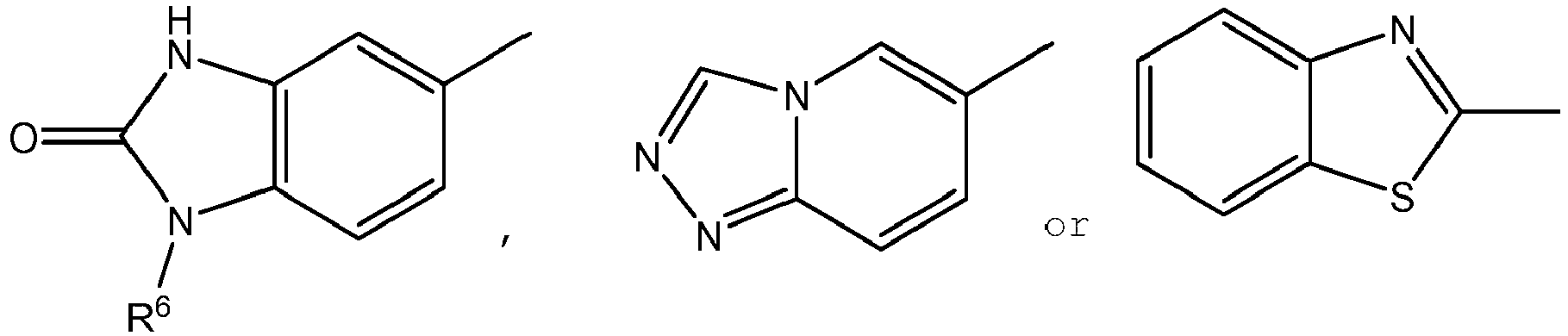
-
------ represents a single bond or a double bond and R6 is as defined above,
-
- (5) 3-pyridyl optionally substituted by 1 or 2 substituents selected from the group consisting of
- (a) a halogen atom,
- (b) cyano,
- (c) nitro,
- (d) hydroxy,
- (e) amino,
- (f) alkyl optionally substituted by 1 to 3 substituents selected from the group consisting of a halogen atom, alkylamino, dialkylamino and hydroxy,
- (g) alkenyl, alkynyl
- (h) aryl,
- (i) cycloalkyl,
- (j) alkoxy,
- (k) alkylamino,
- (l) dialkylamino,
- (m) phenylamino optionally substituted by 1 to 3 halogen atoms,
- (n) a cyclic amino group optionally substituted by alkoxycarbonyl,
- (o) formyl,
- (p) carbamoyl optionally substituted by alkyl optionally substituted by hydroxy, and
- (q) a 5- to 10-membered aromatic heterocyclic group optionally substituted by alkyl,
- (6) 4-pyridyl optionally substituted by a halogen atom,
- (7) 5-pyrimidinyl optionally substituted by 1 or 2 substituents selected from the group consisting of amino, alkylamino, dialkylamino and carboxy,
- (8) 2-indolyl, 3-indolyl, 5-indolyl, 6-indolyl, benzofuranyl, benzothiophenyl, benzoxazolyl or benzothiazolyl, each optionally substituted by 1 or 2 substituents selected from the group consisting of
- (a) a halogen atom,
- (b) cyano,
- (c) nitro,
- (d) hydroxy,
- (e) alkyl optionally substituted by 1 to 3 substituents selected from the group consisting of amino, alkoxycarbonylamino, alkylamino and dialkylamino,
- (f) alkoxy,
- (g) formyl,
- (h) carboxy, and
- (j) amino optionally substituted by 1 or 2 substituents selected from the group consisting of
- (i) alkoxycarbonyl,
- (ii) alkylcarbonyl optionally substituted by a substituent selected from the group consisting of
- (A) cycloalkyloxy optionally substituted by 1 to 3 alkyl,
- (B) alkylamino,
- (C) dialkylamino,
- (D) a cyclic amino group optionally substituted by alkoxycarbonyl, and
- (E) a halogen atom,
- (iii) phenylcarbonyl optionally substituted by 1 to 3 substituents selected from the group consisting of alkyl and alkoxy,
- (iv) cycloalkylcarbonyl,
- (v) a 5- to 10-membered aromatic heterocyclylcarbonyl group optionally substituted by alkyl optionally substituted by 1 to 3 halogen atoms,
- (vi) benzylcarbonyl optionally substituted by 1 to 3 substituents selected from the group consisting of a halogen atom and alkoxy,
- (vii) arylsulfonyl optionally substituted by alkoxy,
- (viii) cycloalkylalkylsulfonyl optionally substituted by 1 to 3 substituents selected from the group consisting of alkyl and oxo,
- (ix) a 5- to 10-membered aromatic heterocyclylsulfonyl group optionally substituted by 1 to 3 alkyl, and
- (x) -C(=N-CN)-SR9 wherein R9 is alkyl,
- (9) a group of the formula

- one of Y1, Y2, Y3 and Y4 is N or N+ (-O-), and the remaining three are each C(R25), C(R26) and C(R27),
- W is O, S, NH or N(R23)
- R23 is a hydrogen atom or alkyl, and
- R24, R25, R26 and R27 are each independently,
- (a) a hydrogen atom,
- (b) cyano, or
- (c) nitro,
- (10) a group of the formula

- R28 is a hydrogen atom or hydroxy, and
- R29 is a hydrogen atom or alkyl,
- (11) a group of the formula

- X5 is C(R11) or N,
- X6 is CH2, C (=O), O, S, SO2 or N(R12),
- X7 is CH(R13), C(=O) or N(R14),
- X8 is CH(R15) or C(=O),
- R10, R12 and R14 are each independently,
- (a) a hydrogen atom or
- (b) alkyl, and
- R11, R13 and R15 are each independently,
- (a) a hydrogen atom,
- (b) a halogen atom,
- (c) cyano,
- (d) nitro,
- (e) amino,
- (f) alkylamino,
- (g) dialkylamino,
- (h) alkyl optionally substituted by hydroxy, or
- (i) alkenyl,
- when X5 is C (R11), R10 and R11 are optionally bonded to form a 5- or 6-membered ring optionally substituted by alkyl or oxo, and
- when X6 is N(R12) and X7 is CH(R13), R12 and R13 are optionally bonded to form a 5- or 6-membered ring,
- (12) a group of the formula

- (a) a hydrogen atom,
- (b) alkyl optionally substituted by 1 to 3 substituents selected from the group consisting of cyano, alkylamino and dialkylamino,
- (c) alkenyl optionally substituted by carboxy,
- (d) formyl,
- (e) carboxy,
- (f) carbamoyl,
- (g) -C(R17)=N-OH wherein R17 is a hydrogen atom, cyano or hydroxy,
- (h) a 5- to 10-membered aromatic heterocyclic group optionally substituted by alkyl, alkoxycarbonyl, carboxy or phenyl, or
- (i) cyano,
- (13) a group of the formula

- R18 is a hydrogen atom or alkyl optionally substituted by 1 to 3 substituents selected from the group consisting of a halogen atom and phenyl,
- n is 0 or 1,
- R19, R20 and R33 are each independently,
- (a) a hydrogen atom,
- (b) a halogen atom,
- (c) cyano,
- (d) alkyl optionally substituted by 1 to 3 substituents selected from the group consisting of
- (i) a halogen atom,
- (ii) cyano,
- (iii) hydroxy,
- (iv) amino,
- (v) alkylamino,
- (vi) dialkylamino, and
- (vii) a cyclic amino group optionally substituted by alkyl,
- (e) alkoxy,
- (f) amino optionally substituted by 1 or 2 substituents selected from the group consisting of
- (i) alkylcarbonyl optionally substituted by a cyclic amino group,
- (ii) alkylsulfonyl,
- (iii) carbamoyl,
- (iv) alkyl, cycloalkyl or cycloalkylalkyl, and
- (v) 5- to 10-membered saturated heterocyclic group,
- (g) carboxy,
- (h) alkoxycarbonyl,
- (i) carbamoyl optionally substituted by alkyl optionally substituted by amino, alkylamino, dialkylamino or alkoxycarbonylamino,
- (j) formyl,
- (k) a 5- to 10-membered aromatic heterocyclic group optionally substituted by alkyl,
- (l) -CH=N-OR21 wherein R21 is a hydrogen atom or alkyl optionally substituted by alkylamino or dialkylamino,
- (m) nitro,
- (n) a 5- to 10-membered saturated heterocyclic group optionally substituted by amino,
- (o) phenyl, or
- (p) -NHC(SMe)=CHCN,
- (14) a group of the formula

- R30 is
- (a) a hydrogen atom,
- (b) a halogen atom,
- (c) cyano,
- (d) alkyl optionally substituted by 1 to 3 substituents selected from the group consisting of a halogen atom and hydroxy,
- (e) alkenyl,
- (f) alkynyl,
- (g) alkoxy,
- (h) formyl,
- (i) -CH=N-OH, or
- (j) carbamoyl,
- R30 is
- (15) naphthyl or isochromenyl,
- (16) quinolyl or isoquinolyl, or their oxide derivatives,
- (17) a group of the formula

- (18) a group of the formula

- U is O or S, and
- R31 is
- (a) a hydrogen atom,
- (b) a halogen atom,
- (c) alkyl optionally substituted by 1 to 3 halogen atoms,
- (d) carboxy,
- (e) nitro,
- (f) cyano, or
- (g) amino,
- (19) a group of the formula

- R32 is
- (a) a halogen atom,
- (b) phenyl, or
- (c) a group of the formula

- R32 is
- (20) a group of the formula

- R34 and R35 are each independently,
- (a) a hydrogen atom, or
- (b) aminoalkyl,
- R34 and R35 are bonded to form a 6-membered ring optionally substituted by amino or oxo,
- R34 and R35 are each independently,
- (21) a group of the formula

- (a) a hydrogen atom,
- (b) a halogen atom,
- (c) nitro, or
- (d) thienyl, or
- (22) a group of the formula
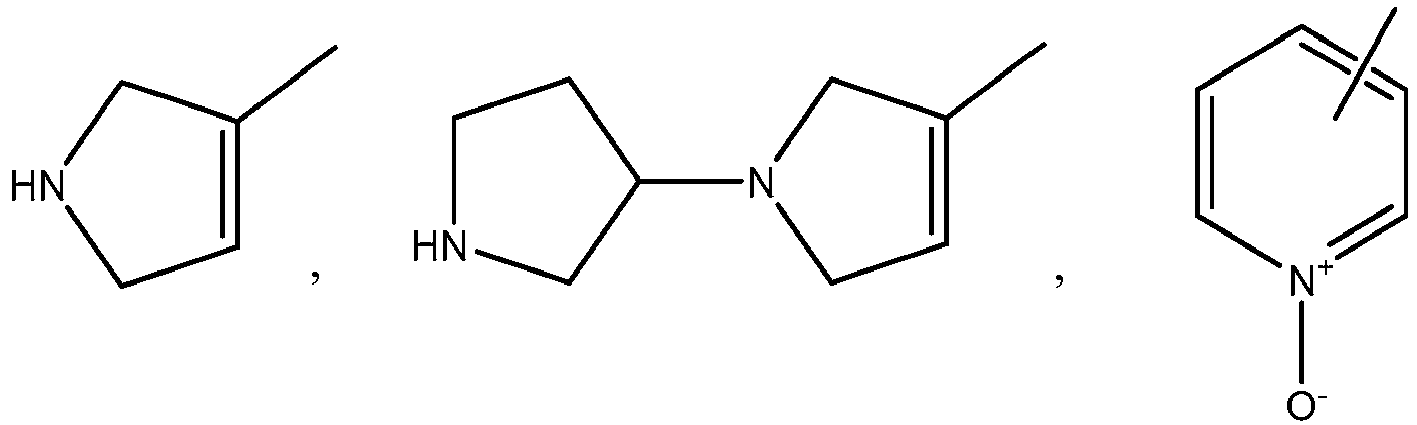

- (1) a fused heterocyclic group of the formula
- Item 1A. The compound of
item 1, wherein
X is a hydrogen atom or a fluorine atom;
R is a hydrogen atom or alkyl;
R1 is (1) cyclopropyl optionally substituted by 1 to 3 halogen atoms or (2) phenyl optionally substituted by 1 to 3 halogen atoms;
R2 is alkyl, alkoxy, haloalkoxy, a chlorine atom or cyano; or
R1 and R2 are bonded to form a 5- or 6-membered ring optionally substituted by alkyl; and
R3 is- (1) a fused heterocyclic group of the formula

-
------ represents a single bond or a double bond, - X1 is C(R5) or N,
- R4 is a hydrogen atom or alkyl, and
- R5 is
- (a) a hydrogen atom,
- (b) a halogen atom,
- (c) cyano,
- (d) nitro,
- (e) hydroxy,
- (f) alkyl optionally substituted by 1 to 3 halogen atoms,
- (g) alkenyl or alkynyl,
- (h) aryl, or
- (i) alkoxy optionally substituted by 1 to 3 halogen atoms,
- when X1 is C(R5), R4 and R5 are optionally bonded to form a 5- or 6-membered ring optionally substituted by oxo,
- said fused heterocyclic group is optionally substituted by 1 or 2 substituents selected from the group consisting of a halogen atom, cyano, nitro, hydroxy and alkyl,
-
- (2) a group of the formula

- X2 is C(R8) or N, and
- R6, R7 and R8 are each independently,
- (a) a hydrogen atom,
- (b) a halogen atom,
- (c) cyano,
- (d) nitro,
- (e) amino,
- (f) alkyl optionally substituted by 1 to 3 substituents selected from the group consisting of a halogen atom, alkoxy and amino,
- (g) alkenyl,
- (h) alkynyl,
- (i) aryl,
- (j) formyl or CH=N-OH,
- (k) carboxy,
- (l) carbamoyl, or
- (m) a 5- to 10-membered aromatic heterocyclic group optionally substituted by alkyl,
- (3) a group of the formula

- X3 and X4 are N, or
- X3 is N and X4 is CR", wherein R" is a hydrogen atom, amino, hydroxy, alkyl or mercapto, or
- X3 is CH and X4 is N,
- R' is a hydrogen atom or alkyl optionally substituted by 1 to 3 substituents selected from the group consisting of substituted hydroxy and amino, and
- R6 is as defined above,
- (4) a group of the formula


-
------ represents a single bond or a double bond and R6 is as defined above,
-
- (5) 3-pyridyl optionally substituted by 1 or 2 substituents selected from the group consisting of
- (a) a halogen atom,
- (b) cyano,
- (c) nitro,
- (d) hydroxy,
- (e) amino,
- (f) alkyl optionally substituted by 1 to 3 substituents selected from the group consisting of a halogen atom, alkylamino, dialkylamino and hydroxy,
- (g) alkenyl or alkynyl,
- (h) aryl,
- (i) cycloalkyl,
- (j) alkoxy,
- (k) alkylamino,
- (l) dialkylamino,
- (m) phenylamino optionally substituted by 1 to 3 halogen atoms,
- (n) a cyclic amino group optionally substituted by alkoxycarbonyl,
- (o) formyl,
- (p) carbamoyl optionally substituted by alkyl optionally substituted by hydroxy, and
- (q) a 5- to 10-membered aromatic heterocyclic group optionally substituted by alkyl,
- (6) 4-pyridyl optionally substituted by a halogen atom,
- (7) 5-pyrimidinyl optionally substituted by 1 or 2 substituents selected from the group consisting of amino, alkylamino, dialkylamino and carboxy,
- (8) 2-indolyl, 3-indolyl, 5-indolyl, 6-indolyl, benzofuranyl, benzothiophenyl, benzoxazolyl or benzothiazolyl, each optionally substituted by 1 or 2 substituents selected from the group consisting of
- (a) a halogen atom,
- (b) cyano,
- (c) nitro,
- (d) hydroxy,
- (e) alkyl optionally substituted by 1 to 3 substituents selected from the group consisting of amino, alkoxycarbonylamino, alkylamino and dialkylamino,
- (f) alkoxy,
- (g) formyl,
- (h) carboxy, and
- (j) amino optionally substituted by 1 or 2 substituents selected from the group consisting of
- (i) alkoxycarbonyl,
- (ii) alkylcarbonyl optionally substituted by a substituent selected from the group consisting of
- (A) cycloalkyloxy optionally substituted by 1 to 3 alkyl,
- (B) alkylamino,
- (C) dialkylamino,
- (D) a cyclic amino group optionally substituted by alkoxycarbonyl, and
- (E) a halogen atom,
- (iii) phenylcarbonyl optionally substituted by 1 to 3 substituents selected from the group consisting of alkyl and alkoxy,
- (iv) cycloalkylcarbonyl,
- (v) a 5- to 10-membered aromatic heterocyclylcarbonyl group optionally substituted by alkyl optionally substituted by 1 to 3 halogen atoms,
- (vi) benzylcarbonyl optionally substituted by 1 to 3 substituents selected from the group consisting of a halogen atom and alkoxy,
- (vii) arylsulfonyl optionally substituted by alkoxy,
- (viii) cycloalkylalkylsulfonyl optionally substituted by 1 to 3 substituents selected from the group consisting of alkyl and oxo,
- (ix) a 5- to 10-membered aromatic heterocyclylsulfonyl group optionally substituted by 1 to 3 alkyl, and
- (x) -C(=N-CN)-SR9 wherein R9 is alkyl,
- (9) a group of the formula

- one of Y1, Y2, Y3 and Y4 is N or N+(-O-), and the remaining three are each C(R25), C(R26) and C(R27),
- W is O, S or N(R23)
- R23 is a hydrogen atom or alkyl, and
- R24, R25, R26 and R27 are each independently,
- (a) a hydrogen atom,
- (b) cyano, or
- (c) nitro,
- (10) a group of the formula

- R28 is a hydrogen atom or hydroxy, and
- R29 is a hydrogen atom or alkyl,
- (11) a group of the formula

- X5 is C(R11) or N,
- X6 is CH2, C (=O), O, S, SO2 or N(R12),
- X7 is CH(R13), C(=O) or N(R14),
- X8 is CH(R15) or C(=O),
- R10, R12 and R14 are each independently,
- (a) a hydrogen atom or
- (b) alkyl, and
- R11, R13 and R15 are each independently,
- (a) a hydrogen atom,
- (b) a halogen atom,
- (c) cyano,
- (d) nitro,
- (e) amino,
- (f) alkylamino,
- (g) dialkylamino,
- (h) alkyl optionally substituted by hydroxy, or
- (i) alkenyl,
- when X5 is C (R11) , R10 and R11 are optionally bonded to form a 5- or 6-membered ring optionally substituted by alkyl or oxo, and
- when X6 is N(R12) and X7 is CH(R13), R12 and R13 are optionally bonded to form a 5- or 6-membered ring,
- (12) a group of the formula

- (a) a hydrogen atom,
- (b) alkyl optionally substituted by 1 to 3 substituents selected from the group consisting of cyano, alkylamino and dialkylamino,
- (c) alkenyl optionally substituted by carboxy,
- (d) formyl,
- (e) carboxy,
- (f) carbamoyl,
- (g) -C(R17)=N-OH wherein R17 is a hydrogen atom, cyano or hydroxy,
- (h) a 5- to 10-membered aromatic heterocyclic group optionally substituted by alkyl, alkoxycarbonyl, carboxy or phenyl, or
- (i) cyano,
- (13) a group of the formula

- R18 is a hydrogen atom or alkyl optionally substituted by 1 to 3 substituents selected from the group consisting of a halogen atom and phenyl, and
- R19 and R20 are each independently,
- (a) a hydrogen atom,
- (b) a halogen atom,
- (c) cyano,
- (d) alkyl optionally substituted by 1 to 3 substituents selected from the group consisting of
- (i) a halogen atom,
- (ii) cyano,
- (iii) hydroxy,
- (iv) amino,
- (v) alkylamino,
- (vi) dialkylamino, and
- (vii) a cyclic amino group optionally substituted by alkyl,
- (e) alkoxy,
- (f) amino optionally substituted by 1 or 2 substituents selected from the group consisting of
- (i) alkylcarbonyl optionally substituted by a cyclic amino group,
- (ii) alkylsulfonyl,
- (iii) carbamoyl, and
- (iv) alkyl or cycloalkyl,
- (g) carboxy,
- (h) alkoxycarbonyl,
- (i) carbamoyl optionally substituted by alkyl optionally substituted by amino, alkylamino, dialkylamino or alkoxycarbonylamino,
- (j) formyl,
- (k) a 5- to 10-membered aromatic heterocyclic group optionally substituted by alkyl,
- (l) -CH=N-OR21 wherein R21 is a hydrogen atom or alkyl optionally substituted by alkylamino or dialkylamino, or
- (m) nitro,
- (14) a group of the formula

- R30 is
- (a) a hydrogen atom,
- (b) a halogen atom,
- (c) cyano,
- (d) alkyl optionally substituted by 1 to 3 substituents selected from the group consisting of a halogen atom and hydroxy,
- (e) alkenyl,
- (f) alkynyl,
- (g) alkoxy,
- (h) formyl, or
- (i) -CH=N-OH,
- R30 is
- (15) naphthyl or isochromenyl, or
- (16) quinolyl or isoquinolyl, or oxide derivative thereof, or a salt thereof.
- (1) a fused heterocyclic group of the formula
-
Item 2. The compound ofitem 1 or 1A, wherein X is a fluorine atom, or a salt thereof. -
Item 3. The compound ofitem 1 or 1A, wherein R3 is a fused heterocyclic group of the formula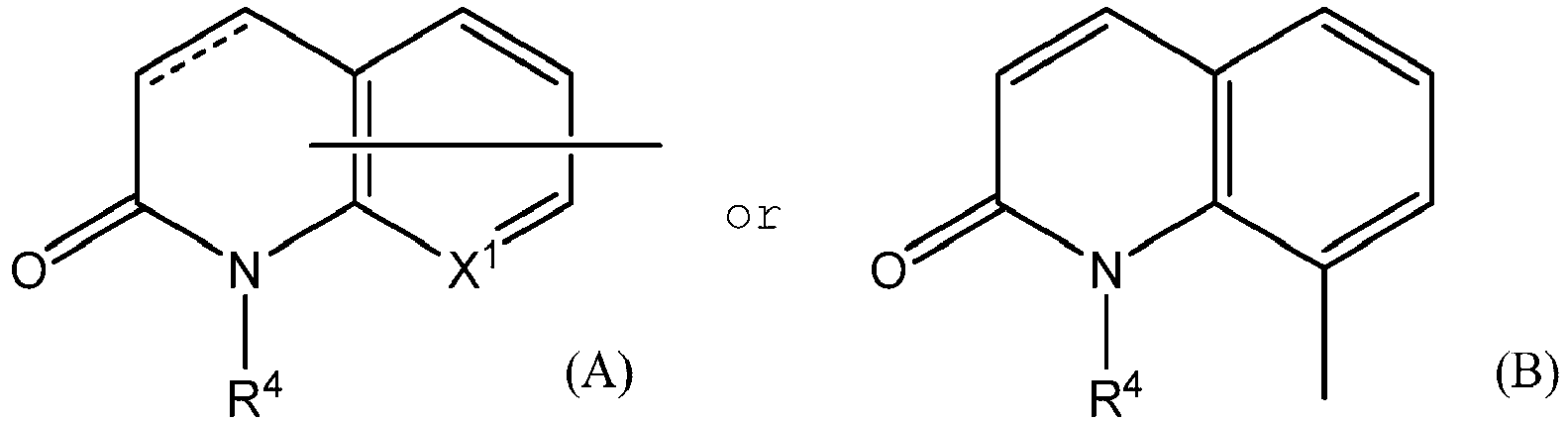
------ , X1 and R4 are as defined initem 1, and said fused heterocyclic group is optionally substituted by 1 or 2 substituents selected from the group consisting of a halogen atom, cyano, nitro, hydroxy and alkyl, or a salt thereof. -
Item 4. The compound ofitem 1 or 1A, wherein R3 is a group of the formula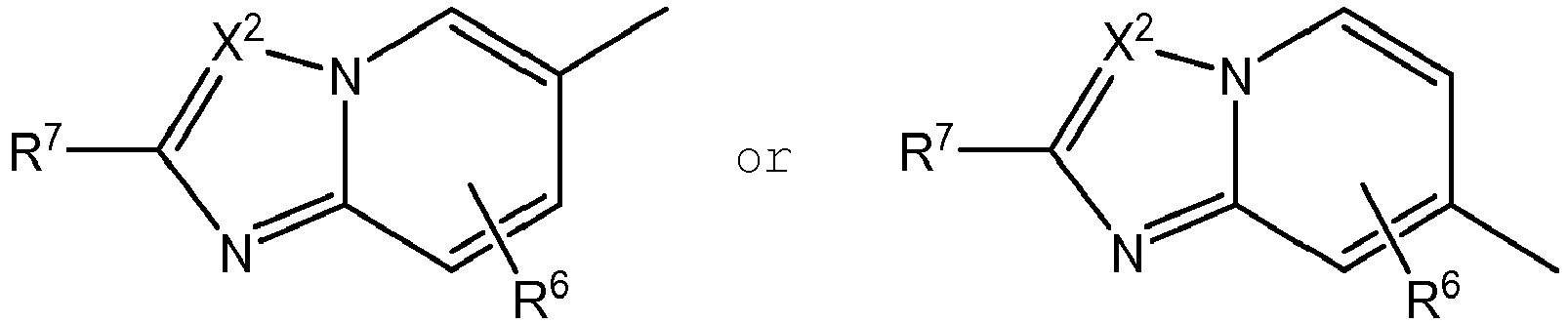
item 1, or a salt thereof. -
Item 5. The compound ofitem 1 or 1A, wherein R3 is a group of the formula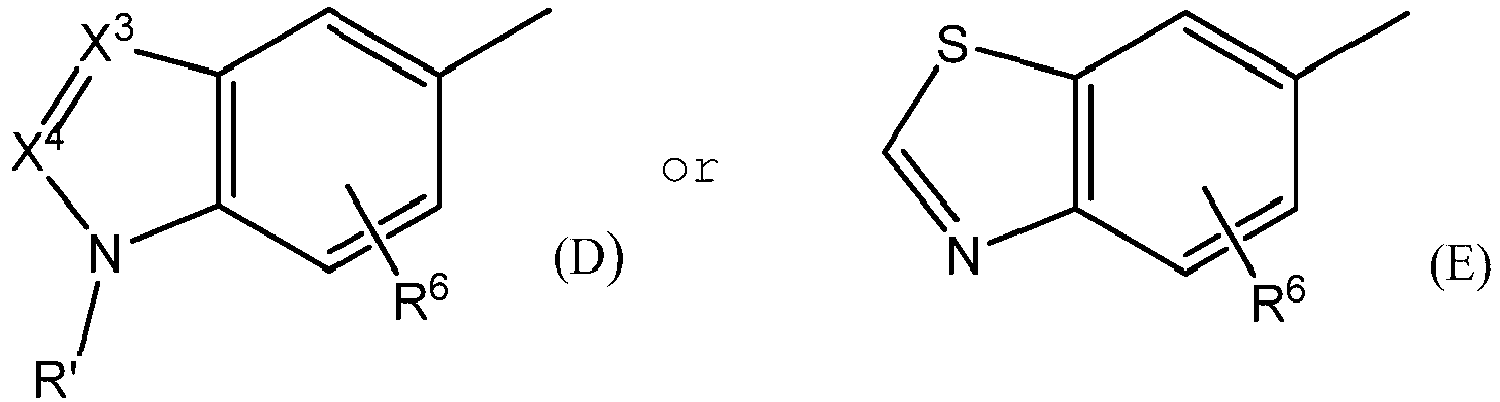
item 1, or a salt thereof. -
Item 6. The compound ofitem 1 or 1A, wherein R3 is a group of the formula


------ and R6 are as defined initem 1, or a salt thereof. - Item 7. The compound of
item 1 or 1A, wherein R3 is a group of the formula
- wherein R22 is
- (a) a halogen atom,
- (b) cyano,
- (c) nitro,
- (d) alkyl optionally substituted by 1 to 3 substituents selected from the group consisting of a halogen atom, alkylamino, dialkylamino and hydroxy,
- (e) alkenyl or alkynyl,
- (f) aryl,
- (g) cycloalkyl,
- (h) alkoxy,
- (i) formyl, or
- (j) carbamoyl optionally substituted by alkyl optionally substituted by hydroxy,
- wherein R22 is
- Item 8. The compound of
item 1 or 1A, wherein R3 is 5-pyrimidinyl substituted by 1 or 2 substituents selected from the group consisting of amino, alkylamino, dialkylamino and carboxy, or a salt thereof. - Item 9. The compound of
item 1 or 1A, wherein R3 is 2-indolyl optionally substituted by 1 or 2 substituents selected from the group consisting of- (a) a halogen atom,
- (b) cyano,
- (c) nitro,
- (d) hydroxy,
- (e) alkyl optionally substituted by 1 to 3 substituents selected from the group consisting of amino, alkoxycarbonylamino, alkylamino and dialkylamino,
- (f) alkoxy,
- (g) formyl,
- (h) carboxy, and
- (j) amino optionally substituted by 1 or 2 substituents selected from the group consisting of
- (i) alkoxycarbonyl,
- (ii) alkylcarbonyl optionally substituted by a substituent selected from the group consisting of
- (A) cycloalkyloxy optionally substituted by 1 to 3 alkyl,
- (B) alkylamino,
- (C) dialkylamino,
- (D) a cyclic amino group optionally substituted by alkoxycarbonyl, and
- (E) a halogen atom,
- (iii) phenylcarbonyl optionally substituted by 1 to 3 substituents selected from the group consisting of alkyl and alkoxy,
- (iv) cycloalkylcarbonyl,
- (v) a 5- to 10-membered aromatic heterocyclylcarbonyl group optionally substituted by alkyl optionally substituted by 1 to 3 halogen atoms,
- (vi) benzylcarbonyl optionally substituted by 1 to 3 substituents selected from the group consisting of a halogen atom and alkoxy,
- (vii) arylsulfonyl optionally substituted by alkoxy,
- (viii) cycloalkylalkylsulfonyl optionally substituted by 1 to 3 substituents selected from the group consisting of alkyl and oxo,
- (ix) a 5- to 10-membered aromatic heterocyclylsulfonyl group optionally substituted by 1 to 3 alkyl, and
- (x) -C(=N-CN)-SR9 wherein R9 is alkyl,
- Item 10. The compound of
item 1 or 1A, wherein R3 is a group of the formula
item 1, or a salt thereof. - Item 11. The compound of
item 1 or 1A, wherein R3 is a group of the formula
item 1, or a salt thereof. - Item 12. The compound of
item 1 or 1A, wherein R3 is a group of the formula
item 1, or a salt thereof. - Item 13. The compound of
item 1 or 1A, wherein R3 is a group of the formula
- wherein R16a is
- (a) alkyl optionally substituted by 1 to 3 substituents selected from the group consisting of cyano, alkylamino and dialkylamino,
- (b) alkenyl optionally substituted by carboxy,
- (c) formyl,
- (d) carboxy,
- (e) carbamoyl,
- (f) -C(R17)=N-OH wherein R17 is a hydrogen atom, cyano or hydroxy,
- (g) a 5- to 10-membered aromatic heterocyclic group optionally substituted by alkyl, alkoxycarbonyl, carboxy or phenyl, or
- (h) cyano,
- wherein R16a is
- Item 14. The compound of
item 1 or 1A, wherein R3 is a group of the formula
- R18a is alkyl, and
- R19a is
- (a) a halogen atom,
- (b) cyano,
- (c) alkyl optionally substituted by 1 to 3 substituents selected from the group consisting of
- (i) a halogen atom,
- (ii) cyano,
- (iii) hydroxy,
- (iv) amino,
- (v) alkylamino,
- (vi) dialkylamino, and
- (vii) a cyclic amino group optionally substituted by alkyl,
- (d) alkoxy,
- (e) amino optionally substituted by 1 or 2 substituents selected from the group consisting of
- (i) alkylcarbonyl optionally substituted by a cyclic amino group,
- (ii) alkylsulfonyl,
- (iii) carbamoyl, and
- (iv) alkyl or cycloalkyl,
- (f) carboxy,
- (g) alkoxycarbonyl,
- (h) carbamoyl optionally substituted by alkyl optionally substituted by amino, alkylamino, dialkylamino or alkoxycarbonylamino,
- (i) formyl,
- (j) a 5- to 10-membered aromatic heterocyclic group optionally substituted by alkyl,
- (k) -CH=N-OR21 wherein R21 is a hydrogen atom or alkyl optionally substituted by alkylamino or dialkylamino, or
- (l) nitro,
- Item 15. The compound of
item 1 or 1A, wherein R3 is a group of the formula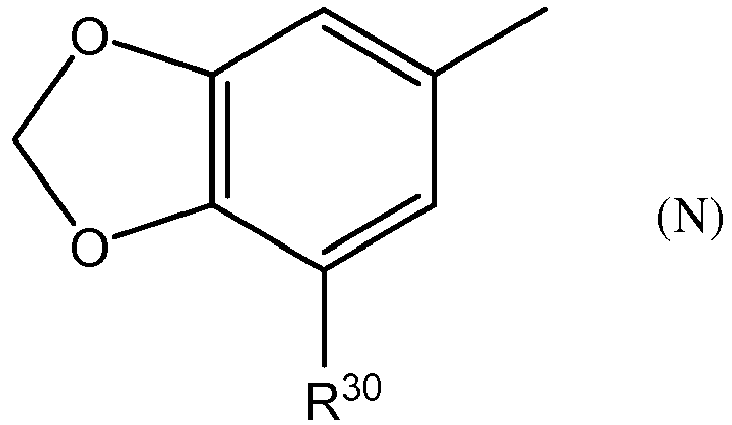
item 1, or a salt thereof. - Item 16. The compound of
item 1 or 1A, wherein R3 is naphthyl or isochromenyl, or a salt thereof. - Item 17. The compound of
item 1 or 1A, wherein R3 is quinolyl or isoquinolyl, or oxide derivative thereof, or a salt thereof. - Item 18. The compound of
item 1 or 1A, wherein R is a hydrogen atom, or a salt thereof. - Item 19. The compound of
item 1 or 1A, wherein R1 is cyclopropyl, 2-fluorocyclopropyl or 2,4-difluorophenyl, or a salt thereof. - Item 20. The compound of
item 1 or 1A, wherein R2 is methyl, methoxy or a chlorine atom, or a salt thereof. - Item 21. A pharmaceutical composition comprising a compound of
item 1 or 1A or a salt thereof and a pharmaceutically acceptable carrier. - Item 22. An antimicrobial agent comprising a compound of
item 1 or 1A or a salt thereof. - Item 23. A compound of
item 1 or 1A or a salt thereof for use as a medicament. - Item 24. A compound of
item 1 or 1A or a salt thereof for use as an antimicrobial agent. - Item 25. A compound of
item 1 or 1A or a salt thereof for use in the prevention or treatment of a bacterial infection. - Item 26. Use of a compound of
item 1 or 1A or a salt thereof for the manufacture of a medicament for preventing or treating a bacterial infection. - Item 27. A method for preventing or treating a bacterial infection which comprises administering an effective amount of a compound of
item 1 or 1A or a salt thereof to a human or an animal. - The compound of the formula (I) or a salt thereof (hereinafter sometimes to be abbreviated as compound (I)) has excellent antibacterial activity against various gram positive and gram negative bacteria, and is useful for the prevention or treatment of various infectious diseases induced by various bacteria in human, other animals and fish and is also useful as an external antimicrobial or disinfectant agent for medical instruments or the like.
-
-
Fig. 1 is a graph showing the results of the animals administered with compound 2-18 in Experimental Example 2. -
Fig. 2 is a graph showing the results of the animals administered with vancomycin in Experimental Example 2. - Specific examples of groups in the formula (I) are as follows.
- Examples of "halogen atom" include fluorine atom, chlorine atom, bromine atom, and iodine atom.
- Examples of "alkyl" and "alkyl" moiety in "alkylamino", "dialkylamino", "alkylcarbonyl", "cycloalkylalkylsulfonyl", "cycloalkylalkyl", "aminoalkyl" and "alkylsulfonyl" include straight or branched C1-6 alkyl such as methyl, ethyl, propyl, isopropyl, butyl, isobutyl, sec-butyl, tert-butyl, pentyl, 1-ethylpropyl, isopentyl, neopentyl, tert-pentyl, hexyl, 1,2,2-trimethylpropyl, 3,3-dimethylbutyl, 2-ethylbutyl, isohexyl, 3-methylpentyl, etc.
- Examples of "alkenyl" include straight or branched C2-6 alkenyl such as vinyl, 1-propenyl, 2-propenyl, 1-butenyl, 2-butenyl, 3-butenyl, 1-methyl-2-propenyl, 2-pentenyl, 2-hexenyl, etc.
- Examples of "alkynyl" include straight or branched C2-6 alkynyl such as ethynyl, 2-propynyl, 2-butynyl, 3-butynyl, 1-methyl-2-propynyl, 2-pentynyl, 2-hexynyl, etc.
- Examples of "alkoxy" and "alkoxy" moiety in "haloalkoxy", "alkoxycarbonyl" and "alkoxycarbonylamino" include straight or branched C1-6 alkoxy such as methoxy, ethoxy, propoxy, isopropoxy, butoxy, isobutoxy, sec-butoxy, tert-butoxy, pentyloxy, isopentyloxy, neopentyloxy, tert-pentyloxy, hexyloxy, isohexyloxy, 3-methylpentyloxy, etc.
- Examples of "haloalkoxy" include straight or branched C1-6 alkoxy substituted by 1 to 3 halogen atoms. Examples thereof include fluoromethoxy, difluoromethoxy, trifluoromethoxy, chloromethoxy, dichloromethoxy, trichloromethoxy, bromomethoxy, dibromomethoxy, dichlorofluoromethoxy, 2,2,2-trifluoroethoxy, 2-chloroethoxy, 3,3,3-trifluoropropoxy, 2-chloropropoxy, 3-chloropropoxy, 3-bromopropoxy, 4,4,4-trifluorobutoxy, 2-chlorobutoxy, 4-chlorobutoxy, 4-bromobutoxy, 5,5,5-trifluoropentyloxy, 5-chloropentyloxy, 6,6,6-trifluorohexyloxy, 6-chlorohexyloxy, etc. Preferable examples thereof include difluoromethoxy.
- Examples of "alkenyloxy" include straight or branched C2-6 alkenyloxy such as vinyloxy, 1-propenyloxy, 2-propenyloxy, 1-butenyloxy, 2-butenyloxy, 3-butenyloxy, 1-methyl-2-propenyloxy, 2-pentenyloxy, 2-hexenyloxy, etc.
- Examples of "aryl" and "aryl" moiety in "arylsulfonyl" include C6-14 (preferably C6-10) aryl such as phenyl, naphthyl (e.g., 1-naphthyl, 2-naphthyl), etc. Preferable examples thereof include phenyl.
- Examples of "5- to 10-membered aromatic heterocyclic group" and "5- to 10-membered aromatic heterocyclyl" moiety in "5- to 10-membered aromatic heterocyclylcarbonyl group" and "5-to 10-membered aromatic heterocyclylsulfonyl group" include 5-to 10-membered (preferably 5- or 6-membered) aromatic heterocyclic group containing 1 to 4 (preferably 1 to 3, more preferably 1 or 2) heteroatoms selected from a nitrogen atom, an oxygen atom and a sulfur atom. Examples thereof include furyl, thienyl, pyrrolyl, pyrazolyl, imidazolyl, triazolyl (e.g., 1,2,3-triazolyl, 1,2,4-triazolyl), tetrazolyl, isoxazolyl, oxazolyl, furazanyl, isothiazolyl, thiazolyl, pyridyl (e.g., 2-pyridyl, 3-pyridyl, 4-pyridyl), pyridazinyl, pyrimidinyl, pyrazinyl, benzofuranyl, isobenzofuranyl, benzo[b]thiophenyl, benzo[c]thiophenyl, indolyl, isoindolyl, indolizinyl, indazolyl, benzimidazolyl, benzotriazolyl, benzoxazolyl, 1,2-benzisoxazolyl, benzothiazolyl, 1,2-benzisothiazolyl, purinyl, quinolyl, isoquinolyl, quinolizinyl, cinnolinyl, quinazolinyl, quinoxalinyl, phthalazinyl, naphthyridinyl, pteridinyl, etc. Preferable examples thereof include pyrrolyl, imidazolyl, oxazolyl, triazolyl (e.g., 1,2,3-triazolyl, 1,2,4-triazolyl), tetrazolyl, pyridyl (e.g., 2-pyridyl, 3-pyridyl, 4-pyridyl), benzimidazolyl, etc.
- Examples of "alkylamino" include C1-6 alkylamino such as methylamino, ethylamino, propylamino, isopropylamino, butylamino, isobutylamino, sec-butylamino, tert-butylamino, pentylamino, isopentylamino, neopentylamino, tert-pentylamino, hexylamino, etc.
- Examples of "dialkylamino" include di(C1-6 alkyl)amino such as dimethylamino, diethylamino, dipropylamino, diisopropylamino, dibutylamino, diisobutylamino, di(sec-butyl)amino, di(tert-butyl)amino, dipentylamino, di(tert-pentyl)amino, dihexylamino, ethylmethylamino, etc.
- Examples of "aminoalkyl" include amino-C1-6 alkyl such as aminomethyl, 2-aminoethyl, 3-aminopropyl, 4-aminobutyl, 5-aminopentyl, 6-aminohexyl, etc.
- Examples of "cycloalkyl" and "cycloalkyl" moiety in "cycloalkyloxy", "cycloalkylcarbonyl", "cycloalkylalkyl" and "cycloalkylalkylsulfonyl" include C3-8 cycloalkyl such as cyclopropyl, cyclobutyl, cyclopentyl, cyclohexyl, cycloheptyl, cyclooctyl, norbornanyl (e.g., 2-norbornanyl), etc.
- Examples of "cycloalkylalkyl" include C3-8 cycloalkyl-C1-6 alkyl such as cyclopropylmethyl, cyclobutylmethyl, cyclopentylmethyl, cyclohexylmethyl, cycloheptylmethyl, cyclooctylmethyl, norbornanylmethyl (e.g., norbornan-2-ylmethyl), etc.
- Examples of "cyclic amino group" includes a 4- to 7-membered (preferably 5- or 6-membered) cyclic amino group containing one nitrogen atom and optionally further containing one heteroatom selected from a nitrogen atom, an oxygen atom and a sulfur atom. Examples thereof include 1-azetidinyl, 1-pyrrolidinyl, 1-imidazolidinyl, 1-pyrazolidinyl, piperidino, 1-piperazinyl, morpholino, thiomorpholino, 1-azepanyl, 1,4-oxazepan-4-yl, etc. Preferable examples thereof include 1-pyrrolidinyl, piperidino, 1-piperazinyl, morpholino, thiomorpholino, etc.
- Examples of "alkoxycarbonyl" include C1-6 alkoxy-carbonyl wherein the alkoxy moiety is C1-6 alkoxy. Examples thereof include methoxycarbonyl, ethoxycarbonyl, propoxycarbonyl, isopropoxycarbonyl, butoxycarbonyl, isobutoxycarbonyl, sec-butoxycarbonyl, tert-butoxycarbonyl, pentyloxycarbonyl, hexyloxycarbonyl, etc.
- Examples of "alkoxycarbonylamino" include C1-6 alkoxycarbonylamino wherein the alkoxy moiety is C1-6 alkoxy. Examples thereof include methoxycarbonylamino, ethoxycarbonylamino, propoxycarbonylamino, isopropoxycarbonylamino, butoxycarbonylamino, isobutoxycarbonylamino, sec-butoxycarbonylamino, tert-butoxycarbonylamino, pentyloxycarbonylamino, hexyloxycarbonylamino, etc.
- Examples of "alkylcarbonyl" include C1-6 alkyl-carbonyl wherein the alkyl moiety is C1-6 alkyl. Examples thereof include acetyl, ethylcarbonyl, propylcarbonyl, isopropylcarbonyl, butylcarbonyl, isobutylcarbonyl, sec-butylcarbonyl, tert-butylcarbonyl, pentylcarbonyl, hexylcarbonyl, etc.
- Examples of "cycloalkyloxy" include C3-8 cycloalkyloxy such as cyclopropyloxy, cyclobutyloxy, cyclopentyloxy, cyclohexyloxy, cycloheptyloxy, cyclooctyloxy, etc.
- Examples of "cycloalkylcarbonyl" include C3-8 cycloalkylcarbonyl such as cyclopropylcarbonyl, cyclobutylcarbonyl, cyclopentylcarbonyl, cyclohexylcarbonyl, cycloheptylcarbonyl, cyclooctylcarbonyl, etc.
- Examples of "5- to 10-membered aromatic heterocyclylcarbonyl group" include a 5- to 10-membered (preferably 5- or 6-membered) aromatic heterocyclylcarbonyl group wherein the heterocyclyl moiety contains 1 to 4 (preferably 1 to 3, more preferably 1 or 2) heteroatoms selected from a nitrogen atom, an oxygen atom and a sulfur atom. Examples of the heterocyclyl moiety are same as the examples of the 5- to 10-membered aromatic heterocyclic group mentioned above. Preferable examples of "5- to 10-membered aromatic heterocyclylcarbonyl group" include pyridylcarbonyl (e.g., 2-pyridylcarbonyl, 3-pyridylcarbonyl, 4-pyridylcarbonyl).
- Examples of "arylsulfonyl" include C6-14 (preferably C6-10) arylsulfonyl such as phenylsulfonyl, naphthylsulfonyl (e.g., 1-naphthylsulfonyl, 2-naphthylsulfonyl), etc. Preferable examples thereof include phenylsulfonyl.
- Examples of "cycloalkylalkylsulfonyl" include C3-8 cycloalkyl-C1-6 alkylsulfonyl such as cyclopropylmethylsulfonyl, cyclobutylmethylsulfonyl, cyclopentylmethylsulfonyl, cyclohexylmethylsulfonyl, cycloheptylmethylsulfonyl, cyclooctylmethylsulfonyl, norbornanylmethylsulfonyl (e.g., norbornan-2-ylmethylsulfonyl), etc.
- Examples of "5- to 10-membered aromatic heterocyclylsulfonyl group" include a 5- to 10-membered (preferably 5- or 6-membered) aromatic heterocyclylsulfonyl group wherein the heterocyclyl moiety contains 1 to 4 (preferably 1 to 3, more preferably 1 or 2) heteroatoms selected from a nitrogen atom, an oxygen atom and a sulfur atom. Examples of the heterocyclyl moiety are same as the examples of the 5- to 10-membered aromatic heterocyclic group mentioned above. Preferable examples of "5- to 10-membered aromatic heterocyclylsulfonyl group" include imidazolylsulfonyl.
- Examples of "alkylsulfonyl" include C1-6 alkylsulfonyl wherein the alkyl moiety is C1-6 alkyl. Examples thereof include methylsulfonyl, ethylsulfonyl, propylsulfonyl, isopropylsulfonyl, butylsulfonyl, isobutylsulfonyl, sec-butylsulfonyl, tert-butylsulfonyl, pentylsulfonyl, hexylsulfonyl, etc.
- Examples of "cyclopropyl optionally substituted by 1 to 3 halogen atoms" include cyclopropyl optionally substituted by 1 fluorine atom such as cyclopropyl, 2-fluorocyclopropyl, etc.
- Examples of "phenyl optionally substituted by 1 to 3 halogen atoms" include phenyl substituted by two fluorine atoms such as 2,4-difluorophenyl, etc.
- Examples of "5- to 10-membered saturated heterocyclic group" include a 5- to 10-membered (preferably 5- or 6-membered) saturated heterocyclic group containing 1 to 4 (preferably 1 to 3, more preferably 1 or 2) heteroatoms selected from a nitrogen atom, an oxygen atom and a sulfur atom. Examples thereof include pyrrolidinyl, piperidyl, piperazinyl, morpholinyl, thiomorpholinyl, etc.
- Examples of "6-membered ring optionally substituted by amino or oxo" formed by R34 and R35 include a 6-membered ring optionally containing one nitrogen atom, and said ring is optionally substituted by amino or oxo. Examples thereof include cyclohexene and dihydropyridine, each optionally substituted by amino or oxo.
- Examples of "5- or 6-membered ring optionally substituted by alkyl" formed by R1 and R2 include a 5- or 6-membered (preferably 6-membered) ring containing one nitrogen atom and optionally further containing one oxygen atom, and said ring is optionally substituted by alkyl. Preferably, R1 and R2 are optionally bonded to form -O-CH2-CH(CH3)- wherein the oxygen atom is bonded to the phenyl ring of the quinolone ring as shown below.

- Examples of "5- or 6-membered ring optionally substituted by oxo" formed by R4 and R5 include a 5- or 6-membered (preferably 6-membered) ring containing one nitrogen atom and optionally further containing one oxygen atom, and said ring is optionally substituted by oxo. Preferably, R4 and R5 are optionally bonded to form -CH2-O-(C=O)- wherein the carbonyl is bonded to the phenyl ring of the quinolone ring as shown below.

- Examples of "5- or 6-membered ring optionally substituted by alkyl or oxo" formed by R10 and R11 include a 5- or 6-membered (preferably 5-membered) ring containing 2 or 3 nitrogen atoms, and said ring is optionally substituted by alkyl or oxo. Preferably, R10 and R11 are optionally bonded to form -(C=O)-NH-, -C(R31)=N- or -N=N- wherein R31 is a hydrogen atom or alkyl, and the nitrogen atom is bonded to the phenyl ring of the fused ring, as shown below.

- Examples of "5- or 6-membered ring" formed by R12 and R13 include a 5- or 6-membered (preferably 6-membered) ring containing one nitrogen atom. Preferably, R12 and R13 are optionally bonded to form -(CH2)4- as shown below.

- X is a hydrogen atom or a fluorine atom, preferably, a fluorine atom.
- R is a hydrogen atom or alkyl, preferably, a hydrogen atom.
- R1 is (1) cyclopropyl optionally substituted by 1 to 3 halogen atoms or (2) phenyl optionally substituted by 1 to 3 halogen atoms, preferably, cyclopropyl, 2-fluorocyclopropyl or 2,4-difluorophenyl.
- R2 is a hydrogen atom; alkyl optionally substituted by 1 or 2 substituents selected from the group consisting of a halogen atom and hydroxyl; alkoxy; haloalkoxy; a halogen atom; cyano; cyclopropyl; nitro; amino; formyl; alkenyl or alkynyl, preferably, alkyl, alkoxy, haloalkoxy, a chlorine atom or cyano, more preferably, C1-6 alkyl, C1-6 alkoxy, C1-6 alkoxy substituted by 1 to 3 halogen atoms, a chlorine atom or cyano, still more preferably, methyl, methoxy or a chlorine atom.
- Examples of a fused heterocyclic group of the formula (A) or (B) include a fused heterocyclic group of the formula


- Preferable examples of a fused heterocyclic group of the formula (A) or (B) include a fused heterocyclic group of the formula


- Other preferable examples of a fused heterocyclic group of the formula (A) or (B) include a fused heterocyclic group of the formula

- Examples of a group of the formula (C) include a group of the formula

- Preferable examples of a group of the formula (C) include a group of the formula

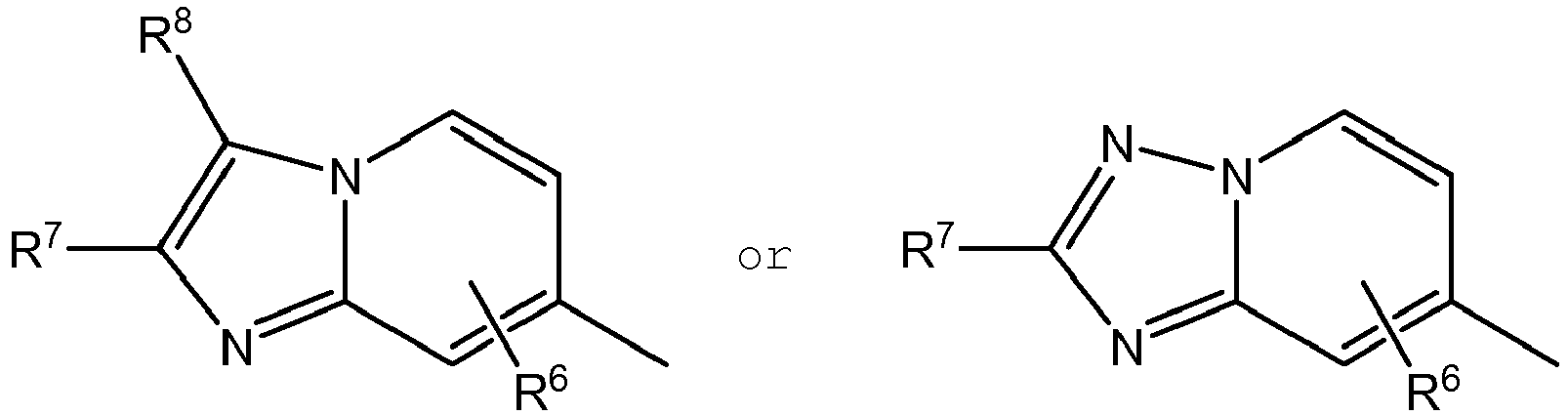
- In the above formulas, R6, R7 and R8 are each independently,
- (a) a hydrogen atom,
- (b) a halogen atom,
- (c) cyano,
- (d) nitro,
- (e) amino,
- (f) alkyl optionally substituted by 1 to 3 substituents selected from the group consisting of a halogen atom and amino,
- (g) alkenyl,
- (h) alkynyl,
- (i) aryl,
- (j) formyl,
- (k) carboxy,
- (l) carbamoyl, or
- (m) a 5- to 10-membered aromatic heterocyclic group (e.g., pyridyl, triazolyl) optionally substituted by alkyl.
- Examples of a group of the formula (D) or (E) include a group of the formula


- Preferably, R3 is 3-pyridyl optionally substituted by 1 or 2 substituents selected from the group consisting of
- (a) a halogen atom,
- (b) cyano,
- (c) nitro,
- (d) hydroxy,
- (e) amino,
- (f) alkyl optionally substituted by 1 to 3 substituents selected from the group consisting of a halogen atom, alkylamino, dialkylamino and hydroxy,
- (g) alkenyl,
- (h) aryl,
- (i) cycloalkyl,
- (j) alkoxy,
- (k) alkylamino,
- (l) dialkylamino,
- (m) phenylamino optionally substituted by 1 to 3 halogen atoms,
- (n) a cyclic amino group (e.g., 1-piperazinyl, morpholino) optionally substituted by alkoxycarbonyl,
- (o) formyl,
- (p) carbamoyl, and
- (q) a 5- to 10-membered aromatic heterocyclic group (e.g., triazolyl) optionally substituted by alkyl.
- More preferably, R3 is a group of the formula

- (a) a halogen atom,
- (b) cyano,
- (c) nitro,
- (d) alkyl optionally substituted by 1 to 3 substituents selected from the group consisting of a halogen atom, alkylamino, dialkylamino and hydroxy,
- (e) alkenyl,
- (f) aryl,
- (g) cycloalkyl,
- (h) alkoxy,
- (i) formyl, or
- (j) carbamoyl.
- Preferably, R22 is
- (a) cyano,
- (b) nitro,
- (c) aryl,
- (d) formyl, or
- (e) carbamoyl.
- Preferably, R3 is 5-pyrimidinyl substituted by 1 or 2 substituents selected from the group consisting of amino, alkylamino and dialkylamino.
- Preferably, R3 is 2-indolyl, 3-indolyl, 5-indolyl or 6-indolyl, each optionally substituted by 1 or 2 substituents selected from the group consisting of
- (a) a halogen atom,
- (b) cyano,
- (c) nitro,
- (d) hydroxy,
- (e) alkyl optionally substituted by 1 to 3 substituents selected from the group consisting of amino, alkoxycarbonylamino, alkylamino and dialkylamino,
- (f) alkoxy,
- (g) formyl,
- (h) carboxy, and
- (j) amino optionally substituted by 1 or 2 substituents selected from the group consisting of
- (i) alkoxycarbonyl,
- (ii) alkylcarbonyl optionally substituted by a substituent selected from the group consisting of
- (A) cycloalkyloxy optionally substituted by 1 to 3 alkyl,
- (B) alkylamino,
- (C) dialkylamino,
- (D) a cyclic amino group (e.g., morpholino, 1-piperazinyl) optionally substituted by alkoxycarbonyl, and
- (E) a halogen atom,
- (iii) phenylcarbonyl optionally substituted by 1 to 3 substituents selected from the group consisting of alkyl and alkoxy,
- (iv) cycloalkylcarbonyl,
- (v) a 5- to 10-membered aromatic heterocyclylcarbonyl group (e.g, pyridylcarbonyl) optionally substituted by alkyl optionally substituted by 1 to 3 halogen atoms,
- (vi) benzylcarbonyl optionally substituted by 1 to 3 substituents selected from the group consisting of a halogen atom and alkoxy,
- (vii) arylsulfonyl optionally substituted by alkoxy,
- (viii) cycloalkylalkylsulfonyl optionally substituted by 1 to 3 substituents selected from the group consisting of alkyl and oxo (e.g., camphorsulfonyl),
- (ix) a 5- to 10-membered aromatic heterocyclylsulfonyl group (e.g., imidazolylsulfonyl) optionally substituted by 1 to 3 alkyl, and
- (x) -C(=N-CN)-SR9 wherein R9 is alkyl.
- More preferably, R3 is 2-indolyl optionally substituted by 1 or 2 substituents selected from the group consisting of
- (a) a halogen atom,
- (b) cyano,
- (c) nitro,
- (d) hydroxy,
- (e) alkyl optionally substituted by 1 to 3 substituents selected from the group consisting of amino, alkoxycarbonylamino, alkylamino and dialkylamino,
- (f) alkoxy,
- (g) formyl,
- (h) carboxy, and
- (j) amino optionally substituted by 1 or 2 substituents selected from the group consisting of
- (i) alkoxycarbonyl,
- (ii) alkylcarbonyl optionally substituted by a substituent selected from the group consisting of
- (A) cycloalkyloxy optionally substituted by 1 to 3 alkyl,
- (B) alkylamino,
- (C) dialkylamino,
- (D) a cyclic amino group (e.g., morpholino, 1-piperazinyl) optionally substituted by alkoxycarbonyl, and
- (E) a halogen atom,
- (iii) phenylcarbonyl optionally substituted by 1 to 3 substituents selected from the group consisting of alkyl and alkoxy,
- (iv) cycloalkylcarbonyl,
- (v) a 5- to 10-membered aromatic heterocyclylcarbonyl group (e.g, pyridylcarbonyl) optionally substituted by alkyl optionally substituted by 1 to 3 halogen atoms,
- (vi) benzylcarbonyl optionally substituted by 1 to 3 substituents selected from the group consisting of a halogen atom and alkoxy,
- (vii) arylsulfonyl optionally substituted by alkoxy,
- (viii) cycloalkylalkylsulfonyl optionally substituted by 1 to 3 substituents selected from the group consisting of alkyl and oxo (e.g., camphorsulfonyl),
- (ix) a 5- to 10-membered aromatic heterocyclylsulfonyl group (e.g., imidazolylsulfonyl) optionally substituted by 1 to 3 alkyl, and
- (x) -C(=N-CN)-SR9 wherein R9 is alkyl.
- Examples of a group of the formula (F) or (G) include a group of the formula


- R23 is a hydrogen atom or alkyl, and
- R24, R25, R26 and R27 are each independently,
- (a) a hydrogen atom,
- (b) cyano, or
- (c) nitro.
- Examples of a group of the formula (K) include a group of the formula

- Preferable examples of a group of the formula (K) include a group of the formula


- When R10 and R11 are bonded to form a 5- or 6-membered ring optionally substituted by alkyl or oxo, preferable examples of a group of the formula (K) include a group of the formula

- When R12 and R13 are bonded to form a 5- or 6-membered ring, preferable examples of a group of the formula (K) include a group of the formula

- More preferable examples of a group of the formula (K) include a group of the formula

- whrein R10a is
- (a) a hydrogen atom or
- (b) alkyl, and
- R11a, R13a and R15a are each independently,
- (a) a hydrogen atom,
- (b) a halogen atom,
- (c) cyano,
- (d) nitro,
- (e) amino,
- (f) alkylamino,
- (g) dialkylamino,
- (h) alkyl optionally substituted by hydroxy, or
- (i) alkenyl,
- R10a and R11a are optionally bonded to form a 5- or 6-membered ring optionally substituted by alkyl or oxo,
- provided that R10a, R11a, R13a and R15a are not simultaneously hydrogen atom.
- Preferably, R3 is a group of the formula

- wherein R16 is
- (a) a hydrogen atom,
- (b) alkyl optionally substituted by 1 to 3 substituents selected from the group consisting of cyano, alkylamino and dialkylamino,
- (c) alkenyl optionally substituted by carboxy,
- (d) formyl,
- (e) carboxy,
- (f) carbamoyl,
- (g) -C(R17)=N-OH wherein R17 is a hydrogen atom, cyano or hydroxy, or
- (h) a 5- to 10-membered aromatic heterocyclic group (e.g., tetrazolyl, pyrrolyl, oxazolyl, benzimidazolyl, triazolyl) optionally substituted by alkyl, alkoxycarbonyl, carboxy or phenyl.
- More preferably, R3 is a group of the formula

- wherein R16a is
- (a) alkyl optionally substituted by 1 to 3 substituents selected from the group consisting of cyano, alkylamino and dialkylamino,
- (b) alkenyl optionally substituted by carboxy,
- (c) formyl,
- (d) carboxy,
- (e) carbamoyl,
- (f) -C(R17)=N-OH wherein R17 is a hydrogen atom, cyano or hydroxy, or
- (g) a 5- to 10-membered aromatic heterocyclic group (e.g., tetrazolyl, pyrrolyl, oxazolyl, benzimidazolyl, triazolyl) optionally substituted by alkyl, alkoxycarbonyl, carboxy or phenyl.
- Preferably, R3 is a group of the formula

- R18 is alkyl optionally substituted by 1 to 3 substituents selected from the group consisting of a halogen atom and phenyl, and
- R19 and R20 are each independently,
- (a) a hydrogen atom,
- (b) a halogen atom,
- (c) cyano,
- (d) alkyl optionally substituted by 1 to 3 substituents selected from the group consisting of
- (i) a halogen atom,
- (ii) cyano,
- (iii) hydroxy,
- (iv) amino,
- (v) alkylamino,
- (vi) dialkylamino, and
- (vii) a cyclic amino group (e.g., 1-piperazinyl) optionally substituted by alkyl,
- (e) alkoxy,
- (f) amino optionally substituted by 1 or 2 substituents selected from the group consisting of
- (i) alkylcarbonyl optionally substituted by a cyclic amino group (e.g., morpholino),
- (ii) alkylsulfonyl, and
- (iii) carbamoyl,
- (g) carboxy,
- (h) alkoxycarbonyl,
- (i) carbamoyl optionally substituted by alkyl optionally substituted by amino, alkylamino, dialkylamino or alkoxycarbonylamino,
- (j) formyl,
- (k) a 5- to 10-membered aromatic heterocyclic group (e.g., oxazolyl, benzimidazolyl), or
- (l) -CH=N-OR21 wherein R21 is a hydrogen atom or alkyl optionally substituted by alkylamino or dialkylamino.
- More preferably, R3 is a group of the formula
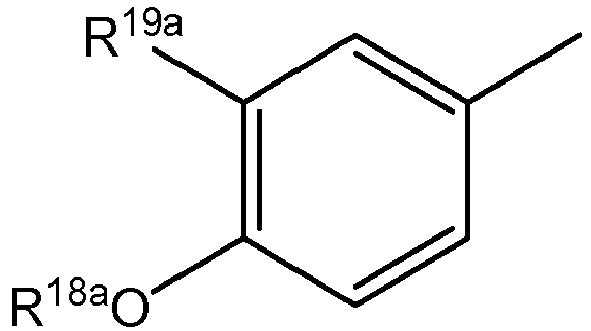
- R18a is alkyl, and
- R19a is
- (a) a halogen atom,
- (b) cyano,
- (c) alkyl optionally substituted by 1 to 3 substituents selected from the group consisting of
- (i) a halogen atom,
- (ii) cyano,
- (iii) hydroxy,
- (iv) amino,
- (v) alkylamino,
- (vi) dialkylamino, and
- (vii) a cyclic amino group (e.g., 1-piperazinyl) optionally substituted by alkyl,
- (d) alkoxy,
- (e) amino optionally substituted by 1 or 2 substituents selected from the group consisting of
- (i) alkylcarbonyl optionally substituted by a cyclic amino group (e.g., morpholino),
- (ii) alkylsulfonyl, and
- (iii) carbamoyl,
- (f) carboxy,
- (g) alkoxycarbonyl,
- (h) carbamoyl optionally substituted by alkyl optionally substituted by amino, alkylamino, dialkylamino or alkoxycarbonylamino,
- (i) formyl,
- (j) a 5- to 10-membered aromatic heterocyclic group (e.g., oxazolyl, benzimidazolyl), or
- (k) -CH=N-OR21 wherein R21 is a hydrogen atom or alkyl optionally substituted by alkylamino or dialkylamino.
- Preferable examples of compound (I) are as described below.
- A compound of the formula (I) wherein
R is a hydrogen atom;
R1 is cyclopropyl, 2-fluorocyclopropyl or 2,4-difluorophenyl;
R2 is C1-6 alkyl (e.g., methyl), C1-6 alkoxy (e.g., methoxy) or a chlorine atom; or
R1 and R2 are optionally bonded to form -O-CH2-CH(CH3)- wherein the oxygen atom is bonded to the phenyl ring of the quinolone ring; and
R3 is a fused heterocyclic group of the formula
- X1 is C(R5) or N,
- R4 is a hydrogen atom or C1-6 alkyl, and
- R5 is
- (a) a hydrogen atom,
- (b) a halogen atom,
- (c) cyano,
- (d) nitro,
- (e) hydroxy,
- (f) C1-6 alkyl optionally substituted by 1 to 3 halogen atoms,
- (g) C2-6 alkynyl,
- (h) C6-14 aryl, or
- (i) C1-6 alkoxy optionally substituted by 1 to 3 halogen atoms,
- when X1 is C(R5), R4 and R5 are optionally bonded to form -CH2-O-(C=O)- wherein the carbonyl is bonded to the phenyl ring of the quinolone ring,
- said fused heterocyclic group is optionally substituted by 1 or 2 substituents selected from the group consisting of a halogen atom, cyano, nitro, hydroxy and C1-6 alkyl,
- A compound of the formula (I) wherein
R is a hydrogen atom;
R1 is cyclopropyl, 2-fluorocyclopropyl or 2,4-difluorophenyl;
R2 is C1-6 alkyl (e.g., methyl), C1-6 alkoxy (e.g., methoxy) or a chlorine atom; or
R1 and R2 are optionally bonded to form -O-CH2-CH(CH3)- wherein the oxygen atom is bonded to the phenyl ring of the quinolone ring; and
R3 is a group of the formula
- X2 is C(R8) or N, and
- R6, R7 and R8 are each independently,
- (a) a hydrogen atom,
- (b) a halogen atom,
- (c) cyano,
- (d) nitro,
- (e) amino,
- (f) C1-6 alkyl optionally substituted by 1 to 3 substituents selected from the group consisting of a halogen atom and amino,
- (g) C2-6 alkenyl,
- (h) C2-6 alkynyl,
- (i) C6-14 aryl,
- (j) formyl,
- (k) carboxy,
- (l) carbamoyl, or
- (m) a 5- to 10-membered aromatic heterocyclic group (e.g., pyridyl, triazolyl) optionally substituted by C1-6 alkyl,
- A compound of the formula (I) wherein
R is a hydrogen atom;
R1 is cyclopropyl, 2-fluorocyclopropyl or 2,4-difluorophenyl;
R2 is C1-6 alkyl (e.g., methyl), C1-6 alkoxy (e.g., methoxy) or a chlorine atom; and
R3 is a group of the formula
- X3 and X4 are N, or
- X3 is N and X4 is CH, or
- X3 is CH and X4 is N, and
- R6 is a hydrogen atom, a halogen atom, nitro or amino,
- A compound of the formula (I) wherein
R is a hydrogen atom;
R1 is cyclopropyl, 2-fluorocyclopropyl or 2,4-difluorophenyl;
R2 is C1-6 alkyl (e.g., methyl), C1-6 alkoxy (e.g., methoxy) or a chlorine atom; and
R3 is a group of the formula


- A compound of the formula (I) wherein
R is a hydrogen atom;
R1 is cyclopropyl, 2-fluorocyclopropyl or 2,4-difluorophenyl;
R2 is C1-6 alkyl (e.g., methyl), C1-6 alkoxy (e.g., methoxy) or a chlorine atom; or
R1 and R2 are optionally bonded to form -O-CH2-CH(CH3)- wherein the oxygen atom is bonded to the phenyl ring of the quinolone ring; and
R3 is a group of the formula
- (a) a halogen atom,
- (b) cyano,
- (c) nitro,
- (d) C1-6 alkyl optionally substituted by 1 to 3 substituents selected from the group consisting of a halogen atom, C1-6 alkylamino, di (C1-6 alkyl) amino and hydroxy,
- (e) C2-6 alkenyl,
- (f) C6-14 aryl,
- (g) C3-8 cycloalkyl,
- (h) C1-6 alkoxy,
- (i) formyl, or
- (j) carbamoyl,
- A compound of the formula (I) wherein
R is a hydrogen atom;
R1 is cyclopropyl, 2-fluorocyclopropyl or 2,4-difluorophenyl;
R2 is C1-6 alkyl (e.g., methyl), C1-6 alkoxy (e.g., methoxy) or a chlorine atom; or
R1 and R2 are optionally bonded to form -O-CH2-CH(CH3)- wherein the oxygen atom is bonded to the phenyl ring of the quinolone ring; and
R3 is a group of the formula
- wherein R22 is
- (a) cyano,
- (b) nitro,
- (c) C6-14 aryl,
- (d) formyl, or
- (e) carbamoyl,
- A compound of the formula (I) wherein
R is a hydrogen atom;
R1 is cyclopropyl, 2-fluorocyclopropyl or 2,4-difluorophenyl;
R2 is C1-6 alkyl (e.g., methyl), C1-6 alkoxy (e.g., methoxy) or a chlorine atom; and
R3 is 5-pyrimidinyl substituted by 1 or 2 substituents selected from the group consisting of amino, C1-6 alkylamino and di(C1-6 alkyl)amino,
or a salt thereof. - A compound of the formula (I) wherein
R is a hydrogen atom;
R1 is cyclopropyl, 2-fluorocyclopropyl or 2,4-difluorophenyl;
R2 is C1-6 alkyl (e.g., methyl), C1-6 alkoxy (e.g., methoxy) or a chlorine atom; and
R3 is 2-indolyl optionally substituted by 1 or 2 substituents selected from the group consisting of - (a) a halogen atom,
- (b) cyano,
- (c) nitro,
- (d) hydroxy,
- (e) C1-6 alkyl optionally substituted by 1 to 3 substituents selected from the group consisting of amino, C1-6 alkoxy-carbonylamino, C1-6 alkylamino and di (C1-6 alkyl) amino,
- (f) C1-6 alkoxy,
- (g) formyl,
- (h) carboxy, and
- (j) amino optionally substituted by 1 or 2 substituents selected from the group consisting of
- (i) C1-6 alkoxy-carbonyl,
- (ii) C1-6 alkyl-carbonyl optionally substituted by a substituent selected from the group consisting of
- (A) C3-8 cycloalkyloxy optionally substituted by 1 to 3 C1-6 alkyl,
- (B) C1-6 alkylamino,
- (C) di (C1-6 alkyl) amino,
- (D) a cyclic amino group (e.g., morpholino, 1-piperazinyl) optionally substituted by C1-6 alkoxy-carbonyl, and
- (E) a halogen atom,
- (iii) phenylcarbonyl optionally substituted by 1 to 3 substituents selected from the group consisting of C1-6 alkyl and C1-6 alkoxy,
- (iv) C3-8 cycloalkyl-carbonyl,
- (v) a 5- to 10-membered aromatic heterocyclylcarbonyl group (e.g., pyridylcarbonyl) optionally substituted by C1-6 alkyl optionally substituted by 1 to 3 halogen atoms,
- (vi) benzylcarbonyl optionally substituted by 1 to 3 substituents selected from the group consisting of a halogen atom and C1-6 alkoxy,
- (vii) C6-14 arylsulfonyl optionally substituted by C1-6 alkoxy,
- (viii) C3-8 cycloalkyl-C1-6 alkylsulfonyl optionally substituted by 1 to 3 substituents selected from the group consisting of C1-6 alkyl and oxo (e.g., camphorsulfonyl),
- (ix) a 5- to 10-membered aromatic heterocyclylsulfonyl group (e.g., imidazolylsulfonyl) optionally substituted by 1 to 3 C1-6 alkyl, and
- (x) -C(=N-CN)-SR9 wherein R9 is C1-6 alkyl,
- A compound of the formula (I) wherein
R is a hydrogen atom;
R1 is cyclopropyl, 2-fluorocyclopropyl or 2,4-difluorophenyl;
R2 is C1-6 alkyl (e.g., methyl), C1-6 alkoxy (e.g., methoxy) or a chlorine atom; and
R3 is a group of the formula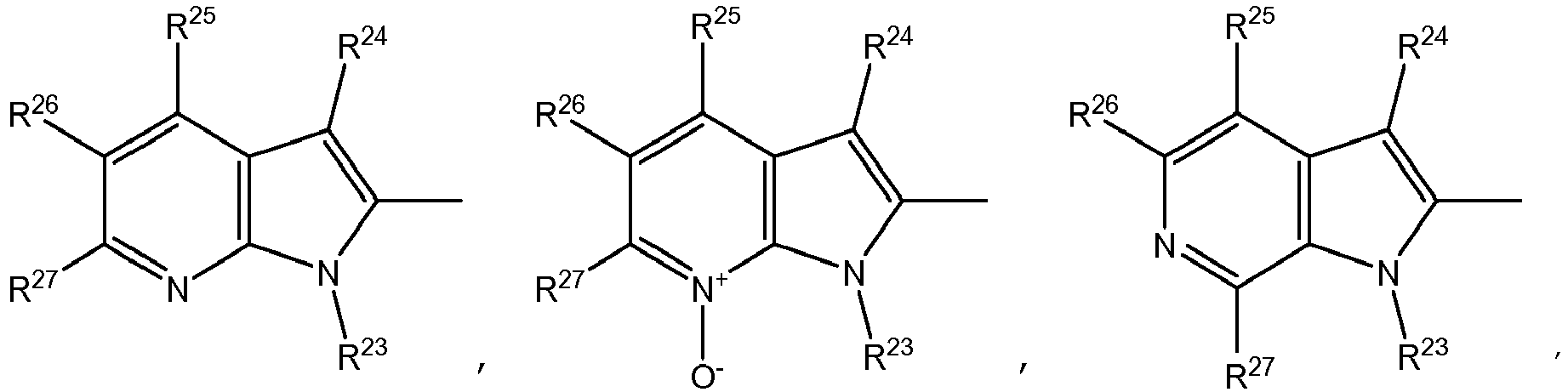


- R23 is a hydrogen atom or C1-6 alkyl, and
- R24, R25, R26 and R27 are each independently,
- (a) a hydrogen atom,
- (b) cyano, or
- (c) nitro,
- A compound of the formula (I) wherein
R is a hydrogen atom;
R1 is cyclopropyl, 2-fluorocyclopropyl or 2,4-difluorophenyl;
R2 is C1-6 alkyl (e.g., methyl), C1-6 alkoxy (e.g., methoxy) or a chlorine atom; and
R3 is a group of the formula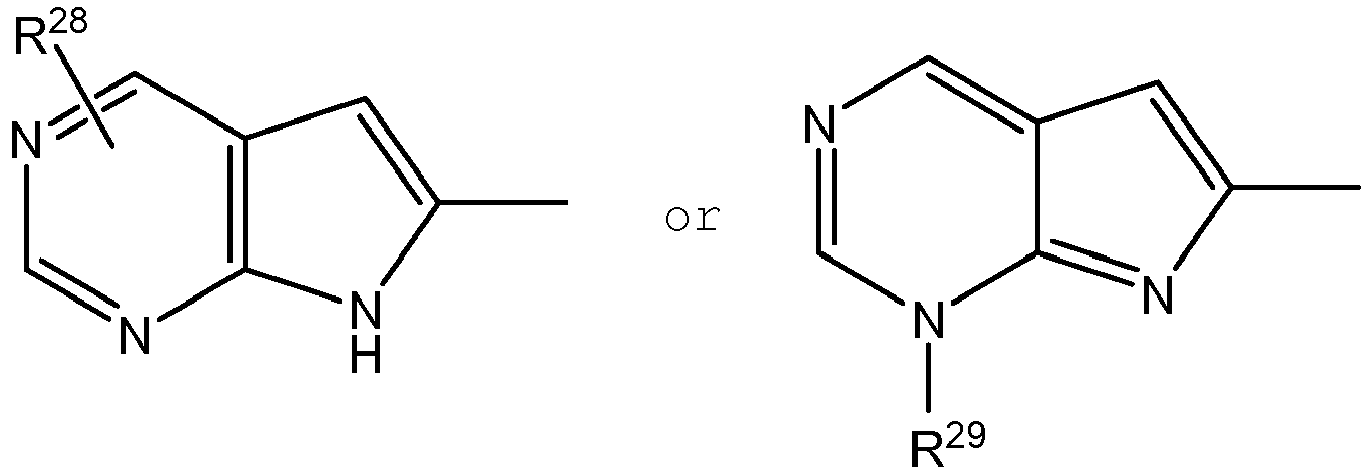
- R28 is a hydrogen atom or hydroxy, and
- R29 is a hydrogen atom or C1-6 alkyl,
- A compound of the formula (I) wherein
R is a hydrogen atom;
R1 is cyclopropyl, 2-fluorocyclopropyl or 2,4-difluorophenyl;
R2 is C1-6 alkyl (e.g., methyl), C1-6 alkoxy (e.g., methoxy) or a chlorine atom; and
R3 is a group of the formula


- R10, R12 and R14 are each independently,
- (a) a hydrogen atom or
- (b) C1-6 alkyl, and
- R11, R13 and R15 are each independently,
- (a) a hydrogen atom,
- (b) a halogen atom,
- (c) cyano,
- (d) nitro,
- (e) amino,
- (f) C1-6 alkylamino,
- (g) di(C1-6 alkyl)amino,
- (h) C1-6 alkyl optionally substituted by hydroxy, or
- (i) C2-6 alkenyl, or
- R10 and R11 are optionally bonded to form -(C=O)-NH-, -C(R31)=N- or -N=N- wherein R31 is a hydrogen atom or C1-6 alkyl, and the nitrogen atom is bonded to the phenyl ring of the fused ring, or
- R12 and R13 are optionally bonded to form -(CH2)4-,
- A compound of the formula (I) wherein
R is a hydrogen atom;
R1 is cyclopropyl, 2-fluorocyclopropyl or 2,4-difluorophenyl;
R2 is C1-6 alkyl (e.g., methyl), C1-6 alkoxy (e.g., methoxy) or a chlorine atom; and
R3 is a group of the formula
- whrein R10a is
- (a) a hydrogen atom or
- (b) C1-6 alkyl, and
- (a) a hydrogen atom,
- (b) a halogen atom,
- (c) cyano,
- (d) nitro,
- (e) amino,
- (f) C1-6 alkylamino,
- (g) di (C1-6 alkyl) amino,
- (h) C1-6 alkyl optionally substituted by hydroxy, or
- (i) C2-6 alkenyl, and
- provided that R10a, R11a, R13a and R15a are not simultaneously hydrogen atom,
- A compound of the formula (I) wherein
R is a hydrogen atom;
R1 is cyclopropyl, 2-fluorocyclopropyl or 2,4-difluorophenyl;
R2 is C1-6 alkyl (e.g., methyl), C1-6 alkoxy (e.g., methoxy) or a chlorine atom; and
R3 is a group of the formula
or a salt thereof. - A compound of the formula (I) wherein
R is a hydrogen atom;
R1 is cyclopropyl, 2-fluorocyclopropyl or 2,4-difluorophenyl;
R2 is C1-6 alkyl (e.g., methyl), C1-6 alkoxy (e.g., methoxy) or a chlorine atom; and
R3 is a group of the formula
- wherein R16a is
- (a) C1-6 alkyl optionally substituted by 1 to 3 substituents selected from the group consisting of cyano, C1-6 alkylamino and di (C1-6 alkyl) amino,
- (b) C2-6 alkenyl optionally substituted by carboxy,
- (c) formyl,
- (d) carboxy,
- (e) carbamoyl,
- (f) -C(R17)=N-OH wherein R17 is a hydrogen atom, cyano or hydroxy, or
- (g) a 5- to 10-membered aromatic heterocyclic group (e.g., tetrazolyl, pyrroryl, oxazolyl, benzimidazolyl, triazolyl) optionally substituted by C1-6 alkyl, C1-6 alkoxy-carbonyl, carboxy or phenyl,
- A compound of the formula (I) wherein
R is a hydrogen atom;
R1 is cyclopropyl, 2-fluorocyclopropyl or 2,4-difluorophenyl;
R2 is C1-6 alkyl (e.g., methyl), C1-6 alkoxy (e.g., methoxy) or a chlorine atom; and
R3 is a group of the formula
- R18a is C1-6 alkyl, and
- R19a is
- (a) a halogen atom,
- (b) cyano,
- (c) C1-6 alkyl optionally substituted by 1 to 3 substituents selected from the group consisting of
- (i) a halogen atom,
- (ii) cyano,
- (iii) hydroxy,
- (iv) amino,
- (v) C1-6 alkylamino,
- (vi) di (C1-6 alkyl) amino, and
- (vii) a cyclic amino group (e.g., 1-piperazinyl) optionally substituted by C1-6 alkyl,
- (d) C1-6 alkoxy,
- (e) amino optionally substituted by 1 or 2 substituents selected from the group consisting of
- (i) C1-6 alkyl-carbonyl optionally substituted by a cyclic amino group (e.g., morpholino),
- (ii) C1-6 alkylsulfonyl, and
- (iii) carbamoyl,
- (f) carboxy,
- (g) C1-6 alkoxy-carbonyl,
- (h) carbamoyl optionally substituted by C1-6 alkyl optionally substituted by amino, C1-6 alkylamino, di(C1-6 alkyl)amino or C1-6 alkoxy-carbonylamino,
- (i) formyl,
- (j) a 5- to 10-membered aromatic heterocyclic group (e.g., oxazolyl, benzimidazolyl), or
- (k) -CH=N-OR21 wherein R21 is a hydrogen atom or C1-6 alkyl optionally substituted by C1-6 alkylamino or di(C1-6 alkyl)amino,
- A compound of the formula (I) wherein
R is a hydrogen atom;
R1 is cyclopropyl, 2-fluorocyclopropyl or 2,4-difluorophenyl;
R2 is C1-6 alkyl (e.g., methyl), C1-6 alkoxy (e.g., methoxy) or a chlorine atom; and
R3 is a group of the formula
- R30 is
- (a) a hydrogen atom,
- (b) a halogen atom,
- (c) cyano,
- (d) C1-6 alkyl optionally substituted by 1 to 3 substituents selected from the group consisting of a halogen atom and hydroxy,
- (e) C2-6 alkenyl,
- (f) C2-6 alkynyl,
- (g) C1-6 alkoxy,
- (h) formyl, or
- (i) -CH=N-OH,
- Examples of salts of the compound of the formula (I) include pharmaceutically acceptable salts. Suitable pharmaceutically acceptable salts of the compound of the formula (I) are conventional non-toxic salts and include, for example, a salt with a base or an acid addition salt such as a salt with an inorganic base, for example, an alkali metal salt (e.g., sodium salt, potassium salt, etc.), an alkaline earth metal salt (e.g., calcium salt, magnesium salt, etc.), an ammonium salt; a salt with an organic base, for example, an organic amine salt (e.g., trimethylamine salt, triethylamine salt, pyridine salt, picoline salt, ethanolamine salt, triethanolamine salt, dicyclohexylamine salt, N,N'-dibenzylethylenediamine salt, etc.); an inorganic acid addition salt (e.g., hydrochloride, hydrobromide, sulfate, hydrogensulfate, phosphate, etc.); an organic carboxylic or sulfonic acid addition salt (e.g., formate, acetate, trifluoroacetate, maleate, tartrate, citrate, fumarate, methanesulfonate, benzenesulfonate, toluenesulfonate, etc.); and a salt with a basic or acidic amino acid (e.g., arginine, aspartic acid, glutamic acid, etc.).
- Compound (I) can be produced, for example, by a method according to the following reaction schemes.

- Compound (1) can be converted to acid halide by reacting compound (1) with a halogenating agent in the presence or absence of a solvent. The solvent includes aromatic hydrocarbons such as benzene, toluene and xylene; halogenated hydrocarbons such as dichloromethane, chloroform and carbon tetrachloride; ethers such as dioxane, tetrahydrofuran and diethyl ether; N,N-dimethylformamide (DMF); dimethyl sulfoxide (DMSO); and the like. The halogenating agent may be any conventional halogenating agents which can convert hydroxy in carboxy group into a halogen atom, and includes, for example, thionyl chloride, phosphorus oxychloride, phosphorus oxybromide, phosphorus pentachloride, phosphorus pentabromide, and the like. The amounts of compound (1) and the halogenating agent are not particularly limited, but, in case of using no solvent, the halogenating agent is usually used in a large excess amount, and in case of using a solvent, the halogenating agent is usually used in an amount of at least 1 mole, preferably 2 to 4 moles, per 1 mole of compound (1). The reaction temperature and the reaction period of time are not particularly limited, but the reaction is usually carried out at a temperature of from room temperature to about 100°C for about 30 minutes to about 6 hours.
- The obtained acid halide is reacted with magnesium salt of malonic acid monoalkyl ester to give compound (2). Magnesium salt of malonic acid monoalkyl ester can be prepared in situ from potassium salt of malonic acid monoalkyl ester such as potassium ethyl malonate in the presence of magnesium chloride and a basic compound such as triethylamine. The reaction can be carried out in a suitable solvent. The solvent used in the reaction may be any conventional solvents unless they give any undesirable effect on the reaction, and includes, for example, esters such as ethyl acetate; ethers such as diethyl ether, dioxane, tetrahydrofuran, monoglyme and diglyme; alcohols such as methanol, ethanol and isopropanol; aromatic hydrocarbons such as benzene, toluene and xylene; aliphatic hydrocarbons such as n-hexane, heptane, cyclohexane and ligroin; amines such as pyridine and N,N-dimethylaniline; halogenated hydrocarbons such as chloroform, dichloromethane and carbon tetrachloride; aprotic polar solvents such as DMF, DMSO and hexamethylphosphoric triamide (HMPA); and a mixture of these solvents. The reaction is usually carried out at a temperature of from about 0°C to about 150°C, preferably from about 0°C to about 120°C, for about 0.5 to about 20 hours. Potassium salt of malonic acid monoalkyl ester is usually used in an amount of at least 1 mole, preferably 1 to 2 moles, per 1 mole of compound (1). Magnesium chloride and the basic compound are usually used in an amount of at least 1 mole, preferably 1 to 2 moles, per 1 mole of compound (1).
- Compound (3) can be prepared by reacting compound (2) with trialkyl orthoformate such as trimethyl orthoformate and triethyl orthoformate in acetic anhydride. The reaction is usually carried out at a temperature of from about 0°C to about 200°C, preferably from about 0°C to about 150°C, for about 0.5 to about 20 hours. Trialkyl orthoformate is usually used in an amount of at least 1 mole, preferably 1 to 10 moles, per 1 mole of compound (2).
- Compound (4) can be prepared by reacting compound (3) with compound (6).
- The reaction between compound (3) and compound (6) can be carried out in a suitable solvent. The solvent employed in the reaction may be any conventional solvents unless they give any undesirable effect on the reaction, and includes, for example, alcohols such as methanol, ethanol and propanol; ethers such as diethyl ether, dioxane, tetrahydrofuran, monoglyme and diglyme; aromatic hydrocarbons such as benzene, toluene and xylene; aliphatic hydrocarbons such as n-hexane, heptane, cyclohexane and ligroin; halogenated hydrocarbons such as chloroform, methylene chloride and carbon tetrachloride; aprotic polar solvents such as DMF, DMSO and HMPA; and the like. The reaction is usually carried out at a temperature of from about 0°C to about 150°C, preferably from room temperature to about 100°C, for about 0.1 to about 15 hours. Compound (6) is usually used in an amount of at least 1 mole, preferably 1 to 2 moles, per 1 mole of compound (3).
- Compound (5) can be prepared by cyclization of compound (4).
- The cyclization of compound (4) can be carried out in a suitable solvent in the presence of a basic compound. The solvent employed in the reaction may be any conventional solvents unless they give any undesirable effect on the reaction, and includes, for example, ethers such as diethyl ether, dioxane, tetrahydrofuran, monoglyme and diglyme; aliphatic hydrocarbons such as n-hexane, heptane and ligroin; halogenated hydrocarbons such as chloroform, methylene chloride and carbon tetrachloride; aprotic polar solvents such as DMF, DMSO and HMPA; and the like. The basic compound employed in the reaction includes inorganic bases such as metallic sodium, metallic potassium, sodium hydride, sodium amide, sodium hydroxide, potassium hydroxide, sodium carbonate and potassium carbonate, metal alcoholates such as sodium methylate and sodium ethylate, organic bases such as 1,8-diazabicyclo[5.4.0]undec-7-ene (DBU), N-benzyltrimethylammonium hydroxide and tetrabutylammonium hydroxide, and the like. The reaction is usually carried out at a temperature of from about 0°C to about 200°C, preferably from room temperature to about 150°C, for about 0.5 to about 15 hours. The basic compound is usually used in an amount of at least 1 mole, preferably 1 to 2 moles, per 1 mole of the compound (4).
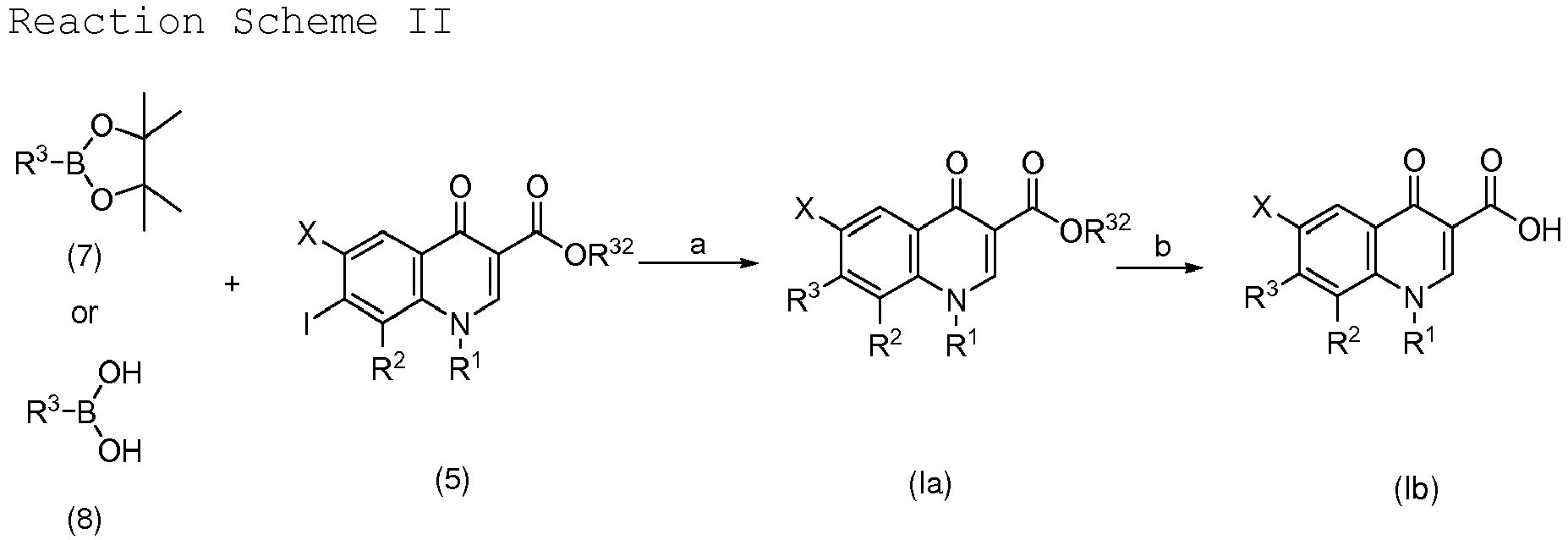
- Compound (Ia) can be prepared by reacting compound (5) and compound (7) or compound (8) in an inert solvent or without using any solvents, in the presence or absence of a basic compound, in the presence of a palladium catalyst.
- Examples of inert solvents include water; ethers such as dioxane, tetrahydrofuran, diethyl ether, 1,2-dimethoxyethane, diethylene glycol dimethyl ether and ethylene glycol dimethyl ether; aromatic hydrocarbons such as benzene, toluene and xylene; alcohols such as methanol, ethanol and isopropanol; ketones such as acetone and methyl ethyl ketone; and aprotic polar solvents such as DMF, DMSO, HMPA and acetonitrile. These inert solvents can be used singly or in combinations of two or more.
- The palladium catalyst used in the reaction is not particularly limited, but include, for example, tetravalent palladium catalysts such as sodium hexachloropalladate(IV) tetrahydrate and potassium hexachloropalladate(IV); divalent palladium catalysts such as palladium(II) chloride, palladium(II) bromide, palladium(II) acetate, palladium(II) acetylacetonate, dichlorobis(benzonitrile)palladium(II), dichlorobis(acetonitrile)palladium(II), dichlorobis(triphenylphosphine)palladium(II), dichlorotetramine palladium(II), dichloro(cycloocta-1,5-diene)palladium(II), palladium(II) trifluoroacetate, and 1,1'-bis(diphenylphosphino)ferrocene dichloropalladium(II) dichloromethane complex (Pd(dppf)Cl2.CH2Cl2); zerovalent palladium catalysts such as tris(dibenzylideneacetone)dipalladium(0), tris(dibenzylideneacetone)dipalladium(0) chloroform complex and tetrakis(triphenylphosphine)palladium(0), etc. These palladium catalysts are used singly or in combinations of two or more.
- In the reaction, the amount of the palladium catalyst is not particularly limited, but is typically in the range from 0.000001 to 20 moles in terms of palladium relative to 1 mole of compound (5). The amount of the palladium catalyst is preferably in the range from 0.0001 to 5 moles in terms of palladium relative to 1 mole of compound (5).
- This reaction advantageously proceeds in the presence of a suitable ligand. Examples of ligands of the palladium catalyst include, for example, 2,2'-bis(diphenylphosphino)-1,1'-binaphthyl (BINAP), tri-o-tolylphosphine, bis(diphenylphosphino)ferrocene, triphenylphosphine, tri-t-butylphosphine and 4,5-bis(diphenylphosphino)-9,9-dimethylxanthene (Xantphos). These ligands are used singly or in combinations of two or more.
- The proportion of the palladium catalyst and ligand is not particularly limited. The amount of the ligand is about 0.1 to about 100 moles per 1 mole of the palladium catalyst, and preferably about 0.5 to about 15 moles per 1 mole of the palladium catalyst.
- Various known inorganic and organic bases can be used as basic compounds.
- Inorganic bases include, for example, alkali metal hydroxides such as sodium hydroxide, potassium hydroxide, cesium hydroxide and lithium hydroxide; alkali metal carbonates such as sodium carbonate, potassium carbonate, cesium carbonate and lithium carbonate; alkali metal hydrogen carbonates such as lithium hydrogen carbonate, sodium hydrogen carbonate and potassium hydrogen carbonate; alkali metals such as sodium and potassium; phosphates such as sodium phosphate and potassium phosphate; amides such as sodium amide; and alkali metal hydrides such as sodium hydride and potassium hydride.
- Organic bases include, for example, alkali metal lower alkoxides such as sodium methoxide, sodium ethoxide, sodium t-butoxide, potassium methoxide, potassium ethoxide and potassium t-butoxide, and amines such as triethylamine, tripropylamine, pyridine, quinoline, piperidine, imidazole, N-ethyldiisopropylamine, dimethylaminopyridine, trimethylamine, dimethylaniline, N-methylmorpholine, 1,5-diazabicyclo[4.3.0]non-5-ene (DBN), 1,8-diazabicyclo[5.4.0]undec-7-ene (DBU), 1,4-diazabicyclo[2.2.2]octane (DABCO), etc.
- Such basic compounds can be used singly or in combinations of two or more. More preferable basic compounds used in the reaction include alkali metal carbonates such as sodium carbonate, potassium carbonate, cesium carbonate and lithium carbonate.
- The basic compound is usually used in an amount of 0.5 to 10 moles per 1 mole of compound (5), and preferably 0.5 to 6 moles per 1 mole of compound (5).
- Compound (7) or compound (8) is usually used in an amount of at least 1 mole per 1 mole of compound (5), and preferably about 1 to about 5 moles per 1 mole of compound (5).
- The reaction can be conducted under normal pressure, under inert gas atmosphere including nitrogen, argon, etc., or under increased pressure.
- The reaction proceeds usually from room temperature to about 200°C, and preferably from room temperature to about 150°C, and is usually completed in about 1 to about 30 hours. The reaction is also achieved by heating at about 100°C to about 200°C for about 5 minutes to about 1 hour using a microwave reactor.
- Compound (Ib) can be prepared by hydrolysis of compound (Ia) .
- The hydrolysis of compound (Ia) can be carried out under the conditions of conventional hydrolysis, for example, in the presence of a basic compound such as sodium hydroxide, potassium hydroxide, barium hydroxide or potassium carbonate; a mineral acid such as sulfuric acid, hydrochloric acid or nitric acid; or an organic acid such as acetic acid or an aromatic sulfonic acid, in a solvent including water, alcohols such as methanol, ethanol and isopropanol; ketones such as acetone and methyl ethyl ketone; ethers such as dioxane and ethylene glycol diethyl ether; acetic acid; or a mixture thereof. The reaction is usually carried out at a temperature of from room temperature to about 200°C, preferably from room temperature to about 150°C, for about 0.1 to about 30 hours.

- Compound (7) can be prepared by reacting compound (9) with bis(pinacolato)diboron (10) in an inert solvent in the presence of a palladium catalyst and a basic compound.
- Examples of inert solvents and palladium catalyst are same as those described in Step a in Reaction Scheme II.
- The basic compound employed in the reaction includes potassium acetate, triethylamine, N-methylmorpholin, sodium carbonate, potassium carbonate, cesium carbonate, lithium carbonate, potassium phosphate and sodium hydrogen carbonate.
- In the reaction, the amount of the palladium catalyst is not particularly limited, but is typically in the range from 0.000001 to 20 moles in terms of palladium relative to 1 mole of compound (9). The amount of the palladium catalyst is preferably in the range from 0.0001 to 5 moles in terms of palladium relative to 1 mole of compound (9).
- The basic compound is usually used in an amount of 0.5 to 10 moles per 1 mole of compound (9), and preferably 0.5 to 6 moles per 1 mole of compound (9).
- Bis(pinacolato)diboron (10) is usually used in an amount of at least 1 mole per 1 mole of compound (9), and preferably about 1 to about 5 moles per 1 mole of compound (9).
- The reaction can be conducted under normal pressure, under inert gas atmosphere including nitrogen, argon, etc., or under increased pressure.
- The reaction proceeds usually from room temperature to about 200°C, and preferably from room temperature to about 150°C, and is usually completed in about 1 to about 30 hours.
- Compound (8) can be prepared by reacting compound (9) with trialkyl borate such as trimethyl borate, triethyl borate, tri(isopropyl) borate and tri(n-butyl) borate in an inert solvent in the presence of n-butyllithium or lithium diisopropylamide.
- Examples of inert solvents are same as those described in Step a in Reaction Scheme II.
- The trialkyl borate is usually used in an amount of at least 1 mole per 1 mole of compound (9), and preferably about 1 to about 5 moles per 1 mole of compound (9).
- n-Butyllithium or lithium diisopropylamide is usually used in an amount of at least 1 mole per 1 mole of compound (9), and preferably about 1 to about 5 moles per 1 mole of compound (9).
- The reaction is usually carried out at a temperature of from about -70°C to about 0°C for about 0.1 to about 15 hours.
- Compound (I) of the present invention can easily be converted into a salt thereof by treating with a pharmaceutically acceptable acid or base. The acid includes inorganic acids such as hydrochloric acid, sulfuric acid, phosphoric acid and hydrobromic acid and organic acids such as oxalic acid, maleic acid, fumaric acid, malic acid, tartaric acid, citric acid, benzoic acid, lactic acid, methanesulfonic acid and propionic acid. The base includes sodium hydroxide, potassium hydroxide, calcium hydroxide, sodium carbonate, potassium hydrogen carbonate, and the like.
- The compound thus obtained can easily be isolated and purified by conventional methods, such as, for example, extraction with solvents, dilution method, recrystallization, column chromatography and preparative thin layer chromatography.
- Compound (I) shows an excellent antimicrobial activity against mycoplasma, Pseudomonas aeruginosa, anaerobic bacteria, resistant cells against various antimicrobials, clinically isolated bacteria, and gram negative and gram positive bacteria such as Clostridium difficile, Enterococcus faecalis and Staphylococcus pyogenes and hence is useful as an antimicrobial agent for the treatment of diseases induced by these microorganisms. Compound (I) also shows low toxicity and less side effects and is characteristic in good absorbability and in sustained activity.
- Since compound (I) shows an excellent antimicrobial activity against Clostridium difficile, it is useful for the prevention or treatment of intestinal infections including antibiotics-associated diarrhea (AAD) such as Clostridium difficile-associated diarrhea (CDAD).
- The compounds of the present invention are usually used in the form of a usual pharmaceutical preparation. The pharmaceutical preparation can be prepared in admixture with conventional pharmaceutically acceptable diluents or carriers, such as fillers, bulking agents, binding agents, wetting agents, disintegrators, surfactants and lubricating agents. The pharmaceutical preparation includes various preparations suitable for treatment of the diseases, for example, tablets, pills, powders, solutions, suspensions, emulsions, granules, capsules, suppositories, injections such as solutions and suspensions, and the like. In the preparation of tablets, there may be used any conventional carriers, for example, excipients such as lactose, white sugar, sodium chloride, glucose, urea, starches, calcium carbonate, kaolin, crystalline cellulose and silicate, binding agents such as water, ethanol, propanol, simple syrup, glucose solution, starch solution, gelatin solution, carboxymethyl cellulose, shellac, methyl cellulose, potassium phosphate and polyvinylpyrrolidone, disintegrators such as dry starch, sodium alginate, agar powder, laminaran powder, sodium hydrogen carbonate, calcium carbonate, polyoxyethylene sorbitan fatty acid esters, sodium lauryl sulfate, stearic monoglyceride, starches and lactose, disintegration inhibitors such as white sugar, stearin, cacao butter and hydrogenated oils, absorption promoters such as quaternary ammonium salts and sodium lauryl sulfate, wetting agents such as glycerin and starches, adsorbents such as starches, lactose, kaolin, bentonite and colloidal silicates, lubricants such as purified talc, stearates, boric acid powder and polyethylene glycol, and the like. The tablets may also be coated with conventional coating agents, for example, may be in the form of a sugar coated tablet, a gelatin-coated tablets, an enteric coating tablet, a film coating tablet, or a double or multiple layers tablet. In the preparation of pills, there may be used conventional carriers, including excipients such as glucose, lactose, starches, cacao butter, hydrogenated vegetable oils, kaolin and talc, binding agents such as gum arabic powder, tragacanth powder, gelatin and ethanol, disintegrators such as laminaran and agar, and the like. In the preparation of suppositories, there may be used conventional carriers, such as, for example, polyethylene glycol, cacao butter, higher alcohols, higher alcohol esters, gelatin and semi-synthesized glycerides. In the preparation of injections, the solutions, emulsions or suspensions of the compounds are sterilized and are preferably made isotonic with the body liquid. These solutions, emulsions and suspensions are prepared by admixing the active compound with a conventional diluent, such as water, aqueous lactic acid solution, ethyl alcohol, propylene glycol, ethoxylated isostearyl alcohol, polyoxylated isostearyl alcohol or polyoxyethylene sorbitan fatty acid esters. The preparations may also be incorporated with sodium chloride, glucose or glycerin in an amount sufficient to make them isotonic with the body liquid. The preparations may also be incorporated with conventional solubilizers, buffering agents, anesthetizing agents, and further, with coloring agents, preservatives, perfumes, flavors, sweetening agents, and other medicaments. The preparations in the form of a paste, cream or gel may be prepared by using as a diluent such as white petrolatum, paraffin, glycerin, cellulose derivatives, polyethylene glycol, silicone, bentonite, or the like. When the compound of the active ingredient precipitates in the injection, an acid such as, for example, methanesulfonic acid, propionic acid, hydrochloric acid, succinic acid or lactic acid may be added to the injection as required to preserve the injection in a stable solution.
- Compound (I) may be contained in any amount in the preparations, and are usually contained in an amount of from 1 to 70% by weight based on the whole weight of the preparations.
- The pharmaceutical preparations of the present invention can be administered in any methods. Suitable method for administration may be selected in accordance with the preparation form, age and sex of patients, severity of the diseases, and the like. For instance, tablets, pills, solutions, suspensions, emulsions, granules and capsules are administered in oral route. In case of injection, it is administered intravenously in a single form or together with an auxiliary liquid such as glucose or amino solution. The injections may also be administered in intramuscular, intracutaneous, subcutaneous, or intraperitoneal route. Suppositories are administered in intrarectal route.
- The dosage of the pharmaceutical preparations of the present invention may vary according to administration methods, age and sex of patients, severity of the diseases, and the like, usually in the range of about 0.1 to about 100 mg, more preferably in the range of about 0.1 to about 50 mg, of compound (I) per 1 kg body weight of the patient per day. The preparation is usually administered by dividing into 2 to 4 times per day.
- The present invention is illustrated by the following Examples, Experimental Examples and Preparation Examples. It is to be understood that the present invention is not limited to these Examples, Experimental Examples or Preparation Examples and various changes and modifications can be made without departing from the scope and spirit of the present invention.
-

- In our work, Suzuki coupling was employed as key reaction to construct our final products. For the coupling, the corresponding iodo-intermediates could be prepared through well-known methods that were wildly used to synthesis of quinolones before (General Scheme I).
- Example 1: Synthesis of Intermediate 5a (R2 = Me)
- 1.1. Compound 2: A mixture of compound 1 (2 g, 6.71 mmol) and thionyl chloride (9.8 mL) was refluxed for 3 hr, and then concentrated to give acid chloride. To the residue was added dry EtOAc (10 mL) and then the mixture was concentrated.
- A mixture of potassium ethyl malonate (1.6 g, 9.40 mmol) and MgCl2 (1.91 g, 20.13 mmol) in dry EtOAc was stirred for 30 min below 50°C. To the mixture was added Et3N (2.83 mL, 20.13 mmol) below 50°C. Then, the mixture was refluxed for 1 hr. To the mixture was added dropwise a solution of the acid chloride in dry EtOAc (10 mL) at 50-70°C and then the mixture was refluxed for 1.5 hr. Water (30 mL) and 5 N HCl (30 mL) were added to the reaction mixture under ice-cooling. The EtOAc solution was washed with water, dried and concentrated to give
compound 2 as a yellow oil, which was used in the next step without purification.
- A mixture of potassium ethyl malonate (1.6 g, 9.40 mmol) and MgCl2 (1.91 g, 20.13 mmol) in dry EtOAc was stirred for 30 min below 50°C. To the mixture was added Et3N (2.83 mL, 20.13 mmol) below 50°C. Then, the mixture was refluxed for 1 hr. To the mixture was added dropwise a solution of the acid chloride in dry EtOAc (10 mL) at 50-70°C and then the mixture was refluxed for 1.5 hr. Water (30 mL) and 5 N HCl (30 mL) were added to the reaction mixture under ice-cooling. The EtOAc solution was washed with water, dried and concentrated to give
- 1.2. Compound 3: A mixture of compound 2 (11 g, 29.88 mmol), triethyl orthoformate (7.47 mL, 44.82 mmol) and acetic anhydride (6.77 mL, 71.72 mmol) was heated at 150°C for 1 hr, and then concentrated to give
compound 3, which was used in the next step without purification. - 1.3. Compound 4: To compound 3 (obtained above) were added EtOH (50 mL) and cyclopropylamine (2.48 mL, 35.86 mmol). The mixture was stirred for 30 min and concentrated to give
compound 4, which was used in the next step without purification. - 1.4. Intermediate 5a: Compound 4 (obtained above) was dissolved in dry DMSO (100 mL). K2CO3 (16.52 g, 119.53 mmol) was added to the solution. The reaction mixture was stirred at 100°C for 1 hr. When TLC (EtOAc/dipropyl ether=1/1) indicated the reaction was completed, the mixture was cooled to room temperature, poured into water, and extracted with EtOAc. The organic layer was washed with brine, dried and concentrated to give a yellow solid which was recrystallized from EtOAc. Intermediate 5a was obtained as a white solid in 75% overall yield. 1H NMR (400 MHz, DMSO) δ 8.60 (s, 1H), 7.70 (d, J = 7.8 Hz, 1H), 4.29 - 4.14 (m, 3H), 2.96 (s, 3H), 1.28 (t, J = 7.1 Hz, 3H), 1.14 (q, J = 7.0 Hz, 2H), 0.87 - 0.76 (m, 2H).
- 1.1. Compound 2: A mixture of compound 1 (2 g, 6.71 mmol) and thionyl chloride (9.8 mL) was refluxed for 3 hr, and then concentrated to give acid chloride. To the residue was added dry EtOAc (10 mL) and then the mixture was concentrated.
- Example 2: Intermediate 5b (R2 = OMe): 1H NMR (400 MHz, DMSO) δ 8.51 (s, 1H), 7.69 (d, J = 7.7 Hz, 1H), 4.23 (dd, J = 14.0, 6.9 Hz, 2H), 4.03 (s, 1H), 3.80 (s, 3H), 1.28 (t, J = 7.0 Hz, 3H), 1.09 (d, J = 6.2 Hz, 2H), 0.97 (m, 2H).
- Example 3: Intermediate 5c (R2 = Cl): 1H NMR (400 MHz, DMSO) δ 8.61 (s, 1H), 7.81 (d, J = 7.6 Hz, 1H), 4.23 (m, 3H), 1.28 (t, J = 7.1 Hz, 3H), 1.21 - 1.08 (dd, J = 7.1, 2.2 Hz, 2H), 0.99 - 0.92 (m, 2H).
- Example 4: Intermediate 5d: 1H NMR (400 MHz, CDCl3) δ 8.59 - 8.51 (d, J = 3.1 Hz, 1H), 8.03 - 7.92 (d, J = 7.5 Hz, 1H), 4.98 - 4.73 (dddd, J = 62.9, 6.3, 4.9, 3.4 Hz, 1H), 4.44 - 4.34 (q, J = 7.1 Hz, 2H), 3.91 - 3.83 (dt, J = 8.6, 5.4 Hz, 1H), 2.95 - 2.88 (s, 3H), 1.59 - 1.48 (m, 1H), 1.45 - 1.38 (t, J = 7.1 Hz, 3H), 1.35 - 1.18 (m, 1H).
- Example 5: Intermediate 5e: 1H NMR (400 MHz, CDCl3) δ 8.51 - 8.43 (d, J = 2.0 Hz, 1H), 7.94 - 7.86 (d, J = 7.6 Hz, 1H), 4.90 - 4.65 (dddd, J = 62.7, 6.0, 5.1, 3.3 Hz, 1H), 4.37 - 4.28 (q, J = 7.1 Hz, 2H), 3.80 - 3.76 (s, 3H), 3.75 - 3.69 (dt, J = 8.7, 5.5 Hz, 1H), 1.61 - 1.47 (m, 2H), 1.46 - 1.30 (m, 4H).
- Example 6: Intermediate 5f: 1H NMR (400 MHz, DMSO) δ 8.65 (s, 1H), 7.48 (d, J = 8.16 Hz, 1H), 4.79 (q, J = 6.65 Hz, 1H), 4.62 (dd, J = 1.82, 11.36 Hz, 1H), 4.44 (dd, J = 2.20, 11.36 Hz, 1H), 4.23 (qd, J = 2.95, 7.09 Hz, 2H), 1.40 (d, J = 6.65 Hz, 3H), 1.28 (t, J = 7.09 Hz, 3H).


-
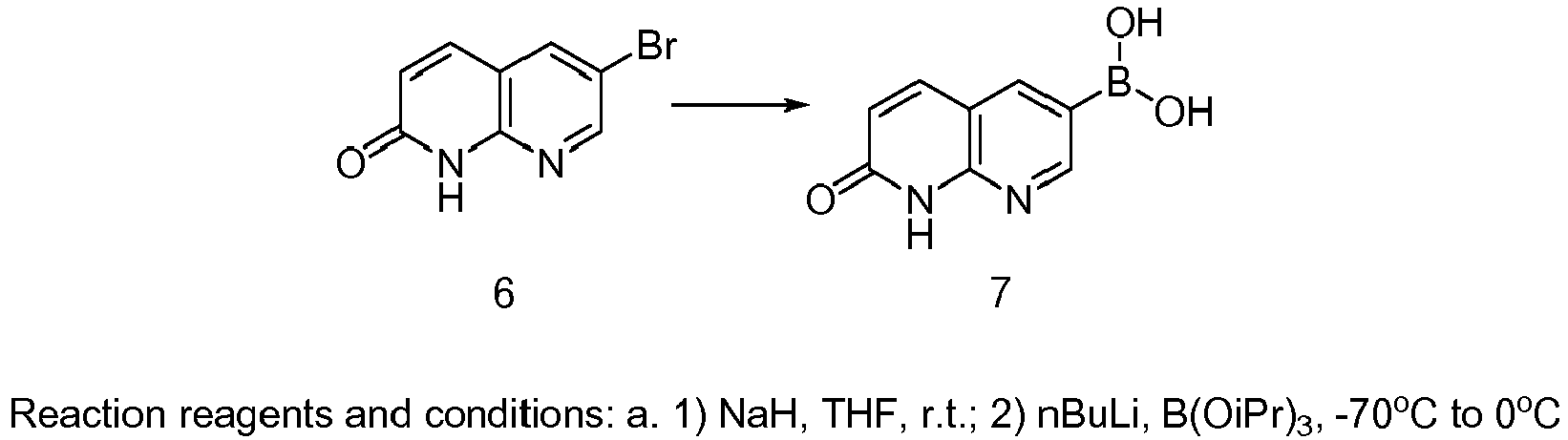
- 7.1 Boronic acid 7: To a solution of compound 6 (10 g, 44.44 mmol) in dry tetrahydrofuran (350 mL) was added sodium hydride (2 g, 66.66 mmol, 80% dispersion) at 0°C. After the mixture was stirred at room temperature for 30 min, the mixture was cooled below -60°C in a dry ice/acetone bath, and n-butyllithium (70 mL, 112 mmol, 1.6 M in hexane) was added over 30 min. The mixture was kept stirring for another 30 min, then triisopropyl borate (40 mL, 177 mmol) was added dropwise. The reaction mixture was stirred for 10 min, and then warmed to 0°C slowly in an ice bath. HCl (5 N) was added to the mixture to adjust pH = 3-4, and the mixture was stirred for 20 min. Aq. NaOH was added to the mixture to adjust pH = 10. After filtration, the organic layer was separated. The aqueous layer was extracted with a mixture of ethyl acetate/THF (4/1; 2 x 120 mL) and EtOAc (100 mL). The aqueous layer was adjusted to pH = 5-6 with HCl. The precipitate thus formed was collected by filtration and dried to give boronic acid 7 (3.5 g, 41%) as a white solid.
-

- 8.1 Compound 9: 2-Aminonicotinonitrile 8 (100 g, 0.839 mol) was dissolved in HOAc (800 mL). To the solution was added Na2CO3 (88.97 g, 0.839 mol). Then, Br2 (46.4 mL, 0.923 mol) was added dropwise. The reaction mixture was stirred at room temperature for 50 min. To the mixture was added water (600 mL). The mixture was cooled to about 5°C. The precipitate thus formed was collected by filtration and dried to give compound 9 (207 g, 96%).
- 8.2 Boronate 10: Compound 9 (50 g, 0.224 mol), bis(pinacolato)diboron (85.6 g, 0.337 mol), KOAc (44.1 g, 0.449 mol) and Pd(dppf)Cl2.CH2Cl2 (2.77 g, 3.4 mmol) were charged into a flask. Dioxane (400 mL) was added. The reaction mixture was stirred at 100°C for 2 hr under Ar. When LC-MS indicated that the reaction was completed, the mixture was cooled to room temperature. The mixture was filtered through diatomite, concentrated, diluted with a mixture of ethyl acetate and hexane in 3/1 ratio (1000 mL), filtered through silica gel (300-400 mesh), concentrated, crystallized and dried to give boronate 10 (32 g, 66%) as a white solid.
-

- 9.1 Compound 12: 3-Chloropyridin-2-amine (100 g, 0.778 mol) was dissolved in acetic acid (1200 mL). To the solution was added Na2CO3 (82.4 g, 0.778 mol). Then, Br2 (39.1 mL, 0.856 mmol) was added dropwise. After addition, the reaction mixture was stirred at room temperature for 30 min. To the mixture was added water (800 mL). The mixture was cooled to about 5°C. The resulting solid was collected by filtration and dried to give compound 12 (147 g, 91%) as a white solid.
- 9.2 Boronate 13: Compound 12 (4 g, 17.2 mmol), bis(pinacolato)diboron (4.79 g, 18.8 mmol), KOAc (3.37 g, 34.2 mmol) and Pd(dppf)Cl2.CH2Cl2 (0.210 g, 0.25 mmol) were charged into a flask. Dioxane (80 mL) was added. The mixture was stirred at 85°C for 2 hr under Ar. When LC-MS indicated that the reaction was completed, the mixture was cooled to room temperature. The mixture was filtered through diatomite and concentrated. The residue was diluted with ethyl acetate and hexane (3/1, 100 mL), filtered through silica gel (300-400 mesh), concentrated and crystallized by n-hexane to give boronate 13 (3.4 g, 78%) as a white solid.

-

- 10.1 Compound 16: Intermediate 5a (30 g, 65 mmol), boronic acid 7 (17 g, 71.6 mmol) and K2CO3 (27, 195 mmol) were charged into a flask. Dioxane (600 mL) and water (60 mL) were added. The solution was deoxygenated with N2 for 15 min. Pd(dppf)Cl2.CH2Cl2 (2.8 g, 3.24 mmol) was added to the mixture. The reaction mixture was stirred at 85°C overnight. When the reaction was completed, the reaction mixture was cooled to room temperature. The precipitate was filtered, dissolved in water, filtered, triturated with EtOH, filtered and dried to give compound 16 (16 g, 57%) as an off-white solid. The obtained compound was pure enough for use.
The organic filtrate was concentrated. To the residue were added water, dichloromethane and EtOAc. The precipitate thus formed was collected by filtration and dissolved in HCl (5 N). After filtration to remove Pd residue, the filtrate was basified with aq. NaOH (pH = 7-8). The precipitate was collected by filtration and dried to give compound 16 (3 g, 11%) as an off-white solid. - 10.2 Compound 1-2: Compound 16 (33 g, 76.1 mmol) was suspended in EtOH (300 mL). Aq. NaOH (4 N, 100 mL) was added to the suspension, and the mixture was stirred at 60°C for 2 hr. 200 mL of EtOH was evaporated under reduced pressure. To the residue was added HCl (5 N) to adjust pH = 4. The resulting precipitate was filtered, triturated with EtOH, filtered and dried to give compound 1-2 (30 g, 97%) as an off-white solid. m.p. > 300°C. 1H NMR (400 MHz, DMSO) δ 14.64 (s, 1H), 12.39 (s, 1H), 8.92 (s, 1H), 8.58 (s, 1H), 8.28 (s, 1H), 8.01 (m, 2H), 6.67 (d, J = 9.4 Hz, 1H), 4.42 (s, 1H), 2.68 (s, 3H), 1.27 (d, J = 6.4 Hz, 2H), 1.12 - 1.03 (m, 2H). 13C NMR (101 MHz, DMSO) δ 176.92, 165.25, 162.85, 158.16, 155.72, 152.71, 150.92, 149.62, 139.29, 138.79, 137.62, 133.70, 133.52, 131.80, 127.47, 127.38, 123.75, 123.42, 113.89, 108.05, 107.81, 107.29, 41.29, 20.64, 20.62, 10.62. HPLC-MS m/z 406 (MH+). Anal. Calcd for C22H16FN3O4: C, 65.18, H, 3.98, N, 10.37. Found: C, 63.50, H, 4.00, N, 9.91.
-

- 11.1 Compound 17: Boronate 10 (14 g, 56.1 mmol), intermediate 5a (20 g, 46.7 mmol), Cs2CO3 (15.22 g, 46.7 mmol) and Pd(dppf)Cl2.CH2Cl2 (0.98 g, 1.2 mmol) were charged into a flask. Dioxane (500 mL) and water (5 mL) were added. The mixture was stirred at 110°C overnight under Ar. The mixture was cooled to room temperature. The mixture was filtered, and the solid was washed with dioxane and ethyl acetate. The solid was dissolved in hot CH2Cl2 (1200 mL), and the solution was filtered through diatomite. The operation was repeated twice. The organic layers were combined and concentrated. To the residue was added ethyl acetate (200 mL). The solid was collected by filtration, washed with ethyl acetate (60 mL) and dried to give compound 17 (17.6 g, 90%) as a white solid.
- 11.2 Compound 2-18: Compound 17 (43 g, 0.101 mol) was dissolved in THF and EtOH (1/1, 500 mL). To the solution was added NaOH (60 mL, 4 N). The mixture was stirred at room temperature for 2 hr. HCl (63 mL, 4 N) was added to acidify the mixture (pH = 3-4). The solid was collected by filtration, washed with EtOH (100 mL) and dried to give compound 2-18 (35.7 g, 99%) as a white solid, m.p. > 300°C. 1H NMR (400 MHz, DMSO) δ 14.65 (s, 1H), 8.89 (s, 1H), 8.32 - 8.23 (m, 1H), 8.08 (d, J = 2.09 Hz, 1H), 7.94 (d, J = 8.87 Hz, 1H), 7.28 (s, 2H), 4.40 (tt, J = 3.74, 7.17 Hz, 1H), 2.67 (s, 3H), 1.31 - 1.19 (m, 2H), 1.10 - 0.99 (m, 2H). 13C NMR (101 MHz, DMSO) δ 176.95, 176.92, 165.32, 159.60, 158.29, 155.86, 154.07, 152.67, 143.59, 139.32, 133.39, 133.22, 131.73, 127.13, 127.05, 116.93, 116.52, 107.96, 107.71, 107.27, 89.15, 41.32, 20.64, 20.62, 10.65. HPLC-MS m/z 379 (MH+). Anal. Calcd for C20H15FN4O3: C, 63.49, H, 4.00, N, 14.81. Found: C, 62.04, H, 4.20, N, 13.97.
-

- 12.1 Compound 18: Boronate 13 (20 g, 75.4 mmol), intermediate 5a (24.1 g, 58.03 mmol), Cs2CO3 (26.5 g, 81.2 mmol) and Pd(dppf)Cl2.CH2Cl2 (1.42 g, 1.7 mmol) were charged into a flask. Dioxane (400 mL) and water (4 mL) were added. The mixture was stirred at 100°C overnight under Ar. The mixture was cooled to room temperature. The mixture was filtered, and the solid was washed with dioxane and ethyl acetate. The solid was dissolved in hot CH2Cl2 (1200 mL), and the solution was filtered through diatomite. The operation was repeated twice. The organic layers were combined and concentrated. To the residue was added ethyl acetate (200 mL). The solid was collected by filtration, washed with ethyl acetate (60 mL) and dried to give compound 18 (21 g, 85%) as a white solid.
- 12.2 Compound 19: Compound 18 (39 g, 91.91 mmol) was dissolved in THF and EtOH (1/1, 600 mL). To the mixture was added NaOH (4 N, 60 mL). The mixture was stirred at room temperature for 2 hr. HCl (4 N, 62 mL) was added to acidify the solution (pH = 3-4). The solid was collected by filtration, washed with EtOH (100 mL) and dried to give compound 19 (34 g, 98%) as a white solid.
- 12.3 Compound 3-11: Chloroacetaldehyde (40% in water, 80 mL) was added to a solution of compound 19 (34 g, 91.9 mmol) in EtOH (600 mL). The mixture was refluxed for 3 hr. When LC-MS indicated that the reaction was completed, the mixture was cooled to 5°C and filtered. The solid was dried to give compound 3-11 (21 g). The mother liquid was basified (pH=7-8) with aq. NaOH. The precipitate was collected by filtration, washed with EtOH and dried to give compound 3-11 (11.5 g) as a white solid. In total, 32.5 g of compound 3-11 was obtained in 93% yield, m.p.: 307 - 311°C. 1H NMR (400 MHz, DMSO) δ 14.53 (s, 1H), 8.98 - 8.84 (m, 2H), 8.28 (d, J = 1.16 Hz, 1H), 7.98 (d, J = 8.83 Hz, 1H), 7.90 (d, J = 0.89 Hz, 1H), 7.77 (s, 1H), 4.43 (tt, J = 3.70, 7.10 Hz, 1H), 3.50 - 3.36 (m, 1H), 2.72 (s, 3H), 1.26 (d, J = 6.80 Hz, 2H), 1.07 (d, J = 18.24 Hz, 2H). 13C NMR (101 MHz, DMSO) δ 176.91, 176.88, 165.23, 158.22, 155.77, 152.84, 139.98, 139.17, 139.16, 132.44, 132.15, 131.98, 131.54, 127.86, 127.78, 127.38, 120.72, 118.97, 116.37, 108.15, 107.91, 107.37, 41.38, 20.54, 20.52, 10.72. HPLC-MS: m/z 412 (MH+). Anal. Calcd for C21H15ClFN3O3: C, 61.25, H, 3.67, N, 10.20. Found: C, 58.59, H, 3.86, N, 9.76.
- Compounds listed in the following Tables were synthesized according to General Scheme III.
Table 1 
Compound No. R3 = R2 = R1 = NMR MS (MH+) HPLC 1-1 
OMe Cyclopropyl 1H NMR (400 MHz, DMSO) δ 14.63 (s, 1H), 12.41 (s, 1H), 8.82 (s, 1H), 8.69 (s, 1H), 8.38 (s, 1H), 8.05 (d, J = 9.6 Hz, 1H), 7.99 (d, J = 9.1 Hz, 1H), 6.66 (dd, J = 9.5, 1.6 Hz, 1H), 4.24 (s, 1H), 3.42 (s, 3H), 1.19 (d, J = 7.2 Hz, 4H). 422 98% 1-2 
Me Cyclopropyl 1H NMR (400 MHz, DMSO) δ 14.64 (s, 1H), 12.39 (s, 1H), 8.92 (s, 1H), 8.58 (s, 1H), 8.28 (s, 1H), 8.01 (m, 2H), 6.67 (d, J = 9.4 Hz, 1H), 4.42 (s, 1H), 2.68 (s, 3H), 1.27 (d, J = 6.4 Hz, 2H), 1.12 - 1.03 (m, 2H). 406 98% 1-3 
OMe 
1H NMR (400 MHz, DMSO) δ 14.49 (s, 1H), 12.41 (s, 1H), 8.85 (d, J = 1.3 Hz, 1H), 8.67 (s, 1H), 8.36 (s, 1H), 8.05 (d, J = 9.6 Hz, 1H), 8.00 (d, J = 9.1 Hz, 1H), 6.77 - 6.54 (m, 1H), 5.24 - 4.97 (m, 1H), 4.29 - 4.10 (m, 1H), 3.44 (s, 3H), 1.89 - 1.59 (m, 2H). 440 98% 1-4 
Me 
1H NMR (400 MHz, DMSO) δ 14.50 (s, 1H), 12.39 (s, 1H), 8.90 (d, J = 3.0 Hz, 1H), 8.58 (s, 1H), 8.27 (s, 1H), 8.02 (m, 2H), 6.74 - 6.61 (m, 1H), 5.17 (dd, J = 64.3, 3.1 Hz, 1H), 4.39 (m, 1H), 2.60 (s, 3H), 1.84 - 1.50 (m, 2H). 424 98% 1-5 
Cl Cyclopropyl 1H NMR (400 MHz, DMSO) δ 14.22 (s, 1H), 12.42 (s, 1H), 8.94 (s, 1H), 8.61 (d, J = 2.0 Hz, 1H), 8.31 (d, J = 2.0 Hz, 1H), 8.20 (d, J = 8.5 Hz, 1H), 8.03 (d, J = 9.6 Hz, 1H), 6.67 (d, J = 9.5 Hz, 1H), 4.51 - 4.34 (m, 1H), 1.29 - 1.19 (m, 2H), 1.17 - 1.05 (m, 2H). 426 98% 1-7 
Me Cyclopropyl 1H NMR (400 MHz, DMSO) δ 14.65 (s, 1H), 11.27 (s, 1H), 8.91 (s, 1H), 8.04 (d, J = 9.5 Hz, 1H), 7.98 (d, J = 8.8 Hz, 1H), 7.78 (s, 2H), 6.69 (d, J = 9.5 Hz, 1H), 4.49 - 4.30 (m, 1H), 2.65 (s, 3H), 1.25 (d, J = 6.7 Hz, 2H), 1.08 (s, 2H). 439 98% 1-8 
Me Cyclopropyl 1H NMR (400 MHz, DMSO) δ 14.66 (s, 1H), 11.99 (s, 1H), 8.91 (s, 1H), 8.03 (d, J = 9.1 Hz, 1H), 7.98 (d, J = 8.8 Hz, 1H), 7.60 (s, 1H), 7.57 (d, J = 11.5 Hz, 1H), 6.66 (d, J = 9.6 Hz, 1H), 4.51 - 4.29 (m, 1H), 1.25 (d, J = 6.3 Hz, 2H), 1.15 - 0.94 (m, 2H). 423 98% 1-9 
OMe Cyclopropyl 1H NMR (400 MHz, DMSO) δ 14.64 (s, 1H), 11.30 (s, 1H), 8.82 (s, 1H), 8.15 - 8.03 (m, 1H), 8.00 - 7.93 (d, J = 9.1 Hz, 1H), 7.93 - 7.80 (d, J = 12.9 Hz, 2H), 6.79 - 6.51 (d, J = 9.4 Hz, 1H), 4.28 - 4.15 (m, 1H), 3.51 - 3.38 (s, 3H), 1.31 - 1.09 (m, 4H). 455 93% 1-10 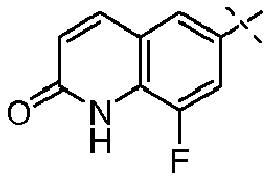
OMe Cyclopropyl 1H NMR (400 MHz, DMSO) δ 14.69 - 14.59 (s, 1H), 12.08 - 11.94 (s, 1H), 8.90 - 8.74 (s, 1H), 8.13 - 8.01 (d, J = 1.8 Hz, 1H), 7.99 - 7.91 (d, J = 9.1 Hz, 1H), 7.77 - 7.71 (s, 1H), 7.68 - 7.59 (d, J = 11.6 Hz, 1H), 6.71 - 6.62 (d, J = 9.6 Hz, 1H), 4.30 - 4.17 (ddd, J = 11.2, 7.5, 4.7 Hz, 1H), 3.47 - 3.39 (s, 3H), 1.22 - 1.11 (m, 4H). 439 95% 1-11 
Me Cyclopropyl 1H NMR (400 MHz, DMSO) δ 14.68 (s, 1H), 9.92 (s, 1H), 8.91 (s, 1H), 8.09 (d, J = 9.6 Hz, 1H), 7.99 (d, J = 8.8 Hz, 1H), 7.81 (s, 1H), 7.62 - 7.53 (m, 4H), 7.52 - 7.47 (m, 1H), 7.46 (s, 1H), 6.65 (d, J = 9.5 Hz, 1H), 4.65 - 4.23 (m, 1H), 2.70 (s, 3H), 1.24 (d, J = 7.0 Hz, 2H), 1.07 (s, 2H). 481 98% 1-12 
Me Cyclopropyl 1H NMR (400 MHz, DMSO) δ 14.68 (s, 1H), 12.23 (s, 1H), 8.92 (s, 1H), 8.10 (d, J = 9.5 Hz, 1H), 8.00 (d, J = 8.7 Hz, 1H), 7.87 (s, 1H), 7.70 (s, 1H), 6.70 (d, J = 9.3 Hz, 1H), 4.43 (s, 1H), 2.64 (s, 3H), 1.23 (s, 2H), 1.07 (d, J = 12.5 Hz, 2H). 489 98% 1-13 
Me Cyclopropyl 1H NMR (400 MHz, DMSO) δ 14.66 (s, 1H), 10.55 (s, 1H), 8.91 (s, 1H), 8.04 (d, J = 9.5 Hz, 1H), 7.99 (d, J = 8.7 Hz, 1H), 7.84 (s, 1H), 7.74 (s, 1H), 6.68 (d, J = 9.4 Hz, 1H), 4.75 (s, 1H), 4.40 (m, 1H), 2.64 (s, 3H), 1.25 (d, J = 6.9 Hz, 2H), 1.08 (s, 2H). 429 90% 1-14 
Me Cyclopropyl 1H NMR (400 MHz, DMSO) δ 14.70 (s, 1H), 11.06 (s, 1H), 8.91 (s, 1H), 8.05 - 7.87 (m, 2H), 7.31 (s, 1H), 7.16 (s, 1H), 6.60 (d, J = 9.5 Hz, 1H), 4.40 (dd, J = 7.0, 3.4 Hz, 1H), 3.94 (s, 3H), 2.65 (s, 3H), 1.25 (d, J = 7.1 Hz, 2H), 1.08 (s, 2H). 435 90% 1-15 
Me Cyclopropyl 1H NMR (400 MHz, DMSO) δ 14.65 (s, 1H), 10.97 (s, 1H), 8.92 (s, 1H), 8.28 - 8.06 (m, 2H), 8.01 (d, J = 8.8 Hz, 1H), 7.95 (s, 1H), 6.74 (d, J = 8.5 Hz, 1H), 4.49 - 4.33 (m, 1H), 2.64 (s, 3H), 1.25 (d, J = 6.8 Hz, 2H), 1.10 (s, 2H). 473 90% 1-16 
Me Cyclopropyl 1H NMR (400 MHz, DMSO) δ 14.72 (s, 1H), 11.95 (s, 1H), 8.91 (s, 1H), 7.99 (d, J = 7.9 Hz, 2H), 7.76 (s, 1H), 7.54 (d, J = 8.4 Hz, 1H), 7.47 (d, J = 8.4 Hz, 1H), 6.59 (d, J = 9.5 Hz, 1H), 4.40 (s, 1H), 2.63 (s, 3H), 1.25 (d, J = 6.1 Hz, 2H), 1.07 (s, 2H). 405 98% 1-17 
Me Cyclopropyl 1H NMR (400 MHz, DMSO) δ 14.66 (s, 1H), 10.76 (s, 1H), 8.92 (s, 1H), 8.03 (d, J = 9.7 Hz, 1H), 7.99 (d, J = 8.8 Hz, 1H), 7.93 (s, 1H), 7.83 (s, 1H), 6.68 (d, J = 9.4 Hz, 1H), 2.65 (s, 3H), 1.25 (m, 2H), 1.07 (m, 2H). 482; 484 96% 1-18 
Me Cyclopropyl 1H NMR (400 MHz, DMSO) δ 14.63 (s, 1H), 11.86 (s, 1H), 8.92 (s, 1H), 8.16 (m, 3H), 8.00 (d, J = 8.7 Hz, 1H), 6.80 (s, 1H), 4.42 (s, 1H), 2.65 (s, 3H), 1.26 (m, 2H), 1.09 (m, 2H). 430 96% 1-19 
Me Cyclopropyl 1H NMR (400 MHz, DMSO) δ 14.69 (s, 1H), 11.10 (s, 1H), 8.90 (s, 1H), 7.97 (t, J = 9.04 Hz, 2H), 7.58 (s, 1H), 7.39 (s, 1H), 6.59 (d, J = 9.48 Hz, 1H), 4.39 (dt, J = 3.29, 6.75 Hz, 1H), 3.36 (s, 3H), 2.63 (s, 3H), 1.25 (d, J = 6.45 Hz, 2H), 1.06 (s, 2H). 419 96% 1-20 
Me Cyclopropyl 1H NMR (400 MHz, DMSO) δ 14.64 (s, 1H), 8.93 (s, 1H), 8.21 (s, 1H), 8.18 (s, 1H), 8.15 (d, J = 9.7 Hz, 1H), 8.02 (d, J = 8.9 Hz, 1H), 6.81 (d, J = 9.7 Hz, 1H), 6.24 (s, 2H), 4.41 (m, 2H), 2.65 (s, 4H), 1.25 (m, 2H), 1.10 (m, 2H). 461 90% 1-21 
Me Cyclopropyl 1H NMR (400 MHz, DMSO) δ 14.75 (s, 1H), 12.18 (s, 1H), 8.91 (s, 1H), 8.14 (s, 1H), 7.96 (d, J = 8.8 Hz, 1H), 7.78 (d, J = 7.7 Hz, 1H), 7.60 (d, J = 7.8 Hz, 1H), 7.41 (d, J = 7.9 Hz, 1H), 7.28 (d, J = 7.4 Hz, 1H), 4.43 (s, 1H), 2.71 (s, 3H), 1.24 (s, 2H), 1.05 (s, 2H). 405 98% 1-22 
Me Cyclopropyl 1H NMR (400 MHz, DMSO) δ 14.75 (s, 1H), 8.91 (s, 1H), 8.16 (s, 1H), 7.96 (d, J = 8.2 Hz, 1H), 7.90 (s, 1H), 7.85 (d, J = 7.3 Hz, 1H), 7.66 (d, J = 8.5 Hz, 1H), 7.38 (d, J = 6.7 Hz, 1H), 4.42 (s, 1H), 3.74 (s, 3H), 2.69 (s, 3H), 1.23 (s, 2H), 1.05 (s, 2H). 419 95% 1-23 
Me Cyclopropyl 1H NMR (400 MHz, DMSO) δ 14.72 (s, 1H), 12.04 (s, 1H), 8.93 (s, 1H), 8.04 (d, J = 8.2 Hz, 1H), 7.68 (t, J = 7.5 Hz, 1H), 7.48 (d, J = 8.1 Hz, 1H), 7.35 (d, J = 9.7 Hz, 1H), 7.17 (d, J = 7.1 Hz, 1H), 6.49 (d, J = 9.7 Hz, 1H), 4.39 (s, 1H), 2.50 (s, 3H), 1.16 (m, 4H). 405 96% 1-24 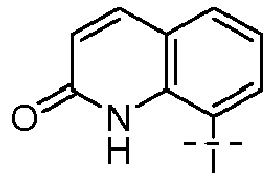
Me Cyclopropyl 1H NMR (400 MHz, DMSO) δ 14.82 (s, 1H), 10.88 (s, 1H), 8.95 (s, 1H), 8.20 - 7.94 (m, 2H), 7.86 (d, J = 30.6 Hz, 1H), 7.44 (d, J = 7.5 Hz, 1H), 7.36 (s, 1H), 6.57 (s, 1H), 4.41 (s, 1H), 2.67 (s, 3H), 1.47 - 0.92 (m, 4H). 405 90% 1-25 
Me Cyclopropyl 1H NMR (400 MHz, DMSO) δ 14.66 (s, 1H), 12.12 (s, 1H), 8.94 (s, 1H), 8.06 (d, J = 8.5 Hz, 1H), 7.58 (s, 1H), 7.45 (d, J = 7.0 Hz, 1H), 7.13 (s, 1H), 7.02 (d, J = 8.0 Hz, 1H), 6.65 (s, 1H), 4.40 (m, 1H), 2.62 (s, 3H), 1.28 - 1.04 (m, 4H). 405 90% 1-26 
Me Cyclopropyl 1H NMR (400 MHz, DMSO) δ 14.70 (s, 1H), 11.88 (s, 1H), 8.92 (s, 1H), 8.01 (d, J = 8.8 Hz, 2H), 7.86 (d, J = 7.8 Hz, 1H), 7.29 (s, 1H), 7.22 (d, J = 7.6 Hz, 1H), 6.60 (d, J = 9.6 Hz, 1H), 4.40 (s, 1H), 2.62 (s, 3H), 1.24 (d, J = 5.6 Hz, 2H), 1.07 (s, 2H). 405 94% 1-27 
Me Cyclopropyl 1H NMR (400 MHz, DMSO) δ 14.80 (s, 1H), 11.57 (s, 1H), 11.48 (s, 1H), 8.97 (s, 1H), 8.04 (d, J = 8.5 Hz, 1H), 7.82 (s, 1H), 7.60 (d, J = 8.1 Hz, 1H), 7.49 (d, J = 8.2 Hz, 1H), 5.86 (s, 1H), 4.45 (s, 1H), 2.68 (s, 3H), 1.30 (d, J = 5.7 Hz, 2H), 1.13 (s, 2H). 421 98% 1-28 
Me Cyclopropyl 1H NMR (400 MHz, DMSO) δ 14.75 (s, 1H), 10.73 (s, 1H), 8.90 (s, 1H), 7.97 (d, J = 8.4 Hz, 1H), 7.89 (s, 1H), 7.43 (s, 1H), 7.28 (d, J = 7.6 Hz, 1H), 4.40 (s, 1H), 2.62 (s, 3H), 1.24 (s, 2H), 1.06 (s, 2H). 466 96% 1-29 
OMe Cyclopropyl 1H NMR (400 MHz, DMSO) δ 14.69 (s, 1H), 11.96 (s, 1H), 8.81 (s, 1H), 8.01 (d, J = 9.6 Hz, 1H), 7.95 (d, J = 9.1 Hz, 1H), 7.87 (s, 1H), 7.68 (d, J = 8.6 Hz, 1H), 7.49 (d, J = 8.6 Hz, 1H), 6.57 (dd, J = 9.5, 1.7 Hz, 1H), 4.32 - 4.10 (m, 1H), 3.38 (s, 3H), 1.18 (m, 4H). 421 98% 1-30 
Cl Cyclopropyl 1H NMR (400 MHz, DMSO) δ 14.41 (s, 1H), 11.96 (s, 1H), 8.91 (s, 1H), 8.20 (d, J = 8.8 Hz, 1H), 7.95 (d, J = 9.1 Hz, 1H), 7.80 (s, 1H), 7.68 (d, J = 8.6 Hz, 1H), 7.49 (d, J = 8.6 Hz, 1H), 6.62 (dd, J = 9.5, 1.7 Hz, 1H), 4.32 - 4.10 (m, 1H), 1.30 (m, 2H), 1.18 (m, 2H). 425 96% 1-31 
OMe Cyclopropyl 1H NMR (400 MHz, DMSO) δ 14.67 (s, 1H), 11.89 (s, 1H), 8.82 (s, 1H), 8.17 - 7.90 (m, 2H), 7.85 (d, J = 8.0 Hz, 1H), 7.48 (s, 1H), 7.35 (d, J = 7.9 Hz, 1H), 6.60 (d, J = 11.2 Hz, 1H), 4.28 - 4.14 (m, 1H), 3.41 (s, 4H), 1.18 (m, 4H). 421 90% 1-32 
Me Cyclopropyl 1H NMR (400 MHz, DMSO) δ 14.69 (s, 1H), 11.78 (s, 1H), 8.91 (s, 1H), 7.98 (d, J = 8.77 Hz, 1H), 7.72 (s, 1H), 7.54 (s, 1H), 7.50 - 7.44 (m, 1H), 6.48 (s, 1H), 2.63 (s, 3H), 2.44 (s, 3H), 1.28 - 1.21 (m, 2H), 1.12 - 1.02 (m, 2H). 419 96% 1-33 
Me Cyclopropyl 1H NMR (400 MHz, DMSO) δ 14.62 (s, 1H), 13.15 (s, 1H), 8.92 (s, 1H), 8.87 (s, 1H), 8.77 (d, J = 1.74 Hz, 1H), 8.38 (d, J = 1.97 Hz, 1H), 8.02 (d, J = 8.86 Hz, 1H), 4.42 (tt, J = 3.74, 7.15 Hz, 1H), 2.66 (s, 3H), 1.25 (q, J = 6.85 Hz, 2H), 1.08 (s, 2H). 431 96% 1-34 
Me Cyclopropyl 1H NMR (400 MHz, DMSO) δ 9.11 (s, 1H), 8.92 (s, 1H), 8.31 (d, J = 8.86 Hz, 1H), 8.16 (d, J = 8.54 Hz, 1H), 8.03 (d, J = 8.91 Hz, 1H), 6.51 (s, 1H), 4.44 (tt, J = 3.64, 7.02 Hz, 2H), 2.69 (s, 3H), 2.51 (s, 3H), 1.24 (d, J = 6.83 Hz, 2H), 1.10 (s, 2H). 420 95% 1-35 
OMe Cyclopropyl 1H NMR (400 MHz, DMSO) δ 14.75 - 14.55 (m, 1H), 9.83 - 9.67 (d, J = 3.2 Hz, 1H), 8.89 - 8.73 (s, 1H), 7.96 - 7.86 (d, J = 9.1 Hz, 1H), 7.58 - 7.47 (s, 1H), 7.42 - 7.34 (s, 1H), 4.30 - 4.14 (tt, J = 7.3, 4.5 Hz, 1H), 3.52 - 3.39 (s, 3H), 3.11 - 2.95 (t, J = 7.5 Hz, 2H), 2.62 - 2.56 (dd, J = 8.5, 6.3 Hz, 2H), 1.21 - 1.12 (m, 4H). 457 99% 1-36 
OMe Cyclopropyl 1H NMR (400 MHz, CDCl3) δ 14.52 - 14.39 (s, 1H), 8.87 - 8.82 (s, 1H), 8.01 - 7.92 (m, 1H), 7.75 - 7.69 (s, 1H), 7.39 - 7.34 (t, J = 1.7 Hz, 1H), 7.21 - 7.18 (s, 1H), 6.79 - 6.69 (dd, J = 17.3, 11.0 Hz, 1H), 5.70 - 5.62 (d, J = 17.3 Hz, 1H), 5.54 - 5.44 (d, J = 11.0 Hz, 1H), 4.09 - 3.99 (d, J = 3.7 Hz, 1H), 3.45 - 3.36 (s, 3H), 3.03 - 2.95 (dd, J = 8.5, 6.5 Hz, 2H), 2.68 - 2.59 (dd, J = 8.7, 6.5 Hz, 2H), 1.26 - 1.21 (dd, J = 5.2, 1.8 Hz, 2H), 1.11 - 1.03 (dt, J = 4.0, 1.9 Hz, 2H). 449 85% 1-37 
OMe Cyclopropyl 1H NMR (400 MHz, DMSO) δ 14.73 - 14.60 (s, 1H), 10.38 - 10.26 (s, 1H), 8.84 - 8.76 (s, 1H), 7.96 - 7.88 (d, J = 9.1 Hz, 1H), 7.36 - 7.28 (d, J = 11.2 Hz, 1H), 7.25 - 7.19 (s, 1H), 4.29 - 4.18 (ddd, J = 11.3, 7.3, 4.4 Hz, 1H), 3.47 - 3.43 (s, 3H), 3.07 - 2.99 (t, J = 7.4 Hz, 2H), 2.60 - 2.53 (dd, J = 8.5, 6.5 Hz, 2H), 1.21 - 1.08 (d, J = 5.3 Hz, 4H). 441 85% 1-38 
OMe Cyclopropyl 1H NMR (400 MHz, DMSO) δ 14.70 (s, 1H), 9.62 (s, 1H), 8.79 (s, 1H), 7.89 (d, J = 9.2 Hz, 1H), 7.20 (d, J = 8.5 Hz, 2H), 4.39 - 4.16 (m, 1H), 3.42 (s, 3H), 3.03 - 2.88 (m, 2H), 2.54 (m, 5H), 1.16 (m, 4H). 436 99% 1-39 
OMe Cyclopropyl 1H NMR (400 MHz, DMSO) δ 15.13 - 14.27 (m, 1H), 10.76 - 10.64 (s, 5H), 8.98 - 8.88 (s, 1H), 8.19 - 8.14 (d, J = 2.2 Hz, 1H), 8.00 - 7.94 (d, J = 8.7 Hz, 1H), 7.75 - 7.70 (d, J = 2.1 Hz, 1H), 4.49 - 4.32 (tt, J = 7.3, 3.8 Hz, 1H), 3.03 - 2.95 (m, 2H), 2.69 - 2.64 (s, 3H), 2.62 - 2.56 (t, J = 7.5 Hz, 2H), 1.28 - 1.22 (m, 2H), 1.09 - 1.03 (m, 2H). 408 90% 1-40 
Me Cyclopropyl 1H NMR (400 MHz, DMSO) δ 14.60 (s, 1H), 12.01 (s, 1H), 8.92 (s, 1H), 8.53 (s, 1H), 8.08 - 7.98 (m, 2H), 7.72 (s, 1H), 6.85 (d, J = 9.75 Hz, 1H), 4.41 (s, 1H), 3.34 (s, 1H), 2.65 (s, 3H), 2.54 (s, 3H), 1.24 (d, J = 6.54 Hz, 2H), 1.09 (s, 2H). 406 96% 1-41 
Me Cyclopropyl 1H NMR (400 MHz, DMSO) δ 14.85 - 14.51 (s, 1H), 9.00 - 8.91 (m, 2H), 8.60 - 8.53 (s, 1H), 8.18 - 8.09 (t, J = 8.4 Hz, 2H), 8.09 - 8.02 (m, 1H), 7.95 - 7.84 (s, 1H), 7.79 - 7.68 (s, 1H), 4.51 - 4.31 (s, 1H), 2.79 - 2.61 (s, 3H), 1.36 - 1.20 (d, J = 6.9 Hz, 2H), 1.16 - 1.04 (s, 2H). 389 100% 1-42 
Me Cyclopropyl 1H NMR (400 MHz, DMSO) δ 15.01 - 14.88 (d, J = 2.6 Hz, 1H), 8.95 - 8.82 (d, J = 2.5 Hz, 1H), 8.05 - 7.94 (d, J = 6.7 Hz, 1H), 7.89 - 7.77 (d, J = 9.4 Hz, 1H), 7.62 - 7.40 (m, 3H), 6.33 - 6.21 (s, 1H), 5.59 - 5.49 (s, 2H), 4.48 - 4.35 (s, 1H), 2.86 - 2.76 (s, 3H), 1.30 - 1.15 (d, J = 7.0 Hz, 2H), 1.00 - 0.88 (s, 2H). 392 100% 1-43 
Me Cyclopropyl 1H NMR (400 MHz, MeOD) δ 9.05 - 8.91 (s, 1H), 8.87 - 8.77 (s, 1H), 8.43 - 8.36 (s, 1H), 8.14 - 8.06 (d, J = 7.3 Hz, 1H), 8.02 - 7.88 (d, J = 21.7 Hz, 2H), 7.74 - 7.62 (d, J = 8.7 Hz, 1H), 7.59 - 7.51 (s, 1H), 4.35 - 4.15 (s, 1H), 2.73 - 2.53 (m, 3H), 1.05 - 0.93 (s, 2H), 0.85 - 0.71 (d, J = 8.0 Hz, 2H). 389 97% 1-44 
Me Cyclopropyl 1H NMR (400 MHz, DMSO) δ 14.72 - 14.59 (s, 1H), 9.01 - 8.91 (s, 1H), 8.88 - 8.80 (s, 1H), 8.66 - 8.56 (d, J = 8.6 Hz, 1H), 8.25 - 8.16 (d, J = 8.0 Hz, 1H), 8.14 - 8.09 (s, 1H), 8.08 - 8.01 (d, J = 8.6 Hz, 1H), 7.95 - 7.89 (d, J = 8.7 Hz, 1H), 7.88 - 7.79 (d, J = 7.7 Hz, 1H), 4.51 - 4.35 (s, 1H), 2.75 - 2.67 (s, 3H), 1.30 - 1.19 (d, J = 6.8 Hz, 2H), 1.16 - 1.07 (s, 2H). 405 97.5% 1-45 
Me Cyclopropyl 1H NMR (400 MHz, DMSO) δ 14.85 - 14.58 (s, 1H), 9.00 - 8.88 (s, 1H), 8.19 - 8.07 (d, J = 8.3 Hz, 1H), 8.07 - 7.94 (m, 4H), 7.68 - 7.58 (d, J = 6.0 Hz, 2H), 7.57 - 7.48 (d, J = 8.2 Hz, 1H), 4.49 - 4.33 (s, 1H), 2.72 - 2.59 (s, 3H), 1.33 - 1.19 (d, J = 7.4 Hz, 2H), 1.16 - 1.00 (s, 2H). 388 98% 1-46 
Me Cyclopropyl 1H NMR (400 MHz, DMSO) δ 9.69 - 9.59 (s, 1H), 9.01 - 8.92 (d, J = 2.5 Hz, 1H), 8.69 - 8.58 (d, J = 2.4 Hz, 1H), 8.47 - 8.34 (d, J = 7.6 Hz, 1H), 8.14 - 8.04 (d, J = 8.1 Hz, 1H), 7.95 - 7.80 (t, J = 8.7 Hz, 2H), 7.57 - 7.46 (d, J = 7.9 Hz, 1H), 4.48 - 4.34 (s, 1H), 2.52 - 2.50 (s, 3H), 1.29 - 1.01 (m, 4H). 389 98% 1-47 
Me Cyclopropyl 1H NMR (400 MHz, DMSO) δ 14.96 - 14.46 (s, 1H), 12.04 - 11.50 (s, 1H), 8.98 - 8.89 (s, 1H), 8.34 - 8.17 (d, J = 12.3 Hz, 1H), 8.17 - 8.01 (m, 2H), 7.97 - 7.90 (d, J = 8.1 Hz, 1H), 4.48 - 4.36 (dd, J = 7.3, 4.1 Hz, 1H), 2.66 - 2.56 (s, 3H), 1.31 - 1.17 (d, J = 7.1 Hz, 2H), 1.15 - 1.03 (s, 2H). 422 99% 1-48 
Me Cyclopropyl 1H NMR (400 MHz, DMSO) δ 9.19 - 9.11 (s, 1H), 8.98 - 8.92 (s, 1H), 8.45 - 8.39 (s, 1H), 8.13 - 8.00 (dd, J = 16.7, 8.4 Hz, 2H), 7.80 - 7.69 (t, J = 7.7 Hz, 1H), 7.66 - 7.55 (t, J = 7.7 Hz, 1H), 7.38 - 7.29 (d, J = 8.3 Hz, 1H), 4.47 - 4.34 (s, 1H), 2.65 - 2.54 (s, 3H), 1.28 - 1.07 (m, 4H). 405 98% 1-49 
Me Cyclopropyl 1H NMR (400 MHz, DMSO) δ 14.69 - 14.45 (s, 1H), 10.31 - 10.19 (s, 1H), 9.06 - 8.94 (d, J = 3.6 Hz, 2H), 8.73 - 8.62 (d, J = 8.2 Hz, 1H), 8.61 - 8.43 (m, 2H), 8.32 - 8.21 (t, J = 7.5 Hz, 1H), 8.21 - 8.11 (m, 2H), 7.83 - 7.71 (d, J = 8.3 Hz, 1H), 4.67 - 4.52 (s, 3H), 4.50 - 4.39 (d, J = 7.6 Hz, 1H), 2.52 - 2.50 (m, 3H), 1.32 - 1.03 (m, 4H). 404 100% 1-50 
Me Cyclopropyl 1H NMR (400 MHz, DMSO) δ 14.72 - 14.45 (s, 1H), 9.88 - 9.78 (s, 1H), 9.58 - 9.48 (s, 1H), 9.02 - 8.92 (s, 1H), 8.70 - 8.60 (d, J = 9.0 Hz, 1H), 8.59 - 8.51 (d, J = 8.2 Hz, 1H), 8.46 - 8.36 (t, J = 7.9 Hz, 1H), 8.24 - 8.06 (t, J = 9.7 Hz, 2H), 4.78 - 4.67 (s, 2H), 4.53 - 4.40 (s, 1H), 2.82 - 2.71 (s, 3H), 1.37 - 1.18 (d, J = 6.4 Hz, 2H), 1.16 - 1.07 (m, 2H). 404 98% 1-51 
Me Cyclopropyl 1H NMR (400 MHz, DMSO) δ 9.10 - 9.01 (d, J = 4.0 Hz, 1H), 8.98 - 8.91 (d, J = 2.6 Hz, 1H), 8.30 - 8.19 (d, J = 8.4 Hz, 1H), 8.14 - 8.07 (s, 1H), 8.05 - 7.97 (t, J = 7.7 Hz, 1H), 7.96 - 7.89 (d, J = 8.4 Hz, 1H), 7.78 - 7.68 (d, J = 6.8 Hz, 1H), 7.65 - 7.57 (m, 1H), 4.45 - 4.33 (s, 1H), 2.48 - 2.40 (d, J = 2.8 Hz, 3H), 1.28 - 1.03 (m, 4H). 389 93.6% 1-52 
Me Cyclopropyl 1H NMR (400 MHz, DMSO) δ 14.78 - 14.66 (s, 1H), 9.06 - 8.97 (s, 1H), 8.96 - 8.88 (s, 1H), 8.54 - 8.46 (d, J = 8.1 Hz, 1H), 8.26 - 8.14 (d, J = 8.3 Hz, 1H), 8.14 - 8.06 (s, 1H), 8.06 - 7.98 (d, J = 8.6 Hz, 1H), 7.74 - 7.58 (d, J = 8.3 Hz, 2H), 4.51 - 4.29 (s, 1H), 2.73 - 2.60 (s, 3H), 1.29 - 1.18 (d, J = 7.0 Hz, 2H), 1.15 - 1.07 (s, 2H). 389 100% 1-53 
Me Cyclopropyl 1H NMR (400 MHz, DMSO) δ 8.96 - 8.88 (d, J = 2.4 Hz, 1H), 8.85 - 8.78 (s, 1H), 8.57 - 8.47 (d, J = 8.2 Hz, 1H), 8.25 - 8.13 (d, J = 8.3 Hz, 1H), 8.03 - 7.95 (d, J = 8.3 Hz, 1H), 7.86 - 7.77 (m, 2H), 7.69 - 7.54 (d, J = 8.7 Hz, 1H), 4.44 - 4.31 (s, 1H), 2.48 - 2.42 (s, 3H), 1.29 - 1.16 (d, J = 7.6 Hz, 2H), 1.15 - 1.02 (s, 2H). 389 98% 1-54 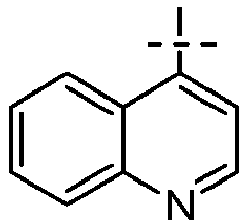
Me Cyclopropyl 1H NMR (400 MHz, DMSO) δ 9.17 - 9.09 (s, 1H), 9.01 - 8.91 (d, J = 2.7 Hz, 1H), 8.26 - 8.17 (d, J = 8.5 Hz, 1H), 8.15 - 8.06 (d, J = 8.5 Hz, 1H), 7.94 - 7.84 (s, 1H), 2.48 - 2.42 (m, 2H), 7.72 - 7.59 (d, J = 9.2 Hz, 2H), 7.56 - 7.45 (d, J = 8.3 Hz, 1H), 4.45 - 4.35 (s, 1H), 2.52 - 2.45 (s, 3H), 1.29 - 1.03 (dd, J = 16.6, 7.5 Hz, 4H). 389 98% 1-55 
Me Cyclopropyl 1H NMR (400 MHz, DMSO) δ 15.08 - 14.78 (s, 1H), 8.95 - 8.83 (s, 2H), 8.48 - 8.37 (d, J = 6.0 Hz, 1H), 8.33 - 8.19 (d, J = 8.2 Hz, 1H), 8.14 - 8.02 (d, J = 8.5 Hz, 1H), 7.94 - 7.76 (m, 2H), 7.68 - 7.59 (d, J = 7.1 Hz, 1H), 7.58 - 7.49 (t, J = 7.2 Hz, 1H), 4.47 - 4.34 (s, 1H), 2.73 - 2.56 (s, 3H), 1.31 - 0.99 (m, 4H). 405 95% 1-56 
Me Cyclopropyl 1H NMR (400 MHz, DMSO) δ 9.00 - 8.91 (s, 1H), 8.85 - 8.75 (d, J = 6.1 Hz, 1H), 8.73 - 8.64 (d, J = 8.6 Hz, 1H), 8.13 - 8.05 (d, J = 8.4 Hz, 1H), 7.97 - 7.86 (d, J = 8.1 Hz, 1H), 7.80 - 7.71 (s, 1H), 7.65 - 7.58 (d, J = 5.8 Hz, 1H), 7.57 - 7.48 (d, J = 8.4 Hz, 1H), 4.46 - 4.35 (s, 1H), 2.57 - 2.52 (s, 3H), 1.28 - 1.04 (m, 4H). 405 96% 1-57 
Me Cyclopropyl 1H NMR (400 MHz, DMSO) δ 14.95 - 14.35 (m, 1H), 9.01 - 8.90 (t, J = 2.0 Hz, 1H), 8.80 - 8.63 (m, 2H), 8.13 - 8.06 (m, 1H), 8.04 - 7.95 (t, J = 7.8 Hz, 1H), 7.84 - 7.75 (d, J = 6.5 Hz, 1H), 7.52 - 7.41 (ddd, J = 10.0, 5.1, 2.5 Hz, 1H), 7.38 - 7.29 (d, J = 8.4 Hz, 1H), 4.46 - 4.32 (d, J = 6.9 Hz, 1H), 2.49 - 2.44 (s, 3H), 1.29 - 0.99 (m, 4H). 405 93.3% 1-58 
Me Cyclopropyl 1H NMR (400 MHz, DMSO) δ 8.98 - 8.89 (s, 1H), 8.73 - 8.64 (d, J = 6.6 Hz, 1H), 8.58 - 8.52 (s, 1H), 8.35 - 8.26 (d, J = 8.2 Hz, 1H), 8.12 - 7.99 (t, J = 10.7 Hz, 2H), 7.83 - 7.75 (d, J = 8.3 Hz, 1H), 7.65 - 7.53 (s, 1H), 4.46 - 4.36 (s, 1H), 2.65 - 2.59 (s, 3H), 1.29 - 1.19 (d, J = 7.8 Hz, 2H), 1.14 - 1.07 (s, 2H). 405 96.2% 1-59 
Me Cyclopropyl 1H NMR (400 MHz, DMSO) δ 8.96 - 8.87 (s, 1H), 8.75 - 8.64 (d, J = 7.2 Hz, 2H), 8.28 - 8.19 (s, 1H), 8.10 - 7.99 (d, J = 8.5 Hz, 2H), 7.90 - 7.80 (d, J = 9.0 Hz, 1H), 7.63 - 7.52 (s, 1H), 4.48 - 4.34 (s, 1H), 2.65 - 2.57 (s, 3H), 1.30 - 1.18 (d, J = 7.1 Hz, 2H), 1.14 - 1.02 (s, 2H). 405 99% 1-60 
Me Cyclopropyl 1H NMR (400 MHz, DMSO) δ 9.77 - 9.61 (s, 1H), 9.00 - 8.90 (d, J = 3.1 Hz, 1H), 8.75 - 8.62 (d, J = 5.8 Hz, 1H), 8.57 - 8.42 (d, J = 8.2 Hz, 1H), 8.31 - 8.21 (s, 1H), 8.22 - 8.13 (d, J = 5.3 Hz, 1H), 8.11 - 8.01 (d, J = 8.7 Hz, 1H), 7.94 - 7.81 (d, J = 8.4 Hz, 1H), 4.49 - 4.34 (s, 1H), 2.68 - 2.59 (s, 3H), 1.34 - 1.18 (d, J = 7.6 Hz, 2H), 1.15 - 1.00 (s, 2H). 389 93.6% 1-61 
Me Cyclopropyl 1H NMR (400 MHz, DMSO) δ 9.19 - 9.10 (s, 1H), 9.03 - 8.95 (s, 1H), 8.37 - 8.27 (d, J = 6.9 Hz, 1H), 8.18 - 8.05 (m, 4H), 7.81 - 7.73 (d, J = 8.4 Hz, 1H), 4.52 - 4.42 (t, J = 5.2 Hz, 1H), 2.74 - 2.65 (s, 3H), 1.36 - 1.27 (d, J = 7.1 Hz, 2H), 1.19 - 1.10 (s, 2H). 405 1005 1-62 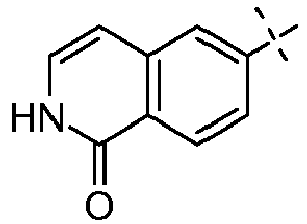
Me Cyclopropyl 1H NMR (400 MHz, DMSO) δ 14.82 - 14.70 (s, 1H), 11.54 - 11.41 (s, 1H), 9.03 - 8.93 (s, 1H), 8.44 - 8.33 (d, J = 8.2 Hz, 1H), 8.14 - 8.01 (d, J = 8.0 Hz, 1H), 7.84 - 7.75 (s, 1H), 7.58 - 7.51 (d, J = 7.6 Hz, 1H), 7.39 - 7.26 (s, 1H), 6.76 - 6.64 (d, J = 6.6 Hz, 1H), 4.52 - 4.40 (s, 1H), 2.70 - 2.61 (s, 3H), 1.37 - 1.22 (d, J = 6.8 Hz, 2H), 1.19 - 1.04 (s, 2H). 405 100% 1-63 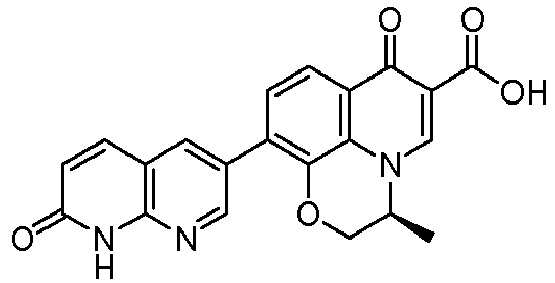
1H NMR (400 MHz, DMSO) δ 15.18 (s, 1H), 12.31 (s, 1H), 9.09 (s, 1H), 8.82 (d, J = 2.0 Hz, 1H), 8.45 (d, J = 1.7 Hz, 1H), 8.03 (t, J = 9.3 Hz, 2H), 7.76 (d, J = 8.4 Hz, 1H), 6.63 (d, J = 9.4 Hz, 1H), 5.00 (d, J = 6.7 Hz, 1H), 4.58 (d, J = 10.8 Hz, 1H), 4.45 (d, J= 10.0 Hz, 1H), 2.54 (s, 1H), 1.52 (d, J = 6.7 Hz, 3H). 390 98% 1-64 
1H NMR (400 MHz, DMSO) δ 14.96 (s, 1H), 12.35 (s, 1H), 9.10 (s, 1H), 8.68 (s, 1H), 8.34 (s, 1H), 8.01 (d, J = 9.53 Hz, 1H), 7.79 (d, J = 9.70 Hz, 1H), 6.64 (d, J = 9.45 Hz, 1H), 5.01 (d, J = 6.68 Hz, 1H), 4.60 - 4.54 (m, 1H), 4.46 (d, J = 9.78 Hz, 1H), 1.49 (d, J = 6.71 Hz, 3H). 408 96% 1-65 
1H NMR (400 MHz, DMSO) δ 9.27 (s, 1H), 8.95 (s, 1H), 8.87 (d, J = 15.4 Hz, 1H), 8.41 - 8.22 (m, 3H), 8.01 (t, J = 7.3 Hz, 1H), 7.85 (t, J = 7.3 Hz, 1H), 7.73 (d, J = 8.2 Hz, 1H), 4.45 (m, 1H), 2.77 (s, 3H), 1.31 (d, J = 6.2 Hz, 2H), 1.11 (s, 2H). 371 97% Table 2 
Compound No. R3 = R2 = R1 = NMR MS (MH+) HPLC 2-1 
Me Cyclopropyl 1H NMR (400 MHz, DMSO) δ 8.28 (s, 1H), 7.98 (s, 1H), 7.80 (s, 1H), 7.33 (d, J = 8.90 Hz, 1H), 7.16 (d, J = 9.30 Hz, 1H), 3.66 (d, J = 3.58 Hz, 1H), 1.96 (s, 3H), 0.58 (d, J = 5.78 Hz, 2H), 0.37 (d, J = 1.61 Hz, 2H). 357 94% 2-2 
Me Cyclopropyl 1H NMR (400 MHz, DMSO) δ 8.93 (s, 1H), 8.48 (d, J = 2.77 Hz, 1H), 8.13 (s, 1H), 8.01 (d, J = 8.72 Hz, 1H), 7.61 (s, 1H), 4.50 - 4.30 (m, 1H), 3.49 (d, J = 5.30 Hz, 5H), 3.36 - 3.29 (m, 5H), 2.66 (d, J = 15.95 Hz, 3H), 1.43 (s, 9H), 1.28 - 1.21 (m, 2H), 1.08 (s, 2H). 523 98% 2-3 
Me Cyclopropyl 1H NMR (400 MHz, DMSO) δ 8.92 (s, 1H), 8.79 (d, J = 5.61 Hz, 2H), 8.01 (d, J = 8.93 Hz, 1H), 7.50 (d, J = 5.50 Hz, 2H), 4.40 (s, 1H), 2.61 (s, 3H), 1.24 (d, J = 5.97 Hz, 2H), 1.07 (s, 2H). 339 98% 2-4 
Me Cyclopropyl 1H NMR (400 MHz, DMSO) δ 9.00 (s, 2H), 8.92 (s, 1H), 8.49 (d, J = 2.73 Hz, 1H), 8.12 (s, 1H), 7.98 (t, J = 11.57 Hz, 1H), 7.56 (s, 1H), 4.44 - 4.34 (m, 1H), 3.64 (s, 5H), 3.26 (s, 4H), 2.62 (s, 3H), 1.23 (d, J = 6.27 Hz, 2H), 1.07 (s, 2H). 423 95% 2-5 
Me Cyclopropyl 1H NMR (400 MHz, DMSO) δ 8.93 (s, 1H), 8.71 (t, J = 26.47 Hz, 1H), 8.04 (d, J = 8.68 Hz, 2H), 7.61 (d, J = 45.28 Hz, 1H), 4.44 - 4.38 (m, 1H), 2.55 (s, 2H), 2.34 (d, J = 9.33 Hz, 3H), 1.23 (s, 2H), 1.06 (dd, J = 4.45, 8.57 Hz, 2H). 353 95% 2-6 
Me Cyclopropyl 1H NMR (400 MHz, DMSO) δ 14.55 (s, 1H), 8.92 (s, 1H), 8.83 (t, J = 8.69 Hz, 1H), 8.65 (dt, J = 8.70, 17.42 Hz, 1H), 8.05 (d, J = 8.87 Hz, 1H), 7.73 - 7.52 (m, 1H), 4.41 (tt, J = 3.77, 7.16 Hz, 1H), 2.64 (s, 3H), 1.31 - 1.16 (m, 2H), 1.10 - 0.97 (m, 2H). 357 98% 2-7 
Me Cyclopropyl 1H NMR (400 MHz, DMSO) δ 8.93 (s, 1H), 8.85 - 8.61 (m, 2H), 8.03 (d, J = 6.60 Hz, 1H), 7.96 (s, 2H), 7.69 (dd, J = 5.19, 7.64 Hz, 1H), 4.41 (ddd, J = 3.87, 7.26, 10.97 Hz, 2H), 2.75 - 2.72 (m, 5H), 1.33 - 1.20 (m, 3H), 1.13 - 1.03 (m, 2H). 339 98% 2-8 
Me Cyclopropyl 1H NMR (400 MHz, MeOD) δ 8.79 (s, 1H), 7.92 - 7.71 (m, 2H), 7.55 (t, J = 17.62 Hz, 1H), 6.84 (t, J = 36.31 Hz, 1H), 4.16 - 4.04 (m, 1H), 3.02 (s, 5H), 1.09 - 1.01 (m, 2H), 0.81 (q, J = 7.23 Hz, 2H). 355 98% 2-9 
Me Cyclopropyl 1H NMR (400 MHz, MeOD) δ 8.06 (t, J = 38.62 Hz, 2H), 7.68 (dd, J = 8.35, 33.76 Hz, 2H), 7.47 (d, J = 8.87 Hz, 1H), 7.13 - 6.77 (m, 2H), 4.33 (s, 1H), 3.97 (d, J = 7.85 Hz, 3H), 2.20 - 1.90 (m, 2H), 1.35 - 1.22 (m, 1H), 1.05 (s, 1H). 369 98% 2-10 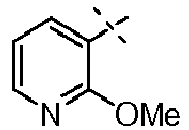
Me Cyclopropyl 1H NMR (400 MHz, MeOD) δ 9.06 (s, 1H), 8.33 (s, 1H), 8.01 (d, J = 9.18 Hz, 1H), 7.67 (t, J = 24.14 Hz, 2H), 7.17 (s, 1H), 4.37 (s, 1H), 3.94 (s, 3H), 2.66 (s, 3H), 1.32 (d, J = 6.60 Hz, 2H), 1.07 (s, 2H). 369 98% 2-11 
Me Cyclopropyl 1H NMR (400 MHz, MeOD) δ 9.05 (s, 1H), 8.29 (s, 2H), 8.09 (d, J = 7.83 Hz, 1H), 7.94 (d, J = 23.80 Hz, 2H), 7.39 - 7.20 (m, 2H), 7.09 (s, 1H), 4.36 (s, 1H), 2.77 (s, 3H), 1.30 (s, 2H), 1.09 (s, 2H). 466 98% 2-12 
Me Cyclopropyl 1H NMR (400 MHz, MeOD) δ 9.02 (s, 1H), 8.40 (d, J = 92.33 Hz, 2H), 8.16 - 8.03 (m, 2H), 7.98 - 7.80 (m, 1H), 7.75 - 7.50 (m, 2H), 4.34 (s, 1H), 3.82 (d, J = 24.28 Hz, 4H), 3.45 (s, 4H), 2.70 (d, J = 23.16 Hz, 3H), 1.27 (dd, J = 11.61, 24.61 Hz, 3H), 1.09 (s, 2H). 424 98% 2-13 
Me Cyclopropyl 1H NMR (400 MHz, DMSO) δ 14.68 (s, 1H), 8.91 (s, 1H), 8.69 (s, 1H), 7.97 (d, J = 8.46 Hz, 1H), 7.79 (s, 1H), 7.63 (s, 1H), 4.40 (s, 1H), 3.82 (d, J = 6.95 Hz, 2H), 3.21 (s, 2H), 2.63 (d, J = 43.98 Hz, 3H), 1.22 (d, J = 5.36 Hz, 2H), 1.05 (s, 2H). 380 97% 2-14 
Me Cyclopropyl 1H NMR (400 MHz, DMSO) δ 14.69 (s, 2H), 8.91 (s, 1H), 8.49 (s, 2H), 8.24 (s, 2H), 7.98 (d, J = 8.62 Hz, 1H), 4.41 (s, 1H), 2.65 (d, J = 31.48 Hz, 3H), 1.24 (d, J = 6.48 Hz, 2H), 1.07 (s, 2H). 399 99% 2-15 
Me Cyclopropyl 1H NMR (400 MHz, DMSO) δ 14.67 (s, 1H), 8.91 (s, 1H), 8.13 (d, J = 25.11 Hz, 1H), 8.07 (s, 1H), 7.95 (dd, J = 8.95, 25.35 Hz, 2H), 7.06 (d, J = 8.71 Hz, 1H), 4.41 (s, 1H), 2.65 (d, J = 25.72 Hz, 3H), 1.22 (d, J = 5.45 Hz, 2H), 1.05 (s, 2H). 354 99% 2-16 
Me Cyclopropyl 1H NMR (400 MHz, DMSO) δ 8.91 (s, 1H), 8.74 (s, 1H), 8.54 (t, J = 24.30 Hz, 2H), 7.99 (d, J = 8.68 Hz, 1H), 4.41 (s, 1H), 3.10 (d, J = 17.91 Hz, 3H), 2.70 (s, 3H), 1.25 (d, J = 5.66 Hz, 2H), 1.07 (s, 2H). 413 99% 2-17 
Me Cyclopropyl 1H NMR (400 MHz, DMSO) δ 14.63 (s, 1H), 9.79 (s, 2H), 8.92 (s, 1H), 8.61 (s, 1H), 8.01 (d, J = 13.11 Hz, 2H), 4.67 (d, J = 32.94 Hz, 4H), 4.40 (s, 1H), 2.62 (s, 3H), 1.23 (s, 3H), 1.07 (s, 2H). 380 97% 2-18 
Me Cyclopropyl 1H NMR (400 MHz, DMSO) δ 14.65 (s, 1H), 8.89 (s, 1H), 8.27 (s, 1H), 8.07 (t, J = 6.62 Hz, 1H), 7.94 (d, J = 8.87 Hz, 1H), 7.28 (s, 2H), 4.40 (tt, J = 3.75, 7.16 Hz, 1H), 3.31 (s, 1H), 2.67 (s, 3H), 1.31 - 1.19 (m, 2H), 1.10 - 1.00 (m, 2H). 379 99% 2-19 
Me Cyclopropyl 1H NMR (400 MHz, DMSO) δ 9.28 (s, 1H), 8.93 (s, 1H), 8.70 (s, 1H), 8.36 (s, 1H), 8.03 (d, J = 8.65 Hz, 1H), 4.41 (s, 2H), 2.65 (s, 3H), 2.44 (s, 3H), 1.25 (d, J = 6.79 Hz, 2H), 1.10 (s, 2H). 420 97% 2-20 
Me Cyclopropyl 1H NMR (400 MHz, DMSO) δ 8.91 (s, 1H), 8.19 (d, J = 11.25 Hz, 3H), 7.99 (d, J = 8.83 Hz, 1H), 7.62 (s, 1H), 4.41 (s, 2H), 2.69 (s, 3H), 1.25 (d, J = 5.80 Hz, 2H), 1.05 (s, 2H). 397 99% 2-21 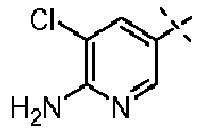
Me Cyclopropyl 1H NMR (400 MHz, DMSO) δ 14.72 (s, 1H), 8.89 (s, 1H), 8.11 - 7.87 (m, 2H), 7.74 (s, 1H), 6.71 (s, 2H), 4.39 (s, 1H), 2.63 (d, J = 29.40 Hz, 3H), 1.20 (t, J = 25.86 Hz, 2H), 0.99 (d, J = 41.43 Hz, 2H). 388 98% 2-22 
Me Cyclopropyl 1H NMR (400 MHz, DMSO) δ 14.71 (s, 1H), 8.90 (s, 1H), 8.26 (s, 1H), 7.95 (d, J = 8.81 Hz, 1H), 7.86 (s, 1H), 6.89 (s, 2H), 4.39 (s, 1H), 2.66 (s, 3H), 1.24 (d, J = 5.61 Hz, 2H), 1.06 (s, 2H). 422 98% 2-23 
Me Cyclopropyl 1H NMR (400 MHz, DMSO) δ 14.71 (s, 1H), 8.98 (s, 1H), 8.13 - 8.02 (m, 2H), 7.92 (d, J = 14.79 Hz, 3H), 4.47 (s, 1H), 2.71 (d, J = 23.60 Hz, 3H), 2.31 (s, 3H), 1.29 (d, J = 5.54 Hz, 2H), 1.15 (d, J = 22.69 Hz, 2H). 368 99% 2-24 
OMe Cyclopropyl 1H NMR (400 MHz, DMSO) δ 14.67 (s, 1H), 8.79 (s, 1H), 8.11 (s, 1H), 7.90 (s, 1H), 7.82 (s, 1H), 6.73 (s, 2H), 4.22 (s, 1H), 3.46 (s, 3H), 3.31 (s, 2H), 1.16 (s, 4H). 404 98% 2-25 
OMe Cyclopropyl 1H NMR (400 MHz, DMSO) δ 14.66 (s, 1H), 8.80 (s, 1H), 8.39 (s, 1H), 8.13 - 7.81 (m, 2H), 6.91 (s, 2H), 4.23 (s, 1H), 3.31 (s, 3H), 1.17 (d, J = 6.99 Hz, 3H). 438 99% 2-26 
OMe Cyclopropyl 1H NMR (400 MHz, DMSO) δ 14.74 (d, J = 61.68 Hz, 1H), 8.76 (d, J = 28.90 Hz, 1H), 8.39 (s, 1H), 7.97 (s, 1H), 7.92 (d, J = 9.13 Hz, 1H), 4.23 (s, 1H), 3.46 (s, 3H), 1.17 (d, J = 7.13 Hz, 4H). 395 98% 2-27 
Me Cyclopropyl 1H NMR (400 MHz, DMSO), 8.89 (s, 1H), 7.95 - 7.93 (m, 2H), 7.83 (s, 1H), 7.60 - 6.57 (d, 1H), 4.39 (s, 1H), 2.63 (d, J = 29.40 Hz, 3H), 1.20 (t, J = 25.86 Hz, 2H), 0.99 (d, J = 41.43 Hz, 2H). 372 98% 2-28 
OMe Cyclopropyl 1H NMR (400 MHz, DMSO) δ 9.95 (s, 1H), 8.94 - 8.66 (m, 1H), 8.49 - 8.39 (m, 1H), 8.26 (d, J = 1.30 Hz, 1H), 7.91 (dd, J = 19.79, 31.75 Hz, 2H), 4.27 - 4.17 (m, 1H), 3.50 - 3.42 (m, 3H), 1.17 (dt, J = 7.59, 17.65 Hz, 3H). 398 98% 2-29 
Me Cyclopropyl 1H NMR (400 MHz, DMSO) δ 9.95 (s, 1H), 8.92 (d, J = 13.25 Hz, 1H), 8.32 (d, J = 1.05 Hz, 1H), 8.17 (d, J = 1.69 Hz, 1H), 8.00 (t, J = 18.18 Hz, 1H), 7.83 (d, J = 33.09 Hz, 1H), 4.40 (dt, J = 3.59, 10.71 Hz, 1H), 2.68 (d, J = 12.78 Hz, 3H), 1.25 (q, J = 6.89 Hz, 2H), 1.14 - 0.93 (m, 2H). 382 98% 2-30 
Me Cyclopropyl 1H NMR (400 MHz, DMSO) δ 14.64 (s, 2H), 8.90 (s, 1H), 7.97 (d, J = 8.81 Hz, 1H), 7.64 (d, J = 1.21 Hz, 1H), 7.34 (s, 1H), 4.40 (td, J = 3.75, 7.19 Hz, 1H), 3.90 (s, 3H), 2.78 - 2.61 (m, 3H), 1.23 (q, J = 7.19 Hz, 2H), 1.16 - 0.97 (m, 2H). 384 95% 2-31 
Me 
1H NMR (400 MHz, DMSO) δ 14.64 (s, 2H), 8.90 (s, 1H), 7.97 (d, J = 8.81 Hz, 1H), 7.64 (d, J = 1.21 Hz, 1H), 7.34 (s, 1H), 4.40 (td, J = 3.75, 7.19 Hz, 1H), 3.90 (s, 3H), 2.78 - 2.61 (m, 3H), 1.23 (q, J = 7.19 Hz, 2H), 1.16 - 0.97 (m, 2H). 406 99% 2-32 
Me Cyclopropyl 1H NMR (400 MHz, DMSO) δ 14.62 (s, 1H), 8.90 (s, 1H), 7.99 (d, J = 1.60 Hz, 1H), 7.95 (t, J = 10.20 Hz, 1H), 7.70 - 7.53 (m, 1H), 4.39 (td, J = 3.61, 7.03 Hz, 1H), 2.62 (d, J = 19.25 Hz, 3H), 1.84 (ddd, J = 5.42, 8.33, 13.56 Hz, 1H), 1.21 (t, J = 6.56 Hz, 1H), 1.05 (d, J = 8.64 Hz, 1H), 1.03 - 0.96 (m, 2H), 0.78 - 0.65 (m, 2H). 394 98% 2-33 
Me 
1H NMR (400 MHz, DMSO) δ 8.88 (d, J = 3.01 Hz, 1H), 8.18 (s, 1H), 8.13 (s, 1H), 8.09 (s, 1H), 7.99 (d, J = 8.77 Hz, 1H), 7.54 (s, 1H), 5.29 - 5.01 (m, 1H), 4.50 - 4.31 (m, 1H), 2.71 -2.57 (m, 2H), 1.76 (ddd, J = 9.04, 15.14, 17.62 Hz, 1H), 1.53 (d, J = 26.94 Hz, 1H). 415 98% 2-34 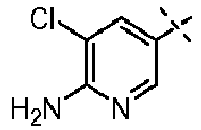
Cl Cyclopropyl 1H NMR (400 MHz, DMSO) δ 8.92 (s, 1H), 8.11 (d, J = 8.56 Hz, 1H), 8.02 (d, J = 0.96 Hz, 1H), 7.81 (d, J = 1.67 Hz, 1H), 4.44 - 4.39 (m, 2H), 1.32 - 1.17 (m, 2H), 1.17 - 1.04 (m, 2H). 408 94% 2-35 
OMe Cyclopropyl 1H NMR (400 MHz, DMSO) δ 8.80 (s, 1H), 7.99 (s, 1H), 7.92 (d, J = 9.3 Hz, 1H), 7.69 (d, J = 12.0 Hz, 1H), 4.29 - 4.14 (m, 1H), 3.47 (s, 3H), 1.24 - 1.04 (m, 4H). 387 99% 2-36 
Me Cyclopropyl 1H NMR (400 MHz, DMSO) δ 14.67 (s, 1H), 8.92 (s, 1H), 8.37 (s, 1H), 8.30 (d, J = 2.3 Hz, 1H), 8.11 - 7.88 (m, 3H), 7.51 (s, 1H), 4.55 - 4.30 (m, 3H), 3.20 (m, 2H), 2.68 (s, 3H), 1.25 (d, J = 6.4 Hz, 2H), 1.08 (d, J = 7.0 Hz, 2H). 441 98% 2-37 
OMe 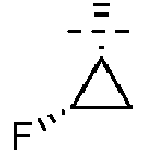
1H NMR (400 MHz, DMSO) δ 14.52 (s, 1H), 8.82 (d, J = 1.51 Hz, 1H), 8.38 (s, 1H), 8.11 (s, 1H), 7.94 (d, J = 9.20 Hz, 1H), 7.36 (s, 2H), 5.10 (ddd, J = 5.42, 8.45, 64.07 Hz, 1H), 4.24 - 4.12 (m, 1H), 1.86 - 1.55 (m, 2H). 413 98% 2-38 
OMe 
1H NMR (400 MHz, DMSO) δ 14.55 (s, 1H), 8.82 (d, J = 1.46 Hz, 1H), 8.15 (d, J = 36.97 Hz, 1H), 7.92 (d, J = 9.24 Hz, 1H), 7.80 (s, 1H), 6.75 (s, 2H), 5.10 (ddd, J = 5.43, 8.45, 64.08 Hz, 1H), 4.29 - 4.12 (m, 1H), 1.93 - 1.53 (m, 2H). 422 98% 2-39 
Me 
1H NMR (400 MHz, DMSO) δ 14.39 (s, 1H), 8.80 (s, 1H), 8.16 - 8.08 (m, 2H), 7.98 -7.86 (m, 2H), 7.69 - 7.59 (m, 1H), 7.37 (dd, J = 5.20, 11.82 Hz, 1H), 7.26 (s, 2H), 1.67 (s, 3H). 451 99% 2-40 
Me Cyclopropyl 1H NMR (400 MHz, CDCl3) δ 14.60 - 14.29 (s, 1H), 8.96 - 8.89 (s, 1H), 8.05 - 7.96 (m, 2H), 7.48 - 7.40 (m, 4H), 7.40 - 7.33 (dt, J = 8.5, 2.8 Hz, 1H), 7.33 - 7.29 (s, 1H), 4.88 - 4.75 (s, 2H), 4.17 - 3.98 (s, 1H), 2.73 - 2.62 (s, 3H), 1.28 - 1.20 (m, 2H), 1.02 - 0.93 (s, 2H). 430 99% 2-41 
Me Cyclopropyl 1H NMR (400 MHz, DMSO) δ 14.83 - 14.68 (s, 1H), 8.99 - 8.81 (s, 1H), 7.96 - 7.89 (d, J = 8.9 Hz, 1H), 7.88 - 7.81 (s, 1H), 7.36 - 7.20 (s, 1H), 6.19 - 6.08 (s, 2H), 4.47 - 4.31 (s, 1H), 2.75 - 2.60 (s, 3H), 1.36 - 1.10 (m, 6H), 1.10 - 0.94 (t, J = 3.1 Hz, 2H). 382 93% 2-42 
Me Cyclopropyl 1H NMR (400 MHz, DMSO) δ 14.83 - 14.67 (s, 3H), 8.97 - 8.85 (s, 3H), 8.00 - 7.85 (m, 6H), 7.72 - 7.60 (t, J = 1.7 Hz, 3H), 6.97 - 6.81 (dd, J = 17.3, 11.0 Hz, 3H), 6.45 - 6.27 (s, 6H), 5.85 - 5.70 (m, 4H), 5.44 - 5.26 (dd, J = 11.0, 1.2 Hz, 3H), 4.47 - 4.33 (s, 1H), 2.76 - 2.60 (s, 9H), 1.30 - 1.18 (m, 6H), 1.12 - 0.98 (m, 5H), 1.32 - 1.20 (m, 7H). 380 99% 2-43 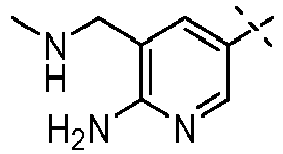
Me Cyclopropyl 1H NMR (400 MHz, DMSO) δ 8.95 - 8.90 (s, 1H), 8.36 - 8.31 (m, 1H), 8.13 - 8.07 (d, J = 2.0 Hz, 1H), 8.02 - 7.97 (d, J = 8.8 Hz, 1H), 4.49 - 4.36 (m, 3H), 2.90 - 2.79 (s, 5H), 2.76 - 2.67 (s, 3H), 1.33 - 1.20 (q, J = 6.9 Hz, 2H), 1.10 - 0.98 (m, 2H). 397 98% 2-44 
Me Cyclopropyl 1H NMR (400 MHz, DMSO) δ 8.93 - 8.91 (s, 1H), 8.24 - 8.20 (m, 1H), 8.01 - 7.96 (d, J = 8.8 Hz, 1H), 7.93 - 7.87 (t, J = 2.8 Hz, 1H), 4.49 - 4.38 (tt, J = 7.2, 3.9 Hz, 1H), 4.24 - 4.14 (t, J = 5.5 Hz, 2H), 2.85 - 2.77 (s, 6H), 1.29 - 1.20 (m, 2H), 1.09 - 0.98 (m, 2H). 411 97% 2-45 
Me Cyclopropyl 1H NMR (400 MHz, DMSO) δ 8.94 - 8.89 (s, 1H), 8.15 - 8.09 (d, J = 2.1 Hz, 1H), 8.02 - 7.96 (d, J = 8.9 Hz, 1H), 7.92 - 7.88 (s, 1H), 4.46 - 4.37 (m, 1H), 4.57 - 4.46 (s, 2H), 2.71 - 2.65 (s, 3H), 1.25 - 1.18 (d, J = 6.7 Hz, 2H), 1.10 - 0.98 (m, 2H). 384 90% 2-46 
Me Cyclopropyl 1H NMR (400 MHz, DMSO) δ 14.71 (s, 1H), 8.89 (s, 1H), 8.35 (s, 2H), 7.94 (d, J = 8.67 Hz, 1H), 7.09 (s, 2H), 4.39 (s, 1H), 2.70 (s, 3H), 1.24 (d, J = 5.31 Hz, 2H), 1.03 (s, 2H). 354 99% 2-47 
Me Cyclopropyl 1H NMR (400 MHz, DMSO) δ 14.72 (s, 1H), 8.89 (s, 1H), 8.41 (s, 2H), 7.95 (d, J = 8.41 Hz, 1H), 7.60 (d, J = 28.12 Hz, 1H), 4.40 (s, 1H), 2.88 (s, 3H), 2.70 (s, 3H), 1.25 (d, J = 5.56 Hz, 2H), 1.03 (s, 2H). 369 99% 2-48 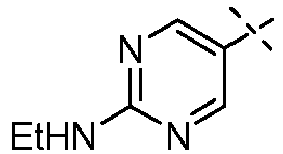
Me Cyclopropyl 1H NMR (400 MHz, DMSO) δ 14.73 (s, 1H), 8.89 (s, 1H), 8.39 (s, 2H), 7.95 (d, J = 8.73 Hz, 1H), 7.64 (s, 1H), 4.39 (s, 1H), 2.70 (s, 3H), 2.53 (d, J = 9.32 Hz, 3H), 1.24 (d, J = 6.11 Hz, 2H), 1.17 (t, J = 6.98 Hz, 2H), 1.03 (s, 2H). 383 97% 2-49 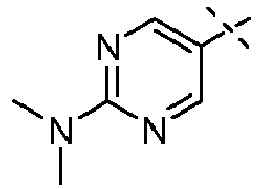
Me Cyclopropyl 1H NMR (400 MHz, DMSO) δ 14.72 (s, 2H), 8.90 (s, 1H), 8.48 (s, 2H), 7.96 (d, J = 8.59 Hz, 1H), 4.39 (s, 1H), 3.24 (d, J = 22.01 Hz, 6H), 2.70 (s, 3H), 1.25 (d, J = 6.03 Hz, 2H), 1.04 (d, J = 7.73 Hz, 2H). 383 98% 2-50 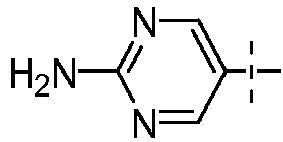
Cl Cyclopropyl 1H NMR (400 MHz, DMSO) δ 8.92 (s, 1H), 8.35 (s, 2H), 8.13 (d, J = 8.6 Hz, 1H), 7.15 (s, 2H), 4.41 (m, 3.8 Hz, 1H), 1.37 - 1.17 (m, 2H), 1.18 - 1.02 (m, 2H). 375 99% 2-51 
Me 
1H NMR (400 MHz, DMSO) δ 8.87 (d, J = 3.2 Hz, 1H), 8.35 (d, J = 1.0 Hz, 2H), 7.97 (d, J = 8.9 Hz, 1H), 7.08 (s, 2H), 5.33 - 4.97 (m, 2H), 4.37 (m, 1H), 2.65 (s, 3H), 1.89 - 1.41 (m, 2H). 373 99% 2-52 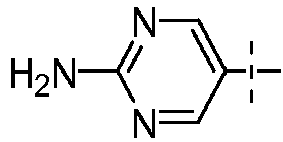
MeO 
1H NMR (400 MHz, DMSO) δ 14.54 (s, 1H), 8.82 (d, J = 1.2 Hz, 1H), 8.44 (s, 2H), 7.93 (d, J = 9.2 Hz, 1H), 7.10 (s, 2H), 5.09 (m, 1H), 4.37 - 3.96 (m, 1H), 3.50 (s, 3H), 1.98 - 1.52 (m, 2H). 389 98% 2-53 
Me Cyclopropyl 1H NMR (400 MHz, DMSO) δ 14.65 (s, 1H), 8.91 (d, J = 4.9 Hz, 1H), 8.76 (s, 2H), 8.15 - 7.85 (m, 1H), 4.63 - 4.29 (m, 1H), 2.50 (s, 3H), 1.29 - 1.15 (m, 2H), 1.06 (d, J = 7.0 Hz, 2H). 384 99% 2-54 
MeO Cyclopropyl 1H NMR (400 MHz, DMSO) δ 8.86 (s, 1H), 8.52 (s, 2H), 8.00 (d, J = 9.2 Hz, 1H), 7.18 (s, 2H), 4.29 (m, 1H), 3.55 (s, 3H), 1.27- 1.11 (m, 4H). 371 99% 2-55 
Me Cyclopropyl 1H NMR (400 MHz, DMSO) δ 14.67 (s, 1H), 8.79 (s, 1H), 8.19 (s, 1H), 7.90 (d, J = 9.3 Hz, 1H), 7.81 (s, 1H), 6.91 (t, J = 5.6 Hz, 1H), 4.29 - 4.11 (m, 1H), 3.53 - 3.41 (m, 5H), 1.26- 1.06 (m, 7H). 432 98% 2-56 
1H NMR (400 MHz, DMSO) δ 9.06 (s, 1H), 8.38 (s, 1H), 8.13 (d, J = 1.75 Hz, 1H), 7.72 (d, J = 9.80 Hz, 1H), 7.29 (s, 2H), 5.06 - 4.90 (m, 1H), 4.58 (d, J = 10.62 Hz, 1H), 4.44 (d, J = 9.71 Hz, 1H), 1.48 (d, J = 6.75 Hz, 3H). 381 95% 2-57 
1H NMR (400 MHz, DMSO) δ 14.95 (s, 1H), 8.91 (s, 1H), 8.37 - 8.33 (d, J = 2.5 Hz, 1H), 8.24 - 8.19 (d, J = 8.3 Hz, 1H), 8.14 - 8.10 (d, J = 2.5 Hz, 1H), 7.58-7.51 (d, J = 8.3 Hz, 1H), 7.22 (s, 2H), 4.42 - 4.36 (tt, J = 7.1, 3.7 Hz, 1H), 2.71 (s, 3H), 1.30 - 1.25 (m, 2H), 1.05 - 0.94 (m, 2H). 361 95% 2-58 
1H NMR (400 MHz, DMSO) δ 14.95 (s, 1H), 8.89 (s, 1H), 8.32 (d, J = 3.5 Hz, 1H), 8.21 (d, J = 8.2 Hz, 1H), 8.06 (s, 1H), 7.79 (s, 1H), 7.53 (d, J = 8.2 Hz, 1H), 6.61 (s, 2H), 4.39 (s, 1H), 2.72 (s, 3H), 1.27 (d, J = 6.1 Hz, 2H), 1.03 (s, 2H). 370 99% 2-59 
1H NMR (400 MHz, DMSO) δ 15.00 (s, 1H), 9.06 (s, 1H), 8.17 (s, 1H), 7.80 (s, 1H), 7.72 (d, J = 9.8 Hz, 1H), 6.86 (t, J = 5.7 Hz, 1H), 4.98 (d, J = 6.7 Hz, 1H), 4.57 (d, J = 10.2 Hz, 1H), 4.48 - 4.32 (m, 1H), 3.55 - 3.37 (m, 2H), 1.48 (d, J = 6.8 Hz, 2H), 1.17 (t, J = 7.1 Hz, 2H). 418 98% 2-60 
1H NMR (400 MHz, DMSO) δ 14.55 (s, 1H), 8.82 (d, J = 1.6 Hz, 1H), 8.18 (s, 1H), 7.92 (d, J = 9.3 Hz, 1H), 7.80 (s, 1H), 6.92 (t, J = 5.7 Hz, 1H), 5.10 (ddd, J = 64.1, 8.4, 5.4 Hz, 1H), 4.32 - 4.06 (m, 1H), 3.58 - 3.37 (m, 5H), 1.93 - 1.51 (m, 2H), 1.19 (t, J = 7.1 Hz, 3H). 450 98% Table 3 
Compound No. R3 = R2 = R1 = NMR MS (MH+) HPLC 3-1 
Me Cyclopropyl 1H NMR (400 MHz, DMSO) δ 14.59 (s, 1H), 9.08 (s, 1H), 8.94 (s, 1H), 8.33 (d, J = 1.3 Hz, 1H), 8.16 (d, J = 1.7 Hz, 1H), 8.06 (t, J = 8.5 Hz, 2H), 7.85 (d, J = 9.4 Hz, 1H), 4.49 - 4.38 (m, 1H), 2.70 (s, 3H), 1.25 (d, J = 6.6 Hz, 2H), 1.09 (s, 2H). 378 98% 3-2 
Me Cyclopropyl 1H NMR (400 MHz, DMSO) δ 14.63 (s, 1H), 9.38 (s, 1H), 8.91 (d, J = 25.3 Hz, 1H), 8.79 (s, 1H), 8.13 (s, 1H), 8.06 (d, J = 8.8 Hz, 1H), 8.01 (s, 1H), 4.44 (s, 1H), 2.75 (s, 3H), 1.25 (s, 2H), 1.09 (s, 2H). 379 95% 3-3 
Me Cyclopropyl 1H NMR (400 MHz, DMSO) δ 14.70 (s, 1H), 9.41 (s, 1H), 9.00 (s, 1H), 8.80 (s, 1H), 8.36 (s, 1H), 8.17 (s, 1H), 8.07 (s, 2H), 7.86 (s, 1H), 7.61 (s, 1H), 4.49 (s, 1H), 2.79 (s, 3H), 1.31 (s, 3H), 1.17 (s, 2H). 456 98% 3-4 
Me Cyclopropyl 1H NMR (400 MHz, DMSO) δ 14.57 (d, J = 5.1 Hz, 1H), 9.05 (d, J = 6.5 Hz, 1H), 8.94 (s, 1H), 8.44 (s, 1H), 8.23 (s, 1H), 8.11 (s, 1H), 8.05 (d, J = 8.8 Hz, 1H), 7.54 (d, J = 6.4 Hz, 1H), 4.43 (s, 1H), 2.68 (s, 3H), 1.24 (d, J = 5.0 Hz, 2H), 1.11 (s, 2H). 378 97% 3-5 
OMe Cyclopropyl 1H NMR (400 MHz, DMSO) δ 14.64 (s, 1H), 9.13 (d, J = 6.3 Hz, 1H), 8.90 (s, 1H), 8.53 (s, 1H), 8.31 (d, J = 11.7 Hz, 2H), 8.09 (d, J = 9.1 Hz, 1H), 7.72 (d, J = 5.8 Hz, 1H), 4.30 (s, 1H), 3.57 (s, 3H), 1.25 (s, 4H). 394 95% 3-6 
Me Cyclopropyl 1H NMR (400 MHz, DMSO) δ 9.30 (s, 1H), 8.93 (s, 1H), 8.64 (s, 1H), 8.04 (t, J = 9.2 Hz, 2H), 7.75 (d, J = 9.2 Hz, 1H), 4.42 (s, 1H), 2.69 (s, 3H), 1.24 (s, 2H), 1.09 (s, 2H). 379 97% 3-7 
OMe Cyclopropyl 1H NMR (400 MHz, DMSO) δ 14.61 (s, 1H), 9.33 (s, 1H), 8.83 (s, 1H), 8.64 (s, 1H), 8.06 (d, J = 9.2 Hz, 1H), 8.01 (d, J = 9.1 Hz, 1H), 7.86 (d, J = 9.3 Hz, 1H), 4.24 (s, 1H), 3.48 (s, 3H), 1.19 (d, J = 5.2 Hz, 4H). 395 98% 3-8 
Me Cyclopropyl 1H NMR (400 MHz, DMSO) δ 14.60 (s, 1H), 9.11 (s, 1H), 8.93 (s, 1H), 8.22 (d, J = 1.2 Hz, 1H), 8.17 (s, 1H), 8.03 (d, J = 8.9 Hz, 1H), 7.84 (d, J = 1.1 Hz, 1H), 4.43 (tt, J = 7.1, 3.7 Hz, 1H), 2.70 (s, 3H), 1.26 (d, J = 6.8 Hz, 2H), 1.09 (s, 2H). 379 98% 3-9 
Me Cyclopropyl 1H NMR (400 MHz, DMSO) δ 14.60 (s, 1H), 9.07 (s, 1H), 8.93 (s, 1H), 8.22 (s, 1H), 8.02 (d, J = 8.9 Hz, 1H), 7.81 (s, 1H), 7.80 (s, 1H), 4.49 - 4.37 (m, 1H), 2.70 (d, J = 21.5 Hz, 3H), 1.27 (t, J = 9.8 Hz, 2H), 1.14 - 1.05 (m, 2H). 446 97% 3-10 
Me Cyclopropyl 1H NMR (400 MHz, DMSO) δ 14.62 (s, 1H), 8.94 (s, 2H), 8.35 (s, 1H), 8.23 (s, 1H), 8.05 (d, J = 8.7 Hz, 1H), 7.75 (s, 1H), 4.43 (s, 1H), 2.69 (s, 3H), 2.66 (s, 3H), 1.24 (s, 2H), 1.08 (s, 2H). 392 98% 3-11 
Me Cyclopropyl 1H NMR (400 MHz, DMSO) δ 14.61 (s, 1H), 8.92 (s, 1H), 8.79 (d, J = 1.2 Hz, 1H), 8.16 (d, J = 1.1 Hz, 1H), 8.01 (d, J = 8.8 Hz, 1H), 7.76 (d, J = 1.1 Hz, 1H), 7.58 (s, 1H), 4.42 (tt, J = 7.2, 3.8 Hz, 1H), 2.70 (d, J = 20.2 Hz, 3H), 1.26 (d, J = 6.9 Hz, 2H), 1.15 - 1.03 (m, 2H). 412 99% 3-12 
Me Cyclopropyl 1H NMR (400 MHz, DMSO) δ 9.40 (s, 1H), 8.94 (s, 1H), 8.88 (s, 1H), 8.18 (d, J = 9.3 Hz, 1H), 8.05 (d, J = 8.8 Hz, 1H), 7.89 (d, J = 9.3 Hz, 1H), 4.43 (s, 1H), 2.69 (s, 3H), 1.24 (d, J = 6.1 Hz, 2H), 1.12 (s, 2H). 423 96% 3-13 
OMe Cyclopropyl 1H NMR (400 MHz, DMSO) δ 14.60 (s, 1H), 8.90 (s, 1H), 8.83 (s, 1H), 8.22 (d, J = 1.0 Hz, 1H), 7.98 (d, J = 9.2 Hz, 1H), 7.75 (d, J = 1.0 Hz, 1H), 7.66 (s, 1H), 4.29 - 4.18 (m, 1H), 3.51 (d, J = 13.2 Hz, 3H), 1.25 - 1.14 (m, 4H). 428 100% 3-14 
OMe Cyclopropyl 1H NMR (400 MHz, DMSO) δ 14.59 (s, 1H), 9.19 (s, 1H), 8.83 (s, 1H), 8.28 (s, 1H), 8.01 (d, J = 9.2 Hz, 1H), 7.92 (s, 1H), 7.81 (s, 1H), 4.25 (dt, J = 11.0, 5.7 Hz, 1H), 3.50 (d, J = 12.8 Hz, 3H), 1.19 (m, 4H). 462 98% 3-15 
Me Cyclopropyl 1H NMR (400 MHz, DMSO) δ 9.61 (s, 1H), 8.93 (s, 1H), 8.51 (s, 1H), 8.13 (s, 1H), 8.04 (d, J = 8.8 Hz, 1H), 7.97 (d, J = 9.2 Hz, 1H), 7.62 (d, J = 9.2 Hz, 1H), 7.55 (s, 1H), 4.42 (s, 1H), 2.69 (s, 3H), 1.24 (s, 2H), 1.10 (s, 2H). 421 98% 3-16 
Me Cyclopropyl 1H NMR (400 MHz, DMSO) δ 14.87 - 13.95 (m, 2H), 9.60 (s, 1H), 8.94 (s, 1H), 8.44 (s, 1H), 8.05 (t, J = 9.5 Hz, 2H), 7.71 (d, J = 9.4 Hz, 1H), 4.46 - 4.39 (m, 1H), 2.71 (m, 3H), 2.46 (s, 3H), 1.25 (d, J = 6.3 Hz, 2H), 1.11 (s, 2H). 459 98% 3-17 
Cl Cyclopropyl 1H NMR (400 MHz, DMSO) δ 14.44 - 13.91 (m, 1H), 9.16 (s, 1H), 8.95 (s, 1H), 8.37 (s, 1H), 8.23 (d, J = 8.6 Hz, 1H), 8.08 (s, 1H), 7.81 (s, 1H), 4.43 (m, 1H), 1.23 (m, 2H), 1.16 (s, 2H). 398 98% 3-18 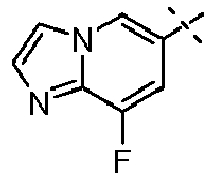
Me Cyclopropyl 1H NMR (400 MHz, DMSO) δ 14.62 (s, 1H), 8.92 (s, 1H), 8.68 (s, 1H), 8.19 (d, J = 2.9 Hz, 1H), 8.01 (d, J = 8.8 Hz, 1H), 7.73 (d, J = 1.0 Hz, 1H), 7.32 (d, J = 11.7 Hz, 1H), 4.42 (m, 1H), 2.72 (s, 3H), 1.25 (d, 2H), 1.12 - 1.04 (m, 2H). 396 98% 3-19 
Me Cyclopropyl 1H NMR (400 MHz, DMSO) δ 9.29 (s, 1H), 8.94 (s, 1H), 8.54 (s, 1H), 8.36 (s, 1H), 8.05 (d, J = 8.9 Hz, 1H), 8.00 (s, 1H), 4.49 - 4.38 (m, 1H), 2.74 (s, 3H), 1.25 (d, J = 6.9 Hz, 2H), 1.11 (s, 2H). 423 98% 3-20 
Cl Cyclopropyl 1H NMR (400 MHz, DMSO) δ 8.95 (s, 1H), 8.88 (t, J = 4.2 Hz, 1H), 8.22 (t, J = 2.4 Hz, 1H), 8.20 (d, J = 8.5 Hz, 1H), 7.82 (s, 1H), 7.68 (s, 1H), 4.48 - 4.36 (m, 1H), 1.26 - 1.19 (m, 2H), 1.14 (m, 2H). 432 98% 3-21 
Me Cyclopropyl 1H NMR (400 MHz, DMSO) δ 14.60 (s, 1H), 9.32 (d, J = 1.2 Hz, 1H), 8.93 (s, 1H), 8.71 (s, 1H), 8.06 (s, 1H), 8.02 (d, J = 8.8 Hz, 1H), 4.43 (tt, J = 7.0, 3.6 Hz, 1H), 2.70 (d, J = 17.8 Hz, 3H), 1.30 - 1.20 (m, 2H), 1.15- 1.05 (m, 2H). 413 98% 3-22 
Me Cyclopropyl 1H NMR (400 MHz, DMSO) δ 14.57 (s, 1H), 9.22 (s, 1H), 8.93 (s, 1H), 8.71 (s, 1H), 8.02 (d, J = 8.8 Hz, 1H), 7.85 (d, J = 10.8 Hz, 1H), 4.47 - 4.37 (m, 1H), 2.72 (s, 3H), 1.29 - 1.22 (m, 2H), 1.10 (s, 2H). 397 99% 3-23 
OMe Cyclopropyl 1H NMR (400 MHz, DMSO) δ 14.57 (s, 1H), 9.26 (s, 1H), 8.84 (s, 1H), 8.72 (s, 1H), 8.01 (d, J = 9.1 Hz, 1H), 7.92 (d, J = 10.9 Hz, 1H), 4.28 - 4.18 (m, 1H), 3.51 (s, 3H), 1.20 (d, J = 5.5 Hz, 4H). 413 95% 3-24 
OMe 
1H NMR (400 MHz, DMSO) δ 14.47 (s, 1H), 8.89 (t, J = 1.3 Hz, 1H), 8.86 (d, J = 1.8 Hz, 1H), 8.23 (d, J = 1.3 Hz, 1H), 8.00 (d, J = 9.1 Hz, 1H), 7.75 (d, J = 1.2 Hz, 1H), 7.63 (t, J = 1.3 Hz, 1H), 5.31 - 4.93 (dtd, J = 64.0, 5.5, 3.3 Hz, 1H), 4.26 - 4.12 (dt, J = 8.9, 5.4 Hz, 1H), 3.54 (s, 3H), 1.93 - 1.49 (m, 2H). 446 98% 3-25 
Me 
1H NMR (400 MHz, CDCl3) δ 14.07 (s, 1H), 8.55 (s, 1H), 8.14 (d, J = 8.4 Hz, 1H), 8.00 (d, J = 17.0 Hz, 1H), 7.66 (dd, J = 11.6, 4.8 Hz, 2H), 7.49 (d, J = 4.4 Hz, 1H), 7.13 - 7.03 (m, 2H), 7.01 (d, J = 0.8 Hz, 1H), 5.22 (s, 1H), 1.72 (s, 3H). 484 98% 3-26 
Me Cyclopropyl 1H NMR (400 MHz, DMSO) δ 14.64 (s, 1H), 9.09 (s, 1H), 8.93 (s, 1H), 8.58 (s, 1H), 8.02 (d, J = 8.8 Hz, 1H), 7.54 (s, 1H), 4.46 - 4.36 (m, 1H), 2.70 (s, 3H), 2.64 (s, 3H), 1.25 (d, J = 6.2 Hz, 2H), 1.09 (s, 2H). 393 98% 3-27 
Me 
1H NMR (400 MHz, DMSO) δ 14.48 (s, 1H), 8.90 (d, J = 3.0 Hz, 1H), 8.78 (s, 1H), 8.16 (s, 1H), 8.03 (d, J = 8.8 Hz, 1H), 7.75 (s, 1H), 7.57 (s, 1H), 5.16 (d, J = 64.5 Hz, 1H), 4.44 - 4.33 (m, 1H), 2.65 (s, 3H), 1.83 - 1.68 (m, 1H), 1.62 (m, 1H). 430 98% 3-28 
Me Cyclopropyl 1H NMR (400 MHz, DMSO) δ 14.59 (s, 1H), 9.63 (s, 1H), 8.94 (s, 1H), 8.81 (s, 1H), 8.30 (s, 1H), 8.04 (d, J = 8.9 Hz, 1H), 4.50 - 4.37 (m, 1H), 2.73 (s, 3H), 1.24 (t, J = 9.6 Hz, 2H), 1.12 (s, 2H). 447 98% 3-29 
Me Cyclopropyl 1H NMR (400 MHz, DMSO) δ 9.33 (s, 1H), 8.94 (s, 1H), 8.74 (s, 1H), 8.63 (s, 2H), 8.05 (d, J = 8.8 Hz, 1H), 7.84 (s, 1H), 4.51 (s, 2H), 4.46 - 4.36 (m, 1H), 2.71 (s, 3H), 1.26 (d, J = 6.8 Hz, 2H), 1.09 (s, 2H). 408 95% 3-30 
OMe Cyclopropyl 1H NMR (400 MHz, DMSO) δ 14.58 (s, 1H), 9.37 (s, 1H), 8.84 (s, 1H), 8.72 (s, 1H), 8.13 (s, 1H), 8.00 (d, J = 9.0 Hz, 1H), 4.29 - 4.18 (m, 1H), 3.51 (s, 3H), 1.20 (d, J = 5.4 Hz, 4H). 429 96% 3-31 
Me Cyclopropyl 1H NMR (400 MHz, DMSO) δ 9.43 (s, 1H), 8.99 (s, 1H), 8.89 (s, 1H), 8.14 - 8.01 (m, 2H), 7.54 (d, J = 9.8 Hz, 1H), 4.49 (s, 2H), 2.77 (s, 3H), 1.30 (s, 2H), 1.14 (s, 2H). 379 88% 3-32 
OMe Cyclopropyl 1H NMR (400 MHz, DMSO) δ 9.42 (s, 1H), 8.92 (s, 1H), 8.83 (s, 1H), 8.00 (s, 2H), 7.57 (d, J = 9.3 Hz, 1H), 4.23 (s, 1H), 3.51 (s, 3H), 1.18 (s, 4H). 395 95% 3-33 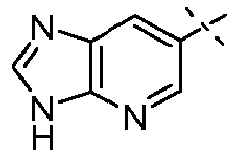
Me Cyclopropyl 1H NMR (400 MHz, DMSO) δ 8.98 (s, 1H), 8.74 (s, 1H), 8.48 (s, 1H), 8.23 (s, 1H), 8.04 (d, J = 8.9 Hz, 1H), 4.39 (s, 2H), 2.64 (s, 3H), 1.29 (s, 2H), 1.07 (s, 2H). 379 99% 3-34 
Me Cyclopropyl 1H NMR (400 MHz, DMSO) δ 15.02 - 14.73 (m, 1H), 9.01 (s, 1H), 8.10 (s, 3H), 7.54 (s, 1H), 4.51 (s, 1H), 1.33 (s, 2H), 1.18 (s, 2H). 379 95% 3-35 
Me Cyclopropyl 1H NMR (400 MHz, DMSO) δ 14.68 (s, 1H), 14.19 (s, 1H), 8.93 (s, 1H), 8.53 (s, 1H), 8.44 (s, 1H), 8.40 (s, 1H), 8.01 (d, J = 8.5 Hz, 1H), 4.42 (s, 1H), 2.64 (s, 3H), 1.22 (m, 2H), 1.12 (m, 2H). 423 98% 3-36 
Me Cyclopropyl 1H NMR (400 MHz, DMSO) δ 12.87 (s, 1H), 8.97 (s, 1H), 8.10 (s, 1H), 8.01 (d, J = 8.7 Hz, 1H), 7.02 (s, 1H), 6.48 (s, 1H), 4.46 (s, 1H), 2.70 (s, 2H), 1.30 (s, 2H), 1.12 (s, 2H). 393 98% 3-37 
Me Cyclopropyl 1H NMR (400 MHz, DMSO) δ 14.83 (s, 1H), 13.45 (b, 1H), 8.98 (s, 1H), 8.26 (s, 1H), 8.04 (d, J = 8.6 Hz, 1H), 7.90 (s, 1H), 7.78 (d, J = 8.5 Hz, 1H), 7.42 (d, J = 8.4 Hz, 1H), 4.46 (s, 1H), 2.68 (s, 3H), 1.31 (d, J = 5.7 Hz, 2H), 1.14 (s, 2H). 378 92% 3-38 
Me Cyclopropyl 1H NMR (400 MHz, DMSO) δ 14.69 (s, 1H), 13.83 (s, 1H), 8.91 (s, 1H), 8.31 (s, 1H), 7.98 (d, J = 8.8 Hz, 1H), 7.83 (s, 1H), 7.53 (s, 1H), 4.46 - 4.34 (m, 1H), 2.63 (s, 3H), 1.25 (d, J = 6.9 Hz, 2H), 1.09 (s, 2H). 412 98% 3-39 
OMe Cyclopropyl 1H NMR (400 MHz, DMSO) δ 14.74 (s, 1H), 14.27 (s, 1H), 8.90 (s, 1H), 8.62 (d, J = 10.6 Hz, 3H), 8.07 (d, J = 9.1 Hz, 1H), 4.31 (s, 1H), 3.44 (s, 3H), 1.26 (s, 4H). 439 95% 3-40 
Me Cyclopropyl 1H NMR (400 MHz, DMSO) δ 14.77 (s, 1H), 13.23 (s, 1H), 8.91 (s, 1H), 8.49 (s, 1H), 7.98 (d, J = 8.3 Hz, 1H), 7.79 (d, J = 8.0 Hz, 1H), 7.67 (s, 1H), 7.25 (d, J = 7.9 Hz, 1H), 4.40 (s, 1H), 2.61 (s, 2H), 1.25 (s, 2H), 1.09 (s, 2H). 378 98% 3-41 
Me Cyclopropyl 1H NMR (400 MHz, DMSO) δ 14.72 (s, 1H), 9.52 (s, 1H), 8.92 (s, 1H), 8.30 (s, 1H), 8.27 (d, J = 8.4 Hz, 1H), 8.01 (d, J = 8.8 Hz, 1H), 7.58 (d, J = 8.1 Hz, 1H), 4.40 (s, 1H), 2.62 (s, 3H), 1.25 (d, J = 5.9 Hz, 2H), 1.08 (s, 2H). 395 95% 3-42 
Me Cyclopropyl 1H NMR (400 MHz, DMSO) δ 14.77 (s, 1H), 11.96 (s, 1H), 8.92 (s, 1H), 8.24 (s, 1H), 8.06 (s, 1H), 7.99 (d, J = 8.7 Hz, 1H), 7.61 (s, 1H), 6.57 (s, 1H), 4.41 (s, 1H), 2.64 (s, 3H), 1.26 (d, J = 6.1 Hz, 2H), 1.09 (s, 2H). 378 98% 3-43 
Me Cyclopropyl 1H NMR (400 MHz, DMSO) δ 14.76 - 14.48 (s, 1H), 8.97 - 8.90 (d, J = 2.7 Hz, 2H), 8.63 - 8.55 (s, 1H), 8.07 - 7.97 (t, J = 9.2 Hz, 2H), 7.69 - 7.58 (m, 1H), 4.48 - 4.39 (s, 2H), 2.73 - 2.65 (s, 3H), 1.27 - 1.20 (m, 2H), 1.14 - 1.06 (s, 2H). 403 95% 3-44 
Me Cyclopropyl 1H NMR (400 MHz, DMSO) δ 10.02 - 9.98 (s, 1H), 9.48 - 9.43 (s, 1H), 8.95 - 8.90 (s, 1H), 8.67 - 8.62 (s, 1H), 8.12 - 8.07 (d, J = 9.2 Hz, 1H), 8.07 - 8.01 (d, J = 8.9 Hz, 1H), 7.82 - 7.75 (dd, J = 9.4, 1.7 Hz, 1H), 4.48 - 4.36 (s, 1H), 2.72 - 2.67 (s, 3H), 1.25 - 1.21 (t, J = 3.8 Hz, 2H), 1.14 - 1.06 (m, 2H). 406 90% 3-45 
Me Cyclopropyl 1H NMR (400 MHz, DMSO) δ 9.93 (s, 1H), 8.83 (s, 1H), 8.40 (s, 1H), 8.09 - 8.05 (dd, J = 9.2, 1.0 Hz, 1H), 8.05 - 8.00 (d, J = 8.7 Hz, 1H), 7.81 - 7.72 (dd, J = 9.3, 1.7 Hz, 1H), 5.35 - 5.16 (s, 1H), 4.53 - 4.33 (m, 1H), 2.75 - 2.64 (s, 3H), 1.28 - 1.20 (d, J = 6.2 Hz, 2H), 1.15 - 1.03 (d, J = 3.8 Hz, 2H). 402 98% 3-46 
Me Cyclopropyl 1H NMR (400 MHz, DMSO) δ 14.70 - 14.56 (s, 1H), 9.23 - 9.15 (m, 1H), 8.99 - 8.89 (s, 1H), 8.72 - 8.65 (s, 1H), 8.08 - 7.99 (d, J = 8.8 Hz, 1H), 7.84 - 7.77 (s, 1H), 7.16 - 7.04 (m, 1H), 6.93 - 6.82 (m, 1H), 5.82 - 5.69 (dd, J = 11.2, 1.6 Hz, 1H), 4.49 - 4.36 (t, J = 3.5 Hz, 1H), 2.75 - 2.68 (s, 3H), 1.33 - 1.19 (t, J = 6.5 Hz, 2H), 1.16-1.03 (s, 2H). 405 97% 3-47 
Me Cyclopropyl 1H NMR (400 MHz, DMSO) δ 14.76 - 14.48 (s, 1H), 8.96 - 8.91 (s, 4H), 8.86 - 8.79 (s, 4H), 8.64 - 8.56 (d, J = 2.3 Hz, 4H), 8.06 - 7.99 (d, J = 8.8 Hz, 4H), 7.86 - 7.79 (d, J = 9.4 Hz, 4H), 7.52 - 7.43 (s, 3H), 4.48 - 4.37 (s, 1H), 2.74 - 2.67 (s, 12H), 1.29 - 1.20 (d, J = 6.8 Hz, 9H), 1.11 - 1.01 (t, J = 3.0 Hz, 6H). 422 96% 3-48 
Me Cyclopropyl 1H NMR (400 MHz, DMSO) δ 14.76 - 14.48 (s, 1H), 8.95 - 8.89 (s, 1H), 8.84 - 8.78 (s, 1H), 8.63 - 8.58 (s, 1H), 8.05 - 8.00 (d, J = 8.8 Hz, 1H), 7.90 - 7.84 (d, J = 9.4 Hz, 1H), 7.53 - 7.45 (d, J = 9.3 Hz, 1H), 4.47 - 4.40 (s, 1H), 2.73 - 2.68 (s, 3H), 1.27 - 1.21 (d, J = 6.6 Hz, 2H), 1.12 - 1.02 (s, 2H). 446 90% 3-49 
Me Cyclopropyl 1H NMR (400 MHz, DMSO) δ 8.93 (s, 1H), 8.66 (s, 1H), 8.06 - 7.99 (d, J = 8.7 Hz, 1H), 7.99 - 7.95 (s, 1H), 7.94 - 7.88 (d, J = 9.3 Hz, 1H), 7.55 - 7.47 (dd, J = 9.3, 1.6 Hz, 1H), 4.52 - 4.32 (m, 1H), 2.77 - 2.61 (s, 3H), 1.33 - 1.17 (d, J = 6.6 Hz, 2H), 1.19 - 1.05 (t, J = 3.3 Hz, 2H). 412 98% 3-50 
Me Cyclopropyl 1H NMR (400 MHz, DMSO) δ 8.93 (s, 1H), 8.60 (s, 1H), 8.06 - 8.00 (d, J = 8.7 Hz, 1H), 8.00 - 7.96 (s, 1H), 7.92 - 7.86 (d, J = 9.3 Hz, 1H), 7.56 - 7.48 (d, J = 9.4 Hz, 1H), 4.55 - 4.26 (m, 1H), 2.81 - 2.60 (s, 3H), 1.37- 1.21 (d, J = 6.5 Hz, 2H), 1.15-1.05 (m, 2H). 456, 458 97% 3-51 
Me Cyclopropyl 1H NMR (400 MHz, DMSO) δ 14.71 - 14.62 (s, 1H), 8.96 - 8.88 (s, 1H), 8.83 - 8.75 (s, 1H), 8.25 - 8.16 (d, J = 7.5 Hz, 2H), 8.15 - 8.07 (s, 1H), 8.07 - 7.97 (d, J = 8.8 Hz, 1H), 7.77 - 7.71 (s, 1H), 7.57 - 7.42 (m, 4H), 4.50 - 4.33 (s, 1H), 2.82 - 2.71 (s, 3H), 1.31 - 1.22 (d, J = 6.7 Hz, 2H), 1.15-1.04 (s, 2H). 454 99% 3-52 
Me Cyclopropyl 1H NMR (400 MHz, DMSO) δ 14.71 - 14.60 (s, 1H), 8.95 - 8.88 (s, 1H), 8.73 - 8.65 (s, 1H), 8.10 - 7.96 (m, 2H), 7.74 - 7.68 (s, 1H), 7.40 - 7.32 (s, 1H), 7.11 - 7.02 (m, 1H), 6.96 - 6.83 (m, 1H), 5.70 - 5.60 (dd, J = 11.2, 2.0 Hz, 1H), 4.47 - 4.38 (t, J = 3.5 Hz, 1H), 2.78 - 2.69 (s, 3H), 1.31 - 1.20 (d, J = 6.9 Hz, 2H), 1.14 - 1.01 (s, 2H). 405 93% 3-53 
Me Cyclopropyl 1H NMR (400 MHz, DMSO) δ 14.71 - 14.60 (s, 1H), 8.95 - 8.88 (s, 1H), 8.73 - 8.65 (s, 1H), 8.10 - 7.96 (m, 2H), 7.74 - 7.68 (s, 1H), 7.40 - 7.32 (s, 1H), 7.11 - 7.02 (m, 1H), 6.96 - 6.83 (m, 1H), 5.70 - 5.60 (dd, J = 11.2, 2.0 Hz, 1H), 4.47 - 4.38 (t, J = 3.5 Hz, 1H), 2.78 - 2.69 (s, 3H), 1.31 - 1.20 (d, J = 6.9 Hz, 2H), 1.14 - 1.01 (s, 2H). 403 95% 3-54 
Me Cyclopropyl 1H NMR (400 MHz, DMSO) δ 14.76 - 14.39 (s, 1H), 9.20 - 9.07 (d, J = 7.0 Hz, 1H), 8.95 - 8.90 (s, 1H), 8.67 - 8.60 (s, 1H), 8.08 - 8.00 (m, 2H), 7.32 - 7.24 (m, 1H), 4.47 - 4.36 (s, 1H), 2.75 - 2.61 (s, 3H), 1.30 - 1.19 (m, 2H), 1.15 - 1.03 (q, J = 3.8, 3.1 Hz, 2H). 379 98% 3-55 
Me Cyclopropyl 1H NMR (400 MHz, DMSO) δ 14.76 - 14.36 (s, 1H), 9.68 - 9.65 (d, J = 1.5 Hz, 1H), 8.95 - 8.92 (s, 1H), 8.84 - 8.81 (s, 1H), 8.63 - 8.59 (d, J = 1.5 Hz, 1H), 8.06 - 8.01 (d, J = 8.8 Hz, 1H), 4.46 - 4.39 (s, 1H), 2.76 - 2.69 (s, 3H), 1.30 - 1.20 (m, 2H), 1.14 - 1.05 (s, 2H). 404 98% 3-56 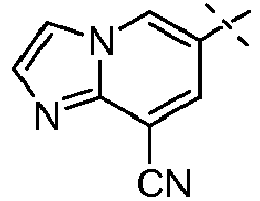
OMe 
1H NMR (400 MHz, DMSO) δ 14.73 - 14.06 (s, 1H), 9.21 - 9.18 (m, 1H), 8.87 - 8.83 (d, J = 1.86 Hz, 1H), 8.32 - 8.27 (d, J = 1.33 Hz, 1H), 8.20 - 8.16 (s, 1H), 8.04 - 7.97 (d, J = 9.06 Hz, 1H), 7.87 - 7.80 (d, J = 1.20 Hz, 1H), 5.31 - 4.87 (m, 1H), 4.32 - 4.12 (m, 1H), 3.67 - 3.47 (s, 3H), 1.95 - 1.56 (m, 2H). 437 98% 3-57 
OMe Cyclopropyl 1H NMR (400 MHz, DMSO) δ 14.61 (s, 1H), 8.83 (s, 1H), 8.77 (s, 1H), 8.23 (d, J = 2.1 Hz, 1H), 7.99 (d, J = 9.2 Hz, 1H), 7.73 (d, J = 1.0 Hz, 1H), 7.40 (d, J = 11.8 Hz, 1H), 4.46 - 4.08 (m, 1H), 3.51 (d, J = 10.5 Hz, 3H), 1.19 (d, J = 6.9 Hz, 4H). 412 90% 3-58 
Me Cyclopropyl 1H NMR (400 MHz, DMSO) δ 14.83 - 14.57 (s, 1H), 9.82 - 9.48 (s, 2H), 9.01 - 8.84 (d, J = 2.6 Hz, 1H), 8.05 - 7.90 (dd, J = 8.5, 2.7 Hz, 1H), 7.65 - 7.57 (d, J = 7.5 Hz, 1H), 7.51 - 7.46 (s, 1H), 7.45 - 7.36 (d, J = 7.7 Hz, 1H), 4.72 - 4.50 (s, 4H), 4.47 - 4.28 (d, J = 6.8 Hz, 1H), 2.64 - 2.53 (d, J = 2.7 Hz, 3H), 1.31 - 1.14 (d, J = 6.1 Hz, 2H), 1.14 - 0.96 (s, 2H). 379 95% 3-59 
Me Cyclopropyl 1H NMR (400 MHz, DMSO) δ 8.95 - 8.83 (d, J = 2.4 Hz, 1H), 7.98 - 7.86 (d, J = 8.8 Hz, 1H), 7.25-7.15 (s, 1H), 7.14 - 7.01 (d, J = 7.9 Hz, 1H), 6.97 - 6.81 (d, J = 7.9 Hz, 1H), 3.65 - 3.50 (m, 2H), 4.45 - 4.29 (dp, J = 9.2, 4.7, 3.9 Hz, 1H), 3.16 - 2.99 (t, J = 8.4 Hz, 2H), 2.65 - 2.56 (s, 3H), 1.28 - 1.16 (d, J = 6.6 Hz, 3H), 1.12 - 0.97 (m, 2H). 379 99% 3-60 
Me Cyclopropyl 1H NMR (400 MHz, DMSO) δ 15.01 - 14.39 (m, 1H), 12.95 - 12.53 (s, 2H), 9.03 - 8.82 (t, J = 1.9 Hz, 1H), 8.73 - 8.47 (s, 2H), 8.10 - 7.90 (d, J = 8.4 Hz, 1H), 7.62 - 7.44 (m, 1H), 4.51 - 4.23 (m, 1H), 7.44 - 7.31 (s, 1H), 7.31 - 7.11 (d, J = 8.6 Hz, 1H), 2.65 - 2.55 (s, 3H), 1.30 - 1.16 (m, 2H), 1.16 - 0.96 (s, 2H). 393 90% 3-61 
Me Cyclopropyl 1H NMR (400 MHz, MeOD) δ 9.17 - 9.06 (d, J = 2.8 Hz, 1H), 8.30 - 8.15 (m, 1H), 7.94 - 7.80 (m, 2H), 7.65 - 7.49 (dt, J = 7.5, 3.3 Hz, 2H), 4.47 - 4.32 (d, J = 6.9 Hz, 1H), 2.96 - 2.81 (d, J = 2.8 Hz, 3H), 1.43 - 1.27 (dd, J = 10.8, 4.5 Hz, 2H), 1.21 - 1.05 (s, 2H). 378 100% 3-62 
Me Cyclopropyl 1H NMR (400 MHz, DMSO) δ 14.63 - 14.42 (s, 1H), 8.99 - 8.89 (s, 1H), 8.33 - 8.25 (d, J = 7.8 Hz, 1H), 8.25 - 8.18 (d, J = 8.0 Hz, 1H), 8.14 - 8.05 (d, J = 8.7 Hz, 1H), 7.71 - 7.56 (dt, J = 22.8, 7.4 Hz, 2H), 4.51 - 4.31 (s, 1H), 2.85 - 2.70 (s, 3H), 1.30 - 1.20 (d, J = 7.0 Hz, 2H), 1.13 - 0.97 (s, 2H). 395 100% 3-63 
Me Cyclopropyl 1H NMR (400 MHz, DMSO) δ 15.01 - 14.28 (s, 2H), 9.04 - 8.82 (t, J = 2.3 Hz, 1H), 8.05 - 7.98 (d, J = 8.3 Hz, 1H), 7.98 - 7.92 (dd, J = 10.5, 2.5 Hz, 1H), 7.90 - 7.83 (s, 1H), 7.56 - 7.47 (d, J = 8.2 Hz, 1H), 4.46 - 4.34 (t, J = 6.3 Hz, 1H), 2.87 - 2.78 (t, J = 2.1 Hz, 3H), 2.64 - 2.55 (s, 3H), 1.29 - 1.16 (m, 2H), 1.16 - 1.03 (s, 2H). 392 100% 3-64 
Me Cyclopropyl 1H NMR (400 MHz, DMSO) δ 15.01 - 14.28 (s, 2H), 9.04 - 8.82 (t, J = 2.3 Hz, 1H), 8.05 - 7.98 (d, J = 8.3 Hz, 1H), 7.98 - 7.92 (dd, J = 10.5, 2.5 Hz, 1H), 7.90 - 7.83 (s, 1H), 7.56 - 7.47 (d, J = 8.2 Hz, 1H), 4.46 - 4.34 (t, J = 6.3 Hz, 1H), 2.87 - 2.78 (t, J = 2.1 Hz, 3H), 2.64 - 2.55 (m, 6H), 1.29 - 1.16 (m, 2H), 1.16 - 1.03 (s, 2H). 421 100% 3-65 
Me Cyclopropyl 1H NMR (400 MHz, DMSO) δ 15.05 - 14.35 (m, 1H), 10.46 - 9.91 (m, 1H), 9.02 - 8.80 (s, 1H), 8.80 - 8.47 (d, J = 15.2 Hz, 1H), 8.12 - 7.64 (m, 3H), 7.44 - 7.25 (dd, J = 23.7, 8.0 Hz, 1H), 4.84 - 4.63 (d, J = 8.8 Hz, 2H), 4.49 - 4.32 (s, 1H), 3.01 - 2.77 (d, J = 17.9 Hz, 6H), 1.37 - 1.13 (d, J = 6.9 Hz, 2H), 1.17 - 0.86 (s, 2H). 449 96% 3-66 
Me Cyclopropyl 1H NMR (400 MHz, DMSO) δ 14.97 - 14.24 (s, 2H), 9.14 - 8.97 (m, 2H), 8.98 - 8.88 (s, 2H), 8.07 - 7.89 (dd, J = 24.1, 8.9 Hz, 6H), 7.86 - 7.79 (s, 1H), 7.52 - 7.37 (t, J = 9.6 Hz, 3H), 4.57 - 4.31 (t, J = 6.8 Hz, 5H), 2.66 - 2.55 (s, 7H), 1.60 - 1.40 (m, 7H), 1.30 - 1.16 (m, 2H), 1.16 - 0.98 (s, 2H). 406 97% 3-67 
Me Cyclopropyl 1H NMR (400 MHz, DMSO) δ 14.97 - 14.24 (s, 2H), 9.14 - 8.97 (m, 2H), 8.98 - 8.88 (s, 2H), 8.07 - 7.89 (dd, J = 24.1, 8.9 Hz, 6H), 7.86 - 7.79 (s, 1H), 7.52 - 7.37 (t, J = 9.6 Hz, 3H), 4.57 - 4.31 (t, J = 6.8 Hz, 5H), 2.66 - 2.55 (s, 3H), 1.60 - 1.40 (m, 7H), 1.30 - 1.16 (m, 2H), 1.16 - 0.98 (s, 2H). 392 100% 3-68 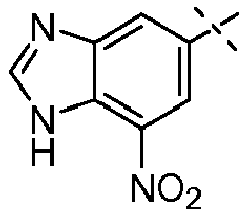
Me Cyclopropyl 1H NMR (400 MHz, DMSO) δ 8.95 - 8.91 (s, 1H), 8.65 - 8.59 (s, 1H), 8.31 - 8.25 (s, 1H), 8.23 - 8.17 (s, 1H), 8.05 - 7.98 (m, 1H), 4.48 - 4.35 (s, 1H), 2.68 - 2.61 (s, 3H), 1.30 - 1.22 (s, 2H), 1.16 - 1.06 (s, 2H). 423 97% 3-69 
Me Cyclopropyl 1H NMR (400 MHz, DMSO) δ 14.96 - 14.48 (m, 1H), 10.94 - 10.65 (d, J = 25.6 Hz, 2H), 9.01 - 8.77 (m, 1H), 8.05 - 7.81 (d, J = 8.6 Hz, 1H), 7.18 - 7.00 (d, J = 7.8 Hz, 1H), 7.00 - 6.78 (m, 2H), 4.47 - 4.25 (td, J = 6.9, 3.6 Hz, 1H), 2.67 - 2.54 (s, 3H), 1.27 - 1.10 (d, J = 6.3 Hz, 2H), 1.14 - 0.88 (s, 2H). 394 94% 3-70 
Me Cyclopropyl 1H NMR (400 MHz, DMSO) δ 15.02 - 14.18 (s, 1H), 9.00 - 8.67 (m, 2H), 8.12 - 7.68 (m, 3H), 7.49 - 7.25 (dd, J = 16.6, 8.2 Hz, 1H), 5.04 - 4.75 (m, 1H), 4.62 - 4.23 (m, 9H), 3.77 - 3.55 (m, 2H), 3.57 - 3.23 (d, J = 7.0 Hz, 1H), 2.70 - 2.53 (s, 3H), 1.37 - 1.15 (t, J = 8.0 Hz, 2H), 1.15 - 0.84 (td, J = 16.0, 7.8 Hz, 9H). 494 90% 3-71 
Me Cyclopropyl 1H NMR (400 MHz, DMSO) δ 14.45 - 14.13 (s, 1H), 11.09 - 10.85 (s, 1H), 8.73 - 8.58 (d, J = 2.7 Hz, 1H), 7.85 - 7.61 (m, 2H), 7.31 - 7.15 (m, 1H), 7.07 - 6.83 (m, 2H), 4.27 - 4.07 (s, 1H), 3.82 - 3.71 (d, J = 2.5 Hz, 3H), 1.27 - 1.08 (m, 2H), 1.08 - 0.86 (s, 2H). 408 93% 3-72 
OMe Cyclopropyl 1H NMR (400 MHz, DMSO) δ 15.07 - 14.72 (s, 1H), 9.21 - 8.97 (s, 1H), 8.95 - 8.73 (m, 1H), 8.41 - 8.14 (m, 1H), 8.12 - 7.95 (s, 1H), 3.40 - 3.18 (m, 4H), 7.95 - 7.79 (d, J = 8.6 Hz, 1H), 7.79 - 7.60 (dd, J = 8.5, 3.9 Hz, 2H), 4.34 - 4.10 (d, J = 6.3 Hz, 1H), 1.30 - 1.02 (s, 4H). 376 95% 3-73 
Me Cyclopropyl 1H NMR (400 MHz, DMSO) δ 14.85 - 14.61 (s, 1H), 10.68 - 10.51 (s, 1H), 9.04 - 8.78 (m, 1H), 8.01 - 7.81 (m, 1H), 7.36 - 7.11 (m, 2H), 7.11 - 6.87 (dd, J = 7.8, 2.7 Hz, 1H), 4.47 - 4.29 (s, 1H), 3.72 - 3.47 (s, 2H), 1.27 - 1.08 (m, 2H), 1.08 - 0.86 (s, 2H). 393 97% 3-74 
Me Cyclopropyl 1H NMR (400 MHz, DMSO) δ 14.85 - 14.61 (s, 1H), 10.68 - 10.51 (s, 1H), 9.04 - 8.78 (m, 1H), 8.01 - 7.81 (m, 1H), 7.36 - 7.11 (m, 2H), 7.11 - 6.87 (dd, J = 7.8, 2.7 Hz, 1H), 4.47 - 4.29 (s, 1H), 3.72 - 3.47 (s, 2H), 2.66 - 2.57 (d, J = 2.7 Hz, 3H), 2.55 - 2.45 (d, J = 3.4 Hz, 4H). 424 97% 3-75 
OMe Cyclopropyl 1H NMR (400 MHz, DMSO) δ 14.80 - 14.62 (m, 1H), 8.38 - 8.18 (m, 1H). 8.03 - 7.83 (m, 1H), 8.96 - 8.82 (m, 1H), 7.77 - 7.59 (m, 1H), 7.37 - 7.22 (m, 1H), 4.48 - 4.29 (m, 1H), 3.24 - 3.08 (m, 2H), 3.94 - 3.70 (m, 2H), 1.32 - 1.12 (m, 2H), 1.12 - 0.86 (m, 2H). 394 100% 3-76 
Me Cyclopropyl 1H NMR (400 MHz, DMSO) δ 15.11 - 14.26 (d, J = 53.0 Hz, 1H), 10.22 - 9.45 (m, 1H), 9.01 - 8.84 (m, 1H), 8.77 - 8.58 (s, 1H), 8.09 - 7.92 (d, J = 8.5 Hz, 1H), 7.88 - 7.68 (s, 1H), 7.51 - 7.33 (s, 1H), 4.84 - 4.58 (s, 2H), 4.53 - 4.25 (s, 1H), 2.96 - 2.72 (s, 6H), 2.72 - 2.56 (s, 3H), 1.34 - 1.17 (d, J = 6.5 Hz, 2H), 1.17 - 0.93 (d, J = 10.1 Hz, 2H). 435 94% 3-77 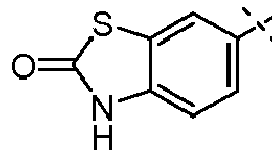
Me Cyclopropyl 1H NMR (400 MHz, DMSO) δ 14.87 - 14.59 (s, 1H), 12.20 - 12.00 (s, 1H), 9.01 - 8.79 (s, 1H), 8.09 - 7.83 (d, J = 8.6 Hz, 1H), 7.74 - 7.59 (s, 1H), 7.39 - 7.20 (m, 2H), 4.48 - 4.31 (s, 1H), 2.72 - 2.56 (s, 3H), 1.36 - 1.12 (d, J = 6.9 Hz, 2H), 1.12 - 0.79 (s, 2H). 411 98% 3-78 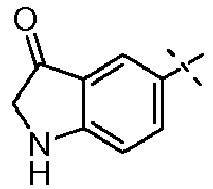
Me Cyclopropyl 1H NMR (400 MHz, DMSO) δ 14.85 - 14.61 (s, 1H), 10.68 - 10.51 (s, 1H), 9.04 - 8.78 (m, 1H), 8.01 - 7.81 (m, 1H), 7.36 - 7.11 (m, 2H), 7.11 - 6.87 (dd, J = 7.8, 2.7 Hz, 1H), 4.47 - 4.29 (s, 1H), 3.72 - 3.47 (s, 2H), 1.27 - 1.08 (m, 2H), 1.08 - 0.86 (s, 2H). 393 95% 3-79 
Me Cyclopropyl 1H NMR (400 MHz, DMSO) δ 14.82 - 14.60 (s, 1H), 11.50 - 11.28 (s, 1H), 8.99 - 8.81 (s, 1H), 8.09 - 7.90 (m, 2H), 7.66 - 7.53 (d, J = 1.1 Hz, 1H), 6.91 - 6.78 (s, 1H), 6.17 - 5.99 (d, J = 15.7 Hz, 1H), 5.38 - 5.23 (d, J = 9.0 Hz, 1H), 4.48 - 4.31 (dd, J = 8.4, 4.4 Hz, 1H), 3.61 - 3.41 (s, 1H), 2.71 - 2.56 (s, 3H), 1.32 - 1.16 (s, 2H), 1.14 - 0.97 (s, 2H). 421 97% 3-80 
MeO Cyclopropyl 1H NMR (400 MHz, DMSO) δ 14.82 - 14.60 (s, 1H), 11.50 - 11.28 (s, 1H), 8.99 - 8.81 (s, 1H), 8.09 - 7.90 (m, 2H), 7.66 - 7.53 (d, J = 1.1 Hz, 1H), 6.91 - 6.78 (s, 1H), 6.17 - 5.99 (d, J = 15.7 Hz, 1H), 5.38 - 5.23 (d, J = 9.0 Hz, 1H), 4.48 - 4.31 (dd, J = 8.4, 4.4 Hz, 1H), 3.61 - 3.41 (s, 1H), 2.71 - 2.56 (s, 3H), 1.14 - 0.97 (s, 4H). 437 90% 3-81 
Me Cyclopropyl 1H NMR (400 MHz, DMSO) δ 14.85 - 14.61 (s, 1H), 10.95 - 10.69 (s, 1H), 9.06 - 8.79 (s, 2H), 8.05 - 7.90 (d, J = 8.7 Hz, 1H), 7.28 - 7.09 (s, 1H), 6.85 - 6.63 (s, 1H), 4.46 - 4.29 (tt, J = 7.4, 4.0 Hz, 1H), 2.72 - 2.54 (s, 3H), 1.32 - 1.14 (d, J = 5.8 Hz, 2H), 1.14 - 0.97 (d, J = 3.8 Hz, 2H). 394 94% 3-82 
OMe Cyclopropyl 1H NMR (400 MHz, DMSO) δ 14.89 - 14.50 (s, 2H), 11.09 - 10.63 (s, 1H), 9.21 - 8.97 (s, 1H), 8.97 - 8.73 (s, 1H), 8.07 - 7.85 (m, 1H), 3.48 - 3.31 (m, 5H), 7.42 - 7.26 (m, 1H), 7.04 - 6.87 (m, 1H), 4.31 - 4.13 (p, J = 5.6 Hz, 1H), 2.72 - 2.54 (s, 3H), 1.27 - 1.01 (d, J = 5.6 Hz, 4H). 410 98% 3-83 
OMe Cyclopropyl 1H NMR (400 MHz, DMSO) δ 15.05 - 14.39 (s, 1H), 13.02 - 12.32 (s, 1H), 8.97 - 8.77 (s, 1H), 8.47 - 8.20 (s, 1H), 7.85 - 7.39 (m, 2H), 7.33 - 6.98 (d, J = 8.0 Hz, 1H), 4.47 - 4.23 (s, 1H), 2.74 - 2.52 (s, 3H), 1.34 - 1.13 (m, 2H), 1.13 - 0.71 (s, 2H). 428 100% 3-84 
Me Cyclopropyl 1H NMR (400 MHz, DMSO) δ 14.75 (d, J = 8.7 Hz, 1H), 8.91 (s, 1H), 8.13 (s, 1H), 7.99 (t, J = 11.1 Hz, 1H), 7.78 (t, J = 13.2 Hz, 1H), 7.72 (s, 1H), 7.33 (d, J = 8.5 Hz, 1H), 7.07 (s, 1H), 4.40 (m, 1H), 2.61 (s, 3H), 1.24 (d, J = 5.7 Hz, 2H), 1.08 (s, 2H). 378 98% 3-85 
Me Cyclopropyl 1H NMR (400 MHz, DMSO) δ 14.70 (s, 1H), 8.90 (s, 1H), 8.21 (d, J = 8.0 Hz, 1H), 7.98 (d, J = 8.1 Hz, 1H), 7.94 (s, 1H), 7.90 (s, 1H), 7.56 (s, 1H), 7.38 (d, J = 7.9 Hz, 1H), 4.38 (s, 1H), 2.65 (s, 3H), 1.17 (m, 2H), 1.06 (m, 2H). 394 98% 3-86 
1 H NMR (400 MHz, DMSO) δ 15.38 - 14.22 (s, 1H), 9.14 - 9.08 (s, 1H), 9.00 - 8.94 (s, 1H), 8.32 - 8.24 (s, 1H), 7.93 - 7.90 (s, 1H), 7.90 - 7.86 (s, 1H), 7.83 - 7.76 (d, J = 9.72 Hz, 1H), 5.07 - 4.96 (d, J = 6.74 Hz, 1H), 4.65 - 4.56 (d, J = 11.26 Hz, 1H), 4.53 - 4.43 (d, J = 9.86 Hz, 1H), 1.54 - 1.46 (d, J = 6.76 Hz, 3H). 414 99% 3-87 
1H NMR (400 MHz, DMSO) δ 14.87 (s, 1H), 8.93 (s, 1H), 8.77 (s, 1H), 8.27 (d, J = 8.2 Hz, 1H), 8.15 (s, 1H), 7.73 (d, J = 0.9 Hz, 1H), 7.63 (m, 2H), 4.46 - 4.36 (m, 1H), 2.76 (s, 3H), 1.29 (d, J = 6.5 Hz, 2H), 1.08 (t, J = 7.4 Hz, 2H). 394 99% Table 4 
Compound No. R3= NMR MS (MH+) HPLC 4-1 
1H NMR (400 MHz, DMSO) δ 14.49 (s, 1H), 11.38 (s, 1H), 8.70 (s, 1H), 7.78 (d, J = 9.1 Hz, 1H), 7.42 (d, J = 7.9 Hz, 1H), 7.26 (d, J = 8.1 Hz, 1H), 7.00 - 6.92 (m, 1H), 6.86 (t, J = 7.5 Hz, 1H), 6.51 (s, 1H), 4.24 - 4.16 (m, 1H), 2.56 (s, 3H), 1.03 (dd, J = 12.0, 4.6 Hz, 2H), 0.86 (d, J = 7.4 Hz, 2H). 377 95% 4-2 
1H NMR (400 MHz, DMSO) δ 14.70 (s, 1H), 11.59 (s, 1H), 8.92 (s, 1H), 8.00 (d, J = 9.1 Hz, 1H), 7.64 (d, J = 7.5 Hz, 1H), 7.48 (d, J = 8.0 Hz, 1H), 7.19 (t, J = 7.5 Hz, 1H), 7.08 (t, J = 7.3 Hz, 1H), 6.73 (s, 1H), 4.42 (s, 1H), 2.78 (s, 3H), 1.27 (d, J = 6.1 Hz, 2H), 1.07 (s, 2H). 377 100% 4-3 
1H NMR (400 MHz, DMSO) δ 14.66 (s, 1H), 8.93 (s, 1H), 8.05 (d, J = 8.6 Hz, 1H), 7.65 (d, J = 7.7 Hz, 1H), 7.57 (d, J = 8.0 Hz, 1H), 7.30 - 7.24 (m, 1H), 7.14 (t, J = 7.3 Hz, 1H), 6.68 (s, 1H), 4.41 (s, 1H), 3.58 (s, 3H), 2.65 (s, 3H), 1.24 (s, 4H). 391 98% 4-4 
1H NMR (400 MHz, DMSO) δ 14.82 (s, 1H), 11.36 (s, 1H), 8.90 (s, 1H), 7.95 (d, J = 7.8 Hz, 1H), 7.57 (s, 3H), 7.46 (s, 1H), 7.07 (d, J = 8.5 Hz, 1H), 6.53 (s, 1H), 4.39 (s, 1H), 2.62 (s, 3H), 1.24 (s, 2H), 1.09 (d, J= 18.8 Hz, 2H). 377 87% 4-5 
1H NMR (400 MHz, DMSO) δ 14.71 (s, 1H), 11.55 (s, 1H), 8.92 (s, 1H), 8.00 (d, J = 9.0 Hz, 1H), 7.30 (d, J = 8.4 Hz, 1H), 7.09 (t, J = 7.4 Hz, 1H), 6.87 (d, J = 6.9 Hz, 1H), 6.75 (s, 1H), 4.42 (s, 1H), 2.79 (s, 3H), 2.09 (s, 3H), 1.28 (d, J = 6.0 Hz, 2H), 1.07 (s, 2H). 391 90% 4-6 
1H NMR (400 MHz, DMSO) δ 14.71 (s, 1H), 11.43 (s, 1H), 8.91 (s, 1H), 7.99 (d, J = 8.7 Hz, 1H), 7.37 (d, J = 8.6 Hz, 1H), 7.13 (s, 1H), 6.84 (d, J = 8.7 Hz, 1H), 6.63 (s, 1H), 4.41 (s, 1H), 3.78 (s, 4H), 2.77 (s, 3H), 1.26 (d, J = 5.7 Hz, 2H), 1.07 (s, 2H). 407 92.3% 4-9 
1H NMR (400 MHz, DMSO) δ 14.65 (s, 1H), 12.23 (d, J = 30.1 Hz, 1H), 8.93 (s, 1H), 8.20 (d, J = 11.8 Hz, 1H), 7.65 (s, 1H), 7.53 (s, 2H), 6.87 (d, J = 26.1 Hz, 1H), 4.38 (d, J = 31.7 Hz, 1H), 2.74 (d, J = 19.6 Hz, 3H), 1.24 (d, J = 8.9 Hz, 2H), 1.07 (s, 2H). 402 92.8% 4-10 
1H NMR (400 MHz, DMSO) δ 14.67 (s, 1H), 11.70 (s, 1H), 8.92 (s, 1H), 8.00 (d, J = 8.9 Hz, 1H), 7.52 - 7.44 (m, 1H), 7.41 (d, J = 9.8 Hz, 1H), 7.04 (t, J = 9.3 Hz, 1H), 6.72 (s, 1H), 4.42 (s, 1H), 2.77 (s, 3H), 1.26 (d, J = 6.4 Hz, 2H), 1.07 (s, 2H). 395 89.7% 4-11 
1H NMR (400 MHz, DMSO) δ 14.68 (s, 1H), 11.98 (s, 1H), 8.93 (s, 1H), 8.02 (d, J = 9.1 Hz, 1H), 7.47 (d, J = 7.3 Hz, 1H), 7.19 (q, J = 7.8 Hz, 2H), 6.76 (s, 1H), 4.42 (s, 1H), 2.78 (s, 3H), 1.27 (d, J = 6.2 Hz, 2H), 1.08 (s, 2H). 411 97% 4-12 
1H NMR (400 MHz, DMSO) δ 14.64 (s, 1H), 12.30 (s, 1H), 8.93 (s, 1H), 8.04 (d, J = 8.3 Hz, 1H), 7.86 (d, J = 6.8 Hz, 1H), 7.64 (s, 1H), 7.36 (s, 1H), 6.91 (s, 1H), 4.43 (s, 1H), 2.78 (s, 3H), 1.28 (s, 2H), 1.09 (s, 2H). 402 99% 4-13 
1H NMR (400 MHz, DMSO) δ 14.66 (s, 1H), 11.93 (s, 1H), 8.92 (s, 1H), 8.01 (d, J = 9.1 Hz, 1H), 7.33 (d, J = 8.3 Hz, 1H), 7.17 (d, J = 6.5 Hz, 1H), 6.87 (t, J = 8.9 Hz, 1H), 6.80 (s, 1H), 4.42 (s, 1H), 2.78 (s, 3H), 1.27 (d, J = 6.4 Hz, 2H), 1.07 (s, 2H). 395 87% 4-14 
1H NMR (400 MHz, DMSO) δ 14.70 (s, 1H), 11.43 (s, 1H), 8.92 (s, 1H), 8.00 (d, J = 8.8 Hz, 1H), 7.46 (s, 1H), 6.98 (s, 2H), 6.67 (s, 1H), 4.42 (s, 1H), 2.77 (s, 3H), 1.26 (d, J = 6.3 Hz, 2H), 1.09 (s, 2H). 391 92.7% 4-15 
1H NMR (400 MHz, DMSO) δ 11.07 (s, 1H), 9.02 (s, 1H), 8.04 (s, 1H), 7.55 (s, 2H), 7.29 (s, 1H), 6.96 (s, 1H), 6.67 (s, 1H), 2.85 (s, 3H), 2.47 (s, 3H), 1.34 (s, 2H), 1.09 (s, 2H). 391 99% 4-16 
1H NMR (400 MHz, DMSO) δ 14.64 (s, 1H), 12.41 (s, 1H), 8.93 (s, 1H), 8.69 (s, 1H), 8.07 (d, J = 13.8 Hz, 2H), 7.67 (s, 1H), 7.05 (s, 1H), 4.42 (s, 1H), 2.78 (s, 3H), 1.26 (s, 2H), 1.08 (s, 2H). 422 100% 4-17 
1H NMR (400 MHz, DMSO) δ 14.70 (s, 1H), 11.70 (s, 1H), 8.92 (s, 1H), 8.00 (d, J = 9.0 Hz, 1H), 7.65 (s, 1H), 7.24 (d, J = 10.1 Hz, 1H), 6.96 (t, J = 9.1 Hz, 1H), 6.76 (s, 1H), 4.42 (s, 1H), 2.77 (s, 3H), 1.26 (d, J = 5.7 Hz, 2H), 1.07 (s, 2H). 395 88% 4-18 
1H NMR (400 MHz, DMSO) δ 14.68 (s, 1H), 12.08 (s, 1H), 8.92 (s, 1H), 8.01 (d, J = 8.9 Hz, 1H), 7.47 (d, J = 6.4 Hz, 1H), 7.04 (d, J = 9.3 Hz, 2H), 6.79 (s, 1H), 4.42 (s, 1H), 2.76 (s, 3H), 1.26 (d, J = 6.2 Hz, 2H), 1.08 (s, 2H). 395 89.1% 4-19 
1H NMR (400 MHz, DMSO) δ 14.65 (s, 1H), 12.66 (s, 1H), 11.98 (s, 1H), 8.93 (s, 1H), 8.12 (s, 1H), 8.03 (d, J = 8.8 Hz, 1H), 7.70 (q, J = 8.2 Hz, 2H), 6.83 (s, 1H), 4.43 (s, 1H), 2.78 (s, 3H), 1.27 (d, J = 6.2 Hz, 2H), 1.08 (s, 2H). 421 100% 4-20 
1H NMR (400 MHz, DMSO) δ 14.68 (s, 1H), 11.78 (s, 1H), 8.92 (s, 1H), 8.01 (d, J = 9.0 Hz, 1H), 7.66 (d, J = 8.6 Hz, 1H), 7.51 (s, 1H), 7.10 (d, J = 8.4 Hz, 1H), 6.77 (s, 1H), 4.42 (s, 1H), 2.77 (s, 3H), 1.26 (d, J = 6.1 Hz, 2H), 1.07 (s, 2H). 411 90% 4-21 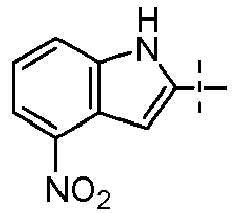
1H NMR (400 MHz, DMSO) δ 14.49 (s, 1H), 12.71 (s, 1H), 8.92 (s, 1H), 8.15 (s, 1H), 8.04 (d, J = 9.4 Hz, 2H), 7.43 (s, 1H), 7.29 (s, 1H), 4.42 (s, 1H), 2.79 (s, 3H), 1.27 (s, 2H), 1.08 (s, 2H). 422 97% 4-22 
1H NMR (400 MHz, MeOD) δ 8.96 (s, 1H), 7.93 (d, J = 9.1 Hz, 1H), 7.55 (d, J = 12.6 Hz, 2H), 7.47 (s, 1H), 7.34 (d, J = 8.1 Hz, 1H), 6.77 (s, 1H), 6.57 (d, J = 7.9 Hz, 1H), 6.51 (s, 1H), 4.29 (s, 1H), 2.78 (s, 3H), 1.38 - 1.24 (m, 2H), 1.20 (s, 2H). 393 90% 4-23 
1H NMR (400 MHz, DMSO) δ 14.68 (s, 1H), 11.82 (s, 1H), 8.92 (s, 1H), 8.01 (d, J = 8.5 Hz, 1H), 7.70 (s, 1H), 7.50 (d, J = 8.3 Hz, 1H), 7.19 (d, J = 9.4 Hz, 1H), 6.73 (s, 1H), 4.42 (s, 1H), 2.76 (s, 3H), 1.26 (d, J = 6.1 Hz, 2H), 1.07 (s, 2H). 411 90% 4-24 
1H NMR (400 MHz, DMSO) δ 14.63 (s, 1H), 11.61 (s, 1H), 8.95 (d, J = 9.5 Hz, 1H), 8.41 (s, 1H), 7.99 (s, 1H), 7.67 (d, J = 9.1 Hz, 1H), 6.52 (s, 1H), 4.43 (s, 1H), 2.78 (s, 3H), 1.25 (s, 2H), 1.08 (s, 2H). 422 90% 4-25 
1H NMR (400 MHz, DMSO) δ 14.82 (s, 1H), 11.31 (s, 1H), 8.91 (s, 1H), 7.97 (d, J = 8.4 Hz, 1H), 7.71 (d, J = 7.8 Hz, 1H), 7.48 (s, 1H), 7.41 (s, 1H), 6.99 (d, J = 7.9 Hz, 1H), 6.53 (s, 1H), 4.40 (s, 1H), 2.63 (s, 3H), 1.24 (s, 2H), 1.08 (s, 2H). 377 100% 4-26 
1H NMR (400 MHz, DMSO) δ 14.70 (s, 1H), 12.37 (s, 1H), 8.93 (s, 1H), 8.19 (t, J = 9.0 Hz, 2H), 8.01 (d, J = 8.0 Hz, 1H), 7.34 (s, 1H), 7.00 (s, 1H), 4.43 (s, 1H), 2.75 (s, 3H), 1.24 (s, 2H), 1.11 (s, 2H). 422 99% 4-27 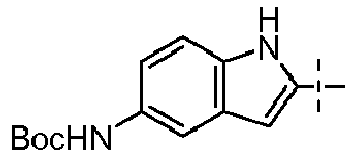
1H NMR (400 MHz, DMSO) δ 14.73 (s, 1H), 11.45 (s, 1H), 9.17 (s, 1H), 8.92 (s, 1H), 7.99 (d, J = 8.6 Hz, 1H), 7.77 (s, 1H), 7.35 (d, J = 8.5 Hz, 1H), 7.24 (s, 1H), 6.64 (s, 1H), 4.42 (s, 1H), 2.77 (s, 2H), 1.46 (d, J = 29.9 Hz, 9H), 1.25 (s, 2H), 1.06 (s, 2H). 492 100% 4-28 
1H NMR (400 MHz, DMSO) δ 14.67 (s, 1H), 11.94 (s, 1H), 9.97 (s, 2H), 8.93 (s, 1H), 8.02 (d, J = 8.7 Hz, 1H), 7.65 (s, 1H), 7.60 (d, J = 8.6 Hz, 1H), 7.19 - 7.13 (m, 1H), 6.84 (s, 1H), 4.42 (s, 2H), 2.76 (s, 3H), 1.14 - 1.00 (m, 4H). 392 94% 4-29 
1H NMR (400 MHz, DMSO) δ 14.67 (s, 1H), 11.94 (s, 1H), 9.97 (s, 2H), 8.93 (s, 1H), 8.02 (d, J = 8.7 Hz, 1H), 7.65 (s, 1H), 7.60 (d, J = 8.6 Hz, 1H), 7.19 - 7.13 (m, 1H), 6.84 (s, 1H), 4.42 (s, 2H), 2.76 (s, 3H), 1.14 - 1.00 (m, 4H). 391 100% 4-30 
1H NMR (400 MHz, DMSO) δ 14.73 (s, 1H), 11.38 (s, 1H), 9.33 (s, 1H), 8.91 (s, 1H), 7.98 (d, J = 9.1 Hz, 1H), 7.81 (s, 1H), 7.48 (d, J = 8.3 Hz, 1H), 7.09 (d, J = 8.7 Hz, 1H), 6.64 (s, 1H), 4.42 (s, 1H), 2.78 (s, 3H), 1.51 (s, 10H), 1.25 (d, J = 8.9 Hz, 2H), 1.08 (dd, J = 14.0, 6.3 Hz, 2H). 492 97% 4-31 
1H NMR (400 MHz, DMSO) δ 14.31 (s, 1H), 11.68 (s, 1H), 8.94 (s, 1H), 8.17 (d, J = 8.7 Hz, 1H), 7.66 (d, J = 7.8 Hz, 1H), 7.49 (d, J = 8.1 Hz, 1H), 7.21 (t, J = 7.5 Hz, 1H), 7.08 (t, J = 7.4 Hz, 1H), 6.80 (s, 1H), 4.44 (s, 1H), 1.25 (d, J = 6.4 Hz, 2H), 1.12 (s, 2H). 397 100% 4-32 
1H NMR (400 MHz, DMSO) δ 14.72 (s, 1H), 11.74 (s, 1H), 9.35 (s, 2H), 8.92 (s, 1H), 8.00 (d, J = 9.0 Hz, 1H), 7.66 (d, J = 8.5 Hz, 1H), 7.34 (s, 1H), 6.94 (d, J = 8.3 Hz, 1H), 6.76 (s, 1H), 4.42 (s, 1H), 2.78 (s, 3H), 1.27 (d, J = 5.6 Hz, 3H), 1.06 (s, 2H). 392 97% 4-33 
1H NMR (400 MHz, DMSO) δ 14.73 (s, 1H), 11.56 (s, 1H), 9.17 (s, 1H), 8.93 (s, 1H), 8.00 (d, J = 7.7 Hz, 1H), 7.46 (s, 2H), 7.12 (d, J = 20.9 Hz, 2H), 5.18 - 4.56 (m, 1H), 4.44 (s, 1H), 2.80 (s, 3H), 1.24 (s, 2H), 1.07 (s, 2H). 492 91% 4-34 
1H NMR (400 MHz, DMSO) δ 14.70 (s, 1H), 11.77 (s, 1H), 8.93 (s, 1H), 8.01 (d, J = 8.4 Hz, 1H), 7.23 - 7.03 (m, 2H), 6.88(s, 1H), 6.76 (d, J = 6.4 Hz, 1H), 4.43 (m, 1H), 2.77(s, 3H), 1.24 (d, J = 6.6 Hz, 2H), 1.12 (s, 2H). 392 99% 4-35 
1H NMR (400 MHz, DMSO) δ 14.28 (s, 1H), 11.79 (s, 1H), 8.94 (s, 1H), 8.17 (d, J = 8.8 Hz, 1H), 7.56 - 7.38 (m, 2H), 7.06 (t, J = 8.8 Hz, 1H), 6.79 (s, 1H), 4.44 (s, 1H), 1.24 (d, J = 6.6 Hz, 2H), 1.12 (s, 2H). 415 91% 4-36 
1H NMR (400 MHz, DMSO) δ 14.28 (s, 1H), 12.16 (s, 1H), 8.95 (s, 1H), 8.18 (d, J = 8.0 Hz, 1H), 7.49 (d, J = 4.2 Hz, 1H), 7.05 (d, J = 8.5 Hz, 2H), 6.85 (s, 1H), 4.43 (s, 1H), 1.24 (s, 2H), 1.13 (s, 2H). 415 95% 4-37 
1H NMR (400 MHz, DMSO) δ 14.26 (s, 1H), 12.07 (s, 1H), 8.95 (s, 1H), 8.19 (d, J = 8.5 Hz, 1H), 7.49 (d, J = 7.6 Hz, 1H), 7.29 - 7.07 (m, 2H), 6.81 (s, 1H), 4.44 (s, 1H), 1.25 (s, 2H), 1.13 (s, 2H). 431 95% 4-38 
1H NMR (400 MHz, DMSO) δ 14.28 (s, 1H), 12.04 (s, 1H), 8.95 (s, 1H), 8.19 (d, J = 8.7 Hz, 1H), 7.34 (d, J = 8.0 Hz, 1H), 7.20 (s, 1H), 6.93 - 6.81 (m, 2H), 4.44 (s, 1H), 1.24 (s, 2H), 1.13 (s, 2H). 415 87% 4-39 
1H NMR (400 MHz, DMSO) δ 14.71 (s, 1H), 11.66 (s, 1H), 10.06 (s, 1H), 8.92 (s, 1H), 8.02 (s, 3H), 7.46 (s, 1H), 7.31 (s, 1H), 7.19 (s, 1H), 7.06 (s, 1H), 6.90 (s, 1H), 4.42 (s, 1H), 3.85 (s, 3H), 2.79 (s, 3H), 1.26 (s, 2H), 1.07 (s, 2H). 526 95.6% 4-40 
1H NMR (400 MHz, DMSO) δ 14.71 (s, 1H), 11.62 (s, 1H), 10.05 (s, 1H), 8.93 (s, 1H), 7.99 (d, J = 9.2 Hz, 1H), 7.70 (d, J = 7.5 Hz, 2H), 7.28 - 6.87 (m, 6H), 4.42 (s, 1H), 3.75 (s, 3H), 2.68 (s, 3H), 1.25 (d, J = 9.3 Hz, 2H), 1.05 (d, J = 18.8 Hz, 2H). 562 96% 4-41 
1H NMR (400 MHz, DMSO) δ 14.73 (s, 1H), 11.66 (s, 1H), 9.62 (s, 1H), 8.93 (s, 1H), 8.02 (d, J = 8.7 Hz, 1H), 7.72 (s, 1H), 7.21 (s, 1H), 7.12 (s, 1H), 7.04 (s, 1H), 4.44 (s, 1H), 3.05 (s, 1H), 2.82 (d, J = 25.3 Hz, 3H), 1.12 (d, J = 24.4 Hz, 10H). 462 87% 4-42 
1H NMR (400 MHz, DMSO) δ 11.87 (s, 1H), 9.18 (s, 1H), 8.08 -7.63 (m, 2H), 7.48 (s, 2H), 7.20 (s, 2H), 6.95 (s, 2H), 4.54 (s, 1H), 4.24 (s, 2H), 2.81 (s, 3H), 1.29 (s, 2H), 1.06 (s, 2H). 406 97% 4-43 
1H NMR (400 MHz, DMSO) δ 14.78 (s, 1H), 11.70 (s, 1H), 8.98 (s, 1H), 8.06 (d, J = 9.0 Hz, 1H), 7.49 (s, 1H), 7.43 (d, J = 7.4 Hz, 1H), 7.20 (s, 1H), 7.00 (d, J = 6.8 Hz, 1H), 6.91 (s, 1H), 4.49 (s, 3H), 2.84 (s, 3H), 1.46 (s, 9H), 1.30 (s, 2H), 1.13 (s, 2H). 506 98% 4-44 
1H NMR (400 MHz, DMSO) δ 14.76 (s, 1H), 12.92 (s, 1H), 8.92 (s, 1H), 8.79 (s, 1H), 8.07 (s, 1H), 7.99 (d, J = 8.6 Hz, 1H), 7.77 (d, J = 8.3 Hz, 1H), 7.37 (d, J = 8.0 Hz, 1H), 4.40 (s, 1H), 2.62 (s, 3H), 1.25 (d, J = 5.7 Hz, 2H), 1.10 (s, 2H). 422 100% 4-45 
1H NMR (400 MHz, DMSO) δ 11.65 (s, 1H), 9.57 (s, 1H), 8.82 (s, 1H), 7.93 (d, J = 8.3 Hz, 1H), 7.71 (d, J = 5.5 Hz, 1H), 7.19 (s, 1H), 7.09 (s, 1H), 7.00 (s, 1H), 4.32 (s, 1H), 2.72 (d, J = 18.9 Hz, 3H), 1.89- 1.77 (m, 5H), 1.65 (s, 1H), 1.45 (d, J = 10.5 Hz, 2H), 1.35 - 1.16 (m, 6H), 0.97 (s, 2H). 502 89% 4-46 
1H NMR (400 MHz, DMSO) δ 14.69 (s, 1H), 11.94 (s, 1H), 9.39 (s, 1H), 8.92 (s, 1H), 8.00 (d, J = 7.8 Hz, 1H), 7.72 (s, 1H), 7.28 (s, 1H), 7.15 (s, 1H), 6.81 (s, 1H), 4.43 (s, 1H), 4.27 - 4.13 (m, 2H), 2.79 (s, 3H), 2.33 (s, 1H), 2.17 (s, 1H), 1.59 (d, J = 14.2 Hz, 2H), 1.26 (s, 5H), 1.07 (s, 2H), 0.85 (dd, J = 54.3, 14.6 Hz, 14H). 588 86.3% 4-47 
1H NMR (400 MHz, DMSO) δ 14.73 (s, 1H), 11.74 (s, 1H), 10.60 (s, 1H), 9.30 (s, 1H), 8.92 (s, 1H), 8.61 (d, J = 7.6 Hz, 1H), 8.11 (d, J = 7.9 Hz, 1H), 8.01 (d, J = 8.8 Hz, 1H), 7.59 (d, J = 6.7 Hz, 1H), 7.37 (d, J = 7.8 Hz, 1H), 7.24 (d, J = 8.0 Hz, 1H), 6.97 (s, 1H), 4.43 (s, 1H), 2.79 (s, 3H), 1.25 (s, 2H), 1.07 (s, 2H). 565 96% 4-48 
1H NMR (400 MHz, DMSO) δ 14.70 (s, 1H), 11.74 (s, 1H), 9.76 (s, 1H), 8.93 (s, 1H), 8.01 (d, J = 8.7 Hz, 1H), 7.29 (d, J = 6.6 Hz, 1H), 7.23 - 7.01 (m, 3H), 4.43 (s, 1H), 3.49 (d, J = 14.6 Hz, 1H), 3.06 (d, J = 14.8 Hz, 1H), 2.37 (dd, J = 27.4, 15.5 Hz, 2H), 2.04 (s, 1H), 1.91 (d, J = 17.7 Hz, 2H), 1.51 (d, J = 11.3 Hz, 1H), 1.41 (d, J = 10.3 Hz, 1H), 1.25 (s, 2H), 1.09 (d, J = 11.8 Hz, 3H), 0.98 (s, 2H), 0.77 (d, J = 22.2 Hz, 3H). 606 88% 4-49 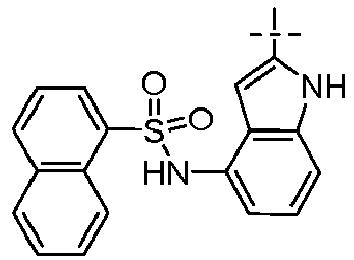
1H NMR (400 MHz, DMSO) δ 14.69 (s, 1H), 11.58 (s, 1H), 10.29 (s, 1H), 8.91 (s, 1H), 8.40 (s, 1H), 8.05 (dd, J = 15.6, 8.6 Hz, 2H), 7.97 (s, 2H), 7.83 (d, J= 8.2 Hz, 1H), 7.72 - 7.56 (m, 2H), 7.18 (d, J = 8.0 Hz, 1H), 7.04 (t, J = 8.0 Hz, 1H), 6.98 (d, J = 7.5 Hz, 1H), 6.81 (s, 1H), 4.35 (s, 1H), 2.54 (s, 3H), 1.23 (s, 2H), 1.04 (s, 2H). 582 100% 4-50 
1H NMR (400 MHz, DMSO) δ 14.72 (s, 1H), 11.68 (s, 1H), 10.26 (s, 1H), 8.92 (s, 1H), 8.00 (s, 1H), 7.74 (s, 1H), 7.29 (s, 1H), 7.19 (s, 1H), 7.03 (s, 1H), 6.93 (s, 2H), 4.43 (s, 1H), 2.79 (s, 3H), 2.31 (s, 6H), 2.10 (s, 3H), 1.24 (s, 2H), 1.07 (s, 2H). 538 90% 4-51 
1H NMR (400 MHz, DMSO) δ 14.73 (s, 1H), 11.62 (s, 1H), 10.08 (s, 1H), 8.93 (s, 1H), 8.00 (d, J = 7.6 Hz, 1H), 7.76 (d, J = 8.6 Hz, 2H), 7.18 (d, J = 7.7 Hz, 2H), 7.02 (d, J = 18.7 Hz, 2H), 4.44 (s, 1H), 3.63 (s, 3H), 2.76 (s, 3H), 1.24 (s, 2H), 1.08 (s, 2H). 536 99% 4-52 
1H NMR (400 MHz, DMSO) δ 14.72 (s, 1H), 11.68 (s, 1H), 9.29 (s, 1H), 8.93 (s, 1H), 8.81 (s, 1H), 8.31 (s, 1H), 8.03 (d, J = 8.9 Hz, 1H), 7.15 (s, 2H), 7.02 (dd, J = 24.0, 8.3 Hz, 2H), 6.94 (s, 1H), 4.44 (s, 1H), 3.91 (s, 3H), 2.80 (s, 3H), 1.25 (d, J = 15.5 Hz, 2H), 1.08 (s, 2H). 575 96% 4-53 
1H NMR (400 MHz, DMSO) δ 14.71 (s, 1H), 11.72 (s, 1H), 10.04 (s, 1H), 8.94 (s, 1H), 8.02 (d, J = 10.3 Hz, 1H), 7.71 (d, J = 7.0 Hz, 1H), 7.24 (s, 1H), 7.15 (d, J = 7.3 Hz, 1H), 7.04 (s, 1H), 4.44 (s, 1H), 3.98 (s, 2H), 3.76 (s, 2H), 3.43 (s, 2H), 3.07 (d, J = 24.3 Hz, 4H), 2.78 (s, 3H), 2.69 (d, J = 10.9 Hz, 1H), 1.26 (s, 2H), 1.08 (s, 2H). 533 99% 4-54 
1H NMR (400 MHz, DMSO) δ 14.71 (s, 1H), 11.72 (s, 1H), 10.03 (s, 1H), 8.94 (s, 1H), 8.02 (d, J = 8.9 Hz, 1H), 7.70 (s, 1H), 7.24 (s, 1H), 7.14 (s, 1H), 7.03 (s, 1H), 5.33 (s, 1H), 4.43 (s, 1H), 4.03 (s, 2H), 3.03 (s, 4H), 2.78 (s, 3H), 2.00 (d, J = 7.6 Hz, 2H), 1.24 (s, 9H), 1.08 (s, 2H), 0.85 (s, 2H). 632 96% 4-55 
1H NMR (400 MHz, DMSO) δ 14.71 (s, 1H), 11.72 (s, 1H), 10.04 (s, 1H), 9.57 (s, 1H), 8.94 (s, 1H), 8.02 (d, J = 8.9 Hz, 1H), 7.71 (d, J = 7.8 Hz, 1H), 7.26 (d, J = 7.6 Hz, 1H), 7.15 (d, J = 9.1 Hz, 1H), 7.03 (d, J = 9.6 Hz, 1H), 4.44 (s, 1H), 2.99 (s, 1H), 2.82 (s, 3H), 2.78 (s, 2H), 2.54 (s, 2H), 1.26 (s, 2H), 1.08 (s, 2H). 491 91% 4-56 
1H NMR (400 MHz, DMSO) δ 14.71 (s, 1H), 11.87 (s, 1H), 10.45 (s, 1H), 8.93 (s, 1H), 8.02 (d, J = 8.8 Hz, 1H), 7.47 (d, J = 7.2 Hz, 1H), 7.23 (s, 1H), 7.07 (d, J = 7.9 Hz, 1H), 6.68 (s, 1H), 4.42 (s, 1H), 2.78 (s, 3H), 2.68 (s, 3H), 1.26 (s, 2H), 1.08 (s, 2H). 490 96% 4-57 
1H NMR (400 MHz, DMSO) δ 14.78 (s, 1H), 11.75 (s, 1H), 9.64 (s, 1H), 8.92 (s, 1H), 7.99 (d, J = 8.7 Hz, 1H), 7.83 (s, 1H), 7.70 (s, 1H), 7.63 (d, J = 7.8 Hz, 1H), 7.18 (d, J = 8.6 Hz, 1H), 4.48 (s, 2H), 4.40 (s, 1H), 2.72 (d, J = 27.2 Hz, 7H), 2.62 (s, 3H), 1.25 (s, 2H), 1.08 (s, 2H). M-(Me)2N 389 100% 4-58 
1H NMR (400 MHz, DMSO) δ 14.79 (s, 1H), 9.84 (s, 1H), 8.92 (s, 1H), 7.97 (d, J = 8.2 Hz, 1H), 7.77 (d, J = 8.7 Hz, 1H), 7.62 (s, 1H), 7.56 (s, 1H), 7.20 (d, J = 8.0 Hz, 1H), 6.63 (s, 1H), 4.64 (s, 2H), 4.39 (s, 1H), 3.57 (s, 2H), 2.88 (s, 6H), 2.65 (d, J = 22.8 Hz, 3H), 1.24 (s, 2H), 1.08 (s, 2H). 448 100% 4-59 
1H NMR (400 MHz, DMSO) δ 14.76 (s, 1H), 11.62 (s, 1H), 9.68 (s, 1H), 8.92 (s, 1H), 7.99 (s, 1H), 6.95 (s, 2H), 6.77 (s, 1H), 6.46 (s, 1H), 4.43 (s, 1H), 2.80 (s, 3H), 1.27 (s, 2H), 1.07 (s, 4H). 393 99% 4-60 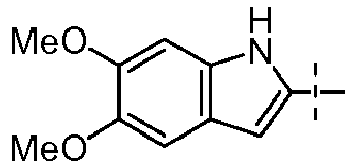
1H NMR (400 MHz, DMSO) δ 14.77 (s, 1H), 11.29 (s, 1H), 8.91 (s, 1H), 7.97 (d, J = 9.0 Hz, 1H), 7.13 (s, 1H), 6.97 (s, 1H), 6.61 (s, 1H), 4.42 (s, 1H), 3.80 (d, J = 13.7 Hz, 7H), 2.78 (s, 3H), 1.26 (s, 2H), 1.06 (s, 2H). 437 99% 4-61 
1H NMR (400 MHz, DMSO) δ 14.74 (s, 1H), 11.29 (s, 1H), 8.91 (s, 1H), 8.81 (s, 1H), 7.98 (d, J = 9.1 Hz, 1H), 7.27 (d, J = 8.8 Hz, 1H), 6.93 (s, 1H), 6.71 (d, J = 8.4 Hz, 1H), 6.53 (s, 1H), 4.41 (s, 2H), 2.77 (s, 3H), 1.25 (s, 2H), 1.06 (s, 2H). 393 98% 4-62 
1H NMR (400 MHz, DMSO) δ 14.75 (s, 1H), 11.50 (s, 1H), 9.79 (s, 1H), 8.91 (s, 1H), 7.97 (d, J = 8.7 Hz, 1H), 7.07 (d, J = 6.7 Hz, 1H), 6.86 (s, 1H), 6.60 (s, 2H), 4.41 (s, 1H), 2.76 (s, 3H), 1.23 (s, 2H), 1.08 (s, 2H). 393 100% 4-63 
1H NMR (400 MHz, DMSO) δ 12.18 (s, 1H), 10.24 (s, 1H), 8.93 (s, 1H), 8.04 (d, J = 8.8 Hz, 1H), 7.87 (d, J = 8.8 Hz, 2H), 7.78 (d, J = 7.0 Hz, 1H), 7.46 (d, J= 7.3 Hz, 2H), 7.35 (s, 1H), 4.43 (s, 1H), 2.77 (s, 3H), 1.27 (s, 2H), 1.09 (s, 2H). 405 85% 4-64 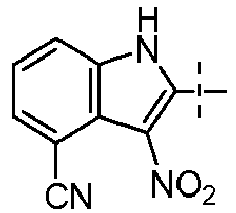
1H NMR (400 MHz, DMSO) δ 14.55 (s, 1H), 13.88 (s, 1H), 8.94 (s, 1H), 8.10 (d, J = 8.4 Hz, 1H), 8.01 (dd, J = 14.5, 7.6 Hz, 2H), 7.62 (s, 1H), 4.44 (s, 1H), 2.71 (s, 3H), 1.24 (s, 2H), 1.08 (s, 2H). 447 89% 4-65 
1H NMR (400 MHz, DMSO) δ 14.44 (s, 1H), 11.53 (s, 1H), 8.84 (s, 1H), 8.16 (d, J = 9.1 Hz, 1H), 7.95 (d, J = 7.2 Hz, 1H), 7.69 (d, J = 9.7 Hz, 1H), 7.58 (t, J = 10.6 Hz, 1H), 7.42 (d, J = 7.4 Hz, 2H), 7.16 (t, J = 7.5 Hz, 1H), 7.04 (t, J = 7.4 Hz, 1H), 6.62 (s, 1H), 5.77 (s, 1H), 1.77 (d, J = 17.9 Hz, 3H). 449 94.06 % 4-66 
1H NMR (400 MHz, DMSO) δ 14.79 (s, 1H), 11.42 (s, 1H), 8.70 (s, 1H), 8.04 (d, J = 8.2 Hz, 1H), 7.57 (d, J = 8.2 Hz, 1H), 7.42 (d, J = 8.0 Hz, 1H), 7.25 (s, 1H), 6.96 (d, J = 8.1 Hz, 1H), 6.86 (d, J = 7.7 Hz, 1H), 6.61 (s, 1H), 4.23 (s, 1H), 2.70 (s, 3H), 1.06 (s, 2H), 0.81 (s, 2H). 359 91.2% 4-67 
1H NMR (400 MHz, DMSO) δ 11.76 (s, 1H), 8.71 (s, 1H), 8.16 (d, J = 4.8 Hz, 1H), 7.81 (d, J = 8.8 Hz, 1H), 7.36 (s, 1H), 5.94 (dd, J = 3.4, 1.8 Hz, 1H), 5.10 (s, 1H), 4.22 - 4.08 (m, 1H), 2.33 (s, 3H), 1.09 - 0.88 (m, 4H). 378 97% 4-68 
1H NMR (400 MHz, DMSO) δ 12.33 (s, 1H), 8.92 (s, 1H), 8.35 (d, J = 4.4 Hz, 1H), 7.99 (d, J = 8.8 Hz, 1H), 7.87 (s, 1H), 7.77 (d, J = 7.8 Hz, 1H), 7.21 (dd, J = 7.7, 4.0 Hz, 1H), 4.47 - 4.34 (m, 2H), 2.69 (s, 3H), 1.28 (d, J = 6.6 Hz, 2H), 1.10 (s, 2H). 378 98% 4-69 
1H NMR (400 MHz, DMSO) δ 8.94 (s, 1H), 8.39 (t, J = 3.1 Hz, 1H), 8.08 (t, J = 9.0 Hz, 2H), 7.22 (dd, J = 8.1, 4.1 Hz, 1H), 6.74 (d, J = 2.9 Hz, 1H), 4.48 - 4.36 (m, 1H), 2.67 (s, 3H), 1.26 (d, J = 7.0 Hz, 4H), 1.09 (s, 4H). 392 98% 4-70 
1H NMR (400 MHz, DMSO) δ 8.94 (s, 1H), 8.39 (t, J = 3.1 Hz, 1H), 8.07 (t, J = 9.0 Hz, 1H), 7.21 (dt, J = 7.7, 3.7 Hz, 1H), 6.74 (d, J = 2.9 Hz, 1H), 4.50 - 4.32 (m, 1H), 2.67 (s, 3H), 1.33 - 1.19 (d, J = 7.0 Hz, 2H), 1.09 (s, 2H). 392 96% 4-71 
1H NMR (400 MHz, DMSO) δ 14.73 (s, 1H), 11.96 (s, 1H), 8.92(s, 1H), 8.24 (s, 1H), 8.06 (s, 1H), 8.00 (d, J = 8.7 Hz, 1H), 7.61 (t, J = 2.8 Hz, 1H), 6.57 (s, 1H), 4.59 - 4.15 (dm, 1H), 2.64 (s, 3H), 1.26 (d, J = 6.8 Hz, 2H), 1.09 (m, 2H). 378 98% 4-72 
1H NMR (400 MHz, DMSO) δ 14.67 (s, 1H), 13.15 (s, 1H), 8.93 (s, 1H), 8.27 (d, J = 6.1 Hz, 1H), 8.01 (d, J = 8.8 Hz, 1H), 7.78 (d, J = 7.9 Hz, 1H), 7.19 (t, J = 7.1 Hz, 1H), 6.88 (s, 1H), 4.49 - 4.33 (m, 1H), 2.77 (s, 3H), 1.39 - 1.21 (d, J = 7.0 Hz, 2H), 1.15 - 1.01 (m, 2H). 394 98% 4-73 
1H NMR (400 MHz, DMSO) δ 14.63 (s, 1H), 12.94 (s, 1H), 8.93 (s, 1H), 8.72 (s, 1H), 8.65 (s, 1H), 8.04 (d, J = 8.7 Hz, 1H), 6.93 (s, 1H), 4.53 - 4.29 (m, 1H), 2.77 (s, 3H), 1.32 - 1.19 (m, 3H), 1.17 - 0.95 (m, 2H). 403 92% 4-74 
1H NMR (400 MHz, DMSO) δ 14.65 (s, 1H), 13.00 (s, 1H), 8.94 (s, 1H), 8.53 (s, 7H), 8.04 (d, J = 8 Hz,1H), 7.69 (dd, J = 4.4, 2.4 Hz, 1H), 7.01 (s, 6H), 4.58 - 4.31 (m, 1H), 2.78 (s, 3H), 1.27 (d, J = 6.6 Hz, 15H), 1.18 - 1.01 (m, 16H). 403 92% 4-75 
1H NMR (400 MHz, DMSO) δ 14.57(s, 1H), 13.95 (s, 1H), 8.94 (s, 1H), 8.58 (s, 2H), 8.09 (d, J = 8.7 Hz, 1H), 7.60 - 7.51 (m, 1H), 4.53 - 4.33 (m, 1H), 2.73 (s, 3H), 1.35 - 1.17 (m, 2H), 1.15 - 1.01 (m, 2H). 423 86% 4-76 
1H NMR (400 MHz, DMSO) δ 13.25 (s, 1H), 8.99 (s, 1H), 8.36 (d, J = 5.9 Hz, 1H), 8.07 (d, J = 8.7 Hz, 1H), 7.95 (s, 1H), 7.52 (d, J = 8.0 Hz, 1H), 7.28 (t, J = 6.8 Hz, 1H), 4.54 - 4.44 (m, 1H), 2.76 (s, 3H), 1.34 (d, J = 6.8 Hz, 2H), 1.26 - 1.06 (m, 2H). 394 98% 4-77 
1H NMR (400 MHz, DMSO) δ 12.56 (s, 1H), 8.93 (s, 1H), 8.38 (t, J = 3.6 Hz, 1H), 8.20 (d, J = 7.4 Hz, 1H), 8.02 (d, J = 9.1 Hz, 1H), 7.26 (dd, J = 8.0, 4.1 Hz, 1H), 6.83 (s, 1H), 4.57 - 4.33 (m, 1H), 2.78 (s, 3H), 1.35 - 1.19 (d, J = 6.9 Hz, 2H), 1.15 - 1.01 (s, 2H). 378 98% 4-78 
1H NMR (400 MHz, DMSO) δ 14.65 (s, 1H), 12.47 (s, 1H), 11.98 (s, 1H), 8.91(s, 1H), 7.95 (m, 2H), 6.76 (s, 1H), 4.51 - 4.36 (m, 1H), 2.78 (s, 3H), 1.26 (d, J = 6.9 Hz, 2H), 1.17 - 1.01 (m, 2H). 395 95% 4-79 
1H NMR (400 MHz, DMSO) δ 14.57 (s, 1H), 13.19 (d, J = 8.5 Hz, 1H), 9.29 (d, J = 2.9 Hz, 1H), 9.02 (d, J = 2.4 Hz, 1H), 8.94 (s, 1H), 8.05 (d, J = 8.8 Hz, 1H), 7.06 (s, 1H), 4.49 - 4.35 (m, 1H), 2.77 (s, 3H), 1.26 (d, J = 7.2 Hz, 2H), 1.13 - 0.99 (s, 2H). 379 98% 4-80 
1H NMR (400 MHz, DMSO) δ 15.167 (s, 1H), 14.59 (s, 1H), 13.80 (s, 1H), 9.32 (s, 1H), 8.96 (d, J = 2.3 Hz, 1H), 8.40 (d, J = 6.1 Hz, 1H), 8.25 (d, J = 6.0 Hz, 1H), 8.10 (d, J = 8.4 Hz, 1H), 7.27 (s, 1H), 4.51 - 4.39 (m, 1H), 2.76 (m, 3H), 1.29 - 1.17 (d, J = 7.0 Hz, 2H), 1.17 - 0.97 (m, 2H). 378 85% 4-81 
1H NMR (400 MHz, DMSO) δ 14.56 (s, 1H), 13.05 (s, 1H), 8.95 (s, 1H), 8.68 (s, 1H), 8.08 (d, J = 9.1 Hz, 1H), 7.62 (s, 1H), 7.12 (s, 1H), 4.51 - 4.36 (m, 1H), 2.76 (s, 3H), 1.33 - 1.19 (d, J = 7.1 Hz, 2H), 1.13 - 1.05 (s, 2H). 378 85% 4-82 
1H NMR (400 MHz, DMSO) δ 14.88 (s, 1H), 14.57 (s, 1H), 13.46 (s, 1H), 9.41 (s, 1H), 8.96 (s, 1H), 8.52 (d, J = 6.5 Hz, 1H), 8.21 - 7.93 (m, 2H), 7.38 (s, 1H), 4.53 - 4.29 (m, 1H), 2.77 (s, 3H), 1.35 - 1.17 (d, J = 6.7 Hz, 2H), 1.19 - 1.03 (s, 2H). 378 98% 4-83 
421 90% 4-84 
421 98% 4-85 
482 93% 4-86 
1H NMR (400 MHz, DMSO) δ 14.60 (s, 1H), 10.06 (s, 1H), 8.81 (s, 1H), 7.88 (d, J = 8.5 Hz, 1H), 7.21 (s, 1H), 7.05 (d, J = 8.1 Hz, 1H), 6.80 (d, J = 8.1 Hz, 1H), 4.36 (m, 1H), 3.08 (s, 2H), 1.06 (m, 4H). 392 95% 4-87 
1H NMR (400 MHz, DMSO) δ 14.57 (s, 1H), 8.91 (s, 1H), 8.03 (d, J = 9.3 Hz, 1H), 7.80 (d, J = 7.7 Hz, 1H), 7.73 (d, J = 8.3 Hz, 1H), 7.56 - 7.22 (m, 3H), 4.57 - 4.32 (m, 1H), 2.84 (s, 3H), 1.27 (m, 2H), 1.06 (m, 2H). 378 98% 4-88 
1H NMR (400 MHz, DMSO) δ 14.50 (s, 1H), 13.22 (s, 1H), 8.84 (s, 1H), 8.10 - 7.80 (m, 2H), 7.74 - 7.58 (s, 1H), 7.49 (s, 1H), 4.38 (m, 1H), 2.78 (s, 3H), 1.30 - 1.12 (m, 2H), 1.00 (m, 2H). 422 98% 4-89 
1H NMR (400 MHz, DMSO) δ 14.56 (s, 1H), 8.93 (s, 1H), 8.02 (d, J = 9.2 Hz, 1H), 7.76 (dd, J = 8.8, 3.5 Hz, 1H), 7.61 (d, J = 8.6 Hz, 1H), 7.41 (s, 1H), 7.28 (t, J = 9.3 Hz, 1H), 4.43 (m, 1H), 2.82 (s, 3H), 1.26 (d, J = 6.4 Hz, 3H), 1.05 (s, 2H). 396 98% 4-90 
1H NMR (400 MHz, DMSO) δ 8.88 (s, 1H), 7.95 (d, J= 8.9 Hz, 1H), 7.76 (s, 1H), 7.61 (d, J= 8.9 Hz, 1H), 7.36 (s, 1H), 7.20 (t, J = 9.0 Hz, 1H), 4.35 (m, 1H), 2.76 (s, 3H), 1.30 - 1.09 (m, 3H), 0.96 (s, 2H). 396 98% 4-91 
1H NMR (400 MHz, DMSO) δ 14.57 (s, 1H), 8.86 (s, 1H), 7.96 (m, 3H), 7.59 (s, 1H), 7.41 (d, J = 5.1 Hz, 2H), 4.35 (m, 1H), 2.72 (s, 3H), 1.17 (m, 2H), 1.00 (m, 2H). 394 96% 4-92 
1H NMR (400 MHz, DMSO) δ 14.65 (s, 1H), 8.86 (s, 1H), 8.08 (d, J = 7.6 Hz, 1H), 7.97 (m, 2H), 7.36 (m, 3H), 4.32 (m, 1H), 2.57 (s, 3H), 1.03 (m, 4H). 394 98% 4-93 
1H NMR (400 MHz, DMSO) δ 14.51 (s, 1H), 8.92 (ss, 1H), 8.32 (d, J = 8.1 Hz, 1H), 8.28 (d, J = 8.0 Hz, 1H), 8.05 (t, J = 13.1 Hz, 1H), 7.90 (s, 1H), 7.70 (t, J = 8.2 Hz, 1H), 4.45 (m, 1H), 2.86 (s, 3H), 1.26 (t, J = 11.6 Hz, 2H), 1.10 (d, J = 21.6 Hz, 2H). 423 98% 4-94 
1H NMR (400 MHz, DMSO) δ 14.46 (s, 1H), 8.69 (s, 1H), 8.14 (s, 1H), 7.75 (d, J = 9.2 Hz, 1H), 7.52 (dd, J = 8.8, 3.5 Hz, 1H), 7.20-7.11 (m, 3H), 4.43 (s, 1H), 2.64 (s, 3H), 1.26 (d, J= 6.4 Hz, 3H), 1.05 (s, 2H). 378 98% 4-95 
1H NMR (400 MHz, DMSO) δ 14.55 (s, 1H), 8.94 (s, 1H), 8.05 (d, J = 9.3 Hz, 1H), 7.64 (d, J = 2.9 Hz, 1H), 7.54 (s, 1H), 7.36 (d, J = 6.6 Hz, 2H), 4.44 (m, 1H), 2.85 (s, 3H), 1.34 - 1.19 (m, 2H), 1.06 (s, 2H). 396 96% 4-96 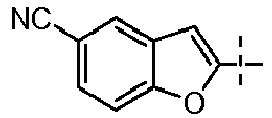
1H NMR (400 MHz, DMSO) δ 8.91 (s, 1H), 8.38 (s, 1H), 8.04 (d, J = 9.2 Hz, 1H), 7.96 (d, J = 8.4 Hz, 1H), 7.88 (d, J = 8.5 Hz, 1H), 7.55 (s, 1H), 4.44 (m, 1H), 2.83 (s, 3H), 1.35 - 1.18 (m, 2H), 1.06 (m, 2H). 403 98% 4-97 
1H NMR (400 MHz, DMSO) δ 14.56 (s, 1H), 8.94 (s, 1H), 8.04 (d, J = 9.1 Hz, 1H), 7.95 - 7.77 (m, 2H), 7.53 - 7.33 (m, 2H), 4.45 (m, 1H), 2.83 (s, 3H), 1.27 (d, J = 6.3 Hz, 2H), 1.05 (s, 2H). 462 98% 4-98 
1H NMR (400 MHz, DMSO) δ 14.61 (s, 1H), 8.86 (s, 1H), 7.95 (d, J = 9.0 Hz, 1H), 7.43 (s, 1H), 7.03 (t, J = 8.1 Hz, 1H), 6.77 (d, J = 7.4 Hz, 1H), 6.39 (d, J = 7.1 Hz, 1H), 4.38 (m, 1H), 2.77 (s, 3H), 1.19 (m, 2H), 0.98 (m, 1H). 393 96% Table 5 
Compound No. R3 = R2 = R1 = NMR MS (MH+) HPLC 5-1 
Me Cyclopropyl 1H NMR (400 MHz, DMSO) δ 14.72 (s, 1H), 10.91 (s, 1H), 8.89 (s, 1H), 7.94 (d, J = 8.60 Hz, 1H), 7.13 - 6.90 (m, 3H), 4.67 (s, 2H), 4.38 (s, 1H), 2.62 (s, 3H), 1.23 (d, J = 5.80 Hz, 2H), 1.04 (s, 2H). 409 97% 5-2 
Me Cyclopropyl 1H NMR (400 MHz, DMSO) δ 14.71 (s, 1H), 10.78 (s, 1H), 8.90 (s, 1H), 7.95 (d, J = 8.72 Hz, 1H), 7.41 (s, 1H), 7.22 (d, J = 8.03 Hz, 1H), 7.13 (d, J = 8.17 Hz, 1H), 4.38 (s, 1H), 3.57 (s, 2H), 2.62 (s, 3H), 1.24 (d, J = 6.14 Hz, 2H), 1.05 (s, 2H). 425 98% 5-3 
Me Cyclopropyl 1H NMR (400 MHz, DMSO) δ 14.70 (s, 1H), 10.64 (s, 1H), 8.98 (s, 1H), 8.05 (d, J = 8.72 Hz, 1H), 7.90 (s, 1H), 7.62 (s, 1H), 4.92 (s, 2H), 4.46 (s, 1H), 2.71 (s, 3H), 1.30 (s, 3H), 1.15 (s, 2H). 454 97% 5-4 
Me Cyclopropyl 1H NMR (400 MHz, DMSO) δ 14.66 (s, 1H), 11.39 (s, 1H), 8.90 (s, 1H), 7.96 (d, J = 8.72 Hz, 1H), 7.57 (s, 1H), 7.43 (s, 1H), 4.75 (s, 2H), 4.39 (s, 1H), 2.62 (s, 3H), 1.23 (d, J = 5.26 Hz, 2H), 1.06 (s, 2H). 434 98% 5-5 
OMe Cyclopropyl 1H NMR (400 MHz, DMSO) δ 14.72 (s, 1H), 10.94 (s, 1H), 8.80 (s, 1H), 7.90 (s, 1H), 7.11 (d, J = 26.18 Hz, 2H), 4.67 (s, 2H), 1.15 (s, 4H). 425 98% 5-6 
Me Cyclopropyl 1H NMR (400 MHz, DMSO) δ 14.75 (s, 1H), 10.87 (s, 1H), 8.90 (s, 1H), 7.96 (d, J = 8.58 Hz, 1H), 7.14 (d, J = 8.35 Hz, 1H), 6.97 (d, J = 8.15 Hz, 1H), 6.89 (s, 1H), 4.69 (s, 2H), 4.39 (s, 1H), 2.62 (s, 3H), 1.23 (s, 2H), 1.04 (s, 2H). 409 98% 5-9 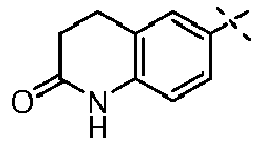
Me Cyclopropyl 1H NMR (400 MHz, DMSO) δ 14.74 (s, 1H), 10.28 (s, 1H), 8.90 (s, 1H), 7.94 (d, J = 8.20 Hz, 1H), 7.23 (s, 1H), 7.17 (s, 1H), 7.03 (s, 1H), 4.38 (s, 2H), 2.97 (s, 2H), 2.63 (s, 2H), 1.23 (s, 2H), 1.04 (s, 2H). 407 85% 5-10 
Me Cyclopropyl 1H NMR (400 MHz, DMSO) δ 14.71 (s, 1H), 11.47 (s, 1H), 11.39 (s, 1H), 8.91 (s, 1H), 7.98 (d, J = 8.50 Hz, 1H), 7.89 (s, 1H), 7.70 (d, J = 8.10 Hz, 1H), 7.35 (d, J = 8.11 Hz, 1H), 4.40 (s, 1H), 3.49 (d, J = 87.04 Hz, 2H), 2.62 (s, 3H), 1.23 (s, 2H), 1.08 (s, 3H). 422 98% 5-11 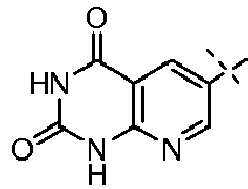
Me Cyclopropyl 1H NMR (400 MHz, DMSO) δ 14.67 (s, 1H), 11.96 (s, 1H), 11.63 (s, 1H), 8.92 (s, 1H), 8.69 (s, 1H), 8.34 (s, 1H), 8.00 (d, J = 8.65 Hz, 1H), 4.41 (s, 1H), 2.61 (d, J = 29.62 Hz, 3H), 1.24 (d, J = 5.11 Hz, 2H), 1.09 (s, 2H). 423 99% 5-12 
Me Cyclopropyl 1H NMR (400 MHz, DMSO) δ 14.73 (s, 1H), 12.44 - 11.74 (m, 2H), 8.91 (s, 1H), 7.98 (d, J = 8.01 Hz, 1H), 7.53 - 7.03 (m, 3H), 4.39 (s, 1H), 2.61 (s, 3H), 1.20 (d, J = 26.27 Hz, 3H), 1.05 (s, 2H). 422 96% 5-13 
Me Cyclopropyl 1H NMR (400 MHz, DMSO) δ 14.83 (s, 1H), 8.88 (s, 1H), 7.90 (s, 2H), 6.70 (s, 3H), 4.27 (d, J = 77.51 Hz, 4H), 2.60 (d, J = 25.07 Hz, 3H), 1.23 (s, 2H), 1.02 (s, 2H). 395 98% 5-14 
OMe Cyclopropyl 1H NMR (400 MHz, DMSO) δ 14.78 (s, 1H), 8.76 (s, 1H), 7.83 (d, J = 9.18 Hz, 1H), 6.92 - 6.81 (m, 2H), 6.70 (d, J = 7.26 Hz, 1H), 6.19 (d, J = 22.26 Hz, 1H), 4.16 (s, 4H), 3.39 (s, 3H), 2.50 (s, 7H). 411 96% 5-15 
8-N Cyclopropyl 1H NMR (400 MHz, DMSO) δ 14.55 (s, 1H), 8.61 (s, 1H), 8.19 (d, J = 11.38 Hz, 1H), 7.55 (d, J = 8.31 Hz, 1H), 7.47 (s, 1H), 6.68 (s, 1H), 6.54 (d, J = 8.26 Hz, 1H), 4.00 (s, 2H), 3.73 (s, 1H), 1.15 - 0.91 (m, 5H). 382 94% 5-16 
Me Cyclopropyl 1H NMR (400 MHz, DMSO) δ 14.90 (s, 1H), 8.94 (s, 1H), 7.94 (d, J = 9.06 Hz, 1H), 6.95 (d, J = 8.81 Hz, 2H), 6.63 (d, J = 7.73 Hz, 1H), 6.14 (s, 1H), 4.43 (s, 1H), 3.31 (s, 2H), 2.79 (s, 2H), 2.70 (s, 3H), 1.90 (s, 2H), 1.30 (s, 2H), 1.08 (s, 2H). 393 94% 5-17 
Me Cyclopropyl 1H NMR (400 MHz, DMSO) δ 14.71 (s, 1H), 8.89 (s, 1H), 8.60 (s, 1H), 7.94 (d, J = 8.81 Hz, 1H), 7.67 (s, 1H), 7.10 (s, 1H), 4.38 (s, 1H), 4.27 (s, 2H), 3.63 (s, 2H), 2.66 (s, 3H), 1.24 (d, J = 5.67 Hz, 2H), 1.07 (s, 2H). 440 97% 5-18 
Me Cyclopropyl 1H NMR (400 MHz, DMSO) δ 10.19 (s, 1H), 8.89 (s, 1H), 7.91 (d, J = 8.74 Hz, 1H), 6.33 (s, 1H), 6.24 (s, 1H), 4.57 (s, 2H), 4.38 (s, 2H), 2.64 (s, 3H), 1.23 (d, J = 5.42 Hz, 3H), 1.03 (s, 2H). 424 97% 5-19 
Me Cyclopropyl 1H NMR (400 MHz, DMSO) δ 8.88 (s, 1H), 7.91 (s, 1H), 6.29 (s, 1H), 6.18 (s, 1H), 4.37 (s, 2H), 4.18 (s, 3H), 3.10 (s, 2H), 2.65 (d, J = 16.81 Hz, 6H), 1.23 (s, 3H), 1.03 (s, 2H). 424 97% 5-20 
Me Cyclopropyl 1H NMR (400 MHz, DMSO) δ 8.97 (s, 1H), 8.01 (d, J = 9.26 Hz, 1H), 7.85 - 7.65 (m, 2H), 7.64 - 7.40 (m, 1H), 7.36 (s, 1H), 4.46 (s, 1H), 4.32 (s, 3H), 3.63 (s, 3H), 2.74 (s, 3H), 1.30 (d, J = 5.75 Hz, 2H), 1.11 (s, 2H). 396 98% 5-21 
Me Cyclopropyl 1H NMR (400 MHz, DMSO) δ 14.72 (s, 1H), 8.85 (d, J = 23.76 Hz, 1H), 7.87 (t, J = 19.93 Hz, 1H), 7.17 (s, 1H), 6.99 (d, J = 9.29 Hz, 2H), 4.37 (s, 1H), 4.20 (s, 2H), 3.59 (s, 1H), 3.44 (s, 2H), 2.63 (s, 3H), 1.24 (s, 2H), 1.07 (d, J = 23.80 Hz, 2H). 420 95% 5-22 
OMe Cyclopropyl 1H NMR (400 MHz, DMSO) δ 14.67 (s, 1H), 8.78 (s, 1H), 7.87 (d, J = 9.24 Hz, 1H), 7.26 (d, J = 10.63 Hz, 1H), 7.11 (s, 1H), 7.04 (s, 1H), 4.20 (s, 3H), 2.00 (dd, J = 7.56, 15.22 Hz, 1H), 1.21 (d, J = 14.05 Hz, 4H). 436 98% 5-24 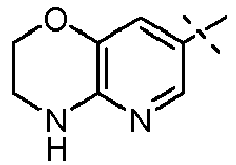
OMe Cyclopropyl 1H NMR (400 MHz, DMSO) δ 8.77 (s, 1H), 7.87 (d, J = 9.25 Hz, 1H), 7.75 (s, 1H), 7.20 (s, 1H), 7.14 (s, 1H), 4.17 (s, 3H), 3.47 (s, 3H), 1.32 - 1.05 (m, 8H). 412 96% 5-25 
Me Cyclopropyl 1H NMR (400 MHz, DMSO) δ 14.82 (s, 1H), 10.92 (s, 1H), 10.86 (s, 1H), 8.96 (s, 1H), 7.98 (t, J = 12.31 Hz, 1H), 7.15 (d, J = 7.60 Hz, 1H), 7.00 (d, J = 8.89 Hz, 2H), 4.44 (s, 1H), 2.67 (s, 3H), 1.28 (s, 2H), 1.12 (s, 2H). 394 98% 5-26 
OMe Cyclopropyl 1H NMR (400 MHz, DMSO) δ 14.63 (s, 1H), 10.94 (s, 1H), 10.87 (s, 1H), 8.86 (s, 1H), 7.97 (d, J = 8.82 Hz, 1H), 7.17 (d, J = 7.41 Hz, 3H), 4.29 (s, 1H), 1.23 (s, 4H). 410 98% 5-27 
Me Cyclopropyl 1H NMR (400 MHz, DMSO) δ 8.95 (s, 1H), 7.96 (d, J = 8.75 Hz, 1H), 6.96 (d, J = 10.17 Hz, 1H), 6.92 (d, J = 8.04 Hz, 1H), 6.72 (d, J = 7.83 Hz, 1H), 4.44 (s, 1H), 3.63 (s, 2H), 3.09 (s, 2H), 2.70 (s, 3H), 1.30 (d, J = 5.29 Hz, 2H), 1.10 (s, 2H). 411 98% 5-28 
Me Cyclopropyl 1H NMR (400 MHz, DMSO) δ 14.74 (s, 1H), 8.89 (s, 1H), 7.94 (d, J = 8.48 Hz, 1H), 7.53 (s, 1H), 7.44 (s, 1H), 7.33 (d, J = 8.57 Hz, 1H), 6.94 (d, J = 8.45 Hz, 1H), 4.39 (s, 1H), 3.80 (s, 2H), 3.48 (s, 2H), 2.64 (s, 3H), 1.23 (s, 2H), 1.06 (s, 2H). 443 98% 5-29 
Me Cyclopropyl 1H NMR (400 MHz, DMSO) δ 14.67 (s, 1H), 10.84 (s, 1H), 8.83 (s, 1H), 7.86 (d, J = 8.65 Hz, 1H), 6.52 (s, 2H), 4.38 (s, 2H), 4.31 (s, 1H), 3.89 (s, 2H), 2.54 (s, 3H), 1.16 (s, 2H), 1.00 (s, 2H). 436 98% 5-30 
OMe Cyclopropyl 1H NMR (400 MHz, DMSO) δ 14.71 (s, 1H), 10.91 (s, 1H), 8.79 (s, 1H), 7.88 (d, J = 9.15 Hz, 1H), 6.75 (d, J = 14.51 Hz, 2H), 4.45 (t, J = 4.51 Hz, 2H), 4.27 -4.16 (m, 1H), 3.96 (t, J = 4.53 Hz, 2H), 1.17 (d, J = 7.20 Hz, 4H). 452 99% 5-31 
Me Cyclopropyl 1H NMR (400 MHz, DMSO) δ 8.94 (s, 1H), 7.95 (d, J = 8.62 Hz, 1H), 6.79 (dd, J = 7.23, 14.68 Hz, 3H), 4.43 (s, 1H), 4.23 (d, J = 10.57 Hz, 1H), 4.06 (d, J = 10.42 Hz, 1H), 3.60 - 3.41 (m, 3H), 2.70 (s, 3H), 1.30 (d, J = 5.98 Hz, 2H), 1.09 (s, 2H). 425 99% 5-32 
Me Cyclopropyl 1H NMR (400 MHz, DMSO) δ 8.95 (s, 1H), 7.98 (d, J = 8.04 Hz, 1H), 7.09 (s, 1H), 6.96 (s, 2H), 4.44 (s, 1H), 4.15 (s, 2H), 3.29 (s, 3H), 2.69 (s, 3H), 2.02 (s, 2H), 1.30 (s, 2H), 1.10 (s, 2H). 409 99% 5-33 
Me Cyclopropyl 1H NMR (400 MHz, DMSO) δ 8.76 (s, 1H), 7.77 (d, J = 8.81 Hz, 1H), 6.59 (s, 3H), 4.25 (s, 1H), 4.04 (s, 2H), 3.27 (d, J = 11.94 Hz, 1H), 2.96 - 2.79 (m, 1H), 2.52 (s, 3H), 1.18 (t, J = 8.54 Hz, 3H), 1.12 (d, J = 5.48 Hz, 2H), 0.91 (s, 2H). 409 98% 5-34 
Me Cyclopropyl 1H NMR (400 MHz, DMSO) δ 8.71 (s, 1H), 7.72 (d, J = 8.62 Hz, 1H), 6.54 (s, 3H), 4.20 (s, 2H), 4.03 (d, J = 10.38 Hz, 2H), 3.52 (t, J = 8.97 Hz, 1H), 3.31 (s, 1H), 2.46 (s, 3H), 1.07 (d, J = 5.70 Hz, 2H), 0.96 (d, J = 4.88 Hz, 3H), 0.86 (s, 2H). 409 98% 5-35 
Me Cyclopropyl 1H NMR (400 MHz, DMSO) δ 10.57 (s, 1H), 8.89 (s, 1H), 7.93 (d, J = 8.73 Hz, 1H), 7.48 (d, J = 52.24 Hz, 1H), 6.96 (d, J = 7.83 Hz, 1H), 6.80 (s, 1H), 6.74 (d, J = 7.83 Hz, 1H), 4.38 (s, 1H), 3.76 (d, J = 12.76 Hz, 1H), 2.63 (s, 3H), 2.07 (s, 1H), 1.85 (s, 1H), 1.66 (s, 1H), 1.58 - 1.37 (m, 3H), 1.23 (d, J = 6.52 Hz, 2H), 1.06 (s, 2H). 462 98% 5-36 
Cl Cyclopropyl 1H NMR (400 MHz, DMSO) δ 10.92 (s, 1H), 10.70 (s, 1H), 8.92 (s, 1H), 8.09 (d, J = 8.43 Hz, 1H), 7.82 (s, 1H), 7.04 (d, J = 22.18 Hz, 1H), 6.64 (d, J = 10.90 Hz, 2H), 4.52 - 4.28 (m, 3H), 4.01 - 3.82 (m, 2H), 1.20 (t, J = 10.03 Hz, 2H), 1.12 (d, J = 3.28 Hz, 2H). 456 97% 5-37 
8-Me 
1H NMR (400 MHz, DMSO) δ 8.85 (d, J = 3.12 Hz, 1H), 7.90 (d, J = 8.88 Hz, 1H), 6.71 (d, J = 5.48 Hz, 3H), 5.23 (d, J = 3.10 Hz, 1H), 5.07 (d, J = 2.78 Hz, 1H), 4.42 - 4.27 (m, 1H), 4.22 - 4.12 (m, 2H), 2.55 (s, 3H), 1.74 (ddd, J = 8.97, 14.93, 17.91 Hz, 1H), 1.62 - 1.45 (m, 1H). 413 98% 5-38 
8-Me 
1H NMR (400 MHz, DMSO) δ 14.44 (d, J = 137.56 Hz, 2H), 10.82 (d, J = 68.59 Hz, 1H), 8.85 (t, J = 9.38 Hz, 1H), 7.93 (t, J = 10.51 Hz, 1H), 6.56 (t, J = 40.40 Hz, 2H), 4.44 (d, J = 4.54 Hz, 3H), 4.39 - 4.29 (m, 1H), 4.04 - 3.90 (m, 3H), 2.54 (s, 3H), 1.64 (m, 2H). 454 98% 5-39 
Cl Cyclopropyl 1H NMR (400 MHz, DMSO) δ 8.92 (s, 1H), 8.10 (d, J = 8.56 Hz, 1H), 7.69 (s, 1H), 7.18 (s, 1H), 4.41 (s, 2H), 4.23 - 4.19 (m, 3H), 3.51 (s, 2H), 1.22 (d, J = 6.34 Hz, 2H), 1.11 (s, 2H). 416 98% 5-40 
Me Cyclopropyl 1H NMR (400 MHz, DMSO) δ 14.67 (s, 1H), 8.91 (s, 1H), 7.97 (d, J = 8.68 Hz, 1H), 7.35 (s, 1H), 6.99 (s, 1H), 4.68 (d, J = 4.53 Hz, 2H), 4.58 (d, J = 4.64 Hz, 2H), 4.40 (dd, J = 3.32, 6.77 Hz, 1H), 2.61 (s, 3H), 1.24 (d, J = 6.14 Hz, 2H), 1.10 (s, 2H). 434 98% 5-41 
8-OMe 
1H NMR (400 MHz, DMSO) δ 14.59 (s, 1H), 10.91 (s, 1H), 8.82 (s, 1H), 7.89 (d, J = 9.04 Hz, 1H), 6.74 (d, J = 14.28 Hz, 2H), 5.08 (d, J = 64.31 Hz, 1H), 4.45 (s, 2H), 4.19 (s, 1H), 3.96 (s, 2H), 1.80 (d, J = 26.47 Hz, 1H), 1.65 (dd, J = 7.14, 16.55 Hz, 1H). 470 98% 5-42 
8-OMe 
1H NMR (400 MHz, DMSO) δ 8.80 (s, 1H), 7.86 (d, J = 9.34 Hz, 1H), 6.87 (d, J = 8.16 Hz, 1H), 6.84 (s, 1H), 6.70 (d, J = 8.14 Hz, 1H), 5.18 - 4.96 (m, 1H), 4.17 (s, 3H), 3.36 (s, 2H), 1.84 - 1.58 (m, 2H). 429 98% 5-43 
Me Cyclopropyl 1H NMR (400 MHz, DMSO) δ 14.75 - 14.70 (s, 1H), 8.80 - 8.76 (s, 1H), 7.89 - 7.83 (d, J = 9.4 Hz, 1H), 6.92 - 6.86 (d, J = 11.4 Hz, 1H), 6.77 - 6.73 (s, 1H), 6.16 - 6.10 (s, 1H), 4.27 - 4.15 (s, 3H), 3.47 - 3.41 (s, 3H), 3.40 - 3.34 (q, J = 3.6 Hz, 2H), 1.20 - 1.09 (dd, J = 14.4, 5.5 Hz, 4H). 429 90% 5-44 
Me Cyclopropyl 1H NMR (400 MHz, DMSO) δ 14.77 - 14.65 (s, 1H), 8.80 - 8.76 (s, 1H), 7.89 - 7.83 (d, J = 9.3 Hz, 1H), 7.09 - 7.03 (t, J = 1.6 Hz, 1H), 6.90 - 6.84 (t, J = 1.6 Hz, 1H), 6.19 - 6.10 (s, 1H), 4.26 - 4.15 (m, 3H), 3.48 - 3.39 (s, 5H), 1.20 - 1.09 (ddd, J = 10.6, 5.5, 3.0 Hz, 4H). 445 100% 5-45 
Me Cyclopropyl 1H NMR (400 MHz, DMSO) δ 8.80 - 8.74 (s, 1H), 7.88 - 7.80 (d, J = 9.3 Hz, 1H), 6.81 - 6.71 (dd, J = 17.1, 2.1 Hz, 2H), 4.28 - 4.18 (tt, J = 7.2, 4.3 Hz, 1H), 4.18 - 4.12 (t, J = 4.2 Hz, 2H), 3.44 - 3.35 (m, 5H), 2.16 - 2.10 (s, 3H), 1.20 - 1.08 (m, 4H). 425 100% 5-46 
Me Cyclopropyl 1H NMR (400 MHz, DMSO) δ 8.79 - 8.75 (s, 1H), 7.87 - 7.81 (d, J = 9.3 Hz, 1H), 6.55 - 6.49 (s, 1H), 6.43 - 6.39 (s, 1H), 4.27 - 4.18 (s, 1H), 4.16 - 4.10 (t, J = 4.3 Hz, 2H), 3.33-3.5 (s, 2H), 2.57 - 2.52 (s, 3H), 1.20 - 1.09 (m, 4H). 426 96% 5-47 
Me Cyclopropyl 1H NMR (400 MHz, DMSO) δ 14.83 - 14.56 (s, 1H), 8.81 - 8.77 (s, 1H), 8.66 - 8.59 (m, 1H), 7.95 - 7.89 (d, J = 9.3 Hz, 1H), 7.89 - 7.84 (t, J = 1.7 Hz, 1H), 7.24 - 7.19 (s, 1H), 4.30 - 4.18 (m, 3H), 3.67 - 3.60 (q, J = 3.8 Hz, 2H), 3.52 - 3.44 (s, 3H), 1.20 - 1.12 (td, J = 6.5, 5.8, 2.7 Hz, 4H). 456 100% 5-48 
Me Cyclopropyl 1H NMR (400 MHz, DMSO) δ15.22 - 14.17 (m, 1H), 8.97 - 8.90 (s, 1H), 8.84 - 8.80 (s, 1H), 7.97 - 7.90 (d, J = 9.0 Hz, 1H), 7.51 - 7.47 (s, 1H), 7.07 - 7.02 (s, 1H), 4.69 - 4.57 (s, 4H), 4.28 - 4.18 (p, J = 5.7 Hz, 1H), 3.42 - 3.35 (s, 3H), 1.21 - 1.12 (d, J = 5.6 Hz, 4H). 436 100% 5-49 
Me Cyclopropyl 1H NMR (400 MHz, DMSO) δ 14.70 - 14.66 (s, 1H), 8.84 - 8.80 (s, 1H), 7.97 - 7.92 (d, J = 9.0 Hz, 1H), 7.78 - 7.74 (s, 1H), 7.08 - 7.04 (s, 1H), 5.00 - 4.94 (t, J = 4.9 Hz, 2H), 4.82 - 4.74 (t, J = 4.8 Hz, 2H), 4.27 - 4.18 (p, J = 5.7 Hz, 1H), 3.43 - 3.38 (s, 3H), 1.21 - 1.13 (d, J = 5.6 Hz, 4H). 437 85% 5-50 
OMe Cyclopropyl 1H NMR (400 MHz, DMSO) δ 14.72 (s, 1H), 8.94 (s, 1H), 7.87 (d, J = 9.4 Hz, 1H), 6.89 (d, J = 11.4 Hz, 1H), 6.75 (s, 1H), 6.13 (s, 1H), 4.21 (m, 3H), 3.40 (s, 3H), 1.31 - 0.94 (m, 4H). 429 90% 5-51 
Me Cyclopropyl 1H NMR (400 MHz, DMSO) δ 14.72 (s, 1H), 8.88 (s, 1H), 7.91 (d, J = 8.8 Hz, 1H), 6.91 (s, 1H), 6.72 (s, 1H), 6.07 (s, 1H), 4.48 - 4.30 (m, 1H), 4.20 (m, 2H), 3.43 (m, 2H), 2.70 - 2.56 (m, 3H), 1.24 (d, J = 4.0 Hz, 2H), 1.04 (s, 2H). 429 98% 5-52 
Me Cyclopropyl 1H NMR (400 MHz, DMSO) δ 14.5 (b, 1H), 8.91 (s, 1H), 8.86 (s, 1H), 7.97 (d, J = 8.8 Hz, 1H), 7.34 (s, 1H), 6.90 (s, 1H), 4.63 (s, 4H), 4.39 (mz, 1H), 2.61 (s, 3H), 1.24 (d, J = 4.6 Hz, 2H), 1.09 (s, 2H). 420 98% 5-53 
Me Cyclopropyl 1H NMR (400 MHz, DMSO) δ 14.73 (s, 1H), 8.88 (s, 1H), 7.90 (d, J = 8.8 Hz, 1H), 7.22 (s, 1H), 6.76 (s, 1H), 4.44 - 4.28 (m, 1H), 4.15 (m, 2H), 3.43 (m, 2H), 2.65 (s, 3H), 1.24 (s, 2H), 1.04 (s, 2H). 521 97% 5-54 
Me Cyclopropyl 1H NMR (400 MHz, DMSO) δ 14.73 (s, 1H), 8.89 (s, 1H), 7.91 (d, J = 7.8 Hz, 1H), 6.75 (d, J = 11.3 Hz, 1H), 6.59 (s, 1H), 4.37 (m, 1H), 4.22 (s, 2H), 3.39 (s, 2H), 2.65 (s, 3H), 1.22 (m, 2H), 1.00 (m, 2H). 413 97% 5-55 
Cl Cyclopropyl 1H NMR (400 MHz, DMSO) δ 8.90 (s, 1H), 8.05 (d, J = 8.6 Hz, 1H), 6.91 - 6.49 (m, 3H), 4.46 - 4.36 (m, 1H), 4.16 (m, 2H), 3.49 (m, 2H), 2.67 (s, 3H), 1.19 (t, J = 15.1 Hz, 2H), 1.09 (s, 2H). 415 98% 5-56 
1H NMR (400 MHz, DMSO) δ 8.77 (s, 1H), 8.15 (d, J = 7.00 Hz, 1H), 7.24 - 7.02 (m, 2H), 6.78 (d, J = 8.23 Hz, 1H), 4.28 - 4.13 (m, 2H), 4.05 - 3.86 (m, 1H), 3.49 - 3.34 (m, 2H), 2.90 (d, J = 2.66 Hz, 3H), 1.44 - 1.32 (m, 2H), 1.28 - 1.17 (m, 2H). 395 98% 5-57 
1H NMR (400 MHz, DMSO) δ 15.13 (s, 1H), 8.84 (s, 1H), 8.16 (d, J = 8.2 Hz, 1H), 7.71 (s, 1H), 7.20 - 7.06 (m, 2H), 6.73 (t, J = 16.6 Hz, 1H), 4.30 (m, 1H), 4.22 - 4.17 (m, 2H), 3.68 (s, 2H), 3.44 (s, 3H), 1.43 - 0.95 (m, 4H). 393 98% Table 6 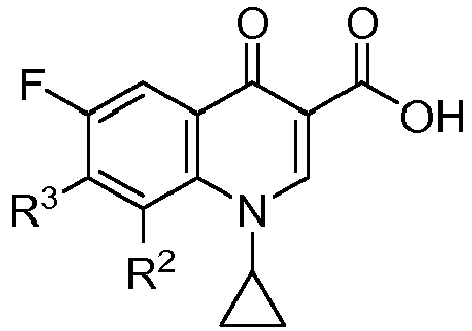
Compound No. R3 = R2 = NMR MS (MH+) HPLC 6-1 
Me 1H NMR (400 MHz, MeOD) δ 7.92 (s, 1H), 7.35 (m, 2H), 6.96 (s, 1H), 6.80 (m, 2H), 4.30 - 4.19 (m, 1H), 3.75 (s, 3H), 2.59 (s, 3H), 0.96 (m, 2H), 0.79 (m, 2H). 368 98% 6-2 
Me 1H NMR (400 MHz, DMSO) δ 14.75 (s, 1H), 8.89 (s, 1H), 7.92 (d, J= 8.6 Hz, 1H), 7.50 (t, J = 7.7 Hz, 1H), 7.24 (dd, J = 15.3, 7.9 Hz, 2H), 7.14 (d, J = 7.4 Hz, 1H), 4.38 (m, 1H), 3.76 (s, 3H), 2.55 (s, 3H), 1.41 - 1.15 (m, 2H), 1.12 - 0.96 (m, 2H). 482 90% 6-3 
Me 1H NMR (400 MHz, DMSO) δ 14.80 (s, 1H), 8.95 (s, 1H), 8.00 (d, J = 8.8 Hz, 1H), 7.57 (d, J = 7.2 Hz, 2H), 7.49 (t, J = 7.3 Hz, 2H), 7.45 - 7.36 (m, 3H), 7.26 (d, J = 8.6 Hz, 2H), 5.25 (s, 2H), 4.54 - 4.32 (m, 1H), 2.67 (s, 3H), 1.30 (d, J = 6.2 Hz, 2H), 1.11 (s, 2H). 444 99% 6-4 
Me 1H NMR (400 MHz, DMSO) δ 14.76 (s, 1H), 8.90 (s, 1H), 7.94 (d, J = 8.5 Hz, 1H), 7.35 (d, J = 8.0 Hz, 2H), 7.12 (d, J = 8.2 Hz, 2H), 4.38 (s, 1H), 3.84 (s, 3H), 2.61 (s, 3H), 1.23 (d, J = 6.2 Hz, 2H), 1.05 (s, 2H). 368 96% 6-5 
Me 1H NMR (400 MHz, DMSO) δ 14.63 (s, 1H), 8.88 (s, 1H), 7.92 (d, J = 8.9 Hz, 1H), 7.31 (d, J = 8.4 Hz, 2H), 7.08 (d, J = 8.7 Hz, 2H), 4.71 (dt, J = 12.0, 6.0 Hz, 1H), 4.38 (m, 1H), 2.58 (d, J = 26.0 Hz, 3H), 1.32 (d, J = 6.0 Hz, 6H), 1.23 (q, J = 6.9 Hz, 2H), 1.02 (s, 2H). 396 99% 6-6 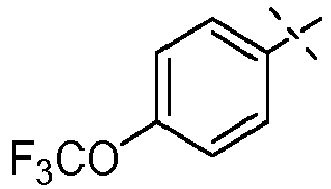
Me 1H NMR (400 MHz, DMSO) δ 14.68 (s, 1H), 8.91 (s, 1H), 7.98 (d, J = 8.8 Hz, 1H), 7.58 (s, 4H), 4.52 - 4.24 (m, 1H), 2.60 (s, 3H), 1.23 (q, J = 7.0 Hz, 2H), 1.15-1.01 (m, 2H). 422 99% 6-7 
Me 1H NMR (400 MHz, DMSO) δ 14.66 (s, 1H), 8.91 (s, 1H), 7.99 (d, J = 8.8 Hz, 1H), 7.72 (t, J = 7.9 Hz, 1H), 7.54 (d, J = 8.3 Hz, 1H), 7.52 - 7.44 (m, 2H), 4.52 - 4.20 (m, 1H), 2.60 (s, 3H), 1.23 (d, J = 6.8 Hz, 2H), 1.08 (s, 2H). 422 99% 6-8 
Me 1H NMR (400 MHz, DMSO) δ 14.48 (s, 1H), 8.76 (s, 1H), 7.86 (d, J = 8.7 Hz, 1H), 7.60 - 7.52 (m, 1H), 7.45 (ddd, J = 10.9, 9.8, 4.6 Hz, 3H), 4.25 (dt, J = 10.7, 3.6 Hz, 1H), 2.43 (s, 3H), 1.06 (dq, J = 9.4, 7.1 Hz, 2H), 0.99 - 0.71 (m, 3H). 422 99% 6-9 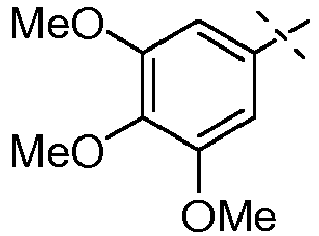
Me 1H NMR (400 MHz, DMSO) δ 14.64 (s, 1H), 8.83 (s, 1H), 7.87 (d, J = 8.7 Hz, 1H), 6.61 (s, 2H), 4.33 (m, 1H), 3.74 (s, 6H), 3.68 (s, 3H), 2.57 (s, 3H), 1.18 (d, J = 6.4 Hz, 2H), 1.01 (s, 2H). 428 95% 6-10 
Me 1H NMR (400 MHz, DMSO) δ 14.80 (s, 1H), 8.88 (s, 1H), 7.90 (d, J = 8.6 Hz, 1H), 7.17 (d, J = 8.3 Hz, 1H), 6.76 (d, J = 2.2 Hz, 1H), 6.70 (dd, J = 8.4, 2.3 Hz, 1H), 4.47 - 4.28 (m, 1H), 3.85 (s, 3H), 3.75 (s, 3H), 2.55 (s, 3H), 1.21 (dd, J = 6.7, 4.5 Hz, 2H), 1.02 (dd, J = 10.3, 4.5 Hz, 2H). 398 96% 6-11 
Me 1H NMR (400 MHz, DMSO) δ 14.70 (s, 1H), 8.80 (s, 1H), 7.86 (d, J = 8.1 Hz, 1H), 7.32 (m, 2H), 7.16 (d, J = 7.2 Hz, 1H), 4.25 (s, 1H), 3.92 (s, 3H), 2.57 (s, 3H), 1.41 - 1.10 (m, 2H), 0.89 (m, 2H). 386 96% 6-12 
Me 1H NMR (400 MHz, DMSO) δ 14.74 (s, 1H), 8.90 (s, 1H), 7.93 (d, J = 8.8 Hz, 1H), 7.13 (d, J = 8.3 Hz, 1H), 6.97 (s, 1H), 6.93 (dd, J = 8.2, 1.7 Hz, 1H), 4.39 (tt, J = 7.1, 3.8 Hz, 1H), 3.84 (s, 3H), 3.79 (s, 3H), 2.63 (s, 3H), 1.24 (d, J = 6.8 Hz, 2H), 1.07 (s, 2H). 398 99% 6-13 
Me 1H NMR (400 MHz, DMSO) δ 14.70 (s, 1H), 8.90 (s, 1H), 7.94 (d, J = 8.7 Hz, 1H), 7.54 (s, 1H), 7.35 (dd, J = 18.3, 8.3 Hz, 2H), 4.39 (m, 1H), 3.95 (s, 3H), 2.62 (s, 3H), 1.23 (d, J = 5.8 Hz, 2H), 1.06 (s, 2H). 402 99% 6-14 
Me 1H NMR (400 MHz, DMSO) δ 14.69 (s, 1H), 8.91 (s, 1H), 7.97 (d, J = 8.6 Hz, 1H), 7.72 (d, J = 8.6 Hz, 1H), 7.67 (s, 1H), 7.47 (d, J = 8.6 Hz, 1H), 4.40 (m, 1H), 3.99 (s, 3H), 2.61 (s, 3H), 1.24 (d, J = 5.6 Hz, 2H), 1.08 (s, 2H). 436 99% 6-15 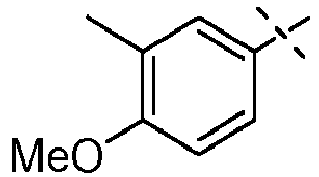
Me 1H NMR (400 MHz, DMSO) δ 14.76 (s, 1H), 8.89 (s, 1H), 7.93 (d, J = 8.5 Hz, 1H), 7.20 (d, J = 12.7 Hz, 2H), 7.11 (d, J = 8.0 Hz, 1H), 4.38 (m, 1H), 3.87 (s, 3H), 2.64 (s, 3H), 2.23 (s, 3H), 1.23 (m, 2H), 1.07 (m, 2H). 382 99% 6-16 
Me 1H NMR (400 MHz, DMSO) δ 14.78 (s, 1H), 8.88 (s, 1H), 7.91 (d, J = 8.6 Hz, 1H), 6.95 (d, J = 7.4 Hz, 1H), 6.62 (s, 1H), 6.52 (d, J = 6.8 Hz, 1H), 4.94 (s, 2H), 4.39 (s, 1H), 3.84 (s, 3H), 2.63 (s, 3H), 1.23 (s, 2H), 1.03 (s, 2H). 383 95% 6-17 
Me 1H NMR (400 MHz, DMSO) δ 14.66 (s, 1H), 10.16 (s, 1H), 8.91 (s, 1H), 7.96 (d, J = 8.9 Hz, 2H), 7.26 (dd, J = 28.6, 8.1 Hz, 2H), 4.39 (m, 1H), 4.24 (m, 2H), 3.86 (m, 4H), 3.33 (m, 4H), 2.63 (s, 3H), 1.22 (d, J = 6.1 Hz, 2H), 1.05 (s, 2H). 510 90% 6-18 
Me 1H NMR (400 MHz, DMSO) δ 14.73 (s, 1H), 9.12 (s, 1H), 8.90 (s, 1H), 7.95 (d, J = 9.0 Hz, 1H), 7.29 (s, 1H), 7.26 (s, 2H), 4.39 (m, 1H), 3.92 (s, 3H), 3.01 (s, 3H), 2.62 (s, 3H), 1.35 - 1.15 (m, 2H), 1.06 (m, 2H). 461 98% 6-19 
Me 1H NMR (400 MHz, DMSO) δ 14.76 (s, 1H), 8.89 (s, 1H), 8.14 (d, J = 14.8 Hz, 2H), 7.94 (d, J = 8.9 Hz, 1H), 7.14 (d, J = 8.3 Hz, 1H), 6.90 (d, J = 7.9 Hz, 1H), 6.28 (s, 2H), 4.39 (s, 1H), 3.93 (s, 3H), 2.65 (s, 3H), 1.19 (m, 2H), 1.04 (m, 2H). 426 98% 6-20 
Me 1H NMR (400 MHz, DMSO) δ 14.73 (s, 1H), 8.91 (s, 1H), 7.97 (d, J = 8.7 Hz, 1H), 7.56 (d, J = 6.9 Hz, 2H), 7.31 (d, J = 8.5 Hz, 1H), 4.39 (m, 1H), 3.91 (s, 3H), 2.62 (s, 3H), 1.52 (s, 9H), 1.24 (m, 2H), 1.07 (m, 2H). 468 98% 6-21 
Me 1H NMR (400 MHz, DMSO) δ 14.80 (s, 1H), 12.93(s, 1H), 8.97 (s, 1H), 8.02 (d, J = 8.8 Hz, 1H), 7.70 (s, 1H), 7.62 (d, J = 8.8 Hz, 1H), 7.38 (d, J = 0.8 Hz, 1H), 4.39 (m, 1H), 3.67 (s, 3H), 2.62 (s, 3H), 1.52 (s, 9H), 1.30 (m, 2H), 1.13 (m, 2H). 412 98% 6-22 
Me 1H NMR (400 MHz, DMSO) δ 14.72 (s, 1H), 8.92 (s, 1H), 8.52 (s, 1H), 7.97 (d, J = 8.3 Hz, 1H), 7.81 (s, 3H), 7.57 (d, J = 7.9 Hz, 1H), 7.36 (d, J = 8.4 Hz, 1H), 4.39 (s, 1H), 3.96 (d, J = 24.7 Hz, 3H), 3.54 (s, 2H), 2.99 (s, 2H), 2.69 - 2.54 (m, 3H), 1.23 (d, J = 5.3 Hz, 2H), 1.07 (s, 2H). 454 95% 6-24 
Me 1H NMR (400 MHz, DMSO) δ 14.72 (s, 1H), 9.40 (s, 1H), 8.92 (s, 1H), 8.60 (s, 1H), 7.99 (s, 1H), 7.81 (s, 1H), 7.57 (s, 1H), 7.38 (s, 1H), 4.40 (s, 1H), 4.00 (s, 3H), 3.66 (s, 2H), 3.28 (s, 2H), 2.85 (s, 6H), 2.61 (s, 3H), 1.24 (s, 2H), 1.07 (s, 2H). 482 99% 6-25 
Me 1H NMR (400 MHz, DMSO) δ 14.73 (s, 1H), 8.91 (s, 1H), 8.37 (s, 1H), 7.96 (d, J = 8.3 Hz, 1H), 7.75 (s, 1H), 7.53 (d, J = 8.2 Hz, 1H), 7.33 (d, J = 8.4 Hz, 1H), 6.95 (s, 1H), 4.40 (s, 1H), 3.98 (s, 3H), 3.33 (d, J = 5.1 Hz, 2H), 3.13 (d, J = 5.4 Hz, 2H), 2.61 (s, 3H), 1.36 (s, 9H), 1.24 (d, J = 4.4 Hz, 2H), 1.07 (s, 2H). 554 95% 6-26 
Me 1H NMR (400 MHz, DMSO) δ 14.72 (s, 1H), 10.43 (s, 1H), 8.91 (s, 1H), 7.97 (d, J = 8.7 Hz, 1H), 7.74 (d, J = 8.8 Hz, 1H), 7.70 (s, 1H), 7.45 (d, J = 8.6 Hz, 1H), 4.39 (m, 1H), 4.02 (s, 3H), 2.61 (s, 3H), 1.23 (m, 2H), 1.07 (m, 2H). 396 98% 6-27 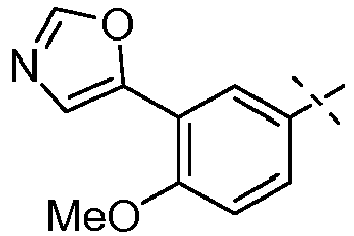
Me 1H NMR (400 MHz, DMSO) δ 14.65 (s, 1H), 8.91 (s, 1H), 8.47 (s, 1H), 7.97 (d, J = 8.7 Hz, 1H), 7.71 (s, 1H), 7.66 (s, 1H), 7.44 (d, J = 8.7 Hz, 1H), 7.38 (d, J = 8.6 Hz, 1H), 4.40 (m, 1H), 4.05 (s, 3H), 2.65 (s, 3H), 1.25 (d, J = 6.7 Hz, 2H), 1.08 (s, 2H). 435 90% 6-28 
Me 1H NMR (400 MHz, DMSO) δ 14.71 (s, 1H), 8.90 (s, 1H), 7.96 (d, J = 8.4 Hz, 1H), 7.40 (d, J = 11.8 Hz, 2H), 7.26 (d, J = 8.0 Hz, 1H), 4.39 (s, 1H), 3.94 (s, 5H), 2.62 (s, 3H), 1.23 (s, 2H), 1.06 (s, 2H). 407 95% 6-29 
Me 1H NMR (400 MHz, DMSO) δ 14.68 (s, 1H), 10.43 (s, 1H), 8.91 (s, 1H), 7.97 (d, J = 8.8 Hz, 1H), 7.86 - 7.62 (m, 2H), 7.44 (d, J = 8.5 Hz, 1H), 4.39 (s, 1H), 4.02 (s, 2H), 2.64 (s, 3H), 1.23 (s, 2H), 1.07 (s, 2H). 396 95% 6-30 
Me 1H NMR (400 MHz, DMSO) δ 14.66 (s, 2H), 8.93 (s, 1H), 8.33 (s, 1H), 8.02 (d, J = 8.6 Hz, 1H), 7.80 (s, 2H), 7.71 (d, J = 8.5 Hz, 1H), 7.56 (d, J = 8.4 Hz, 1H), 7.46 (s, 2H), 4.42 (s, 1H), 4.17 (s, 3H), 2.66 (s, 3H), 1.35 - 1.15 (m, 2H), 1.09 (s, 2H). 484 85% 6-31 
Me 1H NMR (400 MHz, DMSO) δ 14.74 (s, 1H), 11.37 (s, 1H), 8.90 (s, 1H), 8.35 (s, 1H), 7.96 (d, J = 8.1 Hz, 1H), 7.64 (s, 1H), 7.43 (d, J = 8.1 Hz, 1H), 7.27 (d, J = 8.5 Hz, 1H), 4.39 (s, 1H), 3.92 (s, 3H), 2.63 (s, 3H), 1.23 (d, J = 5.2 Hz, 2H), 1.06 (s, 2H). 411 95% 6-32 
Me 1H NMR (400 MHz, DMSO) δ 14.75 (s, 1H), 8.91 (s, 1H), 7.97 (d, J = 8.7 Hz, 1H), 7.78 (s, 2H), 7.70 (s, 1H), 7.54 (d, J = 8.2 Hz, 1H), 7.33 (d, J = 8.4 Hz, 1H), 4.40 (s, 1H), 3.98 (s, 3H), 2.61 (s, 3H), 1.23 (s, 2H), 1.07 (s, 2H). 411 94% 6-33 
Me 1H NMR (400 MHz, DMSO) δ 14.73 (s, 1H), 8.92 (s, 1H), 7.96 (d, J = 8.6 Hz, 1H), 7.37 (s, 2H), 7.23 (d, J = 7.3 Hz, 1H), 4.39 (m, 1H), 3.89 (s, 3H), 3.74 (m, 4H), 3.07 (s, 4H), 2.76 (s, 3H), 2.62 (s, 3H), 1.24 (s, 2H), 1.06 (s, 2H). 480 96% 6-34 
Me 1H NMR (400 MHz, DMSO) δ 14.73 (s, 1H), 8.92 (s, 1H), 8.87 (s, 1H), 7.97 (d, J = 8.1 Hz, 1H), 7.48 (s, 2H), 7.29 (d, J = 8.7 Hz, 1H), 4.40 (m, 1H), 4.18 (s, 2H), 3.94 (s, 3H), 2.63 (s, 3H), 2.55 (s, 3H), 1.24 (s, 2H), 1.05 (s, 2H). 411 86% 6-35 
Me 1H NMR (400 MHz, DMSO) δ 14.69 (s, 1H), 8.91 (s, 1H), 7.97 (d, J = 8.6 Hz, 1H), 7.91 (s, 1H), 7.75 (d, J = 8.1 Hz, 1H), 7.44 (d, J = 8.1 Hz, 1H), 4.39 (s, 1H), 4.02 (s, 3H), 2.61 (s, 3H), 1.23 (s, 2H), 1.07 (s, 2H). 393 95% 6-36 
Me 1H NMR (400 MHz, DMSO) δ 14.78 (s, 1H), 8.90 (s, 1H), 7.95 (d, J = 8.7 Hz, 1H), 7.37 (s, 1H), 7.26 (d, J = 8.0 Hz, 1H), 7.13 (d, J = 8.3 Hz, 1H), 5.18 (s, 1H), 4.57 (s, 2H), 4.39 (s, 1H), 3.87 (s, 3H), 2.62 (s, 3H), 1.23 (s, 2H), 1.05 (s, 2H). 398 95% 6-37 
Me 1H NMR (400 MHz, DMSO) δ 14.71 (s, 1H), 9.63 (s, 1H), 8.92 (s, 1H), 8.51 (s, 1H), 7.98 (d, J = 8.5 Hz, 1H), 7.67 (s, 1H), 7.52 (d, J = 8.3 Hz, 1H), 7.32 (d, J = 8.5 Hz, 1H), 4.43 (m, 3H), 3.94 (s, 3H), 3.43 (s, 2H), 2.80 (d, J = 24.7 Hz, 6H), 2.62 (s, 3H), 1.23 (s, 2H), 1.07 (s, 2H). 482 95% 6-38 
Me 1H NMR (400 MHz, DMSO) δ 14.74(s, 1H), 8.90 (s, 1H), 7.93 (d, J = 9.2 Hz, 1H), 7.10 (d, J = 8.0 Hz, 1H), 7.02 (s, 1H), 6.86 (d, J = 8.0 Hz, 1H), 6.13 (s, 2H), 4.38 (m, 1H), 2.62 (s, 3H), 1.23 (m, 2H), 1.05 (m, 2H). 382 98% 6-39 
Me 1H NMR (400 MHz, DMSO) δ 14.67 (s, 1H), 10.11 (s, 1H), 8.91(s, 1H), 7.97 (d, J = 8.7 Hz, 1H), 7.33 (d, J = 1.6 Hz, 1H), 7.29 (d, J = 1.6 Hz, 1H), 6.45 - 6.21 (s, 2H), 4.41 - 4.30 (m, 1H), 2.74 - 2.56 (s, 3H), 1.33 - 1.17 (d, J = 6.6 Hz, 2H), 1.12 - 0.96 (t, J = 3.1 Hz, 2H). 410 98% 6-40 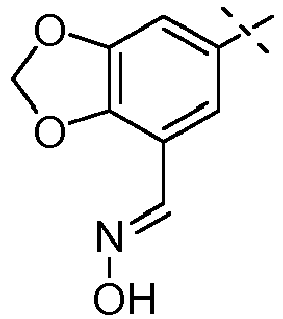
Me 1H NMR (400 MHz, DMSO) δ 14.69 (s, 1H), 11.53 (s, 1H), 8.90 (s, 1H), 8.16 (s, 1H), 7.95 (d, J = 8.7 Hz, 1H), 7.08 (d, J = 1.7 Hz, 1H), 7.02(d, J = 1.7 Hz, 1H), 6.21 (s, 2H), 4.48 - 4.16 (m, 1H), 2.64 (s, 3H), 1.35 - 1.21 (d, J = 6.8 Hz, 2H), 1.12 - 1.01 (m, 2H). 425 98% 6-41 
Me 1H NMR (400 MHz, DMSO) δ 14.64 (s, 1H), 8.90 (s, 1H), 7.96 (d, J = 8.8 Hz, 1H), 7.36 (d, J = 1.6 Hz, 1H), 7.4 (d, J = 1.6 Hz, 1H), 6.36 (s, 2H), 4.52 - 4.26 (m, 1H), 2.63 (s, 3H), 1.35 - 1.15 (d, J = 6.6 Hz, 2H), 1.10 - 0.99 (m, 2H). 407 98% 6-42 
Me 1H NMR (400 MHz, DMSO) δ 14.68 (s, 1H), 8.89 (s, 1H), 794 (d, J = 8.7 Hz, 1H), 7.06 (d, J = 1.5 Hz, 1H), 6.95 (d, J = 1.5 Hz, 1H), 6.22 (s, 2H), 4.57 - 4.46 (s, 1H), 4.42 - 4.30 (m, 1H), 2.63 (s, 3H), 1.33 - 1.15 (d, J = 6.2 Hz, 2H), 1.12 - 0.90 (m, 1H). 406 95% 6-43 
OMe 1H NMR (400 MHz, DMSO) δ 14.70 (s, 1H), 8.80 (s, 1H), 7.90 (d, J = 9.1 Hz, 1H), 7.06 (s, 1H), 7.01 (s, 1H), 6.13 (s, 2H), 5.31 (t, J = 5.6 Hz, 1H), 4.54 (d, J = 5.6 Hz, 2H), 4.34 - 4.12 (mz, 1H), 3.44 (s, 3H), 1.33 - 0.99 (m, 4H). 428 97% 6-44 
Me 1H NMR (400 MHz, DMSO) δ 14.69 (s, 1H), 8.89 (s, 1H), 7.93 (d, J = 8.7 Hz, 1H), 6.97 (s, 1H), 6.93 (s, 1H), 6.73 (dd, J = 17.7, 11.3 Hz, 1H), 6.20 (s, 2H), 6.00 (d, J = 17.6 Hz, 1H), 5.49 (d, J = 11.5 Hz, 1H), 4.53 - 4.25 (m, 1H), 2.75 - 2.57 (s, 3H), 1.32 - 1.17 (d, J = 6.7 Hz, 2H), 1.11 - 0.89 (s, 2H). 408 95% 6-45 
OMe 1H NMR (400 MHz, DMSO) δ 14.66 (s, 1H), 8.80(s, 1H), 7.90 (d, J = 9.1 Hz, 1H), 7.17 (s, 1H), 7.09 (s, 1H), 6.23 (s, 2H), 4.49 (s, 1H), 4.34 - 4.14 (m, 1H), 3.47 - 3.42 (s, 3H), 1.31 - 0.96 (m, 4H). 422 98% 6-46 
OMe 1H NMR (400 MHz, DMSO) δ 14.62 (s, 1H), 8.81 (s, 1H), 7.93 (d, J = 9.1 Hz, 1H), 7.45 (s, 1H), 7.44(s, 1H), 6.36 (s, 2H), 4.39 - 4.04 (m, 1H), 3.46 (s, 3H), 1.26 - 1.06 (m, 4H). 423 98% 6-47 
OMe 1H NMR (400 MHz, DMSO) δ 14.65 (s, 1H), 8.80 (s, 1H), 7.92 (d, J = 9.1 Hz, 1H), 7.30 (s, 1H), 7.19(s, 11H), 7.17(t, J = 56 Hz, 1H), 6.27 (s, 2H), 4.33 - 4.17 (m, 1H), 3.45(s, 3H), 1.29 - 0.97 (m, 4H). 448 92% 6-48 
OMe 1H NMR (400 MHz, DMSO) δ 14.67 (s, 1H), 8.80 (s, 1H), 7.93 (d, J = 9.1 Hz, 1H), 7.77 (s, 1H), 7.42 (t, J = 1.4 Hz, 1H), 7.28 (t, J = 1.3 Hz, 1H), 7.25 (s, 1H), 6.27 (s, 2H), 4.33 - 4.13 (m, 1H), 3.449 (s, 3H), 1.37 - 0.87 (m, 4H). 441 98% 6-49 
OMe 1H NMR (400 MHz, DMSO) δ 14.66 (s, 1H), 10.12 (d, J = 1.2 Hz, 1H), 8.81 (s, 1H), 7.93 (d, J = 9.5 Hz, 1H), 7.44 (s, 1H), 7.42 (s, 1H), 6.35 (s, 2H), 4.33 - 4.17 (m, 1H), 3.46 (s, 3H), 1.32 - 0.97 (m, 4H). 426 98% 6-50 
OMe 1H NMR (400 MHz, DMSO) δ 14.68 (s, 1H), 8.80 (s, 1H), 7.89 (d, J = 9.1 Hz, 1H), 6.83 - 6.80 (t, J = 1.3 Hz, 1H), 6.80 - 6.76 (t, J = 1.2 Hz, 1H), 6.11 (s, 2H), 4.34 - 4.12 (m, 1H), 3.86 (s, 3H), 3.31 (s, 3H), 1.26 - 1.02 (m, 4H). 428 98% 6-51 
OMe 1H NMR (400 MHz, DMSO) δ 14.70 - 14.61 (s, 1H), 8.84 - 8.78 (s, 1H), 7.96 - 7.88 (d, J = 9.0 Hz, 1H), 7.14(s, 1H), 7.13(s, 1H), 6.33 - 6.22 (s, 2H), 4.26 - 4.18 (m, 1H), 3.47 (s, 3H), 1.20 - 1.11 (m, 4H). 432 95% 6-52 
OMe 1H NMR (400 MHz, DMSO) δ 14.67 (s, 1H), 8.80 (s, 1H), 7.92 (d, J = 9.1 Hz, 1H), 7.77 (s, 1H), 7.42 (s, 1H), 7.28 (s, 1H), 7.25 (s, 1H), 6.27 (s, 2H), 4.22 (m, 1H), 3.44 (s, 3H), 1.17 (m, 4H). 441 85% 6-53 
1H NMR (400 MHz, DMSO) δ 14.49 (s, 1H), 8.83 (s, 1H), 7.94 (d, J = 8.0 Hz, 1H), 7.42 (s, 1H), 6.36 (s, 2H), 5.10 (m, 1H), 4.18(m, 1H), 3.47 (s, 3H), 1.82-1.63 (m, 4H). 441 98% 6-54 
1H NMR (400 MHz, DMSO) δ 14.50 (s, 1H), 11.55 (s, 1H), 8.83 (s, 1H), 8.16 (s, 1H), 7.92 (d, J = 8.0 Hz, 1H), 7.27 (s, 1H), 7.10 (s, 1H), 6.22 (s, 1H), 5.10 (m, 1H), 4.18(m, 1H), 3.47 (s, 3H), 1.82-1.63 (m, 4H). 459 95% 6-55 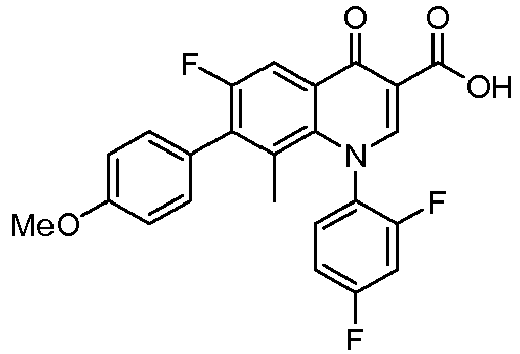
1H NMR (400 MHz, DMSO) δ 14.47 (s, 1H), 8.82 (s, 1H), 8.10 (d, J = 8.7 Hz, 1H), 8.00 - 7.87 (m, 1H), 7.66 (t, J = 9.4 Hz, 1H), 7.37 (t, J = 8.3 Hz, 1H), 7.21 (d, J = 8.0 Hz, 2H), 7.06 (d, J = 8.1 Hz, 2H), 3.81 (s, 3H). 440 99% 6-56 
1H NMR (400 MHz, DMSO) δ 15.44 - 15.10 (s, 1H), 9.12 - 8.99 (t, J = 1.7 Hz, 1H), 8.03 - 7.92 (dt, J = 8.4, 1.8 Hz, 1H), 7.67 - 7.56 (dd, J = 8.6, 2.5 Hz, 3H), 7.16 - 6.98 (m, 2H), 5.03 - 4.89 (d, J = 7.3 Hz, 1H), 4.60 - 4.47 (d, J = 11.4 Hz, 1H), 4.44 - 4.33 (d, J = 11.5 Hz, 1H), 3.86 - 3.75 (t, J = 1.7 Hz, 3H), 1.53 - 1.42 (d, J = 6.3 Hz, 3H). 352 99% Table 7 
Compound No. R16 = R2 = NMR MS (MH+) HPLC 7-1 H Me 1H NMR (400 MHz, DMSO) δ 14.74 (s, 1H), 8.90 (s, 1H), 7.95 (d, J = 9.3 Hz, 1H), 7.80 (s, 2H), 7.27 (s, 1H), 4.39 (s, 1H), 2.68 (s, 3H), 1.23 (s, 3H), 1.03 (s, 2H). 344 100% 7-2 
Me 1H NMR (400 MHz, DMSO) δ 14.69 (s, 1H), 9.37 (s, 2H), 8.91 (s, 1H), 7.96 (d, J = 8.9 Hz, 1H), 7.87 (s, 1H), 7.51 (s, 1H), 4.43 (s, 3H), 3.00 (d, J = 6.2 Hz, 2H), 2.71 (s, 3H), 1.24 (d, J = 6.4 Hz, 5H), 1.03 (s, 2H). 401 95% 7-3 
Me 1H NMR (400 MHz, DMSO) δ 14.70 (s, 1H), 13.87 (s, 1H), 8.91 (s, 1H), 7.98 (d, J = 8.1 Hz, 2H), 7.60 (s, 1H), 4.41 (s, 1H), 2.70 (s, 3H), 1.23 (s, 2H), 1.06 (s, 2H). 412 100% 7-4 CH2CN Me 1H NMR (400 MHz, DMSO) δ 14.75 (s, 1H), 8.90 (s, 1H), 7.95 (d, J = 8.8 Hz, 1H), 7.76 (s, 1H), 7.22 (s, 1H). 5.76(s, 2H), 4.40 (m, 1H), 2.69 (s, 3H), 1.23 (m, 2H), 1.04 (s, 2H). 383 97% 7-5 CHO Me 1H NMR (400 MHz, DMSO) δ 14.67 (s, 1H), 10.03 (s, 1H), 8.92 (s, 1H), 8.39 (s, 1H), 8.23 (s, 1H), 7.99 (d, J = 9.1 Hz, 1H), 4.42 (s, 1H), 2.71 (s, 3H), 1.24 (d, J = 6.4 Hz, 2H), 1.05 (s, 2H). 372 98% 7-6 
Me 1H NMR (400 MHz, DMSO) δ 14.70 (s, 1H), 11.34 (d, J = 16.3 Hz, 1H), 8.90 (s, 1H), 8.40 (s, 1H), 7.96 (d, J = 8.6 Hz, 1H), 7.78 (s, 1H), 7.42 (d, J = 14.9 Hz, 1H), 4.40 (s, 1H), 2.71 (s, 3H), 1.24 (d, J = 5.8 Hz, 2H), 1.04 (s, 2H). 387 96% 7-7 
Me 1H NMR (400 MHz, DMSO) δ 13.57 - 13.17 (m, 1H), 11.49 (s, 1H), 9.30 (s, 1H), 8.77 (s, 1H), 8.09 (s, 1H), 7.90 (d, J = 9.3 Hz, 1H), 7.83 (s, 1H), 4.33 (s, 1H), 2.66 (s, 3H), 1.22 (d, J = 7.5 Hz, 2H), 0.97 (s, 2H). 403 100% 7-8 CONH2 Me 1H NMR (400 MHz, DMSO) δ 14.70 (s, 1H), 8.91 (s, 1H), 8.12 (s, 1H), 7.98 (m, 2H), 7.89 (s, 1H), 7.57 (s, 1H), 4.41 (s, 1H), 2.71 (s, 3H), 1.25 (d, J = 5.7 Hz, 2H), 1.03 (s, 2H). 387 100% 7-9 CO2H Me 1H NMR (400 MHz, DMSO) δ 14.69 (s, 1H), 13.34 (s, 1H), 8.91 (s, 1H), 8.12 (s, 1H), 7.96 (d, J = 8.7 Hz, 1H), 7.86 (s, 1H), 4.40 (s, 1H), 2.69 (s, 3H), 1.24 (d, J = 6.2 Hz, 2H), 1.05 (s, 2H). 388 100% 7-10 
Me 1H NMR (400 MHz, DMSO) δ 14.68 (s, 1H), 12.49 (s, 1H), 8.87 (s, 1H), 7.96 (d, J = 11.9 Hz, 2H), 7.81 (d, J = 15.8 Hz, 1H), 7.69 (s, 1H), 6.30 (d, J = 15.7 Hz, 1H), 4.40 (s, 1H), 2.71 (s, 3H), 1.24 (d, J = 6.4 Hz, 2H), 1.04 (s, 2H). 414 95% 7-11 
Me 1H NMR (400 MHz, DMSO) δ 14.69 (s, 1H), 8.92 (s, 1H), 8.13 (s, 1H), 8.00 (d, J = 8.7 Hz, 1H), 7.91 (s, 1H), 4.42 (s, 1H), 2.74 (s, 3H), 1.24 (s, 2H), 1.06 (s, 2H). 412 100% 7-12 
Me 1H NMR (400 MHz, DMSO) δ 14.75 (s, 1H), 11.75 (s, 1H), 8.90 (s, 1H), 7.97 (s, 1H), 7.58 (s, 1H), 7.46 (s, 1H), 7.26 (s, 1H), 7.13 (s, 1H), 7.00 (s, 2H), 4.41 (s, 1H), 4.17 (d, J = 6.9 Hz, 2H), 2.75 (s, 3H), 1.99 (s, 2H), 1.23 (s, 3H), 1.04 (s, 2H), 0.85 (s, 2H). 481 100% 7-13 
Me 1H NMR (400 MHz, DMSO) δ 14.70 (s, 1H), 8.91 (s, 1H), 8.49 (s, 1H), 7.97 (d, J = 8.7 Hz, 1H), 7.91 (s, 1H), 7.64 (s, 2H), 4.41 (s, 1H), 2.73 (s, 3H), 1.25 (d, J = 6.5 Hz, 2H), 1.05 (s, 2H). 411 95% 7-14 
Me 1H NMR (400 MHz, DMSO) δ 14.90 - 14.46 (m, 1H), 8.93 (s, 1H), 8.05 (s, 1H), 8.02 (d, J = 8.4 Hz, 2H), 7.63 (s, 2H), 7.28 (s, 2H), 4.44 (s, 1H), 2.78 (s, 3H), 1.27 (d, J = 6.4 Hz, 2H), 1.07 (s, 2H). 460 100% 7-15 
Me 1H NMR (400 MHz, DMSO) δ 8.92 (s, 1H), 8.07 (d, J = 6.7 Hz, 2H), 7.99 (d, J = 8.8 Hz, 1H), 7.91 (s, 1H), 7.79 (s, 1H), 7.54 (s, 3H), 4.42 (s, 1H), 2.76 (s, 3H), 1.26 (d, J = 6.0 Hz, 3H), 1.07 (m, 2H). 487 95% 7-16 
Me 1H NMR (400 MHz, DMSO) δ 14.68 (b, 1H), 13.75 (s, 1H), 8.90 (s, 1H), 7.96 (d, J = 8.9 Hz, 1H), 7.77 (s, 1H), 7.61 (s, 1H), 4.47 - 4.32 (m, 1H), 2.73 (s, 3H), 2.41 (s, 3H), 1.25 (t, J = 6.3 Hz, 2H), 1.07 (s, 2H). 425 98% 7-17 CN OMe 1H NMR (400 MHz, DMSO) δ 14.63 (s, 1H), 8.80 (s, 1H), 8.42 (s, 1H), 7.28 (s, 1H), 7.96 (d, J = 9.2Hz, 1H), 4.47 - 4.32 (m, 1H), 3.47 (s, 3H), 1.23-1.15 (m, 4H). 385 98% 7-18 
OMe 1H NMR (400 MHz, DMSO) δ 8.57 (s, 1H), 7.72 (s, 2H), 7.58 (s, 1H), 7.43 (d, J = 9.7 Hz, 1H), 4.13 (m, 1H), 3.27 (s, 3H), 2.20 (s, 3H), 1.05 - 0.81 (m, 4H). 441 98% 7-19 
Cl 1H NMR (400 MHz, DMSO) δ 8.93 (s, 1H), 8.13(d, J = 8.0 Hz, 1H), 7.86 (s, 1H), 7.67 (s, 1H), 4.13 (m, 1H), 2.40 (s, 3H), 1.24 - 1.12 (m, 4H). 445 85% Table 8-1 
Compound No. R19 = R2 = MS(MH+) 8-1 H Me 352.36 8-2 3-NH2 Me 337.34 8-3 4-F Me 355.33 8-4 4-CO2H Me 381.35 8-5 2-NH2 Me 352.36 8-6 3-Me Me 351.37 8-7 4-Me Me 351.37 8-8 2,3-Dimethyl Me 365.4 8-9 2-Cl Me 371.79 8-10 4-Cl Me 371.79 8-11 3-CO2H Me 381.35 8-12 3-CF3 Me 405.34 8-13 3,4-Dichloro Me 406.23 8-14 3-F Me 355.33 8-15 4-tBu Me 393.45 8-16 4-MeO Cyclopropyl 393.41 8-17 4-Ph Me 413.44 8-18 4-NO2 Me 382.34 8-19 3,4-Dichloro MeO 404.24 8-20 4-MeO Me 365.38 8-21 3,4-Dimethyl Me 365.4 8-22 4-CF3 Me 405.34 8-24 3-CONH2 Me 380.37 8-25 4-NH2 Me 352.36 8-26 4-OH Me 353.34 8-27 4-OMe F 353.34 8-28 4-OMe NO2 398.34 8-29 4-OMe Cl 387.79 8-30 4-OMe NH2 368.36 8-31 4-OMe Br 432.24 8-32 4-OMe H 353.34 8-33 4-OMe CN 378.35 8-34 4-OMe CH2F 385.36 8-35 4-OMe MeO 383.37 8-36 4-OMe CH2Br 446.27 8-37 4-OMe CH2OH 383.37 8-38 4-OMe CHF2 403.35 8-39 4-Amino-3-hydroxy Me 368.36 8-40 4-OMe CHO 381.35 8-41 4-OMe C≡CH 377.37 8-42 4-OMe Et 381.4 8-43 4-OMe CH=CH2 379.38 8-44 3,4-Diamino Me 367.37 8-45 4-Amino-3-nitro Me 397.36 8-46 4-Methylamino-3-nitro Me 411.38 8-47 3-Dimethylamino Me 380.41 8-48 2,4-Dinitro-3-dimethylamino Me 470.41 8-49 4-Nitro-3-dimethylamino Me 425.41 8-50 2-Nitro-3-dimethylamino Me 425.41 8-51 4-Dimethylamino-3-nitro Me 425.41 8-52 4-Ethylamino-3-nitro Me 425.41 8-53 4-Dimethylamino Me 380.41 8-54 3-Formyl-4-nitro Me 410.35 8-55 4-Amino-3-nitro Me 413.36 8-56 3-Fluoro-4-nitro Me 400.33 Table 8-2 
Compound No. R3 = R2 = MS(MH+) 8-57 
Me 451.45 8-58 
Me 465.47 8-59 
Me 480.49 8-60 
Me 495.48 8-61 
Me 508.54 8-62 
Me 452.44 8-63 
Me 466.46 8-64 
Me 467.45 8-65 
Me 411.38 8-66 
Me 415.35 8-67 
Me 425.41 8-68 
Me 429.37 8-69 
Me 426.35 8-70 
Me 454.45 8-71 
Me 449.39 8-72 
Me 454.45 8-73 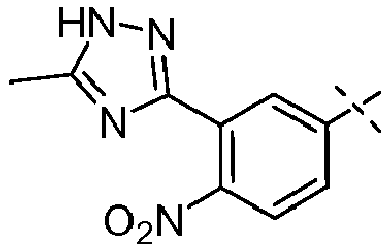
Me 463.42 8-74 
Me 447.46 8-75 
Me 406.45 8-76 
Me 421.46 8-77 
Me 418.42 Table 9 
Compound No. R3 = R2 = MS(MH+) 9-1 
Me 407.19 9-2 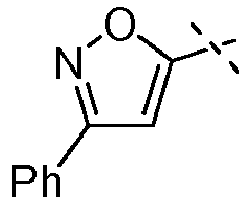
Me 404.39 9-3 
Me 394.35 9-4 
Me 397.4 9-5 
Me 392.38 9-6 
Me 326.32 9-7 
Me 326.32 9-8 
Me 394.4 9-9 
Me 380.41 9-10 
Me 395.43 9-11 
Me 355.36 9-12 
Me 393.37 9-13 
Me 327.31 9-14 
Me 406.2 9-15 
Me 409.43 9-16 
Me 372.3 9-17 
Me 328.34 9-18 
Me 397.44 9-19 
Me 354.33 9-20 
Me 354.33 9-21 
Me 422.33 9-22 
Me 342.36 9-24 
Me 411.47 - All compounds were dissolved in dimethyl sulfoxide (DMSO, Merck, purity >99.9%) to achieve final 1 mg/ml desired concentrations.
- MICs (minimum inhibitory concentrations) were determined by the broth microdilution technique with 96-well microdilution plates. The antimicrobials were tested using the following MIC ranges: 0.008 to 8 µg/ml. The plates were filled with 100 µl of reinforced clostridial medium (Oxoid; Unipath Ltd., Basingstoke, United Kingdom) per well containing the final antibiotic concentrations. The plates were thawed and preincubated for 3 hours in an anaerobic chamber (Thermal, USA) containing an atmosphere of 80% N2, 15% CO2, and 5% H2. The bacterial inocula were prepared by suspending growth from 48 hours cultures in reinforced clostridial medium. The final inoculum was approximately 1.0 x 10⁵-6 CFU/well. The plates were incubated for 48 hours at 37°C in the anaerobic chamber. The MIC was defined as the lowest antibiotic concentration that inhibited visible growth. Ciprofloxacin, vancomycin and metronidazole were used as a positive control. The results are shown in Table 10.
Table 10: MIC of example compounds against C. difficile (µg/mL) Compound No. C. difficile ATCC43255 C. difficile ATCC700057 C. difficile ATCC70092 C. difficile IQCC23903 2-18 0.016-0.063 0.016-0.063 ≤0.008-0.063 0.032-0.063 2-46 0.032-0.125 0.032-0.25 0.063-0.25 0.125-0.25 5-14 0.125-0.25 0.125-0.5 0.125-0.25 0.125-0.5 2-49 0.063-0.25 0.063-0.25 0.063-0.5 0.063-0.25 3-11 ≤0.008-0.032 0.016-0.032 ≤0.008-0.032 ≤0.008-0.063 2-31 ≤0.008-0.032 0.016-0.032 0.016-0.032 0.016-0.063 1-2 0.032-0.125 0.032-0.125 0.032-0.125 0.063-0.25 3-21 0.016-0.032 0.016-0.063 0.016-0.063 0.032-0.063 2-38 0.016-0.032 0.016-0.032 0.032-0.063 0.016-0.032 3-30 0.032-0.063 0.063-0.125 0.063-0.125 0.063-0.25 - In vivo efficacy was evaluated in a hamster intestinal infection treatment model. Male Golden Syrian hamsters were purchased from Charles River Laboratories (Kingston, NY, USA) and were about 6 weeks of age, with weights ranging from 80 to 100 g at the start of the study. The animals were housed individually in filtered polycarbonate shoe-box style cages equipped with water bottles, and Harlan Teklab Global Diet 2016 was available ad libitum via food hoppers. The hamsters were pre-treated with clindamycin (1 mg/kg, p.o.) and vancomycin (50 mg/kg, p.o.), formulated in arabic gum, at
Day 0. At Day 7, each hamster was inoculated via oral gavage with 0.5 mL of a suspension of C. difficile ATCC 43255 (105 CFU/body, p.o.). To prepare this inoculum, C. difficile was grown in GAM agar (Japan) for 5 days at 37°C, and the bacteria were harvested by centrifugation, rinsed twice with arabic gum, resuspended in arabic gum and the exact bacteria density was determined using the dilution plate count method. Oral dosing of compounds, pulverized and formulated in arabic gum was commenced the following day (Day 8). Treatments were administered once a day for 5 consecutive days at specified doses (10, 2, and 0.4 mg/kg), with five hamsters per group. Controls were included an uninfected group and an infected but untreated group, and vancomycin was used as positive control. The hamsters were observed daily to record clinical signs (duration, time of onset, time of recovery or death), and animals in a lethargic, clearly moribund state were euthanized. A necropsy was performed on animals that were either found dead or were euthanized at the end of the study (37 days). The results are shown inFig. 1 and Fig. 2 . - An injection preparation is prepared from the following components.
Components Amount Compound 1-2 200 mg Glucose 250 mg Distilled water for injection q.s. Total 5 ml - Compound 1-2 and glucose are dissolved in distilled water for injection, and the solution is added to a 5 ml ampoule, which is purged with nitrogen gas and then subjected to sterilization at 121°C for 15 minutes to give an injection preparation.
- Film coated tablets are prepared from the following components.
Components Amount Compound 2-18 100 g Avicel(registered trademark) 40 g Corn starch 30 g Magnesium stearate 2 g TC-5(registered trademark) 10 g Polyethylene glycol 6000 3 g Castor oil 40 g Ethanol 40 g - Compound 2-18, Avicel (registered trademark of microcrystalline cellulose, manufactured by Asahi Kasei Corporation, Japan), corn starch and magnesium stearate are mixed and kneaded, and the mixture is tabletted using a conventional pounder (R 10 mm) for sugar coating (manufactured by Kikusui Seisakusho Ltd., Japan). The tablets thus obtained are coated with a film coating agent consisting of TC-5 (registered trademark of hydroxypropyl methylcellulose, manufactured by Shin-Etsu Chemical Co., Ltd., Japan), polyethylene glycol 6000, castor oil and ethanol to give film coated tablets.
- An ointment is prepared from the following components.
Components Amount Compound 3-11 2 g Purified lanolin 5 g Bleached beeswax 5 g White petrolatum 88 g Total 100 g - Bleached beeswax is made liquid by heating, and thereto are added compound 3-11, purified lanolin and white petrolatum, and the mixture is heated until it becomes liquid. The mixture is stirred until it is solidified to give an ointment.
Claims (15)
- A compound represented by the formula (I)
 X is a hydrogen atom or a fluorine atom;R is a hydrogen atom or alkyl;R1 is (1) cyclopropyl optionally substituted by 1 to 3 halogen atoms or (2) phenyl optionally substituted by 1 to 3 halogen atoms;R2 is a hydrogen atom; alkyl optionally substituted by 1 or 2 substituents selected from the group consisting of a halogen atom and hydroxyl; alkoxy; haloalkoxy; a halogen atom; cyano; cyclopropyl; nitro; amino; formyl; alkenyl or alkynyl; orR1 and R2 are bonded to form a 5- or 6-membered ring optionally substituted by alkyl;R3 is(1) 3-pyridyl optionally substituted by 1 or 2 substituents selected from the group consisting of(a) a halogen atom,(b) cyano,(c) nitro,(d) hydroxy,(e) amino,(f) alkyl optionally substituted by 1 to 3 substituents selected from the group consisting of a halogen atom, alkylamino, dialkylamino and hydroxy,(g) alkenyl, alkynyl(h) aryl,(i) cycloalkyl,(j) alkoxy,(k) alkylamino,(l) dialkylamino,(m) phenylamino optionally substituted by 1 to 3 halogen atoms,(n) a cyclic amino group optionally substituted by alkoxycarbonyl,(o) formyl,(p) carbamoyl optionally substituted by alkyl optionally substituted by hydroxy, and(q) a 5- to 10-membered aromatic heterocyclic group optionally substituted by alkyl,(2) a group of the formula
 X2 is C(R8) or N, andR6, R7 and R8 are each independently,(a) a hydrogen atom,(b) a halogen atom,(c) cyano,(d) nitro,(e) amino,(f) alkyl optionally substituted by 1 to 3 substituents selected from the group consisting of a halogen atom, alkoxy and amino,(g) alkenyl,(h) alkynyl,(i) aryl,(j) formyl or CH=N-OH,(k) carboxy,(l) carbamoyl,(m) a 5- to 10-membered aromatic heterocyclic group optionally substituted by alkyl, or(n) alkenyloxy,(3) 5-pyrimidinyl optionally substituted by 1 or 2 substituents selected from the group consisting of amino, alkylamino, dialkylamino and carboxy,(4) a group of the formula
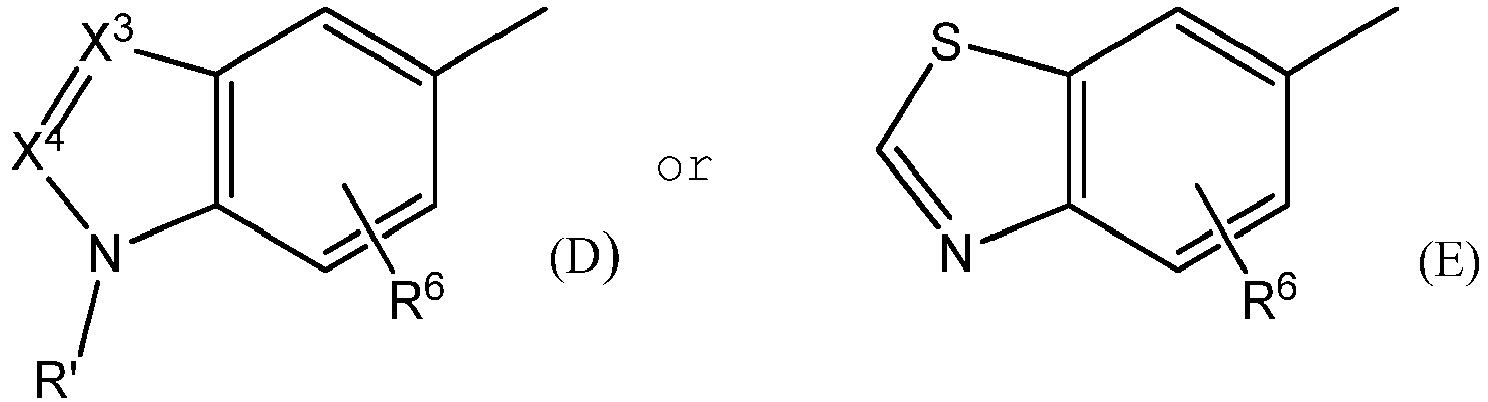 X3 and X4 are N, orX3 is N and X4 is CR", wherein R" is hydrogen atom, amino, hydroxy, alkyl optionally substituted by 1 to 3 substituents selected from the group consisting of alkoxy and dimethylamino or mercapto, orX3 is CH and X4 is N,R' is a hydrogen atom or alkyl optionally substituted by 1 to 3 substituents selected from the group consisting of substituted hydroxyl and amino, andR6 is as defined above,(5) a group of the formula


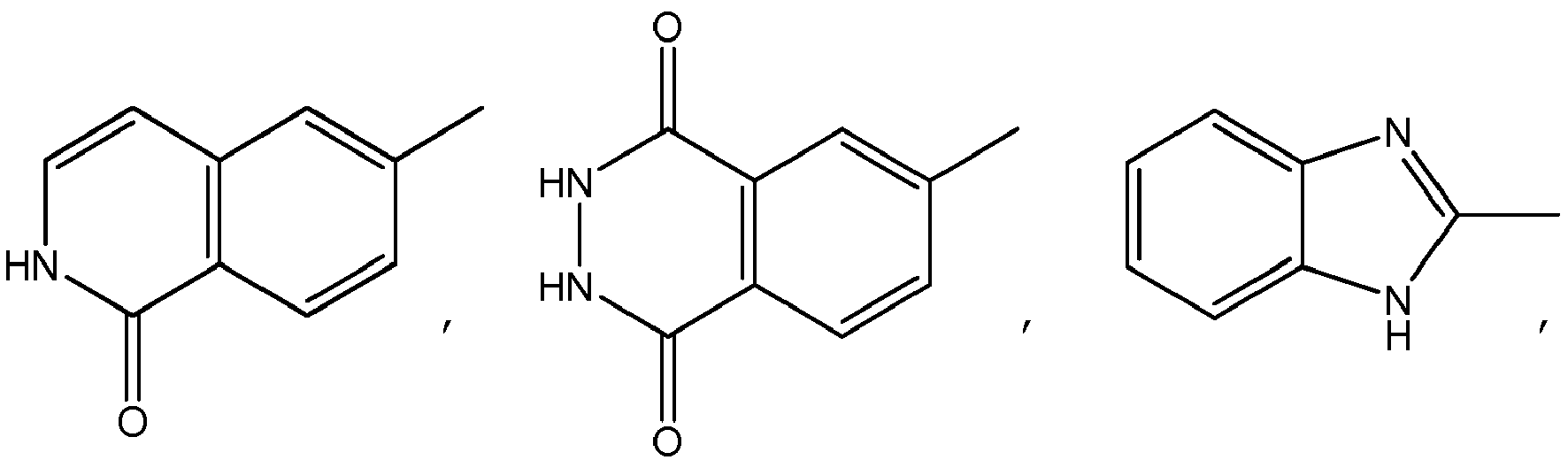


------ represents a single bond or a double bond and R6 is as defined above,(6) 4-pyridyl optionally substituted by a halogen atom,(7) 2-indolyl, 3-indolyl, 5-indolyl, 6-indolyl, benzofuranyl, benzothiophenyl, benzoxazolyl or benzothiazolyl, each optionally substituted by 1 or 2 substituents selected from the group consisting of(a) a halogen atom,(b) cyano,(c) nitro,(d) hydroxy,(e) alkyl optionally substituted by 1 to 3 substituents selected from the group consisting of amino, alkoxycarbonylamino, alkylamino and dialkylamino,(f) alkoxy,(g) formyl,(h) carboxy, and(j) amino optionally substituted by 1 or 2 substituents selected from the group consisting of(i) alkoxycarbonyl,(ii) alkylcarbonyl optionally substituted by a substituent selected from the group consisting of(A) cycloalkyloxy optionally substituted by 1 to 3 alkyl,(B) alkylamino,(C) dialkylamino,(D) a cyclic amino group optionally substituted by alkoxycarbonyl, and(E) a halogen atom,(iii) phenylcarbonyl optionally substituted by 1 to 3 substituents selected from the group consisting of alkyl and alkoxy,(iv) cycloalkylcarbonyl,(v) a 5- to 10-membered aromatic heterocyclylcarbonyl group optionally substituted by alkyl optionally substituted by 1 to 3 halogen atoms,(vi) benzylcarbonyl optionally substituted by 1 to 3 substituents selected from the group consisting of a halogen atom and alkoxy,(vii) arylsulfonyl optionally substituted by alkoxy,(viii) cycloalkylalkylsulfonyl optionally substituted by 1 to 3 substituents selected from the group consisting of alkyl and oxo,(ix) a 5- to 10-membered aromatic heterocyclylsulfonyl group optionally substituted by 1 to 3 alkyl, and(x) -C(=N-CN)-SR9 wherein R9 is alkyl,(8) a group of the formula one of Y1, Y2, Y3 and Y4 is N or N+(-O-), and the remaining three are each C(R25), C(R26) and C(R27),W is O, S, NH or N(R23)R23 is a hydrogen atom or alkyl, andR24, R25, R26 and R27 are each independently,(a) a hydrogen atom,(b) cyano, or(c) nitro,(9) a group of the formula
 R28 is a hydrogen atom or hydroxy, andR29 is a hydrogen atom or alkyl,(10) a group of the formula
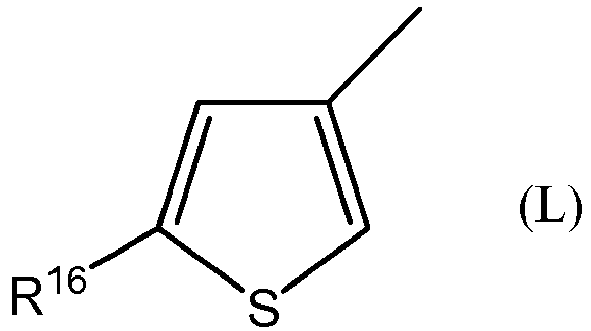 wherein R16 is(a) a hydrogen atom,(b) alkyl optionally substituted by 1 to 3 substituents selected from the group consisting of cyano, alkylamino and dialkylamino,(c) alkenyl optionally substituted by carboxy,(d) formyl,(e) carboxy,(f) carbamoyl,(g) -C(R17)=N-OH wherein R17 is a hydrogen atom, cyano or hydroxy,(h) a 5- to 10-membered aromatic heterocyclic group optionally substituted by alkyl, alkoxycarbonyl, carboxy or phenyl, or(i) cyano,(11) a group of the formula
 R18 is a hydrogen atom or alkyl optionally substituted by 1 to 3 substituents selected from the group consisting of a halogen atom and phenyl,n is 0 or 1,R19, R20 and R33 are each independently,(a) a hydrogen atom,(b) a halogen atom,(c) cyano,(d) alkyl optionally substituted by 1 to 3 substituents selected from the group consisting of(i) a halogen atom,(ii) cyano,(iii) hydroxy,(iv) amino,(v) alkylamino,(vi) dialkylamino, and(vii) a cyclic amino group optionally substituted by alkyl,(e) alkoxy,(f) amino optionally substituted by 1 or 2 substituents selected from the group consisting of(i) alkylcarbonyl optionally substituted by a cyclic amino group,(ii) alkylsulfonyl,(iii) carbamoyl,(iv) alkyl, cycloalkyl or cycloalkylalkyl, and(v) 5- to 10-membered saturated heterocyclic group,(g) carboxy,(h) alkoxycarbonyl,(i) carbamoyl optionally substituted by alkyl optionally substituted by amino, alkylamino, dialkylamino or alkoxycarbonylamino,(j) formyl,(k) a 5- to 10-membered aromatic heterocyclic group optionally substituted by alkyl,(l) -CH=N-OR21 wherein R21 is a hydrogen atom or alkyl optionally substituted by alkylamino or dialkylamino,(m) nitro,(n) a 5- to 10-membered saturated heterocyclic group optionally substituted by amino,(o) phenyl, or(p) -NHC(SMe)=CHCN,(12) a group of the formula
 R30 is(a) a hydrogen atom,(b) a halogen atom,(c) cyano,(d) alkyl optionally substituted by 1 to 3 substituents selected from the group consisting of a halogen atom and hydroxy,(e) alkenyl,(f) alkynyl,(g) alkoxy,(h) formyl,(i) -CH=N-OH, or(j) carbamoyl,(13) naphthyl,(14) quinolyl or isoquinolyl, or their oxide derivatives,(15) a group of the formula
 (16) a group of the formula
 U is 0 or S, andR31 is(a) a hydrogen atom,(b) a halogen atom,(c) alkyl optionally substituted by 1 to 3 halogen atoms,(d) carboxy,(e) nitro,(f) cyano, or(g) amino,(17) a group of the formula
 R32 is(a) a halogen atom,(b) phenyl, or(c) a group of the formula
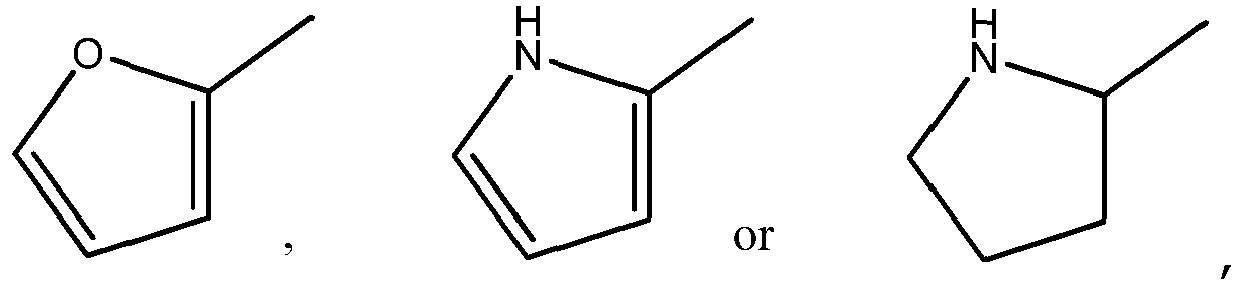 (18) a group of the formula
 R34 and R35 are each independently,(a) a hydrogen atom, or(b) aminoalkyl,orR34 and R35 are bonded to form a 6-membered ring optionally substituted by amino or oxo,(19) a group of the formula
 wherein R36 is(a) a hydrogen atom,(b) a halogen atom,(c) nitro, or(d) thienyl, or(20) a group of the formula

- The compound of claim 1, wherein X is a fluorine atom, or a salt thereof.
- The compound of claim 1, wherein R3 is a group of the formula

- The compound of claim 1, wherein R3 is a group of the formula


------ and R6 are as defined in claim 1, or a salt thereof. - The compound of claim 1, wherein R3 is a group of the formula
 wherein R22 isor a salt thereof.(a) a halogen atom,(b) cyano,(c) nitro,(d) alkyl optionally substituted by 1 to 3 substituents selected from the group consisting of a halogen atom, alkylamino, dialkylamino and hydroxy,(e) alkenyl, alkynyl,(f) aryl,(g) cycloalkyl,(h) alkoxy,(i) formyl, or(j) carbamoyl optionally substituted by alkyl optionally substituted by hydroxyl,
 - The compound of claim 1, wherein R3 is 5-pyrimidinyl substituted by 1 or 2 substituents selected from the group consisting of amino, alkylamino, dialkylamino and carboxy, or a salt thereof.
- The compound of claim 1, wherein R3 is 2-indolyl optionally substituted by 1 or 2 substituents selected from the group consisting of(a) a halogen atom,(b) cyano,(c) nitro,(d) hydroxy,(e) alkyl optionally substituted by 1 to 3 substituents selected from the group consisting of amino, alkoxycarbonylamino, alkylamino and dialkylamino,(f) alkoxy,(g) formyl,(h) carboxy, or(j) amino optionally substituted by 1 or 2 substituents selected from the group consisting ofor a salt thereof.(i) alkoxycarbonyl,(ii) alkylcarbonyl optionally substituted by a substituent selected from the group consisting of(A) cycloalkyloxy optionally substituted by 1 to 3 alkyl,(B) alkylamino,(C) dialkylamino,(D) a cyclic amino group optionally substituted by alkoxycarbonyl, and(E) a halogen atom,(iii) phenylcarbonyl optionally substituted by 1 to 3 substituents selected from the group consisting of alkyl and alkoxy,(iv) cycloalkylcarbonyl,(v) a 5- to 10-membered aromatic heterocyclylcarbonyl group optionally substituted by alkyl optionally substituted by 1 to 3 halogen atoms,(vi) benzylcarbonyl optionally substituted by 1 to 3 substituents selected from the group consisting of a halogen atom and alkoxy,(vii) arylsulfonyl optionally substituted by alkoxy,(viii) cycloalkylalkylsulfonyl optionally substituted by 1 to 3 substituents selected from the group consisting of alkyl and oxo,(ix) a 5- to 10-membered aromatic heterocyclylsulfonyl group optionally substituted by 1 to 3 alkyl, and(x) -C(=N-CN)-SR9 wherein R9 is alkyl,
- The compound of claim 1, wherein R3 is a group of the formula
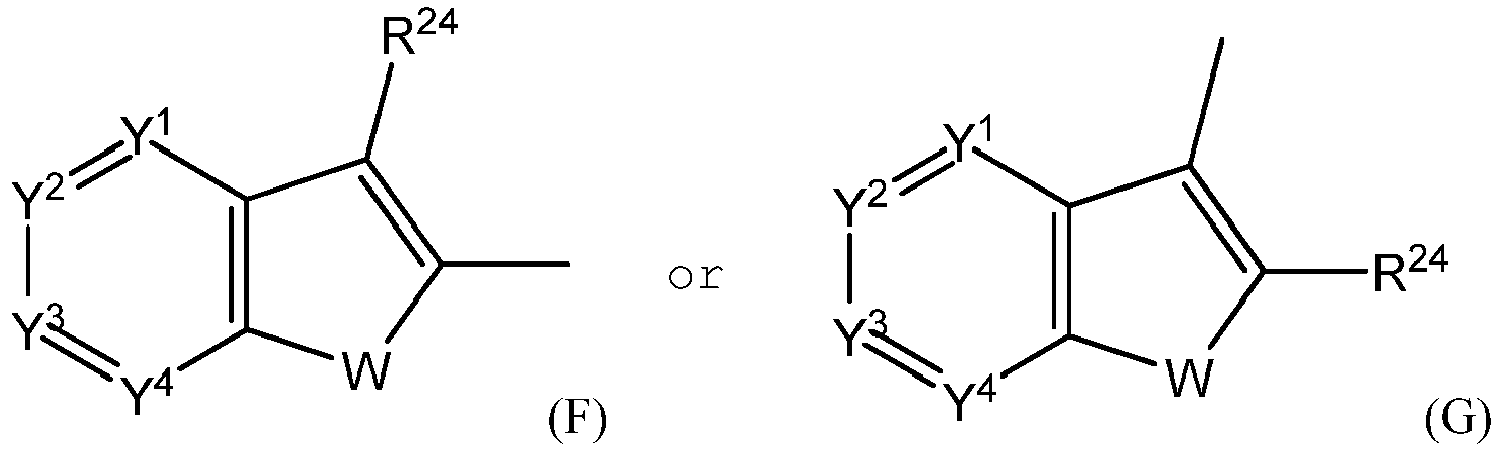

- The compound of claim 1, wherein R3 is a group of the formula
 wherein R16a isor wherein R3 is a group of the formula(a) alkyl optionally substituted by 1 to 3 substituents selected from the group consisting of cyano, alkylamino and dialkylamino,(b) alkenyl optionally substituted by carboxy,(c) formyl,(d) carboxy,(e) carbamoyl,(f) -C(R17)=N-OH wherein R17 is a hydrogen atom, cyano or hydroxy,(g) a 5- to 10-membered aromatic heterocyclic group optionally substituted by alkyl, alkoxycarbonyl, carboxy or phenyl, or(h) cyano,
 R18a is alkyl, andR19a isor wherein R3 is a group of the formula(a) a halogen atom,(b) cyano,(c) alkyl optionally substituted by 1 to 3 substituents selected from the group consisting of(i) a halogen atom,(ii) cyano,(iii) hydroxy,(iv) amino,(v) alkylamino,(vi) dialkylamino, and(vii) a cyclic amino group optionally substituted by alkyl,(d) alkoxy,(e) amino optionally substituted by 1 or 2 substituents selected from the group consisting of(i) alkylcarbonyl optionally substituted by a cyclic amino group,(ii) alkylsulfonyl,(iii) carbamoyl, and(iv) alkyl or cycloalkyl,(f) carboxy,(g) alkoxycarbonyl,(h) carbamoyl optionally substituted by alkyl optionally substituted by amino, alkylamino, dialkylamino or alkoxycarbonylamino,(i) formyl,(j) a 5- to 10-membered aromatic heterocyclic group optionally substituted by alkyl,(k) -CH=N-OR21 wherein R21 is a hydrogen atom or alkyl optionally substituted by alkylamino or dialkylamino, or(l) nitro,
- The compound of claim 1, wherein R3 is naphthyl, or
wherein R3 is quinolyl or isoquinolyl, or their oxide derivatives, or a salt thereof. - The compound of claim 1, wherein R is a hydrogen atom, and/or
wherein R1 is cyclopropyl, 2-fluorocyclopropyl or 2,4-difluorophenyl, and/or
wherein R2 is methyl, methoxy or a chlorine atom, or a salt thereof. - The compound of claim 1, which is selected from the group consisting of compounds represented by the following formulae


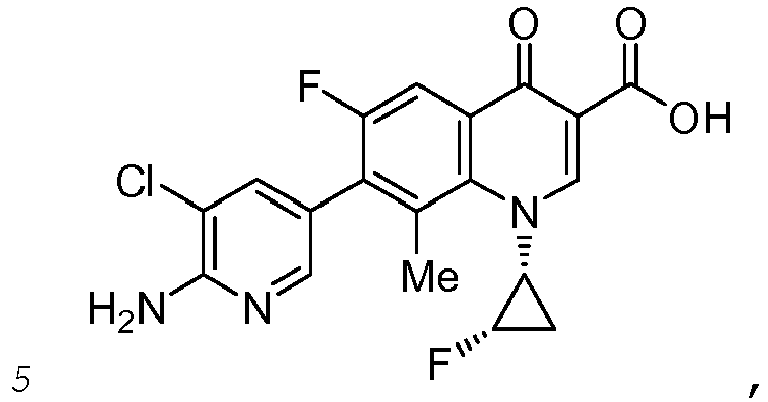


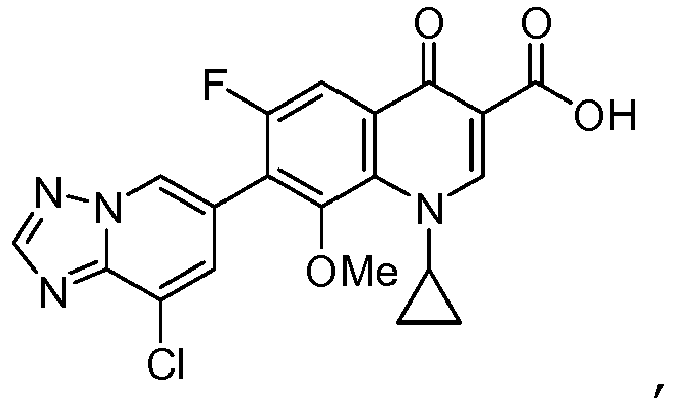
- A pharmaceutical composition comprising a compound of any one of claims 1 to 12 or a salt thereof and a pharmaceutically acceptable carrier.
- A compound of any one of claims 1 to 12 or a salt thereof for use as a medicament.
- A compound of any one of claims 1 to 12 or a salt thereof for use as an antimicrobial agent, or for use in the prevention or treatment of a bacterial infection.
Applications Claiming Priority (4)
| Application Number | Priority Date | Filing Date | Title |
|---|---|---|---|
| CN2011001477 | 2011-08-31 | ||
| CN2012001044 | 2012-08-06 | ||
| EP12827305.9A EP2751083B1 (en) | 2011-08-31 | 2012-08-30 | Quinolone compound |
| PCT/CN2012/080753 WO2013029548A1 (en) | 2011-08-31 | 2012-08-30 | Quinolone compound |
Related Parent Applications (2)
| Application Number | Title | Priority Date | Filing Date |
|---|---|---|---|
| EP12827305.9A Division EP2751083B1 (en) | 2011-08-31 | 2012-08-30 | Quinolone compound |
| EP12827305.9A Division-Into EP2751083B1 (en) | 2011-08-31 | 2012-08-30 | Quinolone compound |
Publications (2)
| Publication Number | Publication Date |
|---|---|
| EP3318557A2 true EP3318557A2 (en) | 2018-05-09 |
| EP3318557A3 EP3318557A3 (en) | 2018-07-11 |
Family
ID=47755336
Family Applications (2)
| Application Number | Title | Priority Date | Filing Date |
|---|---|---|---|
| EP17202139.6A Withdrawn EP3318557A3 (en) | 2011-08-31 | 2012-08-30 | Quinolone compound |
| EP12827305.9A Active EP2751083B1 (en) | 2011-08-31 | 2012-08-30 | Quinolone compound |
Family Applications After (1)
| Application Number | Title | Priority Date | Filing Date |
|---|---|---|---|
| EP12827305.9A Active EP2751083B1 (en) | 2011-08-31 | 2012-08-30 | Quinolone compound |
Country Status (30)
| Country | Link |
|---|---|
| US (7) | US9067887B2 (en) |
| EP (2) | EP3318557A3 (en) |
| JP (4) | JP6106174B2 (en) |
| KR (3) | KR101560073B1 (en) |
| CN (3) | CN103764631B (en) |
| AR (1) | AR087747A1 (en) |
| AU (2) | AU2012303954B2 (en) |
| BR (1) | BR112014000665B8 (en) |
| CA (1) | CA2845459C (en) |
| CO (1) | CO6920292A2 (en) |
| CY (1) | CY1120066T1 (en) |
| DK (1) | DK2751083T3 (en) |
| EA (2) | EA034787B1 (en) |
| ES (1) | ES2660973T3 (en) |
| HK (2) | HK1226077A1 (en) |
| HR (1) | HRP20180483T1 (en) |
| HU (1) | HUE036301T2 (en) |
| IL (1) | IL230559B (en) |
| LT (1) | LT2751083T (en) |
| MX (3) | MX371361B (en) |
| MY (1) | MY165004A (en) |
| NO (1) | NO2751083T3 (en) |
| PH (1) | PH12014500130B1 (en) |
| PL (1) | PL2751083T3 (en) |
| PT (1) | PT2751083T (en) |
| SG (3) | SG10201606932TA (en) |
| SI (1) | SI2751083T1 (en) |
| TW (3) | TW201718506A (en) |
| WO (1) | WO2013029548A1 (en) |
| ZA (1) | ZA201402326B (en) |
Families Citing this family (39)
| Publication number | Priority date | Publication date | Assignee | Title |
|---|---|---|---|---|
| ES2658346T3 (en) * | 2011-02-01 | 2018-03-09 | Emergent Product Development Gaithersburg Inc. | 4-Antimicrobial oxoquinolizines |
| MY165004A (en) * | 2011-08-31 | 2018-02-28 | Otsuka Pharma Co Ltd | Quinolone compound |
| US9227985B2 (en) * | 2013-03-15 | 2016-01-05 | Incyte Corporation | Tricyclic heterocycles as bet protein inhibitors |
| AR096135A1 (en) | 2013-05-02 | 2015-12-09 | Actelion Pharmaceuticals Ltd | DERIVATIVES OF QUINOLONA |
| EP3019502B1 (en) | 2013-07-08 | 2017-05-17 | Incyte Holdings Corporation | Tricyclic heterocycles as bet protein inhibitors |
| CN104513253A (en) | 2013-10-01 | 2015-04-15 | 南京波尔泰药业科技有限公司 | Macrocyclic compounds for the treatment of proliferative diseases |
| US9399640B2 (en) | 2013-11-26 | 2016-07-26 | Incyte Corporation | Substituted pyrrolo[2,3-c]pyridines and pyrazolo[3,4-c]pyridines as BET protein inhibitors |
| WO2015081189A1 (en) | 2013-11-26 | 2015-06-04 | Incyte Corporation | Bicyclic heterocycles as bet protein inhibitors |
| US9309246B2 (en) | 2013-12-19 | 2016-04-12 | Incyte Corporation | Tricyclic heterocycles as BET protein inhibitors |
| MY180775A (en) | 2014-04-23 | 2020-12-09 | Incyte Corp | 1h-pyrrolo[2,3-c]pyridin-7(6h)-ones and pyrazolo[3,4-c]pyridin-7(6h)-ones as inhibitors of bet proteins |
| US9527864B2 (en) | 2014-09-15 | 2016-12-27 | Incyte Corporation | Tricyclic heterocycles as BET protein inhibitors |
| WO2016087616A1 (en) | 2014-12-04 | 2016-06-09 | Procomcure Biotech Gmbh | Imidazole-based antimicrobial agents |
| US10314820B2 (en) | 2014-12-04 | 2019-06-11 | Procomcure Biotech Gmbh | Imidazole-based heterocyclic compounds |
| KR102123365B1 (en) * | 2015-07-28 | 2020-06-16 | 바이옴 테라퓨틱스 리미티드 | Antibacterial treatment and prevention |
| WO2017075377A1 (en) | 2015-10-29 | 2017-05-04 | Incyte Corporation | Amorphous solid form of a bet protein inhibitor |
| WO2017117355A1 (en) * | 2015-12-29 | 2017-07-06 | ImmuneTarget, Inc. | 2h-chromeno[2,3-d]pyrimidine-2,4(3h)-diones as nf-kb inhibitors |
| KR102643344B1 (en) | 2016-06-20 | 2024-03-07 | 인사이트 코포레이션 | Crystalline solid forms of a bet inhibitor |
| US11352328B2 (en) | 2016-07-12 | 2022-06-07 | Arisan Therapeutics Inc. | Heterocyclic compounds for the treatment of arenavirus |
| KR102537749B1 (en) | 2017-06-14 | 2023-05-26 | 산요 시키소 가부시키가이샤 | Pigment dispersant and colored composition including the same |
| CN108191889B (en) * | 2018-01-11 | 2019-06-07 | 河南大学 | Fluoro- 7- piperazine nalidixic acid compound of 1- (N- Ofloxacin amide groups) -6- and its preparation method and application |
| CN107964020B (en) * | 2018-01-11 | 2019-07-05 | 河南大学 | 1-(N-levofloxacin amido)-6-fluoro-7-piperazine nalidixic acid compound and its preparation method and application |
| BR112021000991A2 (en) * | 2018-08-13 | 2021-05-11 | Otsuka Pharmaceutical Co., Ltd. | drug for treating inflammatory bowel disease |
| US12419865B2 (en) | 2018-12-06 | 2025-09-23 | Arisan Therapeutics Inc. | Compounds for the treatment of arenavirus infection |
| CA3128947A1 (en) * | 2019-02-08 | 2020-08-13 | Frequency Therapeutics, Inc. | Quinolin-4-one and 4(1h)-cinnolinone compounds and methods of using same |
| CN110563645B (en) * | 2019-06-14 | 2021-03-30 | 山东省联合农药工业有限公司 | A kind of quinolone compound and its preparation method and application |
| CN112624970B (en) * | 2019-09-24 | 2022-10-28 | 南开大学 | Application of 8-bit aryl substituted quinoline nitrogen oxide in plant virus resistance and sterilization |
| CN112939860B (en) * | 2019-11-11 | 2022-11-11 | 山东畜牧兽医职业学院 | Compound for treating drug-resistant gram-negative bacteria and preparation method thereof |
| JP2023012559A (en) | 2020-02-10 | 2023-01-26 | 大塚製薬株式会社 | Novel therapeutic agent for inflammatory diseases |
| JP2023012557A (en) * | 2020-02-10 | 2023-01-26 | 大塚製薬株式会社 | Novel medicament for treating hepatic encephalopathy |
| JP2023012558A (en) * | 2020-02-10 | 2023-01-26 | 大塚製薬株式会社 | Modifying agents for presence ratio of intestinal microflora |
| US11833155B2 (en) | 2020-06-03 | 2023-12-05 | Incyte Corporation | Combination therapy for treatment of myeloproliferative neoplasms |
| CA3250944A1 (en) * | 2022-04-29 | 2023-11-02 | Beigene , Ltd. | Substituted 7-(pyrimidin-4-yl)quinolin-4(1h)-one compounds as cyclin dependent kinase inhibitors |
| JP2025522052A (en) * | 2022-07-11 | 2025-07-10 | 大塚製薬株式会社 | Pharmaceutical composition for irritable bowel syndrome containing a quinolone compound |
| KR20250119608A (en) * | 2022-12-13 | 2025-08-07 | 오츠카 세이야쿠 가부시키가이샤 | Method for preparing quinolone compounds |
| CN118255716A (en) | 2022-12-26 | 2024-06-28 | 深圳阿尔法分子科技有限责任公司 | A novel phenylquinolone compound with antibacterial and anticancer functions and its preparation |
| WO2024138292A1 (en) * | 2022-12-26 | 2024-07-04 | 深圳阿尔法分子科技有限责任公司 | Novel phenylquinolone compound having antibacterial and anticancer functions, and preparation thereof |
| CN117402140B (en) * | 2023-10-13 | 2026-04-21 | 西南大学 | Quinolone indole compounds, their preparation methods and applications |
| WO2026044224A1 (en) * | 2024-08-23 | 2026-02-26 | Amgen Inc. | Synthetic processes for pharmaceutically active compounds |
| CN121673221A (en) * | 2026-02-09 | 2026-03-17 | 浙江大学衢州研究院 | Preparation method of quinolone compound |
Citations (6)
| Publication number | Priority date | Publication date | Assignee | Title |
|---|---|---|---|---|
| JPH01319463A (en) | 1988-05-11 | 1989-12-25 | Bayer Ag | 7-substituted quinolone and naphrhylicone- carboxylic acid derivative |
| JPH0366301B2 (en) | 1984-12-06 | 1991-10-16 | Pfizer | |
| WO1999003465A1 (en) | 1997-07-16 | 1999-01-28 | Eisai Co., Ltd. | Antibiotics containing indole derivatives |
| WO1999007682A1 (en) | 1997-08-08 | 1999-02-18 | Toyama Chemical Co., Ltd. | Quinolonecarboxylic acid derivatives or salts thereof |
| WO1999051588A1 (en) | 1998-04-06 | 1999-10-14 | Toyama Chemical Co., Ltd. | Quinolonecarboxylic acid derivatives or salts thereof |
| EP2177214A1 (en) | 2008-10-17 | 2010-04-21 | Ferrer Internacional, S.A. | Solid Oral Dosage Forms and Uses |
Family Cites Families (35)
| Publication number | Priority date | Publication date | Assignee | Title |
|---|---|---|---|---|
| JPS5781486A (en) * | 1980-11-10 | 1982-05-21 | Otsuka Pharmaceut Co Ltd | Benzo(ij)quinolidine-2-carboxylic acid derivative |
| JPS5872589A (en) * | 1981-10-28 | 1983-04-30 | Dai Ichi Seiyaku Co Ltd | Pyrido(1,2,3-de)(1,4)benzoxazine derivative |
| US4443447A (en) | 1982-10-25 | 1984-04-17 | Riker Laboratories, Inc. | Phenyl-substituted tricyclic antibacterial agents |
| US4623650A (en) * | 1984-12-06 | 1986-11-18 | Pfizer Inc. | Antibiotic derivatives of 7-phenyl-1,4-dihydro-4-oxo-3-quinolinecarboxylic acids |
| US4636506A (en) * | 1984-12-06 | 1987-01-13 | Pfizer, Inc. | 7-heterocyclic-1,4-dihydroquinolones |
| US4797490A (en) * | 1984-12-06 | 1989-01-10 | Pfizer Inc. | Process for the preparation of 3-(2'-fluorophenyl)pyridine |
| JPS62228063A (en) * | 1985-12-27 | 1987-10-06 | Sankyo Co Ltd | Quinolinecarboxylic acid derivative |
| IT1197841B (en) * | 1986-10-14 | 1988-12-06 | Mediolanum Farmaceutici Srl | PYRID-BENZOTHIAZINIC DERIVATIVES WITH ANTIBACTERIAL ACTIVITY AND LONG LIFE |
| US5081254A (en) | 1987-08-26 | 1992-01-14 | Warner-Lambert Company | Antibacterial agents |
| US4929613A (en) | 1987-08-26 | 1990-05-29 | Warner-Lambert Company | Antibacterial agents |
| US5075319A (en) * | 1987-09-08 | 1991-12-24 | Sterling Drug Inc. | Pyridinyl-quinolone compounds, their preparation and use |
| US4839355A (en) * | 1987-09-09 | 1989-06-13 | Sterling Drug Inc. | Tricyclic-pyridinylquinoline compounds, their preparation and use |
| WO1989005643A1 (en) * | 1987-12-18 | 1989-06-29 | Pfizer Inc. | Heterocyclic-substituted quinoline-carboxylic acids |
| JPH0366301A (en) | 1989-08-03 | 1991-03-22 | Asahi Corp | Sole injection molding metal mold |
| KR910009333B1 (en) * | 1989-10-23 | 1991-11-11 | 재단법인 한국화학연구소 | Antimicrobial quinoline compounds and the preparation process thereof |
| JP2613139B2 (en) * | 1990-07-19 | 1997-05-21 | エスエス製薬 株式会社 | Quinolonecarboxylic acid derivatives |
| US5308843A (en) * | 1990-09-11 | 1994-05-03 | Sterling Drug Inc. | Method of inhibiting mammalian topoisomerase II and malignant cell growth in mammals, with substituted (S)-3-methyl-7-oxo-2,3-dihydro-7H-pyrido[1,2,3-de][1,4 ]-benzoxazine(and-benzothiazine)-6-carboxylic acids |
| NZ240883A (en) | 1990-12-05 | 1994-09-27 | Synphar Lab Inc | Antibacterial 7-substituted-6-fluoro-1,4-dihydro-4-oxo- quinoline-3-carboxylic acid derivatives |
| ATE245638T1 (en) * | 1994-08-12 | 2003-08-15 | Toyama Chemical Co Ltd | NEW QUINOLONE OR NAPHTHYRIDONE CARBOXYLIC ACID DERIVATIVES OR SALTS THEREOF |
| JP3280388B2 (en) | 1997-06-26 | 2002-05-13 | ドング ホワ ファーマシューチカル インダストリアル カンパニー,リミテッド | Quinolonecarboxylic acid derivatives |
| NZ504084A (en) | 1997-10-27 | 2003-02-28 | Toyama Chemical Co Ltd | Processes for producing 7-isoindolinequinolonecarboxylic derivatives and its intermediates, as well as salts of 7-isoindolinequinolonecarboxylic acid derivatives, its hydrates and composition comprising the same as active ingredient |
| JP2000229946A (en) * | 1998-12-10 | 2000-08-22 | Toyama Chem Co Ltd | Process for producing quinolone carboxylic acid and intermediates thereof |
| WO2000046223A1 (en) * | 1999-02-05 | 2000-08-10 | Toyama Chemical Co., Ltd. | Tricyclic quinolonecarboxylic acid derivatives or salts thereof |
| US20020049223A1 (en) * | 1999-11-05 | 2002-04-25 | Elmore Steven W. | Quinoline and naphthyridine carboxylic acid antibacterials |
| DE10026903A1 (en) * | 2000-06-03 | 2002-01-10 | Cpc Cellular Process Chemistry | Process for the preparation of quinolone-3-carboxylic acids |
| CA2417799A1 (en) * | 2000-08-01 | 2002-02-07 | Wockhardt Limited | Inhibitors of cellular efflux pumps of microbes |
| JP2003104988A (en) * | 2001-09-28 | 2003-04-09 | Sato Pharmaceutical Co Ltd | Quinolone derivative useful as antibacterial agent |
| US7012144B2 (en) | 2001-12-31 | 2006-03-14 | Korea Research Institute Of Chemical Technology | Quinolone carboxylic acid derivatives |
| JP3885679B2 (en) * | 2002-06-28 | 2007-02-21 | 株式会社日立製作所 | Electronics |
| US20070224282A1 (en) * | 2005-03-28 | 2007-09-27 | Toyama Chemical Co., Ltd. | Fine Dispersion of Sparingly Soluble Drug and Process for Producing the Same |
| WO2007094077A1 (en) * | 2006-02-17 | 2007-08-23 | Kyushu University | Method for detection of microorganism and kit for detection of microorganism |
| CN101168541A (en) * | 2006-10-26 | 2008-04-30 | 孙飘扬 | Quinolone carboxylic acid derivatives, preparation method and medical use thereof |
| US8124623B2 (en) * | 2006-11-10 | 2012-02-28 | Actelion Pharmaceuticals Ltd. | 5-hydroxymethyl-oxazolidin-2-one-derivatives and their uses as antibacterials |
| US20090270379A1 (en) * | 2008-04-23 | 2009-10-29 | Macielag Mark J | Quinolone derivatives useful as antibacterial agents |
| MY165004A (en) * | 2011-08-31 | 2018-02-28 | Otsuka Pharma Co Ltd | Quinolone compound |
-
2012
- 2012-08-30 MY MYPI2014000509A patent/MY165004A/en unknown
- 2012-08-30 TW TW106102905A patent/TW201718506A/en unknown
- 2012-08-30 AU AU2012303954A patent/AU2012303954B2/en active Active
- 2012-08-30 MX MX2014002338A patent/MX371361B/en active IP Right Grant
- 2012-08-30 PT PT128273059T patent/PT2751083T/en unknown
- 2012-08-30 HU HUE12827305A patent/HUE036301T2/en unknown
- 2012-08-30 SG SG10201606932TA patent/SG10201606932TA/en unknown
- 2012-08-30 TW TW105116079A patent/TWI583680B/en active
- 2012-08-30 CN CN201280041352.0A patent/CN103764631B/en active Active
- 2012-08-30 AR ARP120103215A patent/AR087747A1/en unknown
- 2012-08-30 EP EP17202139.6A patent/EP3318557A3/en not_active Withdrawn
- 2012-08-30 EP EP12827305.9A patent/EP2751083B1/en active Active
- 2012-08-30 CN CN201510404261.4A patent/CN105017151B/en active Active
- 2012-08-30 CN CN201610052007.7A patent/CN105712976A/en active Pending
- 2012-08-30 TW TW101131516A patent/TWI606044B/en active
- 2012-08-30 KR KR1020137018036A patent/KR101560073B1/en active Active
- 2012-08-30 ES ES12827305.9T patent/ES2660973T3/en active Active
- 2012-08-30 NO NO12827305A patent/NO2751083T3/no unknown
- 2012-08-30 WO PCT/CN2012/080753 patent/WO2013029548A1/en not_active Ceased
- 2012-08-30 DK DK12827305.9T patent/DK2751083T3/en active
- 2012-08-30 JP JP2014527483A patent/JP6106174B2/en active Active
- 2012-08-30 BR BR112014000665A patent/BR112014000665B8/en not_active IP Right Cessation
- 2012-08-30 LT LTEP12827305.9T patent/LT2751083T/en unknown
- 2012-08-30 EA EA201890098A patent/EA034787B1/en not_active IP Right Cessation
- 2012-08-30 PL PL12827305T patent/PL2751083T3/en unknown
- 2012-08-30 SI SI201231233T patent/SI2751083T1/en unknown
- 2012-08-30 SG SG2014004162A patent/SG2014004162A/en unknown
- 2012-08-30 KR KR1020147031410A patent/KR20140139132A/en not_active Ceased
- 2012-08-30 KR KR1020147017145A patent/KR101996697B1/en active Active
- 2012-08-30 CA CA2845459A patent/CA2845459C/en active Active
- 2012-08-30 PH PH1/2014/500130A patent/PH12014500130B1/en unknown
- 2012-08-30 EA EA201490530A patent/EA030867B1/en not_active IP Right Cessation
- 2012-08-30 MX MX2019010100A patent/MX394239B/en unknown
- 2012-08-30 HR HRP20180483TT patent/HRP20180483T1/en unknown
- 2012-08-30 MX MX2018008990A patent/MX376109B/en unknown
- 2012-08-30 SG SG10201505811QA patent/SG10201505811QA/en unknown
-
2014
- 2014-01-20 IL IL230559A patent/IL230559B/en active IP Right Grant
- 2014-02-28 US US14/193,656 patent/US9067887B2/en not_active Expired - Fee Related
- 2014-03-27 CO CO14065672A patent/CO6920292A2/en active IP Right Grant
- 2014-03-28 ZA ZA2014/02326A patent/ZA201402326B/en unknown
-
2015
- 2015-05-11 US US14/709,261 patent/US9440951B2/en not_active Expired - Fee Related
- 2015-08-28 JP JP2015168524A patent/JP6039025B2/en active Active
-
2016
- 2016-08-01 US US15/225,130 patent/US20160340314A1/en not_active Abandoned
- 2016-09-16 JP JP2016181129A patent/JP2017039733A/en active Pending
- 2016-12-22 HK HK16114584.5A patent/HK1226077A1/en unknown
-
2017
- 2017-06-02 AU AU2017203756A patent/AU2017203756B2/en active Active
- 2017-08-30 US US15/691,216 patent/US20170362180A1/en not_active Abandoned
-
2018
- 2018-03-14 CY CY20181100309T patent/CY1120066T1/en unknown
- 2018-04-27 JP JP2018087535A patent/JP2018150324A/en active Pending
- 2018-09-12 HK HK18111686.6A patent/HK1252389A1/en unknown
- 2018-11-09 US US16/185,437 patent/US20190077762A1/en not_active Abandoned
-
2019
- 2019-10-22 US US16/659,987 patent/US20200055823A1/en not_active Abandoned
-
2020
- 2020-10-19 US US17/073,513 patent/US20210032207A1/en not_active Abandoned
Patent Citations (6)
| Publication number | Priority date | Publication date | Assignee | Title |
|---|---|---|---|---|
| JPH0366301B2 (en) | 1984-12-06 | 1991-10-16 | Pfizer | |
| JPH01319463A (en) | 1988-05-11 | 1989-12-25 | Bayer Ag | 7-substituted quinolone and naphrhylicone- carboxylic acid derivative |
| WO1999003465A1 (en) | 1997-07-16 | 1999-01-28 | Eisai Co., Ltd. | Antibiotics containing indole derivatives |
| WO1999007682A1 (en) | 1997-08-08 | 1999-02-18 | Toyama Chemical Co., Ltd. | Quinolonecarboxylic acid derivatives or salts thereof |
| WO1999051588A1 (en) | 1998-04-06 | 1999-10-14 | Toyama Chemical Co., Ltd. | Quinolonecarboxylic acid derivatives or salts thereof |
| EP2177214A1 (en) | 2008-10-17 | 2010-04-21 | Ferrer Internacional, S.A. | Solid Oral Dosage Forms and Uses |
Non-Patent Citations (1)
| Title |
|---|
| EXPERT OPIN. THER. PATENTS, vol. 20, no. 10, 2010, pages 1389 - 1399 |
Also Published As
Similar Documents
| Publication | Publication Date | Title |
|---|---|---|
| US20210032207A1 (en) | Quinolone compound | |
| NZ620447B2 (en) | Quinolone compound | |
| HK1216528B (en) | Quinolone compound | |
| HK1194373B (en) | Quinolone compound | |
| HK1194373A (en) | Quinolone compound | |
| HK1198828B (en) | Quinolone compound |
Legal Events
| Date | Code | Title | Description |
|---|---|---|---|
| PUAI | Public reference made under article 153(3) epc to a published international application that has entered the european phase |
Free format text: ORIGINAL CODE: 0009012 |
|
| STAA | Information on the status of an ep patent application or granted ep patent |
Free format text: STATUS: THE APPLICATION HAS BEEN PUBLISHED |
|
| AC | Divisional application: reference to earlier application |
Ref document number: 2751083 Country of ref document: EP Kind code of ref document: P |
|
| AK | Designated contracting states |
Kind code of ref document: A2 Designated state(s): AL AT BE BG CH CY CZ DE DK EE ES FI FR GB GR HR HU IE IS IT LI LT LU LV MC MK MT NL NO PL PT RO RS SE SI SK SM TR |
|
| PUAL | Search report despatched |
Free format text: ORIGINAL CODE: 0009013 |
|
| AK | Designated contracting states |
Kind code of ref document: A3 Designated state(s): AL AT BE BG CH CY CZ DE DK EE ES FI FR GB GR HR HU IE IS IT LI LT LU LV MC MK MT NL NO PL PT RO RS SE SI SK SM TR |
|
| RIC1 | Information provided on ipc code assigned before grant |
Ipc: C07D 471/04 20060101ALI20180605BHEP Ipc: A61K 31/435 20060101ALI20180605BHEP Ipc: C07D 215/56 20060101AFI20180605BHEP Ipc: A61K 31/47 20060101ALI20180605BHEP |
|
| RIN1 | Information on inventor provided before grant (corrected) |
Inventor name: OKA, DAISUKE Inventor name: ABUDUSAIMI, MAMUTI Inventor name: SUN, JIANGQIN Inventor name: YE, FANGGUO Inventor name: CHENG, JAY-FEI Inventor name: MIYAMOTO, HISASHI |
|
| STAA | Information on the status of an ep patent application or granted ep patent |
Free format text: STATUS: REQUEST FOR EXAMINATION WAS MADE |
|
| 17P | Request for examination filed |
Effective date: 20190107 |
|
| RBV | Designated contracting states (corrected) |
Designated state(s): AL AT BE BG CH CY CZ DE DK EE ES FI FR GB GR HR HU IE IS IT LI LT LU LV MC MK MT NL NO PL PT RO RS SE SI SK SM TR |
|
| REG | Reference to a national code |
Ref country code: HK Ref legal event code: DE Ref document number: 1252389 Country of ref document: HK |
|
| STAA | Information on the status of an ep patent application or granted ep patent |
Free format text: STATUS: EXAMINATION IS IN PROGRESS |
|
| 17Q | First examination report despatched |
Effective date: 20200513 |
|
| GRAP | Despatch of communication of intention to grant a patent |
Free format text: ORIGINAL CODE: EPIDOSNIGR1 |
|
| STAA | Information on the status of an ep patent application or granted ep patent |
Free format text: STATUS: GRANT OF PATENT IS INTENDED |
|
| INTG | Intention to grant announced |
Effective date: 20221117 |
|
| STAA | Information on the status of an ep patent application or granted ep patent |
Free format text: STATUS: THE APPLICATION IS DEEMED TO BE WITHDRAWN |
|
| 18D | Application deemed to be withdrawn |
Effective date: 20230328 |
|
| REG | Reference to a national code |
Ref country code: HK Ref legal event code: WD Ref document number: 1252389 Country of ref document: HK |