EP3316654A1 - Networking method and device for unmanned aerial vehicle, and unmanned aerial vehicle control system - Google Patents
Networking method and device for unmanned aerial vehicle, and unmanned aerial vehicle control system Download PDFInfo
- Publication number
- EP3316654A1 EP3316654A1 EP16829763.8A EP16829763A EP3316654A1 EP 3316654 A1 EP3316654 A1 EP 3316654A1 EP 16829763 A EP16829763 A EP 16829763A EP 3316654 A1 EP3316654 A1 EP 3316654A1
- Authority
- EP
- European Patent Office
- Prior art keywords
- password
- unmanned aerial
- aerial vehicle
- service set
- set identifier
- Prior art date
- Legal status (The legal status is an assumption and is not a legal conclusion. Google has not performed a legal analysis and makes no representation as to the accuracy of the status listed.)
- Withdrawn
Links
Images

Classifications
-
- H—ELECTRICITY
- H04—ELECTRIC COMMUNICATION TECHNIQUE
- H04W—WIRELESS COMMUNICATION NETWORKS
- H04W84/00—Network topologies
- H04W84/02—Hierarchically pre-organised networks, e.g. paging networks, cellular networks, WLAN [Wireless Local Area Network] or WLL [Wireless Local Loop]
- H04W84/10—Small scale networks; Flat hierarchical networks
- H04W84/12—WLAN [Wireless Local Area Networks]
-
- H—ELECTRICITY
- H04—ELECTRIC COMMUNICATION TECHNIQUE
- H04W—WIRELESS COMMUNICATION NETWORKS
- H04W12/00—Security arrangements; Authentication; Protecting privacy or anonymity
- H04W12/06—Authentication
-
- H—ELECTRICITY
- H04—ELECTRIC COMMUNICATION TECHNIQUE
- H04W—WIRELESS COMMUNICATION NETWORKS
- H04W12/00—Security arrangements; Authentication; Protecting privacy or anonymity
- H04W12/08—Access security
-
- H—ELECTRICITY
- H04—ELECTRIC COMMUNICATION TECHNIQUE
- H04W—WIRELESS COMMUNICATION NETWORKS
- H04W12/00—Security arrangements; Authentication; Protecting privacy or anonymity
- H04W12/50—Secure pairing of devices
-
- H—ELECTRICITY
- H04—ELECTRIC COMMUNICATION TECHNIQUE
- H04W—WIRELESS COMMUNICATION NETWORKS
- H04W76/00—Connection management
- H04W76/10—Connection setup
-
- H—ELECTRICITY
- H04—ELECTRIC COMMUNICATION TECHNIQUE
- H04W—WIRELESS COMMUNICATION NETWORKS
- H04W76/00—Connection management
- H04W76/10—Connection setup
- H04W76/11—Allocation or use of connection identifiers
-
- G—PHYSICS
- G05—CONTROLLING; REGULATING
- G05D—SYSTEMS FOR CONTROLLING OR REGULATING NON-ELECTRIC VARIABLES
- G05D1/00—Control of position, course, altitude or attitude of land, water, air or space vehicles, e.g. using automatic pilots
- G05D1/0011—Control of position, course, altitude or attitude of land, water, air or space vehicles, e.g. using automatic pilots associated with a remote control arrangement
- G05D1/0022—Control of position, course, altitude or attitude of land, water, air or space vehicles, e.g. using automatic pilots associated with a remote control arrangement characterised by the communication link
-
- G—PHYSICS
- G05—CONTROLLING; REGULATING
- G05D—SYSTEMS FOR CONTROLLING OR REGULATING NON-ELECTRIC VARIABLES
- G05D1/00—Control of position, course, altitude or attitude of land, water, air or space vehicles, e.g. using automatic pilots
- G05D1/10—Simultaneous control of position or course in three dimensions
- G05D1/101—Simultaneous control of position or course in three dimensions specially adapted for aircraft
-
- H—ELECTRICITY
- H04—ELECTRIC COMMUNICATION TECHNIQUE
- H04L—TRANSMISSION OF DIGITAL INFORMATION, e.g. TELEGRAPHIC COMMUNICATION
- H04L2463/00—Additional details relating to network architectures or network communication protocols for network security covered by H04L63/00
- H04L2463/081—Additional details relating to network architectures or network communication protocols for network security covered by H04L63/00 applying self-generating credentials, e.g. instead of receiving credentials from an authority or from another peer, the credentials are generated at the entity itself
-
- H—ELECTRICITY
- H04—ELECTRIC COMMUNICATION TECHNIQUE
- H04W—WIRELESS COMMUNICATION NETWORKS
- H04W4/00—Services specially adapted for wireless communication networks; Facilities therefor
- H04W4/80—Services using short range communication, e.g. near-field communication [NFC], radio-frequency identification [RFID] or low energy communication
Definitions
- the present application relates to the field of control technologies of unmanned aerial vehicles, and specifically, to a method and an apparatus for networking an unmanned aerial vehicle and a system for controlling an unmanned aerial vehicle.
- a control end may communicate with an unmanned aerial vehicle by using a wireless local area network.
- a wireless local area network is used for communication
- an unmanned aerial vehicle is usually used as a wireless access point (AP), and another terminal (such as a control end or a camera apparatus) is used as a connection station (station).
- AP wireless access point
- station connection station
- the related technology has the following problems:
- a service set identifier (SSID, Service Set Identifier) and a password are manually set, the unmanned aerial vehicle broadcasts the SSID, and after the SSID is found by a control end, the password is manually entered to implement networking; operation of such a networking process is complex; the SSID needs to be manually set, and a duplicate name easily occurs; moreover, manual identification is needed during networking, and the manually set password has a leakage risk, and the security of the manually set password is relatively poor.
- the technical problems to be resolved by the present application are to improve the efficiency of networking operations, reduce manual operations, and improve the security of the networking operations.
- the present application provides a method for networking an unmanned aerial vehicle, including: generating a service set identifier and a password; sending the generated service set identifier and password to a control end by means of short-distance wireless communication; judging the status of a connection to the control end; when the connection is disconnected, returning to the step of generating a service set identifier and a password; and when the connection is not disconnected, continuing to judge the status of the connection to the control end.
- the present application further provides another method for networking an unmanned aerial vehicle, including: receiving, by means of short-distance wireless communication, a service set identifier and a password that are generated by the unmanned aerial vehicle; networking the unmanned aerial vehicle by using the currently received service set identifier and password; and after a connection is disconnected, receiving, by means of short-distance wireless communication, a service set identifier and a password that are regenerated by the unmanned aerial vehicle, and networking the unmanned aerial vehicle by using the regenerated service set identifier and password.
- the present application provides an apparatus for networking an unmanned aerial vehicle, including: a generation unit, configured to generate a service set identifier and a password; a sending unit, configured to send the generated service set identifier and password to a control end by means of short-distance wireless communication; a judgment unit, configured to judge the status of a connection to the control end; a first execution unit, configured to start the generation unit when the connection is disconnected; and a second execution unit, configured to start the judgment unit when the connection is not disconnected.
- a generation unit configured to generate a service set identifier and a password
- a sending unit configured to send the generated service set identifier and password to a control end by means of short-distance wireless communication
- a judgment unit configured to judge the status of a connection to the control end
- a first execution unit configured to start the generation unit when the connection is disconnected
- a second execution unit configured to start the judgment unit when the connection is not disconnected.
- the present application further provides another apparatus for networking an unmanned aerial vehicle, including: a receiving unit, configured to receive, by means of short-distance wireless communication, a service set identifier and a password that are sent by the unmanned aerial vehicle; a connection unit, configured to network the unmanned aerial vehicle by using the service set identifier and the password; and an execution unit, configured to: when a connection is disconnected, start the receiving unit to receive, by means of short-distance wireless communication, a service set identifier and a password that are regenerated by the unmanned aerial vehicle, and start the connection unit to network the unmanned aerial vehicle by using the regenerated service set identifier and password.
- the present application further provides a system for controlling an unmanned aerial vehicle, including an unmanned aerial vehicle and a control end, where the unmanned aerial vehicle is configured to: generate a service set identifier and a password, and send the service set identifier and the password to the control end by means of short-distance wireless communication; the control end is configured to: receive, by means of short-distance wireless communication, the service set identifier and the password that are sent by the unmanned aerial vehicle, and network the unmanned aerial vehicle by using the currently received service set identifier and password; the unmanned aerial vehicle is further configured to: judge the status of a connection to the control end; when the connection is disconnected, regenerate a service set identifier and a password, and send the regenerated service set identifier and password to the control end; and when the connection is not disconnected, continue to judge the status of the connection to the control end; and the control end is further configured to: when the connection is disconnected, re-receive, by means of short-distance wireless communication, the service set
- the service set identifier and the password that are regenerated by the unmanned aerial vehicle each time are both different from the previously generated service set identifier and password.
- the foregoing short-distance wireless communication includes near field communication, radio frequency identification and Bluetooth communication.
- a service set identifier and a password are generated by an unmanned aerial vehicle, and the service set identifier and the password are sent to a control end by means of short-distance wireless communication, so that manual operations can be reduced, and the efficiency of networking operations can be improved.
- the unmanned aerial vehicle does not broadcast the service set identifier, and the password does not need to be displayed, manually set, or entered in the control end. Therefore, the security of the networking operations can be improved.
- a method for networking an unmanned aerial vehicle may be applied to a system for controlling an unmanned aerial vehicle.
- the system for controlling an unmanned aerial vehicle usually includes a control end 11 and an unmanned aerial vehicle 12.
- the control end 11 is configured to send a control instruction to the unmanned aerial vehicle 12, and the unmanned aerial vehicle 12 may send status information to the control end 11.
- the control end 11 may communicate with the unmanned aerial vehicle 12 in a plurality of manners, for example, by using a wireless local area network. When the two ends use the wireless local area network, one of them first needs to establish a subnetwork, which needs independent authentication. Only a user who passes the authentication can enter the subnetwork.
- An embodiment of the present application provides a method for networking an unmanned aerial vehicle.
- the method is applied to the end of the unmanned aerial vehicle of the foregoing system for controlling an unmanned aerial vehicle. As shown in FIG. 1 , the method includes:
- a service set identifier and a password are generated by an unmanned aerial vehicle, so that manual operations can be reduced, the efficiency of networking operations can be improved, and the possibility that a same service set identifier occurs to a plurality of unmanned aerial vehicles can be reduced.
- the service set identifier and the password are sent to a control end by means of short-distance wireless communication, the service set identifier is not broadcast, and the password does not need to be displayed or manually set, so that the security of the networking operations can be improved.
- another embodiment of the present application further provides an apparatus for networking an unmanned aerial vehicle.
- the apparatus may be applied to the foregoing unmanned aerial vehicle. As shown in FIG. 2 , the apparatus includes:
- a service set identifier and a password are generated by an unmanned aerial vehicle, so that manual operations can be reduced, the efficiency of networking operations can be improved, and the possibility that a same service set identifier occurs to a plurality of unmanned aerial vehicles can be reduced.
- the service set identifier and the password are sent to a control end by means of short-distance wireless communication, the service set identifier is not broadcast, and the password does not need to be displayed or manually set, so that the security of the networking operations can be improved.
- Another embodiment of the present application further provides a method for networking an unmanned aerial vehicle.
- the method is applied to the control end of the foregoing system for controlling an unmanned aerial vehicle. As shown in FIG. 3 , the method includes:
- the control end may record the service set identifier and the password that are received at the first time, and after the connection is disconnected, the control end may not re-receive the service set identifier and the password, and directly use the recorded service set identifier and password to connect to the unmanned aerial vehicle.
- the service set identifier and the password that are regenerated by the unmanned aerial vehicle each time may be different from the previously generated service set identifier and password. Therefore, after the networking is disconnected each time, the service set identifier and the password that are re-received by the control end are different from the previous ones. Therefore, dynamic updating can be kept, to further improve the security of networking operations.
- a service set identifier and a password that are sent by an unmanned aerial vehicle by means of near field communication are received for networking the unmanned aerial vehicle, so that manual operations can be reduced and the efficiency of networking operations can be improved.
- service set identifiers do not need to be manually distinguished from each other, and passwords do not need to be manually distinguished from each other.
- the service set identifier does not need to be broadcast, and the password does not need to be displayed or manually set, so that the security of the networking operations can be improved.
- another embodiment of the present application further provides an apparatus for networking an unmanned aerial vehicle.
- the apparatus may be disposed in the foregoing control end. As shown in FIG. 4 , the apparatus includes:
- a service set identifier and a password that are sent by an unmanned aerial vehicle by means of NFC are received for networking the unmanned aerial vehicle, so that manual operations can be reduced and the efficiency of networking operations can be improved.
- service set identifiers do not need to be manually distinguished from each other, and passwords do not need to be manually distinguished from each other.
- the service set identifier does not need to be broadcast, and the password does not need to be displayed or manually set, so that the security of the networking operations can be improved.
- FIG. 6 is a schematic structural diagram of hardware of an electronic device for performing a method for networking an unmanned aerial vehicle according to another embodiment of the present application.
- the device includes: one or more processors 610 and a memory 620, where only one processor 610 is used as an example in FIG. 6 .
- the processor 610, the memory 620, the input apparatus 630, and the output apparatus 640 may be connected by using a bus or in other manners.
- a connection by using a bus is used as an example in FIG. 4 .
- the memory 620 can be used to store non-volatile software programs, non-volatile computer executable programs and modules, for example, program instructions/modules corresponding to the method for controlling an unmanned aerial vehicle in the embodiments of the present application (for example, the receiving unit 31, the second execution unit 34, the judgment unit 32, and the first execution unit 33 that are shown in FIG. 3 ).
- the processor 610 executes various functional applications and data processing of a server, that is, implements the processing method of the list item operation in the foregoing method embodiments, by running the non-volatile software programs, instructions and modules that are stored in the memory 620.
- the memory 620 may include a program storage area and a data storage area, where the program storage area may store an operating system and an application that is needed by at least one function; the data storage area may store data created according to use of the processing apparatus of the list item operation, and the like.
- the memory 620 may include a high-speed random access memory, or may also include a non-volatile memory such as at least one disk storage device, flash storage device, or another non-volatile solid-state storage device.
- the memory 620 optionally includes memories that are remotely disposed with respect to the processor 610, and these remote memories may be connected, via a network, to the processing apparatus of the list item operation. Examples of the network include, but are not limited to, the Internet, an intranet, a local area network, a mobile communications network and a combination thereof.
- the one or more modules are stored in the memory 620.
- the one or more modules are executed by the one or more processors 610, the method for controlling an unmanned aerial vehicle in any of the foregoing method embodiments is performed.
- the foregoing product can perform the method provided in the embodiments of the present application, and has corresponding functional modules for performing the method and beneficial effects. Reference may be made to the method provided in the embodiments of the present application for technical details that are not described in detail in this embodiment.
- the electronic device in this embodiment of the present application exists in multiple forms, including but not limited to:
- the apparatus embodiments described above are merely illustrative, and the units described as separate parts may or may not be physically separate, and the parts displayed as units may or may not be physical units, may be located at one position, or may be distributed on a plurality of network units. Some or all of the modules may be selected according to actual needs to achieve the objective of the solution of this embodiment.
- the computer software product may be stored in a computer readable storage medium, such as ROM/RAM, a magnetic disk, or an optical disc, and includes several instructions for instructing a computer device (which may be a personal computer, a server, a network device, or the like) to perform the methods described in the embodiments or in some parts of the embodiments.
- the system includes an unmanned aerial vehicle 11 and a control end 12, where the unmanned aerial vehicle 11 is configured to: generate a service set identifier and a password, and send the service set identifier and the password to the control end 12 by means of short-distance wireless communication; the control end 12 is configured to: receive, by means of short-distance wireless communication, the service set identifier and the password that are sent by the unmanned aerial vehicle 11 and network the unmanned aerial vehicle 11 by using the currently received service set identifier and password; the unmanned aerial vehicle 11 is further configured to: judge the status of a connection to the control end 12; when the connection is disconnected, regenerate a service set identifier and a password, and send the regenerated service set identifier and password to the control end 12, and when the connection is not disconnected, continue to judge the status of the connection to the control end 12; and the control end 12 is further configured to: when the connection is disconnected,
- the service set identifier and the password that are regenerated by the unmanned aerial vehicle 11 each time are both different from the previously generated service set identifier and password. In this way, dynamic updating of the service set identifier and the password can be kept, thereby further improving the security of the networking operation.
- the short-distance wireless communication is optionally a point to point mode of NFC.
- the unmanned aerial vehicle 11 and the control end 12 both enable an NFC communication function to enter the point to point mode, and monitor whether a receiving end enters an effective communication distance.
- the control end 12 and the unmanned aerial vehicle 11 get close to each other and enter the effective distance, the service set identifier and the password are transmitted.
- a service set identifier and a password are generated by an unmanned aerial vehicle, and the service set identifier and the password are sent to a control end by means of short-distance wireless communication, so that manual operations can be reduced, and the efficiency of networking operations can be improved.
- the unmanned aerial vehicle does not broadcast the service set identifier, and the password does not need to be displayed, manually set, or entered in the control end. Therefore, the security of the networking operations can be improved.
Landscapes
- Engineering & Computer Science (AREA)
- Computer Networks & Wireless Communication (AREA)
- Signal Processing (AREA)
- Computer Security & Cryptography (AREA)
- Telephonic Communication Services (AREA)
- Mobile Radio Communication Systems (AREA)
Abstract
Description
- The present application relates to the field of control technologies of unmanned aerial vehicles, and specifically, to a method and an apparatus for networking an unmanned aerial vehicle and a system for controlling an unmanned aerial vehicle.
- In the field of control over unmanned aerial vehicles, a control end may communicate with an unmanned aerial vehicle by using a wireless local area network. When a wireless local area network is used for communication, an unmanned aerial vehicle is usually used as a wireless access point (AP), and another terminal (such as a control end or a camera apparatus) is used as a connection station (station).
- In the process of implementing the present application, the applicant finds that the related technology has the following problems: In the existing system for controlling an unmanned aerial vehicle, a service set identifier (SSID, Service Set Identifier) and a password are manually set, the unmanned aerial vehicle broadcasts the SSID, and after the SSID is found by a control end, the password is manually entered to implement networking; operation of such a networking process is complex; the SSID needs to be manually set, and a duplicate name easily occurs; moreover, manual identification is needed during networking, and the manually set password has a leakage risk, and the security of the manually set password is relatively poor.
- Therefore, the technical problems to be resolved by the present application are to improve the efficiency of networking operations, reduce manual operations, and improve the security of the networking operations.
- The present application provides a method for networking an unmanned aerial vehicle, including: generating a service set identifier and a password; sending the generated service set identifier and password to a control end by means of short-distance wireless communication; judging the status of a connection to the control end; when the connection is disconnected, returning to the step of generating a service set identifier and a password; and when the connection is not disconnected, continuing to judge the status of the connection to the control end.
- The present application further provides another method for networking an unmanned aerial vehicle, including: receiving, by means of short-distance wireless communication, a service set identifier and a password that are generated by the unmanned aerial vehicle; networking the unmanned aerial vehicle by using the currently received service set identifier and password; and after a connection is disconnected, receiving, by means of short-distance wireless communication, a service set identifier and a password that are regenerated by the unmanned aerial vehicle, and networking the unmanned aerial vehicle by using the regenerated service set identifier and password.
- Correspondingly, the present application provides an apparatus for networking an unmanned aerial vehicle, including: a generation unit, configured to generate a service set identifier and a password; a sending unit, configured to send the generated service set identifier and password to a control end by means of short-distance wireless communication; a judgment unit, configured to judge the status of a connection to the control end; a first execution unit, configured to start the generation unit when the connection is disconnected; and a second execution unit, configured to start the judgment unit when the connection is not disconnected.
- The present application further provides another apparatus for networking an unmanned aerial vehicle, including: a receiving unit, configured to receive, by means of short-distance wireless communication, a service set identifier and a password that are sent by the unmanned aerial vehicle; a connection unit, configured to network the unmanned aerial vehicle by using the service set identifier and the password; and an execution unit, configured to: when a connection is disconnected, start the receiving unit to receive, by means of short-distance wireless communication, a service set identifier and a password that are regenerated by the unmanned aerial vehicle, and start the connection unit to network the unmanned aerial vehicle by using the regenerated service set identifier and password.
- The present application further provides a system for controlling an unmanned aerial vehicle, including an unmanned aerial vehicle and a control end, where the unmanned aerial vehicle is configured to: generate a service set identifier and a password, and send the service set identifier and the password to the control end by means of short-distance wireless communication; the control end is configured to: receive, by means of short-distance wireless communication, the service set identifier and the password that are sent by the unmanned aerial vehicle, and network the unmanned aerial vehicle by using the currently received service set identifier and password; the unmanned aerial vehicle is further configured to: judge the status of a connection to the control end; when the connection is disconnected, regenerate a service set identifier and a password, and send the regenerated service set identifier and password to the control end; and when the connection is not disconnected, continue to judge the status of the connection to the control end; and the control end is further configured to: when the connection is disconnected, re-receive, by means of short-distance wireless communication, the service set identifier and the password that are regenerated by the unmanned aerial vehicle, and network the unmanned aerial vehicle by using the regenerated service set identifier and password.
- Optionally, the service set identifier and the password that are regenerated by the unmanned aerial vehicle each time are both different from the previously generated service set identifier and password.
- Optionally, the foregoing short-distance wireless communication includes near field communication, radio frequency identification and Bluetooth communication.
- As compared with the prior art, a service set identifier and a password are generated by an unmanned aerial vehicle, and the service set identifier and the password are sent to a control end by means of short-distance wireless communication, so that manual operations can be reduced, and the efficiency of networking operations can be improved. Moreover, the unmanned aerial vehicle does not broadcast the service set identifier, and the password does not need to be displayed, manually set, or entered in the control end. Therefore, the security of the networking operations can be improved.
- To make the content of the present application more clearly and easily understood, the following further describes the present application in detail according to specific embodiments of the present application with reference to the accompanying drawings, where
-
FIG. 1 is a schematic diagram of an application scenario of a method for networking an unmanned aerial vehicle according to an embodiment of the present application; -
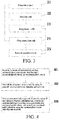
FIG. 2 is a flowchart of a method for networking an unmanned aerial vehicle according to an embodiment of the present application; -
FIG. 3 is a structural diagram of an apparatus for networking an unmanned aerial vehicle according to an embodiment of the present application; -
FIG. 4 is a flowchart of another method for networking an unmanned aerial vehicle according to an embodiment of the present application; -
FIG. 5 is a structural diagram of another apparatus for networking an unmanned aerial vehicle according to an embodiment of the present application; and -
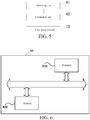
FIG. 6 is a schematic structural diagram of an electronic device according to another embodiment of the present application. - A method for networking an unmanned aerial vehicle provided in the present application may be applied to a system for controlling an unmanned aerial vehicle. The system for controlling an unmanned aerial vehicle usually includes a
control end 11 and an unmannedaerial vehicle 12. Thecontrol end 11 is configured to send a control instruction to the unmannedaerial vehicle 12, and the unmannedaerial vehicle 12 may send status information to thecontrol end 11. Thecontrol end 11 may communicate with the unmannedaerial vehicle 12 in a plurality of manners, for example, by using a wireless local area network. When the two ends use the wireless local area network, one of them first needs to establish a subnetwork, which needs independent authentication. Only a user who passes the authentication can enter the subnetwork. - An embodiment of the present application provides a method for networking an unmanned aerial vehicle. The method is applied to the end of the unmanned aerial vehicle of the foregoing system for controlling an unmanned aerial vehicle. As shown in
FIG. 1 , the method includes: - S11: An unmanned aerial vehicle establishes a subnetwork, and generates a service set identifier and a password. For example, the unmanned aerial vehicle may generate the service set identifier and the password after receiving a switch-on command or a connection command. The service set identifier and the password may be fixed values generated according to a hardware MAC address, or may be variable random values.
- S12: Make the unmanned aerial vehicle and a control end close to each other, and send the generated service set identifier and password to the control end by means of short-distance wireless communication. The short-distance wireless communication may be performed in a plurality of manners, such as near field communication (NFC, Near Field Communication), radio frequency identification (RFID, Radio Frequency Identification), Bluetooth communication, and wireless fidelity (Wireless Fidelity, WIFI). In this embodiment, the short-distance wireless communication is optionally a point to point mode of the NFC. Specifically, the unmanned aerial vehicle enables an NFC communication function to enter the point to point mode, and monitors whether the control end enters an effective communication distance. When the control end enters the effective distance, the unmanned aerial vehicle sends the service set identifier and the password to the control end. After receiving the service set identifier and the password, the control end networks the unmanned aerial vehicle by using the information, and then the control end and the unmanned aerial vehicle keep a networking status.
- S13: Judge the status of a connection to the control end. During actual application, there is a plurality of factors, such as factors like an excessively long distance and a manual operation, which may cause the connection between the unmanned aerial vehicle and the control end to be disconnected. When the connection is disconnected, the step S11 is returned to. That is, after the connection is disconnected each time, the unmanned aerial vehicle regenerates a service set identifier and a password, and makes the unmanned aerial vehicle and the control end close to each other again, and sends the service set identifier and the password that are generated most recently to the control end by means of short-distance wireless communication. If the connection is not disconnected, the networking status is kept, and the status of the connection is continuously judged. Optionally, the service set identifier and the password that are regenerated by the unmanned aerial vehicle each time are both different from the previously generated service set identifier and password. In this way, dynamic updating of the service set identifier and the password can be kept, thereby further improving the security of the networking operations. In addition, a person skilled in the art can understand that to make the networking operations more flexible, the foregoing service set identifier and password may alternatively be manually set.
- According to the method for networking an unmanned aerial vehicle according to this embodiment of the present application, a service set identifier and a password are generated by an unmanned aerial vehicle, so that manual operations can be reduced, the efficiency of networking operations can be improved, and the possibility that a same service set identifier occurs to a plurality of unmanned aerial vehicles can be reduced. The service set identifier and the password are sent to a control end by means of short-distance wireless communication, the service set identifier is not broadcast, and the password does not need to be displayed or manually set, so that the security of the networking operations can be improved.
- Corresponding to the previous embodiment, another embodiment of the present application further provides an apparatus for networking an unmanned aerial vehicle. The apparatus may be applied to the foregoing unmanned aerial vehicle. As shown in
FIG. 2 , the apparatus includes: - a
generation unit 21, configured to generate a service set identifier and a password; - a sending
unit 22, configured to send the service set identifier and the password to a control end by means of short-distance wireless communication. As stated above, the short-distance wireless communication includes near field communication, radio frequency identification and Bluetooth communication; - a
judgment unit 23, configured to judge the status of a connection to the control end; - a
first execution unit 24, configured to start thegeneration unit 21 when the connection is disconnected, where optionally, the service set identifier and the password that are generated each time are both different from the previously generated service set identifier and password; and - a
second execution unit 25, configured to start thejudgment unit 23 when the connection is not disconnected. - According to the apparatus for networking an unmanned aerial vehicle according to this embodiment of the present application, a service set identifier and a password are generated by an unmanned aerial vehicle, so that manual operations can be reduced, the efficiency of networking operations can be improved, and the possibility that a same service set identifier occurs to a plurality of unmanned aerial vehicles can be reduced. The service set identifier and the password are sent to a control end by means of short-distance wireless communication, the service set identifier is not broadcast, and the password does not need to be displayed or manually set, so that the security of the networking operations can be improved.
- Another embodiment of the present application further provides a method for networking an unmanned aerial vehicle. The method is applied to the control end of the foregoing system for controlling an unmanned aerial vehicle. As shown in
FIG. 3 , the method includes: - S21: Receive, by means of short-distance wireless communication, a service set identifier and a password that are sent by an unmanned aerial vehicle. As stated above, in this embodiment, the short-distance wireless communication is optionally a point to point mode of NFC. Specifically, the control end enables an NFC communication function to enter the point to point mode, and monitors whether the sending end enters an effective communication distance. When the unmanned aerial vehicle enters the effective distance, the control end receives the service set identifier and the password that are sent by the unmanned aerial vehicle.
- S22: Network the unmanned aerial vehicle by using the currently received service set identifier and password, and join a subnetwork established by the unmanned aerial vehicle.
- S23: After a connection is disconnected, receive, by means of short-distance wireless communication, a service set identifier and a password that are regenerated by the unmanned aerial vehicle, and network the unmanned aerial vehicle by using the regenerated service set identifier and password.
- If the service set identifier and the password that are generated by the unmanned aerial vehicle after networking is disconnected each time are the same with the previous ones, that is, dynamic updating is not performed, the control end may record the service set identifier and the password that are received at the first time, and after the connection is disconnected, the control end may not re-receive the service set identifier and the password, and directly use the recorded service set identifier and password to connect to the unmanned aerial vehicle.
- As stated above, the service set identifier and the password that are regenerated by the unmanned aerial vehicle each time may be different from the previously generated service set identifier and password. Therefore, after the networking is disconnected each time, the service set identifier and the password that are re-received by the control end are different from the previous ones. Therefore, dynamic updating can be kept, to further improve the security of networking operations.
- According to the method for networking an unmanned aerial vehicle according to this embodiment of the present application, a service set identifier and a password that are sent by an unmanned aerial vehicle by means of near field communication are received for networking the unmanned aerial vehicle, so that manual operations can be reduced and the efficiency of networking operations can be improved. In particular, when a plurality of unmanned aerial vehicles exists in a same local area network, during networking according to this method, service set identifiers do not need to be manually distinguished from each other, and passwords do not need to be manually distinguished from each other. In addition, in the process of networking, the service set identifier does not need to be broadcast, and the password does not need to be displayed or manually set, so that the security of the networking operations can be improved.
- Corresponding to the previous embodiment, another embodiment of the present application further provides an apparatus for networking an unmanned aerial vehicle. The apparatus may be disposed in the foregoing control end. As shown in
FIG. 4 , the apparatus includes: - a receiving
unit 41, configured to receive, by means of short-distance wireless communication, a service set identifier and a password that are sent by the unmanned aerial vehicle, where as stated above, the short-distance wireless communication includes near field communication, radio frequency identification and Bluetooth communication; - a
connection unit 42, configured to network the unmanned aerial vehicle by using the service set identifier and the password; and - a
third execution unit 43, configured to start the receivingunit 41 when a connection is disconnected. Optionally, the service set identifier and the password that are generated by the unmanned aerial vehicle each time are both different from the previously generated service set identifier and password. - According to the apparatus for networking an unmanned aerial vehicle according to this embodiment of the present application, a service set identifier and a password that are sent by an unmanned aerial vehicle by means of NFC are received for networking the unmanned aerial vehicle, so that manual operations can be reduced and the efficiency of networking operations can be improved. In particular, when a plurality of unmanned aerial vehicles exists in a same local area network, during networking according to this method, service set identifiers do not need to be manually distinguished from each other, and passwords do not need to be manually distinguished from each other. In addition, in the process of networking, the service set identifier does not need to be broadcast, and the password does not need to be displayed or manually set, so that the security of the networking operations can be improved.
- Referring to
FIG. 6, FIG. 6 is a schematic structural diagram of hardware of an electronic device for performing a method for networking an unmanned aerial vehicle according to another embodiment of the present application. As shown inFIG. 6 , the device includes:
one ormore processors 610 and amemory 620, where only oneprocessor 610 is used as an example inFIG. 6 . - The
processor 610, thememory 620, the input apparatus 630, and the output apparatus 640 may be connected by using a bus or in other manners. A connection by using a bus is used as an example inFIG. 4 . - As a non-volatile computer readable storage medium, the
memory 620 can be used to store non-volatile software programs, non-volatile computer executable programs and modules, for example, program instructions/modules corresponding to the method for controlling an unmanned aerial vehicle in the embodiments of the present application (for example, the receiving unit 31, the second execution unit 34, the judgment unit 32, and the first execution unit 33 that are shown inFIG. 3 ). Theprocessor 610 executes various functional applications and data processing of a server, that is, implements the processing method of the list item operation in the foregoing method embodiments, by running the non-volatile software programs, instructions and modules that are stored in thememory 620. - The
memory 620 may include a program storage area and a data storage area, where the program storage area may store an operating system and an application that is needed by at least one function; the data storage area may store data created according to use of the processing apparatus of the list item operation, and the like. In addition, thememory 620 may include a high-speed random access memory, or may also include a non-volatile memory such as at least one disk storage device, flash storage device, or another non-volatile solid-state storage device. In some embodiments, thememory 620 optionally includes memories that are remotely disposed with respect to theprocessor 610, and these remote memories may be connected, via a network, to the processing apparatus of the list item operation. Examples of the network include, but are not limited to, the Internet, an intranet, a local area network, a mobile communications network and a combination thereof. - The one or more modules are stored in the
memory 620. When the one or more modules are executed by the one ormore processors 610, the method for controlling an unmanned aerial vehicle in any of the foregoing method embodiments is performed. - The foregoing product can perform the method provided in the embodiments of the present application, and has corresponding functional modules for performing the method and beneficial effects. Reference may be made to the method provided in the embodiments of the present application for technical details that are not described in detail in this embodiment.
- The electronic device in this embodiment of the present application exists in multiple forms, including but not limited to:
- (1) Mobile communications device: such devices are characterized by having a mobile communication function, and primarily providing voice and data communication; terminals of this type include: a smartphone (for example, an iPhone), a multimedia mobile phone, a feature phone, a low-end mobile phone, and the like;
- (2) Ultra mobile personal computer device: such devices are personal computers, which have computing and processing functions, and usually have the function of mobile Internet access; terminals of this type include: PDA, MID and UMPC devices, and the like, for example, an iPad;
- (3) Portable entertainment device: such devices can display and play multimedia content; devices of this type include: an audio and video player (for example, an iPod), a handheld game console, an e-book, an intelligent toy and a portable in-vehicle navigation device;
- (4) Server: a device that provides a computing service; a server includes a processor, a hard disk, a memory, a system bus, and the like; an architecture of a server is similar to a universal computer architecture. However, because a server needs to provide highly reliable services, requirements for the server are high in aspects of the processing capability, stability, reliability, security, extensibility and manageability; and
- (5) other electronic apparatuses having a data interaction function.
- The apparatus embodiments described above are merely illustrative, and the units described as separate parts may or may not be physically separate, and the parts displayed as units may or may not be physical units, may be located at one position, or may be distributed on a plurality of network units. Some or all of the modules may be selected according to actual needs to achieve the objective of the solution of this embodiment.
- By means of the description of the foregoing implementations, a person skilled in the art can clearly learn that the implementations may be implemented by means of software plus necessary general-purpose hardware platforms, and certainly, may alternatively be implemented by hardware. Based on such an understanding, the foregoing technical solutions essentially, or the part contributing to related technologies may be implemented in a form of a software product. The computer software product may be stored in a computer readable storage medium, such as ROM/RAM, a magnetic disk, or an optical disc, and includes several instructions for instructing a computer device (which may be a personal computer, a server, a network device, or the like) to perform the methods described in the embodiments or in some parts of the embodiments.
- Finally, it should be noted that the above embodiments are used merely for describing the technical solutions of the present application, but are not intended to limit the present application. It should be understood by a person of ordinary skill in the art that although the present application has been described in detail with reference to the foregoing embodiments, modifications can still be made to the technical solutions disclosed in the foregoing embodiments, or equivalent replacements can still be made to some technical features in the technical solutions, as long as such modifications or replacements do not cause the essence of the corresponding technical solutions to depart from the spirit and scope of the technical solutions of the embodiments of the present application.
- Another embodiment of the present application further provides a system for controlling an unmanned aerial vehicle. Returning to
FIG. 1 , the system includes an unmannedaerial vehicle 11 and acontrol end 12, where
the unmannedaerial vehicle 11 is configured to: generate a service set identifier and a password, and send the service set identifier and the password to thecontrol end 12 by means of short-distance wireless communication;
thecontrol end 12 is configured to: receive, by means of short-distance wireless communication, the service set identifier and the password that are sent by the unmannedaerial vehicle 11 and network the unmannedaerial vehicle 11 by using the currently received service set identifier and password;
the unmannedaerial vehicle 11 is further configured to: judge the status of a connection to thecontrol end 12; when the connection is disconnected, regenerate a service set identifier and a password, and send the regenerated service set identifier and password to thecontrol end 12, and when the connection is not disconnected, continue to judge the status of the connection to thecontrol end 12; and
thecontrol end 12 is further configured to: when the connection is disconnected, re-receive, by means of short-distance wireless communication, the service set identifier and the password that are regenerated by the unmannedaerial vehicle 11, and network the unmannedaerial vehicle 11 by using the regenerated service set identifier and password. - As stated above, optionally, the service set identifier and the password that are regenerated by the unmanned
aerial vehicle 11 each time are both different from the previously generated service set identifier and password. In this way, dynamic updating of the service set identifier and the password can be kept, thereby further improving the security of the networking operation. - As stated above, in this embodiment, the short-distance wireless communication is optionally a point to point mode of NFC. Specifically, the unmanned
aerial vehicle 11 and thecontrol end 12 both enable an NFC communication function to enter the point to point mode, and monitor whether a receiving end enters an effective communication distance. When thecontrol end 12 and the unmannedaerial vehicle 11 get close to each other and enter the effective distance, the service set identifier and the password are transmitted. - According to the system for controlling an unmanned aerial vehicle according to this embodiment of the present application, a service set identifier and a password are generated by an unmanned aerial vehicle, and the service set identifier and the password are sent to a control end by means of short-distance wireless communication, so that manual operations can be reduced, and the efficiency of networking operations can be improved. Moreover, the unmanned aerial vehicle does not broadcast the service set identifier, and the password does not need to be displayed, manually set, or entered in the control end. Therefore, the security of the networking operations can be improved.
- Obviously, the foregoing embodiments are merely examples for clear description, rather than a limitation to implementations. For a person of ordinary skill in the art, other changes or variations in different forms may also be made based on the foregoing description. All implementations cannot and do not need to be exhaustively listed herein. Obvious changes or variations that are derived there from still fall within the protection scope of the invention of the present application.
Claims (20)
- A method for networking an unmanned aerial vehicle, comprising:generating a service set identifier and a password;sending the generated service set identifier and password to a control end by means of short-distance wireless communication;judging the status of a connection to the control end;when the connection is disconnected, returning to the step of generating a service set identifier and a password; andwhen the connection is not disconnected, continuing to judge the status of the connection to the control end.
- A method for networking an unmanned aerial vehicle, comprising:receiving, by means of short-distance wireless communication, a service set identifier and a password that are generated by the unmanned aerial vehicle;networking the unmanned aerial vehicle by using the currently received service set identifier and password; andafter a connection is disconnected, receiving, by means of short-distance wireless communication, a service set identifier and a password that are regenerated by the unmanned aerial vehicle, and networking the unmanned aerial vehicle by using the regenerated service set identifier and password.
- The method for networking an unmanned aerial vehicle according to claim 1 or 2, wherein the service set identifier and the password that are regenerated each time are both different from the previously generated service set identifier and password.
- The method for networking an unmanned aerial vehicle according to any of claims 1 to 3, wherein the short-distance wireless communication comprises near field communication, radio frequency identification and Bluetooth communication.
- A method for networking an unmanned aerial vehicle, comprising:generating a service set identifier and a password; andsending the generated service set identifier and password to a control end by means of short-distance wireless communication.
- The method according to claim 5, wherein before the generating a service set identifier and a password, the method further comprises:
judging whether a connection to the control end is disconnected. - The method according to claim 5 or 6, wherein after the sending the generated service set identifier and password to a control end, the method further comprises:
judging the status of the connection to the control end. - The method according to any of claims 5 to 7, wherein the generating a service set identifier and a password comprises:
generating the service set identifier and the password by means of dynamic updating. - A method for networking an unmanned aerial vehicle, comprising:receiving, by means of short-distance wireless communication, a service set identifier and a password that are generated by the unmanned aerial vehicle; andnetworking the unmanned aerial vehicle by using the currently received service set identifier and password.
- The method according to claim 9, further comprising:
after a connection to the unmanned aerial vehicle is disconnected, receiving, by means of short-distance wireless communication, a service set identifier and a password that are regenerated by the unmanned aerial vehicle, and networking the unmanned aerial vehicle by using the regenerated service set identifier and password. - An apparatus for networking an unmanned aerial vehicle, comprising:a generation unit, configured to generate a service set identifier and a password;a sending unit, configured to send the generated service set identifier and password to a control end by means of short-distance wireless communication;a judgment unit, configured to judge the status of a connection to the control end;a first execution unit, configured to start the generation unit when the connection is disconnected; anda second execution unit, configured to start the judgment unit when the connection is not disconnected.
- An apparatus for networking an unmanned aerial vehicle, comprising:a receiving unit, configured to receive, by means of short-distance wireless communication, a service set identifier and a password that are sent by the unmanned aerial vehicle;a connection unit, configured to network the unmanned aerial vehicle by using the service set identifier and the password; andan execution unit, configured to: after a connection is disconnected, start the receiving unit to receive, by means of short-distance wireless communication, a service set identifier and a password that are regenerated by the unmanned aerial vehicle, and start the connection unit to network the unmanned aerial vehicle by using the regenerated service set identifier and password.
- An apparatus for networking an unmanned aerial vehicle, comprising:a generation unit, configured to generate a service set identifier and a password; anda sending unit, configured to send the generated service set identifier and password to a control end by means of short-distance wireless communication.
- The apparatus according to claim 13, further comprising:
a judgment unit, configured to judge the status of a connection to the control end. - The apparatus according to claim 13 or 14, wherein the generation unit generates the service set identifier and the password by means of dynamic updating.
- An apparatus for networking an unmanned aerial vehicle, comprising:a receiving unit, configured to receive, by means of short-distance wireless communication, a service set identifier and a password that are generated by the unmanned aerial vehicle; anda connection unit, configured to network the unmanned aerial vehicle by using the currently received service set identifier and password.
- The apparatus according to claim 16, further comprising:
an execution unit, configured to: after a connection to the unmanned aerial vehicle is disconnected, receive, by means of short-distance wireless communication, a service set identifier and a password that are regenerated by the unmanned aerial vehicle, and network the unmanned aerial vehicle by using the regenerated service set identifier and password. - A system for controlling an unmanned aerial vehicle, comprising an unmanned aerial vehicle and a control end, wherein
the unmanned aerial vehicle is configured to: generate a service set identifier and a password, and send the service set identifier and the password to the control end by means of short-distance wireless communication;
the control end is configured to: receive, by means of short-distance wireless communication, the service set identifier and the password that are sent by the unmanned aerial vehicle, and network the unmanned aerial vehicle by using the currently received service set identifier and password;
the unmanned aerial vehicle is further configured to: judge the status of a connection to the control end; when the connection is disconnected, regenerate a service set identifier and a password, and send the regenerated service set identifier and password to the control end; and when the connection is not disconnected, continue to judge the status of the connection to the control end; and
the control end is further configured to: when the connection is disconnected, re-receive, by means of short-distance wireless communication, the service set identifier and the password that are regenerated by the unmanned aerial vehicle, and network the unmanned aerial vehicle by using the regenerated service set identifier and password. - The system for controlling an unmanned aerial vehicle according to claim 18, wherein the service set identifier and the password that are regenerated by the unmanned aerial vehicle each time are both different from the previously generated service set identifier and password.
- The system for controlling an unmanned aerial vehicle according to claim 18 or 19, wherein the short-distance wireless communication comprises near field communication, radio frequency identification and Bluetooth communication.
Applications Claiming Priority (2)
| Application Number | Priority Date | Filing Date | Title |
|---|---|---|---|
| CN201510444663.7A CN106375932A (en) | 2015-07-24 | 2015-07-24 | Unmanned aerial vehicle networking method, unmanned aerial vehicle networking device and unmanned aerial vehicle control system |
| PCT/CN2016/090166 WO2017016397A1 (en) | 2015-07-24 | 2016-07-15 | Networking method and device for unmanned aerial vehicle, and unmanned aerial vehicle control system |
Publications (2)
| Publication Number | Publication Date |
|---|---|
| EP3316654A1 true EP3316654A1 (en) | 2018-05-02 |
| EP3316654A4 EP3316654A4 (en) | 2018-06-20 |
Family
ID=57880829
Family Applications (1)
| Application Number | Title | Priority Date | Filing Date |
|---|---|---|---|
| EP16829763.8A Withdrawn EP3316654A4 (en) | 2015-07-24 | 2016-07-15 | Networking method and device for unmanned aerial vehicle, and unmanned aerial vehicle control system |
Country Status (4)
| Country | Link |
|---|---|
| US (1) | US10674549B2 (en) |
| EP (1) | EP3316654A4 (en) |
| CN (1) | CN106375932A (en) |
| WO (1) | WO2017016397A1 (en) |
Families Citing this family (1)
| Publication number | Priority date | Publication date | Assignee | Title |
|---|---|---|---|---|
| CN113728367A (en) * | 2020-03-30 | 2021-11-30 | 深圳市大疆创新科技有限公司 | Access method of movable platform, related equipment and storage medium |
Family Cites Families (24)
| Publication number | Priority date | Publication date | Assignee | Title |
|---|---|---|---|---|
| US7359339B2 (en) * | 2003-12-23 | 2008-04-15 | Lenovo Singapore Pte Ltd | Smart access point |
| GB2446191A (en) * | 2007-01-31 | 2008-08-06 | Hewlett Packard Development Co | Reconnecting disconnected conference calls within a terminal device |
| US8477747B1 (en) * | 2008-12-23 | 2013-07-02 | Symantec Corporation | Automatic capture of wireless endpoints for connection enforcement |
| KR20100079341A (en) * | 2008-12-31 | 2010-07-08 | (주) 엘지텔레콤 | Method and system for sharing network of mobile communication terminal having wifi function |
| JP2011211612A (en) * | 2010-03-30 | 2011-10-20 | Nec Access Technica Ltd | Wireless lan terminal, wireless lan access point and wireless lan system |
| US8626921B2 (en) * | 2010-04-22 | 2014-01-07 | Cisco Technology, Inc. | Device and service management based on layer 2 through layer 7 device attributes |
| US8831677B2 (en) * | 2010-11-17 | 2014-09-09 | Antony-Euclid C. Villa-Real | Customer-controlled instant-response anti-fraud/anti-identity theft devices (with true-personal identity verification), method and systems for secured global applications in personal/business e-banking, e-commerce, e-medical/health insurance checker, e-education/research/invention, e-disaster advisor, e-immigration, e-airport/aircraft security, e-military/e-law enforcement, with or without NFC component and system, with cellular/satellite phone/internet/multi-media functions |
| US9011250B2 (en) * | 2012-10-05 | 2015-04-21 | Qfo Labs, Inc. | Wireless communication system for game play with multiple remote-control flying craft |
| CN103781068A (en) * | 2012-10-18 | 2014-05-07 | 中兴通讯股份有限公司 | Data transmission method and terminal device |
| CN103096506A (en) * | 2013-01-07 | 2013-05-08 | 东莞宇龙通信科技有限公司 | Terminal equipment, WIFI connection method and system |
| CN103685468B (en) * | 2013-11-18 | 2016-10-12 | 上海交通大学 | Mobile terminal based on self-organizing network cooperation method for down loading |
| JP6194798B2 (en) * | 2014-01-09 | 2017-09-13 | ブラザー工業株式会社 | Communication equipment and printer |
| KR102219698B1 (en) * | 2014-04-30 | 2021-02-24 | 엘지전자 주식회사 | Apparatus and method for controlling unmanned aerial vehicle |
| US9549329B2 (en) * | 2014-11-13 | 2017-01-17 | Verizon Patent And Licensing Inc. | Remotely configurable mobile wireless access point device |
| WO2016076586A1 (en) * | 2014-11-14 | 2016-05-19 | Lg Electronics Inc. | Mobile terminal and controlling method thereof |
| CN104580401A (en) * | 2014-12-23 | 2015-04-29 | 小米科技有限责任公司 | Connecting method and device |
| US10205776B2 (en) * | 2014-12-23 | 2019-02-12 | Xiaomi Inc. | Method and device for wireless connection |
| CN104619040A (en) * | 2015-02-10 | 2015-05-13 | 福州瑞芯微电子有限公司 | Method and system for quickly connecting WIFI equipment |
| US9680822B2 (en) * | 2015-02-12 | 2017-06-13 | At&T Mobility Ii Llc | Point of sale pairing |
| CN104680213A (en) * | 2015-02-12 | 2015-06-03 | 无锡识凌科技有限公司 | Control method of rapid connection and data transmission among devices |
| EP3073774A1 (en) * | 2015-03-23 | 2016-09-28 | Thomson Licensing | Automatic configuration of a wireless residential access network |
| JP6406092B2 (en) * | 2015-03-27 | 2018-10-17 | ブラザー工業株式会社 | Communication equipment |
| EP3101889A3 (en) * | 2015-06-02 | 2017-03-08 | LG Electronics Inc. | Mobile terminal and controlling method thereof |
| US20180288673A1 (en) * | 2016-05-26 | 2018-10-04 | Damian Henderson | System, method and apparatus associated with pre-existing wifi network technology |
-
2015
- 2015-07-24 CN CN201510444663.7A patent/CN106375932A/en active Pending
-
2016
- 2016-07-15 WO PCT/CN2016/090166 patent/WO2017016397A1/en not_active Ceased
- 2016-07-15 EP EP16829763.8A patent/EP3316654A4/en not_active Withdrawn
-
2018
- 2018-01-23 US US15/877,944 patent/US10674549B2/en active Active
Also Published As
| Publication number | Publication date |
|---|---|
| EP3316654A4 (en) | 2018-06-20 |
| WO2017016397A1 (en) | 2017-02-02 |
| US10674549B2 (en) | 2020-06-02 |
| CN106375932A (en) | 2017-02-01 |
| US20180152982A1 (en) | 2018-05-31 |
Similar Documents
| Publication | Publication Date | Title |
|---|---|---|
| US9769732B2 (en) | Wireless network connection establishment method and terminal device | |
| CN109673001A (en) | Data transfer control method and Related product | |
| US10820369B2 (en) | Wireless connection establishing methods and wireless connection establishing apparatuses | |
| US20150024688A1 (en) | Automatic Pairing of a Vehicle and a Mobile Communications Device | |
| CN103327645B (en) | A kind of method and device for connecting network | |
| CN103327644A (en) | Method and equipment for wireless connection | |
| US20150350855A1 (en) | Data Sending Method and Apparatus | |
| US20170171496A1 (en) | Method and Electronic Device for Screen Projection | |
| CN112533206A (en) | Network distribution method and device, storage medium and electronic equipment | |
| US10863559B2 (en) | Method and apparatus for communicating in a wireless communication network | |
| CN107124341A (en) | Intelligent home device match somebody with somebody network method and intelligent domestic system | |
| US10492245B2 (en) | Call termination method, application processor, and modem | |
| WO2020164349A1 (en) | Data transmission control method and related product | |
| US10298446B2 (en) | Methods, apparatuses, and system for device management | |
| US9654552B2 (en) | Methods and systems for delegating group ownership for the formation of a new group | |
| US20160373925A1 (en) | Method and apparatus for interconnection between terminal device and gateway device | |
| CN105553964A (en) | Method and apparatus for controlling Bluetooth device | |
| CN105978606B (en) | Bluetooth equipment remote communication method, bluetooth equipment and client | |
| US10674549B2 (en) | Method and apparatus for networking unmanned aerial vehicle and system for controlling unmanned aerial vehicle | |
| US9253814B1 (en) | Wireless communication device and method for interacting with a wireless hotspot | |
| CN104639611A (en) | Method and device for synchronizing data and mobile terminal | |
| US20170169239A1 (en) | Method for file synchronization, the receiver equipment and systems | |
| EP3200415A1 (en) | Terminal, server and user identification system and method | |
| CN106161152B (en) | A control method and device for a smart home | |
| US20150171954A1 (en) | Application dedicated transceiver communications |
Legal Events
| Date | Code | Title | Description |
|---|---|---|---|
| STAA | Information on the status of an ep patent application or granted ep patent |
Free format text: STATUS: THE INTERNATIONAL PUBLICATION HAS BEEN MADE |
|
| PUAI | Public reference made under article 153(3) epc to a published international application that has entered the european phase |
Free format text: ORIGINAL CODE: 0009012 |
|
| STAA | Information on the status of an ep patent application or granted ep patent |
Free format text: STATUS: REQUEST FOR EXAMINATION WAS MADE |
|
| 17P | Request for examination filed |
Effective date: 20180124 |
|
| AK | Designated contracting states |
Kind code of ref document: A1 Designated state(s): AL AT BE BG CH CY CZ DE DK EE ES FI FR GB GR HR HU IE IS IT LI LT LU LV MC MK MT NL NO PL PT RO RS SE SI SK SM TR |
|
| AX | Request for extension of the european patent |
Extension state: BA ME |
|
| A4 | Supplementary search report drawn up and despatched |
Effective date: 20180517 |
|
| RIC1 | Information provided on ipc code assigned before grant |
Ipc: H04W 76/10 20180101ALI20180511BHEP Ipc: H04W 12/06 20090101AFI20180511BHEP Ipc: H04W 4/80 20180101ALI20180511BHEP Ipc: H04W 84/12 20090101ALN20180511BHEP |
|
| DAV | Request for validation of the european patent (deleted) | ||
| DAX | Request for extension of the european patent (deleted) | ||
| STAA | Information on the status of an ep patent application or granted ep patent |
Free format text: STATUS: EXAMINATION IS IN PROGRESS |
|
| 17Q | First examination report despatched |
Effective date: 20200421 |
|
| STAA | Information on the status of an ep patent application or granted ep patent |
Free format text: STATUS: THE APPLICATION HAS BEEN WITHDRAWN |
|
| 18W | Application withdrawn |
Effective date: 20210906 |