EP3316136A1 - Method and device for evaluating system fluency, and ue - Google Patents
Method and device for evaluating system fluency, and ue Download PDFInfo
- Publication number
- EP3316136A1 EP3316136A1 EP17197823.2A EP17197823A EP3316136A1 EP 3316136 A1 EP3316136 A1 EP 3316136A1 EP 17197823 A EP17197823 A EP 17197823A EP 3316136 A1 EP3316136 A1 EP 3316136A1
- Authority
- EP
- European Patent Office
- Prior art keywords
- abnormality
- service
- party application
- occurrences
- acquiring
- Prior art date
- Legal status (The legal status is an assumption and is not a legal conclusion. Google has not performed a legal analysis and makes no representation as to the accuracy of the status listed.)
- Granted
Links
Images



Classifications
-
- G—PHYSICS
- G06—COMPUTING OR CALCULATING; COUNTING
- G06F—ELECTRIC DIGITAL DATA PROCESSING
- G06F11/00—Error detection; Error correction; Monitoring
- G06F11/07—Responding to the occurrence of a fault, e.g. fault tolerance
- G06F11/0703—Error or fault processing not based on redundancy, i.e. by taking additional measures to deal with the error or fault not making use of redundancy in operation, in hardware, or in data representation
- G06F11/0766—Error or fault reporting or storing
- G06F11/0781—Error filtering or prioritizing based on a policy defined by the user or on a policy defined by a hardware/software module, e.g. according to a severity level
-
- G—PHYSICS
- G06—COMPUTING OR CALCULATING; COUNTING
- G06F—ELECTRIC DIGITAL DATA PROCESSING
- G06F11/00—Error detection; Error correction; Monitoring
- G06F11/07—Responding to the occurrence of a fault, e.g. fault tolerance
- G06F11/0703—Error or fault processing not based on redundancy, i.e. by taking additional measures to deal with the error or fault not making use of redundancy in operation, in hardware, or in data representation
- G06F11/0751—Error or fault detection not based on redundancy
-
- G—PHYSICS
- G06—COMPUTING OR CALCULATING; COUNTING
- G06F—ELECTRIC DIGITAL DATA PROCESSING
- G06F11/00—Error detection; Error correction; Monitoring
- G06F11/30—Monitoring
- G06F11/3003—Monitoring arrangements specially adapted to the computing system or computing system component being monitored
- G06F11/3013—Monitoring arrangements specially adapted to the computing system or computing system component being monitored where the computing system is an embedded system, i.e. a combination of hardware and software dedicated to perform a certain function in mobile devices, printers, automotive or aircraft systems
-
- G—PHYSICS
- G06—COMPUTING OR CALCULATING; COUNTING
- G06F—ELECTRIC DIGITAL DATA PROCESSING
- G06F11/00—Error detection; Error correction; Monitoring
- G06F11/30—Monitoring
- G06F11/3003—Monitoring arrangements specially adapted to the computing system or computing system component being monitored
- G06F11/302—Monitoring arrangements specially adapted to the computing system or computing system component being monitored where the computing system component is a software system
-
- G—PHYSICS
- G06—COMPUTING OR CALCULATING; COUNTING
- G06F—ELECTRIC DIGITAL DATA PROCESSING
- G06F11/00—Error detection; Error correction; Monitoring
- G06F11/30—Monitoring
- G06F11/3089—Monitoring arrangements determined by the means or processing involved in sensing the monitored data, e.g. interfaces, connectors, sensors, probes, agents
- G06F11/3093—Configuration details thereof, e.g. installation, enabling, spatial arrangement of the probes
-
- G—PHYSICS
- G06—COMPUTING OR CALCULATING; COUNTING
- G06F—ELECTRIC DIGITAL DATA PROCESSING
- G06F11/00—Error detection; Error correction; Monitoring
- G06F11/30—Monitoring
- G06F11/34—Recording or statistical evaluation of computer activity, e.g. of down time, of input/output operation ; Recording or statistical evaluation of user activity, e.g. usability assessment
- G06F11/3452—Performance evaluation by statistical analysis
-
- G—PHYSICS
- G06—COMPUTING OR CALCULATING; COUNTING
- G06F—ELECTRIC DIGITAL DATA PROCESSING
- G06F11/00—Error detection; Error correction; Monitoring
- G06F11/30—Monitoring
- G06F11/34—Recording or statistical evaluation of computer activity, e.g. of down time, of input/output operation ; Recording or statistical evaluation of user activity, e.g. usability assessment
- G06F11/3457—Performance evaluation by simulation
-
- G—PHYSICS
- G06—COMPUTING OR CALCULATING; COUNTING
- G06F—ELECTRIC DIGITAL DATA PROCESSING
- G06F11/00—Error detection; Error correction; Monitoring
- G06F11/36—Prevention of errors by analysis, debugging or testing of software
- G06F11/3604—Analysis of software for verifying properties of programs
Definitions
- the present disclosure relates to the field of User Equipment (UE) technology, and in particular to a method and device for evaluating system fluency, and a UE.
- UE User Equipment
- Fluency indicates not only hardware capability of equipment, but also stability of a system, a level of system resource management, and capability to control a malicious application as well as a bad application of a third party.
- high system fluency means fast application startup and fast inter-app switch in the system, lag-free.
- embodiments herein provide a method and device for evaluating system fluency, and a UE, in accordance with claims which follow.
- a method for evaluating system fluency includes:
- a state of running each service is monitored during a service run in a serialized scene in a system.
- a serialized scene simulates a usage habit of a user.
- a serialized scene includes at least one third-party application.
- An abnormality in the state of running the each service is acquired.
- a number of occurrences of each abnormality is determined.
- a fluency score of the system is computed according to the number of occurrences of the each abnormality.
- An assessing index is acquired with respect to a key factor impacting the respective scene, such as memory, storage, system resource switch, abnormality processing, etc., to provide a fluency score of a UE with a certain configuration and release.
- the fluency score may facilitate determining real capability and endurance of system fluency, as well as selecting a UE by a user and discovering a downside of a software and /or hardware release.
- the method may further include: before the monitoring the state of running the each service, acquiring and installing, among third-party applications each with a preset ranking, top N third-party applications, N being a positive integer; and starting up a service in each serialized scene in the system.
- the acquiring the abnormality in the state of running the each service may include:
- the acquiring the abnormality in the state of running the each service may include:
- the acquiring the abnormality in the state of running the each service may include:
- the computing the fluency score of the system according to the number of occurrences of the each abnormality may include:
- the method may further include: after the computing the fluency score of the system according to the number of occurrences of the each abnormality, determining and displaying a diagram of system fluency according to the each abnormality, the number of occurrences of the each abnormality, and the fluency score of the system.
- a device for evaluating system fluency includes:
- the device may further include a startup module configured for:
- the acquiring module may be configured for:
- the acquiring module may be configured for:
- the acquiring module may be configured for:
- the computing module may be configured for:
- the device may further include a displaying module configured for:
- a User Equipment includes a processor and a memory for storing instructions executable by the processor.
- the processor is configured for:
- the steps of the method are determined by computer program instructions.
- the disclosure is further directed to a computer program for executing the steps of the method as described above when this program is executed by a computer.
- This program can use any programming language and take the form of source code, object code or a code intermediate between source code and object code, such as a partially compiled form, or any other desirable form.
- the disclosure is further directed to a computer-readable information medium containing instructions of a computer program as described above.
- the information medium can be any entity or device capable of storing the program.
- the support can include storage means such as a ROM, for example a CD ROM or a microelectronic circuit ROM, or magnetic storage means, for example a diskette (floppy disk) or a hard disk.
- the information medium can be an integrated circuit in which the program is incorporated, the circuit being adapted to execute the method in question or to be used in its execution.
- first, second, third may be adopted in an embodiment herein to describe various kinds of information, such information should not be limited to such a term. Such a term is merely for distinguishing information of the same type.
- first information may also be referred to as the second information.
- second information may also be referred to as the first information.
- a "if” as used herein may be interpreted as "when” or “while” or "in response to determining that”.
- a block diagram shown in the accompanying drawings may be a functional entity which may not necessarily correspond to a physically or logically independent entity.
- Such a functional entity may be implemented in form of software, in one or more hardware modules or integrated circuits, or in different networks and /or processor devices and /or microcontroller devices.
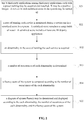
- FIG.1 is a flowchart of a method for evaluating system fluency according to an exemplary Embodiment 1 herein.
- the method for evaluating system fluency applies to a UE (namely, a terminal).
- the UE may include a mobile UE, a personal UE, etc., such as a mobile phone with a touch screen, a tablet computer, a personal computer, etc.
- the method includes steps as follows.
- Step S11 a state of running each service is monitored during a service run in a serialized scene in a system.
- a serialized scene simulates a usage habit of a user.
- a serialized scene includes at least one third-party application.
- a serialized scene may have a preset sequence.
- a serialized scene simulates a usage habit of a user.
- Each serialized scene may include at least one third-party application.
- a state of running each service may be monitored in real time during a service run in a serialized scene in the system.
- Step S12 an abnormality in the state of running the each service is acquired.
- Step S 12 may be implemented in at least one of three modes as follows.
- a frame-loss rate during a third-party application run may be determined according to a third-party application switch time, a third-party application exit time, and a third-party application startup time corresponding to a light service in the system.
- a frame-loss abnormality of the light service may be determined according to the third-party application startup time, the third-party application exit time, the third-party application switch time, and the frame-loss rate.
- a residual state of memory recycling and a number of occurrences of low memory recycling in a light service in the system may be acquired.
- a memory abnormality may be determined according to the number of occurrences of low memory recycling and the residual state of memory recycling.
- information on a checkpoint in a light service in the system may be acquired.
- the information on the checkpoint may affect a performance experience of the user.
- a checkpoint abnormality of the light service may be determined according to the information on the checkpoint.
- an abnormality in the state of running each service may be acquired while the state of running the each service is being monitored.
- the third-party application switch time, the third-party application exit time, and the third-party application startup time corresponding to the light service in the system may be determined.
- the frame-loss rate during the third-party application run may then be measured according to the third-party application startup time, the third-party application exit time, and the third-party application switch time.
- the frame-loss abnormality of the light service may be determined according to the third-party application startup time, the third-party application exit time, the third-party application switch time, and the frame-loss rate.
- the residual state of memory recycling and the number of occurrences of low memory recycling in the light service in the system may be acquired.
- the memory abnormality may be determined according to the number of occurrences of low memory recycling and the residual state of memory recycling.
- the information on the checkpoint in the light service in the system may be acquired.
- the information on the checkpoint may affect the performance experience of the user.
- the checkpoint abnormality of the light service may be determined according to the information on the checkpoint.
- Step S 13 a number of occurrences of each abnormality is determined.
- occurrences of an abnormality may be counted. For example, occurrences of no-system-response abnormality and occurrences of upper-layer-watchdog-service exit abnormality may be determined.
- Step S14 a fluency score of the system is computed according to the number of occurrences of the each abnormality.
- Step S14 may be implemented as follows.
- the fluency score of the system may be computed by computing a weighted sum of the number of occurrences of the each abnormality using a preset weight of the each abnormality.
- the fluency score of the system may be computed according to the number of occurrences of the each abnormality.
- An abnormality may correspond to a preset weight, in terms of importance, and a quantified difference. Weighted summation may be performed using the preset weight of the each abnormality, the quantified difference of the each abnormality, and the number of occurrences of the each abnormality, to acquire the fluency score of the system.
- the fluency score of the system may be acquired by performing weighted summation using preset weights, quantified differences, and numbers of occurrences of app-use abnormality, frame-loss-rate abnormality, memory-use abnormality, etc.
- a state of running each service is monitored during a service run in a serialized scene in a system.
- a serialized scene simulates a usage habit of a user.
- a serialized scene includes at least one third-party application.
- An abnormality in the state of running the each service is acquired.
- a number of occurrences of each abnormality is determined.
- a fluency score of the system is computed according to the number of occurrences of the each abnormality.
- An assessing index is acquired with respect to a key factor impacting the respective scene, such as memory, storage, system resource switch, abnormality processing, etc., to provide a fluency score of a UE with a certain configuration and release.
- the fluency score may facilitate determining real capability and endurance of system fluency, as well as selecting a UE by a user and discovering a downside of a software and /or hardware release.
- FIG.2 is a flowchart of a method for evaluating system fluency according to an exemplary Embodiment 2 herein, based on the embodiment shown in FIG.1 . As shown in FIG.2 , the method may further include, before Step S11, a step as follows.
- Step S21 top N third-party applications among third-party applications each with a preset ranking may be acquired and installed.
- N may be a positive integer.
- a service in each serialized scene in the system may be started up.
- each third-party application may have a preset ranking.
- a third-party application to be acquired may be from top N third-party applications.
- N may be a positive integer.
- an acquired third-party application may be one of a most popular type.
- An acquired third-party application may then be installed in the system of the UE.
- the method may further include, after Step S14, a step as follows.
- Step S22 a diagram of system fluency may be determined and displayed according to the each abnormality, the number of occurrences of the each abnormality, and the fluency score of the system.
- a diagram of system fluency may be determined according to the acquired each abnormality, the acquired number of occurrences of the each abnormality, and the computed fluency score of the system.
- the diagram of system fluency may include the each abnormality, the number of occurrences of the each abnormality, and the computed fluency score of the system.
- the diagram of system fluency may then be displayed before the user.
- a state of running each service is monitored during a service run in a serialized scene in a system.
- a serialized scene simulates a usage habit of a user.
- a serialized scene includes at least one third-party application.
- An abnormality in the state of running the each service is acquired.
- a number of occurrences of each abnormality is determined.
- a fluency score of the system is computed according to the number of occurrences of the each abnormality.
- a diagram of system fluency may be determined and displayed according to the each abnormality, the number of occurrences of the each abnormality, and the fluency score of the system. In such a manner, a scene is monitored from the perspective of the user to obtain a quantitative measurement.
- An assessing index is acquired with respect to a key factor impacting the respective scene, such as memory, storage, system resource switch, abnormality processing, etc., to provide a fluency score of a UE with a certain configuration and release.
- the fluency score may facilitate determining real capability and endurance of system fluency, as well as selecting a UE by a user and discovering a downside of a software and /or hardware release.
- an embodiment herein further provides a device for evaluating system fluency.
- FIG.3 is a block diagram of a device for evaluating system fluency according to an exemplary Embodiment 3 herein.
- the device includes a monitoring module 31, an acquiring module 32, a determining module 33, and a computing module 34.
- the monitoring module 31 is configured for monitoring, during a service run in a serialized scene in a system, a state of running each service.
- a serialized scene simulates a usage habit of a user.
- a serialized scene includes at least one third-party application.
- the acquiring module 32 is configured for acquiring an abnormality in the state of running the each service.
- the determining module 33 is configured for determining a number of occurrences of each abnormality.
- the computing module 34 is configured for computing a fluency score of the system according to the number of occurrences of the each abnormality.
- the acquiring module 32 may be configured for determining a frame-loss rate during a third-party application run according to a third-party application switch time, a third-party application exit time, and a third-party application startup time corresponding to a light service in the system.
- the acquiring module 32 may be configured for determining a frame-loss abnormality of the light service according to the third-party application startup time, the third-party application exit time, the third-party application switch time, and the frame-loss rate.
- the acquiring module 32 may be configured for acquiring a residual state of memory recycling and a number of occurrences of low memory recycling in a light service in the system.
- the acquiring module 32 may be configured for determining a memory abnormality according to the number of occurrences of low memory recycling and the residual state of memory recycling.
- the acquiring module 32 may be configured for acquiring information on a checkpoint in a light service in the system.
- the information on the checkpoint may affect a performance experience of the user.
- the acquiring module 32 may be configured for determining a checkpoint abnormality of the light service according to the information on the checkpoint.
- the computing module 34 may be configured for computing the fluency score of the system by computing a weighted sum of the number of occurrences of the each abnormality using a preset weight of the each abnormality.
- a module of the device according to the embodiment may execute an operation in a mode elaborated in an embodiment of the method, which will not be repeated here.
- a state of running each service is monitored during a service run in a serialized scene in a system.
- a serialized scene simulates a usage habit of a user.
- a serialized scene includes at least one third-party application.
- An abnormality in the state of running the each service is acquired.
- a number of occurrences of each abnormality is determined.
- a fluency score of the system is computed according to the number of occurrences of the each abnormality.
- An assessing index is acquired with respect to a key factor impacting the respective scene, such as memory, storage, system resource switch, abnormality processing, etc., to provide a fluency score of a UE with a certain configuration and release.
- the fluency score may facilitate determining real capability and endurance of system fluency, as well as selecting a UE by a user and discovering a downside of a software and /or hardware release.
- FIG.4 is block diagram of a device for evaluating system fluency according to an exemplary Embodiment 4 herein, based on the embodiment shown in FIG.3 .
- the device may further include a startup module 41 and/or a displaying module 42.
- the startup module 41 may be configured for acquiring and installing a third-party application before the monitoring module 31 monitors the state of running the each service.
- Each third-party application may have a preset ranking.
- the third-party application to be acquired may be from top N third-party applications according to rankings thereof. N may be a positive integer.
- the startup module 41 may be configured for starting up a service in each serialized scene in the system.
- the displaying module 42 may be configured for, after the computing module 34 has computed the fluency score of the system according to the number of occurrences of the each abnormality, determining and displaying a diagram of system fluency according to the each abnormality, the number of occurrences of the each abnormality, and the fluency score of the system.
- a module of the device according to the embodiment may execute an operation in a mode elaborated in an embodiment of the method, which will not be repeated here.
- a state of running each service is monitored during a service run in a serialized scene in a system.
- a serialized scene simulates a usage habit of a user.
- a serialized scene includes at least one third-party application.
- An abnormality in the state of running the each service is acquired.
- a number of occurrences of each abnormality is determined.
- a fluency score of the system is computed according to the number of occurrences of the each abnormality.
- a diagram of system fluency may be determined and displayed according to the each abnormality, the number of occurrences of the each abnormality, and the fluency score of the system. In such a manner, a scene is monitored from the perspective of the user to obtain a quantitative measurement.
- An assessing index is acquired with respect to a key factor impacting the respective scene, such as memory, storage, system resource switch, abnormality processing, etc., to provide a fluency score of a UE with a certain configuration and release.
- the fluency score may facilitate determining real capability and endurance of system fluency, as well as selecting a UE by a user and discovering a downside of a software and /or hardware release.
- FIG.5 is a block diagram of a UE according to an exemplary embodiment herein.
- the UE includes a processor 51 and a memory 52 for storing instructions executable by the processor.
- the processor 51 is configured for monitoring, during a service run in a serialized scene in a system, a state of running each service.
- a serialized scene simulates a usage habit of a user.
- a serialized scene includes at least one third-party application.
- the processor is configured for acquiring an abnormality in the state of running the each service.
- the processor is configured for determining a number of occurrences of each abnormality.
- the processor is configured for computing a fluency score of the system according to the number of occurrences of the each abnormality.
- the processor may be a Central Processing Unit (CPU), a general purpose processor, a Digital Signal Processor (DSP), an Application Specific Integrated Circuit (ASIC), and/or the like.
- a general purpose processor may be a microprocessor, any conventional processor, and/or the like.
- An aforementioned memory may be a Read-Only Memory (ROM), a Random Access Memory (RAM), a flash memory, a hard disk, a solid state disk, and/or the like.
- SIM Subscriber Identity Module
- SIM Subscriber Identity Module
- Content such as information on a user of the digital mobile phone, an encryption key, a phonebook of the user, may be stored on the computer chip.
- a step of the method according to any combination of embodiments herein may be executed by a hardware processor, or by a combination of hardware and software modules in the processor.
- a module of the UE according to the above embodiment may execute an operation in a mode elaborated in embodiments of the method and device, which will not be repeated here.
- a state of running each service is monitored during a service run in a serialized scene in a system.
- a serialized scene simulates a usage habit of a user.
- a serialized scene includes at least one third-party application.
- An abnormality in the state of running the each service is acquired.
- a number of occurrences of each abnormality is determined.
- a fluency score of the system is computed according to the number of occurrences of the each abnormality.
- An assessing index is acquired with respect to a key factor impacting the respective scene, such as memory, storage, system resource switch, abnormality processing, etc., to provide a fluency score of a UE with a certain configuration and release.
- the fluency score may facilitate determining real capability and endurance of system fluency, as well as selecting a UE by a user and discovering a downside of a software and /or hardware release.
- Fig.6 is a block diagram of a UE 800 according to an exemplary embodiment.
- the UE 800 may be a mobile phone, a computer, a digital broadcasting terminal or UE, a message transceiver, a game console, tablet equipment, medical equipment, fitness equipment, a personal digital assistant, and/or the like.
- the UE 800 may include one or more components as follows: a processing component 802, a memory 804, a power supply component 806, a multimedia component 808, an audio component 810, an Input/Output (I/O) interface 812, a sensor component 814, and a communication component 816.
- the processing component 802 generally controls an overall operation of the UE 800, such as operations associated with display, a telephone call, data communication, a camera operation, and a recording operation.
- the processing component 802 may include one or more processors 820 to execute instructions so as to complete all or some steps of the method.
- the processing component 802 may include one or more modules to facilitate interaction between the processing component 802 and other components.
- the processing component 802 may include a multimedia module to facilitate interaction between the multimedia component 808 and the processing component 802.
- the memory 804 may be configured to store various types of data to support the operation at the UE 800.
- Example of such data may include instructions of any application or method configured to operate on the UE 800, contact data, phonebook data, messages, pictures, videos, and/or the like.
- the memory 804 may be realized by any type of transitory or non-transitory storage equipment or combination thereof, such as Static Random Access Memory (SRAM), Electrically Erasable Programmable Read-Only Memory (EEPROM), Erasable Programmable Read-Only Memory (EPROM), Programmable Read-Only Memory (PROM), Read-Only Memory (ROM), magnetic memory, flash memory, magnetic disk, or compact disk.
- SRAM Static Random Access Memory
- EEPROM Electrically Erasable Programmable Read-Only Memory
- EPROM Erasable Programmable Read-Only Memory
- PROM Programmable Read-Only Memory
- ROM Read-Only Memory
- magnetic memory flash memory, magnetic disk, or compact disk.
- the power supply component 806 may supply electric power to various components of the UE 800.
- the power supply component 806 may include a power management system, one or more power sources, and other components related to generating, managing and distributing electricity for the UE 800.
- the multimedia component 808 may include a screen providing an output interface between the UE 800 and a user.
- the screen may include a Liquid Crystal Display (LCD) and a Touch Panel (TP). If the screen includes a TP, the screen may be realized as a touch screen to receive an input signal from a user.
- the TP may include one or more touch sensors for sensing touch, slide and gestures on the TP. The touch sensors not only may sense the boundary of a touch or slide move, but also detect the duration and pressure related to the touch or slide move.
- the multimedia component 808 may include a front camera and/or a rear camera.
- the front camera and/or the rear camera may receive external multimedia data.
- Each of the front camera and the rear camera may be a fixed optical lens system or may have a focal length and be capable of optical zooming.
- the audio component 810 may be configured to output and/or input an audio signal.
- the audio component 810 may include a microphone (MIC).
- the MIC may be configured to receive an external audio signal.
- the received audio signal may be further stored in the memory 804 or may be sent via the communication component 816.
- the audio component 810 may further include a loudspeaker configured to output the audio signal.
- the I/O interface 812 may provide an interface between the processing component 802 and a peripheral interface module.
- a peripheral interface module may be a keypad, a click wheel, a button, and/or the like.
- a button may include but is not limited to at least one of: a homepage button, a volume button, a start button, and a lock button.
- the sensor component 814 may include one or more sensors for assessing various states of the UE 800. For example, the sensor component 814 may detect an on/off state of the UE 800 and relative positioning of components such as the display and the keypad of the UE 800. The sensor component 814 may further detect a change in the position of the UE 800 or of a component of the UE 800, whether there is contact between the UE 800 and a user, the orientation or acceleration/deceleration of the UE 800, and/or a change in the temperature of the UE 800.
- the sensor component 814 may include a proximity sensor configured to detect existence of a nearby object without physical contact.
- the sensor component 814 may further include an optical sensor such as a Complementary Metal-Oxide-Semiconductor (CMOS) or Charge-Coupled-Device (CCD) image sensor used in an imaging application.
- CMOS Complementary Metal-Oxide-Semiconductor
- CCD Charge-Coupled-Device
- the sensor component 814 may further include an acceleration sensor, a gyroscope sensor, a magnetic sensor, a pressure sensor, and/or a temperature sensor.
- the communication component 816 may be configured to facilitate wired or wireless communication between the UE 800 and other equipment.
- the UE 800 may access a wireless network based on a communication standard such as WiFi, 2G or 3G, or combination thereof.
- the communication component 816 may receive a broadcast signal or broadcast related information from an external broadcast management system via a broadcast channel.
- the communication component 816 may further include a Near Field Communication (NFC) module for short-range communication.
- the NFC module may be based on Radio Frequency Identification (RFID), Infrared Data Association (IrDA), Ultra-Wideband (UWB) technology, Bluetooth (BT), and/or other technologies.
- RFID Radio Frequency Identification
- IrDA Infrared Data Association
- UWB Ultra-Wideband
- Bluetooth Bluetooth
- the UE 800 may be realized by one or more of Application Specific Integrated Circuits (ASIC), Digital Signal Processors (DSP), Digital Signal Processing Device (DSPD), Programmable Logic Devices (PLD), Field Programmable Gate Arrays (FPGA), controllers, microcontrollers, microprocessors and/or other electronic components, to implement the method.
- ASIC Application Specific Integrated Circuits
- DSP Digital Signal Processors
- DSPD Digital Signal Processing Device
- PLD Programmable Logic Devices
- FPGA Field Programmable Gate Arrays
- controllers microcontrollers, microprocessors and/or other electronic components, to implement the method.
- a non-transitory computer-readable storage medium including instructions such as a memory 804 including instructions, may be provided.
- the instructions may be executed by the processor 820 of the UE 800 to implement the method.
- the non-transitory computer-readable storage medium may be a Read-Only Memory (ROM), a Compact Disc Read-Only Memory (CD-ROM), a magnetic tape, a floppy disk, optical data storage equipment, and/or the like.
- a non-transitory computer-readable storage medium includes instructions which when executed by a processor of a UE (such as a mobile UE), enable the UE to execute a method for evaluating system fluency.
- the method includes:
Landscapes
- Engineering & Computer Science (AREA)
- Theoretical Computer Science (AREA)
- Physics & Mathematics (AREA)
- General Engineering & Computer Science (AREA)
- Quality & Reliability (AREA)
- General Physics & Mathematics (AREA)
- Computing Systems (AREA)
- Computer Hardware Design (AREA)
- Mathematical Physics (AREA)
- Software Systems (AREA)
- Life Sciences & Earth Sciences (AREA)
- Bioinformatics & Cheminformatics (AREA)
- Bioinformatics & Computational Biology (AREA)
- Evolutionary Biology (AREA)
- Probability & Statistics with Applications (AREA)
- Debugging And Monitoring (AREA)
- Telephonic Communication Services (AREA)
Abstract
Description
- The present disclosure relates to the field of User Equipment (UE) technology, and in particular to a method and device for evaluating system fluency, and a UE.
- With development of UE technology, a user increasingly values fluency of a UE system. Fluency indicates not only hardware capability of equipment, but also stability of a system, a level of system resource management, and capability to control a malicious application as well as a bad application of a third party. In terms of user usage, high system fluency means fast application startup and fast inter-app switch in the system, lag-free.
- In a related art, when a system of a UE is evaluated, generally only stability of the system is evaluated. Little attention is paid to fluency of the system.
- Therefore, there is a pressing need for evaluating system fluency in real time to determine real capability and endurance of the system fluency to facilitate selecting a UE by a user and determining a system software and /or hardware issue thereof.
- In view of this, embodiments herein provide a method and device for evaluating system fluency, and a UE, in accordance with claims which follow.
- Other features and advantages of embodiments herein may become clear with elaboration made below, or may be learned partially by practicing the embodiments herein.
- According to a first aspect herein, a method for evaluating system fluency includes:
- monitoring, during a service run in a serialized scene in a system, a state of running each service, wherein a serialized scene simulates a usage habit of a user, and comprises at least one third-party application;
- acquiring an abnormality in the state of running the each service;
- determining a number of occurrences of each abnormality; and
- computing a fluency score of the system according to the number of occurrences of the each abnormality.
- With the embodiment, a state of running each service is monitored during a service run in a serialized scene in a system. A serialized scene simulates a usage habit of a user. A serialized scene includes at least one third-party application. An abnormality in the state of running the each service is acquired. A number of occurrences of each abnormality is determined. A fluency score of the system is computed according to the number of occurrences of the each abnormality. In such a manner, a scene is monitored from the perspective of the user to obtain a quantitative measurement. An assessing index is acquired with respect to a key factor impacting the respective scene, such as memory, storage, system resource switch, abnormality processing, etc., to provide a fluency score of a UE with a certain configuration and release. The fluency score may facilitate determining real capability and endurance of system fluency, as well as selecting a UE by a user and discovering a downside of a software and /or hardware release.
- The method may further include: before the monitoring the state of running the each service,
acquiring and installing, among third-party applications each with a preset ranking, top N third-party applications, N being a positive integer; and
starting up a service in each serialized scene in the system. - The acquiring the abnormality in the state of running the each service may include:
- determining a frame-loss rate during a third-party application run according to a third-party application switch time, a third-party application exit time, and a third-party application startup time corresponding to a light service in the system; and
- determining a frame-loss abnormality of the light service according to the third-party application startup time, the third-party application exit time, the third-party application switch time, and the frame-loss rate.
- The acquiring the abnormality in the state of running the each service may include:
- acquiring a residual state of memory recycling and a number of occurrences of low memory recycling in a light service in the system; and
- determining a memory abnormality according to the number of occurrences of low memory recycling and the residual state of memory recycling.
- The acquiring the abnormality in the state of running the each service may include:
- acquiring information on a checkpoint in a light service in the system, wherein the information on the checkpoint affects a performance experience of the user; and
- determining a checkpoint abnormality of the light service according to the information on the checkpoint.
- The computing the fluency score of the system according to the number of occurrences of the each abnormality may include:
- computing the fluency score of the system by computing a weighted sum of the number of occurrences of the each abnormality using a preset weight of the each abnormality.
- The method may further include: after the computing the fluency score of the system according to the number of occurrences of the each abnormality,
determining and displaying a diagram of system fluency according to the each abnormality, the number of occurrences of the each abnormality, and the fluency score of the system. - According to a second aspect herein, a device for evaluating system fluency includes:
- a monitoring module configured for monitoring, during a service run in a serialized scene in a system, a state of running each service, wherein a serialized scene simulates a usage habit of a user, and includes at least one third-party application;
- an acquiring module configured for acquiring an abnormality in the state of running the each service;
- a determining module configured for determining a number of occurrences of each abnormality; and
- a computing module configured for computing a fluency score of the system according to the number of occurrences of the each abnormality.
- The advantages and technical effects of the device herein correspond to those of the method presented above.
- The device may further include a startup module configured for:
- before the monitoring module monitors the state of running the each service, acquiring and installing, among third-party applications each with a preset ranking, top N third-party applications, N being a positive integer; and starting up a service in each serialized scene in the system.
- The acquiring module may be configured for:
- determining a frame-loss rate during a third-party application run according to a third-party application switch time, a third-party application exit time, and a third-party application startup time corresponding to a light service in the system; and
- determining a frame-loss abnormality of the light service according to the third-party application startup time, the third-party application exit time, the third-party application switch time, and the frame-loss rate.
- The acquiring module may be configured for:
- acquiring a residual state of memory recycling and a number of occurrences of low memory recycling in a light service in the system; and
- determining a memory abnormality according to the number of occurrences of low memory recycling and the residual state of memory recycling.
- The acquiring module may be configured for:
- acquiring information on a checkpoint in a light service in the system, wherein the information on the checkpoint affects a performance experience of the user; and
- determining a checkpoint abnormality of the light service according to the information on the checkpoint.
- The computing module may be configured for:
- computing the fluency score of the system by computing a weighted sum of the number of occurrences of the each abnormality using a preset weight of the each abnormality.
- The device may further include a displaying module configured for:
- after the computing module has computed the fluency score of the system according to the number of occurrences of the each abnormality, determining and displaying a diagram of system fluency according to the each abnormality, the number of occurrences of the each abnormality, and the fluency score of the system.
- According to a third aspect herein, a User Equipment (UE) includes a processor and a memory for storing instructions executable by the processor.
- The processor is configured for:
- monitoring, during a service run in a serialized scene in a system, a state of running each service, wherein a serialized scene simulates a usage habit of a user, and includes at least one third-party application;
- acquiring an abnormality in the state of running the each service;
- determining a number of occurrences of each abnormality; and
- computing a fluency score of the system according to the number of occurrences of the each abnormality.
- In one particular embodiment, the steps of the method are determined by computer program instructions.
- Consequently, according to a fourth aspect herein, the disclosure is further directed to a computer program for executing the steps of the method as described above when this program is executed by a computer.
- This program can use any programming language and take the form of source code, object code or a code intermediate between source code and object code, such as a partially compiled form, or any other desirable form.
- The disclosure is further directed to a computer-readable information medium containing instructions of a computer program as described above.
- The information medium can be any entity or device capable of storing the program. For example, the support can include storage means such as a ROM, for example a CD ROM or a microelectronic circuit ROM, or magnetic storage means, for example a diskette (floppy disk) or a hard disk.
- Alternatively, the information medium can be an integrated circuit in which the program is incorporated, the circuit being adapted to execute the method in question or to be used in its execution.
- Noted that the above general description and elaboration below are merely exemplary and explanatory, and do not limit the present disclosure.
- Drawings incorporated herein constitute part of the disclosure, illustrate embodiments according to the present disclosure, and together with the disclosure, serve to explain the principle of the present disclosure.
-
FIG.1 is a flowchart of a method for evaluating system fluency according to an exemplary Embodiment 1 herein. -
FIG.2 is a flowchart of a method for evaluating system fluency according to an exemplary Embodiment 2 herein. -
FIG.3 is a block diagram of a device for evaluating system fluency according to an exemplary Embodiment 3 herein. -
FIG.4 is a block diagram of a device for evaluating system fluency according to an exemplary Embodiment 4 herein. -
FIG.5 is a block diagram of a UE according to an exemplary embodiment herein. -
FIG.6 is a block diagram of aUE 800 according to an exemplary embodiment herein. - Exemplary embodiments (examples of which are illustrated in the accompanying drawings) are elaborated below. The following description refers to the accompanying drawings in which identical or similar elements in two drawings are denoted by identical reference numerals unless indicated otherwise. The exemplary implementation modes may take on multiple forms, and should not be taken as being limited to examples illustrated herein. Instead, by providing such implementation modes, embodiments herein may become more comprehensive and complete, and comprehensive concept of the exemplary implementation modes may be delivered to those skilled in the art. Implementations set forth in the following exemplary embodiments do not represent all implementations in accordance with the present disclosure. Rather, they are merely examples of the device and method in accordance with certain aspects herein as recited in the accompanying claims.
- A term used in an embodiment herein is merely for describing the embodiment instead of limiting the present disclosure. A singular form "a" and "the" used in an embodiment herein and the appended claims may also be intended to include a plural form, unless clearly indicated otherwise by context. Further note that a term "and /or" used herein may refer to and contain any combination or all possible combinations of one or more associated listed items.
- Note that although a term such as first, second, third may be adopted in an embodiment herein to describe various kinds of information, such information should not be limited to such a term. Such a term is merely for distinguishing information of the same type. For example, without departing from the scope of the embodiments herein, the first information may also be referred to as the second information. Similarly, the second information may also be referred to as the first information. Depending on the context, a "if" as used herein may be interpreted as "when" or "while" or "in response to determining that".
- In addition, described characteristics, structures or features may be combined in one or more implementation modes in any proper manner. In the following descriptions, many details are provided to allow a full understanding of embodiments herein. However, those skilled in the art will know that the technical solutions of embodiments herein may be carried out without one or more of the details; alternatively, another method, component, device, step, etc. may be adopted. Under other conditions, no detail of a known structure, method, device, implementation, material or operation may be shown or described to avoid obscuring aspects of embodiments herein.
- A block diagram shown in the accompanying drawings may be a functional entity which may not necessarily correspond to a physically or logically independent entity. Such a functional entity may be implemented in form of software, in one or more hardware modules or integrated circuits, or in different networks and /or processor devices and /or microcontroller devices.
-
FIG.1 is a flowchart of a method for evaluating system fluency according to an exemplary Embodiment 1 herein. As shown inFIG.1 , the method for evaluating system fluency applies to a UE (namely, a terminal). The UE may include a mobile UE, a personal UE, etc., such as a mobile phone with a touch screen, a tablet computer, a personal computer, etc. The method includes steps as follows. - In Step S11, a state of running each service is monitored during a service run in a serialized scene in a system. A serialized scene simulates a usage habit of a user. A serialized scene includes at least one third-party application.
- In the step, there may be various serialized scenes in the system of the UE. A serialized scene may have a preset sequence. A serialized scene simulates a usage habit of a user. Each serialized scene may include at least one third-party application. A state of running each service may be monitored in real time during a service run in a serialized scene in the system.
- In Step S12, an abnormality in the state of running the each service is acquired.
- Step S 12 may be implemented in at least one of three modes as follows.
- In a first mode, a frame-loss rate during a third-party application run may be determined according to a third-party application switch time, a third-party application exit time, and a third-party application startup time corresponding to a light service in the system. A frame-loss abnormality of the light service may be determined according to the third-party application startup time, the third-party application exit time, the third-party application switch time, and the frame-loss rate.
- In a second mode, a residual state of memory recycling and a number of occurrences of low memory recycling in a light service in the system may be acquired. A memory abnormality may be determined according to the number of occurrences of low memory recycling and the residual state of memory recycling.
- In a third mode, information on a checkpoint in a light service in the system may be acquired. The information on the checkpoint may affect a performance experience of the user. A checkpoint abnormality of the light service may be determined according to the information on the checkpoint.
- In the step, an abnormality in the state of running each service may be acquired while the state of running the each service is being monitored.
- The third-party application switch time, the third-party application exit time, and the third-party application startup time corresponding to the light service in the system may be determined. The frame-loss rate during the third-party application run may then be measured according to the third-party application startup time, the third-party application exit time, and the third-party application switch time. The frame-loss abnormality of the light service may be determined according to the third-party application startup time, the third-party application exit time, the third-party application switch time, and the frame-loss rate.
- The residual state of memory recycling and the number of occurrences of low memory recycling in the light service in the system may be acquired. The memory abnormality may be determined according to the number of occurrences of low memory recycling and the residual state of memory recycling.
- The information on the checkpoint in the light service in the system may be acquired. The information on the checkpoint may affect the performance experience of the user. The checkpoint abnormality of the light service may be determined according to the information on the checkpoint.
- In Step S 13, a number of occurrences of each abnormality is determined.
- In the step, after a set serialized scene run completes, occurrences of an abnormality may be counted. For example, occurrences of no-system-response abnormality and occurrences of upper-layer-watchdog-service exit abnormality may be determined.
- In Step S14, a fluency score of the system is computed according to the number of occurrences of the each abnormality.
- Step S14 may be implemented as follows.
- The fluency score of the system may be computed by computing a weighted sum of the number of occurrences of the each abnormality using a preset weight of the each abnormality.
- In the step, the fluency score of the system may be computed according to the number of occurrences of the each abnormality. An abnormality may correspond to a preset weight, in terms of importance, and a quantified difference. Weighted summation may be performed using the preset weight of the each abnormality, the quantified difference of the each abnormality, and the number of occurrences of the each abnormality, to acquire the fluency score of the system.
- For example, the fluency score of the system may be acquired by performing weighted summation using preset weights, quantified differences, and numbers of occurrences of app-use abnormality, frame-loss-rate abnormality, memory-use abnormality, etc.
- According to the embodiment, a state of running each service is monitored during a service run in a serialized scene in a system. A serialized scene simulates a usage habit of a user. A serialized scene includes at least one third-party application. An abnormality in the state of running the each service is acquired. A number of occurrences of each abnormality is determined. A fluency score of the system is computed according to the number of occurrences of the each abnormality. In such a manner, a scene is monitored from the perspective of the user to obtain a quantitative measurement. An assessing index is acquired with respect to a key factor impacting the respective scene, such as memory, storage, system resource switch, abnormality processing, etc., to provide a fluency score of a UE with a certain configuration and release. The fluency score may facilitate determining real capability and endurance of system fluency, as well as selecting a UE by a user and discovering a downside of a software and /or hardware release.
-
FIG.2 is a flowchart of a method for evaluating system fluency according to an exemplary Embodiment 2 herein, based on the embodiment shown inFIG.1 . As shown inFIG.2 , the method may further include, before Step S11, a step as follows. - In Step S21, top N third-party applications among third-party applications each with a preset ranking may be acquired and installed. N may be a positive integer. A service in each serialized scene in the system may be started up.
- In the step, each third-party application may have a preset ranking. A third-party application to be acquired may be from top N third-party applications. N may be a positive integer. Thus, an acquired third-party application may be one of a most popular type. An acquired third-party application may then be installed in the system of the UE.
- The method may further include, after Step S14, a step as follows.
- In Step S22, a diagram of system fluency may be determined and displayed according to the each abnormality, the number of occurrences of the each abnormality, and the fluency score of the system.
- In the step, a diagram of system fluency may be determined according to the acquired each abnormality, the acquired number of occurrences of the each abnormality, and the computed fluency score of the system. The diagram of system fluency may include the each abnormality, the number of occurrences of the each abnormality, and the computed fluency score of the system. The diagram of system fluency may then be displayed before the user.
- According to the embodiment, a state of running each service is monitored during a service run in a serialized scene in a system. A serialized scene simulates a usage habit of a user. A serialized scene includes at least one third-party application. An abnormality in the state of running the each service is acquired. A number of occurrences of each abnormality is determined. A fluency score of the system is computed according to the number of occurrences of the each abnormality. A diagram of system fluency may be determined and displayed according to the each abnormality, the number of occurrences of the each abnormality, and the fluency score of the system. In such a manner, a scene is monitored from the perspective of the user to obtain a quantitative measurement. An assessing index is acquired with respect to a key factor impacting the respective scene, such as memory, storage, system resource switch, abnormality processing, etc., to provide a fluency score of a UE with a certain configuration and release. The fluency score may facilitate determining real capability and endurance of system fluency, as well as selecting a UE by a user and discovering a downside of a software and /or hardware release.
- Corresponding to an aforementioned method for evaluating system fluency according to an embodiment herein, an embodiment herein further provides a device for evaluating system fluency.
-
FIG.3 is a block diagram of a device for evaluating system fluency according to an exemplary Embodiment 3 herein. Referring toFIG.3 , the device includes amonitoring module 31, an acquiringmodule 32, a determiningmodule 33, and acomputing module 34. - The
monitoring module 31 is configured for monitoring, during a service run in a serialized scene in a system, a state of running each service. A serialized scene simulates a usage habit of a user. A serialized scene includes at least one third-party application. - The acquiring
module 32 is configured for acquiring an abnormality in the state of running the each service. - The determining
module 33 is configured for determining a number of occurrences of each abnormality. - The
computing module 34 is configured for computing a fluency score of the system according to the number of occurrences of the each abnormality. - The acquiring
module 32 may be configured for determining a frame-loss rate during a third-party application run according to a third-party application switch time, a third-party application exit time, and a third-party application startup time corresponding to a light service in the system. - The acquiring
module 32 may be configured for determining a frame-loss abnormality of the light service according to the third-party application startup time, the third-party application exit time, the third-party application switch time, and the frame-loss rate. - The acquiring
module 32 may be configured for acquiring a residual state of memory recycling and a number of occurrences of low memory recycling in a light service in the system. - The acquiring
module 32 may be configured for determining a memory abnormality according to the number of occurrences of low memory recycling and the residual state of memory recycling. - The acquiring
module 32 may be configured for acquiring information on a checkpoint in a light service in the system. The information on the checkpoint may affect a performance experience of the user. - The acquiring
module 32 may be configured for determining a checkpoint abnormality of the light service according to the information on the checkpoint. - The
computing module 34 may be configured for computing the fluency score of the system by computing a weighted sum of the number of occurrences of the each abnormality using a preset weight of the each abnormality. - A module of the device according to the embodiment may execute an operation in a mode elaborated in an embodiment of the method, which will not be repeated here.
- According to the embodiment, a state of running each service is monitored during a service run in a serialized scene in a system. A serialized scene simulates a usage habit of a user. A serialized scene includes at least one third-party application. An abnormality in the state of running the each service is acquired. A number of occurrences of each abnormality is determined. A fluency score of the system is computed according to the number of occurrences of the each abnormality. In such a manner, a scene is monitored from the perspective of the user to obtain a quantitative measurement. An assessing index is acquired with respect to a key factor impacting the respective scene, such as memory, storage, system resource switch, abnormality processing, etc., to provide a fluency score of a UE with a certain configuration and release. The fluency score may facilitate determining real capability and endurance of system fluency, as well as selecting a UE by a user and discovering a downside of a software and /or hardware release.
-
FIG.4 is block diagram of a device for evaluating system fluency according to an exemplary Embodiment 4 herein, based on the embodiment shown inFIG.3 . As shown inFIG.4 , the device may further include astartup module 41 and/or a displayingmodule 42. - The
startup module 41 may be configured for acquiring and installing a third-party application before themonitoring module 31 monitors the state of running the each service. Each third-party application may have a preset ranking. The third-party application to be acquired may be from top N third-party applications according to rankings thereof. N may be a positive integer. - The
startup module 41 may be configured for starting up a service in each serialized scene in the system. - The displaying
module 42 may be configured for, after thecomputing module 34 has computed the fluency score of the system according to the number of occurrences of the each abnormality, determining and displaying a diagram of system fluency according to the each abnormality, the number of occurrences of the each abnormality, and the fluency score of the system. - A module of the device according to the embodiment may execute an operation in a mode elaborated in an embodiment of the method, which will not be repeated here.
- According to the embodiment, a state of running each service is monitored during a service run in a serialized scene in a system. A serialized scene simulates a usage habit of a user. A serialized scene includes at least one third-party application. An abnormality in the state of running the each service is acquired. A number of occurrences of each abnormality is determined. A fluency score of the system is computed according to the number of occurrences of the each abnormality. A diagram of system fluency may be determined and displayed according to the each abnormality, the number of occurrences of the each abnormality, and the fluency score of the system. In such a manner, a scene is monitored from the perspective of the user to obtain a quantitative measurement. An assessing index is acquired with respect to a key factor impacting the respective scene, such as memory, storage, system resource switch, abnormality processing, etc., to provide a fluency score of a UE with a certain configuration and release. The fluency score may facilitate determining real capability and endurance of system fluency, as well as selecting a UE by a user and discovering a downside of a software and /or hardware release.
-
FIG.5 is a block diagram of a UE according to an exemplary embodiment herein. Referring toFIG.5 , the UE includes aprocessor 51 and amemory 52 for storing instructions executable by the processor. - The
processor 51 is configured for monitoring, during a service run in a serialized scene in a system, a state of running each service. A serialized scene simulates a usage habit of a user. A serialized scene includes at least one third-party application. The processor is configured for acquiring an abnormality in the state of running the each service. The processor is configured for determining a number of occurrences of each abnormality. The processor is configured for computing a fluency score of the system according to the number of occurrences of the each abnormality. - Note that in an aforementioned embodiment, the processor may be a Central Processing Unit (CPU), a general purpose processor, a Digital Signal Processor (DSP), an Application Specific Integrated Circuit (ASIC), and/or the like. A general purpose processor may be a microprocessor, any conventional processor, and/or the like. An aforementioned memory may be a Read-Only Memory (ROM), a Random Access Memory (RAM), a flash memory, a hard disk, a solid state disk, and/or the like. A Subscriber Identity Module (SIM) card, also referred to as a smart card, has to be installed on a digital mobile phone before the phone can be used. Content, such as information on a user of the digital mobile phone, an encryption key, a phonebook of the user, may be stored on the computer chip. A step of the method according to any combination of embodiments herein may be executed by a hardware processor, or by a combination of hardware and software modules in the processor.
- A module of the UE according to the above embodiment may execute an operation in a mode elaborated in embodiments of the method and device, which will not be repeated here.
- According to the embodiment, a state of running each service is monitored during a service run in a serialized scene in a system. A serialized scene simulates a usage habit of a user. A serialized scene includes at least one third-party application. An abnormality in the state of running the each service is acquired. A number of occurrences of each abnormality is determined. A fluency score of the system is computed according to the number of occurrences of the each abnormality. In such a manner, a scene is monitored from the perspective of the user to obtain a quantitative measurement. An assessing index is acquired with respect to a key factor impacting the respective scene, such as memory, storage, system resource switch, abnormality processing, etc., to provide a fluency score of a UE with a certain configuration and release. The fluency score may facilitate determining real capability and endurance of system fluency, as well as selecting a UE by a user and discovering a downside of a software and /or hardware release.
-
Fig.6 is a block diagram of aUE 800 according to an exemplary embodiment. For example, theUE 800 may be a mobile phone, a computer, a digital broadcasting terminal or UE, a message transceiver, a game console, tablet equipment, medical equipment, fitness equipment, a personal digital assistant, and/or the like. - Referring to
Fig.6 , theUE 800 may include one or more components as follows: aprocessing component 802, amemory 804, apower supply component 806, amultimedia component 808, anaudio component 810, an Input/Output (I/O)interface 812, asensor component 814, and acommunication component 816. - The
processing component 802 generally controls an overall operation of theUE 800, such as operations associated with display, a telephone call, data communication, a camera operation, and a recording operation. Theprocessing component 802 may include one ormore processors 820 to execute instructions so as to complete all or some steps of the method. In addition, theprocessing component 802 may include one or more modules to facilitate interaction between theprocessing component 802 and other components. For example, theprocessing component 802 may include a multimedia module to facilitate interaction between themultimedia component 808 and theprocessing component 802. - The
memory 804 may be configured to store various types of data to support the operation at theUE 800. Example of such data may include instructions of any application or method configured to operate on theUE 800, contact data, phonebook data, messages, pictures, videos, and/or the like. Thememory 804 may be realized by any type of transitory or non-transitory storage equipment or combination thereof, such as Static Random Access Memory (SRAM), Electrically Erasable Programmable Read-Only Memory (EEPROM), Erasable Programmable Read-Only Memory (EPROM), Programmable Read-Only Memory (PROM), Read-Only Memory (ROM), magnetic memory, flash memory, magnetic disk, or compact disk. - The
power supply component 806 may supply electric power to various components of theUE 800. Thepower supply component 806 may include a power management system, one or more power sources, and other components related to generating, managing and distributing electricity for theUE 800. - The
multimedia component 808 may include a screen providing an output interface between theUE 800 and a user. In some embodiments, the screen may include a Liquid Crystal Display (LCD) and a Touch Panel (TP). If the screen includes a TP, the screen may be realized as a touch screen to receive an input signal from a user. The TP may include one or more touch sensors for sensing touch, slide and gestures on the TP. The touch sensors not only may sense the boundary of a touch or slide move, but also detect the duration and pressure related to the touch or slide move. In some embodiments, themultimedia component 808 may include a front camera and/or a rear camera. When theUE 800 is in an operation mode such as a shooting mode or a video mode, the front camera and/or the rear camera may receive external multimedia data. Each of the front camera and the rear camera may be a fixed optical lens system or may have a focal length and be capable of optical zooming. - The
audio component 810 may be configured to output and/or input an audio signal. For example, theaudio component 810 may include a microphone (MIC). When theUE 800 is in an operation mode such as a call mode, a recording mode, and a voice recognition mode, the MIC may be configured to receive an external audio signal. The received audio signal may be further stored in thememory 804 or may be sent via thecommunication component 816. In some embodiments, theaudio component 810 may further include a loudspeaker configured to output the audio signal. - The I/
O interface 812 may provide an interface between theprocessing component 802 and a peripheral interface module. Such a peripheral interface module may be a keypad, a click wheel, a button, and/or the like. Such a button may include but is not limited to at least one of: a homepage button, a volume button, a start button, and a lock button. - The
sensor component 814 may include one or more sensors for assessing various states of theUE 800. For example, thesensor component 814 may detect an on/off state of theUE 800 and relative positioning of components such as the display and the keypad of theUE 800. Thesensor component 814 may further detect a change in the position of theUE 800 or of a component of theUE 800, whether there is contact between theUE 800 and a user, the orientation or acceleration/deceleration of theUE 800, and/or a change in the temperature of theUE 800. Thesensor component 814 may include a proximity sensor configured to detect existence of a nearby object without physical contact. Thesensor component 814 may further include an optical sensor such as a Complementary Metal-Oxide-Semiconductor (CMOS) or Charge-Coupled-Device (CCD) image sensor used in an imaging application. In some embodiments, thesensor component 814 may further include an acceleration sensor, a gyroscope sensor, a magnetic sensor, a pressure sensor, and/or a temperature sensor. - The
communication component 816 may be configured to facilitate wired or wireless communication between theUE 800 and other equipment. TheUE 800 may access a wireless network based on a communication standard such as WiFi, 2G or 3G, or combination thereof. In an exemplary embodiment, thecommunication component 816 may receive a broadcast signal or broadcast related information from an external broadcast management system via a broadcast channel. In an exemplary embodiment, thecommunication component 816 may further include a Near Field Communication (NFC) module for short-range communication. For example, the NFC module may be based on Radio Frequency Identification (RFID), Infrared Data Association (IrDA), Ultra-Wideband (UWB) technology, Bluetooth (BT), and/or other technologies. - In an exemplary embodiment, the
UE 800 may be realized by one or more of Application Specific Integrated Circuits (ASIC), Digital Signal Processors (DSP), Digital Signal Processing Device (DSPD), Programmable Logic Devices (PLD), Field Programmable Gate Arrays (FPGA), controllers, microcontrollers, microprocessors and/or other electronic components, to implement the method. - In an exemplary embodiment, a non-transitory computer-readable storage medium including instructions, such as a
memory 804 including instructions, may be provided. The instructions may be executed by theprocessor 820 of theUE 800 to implement the method. For example, the non-transitory computer-readable storage medium may be a Read-Only Memory (ROM), a Compact Disc Read-Only Memory (CD-ROM), a magnetic tape, a floppy disk, optical data storage equipment, and/or the like. - A non-transitory computer-readable storage medium includes instructions which when executed by a processor of a UE (such as a mobile UE), enable the UE to execute a method for evaluating system fluency. The method includes:
- monitoring, during a service run in a serialized scene in a system, a state of running each service, wherein a serialized scene simulates a usage habit of a user, and comprises at least one third-party application;
- acquiring an abnormality in the state of running the each service;
- determining a number of occurrences of each abnormality; and
- computing a fluency score of the system according to the number of occurrences of the each abnormality.
- Other embodiments herein will be apparent to those skilled in the art from consideration of the present disclosure and practice of the invention disclosed here. This application is intended to cover any variation, use, or adaptation of the present disclosure following the general principle herein and including such departures from the present disclosure as come within known or customary practice in the art.
Claims (15)
- A method for evaluating system fluency, characterized in that the method comprises:monitoring, during a service run in a serialized scene in a system (S11), a state of running each service, wherein a serialized scene simulates a usage habit of a user, and comprises at least one third-party application;acquiring an abnormality in the state of running the each service (S12);determining a number of occurrences of each abnormality (S13); andcomputing a fluency score of the system according to the number of occurrences of the each abnormality (S14).
- The method of claim 1, further comprising: before the monitoring the state of running the each service,
acquiring and installing, among third-party applications each with a preset ranking, top N third-party applications (S21), N being a positive integer; and
starting up a service in each serialized scene in the system (S21). - The method of claim 1 or claim 2, wherein the acquiring the abnormality in the state of running the each service comprises:determining a frame-loss rate during a third-party application run according to a third-party application switch time, a third-party application exit time, and a third-party application startup time corresponding to a light service in the system; anddetermining a frame-loss abnormality of the light service according to the third-party application startup time, the third-party application exit time, the third-party application switch time, and the frame-loss rate.
- The method of any one of the preceding claims, wherein the acquiring the abnormality in the state of running the each service comprises:acquiring a residual state of memory recycling and a number of occurrences of low memory recycling in a light service in the system; anddetermining a memory abnormality according to the number of occurrences of low memory recycling and the residual state of memory recycling.
- The method of any one of the preceding claims, wherein the acquiring the abnormality in the state of running the each service comprises:acquiring information on a checkpoint in a light service in the system, wherein the information on the checkpoint affects a performance experience of the user; anddetermining a checkpoint abnormality of the light service according to the information on the checkpoint.
- The method of any one of the preceding claims, wherein the computing the fluency score of the system according to the number of occurrences of the each abnormality comprises:computing the fluency score of the system by computing a weighted sum of the number of occurrences of the each abnormality using a preset weight of the each abnormality.
- The method of any one of the preceding claims, further comprising: after the computing the fluency score of the system according to the number of occurrences of the each abnormality,
determining and displaying a diagram of system fluency according to the each abnormality, the number of occurrences of the each abnormality, and the fluency score of the system (S22). - A device for evaluating system fluency, characterized in that the device comprises:a monitoring module (31) configured for monitoring, during a service run in a serialized scene in a system, a state of running each service, wherein a serialized scene simulates a usage habit of a user, and comprises at least one third-party application;an acquiring module (32) configured for acquiring an abnormality in the state of running the each service;a determining module (33) configured for determining a number of occurrences of each abnormality; anda computing module (34) configured for computing a fluency score of the system according to the number of occurrences of the each abnormality.
- The device of claim 8, further comprising a startup module (41) configured for:before the monitoring module (31) monitors the state of running the each service, acquiring and installing, among third-party applications each with a preset ranking, top N third-party applications, N being a positive integer; and starting up a service in each serialized scene in the system.
- The device of claim 8 or 9, wherein the acquiring module (32) is configured for:determining a frame-loss rate during a third-party application run according to a third-party application switch time, a third-party application exit time, and a third-party application startup time corresponding to a light service in the system; anddetermining a frame-loss abnormality of the light service according to the third-party application startup time, the third-party application exit time, the third-party application switch time, and the frame-loss rate.
- The device of any one of claims 8 to 10, wherein the acquiring module (32) is configured for:acquiring a residual state of memory recycling and a number of occurrences of low memory recycling in a light service in the system; anddetermining a memory abnormality according to the number of occurrences of low memory recycling and the residual state of memory recycling.
- The device of any one of claims 8 to 11, wherein the acquiring module (32) is configured for:acquiring information on a checkpoint in a light service in the system, wherein the information on the checkpoint affects a performance experience of the user; anddetermining a checkpoint abnormality of the light service according to the information on the checkpoint.
- A computer program comprising instructions for executing the steps of the method according to any one of claims 1 to 7 when said program is executed by a computer.
- A recording medium readable by a computer and having recorded thereon a computer program comprising instructions for executing the steps of the method according to any one of claims 1 to 7.
- A User Equipment, characterized in that the User Equipment comprises:a processor (51); anda memory (52) for storing instructions executable by the processor (51),wherein the processor (51) is configured for performing the method of any one of claims 1 to 7.
Applications Claiming Priority (1)
| Application Number | Priority Date | Filing Date | Title |
|---|---|---|---|
| CN201610959975.6A CN106528389B (en) | 2016-10-27 | 2016-10-27 | Performance evaluation method and device for system fluency and terminal |
Publications (2)
| Publication Number | Publication Date |
|---|---|
| EP3316136A1 true EP3316136A1 (en) | 2018-05-02 |
| EP3316136B1 EP3316136B1 (en) | 2019-03-13 |
Family
ID=58325514
Family Applications (1)
| Application Number | Title | Priority Date | Filing Date |
|---|---|---|---|
| EP17197823.2A Not-in-force EP3316136B1 (en) | 2016-10-27 | 2017-10-23 | Method and device for evaluating system fluency, and ue |
Country Status (3)
| Country | Link |
|---|---|
| US (1) | US10558511B2 (en) |
| EP (1) | EP3316136B1 (en) |
| CN (1) | CN106528389B (en) |
Families Citing this family (12)
| Publication number | Priority date | Publication date | Assignee | Title |
|---|---|---|---|---|
| CN107193678B (en) * | 2017-04-28 | 2020-06-19 | 北京小米移动软件有限公司 | Method, device and storage medium for determining cause of freeze |
| CN107102936B (en) * | 2017-05-27 | 2021-06-15 | 腾讯科技(深圳)有限公司 | Fluency evaluation method, mobile terminal and storage medium |
| CN109189667A (en) * | 2018-08-02 | 2019-01-11 | 惠州Tcl移动通信有限公司 | Fluency evaluating method and evaluating apparatus, evaluating tool, the storage device of terminal |
| CN109885501A (en) * | 2019-03-05 | 2019-06-14 | 百度在线网络技术(北京)有限公司 | The method and apparatus of fluency for test application |
| CN110362483B (en) * | 2019-06-19 | 2022-11-15 | 平安普惠企业管理有限公司 | Performance data acquisition method, device, equipment and storage medium |
| CN110765024B (en) * | 2019-10-29 | 2023-08-29 | 百度在线网络技术(北京)有限公司 | Simulation test method, simulation test device, electronic equipment and computer readable storage medium |
| CN111198800B (en) * | 2020-01-03 | 2023-08-04 | 北京小米移动软件有限公司 | Method for detecting CPU occupancy rate, device for detecting CPU occupancy rate, and electronic equipment |
| CN111274086B (en) * | 2020-01-15 | 2023-06-13 | 湖北工程学院 | A Computer Software Fault Monitoring System |
| CN113067752A (en) * | 2021-03-31 | 2021-07-02 | 广州酷狗计算机科技有限公司 | Method, device, terminal and storage medium for acquiring webpage morton data |
| CN115248774A (en) * | 2021-04-28 | 2022-10-28 | 奇安信科技集团股份有限公司 | Stuck detection method and device |
| CN113485637A (en) * | 2021-05-11 | 2021-10-08 | 广州炒米信息科技有限公司 | Data storage method and device and computer equipment |
| CN117665726A (en) * | 2022-08-26 | 2024-03-08 | 上海禾赛科技有限公司 | Abnormality monitoring system and method, device, processing method, radar and monitoring method |
Citations (4)
| Publication number | Priority date | Publication date | Assignee | Title |
|---|---|---|---|---|
| US20050261859A1 (en) * | 2004-05-24 | 2005-11-24 | Jeremy Petsinger | Systems and methods for evaluating a test case |
| US8533842B1 (en) * | 2008-03-07 | 2013-09-10 | Symantec Corporation | Method and apparatus for evaluating internet resources using a computer health metric |
| US20140324891A1 (en) * | 2013-04-29 | 2014-10-30 | Samsung Electronics Co., Ltd. | Apparatus and method for managing application error |
| US20160034334A1 (en) * | 2014-07-30 | 2016-02-04 | Microsoft Corporation | Visual tools for failure analysis in distributed systems |
Family Cites Families (12)
| Publication number | Priority date | Publication date | Assignee | Title |
|---|---|---|---|---|
| US20070160971A1 (en) * | 2006-01-12 | 2007-07-12 | Caldera Paul F | Method for Automated Examination Testing and Scoring |
| US7676695B2 (en) * | 2007-06-05 | 2010-03-09 | Compuware Corporation | Resolution of computer operations problems using fault trend analysis |
| US8296445B1 (en) * | 2007-11-12 | 2012-10-23 | Google Inc. | Software testing harness |
| US8196047B2 (en) * | 2009-01-20 | 2012-06-05 | Microsoft Corporation | Flexible visualization for services |
| KR101719265B1 (en) * | 2010-10-26 | 2017-04-04 | 삼성전자주식회사 | Server, User terminal appaatus, service providing method and control method thereof |
| US9208054B2 (en) * | 2011-02-14 | 2015-12-08 | Fujitsu Limited | Web service for automated cross-browser compatibility checking of web applications |
| US9027124B2 (en) * | 2011-09-06 | 2015-05-05 | Broadcom Corporation | System for monitoring an operation of a device |
| US9632906B2 (en) * | 2013-03-15 | 2017-04-25 | Ca, Inc. | Automated software system validity testing |
| US9398476B2 (en) * | 2014-10-02 | 2016-07-19 | International Business Machines Corporation | Sampling of device states for mobile software applications |
| CN105320584B (en) * | 2015-03-31 | 2018-02-02 | 维沃移动通信有限公司 | A kind of method of testing and its test device of terminal fluency |
| US10042697B2 (en) * | 2015-05-28 | 2018-08-07 | Oracle International Corporation | Automatic anomaly detection and resolution system |
| CN105446845B (en) * | 2015-11-24 | 2018-07-24 | 成都奇鲁科技有限公司 | A kind of intelligent terminal ROM fluency evaluating method and system |
-
2016
- 2016-10-27 CN CN201610959975.6A patent/CN106528389B/en active Active
-
2017
- 2017-10-23 EP EP17197823.2A patent/EP3316136B1/en not_active Not-in-force
- 2017-10-25 US US15/793,128 patent/US10558511B2/en active Active
Patent Citations (4)
| Publication number | Priority date | Publication date | Assignee | Title |
|---|---|---|---|---|
| US20050261859A1 (en) * | 2004-05-24 | 2005-11-24 | Jeremy Petsinger | Systems and methods for evaluating a test case |
| US8533842B1 (en) * | 2008-03-07 | 2013-09-10 | Symantec Corporation | Method and apparatus for evaluating internet resources using a computer health metric |
| US20140324891A1 (en) * | 2013-04-29 | 2014-10-30 | Samsung Electronics Co., Ltd. | Apparatus and method for managing application error |
| US20160034334A1 (en) * | 2014-07-30 | 2016-02-04 | Microsoft Corporation | Visual tools for failure analysis in distributed systems |
Also Published As
| Publication number | Publication date |
|---|---|
| CN106528389A (en) | 2017-03-22 |
| CN106528389B (en) | 2021-03-09 |
| US20180121279A1 (en) | 2018-05-03 |
| US10558511B2 (en) | 2020-02-11 |
| EP3316136B1 (en) | 2019-03-13 |
Similar Documents
| Publication | Publication Date | Title |
|---|---|---|
| EP3316136A1 (en) | Method and device for evaluating system fluency, and ue | |
| EP3306441B1 (en) | Temperature control method and apparatus | |
| US9912490B2 (en) | Method and device for deleting smart scene | |
| US10063760B2 (en) | Photographing control methods and devices | |
| US11086482B2 (en) | Method and device for displaying history pages in application program and computer-readable medium | |
| US9668117B2 (en) | Method and device for analyzing social relationship | |
| EP3396522A1 (en) | Method and device for processing data | |
| CN104462277B (en) | Application program installation data statistical method, server and terminal | |
| US20180121040A1 (en) | Method and device for managing notification messages | |
| US20160029419A1 (en) | Methods and devices for connecting to wireless network | |
| CN104834559B (en) | Notification message display method and device | |
| US20170060260A1 (en) | Method and device for connecting external equipment | |
| US20170093182A1 (en) | Method and device for charging management | |
| US10489169B2 (en) | Method and device for performing subset of functions of application | |
| EP3496391A1 (en) | Method and device for capturing image and storage medium | |
| US10026293B2 (en) | Screen protection method and apparatus, and storage medium | |
| US20180088664A1 (en) | Method and device for switching environment picture | |
| US20180144546A1 (en) | Method, device and terminal for processing live shows | |
| EP3291508A1 (en) | Message pushing method and device, and terminal equipment | |
| CN106775248A (en) | Push the methods of exhibiting and device of content | |
| CN104461236A (en) | Method and device for displaying application icons | |
| CN111614990B (en) | Method and device for acquiring loading duration and electronic equipment | |
| US11877155B2 (en) | Method of performing integrity verification on downlink data of DRB and reporting information, user equipment and computer readable storage medium | |
| US9641737B2 (en) | Method and device for time-delay photographing | |
| CN114780334A (en) | Power consumption monitoring method, power consumption monitoring device and storage medium |
Legal Events
| Date | Code | Title | Description |
|---|---|---|---|
| PUAI | Public reference made under article 153(3) epc to a published international application that has entered the european phase |
Free format text: ORIGINAL CODE: 0009012 |
|
| STAA | Information on the status of an ep patent application or granted ep patent |
Free format text: STATUS: REQUEST FOR EXAMINATION WAS MADE |
|
| 17P | Request for examination filed |
Effective date: 20171024 |
|
| AK | Designated contracting states |
Kind code of ref document: A1 Designated state(s): AL AT BE BG CH CY CZ DE DK EE ES FI FR GB GR HR HU IE IS IT LI LT LU LV MC MK MT NL NO PL PT RO RS SE SI SK SM TR |
|
| AX | Request for extension of the european patent |
Extension state: BA ME |
|
| RBV | Designated contracting states (corrected) |
Designated state(s): AL AT BE BG CH CY CZ DE DK EE ES FI FR GB GR HR HU IE IS IT LI LT LU LV MC MK MT NL NO PL PT RO RS SE SI SK SM TR |
|
| GRAP | Despatch of communication of intention to grant a patent |
Free format text: ORIGINAL CODE: EPIDOSNIGR1 |
|
| STAA | Information on the status of an ep patent application or granted ep patent |
Free format text: STATUS: GRANT OF PATENT IS INTENDED |
|
| RIC1 | Information provided on ipc code assigned before grant |
Ipc: G06F 11/07 20060101AFI20181112BHEP Ipc: G06F 11/36 20060101ALI20181112BHEP Ipc: G06F 11/34 20060101ALI20181112BHEP Ipc: G06F 11/30 20060101ALI20181112BHEP |
|
| INTG | Intention to grant announced |
Effective date: 20181213 |
|
| GRAS | Grant fee paid |
Free format text: ORIGINAL CODE: EPIDOSNIGR3 |
|
| GRAA | (expected) grant |
Free format text: ORIGINAL CODE: 0009210 |
|
| STAA | Information on the status of an ep patent application or granted ep patent |
Free format text: STATUS: THE PATENT HAS BEEN GRANTED |
|
| AK | Designated contracting states |
Kind code of ref document: B1 Designated state(s): AL AT BE BG CH CY CZ DE DK EE ES FI FR GB GR HR HU IE IS IT LI LT LU LV MC MK MT NL NO PL PT RO RS SE SI SK SM TR |
|
| REG | Reference to a national code |
Ref country code: GB Ref legal event code: FG4D |
|
| REG | Reference to a national code |
Ref country code: CH Ref legal event code: EP Ref country code: AT Ref legal event code: REF Ref document number: 1108642 Country of ref document: AT Kind code of ref document: T Effective date: 20190315 |
|
| REG | Reference to a national code |
Ref country code: IE Ref legal event code: FG4D |
|
| REG | Reference to a national code |
Ref country code: DE Ref legal event code: R096 Ref document number: 602017002707 Country of ref document: DE |
|
| REG | Reference to a national code |
Ref country code: NL Ref legal event code: MP Effective date: 20190313 |
|
| REG | Reference to a national code |
Ref country code: LT Ref legal event code: MG4D |
|
| PG25 | Lapsed in a contracting state [announced via postgrant information from national office to epo] |
Ref country code: SE Free format text: LAPSE BECAUSE OF FAILURE TO SUBMIT A TRANSLATION OF THE DESCRIPTION OR TO PAY THE FEE WITHIN THE PRESCRIBED TIME-LIMIT Effective date: 20190313 Ref country code: NO Free format text: LAPSE BECAUSE OF FAILURE TO SUBMIT A TRANSLATION OF THE DESCRIPTION OR TO PAY THE FEE WITHIN THE PRESCRIBED TIME-LIMIT Effective date: 20190613 Ref country code: LT Free format text: LAPSE BECAUSE OF FAILURE TO SUBMIT A TRANSLATION OF THE DESCRIPTION OR TO PAY THE FEE WITHIN THE PRESCRIBED TIME-LIMIT Effective date: 20190313 Ref country code: FI Free format text: LAPSE BECAUSE OF FAILURE TO SUBMIT A TRANSLATION OF THE DESCRIPTION OR TO PAY THE FEE WITHIN THE PRESCRIBED TIME-LIMIT Effective date: 20190313 |
|
| PG25 | Lapsed in a contracting state [announced via postgrant information from national office to epo] |
Ref country code: BG Free format text: LAPSE BECAUSE OF FAILURE TO SUBMIT A TRANSLATION OF THE DESCRIPTION OR TO PAY THE FEE WITHIN THE PRESCRIBED TIME-LIMIT Effective date: 20190613 Ref country code: HR Free format text: LAPSE BECAUSE OF FAILURE TO SUBMIT A TRANSLATION OF THE DESCRIPTION OR TO PAY THE FEE WITHIN THE PRESCRIBED TIME-LIMIT Effective date: 20190313 Ref country code: RS Free format text: LAPSE BECAUSE OF FAILURE TO SUBMIT A TRANSLATION OF THE DESCRIPTION OR TO PAY THE FEE WITHIN THE PRESCRIBED TIME-LIMIT Effective date: 20190313 Ref country code: LV Free format text: LAPSE BECAUSE OF FAILURE TO SUBMIT A TRANSLATION OF THE DESCRIPTION OR TO PAY THE FEE WITHIN THE PRESCRIBED TIME-LIMIT Effective date: 20190313 Ref country code: GR Free format text: LAPSE BECAUSE OF FAILURE TO SUBMIT A TRANSLATION OF THE DESCRIPTION OR TO PAY THE FEE WITHIN THE PRESCRIBED TIME-LIMIT Effective date: 20190614 Ref country code: NL Free format text: LAPSE BECAUSE OF FAILURE TO SUBMIT A TRANSLATION OF THE DESCRIPTION OR TO PAY THE FEE WITHIN THE PRESCRIBED TIME-LIMIT Effective date: 20190313 |
|
| REG | Reference to a national code |
Ref country code: AT Ref legal event code: MK05 Ref document number: 1108642 Country of ref document: AT Kind code of ref document: T Effective date: 20190313 |
|
| PG25 | Lapsed in a contracting state [announced via postgrant information from national office to epo] |
Ref country code: AL Free format text: LAPSE BECAUSE OF FAILURE TO SUBMIT A TRANSLATION OF THE DESCRIPTION OR TO PAY THE FEE WITHIN THE PRESCRIBED TIME-LIMIT Effective date: 20190313 Ref country code: PT Free format text: LAPSE BECAUSE OF FAILURE TO SUBMIT A TRANSLATION OF THE DESCRIPTION OR TO PAY THE FEE WITHIN THE PRESCRIBED TIME-LIMIT Effective date: 20190713 Ref country code: ES Free format text: LAPSE BECAUSE OF FAILURE TO SUBMIT A TRANSLATION OF THE DESCRIPTION OR TO PAY THE FEE WITHIN THE PRESCRIBED TIME-LIMIT Effective date: 20190313 Ref country code: CZ Free format text: LAPSE BECAUSE OF FAILURE TO SUBMIT A TRANSLATION OF THE DESCRIPTION OR TO PAY THE FEE WITHIN THE PRESCRIBED TIME-LIMIT Effective date: 20190313 Ref country code: SK Free format text: LAPSE BECAUSE OF FAILURE TO SUBMIT A TRANSLATION OF THE DESCRIPTION OR TO PAY THE FEE WITHIN THE PRESCRIBED TIME-LIMIT Effective date: 20190313 Ref country code: RO Free format text: LAPSE BECAUSE OF FAILURE TO SUBMIT A TRANSLATION OF THE DESCRIPTION OR TO PAY THE FEE WITHIN THE PRESCRIBED TIME-LIMIT Effective date: 20190313 Ref country code: IT Free format text: LAPSE BECAUSE OF FAILURE TO SUBMIT A TRANSLATION OF THE DESCRIPTION OR TO PAY THE FEE WITHIN THE PRESCRIBED TIME-LIMIT Effective date: 20190313 Ref country code: EE Free format text: LAPSE BECAUSE OF FAILURE TO SUBMIT A TRANSLATION OF THE DESCRIPTION OR TO PAY THE FEE WITHIN THE PRESCRIBED TIME-LIMIT Effective date: 20190313 |
|
| PG25 | Lapsed in a contracting state [announced via postgrant information from national office to epo] |
Ref country code: PL Free format text: LAPSE BECAUSE OF FAILURE TO SUBMIT A TRANSLATION OF THE DESCRIPTION OR TO PAY THE FEE WITHIN THE PRESCRIBED TIME-LIMIT Effective date: 20190313 Ref country code: SM Free format text: LAPSE BECAUSE OF FAILURE TO SUBMIT A TRANSLATION OF THE DESCRIPTION OR TO PAY THE FEE WITHIN THE PRESCRIBED TIME-LIMIT Effective date: 20190313 |
|
| REG | Reference to a national code |
Ref country code: DE Ref legal event code: R097 Ref document number: 602017002707 Country of ref document: DE |
|
| PG25 | Lapsed in a contracting state [announced via postgrant information from national office to epo] |
Ref country code: IS Free format text: LAPSE BECAUSE OF FAILURE TO SUBMIT A TRANSLATION OF THE DESCRIPTION OR TO PAY THE FEE WITHIN THE PRESCRIBED TIME-LIMIT Effective date: 20190713 Ref country code: AT Free format text: LAPSE BECAUSE OF FAILURE TO SUBMIT A TRANSLATION OF THE DESCRIPTION OR TO PAY THE FEE WITHIN THE PRESCRIBED TIME-LIMIT Effective date: 20190313 |
|
| PLBE | No opposition filed within time limit |
Free format text: ORIGINAL CODE: 0009261 |
|
| STAA | Information on the status of an ep patent application or granted ep patent |
Free format text: STATUS: NO OPPOSITION FILED WITHIN TIME LIMIT |
|
| PG25 | Lapsed in a contracting state [announced via postgrant information from national office to epo] |
Ref country code: DK Free format text: LAPSE BECAUSE OF FAILURE TO SUBMIT A TRANSLATION OF THE DESCRIPTION OR TO PAY THE FEE WITHIN THE PRESCRIBED TIME-LIMIT Effective date: 20190313 |
|
| 26N | No opposition filed |
Effective date: 20191216 |
|
| PG25 | Lapsed in a contracting state [announced via postgrant information from national office to epo] |
Ref country code: TR Free format text: LAPSE BECAUSE OF FAILURE TO SUBMIT A TRANSLATION OF THE DESCRIPTION OR TO PAY THE FEE WITHIN THE PRESCRIBED TIME-LIMIT Effective date: 20190313 |
|
| PG25 | Lapsed in a contracting state [announced via postgrant information from national office to epo] |
Ref country code: MC Free format text: LAPSE BECAUSE OF FAILURE TO SUBMIT A TRANSLATION OF THE DESCRIPTION OR TO PAY THE FEE WITHIN THE PRESCRIBED TIME-LIMIT Effective date: 20190313 |
|
| PG25 | Lapsed in a contracting state [announced via postgrant information from national office to epo] |
Ref country code: LU Free format text: LAPSE BECAUSE OF NON-PAYMENT OF DUE FEES Effective date: 20191023 |
|
| REG | Reference to a national code |
Ref country code: BE Ref legal event code: MM Effective date: 20191031 |
|
| PG25 | Lapsed in a contracting state [announced via postgrant information from national office to epo] |
Ref country code: BE Free format text: LAPSE BECAUSE OF NON-PAYMENT OF DUE FEES Effective date: 20191031 |
|
| PG25 | Lapsed in a contracting state [announced via postgrant information from national office to epo] |
Ref country code: IE Free format text: LAPSE BECAUSE OF NON-PAYMENT OF DUE FEES Effective date: 20191023 |
|
| PG25 | Lapsed in a contracting state [announced via postgrant information from national office to epo] |
Ref country code: CY Free format text: LAPSE BECAUSE OF FAILURE TO SUBMIT A TRANSLATION OF THE DESCRIPTION OR TO PAY THE FEE WITHIN THE PRESCRIBED TIME-LIMIT Effective date: 20190313 |
|
| REG | Reference to a national code |
Ref country code: CH Ref legal event code: PL |
|
| PG25 | Lapsed in a contracting state [announced via postgrant information from national office to epo] |
Ref country code: CH Free format text: LAPSE BECAUSE OF FAILURE TO SUBMIT A TRANSLATION OF THE DESCRIPTION OR TO PAY THE FEE WITHIN THE PRESCRIBED TIME-LIMIT Effective date: 20201031 Ref country code: LI Free format text: LAPSE BECAUSE OF FAILURE TO SUBMIT A TRANSLATION OF THE DESCRIPTION OR TO PAY THE FEE WITHIN THE PRESCRIBED TIME-LIMIT Effective date: 20201031 |
|
| PG25 | Lapsed in a contracting state [announced via postgrant information from national office to epo] |
Ref country code: MT Free format text: LAPSE BECAUSE OF FAILURE TO SUBMIT A TRANSLATION OF THE DESCRIPTION OR TO PAY THE FEE WITHIN THE PRESCRIBED TIME-LIMIT Effective date: 20190313 Ref country code: HU Free format text: LAPSE BECAUSE OF FAILURE TO SUBMIT A TRANSLATION OF THE DESCRIPTION OR TO PAY THE FEE WITHIN THE PRESCRIBED TIME-LIMIT; INVALID AB INITIO Effective date: 20171023 |
|
| PG25 | Lapsed in a contracting state [announced via postgrant information from national office to epo] |
Ref country code: SI Free format text: LAPSE BECAUSE OF FAILURE TO SUBMIT A TRANSLATION OF THE DESCRIPTION OR TO PAY THE FEE WITHIN THE PRESCRIBED TIME-LIMIT Effective date: 20190313 |
|
| PG25 | Lapsed in a contracting state [announced via postgrant information from national office to epo] |
Ref country code: MK Free format text: LAPSE BECAUSE OF FAILURE TO SUBMIT A TRANSLATION OF THE DESCRIPTION OR TO PAY THE FEE WITHIN THE PRESCRIBED TIME-LIMIT Effective date: 20190313 |
|
| P01 | Opt-out of the competence of the unified patent court (upc) registered |
Effective date: 20230523 |
|
| PGFP | Annual fee paid to national office [announced via postgrant information from national office to epo] |
Ref country code: GB Payment date: 20231020 Year of fee payment: 7 |
|
| PGFP | Annual fee paid to national office [announced via postgrant information from national office to epo] |
Ref country code: FR Payment date: 20231026 Year of fee payment: 7 Ref country code: DE Payment date: 20231020 Year of fee payment: 7 |
|
| REG | Reference to a national code |
Ref country code: DE Ref legal event code: R082 Ref document number: 602017002707 Country of ref document: DE Representative=s name: DEHNS GERMANY PARTNERSCHAFT MBB, DE |
|
| REG | Reference to a national code |
Ref country code: DE Ref legal event code: R119 Ref document number: 602017002707 Country of ref document: DE |
|
| GBPC | Gb: european patent ceased through non-payment of renewal fee |
Effective date: 20241023 |
|
| PG25 | Lapsed in a contracting state [announced via postgrant information from national office to epo] |
Ref country code: DE Free format text: LAPSE BECAUSE OF NON-PAYMENT OF DUE FEES Effective date: 20250501 |
|
| PG25 | Lapsed in a contracting state [announced via postgrant information from national office to epo] |
Ref country code: GB Free format text: LAPSE BECAUSE OF NON-PAYMENT OF DUE FEES Effective date: 20241023 |
|
| PG25 | Lapsed in a contracting state [announced via postgrant information from national office to epo] |
Ref country code: FR Free format text: LAPSE BECAUSE OF NON-PAYMENT OF DUE FEES Effective date: 20241031 |