EP3316074A1 - Screen control method, apparatus, and non-transitory tangible computer readable storage medium - Google Patents
Screen control method, apparatus, and non-transitory tangible computer readable storage medium Download PDFInfo
- Publication number
- EP3316074A1 EP3316074A1 EP17199163.1A EP17199163A EP3316074A1 EP 3316074 A1 EP3316074 A1 EP 3316074A1 EP 17199163 A EP17199163 A EP 17199163A EP 3316074 A1 EP3316074 A1 EP 3316074A1
- Authority
- EP
- European Patent Office
- Prior art keywords
- screen
- preset
- distance
- mobile terminal
- brightness
- Prior art date
- Legal status (The legal status is an assumption and is not a legal conclusion. Google has not performed a legal analysis and makes no representation as to the accuracy of the status listed.)
- Granted
Links
Images



Classifications
-
- H—ELECTRICITY
- H04—ELECTRIC COMMUNICATION TECHNIQUE
- H04M—TELEPHONIC COMMUNICATION
- H04M1/00—Substation equipment, e.g. for use by subscribers
- H04M1/72—Mobile telephones; Cordless telephones, i.e. devices for establishing wireless links to base stations without route selection
- H04M1/724—User interfaces specially adapted for cordless or mobile telephones
- H04M1/72448—User interfaces specially adapted for cordless or mobile telephones with means for adapting the functionality of the device according to specific conditions
- H04M1/72454—User interfaces specially adapted for cordless or mobile telephones with means for adapting the functionality of the device according to specific conditions according to context-related or environment-related conditions
-
- G—PHYSICS
- G06—COMPUTING OR CALCULATING; COUNTING
- G06F—ELECTRIC DIGITAL DATA PROCESSING
- G06F1/00—Details not covered by groups G06F3/00 - G06F13/00 and G06F21/00
- G06F1/26—Power supply means, e.g. regulation thereof
- G06F1/32—Means for saving power
- G06F1/3203—Power management, i.e. event-based initiation of a power-saving mode
- G06F1/3206—Monitoring of events, devices or parameters that trigger a change in power modality
- G06F1/3231—Monitoring the presence, absence or movement of users
-
- H—ELECTRICITY
- H04—ELECTRIC COMMUNICATION TECHNIQUE
- H04M—TELEPHONIC COMMUNICATION
- H04M1/00—Substation equipment, e.g. for use by subscribers
- H04M1/02—Constructional features of telephone sets
- H04M1/22—Illumination; Arrangements for improving the visibility of characters on dials
-
- G—PHYSICS
- G06—COMPUTING OR CALCULATING; COUNTING
- G06F—ELECTRIC DIGITAL DATA PROCESSING
- G06F1/00—Details not covered by groups G06F3/00 - G06F13/00 and G06F21/00
- G06F1/26—Power supply means, e.g. regulation thereof
- G06F1/32—Means for saving power
- G06F1/3203—Power management, i.e. event-based initiation of a power-saving mode
- G06F1/3234—Power saving characterised by the action undertaken
- G06F1/325—Power saving in peripheral device
- G06F1/3265—Power saving in display device
-
- G—PHYSICS
- G06—COMPUTING OR CALCULATING; COUNTING
- G06F—ELECTRIC DIGITAL DATA PROCESSING
- G06F3/00—Input arrangements for transferring data to be processed into a form capable of being handled by the computer; Output arrangements for transferring data from processing unit to output unit, e.g. interface arrangements
- G06F3/01—Input arrangements or combined input and output arrangements for interaction between user and computer
- G06F3/03—Arrangements for converting the position or the displacement of a member into a coded form
- G06F3/033—Pointing devices displaced or positioned by the user, e.g. mice, trackballs, pens or joysticks; Accessories therefor
- G06F3/0346—Pointing devices displaced or positioned by the user, e.g. mice, trackballs, pens or joysticks; Accessories therefor with detection of the device orientation or free movement in a three-dimensional [3D] space, e.g. 3D mice, 6-DOF [six degrees of freedom] pointers using gyroscopes, accelerometers or tilt-sensors
-
- H—ELECTRICITY
- H04—ELECTRIC COMMUNICATION TECHNIQUE
- H04W—WIRELESS COMMUNICATION NETWORKS
- H04W52/00—Power management, e.g. Transmission Power Control [TPC] or power classes
- H04W52/02—Power saving arrangements
- H04W52/0209—Power saving arrangements in terminal devices
- H04W52/0251—Power saving arrangements in terminal devices using monitoring of local events, e.g. events related to user activity
- H04W52/0254—Power saving arrangements in terminal devices using monitoring of local events, e.g. events related to user activity detecting a user operation or a tactile contact or a motion of the device
-
- G—PHYSICS
- G01—MEASURING; TESTING
- G01B—MEASURING LENGTH, THICKNESS OR SIMILAR LINEAR DIMENSIONS; MEASURING ANGLES; MEASURING AREAS; MEASURING IRREGULARITIES OF SURFACES OR CONTOURS
- G01B7/00—Measuring arrangements characterised by the use of electric or magnetic techniques
- G01B7/02—Measuring arrangements characterised by the use of electric or magnetic techniques for measuring length, width or thickness
- G01B7/023—Measuring arrangements characterised by the use of electric or magnetic techniques for measuring length, width or thickness for measuring distance between sensor and object
-
- G—PHYSICS
- G06—COMPUTING OR CALCULATING; COUNTING
- G06F—ELECTRIC DIGITAL DATA PROCESSING
- G06F2200/00—Indexing scheme relating to G06F1/04 - G06F1/32
- G06F2200/16—Indexing scheme relating to G06F1/16 - G06F1/18
- G06F2200/163—Indexing scheme relating to constructional details of the computer
- G06F2200/1637—Sensing arrangement for detection of housing movement or orientation, e.g. for controlling scrolling or cursor movement on the display of an handheld computer
-
- G—PHYSICS
- G09—EDUCATION; CRYPTOGRAPHY; DISPLAY; ADVERTISING; SEALS
- G09G—ARRANGEMENTS OR CIRCUITS FOR CONTROL OF INDICATING DEVICES USING STATIC MEANS TO PRESENT VARIABLE INFORMATION
- G09G2320/00—Control of display operating conditions
- G09G2320/06—Adjustment of display parameters
- G09G2320/0626—Adjustment of display parameters for control of overall brightness
-
- H—ELECTRICITY
- H04—ELECTRIC COMMUNICATION TECHNIQUE
- H04M—TELEPHONIC COMMUNICATION
- H04M2250/00—Details of telephonic subscriber devices
- H04M2250/12—Details of telephonic subscriber devices including a sensor for measuring a physical value, e.g. temperature or motion
-
- Y—GENERAL TAGGING OF NEW TECHNOLOGICAL DEVELOPMENTS; GENERAL TAGGING OF CROSS-SECTIONAL TECHNOLOGIES SPANNING OVER SEVERAL SECTIONS OF THE IPC; TECHNICAL SUBJECTS COVERED BY FORMER USPC CROSS-REFERENCE ART COLLECTIONS [XRACs] AND DIGESTS
- Y02—TECHNOLOGIES OR APPLICATIONS FOR MITIGATION OR ADAPTATION AGAINST CLIMATE CHANGE
- Y02D—CLIMATE CHANGE MITIGATION TECHNOLOGIES IN INFORMATION AND COMMUNICATION TECHNOLOGIES [ICT], I.E. INFORMATION AND COMMUNICATION TECHNOLOGIES AIMING AT THE REDUCTION OF THEIR OWN ENERGY USE
- Y02D10/00—Energy efficient computing, e.g. low power processors, power management or thermal management
Definitions
- the present disclosure relates to mobile terminal technology, and more particularly to a screen control method, apparatus and non-transitory tangible computer readable storage medium.
- Mobile terminals with conversation function such as mobile phones normally have the function to control the screen to be on or off in accordance with the distance between the screen of the mobile terminal and user's face during conversation.
- a distance sensor is installed in the mobile terminal to acquire the distance between the screen and the user' face during conversation; when the distance is short, the mobile terminal controls the screen to be off; when the distance is long, the mobile terminal controls the screen to be on.
- the present disclosure provides a screen control method, apparatus and non-transitory tangible computer readable storage medium, as follows:
- a screen control method comprises: acquiring distance information between a screen of a mobile terminal and an adjacent object and orientation information of the mobile terminal when the mobile terminal is in a conversation state, wherein the distance information indicates a distance between the screen and the adjacent object, and the orientation information indicates an orientation of the mobile terminal; determining whether the mobile terminal conforms to a preset condition in accordance with the distance information and the orientation information; and adjusting brightness of the screen to a brightness lower than a preset brightness threshold, when the mobile terminal conforms to the preset condition; the preset condition includes: within a preset period, the distance between the screen and the adjacent object is greater than a preset screen-on distance, and the orientation of the mobile terminal is different from a preset orientation.
- acquiring distance information between the screen of the mobile terminal and the adjacent object and orientation information of the mobile terminal includes: acquiring energy value of a reflected signal via a distance sensor, and the energy value of the reflected signal is the distance information; wherein the reflected signal is a signal that is transmitted from the distance sensor and received by the distance sensor after reflected by the adjacent object; collecting acceleration data via a gravity sensor, and the acceleration data is the orientation information
- determining whether the mobile terminal conforms to the preset condition in accordance with the distance information and the orientation information includes: within the preset period, determining whether the energy value of the reflected signal is less than a preset energy threshold, and the acceleration data does not belong to a preset acceleration value interval; and determining the mobile terminal conforms to the preset condition, when the energy value of reflected signal is less than a preset energy threshold and the acceleration data does not belong to a preset acceleration value interval within the preset period.
- the method further comprises: controlling the screen to switch from on to off, when the mobile terminal does not conform to the preset condition, and when the screen is on and the distance between the screen and the adjacent object changes from greater than a preset screen-off distance to less than the preset screen-off distance; controlling the screen to switch from off to on, when the screen is off and the distance between the screen and the adjacent object changes from less than the preset screen-on distance to greater than the preset screen-on distance; and wherein the preset screen-off distance is equal to the preset screen-on distance, or the preset screen-off distance is less than the preset screen-on distance.
- the method further comprises: controlling the mobile terminal to turn off the screen, when the mobile terminal does not conform to the preset condition, and when the screen is on and the mobile terminal does not receive a user operation for a duration longer than a preset screen lock period.
- the method further comprises: adjusting the brightness of the screen from lower than a preset brightness threshold to an original brightness value after ending a conversation; or adjusting brightness of the screen from lower than a preset brightness threshold to a brightness value determined in accordance with environment brightness after ending the conversation.
- the method further comprises: acquiring distance information between the screen of the mobile terminal and the adjacent object and orientation information of the mobile terminal when the mobile terminal is not in a hands-free conversation state.
- the preset screen-on distance refers to a preset distance for triggerring the screen to switch from off to on;
- the preset orientation referes to a preset orientation of the mobile terminal when the plane of the screen is parallel or nearly parallel to the plane of the adjacent object when the mobile terminal is in a conversation state;
- the preset period refers to a preset period for triggering the adjustment of the brightness of the screen to a brightess lower than the preset brightness threshold.
- a screen control apparatus configured to: an acquisition module, configured to acquire distance information between a screen of a mobile terminal and an adjacent object and orientation information of the mobile terminal when the mobile terminal is in a conversation state; wherein the distance information indicates a distance between the screen and the adjacent object, the orientation information indicates an orientation of the mobile terminal; a first detection module, configured to determine whether the mobile terminal conforms to a preset condition in accordance with the distance information and the orientation information; and a first adjustment module, configured to adjust brightness of the screen to a brightness lower than a preset brightness threshold, when the mobile terminal conforms to the preset condition;
- the preset condition includes, within a preset period, the distance between the screen and the adjacent object is greater than a preset screen-on distance, and the orientation of the mobile terminal is different from a preset orientation.
- the acquisition module includes: a first acquisition submodule, configured to acquire energy value of a reflected signal via a distance sensor, the energy value of the reflected signal is the distance information; wherein the reflected signal is a signal that is transmitted from the distance sensor and received by the distance sensor after reflected by the adjacent object; and a second acquisition submodule, configured to collect acceleration data via a gravity sensor, and the acceleration data is the orientation information.
- the first detection module includes: within the preset period, determine whether the energy value of the reflected signal is less than a preset energy threshold, and the acceleration data does not belong to a preset acceleration value interval; and a determination submodule, configured to determine the mobile terminal conforms to the preset condition, when the energy value of the reflected signal is less than the preset energy threshold and the acceleration data does not belong to the preset acceleration value interval within the preset period.
- the apparatus further comprises: a first control module configured to, control the screen to switch from on to off, when the mobile terminal does not conform to the preset condition, and when the screen is on and the distance between the screen and the adjacent object changes from greater than a preset screen-off distance to less than the preset screen-off distance; a second control module, configured to control the screen to switch from off to on, when the screen is off and the distance between the screen and the adjacent object changes from less than a preset screen-on distance to greater than the preset screen-on distance; and wherein, the preset screen-off distance is equal to the preset screen-on distance, or the preset screen-off distance is less than the preset screen-on distance.
- the apparatus further comprises: a third control module configured to, control the mobile terminal to turn off the screen, when the mobile terminal does not conform the preset condition, and when the screen is on and the mobile terminal does not receive a user operation for a duration longer than a preset screen lock period.
- a third control module configured to, control the mobile terminal to turn off the screen, when the mobile terminal does not conform the preset condition, and when the screen is on and the mobile terminal does not receive a user operation for a duration longer than a preset screen lock period.
- the apparatus further comprises: a second adjustment module, configured to adjust brightness of the screen from lower than a preset brightness threshold to an original brightness value after ending a conversation; or the second adjustment module, configured to adjust brightness of the screen from lower than a preset brightness threshold to a brightness value determined in accordance with environment brightness after ending the conversation.
- the apparatus further comprises: a second detection module, configured to determine whether the mobile terminal is in a hands-free conversation state; wherein the acquisition module further configured to acquire distance information between the screen of the mobile terminal and the adjacent object and orientation information of the mobile terminal when the mobile terminal is not in the hands-free conversation state.
- the preset screen-on distance refers to a preset distance for triggerring the screen to switch from off to on;
- the preset orientation referes to a preset orientation of the mobile terminal when the plane of the screen is parallel or nearly parallel to the plane of the adjacent object when the mobile terminal is in a conversation state;
- the preset period refers to a preset period for triggering the adjustment of the brightness of the screen to a brightess lower than the preset brightness threshold.
- a screen control apparatus comprises: a processor; and a storage storing executable instructions executed by the processor; wherein, the processor is configured to: acquire distance information between a screen of a mobile terminal and an adjacent object and orientation information of the mobile terminal when the mobile terminal is in a conversation state; wherein the distance information indicates a distance between the screen and the adjacent object, the orientation information indicates an orientation of the mobile terminal; determine whether the mobile terminal conforms to a preset condition in accordance with the distance information and the orientation information; and adjust brightness of the screen to a brightness lower than a preset brightness threshold, when the mobile terminal conforms to the preset condition; the preset condition includes: within a preset period, the distance between the screen and the adjacent object is greater than a preset screen-on distance, and the orientation of the mobile terminal is different from a preset orientation.
- the processor is configured to: acquire energy value of a reflected signal via a distance sensor, the energy value of the reflected signal is the distance information; wherein the reflected signal is a signal that is transmitted from the distance sensor and received by the distance sensor after reflected by the adjacent object; andcollect acceleration data via a gravity sensor, and the acceleration data is the orientation information.
- the processor is configured to, within the preset period, determine whether the energy value of the reflected signal is less than a preset energy threshold, and the acceleration data does not belong to a preset acceleration value interval; and determine the mobile terminal conforms to the preset condition, when the energy value of the reflected signal is less than the preset energy threshold and the acceleration data does not belong to the preset acceleration value interval within the preset period.
- the processor is configured to: control the screen to switch from on to off, when the mobile terminal does not conform to the preset condition, and when the screen is on and the distance between the screen and the adjacent object changes from greater than a preset screen-off distance to less than the preset screen-off distance; control the screen to switch from off to on, when the screen is off and the distance between the screen and the adjacent object changes from less than a preset screen-on distance to greater than the preset screen-on distance; and wherein, the preset screen-off distance is equal to the preset screen-on distance, or the preset screen-off distance is less than the preset screen-on distance.
- the processor is configured to control the mobile terminal to turn off the screen, when the mobile terminal does not conform the preset condition, and when the screen is on and the mobile terminal does not receive a user operation for a duration longer than a preset screen lock period.
- the processor is configured to: adjust brightness of the screen from lower than a preset brightness threshold to an original brightness value after ending a conversation; or adjust brightness of the screen from lower than a preset brightness threshold to a brightness value determined in accordance with environment brightness after ending the conversation.
- the processor is configured to: acquire distance information between the screen of the mobile terminal and the adjacent object and orientation information of the mobile terminal when the mobile terminal is not in a hands-free conversation state.
- the preset screen-on distance refers to a preset distance for triggerring the screen to switch from off to on;
- the preset orientation referes to a preset orientation of the mobile terminal when the plane of the screen is parallel or nearly parallel to the plane of the adjacent object when the mobile terminal is in a conversation state;
- the preset period refers to a preset period for triggering the adjustment of the brightness of the screen to a brightess lower than the preset brightness threshold.
- a non-transitory tangible computer readable storage medium comprising: at least an instruction, a program, a code set or instruction set, stored in the non-transitory tangible computer readable storage medium, and loaded and executed on a processor for implementation of: acquiring distance information between a screen of a mobile terminal and an adjacent object and orientation information of the mobile terminal when the mobile terminal is in a conversation state; wherein the distance information indicates a distance between the screen and the adjacent object, the orientation information indicates an orientation of the mobile terminal; determining whether the mobile terminal conforms to a preset condition in accordance with the distance information and the orientation information; adjusting brightness of the screen to a brightness lower than a preset brightness threshold, when the mobile terminal conforms to the preset condition; the preset condition includes: within a preset period, the distance between the screen and the adjacent object is greater than a preset screen-on distance, and the orientation of the mobile terminal is different from a preset orientation.
- the technical solution provided by the present disclosure may include the following advantageous benefits: acquiring the distance information between the screen of the mobile terminal and the adjacent object and the orientation information of the mobile terminal when the mobile terminal is in a conversation state, determining whether the mobile terminal conforms to preset condition in accordance with the distance information and the orientation information, adjusting the brightness of the screen to a brightness lower than the preset brightness threshold when the mobile terminal conforms to the preset condition.
- the distance information is determined to be accurate or not based on the orientation information. When the distance information is not accurate, it adjusts the brightness of the screen to a brightness lower than the preset brightness threshold instead of triggering the auto-lock screen process to avoid erroneous operation and improve the accuracy of screen control.
- the distance between a screen and user's face is acquired via a distance sensor.
- Distance sensor includes various types such as infrared distance sensor, laser distance sensor, and ultrasonic distance sensor, etc.
- the distance sensor includes a transmitter and a receiver. Transmitter sends out signals (such as infrared ray, laser or ultrasonic wave) which will be reflected by obstacles. And the receiver receives the reflected signals. In accordance with the energy value of the reflected signal received by the receiver, the distance sensor could therefore determine the distance between the distance sensor and the obstacle.
- the acquired distance is more accurate when the plane of the screen is parallel to the plane of the user's face (that is, the plane of user's profile for answering the phone).
- the transmission distance of the transmission signal from transmitter 11 of the distance sensor is equal to the transmission distance of the reflected signal received by receiver 12. In this case, the distance between the screen and user's face determined in accordance with the energy value of the reflected signal is more accurate.
- the plane of the screen and the plane of user's face during the conversation may not be parallel as shown in parts (b) and (c) of Fig. 1 .
- the acquired energy value of the reflected signal is bigger, resulting in the determined distance to be shorter.
- the acquired energy value is smaller, resulting in the determined distance to be longer.
- the mobile terminal is set up with the function of auto-lock screen that could be triggered when the screen is on and the mobile terminal does not receive a user operation for a duration longer than the preset screen lock period to turn off the power to control the mobile terminal to turn off the screen.
- the user could only switch the mobile terminal from screen lock state back to normal state (unlock state) by a preset unlock mode. For example, after the user triggers to turn on the screen and enters the correct password, the mobile terminal could switch from the screen lock state back to normal state. During the conversation, the mobile terminal would also trigger the auto-lock screen function.
- the screen of the mobile terminal When the mobile terminal switches to screen lock state, the screen of the mobile terminal would no longer be turned on when the distance between the screen and user's face is greater than the preset screen-on distance.
- the related art would keep the screen on for a long time due to the longer distance between the screen and user's face detected by distance sensor, and trigger the auto-lock screen function of the mobile terminal, resulting in that the screen would not be turned on when the user moves the screen away from the face.
- the above operation process of the mobile terminal is invenvenient to the user and neither in line with the original design purpose nor user's expectation.
- the present disclosure provides a screen control method and an apparatus in accordance with the method to solve the problem of the mis-triggering auto-lock screen process due to inaccurate distance between the screen and user's face detected by a distance sensor in the related art.
- One of the technical solutions in the present disclosure is to acquire the distance information between the screen of the mobile terminal and the adjacent object, and the orientation information of the mobile terminal, and to comprehensively utilize the distance information and the orientation information to optimize the control logic of turning screen on and off during conversation.
- the present disclosure will be described in further details below with regards to the common aspects of the embodiments of the present disclosure mentioned above.
- the mobile terminal could be an electronic device such as a mobile phone, a tablet, a wearable device, etc.
- Fig. 2 is a flow diagram illustrating a screen control method in accordance to an exemplary embodiment, which may include following steps.
- the distance information between the screen of the mobile terminal and the adjacent object and the orientation information of the mobile terminal is acquired.
- the conversation process is the process of a mobile terminal from dialing out to hanging up a conversation; or the process from answering to hanging up a conversation.
- conversations refered in the present disclosure include but are not limited to phone conversations and audio conversations.
- the mobile terminal can acquire the distance information between the screen and the adjacent object via a distance sensor.
- the type of the distance sensor is not limited, which could be an infrared distance sensor, a laser distance sensor, or an ultrasonic distance sensor, etc.
- the mobile terminal acquires the distance information via the distance sensor in the way of acquiring the energy value of the reflected signal, which is the distance information between the screen of the mobile terminal and the adjacent object.
- the reflected signal herein is the signal transmitted from the distance sensor and received by the distance sensor after reflected by the adjacent object.
- the receiver will receive the reflected signal reflected by the adjacent object.
- the energy value of the reflected signal received by the receiver is negatively correlated with the distance between the screen and the adjacent object. Therefore, the energy value of the reflected signal can reflect the distance between the screen and the adjacent object.
- the orientation information indicates the orientation of the mobile terminal that refers to the placement state of the mobile terminal, such as the vertical placement state, the horizontal placement state, the tilted placement state, the inverted placement state, etc.
- the mobile terminal could acquire the orientation information via a gravity sensor (G-sensor).
- G-sensor gravity sensor
- the mobile terminal acquires the orientation information via the gravity sensor in the way of collecting the acceleration data, which is the orientation information of the mobile terminal.
- the acceleration data collected by the built-in gravity sensor is different when the orientation of the mobile terminal is different, the acceleration data could reflect the orientation of the mobile terminal.
- the gravity sensor could be a triaxial gravity sensor to acquire the three-dimensional acceleration data of the mobile terminal.
- the acceleration data may include gravitational acceleration data and linear acceleration data.
- the mobile terminal is determined to whether or not conform to the preset condition in accordance with the distance information and the orientation information.
- the preset condition includes: within the preset period, the distance between the screen and the adjacent object is greater than the preset screen-on distance, and the orientation of the mobile terminal is not the preset orientation.
- the preset screen-on distance refers to the preset distance which triggers the screen to switch from off to on.
- the preset orientation refers to the preset orientation of the mobile terminal during the conversation when the plane of the screen is considered to be parallel or nearly parallel to the plane of the adjacent object, which could be calculated from a large number of experimental data.
- the preset period refers to the preset period for triggering the adjustment of the brightness of the screen to a brightness lower than the preset brightness threshold. The preset period is less than the preset screen lock priod described below.
- this step includes the following sub-steps:
- the preset energy threshold refers to the energy value of the reflected signal received by the distance sensor when the distance between the screen and the adjacent object is the preset screen-on distance.
- the energy value of the reflected signal received by the distance sensor is negatively correlated with the distance between the screen and the adjacent object. Therefore, when the energy value of the reflected signal is less than the preset energy threshold, it indicates that the distance between the screen and the adjacent object is greater than the preset screen-on distance.
- the preset acceleration value interval refers to the value interval consisting of the acceleration data related to the mobile terminal in preset orientation.
- the preset acceleration value interval could be constructed in accordance with the corresponding acceleration data collected from a large number of experiments simulating the mobile terminal track and orientation changes during the process of user from picking up the mobile terminal to moving it towards the face for conversation.
- the plane of the screen is parallel or nearly parallel to the plane of the adjacent object (i.e., the plane of user's profile answering the phone).
- the acceleration data acquired by the mobile terminal belongs to the preset acceleration value interval, it indicates that the plane of the screen is parallel or nearly parallel to the plane of the adjacent object.in which case the error of distance detected by the distance sensor would be minor.
- the acceleration data acquired by the mobile terminal does not belong to the preset acceleration value interval, it indicates that the plane of the screen is not parallel nor nearly parallel to the plane of the adjacent object. That is to say, the angle between the plane of the screen and plane of the adjacent object is relatively big, in which case the error of distance detected by the distance sensor is relatively big.
- the mobile terminal When the distance sensor acquires a small distance error, it could trigger the operation of turning the screen on or off in accordance with the distance; when the distance sensor acquires a big distance error, in order to avoid erroneous implementation of the auto-lock screen process, the mobile terminal would implement the following step 203 when the mobile terminal is determined to conform to the preset condition to avoid triggering the screen lock state.
- the brightness of the screen is adjusted to a brightness lower than the preset brightness threshold when the mobile terminal conforms to the preset condition.
- the mobile terminal in order to avoid mis-trigerring the auto-lock screen process due to the inaccurate distance between the screen and the adjacent object detected by the distance sensor, when the mobile terminal is determined to conform to the preset condition, it would adjust the brightness of the screen to a brightness lower than the preset brightness threshold, instead of triggering the auto-lock screen process.
- the preset brightness threshold could be set by the system of the mobile terminal by default, or by the user.
- the mobile terminal after adjusting the brightness of the screen to a brightness lower than the preset brightness threshold, the mobile terminal would maintain the adjusted brightness until the end of the conversation. That is, before the end of the conversation, the mobile terminal no longer controls the screen to be on or off in accordance with the distance between the screen and the adjacent object.
- the mobile terminal after adjusting the brightness of the screen to the brightness lower than the preset brightness threshold, the mobile terminal would adjust the brightness of the screen from lower than the preset brightness threshold to the original brightness value when a user operation is received. Alternatively, it would adjust the brightness of the screen from lower than the preset brightness threshold to the brightness value determined in accordance with the environment brightness.
- the original brightness value refers to the display brightness before the mobile terminal adjusts the brightness of the screen to the brightness lower than the preset brightness threshold.
- the environment brightness could be collected by a light sensor.
- the mobile terminal could have the function of adjusting the display brightness in accordance with the environment brightness with adaptability. For example, the display brightness is positively correlated with the environment brightness. The above approach ensures that users could view the content displayed on the screen in normal.
- the mobile terminal would adjust the brightness of the screen from lower than the preset brightness threshold to the original brightness value, or it would adjust the brightness of the screen from lower than the preset brightness threshold to the brightness value determined in accordance with the environment brightness.
- the method provided in the present embodiments acquires the distance information between the screen of the mobile terminal and the adjacent object and the orientation information of the mobile terminal when the mobile terminal is in a conversation state, and determines whether the mobile terminal conforms to preset condition in accordance with the distance information and the orientation information.
- the mobile terminal conforms to the preset condition, it adjusts the brightness of the screen to a brightness lower than the preset brightness threshold. Since the distance information is determined to be accurate or not in accordance with the orientation information, when the distance information is not accurate, it adjusts the brightness of the screen to a brightness lower than the preset brightness threshold instead of triggering the auto-lock screen process to avoid erroneous operation.
- Fig. 3 is a flow diagram of a screen control method shown in accordance with another exemplary embodiment. The method comprises following steps.
- step 301 to acquire distance information between a screen of a mobile terminal and an adjacent object and orientation information of the mobile terminalis when the mobile terminal is in a conversation state.
- step 201 Introduction and description of step 201 can be used as references for step 301 and will not be described again hereto.
- the mobile terminal is determined whether or not to conform to the preset condition in accordance with the distance information and the orientation information.
- step 303 When the mobile terminal conforms to the preset condition, following step 303 would be implemented.
- step 304 or step 305 When the mobile terminal does not conform to the preset condition, following step 304 or step 305 would be implemented.
- step 202 can be used as references for step 302 and will not be described again hereto.
- the brightness of the screen is adjusted to a brightness lower than the preset brightness threshold.
- step 203 can be used as references for step 303 and will not be described again hereto.
- the screen is controlled to switch between on and off in accordance with the distance information.
- Screen on state means that the screen is turned on, i.e. the power of the screen is connected; screen off state means that the screen is turned off, i.e. the power of the screen is dis connected.
- the screen When the screen is on and the distance between the screen and the adjacent object changes from greater than a preset screen-off distance to less than the preset screen-off distance, controlling the screen to switch from on to off; when the screen is off and the distance between the screen and the adjacent object changes from less than the preset screen-on distance to greater than the preset screen-on distance, controlling the screen to switch from off to on.
- the preset screen-off distance is equal to the preset screen-on distance, or the preset screen-off distance is less than the preset screen-on distance.
- the screen of the mobile terminal is turned on when conversation starts.
- the distance between the screen and the face gradually becomes shorter.
- the mobile terminal contorls the screen to switch from on to off. If the user needs to use the screen, he/she then would gradually move the mobile terminal away from the face, during which the distance between the screen and the face gradually become longer.
- the mobile terminal controls the screen to switch from off to on.
- the above preset screen-off distance and the preset screen-on distance could also be indicated by the corresponding preset energy threshold.
- the mobile terminal when the screen is on and the mobile terminal does not receive a user operation for a duration longer than the preset screen lock period, the mobile terminal would switch itself to the screen lock state.
- the mobile terminal does not conform to the preset condition, and when the screen is on and the mobile terminal does not receive a user operation for a duration longer than the preset screen lock period, the auto-lock screen process would be triggered.
- the preset screen lock period is longer than the preset period described above. For example, the preset screen lock period is 90 seconds and the preset period is 60 seconds.
- the user operation may be any operation on the mobile terminal performed by the user, such as clicking the screen, clicking or adjusting physical buttons, etc.
- the method mentioned above can be used to confirm whether or not the distance information is accurate in accordance with the orientation information.
- the original screen control logic during the conversation would be implemented, that is, the screen would be controlled to switch between on and off in accordance with the distance information;
- the brightness of the screen would be adjusted to a brightness lower than the preset brightness threshold, instead of triggering the auto-lock screen process to avoid erroneous operation.
- the method includes following steps: during a conversation, the mobile terminal determines whether it's in a hands-free conversation state.
- the brightness of the screen would be controlled to maintain at the original brightness value, or, the brightness of the screen would be adjusted to the brightness value determined in accordance with the environment brightness;
- the steps of acquiring the distance information between the screen of the mobile terminal and the adjacent object and the orientation information of the mobile terminal would be implemented.
- the brightness of the screen would be adjusted to a brightness lower than the preset brightness threshold.
- the screen would be controlled to switch between on and off in accordance with the distance information.
- Fig. 4 is a flow diagram of a screen control method of the related art. The method may include following steps.
- step 401 conversation starts and the screen is on
- step 402 during the conversation, distance information between a distance sensor and user's face is detected by the distance sensor;
- the distance between the screen and user's face is detected whether or not to change from greater than a preset screen-off distance to less than the preset screen-off distance in accordance with the distance information; if yes, following step 404 would be implemented; if not, following step 407 would be implemented;
- step 404 the screen is controlled to switch from on to off; following step 405 can be implemented after step 404;
- step 405 the distance between the screen and user's face is detected whether or not to change from less than a preset screen-on distance to greater than the preset screen-on distance in accordance with the distance information. If yes, following step 406 would be implemented. If not, following step 405 would be implemented again;
- step 406 the sreen is controlled to switch from off to on; after step 406, 405 described above would be implemented;
- the mobile terminal is controlled to turn off the sreen when the screen is on and the mobile terminal does not receive a user operation for a duration longer than the preset screen lock period.
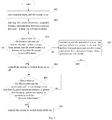
- Fig. 5 is a flow diagram of a screen control method provided by the present disclosure which includes following steps:
- step 501 conversation starts and the screen is on
- step 502 during the conversation, distance information between the screen and user's face is obtained by a distance sensor, and orientation information of the mobile terminal is obtained by a gravity sensor;
- the mobile terminal is determined whether or not to conform to a preset condition in accordance with the distance information and the orientation information; if yes, the following steps 504 and 505 would be implemented; if not, the following step 506 would be implemented;
- step 504 brightness of the screen is adjusted to a brightness lower than the preset brightness threshold
- the brightness of the screen is adjusted from lower than the preset brightness threshold to a brightness value determined in accordance with the environment brightness;
- the distance between the screen and user's face is detected whether or not to change from greater than the preset screen-off distance to less than the preset screen-off distance in accordance with the distance information; if yes, the following step 507 would be implemented; if not, the following step 510 would be implemented;
- step 507 the screen is controlled to switch from on to off; after step 507, the following step 508 would be implemented;
- step 508 the distance between the screen and user's face is detected whether or not to change from less than the preset screen-on distance to greater than the preset screen-on distance in accordance with the distance information; if yes, the following step 509 would be implemented; if not, step 508 would be implemented again;
- step 509 the screen is controlled to switch from off to on; after step 509, step 503 described above would be implemented;
- the mobile terminal is controlled to turn off the screen, when the screen is on and the mobile terminal does not receive a user operation for a duration longer than the preset screen lock period.
- the preset screen-off distance is equal to the preset screen-on distance; alternatively, the preset screen-off distance is less than the preset screen-on distance.
- the orientation information of the mobile terminal is acquired during the conversation, in accordance with which the distance information is determined to be accurate or not. If the distance information is determined not to be accurate, the brightness of the screen would be adjusted to a brightness lower than the preset brightness threshold instead of triggering the auto-lock screen process to avoid erroneous operation.
- Fig. 6 is a block diagram of a screen control apparatus shown in accordance with an exemplary embodiment.
- the apparatus can include a function of implementing the above embodiment, wherein the function can be implemented by hardware, or by corresponding software executed by the hardware.
- the apparatus may include an acquisition module 610, a first detection module 620 and a first adjustment module 630.
- the acquisition module 610 is configured to acquire distance information between a screen of a mobile terminal and an adjacent object and orientation information of the mobile terminal when the mobile terminal is in a conversation state, wherein the distance information indicates a distance between the screen and the adjacent object, the orientation information indicates an orientation of the mobile terminal.
- the first detection module 620 is configured to determine502 whether the mobile terminal conforms to a preset condition in accordance with the distance information and the orientation information.
- the first adjustment module 630 is configured to adjust brightness of the screen to a brightness lower than a preset brightness threshold, when the mobile terminal conforms to the preset condition.
- the apparatus acquires the distance information between the screen of the mobile terminal and the adjacent object and the orientation information of the mobile terminal when the mobile terminal is in a conversation state and determines whether the mobile terminal conforms to preset condition in accordance with the distance information and the orientation information.
- the mobile terminal conforms to the preset condition, it adjusts the brightness of the screen to a brightness lower than the preset brightness threshold, which solves the problem of mis-triggering the auto-lock screen process in the relevant techniques due to the inaccurate distance information between the screen and user's face acquired by the distance sensor.
- the distance information is detected to be accurate or not in accordance with the orientation information.
- the distance information is not accurate, it adjusts the brightness of the screen to the brightness lower than the preset brightness threshold instead of triggering the auto-lock screen process to avoid erroneous operation.
- the preset condition includes: within a preset period, the distance between the screen and the adjacent object is greater than a preset screen-on distance, and the orientation of the mobile terminal is different from a preset orientation.
- the acquisition module 610 includes: a first acquisition submodule 611 and a second acquisition submodule 612.
- the first acquisition submodule 611 is configured to acquire energy value of a reflected signal via a distance sensor, the energy value of reflected signal is the distance information, wherein the reflected signal is a signal that is transmitted from the distance sensor and received by the distance sensor after reflected by the adjacent object.
- the second acquisition submodule 612 is configured to collect acceleration data via a gravity sensor, and the acceleration data is the orientation information.
- the first detection module 620 includes: a detection submodule 621 and a determination submodule 622.
- the detection submodule 621 is configured to, within the preset period, determine whether the energy value of a reflected signal is less than a preset energy threshold, the acceleration data does not belong to a preset acceleration value interval.
- the determination submodule 622 is configured to determine the mobile terminal conforms to the preset condition when the energy value of reflected signal is less than the preset energy threshold and the acceleration data does not belong to the preset acceleration value interval within the preset period.
- the apparatus further includes: a first control module 640 and a second control module 650.
- the first control module 640 is configured to, control the screen to switch from on to off, when the mobile terminal does not conform to the preset condition, and when the screen is on and the distance between the screen and the adjacent object changes from greater than a preset screen-off distance to less than the preset screen-off distance.
- the second control module 650 is configured to control the screen to switch from off to on when the screen is off and the distance between the screen and the adjacent object changes from less than the preset screen-on distance to greater than the preset screen-on distance.
- the preset screen-off distance is equal to the preset screen-on distance, or the preset screen-off distance is less than the preset screen-on distance.
- the apparatus further includes: a third control module 660.
- the third control module 660 is configured to control the mobile terminal to turn off the screen, when the mobile terminal does not conform the preset condition, and when the screen is on and the mobile terminal does not receive a user operation for a duration longer than a preset screen lock period.
- the apparatus further includes a second adjustment module 670.
- the second adjustment module 670 is configured to adjust brightness of the screen from lower than a preset brightness threshold to an original brightness value after ending a conversation. Or, the second adjustment module 670 is configured to adjust brightness of the screen from lower than a preset brightness threshold to a brightness value determined in accordance with environment brightness after ending the conversation.
- the apparatus further includes: a second detection module 680.
- the second detection module 680 is configured to determine whether the mobile terminal is in a hands-free conversation state.
- the acquisition module 610 is further configured to, when the mobile terminal is not in the hands-free conversation state, acquire distance information between the screen of the mobile terminal and the adjacent object and the orientation information of the mobile terminal.
- Some exemplary embodiments of the present disclosure provide a screen control apparatus capable of implementing the screen control method provided by the present disclosure.
- the apparatus comprises: a processor; and a storage storing executable instructions executed by the processor.
- the processor is configured to: acquire distance information between a screen of a mobile terminal and an adjacent object and orientation information of the mobile terminal when the mobile terminal is in a conversation state, wherein the distance information indicates a distance between the screen and the adjacent object, the orientation information indicates an orientation of the mobile terminal; determine whether the mobile terminal conforms to a preset condition in accordance with the distance information and the orientation information; and adjust brightness of the screen to a brightness lower than a preset brightness threshold when the mobile terminal conforms to the preset condition; the preset condition includes: within the preset period, the distance between the screen and the adjacent object is greater than a preset screen-on distance, and the orientation of the mobile terminal is different from a preset orientation.
- the preset screen-on distance refers to a preset distance for triggerring the screen to switch from off to on;
- the preset orientation referes to a preset orientation of the mobile terminal when the plane of the screen is parallel or nearly parallel to the plane of the adjacent object when the mobile terminal is in a conversation state;
- the preset period refers to a preset period for triggering the adjustment of the brightness of the screen to a brightess lower than the preset brightness threshold.
- the processor is configured to: acquire energy value of a reflected signal via a distance sensor, the energy value of reflected signal is the distance information, wherein the reflected signal is a signal that is transmitted from the distance sensor and received by the distance sensor after reflected by the adjacent object; and collect acceleration data via a gravity sensor, and the acceleration data is the orientation information.
- the processor is configured to: within the preset period, determine whether the energy value of reflected signal is less than a preset energy threshold, the acceleration data does not belong to a preset acceleration value interval; determine the mobile terminal conforms to the preset condition, when the energy value of reflected signal is less than a preset energy threshold and the acceleration data does not belong to a preset acceleration value interval within the preset period.
- the processor is configured to: control the screen to switch from on to off, when the mobile terminal does not conform to the preset condition, and when the screen is on and the distance between the screen and the adjacent object changes from greater than a preset screen-off distance to less than the preset screen-off distance; control the screen to switch from off to on, when the screen is off and the distance between the screen and the adjacent object changes from less than the preset screen-on distance to greater than the preset screen-on distance; and wherein, the preset screen-off distance is equal to the preset screen-on distance, or the preset screen-off distance is less than the preset screen-on distance.
- the processor is configured to: control the mobile terminal to turn off the screen, when the mobile terminal does not conform the preset condition, and when the screen is on and the mobile terminal does not receive a user operation for a duration longer than a preset screen lock period.
- the processor is configured to: adjust brightness of the screen from lower than a preset brightness threshold to an original brightness value after ending a conversation; or adjust brightness of the screen from lower than a preset brightness threshold to a brightness value determined in accordance with environment brightness after ending the conversation.
- the processor is configured to: determine whether the mobile terminal is in a hands-free conversation state; and acquire distance information between the screen of the mobile terminal and the adjacent object and orientation information of the mobile terminal, when the mobile terminal is not in the hands-free conversation state.
- Fig. 8 is a block diagram of an apparatus 800 in accordance with an exemplary embodiment.
- the apparatus 800 may be a mobile phone, a computer, a digital broadcast terminal, a messaging device, a game console, a tablet device, a medical device, a fitness device, a personal digital assistant, and the like.
- the apparatus 800 may include one or more of the following components: a processing component 802, a memory storage 804, a power supply component 806, a multimedia component 808, an audio component 810, an input/output (I/O) interface 812, a sensor component 814, and a communication component 816.
- the processing component 802 generally can control the overall operation of the apparatus 800, such as operations associated with display, phone conversation, data communication, camera operation, and recording operations.
- the processing component 802 may include one or more processors 820 to execute instructions, to complete all or part of the steps described above.
- the processing component 802 may include one or more modules to facilitate the interactions between the processing component 802 and other components.
- the processing component 802 may include a multimedia module to facilitate interaction between the multimedia component 808 and the processing component 802.
- the memory storage 804 can be configured to store various types of data to support the operation of the apparatus 800. Examples of such data can include instructions of any application or method, contact data, phonebook data, messages, pictures, videos, and the like, that operates on the apparatus 800.
- the memory storage 804 may be implemented by any type of volatile or nonvolatile memory device or a combination thereof, such as static random access memory (SRAM), electriconversationy erasable programmable read only memory (EEPROM), erasable programmable read only memory (EPROM), programmable read only memory (PROM), read only memory (ROM), magnetic memory, flash memory, disk or CD.
- SRAM static random access memory
- EEPROM electriconversationy erasable programmable read only memory
- EPROM erasable programmable read only memory
- PROM programmable read only memory
- ROM read only memory
- magnetic memory magnetic memory
- flash memory disk or CD.
- the power supply component 806 can provide power to the various components of the apparatus 800.
- the power supply component 806 may include a power management system, one or more power supplies, and other components associated with generating, managing, and distributing power for the apparatus 800.
- the multimedia component 808 may include a screen providing an output interface between the apparatus 800 and the user.
- the screen may include a liquid crystal display (LCD) and a touch panel (TP). If the screen includes a touch panel, the screen may be implemented as a touch screen to receive input signals from the user.
- the touch panel can include one or more touch sensors to sense touches, slide, and orientations on touch panels. The touch sensors may sense not only the boundary of the touch or slide actions, but also the duration and pressure associated with the touch or slide operation.
- the multimedia component 808 may include a front camera and/or a rear camera. When the apparatus 800 is at an operating mode, such as a shooting mode or a video mode, the front camera and/or the rear camera can receive external multimedia data. Each front camera and rear camera can be a fixed optical lens system or have focal length and optical zoom capability.
- the audio component 810 can be configured to output and/or input an audio signal.
- the audio component 810 can include a microphone (MIC) that is configured to receive external audio signals when the apparatus 800 is in the operating mode, such as a conversation mode, a recording mode, and a voice recognition mode.
- the received audio signals may be further stored in the memory storage 804 or transmitted via the communication component 816.
- the audio component 810 can also include a speaker for outputting the audio signals.
- the I/O interface 812 can provide the interface between the processing component 802 and a peripheral interface module, the peripheral interface module may be a keyboard, a mouse, buttons, or the like.
- the buttons may include, but are not limited to, a home button, a volume button, a start button, and a lock button.
- the sensor component 814 may include one or more sensors for providing condition assessments of the various aspects of the apparatus 800.
- the sensor component 814 may detect the on/off state of the apparatus 800, the relative positioning of the components, for example the components can be the display and keypad of the apparatus 800, and the sensor component 814 may also detect position changes of the apparatus 800 or any component thereof, presence or absence of the user contact with the apparatus 800, orientation, acceleration/deceleration, or the temperature changes of the apparatus 800.
- the sensor component 814 may include an approaching sensor configured to detect the presence of a nearby object without any physical contact.
- the sensor component 814 may also include a light sensor, such as a CMOS or CCD image sensor, for imaging applications.
- the sensor component 814 may also include acceleration sensors, gyro sensors, magnetic sensors, pressure sensors, or temperature sensors.
- the communication component 816 can be configured to facilitate wired or wireless communication between the apparatus 800 and other apparatuses.
- the apparatus 800 may access a wireless network based on a communication standard, such as WiFi, 2G or 3G, or a combination thereof.
- the communication component 816 can receive broadcast signals or broadcast-related information from an external broadcast management system via broadcast channels.
- the communication component 816 can also include a near field communication (NFC) module to facilitate short-range communication.
- the NFC module may be implemented based on radio frequency identification (RFID) technology, infrared data association (IrDA) technology, ultra wideband (UWB) technology, Bluetooth (BT) technology and other techniques.
- RFID radio frequency identification
- IrDA infrared data association
- UWB ultra wideband
- Bluetooth Bluetooth
- the apparatus 800 may be implemented by one or more application specific integrated circuits (ASICs), digital signal processors (DSPs), digital signal processing devices (DSPDs), programmable logic devices (PLDs), field programmable gate array (FPGA), a controller, a microcontroller, a microprocessor, or other electronic components for performing the method described above.
- ASICs application specific integrated circuits
- DSPs digital signal processors
- DSPDs digital signal processing devices
- PLDs programmable logic devices
- FPGA field programmable gate array
- controller a microcontroller, a microprocessor, or other electronic components for performing the method described above.
- non-transitory computer readable storage medium can be the memory storage 804 including the instructions.
- the instructions may be executed on the processor 820 of the apparatus 800 to complete the method described above.
- the non-transitory computer readable storage medium may be a ROM, a random access memory (RAM), a CD-ROM, a magnetic tape, a floppy disk, an optical data storage device, etc.
- the term “plurality” herein refers to two or more.
- "And/or” herein describes the correspondence of the corresponding objects, indicating three kinds of relationship.
- a and/or B can be expressed as: A exists alone, A and B exist concurrently, B exists alone.
- the character "/" generally indicates that the context object is an "OR" relationship.
Landscapes
- Engineering & Computer Science (AREA)
- Theoretical Computer Science (AREA)
- General Engineering & Computer Science (AREA)
- Physics & Mathematics (AREA)
- General Physics & Mathematics (AREA)
- Signal Processing (AREA)
- Computer Networks & Wireless Communication (AREA)
- Human Computer Interaction (AREA)
- Environmental & Geological Engineering (AREA)
- Telephone Function (AREA)
Abstract
Description
- The present disclosure relates to mobile terminal technology, and more particularly to a screen control method, apparatus and non-transitory tangible computer readable storage medium.
- Mobile terminals with conversation function such as mobile phones normally have the function to control the screen to be on or off in accordance with the distance between the screen of the mobile terminal and user's face during conversation.
- In the related art, a distance sensor is installed in the mobile terminal to acquire the distance between the screen and the user' face during conversation; when the distance is short, the mobile terminal controls the screen to be off; when the distance is long, the mobile terminal controls the screen to be on.
- The present disclosure provides a screen control method, apparatus and non-transitory tangible computer readable storage medium, as follows:
- In a first aspect of the present invention, a screen control method is provided. The method comprises: acquiring distance information between a screen of a mobile terminal and an adjacent object and orientation information of the mobile terminal when the mobile terminal is in a conversation state, wherein the distance information indicates a distance between the screen and the adjacent object, and the orientation information indicates an orientation of the mobile terminal; determining whether the mobile terminal conforms to a preset condition in accordance with the distance information and the orientation information; and adjusting brightness of the screen to a brightness lower than a preset brightness threshold, when the mobile terminal conforms to the preset condition; the preset condition includes: within a preset period, the distance between the screen and the adjacent object is greater than a preset screen-on distance, and the orientation of the mobile terminal is different from a preset orientation.
- In some embodiments, acquiring distance information between the screen of the mobile terminal and the adjacent object and orientation information of the mobile terminal includes: acquiring energy value of a reflected signal via a distance sensor, and the energy value of the reflected signal is the distance information; wherein the reflected signal is a signal that is transmitted from the distance sensor and received by the distance sensor after reflected by the adjacent object; collecting acceleration data via a gravity sensor, and the acceleration data is the orientation information
- In some embodiments, determining whether the mobile terminal conforms to the preset condition in accordance with the distance information and the orientation information includes: within the preset period, determining whether the energy value of the reflected signal is less than a preset energy threshold, and the acceleration data does not belong to a preset acceleration value interval; and determining the mobile terminal conforms to the preset condition, when the energy value of reflected signal is less than a preset energy threshold and the acceleration data does not belong to a preset acceleration value interval within the preset period.
- In some embodiments, the method further comprises: controlling the screen to switch from on to off, when the mobile terminal does not conform to the preset condition, and when the screen is on and the distance between the screen and the adjacent object changes from greater than a preset screen-off distance to less than the preset screen-off distance; controlling the screen to switch from off to on, when the screen is off and the distance between the screen and the adjacent object changes from less than the preset screen-on distance to greater than the preset screen-on distance; and wherein the preset screen-off distance is equal to the preset screen-on distance, or the preset screen-off distance is less than the preset screen-on distance.
- In some embodiments, the method further comprises: controlling the mobile terminal to turn off the screen, when the mobile terminal does not conform to the preset condition, and when the screen is on and the mobile terminal does not receive a user operation for a duration longer than a preset screen lock period.
- In some embodiments, the method further comprises: adjusting the brightness of the screen from lower than a preset brightness threshold to an original brightness value after ending a conversation; or adjusting brightness of the screen from lower than a preset brightness threshold to a brightness value determined in accordance with environment brightness after ending the conversation.
- In some embodiments, the method further comprises: acquiring distance information between the screen of the mobile terminal and the adjacent object and orientation information of the mobile terminal when the mobile terminal is not in a hands-free conversation state.
- In some embodiments, the preset screen-on distance refers to a preset distance for triggerring the screen to switch from off to on; the preset orientation referes to a preset orientation of the mobile terminal when the plane of the screen is parallel or nearly parallel to the plane of the adjacent object when the mobile terminal is in a conversation state; the preset period refers to a preset period for triggering the adjustment of the brightness of the screen to a brightess lower than the preset brightness threshold.
- In a second aspect of the present invention, a screen control apparatus is provided. The apparatus comprises: an acquisition module, configured to acquire distance information between a screen of a mobile terminal and an adjacent object and orientation information of the mobile terminal when the mobile terminal is in a conversation state; wherein the distance information indicates a distance between the screen and the adjacent object, the orientation information indicates an orientation of the mobile terminal; a first detection module, configured to determine whether the mobile terminal conforms to a preset condition in accordance with the distance information and the orientation information; and a first adjustment module, configured to adjust brightness of the screen to a brightness lower than a preset brightness threshold, when the mobile terminal conforms to the preset condition;In some embodiments, the preset condition includes, within a preset period, the distance between the screen and the adjacent object is greater than a preset screen-on distance, and the orientation of the mobile terminal is different from a preset orientation.
- In some embodiments, the acquisition module includes: a first acquisition submodule, configured to acquire energy value of a reflected signal via a distance sensor, the energy value of the reflected signal is the distance information; wherein the reflected signal is a signal that is transmitted from the distance sensor and received by the distance sensor after reflected by the adjacent object; anda second acquisition submodule, configured to collect acceleration data via a gravity sensor, and the acceleration data is the orientation information.
- In some embodiments, the first detection module includes: within the preset period, determine whether the energy value of the reflected signal is less than a preset energy threshold, and the acceleration data does not belong to a preset acceleration value interval; and a determination submodule, configured to determine the mobile terminal conforms to the preset condition, when the energy value of the reflected signal is less than the preset energy threshold and the acceleration data does not belong to the preset acceleration value interval within the preset period.
- In some embodiments, the apparatus further comprises: a first control module configured to, control the screen to switch from on to off, when the mobile terminal does not conform to the preset condition, and when the screen is on and the distance between the screen and the adjacent object changes from greater than a preset screen-off distance to less than the preset screen-off distance; a second control module, configured to control the screen to switch from off to on, when the screen is off and the distance between the screen and the adjacent object changes from less than a preset screen-on distance to greater than the preset screen-on distance; and wherein, the preset screen-off distance is equal to the preset screen-on distance, or the preset screen-off distance is less than the preset screen-on distance.
- In some embodiments, the apparatus further comprises: a third control module configured to, control the mobile terminal to turn off the screen, when the mobile terminal does not conform the preset condition, and when the screen is on and the mobile terminal does not receive a user operation for a duration longer than a preset screen lock period.
- In some embodiments, the apparatus further comprises: a second adjustment module, configured to adjust brightness of the screen from lower than a preset brightness threshold to an original brightness value after ending a conversation; or the second adjustment module, configured to adjust brightness of the screen from lower than a preset brightness threshold to a brightness value determined in accordance with environment brightness after ending the conversation.
- In some embodiments, the apparatus further comprises: a second detection module, configured to determine whether the mobile terminal is in a hands-free conversation state; wherein the acquisition module further configured to acquire distance information between the screen of the mobile terminal and the adjacent object and orientation information of the mobile terminal when the mobile terminal is not in the hands-free conversation state.
- In some embodiments, the preset screen-on distance refers to a preset distance for triggerring the screen to switch from off to on; the preset orientation referes to a preset orientation of the mobile terminal when the plane of the screen is parallel or nearly parallel to the plane of the adjacent object when the mobile terminal is in a conversation state; the preset period refers to a preset period for triggering the adjustment of the brightness of the screen to a brightess lower than the preset brightness threshold.
- In a third aspect of the present invention, a screen control apparatus is provided. The apparatus comprises: a processor; and a storage storing executable instructions executed by the processor; wherein, the processor is configured to: acquire distance information between a screen of a mobile terminal and an adjacent object and orientation information of the mobile terminal when the mobile terminal is in a conversation state; wherein the distance information indicates a distance between the screen and the adjacent object, the orientation information indicates an orientation of the mobile terminal; determine whether the mobile terminal conforms to a preset condition in accordance with the distance information and the orientation information; and adjust brightness of the screen to a brightness lower than a preset brightness threshold, when the mobile terminal conforms to the preset condition; the preset condition includes: within a preset period, the distance between the screen and the adjacent object is greater than a preset screen-on distance, and the orientation of the mobile terminal is different from a preset orientation.
- In some embodiments, the processor is configured to: acquire energy value of a reflected signal via a distance sensor, the energy value of the reflected signal is the distance information; wherein the reflected signal is a signal that is transmitted from the distance sensor and received by the distance sensor after reflected by the adjacent object; andcollect acceleration data via a gravity sensor, and the acceleration data is the orientation information.
- In some embodiments, the processor is configured to, within the preset period, determine whether the energy value of the reflected signal is less than a preset energy threshold, and the acceleration data does not belong to a preset acceleration value interval; and determine the mobile terminal conforms to the preset condition, when the energy value of the reflected signal is less than the preset energy threshold and the acceleration data does not belong to the preset acceleration value interval within the preset period.
- In some embodiments, the processor is configured to: control the screen to switch from on to off, when the mobile terminal does not conform to the preset condition, and when the screen is on and the distance between the screen and the adjacent object changes from greater than a preset screen-off distance to less than the preset screen-off distance; control the screen to switch from off to on, when the screen is off and the distance between the screen and the adjacent object changes from less than a preset screen-on distance to greater than the preset screen-on distance; and wherein, the preset screen-off distance is equal to the preset screen-on distance, or the preset screen-off distance is less than the preset screen-on distance.
- In some embodiments, the processor is configured to control the mobile terminal to turn off the screen, when the mobile terminal does not conform the preset condition, and when the screen is on and the mobile terminal does not receive a user operation for a duration longer than a preset screen lock period.
- In some embodiments, the processor is configured to: adjust brightness of the screen from lower than a preset brightness threshold to an original brightness value after ending a conversation; or adjust brightness of the screen from lower than a preset brightness threshold to a brightness value determined in accordance with environment brightness after ending the conversation.
- In some embodiments, the processor is configured to: acquire distance information between the screen of the mobile terminal and the adjacent object and orientation information of the mobile terminal when the mobile terminal is not in a hands-free conversation state.
- In some embodiments, the preset screen-on distance refers to a preset distance for triggerring the screen to switch from off to on; the preset orientation referes to a preset orientation of the mobile terminal when the plane of the screen is parallel or nearly parallel to the plane of the adjacent object when the mobile terminal is in a conversation state; the preset period refers to a preset period for triggering the adjustment of the brightness of the screen to a brightess lower than the preset brightness threshold.
- In a further aspect of the present invention, there is provided a non-transitory tangible computer readable storage medium comprising: at least an instruction, a program, a code set or instruction set, stored in the non-transitory tangible computer readable storage medium, and loaded and executed on a processor for implementation of: acquiring distance information between a screen of a mobile terminal and an adjacent object and orientation information of the mobile terminal when the mobile terminal is in a conversation state; wherein the distance information indicates a distance between the screen and the adjacent object, the orientation information indicates an orientation of the mobile terminal; determining whether the mobile terminal conforms to a preset condition in accordance with the distance information and the orientation information; adjusting brightness of the screen to a brightness lower than a preset brightness threshold, when the mobile terminal conforms to the preset condition; the preset condition includes: within a preset period, the distance between the screen and the adjacent object is greater than a preset screen-on distance, and the orientation of the mobile terminal is different from a preset orientation.
- The technical solution provided by the present disclosure may include the following advantageous benefits:
acquiring the distance information between the screen of the mobile terminal and the adjacent object and the orientation information of the mobile terminal when the mobile terminal is in a conversation state, determining whether the mobile terminal conforms to preset condition in accordance with the distance information and the orientation information, adjusting the brightness of the screen to a brightness lower than the preset brightness threshold when the mobile terminal conforms to the preset condition. The distance information is determined to be accurate or not based on the orientation information. When the distance information is not accurate, it adjusts the brightness of the screen to a brightness lower than the preset brightness threshold instead of triggering the auto-lock screen process to avoid erroneous operation and improve the accuracy of screen control. - It is understandable that both the foregoing general description and the following detailed description are exemplary only, and are not intended to limit the present disclosure.
- The drawings herein are incorporated in and constitute a part of this specification, showing the embodiments of the present disclosure and, together with the specification, utilized to explain the principles of the present disclosure.
-
Fig. 1 is a schematic diagram of acquiring a distance between a screen and user's face via a distance sensor shown in accordance with an exemplary embodiment; -
Fig. 2 is a flow diagram of a screen control method shown in accordance with an exemplary embodiment; -
Fig. 3 is a flow diagram of a screen control method shown in accordance with another exemplary embodiment; -
Fig. 4 is a flow diagram of a screen control method of the related art; -
Fig. 5 is a flow diagram of a screen control method of the present disclosure; -
Fig. 6 is a block diagram of a screen control apparatus shown in accordance with an exemplary embodiment; -
Fig. 7 is a block diagram of a screen control apparatus shown in accordance with another exemplary embodiment; -
Fig. 8 is a block diagram of an apparatus shown in accordance with an exemplary embodiment. - Hereinafter, exemplary embodiments will be described in detail, the embodiments are shown in the drawings. In the following description when referring to the drawings, the same numerals in the different drawings denote the same or similar elements, unless otherwise indicated. The embodiments described in the following exemplary embodiments are not representative of all embodiments consistent with the present disclosure. Rather, they are merely examples of apparatuses and methods consistent with some aspects of the present disclosure as detailed in the claims.
- In the related art, the distance between a screen and user's face is acquired via a distance sensor. Distance sensor includes various types such as infrared distance sensor, laser distance sensor, and ultrasonic distance sensor, etc. With similar working principles, the distance sensor includes a transmitter and a receiver. Transmitter sends out signals (such as infrared ray, laser or ultrasonic wave) which will be reflected by obstacles. And the receiver receives the reflected signals. In accordance with the energy value of the reflected signal received by the receiver, the distance sensor could therefore determine the distance between the distance sensor and the obstacle.
- When a distance sensor acquires the distance between the screen and user's face, the acquired distance is more accurate when the plane of the screen is parallel to the plane of the user's face (that is, the plane of user's profile for answering the phone). As shown in part (a) of
Fig. 1 , when the plane of the screen is parallel to the plane of user's face, the transmission distance of the transmission signal fromtransmitter 11 of the distance sensor is equal to the transmission distance of the reflected signal received byreceiver 12. In this case, the distance between the screen and user's face determined in accordance with the energy value of the reflected signal is more accurate. - However, in practice, the plane of the screen and the plane of user's face during the conversation may not be parallel as shown in parts (b) and (c) of
Fig. 1 . In case of part (b) ofFig. 1 , the acquired energy value of the reflected signal is bigger, resulting in the determined distance to be shorter. In case of part (c) ofFig. 1 , the acquired energy value is smaller, resulting in the determined distance to be longer. - When the acquired distance between the screen and user's face is not accurate, in accordance with which the controling the screen to be on or off would not be accurate either. In the related art, the mobile terminal is set up with the function of auto-lock screen that could be triggered when the screen is on and the mobile terminal does not receive a user operation for a duration longer than the preset screen lock period to turn off the power to control the mobile terminal to turn off the screen. The user could only switch the mobile terminal from screen lock state back to normal state (unlock state) by a preset unlock mode. For example, after the user triggers to turn on the screen and enters the correct password, the mobile terminal could switch from the screen lock state back to normal state. During the conversation, the mobile terminal would also trigger the auto-lock screen function. When the mobile terminal switches to screen lock state, the screen of the mobile terminal would no longer be turned on when the distance between the screen and user's face is greater than the preset screen-on distance. During the conversation, the related art would keep the screen on for a long time due to the longer distance between the screen and user's face detected by distance sensor, and trigger the auto-lock screen function of the mobile terminal, resulting in that the screen would not be turned on when the user moves the screen away from the face. The above operation process of the mobile terminal is invenvenient to the user and neither in line with the original design purpose nor user's expectation.
- Based on above, the present disclosure provides a screen control method and an apparatus in accordance with the method to solve the problem of the mis-triggering auto-lock screen process due to inaccurate distance between the screen and user's face detected by a distance sensor in the related art. One of the technical solutions in the present disclosure is to acquire the distance information between the screen of the mobile terminal and the adjacent object, and the orientation information of the mobile terminal, and to comprehensively utilize the distance information and the orientation information to optimize the control logic of turning screen on and off during conversation. The present disclosure will be described in further details below with regards to the common aspects of the embodiments of the present disclosure mentioned above.
- Each step in the method provided by the present disclosure may be implemented by a mobile terminal with conversation function. For example, the mobile terminal could be an electronic device such as a mobile phone, a tablet, a wearable device, etc.
-
Fig. 2 is a flow diagram illustrating a screen control method in accordance to an exemplary embodiment, which may include following steps. - At
step 201, during conversation of the mobile terminal, the distance information between the screen of the mobile terminal and the adjacent object and the orientation information of the mobile terminal is acquired. - The conversation process is the process of a mobile terminal from dialing out to hanging up a conversation; or the process from answering to hanging up a conversation. In addition, conversations refered in the present disclosure include but are not limited to phone conversations and audio conversations.
- Distance information indicates the distance between the screen and the adjacent object, usually user's face. The mobile terminal can acquire the distance information between the screen and the adjacent object via a distance sensor. In the embodiment of the present disclosure, the type of the distance sensor is not limited, which could be an infrared distance sensor, a laser distance sensor, or an ultrasonic distance sensor, etc.
- In some embodiments, the mobile terminal acquires the distance information via the distance sensor in the way of acquiring the energy value of the reflected signal, which is the distance information between the screen of the mobile terminal and the adjacent object. The reflected signal herein is the signal transmitted from the distance sensor and received by the distance sensor after reflected by the adjacent object. As the energy of the transmitted signal from transmitter of the distance sensor is constant, after the transmitter sends out the transmitted signal, the receiver will receive the reflected signal reflected by the adjacent object. The energy value of the reflected signal received by the receiver is negatively correlated with the distance between the screen and the adjacent object. Therefore, the energy value of the reflected signal can reflect the distance between the screen and the adjacent object.
- The orientation information indicates the orientation of the mobile terminal that refers to the placement state of the mobile terminal, such as the vertical placement state, the horizontal placement state, the tilted placement state, the inverted placement state, etc. The mobile terminal could acquire the orientation information via a gravity sensor (G-sensor).
- In some embodiments, the mobile terminal acquires the orientation information via the gravity sensor in the way of collecting the acceleration data, which is the orientation information of the mobile terminal. As the acceleration data collected by the built-in gravity sensor is different when the orientation of the mobile terminal is different, the acceleration data could reflect the orientation of the mobile terminal. Alternatively, the gravity sensor could be a triaxial gravity sensor to acquire the three-dimensional acceleration data of the mobile terminal. The acceleration data may include gravitational acceleration data and linear acceleration data.
- At
step 202, the mobile terminal is determined to whether or not conform to the preset condition in accordance with the distance information and the orientation information. - In some embodiments, the preset condition includes: within the preset period, the distance between the screen and the adjacent object is greater than the preset screen-on distance, and the orientation of the mobile terminal is not the preset orientation. Wherein the preset screen-on distance refers to the preset distance which triggers the screen to switch from off to on. The preset orientation refers to the preset orientation of the mobile terminal during the conversation when the plane of the screen is considered to be parallel or nearly parallel to the plane of the adjacent object, which could be calculated from a large number of experimental data. The preset period refers to the preset period for triggering the adjustment of the brightness of the screen to a brightness lower than the preset brightness threshold. The preset period is less than the preset screen lock priod described below.
- In some embodiments, when the distance information is the energy value of the reflected signal acquired by the distance sensor, and the orientation information is the acceleration data acquired by the gravity sensor, this step includes the following sub-steps:
- 1. To check whether the following condition is met within the preset period: the energy value of the reflected signal is less than the preset energy threshold, and the acceleration data does not belong to the preset acceleration value interval.
- 2. To determine the mobile terminal conforms to the preset condition when the above condition is met within the preset period. Otherwise, the mobile terminal is then determined not to conform to the preset condition when the above condition is not met within the preset period.
- Corresponding to the preset screen-on distance, the preset energy threshold refers to the energy value of the reflected signal received by the distance sensor when the distance between the screen and the adjacent object is the preset screen-on distance. As described above, the energy value of the reflected signal received by the distance sensor is negatively correlated with the distance between the screen and the adjacent object. Therefore, when the energy value of the reflected signal is less than the preset energy threshold, it indicates that the distance between the screen and the adjacent object is greater than the preset screen-on distance.
- Corresponding to the preset orientation, the preset acceleration value interval refers to the value interval consisting of the acceleration data related to the mobile terminal in preset orientation. In practice, the preset acceleration value interval could be constructed in accordance with the corresponding acceleration data collected from a large number of experiments simulating the mobile terminal track and orientation changes during the process of user from picking up the mobile terminal to moving it towards the face for conversation. In the process of above simulation, when the mobile terminal moves as close as possible towards the face, the plane of the screen is parallel or nearly parallel to the plane of the adjacent object (i.e., the plane of user's profile answering the phone). In this way, in accordance with the preset acceleration value interval acquired through above simulation, when the acceleration data acquired by the mobile terminal belongs to the preset acceleration value interval, it indicates that the plane of the screen is parallel or nearly parallel to the plane of the adjacent object.in which case the error of distance detected by the distance sensor would be minor. When the acceleration data acquired by the mobile terminal does not belong to the preset acceleration value interval, it indicates that the plane of the screen is not parallel nor nearly parallel to the plane of the adjacent object. That is to say, the angle between the plane of the screen and plane of the adjacent object is relatively big, in which case the error of distance detected by the distance sensor is relatively big. When the distance sensor acquires a small distance error, it could trigger the operation of turning the screen on or off in accordance with the distance; when the distance sensor acquires a big distance error, in order to avoid erroneous implementation of the auto-lock screen process, the mobile terminal would implement the
following step 203 when the mobile terminal is determined to conform to the preset condition to avoid triggering the screen lock state. - At
step 203, the brightness of the screen is adjusted to a brightness lower than the preset brightness threshold when the mobile terminal conforms to the preset condition. - In the embodiments of the present disclosure, in order to avoid mis-trigerring the auto-lock screen process due to the inaccurate distance between the screen and the adjacent object detected by the distance sensor, when the mobile terminal is determined to conform to the preset condition, it would adjust the brightness of the screen to a brightness lower than the preset brightness threshold, instead of triggering the auto-lock screen process. Wherein, the preset brightness threshold could be set by the system of the mobile terminal by default, or by the user.
- In some embodiments, after adjusting the brightness of the screen to a brightness lower than the preset brightness threshold, the mobile terminal would maintain the adjusted brightness until the end of the conversation. That is, before the end of the conversation, the mobile terminal no longer controls the screen to be on or off in accordance with the distance between the screen and the adjacent object.
- In some embodiments, after adjusting the brightness of the screen to the brightness lower than the preset brightness threshold, the mobile terminal would adjust the brightness of the screen from lower than the preset brightness threshold to the original brightness value when a user operation is received. Alternatively, it would adjust the brightness of the screen from lower than the preset brightness threshold to the brightness value determined in accordance with the environment brightness. The original brightness value refers to the display brightness before the mobile terminal adjusts the brightness of the screen to the brightness lower than the preset brightness threshold. The environment brightness could be collected by a light sensor. The mobile terminal could have the function of adjusting the display brightness in accordance with the environment brightness with adaptability. For example, the display brightness is positively correlated with the environment brightness. The above approach ensures that users could view the content displayed on the screen in normal.
- In addition, after the conversation ends, the mobile terminal would adjust the brightness of the screen from lower than the preset brightness threshold to the original brightness value, or it would adjust the brightness of the screen from lower than the preset brightness threshold to the brightness value determined in accordance with the environment brightness.
- Accordingly, the method provided in the present embodiments acquires the distance information between the screen of the mobile terminal and the adjacent object and the orientation information of the mobile terminal when the mobile terminal is in a conversation state, and determines whether the mobile terminal conforms to preset condition in accordance with the distance information and the orientation information. When the mobile terminal conforms to the preset condition, it adjusts the brightness of the screen to a brightness lower than the preset brightness threshold. Since the distance information is determined to be accurate or not in accordance with the orientation information, when the distance information is not accurate, it adjusts the brightness of the screen to a brightness lower than the preset brightness threshold instead of triggering the auto-lock screen process to avoid erroneous operation.
-
Fig. 3 is a flow diagram of a screen control method shown in accordance with another exemplary embodiment. The method comprises following steps. - At
step 301, to acquire distance information between a screen of a mobile terminal and an adjacent object and orientation information of the mobile terminalis when the mobile terminal is in a conversation state. - Introduction and description of
step 201 can be used as references forstep 301 and will not be described again hereto. - At
step 302, the mobile terminal is determined whether or not to conform to the preset condition in accordance with the distance information and the orientation information. When the mobile terminal conforms to the preset condition, followingstep 303 would be implemented. When the mobile terminal does not conform to the preset condition, followingstep 304 or step 305 would be implemented. - Introduction and description of
step 202 can be used as references forstep 302 and will not be described again hereto. - At
step 303, the brightness of the screen is adjusted to a brightness lower than the preset brightness threshold. - Introduction and description of
step 203 can be used as references forstep 303 and will not be described again hereto. - At
step 304, the screen is controlled to switch between on and off in accordance with the distance information. - Screen on state means that the screen is turned on, i.e. the power of the screen is connected; screen off state means that the screen is turned off, i.e. the power of the screen is dis connected.
- When the screen is on and the distance between the screen and the adjacent object changes from greater than a preset screen-off distance to less than the preset screen-off distance, controlling the screen to switch from on to off; when the screen is off and the distance between the screen and the adjacent object changes from less than the preset screen-on distance to greater than the preset screen-on distance, controlling the screen to switch from off to on. Wherein, the preset screen-off distance is equal to the preset screen-on distance, or the preset screen-off distance is less than the preset screen-on distance.
- Presumably, the screen of the mobile terminal is turned on when conversation starts. During the process of the user moving the mobile terminal towards the face, the distance between the screen and the face gradually becomes shorter. Until the distance is less than the preset screen-off distance, the mobile terminal contorls the screen to switch from on to off. If the user needs to use the screen, he/she then would gradually move the mobile terminal away from the face, during which the distance between the screen and the face gradually become longer. Until the distance is greater than the preset screen-on distance, the mobile terminal controls the screen to switch from off to on.
- In addition, as the distance between the screen and the adjacent object could be indicated by the energy value of the reflected signal received by the distance sensor, the above preset screen-off distance and the preset screen-on distance could also be indicated by the corresponding preset energy threshold.
- In addition, when the screen is on and the mobile terminal does not receive a user operation for a duration longer than the preset screen lock period, the mobile terminal would switch itself to the screen lock state. When the mobile terminal does not conform to the preset condition, and when the screen is on and the mobile terminal does not receive a user operation for a duration longer than the preset screen lock period, the auto-lock screen process would be triggered. The preset screen lock period is longer than the preset period described above. For example, the preset screen lock period is 90 seconds and the preset period is 60 seconds. In addition, the user operation may be any operation on the mobile terminal performed by the user, such as clicking the screen, clicking or adjusting physical buttons, etc.
- The method mentioned above can be used to confirm whether or not the distance information is accurate in accordance with the orientation information. When the distance information is confirmed to be relatively accurate, the original screen control logic during the conversation would be implemented, that is, the screen would be controlled to switch between on and off in accordance with the distance information; when the distance information is confirmed not to be accurate, the brightness of the screen would be adjusted to a brightness lower than the preset brightness threshold, instead of triggering the auto-lock screen process to avoid erroneous operation.
- In some embodiments, in accordance with
Fig. 2 or Fig. 3 , the method includes following steps: during a conversation, the mobile terminal determines whether it's in a hands-free conversation state. When the mobile terminal is in the hands-free conversation state, the brightness of the screen would be controlled to maintain at the original brightness value, or, the brightness of the screen would be adjusted to the brightness value determined in accordance with the environment brightness; when the mobile terminal is not in the hands-free conversation state, the steps of acquiring the distance information between the screen of the mobile terminal and the adjacent object and the orientation information of the mobile terminal would be implemented. When the mobile terminal conforms to preset condition, the brightness of the screen would be adjusted to a brightness lower than the preset brightness threshold. When the mobile terminal does not conform to the preset condition, the screen would be controlled to switch between on and off in accordance with the distance information. - The above approaches ensure that users could view the content displayed on the screen in normal in a hands-free conversation state.
- To describe the differences between the technical solutions provided by the present disclosure and the related art more clearly, the followings introduce the screen control process of the related art and the screen control process of the present disclosure through
Fig. 4 andFig. 5 respectively. -
Fig. 4 is a flow diagram of a screen control method of the related art. The method may include following steps. - At
step 401, conversation starts and the screen is on; - At
step 402, during the conversation, distance information between a distance sensor and user's face is detected by the distance sensor; - At
step 403, the distance between the screen and user's face is detected whether or not to change from greater than a preset screen-off distance to less than the preset screen-off distance in accordance with the distance information; if yes, followingstep 404 would be implemented; if not, followingstep 407 would be implemented; - At
step 404, the screen is controlled to switch from on to off; followingstep 405 can be implemented afterstep 404; - At
step 405, the distance between the screen and user's face is detected whether or not to change from less than a preset screen-on distance to greater than the preset screen-on distance in accordance with the distance information. If yes, followingstep 406 would be implemented. If not, followingstep 405 would be implemented again; - At
step 406, the sreen is controlled to switch from off to on; afterstep - At
step 407, the mobile terminal is controlled to turn off the sreen when the screen is on and the mobile terminal does not receive a user operation for a duration longer than the preset screen lock period. -
Fig. 5 is a flow diagram of a screen control method provided by the present disclosure which includes following steps: - At
step 501, conversation starts and the screen is on; - At
step 502, during the conversation, distance information between the screen and user's face is obtained by a distance sensor, and orientation information of the mobile terminal is obtained by a gravity sensor; - At
step 503, the mobile terminal is determined whether or not to conform to a preset condition in accordance with the distance information and the orientation information; if yes, the followingsteps step 506 would be implemented; - At
step 504, brightness of the screen is adjusted to a brightness lower than the preset brightness threshold; - At
step 505, after the end of the conversation, the brightness of the screen is adjusted from lower than the preset brightness threshold to a brightness value determined in accordance with the environment brightness; - At
step 506, the distance between the screen and user's face is detected whether or not to change from greater than the preset screen-off distance to less than the preset screen-off distance in accordance with the distance information; if yes, the followingstep 507 would be implemented; if not, the followingstep 510 would be implemented; - At
step 507, the screen is controlled to switch from on to off; afterstep 507, the followingstep 508 would be implemented; - At
step 508, the distance between the screen and user's face is detected whether or not to change from less than the preset screen-on distance to greater than the preset screen-on distance in accordance with the distance information; if yes, the followingstep 509 would be implemented; if not, step 508 would be implemented again; - At
step 509, the screen is controlled to switch from off to on; afterstep 509, step 503 described above would be implemented; - At
step 510, the mobile terminal is controlled to turn off the screen, when the screen is on and the mobile terminal does not receive a user operation for a duration longer than the preset screen lock period. - In accordance with the flowcharts shown in
Fig. 4 andFig. 5 above, the preset screen-off distance is equal to the preset screen-on distance; alternatively, the preset screen-off distance is less than the preset screen-on distance. - In accordance with the flowcharts shown in
Fig. 4 andFig. 5 , in the embodiments of the present disclosure, the orientation information of the mobile terminal is acquired during the conversation, in accordance with which the distance information is determined to be accurate or not. If the distance information is determined not to be accurate, the brightness of the screen would be adjusted to a brightness lower than the preset brightness threshold instead of triggering the auto-lock screen process to avoid erroneous operation. - The following is an apparatus in the embodiment of the present disclosure, which may be used to carry out the method in the embodiments of the present disclosure. The details not disclosed in the apparatus in the embodiments of the present disclosure, can be referenced to the method in the embodiments of the present disclosure.
-
Fig. 6 is a block diagram of a screen control apparatus shown in accordance with an exemplary embodiment. The apparatus can include a function of implementing the above embodiment, wherein the function can be implemented by hardware, or by corresponding software executed by the hardware. The apparatus may include anacquisition module 610, afirst detection module 620 and afirst adjustment module 630. - The
acquisition module 610 is configured to acquire distance information between a screen of a mobile terminal and an adjacent object and orientation information of the mobile terminal when the mobile terminal is in a conversation state, wherein the distance information indicates a distance between the screen and the adjacent object, the orientation information indicates an orientation of the mobile terminal. - The
first detection module 620 is configured to determine502 whether the mobile terminal conforms to a preset condition in accordance with the distance information and the orientation information. - The
first adjustment module 630 is configured to adjust brightness of the screen to a brightness lower than a preset brightness threshold, when the mobile terminal conforms to the preset condition. - Based on above, the apparatus provided in the embodiments of the present disclosure acquires the distance information between the screen of the mobile terminal and the adjacent object and the orientation information of the mobile terminal when the mobile terminal is in a conversation state and determines whether the mobile terminal conforms to preset condition in accordance with the distance information and the orientation information. When the mobile terminal conforms to the preset condition, it adjusts the brightness of the screen to a brightness lower than the preset brightness threshold, which solves the problem of mis-triggering the auto-lock screen process in the relevant techniques due to the inaccurate distance information between the screen and user's face acquired by the distance sensor. The distance information is detected to be accurate or not in accordance with the orientation information. When the distance information is not accurate, it adjusts the brightness of the screen to the brightness lower than the preset brightness threshold instead of triggering the auto-lock screen process to avoid erroneous operation.
- In an alternative in accordance with the embodiment in
Fig. 6 , the preset condition includes: within a preset period, the distance between the screen and the adjacent object is greater than a preset screen-on distance, and the orientation of the mobile terminal is different from a preset orientation. - As shown in
Fig. 7 , in another alternative in accordance with the embodiment ofFig. 6 , theacquisition module 610 includes: afirst acquisition submodule 611 and asecond acquisition submodule 612. - The
first acquisition submodule 611 is configured to acquire energy value of a reflected signal via a distance sensor, the energy value of reflected signal is the distance information, wherein the reflected signal is a signal that is transmitted from the distance sensor and received by the distance sensor after reflected by the adjacent object. - The
second acquisition submodule 612 is configured to collect acceleration data via a gravity sensor, and the acceleration data is the orientation information. - In some embodiments, the
first detection module 620 includes: adetection submodule 621 and adetermination submodule 622. - The
detection submodule 621 is configured to, within the preset period, determine whether the energy value of a reflected signal is less than a preset energy threshold, the acceleration data does not belong to a preset acceleration value interval. - The
determination submodule 622 is configured to determine the mobile terminal conforms to the preset condition when the energy value of reflected signal is less than the preset energy threshold and the acceleration data does not belong to the preset acceleration value interval within the preset period. - As shown in
Fig. 7 , in another alternative in accordance with the embodiment ofFig. 6 , the apparatus further includes: afirst control module 640 and asecond control module 650. - The
first control module 640 is configured to, control the screen to switch from on to off, when the mobile terminal does not conform to the preset condition, and when the screen is on and the distance between the screen and the adjacent object changes from greater than a preset screen-off distance to less than the preset screen-off distance. - The
second control module 650 is configured to control the screen to switch from off to on when the screen is off and the distance between the screen and the adjacent object changes from less than the preset screen-on distance to greater than the preset screen-on distance. - Wherein, the preset screen-off distance is equal to the preset screen-on distance, or the preset screen-off distance is less than the preset screen-on distance.
- As shown in
Fig. 7 , in another alternative in accordance with the embodiment ofFig. 6 , the apparatus further includes: athird control module 660. - The
third control module 660 is configured to control the mobile terminal to turn off the screen, when the mobile terminal does not conform the preset condition, and when the screen is on and the mobile terminal does not receive a user operation for a duration longer than a preset screen lock period. - As shown in
Fig. 7 , in another alternative in accordance with the embodiment ofFig. 6 , the apparatus further includes asecond adjustment module 670. - The
second adjustment module 670 is configured to adjust brightness of the screen from lower than a preset brightness threshold to an original brightness value after ending a conversation. Or, thesecond adjustment module 670 is configured to adjust brightness of the screen from lower than a preset brightness threshold to a brightness value determined in accordance with environment brightness after ending the conversation. - As shown in
Fig. 7 , in another alternative in accordance with the embodiment ofFig. 6 , the apparatus further includes: asecond detection module 680. - The
second detection module 680 is configured to determine whether the mobile terminal is in a hands-free conversation state. - The
acquisition module 610 is further configured to, when the mobile terminal is not in the hands-free conversation state, acquire distance information between the screen of the mobile terminal and the adjacent object and the orientation information of the mobile terminal. - Noticeably, when the apparatus provided in the above embodiments implements the functions thereof, the division of the functional modules described above is only exemplified. In practice, it is possible the above-described functions can be assigned and performed by different functional modules in accordance with actual requirements, such that content structure of the apparatus is divided into different functional modules to complete all or part of the functions described above.
- With respect to the apparatus of the above embodiment, the specific method of operation performed by each module has been described in details in the embodiment of the method, and the description thereof may not be described in details herein.
- Some exemplary embodiments of the present disclosure provide a screen control apparatus capable of implementing the screen control method provided by the present disclosure. The apparatus comprises: a processor; and a storage storing executable instructions executed by the processor. Wherein, the processor is configured to: acquire distance information between a screen of a mobile terminal and an adjacent object and orientation information of the mobile terminal when the mobile terminal is in a conversation state, wherein the distance information indicates a distance between the screen and the adjacent object, the orientation information indicates an orientation of the mobile terminal; determine whether the mobile terminal conforms to a preset condition in accordance with the distance information and the orientation information; and adjust brightness of the screen to a brightness lower than a preset brightness threshold when the mobile terminal conforms to the preset condition; the preset condition includes: within the preset period, the distance between the screen and the adjacent object is greater than a preset screen-on distance, and the orientation of the mobile terminal is different from a preset orientation.
- In some embodiments, the preset screen-on distance refers to a preset distance for triggerring the screen to switch from off to on; the preset orientation referes to a preset orientation of the mobile terminal when the plane of the screen is parallel or nearly parallel to the plane of the adjacent object when the mobile terminal is in a conversation state; the preset period refers to a preset period for triggering the adjustment of the brightness of the screen to a brightess lower than the preset brightness threshold.
- In some embodiments, the processor is configured to: acquire energy value of a reflected signal via a distance sensor, the energy value of reflected signal is the distance information, wherein the reflected signal is a signal that is transmitted from the distance sensor and received by the distance sensor after reflected by the adjacent object; and collect acceleration data via a gravity sensor, and the acceleration data is the orientation information.
- In some embodiments, the processor is configured to: within the preset period, determine whether the energy value of reflected signal is less than a preset energy threshold, the acceleration data does not belong to a preset acceleration value interval; determine the mobile terminal conforms to the preset condition, when the energy value of reflected signal is less than a preset energy threshold and the acceleration data does not belong to a preset acceleration value interval within the preset period.
- In some embodiments, the processor is configured to: control the screen to switch from on to off, when the mobile terminal does not conform to the preset condition, and when the screen is on and the distance between the screen and the adjacent object changes from greater than a preset screen-off distance to less than the preset screen-off distance; control the screen to switch from off to on, when the screen is off and the distance between the screen and the adjacent object changes from less than the preset screen-on distance to greater than the preset screen-on distance; and wherein, the preset screen-off distance is equal to the preset screen-on distance, or the preset screen-off distance is less than the preset screen-on distance.
- In some embodiments, the processor is configured to: control the mobile terminal to turn off the screen, when the mobile terminal does not conform the preset condition, and when the screen is on and the mobile terminal does not receive a user operation for a duration longer than a preset screen lock period.
- In some embodiments, the processor is configured to: adjust brightness of the screen from lower than a preset brightness threshold to an original brightness value after ending a conversation; or adjust brightness of the screen from lower than a preset brightness threshold to a brightness value determined in accordance with environment brightness after ending the conversation.
- In some embodiments, the processor is configured to: determine whether the mobile terminal is in a hands-free conversation state; and acquire distance information between the screen of the mobile terminal and the adjacent object and orientation information of the mobile terminal, when the mobile terminal is not in the hands-free conversation state.
-
Fig. 8 is a block diagram of anapparatus 800 in accordance with an exemplary embodiment. For example, theapparatus 800 may be a mobile phone, a computer, a digital broadcast terminal, a messaging device, a game console, a tablet device, a medical device, a fitness device, a personal digital assistant, and the like. - As shown in
Fig. 8 , theapparatus 800 may include one or more of the following components: aprocessing component 802, amemory storage 804, apower supply component 806, amultimedia component 808, anaudio component 810, an input/output (I/O)interface 812, asensor component 814, and acommunication component 816. - The
processing component 802 generally can control the overall operation of theapparatus 800, such as operations associated with display, phone conversation, data communication, camera operation, and recording operations. Theprocessing component 802 may include one ormore processors 820 to execute instructions, to complete all or part of the steps described above. In addition, theprocessing component 802 may include one or more modules to facilitate the interactions between theprocessing component 802 and other components. For example, theprocessing component 802 may include a multimedia module to facilitate interaction between themultimedia component 808 and theprocessing component 802. - The
memory storage 804 can be configured to store various types of data to support the operation of theapparatus 800. Examples of such data can include instructions of any application or method, contact data, phonebook data, messages, pictures, videos, and the like, that operates on theapparatus 800. Thememory storage 804 may be implemented by any type of volatile or nonvolatile memory device or a combination thereof, such as static random access memory (SRAM), electriconversationy erasable programmable read only memory (EEPROM), erasable programmable read only memory (EPROM), programmable read only memory (PROM), read only memory (ROM), magnetic memory, flash memory, disk or CD. - The
power supply component 806 can provide power to the various components of theapparatus 800. Thepower supply component 806 may include a power management system, one or more power supplies, and other components associated with generating, managing, and distributing power for theapparatus 800. - The
multimedia component 808 may include a screen providing an output interface between theapparatus 800 and the user. In some embodiments, the screen may include a liquid crystal display (LCD) and a touch panel (TP). If the screen includes a touch panel, the screen may be implemented as a touch screen to receive input signals from the user. The touch panel can include one or more touch sensors to sense touches, slide, and orientations on touch panels. The touch sensors may sense not only the boundary of the touch or slide actions, but also the duration and pressure associated with the touch or slide operation. In some embodiments, themultimedia component 808 may include a front camera and/or a rear camera. When theapparatus 800 is at an operating mode, such as a shooting mode or a video mode, the front camera and/or the rear camera can receive external multimedia data. Each front camera and rear camera can be a fixed optical lens system or have focal length and optical zoom capability. - The
audio component 810 can be configured to output and/or input an audio signal. For example, theaudio component 810 can include a microphone (MIC) that is configured to receive external audio signals when theapparatus 800 is in the operating mode, such as a conversation mode, a recording mode, and a voice recognition mode. The received audio signals may be further stored in thememory storage 804 or transmitted via thecommunication component 816. In some embodiments, theaudio component 810 can also include a speaker for outputting the audio signals. - The I/
O interface 812 can provide the interface between theprocessing component 802 and a peripheral interface module, the peripheral interface module may be a keyboard, a mouse, buttons, or the like. The buttons may include, but are not limited to, a home button, a volume button, a start button, and a lock button. - The
sensor component 814 may include one or more sensors for providing condition assessments of the various aspects of theapparatus 800. For example, thesensor component 814 may detect the on/off state of theapparatus 800, the relative positioning of the components, for example the components can be the display and keypad of theapparatus 800, and thesensor component 814 may also detect position changes of theapparatus 800 or any component thereof, presence or absence of the user contact with theapparatus 800, orientation, acceleration/deceleration, or the temperature changes of theapparatus 800. Thesensor component 814 may include an approaching sensor configured to detect the presence of a nearby object without any physical contact. Thesensor component 814 may also include a light sensor, such as a CMOS or CCD image sensor, for imaging applications. In some embodiments, thesensor component 814 may also include acceleration sensors, gyro sensors, magnetic sensors, pressure sensors, or temperature sensors. - The
communication component 816 can be configured to facilitate wired or wireless communication between theapparatus 800 and other apparatuses. Theapparatus 800 may access a wireless network based on a communication standard, such as WiFi, 2G or 3G, or a combination thereof. In an exemplary embodiment, thecommunication component 816 can receive broadcast signals or broadcast-related information from an external broadcast management system via broadcast channels. In an exemplary embodiment, thecommunication component 816 can also include a near field communication (NFC) module to facilitate short-range communication. For example, the NFC module may be implemented based on radio frequency identification (RFID) technology, infrared data association (IrDA) technology, ultra wideband (UWB) technology, Bluetooth (BT) technology and other techniques. - In an exemplary embodiment, the
apparatus 800 may be implemented by one or more application specific integrated circuits (ASICs), digital signal processors (DSPs), digital signal processing devices (DSPDs), programmable logic devices (PLDs), field programmable gate array (FPGA), a controller, a microcontroller, a microprocessor, or other electronic components for performing the method described above. - In an exemplary embodiment, there is also provided a non-transitory computer readable storage medium. For example, the non-transitory computer readable storage medium can be the
memory storage 804 including the instructions. The instructions may be executed on theprocessor 820 of theapparatus 800 to complete the method described above. For example, the non-transitory computer readable storage medium may be a ROM, a random access memory (RAM), a CD-ROM, a magnetic tape, a floppy disk, an optical data storage device, etc. - Understandably, the term "plurality" herein refers to two or more. "And/or" herein describes the correspondence of the corresponding objects, indicating three kinds of relationship. For example, A and/or B, can be expressed as: A exists alone, A and B exist concurrently, B exists alone. The character "/" generally indicates that the context object is an "OR" relationship.
- Other embodiments of the present disclosure can be available to those skilled in the art upon consideration of the specification and practice of the present disclosure herein. The present application is intended to cover any variations, uses, or adaptations of the present disclosure following general principles of the present disclosure and include the common general knowledge or conventional technical means in the art without departing from the present disclosure. The specification and examples can be shown as illustrative only, and the true scope and spirit of the disclosure are indicated by the following claims.
- Understandably, this disclosure is not limited to the precise constructions described above and shown in the enclosed drawings, and various modifications and changes may be made without departing from the scope thereof. The scope of the present disclosure can be limited only by the appended claims.
Claims (15)
- A method for controlling a screen, comprising:acquiring (201) distance information between a screen of a mobile terminal and an adjacent object and orientation information of the mobile terminal when the mobile terminal is in a conversation state, wherein the distance information indicates a distance between the screen and the adjacent object, the orientation information indicates an orientation of the mobile terminal;determining (202) whether the mobile terminal conforms to a preset condition in accordance with the distance information and the orientation information; adjusting (203) brightness of the screen to a brightness lower than a preset brightness threshold when the mobile terminal conforms to the preset condition; andthe preset condition includes: within a preset period, the distance between the screen and the adjacent object is greater than a preset screen-on distance, and the orientation of the mobile terminal is different from a preset orientation.
- The method of claim 1, wherein acquiring distance information between the screen of the mobile terminal and the adjacent object and orientation information of the mobile terminal includes:acquiring energy value of a reflected signal via a distance sensor, the energy value of the reflected signal is the distance information, wherein the reflected signal is a signal that is transmitted from the distance sensor and received by the distance sensor after reflected by the adjacent object; andcollecting acceleration data via a gravity sensor, and the acceleration data is the orientation information.
- The method of claim 1 or 2, wherein determining whether the mobile terminal conforms to the preset condition in accordance with the distance information and the orientation information includes:within the preset period, determining whether the energy value of the reflected signal is less than a preset energy threshold, and the acceleration data does not belong to a preset acceleration value interval; anddetermining the mobile terminal conforms to the preset condition when the energy value of the reflected signal is less than the preset energy threshold and the acceleration data does not belong to the preset acceleration value interval within the preset period.
- The method of any one of claims 1-3, further comprising:controlling the screen to switch from on to off, when the mobile terminal does not conform to the preset condition, and when the screen is on and the distance between the screen and the adjacent object changes from greater than a preset screen-off distance to less than the preset screen-off distance;controlling the screen to switch from off to on, when the screen is off and the distance between the screen and the adjacent object changes from less than the preset screen-on distance to greater than the preset screen-on distance; andwherein the preset screen-off distance is equal to the preset screen-on distance, or the preset screen-off distance is less than the preset screen-on distance.
- The method of any one of claims 1-4, further comprising:controlling the mobile terminal to turn off the screen, when the mobile terminal does not conform to the preset condition, and when the screen is on and the mobile terminal does not receive a user operation for a duration longer than a preset screen lock period.
- The method of any one of claims 1-5, further comprising:adjusting the brightness of the screen from lower than a preset brightness threshold to an original brightness value after ending a conversation;
or,adjusting the brightness of the screen from lower than a preset brightness threshold to a brightness value determined in accordance with environment brightness after ending the conversation. - The method of any one of claims 1-6, further comprising:acquiring the distance information between the screen of the mobile terminal and the adjacent object and the orientation information of the mobile terminal, when the mobile terminal is not in a hands-free conversation state.
- The method of any one of the preceding claims, wherein the preset screen-on distance refers to a preset distance for triggerring the screen to switch from off to on; the preset orientation referes to a preset orientation of the mobile terminal when the plane of the screen is parallel or nearly parallel to the plane of the adjacent object when the mobile terminal is in a conversation state; the preset period refers to a preset period for triggering the adjustment of the brightness of the screen to a brightess lower than the preset brightness threshold.
- An apparatus for controlling a screen, comprising:a processor; anda storage storing executable instructions executed by the processor;wherein, the processor is configured to:acquire distance information between a screen of a mobile terminal and an adjacent object and orientation information of the mobile terminal when the mobile terminal is in a conversation state, wherein the distance information indicates a distance between the screen and the adjacent object, the orientation information indicates an orientation of the mobile terminal;determine whether the mobile terminal conforms to a preset condition in accordance with the distance information and the orientation information;adjust brightness of the screen to a brightness lower than a preset brightness threshold, when the mobile terminal conforms to the preset condition; andthe preset condition includes: within a preset period, the distance between the screen and the adjacent object is greater than a preset screen-on distance, and the orientation of the mobile terminal is different from a preset orientation.
- The apparatus of claim 9, wherein the processor is configured to:acquire energy value of a reflected signal via a distance sensor, the energy value of the reflected signal is the distance information, wherein the reflected signal is a signal that is transmitted from the distance sensor and received by the distance sensor after reflected by the adjacent object; andcollect acceleration data via a gravity sensor, and the acceleration data is the orientation information.
- The apparatus of claim 9 or 10, wherein the processor is configured to:within the preset period, determine whether the energy value of the reflected signal is less than a preset energy threshold, and the acceleration data does not belong to a preset acceleration value interval; anddetermine the mobile terminal conforms to the preset condition when the energy value of reflected signal is less than the preset energy threshold and the acceleration data does not belong to the preset acceleration value interval within the preset period.
- The apparatus any one of claims 9-11, wherein the processor is configured to:control the screen to switch from on to off, when the mobile terminal does not conform to the preset condition, and when the screen is on and the distance between the screen and the adjacent object changes from greater than a preset screen-off distance to less than the preset screen-off distance;control the screen to switch from off to on, when the screen is off and the distance between the screen and the adjacent object changes from less than the preset screen-on distance to greater than the preset screen-on distance; andwherein the preset screen-off distance is equal to the preset screen-on distance, or the preset screen-off distance is less than the preset screen-on distance.
- The apparatus any one of claim 9-12, wherein the processor is configured to:control the mobile terminal to turn off the screen, when the mobile terminal does not conform to the preset condition, and when the screen is on and the mobile terminal does not receive a user operation for a duration longer than a preset screen lock period.
- The apparatus of any one of claim 9-13, wherein the processor is configured to:adjust the brightness of the screen from lower than the preset brightness threshold to an original brightness value after ending a conversation; oradjust the brightness of the screen from lower than the preset brightness threshold to a brightness value determined in accordance with environment brightness after ending the conversation.
- A non-transitory tangible computer readable storage medium comprising: at least an instruction, a program, a code set or instruction set, stored in the non-transitory tangible computer readable storage medium, and loaded and executed on a processor for implementation of: acquiring distance information between a screen of a mobile terminal and an adjacent object and orientation information of the mobile terminal when the mobile terminal is in a conversation state; wherein, the distance information indicates a distance between the screen and the adjacent object, the orientation information indicates an orientation of the mobile terminal; determining whether the mobile terminal conforms to a preset condition in accordance with the distance information and the orientation information; adjusting brightness of the screen to a brightness lower than a preset brightness threshold when the mobile terminal conforms to the preset condition, the preset condition includes: within a preset period, the distance between the screen and the adjacent object is greater than a preset screen-on distance, and the orientation of the mobile terminal is different from a preset orientation.
Applications Claiming Priority (1)
| Application Number | Priority Date | Filing Date | Title |
|---|---|---|---|
| PCT/CN2016/103951 WO2018076323A1 (en) | 2016-10-31 | 2016-10-31 | Screen control method and apparatus |
Publications (2)
| Publication Number | Publication Date |
|---|---|
| EP3316074A1 true EP3316074A1 (en) | 2018-05-02 |
| EP3316074B1 EP3316074B1 (en) | 2021-01-13 |
Family
ID=58952261
Family Applications (1)
| Application Number | Title | Priority Date | Filing Date |
|---|---|---|---|
| EP17199163.1A Active EP3316074B1 (en) | 2016-10-31 | 2017-10-30 | Screen control method, apparatus, and non-transitory tangible computer readable storage medium |
Country Status (4)
| Country | Link |
|---|---|
| US (1) | US10498873B2 (en) |
| EP (1) | EP3316074B1 (en) |
| CN (1) | CN106797416B (en) |
| WO (1) | WO2018076323A1 (en) |
Cited By (2)
| Publication number | Priority date | Publication date | Assignee | Title |
|---|---|---|---|---|
| CN108737661A (en) * | 2018-06-06 | 2018-11-02 | Oppo广东移动通信有限公司 | Control method, control device, electronic device, storage medium, and computer apparatus |
| CN113140194A (en) * | 2020-01-17 | 2021-07-20 | 北京小米移动软件有限公司 | Brightness adjusting method and device and storage medium |
Families Citing this family (26)
| Publication number | Priority date | Publication date | Assignee | Title |
|---|---|---|---|---|
| CN107368177B (en) * | 2017-07-25 | 2020-12-22 | 上海传英信息技术有限公司 | A power saving method and a power saving device for a smart device |
| CN107896272B (en) * | 2017-08-11 | 2020-09-18 | Oppo广东移动通信有限公司 | Call control method and device |
| WO2019056214A1 (en) * | 2017-09-20 | 2019-03-28 | 深圳市云中飞网络科技有限公司 | Conversation processing method and related product |
| WO2019061536A1 (en) * | 2017-09-30 | 2019-04-04 | 深圳市云中飞网络科技有限公司 | Call processing method and related product |
| CN109710142A (en) * | 2017-10-25 | 2019-05-03 | 华为技术有限公司 | A kind of method and terminal for controlling terminal screen light on and off |
| CN107682558A (en) * | 2017-10-26 | 2018-02-09 | 维沃移动通信有限公司 | A kind of screen control method and mobile terminal |
| CN109922203B (en) * | 2017-12-11 | 2021-07-23 | 北京小米移动软件有限公司 | Terminal, screen-off method and device |
| CN108600517B (en) * | 2018-03-29 | 2021-04-20 | 维沃移动通信有限公司 | Method and terminal for switching screen state |
| CN108601072A (en) * | 2018-05-10 | 2018-09-28 | Oppo广东移动通信有限公司 | Method for turning off screen display, mobile terminal and storage medium |
| CN108989490B (en) * | 2018-06-06 | 2020-04-28 | Oppo广东移动通信有限公司 | Control method, control device, electronic device, storage medium, and computer apparatus |
| CN108777748A (en) * | 2018-09-14 | 2018-11-09 | 李业科 | A kind of call based on mobile phone attitudes vibration sensing is gone out screen mode |
| CN109212534B (en) * | 2018-09-21 | 2023-06-30 | 北京小米移动软件有限公司 | Method, device, equipment and storage medium for detecting holding gesture of mobile terminal |
| CN109215615B (en) * | 2018-09-26 | 2020-06-19 | 北京小米移动软件有限公司 | Display unit working parameter compensation method and device |
| CN109274829A (en) * | 2018-09-30 | 2019-01-25 | 联想(北京)有限公司 | A kind of call control method and device, equipment, storage medium |
| CN109547629A (en) * | 2018-11-07 | 2019-03-29 | 华为技术有限公司 | A kind of control method and electronic equipment close to optical sensor |
| US10387111B1 (en) * | 2018-12-06 | 2019-08-20 | Nanning Fugui Precision Industrial Co., Ltd. | Electronic device and method for adjusting sound |
| CN109669515A (en) * | 2018-12-17 | 2019-04-23 | 武汉华星光电半导体显示技术有限公司 | A kind of two-sided panel type display and the method for controlling its switching |
| CN109618056A (en) * | 2018-12-28 | 2019-04-12 | 惠州Tcl移动通信有限公司 | Mobile terminal and its control method of screen light on and off, computer storage medium |
| EP3989841A4 (en) | 2019-06-26 | 2023-09-20 | Auris Health, Inc. | SYSTEMS AND METHODS FOR ALIGNING AND DOCKING ROBOTIC ARMS |
| CN110753154A (en) * | 2019-09-12 | 2020-02-04 | 深圳市万普拉斯科技有限公司 | Control method and device of mobile terminal, electronic equipment and storage medium |
| CN111176464B (en) * | 2019-11-18 | 2022-04-22 | 联想(北京)有限公司 | Processing method and processing device |
| WO2021237425A1 (en) * | 2020-05-25 | 2021-12-02 | 深圳传音控股股份有限公司 | Screen brightness adjustment method, terminal and storage medium |
| CN112687214B (en) * | 2020-12-28 | 2023-12-19 | 维沃移动通信有限公司 | Screen control circuits and electronic equipment |
| CN113488002B (en) * | 2021-06-25 | 2022-09-06 | 无锡闻泰信息技术有限公司 | Abnormal screen brightness adjusting method and device, electronic equipment and medium |
| CN114582264B (en) * | 2022-02-25 | 2025-03-11 | Tcl通讯科技(成都)有限公司 | Display brightness control method, device, electronic device and storage medium |
| CN116708661B (en) * | 2022-10-26 | 2024-05-03 | 荣耀终端有限公司 | Audio call processing method, electronic equipment and storage medium |
Citations (3)
| Publication number | Priority date | Publication date | Assignee | Title |
|---|---|---|---|---|
| US20130147712A1 (en) * | 2010-08-24 | 2013-06-13 | Lenovo (Beijing) Co., Ltd. | Information Processing Device And Control Method Thereof |
| US20140141833A1 (en) * | 2012-11-20 | 2014-05-22 | Lenovo (Beijing) Co., Ltd. | Information processing method, system and mobile terminal |
| CN105096912A (en) * | 2014-05-04 | 2015-11-25 | 深圳桑菲消费通信有限公司 | Mobile terminal screen brightness adjustment method and mobile terminal |
Family Cites Families (11)
| Publication number | Priority date | Publication date | Assignee | Title |
|---|---|---|---|---|
| US6652378B2 (en) * | 2001-06-01 | 2003-11-25 | Igt | Gaming machines and systems offering simultaneous play of multiple games and methods of gaming |
| CN102213902A (en) * | 2011-06-01 | 2011-10-12 | 中山大学 | Energy-saving display system based on binary optics |
| JP2013152432A (en) * | 2011-12-26 | 2013-08-08 | Canon Inc | Image display device |
| CN103780746B (en) * | 2012-10-19 | 2016-12-21 | 宇瞻科技股份有限公司 | touch screen backlight switch control method |
| US9088282B2 (en) * | 2013-01-25 | 2015-07-21 | Apple Inc. | Proximity sensors with optical and electrical sensing capabilities |
| CN104639732B (en) * | 2013-11-13 | 2018-01-16 | 上海斐讯数据通信技术有限公司 | A kind of automatic electronic equipment and method for lighting screen |
| CN103647875B (en) * | 2013-12-05 | 2015-06-17 | 华为终端有限公司 | Method and apparatus for screen state controlling, and mobile terminal |
| CN104717364A (en) * | 2015-03-24 | 2015-06-17 | 联想(北京)有限公司 | Information processing method and device |
| CN105245717A (en) * | 2015-10-27 | 2016-01-13 | 努比亚技术有限公司 | Mobile terminal palm rejection device and method |
| CN105425905B (en) * | 2015-10-30 | 2019-01-15 | 联想(北京)有限公司 | A kind of information processing method and electronic equipment |
| CN105653033B (en) * | 2015-12-29 | 2018-09-04 | 广东欧珀移动通信有限公司 | A kind of control method and device of the bright screen of terminal and the screen that goes out |
-
2016
- 2016-10-31 WO PCT/CN2016/103951 patent/WO2018076323A1/en not_active Ceased
- 2016-10-31 CN CN201680001231.1A patent/CN106797416B/en active Active
-
2017
- 2017-10-30 EP EP17199163.1A patent/EP3316074B1/en active Active
- 2017-10-30 US US15/798,099 patent/US10498873B2/en active Active
Patent Citations (3)
| Publication number | Priority date | Publication date | Assignee | Title |
|---|---|---|---|---|
| US20130147712A1 (en) * | 2010-08-24 | 2013-06-13 | Lenovo (Beijing) Co., Ltd. | Information Processing Device And Control Method Thereof |
| US20140141833A1 (en) * | 2012-11-20 | 2014-05-22 | Lenovo (Beijing) Co., Ltd. | Information processing method, system and mobile terminal |
| CN105096912A (en) * | 2014-05-04 | 2015-11-25 | 深圳桑菲消费通信有限公司 | Mobile terminal screen brightness adjustment method and mobile terminal |
Cited By (4)
| Publication number | Priority date | Publication date | Assignee | Title |
|---|---|---|---|---|
| CN108737661A (en) * | 2018-06-06 | 2018-11-02 | Oppo广东移动通信有限公司 | Control method, control device, electronic device, storage medium, and computer apparatus |
| CN108737661B (en) * | 2018-06-06 | 2021-03-23 | Oppo广东移动通信有限公司 | Control method, control device, electronic device, storage medium, and computer apparatus |
| CN113140194A (en) * | 2020-01-17 | 2021-07-20 | 北京小米移动软件有限公司 | Brightness adjusting method and device and storage medium |
| CN113140194B (en) * | 2020-01-17 | 2023-08-29 | 北京小米移动软件有限公司 | Brightness adjusting method, device and storage medium |
Also Published As
| Publication number | Publication date |
|---|---|
| CN106797416A (en) | 2017-05-31 |
| CN106797416B (en) | 2020-06-19 |
| WO2018076323A1 (en) | 2018-05-03 |
| US20180124223A1 (en) | 2018-05-03 |
| EP3316074B1 (en) | 2021-01-13 |
| US10498873B2 (en) | 2019-12-03 |
Similar Documents
| Publication | Publication Date | Title |
|---|---|---|
| EP3316074B1 (en) | Screen control method, apparatus, and non-transitory tangible computer readable storage medium | |
| US11082603B2 (en) | Terminal, focusing method and apparatus, and computer readable storage medium | |
| KR101712301B1 (en) | Method and device for shooting a picture | |
| US10610152B2 (en) | Sleep state detection method, apparatus and system | |
| EP3176776A1 (en) | Luminance adjusting method and apparatus, computer program and recording medium | |
| US20170125035A1 (en) | Controlling smart device by voice | |
| US10292004B2 (en) | Method, device and medium for acquiring location information | |
| EP3301551B1 (en) | Electronic device for identifying touch | |
| EP3099063A1 (en) | Video communication method and apparatus | |
| EP3128774A1 (en) | Methods, devices and system for accessing network | |
| US10027785B2 (en) | Method for switching screen state of terminal, terminal thereof, and computer-readable medium thereof | |
| EP3322227B1 (en) | Methods and apparatuses for controlling wireless connection, computer program and recording medium | |
| US20170085781A1 (en) | Method and apparatus for controlling positioning of camera device | |
| US10318069B2 (en) | Method for controlling state of touch screen, and electronic device and medium for implementing the same | |
| EP3136206A1 (en) | Method and apparatus for setting threshold | |
| US10191708B2 (en) | Method, apparatrus and computer-readable medium for displaying image data | |
| US20150288764A1 (en) | Method and apparatus for controlling smart terminal | |
| CN107908275A (en) | Control method, mobile terminal and the storage medium of mobile terminal | |
| EP3758343B1 (en) | Method and device for controlling image acquisition component and storage medium | |
| CN108206884B (en) | Terminal, adjusting method for communication signal transmitted by terminal and electronic equipment | |
| CN103973883B (en) | A kind of method and device controlling voice-input device | |
| US9723218B2 (en) | Method and device for shooting a picture | |
| CN119724110A (en) | Screen brightness adjustment method, device, electronic device and storage medium |
Legal Events
| Date | Code | Title | Description |
|---|---|---|---|
| PUAI | Public reference made under article 153(3) epc to a published international application that has entered the european phase |
Free format text: ORIGINAL CODE: 0009012 |
|
| STAA | Information on the status of an ep patent application or granted ep patent |
Free format text: STATUS: THE APPLICATION HAS BEEN PUBLISHED |
|
| AK | Designated contracting states |
Kind code of ref document: A1 Designated state(s): AL AT BE BG CH CY CZ DE DK EE ES FI FR GB GR HR HU IE IS IT LI LT LU LV MC MK MT NL NO PL PT RO RS SE SI SK SM TR |
|
| AX | Request for extension of the european patent |
Extension state: BA ME |
|
| STAA | Information on the status of an ep patent application or granted ep patent |
Free format text: STATUS: REQUEST FOR EXAMINATION WAS MADE |
|
| 17P | Request for examination filed |
Effective date: 20181029 |
|
| RBV | Designated contracting states (corrected) |
Designated state(s): AL AT BE BG CH CY CZ DE DK EE ES FI FR GB GR HR HU IE IS IT LI LT LU LV MC MK MT NL NO PL PT RO RS SE SI SK SM TR |
|
| STAA | Information on the status of an ep patent application or granted ep patent |
Free format text: STATUS: EXAMINATION IS IN PROGRESS |
|
| 17Q | First examination report despatched |
Effective date: 20190314 |
|
| REG | Reference to a national code |
Ref country code: DE Ref legal event code: R079 Ref document number: 602017031303 Country of ref document: DE Free format text: PREVIOUS MAIN CLASS: G06F0001320000 Ipc: G06F0001323100 |
|
| GRAP | Despatch of communication of intention to grant a patent |
Free format text: ORIGINAL CODE: EPIDOSNIGR1 |
|
| STAA | Information on the status of an ep patent application or granted ep patent |
Free format text: STATUS: GRANT OF PATENT IS INTENDED |
|
| RIC1 | Information provided on ipc code assigned before grant |
Ipc: G06F 1/3234 20190101ALI20200821BHEP Ipc: H04W 52/02 20090101ALI20200821BHEP Ipc: G06F 1/3231 20190101AFI20200821BHEP |
|
| INTG | Intention to grant announced |
Effective date: 20200925 |
|
| GRAS | Grant fee paid |
Free format text: ORIGINAL CODE: EPIDOSNIGR3 |
|
| GRAA | (expected) grant |
Free format text: ORIGINAL CODE: 0009210 |
|
| STAA | Information on the status of an ep patent application or granted ep patent |
Free format text: STATUS: THE PATENT HAS BEEN GRANTED |
|
| AK | Designated contracting states |
Kind code of ref document: B1 Designated state(s): AL AT BE BG CH CY CZ DE DK EE ES FI FR GB GR HR HU IE IS IT LI LT LU LV MC MK MT NL NO PL PT RO RS SE SI SK SM TR |
|
| REG | Reference to a national code |
Ref country code: GB Ref legal event code: FG4D |
|
| REG | Reference to a national code |
Ref country code: CH Ref legal event code: EP |
|
| REG | Reference to a national code |
Ref country code: IE Ref legal event code: FG4D |
|
| REG | Reference to a national code |
Ref country code: DE Ref legal event code: R096 Ref document number: 602017031303 Country of ref document: DE |
|
| REG | Reference to a national code |
Ref country code: AT Ref legal event code: REF Ref document number: 1355053 Country of ref document: AT Kind code of ref document: T Effective date: 20210215 |
|
| REG | Reference to a national code |
Ref country code: AT Ref legal event code: MK05 Ref document number: 1355053 Country of ref document: AT Kind code of ref document: T Effective date: 20210113 |
|
| REG | Reference to a national code |
Ref country code: NL Ref legal event code: MP Effective date: 20210113 |
|
| REG | Reference to a national code |
Ref country code: LT Ref legal event code: MG9D |
|
| PG25 | Lapsed in a contracting state [announced via postgrant information from national office to epo] |
Ref country code: BG Free format text: LAPSE BECAUSE OF FAILURE TO SUBMIT A TRANSLATION OF THE DESCRIPTION OR TO PAY THE FEE WITHIN THE PRESCRIBED TIME-LIMIT Effective date: 20210413 Ref country code: LT Free format text: LAPSE BECAUSE OF FAILURE TO SUBMIT A TRANSLATION OF THE DESCRIPTION OR TO PAY THE FEE WITHIN THE PRESCRIBED TIME-LIMIT Effective date: 20210113 Ref country code: NO Free format text: LAPSE BECAUSE OF FAILURE TO SUBMIT A TRANSLATION OF THE DESCRIPTION OR TO PAY THE FEE WITHIN THE PRESCRIBED TIME-LIMIT Effective date: 20210413 Ref country code: PT Free format text: LAPSE BECAUSE OF FAILURE TO SUBMIT A TRANSLATION OF THE DESCRIPTION OR TO PAY THE FEE WITHIN THE PRESCRIBED TIME-LIMIT Effective date: 20210513 Ref country code: HR Free format text: LAPSE BECAUSE OF FAILURE TO SUBMIT A TRANSLATION OF THE DESCRIPTION OR TO PAY THE FEE WITHIN THE PRESCRIBED TIME-LIMIT Effective date: 20210113 Ref country code: FI Free format text: LAPSE BECAUSE OF FAILURE TO SUBMIT A TRANSLATION OF THE DESCRIPTION OR TO PAY THE FEE WITHIN THE PRESCRIBED TIME-LIMIT Effective date: 20210113 Ref country code: GR Free format text: LAPSE BECAUSE OF FAILURE TO SUBMIT A TRANSLATION OF THE DESCRIPTION OR TO PAY THE FEE WITHIN THE PRESCRIBED TIME-LIMIT Effective date: 20210414 |
|
| PG25 | Lapsed in a contracting state [announced via postgrant information from national office to epo] |
Ref country code: RS Free format text: LAPSE BECAUSE OF FAILURE TO SUBMIT A TRANSLATION OF THE DESCRIPTION OR TO PAY THE FEE WITHIN THE PRESCRIBED TIME-LIMIT Effective date: 20210113 Ref country code: LV Free format text: LAPSE BECAUSE OF FAILURE TO SUBMIT A TRANSLATION OF THE DESCRIPTION OR TO PAY THE FEE WITHIN THE PRESCRIBED TIME-LIMIT Effective date: 20210113 Ref country code: PL Free format text: LAPSE BECAUSE OF FAILURE TO SUBMIT A TRANSLATION OF THE DESCRIPTION OR TO PAY THE FEE WITHIN THE PRESCRIBED TIME-LIMIT Effective date: 20210113 Ref country code: AT Free format text: LAPSE BECAUSE OF FAILURE TO SUBMIT A TRANSLATION OF THE DESCRIPTION OR TO PAY THE FEE WITHIN THE PRESCRIBED TIME-LIMIT Effective date: 20210113 Ref country code: SE Free format text: LAPSE BECAUSE OF FAILURE TO SUBMIT A TRANSLATION OF THE DESCRIPTION OR TO PAY THE FEE WITHIN THE PRESCRIBED TIME-LIMIT Effective date: 20210113 |
|
| PG25 | Lapsed in a contracting state [announced via postgrant information from national office to epo] |
Ref country code: IS Free format text: LAPSE BECAUSE OF FAILURE TO SUBMIT A TRANSLATION OF THE DESCRIPTION OR TO PAY THE FEE WITHIN THE PRESCRIBED TIME-LIMIT Effective date: 20210513 |
|
| REG | Reference to a national code |
Ref country code: DE Ref legal event code: R097 Ref document number: 602017031303 Country of ref document: DE |
|
| PG25 | Lapsed in a contracting state [announced via postgrant information from national office to epo] |
Ref country code: SM Free format text: LAPSE BECAUSE OF FAILURE TO SUBMIT A TRANSLATION OF THE DESCRIPTION OR TO PAY THE FEE WITHIN THE PRESCRIBED TIME-LIMIT Effective date: 20210113 Ref country code: CZ Free format text: LAPSE BECAUSE OF FAILURE TO SUBMIT A TRANSLATION OF THE DESCRIPTION OR TO PAY THE FEE WITHIN THE PRESCRIBED TIME-LIMIT Effective date: 20210113 Ref country code: EE Free format text: LAPSE BECAUSE OF FAILURE TO SUBMIT A TRANSLATION OF THE DESCRIPTION OR TO PAY THE FEE WITHIN THE PRESCRIBED TIME-LIMIT Effective date: 20210113 |
|
| PLBE | No opposition filed within time limit |
Free format text: ORIGINAL CODE: 0009261 |
|
| STAA | Information on the status of an ep patent application or granted ep patent |
Free format text: STATUS: NO OPPOSITION FILED WITHIN TIME LIMIT |
|
| PG25 | Lapsed in a contracting state [announced via postgrant information from national office to epo] |
Ref country code: SK Free format text: LAPSE BECAUSE OF FAILURE TO SUBMIT A TRANSLATION OF THE DESCRIPTION OR TO PAY THE FEE WITHIN THE PRESCRIBED TIME-LIMIT Effective date: 20210113 Ref country code: RO Free format text: LAPSE BECAUSE OF FAILURE TO SUBMIT A TRANSLATION OF THE DESCRIPTION OR TO PAY THE FEE WITHIN THE PRESCRIBED TIME-LIMIT Effective date: 20210113 Ref country code: DK Free format text: LAPSE BECAUSE OF FAILURE TO SUBMIT A TRANSLATION OF THE DESCRIPTION OR TO PAY THE FEE WITHIN THE PRESCRIBED TIME-LIMIT Effective date: 20210113 |
|
| 26N | No opposition filed |
Effective date: 20211014 |
|
| PG25 | Lapsed in a contracting state [announced via postgrant information from national office to epo] |
Ref country code: AL Free format text: LAPSE BECAUSE OF FAILURE TO SUBMIT A TRANSLATION OF THE DESCRIPTION OR TO PAY THE FEE WITHIN THE PRESCRIBED TIME-LIMIT Effective date: 20210113 Ref country code: ES Free format text: LAPSE BECAUSE OF FAILURE TO SUBMIT A TRANSLATION OF THE DESCRIPTION OR TO PAY THE FEE WITHIN THE PRESCRIBED TIME-LIMIT Effective date: 20210113 |
|
| PG25 | Lapsed in a contracting state [announced via postgrant information from national office to epo] |
Ref country code: SI Free format text: LAPSE BECAUSE OF FAILURE TO SUBMIT A TRANSLATION OF THE DESCRIPTION OR TO PAY THE FEE WITHIN THE PRESCRIBED TIME-LIMIT Effective date: 20210113 |
|
| PG25 | Lapsed in a contracting state [announced via postgrant information from national office to epo] |
Ref country code: IT Free format text: LAPSE BECAUSE OF FAILURE TO SUBMIT A TRANSLATION OF THE DESCRIPTION OR TO PAY THE FEE WITHIN THE PRESCRIBED TIME-LIMIT Effective date: 20210113 |
|
| REG | Reference to a national code |
Ref country code: CH Ref legal event code: PL |
|
| PG25 | Lapsed in a contracting state [announced via postgrant information from national office to epo] |
Ref country code: IS Free format text: LAPSE BECAUSE OF FAILURE TO SUBMIT A TRANSLATION OF THE DESCRIPTION OR TO PAY THE FEE WITHIN THE PRESCRIBED TIME-LIMIT Effective date: 20210513 |
|
| REG | Reference to a national code |
Ref country code: BE Ref legal event code: MM Effective date: 20211031 |
|
| PG25 | Lapsed in a contracting state [announced via postgrant information from national office to epo] |
Ref country code: MC Free format text: LAPSE BECAUSE OF FAILURE TO SUBMIT A TRANSLATION OF THE DESCRIPTION OR TO PAY THE FEE WITHIN THE PRESCRIBED TIME-LIMIT Effective date: 20210113 |
|
| PG25 | Lapsed in a contracting state [announced via postgrant information from national office to epo] |
Ref country code: LU Free format text: LAPSE BECAUSE OF NON-PAYMENT OF DUE FEES Effective date: 20211030 Ref country code: BE Free format text: LAPSE BECAUSE OF NON-PAYMENT OF DUE FEES Effective date: 20211031 |
|
| PG25 | Lapsed in a contracting state [announced via postgrant information from national office to epo] |
Ref country code: LI Free format text: LAPSE BECAUSE OF NON-PAYMENT OF DUE FEES Effective date: 20211031 Ref country code: CH Free format text: LAPSE BECAUSE OF NON-PAYMENT OF DUE FEES Effective date: 20211031 |
|
| PG25 | Lapsed in a contracting state [announced via postgrant information from national office to epo] |
Ref country code: IE Free format text: LAPSE BECAUSE OF NON-PAYMENT OF DUE FEES Effective date: 20211030 |
|
| PG25 | Lapsed in a contracting state [announced via postgrant information from national office to epo] |
Ref country code: HU Free format text: LAPSE BECAUSE OF FAILURE TO SUBMIT A TRANSLATION OF THE DESCRIPTION OR TO PAY THE FEE WITHIN THE PRESCRIBED TIME-LIMIT; INVALID AB INITIO Effective date: 20171030 |
|
| P01 | Opt-out of the competence of the unified patent court (upc) registered |
Effective date: 20230523 |
|
| PG25 | Lapsed in a contracting state [announced via postgrant information from national office to epo] |
Ref country code: NL Free format text: LAPSE BECAUSE OF NON-PAYMENT OF DUE FEES Effective date: 20210113 Ref country code: CY Free format text: LAPSE BECAUSE OF FAILURE TO SUBMIT A TRANSLATION OF THE DESCRIPTION OR TO PAY THE FEE WITHIN THE PRESCRIBED TIME-LIMIT Effective date: 20210113 |
|
| PGFP | Annual fee paid to national office [announced via postgrant information from national office to epo] |
Ref country code: FR Payment date: 20231026 Year of fee payment: 7 Ref country code: DE Payment date: 20231020 Year of fee payment: 7 |
|
| PG25 | Lapsed in a contracting state [announced via postgrant information from national office to epo] |
Ref country code: MK Free format text: LAPSE BECAUSE OF FAILURE TO SUBMIT A TRANSLATION OF THE DESCRIPTION OR TO PAY THE FEE WITHIN THE PRESCRIBED TIME-LIMIT Effective date: 20210113 |
|
| PG25 | Lapsed in a contracting state [announced via postgrant information from national office to epo] |
Ref country code: TR Free format text: LAPSE BECAUSE OF FAILURE TO SUBMIT A TRANSLATION OF THE DESCRIPTION OR TO PAY THE FEE WITHIN THE PRESCRIBED TIME-LIMIT Effective date: 20210113 |
|
| REG | Reference to a national code |
Ref country code: DE Ref legal event code: R082 Ref document number: 602017031303 Country of ref document: DE Representative=s name: DEHNS GERMANY PARTNERSCHAFT MBB, DE |
|
| PG25 | Lapsed in a contracting state [announced via postgrant information from national office to epo] |
Ref country code: MT Free format text: LAPSE BECAUSE OF FAILURE TO SUBMIT A TRANSLATION OF THE DESCRIPTION OR TO PAY THE FEE WITHIN THE PRESCRIBED TIME-LIMIT Effective date: 20210113 |
|
| REG | Reference to a national code |
Ref country code: DE Ref legal event code: R119 Ref document number: 602017031303 Country of ref document: DE |
|
| PG25 | Lapsed in a contracting state [announced via postgrant information from national office to epo] |
Ref country code: DE Free format text: LAPSE BECAUSE OF NON-PAYMENT OF DUE FEES Effective date: 20250501 |
|
| PG25 | Lapsed in a contracting state [announced via postgrant information from national office to epo] |
Ref country code: FR Free format text: LAPSE BECAUSE OF NON-PAYMENT OF DUE FEES Effective date: 20241031 |
|
| PGFP | Annual fee paid to national office [announced via postgrant information from national office to epo] |
Ref country code: GB Payment date: 20251022 Year of fee payment: 9 |