EP3314871B1 - Group management of devices - Google Patents
Group management of devices Download PDFInfo
- Publication number
- EP3314871B1 EP3314871B1 EP16814879.9A EP16814879A EP3314871B1 EP 3314871 B1 EP3314871 B1 EP 3314871B1 EP 16814879 A EP16814879 A EP 16814879A EP 3314871 B1 EP3314871 B1 EP 3314871B1
- Authority
- EP
- European Patent Office
- Prior art keywords
- devices
- location
- services offered
- group management
- context
- Prior art date
- Legal status (The legal status is an assumption and is not a legal conclusion. Google has not performed a legal analysis and makes no representation as to the accuracy of the status listed.)
- Active
Links
Images


Classifications
-
- H—ELECTRICITY
- H04—ELECTRIC COMMUNICATION TECHNIQUE
- H04W—WIRELESS COMMUNICATION NETWORKS
- H04W8/00—Network data management
- H04W8/005—Discovery of network devices, e.g. terminals
-
- H—ELECTRICITY
- H04—ELECTRIC COMMUNICATION TECHNIQUE
- H04W—WIRELESS COMMUNICATION NETWORKS
- H04W4/00—Services specially adapted for wireless communication networks; Facilities therefor
- H04W4/02—Services making use of location information
-
- H—ELECTRICITY
- H04—ELECTRIC COMMUNICATION TECHNIQUE
- H04W—WIRELESS COMMUNICATION NETWORKS
- H04W4/00—Services specially adapted for wireless communication networks; Facilities therefor
- H04W4/02—Services making use of location information
- H04W4/029—Location-based management or tracking services
-
- H—ELECTRICITY
- H04—ELECTRIC COMMUNICATION TECHNIQUE
- H04W—WIRELESS COMMUNICATION NETWORKS
- H04W4/00—Services specially adapted for wireless communication networks; Facilities therefor
- H04W4/80—Services using short range communication, e.g. near-field communication [NFC], radio-frequency identification [RFID] or low energy communication
-
- H—ELECTRICITY
- H04—ELECTRIC COMMUNICATION TECHNIQUE
- H04W—WIRELESS COMMUNICATION NETWORKS
- H04W8/00—Network data management
- H04W8/18—Processing of user or subscriber data, e.g. subscribed services, user preferences or user profiles; Transfer of user or subscriber data
- H04W8/186—Processing of subscriber group data
-
- H—ELECTRICITY
- H04—ELECTRIC COMMUNICATION TECHNIQUE
- H04W—WIRELESS COMMUNICATION NETWORKS
- H04W84/00—Network topologies
- H04W84/02—Hierarchically pre-organised networks, e.g. paging networks, cellular networks, WLAN [Wireless Local Area Network] or WLL [Wireless Local Loop]
- H04W84/10—Small scale networks; Flat hierarchical networks
- H04W84/12—WLAN [Wireless Local Area Networks]
-
- H—ELECTRICITY
- H04—ELECTRIC COMMUNICATION TECHNIQUE
- H04W—WIRELESS COMMUNICATION NETWORKS
- H04W84/00—Network topologies
- H04W84/18—Self-organising networks, e.g. ad-hoc networks or sensor networks
- H04W84/20—Leader-follower arrangements
Definitions
- Embodiments of the present invention relate generally to the technical field of wireless communication, and more particularly to group management of devices.
- the LED based illumination source is programmed to operate autonomously, and is able to alter its behavior, based on the proximity of a controlling element.
- the communications and processing functions can also be integrated into other household and commercial electrical devices, such as wall outlets, light switches, plug in timers, appliances, and the like.
- phrases “A and/or B” and “A or B” mean (A), (B), or (A and B).
- phrase “A, B, and/or C” means (A), (B), (C), (A and B), (A and C), (B and C), or (A, B, and C).
- circuitry may refer to, be part of, or include an Application Specific Integrated Circuit (ASIC), an electronic circuit, a processor (shared, dedicated, or group), and/or memory (shared, dedicated, or group) that execute one or more software or firmware programs, a combinational logic circuit, and/or other suitable hardware components that provide the described functionality.
- ASIC Application Specific Integrated Circuit
- computer-implemented method may refer to any method executed by one or more processors, a computer system having one or more processors, a mobile device such as a smartphone (which may include one or more processors), a tablet, a laptop computer, a set-top box, a gaming console, and so forth.
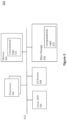
- FIG. 1 illustrates an example flow diagram 100 for managing a plurality of "things" or devices in a location, in accordance with various embodiments.
- the plurality of devices (“devices") are located proximally to each other, e.g., in a similar room or area.
- the devices may include a television or video device 103, a first lamp or first lighting device 105, a second lamp or second lighting device 107, and a new audio device 125.
- each of the devices may include a group management module, although for simplicity, only group management module 108 of second lighting device 107 is shown in the Figure.
- the group management module of each device may assist the device to wirelessly communicate or advertise information pertaining to a service provided by the device to the other devices.
- the devices may utilize any suitable wireless technology and/or device recognition technology in connection with the wireless communications. In some embodiments, ultrasonics may be used.
- the devices may include a wireless transceiver that may transmit and receive any type of suitable radio signal (e.g., WiFi radio signals, Blue-tooth radio signal, Blue-tooth Low-Energy radio signals, etc.).
- video device 103 may advertise that it is a provider of video services or "Video" while at respective blocks 111 and 113, first lighting device 105 and second lighting device 107 may each advertise that they are providers of light service or "Light.”
- one of the devices e.g., video device 103, may become a master device of the devices in the location. In embodiments, and as will be discussed in more detail below in connection with Figures 2 and 3 , this determination may be made according to a feasibility score of video device 103 as compared to feasibility scores of respective first and second lighting devices 105 and 107.
- feasibility scores may include a measure of device characteristics as relevant to performance of a master device.
- each of lamps 105 and 107 may stop advertising their respective services at a block 117.
- the master device may now advertise services available in the location on behalf of the other devices.
- video device 103 (“master video device 103") may advertise services of lighting devices 105 and 107.
- new audio device 125 when new audio device 125 enters the location, rather than exchanging information with each device, it need only exchange information with master video device 103.
- new audio device 125 may provide information about its own services to master video device 103 and receive information about services available from other devices in the location from master video device 103.
- reduced wireless traffic may result in reduced radio congestion and noise, and thus a reduced discovery time for the devices.
- master video device 103 may compare its own feasibility score with a feasibility score of new audio device 125.
- master video device 103 may remain the master device.
- new audio device 125 may replace master video device 103 as the new master device.
- master video device 103 may manage information received from a new device along with information from the other devices to join and cooperate with the other devices in accordance with a context of the location. In embodiments, this may allow the devices to self-adapt to the context of the location without requiring assistance of a user to configure the devices.
- the context of the location may include settings associated with desired properties of the location such as a particular level of light or sound.
- the master device may use information related to the context of the location and the services offered by the devices to determine settings for each of the plurality of devices.
- master video device 103 may provide settings for a particular volume level or other audio setting to new audio device 125.
- first and second lighting devices 105 and 107 may each provide 500 lumens. Accordingly, in an embodiment, when a new lighting device enters the location, master video device 103 may instruct the new lighting device to provide 333 lumens and lighting devices 105 and 107 to each reduce their light settings to approximately 333 lumens. Thus in embodiments, devices may adapt to a context of the location based upon an instruction received from the master device.
- settings are only one example of settings associated with a context of a location.
- settings may be associated with any suitable service provided by any mobile or stationary device including the group management module in the location.
- FIG. 2 is a flow diagram that illustrates a master determination process, according to various embodiments.
- the master determination process includes a calculation of a feasibility score for determining which device is to be a master device among a plurality of devices ("devices").
- feasibility scores may be measured according to one or more characteristics including a type of power source, mobility, availability, device system specification, or number and type of network interfaces.
- a group management module of the master device and/or of one or more devices may implement the process with assistance of suitable software or hardware in accordance with embodiments of the invention. Accordingly, in the embodiment, beginning at a block 205, the group management module may take an inventory of the devices in the location.
- the group management module may take an inventory of characteristics associated with the devices.
- the characteristics may be those characteristics that may be relevant to performing a function of a master device and provided by a particular device in the location.
- the group management module may receive information about the characteristics by exchanging metadata with the other devices during an initial advertising stage, such as for example, associated with blocks 109, 111, and 113 of Figure 1 .
- examples of such characteristics may include but are not limited to, whether a device runs on battery or AC power, whether the device is mobile or stationary, and whether the device is "always on/always available" ("AOAA”) or moves frequently into hibernation, sleep, or other power-saving states.
- Figure 3 includes an example table 300 illustrating example characteristics, e.g., c 1 - c 6 ,, in a column 303 with corresponding example assigned values for a presence of a characteristic in column 305 and an absence of the characteristic in a column 307, where 0 ⁇ c n ⁇ 1.
- a device characteristic, c 1 of a battery power source or "Battery Power” may be assigned a value of "0" while an "absence” of this characteristic (e.g., running on alternating current (AC) power) may be assigned a value of "1.”
- an "absence” of this characteristic e.g., running on alternating current (AC) power
- mobility may be assigned a value of .7 and the absence of mobility (e.g., a stationary device) may be assigned a value of .3.
- CPU central processing unit
- memory and network interface example characteristic values of c 1 - c 6 are shown in Table 300 in bold.
- the group management module may generate weights corresponding to each characteristic according to how relevant the characteristic may be relative to the other characteristics associated with the devices in the location.
- weights, w1 + w2 + w3... + wn (where n is the nth relevant characteristic associated with the devices in the room) may sum to a value of 1.
- column 309 shows example generated weights, w1 - w6, of example characteristics c1 - c6.
- characteristics such as battery power, CPU, and network interface (“Network”) may have higher weights due to power consumption and performance concerns.
- table 300 includes only example data for illustrative purposes as characteristics and their relative weights may vary widely, e.g., according to a characteristics, criteria, context of a location, and/or devices in the location.
- the group management module may compute feasibility scores at a next block 213.
- a table 325 provides examples of values associated with the example device that may be used for a first tiebreaker T1 and a second tiebreaker T2, if needed.
- a first three octets may be an organizationally unique identifier of a vender of a network interface
- 09-85-15 may be used as a comparison value in embodiments.
- Figure 4 illustrates an example device that may be suitable for use to practice selected aspects of the present disclosure.
- device 400 may include a memory 404, wireless transceiver 410, and a group management module 401, such as described in connection with Figures 1-3 .
- group management module 401 may be operated by a processor 402.
- wireless transceiver 410 may include a receiver and a transmitter.
- wireless transceiver 410 may include a blue-tooth low energy transceiver.
- group management module 401 may control wireless transceiver 410 to receive information pertaining to services offered by a plurality of devices co-located with the device at a location, transmit the received information pertaining to the services offered by the plurality of devices, and information pertaining to services offered by the device; and detect a response to the transmission by a new device such as new audio device 125 of Figure 1 .
- a "new" device may be a device new to the location or newly activated in the location.
- device 400 including group management module 401 may manage, as a master device, the received information pertaining to the services offered by the plurality of devices and the services offered by the device to enable the new device to join and cooperate with the plurality of devices and the device at the location.
- device 400 may be any suitable wireless communication device that may benefit from self-adaptation to a location including a plurality of devices.
- device 400 may include computing devices such as smartphones, tablets, laptops, desktop computers, servers, as well as home entertainment devices including audio devices, game consoles (Xbox, Playstation, etc.), as well as consumer wearables and appliances, including lighting devices such as those described in connection with Figure 1 .
- FIG. 5 illustrates an example computer system that may be suitable as another device to practice selected aspects of the present disclosure.
- computer 500 may include one or more processors or processor cores 502, and system memory 504.
- processors or processor cores may be considered synonymous, unless the context clearly requires otherwise.
- computer 500 may include mass storage devices 506 (such as diskette, hard drive, compact disc read only memory (CD-ROM) and so forth), input/output devices 508 (such as display, keyboard, cursor control and so forth) and communication interfaces 510 (such as network interface cards that may include or be integrated with wireless transceiver 410, modems and so forth).
- the elements may be coupled to each other via system bus 512, which may represent one or more buses. In the case of multiple buses, they may be bridged by one or more bus bridges (not shown).
- the number, capability and/or capacity of these elements 506 - 510 may vary, depending on whether computer 500 is used as a mobile device, a stationary device or a server. When use as mobile device, the capability and/or capacity of these elements 506 - 510 may vary, depending on whether the mobile device is a wearable device, a smartphone, a computing tablet, an ultrabook or a laptop. Otherwise, the constitutions of elements 506-510 are known, and accordingly will not be further described.
- the present disclosure may be embodied as methods or computer program products. Accordingly, the present disclosure, in addition to being embodied in hardware as earlier described, may take the form of an entirely software embodiment (including firmware, resident software, micro-code, etc.) or an embodiment combining software and hardware aspects that may all generally be referred to as a "circuit,” “module” or “system.”
- non-transitory computer-readable storage medium 602 may include a number of programming instructions 604.
- Programming instructions 604 may be configured to enable a device, e.g., device 400 or computer 500, in response to execution of the programming instructions, to perform, e.g., various operations associated with group management module 401.
- programming instructions 604 may be disposed on multiple computer-readable non-transitory storage media 602 instead. In alternate embodiments, programming instructions 604 may be disposed on computer-readable transitory storage media 602, such as, signals. Any combination of one or more computer usable or computer readable medium(s) may be utilized.
- the computer-usable or computer-readable medium may be, for example but not limited to, an electronic, magnetic, optical, electromagnetic, infrared, or semiconductor system, apparatus, device, or propagation medium.
- the computer-readable medium would include the following: an electrical connection having one or more wires, a portable computer diskette, a hard disk, a random access memory (RAM), a read-only memory (ROM), an erasable programmable read-only memory (EPROM or Flash memory), an optical fiber, a portable compact disc read-only memory (CD-ROM), an optical storage device, a transmission media such as those supporting the Internet or an intranet, or a magnetic storage device.
- RAM random access memory
- ROM read-only memory
- EPROM or Flash memory erasable programmable read-only memory
- CD-ROM compact disc read-only memory
- CD-ROM compact disc read-only memory
- a transmission media such as those supporting the Internet or an intranet, or a magnetic storage device.
- the computer- usable or computer-readable medium could even be paper or another suitable medium upon which the program is printed, as the program can be electronically captured, via, for instance, optical scanning of the paper or other medium, then compiled, interpreted, or otherwise processed in a suitable manner, if necessary, and then stored in a computer memory.
- a computer-usable or computer-readable medium may be any medium that can contain, store, communicate, propagate, or transport the program for use by or in connection with the instruction execution system, apparatus, or device.
- the computer-usable medium may include a propagated data signal with the computer-usable program code embodied therewith, either in baseband or as part of a carrier wave.
- the computer usable program code may be transmitted using any appropriate medium, including but not limited to wireless, wireline, optical fiber cable, RF, etc.
- Computer program code for carrying out operations of the present disclosure may be written in any combination of one or more programming languages, including an object oriented programming language such as Java, Smalltalk, C++ or the like and conventional procedural programming languages, such as the "C" programming language or similar programming languages.
- the program code may execute entirely on the user's computer, partly on the user's computer, as a stand-alone software package, partly on the user's computer and partly on a remote computer or entirely on the remote computer or server.
- the remote computer may be connected to the user's computer through any type of network, including a local area network (LAN) or a wide area network (WAN), or the connection may be made to an external computer (for example, through the Internet using an Internet Service Provider).
- LAN local area network
- WAN wide area network
- Internet Service Provider for example, AT&T, MCI, Sprint, EarthLink, MSN, GTE, etc.
- These computer program instructions may also be stored in a computer-readable medium that can direct a computer or other programmable data processing apparatus to function in a particular manner, such that the instructions stored in the computer-readable medium produce an article of manufacture including instruction means which implement the function/act specified in the flowchart and/or block diagram block or blocks.
- each block in the flowchart or block diagrams may represent a module, segment, or portion of code, which comprises one or more executable instructions for implementing the specified logical function(s).
- the functions noted in the block may occur out of the order noted in the figures. For example, two blocks shown in succession may, in fact, be executed substantially concurrently, or the blocks may sometimes be executed in the reverse order, depending upon the functionality involved.
- Embodiments may be implemented as a computer process, a computing system or as an article of manufacture such as a computer program product of computer readable media.
- the computer program product may be a computer storage medium readable by a computer system and encoding a computer program instructions for executing a computer process.
- processors 502 may be packaged together with memory having computational logic 522 (in lieu of storing on memory 504 and storage 506).
- processors 502 may be packaged together with memory having computational logic 522 to form a System in Package (SiP).
- SiP System in Package
- processors 502 may be integrated on the same die with memory having computational logic 522.
- processors 502 may be packaged together with memory having computational logic 522 to form a System on Chip (SoC).
- SoC System on Chip
- the SoC may be utilized in, e.g., but not limited to, a smartphone or computing tablet.
Landscapes
- Engineering & Computer Science (AREA)
- Computer Networks & Wireless Communication (AREA)
- Signal Processing (AREA)
- Databases & Information Systems (AREA)
- Mobile Radio Communication Systems (AREA)
- Telephone Function (AREA)
Description
- Embodiments of the present invention relate generally to the technical field of wireless communication, and more particularly to group management of devices.
- The background description provided herein is for the purpose of generally presenting the context of the disclosure. Work of the presently named inventors, to the extent it is described in this background section, as well as aspects of the description that may not otherwise qualify as prior art at the time of filing, are neither expressly nor impliedly admitted as prior art against the present disclosure. Unless otherwise indicated herein, the approaches described in this section are not prior art to the claims in the present disclosure and are not admitted to be prior art by inclusion in this section.
- As the Internet of Things ("loT") continues to grow, more and more "things" may need to be managed. As "things" or devices embedded with electronics, software, sensors, and connectivity technology change location, users may need to spend time and expense to manually reconfigure each item to become usable in the new environment. Furthermore, wireless traffic from too many devices can cause delays in discovery times. Oftentimes, the more devices in a single location or space, the poorer the user experience for discovery may be.
US 2015/0120000 A1 reports a LED based illumination source with integrated communications and processing functions, which can communicate via wireless communications to a mobile phone, smart phone, smart pad, notebook, tablet, desktop or other computing device. The LED based illumination source is programmed to operate autonomously, and is able to alter its behavior, based on the proximity of a controlling element. The communications and processing functions can also be integrated into other household and commercial electrical devices, such as wall outlets, light switches, plug in timers, appliances, and the like. - The invention is defined by the claims appended herein.
- Embodiments will be readily understood by the following detailed description in conjunction with the accompanying drawings. To facilitate this description, like reference numerals designate like structural elements. Embodiments are illustrated by way of example and not by way of limitation in the figures of the accompanying drawings.
-
Figure 1 illustrates an example flow diagram for group management of devices, in accordance with various embodiments. -
Figure 2 illustrates an example flow diagram for master device determination, in accordance with various embodiments. -
Figure 3 illustrates example data tables associated with the flow diagram ofFigure 2 in accordance with various embodiments. -
Figure 4 illustrates an example device configured to employ the apparatuses and methods described herein, in accordance with various embodiments. -
Figure 5 illustrates an example computer system suitable for use to practice various aspects of the present disclosure, according to the disclosed embodiments. -
Figure 6 illustrates a storage medium having instructions for practicing methods described with references toFigures 1-5 in accordance with various embodiments. - In the following detailed description, reference is made to the accompanying drawings that form a part hereof wherein like numerals designate like parts throughout, and in which is shown by way of illustration embodiments that may be practiced. It is to be understood that other embodiments may be utilized and structural or logical changes may be made without departing from the principles described herein. Therefore, the following detailed description is not to be taken in a limiting sense, and the scope of embodiments is defined by the appended claims.
- Various operations may be described as multiple discrete actions or operations in turn, in a manner that is most helpful in understanding the claimed subject matter. However, the order of description should not be construed as to imply that these operations are necessarily order dependent. In particular, these operations may not be performed in the order of presentation. Operations described may be performed in a different order than the described embodiment. Various additional operations may be performed and/or described operations may be omitted in additional embodiments.
- For the purposes of the present disclosure, the phrases "A and/or B" and "A or B" mean (A), (B), or (A and B). For the purposes of the present disclosure, the phrase "A, B, and/or C" means (A), (B), (C), (A and B), (A and C), (B and C), or (A, B, and C).
- The description may use the phrases "in an embodiment," or "in embodiments," which may each refer to one or more of the same or different embodiments. Furthermore, the terms "comprising," "including," "having," and the like, as used with respect to embodiments of the present disclosure, are synonymous.
- As used herein, the term "circuitry" may refer to, be part of, or include an Application Specific Integrated Circuit (ASIC), an electronic circuit, a processor (shared, dedicated, or group), and/or memory (shared, dedicated, or group) that execute one or more software or firmware programs, a combinational logic circuit, and/or other suitable hardware components that provide the described functionality. As used herein, "computer-implemented method" may refer to any method executed by one or more processors, a computer system having one or more processors, a mobile device such as a smartphone (which may include one or more processors), a tablet, a laptop computer, a set-top box, a gaming console, and so forth.
-
Figure 1 illustrates an example flow diagram 100 for managing a plurality of "things" or devices in a location, in accordance with various embodiments. In the diagram, the plurality of devices ("devices") are located proximally to each other, e.g., in a similar room or area. In the embodiment shown, the devices may include a television orvideo device 103, a first lamp orfirst lighting device 105, a second lamp orsecond lighting device 107, and anew audio device 125. In the embodiment, each of the devices may include a group management module, although for simplicity, onlygroup management module 108 ofsecond lighting device 107 is shown in the Figure. In embodiments, the group management module of each device may assist the device to wirelessly communicate or advertise information pertaining to a service provided by the device to the other devices. Note that in embodiments, the devices may utilize any suitable wireless technology and/or device recognition technology in connection with the wireless communications. In some embodiments, ultrasonics may be used. As will be discussed further below, in embodiments, the devices may include a wireless transceiver that may transmit and receive any type of suitable radio signal (e.g., WiFi radio signals, Blue-tooth radio signal, Blue-tooth Low-Energy radio signals, etc.). - Accordingly, in the embodiment, beginning in a lower left-corner at a
block 109,video device 103 may advertise that it is a provider of video services or "Video" while atrespective blocks first lighting device 105 andsecond lighting device 107 may each advertise that they are providers of light service or "Light." After an initial period of the devices advertising their services, at ablock 115, one of the devices, e.g.,video device 103, may become a master device of the devices in the location. In embodiments, and as will be discussed in more detail below in connection withFigures 2 and3 , this determination may be made according to a feasibility score ofvideo device 103 as compared to feasibility scores of respective first andsecond lighting devices video device 103 thatvideo device 103 is the master device (or in other embodiments, determining bylighting devices video device 103 is the master device), each oflamps block 117. As shown at ablock 119, the master device may now advertise services available in the location on behalf of the other devices. Thus, in addition to advertising its own service, video device 103 ("master video device 103") may advertise services oflighting devices - Accordingly in embodiments, when
new audio device 125 enters the location, rather than exchanging information with each device, it need only exchange information withmaster video device 103. Thus,new audio device 125 may provide information about its own services to mastervideo device 103 and receive information about services available from other devices in the location frommaster video device 103. As a result, in embodiments, reduced wireless traffic may result in reduced radio congestion and noise, and thus a reduced discovery time for the devices. Note that in embodiments, when a new device enters a location, a current master device may determine whether it will remain the master device or if the new device is a more appropriate device to serve as master device. Thus, in the embodiment,master video device 103 may compare its own feasibility score with a feasibility score ofnew audio device 125. In embodiments, after exchanging information, ifmaster video device 103 has a higher feasibility score than that ofnew audio device 125,master video device 103 may remain the master device. In the alternative, ifnew audio device 125 has a higher feasibility score thanmaster video device 103, then in embodiments,new audio device 125 may replacemaster video device 103 as the new master device. - Continuing to refer to
Figure 1 , in embodiments,master video device 103, may manage information received from a new device along with information from the other devices to join and cooperate with the other devices in accordance with a context of the location. In embodiments, this may allow the devices to self-adapt to the context of the location without requiring assistance of a user to configure the devices. In embodiments, the context of the location may include settings associated with desired properties of the location such as a particular level of light or sound. In embodiments, the master device may use information related to the context of the location and the services offered by the devices to determine settings for each of the plurality of devices. In embodiments,master video device 103 may provide settings for a particular volume level or other audio setting tonew audio device 125. In one embodiment, if the context of the location calls for 1000 lumens, first andsecond lighting devices master video device 103 may instruct the new lighting device to provide 333 lumens andlighting devices - Note that light settings are only one example of settings associated with a context of a location. In various embodiments, settings may be associated with any suitable service provided by any mobile or stationary device including the group management module in the location.
-
Figure 2 is a flow diagram that illustrates a master determination process, according to various embodiments. As shown, for the embodiments, the master determination process includes a calculation of a feasibility score for determining which device is to be a master device among a plurality of devices ("devices"). In embodiments, feasibility scores may be measured according to one or more characteristics including a type of power source, mobility, availability, device system specification, or number and type of network interfaces. A group management module of the master device and/or of one or more devices may implement the process with assistance of suitable software or hardware in accordance with embodiments of the invention. Accordingly, in the embodiment, beginning at a block 205, the group management module may take an inventory of the devices in the location. Next, in the embodiment at ablock 207, the group management module may take an inventory of characteristics associated with the devices. In embodiments, the characteristics may be those characteristics that may be relevant to performing a function of a master device and provided by a particular device in the location. In embodiments, the group management module may receive information about the characteristics by exchanging metadata with the other devices during an initial advertising stage, such as for example, associated withblocks Figure 1 . According to embodiments, examples of such characteristics may include but are not limited to, whether a device runs on battery or AC power, whether the device is mobile or stationary, and whether the device is "always on/always available" ("AOAA") or moves frequently into hibernation, sleep, or other power-saving states. Other characteristics may include details about system specifications, such as related to, capabilities of a central processing unit (CPU) or memory, input/output "I/O" devices, and/or a number of homogeneous or heterogeneous network interfaces of the device. Once the inventory of characteristics has been taken, the group management module may assign values to the characteristics at anext block 209. To further illustrate,Figure 3 includes an example table 300 illustrating example characteristics, e.g., c1 - c6,, in acolumn 303 with corresponding example assigned values for a presence of a characteristic incolumn 305 and an absence of the characteristic in acolumn 307, where 0 ≤ cn ≤ 1. Thus, for example, as can be seen in arow 309, a device characteristic, c1, of a battery power source or "Battery Power" may be assigned a value of "0" while an "absence" of this characteristic (e.g., running on alternating current (AC) power) may be assigned a value of "1." In another example, across arow 311, mobility may be assigned a value of .7 and the absence of mobility (e.g., a stationary device) may be assigned a value of .3. Thus, for an example device that may be non-battery powered, non-mobile, non-AOAA, have an appropriate central processing unit (CPU), memory and network interface, example characteristic values of c1 - c6 are shown in Table 300 in bold. - In the embodiment, at a
next block 211, the group management module may generate weights corresponding to each characteristic according to how relevant the characteristic may be relative to the other characteristics associated with the devices in the location. In embodiments, weights, w1 + w2 + w3... + wn (where n is the nth relevant characteristic associated with the devices in the room) may sum to a value of 1. In the embodiment,column 309 shows example generated weights, w1 - w6, of example characteristics c1 - c6. As illustrated, in the embodiment, characteristics such as battery power, CPU, and network interface ("Network") may have higher weights due to power consumption and performance concerns. It may be preferred for an AC powered device to take over as a master device if a current master device is running only on battery power. Note that table 300 includes only example data for illustrative purposes as characteristics and their relative weights may vary widely, e.g., according to a characteristics, criteria, context of a location, and/or devices in the location. - Once weights have been generated, the group management module may compute feasibility scores at a
next block 213. In embodiments, if Fd represents a feasibility score of device d:
- Thus, for the present example, using the weights of
column 309 and the characteristic values ofcolumns 

- Accordingly, in embodiments, a feasibility score of the example device may be 77. At a
next block 214, in the embodiment, the group management module may compare its feasibility score of 77 to received feasibility scores from the other devices in the plurality. In embodiments, the device with a higher feasibility score may be determined to be the master device atblock 216. In embodiments, if two devices have the same feasibility score, various criteria can be used as a determining criteria. For example, in one embodiment, a device with a higher valued universally unique device identifier (UUID) may be used as determining criteria. If, for example, the UUID is not available, a media access control (MAC) address of a currently active network interface may be used, in an embodiment. In embodiments, a table 325 provides examples of values associated with the example device that may be used for a first tiebreaker T1 and a second tiebreaker T2, if needed. Note that in embodiments, when considering the MAC address for a second tiebreaker T2, as a first three octets may be an organizationally unique identifier of a vender of a network interface, in embodiments, it may be preferable to use a last three bytes that may be used to form a 24-bit number. Thus, in table 325, at alocation 330, 09-85-15 may be used as a comparison value in embodiments. Note that the characteristics and weights of the example given here have been simplified for the sake of illustration and that various formulas for determining weights and values are also contemplated herein. -
Figure 4 illustrates an example device that may be suitable for use to practice selected aspects of the present disclosure. In embodiments,device 400 may include amemory 404,wireless transceiver 410, and agroup management module 401, such as described in connection withFigures 1-3 . In embodiments,group management module 401 may be operated by aprocessor 402. In embodiments,wireless transceiver 410 may include a receiver and a transmitter. In some embodiments,wireless transceiver 410 may include a blue-tooth low energy transceiver. In embodiments,group management module 401 may controlwireless transceiver 410 to receive information pertaining to services offered by a plurality of devices co-located with the device at a location, transmit the received information pertaining to the services offered by the plurality of devices, and information pertaining to services offered by the device; and detect a response to the transmission by a new device such asnew audio device 125 ofFigure 1 . In embodiments, a "new" device may be a device new to the location or newly activated in the location. In embodiments,device 400 includinggroup management module 401 may manage, as a master device, the received information pertaining to the services offered by the plurality of devices and the services offered by the device to enable the new device to join and cooperate with the plurality of devices and the device at the location. Note that in embodiments,device 400 may be any suitable wireless communication device that may benefit from self-adaptation to a location including a plurality of devices. In embodiments,device 400 may include computing devices such as smartphones, tablets, laptops, desktop computers, servers, as well as home entertainment devices including audio devices, game consoles (Xbox, Playstation, etc.), as well as consumer wearables and appliances, including lighting devices such as those described in connection withFigure 1 . -
Figure 5 illustrates an example computer system that may be suitable as another device to practice selected aspects of the present disclosure. As shown,computer 500 may include one or more processors orprocessor cores 502, andsystem memory 504. For the purpose of this application, including the claims, the terms "processor" and "processor cores" may be considered synonymous, unless the context clearly requires otherwise. Additionally,computer 500 may include mass storage devices 506 (such as diskette, hard drive, compact disc read only memory (CD-ROM) and so forth), input/output devices 508 (such as display, keyboard, cursor control and so forth) and communication interfaces 510 (such as network interface cards that may include or be integrated withwireless transceiver 410, modems and so forth). The elements may be coupled to each other viasystem bus 512, which may represent one or more buses. In the case of multiple buses, they may be bridged by one or more bus bridges (not shown). - Each of these elements may perform its conventional functions known in the art. In particular,
system memory 504 andmass storage devices 506 may be employed to store a working copy and a permanent copy of the programming instructions implementing the operations associated with a group management module as described in connection withFigures 1-4 , and/or other functions, collectively referred to ascomputational logic 522. The various elements may be implemented by assembler instructions supported by processor(s) 502 or high-level languages, such as, for example, C, that can be compiled into such instructions. - The number, capability and/or capacity of these elements 506 - 510 may vary, depending on whether
computer 500 is used as a mobile device, a stationary device or a server. When use as mobile device, the capability and/or capacity of these elements 506 - 510 may vary, depending on whether the mobile device is a wearable device, a smartphone, a computing tablet, an ultrabook or a laptop. Otherwise, the constitutions of elements 506-510 are known, and accordingly will not be further described. - As will be appreciated by one skilled in the art, the present disclosure may be embodied as methods or computer program products. Accordingly, the present disclosure, in addition to being embodied in hardware as earlier described, may take the form of an entirely software embodiment (including firmware, resident software, micro-code, etc.) or an embodiment combining software and hardware aspects that may all generally be referred to as a "circuit," "module" or "system."
- Furthermore, the present disclosure may take the form of a computer program product embodied in any tangible or non-transitory medium of expression having computer-usable program code embodied in the medium.
Figure 6 illustrates an example computer-readable non-transitory storage medium that may be suitable for use to store instructions that cause an apparatus, in response to execution of the instructions by the apparatus, to practice selected aspects of the present disclosure. As shown, non-transitory computer-readable storage medium 602 may include a number ofprogramming instructions 604. Programminginstructions 604 may be configured to enable a device, e.g.,device 400 orcomputer 500, in response to execution of the programming instructions, to perform, e.g., various operations associated withgroup management module 401. For example,device 400 may perform various operations such as to receive information pertaining to services offered by each of the other ones of a plurality of devices, advertise information pertaining to the services offered by each of the plurality of devices including the device itself; and manage the received information pertaining to the services offered by each of the other ones of the plurality of devices to accept a new device to join and cooperate with the plurality of devices in accordance with a context of the location. In embodiments, the operations may also include determining whether the new device is to replace the device as the master device and on determination that the new device is to be the master device, transfer control of a future receiving, advertising, detecting, and managing functions to the new device. - In alternate embodiments, programming
instructions 604 may be disposed on multiple computer-readablenon-transitory storage media 602 instead. In alternate embodiments, programminginstructions 604 may be disposed on computer-readabletransitory storage media 602, such as, signals. Any combination of one or more computer usable or computer readable medium(s) may be utilized. The computer-usable or computer-readable medium may be, for example but not limited to, an electronic, magnetic, optical, electromagnetic, infrared, or semiconductor system, apparatus, device, or propagation medium. More specific examples (a non- exhaustive list) of the computer-readable medium would include the following: an electrical connection having one or more wires, a portable computer diskette, a hard disk, a random access memory (RAM), a read-only memory (ROM), an erasable programmable read-only memory (EPROM or Flash memory), an optical fiber, a portable compact disc read-only memory (CD-ROM), an optical storage device, a transmission media such as those supporting the Internet or an intranet, or a magnetic storage device. Note that the computer- usable or computer-readable medium could even be paper or another suitable medium upon which the program is printed, as the program can be electronically captured, via, for instance, optical scanning of the paper or other medium, then compiled, interpreted, or otherwise processed in a suitable manner, if necessary, and then stored in a computer memory. In the context of this document, a computer-usable or computer-readable medium may be any medium that can contain, store, communicate, propagate, or transport the program for use by or in connection with the instruction execution system, apparatus, or device. The computer-usable medium may include a propagated data signal with the computer-usable program code embodied therewith, either in baseband or as part of a carrier wave. The computer usable program code may be transmitted using any appropriate medium, including but not limited to wireless, wireline, optical fiber cable, RF, etc. - Computer program code for carrying out operations of the present disclosure may be written in any combination of one or more programming languages, including an object oriented programming language such as Java, Smalltalk, C++ or the like and conventional procedural programming languages, such as the "C" programming language or similar programming languages. The program code may execute entirely on the user's computer, partly on the user's computer, as a stand-alone software package, partly on the user's computer and partly on a remote computer or entirely on the remote computer or server. In the latter scenario, the remote computer may be connected to the user's computer through any type of network, including a local area network (LAN) or a wide area network (WAN), or the connection may be made to an external computer (for example, through the Internet using an Internet Service Provider).
- The present disclosure is described with reference to flowchart illustrations and/or block diagrams of methods, apparatus (systems) and computer program products according to embodiments of the disclosure. It will be understood that each block of the flowchart illustrations and/or block diagrams, and combinations of blocks in the flowchart illustrations and/or block diagrams, can be implemented by computer program instructions. These computer program instructions may be provided to a processor of a general purpose computer, special purpose computer, or other programmable data processing apparatus to produce a machine, such that the instructions, which execute via the processor of the computer or other programmable data processing apparatus, create means for implementing the functions/acts specified in the flowchart and/or block diagram block or blocks.
- These computer program instructions may also be stored in a computer-readable medium that can direct a computer or other programmable data processing apparatus to function in a particular manner, such that the instructions stored in the computer-readable medium produce an article of manufacture including instruction means which implement the function/act specified in the flowchart and/or block diagram block or blocks.
- The computer program instructions may also be loaded onto a computer or other programmable data processing apparatus to cause a series of operational steps to be performed on the computer or other programmable apparatus to produce a computer implemented process such that the instructions which execute on the computer or other programmable apparatus provide processes for implementing the functions/acts specified in the flowchart and/or block diagram block or blocks.
- The flowchart and block diagrams in the figures illustrate the architecture, functionality, and operation of possible implementations of systems, methods and computer program products according to various embodiments of the present disclosure. In this regard, each block in the flowchart or block diagrams may represent a module, segment, or portion of code, which comprises one or more executable instructions for implementing the specified logical function(s). It should also be noted that, in some alternative implementations, the functions noted in the block may occur out of the order noted in the figures. For example, two blocks shown in succession may, in fact, be executed substantially concurrently, or the blocks may sometimes be executed in the reverse order, depending upon the functionality involved. It will also be noted that each block of the block diagrams and/or flowchart illustration, and combinations of blocks in the block diagrams and/or flowchart illustration, can be implemented by special purpose hardware-based systems that perform the specified functions or acts, or combinations of special purpose hardware and computer instructions.
- The terminology used herein is for the purpose of describing particular embodiments only and is not intended to be limiting of the disclosure. As used herein, the singular forms "a," "an" and "the" are intended to include plural forms as well, unless the context clearly indicates otherwise. It will be further understood that the terms "comprises" and/or "comprising," when used in this specification, specific the presence of stated features, integers, steps, operations, elements, and/or components, but do not preclude the presence or addition of one or more other features, integers, steps, operation, elements, components, and/or groups thereof.
- Embodiments may be implemented as a computer process, a computing system or as an article of manufacture such as a computer program product of computer readable media. The computer program product may be a computer storage medium readable by a computer system and encoding a computer program instructions for executing a computer process.
- The corresponding structures, material, acts, and equivalents of all means or steps plus function elements in the claims below are intended to include any structure, material or act for performing the function in combination with other claimed elements are specifically claimed. The description of the present disclosure has been presented for purposes of illustration and description, but is not intended to be exhaustive or limited to the disclosure in the form disclosed. Many modifications and variations will be apparent to those of ordinary skill. The embodiments were chosen and described in order to best explain the principles of the disclosure and the practical application, and to enable others of ordinary skill in the art to understand the disclosure for embodiments with various modifications as are suited to the particular use contemplated.
- Referring back to
Figure 5 , for one embodiment, at least one ofprocessors 502 may be packaged together with memory having computational logic 522 (in lieu of storing onmemory 504 and storage 506). For one embodiment, at least one ofprocessors 502 may be packaged together with memory havingcomputational logic 522 to form a System in Package (SiP). For one embodiment, at least one ofprocessors 502 may be integrated on the same die with memory havingcomputational logic 522. For one embodiment, at least one ofprocessors 502 may be packaged together with memory havingcomputational logic 522 to form a System on Chip (SoC). For at least one embodiment, the SoC may be utilized in, e.g., but not limited to, a smartphone or computing tablet. - It is manifestly intended that embodiments described herein be limited only by the claims. Where the disclosure recites "a" or "a first" element or the equivalent thereof, such disclosure includes one or more such elements, neither requiring nor excluding two or more such elements. Further, ordinal indicators (e.g., first, second, or third) for identified elements are used to distinguish between the elements, and do not indicate or imply a required or limited number of such elements, nor do they indicate a particular position or order of such elements unless otherwise specifically stated.
Claims (13)
- An apparatus (400) for group management of a plurality of devices co-located with the apparatus at a location, comprising:a wireless transceiver (410);a processor (402) coupled to the wireless transceiver; anda group management module (410) operated by the processor, adapted to:control the wireless transceiver, adapted to:receive information pertaining to advertised services offered by the plurality of devices;advertise the received information pertaining to the services offered by the plurality of devices, and information pertaining to services offered by the apparatus;detect a response to the transmission by a new device; andmanage, as a master device, the received information pertaining to the services offered by the plurality of devices and the services offered by the apparatus to enable the new device to join and cooperate with the plurality of devices and the apparatus at the location, by instructing the new device to adapt to the context of the location by providing settings to the new device,wherein the settings are determined by the master device based on information related to the context of the location and the services offered by the plurality of devices; andwherein the context of the location includes settings associated with desired properties of the location.
- The apparatus of claim 1, wherein the context of the location includes a light setting associated with the location.
- The apparatus of any of claims 1-2, wherein the group management module, adapted to control the wireless transceiver to detect a response by a device new to the location or newly activated in the location.
- The apparatus of claim 1, wherein the group management module, adapted to determine how each of the plurality of devices can provide services in accordance with a context of the location.
- The apparatus of any one of claims 1-4, wherein the group management module, adapted to further determine whether the new device is to be a new master device, replace the apparatus, based on a feasibility score of the apparatus and a feasibility score of the new device, wherein the said feasibility score includes a measure of characteristics of the apparatus or of the new device as relevant to master device performance.
- The apparatus of claim 5, wherein the feasibility score is measured according to one or more characteristics including a type of power source, mobility, availability, device system specification, or number and type of network interfaces.
- The apparatus of claim 5 or 6, wherein the feasibility score of the apparatus is a sum of weighted characteristics associated with the apparatus and the feasibility score of the device is a sum of weighted characteristics associated with the device.
- The apparatus of any one of the previous claims, wherein the wireless transceiver includes a blue-tooth low energy transceiver.
- The apparatus of any one of the previous claims, wherein the apparatus is one of a wearable consumer device, an appliance or fixture configured to provide light, a laptop, a tablet, a smartphone, a music player, and a television.
- The apparatus of claim 5, wherein the group management module, adapted to:
on determining that the apparatus is not to be the master device, deactivate, by the apparatus , the advertising of the received information pertaining to the service provided by the apparatus, the advertising to be performed for apparatus by the new device as master device instead. - A method for group management of a plurality of devices co-located with an apparatus at a location, the method comprising, by a wireless transceiver of the apparatus:receiving information pertaining to advertised services offered by the plurality of devices;advertising the received information pertaining to the services offered by the plurality of devices, and information pertaining to services offered by the apparatus;detecting a response to the transmission by a new device; andmanaging, as a master device, the received information pertaining to the services offered by the plurality of devices and the services offered by the apparatus to enable the new device to join and cooperate with the plurality of devices and the apparatus at the location, by instructing the new device to adapt to the context of the location by providing settings to the new device,wherein the settings are determined by the master device based on information related to the context of the location and the services offered by the plurality of devices; andwherein the context of the location includes settings associated with desired properties of the location.
- A computer program product comprising instructions which, when executed by at least one processor of at least one device or apparatus, cause the device or apparatus to perform a method as per claim 11.
- At least one computer-readable storage medium comprising instructions to cause a device or apparatus, in response to execution of at least one processor of the device or apparatus, to perform a method as per claim 11.
Applications Claiming Priority (2)
| Application Number | Priority Date | Filing Date | Title |
|---|---|---|---|
| US14/747,746 US10075836B2 (en) | 2015-06-23 | 2015-06-23 | Group management of devices methods, apparatuses and systems |
| PCT/US2016/031855 WO2016209391A2 (en) | 2015-06-23 | 2016-05-11 | Group management of devices methods, apparatuses, and systems |
Publications (3)
| Publication Number | Publication Date |
|---|---|
| EP3314871A2 EP3314871A2 (en) | 2018-05-02 |
| EP3314871A4 EP3314871A4 (en) | 2019-05-08 |
| EP3314871B1 true EP3314871B1 (en) | 2024-07-24 |
Family
ID=57586048
Family Applications (1)
| Application Number | Title | Priority Date | Filing Date |
|---|---|---|---|
| EP16814879.9A Active EP3314871B1 (en) | 2015-06-23 | 2016-05-11 | Group management of devices |
Country Status (5)
| Country | Link |
|---|---|
| US (1) | US10075836B2 (en) |
| EP (1) | EP3314871B1 (en) |
| CN (1) | CN108028851B (en) |
| TW (1) | TWI690186B (en) |
| WO (1) | WO2016209391A2 (en) |
Families Citing this family (7)
| Publication number | Priority date | Publication date | Assignee | Title |
|---|---|---|---|---|
| TWI700673B (en) * | 2019-03-22 | 2020-08-01 | 陳明宗 | Multi-zone intelligent electrical appliance control system |
| CN114844737A (en) * | 2019-09-30 | 2022-08-02 | 华为技术有限公司 | Method and system for synchronizing information among multiple devices and electronic device |
| US12517178B2 (en) | 2021-05-27 | 2026-01-06 | Midtronics, Inc. | Battery monitoring system |
| US12555965B2 (en) | 2021-08-24 | 2026-02-17 | Midtronics, Inc. | Power adapter for automotive vehicle maintenance device |
| US12392833B2 (en) | 2022-05-09 | 2025-08-19 | Midtronics, Inc. | Electronic battery tester |
| CN115019793B (en) * | 2022-05-31 | 2025-07-04 | 四川虹美智能科技有限公司 | Wake-up method, device, system, medium, and equipment based on collaborative error correction |
| WO2025096499A1 (en) * | 2023-10-30 | 2025-05-08 | Midtronics, Inc. | Vehicle maintenance system with dynamic network |
Family Cites Families (15)
| Publication number | Priority date | Publication date | Assignee | Title |
|---|---|---|---|---|
| FI109749B (en) * | 1999-07-19 | 2002-09-30 | Nokia Corp | Procedure for billing subscribers in a data communication network |
| KR100457592B1 (en) * | 2002-12-06 | 2004-11-17 | 엘지전자 주식회사 | Network system connected with multi-master devices and its operating method for the same |
| EP1629643B1 (en) * | 2003-06-02 | 2008-02-06 | Matsushita Electric Industrial Co., Ltd. | Device, method, and program for performing master/slave switching process |
| CN100340084C (en) * | 2004-04-28 | 2007-09-26 | 联想(北京)有限公司 | A method for implementing equipment group and intercommunication between grouped equipments |
| JP2008510432A (en) * | 2004-08-16 | 2008-04-03 | クゥアルコム・フラリオン・テクノロジーズ、インコーポレイテッド | Method and apparatus for managing group membership for group communication |
| US8233175B2 (en) * | 2007-06-05 | 2012-07-31 | Xerox Corporation | Apparatus and methods for interfacing reprographic and imaging systems with multiple set finishing devices |
| CN101958819A (en) * | 2010-10-22 | 2011-01-26 | 南京大学 | Internet-based intelligent vehicle-mounted home monitoring system and working method thereof |
| US9049538B2 (en) * | 2012-04-04 | 2015-06-02 | Via Telecom Co., Ltd. | Mobile communication devices, cellular access stations, and operation management methods for machine-to-machine (M2M) communications |
| US9135000B2 (en) * | 2012-11-06 | 2015-09-15 | Rockwell Automation Technologies, Inc. | Runtime process diagnostics |
| US9680726B2 (en) * | 2013-02-25 | 2017-06-13 | Qualcomm Incorporated | Adaptive and extensible universal schema for heterogeneous internet of things (IOT) devices |
| US9800429B2 (en) * | 2013-03-15 | 2017-10-24 | Smartbotics Inc. | Adaptive home and commercial automation devices, methods and systems based on the proximity of controlling elements |
| EP2879345A4 (en) * | 2013-08-30 | 2015-08-19 | Huawei Tech Co Ltd | Method for multiple terminals to play multimedia file cooperatively and related apparatus and system |
| CN103634312A (en) * | 2013-11-26 | 2014-03-12 | 广州晶锐信息技术有限公司 | Device management method for realizing multi-audio fast synchrony based on audio sharing |
| US9661058B2 (en) * | 2014-08-10 | 2017-05-23 | Belkin International Inc. | Grouping of network devices |
| US10231268B2 (en) * | 2014-12-04 | 2019-03-12 | Belkin International, Inc. | Associating devices and users with a local area network using network identifiers |
-
2015
- 2015-06-23 US US14/747,746 patent/US10075836B2/en active Active
-
2016
- 2016-04-21 TW TW105112430A patent/TWI690186B/en not_active IP Right Cessation
- 2016-05-11 CN CN201680029958.0A patent/CN108028851B/en active Active
- 2016-05-11 EP EP16814879.9A patent/EP3314871B1/en active Active
- 2016-05-11 WO PCT/US2016/031855 patent/WO2016209391A2/en not_active Ceased
Also Published As
| Publication number | Publication date |
|---|---|
| WO2016209391A2 (en) | 2016-12-29 |
| TW201713097A (en) | 2017-04-01 |
| TWI690186B (en) | 2020-04-01 |
| US10075836B2 (en) | 2018-09-11 |
| CN108028851A (en) | 2018-05-11 |
| CN108028851B (en) | 2021-11-23 |
| US20160381542A1 (en) | 2016-12-29 |
| EP3314871A2 (en) | 2018-05-02 |
| EP3314871A4 (en) | 2019-05-08 |
Similar Documents
| Publication | Publication Date | Title |
|---|---|---|
| US10075836B2 (en) | Group management of devices methods, apparatuses and systems | |
| US11818423B2 (en) | Method for outputting audio and electronic device for the same | |
| US11228970B2 (en) | Method for transmitting and receiving signals in proximity network and electronic device thereof | |
| KR102237373B1 (en) | Method for task scheduling and Electronic device using the same | |
| US20210080940A1 (en) | Server, electronic device, and electronic device information providing method | |
| EP2990907A2 (en) | Device for controlling the performance level of the device based on fluctuations in internal temperature and method thereof | |
| WO2019028847A1 (en) | Resource allocation | |
| WO2014164598A1 (en) | Techniques for wirelessly docking to a device | |
| US20160007084A1 (en) | Method and apparatus for sharing data of electronic device | |
| CN105657656B (en) | A transmission power adjustment method and user equipment | |
| US20160066326A1 (en) | Communication channel management method and electronic device supporting the same | |
| CN105320568A (en) | Method for task group migration and electronic device supporting the same | |
| KR20150107448A (en) | Task Migration Method and Apparatus | |
| WO2017206901A1 (en) | Process control method and related device | |
| KR102256683B1 (en) | Method of managing disaster and electronic device thereof | |
| CN107409358B (en) | Power saving method in peer-to-peer network and electronic device performing the same | |
| KR20210044695A (en) | Method and apparatus for designing rate matching pattern for partial demodulation reference signal (dmrs) transmission | |
| US10075798B2 (en) | Method for providing audio and electronic device adapted to the same | |
| JP6375657B2 (en) | Wireless communication apparatus, wireless communication system, and wireless communication method | |
| US20150280933A1 (en) | Electronic device and connection method thereof | |
| EP3098933B1 (en) | Electronic device and method for utilizing plurality of charging circuits | |
| KR20160059252A (en) | Method and electronic device for processing intent | |
| KR102246270B1 (en) | Electronic device and interconnecting method thereof | |
| US20170288470A1 (en) | Load balancing and scheduling in wireless power transfer network |
Legal Events
| Date | Code | Title | Description |
|---|---|---|---|
| STAA | Information on the status of an ep patent application or granted ep patent |
Free format text: STATUS: THE INTERNATIONAL PUBLICATION HAS BEEN MADE |
|
| PUAI | Public reference made under article 153(3) epc to a published international application that has entered the european phase |
Free format text: ORIGINAL CODE: 0009012 |
|
| STAA | Information on the status of an ep patent application or granted ep patent |
Free format text: STATUS: REQUEST FOR EXAMINATION WAS MADE |
|
| 17P | Request for examination filed |
Effective date: 20171122 |
|
| AK | Designated contracting states |
Kind code of ref document: A2 Designated state(s): AL AT BE BG CH CY CZ DE DK EE ES FI FR GB GR HR HU IE IS IT LI LT LU LV MC MK MT NL NO PL PT RO RS SE SI SK SM TR |
|
| AX | Request for extension of the european patent |
Extension state: BA ME |
|
| DAV | Request for validation of the european patent (deleted) | ||
| DAX | Request for extension of the european patent (deleted) | ||
| RIC1 | Information provided on ipc code assigned before grant |
Ipc: H04W 4/08 20090101ALI20181008BHEP Ipc: H04L 29/08 20060101AFI20181008BHEP |
|
| A4 | Supplementary search report drawn up and despatched |
Effective date: 20190404 |
|
| RIC1 | Information provided on ipc code assigned before grant |
Ipc: H04W 4/08 20090101ALI20190329BHEP Ipc: H04L 29/08 20060101AFI20190329BHEP |
|
| STAA | Information on the status of an ep patent application or granted ep patent |
Free format text: STATUS: EXAMINATION IS IN PROGRESS |
|
| 17Q | First examination report despatched |
Effective date: 20200710 |
|
| REG | Reference to a national code |
Ref country code: DE Ref legal event code: R079 Free format text: PREVIOUS MAIN CLASS: H04L0029080000 Ipc: H04W0008000000 Ref country code: DE Ref legal event code: R079 Ref document number: 602016088566 Country of ref document: DE Free format text: PREVIOUS MAIN CLASS: H04L0029080000 Ipc: H04W0008000000 |
|
| GRAP | Despatch of communication of intention to grant a patent |
Free format text: ORIGINAL CODE: EPIDOSNIGR1 |
|
| STAA | Information on the status of an ep patent application or granted ep patent |
Free format text: STATUS: GRANT OF PATENT IS INTENDED |
|
| RIC1 | Information provided on ipc code assigned before grant |
Ipc: H04W 8/18 20090101ALN20230427BHEP Ipc: H04W 4/02 20180101ALI20230427BHEP Ipc: H04W 4/029 20180101ALI20230427BHEP Ipc: H04W 4/80 20180101ALI20230427BHEP Ipc: H04W 8/00 20090101AFI20230427BHEP |
|
| RIC1 | Information provided on ipc code assigned before grant |
Ipc: H04W 8/18 20090101ALN20230509BHEP Ipc: H04W 4/02 20180101ALI20230509BHEP Ipc: H04W 4/029 20180101ALI20230509BHEP Ipc: H04W 4/80 20180101ALI20230509BHEP Ipc: H04W 8/00 20090101AFI20230509BHEP |
|
| INTG | Intention to grant announced |
Effective date: 20230531 |
|
| GRAJ | Information related to disapproval of communication of intention to grant by the applicant or resumption of examination proceedings by the epo deleted |
Free format text: ORIGINAL CODE: EPIDOSDIGR1 |
|
| STAA | Information on the status of an ep patent application or granted ep patent |
Free format text: STATUS: EXAMINATION IS IN PROGRESS |
|
| INTC | Intention to grant announced (deleted) | ||
| RIC1 | Information provided on ipc code assigned before grant |
Ipc: H04W 8/18 20090101ALN20231207BHEP Ipc: H04W 4/02 20180101ALI20231207BHEP Ipc: H04W 4/029 20180101ALI20231207BHEP Ipc: H04W 4/80 20180101ALI20231207BHEP Ipc: H04W 8/00 20090101AFI20231207BHEP |
|
| GRAP | Despatch of communication of intention to grant a patent |
Free format text: ORIGINAL CODE: EPIDOSNIGR1 |
|
| STAA | Information on the status of an ep patent application or granted ep patent |
Free format text: STATUS: GRANT OF PATENT IS INTENDED |
|
| RIC1 | Information provided on ipc code assigned before grant |
Ipc: H04W 8/18 20090101ALN20240208BHEP Ipc: H04W 4/02 20180101ALI20240208BHEP Ipc: H04W 4/029 20180101ALI20240208BHEP Ipc: H04W 4/80 20180101ALI20240208BHEP Ipc: H04W 8/00 20090101AFI20240208BHEP |
|
| INTG | Intention to grant announced |
Effective date: 20240227 |
|
| GRAS | Grant fee paid |
Free format text: ORIGINAL CODE: EPIDOSNIGR3 |
|
| GRAA | (expected) grant |
Free format text: ORIGINAL CODE: 0009210 |
|
| STAA | Information on the status of an ep patent application or granted ep patent |
Free format text: STATUS: THE PATENT HAS BEEN GRANTED |
|
| AK | Designated contracting states |
Kind code of ref document: B1 Designated state(s): AL AT BE BG CH CY CZ DE DK EE ES FI FR GB GR HR HU IE IS IT LI LT LU LV MC MK MT NL NO PL PT RO RS SE SI SK SM TR |
|
| REG | Reference to a national code |
Ref country code: GB Ref legal event code: FG4D |
|
| REG | Reference to a national code |
Ref country code: CH Ref legal event code: EP |
|
| REG | Reference to a national code |
Ref country code: IE Ref legal event code: FG4D Ref country code: DE Ref legal event code: R096 Ref document number: 602016088566 Country of ref document: DE |
|
| P01 | Opt-out of the competence of the unified patent court (upc) registered |
Free format text: CASE NUMBER: APP_42980/2024 Effective date: 20240722 |
|
| REG | Reference to a national code |
Ref country code: LT Ref legal event code: MG9D |
|
| REG | Reference to a national code |
Ref country code: NL Ref legal event code: MP Effective date: 20240724 |
|
| PG25 | Lapsed in a contracting state [announced via postgrant information from national office to epo] |
Ref country code: PT Free format text: LAPSE BECAUSE OF FAILURE TO SUBMIT A TRANSLATION OF THE DESCRIPTION OR TO PAY THE FEE WITHIN THE PRESCRIBED TIME-LIMIT Effective date: 20241125 |
|
| REG | Reference to a national code |
Ref country code: AT Ref legal event code: MK05 Ref document number: 1707419 Country of ref document: AT Kind code of ref document: T Effective date: 20240724 |
|
| PG25 | Lapsed in a contracting state [announced via postgrant information from national office to epo] |
Ref country code: NL Free format text: LAPSE BECAUSE OF FAILURE TO SUBMIT A TRANSLATION OF THE DESCRIPTION OR TO PAY THE FEE WITHIN THE PRESCRIBED TIME-LIMIT Effective date: 20240724 |
|
| PG25 | Lapsed in a contracting state [announced via postgrant information from national office to epo] |
Ref country code: PT Free format text: LAPSE BECAUSE OF FAILURE TO SUBMIT A TRANSLATION OF THE DESCRIPTION OR TO PAY THE FEE WITHIN THE PRESCRIBED TIME-LIMIT Effective date: 20241125 Ref country code: NL Free format text: LAPSE BECAUSE OF FAILURE TO SUBMIT A TRANSLATION OF THE DESCRIPTION OR TO PAY THE FEE WITHIN THE PRESCRIBED TIME-LIMIT Effective date: 20240724 |
|
| PG25 | Lapsed in a contracting state [announced via postgrant information from national office to epo] |
Ref country code: NO Free format text: LAPSE BECAUSE OF FAILURE TO SUBMIT A TRANSLATION OF THE DESCRIPTION OR TO PAY THE FEE WITHIN THE PRESCRIBED TIME-LIMIT Effective date: 20241024 |
|
| PG25 | Lapsed in a contracting state [announced via postgrant information from national office to epo] |
Ref country code: PL Free format text: LAPSE BECAUSE OF FAILURE TO SUBMIT A TRANSLATION OF THE DESCRIPTION OR TO PAY THE FEE WITHIN THE PRESCRIBED TIME-LIMIT Effective date: 20240724 Ref country code: FI Free format text: LAPSE BECAUSE OF FAILURE TO SUBMIT A TRANSLATION OF THE DESCRIPTION OR TO PAY THE FEE WITHIN THE PRESCRIBED TIME-LIMIT Effective date: 20240724 Ref country code: GR Free format text: LAPSE BECAUSE OF FAILURE TO SUBMIT A TRANSLATION OF THE DESCRIPTION OR TO PAY THE FEE WITHIN THE PRESCRIBED TIME-LIMIT Effective date: 20241025 |
|
| PG25 | Lapsed in a contracting state [announced via postgrant information from national office to epo] |
Ref country code: BG Free format text: LAPSE BECAUSE OF FAILURE TO SUBMIT A TRANSLATION OF THE DESCRIPTION OR TO PAY THE FEE WITHIN THE PRESCRIBED TIME-LIMIT Effective date: 20240724 |
|
| PG25 | Lapsed in a contracting state [announced via postgrant information from national office to epo] |
Ref country code: LV Free format text: LAPSE BECAUSE OF FAILURE TO SUBMIT A TRANSLATION OF THE DESCRIPTION OR TO PAY THE FEE WITHIN THE PRESCRIBED TIME-LIMIT Effective date: 20240724 |
|
| PG25 | Lapsed in a contracting state [announced via postgrant information from national office to epo] |
Ref country code: IS Free format text: LAPSE BECAUSE OF FAILURE TO SUBMIT A TRANSLATION OF THE DESCRIPTION OR TO PAY THE FEE WITHIN THE PRESCRIBED TIME-LIMIT Effective date: 20241124 Ref country code: AT Free format text: LAPSE BECAUSE OF FAILURE TO SUBMIT A TRANSLATION OF THE DESCRIPTION OR TO PAY THE FEE WITHIN THE PRESCRIBED TIME-LIMIT Effective date: 20240724 |
|
| PG25 | Lapsed in a contracting state [announced via postgrant information from national office to epo] |
Ref country code: HR Free format text: LAPSE BECAUSE OF FAILURE TO SUBMIT A TRANSLATION OF THE DESCRIPTION OR TO PAY THE FEE WITHIN THE PRESCRIBED TIME-LIMIT Effective date: 20240724 |
|
| PG25 | Lapsed in a contracting state [announced via postgrant information from national office to epo] |
Ref country code: RS Free format text: LAPSE BECAUSE OF FAILURE TO SUBMIT A TRANSLATION OF THE DESCRIPTION OR TO PAY THE FEE WITHIN THE PRESCRIBED TIME-LIMIT Effective date: 20241024 Ref country code: ES Free format text: LAPSE BECAUSE OF FAILURE TO SUBMIT A TRANSLATION OF THE DESCRIPTION OR TO PAY THE FEE WITHIN THE PRESCRIBED TIME-LIMIT Effective date: 20240724 |
|
| PG25 | Lapsed in a contracting state [announced via postgrant information from national office to epo] |
Ref country code: RS Free format text: LAPSE BECAUSE OF FAILURE TO SUBMIT A TRANSLATION OF THE DESCRIPTION OR TO PAY THE FEE WITHIN THE PRESCRIBED TIME-LIMIT Effective date: 20241024 Ref country code: PL Free format text: LAPSE BECAUSE OF FAILURE TO SUBMIT A TRANSLATION OF THE DESCRIPTION OR TO PAY THE FEE WITHIN THE PRESCRIBED TIME-LIMIT Effective date: 20240724 Ref country code: NO Free format text: LAPSE BECAUSE OF FAILURE TO SUBMIT A TRANSLATION OF THE DESCRIPTION OR TO PAY THE FEE WITHIN THE PRESCRIBED TIME-LIMIT Effective date: 20241024 Ref country code: LV Free format text: LAPSE BECAUSE OF FAILURE TO SUBMIT A TRANSLATION OF THE DESCRIPTION OR TO PAY THE FEE WITHIN THE PRESCRIBED TIME-LIMIT Effective date: 20240724 Ref country code: IS Free format text: LAPSE BECAUSE OF FAILURE TO SUBMIT A TRANSLATION OF THE DESCRIPTION OR TO PAY THE FEE WITHIN THE PRESCRIBED TIME-LIMIT Effective date: 20241124 Ref country code: HR Free format text: LAPSE BECAUSE OF FAILURE TO SUBMIT A TRANSLATION OF THE DESCRIPTION OR TO PAY THE FEE WITHIN THE PRESCRIBED TIME-LIMIT Effective date: 20240724 Ref country code: GR Free format text: LAPSE BECAUSE OF FAILURE TO SUBMIT A TRANSLATION OF THE DESCRIPTION OR TO PAY THE FEE WITHIN THE PRESCRIBED TIME-LIMIT Effective date: 20241025 Ref country code: FI Free format text: LAPSE BECAUSE OF FAILURE TO SUBMIT A TRANSLATION OF THE DESCRIPTION OR TO PAY THE FEE WITHIN THE PRESCRIBED TIME-LIMIT Effective date: 20240724 Ref country code: ES Free format text: LAPSE BECAUSE OF FAILURE TO SUBMIT A TRANSLATION OF THE DESCRIPTION OR TO PAY THE FEE WITHIN THE PRESCRIBED TIME-LIMIT Effective date: 20240724 Ref country code: BG Free format text: LAPSE BECAUSE OF FAILURE TO SUBMIT A TRANSLATION OF THE DESCRIPTION OR TO PAY THE FEE WITHIN THE PRESCRIBED TIME-LIMIT Effective date: 20240724 Ref country code: AT Free format text: LAPSE BECAUSE OF FAILURE TO SUBMIT A TRANSLATION OF THE DESCRIPTION OR TO PAY THE FEE WITHIN THE PRESCRIBED TIME-LIMIT Effective date: 20240724 |
|
| PG25 | Lapsed in a contracting state [announced via postgrant information from national office to epo] |
Ref country code: DK Free format text: LAPSE BECAUSE OF FAILURE TO SUBMIT A TRANSLATION OF THE DESCRIPTION OR TO PAY THE FEE WITHIN THE PRESCRIBED TIME-LIMIT Effective date: 20240724 Ref country code: RO Free format text: LAPSE BECAUSE OF FAILURE TO SUBMIT A TRANSLATION OF THE DESCRIPTION OR TO PAY THE FEE WITHIN THE PRESCRIBED TIME-LIMIT Effective date: 20240724 Ref country code: SM Free format text: LAPSE BECAUSE OF FAILURE TO SUBMIT A TRANSLATION OF THE DESCRIPTION OR TO PAY THE FEE WITHIN THE PRESCRIBED TIME-LIMIT Effective date: 20240724 |
|
| PG25 | Lapsed in a contracting state [announced via postgrant information from national office to epo] |
Ref country code: EE Free format text: LAPSE BECAUSE OF FAILURE TO SUBMIT A TRANSLATION OF THE DESCRIPTION OR TO PAY THE FEE WITHIN THE PRESCRIBED TIME-LIMIT Effective date: 20240724 |
|
| PG25 | Lapsed in a contracting state [announced via postgrant information from national office to epo] |
Ref country code: CZ Free format text: LAPSE BECAUSE OF FAILURE TO SUBMIT A TRANSLATION OF THE DESCRIPTION OR TO PAY THE FEE WITHIN THE PRESCRIBED TIME-LIMIT Effective date: 20240724 |
|
| REG | Reference to a national code |
Ref country code: DE Ref legal event code: R097 Ref document number: 602016088566 Country of ref document: DE |
|
| PG25 | Lapsed in a contracting state [announced via postgrant information from national office to epo] |
Ref country code: SK Free format text: LAPSE BECAUSE OF FAILURE TO SUBMIT A TRANSLATION OF THE DESCRIPTION OR TO PAY THE FEE WITHIN THE PRESCRIBED TIME-LIMIT Effective date: 20240724 Ref country code: IT Free format text: LAPSE BECAUSE OF FAILURE TO SUBMIT A TRANSLATION OF THE DESCRIPTION OR TO PAY THE FEE WITHIN THE PRESCRIBED TIME-LIMIT Effective date: 20240724 |
|
| PLBE | No opposition filed within time limit |
Free format text: ORIGINAL CODE: 0009261 |
|
| STAA | Information on the status of an ep patent application or granted ep patent |
Free format text: STATUS: NO OPPOSITION FILED WITHIN TIME LIMIT |
|
| 26N | No opposition filed |
Effective date: 20250425 |
|
| PG25 | Lapsed in a contracting state [announced via postgrant information from national office to epo] |
Ref country code: SE Free format text: LAPSE BECAUSE OF FAILURE TO SUBMIT A TRANSLATION OF THE DESCRIPTION OR TO PAY THE FEE WITHIN THE PRESCRIBED TIME-LIMIT Effective date: 20240724 |
|
| REG | Reference to a national code |
Ref country code: CH Ref legal event code: H13 Free format text: ST27 STATUS EVENT CODE: U-0-0-H10-H13 (AS PROVIDED BY THE NATIONAL OFFICE) Effective date: 20251223 |
|
| PG25 | Lapsed in a contracting state [announced via postgrant information from national office to epo] |
Ref country code: LU Free format text: LAPSE BECAUSE OF NON-PAYMENT OF DUE FEES Effective date: 20250511 |
|
| PG25 | Lapsed in a contracting state [announced via postgrant information from national office to epo] |
Ref country code: CH Free format text: LAPSE BECAUSE OF NON-PAYMENT OF DUE FEES Effective date: 20250531 |
|
| GBPC | Gb: european patent ceased through non-payment of renewal fee |
Effective date: 20250511 |
|
| REG | Reference to a national code |
Ref country code: BE Ref legal event code: MM Effective date: 20250531 |
|
| PG25 | Lapsed in a contracting state [announced via postgrant information from national office to epo] |
Ref country code: MC Free format text: LAPSE BECAUSE OF FAILURE TO SUBMIT A TRANSLATION OF THE DESCRIPTION OR TO PAY THE FEE WITHIN THE PRESCRIBED TIME-LIMIT Effective date: 20240724 |
|
| PG25 | Lapsed in a contracting state [announced via postgrant information from national office to epo] |
Ref country code: GB Free format text: LAPSE BECAUSE OF NON-PAYMENT OF DUE FEES Effective date: 20250511 |
|
| PG25 | Lapsed in a contracting state [announced via postgrant information from national office to epo] |
Ref country code: IE Free format text: LAPSE BECAUSE OF NON-PAYMENT OF DUE FEES Effective date: 20250511 |
|
| PG25 | Lapsed in a contracting state [announced via postgrant information from national office to epo] |
Ref country code: BE Free format text: LAPSE BECAUSE OF NON-PAYMENT OF DUE FEES Effective date: 20250531 |
|
| PG25 | Lapsed in a contracting state [announced via postgrant information from national office to epo] |
Ref country code: FR Free format text: LAPSE BECAUSE OF NON-PAYMENT OF DUE FEES Effective date: 20250531 |
|
| PG25 | Lapsed in a contracting state [announced via postgrant information from national office to epo] |
Ref country code: LT Free format text: LAPSE BECAUSE OF FAILURE TO SUBMIT A TRANSLATION OF THE DESCRIPTION OR TO PAY THE FEE WITHIN THE PRESCRIBED TIME-LIMIT Effective date: 20240724 |
|
| PGFP | Annual fee paid to national office [announced via postgrant information from national office to epo] |
Ref country code: DE Payment date: 20260317 Year of fee payment: 11 |
|
| PG25 | Lapsed in a contracting state [announced via postgrant information from national office to epo] |
Ref country code: CY Free format text: LAPSE BECAUSE OF FAILURE TO SUBMIT A TRANSLATION OF THE DESCRIPTION OR TO PAY THE FEE WITHIN THE PRESCRIBED TIME-LIMIT Effective date: 20240724 |