EP3313134A1 - A method of scheduling field devices in a wireless network of an industrial process system - Google Patents
A method of scheduling field devices in a wireless network of an industrial process system Download PDFInfo
- Publication number
- EP3313134A1 EP3313134A1 EP16194952.4A EP16194952A EP3313134A1 EP 3313134 A1 EP3313134 A1 EP 3313134A1 EP 16194952 A EP16194952 A EP 16194952A EP 3313134 A1 EP3313134 A1 EP 3313134A1
- Authority
- EP
- European Patent Office
- Prior art keywords
- scheduling
- resources
- uplink
- downlink
- field devices
- Prior art date
- Legal status (The legal status is an assumption and is not a legal conclusion. Google has not performed a legal analysis and makes no representation as to the accuracy of the status listed.)
- Granted
Links
Images


Classifications
-
- H—ELECTRICITY
- H04—ELECTRIC COMMUNICATION TECHNIQUE
- H04W—WIRELESS COMMUNICATION NETWORKS
- H04W72/00—Local resource management
- H04W72/12—Wireless traffic scheduling
- H04W72/1263—Mapping of traffic onto schedule, e.g. scheduled allocation or multiplexing of flows
-
- H—ELECTRICITY
- H04—ELECTRIC COMMUNICATION TECHNIQUE
- H04L—TRANSMISSION OF DIGITAL INFORMATION, e.g. TELEGRAPHIC COMMUNICATION
- H04L67/00—Network arrangements or protocols for supporting network services or applications
- H04L67/01—Protocols
- H04L67/12—Protocols specially adapted for proprietary or special-purpose networking environments, e.g. medical networks, sensor networks, networks in vehicles or remote metering networks
-
- H—ELECTRICITY
- H04—ELECTRIC COMMUNICATION TECHNIQUE
- H04W—WIRELESS COMMUNICATION NETWORKS
- H04W72/00—Local resource management
- H04W72/50—Allocation or scheduling criteria for wireless resources
- H04W72/51—Allocation or scheduling criteria for wireless resources based on terminal or device properties
-
- H—ELECTRICITY
- H04—ELECTRIC COMMUNICATION TECHNIQUE
- H04J—MULTIPLEX COMMUNICATION
- H04J3/00—Time-division multiplex systems
- H04J3/02—Details
-
- H—ELECTRICITY
- H04—ELECTRIC COMMUNICATION TECHNIQUE
- H04W—WIRELESS COMMUNICATION NETWORKS
- H04W72/00—Local resource management
- H04W72/04—Wireless resource allocation
- H04W72/044—Wireless resource allocation based on the type of the allocated resource
- H04W72/0446—Resources in time domain, e.g. slots or frames
-
- H—ELECTRICITY
- H04—ELECTRIC COMMUNICATION TECHNIQUE
- H04W—WIRELESS COMMUNICATION NETWORKS
- H04W74/00—Wireless channel access
- H04W74/08—Non-scheduled access, e.g. ALOHA
- H04W74/0808—Non-scheduled access, e.g. ALOHA using carrier sensing, e.g. carrier sense multiple access [CSMA]
-
- H—ELECTRICITY
- H04—ELECTRIC COMMUNICATION TECHNIQUE
- H04W—WIRELESS COMMUNICATION NETWORKS
- H04W84/00—Network topologies
- H04W84/02—Hierarchically pre-organised networks, e.g. paging networks, cellular networks, WLAN [Wireless Local Area Network] or WLL [Wireless Local Loop]
- H04W84/10—Small scale networks; Flat hierarchical networks
- H04W84/12—WLAN [Wireless Local Area Networks]
Definitions
- the technology disclosed herein relates generally to the field of scheduling in wireless networks, and in particular to a method of scheduling field devices in a wireless network of an industrial process system, a scheduling device, computer program and computer program product.
- Wireless mesh networks may use Time Division Multiple Access (TDMA) or Carrier Sense Multiple Access (CSMA) as mechanism for accessing a shared medium (a wireless spectrum).
- TDMA Time Division Multiple Access
- CSMA Carrier Sense Multiple Access
- TDMA divides the medium into time slots and assigns time slots to different devices in which they can communicate. Determining which devices should be assigned which TDMA slot (one or more) for communication is known as scheduling.
- CSMA scheduling solutions on the other hand are usually distributed (i.e. a node uses only its own information) and are based on the idea that a node can communicate anytime the medium is free.
- IoT Internet of Things
- An objective of the present invention is to address and improve various aspects for scheduling in wireless networks, in particular wireless networks in an industrial environment, e.g. in a process control system.
- a particular objective is to provide flexibility in the scheduling in a wireless network of a process control system.
- Another particular objective is to increase resource utilization in a wireless network of a process control system.
- the objective is according to an aspect achieved by a method of scheduling field devices in a wireless network of an industrial process system.
- the method is performed in a scheduling device and comprises scheduling one or more field devices on uplink resources and on downlink resources, such that, for at least one of the field devices, a periodicity of uplink resources is different than a periodicity of downlink resources.
- the method In contrast to known TDMA scheduling methods, which uses either fixed schedule lengths or have the same period times for both uplink and downlink communication, the method enables the adaptation of resources in view of the need of the particular device. Also in contrast to the known scheduling methods, which are very limited in meeting e.g. specific application requirements of the application(s) that use the wireless network, the present invention provides an increased flexibility when creating schedules by having different uplink/downlink period times. Further, the invention allows different devices and their application requirements to dictate the schedule. Still further, the method provides the possibility to optimize useful network utilization by using individual parameters for up/downlinks (pushing the useful utilization towards 100%), which in turn allows more devices to be part of the network. The latter is an important advantage in view of the increasing number of devices with connectivity, e.g. Internet of Things (IoT) devices.
- IoT Internet of Things
- the objective is according to an aspect achieved by a computer program for a scheduling device.
- the computer program comprises computer program code, which, when executed on at least one processor on the scheduling device causes the scheduling device to perform the method as above.
- the objective is according to an aspect achieved by a computer program product comprising a computer program as above and a computer readable means on which the computer program is stored.
- the objective is according to an aspect achieved by a scheduling device for scheduling field devices in a wireless network of an industrial process system.
- the scheduling device is configured to schedule one or more field devices on uplink resources and on downlink resources, such that, for at least one of the field devices, a periodicity of uplink resources is different than a periodicity of downlink resources.
- the invention enables the creation of communication slot schedules with different period times on uplink and downlink communication flows for each device. This is in contrast to the current solutions, in which communication up- and downstreams use the same period time.
- the prior art solutions may facilitate the scheduling the inventors of the present invention have realized that this also severely restricts the possibilities of creating a TDMA schedule which fits the application requirements.
- the application requirements may differ considerably among the devices.
- the method according to the present invention takes into account e.g. the different requirements of the different devices.
- Figure 1 illustrates an environment in which embodiments according to the present invention may be implemented.
- the environment may, for instance, be an industrial process system 1.
- Computer controlled process control systems are used for controlling and/or monitoring industrial processes in many different types of industries and utilities such as automotive, chemical, pharmaceutical, food, metal, mines, steel mills, consumer products, power generation, power distribution, pure and waste water handling, oil refineries, gas pipe-lines and off-shore platforms.
- Such control functions may involve receiving signals indicating process control measurements, processing the received information and generating control signals that are transmitted to the field device(s) 14, 16, 18 to control and/or monitor the operation of the process.
- the field devices 14, 16, 18 may thus be of many different types and may have very different requirements.
- a first field device may run an application requiring frequent uplink transmission and downlink transmission, while a second field device only occasionally needs to report e.g. a measurement value (i.e. only has an uplink).
- an operator is generally able to perform desired operations with respect to a process by means of an operator workstation 2, 4 that is communicatively connected to receive process information from the field devices 14, 16, 18 and various controllers 5a, 5b.
- the operator may for instance be able to view the current state of the process via a user interface, perform evaluations of the process and modify the operation of the process by using the operator workstation 2, 4.
- Controllers 5a, 5b and workstations 2, 4 are generally connected via a communications network to a server 6 providing control and monitoring of the process and a database 8 where data, such as historical data relating to control and monitoring of the process is stored.
- Such communications network may, as in the illustrated case, comprise a first bus (Bus 1 in the figure) to which the operator workstations 2, 4 are connected and a second bus (Bus 2 in the figure).
- the server 6 and the database 8 are, in this case, connected between the first and second buses.
- the second bus may be connected to one or more gateways 12 (only one illustrated) via wired or wireless interfaces.
- the gateway 12 may in turn be connected to (or part of) a wireless network 20, which may be a wireless industrial network.
- the wireless network 20 may also comprise access points 13a, 13b interfacing the gateway 12 and providing a communication point for the field devices 14, 16, 18. Such access points 13a, 13b may, for instance, enable redundant communication paths for the gateway 12.
- the wireless network 20 is a time division multiple access TDMA-based wireless field device network.
- the wireless network 20 may be a multi-hop network, i.e. the field devices 14, 16, 18 may use one, two or more hops to convey information to a destination.
- Figure 2 illustrates an exemplary time slot structure.
- the field devices 14, 16, 18 communicate in the wireless network 20 according to a communication structure, e.g. TDMA, which is a channel access method for wireless networks having a shared medium.
- the field devices 14, 16, 18 share the access to the medium in time domain.
- TDMA time division multiple access method
- several field devices 14, 16, 18 would share one frequency band by dividing it into different time slots.
- the field devices 14, 16, 18 are scheduled such that each field device 14, 16,18 gets its own time slot(s) for receiving or transmitting data.
- Figure 2 illustrates one exemplary frame (e.g. superframe) of an uplink (upstream) channel or downlink (downstream) channel.
- the frame comprises a number of time slots, in the illustrated case n time slots.
- the frame may also comprise a preamble and trail bits.
- Each time slot in turn may comprise a preamble (with e.g. synchronization bits), the data to be sent or received, and a guard bit.
- the uplink resources and/or downlink resources used by a field device 14, 16, 18 may be one or more such time slots. That is, the data that the field device 14, 16, 18 is to transmit or receive is included in one or more time slots.
- a method is provided which enables the creation of communication slot schedules with different period times on uplink and downlink communication flows for each field device 14, 16 , 18. This is in contrast to the current solutions, which have communication up- and downstream that use the same period time. As noted earlier, this severely restricts the possibilities of creating a TDMA schedule which fits the application requirements.
- Figure 3 illustrates different uplink and downlink periodicities for a field device.
- a field device may have a first periodicity in the uplink scheduling and a second periodicity in the downlink scheduling, wherein the first and second periodicities are different.
- uplink resources are shown for a first field device 14.
- an uplink frame comprises eight time slots, and the periodicity is exemplified as the duration of eight time slots in this particular example.
- the first field device 14 is scheduled in every eighth uplink time slot, in which it sends data, e.g. a measurement value.
- the periodicity can be defined as a time interval within which a field device 14, 16, 18 sends data, e.g. reports a value.
- the periodicity has a maximum allowable time interval within which a field device 14, 16, 18 has to send data, e.g. needs to report a value.
- the time period between two consecutive uplink resources on which the field device 14, 16, 18 is scheduled can hence not be longer than the maximum periodicity of the field device 14, 16 , 18.
- downlink resources are shown for the same first field device 14.
- a downlink frame comprises eight time slots, and the periodicity is exemplified as the duration of sixteen time slot. That is, every eighth uplink time slot, the first field device 14 receives data, e.g. a request for data or an instruction.
- the uplink periodicity is shorter than the downlink periodicity for the field device 14, 16, 18.
- some field devices 14, 16, 18 may have only an uplink and no downlink or only a downlink and no uplink.
- the periodicity may be varied also for such field devices 14, 16, 18.
- the field device 14, 16, 18 may, for instance, be a small sensor and as such may not be connected to an external power source. That is, the field device 14, 16, 18 may be battery powered, and an advantage of the invention is that by adapting the periodicities in uplink and downlink according to need, the battery life-time of the field devices 14, 16, 18 may be extended.
- Figure 4 illustrates an exemplary scheduling of devices.
- the number of resources may be adapted in view of the needs of the particular device.
- the upper part of figure 4 illustrates an uplink frame and the lower part of figure 4 illustrates a downlink frame.
- a first device is scheduled to send in four consecutive time slots
- a second device is scheduled to send in two consecutive time slots
- a third and a fourth device are scheduled to send in a respective time slot.
- the number of uplink resources (time slots) on which the respective devices are scheduled varies.
- the number of downlink resources (time slots) for each device need not be the same as the number of uplink resources, as illustrated in the lower part of figure 4 for the first device, which is scheduled on a single downlink resource.
- the uplink periodicity of a first field device can be prolonged or shortened such as to maximize the uplink stream utilization. When the periodicity is prolonged, it should not exceed the maximum allowed periodicity of the field device.
- the scheduling is viewed as a real-time scheduling problem. All communication transactions may be viewed as tasks to be scheduled, separating the up- and downstream into separate disjoint tasks. This gives the possibility to assign the resources in uplink and downlink separately and in particular in dependence on the particular needs of a certain field device.
- the number of downlink and uplink resources are equal, irrespective of whether or not the particular device sends as much data as it receives. This means that resources are occupied by a device not needing them, for instance at the cost of another device having to wait longer, i.e. possibly unnecessarily prolonging the period time of the latter device. Although not necessarily exceeding its maximum allowed periodicity, this is still a waste of resources.
- the resources are used in a more efficient way.
- field devices having:
- the period time of a task may be determined by the application requirements.
- application requirements comprise: device types, control loops, process dynamic and related time constants, end-to-end system response times and error tolerance.
- the tasks may be scheduled based on real-time scheduling theory, such as, for instance, fixed priority or earliest deadline first, in order to guarantee the feasibility of the task set. For instance, in fixed priority, each task is assigned a (same) fixed priority. All tasks are periodic, but the period may be different for the different devices, and the period defines a deadline for the task. The length of time between two tasks related to a certain device is the period time of the task (equivalent to period time of the device).
- the tasks may typically have a fixed computation time, which should be less than or equal to their period.
- Each hop in the wireless network 20 adds to this computation time of the task to be scheduled, and needs to be taken into account in the scheduling, such that e.g. deadlines and/or period times are met.
- the scheduling method thus allows different devices and their application requirements to dictate the schedule.
- the method optimizes the useful network utilization by using individual parameters for the period of the up- and downlinks (pushing it towards 100%), which in turn allows more devices to be part of the network.
- the individual uplink and downlink period times may be tailored (e.g. for each type of device) instead of using the same period for all devices independent of their individual requirements. This enables a more resource efficient utilization of the available resources and increases the useful utilization ratio.
- the invention enables increased flexibility for wireless communication in terms of determining the communication schedule. This allows more devices to be added to the wireless network (higher utilization of bandwidth) and higher flexibility in terms of supporting varying application requirements (different up/down stream periodicities). This enables improved and in particular more efficient use of the number of gateways needed during initial deployment, upgrades or maintenance. Furthermore, it enables better tuning of the applications and processes with respect to their actual needs instead of prior art technology limitations that drive cost.
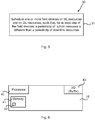
- Figure 5 illustrates a flow chart over steps of an embodiment of a method in a scheduling device in accordance with the present invention.
- the method 30 of scheduling field devices 14, 16, 18 in a wireless network 20 of an industrial process system 1 may be performed in a scheduling device 15.
- the method 30 comprises scheduling 31 one or more field devices 14, 16, 18 on uplink resources and on downlink resources, such that, for at least one of the field devices 14, 16, 18, a periodicity of uplink resources is different than a periodicity of downlink resources.
- a field device 14, 16, 18 may have both an uplink and a downlink, or only an uplink or only a downlink.
- the method 30 provides a number of advantages as have been described earlier. For instance, by allowing different uplink and/or downlink period times an increased flexibility when creating schedules is achieved.
- the method 30 allows different field devices (e.g. different types of field devices) and their respective application requirements to dictate the schedule.
- the type of device e.g. sensor-type of device, actuator-type of device or a combination
- the period time may, for instance, be dictated by the timing requirements from machinery which the field device(s) monitors and/or actuates.
- the method 30 gives more flexibility for wireless communication in terms of determining the communication schedule. By allowing the field devices to have different upstream and/or downstream period times the method also enables a higher number of devices to be added to the wireless network 20, i.e. enables a higher utilization of available bandwidth. The method 30 also gives a higher flexibility in terms of supporting varying application requirements. An improved and more efficient use of the number of gateways needed during initial deployment, upgrades or maintenance are also enabled. Furthermore, the method 30 enables improved tuning of the applications and processes with respect to their actual needs instead of technology limitations that increase costs.
- the scheduling 31 comprises scheduling the uplink resources and the downlink resources as independent scheduling tasks.
- the method 30 comprises scheduling uplink and downlink resources such that the number of uplink resources is different than the number of downlink resources for at least one of the field devices 14, 16, 18.
- an actuator may require a fast downlink, so that the operator can quickly control it e.g. in case of failure, and a slower uplink, which may be used only for e.g. status reporting.
- the actuator may therefore be scheduled on more downlink resources than uplink resources.
- the device has application requirements such that a faster uplink than downlink is required. This may, for instance, be the case for sensors, which may be configured to regularly report measurement values using an uplink, while it may only occasionally receive data from e.g. a server providing updated configurations.
- one of the number of uplink resources and the number of downlink resources is equal to zero. That is, a field device 14, 16, 18 may have only an uplink or only a downlink.
- none of the number of uplink resources and the number of downlink resources is equal to zero.
- the scheduling comprises adapting one or more of: the periodicity, number of uplink resources and number of downlink resources based on one or both of type of field device and application requirements of the field device 14, 16, 18 to be scheduled.
- Figure 6 illustrates schematically a scheduling device and means for implementing embodiments of the method in accordance with the present invention.
- the scheduling device 15 may be a separate standalone device, or it may be an integrated part of another device or node, e.g. a network manager also responsible for e.g. managing routing tables and monitoring the wireless network 20.
- a network manager also responsible for e.g. managing routing tables and monitoring the wireless network 20.
- the scheduling device 15 comprises a processor 40 comprising any combination of one or more of a central processing unit (CPU), multiprocessor, microcontroller, digital signal processor (DSP), application specific integrated circuit etc. capable of executing software instructions stored in a memory 41 which can thus be or form part of a computer program product.
- the processor 40 can be configured to execute any of the various embodiments of the method 30 for instance as described in relation to figure 5 .
- the memory 41 of the scheduling device 15 can be any combination of read and write memory (RAM) and read only memory (ROM), Flash memory, magnetic tape, Compact Disc (CD)-ROM, digital versatile disc (DVD), Blu-ray disc etc.
- the memory 41 may also comprise persistent storage, which, for example, can be any single one or combination of magnetic memory, optical memory, solid state memory or even remotely mounted memory.
- the scheduling device 15 may comprise an interface 43 for communication with other devices and/or entities, e.g. with one or more of: other field devices 14, 16, 18, the gateway 12 and access points 13a, 13b.
- the interface 43 may, for instance, comprise a protocol stack, for wireless communication with other devices or entities.
- the interface may be used for receiving data input and for outputting data.
- a scheduling device 15 is provided for scheduling field devices 14, 16, 18 in a wireless network 20 of an industrial process system 1.
- the scheduling device 15 is configured to schedule one or more field devices (14, 16, 18) on uplink resources and on downlink resources, such that, for at least one of the field devices (14, 16,18), a periodicity of uplink resources is different than a periodicity of downlink resources.
- the scheduling device 15 may be configured to perform the scheduling e.g. by comprising one or more processors 40 and memory 41, the memory 41 containing instructions executable by the processor 40, whereby the scheduling device 15 is operative to perform the scheduling steps.
- the scheduling device 15 is configured to schedule the uplink resources and the downlink resources as independent scheduling tasks.
- the scheduling device 15 is configured to schedule uplink and downlink resources such that the number of uplink resources is different than the number of downlink resources for at least one of the field devices 14, 16, 18.
- one of the number of uplink resources and the number of downlink resources is equal to zero.
- none of the number of uplink resources and the number of downlink resources is equal to zero.
- the scheduling device 15 is configured to schedule by adapting one or more of: the periodicity, number of uplink resources and number of downlink resources based on one or both of type of field device and application requirements of the field device 14, 16, 18 to be scheduled.
- the present invention also encompasses a computer program 42 for a scheduling device 15.
- the computer program 42 comprises computer program code, which, when executed on at least one processor on the network entity 20, causes the network entity 20 to perform the method 30 according to any of the described embodiments.
- the present teachings also encompass computer program products 41 for a scheduling device 15 for scheduling field devices 14, 16, 18 in a wireless network 20.
- the computer program product 41 comprises the computer program 42 for implementing the embodiments of the methods as described, and a computer readable means on which the computer program 42 is stored.
- the computer program product, or the memory thus comprises instructions executable by the processor 40. Such instructions may be comprised in a computer program, or in one or more software modules or function modules.
- the computer program product 41 may, as mentioned earlier, be any combination of random access memory (RAM) or read only memory (ROM), Flash memory, magnetic tape, Compact Disc (CD)-ROM, digital versatile disc (DVD), Blu-ray disc etc.
- the scheduling device 15 comprises function modules/software modules.
- the function modules can be implemented using software instructions such as computer program executing in a processor and/or using hardware, such as application specific integrated circuits (ASICs), field programmable gate arrays, discrete logical components etc., and any combination thereof.
- ASICs application specific integrated circuits
- Processing circuitry may be provided, which may be adaptable and in particular adapted to perform any of the steps of the method 30 that has been described in various embodiments.
Landscapes
- Engineering & Computer Science (AREA)
- Computer Networks & Wireless Communication (AREA)
- Signal Processing (AREA)
- Health & Medical Sciences (AREA)
- Computing Systems (AREA)
- General Health & Medical Sciences (AREA)
- Medical Informatics (AREA)
- Mobile Radio Communication Systems (AREA)
Abstract
Description
- The technology disclosed herein relates generally to the field of scheduling in wireless networks, and in particular to a method of scheduling field devices in a wireless network of an industrial process system, a scheduling device, computer program and computer program product.
- Wireless mesh networks may use Time Division Multiple Access (TDMA) or Carrier Sense Multiple Access (CSMA) as mechanism for accessing a shared medium (a wireless spectrum). TDMA divides the medium into time slots and assigns time slots to different devices in which they can communicate. Determining which devices should be assigned which TDMA slot (one or more) for communication is known as scheduling. CSMA scheduling solutions on the other hand are usually distributed (i.e. a node uses only its own information) and are based on the idea that a node can communicate anytime the medium is free.
- In wireless networks with nodes sharing the communication resources, it is important that the scheduling is efficient so that the communication resources are used in the best possible way. This is becoming increasingly important as the number of devices increases, e.g. with the introduction of Internet of Things (IoT) wirelessly connecting numerous devices to Internet. IoT scenarios may be foreseen also in industrial process systems and in automation networks.
- An objective of the present invention is to address and improve various aspects for scheduling in wireless networks, in particular wireless networks in an industrial environment, e.g. in a process control system. A particular objective is to provide flexibility in the scheduling in a wireless network of a process control system. Another particular objective is to increase resource utilization in a wireless network of a process control system. These objectives and others are achieved by the methods, devices, computer programs and computer program products according to the appended independent claims, and by the embodiments according to the dependent claims.
- The objective is according to an aspect achieved by a method of scheduling field devices in a wireless network of an industrial process system. The method is performed in a scheduling device and comprises scheduling one or more field devices on uplink resources and on downlink resources, such that, for at least one of the field devices, a periodicity of uplink resources is different than a periodicity of downlink resources.
- In contrast to known TDMA scheduling methods, which uses either fixed schedule lengths or have the same period times for both uplink and downlink communication, the method enables the adaptation of resources in view of the need of the particular device. Also in contrast to the known scheduling methods, which are very limited in meeting e.g. specific application requirements of the application(s) that use the wireless network, the present invention provides an increased flexibility when creating schedules by having different uplink/downlink period times. Further, the invention allows different devices and their application requirements to dictate the schedule. Still further, the method provides the possibility to optimize useful network utilization by using individual parameters for up/downlinks (pushing the useful utilization towards 100%), which in turn allows more devices to be part of the network. The latter is an important advantage in view of the increasing number of devices with connectivity, e.g. Internet of Things (IoT) devices.
- The objective is according to an aspect achieved by a computer program for a scheduling device. The computer program comprises computer program code, which, when executed on at least one processor on the scheduling device causes the scheduling device to perform the method as above.
- The objective is according to an aspect achieved by a computer program product comprising a computer program as above and a computer readable means on which the computer program is stored.
- The objective is according to an aspect achieved by a scheduling device for scheduling field devices in a wireless network of an industrial process system. The scheduling device is configured to schedule one or more field devices on uplink resources and on downlink resources, such that, for at least one of the field devices, a periodicity of uplink resources is different than a periodicity of downlink resources.
- Further features and advantages of the embodiments of the present teachings will become clear upon reading the following description and the accompanying drawings.
-
-
Figure 1 illustrates an environment in which embodiments according to the present invention may be implemented. -
Figure 2 illustrates an exemplary time slot structure. -
Figure 3 illustrates different uplink and downlink periodicities for a field device. -
Figure 4 illustrates an exemplary scheduling of devices. -
Figure 5 illustrates a flow chart over steps of an embodiment of a method in a scheduling device in accordance with the present invention. -
Figure 6 illustrates schematically a scheduling device and means for implementing embodiments of the method in accordance with the present invention. - In the following description, for purposes of explanation and not limitation, specific details are set forth such as particular architectures, interfaces, techniques, etc. in order to provide a thorough understanding. In other instances, detailed descriptions of well-known devices, circuits, and methods are omitted so as not to obscure the description with unnecessary detail. Same reference numerals refer to same or similar elements throughout the description.
- Briefly, the invention enables the creation of communication slot schedules with different period times on uplink and downlink communication flows for each device. This is in contrast to the current solutions, in which communication up- and downstreams use the same period time. Although the prior art solutions may facilitate the scheduling the inventors of the present invention have realized that this also severely restricts the possibilities of creating a TDMA schedule which fits the application requirements. The application requirements may differ considerably among the devices. Hence, in contrast to the prior art solution having fixed schedule lengths regardless of application cycle requirements, the method according to the present invention takes into account e.g. the different requirements of the different devices.
-
Figure 1 illustrates an environment in which embodiments according to the present invention may be implemented. The environment may, for instance, be anindustrial process system 1. Computer controlled process control systems are used for controlling and/or monitoring industrial processes in many different types of industries and utilities such as automotive, chemical, pharmaceutical, food, metal, mines, steel mills, consumer products, power generation, power distribution, pure and waste water handling, oil refineries, gas pipe-lines and off-shore platforms.Field devices field devices field devices - In an
industrial process system 1 an operator is generally able to perform desired operations with respect to a process by means of anoperator workstation field devices various controllers operator workstation Controllers workstations database 8 where data, such as historical data relating to control and monitoring of the process is stored. Such communications network may, as in the illustrated case, comprise a first bus (Bus 1 in the figure) to which theoperator workstations Bus 2 in the figure). The server 6 and thedatabase 8 are, in this case, connected between the first and second buses. The second bus may be connected to one or more gateways 12 (only one illustrated) via wired or wireless interfaces. Thegateway 12 may in turn be connected to (or part of) awireless network 20, which may be a wireless industrial network. Thewireless network 20 may also compriseaccess points gateway 12 and providing a communication point for thefield devices Such access points gateway 12. In an embodiment, thewireless network 20 is a time division multiple access TDMA-based wireless field device network. Thewireless network 20 may be a multi-hop network, i.e. thefield devices -
Figure 2 illustrates an exemplary time slot structure. Thefield devices wireless network 20 according to a communication structure, e.g. TDMA, which is a channel access method for wireless networks having a shared medium. Thefield devices several field devices field devices field device Figure 2 illustrates one exemplary frame (e.g. superframe) of an uplink (upstream) channel or downlink (downstream) channel. The frame comprises a number of time slots, in the illustrated case n time slots. The frame may also comprise a preamble and trail bits. Each time slot in turn may comprise a preamble (with e.g. synchronization bits), the data to be sent or received, and a guard bit. The uplink resources and/or downlink resources used by afield device field device - A method is provided which enables the creation of communication slot schedules with different period times on uplink and downlink communication flows for each
field device -
Figure 3 illustrates different uplink and downlink periodicities for a field device. In accordance with the invention, a field device may have a first periodicity in the uplink scheduling and a second periodicity in the downlink scheduling, wherein the first and second periodicities are different. In the upper part offigure 3 uplink resources are shown for afirst field device 14. In this example, an uplink frame comprises eight time slots, and the periodicity is exemplified as the duration of eight time slots in this particular example. Thefirst field device 14 is scheduled in every eighth uplink time slot, in which it sends data, e.g. a measurement value. - The periodicity can be defined as a time interval within which a
field device field device field device field device - In the lower part of
figure 3 , downlink resources are shown for the samefirst field device 14. In this example, a downlink frame comprises eight time slots, and the periodicity is exemplified as the duration of sixteen time slot. That is, every eighth uplink time slot, thefirst field device 14 receives data, e.g. a request for data or an instruction. - In the example of
figure 3 thus, the uplink periodicity is shorter than the downlink periodicity for thefield device - It is noted that some
field devices such field devices - The
field device field device field devices -
Figure 4 illustrates an exemplary scheduling of devices. In addition to the adaptable periodicities, also the number of resources may be adapted in view of the needs of the particular device. The upper part offigure 4 illustrates an uplink frame and the lower part offigure 4 illustrates a downlink frame. In the uplink frame a first device is scheduled to send in four consecutive time slots, a second device is scheduled to send in two consecutive time slots and a third and a fourth device are scheduled to send in a respective time slot. Depending on e.g. type of device, the number of uplink resources (time slots) on which the respective devices are scheduled varies. Further, the number of downlink resources (time slots) for each device need not be the same as the number of uplink resources, as illustrated in the lower part offigure 4 for the first device, which is scheduled on a single downlink resource. - By allowing adaptable periodicities, and in some embodiments also allowing adaptable number of resources, a flexibility is provided by means of which up/down-link streams can be utilized in a very efficient way. For instance, the uplink periodicity of a first field device can be prolonged or shortened such as to maximize the uplink stream utilization. When the periodicity is prolonged, it should not exceed the maximum allowed periodicity of the field device.
- From a processor domain, the scheduling is viewed as a real-time scheduling problem. All communication transactions may be viewed as tasks to be scheduled, separating the up- and downstream into separate disjoint tasks. This gives the possibility to assign the resources in uplink and downlink separately and in particular in dependence on the particular needs of a certain field device. With the currently used TDMA scheduling methods, the number of downlink and uplink resources are equal, irrespective of whether or not the particular device sends as much data as it receives. This means that resources are occupied by a device not needing them, for instance at the cost of another device having to wait longer, i.e. possibly unnecessarily prolonging the period time of the latter device. Although not necessarily exceeding its maximum allowed periodicity, this is still a waste of resources. In accordance with the invention, the resources are used in a more efficient way.
- The direction of a task, which can also be viewed as a transaction, is determined by the field device type. There are various types of field devices. For instance, field devices having:
- only uplink, e.g., sensors
- faster downlink than uplink, e.g., actuators
- same period on up- and downlink, e.g., devices having both sensing capabilities and actuating capabilities faster uplink than downlink
- The period time of a task may be determined by the application requirements. Examples of application requirements comprise: device types, control loops, process dynamic and related time constants, end-to-end system response times and error tolerance.
- The tasks may be scheduled based on real-time scheduling theory, such as, for instance, fixed priority or earliest deadline first, in order to guarantee the feasibility of the task set. For instance, in fixed priority, each task is assigned a (same) fixed priority. All tasks are periodic, but the period may be different for the different devices, and the period defines a deadline for the task. The length of time between two tasks related to a certain device is the period time of the task (equivalent to period time of the device).
- The tasks may typically have a fixed computation time, which should be less than or equal to their period. Each hop in the
wireless network 20 adds to this computation time of the task to be scheduled, and needs to be taken into account in the scheduling, such that e.g. deadlines and/or period times are met. - The scheduling method thus allows different devices and their application requirements to dictate the schedule. The method optimizes the useful network utilization by using individual parameters for the period of the up- and downlinks (pushing it towards 100%), which in turn allows more devices to be part of the network. The individual uplink and downlink period times may be tailored (e.g. for each type of device) instead of using the same period for all devices independent of their individual requirements. This enables a more resource efficient utilization of the available resources and increases the useful utilization ratio.
- The invention enables increased flexibility for wireless communication in terms of determining the communication schedule. This allows more devices to be added to the wireless network (higher utilization of bandwidth) and higher flexibility in terms of supporting varying application requirements (different up/down stream periodicities). This enables improved and in particular more efficient use of the number of gateways needed during initial deployment, upgrades or maintenance. Furthermore, it enables better tuning of the applications and processes with respect to their actual needs instead of prior art technology limitations that drive cost.
- The various features and embodiments that have been described can be combined in many different ways, examples of which are given in the following, with reference first to
figure 4 . -
Figure 5 illustrates a flow chart over steps of an embodiment of a method in a scheduling device in accordance with the present invention. Themethod 30 ofscheduling field devices wireless network 20 of anindustrial process system 1 may be performed in ascheduling device 15. - The
method 30 comprisesscheduling 31 one ormore field devices field devices field device - The
method 30 provides a number of advantages as have been described earlier. For instance, by allowing different uplink and/or downlink period times an increased flexibility when creating schedules is achieved. Themethod 30 allows different field devices (e.g. different types of field devices) and their respective application requirements to dictate the schedule. The type of device (e.g. sensor-type of device, actuator-type of device or a combination) may set the requirements on the need for an uplink and/or downlink. The period time may, for instance, be dictated by the timing requirements from machinery which the field device(s) monitors and/or actuates. - The
method 30 gives more flexibility for wireless communication in terms of determining the communication schedule. By allowing the field devices to have different upstream and/or downstream period times the method also enables a higher number of devices to be added to thewireless network 20, i.e. enables a higher utilization of available bandwidth. Themethod 30 also gives a higher flexibility in terms of supporting varying application requirements. An improved and more efficient use of the number of gateways needed during initial deployment, upgrades or maintenance are also enabled. Furthermore, themethod 30 enables improved tuning of the applications and processes with respect to their actual needs instead of technology limitations that increase costs. - In an embodiment, the
scheduling 31 comprises scheduling the uplink resources and the downlink resources as independent scheduling tasks. - In some embodiments, the
method 30 comprises scheduling uplink and downlink resources such that the number of uplink resources is different than the number of downlink resources for at least one of thefield devices - In a variation of the above embodiment, one of the number of uplink resources and the number of downlink resources is equal to zero. That is, a
field device - In another variation, none of the number of uplink resources and the number of downlink resources is equal to zero.
- In various embodiments, the scheduling comprises adapting one or more of: the periodicity, number of uplink resources and number of downlink resources based on one or both of type of field device and application requirements of the
field device -
Figure 6 illustrates schematically a scheduling device and means for implementing embodiments of the method in accordance with the present invention. - The
scheduling device 15 may be a separate standalone device, or it may be an integrated part of another device or node, e.g. a network manager also responsible for e.g. managing routing tables and monitoring thewireless network 20. - The
scheduling device 15 comprises aprocessor 40 comprising any combination of one or more of a central processing unit (CPU), multiprocessor, microcontroller, digital signal processor (DSP), application specific integrated circuit etc. capable of executing software instructions stored in amemory 41 which can thus be or form part of a computer program product. Theprocessor 40 can be configured to execute any of the various embodiments of themethod 30 for instance as described in relation tofigure 5 . - The
memory 41 of thescheduling device 15 can be any combination of read and write memory (RAM) and read only memory (ROM), Flash memory, magnetic tape, Compact Disc (CD)-ROM, digital versatile disc (DVD), Blu-ray disc etc. Thememory 41 may also comprise persistent storage, which, for example, can be any single one or combination of magnetic memory, optical memory, solid state memory or even remotely mounted memory. - The
scheduling device 15 may comprise aninterface 43 for communication with other devices and/or entities, e.g. with one or more of:other field devices gateway 12 andaccess points interface 43 may, for instance, comprise a protocol stack, for wireless communication with other devices or entities. The interface may be used for receiving data input and for outputting data. - A
scheduling device 15 is provided forscheduling field devices wireless network 20 of anindustrial process system 1. Thescheduling device 15 is configured to schedule one or more field devices (14, 16, 18) on uplink resources and on downlink resources, such that, for at least one of the field devices (14, 16,18), a periodicity of uplink resources is different than a periodicity of downlink resources. - The
scheduling device 15 may be configured to perform the scheduling e.g. by comprising one ormore processors 40 andmemory 41, thememory 41 containing instructions executable by theprocessor 40, whereby thescheduling device 15 is operative to perform the scheduling steps. - In an embodiment, the
scheduling device 15 is configured to schedule the uplink resources and the downlink resources as independent scheduling tasks. - In some embodiments, the
scheduling device 15 is configured to schedule uplink and downlink resources such that the number of uplink resources is different than the number of downlink resources for at least one of thefield devices - In a variation of the above embodiment, one of the number of uplink resources and the number of downlink resources is equal to zero.
- In another variation, none of the number of uplink resources and the number of downlink resources is equal to zero.
- In some embodiments, the
scheduling device 15 is configured to schedule by adapting one or more of: the periodicity, number of uplink resources and number of downlink resources based on one or both of type of field device and application requirements of thefield device - The present invention also encompasses a
computer program 42 for ascheduling device 15. Thecomputer program 42 comprises computer program code, which, when executed on at least one processor on thenetwork entity 20, causes thenetwork entity 20 to perform themethod 30 according to any of the described embodiments. - The present teachings also encompass
computer program products 41 for ascheduling device 15 forscheduling field devices wireless network 20. Thecomputer program product 41 comprises thecomputer program 42 for implementing the embodiments of the methods as described, and a computer readable means on which thecomputer program 42 is stored. The computer program product, or the memory, thus comprises instructions executable by theprocessor 40. Such instructions may be comprised in a computer program, or in one or more software modules or function modules. Thecomputer program product 41 may, as mentioned earlier, be any combination of random access memory (RAM) or read only memory (ROM), Flash memory, magnetic tape, Compact Disc (CD)-ROM, digital versatile disc (DVD), Blu-ray disc etc. - In other embodiments, the
scheduling device 15 comprises function modules/software modules. The function modules can be implemented using software instructions such as computer program executing in a processor and/or using hardware, such as application specific integrated circuits (ASICs), field programmable gate arrays, discrete logical components etc., and any combination thereof. Processing circuitry may be provided, which may be adaptable and in particular adapted to perform any of the steps of themethod 30 that has been described in various embodiments. - The invention has mainly been described herein with reference to a few embodiments. However, as is appreciated by a person skilled in the art, other embodiments than the particular ones disclosed herein are equally possible within the scope of the invention, as defined by the appended patent claims.
Claims (14)
- A method (30) of scheduling field devices (14, 16, 18) in a wireless network (20) of an industrial process system (1), the method (30) being performed in a scheduling device (15) and comprising:- scheduling (31) one or more field devices (14, 16, 18) on uplink resources and on downlink resources, such that, for at least one of the field devices (14, 16, 18), a periodicity of uplink resources is different than a periodicity of downlink resources.
- The method (30) as claimed in claim, wherein the scheduling (31) comprises scheduling the uplink resources and the downlink resources as independent scheduling tasks.
- The method (30) as claimed in claim 1 or 2, comprising scheduling uplink and downlink resources such that the number of uplink resources is different than the number of downlink resources for at least one of the field devices (14, 16, 18).
- The method (30) as claimed in claim 3, wherein one of the number of uplink resources and the number of downlink resources is equal to zero.
- The method (30) as claimed in claim 3, wherein none of the number of uplink resources and the number of downlink resources is equal to zero.
- The method (30) as claimed in any of the preceding claims, wherein the scheduling comprises adapting one or more of: number of uplink resources and number of downlink resources based on one or both of type of field device and application requirements of the field device (14, 16, 18) to be scheduled.
- A computer program (42) for a scheduling device (15), the computer program (42) comprising computer program code, which, when executed on at least one processor on the scheduling device (15) causes the scheduling device (15) to perform the method (30) according to any one of claims 1-6.
- A computer program product (41) comprising a computer program (42) as claimed in claim 7 and a computer readable means on which the computer program (41) is stored.
- A scheduling device (15) for scheduling field devices (14, 16, 18) in a wireless network (20) of an industrial process system (1), the scheduling device (15) being configured to schedule one or more field devices (14, 16, 18) on uplink resources and on downlink resources, such that, for at least one of the field devices (14, 16, 18), a periodicity of uplink resources is different than a periodicity of downlink resources.
- The scheduling device (15) as claimed in claim 9, configured to schedule the uplink resources and the downlink resources as independent scheduling tasks.
- The scheduling device (15) as claimed in claim 9 or 10, configured to schedule uplink and downlink resources such that the number of uplink resources is different than the number of downlink resources for at least one of the field devices (14, 16, 18).
- The scheduling device (15) as claimed in claim 11, wherein one of the number of uplink resources and the number of downlink resources is equal to zero.
- The scheduling device (15) as claimed in claim 11, wherein none of the number of uplink resources and the number of downlink resources is equal to zero.
- The scheduling device (15) as claimed in any of the claims 9-13, configured to schedule by adapting one or more of: number of uplink resources and number of downlink resources based on one or both of type of field device and application requirements of the field device (14, 16, 18) to be scheduled.
Priority Applications (4)
| Application Number | Priority Date | Filing Date | Title |
|---|---|---|---|
| EP16194952.4A EP3313134B1 (en) | 2016-10-21 | 2016-10-21 | A method of scheduling field devices in a wireless network of an industrial process system |
| PCT/EP2017/075883 WO2018073059A1 (en) | 2016-10-21 | 2017-10-11 | A method of scheduling field devices in a wireless network of an industrial process system |
| CN201780064126.7A CN109906650B (en) | 2016-10-21 | 2017-10-11 | Method of scheduling field devices in a wireless network of an industrial process system |
| US16/343,203 US10939460B2 (en) | 2016-10-21 | 2017-10-11 | Method of scheduling field devices in a wireless network of an industrial process system |
Applications Claiming Priority (1)
| Application Number | Priority Date | Filing Date | Title |
|---|---|---|---|
| EP16194952.4A EP3313134B1 (en) | 2016-10-21 | 2016-10-21 | A method of scheduling field devices in a wireless network of an industrial process system |
Publications (2)
| Publication Number | Publication Date |
|---|---|
| EP3313134A1 true EP3313134A1 (en) | 2018-04-25 |
| EP3313134B1 EP3313134B1 (en) | 2020-09-30 |
Family
ID=57184347
Family Applications (1)
| Application Number | Title | Priority Date | Filing Date |
|---|---|---|---|
| EP16194952.4A Active EP3313134B1 (en) | 2016-10-21 | 2016-10-21 | A method of scheduling field devices in a wireless network of an industrial process system |
Country Status (4)
| Country | Link |
|---|---|
| US (1) | US10939460B2 (en) |
| EP (1) | EP3313134B1 (en) |
| CN (1) | CN109906650B (en) |
| WO (1) | WO2018073059A1 (en) |
Cited By (1)
| Publication number | Priority date | Publication date | Assignee | Title |
|---|---|---|---|---|
| CN113093531A (en) * | 2021-03-01 | 2021-07-09 | 武汉大学 | Large pipe-channel combined system emergency dispatching control method based on model predictive control |
Families Citing this family (5)
| Publication number | Priority date | Publication date | Assignee | Title |
|---|---|---|---|---|
| EP3694287B1 (en) * | 2019-02-06 | 2024-05-22 | Hitachi Energy Ltd | Time-slotted scheduling of packets in an industrial wireless network |
| US12389390B2 (en) * | 2020-05-15 | 2025-08-12 | Qualcomm Incorporated | User equipment processing capability indication |
| US11824934B2 (en) | 2020-09-10 | 2023-11-21 | Fisher-Rosemount Systems, Inc. | Security systems for use in implementing highly-versatile field devices and communication networks in control and automation systems |
| DE102020124839A1 (en) * | 2020-09-23 | 2022-03-24 | Endress+Hauser Process Solutions Ag | Procedure for diagnosing the operation of an edge device |
| CN116546639A (en) * | 2023-05-26 | 2023-08-04 | 中国科学院沈阳自动化研究所 | Resource scheduling method of 5G driving networked control system |
Citations (4)
| Publication number | Priority date | Publication date | Assignee | Title |
|---|---|---|---|---|
| US20100178926A1 (en) * | 2007-06-28 | 2010-07-15 | Kyocera Corporation | Communication method and communication system |
| US20100272093A1 (en) * | 2009-04-24 | 2010-10-28 | Honeywell International Inc. | Apparatus and method for supporting wireless actuators and other devices in process control systems |
| US20110105136A1 (en) * | 2009-11-05 | 2011-05-05 | Infineon Technologies Ag | Radio base stations, radio communication devices, methods for controlling a radio base station and methods for controlling a radio communication device |
| US20120014369A1 (en) * | 2008-02-15 | 2012-01-19 | Research In Motion Limited | Systems and methods for assignment and allocation of mixed-type combinations of slots |
Family Cites Families (8)
| Publication number | Priority date | Publication date | Assignee | Title |
|---|---|---|---|---|
| KR101199752B1 (en) | 2005-09-08 | 2012-11-08 | 더 유니버시티 코트 오브 더 유니버시티 오브 에딘버그 | Hybrid wireless communication system and communicating method thereof |
| EP2433186B1 (en) | 2009-05-19 | 2013-11-20 | ABB Research Ltd. | Computer-implemented method and system for automatic generation of time slot allocation for a wireless control loop |
| RU2579438C2 (en) | 2011-06-14 | 2016-04-10 | Абб Рисерч Лтд | Dynamic assignment of bandwidth to field devices in process control system |
| CN104039013B (en) | 2013-03-06 | 2019-05-17 | 中兴通讯股份有限公司 | Resource allocation information processing method and device |
| US9661441B2 (en) * | 2013-04-17 | 2017-05-23 | Telefonaktiebolaget Lm Ericsson (Publ) | System and method to reduce radio resource management (RRM) related signaling in machine-to-machine (M2M) communications |
| US20150036649A1 (en) * | 2013-07-31 | 2015-02-05 | M²Communication, Inc. | System, method and apparatus for time-slotted wireless communication utilizing dual frequencies |
| CN103490842B (en) | 2013-09-26 | 2016-09-28 | 深圳市大疆创新科技有限公司 | Data transmission system and method |
| EP3429107B1 (en) * | 2016-03-31 | 2026-05-06 | Huawei Technologies Co., Ltd. | Method for measuring channel state information |
-
2016
- 2016-10-21 EP EP16194952.4A patent/EP3313134B1/en active Active
-
2017
- 2017-10-11 CN CN201780064126.7A patent/CN109906650B/en active Active
- 2017-10-11 WO PCT/EP2017/075883 patent/WO2018073059A1/en not_active Ceased
- 2017-10-11 US US16/343,203 patent/US10939460B2/en active Active
Patent Citations (4)
| Publication number | Priority date | Publication date | Assignee | Title |
|---|---|---|---|---|
| US20100178926A1 (en) * | 2007-06-28 | 2010-07-15 | Kyocera Corporation | Communication method and communication system |
| US20120014369A1 (en) * | 2008-02-15 | 2012-01-19 | Research In Motion Limited | Systems and methods for assignment and allocation of mixed-type combinations of slots |
| US20100272093A1 (en) * | 2009-04-24 | 2010-10-28 | Honeywell International Inc. | Apparatus and method for supporting wireless actuators and other devices in process control systems |
| US20110105136A1 (en) * | 2009-11-05 | 2011-05-05 | Infineon Technologies Ag | Radio base stations, radio communication devices, methods for controlling a radio base station and methods for controlling a radio communication device |
Non-Patent Citations (2)
| Title |
|---|
| VOGIATZIS N ET AL: "An adaptive multicarrier wireless access system", WIRELESS COMMUNICATIONS AND NETWORKING CONFERNCE, 2000. WCNC. 2000 IEE E 23-28 SEPTEMBER 2000, PISCATAWAY, NJ, USA,IEEE, vol. 1, 23 September 2000 (2000-09-23), pages 298 - 303, XP010532513, ISBN: 978-0-7803-6596-4, DOI: 10.1109/WCNC.2000.904646 * |
| YUNJIE ZHANG ET AL: "Research of the Network Manager for WIA-PA", WIRELESS COMMUNICATIONS NETWORKING AND MOBILE COMPUTING (WICOM), 2010 6TH INTERNATIONAL CONFERENCE ON, IEEE, PISCATAWAY, NJ, USA, 23 September 2010 (2010-09-23), pages 1 - 4, XP031828137, ISBN: 978-1-4244-3708-5 * |
Cited By (1)
| Publication number | Priority date | Publication date | Assignee | Title |
|---|---|---|---|---|
| CN113093531A (en) * | 2021-03-01 | 2021-07-09 | 武汉大学 | Large pipe-channel combined system emergency dispatching control method based on model predictive control |
Also Published As
| Publication number | Publication date |
|---|---|
| WO2018073059A9 (en) | 2018-06-14 |
| WO2018073059A1 (en) | 2018-04-26 |
| EP3313134B1 (en) | 2020-09-30 |
| US20190320451A1 (en) | 2019-10-17 |
| CN109906650A (en) | 2019-06-18 |
| US10939460B2 (en) | 2021-03-02 |
| CN109906650B (en) | 2020-02-28 |
Similar Documents
| Publication | Publication Date | Title |
|---|---|---|
| US10939460B2 (en) | Method of scheduling field devices in a wireless network of an industrial process system | |
| WO2018095507A1 (en) | A method for scheduling field devices in a wireless network of an industrial process system | |
| JP7321684B2 (en) | High performance control server system | |
| US9722951B2 (en) | Systems, methods, and computer medium to provide adaptive priority scheduling of communications over a network and dynamic resources allocation among devices within the network | |
| Syed et al. | MIP-based joint scheduling and routing with load balancing for TSN based in-vehicle networks | |
| EP2433186B1 (en) | Computer-implemented method and system for automatic generation of time slot allocation for a wireless control loop | |
| JP7073624B2 (en) | Communication systems, communication devices and communication methods | |
| US11963216B2 (en) | Channel access and transmission scheduling for industrial wireless communications | |
| US9049692B2 (en) | Hybrid access protocol for network nodes | |
| EP2422492B1 (en) | Apparatus and method for supporting wireless actuators and other devices in process control systems | |
| EP3909161A1 (en) | Failure handling of a tsn communication link | |
| CN105075373A (en) | Prioritized queueing in a mesh network based on age of payload data | |
| KR101466501B1 (en) | Apparatus for controlling network traffic | |
| CN114375586B (en) | Methods and gateway devices for transmitting datagrams via two or more networks | |
| CN103201688B (en) | Meeting Communications Constraints in Process Control Systems | |
| De Biasi et al. | Simulation of process control with WirelessHART networks subject to clock drift | |
| US9641351B2 (en) | Jitter removal in deterministic networks | |
| AU2012376524B2 (en) | Hybird access protocol for network nodes | |
| Kiesel et al. | Evaluation of ICT for Networked Control Systems of Latency-Critical Applications in Production | |
| Ji et al. | Optimal bandwidth allocation and QoS-adaptive control co-design for networked control systems | |
| Cecílio et al. | Wireless sensors in industrial time-critical environments | |
| Kobayashi et al. | Guaranteed time slot allocation for IEEE 802.15. 4-based wireless feedback control systems | |
| Jain et al. | Exploring Low-Latency Communication Protocols for Time-Sensitive Industrial Automation and Autonomous Vehicle Systems | |
| JP6222695B2 (en) | Wireless transmission system | |
| Ismail et al. | Work-in-progress: Utilization based schedulability analysis for wireless sensor-actuator networks |
Legal Events
| Date | Code | Title | Description |
|---|---|---|---|
| PUAI | Public reference made under article 153(3) epc to a published international application that has entered the european phase |
Free format text: ORIGINAL CODE: 0009012 |
|
| STAA | Information on the status of an ep patent application or granted ep patent |
Free format text: STATUS: THE APPLICATION HAS BEEN PUBLISHED |
|
| AK | Designated contracting states |
Kind code of ref document: A1 Designated state(s): AL AT BE BG CH CY CZ DE DK EE ES FI FR GB GR HR HU IE IS IT LI LT LU LV MC MK MT NL NO PL PT RO RS SE SI SK SM TR |
|
| AX | Request for extension of the european patent |
Extension state: BA ME |
|
| STAA | Information on the status of an ep patent application or granted ep patent |
Free format text: STATUS: REQUEST FOR EXAMINATION WAS MADE |
|
| 17P | Request for examination filed |
Effective date: 20181025 |
|
| RBV | Designated contracting states (corrected) |
Designated state(s): AL AT BE BG CH CY CZ DE DK EE ES FI FR GB GR HR HU IE IS IT LI LT LU LV MC MK MT NL NO PL PT RO RS SE SI SK SM TR |
|
| STAA | Information on the status of an ep patent application or granted ep patent |
Free format text: STATUS: EXAMINATION IS IN PROGRESS |
|
| 17Q | First examination report despatched |
Effective date: 20190618 |
|
| GRAP | Despatch of communication of intention to grant a patent |
Free format text: ORIGINAL CODE: EPIDOSNIGR1 |
|
| STAA | Information on the status of an ep patent application or granted ep patent |
Free format text: STATUS: GRANT OF PATENT IS INTENDED |
|
| RIC1 | Information provided on ipc code assigned before grant |
Ipc: H04W 84/12 20090101ALN20200401BHEP Ipc: H04W 72/04 20090101AFI20200401BHEP |
|
| INTG | Intention to grant announced |
Effective date: 20200420 |
|
| GRAS | Grant fee paid |
Free format text: ORIGINAL CODE: EPIDOSNIGR3 |
|
| GRAA | (expected) grant |
Free format text: ORIGINAL CODE: 0009210 |
|
| STAA | Information on the status of an ep patent application or granted ep patent |
Free format text: STATUS: THE PATENT HAS BEEN GRANTED |
|
| RAP1 | Party data changed (applicant data changed or rights of an application transferred) |
Owner name: ABB SCHWEIZ AG |
|
| AK | Designated contracting states |
Kind code of ref document: B1 Designated state(s): AL AT BE BG CH CY CZ DE DK EE ES FI FR GB GR HR HU IE IS IT LI LT LU LV MC MK MT NL NO PL PT RO RS SE SI SK SM TR |
|
| REG | Reference to a national code |
Ref country code: CH Ref legal event code: EP Ref country code: GB Ref legal event code: FG4D |
|
| REG | Reference to a national code |
Ref country code: AT Ref legal event code: REF Ref document number: 1320118 Country of ref document: AT Kind code of ref document: T Effective date: 20201015 |
|
| REG | Reference to a national code |
Ref country code: DE Ref legal event code: R096 Ref document number: 602016044857 Country of ref document: DE |
|
| REG | Reference to a national code |
Ref country code: IE Ref legal event code: FG4D |
|
| PG25 | Lapsed in a contracting state [announced via postgrant information from national office to epo] |
Ref country code: FI Free format text: LAPSE BECAUSE OF FAILURE TO SUBMIT A TRANSLATION OF THE DESCRIPTION OR TO PAY THE FEE WITHIN THE PRESCRIBED TIME-LIMIT Effective date: 20200930 Ref country code: HR Free format text: LAPSE BECAUSE OF FAILURE TO SUBMIT A TRANSLATION OF THE DESCRIPTION OR TO PAY THE FEE WITHIN THE PRESCRIBED TIME-LIMIT Effective date: 20200930 Ref country code: GR Free format text: LAPSE BECAUSE OF FAILURE TO SUBMIT A TRANSLATION OF THE DESCRIPTION OR TO PAY THE FEE WITHIN THE PRESCRIBED TIME-LIMIT Effective date: 20201231 Ref country code: SE Free format text: LAPSE BECAUSE OF FAILURE TO SUBMIT A TRANSLATION OF THE DESCRIPTION OR TO PAY THE FEE WITHIN THE PRESCRIBED TIME-LIMIT Effective date: 20200930 Ref country code: BG Free format text: LAPSE BECAUSE OF FAILURE TO SUBMIT A TRANSLATION OF THE DESCRIPTION OR TO PAY THE FEE WITHIN THE PRESCRIBED TIME-LIMIT Effective date: 20201230 Ref country code: NO Free format text: LAPSE BECAUSE OF FAILURE TO SUBMIT A TRANSLATION OF THE DESCRIPTION OR TO PAY THE FEE WITHIN THE PRESCRIBED TIME-LIMIT Effective date: 20201230 |
|
| REG | Reference to a national code |
Ref country code: AT Ref legal event code: MK05 Ref document number: 1320118 Country of ref document: AT Kind code of ref document: T Effective date: 20200930 |
|
| PG25 | Lapsed in a contracting state [announced via postgrant information from national office to epo] |
Ref country code: RS Free format text: LAPSE BECAUSE OF FAILURE TO SUBMIT A TRANSLATION OF THE DESCRIPTION OR TO PAY THE FEE WITHIN THE PRESCRIBED TIME-LIMIT Effective date: 20200930 Ref country code: LV Free format text: LAPSE BECAUSE OF FAILURE TO SUBMIT A TRANSLATION OF THE DESCRIPTION OR TO PAY THE FEE WITHIN THE PRESCRIBED TIME-LIMIT Effective date: 20200930 |
|
| REG | Reference to a national code |
Ref country code: NL Ref legal event code: MP Effective date: 20200930 |
|
| REG | Reference to a national code |
Ref country code: LT Ref legal event code: MG4D |
|
| PG25 | Lapsed in a contracting state [announced via postgrant information from national office to epo] |
Ref country code: CZ Free format text: LAPSE BECAUSE OF FAILURE TO SUBMIT A TRANSLATION OF THE DESCRIPTION OR TO PAY THE FEE WITHIN THE PRESCRIBED TIME-LIMIT Effective date: 20200930 Ref country code: SM Free format text: LAPSE BECAUSE OF FAILURE TO SUBMIT A TRANSLATION OF THE DESCRIPTION OR TO PAY THE FEE WITHIN THE PRESCRIBED TIME-LIMIT Effective date: 20200930 Ref country code: RO Free format text: LAPSE BECAUSE OF FAILURE TO SUBMIT A TRANSLATION OF THE DESCRIPTION OR TO PAY THE FEE WITHIN THE PRESCRIBED TIME-LIMIT Effective date: 20200930 Ref country code: PT Free format text: LAPSE BECAUSE OF FAILURE TO SUBMIT A TRANSLATION OF THE DESCRIPTION OR TO PAY THE FEE WITHIN THE PRESCRIBED TIME-LIMIT Effective date: 20210201 Ref country code: LT Free format text: LAPSE BECAUSE OF FAILURE TO SUBMIT A TRANSLATION OF THE DESCRIPTION OR TO PAY THE FEE WITHIN THE PRESCRIBED TIME-LIMIT Effective date: 20200930 Ref country code: EE Free format text: LAPSE BECAUSE OF FAILURE TO SUBMIT A TRANSLATION OF THE DESCRIPTION OR TO PAY THE FEE WITHIN THE PRESCRIBED TIME-LIMIT Effective date: 20200930 |
|
| PG25 | Lapsed in a contracting state [announced via postgrant information from national office to epo] |
Ref country code: ES Free format text: LAPSE BECAUSE OF FAILURE TO SUBMIT A TRANSLATION OF THE DESCRIPTION OR TO PAY THE FEE WITHIN THE PRESCRIBED TIME-LIMIT Effective date: 20200930 Ref country code: AL Free format text: LAPSE BECAUSE OF FAILURE TO SUBMIT A TRANSLATION OF THE DESCRIPTION OR TO PAY THE FEE WITHIN THE PRESCRIBED TIME-LIMIT Effective date: 20200930 Ref country code: AT Free format text: LAPSE BECAUSE OF FAILURE TO SUBMIT A TRANSLATION OF THE DESCRIPTION OR TO PAY THE FEE WITHIN THE PRESCRIBED TIME-LIMIT Effective date: 20200930 Ref country code: IS Free format text: LAPSE BECAUSE OF FAILURE TO SUBMIT A TRANSLATION OF THE DESCRIPTION OR TO PAY THE FEE WITHIN THE PRESCRIBED TIME-LIMIT Effective date: 20210130 Ref country code: PL Free format text: LAPSE BECAUSE OF FAILURE TO SUBMIT A TRANSLATION OF THE DESCRIPTION OR TO PAY THE FEE WITHIN THE PRESCRIBED TIME-LIMIT Effective date: 20200930 |
|
| REG | Reference to a national code |
Ref country code: CH Ref legal event code: PL |
|
| PG25 | Lapsed in a contracting state [announced via postgrant information from national office to epo] |
Ref country code: LU Free format text: LAPSE BECAUSE OF NON-PAYMENT OF DUE FEES Effective date: 20201021 Ref country code: MC Free format text: LAPSE BECAUSE OF FAILURE TO SUBMIT A TRANSLATION OF THE DESCRIPTION OR TO PAY THE FEE WITHIN THE PRESCRIBED TIME-LIMIT Effective date: 20200930 Ref country code: SK Free format text: LAPSE BECAUSE OF FAILURE TO SUBMIT A TRANSLATION OF THE DESCRIPTION OR TO PAY THE FEE WITHIN THE PRESCRIBED TIME-LIMIT Effective date: 20200930 Ref country code: NL Free format text: LAPSE BECAUSE OF FAILURE TO SUBMIT A TRANSLATION OF THE DESCRIPTION OR TO PAY THE FEE WITHIN THE PRESCRIBED TIME-LIMIT Effective date: 20200930 |
|
| REG | Reference to a national code |
Ref country code: DE Ref legal event code: R097 Ref document number: 602016044857 Country of ref document: DE |
|
| REG | Reference to a national code |
Ref country code: BE Ref legal event code: MM Effective date: 20201031 |
|
| PLBE | No opposition filed within time limit |
Free format text: ORIGINAL CODE: 0009261 |
|
| STAA | Information on the status of an ep patent application or granted ep patent |
Free format text: STATUS: NO OPPOSITION FILED WITHIN TIME LIMIT |
|
| PG25 | Lapsed in a contracting state [announced via postgrant information from national office to epo] |
Ref country code: BE Free format text: LAPSE BECAUSE OF NON-PAYMENT OF DUE FEES Effective date: 20201031 Ref country code: CH Free format text: LAPSE BECAUSE OF NON-PAYMENT OF DUE FEES Effective date: 20201031 Ref country code: DK Free format text: LAPSE BECAUSE OF FAILURE TO SUBMIT A TRANSLATION OF THE DESCRIPTION OR TO PAY THE FEE WITHIN THE PRESCRIBED TIME-LIMIT Effective date: 20200930 Ref country code: LI Free format text: LAPSE BECAUSE OF NON-PAYMENT OF DUE FEES Effective date: 20201031 |
|
| 26N | No opposition filed |
Effective date: 20210701 |
|
| PG25 | Lapsed in a contracting state [announced via postgrant information from national office to epo] |
Ref country code: IT Free format text: LAPSE BECAUSE OF FAILURE TO SUBMIT A TRANSLATION OF THE DESCRIPTION OR TO PAY THE FEE WITHIN THE PRESCRIBED TIME-LIMIT Effective date: 20200930 Ref country code: IE Free format text: LAPSE BECAUSE OF NON-PAYMENT OF DUE FEES Effective date: 20201021 Ref country code: FR Free format text: LAPSE BECAUSE OF NON-PAYMENT OF DUE FEES Effective date: 20201130 |
|
| PG25 | Lapsed in a contracting state [announced via postgrant information from national office to epo] |
Ref country code: SI Free format text: LAPSE BECAUSE OF FAILURE TO SUBMIT A TRANSLATION OF THE DESCRIPTION OR TO PAY THE FEE WITHIN THE PRESCRIBED TIME-LIMIT Effective date: 20200930 |
|
| PG25 | Lapsed in a contracting state [announced via postgrant information from national office to epo] |
Ref country code: IS Free format text: LAPSE BECAUSE OF FAILURE TO SUBMIT A TRANSLATION OF THE DESCRIPTION OR TO PAY THE FEE WITHIN THE PRESCRIBED TIME-LIMIT Effective date: 20210130 Ref country code: TR Free format text: LAPSE BECAUSE OF FAILURE TO SUBMIT A TRANSLATION OF THE DESCRIPTION OR TO PAY THE FEE WITHIN THE PRESCRIBED TIME-LIMIT Effective date: 20200930 Ref country code: MT Free format text: LAPSE BECAUSE OF FAILURE TO SUBMIT A TRANSLATION OF THE DESCRIPTION OR TO PAY THE FEE WITHIN THE PRESCRIBED TIME-LIMIT Effective date: 20200930 Ref country code: CY Free format text: LAPSE BECAUSE OF FAILURE TO SUBMIT A TRANSLATION OF THE DESCRIPTION OR TO PAY THE FEE WITHIN THE PRESCRIBED TIME-LIMIT Effective date: 20200930 |
|
| PG25 | Lapsed in a contracting state [announced via postgrant information from national office to epo] |
Ref country code: MK Free format text: LAPSE BECAUSE OF FAILURE TO SUBMIT A TRANSLATION OF THE DESCRIPTION OR TO PAY THE FEE WITHIN THE PRESCRIBED TIME-LIMIT Effective date: 20200930 |
|
| PGFP | Annual fee paid to national office [announced via postgrant information from national office to epo] |
Ref country code: DE Payment date: 20251021 Year of fee payment: 10 |
|
| PGFP | Annual fee paid to national office [announced via postgrant information from national office to epo] |
Ref country code: GB Payment date: 20251022 Year of fee payment: 10 |