EP3312755A1 - Method and apparatus for detecting application - Google Patents
Method and apparatus for detecting application Download PDFInfo
- Publication number
- EP3312755A1 EP3312755A1 EP17173199.5A EP17173199A EP3312755A1 EP 3312755 A1 EP3312755 A1 EP 3312755A1 EP 17173199 A EP17173199 A EP 17173199A EP 3312755 A1 EP3312755 A1 EP 3312755A1
- Authority
- EP
- European Patent Office
- Prior art keywords
- function
- grammatical
- variable
- preset reference
- semantic information
- Prior art date
- Legal status (The legal status is an assumption and is not a legal conclusion. Google has not performed a legal analysis and makes no representation as to the accuracy of the status listed.)
- Granted
Links
Images


Classifications
-
- G—PHYSICS
- G06—COMPUTING OR CALCULATING; COUNTING
- G06F—ELECTRIC DIGITAL DATA PROCESSING
- G06F21/00—Security arrangements for protecting computers, components thereof, programs or data against unauthorised activity
- G06F21/50—Monitoring users, programs or devices to maintain the integrity of platforms, e.g. of processors, firmware or operating systems
- G06F21/55—Detecting local intrusion or implementing counter-measures
- G06F21/56—Computer malware detection or handling, e.g. anti-virus arrangements
- G06F21/562—Static detection
- G06F21/563—Static detection by source code analysis
-
- G—PHYSICS
- G06—COMPUTING OR CALCULATING; COUNTING
- G06F—ELECTRIC DIGITAL DATA PROCESSING
- G06F11/00—Error detection; Error correction; Monitoring
- G06F11/36—Prevention of errors by analysis, debugging or testing of software
- G06F11/3668—Testing of software
-
- G—PHYSICS
- G06—COMPUTING OR CALCULATING; COUNTING
- G06F—ELECTRIC DIGITAL DATA PROCESSING
- G06F21/00—Security arrangements for protecting computers, components thereof, programs or data against unauthorised activity
- G06F21/50—Monitoring users, programs or devices to maintain the integrity of platforms, e.g. of processors, firmware or operating systems
- G06F21/57—Certifying or maintaining trusted computer platforms, e.g. secure boots or power-downs, version controls, system software checks, secure updates or assessing vulnerabilities
- G06F21/577—Assessing vulnerabilities and evaluating computer system security
-
- G—PHYSICS
- G06—COMPUTING OR CALCULATING; COUNTING
- G06F—ELECTRIC DIGITAL DATA PROCESSING
- G06F40/00—Handling natural language data
- G06F40/20—Natural language analysis
- G06F40/253—Grammatical analysis; Style critique
-
- G—PHYSICS
- G06—COMPUTING OR CALCULATING; COUNTING
- G06F—ELECTRIC DIGITAL DATA PROCESSING
- G06F40/00—Handling natural language data
- G06F40/30—Semantic analysis
-
- G—PHYSICS
- G06—COMPUTING OR CALCULATING; COUNTING
- G06F—ELECTRIC DIGITAL DATA PROCESSING
- G06F8/00—Arrangements for software engineering
- G06F8/40—Transformation of program code
- G06F8/53—Decompilation; Disassembly
-
- G—PHYSICS
- G06—COMPUTING OR CALCULATING; COUNTING
- G06F—ELECTRIC DIGITAL DATA PROCESSING
- G06F2221/00—Indexing scheme relating to security arrangements for protecting computers, components thereof, programs or data against unauthorised activity
- G06F2221/03—Indexing scheme relating to G06F21/50, monitoring users, programs or devices to maintain the integrity of platforms
- G06F2221/033—Test or assess software
Definitions
- the present disclosure provides a method for detecting an application.
- the method comprises: disassembling a binary program of an application running on a target device to generate a to-be-recovered assembly program; selecting, from the to-be-recovered assembly program, a function having function information consistent with function information of a preset reference function in a reference assembly program to obtain at least one candidate function; selecting, among the at least one candidate function, a candidate function having grammatical and/or semantic information consistent with grammatical and/or semantic information of the preset reference function as an object function; selecting, from the object function, a variable having grammatical and/or semantic information consistent with grammatical and/or semantic information of a preset reference variable in the preset reference function as a target variable; and outputting positional information of the object function and the target variable in the to-be-recovered assembly program as a detection result.
- the selecting, from the to-be-recovered assembly program, a function having function information consistent with function information of a preset reference function in a reference assembly program to obtain at least one candidate function comprises: extracting respectively at least one item of function information of the preset reference function and at least one item of function information of each function in the to-be-recovered assembly program to generate a function information set of the preset reference function and a function information set of the each function in the to-be-recovered assembly program; calculating a similarity between the function information set of the preset reference function and the function information set of the each function in the to-be-recovered assembly program, respectively; and selecting the candidate function from the each function in the to-be-recovered assembly program based on a result of calculating the similarity.
- the selecting, among the at least one candidate function, a candidate function having grammatical and/or semantic information consistent with grammatical and/or semantic information of the preset reference function as an object function comprises: extracting respectively at least one item of grammatical and/or semantic information of the preset reference function and at least one item of grammatical and/or semantic information of each candidate function to generate a grammatical and/or semantic information set of the preset reference function and a grammatical and/or semantic information set of the each candidate function; calculating a similarity between the grammatical and/or semantic information set of the preset reference function and the grammatical and/or semantic information set of the each candidate function, respectively; and selecting the object function from the each candidate function based on a result of calculating the similarity.
- the positional information of the object function and the target variable in the to-be-recovered assembly program comprises a starting address of the object function and an offset of the target variable.
- the calculating a similarity comprises a minimum hash algorithm.
- the present disclosure provides an apparatus for detecting an application.
- the apparatus may be configured or adapted to perform or to execute the method as described above.
- the apparatus comprises: a disassembling unit, configured to disassemble a binary program of an application running on a target device to generate a to-be-recovered assembly program; a first selecting unit, configured to select, from the to-be-recovered assembly program, a function having function information consistent with function information of a preset reference function in a reference assembly program to obtain at least one candidate function; a second selecting unit, configured to select, among the at least one candidate function, a candidate function having grammatical and/or semantic information consistent with grammatical and/or semantic information of the preset reference function as an object function; a third selecting unit, configured to select, from the object function, a variable having grammatical and/or semantic information consistent with grammatical and/or semantic information of a preset reference variable in the preset reference function as a target variable; and an outputting unit, configured to output positional
- the second selecting unit comprises: a second extracting subunit, configured to extract respectively at least one item of grammatical and/or semantic information of the preset reference function and at least one item of grammatical and/or semantic information of each candidate function to generate a grammatical and/or semantic information set of the preset reference function and a grammatical and/or semantic information set of the each candidate function; a second similarity calculating subunit, configured to calculate a similarity between the grammatical and/or semantic information set of the preset reference function and the grammatical and/or semantic information set of the each candidate function, respectively; and a second selecting subunit, configured to select the object function from the each candidate function based on a result of calculating the similarity.
- the third selecting unit comprises: a third extracting subunit, configured to extract respectively at least one item of grammatical and/or semantic information of the preset reference variable and at least one item of grammatical and/or semantic information of each variable in the object function to generate a grammatical and/or semantic information set of the preset reference variable and a grammatical and/or semantic feature set of the each variable in the object function; a third similarity calculating subunit, configured to calculate a similarity between the grammatical and/or semantic information set of the preset reference variable and the grammatical and/or semantic information set of the each variable in the object function, respectively; and a third selecting subunit, configured to select the target variable from the each variable in the object function based on a result of calculating the similarity.
- the positional information of the object function and the target variable in the to-be-recovered assembly program comprises a starting address of the object function and an offset of the target variable.
- the function information comprises at least one of: a function name, a constant in the function, and a calling relationship of the function.
- the grammatical and/or semantic information of the function comprises at least one of: a number of basic blocks, a control flow graph, an output corresponding to a sample input, and an analytical result of symbolic execution.
- the grammatical and/or semantic information of the variable comprises at least one of: a variable name, dependency relationship of the variable in a data flow or a control flow, and an analytical result of symbolic execution.
- the calculating a similarity comprises a minimum hash algorithm.
- a binary program of an application running on a target device is disassembled to generate a to-be-recovered assembly program.
- a candidate function, an object function and a target variable in the to-be-recovered assembly program are selected in sequence based on the function information of a preset reference function, the grammatical and/or semantic information of the preset reference function and the grammatical and/or semantic information of the preset reference variable.
- the positional information of the object function and the target variable in the to-be-recovered assembly program are outputted as a detection result. In this way, an effective detection of the application running on the device is achieved.
- Fig. 1 shows an exemplary architecture of a system 100 to which the method or apparatus for detecting an application according to embodiments of the present application may be applied.
- the target devices 101, 102, and 103 may be various electronic devices including, but not limited to, a smart phone, a tablet computer, an e-book reader, a Moving Picture Experts Group Audio Layer III (MP3) player, a Moving Picture Experts Group Audio Layer IV (MP4) player, a laptop portable computer, a desktop computer, and the like.
- MP3 Moving Picture Experts Group Audio Layer III
- MP4 Moving Picture Experts Group Audio Layer IV
- the server 105 may be a server providing various services, for example, a background server for detecting functions and variables to be recovered based on a binary program of an application running on the target devices 101, 102, and 103.
- the background server may disassemble the binary program of an application running on the target devices, perform processing, such as analysis, on the generated data (such as an assembly program to be recovered), and output the analysis result (for example, the positional information of the function and variable to be recovered).
- FIG. 2 it illustrates a flowchart 200 of a method for detecting an application according to an embodiment of the present disclosure.
- the method for detecting an application comprises following steps.
- an electronic device (such as a server 105 as shown in Fig. 1 ) on which the method for detecting an application runs may acquire the binary program of the application running on the target device by way of wired connection or wireless connection, and disassemble the binary program using a disassembly program to generate the to-be-recovered assembly program.
- the disassembly program may be used for converting the binary program into an assembly program.
- the electronic device (such as the server 105 as shown in Fig. 1 ) may first acquire function information of the preset reference function and each function in the to-be-recovered assembly program, then match, one by one, the function information of the preset reference function with the function information of the each function in the to-be-recovered assembly program, and finally select, based on the matching result (for example, a matching degree being greater than a preset threshold is regarded as consistent in function information), a function consistent in function information with the preset reference function from the to-be-recovered assembly program to serve as the candidate function.
- the reference assembly program is a preset reference program.
- the reference program may be an assembly program or a binary program.
- the preset reference function may be a function preassigned in the reference assembly program, or may be all functions in the reference assembly program, or may be partial functions in the reference assembly program.
- the function information may comprise, but not limited to, at least one of: a function name, a constant in the function, and a calling relationship of the function.
- the electronic device may first acquire the function name of each function in the to-be-recovered assembly program, then match the "ping_unhash" with the function name of the each function in the to-be-recovered assembly program.
- the function may be selected as the candidate function.
- a function calling the function B and a function called by the function B may be both selected as the candidate function.
- Step 203 selecting, among the at least one candidate function, a candidate function having grammatical and/or semantic information consistent with grammatical and/or semantic information of the preset reference function as an object function.
- the electronic device may first acquire grammatical and/or semantic information of the preset reference function and each candidate function, then match, one by one, the grammatical and/or semantic information of the preset reference function with the grammatical and/or semantic information of the each candidate function, and finally select, based on the matching result (for example, a matching degree being greater than a preset threshold is regarded as consistent in grammatical and/or semantic information of a function), a function consistent in grammatical and/or semantic information with the preset reference function from the candidate function to serve as the object function.
- the electronic device such as the server 105 as shown in Fig. 1
- the electronic device may first acquire grammatical and/or semantic information of the preset reference function and each candidate function, then match, one by one, the grammatical and/or semantic information of the preset reference function with the grammatical and/or semantic information of the each candidate function, and finally select, based on the matching result (for example, a matching degree being greater than a preset
- the candidate function is quickly matched based on a lightweight means matching with the function information adopted in Step 202 to narrow the matching range in Step 203, and then the object function is accurately acquired based on a precise localization means matching with the grammatical and/or semantic information of a function adopted in Step 203.
- a lightweight matching means matching with the function information adopted in Step 202 to narrow the matching range in Step 203
- the object function is accurately acquired based on a precise localization means matching with the grammatical and/or semantic information of a function adopted in Step 203.
- the grammatical and/or semantic information of the function may comprise, but not limited to, at least one of: the number of basic blocks, a control flow graph, an output corresponding to a sample input, and an analytical result of symbolic execution.
- the basic block is a statement sequence executed in a program order, merely having an entry and an exit.
- the entry is a first statement of the basic block, and the exit is a last statement of the basic block.
- the control flow graph also referred to as a control flow chart, is an abstract expression of a process or a program. Each node in a figure in the control flow graph represents a basic block.
- a jump target starts with a basic block and ends with another basic block.
- An oriented edge is used for representing a jump in the control flow.
- the matching degree between two control flow graphs of functions may be calculated using a backtracking algorithm.
- the output corresponding to the sample input that is, a value range of an independent variable of a function is first determined, then the value range of the independent variable is sampled, and values of a plurality of independent variables obtained by sampling are used as input execution functions so as to acquire the corresponding output.
- the symbolic execution refers to a technique in which a symbol value is used to represent a value of a program variable and then a program execution is simulated to conduct a correlation analysis under the premise of not executing the program.
- the symbolic execution may analyze all semantic information of the program, or may only analyze partial semantic information.
- Step 204 selecting, from the object function, a variable having grammatical and/or semantic information consistent with grammatical and/or semantic information of a preset reference variable in the preset reference function as a target variable.
- the grammatical and/or semantic information of the variable may comprise, but not limited to, at least one of: a variable name, dependency relationship of the variable in a data flow or a control flow, and an analytical result of symbolic execution.
- a variable name a variable name
- dependency relationship of the variable in a data flow or a control flow a variable name
- an analytical result of symbolic execution a code snippet
- Step 205 outputting positional information of the object function and the target variable in the to-be-recovered assembly program as a detection result.
- the electronic device may acquire the positional information, in the to-be-recovered assembly program, of the object function and the target variable, and output the positional information as the detection result. Based on the positional information of the object function and the target variable in the detection result, the electronic device also may recover the object function and the target variable using a pre-configured patch.
- the positional information of the object function and the target variable in the to-be-recovered assembly program comprises a starting address of the object function and an offset of the target variable.
- a binary program of an application running on a target device is disassembled to generate a to-be-recovered assembly program.
- a candidate function, an object function and a target variable in the to-be-recovered assembly program are selected in sequence based on the function information of a preset reference function, the grammatical and/or semantic information of the preset reference function and the grammatical and/or semantic information of the preset reference variable.
- the positional information of the object function and the target variable in the to-be-recovered assembly program are outputted as a detection result. In this way, an effective detection of the application running on the device is achieved.
- FIG. 3 it illustrates a flowchart 300 of the method for detecting an application according to still another embodiment.
- the flowchart 300 of the method for detecting an application comprises following steps.
- an electronic device (such as a server 105 as shown in Fig. 1 ) on which the method for detecting an application runs may acquire the binary program of the application running on the target device by way of wired connection or wireless connection, and disassemble the binary program using a disassembly program to generate the to-be-recovered assembly program.
- the disassembly program may be used for converting the binary program into an assembly program.
- Step 302 extracting respectively at least one item of function information of the preset reference function and at least one item of function information of each function in the to-be-recovered assembly program to generate a function information set of the preset reference function and a function information set of the each function in the to-be-recovered assembly program.
- the electronic device (such as the server 105 as shown in Fig. 1 ) may first respectively extract at least one item of function information of the preset reference function and at least one item of function information of each function in the to-be-recovered assembly program, then respectively summarize the function information of the preset reference function and the function information of the each function in the to-be-recovered assembly program, and finally generate the function information set of the preset reference function and the function information set of the each function in the to-be-recovered assembly program.
- the electronic device may first respectively extract a function name and an calling relationship of the preset reference function as well as a function name and an calling relationship of each function in the to-be-recovered assembly program, then summarize the function name and the calling relationship of the preset reference function to generate the function information set of the preset reference function, and summarize the function name and the calling relationship of the each function in the to-be-recovered assembly program to generate the function information set of the each function in the to-be-recovered assembly program.
- Step 303 calculating a similarity between the function information set of the preset reference function and the function information set of the each function in the to-be-recovered assembly program, respectively.
- the electronic device (such as the server 105 as shown in Fig. 1 ) may perform a similarity calculation on the function information set of the preset reference function and the function information set of the each function in the to-be-recovered assembly program respectively.
- the electronic device may perform a similarity calculation using widely-known similarity calculation methods such as a cosine similarity algorithm or a Jaccard coefficient algorithm.
- a Jaccard coefficient algorithm as an example, the similarity between two function information sets of functions in the electronic device is equal to the quantity of common function information between the two function information sets divided by the quantity of function information included in the two function information sets of functions.
- Step 304 selecting the candidate function from the each function in the to-be-recovered assembly program based on a result of calculating the similarity.
- the electronic device (such as the server 105 as shown in Fig. 1 ) may compare, according to a preset threshold, the similarity with the preset threshold (for example, the similarity value should be greater than the preset threshold), and select the candidate function from the each function in the to-be-recovered assembly program.
- a preset threshold for example, the similarity value should be greater than the preset threshold
- Step 305 extracting respectively at least one item of grammatical and/or semantic information of the preset reference function and at least one item of grammatical and/or semantic information of each candidate function to generate a grammatical and/or semantic information set of the preset reference function and a grammatical and/or semantic information set of the each candidate function.
- the electronic device may first respectively extract the number of basic blocks and a control flow graph of the preset reference function, the number of basic blocks and a control flow graph of each candidate function, then summarize the number of the basic blocks and the control flow graph of the preset reference function to generate the grammatical and/or semantic information set of the preset reference function, and summarize the number of the basic blocks and the control flow graph of the each candidate function to generate the grammatical and/or semantic information set of the each function in the to-be-recovered assembly program.
- Step 306 calculating a similarity between the grammatical and/or semantic information set of the preset reference function and the grammatical and/or semantic information set of the each candidate function, respectively.
- the electronic device (such as the server 105 as shown in Fig. 1 ) may perform a similarity calculation on the grammatical and/or semantic information set of the preset reference function and the grammatical and/or semantic information set of the each candidate function respectively.
- the electronic device may perform a similarity calculation using widely-known similarity calculation methods such as a cosine similarity algorithm or a Jaccard coefficient algorithm.
- a Jaccard coefficient algorithm as an example, the similarity between two grammatical and/or semantic information sets of functions in the electronic device is equal to the quantity of common grammatical and/or semantic information between the two grammatical and/or semantic information sets of functions divided by the quantity of grammatical and/or semantic information included in the two grammatical and/or semantic information sets of functions.
- Step 307 selecting the object function from the each candidate function based on a result of calculating the similarity.
- the electronic device (such as the server 105 as shown in Fig. 1 ) may compare, according to a preset threshold, the similarity with the preset threshold (for example, the similarity value should be greater than the preset threshold), and select the object function from the each candidate function.
- a preset threshold for example, the similarity value should be greater than the preset threshold
- Step 308 extracting respectively at least one item of grammatical and/or semantic information of the preset reference variable and at least one item of grammatical and/or semantic information of each variable in the object function to generate a grammatical and/or semantic information set of the preset reference variable and a grammatical and/or semantic feature set of the each variable in the object function.
- the electronic device (such as the server 105 as shown in Fig. 1 ) may first respectively extract at least one item of grammatical and/or semantic information of the preset reference variable and at least one item of grammatical and/or semantic information of each variable in the object function, then respectively summarize the grammatical and/or semantic information of the preset reference variable and the grammatical and/or semantic information of the each variable in the object function, and finally generate a grammatical and/or semantic information set of the preset reference variable and a grammatical and/or semantic information set of the each variable in the object function.
- the electronic device may first respectively extract a dependency relationship of the preset reference variable in a data flow, a dependency relationship of the preset reference variable in a control flow as well as a dependency relationship, of each variable in the object function, in a data flow, and a dependency relationship of each variable in the object function, in a control flow, and then summarize the dependency relationship of the preset reference variable in the data flow and the dependency relationship of the preset reference variable in the control flow to generate a grammatical and/or semantic information set of the preset reference variable, and summarize the dependency relationship, of each variable in the object function, in the data flow and the dependency relationship of each variable in the object function, in the control flow to generate a grammatical and/or semantic information set of the each variable in the object function.
- Step 309 calculating a similarity between the grammatical and/or semantic information set of the preset reference variable and the grammatical and/or semantic information set of the each variable in the object function, respectively.
- the electronic device may perform a similarity calculation using widely-known similarity calculation methods such as a cosine similarity algorithm or a Jaccard coefficient algorithm.
- a Jaccard coefficient algorithm as an example, the similarity between two grammatical and/or semantic information sets of variables in the electronic device is equal to the quantity of common grammatical and/or semantic information between the two grammatical and/or semantic information sets of the variables divided by the quantity of grammatical and/or semantic information included in the two grammatical and/or semantic information sets of the variables.
- the electronic device (such as the server 105 as shown in Fig. 1 ) may compare, according to a preset threshold, the similarity with the preset threshold (for example, the similarity value should be greater than the preset threshold), and select the target variable from the each variable in the object function.
- a preset threshold for example, the similarity value should be greater than the preset threshold
- the method for performing a similarity calculation may comprise a minimum hash algorithm.
- the minimum hash (MinHash) is a locality sensitive hash (LSH), and may be used for quickly estimating the similarity between two sets.
- the electronic device may acquire the positional information, in the to-be-recovered assembly program, of the object function and the target variable, and output the positional information as the detection result. Based on the positional information of the object function and the target variable in the detection result, the electronic device also may recover the object function and the target variable using a pre-configured patch.
- the present disclosure provides an embodiment of an apparatus for detecting an application.
- the apparatus embodiment corresponds to the method embodiment as shown in FIG. 2 , and the apparatus specifically may be used in various electronic devices.
- the apparatus 400 for detecting an application of this embodiment comprises: a disassembling unit 401, a first selecting unit 402, a second selecting unit 403, a third selecting unit 404 and an outputting unit 405.
- the disassembling unit 401 is configured to disassemble a binary program of an application running on a target device to generate a to-be-recovered assembly program.
- the first selecting unit 402 is configured to select, from the to-be-recovered assembly program, a function having function information consistent with function information of a preset reference function in a reference assembly program to obtain at least one candidate function.
- the second selecting unit 403 is configured to select, among the at least one candidate function, a candidate function having grammatical and/or semantic information consistent with grammatical and/or semantic information of the preset reference function as an object function.
- the third selecting unit 404 is configured to select, from the object function, a variable having grammatical and/or semantic information consistent with grammatical and/or semantic information of a preset reference variable in the preset reference function as a target variable.
- the outputting unit 405 is configured to output positional information of the object function and the target variable in the to-be-recovered assembly program as a detection result.
- concrete treatments of the disassembling unit 401, the first selecting unit 402, the second selecting unit 403, the third selecting unit 404 and the outputting unit 405 and beneficial effects caused by the same may refer to related description of Step 201, Step 202, Step 203, Step 204 and Step 205 in corresponding embodiments in FIG. 2 , which are not repeated any more herein.
- the first selecting unit 402 comprises: a first extracting subunit, configured to extract respectively at least one item of function information of the preset reference function and at least one item of function information of each function in the to-be-recovered assembly program to generate a function information set of the preset reference function and a function information set of the each function in the to-be-recovered assembly program; a first similarity calculating subunit, configured to calculating a similarity between the function information set of the preset reference function and the function information set of the each function in the to-be-recovered assembly program, respectively; and a first selecting subunit, configured to select the candidate function from the each function in the to-be-recovered assembly program based on a result of calculating the similarity.
- the third selecting unit 404 comprises: a third extracting subunit, configured to extract respectively at least one item of grammatical and/or semantic information of the preset reference variable and at least one item of grammatical and/or semantic information of each variable in the object function to generate a grammatical and/or semantic information set of the preset reference variable and a grammatical and/or semantic feature set of the each variable in the object function; a third similarity calculating subunit, configured to calculate a similarity between the grammatical and/or semantic information set of the preset reference variable and the grammatical and/or semantic information set of the each variable in the object function, respectively; and a third selecting subunit, configured to select the target variable from the each variable in the object function based on a result of calculating the similarity.
- the positional information of the object function and the target variable in the to-be-recovered assembly program comprises a starting address of the object function and an offset of the target variable.
- the function information comprises at least one of: a function name, a constant in the function, and a calling relationship of the function.
- the grammatical and/or semantic information of the function comprises at least one of: a number of basic blocks, a control flow graph, an output corresponding to a sample input, and an analytical result of symbolic execution.
- the grammatical and/or semantic information of the variable comprises at least one of: a variable name, dependency relationship of the variable in a data flow or a control flow, and an analytical result of symbolic execution.
- the calculating a similarity comprises a minimum hash algorithm.
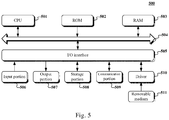
- FIG. 5 a schematic structural diagram of a computer system 500 adapted to implement a server of the embodiments of the present disclosure is shown.
- the computer system 500 includes a central processing unit (CPU) 501, which may execute various appropriate actions and processes in accordance with a program stored in a read-only memory (ROM) 502 or a program loaded into a random access memory (RAM) 503 from a storage portion 508.
- the RAM 503 also stores various programs and data required by operations of the system 500.
- the CPU 501, the ROM 502 and the RAM 503 are connected to each other through a bus 504.
- An input/output (I/O) interface 505 is also connected to the bus 504.
- the following components are connected to the I/O interface 505: an input portion 506 including a keyboard, a mouse etc.; an output portion 507 comprising a cathode ray tube (CRT), a liquid crystal display device (LCD), a speaker etc.; a storage portion 508 including a hard disk and the like; and a communication portion 509 comprising a network interface card, such as a LAN card and a modem.
- the communication portion 509 performs communication processes via a network, such as the Internet.
- a driver 510 is also connected to the I/O interface 505 as required.
- each block in the flow charts and block diagrams may represent a module, a program segment, or a code portion.
- the module, the program segment, or the code portion comprises one or more executable instructions for implementing the specified logical function.
- the functions denoted by the blocks may occur in a sequence different from the sequences shown in the figures. For example, in practice, two blocks in succession may be executed, depending on the involved functionalities, substantially in parallel, or in a reverse sequence.
- each block in the block diagrams and/or the flow charts and/or a combination of the blocks may be implemented by a dedicated hardware-based system executing specific functions or operations, or by a combination of a dedicated hardware and computer instructions.
- the units or modules involved in the embodiments of the present disclosure may be implemented by way of software or hardware.
- the described units or modules may also be provided in a processor, for example, described as: a processor, comprising a disassembling unit, a first selecting unit, a second selecting unit, a third selecting unit and an outputting unit, where the names of these units or modules are not considered as a limitation to the units or modules.
- the disassembling unit may also be described as "a unit for disassembling a binary program of an application running on a target device to generate a to-be-recovered assembly program".
- inventive scope of the present disclosure is not limited to the technical solutions formed by the particular combinations of the above technical features.
- inventive scope should also cover other technical solutions formed by any combinations of the above technical features or equivalent features thereof without departing from the concept of the invention, such as, technical solutions formed by replacing the features as disclosed in the present disclosure with (but not limited to), technical features with similar functions.
Landscapes
- Engineering & Computer Science (AREA)
- Theoretical Computer Science (AREA)
- General Engineering & Computer Science (AREA)
- Computer Security & Cryptography (AREA)
- Computer Hardware Design (AREA)
- Software Systems (AREA)
- General Physics & Mathematics (AREA)
- Physics & Mathematics (AREA)
- Health & Medical Sciences (AREA)
- General Health & Medical Sciences (AREA)
- Virology (AREA)
- Computational Linguistics (AREA)
- Audiology, Speech & Language Pathology (AREA)
- Artificial Intelligence (AREA)
- Computing Systems (AREA)
- Quality & Reliability (AREA)
- Machine Translation (AREA)
- Information Retrieval, Db Structures And Fs Structures Therefor (AREA)
- Stored Programmes (AREA)
Abstract
Description
- This application is related to and claims priority from Chinese Application No.
201610924983.7, filed on October 24, 2016 - The present disclosure relates to the field of computer technologies, particularly to the field of information security technologies, and more particularly to a method and an apparatus for detecting an application.
- A 0-day vulnerability is a vulnerability whose related cracking occurs within the shortest time after software or something else is issued. Other than the 0-day vulnerability, a vulnerability which has been disclosed but is not timely fixed on numerous devices is referred to as an N-day vulnerability. In most cases, the N-day vulnerability has mature and widespread vulnerability exploitation. Therefore, underground industries mainly utilize the N-day vulnerability to break through the security protection mechanism installed in devices. Device manufacturers cannot concentrate on finding and fixing N-day vulnerabilities like manufacturers having security capability. Therefore, the device manufacturers need to cooperate with the security manufacturers to fix the N-day vulnerabilities.
- However, the existing application detecting method generally needs source codes of the device, but the security manufacturers have difficulty in obtaining the device source codes. Therefore, a flexible mechanism is urgently needed to effectively detect applications running on the devices.
- An objective of the present disclosure is to provide an improved method and apparatus for detecting an application, in order to solve the technical problem mentioned in the foregoing Background section.
- In a first aspect, the present disclosure provides a method for detecting an application. The method comprises: disassembling a binary program of an application running on a target device to generate a to-be-recovered assembly program; selecting, from the to-be-recovered assembly program, a function having function information consistent with function information of a preset reference function in a reference assembly program to obtain at least one candidate function; selecting, among the at least one candidate function, a candidate function having grammatical and/or semantic information consistent with grammatical and/or semantic information of the preset reference function as an object function; selecting, from the object function, a variable having grammatical and/or semantic information consistent with grammatical and/or semantic information of a preset reference variable in the preset reference function as a target variable; and outputting positional information of the object function and the target variable in the to-be-recovered assembly program as a detection result.
- In some embodiments, the selecting, from the to-be-recovered assembly program, a function having function information consistent with function information of a preset reference function in a reference assembly program to obtain at least one candidate function comprises: extracting respectively at least one item of function information of the preset reference function and at least one item of function information of each function in the to-be-recovered assembly program to generate a function information set of the preset reference function and a function information set of the each function in the to-be-recovered assembly program; calculating a similarity between the function information set of the preset reference function and the function information set of the each function in the to-be-recovered assembly program, respectively; and selecting the candidate function from the each function in the to-be-recovered assembly program based on a result of calculating the similarity.
- In some embodiments, the selecting, among the at least one candidate function, a candidate function having grammatical and/or semantic information consistent with grammatical and/or semantic information of the preset reference function as an object function comprises: extracting respectively at least one item of grammatical and/or semantic information of the preset reference function and at least one item of grammatical and/or semantic information of each candidate function to generate a grammatical and/or semantic information set of the preset reference function and a grammatical and/or semantic information set of the each candidate function; calculating a similarity between the grammatical and/or semantic information set of the preset reference function and the grammatical and/or semantic information set of the each candidate function, respectively; and selecting the object function from the each candidate function based on a result of calculating the similarity.
- In some embodiments, the selecting, from the object function, a variable having grammatical and/or semantic information consistent with grammatical and/or semantic information of a preset reference variable in the preset reference function as a target variable comprises: extracting respectively at least one item of grammatical and/or semantic information of the preset reference variable and at least one item of grammatical and/or semantic information of each variable in the object function to generate a grammatical and/or semantic information set of the preset reference variable and a grammatical and/or semantic feature set of the each variable in the object function; calculating a similarity between the grammatical and/or semantic information set of the preset reference variable and the grammatical and/or semantic information set of the each variable in the object function, respectively; and selecting the target variable from the each variable in the object function based on a result of calculating the similarity.
- In some embodiments, the positional information of the object function and the target variable in the to-be-recovered assembly program comprises a starting address of the object function and an offset of the target variable.
- In some embodiments, the function information comprises at least one of: a function name, a constant in the function, and a calling relationship of the function.
- In some embodiments, the grammatical and/or semantic information of the function comprises at least one of: a number of basic blocks, a control flow graph, an output corresponding to a sample input, and an analytical result of symbolic execution.
- In some embodiments, the grammatical and/or semantic information of the variable comprises at least one of: a variable name, dependency relationship of the variable in a data flow or a control flow, and an analytical result of symbolic execution.
- In some embodiments, the calculating a similarity comprises a minimum hash algorithm.
- In a second aspect, the present disclosure provides an apparatus for detecting an application. In particular, the apparatus may be configured or adapted to perform or to execute the method as described above. The apparatus comprises: a disassembling unit, configured to disassemble a binary program of an application running on a target device to generate a to-be-recovered assembly program; a first selecting unit, configured to select, from the to-be-recovered assembly program, a function having function information consistent with function information of a preset reference function in a reference assembly program to obtain at least one candidate function; a second selecting unit, configured to select, among the at least one candidate function, a candidate function having grammatical and/or semantic information consistent with grammatical and/or semantic information of the preset reference function as an object function; a third selecting unit, configured to select, from the object function, a variable having grammatical and/or semantic information consistent with grammatical and/or semantic information of a preset reference variable in the preset reference function as a target variable; and an outputting unit, configured to output positional information of the object function and the target variable in the to-be-recovered assembly program as a detection result.
- In some embodiments, the first selecting unit comprises: a first extracting subunit, configured to extract respectively at least one item of function information of the preset reference function and at least one item of function information of each function in the to-be-recovered assembly program to generate a function information set of the preset reference function and a function information set of the each function in the to-be-recovered assembly program; a first similarity calculating subunit, configured to calculating a similarity between the function information set of the preset reference function and the function information set of the each function in the to-be-recovered assembly program, respectively; and a first selecting subunit, configured to select the candidate function from the each function in the to-be-recovered assembly program based on a result of calculating the similarity.
- In some embodiments, the second selecting unit comprises: a second extracting subunit, configured to extract respectively at least one item of grammatical and/or semantic information of the preset reference function and at least one item of grammatical and/or semantic information of each candidate function to generate a grammatical and/or semantic information set of the preset reference function and a grammatical and/or semantic information set of the each candidate function; a second similarity calculating subunit, configured to calculate a similarity between the grammatical and/or semantic information set of the preset reference function and the grammatical and/or semantic information set of the each candidate function, respectively; and a second selecting subunit, configured to select the object function from the each candidate function based on a result of calculating the similarity.
- In some embodiments, the third selecting unit comprises: a third extracting subunit, configured to extract respectively at least one item of grammatical and/or semantic information of the preset reference variable and at least one item of grammatical and/or semantic information of each variable in the object function to generate a grammatical and/or semantic information set of the preset reference variable and a grammatical and/or semantic feature set of the each variable in the object function; a third similarity calculating subunit, configured to calculate a similarity between the grammatical and/or semantic information set of the preset reference variable and the grammatical and/or semantic information set of the each variable in the object function, respectively; and a third selecting subunit, configured to select the target variable from the each variable in the object function based on a result of calculating the similarity.
- In some embodiments, the positional information of the object function and the target variable in the to-be-recovered assembly program comprises a starting address of the object function and an offset of the target variable.
- In some embodiments, the function information comprises at least one of: a function name, a constant in the function, and a calling relationship of the function.
- In some embodiments, the grammatical and/or semantic information of the function comprises at least one of: a number of basic blocks, a control flow graph, an output corresponding to a sample input, and an analytical result of symbolic execution.
- In some embodiments, the grammatical and/or semantic information of the variable comprises at least one of: a variable name, dependency relationship of the variable in a data flow or a control flow, and an analytical result of symbolic execution.
- In some embodiments, the calculating a similarity comprises a minimum hash algorithm.
- According to the method and the apparatus for detecting an application provided by the present disclosure, first a binary program of an application running on a target device is disassembled to generate a to-be-recovered assembly program. Next, a candidate function, an object function and a target variable in the to-be-recovered assembly program are selected in sequence based on the function information of a preset reference function, the grammatical and/or semantic information of the preset reference function and the grammatical and/or semantic information of the preset reference variable. Finally, the positional information of the object function and the target variable in the to-be-recovered assembly program are outputted as a detection result. In this way, an effective detection of the application running on the device is achieved.
- Other features, objectives and advantages of the present disclosure will become more apparent upon reading the detailed description to non-limiting embodiments with reference to the accompanying drawings, wherein:
-
FIG. 1 is an exemplary architecture diagram of a system to which the present disclosure may be applied; -
FIG. 2 is a flowchart of a method for detecting an application according to an embodiment of the present disclosure; -
FIG. 3 is a flowchart of a method for detecting an application according to another embodiment of the present disclosure; -
FIG. 4 is a schematic structural diagram of an apparatus for detecting an application according to an embodiment of the present disclosure; and -
FIG. 5 illustrates a structural schematic diagram of a computer system adapted to implement a server of the embodiments of the present disclosure. - The present disclosure will be further described below in detail in combination with the accompanying drawings and the embodiments. It should be appreciated that the specific embodiments described herein are merely used for explaining the relevant invention, rather than limiting the invention. In addition, it should be noted that, for the ease of description, only the parts related to the relevant invention are shown in the accompanying drawings.
- It should also be noted that the embodiments in the present disclosure and the features in the embodiments may be combined with each other on a non-conflict basis. The present disclosure will be described below in detail with reference to the accompanying drawings and in combination with the embodiments.
-
Fig. 1 shows an exemplary architecture of asystem 100 to which the method or apparatus for detecting an application according to embodiments of the present application may be applied. - As shown in
FIG. 1 , thesystem architecture 100 may includetarget devices network 104 and aserver 105. Thenetwork 104 serves as a medium providing a communication link between thetarget devices server 105. Thenetwork 104 may include various types of connections, such as wired or wireless communication links, or optical fibers. - The
target devices - The
server 105 may be a server providing various services, for example, a background server for detecting functions and variables to be recovered based on a binary program of an application running on thetarget devices - It should be noted that the method for detecting an application according to the embodiments of the present application may be executed by the
server 105. Accordingly, the apparatus for detecting an application may be set in theserver 105. - It should be appreciated that the numbers of the target devices, the network and the server in
Fig. 1 are merely illustrative. Any number of terminal devices, networks and servers may be provided based on the actual requirements. - Referring to
FIG. 2 , it illustrates aflowchart 200 of a method for detecting an application according to an embodiment of the present disclosure. The method for detecting an application comprises following steps. - Step 201: disassembling a binary program of an application running on a target device to generate a to-be-recovered assembly program.
- In this embodiment, in the event that a source code of the application running on the target device cannot be acquired, an electronic device (such as a
server 105 as shown inFig. 1 ) on which the method for detecting an application runs may acquire the binary program of the application running on the target device by way of wired connection or wireless connection, and disassemble the binary program using a disassembly program to generate the to-be-recovered assembly program. The disassembly program may be used for converting the binary program into an assembly program. - Step 202: selecting, from the to-be-recovered assembly program, a function having function information consistent with function information of a preset reference function in a reference assembly program to obtain at least one candidate function.
- In this embodiment, based on the to-be-recovered assembly program acquired in
Step 201, the electronic device (such as theserver 105 as shown inFig. 1 ) may first acquire function information of the preset reference function and each function in the to-be-recovered assembly program, then match, one by one, the function information of the preset reference function with the function information of the each function in the to-be-recovered assembly program, and finally select, based on the matching result (for example, a matching degree being greater than a preset threshold is regarded as consistent in function information), a function consistent in function information with the preset reference function from the to-be-recovered assembly program to serve as the candidate function. The reference assembly program is a preset reference program. The reference program may be an assembly program or a binary program. When the reference program is a binary program, the electronic device first needs to disassemble the reference program to acquire the reference assembly program. The preset reference function may be a function preassigned in the reference assembly program, or may be all functions in the reference assembly program, or may be partial functions in the reference assembly program. - In some optional implementations of this embodiment, the function information may comprise, but not limited to, at least one of: a function name, a constant in the function, and a calling relationship of the function. As an example, when the function information is the function name and the function name of the preset reference function is "ping_unhash", the electronic device may first acquire the function name of each function in the to-be-recovered assembly program, then match the "ping_unhash" with the function name of the each function in the to-be-recovered assembly program. When a function with the function name "ping_unhash" is present in the to-be-recovered assembly program, the function may be selected as the candidate function. When the function information is an calling relationship of functions, in the event that a preset reference function A calls a function B, the function B calls a preset reference function C, and the function B is present in the to-be-recovered assembly program, in the to-be-recovered assembly program, a function calling the function B and a function called by the function B may be both selected as the candidate function.
- Step 203: selecting, among the at least one candidate function, a candidate function having grammatical and/or semantic information consistent with grammatical and/or semantic information of the preset reference function as an object function.
- In this embodiment, based on the at least one candidate function acquired in
Step 202, the electronic device (such as theserver 105 as shown inFig. 1 ) may first acquire grammatical and/or semantic information of the preset reference function and each candidate function, then match, one by one, the grammatical and/or semantic information of the preset reference function with the grammatical and/or semantic information of the each candidate function, and finally select, based on the matching result (for example, a matching degree being greater than a preset threshold is regarded as consistent in grammatical and/or semantic information of a function), a function consistent in grammatical and/or semantic information with the preset reference function from the candidate function to serve as the object function. - In this embodiment, first the candidate function is quickly matched based on a lightweight means matching with the function information adopted in
Step 202 to narrow the matching range inStep 203, and then the object function is accurately acquired based on a precise localization means matching with the grammatical and/or semantic information of a function adopted inStep 203. In this way, not only localization inaccuracy caused by matching only adopting a lightweight matching means may be overcome, but also enormous resource expenditure caused by matching only adopting the precise localization means may be avoided. - In some optional implementations of this embodiment, the grammatical and/or semantic information of the function may comprise, but not limited to, at least one of: the number of basic blocks, a control flow graph, an output corresponding to a sample input, and an analytical result of symbolic execution. The basic block is a statement sequence executed in a program order, merely having an entry and an exit. The entry is a first statement of the basic block, and the exit is a last statement of the basic block. For a basic block, when being executed, a program only enters from the entry and quits from the exit. The control flow graph, also referred to as a control flow chart, is an abstract expression of a process or a program. Each node in a figure in the control flow graph represents a basic block. A jump target starts with a basic block and ends with another basic block. An oriented edge is used for representing a jump in the control flow. Generally, the matching degree between two control flow graphs of functions may be calculated using a backtracking algorithm. The output corresponding to the sample input, that is, a value range of an independent variable of a function is first determined, then the value range of the independent variable is sampled, and values of a plurality of independent variables obtained by sampling are used as input execution functions so as to acquire the corresponding output. The symbolic execution refers to a technique in which a symbol value is used to represent a value of a program variable and then a program execution is simulated to conduct a correlation analysis under the premise of not executing the program. The symbolic execution may analyze all semantic information of the program, or may only analyze partial semantic information.
- Step 204: selecting, from the object function, a variable having grammatical and/or semantic information consistent with grammatical and/or semantic information of a preset reference variable in the preset reference function as a target variable.
- In this embodiment, based on the object function acquired in
Step 203, the electronic device (such as theserver 105 as shown inFig. 1 ) may first acquire grammatical and/or semantic information of the preset reference variable and each variable in the object function, then match, one by one, the grammatical and/or semantic information of the preset reference variable with the grammatical and/or semantic information of the each variable in the object function, and finally select, based on the matching result (for example, a matching degree being greater than a preset threshold is regarded as consistent in grammatical and/or semantic information of a variable), a variable consistent in grammatical and/or semantic information with the preset reference variable from the object function to serve as the target variable. The preset reference variable may be a variable preassigned in the preset reference function, or may be all variables in the preset reference function, or may be partial variables in the preset reference function. - In some optional implementations of this embodiment, the grammatical and/or semantic information of the variable may comprise, but not limited to, at least one of: a variable name, dependency relationship of the variable in a data flow or a control flow, and an analytical result of symbolic execution. As an example, following code snippets are present:
 "int fun(int x){
 int y;
 y = x+1;
 if(y)
 return 0;
 else
 return 1;
 }"
wherein, the variable y depends on the parameter x in data flow and depends on a determination of if/else in control flow, and the variable y may be located based on a dependency relationship between the data flow and the control flow.
Claims (15)
- A method for detecting an application, characterized in that the method comprising:disassembling a binary program of an application running on a target device to generate a to-be-recovered assembly program;selecting, from the to-be-recovered assembly program, a function having function information consistent with function information of a preset reference function in a reference assembly program to obtain at least one candidate function;selecting, among the at least one candidate function, a candidate function having grammatical and/or semantic information consistent with grammatical and/or semantic information of the preset reference function as an object function;selecting, from the object function, a variable having grammatical and/or semantic information consistent with grammatical and/or semantic information of a preset reference variable in the preset reference function as a target variable; andoutputting positional information of the object function and the target variable in the to-be-recovered assembly program as a detection result.
- The method according to claim 1, characterized in that the selecting, from the to-be-recovered assembly program, a function having function information consistent with function information of a preset reference function in a reference assembly program to obtain at least one candidate function comprises:extracting respectively at least one item of function information of the preset reference function and at least one item of function information of each function in the to-be-recovered assembly program to generate a function information set of the preset reference function and a function information set of the each function in the to-be-recovered assembly program;calculating a similarity between the function information set of the preset reference function and the function information set of the each function in the to-be-recovered assembly program, respectively; andselecting the candidate function from the each function in the to-be-recovered assembly program based on a result of calculating the similarity.
- The method according to claim 1 or 2, characterized in that the selecting, among the at least one candidate function, a candidate function having grammatical and/or semantic information consistent with grammatical and/or semantic information of the preset reference function as an object function comprises:extracting respectively at least one item of grammatical and/or semantic information of the preset reference function and at least one item of grammatical and/or semantic information of each candidate function to generate a grammatical and/or semantic information set of the preset reference function and a grammatical and/or semantic information set of the each candidate function;calculating a similarity between the grammatical and/or semantic information set of the preset reference function and the grammatical and/or semantic information set of the each candidate function, respectively; andselecting the object function from the each candidate function based on a result of calculating the similarity.
- The method according to any one of the preceding claims, characterized in that the selecting, from the object function, a variable having grammatical and/or semantic information consistent with grammatical and/or semantic information of a preset reference variable in the preset reference function as a target variable comprises:extracting respectively at least one item of grammatical and/or semantic information of the preset reference variable and at least one item of grammatical and/or semantic information of each variable in the object function to generate a grammatical and/or semantic information set of the preset reference variable and a grammatical and/or semantic feature set of the each variable in the object function;calculating a similarity between the grammatical and/or semantic information set of the preset reference variable and the grammatical and/or semantic information set of the each variable in the object function, respectively; andselecting the target variable from the each variable in the object function based on a result of calculating the similarity.
- The method according to any one of the preceding claims, characterized in that the positional information of the object function and the target variable in the to-be-recovered assembly program comprises a starting address of the object function and an offset of the target variable.
- The method according to any one of the preceding claims, characterized in that the function information comprises at least one of: a function name, a constant in the function, and a calling relationship of the function.
- The method according to any one of the preceding claims, characterized in that the grammatical and/or semantic information of the function comprises at least one of: a number of basic blocks, a control flow graph, an output corresponding to a sample input, and an analytical result of symbolic execution.
- The method according to any one of the preceding claims, characterized in that the grammatical and/or semantic information of the variable comprises at least one of: a variable name, dependency relationship of the variable in a data flow or a control flow, and an analytical result of symbolic execution.
- The method according to any one of claims 2-4, characterized in that the calculating a similarity comprises a minimum hash algorithm.
- An apparatus for detecting an application, characterized in that the apparatus comprising:at least one processor; anda memory storing instructions, which when executed by the at least one processor, cause the at least one processor to perform operations, the operations comprising:disassembling a binary program of an application running on a target device to generate a to-be-recovered assembly program;selecting, from the to-be-recovered assembly program, a function having function information consistent with function information of a preset reference function in a reference assembly program to obtain at least one candidate function;selecting, among the at least one candidate function, a candidate function having grammatical and/or semantic information consistent with grammatical and/or semantic information of the preset reference function as an object function;selecting, from the object function, a variable having grammatical and/or semantic information consistent with grammatical and/or semantic information of a preset reference variable in the preset reference function as a target variable; andoutputting positional information of the object function and the target variable in the to-be-recovered assembly program as a detection result.
- The apparatus according to claim 10, characterized in that the selecting, from the to-be-recovered assembly program, a function having function information consistent with function information of a preset reference function in a reference assembly program to obtain at least one candidate function comprises:extracting respectively at least one item of function information of the preset reference function and at least one item of function information of each function in the to-be-recovered assembly program to generate a function information set of the preset reference function and a function information set of the each function in the to-be-recovered assembly program;calculating a similarity between the function information set of the preset reference function and the function information set of the each function in the to-be-recovered assembly program, respectively; andselecting the candidate function from the each function in the to-be-recovered assembly program based on a result of calculating the similarity.
- The apparatus according to claim 10 or 11, characterized in that the selecting, among the at least one candidate function, a candidate function having grammatical and/or semantic information consistent with grammatical and/or semantic information of the preset reference function as an object function comprises:extracting respectively at least one item of grammatical and/or semantic information of the preset reference function and at least one item of grammatical and/or semantic information of each candidate function to generate a grammatical and/or semantic information set of the preset reference function and a grammatical and/or semantic information set of the each candidate function;calculating a similarity between the grammatical and/or semantic information set of the preset reference function and the grammatical and/or semantic information set of the each candidate function, respectively; andselecting the object function from the each candidate function based on a result of calculating the similarity.
- The apparatus according to any one of claims 10 to 12, characterized in that the selecting, from the object function, a variable having grammatical and/or semantic information consistent with grammatical and/or semantic information of a preset reference variable in the preset reference function as a target variable comprises:extracting respectively at least one item of grammatical and/or semantic information of the preset reference variable and at least one item of grammatical and/or semantic information of each variable in the object function to generate a grammatical and/or semantic information set of the preset reference variable and a grammatical and/or semantic feature set of the each variable in the object function;calculating a similarity between the grammatical and/or semantic information set of the preset reference variable and the grammatical and/or semantic information set of the each variable in the object function, respectively; andselecting the target variable from the each variable in the object function based on a result of calculating the similarity.
- The apparatus according to any one of claims 10 to 13, characterized in that the positional information of the object function and the target variable in the to-be-recovered assembly program comprises a starting address of the object function and an offset of the target variable.
- A non-transitory storage medium storing one or more programs, the one or more programs when executed by an apparatus, causing the apparatus to perform operations, the operations comprising:disassembling a binary program of an application running on a target device to generate a to-be-recovered assembly program;selecting, from the to-be-recovered assembly program, a function having function information consistent with function information of a preset reference function in a reference assembly program to obtain at least one candidate function;selecting, among the at least one candidate function, a candidate function having grammatical and/or semantic information consistent with grammatical and/or semantic information of the preset reference function as an object function;selecting, from the object function, a variable having grammatical and/or semantic information consistent with grammatical and/or semantic information of a preset reference variable in the preset reference function as a target variable; andoutputting positional information of the object function and the target variable in the to-be-recovered assembly program as a detection result.
Applications Claiming Priority (1)
| Application Number | Priority Date | Filing Date | Title |
|---|---|---|---|
| CN201610924983.7A CN107977305B (en) | 2016-10-24 | 2016-10-24 | Method and apparatus for detecting application |
Publications (2)
| Publication Number | Publication Date |
|---|---|
| EP3312755A1 true EP3312755A1 (en) | 2018-04-25 |
| EP3312755B1 EP3312755B1 (en) | 2020-11-18 |
Family
ID=59054969
Family Applications (1)
| Application Number | Title | Priority Date | Filing Date |
|---|---|---|---|
| EP17173199.5A Not-in-force EP3312755B1 (en) | 2016-10-24 | 2017-05-29 | Method and apparatus for detecting application |
Country Status (3)
| Country | Link |
|---|---|
| US (1) | US10417422B2 (en) |
| EP (1) | EP3312755B1 (en) |
| CN (1) | CN107977305B (en) |
Families Citing this family (4)
| Publication number | Priority date | Publication date | Assignee | Title |
|---|---|---|---|---|
| US11176251B1 (en) * | 2018-12-21 | 2021-11-16 | Fireeye, Inc. | Determining malware via symbolic function hash analysis |
| CN111460088A (en) * | 2019-01-22 | 2020-07-28 | 阿里巴巴集团控股有限公司 | Similar text retrieval method, device and system |
| CN111310178B (en) * | 2020-01-20 | 2024-01-23 | 武汉理工大学 | Firmware vulnerability detection method and system in cross-platform scenario |
| CN111488579B (en) * | 2020-03-25 | 2023-06-02 | 腾讯科技(深圳)有限公司 | Vulnerability detection method, device, electronic device and computer-readable storage medium |
Citations (2)
| Publication number | Priority date | Publication date | Assignee | Title |
|---|---|---|---|---|
| US20150058984A1 (en) * | 2013-08-23 | 2015-02-26 | Nation Chiao Tung University | Computer-implemented method for distilling a malware program in a system |
| US9223554B1 (en) * | 2012-04-12 | 2015-12-29 | SourceDNA, Inc. | Recovering source code structure from program binaries |
Family Cites Families (8)
| Publication number | Priority date | Publication date | Assignee | Title |
|---|---|---|---|---|
| US9177153B1 (en) * | 2005-10-07 | 2015-11-03 | Carnegie Mellon University | Verifying integrity and guaranteeing execution of code on untrusted computer platform |
| US20070239993A1 (en) * | 2006-03-17 | 2007-10-11 | The Trustees Of The University Of Pennsylvania | System and method for comparing similarity of computer programs |
| WO2007117582A2 (en) * | 2006-04-06 | 2007-10-18 | Smobile Systems Inc. | Malware detection system and method for mobile platforms |
| US9672019B2 (en) * | 2008-11-24 | 2017-06-06 | Intel Corporation | Systems, apparatuses, and methods for a hardware and software system to automatically decompose a program to multiple parallel threads |
| US9635033B2 (en) * | 2012-11-14 | 2017-04-25 | University Of Virginia Patent Foundation | Methods, systems and computer readable media for detecting command injection attacks |
| US9612840B2 (en) * | 2014-03-28 | 2017-04-04 | Intel Corporation | Method and apparatus for implementing a dynamic out-of-order processor pipeline |
| CN105335649A (en) * | 2015-10-14 | 2016-02-17 | 上海斐讯数据通信技术有限公司 | Intelligent terminal application program authority management method and system |
| CN106203048A (en) * | 2016-07-18 | 2016-12-07 | 北京小米移动软件有限公司 | A kind of method and apparatus being unlocked |
-
2016
- 2016-10-24 CN CN201610924983.7A patent/CN107977305B/en active Active
-
2017
- 2017-05-25 US US15/605,668 patent/US10417422B2/en active Active
- 2017-05-29 EP EP17173199.5A patent/EP3312755B1/en not_active Not-in-force
Patent Citations (2)
| Publication number | Priority date | Publication date | Assignee | Title |
|---|---|---|---|---|
| US9223554B1 (en) * | 2012-04-12 | 2015-12-29 | SourceDNA, Inc. | Recovering source code structure from program binaries |
| US20150058984A1 (en) * | 2013-08-23 | 2015-02-26 | Nation Chiao Tung University | Computer-implemented method for distilling a malware program in a system |
Non-Patent Citations (1)
| Title |
|---|
| DANILO BRUSCHI ET AL: "Code Normalization for Self-Mutating Malware", SECURITY & PRIVACY, IEEE, IEEE SERVICE CENTER, LOS ALAMITOS, CA, US, vol. 5, no. 2, 2 April 2007 (2007-04-02), pages 46 - 54, XP011175987, ISSN: 1540-7993, DOI: 10.1109/MSP.2007.31 * |
Also Published As
| Publication number | Publication date |
|---|---|
| CN107977305A (en) | 2018-05-01 |
| EP3312755B1 (en) | 2020-11-18 |
| CN107977305B (en) | 2019-05-03 |
| US20180114019A1 (en) | 2018-04-26 |
| US10417422B2 (en) | 2019-09-17 |
Similar Documents
| Publication | Publication Date | Title |
|---|---|---|
| CN108763928B (en) | An open source software vulnerability analysis method, device and storage medium | |
| US9621571B2 (en) | Apparatus and method for searching for similar malicious code based on malicious code feature information | |
| CN106022349B (en) | Method and system for device type determination | |
| JP6473234B2 (en) | Analysis method, analysis device, and analysis program | |
| CN111447215A (en) | Data detection method, device and storage medium | |
| EP3355229B1 (en) | Analysis device, analysis method, and analysis program | |
| EP3312755B1 (en) | Method and apparatus for detecting application | |
| EP3547121B1 (en) | Combining device, combining method and combining program | |
| US20190180032A1 (en) | Classification apparatus, classification method, and classification program | |
| EP3637292A1 (en) | Determination device, determination method, and determination program | |
| US10581845B2 (en) | Method and apparatus for assigning device fingerprints to internet devices | |
| CN111191242B (en) | Vulnerability information determination method, device, computer-readable storage medium and device | |
| CN118509220B (en) | Zero-day vulnerability attack capture method and electronic device based on honeypot | |
| CN118764310B (en) | Attack detection method, device, readable medium and electronic device for container | |
| CN110674497B (en) | Malicious program similarity calculation method and device | |
| CN109308299B (en) | Method and apparatus for searching information | |
| CN111353039B (en) | File category detection method and device | |
| CN118862086A (en) | A method for detecting container vulnerabilities in power Internet of Things systems based on deep learning | |
| CN114065202B (en) | Malicious code detection method and device, electronic equipment and storage medium | |
| CN113392400B (en) | Method, device and system for detecting operating environment | |
| WO2022244077A1 (en) | Estimation device, estimation method, and estimation program | |
| CN117077138B (en) | Anomaly detection method, system, medium and equipment based on browser | |
| WO2019225251A1 (en) | Learning method, learning device and learning program | |
| CN110765457A (en) | Method and device for identifying homologous attack based on program logic and storage device | |
| CN110896388B (en) | Network traffic analysis method, device and computer readable medium |
Legal Events
| Date | Code | Title | Description |
|---|---|---|---|
| PUAI | Public reference made under article 153(3) epc to a published international application that has entered the european phase |
Free format text: ORIGINAL CODE: 0009012 |
|
| STAA | Information on the status of an ep patent application or granted ep patent |
Free format text: STATUS: THE APPLICATION HAS BEEN PUBLISHED |
|
| AK | Designated contracting states |
Kind code of ref document: A1 Designated state(s): AL AT BE BG CH CY CZ DE DK EE ES FI FR GB GR HR HU IE IS IT LI LT LU LV MC MK MT NL NO PL PT RO RS SE SI SK SM TR |
|
| AX | Request for extension of the european patent |
Extension state: BA ME |
|
| STAA | Information on the status of an ep patent application or granted ep patent |
Free format text: STATUS: REQUEST FOR EXAMINATION WAS MADE |
|
| 17P | Request for examination filed |
Effective date: 20181022 |
|
| RBV | Designated contracting states (corrected) |
Designated state(s): AL AT BE BG CH CY CZ DE DK EE ES FI FR GB GR HR HU IE IS IT LI LT LU LV MC MK MT NL NO PL PT RO RS SE SI SK SM TR |
|
| RIC1 | Information provided on ipc code assigned before grant |
Ipc: G06F 9/45 20060101ALI20171018BHEP Ipc: G06F 21/56 20130101AFI20171018BHEP |
|
| STAA | Information on the status of an ep patent application or granted ep patent |
Free format text: STATUS: EXAMINATION IS IN PROGRESS |
|
| 17Q | First examination report despatched |
Effective date: 20190401 |
|
| GRAP | Despatch of communication of intention to grant a patent |
Free format text: ORIGINAL CODE: EPIDOSNIGR1 |
|
| STAA | Information on the status of an ep patent application or granted ep patent |
Free format text: STATUS: GRANT OF PATENT IS INTENDED |
|
| RIC1 | Information provided on ipc code assigned before grant |
Ipc: G06F 21/56 20130101AFI20200515BHEP Ipc: G06F 8/53 20180101ALI20200515BHEP |
|
| INTG | Intention to grant announced |
Effective date: 20200608 |
|
| GRAS | Grant fee paid |
Free format text: ORIGINAL CODE: EPIDOSNIGR3 |
|
| GRAA | (expected) grant |
Free format text: ORIGINAL CODE: 0009210 |
|
| STAA | Information on the status of an ep patent application or granted ep patent |
Free format text: STATUS: THE PATENT HAS BEEN GRANTED |
|
| AK | Designated contracting states |
Kind code of ref document: B1 Designated state(s): AL AT BE BG CH CY CZ DE DK EE ES FI FR GB GR HR HU IE IS IT LI LT LU LV MC MK MT NL NO PL PT RO RS SE SI SK SM TR |
|
| REG | Reference to a national code |
Ref country code: GB Ref legal event code: FG4D |
|
| REG | Reference to a national code |
Ref country code: CH Ref legal event code: EP |
|
| REG | Reference to a national code |
Ref country code: IE Ref legal event code: FG4D |
|
| REG | Reference to a national code |
Ref country code: DE Ref legal event code: R096 Ref document number: 602017027624 Country of ref document: DE |
|
| REG | Reference to a national code |
Ref country code: AT Ref legal event code: REF Ref document number: 1336548 Country of ref document: AT Kind code of ref document: T Effective date: 20201215 |
|
| REG | Reference to a national code |
Ref country code: AT Ref legal event code: MK05 Ref document number: 1336548 Country of ref document: AT Kind code of ref document: T Effective date: 20201118 |
|
| REG | Reference to a national code |
Ref country code: NL Ref legal event code: MP Effective date: 20201118 |
|
| PG25 | Lapsed in a contracting state [announced via postgrant information from national office to epo] |
Ref country code: RS Free format text: LAPSE BECAUSE OF FAILURE TO SUBMIT A TRANSLATION OF THE DESCRIPTION OR TO PAY THE FEE WITHIN THE PRESCRIBED TIME-LIMIT Effective date: 20201118 Ref country code: PT Free format text: LAPSE BECAUSE OF FAILURE TO SUBMIT A TRANSLATION OF THE DESCRIPTION OR TO PAY THE FEE WITHIN THE PRESCRIBED TIME-LIMIT Effective date: 20210318 Ref country code: NO Free format text: LAPSE BECAUSE OF FAILURE TO SUBMIT A TRANSLATION OF THE DESCRIPTION OR TO PAY THE FEE WITHIN THE PRESCRIBED TIME-LIMIT Effective date: 20210218 Ref country code: FI Free format text: LAPSE BECAUSE OF FAILURE TO SUBMIT A TRANSLATION OF THE DESCRIPTION OR TO PAY THE FEE WITHIN THE PRESCRIBED TIME-LIMIT Effective date: 20201118 Ref country code: GR Free format text: LAPSE BECAUSE OF FAILURE TO SUBMIT A TRANSLATION OF THE DESCRIPTION OR TO PAY THE FEE WITHIN THE PRESCRIBED TIME-LIMIT Effective date: 20210219 |
|
| PG25 | Lapsed in a contracting state [announced via postgrant information from national office to epo] |
Ref country code: SE Free format text: LAPSE BECAUSE OF FAILURE TO SUBMIT A TRANSLATION OF THE DESCRIPTION OR TO PAY THE FEE WITHIN THE PRESCRIBED TIME-LIMIT Effective date: 20201118 Ref country code: BG Free format text: LAPSE BECAUSE OF FAILURE TO SUBMIT A TRANSLATION OF THE DESCRIPTION OR TO PAY THE FEE WITHIN THE PRESCRIBED TIME-LIMIT Effective date: 20210218 Ref country code: PL Free format text: LAPSE BECAUSE OF FAILURE TO SUBMIT A TRANSLATION OF THE DESCRIPTION OR TO PAY THE FEE WITHIN THE PRESCRIBED TIME-LIMIT Effective date: 20201118 Ref country code: LV Free format text: LAPSE BECAUSE OF FAILURE TO SUBMIT A TRANSLATION OF THE DESCRIPTION OR TO PAY THE FEE WITHIN THE PRESCRIBED TIME-LIMIT Effective date: 20201118 Ref country code: IS Free format text: LAPSE BECAUSE OF FAILURE TO SUBMIT A TRANSLATION OF THE DESCRIPTION OR TO PAY THE FEE WITHIN THE PRESCRIBED TIME-LIMIT Effective date: 20210318 Ref country code: AT Free format text: LAPSE BECAUSE OF FAILURE TO SUBMIT A TRANSLATION OF THE DESCRIPTION OR TO PAY THE FEE WITHIN THE PRESCRIBED TIME-LIMIT Effective date: 20201118 |
|
| REG | Reference to a national code |
Ref country code: LT Ref legal event code: MG9D |
|
| PG25 | Lapsed in a contracting state [announced via postgrant information from national office to epo] |
Ref country code: HR Free format text: LAPSE BECAUSE OF FAILURE TO SUBMIT A TRANSLATION OF THE DESCRIPTION OR TO PAY THE FEE WITHIN THE PRESCRIBED TIME-LIMIT Effective date: 20201118 |
|
| PG25 | Lapsed in a contracting state [announced via postgrant information from national office to epo] |
Ref country code: RO Free format text: LAPSE BECAUSE OF FAILURE TO SUBMIT A TRANSLATION OF THE DESCRIPTION OR TO PAY THE FEE WITHIN THE PRESCRIBED TIME-LIMIT Effective date: 20201118 Ref country code: SK Free format text: LAPSE BECAUSE OF FAILURE TO SUBMIT A TRANSLATION OF THE DESCRIPTION OR TO PAY THE FEE WITHIN THE PRESCRIBED TIME-LIMIT Effective date: 20201118 Ref country code: SM Free format text: LAPSE BECAUSE OF FAILURE TO SUBMIT A TRANSLATION OF THE DESCRIPTION OR TO PAY THE FEE WITHIN THE PRESCRIBED TIME-LIMIT Effective date: 20201118 Ref country code: LT Free format text: LAPSE BECAUSE OF FAILURE TO SUBMIT A TRANSLATION OF THE DESCRIPTION OR TO PAY THE FEE WITHIN THE PRESCRIBED TIME-LIMIT Effective date: 20201118 Ref country code: CZ Free format text: LAPSE BECAUSE OF FAILURE TO SUBMIT A TRANSLATION OF THE DESCRIPTION OR TO PAY THE FEE WITHIN THE PRESCRIBED TIME-LIMIT Effective date: 20201118 Ref country code: EE Free format text: LAPSE BECAUSE OF FAILURE TO SUBMIT A TRANSLATION OF THE DESCRIPTION OR TO PAY THE FEE WITHIN THE PRESCRIBED TIME-LIMIT Effective date: 20201118 |
|
| REG | Reference to a national code |
Ref country code: DE Ref legal event code: R097 Ref document number: 602017027624 Country of ref document: DE |
|
| PG25 | Lapsed in a contracting state [announced via postgrant information from national office to epo] |
Ref country code: DK Free format text: LAPSE BECAUSE OF FAILURE TO SUBMIT A TRANSLATION OF THE DESCRIPTION OR TO PAY THE FEE WITHIN THE PRESCRIBED TIME-LIMIT Effective date: 20201118 |
|
| PLBE | No opposition filed within time limit |
Free format text: ORIGINAL CODE: 0009261 |
|
| STAA | Information on the status of an ep patent application or granted ep patent |
Free format text: STATUS: NO OPPOSITION FILED WITHIN TIME LIMIT |
|
| 26N | No opposition filed |
Effective date: 20210819 |
|
| PG25 | Lapsed in a contracting state [announced via postgrant information from national office to epo] |
Ref country code: IT Free format text: LAPSE BECAUSE OF FAILURE TO SUBMIT A TRANSLATION OF THE DESCRIPTION OR TO PAY THE FEE WITHIN THE PRESCRIBED TIME-LIMIT Effective date: 20201118 Ref country code: NL Free format text: LAPSE BECAUSE OF FAILURE TO SUBMIT A TRANSLATION OF THE DESCRIPTION OR TO PAY THE FEE WITHIN THE PRESCRIBED TIME-LIMIT Effective date: 20201118 Ref country code: AL Free format text: LAPSE BECAUSE OF FAILURE TO SUBMIT A TRANSLATION OF THE DESCRIPTION OR TO PAY THE FEE WITHIN THE PRESCRIBED TIME-LIMIT Effective date: 20201118 |
|
| PG25 | Lapsed in a contracting state [announced via postgrant information from national office to epo] |
Ref country code: SI Free format text: LAPSE BECAUSE OF FAILURE TO SUBMIT A TRANSLATION OF THE DESCRIPTION OR TO PAY THE FEE WITHIN THE PRESCRIBED TIME-LIMIT Effective date: 20201118 |
|
| REG | Reference to a national code |
Ref country code: CH Ref legal event code: PL |
|
| PG25 | Lapsed in a contracting state [announced via postgrant information from national office to epo] |
Ref country code: ES Free format text: LAPSE BECAUSE OF FAILURE TO SUBMIT A TRANSLATION OF THE DESCRIPTION OR TO PAY THE FEE WITHIN THE PRESCRIBED TIME-LIMIT Effective date: 20201118 Ref country code: CH Free format text: LAPSE BECAUSE OF NON-PAYMENT OF DUE FEES Effective date: 20210531 Ref country code: MC Free format text: LAPSE BECAUSE OF FAILURE TO SUBMIT A TRANSLATION OF THE DESCRIPTION OR TO PAY THE FEE WITHIN THE PRESCRIBED TIME-LIMIT Effective date: 20201118 Ref country code: LU Free format text: LAPSE BECAUSE OF NON-PAYMENT OF DUE FEES Effective date: 20210529 Ref country code: LI Free format text: LAPSE BECAUSE OF NON-PAYMENT OF DUE FEES Effective date: 20210531 |
|
| REG | Reference to a national code |
Ref country code: BE Ref legal event code: MM Effective date: 20210531 |
|
| PG25 | Lapsed in a contracting state [announced via postgrant information from national office to epo] |
Ref country code: IE Free format text: LAPSE BECAUSE OF NON-PAYMENT OF DUE FEES Effective date: 20210529 |
|
| PG25 | Lapsed in a contracting state [announced via postgrant information from national office to epo] |
Ref country code: IS Free format text: LAPSE BECAUSE OF FAILURE TO SUBMIT A TRANSLATION OF THE DESCRIPTION OR TO PAY THE FEE WITHIN THE PRESCRIBED TIME-LIMIT Effective date: 20210318 |
|
| PG25 | Lapsed in a contracting state [announced via postgrant information from national office to epo] |
Ref country code: BE Free format text: LAPSE BECAUSE OF NON-PAYMENT OF DUE FEES Effective date: 20210531 |
|
| PG25 | Lapsed in a contracting state [announced via postgrant information from national office to epo] |
Ref country code: CY Free format text: LAPSE BECAUSE OF FAILURE TO SUBMIT A TRANSLATION OF THE DESCRIPTION OR TO PAY THE FEE WITHIN THE PRESCRIBED TIME-LIMIT Effective date: 20201118 |
|
| P01 | Opt-out of the competence of the unified patent court (upc) registered |
Effective date: 20230526 |
|
| PG25 | Lapsed in a contracting state [announced via postgrant information from national office to epo] |
Ref country code: HU Free format text: LAPSE BECAUSE OF FAILURE TO SUBMIT A TRANSLATION OF THE DESCRIPTION OR TO PAY THE FEE WITHIN THE PRESCRIBED TIME-LIMIT; INVALID AB INITIO Effective date: 20170529 |
|
| PGFP | Annual fee paid to national office [announced via postgrant information from national office to epo] |
Ref country code: FR Payment date: 20230411 Year of fee payment: 7 Ref country code: DE Payment date: 20230404 Year of fee payment: 7 |
|
| PGFP | Annual fee paid to national office [announced via postgrant information from national office to epo] |
Ref country code: GB Payment date: 20230406 Year of fee payment: 7 |
|
| PG25 | Lapsed in a contracting state [announced via postgrant information from national office to epo] |
Ref country code: MK Free format text: LAPSE BECAUSE OF FAILURE TO SUBMIT A TRANSLATION OF THE DESCRIPTION OR TO PAY THE FEE WITHIN THE PRESCRIBED TIME-LIMIT Effective date: 20201118 |
|
| PG25 | Lapsed in a contracting state [announced via postgrant information from national office to epo] |
Ref country code: MT Free format text: LAPSE BECAUSE OF FAILURE TO SUBMIT A TRANSLATION OF THE DESCRIPTION OR TO PAY THE FEE WITHIN THE PRESCRIBED TIME-LIMIT Effective date: 20201118 |
|
| REG | Reference to a national code |
Ref country code: DE Ref legal event code: R119 Ref document number: 602017027624 Country of ref document: DE |
|
| GBPC | Gb: european patent ceased through non-payment of renewal fee |
Effective date: 20240529 |
|
| PG25 | Lapsed in a contracting state [announced via postgrant information from national office to epo] |
Ref country code: DE Free format text: LAPSE BECAUSE OF NON-PAYMENT OF DUE FEES Effective date: 20241203 |
|
| PG25 | Lapsed in a contracting state [announced via postgrant information from national office to epo] |
Ref country code: FR Free format text: LAPSE BECAUSE OF NON-PAYMENT OF DUE FEES Effective date: 20240531 |
|
| PG25 | Lapsed in a contracting state [announced via postgrant information from national office to epo] |
Ref country code: GB Free format text: LAPSE BECAUSE OF NON-PAYMENT OF DUE FEES Effective date: 20240529 |
|
| PG25 | Lapsed in a contracting state [announced via postgrant information from national office to epo] |
Ref country code: TR Free format text: LAPSE BECAUSE OF FAILURE TO SUBMIT A TRANSLATION OF THE DESCRIPTION OR TO PAY THE FEE WITHIN THE PRESCRIBED TIME-LIMIT Effective date: 20201118 |