EP3312590A1 - A non-invasive method for measuring absolute water content of a leaf - Google Patents
A non-invasive method for measuring absolute water content of a leaf Download PDFInfo
- Publication number
- EP3312590A1 EP3312590A1 EP17197472.8A EP17197472A EP3312590A1 EP 3312590 A1 EP3312590 A1 EP 3312590A1 EP 17197472 A EP17197472 A EP 17197472A EP 3312590 A1 EP3312590 A1 EP 3312590A1
- Authority
- EP
- European Patent Office
- Prior art keywords
- leaf
- determining
- absorbance
- water content
- terahertz radiation
- Prior art date
- Legal status (The legal status is an assumption and is not a legal conclusion. Google has not performed a legal analysis and makes no representation as to the accuracy of the status listed.)
- Granted
Links
Images

Classifications
-
- G—PHYSICS
- G01—MEASURING; TESTING
- G01N—INVESTIGATING OR ANALYSING MATERIALS BY DETERMINING THEIR CHEMICAL OR PHYSICAL PROPERTIES
- G01N21/00—Investigating or analysing materials by the use of optical means, i.e. using sub-millimetre waves, infrared, visible or ultraviolet light
- G01N21/17—Systems in which incident light is modified in accordance with the properties of the material investigated
- G01N21/25—Colour; Spectral properties, i.e. comparison of effect of material on the light at two or more different wavelengths or wavelength bands
- G01N21/31—Investigating relative effect of material at wavelengths characteristic of specific elements or molecules, e.g. atomic absorption spectrometry
- G01N21/35—Investigating relative effect of material at wavelengths characteristic of specific elements or molecules, e.g. atomic absorption spectrometry using infrared light
- G01N21/3581—Investigating relative effect of material at wavelengths characteristic of specific elements or molecules, e.g. atomic absorption spectrometry using infrared light using far infrared light; using Terahertz radiation
-
- G—PHYSICS
- G01—MEASURING; TESTING
- G01N—INVESTIGATING OR ANALYSING MATERIALS BY DETERMINING THEIR CHEMICAL OR PHYSICAL PROPERTIES
- G01N21/00—Investigating or analysing materials by the use of optical means, i.e. using sub-millimetre waves, infrared, visible or ultraviolet light
- G01N21/17—Systems in which incident light is modified in accordance with the properties of the material investigated
- G01N21/25—Colour; Spectral properties, i.e. comparison of effect of material on the light at two or more different wavelengths or wavelength bands
- G01N21/31—Investigating relative effect of material at wavelengths characteristic of specific elements or molecules, e.g. atomic absorption spectrometry
- G01N21/35—Investigating relative effect of material at wavelengths characteristic of specific elements or molecules, e.g. atomic absorption spectrometry using infrared light
- G01N21/3554—Investigating relative effect of material at wavelengths characteristic of specific elements or molecules, e.g. atomic absorption spectrometry using infrared light for determining moisture content
-
- G—PHYSICS
- G01—MEASURING; TESTING
- G01N—INVESTIGATING OR ANALYSING MATERIALS BY DETERMINING THEIR CHEMICAL OR PHYSICAL PROPERTIES
- G01N21/00—Investigating or analysing materials by the use of optical means, i.e. using sub-millimetre waves, infrared, visible or ultraviolet light
- G01N21/84—Systems specially adapted for particular applications
- G01N2021/8466—Investigation of vegetal material, e.g. leaves, plants, fruits
Definitions
- the present invention refers to a method for measuring the water content of a leaf by means of terahertz waves, comprising
- the gravimetric method (or double weighing) must be used. Operatively, an initial weighing of the specimen is carried out and the wet weight of the same is determined. Then the specimen is put into an oven and left undisturbed for 48 hours so that it may lose a large part of its moisture. A second weighing is carried out, the measurement is noted, and the specimen is put back into the oven for another 6 hours. The weighing is repeated, and the last data is compared with the previous record: if the weight variation occurring over the six hours is negligible (less than 0.5%), the stable weight is considered reached and therefore it is assumed that all the vapor, free water and saturated water have been removed from the specimen, which will be perfectly anhydrous.
- terahertz spectroscopy techniques have the following limitations:
- a purpose of the present invention is to provide a non-invasive measurement method which is simpler to execute than the spectroscopic methods discussed above.
- Another purpose of the present invention is to provide a noninvasive measurement method which may be implemented in the field with portable apparatuses.
- the object of the invention is a method of the type indicated at the beginning, and further comprising
- Another object of the invention is an apparatus for measuring the water content of a leaf by means of terahertz waves, comprising
- the present invention allows the determination (non-invasive and precise) of the absolute amount of water within a leaf (note the variety of the plant to be investigated) without having to obtain additional spectroscopic information, generally complex to obtain, such as the refractive index and the absorption of the leaf.
- the invention replaces the THz measurement in the time domain with an integrated measurement in time at a fixed frequency, resulting in reduced complexity of the electronic apparatus and management. This could allow for making relatively compact equipment that may be used in the field.
- One possible embodiment of the invention provides for the construction of a multiple measurement apparatus, possibly portable, and therefore also usable in the field, composed of a terahertz (THz) quantum cascade laser (QCL), a detector for measuring the power of the radiation and a lock-in amplifier to lower the background noise, a motorized support to hold the leaf to be analyzed in a perpendicular position with respect to the laser beam, a calibrated imaging system for the choice of spectroscopic measurement points and for measuring of the projected area of the leaf, a computerized management system with specific software and archive information.
- a multiple measurement apparatus possibly portable, and therefore also usable in the field, composed of a terahertz (THz) quantum cascade laser (QCL), a detector for measuring the power of the radiation and a lock-in amplifier to lower the background noise, a motorized support to hold the leaf to be analyzed in a perpendicular position with respect to the laser beam, a calibrated imaging system for the choice of spectroscopic measurement points and for measuring of the projected
- the use of a QCL allows, on one hand, to have a high spectral power density, which allows signals with a high signal-to-noise ratio to be captured, as well as real-time images, and, on the other, to achieve structural compactness, which in some configurations allows for a monolithic device that functions at room temperature.
- terahertz radiation or “terahertz waves” are defined as electromagnetic waves with frequencies in the range from 0.1 to 10 terahertz.
- the device is characterized by a modular system composed of the following three parts:
- the THz module M f consists of three units: QCL unit U QCL , optical bench unit U bo and detector unit U r .
- the QCL unit U QCL comprises a laser, combined with collimating optical components, placed inside a closed loop cryostat connected to a vacuum pump.
- a power sub-unit generates the current pulses needed to produce laser radiation.
- the optical bench unit U bo is mounted on an aluminum plane fixed to the cryostat and is designed to control the optical path and the spatial distribution of the radiation from the cryostat to the detector unit U r .
- focalizing optics for example a Picarin lens
- sample holder with translation stage to select the leaf portion to be analyzed
- aluminum anti-diffusion screen with a hole aligned with the optical path of the laser designed to avoid measurement distortions due to spurious signals
- the detector unit U r has the task of collecting, amplifying and filtering THz radiation transmitted by the leaf. It consists of a detector for the THz (for example a pyroelectric detector or a Golay cell or a microbolometer or nanowire detector) anchored to the optical bench unit U bo to which a lock-in amplifier is connected.
- a detector for the THz for example a pyroelectric detector or a Golay cell or a microbolometer or nanowire detector
- the imaging module M v captures the images of the leaf both to define its coordinates with respect to the THz radiation beam and to measure its projected area.
- a video camera unit Ut of the imaging module M v equipped with a sensor suitable for visible light, is anchored to the optical bench unit U bo .
- An image analysis unit U i collects the data from the video camera and analyzes it through dedicated software. Additionally, an assisted positioning unit Up may be integrated to automatically monitor the leaf position.
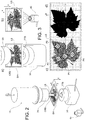
- FIG. 2 shows schematically some of the aforementioned components of the THz module and the imaging module.
- the cryostat is shown at 10, while 20 indicates a cold head of the cryostat, which also contains a THz source (QCL laser) and the dedicated optics.
- OTB indicates the THz beam emitted by the cryostat, and TTB the fraction of the beam that is transmitted through the leaf sample LS.
- SH indicates the sample holder supporting the leaf sample, which is motorized to move along the x and y axes perpendicular to the beam propagation z axis.
- the Thz detector that receives the transmitted fraction TTB of the THz beam is indicated at 30.
- the video camera of the imaging module is indicated at 40.
- the data processing module M d which may be a dedicated computer, is tasked with capturing, storing and managing data from the other two modules, as a function of a database populated during the calibration phase.
- a survey memory unit U mr is used to store leaf-related data collected while using the device.
- a calibration memory unit U mc is used to store data on the measurements calibrated with the gravimetric method.
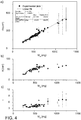
- a water quantification unit U a compares the data stored in the memory storage unit U mr , taking into account the calibration curve stored in the calibration memory unit U mc , to calculate the mass of water present in the leaf ( figure 4 ).
- FIG. 1b shows the operating details of the equipment described above. Such details may be divided into four sections: THz, Imaging, Calibration, Data Analysis.
- the THz measurement has a preferential but non-exclusive frequency range between 2.4 and 2.6 THz in order to ensure the best homogeneity of the data despite possible fluctuations in the emission frequency. To reduce these fluctuations, the temperature of the heat exchanger inside the cryostat must be controlled.
- the transmittivity measurement needed for a correct representation of the data, must be determined on multiple regions of the leaf ( figures 3a and 3c ).
- in Vitis vinifera L.
- Colorino variety 4 measurements were made on 4 regions with a diameter of 8 mm, subdivided as follows: one measurement (P1) near the first portion of the first order vein (i.e. from the petiolar sinus to the first bifurcation), one measurement (P2) near the first order vessel (in the distal part), two measurements (P3, P4) situated along the upper and lower lateral lobes.
- the aluminum anti-diffusion plate must have a hole as large as the size of the leaf region to be analyzed. This caution is necessary to make sure that the region illuminated by THz radiation is of the desired size.
- the imaging module M v the four regions suitable for the THz measurement are identified, and the translation stages of the sample holder SH are moved near the same.
- the Imaging function allows images to be captured with the video camera 40 ( figure 3b ), which, on the one hand, is used to recognize the points of the leaf intended for the THz measurement, and, on the other, are designed to permit the calculation of the projected area (black surface in figure 3d ) of the leaf LS from images of the leaf. This may be done for example with image analysis techniques.
- the transition between the THz function and the imaging function requires shifting the sample holder LS, exchanging the sensors 30 and 40, or simply activating one or other modules M f and M v without further movement of parts.
- the calibration phase provides for the use of preliminary Thz surveys, carried out for a plant variety to be monitored and on a sufficiently representative population, to associate them with data obtained by the gravimetric method subsequently carried out on the same population.
- the calibration curve may be stored as a data structure in a memory residing in the apparatus, or in a remote memory that may communicate with the processing module of the apparatus.
- a QCL system may allow new inherent information to be obtained, for example, the correlation that exists between the density of the vascular system of the leaves and the hydration status of the same, with possible applicative effects in the assessment of sensitivity to water stress in different cultivars (e.g. Vitis vinifera L.) and the resulting varietal choices.
- it may be studied in detail how a different form of cultivation (and management of a green wall) results in a multidimensional balance of the water content in the plant.
- Such information could, for example, reveal the need to adopt different orientations of plantations subsidiarily to the study of new forms of cultivation.
- Measurements with THz may be correlated in order to study in detail the polyhedric physiological functions of a plant, including a determination of the following parameters: stomatic density, net photosynthesis, transpiration, lymph flow speed, leaf color index, ampelometric characteristics, water potential of the leaf and of the ground, ground moisture.
- the advantage lies in the determination - fast, non-invasive and precise - of the absolute quantity of water inside a leaf, allowing an easy implementation of the most varied physiological hypotheses combined with the use of water resources.
- thermographic values that normally distinguish cultivated varieties.
- this technology may, by combining it with a precise thermographic investigation, allow heat dissipation in the cultivated species (whether tree or herbaceous) to be assessed according to the following parameters: form of cultivation, variety, condition of water stress (soil and plant), environmental conditions.
- This type of survey allows the most suitable genotypes for a particular pedo-climatic and productive scenario to be selected, along with the ever-increasing need to save water resources.
- the QCL system may be an extremely useful tool for determining the water content and thus give an indication of the stage of development of the technological maturation.
- QCL technology in addition to being useful for monitoring the hydration status of fruit tree crops (e.g. fam. Actinidiaceae, Rosaceae, Moraceae, etc.), ornamental trees (e.g. fam. Aceraceae, Ulmaceae, Tigliaceae, etc.) or herbaceous (e.g. fam. Graminaceae, Solanaceae, Asteraceae, etc.), may also play a major role in the management of water resources within urban green areas. For example, the determination of the amount of water present in the species of leaves used to adorn "green walls" may be a valuable tool for selecting the most suitable species in order to ensure better thermal insulation in buildings that make use thereof.
- fruit tree crops e.g. fam. Actinidiaceae, Rosaceae, Moraceae, etc.
- ornamental trees e.g. fam. Aceraceae, Ulmaceae, Tigliaceae, etc.
- herbaceous e.g
- a model may be constructed that determines the minimum water supply necessary to keep the leaves in a proper state of turgidity within a green wall carried out in condition of hydroponics.
Landscapes
- Physics & Mathematics (AREA)
- Spectroscopy & Molecular Physics (AREA)
- Health & Medical Sciences (AREA)
- Life Sciences & Earth Sciences (AREA)
- Chemical & Material Sciences (AREA)
- Analytical Chemistry (AREA)
- Biochemistry (AREA)
- General Health & Medical Sciences (AREA)
- General Physics & Mathematics (AREA)
- Immunology (AREA)
- Pathology (AREA)
- Toxicology (AREA)
- Investigating Or Analysing Materials By Optical Means (AREA)
Abstract
Description
- The present invention refers to a method for measuring the water content of a leaf by means of terahertz waves, comprising
- subjecting a leaf to terahertz radiation,
- detecting the terahertz radiation transmitted through the leaf, and
- determining the water content of the leaf from the detected transmitted terahertz radiation,
- as well as an apparatus configured to implement such a method.
- Currently, to determine the water content of a leaf, the gravimetric method (or double weighing) must be used. Operatively, an initial weighing of the specimen is carried out and the wet weight of the same is determined. Then the specimen is put into an oven and left undisturbed for 48 hours so that it may lose a large part of its moisture. A second weighing is carried out, the measurement is noted, and the specimen is put back into the oven for another 6 hours. The weighing is repeated, and the last data is compared with the previous record: if the weight variation occurring over the six hours is negligible (less than 0.5%), the stable weight is considered reached and therefore it is assumed that all the vapor, free water and saturated water have been removed from the specimen, which will be perfectly anhydrous. If, however, the weighing reveals a significant difference, the specimen is placed back in the oven for another 6 hours and the procedure is repeated until a constant weight value between the last two readings is reached. This traditional measurement method therefore requires destructive sampling and long wait times to obtain the definitive data.
- A strong focus has recently been placed on terahertz spectroscopy techniques in the time domain, used as a non-invasive tool for measuring the water content of leaves [1-2] and the related quantities, such as water stress [3-4] and the dehydration kinetics [5].
- In the state of the art, terahertz spectroscopy techniques have the following limitations:
- 1. To measure the amount of water in leaves in absolute terms, multiple-parameter physical models are used. Additional complex measurements are required for calibration.
- 2. Such additional measurements include the direct measurement of the refractive index of the wet part (water) of the leaf, of the gaseous part (air and vapor), and the solid part, i.e., the remaining compound as a whole. To measure the refractive index of the solid part, the technique used in the state of the art proposes to dehydrate the leaf and reduce it to a pellet. The refractive index of the pellet is measured by a terahertz elliptometer, a complex tool that is difficult to obtain commercially and therefore requires the presence of specialized personnel capable of assembling a terahertz elliptometer and hence a large economic investment.
- 3. In addition to spectroscopic measurements, the technique requires the volume of the leaf to be measured separately in its wet, gaseous and solid part. The volume of the gaseous part changes in weight according to the time of the day and environmental factors, such as the external humidity and temperature. The volume of the solid part varies mainly with the age of the leaf. In some cases, this may require further calibration of the instrument based on subpopulations of leaves subdivided by age and the time of day associated with the measurement, making the measurement complex to interpret.
- A purpose of the present invention is to provide a non-invasive measurement method which is simpler to execute than the spectroscopic methods discussed above.
- Another purpose of the present invention is to provide a noninvasive measurement method which may be implemented in the field with portable apparatuses.
- For these purposes, the object of the invention is a method of the type indicated at the beginning, and further comprising
- determining the projected area of the leaf,
- wherein determining the water content of the leaf comprises
- determining the absorbance of the leaf from the detected transmitted terahertz radiation,
- determining a product of the absorbance with the projected area of the leaf, and
- determining an absolute water content of the leaf by means of comparison of said product with a calibration curve associating water content data with product data on the absorbance and with the projected area of leaves of the same variety.
- Another object of the invention is an apparatus for measuring the water content of a leaf by means of terahertz waves, comprising
- a terahertz radiation source,
- a sample holder configured for supporting a leaf to be subjected to terahertz radiation,
- a terahertz radiation detector configured for detecting the terahertz radiation transmitted through the leaf, and
- a processing system configured to determine the water content of the leaf from the detected transmitted terahertz radiation,
- characterized by further comprising an imaging system configured for capturing visible spectrum images of the leaf,
- wherein the processing system is configured to
- determine the total projected area of the leaf from the images of the leaf,
- determine the absorbance of the leaf from the detected transmitted terahertz radiation,
- determine the product of the absorbance and the projected area of the leaf, and
- determine the absolute water content of the leaf by means of comparison of said product with a calibration curve associating water content data with product data on the absorbance and with the projected area of leaves of the same variety.
- By determining the product between the absorbance and the projected area, the present invention allows the determination (non-invasive and precise) of the absolute amount of water within a leaf (note the variety of the plant to be investigated) without having to obtain additional spectroscopic information, generally complex to obtain, such as the refractive index and the absorption of the leaf.
- In addition, the invention replaces the THz measurement in the time domain with an integrated measurement in time at a fixed frequency, resulting in reduced complexity of the electronic apparatus and management. This could allow for making relatively compact equipment that may be used in the field.
- Preferred implementations of the invention are defined in the dependent claims, which are intended as an integral part of the present description.
- Further features and advantages of the method and the apparatus according to the invention will become more apparent in the following detailed description of an embodiment of the invention, made with reference to the accompanying drawings, provided purely to be illustrative and non-limiting, wherein
-
figure 1 shows a schematic illustration of an embodiment of the apparatus according to the invention relating to: a) the constituent components, and b) the manner of use; -
figure 2 is a simplified perspective view showing a part of the apparatus offigure 1 ; -
figure 3 shows: a) and b) the apparatus offigure 2 in two different operating phases; c) the determination, on a leaf sample, of points of interest to be subjected to measurement; d) the determination of the projected area of the leaf sample; and -
figure 4 shows graphs showing experimental data of a calibration carried out on the "Colorino" variety of Vitis vinifera L., sampling 58 leaves from 6 plants. The graph a) shows the product's trend between the area A and the absorbance τ as a function of the water mass Mw in the single leaf; the graph b) shows the trend of area A as a function of the water mass Mw in the single leaf; and c) shows the trend of absorbance τ as a function of the water mass of Mw in the single leaf. - One possible embodiment of the invention provides for the construction of a multiple measurement apparatus, possibly portable, and therefore also usable in the field, composed of a terahertz (THz) quantum cascade laser (QCL), a detector for measuring the power of the radiation and a lock-in amplifier to lower the background noise, a motorized support to hold the leaf to be analyzed in a perpendicular position with respect to the laser beam, a calibrated imaging system for the choice of spectroscopic measurement points and for measuring of the projected area of the leaf, a computerized management system with specific software and archive information. In particular, the use of a QCL allows, on one hand, to have a high spectral power density, which allows signals with a high signal-to-noise ratio to be captured, as well as real-time images, and, on the other, to achieve structural compactness, which in some configurations allows for a monolithic device that functions at room temperature.
- For the purposes of the present invention, "terahertz radiation" or "terahertz waves" are defined as electromagnetic waves with frequencies in the range from 0.1 to 10 terahertz.
- With reference to
figure 1a , the device is characterized by a modular system composed of the following three parts: - 1. THz module Mf, dedicated to the production of THz radiation and to the measurement of the absorbance of the leaf.
- 2. Imaging module Mv, dedicated to the measurement and control of the leaf position with respect to the THz Mf module and to the measurement of the projected area of the same.
- 3. Data processing module Md, which serves to store the output data of the two preceding modules, and to process them based on the calibrations in the database.
- The THz module Mf consists of three units: QCL unit UQCL, optical bench unit Ubo and detector unit Ur.
- The QCL unit UQCL comprises a laser, combined with collimating optical components, placed inside a closed loop cryostat connected to a vacuum pump. A power sub-unit generates the current pulses needed to produce laser radiation.
- The optical bench unit Ubo is mounted on an aluminum plane fixed to the cryostat and is designed to control the optical path and the spatial distribution of the radiation from the cryostat to the detector unit Ur. To accomplish this task, focalizing optics (for example a Picarin lens), a sample holder with translation stage to select the leaf portion to be analyzed, and an aluminum anti-diffusion screen with a hole aligned with the optical path of the laser (designed to avoid measurement distortions due to spurious signals) are provided.
- The detector unit Ur has the task of collecting, amplifying and filtering THz radiation transmitted by the leaf. It consists of a detector for the THz (for example a pyroelectric detector or a Golay cell or a microbolometer or nanowire detector) anchored to the optical bench unit Ubo to which a lock-in amplifier is connected.
- The imaging module Mv captures the images of the leaf both to define its coordinates with respect to the THz radiation beam and to measure its projected area. A video camera unit Ut of the imaging module Mv, equipped with a sensor suitable for visible light, is anchored to the optical bench unit Ubo. An image analysis unit Ui collects the data from the video camera and analyzes it through dedicated software. Additionally, an assisted positioning unit Up may be integrated to automatically monitor the leaf position.
-
Figure 2 shows schematically some of the aforementioned components of the THz module and the imaging module. In particular, the cryostat is shown at 10, while 20 indicates a cold head of the cryostat, which also contains a THz source (QCL laser) and the dedicated optics. OTB indicates the THz beam emitted by the cryostat, and TTB the fraction of the beam that is transmitted through the leaf sample LS. SH indicates the sample holder supporting the leaf sample, which is motorized to move along the x and y axes perpendicular to the beam propagation z axis. On the other hand, the Thz detector that receives the transmitted fraction TTB of the THz beam is indicated at 30. The video camera of the imaging module is indicated at 40. - Lastly, the data processing module Md, which may be a dedicated computer, is tasked with capturing, storing and managing data from the other two modules, as a function of a database populated during the calibration phase. A survey memory unit Umr is used to store leaf-related data collected while using the device. A calibration memory unit Umc is used to store data on the measurements calibrated with the gravimetric method. A water quantification unit Ua compares the data stored in the memory storage unit Umr, taking into account the calibration curve stored in the calibration memory unit Umc, to calculate the mass of water present in the leaf (
figure 4 ). -
Figure 1b shows the operating details of the equipment described above. Such details may be divided into four sections: THz, Imaging, Calibration, Data Analysis. - The THz measurement has a preferential but non-exclusive frequency range between 2.4 and 2.6 THz in order to ensure the best homogeneity of the data despite possible fluctuations in the emission frequency. To reduce these fluctuations, the temperature of the heat exchanger inside the cryostat must be controlled. The transmittivity measurement, needed for a correct representation of the data, must be determined on multiple regions of the leaf (
figures 3a and 3c ). - For example, in Vitis vinifera (L.) ("Colorino" variety) 4 measurements were made on 4 regions with a diameter of 8 mm, subdivided as follows: one measurement (P1) near the first portion of the first order vein (i.e. from the petiolar sinus to the first bifurcation), one measurement (P2) near the first order vessel (in the distal part), two measurements (P3, P4) situated along the upper and lower lateral lobes. The aluminum anti-diffusion plate must have a hole as large as the size of the leaf region to be analyzed. This caution is necessary to make sure that the region illuminated by THz radiation is of the desired size. Through the imaging module Mv, the four regions suitable for the THz measurement are identified, and the translation stages of the sample holder SH are moved near the same.
- The Imaging function allows images to be captured with the video camera 40 (
figure 3b ), which, on the one hand, is used to recognize the points of the leaf intended for the THz measurement, and, on the other, are designed to permit the calculation of the projected area (black surface infigure 3d ) of the leaf LS from images of the leaf. This may be done for example with image analysis techniques. - In practice, depending on the configuration of the apparatus, it may be provided that the transition between the THz function and the imaging function requires shifting the sample holder LS, exchanging the
sensors - Starting with the measurement of the THz radiation power transmitted through the leaf and detected by the
THz detector 30, it is possible to determine the transmittivity of the leaf at the measurement points P1, ..., P4, and therefore (by averaging with respect to the measurement points N) the mean absorbance of the leaf, directly related to the linear water density in the same. - The calibration phase provides for the use of preliminary Thz surveys, carried out for a plant variety to be monitored and on a sufficiently representative population, to associate them with data obtained by the gravimetric method subsequently carried out on the same population.
- It is thus possible to obtain a calibration curve wherein the product of the projection area A for the mean absorbance τ of the single leaf is directly proportional to the water mass Mw present in the same (
figure 4a ). Such proportionality ratio, within the same variety, is independent of the specific plant from which the leaf is obtained. It is important to note that the absorbance is not independent of the projected area. - The calibration curve may be stored as a data structure in a memory residing in the apparatus, or in a remote memory that may communicate with the processing module of the apparatus.
- Once the calibration curve is defined, subsequent measurements made on the leaves of the same plant variety allow the value of the water content of such leaves to be extracted by comparing the product Aτ thereof, determined with the calibration curve.
- The development of a portable QCL system, both as a prototype for research laboratories and to be housed on specifically designed agricultural machinery, could allow the water content of the leaves to be monitored without invasiveness and continuously over time.
- In effect, the present invention sees in its development two macro areas of interest: basic research and technological transfer within the productive sector. In the first case, a QCL system may allow new inherent information to be obtained, for example, the correlation that exists between the density of the vascular system of the leaves and the hydration status of the same, with possible applicative effects in the assessment of sensitivity to water stress in different cultivars (e.g. Vitis vinifera L.) and the resulting varietal choices. Furthermore, it may be studied in detail how a different form of cultivation (and management of a green wall) results in a multidimensional balance of the water content in the plant. Such information could, for example, reveal the need to adopt different orientations of plantations subsidiarily to the study of new forms of cultivation.
- Measurements with THz may be correlated in order to study in detail the polyhedric physiological functions of a plant, including a determination of the following parameters: stomatic density, net photosynthesis, transpiration, lymph flow speed, leaf color index, ampelometric characteristics, water potential of the leaf and of the ground, ground moisture.
- The advantage lies in the determination - fast, non-invasive and precise - of the absolute quantity of water inside a leaf, allowing an easy implementation of the most varied physiological hypotheses combined with the use of water resources.
- Furthermore, the determination of the water content of specific anatomical portions of plants via THz-QCL may be correlated with the thermographic values that normally distinguish cultivated varieties. In effect, this technology may, by combining it with a precise thermographic investigation, allow heat dissipation in the cultivated species (whether tree or herbaceous) to be assessed according to the following parameters: form of cultivation, variety, condition of water stress (soil and plant), environmental conditions. This type of survey allows the most suitable genotypes for a particular pedo-climatic and productive scenario to be selected, along with the ever-increasing need to save water resources.
- In the second case, however, mechanical devices equipped with QCL that may be used directly in the field could ensure a rapid and accurate measurement of the water status of the plants grown over the whole area, thereby allowing one to intervene in a rational and timely manner with irrigation. Moreover, in the specific case of species wherein it is necessary to monitor the progress of fruit ripening, as in the case of the grapes of Vitis vinifera L., the QCL system may be an extremely useful tool for determining the water content and thus give an indication of the stage of development of the technological maturation.
- Furthermore, the use of QCL technology, in addition to being useful for monitoring the hydration status of fruit tree crops (e.g. fam. Actinidiaceae, Rosaceae, Moraceae, etc.), ornamental trees (e.g. fam. Aceraceae, Ulmaceae, Tigliaceae, etc.) or herbaceous (e.g. fam. Graminaceae, Solanaceae, Asteraceae, etc.), may also play a major role in the management of water resources within urban green areas. For example, the determination of the amount of water present in the species of leaves used to adorn "green walls" may be a valuable tool for selecting the most suitable species in order to ensure better thermal insulation in buildings that make use thereof. Together with the determination of the water content present in the mesophilic and the transpiration speed of the leaf, a model may be constructed that determines the minimum water supply necessary to keep the leaves in a proper state of turgidity within a green wall carried out in condition of hydroponics.
-
- [1] Gente, R., Koch, M.: Monitoring leaf water content with thz and sub-thz waves. Plant methods 11(1), 15 (2015)
- [2] Jepsen, P.U., Cooke, D.G., Koch, M.:Terahertz spectroscopy and imaging: modern techniques and applications. Laser & Photonics Reviews 5(1), 124:166 (2011)
- [3] Born, N., Behringer, D., Liepelt, S., Beyer, S., Schwerdtfeger, M., Ziegenhagen, B., Koch, M.: Monitoring plant drought stress response using terahertz time-domain spectroscopy. Plant physiology 164(4), 1571:1577 (2014)
- [4] Jordens, C., Scheller, M., Breitenstein, B., Selmar, D., Koch, M.: Evaluation of leaf water status by means of permittivity at terahertz frequencies. Journal of biological physics 35(3), 255:264 (2009)
- [5] Castro-Camus, E., Palomar, M., Covarrubias, A.: Leaf water dynamics of Arabidopsis thaliana monitored in-vivo using terahertz time-domain spectroscopy. Scientific reports 3 (2013)
Claims (9)
- A method for measuring a water content of a leaf by means of terahertz waves, comprising
subjecting a leaf (LS) to terahertz radiation,
detecting the terahertz radiation (TTB) transmitted through the leaf (LS), and determining a water content of the leaf from the detected transmitted terahertz radiation (TTB),
characterized by further comprising
determining total projected area (A) of the leaf,
wherein determining the water content of the leaf (LS) comprises
determining an absorbance (τ) of the leaf from the detected transmitted terahertz radiation transmitted (TTB),
determining a product of the absorbance (τ) and the total projected area (A) of the leaf, and
determining an absolute water content (Mw) of the leaf by means of comparison of said product with a calibration curve associating water content data with data of product of absorbance and projected area of leaves of the same variety. - A method according to claim 1, wherein the terahertz radiation is generated by a quantum cascade laser.
- A method according to claim 1 or 2, wherein determining the total projected area (A) of the leaf comprises
capturing visible spectrum images of the leaf (LS), and
determining the total projected area (A) of the leaf from said visible spectrum images. - A method according to any of the preceding claims, wherein the calibration curve consists of a data structure stored in a memory.
- A method according to any of the preceding claims, wherein determining the absorbance (τ) of the leaf comprises
determining the absorbance in a plurality of predetermined points (P1, P2, P3, P4) of the leaf, and
calculating a mean absorbance of the leaf from values of the absorbance determined at the predetermined points (P1, P2, P3, P4) of the leaf. - An apparatus for measuring a water content of a leaf by means of terahertz waves, comprising
a terahertz radiation source (20),
a sample holder (SH) configured for holding a leaf (LS) to be subjected to terahertz radiation,
a terahertz radiation detector (30) configured for detecting the terahertz radiation (TTB) transmitted through the leaf (LS), and
a processing system (Md) configured for determining a water content of the leaf from the detected transmitted terahertz radiation (TTB),
characterized by further comprising an imaging system (Mv, 40) configured for capturing visible spectrum images of the leaf (LS),
wherein the processing system (Md) is configured for
determining total projected area (A) of the leaf from the images of the leaf, determining an absorbance (τ) of the leaf from the detected transmitted terahertz radiation (TTB),
determining a product of the absorbance (τ) and the total projected area (A) of the leaf, and
determining absolute water content (Mw) of the leaf by means of comparison of said product with a calibration curve associating water content data with data of product of the absorbance and the projected area of leaves of the same variety. - An apparatus according to claim 6, wherein the terahertz radiation source (20) comprises a quantum cascade laser.
- An apparatus according to claim 6 or 7, wherein the calibration curve consists of a data structure stored in a memory.
- An apparatus according to any of claims 6 to 8, further comprising a moving system configured for translating the sample holder (SH),
wherein the processing system (Md) is configured for
determining the absorbance in a plurality of predetermined points (P1, P2, P3, P4) of the leaf, and
calculating a mean absorbance of the leaf from values of the absorbance determined at the predetermined points (P1, P2, P3, P4) of the leaf.
Applications Claiming Priority (1)
| Application Number | Priority Date | Filing Date | Title |
|---|---|---|---|
| IT102016000106179A IT201600106179A1 (en) | 2016-10-21 | 2016-10-21 | Non-invasive method for measuring the absolute water content of a leaf. |
Publications (2)
| Publication Number | Publication Date |
|---|---|
| EP3312590A1 true EP3312590A1 (en) | 2018-04-25 |
| EP3312590B1 EP3312590B1 (en) | 2020-03-18 |
Family
ID=58054418
Family Applications (1)
| Application Number | Title | Priority Date | Filing Date |
|---|---|---|---|
| EP17197472.8A Active EP3312590B1 (en) | 2016-10-21 | 2017-10-20 | A non-invasive method for measuring absolute water content of a leaf |
Country Status (2)
| Country | Link |
|---|---|
| EP (1) | EP3312590B1 (en) |
| IT (1) | IT201600106179A1 (en) |
Cited By (5)
| Publication number | Priority date | Publication date | Assignee | Title |
|---|---|---|---|---|
| US10874062B2 (en) * | 2016-02-29 | 2020-12-29 | Panasonic Intellectual Property Management Co., Ltd. | Moisture content observation device, moisture content observation method, and cultivation device |
| EP3792617A1 (en) * | 2019-09-10 | 2021-03-17 | Bayer AG | Apparatus for determining water content in plants |
| WO2021087459A1 (en) * | 2019-10-31 | 2021-05-06 | The Regents Of The University Of California | Methods and systems for detecting water status in plants using terahertz radiation |
| CN115096842A (en) * | 2022-06-24 | 2022-09-23 | 中国科学院重庆绿色智能技术研究院 | Terahertz spectrum monitoring method for individual difference evaluation of freezing damage of fruit trees |
| US11906424B2 (en) | 2019-10-01 | 2024-02-20 | The Regents Of The University Of California | Method for identifying chemical and structural variations through terahertz time-domain spectroscopy |
Families Citing this family (1)
| Publication number | Priority date | Publication date | Assignee | Title |
|---|---|---|---|---|
| CN114162065A (en) * | 2021-08-17 | 2022-03-11 | 南昌大学 | Terahertz wave-based feed water content detection method and system |
Citations (2)
| Publication number | Priority date | Publication date | Assignee | Title |
|---|---|---|---|---|
| US20140064568A1 (en) * | 2012-09-03 | 2014-03-06 | Electronics And Telecommunications Research Institute | Apparatus and method for non-destructively diagnosing crop growth using terahertz waves |
| WO2016121351A1 (en) * | 2015-01-30 | 2016-08-04 | Canon Kabushiki Kaisha | Determination of a state of biological tissue using terahertz waves |
-
2016
- 2016-10-21 IT IT102016000106179A patent/IT201600106179A1/en unknown
-
2017
- 2017-10-20 EP EP17197472.8A patent/EP3312590B1/en active Active
Patent Citations (2)
| Publication number | Priority date | Publication date | Assignee | Title |
|---|---|---|---|---|
| US20140064568A1 (en) * | 2012-09-03 | 2014-03-06 | Electronics And Telecommunications Research Institute | Apparatus and method for non-destructively diagnosing crop growth using terahertz waves |
| WO2016121351A1 (en) * | 2015-01-30 | 2016-08-04 | Canon Kabushiki Kaisha | Determination of a state of biological tissue using terahertz waves |
Non-Patent Citations (8)
| Title |
|---|
| BORN, N.; BEHRINGER, D.; LIEPELT, S.; BEYER, S.; SCHWERDTFEGER, M.; ZIEGENHAGEN, B.; KOCH, M.: "Monitoring plant drought stress response using terahertz time-domain spectroscopy", PLANT PHYSIOLOGY, vol. 164, no. 4, 2014, pages 1571,1577, XP055379760, DOI: doi:10.1104/pp.113.233601 |
| CASTRO-CAMUS, E.; PALOMAR, M.; COVARRUBIAS, A.: "Leaf water dynamics of Arabidopsis thaliana monitored in-vivo using terahertz time-domain spectroscopy", SCIENTIFIC REPORTS, vol. 3, 2013, XP055379764, DOI: doi:10.1038/srep02910 |
| GENTE, R.; KOCH, M.: "Monitoring leaf water content with thz and sub-thz waves", PLANT METHODS, vol. 11, no. 1, 2015, pages 15, XP021218248, DOI: doi:10.1186/s13007-015-0057-7 |
| JEPSEN, P.U.; COOKE, D.G.; KOCH, M.: "Terahertz spectroscopy and imaging: modern techniques and applications", LASER & PHOTONICS REVIEWS, vol. 5, no. 1, 2011, pages 124,166, XP055127649, DOI: doi:10.1002/lpor.201000011 |
| JORDENS, C.; SCHELLER, M.; BREITENSTEIN, B.; SELMAR, D.; KOCH, M.: "Evaluation of leaf water status by means of permittivity at terahertz frequencies", JOURNAL OF BIOLOGICAL PHYSICS, vol. 35, no. 3, 2009, pages 255,264, XP019731037, DOI: doi:10.1007/s10867-009-9161-0 |
| N. BORN ET AL: "Monitoring Plant Drought Stress Response Using Terahertz Time-Domain Spectroscopy", PLANT PHYSIOLOGY, vol. 164, no. 4, 5 February 2014 (2014-02-05), Rockville, Md, USA, pages 1571 - 1577, XP055379760, ISSN: 0032-0889, DOI: 10.1104/pp.113.233601 * |
| RALF GENTE ET AL: "Monitoring leaf water content with THz and sub-THz waves", PLANT METHODS, BIOMED CENTRAL, LONDON, GB, vol. 11, no. 1, 6 March 2015 (2015-03-06), pages 15, XP021218248, ISSN: 1746-4811, DOI: 10.1186/S13007-015-0057-7 * |
| ZHANG H ET AL: "Terahertz imaging for water content measurement", ELECTRICAL INSULATING MATERIALS, 2008. (ISEIM 2008). INTERNATIONAL SYMPOSIUM ON, IEEE, PISCATAWAY, NJ, USA, 7 September 2008 (2008-09-07), pages 87 - 90, XP031356151, ISBN: 978-4-88686-005-7 * |
Cited By (7)
| Publication number | Priority date | Publication date | Assignee | Title |
|---|---|---|---|---|
| US10874062B2 (en) * | 2016-02-29 | 2020-12-29 | Panasonic Intellectual Property Management Co., Ltd. | Moisture content observation device, moisture content observation method, and cultivation device |
| EP3792617A1 (en) * | 2019-09-10 | 2021-03-17 | Bayer AG | Apparatus for determining water content in plants |
| WO2021048017A1 (en) * | 2019-09-10 | 2021-03-18 | Bayer Aktiengesellschaft | Apparatus for determining water content in plants |
| US11906424B2 (en) | 2019-10-01 | 2024-02-20 | The Regents Of The University Of California | Method for identifying chemical and structural variations through terahertz time-domain spectroscopy |
| WO2021087459A1 (en) * | 2019-10-31 | 2021-05-06 | The Regents Of The University Of California | Methods and systems for detecting water status in plants using terahertz radiation |
| US12066380B2 (en) | 2019-10-31 | 2024-08-20 | The Regents Of The University Of California | Methods and systems for detecting water status in plants using terahertz radiation |
| CN115096842A (en) * | 2022-06-24 | 2022-09-23 | 中国科学院重庆绿色智能技术研究院 | Terahertz spectrum monitoring method for individual difference evaluation of freezing damage of fruit trees |
Also Published As
| Publication number | Publication date |
|---|---|
| IT201600106179A1 (en) | 2018-04-21 |
| EP3312590B1 (en) | 2020-03-18 |
Similar Documents
| Publication | Publication Date | Title |
|---|---|---|
| EP3312590B1 (en) | A non-invasive method for measuring absolute water content of a leaf | |
| Schiefer et al. | The retrieval of plant functional traits from canopy spectra through RTM-inversions and statistical models are both critically affected by plant phenology | |
| Shao et al. | Mapping maize crop coefficient Kc using random forest algorithm based on leaf area index and UAV-based multispectral vegetation indices | |
| Qiu et al. | Estimation of nitrogen nutrition index in rice from UAV RGB images coupled with machine learning algorithms | |
| Fan et al. | Non-destructive evaluation of soluble solids content of apples using a developed portable Vis/NIR device | |
| Fiorani et al. | Imaging plants dynamics in heterogenic environments | |
| Shuttleworth et al. | An integrated micrometeorological system for evaporation measurement | |
| CN101936882B (en) | A method and device for non-destructive detection of crop nitrogen and moisture | |
| CN100510709C (en) | Portable multiway crop leaf nitrogen nutrient index nondestructive monitoring device | |
| Klassen et al. | Real‐time imaging of ground cover: Relationships with radiation capture, canopy photosynthesis, and daily growth rate | |
| US12066380B2 (en) | Methods and systems for detecting water status in plants using terahertz radiation | |
| Eitel et al. | Early season remote sensing of wheat nitrogen status using a green scanning laser | |
| CN109187417A (en) | A kind of Terahertz of UAV system involves high-spectrum remote-sensing crops monitoring system | |
| Jin et al. | Selecting informative bands for partial least squares regressions improves their goodness-of-fits to estimate leaf photosynthetic parameters from hyperspectral data | |
| Zhang et al. | Development of new indices and use of CARS-Ridge algorithm for wheat fusarium head blight detection using in-situ hyperspectral data | |
| CN111751347A (en) | Pigment imaging method of barley leaves under powdery mildew stress based on Raman spectroscopy | |
| Zhang et al. | A lettuce moisture detection method based on terahertz time-domain spectroscopy | |
| CN113720798B (en) | Automatic multi-task parallel observation method for physiological and structural phenotypic parameters of crops | |
| Qian et al. | Development and application of crop monitoring system for detecting chlorophyll content of tomato seedlings | |
| Rojek et al. | PLANTSENS: A rail-based multi-sensor imaging system for redundant water stress detection in greenhouses | |
| Byerlay et al. | In situ calibration of an uncooled thermal camera for the accurate quantification of flower and stem surface temperatures | |
| CN120826606A (en) | Systems for testing vigor of plant genetic resources and/or identifying and isolating varieties/groups of varieties, related methods and uses thereof | |
| CN112129725A (en) | A vehicle-mounted plant nutrient spectral detector based on spectral correction | |
| Zhou et al. | Development of a mobile online detector for soil total nitrogen based on visible and short-wave near-infrared spectroscopy | |
| Guo et al. | Sensor-based in-situ detector for distinguishing between forchlorfenuron treated and untreated kiwifruit at multi-wavelengths |
Legal Events
| Date | Code | Title | Description |
|---|---|---|---|
| PUAI | Public reference made under article 153(3) epc to a published international application that has entered the european phase |
Free format text: ORIGINAL CODE: 0009012 |
|
| STAA | Information on the status of an ep patent application or granted ep patent |
Free format text: STATUS: THE APPLICATION HAS BEEN PUBLISHED |
|
| AK | Designated contracting states |
Kind code of ref document: A1 Designated state(s): AL AT BE BG CH CY CZ DE DK EE ES FI FR GB GR HR HU IE IS IT LI LT LU LV MC MK MT NL NO PL PT RO RS SE SI SK SM TR |
|
| AX | Request for extension of the european patent |
Extension state: BA ME |
|
| STAA | Information on the status of an ep patent application or granted ep patent |
Free format text: STATUS: REQUEST FOR EXAMINATION WAS MADE |
|
| 17P | Request for examination filed |
Effective date: 20181025 |
|
| RBV | Designated contracting states (corrected) |
Designated state(s): AL AT BE BG CH CY CZ DE DK EE ES FI FR GB GR HR HU IE IS IT LI LT LU LV MC MK MT NL NO PL PT RO RS SE SI SK SM TR |
|
| RIC1 | Information provided on ipc code assigned before grant |
Ipc: G01N 21/3581 20140101ALI20190801BHEP Ipc: G01N 21/3554 20140101AFI20190801BHEP Ipc: G01N 21/84 20060101ALN20190801BHEP |
|
| GRAP | Despatch of communication of intention to grant a patent |
Free format text: ORIGINAL CODE: EPIDOSNIGR1 |
|
| STAA | Information on the status of an ep patent application or granted ep patent |
Free format text: STATUS: GRANT OF PATENT IS INTENDED |
|
| INTG | Intention to grant announced |
Effective date: 20190911 |
|
| GRAS | Grant fee paid |
Free format text: ORIGINAL CODE: EPIDOSNIGR3 |
|
| GRAA | (expected) grant |
Free format text: ORIGINAL CODE: 0009210 |
|
| STAA | Information on the status of an ep patent application or granted ep patent |
Free format text: STATUS: THE PATENT HAS BEEN GRANTED |
|
| RAP1 | Party data changed (applicant data changed or rights of an application transferred) |
Owner name: UNIVERSITA DI PISA Owner name: CONSIGLIO PER LA RICERCA IN AGRICOLTURA E L'ANALISI DELL'ECONOMIA AGRARIA |
|
| AK | Designated contracting states |
Kind code of ref document: B1 Designated state(s): AL AT BE BG CH CY CZ DE DK EE ES FI FR GB GR HR HU IE IS IT LI LT LU LV MC MK MT NL NO PL PT RO RS SE SI SK SM TR |
|
| REG | Reference to a national code |
Ref country code: GB Ref legal event code: FG4D |
|
| REG | Reference to a national code |
Ref country code: DE Ref legal event code: R096 Ref document number: 602017013187 Country of ref document: DE |
|
| REG | Reference to a national code |
Ref country code: AT Ref legal event code: REF Ref document number: 1246475 Country of ref document: AT Kind code of ref document: T Effective date: 20200415 Ref country code: IE Ref legal event code: FG4D |
|
| REG | Reference to a national code |
Ref country code: DE Ref legal event code: R081 Ref document number: 602017013187 Country of ref document: DE Owner name: UNIVERSITA' DI PISA, IT Free format text: FORMER OWNER: CONSIGLIO PER LA RICERCA IN AGRICOLTURA E L'ANALISI DELL'ECONOMIA AGRARIA, ROMA, IT Ref country code: DE Ref legal event code: R081 Ref document number: 602017013187 Country of ref document: DE Owner name: CONSIGLIO PER LA RICERCA IN AGRICOLTURA E L'AN, IT Free format text: FORMER OWNER: CONSIGLIO PER LA RICERCA IN AGRICOLTURA E L'ANALISI DELL'ECONOMIA AGRARIA, ROMA, IT |
|
| PG25 | Lapsed in a contracting state [announced via postgrant information from national office to epo] |
Ref country code: NO Free format text: LAPSE BECAUSE OF FAILURE TO SUBMIT A TRANSLATION OF THE DESCRIPTION OR TO PAY THE FEE WITHIN THE PRESCRIBED TIME-LIMIT Effective date: 20200618 Ref country code: FI Free format text: LAPSE BECAUSE OF FAILURE TO SUBMIT A TRANSLATION OF THE DESCRIPTION OR TO PAY THE FEE WITHIN THE PRESCRIBED TIME-LIMIT Effective date: 20200318 Ref country code: RS Free format text: LAPSE BECAUSE OF FAILURE TO SUBMIT A TRANSLATION OF THE DESCRIPTION OR TO PAY THE FEE WITHIN THE PRESCRIBED TIME-LIMIT Effective date: 20200318 |
|
| REG | Reference to a national code |
Ref country code: NL Ref legal event code: MP Effective date: 20200318 |
|
| PG25 | Lapsed in a contracting state [announced via postgrant information from national office to epo] |
Ref country code: SE Free format text: LAPSE BECAUSE OF FAILURE TO SUBMIT A TRANSLATION OF THE DESCRIPTION OR TO PAY THE FEE WITHIN THE PRESCRIBED TIME-LIMIT Effective date: 20200318 Ref country code: LV Free format text: LAPSE BECAUSE OF FAILURE TO SUBMIT A TRANSLATION OF THE DESCRIPTION OR TO PAY THE FEE WITHIN THE PRESCRIBED TIME-LIMIT Effective date: 20200318 Ref country code: HR Free format text: LAPSE BECAUSE OF FAILURE TO SUBMIT A TRANSLATION OF THE DESCRIPTION OR TO PAY THE FEE WITHIN THE PRESCRIBED TIME-LIMIT Effective date: 20200318 Ref country code: GR Free format text: LAPSE BECAUSE OF FAILURE TO SUBMIT A TRANSLATION OF THE DESCRIPTION OR TO PAY THE FEE WITHIN THE PRESCRIBED TIME-LIMIT Effective date: 20200619 Ref country code: BG Free format text: LAPSE BECAUSE OF FAILURE TO SUBMIT A TRANSLATION OF THE DESCRIPTION OR TO PAY THE FEE WITHIN THE PRESCRIBED TIME-LIMIT Effective date: 20200618 |
|
| REG | Reference to a national code |
Ref country code: LT Ref legal event code: MG4D |
|
| PG25 | Lapsed in a contracting state [announced via postgrant information from national office to epo] |
Ref country code: NL Free format text: LAPSE BECAUSE OF FAILURE TO SUBMIT A TRANSLATION OF THE DESCRIPTION OR TO PAY THE FEE WITHIN THE PRESCRIBED TIME-LIMIT Effective date: 20200318 |
|
| PG25 | Lapsed in a contracting state [announced via postgrant information from national office to epo] |
Ref country code: SM Free format text: LAPSE BECAUSE OF FAILURE TO SUBMIT A TRANSLATION OF THE DESCRIPTION OR TO PAY THE FEE WITHIN THE PRESCRIBED TIME-LIMIT Effective date: 20200318 Ref country code: EE Free format text: LAPSE BECAUSE OF FAILURE TO SUBMIT A TRANSLATION OF THE DESCRIPTION OR TO PAY THE FEE WITHIN THE PRESCRIBED TIME-LIMIT Effective date: 20200318 Ref country code: PT Free format text: LAPSE BECAUSE OF FAILURE TO SUBMIT A TRANSLATION OF THE DESCRIPTION OR TO PAY THE FEE WITHIN THE PRESCRIBED TIME-LIMIT Effective date: 20200812 Ref country code: CZ Free format text: LAPSE BECAUSE OF FAILURE TO SUBMIT A TRANSLATION OF THE DESCRIPTION OR TO PAY THE FEE WITHIN THE PRESCRIBED TIME-LIMIT Effective date: 20200318 Ref country code: RO Free format text: LAPSE BECAUSE OF FAILURE TO SUBMIT A TRANSLATION OF THE DESCRIPTION OR TO PAY THE FEE WITHIN THE PRESCRIBED TIME-LIMIT Effective date: 20200318 Ref country code: LT Free format text: LAPSE BECAUSE OF FAILURE TO SUBMIT A TRANSLATION OF THE DESCRIPTION OR TO PAY THE FEE WITHIN THE PRESCRIBED TIME-LIMIT Effective date: 20200318 Ref country code: IS Free format text: LAPSE BECAUSE OF FAILURE TO SUBMIT A TRANSLATION OF THE DESCRIPTION OR TO PAY THE FEE WITHIN THE PRESCRIBED TIME-LIMIT Effective date: 20200718 Ref country code: SK Free format text: LAPSE BECAUSE OF FAILURE TO SUBMIT A TRANSLATION OF THE DESCRIPTION OR TO PAY THE FEE WITHIN THE PRESCRIBED TIME-LIMIT Effective date: 20200318 |
|
| REG | Reference to a national code |
Ref country code: AT Ref legal event code: MK05 Ref document number: 1246475 Country of ref document: AT Kind code of ref document: T Effective date: 20200318 |
|
| REG | Reference to a national code |
Ref country code: DE Ref legal event code: R097 Ref document number: 602017013187 Country of ref document: DE |
|
| PLBE | No opposition filed within time limit |
Free format text: ORIGINAL CODE: 0009261 |
|
| STAA | Information on the status of an ep patent application or granted ep patent |
Free format text: STATUS: NO OPPOSITION FILED WITHIN TIME LIMIT |
|
| PG25 | Lapsed in a contracting state [announced via postgrant information from national office to epo] |
Ref country code: ES Free format text: LAPSE BECAUSE OF FAILURE TO SUBMIT A TRANSLATION OF THE DESCRIPTION OR TO PAY THE FEE WITHIN THE PRESCRIBED TIME-LIMIT Effective date: 20200318 Ref country code: IT Free format text: LAPSE BECAUSE OF FAILURE TO SUBMIT A TRANSLATION OF THE DESCRIPTION OR TO PAY THE FEE WITHIN THE PRESCRIBED TIME-LIMIT Effective date: 20200318 Ref country code: AT Free format text: LAPSE BECAUSE OF FAILURE TO SUBMIT A TRANSLATION OF THE DESCRIPTION OR TO PAY THE FEE WITHIN THE PRESCRIBED TIME-LIMIT Effective date: 20200318 Ref country code: DK Free format text: LAPSE BECAUSE OF FAILURE TO SUBMIT A TRANSLATION OF THE DESCRIPTION OR TO PAY THE FEE WITHIN THE PRESCRIBED TIME-LIMIT Effective date: 20200318 |
|
| 26N | No opposition filed |
Effective date: 20201221 |
|
| PG25 | Lapsed in a contracting state [announced via postgrant information from national office to epo] |
Ref country code: PL Free format text: LAPSE BECAUSE OF FAILURE TO SUBMIT A TRANSLATION OF THE DESCRIPTION OR TO PAY THE FEE WITHIN THE PRESCRIBED TIME-LIMIT Effective date: 20200318 |
|
| PG25 | Lapsed in a contracting state [announced via postgrant information from national office to epo] |
Ref country code: SI Free format text: LAPSE BECAUSE OF FAILURE TO SUBMIT A TRANSLATION OF THE DESCRIPTION OR TO PAY THE FEE WITHIN THE PRESCRIBED TIME-LIMIT Effective date: 20200318 |
|
| REG | Reference to a national code |
Ref country code: CH Ref legal event code: PL |
|
| PG25 | Lapsed in a contracting state [announced via postgrant information from national office to epo] |
Ref country code: MC Free format text: LAPSE BECAUSE OF FAILURE TO SUBMIT A TRANSLATION OF THE DESCRIPTION OR TO PAY THE FEE WITHIN THE PRESCRIBED TIME-LIMIT Effective date: 20200318 Ref country code: LU Free format text: LAPSE BECAUSE OF NON-PAYMENT OF DUE FEES Effective date: 20201020 |
|
| REG | Reference to a national code |
Ref country code: BE Ref legal event code: MM Effective date: 20201031 |
|
| PG25 | Lapsed in a contracting state [announced via postgrant information from national office to epo] |
Ref country code: BE Free format text: LAPSE BECAUSE OF NON-PAYMENT OF DUE FEES Effective date: 20201031 Ref country code: CH Free format text: LAPSE BECAUSE OF NON-PAYMENT OF DUE FEES Effective date: 20201031 Ref country code: LI Free format text: LAPSE BECAUSE OF NON-PAYMENT OF DUE FEES Effective date: 20201031 |
|
| PG25 | Lapsed in a contracting state [announced via postgrant information from national office to epo] |
Ref country code: IE Free format text: LAPSE BECAUSE OF NON-PAYMENT OF DUE FEES Effective date: 20201020 |
|
| PG25 | Lapsed in a contracting state [announced via postgrant information from national office to epo] |
Ref country code: TR Free format text: LAPSE BECAUSE OF FAILURE TO SUBMIT A TRANSLATION OF THE DESCRIPTION OR TO PAY THE FEE WITHIN THE PRESCRIBED TIME-LIMIT Effective date: 20200318 Ref country code: MT Free format text: LAPSE BECAUSE OF FAILURE TO SUBMIT A TRANSLATION OF THE DESCRIPTION OR TO PAY THE FEE WITHIN THE PRESCRIBED TIME-LIMIT Effective date: 20200318 Ref country code: CY Free format text: LAPSE BECAUSE OF FAILURE TO SUBMIT A TRANSLATION OF THE DESCRIPTION OR TO PAY THE FEE WITHIN THE PRESCRIBED TIME-LIMIT Effective date: 20200318 |
|
| GBPC | Gb: european patent ceased through non-payment of renewal fee |
Effective date: 20211020 |
|
| PG25 | Lapsed in a contracting state [announced via postgrant information from national office to epo] |
Ref country code: MK Free format text: LAPSE BECAUSE OF FAILURE TO SUBMIT A TRANSLATION OF THE DESCRIPTION OR TO PAY THE FEE WITHIN THE PRESCRIBED TIME-LIMIT Effective date: 20200318 Ref country code: AL Free format text: LAPSE BECAUSE OF FAILURE TO SUBMIT A TRANSLATION OF THE DESCRIPTION OR TO PAY THE FEE WITHIN THE PRESCRIBED TIME-LIMIT Effective date: 20200318 |
|
| PG25 | Lapsed in a contracting state [announced via postgrant information from national office to epo] |
Ref country code: GB Free format text: LAPSE BECAUSE OF NON-PAYMENT OF DUE FEES Effective date: 20211020 |
|
| REG | Reference to a national code |
Ref country code: DE Ref legal event code: R082 Ref document number: 602017013187 Country of ref document: DE Representative=s name: KRAMER BARSKE SCHMIDTCHEN PATENTANWAELTE PARTG, DE Ref country code: DE Ref legal event code: R082 Ref document number: 602017013187 Country of ref document: DE Representative=s name: ALPSPITZ IP ALLGAYER UND PARTNER PATENTANWAELT, DE |
|
| REG | Reference to a national code |
Ref country code: DE Ref legal event code: R082 Ref document number: 602017013187 Country of ref document: DE Representative=s name: KRAMER BARSKE SCHMIDTCHEN PATENTANWAELTE PARTG, DE |
|
| PGFP | Annual fee paid to national office [announced via postgrant information from national office to epo] |
Ref country code: FR Payment date: 20231031 Year of fee payment: 7 Ref country code: DE Payment date: 20231020 Year of fee payment: 7 |
|
| REG | Reference to a national code |
Ref country code: DE Ref legal event code: R119 Ref document number: 602017013187 Country of ref document: DE |
|
| PG25 | Lapsed in a contracting state [announced via postgrant information from national office to epo] |
Ref country code: DE Free format text: LAPSE BECAUSE OF NON-PAYMENT OF DUE FEES Effective date: 20250501 |
|
| PG25 | Lapsed in a contracting state [announced via postgrant information from national office to epo] |
Ref country code: FR Free format text: LAPSE BECAUSE OF NON-PAYMENT OF DUE FEES Effective date: 20241031 |