EP3312180B1 - Use of pteridinone derivative serving as egfr inhibitor - Google Patents
Use of pteridinone derivative serving as egfr inhibitor Download PDFInfo
- Publication number
- EP3312180B1 EP3312180B1 EP16802532.8A EP16802532A EP3312180B1 EP 3312180 B1 EP3312180 B1 EP 3312180B1 EP 16802532 A EP16802532 A EP 16802532A EP 3312180 B1 EP3312180 B1 EP 3312180B1
- Authority
- EP
- European Patent Office
- Prior art keywords
- compound
- cancer
- substituted
- phenyl
- methyl
- Prior art date
- Legal status (The legal status is an assumption and is not a legal conclusion. Google has not performed a legal analysis and makes no representation as to the accuracy of the status listed.)
- Active
Links
Images



Classifications
-
- C—CHEMISTRY; METALLURGY
- C07—ORGANIC CHEMISTRY
- C07D—HETEROCYCLIC COMPOUNDS
- C07D475/00—Heterocyclic compounds containing pteridine ring systems
-
- C—CHEMISTRY; METALLURGY
- C07—ORGANIC CHEMISTRY
- C07D—HETEROCYCLIC COMPOUNDS
- C07D487/00—Heterocyclic compounds containing nitrogen atoms as the only ring hetero atoms in the condensed system, not provided for by groups C07D451/00 - C07D477/00
- C07D487/02—Heterocyclic compounds containing nitrogen atoms as the only ring hetero atoms in the condensed system, not provided for by groups C07D451/00 - C07D477/00 in which the condensed system contains two hetero rings
- C07D487/04—Ortho-condensed systems
-
- A—HUMAN NECESSITIES
- A61—MEDICAL OR VETERINARY SCIENCE; HYGIENE
- A61K—PREPARATIONS FOR MEDICAL, DENTAL OR TOILETRY PURPOSES
- A61K31/00—Medicinal preparations containing organic active ingredients
- A61K31/33—Heterocyclic compounds
- A61K31/395—Heterocyclic compounds having nitrogen as a ring hetero atom, e.g. guanethidine or rifamycins
- A61K31/495—Heterocyclic compounds having nitrogen as a ring hetero atom, e.g. guanethidine or rifamycins having six-membered rings with two or more nitrogen atoms as the only ring heteroatoms, e.g. piperazine or tetrazines
- A61K31/505—Pyrimidines; Hydrogenated pyrimidines, e.g. trimethoprim
- A61K31/519—Pyrimidines; Hydrogenated pyrimidines, e.g. trimethoprim ortho- or peri-condensed with heterocyclic rings
-
- A—HUMAN NECESSITIES
- A61—MEDICAL OR VETERINARY SCIENCE; HYGIENE
- A61P—SPECIFIC THERAPEUTIC ACTIVITY OF CHEMICAL COMPOUNDS OR MEDICINAL PREPARATIONS
- A61P35/00—Antineoplastic agents
-
- A—HUMAN NECESSITIES
- A61—MEDICAL OR VETERINARY SCIENCE; HYGIENE
- A61P—SPECIFIC THERAPEUTIC ACTIVITY OF CHEMICAL COMPOUNDS OR MEDICINAL PREPARATIONS
- A61P35/00—Antineoplastic agents
- A61P35/02—Antineoplastic agents specific for leukemia
Definitions
- the present invention relates to the field of medicinal chemistry; and in particular, the present invention relates to novel pteridine derivatives, pharmaceutical compositions comprising these compounds and compounds for use as inhibitors of epidermal growth factor receptor tyrosine kinase (EGFR) for treating EGFR-mediated diseases (tumors). Synthesis methods for the compounds are disclosed, but not covered by the claimed invention.
- EGFR epidermal growth factor receptor tyrosine kinase
- Cancer also known as malignant tumor, is a group of diseases characterized by abnormal cell proliferation, metastasis, high incidence and high mortality, and is one of the malignant diseases that threaten human health and cause death.
- Research data show that in 2008, there were 12.7 million cancer patients, in which the number of death was up to 700 million. And 20% of new cases of tumor in the world occur in China, and 24% of tumor-caused death occurs in China. Without effective prevention or better treatment options, it is estimated that by 2030 there will be 26 million new cases of cancer worldwide each year and the number of cancer-caused deaths will reach 17 million.
- lung cancer is the malignant tumor with the highest morbidity and mortality in the world, wherein non-small cell lung cancer (NSCLC) accounts for more than 80% of lung cancer patients.
- NSCLC non-small cell lung cancer
- WHO World Health Organization
- tyrosine kinase is an important factor in signal transmission process, involved in a series of cell activities, and closely related to cell growth, differentiation, and proliferation. It catalyzes the transfer of ⁇ -phosphate group of ATP to tyrosine residues of many important proteins and phosphorylates phenolic hydroxyl, thereby transferring signals.
- EGFR epidermal growth factor receptor tyrosine kinase
- EGFR is a constitutively expressed component in many normal epithelial tissues, such as the skin and hair follicles, while overexpressed or highly expressed in most solid tumors.
- the expression rate of EGFR reaches 40 to 80%. Therefore, the purpose of treating lung cancer can be achieved by selectively inhibiting EGFR and interfering with its signal transduction pathways, which will open up a feasible way for targeted treatment of lung cancer.
- EGFR-targeting drugs such as Iressa, Tarceva, etc in combination with traditional radiotherapy and chemotherapy were proved to be very effective in the treatment of lung cancer.
- clinical practice shows that most patients with non-small cell lung cancer develop acquired resistance within 6-12 months after treatment with Gefitinib or Erlotinib. Approximately 50% of cases of resistance are related to mutation in one amino acid residue in EGFR kinase domain (mutation of threonine residue at position 790 to methionine, T790M) ( The New England Journal of Medicine, 2005, 352, 786-792 ).
- T790M mutation results in steric hindrance when an inhibitor binds to EGFR or increases the affinity of EGFR to ATP, so that the anticancer effects of such reversibly-binding competitive inhibitors are greatly reduced.
- Drug resistance not only reduces the patient's sensitivity to drugs, but also greatly reduces the quality of lives of cancer patients.
- a series of irreversible ATP competitive inhibitors (such as CI-1033, HKI-272, PF00299804, etc.) have entered the clinical research stage.
- the irreversible inhibitors contain a Michael acceptor fragment that forms a covalent bond with a conserved amino acid residue (Cys797) at the ATP binding site of EGFR, thereby resulting in stronger EGFR-binding affinity as compared with the reversible inhibitor.
- this type of drugs exhibit poor selectivity to both wild-type and mutant EGFR, therefore maximal tolerated dose (MTD) thereof is low, and clinical effects are less effective.
- MTD maximal tolerated dose
- some compounds exhibt poor druggability despite good activity, which limits their clinical application.
- CN 1 373 763 A relates to 8H-pteridine-7-ones, tetrahydropteridin-7-ones, 5H, 8H-pteridine-6,7-diones and pteridine-7-ureas that inhibit cyclin-dependent serine/threonine kinase, Wee 1 tyrosine kinase, and growth factor-mediated tyrosine kinase enzymes, and as such are useful to treat cell proliferation diseases and disorders.
- WO 2006/002367 A1 discloses compounds, pharmaceutical compositions comprising such compounds and methods of using such compounds to treat or prevent diseases or disorders associated with abnormal or deregulated kinase activity, particularly diseases or disorders that involve abnormal activation of the Abl, Bcr-abl, Bmx, c-RAF, CSK, Fes, FGFR3, FIt3, GSK3 ⁇ , IR, JNK1 ⁇ 1, JNK2 ⁇ 2, Lck, MKK4, MKK6, p70S6K, PDGFR ⁇ , Rsk1, SAPK2 ⁇ , SAPK2 ⁇ , Syk and TrkB kinases.
- WO 2013/170671 A1 relates to pteridine ketones synthesis and to pteridine ketones as EGFR, BLK and FLT3 inhibitors in the preparation of a medicament for tumor-related diseases.
- An object of the present invention is to provide a derivative of pteridinone with novel structure, which is capable of selectively inhibiting EGFR T790M mutation and possessing good druggability.
- a pharmaceutical composition comprising a compound or a pharmaceutical acceptable salt thereof of the first aspect and a pharmaceutically acceptable carrier or excipient.
- the pharmaceutical composition is in a form suitable for oral administration, including but not limited to tablets, solutions, suspensions, capsules, granules, powders.
- a compound of the first aspect for use in treating or preventing EGFR-mediated diseases, or inhibiting EGFR is provided in the present invention, wherein the EGFR-mediated disease is cancer.
- the cancer is selected from a group consisting of non-small cell lung cancer, small cell lung cancer, lung adenocarcinoma, lung squamous cell carcinoma, breast cancer, prostate cancer, glioblastoma, ovarian cancer, squamous cell carcinoma of head and neck, cervical cancer, esophageal cancer, liver cancer, kidney cancer, pancreas cancer, colon cancer, skin cancer, leukemia, lymphoma, stomach cancer, multiple myeloma and solid tumors.
- Also disclosed herein but not covered by the claimed invention is a method for treating or preventing EGFR-mediated diseases by using the compound of the first acpect of the invention.
- the EGFR-mediated disease is cancer; preferably, the cancer is selected from a group consisting of non-small cell lung cancer, small cell lung cancer, lung adenocarcinoma, lung squamous cell carcinoma, breast cancer, prostate cancer, glioblastoma, ovarian cancer, squamous cell carcinoma of head and neck, cervical cancer, esophageal cancer, liver cancer, kidney cancer, pancreas cancer, colon cancer, skin cancer, leukemia, lymphoma, stomach cancer, multiple myeloma and solid tumors.
- the cancer is selected from a group consisting of non-small cell lung cancer, small cell lung cancer, lung adenocarcinoma, lung squamous cell carcinoma, breast cancer, prostate cancer, glioblastoma, ovarian cancer, squamous cell carcinoma of head and neck, cervical cancer, esophageal cancer, liver cancer, kidney cancer, pancreas cancer, colon cancer, skin cancer, leukemia, lymphoma, stomach cancer
- alkyl refers to a saturated straight chain or branched chain alkyl having 1 to 10 carbon atoms, and preferably alkyl includes an alkyl with 2-8 carbon atoms, 1-6 carbon atoms, 1-4 carbon atoms, 1-3 carbon atoms in length. Examples of alkyl include, but not limited to, methyl, ethyl, n-propyl, iso-propyl, n-butyl, iso-butyl, heptyl, and the like. Alkyl can be substituted by one or more substituents, for example substituted by a halogen or a haloalkyl. For example, alkyl may be an alkyl substituted by 1-4 fluorine atoms, or an alkyl substituted by fluorinated alkyl.
- cycloalkyl refers to a saturated cyclic alkyl having 3-10, preferably 3-8 ring carbon atoms.
- exemplary cycloalkyl includes, but not limited to, cyclopropyl, cyclobutyl, cyclohexyl, cycloheptyl, and the like.
- Cycloalkyl can be substituted by one or more substituents, for example substituted by a halogen or a haloalkyl.
- cycloalkyl may be substituted by 1-4 fluorine atoms.
- the cycloalkyl is cyclohexyl.
- alkoxyl refers to an oxy substituted by alkyl.
- a preferred alkoxyl is an alkoxyl with 1-6 carbon atoms in length, more preferably an alkoxyl with 1-4 carbon atoms in length.
- alkoxyl include, but not limited to, methoxyl, ethoxyl, propoxyl and the like.
- alkoxy can be a substituted alkoxy group, for example, an alkoxy-substituted alkoxy.
- a C 1 -C 3 alkoxy-substituted C 1 -C 3 alkoxy is preferable.
- alkenyl generally means a monovalent hydrocarbon group with at least one double bond, generally comprises 2-8 carbon atoms, preferably 2-6 carbon atoms and may be of straight or branched chain.
- alkenyl include, but not limited to, ethenyl, propenyl, iso-propenyl, butenyl, iso-butenyl, hexenyl, and the like.
- halogen refers to fluorine, chlorine, bromine and iodine.
- aryl means a monocyclic, bicyclic or tricyclic aromatic group with 6 to 14 carbon atoms, and includes phenyl, naphthyl, phenanthryl, anthryl, indenyl, fluorenyl, tetralin, indanyl and the like.
- Aryl can be optionally substituted with 1 - 5 (e.g., 1, 2, 3, 4, or 5) substituents selected from: a halogen, a C 1-4 aldehyde group, a C 1-6 alkyl, a cyano, a nitro, an amino, a hydroxyl, a hydroxymethyl, a halogen-substituted alkyl (e.g., trifluoromethyl), halogen-substituted alkoxyl (e.g., trifluoromethoxyl), a carboxyl, a C 1-4 alkoxyl, a ethoxyformyl, N(CH 3 ) and a C 1-4 acyl, a heterocyclyl or a heteroaryl, and the like.
- 1 - 5 e.g., 1, 2, 3, 4, or 5
- substituents selected from: a halogen, a C 1-4 aldehyde group, a C 1-6 alkyl, a cyan
- heterocycle group includes, but not limited to, 5- or 6- member heterocyclic groups comprising 1-3 heteroatoms selected from O, S or N, including (but not limited to) a furyl, a thienyl, a pyrrolyl, a pyrrolidinyl, a pyrazolyl, an imidazolyl, a triazolyl, an oxazolyl, a pyranyl, a pyridyl, a pyrimidinyl, a pyrazinyl, a piperidinyl, a morpholinyl and the like.
- aromatic heterocycle group means that the group comprises 5 to 14 ring atoms, and 6, 10, or 14 electrons are shared in the ring system. And the contained ring atoms are carbon atoms and 1-3 heteroatoms optionally selected from O, N, S.
- Useful aromatic heterocycle group includes a piperazinyl, a morpholinyl, a piperidinyl, a pyrrolidinyl, a thienyl, a furyl, a pyranyl, a pyrrolyl, an imidazolyl, a pyrazolyl, a pyridyl, including, but not limited to, 2-pyridyl, 3-pyridyl and 4-pyridyl, a pyrazinyl, a pyrimidinyl and the like.
- Aromatic heterocycle group may be optionally substituted by 1-5 (e.g., 1, 2, 3, 4 or 5) substituents selected from: a halogen, a C 1-4 aldehyde group, a C 1-6 a straight chain or branched chain alkyl, a cyano, a nitro, an amino, a hydroxyl, a hydroxymethyl, a halogen-substituted alkyl (e.g., trifluoromethyl), a halogen-substituted alkoxyl (e.g., trifluoromethoxyl), a carboxyl, a C 1-4 alkoxyl, a ethoxyformyl, N(CH 3 ) and a C 1-4 acyl.
- 1-5 e.g., 1, 2, 3, 4 or 5
- substituents selected from: a halogen, a C 1-4 aldehyde group, a C 1-6 a straight chain or branched chain alkyl, a
- acyl refers to a group with the structure of formula "-C-(O)-R", wherein R can be selected from an alkyl, an alkenyl or an alkynyl. And R can be optionally substituted. In a particular embodiment, R in “acyl” described herein is substituted with an optionally substituted alkenyl. In a preferred embodiment, R in "acyl” described herein is substituted with optionally substituted C 2 -C 4 alkenyl.
- acyl according to the present invention is formyl substituted with optionally substituted alkenyl, for example, formyl substituted with vinyl, formyl substituted with NR x R y -substituted propenyl, wherein R x and R y can independently selected from alkyl or H.
- acylamino refers to a group with the structure of formula "-NH-C(O)-R", wherein R can be selected from an alkyl, an alkenyl, an alkynyl, a NR x R y -substituted alkyl, a NR x R y -substituted alkenyl, a NR x R y -substituted alkynyl, a halogen-substituted alkyl, a cyano-substituted alkenyl, wherein R x and R y are independently selected from an alkyl or an alkenyl.
- R in "acylamino" described herein is substituted with an alkenyl.
- R in "acylamino” described herein is substituted with C 2 -C 4 alkenyl.
- “acylamino" according to the present invention is formylamino substituted with vinyl.
- optionally substituted means that the group modified by the term can be optionally substituted by 1-5 (e.g., 1, 2, 3, 4, or 5) substituents selected from: a halogen, a C 1-4 aldehyde group, a C 1-6 straight chain or branched chain alkyl, a cyano, a nitro, an amino, a hydroxyl, a hydroxymethyl, a halogen-substituted alkyl (e.g., trifluoromethyl), a halogen-substituted alkoxyl (e.g., trifluoromethoxyl), a carboxyl, a C 1-4 alkoxyl, an ethoxyformyl, N(CH 3 ) and a C 1-4 acyl.
- 1-5 e.g., 1, 2, 3, 4, or 5
- substituents selected from: a halogen, a C 1-4 aldehyde group, a C 1-6 straight chain or branched chain alkyl,
- the inventors have synthesized a series of candidates possessing EGFR inhibitory activity.
- a series of 7(8 H )-pteridinone compounds with novel structure were designed and synthesized through optimization of structure of the obtained candidate compounds, and structurally characterized. Biological activities and physical-chemical properties of this series of compounds were tested, and a series of compounds capable of selectively inhibiting EGFR T790M mutation and possessing good druggability were obtained.
- IC 50 values of inhibitory activity of compound ZW-39 on EGFR-T790M/L858R kinase was 3.9 nM
- IC 50 values of inhibiting proliferation of H1975 cells was 9 nM
- its solubility in water (20 mM phosphate buffer, pH 6.8) was 1367 ⁇ g/mL.
- ratio 1 ratio of the solubility of a candidate compound to IC 50 value of EGFR-T790M/L858R kinase inhibitory activity (ratio 1) and ratio of the solubility of the candidate compound to IC 50 value of inhibiting proliferation of H1975 cell (ratio 2) was creatively adopted by the inventors as criteria, and selective EGFR inhibitor AZD9291 of the third generation, which is currently in Phase II clinical trials, was used as a positive control, thereby identifying a series of excellent candidate compounds.
- the compound of the present invention is a compound of the following general formula I or a pharmaceutically acceptable salt thereof: wherein
- composition comprises a compound of formula I or a pharmaceutical acceptable salt thereof of the present invention and a pharmaceutically acceptable carrier or excipient.
- the example of the pharmaceutically acceptable salt of the compound of the invention includes, but not limited to, inorganic salts and organic salts, for example, hydrochloride, hydrobromide, sulfate, citrate, lactate, tartrate, maleate, fumarate, mandelate and oxalate; and inorganic and organic salts formed with base, such as sodium hydroxyl, tri(hydroxymethyl) aminomethane (TRIS, tromethamine) and N-methyl glucamine.
- inorganic salts and organic salts for example, hydrochloride, hydrobromide, sulfate, citrate, lactate, tartrate, maleate, fumarate, mandelate and oxalate
- inorganic and organic salts formed with base such as sodium hydroxyl, tri(hydroxymethyl) aminomethane (TRIS, tromethamine) and N-methyl glucamine.
- the compounds of the present invention or a pharmaceutically acceptable salt thereof are administered orally to a mammal in a daily dose of about 0.0025 to 50 mg / kg body weight, preferably, administered orally about 0.01 to 10 mg per kg.
- a unit oral dose may comprise about 0.01 to 50 mg, preferably about 0.1 to 10 mg of compounds of the invention.
- a unit dose may be administered once or more times, one or more tablets a day, with each tablet containing about 0.1 to 50 mg, preferably about 0.25 to 10 mg of the compounds of the invention or a solvate thereof.
- the pharmaceutical composition of the invention may be formulated into forms suitably for various administration routes, including, but not limited to, parenteral, subcutaneous, intravenous, intramuscular, intraperitoneal, transdermal, buccal, intrathecal, intracranial, intranasal or topical administration, for treating cancer and other diseases.
- the administration amount is the amount effective to ameliorate or eliminate one or more diseases.
- the effective amount is the amount sufficient for ameliorating or alleviating disease relevant symptoms.
- Such amount can be administered in a single dose or according to the effective therapeutic schedule.
- the administration amount may be effective in curing diseases, but usually the purpose is to ameliorate symptoms of diseases. Generally, administration needs to be repeated for achieving the amelioration of symptoms.
- the dose can be determined according to the age, healthy status and weigh of the patient, concurrent treatment, frequency of treatment, and the desired therapeutic benefit.
- the pharmaceutical formulations of the invention may be administered to any mammal, as long as the compounds of the present invention are effective to them. In the mammals, human being is the most important.
- the compound or pharmaceutical composition of the present invention may be useful in the treatment or prevention of various diseases mediated by epidermal growth factor receptor kinase (EGFR).
- EGFR-mediated disease is various cancers.
- the cancers include, but are not limited to, non-small cell lung cancer, breast cancer, prostate cancer, glial cell tumors, ovarian cancer, head and neck squamous cell carcinoma, cervical cancer, esophageal cancer, liver cancer, kidney cancer, pancreatic cancer, colon cancer, skin cancer, leukemia, lymphoma, gastric cancer, multiple myeloma, and solid tumors.
- the pharmaceutical formulations of the invention can be prepared in a known manner, e.g. by conventional mixing, granulating, tableting, dissolving, or lyophilizing processes.
- a solid excipient and an active compound can be combined, and the mixture can be ground optionally. If necessary, appropriate additives can be added, and the mixture can be processed into particles for obtaining tablets or troche cores.
- Suitable excipients include for example, sugars, such as lactose or sucrose, mannitol or sorbitol; cellulose preparations or calcium phosphates, such as tricalcium phosphate or calcium hydrogen phosphate; and a binder, such as starch paste, including corn starch, wheat starch, rice starch, potato starch, gelatin, tragacanth, methyl cellulose, hydroxypropyl methyl cellulose, sodium carboxymethyl cellulose, or polyvinyl pyrrolidone.
- sugars such as lactose or sucrose, mannitol or sorbitol
- cellulose preparations or calcium phosphates such as tricalcium phosphate or calcium hydrogen phosphate
- a binder such as starch paste, including corn starch, wheat starch, rice starch, potato starch, gelatin, tragacanth, methyl cellulose, hydroxypropyl methyl cellulose, sodium carboxymethyl cellulose, or polyvinyl pyrrolidon
- isintegrating agent such as, the above- mentioned starches as well as carboxymethyl starch, cross -linked polyvinyl pyrrolidone, agar, or alginic acid or a salt thereof such as sodium alginate
- Adjuvants especially includes flow modifier and lubricants, such as silica, talc, stearates such as magnesium and calcium stearate, stearic acid or polyethylene glycol.
- the troche core can be coated suitably to be resistant to gastric juices.
- concentrated saccharide solutions may be applied, which may contain gum arabic, talc, polyvinylpyrrolidone, polyethylene glycol and / or titanium dioxide, lacquer solutions, and suitable organic solvents or solvent mixtures.
- suitable cellulose solutions may be used, such as cellulose acetate phthalate or hydroxypropylmethyl cellulose phthalate.
- Dyestuffs or pigments may be added to the tablets or troche cores coating, for example, for identifying or characterizing the dosage combinations of active ingredients.
- a method for treating EGFR mediated diseases comprising administering the compound of the invention or the pharmaceutical composition comprising the compound of the invention to a object in need thereof.
- the administration methods include, but not limited to, those methods known in the art, which can be determined according to the condition of the patient, including, but not limited to, parenteral, subcutaneous, intravenous, intramuscular, intraperitoneal, transdermal, buccal, intrathecal, intracranial, intranasal or topical administration.
- a compound of the present invention for use in treating EGFR mediated diseases, wherein the EGFR mediated disesase is cancer, is also included in the present invention.
- Reagents and conditions (a) amine, DIPEA, 1,4-dioxane, r.t.; (b) ArNH 2 , DIPEA, 1,4-dioxane, r.t.; (c) Pd/C, H 2 , EtOH; (d) R 2 COCOOEt, HOAc, EtOH, reflux; (e) trifluoroacetic acid, CH 2 Cl 2 , 0°C - r.t.; (f) acid chloride, Et 3 N, CH 2 Cl 2 , 0°C - r.t. or acid chloride, 1-methyl-2-pyrrolidone, CH 3 CN, 0°C - r.t.
- R 1 , R 2 , R 3 , R 4 are defined as described above.
- Various starting compounds routinely obtained in the art as raw material can be used by a skilled person in the art according to actual needs to prepare the compound of the present invention.
- 2,4-dichloro-5-nitro-pyrimidine (3.80 g, 19.59 mmol) was placed into a 100 mL round bottom flask, 80 mL of 1,4-dioxane was added, and stirred at room temperature.
- Tert-butyl (3-aminophenyl) carbamate (4 g, 19.21 mmol) and N,N-diisopropylethylamine (2.98 g, 23.05 mmol) were dissolved in 20 mL of 1,4-dioxane. The resulting solution was added dropwise into the reaction solution as said above.
- tert -butyl-3-(2-chloro-5-nitropyrimidin-4-amino)phenylcarbamate (902 mg, 2.47 mmol), 2-(methoxymethoxy)-4-(4-methyl-1-piperazinyl)-aniline (775 mg, 2.47 mmol) and DIPEA (956 mg, 7.40 mmol) were weighed into a 100 ml of round bottom flask. 50 ml of tetrahydrofuran was added, heated to reflux and mixed overnight. After the reaction was completed, the solvent was removed by rotary evaporation, diluted with water and extracted with ethyl acetate (100 mL ⁇ 2).
- tert -butyl (3-((2-((2-(methoxymethoxy)-4-(4-methyl-1-piperazinyl)phenyl)amino)-5-nitro-4-pyrimidinyl)amino)phenyl)carbamate 940 mg, 1.62 mmol
- 120 mL of ethanol, 100 mL of methylene chloride and 250 mg of palladium on carbon (10% Pd) were added. Hydrogen was ventilated and the reaction system was stirred for 8 hours at room temperature. After the reaction was completed, the reaction mixture was suction-filtered, the filtrate was spin-dried, and the product was directly used in the next reaction without purification.
- EGFR-TK catalyses transfer of one phosphate group of adenosine triphosphate (ATP) to polypeptide substrate, poly(Glu, Tyr) 4: 1 , which is labeled with two fluorescent groups coumarin and fluorescein.
- FRET fluorescence energy resonance transfer
- EGFR-TK catalyzes a reaction of ATP, resulting in two fluorescent groups approaching, exciting donator (coumarin) at 400 nM, releasing part of energy (emission wavelength at 445 nM), and transferring other part of energy to fluorescein (emission wavelength at 520 nM).
- FRET fluorescence energy resonance transfer
- EGFR concentration of different kinases was determined by optimization experiments and the corresponding concentrations were: EGFR (PV3872, Invitrogen) 0.287 ⁇ g/ ⁇ L, EGFR-T790M (PV4803, Invitrogen) 0.174 ⁇ g/ ⁇ L, EGFR-L858R/T790M (PV4879, Invitrogen) 0.055 ⁇ g/ ⁇ L.
- Compounds were diluted in DMSO for three times from 5.1 ⁇ 10 -9 M to 1 ⁇ 10 -4 M. 4 ⁇ L of the compound was dissolved in 96 ⁇ L of water to obtain a 4x compound solution.
- kinase / peptide mixture contained 2x kinase, 4 ⁇ M tyrosine tetrapeptide for use.
- the 10 ⁇ L kinase reaction consisted of 2.5 ⁇ L compound solution, 5 ⁇ L kinase / peptide mix, 2.5 ⁇ L ATP solution.
- 10 ⁇ L of kinase reaction included 2.5 ⁇ L of compound solution, 5 ⁇ L of kinase / peptide mixture, 2.5 ⁇ L of ATP solution.
- 5 ⁇ L of phosphorylated peptide solution instead of the kinase / peptide mixture, was used as a 100% phosphorylation control.
- H1975 non-small cell lung cancer cells, EGFRL858R / T790M
- A431 non-small cell lung cancer cells, EGFR wild type
- Cell proliferation activity was assessed by MTS assay.
- Cells were exposed to processing conditions for 72 hours and the number of cells used in each experiment for each cell line was adjusted based on absorbance values (absorbance values at 490 nm, 1.3-2.2).
- Six concentration gradients (0.1 nM - 10 ⁇ M) were set for the compounds to be tested, wherein at least 6 sets of parallel controls for each concentration were used.
- H1975, A431 cells were cultured in corresponding media, and cells were passaged at least twice after resuscitation and then used for experiments. Cells at Log phase were trypsinized and resuspended in culture medium. H1975 (1000 cells per well), A431 (2000 cells per well) were seeded in 96-well plates in a volume of 100 ⁇ L; and 6 sets of parallel controls and 7 columns were set. The plate was placed in a 37°C 5% CO 2 incubator overnight.
- Table 1 Kinase levels and selectivity, cellular level and selectivity, and partial solubility of Compound Number of compound Structure of compound Inhibitory activity of EGFR on kinase (IC 50 , nM) Inhibitory activity on proliferation of cells (IC 50 , ⁇ M) Solubility (pH 6.8, g/mL) WT T790M/L858R H1975 A431 1* 250.5 129.0 12.16 13.75 1279.4 2* >10uM >10uM 18.25 89.61 11082 3* >10uM >10uM 33.67 60.62 >11352 4 4.5 3.9 0.009 0.94 1367 5 2.4 0.6 0.006 0.82 122.4 6* 105.8 14.8 0.46 1.69 51.8 7* 45.2 9.5 0.197 20.52 ⁇ 25 8* 5.7 2.1 0.09 0.97 280.5 9* 23.4 20.8 1.04 2.81 162.7 10* 93.7 191.1 2.60 7.53 398.7 11
- Number of compound Structure of compound Inhibitory IC 50 means (nM) ⁇ SD value on tyrosine kinase activity Inhibitory IC 50 means ( ⁇ M) ⁇ SD value on tumor cell growth activity EGFR EGFR/T790 M/L858R A431 NCI-H1975 53 9.6 74.2 0.593 0.479 53-1 (R) 272.5 ⁇ 38.0 294.8 ⁇ 85.0 5.314 ⁇ 1.037 >10 53-2 (S) 8.0 ⁇ 0.8 15.2 ⁇ 2.3 >10 0.062 ⁇ 0.012
- H1975 transplanted BALB/c nude mice were orally administered (PO) with a substance to be tested for 14 consecutive days.
- the body weight and tumor size of nude mice were observed and recorded.
- the changes of physiological activity of nude mice after administration were observed for evaluating antineoplastic efficacy.
- H1975 cells were obtained from Shanghai Institute of Materia Medica. Cells were cultured in 1640 + 10% FBS (Gibco) at 37°C in a constant-temperature carbon dioxide incubator with 5% CO 2 concentration. Cells were fluid-changed and passaged for one time every 2-3 days and expanded. When the desired amount of cells was achieved, transplantation of cells was performed. Before transplantation, cell viability should be maintained above 90%, serum-free 1640 medium was used for suspending cells, and the cell concentration in suspension was 20 million / ml.
- BALB/c nude mice 40 male BALB/c nude mice, aged 4-5 weeks and weighing 17-23 g, were purchased from Shanghai Bikai, placed in an animal room environment for 2-3 days, and then seeded with cells.
- Cell suspension was subcutaneously injected at forelimb of the nude mouse rich in capillaries, and each mouse was injected with 0.1 mL of cell suspension.
- xenograft tumor can be found, and mice were grouped and administered with a drug when average size of tumor reaching 300mm 3 .
- DMSO: PEG400: saline 1:30:69
- mice were administered with a dosage of 0.1ml / 25g through oral gavage once a day, and the mice were observed for their status and abnormalities.
- the length and width of a tumor and body weight of a mouse were recorded at least twice a week.
- Figure 1 shows pharmacodynamic evaluation of a series of compounds: after orally administered to nude mice of H1975 cell xenograft model for 14 days, Compound 14 exhibited superior efficacy over CO-1686.
- Figure 2 shows pharmacodynamics comparison between Compound 14 and CO-1686 and AZD9291: Compound 14 (10 mg/kg) exhibited better efficacy over CO-1686 (50 mg/kg), Compound 14 (25 mg/kg) exhibited comparable efficacy to AZD9291 (25 mg/kg), both of which can effectively reduce the size of a tumor, and the mice still live and the tumor did not recur after administration was stopped for 1 month.
- A431 xenograft tumor BALB/c nude mice were orally administered (PO) with a substance to be tested for 14 consecutive days. The body weight and tumor size of nude mice were observed and recorded. The changes of physiological activity of nude mice after administration were observed for evaluating antineoplastic efficacy.
- A431 cells belong to our laboratory, and in October 2015 confirmed by STR experiment.
- Cells were cultured in 1640 + 10% FBS (Gibco) at 37°C in a constant-temperature carbon dioxide incubator with 5% CO 2 concentration. Cells were fluid-changed and passaged for one time every 2-3 days and expanded. When the desired amount of cells was achieved, transplantation of cells was performed. Before transplantation, cell viability should be maintained above 90%, serum-free 1640 medium was used for suspending cells, and the cell concentration in suspension was 20 million/ml.
- BALB/c nude mice 40 male BALB/c nude mice, aged 4-5 weeks and weighing 17-23 g, were purchased from Shanghai Bikai, placed in an animal room environment for 2-3 days, and then seeded with cells.
- Cell suspension was subcutaneously injected at forelimb of the nude mouse rich in capillaries, and each mouse was injected with 0.1 mL of cell suspension.
- xenograft tumor can be found, and mice were grouped and administered with a drug when average size of tumor reaching 500mm 3 .
- DMSO: PEG400: saline 1:30:69
- mice were administered with a dosage of 0.1ml / 25g through oral gavage once a day, and the mice were observed for their status and abnormalities.
- the length and width of a tumor and body weight of a mouse were recorded at least twice a week.
- Figure 3 shows that compound 14 exhibited better selectivity on wild-type EGFR.
- Nude mice of EGFR wild-type A431 cell xenograft model were administered for 14 days by oral administration, compound 14 (25 mg/kg) exhibited performance comparable to the same dose of AZD9291, that is, the size of the tumor did not substatially change, and the selectivity was significantly better than afatinib (a medicament of 2 nd generation).
- Acute Toxicity Evaluation of Compound 10 times and higher dose of AZD9291 were selected for Acute toxicity test in ICR mice. In contrast, ZW-W-33 at 100 mg / kg, 250 mg / kg, and 500 mg / kg showed comparable toxicity to the same dose of AZD9291 with a slight decrease in body weight.
- Figure 4 shows the toxicity assessment of Compound 14 and AZD9291.
- Figure 5 shows the pathological analysis of tumor-bearing mice after 14 consecutive days of administration.
Landscapes
- Chemical & Material Sciences (AREA)
- Health & Medical Sciences (AREA)
- Organic Chemistry (AREA)
- Medicinal Chemistry (AREA)
- Pharmacology & Pharmacy (AREA)
- Life Sciences & Earth Sciences (AREA)
- Animal Behavior & Ethology (AREA)
- General Health & Medical Sciences (AREA)
- Public Health (AREA)
- Veterinary Medicine (AREA)
- Nuclear Medicine, Radiotherapy & Molecular Imaging (AREA)
- General Chemical & Material Sciences (AREA)
- Chemical Kinetics & Catalysis (AREA)
- Epidemiology (AREA)
- Hematology (AREA)
- Oncology (AREA)
- Pharmaceuticals Containing Other Organic And Inorganic Compounds (AREA)
Description
- The present invention relates to the field of medicinal chemistry; and in particular, the present invention relates to novel pteridine derivatives, pharmaceutical compositions comprising these compounds and compounds for use as inhibitors of epidermal growth factor receptor tyrosine kinase (EGFR) for treating EGFR-mediated diseases (tumors). Synthesis methods for the compounds are disclosed, but not covered by the claimed invention.
- Cancer, also known as malignant tumor, is a group of diseases characterized by abnormal cell proliferation, metastasis, high incidence and high mortality, and is one of the malignant diseases that threaten human health and cause death. Research data show that in 2008, there were 12.7 million cancer patients, in which the number of death was up to 700 million. And 20% of new cases of tumor in the world occur in China, and 24% of tumor-caused death occurs in China. Without effective prevention or better treatment options, it is estimated that by 2030 there will be 26 million new cases of cancer worldwide each year and the number of cancer-caused deaths will reach 17 million. Among the existing cancers, lung cancer is the malignant tumor with the highest morbidity and mortality in the world, wherein non-small cell lung cancer (NSCLC) accounts for more than 80% of lung cancer patients. According to World Health Organization (WHO), it is predicted that by 2025, annual increase of new cases of lung cancer will be more than 1 million in China. Once diagnosed as having lung cancer, patients have only little prospect for survival, and 5-year survival rate of less than 15%.
- Since the 1980s, molecular mechanisms of tumorigenesis and development have been clear with deep researches on tumor molecular biology. Among many cancer-inducing factors, some of highly expressed protein kinases in cancer cells caused by gene mutations are one of major factors leading to abnormal signal transduction pathways. Protein, tyrosine kinase is an important factor in signal transmission process, involved in a series of cell activities, and closely related to cell growth, differentiation, and proliferation. It catalyzes the transfer of γ-phosphate group of ATP to tyrosine residues of many important proteins and phosphorylates phenolic hydroxyl, thereby transferring signals. Therefore, for developing anti-tumor drugs, it is an effective research strategy to develop selective protein kinase inhibitors to block or regulate diseases caused by these abnormal signaling pathways. Among many tyrosine kinases, epidermal growth factor receptor tyrosine kinase (EGFR) is an indispensable and important part. EGFR consists of 1186 amino acids and encodes a transmembrane glycoprotein with a molecular weight of 170-kDa. EGFR can mediate multiple signal transduction pathways and transmit extracellular signals into cells, which plays an important regulatory role in the proliferation, differentiation and apoptosis of normal and tumor cells (Cell, 2000, 100, 113-127). EGFR is a constitutively expressed component in many normal epithelial tissues, such as the skin and hair follicles, while overexpressed or highly expressed in most solid tumors. For example, in lung cancer, the expression rate of EGFR reaches 40 to 80%. Therefore, the purpose of treating lung cancer can be achieved by selectively inhibiting EGFR and interfering with its signal transduction pathways, which will open up a feasible way for targeted treatment of lung cancer.
- In clinical practice, EGFR-targeting drugs such as Iressa, Tarceva, etc in combination with traditional radiotherapy and chemotherapy were proved to be very effective in the treatment of lung cancer. However, clinical practice shows that most patients with non-small cell lung cancer develop acquired resistance within 6-12 months after treatment with Gefitinib or Erlotinib. Approximately 50% of cases of resistance are related to mutation in one amino acid residue in EGFR kinase domain (mutation of threonine residue at position 790 to methionine, T790M) (The New England Journal of Medicine, 2005, 352, 786-792). T790M mutation results in steric hindrance when an inhibitor binds to EGFR or increases the affinity of EGFR to ATP, so that the anticancer effects of such reversibly-binding competitive inhibitors are greatly reduced. Drug resistance not only reduces the patient's sensitivity to drugs, but also greatly reduces the quality of lives of cancer patients. For overcoming the resistance induced by T790M mutation, a series of irreversible ATP competitive inhibitors (such as CI-1033, HKI-272, PF00299804, etc.) have entered the clinical research stage. The irreversible inhibitors contain a Michael acceptor fragment that forms a covalent bond with a conserved amino acid residue (Cys797) at the ATP binding site of EGFR, thereby resulting in stronger EGFR-binding affinity as compared with the reversible inhibitor. However, this type of drugs exhibit poor selectivity to both wild-type and mutant EGFR, therefore maximal tolerated dose (MTD) thereof is low, and clinical effects are less effective. In addition, some compounds exhibt poor druggability despite good activity, which limits their clinical application.
- Therefore, it is of great clinical significance and application prospects for studying and developing EGFR-targeted drugs that can selectively inhibit T790M mutation and overcome clinical resistance.
- Wei Zhou et al. (2013) J. Med. Chem., 56, 7821-7837 discloses a pteridine-7(8H)-one scaffold which was transformed into irreversible inhibitors of the EGFR T790M mutant.
-
CN 1 373 763 A -
WO 2006/002367 A1 discloses compounds, pharmaceutical compositions comprising such compounds and methods of using such compounds to treat or prevent diseases or disorders associated with abnormal or deregulated kinase activity, particularly diseases or disorders that involve abnormal activation of the Abl, Bcr-abl, Bmx, c-RAF, CSK, Fes, FGFR3, FIt3, GSK3β, IR, JNK1α1, JNK2α2, Lck, MKK4, MKK6, p70S6K, PDGFRα, Rsk1, SAPK2α, SAPK2β, Syk and TrkB kinases. -
WO 2013/170671 A1 relates to pteridine ketones synthesis and to pteridine ketones as EGFR, BLK and FLT3 inhibitors in the preparation of a medicament for tumor-related diseases. - The invention is defined in the claims. Aspects not falling within the scope of the claims are disclosed and for information only.
- An object of the present invention is to provide a derivative of pteridinone with novel structure, which is capable of selectively inhibiting EGFR T790M mutation and possessing good druggability.
- In the first aspect of the present invention, a compound of formula I or a pharmaceutical acceptable salt thereof is provided:

- A is a divalent radical -(CRaRb)n-A'-, wherein Ra and Rb are independently selected from a group consisting of H, a C1-3 alkyl, a halogen, and n is an integer from 0 to 3;
- m is an integer from 0 to 3;
- R1 is independently selected from substituted or unsubstituted phenyl, optionally substituted C3-C8 cycloalkyl;
- A' is a benzene ring, a five- or six-membered nitrogen-containing heterocycle;
- R2 is independently selected from a C2-C4 alkenyl substituted acylamino, substituted or unsubstituted C2-C4 alkenyl substituted acyl;
- R7 is selected from a group consisting of:

- R3, R4, R5 and R6 are independently selected from a group consisting of H, a substituted or unsubstituted C1-C6 (preferably C1-C3) alkoxy, a substituted or unsubstituted C1-C6 (preferably C1-C3) alkyl,
- or a compound or a pharmaceutical acceptable salt thereof selected from the following group:

- In a particular embodiment,
- R1 is independently selected from substituted or unsubstituted phenyl;
- n = 0;
- A' is a benzene ring, or a five-membered nitrogen-containing heterocycle;
- R2 is independently selected from a C2-C4 alkenyl substituted acylamino, or C2-C4 alkenyl substituted acyl;
- m is an integer from 0 to 2;
- R7 is selected from:

- R3, R4, R5 and R6 are independently selected from a group consisting of H, a substituted or unsubstituted C1-C3 alkoxy, a substituted or unsubstituted C1-C3 alkyl.
- In a particular embodiment of the present invention, a compound of formula I or a pharmaceutical acceptable salt thereof selected from the following group is provided:


- In a particular embodiment of the present invention, a compound of formula I or a pharmaceutical acceptable salt thereof selected from the following group is provided:


- In the second aspect, a pharmaceutical composition is provided in the present invention, comprising a compound or a pharmaceutical acceptable salt thereof of the first aspect and a pharmaceutically acceptable carrier or excipient.
- In a preferred embodiment, the pharmaceutical composition is in a form suitable for oral administration, including but not limited to tablets, solutions, suspensions, capsules, granules, powders.
- In the third aspect, a compound of the first aspect for use in treating or preventing EGFR-mediated diseases, or inhibiting EGFR is provided in the present invention, wherein
the EGFR-mediated disease is cancer. - In a particular embodiment, the cancer is selected from a group consisting of non-small cell lung cancer, small cell lung cancer, lung adenocarcinoma, lung squamous cell carcinoma, breast cancer, prostate cancer, glioblastoma, ovarian cancer, squamous cell carcinoma of head and neck, cervical cancer, esophageal cancer, liver cancer, kidney cancer, pancreas cancer, colon cancer, skin cancer, leukemia, lymphoma, stomach cancer, multiple myeloma and solid tumors.
- Also disclosed herein but not covered by the claimed invention is a method for treating or preventing EGFR-mediated diseases by using the compound of the first acpect of the invention.
- It is disclosed that the EGFR-mediated disease is cancer; preferably, the cancer is selected from a group consisting of non-small cell lung cancer, small cell lung cancer, lung adenocarcinoma, lung squamous cell carcinoma, breast cancer, prostate cancer, glioblastoma, ovarian cancer, squamous cell carcinoma of head and neck, cervical cancer, esophageal cancer, liver cancer, kidney cancer, pancreas cancer, colon cancer, skin cancer, leukemia, lymphoma, stomach cancer, multiple myeloma and solid tumors.
- It should be understood that in the present invention, the technical features specifically mentioned above and below (such as in the Examples) can be combined with each other, thereby constituting a new or preferred technical solution which needs not be individually described.
-
-
Figure 1 shows pharmacodynamic evaluation of a series of compounds: after orally administered to nude mice of H1975 cell xenograft model for 14 days,Compound 14 exhibited superior efficacy over CO-1686. -
Figure 2 shows pharmacodynamics comparison betweenCompound 14 and CO-1686 and AZD9291: Compound 14 (10 mg/kg) exhibited better efficacy over CO-1686 (50 mg/kg), Compound 14 (25 mg/kg) exhibited comparable efficacy to AZD9291 (25 mg/kg), both of which can effectively reduce the size of a tumor, and the mice still live and the tumor did not recur after administration was stopped for 1 month. -
Figure 3 shows thatcompound 14 exhibited better selectivity on wild-type EGFR. Nude mice of EGFR wild-type A431 cell xenograft model were administered for 14 days by oral administration, compound 14 (25 mg/kg) exhibited performance comparable to the same dose of AZD9291, that is, the size of the tumor did not substatially change, and the selectivity was significantly better than afatinib (a medicament of 2nd generation). -
Figure 4 shows the toxicity assessment ofCompound 14 and AZD9291. -
Figure 5 shows the pathological analysis of tumor-bearing mice after 14 consecutive days of administration. - Through comprehensive and intensive research, the inventors have unexpectedly found derivatives of pteridinone with novel structure, which are capable of selectively inhibiting EGFR T790M mutation and possessing good druggability. For these compounds, IC50 values of inhibitory activity on EGFR-T790M/L858R kinase and IC50 values of inhibiting proliferation of H1975 cells (non-small cell lung cancer cells, EGFR-T790M / L858R) reached nM levels and these compounds exhibited excellent solubility. Based on the above findings, the present invention is completed.
- The terms mentioned herein are further defined as follows:
As used herein, "alkyl" refers to a saturated straight chain or branched chain alkyl having 1 to 10 carbon atoms, and preferably alkyl includes an alkyl with 2-8 carbon atoms, 1-6 carbon atoms, 1-4 carbon atoms, 1-3 carbon atoms in length. Examples of alkyl include, but not limited to, methyl, ethyl, n-propyl, iso-propyl, n-butyl, iso-butyl, heptyl, and the like. Alkyl can be substituted by one or more substituents, for example substituted by a halogen or a haloalkyl. For example, alkyl may be an alkyl substituted by 1-4 fluorine atoms, or an alkyl substituted by fluorinated alkyl. - As used herein, "cycloalkyl" refers to a saturated cyclic alkyl having 3-10, preferably 3-8 ring carbon atoms. Exemplary cycloalkyl includes, but not limited to, cyclopropyl, cyclobutyl, cyclohexyl, cycloheptyl, and the like. Cycloalkyl can be substituted by one or more substituents, for example substituted by a halogen or a haloalkyl. For example, cycloalkyl may be substituted by 1-4 fluorine atoms. In a preferred embodiment, the cycloalkyl is cyclohexyl.
- As used herein, "alkoxyl" refers to an oxy substituted by alkyl. A preferred alkoxyl is an alkoxyl with 1-6 carbon atoms in length, more preferably an alkoxyl with 1-4 carbon atoms in length. Examples of alkoxyl include, but not limited to, methoxyl, ethoxyl, propoxyl and the like. In a particular embodiment, alkoxy can be a substituted alkoxy group, for example, an alkoxy-substituted alkoxy. In a particular embodiment, a C1-C3 alkoxy-substituted C1-C3 alkoxy is preferable.
- As used herein, "alkenyl" generally means a monovalent hydrocarbon group with at least one double bond, generally comprises 2-8 carbon atoms, preferably 2-6 carbon atoms and may be of straight or branched chain. Examples of alkenyl include, but not limited to, ethenyl, propenyl, iso-propenyl, butenyl, iso-butenyl, hexenyl, and the like.
- As used herein, "halogen" refers to fluorine, chlorine, bromine and iodine.
- As used herein, "aryl" means a monocyclic, bicyclic or tricyclic aromatic group with 6 to 14 carbon atoms, and includes phenyl, naphthyl, phenanthryl, anthryl, indenyl, fluorenyl, tetralin, indanyl and the like. Aryl can be optionally substituted with 1 - 5 (e.g., 1, 2, 3, 4, or 5) substituents selected from: a halogen, a C1-4 aldehyde group, a C1-6 alkyl, a cyano, a nitro, an amino, a hydroxyl, a hydroxymethyl, a halogen-substituted alkyl (e.g., trifluoromethyl), halogen-substituted alkoxyl (e.g., trifluoromethoxyl), a carboxyl, a C1-4 alkoxyl, a ethoxyformyl, N(CH3) and a C1-4 acyl, a heterocyclyl or a heteroaryl, and the like.
- As used herein, "heterocycle group" includes, but not limited to, 5- or 6- member heterocyclic groups comprising 1-3 heteroatoms selected from O, S or N, including (but not limited to) a furyl, a thienyl, a pyrrolyl, a pyrrolidinyl, a pyrazolyl, an imidazolyl, a triazolyl, an oxazolyl, a pyranyl, a pyridyl, a pyrimidinyl, a pyrazinyl, a piperidinyl, a morpholinyl and the like.
- As used herein, "aromatic heterocycle group" means that the group comprises 5 to 14 ring atoms, and 6, 10, or 14 electrons are shared in the ring system. And the contained ring atoms are carbon atoms and 1-3 heteroatoms optionally selected from O, N, S. Useful aromatic heterocycle group includes a piperazinyl, a morpholinyl, a piperidinyl, a pyrrolidinyl, a thienyl, a furyl, a pyranyl, a pyrrolyl, an imidazolyl, a pyrazolyl, a pyridyl, including, but not limited to, 2-pyridyl, 3-pyridyl and 4-pyridyl, a pyrazinyl, a pyrimidinyl and the like.
- Aromatic heterocycle group may be optionally substituted by 1-5 (e.g., 1, 2, 3, 4 or 5) substituents selected from: a halogen, a C1-4 aldehyde group, a C1-6 a straight chain or branched chain alkyl, a cyano, a nitro, an amino, a hydroxyl, a hydroxymethyl, a halogen-substituted alkyl (e.g., trifluoromethyl), a halogen-substituted alkoxyl (e.g., trifluoromethoxyl), a carboxyl, a C1-4 alkoxyl, a ethoxyformyl, N(CH3) and a C1-4 acyl.
- As used herein, "acyl" refers to a group with the structure of formula "-C-(O)-R", wherein R can be selected from an alkyl, an alkenyl or an alkynyl. And R can be optionally substituted. In a particular embodiment, R in "acyl" described herein is substituted with an optionally substituted alkenyl. In a preferred embodiment, R in "acyl" described herein is substituted with optionally substituted C2-C4 alkenyl. In a preferred embodiment, "acyl" according to the present invention is formyl substituted with optionally substituted alkenyl, for example, formyl substituted with vinyl, formyl substituted with NRxRy-substituted propenyl, wherein Rx and Ry can independently selected from alkyl or H.
- As used herein, "acylamino" refers to a group with the structure of formula "-NH-C(O)-R", wherein R can be selected from an alkyl, an alkenyl, an alkynyl, a NRxRy-substituted alkyl, a NRxRy-substituted alkenyl, a NRxRy-substituted alkynyl, a halogen-substituted alkyl, a cyano-substituted alkenyl, wherein Rx and Ry are independently selected from an alkyl or an alkenyl. In a particular embodiment, R in "acylamino" described herein is substituted with an alkenyl. In a preferred embodiment, R in "acylamino" described herein is substituted with C2-C4 alkenyl. In a preferred embodiment, "acylamino" according to the present invention is formylamino substituted with vinyl.
- As used herein, "optionally substituted" means that the group modified by the term can be optionally substituted by 1-5 (e.g., 1, 2, 3, 4, or 5) substituents selected from: a halogen, a C1-4 aldehyde group, a C1-6 straight chain or branched chain alkyl, a cyano, a nitro, an amino, a hydroxyl, a hydroxymethyl, a halogen-substituted alkyl (e.g., trifluoromethyl), a halogen-substituted alkoxyl (e.g., trifluoromethoxyl), a carboxyl, a C1-4 alkoxyl, an ethoxyformyl, N(CH3) and a C1-4 acyl.
- The inventors have synthesized a series of candidates possessing EGFR inhibitory activity. A series of 7(8H)-pteridinone compounds with novel structure were designed and synthesized through optimization of structure of the obtained candidate compounds, and structurally characterized. Biological activities and physical-chemical properties of this series of compounds were tested, and a series of compounds capable of selectively inhibiting EGFR T790M mutation and possessing good druggability were obtained. Among these compounds, IC50 values of inhibitory activity of compound ZW-39 on EGFR-T790M/L858R kinase was 3.9 nM, IC50 values of inhibiting proliferation of H1975 cells (non-small cell lung cancer cells, EGFR-T790M / L858R) was 9 nM, and its solubility in water (20 mM phosphate buffer, pH 6.8) was 1367 µg/mL.
- After further research, the inventors found that when judging a candidate compound, not only the absolute activity but also the solubility of the candidate compound should be taken into consideration, that is, the druggability of a candidate compound. For evaluating a candidate compounds as a whole, ratio of the solubility of a candidate compound to IC50 value of EGFR-T790M/L858R kinase inhibitory activity (ratio 1) and ratio of the solubility of the candidate compound to IC50 value of inhibiting proliferation of H1975 cell (ratio 2) was creatively adopted by the inventors as criteria, and selective EGFR inhibitor AZD9291 of the third generation, which is currently in Phase II clinical trials, was used as a positive control, thereby identifying a series of excellent candidate compounds.
- In a particular embodiment, the compound of the present invention is a compound of the following general formula I or a pharmaceutically acceptable salt thereof:
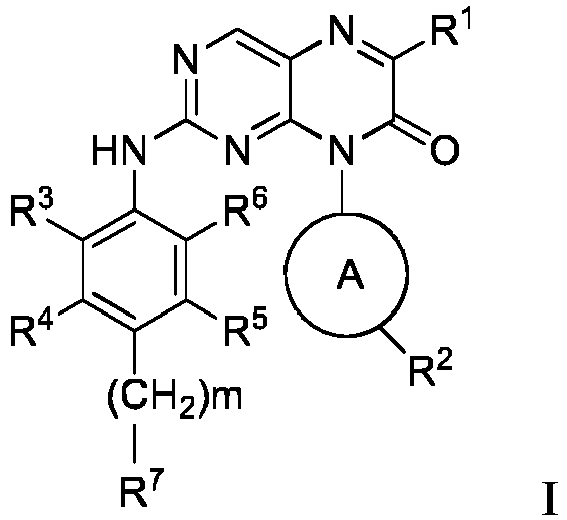
- A is a divalent radical -(CRaRb)n-A'-, wherein Ra and Rb are independently selected from a group consisting of H, a C1-3 alkyl, a halogen, and n is an integer from 0 to 3;
- m is an integer from 0 to 3;
- R1 is independently selected from substituted or unsubstituted phenyl, optionally substituted C3-C8 cycloalkyl; A' is a benzene ring, a five- or six-membered nitrogen-containing heterocycle; R2 is independently selected from a C2-C4 alkenyl substituted acylamino, substituted or unsubstituted C2-C4 alkenyl substituted acyl; R7 is selected from a group consisting of:
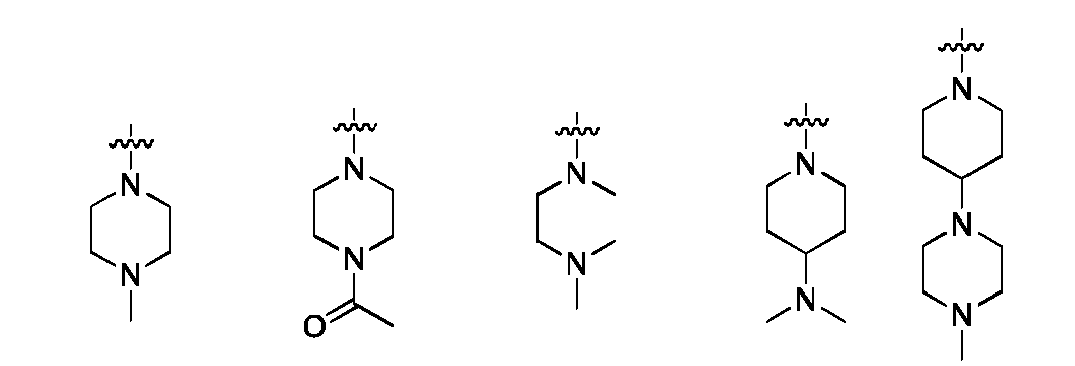
- R3, R4, R5 and R6 are independently selected from a group consisting of H, a substituted or unsubstituted C1-C6 (preferably C1-C3) alkoxy, a substituted or unsubstituted C1-C6 (preferably C1-C3) alkyl,
- or a compound or a pharmaceutical acceptable salt thereof selected from the following group:

- In a particular embodiment, following compounds are provided in the present invention:


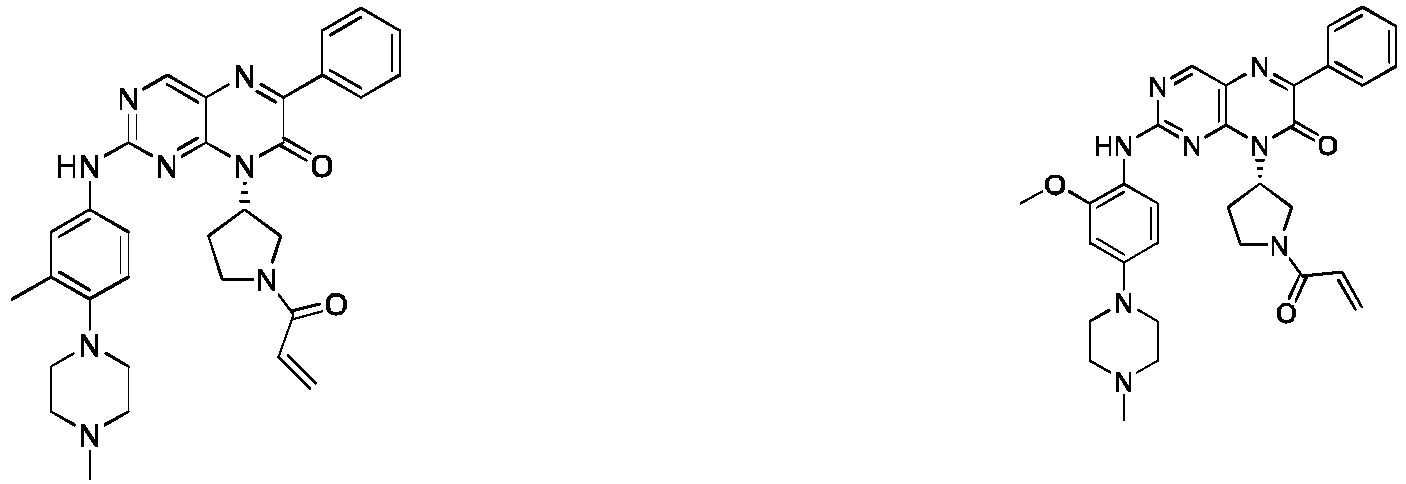


- In a further preferred embodiment, R1 is independently selected from substituted or unsubstituted phenyl; n = 0; A' is a benzene ring, or a five-membered nitrogen-containing heterocycle; R2 is independently selected from a C2-C4 alkenyl substituted acylamino, or C2-C4 alkenyl substituted acyl; m is an integer from 0 to 2; R7 is selected from:

- In a preferred embodiment, following compounds are provided in the present invention:


- Based on the above compounds, a pharmaceutical composition is provided in the present invention, wherein the composition comprises a compound of formula I or a pharmaceutical acceptable salt thereof of the present invention and a pharmaceutically acceptable carrier or excipient.
- The example of the pharmaceutically acceptable salt of the compound of the invention includes, but not limited to, inorganic salts and organic salts, for example, hydrochloride, hydrobromide, sulfate, citrate, lactate, tartrate, maleate, fumarate, mandelate and oxalate; and inorganic and organic salts formed with base, such as sodium hydroxyl, tri(hydroxymethyl) aminomethane (TRIS, tromethamine) and N-methyl glucamine.
- The skilled in the art can determine the optimal dosage of each active ingredient in the pharmaceutical compositions of the invention, although the individual's need differs. Generally, the compounds of the present invention or a pharmaceutically acceptable salt thereof are administered orally to a mammal in a daily dose of about 0.0025 to 50 mg / kg body weight, preferably, administered orally about 0.01 to 10 mg per kg. For example, a unit oral dose may comprise about 0.01 to 50 mg, preferably about 0.1 to 10 mg of compounds of the invention. A unit dose may be administered once or more times, one or more tablets a day, with each tablet containing about 0.1 to 50 mg, preferably about 0.25 to 10 mg of the compounds of the invention or a solvate thereof.
- The pharmaceutical composition of the invention may be formulated into forms suitably for various administration routes, including, but not limited to, parenteral, subcutaneous, intravenous, intramuscular, intraperitoneal, transdermal, buccal, intrathecal, intracranial, intranasal or topical administration, for treating cancer and other diseases. The administration amount is the amount effective to ameliorate or eliminate one or more diseases. For treating a specific disease, the effective amount is the amount sufficient for ameliorating or alleviating disease relevant symptoms. Such amount can be administered in a single dose or according to the effective therapeutic schedule. The administration amount may be effective in curing diseases, but usually the purpose is to ameliorate symptoms of diseases. Generally, administration needs to be repeated for achieving the amelioration of symptoms. The dose can be determined according to the age, healthy status and weigh of the patient, concurrent treatment, frequency of treatment, and the desired therapeutic benefit.
- The pharmaceutical formulations of the invention may be administered to any mammal, as long as the compounds of the present invention are effective to them. In the mammals, human being is the most important.
- The compound or pharmaceutical composition of the present invention may be useful in the treatment or prevention of various diseases mediated by epidermal growth factor receptor kinase (EGFR). Herein, the EGFR-mediated disease is various cancers. The cancers include, but are not limited to, non-small cell lung cancer, breast cancer, prostate cancer, glial cell tumors, ovarian cancer, head and neck squamous cell carcinoma, cervical cancer, esophageal cancer, liver cancer, kidney cancer, pancreatic cancer, colon cancer, skin cancer, leukemia, lymphoma, gastric cancer, multiple myeloma, and solid tumors.
- The pharmaceutical formulations of the invention can be prepared in a known manner, e.g. by conventional mixing, granulating, tableting, dissolving, or lyophilizing processes. When manufacturing oral formulation, a solid excipient and an active compound can be combined, and the mixture can be ground optionally. If necessary, appropriate additives can be added, and the mixture can be processed into particles for obtaining tablets or troche cores.
- Suitable excipients, particularly fillers, include for example, sugars, such as lactose or sucrose, mannitol or sorbitol; cellulose preparations or calcium phosphates, such as tricalcium phosphate or calcium hydrogen phosphate; and a binder, such as starch paste, including corn starch, wheat starch, rice starch, potato starch, gelatin, tragacanth, methyl cellulose, hydroxypropyl methyl cellulose, sodium carboxymethyl cellulose, or polyvinyl pyrrolidone. If desired, isintegrating agent, such as, the above- mentioned starches as well as carboxymethyl starch, cross -linked polyvinyl pyrrolidone, agar, or alginic acid or a salt thereof such as sodium alginate, can be added. Adjuvants especially includes flow modifier and lubricants, such as silica, talc, stearates such as magnesium and calcium stearate, stearic acid or polyethylene glycol. If necessary, the troche core can be coated suitably to be resistant to gastric juices. For this purpose, concentrated saccharide solutions may be applied, which may contain gum arabic, talc, polyvinylpyrrolidone, polyethylene glycol and / or titanium dioxide, lacquer solutions, and suitable organic solvents or solvent mixtures. For preparing gastric juice-resistant coatings, suitable cellulose solutions may be used, such as cellulose acetate phthalate or hydroxypropylmethyl cellulose phthalate. Dyestuffs or pigments may be added to the tablets or troche cores coating, for example, for identifying or characterizing the dosage combinations of active ingredients.
- Accordingly, a method for treating EGFR mediated diseases is disclosed herein, but not covered by the claimed invention, comprising administering the compound of the invention or the pharmaceutical composition comprising the compound of the invention to a object in need thereof.
- The administration methods include, but not limited to, those methods known in the art, which can be determined according to the condition of the patient, including, but not limited to, parenteral, subcutaneous, intravenous, intramuscular, intraperitoneal, transdermal, buccal, intrathecal, intracranial, intranasal or topical administration.
- A compound of the present invention for use in treating EGFR mediated diseases, wherein the EGFR mediated disesase is cancer, is also included in the present invention.
- The technical solutions of the present invention are further described below with reference to specific implementation examples. However, the following embodiments are not intended to limit the present invention. All the application methods adopted according to the principles and technical solutions of the present invention fall within the scope of the present invention. In the following examples, experimental methods with no specific conditions are specified, usually according to the usual conditions or according to the manufacturer's suggested conditions. Unless otherwise indicated, percentages and parts are by weight.
-

- Reagents and conditions: (a) amine, DIPEA, 1,4-dioxane, r.t.; (b) ArNH2, DIPEA, 1,4-dioxane, r.t.; (c) Pd/C, H2, EtOH; (d) R2COCOOEt, HOAc, EtOH, reflux; (e) trifluoroacetic acid, CH2Cl2, 0°C - r.t.; (f) acid chloride, Et3N, CH2Cl2, 0°C - r.t. or acid chloride, 1-methyl-2-pyrrolidone, CH3CN, 0°C - r.t.
- In the above preparation procedure, R1, R2, R3, R4 are defined as described above. Various starting compounds routinely obtained in the art as raw material can be used by a skilled person in the art according to actual needs to prepare the compound of the present invention.
- The particular method for steps a-f as said above is shown as follows:
-

- 2,4-dichloro-5-nitro-pyrimidine (3.80 g, 19.59 mmol) was placed into a 100 mL round bottom flask, 80 mL of 1,4-dioxane was added, and stirred at room temperature. Tert-butyl (3-aminophenyl) carbamate (4 g, 19.21 mmol) and N,N-diisopropylethylamine (2.98 g, 23.05 mmol) were dissolved in 20 mL of 1,4-dioxane. The resulting solution was added dropwise into the reaction solution as said above. Upon completion of addition, the resulting mixture was stirred at room temperature for 0.5 h, and TLC showed that the raw material was completely conversed. The solvent was removed by rotary evaporation, and the crude product was separated through silica gel column chromatography (petroleum ether / ethyl acetate = 10: 1, v/v) to obtain tert-butyl (3-(2-chloro-5-nitropyrimidyl-4-amino)phenyl)carbamate as orange solids (5.9 g, yield 84%). 1H NMR (400 MHz, DMSO-d 6): δ10.37(s, 1H), 9.48(s, 1H), 9.13(s, 1H), 7.67 (s, 1H), 7.31 (m, 2H), 7.15(m, 1H), 1.48(s, 9H).
-

- tert-butyl-3-(2-chloro-5-nitropyrimidin-4-amino)phenylcarbamate (902 mg, 2.47 mmol), 2-(methoxymethoxy)-4-(4-methyl-1-piperazinyl)-aniline (775 mg, 2.47 mmol) and DIPEA (956 mg, 7.40 mmol) were weighed into a 100 ml of round bottom flask. 50 ml of tetrahydrofuran was added, heated to reflux and mixed overnight. After the reaction was completed, the solvent was removed by rotary evaporation, diluted with water and extracted with ethyl acetate (100 mL × 2). The organic phase was washed with saturated ammonium chloride solution (50 mL × 2) and saturated sodium chloride solution, and dried over sodium sulfate. The solvent was removed by rotary evaporation and the crude product was purified by column chromatography on silica gel (dichloromethane / methanol = 30: 1, v / v) to give tert-butyl (3-((2-(methoxymethoxy)-4-(4-methyl-1-piperazinyl)phenyl)amino)-5-nitro-4-pyrimidinyl)amino)phenyl)carbamate as orange-red solid, 945 mg, yield 66%. 1H NMR (400 MHz, DMSO-d 6): δ10.25 (s, 1H), 9.44 (s, 1H), 9.28 (s, 1H), 9.04 (s, 1H), 7.54 (s, 1H), 7.42 (d, J=8.8 Hz, 1H), 7.23-7.20 (m, 2H), 7.08 (t, J=8.0 Hz, 1H), 6.70 (s, 1H), 6.43 (d, J=8.8 Hz, 1H), 5.15 (s, 2H), 3.32 (s, 3H), 3.11 (br, 4H), 2.46 (br, 4H), 2.23 (s, 3H), 1.46 (s, 9H).
-

- tert-butyl (3-((2-((2-(methoxymethoxy)-4-(4-methyl-1-piperazinyl)phenyl)amino)-5-nitro-4-pyrimidinyl)amino)phenyl)carbamate (940 mg, 1.62 mmol) was weighed into a 400 mL round bottom flask. 120 mL of ethanol, 100 mL of methylene chloride and 250 mg of palladium on carbon (10% Pd) were added. Hydrogen was ventilated and the reaction system was stirred for 8 hours at room temperature. After the reaction was completed, the reaction mixture was suction-filtered, the filtrate was spin-dried, and the product was directly used in the next reaction without purification.
- The product from the previous reaction was placed in a 50 mL round bottom flask and 1.45 mL of glacial acetic acid and 25 mL of absolute ethanol were added followed by ethyl glyoxylate (50% in toluene) (0.495 mL, 2.43 mmol), heated to reflux and stirred overnight. After the reaction was completed, the solvent was removed by rotary evaporation and 15 mL of ethanol was added for recrystallization. Solids precipitated and were suction-filtered. The filter cake was washed with ethanol, aqueous ammonia and deionized water and dried to give tert-butyl (3-(2-((2-(methoxymethoxy)-4-(4-methyl-1 -piperazinyl)phenyl)amino)-7-oxo-8(7H)-pteridinyl)phenyl)carbamate as orange-red solids 452 mg, yield 47%. 1H NMR (400 MHz, DMSO-d 6): δ9.65 (s, 1H), 8.80 (s, 1H), 8.55 (br, 1H), 8.02 (s, 1H), 7.59 (s, 1H), 7.52 (d, J=8.0 Hz, 1H), 7.43 (t, J=8.0 Hz, 1H), 7.36-7.33 (m, 1H), 6.97 (d, J=8.0 Hz, 1H), 6.65 (d, J=2.0 Hz, 1H), 6.16 (br, 1H), 5.17 (s, 2H), 3.36 (s, 3H), 3.03 (br, 4H), 2.44 (t, J=3.6 Hz, 4H), 2.22 (s, 3H), 1.46 (s, 9H).
-

- tert-butyl (3-((2-((2-(methoxymethoxy)-4-(4-methyl-1-piperazinyl)phenyl)amino)-7-oxo-8(7H)-pteri dinyl)phenyl)carbamate (452 mg, 0.77 mmol) was weighed into a 25 mL round bottom flask. 7 mL of methylene chloride was added and 2 mL of trifluoroacetic acid was added in an ice-bath with stirring. The reaction system was stirred for another 1 hour in an ice bath and for 1 hour at room temperature. After the reaction was completed, saturated sodium bicarbonate solution was added to neutralize the solution to pH = 9. The filtrate was extracted with dichloromethane. The organic phase was washed with deionized water and saturated sodium chloride solution, and dried, and the solvent was spin-dried. The crude product was purified by column chromatography on silica gel (dichloromethane / methanol = 20: 1, v/v) to obtain 8-(3-aminophenyl)-2-((2-(methoxymethoxy)-4-(4-methyl-1-piperazinyl)phenyl)amino)-7(8H)pteridinone, orange-red solids 132 mg, yield 35%. MS (ESI) m/z 489.2 [M + H]+.
-

- 8-(3-aminophenyl)-2-((2-(methoxymethoxy)-4-(4-methyl-1-piperazinyl)phenyl)amin o)-7(8H)pteridinone(132 mg, 0.270 mmol) was weighed into a 25 mL round bottom flask. 4 mL of N-methylpyrrolidone was added and stirred in an ice bath. Acryloyl chloride (25 µL, 0.297 mmol) was dissolved in 2 mL of acetonitrile and added dropwise to the reaction mixture with a constant pressure dropping funnel. Upon addition, the mixture was stirred for half an hour in an ice bath and then for 2 hours at room temperature. After the reaction was completed, saturated sodium bicarbonate solution was added to the reaction liquid and stirred for another 15 minutes. The rraction mixture was diluted with water and extracted with ethyl acetate. The organic phase was washed with deionized water and saturated sodium chloride solution. After concentration, the residue was purified by column chromatography on silica gel (methylene chloride / methanol / aqueous ammonia = 100: 5: 0.5, v/v) to obtain N-(3-(2-((2-(methoxymethoxy)-4-(4-methyl-1-piperazinyl) phenyl)amino)-7-oxo-8(7H)pteridinyl)phenyl)acrylamide, orange solids 101 mg, yield 69%. 1H NMR (400 MHz, DMSO-d 6): δ10.40 (s, 1H), 8.81 (s, 1H), 8.53 (br, 1H), 8.03 (s, 1H), 7.85 (d, J=6.4 Hz, 1H), 7.72 (s, 1H), 7.53 (t, J=8.0 Hz, 1H), 7.34-7.33 (m, 1H), 7.10 (d, J=8.0 Hz, 1H), 6.64 (s, 1H), 6.46 (dd, J = 16.8, 10.0 Hz, 1H), 6.27 (dd, J = 16.8, 1.6 Hz, 1H), 6.13-6.09 (m, 1H), 5.78 (dd, J = 10.0, 1.6 Hz, 1H), 5.16 (s, 2H), 3.35 (s, 3H), 3.00 (br, 4H), 2.43 (t, J=4.4 Hz, 4H), 2.22 (s, 3H). HRMS (ESI) (m/z): [M + H]+calcd for C28H31N8O4, 543.2468; found, 543.2476.
- Following compounds were synthesized using the same or similar synthesis route as described above:
-

- orange-red solids, yield 40%. 1H NMR (400 MHz, DMSO-d 6): δ8.96 (s, 1H), 8.73 (s, 0.5 H), 8.72 (s, 0.5H), 7.86 (s, 0.5 H), 7.84 (s, 0.5 H), 7.32 (m, 1H), 6.57 (s, 1H), 6.43-6.42 (m, 1H), 6.16 (ddd, J = 16.8, 10.0, 2.4 Hz, 1H), 5.72 (dd, J = 10.0, 2.4 Hz, 1H), 5.65 (dd, J = 10.0, 2.4 Hz, 1H), 4.08 (t, J = 10.2 Hz, 0.5H), 3.88-3.82 (m, 0.5 H), 3.76 (s, 3H), 3.67-3.62 (m, 1H), 3.58-3.55 (m, 1H), 3.21-3.17 (m, 4H), 2.81-2.71 (m, 1H), 2.68-2.61 (m, 4H), 2.38 (s, 1.4H), 2.34 (s, 1.6H), 2.04-1.96 (m, 2H). HRMS (ESI) (m/z): [M + H]+calcd forC25H31N8O3, 491.2519;found, 491.2520. HPLC purity: 95.7%, retention time = 9.43 min.
-

- orange-red solids, yield 40%. 1H NMR (400 MHz, DMSO-d 6): δ8.94 (s, 1H), 8.72-8.71 (m, 1H), 7.86-7.84 (m, 1H), 7.33 (t, J = 8.4 Hz, 1H), 6.56 (s, 1H), 6.42-6.40 (m, 1H), 6.16 (ddd, J = 16.8, 10.4, 2.4 Hz, 1H), 5.70 (dd, J = 10.4, 2.4 Hz, 1H), 5.65 (dd, J = 10.4, 2.4 Hz, 1H), 4.10 (t, J = 10.2 Hz, 0.5H), 3.88-3.83 (m, 0.6H), 3.76 (s, 3H), 3.67-3.62 (m, 1H), 3.58-3.55 (m, 1H), 3.15-3.10 (m, 4H), 2.82-2.64 (m, 1H), 2.45 (br, 4H), 2.23 (s, 3H), 2.06-1.96 (m, 1H). HRMS (ESI) (m/z): [M + H]+calcd for C25H31N8O3, 491.2519; found, 491.2473.
-

- orange-red solids, yield 38%. 1H NMR (400 MHz, DMSO-d 6): δ9.14 (br, 1H), 8.71 (s, 1H), 7.83 (s, 1H), 7.22-7.21 (m, 1H), 6.80-6.62 (m, 2H), 6.48-6.47 (m, 1H), 6.15-6.08 (m, 1H), 5.71-5.60 (m, 1H), 4.82-4.76 (m, 0.6H), 4.34-4.24 (m, 1H), 3.95-3.92 (m, 1H), 3.74 (s, 3H), 3.14 (br, 4H), 2.46 (br, 4H), 1.64 (br, 2H), 1.34-1.30 (m, 1H). HRMS (ESI) (m/z): [M + H]+calcd for C26H33N8O3, 505.2676; found, 505.2676.
-

- red solids, yield 55%. 1H NMR (400 MHz, DMSO-d 6): δ 10.41 (s, 1H), 10.00 (br, 1H), 8.86 (s, 1H), 8.04 (s, 1H), 7.87 (d, J = 8.0 Hz, 1H), 7.73 (s, 1H), 7.54 (t, J = 8.0 Hz, 1H), 7.11 (d, J = 8.0 Hz, 1H), 7.04-6.95 (m, 2H), 6.48-6.42 (m, 2H), 6.27 (dd, J = 17.2, 2.0 Hz, 1H), 5.77 (dd, J = 10.0, 2.0 Hz, 1H), 3.55 (s, 3H), 2.83 (br, 4H), 2.43 (br, 4H), 2.22 (s, 3H). HRMS (ESI) (m/z): [M + H]+calcd for C27H29N8O3, 513.2363; found, 513.2362.
-

- yellow solids, yield 63%. 1H NMR (400 MHz, DMSO-d 6): δ10.41 (s, 1H), 10.04 (s, 1H), 8.86 (s, 1H), 8.04 (s, 1H), 7.87 (d, J = 8.0 Hz, 1H), 7.76 (s, 1H), 7.55 (t, J = 8.0 Hz, 1H), 7.22 (s, 1H), 7.13-7.10 (m, 2H), 6.70-6.69 (m, 1H), 6.45 (dd, J = 17.0, 10.2 Hz, 1H), 6.26 (dd, J = 17.0, 2.0 Hz, 1H), 5.76 (dd, J = 10.2, 2.0 Hz, 1H), 2.70 (br, 4H), 2.44 (br, 4H), 2.23 (s, 3H), 1.97 (s, 3H). HRMS (ESI) (m/z): [M + H]+calcd for C27H29N8O2, 497.2413; found, 497.2428.
-

- red solids, yield 50%. 1H NMR (400 MHz, DMSO-d 6): δ 10.38 (s, 1H), 8.82 (s, 1H), 8.37 (s, 1H), 8.04 (s, 1H), 7.82 (d, J = 8.0 Hz, 1H), 7.74 (s, 1H), 7.53 (t, J = 8.0 Hz, 1H), 7.29 (s, 1H), 7.10 (d, J = 8.8 Hz, 1H), 6.62 (s, 1H), 6.45 (dd, J = 16.8, 2.0 Hz, 1H), 6.25 (dd, J = 16.8, 2.0 Hz, 1H), 5.77-5.76 (m, 1H), 3.78 (s, 1H), 2.76 (br, 4H), 2.46 (br, 4H), 2.24 (s, 3H), 1.85 (s, 3H). HRMS (ESI) (m/z): [M + H]+calcd for C28H31N8O3, 527.2519; found, 527.2518.
-

- red solids, yield 50%. 1H NMR (400 MHz, DMSO-d 6): δ 10.36 (s, 1H), 8.80 (s, 1H), 8.44 (s, 1H), 8.03 (s, 1H), 7.86 (d, J = 8.0 Hz, 1H), 7.69 (t, J = 2.0 Hz, 1H), 7.52 (t, J = 8.0 Hz, 1H), 7.32 (d, J = 8.8 Hz, 1H), 7.09 (d, J = 8.0 Hz, 1H), 6.57 (d, J = 2.4 Hz, 1H), 6.45 (dd, J = 17.0, 2.0 Hz, 1H), 6.27 (dd, J = 17.0, 10.0 Hz, 1H), 6.09 (br, 1H), 5.77 (dd, J = 10.0, 2.0 Hz, 1H), 3.77 (s, 1H), 3.58-3.54 (m, 4H), 3.06-3.00 (m, 4H), 2.05 (s, 3H). HRMS (ESI) (m/z): [M + H]+calcd for C28H29N8O4, 541.2312; found, 541.2312.
-

- yellow solids, yield 50%. 1H NMR (400 MHz, DMSO-d 6): δ 10.41 (s, 1H), 10.13 (s, 1H), 8.88 (s, 1H), 8.07 (s, 1H), 7.88 (d, J = 8.0 Hz, 1H), 7.77 (s, 1H), 7.57 (t, J = 8.0 Hz, 1H), 7.31-7.30 (m, 2H), 7.14 (d, J = 8.0 Hz, 1H), 6.86 (br, 2H), 6.45 (dd, J = 16.8, 10.0 Hz, 1H), 6.26 (dd, J = 16.8, 2.0 Hz, 1H), 5.77 (dd, J = 10.0, 2.0 Hz, 1H), 2.56 (t, J = 7.6 Hz, 2H), 2.39-2.31 (m, 9H), 2.15 (s, 3H). HRMS (ESI) (m/z): [M + H]+calcd for C28H31N8O2, 511.2570; found, 511.2571.
-

- orange solids, yield 69%. mp 187.3-188.1 °C. 1H NMR (400 MHz, DMSO-d 6): δ10.40 (s, 1H), 8.81 (s, 1H), 8.53 (br, 1H), 8.03 (s, 1H), 7.85 (d, J=6.4 Hz, 1H), 7.72 (s, 1H), 7.53 (t, J=8.0 Hz, 1H), 7.34-7.33 (m, 1H), 7.10 (d, J=8.0 Hz, 1H), 6.64 (s, 1H), 6.46 (dd, J = 16.8, 10.0 Hz, 1H), 6.27 (dd, J = 16.8, 1.6 Hz, 1H), 6.13-6.09 (m, 1H), 5.78 (dd, J = 10.0, 1.6 Hz, 1H), 5.16 (s, 2H), 3.35 (s, 3H), 3.00 (br, 4H), 2.43 (t, J=4.4 Hz, 4H), 2.22 (s, 3H). HRMS (ESI) (m/z): [M + H]+calcd for C28H31N8O4, 543.2468; found, 543.2476.
-

- orange-red solids, yield 61%. 1H NMR (400 MHz, CDCl3): δ8.78 (s, 1H), 8.65-8.62 (m, 1H), 8.24 (s, 1H), 8.07 (s, 1H), 7.85 (s, 1H), 7.41 (br, 3H), 6.93 (d, J = 5.6 Hz, 1H), 6.44 (s, 1H), 6.33 (d, J = 17.0 Hz, 1H), 6.10 (dd, J = 17.0, 10.4 Hz, 1H), 5.78 (d, J = 10.4 Hz, 1H),4.10 (br, 2H), 3.69 (br, 2H), 3.43 (s, 3H), 3.08 (br, 4H), 2.54 (br, 4H), 2.34 (s, 3H). HRMS (ESI) (m/z): [M + H]+calcd for C29H33N8O4, 557.2625; found, 557.2621.
-

- orange solids, yield 53%. 1H NMR (400 MHz, DMSO-d 6): δ 10.39(s, 1H), 8.79 (s, 1H), 8.43 (s, 1H), 8.02 (s, 1H), 7.85 (d, J = 7.6 Hz, 1H), 7.71 (s, 1H), 7.52 (t, J = 8.0 Hz, 1H), 7.30 (d, J = 7.6 Hz, 1H), 7.09 (d, J = 8.0 Hz, 1H), 6.52 (s, 1H), 6.45 (dd, J = 16.8, 10.0 Hz, 1H), 6.27 (dd, J = 16.8, 2.0 Hz, 1H), 6.02 (br, 1H), 5.78 (dd, J = 10.0, 2.0 Hz, 1H), 4.43 (t, J = 5.2 Hz, 1H), 3.76 (s, 3H), 3.56-3.52 (m, 2H), 3.04 (br, 4H), 2.53 (t, J = 4.8 Hz, 4H), 2.44 (t, J = 6.0 Hz, 1H). HRMS (ESI) (m/z): [M + H]+calcdfor C29H33N8O3, 543.2468; found, 543.2466.
-
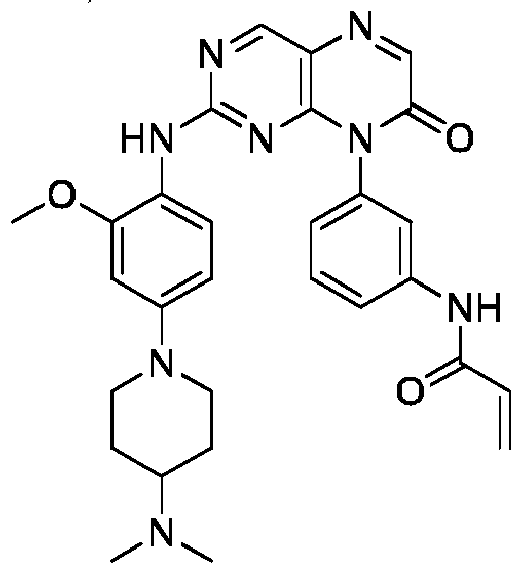
- red solids, yield 50%. 1H NMR (400 MHz, DMSO-d 6): δ 10.41 (s, 1H), 8.80 (s, 1H), 8.43 (s, 1H), 8.03 (s, 1H), 7.88-7.87 (m, 1H), 7.70 (s, 1H), 7.52 (t, J = 8.0 Hz, 1H), 7.29 (d, J = 8.0 Hz, 1H), 7.09 (d, J = 8.0 Hz, 1H), 6.52 (s, 1H), 6.46 (dd, J = 17.2, 10.0 Hz, 1H), 6.27 (dd, J = 17.2, 2.0 Hz, 1H), 6.04 (br, 1H), 5.78 (dd, J = 10.0, 2.0 Hz, 1H), 3.76 (s, 3H), 3.60-3.58 (m, 2H), 2.58 (t, J = 10.8 Hz, 2H), 2.20-2.18 (m, 7H), 1.82-1.79 (d, J = 12 Hz, 2H), 1.48-1.40 (m, 2H). HRMS (ESI) (m/z): [M + H]+calcd for C29H33N8O3, 541.2676; found, 541.2674.
-

- Red solids 163 mg, yield 75%. 1H NMR (400 MHz, DMSO-d 6): δ 10.42 (s, 1H), 9.85 (br, 1H), 8.79 (s, 1H), 7.91 (d, J = 6.4 Hz, 1H), 7.71 (s, 1H), 7.55(t, J = 8.0 Hz, 1H), 7.25 (s, 2H), 7.11 (d, J = 8.0 Hz, 1H), 6.59-6.58 (m, 2H), 6.45 (dd, J = 17.0, 10.2 Hz, 1H), 6.26 (dd, J = 17.0, 2.0 Hz, 1H), 5.78 (dd, J = 10.2, 2.0 Hz, 1H), 3.45-3.38 (m, 1H), 2.97 (br, 4H), 2.42 (br, 4H), 2.21 (s, 3H), 1.25 (d, J = 6.8 Hz, 6H). HRMS (ESI) (m/z): [M + H]+calcd for C29H33N8O2, 525.2726; found, 525.2728.
-
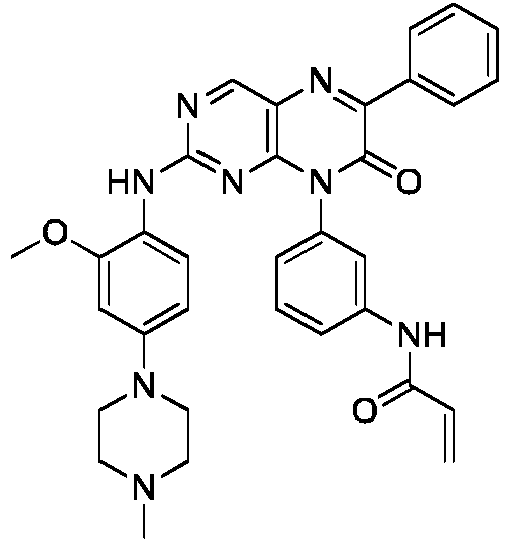
- red solids, yield 75%. 1H NMR (400 MHz, DMSO-d 6): δ 10.41 (s, 1H), 8.87 (s, 1H), 8.41 (s, 1H), 8.21-8.19 (m, 2H), 7.89-7.88 (m, 1H),7.75 (t, J = 2.0 Hz, 1H), 7.54 (t, J = 8.0 Hz, 1H), 7.50-7.48 (m, 3H), 7.35 (d, J = 8.8 Hz, 1H), 7.17-7.14 (m, 1H), 6.54 (d, J = 2.0 Hz, 1H), 6.46 (dd, J = 17.0, 10.2 Hz, 1H), 6.27 (dd, J = 17.0, 2.0 Hz, 1H), 6.05 (br, 1H), 5.78 (dd, J = 10.2, 2.0 Hz, 1H), 3.78 (s, 3H), 3.05 (br, 4H), 2.45 (br, 4H), 2.23 (s, 3H). HRMS (ESI) (m/z): [M + H]+calcd for C33H33N8O3, 589.2676; found, 589.2676.
-

- orange solids, yield 53%. 1H NMR (400 MHz, DMSO-d 6): δ 8.83 (s, 1H), 8.71 (s, 1H), 7.83 (s, 1H), 7.53 (br, 1H), 6.85 (dd, J = 17.2, 10.4 Hz, 1H), 6.61 (d, J = 2.4 Hz, 1H), 6.47 (d, J = 8.0 Hz, 1H), 6.13 (dd, J = 17.2, 2.4 Hz, 1H), 5.70 (dd, J = 10.4, 2.4 Hz, 1H), 5.29 (br, 1H), 4.60 (d, J = 10.4 Hz, 1H), 4.20 (d, J = 12.8 Hz, 1H), 3.80 (s, 3H), 3.13 (t, J = 4.8 Hz, 4H), 2.59-2.53 (m, 3H), 2.45 (t, J = 4.8 Hz, 4H), 2.22 (s, 3H), 1.67 (d, J = 10.0 Hz, 2H), 1.23 (s, 1H).
-

- orange solids, yield 61%. 1H NMR (400 MHz, DMSO-d 6): δ 8.92 (s, 1H), 8.74 (s, 1H), 7.91-7.89 (m, 1H), 7.50-7.44 (m, 1H), 6.75 (dd, J = 16.8, 10.4 Hz, 1H), 6.64 (s, 1H), 6.56-6.51 (m, 1H), 6.02 (d, J = 16.8 Hz, 1H), 5.64-5.54 (m, 1H), 4.13-4.10 (m, 1H), 3.94-3.83 (m, 3H), 3.76 (s, 3H), 3.16 (br, 4H), 3.03-2.98 (m, 1H), 2.84-2.74 (m, 1H), 2.47 (t, J= 4.8 Hz, 4H), 1.92-1.91 (m, 1H), 1.64-1.57 (m, 2H), 1.30-1.23 (m, 3H).
-

- orange solids, yield 54%. 1H NMR (400 MHz, DMSO-d 6): δ 8.92 (s, 1H), 8.74 (s, 1H), 7.91-7.89 (m, 1H), 7.49-7.43 (m, 1H), 6.75 (dd, J = 16.4, 10.4 Hz, 1H), 6.64 (s, 1H), 6.56-6.51 (m, 1H), 6.02 (d, J = 16.4 Hz, 1H), 5.64-5.54 (m, 1H), 4.13-4.08 (m, 1H), 3.94-3.86 (m, 3H), 3.76 (s, 3H), 3.16 (br, 4H), 3.03-2.97 (m, 1H), 2.84-2.74 (m, 1H), 2.47 (t, J= 4.8 Hz, 4H), 1.92 (br, 1H), 1.64-1.57 (m, 2H), 1.30-1.20 (m, 3H).
-

- red solids, yield 61%. 1H NMR (400 MHz, DMSO-d 6):δ 10.37(s, 1H), 8.76 (s, 1H), 8.41 (br, 1H), 7.99 (s, 1H), 7.84-7.83 (m, 1H), 7.69 (t, J= 2.0 Hz, 1H), 7.51 (t, J= 8.0 Hz, 1H), 7.26-7.19 (m, 1H), 7.09 (d, J = 8.0 Hz, 1H), 6.45 (dd, J = 16.8, 10.4 Hz, 1H), 6.29-6.24 (m, 2H), 5.77 (dd, J = 10.4, 2.0 Hz, 1H), 3.74 (s, 3H), 2.84 (s, 3H), 2.35-2.33 (m, 2H), 2.19 (s, 6H).
-

- orange solids, yield 62%. 1H NMR (400 MHz, DMSO-d 6):δ 10.37 (s, 1H), 8.72 (s, 1H), 8.21 (s, 1H), 7.84 (d, J= 8.0 Hz, 1H), 7.69 (s, 1H), 7.51 (t, J= 8.0 Hz, 1H), 7.26 (d, J = 7.6 Hz, 1H), 7.09 (d, J = 8.4 Hz, 1H), 6.45 (dd, J = 16.8, 10.4 Hz, 1H), 6.29-6.24 (m, 2H), 5.87 (br, 1H), 5.76 (dd, J = 10.4, 2.0 Hz, 1H), 3.75 (s, 3H), 3.43-3.38 (m, 1H), 2.84 (s, 3H), 2.34 (t, J= 6.8 Hz, 2H), 2.19 (s, 6H), 1.24 (d, J= 6.8 Hz, 6H).
-

- red solids, yield 64%. 1H NMR (400 MHz, DMSO-d 6):δ 10.39 (s, 1H), 8.83 (s, 1H), 8.38 (br, 1H), 8.21-8.18 (m, 2H), 7.87 (d, J = 7.2 Hz, 1H), 7.75 (s, 1H), 7.53 (t, J = 8.0 Hz, 1H), 7.49-7.47 (m, 3H), 7.28 (br, 1H), 7.15 (d, J = 8.4 Hz, 1H), 6.46 (dd, J = 16.8, 10.0 Hz, 1H), 6.29-6.25 (m, 2H), 5.83 (br, 1H), 5.76 (dd, J = 10.0, 2.0 Hz, 1H), 3.76 (s, 3H), 3.35 (br, 2H), 2.85 (s, 3H), 2.35 (t, J= 5.6 Hz, 2H), 2.20 (s, 6H).
-

- yellow solids, yield 55%. 1H NMR (400 MHz, DMSO-d 6):δ 8.70(br, 2H), 7.57-7.52 (m, 1H), 6.76 (dd, J = 16.4, 10.4Hz, 1H), 6.64 (s, 1H), 6.57-6.51 (m, 1H), 6.05-5.98 (m, 1H), 5.64-5.53 (m, 1H), 4.15-3.96 (m, 3H), 3.90-3.87 (m, 1H), 3.78 (s, 3H), 3.16 (br, 4H), 3.04-2.75 (m, 2H), 2.47 (t, J =3.6 Hz, 4H), 2.24 (s, 3H), 1.94 (br, 1H), 1.66-1.61 (m, 2H), 1.20 (d, J = 6.8 Hz, 6H).
-

- orange solids, yield 46%. 1H NMR (400 MHz, DMSO-d 6): δ9.17 (s, 1H), 8.71 (s, 1H), 7.83 (s, 1H), 7.20 (br, 1H), 6.81 (br, 1H), 6.68-6.62 (m, 2H), 6.47 (br, 1H), 6.14-6.08 (m, 1H), 5.72-5.61 (m, 1H), 4.78-4.72 (m, 1H), 4.35-4.24 (m, 1H), 3.95-3.82 (m, 1H), 3.73 (s, 3H), 3.14 (br, 4H), 2.46 (br, 4H), 2.23 (s, 3H), 1.62 (br, 2H), 1.34-1.26 (m, 1H).
-

- yellow solids, yield 43%. 1H NMR (400 MHz, DMSO-d 6): δ10.08 (s, 1H), 8.96 (s, 1H), 8.73 (s, 1H), 8.64 (s, 1H), 7.02 (s, 1H), 6.42 (dd, J = 16.4, 10.0 Hz, 1H), 6.24 (d, J = 16.4Hz, 1H), 5.75 (d, J = 10.4 Hz, 1H), 3.85 (s, 3H), 3.59 (s, 3H), 3.43 -3.36 (m, 1H), 2.89 (br, 2H), 2.71 (s, 3H), 2.35 (br, 2H), 2.23 (s, 6H), 1.20 (d, J = 6.8 Hz, 6H).
-

- yellow solids, yield 81%. 1H NMR (400 MHz, DMSO-d 6): δ 9.90 (s, 1H), 8.77 (s, 0.6H), 8.76 (s, 0.4H), 7.49-7.41 (m, 2H),6.93 (t, J = 7.2 Hz, 1H),6.73-6.47 (m, 1H), 6.23-6.15 (m, 1H),6.03-5.94(m, 1H),5.76-5.65(m, 1H),4.22 (t,J = 8.8 Hz,0.6H ), 4.02-3.86(m, 1.7H),3.83-3.65 (m, 1.7H), 3.47-3.40 (m, 1H), 2.92-2.85 (m, 1H), 2.78 (br,4H ), 2.46(br, 4H), 2.23 (s, 3H), 2.20 (s, 3H), 2.14-2.07 (m, 1H), 1.20 (d, J = 6.4 Hz,6H). HRMS (ESI) (m/z): [M + H]+ calcd for C28H37N8O2 [M+H]+ 517.3039; found, 517.3038.
-

- orange solids, yield 77%. 1H NMR (400 MHz, DMSO-d 6): δ10.09 (s, 1H), 8.88 (s, 1H), 8.13 (br, 2H),7.52-7.49 (m, 5H),6.98-6.96 (m, 1H), 6.74-6.48 (m, 1H),6.23-6.15(m, 1H),6.13-6.02(m, 1H),5.73-5.65(m, 1H),4.28-4.24 (m,0.5H), 4.12-3.90(m, 1.7H),3.85-3.67 (m, 1.8H), 3.52-3.44 (m, 1H), 2.94-2.89 (m, 1H), 2.82 (br,4H), 2.28(s, 3H), 2.22(s, 3H).HRMS (ESI) (m/z): [M + H]+calcd for C31H35N8O2 [M+H]+ 551.2883; found, 551.2880.
-

- orange solids, yield 54%. 1H NMR (400 MHz, DMSO-d 6): δ8.71 (s, 1H), 8.69 (s, 0.5H), 8.68 (s, 0.5H),7.39 (t, J = 7.6 Hz, 1H),6.57 (s, 1H),6.41 (d, J = 8.8 Hz, 1H), 6.17 (dd, J = 16.4 Hz, 10.8 Hz, 1H),5.86-5.80 (m, 1H), 5.72-5.63(m, 1H),4.12(t, J = 8.8 Hz,0.6H),3.91-3.86(m,0.6H),3.77 (s,3H), 3.69-3.64(m, 1H),3.59 (br,1H), 3.40-3.38 (m, 0.8 H),3.12(br, 4H), 2.81-2.70(m, 1H),2.45 (br,4H), 2.23 (s,3H), 2.09-1.98(m, 1H),1.18 (d, J= 6.4 Hz,6H). HRMS (ESI) (m/z): [M + H]+ calcd for 533.2989; found, 533.2994.
-

- red solids, yield 63%. 1H NMR (400 MHz, DMSO-d 6): δ8.90 (s, 1H), 8.79 (s, 1H), 8.10 (br, 2H),7.46 (br, 3H),7.41-3.39 (m, 1H), 6.58-6.42 (m, 3H),6.17(dd, J = 16.4 Hz, 10.4 Hz, 1H),5.98-5.82 (m, 1H), 5.72-5.64(m, 1H),4.16 (t,J = 8.8 Hz,0.6H), 3.95-3.90 (m, 0.6H),3.78 (s,3H), 3.71(t, J = 9.6 Hz,0.8H), 3.60(br, 1H), 3.40-3.34 (m, 1H), 3.13 (br,4H), 2.83-2.71 (m, 1H), 2.45 (br,4H), 2.23(s, 3H), 2.12-2.02(m, 1H). HRMS (ESI) (m/z): [M + H]+ calcd for C31H35N8O3 [M+H]+ 567.2832; found, 567.2831.
-

- orange solids, yield 89%. 1H NMR (400 MHz, CDCl3) δ 8.75 (s, 1H), 8.00 (s, 1H), 7.73 (s, 0.6H), 7.65 (s, 0.4H),7.02-6.89 (m, 1H),6.55-6.50 (m, 2H), 6.42-6.20 (m, 1H),6.17-6.07(m, 1H),4.48-4.45 (m, 0.5H),4.18-3.99(m, 2H),3.90 (s,3H), 3.83(t,J = 8.8 Hz, 0.8H),3.76-3.69 (m, 0.6H), 3.65-3.56 (m, 0.7H), 3.52-3.44(m, 1H), 3.22-3.18 (m, 4H ), 3.15 (t, J = 6.0 Hz,1H ), 3.04(d,J = 5.6 Hz, 2H), 2.62-2.60(br, 4H), 2.38(s, 3H), 2.30(s, 3H), 2.21(s, 3H), 2.14-2.10 (m, 1H), 1.99(s, 2H), 1.26(t, J= 6.0 Hz, 6H).
-

- orange solids, yield 82%. 1H NMR (400 MHz, DMSO-d 6): δ10.10 (s, 1H), 8.88 (s, 1H), 8.12 (s, 2H),7.49 (br, 5H),6.97 (d, J = 8.4 Hz, 1H), 6.72-6.61 (m, 1H),6.54-6.31(m, 1H),6.10-6.00(m, 1H),4.28-4.24 (m, 0.6H),4.05-4.00 (m ,0.7H), 3.93-3.86 (m, 1.5H), 3.81-3.76 (m, 1.5H), 3.73-3.67 (m, 1H),3.55(br, 4H),3.18 (d,J = 6.8 Hz,2H), 3.08(d, J = 5.2 Hz, 1H), 2.83(br, 4H), 2.57 (s, 3H ), 2.32 (s, 1.5H), 2.30 (s, 1.5H), 2.57(s, 3H), 2.22(s, 3H), 2.17 (s, 3H). HRMS (ESI) (m/z): [M + H]+ calcd for C34H42N9O2 [M+H]+ 608.3461; found, 608.3466.
-

- Red solids (yield 71%). mp 157.3-157,6 °C. 1H NMR (400 MHz, DMSO-d 6): δ 8.86 (s, 1H), 8.72 (s, 1H), 7.83 (s, 1H), 7.54 (br, 1H), 6.64-6.62(m, 3H), 6.47 (d, J = 7.6 Hz, 1H), 5.27 (br, 1H), 4.61-4.58 (m, 1H), 4.21-4.18 (m, 1H), 3.79 (s, 3H), 3.14(br, 4H), 3.05-3.04 (br, 2H),2.57 (br, 4H), 2.46 (t, J = 4.0 Hz, 4H), 2.23 (s, 3H), 2.16 (s, 6H), 1.67 (br, 2H ). HRMS (ESI) (m/z): [M + H]+ calcd for C29H40N9O3 , 562.3254; found, 562.3259.
-

- orange solids, yield 89%. mp 253.1-254.0 °C. 1H NMR (400 MHz, DMSO-d 6):δ 9.92 (d, J = 6.8 Hz, 1H), 8.80 (d, J= 3.2 Hz, 1H), 8.12-8.11 (m, 2H), 7.31-7.67 (m, 1H), 7.47 (m, 3H), 7.42 (t, J = 8.0 Hz, 1H), 7.71-6.62 (m, 1H), 6.59 (br, 1H), 6.46-6.42 (m, 1H), 4.19-4.10 (m, 2H), 3.94-3.89 (m, 1H), 3.71 (t, J = 10.8 Hz, 1H), 4.60-3.59 (m, 1H), 3.79 (s, 3H), 3.14 (br, 4H), 3.09-3.03 (m, 1H), 3.00 (d, J = 5.6, 1H), 2.87-2.74 (m, 1H), 2.47 (br, 4H), 2.24 (s, 3H), 2.19 (s, 3H), 2.13 (s, 3H). HPLC purity: 98.1%, Retention time = 9.63 min.HRMS (ESI) (m/z): [M+H]+ calcd for C34H42N9O3 [M+H]+ 624.3411; found, 624.3413.
-

- Yellow solids (yield 69%). mp 249.0-249.5 °C. 1H NMR (400 MHz, DMSO-d 6): δ 10.42 (s, 1H), 9.83 (br, 1H), 8.82 (s, 1H), 7.87 (d, J= 8.0 Hz, 1H), 7.73 (s, 1H), 7.53 (t, J = 8.0 Hz, 1H), 7.12 (d, J = 8.0 Hz, 1H), 7.04 (br, 1H), 6.96 (br , 1H), 6.49-6.42 (m, 2H), 6.26 (dd, J = 16.8 Hz, 2.0Hz, 1H), 5.77 (dd, J = 10.0 Hz , 2.0Hz, 1H), 3.55 (s, 3H), 3.44-3.39 (m, 1H), 2.82 (br, 4H), 2.42 (br, 4H), 2.21 (s, 3H ), 1.25 (d, J = 6.8 Hz, 6H). HRMS (ESI) (m/z): [M + H]+ calcd for C30H35N8O3, 555.2832; found, 555.2838.
-

- Brown solids (yield 59%). mp >300 °C. 1H NMR (400 MHz, DMSO-d 6): δ 10.44 (s, 1H), 10.40 (s, 1H), 9.00 (s, 1H), 7.88 (d, J= 7.2 Hz, 1H), 7.81 (s, 1H), 7.56 (t, J= 8.0 Hz, 1H), 7.14 (d, J = 8.0 Hz, 1H), 7.01 (d, J = 7.2 Hz, 1H), 6.95 (s , 1H), 6.49-6.42 (m, 2H), 6.27 (d, J= 16.4 Hz, 1H), 5.77 (d, J= 10.4 Hz , 1H), 3.53 (s, 3H), 2.83 (br, 4H), 2.41 (br, 4H), 2.21 (s, 3H ). HRMS (ESI) (m/z): [M+H]+ calcd for C28H28N8O3F3 , 581.2236 ; found, 581.2241.
-

- Yellow solids (yield 45%). mp 215.5-215.7 °C. 1H NMR (400 MHz, DMSO-d 6): δ 10.08 (s, 1H), 8.81 (d, J = 3.2 Hz, 1H), 7.89 (d, J = 6.8 Hz, 1H), 7.47-7,42 (m, 2H), 6.93 (t, J = 6.8 Hz, 1H), 6.72-6.46 (m, 1H), 6.22-6.6.14 (m, 1H), 5.98-5.88 (m, 1H), 5.75-5.64 (m, 1H), 4.20 (t, J= 8.8, 1H), 4.00-3.64 (m, 4H), 3.47-3.40 (m, 1H), 2.78 (br, 4H), 2.45 (s, 3H), 2.23 (s, 3H), 2.20 (br, 4H). HRMS (ESI) (m/z): [M + H]+ calcd for C25H31N8O2 , 475.2570 ; found, 475.2550.
-

- Orange solids (yield 40%). mp 208.3-208.8 °C. 1H NMR (400 MHz, DMSO-d 6): δ 10.10 (s, 1H), 8.88 (d, J = 3.2, 1H), 8.13-8.12 (m, 2H), 7.48 (d, J = 2.4Hz, 1H), 7.47 (s, 1H), 7.34-7.27 (m, 2H), 6.81 (t, J = 8.4Hz, 1H), 6.74-6.48 (m, 1H), 6.23-6.15 (m, 1H), 6.12-6.04 (m, 1H), 5.76-5.65 (m, 1H), 4.25 (t, J = 9.2, 1H), 4.13-3.76 (m, 3H), 3.76 (s, 3H), 3.74-3.67 (m, 1H), 3.51-3.44 (m, 1H), 2.91 (br, 4H), 2.44 (br, 4H), 2.21 (s, 3H). HRMS (ESI) (m/z): [M + H]+ calcd for C31H35N8O3 , 567.2832; found, 567.2835.
-

- Red solids (yield 62%). mp 159.9-160.7 °C. 1H NMR (400 MHz, DMSO-d 6): δ 9.94 (s, 1H), 8.77 (d, J = 3.6Hz, 1H), 7.49-7.40 (m, 2H), 6.94 (d, J = 8.4, 1H), 6.72-6.61 (m, 1H), 6.53 (d, J= 15.2Hz, 0.5H), 6.34 (d, J= 15.2Hz, 0.5H), 6.04-5.91 (m, 1H), 4.22 (t, J = 8.4Hz, 1H), 4.00-3.64 (m, 4H), 3.40-3.35 (m, 2H), 3.22 (t, J = 6.4Hz, 1H), 3.10 (d, J = 6.0Hz, 1H), 2.82 (br, 4H), 2.61 (br, 4H), 2.34 (d, 11.2Hz, 3H), 2.28 (s, 3H), 2.20 (br, 4H), 2.19 (s, 3H), 1.20 (d, J= 6.8Hz, 6H). HRMS (ESI) (m/z): [M + H]+ calcd for C31H44N9O2 , 574.3618; found, 574.3584.
-
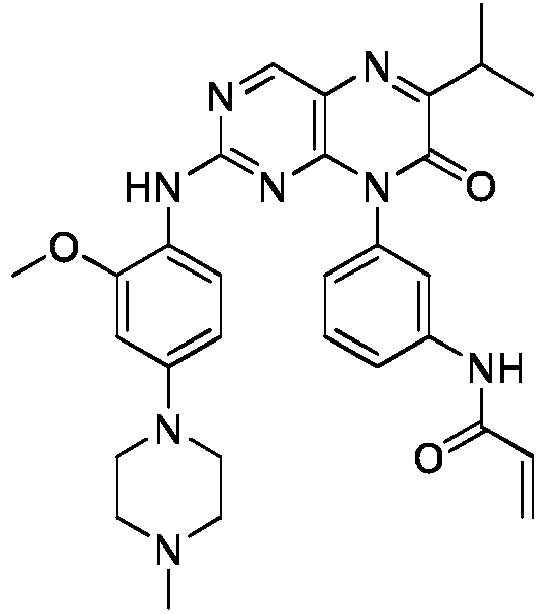
- Orange solids (yield 65%). mp 242.9-243.9 °C. 1H NMR (400 MHz, DMSO-d 6): δ 10.42 (s, 1H), 8.75 (s, 1H), 8.26 (s, 1H), 7.87 (d, J= 7.2Hz, 1H), 7.71 (s, 1H), 7.53 (t, J= 8.0Hz, 1H), 7.34 (d, J= 8.8Hz, 1H), 7.10 (d, J = 8.8Hz, 1H), 6.53 (d, J= 2.0Hz, 1H), 6.46 (dd, J = 16.8Hz, 10.0Hz, 1H), 6.27 (dd, J = 16.8Hz, 2.0Hz, 1H), 6.12-6.00 (m, 1H), 5.78 (dd, J= 10.0Hz, 2.0Hz), 3.76 (s, 3H), 3.44-3.41 (m, 1H), 3.04 (br, 4H), 2.43 (t, J= 4.8Hz, 4H), 2.22 (s, 3H), 1.25 (d, J = 6.8Hz, 6H). HRMS (ESI) (m/z): [M + H]+ calcd for C30H35N8O3 , 555.2832; found, 555.2821.
-

- Yellow solids (yield 62%). mp 292.9-293.4 °C. 1H NMR (400 MHz, DMSO-d 6): δ 10.41 (s, 1H), 8.90 (s, 1H), 8.36 (br, 1H), 8.21-8.18 (m, 2H), 7.84 (d, J= 8.0Hz, 1H), 7.80 (s, 1H), 7.55 (t, J = 8.0Hz,1H), 7.50-7.48 (m, 3H), 7.33 (s, 1H), 7.16 (d, J = 7.6Hz, 1H), 6.63 (s, 1H), 6.45 (dd, J= 16.8Hz, 10.0Hz, 1H), 6.26 (dd, J= 16.8Hz, 1.6Hz), 5.77 (dd, J = 10.0Hz, 1.6Hz, 1H), 3.79 (s, 3H), 2.77 (br, 4H), 2.48 (br, 4H), 2.25 (s, 3H), 1.85 (br, 3H). HRMS (ESI) (m/z): [M + H]+ calcd for C34H35N8O3 , 603.2832; found, 603.2834.
-
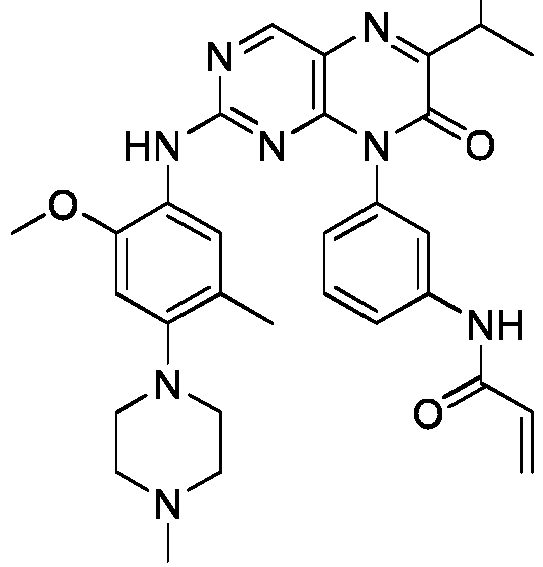
- orange solids (yield 60%). mp 227.5-228.5 °C. 1H NMR (400 MHz, DMSO-d 6): δ 10.40 (s, 1H), 8.79 (s, 1H), 8.22 (s, 1H), 7.82 (d, J= 8.0Hz, 1H), 7.73 (s, 1H), 7.53 (t, J= 8.0Hz, 1H), 7.31 (s, 1H), 7.11 (d, J = 7.6Hz, 1H), 6.62 (s, 1H), 6.44 (dd, J = 16.8Hz, 10.0Hz, 1H). 6.25 (dd, J = 16.8Hz, 0.8Hz, 1H), 5.75 (d, J = 10.0Hz, 1H), 3.78 (s, 3H), 3.43-3.39 (m, 1H), 2.77 (br, 4H), 2.26 (s, 3H), 1.85 (br, 3H), 1.24 (d, J = 6.8Hz, 6H). HRMS (ESI) (m/z): [M + H]+ calcd for C31H37N8O3, 569.2989; found, 569.2989.
-

- red solids (yield 40%). mp 256.1-256.4 °C. 1H NMR (400 MHz, DMSO-d 6): δ 10.08 (s, 1H), 8.88 (d, J = 3.2Hz, 1H), 8.13-8.12 (m, 2H), 7.52-7.45 (m, 5H), 7.02 (dd, J = 8.4Hz, 5.6Hz, 1H), 6.74-6.49 (m, 1H), 6.23-6.15 (m, 1H), 6.12-6.02 (m, 1H), 5.75-5.65 (m, 1H), 4.28-4.23 (m, 1H), 4.15-4.12 (m, 1H), 3.94-3.68 (m, 3H), 3.52-3.44 (m, 1H), 2.90 (t, J = 6.8Hz, 2H), 2.61 (s, 3H), 2.35 (t, J = 6.8Hz, 2H), 2.22 (s, 3H), 2.13 (br, 6H). HRMS (ESI) (m/z): [M + H]+ calcd for C31H37N8O2 , 553.3039; found, 553.3031.
-

- Dark red solids (yield 49%). mp 260.0-260.2 °C. 1H NMR (400 MHz, DMSO-d 6): δ 10.09 (s, 1H), 8.88 (d, J = 2.8Hz, 1H), 8.131 (br, 2H), 7.49-7.48 (m, 3H), 7.34-7.25 (m, 2H), 6.81 (t, J = 7.2Hz, 1H), 6.76-6.49 (m, 1H), 6.23-6.05 (m, 2H), 5.75-5.65 (m, 1H), 4.25 (t, J = 8.4Hz, 1H). 4.06-3.82 (m, 3H), 3.77 (s, 3H), 3.74-3.67 (m, 1H), 3.05 (t, J = 7.2Hz, 2H), 2.94-2.79 (m, 1H), 2.68 (s, 3H), 2.36 (t, J= 7.2Hz, 2H), 2.13 (s, 6H). HRMS (ESI) (m/z): [M + H]+ calcd for C31H37N8O3, 569.2989; found, 569.2988.
-

- red solids (yield 81%). mp 264.7-265.5 °C. 1H NMR (400 MHz, DMSO-d 6): δ 10.43 (s, 1H), 10.01 (s, 1H), 8.93 (s, 1H), 8.22-8.19 (m, 2H), 7.90 (d, J= 7.6Hz, 1H), 7.79 (s, 1H), 7.56 (t, J= 8.0Hz, 1H), 7.49 (t, J= 3.2Hz, 1H), 7.17 (d, J= 8.4Hz, 1H), 7.07 (br, 1H), 6.97 (br, 1H), 6.46 (dd, J = 16.8Hz, 10.0Hz, 1H), 6.27 (dd, J = 16.8Hz, 1.6Hz, 1H), 5.77 (dd, J = 10.0Hz, J = 1.6Hz,1H), 3.56 (s, 3H), 2.83 (br, 4H), 2.41 (br, 4H), 2.21 (s, 3H). HRMS (ESI) (m/z): [M + H]+ calcd for C33H33N8O3, 589.2676; found, 589.2642.
-

- yellow solids (yield 82%). mp 268.9-269.4 °C. 1H NMR (400 MHz, DMSO-d 6): δ 10.40 (s, 1H), 8.73 (s, 1H), 8.24 (s, 1H), 7.85 (d, J = 8.0Hz, 1H), 7.69 (t, J = 1.6Hz, 1H), 7.52 (t, J = 8.0Hz, 1H), 7.33 (d, J = 9.2Hz, 1H), 7.10-7.08 (m, 1H), 6.53 (d, J = 2.4Hz, 1H), 6.45 (dd, J = 16.8Hz, 10.0Hz, 1H), 6.26 (dd, J = 16.8Hz, 2.0Hz, 1H), 6.06 (br, 1H), 5.77 (dd, J = 10.0Hz, 2.0Hz, 1H), 3.76 (s, 3H), 3.03 (br, 4H), 2.43 (t, J= 4.8Hz, 4H), 2.22 (s, 3H), 3.41 (d, J = 12.0Hz, 2H), 1.82 (d, J = 12.0Hz, 2H), 1.72 (d, J = 12.0Hz, 2H), 1.53-1.23 (m, 6H). HRMS (ESI) (m/z): [M + H]+ calcd for C33H39N8O3, 595.3145; found, 595.3141.
-

- red solids (yield 49%). mp 208.3-209.3 °C. 1H NMR (400 MHz, DMSO-d 6): δ 8.88 (s, 1H), 8.81 (s, 1H), 8.18-8.16 (m, 2H), 7.59-7.52 (m, 1H), 7.47 (t, J= 3.2Hz, 3H), 6.75 (dd, J= 16.4Hz, 10.0, 1H), 6.64 (s, 1H), 6.55 (dd, J= 17.2Hz, 8.8Hz, 1H), 6.03 (d, J= 16.4Hz, 1H), 5.58 (dd, J = 32.8Hz, 10.0Hz, 1H), 4.19-4.06 (m, 3H), 3.89-3.83 (m, 1H), 3.79 (s, 3H), 3.17 (br, 4H), 3.05-2.55 (m, 2H), 2.48 (t, J= 4.8Hz, 4H), 2.24 (s, 3H), 2.00 (br, 1H), 1.66 (br, 2H), 1.26-1.23 (m, 2H). HRMS (ESI) (m/z): [M + H]+ calcd for C33H39N8O3, 595.3145; found, 595.3157.
-

- red solids (yield 38%). mp 134.9-135.1 °C. 1H NMR (400 MHz, DMSO-d 6): δ 9.17 (s, 1H), 8.79 (s, 1H), 8.11-8.09 (m, 2H), 7.77-7.46 (m, 3H), 7.24 (br, 1H), 6.84-6.63 (m, 2H), 6.49 (s, 1H), 6.06-6.19 (m, 1H), 5.67 (dd, J= 37,2Hz, 9.6Hz, 1H), 5.00-4.27 (m, 3H), 3.75 (s, 3H), 3.14 (s, 4H), 2.49 (s, 4H), 2.24 (s, 3H), 1.69 (br, 2H), 1.35 (br, 1H), 1.23 (s, 1H). HRMS (ESI) (m/z): [M + H]+ calcd for C32H37N8O3, 581.2989; found, 581.2972.
-

- yellow solids (yield 53%). mp 94.2-94.7 °C. 1H NMR (400 MHz, DMSO-d 6): δ 8.96(s, 1H), 8.65(s, 1H), 7.23 (br, 1H), 6.83-6.61(m, 2H), 6.47 (s, 1H), 6.15-6.08 (m, 1H), 5.66 (dd, J = 36Hz, 9.6Hz, 1H), 4.84 (br, 1H), 4.29 (br, 1H), 3.95 (br, 1H), 3.72 (s, 3H), 3.13 (br, 4H), 2.46 (br, 4H), 2.23 (s, 3H), 1.81-1.63(m, 7H), 1.44-1.23 (m, 9H). HRMS (ESI) (m/z): [M + H]+ calcd for C32H43N8O3, 587.3458; found 587.3458.
-

- orange solids (yield 68%). mp 265.0-265.2 °C. 1H NMR (400 MHz, DMSO-d 6): δ 10.43(s, 1H), 10.04(s, 1H), 8.92(s, 1H), 8.22-8.19(m,2H), 7.89(d, J = 8.0Hz, 1H), 7.81(s, 1H), 7.57(t, J = 8.0Hz, 1H), 7.50-7.49(m, 3H), 7.25(s, 1H), 7.19(s, 1H), 7.17(s, 1H), 6.71(br, 1H), 6.46(dd, J= 16.8Hz, 10.4Hz, 1H), 6.26(dd, J= 16.8Hz, 1.6Hz, 1H), 5.77(dd, J = 10.4Hz, 1.6Hz, 1H), 2.7(br, 4H), 2.44(br, 4H), 2.23(s, 3H), 1.98(s, 3H).HRMS (ESI) (m/z): [M + H]+ calcd for C33H33N8O2, 573.2726; found, 573.2729.
-

- red solids (yield 40%). mp>300°C. 1H NMR (400 MHz, DMSO-d 6): δ 10.44(s, 1H), 8.86(s, 1H), 8.41 (s, 1H), 8.20-8.19(m, 2H), 7.90(br, 1H), 7.75(s, 1H), 7.54(t, J = 8.0Hz, 1H), 7.50-7.48(m, 3H), 7.33(d, J = 6.4Hz,1H), 7.15(d, J = 8.0Hz, 1H), 6,52(br, 1H), 6.47(dd, J= 16.8Hz, 10.0Hz, 1H), 6.27(dd, J= 16.8Hz, 1.6Hz, 1H), 6.04(br, 1H), 5.78(dd, J = 10.0Hz, 1.6Hz), 3.77(s, 3H), 3.61(d, J = 8.4Hz, 2H), 2.60-2.54(m, 5H), 2.39-2.30(m, 5H), 1,81(d, J = 11.6Hz,2H), 1.51-1.43(m, 2H).HRMS (ESI) (m/z): [M + H]+ calcd for C38H42N9O3, 672.3411; found, 672.3407 .
-
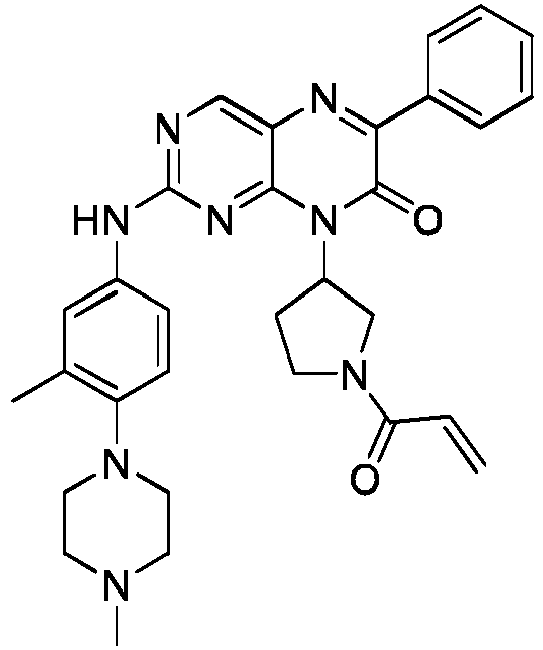
- orange solids (yield 65%). 1H NMR (400 MHz, DMSO-d 6): δ 10.08(s, 1H), 8.87(d, J = 2.8Hz,1H), 8.13-8.11(m, 2H), 7.51-7.46(m, 5H), 6.97-6.93(m, 1H), 6.70(dd, J = 16.8Hz, 10.4, 1H), 6.51(dd, J = 16.8Hz, 10.4Hz, 1H), 6.23-6.15(m, 1H), 6.11-6.01(m, 1H), 5.75-5.65(m, 1H), 4.25(t, J = 8.8Hz, 1H), 4.06-3.68(m, 3H), 3.52-3.45(m, 1H), 2.95-2.86(m, 1H), 2.79(br, 4H), 2.46(br, 4H), 2.23(s, 3H), 2.21(s, 3H), 2.17-2.12(m, 1H).HRMS (ESI) (m/z): [M + H]+ calcd for C31H35N8O2, 551.2883; found, 551.2883 .
-

- orange solids (yield 49%). mp 117.9-118.2 °C. 1H NMR (400 MHz, DMSO-d 6): δ 8.71(s, 1H), 8.66(d, J= 3.6Hz,1H), 7.39(t, J= 8.0Hz,1H), 6.63-6.59(m, 0.5H), 6.57(s, 1H), 6.49-6.45(m, 0.5H), 6.41(d, J = 9.2Hz,1H), 6.20-6.13(m, 1H), 5.82(br, 1H), 5.73-5.63(m, 1H), 4.11(t, J = 9.2Hz, 0.5H), 3.87(dd, J = 12.0Hz, 8.8Hz, 0.5H), 3.69-3.58(m, 2H), 3.18-3.04(m, 5H), 2.80-2.65(m, 1H), 2.45(br, 4H), 2.23(s, 3H), 2.09 (br, 0.5H), 1.99(br, 0.5H), 1.81(t, J = 11.2Hz, 4H), 1.70(d, J = 11.2Hz, 1H), 1.45-1.16(m, 6H). HRMS (ESI) (m/z): [M + H]+ calcd for C31H41N8O3, 573.3302; found, 573.3304.
-

- orange solids (yield 84%). mp 235.5-235.7 °C. 1H NMR (400 MHz, DMSO-d 6): δ 8.84 (s, 1H), 8.39 (br, 1H), 8.19-8.17 (m, 2H), 7.49-7.47 (m, 4H), 7.21 (t, J= 8.0Hz, 1H), 6.72 (d, J = 7.2Hz, 1H), 6.571-6.56 (m, 2H), 6.52 (d, J = 8.0Hz, 1H), 6.19 (br, 1H), 5.34 (s, 2H), 3.79 (s, 3H), 3.08 (br, 4H), 2.45 (t, J = 4.4Hz, 4H), 2.23 (s, 3H). HRMS (ESI) (m/z): [M + H]+ calcd for C30H31N8O2, 535.2570; found, 535.2569.
-

- orange solids (yield 73%). mp 262.3-262.7 °C. 1H NMR (400 MHz, DMSO-d 6): δ 10.43(s, 1H), 8.87(s, 1H), 8.44(s, 1H), 8.29(dd, J = 8.4Hz, 6.0Hz, 1H), 7.89(br, 1H), 7.77(s, 1H), 7.55(t, J= 8.0Hz, 1H), 7.36-7.31(m, 3H), 7.15(d, J= 8.4Hz, 1H), 6.54(s, 1H), 6.47(dd, J= 16.8Hz, 10.0Hz, 1H), 6.28(dd, J= 16.8Hz, 1.6Hz, 1H), 6.04(br, 1H), 5.78(dd, J = 10.0Hz, 1.6Hz, 1H), 3.78(s, 3H), 3.05(br, 4H), 2.44(t, J = 4.4Hz, 4H), 2.23(s, 3H). HRMS (ESI) (m/z): [M + H]+ calcd for C33H32N8O3F , 607.2581; found, 607.2589.
-

- red solids, yield 49%. mp 208.3-209.3 °C. 1H NMR (400 MHz, DMSO-d 6): δ 8.88 (s, 1H), 8.81 (s, 1H), 8.18-8.16 (m, 2H), 7.59-7.52 (m, 1H), 7.47 (t, J= 3.2Hz, 3H), 6.75 (dd, J= 16.4Hz, 10.0, 1H), 6.64 (s, 1H), 6.55 (dd, J= 17.2Hz, 8.8Hz, 1H), 6.03 (d, J= 16.4Hz, 1H), 5.58 (m, 1H), 4.19-4.06 (m, 3H), 3.89-3.83 (m, 1H), 3.79 (s, 3H), 3.17 (br, 4H), 3.05-2.55 (m, 2H), 2.48 (t, J = 4.8Hz, 4H), 2.24 (s, 3H), 2.00 (br, 1H), 1.66 (br, 2H), 1.26-1.23 (m, 2H). HPLC purity: 95.1%, Retention time = 15.82 min. HRMS (ESI) (m/z): [M+H]+ calcd for C33H39N8O3, 595.3145; found, 595.3157.
-

- orange solids (yield 65%). mp 296.5-297.3 °C. 1H NMR (400 MHz, DMSO-d 6): δ 10.43(s, 1H), 8.84(s, 1H), 8.34(s, 1H), 8.26(d, J = 8.8Hz, 1H), 7.89(d, J = 7.2Hz, 1H), 7.74(s, 1H), 7.55(t, J = 8.0Hz, 1H), 7.36(d, J = 8.4Hz, 1H), 7.15(d, J = 8.4Hz,, 1H), 7.05(d, J = 9.2Hz, 1H), 6.54(s, 1H), 6.47(dd, J = 16.8Hz, 10.0Hz, 1H), 6.27(dd, J = 16.8Hz, 1.6Hz, 1H), 6.06(br, 1H), 5.78(d, J = 10.0Hz, 1.6Hz, 1H), 3.84(s, 3H), 3.78(s, 3H), 3.05(br, 4H), 2.44(br, 4H), 2.23(s, 3H). HRMS (ESI) (m/z): [M + H]+ calcd for C34H35N8O4, 619.2781; found, 619.2780 .
-

- red solids (yield 64%). mp 291.2-291.4 °C. 1H NMR (400 MHz, DMSO-d 6): δ 10.43(s, 1H), 8.92(s, 1H), 8.57(s, 1H), 7.96(d, J = 7.2Hz, 1H), 7.87(br, 1H), 7.77(s, 1H), 7.54(t, J= 8.0Hz, 1H), 7.43-7.39(m, 1H), 7.33(s, 1H), 7.14(d, J= 7.2Hz, 1H), 6.54(s, 1H), 6.47(dd, J = 16.8Hz, 10.0, 1H), 6.27(dd, J = 16.8Hz, 1.6Hz, 1H), 6.00(br, 1H), 5.78(dd, J = 10.0Hz, 1.6Hz, 1H), 3.77(s, 3H), 3.05(br, 4H), 2.43(br, 4H), 2.22(s, 3H). HRMS (ESI) (m/z): [M + H]+ calcd for C33H31N8O3F2 , 625.2487; found, 625.2482 .
-

- orange solids (yield 67%). Mp>300°C. 1H NMR (400 MHz, DMSO-d 6): δ 10.43(s, 1H), 8.89(s, 1H), 8.50(br, 1H), 8.28-8.23(m, 1H), 8.15(br, 1H), 7.87(s, 1H), 7.77(s, 1H), 7.61-7.52(m, 2H), 7.34(s, 1H), 7.14(d, J = 8.4Hz, 1H), 6.54(s, 1H), 6.47(dd, J = 16.8Hz, 10.0Hz, 1H), 6.27(dd, J = 16.8Hz, 1.6Hz, 1H), 6.02(br, 1H), 5.78(dd, J = 10.0Hz, 1.6Hz, 1H), 3.77(s, 3H), 3.05(br, 4H), 2.43(t, J= 4.4Hz, 4H), 2.22(s, 3H).HRMS (ESI) (m/z): [M + H]+ calcd for C33H31N8O3F2 , 625.2487; found, 625.2478.
-

- Brown solids (yield 52%). Mp>300°C. 1H NMR (400 MHz, DMSO-d 6): δ 10.42(s, 1H), 8.88(s, 1H), 8.45(s, 1H), 7.89(s, 1H), 7.82-7.81(m, 2H), 7.76(s, 1H), 7.55(t, J = 8.0Hz, 1H), 7.41(t, J = 8.0Hz, 1H), 7.36-7.34(br, 1H), 7.16(d, J = 7.6Hz,1H), 7.08(d, J = 8.4Hz,1H), 6.54(s, 1H), 6.47(dd, J = 16.8Hz, 10.4Hz, 1H), 6.28(d, J = 17.2Hz, 1H), 6.04(br, 1H), 5.80(m, 1H), 3.82(s, 3H), 3.78(s, 3H), 3.05(br, 4H), 2.44(br, 4H), 2.23(s, 3H).HRMS (ESI) (m/z): [M + H]+ calcd for C34H35N8O4, 619.2781; found, 619.2780.
-

- orange solids (yield 40%). mp 1H NMR (400 MHz, DMSO-d 6): δ 9.19 (s, 1H), 8.78 (s, 1H), 8.11-8.09 (m, 2H), 7.47-7.46 (m, 3H), 7.22 (br, 1H), 6.88-6.63 (m, 2H), 6.49 (br, 1H), 6.06-6.19 (m, 1H), 5.67 (dd, J= 36.8Hz, 10Hz, 1H), 4.91-3.99 (m, 3H), 3.74 (s, 3H), 3.14 (br, 4H), 2.47(br, 4H), 2.24 (s, 3H), 1.69 (br, 2H), 1.35 (br, 1H), 1.23 (s, 1H). HRMS (ESI) (m/z): [M + H]+ calcd for C32H37N8O3, 581.2989; found, 581.2992 .
- EGFR-TK catalyses transfer of one phosphate group of adenosine triphosphate (ATP) to polypeptide substrate, poly(Glu, Tyr)4: 1, which is labeled with two fluorescent groups coumarin and fluorescein. Based on fluorescence energy resonance transfer (FRET) method, EGFR-TK catalyzes a reaction of ATP, resulting in two fluorescent groups approaching, exciting donator (coumarin) at 400 nM, releasing part of energy (emission wavelength at 445 nM), and transferring other part of energy to fluorescein (emission wavelength at 520 nM). Different compounds exhibited different inhibition-degrees on EGFR-TK, leading to different phosphorylation-degrees of substrate, so that the inhibition ratio of different compounds can be calculated by measuring the ratio of phosphorylation percentage of substrate catalyzed by an enzyme.
- 2.5 µL of Test Compounds, 5 µL Kinase / Peptide Substrate Mixture, 2.5 µL ATP Solution were added into a 384-well plate, and the 10 µL of reaction system was shaken for 30s and incubated at room temperature for 1 h. 5 µL of Development Solution was added and the 15 µL of reaction system was shaken for 30s, and incubated at room temperature for 1h. 5 µL of Stop Reagent was added, the reaction system in a total volume of 20 µL was shaken for 30s, and a microplate reader was used to detect fluorescence signals at excitation wavelength of 400 nm and emission wavelength of 445 nm and 520 nm, respectively. The inhibitory rates of the compounds at 7 concentration gradients were determined and the IC50 value for each compound was calculated by Origin 8.0 fitting curve.Ppositive controls were used during the experiment to confirm the feasibility of the reaction system, and each experiment was performed in triplicate.
-



- In Vitro Enzyme Activity Assay: Wild type and various mutant (T790M, L858 / T790M) EGFR were purchased from Invitrogen. 10 concentration gradients from 5.1 × 10⁻¹¹ mol / L to 1.0 × 10⁻⁶ mol / L were set for all compounds to be tested.
- The concentration of different kinases was determined by optimization experiments and the corresponding concentrations were: EGFR (PV3872, Invitrogen) 0.287 µg/µL, EGFR-T790M (PV4803, Invitrogen) 0.174 µg/µL, EGFR-L858R/T790M (PV4879, Invitrogen) 0.055 µg/µL. Compounds were diluted in DMSO for three times from 5.1×10⁻⁹ M to 1×10⁻⁴ M. 4 µL of the compound was dissolved in 96 µL of water to obtain a 4x compound solution. 40 µM ATP was dissolved in 1.33x kinase buffer and the kinase / peptide mixture contained 2x kinase, 4 µM tyrosine tetrapeptide for use. The 10 µL kinase reaction consisted of 2.5 µL compound solution, 5 µL kinase / peptide mix, 2.5 µL ATP solution. 10 µL of kinase reaction included 2.5 µL of compound solution, 5 µL of kinase / peptide mixture, 2.5 µL of ATP solution. 5 µL of phosphorylated peptide solution, instead of the kinase / peptide mixture, was used as a 100% phosphorylation control. 2.5 µL of 1.33x kinase buffer, instead of ATP solution was used as a 100% inhibition control and 2.5 µL of 4% DMSO, instead of compound solution was used as a 0% inhibition control. The plates were thoroughly mixed and incubated at room temperature for 1.5 hours. 5 µL of Development Solution was added into each well and then incubated for another 1 hour at room temperature, unphosphorylated peptides were cleaved during this period. Finally, 5 µL Stop Reagent was added to quench the reaction. The plates were measured with EnVision Multilabel Reader (Perkin Elmer). The experimental data were calculated using GraphPad Prism version 4.0. Each experiment was repeated more than 3 times.
- Inhibition Analysis on Cell Proliferation and Growth: H1975 (non-small cell lung cancer cells, EGFRL858R / T790M), A431 (non-small cell lung cancer cells, EGFR wild type) cells were obtained from the ATCC. Cell proliferation activity was assessed by MTS assay. Cells were exposed to processing conditions for 72 hours and the number of cells used in each experiment for each cell line was adjusted based on absorbance values (absorbance values at 490 nm, 1.3-2.2). Six concentration gradients (0.1 nM - 10 µM) were set for the compounds to be tested, wherein at least 6 sets of parallel controls for each concentration were used.
- H1975, A431 cells were cultured in corresponding media, and cells were passaged at least twice after resuscitation and then used for experiments. Cells at Log phase were trypsinized and resuspended in culture medium. H1975 (1000 cells per well), A431 (2000 cells per well) were seeded in 96-well plates in a volume of 100 µL; and 6 sets of parallel controls and 7 columns were set. The plate was placed in a 37°
C 5% CO2 incubator overnight. Compounds were dissolved in DMSO to a concentration of 10 µM per liter, and then the concentration was gradually diluted to 10 µM, 1 µM, 0.1 µM, 0.01 µM, 0.001 µM, 0.0001 µM per liter, respectively. 2 µL of the compound solution was added to 998 µL of medium, and the mixture was thoroughly mixed. 100 µL of the mixture was added to a 96-well plate. 2 µL of DMSO, instead of compound solution was used as a 0% inhibition control. After culturing for 68 hours, 20 µL of MTT (5 mg / mL) was added. After 4 hours, the supernatant was discarded and 150 µL of DMSO was added. After shaking for 10 minutes, the plate was read with Synergy HT (Bio TeK) (OD490). Data were calculated using GraphPad Prism version 4.0 and IC50 values were obtained using a non-linear regression model of dose response curve. - Determination of solubility in water: About 2 mg of the compound to be tested was weighed into a 1.5 mL centrifuge tube and 1 mL of PBS buffer (20 mM, pH = 6.8) was added, sonicated for 5 minutes (if the compound was completely dissolved, 2 mg of the compound was added again), and shaken overnight. The suspension was filtered through a 0.22 µm PVDF filter, and then diluted to an appropriate concentration with methanol (v = 50%) and PBS (v = 50%), and the absorbance was measured by a UV spectrophotometer. About 3 mg of compound was accurately weighed, and methanol was added for preparing a stock solution of 1 mg / mL. The above stock solution was taken and prepared into a solution at concentrations of 0.05, 0.04, 0.03, 0.02 and 0.01 mg / mL, respectively, PBS solution (v = 50%) was added and the absorbance value was measured. Concentration c (mg / mL) as horizontal ordinate vs absorbance A as longitudinal coordinate was plotted, and a line was fitted for obtaining a standard curve (correlation coefficient greater than 0.998). The solubility of a compound in water was calculated from the standard curve.
- Test results are shown in following Table 1.
Table 1. Kinase levels and selectivity, cellular level and selectivity, and partial solubility of Compound Number of compound Structure of compound Inhibitory activity of EGFR on kinase (IC50, nM) Inhibitory activity on proliferation of cells (IC50, µM) Solubility (pH 6.8, g/mL) WT T790M/L858R H1975 A431 1* 
250.5 129.0 12.16 13.75 1279.4 2* 
>10uM >10uM 18.25 89.61 11082 3* 
>10uM >10uM 33.67 60.62 >11352 4 
4.5 3.9 0.009 0.94 1367 5 
2.4 0.6 0.006 0.82 122.4 6* 
105.8 14.8 0.46 1.69 51.8 7* 
45.2 9.5 0.197 20.52 <25 8* 
5.7 2.1 0.09 0.97 280.5 9* 
23.4 20.8 1.04 2.81 162.7 10* 
93.7 191.1 2.60 7.53 398.7 11* 
2.2 7.3 0.20 8.09 48.6 12 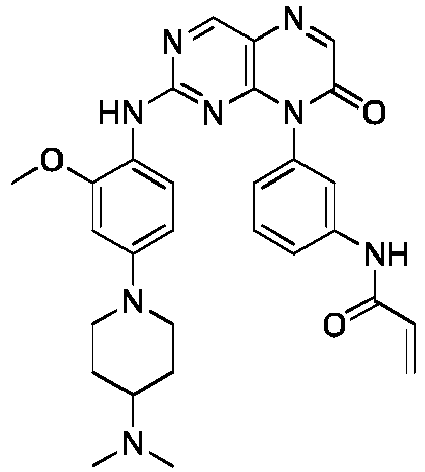
3.5 6.2 0.006 2.52 369.4 13* 
4.2 5.7 0.046 1.48 8.9 14 
10.5 1.0 0.014 4.18 9.7 15* 
2296 2250 3.60 8.13 514 16* 
4704 >10000 >10 >10 956 17* 
2190 191 1.42 >10 957 18* 
47 1.0 0.06 1.66 208.2 19* 
174.2 14.1 1.16 3.41 90.7 20 
15.0 1.3 0.040 6.0 7.4 21* 
2880 251 4.49 >10 72.2 22* 
>10000 6897 >10 >10 3232 23* 
1730 939 1.85 3.20 1689 24* 
700 576 2.49 3.1 2918 25 
65.2 1.5 0.016 1.75 56.67 26* 
1302 559 3.23 9.5 10515 27 
53.7 3.8 0.116 1.85 263.5 28* 
>10000 >10000 8.38 >10 3969 29 
177 791 3.09 1.6 437.5 30* 
>1000 >1000 8.689 >10 > 10 31 
522.3 9.0 2.155 >10 63.3 32* 
1.3 7.1 0.033 2.753 <10 33* 
33.0 1.3 0.230 3.682 24.5 34* 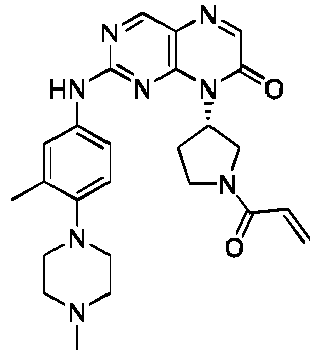
86.7 895.9 0.831 >10 223.1 35 
20.1 17.5 0.378 0.225 63.3 36* 
>1000 >1000 2.196 9.601 737 37* 
26.0 4.9 0.074 3.235 <10 38 
2.8 0.6 0.165 2.345 <10 39* 
130.3 82.2 0.572 3.844 <10 40 
>10000 73.1 1.052 1.377 >10 41 
5346.8 38.6 1.186 1.263 >10 42 
527.6 47.5 0.003 0.328 <10 43 
7.7 0.6 0.112 0.433 <10 44 
343.1 >1000 1.559 1.809 <10 45 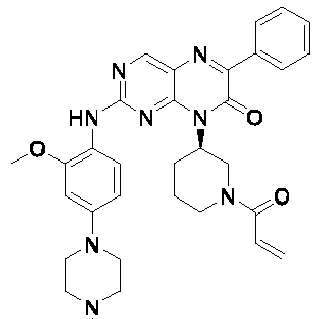
>1000 >1000 1.775 4.276 <10 46 
>10000 13.3 2.160 2.392 43.2 47 
0.5 0.2 0.018 1.733 <10 48 
361.6 20.8 0.031 0.640 <10 49 
19.2 14.2 0.368 0.287 <10 50 
2.7 86.9 1.244 1.112 719 51 
16.6 250.6 5.338 2.060 <10 52 
1.3 0.6 0.044 1.462 <10 53 
9.6 74.2 0.479 0.593 <10 54 
1.5 3.5 1.065 4.096 <10 55 
6.6 6.1 0.262 1.299 <10 56 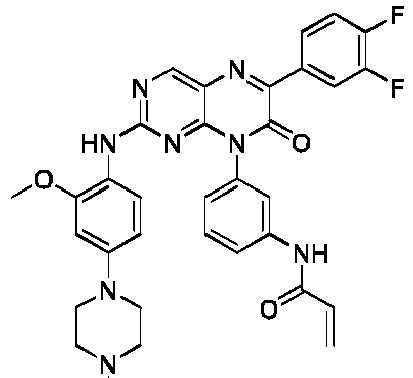
1.6 1.7 0.228 1.203 <10 57 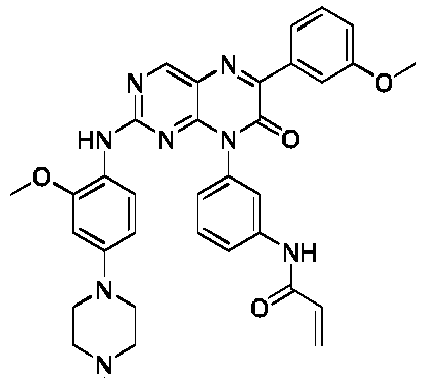
2.8 1.8 0.225 1.369 <10 58 
<10 AZD9291* 
236 12.1 0.016 1.9 3.50 ∗ comparative - The solubility of AZD9291 was tested at pH 7.4 (J. Med. Chem., 2014,57 8249-8267)
-
Number of compound Structure of compound Inhibitory IC50 means (nM) ± SD value on tyrosine kinase activity Inhibitory IC50 means (µM) ± SD value on tumor cell growth activity EGFR EGFR/T790 M/L858R A431 NCI-H1975 53 
9.6 74.2 0.593 0.479 53-1 (R) 
272.5±38.0 294.8±85.0 5.314±1.037 >10 53-2 (S) 
8.0±0.8 15.2±2.3 >10 0.062±0.012 - Purpose of experiment: H1975 transplanted BALB/c nude mice were orally administered (PO) with a substance to be tested for 14 consecutive days. The body weight and tumor size of nude mice were observed and recorded. The changes of physiological activity of nude mice after administration were observed for evaluating antineoplastic efficacy.
- H1975 cells were obtained from Shanghai Institute of Materia Medica. Cells were cultured in 1640 + 10% FBS (Gibco) at 37°C in a constant-temperature carbon dioxide incubator with 5% CO2 concentration. Cells were fluid-changed and passaged for one time every 2-3 days and expanded. When the desired amount of cells was achieved, transplantation of cells was performed. Before transplantation, cell viability should be maintained above 90%, serum-free 1640 medium was used for suspending cells, and the cell concentration in suspension was 20 million / ml.
- 40 male BALB/c nude mice, aged 4-5 weeks and weighing 17-23 g, were purchased from Shanghai Bikai, placed in an animal room environment for 2-3 days, and then seeded with cells. Cell suspension was subcutaneously injected at forelimb of the nude mouse rich in capillaries, and each mouse was injected with 0.1 mL of cell suspension.
- Experimental conditions in animal room:
- Laboratory temperature: 23 ±3°C
- Laboratory humidity: 30-60%
- 12 hours day-night rhythm
- In about 2-3 weeks, xenograft tumor can be found, and mice were grouped and administered with a drug when average size of tumor reaching 300mm3.
- Appropriate amount of a substance to be tested was weighed, suspended in 14 mL of DMSO-PEG400 saline solution (DMSO: PEG400: saline = 1:30:69) respectively, formulated according to the following table, suspended or dissolved by ultrasonic wave, filled into vials and sealed, and reserved in a 4°C refrigerator for further use.
Experiment group Weighing (mg) Actual concentration (mg/ml) Dose (mg/kg) 1 0 0 0 2 17.5 1.25 5 3 35 2.5 10 4 87.5 6.25 25 5 175 12.5 50 6 350 25 100 - The mice were administered with a dosage of 0.1ml / 25g through oral gavage once a day, and the mice were observed for their status and abnormalities. The length and width of a tumor and body weight of a mouse were recorded at least twice a week. The tumor size is calculated as V = 0.5 ∗ length ∗ width ∗ width.
-
Figure 1 shows pharmacodynamic evaluation of a series of compounds: after orally administered to nude mice of H1975 cell xenograft model for 14 days,Compound 14 exhibited superior efficacy over CO-1686. -
Figure 2 shows pharmacodynamics comparison betweenCompound 14 and CO-1686 and AZD9291: Compound 14 (10 mg/kg) exhibited better efficacy over CO-1686 (50 mg/kg), Compound 14 (25 mg/kg) exhibited comparable efficacy to AZD9291 (25 mg/kg), both of which can effectively reduce the size of a tumor, and the mice still live and the tumor did not recur after administration was stopped for 1 month. - Purpose of experiment: A431 xenograft tumor BALB/c nude mice were orally administered (PO) with a substance to be tested for 14 consecutive days. The body weight and tumor size of nude mice were observed and recorded. The changes of physiological activity of nude mice after administration were observed for evaluating antineoplastic efficacy.
- A431 cells belong to our laboratory, and in October 2015 confirmed by STR experiment. Cells were cultured in 1640 + 10% FBS (Gibco) at 37°C in a constant-temperature carbon dioxide incubator with 5% CO2 concentration. Cells were fluid-changed and passaged for one time every 2-3 days and expanded. When the desired amount of cells was achieved, transplantation of cells was performed. Before transplantation, cell viability should be maintained above 90%, serum-free 1640 medium was used for suspending cells, and the cell concentration in suspension was 20 million/ml.
- 40 male BALB/c nude mice, aged 4-5 weeks and weighing 17-23 g, were purchased from Shanghai Bikai, placed in an animal room environment for 2-3 days, and then seeded with cells. Cell suspension was subcutaneously injected at forelimb of the nude mouse rich in capillaries, and each mouse was injected with 0.1 mL of cell suspension.
- Experimental conditions in animal room:
- Laboratory temperature: 23 ±3°C
- Laboratory humidity: 30-60%
- 12 hours day-night rhythm
- In about 2-3 weeks, xenograft tumor can be found, and mice were grouped and administered with a drug when average size of tumor reaching 500mm3.
- Appropriate amount of a substance to be tested was weighed, suspended in 14 mL of DMSO-PEG400 saline solution (DMSO: PEG400: saline = 1:30:69) respectively, formulated according to the following table, suspended or dissolved by ultrasonic wave, filled into vials and sealed, and reserved in a 4°C refrigerator for further use.
Experiment group Weighing (mg) Actual concentration (mg/ml) Dose (mg/kg) 1 0 0 0 2 17.5 1.25 5 3 35 2.5 10 4 87.5 6.25 25 5 175 12.5 50 6 350 25 100 - The mice were administered with a dosage of 0.1ml / 25g through oral gavage once a day, and the mice were observed for their status and abnormalities. The length and width of a tumor and body weight of a mouse were recorded at least twice a week. The tumor size is calculated as V = 0.5 ∗ length ∗ width ∗ width.
-
Figure 3 shows thatcompound 14 exhibited better selectivity on wild-type EGFR. Nude mice of EGFR wild-type A431 cell xenograft model were administered for 14 days by oral administration, compound 14 (25 mg/kg) exhibited performance comparable to the same dose of AZD9291, that is, the size of the tumor did not substatially change, and the selectivity was significantly better than afatinib (a medicament of 2nd generation). - 1. Acute Toxicity Evaluation of Compound: 10 times and higher dose of AZD9291 were selected for Acute toxicity test in ICR mice. In contrast, ZW-W-33 at 100 mg / kg, 250 mg / kg, and 500 mg / kg showed comparable toxicity to the same dose of AZD9291 with a slight decrease in body weight.
-
Figure 4 shows the toxicity assessment ofCompound 14 and AZD9291. - 2.
Figure 5 shows the pathological analysis of tumor-bearing mice after 14 consecutive days of administration. - Conclusion: after long-term (14 days) administration of continuous treatment dose, no obvious pathological change was observed in all organs, and side effects were comparable to those of the same dose of positive drug AZD9291.
- In addition, it should be understood that after reading the above teachings of the present invention, those skilled in the art can make various modifications or changes to the present invention.
Claims (8)
- A compound of formula I or a pharmaceutical acceptable salt thereof:
 A is a divalent radical -(CRaRb)n-A'-, wherein Ra and Rb are independently selected from a group consisting of H, a C1-3 alkyl, a halogen, and n is an integer from 0 to 3;m is an integer from 0 to 3;R1 is substituted or unsubstituted phenyl, optionally substituted C3-C8 cycloalkyl;A' is a benzene ring, a five- or six-membered nitrogen-containing heterocycle;R2 is independently selected from a C2-C4 alkenyl substituted acylamino, substituted or unsubstituted C2-C4 alkenyl substituted acyl;R7 is selected from a group consisting of:
 R3, R4, R5 and R6 are independently selected from a group consisting of H, a substituted or unsubstituted C1-C6 alkoxy, a substituted or unsubstituted C1-C6 alkyl,or a compound or a pharmaceutical acceptable salt thereof selected from the following group:
- The compound of claim 1, wherein the substituted or unsubstituted C1-C6 alkoxy is a C1-C3 alkoxy; and
the substituted or unsubstituted C1-C6 alkyl is a C1-C3 alkyl. - The compound or a pharmaceutical acceptable salt thereof of claim 1, selected from the following group:
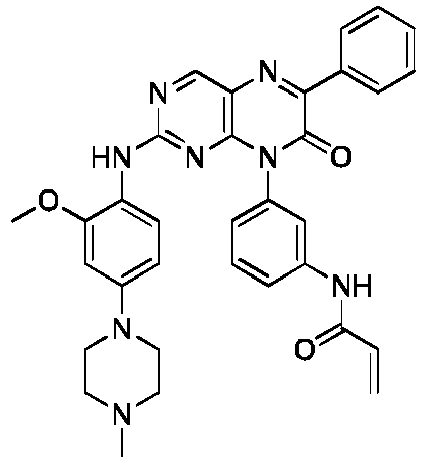

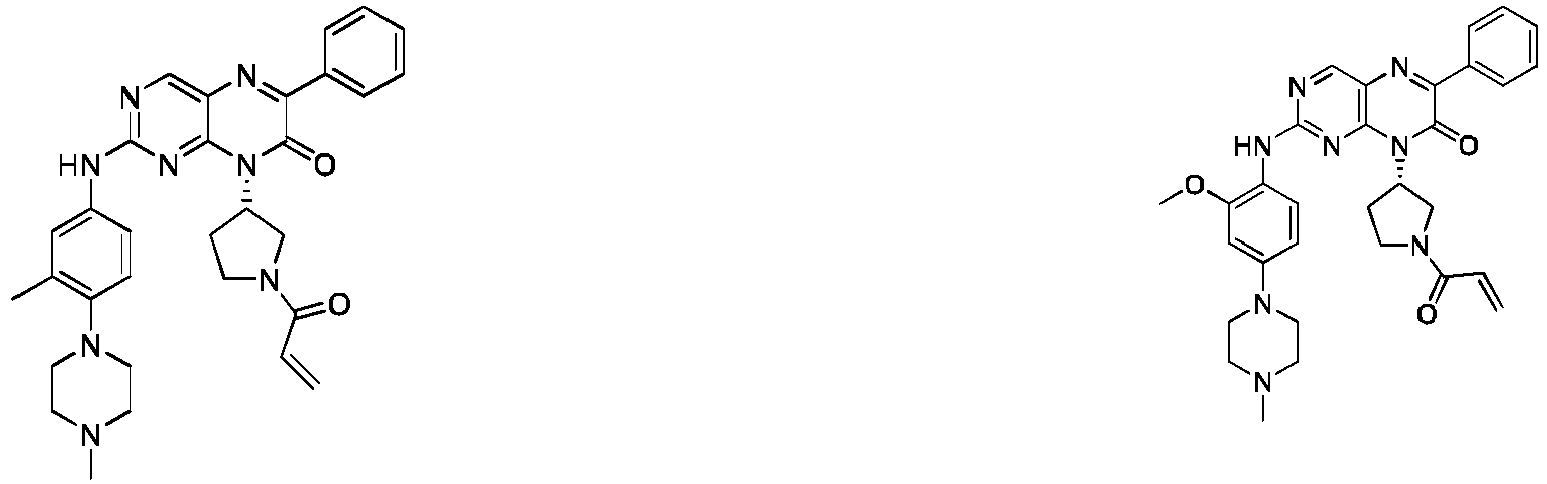


- The compound of claim 1, whereinR1 is substituted or unsubstituted phenyl;n = 0;A' is a benzene ring, or a five-membered nitrogen-containing heterocycle;R2 is independently selected from a C2-C4 alkenyl substituted acylamino, or C2-C4 alkenyl substituted acyl;m is an integer from 0 to 2;R7 is selected from:
 R3, R4, R5 and R6 are independently selected from a group consisting of H, a substituted or unsubstituted C1-C3 alkoxy, a substituted or unsubstituted C1-C3 alkyl.
 - The compound or a pharmaceutical acceptable salt thereof of claim 1, selected from the following group:
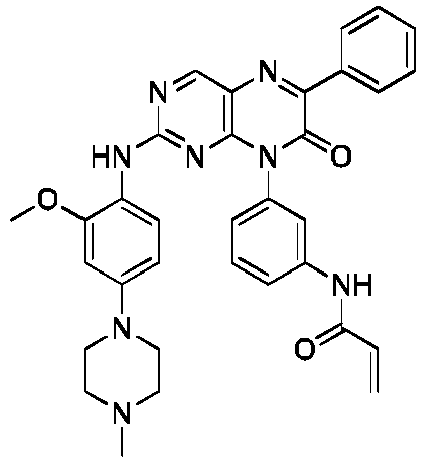


- A pharmaceutical composition, comprising the compound or a pharmaceutical acceptable salt thereof of any one of claims 1-5 and a pharmaceutically acceptable carrier or excipient.
- The compound of any one of claims 1-5 for use in treating or preventing EGFR-mediated diseases, or inhibiting EGFR, wherein the EGFR-mediated disease is cancer.
- The compound for use of claim 7, wherein the cancer is selected from a group consisting of non-small cell lung cancer, small cell lung cancer, lung adenocarcinoma, lung squamous cell carcinoma, breast cancer, prostate cancer, glioblastoma, ovarian cancer, squamous cell carcinoma of head and neck, cervical cancer, esophageal cancer, liver cancer, kidney cancer, pancreas cancer, colon cancer, skin cancer, leukemia, lymphoma, stomach cancer, multiple myeloma and solid tumors.
Applications Claiming Priority (2)
| Application Number | Priority Date | Filing Date | Title |
|---|---|---|---|
| CN201510289399.4A CN106279173A (en) | 2015-05-29 | 2015-05-29 | Pteridinone derivant is as the application of EGFR inhibitor |
| PCT/CN2016/083945 WO2016192609A1 (en) | 2015-05-29 | 2016-05-30 | Use of pteridinone derivative serving as egfr inhibitor |
Publications (3)
| Publication Number | Publication Date |
|---|---|
| EP3312180A1 EP3312180A1 (en) | 2018-04-25 |
| EP3312180A4 EP3312180A4 (en) | 2018-12-26 |
| EP3312180B1 true EP3312180B1 (en) | 2022-09-07 |
Family
ID=57440200
Family Applications (1)
| Application Number | Title | Priority Date | Filing Date |
|---|---|---|---|
| EP16802532.8A Active EP3312180B1 (en) | 2015-05-29 | 2016-05-30 | Use of pteridinone derivative serving as egfr inhibitor |
Country Status (9)
| Country | Link |
|---|---|
| US (1) | US11306095B2 (en) |
| EP (1) | EP3312180B1 (en) |
| JP (1) | JP7320823B2 (en) |
| KR (1) | KR20180021743A (en) |
| CN (2) | CN106279173A (en) |
| AU (1) | AU2016272057B2 (en) |
| CA (1) | CA2987466A1 (en) |
| ES (1) | ES2930312T3 (en) |
| WO (1) | WO2016192609A1 (en) |
Families Citing this family (28)
| Publication number | Priority date | Publication date | Assignee | Title |
|---|---|---|---|---|
| CN107129506B (en) * | 2016-02-26 | 2019-10-22 | 华东理工大学 | Pyrimido[4,5-d][1,3]oxazin-2-one derivatives as EGFR inhibitors and their applications |
| KR102583737B1 (en) * | 2017-03-03 | 2023-09-26 | 오클랜드 유니서비시즈 리미티드 | FGFR Kinase Inhibitors and Pharmaceutical Uses |
| CN108721298A (en) * | 2017-04-19 | 2018-11-02 | 华东理工大学 | As the pyrimido heterocyclic compound of bruton's tyrosine kinase inhibitor and its application |
| CN111217815B (en) * | 2018-11-27 | 2021-06-18 | 沈阳药科大学 | Compound containing pteridone skeleton and preparation method and application thereof |
| WO2022042755A1 (en) * | 2020-08-28 | 2022-03-03 | 华东理工大学 | Compound for inhibiting mutant egfr and use thereof |
| CN115504980B (en) * | 2021-06-23 | 2026-03-03 | 石药集团中奇制药技术(石家庄)有限公司 | Pyrimidine nitrogen-containing six-membered aromatic heterocyclic compound and application thereof |
| CN115607551A (en) * | 2021-07-14 | 2023-01-17 | 上海汇伦医药股份有限公司 | New uses of EGFR inhibitors |
| CN115850282A (en) * | 2021-09-24 | 2023-03-28 | 华东理工大学 | Compound for targeted degradation of EGFR protein and preparation method and application thereof |
| CN115974878A (en) * | 2021-10-15 | 2023-04-18 | 上海汇伦医药股份有限公司 | Salts of antineoplastic drugs and their crystal forms |
| CN115010711B (en) * | 2022-07-12 | 2024-12-03 | 江南大学 | A pteridine 7 (8H) -ketone compound and its pharmaceutical application |
| AU2024241633A1 (en) | 2023-03-30 | 2025-11-06 | Revolution Medicines, Inc. | Compositions for inducing ras gtp hydrolysis and uses thereof |
| CN121712509A (en) | 2023-05-04 | 2026-03-20 | 锐新医药公司 | Combination therapy for RAS related diseases or conditions |
| US20250049810A1 (en) | 2023-08-07 | 2025-02-13 | Revolution Medicines, Inc. | Methods of treating a ras protein-related disease or disorder |
| IL327306A (en) | 2023-10-12 | 2026-05-01 | Revolution Medicines Inc | Macrocyclic ras inhibitors |
| WO2025171296A1 (en) | 2024-02-09 | 2025-08-14 | Revolution Medicines, Inc. | Ras inhibitors |
| WO2025240847A1 (en) | 2024-05-17 | 2025-11-20 | Revolution Medicines, Inc. | Ras inhibitors |
| WO2025255438A1 (en) | 2024-06-07 | 2025-12-11 | Revolution Medicines, Inc. | Methods of treating a ras protein-related disease or disorder |
| WO2025265060A1 (en) | 2024-06-21 | 2025-12-26 | Revolution Medicines, Inc. | Therapeutic compositions and methods for managing treatment-related effects |
| WO2026006747A1 (en) | 2024-06-28 | 2026-01-02 | Revolution Medicines, Inc. | Ras inhibitors |
| WO2026015790A1 (en) | 2024-07-12 | 2026-01-15 | Revolution Medicines, Inc. | Methods of treating a ras related disease or disorder |
| WO2026015801A1 (en) | 2024-07-12 | 2026-01-15 | Revolution Medicines, Inc. | Methods of treating a ras related disease or disorder |
| WO2026015825A1 (en) | 2024-07-12 | 2026-01-15 | Revolution Medicines, Inc. | Use of ras inhibitor for treating pancreatic cancer |
| WO2026015796A1 (en) | 2024-07-12 | 2026-01-15 | Revolution Medicines, Inc. | Methods of treating a ras related disease or disorder |
| WO2026050446A1 (en) | 2024-08-29 | 2026-03-05 | Revolution Medicines, Inc. | Ras inhibitors |
| WO2026072904A2 (en) | 2024-09-26 | 2026-04-02 | Revolution Medicines, Inc. | Compositions and methods for treating lung cancer |
| WO2026090116A2 (en) | 2024-10-21 | 2026-04-30 | Revolution Medicines, Inc. | Ras inhibitors |
| WO2026090245A1 (en) | 2024-10-22 | 2026-04-30 | Revolution Medicines, Inc. | Use of ras inhibitors for treating cancer |
| US20260108528A1 (en) | 2024-10-22 | 2026-04-23 | Revolution Medicines, Inc. | Methods of treating a ras protein-related disease or disorder |
Family Cites Families (10)
| Publication number | Priority date | Publication date | Assignee | Title |
|---|---|---|---|---|
| KR20020027649A (en) * | 1999-09-15 | 2002-04-13 | 로즈 암스트롱, 크리스틴 에이. 트러트웨인 | Pteridinones as Kinase Inhibitors |
| MXPA05007503A (en) * | 2003-01-17 | 2005-09-21 | Warner Lambert Co | 2-aminopyridine substituted heterocycles as inhibitors of cellular proliferation. |
| CA2570494A1 (en) * | 2004-06-23 | 2006-01-05 | Irm Llc | Pteridine derivatives as protein kinase inhibitors |
| CN101031568A (en) * | 2004-06-23 | 2007-09-05 | Irm责任有限公司 | Compounds and compositions as protein kinase inhibitors |
| US20060058311A1 (en) * | 2004-08-14 | 2006-03-16 | Boehringer Ingelheim International Gmbh | Combinations for the treatment of diseases involving cell proliferation |
| CA2702524A1 (en) * | 2007-10-19 | 2009-04-23 | Boehringer Ingelheim International Gmbh | Heterocycle-substituted piperazino-dihydrothienopyrimidines |
| CN102816162B (en) * | 2011-06-10 | 2016-04-27 | 中国科学院广州生物医药与健康研究院 | Pyrimidopyrimidinone compounds and their pharmaceutical compositions and applications |
| DE112013002484B4 (en) * | 2012-05-14 | 2023-05-04 | Shanghai Yidian Pharmaceutical Technology Development Co., Ltd. | Pteridine ketone derivative and applications of the same as EGFR, BLK and FLT3 inhibitor |
| CN103421010A (en) * | 2012-05-14 | 2013-12-04 | 华东理工大学 | Pteridinone derivative as EGFR inhibitor and application thereof |
| CN103012399B (en) * | 2012-11-22 | 2015-06-17 | 中国科学院广州生物医药与健康研究院 | 7-oxopyridinopyrimidine compound as well as medicinal composition and application thereof |
-
2015
- 2015-05-29 CN CN201510289399.4A patent/CN106279173A/en active Pending
-
2016
- 2016-05-30 KR KR1020177037902A patent/KR20180021743A/en not_active Ceased
- 2016-05-30 AU AU2016272057A patent/AU2016272057B2/en not_active Ceased
- 2016-05-30 CN CN201680031547.5A patent/CN107922417B/en active Active
- 2016-05-30 WO PCT/CN2016/083945 patent/WO2016192609A1/en not_active Ceased
- 2016-05-30 EP EP16802532.8A patent/EP3312180B1/en active Active
- 2016-05-30 JP JP2018513714A patent/JP7320823B2/en active Active
- 2016-05-30 US US15/577,518 patent/US11306095B2/en active Active
- 2016-05-30 ES ES16802532T patent/ES2930312T3/en active Active
- 2016-05-30 CA CA2987466A patent/CA2987466A1/en active Pending
Also Published As
| Publication number | Publication date |
|---|---|
| JP7320823B2 (en) | 2023-08-04 |
| AU2016272057B2 (en) | 2020-10-08 |
| US20180148454A1 (en) | 2018-05-31 |
| EP3312180A4 (en) | 2018-12-26 |
| CN106279173A (en) | 2017-01-04 |
| CN107922417B (en) | 2023-01-24 |
| CA2987466A1 (en) | 2016-12-08 |
| CN107922417A (en) | 2018-04-17 |
| US11306095B2 (en) | 2022-04-19 |
| AU2016272057A1 (en) | 2018-01-25 |
| JP2018516278A (en) | 2018-06-21 |
| KR20180021743A (en) | 2018-03-05 |
| WO2016192609A1 (en) | 2016-12-08 |
| ES2930312T3 (en) | 2022-12-09 |
| EP3312180A1 (en) | 2018-04-25 |
Similar Documents
| Publication | Publication Date | Title |
|---|---|---|
| EP3312180A1 (en) | Use of pteridinone derivative serving as egfr inhibitor | |
| EP3037424B1 (en) | Novel quinoline-substituted compound | |
| EP2896620A1 (en) | Alkynyl heteroaromatic ring compound and application thereof | |
| CN107428763B (en) | Pyrimidopyrimidinedione derivatives as EGFR inhibitors and their applications | |
| EP3398950B1 (en) | Novel kinase inhibitor against wild-type egfr and mutated egfr | |
| US9255107B2 (en) | Heteroaryl alkyne compound and use thereof | |
| KR102866403B1 (en) | Casein kinase 1ε inhibitor and pharmaceutical composition and application thereof | |
| WO2018192536A1 (en) | Pyrimido-heterocyclic compound serving as bruton tyrosine kinase inhibitor and applications thereof | |
| WO2021115401A1 (en) | Fluorine-containing heterocyclic derivatives with macrocyclic structure and use thereof | |
| WO2018192532A1 (en) | Heterocyclic compound as btk inhibitor and application thereof | |
| WO2018157737A1 (en) | Multi-target kinase inhibitor | |
| CN113717245A (en) | EGFR degradation agent containing 2,8, 9-trisubstituted-9H-purine structural fragment, and salt and application thereof | |
| CN107129506B (en) | Pyrimido[4,5-d][1,3]oxazin-2-one derivatives as EGFR inhibitors and their applications | |
| CN107540666B (en) | Benzofuran pyrazole amine protein kinase inhibitor | |
| CN106892922B (en) | 5,8-Dihydropteridine-6,7-dione derivatives as EGFR inhibitors and their applications | |
| CN107840847A (en) | Deuterated 3 (4,5 substituted-amino pyrimidine) phenyl derivatives and its application | |
| CN113840823A (en) | Novel heterocycle-substituted pyrimidine derivative exhibiting cancer cell growth inhibitory effect, and pharmaceutical composition comprising same | |
| CN118878515B (en) | A substituted aniline pyrimidine compound and its preparation method and use | |
| CN113493407B (en) | A pyridine compound and its preparation method and pharmaceutical use | |
| JP2025531320A (en) | Pyridonopyrimidine derivatives as RSK inhibitors and their applications | |
| CN107663207A (en) | A kind of mesylate crystallization of new E GFR kinase inhibitors and preparation method | |
| CN116354964A (en) | 7(8H)-pteridinone derivatives as BTK inhibitors and their applications | |
| WO2021032129A1 (en) | Kinase inhibitor, preparation therefor, pharmaceutical composition thereof and use thereof |
Legal Events
| Date | Code | Title | Description |
|---|---|---|---|
| STAA | Information on the status of an ep patent application or granted ep patent |
Free format text: STATUS: THE INTERNATIONAL PUBLICATION HAS BEEN MADE |
|
| PUAI | Public reference made under article 153(3) epc to a published international application that has entered the european phase |
Free format text: ORIGINAL CODE: 0009012 |
|
| STAA | Information on the status of an ep patent application or granted ep patent |
Free format text: STATUS: REQUEST FOR EXAMINATION WAS MADE |
|
| 17P | Request for examination filed |
Effective date: 20171228 |
|
| AK | Designated contracting states |
Kind code of ref document: A1 Designated state(s): AL AT BE BG CH CY CZ DE DK EE ES FI FR GB GR HR HU IE IS IT LI LT LU LV MC MK MT NL NO PL PT RO RS SE SI SK SM TR |
|
| AX | Request for extension of the european patent |
Extension state: BA ME |
|
| DAV | Request for validation of the european patent (deleted) | ||
| DAX | Request for extension of the european patent (deleted) | ||
| A4 | Supplementary search report drawn up and despatched |
Effective date: 20181126 |
|
| RIC1 | Information provided on ipc code assigned before grant |
Ipc: C07D 487/04 20060101ALN20181120BHEP Ipc: A61K 31/519 20060101ALI20181120BHEP Ipc: A61P 35/00 20060101ALI20181120BHEP Ipc: C07D 475/00 20060101AFI20181120BHEP Ipc: A61P 35/02 20060101ALI20181120BHEP |
|
| STAA | Information on the status of an ep patent application or granted ep patent |
Free format text: STATUS: EXAMINATION IS IN PROGRESS |
|
| 17Q | First examination report despatched |
Effective date: 20200319 |
|
| GRAP | Despatch of communication of intention to grant a patent |
Free format text: ORIGINAL CODE: EPIDOSNIGR1 |
|
| STAA | Information on the status of an ep patent application or granted ep patent |
Free format text: STATUS: GRANT OF PATENT IS INTENDED |
|
| RIC1 | Information provided on ipc code assigned before grant |
Ipc: C07D 487/04 20060101ALN20220219BHEP Ipc: A61P 35/02 20060101ALI20220219BHEP Ipc: A61P 35/00 20060101ALI20220219BHEP Ipc: A61K 31/519 20060101ALI20220219BHEP Ipc: C07D 475/00 20060101AFI20220219BHEP |
|
| INTG | Intention to grant announced |
Effective date: 20220321 |
|
| GRAS | Grant fee paid |
Free format text: ORIGINAL CODE: EPIDOSNIGR3 |
|
| GRAA | (expected) grant |
Free format text: ORIGINAL CODE: 0009210 |
|
| STAA | Information on the status of an ep patent application or granted ep patent |
Free format text: STATUS: THE PATENT HAS BEEN GRANTED |
|
| AK | Designated contracting states |
Kind code of ref document: B1 Designated state(s): AL AT BE BG CH CY CZ DE DK EE ES FI FR GB GR HR HU IE IS IT LI LT LU LV MC MK MT NL NO PL PT RO RS SE SI SK SM TR |
|
| REG | Reference to a national code |
Ref country code: GB Ref legal event code: FG4D |
|
| REG | Reference to a national code |
Ref country code: CH Ref legal event code: EP Ref country code: AT Ref legal event code: REF Ref document number: 1516975 Country of ref document: AT Kind code of ref document: T Effective date: 20220915 |
|
| REG | Reference to a national code |
Ref country code: IE Ref legal event code: FG4D |
|
| REG | Reference to a national code |
Ref country code: DE Ref legal event code: R096 Ref document number: 602016074864 Country of ref document: DE |
|
| REG | Reference to a national code |
Ref country code: GB Ref legal event code: 732E Free format text: REGISTERED BETWEEN 20221103 AND 20221109 |
|
| RAP2 | Party data changed (patent owner data changed or rights of a patent transferred) |
Owner name: SHANGHAI YIDIAN PHARMACEUTICAL TECHNOLOGY DEVELOPMENT CO., LTD. |
|
| REG | Reference to a national code |
Ref country code: ES Ref legal event code: FG2A Ref document number: 2930312 Country of ref document: ES Kind code of ref document: T3 Effective date: 20221209 |
|
| REG | Reference to a national code |
Ref country code: LT Ref legal event code: MG9D |
|
| REG | Reference to a national code |
Ref country code: BE Ref legal event code: PD Owner name: SHANGHAI YIDIAN PHARMACEUTICAL TECHNOLOGY DEVELOPMENT CO., LTD.; CN Free format text: DETAILS ASSIGNMENT: CHANGE OF OWNER(S), ASSIGNMENT; FORMER OWNER NAME: EAST CHINA UNIVERSITY OF SCIENCE AND TECHNOLOGY Effective date: 20221129 |
|
| REG | Reference to a national code |
Ref country code: NL Ref legal event code: MP Effective date: 20220907 |
|
| PG25 | Lapsed in a contracting state [announced via postgrant information from national office to epo] |
Ref country code: SE Free format text: LAPSE BECAUSE OF FAILURE TO SUBMIT A TRANSLATION OF THE DESCRIPTION OR TO PAY THE FEE WITHIN THE PRESCRIBED TIME-LIMIT Effective date: 20220907 Ref country code: RS Free format text: LAPSE BECAUSE OF FAILURE TO SUBMIT A TRANSLATION OF THE DESCRIPTION OR TO PAY THE FEE WITHIN THE PRESCRIBED TIME-LIMIT Effective date: 20220907 Ref country code: NO Free format text: LAPSE BECAUSE OF FAILURE TO SUBMIT A TRANSLATION OF THE DESCRIPTION OR TO PAY THE FEE WITHIN THE PRESCRIBED TIME-LIMIT Effective date: 20221207 Ref country code: LV Free format text: LAPSE BECAUSE OF FAILURE TO SUBMIT A TRANSLATION OF THE DESCRIPTION OR TO PAY THE FEE WITHIN THE PRESCRIBED TIME-LIMIT Effective date: 20220907 Ref country code: LT Free format text: LAPSE BECAUSE OF FAILURE TO SUBMIT A TRANSLATION OF THE DESCRIPTION OR TO PAY THE FEE WITHIN THE PRESCRIBED TIME-LIMIT Effective date: 20220907 Ref country code: FI Free format text: LAPSE BECAUSE OF FAILURE TO SUBMIT A TRANSLATION OF THE DESCRIPTION OR TO PAY THE FEE WITHIN THE PRESCRIBED TIME-LIMIT Effective date: 20220907 |
|
| REG | Reference to a national code |
Ref country code: AT Ref legal event code: MK05 Ref document number: 1516975 Country of ref document: AT Kind code of ref document: T Effective date: 20220907 |
|
| REG | Reference to a national code |
Ref country code: DE Ref legal event code: R081 Ref document number: 602016074864 Country of ref document: DE Owner name: SHANGHAI YIDIAN PHARMACEUTICAL TECHNOLOGY DEVE, CN Free format text: FORMER OWNER: EAST CHINA UNIVERSITY OF SCIENCE AND TECHNOLOGY, SHANGHAI, CN |
|
| PG25 | Lapsed in a contracting state [announced via postgrant information from national office to epo] |
Ref country code: HR Free format text: LAPSE BECAUSE OF FAILURE TO SUBMIT A TRANSLATION OF THE DESCRIPTION OR TO PAY THE FEE WITHIN THE PRESCRIBED TIME-LIMIT Effective date: 20220907 Ref country code: GR Free format text: LAPSE BECAUSE OF FAILURE TO SUBMIT A TRANSLATION OF THE DESCRIPTION OR TO PAY THE FEE WITHIN THE PRESCRIBED TIME-LIMIT Effective date: 20221208 |
|
| PG25 | Lapsed in a contracting state [announced via postgrant information from national office to epo] |
Ref country code: SM Free format text: LAPSE BECAUSE OF FAILURE TO SUBMIT A TRANSLATION OF THE DESCRIPTION OR TO PAY THE FEE WITHIN THE PRESCRIBED TIME-LIMIT Effective date: 20220907 Ref country code: RO Free format text: LAPSE BECAUSE OF FAILURE TO SUBMIT A TRANSLATION OF THE DESCRIPTION OR TO PAY THE FEE WITHIN THE PRESCRIBED TIME-LIMIT Effective date: 20220907 Ref country code: PT Free format text: LAPSE BECAUSE OF FAILURE TO SUBMIT A TRANSLATION OF THE DESCRIPTION OR TO PAY THE FEE WITHIN THE PRESCRIBED TIME-LIMIT Effective date: 20230109 Ref country code: CZ Free format text: LAPSE BECAUSE OF FAILURE TO SUBMIT A TRANSLATION OF THE DESCRIPTION OR TO PAY THE FEE WITHIN THE PRESCRIBED TIME-LIMIT Effective date: 20220907 Ref country code: AT Free format text: LAPSE BECAUSE OF FAILURE TO SUBMIT A TRANSLATION OF THE DESCRIPTION OR TO PAY THE FEE WITHIN THE PRESCRIBED TIME-LIMIT Effective date: 20220907 |
|
| PG25 | Lapsed in a contracting state [announced via postgrant information from national office to epo] |
Ref country code: SK Free format text: LAPSE BECAUSE OF FAILURE TO SUBMIT A TRANSLATION OF THE DESCRIPTION OR TO PAY THE FEE WITHIN THE PRESCRIBED TIME-LIMIT Effective date: 20220907 Ref country code: PL Free format text: LAPSE BECAUSE OF FAILURE TO SUBMIT A TRANSLATION OF THE DESCRIPTION OR TO PAY THE FEE WITHIN THE PRESCRIBED TIME-LIMIT Effective date: 20220907 Ref country code: IS Free format text: LAPSE BECAUSE OF FAILURE TO SUBMIT A TRANSLATION OF THE DESCRIPTION OR TO PAY THE FEE WITHIN THE PRESCRIBED TIME-LIMIT Effective date: 20230107 Ref country code: EE Free format text: LAPSE BECAUSE OF FAILURE TO SUBMIT A TRANSLATION OF THE DESCRIPTION OR TO PAY THE FEE WITHIN THE PRESCRIBED TIME-LIMIT Effective date: 20220907 |
|
| REG | Reference to a national code |
Ref country code: DE Ref legal event code: R097 Ref document number: 602016074864 Country of ref document: DE |
|
| PG25 | Lapsed in a contracting state [announced via postgrant information from national office to epo] |
Ref country code: NL Free format text: LAPSE BECAUSE OF FAILURE TO SUBMIT A TRANSLATION OF THE DESCRIPTION OR TO PAY THE FEE WITHIN THE PRESCRIBED TIME-LIMIT Effective date: 20220907 Ref country code: AL Free format text: LAPSE BECAUSE OF FAILURE TO SUBMIT A TRANSLATION OF THE DESCRIPTION OR TO PAY THE FEE WITHIN THE PRESCRIBED TIME-LIMIT Effective date: 20220907 |
|
| PLBE | No opposition filed within time limit |
Free format text: ORIGINAL CODE: 0009261 |
|
| STAA | Information on the status of an ep patent application or granted ep patent |
Free format text: STATUS: NO OPPOSITION FILED WITHIN TIME LIMIT |
|
| PG25 | Lapsed in a contracting state [announced via postgrant information from national office to epo] |
Ref country code: DK Free format text: LAPSE BECAUSE OF FAILURE TO SUBMIT A TRANSLATION OF THE DESCRIPTION OR TO PAY THE FEE WITHIN THE PRESCRIBED TIME-LIMIT Effective date: 20220907 |
|
| PGFP | Annual fee paid to national office [announced via postgrant information from national office to epo] |
Ref country code: IT Payment date: 20230526 Year of fee payment: 8 Ref country code: FR Payment date: 20230526 Year of fee payment: 8 Ref country code: DE Payment date: 20230519 Year of fee payment: 8 Ref country code: CH Payment date: 20230605 Year of fee payment: 8 |
|
| 26N | No opposition filed |
Effective date: 20230608 |
|
| PG25 | Lapsed in a contracting state [announced via postgrant information from national office to epo] |
Ref country code: SI Free format text: LAPSE BECAUSE OF FAILURE TO SUBMIT A TRANSLATION OF THE DESCRIPTION OR TO PAY THE FEE WITHIN THE PRESCRIBED TIME-LIMIT Effective date: 20220907 |
|
| PGFP | Annual fee paid to national office [announced via postgrant information from national office to epo] |
Ref country code: BE Payment date: 20230519 Year of fee payment: 8 |
|
| PGFP | Annual fee paid to national office [announced via postgrant information from national office to epo] |
Ref country code: GB Payment date: 20230524 Year of fee payment: 8 Ref country code: ES Payment date: 20230726 Year of fee payment: 8 |
|
| PG25 | Lapsed in a contracting state [announced via postgrant information from national office to epo] |
Ref country code: MC Free format text: LAPSE BECAUSE OF FAILURE TO SUBMIT A TRANSLATION OF THE DESCRIPTION OR TO PAY THE FEE WITHIN THE PRESCRIBED TIME-LIMIT Effective date: 20220907 |
|
| PG25 | Lapsed in a contracting state [announced via postgrant information from national office to epo] |
Ref country code: MC Free format text: LAPSE BECAUSE OF FAILURE TO SUBMIT A TRANSLATION OF THE DESCRIPTION OR TO PAY THE FEE WITHIN THE PRESCRIBED TIME-LIMIT Effective date: 20220907 Ref country code: LU Free format text: LAPSE BECAUSE OF NON-PAYMENT OF DUE FEES Effective date: 20230530 |
|
| REG | Reference to a national code |
Ref country code: IE Ref legal event code: MM4A |
|
| PG25 | Lapsed in a contracting state [announced via postgrant information from national office to epo] |
Ref country code: IE Free format text: LAPSE BECAUSE OF NON-PAYMENT OF DUE FEES Effective date: 20230530 |
|
| PG25 | Lapsed in a contracting state [announced via postgrant information from national office to epo] |
Ref country code: IE Free format text: LAPSE BECAUSE OF NON-PAYMENT OF DUE FEES Effective date: 20230530 |
|
| PG25 | Lapsed in a contracting state [announced via postgrant information from national office to epo] |
Ref country code: BG Free format text: LAPSE BECAUSE OF FAILURE TO SUBMIT A TRANSLATION OF THE DESCRIPTION OR TO PAY THE FEE WITHIN THE PRESCRIBED TIME-LIMIT Effective date: 20220907 |
|
| PG25 | Lapsed in a contracting state [announced via postgrant information from national office to epo] |
Ref country code: BG Free format text: LAPSE BECAUSE OF FAILURE TO SUBMIT A TRANSLATION OF THE DESCRIPTION OR TO PAY THE FEE WITHIN THE PRESCRIBED TIME-LIMIT Effective date: 20220907 |
|
| REG | Reference to a national code |
Ref country code: DE Ref legal event code: R119 Ref document number: 602016074864 Country of ref document: DE |
|
| REG | Reference to a national code |
Ref country code: CH Ref legal event code: PL |
|
| GBPC | Gb: european patent ceased through non-payment of renewal fee |
Effective date: 20240530 |
|
| PG25 | Lapsed in a contracting state [announced via postgrant information from national office to epo] |
Ref country code: CH Free format text: LAPSE BECAUSE OF NON-PAYMENT OF DUE FEES Effective date: 20240531 |
|
| REG | Reference to a national code |
Ref country code: BE Ref legal event code: MM Effective date: 20240531 |
|
| PG25 | Lapsed in a contracting state [announced via postgrant information from national office to epo] |
Ref country code: DE Free format text: LAPSE BECAUSE OF NON-PAYMENT OF DUE FEES Effective date: 20241203 |
|
| PG25 | Lapsed in a contracting state [announced via postgrant information from national office to epo] |
Ref country code: BE Free format text: LAPSE BECAUSE OF NON-PAYMENT OF DUE FEES Effective date: 20240531 |
|
| PG25 | Lapsed in a contracting state [announced via postgrant information from national office to epo] |
Ref country code: FR Free format text: LAPSE BECAUSE OF NON-PAYMENT OF DUE FEES Effective date: 20240531 |
|
| PG25 | Lapsed in a contracting state [announced via postgrant information from national office to epo] |
Ref country code: GB Free format text: LAPSE BECAUSE OF NON-PAYMENT OF DUE FEES Effective date: 20240530 Ref country code: IT Free format text: LAPSE BECAUSE OF NON-PAYMENT OF DUE FEES Effective date: 20240530 |
|
| REG | Reference to a national code |
Ref country code: ES Ref legal event code: FD2A Effective date: 20250704 |
|
| PG25 | Lapsed in a contracting state [announced via postgrant information from national office to epo] |
Ref country code: ES Free format text: LAPSE BECAUSE OF NON-PAYMENT OF DUE FEES Effective date: 20240531 |
|
| PG25 | Lapsed in a contracting state [announced via postgrant information from national office to epo] |
Ref country code: CY Free format text: LAPSE BECAUSE OF FAILURE TO SUBMIT A TRANSLATION OF THE DESCRIPTION OR TO PAY THE FEE WITHIN THE PRESCRIBED TIME-LIMIT; INVALID AB INITIO Effective date: 20160530 |
|
| PG25 | Lapsed in a contracting state [announced via postgrant information from national office to epo] |
Ref country code: HU Free format text: LAPSE BECAUSE OF FAILURE TO SUBMIT A TRANSLATION OF THE DESCRIPTION OR TO PAY THE FEE WITHIN THE PRESCRIBED TIME-LIMIT; INVALID AB INITIO Effective date: 20160530 |
|
| PG25 | Lapsed in a contracting state [announced via postgrant information from national office to epo] |
Ref country code: TR Free format text: LAPSE BECAUSE OF FAILURE TO SUBMIT A TRANSLATION OF THE DESCRIPTION OR TO PAY THE FEE WITHIN THE PRESCRIBED TIME-LIMIT Effective date: 20220907 |