EP3310880B1 - Method for on board conversion of co2 to fuel - Google Patents
Method for on board conversion of co2 to fuel Download PDFInfo
- Publication number
- EP3310880B1 EP3310880B1 EP16728763.0A EP16728763A EP3310880B1 EP 3310880 B1 EP3310880 B1 EP 3310880B1 EP 16728763 A EP16728763 A EP 16728763A EP 3310880 B1 EP3310880 B1 EP 3310880B1
- Authority
- EP
- European Patent Office
- Prior art keywords
- fuel
- exhaust gas
- heat
- ice
- produced
- Prior art date
- Legal status (The legal status is an assumption and is not a legal conclusion. Google has not performed a legal analysis and makes no representation as to the accuracy of the status listed.)
- Active
Links
Images



Classifications
-
- C—CHEMISTRY; METALLURGY
- C01—INORGANIC CHEMISTRY
- C01B—NON-METALLIC ELEMENTS; COMPOUNDS THEREOF; METALLOIDS OR COMPOUNDS THEREOF NOT COVERED BY SUBCLASS C01C
- C01B3/00—Hydrogen; Gaseous mixtures containing hydrogen; Separation of hydrogen from mixtures containing it; Purification of hydrogen; Reversible storage of hydrogen
- C01B3/02—Production of hydrogen; Production of gaseous mixtures containing hydrogen
- C01B3/06—Production of hydrogen; Production of gaseous mixtures containing hydrogen by reaction of inorganic compounds containing electro-positively bound hydrogen with inorganic reducing agents
-
- F—MECHANICAL ENGINEERING; LIGHTING; HEATING; WEAPONS; BLASTING
- F02—COMBUSTION ENGINES; HOT-GAS OR COMBUSTION-PRODUCT ENGINE PLANTS
- F02B—INTERNAL-COMBUSTION PISTON ENGINES; COMBUSTION ENGINES IN GENERAL
- F02B51/00—Other methods of operating engines involving pretreating of, or adding substances to, combustion air, fuel, or fuel-air mixture of the engines
- F02B51/04—Other methods of operating engines involving pretreating of, or adding substances to, combustion air, fuel, or fuel-air mixture of the engines involving electricity or magnetism
-
- C—CHEMISTRY; METALLURGY
- C01—INORGANIC CHEMISTRY
- C01B—NON-METALLIC ELEMENTS; COMPOUNDS THEREOF; METALLOIDS OR COMPOUNDS THEREOF NOT COVERED BY SUBCLASS C01C
- C01B3/00—Hydrogen; Gaseous mixtures containing hydrogen; Separation of hydrogen from mixtures containing it; Purification of hydrogen; Reversible storage of hydrogen
- C01B3/02—Production of hydrogen; Production of gaseous mixtures containing hydrogen
- C01B3/06—Production of hydrogen; Production of gaseous mixtures containing hydrogen by reaction of inorganic compounds containing electro-positively bound hydrogen with inorganic reducing agents
- C01B3/12—Production of hydrogen; Production of gaseous mixtures containing hydrogen by reaction of inorganic compounds containing electro-positively bound hydrogen with inorganic reducing agents by reaction of water vapour with carbon monoxide
-
- C—CHEMISTRY; METALLURGY
- C10—PETROLEUM, GAS OR COKE INDUSTRIES; TECHNICAL GASES CONTAINING CARBON MONOXIDE; FUELS; LUBRICANTS; PEAT
- C10G—CRACKING HYDROCARBON OILS; PRODUCTION OF LIQUID HYDROCARBON MIXTURES, e.g. BY DESTRUCTIVE HYDROGENATION, OLIGOMERISATION, POLYMERISATION; RECOVERY OF HYDROCARBON OILS FROM OIL-SHALE, OIL-SAND, OR GASES; REFINING MIXTURES MAINLY CONSISTING OF HYDROCARBONS; REFORMING OF NAPHTHA; MINERAL WAXES
- C10G2/00—Production of liquid hydrocarbon mixtures of undefined composition from oxides of carbon
-
- C—CHEMISTRY; METALLURGY
- C10—PETROLEUM, GAS OR COKE INDUSTRIES; TECHNICAL GASES CONTAINING CARBON MONOXIDE; FUELS; LUBRICANTS; PEAT
- C10G—CRACKING HYDROCARBON OILS; PRODUCTION OF LIQUID HYDROCARBON MIXTURES, e.g. BY DESTRUCTIVE HYDROGENATION, OLIGOMERISATION, POLYMERISATION; RECOVERY OF HYDROCARBON OILS FROM OIL-SHALE, OIL-SAND, OR GASES; REFINING MIXTURES MAINLY CONSISTING OF HYDROCARBONS; REFORMING OF NAPHTHA; MINERAL WAXES
- C10G2/00—Production of liquid hydrocarbon mixtures of undefined composition from oxides of carbon
- C10G2/30—Production of liquid hydrocarbon mixtures of undefined composition from oxides of carbon from carbon monoxide with hydrogen
-
- C—CHEMISTRY; METALLURGY
- C10—PETROLEUM, GAS OR COKE INDUSTRIES; TECHNICAL GASES CONTAINING CARBON MONOXIDE; FUELS; LUBRICANTS; PEAT
- C10G—CRACKING HYDROCARBON OILS; PRODUCTION OF LIQUID HYDROCARBON MIXTURES, e.g. BY DESTRUCTIVE HYDROGENATION, OLIGOMERISATION, POLYMERISATION; RECOVERY OF HYDROCARBON OILS FROM OIL-SHALE, OIL-SAND, OR GASES; REFINING MIXTURES MAINLY CONSISTING OF HYDROCARBONS; REFORMING OF NAPHTHA; MINERAL WAXES
- C10G2/00—Production of liquid hydrocarbon mixtures of undefined composition from oxides of carbon
- C10G2/30—Production of liquid hydrocarbon mixtures of undefined composition from oxides of carbon from carbon monoxide with hydrogen
- C10G2/35—Production of liquid hydrocarbon mixtures of undefined composition from oxides of carbon from carbon monoxide with hydrogen with the use of another activation, e.g. radiation, vibration, electrical or electromagnetic means
-
- C—CHEMISTRY; METALLURGY
- C10—PETROLEUM, GAS OR COKE INDUSTRIES; TECHNICAL GASES CONTAINING CARBON MONOXIDE; FUELS; LUBRICANTS; PEAT
- C10G—CRACKING HYDROCARBON OILS; PRODUCTION OF LIQUID HYDROCARBON MIXTURES, e.g. BY DESTRUCTIVE HYDROGENATION, OLIGOMERISATION, POLYMERISATION; RECOVERY OF HYDROCARBON OILS FROM OIL-SHALE, OIL-SAND, OR GASES; REFINING MIXTURES MAINLY CONSISTING OF HYDROCARBONS; REFORMING OF NAPHTHA; MINERAL WAXES
- C10G2/00—Production of liquid hydrocarbon mixtures of undefined composition from oxides of carbon
- C10G2/50—Production of liquid hydrocarbon mixtures of undefined composition from oxides of carbon from carbon dioxide with hydrogen
-
- C—CHEMISTRY; METALLURGY
- C10—PETROLEUM, GAS OR COKE INDUSTRIES; TECHNICAL GASES CONTAINING CARBON MONOXIDE; FUELS; LUBRICANTS; PEAT
- C10K—PURIFYING OR MODIFYING THE CHEMICAL COMPOSITION OF COMBUSTIBLE GASES CONTAINING CARBON MONOXIDE
- C10K3/00—Modifying the chemical composition of combustible gases containing carbon monoxide to produce an improved fuel, e.g. one of different calorific value, which may be free from carbon monoxide
- C10K3/02—Modifying the chemical composition of combustible gases containing carbon monoxide to produce an improved fuel, e.g. one of different calorific value, which may be free from carbon monoxide by catalytic treatment
- C10K3/04—Modifying the chemical composition of combustible gases containing carbon monoxide to produce an improved fuel, e.g. one of different calorific value, which may be free from carbon monoxide by catalytic treatment reducing the carbon monoxide content, e.g. water-gas shift [WGS]
-
- C—CHEMISTRY; METALLURGY
- C10—PETROLEUM, GAS OR COKE INDUSTRIES; TECHNICAL GASES CONTAINING CARBON MONOXIDE; FUELS; LUBRICANTS; PEAT
- C10L—FUELS NOT OTHERWISE PROVIDED FOR; NATURAL GAS; SYNTHETIC NATURAL GAS OBTAINED BY PROCESSES NOT COVERED BY SUBCLASSES C10G OR C10K; LIQUIFIED PETROLEUM GAS; USE OF ADDITIVES TO FUELS OR FIRES; FIRE-LIGHTERS
- C10L1/00—Liquid carbonaceous fuels
- C10L1/02—Liquid carbonaceous fuels essentially based on components consisting of carbon, hydrogen, and oxygen only
-
- C—CHEMISTRY; METALLURGY
- C10—PETROLEUM, GAS OR COKE INDUSTRIES; TECHNICAL GASES CONTAINING CARBON MONOXIDE; FUELS; LUBRICANTS; PEAT
- C10L—FUELS NOT OTHERWISE PROVIDED FOR; NATURAL GAS; SYNTHETIC NATURAL GAS OBTAINED BY PROCESSES NOT COVERED BY SUBCLASSES C10G OR C10K; LIQUIFIED PETROLEUM GAS; USE OF ADDITIVES TO FUELS OR FIRES; FIRE-LIGHTERS
- C10L1/00—Liquid carbonaceous fuels
- C10L1/04—Liquid carbonaceous fuels essentially based on blends of hydrocarbons
-
- C—CHEMISTRY; METALLURGY
- C10—PETROLEUM, GAS OR COKE INDUSTRIES; TECHNICAL GASES CONTAINING CARBON MONOXIDE; FUELS; LUBRICANTS; PEAT
- C10L—FUELS NOT OTHERWISE PROVIDED FOR; NATURAL GAS; SYNTHETIC NATURAL GAS OBTAINED BY PROCESSES NOT COVERED BY SUBCLASSES C10G OR C10K; LIQUIFIED PETROLEUM GAS; USE OF ADDITIVES TO FUELS OR FIRES; FIRE-LIGHTERS
- C10L3/00—Gaseous fuels; Natural gas; Synthetic natural gas obtained by processes not covered by subclass C10G, C10K; Liquefied petroleum gas
-
- C—CHEMISTRY; METALLURGY
- C10—PETROLEUM, GAS OR COKE INDUSTRIES; TECHNICAL GASES CONTAINING CARBON MONOXIDE; FUELS; LUBRICANTS; PEAT
- C10L—FUELS NOT OTHERWISE PROVIDED FOR; NATURAL GAS; SYNTHETIC NATURAL GAS OBTAINED BY PROCESSES NOT COVERED BY SUBCLASSES C10G OR C10K; LIQUIFIED PETROLEUM GAS; USE OF ADDITIVES TO FUELS OR FIRES; FIRE-LIGHTERS
- C10L3/00—Gaseous fuels; Natural gas; Synthetic natural gas obtained by processes not covered by subclass C10G, C10K; Liquefied petroleum gas
- C10L3/06—Natural gas; Synthetic natural gas obtained by processes not covered by C10G, C10K3/02 or C10K3/04
- C10L3/08—Production of synthetic natural gas
-
- C—CHEMISTRY; METALLURGY
- C25—ELECTROLYTIC OR ELECTROPHORETIC PROCESSES; APPARATUS THEREFOR
- C25B—ELECTROLYTIC OR ELECTROPHORETIC PROCESSES FOR THE PRODUCTION OF COMPOUNDS OR NON-METALS; APPARATUS THEREFOR
- C25B1/00—Electrolytic production of inorganic compounds or non-metals
-
- C—CHEMISTRY; METALLURGY
- C25—ELECTROLYTIC OR ELECTROPHORETIC PROCESSES; APPARATUS THEREFOR
- C25B—ELECTROLYTIC OR ELECTROPHORETIC PROCESSES FOR THE PRODUCTION OF COMPOUNDS OR NON-METALS; APPARATUS THEREFOR
- C25B1/00—Electrolytic production of inorganic compounds or non-metals
- C25B1/01—Products
- C25B1/02—Hydrogen or oxygen
- C25B1/04—Hydrogen or oxygen by electrolysis of water
-
- C—CHEMISTRY; METALLURGY
- C25—ELECTROLYTIC OR ELECTROPHORETIC PROCESSES; APPARATUS THEREFOR
- C25B—ELECTROLYTIC OR ELECTROPHORETIC PROCESSES FOR THE PRODUCTION OF COMPOUNDS OR NON-METALS; APPARATUS THEREFOR
- C25B1/00—Electrolytic production of inorganic compounds or non-metals
- C25B1/01—Products
- C25B1/02—Hydrogen or oxygen
- C25B1/04—Hydrogen or oxygen by electrolysis of water
- C25B1/042—Hydrogen or oxygen by electrolysis of water by electrolysis of steam
-
- C—CHEMISTRY; METALLURGY
- C25—ELECTROLYTIC OR ELECTROPHORETIC PROCESSES; APPARATUS THEREFOR
- C25B—ELECTROLYTIC OR ELECTROPHORETIC PROCESSES FOR THE PRODUCTION OF COMPOUNDS OR NON-METALS; APPARATUS THEREFOR
- C25B1/00—Electrolytic production of inorganic compounds or non-metals
- C25B1/01—Products
- C25B1/23—Carbon monoxide or syngas
-
- C—CHEMISTRY; METALLURGY
- C25—ELECTROLYTIC OR ELECTROPHORETIC PROCESSES; APPARATUS THEREFOR
- C25B—ELECTROLYTIC OR ELECTROPHORETIC PROCESSES FOR THE PRODUCTION OF COMPOUNDS OR NON-METALS; APPARATUS THEREFOR
- C25B3/00—Electrolytic production of organic compounds
- C25B3/01—Products
- C25B3/07—Oxygen containing compounds
-
- C—CHEMISTRY; METALLURGY
- C25—ELECTROLYTIC OR ELECTROPHORETIC PROCESSES; APPARATUS THEREFOR
- C25B—ELECTROLYTIC OR ELECTROPHORETIC PROCESSES FOR THE PRODUCTION OF COMPOUNDS OR NON-METALS; APPARATUS THEREFOR
- C25B3/00—Electrolytic production of organic compounds
- C25B3/20—Processes
- C25B3/25—Reduction
-
- F—MECHANICAL ENGINEERING; LIGHTING; HEATING; WEAPONS; BLASTING
- F02—COMBUSTION ENGINES; HOT-GAS OR COMBUSTION-PRODUCT ENGINE PLANTS
- F02B—INTERNAL-COMBUSTION PISTON ENGINES; COMBUSTION ENGINES IN GENERAL
- F02B65/00—Adaptations of engines for special uses not provided for in groups F02B61/00 or F02B63/00; Combinations of engines with other devices, e.g. with non-driven apparatus
-
- F—MECHANICAL ENGINEERING; LIGHTING; HEATING; WEAPONS; BLASTING
- F02—COMBUSTION ENGINES; HOT-GAS OR COMBUSTION-PRODUCT ENGINE PLANTS
- F02M—SUPPLYING COMBUSTION ENGINES IN GENERAL WITH COMBUSTIBLE MIXTURES OR CONSTITUENTS THEREOF
- F02M25/00—Engine-pertinent apparatus for adding non-fuel substances or small quantities of secondary fuel to combustion-air, main fuel or fuel-air mixture
-
- F—MECHANICAL ENGINEERING; LIGHTING; HEATING; WEAPONS; BLASTING
- F02—COMBUSTION ENGINES; HOT-GAS OR COMBUSTION-PRODUCT ENGINE PLANTS
- F02M—SUPPLYING COMBUSTION ENGINES IN GENERAL WITH COMBUSTIBLE MIXTURES OR CONSTITUENTS THEREOF
- F02M25/00—Engine-pertinent apparatus for adding non-fuel substances or small quantities of secondary fuel to combustion-air, main fuel or fuel-air mixture
- F02M25/10—Engine-pertinent apparatus for adding non-fuel substances or small quantities of secondary fuel to combustion-air, main fuel or fuel-air mixture adding acetylene, non-waterborne hydrogen, non-airborne oxygen, or ozone
- F02M25/12—Engine-pertinent apparatus for adding non-fuel substances or small quantities of secondary fuel to combustion-air, main fuel or fuel-air mixture adding acetylene, non-waterborne hydrogen, non-airborne oxygen, or ozone the apparatus having means for generating such gases
-
- C—CHEMISTRY; METALLURGY
- C01—INORGANIC CHEMISTRY
- C01B—NON-METALLIC ELEMENTS; COMPOUNDS THEREOF; METALLOIDS OR COMPOUNDS THEREOF NOT COVERED BY SUBCLASS C01C
- C01B2203/00—Integrated processes for the production of hydrogen or synthesis gas
- C01B2203/02—Processes for making hydrogen or synthesis gas
- C01B2203/0283—Processes for making hydrogen or synthesis gas containing a CO-shift step, i.e. a water gas shift step
-
- C—CHEMISTRY; METALLURGY
- C10—PETROLEUM, GAS OR COKE INDUSTRIES; TECHNICAL GASES CONTAINING CARBON MONOXIDE; FUELS; LUBRICANTS; PEAT
- C10G—CRACKING HYDROCARBON OILS; PRODUCTION OF LIQUID HYDROCARBON MIXTURES, e.g. BY DESTRUCTIVE HYDROGENATION, OLIGOMERISATION, POLYMERISATION; RECOVERY OF HYDROCARBON OILS FROM OIL-SHALE, OIL-SAND, OR GASES; REFINING MIXTURES MAINLY CONSISTING OF HYDROCARBONS; REFORMING OF NAPHTHA; MINERAL WAXES
- C10G2300/00—Aspects relating to hydrocarbon processing covered by groups C10G1/00 - C10G99/00
- C10G2300/40—Characteristics of the process deviating from typical ways of processing
- C10G2300/4037—In-situ processes
-
- C—CHEMISTRY; METALLURGY
- C10—PETROLEUM, GAS OR COKE INDUSTRIES; TECHNICAL GASES CONTAINING CARBON MONOXIDE; FUELS; LUBRICANTS; PEAT
- C10G—CRACKING HYDROCARBON OILS; PRODUCTION OF LIQUID HYDROCARBON MIXTURES, e.g. BY DESTRUCTIVE HYDROGENATION, OLIGOMERISATION, POLYMERISATION; RECOVERY OF HYDROCARBON OILS FROM OIL-SHALE, OIL-SAND, OR GASES; REFINING MIXTURES MAINLY CONSISTING OF HYDROCARBONS; REFORMING OF NAPHTHA; MINERAL WAXES
- C10G2300/00—Aspects relating to hydrocarbon processing covered by groups C10G1/00 - C10G99/00
- C10G2300/40—Characteristics of the process deviating from typical ways of processing
- C10G2300/4043—Limiting CO2 emissions
-
- C—CHEMISTRY; METALLURGY
- C10—PETROLEUM, GAS OR COKE INDUSTRIES; TECHNICAL GASES CONTAINING CARBON MONOXIDE; FUELS; LUBRICANTS; PEAT
- C10G—CRACKING HYDROCARBON OILS; PRODUCTION OF LIQUID HYDROCARBON MIXTURES, e.g. BY DESTRUCTIVE HYDROGENATION, OLIGOMERISATION, POLYMERISATION; RECOVERY OF HYDROCARBON OILS FROM OIL-SHALE, OIL-SAND, OR GASES; REFINING MIXTURES MAINLY CONSISTING OF HYDROCARBONS; REFORMING OF NAPHTHA; MINERAL WAXES
- C10G2300/00—Aspects relating to hydrocarbon processing covered by groups C10G1/00 - C10G99/00
- C10G2300/40—Characteristics of the process deviating from typical ways of processing
- C10G2300/4068—Moveable devices or units, e.g. on trucks, barges
-
- C—CHEMISTRY; METALLURGY
- C10—PETROLEUM, GAS OR COKE INDUSTRIES; TECHNICAL GASES CONTAINING CARBON MONOXIDE; FUELS; LUBRICANTS; PEAT
- C10G—CRACKING HYDROCARBON OILS; PRODUCTION OF LIQUID HYDROCARBON MIXTURES, e.g. BY DESTRUCTIVE HYDROGENATION, OLIGOMERISATION, POLYMERISATION; RECOVERY OF HYDROCARBON OILS FROM OIL-SHALE, OIL-SAND, OR GASES; REFINING MIXTURES MAINLY CONSISTING OF HYDROCARBONS; REFORMING OF NAPHTHA; MINERAL WAXES
- C10G2300/00—Aspects relating to hydrocarbon processing covered by groups C10G1/00 - C10G99/00
- C10G2300/40—Characteristics of the process deviating from typical ways of processing
- C10G2300/42—Hydrogen of special source or of special composition
-
- C—CHEMISTRY; METALLURGY
- C10—PETROLEUM, GAS OR COKE INDUSTRIES; TECHNICAL GASES CONTAINING CARBON MONOXIDE; FUELS; LUBRICANTS; PEAT
- C10L—FUELS NOT OTHERWISE PROVIDED FOR; NATURAL GAS; SYNTHETIC NATURAL GAS OBTAINED BY PROCESSES NOT COVERED BY SUBCLASSES C10G OR C10K; LIQUIFIED PETROLEUM GAS; USE OF ADDITIVES TO FUELS OR FIRES; FIRE-LIGHTERS
- C10L2290/00—Fuel preparation or upgrading, processes or apparatus therefore, comprising specific process steps or apparatus units
- C10L2290/24—Mixing, stirring of fuel components
-
- C—CHEMISTRY; METALLURGY
- C10—PETROLEUM, GAS OR COKE INDUSTRIES; TECHNICAL GASES CONTAINING CARBON MONOXIDE; FUELS; LUBRICANTS; PEAT
- C10L—FUELS NOT OTHERWISE PROVIDED FOR; NATURAL GAS; SYNTHETIC NATURAL GAS OBTAINED BY PROCESSES NOT COVERED BY SUBCLASSES C10G OR C10K; LIQUIFIED PETROLEUM GAS; USE OF ADDITIVES TO FUELS OR FIRES; FIRE-LIGHTERS
- C10L2290/00—Fuel preparation or upgrading, processes or apparatus therefore, comprising specific process steps or apparatus units
- C10L2290/38—Applying an electric field or inclusion of electrodes in the apparatus
-
- C—CHEMISTRY; METALLURGY
- C10—PETROLEUM, GAS OR COKE INDUSTRIES; TECHNICAL GASES CONTAINING CARBON MONOXIDE; FUELS; LUBRICANTS; PEAT
- C10L—FUELS NOT OTHERWISE PROVIDED FOR; NATURAL GAS; SYNTHETIC NATURAL GAS OBTAINED BY PROCESSES NOT COVERED BY SUBCLASSES C10G OR C10K; LIQUIFIED PETROLEUM GAS; USE OF ADDITIVES TO FUELS OR FIRES; FIRE-LIGHTERS
- C10L2290/00—Fuel preparation or upgrading, processes or apparatus therefore, comprising specific process steps or apparatus units
- C10L2290/42—Fischer-Tropsch steps
-
- Y—GENERAL TAGGING OF NEW TECHNOLOGICAL DEVELOPMENTS; GENERAL TAGGING OF CROSS-SECTIONAL TECHNOLOGIES SPANNING OVER SEVERAL SECTIONS OF THE IPC; TECHNICAL SUBJECTS COVERED BY FORMER USPC CROSS-REFERENCE ART COLLECTIONS [XRACs] AND DIGESTS
- Y02—TECHNOLOGIES OR APPLICATIONS FOR MITIGATION OR ADAPTATION AGAINST CLIMATE CHANGE
- Y02E—REDUCTION OF GREENHOUSE GAS [GHG] EMISSIONS, RELATED TO ENERGY GENERATION, TRANSMISSION OR DISTRIBUTION
- Y02E60/00—Enabling technologies; Technologies with a potential or indirect contribution to GHG emissions mitigation
- Y02E60/30—Hydrogen technology
- Y02E60/36—Hydrogen production from non-carbon containing sources, e.g. by water electrolysis
-
- Y—GENERAL TAGGING OF NEW TECHNOLOGICAL DEVELOPMENTS; GENERAL TAGGING OF CROSS-SECTIONAL TECHNOLOGIES SPANNING OVER SEVERAL SECTIONS OF THE IPC; TECHNICAL SUBJECTS COVERED BY FORMER USPC CROSS-REFERENCE ART COLLECTIONS [XRACs] AND DIGESTS
- Y02—TECHNOLOGIES OR APPLICATIONS FOR MITIGATION OR ADAPTATION AGAINST CLIMATE CHANGE
- Y02P—CLIMATE CHANGE MITIGATION TECHNOLOGIES IN THE PRODUCTION OR PROCESSING OF GOODS
- Y02P20/00—Technologies relating to chemical industry
- Y02P20/10—Process efficiency
- Y02P20/129—Energy recovery, e.g. by cogeneration, H2recovery or pressure recovery turbines
-
- Y—GENERAL TAGGING OF NEW TECHNOLOGICAL DEVELOPMENTS; GENERAL TAGGING OF CROSS-SECTIONAL TECHNOLOGIES SPANNING OVER SEVERAL SECTIONS OF THE IPC; TECHNICAL SUBJECTS COVERED BY FORMER USPC CROSS-REFERENCE ART COLLECTIONS [XRACs] AND DIGESTS
- Y02—TECHNOLOGIES OR APPLICATIONS FOR MITIGATION OR ADAPTATION AGAINST CLIMATE CHANGE
- Y02P—CLIMATE CHANGE MITIGATION TECHNOLOGIES IN THE PRODUCTION OR PROCESSING OF GOODS
- Y02P30/00—Technologies relating to oil refining and petrochemical industry
- Y02P30/40—Ethylene production
-
- Y—GENERAL TAGGING OF NEW TECHNOLOGICAL DEVELOPMENTS; GENERAL TAGGING OF CROSS-SECTIONAL TECHNOLOGIES SPANNING OVER SEVERAL SECTIONS OF THE IPC; TECHNICAL SUBJECTS COVERED BY FORMER USPC CROSS-REFERENCE ART COLLECTIONS [XRACs] AND DIGESTS
- Y02—TECHNOLOGIES OR APPLICATIONS FOR MITIGATION OR ADAPTATION AGAINST CLIMATE CHANGE
- Y02T—CLIMATE CHANGE MITIGATION TECHNOLOGIES RELATED TO TRANSPORTATION
- Y02T10/00—Road transport of goods or passengers
- Y02T10/10—Internal combustion engine [ICE] based vehicles
- Y02T10/12—Improving ICE efficiencies
Definitions
- the invention relates to a method for using CO 2 produced via an internal combustion engine (ICE), on a moving vehicle to product liquid or gaseous hydrocarbon fuel via electrochemistry.
- ICE internal combustion engine
- advantages provided by the invention are the ability to use energy in exhaust gas as the energy to convert the CO 2 to liquid or gaseous fuel. Storage of the converted fuel on board the vehicle is also possible
- the fuel produced on board can be used as a secondary fuel in dual (or "bi") fuel vehicles.
- Dual fuel vehicles operate by using a primary, or main fuel, and a secondary, or pilot fuel.
- fuels to improve engine performance, and to permit use of fuels involving fewer processing steps, are ethanol, syngas, hydrogen, and methane.
- secondary fuels are injected into the cylinder with the main fuel as needed, but generally, to suppress "knock" at higher engine loads.
- the secondary fuel can be used in so-called “splash blending,” in order to increase the octane level of the main fuel.
- the main fuel can be one subjected to less processing, or of a lower octane quality, thus making the engine fuel more cost effective, and allowing for control over NO x and soot emissions, in compression ignition engines.
- Dual fuel engines have great value for various reasons. Via utilization of waste heat (produced via the ICE), to produce fuel on board, better energy efficiency is achieved. Also, via using the CO 2 produced by the ICE to make a secondary fuel and then using the fuel, storage and offloading systems are no longer needed. On a more "global" level, refineries produce less CO 2 because less primary fuel is needed, and fuel consumption costs are reduced, due to the interaction between the primary and secondary fuels. US 2013/0333638 discloses a method for converting CO 2 produced by an ICE of a moving vehicle into hydrocarbon fuel.
- an ICE “101” is shown, which is a source of exhaust gas, which is shown by 102.
- CO 2 is not separated from the exhaust gas, all of which moves to an electrochemical reactor 103.
- Electrochemical reactors are known which require either high or low temperatures to function.
- high temperature reactors are used, and hence, the hot exhaust gas moves directly to the reactor, to provide the required heat.
- High temperature refers to temperatures above 400°C and up to about 900°C.
- a source of electrical current (not shown) provides current to both the electrochemical rector 103 and, in the case of Figure 1a , to a compressor 105, discussed briefly infra.
- thermoelectric generator 104 the waste heat, i.e., the heat energy from the exhaust gas, can be used to generate electricity at a thermoelectric generator 104.
- a heat transfer surface is integrated into thermo electric materials, to reduce resistance to heat transfer and to increase conversion efficiency.
- the electricity produced here can be used to power the electrochemical reactor 103, or in other optional embodiments discussed herein.
- Figure 1a includes a compressor, which can be used when further reactions are desired. If, e.g., a Fischer Tropsch reactor 106 is used and H 2 and CO are channeled thereto, the compressor is used because pressure conditions for the Fischer Tropsch reactions to take place may vary.
- the temperature necessary for the reaction is well known to range from 150 - 300°C. This requires removal of heat from the exhaust gas, as is discussed herein, and at the heat transfer surface, referred to supra.
- the compressor is an optional apparatus, to be used when one wishes to operate the Fischer Tropsch reactor at pressures above atmospheric pressure. While increased pressures increase the conversion rate, i.e., the production of hydrocarbons, long chain alkanes result, and these solids are undesirable. Gas moves to the compressor from 104 via transport means 110. it should be noted that this gas has lost heat which has been converted to electricity. As noted, supra, a compressor is needed at higher pressures. Thus, the system of Figure 1a can be so used, while that of Figure 1b requires the use of a compressor inserted between Fischer Tropsch reactor 106 and separation unit 107. As this is optional, it is not shown.
- the hydrocarbon products can be directed back to the ICE, or stored on board.
- Figure 1b differs from Figure 1a in showing a further, optional separation step, by which gases other than CO and H 2 (e.g., N 2 , H 2 O, and CO 2 ) are removed, using known processes, leaving only CO and H 2 to move to the Fischer Tropsch reactor.
- gases other than CO and H 2 e.g., N 2 , H 2 O, and CO 2
- Such separation facilitates the reactions at the Fischer Tropsch reactor.
- Figure 1c and 1d depict additional embodiments of the invention embodied in Figures 1a and 1b .
- Figures 1a and 1b show the use of high temperature chemical reactions, where heat energy from exhaust gas passes through a heat exchange 108, and is used to heat the electrochemical reactor. Additional heat is converted to electricity, as in Figures 1a and 1b , and the resulting electricity is used to power the reactor.
- Figures 1c and 1d both differ from Figures 1a and 1b in effecting partial separation of the components of the exhaust gas at 109 and transporting some of CO 2 and H 2 O to the electrochemical reactor, transporting some of these components to the Fischer Tropsch reactor if it is used, and removing the N 2 .
- the degree of separation of CO 2 and H 2 O from other materials can be controlled by the skilled artisan.
- Figure 1d shows an additional optional embodiment, a means for a water gas shift 110, where H 2 O is added to the CO and H 2 , resulting in production of more H 2 , and conversion of toxic CO to less noxious CO 2 . Adding more H 2 increases the octane number of the resulting product.
- Figures 2a - 2d parallel Figures 1a - 1d , except that they employ a low temperature electrochemical reactor.
- Low temperature refers to reactors which operate at temperatures from room temperature to 400°C. While heat, as from, e.g., the exhaust gas is not essential to the operation of the electrochemical reactor, high temperatures are not so the order of items "104" and "103" is reversed in the process.
- FIG. 3 depicts, generally, what occurs in the electro-chemical reactor.
- a solid oxide electrolysis cell (“SOEC") 20 1 is depicted, showing a mixture of CO 2 and H 2 O.
- the SOEC displays a cathode 202 and an anode 203, where a series of "preliminary" reactions occur, followed by reactions which yield hydrocarbon fuels.
- the electrochemical reactor is supplied with electrical energy from, e.g., a thermoelectric generator.
- Hydrocarbon fuels produced in the reactor are immiscible with water, and are separated therefrom easily, as liquid fuel.
- This liquid fuel is moved to a storage container means, until such point as the moving vehicle reaches a site, such as a gas station, where it can be off loaded.
Landscapes
- Chemical & Material Sciences (AREA)
- Engineering & Computer Science (AREA)
- Organic Chemistry (AREA)
- Oil, Petroleum & Natural Gas (AREA)
- Chemical Kinetics & Catalysis (AREA)
- Combustion & Propulsion (AREA)
- General Chemical & Material Sciences (AREA)
- Mechanical Engineering (AREA)
- General Engineering & Computer Science (AREA)
- Materials Engineering (AREA)
- Electrochemistry (AREA)
- Metallurgy (AREA)
- Inorganic Chemistry (AREA)
- Physics & Mathematics (AREA)
- Electromagnetism (AREA)
- General Health & Medical Sciences (AREA)
- Health & Medical Sciences (AREA)
- Electrolytic Production Of Non-Metals, Compounds, Apparatuses Therefor (AREA)
- Production Of Liquid Hydrocarbon Mixture For Refining Petroleum (AREA)
- Organic Low-Molecular-Weight Compounds And Preparation Thereof (AREA)
- Liquid Carbonaceous Fuels (AREA)
Description
- The invention relates to a method for using CO2 produced via an internal combustion engine (ICE), on a moving vehicle to product liquid or gaseous hydrocarbon fuel via electrochemistry. Among the advantages provided by the invention are the ability to use energy in exhaust gas as the energy to convert the CO2 to liquid or gaseous fuel. Storage of the converted fuel on board the vehicle is also possible
- The transportation industry has experienced increasingly stringent regulations, especially in the area of CO2 emissions from engines, such as e.g., gasoline and diesel engines. Hence, there is increased interest in how to lower the emission of CO2 and other gases when moving vehicles using any form of internal combustion engine (ICE) are operated.
- The prior art shows much more effort in capturing CO2 from combustion of fuels, when the source of the CO2 is stationary. Applying the principles of CO2 capture used for stationary sources, to mobile ones, is not always possible. The limited approaches to CO2 capture "on board" mobile sources either use pure O2 for combustion, and provide no means for re-use and regeneration of the agent used to capture the CO2, and/or do not use waste heat that is also recovered in the process.
- Solving the problem of capture and reuse of CO2 on a moving vehicle for, e.g., generation of usable fuel onboard the vehicle has been viewed as difficult, or at least impractical, because of space limitations, energy and apparatus requirements, and the dynamic nature of a vehicle's operating cycle, e.g., intermittent periods of acceleration, followed by periods of deceleration.
- It is a goal of this invention to provide a process for on board use of CO2 and waste heat, produced by ICEs, with transformation of the CO2 into liquid or gaseous fuel, which can then be stored, on board, until a suitable facility is reached for removal.
- Further, the fuel produced on board can be used as a secondary fuel in dual (or "bi") fuel vehicles.
- Dual fuel vehicles operate by using a primary, or main fuel, and a secondary, or pilot fuel. Among the materials suggested as fuels to improve engine performance, and to permit use of fuels involving fewer processing steps, are ethanol, syngas, hydrogen, and methane. These secondary fuels are injected into the cylinder with the main fuel as needed, but generally, to suppress "knock" at higher engine loads.
- Also, the secondary fuel can be used in so-called "splash blending," in order to increase the octane level of the main fuel. In turn, the main fuel can be one subjected to less processing, or of a lower octane quality, thus making the engine fuel more cost effective, and allowing for control over NOx and soot emissions, in compression ignition engines.
- Dual fuel engines have great value for various reasons. Via utilization of waste heat (produced via the ICE), to produce fuel on board, better energy efficiency is achieved. Also, via using the CO2 produced by the ICE to make a secondary fuel and then using the fuel, storage and offloading systems are no longer needed. On a more "global" level, refineries produce less CO2 because less primary fuel is needed, and fuel consumption costs are reduced, due to the interaction between the primary and secondary fuels.
US 2013/0333638 discloses a method for converting CO2 produced by an ICE of a moving vehicle into hydrocarbon fuel. - How this is accomplished will be seen in the disclosure which follows.
-
-
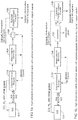
Figures 1a - 1d present block diagrams of the process of the invention, using high temperature chemical reactors. -
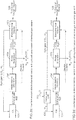
Figures 2a - 2d present block diagrams of the process of the invention using low temperature electrochemical reactors. -
Figure 3 shows generally how a solid oxide electrolysis cell ("SOEC"), functions to carry out steam electrolysis. - Referring now to
Figures 1a - 1d , an ICE "101" is shown, which is a source of exhaust gas, which is shown by 102. In the embodiments shown inFigures 1a and 1b , CO2 is not separated from the exhaust gas, all of which moves to anelectrochemical reactor 103. Electrochemical reactors are known which require either high or low temperatures to function. InFigures 1a and 1b , high temperature reactors are used, and hence, the hot exhaust gas moves directly to the reactor, to provide the required heat. "High temperature" as used herein refers to temperatures above 400°C and up to about 900°C. A source of electrical current (not shown) provides current to both theelectrochemical rector 103 and, in the case ofFigure 1a , to acompressor 105, discussed briefly infra. - At 103, water can be added but, in the case of most exhaust gases, is already present. At the electrochemical generator, the majority of the reaction products are CO and H2, in the mixture known as "syngas." As is shown in
Figures 1a and 1b , these, and other gases, are channeled back to the ICE to serve as fuel. If operation of the system disclosed herein does not yield enough syngas, one may channel additional electricity from, e.g., the battery or alternator. - Both of
Figures 1a and 1b show that the waste heat, i.e., the heat energy from the exhaust gas, can be used to generate electricity at athermoelectric generator 104. To elaborate, a heat transfer surface is integrated into thermo electric materials, to reduce resistance to heat transfer and to increase conversion efficiency. The electricity produced here can be used to power theelectrochemical reactor 103, or in other optional embodiments discussed herein. - As noted, supra,
Figure 1a includes a compressor, which can be used when further reactions are desired. If, e.g., a Fischer Tropschreactor 106 is used and H2 and CO are channeled thereto, the compressor is used because pressure conditions for the Fischer Tropsch reactions to take place may vary. The temperature necessary for the reaction is well known to range from 150 - 300°C. This requires removal of heat from the exhaust gas, as is discussed herein, and at the heat transfer surface, referred to supra. - The compressor is an optional apparatus, to be used when one wishes to operate the Fischer Tropsch reactor at pressures above atmospheric pressure. While increased pressures increase the conversion rate, i.e., the production of hydrocarbons, long chain alkanes result, and these solids are undesirable. Gas moves to the compressor from 104 via transport means 110. it should be noted that this gas has lost heat which has been converted to electricity. As noted, supra, a compressor is needed at higher pressures. Thus, the system of
Figure 1a can be so used, while that ofFigure 1b requires the use of a compressor inserted between Fischer Tropschreactor 106 andseparation unit 107. As this is optional, it is not shown. - As is shown in
Figure 1a and 1b , following reaction, the hydrocarbon products can be directed back to the ICE, or stored on board. - It is to be noted that the Fischer Tropsch reaction discussed herein is optional, and neither
compressor 105 norreactor 106 are required by the invention. -
Figure 1b differs fromFigure 1a in showing a further, optional separation step, by which gases other than CO and H2 (e.g., N2, H2O, and CO2) are removed, using known processes, leaving only CO and H2 to move to the Fischer Tropsch reactor. Such separation facilitates the reactions at the Fischer Tropsch reactor. -
Figure 1c and 1d depict additional embodiments of the invention embodied inFigures 1a and 1b . As withFigures 1a and 1b , these figures show the use of high temperature chemical reactions, where heat energy from exhaust gas passes through aheat exchange 108, and is used to heat the electrochemical reactor. Additional heat is converted to electricity, as inFigures 1a and 1b , and the resulting electricity is used to power the reactor. -
Figures 1c and 1d both differ fromFigures 1a and 1b in effecting partial separation of the components of the exhaust gas at 109 and transporting some of CO2 and H2O to the electrochemical reactor, transporting some of these components to the Fischer Tropsch reactor if it is used, and removing the N2. Via selection of, e.g., particular separation membranes, the degree of separation of CO2 and H2O from other materials can be controlled by the skilled artisan. -
Figure 1d shows an additional optional embodiment, a means for awater gas shift 110, where H2O is added to the CO and H2, resulting in production of more H2, and conversion of toxic CO to less noxious CO2. Adding more H2 increases the octane number of the resulting product. -
Figures 2a - 2d parallelFigures 1a - 1d , except that they employ a low temperature electrochemical reactor. "Low temperature" as used herein refers to reactors which operate at temperatures from room temperature to 400°C. While heat, as from, e.g., the exhaust gas is not essential to the operation of the electrochemical reactor, high temperatures are not so the order of items "104" and "103" is reversed in the process. - The reactions which take place in the reactor, discussed infra, lead to the production of one or more of liquid hydrocarbon fuel, syngas, hydrocarbon gas, or a liquid oxygenate, which is stored on board the vehicle, and which may then be offloaded at, e.g., a gas station or other appropriate depot. As noted supra, these products may also be used on the moving vehicles.
-
Figure 3 depicts, generally, what occurs in the electro-chemical reactor. A solid oxide electrolysis cell ("SOEC") 20 1 is depicted, showing a mixture of CO2 and H2O. - The SOEC displays a
cathode 202 and ananode 203, where a series of "preliminary" reactions occur, followed by reactions which yield hydrocarbon fuels. - Within the electrode, water reacts with the anode, such that H+ and O2- species are formed. At the anode, the reaction:
2 O2- → O2 + 4e-
takes place. Meanwhile, at the cathode the H+ species becomes H2, while CO2 is reduced to CO, permitting the reaction:
(2n+1)H2 + nCO → CnH(2n+2) + nH2O
to take place. Most of the product will be the mix of H2 and CO referred to as syngas, and this can be stored on board the moving vehicle until such time as it is combined with primary fuel, or off loaded. CnH(2n+2) is the formula for various hydrocarbon fuels. Further reactions can also take place, resulting in, e.g., methanol, dimethylether, both of which have roles as synthetic fuels. Other, larger molecules can result if, e.g., a Fischer Tropsch or other suitable reactor is employed. - Exemplary reactions which take place within the reactor are:
CO2 + 2H+ + 2e- → CO + H2O
CO2 + 8H+ + 8e- → CH4 + 2H2O
2CO2 + 12H+ + 12e- → C2H4 + 4H2O
2CO2 + 6H+ + 6e- → CH3OH + H2O
CO2 + 2H+ + 2e- → HCOOH
see, e.g., Beck et al., Electrochemical Conversion of Carbon Dioxide to Hydrocarbon Fuels, EME580 (Spring, 2010), - In general, the following reaction is a "guide":
CO2 + 2H2O → Fuel + 2O2
- Specific features of the invention, which are relevant, include the use of energy recovered from the exhaust gases, and the absence of any source for an external air stream.
- Referring back to
Figures 1 and2 , it will be seen that the electrochemical reactor is supplied with electrical energy from, e.g., a thermoelectric generator. - Hydrocarbon fuels produced in the reactor are immiscible with water, and are separated therefrom easily, as liquid fuel. This liquid fuel is moved to a storage container means, until such point as the moving vehicle reaches a site, such as a gas station, where it can be off loaded.
- Specific features of the invention which are relevant include the use of energy recovered from the exhaust gases, and the absence of any source for an external air stream.
Claims (7)
- A method for converting CO2 produced by an internal combustion engine (ICE) on a moving vehicle into hydrocarbon fuel, comprising:(i) transporting exhaust gas containing CO2 and produced by said ICE to a heat exchanger to remove excess heat from said gas to form a heat exchanged exhaust gas and moving said heat exchanged exhaust gas to a CO2 separator to remove CO2 therefrom, by contacting said heat exchanged exhaust gas with a CO2 separator which is a membrane permeable to CO2 and gaseous H2O but not other gases present in said exhaust gas produced by said ICE; and(iii) combining said CO2 with water in an electrochemical reactor to form hydrocarbon fuel.
- The method of claim 1, further comprising transporting said hydrocarbon fuel to a storage means.
- The method of claim 1, wherein said heat exchanger is a thermometric cell, a Rankin cycler or a sterling engine.
- The method of claim 1, further comprising supplying electrical energy from an electrical generator to said electrochemical reactor.
- The method of claim 4, further comprising supplying heat energy from said heat exchanger to said electrochemical reactor.
- The method of claim 1, further comprising producing H2 at said electrochemical reactor.
- The method of claim 1, further comprising mixing said hydrocarbon fuel produced at said electrochemical generator with a primary fuel for said ICE.
Applications Claiming Priority (2)
| Application Number | Priority Date | Filing Date | Title |
|---|---|---|---|
| US201562180257P | 2015-06-16 | 2015-06-16 | |
| PCT/US2016/031473 WO2016204881A1 (en) | 2015-06-16 | 2016-05-09 | Method for on board conversion of co2 to fuel and apparatus therefor |
Publications (2)
| Publication Number | Publication Date |
|---|---|
| EP3310880A1 EP3310880A1 (en) | 2018-04-25 |
| EP3310880B1 true EP3310880B1 (en) | 2019-12-11 |
Family
ID=56119743
Family Applications (1)
| Application Number | Title | Priority Date | Filing Date |
|---|---|---|---|
| EP16728763.0A Active EP3310880B1 (en) | 2015-06-16 | 2016-05-09 | Method for on board conversion of co2 to fuel |
Country Status (6)
| Country | Link |
|---|---|
| US (1) | US20160369688A1 (en) |
| EP (1) | EP3310880B1 (en) |
| JP (1) | JP6867310B2 (en) |
| KR (1) | KR102508501B1 (en) |
| CN (1) | CN107771162A (en) |
| WO (1) | WO2016204881A1 (en) |
Families Citing this family (15)
| Publication number | Priority date | Publication date | Assignee | Title |
|---|---|---|---|---|
| US10082059B2 (en) * | 2015-09-17 | 2018-09-25 | Borla Performance Industries, Inc. | Recovery of electrical energy and water from exhaust gas |
| US10400687B2 (en) | 2016-10-20 | 2019-09-03 | Dynacert Inc. | Management system and method for regulating the on-demand electrolytic production of hydrogen and oxygen gas for injection into a combustion engine |
| US20190170046A1 (en) * | 2017-12-01 | 2019-06-06 | Saudi Arabian Oil Company | Conversion of carbon dioxide from vehicle exhaust to liquid fuels and fuel additives |
| US12320022B2 (en) | 2018-01-22 | 2025-06-03 | Twelve Benefit Corporation | System and method for carbon dioxide reactor control |
| JP6823000B2 (en) * | 2018-03-20 | 2021-01-27 | 株式会社東芝 | Carbon dioxide electrolyzer |
| WO2019204901A1 (en) | 2018-04-27 | 2019-10-31 | Dynacert Inc. | Systems and methods for improving fuel economy of internal combustion engines |
| DE102019216764A1 (en) | 2019-10-30 | 2021-05-06 | Fraunhofer-Gesellschaft zur Förderung der angewandten Forschung e.V. | Device comprising two subsystems, a method for operating this device and means of transport comprising at least one of the subsystems |
| JP7253670B2 (en) * | 2020-03-26 | 2023-04-06 | 株式会社日立製作所 | fuel production equipment |
| US11767777B1 (en) * | 2021-01-11 | 2023-09-26 | Nataqua, Inc. | Techniques to synthesize greenhouse gases |
| JP6999213B1 (en) * | 2021-09-09 | 2022-01-18 | 株式会社 ユーリカ エンジニアリング | Carbon neutral liquid fuel manufacturing system |
| EP4444939A2 (en) | 2021-12-08 | 2024-10-16 | Twelve Benefit Corporation | Systems and methods for ethylene production |
| US12503777B2 (en) | 2022-01-31 | 2025-12-23 | Honda Motor Co., Ltd. | Electrolysis system |
| JP7555382B2 (en) * | 2022-01-31 | 2024-09-24 | 本田技研工業株式会社 | Electrolysis System |
| US12460310B2 (en) | 2023-04-04 | 2025-11-04 | Twelve Benefit Corporation | Integrated systems employing carbon oxide electrolysis in aluminum production |
| WO2024262554A1 (en) * | 2023-06-19 | 2024-12-26 | 義郎 中松 | Device and method for zero carbon emissions and for saving fuel |
Family Cites Families (16)
| Publication number | Priority date | Publication date | Assignee | Title |
|---|---|---|---|---|
| US5004850A (en) * | 1989-12-08 | 1991-04-02 | Interstate Chemical, Inc. | Blended gasolines |
| US5281254A (en) * | 1992-05-22 | 1994-01-25 | United Technologies Corporation | Continuous carbon dioxide and water removal system |
| JPH0985044A (en) * | 1995-09-25 | 1997-03-31 | Kaken:Kk | Oxide gas treatment method and apparatus |
| JP2002173301A (en) * | 2000-12-04 | 2002-06-21 | Sumitomo Precision Prod Co Ltd | Hydrogen energy generation system |
| US7482078B2 (en) | 2003-04-09 | 2009-01-27 | Bloom Energy Corporation | Co-production of hydrogen and electricity in a high temperature electrochemical system |
| US8198338B2 (en) * | 2006-03-20 | 2012-06-12 | Cri Ehf | Process for producing liquid fuel from carbon dioxide and water |
| US7795175B2 (en) * | 2006-08-10 | 2010-09-14 | University Of Southern California | Nano-structure supported solid regenerative polyamine and polyamine polyol absorbents for the separation of carbon dioxide from gas mixtures including the air |
| AU2011274797B2 (en) | 2010-07-09 | 2015-05-21 | Arnold Keller | Carbon dioxide capture and liquefaction |
| US9249690B2 (en) * | 2010-09-07 | 2016-02-02 | Yeda Research And Development Co. Ltd. | Energy generation system and method thereof |
| US8696804B2 (en) * | 2010-12-29 | 2014-04-15 | Delphi Technologies, Inc. | Carbon dioxide absorbent fluid for a carbon dioxide sequestering system on a vehicle |
| JP5534099B2 (en) * | 2011-03-08 | 2014-06-25 | トヨタ自動車株式会社 | Vehicle with mixed gas generation system and vehicle with fuel production system |
| JP5743639B2 (en) * | 2011-03-29 | 2015-07-01 | 新日鉄住金エンジニアリング株式会社 | Carbon dioxide gas separation system |
| WO2013063052A1 (en) | 2011-10-24 | 2013-05-02 | Saudi Arabian Oil Company | Emission reduction from mobile sources by on-board carbon dioxide conversion to fuel |
| KR101717866B1 (en) * | 2013-01-04 | 2017-03-17 | 사우디 아라비안 오일 컴퍼니 | Carbon Dioxide Conversion to Hydrocarbon Fuel via Syngas Production Cell Harnessed from Solar Radiation |
| US20150292380A1 (en) * | 2014-04-14 | 2015-10-15 | Evident Technologies | Efficiency and Reduced Emission for Internal Combustion Engines Using Thermoelectric-driven Electrolysis |
| JP6261759B2 (en) * | 2014-11-13 | 2018-01-17 | 株式会社日立製作所 | CO2 recovery device for internal combustion engine |
-
2016
- 2016-05-09 EP EP16728763.0A patent/EP3310880B1/en active Active
- 2016-05-09 WO PCT/US2016/031473 patent/WO2016204881A1/en not_active Ceased
- 2016-05-09 KR KR1020187001356A patent/KR102508501B1/en active Active
- 2016-05-09 CN CN201680035431.9A patent/CN107771162A/en active Pending
- 2016-05-09 JP JP2017565953A patent/JP6867310B2/en not_active Expired - Fee Related
- 2016-05-10 US US15/150,742 patent/US20160369688A1/en not_active Abandoned
Non-Patent Citations (1)
| Title |
|---|
| None * |
Also Published As
| Publication number | Publication date |
|---|---|
| JP2018523046A (en) | 2018-08-16 |
| US20160369688A1 (en) | 2016-12-22 |
| JP6867310B2 (en) | 2021-04-28 |
| WO2016204881A1 (en) | 2016-12-22 |
| KR102508501B1 (en) | 2023-03-09 |
| KR20180020220A (en) | 2018-02-27 |
| CN107771162A (en) | 2018-03-06 |
| EP3310880A1 (en) | 2018-04-25 |
Similar Documents
| Publication | Publication Date | Title |
|---|---|---|
| US20160369688A1 (en) | Method for on board conversion of co2 to fuel and apparatus therefor | |
| US9631285B2 (en) | Electrochemical process for the production of synthesis gas using atmospheric air and water | |
| US20240072286A1 (en) | Carbon-neutral process for generating electricity | |
| US11817610B2 (en) | Carbon-neutral process for generating electricity | |
| US20030008183A1 (en) | Zero/low emission and co-production energy supply station | |
| Schiebahn et al. | Power to gas | |
| Damm et al. | Conceptual study of distributed CO2 capture and the sustainable carbon economy | |
| CN102844413B (en) | Carbon recycling and reinvestment using thermalchemical regeneration | |
| US20060127718A1 (en) | Fuel cell, operating method thereof, sintering furnace, and power generator | |
| CN111344384A (en) | Converting carbon dioxide from vehicle exhaust to liquid fuels and fuel additives | |
| US20250132364A1 (en) | Carbon capture system onboard a vessel | |
| CA2528691C (en) | Fuel cell, operating method thereof, sintering furnace, and power generator | |
| CN103058137B (en) | Movable type methanol water hydrogen manufacturing system and method | |
| JPWO2019130619A1 (en) | Vehicle coasting control system. | |
| Müller | Technologies for the storage of hydrogen. Part 2: irreversible conversion and comparison | |
| US10890120B2 (en) | Method for producing a fuel composition and for operating an internal combustion engine | |
| KR101254669B1 (en) | Fuel cell system for ship | |
| RU2388118C1 (en) | Installation for electric energy generation from raw hydrocarbons | |
| Rahman et al. | Role of hydrogen in polymer electrolyte membrane fuel cells | |
| US20170074457A1 (en) | Hydrogen Produced On Site | |
| EP4729472A1 (en) | Method of converting methane from natural gas with simultaneous production of hydrogen and recovery of carbon dioxide and its use as a storage of surplus energy from renewable energy sources | |
| CN102897713A (en) | Apparatus and method for hydrogen production through methanol steam reforming | |
| JP2019196028A (en) | Engine combusting hydrogen and oxygen | |
| KR20250075647A (en) | On-site power generation from methane or methanol with carbon dioxide cycle and not connected to the power grid | |
| de Groot | Methane and hydrogen: on the role of end-use technologies in shaping the infrastructure |
Legal Events
| Date | Code | Title | Description |
|---|---|---|---|
| STAA | Information on the status of an ep patent application or granted ep patent |
Free format text: STATUS: THE INTERNATIONAL PUBLICATION HAS BEEN MADE |
|
| PUAI | Public reference made under article 153(3) epc to a published international application that has entered the european phase |
Free format text: ORIGINAL CODE: 0009012 |
|
| STAA | Information on the status of an ep patent application or granted ep patent |
Free format text: STATUS: REQUEST FOR EXAMINATION WAS MADE |
|
| 17P | Request for examination filed |
Effective date: 20180112 |
|
| AK | Designated contracting states |
Kind code of ref document: A1 Designated state(s): AL AT BE BG CH CY CZ DE DK EE ES FI FR GB GR HR HU IE IS IT LI LT LU LV MC MK MT NL NO PL PT RO RS SE SI SK SM TR |
|
| AX | Request for extension of the european patent |
Extension state: BA ME |
|
| DAV | Request for validation of the european patent (deleted) | ||
| DAX | Request for extension of the european patent (deleted) | ||
| STAA | Information on the status of an ep patent application or granted ep patent |
Free format text: STATUS: EXAMINATION IS IN PROGRESS |
|
| 17Q | First examination report despatched |
Effective date: 20180920 |
|
| REG | Reference to a national code |
Ref country code: DE Ref legal event code: R079 Ref document number: 602016025992 Country of ref document: DE Free format text: PREVIOUS MAIN CLASS: C10G0002000000 Ipc: C01B0003120000 |
|
| RIC1 | Information provided on ipc code assigned before grant |
Ipc: C25B 1/04 20060101ALI20190517BHEP Ipc: F02B 65/00 20060101ALI20190517BHEP Ipc: C01B 3/12 20060101AFI20190517BHEP Ipc: C25B 1/00 20060101ALI20190517BHEP Ipc: C10G 2/00 20060101ALI20190517BHEP Ipc: C25B 3/04 20060101ALI20190517BHEP Ipc: F02M 25/00 20060101ALI20190517BHEP Ipc: C10K 3/04 20060101ALI20190517BHEP Ipc: C10L 1/04 20060101ALI20190517BHEP Ipc: F02B 51/04 20060101ALI20190517BHEP Ipc: F02M 25/12 20060101ALI20190517BHEP |
|
| GRAP | Despatch of communication of intention to grant a patent |
Free format text: ORIGINAL CODE: EPIDOSNIGR1 |
|
| STAA | Information on the status of an ep patent application or granted ep patent |
Free format text: STATUS: GRANT OF PATENT IS INTENDED |
|
| INTG | Intention to grant announced |
Effective date: 20190708 |
|
| GRAS | Grant fee paid |
Free format text: ORIGINAL CODE: EPIDOSNIGR3 |
|
| GRAA | (expected) grant |
Free format text: ORIGINAL CODE: 0009210 |
|
| STAA | Information on the status of an ep patent application or granted ep patent |
Free format text: STATUS: THE PATENT HAS BEEN GRANTED |
|
| AK | Designated contracting states |
Kind code of ref document: B1 Designated state(s): AL AT BE BG CH CY CZ DE DK EE ES FI FR GB GR HR HU IE IS IT LI LT LU LV MC MK MT NL NO PL PT RO RS SE SI SK SM TR |
|
| REG | Reference to a national code |
Ref country code: GB Ref legal event code: FG4D |
|
| REG | Reference to a national code |
Ref country code: CH Ref legal event code: EP |
|
| REG | Reference to a national code |
Ref country code: AT Ref legal event code: REF Ref document number: 1212004 Country of ref document: AT Kind code of ref document: T Effective date: 20191215 |
|
| REG | Reference to a national code |
Ref country code: DE Ref legal event code: R096 Ref document number: 602016025992 Country of ref document: DE |
|
| REG | Reference to a national code |
Ref country code: IE Ref legal event code: FG4D |
|
| REG | Reference to a national code |
Ref country code: NO Ref legal event code: T2 Effective date: 20191211 |
|
| REG | Reference to a national code |
Ref country code: NL Ref legal event code: FP |
|
| REG | Reference to a national code |
Ref country code: LT Ref legal event code: MG4D |
|
| PG25 | Lapsed in a contracting state [announced via postgrant information from national office to epo] |
Ref country code: LV Free format text: LAPSE BECAUSE OF FAILURE TO SUBMIT A TRANSLATION OF THE DESCRIPTION OR TO PAY THE FEE WITHIN THE PRESCRIBED TIME-LIMIT Effective date: 20191211 Ref country code: SE Free format text: LAPSE BECAUSE OF FAILURE TO SUBMIT A TRANSLATION OF THE DESCRIPTION OR TO PAY THE FEE WITHIN THE PRESCRIBED TIME-LIMIT Effective date: 20191211 Ref country code: BG Free format text: LAPSE BECAUSE OF FAILURE TO SUBMIT A TRANSLATION OF THE DESCRIPTION OR TO PAY THE FEE WITHIN THE PRESCRIBED TIME-LIMIT Effective date: 20200311 Ref country code: FI Free format text: LAPSE BECAUSE OF FAILURE TO SUBMIT A TRANSLATION OF THE DESCRIPTION OR TO PAY THE FEE WITHIN THE PRESCRIBED TIME-LIMIT Effective date: 20191211 Ref country code: GR Free format text: LAPSE BECAUSE OF FAILURE TO SUBMIT A TRANSLATION OF THE DESCRIPTION OR TO PAY THE FEE WITHIN THE PRESCRIBED TIME-LIMIT Effective date: 20200312 Ref country code: LT Free format text: LAPSE BECAUSE OF FAILURE TO SUBMIT A TRANSLATION OF THE DESCRIPTION OR TO PAY THE FEE WITHIN THE PRESCRIBED TIME-LIMIT Effective date: 20191211 |
|
| PG25 | Lapsed in a contracting state [announced via postgrant information from national office to epo] |
Ref country code: RS Free format text: LAPSE BECAUSE OF FAILURE TO SUBMIT A TRANSLATION OF THE DESCRIPTION OR TO PAY THE FEE WITHIN THE PRESCRIBED TIME-LIMIT Effective date: 20191211 Ref country code: HR Free format text: LAPSE BECAUSE OF FAILURE TO SUBMIT A TRANSLATION OF THE DESCRIPTION OR TO PAY THE FEE WITHIN THE PRESCRIBED TIME-LIMIT Effective date: 20191211 |
|
| PG25 | Lapsed in a contracting state [announced via postgrant information from national office to epo] |
Ref country code: AL Free format text: LAPSE BECAUSE OF FAILURE TO SUBMIT A TRANSLATION OF THE DESCRIPTION OR TO PAY THE FEE WITHIN THE PRESCRIBED TIME-LIMIT Effective date: 20191211 |
|
| PG25 | Lapsed in a contracting state [announced via postgrant information from national office to epo] |
Ref country code: CZ Free format text: LAPSE BECAUSE OF FAILURE TO SUBMIT A TRANSLATION OF THE DESCRIPTION OR TO PAY THE FEE WITHIN THE PRESCRIBED TIME-LIMIT Effective date: 20191211 Ref country code: ES Free format text: LAPSE BECAUSE OF FAILURE TO SUBMIT A TRANSLATION OF THE DESCRIPTION OR TO PAY THE FEE WITHIN THE PRESCRIBED TIME-LIMIT Effective date: 20191211 Ref country code: RO Free format text: LAPSE BECAUSE OF FAILURE TO SUBMIT A TRANSLATION OF THE DESCRIPTION OR TO PAY THE FEE WITHIN THE PRESCRIBED TIME-LIMIT Effective date: 20191211 Ref country code: EE Free format text: LAPSE BECAUSE OF FAILURE TO SUBMIT A TRANSLATION OF THE DESCRIPTION OR TO PAY THE FEE WITHIN THE PRESCRIBED TIME-LIMIT Effective date: 20191211 Ref country code: PT Free format text: LAPSE BECAUSE OF FAILURE TO SUBMIT A TRANSLATION OF THE DESCRIPTION OR TO PAY THE FEE WITHIN THE PRESCRIBED TIME-LIMIT Effective date: 20200506 |
|
| PG25 | Lapsed in a contracting state [announced via postgrant information from national office to epo] |
Ref country code: SK Free format text: LAPSE BECAUSE OF FAILURE TO SUBMIT A TRANSLATION OF THE DESCRIPTION OR TO PAY THE FEE WITHIN THE PRESCRIBED TIME-LIMIT Effective date: 20191211 Ref country code: IS Free format text: LAPSE BECAUSE OF FAILURE TO SUBMIT A TRANSLATION OF THE DESCRIPTION OR TO PAY THE FEE WITHIN THE PRESCRIBED TIME-LIMIT Effective date: 20200411 Ref country code: SM Free format text: LAPSE BECAUSE OF FAILURE TO SUBMIT A TRANSLATION OF THE DESCRIPTION OR TO PAY THE FEE WITHIN THE PRESCRIBED TIME-LIMIT Effective date: 20191211 |
|
| REG | Reference to a national code |
Ref country code: DE Ref legal event code: R097 Ref document number: 602016025992 Country of ref document: DE |
|
| REG | Reference to a national code |
Ref country code: AT Ref legal event code: MK05 Ref document number: 1212004 Country of ref document: AT Kind code of ref document: T Effective date: 20191211 |
|
| PLBE | No opposition filed within time limit |
Free format text: ORIGINAL CODE: 0009261 |
|
| STAA | Information on the status of an ep patent application or granted ep patent |
Free format text: STATUS: NO OPPOSITION FILED WITHIN TIME LIMIT |
|
| PG25 | Lapsed in a contracting state [announced via postgrant information from national office to epo] |
Ref country code: DK Free format text: LAPSE BECAUSE OF FAILURE TO SUBMIT A TRANSLATION OF THE DESCRIPTION OR TO PAY THE FEE WITHIN THE PRESCRIBED TIME-LIMIT Effective date: 20191211 |
|
| 26N | No opposition filed |
Effective date: 20200914 |
|
| PG25 | Lapsed in a contracting state [announced via postgrant information from national office to epo] |
Ref country code: SI Free format text: LAPSE BECAUSE OF FAILURE TO SUBMIT A TRANSLATION OF THE DESCRIPTION OR TO PAY THE FEE WITHIN THE PRESCRIBED TIME-LIMIT Effective date: 20191211 Ref country code: AT Free format text: LAPSE BECAUSE OF FAILURE TO SUBMIT A TRANSLATION OF THE DESCRIPTION OR TO PAY THE FEE WITHIN THE PRESCRIBED TIME-LIMIT Effective date: 20191211 |
|
| PGFP | Annual fee paid to national office [announced via postgrant information from national office to epo] |
Ref country code: NL Payment date: 20201026 Year of fee payment: 5 |
|
| PG25 | Lapsed in a contracting state [announced via postgrant information from national office to epo] |
Ref country code: LI Free format text: LAPSE BECAUSE OF NON-PAYMENT OF DUE FEES Effective date: 20200531 Ref country code: CH Free format text: LAPSE BECAUSE OF NON-PAYMENT OF DUE FEES Effective date: 20200531 Ref country code: MC Free format text: LAPSE BECAUSE OF FAILURE TO SUBMIT A TRANSLATION OF THE DESCRIPTION OR TO PAY THE FEE WITHIN THE PRESCRIBED TIME-LIMIT Effective date: 20191211 |
|
| PGFP | Annual fee paid to national office [announced via postgrant information from national office to epo] |
Ref country code: NO Payment date: 20201028 Year of fee payment: 5 Ref country code: IT Payment date: 20201023 Year of fee payment: 5 |
|
| PG25 | Lapsed in a contracting state [announced via postgrant information from national office to epo] |
Ref country code: PL Free format text: LAPSE BECAUSE OF FAILURE TO SUBMIT A TRANSLATION OF THE DESCRIPTION OR TO PAY THE FEE WITHIN THE PRESCRIBED TIME-LIMIT Effective date: 20191211 |
|
| REG | Reference to a national code |
Ref country code: BE Ref legal event code: MM Effective date: 20200531 |
|
| PG25 | Lapsed in a contracting state [announced via postgrant information from national office to epo] |
Ref country code: LU Free format text: LAPSE BECAUSE OF NON-PAYMENT OF DUE FEES Effective date: 20200509 |
|
| PG25 | Lapsed in a contracting state [announced via postgrant information from national office to epo] |
Ref country code: IE Free format text: LAPSE BECAUSE OF NON-PAYMENT OF DUE FEES Effective date: 20200509 |
|
| PG25 | Lapsed in a contracting state [announced via postgrant information from national office to epo] |
Ref country code: BE Free format text: LAPSE BECAUSE OF NON-PAYMENT OF DUE FEES Effective date: 20200531 |
|
| PGFP | Annual fee paid to national office [announced via postgrant information from national office to epo] |
Ref country code: FR Payment date: 20210825 Year of fee payment: 6 |
|
| PGFP | Annual fee paid to national office [announced via postgrant information from national office to epo] |
Ref country code: DE Payment date: 20210827 Year of fee payment: 6 Ref country code: GB Payment date: 20210827 Year of fee payment: 6 |
|
| REG | Reference to a national code |
Ref country code: NO Ref legal event code: MMEP |
|
| REG | Reference to a national code |
Ref country code: NL Ref legal event code: MM Effective date: 20210601 |
|
| PG25 | Lapsed in a contracting state [announced via postgrant information from national office to epo] |
Ref country code: NO Free format text: LAPSE BECAUSE OF NON-PAYMENT OF DUE FEES Effective date: 20210531 |
|
| PG25 | Lapsed in a contracting state [announced via postgrant information from national office to epo] |
Ref country code: TR Free format text: LAPSE BECAUSE OF FAILURE TO SUBMIT A TRANSLATION OF THE DESCRIPTION OR TO PAY THE FEE WITHIN THE PRESCRIBED TIME-LIMIT Effective date: 20191211 Ref country code: NL Free format text: LAPSE BECAUSE OF NON-PAYMENT OF DUE FEES Effective date: 20210601 Ref country code: MT Free format text: LAPSE BECAUSE OF FAILURE TO SUBMIT A TRANSLATION OF THE DESCRIPTION OR TO PAY THE FEE WITHIN THE PRESCRIBED TIME-LIMIT Effective date: 20191211 Ref country code: CY Free format text: LAPSE BECAUSE OF FAILURE TO SUBMIT A TRANSLATION OF THE DESCRIPTION OR TO PAY THE FEE WITHIN THE PRESCRIBED TIME-LIMIT Effective date: 20191211 |
|
| PG25 | Lapsed in a contracting state [announced via postgrant information from national office to epo] |
Ref country code: MK Free format text: LAPSE BECAUSE OF FAILURE TO SUBMIT A TRANSLATION OF THE DESCRIPTION OR TO PAY THE FEE WITHIN THE PRESCRIBED TIME-LIMIT Effective date: 20191211 |
|
| REG | Reference to a national code |
Ref country code: DE Ref legal event code: R119 Ref document number: 602016025992 Country of ref document: DE |
|
| GBPC | Gb: european patent ceased through non-payment of renewal fee |
Effective date: 20220509 |
|
| PG25 | Lapsed in a contracting state [announced via postgrant information from national office to epo] |
Ref country code: FR Free format text: LAPSE BECAUSE OF NON-PAYMENT OF DUE FEES Effective date: 20220531 |
|
| PG25 | Lapsed in a contracting state [announced via postgrant information from national office to epo] |
Ref country code: IT Free format text: LAPSE BECAUSE OF NON-PAYMENT OF DUE FEES Effective date: 20200509 Ref country code: GB Free format text: LAPSE BECAUSE OF NON-PAYMENT OF DUE FEES Effective date: 20220509 Ref country code: DE Free format text: LAPSE BECAUSE OF NON-PAYMENT OF DUE FEES Effective date: 20221201 |
|
| PG25 | Lapsed in a contracting state [announced via postgrant information from national office to epo] |
Ref country code: IT Free format text: LAPSE BECAUSE OF NON-PAYMENT OF DUE FEES Effective date: 20210509 |