EP3309804A1 - Photoelectric conversion element, dye-sensitized solar cell, metal complex dye, dye solution and oxide semiconductor electrode - Google Patents
Photoelectric conversion element, dye-sensitized solar cell, metal complex dye, dye solution and oxide semiconductor electrode Download PDFInfo
- Publication number
- EP3309804A1 EP3309804A1 EP16807292.4A EP16807292A EP3309804A1 EP 3309804 A1 EP3309804 A1 EP 3309804A1 EP 16807292 A EP16807292 A EP 16807292A EP 3309804 A1 EP3309804 A1 EP 3309804A1
- Authority
- EP
- European Patent Office
- Prior art keywords
- group
- dye
- photoelectric conversion
- metal complex
- ncs
- Prior art date
- Legal status (The legal status is an assumption and is not a legal conclusion. Google has not performed a legal analysis and makes no representation as to the accuracy of the status listed.)
- Withdrawn
Links
- 238000006243 chemical reaction Methods 0.000 title claims abstract description 148
- 239000000434 metal complex dye Substances 0.000 title claims abstract description 111
- 239000004065 semiconductor Substances 0.000 title claims abstract description 76
- 239000000975 dye Substances 0.000 title claims abstract description 67
- 125000000217 alkyl group Chemical group 0.000 claims abstract description 73
- 239000010419 fine particle Substances 0.000 claims abstract description 56
- 125000001997 phenyl group Chemical group [H]C1=C([H])C([H])=C(*)C([H])=C1[H] 0.000 claims abstract description 56
- 150000001768 cations Chemical class 0.000 claims abstract description 27
- 239000003446 ligand Substances 0.000 claims abstract description 27
- 229910021645 metal ion Inorganic materials 0.000 claims abstract description 9
- 125000003118 aryl group Chemical group 0.000 claims description 53
- 125000003545 alkoxy group Chemical group 0.000 claims description 48
- 125000005843 halogen group Chemical group 0.000 claims description 34
- 125000004414 alkyl thio group Chemical group 0.000 claims description 30
- 239000002904 solvent Substances 0.000 claims description 29
- 239000003792 electrolyte Substances 0.000 claims description 24
- 125000004430 oxygen atom Chemical group O* 0.000 claims description 19
- 229910052751 metal Inorganic materials 0.000 claims description 18
- 239000002184 metal Substances 0.000 claims description 18
- 238000012546 transfer Methods 0.000 claims description 18
- 125000003277 amino group Chemical group 0.000 claims description 17
- 125000004104 aryloxy group Chemical group 0.000 claims description 16
- 125000005110 aryl thio group Chemical group 0.000 claims description 14
- 229910052755 nonmetal Inorganic materials 0.000 claims description 12
- 125000001072 heteroaryl group Chemical group 0.000 claims description 11
- 229910052757 nitrogen Inorganic materials 0.000 claims description 8
- 125000004433 nitrogen atom Chemical group N* 0.000 claims description 8
- 125000004435 hydrogen atom Chemical group [H]* 0.000 claims description 5
- 239000010410 layer Substances 0.000 description 94
- -1 diphenylaminostyryl skeleton Chemical group 0.000 description 92
- 125000004432 carbon atom Chemical group C* 0.000 description 42
- 125000001424 substituent group Chemical group 0.000 description 42
- 150000001875 compounds Chemical class 0.000 description 40
- 239000010408 film Substances 0.000 description 36
- 229910044991 metal oxide Inorganic materials 0.000 description 34
- 150000004706 metal oxides Chemical class 0.000 description 33
- GWEVSGVZZGPLCZ-UHFFFAOYSA-N Titan oxide Chemical compound O=[Ti]=O GWEVSGVZZGPLCZ-UHFFFAOYSA-N 0.000 description 31
- 239000000243 solution Substances 0.000 description 27
- 238000005286 illumination Methods 0.000 description 26
- 238000001819 mass spectrum Methods 0.000 description 24
- 238000000034 method Methods 0.000 description 22
- 239000000203 mixture Substances 0.000 description 20
- LFQSCWFLJHTTHZ-UHFFFAOYSA-N Ethanol Chemical compound CCO LFQSCWFLJHTTHZ-UHFFFAOYSA-N 0.000 description 17
- 239000011248 coating agent Substances 0.000 description 17
- 238000000576 coating method Methods 0.000 description 17
- 239000000758 substrate Substances 0.000 description 17
- 238000011156 evaluation Methods 0.000 description 16
- WEVYAHXRMPXWCK-UHFFFAOYSA-N Acetonitrile Chemical compound CC#N WEVYAHXRMPXWCK-UHFFFAOYSA-N 0.000 description 15
- 239000003463 adsorbent Substances 0.000 description 15
- 125000000623 heterocyclic group Chemical group 0.000 description 15
- ZMXDDKWLCZADIW-UHFFFAOYSA-N N,N-Dimethylformamide Chemical compound CN(C)C=O ZMXDDKWLCZADIW-UHFFFAOYSA-N 0.000 description 13
- 238000000149 argon plasma sintering Methods 0.000 description 13
- XOLBLPGZBRYERU-UHFFFAOYSA-N tin dioxide Chemical compound O=[Sn]=O XOLBLPGZBRYERU-UHFFFAOYSA-N 0.000 description 13
- OKKJLVBELUTLKV-UHFFFAOYSA-N Methanol Chemical compound OC OKKJLVBELUTLKV-UHFFFAOYSA-N 0.000 description 12
- 239000007788 liquid Substances 0.000 description 12
- 230000000052 comparative effect Effects 0.000 description 11
- 239000012046 mixed solvent Substances 0.000 description 11
- 0 *C1=CCC(*=C)C=C1 Chemical compound *C1=CCC(*=C)C=C1 0.000 description 10
- 230000015572 biosynthetic process Effects 0.000 description 10
- 125000004122 cyclic group Chemical group 0.000 description 10
- 125000000753 cycloalkyl group Chemical group 0.000 description 10
- 230000006870 function Effects 0.000 description 10
- 238000004519 manufacturing process Methods 0.000 description 10
- 238000003786 synthesis reaction Methods 0.000 description 10
- 239000000463 material Substances 0.000 description 9
- 238000012360 testing method Methods 0.000 description 9
- ZCYVEMRRCGMTRW-UHFFFAOYSA-N 7553-56-2 Chemical group [I] ZCYVEMRRCGMTRW-UHFFFAOYSA-N 0.000 description 8
- DKGAVHZHDRPRBM-UHFFFAOYSA-N Tert-Butanol Chemical compound CC(C)(C)O DKGAVHZHDRPRBM-UHFFFAOYSA-N 0.000 description 8
- 125000003342 alkenyl group Chemical group 0.000 description 8
- 239000011521 glass Substances 0.000 description 8
- 229910052740 iodine Inorganic materials 0.000 description 8
- 230000000694 effects Effects 0.000 description 7
- 239000011244 liquid electrolyte Substances 0.000 description 7
- 239000002245 particle Substances 0.000 description 7
- DZLFLBLQUQXARW-UHFFFAOYSA-N tetrabutylammonium Chemical compound CCCC[N+](CCCC)(CCCC)CCCC DZLFLBLQUQXARW-UHFFFAOYSA-N 0.000 description 7
- WYURNTSHIVDZCO-UHFFFAOYSA-N Tetrahydrofuran Chemical compound C1CCOC1 WYURNTSHIVDZCO-UHFFFAOYSA-N 0.000 description 6
- YXFVVABEGXRONW-UHFFFAOYSA-N Toluene Chemical compound CC1=CC=CC=C1 YXFVVABEGXRONW-UHFFFAOYSA-N 0.000 description 6
- 125000004429 atom Chemical group 0.000 description 6
- 239000011630 iodine Substances 0.000 description 6
- 150000002500 ions Chemical class 0.000 description 6
- 239000003960 organic solvent Substances 0.000 description 6
- BASFCYQUMIYNBI-UHFFFAOYSA-N platinum Substances [Pt] BASFCYQUMIYNBI-UHFFFAOYSA-N 0.000 description 6
- 239000010409 thin film Substances 0.000 description 6
- OGIDPMRJRNCKJF-UHFFFAOYSA-N titanium oxide Inorganic materials [Ti]=O OGIDPMRJRNCKJF-UHFFFAOYSA-N 0.000 description 6
- RUDATBOHQWOJDD-UHFFFAOYSA-N (3beta,5beta,7alpha)-3,7-Dihydroxycholan-24-oic acid Natural products OC1CC2CC(O)CCC2(C)C2C1C1CCC(C(CCC(O)=O)C)C1(C)CC2 RUDATBOHQWOJDD-UHFFFAOYSA-N 0.000 description 5
- ROFVEXUMMXZLPA-UHFFFAOYSA-N Bipyridyl Chemical compound N1=CC=CC=C1C1=CC=CC=N1 ROFVEXUMMXZLPA-UHFFFAOYSA-N 0.000 description 5
- 125000000304 alkynyl group Chemical group 0.000 description 5
- 150000004700 cobalt complex Chemical class 0.000 description 5
- KXGVEGMKQFWNSR-UHFFFAOYSA-N deoxycholic acid Natural products C1CC2CC(O)CCC2(C)C2C1C1CCC(C(CCC(O)=O)C)C1(C)C(O)C2 KXGVEGMKQFWNSR-UHFFFAOYSA-N 0.000 description 5
- 239000008151 electrolyte solution Substances 0.000 description 5
- RTZKZFJDLAIYFH-UHFFFAOYSA-N ether Substances CCOCC RTZKZFJDLAIYFH-UHFFFAOYSA-N 0.000 description 5
- 229910052731 fluorine Inorganic materials 0.000 description 5
- 125000001153 fluoro group Chemical group F* 0.000 description 5
- 150000002430 hydrocarbons Chemical group 0.000 description 5
- XMBWDFGMSWQBCA-UHFFFAOYSA-N hydrogen iodide Chemical compound I XMBWDFGMSWQBCA-UHFFFAOYSA-N 0.000 description 5
- 230000006872 improvement Effects 0.000 description 5
- 239000002243 precursor Substances 0.000 description 5
- 230000009467 reduction Effects 0.000 description 5
- 125000006850 spacer group Chemical group 0.000 description 5
- 229910001887 tin oxide Inorganic materials 0.000 description 5
- IJGRMHOSHXDMSA-UHFFFAOYSA-N Atomic nitrogen Chemical compound N#N IJGRMHOSHXDMSA-UHFFFAOYSA-N 0.000 description 4
- 125000004442 acylamino group Chemical group 0.000 description 4
- 125000003302 alkenyloxy group Chemical group 0.000 description 4
- 125000004453 alkoxycarbonyl group Chemical group 0.000 description 4
- 150000001408 amides Chemical class 0.000 description 4
- RUDATBOHQWOJDD-BSWAIDMHSA-N chenodeoxycholic acid Chemical compound C([C@H]1C[C@H]2O)[C@H](O)CC[C@]1(C)[C@@H]1[C@@H]2[C@@H]2CC[C@H]([C@@H](CCC(O)=O)C)[C@@]2(C)CC1 RUDATBOHQWOJDD-BSWAIDMHSA-N 0.000 description 4
- 229960001091 chenodeoxycholic acid Drugs 0.000 description 4
- 125000004093 cyano group Chemical group *C#N 0.000 description 4
- 230000014509 gene expression Effects 0.000 description 4
- IPCSVZSSVZVIGE-UHFFFAOYSA-N hexadecanoic acid Chemical compound CCCCCCCCCCCCCCCC(O)=O IPCSVZSSVZVIGE-UHFFFAOYSA-N 0.000 description 4
- ZBKFYXZXZJPWNQ-UHFFFAOYSA-N isothiocyanate group Chemical group [N-]=C=S ZBKFYXZXZJPWNQ-UHFFFAOYSA-N 0.000 description 4
- 125000005647 linker group Chemical group 0.000 description 4
- ZCSHNCUQKCANBX-UHFFFAOYSA-N lithium diisopropylamide Chemical compound [Li+].CC(C)[N-]C(C)C ZCSHNCUQKCANBX-UHFFFAOYSA-N 0.000 description 4
- HSZCZNFXUDYRKD-UHFFFAOYSA-M lithium iodide Chemical compound [Li+].[I-] HSZCZNFXUDYRKD-UHFFFAOYSA-M 0.000 description 4
- 150000002739 metals Chemical class 0.000 description 4
- 150000002825 nitriles Chemical class 0.000 description 4
- 230000003287 optical effect Effects 0.000 description 4
- 239000012044 organic layer Substances 0.000 description 4
- 229920003023 plastic Polymers 0.000 description 4
- 239000004033 plastic Substances 0.000 description 4
- 239000012264 purified product Substances 0.000 description 4
- JUJWROOIHBZHMG-UHFFFAOYSA-O pyridinium Chemical compound C1=CC=[NH+]C=C1 JUJWROOIHBZHMG-UHFFFAOYSA-O 0.000 description 4
- 150000003839 salts Chemical class 0.000 description 4
- 230000001235 sensitizing effect Effects 0.000 description 4
- 238000000926 separation method Methods 0.000 description 4
- 238000010898 silica gel chromatography Methods 0.000 description 4
- 238000001179 sorption measurement Methods 0.000 description 4
- 238000006467 substitution reaction Methods 0.000 description 4
- YSHMQTRICHYLGF-UHFFFAOYSA-N 4-tert-butylpyridine Chemical compound CC(C)(C)C1=CC=NC=C1 YSHMQTRICHYLGF-UHFFFAOYSA-N 0.000 description 3
- WWZKQHOCKIZLMA-UHFFFAOYSA-N Caprylic acid Natural products CCCCCCCC(O)=O WWZKQHOCKIZLMA-UHFFFAOYSA-N 0.000 description 3
- 239000004215 Carbon black (E152) Substances 0.000 description 3
- XEKOWRVHYACXOJ-UHFFFAOYSA-N Ethyl acetate Chemical compound CCOC(C)=O XEKOWRVHYACXOJ-UHFFFAOYSA-N 0.000 description 3
- RAXXELZNTBOGNW-UHFFFAOYSA-O Imidazolium Chemical compound C1=C[NH+]=CN1 RAXXELZNTBOGNW-UHFFFAOYSA-O 0.000 description 3
- XUIMIQQOPSSXEZ-UHFFFAOYSA-N Silicon Chemical compound [Si] XUIMIQQOPSSXEZ-UHFFFAOYSA-N 0.000 description 3
- HEMHJVSKTPXQMS-UHFFFAOYSA-M Sodium hydroxide Chemical compound [OH-].[Na+] HEMHJVSKTPXQMS-UHFFFAOYSA-M 0.000 description 3
- 125000002252 acyl group Chemical group 0.000 description 3
- 125000004423 acyloxy group Chemical group 0.000 description 3
- 229910001413 alkali metal ion Inorganic materials 0.000 description 3
- 125000005133 alkynyloxy group Chemical group 0.000 description 3
- 125000006615 aromatic heterocyclic group Chemical group 0.000 description 3
- 125000002029 aromatic hydrocarbon group Chemical group 0.000 description 3
- 150000004770 chalcogenides Chemical class 0.000 description 3
- 229910052801 chlorine Inorganic materials 0.000 description 3
- 125000001309 chloro group Chemical group Cl* 0.000 description 3
- 230000001276 controlling effect Effects 0.000 description 3
- 239000013078 crystal Substances 0.000 description 3
- 125000006165 cyclic alkyl group Chemical group 0.000 description 3
- 125000000000 cycloalkoxy group Chemical group 0.000 description 3
- KXGVEGMKQFWNSR-LLQZFEROSA-N deoxycholic acid Chemical compound C([C@H]1CC2)[C@H](O)CC[C@]1(C)[C@@H]1[C@@H]2[C@@H]2CC[C@H]([C@@H](CCC(O)=O)C)[C@@]2(C)[C@@H](O)C1 KXGVEGMKQFWNSR-LLQZFEROSA-N 0.000 description 3
- 229960003964 deoxycholic acid Drugs 0.000 description 3
- 238000001035 drying Methods 0.000 description 3
- 230000001747 exhibiting effect Effects 0.000 description 3
- 239000011245 gel electrolyte Substances 0.000 description 3
- 230000005525 hole transport Effects 0.000 description 3
- 229930195733 hydrocarbon Natural products 0.000 description 3
- IQPQWNKOIGAROB-UHFFFAOYSA-N isocyanate group Chemical group [N-]=C=O IQPQWNKOIGAROB-UHFFFAOYSA-N 0.000 description 3
- 230000031700 light absorption Effects 0.000 description 3
- 238000005259 measurement Methods 0.000 description 3
- 125000004108 n-butyl group Chemical group [H]C([H])([H])C([H])([H])C([H])([H])C([H])([H])* 0.000 description 3
- 229910052697 platinum Inorganic materials 0.000 description 3
- 239000002244 precipitate Substances 0.000 description 3
- 238000011160 research Methods 0.000 description 3
- 229910052710 silicon Inorganic materials 0.000 description 3
- 239000010703 silicon Substances 0.000 description 3
- 125000004469 siloxy group Chemical group [SiH3]O* 0.000 description 3
- 125000003808 silyl group Chemical group [H][Si]([H])([H])[*] 0.000 description 3
- 239000000126 substance Substances 0.000 description 3
- YLQBMQCUIZJEEH-UHFFFAOYSA-N tetrahydrofuran Natural products C=1C=COC=1 YLQBMQCUIZJEEH-UHFFFAOYSA-N 0.000 description 3
- XLYOFNOQVPJJNP-UHFFFAOYSA-N water Substances O XLYOFNOQVPJJNP-UHFFFAOYSA-N 0.000 description 3
- BHQCQFFYRZLCQQ-UHFFFAOYSA-N (3alpha,5alpha,7alpha,12alpha)-3,7,12-trihydroxy-cholan-24-oic acid Natural products OC1CC2CC(O)CCC2(C)C2C1C1CCC(C(CCC(O)=O)C)C1(C)C(O)C2 BHQCQFFYRZLCQQ-UHFFFAOYSA-N 0.000 description 2
- QGKMIGUHVLGJBR-UHFFFAOYSA-M (4z)-1-(3-methylbutyl)-4-[[1-(3-methylbutyl)quinolin-1-ium-4-yl]methylidene]quinoline;iodide Chemical compound [I-].C12=CC=CC=C2N(CCC(C)C)C=CC1=CC1=CC=[N+](CCC(C)C)C2=CC=CC=C12 QGKMIGUHVLGJBR-UHFFFAOYSA-M 0.000 description 2
- NLXLAEXVIDQMFP-UHFFFAOYSA-N Ammonia chloride Chemical compound [NH4+].[Cl-] NLXLAEXVIDQMFP-UHFFFAOYSA-N 0.000 description 2
- WKBOTKDWSSQWDR-UHFFFAOYSA-N Bromine atom Chemical group [Br] WKBOTKDWSSQWDR-UHFFFAOYSA-N 0.000 description 2
- FERIUCNNQQJTOY-UHFFFAOYSA-N Butyric acid Chemical compound CCCC(O)=O FERIUCNNQQJTOY-UHFFFAOYSA-N 0.000 description 2
- HEDRZPFGACZZDS-UHFFFAOYSA-N Chloroform Chemical compound ClC(Cl)Cl HEDRZPFGACZZDS-UHFFFAOYSA-N 0.000 description 2
- 239000004380 Cholic acid Substances 0.000 description 2
- IAZDPXIOMUYVGZ-UHFFFAOYSA-N Dimethylsulphoxide Chemical compound CS(C)=O IAZDPXIOMUYVGZ-UHFFFAOYSA-N 0.000 description 2
- QIGBRXMKCJKVMJ-UHFFFAOYSA-N Hydroquinone Chemical compound OC1=CC=C(O)C=C1 QIGBRXMKCJKVMJ-UHFFFAOYSA-N 0.000 description 2
- LRHPLDYGYMQRHN-UHFFFAOYSA-N N-Butanol Chemical compound CCCCO LRHPLDYGYMQRHN-UHFFFAOYSA-N 0.000 description 2
- 235000021314 Palmitic acid Nutrition 0.000 description 2
- NPYPAHLBTDXSSS-UHFFFAOYSA-N Potassium ion Chemical compound [K+] NPYPAHLBTDXSSS-UHFFFAOYSA-N 0.000 description 2
- FKNQFGJONOIPTF-UHFFFAOYSA-N Sodium cation Chemical compound [Na+] FKNQFGJONOIPTF-UHFFFAOYSA-N 0.000 description 2
- YTPLMLYBLZKORZ-UHFFFAOYSA-N Thiophene Chemical group C=1C=CSC=1 YTPLMLYBLZKORZ-UHFFFAOYSA-N 0.000 description 2
- ATJFFYVFTNAWJD-UHFFFAOYSA-N Tin Chemical compound [Sn] ATJFFYVFTNAWJD-UHFFFAOYSA-N 0.000 description 2
- XLOMVQKBTHCTTD-UHFFFAOYSA-N Zinc monoxide Chemical compound [Zn]=O XLOMVQKBTHCTTD-UHFFFAOYSA-N 0.000 description 2
- 229910001420 alkaline earth metal ion Inorganic materials 0.000 description 2
- 125000004390 alkyl sulfonyl group Chemical group 0.000 description 2
- 125000004397 aminosulfonyl group Chemical group NS(=O)(=O)* 0.000 description 2
- 150000001450 anions Chemical class 0.000 description 2
- 125000005161 aryl oxy carbonyl group Chemical group 0.000 description 2
- 125000004391 aryl sulfonyl group Chemical group 0.000 description 2
- 239000012298 atmosphere Substances 0.000 description 2
- 125000003917 carbamoyl group Chemical group [H]N([H])C(*)=O 0.000 description 2
- 125000003178 carboxy group Chemical group [H]OC(*)=O 0.000 description 2
- BHQCQFFYRZLCQQ-OELDTZBJSA-N cholic acid Chemical compound C([C@H]1C[C@H]2O)[C@H](O)CC[C@]1(C)[C@@H]1[C@@H]2[C@@H]2CC[C@H]([C@@H](CCC(O)=O)C)[C@@]2(C)[C@@H](O)C1 BHQCQFFYRZLCQQ-OELDTZBJSA-N 0.000 description 2
- 229960002471 cholic acid Drugs 0.000 description 2
- 235000019416 cholic acid Nutrition 0.000 description 2
- XLJMAIOERFSOGZ-UHFFFAOYSA-M cyanate group Chemical group [O-]C#N XLJMAIOERFSOGZ-UHFFFAOYSA-M 0.000 description 2
- 125000000392 cycloalkenyl group Chemical group 0.000 description 2
- 125000005144 cycloalkylsulfonyl group Chemical group 0.000 description 2
- 125000005366 cycloalkylthio group Chemical group 0.000 description 2
- 125000000113 cyclohexyl group Chemical group [H]C1([H])C([H])([H])C([H])([H])C([H])(*)C([H])([H])C1([H])[H] 0.000 description 2
- 235000014113 dietary fatty acids Nutrition 0.000 description 2
- 238000009792 diffusion process Methods 0.000 description 2
- 229910001873 dinitrogen Inorganic materials 0.000 description 2
- POULHZVOKOAJMA-UHFFFAOYSA-N dodecanoic acid Chemical compound CCCCCCCCCCCC(O)=O POULHZVOKOAJMA-UHFFFAOYSA-N 0.000 description 2
- 125000001495 ethyl group Chemical group [H]C([H])([H])C([H])([H])* 0.000 description 2
- 239000000194 fatty acid Substances 0.000 description 2
- 229930195729 fatty acid Natural products 0.000 description 2
- 150000004665 fatty acids Chemical class 0.000 description 2
- 125000005553 heteroaryloxy group Chemical group 0.000 description 2
- 125000005368 heteroarylthio group Chemical group 0.000 description 2
- 239000003112 inhibitor Substances 0.000 description 2
- XMBWDFGMSWQBCA-UHFFFAOYSA-M iodide Chemical compound [I-] XMBWDFGMSWQBCA-UHFFFAOYSA-M 0.000 description 2
- 150000004698 iron complex Chemical class 0.000 description 2
- 230000001678 irradiating effect Effects 0.000 description 2
- 150000002576 ketones Chemical class 0.000 description 2
- 125000002496 methyl group Chemical group [H]C([H])([H])* 0.000 description 2
- 125000001820 oxy group Chemical group [*:1]O[*:2] 0.000 description 2
- 229920000642 polymer Polymers 0.000 description 2
- 229910001414 potassium ion Inorganic materials 0.000 description 2
- BDERNNFJNOPAEC-UHFFFAOYSA-N propan-1-ol Chemical compound CCCO BDERNNFJNOPAEC-UHFFFAOYSA-N 0.000 description 2
- 150000003222 pyridines Chemical class 0.000 description 2
- 230000001105 regulatory effect Effects 0.000 description 2
- 239000011347 resin Substances 0.000 description 2
- 229920005989 resin Polymers 0.000 description 2
- 239000002356 single layer Substances 0.000 description 2
- 229910001415 sodium ion Inorganic materials 0.000 description 2
- 150000003431 steroids Chemical group 0.000 description 2
- 125000005420 sulfonamido group Chemical group S(=O)(=O)(N*)* 0.000 description 2
- 125000000999 tert-butyl group Chemical group [H]C([H])([H])C(*)(C([H])([H])[H])C([H])([H])[H] 0.000 description 2
- ZMZDMBWJUHKJPS-UHFFFAOYSA-M thiocyanate group Chemical group [S-]C#N ZMZDMBWJUHKJPS-UHFFFAOYSA-M 0.000 description 2
- 229910052718 tin Inorganic materials 0.000 description 2
- YONPGGFAJWQGJC-UHFFFAOYSA-K titanium(iii) chloride Chemical compound Cl[Ti](Cl)Cl YONPGGFAJWQGJC-UHFFFAOYSA-K 0.000 description 2
- 125000002023 trifluoromethyl group Chemical group FC(F)(F)* 0.000 description 2
- BWHDROKFUHTORW-UHFFFAOYSA-N tritert-butylphosphane Chemical compound CC(C)(C)P(C(C)(C)C)C(C)(C)C BWHDROKFUHTORW-UHFFFAOYSA-N 0.000 description 2
- 229910052721 tungsten Inorganic materials 0.000 description 2
- 229910021642 ultra pure water Inorganic materials 0.000 description 2
- 239000012498 ultrapure water Substances 0.000 description 2
- 125000000391 vinyl group Chemical group [H]C([*])=C([H])[H] 0.000 description 2
- 229910052725 zinc Inorganic materials 0.000 description 2
- 239000011701 zinc Substances 0.000 description 2
- UAYWVJHJZHQCIE-UHFFFAOYSA-L zinc iodide Chemical compound I[Zn]I UAYWVJHJZHQCIE-UHFFFAOYSA-L 0.000 description 2
- DKPMWHFRUGMUKF-UHFFFAOYSA-N (3alpha,5alpha,6alpha,7alpha)-3,6,7-Trihydroxycholan-24-oic acid Natural products OC1C(O)C2CC(O)CCC2(C)C2C1C1CCC(C(CCC(O)=O)C)C1(C)CC2 DKPMWHFRUGMUKF-UHFFFAOYSA-N 0.000 description 1
- OYHQOLUKZRVURQ-NTGFUMLPSA-N (9Z,12Z)-9,10,12,13-tetratritiooctadeca-9,12-dienoic acid Chemical compound C(CCCCCCC\C(=C(/C\C(=C(/CCCCC)\[3H])\[3H])\[3H])\[3H])(=O)O OYHQOLUKZRVURQ-NTGFUMLPSA-N 0.000 description 1
- WRIDQFICGBMAFQ-UHFFFAOYSA-N (E)-8-Octadecenoic acid Natural products CCCCCCCCCC=CCCCCCCC(O)=O WRIDQFICGBMAFQ-UHFFFAOYSA-N 0.000 description 1
- ISHFYECQSXFODS-UHFFFAOYSA-M 1,2-dimethyl-3-propylimidazol-1-ium;iodide Chemical compound [I-].CCCN1C=C[N+](C)=C1C ISHFYECQSXFODS-UHFFFAOYSA-M 0.000 description 1
- YJUUZFWMKJBVFJ-UHFFFAOYSA-N 1,3-dimethylimidazolidin-4-one Chemical compound CN1CN(C)C(=O)C1 YJUUZFWMKJBVFJ-UHFFFAOYSA-N 0.000 description 1
- RAIPHJJURHTUIC-UHFFFAOYSA-N 1,3-thiazol-2-amine Chemical class NC1=NC=CS1 RAIPHJJURHTUIC-UHFFFAOYSA-N 0.000 description 1
- BGPJLYIFDLICMR-UHFFFAOYSA-N 1,4,2,3-dioxadithiolan-5-one Chemical group O=C1OSSO1 BGPJLYIFDLICMR-UHFFFAOYSA-N 0.000 description 1
- JOYGXTIHTHBSOA-UHFFFAOYSA-N 1-(4-chlorophenyl)-3-thiophen-2-ylprop-2-en-1-one Chemical compound C1=CC(Cl)=CC=C1C(=O)C=CC1=CC=CS1 JOYGXTIHTHBSOA-UHFFFAOYSA-N 0.000 description 1
- GYSCBCSGKXNZRH-UHFFFAOYSA-N 1-benzothiophene-2-carboxamide Chemical compound C1=CC=C2SC(C(=O)N)=CC2=C1 GYSCBCSGKXNZRH-UHFFFAOYSA-N 0.000 description 1
- 125000006219 1-ethylpentyl group Chemical group [H]C([H])([H])C([H])([H])C([H])([H])C([H])([H])C([H])(*)C([H])([H])C([H])([H])[H] 0.000 description 1
- IOWQHNLDXBGENT-UHFFFAOYSA-N 1-hexyl-4-(1-hexylpyridin-1-ium-4-yl)pyridin-1-ium Chemical compound C1=C[N+](CCCCCC)=CC=C1C1=CC=[N+](CCCCCC)C=C1 IOWQHNLDXBGENT-UHFFFAOYSA-N 0.000 description 1
- 125000001637 1-naphthyl group Chemical group [H]C1=C([H])C([H])=C2C(*)=C([H])C([H])=C([H])C2=C1[H] 0.000 description 1
- FECNOIODIVNEKI-UHFFFAOYSA-N 2-[(2-aminobenzoyl)amino]benzoic acid Chemical class NC1=CC=CC=C1C(=O)NC1=CC=CC=C1C(O)=O FECNOIODIVNEKI-UHFFFAOYSA-N 0.000 description 1
- 125000004174 2-benzimidazolyl group Chemical group [H]N1C(*)=NC2=C([H])C([H])=C([H])C([H])=C12 0.000 description 1
- 125000004182 2-chlorophenyl group Chemical group [H]C1=C([H])C(Cl)=C(*)C([H])=C1[H] 0.000 description 1
- SFPQDYSOPQHZAQ-UHFFFAOYSA-N 2-methoxypropanenitrile Chemical compound COC(C)C#N SFPQDYSOPQHZAQ-UHFFFAOYSA-N 0.000 description 1
- KQNVWRXGMSYLDH-UHFFFAOYSA-N 2-methyl-3-propyl-1h-imidazol-3-ium;iodide Chemical compound [I-].CCC[N+]=1C=CNC=1C KQNVWRXGMSYLDH-UHFFFAOYSA-N 0.000 description 1
- 125000003903 2-propenyl group Chemical group [H]C([*])([H])C([H])=C([H])[H] 0.000 description 1
- 125000004105 2-pyridyl group Chemical group N1=C([*])C([H])=C([H])C([H])=C1[H] 0.000 description 1
- LQJBNNIYVWPHFW-UHFFFAOYSA-N 20:1omega9c fatty acid Natural products CCCCCCCCCCC=CCCCCCCCC(O)=O LQJBNNIYVWPHFW-UHFFFAOYSA-N 0.000 description 1
- JSIAIROWMJGMQZ-UHFFFAOYSA-N 2h-triazol-4-amine Chemical class NC1=CNN=N1 JSIAIROWMJGMQZ-UHFFFAOYSA-N 0.000 description 1
- WUPHOULIZUERAE-UHFFFAOYSA-N 3-(oxolan-2-yl)propanoic acid Chemical compound OC(=O)CCC1CCCO1 WUPHOULIZUERAE-UHFFFAOYSA-N 0.000 description 1
- VWIIJDNADIEEDB-UHFFFAOYSA-N 3-methyl-1,3-oxazolidin-2-one Chemical compound CN1CCOC1=O VWIIJDNADIEEDB-UHFFFAOYSA-N 0.000 description 1
- 125000004172 4-methoxyphenyl group Chemical group [H]C1=C([H])C(OC([H])([H])[H])=C([H])C([H])=C1* 0.000 description 1
- 125000000339 4-pyridyl group Chemical group N1=C([H])C([H])=C([*])C([H])=C1[H] 0.000 description 1
- 125000002373 5 membered heterocyclic group Chemical group 0.000 description 1
- 125000004070 6 membered heterocyclic group Chemical group 0.000 description 1
- QSBYPNXLFMSGKH-UHFFFAOYSA-N 9-Heptadecensaeure Natural products CCCCCCCC=CCCCCCCCC(O)=O QSBYPNXLFMSGKH-UHFFFAOYSA-N 0.000 description 1
- QGZKDVFQNNGYKY-UHFFFAOYSA-O Ammonium Chemical compound [NH4+] QGZKDVFQNNGYKY-UHFFFAOYSA-O 0.000 description 1
- LUAZZOXZPVVGSO-UHFFFAOYSA-N Benzyl viologen Chemical compound C=1C=C(C=2C=C[N+](CC=3C=CC=CC=3)=CC=2)C=C[N+]=1CC1=CC=CC=C1 LUAZZOXZPVVGSO-UHFFFAOYSA-N 0.000 description 1
- CPELXLSAUQHCOX-UHFFFAOYSA-M Bromide Chemical compound [Br-] CPELXLSAUQHCOX-UHFFFAOYSA-M 0.000 description 1
- 229910052684 Cerium Inorganic materials 0.000 description 1
- 229920000858 Cyclodextrin Polymers 0.000 description 1
- GHVNFZFCNZKVNT-UHFFFAOYSA-N Decanoic acid Natural products CCCCCCCCCC(O)=O GHVNFZFCNZKVNT-UHFFFAOYSA-N 0.000 description 1
- 108091006149 Electron carriers Proteins 0.000 description 1
- KMTRUDSVKNLOMY-UHFFFAOYSA-N Ethylene carbonate Chemical compound O=C1OCCO1 KMTRUDSVKNLOMY-UHFFFAOYSA-N 0.000 description 1
- 108010007979 Glycocholic Acid Proteins 0.000 description 1
- HBBGRARXTFLTSG-UHFFFAOYSA-N Lithium ion Chemical compound [Li+] HBBGRARXTFLTSG-UHFFFAOYSA-N 0.000 description 1
- SMEROWZSTRWXGI-UHFFFAOYSA-N Lithocholsaeure Natural products C1CC2CC(O)CCC2(C)C2C1C1CCC(C(CCC(O)=O)C)C1(C)CC2 SMEROWZSTRWXGI-UHFFFAOYSA-N 0.000 description 1
- FXHOOIRPVKKKFG-UHFFFAOYSA-N N,N-Dimethylacetamide Chemical compound CN(C)C(C)=O FXHOOIRPVKKKFG-UHFFFAOYSA-N 0.000 description 1
- RFDAIACWWDREDC-UHFFFAOYSA-N Na salt-Glycocholic acid Natural products OC1CC2CC(O)CCC2(C)C2C1C1CCC(C(CCC(=O)NCC(O)=O)C)C1(C)C(O)C2 RFDAIACWWDREDC-UHFFFAOYSA-N 0.000 description 1
- 239000005642 Oleic acid Substances 0.000 description 1
- ZQPPMHVWECSIRJ-UHFFFAOYSA-N Oleic acid Natural products CCCCCCCCC=CCCCCCCCC(O)=O ZQPPMHVWECSIRJ-UHFFFAOYSA-N 0.000 description 1
- 239000012327 Ruthenium complex Substances 0.000 description 1
- 206010070834 Sensitisation Diseases 0.000 description 1
- VYPSYNLAJGMNEJ-UHFFFAOYSA-N Silicium dioxide Chemical compound O=[Si]=O VYPSYNLAJGMNEJ-UHFFFAOYSA-N 0.000 description 1
- UIIMBOGNXHQVGW-DEQYMQKBSA-M Sodium bicarbonate-14C Chemical class [Na+].O[14C]([O-])=O UIIMBOGNXHQVGW-DEQYMQKBSA-M 0.000 description 1
- FAPWRFPIFSIZLT-UHFFFAOYSA-M Sodium chloride Chemical class [Na+].[Cl-] FAPWRFPIFSIZLT-UHFFFAOYSA-M 0.000 description 1
- 235000021355 Stearic acid Nutrition 0.000 description 1
- 229920003182 Surlyn® Polymers 0.000 description 1
- RTAQQCXQSZGOHL-UHFFFAOYSA-N Titanium Chemical compound [Ti] RTAQQCXQSZGOHL-UHFFFAOYSA-N 0.000 description 1
- HCHKCACWOHOZIP-UHFFFAOYSA-N Zinc Chemical compound [Zn] HCHKCACWOHOZIP-UHFFFAOYSA-N 0.000 description 1
- QCWXUUIWCKQGHC-UHFFFAOYSA-N Zirconium Chemical compound [Zr] QCWXUUIWCKQGHC-UHFFFAOYSA-N 0.000 description 1
- 238000010521 absorption reaction Methods 0.000 description 1
- 230000002378 acidificating effect Effects 0.000 description 1
- 125000005035 acylthio group Chemical group 0.000 description 1
- 239000000654 additive Substances 0.000 description 1
- 230000000996 additive effect Effects 0.000 description 1
- 239000000853 adhesive Substances 0.000 description 1
- 230000001070 adhesive effect Effects 0.000 description 1
- 230000002776 aggregation Effects 0.000 description 1
- 238000004220 aggregation Methods 0.000 description 1
- 125000001931 aliphatic group Chemical group 0.000 description 1
- 125000006323 alkenyl amino group Chemical group 0.000 description 1
- 150000004703 alkoxides Chemical class 0.000 description 1
- 125000003282 alkyl amino group Chemical group 0.000 description 1
- 125000005115 alkyl carbamoyl group Chemical group 0.000 description 1
- 125000005422 alkyl sulfonamido group Chemical group 0.000 description 1
- 125000002947 alkylene group Chemical group 0.000 description 1
- 125000006319 alkynyl amino group Chemical group 0.000 description 1
- HSFWRNGVRCDJHI-UHFFFAOYSA-N alpha-acetylene Natural products C#C HSFWRNGVRCDJHI-UHFFFAOYSA-N 0.000 description 1
- OBETXYAYXDNJHR-UHFFFAOYSA-N alpha-ethylcaproic acid Natural products CCCCC(CC)C(O)=O OBETXYAYXDNJHR-UHFFFAOYSA-N 0.000 description 1
- DTOSIQBPPRVQHS-PDBXOOCHSA-N alpha-linolenic acid Chemical compound CC\C=C/C\C=C/C\C=C/CCCCCCCC(O)=O DTOSIQBPPRVQHS-PDBXOOCHSA-N 0.000 description 1
- 235000020661 alpha-linolenic acid Nutrition 0.000 description 1
- 235000019270 ammonium chloride Nutrition 0.000 description 1
- SOIFLUNRINLCBN-UHFFFAOYSA-N ammonium thiocyanate Chemical compound [NH4+].[S-]C#N SOIFLUNRINLCBN-UHFFFAOYSA-N 0.000 description 1
- 229910021417 amorphous silicon Inorganic materials 0.000 description 1
- 239000003963 antioxidant agent Substances 0.000 description 1
- 230000003078 antioxidant effect Effects 0.000 description 1
- 125000001769 aryl amino group Chemical group 0.000 description 1
- 125000005116 aryl carbamoyl group Chemical group 0.000 description 1
- 125000005421 aryl sulfonamido group Chemical group 0.000 description 1
- 125000003785 benzimidazolyl group Chemical class N1=C(NC2=C1C=CC=C2)* 0.000 description 1
- 125000001797 benzyl group Chemical group [H]C1=C([H])C([H])=C(C([H])=C1[H])C([H])([H])* 0.000 description 1
- GONOPSZTUGRENK-UHFFFAOYSA-N benzyl(trichloro)silane Chemical compound Cl[Si](Cl)(Cl)CC1=CC=CC=C1 GONOPSZTUGRENK-UHFFFAOYSA-N 0.000 description 1
- VBQDSLGFSUGBBE-UHFFFAOYSA-N benzyl(triethyl)azanium Chemical compound CC[N+](CC)(CC)CC1=CC=CC=C1 VBQDSLGFSUGBBE-UHFFFAOYSA-N 0.000 description 1
- 125000000051 benzyloxy group Chemical group [H]C1=C([H])C([H])=C(C([H])=C1[H])C([H])([H])O* 0.000 description 1
- 125000005619 boric acid group Chemical group 0.000 description 1
- 125000000480 butynyl group Chemical group [*]C#CC([H])([H])C([H])([H])[H] 0.000 description 1
- 229910052980 cadmium sulfide Inorganic materials 0.000 description 1
- UHYPYGJEEGLRJD-UHFFFAOYSA-N cadmium(2+);selenium(2-) Chemical compound [Se-2].[Cd+2] UHYPYGJEEGLRJD-UHFFFAOYSA-N 0.000 description 1
- 238000001354 calcination Methods 0.000 description 1
- AOWKSNWVBZGMTJ-UHFFFAOYSA-N calcium titanate Chemical compound [Ca+2].[O-][Ti]([O-])=O AOWKSNWVBZGMTJ-UHFFFAOYSA-N 0.000 description 1
- DKVNPHBNOWQYFE-UHFFFAOYSA-N carbamodithioic acid Chemical group NC(S)=S DKVNPHBNOWQYFE-UHFFFAOYSA-N 0.000 description 1
- GNVMUORYQLCPJZ-UHFFFAOYSA-N carbamothioic s-acid Chemical group NC(S)=O GNVMUORYQLCPJZ-UHFFFAOYSA-N 0.000 description 1
- 229910052799 carbon Inorganic materials 0.000 description 1
- 239000000919 ceramic Substances 0.000 description 1
- ZMIGMASIKSOYAM-UHFFFAOYSA-N cerium Chemical compound [Ce][Ce][Ce][Ce][Ce][Ce][Ce][Ce][Ce][Ce][Ce][Ce][Ce][Ce][Ce][Ce][Ce][Ce][Ce][Ce][Ce][Ce][Ce][Ce][Ce][Ce][Ce][Ce][Ce][Ce][Ce][Ce][Ce][Ce][Ce][Ce][Ce][Ce] ZMIGMASIKSOYAM-UHFFFAOYSA-N 0.000 description 1
- 239000003638 chemical reducing agent Substances 0.000 description 1
- 229910052804 chromium Inorganic materials 0.000 description 1
- 238000005352 clarification Methods 0.000 description 1
- 125000006310 cycloalkyl amino group Chemical group 0.000 description 1
- 125000000582 cycloheptyl group Chemical group [H]C1([H])C([H])([H])C([H])([H])C([H])([H])C([H])(*)C([H])([H])C1([H])[H] 0.000 description 1
- 125000000640 cyclooctyl group Chemical group [H]C1([H])C([H])([H])C([H])([H])C([H])([H])C([H])(*)C([H])([H])C([H])([H])C1([H])[H] 0.000 description 1
- 125000004410 cyclooctyloxy group Chemical group C1(CCCCCCC1)O* 0.000 description 1
- 125000001511 cyclopentyl group Chemical group [H]C1([H])C([H])([H])C([H])([H])C([H])(*)C1([H])[H] 0.000 description 1
- 125000001559 cyclopropyl group Chemical group [H]C1([H])C([H])([H])C1([H])* 0.000 description 1
- 238000000354 decomposition reaction Methods 0.000 description 1
- 239000012024 dehydrating agents Substances 0.000 description 1
- 125000004212 difluorophenyl group Chemical group 0.000 description 1
- 239000006185 dispersion Substances 0.000 description 1
- 125000002534 ethynyl group Chemical group [H]C#C* 0.000 description 1
- 238000001704 evaporation Methods 0.000 description 1
- 230000008020 evaporation Effects 0.000 description 1
- 238000000605 extraction Methods 0.000 description 1
- 239000000706 filtrate Substances 0.000 description 1
- 239000000446 fuel Substances 0.000 description 1
- 239000000499 gel Substances 0.000 description 1
- RFDAIACWWDREDC-FRVQLJSFSA-N glycocholic acid Chemical compound C([C@H]1C[C@H]2O)[C@H](O)CC[C@]1(C)[C@@H]1[C@@H]2[C@@H]2CC[C@H]([C@@H](CCC(=O)NCC(O)=O)C)[C@@]2(C)[C@@H](O)C1 RFDAIACWWDREDC-FRVQLJSFSA-N 0.000 description 1
- 229940099347 glycocholic acid Drugs 0.000 description 1
- ISNICOKBNZOJQG-UHFFFAOYSA-O guanidinium ion Chemical compound C[NH+]=C(N(C)C)N(C)C ISNICOKBNZOJQG-UHFFFAOYSA-O 0.000 description 1
- 229910052735 hafnium Inorganic materials 0.000 description 1
- VBJZVLUMGGDVMO-UHFFFAOYSA-N hafnium atom Chemical compound [Hf] VBJZVLUMGGDVMO-UHFFFAOYSA-N 0.000 description 1
- 150000004820 halides Chemical class 0.000 description 1
- 125000003187 heptyl group Chemical group [H]C([*])([H])C([H])([H])C([H])([H])C([H])([H])C([H])([H])C([H])([H])C([H])([H])[H] 0.000 description 1
- 230000007062 hydrolysis Effects 0.000 description 1
- 238000006460 hydrolysis reaction Methods 0.000 description 1
- 125000002887 hydroxy group Chemical group [H]O* 0.000 description 1
- 150000002460 imidazoles Chemical class 0.000 description 1
- 238000010348 incorporation Methods 0.000 description 1
- 229910052738 indium Inorganic materials 0.000 description 1
- APFVFJFRJDLVQX-UHFFFAOYSA-N indium atom Chemical compound [In] APFVFJFRJDLVQX-UHFFFAOYSA-N 0.000 description 1
- 229910003437 indium oxide Inorganic materials 0.000 description 1
- PJXISJQVUVHSOJ-UHFFFAOYSA-N indium(iii) oxide Chemical compound [O-2].[O-2].[O-2].[In+3].[In+3] PJXISJQVUVHSOJ-UHFFFAOYSA-N 0.000 description 1
- AMGQUBHHOARCQH-UHFFFAOYSA-N indium;oxotin Chemical compound [In].[Sn]=O AMGQUBHHOARCQH-UHFFFAOYSA-N 0.000 description 1
- 229910010272 inorganic material Inorganic materials 0.000 description 1
- 239000011147 inorganic material Substances 0.000 description 1
- PNDPGZBMCMUPRI-UHFFFAOYSA-N iodine Chemical compound II PNDPGZBMCMUPRI-UHFFFAOYSA-N 0.000 description 1
- 239000002608 ionic liquid Substances 0.000 description 1
- 229910052741 iridium Inorganic materials 0.000 description 1
- 229910052742 iron Inorganic materials 0.000 description 1
- XEEYBQQBJWHFJM-UHFFFAOYSA-N iron Substances [Fe] XEEYBQQBJWHFJM-UHFFFAOYSA-N 0.000 description 1
- 239000012948 isocyanate Substances 0.000 description 1
- QXJSBBXBKPUZAA-UHFFFAOYSA-N isooleic acid Natural products CCCCCCCC=CCCCCCCCCC(O)=O QXJSBBXBKPUZAA-UHFFFAOYSA-N 0.000 description 1
- 125000001449 isopropyl group Chemical group [H]C([H])([H])C([H])(*)C([H])([H])[H] 0.000 description 1
- 229910052746 lanthanum Inorganic materials 0.000 description 1
- FZLIPJUXYLNCLC-UHFFFAOYSA-N lanthanum atom Chemical compound [La] FZLIPJUXYLNCLC-UHFFFAOYSA-N 0.000 description 1
- 229960004488 linolenic acid Drugs 0.000 description 1
- KQQKGWQCNNTQJW-UHFFFAOYSA-N linolenic acid Natural products CC=CCCC=CCC=CCCCCCCCC(O)=O KQQKGWQCNNTQJW-UHFFFAOYSA-N 0.000 description 1
- 229910001416 lithium ion Inorganic materials 0.000 description 1
- SMEROWZSTRWXGI-HVATVPOCSA-N lithocholic acid Chemical compound C([C@H]1CC2)[C@H](O)CC[C@]1(C)[C@@H]1[C@@H]2[C@@H]2CC[C@H]([C@@H](CCC(O)=O)C)[C@@]2(C)CC1 SMEROWZSTRWXGI-HVATVPOCSA-N 0.000 description 1
- 125000000040 m-tolyl group Chemical group [H]C1=C([H])C(*)=C([H])C(=C1[H])C([H])([H])[H] 0.000 description 1
- 229910052748 manganese Inorganic materials 0.000 description 1
- 239000011159 matrix material Substances 0.000 description 1
- 238000002156 mixing Methods 0.000 description 1
- 238000012986 modification Methods 0.000 description 1
- 230000004048 modification Effects 0.000 description 1
- 229910052750 molybdenum Inorganic materials 0.000 description 1
- 125000002950 monocyclic group Chemical group 0.000 description 1
- WQEPLUUGTLDZJY-UHFFFAOYSA-N n-Pentadecanoic acid Natural products CCCCCCCCCCCCCCC(O)=O WQEPLUUGTLDZJY-UHFFFAOYSA-N 0.000 description 1
- FUZZWVXGSFPDMH-UHFFFAOYSA-N n-hexanoic acid Natural products CCCCCC(O)=O FUZZWVXGSFPDMH-UHFFFAOYSA-N 0.000 description 1
- 125000001280 n-hexyl group Chemical group C(CCCCC)* 0.000 description 1
- 125000000740 n-pentyl group Chemical group [H]C([H])([H])C([H])([H])C([H])([H])C([H])([H])C([H])([H])* 0.000 description 1
- 239000002073 nanorod Substances 0.000 description 1
- 239000002071 nanotube Substances 0.000 description 1
- 239000002070 nanowire Substances 0.000 description 1
- PCILLCXFKWDRMK-UHFFFAOYSA-N naphthalene-1,4-diol Chemical compound C1=CC=C2C(O)=CC=C(O)C2=C1 PCILLCXFKWDRMK-UHFFFAOYSA-N 0.000 description 1
- 125000001624 naphthyl group Chemical group 0.000 description 1
- 125000001971 neopentyl group Chemical group [H]C([*])([H])C(C([H])([H])[H])(C([H])([H])[H])C([H])([H])[H] 0.000 description 1
- 229910052759 nickel Inorganic materials 0.000 description 1
- PXHVJJICTQNCMI-UHFFFAOYSA-N nickel Substances [Ni] PXHVJJICTQNCMI-UHFFFAOYSA-N 0.000 description 1
- 229910052758 niobium Inorganic materials 0.000 description 1
- 239000010955 niobium Substances 0.000 description 1
- GUCVJGMIXFAOAE-UHFFFAOYSA-N niobium atom Chemical compound [Nb] GUCVJGMIXFAOAE-UHFFFAOYSA-N 0.000 description 1
- 125000000449 nitro group Chemical group [O-][N+](*)=O 0.000 description 1
- QJGQUHMNIGDVPM-UHFFFAOYSA-N nitrogen group Chemical group [N] QJGQUHMNIGDVPM-UHFFFAOYSA-N 0.000 description 1
- QGLKJKCYBOYXKC-UHFFFAOYSA-N nonaoxidotritungsten Chemical compound O=[W]1(=O)O[W](=O)(=O)O[W](=O)(=O)O1 QGLKJKCYBOYXKC-UHFFFAOYSA-N 0.000 description 1
- QIQXTHQIDYTFRH-UHFFFAOYSA-N octadecanoic acid Chemical compound CCCCCCCCCCCCCCCCCC(O)=O QIQXTHQIDYTFRH-UHFFFAOYSA-N 0.000 description 1
- OQCDKBAXFALNLD-UHFFFAOYSA-N octadecanoic acid Natural products CCCCCCCC(C)CCCCCCCCC(O)=O OQCDKBAXFALNLD-UHFFFAOYSA-N 0.000 description 1
- ZQPPMHVWECSIRJ-KTKRTIGZSA-N oleic acid Chemical compound CCCCCCCC\C=C/CCCCCCCC(O)=O ZQPPMHVWECSIRJ-KTKRTIGZSA-N 0.000 description 1
- 125000001117 oleyl group Chemical group [H]C([*])([H])C([H])([H])C([H])([H])C([H])([H])C([H])([H])C([H])([H])C([H])([H])C([H])([H])/C([H])=C([H])\C([H])([H])C([H])([H])C([H])([H])C([H])([H])C([H])([H])C([H])([H])C([H])([H])C([H])([H])[H] 0.000 description 1
- 239000012860 organic pigment Substances 0.000 description 1
- 229910052763 palladium Inorganic materials 0.000 description 1
- KDLHZDBZIXYQEI-UHFFFAOYSA-N palladium Substances [Pd] KDLHZDBZIXYQEI-UHFFFAOYSA-N 0.000 description 1
- LXNAVEXFUKBNMK-UHFFFAOYSA-N palladium(II) acetate Substances [Pd].CC(O)=O.CC(O)=O LXNAVEXFUKBNMK-UHFFFAOYSA-N 0.000 description 1
- YJVFFLUZDVXJQI-UHFFFAOYSA-L palladium(ii) acetate Chemical compound [Pd+2].CC([O-])=O.CC([O-])=O YJVFFLUZDVXJQI-UHFFFAOYSA-L 0.000 description 1
- FIKAKWIAUPDISJ-UHFFFAOYSA-L paraquat dichloride Chemical compound [Cl-].[Cl-].C1=C[N+](C)=CC=C1C1=CC=[N+](C)C=C1 FIKAKWIAUPDISJ-UHFFFAOYSA-L 0.000 description 1
- 125000006340 pentafluoro ethyl group Chemical group FC(F)(F)C(F)(F)* 0.000 description 1
- 125000001147 pentyl group Chemical group C(CCCC)* 0.000 description 1
- 230000000737 periodic effect Effects 0.000 description 1
- 125000005499 phosphonyl group Chemical group 0.000 description 1
- 239000001007 phthalocyanine dye Substances 0.000 description 1
- 239000002798 polar solvent Substances 0.000 description 1
- 125000003367 polycyclic group Chemical group 0.000 description 1
- 229920006254 polymer film Polymers 0.000 description 1
- 229920002717 polyvinylpyridine Polymers 0.000 description 1
- 150000004032 porphyrins Chemical class 0.000 description 1
- 239000000276 potassium ferrocyanide Substances 0.000 description 1
- 238000002360 preparation method Methods 0.000 description 1
- 239000011164 primary particle Substances 0.000 description 1
- 239000000047 product Substances 0.000 description 1
- RUOJZAUFBMNUDX-UHFFFAOYSA-N propylene carbonate Chemical compound CC1COC(=O)O1 RUOJZAUFBMNUDX-UHFFFAOYSA-N 0.000 description 1
- 150000003230 pyrimidines Chemical class 0.000 description 1
- 230000006798 recombination Effects 0.000 description 1
- 238000005215 recombination Methods 0.000 description 1
- 238000006479 redox reaction Methods 0.000 description 1
- 238000012827 research and development Methods 0.000 description 1
- 230000027756 respiratory electron transport chain Effects 0.000 description 1
- 229910052702 rhenium Inorganic materials 0.000 description 1
- 229910052703 rhodium Inorganic materials 0.000 description 1
- 229910052707 ruthenium Inorganic materials 0.000 description 1
- 229920006395 saturated elastomer Polymers 0.000 description 1
- 150000004671 saturated fatty acids Chemical class 0.000 description 1
- HFHDHCJBZVLPGP-UHFFFAOYSA-N schardinger α-dextrin Chemical compound O1C(C(C2O)O)C(CO)OC2OC(C(C2O)O)C(CO)OC2OC(C(C2O)O)C(CO)OC2OC(C(O)C2O)C(CO)OC2OC(C(C2O)O)C(CO)OC2OC2C(O)C(O)C1OC2CO HFHDHCJBZVLPGP-UHFFFAOYSA-N 0.000 description 1
- 150000003346 selenoethers Chemical class 0.000 description 1
- 230000008313 sensitization Effects 0.000 description 1
- MFRIHAYPQRLWNB-UHFFFAOYSA-N sodium tert-butoxide Chemical compound [Na+].CC(C)(C)[O-] MFRIHAYPQRLWNB-UHFFFAOYSA-N 0.000 description 1
- 239000007787 solid Substances 0.000 description 1
- 239000007858 starting material Substances 0.000 description 1
- 239000008117 stearic acid Substances 0.000 description 1
- 229910052712 strontium Inorganic materials 0.000 description 1
- CIOAGBVUUVVLOB-UHFFFAOYSA-N strontium atom Chemical compound [Sr] CIOAGBVUUVVLOB-UHFFFAOYSA-N 0.000 description 1
- VEALVRVVWBQVSL-UHFFFAOYSA-N strontium titanate Chemical compound [Sr+2].[O-][Ti]([O-])=O VEALVRVVWBQVSL-UHFFFAOYSA-N 0.000 description 1
- 125000005504 styryl group Chemical group 0.000 description 1
- 150000004763 sulfides Chemical class 0.000 description 1
- 125000000020 sulfo group Chemical group O=S(=O)([*])O[H] 0.000 description 1
- HXJUTPCZVOIRIF-UHFFFAOYSA-N sulfolane Chemical compound O=S1(=O)CCCC1 HXJUTPCZVOIRIF-UHFFFAOYSA-N 0.000 description 1
- 229910052717 sulfur Inorganic materials 0.000 description 1
- 125000004434 sulfur atom Chemical group 0.000 description 1
- 238000001308 synthesis method Methods 0.000 description 1
- 230000002194 synthesizing effect Effects 0.000 description 1
- 229910052715 tantalum Inorganic materials 0.000 description 1
- GUVRBAGPIYLISA-UHFFFAOYSA-N tantalum atom Chemical compound [Ta] GUVRBAGPIYLISA-UHFFFAOYSA-N 0.000 description 1
- DPKBAXPHAYBPRL-UHFFFAOYSA-M tetrabutylazanium;iodide Chemical compound [I-].CCCC[N+](CCCC)(CCCC)CCCC DPKBAXPHAYBPRL-UHFFFAOYSA-M 0.000 description 1
- BJQWBACJIAKDTJ-UHFFFAOYSA-N tetrabutylphosphanium Chemical compound CCCC[P+](CCCC)(CCCC)CCCC BJQWBACJIAKDTJ-UHFFFAOYSA-N 0.000 description 1
- CBXCPBUEXACCNR-UHFFFAOYSA-N tetraethylammonium Chemical compound CC[N+](CC)(CC)CC CBXCPBUEXACCNR-UHFFFAOYSA-N 0.000 description 1
- XOGGUFAVLNCTRS-UHFFFAOYSA-N tetrapotassium;iron(2+);hexacyanide Chemical compound [K+].[K+].[K+].[K+].[Fe+2].N#[C-].N#[C-].N#[C-].N#[C-].N#[C-].N#[C-] XOGGUFAVLNCTRS-UHFFFAOYSA-N 0.000 description 1
- GKXDJYKZFZVASJ-UHFFFAOYSA-M tetrapropylazanium;iodide Chemical compound [I-].CCC[N+](CCC)(CCC)CCC GKXDJYKZFZVASJ-UHFFFAOYSA-M 0.000 description 1
- 239000011135 tin Substances 0.000 description 1
- 229910052719 titanium Inorganic materials 0.000 description 1
- 239000010936 titanium Substances 0.000 description 1
- JOXIMZWYDAKGHI-UHFFFAOYSA-N toluene-4-sulfonic acid Chemical compound CC1=CC=C(S(O)(=O)=O)C=C1 JOXIMZWYDAKGHI-UHFFFAOYSA-N 0.000 description 1
- 238000002834 transmittance Methods 0.000 description 1
- QQOWHRYOXYEMTL-UHFFFAOYSA-N triazin-4-amine Chemical class N=C1C=CN=NN1 QQOWHRYOXYEMTL-UHFFFAOYSA-N 0.000 description 1
- ITMCEJHCFYSIIV-UHFFFAOYSA-N triflic acid Chemical compound OS(=O)(=O)C(F)(F)F ITMCEJHCFYSIIV-UHFFFAOYSA-N 0.000 description 1
- HIZCIEIDIFGZSS-UHFFFAOYSA-L trithiocarbonate Chemical group [S-]C([S-])=S HIZCIEIDIFGZSS-UHFFFAOYSA-L 0.000 description 1
- WFKWXMTUELFFGS-UHFFFAOYSA-N tungsten Chemical compound [W] WFKWXMTUELFFGS-UHFFFAOYSA-N 0.000 description 1
- 239000010937 tungsten Substances 0.000 description 1
- 229910001930 tungsten oxide Inorganic materials 0.000 description 1
- 235000021122 unsaturated fatty acids Nutrition 0.000 description 1
- 150000004670 unsaturated fatty acids Chemical class 0.000 description 1
- 150000003672 ureas Chemical class 0.000 description 1
- RUDATBOHQWOJDD-UZVSRGJWSA-N ursodeoxycholic acid Chemical compound C([C@H]1C[C@@H]2O)[C@H](O)CC[C@]1(C)[C@@H]1[C@@H]2[C@@H]2CC[C@H]([C@@H](CCC(O)=O)C)[C@@]2(C)CC1 RUDATBOHQWOJDD-UZVSRGJWSA-N 0.000 description 1
- 229960001661 ursodiol Drugs 0.000 description 1
- 229910052720 vanadium Inorganic materials 0.000 description 1
- GPPXJZIENCGNKB-UHFFFAOYSA-N vanadium Chemical compound [V]#[V] GPPXJZIENCGNKB-UHFFFAOYSA-N 0.000 description 1
- 229920002554 vinyl polymer Polymers 0.000 description 1
- 229910052724 xenon Inorganic materials 0.000 description 1
- FHNFHKCVQCLJFQ-UHFFFAOYSA-N xenon atom Chemical compound [Xe] FHNFHKCVQCLJFQ-UHFFFAOYSA-N 0.000 description 1
- 229910052727 yttrium Inorganic materials 0.000 description 1
- VWQVUPCCIRVNHF-UHFFFAOYSA-N yttrium atom Chemical compound [Y] VWQVUPCCIRVNHF-UHFFFAOYSA-N 0.000 description 1
- 239000011787 zinc oxide Substances 0.000 description 1
- 229910052726 zirconium Inorganic materials 0.000 description 1
Images

Classifications
-
- C—CHEMISTRY; METALLURGY
- C09—DYES; PAINTS; POLISHES; NATURAL RESINS; ADHESIVES; COMPOSITIONS NOT OTHERWISE PROVIDED FOR; APPLICATIONS OF MATERIALS NOT OTHERWISE PROVIDED FOR
- C09B—ORGANIC DYES OR CLOSELY-RELATED COMPOUNDS FOR PRODUCING DYES, e.g. PIGMENTS; MORDANTS; LAKES
- C09B57/00—Other synthetic dyes of known constitution
- C09B57/10—Metal complexes of organic compounds not being dyes in uncomplexed form
-
- C—CHEMISTRY; METALLURGY
- C09—DYES; PAINTS; POLISHES; NATURAL RESINS; ADHESIVES; COMPOSITIONS NOT OTHERWISE PROVIDED FOR; APPLICATIONS OF MATERIALS NOT OTHERWISE PROVIDED FOR
- C09B—ORGANIC DYES OR CLOSELY-RELATED COMPOUNDS FOR PRODUCING DYES, e.g. PIGMENTS; MORDANTS; LAKES
- C09B23/00—Methine or polymethine dyes, e.g. cyanine dyes
- C09B23/10—The polymethine chain containing an even number of >CH- groups
- C09B23/105—The polymethine chain containing an even number of >CH- groups two >CH- groups
-
- C—CHEMISTRY; METALLURGY
- C09—DYES; PAINTS; POLISHES; NATURAL RESINS; ADHESIVES; COMPOSITIONS NOT OTHERWISE PROVIDED FOR; APPLICATIONS OF MATERIALS NOT OTHERWISE PROVIDED FOR
- C09B—ORGANIC DYES OR CLOSELY-RELATED COMPOUNDS FOR PRODUCING DYES, e.g. PIGMENTS; MORDANTS; LAKES
- C09B67/00—Influencing the physical, e.g. the dyeing or printing properties of dyestuffs without chemical reactions, e.g. by treating with solvents grinding or grinding assistants, coating of pigments or dyes; Process features in the making of dyestuff preparations; Dyestuff preparations of a special physical nature, e.g. tablets, films
- C09B67/0071—Process features in the making of dyestuff preparations; Dehydrating agents; Dispersing agents; Dustfree compositions
- C09B67/0083—Solutions of dyes
-
- H—ELECTRICITY
- H01—ELECTRIC ELEMENTS
- H01G—CAPACITORS; CAPACITORS, RECTIFIERS, DETECTORS, SWITCHING DEVICES, LIGHT-SENSITIVE OR TEMPERATURE-SENSITIVE DEVICES OF THE ELECTROLYTIC TYPE
- H01G9/00—Electrolytic capacitors, rectifiers, detectors, switching devices, light-sensitive or temperature-sensitive devices; Processes of their manufacture
- H01G9/20—Light-sensitive devices
- H01G9/2059—Light-sensitive devices comprising an organic dye as the active light absorbing material, e.g. adsorbed on an electrode or dissolved in solution
-
- H—ELECTRICITY
- H10—SEMICONDUCTOR DEVICES; ELECTRIC SOLID-STATE DEVICES NOT OTHERWISE PROVIDED FOR
- H10K—ORGANIC ELECTRIC SOLID-STATE DEVICES
- H10K85/00—Organic materials used in the body or electrodes of devices covered by this subclass
- H10K85/30—Coordination compounds
- H10K85/341—Transition metal complexes, e.g. Ru(II)polypyridine complexes
- H10K85/344—Transition metal complexes, e.g. Ru(II)polypyridine complexes comprising ruthenium
-
- H—ELECTRICITY
- H01—ELECTRIC ELEMENTS
- H01G—CAPACITORS; CAPACITORS, RECTIFIERS, DETECTORS, SWITCHING DEVICES, LIGHT-SENSITIVE OR TEMPERATURE-SENSITIVE DEVICES OF THE ELECTROLYTIC TYPE
- H01G9/00—Electrolytic capacitors, rectifiers, detectors, switching devices, light-sensitive or temperature-sensitive devices; Processes of their manufacture
- H01G9/20—Light-sensitive devices
- H01G9/2004—Light-sensitive devices characterised by the electrolyte, e.g. comprising an organic electrolyte
- H01G9/2013—Light-sensitive devices characterised by the electrolyte, e.g. comprising an organic electrolyte the electrolyte comprising ionic liquids, e.g. alkyl imidazolium iodide
-
- H—ELECTRICITY
- H01—ELECTRIC ELEMENTS
- H01G—CAPACITORS; CAPACITORS, RECTIFIERS, DETECTORS, SWITCHING DEVICES, LIGHT-SENSITIVE OR TEMPERATURE-SENSITIVE DEVICES OF THE ELECTROLYTIC TYPE
- H01G9/00—Electrolytic capacitors, rectifiers, detectors, switching devices, light-sensitive or temperature-sensitive devices; Processes of their manufacture
- H01G9/20—Light-sensitive devices
- H01G9/2027—Light-sensitive devices comprising an oxide semiconductor electrode
- H01G9/2031—Light-sensitive devices comprising an oxide semiconductor electrode comprising titanium oxide, e.g. TiO2
-
- Y—GENERAL TAGGING OF NEW TECHNOLOGICAL DEVELOPMENTS; GENERAL TAGGING OF CROSS-SECTIONAL TECHNOLOGIES SPANNING OVER SEVERAL SECTIONS OF THE IPC; TECHNICAL SUBJECTS COVERED BY FORMER USPC CROSS-REFERENCE ART COLLECTIONS [XRACs] AND DIGESTS
- Y02—TECHNOLOGIES OR APPLICATIONS FOR MITIGATION OR ADAPTATION AGAINST CLIMATE CHANGE
- Y02E—REDUCTION OF GREENHOUSE GAS [GHG] EMISSIONS, RELATED TO ENERGY GENERATION, TRANSMISSION OR DISTRIBUTION
- Y02E10/00—Energy generation through renewable energy sources
- Y02E10/50—Photovoltaic [PV] energy
- Y02E10/542—Dye sensitized solar cells
-
- Y—GENERAL TAGGING OF NEW TECHNOLOGICAL DEVELOPMENTS; GENERAL TAGGING OF CROSS-SECTIONAL TECHNOLOGIES SPANNING OVER SEVERAL SECTIONS OF THE IPC; TECHNICAL SUBJECTS COVERED BY FORMER USPC CROSS-REFERENCE ART COLLECTIONS [XRACs] AND DIGESTS
- Y02—TECHNOLOGIES OR APPLICATIONS FOR MITIGATION OR ADAPTATION AGAINST CLIMATE CHANGE
- Y02E—REDUCTION OF GREENHOUSE GAS [GHG] EMISSIONS, RELATED TO ENERGY GENERATION, TRANSMISSION OR DISTRIBUTION
- Y02E10/00—Energy generation through renewable energy sources
- Y02E10/50—Photovoltaic [PV] energy
- Y02E10/549—Organic PV cells
Definitions
- the present invention relates to a photoelectric conversion element, a dye-sensitized solar cell, a metal complex dye, a dye solution, and an oxide semiconductor electrode.
- Photoelectric conversion elements are used in various photosensors, copying machines, photoelectrochemical cells such as solar cells, and the like. These photoelectric conversion elements have adopted various systems to be put into use, such as systems utilizing metals, systems utilizing semiconductors, systems utilizing organic pigments or dyes, or combinations of these elements.
- solar cells utilizing inexhaustible solar energy do not necessitate fuels, and full-fledged practicalization of solar cells as an inexhaustible clean energy is being highly expected.
- silicon-based solar cells have long been in progress, and many countries also support policy-wise considerations, and thus dissemination of silicon-based solar cells is still in progress.
- silicon is an inorganic material, and thus, naturally has limitations in terms of improvement of throughput, cost, and the like.
- dyes called N3, N719, and N749 also referred to as Black Dye
- Z907, and J2 have generally been developed as metal complex dyes for use in dye-sensitized solar cells.
- JP2001-291534A specifically describes a dye (D-3) having a bipyridine ligand including a diphenylaminostyryl skeleton as an example of the metal complex dye.
- JP2013-072079A specifically describes a dye (D-1-7a) having a bipyridine ligand including a di(tertiary butylphenyl)aminostyryl skeleton, and a dye (D-1-9a) having a bipyridine ligand including a styryl skeleton having a 3,6-di-tertiary butylcarbazolyl group as an example of the metal complex dye.
- the metal complex dyes described in JP2001-291534A and JP2013-072079A are described to have a high molar light absorption coefficient, and thus exhibit high conversion efficiency.
- JP2008-021496A specifically describes a dye (40) having a bipyridine ligand including a di(methylphenyl)aminostyryl skeleton.
- J. Mater. Chem., 2009, 19, p. 5364-5376 describes a dye (Ru-TPA-EO-NCS) having a bipyridine ligand including a N-(2,5,8,11-tetraoxadodecylphenyl)-N-phenylaminostyryl skeleton.
- the applications of the photoelectric conversion element and the dye-sensitized solar cell applications have been extended to those under a low-illumination environment in which the illuminance is lower than solar light in a clear weather, for example, a low-illumination solar light in a cloudy weather, a rainy weather, or the like, or a low-illumination environment by an illumination device, such as an indoor or fluorescent light lamp. Accordingly, it is desired that sufficient photoelectric conversion efficiency is exerted even in such a low-illumination environment.
- the low-illuminance environment is not particularly limited, but refers to an environment with an illuminance of 10,000 lux or less.
- the present invention has an object to provide a photoelectric conversion element and a dye-sensitized solar cell, each of has a reduced deviation of photoelectric conversion efficiency among photoelectric conversion elements, and exerts excellent photoelectric conversion efficiency even in a low-illumination environment; and a metal complex dye, a dye solution, and an oxide semiconductor electrode, each used in the photoelectric conversion element and the dye-sensitized solar cell.
- the present inventors have conducted various studies on a metal complex dye used for a photoelectric conversion element and a dye-sensitized solar cell, and thus, have found that it is possible to realize a photoelectric conversion element and a dye-sensitized solar cell, each of which has a reduced deviation of photoelectric conversion efficiency in the photoelectric conversion element in a case where the structure of a terminal moiety (diphenylamino group) of a ligand having a diphenylaminostyryl skeleton is made asymmetrical by introduction of a specific substituent, or the like, and exerts high photoelectric conversion efficiency even in a low-illumination environment.
- the present invention has been completed based on these findings.
- the double bond may be either one of the two configurations or a mixture thereof.
- substituents or the like may be the same as or different from each another unless otherwise specified. This also applies to the definition of the number of substituents or the like.
- substituents or the like may be linked to each other to form a ring, unless otherwise specified.
- the ring for example, an alicycle, an aromatic ring, or a heterocycle may further be fused to form a fused ring, unless otherwise specified.
- expressions of a compound are meant to encompass, in addition to the compound itself, salts and ions of the compound. Further, within a range exhibiting desired effects, the expressions are used to mean inclusion of modifications of a part of the structure.
- a compound in which substitution or non-substitution is not explicitly described is meant to indicate that compound may have an arbitrary substituent within a range exhibiting the desired effects. This also applies to substituents, linking groups, and ligands.
- a numerical value range represented by "(a value) to (a value)” means a range including the numerical values represented before and after “to” as a lower limit value and an upper limit value, respectively.
- the metal complex dye represented by Formula (1) By incorporating the metal complex dye represented by Formula (1) into the photoelectric conversion element and the dye-sensitized solar cell of the present invention, the deviation of photoelectric conversion efficiency among the elements is reduced, and thus, excellent photoelectric conversion efficiency even in a low-illumination environment is exerted. Accordingly, according to the present invention, it is possible to provide a photoelectric conversion element and a dye-sensitized solar cell, each of which has a reduced deviation of photoelectric conversion efficiency among the elements, and exerts photoelectric conversion efficiency even in a low-illumination environment; and a metal complex dye, a dye solution, and an oxide semiconductor electrode, each used in the photoelectric conversion element and the dye-sensitized solar cell.
- the photoelectric conversion element of the present invention has an electrically conductive support, a photoconductor layer including an electrolyte, a charge transfer layer including an electrolyte, and a counter electrode (opposite electrode).
- the photoconductor layer, the charge transfer layer, and the counter electrode are provided in this order on the electrically conductive support.
- the semiconductor fine particles forming the photoconductor layer carries a metal complex dye represented by Formula (1) which will be described later, as a sensitizing dye.
- the aspect in which the metal complex dye is carried on the surface of the semiconductor fine particles encompasses an aspect in which the metal complex dye is deposited on the surface of the semiconductor fine particles, an aspect in which the metal complex dye is adsorbed onto the surface of the semiconductor fine particles, and a mixture of these aspects.
- the adsorption encompasses chemical adsorption and physical adsorption, with the chemical adsorption being preferable.
- the semiconductor fine particles may carry other metal complex dyes, together with the metal complex dye of Formula (1) which will be described later.
- the photoelectric conversion element of the present invention is not particularly limited in terms of configurations other than the configuration defined in the present invention, and may adopt known configurations regarding photoelectric conversion elements.
- the respective layers constituting the photoelectric conversion element of the present invention are designed depending on purposes, and may be formed into, for example, a single layer or multiple layers. Further, layers other than the layers may be included, as necessary.
- the dye-sensitized solar cell of the present invention is formed by using the photoelectric conversion element of the present invention.
- a system 100 shown in Fig. 1 is a system in which a photoelectric conversion element 10 in the first aspect of the present invention is applied in cell uses where an operating means M (for example, an electric motor) in an external circuit 6 is forced to work.
- an operating means M for example, an electric motor
- the photoelectric conversion element 10 includes semiconductor fine particles 22 sensitized by carrying an electrically conductive support 1 and a dye (metal complex dye) 21, a photoconductor layer 2 including an electrolyte between the semiconductor fine particles 22, a charge transfer layer 3 that is a hole transport layer, and a counter electrode 4.
- semiconductor fine particles 22 sensitized by carrying an electrically conductive support 1 and a dye (metal complex dye) 21, a photoconductor layer 2 including an electrolyte between the semiconductor fine particles 22, a charge transfer layer 3 that is a hole transport layer, and a counter electrode 4.
- the photoconductor layer 2 has the metal complex dye represented by Formula (1) adsorbed on the semiconductor fine particles 22, which is also referred to as an oxide semiconductor electrode. Further, the light-receiving electrode 5 has the electrically conductive support 1 and the photoconductor layer 2, and functions as a functional electrode.
- a dye-sensitized solar cell 20 shown in Fig. 2 is constituted with a photoelectric conversion element in the second aspect of the present invention.
- the photoelectric conversion element which serves as the dye-sensitized solar cell 20 is different from the photoelectric conversion element shown in Fig. 1 in the configurations of the electrically conductive support 41 and the photoconductor layer 42, and incorporation of a spacer S, but except for these, has the same structure as the photoelectric conversion element 10 shown in Fig. 1 . That is, the electrically conductive support 41 has a bilayered structure including a substrate 44 and a transparent electrically-conductive film 43 which is formed on the surface of the substrate 44. Further, the photoconductor layer 42 has a bilayered structure including a semiconductor layer 45 and a light-scattering layer 46 which is formed adjacent to the semiconductor layer 45.
- the dye-sensitized solar cell 20 functions as a solar cell by light incident on the photoconductor layer 42.
- the photoelectric conversion element and the dye-sensitized solar cell of the present invention exhibit excellent photoelectric conversion efficiency even in a low-illumination environment, as described above. Accordingly, they can also be suitably used even in a low-illumination environment.
- a dye-sensitized solar cell using the photoelectric conversion element of the present invention is also referred to as a dye-sensitized photoelectrochemical cell.
- the photoelectric conversion element and the dye-sensitized solar cell of the present invention are not limited to the above preferred aspects, and the configuration of each of the aspects can be combined as appropriate within a range not departing from the scope of the present invention.
- the materials and the respective members for use in the photoelectric conversion element and the dye-sensitized solar cell can be prepared by ordinary methods.
- the metal complex dye of the present invention is represented by Formula (1).
- the metal complex dye of the present invention having such a structure can provide the photoelectric conversion element and the dye-sensitized solar cell with high photoelectric conversion efficiency, in not only a high-illumination environment, but also a low-illumination environment. Further, the metal complex dye of the present invention can reduce the deviation of photoelectric conversion efficiency at an initial time in the photoelectric conversion element and the dye-sensitized solar cell. Accordingly, the metal complex dye of the present invention is preferably used as a sensitizing dye in the dye-sensitized solar cell.
- the metal complex dye represented by Formula (1) in a case where the metal complex dye represented by Formula (1) exists as an isomer such as an optical isomer, a geometric isomer, a bond isomer, and an ionized isomer, it may be any of these isomers or a mixture of these isomers.
- M represents a metal ion, and examples thereof include ions of elements belonging to Groups 6 to 12 on the long-form periodic table of the elements.
- examples of such a metal ion include respective ions of Ru, Fe, Os, Cu, W, Cr, Mo, Ni, Pd, Pt, Co, Ir, Rh, Re, Mn, and Zn.
- the metal ion M may be one kind of ion, or two or more kinds of ions.
- the metal ion M is preferably Os 2+ , Ru 2+ , or Fe 2+ , more preferably Os 2+ or Ru 2+ , and particularly preferably Ru 2+ among them.
- the valence of M may be changed by the redox reaction with the surrounding material in some cases.
- Ar 11 to Ar 14 each represent a phenyl group which may have any one of an alkyl group, an aryl group, an alkoxy group having one oxygen atom, an aryloxy group, an alkylthio group, an arylthio group, and a halogen atom.
- Ar 11 to Ar 14 each preferably represent an unsubstituted phenyl group, or a phenyl group having any one of an alkyl group, an aryl group, an alkoxy group having one oxygen atom, an aryloxy group, an alkylthio group, an arylthio group, and a halogen atom.
- the substituent or atom which can substitute each phenyl group of Ar 11 to Ar 14 may be at least one of the group or atom, and the number of the substituents or atoms is preferably 1 to 4, and more preferably 1 or 2. In a case where the phenyl group has two or more substituents or atoms, the substituents or atoms may be the same as or different from each other.
- the position at which each phenyl group of Ar 11 to Ar 14 is substituted is not particularly limited.
- the position with the ring-constituting carbon atom bonded to an N atom may be any one of an ortho-position (o-), a meta-position (m-), and a para-position (p-), and is preferably a meta-position (m-) or a para-position (p-).
- the substitution positions are preferably an ortho-position and a para-position, or both are preferably meta-positions.
- a phenyl group, a phenyl group having an alkyl group, a phenyl group having an aryl group, a phenyl group having an alkoxy group having one oxygen atom, or a phenyl group having a halogen atom is preferable, a phenyl group, a phenyl group having an alkyl group, a phenyl group having an aryl group, and a phenyl group having a halogen atom is more preferable, and a phenyl group, a phenyl group having an alkyl group, or a phenyl group having an aryl group is still more preferable.
- Ar 11 and Ar 12 , and Ar 13 and Ar 14 may be directly bonded to each other or via a linking group.
- the linking group is not particularly limited, and examples thereof include -O-, -S-, -NR NR -, -C(R NR ) 2 -, and -Si(R NR ) 2 -.
- R NR include a group selected from the substituent group T.
- Ar 11 and Ar 12 , and Ar 13 and Ar 14 are not bonded to each other.
- Ar 11 and Ar 12 are a combination of different phenyl groups, and Ar 11 and Ar 12 , and Ar 13 and Ar 14 both are a combination of different phenyl groups.
- the different phenyl groups mean that two phenyl groups of Ar 11 and Ar 12 have different structures. Examples thereof include an aspect in which the two phenyl groups are different depending on the presence or absence of the substituent, an aspect in which the two phenyl groups are different depending on the type or number of the substituents, an aspect in which the two phenyl groups are different depending on the substitution position of the substituent, and an aspect in which the two phenyl groups are different depending on the length or shape of the substituent.
- Ar 11 and Ar 12 , and Ar 13 and Ar 14 be clearly distinguished, and the regulations of Ar 11 and Ar 12 may be applied to Ar 13 and Ar 14 in some cases.
- a combination of Ar 11 and Ar 12 are different phenyl groups means that any one pair of a pair of Ar 11 and Ar 12 , and a pair of Ar 13 and Ar 14 have different phenyl groups.
- Ar 11 is preferably represented by any one of Formulae (2-1) to (2-5), and Ar 12 is preferably represented by any one of Formulae (2-6) to (2-10).
- an amino group having Ar 11 and Ar 12 and an amino group having Ar 13 and Ar 14 may be the same as or different from each other.
- the pair of Ar 11 and Ar 12 is the following combination, and it is more preferable that the pair of Ar 11 and Ar 12 , and the pair of Ar 13 and Ar 14 are both the following combination.
- * represents a bonding moiety to a nitrogen atom.
- R 21 represents any one of a hydrogen atom, an alkyl group, an aryl group, an alkoxy group having one oxygen atom, and a halogen atom.
- R 21 is preferably a hydrogen atom, an alkyl group, an aryl group, or a halogen atom, and more preferably a hydrogen atom, an alkyl group, or an aryl group.
- R 21 's may be the same as or different from each other.
- * represents a bonding moiety to a nitrogen atom.
- R 22 represents any one of an alkyl group, an aryl group, an alkoxy group having one oxygen atom, and a halogen atom.
- R 22 is preferably an alkyl group, an aryl group, or a halogen atom, and more preferably an alkyl group or an aryl group.
- two R 22 's may be the same as or different from each other.
- Examples of the alkyl group which can be contained in the phenyl group of each of Ar 11 to Ar 14 , and the alkyl group which can be adopted as each of R 21 and R 22 include a linear alkyl group, a branched alkyl group, and a cyclic (cyclo)alkyl group.
- the number of carbon atoms in the linear alkyl group or the branched alkyl group is preferably 1 to 30, more preferably 2 to 26, still more preferably 3 to 20, and particularly preferably 3 to 12.
- Examples of the linear alkyl group or the branched alkyl group include methyl, ethyl, n-butyl, t-butyl, n-pentyl, 2,2-dimethylpropyl, n-hexyl, cyclohexyl, n-octyl, 2-ethylhexyl, 3-ethylheptyl, 2-butyloctyl, n-decyl, 3,7-dimethyloctyl, isodecyl, s-decyl, n-dodecyl, 2-butyloctyl, n-hexadecyl, isohexadecyl, n-eicosyl, n-hexacosyl, is
- the number of carbon atoms in the cyclic alkyl group is preferably 3 to 30, more preferably 5 to 30, still more preferably 6 to 26, and particularly preferably 6 to 20.
- Examples of the cyclic alkyl group include cyclopropyl, cyclopentyl, cyclohexyl, cycloheptyl, and cyclooctyl.
- the cyclic alkyl group may be fused with an alicycle, an aromatic ring, or a heterocycle.
- the alkyl group may be further substituted with a group selected from the substituent group T which will be described later.
- the substituent is preferably a halogen atom, and more preferably a fluorine atom.
- the aryl group which can be contained in the phenyl group of each of Ar 11 to Ar 14 , and the aryl group which can be adopted as each of R 21 and R 22 is a ring formed of an aromatic hydrocarbon ring, and examples thereof includes a monocyclic phenyl group and a fused polycyclic group.
- the number of carbon atoms in the aryl group is preferably 6 to 30, more preferably 6 to 10, and particularly preferably 6, and specific examples of such the aryl group include phenyl and naphthyl.
- the aryl group may be further substituted with a group selected from the substituent group T which will be described later.
- the alkoxy group which can be contained in the phenyl group of each of Ar 11 to Ar 14 , and the alkoxy group which can be adopted as each of R 21 and R 22 is an alkoxy group (an alkoxy group having one oxygen atom) which is bonded to the phenyl group via an oxygen atom and does not include an oxygen atom (-O-) forming an ether bond within the alkoxy group. This is the same even in a case where the alkyl group may be further substituted with a group selected from the substituent group T which will be described later.
- alkoxy group examples include a linear alkoxy group, a branched alkoxy group, and a cyclic (cyclo)alkoxy group.
- the alkyl moiety of the alkoxy group has the same definition as for the alkyl group, and preferred examples thereof are also the same.
- linear alkoxy group or branched alkoxy group examples include methoxy, ethoxy, n-propoxy, i-propoxy, n-butoxy, t-butoxy, 2,2-dimethylpropoxy, n-pentoxy, n-hexyloxy, cyclohexyloxy, n-octyloxy, 2-ethylhexyloxy, 2-butyloctyloxy, 3,7-dimethyloctyloxy, n-decyloxy, isodecyloxy, s-decyloxy, 2-butyloctyloxy, n-dodecyloxy, n-hexadecyloxy, isohexadecyloxy, n-eicosyloxy, n-hexacosyloxy, and isooctacosyloxy.
- cyclic alkoxy examples include cyclopropyloxy, cyclopentyloxy, cyclohexyloxy, cycloheptyloxy, and cyclooctyloxy.
- the alkoxy group may be further substituted with a group selected from the substituent group T will be described later, but is not substituted with a group bonded to an oxygen atom (an alkoxy group, an aryloxy group, or the like).
- Examples of the aryloxy group which can be contained in the phenyl group of each of Ar 11 to Ar 14 include a hydrocarbon ring-based aryloxy group in which an aryl group is an aromatic hydrocarbon ring, and a heteroaryloxy group in which an aryl group is an aromatic heterocyclic group.
- the number of carbon atoms in the aryloxy group is preferably 3 to 30, more preferably 3 to 25, still more preferably 3 to 20, and particularly preferably 3 to 16.
- aryloxy group examples include phenoxy, naphthoxy, imidazolyloxy, benzimidazolyloxy, pyridin-4-yloxy, pyrimidinyloxy, quinazolinyloxy, purinyloxy, and thiophen-3-yloxy.
- a thiophene ring is preferable.
- the aryloxy group may be further substituted with a group selected from the substituent group T will be described later.
- alkylthio group which can be contained in the phenyl group of each of Ar 11 to Ar 14 include a linear alkylthio group, a branched alkylthio group, and a cyclic (cyclo)alkylthio group.
- the alkyl moiety of the alkylthio group has the same definition as for the alkyl group, and preferred examples thereof are also the same.
- linear alkylthio group or branched alkylthio group examples include methylthio, ethylthio, n-propylthio, i-propylthio, n-butylthio, t-butylthio, 2,2-dimethylpropylthio, n-pentylthio, n-hexylthio, cyclohexylthio, n-octylthio, 2-ethylhexylthio, 3,7-dimethyloctylthio, n-decylthio, isodecylthio, s-decylthio, n-dodecylthio, 2-butyloctylthio, n-hexadecylthio, isohexadecylthio, n-eicosylthio, n-hexacosylthio, and isooctacosylthi
- cyclic alkylthio group examples include cyclopropylthio, cyclopentylthio, cyclohexylthio, cycloheptylthio, and cyclooctylthio.
- the alkylthio group may be further substituted with a group selected from the substituent group T will be described later.
- Examples of the arylthio group which can be contained in the phenyl group of each of Ar 11 to Ar 14 include a hydrocarbon ring-based arylthio group in which an aryl group is an aromatic hydrocarbon ring, and a heteroarylthio group in which an aryl group is an aromatic heterocyclic group.
- the number of carbon atoms in the arylthio group is preferably 3 to 30, more preferably 3 to 25, still more preferably 3 to 20, and particularly preferably 3 to 16.
- arylthio group examples include phenylthio, naphthylthio, imidazolylthio, benzimidazolylthio, pyridin-4-ylthio, pyrimidinylthio, quinazolinylthio, purinylthio, and thiophen-3-ylthio.
- a thiophene ring is preferable.
- the arylthio group may be further substituted with a group selected from the substituent group T will be described later.
- Examples of the halogen atom which can be contained in the phenyl group of each of Ar 11 to Ar 14 , and the halogen atom which can be adopted as each of R 21 and R 22 include a fluorine atom, a chlorine atom, a bromine atom, and an iodine atom. Among these, a fluorine atom or a chlorine atom is preferable, and a fluorine atom is more preferable.
- R 11 and R 12 each represent an alkyl group, an alkoxy group, an aryl group, an alkylthio group, a heteroaryl group, an amino group, or a halogen atom.
- an alkyl group, an alkoxy group, an aryl group, or a halogen atom is preferable, and an alkyl group or an aryl group is more preferable.
- R 11 and R 12 examples include the correspondent groups in the substituent group T which will be described later, and preferred examples thereof are also the same.
- n 11 and n 12 each represent an integer of 0 to 3, and is preferably 0 or 1, and more preferably 0.
- R 13 and R 14 each represent an alkyl group, an alkoxy group, an aryl group, an alkylthio group, a heteroaryl group, an amino group, or a halogen atom.
- an alkyl group, an alkoxy group, an aryl group, or a halogen atom is preferable, and an alkyl group or an aryl group is more preferable.
- R 13 and R 14 examples of these groups which can be adopted as R 13 and R 14 include the correspondent groups in the substituent group T which will be described later, and preferred examples thereof are also the same.
- n 13 and n 14 each represent an integer of 0 to 4, and is preferably an integer of 0 to 2, and more preferably 0 or 1.
- L 3 and L 4 may be each a monodentate ligand, and are each preferably, for example, a group or atom selected from the group consisting of an acyloxy group, an acylthio group, a thioacyloxy group, a thioacylthio group, an acylaminooxy group, a thiocarbamate group, a dithiocarbamate group, a thiocarbonate group, a dithiocarbonate group, a trithiocarbonate group, an acyl group, a thiocyanate group, an isothiocyanate group, a cyanate group, an isocyanate group, a cyano group, an alkylthio group, an arylthio group, an alkoxy group, an aryloxy group, and a halogen atom, or anions thereof.
- the ligands L 3 and L 4 each include an alkyl group, an alkenyl group, an alkynyl group, an alkylene group, or the like, these may be linear, branched, or cyclic, and may or may not have a substituent. Further, in a case where a group capable of adopting a cyclic structure, such as an aryl group, a heterocyclic group, and a cycloalkyl group, is included, these may or may not have a substituent, and may be a monocycle or be fused to form a ring.
- the ligands L 3 and L 4 are each preferably a cyanate group, an isocyanate group, a thiocyanate group, or an isothiocyanate group, or an anion thereof, more preferably an isocyanate group (isocyanate anion) or an isothiocyanate group (isothiocyanate anion), and particularly preferably an isothiocyanate group (isothiocyanate anion).
- M 1 and M 2 each represent any one of a proton, a metal cation, and a non-metal cation.
- M 1 and M 2 are each preferably a non-metal cation from the viewpoints of improvement of the photoelectric conversion efficiency and reduction in the deviation, and preferably a proton or a metal cation from the viewpoint of durability.
- the metal cation which can be adopted as each of M 1 and M 2 is not particularly limited, but examples thereof include an alkali metal ion, an alkaline earth metal ion, and a metal complex ion.
- an alkali metal ion or an alkaline earth metal ion is preferable, an alkali metal ion is more preferable, a lithium ion, a sodium ion, or a potassium ion is still more preferably, and a sodium ion or a potassium ion is particularly preferable.
- the non-metal cation which can be adopted as each of M 1 and M 2 is not particularly limited, but examples thereof include inorganic or organic ammonium ions (for example, tetraalkylammonium ions such as tetrabutylammonium, triethylbenzylammonium), a phosphonium ion (for example, tetraalkylphosphonium ions such as a tetrabutylphosphonium ion and alkyltriphenylphosphonium ions), a pyridinium ion, an imidazolium ion, an amidinium ion, and a guanidinium ion.
- inorganic or organic ammonium ions for example, tetraalkylammonium ions such as tetrabutylammonium, triethylbenzylammonium
- a phosphonium ion for example, tetraalkylphosphonium ions
- organic ammonium ions (a tetraethylammonium ion, a tetrabutylammonium ion, a tetrahexylammonium ion, a tetraoctylammonium ion, a tetradecylammonium ion, a tetradodecylammonium ion, and the like), a pyridinium ion, an imidazolium ion, or an amidinium ion is preferable, an organic ammonium ion, a pyridinium ion, or an imidazolium ion is more preferable, and organic ammonium ions are still more preferable.
- the metal complex dye represented by Formula (1) can be synthesized by, for example, the methods described in JP2001-291534A , JP2013-072079A , JP2008-021496A , and J. Mater. Chem., 2009, 19, p. 5364-5376 , the patent documents regarding solar cells, known methods, or the methods equivalent thereto.
- the metal complex dye represented by Formula (1) has a maximum absorption wavelength in a solution, preferably in a range from 300 to 1,000 nm, more preferably in a range from 350 to 950 nm, and particularly preferably in a range from 370 to 900 nm.
- substituents include the groups selected from the following substituent group T.
- the alkyl group in a case where an alkyl group is described as different from a cyclic (cyclo)alkyl group, the alkyl group is used to mean inclusion of both of a linear alkyl group and a branched alkyl group.
- the alkyl group in a case where an alkyl group is not described as different from a cycloalkyl group (a case where an alkyl group is simply described), and unless otherwise specified, the alkyl group is used to mean any of a linear alkyl group, a branched alkyl group, and a cycloalkyl group.
- a group (an alkoxy group, an alkylthio group, an alkenyloxy group, and the like) including a group (an alkyl group, an alkenyl group, an alkynyl group, and the like) which can adopt a cyclic structure, and a compound including a group which can adopt a cyclic structure.
- substituent group for example, a group with a linear or branched structure and a group with a cyclic structure may be sometimes separately described for clarification of both groups, as in the alkyl group and the cycloalkyl group.
- Examples of the groups included in the substituent group T include the following groups, or groups formed by combination of a plurality of the following groups:
- Examples of the group selected from the substituent group T more preferably include an alkyl group, an alkenyl group, a cycloalkyl group, an aryl group, a heterocyclic group, an alkoxy group, a cycloalkoxy group, an aryloxy group, an alkoxycarbonyl group, a cycloalkoxycarbonyl group, an amino group, an acylamino group, a cyano group, and a halogen atom; and particularly preferably include an alkyl group, an alkenyl group, a heterocyclic group, an alkoxy group, an alkoxycarbonyl group, an amino group, an acylamino group, and a cyano group.
- the compound, the substituent, or the like includes an alkyl group, an alkenyl group, or the like, these may be substituted or unsubstituted. Further, in a case where the compound, the substituent, or the like includes an aryl group, a heterocyclic group, or the like, these may be a monocycle or a fused ring, and may be substituted or unsubstituted.
- the metal complex dye represented by Formula (1) is shown below and in Examples, but the present invention is not limited to these metal complex dyes.
- the metal complex dye may be any of these isomers or a mixture of these isomers.
- any one of M 1 and M 2 is a metal cation or a non-metal cation, for the sake of convenience, M 1 is described as the metal cation or the non-metal cation.
- M 2 may be a metal cation or a non-metal cation
- M 1 being a metal cation or a non-metal cation
- M 2 of a metal cation or a non-metal cation may also be available (the mixing ratio is not particularly limited).
- * of D 1 and D 2 represents a bonding position to a double bond (vinyl group) in Formula (3).
- Ligand No. M 1 M 2 L 3 L 4 D 1 D 2 LA-1 H H -NCS -NCS LA-2 H H -NCS -NCS LA-3 H H -NCS -NCS LA-4 H H -NCS -NCS LA-5 H H -NCS -NCS LA-6 H H -NCS -NCS LA-7 H H -NCS -NCS LA-8 H H -NCS -NCS LA-9 H H -NCS -NCS Ligand No.
- the electrically conductive support is not particularly limited as long as it has electrical conductivity and is capable of supporting a photoconductor layer 2 or the like.
- the electrically conductive support is a material having conductivity, for example, preferably an electrically conductive support 1 formed of a metal, or an electrically conductive support 41 having a glass or plastic substrate 44 and a transparent electrically-conductive film 43 formed on the surface of the substrate 44.
- the electrically conductive support 41 having the transparent electrically-conductive film 43 of a metal oxide on the surface of the substrate 44 is more preferable.
- Such the electrically conductive support 41 is obtained by applying an electrically conductive metal oxide on the surface of the substrate 44 to form the transparent electrically-conductive film 43.
- the substrate 44 formed of plastics include the transparent polymer films described in paragraph No. 0153 of JP2001-291534A .
- ceramics ( JP2005-135902A ) or electrically conductive resins ( JP2001-160425A ) can be used, in addition to glass and plastics.
- the metal oxide tin oxide (TO) is preferable, and indium-tin oxide (tin-doped indium oxide; ITO), and fluorine-doped tin oxide such as tin oxide which has been doped with tin (FTO) are particularly preferable.
- the coating amount of the metal oxide is preferably 0.1 to 100 g, per square meter of the surface area of the substrate 44. In a case of using the electrically conductive support 41, it is preferable that light is incident from the substrate 44.
- the electrically conductive supports 1 and 41 are substantially transparent.
- substantially transparent means that the transmittance of light (at a wavelength of 300 to 1,200 nm) is 10% or more, preferably 50% or more, and particularly preferably 80% or more.
- the thickness of the electrically conductive supports 1 and 41 is not particularly limited, but is preferably 0.05 ⁇ m to 10 mm, more preferably 0.1 ⁇ m to 5 mm, and particularly preferably 0.3 ⁇ m to 4 mm.
- the thickness of the transparent electrically-conductive film 43 is preferably 0.01 to 30 ⁇ m, more preferably 0.03 to 25 ⁇ m, and particularly preferably 0.05 to 20 ⁇ m.
- the electrically conductive supports 1 and 41 have a metal oxide coating film including a metal oxide on the surface thereof.
- the metal oxide the metal oxide that forms the transparent electrically-conductive film 43 or the metal oxide mentioned as the metal oxide as the semiconductor fine particles which will be described later can be used, with the metal oxide mentioned as the semiconductor fine particles being preferable.
- the metal oxide may be the same as or different from the metal oxide that forms the transparent electrically-conductive film 43 or the metal oxide mentioned as the semi-conductive fine particles.
- the metal oxide coating film is usually formed on a thin film, and preferably has a thickness of 0.01 to 100 nm, for example.
- a method for forming the metal oxide coating film is not particularly limited, and examples thereof include the same method as the method for forming a layer formed by the semiconductor fine particles, which will be described later.
- a liquid including a metal oxide or a precursor thereof for example, a halide and an alkoxide
- a metal oxide coating film can be applied and heated (calcined) to form a metal oxide coating film.
- the electrically conductive supports 1 and 41 may be provided with a light management function at the surface, and may have, for example, the anti-reflection film having a high refractive index film and a low refractive index oxide film alternately laminated described in JP2003-123859A , and the light guide function described in JP2002-260746A on the surface.
- the photoconductor layer has semiconductor fine particles 22 carrying the dye 21 and an electrolyte, it is not particularly limited in terms of other configurations. Preferred examples thereof include the photoconductor layer 2 and the photoconductor layer 42.
- the semiconductor fine particles 22 are preferably fine particles of chalcogenides of metals (for example, oxides, sulfides, and selenides) or of compounds having perovskite type crystal structures.
- Preferred examples of the chalcogenides of metals include oxides of titanium, tin, zinc, tungsten, zirconium, hafnium, strontium, indium, cerium, yttrium, lanthanum, vanadium, niobium, or tantalum, cadmium sulfide, and cadmium selenide.
- Preferred examples of the compounds having perovskite type crystal structures include strontium titanate and calcium titanate. Among these, titanium oxide (titania), zinc oxide, tin oxide, and tungsten oxide are particularly preferable.
- Examples of the crystal structure of titania include structures of an anatase type, a brookite type, and a rutile type, with the structures of an anatase type and a brookite type being preferable.
- a titania nanotube, nanowire, or nanorod may be used singly or in mixture with titania fine particles.
- the particle diameter of the semiconductor fine particles 22 is expressed in terms of an average particle diameter using a diameter in a case where a projected area is converted into a circle, and is preferably 0.001 to 1 ⁇ m as primary particles, and 0.01 to 100 ⁇ m as an average particle diameter of dispersions.
- Examples of the method for coating the semiconductor fine particles 22 on the electrically conductive supports 1 or 41 include a wet method, a dry method, and other methods.
- the semiconductor fine particles 22 have a large surface area so that they may adsorb a large amount of the dye 21.
- the surface area is preferably 10 times or more, and more preferably 100 times or more, with respect to the projected surface area.
- the upper limit of this value is not particularly limited, and the upper limit is usually approximately 5,000 times.
- the thickness of the layer (photoconductor layer) formed by the semiconductor fine particles increases, the amount of dye 21 that can be carried per unit area increases, and therefore, the light absorption efficiency increases.
- the loss due to charge recombination also increases.
- a preferred thickness of the layer formed by the semiconductor fine particles may vary depending on the utility of the photoelectric conversion element, it is typically 0.1 to 100 ⁇ m. In a case of using the photoelectric conversion element as a dye-sensitized solar cell, the thickness of the photoconductor layer is more preferably 1 to 50 ⁇ m, and still more preferably 3 to 30 ⁇ m.
- the semiconductor fine particles 22 may be calcined at a temperature of 100°C to 800°C for 10 minutes to 10 hours after being applied on the electrically conductive support 1 or 41, so as to bring about cohesion of the particles.
- the film-forming temperature is preferably 60°C to 600°C.
- the coating amount of the semiconductor fine particles 22 per square meter of the surface area of the electrically conductive support 1 or 41 is preferably 0.5 to 500 g, and more preferably 5 to 100 g.
- a short circuit-preventing layer is formed between the electrically conductive support 1 or 41 and the photoconductor layer 2 or 42 so as to prevent reverse current due to a direct contact between the electrolyte included in the photoconductor layer 2 or 42 and the electrically conductive support 1 or 41.
- a spacer S see Fig. 2
- a separator so as to prevent contact between the light-receiving electrode 5 or 40 and the counter electrode 4 or 48.
- the light-scattering layer is different from the semiconductor layer in that the light-scattering layer has a function of scattering incident light.
- the light-scattering layer 46 preferably contains rod-shaped or plate-shaped metal oxide particles.
- the metal oxide particles to be used in the light-scattering layer 46 include particles of the chalcogenides (oxides) of the metals, described above as the compound which forms semiconductor fine particles.
- the thickness of the light-scattering layer is set to 10% to 50% of the thickness of the photoconductor layer.
- the light-scattering layer 46 is preferably the light-scattering layer described in JP2002-289274A , and the description of JP2002-289274A is preferably herein incorporated by reference.
- semiconductor fine particles which form a photoconductor layer (including a case of forming the semiconductor layer 45 and the light-scattering layer 46), and preferably have a metal oxide coating film on the surface thereof.
- the metal oxide which forms a metal oxide coating film the metal oxide mentioned as the semiconductor fine particles can be used, and the metal oxide may be the same as or different from the semiconductor fine particles.
- This metal oxide coating film is usually formed on a thin film, and preferably has a thickness of 0.1 to 100 nm, for example.
- the metal complex dye is adsorbed on the semiconductor fine particles via the metal oxide coating film.
- a method for forming the metal oxide coating film is as described above.
- the surfaces of the electrically conductive support and the semiconductor fine particles each have the metal oxide coating film.
- each of the metal oxide coating films may be formed of the same or different kinds of metal oxides.
- At least one kind of metal complex dye represented by Formula (1) is used as a sensitizing dye.
- the metal complex dye represented by Formula (1) is as described above.
- examples of the dye that can be used in combination with the metal complex dye of Formula (1) include an Ru complex dye, a squarylium cyanine dye, an organic dye, a porphyrin dye, and a phthalocyanine dye.
- an Ru complex dye, a squarylium cyanine dye, or an organic dye is preferable.
- the overall amount of the dye to be used is preferably 0.01 to 100 millimoles, more preferably 0.1 to 50 millimoles, and particularly preferably 0.1 to 10 millimoles, per square meter of the surface area of the electrically conductive support 1 or 41. Further, the amount of the dye to be adsorbed onto the semiconductor fine particles is preferably 0.001 to 1 millimole, and more preferably 0.1 to 0.5 millimoles, with respect to 1 g of the semiconductor fine particles. By setting the amount of the dye to such a range, the sensitization effect on the semiconductor fine particles is sufficiently obtained.
- the ratio of the mass of the metal complex dye represented by Formula (1)/the mass of another dye is preferably 95/5 to 10/90, more preferably 95/5 to 50/50, still more preferably 95/5 to 60/40, particularly preferably 95/5 to 65/35, and most preferably 95/5 to 70/30.
- the surface of the semiconductor fine particles may be treated using an amine compound.
- the amine compound include pyridine compounds (for example, 4-t-butylpyridine and polyvinylpyridine). These may be used as they are in a case where they are liquids, or may be used in a state where they are dissolved in an organic solvent.
- a co-adsorbent it is preferable to use a co-adsorbent together with the metal complex dye represented by Formula (1) or with another dye to be used in combination, if necessary.
- a co-adsorbent which includes a co-adsorbent having at least one acidic group (preferably a carboxyl group or a salt thereof) is preferable, and examples thereof include a fatty acid and a compound having a steroid skeleton.
- the fatty acid may be a saturated fatty acid or an unsaturated fatty acid, and examples thereof include a butanoic acid, a hexanoic acid, an octanoic acid, a decanoic acid, a hexadecanoic acid, a dodecanoic acid, a palmitic acid, a stearic acid, an oleic acid, a linoleic acid, and a linolenic acid.
- Examples of the compound having a steroid skeleton include cholic acid, glycocholic acid, chenodeoxycholic acid, hyocholic acid, deoxycholic acid, lithocholic acid, and ursodeoxycholic acid, among which cholic acid, deoxycholic acid, and chenodeoxycholic acid are preferable; and deoxycholic acid and chenodeoxycholic acid are more preferable.
- Preferred examples of the co-adsorbents include the compounds represented by Formula (CA) described in paragraph Nos. 0125 to 0129 of JP2014-82187A , and the description of paragraph Nos. 0125 to 0129 of JP2014-82187A are preferably incorporated herein.
- CA Formula
- the co-adsorbent By making the co-adsorbent adsorbed onto the semiconductor fine particles, the co-adsorbent exhibits an effect of suppressing the inefficient association of the metal complex dye and an effect of preventing reverse electron transfer from the surface of the semiconductor fine particles to the redox system in the electrolyte.
- the amount of the co-adsorbent to be used is not particularly limited, and from the viewpoint of exhibiting the above effects effectively, the amount is preferably 1 to 200 moles, more preferably 10 to 150 moles, and particularly preferably 20 to 50 moles, with respect to 1 mole of the metal complex dye.
- the charge transfer layers 3 and 47 used in the photoelectric conversion element of the present invention are layers having a function of complementing electrons for the oxidized forms of the dye 21, and are provided between the light-receiving electrode 5 or 40 and the counter electrode 4 or 48.
- the charge transfer layers 3 and 47 include electrolytes.
- the expression, "the charge transfer layer includes an electrolyte”, is meant to encompass both of an aspect in which the charge transfer layer consists of only electrolytes and an aspect in which the charge transfer layer consists of electrolytes and materials other than the electrolytes.
- the charge transfer layers 3 and 47 may be any of a solid form, a liquid form, a gel form, or a mixture thereof.
- Examples of the electrolyte include a liquid electrolyte having a redox pair dissolved in an organic solvent, and a so-called gel electrolyte in which a molten salt containing a redox pair and a liquid having a redox pair dissolved in an organic solvent are impregnated in a polymer matrix.
- a liquid electrolyte is preferable.
- Examples of the redox pair include a combination of iodine and an iodide (preferably an iodide salt or an iodide ionic liquid, and more preferably lithium iodide, tetrabutylammonium iodide, tetrapropylammonium iodide, and methylpropylimidazolium iodide), a combination of an alkylviologen (for example, methylviologen chloride, hexylviologen bromide, and benzylviologen tetrafluoroborate) and a reductant thereof, a combination of a polyhydroxybenzene (for example, hydroquinone and naphthohydroquinone) and an oxidized form thereof, a combination of a divalent iron complex and a trivalent iron complex (for example, a combination of potassium ferricyanide and potassium ferrocyanide), and a combination of a divalent cobalt complex and a trivalent co
- a combination of iodine and an iodide, or a combination of a divalent cobalt complex and a trivalent cobalt complex is preferable, and a combination of iodine and an iodide is particularly preferable.
- the complex represented by Formula (CC) described in paragraph Nos. 0144 to 0156 of JP2014-82189A is preferable, and the description of paragraph Nos. 0144 to 0156 of JP2014-82189A is preferably incorporated in the present specification.
- a nitrogen-containing aromatic cation iodide salt of a 5- or 6-membered ring is additionally used.
- the organic solvent which is used in a liquid electrolyte and a gel electrolyte is not particularly limited, but is preferably an aprotic polar solvent (for example, acetonitrile, propylene carbonate, ethylene carbonate, dimethylformamide, dimethylsulfoxide, sulfolane, 1,3-dimethylimidazolinone, and 3-methyloxazolidinone).
- an aprotic polar solvent for example, acetonitrile, propylene carbonate, ethylene carbonate, dimethylformamide, dimethylsulfoxide, sulfolane, 1,3-dimethylimidazolinone, and 3-methyloxazolidinone.
- a nitrile compound As the organic solvent which is used for a liquid electrolyte, a nitrile compound, an ether compound, an ester compound, or the like is preferable, a nitrile compound is more preferable, and acetonitrile or methoxypropionitrile is particularly preferable.
- molten salt or a gel electrolyte those described in paragraph No. 0205 and paragraph Nos. 0208 to 0213 of JP2014-139931A are preferable, and those described in paragraph No. 0205 and paragraph Nos. 0208 to 0213 of JP2014-139931A are preferably incorporated herein.
- the electrolyte may contain aminopyridine compounds, benzimidazole compounds, aminotriazole compounds, aminothiazole compounds, imidazole compounds, aminotriazine compounds, urea compounds, amide compounds, pyrimidine compounds, and heterocycles not including nitrogen, in addition to pyridine compounds such as 4-t-butylpyridine, as an additive.
- a method of controlling the moisture content of the electrolytic solution may be employed in order to enhance the photoelectric conversion efficiency.
- Preferred examples of the method of controlling the moisture content include a method of controlling the concentration, and a method of adding a dehydrating agent.
- the moisture content (content ratio) of the electrolytic solution is preferably adjusted to 0% to 0.1% by mass.
- Iodine can also be used as a clathrate compound of iodine with cyclodextrin.
- a cyclic amidine may be used, or an antioxidant, a hydrolysis inhibitor, a decomposition inhibitor, or zinc iodide may be added.
- a solid-state charge transport layer such as a p-type semiconductor or a hole transport material, for example, CuI and CuNCS, may be used in place of the liquid electrolyte and the quasi-solid-state electrolyte as described above. Moreover, the electrolytes described in Nature, vol. 486, p. 487 (2012 ) and the like may also be used.
- an organic hole transport material may be used for a solid-state charge transport layer. With regard to the organic hole transporting material, those described in paragraph No. 0214 of JP2014-139931A are preferably described, and those described in paragraph No. 0214 of JP2014-139931A are preferably incorporated herein.
- the redox pair serves as an electron carrier, and therefore, it is preferably contained at a certain concentration.
- the concentration of the redox pair in total is preferably 0.01 mol/L or more, more preferably 0.1 mol/L or more, and particularly preferably 0.3 mol/L or more.
- the upper limit is not particularly limited, but is usually approximately 5 mol/L.
- the counter electrodes 4 and 48 preferably work as a positive electrode in a dye-sensitized solar cell.
- the counter electrodes 4 and 48 usually have the same configurations as the electrically conductive support 1 or 41, but in a configuration in which strength is sufficiently maintained, a substrate 44 is not necessarily required.
- a preferred structure of the counter electrodes 4 and 48 is a structure having a high charge collecting effect.
- At least one of the electrically conductive support 1 or 41 and the counter electrode 4 or 48 should be substantially transparent so that light may reach the photoconductor layers 2 and 42.
- the electrically conductive support 1 or 41 is preferably transparent to allow solar light to be incident from the side of the electrically conductive support 1 or 41.
- the counter electrodes 4 and 48 more preferably have light reflecting properties.
- the counter electrodes 4 and 48 of the dye-sensitized solar cell glass or plastic on which a metal or an electrically conductive oxide is deposited is preferable, and glass on which platinum is deposited is particularly preferable.
- a lateral side of the cell is preferably sealed with a polymer, an adhesive, or the like in order to prevent evaporation of components.
- the photoelectric conversion element and the dye-sensitized solar cell of the present invention are each preferably produced using a dye solution (the dye solution of the present invention) which contains the metal complex dye of the present invention and a solvent.
- Such a dye solution is formed of the metal complex dye of the present invention dissolved in a solvent, and may also include a co-adsorbent and other components, if necessary.
- Examples of the solvent to be used include the solvents described in JP2001-291534A , but are not particularly limited thereto.
- an organic solvent is preferable, and an alcohol solvent, an amide solvent, a nitrile solvent, a ketone solvent, a hydrocarbon solvent, and a mixed solvent of two or more kinds of these solvents are more preferable.
- a mixed solvent of an alcohol solvent and a solvent selected from an amide solvent, a nitrile solvent, a ketone solvent, and a hydrocarbon solvent is preferable; a mixed solvent of an alcohol solvent and an amide solvent, a mixed solvent of an alcohol solvent and a hydrocarbon solvent, and a mixed solvent of an alcohol solvent and a nitrile solvent are more preferable; and a mixed solvent of an alcohol solvent and an amide solvent, and a mixed solvent of an alcohol solvent and a nitrile solvent are particularly preferable.
- a mixed solvent of at least one kind of methanol, ethanol, propanol, butanol, and t-butanol, and at least one kind of dimethylformamide and dimethylacetamide and a mixed solvent of at least one kind of methanol, ethanol, propanol, and t-butanol, and acetonitrile are preferable.
- the dye solution preferably contains a co-adsorbent, and as the co-adsorbent, the aforementioned co-adsorbent is preferable.
- the dye solution of the present invention is preferably one in which the concentrations of the metal complex dye and the co-adsorbent have been adjusted so that the dye solution can be used as it is during production of the photoelectric conversion element or the dye-sensitized solar cell.
- the dye solution of the present invention preferably contains 0.001% to 0.1% by mass of the metal complex dye of the present invention.
- the amount of the co-adsorbent to be used is as described above.
- the moisture content is preferably adjusted 0% to 0.1% by mass.
- the photoconductor layer is preferably formed by applying (including a dip method) the dye solution onto the semiconductor fine particles provided on the electrically conductive support, followed by drying and curing.
- the photoelectric conversion element or the dye-sensitized solar cell of the present invention can be obtained.
- the dye-sensitized solar cell is produced by connecting an external circuit 6 with the electrically conductive support 1 and the counter electrode 4 of the photoelectric conversion element thus manufactured.
- nBu represents n-butyl.
- This dye D-13 is described as a dye in which M 1 in Formula (1) is a tetra(n-butyl)ammonium ion and M 2 is a proton, and may also be either a dye in which M 1 is a proton and M 2 is a tetra(n-butyl)ammonium ion, or a mixture of a dye in which M 1 is a tetra(n-butyl)ammonium ion and a dye in which M 2 is a tetra(n-butyl)ammonium ion.
- a room temperature means 25°C.
- a metal complex dye (D-1) was synthesized.
- the structure of the obtained metal complex dye D-1 was confirmed from mass spectrum (MS) measurement results in Table 1.
- metal complex dyes D-2 to D-20 were prepared.
- Example 2 Using the metal complex dye synthesized in Example 1 or each of the following comparative compounds (C1) to (C4), a dye-sensitized solar cell 20 (in a dimension of 5 mm x 5 mm) shown in Fig. 2 was produced and its performance was evaluated according to the procedure shown below. The results are shown in Table 2.
- An electrically conductive support 41 was prepared, in which a fluorine-doped SnO 2 electrically-conductive film (transparent electrically-conductive film 43, film thickness of 500 nm) was formed on a glass substrate (substrate 44, thickness of 4 mm). Further, a glass substrate having an SnO 2 electrically-conductive film formed thereon was immersed in a 40 mM aqueous titanium trichloride solution for 30 minutes, washed with ultrapure water and ethanol, and then calcined at 450°C to form a thin film layer of the titanium oxide (metal oxide coating film, not shown in Fig. 2 ) on the SnO 2 electrically-conductive film.
- a fluorine-doped SnO 2 electrically-conductive film transparent electrically-conductive film 43, film thickness of 500 nm
- substrate 44 thickness of 4 mm
- a titania paste "18NR-T” (manufactured by DyeSol) was screen-printed on the thin film layer, followed by drying at 120°C. Then, the dried titania paste "18NR-T” was screen-printed, followed by drying at 120°C for 1 hour. Thereafter, the dried titania paste was calcined at 500°C to form a semiconductor layer 45 (film thickness; 10 ⁇ m). Further, a titania paste "18NR-AO" (manufactured by DyeSol) was screen-printed on this thin film layer, and then dried at 120°C for 1 hour. Thereafter, the dried titania paste was calcined at 500°C to form a semiconductor layer 45.
- this glass substrate was immersed in a 20 mM aqueous titanium trichloride solution for 30 minutes, and washed with ultrapure water and ethanol.
- a titanium oxide layer was formed on the surface of a layer formed by calcination of a titania paste "18NR-AO".
- a light-scattering layer 46 film thickness: 5 ⁇ m
- a photoconductor layer 42 the area of the light-receiving surface; 5 mm x 5 mm, film thickness; 15 ⁇ m, a metal complex dye is not carried
- each of the metal complex dyes (D-1 to D-20) synthesized in Example 1 was carried onto the photoconductor layer 42 not carrying a metal complex dye in the following manner.
- the respective metal complex dyes were mixed in a mixed solvent of t-butanol and acetonitrile at 1:1 (volume ratio) such that the concentration became 2 ⁇ 10 -4 mol/L.
- 30 mol of chenodeoxycholic acid as a co-adsorbent was added to one mol of the metal complex dye, thereby preparing each of dye solutions.
- the light-receiving electrode precursor was immersed in each of the dye solutions at 25°C for 5 hours, and dried after pulling out from the dye solution, thereby manufacturing each of light-receiving electrodes 40 having each of the metal complex dyes carried onto the light-receiving electrode precursor.
- a platinum electrode (thickness of a Pt thin film; 100 nm) having the same shape and size as those of the electrically conductive support 41 was manufactured as the counter electrode 48. Further, 0.1 M (mol/L) of iodine, 0.1 M of lithium iodide, 0.005 M of 4-t-butylpyridine, and 0.6 M of 1,2-dimethyl-3-propylimidazolium iodide were dissolved in acetonitrile to prepare a liquid electrolyte as an electrolytic solution. In addition, Spacer-S (trade name: "SURLYN”) manufactured by DuPont, which has a shape matching to the size of the photoconductor layer 42, was prepared.
- SURLYN spacer-S
- Each of the light-receiving electrodes 40 manufactured as above and the counter electrode 48 were arranged to face each other through the Spacer S, and thermally compressed, and then the liquid electrolyte was filled from the inlet for the electrolytic solution between the photoconductor layer 42 and the counter electrode 48, thereby forming a charge transfer layer 47.
- the outer periphery and the inlet for the electrolytic solution of the cell thus manufactured were sealed and cured using RESIN XNR-5516 manufactured by Nagase ChemteX Corporation, thereby producing each of dye-sensitized solar cells (Sample Nos. 1 to 20).
- Comparative dye-sensitized solar cells (Sample Nos. c1 to c4) were produced in the same manner as for the production of the dye-sensitized solar cells, except that each of the following comparative metal complex dyes (C1) to (C4) was used instead of the metal complex dye synthesized in Example 1 in the production of the dye-sensitized solar cell.
- the metal complex dye (C1) is the compound "D-3" described in JP2001-291534A .
- the metal complex dye (C2) is a dye referred to as N719.
- TBA represents tetrabutylammonium.
- the metal complex dye (C3) is the compound "Ru-TPA-EO-NCS" described in J. Mater. Chem., 2009, 19, p. 5364-5376 .
- the metal complex dye (C4) is the compound "D-1-7a" described in JP2013-072079A .
- the cell characteristic test was carried out by using each of the produced dye-sensitized solar cells.
- the cell characteristic test was carried out by irradiating artificial solar light of 1,000 W/m 2 (100,000 lux) from a xenon lamp passing through an AM 1.5 filter, using a solar simulator (WXS-85H manufactured by WACOM).
- the current-voltage characteristics were measured using an I-V tester to determine the photoelectric conversion efficiency.
- the photoelectric conversion efficiency in this case is referred to as conversion efficiency [A].
- the determined photoelectric conversion efficiency [A] was evaluated in accordance with the following standard in comparison with that of the conversion efficiency [A c2 ] of the comparative dye-sensitized solar cell (Sample No. c2).
- the conversion efficiency [A] was categorized as follows, in comparison with that of the conversion efficiency [A c2 ].
- the conversion efficiency [A] of each of the dye-sensitized solar cells of Sample Nos. 1 to 20 indicates that each dye-sensitized solar cell sufficiently functions as a dye-sensitized solar cell.
- the cell characteristic test was carried out by using each of the produced dye-sensitized solar cells.
- the cell characteristic test was carried out by irradiating artificial solar light adjusted to a predetermined illumination (1 mW/cm 2 (1,000 lux)) with ND filters (ND1 to ND80 manufactured by Shibuya Optical Co., Ltd.), using a solar simulator (WXS-85H manufactured by WACOM).
- the regulated illumination was measured using a spectrophotometer USB4000 manufactured by Ocean Photonics, Inc.
- the current-voltage characteristics were measured using an I-V tester to determine the photoelectric conversion efficiency.
- the photoelectric conversion efficiency in this case is referred to as conversion efficiency [B].
- the determined photoelectric conversion efficiency [B] was evaluated in accordance with the following standard in comparison with that of the conversion efficiency [B c2 ] of the comparative dye-sensitized solar cell (Sample No. c2).
- evaluations as A and B are the acceptable levels in the present test, with A being preferable.
- the conversion efficiency [B] was categorized as follows, in comparison with that of the conversion efficiency [B c2 ].
- the conversion efficiency [B] of each of the dye-sensitized solar cells of Sample Nos. 1 to 20 indicates that each dye-sensitized solar cell sufficiently functions as a dye-sensitized solar (photoelectrochemical) cell under low-illumination solar light.
- the cell characteristic test was carried out by using each of the produced dye-sensitized solar cells.
- the cell characteristic test was carried out using White LED (Product No.: LDA8N-G-K/D/60 W) manufactured by Toshiba. Adjustment of illumination (300 ⁇ W/cm 2 (1,000 lux)) was carried out using ND filters (ND1 to ND80) available from Shibuya Optical Co., Ltd. Measurement of the regulated illumination was confirmed using a spectrophotometer USB4000 manufactured by Ocean Photonics, Inc.
- the current-voltage characteristics were measured using an I-V tester to determine the photoelectric conversion efficiency.
- the photoelectric conversion efficiency in this case is referred to as conversion efficiency [C].
- the determined photoelectric conversion efficiency [C] was evaluated in accordance with the following standard in comparison with that of the conversion efficiency [C c2 ] of the comparative dye-sensitized solar cell (Sample No. c2).
- the conversion efficiency [C] of each of the dye-sensitized solar cells of Sample Nos. 1 to 20 indicates that each dye-sensitized solar cell sufficiently functions as a dye-sensitized photoelectrochemical cell under low-illumination environment.
- the metal complex dye and the oxide semiconductor electrode of the present invention could be suitably used as a sensitizing dye and an oxide semiconductor electrode in the photoelectric conversion element and the dye-sensitized solar cell of the present invention.
- the dye solution of the present invention including the metal complex dye of the present invention and a solvent, could be suitably used in the preparation of semiconductor fine particles (oxide semiconductor electrodes) as long as it carries the metal complex dye of the present invention.
- the comparative photoelectric conversion elements and dye-sensitized solar cells were not sufficient in terms of at least the conversion efficiency [C] and reduction in the deviation of photoelectric conversion efficiency.
- the metal complex dyes ((C1) and (C4)) with a ligand having a diphenylaminostyryl skeleton which has a symmetrical structure were all not sufficient in terms of at least the conversion efficiency [C] and reduction in the deviation of photoelectric conversion efficiency.
Landscapes
- Chemical & Material Sciences (AREA)
- Engineering & Computer Science (AREA)
- Organic Chemistry (AREA)
- Materials Engineering (AREA)
- Power Engineering (AREA)
- Crystallography & Structural Chemistry (AREA)
- Inorganic Chemistry (AREA)
- Microelectronics & Electronic Packaging (AREA)
- Chemical Kinetics & Catalysis (AREA)
- Hybrid Cells (AREA)
- Low-Molecular Organic Synthesis Reactions Using Catalysts (AREA)
- Photovoltaic Devices (AREA)
Abstract

Description
- The present invention relates to a photoelectric conversion element, a dye-sensitized solar cell, a metal complex dye, a dye solution, and an oxide semiconductor electrode.
- Photoelectric conversion elements are used in various photosensors, copying machines, photoelectrochemical cells such as solar cells, and the like. These photoelectric conversion elements have adopted various systems to be put into use, such as systems utilizing metals, systems utilizing semiconductors, systems utilizing organic pigments or dyes, or combinations of these elements. In particular, solar cells utilizing inexhaustible solar energy do not necessitate fuels, and full-fledged practicalization of solar cells as an inexhaustible clean energy is being highly expected. Above all, research and development of silicon-based solar cells have long been in progress, and many countries also support policy-wise considerations, and thus dissemination of silicon-based solar cells is still in progress. However, silicon is an inorganic material, and thus, naturally has limitations in terms of improvement of throughput, cost, and the like.
- Thus, research is being vigorously carried out on photoelectrochemical cells (also referred to as dye-sensitized solar cells) using metal complex dyes. In particular, what have built momentum toward such research was the research results from Graetzel et al. of École Polytechnique Fédérale de Lausanne in Switzerland. They employed a structure in which a dye formed from a ruthenium complex was fixed on the surface of a porous titanium oxide film, and realized photoelectric conversion efficiency which was comparable to that of amorphous silicon. Thus, dye-sensitized solar cells that can be produced even without use of expensive vacuum devices have instantly attracted the attention of researchers all over the world.
- Hitherto, dyes called N3, N719, and N749 (also referred to as Black Dye), Z907, and J2 have generally been developed as metal complex dyes for use in dye-sensitized solar cells.
- In addition to these metal complex dyes, various metal complex dyes have been studied.
- For example,
JP2001-291534A JP2013-072079A JP2001-291534A JP2013-072079A - Furthermore,
JP2008-021496A - In addition, J. Mater. Chem., 2009, 19, p. 5364-5376 describes a dye (Ru-TPA-EO-NCS) having a bipyridine ligand including a N-(2,5,8,11-tetraoxadodecylphenyl)-N-phenylaminostyryl skeleton.
- However, increasingly performance required for photoelectric conversion elements and dye-sensitized solar cells has annually been demanded, and a further improvement in photoelectric conversion efficiency is desired. Further, the applications of the photoelectric conversion element and the dye-sensitized solar cell applications have been extended to those under a low-illumination environment in which the illuminance is lower than solar light in a clear weather, for example, a low-illumination solar light in a cloudy weather, a rainy weather, or the like, or a low-illumination environment by an illumination device, such as an indoor or fluorescent light lamp. Accordingly, it is desired that sufficient photoelectric conversion efficiency is exerted even in such a low-illumination environment. Here, the low-illuminance environment is not particularly limited, but refers to an environment with an illuminance of 10,000 lux or less.
- Moreover, it could be newly found that in photoelectric conversion elements and dye-sensitized solar cells, in metal complex dyes in the related art, a deviation of photoelectric conversion efficiency at an initial time (after production) easily occurs, and the deviation could not be reduced to a satisfactory extent.
- Hitherto, an improvement of photoelectric conversion efficiency has been actively studied, but there has not been substantially a finding on the relationship between the chemical structure and the photoelectric conversion efficiency of a dye, and such the finding has not been described in any of the above documents.
- The present invention has an object to provide a photoelectric conversion element and a dye-sensitized solar cell, each of has a reduced deviation of photoelectric conversion efficiency among photoelectric conversion elements, and exerts excellent photoelectric conversion efficiency even in a low-illumination environment; and a metal complex dye, a dye solution, and an oxide semiconductor electrode, each used in the photoelectric conversion element and the dye-sensitized solar cell.
- The present inventors have conducted various studies on a metal complex dye used for a photoelectric conversion element and a dye-sensitized solar cell, and thus, have found that it is possible to realize a photoelectric conversion element and a dye-sensitized solar cell, each of which has a reduced deviation of photoelectric conversion efficiency in the photoelectric conversion element in a case where the structure of a terminal moiety (diphenylamino group) of a ligand having a diphenylaminostyryl skeleton is made asymmetrical by introduction of a specific substituent, or the like, and exerts high photoelectric conversion efficiency even in a low-illumination environment. The present invention has been completed based on these findings.
- That is, the objects of the present invention have been achieved by the following means.
- <1> A photoelectric conversion element comprising:
- an electrically conductive support;
- a photoconductor layer including an electrolyte;
- a charge transfer layer including an electrolyte; and
- a counter electrode,
- in which the photoconductor layer has semiconductor fine particles carrying a metal complex dye represented by Formula (1).

In the formula, M represents a metal ion,- Ar11 to Ar14 each independently represent a phenyl group, or a phenyl group having any one of an alkyl group, an aryl group, an alkoxy group having one oxygen atom, an aryloxy group, an alkylthio group, an arylthio group, and a halogen atom, provided that Ar11 and Ar12 each represent different phenyl groups.
- R11 and R12 each independently represent an alkyl group, an alkoxy group, an aryl group, an alkylthio group, a heteroaryl group, an amino group, or a halogen atom. n11 and n12 each independently represent an integer of 0 to 3.
- R13 and R14 each independently represent an alkyl group, an alkoxy group, an aryl group, an alkylthio group, a heteroaryl group, an amino group, or a halogen atom. n13 and n14 each independently represent an integer of 0 to 4.
- M1 and M2 each independently represent any one of a proton, a metal cation, and a non-metal cation.
- L3 and L4 each independently represent a monodentate ligand.
- <2> The photoelectric conversion element as described in <1>, in which Ar11 is represented by any one of Formulae (2-1) to (2-5), and Ar12 is represented by any one of Formulae (2-6) to (2-10).

In the formulae, R21 represents any one of a hydrogen atom, an alkyl group, an aryl group, an alkoxy group having one oxygen atom, and a halogen atom. * represents a bonding moiety to a nitrogen atom.
In the formulae, R22 represents any one of an alkyl group, an aryl group, an alkoxy group having one oxygen atom, and a halogen atom. * represents a bonding moiety to a nitrogen atom. - <3> The photoelectric conversion element as described in <2>, in which Ar11 is represented by Formula (2-1) or (2-2), and Ar12 is represented by Formula (2-6) or (2-7).
- <4> The photoelectric conversion element as described in <2> or <3>, in which Ar11 and Ar13 are each represented by Formula (2-1) or (2-2), and Ar12 and Ar14 are each represented by Formula (2-6) or (2-7).
- <5> A dye-sensitized solar cell comprising the photoelectric conversion element as described in any one of <1> to <4>.
- <6> A metal complex dye represented by Formula (1).

In the formula, M represents a metal ion.- Ar11 to Ar14 each independently represent a phenyl group, or a phenyl group having any one of an alkyl group, an aryl group, an alkoxy group having one oxygen atom, an aryloxy group, an alkylthio group, an arylthio group, and a halogen atom, provided that Ar11 and Ar12 each represent different phenyl groups.
- R11 and R12 each independently represent an alkyl group, an alkoxy group, an aryl group, an alkylthio group, a heteroaryl group, an amino group, or a halogen atom. n11 and n12 each independently represent an integer of 0 to 3.
- R13 and R14 each independently represent an alkyl group, an alkoxy group, an aryl group, an alkylthio group, a heteroaryl group, an amino group, or a halogen atom. n13 and n14 each independently represent an integer of 0 to 4.
- M1 and M2 each independently represent any one of a proton, a metal cation, and a non-metal cation.
- L3 and L4 each independently represent a monodentate ligand.
- <7> A dye solution comprising the metal complex dye as described in <6>; and a solvent.
- <8> An oxide semiconductor electrode comprising the metal complex dye as described in <6>.
- In the present specification, unless otherwise specified, in a case where the E configuration or the Z configuration exists in the molecule for a double bond, the double bond may be either one of the two configurations or a mixture thereof.
- In a case where there are a plurality of substituents, linking groups, ligands, or the like (hereinafter referred to as substituents or the like) represented by specific symbols or formulae, or in a case where a plurality of substituents and the like are defined at the same time, the respective substituents or the like may be the same as or different from each another unless otherwise specified. This also applies to the definition of the number of substituents or the like. Further, in a case where a plurality of substituents and the like are close to each other (in particular, adjacent to each other), they may be linked to each other to form a ring, unless otherwise specified. In addition, the ring, for example, an alicycle, an aromatic ring, or a heterocycle may further be fused to form a fused ring, unless otherwise specified.
- In the present specification, expressions of a compound (including a complex and a dye) are meant to encompass, in addition to the compound itself, salts and ions of the compound. Further, within a range exhibiting desired effects, the expressions are used to mean inclusion of modifications of a part of the structure. In addition, a compound in which substitution or non-substitution is not explicitly described is meant to indicate that compound may have an arbitrary substituent within a range exhibiting the desired effects. This also applies to substituents, linking groups, and ligands.
- In addition, in the present specification, a numerical value range represented by "(a value) to (a value)" means a range including the numerical values represented before and after "to" as a lower limit value and an upper limit value, respectively.
- By incorporating the metal complex dye represented by Formula (1) into the photoelectric conversion element and the dye-sensitized solar cell of the present invention, the deviation of photoelectric conversion efficiency among the elements is reduced, and thus, excellent photoelectric conversion efficiency even in a low-illumination environment is exerted. Accordingly, according to the present invention, it is possible to provide a photoelectric conversion element and a dye-sensitized solar cell, each of which has a reduced deviation of photoelectric conversion efficiency among the elements, and exerts photoelectric conversion efficiency even in a low-illumination environment; and a metal complex dye, a dye solution, and an oxide semiconductor electrode, each used in the photoelectric conversion element and the dye-sensitized solar cell.
- The above or other characteristics and advantages of the present invention will be further clarified from the following description with reference to drawings appropriately attached hereto.
-
-
Fig. 1 is a cross-sectional view schematically showing a photoelectric conversion element in the first aspect of the present invention, including an enlarged view of the circled portion in a layer thereof, in a system in which the photoelectric conversion element is applied in cell uses. -
Fig. 2 is a cross-sectional view schematically showing a dye-sensitized solar cell including a photoelectric conversion element in the second aspect of the present invention. - The photoelectric conversion element of the present invention has an electrically conductive support, a photoconductor layer including an electrolyte, a charge transfer layer including an electrolyte, and a counter electrode (opposite electrode). The photoconductor layer, the charge transfer layer, and the counter electrode are provided in this order on the electrically conductive support.
- In the photoelectric conversion element of the present invention, at least a portion of the semiconductor fine particles forming the photoconductor layer carries a metal complex dye represented by Formula (1) which will be described later, as a sensitizing dye. Here, the aspect in which the metal complex dye is carried on the surface of the semiconductor fine particles encompasses an aspect in which the metal complex dye is deposited on the surface of the semiconductor fine particles, an aspect in which the metal complex dye is adsorbed onto the surface of the semiconductor fine particles, and a mixture of these aspects. The adsorption encompasses chemical adsorption and physical adsorption, with the chemical adsorption being preferable.
- The semiconductor fine particles may carry other metal complex dyes, together with the metal complex dye of Formula (1) which will be described later.
- Moreover, the photoconductor layer includes an electrolyte. The electrolyte included in the photoconductor layer may be the same as or different from the electrolyte included in the charge transfer layer, but they are preferably the same as each other.
- The photoelectric conversion element of the present invention is not particularly limited in terms of configurations other than the configuration defined in the present invention, and may adopt known configurations regarding photoelectric conversion elements. The respective layers constituting the photoelectric conversion element of the present invention are designed depending on purposes, and may be formed into, for example, a single layer or multiple layers. Further, layers other than the layers may be included, as necessary.
- The dye-sensitized solar cell of the present invention is formed by using the photoelectric conversion element of the present invention.
- Hereinafter, preferred embodiments of the photoelectric conversion element and the dye-sensitized solar cell of the present invention will be described.
- A system 100 shown in
Fig. 1 is a system in which a photoelectric conversion element 10 in the first aspect of the present invention is applied in cell uses where an operating means M (for example, an electric motor) in an external circuit 6 is forced to work. - The photoelectric conversion element 10 includes semiconductor
fine particles 22 sensitized by carrying an electrically conductive support 1 and a dye (metal complex dye) 21, aphotoconductor layer 2 including an electrolyte between thesemiconductor fine particles 22, a charge transfer layer 3 that is a hole transport layer, and acounter electrode 4. - In the photoelectric conversion element 10, the
photoconductor layer 2 has the metal complex dye represented by Formula (1) adsorbed on thesemiconductor fine particles 22, which is also referred to as an oxide semiconductor electrode. Further, the light-receivingelectrode 5 has the electrically conductive support 1 and thephotoconductor layer 2, and functions as a functional electrode. - In the system 100 in which the photoelectric conversion element 10 is applied, light incident to the
photoconductor layer 2 excites themetal complex dye 21. The excitedmetal complex dye 21 has electrons having high energy, and these electrons are transferred from themetal complex dye 21 to a conduction band of thesemiconductor fine particles 22, and further reach the electrically conductive support 1 by diffusion. At this time, themetal complex dye 21 is in an oxidized form (cation). While the electrons reaching the electrically conductive support 1 work in an external circuit 6, they reach the oxidized form of themetal complex dye 21 through thecounter electrode 4 and the charge transfer layer 3, and reduce the oxidized form, whereby the system 100 functions as a solar cell. - A dye-sensitized
solar cell 20 shown inFig. 2 is constituted with a photoelectric conversion element in the second aspect of the present invention. - The photoelectric conversion element which serves as the dye-sensitized
solar cell 20 is different from the photoelectric conversion element shown inFig. 1 in the configurations of the electrically conductive support 41 and thephotoconductor layer 42, and incorporation of a spacer S, but except for these, has the same structure as the photoelectric conversion element 10 shown inFig. 1 . That is, the electrically conductive support 41 has a bilayered structure including asubstrate 44 and a transparent electrically-conductive film 43 which is formed on the surface of thesubstrate 44. Further, thephotoconductor layer 42 has a bilayered structure including asemiconductor layer 45 and a light-scattering layer 46 which is formed adjacent to thesemiconductor layer 45. Thephotoconductor layer 42 has at least the metal complex dye represented by Formula (1) adsorbed on semiconductor fine particles which form thephotoconductor layer 42, for example, thesemiconductor layer 45, which is also referred to as an oxide semiconductor electrode. A spacer S is provided between the electrically conductive support 41 and thecounter electrode 48. In the dye-sensitizedsolar cell - In a similar manner to the system 100 in which the photoelectric conversion element 10 is applied, the dye-sensitized
solar cell 20 functions as a solar cell by light incident on thephotoconductor layer 42. - The photoelectric conversion element and the dye-sensitized solar cell of the present invention exhibit excellent photoelectric conversion efficiency even in a low-illumination environment, as described above. Accordingly, they can also be suitably used even in a low-illumination environment. In this case, a dye-sensitized solar cell using the photoelectric conversion element of the present invention is also referred to as a dye-sensitized photoelectrochemical cell.
- The photoelectric conversion element and the dye-sensitized solar cell of the present invention are not limited to the above preferred aspects, and the configuration of each of the aspects can be combined as appropriate within a range not departing from the scope of the present invention.
- In the present invention, the materials and the respective members for use in the photoelectric conversion element and the dye-sensitized solar cell can be prepared by ordinary methods. Reference can be made to, for example,
US4927721A ,US4684537A ,US5084365A ,US5350644A ,US5463057A ,US5525440A ,JP1985-249790A JP-H07-249790A JP2001-185244A JP2001-210390A JP2003-217688A JP2004-220974A JP2008-135197A - The metal complex dye of the present invention is represented by Formula (1). The metal complex dye of the present invention having such a structure can provide the photoelectric conversion element and the dye-sensitized solar cell with high photoelectric conversion efficiency, in not only a high-illumination environment, but also a low-illumination environment. Further, the metal complex dye of the present invention can reduce the deviation of photoelectric conversion efficiency at an initial time in the photoelectric conversion element and the dye-sensitized solar cell. Accordingly, the metal complex dye of the present invention is preferably used as a sensitizing dye in the dye-sensitized solar cell.
- Details of the reason why the metal complex dye of the present invention can provide the photoelectric conversion element and the dye-sensitized solar cell with the excellent performance is not clarified, but is presumed as follows.
- In a step of adsorbing a metal complex dye onto semiconductor fine particles such as titanium oxide, or other steps, in general, the metal complex dye is easily aggregated. In a case where an aggregate of the metal complex dye is adsorbed onto fine particles such as titanium oxide, metal complex dyes with which the semiconductor fine particles are not in contact exist. In these metal complex dyes, electrons excited after absorption of light electrons cannot be injected onto the semiconductor fine particles. As a result, the photoelectric conversion ability is reduced. Further, the deviation of photoelectric conversion efficiency among the photoelectric conversion elements is increased.
- However, it is considered that the metal complex dye of the present invention has a reduced crystallinity of the metal complex dye since the diphenylamino group positioned at the terminal of a ligand having a diphenylaminostyryl skeleton becomes asymmetrical. As a result, in a step of adsorbing the metal complex dye onto the semiconductor fine particles, aggregation of the metal complex dye is suppressed. The metal complex dye not aggregated as above is adsorbed onto the surface of the semiconductor fine particles in the state where the metal complex dye is close to a monolayer, and thus, excited electrons can be efficiently injected into the semiconductor fine particles. This results in realization of high photoelectric conversion efficiency, and thus, a sufficient value thereof is exhibited even in a low-illumination environment. In addition, it is considered that the deviation of photoelectric conversion efficiency among the photoelectric conversion elements is also reduced.

- In the present invention, in a case where the metal complex dye represented by Formula (1) exists as an isomer such as an optical isomer, a geometric isomer, a bond isomer, and an ionized isomer, it may be any of these isomers or a mixture of these isomers.
- In Formula (1), M represents a metal ion, and examples thereof include ions of elements belonging to Groups 6 to 12 on the long-form periodic table of the elements. Examples of such a metal ion include respective ions of Ru, Fe, Os, Cu, W, Cr, Mo, Ni, Pd, Pt, Co, Ir, Rh, Re, Mn, and Zn. The metal ion M may be one kind of ion, or two or more kinds of ions.
- In the present invention, the metal ion M is preferably Os2+, Ru2+, or Fe2+, more preferably Os2+ or Ru2+, and particularly preferably Ru2+ among them.
- In addition, in a state of being incorporated in the photoelectric conversion element, the valence of M may be changed by the redox reaction with the surrounding material in some cases.
- Ar11 to Ar14 each represent a phenyl group which may have any one of an alkyl group, an aryl group, an alkoxy group having one oxygen atom, an aryloxy group, an alkylthio group, an arylthio group, and a halogen atom. Ar11 to Ar14 each preferably represent an unsubstituted phenyl group, or a phenyl group having any one of an alkyl group, an aryl group, an alkoxy group having one oxygen atom, an aryloxy group, an alkylthio group, an arylthio group, and a halogen atom.
- The substituent or atom which can substitute each phenyl group of Ar11 to Ar14 may be at least one of the group or atom, and the number of the substituents or atoms is preferably 1 to 4, and more preferably 1 or 2. In a case where the phenyl group has two or more substituents or atoms, the substituents or atoms may be the same as or different from each other.
- The position at which each phenyl group of Ar11 to Ar14 is substituted is not particularly limited. The position with the ring-constituting carbon atom bonded to an N atom may be any one of an ortho-position (o-), a meta-position (m-), and a para-position (p-), and is preferably a meta-position (m-) or a para-position (p-). In a case where the phenyl group is substituted with two substituents, the substitution positions are preferably an ortho-position and a para-position, or both are preferably meta-positions.
- As each phenyl group of Ar11 to Ar14, among those described above, a phenyl group, a phenyl group having an alkyl group, a phenyl group having an aryl group, a phenyl group having an alkoxy group having one oxygen atom, or a phenyl group having a halogen atom is preferable, a phenyl group, a phenyl group having an alkyl group, a phenyl group having an aryl group, and a phenyl group having a halogen atom is more preferable, and a phenyl group, a phenyl group having an alkyl group, or a phenyl group having an aryl group is still more preferable.
- Ar11 and Ar12, and Ar13 and Ar14 may be directly bonded to each other or via a linking group. The linking group is not particularly limited, and examples thereof include -O-, -S-, -NRNR-, -C(RNR)2-, and -Si(RNR)2-. Here, examples of RNR include a group selected from the substituent group T.
- In the present invention, it is preferable that Ar11 and Ar12, and Ar13 and Ar14 are not bonded to each other.
- In the present invention, in views of improvement of photoelectric conversion efficiency and reduction in deviation, it is preferable that Ar11 and Ar12 are a combination of different phenyl groups, and Ar11 and Ar12, and Ar13 and Ar14 both are a combination of different phenyl groups.
- In the present invention, the different phenyl groups mean that two phenyl groups of Ar11 and Ar12 have different structures. Examples thereof include an aspect in which the two phenyl groups are different depending on the presence or absence of the substituent, an aspect in which the two phenyl groups are different depending on the type or number of the substituents, an aspect in which the two phenyl groups are different depending on the substitution position of the substituent, and an aspect in which the two phenyl groups are different depending on the length or shape of the substituent.
- In the present invention, it is not necessary that Ar11 and Ar12, and Ar13 and Ar14 be clearly distinguished, and the regulations of Ar11 and Ar12 may be applied to Ar13 and Ar14 in some cases. For example, a combination of Ar11 and Ar12 are different phenyl groups means that any one pair of a pair of Ar11 and Ar12, and a pair of Ar13 and Ar14 have different phenyl groups.
- Preferred aspects or preferred combinations of Ar11 to Ar14 will be described.
- Ar11 is preferably represented by any one of Formulae (2-1) to (2-5), and Ar12 is preferably represented by any one of Formulae (2-6) to (2-10).
- In the present invention, an amino group having Ar11 and Ar12, and an amino group having Ar13 and Ar14 may be the same as or different from each other.
- Among those, it is preferable that the pair of Ar11 and Ar12 is the following combination, and it is more preferable that the pair of Ar11 and Ar12, and the pair of Ar13 and Ar14 are both the following combination.
- In the pair of Ar11 and Ar12, a combination such that Ar11 is represented by any one of Formulae (2-1) to (2-5), and Ar12 is represented by any one of Formulae (2-6) to (2-10) is preferable, and a combination such that Ar11 is represented by Formula (2-1) or (2-2), and Ar12 is represented by Formula (2-6) or (2-7) is more preferable.
- In the pair of Ar13 and Ar14, a combination such that Ar13 is represented by any one of Formulae (2-1) to (2-5), and Ar14 is represented by any one of Formulae (2-6) to (2-10) is preferable, and a combination such that Ar13 is represented by Formula (2-1) or (2-2), and Ar14 is represented by Formula (2-6) or (2-7) is more preferable.

- In the formula, * represents a bonding moiety to a nitrogen atom.
- R21 represents any one of a hydrogen atom, an alkyl group, an aryl group, an alkoxy group having one oxygen atom, and a halogen atom. R21 is preferably a hydrogen atom, an alkyl group, an aryl group, or a halogen atom, and more preferably a hydrogen atom, an alkyl group, or an aryl group.
- In Formulae (2-4) and (2-5), two R21's may be the same as or different from each other.

- In the formula, * represents a bonding moiety to a nitrogen atom.
- R22 represents any one of an alkyl group, an aryl group, an alkoxy group having one oxygen atom, and a halogen atom. R22 is preferably an alkyl group, an aryl group, or a halogen atom, and more preferably an alkyl group or an aryl group.
- In Formulae (2-9) and (2-10), two R22's may be the same as or different from each other.
- Examples of the alkyl group which can be contained in the phenyl group of each of Ar11 to Ar14, and the alkyl group which can be adopted as each of R21 and R22 include a linear alkyl group, a branched alkyl group, and a cyclic (cyclo)alkyl group.
- The number of carbon atoms in the linear alkyl group or the branched alkyl group is preferably 1 to 30, more preferably 2 to 26, still more preferably 3 to 20, and particularly preferably 3 to 12. Examples of the linear alkyl group or the branched alkyl group include methyl, ethyl, n-butyl, t-butyl, n-pentyl, 2,2-dimethylpropyl, n-hexyl, cyclohexyl, n-octyl, 2-ethylhexyl, 3-ethylheptyl, 2-butyloctyl, n-decyl, 3,7-dimethyloctyl, isodecyl, s-decyl, n-dodecyl, 2-butyloctyl, n-hexadecyl, isohexadecyl, n-eicosyl, n-hexacosyl, isooctacosyl, trifluoromethyl, and pentafluoroethyl.
- The number of carbon atoms in the cyclic alkyl group is preferably 3 to 30, more preferably 5 to 30, still more preferably 6 to 26, and particularly preferably 6 to 20. Examples of the cyclic alkyl group include cyclopropyl, cyclopentyl, cyclohexyl, cycloheptyl, and cyclooctyl. The cyclic alkyl group may be fused with an alicycle, an aromatic ring, or a heterocycle.
- The alkyl group may be further substituted with a group selected from the substituent group T which will be described later. The substituent is preferably a halogen atom, and more preferably a fluorine atom.
- The aryl group which can be contained in the phenyl group of each of Ar11 to Ar14, and the aryl group which can be adopted as each of R21 and R22 is a ring formed of an aromatic hydrocarbon ring, and examples thereof includes a monocyclic phenyl group and a fused polycyclic group. The number of carbon atoms in the aryl group is preferably 6 to 30, more preferably 6 to 10, and particularly preferably 6, and specific examples of such the aryl group include phenyl and naphthyl.
- The aryl group may be further substituted with a group selected from the substituent group T which will be described later.
- The alkoxy group which can be contained in the phenyl group of each of Ar11 to Ar14, and the alkoxy group which can be adopted as each of R21 and R22 is an alkoxy group (an alkoxy group having one oxygen atom) which is bonded to the phenyl group via an oxygen atom and does not include an oxygen atom (-O-) forming an ether bond within the alkoxy group. This is the same even in a case where the alkyl group may be further substituted with a group selected from the substituent group T which will be described later.
- Examples of the alkoxy group include a linear alkoxy group, a branched alkoxy group, and a cyclic (cyclo)alkoxy group. The alkyl moiety of the alkoxy group has the same definition as for the alkyl group, and preferred examples thereof are also the same.
- Examples of the linear alkoxy group or branched alkoxy group include methoxy, ethoxy, n-propoxy, i-propoxy, n-butoxy, t-butoxy, 2,2-dimethylpropoxy, n-pentoxy, n-hexyloxy, cyclohexyloxy, n-octyloxy, 2-ethylhexyloxy, 2-butyloctyloxy, 3,7-dimethyloctyloxy, n-decyloxy, isodecyloxy, s-decyloxy, 2-butyloctyloxy, n-dodecyloxy, n-hexadecyloxy, isohexadecyloxy, n-eicosyloxy, n-hexacosyloxy, and isooctacosyloxy.
- Examples of the cyclic alkoxy include cyclopropyloxy, cyclopentyloxy, cyclohexyloxy, cycloheptyloxy, and cyclooctyloxy.
- The alkoxy group may be further substituted with a group selected from the substituent group T will be described later, but is not substituted with a group bonded to an oxygen atom (an alkoxy group, an aryloxy group, or the like).
- Examples of the aryloxy group which can be contained in the phenyl group of each of Ar11 to Ar14 include a hydrocarbon ring-based aryloxy group in which an aryl group is an aromatic hydrocarbon ring, and a heteroaryloxy group in which an aryl group is an aromatic heterocyclic group. The number of carbon atoms in the aryloxy group is preferably 3 to 30, more preferably 3 to 25, still more preferably 3 to 20, and particularly preferably 3 to 16. Examples of the aryloxy group include phenoxy, naphthoxy, imidazolyloxy, benzimidazolyloxy, pyridin-4-yloxy, pyrimidinyloxy, quinazolinyloxy, purinyloxy, and thiophen-3-yloxy. As the heterocycle of the heteroaryloxy group, a thiophene ring is preferable.
- The aryloxy group may be further substituted with a group selected from the substituent group T will be described later.
- Examples of the alkylthio group which can be contained in the phenyl group of each of Ar11 to Ar14 include a linear alkylthio group, a branched alkylthio group, and a cyclic (cyclo)alkylthio group. The alkyl moiety of the alkylthio group has the same definition as for the alkyl group, and preferred examples thereof are also the same.
- Examples of the linear alkylthio group or branched alkylthio group include methylthio, ethylthio, n-propylthio, i-propylthio, n-butylthio, t-butylthio, 2,2-dimethylpropylthio, n-pentylthio, n-hexylthio, cyclohexylthio, n-octylthio, 2-ethylhexylthio, 3,7-dimethyloctylthio, n-decylthio, isodecylthio, s-decylthio, n-dodecylthio, 2-butyloctylthio, n-hexadecylthio, isohexadecylthio, n-eicosylthio, n-hexacosylthio, and isooctacosylthio.
- Examples of the cyclic alkylthio group include cyclopropylthio, cyclopentylthio, cyclohexylthio, cycloheptylthio, and cyclooctylthio.
- The alkylthio group may be further substituted with a group selected from the substituent group T will be described later.
- Examples of the arylthio group which can be contained in the phenyl group of each of Ar11 to Ar14 include a hydrocarbon ring-based arylthio group in which an aryl group is an aromatic hydrocarbon ring, and a heteroarylthio group in which an aryl group is an aromatic heterocyclic group. The number of carbon atoms in the arylthio group is preferably 3 to 30, more preferably 3 to 25, still more preferably 3 to 20, and particularly preferably 3 to 16. Examples of the arylthio group include phenylthio, naphthylthio, imidazolylthio, benzimidazolylthio, pyridin-4-ylthio, pyrimidinylthio, quinazolinylthio, purinylthio, and thiophen-3-ylthio. As the heterocycle of the heteroarylthio group, a thiophene ring is preferable.
- The arylthio group may be further substituted with a group selected from the substituent group T will be described later.
- Examples of the halogen atom which can be contained in the phenyl group of each of Ar11 to Ar14, and the halogen atom which can be adopted as each of R21 and R22 include a fluorine atom, a chlorine atom, a bromine atom, and an iodine atom. Among these, a fluorine atom or a chlorine atom is preferable, and a fluorine atom is more preferable.
- R11 and R12 each represent an alkyl group, an alkoxy group, an aryl group, an alkylthio group, a heteroaryl group, an amino group, or a halogen atom. Among these, an alkyl group, an alkoxy group, an aryl group, or a halogen atom is preferable, and an alkyl group or an aryl group is more preferable.
- Examples of these groups which can be adopted as R11 and R12 include the correspondent groups in the substituent group T which will be described later, and preferred examples thereof are also the same.
- n11 and n12 each represent an integer of 0 to 3, and is preferably 0 or 1, and more preferably 0.
- R13 and R14 each represent an alkyl group, an alkoxy group, an aryl group, an alkylthio group, a heteroaryl group, an amino group, or a halogen atom. Among these, an alkyl group, an alkoxy group, an aryl group, or a halogen atom is preferable, and an alkyl group or an aryl group is more preferable.
- Examples of these groups which can be adopted as R13 and R14 include the correspondent groups in the substituent group T which will be described later, and preferred examples thereof are also the same.
- n13 and n14 each represent an integer of 0 to 4, and is preferably an integer of 0 to 2, and more preferably 0 or 1.
- L3 and L4 may be each a monodentate ligand, and are each preferably, for example, a group or atom selected from the group consisting of an acyloxy group, an acylthio group, a thioacyloxy group, a thioacylthio group, an acylaminooxy group, a thiocarbamate group, a dithiocarbamate group, a thiocarbonate group, a dithiocarbonate group, a trithiocarbonate group, an acyl group, a thiocyanate group, an isothiocyanate group, a cyanate group, an isocyanate group, a cyano group, an alkylthio group, an arylthio group, an alkoxy group, an aryloxy group, and a halogen atom, or anions thereof.
- In a case where the ligands L3 and L4 each include an alkyl group, an alkenyl group, an alkynyl group, an alkylene group, or the like, these may be linear, branched, or cyclic, and may or may not have a substituent. Further, in a case where a group capable of adopting a cyclic structure, such as an aryl group, a heterocyclic group, and a cycloalkyl group, is included, these may or may not have a substituent, and may be a monocycle or be fused to form a ring.
- Among those, the ligands L3 and L4 are each preferably a cyanate group, an isocyanate group, a thiocyanate group, or an isothiocyanate group, or an anion thereof, more preferably an isocyanate group (isocyanate anion) or an isothiocyanate group (isothiocyanate anion), and particularly preferably an isothiocyanate group (isothiocyanate anion).
- M1 and M2 each represent any one of a proton, a metal cation, and a non-metal cation. M1 and M2 are each preferably a non-metal cation from the viewpoints of improvement of the photoelectric conversion efficiency and reduction in the deviation, and preferably a proton or a metal cation from the viewpoint of durability.
- The metal cation which can be adopted as each of M1 and M2 is not particularly limited, but examples thereof include an alkali metal ion, an alkaline earth metal ion, and a metal complex ion. Among these, an alkali metal ion or an alkaline earth metal ion is preferable, an alkali metal ion is more preferable, a lithium ion, a sodium ion, or a potassium ion is still more preferably, and a sodium ion or a potassium ion is particularly preferable.
- The non-metal cation which can be adopted as each of M1 and M2 is not particularly limited, but examples thereof include inorganic or organic ammonium ions (for example, tetraalkylammonium ions such as tetrabutylammonium, triethylbenzylammonium), a phosphonium ion (for example, tetraalkylphosphonium ions such as a tetrabutylphosphonium ion and alkyltriphenylphosphonium ions), a pyridinium ion, an imidazolium ion, an amidinium ion, and a guanidinium ion. Among these, organic ammonium ions (a tetraethylammonium ion, a tetrabutylammonium ion, a tetrahexylammonium ion, a tetraoctylammonium ion, a tetradecylammonium ion, a tetradodecylammonium ion, and the like), a pyridinium ion, an imidazolium ion, or an amidinium ion is preferable, an organic ammonium ion, a pyridinium ion, or an imidazolium ion is more preferable, and organic ammonium ions are still more preferable.
- The metal complex dye represented by Formula (1) can be synthesized by, for example, the methods described in
JP2001-291534A JP2013-072079A JP2008-021496A - The metal complex dye represented by Formula (1) has a maximum absorption wavelength in a solution, preferably in a range from 300 to 1,000 nm, more preferably in a range from 350 to 950 nm, and particularly preferably in a range from 370 to 900 nm.
- In the present invention, preferred examples of the substituent include the groups selected from the following substituent group T.
- Incidentally, in the present specification, a case where there is only a simple description of a substituent is intended to refer to this substituent group T, and further, in a case where each of the groups, for example, an alkyl group is merely described, a preferable range and specific examples for the corresponding group for the substituent group T are applied.
- Moreover, in the present specification, in a case where an alkyl group is described as different from a cyclic (cyclo)alkyl group, the alkyl group is used to mean inclusion of both of a linear alkyl group and a branched alkyl group. On the other hand, in a case where an alkyl group is not described as different from a cycloalkyl group (a case where an alkyl group is simply described), and unless otherwise specified, the alkyl group is used to mean any of a linear alkyl group, a branched alkyl group, and a cycloalkyl group. This shall apply to a group (an alkoxy group, an alkylthio group, an alkenyloxy group, and the like) including a group (an alkyl group, an alkenyl group, an alkynyl group, and the like) which can adopt a cyclic structure, and a compound including a group which can adopt a cyclic structure. In the following description of the substituent group, for example, a group with a linear or branched structure and a group with a cyclic structure may be sometimes separately described for clarification of both groups, as in the alkyl group and the cycloalkyl group.
- Examples of the groups included in the substituent group T include the following groups, or groups formed by combination of a plurality of the following groups:
- an alkyl group (preferably an alkyl group having 1 to 20 carbon atoms, and more preferably an alkyl group having 1 to 12 carbon atoms, for example, methyl, ethyl, isopropyl, t-butyl, pentyl, heptyl, 1-ethylpentyl, benzyl, 2-ethoxyethyl, 1-carboxymethyl, and trifluoromethyl), an alkenyl group (preferably an alkenyl group having 2 to 20 carbon atoms, and more preferably an alkenyl group having 1 to 12 carbon atoms, for example, vinyl, allyl, and oleyl), an alkynyl group (preferably an alkynyl group having 2 to 20 carbon atoms, and preferably an alkynyl group having 1 to 12 carbon atoms, for example, ethynyl, butynyl, and phenylethynyl), a cycloalkyl group (preferably a cycloalkyl group having 3 to 20 carbon atoms), an cycloalkenyl group (preferably a cycloalkenyl group having 5 to 20 carbon atoms), an aryl group (preferably an aryl group having 6 to 26 carbon atoms, for example, phenyl, 1-naphthyl, 4-methoxyphenyl, 2-chlorophenyl, 3-methylphenyl, difluorophenyl, and tetrafluorophenyl), a heterocyclic group (preferably a heterocyclic group having 2 to 20 carbon atoms, more preferably a 5- or 6-membered heterocyclic group having at least one oxygen atom, sulfur atom, or nitrogen atom; and examples of the heterocycle include an aromatic ring and an aliphatic ring. Examples of the aromatic heterocyclic group (for example, a heteroaryl group) include the following groups. For example, 2-pyridyl, 4-pyridyl, 2-imidazolyl, 2-benzimidazolyl, 2-thiazolyl, and 2-oxazolyl), an alkoxy group (preferably an alkoxy group having 1 to 20 carbon atoms, and more preferably an alkoxy group having 1 to 12 carbon atoms, for example, methoxy, ethoxy, isopropyloxy, and benzyloxy), an alkenyloxy group (preferably an alkenyloxy group having 2 to 20 carbon atoms, and more preferably an alkenyloxy group having 1 to 12 carbon atoms), an alkynyloxy group (preferably an alkynyloxy group having 2 to 20 carbon atoms, and more preferably an alkynyloxy group having 1 to 12 carbon atoms), a cycloalkyloxy group (preferably a cycloalkyloxy group having 3 to 20 carbon atoms), an aryloxy group (preferably an aryloxy group having 6 to 26 carbon atoms), a heterocyclic oxy group (preferably a heterocyclic oxy group having 2 to 20 carbon atoms),
- an alkoxycarbonyl group (preferably an alkoxycarbonyl group having 2 to 20 carbon atoms), a cycloalkoxycarbonyl group (preferably a cycloalkoxycarbonyl group having 4 to 20 carbon atoms), an aryloxycarbonyl group (preferably an aryloxycarbonyl group having 6 to 20 carbon atoms), an amino group (preferably an amino group having 0 to 20 carbon atoms including an alkylamino group, an alkenylamino group, an alkynylamino group, a cycloalkylamino group, a cycloalkenylamino group, an arylamino group, and a heterocyclic amino group, for example, amino, N,N-dimethylamino, N,N-diethylamino, N-ethylamino, N-allylamino, N-(2-propynyl)amino, N-cyclohexylamino, N-cyclohexenylamino, anilino, pyridylamino, imidazolylamino, benzimidazolylamino, thiazolylamino, benzothiazolylamino, and triazinylamino), a sulfamoyl group (preferably a sulfamoyl group having 0 to 20 carbon atoms, preferably an alkyl-, cycloalkyl-, or aryl-sulfamoyl group), an acyl group (preferably an acyl group having 1 to 20 carbon atoms), an acyloxy group (preferably an acyloxy group having 1 to 20 carbon atoms), a carbamoyl group (preferably a carbamoyl group having 1 to 20 carbon atoms, preferably an alkyl-, cycloalkyl-, or aryl-carbamoyl group),
- an acylamino group (preferably an acylamino group having 1 to 20 carbon atoms), a sulfonamido group (preferably a sulfonamido group having 0 to 20 carbon atoms, and preferably an alkyl-, cycloalkyl-, or aryl-sulfonamido group), an alkylthio group (preferably an alkylthio group having 1 to 20 carbon atoms, and more preferably an alkylthio group having 1 to 12 carbon atoms, for example, methylthio, ethylthio, isopropylthio, and benzylthio), a cycloalkylthio group (preferably a cycloalkylthio group having 3 to 20 carbon atoms), an arylthio group (preferably an arylthio group having 6 to 26 carbon atoms), an alkyl-, cycloalkyl-, or aryl-sulfonyl group (preferably an alkyl-, cycloalkyl-, or aryl-sulfonyl group having 1 to 20 carbon atoms),
- a silyl group (preferably a silyl group having 1 to 20 carbon atoms, preferably an alkyl-, aryl-, alkoxy-, and aryloxy-substituted silyl group), a silyloxy group (preferably a silyloxy group having 1 to 20 carbon atoms, preferably an alkyl-, aryl-, alkoxy-, and aryloxy-substituted silyloxy group), a hydroxyl group, a cyano group, a nitro group, a halogen atom (for example, a fluorine atom, a chlorine atom, a bromine atom, and iodine atom), a carboxyl group, a sulfo group, a phosphonyl group, a phosphoryl group, and a boric acid group.
- Examples of the group selected from the substituent group T more preferably include an alkyl group, an alkenyl group, a cycloalkyl group, an aryl group, a heterocyclic group, an alkoxy group, a cycloalkoxy group, an aryloxy group, an alkoxycarbonyl group, a cycloalkoxycarbonyl group, an amino group, an acylamino group, a cyano group, and a halogen atom; and particularly preferably include an alkyl group, an alkenyl group, a heterocyclic group, an alkoxy group, an alkoxycarbonyl group, an amino group, an acylamino group, and a cyano group.
- In a case where the compound, the substituent, or the like includes an alkyl group, an alkenyl group, or the like, these may be substituted or unsubstituted. Further, in a case where the compound, the substituent, or the like includes an aryl group, a heterocyclic group, or the like, these may be a monocycle or a fused ring, and may be substituted or unsubstituted.
- Specific examples of the metal complex dye represented by Formula (1) are shown below and in Examples, but the present invention is not limited to these metal complex dyes. In a case where these metal complex dyes are present as have optical isomers or geometric isomers, the metal complex dye may be any of these isomers or a mixture of these isomers. In a case where in the following specific examples, any one of M1 and M2 is a metal cation or a non-metal cation, for the sake of convenience, M1 is described as the metal cation or the non-metal cation. The present invention is not limited to such a case, M2 may be a metal cation or a non-metal cation, and a mixture of M1 being a metal cation or a non-metal cation and M2 of a metal cation or a non-metal cation may also be available (the mixing ratio is not particularly limited).
- In the following specific examples, * of D1 and D2 represents a bonding position to a double bond (vinyl group) in Formula (3).

Ligand No. M1 M2 L3 L4 D1 D2 LA-1 H H -NCS -NCS 

LA-2 H H -NCS -NCS 

LA-3 H H -NCS -NCS 

LA-4 H H -NCS -NCS 

LA-5 H H -NCS -NCS 

LA-6 H H -NCS -NCS 

LA-7 H H -NCS -NCS 

LA-8 H H -NCS -NCS 

LA-9 H H -NCS -NCS 

Ligand No. M1 M2 L3 L4 D1 D2 LA-10 H H -NCS -NCS 

LA-11 H H -NCS -NCS 

LA-12 H H -NCS -NCS 

LA-13 H H -NCS -NCS 

LA-14 H H -NCS -NCS 

LA-15 H H -NCS -NCS 

LA-16 H H -NCS -NCS 

LA-17 H H -NCS -NCS 

LA-18 H H -NCS -NCS 

Ligand No. M1 M2 L3 L4 D1 D2 LA-19 H H -NCS -NCS 

LA-20 H H -NCS -NCS 

LA-21 H H -NCS -NCS 

LA-22 H H -NCS -NCS 

LA-23 H H -NCS -NCS 

LA-24 H H -NCS -NCS 

LA-25 H H -NCS -NCS 

LA-26 H H -NCS -NCS 

LA-27 H H -NCS -NCS 

Ligand No. M1 M2 L3 L4 D1 D2 LA-28 H H -NCS -NCS 

LA-29 H H -NCS -NCS 

LA-30 H H -NCS -NCS 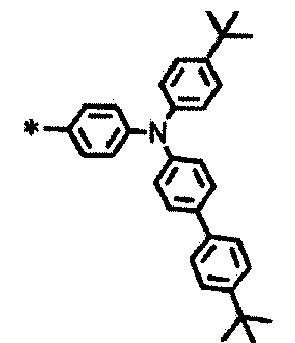

LA-31 H H -NCS -NCS 
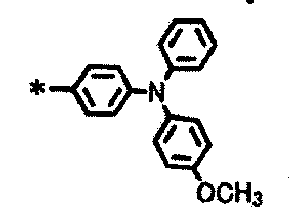
LA-32 H H -NCS -NCS 

LA-33 H H -NCS -NCS 

LA-34 H H -NCS -NCS 
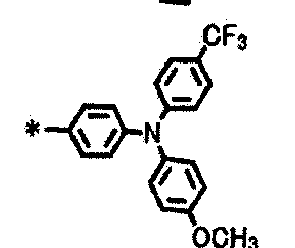
LA-35 H H -NCS -NCS 

Ligand No. M1 M2 L3 L4 D1 D2 LA-36 H H -NCS -NCS 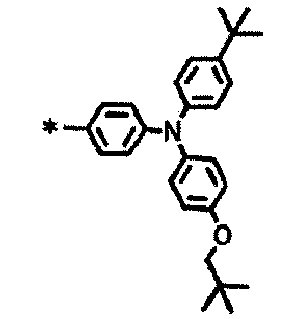

LA-37 H H -NCS -NCS 

LA-38 H H -NCS -NCS 

LA-39 H H -NCS -NCS 

LA-40 H H -NCS -NCS 

LA-41 H H -NCS -NCS 

LA-42 H H -NCS -NCS 

LA-43 H H -NCS -NCS 

Ligand No. M1 M2 L3 L4 D1 D2 LA-44 H H -NCS -NCS 

LA-45 H H -NCS -NCS 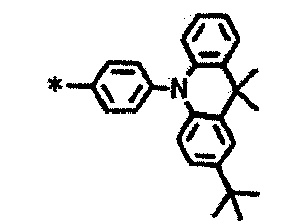
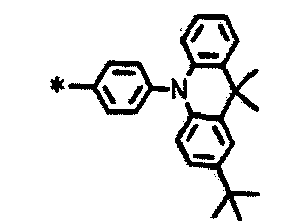
LA-46 H H -NCS -NCS 

LA-47 H H -NCS -NCS 

LA-48 H H -NCS -NCS 

LA-49 H H -NCS -NCS 

LA-50 H H -NCS -NCS 

LA-61 H H -NCS -NCS 
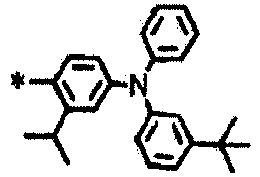
LA-52 H H -NCS -NCS 

LA-53 H H -NCS -NCS 

Ligand No. M1 M2 L3 L4 D1 D2 LA-54 Na H -NCS -NCS 

LA-55 K H -NCS -NCS 
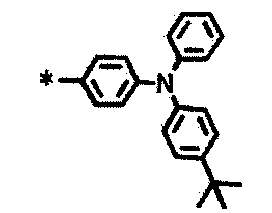
LA-56 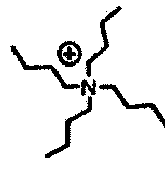
H -NCS -NCS 

LA-57 
H -NCS -NCS 

LA-58 Na H -NCS -NCS 

LA-59 K H -NCS -NCS 

LA-60 
H -NCS -NCS 

LA-61 
H -NCS -NCS 

- Next, preferred aspects of the main members of the photoelectric conversion element and the dye-sensitized solar cell will be described.
- The electrically conductive support is not particularly limited as long as it has electrical conductivity and is capable of supporting a
photoconductor layer 2 or the like. The electrically conductive support is a material having conductivity, for example, preferably an electrically conductive support 1 formed of a metal, or an electrically conductive support 41 having a glass orplastic substrate 44 and a transparent electrically-conductive film 43 formed on the surface of thesubstrate 44. - Between them, the electrically conductive support 41 having the transparent electrically-
conductive film 43 of a metal oxide on the surface of thesubstrate 44 is more preferable. Such the electrically conductive support 41 is obtained by applying an electrically conductive metal oxide on the surface of thesubstrate 44 to form the transparent electrically-conductive film 43. Examples of thesubstrate 44 formed of plastics include the transparent polymer films described in paragraph No. 0153 ofJP2001-291534A substrate 44, ceramics (JP2005-135902A JP2001-160425A substrate 44. In a case of using the electrically conductive support 41, it is preferable that light is incident from thesubstrate 44. - It is preferable that the electrically conductive supports 1 and 41 are substantially transparent. The expression, "substantially transparent", means that the transmittance of light (at a wavelength of 300 to 1,200 nm) is 10% or more, preferably 50% or more, and particularly preferably 80% or more.
- The thickness of the electrically conductive supports 1 and 41 is not particularly limited, but is preferably 0.05 µm to 10 mm, more preferably 0.1 µm to 5 mm, and particularly preferably 0.3 µm to 4 mm.
- In a case of including the transparent electrically-
conductive film 43, the thickness of the transparent electrically-conductive film 43 is preferably 0.01 to 30 µm, more preferably 0.03 to 25 µm, and particularly preferably 0.05 to 20 µm. - It is preferable that the electrically conductive supports 1 and 41 have a metal oxide coating film including a metal oxide on the surface thereof. As the metal oxide, the metal oxide that forms the transparent electrically-
conductive film 43 or the metal oxide mentioned as the metal oxide as the semiconductor fine particles which will be described later can be used, with the metal oxide mentioned as the semiconductor fine particles being preferable. The metal oxide may be the same as or different from the metal oxide that forms the transparent electrically-conductive film 43 or the metal oxide mentioned as the semi-conductive fine particles. The metal oxide coating film is usually formed on a thin film, and preferably has a thickness of 0.01 to 100 nm, for example. A method for forming the metal oxide coating film is not particularly limited, and examples thereof include the same method as the method for forming a layer formed by the semiconductor fine particles, which will be described later. For example, a liquid including a metal oxide or a precursor thereof (for example, a halide and an alkoxide) can be applied and heated (calcined) to form a metal oxide coating film. - The electrically conductive supports 1 and 41 may be provided with a light management function at the surface, and may have, for example, the anti-reflection film having a high refractive index film and a low refractive index oxide film alternately laminated described in
JP2003-123859A JP2002-260746A - As long as the photoconductor layer has semiconductor
fine particles 22 carrying thedye 21 and an electrolyte, it is not particularly limited in terms of other configurations. Preferred examples thereof include thephotoconductor layer 2 and thephotoconductor layer 42. - The
semiconductor fine particles 22 are preferably fine particles of chalcogenides of metals (for example, oxides, sulfides, and selenides) or of compounds having perovskite type crystal structures. Preferred examples of the chalcogenides of metals include oxides of titanium, tin, zinc, tungsten, zirconium, hafnium, strontium, indium, cerium, yttrium, lanthanum, vanadium, niobium, or tantalum, cadmium sulfide, and cadmium selenide. Preferred examples of the compounds having perovskite type crystal structures include strontium titanate and calcium titanate. Among these, titanium oxide (titania), zinc oxide, tin oxide, and tungsten oxide are particularly preferable. - Examples of the crystal structure of titania include structures of an anatase type, a brookite type, and a rutile type, with the structures of an anatase type and a brookite type being preferable. A titania nanotube, nanowire, or nanorod may be used singly or in mixture with titania fine particles.
- The particle diameter of the
semiconductor fine particles 22 is expressed in terms of an average particle diameter using a diameter in a case where a projected area is converted into a circle, and is preferably 0.001 to 1 µm as primary particles, and 0.01 to 100 µm as an average particle diameter of dispersions. Examples of the method for coating thesemiconductor fine particles 22 on the electrically conductive supports 1 or 41 include a wet method, a dry method, and other methods. - It is preferable that the
semiconductor fine particles 22 have a large surface area so that they may adsorb a large amount of thedye 21. For example, in a state where thesemiconductor fine particles 22 are coated on the electrically conductive support 1 or 41, the surface area is preferably 10 times or more, and more preferably 100 times or more, with respect to the projected surface area. The upper limit of this value is not particularly limited, and the upper limit is usually approximately 5,000 times. In general, as the thickness of the layer (photoconductor layer) formed by the semiconductor fine particles increases, the amount ofdye 21 that can be carried per unit area increases, and therefore, the light absorption efficiency increases. However, since the diffusion distance of generated electrons increases correspondingly, the loss due to charge recombination also increases. - Although a preferred thickness of the layer formed by the semiconductor fine particles may vary depending on the utility of the photoelectric conversion element, it is typically 0.1 to 100 µm. In a case of using the photoelectric conversion element as a dye-sensitized solar cell, the thickness of the photoconductor layer is more preferably 1 to 50 µm, and still more preferably 3 to 30 µm.
- It is preferable that the
semiconductor fine particles 22 may be calcined at a temperature of 100°C to 800°C for 10 minutes to 10 hours after being applied on the electrically conductive support 1 or 41, so as to bring about cohesion of the particles. In a case of using glass as a material for the electrically conductive support 1 or thesubstrate 44 is used, the film-forming temperature is preferably 60°C to 600°C. - The coating amount of the
semiconductor fine particles 22 per square meter of the surface area of the electrically conductive support 1 or 41 is preferably 0.5 to 500 g, and more preferably 5 to 100 g. - It is preferable that a short circuit-preventing layer is formed between the electrically conductive support 1 or 41 and the
photoconductor layer photoconductor layer - In addition, it is preferable to employ a spacer S (see
Fig. 2 ) or a separator, so as to prevent contact between the light-receivingelectrode counter electrode - In the present invention, the light-scattering layer is different from the semiconductor layer in that the light-scattering layer has a function of scattering incident light.
- In the dye-sensitized
solar cell 20, the light-scattering layer 46 preferably contains rod-shaped or plate-shaped metal oxide particles. Examples of the metal oxide particles to be used in the light-scattering layer 46 include particles of the chalcogenides (oxides) of the metals, described above as the compound which forms semiconductor fine particles. In a case of providing the light-scattering layer 46, it is preferable that the thickness of the light-scattering layer is set to 10% to 50% of the thickness of the photoconductor layer. - The light-
scattering layer 46 is preferably the light-scattering layer described inJP2002-289274A JP2002-289274A - In the present invention, semiconductor fine particles which form a photoconductor layer (including a case of forming the
semiconductor layer 45 and the light-scattering layer 46), and preferably have a metal oxide coating film on the surface thereof. As the metal oxide which forms a metal oxide coating film, the metal oxide mentioned as the semiconductor fine particles can be used, and the metal oxide may be the same as or different from the semiconductor fine particles. This metal oxide coating film is usually formed on a thin film, and preferably has a thickness of 0.1 to 100 nm, for example. In the present invention, in a case where the semiconductor fine particles have a metal oxide coating film, the metal complex dye is adsorbed on the semiconductor fine particles via the metal oxide coating film. A method for forming the metal oxide coating film is as described above. - In the present invention, in particular, it is preferable that the surfaces of the electrically conductive support and the semiconductor fine particles each have the metal oxide coating film. In this case, each of the metal oxide coating films may be formed of the same or different kinds of metal oxides.
- In the photoelectric conversion element 10 and the dye-sensitized
solar cell 20, at least one kind of metal complex dye represented by Formula (1) is used as a sensitizing dye. The metal complex dye represented by Formula (1) is as described above. - In the present invention, examples of the dye that can be used in combination with the metal complex dye of Formula (1) include an Ru complex dye, a squarylium cyanine dye, an organic dye, a porphyrin dye, and a phthalocyanine dye. As the dye which can be used with the other, an Ru complex dye, a squarylium cyanine dye, or an organic dye is preferable.
- The overall amount of the dye to be used is preferably 0.01 to 100 millimoles, more preferably 0.1 to 50 millimoles, and particularly preferably 0.1 to 10 millimoles, per square meter of the surface area of the electrically conductive support 1 or 41. Further, the amount of the dye to be adsorbed onto the semiconductor fine particles is preferably 0.001 to 1 millimole, and more preferably 0.1 to 0.5 millimoles, with respect to 1 g of the semiconductor fine particles. By setting the amount of the dye to such a range, the sensitization effect on the semiconductor fine particles is sufficiently obtained.
- In a case where the metal complex dye represented by Formula (1) is used in combination with another dye, the ratio of the mass of the metal complex dye represented by Formula (1)/the mass of another dye is preferably 95/5 to 10/90, more preferably 95/5 to 50/50, still more preferably 95/5 to 60/40, particularly preferably 95/5 to 65/35, and most preferably 95/5 to 70/30.
- After the dye is carried on the semiconductor fine particles, the surface of the semiconductor fine particles may be treated using an amine compound. Preferred examples of the amine compound include pyridine compounds (for example, 4-t-butylpyridine and polyvinylpyridine). These may be used as they are in a case where they are liquids, or may be used in a state where they are dissolved in an organic solvent.
- In the present invention, it is preferable to use a co-adsorbent together with the metal complex dye represented by Formula (1) or with another dye to be used in combination, if necessary. Such a co-adsorbent which includes a co-adsorbent having at least one acidic group (preferably a carboxyl group or a salt thereof) is preferable, and examples thereof include a fatty acid and a compound having a steroid skeleton.
- The fatty acid may be a saturated fatty acid or an unsaturated fatty acid, and examples thereof include a butanoic acid, a hexanoic acid, an octanoic acid, a decanoic acid, a hexadecanoic acid, a dodecanoic acid, a palmitic acid, a stearic acid, an oleic acid, a linoleic acid, and a linolenic acid.
- Examples of the compound having a steroid skeleton include cholic acid, glycocholic acid, chenodeoxycholic acid, hyocholic acid, deoxycholic acid, lithocholic acid, and ursodeoxycholic acid, among which cholic acid, deoxycholic acid, and chenodeoxycholic acid are preferable; and deoxycholic acid and chenodeoxycholic acid are more preferable.
- Preferred examples of the co-adsorbents include the compounds represented by Formula (CA) described in paragraph Nos. 0125 to 0129 of
JP2014-82187A JP2014-82187A - By making the co-adsorbent adsorbed onto the semiconductor fine particles, the co-adsorbent exhibits an effect of suppressing the inefficient association of the metal complex dye and an effect of preventing reverse electron transfer from the surface of the semiconductor fine particles to the redox system in the electrolyte. The amount of the co-adsorbent to be used is not particularly limited, and from the viewpoint of exhibiting the above effects effectively, the amount is preferably 1 to 200 moles, more preferably 10 to 150 moles, and particularly preferably 20 to 50 moles, with respect to 1 mole of the metal complex dye.
- The charge transfer layers 3 and 47 used in the photoelectric conversion element of the present invention are layers having a function of complementing electrons for the oxidized forms of the
dye 21, and are provided between the light-receivingelectrode counter electrode - The charge transfer layers 3 and 47 include electrolytes. Here, the expression, "the charge transfer layer includes an electrolyte", is meant to encompass both of an aspect in which the charge transfer layer consists of only electrolytes and an aspect in which the charge transfer layer consists of electrolytes and materials other than the electrolytes.
- The charge transfer layers 3 and 47 may be any of a solid form, a liquid form, a gel form, or a mixture thereof.
- Examples of the electrolyte include a liquid electrolyte having a redox pair dissolved in an organic solvent, and a so-called gel electrolyte in which a molten salt containing a redox pair and a liquid having a redox pair dissolved in an organic solvent are impregnated in a polymer matrix. Among those, from the viewpoint of photoelectric conversion efficiency, a liquid electrolyte is preferable.
- Examples of the redox pair include a combination of iodine and an iodide (preferably an iodide salt or an iodide ionic liquid, and more preferably lithium iodide, tetrabutylammonium iodide, tetrapropylammonium iodide, and methylpropylimidazolium iodide), a combination of an alkylviologen (for example, methylviologen chloride, hexylviologen bromide, and benzylviologen tetrafluoroborate) and a reductant thereof, a combination of a polyhydroxybenzene (for example, hydroquinone and naphthohydroquinone) and an oxidized form thereof, a combination of a divalent iron complex and a trivalent iron complex (for example, a combination of potassium ferricyanide and potassium ferrocyanide), and a combination of a divalent cobalt complex and a trivalent cobalt complex. Among these, a combination of iodine and an iodide, or a combination of a divalent cobalt complex and a trivalent cobalt complex is preferable, and a combination of iodine and an iodide is particularly preferable.
- As the cobalt complex, the complex represented by Formula (CC) described in paragraph Nos. 0144 to 0156 of
JP2014-82189A JP2014-82189A - In a case where a combination of iodine and iodide is used as an electrolyte, it is preferable that a nitrogen-containing aromatic cation iodide salt of a 5- or 6-membered ring is additionally used.
- The organic solvent which is used in a liquid electrolyte and a gel electrolyte is not particularly limited, but is preferably an aprotic polar solvent (for example, acetonitrile, propylene carbonate, ethylene carbonate, dimethylformamide, dimethylsulfoxide, sulfolane, 1,3-dimethylimidazolinone, and 3-methyloxazolidinone).
- In particular, as the organic solvent which is used for a liquid electrolyte, a nitrile compound, an ether compound, an ester compound, or the like is preferable, a nitrile compound is more preferable, and acetonitrile or methoxypropionitrile is particularly preferable.
- As a molten salt or a gel electrolyte, those described in paragraph No. 0205 and paragraph Nos. 0208 to 0213 of
JP2014-139931A JP2014-139931A - The electrolyte may contain aminopyridine compounds, benzimidazole compounds, aminotriazole compounds, aminothiazole compounds, imidazole compounds, aminotriazine compounds, urea compounds, amide compounds, pyrimidine compounds, and heterocycles not including nitrogen, in addition to pyridine compounds such as 4-t-butylpyridine, as an additive.
- Moreover, a method of controlling the moisture content of the electrolytic solution may be employed in order to enhance the photoelectric conversion efficiency. Preferred examples of the method of controlling the moisture content include a method of controlling the concentration, and a method of adding a dehydrating agent. The moisture content (content ratio) of the electrolytic solution is preferably adjusted to 0% to 0.1% by mass.
- Iodine can also be used as a clathrate compound of iodine with cyclodextrin. Furthermore, a cyclic amidine may be used, or an antioxidant, a hydrolysis inhibitor, a decomposition inhibitor, or zinc iodide may be added.
- A solid-state charge transport layer such as a p-type semiconductor or a hole transport material, for example, CuI and CuNCS, may be used in place of the liquid electrolyte and the quasi-solid-state electrolyte as described above. Moreover, the electrolytes described in Nature, vol. 486, p. 487 (2012) and the like may also be used. For a solid-state charge transport layer, an organic hole transport material may be used. With regard to the organic hole transporting material, those described in paragraph No. 0214 of
JP2014-139931A JP2014-139931A - The redox pair serves as an electron carrier, and therefore, it is preferably contained at a certain concentration. The concentration of the redox pair in total is preferably 0.01 mol/L or more, more preferably 0.1 mol/L or more, and particularly preferably 0.3 mol/L or more. In this case, the upper limit is not particularly limited, but is usually approximately 5 mol/L.
- The
counter electrodes counter electrodes substrate 44 is not necessarily required. A preferred structure of thecounter electrodes counter electrode counter electrodes counter electrodes - The photoelectric conversion element and the dye-sensitized solar cell of the present invention are each preferably produced using a dye solution (the dye solution of the present invention) which contains the metal complex dye of the present invention and a solvent.
- Such a dye solution is formed of the metal complex dye of the present invention dissolved in a solvent, and may also include a co-adsorbent and other components, if necessary.
- Examples of the solvent to be used include the solvents described in
JP2001-291534A - The dye solution preferably contains a co-adsorbent, and as the co-adsorbent, the aforementioned co-adsorbent is preferable.
- Here, the dye solution of the present invention is preferably one in which the concentrations of the metal complex dye and the co-adsorbent have been adjusted so that the dye solution can be used as it is during production of the photoelectric conversion element or the dye-sensitized solar cell. In the present invention, the dye solution of the present invention preferably contains 0.001% to 0.1% by mass of the metal complex dye of the present invention. The amount of the co-adsorbent to be used is as described above.
- For the dye solution, it is preferable to adjust the moisture content, and thus in the present invention, the moisture content is preferably adjusted 0% to 0.1% by mass.
- In the present invention, it is preferable to manufacture a photoconductor layer by making the metal complex dye represented by Formula (1) or a dye including the same carried on the surface of the semiconductor fine particles, using the dye solution. That is, the photoconductor layer is preferably formed by applying (including a dip method) the dye solution onto the semiconductor fine particles provided on the electrically conductive support, followed by drying and curing.
- By further providing a charge transfer layer, a counter electrode, or the like for a light-receiving electrode including the photoconductor layer as manufactured above, the photoelectric conversion element or the dye-sensitized solar cell of the present invention can be obtained.
- The dye-sensitized solar cell is produced by connecting an external circuit 6 with the electrically conductive support 1 and the
counter electrode 4 of the photoelectric conversion element thus manufactured. - Hereinafter, the present invention will be described in more detail, based on Examples, but the invention is not limited thereto.
- The structures of the metal complex dyes D-1 to D-20 synthesized in the present Examples are shown.
- In the metal complex dye D-13, nBu represents n-butyl. This dye D-13 is described as a dye in which M1 in Formula (1) is a tetra(n-butyl)ammonium ion and M2 is a proton, and may also be either a dye in which M1 is a proton and M2 is a tetra(n-butyl)ammonium ion, or a mixture of a dye in which M1 is a tetra(n-butyl)ammonium ion and a dye in which M2 is a tetra(n-butyl)ammonium ion.


- Hereinafter, a method for synthesizing the metal complex dye of the present invention will be described in detail, but the starting materials, the dye intermediates, and the synthesis routes are not limited thereto.
- In the present invention, a room temperature means 25°C.
- According to the method of the following scheme, a metal complex dye (D-1) was synthesized.

- 18.4 g of a compound d-1-1, 18.6 g of a compound d-1-2, and 10.5 g of tert-butoxysodium were stirred at room temperature in 140 mL of toluene, and the mixture was degassed. 1.85 g of tri-tert-butylphosphine and 1.02 g of palladium (II) acetate were added thereto, and the mixture was degassed. Thereafter, the obtained mixed liquid was stirred at 100°C for 1 hour, and left to be cooled. Then, 145 mL of water, 75 mL of ethyl acetate, and 10 mL of methanol were added thereto to perform extraction and liquid separation, and saturated saline was added to the organic layer to perform liquid separation. The obtained organic layer was filtered through Celite, and the filtrate was concentrated. The obtained crude purified product was purified by silica gel column chromatography to obtain 9.0 g of a compound d-1-3.
- 1.41 g of a compound d-1-4 was dissolved in 56.4 mL of tetrahydrofuran (THF) at 0°C in a nitrogen gas atmosphere, and lithium diisopropylamide (LDA) which had been separately prepared was added dropwise thereto at a ratio of 2.05 equivalents with respect to the compound d-1-4, and the mixture was stirred for 75 minutes. Thereafter, to the obtained reaction solution was added dropwise a solution in which 4.4 g of the compound d-1-3 had been dissolved in 25 mL of THF, and the mixture was stirred at 0°C for 1 hour, and further stirred at room temperature for 2 hours. To the obtained liquid was added 60 mL of a saturated aqueous ammonium chloride solution, the mixture was then subjected to liquid separation, and the organic layer was concentrated. The obtained crude purified product was purified by silica gel column chromatography to obtain 0.90 g of a compound d-1-5.
- 840 mg of the compound d-1-5 and 556 mg of pyridinium paratoluenesulfonic acid (PPTS) were added to 4.6 mL of toluene, and the mixture was heated and refluxed for 2 hours in a nitrogen gas atmosphere. To the obtained liquid were added chloroform, methanol, and saturated sodium bicarbonate, the mixture was subject to liquid separation, and the organic layer was concentrated. The obtained crude purified product was purified by silica gel column chromatography to obtain 600 mg of a compound d-1-6.
- 30.6 g of a compound d-1-7 and 30.0 g of a compound d-1-8 were heated and stirred for 2 hours in ethanol, and then concentrated to obtain 60.6 g of a compound d-1-9.
- 500 mg of the compound d-1-9 and 595 mg of the compound d-1-6 were heated and stirred at 150°C for 7 hours in 20 mL of N,N-dimethylformamide (DMF). Thereafter, to the obtained liquid was 2.5 g of ammonium thiocyanate, and the mixture was stirred at 130°C for 5 hours. The obtained reaction solution was concentrated and then water was added thereto. The mixture was filtered and the precipitate was washed with diethyl ether. The crude purified product obtained as a precipitate was purified by silica gel column chromatography to obtain 650 mg of a compound d-1-10.
- To 640 mg of the compound d-1-10 was added 40 mL of DMF, 2 mL of water, and 0.8 mL of a 3 N aqueous sodium hydroxide solution, and the mixture was stirred at 30°C for 1 hour. The mixture was adjusted to pH 3.0 by the addition of a 1 N aqueous trifluoromethanesulfonic acid solution. The mixture was filtered to obtain 590 mg of a metal complex dye D-1 as a precipitate.
- The structure of the obtained metal complex dye D-1 was confirmed from mass spectrum (MS) measurement results in Table 1.
- By the same synthesis method as for the metal complex dye D-1, metal complex dyes D-2 to D-20 were prepared.
- Each of the synthesized metal complex dyes was confirmed from MS measurement results in Table 1.
[Table 1] Table 1 Metal complex dye MS (ESI+) D-1 MS (ESI+) m/z: 1185.2 ([M+H]+) D-2 MS (ESI+) m/z: 1297.4 ([M+H]+) D-3 MS (ESI+) m/z: 1381.5 ([M+H]+) D-4 MS (ESI+) m/z: 1269.3 ([M+H]+) D-5 MS (ESI+) m/z: 1269.3 ([M+H]+) D-6 MS (ESI+) m/z: 1185.2 ([M+H]+) D-7 MS (ESI+) m/z: 1217.2 ([M+H]+) D-8 MS (ESI+) m/z: 1217.2 ([M+H]+) D-9 MS (ESI+) m/z: 1329.4 ([M+H]+) D-10 MS (ESI+) m/z: 1309.3 ([M+H]+) D-11 MS (ESI+) m/z: 1309.3 ([M+H]+) D-12 MS (ESI+) m/z: 1421.4 ([M+H]+) D-13 MS (ESI+) m/z: 1381.5 ([M+H]+) D-14 MS (ESI+) m/z: 1413.5 ([M+H]+) D-15 MS (ESI+) m/z: 1413.5 ([M+H]+) D-16 MS (ESI+) m/z: 1473.5 ([M+H]+) D-17 MS (ESI+) m/z: 1525.6 ([M+H]+) D-18 MS (ESI+) m/z: 1193.2 ([M+H]+) D-19 MS (ESI+) m/z: 1193.2 ([M+H]+) D-20 MS (ESI+) m/z: 1293.2 ([M+H]+) - Using the metal complex dye synthesized in Example 1 or each of the following comparative compounds (C1) to (C4), a dye-sensitized solar cell 20 (in a dimension of 5 mm x 5 mm) shown in
Fig. 2 was produced and its performance was evaluated according to the procedure shown below. The results are shown in Table 2. - An electrically conductive support 41 was prepared, in which a fluorine-doped SnO2 electrically-conductive film (transparent electrically-
conductive film 43, film thickness of 500 nm) was formed on a glass substrate (substrate 44, thickness of 4 mm). Further, a glass substrate having an SnO2 electrically-conductive film formed thereon was immersed in a 40 mM aqueous titanium trichloride solution for 30 minutes, washed with ultrapure water and ethanol, and then calcined at 450°C to form a thin film layer of the titanium oxide (metal oxide coating film, not shown inFig. 2 ) on the SnO2 electrically-conductive film. A titania paste "18NR-T" (manufactured by DyeSol) was screen-printed on the thin film layer, followed by drying at 120°C. Then, the dried titania paste "18NR-T" was screen-printed, followed by drying at 120°C for 1 hour. Thereafter, the dried titania paste was calcined at 500°C to form a semiconductor layer 45 (film thickness; 10 µm). Further, a titania paste "18NR-AO" (manufactured by DyeSol) was screen-printed on this thin film layer, and then dried at 120°C for 1 hour. Thereafter, the dried titania paste was calcined at 500°C to form asemiconductor layer 45. Further, this glass substrate was immersed in a 20 mM aqueous titanium trichloride solution for 30 minutes, and washed with ultrapure water and ethanol. A titanium oxide layer was formed on the surface of a layer formed by calcination of a titania paste "18NR-AO". Thus, a light-scattering layer 46 (film thickness: 5 µm) was formed on thesemiconductor layer 45. By the procedure above, a photoconductor layer 42 (the area of the light-receiving surface; 5 mm x 5 mm, film thickness; 15 µm, a metal complex dye is not carried) was formed on the SnO2 electrically-conductive film, thereby manufacturing a light-receiving electrode precursor not carrying a metal complex dye. - Next, each of the metal complex dyes (D-1 to D-20) synthesized in Example 1 was carried onto the
photoconductor layer 42 not carrying a metal complex dye in the following manner. First, the respective metal complex dyes were mixed in a mixed solvent of t-butanol and acetonitrile at 1:1 (volume ratio) such that the concentration became 2 × 10⁻⁴ mol/L. Further, 30 mol of chenodeoxycholic acid as a co-adsorbent was added to one mol of the metal complex dye, thereby preparing each of dye solutions. Next, the light-receiving electrode precursor was immersed in each of the dye solutions at 25°C for 5 hours, and dried after pulling out from the dye solution, thereby manufacturing each of light-receivingelectrodes 40 having each of the metal complex dyes carried onto the light-receiving electrode precursor. - A platinum electrode (thickness of a Pt thin film; 100 nm) having the same shape and size as those of the electrically conductive support 41 was manufactured as the
counter electrode 48. Further, 0.1 M (mol/L) of iodine, 0.1 M of lithium iodide, 0.005 M of 4-t-butylpyridine, and 0.6 M of 1,2-dimethyl-3-propylimidazolium iodide were dissolved in acetonitrile to prepare a liquid electrolyte as an electrolytic solution. In addition, Spacer-S (trade name: "SURLYN") manufactured by DuPont, which has a shape matching to the size of thephotoconductor layer 42, was prepared. - Each of the light-receiving
electrodes 40 manufactured as above and thecounter electrode 48 were arranged to face each other through the Spacer S, and thermally compressed, and then the liquid electrolyte was filled from the inlet for the electrolytic solution between thephotoconductor layer 42 and thecounter electrode 48, thereby forming acharge transfer layer 47. The outer periphery and the inlet for the electrolytic solution of the cell thus manufactured were sealed and cured using RESIN XNR-5516 manufactured by Nagase ChemteX Corporation, thereby producing each of dye-sensitized solar cells (Sample Nos. 1 to 20). - Comparative dye-sensitized solar cells (Sample Nos. c1 to c4) were produced in the same manner as for the production of the dye-sensitized solar cells, except that each of the following comparative metal complex dyes (C1) to (C4) was used instead of the metal complex dye synthesized in Example 1 in the production of the dye-sensitized solar cell.
- The metal complex dye (C1) is the compound "D-3" described in
JP2001-291534A - The metal complex dye (C2) is a dye referred to as N719. In this dye, TBA represents tetrabutylammonium.
- The metal complex dye (C3) is the compound "Ru-TPA-EO-NCS" described in J. Mater. Chem., 2009, 19, p. 5364-5376.
- The metal complex dye (C4) is the compound "D-1-7a" described in
JP2013-072079A 
- The cell characteristic test was carried out by using each of the produced dye-sensitized solar cells. The cell characteristic test was carried out by irradiating artificial solar light of 1,000 W/m2 (100,000 lux) from a xenon lamp passing through an AM 1.5 filter, using a solar simulator (WXS-85H manufactured by WACOM). The current-voltage characteristics were measured using an I-V tester to determine the photoelectric conversion efficiency. The photoelectric conversion efficiency in this case is referred to as conversion efficiency [A].
- For each of the dye-sensitized solar cells (Sample Nos. 1 to 20 and c1 to c4), the determined photoelectric conversion efficiency [A] was evaluated in accordance with the following standard in comparison with that of the conversion efficiency [Ac2] of the comparative dye-sensitized solar cell (Sample No. c2).
- In the present invention, for evaluation of the conversion efficiency [A], evaluations as A and B are the acceptable levels in the present test, with A being preferable.
- The conversion efficiency [A] was categorized as follows, in comparison with that of the conversion efficiency [Ac2].
- A: More than 1.1 times
- B: More than 1.0 time and 1.1 times or less
- D: 1.0 time or less
- The conversion efficiency [A] of each of the dye-sensitized solar cells of Sample Nos. 1 to 20 indicates that each dye-sensitized solar cell sufficiently functions as a dye-sensitized solar cell.
- The cell characteristic test was carried out by using each of the produced dye-sensitized solar cells. The cell characteristic test was carried out by irradiating artificial solar light adjusted to a predetermined illumination (1 mW/cm2 (1,000 lux)) with ND filters (ND1 to ND80 manufactured by Shibuya Optical Co., Ltd.), using a solar simulator (WXS-85H manufactured by WACOM). The regulated illumination was measured using a spectrophotometer USB4000 manufactured by Ocean Photonics, Inc. The current-voltage characteristics were measured using an I-V tester to determine the photoelectric conversion efficiency. The photoelectric conversion efficiency in this case is referred to as conversion efficiency [B].
- For each of the dye-sensitized solar cells (Sample Nos. 1 to 20 and c1 to c4), the determined photoelectric conversion efficiency [B] was evaluated in accordance with the following standard in comparison with that of the conversion efficiency [Bc2] of the comparative dye-sensitized solar cell (Sample No. c2).
- In the present invention, for evaluation of the conversion efficiency [B], evaluations as A and B are the acceptable levels in the present test, with A being preferable.
- The conversion efficiency [B] was categorized as follows, in comparison with that of the conversion efficiency [Bc2].
- A: More than 1.5 times
- B: More than 1.1 times and 1.5 times or less
- D: 1.1 time or less
- The conversion efficiency [B] of each of the dye-sensitized solar cells of Sample Nos. 1 to 20 indicates that each dye-sensitized solar cell sufficiently functions as a dye-sensitized solar (photoelectrochemical) cell under low-illumination solar light.
- The cell characteristic test was carried out by using each of the produced dye-sensitized solar cells. The cell characteristic test was carried out using White LED (Product No.: LDA8N-G-K/D/60 W) manufactured by Toshiba. Adjustment of illumination (300 µW/cm2 (1,000 lux)) was carried out using ND filters (ND1 to ND80) available from Shibuya Optical Co., Ltd. Measurement of the regulated illumination was confirmed using a spectrophotometer USB4000 manufactured by Ocean Photonics, Inc. The current-voltage characteristics were measured using an I-V tester to determine the photoelectric conversion efficiency. The photoelectric conversion efficiency in this case is referred to as conversion efficiency [C].
- For each of the dye-sensitized solar cells (Sample Nos. 1 to 20 and c1 to c4), the determined photoelectric conversion efficiency [C] was evaluated in accordance with the following standard in comparison with that of the conversion efficiency [Cc2] of the comparative dye-sensitized solar cell (Sample No. c2).
- In the present invention, for evaluation of the conversion efficiency [C], evaluations as S and A+ are the acceptable levels in the present test, with S being preferable.
- The conversion efficiency [C] was categorized as follows, in comparison with that of the conversion efficiency [Cc2].
- S: More than 2.0 times
- A+: More than 1.7 times and 2.0 times or less
- A-: More than 1.4 times and 1.7 times or less
- B: More than 1.1 times and 1.4 times or less
- C: 1.1 times or less
- The conversion efficiency [C] of each of the dye-sensitized solar cells of Sample Nos. 1 to 20 indicates that each dye-sensitized solar cell sufficiently functions as a dye-sensitized photoelectrochemical cell under low-illumination environment.
- For each of the dye-sensitized solar cells (Sample Nos. 1 to 20 and c1 to c4), three dye-sensitized solar cells were manufactured, and in the same manner as for "Evaluation of Photoelectric Conversion Efficiency ∼ Evaluation Method [C] (Low-Illumination Environment Indoor Light)", the conversion efficiency [C] was determined. In each of the dye-sensitized solar cells with Sample Nos., among the three dye-sensitized solar cells, a value calculated by dividing a value of (the highest conversion efficiency [CMAX] - the lowest conversion efficiency [CMIN] with the highest conversion efficiency was evaluated in accordance with the following standard.
- In the present invention, in the evaluation of the conversion efficiency A, A is preferable.
- A: Less than 0.1
- B: 0.1 or more
- From the results of Table 2, the following findings could be obtained.
- The metal complex dyes (D-1 to D-20) with a ligand having a diphenylaminostyryl skeleton which becomes asymmetrical all exhibit higher high photoelectric conversion efficiency in a high-illumination environment, and also exhibit excellent photoelectric conversion efficiency even in a low-illumination environment. In addition, the deviation of photoelectric conversion efficiency was also small.
- Furthermore, the metal complex dye and the oxide semiconductor electrode of the present invention could be suitably used as a sensitizing dye and an oxide semiconductor electrode in the photoelectric conversion element and the dye-sensitized solar cell of the present invention. In addition, the dye solution of the present invention, including the metal complex dye of the present invention and a solvent, could be suitably used in the preparation of semiconductor fine particles (oxide semiconductor electrodes) as long as it carries the metal complex dye of the present invention.
- To the contrary, the comparative photoelectric conversion elements and dye-sensitized solar cells (Sample Nos. c1 to c4) were not sufficient in terms of at least the conversion efficiency [C] and reduction in the deviation of photoelectric conversion efficiency. Specifically, the metal complex dyes ((C1) and (C4)) with a ligand having a diphenylaminostyryl skeleton which has a symmetrical structure were all not sufficient in terms of at least the conversion efficiency [C] and reduction in the deviation of photoelectric conversion efficiency. The metal complex dye ((C3)) with a ligand having an asymmetrical diphenylaminostyryl skeleton, and containing a 2,5,8,11-tetraoxadodecylphenyl group with four oxygen atoms was not sufficient in terms of the photoelectric conversion efficiency and reduction in a deviation thereof.
- Although the present invention has been described with reference to embodiments, it is not intended that the present invention is not limited by any of the details of the description unless otherwise specified, but should rather be construed broadly within the spirit and scope of the present invention as set out in the accompanying claims.
- The present application claims the priority based on Japanese Patent Application No.
2015-118149 filed on June 11, 2015 -
- 1, 41: electrically conductive supports
- 2, 42: photoconductor layers (oxide semiconductor electrodes)
- 21: dye
- 22: semiconductor fine particles
- 3, 47: charge transfer layer
- 4, 48: counter electrodes
- 5, 40: light-receiving electrodes
- 6: external circuit
- 10: photoelectric conversion element
- 100: system in which photoelectric conversion element is applied to cell uses
- M: operating means (for example, electric motor)
- 20: dye-sensitized solar cell
- 43: transparent electrically-conductive film
- 44: substrate
- 45: semiconductor layer
- 46: light-scattering layer
- S: spacer
| Table 2 | ||||||
| Sample No. | Metal complex dye | Conversion efficiency [A] | Conversion efficiency [B] | Conversion efficiency [C] | Deviation of conversion efficiency | Note |
| 1 | D-1 | A | A | A+ | A | Present invention |
| 2 | D-2 | A | A | S | A | Present invention |
| 3 | D-3 | A | A | S | A | Present invention |
| 4 | D-4 | A | A | S | A | Present invention |
| 5 | D-5 | A | A | S | A | Present invention |
| 6 | D-6 | A | A | A+ | A | Present invention |
| 7 | D-7 | A | A | A+ | A | Present invention |
| 8 | D-8 | A | A | A+ | A | Present invention |
| 9 | D-9 | A | A | A+ | A | Present invention |
| 10 | D-10 | A | A | S | A | Present invention |
| 11 | D-11 | A | A | S | A | Present invention |
| 12 | D-12 | A | A | S | A | Present invention |
| 13 | D-13 | A | A | S | A | Present invention |
| 14 | D-14 | A | A | A+ | A | Present invention |
| 15 | D-15 | A | A | A+ | A | Present invention |
| 16 | D-16 | A | A | A+ | A | Present invention |
| 17 | D-17 | A | A | A+ | A | Present invention |
| 18 | D-18 | A | A | A+ | A | Present invention |
| 19 | D-19 | A | A | A+ | A | Present invention |
| 20 | D-20 | A | A | S | A | Present invention |
| c1 | (C1) | B | B | A- | B | Comparative Example |
| c2 | (C2) | Standard | Standard | Standard | B | Comparative Example |
| c3 | (C3) | C | C | C | B | Comparative Example |
| c4 | (C4) | B | B | A- | B | Comparative Example |
Claims (8)
- A photoelectric conversion element comprising:an electrically conductive support;a photoconductor layer including an electrolyte;a charge transfer layer including an electrolyte; anda counter electrode,wherein the photoconductor layer has semiconductor fine particles carrying a metal complex dye represented by Formula (1),
 in the formula, M represents a metal ion,Ar11 to Ar14 each independently represent a phenyl group, or a phenyl group having any one of an alkyl group, an aryl group, an alkoxy group having one oxygen atom, an aryloxy group, an alkylthio group, an arylthio group, and a halogen atom, provided that Ar11 and Ar12 each represent different phenyl groups,R11 and R12 each independently represent an alkyl group, an alkoxy group, an aryl group, an alkylthio group, a heteroaryl group, an amino group, or a halogen atom, and n11 and n12 each independently represent an integer of 0 to 3,R13 and R14 each independently represent an alkyl group, an alkoxy group, an aryl group, an alkylthio group, a heteroaryl group, an amino group, or a halogen atom, and n13 and n14 each independently represent an integer of 0 to 4,M1 and M2 each independently represent any one of a proton, a metal cation, and a non-metal cation, andL3 and L4 each independently represent a monodentate ligand.
 - The photoelectric conversion element according to claim 1,wherein Ar11 is represented by any one of Formulae (2-1) to (2-5), and Ar12 is represented by any one of Formulae (2-6) to (2-10),
 in the formulae, R21 represents any one of a hydrogen atom, an alkyl group, an aryl group, an alkoxy group having one oxygen atom, and a halogen atom, and * represents a bonding moiety to a nitrogen atom, and
 in the formulae, R22 represents any one of an alkyl group, an aryl group, an alkoxy group having one oxygen atom, and a halogen atom, and * represents a bonding moiety to a nitrogen atom.
 - The photoelectric conversion element according to claim 2,
wherein Ar11 is represented by Formula (2-1) or (2-2), and Ar12 is represented by Formula (2-6) or (2-7). - The photoelectric conversion element according to claim 2 or 3,
wherein Ar11 and Ar13 are each represented by Formula (2-1) or (2-2), and Ar12 and Ar14 are each represented by Formula (2-6) or (2-7). - A dye-sensitized solar cell comprising the photoelectric conversion element according to any one of claims 1 to 4.
- A metal complex dye represented by Formula (1).
 in the formula, M represents a metal ion,Ar11 to Ar14 each independently represent a phenyl group, or a phenyl group having any one of an alkyl group, an aryl group, an alkoxy group having one oxygen atom, an aryloxy group, an alkylthio group, an arylthio group, and a halogen atom, provided that Ar11 and Ar12 each represent different phenyl groups,R11 and R12 each independently represent an alkyl group, an alkoxy group, an aryl group, an alkylthio group, a heteroaryl group, an amino group, or a halogen atom, and n11 and n12 each independently represent an integer of 0 to 3,R13 and R14 each independently represent an alkyl group, an alkoxy group, an aryl group, an alkylthio group, a heteroaryl group, an amino group, or a halogen atom, and n13 and n14 each independently represent an integer of 0 to 4,M1 and M2 each independently represent any one of a proton, a metal cation, and a non-metal cation, andL3 and L4 each independently represent a monodentate ligand.
 - A dye solution comprising the metal complex dye according to claim 6; and a solvent.
- An oxide semiconductor electrode comprising the metal complex dye according to claim 6.
Applications Claiming Priority (2)
| Application Number | Priority Date | Filing Date | Title |
|---|---|---|---|
| JP2015118149 | 2015-06-11 | ||
| PCT/JP2016/065582 WO2016199585A1 (en) | 2015-06-11 | 2016-05-26 | Photoelectric conversion element, dye-sensitized solar cell, metal complex dye, dye solution and oxide semiconductor electrode |
Publications (2)
| Publication Number | Publication Date |
|---|---|
| EP3309804A1 true EP3309804A1 (en) | 2018-04-18 |
| EP3309804A4 EP3309804A4 (en) | 2018-06-27 |
Family
ID=57503440
Family Applications (1)
| Application Number | Title | Priority Date | Filing Date |
|---|---|---|---|
| EP16807292.4A Withdrawn EP3309804A4 (en) | 2015-06-11 | 2016-05-26 | Photoelectric conversion element, dye-sensitized solar cell, metal complex dye, dye solution and oxide semiconductor electrode |
Country Status (4)
| Country | Link |
|---|---|
| EP (1) | EP3309804A4 (en) |
| JP (1) | JP6371908B2 (en) |
| TW (1) | TW201700469A (en) |
| WO (1) | WO2016199585A1 (en) |
Cited By (1)
| Publication number | Priority date | Publication date | Assignee | Title |
|---|---|---|---|---|
| EP3439002A4 (en) * | 2016-03-30 | 2019-04-10 | Fujifilm Corporation | Dye solution for photoelectric conversion element, preparation kit for dye solution, and manufacturing method for photoelectric conversion element |
Family Cites Families (2)
| Publication number | Priority date | Publication date | Assignee | Title |
|---|---|---|---|---|
| KR20100128258A (en) * | 2009-05-27 | 2010-12-07 | 주식회사 동진쎄미켐 | Novel ruthenium-based dyes and preparation methods thereof |
| CN102660135A (en) * | 2012-04-25 | 2012-09-12 | 天津大学 | Photosensitive dye with triphenylamine bridging bipyridyl ruthenium complex and preparation method for photosensitive dye |
-
2016
- 2016-05-26 WO PCT/JP2016/065582 patent/WO2016199585A1/en not_active Ceased
- 2016-05-26 JP JP2017523569A patent/JP6371908B2/en active Active
- 2016-05-26 EP EP16807292.4A patent/EP3309804A4/en not_active Withdrawn
- 2016-06-07 TW TW105117946A patent/TW201700469A/en unknown
Cited By (1)
| Publication number | Priority date | Publication date | Assignee | Title |
|---|---|---|---|---|
| EP3439002A4 (en) * | 2016-03-30 | 2019-04-10 | Fujifilm Corporation | Dye solution for photoelectric conversion element, preparation kit for dye solution, and manufacturing method for photoelectric conversion element |
Also Published As
| Publication number | Publication date |
|---|---|
| WO2016199585A1 (en) | 2016-12-15 |
| JP6371908B2 (en) | 2018-08-15 |
| JPWO2016199585A1 (en) | 2018-03-01 |
| EP3309804A4 (en) | 2018-06-27 |
| TW201700469A (en) | 2017-01-01 |
Similar Documents
| Publication | Publication Date | Title |
|---|---|---|
| EP2980816A1 (en) | Metal-complex dye, photoelectric conversion element, dye-sensitized solar cell, and dye solution containing metal-complex dye | |
| EP3168848B1 (en) | Photoelectric conversion element, dye-sensitized solar cell, metal complex dye, dye solution, and terpyridine compound or esterification product thereof | |
| EP3168847B1 (en) | Photoelectric conversion element, dye-sensitized solar cell, metal complex dye, dye solution, and terpyridine compound or esterification product thereof | |
| EP3352185B1 (en) | Photoelectric conversion element, dye-sensitized solar cell, dye composition, and oxide semiconductor electrode | |
| EP2933875A1 (en) | Photoelectric conversion element, dye-sensitized solar cell, metal complex dye, dye solution, dye-absorbed electrode, and method for manufacturing dye-sensitized solar cell | |
| JPWO2018047498A1 (en) | Photoelectric conversion device, dye-sensitized solar cell and dipyrromethene complex compound | |
| EP3309804A1 (en) | Photoelectric conversion element, dye-sensitized solar cell, metal complex dye, dye solution and oxide semiconductor electrode | |
| JP6616907B2 (en) | Photoelectric conversion element, dye-sensitized solar cell, metal complex dye, dye solution, and oxide semiconductor electrode | |
| EP3272814B1 (en) | Ruthenium complex dye, dye solution, photoelectric conversion element, and dye-sensitized solar cell | |
| JP6591691B2 (en) | Photoelectric conversion element, dye-sensitized solar cell, and dipyrromethene complex compound | |
| WO2015190398A1 (en) | Photoelectric conversion element, dye-sensitized solar cell, ruthenium complex dye, dye solution, and bipyridine compound | |
| JP6204603B2 (en) | Photoelectric conversion element, dye-sensitized solar cell, metal complex dye and dye solution | |
| JP6308152B2 (en) | Photoelectric conversion element, dye-sensitized solar cell, and dye solution | |
| US11094474B2 (en) | Photoelectric conversion element, dye-sensitized solar cell, metal complex dye, dye composition, and oxide semiconductor electrode | |
| EP3273456A1 (en) | Photoelectric conversion element, dye-sensitized solar cell, ruthenium complex dye, and dye solution | |
| JP6410669B2 (en) | Photoelectric conversion element, dye-sensitized solar cell, metal complex dye and dye solution | |
| JP6265551B2 (en) | Photoelectric conversion element, dye-sensitized solar cell, and dye solution |
Legal Events
| Date | Code | Title | Description |
|---|---|---|---|
| PUAI | Public reference made under article 153(3) epc to a published international application that has entered the european phase |
Free format text: ORIGINAL CODE: 0009012 |
|
| 17P | Request for examination filed |
Effective date: 20171219 |
|
| AK | Designated contracting states |
Kind code of ref document: A1 Designated state(s): AL AT BE BG CH CY CZ DE DK EE ES FI FR GB GR HR HU IE IS IT LI LT LU LV MC MK MT NL NO PL PT RO RS SE SI SK SM TR |
|
| AX | Request for extension of the european patent |
Extension state: BA ME |
|
| A4 | Supplementary search report drawn up and despatched |
Effective date: 20180530 |
|
| RIC1 | Information provided on ipc code assigned before grant |
Ipc: H01G 9/20 20060101ALI20180524BHEP Ipc: H01L 51/42 20060101ALI20180524BHEP Ipc: C09B 23/10 20060101AFI20180524BHEP Ipc: C09B 57/10 20060101ALI20180524BHEP Ipc: H01L 51/00 20060101ALI20180524BHEP |
|
| DAV | Request for validation of the european patent (deleted) | ||
| DAX | Request for extension of the european patent (deleted) | ||
| STAA | Information on the status of an ep patent application or granted ep patent |
Free format text: STATUS: THE APPLICATION HAS BEEN WITHDRAWN |
|
| 18W | Application withdrawn |
Effective date: 20191230 |