EP3309693A1 - Position information providing method and device - Google Patents
Position information providing method and device Download PDFInfo
- Publication number
- EP3309693A1 EP3309693A1 EP16806755.1A EP16806755A EP3309693A1 EP 3309693 A1 EP3309693 A1 EP 3309693A1 EP 16806755 A EP16806755 A EP 16806755A EP 3309693 A1 EP3309693 A1 EP 3309693A1
- Authority
- EP
- European Patent Office
- Prior art keywords
- users
- regions
- region
- user
- quantities
- Prior art date
- Legal status (The legal status is an assumption and is not a legal conclusion. Google has not performed a legal analysis and makes no representation as to the accuracy of the status listed.)
- Granted
Links
Images


Classifications
-
- G—PHYSICS
- G06—COMPUTING OR CALCULATING; COUNTING
- G06Q—INFORMATION AND COMMUNICATION TECHNOLOGY [ICT] SPECIALLY ADAPTED FOR ADMINISTRATIVE, COMMERCIAL, FINANCIAL, MANAGERIAL OR SUPERVISORY PURPOSES; SYSTEMS OR METHODS SPECIALLY ADAPTED FOR ADMINISTRATIVE, COMMERCIAL, FINANCIAL, MANAGERIAL OR SUPERVISORY PURPOSES, NOT OTHERWISE PROVIDED FOR
- G06Q99/00—Subject matter not provided for in other groups of this subclass
-
- G—PHYSICS
- G06—COMPUTING OR CALCULATING; COUNTING
- G06F—ELECTRIC DIGITAL DATA PROCESSING
- G06F16/00—Information retrieval; Database structures therefor; File system structures therefor
- G06F16/90—Details of database functions independent of the retrieved data types
- G06F16/95—Retrieval from the web
- G06F16/953—Querying, e.g. by the use of web search engines
- G06F16/9537—Spatial or temporal dependent retrieval, e.g. spatiotemporal queries
-
- G—PHYSICS
- G06—COMPUTING OR CALCULATING; COUNTING
- G06F—ELECTRIC DIGITAL DATA PROCESSING
- G06F16/00—Information retrieval; Database structures therefor; File system structures therefor
-
- G—PHYSICS
- G06—COMPUTING OR CALCULATING; COUNTING
- G06F—ELECTRIC DIGITAL DATA PROCESSING
- G06F16/00—Information retrieval; Database structures therefor; File system structures therefor
- G06F16/20—Information retrieval; Database structures therefor; File system structures therefor of structured data, e.g. relational data
- G06F16/22—Indexing; Data structures therefor; Storage structures
- G06F16/2228—Indexing structures
-
- G—PHYSICS
- G06—COMPUTING OR CALCULATING; COUNTING
- G06F—ELECTRIC DIGITAL DATA PROCESSING
- G06F16/00—Information retrieval; Database structures therefor; File system structures therefor
- G06F16/20—Information retrieval; Database structures therefor; File system structures therefor of structured data, e.g. relational data
- G06F16/24—Querying
- G06F16/248—Presentation of query results
-
- G—PHYSICS
- G06—COMPUTING OR CALCULATING; COUNTING
- G06F—ELECTRIC DIGITAL DATA PROCESSING
- G06F7/00—Methods or arrangements for processing data by operating upon the order or content of the data handled
- G06F7/06—Arrangements for sorting, selecting, merging, or comparing data on individual record carriers
- G06F7/08—Sorting, i.e. grouping record carriers in numerical or other ordered sequence according to the classification of at least some of the information they carry
-
- G—PHYSICS
- G06—COMPUTING OR CALCULATING; COUNTING
- G06Q—INFORMATION AND COMMUNICATION TECHNOLOGY [ICT] SPECIALLY ADAPTED FOR ADMINISTRATIVE, COMMERCIAL, FINANCIAL, MANAGERIAL OR SUPERVISORY PURPOSES; SYSTEMS OR METHODS SPECIALLY ADAPTED FOR ADMINISTRATIVE, COMMERCIAL, FINANCIAL, MANAGERIAL OR SUPERVISORY PURPOSES, NOT OTHERWISE PROVIDED FOR
- G06Q50/00—Information and communication technology [ICT] specially adapted for implementation of business processes of specific business sectors, e.g. utilities or tourism
- G06Q50/10—Services
-
- H—ELECTRICITY
- H04—ELECTRIC COMMUNICATION TECHNIQUE
- H04W—WIRELESS COMMUNICATION NETWORKS
- H04W4/00—Services specially adapted for wireless communication networks; Facilities therefor
- H04W4/02—Services making use of location information
Definitions
- Embodiments of the present application provide a position information providing method and device, so as to solve the problem in the prior art that position information provided for a user is not accurate enough.
- a position information providing method including: receiving, by a server, a keyword input by a first user; determining a target user characteristic according to the keyword; determining a first region, the first region including multiple second regions; determining, according to position information of users in the first region, the quantities of second users having the target user characteristic in respective second regions; determining candidate regions from the multiple second regions according to the quantities of the second users; and providing the candidate regions for the first user.
- a position information providing device is provided.
- the device is applied to a server and includes: a receiving module configured to receive a keyword input by a first user; a characteristic determination module configured to determine a target user characteristic according to the keyword; a first region determination module configured to determine a first region; a user quantity determination module configured to determine, according to position information of users in the first region, the quantities of second users having the target user characteristic in respective second regions; a candidate region determination module configured to determine candidate regions from the multiple second regions according to the quantities of the second users; and a result feedback module configured to provide the candidate regions for the first user.
- the first user may directly input the keyword in an input field, or may select from options provided on a page for the user.
- the foregoing manners of receiving the keyword input by the user are merely illustrative, but are not intended to limit the present application.
- the first region may be determined according to current position information of the first user, or determined according to a target region input by the first user; or target region options may be provided for the user, and the first region may be determined according to the selection of the user. For example, it may be determined, according to an IP address using which the first user surfs the Internet, that the first user is in Beijing, and then it is determined that the first region is Beijing.
- a mobile phone number of the first user may be determined according to a login account of the first user, and then it may be determined, according to a position where the number accesses a mobile network, that the first user is currently located in Hangzhou, and then it is determined that the first region is Hangzhou.
- the user inputs "Chengdu”, and then it is determined that the first region is Chengdu.
- the foregoing first region determining manners are all merely illustrative, but are not intended to limit the present application.
- the candidate regions may be provided for the first user in multiple manners.
- the candidate regions may be provided in a text form for the user, for example: first recommended region: region A; second recommended region: region B....
- the candidate regions may also be provided for the user more intuitively, for example, highlighted on a map. For example, a region with a larger number of second users has a darker color and lower transparency, and a region with a smaller number of second users has a lighter color and higher transparency.
- the method further includes: dividing the first region into multiple second regions according to a predetermined rule; acquiring positions of all third users in the first region within a predetermined period of time; and acquiring user characteristics of all the third users in the first region within the predetermined period of time.
- this embodiment of the present application there is no fixed step sequence among the three steps of dividing the first region into multiple second regions according to a predetermined rule, acquiring positions of all third users in the first region within a predetermined period of time, and acquiring user characteristics of all the third users in the first region within the predetermined period of time, provided that they are performed before the step of determining the quantities of second users having the target user characteristic in respective second regions in the first region.
- the first region may be divided into multiple second regions in advance according to the predetermined rule; the positions of all the third users in the first region within the predetermined period of time are acquired; and the user characteristics of all the third users in the first region within the predetermined period of time are acquired.
- the quantities of users having the target user characteristic in the second regions can be acquired quickly.
- the second regions are sorted according to the quantities, and the position information is finally fed back to the user rapidly, thus improving user experience.
- a region in which each user logs onto the predetermined application for the largest number of times is a life circle of the user in a recent period of time.
- the target user characteristic input by the first user further includes a time-period characteristic of the user in daytime or at night
- a specific time period in which the user logs onto the predetermined application in each region is further determined, so as to subsequently determine the number of times the user logs onto the application in daytime in each region, the number of times the user logs onto the application at night in each region, and the number of times the user logs onto the application in each region.
- the predetermined application may be any application having a position acquisition service function, for example, AlipayTM, QQ, Weibo, Wechat, and so on.
- a position acquisition service function for example, AlipayTM, QQ, Weibo, Wechat, and so on.
- the step of acquiring user characteristics of all the third users in the first region within the predetermined period of time specifically includes: acquiring network information of the third users in the first region; and determining the user characteristics of the third users according to the network information.
- the step of determining the quantities of second users having the target user characteristic in respective second regions specifically includes: determining the third users whose positions are in respective second regions; and screening out second users having the target user characteristic from the third users, and counting the quantities of the second users.
- the embodiments of the present application further provide a position information providing device.
- the problem-solving principle of the device is similar to that of the position information providing method, for implementation of the device, reference may be made to the implementation of the method, and repeated parts are not described herein again.
- FIG. 2 is a schematic structural diagram of a position information providing device according to Embodiment 2 of the present application.
- the receiving module 202 and the result feedback module 210 are generally located on a client terminal.
- the first region determination module 204 may be located on the client terminal or a server terminal.
- the user quantity determination module 206 and the candidate region determination module 208 are generally located on the server terminal.
- the foregoing implementations are merely shown to help those skilled in the prior art implement the present application, but are not intended to limit the present application.
- the position acquisition module specifically includes: a number-of-times acquisition sub-module configured to acquire multiple second regions where the third users in the first region are located when logging onto a predetermined application within the predetermined period of time, and the numbers of times each of the third users logs onto the application in respective second regions; and a position acquisition sub-module configured to use a second region in which one third user logs onto the application for the largest number of times as the position of the third user.
- the user quantity determination module specifically includes: a user determination sub-module configured to determine the third users whose positions are in respective second regions; and a user quantity determination sub-module configured to screen out second users having the target user characteristic from the third users, and count the quantities of the second users.
- the candidate region determination module specifically includes: a first index value determination sub-module configured to determine index values of the target user characteristic in respective second regions according to the quantities of the second users; an index value sorting sub-module configured to sort the multiple second regions according to the index values; and a candidate region determination sub-module configured to use the top M second regions as the candidate regions, M being a predetermined numerical value.
- These computer program instructions may also be stored in a computer readable memory that can instruct the computer or any other programmable data processing device to work in a particular manner, such that the instructions stored in the computer readable memory generate an artifact that includes an instruction apparatus.
- the instruction apparatus implements a specified function in one or more processes in the flowcharts and/or in one or more blocks in the block diagrams.
Landscapes
- Engineering & Computer Science (AREA)
- Theoretical Computer Science (AREA)
- Databases & Information Systems (AREA)
- Physics & Mathematics (AREA)
- General Physics & Mathematics (AREA)
- General Engineering & Computer Science (AREA)
- Data Mining & Analysis (AREA)
- Business, Economics & Management (AREA)
- General Business, Economics & Management (AREA)
- Tourism & Hospitality (AREA)
- Computational Linguistics (AREA)
- Software Systems (AREA)
- Economics (AREA)
- General Health & Medical Sciences (AREA)
- Human Resources & Organizations (AREA)
- Marketing (AREA)
- Primary Health Care (AREA)
- Strategic Management (AREA)
- Health & Medical Sciences (AREA)
- Computer Networks & Wireless Communication (AREA)
- Signal Processing (AREA)
- Management, Administration, Business Operations System, And Electronic Commerce (AREA)
- Information Retrieval, Db Structures And Fs Structures Therefor (AREA)
- Information Transfer Between Computers (AREA)
Abstract
Description
- The present application claims priority to Chinese Patent Application No.
201510323607.8 filed on June 12, 2015 - The present application relates to positioning technologies, and in particular, to a position information providing method and device.
- Spatial position selection refers to a process of selecting a position for one or more position selection objects in a particular geographical region, such that a particular index or comprehensive index becomes optimal.
- During spatial position selection in the prior art, statuses of a population in several regions are generally learned by means of a questionnaire survey, then the questionnaire survey is analyzed, and corresponding position information is provided for a user according to the analysis result, so as to help the user make a position selection decision.
- Limited by the range, quantity, and honesty degree of the questionnaire survey population, the existing position information providing method is not accurate enough.
- Embodiments of the present application provide a position information providing method and device, so as to solve the problem in the prior art that position information provided for a user is not accurate enough.
- According to an aspect of the embodiments of the present application, a position information providing method is provided, including: receiving, by a server, a keyword input by a first user; determining a target user characteristic according to the keyword; determining a first region, the first region including multiple second regions; determining, according to position information of users in the first region, the quantities of second users having the target user characteristic in respective second regions; determining candidate regions from the multiple second regions according to the quantities of the second users; and providing the candidate regions for the first user.
- According to another aspect of the embodiments of the present application, a position information providing device is provided. The device is applied to a server and includes: a receiving module configured to receive a keyword input by a first user; a characteristic determination module configured to determine a target user characteristic according to the keyword; a first region determination module configured to determine a first region; a user quantity determination module configured to determine, according to position information of users in the first region, the quantities of second users having the target user characteristic in respective second regions; a candidate region determination module configured to determine candidate regions from the multiple second regions according to the quantities of the second users; and a result feedback module configured to provide the candidate regions for the first user.
- The position information providing method and device in the embodiments of the present application determine the quantities of users having a target user characteristic in respective second regions according to a position of a user in a target region, further determine candidate regions from the second regions according to the quantities of users having the target user characteristic, and finally provide the candidate regions for the user. In this way, a user can intuitively know the distribution of target users in respective second regions, avoiding the problem of low accuracy in the prior art caused by dependency on the range, quantity, and honesty degree of a questionnaire survey population, and improving the accuracy of position information provided for the user.
- The accompanying drawings described herein are used to provide further comprehension of the present application, and constitute a part of the present application. Schematic embodiments of the present application and the description thereof are used for illustrating the present application, and do not constitute any improper limitation on the present application. In the accompanying drawings:
-
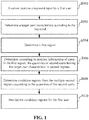
FIG. 1 is a flowchart of a position information providing method according to Embodiment 1 of the present application; -
FIG. 2 is a schematic structural diagram of a position information providing device according to Embodiment 2 of the present application; and -
FIG. 3 is a flowchart of a position information providing method according to Embodiment 3 of the present application. - To make the technical solutions and advantages of the embodiments of the present application clearer and easier to understand, exemplary embodiments of the present application are described in further detail below with reference to the accompanying drawings. Apparently, the described embodiments are merely some embodiments of the present application rather than exhaustion of all the embodiments. It should be noted that the embodiments in the present application and features in the embodiments may be combined with each other provided that they do not conflict with each other.
- During the invention process, the inventor finds that not only factors such as geographical position, traffic, environment, etc. but also human factors need to be considered in position selection.
- Due to a data acquisition bottleneck, conventional enterprise position selection has the following disadvantages:
- 1. The data acquisition cost is relatively high: the offline questionnaire survey consumes a lot of manpower and material resources.
- 2. Data timeliness is unsatisfactory and samples may be biased: it takes a relatively long time to obtain the survey result and finally select the position, and survey samples may also be biased due to human factors.
- 3. Online user behaviors are not considered in the conventional solution: people considered in the conventional spatial position selection are generally static people, while people in real world are usually dynamic. The life circle of people changes with time in 24 hours. As the Internet continuously affects people's life, online behavior data will also affect people's offline behaviors. However, users' online behaviors over the Internet cannot be considered in the conventional spatial position selection.
- Due to the foregoing disadvantages, the final position selection result is in lack of timeliness and is one-sided. To solve the above disadvantages, the present application employs the big data technology to reduce the data acquisition cost, enhance the data timeliness, and integrate users' online and offline behaviors, thus providing a new idea and solution for position selection of a merchant, which may supplement the conventional position selection manner. The present application employs big data according to a common offline position of a mobile Internet user in combination with an online behavior characteristic of the user, to help an enterprise user solve the position selection problem.
- The present application provides a solution of providing position information for a user according to positions and user characteristics of users in a target region, which can avoid the problem of low accuracy of a position information providing solution in the prior art, and improve the accuracy of position information provided for a user.
-
FIG. 1 is a flowchart of a position information providing method according to Embodiment 1 of the present application. - As shown in
FIG. 1 , the position information providing method according to Embodiment 1 of the present application includes the following steps: - S102: A server receives a keyword input by a first user.
- S103: A target user characteristic is determined according to the keyword.
- S104: A first region is determined, the first region including multiple second regions.
- S106: The quantities of second users having the target user characteristic in respective second regions are determined according to position information of users in the first region.
- S108: Candidate regions are determined from the multiple second regions according to the quantities of the second users.
- S110: The candidate regions are provided for the first user.
- In the embodiment of the present application, the first user may be a user having a spatial position selection requirement, and the second users may be users having the target user characteristic in the second regions.
- During specific implementation, the server may receive, in multiple manners, the keyword input by the first user. For example, the server receives a position information request message from a client terminal, the request message carrying a keyword input by the first user on the client terminal; or the server directly receives a keyword input by the first user through an input/output device of the server, which is not limited in the present application.
- During specific implementation, multiple common technical means in the art may be employed to receive the keyword input by the user. For example, the first user may directly input the keyword in an input field, or may select from options provided on a page for the user. Those skilled in the art should understand that the foregoing manners of receiving the keyword input by the user are merely illustrative, but are not intended to limit the present application.
- During specific implementation, the target user characteristic may be determined according to the keyword in multiple manners. For example, if the keyword input by the user is consistent with a target user characteristic pre-stored in the server, the target user characteristic may be determined directly. If the keyword input by the user is inconsistent with the target user characteristic pre-stored in the server, a corresponding target user characteristic may be determined according to a corresponding relationship between keywords and target user characteristics. The corresponding relationship may be pre-stored, or may be learned by the server from a network, which is not limited in the present application.
- In the embodiment of the present application, the target user characteristic includes character keywords of target users of the first user, such as a user's profession, age, consumption level, and consumption time period. Those skilled in the art should understand that all human-related characteristics are in the protection scope of the present application.
- During specific implementation, the first region may be determined according to current position information of the first user, or determined according to a target region input by the first user; or target region options may be provided for the user, and the first region may be determined according to the selection of the user. For example, it may be determined, according to an IP address using which the first user surfs the Internet, that the first user is in Beijing, and then it is determined that the first region is Beijing. Alternatively, a mobile phone number of the first user may be determined according to a login account of the first user, and then it may be determined, according to a position where the number accesses a mobile network, that the first user is currently located in Hangzhou, and then it is determined that the first region is Hangzhou. Alternatively, the user inputs "Chengdu", and then it is determined that the first region is Chengdu. Those skilled in the art should understand that the foregoing first region determining manners are all merely illustrative, but are not intended to limit the present application.
- To make the data for analysis more accurate, usually data in a latest period of time is selected as an analysis basis. Therefore, during specific implementation, positions of users in the first region in a predetermined period of time are usually selected to determine the quantity of second users. The predetermined period of time may be, for example, latest one month, latest two months, latest three months, or the like, which may be set according to a specific requirement or a specific data acquisition situation.
- During specific implementation, the positions of the users in the first region may be acquired according to networks accessed by the users in the first region, or may be acquired according to an application that the users log onto, for example, Alipay™ that the users log onto.
- During specific implementation, the step of determining second regions may be carried out before the keyword input by the first user is received, or after the first region is determined and before the quantities of second users having the target user characteristic in respective second regions in the first region are determined, which is not limited in the present application.
- During specific implementation, the candidate regions may be determined from the multiple second regions according to the quantities of the second users in multiple manners. For example, the second regions are sorted according to the quantities of the second users, and regions ranking at the top places are used as the candidate regions. Alternatively, second regions in which the quantities of the second users are greater than a predetermined numerical value are used as the candidate regions, and so on, which is not limited in the present application.
- During specific implementation, the candidate regions may be provided for the first user in multiple manners. For example, the candidate regions may be provided in a text form for the user, for example: first recommended region: region A; second recommended region: region B.... The candidate regions may also be provided for the user more intuitively, for example, highlighted on a map. For example, a region with a larger number of second users has a darker color and lower transparency, and a region with a smaller number of second users has a lighter color and higher transparency. Those skilled in the art should understand that all manners that can provide the candidate regions for the user are in the protection scope of the present application.
- During specific implementation, pre-excluded positions input by the user may further be removed before the candidate regions are provided for the first user. For example, the user inputs multiple second regions to which no attention needs to be paid, and in this case, before the candidate regions are provided for the first user, the second regions to which the user does not need to pay attention are excluded from the candidate regions, so that the position information provided for the user better meets the user requirement.
- For example, a user already owns a fancy cafe at position A of Beijing currently and still wants to open a chain store. At this time, the user is in Hangzhou. After using the position information providing method provided in this embodiment of the present application, the user selects "Beijing" as the first region. After inputting target user characteristics "white collar" and "high-frequency mid-amount", the user inputs the pre-excluded position A, and selects an area having a 2-kilometer radius around A as a coverage of A. After data processing and sorting, four second regions B, C, D, E except A are determined as the candidate regions, highlighted on the map of Beijing, and returned to the user as a reference for position selection.
- In the position information providing method in this embodiment of the present application, the quantities of users having a target user characteristic in second regions are determined according to a position of a user in a target region; candidate regions are determined according to the quantities of users having the target user characteristic, and finally the candidate regions are provided for the user. In this way, a user can intuitively know the distribution of target users in the second regions, avoiding the problem of low accuracy in the prior art caused by dependency on the range, quantity, and honesty degree of a questionnaire survey population, and improving the accuracy of position information provided for the user.
- Preferably, before the step of determining, according to position information of users in the first region, the quantities of second users having the target user characteristic in respective second regions, the method further includes: dividing the first region into multiple second regions according to a predetermined rule; acquiring positions of all third users in the first region within a predetermined period of time; and acquiring user characteristics of all the third users in the first region within the predetermined period of time.
- During specific implementation, the division of the first region into multiple second regions according to the predetermined rule may be dividing the first region according to a predetermined region size, for example 20m*20m, or may be first converting the collected user position into a longitude and latitude, and then converting the longitude and latitude into a corresponding second region according to an application of a geographical position service provider, such as an interface provided by Amap. Further, division may also be carried out by using a population density. For example, a region with a relatively high population density (such as downtown) may be divided by using a relatively small region size; an area with a relatively low population density (such as a suburb) may be divided by using a relatively small region size. Those skilled in the art should understand that the foregoing manners are merely shown for the illustrative purpose, but are not intended to limit the present application.
- During specific implementation, the position of the user may be acquired according to a network that the user accesses, or the position of the user may be acquired according to an application that the user logs onto.
- During specific implementation, in this embodiment of the present application, there is no fixed step sequence among the three steps of dividing the first region into multiple second regions according to a predetermined rule, acquiring positions of all third users in the first region within a predetermined period of time, and acquiring user characteristics of all the third users in the first region within the predetermined period of time, provided that they are performed before the step of determining the quantities of second users having the target user characteristic in respective second regions in the first region.
- In order to improve a response speed of providing position information for the user, before the keyword input by the user is received, the first region may be divided into multiple second regions in advance according to the predetermined rule; the positions of all the third users in the first region within the predetermined period of time are acquired; and the user characteristics of all the third users in the first region within the predetermined period of time are acquired. In this way, after the keyword that is input by the user and includes the first region and the target user characteristic is received, the quantities of users having the target user characteristic in the second regions can be acquired quickly. In addition, the second regions are sorted according to the quantities, and the position information is finally fed back to the user rapidly, thus improving user experience.
- Preferably, the step of acquiring positions of third users in the first region within a predetermined period of time specifically includes: acquiring multiple second regions where the third users in the first region are located when logging onto a predetermined application within the predetermined period of time, and the numbers of times each of the third users logs onto the application in respective second regions; and using a second region in which one third user logs onto the application for the largest number of times as the position of the third user.
- A region in which each user logs onto the predetermined application for the largest number of times is a life circle of the user in a recent period of time. During specific implementation, if the target user characteristic input by the first user further includes a time-period characteristic of the user in daytime or at night, when the number of times the user logs onto the predetermined application in each region is acquired, a specific time period in which the user logs onto the predetermined application in each region is further determined, so as to subsequently determine the number of times the user logs onto the application in daytime in each region, the number of times the user logs onto the application at night in each region, and the number of times the user logs onto the application in each region. Finally, a second region in which each user logs onto the application for the largest number of times is used as the position of the user. Alternatively, a second region in which each user logs onto the application for the largest number of times in the daytime is used as the daytime position of the user, and a second region in which each user logs onto the application for the largest number of times at night is used as the night position of the user.
- During specific implementation, the predetermined application may be any application having a position acquisition service function, for example, Alipay™, QQ, Weibo, Wechat, and so on. Those skilled in the art should understand that the foregoing description is merely for the illustrative purpose, but is not intended to limit the present application.
- During specific implementation, in order to determine the number of times the third user logs onto the predetermined application in the predetermined period of time, it is necessary to determine a corresponding relationship between the third user and the predetermined application. This corresponding relationship may be determined by various common means of those skilled in the art, for example, a corresponding relationship between an ID for logging onto the application and a mobile phone number of the user, a corresponding relationship between an IP address using which the user logs onto the application and an IP address of a user equipment, and so on. Those skilled in the art should understand that the foregoing description is merely for the illustrative purpose, but is not intended to limit the present application.
- Preferably, the step of acquiring user characteristics of all the third users in the first region within the predetermined period of time specifically includes: acquiring network information of the third users in the first region; and determining the user characteristics of the third users according to the network information.
- During specific implementation, the user characteristic of the third user may be determined in the following multiple manners. For example, the user characteristic of the third user is determined according to user information of the predetermined application that the user logs onto, for example, determining age, gender, birthday and so on of the user according to user information in an instant messaging tool (such as QQ). It is judged that the identity of the user is a college student/white-collar worker according to that a common logistic address of the user is a college/office building. It is judged that a consumption characteristic of the user is high-frequency high-amount according to the shopping frequency and amount of the user. Those skilled in the art should understand that the foregoing description is merely for the illustrative purpose, but is not intended to limit the present application.
- Preferably, the step of determining the quantities of second users having the target user characteristic in respective second regions specifically includes: determining the third users whose positions are in respective second regions; and screening out second users having the target user characteristic from the third users, and counting the quantities of the second users.
- Preferably, the step of determining candidate regions from the multiple second regions according to the quantities of the second users specifically includes: determining index values of the target user characteristic in respective second regions according to the quantities of the second users; sorting the multiple second regions according to the index values; and using the top M second regions as the candidate regions, M being a predetermined numerical value.
- Preferably, the step of determining index values of the target user characteristic in respective second regions according to the quantities of the second users specifically includes: sorting the second regions according to an ascending order of the quantities of the second users, and sequentially assigning sequence numbers from 1 to N, wherein N is a positive integer greater than 1; determining sequence number values corresponding to respective second regions according to the following formula: the sequence number value=(the sequence number of each second region/the total number of second regions-0.5)*2; and determining index values corresponding to respective second regions according to the following formula: the index value=round((ASIN(sequence number value)/π+0.5)*1000).
- To avoid statistical distortion, before the second regions are sorted according to an ascending order of the quantities of the second users, second regions in which the user quantities are less than a predetermined numerical value, such as 100, may be further eliminated.
- Through the foregoing algorithm, the quantities of users having the specified user characteristic are converted into indexes in the range of [0-100], and the occurrences of the indexes approximately meet a normal distribution.
- During specific implementation, other common methods of those skilled in the art may also be used to convert the user quantities into indexes, which is not limited in the present application.
- The position information providing method in the embodiment of the present application converts the quantity of users meeting a tag condition in a region into an index ranging from 0 to 100, so that sensitive user quantity data can be avoided without affecting the sequence of the quantities of second users in the regions. Meanwhile, all the quantities of users having the specified user characteristic are converted into regional indexes, so that the calculation amount can be reduced and calculations on user-level data are avoided, thus increasing the response speed of providing position information for the user, and improving user experience.
- Preferably, the first user inputs multiple target user characteristics. The step of determining the quantities of second users having the target user characteristic in respective second regions specifically includes: determining the quantities of multiple second users having the target user characteristics in respective second regions. The step of sorting the multiple second regions according to the quantities of the second users specifically includes: separately determining an index value of each target user characteristic in respective second regions according to the quantities of the multiple second users; determining comprehensive index values of respective second regions according to the index values of the target user characteristics and weights preset for the respective target user characteristics: the comprehensive index value=a*X1+b*X2+c*X3..., wherein XI, X2, X3... are index values of respective target user characteristics; and a, b, c... are weights of respective target user characteristics; and sorting the multiple second regions according to the comprehensive index values.
- In practical position selection, various aspects need to be considered comprehensively, including regional population density, regional age, regional gender, regional product penetration, and so on.
- During specific implementation, the preset weight may be set by the first user, or may be a default weight. For example, a mean weight is used for the user characteristics, or an empirical weight is used for the user characteristics. All the foregoing implementations are included in the protection scope of the present application, which are not limited in the present application.
- In the position information providing method in this embodiment of the present application, the quantities of users having a target user characteristic in second regions can be determined according to a position of a user in a target region after a keyword that is input by the user and includes the target user characteristic is received; candidate regions are determined according to the quantities of users having the target user characteristic, and finally the candidate regions are provided for the user. In this way, a user can intuitively know the distribution of target users in the second regions, avoiding the problem of low accuracy in the prior art caused by dependency on the range, quantity, and honesty degree of a questionnaire survey population, and improving the accuracy of position information provided for the user.
- Based on a same invention concept, the embodiments of the present application further provide a position information providing device. As the problem-solving principle of the device is similar to that of the position information providing method, for implementation of the device, reference may be made to the implementation of the method, and repeated parts are not described herein again.
-
FIG. 2 is a schematic structural diagram of a position information providing device according to Embodiment 2 of the present application. - As shown in
FIG. 2 , the positioninformation providing device 200 which is applied to a server and shown in Embodiment 2 of the present application includes the following modules: a receivingmodule 202 configured to receive a keyword input by a first user; acharacteristic determination module 203 configured to determine a target user characteristic according to the keyword; a firstregion determination module 204 configured to determine a first region, the first region including multiple second regions; a userquantity determination module 206 configured to determine, according to position information of users in the first region, the quantities of second users having the target user characteristic in respective second regions; a candidateregion determination module 208 configured to determine candidate regions from the multiple second regions according to the quantities of the second users; and aresult feedback module 210 configured to provide the candidate regions for the first user. - During specific implementation, the receiving
module 202 and theresult feedback module 210 are generally located on a client terminal. The firstregion determination module 204 may be located on the client terminal or a server terminal. The userquantity determination module 206 and the candidateregion determination module 208 are generally located on the server terminal. However, it should be understood that the foregoing implementations are merely shown to help those skilled in the prior art implement the present application, but are not intended to limit the present application. - Preferably, the position
information providing device 200 further includes: a region division module configured to divide the first region into multiple second regions according to a predetermined rule; a position acquisition module configured to acquire positions of all third users in the first region within a predetermined period of time; and a user characteristic acquisition module configured to acquire user characteristics of all the third users in the first region within the predetermined period of time. - Preferably, the position acquisition module specifically includes: a number-of-times acquisition sub-module configured to acquire multiple second regions where the third users in the first region are located when logging onto a predetermined application within the predetermined period of time, and the numbers of times each of the third users logs onto the application in respective second regions; and a position acquisition sub-module configured to use a second region in which one third user logs onto the application for the largest number of times as the position of the third user.
- Preferably, the user characteristic acquisition module specifically includes: a network information acquisition sub-module configured to acquire network information of the third users in the first region; and a user characteristic determination sub-module configured to determine the user characteristics of the third users according to the network information.
- Preferably, the user quantity determination module specifically includes: a user determination sub-module configured to determine the third users whose positions are in respective second regions; and a user quantity determination sub-module configured to screen out second users having the target user characteristic from the third users, and count the quantities of the second users.
- Preferably, the candidate region determination module specifically includes: a first index value determination sub-module configured to determine index values of the target user characteristic in respective second regions according to the quantities of the second users; an index value sorting sub-module configured to sort the multiple second regions according to the index values; and a candidate region determination sub-module configured to use the top M second regions as the candidate regions, M being a predetermined numerical value.
- Preferably, the first index value determination sub-module specifically includes: a sorting unit configured to sort the second regions according to an ascending order of the quantities of the second users, and sequentially assign sequence numbers from 1 to N, wherein N is a positive integer greater than 1; a sequence number value determination unit configured to determine sequence number values corresponding to respective second regions according to the following formula: the sequence number value=(the sequence number of each second region/the total number of second regions-0.5)*2; and an index value determination unit configured to determine index values corresponding to respective second regions according to the following formula: the index value=round((ASIN(sequence number value)/π+0.5)*1000).
- Preferably, there are multiple target user characteristics; the user quantity determination module is configured to determine the quantities of multiple second users having the target user characteristics in respective second regions. The sorting module specifically includes: a second index determination sub-module configured to separately determine an index value of each target user characteristic in respective second regions according to the quantities of the multiple second users; a comprehensive index value determination sub-module configured to determine comprehensive index values of respective second regions according to the index values of the target user characteristics and weights preset for the respective target user characteristics: the comprehensive index value=a*X1+b*X2+c*X3..., wherein XI, X2, X3... are index values of respective target user characteristics; and a, b, c... are weights of respective target user characteristics; and a comprehensive index value sorting sub-module configured to sort the multiple second regions according to the comprehensive index values.
- For ease of description, the parts of the device are separately described as various components or units based on functions. Definitely, during implementation of the present application, the functions of the components or units may be implemented in same or multiple pieces of software or hardware.
- After receiving a keyword that is input by a user and includes a target user characteristic, the position information providing device in this embodiment of the present application can determine the quantities of users having the target user characteristic in second regions according to a position of the user in a target region. The device further determines candidate regions according to the quantities of users having the target user characteristic, and finally provides the candidate regions for the user. In this way, a user can intuitively know the distribution of target users in the second regions, avoiding the problem of low accuracy in the prior art caused by dependency on the range, quantity, and honesty degree of a questionnaire survey population, and improving the accuracy of position information provided for the user.
-
FIG. 3 is a flowchart of a position information providing method according to Embodiment 3 of the present application. - As shown in
FIG. 3 , the position information providing method according to Embodiment 3 of the present application includes the following steps: - S302: Statistics about a position where the population most usually appears within recent 30 days are made.
- S304: Common offline positions of users in the population are determined according to the position and a corresponding region.
- S306: A position selection user inputs a target population characteristic, i.e., a user tag, where the user tag may include a daytime tag or a night tag according to a user requirement, or may not include daytime and night tags.
- S308: The quantities of users having various types of tags are counted in each region.
- S310: Region data is converted into region indexes.
- S312: Weights of the indexes are set.
- S314: Comprehensive indexes of the regions are obtained.
- S316: Several regions having largest comprehensive indexes are provided for the position selection user as candidate positions.
- In the position information providing method in this embodiment of the present application, the quantities of users having a target user characteristic in second regions can be determined according to a position of a user in a target region after a keyword that is input by the user and includes the target user characteristic is received; the second regions are further sorted according to the quantities of users having the target user characteristic; and finally the sorting result of the multiple second regions is provided for the user. In this way, a user can intuitively know the distribution of target users in the second regions, avoiding the problem of low accuracy in the prior art caused by dependency on the range, quantity, and honesty degree of a questionnaire survey population, and improving the accuracy of position information provided for the user.
- A specific implementation process of the position information providing method in the embodiment of the present application is described by using an example in which Alipay™ is used as the predetermined application. A position information providing method according to Embodiment 4 of the present application includes the following steps:
- S402: The longitude and latitude of a user are collected by using a mobile device of the user.
- S404: A corresponding relationship between the mobile device of the user and an Alipay™ user ID is acquired.
- S406: Longitude and latitude data is converted into a region ID according to an interface provided by Amap, and a corresponding relationship between the Alipay™ user ID and the region ID is acquired.
- S408: The number of times each Alipay™ user appears on each region ID in each time period within recent 30 days is counted.
- S410: The number of times each Alipay™ user appears on each region ID in the day time, the number of times each Alipay™ user appears on each region ID at night, and the total number of times each Alipay™ user appears on each region ID are counted.
- S412: Regions in which each Alipay™ user appears for the largest numbers of times are separately taken as a daytime region ID, a night region ID, and a common region ID of the Alipay™ user.
- S414: A position selection user inputs a target population characteristic, i.e., a user tag.
- S416: The quantity of users (cnt) meeting the user tag is counted in each region.
- S418: It is judged whether the quantity of users meeting the user tag in each region is greater than 100; if no, the region in which the quantity of users is less than 100 is eliminated; if yes, S420 is performed.
- S420: The regions are sorted according to an ascending order of cnt, and sequence numbers from 1 to N are assigned; for example, if there are 50 regions in which the quantity of users is greater than 100, sequence numbers from 1 to 50 are assigned.
- S422: Sequence number values of the regions are calculated: the sequence number value=(the sequence number of each second region/the total number of second regions-0.5)*2.
- S424: Index values of the regions are calculated: the index value=round((ASIN(sequence number value)/π+0.5)*1000).
- S426: An index region render graph is displayed on the map according to the index values.
- In the position information providing method in this embodiment of the present application, the quantities of users having a target user characteristic in second regions can be determined according to a position of a user in a target region after a keyword that is input by the user and includes the target user characteristic is received; the second regions are further sorted according to the quantities of users having the target user characteristic; and finally the sorting result of the multiple second regions is provided for the user. In this way, a user can intuitively know the distribution of target users in the second regions, avoiding the problem of low accuracy in the prior art caused by dependency on the range, quantity, and honesty degree of a questionnaire survey population, and improving the accuracy of position information provided for the user.
- Those skilled in the art should understand that the embodiments of the present invention may be provided as a method, a system, or a computer program product. Therefore, the embodiments of the present application may be implemented as a complete hardware embodiment, a complete software embodiment, or an embodiment combining software and hardware. Moreover, the present invention may be a computer program product implemented on one or more computer usable storage media (including, but not limited to, a magnetic disk memory, a CD-ROM, an optical memory, and the like) including computer usable program code.
- The present application is described with reference to flowcharts and/or block diagrams according to the method, device (system) and computer program product according to the embodiments of the present invention. It should be understood that a computer program instruction may be used to implement each process and/or block in the flowcharts and/or block diagrams and combinations of processes and/or blocks in the flowcharts and/or block diagrams. These computer program instructions may be provided for a general-purpose computer, a special-purpose computer, an embedded processor, or a processor of any other programmable data processing device to generate a machine, so that the instructions executed by a computer or a processor of any other programmable data processing device generate an apparatus for implementing a specified function in one or more processes in the flowcharts and/or in one or more blocks in the block diagrams.
- These computer program instructions may also be stored in a computer readable memory that can instruct the computer or any other programmable data processing device to work in a particular manner, such that the instructions stored in the computer readable memory generate an artifact that includes an instruction apparatus. The instruction apparatus implements a specified function in one or more processes in the flowcharts and/or in one or more blocks in the block diagrams.
- These computer program instructions may also be loaded onto a computer or another programmable data processing device, such that a series of operation steps are performed on the computer or another programmable device, thereby generating computer-implemented processing. Therefore, the instructions executed on the computer or another programmable device provide steps for implementing a specified function in one or more processes in the flowcharts and/or in one or more blocks in the block diagrams.
- Although preferred embodiments of the present application have been described, once knowing the basic inventive concept, those skilled in the art can make other changes and modifications on these embodiments. Therefore, the appended claims are intended to include the preferred embodiments and all changes and modifications falling in the scope of the embodiments of the present application
- Apparently, those skilled in the art can make various modifications and variations on the present application without departing from the spirit and scope of the present application. In this way, if these modifications and variations of the present application fall within the scope of claims of the present application and equivalent techniques thereof, the present application is also intended to include these modifications and variations.
Claims (16)
- A position information providing method, comprising:receiving, by a server, a keyword input by a first user;determining a target user characteristic according to the keyword;determining a first region, the first region comprising multiple second regions;determining, according to position information of users in the first region, the quantities of second users having the target user characteristic in respective second regions;determining candidate regions from the multiple second regions according to the quantities of the second users; andproviding the candidate regions for the first user.
- The method of claim 1, before the step of determining, according to position information of users in the first region, the quantities of second users having the target user characteristic in respective second regions, further comprising:dividing the first region into multiple second regions according to a predetermined rule;acquiring positions of all third users in the first region within a predetermined period of time; andacquiring user characteristics of all the third users in the first region within the predetermined period of time.
- The method of claim 2, wherein the step of acquiring positions of all third users in the first region within a predetermined period of time specifically comprises:acquiring multiple second regions where the third users in the first region are located when logging onto a predetermined application within the predetermined period of time, and the numbers of times each of the third users logs onto the application in respective second regions; andusing a second region in which one third user logs onto the application for the largest number of times as the position of the third user.
- The method of claim 2, wherein the step of acquiring user characteristics of all the third users in the first region within the predetermined period of time specifically comprises:acquiring network information of the third users in the first region; anddetermining the user characteristics of the third users according to the network information.
- The method of claim 4, wherein the step of determining the quantities of second users having the target user characteristic in respective second regions specifically comprises:determining the third users whose positions are in respective second regions; andscreening out second users having the target user characteristic from the third users, and counting the quantities of the second users.
- The method of claim 1, wherein the step of determining candidate regions from the multiple second regions according to the quantities of the second users specifically comprises:determining index values of the target user characteristic in respective second regions according to the quantities of the second users;sorting the multiple second regions according to the index values; andusing the top M second regions as the candidate regions, M being a predetermined numerical value.
- The method of claim 6, wherein the step of determining index values of the target user characteristic in respective second regions according to the quantities of the second users specifically comprises:sorting the second regions according to an ascending order of the quantities of the second users, and sequentially assigning sequence numbers from 1 to N, wherein N is a positive integer greater than 1;determining sequence number values corresponding to respective second regions according to the following formula: the sequence number value=(the sequence number of each second region/the total number of second regions-0.5)*2; anddetermining index values corresponding to respective second regions according to the following formula: the index value=round((ASIN(sequence number value)/π+0.5)*1000).
- The method of claim 1, wherein there are multiple target user characteristics,
the step of determining the quantities of second users having the target user characteristic in respective second regions specifically comprises: determining the quantities of multiple second users having the target user characteristics in respective second regions; and
the step of sorting the multiple second regions according to the quantities of the second users specifically comprises: separately determining an index value of each target user characteristic in respective second regions according to the quantities of the multiple second users;
determining comprehensive index values of respective second regions according to the index values of the target user characteristics and weights preset for the respective target user characteristics: the comprehensive index value=a*X1+b*X2+c*X3..., wherein XI, X2, X3... are index values of respective target user characteristics; and a, b, c... are weights of respective target user characteristics; and
sorting the multiple second regions according to the comprehensive index values. - A position information providing device, which is applied to a server and comprises:a receiving module configured to receive a keyword input by a first user;a characteristic determination module configured to determine a target user characteristic according to the keyword;a first region determination module configured to determine a first region, the first region comprising multiple second regions;a user quantity determination module configured to determine, according to position information of users in the first region, the quantities of second users having the target user characteristic in respective second regions;a candidate region determination module configured to determine candidate regions from the multiple second regions according to the quantities of the second users; anda result feedback module configured to provide the candidate regions for the first user.
- The device of claim 9, further comprising:a region division module configured to divide the first region into multiple second regions according to a predetermined rule;a position acquisition module configured to acquire positions of all third users in the first region within a predetermined period of time; anda user characteristic acquisition module configured to acquire user characteristics of all the third users in the first region within the predetermined period of time.
- The device of claim 10, wherein the position acquisition module specifically comprises:a number-of-times acquisition sub-module configured to acquire multiple second regions where the third users in the first region are located when logging onto a predetermined application within the predetermined period of time, and the numbers of times each of the third users logs onto the application in respective second regions; anda position acquisition sub-module configured to use a second region in which one third user logs onto the application for the largest number of times as the position of the third user.
- The device of claim 10, wherein the user characteristic acquisition module specifically comprises:a network information acquisition sub-module configured to acquire network information of the third users in the first region; anda user characteristic determination sub-module configured to determine the user characteristics of the third users according to the network information.
- The device of claim 12, wherein the user quantity determination module specifically comprises:a user determination sub-module configured to determine the third users whose positions are in respective second regions; anda user quantity determination sub-module configured to screen out second users having the target user characteristic from the third users, and count the quantities of the second users.
- The device of claim 9, wherein the candidate region determination module specifically comprises:a first index value determination sub-module configured to determine index values of the target user characteristic in respective second regions according to the quantities of the second users;an index value sorting sub-module configured to sort the multiple second regions according to the index values; anda candidate region determination sub-module configured to use the top M second regions as the candidate regions, M being a predetermined numerical value.
- The device of claim 14, wherein the first index value determination sub-module specifically comprises:a sorting unit configured to sort the second regions according to an ascending order of the quantities of the second users, and sequentially assign sequence numbers from 1 to N, wherein N is a positive integer greater than 1;a sequence number value determination unit configured to determine sequence number values corresponding to respective second regions according to the following formula: the sequence number value=(the sequence number of each second region/the total number of second regions-0.5)*2; andan index value determination unit configured to determine index values corresponding to respective second regions according to the following formula: the index value=round((ASIN(sequence number value)/π+0.5)*1000).
- The device of claim 9, wherein there are multiple target user characteristics; the user quantity determination module is configured to determine the quantities of multiple second users having the target user characteristics in respective second regions; and
the sorting module specifically comprises:a second index determination sub-module configured to separately determine an index value of each target user characteristic in respective second regions according to the quantities of the multiple second users;a comprehensive index value determination sub-module configured to determine comprehensive index values of respective second regions according to the index values of the target user characteristics and weights preset for the respective target user characteristics: the comprehensive index value=a*X1+b*X2+c*X3..., wherein XI, X2, X3... are index values of respective target user characteristics; and a, b, c... are weights of respective target user characteristics; anda comprehensive index value sorting sub-module configured to sort the multiple second regions according to the comprehensive index values.
Priority Applications (1)
| Application Number | Priority Date | Filing Date | Title |
|---|---|---|---|
| PL16806755T PL3309693T3 (en) | 2015-06-12 | 2016-06-03 | Position information providing method and device |
Applications Claiming Priority (2)
| Application Number | Priority Date | Filing Date | Title |
|---|---|---|---|
| CN201510323607.8A CN106294516A (en) | 2015-06-12 | 2015-06-12 | Method for providing position information and device |
| PCT/CN2016/084594 WO2016197857A1 (en) | 2015-06-12 | 2016-06-03 | Position information providing method and device |
Publications (3)
| Publication Number | Publication Date |
|---|---|
| EP3309693A1 true EP3309693A1 (en) | 2018-04-18 |
| EP3309693A4 EP3309693A4 (en) | 2018-12-05 |
| EP3309693B1 EP3309693B1 (en) | 2021-04-21 |
Family
ID=57502941
Family Applications (1)
| Application Number | Title | Priority Date | Filing Date |
|---|---|---|---|
| EP16806755.1A Active EP3309693B1 (en) | 2015-06-12 | 2016-06-03 | Position information providing method and device |
Country Status (9)
| Country | Link |
|---|---|
| US (1) | US20180101541A1 (en) |
| EP (1) | EP3309693B1 (en) |
| JP (1) | JP6756744B2 (en) |
| KR (1) | KR102175603B1 (en) |
| CN (1) | CN106294516A (en) |
| ES (1) | ES2878059T3 (en) |
| PL (1) | PL3309693T3 (en) |
| SG (2) | SG10201907393WA (en) |
| WO (1) | WO2016197857A1 (en) |
Families Citing this family (9)
| Publication number | Priority date | Publication date | Assignee | Title |
|---|---|---|---|---|
| JP2019128611A (en) * | 2018-01-19 | 2019-08-01 | ヤフー株式会社 | Generation apparatus, generation method, and generation program |
| CN114143286B (en) * | 2018-11-13 | 2023-05-12 | 创新先进技术有限公司 | Method, device and electronic device for locating a target object |
| CN109377328B (en) * | 2018-12-19 | 2021-03-30 | 口口相传(北京)网络技术有限公司 | Method and device for recommending geographical positions of merchant stores |
| CN110415051A (en) * | 2019-08-07 | 2019-11-05 | 广东圣火传媒科技股份有限公司 | A kind of store displays site selecting method and device |
| CN111905379B (en) * | 2020-08-20 | 2024-07-09 | 网易(杭州)网络有限公司 | Game data ranking determination method, game data ranking determination device, electronic equipment and storage medium |
| CN114119055B (en) * | 2020-09-01 | 2025-09-05 | 中国移动通信有限公司研究院 | Evaluation implementation method, device and storage medium |
| CN113313527B (en) * | 2021-06-09 | 2024-03-26 | 南京云联数科科技有限公司 | Store site selection method and system for chain stores |
| CN116012052A (en) * | 2021-10-18 | 2023-04-25 | 中国联合网络通信集团有限公司 | Data processing method, device and storage medium |
| CN114329238B (en) * | 2021-11-04 | 2026-01-02 | 北京百度网讯科技有限公司 | Data processing methods, apparatus, equipment and storage media |
Family Cites Families (13)
| Publication number | Priority date | Publication date | Assignee | Title |
|---|---|---|---|---|
| US9646025B2 (en) * | 2008-05-27 | 2017-05-09 | Qualcomm Incorporated | Method and apparatus for aggregating and presenting data associated with geographic locations |
| JP5155233B2 (en) * | 2009-04-01 | 2013-03-06 | 株式会社エヌ・ティ・ティ・ドコモ | POSITION INFORMATION ANALYSIS DEVICE AND POSITION INFORMATION ANALYSIS METHOD |
| US20120046995A1 (en) * | 2009-04-29 | 2012-02-23 | Waldeck Technology, Llc | Anonymous crowd comparison |
| JP5349254B2 (en) * | 2009-10-29 | 2013-11-20 | 株式会社エヌ・ティ・ティ・ドコモ | Area classification device, area classification system, and area classification method |
| US20120063367A1 (en) * | 2009-12-22 | 2012-03-15 | Waldeck Technology, Llc | Crowd and profile based communication addresses |
| US20120066303A1 (en) * | 2010-03-03 | 2012-03-15 | Waldeck Technology, Llc | Synchronized group location updates |
| KR101420180B1 (en) * | 2010-03-09 | 2014-07-21 | 한국전자통신연구원 | Apparatus for analyzing of floating population information and method thereof |
| CN102737047A (en) * | 2011-04-01 | 2012-10-17 | 北京千橡网景科技发展有限公司 | Display method and equipment for contents |
| KR20130015336A (en) * | 2011-08-03 | 2013-02-14 | 에스케이텔레콤 주식회사 | System, apparatus, method and terminal thereof for providing commercial area information |
| CN103944932B (en) * | 2013-01-18 | 2017-07-14 | 阿里巴巴集团控股有限公司 | Search for, determine the method and server of active regions |
| CN103248723B (en) * | 2013-04-10 | 2015-11-25 | 腾讯科技(深圳)有限公司 | The defining method of region, a kind of IP address and device |
| CN104516915B (en) * | 2013-09-30 | 2018-03-23 | 腾讯科技(北京)有限公司 | A kind of media data dissemination method and device based on microblogging timeline |
| CN104636482B (en) * | 2015-02-16 | 2019-03-26 | 百度在线网络技术(北京)有限公司 | Method and apparatus for determining destination address |
-
2015
- 2015-06-12 CN CN201510323607.8A patent/CN106294516A/en active Pending
-
2016
- 2016-06-03 SG SG10201907393W patent/SG10201907393WA/en unknown
- 2016-06-03 EP EP16806755.1A patent/EP3309693B1/en active Active
- 2016-06-03 PL PL16806755T patent/PL3309693T3/en unknown
- 2016-06-03 WO PCT/CN2016/084594 patent/WO2016197857A1/en not_active Ceased
- 2016-06-03 KR KR1020187000412A patent/KR102175603B1/en active Active
- 2016-06-03 JP JP2017564584A patent/JP6756744B2/en active Active
- 2016-06-03 ES ES16806755T patent/ES2878059T3/en active Active
- 2016-06-03 SG SG11201710020TA patent/SG11201710020TA/en unknown
-
2017
- 2017-12-11 US US15/838,100 patent/US20180101541A1/en not_active Abandoned
Also Published As
| Publication number | Publication date |
|---|---|
| WO2016197857A1 (en) | 2016-12-15 |
| KR20180017085A (en) | 2018-02-20 |
| EP3309693A4 (en) | 2018-12-05 |
| EP3309693B1 (en) | 2021-04-21 |
| CN106294516A (en) | 2017-01-04 |
| SG10201907393WA (en) | 2019-10-30 |
| KR102175603B1 (en) | 2020-12-16 |
| PL3309693T3 (en) | 2021-11-15 |
| US20180101541A1 (en) | 2018-04-12 |
| JP6756744B2 (en) | 2020-09-16 |
| JP2018517218A (en) | 2018-06-28 |
| SG11201710020TA (en) | 2018-01-30 |
| ES2878059T3 (en) | 2021-11-18 |
Similar Documents
| Publication | Publication Date | Title |
|---|---|---|
| EP3309693B1 (en) | Position information providing method and device | |
| US11128582B2 (en) | Emoji recommendation method and apparatus | |
| JP7422823B2 (en) | Dynamic application content analysis | |
| CN102073699B (en) | For improving the method for Search Results, device and equipment based on user behavior | |
| US20200065061A1 (en) | Method and apparatus for processing information | |
| JP2015521331A (en) | Method and apparatus for recommending candidate terms based on geographic location | |
| US20170068902A1 (en) | Modeling of Geospatial Location Over Time | |
| CN102855309A (en) | Information recommendation method and device based on user behavior associated analysis | |
| CN105975537A (en) | Sorting method and device of application program | |
| US20210133227A1 (en) | Access points for maps | |
| US11734311B1 (en) | Determining additional features for a task entry based on a user habit | |
| CN106789147B (en) | Flow analysis method and device | |
| CN108521366A (en) | Expression method for pushing and electronic equipment | |
| AU2015305730A1 (en) | Selective inclusion of members in a results list | |
| CN107256231A (en) | A kind of Team Member's identification equipment, method and system | |
| CN108415981B (en) | Data dimension generation method, device, equipment and computer readable storage medium | |
| CN110347926A (en) | Method and apparatus for pushed information | |
| WO2020085994A1 (en) | Shared anonymized databases of telecommunications-derived behavioral data | |
| CN110659406A (en) | Searching method and device | |
| US20140025674A1 (en) | User-Specific Search Result Re-ranking | |
| CN117278508B (en) | Recommendation method and device of 5G message chat robot and electronic equipment | |
| CN113360765B (en) | Method, device, electronic device and medium for processing event information | |
| CN111695047A (en) | User clustering method and device, electronic equipment and storage medium | |
| CN115426202B (en) | Scanning task issuing method and device, computer equipment and readable storage medium | |
| CN108923938B (en) | Channel selection method and equipment |
Legal Events
| Date | Code | Title | Description |
|---|---|---|---|
| STAA | Information on the status of an ep patent application or granted ep patent |
Free format text: STATUS: THE INTERNATIONAL PUBLICATION HAS BEEN MADE |
|
| PUAI | Public reference made under article 153(3) epc to a published international application that has entered the european phase |
Free format text: ORIGINAL CODE: 0009012 |
|
| STAA | Information on the status of an ep patent application or granted ep patent |
Free format text: STATUS: REQUEST FOR EXAMINATION WAS MADE |
|
| 17P | Request for examination filed |
Effective date: 20180112 |
|
| AK | Designated contracting states |
Kind code of ref document: A1 Designated state(s): AL AT BE BG CH CY CZ DE DK EE ES FI FR GB GR HR HU IE IS IT LI LT LU LV MC MK MT NL NO PL PT RO RS SE SI SK SM TR |
|
| AX | Request for extension of the european patent |
Extension state: BA ME |
|
| DAV | Request for validation of the european patent (deleted) | ||
| DAX | Request for extension of the european patent (deleted) | ||
| A4 | Supplementary search report drawn up and despatched |
Effective date: 20181102 |
|
| RIC1 | Information provided on ipc code assigned before grant |
Ipc: G06F 7/08 20060101ALI20181026BHEP Ipc: G06F 17/30 20060101AFI20181026BHEP |
|
| STAA | Information on the status of an ep patent application or granted ep patent |
Free format text: STATUS: EXAMINATION IS IN PROGRESS |
|
| 17Q | First examination report despatched |
Effective date: 20191106 |
|
| REG | Reference to a national code |
Ref country code: DE Ref legal event code: R079 Ref document number: 602016056575 Country of ref document: DE Free format text: PREVIOUS MAIN CLASS: G06F0017300000 Ipc: G06F0016220000 |
|
| GRAP | Despatch of communication of intention to grant a patent |
Free format text: ORIGINAL CODE: EPIDOSNIGR1 |
|
| STAA | Information on the status of an ep patent application or granted ep patent |
Free format text: STATUS: GRANT OF PATENT IS INTENDED |
|
| RIC1 | Information provided on ipc code assigned before grant |
Ipc: G06F 16/22 20190101AFI20201110BHEP Ipc: G06F 7/08 20060101ALI20201110BHEP |
|
| INTG | Intention to grant announced |
Effective date: 20201130 |
|
| RAP1 | Party data changed (applicant data changed or rights of an application transferred) |
Owner name: ADVANCED NEW TECHNOLOGIES CO., LTD. |
|
| GRAS | Grant fee paid |
Free format text: ORIGINAL CODE: EPIDOSNIGR3 |
|
| GRAA | (expected) grant |
Free format text: ORIGINAL CODE: 0009210 |
|
| STAA | Information on the status of an ep patent application or granted ep patent |
Free format text: STATUS: THE PATENT HAS BEEN GRANTED |
|
| AK | Designated contracting states |
Kind code of ref document: B1 Designated state(s): AL AT BE BG CH CY CZ DE DK EE ES FI FR GB GR HR HU IE IS IT LI LT LU LV MC MK MT NL NO PL PT RO RS SE SI SK SM TR |
|
| REG | Reference to a national code |
Ref country code: GB Ref legal event code: FG4D |
|
| REG | Reference to a national code |
Ref country code: CH Ref legal event code: EP |
|
| REG | Reference to a national code |
Ref country code: DE Ref legal event code: R096 Ref document number: 602016056575 Country of ref document: DE Ref country code: IE Ref legal event code: FG4D |
|
| REG | Reference to a national code |
Ref country code: AT Ref legal event code: REF Ref document number: 1385384 Country of ref document: AT Kind code of ref document: T Effective date: 20210515 |
|
| REG | Reference to a national code |
Ref country code: FI Ref legal event code: FGE |
|
| REG | Reference to a national code |
Ref country code: NL Ref legal event code: FP |
|
| REG | Reference to a national code |
Ref country code: LT Ref legal event code: MG9D |
|
| REG | Reference to a national code |
Ref country code: NO Ref legal event code: T2 Effective date: 20210421 |
|
| REG | Reference to a national code |
Ref country code: AT Ref legal event code: MK05 Ref document number: 1385384 Country of ref document: AT Kind code of ref document: T Effective date: 20210421 |
|
| PG25 | Lapsed in a contracting state [announced via postgrant information from national office to epo] |
Ref country code: LT Free format text: LAPSE BECAUSE OF FAILURE TO SUBMIT A TRANSLATION OF THE DESCRIPTION OR TO PAY THE FEE WITHIN THE PRESCRIBED TIME-LIMIT Effective date: 20210421 Ref country code: AT Free format text: LAPSE BECAUSE OF FAILURE TO SUBMIT A TRANSLATION OF THE DESCRIPTION OR TO PAY THE FEE WITHIN THE PRESCRIBED TIME-LIMIT Effective date: 20210421 Ref country code: BG Free format text: LAPSE BECAUSE OF FAILURE TO SUBMIT A TRANSLATION OF THE DESCRIPTION OR TO PAY THE FEE WITHIN THE PRESCRIBED TIME-LIMIT Effective date: 20210721 Ref country code: HR Free format text: LAPSE BECAUSE OF FAILURE TO SUBMIT A TRANSLATION OF THE DESCRIPTION OR TO PAY THE FEE WITHIN THE PRESCRIBED TIME-LIMIT Effective date: 20210421 |
|
| REG | Reference to a national code |
Ref country code: ES Ref legal event code: FG2A Ref document number: 2878059 Country of ref document: ES Kind code of ref document: T3 Effective date: 20211118 |
|
| PG25 | Lapsed in a contracting state [announced via postgrant information from national office to epo] |
Ref country code: LV Free format text: LAPSE BECAUSE OF FAILURE TO SUBMIT A TRANSLATION OF THE DESCRIPTION OR TO PAY THE FEE WITHIN THE PRESCRIBED TIME-LIMIT Effective date: 20210421 Ref country code: IS Free format text: LAPSE BECAUSE OF FAILURE TO SUBMIT A TRANSLATION OF THE DESCRIPTION OR TO PAY THE FEE WITHIN THE PRESCRIBED TIME-LIMIT Effective date: 20210821 Ref country code: GR Free format text: LAPSE BECAUSE OF FAILURE TO SUBMIT A TRANSLATION OF THE DESCRIPTION OR TO PAY THE FEE WITHIN THE PRESCRIBED TIME-LIMIT Effective date: 20210722 Ref country code: SE Free format text: LAPSE BECAUSE OF FAILURE TO SUBMIT A TRANSLATION OF THE DESCRIPTION OR TO PAY THE FEE WITHIN THE PRESCRIBED TIME-LIMIT Effective date: 20210421 Ref country code: RS Free format text: LAPSE BECAUSE OF FAILURE TO SUBMIT A TRANSLATION OF THE DESCRIPTION OR TO PAY THE FEE WITHIN THE PRESCRIBED TIME-LIMIT Effective date: 20210421 Ref country code: PT Free format text: LAPSE BECAUSE OF FAILURE TO SUBMIT A TRANSLATION OF THE DESCRIPTION OR TO PAY THE FEE WITHIN THE PRESCRIBED TIME-LIMIT Effective date: 20210823 |
|
| REG | Reference to a national code |
Ref country code: DE Ref legal event code: R097 Ref document number: 602016056575 Country of ref document: DE |
|
| PG25 | Lapsed in a contracting state [announced via postgrant information from national office to epo] |
Ref country code: DK Free format text: LAPSE BECAUSE OF FAILURE TO SUBMIT A TRANSLATION OF THE DESCRIPTION OR TO PAY THE FEE WITHIN THE PRESCRIBED TIME-LIMIT Effective date: 20210421 Ref country code: CZ Free format text: LAPSE BECAUSE OF FAILURE TO SUBMIT A TRANSLATION OF THE DESCRIPTION OR TO PAY THE FEE WITHIN THE PRESCRIBED TIME-LIMIT Effective date: 20210421 Ref country code: EE Free format text: LAPSE BECAUSE OF FAILURE TO SUBMIT A TRANSLATION OF THE DESCRIPTION OR TO PAY THE FEE WITHIN THE PRESCRIBED TIME-LIMIT Effective date: 20210421 Ref country code: MC Free format text: LAPSE BECAUSE OF FAILURE TO SUBMIT A TRANSLATION OF THE DESCRIPTION OR TO PAY THE FEE WITHIN THE PRESCRIBED TIME-LIMIT Effective date: 20210421 Ref country code: RO Free format text: LAPSE BECAUSE OF FAILURE TO SUBMIT A TRANSLATION OF THE DESCRIPTION OR TO PAY THE FEE WITHIN THE PRESCRIBED TIME-LIMIT Effective date: 20210421 Ref country code: SM Free format text: LAPSE BECAUSE OF FAILURE TO SUBMIT A TRANSLATION OF THE DESCRIPTION OR TO PAY THE FEE WITHIN THE PRESCRIBED TIME-LIMIT Effective date: 20210421 Ref country code: SK Free format text: LAPSE BECAUSE OF FAILURE TO SUBMIT A TRANSLATION OF THE DESCRIPTION OR TO PAY THE FEE WITHIN THE PRESCRIBED TIME-LIMIT Effective date: 20210421 |
|
| PLBE | No opposition filed within time limit |
Free format text: ORIGINAL CODE: 0009261 |
|
| STAA | Information on the status of an ep patent application or granted ep patent |
Free format text: STATUS: NO OPPOSITION FILED WITHIN TIME LIMIT |
|
| REG | Reference to a national code |
Ref country code: BE Ref legal event code: MM Effective date: 20210630 |
|
| 26N | No opposition filed |
Effective date: 20220124 |
|
| PG25 | Lapsed in a contracting state [announced via postgrant information from national office to epo] |
Ref country code: LU Free format text: LAPSE BECAUSE OF NON-PAYMENT OF DUE FEES Effective date: 20210603 |
|
| PG25 | Lapsed in a contracting state [announced via postgrant information from national office to epo] |
Ref country code: IE Free format text: LAPSE BECAUSE OF NON-PAYMENT OF DUE FEES Effective date: 20210603 |
|
| PG25 | Lapsed in a contracting state [announced via postgrant information from national office to epo] |
Ref country code: IS Free format text: LAPSE BECAUSE OF FAILURE TO SUBMIT A TRANSLATION OF THE DESCRIPTION OR TO PAY THE FEE WITHIN THE PRESCRIBED TIME-LIMIT Effective date: 20210821 Ref country code: AL Free format text: LAPSE BECAUSE OF FAILURE TO SUBMIT A TRANSLATION OF THE DESCRIPTION OR TO PAY THE FEE WITHIN THE PRESCRIBED TIME-LIMIT Effective date: 20210421 |
|
| PG25 | Lapsed in a contracting state [announced via postgrant information from national office to epo] |
Ref country code: BE Free format text: LAPSE BECAUSE OF NON-PAYMENT OF DUE FEES Effective date: 20210630 |
|
| PGFP | Annual fee paid to national office [announced via postgrant information from national office to epo] |
Ref country code: TR Payment date: 20220526 Year of fee payment: 7 |
|
| P01 | Opt-out of the competence of the unified patent court (upc) registered |
Effective date: 20230521 |
|
| PG25 | Lapsed in a contracting state [announced via postgrant information from national office to epo] |
Ref country code: CY Free format text: LAPSE BECAUSE OF FAILURE TO SUBMIT A TRANSLATION OF THE DESCRIPTION OR TO PAY THE FEE WITHIN THE PRESCRIBED TIME-LIMIT Effective date: 20210421 |
|
| PG25 | Lapsed in a contracting state [announced via postgrant information from national office to epo] |
Ref country code: HU Free format text: LAPSE BECAUSE OF FAILURE TO SUBMIT A TRANSLATION OF THE DESCRIPTION OR TO PAY THE FEE WITHIN THE PRESCRIBED TIME-LIMIT; INVALID AB INITIO Effective date: 20160603 |
|
| PG25 | Lapsed in a contracting state [announced via postgrant information from national office to epo] |
Ref country code: MK Free format text: LAPSE BECAUSE OF FAILURE TO SUBMIT A TRANSLATION OF THE DESCRIPTION OR TO PAY THE FEE WITHIN THE PRESCRIBED TIME-LIMIT Effective date: 20210421 |
|
| PGFP | Annual fee paid to national office [announced via postgrant information from national office to epo] |
Ref country code: NO Payment date: 20240222 Year of fee payment: 9 |
|
| PGFP | Annual fee paid to national office [announced via postgrant information from national office to epo] |
Ref country code: IT Payment date: 20240513 Year of fee payment: 9 Ref country code: FI Payment date: 20240612 Year of fee payment: 9 |
|
| PG25 | Lapsed in a contracting state [announced via postgrant information from national office to epo] |
Ref country code: MT Free format text: LAPSE BECAUSE OF FAILURE TO SUBMIT A TRANSLATION OF THE DESCRIPTION OR TO PAY THE FEE WITHIN THE PRESCRIBED TIME-LIMIT Effective date: 20210421 |
|
| PGFP | Annual fee paid to national office [announced via postgrant information from national office to epo] |
Ref country code: CH Payment date: 20240701 Year of fee payment: 9 Ref country code: ES Payment date: 20240701 Year of fee payment: 9 |
|
| PGFP | Annual fee paid to national office [announced via postgrant information from national office to epo] |
Ref country code: PL Payment date: 20240603 Year of fee payment: 9 |
|
| PGFP | Annual fee paid to national office [announced via postgrant information from national office to epo] |
Ref country code: NL Payment date: 20250409 Year of fee payment: 10 |
|
| PGFP | Annual fee paid to national office [announced via postgrant information from national office to epo] |
Ref country code: DE Payment date: 20250402 Year of fee payment: 10 |
|
| PGFP | Annual fee paid to national office [announced via postgrant information from national office to epo] |
Ref country code: GB Payment date: 20250401 Year of fee payment: 10 |
|
| PGFP | Annual fee paid to national office [announced via postgrant information from national office to epo] |
Ref country code: FR Payment date: 20250401 Year of fee payment: 10 |
|
| PG25 | Lapsed in a contracting state [announced via postgrant information from national office to epo] |
Ref country code: FI Free format text: LAPSE BECAUSE OF NON-PAYMENT OF DUE FEES Effective date: 20250603 |
|
| REG | Reference to a national code |
Ref country code: CH Ref legal event code: H13 Free format text: ST27 STATUS EVENT CODE: U-0-0-H10-H13 (AS PROVIDED BY THE NATIONAL OFFICE) Effective date: 20260127 |
|
| PG25 | Lapsed in a contracting state [announced via postgrant information from national office to epo] |
Ref country code: NO Free format text: LAPSE BECAUSE OF NON-PAYMENT OF DUE FEES Effective date: 20250630 |
|
| PG25 | Lapsed in a contracting state [announced via postgrant information from national office to epo] |
Ref country code: IT Free format text: LAPSE BECAUSE OF NON-PAYMENT OF DUE FEES Effective date: 20250603 |
|
| PG25 | Lapsed in a contracting state [announced via postgrant information from national office to epo] |
Ref country code: CH Free format text: LAPSE BECAUSE OF NON-PAYMENT OF DUE FEES Effective date: 20250630 |