EP3309678A1 - Method and system for restarting network service - Google Patents
Method and system for restarting network service Download PDFInfo
- Publication number
- EP3309678A1 EP3309678A1 EP16891255.8A EP16891255A EP3309678A1 EP 3309678 A1 EP3309678 A1 EP 3309678A1 EP 16891255 A EP16891255 A EP 16891255A EP 3309678 A1 EP3309678 A1 EP 3309678A1
- Authority
- EP
- European Patent Office
- Prior art keywords
- packet
- network service
- restarting
- space
- pending
- Prior art date
- Legal status (The legal status is an assumption and is not a legal conclusion. Google has not performed a legal analysis and makes no representation as to the accuracy of the status listed.)
- Ceased
Links
Images

Classifications
-
- G—PHYSICS
- G06—COMPUTING OR CALCULATING; COUNTING
- G06F—ELECTRIC DIGITAL DATA PROCESSING
- G06F9/00—Arrangements for program control, e.g. control units
- G06F9/06—Arrangements for program control, e.g. control units using stored programs, i.e. using an internal store of processing equipment to receive or retain programs
- G06F9/44—Arrangements for executing specific programs
- G06F9/445—Program loading or initiating
-
- G—PHYSICS
- G06—COMPUTING OR CALCULATING; COUNTING
- G06F—ELECTRIC DIGITAL DATA PROCESSING
- G06F9/00—Arrangements for program control, e.g. control units
- G06F9/06—Arrangements for program control, e.g. control units using stored programs, i.e. using an internal store of processing equipment to receive or retain programs
- G06F9/44—Arrangements for executing specific programs
- G06F9/4401—Bootstrapping
- G06F9/4406—Loading of operating system
-
- G—PHYSICS
- G06—COMPUTING OR CALCULATING; COUNTING
- G06F—ELECTRIC DIGITAL DATA PROCESSING
- G06F9/00—Arrangements for program control, e.g. control units
- G06F9/06—Arrangements for program control, e.g. control units using stored programs, i.e. using an internal store of processing equipment to receive or retain programs
- G06F9/44—Arrangements for executing specific programs
- G06F9/445—Program loading or initiating
- G06F9/44505—Configuring for program initiating, e.g. using registry, configuration files
- G06F9/4451—User profiles; Roaming
-
- G—PHYSICS
- G06—COMPUTING OR CALCULATING; COUNTING
- G06F—ELECTRIC DIGITAL DATA PROCESSING
- G06F9/00—Arrangements for program control, e.g. control units
- G06F9/06—Arrangements for program control, e.g. control units using stored programs, i.e. using an internal store of processing equipment to receive or retain programs
- G06F9/46—Multiprogramming arrangements
- G06F9/48—Program initiating; Program switching, e.g. by interrupt
- G06F9/4806—Task transfer initiation or dispatching
- G06F9/4843—Task transfer initiation or dispatching by program, e.g. task dispatcher, supervisor, operating system
- G06F9/485—Task life-cycle, e.g. stopping, restarting, resuming execution
-
- G—PHYSICS
- G06—COMPUTING OR CALCULATING; COUNTING
- G06F—ELECTRIC DIGITAL DATA PROCESSING
- G06F2209/00—Indexing scheme relating to G06F9/00
- G06F2209/48—Indexing scheme relating to G06F9/48
- G06F2209/482—Application
Definitions
- the present disclosure relates to the technical field of Linux operating system, and in particular, relates to the technical field of network communication and system configuration in Linux operating system, and more specifically, relates to a method and a system for restarting network service.
- Some network services have to restart the process in order to complete the restart or to reload configuration files, and a typical example is the HAProxy network service.
- the HAProxy network service binds a new process to the same IP address and the same port as the original process to listen to the new connection, then sends a signal to notify the original process to shut down the socket on the listening port.
- the new connections may arrive during a short time period in which both the new and original processes are bound to the same IP address and the same port while the listening socket of the original process has not been closed.
- the first new connected packet (Initialization Synchronization packet, SYN packet) may be assigned to any one of the original and new processes. If the SYN packet is assigned to the original process while the listening socket of the original process is shut down, according to the TCP protocol, the server sends a TCP RST packet to the client to reset the connection.
- One simple solution is to discard the received new SYN packet through configuring Iptables rule when reloading the process.
- the client does not receive SYN/ACK packet, after a period of time, the client will re-send the SYN packet.
- the disadvantage of this solution is that the client has to wait for a certain period of time until the time is out, before resending the SYN packet.
- the waiting time is often substantially long, for example, more than 1 second, while the time for reloading the process requires only tens of milliseconds.
- the new connection is not going to be reset, a longer time delay may be introduced.
- Another applicable solution is to utilize Linux traffic control tools (TC).
- TC Linux traffic control tools
- Iptables are adopted to label the new incoming SYN packets, then the TC tool is adopted to temporarily cache these packets. After the process completes the reloading, the SYN packets are released.
- this solution may have a relatively short time delay.
- the TC tool is only capable of controlling the outflow of the traffic, the corresponding application scenarios may be rather limited.
- one objective of the present disclosure is to provide a method and system for restarting network services, which may solve the problems of substantially long waiting time of processing a pending packet or restricted processing when restarting network service in the prior art.
- the present disclosure provides a method for restarting a network service, comprising: in response to receiving a preparation signal for restarting a network service process, configuring a packet enqueueing rule for Iptables in a Linux operating system to cache a pending packet from a kernel space to a user space; and in response to receiving a completion signal of completing restarting the network service process, reading the pending packet cached in the user space and releasing the pending packet which has been read to the kernel space, such that a connection between the pending packet and a new process of the network service is established.
- the method for restarting a network service includes configuring the packet enqueueing rule with the IptablesNFQUEUE/QUEUE target, and caching the pending packet from the kernel space to the user space.
- the method for restarting a network service includes implementing a packet releasing program in the user space to read the pending packet cached in the user space and release the pending packet which has been read to the kernel space, in response to receiving the completion signal of completing restarting the network service process.
- the packet releasing program callslibNetfilter queue library or libipq library.
- the present disclosure provide a system for restarting a network service, comprising: a configuration module, configured to, in response to receiving a preparation signal for restarting a network service process, configuring a packet enqueueing rule for Iptables in a Linux operating system to cache a pending packet from a kernel space to a user space; and a release module, configured to, in response to receiving a completion signal of completing restarting the network service process, reading the pending packet cached in the user space and releasing the pending packet which has been read to the kernel space, such that a connection between the pending packet and a new process of the network service is established.
- the configuration module is further configured to configure the packet enqueueing rule with the IptablesNFQUEUE/QUEUE target, and cache the pending packet from the kernel space to the user space.
- the release module includes a packet releasing program implemented in the user space, through executing the packet releasing program, the release module is configured to read the pending packet cached in the user space and release the pending packet which has been read to the kernel space, in response to receiving the completion signal of completing restarting the network service process.
- the packet releasing program calls libNetfilter queue library or libipq library.
- the present disclosure provides a method and a system for restarting a network service, which have the following advantages:
- One objective of the present disclosure is to provide a method and system for restarting network service, which may solve the problems of substantially long waiting time of processing a pending packet or restricted processing when restarting network service in the prior art.
- the principles and embodiments of the method and system for restarting network services provided by the present disclosure will be described in detail below, in view of which those skilled in the art can understand the disclosed method and system for restarting network service without creative effort.
- the present disclosure provides a method and a system for restarting a network service, which may be applicable to restart a network service in Linux operating system.
- the disclosed method and system for restarting the network service may be able to restart the network service with zero downtime, such that when restarting the network service, all the new connections may be normally processed without a connection interpretation.
- the disclosed method and system for restarting the network service may have various advantages, such as simple configuration, valid for both incoming and outgoing connections, and unrestricted application scenarios, etc.
- FIG. 1 illustrates a flow chart of an exemplary method of restarting a network service consistent with disclosed embodiments.
- the method of restarting the network service may comprise the following steps.
- Step S1 In response to receiving a preparation signal for restarting a network service process, configuring a packet enqueueing rule for Iptables in a Linux operating system to cache a pending packet from a kernel space to a user space.
- Iptables is an IP packet filtering system integrated with the latest 3.5 version Linux kernel. That is, in the disclosed embodiments, the IP packet filtering system may be a Netfilter/Iptables packet filtering system.
- the IP packet filtering system may better control the IP packet filtering and firewall configuration in the Linux operating system.
- the Netfilter/Iptables packet filtering system is a powerful tool for adding, editing and removing rules. Although named as a single entity, in fact the Netfilter/Iptables packet filtering system includes two components: Netfilter and Iptables.
- the Iptables component is a user space tool which facilitates the insert, modification, and removal of rules in a packet filtering table.
- the Netfilter component also known as a kernel space component, is a part of the Linux kernel.
- the Netfilter component may consist of packet filtering tables containing a set of rules through which that the kernel controls packet filtering.
- Netfilter is a subsystem in the Linux kernel and is related to network functionality. As a general and abstract framework, Netfilter provides packet filtering, packet modification, network address translation, and other functions.
- the IP packet filtering system may cache the pending packets into the user space in a queue form. Further, the IP packet filtering system may configure the packet enqueueing rule with the IptablesNFQUEUE/QUEUE target, and cache the pending packet from the kernel space to the user space.
- NFQUEUE or QUEUE is a specific function module of Netfilter/Iptables, and the NFQUEUE or QUEUE function module may be configured to enqueue the packets.
- the packet enqueueing rule for the NFQUEUE or QUEUE function module to enqueue packets may be configured according to the required configuration parameters.
- an Iptables rule for caching a TCP SYN packet to the user spacer by Netfilter's NFQUEUE or QUEUE target may be added, in which the TCP SYN packet is received by the listening port of the service process.
- the new TCP SYN packet may not establish a connection with any of new and original service processes.
- the disclosed method may utilize NFQUEUE or QUEUE to enqueue packets into the user space, then process and decide the destination of the enqueued packets (accept, discard or further processing, etc.) by a pre-determined user-space program. If the incoming packets are not immediately processed by the pre-determined user-space program, the packets may be temporarily cached in the queue. Thus, NFQUEUE or QUEUE function of NetFilter may actually provide a way to cache packets.
- Step S2 in response to receiving a completion signal of completing restarting the network service process, reading the pending packet cached in the user space and releasing the pending packet which has been read to the kernel space, such that a connection between the pending packet and a new process of the network service is established.
- the pending packet cached in the user space may be read and released to the kernel space, such that a connection between the pending packet and a new process of the network service may be established.
- a packet releasing program may be implemented in the user space.
- the packet releasing program may be configured to read the pending packet cached in the user space and release the pending packet which has been read to the kernel space, in response to receiving the completion signal of completing restarting the network service process.
- the packet releasing program may call libNetfilter_queue library or libipq library.
- the packet releasing program may be running in the user space and may be implemented by libraries including but not limited to the libNetfilter queue and libipq libraries.
- the packet releasing program may only wait for the script to restart the network service to be executed and the transition between the original and new processes to be completed, before releasing the pending packet to the kernel space. Because the original process has exited and only the new process is in a listening state, all the previously released SYN packets may establish a connection with the new process.
- the newly received SYN packet may be cached to the user space based on NFQUEUE or QUEUE of Iptables.
- the cached SYN packet may be received by a user-space program, such that the cached SYN packet may enter the kernel space again and get connected to the new process.
- the present disclosure also provides a system for restarting the network service.
- the system for restarting the network service may include: a configuration module and a release module.
- the configuration module may be configured to, in response to receiving a preparation signal for restarting the network service process, configure a packet enqueueing rule with Iptables in a Linux operating system to cache a pending packet from a kernel space to a user space. Because the disclosed system and method for restarting the network service have the same principle, the description of Iptables and Netfilter is not be repeated here.
- the configuration module may be configured to configure the packet enqueueing rule with the IptablesNFQUEUE/QUEUE target, and cache the pending packet from the kernel space to the user space.
- NFQUEUE or QUEUE may be a specific function module of Netfilter/Iptables, and the NFQUEUE or QUEUE function module may be configured to enqueue the packets.
- the packet enqueueing rule for the NFQUEUE or QUEUE function module to enqueue packets may be determined according to the principle of enqueueing packets by the NFQUEUE or QUEUE function module and the required configuration parameters.
- an Iptables configuration for caching a TCP SYN packet to the user spacer by Netfilter's NFQUEUE or QUEUE target may be added, in which the TCP SYN packet is received by the listening port of the service process.
- the new TCP SYN packet may not establish a connection with any of new and original service processes.
- the release module may be configured to read the pending packet cached in the user space and release the pending packet which has been read to the kernel space, such that a connection between the pending packet and a new process of the network service may be established.
- the pending packet cached in the user space may be read and released to the kernel space, such that a connection between the pending packet and a new process of the network service may be established.
- the release module may include a packet releasing program implemented in the user space.
- the packet releasing program may be configured to read the pending packet cached in the user space and release the pending packet which has been read to the kernel space.
- the packet releasing program may call libNetfilter_queue library or libipq library.
- the packet releasing program may be running in the user space and may be implemented by libraries including but not limited to the libNetfilter_queue and libipq libraries.
- the packet releasing program may only wait for the script to restart the network service to be executed and the transition between the original and new processes to be completed, before releasing the pending packet to the kernel space. Because the original process has exited and only the new process is in a listening state, all the previously released SYN packets may establish a connection with the new process.
- the present disclosure provides a method of restarting the network service without packet loss and with zero downtime, which may be realized by an Iptables command configuration and a user-space program.
- the disclosed method for restarting the network service may have various advantages, such as simple configuration, valid for both incoming and outgoing connections, and unrestricted application scenarios, etc.
- the programs for processing the cached pending packets in the user space may also be substantially simple, without modifying the source codes of Linux kernel or Network service programs.
- the present disclosure may effectively overcome the disadvantages of the prior art and show a high industrial utilization value.
Landscapes
- Engineering & Computer Science (AREA)
- Software Systems (AREA)
- Theoretical Computer Science (AREA)
- Physics & Mathematics (AREA)
- General Engineering & Computer Science (AREA)
- General Physics & Mathematics (AREA)
- Computer Security & Cryptography (AREA)
- Data Exchanges In Wide-Area Networks (AREA)
Abstract
Description
- The present disclosure relates to the technical field of Linux operating system, and in particular, relates to the technical field of network communication and system configuration in Linux operating system, and more specifically, relates to a method and a system for restarting network service.
- Some network services have to restart the process in order to complete the restart or to reload configuration files, and a typical example is the HAProxy network service. By adopting the SO_REUSEPORT option, the HAProxy network service binds a new process to the same IP address and the same port as the original process to listen to the new connection, then sends a signal to notify the original process to shut down the socket on the listening port. However, during a short time period in which both the new and original processes are bound to the same IP address and the same port while the listening socket of the original process has not been closed, the new connections may arrive. According to the implementation of SO_REUSEPORT in Linux kernel, the first new connected packet (Initialization Synchronization packet, SYN packet) may be assigned to any one of the original and new processes. If the SYN packet is assigned to the original process while the listening socket of the original process is shut down, according to the TCP protocol, the server sends a TCP RST packet to the client to reset the connection.
- To solve the above-mentioned problem in the network services, several solutions have been provided. One simple solution is to discard the received new SYN packet through configuring Iptables rule when reloading the process. According to the TCP protocol, if the client does not receive SYN/ACK packet, after a period of time, the client will re-send the SYN packet. However, the disadvantage of this solution is that the client has to wait for a certain period of time until the time is out, before resending the SYN packet. The waiting time is often substantially long, for example, more than 1 second, while the time for reloading the process requires only tens of milliseconds. Although the new connection is not going to be reset, a longer time delay may be introduced.
- Another applicable solution is to utilize Linux traffic control tools (TC). First, Iptables are adopted to label the new incoming SYN packets, then the TC tool is adopted to temporarily cache these packets. After the process completes the reloading, the SYN packets are released. Compared to the previous solution, this solution may have a relatively short time delay. However, because the TC tool is only capable of controlling the outflow of the traffic, the corresponding application scenarios may be rather limited.
- In view of the abovementioned disadvantages of the prior art, one objective of the present disclosure is to provide a method and system for restarting network services, which may solve the problems of substantially long waiting time of processing a pending packet or restricted processing when restarting network service in the prior art.
- To achieve the above objectives and other related objectives, the present disclosure provides a method for restarting a network service, comprising: in response to receiving a preparation signal for restarting a network service process, configuring a packet enqueueing rule for Iptables in a Linux operating system to cache a pending packet from a kernel space to a user space; and in response to receiving a completion signal of completing restarting the network service process, reading the pending packet cached in the user space and releasing the pending packet which has been read to the kernel space, such that a connection between the pending packet and a new process of the network service is established.
- Optionally, the method for restarting a network service includes configuring the packet enqueueing rule with the IptablesNFQUEUE/QUEUE target, and caching the pending packet from the kernel space to the user space.
- Optionally, the method for restarting a network service includes implementing a packet releasing program in the user space to read the pending packet cached in the user space and release the pending packet which has been read to the kernel space, in response to receiving the completion signal of completing restarting the network service process.
- Optionally, the packet releasing program callslibNetfilter queue library or libipq library.
- To achieve the above objectives, the present disclosure provide a system for restarting a network service, comprising: a configuration module, configured to, in response to receiving a preparation signal for restarting a network service process, configuring a packet enqueueing rule for Iptables in a Linux operating system to cache a pending packet from a kernel space to a user space; and a release module, configured to, in response to receiving a completion signal of completing restarting the network service process, reading the pending packet cached in the user space and releasing the pending packet which has been read to the kernel space, such that a connection between the pending packet and a new process of the network service is established.
- Optionally, the configuration module is further configured to configure the packet enqueueing rule with the IptablesNFQUEUE/QUEUE target, and cache the pending packet from the kernel space to the user space.
- Optionally, the release module includes a packet releasing program implemented in the user space, through executing the packet releasing program, the release module is configured to read the pending packet cached in the user space and release the pending packet which has been read to the kernel space, in response to receiving the completion signal of completing restarting the network service process.
- Optionally, the packet releasing program calls libNetfilter queue library or libipq library.
- Accordingly, the present disclosure provides a method and a system for restarting a network service, which have the following advantages:
- 1. Through utilizing the NFQUEUE or QUEUE target in the Netfilter framework, a method of restarting the network service without packet loss and with zero downtime based on packet cache technology is realized, which only requires an Iptables command configuration and a user-space program. The disclosed method for restarting the network service exhibit various advantages, such as simple configuration, valid for both incoming and outgoing connections, and unrestricted application scenarios, etc.
- 2. The programs for processing the cached pending packets in the user space is substantially simple, without modifying the source codes of Linux kernel or Network service programs.
-
-
FIG. 1 illustrates a flow chart of an exemplary method of restarting a network service consistent with disclosed embodiments; -
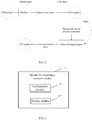
FIG. 2 illustrates an exemplary packet processing in an exemplary method of restarting a network service consistent with disclosed embodiments; and -
FIG. 3 illustrates a block diagram of an exemplary system for restarting a network service consistent with disclosed embodiments. -
- 1
- System for restarting a network service
- 11
- Configuration module
- 12
- Release module
- S1∼S2
- Steps
- Embodiments of the present disclosure will now be described by specific examples, and other advantages and utilities of the invention will be readily apparent to those skilled in the art from the disclosure of this specification. The present disclosure may also be implemented in or practiced with other embodiments, and various details in this specification may be altered or modified based on various points and applications without departing from the spirit or the scope of the present disclosure.
- One objective of the present disclosure is to provide a method and system for restarting network service, which may solve the problems of substantially long waiting time of processing a pending packet or restricted processing when restarting network service in the prior art. The principles and embodiments of the method and system for restarting network services provided by the present disclosure will be described in detail below, in view of which those skilled in the art can understand the disclosed method and system for restarting network service without creative effort.
- As shown in
FIGs. 1 to 3 , the present disclosure provides a method and a system for restarting a network service, which may be applicable to restart a network service in Linux operating system. Through adopting NFQUEUE/QUEUE mechanism of Iptables tool, the disclosed method and system for restarting the network service may be able to restart the network service with zero downtime, such that when restarting the network service, all the new connections may be normally processed without a connection interpretation. Compared with the existing methods, the disclosed method and system for restarting the network service may have various advantages, such as simple configuration, valid for both incoming and outgoing connections, and unrestricted application scenarios, etc. -
FIG. 1 illustrates a flow chart of an exemplary method of restarting a network service consistent with disclosed embodiments. The method of restarting the network service may comprise the following steps. - Step S1: In response to receiving a preparation signal for restarting a network service process, configuring a packet enqueueing rule for Iptables in a Linux operating system to cache a pending packet from a kernel space to a user space.
- In the disclosed embodiments, Iptables is an IP packet filtering system integrated with the latest 3.5 version Linux kernel. That is, in the disclosed embodiments, the IP packet filtering system may be a Netfilter/Iptables packet filtering system. When the Linux system is connected to an Internet or LAN, a server, or a proxy server that connects to the LAN and the Internet, the IP packet filtering system may better control the IP packet filtering and firewall configuration in the Linux operating system.
- The Netfilter/Iptables packet filtering system is a powerful tool for adding, editing and removing rules. Although named as a single entity, in fact the Netfilter/Iptables packet filtering system includes two components: Netfilter and Iptables.
- The Iptables component is a user space tool which facilitates the insert, modification, and removal of rules in a packet filtering table.
- The Netfilter component, also known as a kernel space component, is a part of the Linux kernel. The Netfilter component may consist of packet filtering tables containing a set of rules through which that the kernel controls packet filtering. Netfilter is a subsystem in the Linux kernel and is related to network functionality. As a general and abstract framework, Netfilter provides packet filtering, packet modification, network address translation, and other functions.
- In particular, in the disclosed embodiments, the IP packet filtering system may cache the pending packets into the user space in a queue form. Further, the IP packet filtering system may configure the packet enqueueing rule with the IptablesNFQUEUE/QUEUE target, and cache the pending packet from the kernel space to the user space. NFQUEUE or QUEUE is a specific function module of Netfilter/Iptables, and the NFQUEUE or QUEUE function module may be configured to enqueue the packets. The packet enqueueing rule for the NFQUEUE or QUEUE function module to enqueue packets may be configured according to the required configuration parameters.
- In particular, as shown in
FIG. 2 , when the network service process is going to be restarted, an Iptables rule for caching a TCP SYN packet to the user spacer by Netfilter's NFQUEUE or QUEUE target may be added, in which the TCP SYN packet is received by the listening port of the service process. After adding the Iptables configuration, because a new TCP SYN packet is cached to the user space, the new TCP SYN packet may not establish a connection with any of new and original service processes. - In various functions provided by Netfilter, the disclosed method may utilize NFQUEUE or QUEUE to enqueue packets into the user space, then process and decide the destination of the enqueued packets (accept, discard or further processing, etc.) by a pre-determined user-space program. If the incoming packets are not immediately processed by the pre-determined user-space program, the packets may be temporarily cached in the queue. Thus, NFQUEUE or QUEUE function of NetFilter may actually provide a way to cache packets.
- Step S2, in response to receiving a completion signal of completing restarting the network service process, reading the pending packet cached in the user space and releasing the pending packet which has been read to the kernel space, such that a connection between the pending packet and a new process of the network service is established.
- As shown in
FIG. 2 , after the process for restarting network service has restarted the script and completed the transition between the old and new process, the pending packet cached in the user space may be read and released to the kernel space, such that a connection between the pending packet and a new process of the network service may be established. - In particular, in the disclosed embodiments, a packet releasing program may be implemented in the user space. The packet releasing program may be configured to read the pending packet cached in the user space and release the pending packet which has been read to the kernel space, in response to receiving the completion signal of completing restarting the network service process.
- Optionally, in the disclosed embodiments, the packet releasing program may call libNetfilter_queue library or libipq library.
- That is, the packet releasing program may be running in the user space and may be implemented by libraries including but not limited to the libNetfilter queue and libipq libraries. The packet releasing program may only wait for the script to restart the network service to be executed and the transition between the original and new processes to be completed, before releasing the pending packet to the kernel space. Because the original process has exited and only the new process is in a listening state, all the previously released SYN packets may establish a connection with the new process.
- According to the disclosed method for restarting the network service, during the transition between the new process and original process, the newly received SYN packet may be cached to the user space based on NFQUEUE or QUEUE of Iptables. After the transition between the new process and original process has been completed, the cached SYN packet may be received by a user-space program, such that the cached SYN packet may enter the kernel space again and get connected to the new process.
- To implement the disclosed method for restarting the network service, the present disclosure also provides a system for restarting the network service. In particular, as shown in
FIG. 3 , the system for restarting the network service may include: a configuration module and a release module. - In the disclosed embodiments, the configuration module may be configured to, in response to receiving a preparation signal for restarting the network service process, configure a packet enqueueing rule with Iptables in a Linux operating system to cache a pending packet from a kernel space to a user space. Because the disclosed system and method for restarting the network service have the same principle, the description of Iptables and Netfilter is not be repeated here.
- In particular, the configuration module may be configured to configure the packet enqueueing rule with the IptablesNFQUEUE/QUEUE target, and cache the pending packet from the kernel space to the user space. NFQUEUE or QUEUE may be a specific function module of Netfilter/Iptables, and the NFQUEUE or QUEUE function module may be configured to enqueue the packets. The packet enqueueing rule for the NFQUEUE or QUEUE function module to enqueue packets may be determined according to the principle of enqueueing packets by the NFQUEUE or QUEUE function module and the required configuration parameters.
- In particular, as shown in
FIG. 2 , when the network service process is going to be restarted, an Iptables configuration for caching a TCP SYN packet to the user spacer by Netfilter's NFQUEUE or QUEUE target may be added, in which the TCP SYN packet is received by the listening port of the service process. After adding the Iptables configuration, because a new TCP SYN packet is cached to the user space, the new TCP SYN packet may not establish a connection with any of new and original service processes. - In response to receiving a completion signal of completing restarting the network service process, the release module may be configured to read the pending packet cached in the user space and release the pending packet which has been read to the kernel space, such that a connection between the pending packet and a new process of the network service may be established.
- As shown in
FIG. 2 , after the process for restarting network service has restarted the script and completed the transition between the original and new processes, the pending packet cached in the user space may be read and released to the kernel space, such that a connection between the pending packet and a new process of the network service may be established. - In particular, in the disclosed embodiments, the release module may include a packet releasing program implemented in the user space. In response to receiving the completion signal of completing restarting the network service process, the packet releasing program may be configured to read the pending packet cached in the user space and release the pending packet which has been read to the kernel space.
- Optionally, in the disclosed embodiments, the packet releasing program may call libNetfilter_queue library or libipq library.
- That is, the packet releasing program may be running in the user space and may be implemented by libraries including but not limited to the libNetfilter_queue and libipq libraries. The packet releasing program may only wait for the script to restart the network service to be executed and the transition between the original and new processes to be completed, before releasing the pending packet to the kernel space. Because the original process has exited and only the new process is in a listening state, all the previously released SYN packets may establish a connection with the new process.
- In summary, through utilizing the NFQUEUE or QUEUE target in the Netfilter framework and packet cache technology, the present disclosure provides a method of restarting the network service without packet loss and with zero downtime, which may be realized by an Iptables command configuration and a user-space program. The disclosed method for restarting the network service may have various advantages, such as simple configuration, valid for both incoming and outgoing connections, and unrestricted application scenarios, etc. The programs for processing the cached pending packets in the user space may also be substantially simple, without modifying the source codes of Linux kernel or Network service programs. Thus, the present disclosure may effectively overcome the disadvantages of the prior art and show a high industrial utilization value.
- The disclosed embodiments only illustrate the principles and efficacy of the present disclosure, and are not intended to limit the scope of the present disclosure. Various modifications to these embodiments will be readily apparent to those skilled in the art, and the generic principles defined herein may be applied to other embodiments without departing from the spirit or scope of the invention. Accordingly, the claims cover all modifications made by those skilled in the art to without departing from the spirit or scope of the invention.
Claims (8)
- A method for restarting a network service, comprising:in response to receiving a preparation signal for restarting a network service process, configuring a packet enqueueing rule for Iptables in a Linux operating system to cache a pending packet from a kernel space to a user space; andin response to receiving a completion signal of completing restarting the network service process, reading the pending packet cached in the user space and releasing the pending packet which has been read to the kernel space, such that a connection between the pending packet and a new process of the network service is established.
- The method for restarting a network service according to claim 1, wherein: the packet enqueueing rule with an IptablesNFQUEUE/QUEUE target is configured to cache the pending packet from the kernel space to the user space.
- The method for restarting a network service according to any one of claims 1-2, wherein: a packet releasing program in the user space is implemented to read the pending packet cached in the user space and release the pending packet which has been read to the kernel space, in response to receiving the completion signal of completing restarting the network service process.
- The method for restarting a network service according to claim 3, wherein: the packet releasing program calls libNetfilter queue library or libipq library.
- A system for restarting a network service, comprising:a configuration module, configured to, in response to receiving a preparation signal for restarting a network service process, configuring a packet enqueueing rule for Iptables in a Linux operating system to cache a pending packet from a kernel space to a user space; anda release module, configured to, in response to receiving a completion signal of completing restarting the network service process, reading the pending packet cached in the user space and releasing the pending packet which has been read to the kernel space, such that a connection between the pending packet and a new process of the network service is established.
- The system for restarting a network service according to claim 5, wherein: the configuration module is further configured to configure the packet enqueueing rule with the IptablesNFQUEUE/QUEUE target, and cache the pending packet from the kernel space to the user space.
- The system for restarting a network service according to any one of claims 5-6, wherein: the release module includes a packet releasing program implemented in the user space; and through executing the packet releasing program, the release module is configured to read the pending packet cached in the user space and release the pending packet which has been read to the kernel space, in response to receiving the completion signal of completing restarting the network service process.
- The system for restarting a network service according to claim 7, wherein: the packet releasing program calls libNetfilter_queue library or libipq library.
Applications Claiming Priority (2)
| Application Number | Priority Date | Filing Date | Title |
|---|---|---|---|
| CN201610104989.XA CN105808287B (en) | 2016-02-25 | 2016-02-25 | A method and system for restarting a network service |
| PCT/CN2016/106052 WO2017143807A1 (en) | 2016-02-25 | 2016-11-16 | Method and system for restarting network service |
Publications (2)
| Publication Number | Publication Date |
|---|---|
| EP3309678A1 true EP3309678A1 (en) | 2018-04-18 |
| EP3309678A4 EP3309678A4 (en) | 2018-08-08 |
Family
ID=56465876
Family Applications (1)
| Application Number | Title | Priority Date | Filing Date |
|---|---|---|---|
| EP16891255.8A Ceased EP3309678A4 (en) | 2016-02-25 | 2016-11-16 | Method and system for restarting network service |
Country Status (4)
| Country | Link |
|---|---|
| US (1) | US10496415B2 (en) |
| EP (1) | EP3309678A4 (en) |
| CN (1) | CN105808287B (en) |
| WO (1) | WO2017143807A1 (en) |
Families Citing this family (5)
| Publication number | Priority date | Publication date | Assignee | Title |
|---|---|---|---|---|
| CN105808287B (en) | 2016-02-25 | 2019-06-18 | 网宿科技股份有限公司 | A method and system for restarting a network service |
| US11228657B2 (en) * | 2019-12-03 | 2022-01-18 | Red Hat, Inc. | Hybrid proxying with user space hold |
| CN111158776B (en) * | 2019-12-12 | 2023-12-26 | 杭州安恒信息技术股份有限公司 | Smooth restarting method of Web application protection system |
| CN114915669A (en) * | 2021-02-08 | 2022-08-16 | 北京金山云网络技术有限公司 | Service upgrading method and device based on QUIC protocol and electronic equipment |
| CN118101739B (en) * | 2024-04-25 | 2024-08-13 | 麒麟软件有限公司 | Network connection reset information acquisition method, device and storage medium |
Family Cites Families (11)
| Publication number | Priority date | Publication date | Assignee | Title |
|---|---|---|---|---|
| US7827152B1 (en) | 2005-10-26 | 2010-11-02 | Oracle America, Inc. | Asynchronous on-demand service startup |
| US8549135B1 (en) * | 2007-05-18 | 2013-10-01 | Raytheon Company | Method and apparatus for performing quality of service in secure networks |
| WO2010123140A1 (en) | 2009-04-24 | 2010-10-28 | 日本電気株式会社 | Packet communication system, packet communication device, packet communication method, and computer-readable storage medium having packet communication program recorded therein |
| US8924560B2 (en) | 2010-11-29 | 2014-12-30 | At&T Intellectual Property I, L.P. | Optimized game server relocation environment |
| US8893274B2 (en) * | 2011-08-03 | 2014-11-18 | Trend Micro, Inc. | Cross-VM network filtering |
| US9003141B2 (en) * | 2011-11-14 | 2015-04-07 | Ca, Inc. | Enhanced software application platform |
| CN103777969B (en) * | 2012-10-19 | 2017-04-12 | 阿里巴巴集团控股有限公司 | Server parameter deploying method and device with no need for restarting |
| US9185058B2 (en) * | 2013-03-15 | 2015-11-10 | Alcatel Lucent | Method and apparatus for processing GPRS tunneling protocol user plane traffic in a cloud-based mobile network |
| US9148402B2 (en) * | 2013-12-06 | 2015-09-29 | Qualcomm Innovation Center, Inc. | Systems, methods, and apparatus for full-cone and address restricted cone network address translation using hardware acceleration |
| CN104753752B (en) * | 2013-12-30 | 2019-05-07 | 格尔软件股份有限公司 | A kind of on-demand connection method suitable for VPN |
| CN105808287B (en) | 2016-02-25 | 2019-06-18 | 网宿科技股份有限公司 | A method and system for restarting a network service |
-
2016
- 2016-02-25 CN CN201610104989.XA patent/CN105808287B/en active Active
- 2016-11-16 EP EP16891255.8A patent/EP3309678A4/en not_active Ceased
- 2016-11-16 US US15/557,426 patent/US10496415B2/en not_active Expired - Fee Related
- 2016-11-16 WO PCT/CN2016/106052 patent/WO2017143807A1/en not_active Ceased
Also Published As
| Publication number | Publication date |
|---|---|
| US20180275997A1 (en) | 2018-09-27 |
| CN105808287A (en) | 2016-07-27 |
| WO2017143807A1 (en) | 2017-08-31 |
| CN105808287B (en) | 2019-06-18 |
| US10496415B2 (en) | 2019-12-03 |
| EP3309678A4 (en) | 2018-08-08 |
Similar Documents
| Publication | Publication Date | Title |
|---|---|---|
| US10496415B2 (en) | Method and system for restarting network service | |
| US8364843B2 (en) | Method and system for minimizing disruption during in-service software upgrade | |
| US10348558B2 (en) | Method and system for restarting network service without packet loss and with zero downtime | |
| US7613813B2 (en) | Method and apparatus for reducing host overhead in a socket server implementation | |
| US7571247B2 (en) | Efficient send socket call handling by a transport layer | |
| US11570100B2 (en) | Data processing method, apparatus, medium and device | |
| EP3726788A1 (en) | Method for controlling network congestion, access device, and computer readable storage medium | |
| WO2018032399A1 (en) | Server and method having high concurrency capability | |
| JP6541697B2 (en) | Method and computer program for operating transparent performance enhancement proxy, and transparent performance enhancement proxy | |
| US11509749B2 (en) | Data processing method and apparatus, and computer | |
| EP3186930A1 (en) | Relay optimization using software defined networking | |
| US11005813B2 (en) | Systems and methods for modification of p0f signatures in network packets | |
| CN110768994A (en) | A method of improving SIP gateway performance based on DPDK technology | |
| JP4274195B2 (en) | Method for transmitting multimedia data associated with a multimedia application, method for transmitting data, system for transmitting multimedia data in a distributed network, and communication protocol for enabling multimedia communication between computers | |
| CN111352642A (en) | Service equipment and service software upgrading method | |
| WO2015188884A1 (en) | Proxy node for transferring packets between a server and a client using port sharding | |
| US20050165983A1 (en) | System and method for processing data in kernel area by a user command | |
| CN110381007A (en) | TCP accelerating method and device | |
| US20250080467A1 (en) | Communication apparatus, communication method, and program | |
| US10805981B2 (en) | Method and apparatus for closing a transmission control protocol connection for a wireless communications network | |
| WO2018188738A1 (en) | Packet handling method and apparatus for network service functions | |
| CN107690005A (en) | Method and apparatus for forwarding packets through network address translation | |
| WO2015167375A1 (en) | Method and tcp proxy for supporting communication between a client device and a server node | |
| US11228657B2 (en) | Hybrid proxying with user space hold | |
| CN110891008A (en) | IP proxy method based on L2TP/IPSEC |
Legal Events
| Date | Code | Title | Description |
|---|---|---|---|
| PUAI | Public reference made under article 153(3) epc to a published international application that has entered the european phase |
Free format text: ORIGINAL CODE: 0009012 |
|
| 17P | Request for examination filed |
Effective date: 20180115 |
|
| AK | Designated contracting states |
Kind code of ref document: A1 Designated state(s): AL AT BE BG CH CY CZ DE DK EE ES FI FR GB GR HR HU IE IS IT LI LT LU LV MC MK MT NL NO PL PT RO RS SE SI SK SM TR |
|
| AX | Request for extension of the european patent |
Extension state: BA ME |
|
| A4 | Supplementary search report drawn up and despatched |
Effective date: 20180710 |
|
| RIC1 | Information provided on ipc code assigned before grant |
Ipc: G06F 9/48 20060101ALI20180704BHEP Ipc: G06F 9/445 20180101AFI20180704BHEP |
|
| 17Q | First examination report despatched |
Effective date: 20190207 |
|
| DAV | Request for validation of the european patent (deleted) | ||
| DAX | Request for extension of the european patent (deleted) | ||
| REG | Reference to a national code |
Ref country code: DE Ref legal event code: R003 |
|
| STAA | Information on the status of an ep patent application or granted ep patent |
Free format text: STATUS: THE APPLICATION HAS BEEN REFUSED |
|
| 18R | Application refused |
Effective date: 20191102 |