EP3308646A1 - Photoactivable biocide and/or bactericidal materials and process for manufacturing such materials - Google Patents
Photoactivable biocide and/or bactericidal materials and process for manufacturing such materials Download PDFInfo
- Publication number
- EP3308646A1 EP3308646A1 EP16194036.6A EP16194036A EP3308646A1 EP 3308646 A1 EP3308646 A1 EP 3308646A1 EP 16194036 A EP16194036 A EP 16194036A EP 3308646 A1 EP3308646 A1 EP 3308646A1
- Authority
- EP
- European Patent Office
- Prior art keywords
- arylazide
- functionalized
- photosensitizer
- support
- solution
- Prior art date
- Legal status (The legal status is an assumption and is not a legal conclusion. Google has not performed a legal analysis and makes no representation as to the accuracy of the status listed.)
- Granted
Links
- LSEODCRIRGVGJZ-UHFFFAOYSA-N CC(C)CCC=C=N Chemical compound CC(C)CCC=C=N LSEODCRIRGVGJZ-UHFFFAOYSA-N 0.000 description 1
- JRWIVBBRKSBPJM-YSCPKTQFSA-N C[C@H](CC/C=C\NC[IH+])I Chemical compound C[C@H](CC/C=C\NC[IH+])I JRWIVBBRKSBPJM-YSCPKTQFSA-N 0.000 description 1
Images
Classifications
-
- A—HUMAN NECESSITIES
- A01—AGRICULTURE; FORESTRY; ANIMAL HUSBANDRY; HUNTING; TRAPPING; FISHING
- A01N—PRESERVATION OF BODIES OF HUMANS OR ANIMALS OR PLANTS OR PARTS THEREOF; BIOCIDES, e.g. AS DISINFECTANTS, AS PESTICIDES OR AS HERBICIDES; PEST REPELLANTS OR ATTRACTANTS; PLANT GROWTH REGULATORS
- A01N43/00—Biocides, pest repellants or attractants, or plant growth regulators containing heterocyclic compounds
- A01N43/90—Biocides, pest repellants or attractants, or plant growth regulators containing heterocyclic compounds having two or more relevant hetero rings, condensed among themselves or with a common carbocyclic ring system
Definitions
- the present invention relates to the field of materials; preferably to surfaces having biocide and/or bactericidal properties. Especially the present invention relates to a photoactivable surface and/or material able to deliver singular oxygen as bactericidal agent; and the process for preparing such materials.
- Biocide and/or bactericidal materials represents a huge public health issue impacting widespread fields such as medical field, environment and food industry. Consequently, it is of interest to develop efficient processes for providing such materials.
- one of the most efficient approach is chemically grafting biocide and/or bactericidal agents at the surface of materials. This chemical way allows avoiding releasing biocide and/or bactericidal agents over time.
- Natural and synthetic polymers were also used as biocide and/or bactericidal agents.
- the free amino functions of chitosan may be protonated in a slightly acid medium and the resulting cationic chitosan can act as a quaternary ammonium salt ( Rabea et al., Biomacromolecules, 2003, 4, 1457-1465 ).
- ATRP Atom Transfer Radical Polymerization
- RAFT Reversible Addition-Fragmentation chain Transfer polymerization
- N-halamine compounds Another way of interest is the preparation of renewable surfaces from N-halamine compounds. These compound have the advantage to feature both a large disinfection range and a bactericidal ability due to the oxidative property of the halamine bond (N-Cl).
- N-Cl oxidative property of the halamine bond
- the halogen atom of the halamine bond is transferred to the receptors of the targeted bacteria, causing their death.
- the halamine bond may be renewed by a treatment by chloration (Kaminski et al., J. Pham. Sci., 1976, 65, 553).
- biocide and/or bactericidal materials comprising:
- the process of the invention is versatile and allows grafting a photosensitizer on a surface that has not been previously modified. Furthermore, the process of the invention is carried out in only one step, and without catalysts, contrary to the process of the art for which several steps are required.
- This invention thus relates to a process for manufacturing a biocide and/or bactericidal material comprising:
- the arylazide functionalized-photosensitizer is selected from the group of unmetalled arylazide functionalized-photosensitizer.
- the arylazide functionalized-photosensitizer is selected from tetrapyrrolic compounds such as porphyrins, chlorins, phthalocyanines, benzoporphyrins, bacteriochlorins, chlorophyll derivatives, corroles, texaphyrins, pheophorbides and bacteriopheophorbides; or non tetrapyrrolic compounds such as phenalenones, xanthenes, coumarins, psoralens, antraquinones, curcuminoids, phenothiazines and cyanines.
- tetrapyrrolic compounds such as porphyrins, chlorins, phthalocyanines, benzoporphyrins, bacteriochlorins, chlorophyll derivatives, corroles, texaphyrins, pheophorbides and bacteriopheophorbides
- non tetrapyrrolic compounds such as phenal
- the arylazide functionalized-photosensitizer is selected from arylazide porphyrins.
- the concentration of the azide functionalized-photosensitizer solution ranges from more than 0 to 10 mg/mL; preferably, from 0.01 to 5 mg/mL; more preferably, from 0.1 to 1 mg/mL.
- the solvent of the arylazide functionalized-photosensitizer solution is selected from polar solvent; preferably, is acetone or water.
- the unmodified support is selected from synthetic or natural polymer; preferably from a polymer selected from the group of polystyrene, polyacrylates, polymethacrylates, polyolefins, polyurethanes, polyacrylonitriles, polyamides, polyesters, polycarbonates, polyethers, polyimides, polyketones, polysiloxanes, polyepoxydes and their copolymers and/or mixtures thereof or cellulosic polymer; more preferably, the unmodified support is paper, cotton fabrics or polyethylene.
- the thermal activation of the insertion reaction is carried out at a temperature ranging from 100°C to 300°C; more preferably, from 200°C to 250°C.
- the UV irradiation activation of the insertion reaction is carried out at a wavelength ranging from 10 nm to 400 nm; preferably, from 300 nm to 380 nm; more preferably, the wavelength is about 365 nm.
- the UV irradiation activation of the insertion reaction is carried out during a time period ranging from 1 mn to 24h; preferably, the UV irradiation activation of the insertion reaction is carried out during a time period ranging from 1 min to 10 min.
- the present invention also refers to a biocide and/or bactericidal material comprising:
- the present invention also refers to the use of the biocide and/or bactericidal material as defined above, in the preparation of clothes or coatings; preferably, in the preparation of protective clothes or protective coatings.
- the present invention also refers to the use of the biocide and/or bactericidal material as defined above, in the decontamination of water and/or biological fluids and/or biological surfaces.
- the present invention also refers to a kit comprising:
- the solution comprising at least one arylazide-functionalized photosensitizer is protected from light.
- the present invention relates to a process for manufacturing a biocide and/or bactericidal material comprising:
- biocide and/or bactericidal properties are studied in the conditions of AATCC (American Association of Textile Chemists and Colorists), Test Method 100-2004, that comprises the following steps:
- the material is defined as having a total bactericidal and/or biocide effect when the percentage reduction of organisms by treated specimen is about 100% of the initial number of organisms of the contamined material.
- the material is defined as having a partial bactericidal and/or biocide effect when the percentage reduction of organisms by treated specimen ranges from 50% to less than 100% of the initial number of organisms of the contamined material.
- the material is defined as having no bactericidal and/or biocide effect when the percentage reduction of organisms by treated specimen ranges from 0% to less than 50% of the initial number of organisms of the contamined material.
- biocide and/or bactericidal activity was measured against bacteria such as, but not limited to, Escherichia Coli, Bacillus thuringiensis (vegetative form and/or spore), Salmonella typhimurium, Yersinia pestis or Bacillus anthracis (vegetative form and/or spore).
- bacteria such as, but not limited to, Escherichia Coli, Bacillus thuringiensis (vegetative form and/or spore), Salmonella typhimurium, Yersinia pestis or Bacillus anthracis (vegetative form and/or spore).
- the arylazide functionalized-photosensitizer is selected from the group of arylazide functionalized-photosensitizer in which the photosensitizer is under the form of free base.
- free base mean any chemical compound being a conjugate base form of an amine.
- the arylazide functionalized-photosensitizer is selected from the group of unmetalled arylazide functionalized-photosensitizer.
- the arylazide functionalized-photosensitizer is selected from the group of metallized arylazide functionalized-photosensitizer.
- the arylazide functionalized-photosensitizer comprises at least one chemical element selected from alkali metals, alkaline earth metals, transition metals, lanthanoids, actinoids and poor metals.
- the alkali metal is selected from lithium (Li), sodium (Na), potassium (K), rubidium (Rb), caesium (Cs) and Francium (Fr).
- the alkaline earth metal is selected from beryllium (Be), magnesium (Mg), calcium (Ca), strontium (Sr), barium (Ba) and radium (Ra).
- the transition metal is selected from scandium (Sc), titanium (Ti), vanadium (Va), chromium (Cr), manganese (Mn), iron (Fe), cobalt (Co), nickel (Ni), copper (Cu), yttium (Y), zirconium (Zr), niobium (Nb), molybdenum (Mo), technetium (Tc), ruthenium (Ru), rhodium (Rh), palladium (Pd), silver (Ag), hafnium, (Hf), tantalum (Ta), tungsten (W), rhenium (Re), osmium (Os), iridium (Ir), platinum (Pt), gold (Au), rutherfordium (Rf), dubnium (Db), seaborgium (Sg), bhorium (Bh), hassium (Hs), meitnerium (Mt), damstadidium (Ds), roentgerium (Rg).
- the lanthanoid is selected from lanthanium (La), cerium (Ce), praseodymium (Pr), neodymium (Nd), promethium (Pm), samarium (Sm), europium (Eu), gadolinium (Gd), terbium (Tb), dysprosium (Dy), holmium (Ho), erbium (Er), thulium (Tm), Ytterbium (Yb) and lutetium (Lu).
- La lanthanium
- Ce cerium
- Pr praseodymium
- Nd neodymium
- promethium Pm
- Sm samarium
- Eu europium
- Gd gadolinium
- Tb terbium
- Dy dysprosium
- Ho holmium
- Er erbium
- Tm thulium
- Lu lutetium
- the actinoid is selected from actinium (Ac), thorium (Th), protactinium (Pa), uranium (U), neptunium (Np), plutonium (Pu), americium (Am), curium (Cm), berkelium (Bk), californium (Cf), einsteinium (Es), fermium (Fm), mendelevium (Md), nobelium (No) and lawrencium (Lr).
- the poor metal is selected from aluminium (Al), zinc (Zn), gallium (Ga), germanium (Ge), cadmium (Cd), indium (In), tin (Sn), antimony (Sb), mercury (Hg), thallium (Ti), lead (Pb), bismuth (Bi), polonium (Po), inunbium (Uub), ununtrium (Uut), ununpentium (Uup), ununhexium (Uuh) and ununseptium (Uus); preferably, the poor metal is selected from aluminium (Al), zinc (Zn), gallium (Ga), germanium (Ge), cadmium (Cd), indium (In), tin (Sn), antimony (Sb), mercury (Hg), thallium (Ti), lead (Pb), bismuth (Bi), polonium (Po). In one embodiment, the poor metal is zinc (Zn).
- the metalled arylazide functionalized-photosensitizer comprises a metal which does not prevent the production of singlet oxygen and/or reactive oxygen species (ROS) by the photosensitizer of the invention.
- the arylazide functionalized-photosensitizer comprises at least one chemical element selected from zinc (Zn), manganese (Mn), silver (Ag), cobalt (Co), palladium (Pd), nickel (Ni), iron (Fe), copper (Cu) and Ytterbium (Yb); more preferably, the metalled arylazide functionalized-photosensitizer comprises at least one atom of zinc (Zn).
- the arylazide functionalized-photosensitizer is able to produce singlet oxygen and/or reactive oxygen species (ROS).
- the arylazide functionalized-photosensitizer under the form of free base is able to produce singlet oxygen and/or reactive oxygen species (ROS).
- the unmetalled arylazide functionalized-photosensitizer is able to produce singlet oxygen and/or reactive oxygen species (ROS).
- the metallized arylazide functionalized-photosensitizer is able to produce singlet oxygen and/or reactive oxygen species (ROS).
- the arylazide functionalized-photosensitizer is selected from tetrapyrrolic compounds such as porphyrins, chlorins, phthalocyanines, benzoporphyrins, bacteriochlorins, chlorophyll derivatives, corrolles, texaphyrins, pheophorbides and bacteriopheophorbides; or non tetrapyrrolic compounds such as phenalenones, xanthenes, coumarins, psoralens, antraquinones, curcuminoids, phenothiazines and cyanines.
- tetrapyrrolic compounds such as porphyrins, chlorins, phthalocyanines, benzoporphyrins, bacteriochlorins, chlorophyll derivatives, corrolles, texaphyrins, pheophorbides and bacteriopheophorbides
- non tetrapyrrolic compounds such as
- the arylazide functionalized-photosensitizer is selected from arylazide porphyrins. According to one embodiment, the arylazide functionalized-photosensitizer is an arylazide functionalized -10,15,20-triphenyl porphyrin. According to one embodiment, the arylazide functionalized-photosensitizer is an arylazide functionalized 10,15,20-triaryl porphyrin. According to one embodiment, the arylazide functionalized-photosensitizer is an arylazide functionalized-10,15,20-tripyridinium porphyrin.
- the arylazide functionalized-photosensitizer is an arylazide functionalized-10,15,20-tri(alkylpyridinium) porphyrin. According to one embodiment, the arylazide functionalized-photosensitizer is an arylazide functionalized-10,15,20-tri(N-alkylpyridinium) porphyrin. According to one embodiment, the arylazide functionalized-photosensitizer is an arylazide functionalized-10,15,20-triaryl porphyrin halide.
- the arylazide functionalized-photosensitizer is an arylazide functionalized-10,15,20-tripyridinium porphyrin halide. According to one embodiment, the arylazide functionalized-photosensitizer is an arylazide functionalized-10,15,20-tri(alkylpyridinium) porphyrin halide.
- the arylazide functionalized-photosensitizer is a neutral arylazide porphyrin. According to one embodiment, the arylazide functionalized-photosensitizer is 5-(4-azidophenyl)-10,15,20-triphenyl porphyrin (TPP-N 3 ).
- the arylazide functionalized-photosensitizer is an electronically charged arylazide porphyrin; preferably, a cationic arylazide porphyrin.
- the arylazide functionalized-photosensitizer is 5-(4-azidophenyl)-10,15,20- tri-(N-methyl-4-pyridinium)porphyrin triiodide.
- the expression "electronically charged” refers to any compounds being either cationic (lack of electrons, positive Zeta potential) or anionic (excess of electrons, negative Zeta potential).
- the Zeta potential of the surface may be measured by an electrokinetic analyzer for solid surface analysis such as SurPASS TM 3 (Anton Paar).
- the solution of step (i) comprises a solvent selected from polar solvents.
- the solvent is water; preferably milliQ ® water.
- the solvent is selected from organic solvents, preferably from organic polar solvents, more preferably the solvent is a volatile organic polar solvent.
- the solvent is acetone.
- the solution of step (i) comprises water and at least one charged arylazide functionalized-photosensitizer. According to one embodiment, the solution of step (i) comprises water and at least one charged arylazide functionalized-porphyrin. According to one embodiment, the solution of step (i) comprises water and at least one cationic arylazide functionalized-porphyrin.
- the solution of step (i) comprises a polar organic solvent and at least one neutral arylazide functionalized-photosensitizer. According to one embodiment, the solution of step (i) comprises a polar organic solvent and at least one neutral arylazide functionalized-porphyrin. According to one embodiment, the solution of step (i) comprises a polar organic solvent and at least one cationic arylazide functionalized-porphyrin.
- the concentration of the arylazide functionalized-photosensitizer solution in the solvent ranges from more than 0 to 10 mg/mL; preferably, from 0.01 to 5 mg/mL; more preferably, from 0.1 to 1 mg/mL.
- the step (i) is carried out at a temperature ranging from 10°C to 50°C; preferably, the step (i) is carried out at room temperature.
- the step (i) is carried out at atmospheric pressure.
- the solution of step (i) is homogeneous, i.e. the arylazide functionalized-photosensitizer is homogeneously dissolved in the solvent.
- unmodified support means that the support is not modified before the grafting step in order to introduce chemical functions on the support that are involved in the grafting process.
- the process of the invention allows to use the support as such.
- the unmodified support may be any support known by the skilled artisan.
- the unmodified support may be a hard or a flexible support.
- the unmodified support is selected from support comprising polymer; preferably a polymer selected from the group of polystyrene, polyacrylates, polymethacrylates, polyolefins (such as polyethylene, polypropylene, polybutadiene), polyurethanes, polyacrylonitriles, polyamides, polyesters, polycarbonates, polyethers, polyimides, polyketones, polysiloxanes, polyepoxydes and their copolymers and/or mixtures thereof.
- the synthetic support is a support comprising polyethylene.
- the unmodified support is selected from supports made of polymer; preferably a polymer selected from the group of polystyrene, polyacrylates, polymethacrylates, polyolefins (such as polyethylene, polypropylene, polybutadiene), polyurethanes, polyacrylonitriles, polyamides, polyesters, polycarbonates, polyethers, polyimides, polyketones, polysiloxanes, polyepoxydes and their copolymers and/or mixtures thereof.
- the synthetic support is a support made of polyethylene.
- the synthetic support is polyethylene Tyvek ® .
- the synthetic support is a thermoplastic polymer. In one embodiment, the synthetic support is an elastomer. In one embodiment, the synthetic support is selected a thermosetting polymer.
- the unmodified support comprises synthetic or natural polymer. In one embodiment, the unmodified support comprises cellulosic polymer. In one embodiment, the unmodified support is made of cellulosic polymer.
- the unmodified support is selected from paper, cotton fabrics or synthetic support; preferably, the unmodified support is cotton fabrics.
- the unmodified support comprises natural fibers or synthetic fibers.
- the fibers are woven.
- the step (ii) is carried out at a temperature ranging from 10°C to 50°C; preferably, the step (ii) is carried out at room temperature.
- the step (ii) is carried out at a pressure ranging from 220 hPa to 1 200 hPa; preferably, the step (ii) is carried out at atmospheric pressure (i.e. at a pressure of about 1000 hPa).
- the solution of step (i) is applying on the unmodified support.
- the solution of step (i) may be applied on the unmodified support by one of the methods well-known by the skilled artisan such as printing, inkjet printing, screen printing, airbrushing, spraying or soaking.
- the unmodified support is soaked in the solution of step (i).
- the solution of step (i) is sprayed on the unmodified support.
- the step (ii) further comprises a drying step.
- the step (ii) further comprises a drying step after the step (ii) has been carried out.
- the step (ii) further comprises a step for evaporating the solvent.
- the solvent is totally evaporated.
- the solvent is totally evaporated before the grafting step.
- the step (ii) is carried out in a dark environment, i.e. in an environment protected from light.
- the step (iii) is carried out at a temperature ranging from 10°C to 300°C; preferably, from 200°C to 250°C.
- the step (iii) is carried out at a pressure ranging from 220 hPa to 1 200 hPa; preferably, the step (iii) is carried out at atmospheric pressure (i.e. at a pressure of about 1000 hPa).
- the arylazide functionalized-photosensitizer is covalently grafted by an insertion reaction, to the support.
- insertion reaction it means a chemical reaction that lead to the insertion of the compound to be grafted into a single C-H bond and/or N-H bond of the support.
- phenyl azide functions are used for allowing implementing the insertion reaction by stabilizing nitrene intermediates contrary to aliphatic azide compounds. The activation of the phenyl azide functions lead to nitrene intermediates able to be inserted in a R-H closest bond (R may be C, N or O atom) of the support to restore its valence.
- the insertion reaction does not requires neither the pre-functionalization of the reagents by suitable functions, nor the use of catalyst (copper for example) for carrying out the click reaction.
- catalyst copper for example
- the other reagent has to carry an alkyne function.
- the unmodified support is not required to carry out an alkyne function.
- the process of the invention does not comprises any click chemistry reaction; especially, the process of the invention does not comprise any cycloaddition step such as 1,3-dipolar cycloaddition.
- the insertion reaction is initiated by a thermal activation or a UV irradiation activation of the arylazide function of the photosensitizer.
- the thermal activation or UV irradiation activation may be carried out by any well-known method of the skilled artisan. Especially, the skilled artisan would be able to adapt the activation time depending on the power of the used apparatus.
- the thermal activation may be carried out, but not limited to, the use of an oven, an infrared lamp or a thermal dryer.
- the thermal activation is carried out at a temperature ranging from 100°C to 300°C; more preferably, ranging from 200°C to 250°C.
- the thermal activation is carried out during a time period ranging from 10s to 1h; preferably, from 20s to 30 mn; more preferably, from 30s to 5 mn.
- the thermal activation is carried out during a time period ranging from 1 mn to 10 mn.
- the UV irradiation activation is carried out at a wavelength which is not selected from absorption wavelengths of the photosensitizer for its activation. According to one embodiment, the UV irradiation activation is carried out at a wavelength which is not selected from absorption wavelengths of porphyrin for its activation. According to one embodiment, the UV irradiation activation is carried out at a wavelength which is not selected from absorption wavelengths of arylazide porphyrin for its activation.
- the UV irradiation activation is carried out at a wavelength ranging from 10 nm to 400 nm; preferably, from 200 nm to 370 nm; preferably, from 300 nm to 380 nm; more preferably, the wavelength is about 365 nm.
- the UV irradiation activation is carried out during a time period ranging from 1 min to 24h. According to one embodiment, the UV irradiation activation is carried out during a time period ranging from 30 mn to 10h. According to one embodiment, the UV irradiation activation is carried out 24h. According to one embodiment, the UV irradiation activation is carried out 4h. According to one embodiment, the UV irradiation activation is carried out 3h. According to one embodiment, the UV irradiation activation is carried out 2h. According to one embodiment, the UV irradiation activation is carried out 1h. According to one embodiment, the UV irradiation activation is carried out 45 min. According to one embodiment, the UV irradiation activation is carried out 30 min. According to one embodiment, the UV irradiation activation is carried out 20 min. According to one embodiment, the UV irradiation activation is carried out 10 min.
- the process of the invention allows implementing the grafting of the photosensitizer by irradiation on the unmodified support without altering the properties of photosensitizer.
- the grafted porphyrin keeps good biocide and/or bactericidal properties after being grafted on an unmodified support.
- the process of the invention allows providing materials becoming biocide and/or bactericidal materials when placed under the light; preferably, when placed under natural light (i.e. sunlight).
- bacteria are killed due to the activation by irradiation of the porphyrins.
- the process of the invention as defined above, may further comprise a step for activating biocide and/or bactericidal properties of the photo sensibilizer.
- the present invention also relates to a process for manufacturing a biocide and/or bactericidal material comprising:
- the activation of the biocide and/or bactericidal properties of the material of the invention is carried out by UV irradiation.
- the UV irradiation of the biocide and/or bactericidal material may be carried out by any method well-known by the skilled artisan.
- the UV irradiation time for activating the biocide and/or bactericidal properties of the material depends on the nature of organisms and of the power of the used lamp.
- the biocide and/or bactericidal properties of the material of the invention are activated after an irradiation time ranging from more than 0 min to less than 24h.
- the biocide and/or bactericidal properties of the material of the invention are activated after an irradiation at a wavelength ranging from 400 nm to 750 nm.
- This invention also relates to a biocide and/or bactericidal material comprising:
- the biocide and/or bactericidal material may be obtained by the process of the invention as described above.
- the unmodified support is selected from any support that is not modified before the grafting step in order to introduce chemical functions on the support that are involved in the grafting process.
- the unmodified support is selected from support comprising polymer; preferably a polymer selected from the group of polystyrene, polyacrylates, polymethacrylates, polyolefins (such as polyethylene, polypropylene, polybutadiene), polyurethanes, polyacrylonitriles, polyamides, polyesters, polycarbonates, polyethers, polyimides, polyketones, polysiloxanes, polyepoxydes and their copolymers and/or mixtures thereof.
- the synthetic support is a support comprising polyethylene.
- the unmodified support is selected from supports made of polymer; preferably a polymer selected from the group of polystyrene, polyacrylates, polymethacrylates, polyolefins (such as polyethylene, polypropylene, polybutadiene), polyurethanes, polyacrylonitriles, polyamides, polyesters, polycarbonates, polyethers, polyimides, polyketones, polysiloxanes, polyepoxydes and their copolymers and/or mixtures thereof.
- the synthetic support is a support made of polyethylene.
- the synthetic support is polyethylene Tyvek ® .
- the synthetic support is a thermoplastic polymer. In one embodiment, the synthetic support is an elastomer. In one embodiment, the synthetic support is selected a thermosetting polymer.
- the unmodified support comprises synthetic or natural polymer. In one embodiment, the unmodified support comprises cellulosic polymer. In one embodiment, the unmodified support is made of cellulosic polymer.
- the unmodified support is selected from paper, cotton fabrics or synthetic support; preferably, the unmodified support is cotton fabrics.
- the unmodified support comprises natural fibers or synthetic fibers.
- the fibers are woven.
- the arylazide functionalized-photosensitizer is selected from the group of arylazide functionalized-photosensitizer in which the photosensitizer is under the form of free base.
- the arylazide functionalized-photosensitizer is selected from the group of unmetalled arylazide functionalized-photosensitizer.
- the arylazide functionalized-photosensitizer is selected from the group of metallized arylazide functionalized-photosensitizer.
- the arylazide functionalized-photosensitizer comprises at least one chemical element selected from alkali metals, alkaline earth metals, transition metals, lanthanoids, actinoids and poor metals.
- the alkali metal is selected from lithium (Li), sodium (Na), potassium (K), rubidium (Rb), caesium (Cs) and Francium (Fr).
- the alkaline earth metal is selected from beryllium (Be), magnesium (Mg), calcium (Ca), strontium (Sr), barium (Ba) and radium (Ra).
- the transition metal is selected from scandium (Sc), titanium (Ti), vanadium (Va), chromium (Cr), manganese (Mn), iron (Fe), cobalt (Co), nickel (Ni), copper (Cu), yttium (Y), zirconium (Zr), niobium (Nb), molybdenum (Mo), technetium (Tc), ruthenium (Ru), rhodium (Rh), palladium (Pd), silver (Ag), hafnium, (Hf), tantalum (Ta), tungsten (W), rhenium (Re), osmium (Os), iridium (Ir), platinum (Pt), gold (Au), rutherfordium (Rf), dubnium (Db), seaborgium (Sg), bhorium (Bh), hassium (Hs), meitnerium (Mt), damstadidium (Ds), roentgerium (Rg).
- the lanthanoid is selected from lanthanium (La), cerium (Ce), praseodymium (Pr), neodymium (Nd), promethium (Pm), samarium (Sm), europium (Eu), gadolinium (Gd), terbium (Tb), dysprosium (Dy), holmium (Ho), erbium (Er), thulium (Tm), Ytterbium (Yb) and lutetium (Lu).
- La lanthanium
- Ce cerium
- Pr praseodymium
- Nd neodymium
- promethium Pm
- Sm samarium
- Eu europium
- Gd gadolinium
- Tb terbium
- Dy dysprosium
- Ho holmium
- Er erbium
- Tm thulium
- Lu lutetium
- the actinoid is selected from actinium (Ac), thorium (Th), protactinium (Pa), uranium (U), neptunium (Np), plutonium (Pu), americium (Am), curium (Cm), berkelium (Bk), californium (Cf), einsteinium (Es), fermium (Fm), mendelevium (Md), nobelium (No) and lawrencium (Lr).
- the poor metal is selected from aluminium (Al), zinc (Zn), gallium (Ga), germanium (Ge), cadmium (Cd), indium (In), tin (Sn), antimony (Sb), mercury (Hg), thallium (Ti), lead (Pb), bismuth (Bi), polonium (Po), inunbium (Uub), ununtrium (Uut), ununpentium (Uup), ununhexium (Uuh) and ununseptium (Uus); preferably, the poor metal is selected from aluminium (Al), zinc (Zn), gallium (Ga), germanium (Ge), cadmium (Cd), indium (In), tin (Sn), antimony (Sb), mercury (Hg), thallium (Ti), lead (Pb), bismuth (Bi), polonium (Po). In one embodiment, the poor metal is zinc (Zn).
- the metalled arylazide functionalized-photosensitizer comprises a metal which does not prevent the production of singlet oxygen and/or reactive oxygen species (ROS) by the photosensitizer of the invention.
- the arylazide functionalized-photosensitizer comprises at least one chemical element selected from zinc (Zn), manganese (Mn), silver (Ag), cobalt (Co), palladium (Pd), nickel (Ni), iron (Fe), copper (Cu) and Ytterbium (Yb); more preferably, the metalled arylazide functionalized-photosensitizer comprises at least one atom of zinc (Zn).
- the arylazide functionalized-photosensitizer is able to produce singlet oxygen and/or reactive oxygen species (ROS).
- the arylazide functionalized-photosensitizer under the form of free base is able to produce singlet oxygen and/or reactive oxygen species (ROS).
- the unmetalled arylazide functionalized-photosensitizer is able to produce singlet oxygen and/or reactive oxygen species (ROS).
- the metallized arylazide functionalized-photosensitizer is able to produce singlet oxygen and/or reactive oxygen species (ROS).
- the arylazide functionalized-photosensitizer is selected from tetrapyrrolic compounds such as porphyrins, chlorins, phthalocyanines, benzoporphyrins, bacteriochlorins, chlorophyll derivatives, corrolles, texaphyrins, pheophorbides and bacteriopheophorbides; or non tetrapyrrolic compounds such as phenalenones, xanthenes, coumarins, psoralens, antraquinones, curcuminoids, phenothiazines and cyanines.
- tetrapyrrolic compounds such as porphyrins, chlorins, phthalocyanines, benzoporphyrins, bacteriochlorins, chlorophyll derivatives, corrolles, texaphyrins, pheophorbides and bacteriopheophorbides
- non tetrapyrrolic compounds such as
- the arylazide functionalized-photosensitizer is selected from arylazide porphyrins. According to one embodiment, the arylazide functionalized-photosensitizer is an arylazide functionalized -10,15,20-triphenyl porphyrin. According to one embodiment, the arylazide functionalized-photosensitizer is an arylazide functionalized 10,15,20-triaryl porphyrin. According to one embodiment, the arylazide functionalized-photosensitizer is an arylazide functionalized-10,15,20-tripyridinium porphyrin.
- the arylazide functionalized-photosensitizer is an arylazide functionalized-10,15,20-tri(alkylpyridinium) porphyrin. According to one embodiment, the arylazide functionalized-photosensitizer is an arylazide functionalized-10,15,20-tri(N-alkylpyridinium) porphyrin. According to one embodiment, the arylazide functionalized-photosensitizer is an arylazide functionalized-10,15,20-triaryl porphyrin halide.
- the arylazide functionalized-photosensitizer is an arylazide functionalized-10,15,20-tripyridinium porphyrin halide. According to one embodiment, the arylazide functionalized-photosensitizer is an arylazide functionalized-10,15,20-tri(alkylpyridinium) porphyrin halide.
- the arylazide functionalized-photosensitizer is a neutral arylazide porphyrin. According to one embodiment, the arylazide functionalized-photosensitizer is 5-(4-azidophenyl)-10,15,20-triphenyl porphyrin (TPP-N 3 ).
- the arylazide functionalized-photosensitizer is an electronically charged arylazide porphyrin; preferably, a cationic arylazide porphyrin.
- the arylazide functionalized-photosensitizer is 5-(4-azidophenyl)-10,15,20- tri-(N-methyl-4-pyridinium)porphyrin triiodide.
- the amount of the arylazide functionalized-photosensitizer grafted on the unmodified support is determined by UV-visible titration.
- the arylazide functionalized-photosensitizer is grafted on the unmodified support as defined above in a range from more than 0 to 1 ⁇ mol/ mg of said support; preferably from 0.001 to 0.04 ⁇ mol/mg.
- the amount of the arylazide functionalized-photosensitizer grafted on the unmodified support is about 0.008 ⁇ mol/mg of support.
- the amount of the arylazide functionalized-photosensitizer grafted on the unmodified support is about 0.025 ⁇ mol/mg of support.
- This invention also relates to the use of the biocide and/or bactericidal material as defined above.
- the material of the invention is useful in the preparation of clothes or coatings; preferably, in the preparation of protective clothes or protective coatings.
- the material of the invention is useful in the decontamination of water and/or biological fluids.
- the material of the invention is useful in the decontamination of biological surfaces.
- the present invention also relates to a kit comprising:
- the kit of the invention allows keeping the solution of at least one arylazide-functionalized photosensitizer, protected from light.
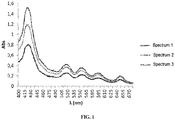
- Figure 1 is spectra showing the presence of Soret bands that corresponds to the high absorbing zone of porphyrin compounds in the blue-violet visible wavelength for arylazide-functionalized porphyrins grafted to cotton fabrics (spectrum 1), piece of polyethylene cloth (spectrum 2) and Whatman paper (spectrum 3).
- Mass analysis were performed by either using a Matrix-Assisted Laser Desoprtion Ionization MALDI mass spectrometry (MALDI-TOF/TOF, Smart Beam from Bruker).
- MALDI-TOF/TOF Matrix-Assisted Laser Desoprtion Ionization MALDI mass spectrometry
- a Perkin-Elmer 1000 FTIR spectrometer equipped with a spectrum software was used to perform FTIR analysis.
- the spectra were obtained by preparing KBr powder pellets containing 5% w/w of the investigated sample.
- UV-Visible spectroscopy UV-Visible spectroscopy
- UV-Vis spectra were recorded using a Specord 210 (Analytikjena) spectrophotometer using 10-mm quartz cells. Spectra were realized at adequate concentration (10 -5 -10 -6 M) with spectro-grade solvents.
- DRUV spectra of porphyrin-modified samples were obtained with a CARY 5000 Varian spectrometer using a 110 mm PTFE integrating sphere. Reflectance spectra were recorded against Teflon standard reflectance spectrum. Each spectrum was recorded in the range 350-750 nm.
- the mixture is stirred 30 mn in the dark.
- an aqueous solution of sodium nitrite (20 mg; 0.283 mmol; dissolved in 4.5 mL of water).
- the reactional mixture is stirred 1h at room temperature in the dark. After that, the mixture is neutralized at 0°C with NaOH solution (10%) until achieving a pH of about 8.
- the crude product is purified by an extraction of the aqueous phase with CH 2 Cl 2 followed by preparative plates chromatography on silica gel (CHCl 3 /Petroleum ether; 7/3 (v/v)).
- the final product, compound 3 is a purple solid obtained with a yield of about 91%.
- UV-Visible CHCl 3 , ⁇ max in nm: 420; 517; 553; 592; 648.
- 4-acetamidobenzaldehyde (11.6 g; 0.043 mol) and 4-pyridinecarboxybenzaldehyde (7.05 g; 0.108 mol) are carried out at reflux in propionic acid (500 mL).
- propionic acid 500 mL
- pyrrole is dropped in the reactional mixture during 2h.
- the mixture is further stirred at reflux for 1h30.
- the mixture is cooled at room temperature overnight.
- Propionic acid is removed and trimethylamine is added in the mixture.
- a purification by chromatography through silica column is carried out via Florisil ® (Silica gel 60; 0.015-0.040 mm, 50 cm x 45 cm).
- Compound 5 (32 mg; 0.051 mmol) is solubilized at about 0°C in 0.5 mL of trifluoroacetic acid (TFA). This solution is dropped into a sodium nitrite solution (6.98 mg; 0.101 mmol, in 0.07 mL of water). The mixture is stirred at 0°C for 15 min followed by the dropped addition of azide sodium solution (13.2 mg; 0.202 mmol, dissolved in 0.07 mL of water). The mixture is stirred 1h at 0°C and then diluted with water. A saturated solution of sodium hydrogen carbonate is added to the mixture until that the color of the solution changes from green to purple.
- TFA trifluoroacetic acid
- the crude product is removed by an extraction with CHCl 3 .
- the organic phase is dried with MgSO 4 and concentrated under reduced pressure.
- a purification by chromatography through silica column is carried out via Florisil ® (Silica gel 60; 0.015-0.040 mm, 50 cm ⁇ 45 cm). Eluent: CHCl 3 /MeOH; 97:3. Fractions comprising the final product are collected and concentrated under reduced pressure. After a recrystallization, the compound 6 is obtained (31.9 mg; 95%).
- the compound 3 was dissolved in acetone (0.1 to 1 mg/ml) until achieving a homogenous solution.
- Three different supports paper, cotton fabrics and a piece of polyethylene cloth
- the grafting reaction is carried out by two ways:
- the materials are rinsed with acetone, sonicated and dried.
- the compound 7 was dissolved in milliQ ® water (0.1 to 1 mg/ml) until achieving a homogenous solution.
- Three different supports paper, cotton fabrics and polyethylene cloth) were soaked with the solution as defined above.
- the grafting reaction is carried out by two ways:
- the materials are rinsed with acetone, sonicated and dried.
- the compound 3 was dissolved in acetone (0.1 to 1 mg/ml) until achieving a homogenous solution.
- the support (cotton fabrics) was soaked with the solution as defined above. After complete evaporation of the solvent in a dark environment, the grafting reaction is implemented on the cotton fabrics by thermal activation at a temperature ranging from 200°C to 250°Cduring a time ranging from 1 min to 10 min. Then, the support is rinsed with acetone, sonicated and dried.
- the compound 7 was dissolved in milliQ ® water (0.1 to 1 mg/ml) until achieving a homogenous solution.
- the support previously modified by the grafting of compound 3 was soaked with the solution comprising the compound 7 .
- the grafting reaction is implemented on the soaked support by thermal activation (200-250°C) during a time period ranging from 1 to 10 min.
- the final material is rinsed with water, sonicated and dried.
- the materials (cotton fabrics modified by the grafting of either the compound 3 or the compound 7 ) were dissolved in a hot and concentrated sulfuric acid solution.
- the result for the grafting of compound 3 on the cotton fabrics by the process of the invention is about 0.008 ⁇ mol/mg of support.
- the obtained value for compound 7 is about 0.025 ⁇ mol/mg of support.
- DRUV spectra of porphyrin-modified samples were obtained with a CARY 5000 Varian spectrometer using a 110 mm PTFE integrating sphere. Reflectance spectra were recorded against Teflon standard reflectance spectrum. Each spectrum was recorded in the range 350-750 nm.
- the corresponding spectra shows the presence of Soret bands that corresponds to the high absorbing zone of porphyrin compounds in the blue-violet visible wavelength.
- Bacteria were previously isolated in a Luria-Bertani plate with gelatin. Bacteria were collected and incubated overnight at 37°C under stirring in a suitable culture medium (Luria-Bertani or Tryptic Soy Borth).
- the bacteria culture is used for contacting the materials to study.
- a dilution (1/200) of the preculture is carried out in a suitable culture medium (Luria-Bertani or Tryptic Soy Borth).
- the culture is then incubated at 37°C under stirring during a time period ranging from 2h to 3h until achieving an optic density at 600 nm, ranging from 0.4 to 0.7.
- the culture is then diluted again in order to achieve 10 6 CFU/mL (colony forming unit).
- the Petri plates comprising the contaminated disks were incubated an incubator Lexman Light 230 V, E14, 470 Lumen, during 24h at 30°C.
- Each disk is introduced in an Eppendorf ® vial containing 1 mL of PBS buffer. An incubation is carried out during 30 min at room temperature under mild stirring and in a dark environment.
- microbiologic results for materials grafted with compound 3 after irradiation to LED light at 4000K are presented in Table 1.
- Table 1. Microbiologic results for the materials of the invention. Support Bacteria Type Effect Cotton fabrics or paper E. coli Gram - Total bactericidal effect (0 CFU/mL after 24 h) B. thuringiensis Gram + S. typhimurium Gram - Piece of polyethylene cloth E. coli Gram - Total bactericidal effect (0 CFU/mL after 24 h) B. thuringiensis Gram + Cotton fabrics Y. pestis Gram - Total bactericidal effect (0 CFU/mL after 24 h) B. anthracis Gram +
- the number of bacteria for each infected materials is 10 6 CFU/mL. After 24h of irradiation to LED light, the materials of the invention have an amount of bacteria equals to 0 CFU/mL. All the tests were performed under the AATCC Test Method 100 1999 "Assessment of Antibacterial finishes on textiles”.
- the bactericidal kinetic has been also studied for a support made of cotton fabrics and grafted with compound 3 by irradiation to LED light.
- Table 3 The microbiologic results are presented in Table 3 for cotton fabrics grafted with a cationic aryl azide porphyrin (compound 7 ) at a concentration equal to 0.2 mg/ml or 1 mg/mL, and after different irradiation time periods to LED light.
- Table 3 Bactericidal effects for cotton fabrics grafted with compound 7 at different concentrations and during different LED irradiation time periods. Support Concentration (mg/mL) Bacteria Irradiation time period Effect E. coli 24h Total bactericidal effect 2h Partial bactericidal effect 24h Total bactericidal effect 4h Total bactericidal effect 3h Total bactericidal effect 0.2 B.
- This effect is total against E. Coli after a LED irradiation of 24h.
- concentration of the porphyrin solution is equal to about 1 mg/mL
- a total bactericidal effect against E. Coli is achieved faster than when the concentration of the porphyrin solution is equal to about 0.2 mg/mL; especially, the irradiation time period is reduced to 1h.
- the bactericidal effect against B. thuringiensis is achieved as soon as 30 min after the beginning of the irradiation, when the concentration of the porphyrin solution is 0.2 mg/mL. This irradiation time period is reduced to 20 min when the concentration of the porphyrin solution is 1 mg/mL.
Landscapes
- Life Sciences & Earth Sciences (AREA)
- Agronomy & Crop Science (AREA)
- Pest Control & Pesticides (AREA)
- Plant Pathology (AREA)
- Health & Medical Sciences (AREA)
- Engineering & Computer Science (AREA)
- Dentistry (AREA)
- General Health & Medical Sciences (AREA)
- Wood Science & Technology (AREA)
- Zoology (AREA)
- Environmental Sciences (AREA)
- Pharmaceuticals Containing Other Organic And Inorganic Compounds (AREA)
Abstract
(i) preparing a solution of at least one arylazide functionalized-photosensitizer;
(ii) contacting the solution obtained at step (i) and a unmodified support; and
(iii) covalently grafting by an insertion reaction, the arylazide functionalized-photosensitizer deposited on the support at step (ii), said insertion reaction being carried out by a thermal activation and/or a UV irradiation activation.
Description
- The present invention relates to the field of materials; preferably to surfaces having biocide and/or bactericidal properties. Especially the present invention relates to a photoactivable surface and/or material able to deliver singular oxygen as bactericidal agent; and the process for preparing such materials.
- Biocide and/or bactericidal materials represents a huge public health issue impacting widespread fields such as medical field, environment and food industry. Consequently, it is of interest to develop efficient processes for providing such materials.
- In this purpose, one of the most efficient approach is chemically grafting biocide and/or bactericidal agents at the surface of materials. This chemical way allows avoiding releasing biocide and/or bactericidal agents over time.
- Since 1960's, the bactericidal properties of quaternary ammonium are known. These compounds feature low toxicity and do not induce skin inflammatory reactions. Abel et al. reported that paper supports may be modified by DABCO (1,4-diazibicyclo[2.2.2]octane) and that he grafting of quaternary ammoniums on this support allowed to provide bactericidal materials.
- Natural and synthetic polymers were also used as biocide and/or bactericidal agents. For instance, the free amino functions of chitosan may be protonated in a slightly acid medium and the resulting cationic chitosan can act as a quaternary ammonium salt (Rabea et al., Biomacromolecules, 2003, 4, 1457-1465).
- Some polymerization techniques such as ATRP (Atom Transfer Radical Polymerization) or RAFT (Reversible Addition-Fragmentation chain Transfer polymerization) were also used for grafting biocide and/or bactericidal agents comprising quaternary ammoniums (Lee et al., Biomacromolecules, 2004, 5; 877-882; Roy et al., Biomacromolecules, 2008, 9; 91-99). However, the art shows that the bactericidal properties depend on the alkyl chain length of the grafted quaternary ammonium.
- Another way of interest is the preparation of renewable surfaces from N-halamine compounds. These compound have the advantage to feature both a large disinfection range and a bactericidal ability due to the oxidative property of the halamine bond (N-Cl). In this chemical process, the halogen atom of the halamine bond is transferred to the receptors of the targeted bacteria, causing their death. After killing microorganisms, the halamine bond may be renewed by a treatment by chloration (Kaminski et al., J. Pham. Sci., 1976, 65, 553).
- The research community also focused its attention on photosensitizers. This class of bactericidal compounds has the particularity to produce reactive species (free radicals and/or singular oxygen) very toxic for living cells under irradiations in the visible spectrum. Indeed, at the beginning of 1980's, Nitzan et al. and Jori et al. evidenced the concept of Photo-Antimicrobial Chemo Therapy (PACT) by showing that low amounts of porphyrin and light allows killing 99% of a bacteria culture after only 2h.
- Then, photobactericidal surfaces were developed by the incorporation of a photosensitizer in a solid surface. For instance, Bezman et al. (Photochem. Photobiol. 1978, 28, 325-329) showed that E. Coli bacteria could be killed when contacted with polystyrene beads coated with a photosensitizer after light irradiation.
- However, the main drawback of these processes for providing biocide and/or bactericidal materials is that these processes always require the functionalization of the support prior to the graft of the biocide and/or of the bactericidal agent.
- Furthermore, the processes of the art often need severe conditions (high temperature, use of carcinogenic, mutagenic or toxic to reproduction reagents, etc...) that are not compatible with industrialization.
- Thus, there is still a need for providing versatile and easier process of manufacturing biocide and/or bactericidal materials.
- Surprisingly, the Applicant has evidenced an efficient process for manufacturing biocide and/or bactericidal materials comprising:
- (i) preparing a solution of at least one arylazide functionalized-photosensitizer;
- (ii) contacting the solution of step (i) and a unmodified support thereby resulting in depositing the arylazide functionalized-photosensitizer on the support; and
- (iii) covalently grafting by an insertion reaction, the arylazide functionalized-photosensitizer deposited on the support at step (ii), said insertion reaction being carried out by a thermal activation and/or a UV irradiation activation.
- Advantageously, the process of the invention is versatile and allows grafting a photosensitizer on a surface that has not been previously modified. Furthermore, the process of the invention is carried out in only one step, and without catalysts, contrary to the process of the art for which several steps are required.
- This invention thus relates to a process for manufacturing a biocide and/or bactericidal material comprising:
- (i) preparing a solution of at least one arylazide functionalized-photosensitizer;
- (ii) contacting the solution obtained at step (i) and a unmodified support, thereby resulting in depositing the arylazide functionalized-photosensitizer on the support; and
- (iii) covalently grafting by an insertion reaction, the arylazide functionalized-photosensitizer deposited on the support at step (ii), said insertion reaction being carried out by a thermal activation and/or a UV irradiation activation.
- According to one embodiment, the arylazide functionalized-photosensitizer is selected from the group of unmetalled arylazide functionalized-photosensitizer.
- According to one embodiment, the arylazide functionalized-photosensitizer is selected from tetrapyrrolic compounds such as porphyrins, chlorins, phthalocyanines, benzoporphyrins, bacteriochlorins, chlorophyll derivatives, corroles, texaphyrins, pheophorbides and bacteriopheophorbides; or non tetrapyrrolic compounds such as phenalenones, xanthenes, coumarins, psoralens, antraquinones, curcuminoids, phenothiazines and cyanines.
- According to one embodiment, the arylazide functionalized-photosensitizer is selected from arylazide porphyrins.
- According to one embodiment, the concentration of the azide functionalized-photosensitizer solution ranges from more than 0 to 10 mg/mL; preferably, from 0.01 to 5 mg/mL; more preferably, from 0.1 to 1 mg/mL.
- According to one embodiment, the solvent of the arylazide functionalized-photosensitizer solution is selected from polar solvent; preferably, is acetone or water.
- According to one embodiment, the unmodified support is selected from synthetic or natural polymer; preferably from a polymer selected from the group of polystyrene, polyacrylates, polymethacrylates, polyolefins, polyurethanes, polyacrylonitriles, polyamides, polyesters, polycarbonates, polyethers, polyimides, polyketones, polysiloxanes, polyepoxydes and their copolymers and/or mixtures thereof or cellulosic polymer; more preferably, the unmodified support is paper, cotton fabrics or polyethylene.
- According to one embodiment, the thermal activation of the insertion reaction is carried out at a temperature ranging from 100°C to 300°C; more preferably, from 200°C to 250°C.
- According to one embodiment, the UV irradiation activation of the insertion reaction is carried out at a wavelength ranging from 10 nm to 400 nm; preferably, from 300 nm to 380 nm; more preferably, the wavelength is about 365 nm.
- According to one embodiment, the UV irradiation activation of the insertion reaction is carried out during a time period ranging from 1 mn to 24h; preferably, the UV irradiation activation of the insertion reaction is carried out during a time period ranging from 1 min to 10 min.
- The present invention also refers to a biocide and/or bactericidal material comprising:
- (a) an unmodified support, preferably selected from synthetic or natural polymer; more preferably from paper, cotton fabrics or polyolefin; and
- (b) at least one arylazide-functionalized photosensitizer; preferably selected from tetrapyrrolic compounds such as porphyrins, chlorins, phthalocyanines, benzoporphyrins, bacteriochlorins, chlorophyll derivatives, corroles, texaphyrins, pheophorbides and bacteriopheophorbides; or non tetrapyrrolic compounds such as phenalenones, xanthenes, coumarins, psoralens, antraquinones, curcuminoids, phenothiazines and cyanines; more preferably selected form porphyrins;
- The present invention also refers to the use of the biocide and/or bactericidal material as defined above, in the preparation of clothes or coatings; preferably, in the preparation of protective clothes or protective coatings.
- The present invention also refers to the use of the biocide and/or bactericidal material as defined above, in the decontamination of water and/or biological fluids and/or biological surfaces.
- The present invention also refers to a kit comprising:
- in a first compartment, the unmodified support, preferably selected from synthetic or natural polymer; more preferably from paper, cotton fabrics or polyolefin; and
- in a second compartment, the solution comprising at least one arylazide-functionalized photosensitizer.
- According to one embodiment, the solution comprising at least one arylazide-functionalized photosensitizer is protected from light.
- In the present invention, the following terms have the following meanings:
- "about": preceding a figure means plus or less 10% of the value of said figure;
- "derivatives": refers to any compounds resulting from the modification of a compound; especially, the derivative may differ from one or more atoms or functional groups;
- "biocide": refers to any used compound or material for killing, destroying, deterioring, rendering harmless, preventing the action or combating organisms; preferably unicellular organisms including for example, eukaryote cells or prokaryote cells. In one preferred embodiment, the organisms are selected from bacteria, fungi, virus and yeasts;
- "bactericidal": refers to any used compound or material intended to kill bacteria;
- "azide": refers to the chemical functional group - N=N=N (or -N3);
- "arylazide": refers to the chemical functional group - X-N=N=N (or -X-N3) wherein X represents an aryl group which is selected from mono- or polycyclic system of 5 to 20, and preferably 6 to 12, carbon atoms having one or more aromatic rings (when there are two rings, it is called a biaryl) among which it is possible to cite the phenyl group, the biphenyl group, the 1-naphthyl group, the 2-naphthyl group, the tetrahydronaphthyl group, the indanyl group and the binaphthyl group. In the present invention, the term aryl also means any aromatic ring including at least one heteroatom chosen from an oxygen, nitrogen or sulfur atom. The aryl group can be substituted by 1 to 3 substituents chosen independently of one another, among a hydroxyl group, a linear or branched alkyl group comprising 1, 2, 3, 4, 5 or 6 carbon atoms, in particular methyl, ethyl, propyl, butyl, an alkoxy group or a halogen atom, in particular bromine, chlorine and iodine;
- "photosensitizer": refers to any molecules inducing a chemical change in another molecule in a photochemical process;
- "unmodified support": refers to any support that is not modified before the grafting step in order to introduce on the support suitable functions involved in the grafting process. Especially, in the present invention, the unmodified support refers to support used as such;
- "covalently grafting": refers to any grafting step that lead to a covalent bond between the molecule to be grafted (the photosensitizer) and the support;
- "insertion reaction": refers to a chemical reaction in which a compound fits into a bond of another compound. Especially, in the present invention, the function azide of the arylazide-functionalized photosensitizer fits into C-H bond and/or N-H bond of a support that was not previously modified. In the present invention, the insertion reaction requires the activation of the azide function by a thermal activation or by a UV irradiation activation. Advantageously, the aryl moiety of the function arylazide allows stabilizing the nitrene intermediate synthesized during the insertion reaction between arylazide-functionalized photosensitizer and the support that was not previously modified. This stabilization of the intermediate reaction is not obtained with an aliphatic azide;
- "insertion bond": refers to any single bond resulting from an insertion reaction as defined above;
- "thermal activation": refers to the action of temperature on an organic function involved in an insertion reaction;
- "UV irradiation activation": refers to the action of UV light on an organic function involved in an insertion reaction;
- "unmetalled": refers to any compound that does not comprise any chemical element selected from metals of the periodic table of elements;
- "metalled": refers to any compound that does comprise at least one chemical element selected from metals of the periodic table of the elements. Especially, the term "metalled" refers to any compound that does comprise at least one chemical element selected from alkali metals, alkaline earth metals, transition metals, lanthanoids, actinoids and poor metals. In the present invention, the term "metalled" preferably refers to any compound that does comprise at least one chemical element selected from zinc (Zn), manganese (Mn), silver (Ag), cobalt (Co), palladium (Pd), nickel (Ni), iron (Fe), copper (Cu) and Ytterbium (Yb); more preferably, zinc (Zn);
- "polar solvent": refers to any solvent having a nonzero dipole moment;
- "wavelength": refers to a physical value for characterizing monochromatic wave in the light spectra and is defined as the distance between two consecutive maxima of the wave amplitude;
- "protective": refers to any cloths or coatings that are able to protect from organisms; preferably from unicellular organisms including for example, eukaryote cells or prokaryote cells. In one preferred embodiment, the organisms are selected from bacteria, fungi, virus and yeasts;
- "tetrapyrrolic compounds": refers to any compounds having a structure derived from tetrapyrrole (i.e. molecules containing four pyrrole rings held together by direct covalent bonds or by one carbon bridges);
- "porphyrin": refers to any aromatic compounds having a structure derived from tetrapyrroles interconnected at their alpha-carbon atoms via methine bridges;
- "chlorin": refers to any heterocyclic aromatic rings comprising three pyrroles and one pyrroline cores linked together by methine bridge;
- "phthalocyanine": refers to any aromatic compounds comprising four isoindole rings linked together by imine bridge;
- "benzoporphyrin": refers to any aromatic compounds having the chemical structure of a porphyrin with one or more benzene rings fused to its pyrrole rings;
- "bacteriochlorin": refers to any aromatic compounds having the chemical structure of bacterial sourced chlorin, i.e. having two pyrrole groups in the main ring;
- "chlorophyl" or "chlorophyll": refers to any magnesium-containing chlorins;
- "corrolle": refers to a macrocycle with four pyrrolic cycles linked together by three methane bridges between four pyrolles and one direct connection between two pyrroles;
- "texaphyrin": refers to any compounds having the same chemical structure of porphyrin but in which the methine bridges are changed by imine bridges;
- "pheophorbide": refers to any product resulting from chlorophyll breakdown;
- "phenalenone or 1H-phenalen-1-one or perinaphtenone" refers to a chemical compound of formula C13H8O or its derivatives;
- "xanthene": refers to a chemical compound of formula C13H10O or its derivatives;
- "coumarin" or "1-benzopyrane-2-one": refers to a chemical compound of formula C9H6O2 or its derivatives;
- "psoralen" or "7H-furo[3,2-g]chromen-7-one": refers to a chemical compound of fluorocoumarin family of formula C11H6O3 or its derivatives;
- "antraquinone" or "anthracenedione": refers to a chemical compound of formula C14H8O2 or its derivatives;
- "curcuminoid": refers to a chemical compound which is derivative from curcuma chemical structure or its derivatves;
- "phenothiazine": refers to a chemical compound of formula S(C6H4)2NH or its derivatives;
- "cyanine": refers to any chemical compound belonging to polymethine dye family.
- As mentioned above, the present invention relates to a process for manufacturing a biocide and/or bactericidal material comprising:
- (i) preparing a solution of at least one arylazide functionalized-photosensitizer;
- (ii) contacting the solution of step (i) and a unmodified support thereby resulting in depositing the arylazide functionalized-photosensitizer on the support; and
- (iii) covalently grafting by an insertion reaction, the arylazide functionalized-photosensitizer deposited on the support at step (ii), said insertion reaction being carried out by a thermal activation and/or a UV irradiation activation.
- In the present invention, the "biocide and/or bactericidal" properties are studied in the conditions of AATCC (American Association of Textile Chemists and Colorists), Test Method 100-2004, that comprises the following steps:
- (a) an infection step in which the material to be studied is contamined with organims, preferably with bacteria;
- (b) an incubation step;
- (c) an extraction step in which organisms, preferably bacteria, are eluted from the materials of step (a); and
- (d) an enumeration step in which the number of organisms, preferably bacteria, is determined and the percentage reduction by treated specimen is calculated.
- In the conditions of AATCC test, the material is defined as having a total bactericidal and/or biocide effect when the percentage reduction of organisms by treated specimen is about 100% of the initial number of organisms of the contamined material.
- In the conditions of AATCC test, the material is defined as having a partial bactericidal and/or biocide effect when the percentage reduction of organisms by treated specimen ranges from 50% to less than 100% of the initial number of organisms of the contamined material.
- In the conditions of AATCC test, the material is defined as having no bactericidal and/or biocide effect when the percentage reduction of organisms by treated specimen ranges from 0% to less than 50% of the initial number of organisms of the contamined material.
- In the present invention, biocide and/or bactericidal activity was measured against bacteria such as, but not limited to, Escherichia Coli, Bacillus thuringiensis (vegetative form and/or spore), Salmonella typhimurium, Yersinia pestis or Bacillus anthracis (vegetative form and/or spore).
- According to one embodiment, the arylazide functionalized-photosensitizer is selected from the group of arylazide functionalized-photosensitizer in which the photosensitizer is under the form of free base. In the present invention, the terms "free base" mean any chemical compound being a conjugate base form of an amine.
- According to one embodiment, the arylazide functionalized-photosensitizer is selected from the group of unmetalled arylazide functionalized-photosensitizer.
- According to one embodiment, the arylazide functionalized-photosensitizer is selected from the group of metallized arylazide functionalized-photosensitizer. In one embodiment, the arylazide functionalized-photosensitizer comprises at least one chemical element selected from alkali metals, alkaline earth metals, transition metals, lanthanoids, actinoids and poor metals.
- In one embodiment, the alkali metal is selected from lithium (Li), sodium (Na), potassium (K), rubidium (Rb), caesium (Cs) and Francium (Fr).
- In one embodiment, the alkaline earth metal is selected from beryllium (Be), magnesium (Mg), calcium (Ca), strontium (Sr), barium (Ba) and radium (Ra).
- In one embodiment, the transition metal is selected from scandium (Sc), titanium (Ti), vanadium (Va), chromium (Cr), manganese (Mn), iron (Fe), cobalt (Co), nickel (Ni), copper (Cu), yttium (Y), zirconium (Zr), niobium (Nb), molybdenum (Mo), technetium (Tc), ruthenium (Ru), rhodium (Rh), palladium (Pd), silver (Ag), hafnium, (Hf), tantalum (Ta), tungsten (W), rhenium (Re), osmium (Os), iridium (Ir), platinum (Pt), gold (Au), rutherfordium (Rf), dubnium (Db), seaborgium (Sg), bhorium (Bh), hassium (Hs), meitnerium (Mt), damstadidium (Ds), roentgerium (Rg).
- In one embodiment, the lanthanoid is selected from lanthanium (La), cerium (Ce), praseodymium (Pr), neodymium (Nd), promethium (Pm), samarium (Sm), europium (Eu), gadolinium (Gd), terbium (Tb), dysprosium (Dy), holmium (Ho), erbium (Er), thulium (Tm), Ytterbium (Yb) and lutetium (Lu).
- In one embodiment, the actinoid is selected from actinium (Ac), thorium (Th), protactinium (Pa), uranium (U), neptunium (Np), plutonium (Pu), americium (Am), curium (Cm), berkelium (Bk), californium (Cf), einsteinium (Es), fermium (Fm), mendelevium (Md), nobelium (No) and lawrencium (Lr).
- In one embodiment, the poor metal is selected from aluminium (Al), zinc (Zn), gallium (Ga), germanium (Ge), cadmium (Cd), indium (In), tin (Sn), antimony (Sb), mercury (Hg), thallium (Ti), lead (Pb), bismuth (Bi), polonium (Po), inunbium (Uub), ununtrium (Uut), ununpentium (Uup), ununhexium (Uuh) and ununseptium (Uus); preferably, the poor metal is selected from aluminium (Al), zinc (Zn), gallium (Ga), germanium (Ge), cadmium (Cd), indium (In), tin (Sn), antimony (Sb), mercury (Hg), thallium (Ti), lead (Pb), bismuth (Bi), polonium (Po). In one embodiment, the poor metal is zinc (Zn).
- According to one preferred embodiment, the metalled arylazide functionalized-photosensitizer comprises a metal which does not prevent the production of singlet oxygen and/or reactive oxygen species (ROS) by the photosensitizer of the invention. In one embodiment, the arylazide functionalized-photosensitizer comprises at least one chemical element selected from zinc (Zn), manganese (Mn), silver (Ag), cobalt (Co), palladium (Pd), nickel (Ni), iron (Fe), copper (Cu) and Ytterbium (Yb); more preferably, the metalled arylazide functionalized-photosensitizer comprises at least one atom of zinc (Zn).
- According to one embodiment, the arylazide functionalized-photosensitizer is able to produce singlet oxygen and/or reactive oxygen species (ROS). In one embodiment, the arylazide functionalized-photosensitizer under the form of free base, is able to produce singlet oxygen and/or reactive oxygen species (ROS). In one embodiment, the unmetalled arylazide functionalized-photosensitizer is able to produce singlet oxygen and/or reactive oxygen species (ROS). In one embodiment, the metallized arylazide functionalized-photosensitizer is able to produce singlet oxygen and/or reactive oxygen species (ROS).
- According to one embodiment, the arylazide functionalized-photosensitizer is selected from tetrapyrrolic compounds such as porphyrins, chlorins, phthalocyanines, benzoporphyrins, bacteriochlorins, chlorophyll derivatives, corrolles, texaphyrins, pheophorbides and bacteriopheophorbides; or non tetrapyrrolic compounds such as phenalenones, xanthenes, coumarins, psoralens, antraquinones, curcuminoids, phenothiazines and cyanines.
- According to one embodiment, the arylazide functionalized-photosensitizer is selected from arylazide porphyrins. According to one embodiment, the arylazide functionalized-photosensitizer is an arylazide functionalized -10,15,20-triphenyl porphyrin. According to one embodiment, the arylazide functionalized-photosensitizer is an arylazide functionalized 10,15,20-triaryl porphyrin. According to one embodiment, the arylazide functionalized-photosensitizer is an arylazide functionalized-10,15,20-tripyridinium porphyrin. According to one embodiment, the arylazide functionalized-photosensitizer is an arylazide functionalized-10,15,20-tri(alkylpyridinium) porphyrin. According to one embodiment, the arylazide functionalized-photosensitizer is an arylazide functionalized-10,15,20-tri(N-alkylpyridinium) porphyrin. According to one embodiment, the arylazide functionalized-photosensitizer is an arylazide functionalized-10,15,20-triaryl porphyrin halide. According to one embodiment, the arylazide functionalized-photosensitizer is an arylazide functionalized-10,15,20-tripyridinium porphyrin halide. According to one embodiment, the arylazide functionalized-photosensitizer is an arylazide functionalized-10,15,20-tri(alkylpyridinium) porphyrin halide.
- According to one embodiment, the arylazide functionalized-photosensitizer is a neutral arylazide porphyrin. According to one embodiment, the arylazide functionalized-photosensitizer is 5-(4-azidophenyl)-10,15,20-triphenyl porphyrin (TPP-N3).
- According to one embodiment, the arylazide functionalized-photosensitizer is an electronically charged arylazide porphyrin; preferably, a cationic arylazide porphyrin. According to one embodiment, the arylazide functionalized-photosensitizer is 5-(4-azidophenyl)-10,15,20- tri-(N-methyl-4-pyridinium)porphyrin triiodide.
- In the present invention, the expression "electronically charged" refers to any compounds being either cationic (lack of electrons, positive Zeta potential) or anionic (excess of electrons, negative Zeta potential). For instance, the Zeta potential of the surface may be measured by an electrokinetic analyzer for solid surface analysis such as SurPASS™ 3 (Anton Paar).
- According to one embodiment, the solution of step (i) comprises a solvent selected from polar solvents. According to one embodiment, the solvent is water; preferably milliQ® water. According to one embodiment, the solvent is selected from organic solvents, preferably from organic polar solvents, more preferably the solvent is a volatile organic polar solvent. In one embodiment, the solvent is acetone.
- According to one embodiment, the solution of step (i) comprises water and at least one charged arylazide functionalized-photosensitizer. According to one embodiment, the solution of step (i) comprises water and at least one charged arylazide functionalized-porphyrin. According to one embodiment, the solution of step (i) comprises water and at least one cationic arylazide functionalized-porphyrin.
- According to one embodiment, the solution of step (i) comprises a polar organic solvent and at least one neutral arylazide functionalized-photosensitizer. According to one embodiment, the solution of step (i) comprises a polar organic solvent and at least one neutral arylazide functionalized-porphyrin. According to one embodiment, the solution of step (i) comprises a polar organic solvent and at least one cationic arylazide functionalized-porphyrin.
- According to one embodiment, the concentration of the arylazide functionalized-photosensitizer solution in the solvent ranges from more than 0 to 10 mg/mL; preferably, from 0.01 to 5 mg/mL; more preferably, from 0.1 to 1 mg/mL.
- According to one embodiment, the step (i) is carried out at a temperature ranging from 10°C to 50°C; preferably, the step (i) is carried out at room temperature.
- According to one embodiment, the step (i) is carried out at atmospheric pressure.
- According to one embodiment, the solution of step (i) is homogeneous, i.e. the arylazide functionalized-photosensitizer is homogeneously dissolved in the solvent.
- In the present invention, "unmodified support" means that the support is not modified before the grafting step in order to introduce chemical functions on the support that are involved in the grafting process. Advantageously, the process of the invention allows to use the support as such.
- According to one embodiment, the unmodified support may be any support known by the skilled artisan. In one embodiment, the unmodified support may be a hard or a flexible support.
- In one embodiment, the unmodified support is selected from support comprising polymer; preferably a polymer selected from the group of polystyrene, polyacrylates, polymethacrylates, polyolefins (such as polyethylene, polypropylene, polybutadiene), polyurethanes, polyacrylonitriles, polyamides, polyesters, polycarbonates, polyethers, polyimides, polyketones, polysiloxanes, polyepoxydes and their copolymers and/or mixtures thereof. In one embodiment, the synthetic support is a support comprising polyethylene.
- In one embodiment, the unmodified support is selected from supports made of polymer; preferably a polymer selected from the group of polystyrene, polyacrylates, polymethacrylates, polyolefins (such as polyethylene, polypropylene, polybutadiene), polyurethanes, polyacrylonitriles, polyamides, polyesters, polycarbonates, polyethers, polyimides, polyketones, polysiloxanes, polyepoxydes and their copolymers and/or mixtures thereof. In one embodiment, the synthetic support is a support made of polyethylene. In one embodiment, the synthetic support is polyethylene Tyvek®.
- In one embodiment, the synthetic support is a thermoplastic polymer. In one embodiment, the synthetic support is an elastomer. In one embodiment, the synthetic support is selected a thermosetting polymer.
- In one embodiment, the unmodified support comprises synthetic or natural polymer. In one embodiment, the unmodified support comprises cellulosic polymer. In one embodiment, the unmodified support is made of cellulosic polymer.
- In one embodiment, the unmodified support is selected from paper, cotton fabrics or synthetic support; preferably, the unmodified support is cotton fabrics.
- According to one embodiment, the unmodified support comprises natural fibers or synthetic fibers. According to one embodiment, the fibers are woven.
- According to one embodiment, the step (ii) is carried out at a temperature ranging from 10°C to 50°C; preferably, the step (ii) is carried out at room temperature.
- According to one embodiment, the step (ii) is carried out at a pressure ranging from 220 hPa to 1 200 hPa; preferably, the step (ii) is carried out at atmospheric pressure (i.e. at a pressure of about 1000 hPa).
- According to one embodiment, the solution of step (i) is applying on the unmodified support. In the present invention, the solution of step (i) may be applied on the unmodified support by one of the methods well-known by the skilled artisan such as printing, inkjet printing, screen printing, airbrushing, spraying or soaking. According to one embodiment, the unmodified support is soaked in the solution of step (i). According to one embodiment, the solution of step (i) is sprayed on the unmodified support.
- According to one embodiment, the step (ii) further comprises a drying step. According to one embodiment, the step (ii) further comprises a drying step after the step (ii) has been carried out. According to one embodiment, the step (ii) further comprises a step for evaporating the solvent. According to one embodiment, the solvent is totally evaporated. According to one embodiment, the solvent is totally evaporated before the grafting step.
- According to one embodiment, the step (ii) is carried out in a dark environment, i.e. in an environment protected from light.
- According to one embodiment, the step (iii) is carried out at a temperature ranging from 10°C to 300°C; preferably, from 200°C to 250°C.
- According to one embodiment, the step (iii) is carried out at a pressure ranging from 220 hPa to 1 200 hPa; preferably, the step (iii) is carried out at atmospheric pressure (i.e. at a pressure of about 1000 hPa).
- In the present invention, the arylazide functionalized-photosensitizer is covalently grafted by an insertion reaction, to the support. By "insertion reaction", it means a chemical reaction that lead to the insertion of the compound to be grafted into a single C-H bond and/or N-H bond of the support. Especially, in the present invention, phenyl azide functions are used for allowing implementing the insertion reaction by stabilizing nitrene intermediates contrary to aliphatic azide compounds. The activation of the phenyl azide functions lead to nitrene intermediates able to be inserted in a R-H closest bond (R may be C, N or O atom) of the support to restore its valence.
- Contrary to click chemistry reaction, the insertion reaction does not requires neither the pre-functionalization of the reagents by suitable functions, nor the use of catalyst (copper for example) for carrying out the click reaction. Especially, when a click chemistry is carried out from an azide functionalized compound, the other reagent has to carry an alkyne function. In the insertion reaction of the present invention, the unmodified support is not required to carry out an alkyne function.
- The process of the invention does not comprises any click chemistry reaction; especially, the process of the invention does not comprise any cycloaddition step such as 1,3-dipolar cycloaddition.
- According to one embodiment, the insertion reaction is initiated by a thermal activation or a UV irradiation activation of the arylazide function of the photosensitizer. According to one embodiment, the thermal activation or UV irradiation activation may be carried out by any well-known method of the skilled artisan. Especially, the skilled artisan would be able to adapt the activation time depending on the power of the used apparatus.
- For example, the thermal activation may be carried out, but not limited to, the use of an oven, an infrared lamp or a thermal dryer. According to one embodiment, the thermal activation is carried out at a temperature ranging from 100°C to 300°C; more preferably, ranging from 200°C to 250°C. According to one embodiment, the thermal activation is carried out during a time period ranging from 10s to 1h; preferably, from 20s to 30 mn; more preferably, from 30s to 5 mn. According to one embodiment, the thermal activation is carried out during a time period ranging from 1 mn to 10 mn.
- According to one embodiment, the UV irradiation activation is carried out at a wavelength which is not selected from absorption wavelengths of the photosensitizer for its activation. According to one embodiment, the UV irradiation activation is carried out at a wavelength which is not selected from absorption wavelengths of porphyrin for its activation. According to one embodiment, the UV irradiation activation is carried out at a wavelength which is not selected from absorption wavelengths of arylazide porphyrin for its activation.
- According to one embodiment, the UV irradiation activation is carried out at a wavelength ranging from 10 nm to 400 nm; preferably, from 200 nm to 370 nm; preferably, from 300 nm to 380 nm; more preferably, the wavelength is about 365 nm.
- According to one embodiment, the UV irradiation activation is carried out during a time period ranging from 1 min to 24h. According to one embodiment, the UV irradiation activation is carried out during a time period ranging from 30 mn to 10h. According to one embodiment, the UV irradiation activation is carried out 24h. According to one embodiment, the UV irradiation activation is carried out 4h. According to one embodiment, the UV irradiation activation is carried out 3h. According to one embodiment, the UV irradiation activation is carried out 2h. According to one embodiment, the UV irradiation activation is carried out 1h. According to one embodiment, the UV irradiation activation is carried out 45 min. According to one embodiment, the UV irradiation activation is carried out 30 min. According to one embodiment, the UV irradiation activation is carried out 20 min. According to one embodiment, the UV irradiation activation is carried out 10 min.
- Advantageously, the process of the invention allows implementing the grafting of the photosensitizer by irradiation on the unmodified support without altering the properties of photosensitizer. In one embodiment, the grafted porphyrin keeps good biocide and/or bactericidal properties after being grafted on an unmodified support.
- Advantageously, the process of the invention allows providing materials becoming biocide and/or bactericidal materials when placed under the light; preferably, when placed under natural light (i.e. sunlight). Especially, in the present invention, bacteria are killed due to the activation by irradiation of the porphyrins.
- The process of the invention as defined above, may further comprise a step for activating biocide and/or bactericidal properties of the photo sensibilizer. Especially, the present invention also relates to a process for manufacturing a biocide and/or bactericidal material comprising:
- (i) preparing a solution comprising at least one arylazide functionalized-photosensitizer;
- (ii) contacting the solution of step (i) and a unmodified support thereby resulting in depositing the arylazide functionalized-photosensitizer on the support;
- (iii) covalently grafting by an insertion reaction, the arylazide functionalized-photosensitizer deposited on the support at step (ii) thereby resulting in a biocide and/or bactericidal material, said insertion reaction being carried out by a thermal activation and/or a UV irradiation activation; and
- (iv) carrying out the activation of the biocide and/or bactericidal properties of the material at step (iii).
- According to one embodiment, the activation of the biocide and/or bactericidal properties of the material of the invention is carried out by UV irradiation. According to one embodiment, the UV irradiation of the biocide and/or bactericidal material may be carried out by any method well-known by the skilled artisan. Especially, the UV irradiation time for activating the biocide and/or bactericidal properties of the material depends on the nature of organisms and of the power of the used lamp.
- According to one embodiment, the biocide and/or bactericidal properties of the material of the invention are activated after an irradiation time ranging from more than 0 min to less than 24h.
- According to one embodiment, the biocide and/or bactericidal properties of the material of the invention are activated after an irradiation at a wavelength ranging from 400 nm to 750 nm.
- This invention also relates to a biocide and/or bactericidal material comprising:
- (a) a unmodified support; and
- (b) at least one arylazide-functionalized photosensitizer.
- According to one embodiment, the biocide and/or bactericidal material may be obtained by the process of the invention as described above.
- According to one embodiment, the unmodified support is selected from any support that is not modified before the grafting step in order to introduce chemical functions on the support that are involved in the grafting process.
- According to one embodiment, the unmodified support is selected from support comprising polymer; preferably a polymer selected from the group of polystyrene, polyacrylates, polymethacrylates, polyolefins (such as polyethylene, polypropylene, polybutadiene), polyurethanes, polyacrylonitriles, polyamides, polyesters, polycarbonates, polyethers, polyimides, polyketones, polysiloxanes, polyepoxydes and their copolymers and/or mixtures thereof. In one embodiment, the synthetic support is a support comprising polyethylene.
- In one embodiment, the unmodified support is selected from supports made of polymer; preferably a polymer selected from the group of polystyrene, polyacrylates, polymethacrylates, polyolefins (such as polyethylene, polypropylene, polybutadiene), polyurethanes, polyacrylonitriles, polyamides, polyesters, polycarbonates, polyethers, polyimides, polyketones, polysiloxanes, polyepoxydes and their copolymers and/or mixtures thereof. In one embodiment, the synthetic support is a support made of polyethylene. In one embodiment, the synthetic support is polyethylene Tyvek®.
- In one embodiment, the synthetic support is a thermoplastic polymer. In one embodiment, the synthetic support is an elastomer. In one embodiment, the synthetic support is selected a thermosetting polymer.
- In one embodiment, the unmodified support comprises synthetic or natural polymer. In one embodiment, the unmodified support comprises cellulosic polymer. In one embodiment, the unmodified support is made of cellulosic polymer.
- In one embodiment, the unmodified support is selected from paper, cotton fabrics or synthetic support; preferably, the unmodified support is cotton fabrics.
- According to one embodiment, the unmodified support comprises natural fibers or synthetic fibers. According to one embodiment, the fibers are woven.
- According to one embodiment, the arylazide functionalized-photosensitizer is selected from the group of arylazide functionalized-photosensitizer in which the photosensitizer is under the form of free base.
- According to one embodiment, the arylazide functionalized-photosensitizer is selected from the group of unmetalled arylazide functionalized-photosensitizer.
- According to one embodiment, the arylazide functionalized-photosensitizer is selected from the group of metallized arylazide functionalized-photosensitizer. In one embodiment, the arylazide functionalized-photosensitizer comprises at least one chemical element selected from alkali metals, alkaline earth metals, transition metals, lanthanoids, actinoids and poor metals.
- In one embodiment, the alkali metal is selected from lithium (Li), sodium (Na), potassium (K), rubidium (Rb), caesium (Cs) and Francium (Fr).
- In one embodiment, the alkaline earth metal is selected from beryllium (Be), magnesium (Mg), calcium (Ca), strontium (Sr), barium (Ba) and radium (Ra).
- In one embodiment, the transition metal is selected from scandium (Sc), titanium (Ti), vanadium (Va), chromium (Cr), manganese (Mn), iron (Fe), cobalt (Co), nickel (Ni), copper (Cu), yttium (Y), zirconium (Zr), niobium (Nb), molybdenum (Mo), technetium (Tc), ruthenium (Ru), rhodium (Rh), palladium (Pd), silver (Ag), hafnium, (Hf), tantalum (Ta), tungsten (W), rhenium (Re), osmium (Os), iridium (Ir), platinum (Pt), gold (Au), rutherfordium (Rf), dubnium (Db), seaborgium (Sg), bhorium (Bh), hassium (Hs), meitnerium (Mt), damstadidium (Ds), roentgerium (Rg).
- In one embodiment, the lanthanoid is selected from lanthanium (La), cerium (Ce), praseodymium (Pr), neodymium (Nd), promethium (Pm), samarium (Sm), europium (Eu), gadolinium (Gd), terbium (Tb), dysprosium (Dy), holmium (Ho), erbium (Er), thulium (Tm), Ytterbium (Yb) and lutetium (Lu).
- In one embodiment, the actinoid is selected from actinium (Ac), thorium (Th), protactinium (Pa), uranium (U), neptunium (Np), plutonium (Pu), americium (Am), curium (Cm), berkelium (Bk), californium (Cf), einsteinium (Es), fermium (Fm), mendelevium (Md), nobelium (No) and lawrencium (Lr).
- In one embodiment, the poor metal is selected from aluminium (Al), zinc (Zn), gallium (Ga), germanium (Ge), cadmium (Cd), indium (In), tin (Sn), antimony (Sb), mercury (Hg), thallium (Ti), lead (Pb), bismuth (Bi), polonium (Po), inunbium (Uub), ununtrium (Uut), ununpentium (Uup), ununhexium (Uuh) and ununseptium (Uus); preferably, the poor metal is selected from aluminium (Al), zinc (Zn), gallium (Ga), germanium (Ge), cadmium (Cd), indium (In), tin (Sn), antimony (Sb), mercury (Hg), thallium (Ti), lead (Pb), bismuth (Bi), polonium (Po). In one embodiment, the poor metal is zinc (Zn).
- According to one preferred embodiment, the metalled arylazide functionalized-photosensitizer comprises a metal which does not prevent the production of singlet oxygen and/or reactive oxygen species (ROS) by the photosensitizer of the invention. In one embodiment, the arylazide functionalized-photosensitizer comprises at least one chemical element selected from zinc (Zn), manganese (Mn), silver (Ag), cobalt (Co), palladium (Pd), nickel (Ni), iron (Fe), copper (Cu) and Ytterbium (Yb); more preferably, the metalled arylazide functionalized-photosensitizer comprises at least one atom of zinc (Zn).
- According to one embodiment, the arylazide functionalized-photosensitizer is able to produce singlet oxygen and/or reactive oxygen species (ROS). In one embodiment, the arylazide functionalized-photosensitizer under the form of free base, is able to produce singlet oxygen and/or reactive oxygen species (ROS). In one embodiment, the unmetalled arylazide functionalized-photosensitizer is able to produce singlet oxygen and/or reactive oxygen species (ROS). In one embodiment, the metallized arylazide functionalized-photosensitizer is able to produce singlet oxygen and/or reactive oxygen species (ROS).
- According to one embodiment, the arylazide functionalized-photosensitizer is selected from tetrapyrrolic compounds such as porphyrins, chlorins, phthalocyanines, benzoporphyrins, bacteriochlorins, chlorophyll derivatives, corrolles, texaphyrins, pheophorbides and bacteriopheophorbides; or non tetrapyrrolic compounds such as phenalenones, xanthenes, coumarins, psoralens, antraquinones, curcuminoids, phenothiazines and cyanines.
- According to one embodiment, the arylazide functionalized-photosensitizer is selected from arylazide porphyrins. According to one embodiment, the arylazide functionalized-photosensitizer is an arylazide functionalized -10,15,20-triphenyl porphyrin. According to one embodiment, the arylazide functionalized-photosensitizer is an arylazide functionalized 10,15,20-triaryl porphyrin. According to one embodiment, the arylazide functionalized-photosensitizer is an arylazide functionalized-10,15,20-tripyridinium porphyrin. According to one embodiment, the arylazide functionalized-photosensitizer is an arylazide functionalized-10,15,20-tri(alkylpyridinium) porphyrin. According to one embodiment, the arylazide functionalized-photosensitizer is an arylazide functionalized-10,15,20-tri(N-alkylpyridinium) porphyrin. According to one embodiment, the arylazide functionalized-photosensitizer is an arylazide functionalized-10,15,20-triaryl porphyrin halide. According to one embodiment, the arylazide functionalized-photosensitizer is an arylazide functionalized-10,15,20-tripyridinium porphyrin halide. According to one embodiment, the arylazide functionalized-photosensitizer is an arylazide functionalized-10,15,20-tri(alkylpyridinium) porphyrin halide.
- According to one embodiment, the arylazide functionalized-photosensitizer is a neutral arylazide porphyrin. According to one embodiment, the arylazide functionalized-photosensitizer is 5-(4-azidophenyl)-10,15,20-triphenyl porphyrin (TPP-N3).
- According to one embodiment, the arylazide functionalized-photosensitizer is an electronically charged arylazide porphyrin; preferably, a cationic arylazide porphyrin. According to one embodiment, the arylazide functionalized-photosensitizer is 5-(4-azidophenyl)-10,15,20- tri-(N-methyl-4-pyridinium)porphyrin triiodide.
- In the present invention, the amount of the arylazide functionalized-photosensitizer grafted on the unmodified support is determined by UV-visible titration. According to one embodiment, the arylazide functionalized-photosensitizer is grafted on the unmodified support as defined above in a range from more than 0 to 1 µmol/ mg of said support; preferably from 0.001 to 0.04 µmol/mg. According to one embodiment, the amount of the arylazide functionalized-photosensitizer grafted on the unmodified support, is about 0.008 µmol/mg of support. According to one embodiment, the amount of the arylazide functionalized-photosensitizer grafted on the unmodified support, is about 0.025 µmol/mg of support.
- This invention also relates to the use of the biocide and/or bactericidal material as defined above.
- According to one embodiment, the material of the invention is useful in the preparation of clothes or coatings; preferably, in the preparation of protective clothes or protective coatings.
- According to one embodiment, the material of the invention is useful in the decontamination of water and/or biological fluids.
- According to one embodiment, the material of the invention is useful in the decontamination of biological surfaces.
- The present invention also relates to a kit comprising:
- in a first compartment, an unmodified support as defined above, preferably selected from paper, cotton fabrics or synthetic support; and
- in a second compartment, a solution of at least one arylazide-functionalized photosensitizer as defined above.
- According to one embodiment, the kit of the invention allows keeping the solution of at least one arylazide-functionalized photosensitizer, protected from light.
-
Figure 1 is spectra showing the presence of Soret bands that corresponds to the high absorbing zone of porphyrin compounds in the blue-violet visible wavelength for arylazide-functionalized porphyrins grafted to cotton fabrics (spectrum 1), piece of polyethylene cloth (spectrum 2) and Whatman paper (spectrum 3). - The present invention is further illustrated by the following examples.
-
- CHCl3: chloroform (or trichloromethane);
- DMF: dimethylformamide;
- ε: molar extinction coefficient;
- Equiv.: equivalent;
- h: hour(s);
- L: liter;
- M: mol/L;
- min: minute;
- mg: milligram(s);
- mL: milliliter(s);
- mmol: millimol(s);
- NaOH: sodium hydroxide;
- PBS: Phosphate Buffered Saline;
- Rf: frontal rapport migration.
- All solvents and reagents were purchased from chemical companies Pyrrole was distilled over CaH2 under reduced pressure immediately before use. Analytical thin layer chromatography (TLC) was performed on silica gel Merck 60 F254. Merck precoated plates (
silica gel 60, 2 mm) were used for preparative thin layer chromatography. Column chromatography was carried out with silica gel columns (60 ACC; 15 - 20 µm, Merck). - 1H NMR were recorded on Bruker DPX-400 MHz spectrometer at 400.13 MHz. CDCl3 or DMSO-d6 are used as solvent with tetramethylsilane as an internal standard. The chemical shifts are given in ppm and coupling constant in Hz.
- Mass analysis were performed by either using a Matrix-Assisted Laser Desoprtion Ionization MALDI mass spectrometry (MALDI-TOF/TOF, Smart Beam from Bruker).
- A Perkin-Elmer 1000 FTIR spectrometer equipped with a spectrum software was used to perform FTIR analysis. The spectra were obtained by preparing KBr powder pellets containing 5% w/w of the investigated sample.
- UV-Vis spectra were recorded using a Specord 210 (Analytikjena) spectrophotometer using 10-mm quartz cells. Spectra were realized at adequate concentration (10-5-10-6 M) with spectro-grade solvents.
- DRUV spectra of porphyrin-modified samples were obtained with a CARY 5000 Varian spectrometer using a 110 mm PTFE integrating sphere. Reflectance spectra were recorded against Teflon standard reflectance spectrum. Each spectrum was recorded in the range 350-750 nm.
- In a two necked flask, are introduced 302 mg (2 mmol; 1 equiv.) of nitrobenzaldehyde, 0.613 mL (6 mmol; 3 equiv.) of benzaldehyde and 60 mL of propionic acid. After 1h heating at about 120°C-130°C under reflux, pyrrole (0.555 mL; 8 mmol; 4 equiv.) previously distilled, is dropped into the reactional mixture. The reaction is carried out 1h at about 120°C, under agitation and in the dark. After cooling the mixture at room temperature, the solvent is evaporated in order to provide the crude product. The
compound 1 is obtained after a purification step by preparative plates chromatography (CHCl3/petrol ether: 6/4). The final product is a purple solid and the yield is about 7.2% (96 mg). - Rf =0.62 (CHCl3/petrol ether: 6/4).
- UV-Visible: CHCl3, λmax in nm, (ε, L.cm-1.mol-1 × 10³): 420 (241); 516 (12.2); 552 (7.1); 591 (4.4); 647 (3.1).
- 1H NMR (CDCl3) δppm = 8.89 (d, J=4,8 Hz, 2H, H β-pyrrolic); 8.86 (s, 4H, H β-pyrrolic); 8.73 (d, J=4,8 Hz, 2H, H β-pyrrolic); 8.62 (d, J=8,5 Hz, 2H, H 3,5-acryl);); 8.39 (d, J=8,5 Hz, 2H, H 2,6-aryl); ); 8.21 (d, J=6,8 Hz, 6H, H 2,6-phenyl ); 7.76 (d, J=7,3 Hz, 9H, H 3,4,5-phenyl); -2.78 (s, 2H, NH int.).
- MS (MALDI): m/z=660.07 [M+H]+.
- In a two necked flask, 80 mg (0.121 mmol; 1 equiv.) of
compound 1 is solubilized in 20 mL of CHCl3. A solution of 82 mg (0.363 mmol; 3 equiv.) of tin chloride in 20 mL of HCl solution (37%) is added followed by 20 mL of acetic acid. Then, the reaction is carried out overnight at about 70°C-80°C, under agitation and in the dark. After cooling at room temperature, the mixture is neutralized with 150 mL of NaOH solution (2M). The crude product is purified by an organic phase extraction followed by washings with ultrapure water. The final product,compound 2, is a purple solid obtained with a yield of about 80% (61 mg). - Rf =0.50 (CHCl3).
- UV-Visible: CHCl3, λmax in nm, (ε, L.cm-1.mol-1 × 10³): 420 (369); 517 (14.0); 554 (7.6); 591 (4.4); 648 (4.0).
- 1H NMR (CDCl3) δppm = 8.94 (d, J=4,7 Hz, 2H, Hβ-pyrrolic ); 8.84 (d, J=4.7 Hz, 2H, H β-pyrrolic); 8.82 (4H, Hβ-pyrrolic ); 8.21 (d, J=7,6 Hz, 6H, H2,6-phenyl ); 7.74 (d, J=7,4 Hz, 9H, H 3,4,5-phenyl); 7.99 (d, J=8,2 Hz, 2H, H 2,6-ary); 7.04 (d, J=8,2 Hz, 2H, H 3,5-aryl ); 3.99 (s, 2H, NH2 );-2.75 (s, 2H, N Hint .).
- MS (MALDI): m/z=630.11 [M+H]+.
- A solution of 8 mg sodium nitrite (0.141 mmol; 1 equiv. dissolved in 4.5 mL of water), is added to a solution of compound 2 (89 mg; 0.141 mmol; 1 equiv. dissolved in 3 mL of HCl 20%) at a temperature of about 0°C.The mixture is stirred 30 mn in the dark. Then, is added an aqueous solution of sodium nitrite (20 mg; 0.283 mmol; dissolved in 4.5 mL of water). The reactional mixture is stirred 1h at room temperature in the dark. After that, the mixture is neutralized at 0°C with NaOH solution (10%) until achieving a pH of about 8. The crude product is purified by an extraction of the aqueous phase with CH2Cl2 followed by preparative plates chromatography on silica gel (CHCl3/Petroleum ether; 7/3 (v/v)). The final product,
compound 3, is a purple solid obtained with a yield of about 91%. - Rf =0.65 (CHCl3/Petroleum ether; 7/3 (v/v)).
- UV-Visible: CHCl3, λmax in nm: 420; 517; 553; 592; 648.
- FTIR (KBr, cm-1): υ (N=N) 2121.80 and 2086.39 cm-1.
- 1H NMR (400.13 MHz; CDCl3) δppm = 8.94 (m, 2H, Hβ-pyrrolic ); 8.84 (m, 6H, H β-pyrrolic ); 8.21 (m, 8H, H3,5-phenyl , H2,6-aryl ); 7.76 (m, 9H, H2,4,6-phenyl ); 7.42 (d, J=8,2 Hz, 2H, H 3,5-aryl);-2.78 (s, 2H, NH int.).
- 13C NMR (100 MHz; CDCl3)δppm=116.6; 117.4; 120.26; 120.33; 120.68; 121.1; 126.70; 131.3; 134.5; 135.13; 135.7; 138.96; 139.86; 141.91; 142.11; 149.2; 147.
- MS (MALDI) C44H29N7: m/z (theo.) =655.75 found 655.97 [M+H]+.
- 4-acetamidobenzaldehyde (11.6 g; 0.043 mol) and 4-pyridinecarboxybenzaldehyde (7.05 g; 0.108 mol) are carried out at reflux in propionic acid (500 mL). First, pyrrole is dropped in the reactional mixture during 2h. Second, the mixture is further stirred at reflux for 1h30. Then, the mixture is cooled at room temperature overnight. Propionic acid is removed and trimethylamine is added in the mixture. A purification by chromatography through silica column is carried out via Florisil® (Silica gel 60; 0.015-0.040 mm, 50 cm x 45 cm). Eluent: CHCl3/MeOH; 97:3; CHCl3/MeOH; 96:4; CHCl3/MeOH; 95:5. Fractions comprising the final product are collected and concentrated under reduced pressure. A pure fraction, compound 4, (492.5 mg; 7.30.10-4 mol; 2%) is obtained.
- Compound 4 (205.7 mg; 0.310 mmol) is solubilized in 200 mL of a HCl solution (5N). The mixture is heated at 80°C during 3 hours then concentrated under reduced pressure and neutralized with NaOH solution (6M). The crude product is removed by an extraction with CH2Cl2. After a drying step with MgSO4, the final product is removed by a precipitation step in methanol. A pure fraction, compound 5, (492.9 mg; 7.30.10-4 mol; 2%) is obtained.
- Compound 5 (32 mg; 0.051 mmol) is solubilized at about 0°C in 0.5 mL of trifluoroacetic acid (TFA). This solution is dropped into a sodium nitrite solution (6.98 mg; 0.101 mmol, in 0.07 mL of water). The mixture is stirred at 0°C for 15 min followed by the dropped addition of azide sodium solution (13.2 mg; 0.202 mmol, dissolved in 0.07 mL of water). The mixture is stirred 1h at 0°C and then diluted with water. A saturated solution of sodium hydrogen carbonate is added to the mixture until that the color of the solution changes from green to purple. The crude product is removed by an extraction with CHCl3.The organic phase is dried with MgSO4 and concentrated under reduced pressure. A purification by chromatography through silica column is carried out via Florisil® (Silica gel 60; 0.015-0.040 mm, 50 cm × 45 cm). Eluent: CHCl3/MeOH; 97:3. Fractions comprising the final product are collected and concentrated under reduced pressure. After a recrystallization, the compound 6 is obtained (31.9 mg; 95%).
- Iodomethane (0.9 mL; 14.46 mmol; 213 equiv.) is added into a solution of compound 6 (45.1 mg; 0.068 mmol; 1 equiv., dissolved in 4.5 mL of anhydrous DMF). The reactional mixture is stirred during 24h at 40°C. The product is then removed by a precipitation step in cold diethyl ether and then, washed many times with cold diethyl ether. The pure product, compound 7, is obtained with a yield of about 88% (65.2 mg, purple solid).
- The
compound 3 was dissolved in acetone (0.1 to 1 mg/ml) until achieving a homogenous solution. Three different supports (paper, cotton fabrics and a piece of polyethylene cloth) were soaked with the solution as defined above. After complete evaporation of the solvent in a dark environment, the grafting reaction is carried out by two ways: - a) a thermal activation at a temperature ranging from 200°C to 250°C during a time ranging from 1 to 10 mn (for paper or cotton); and
- b) a UV irradiation activation at a wavelength of about 365 nm (for paper, cotton or polyethylene cloth).
- After the grafting step, the materials are rinsed with acetone, sonicated and dried.
- The compound 7 was dissolved in milliQ® water (0.1 to 1 mg/ml) until achieving a homogenous solution. Three different supports (paper, cotton fabrics and polyethylene cloth) were soaked with the solution as defined above.
- After complete evaporation of the solvent in a dark environment, the grafting reaction is carried out by two ways:
- a) a thermal activation at a temperature ranging from 200°C to 250°C during a time ranging from 1 to 10 mn (for paper or cotton); and
- b) a UV irradiation activation at a wavelength of about 365 nm (for paper, cotton or a piece of polyethylene cloth).
- After the grafting step, the materials are rinsed with acetone, sonicated and dried.
- First, the
compound 3 was dissolved in acetone (0.1 to 1 mg/ml) until achieving a homogenous solution. The support (cotton fabrics) was soaked with the solution as defined above. After complete evaporation of the solvent in a dark environment, the grafting reaction is implemented on the cotton fabrics by thermal activation at a temperature ranging from 200°C to 250°Cduring a time ranging from 1 min to 10 min. Then, the support is rinsed with acetone, sonicated and dried. - Second, the compound 7 was dissolved in milliQ® water (0.1 to 1 mg/ml) until achieving a homogenous solution. The support previously modified by the grafting of
compound 3, was soaked with the solution comprising the compound 7. After complete evaporation of the solvent in a dark environment, the grafting reaction is implemented on the soaked support by thermal activation (200-250°C) during a time period ranging from 1 to 10 min. Then, the final material is rinsed with water, sonicated and dried. - The materials (cotton fabrics modified by the grafting of either the
compound 3 or the compound 7) were dissolved in a hot and concentrated sulfuric acid solution. - Then, a UV-visible titration of the dissolved
compounds 3 and 7 was carried out in the resulting solution. - The result for the grafting of
compound 3 on the cotton fabrics by the process of the invention is about 0.008 µmol/mg of support. The obtained value for compound 7 is about 0.025 µmol/mg of support. - The presence and the integrity of the
compounds 3 and 7 after grafting on the support were measured by DRUV technology with an integration sphere. - DRUV spectra of porphyrin-modified samples were obtained with a CARY 5000 Varian spectrometer using a 110 mm PTFE integrating sphere. Reflectance spectra were recorded against Teflon standard reflectance spectrum. Each spectrum was recorded in the range 350-750 nm.
- Three supports were studied: cotton fabrics, Whatman paper and a piece of polyethylene cloth.
- The results are shown in
Figure 1 . - For each of the supports, the corresponding spectra shows the presence of Soret bands that corresponds to the high absorbing zone of porphyrin compounds in the blue-violet visible wavelength.
- Thus, these results evidence that the process of the invention is efficient for grafting arylazide porphyrin (neutral or charged) on a support such as cotton fabrics, Wathman paper or a piece of polyethylene cloth.
- The aim of these experiments is to evidence that the materials of the invention have bactericidal properties.
- The following bacterial strains have been studied:
- (a) Escherichia Coli BL21 star™ (Gram -);
- (b) Bacillus thuringiensis, vegetative form and spore (Gram +);
- (c) Salmonella typhimurium CIP 104474 (Gram -);
- (d) Yersinia pestis (Gram -);
- (e) Bacillus anthracis vegetative form and spore (Gram +).
- Bacteria were previously isolated in a Luria-Bertani plate with gelatin. Bacteria were collected and incubated overnight at 37°C under stirring in a suitable culture medium (Luria-Bertani or Tryptic Soy Borth).
- The bacteria culture is used for contacting the materials to study. A dilution (1/200) of the preculture is carried out in a suitable culture medium (Luria-Bertani or Tryptic Soy Borth).
- The culture is then incubated at 37°C under stirring during a time period ranging from 2h to 3h until achieving an optic density at 600 nm, ranging from 0.4 to 0.7.
- The culture is then diluted again in order to achieve 106 CFU/mL (colony forming unit).
- The materials of the invention to be studied, under the form of disks, were contaminated with:
- (a) 40 µL of the culture at 106 CFU/mL when the support is cotton fabrics or paper; or
- (b) 20 µL of the culture at 106 CFU/mL when the support is a piece of polyethylene cloth.
- The Petri plates comprising the contaminated disks were incubated an incubator Lexman Light 230 V, E14, 470 Lumen, during 24h at 30°C.
- For each bacteriological test, the following conditions were studied:
- (i) Ungrafted disk (UD) kept in a dark environment (Dark) ;
- (ii) Ungrafted disk (UD) exposed to light (Light);
- (iii) Grafted disk (GD) kept in a dark environment (Dark) ; and
- (iv) Grafted disk (GD) exposed to light (Light);
- (v) a positive control (without incubation); and
- (vi) a negative control (without bacteria).
- Each disk is introduced in an Eppendorf® vial containing 1 mL of PBS buffer. An incubation is carried out during 30 min at room temperature under mild stirring and in a dark environment.
- For each disk, an enumeration of the bacteria colonies was realized.
- The microbiologic results for materials grafted with
compound 3 after irradiation to LED light at 4000K are presented in Table 1.Table 1. Microbiologic results for the materials of the invention. Support Bacteria Type Effect Cotton fabrics or paper E. coli Gram - Total bactericidal effect (0 CFU/mL after 24 h) B. thuringiensis Gram + S. typhimurium Gram - Piece of polyethylene cloth E. coli Gram - Total bactericidal effect (0 CFU/mL after 24 h) B. thuringiensis Gram + Cotton fabrics Y. pestis Gram - Total bactericidal effect (0 CFU/mL after 24 h) B. anthracis Gram + - At the beginning of these experiments, the number of bacteria for each infected materials is 106 CFU/mL. After 24h of irradiation to LED light, the materials of the invention have an amount of bacteria equals to 0 CFU/mL. All the tests were performed under the AATCC Test Method 100 1999 "Assessment of Antibacterial finishes on textiles".
- Thus, these results evidence that the materials of the invention grafted with neutral aryl azide porphyrin, have bactericidal effect on both bacteria Gram + and bacteria Gram -.
- The bactericidal kinetic has been also studied for a support made of cotton fabrics and grafted with
compound 3 by irradiation to LED light. - The results (Table 2) show that for each bacterial strain:
- (a) a total bactericidal effect is obtained for a LED irradiation period time of about 4h;
- (b) a partial bactericidal effect is obtained for a LED irradiation period time ranging from 1h to less than 4h; and
- (c) no bactericidal effect is achieved when the LED irradiation period time is about 1h.
- Thus, these results evidence that the materials of the invention allows achieving a bactericidal effect which may be modulated depending on the LED irradiation time period.
- The microbiologic results are presented in Table 3 for cotton fabrics grafted with a cationic aryl azide porphyrin (compound 7) at a concentration equal to 0.2 mg/ml or 1 mg/mL, and after different irradiation time periods to LED light.
Table 3. Bactericidal effects for cotton fabrics grafted with compound 7 at different concentrations and during different LED irradiation time periods. Support Concentration (mg/mL) Bacteria Irradiation time period Effect E. coli 24h Total bactericidal effect 2h Partial bactericidal effect 24h Total bactericidal effect 4h Total bactericidal effect 3h Total bactericidal effect 0.2 B. thuringiensis 2h Total bactericidal effect Cotton fabrics 1h Total bactericidal effect 30 min Total bactericidal effect 20 min Partial bactericidal effect 10 min Partial Bactericidal effect 24h Total Bactericidal effect 2h Total bactericidal effect E. coli 1h Total bactericidal effect 1 45 min Partial bactericidal effect 30 min No bactericidal effect B. thuringiensis 20 min Total bactericidal effect 10 min Partial Bactericidal effect - The results show that bactericidal effects are achieved for cotton fabrics grafted with cationic aryl azide porphyrin.
- This effect is total against E. Coli after a LED irradiation of 24h. When the concentration of the porphyrin solution is equal to about 1 mg/mL, a total bactericidal effect against E. Coli is achieved faster than when the concentration of the porphyrin solution is equal to about 0.2 mg/mL; especially, the irradiation time period is reduced to 1h.
- The bactericidal effect against B. thuringiensis is achieved as soon as 30 min after the beginning of the irradiation, when the concentration of the porphyrin solution is 0.2 mg/mL. This irradiation time period is reduced to 20 min when the concentration of the porphyrin solution is 1 mg/mL.
- The microbiologic results are presented in Table 4 for cotton fabrics grafted with compound 7 (cationic aryl azide porphyrin) after irradiation to natural light.
Table 4. Bactericidal effect for cotton fabricss grafted with compound 7 during different natural light irradiation time periods. Support Bacteria Type Irradiation Time Period Effect Cotton fabrics E. coli Gram - 2h Total bactericidal effect (0 CFU/mL after 24 h) E. coli Gram - 1h B. thuringiensis Gram + 5 min - The results show that from a cotton fabrics grafted with a charged aryl azide porphyrin (compound 7), a total bactericidal effect may be achieved for an irradiation time period less than 4h. Furthermore, the cotton fabrics grafted with compound 7 is particularly efficient against B. thuringiensis for which the irradiation time period is reduced to 5 min.
| Support | Bacteria | Type | Irradiation Time Period | Effect |
| E. coli | Gram - | 4h | Total bactericidal effect | |
| 3h | Partial bactericidal effect | |||
| 2h | Partial bactericidal effect | |||
| Cotton fabrics | 1h | No bactericidal effect | ||
| B. thuringiensis | Gram + | 4h | Total bactericidal effect | |
| 3h | Partial bactericidal effect | |||
| 2h | Partial bactericidal effect | |||
| 1h | No bactericidal effect | |||
| S typhimurium | Gram - | 4h | Total bactericidal effect | |
| 2h | No Bactericidal effect |
Claims (15)
- A process for manufacturing a biocide and/or bactericidal material comprising:(i) preparing a solution of at least one arylazide functionalized-photosensitizer;(ii) contacting the solution obtained at step (i) and a unmodified support, thereby resulting in depositing the arylazide functionalized-photosensitizer on the support; and(iii) covalently grafting by an insertion reaction, the arylazide functionalized-photosensitizer deposited on the support at step (ii), said insertion reaction being carried out by a thermal activation and/or a UV irradiation activation.
- The process according to claim 1, wherein the arylazide functionalized-photosensitizer is selected from the group of unmetalled arylazide functionalized-photosensitizer.
- The process according to claim 1 or claim 2, wherein the arylazide functionalized-photosensitizer is selected from tetrapyrrolic compounds such as porphyrins, chlorins, phthalocyanines, benzoporphyrins, bacteriochlorins, chlorophyll derivatives, corroles, texaphyrins, pheophorbides and bacteriopheophorbides; or non tetrapyrrolic compounds such as phenalenones, xanthenes, coumarins, psoralens, antraquinones, curcuminoids, phenothiazines and cyanines.
- The process according to anyone of claims 1 to 3, wherein the arylazide functionalized-photosensitizer is selected from arylazide porphyrins.
- The process according to anyone of claims 1 to 4, wherein the concentration of the azide functionalized-photosensitizer solution ranges from more than 0 to 10 mg/mL; preferably, from 0.01 to 5 mg/mL; more preferably, from 0.1 to 1 mg/mL.
- The process according to anyone of claims 1 to 5, wherein the solvent of the arylazide functionalized-photosensitizer solution is selected from polar solvent; preferably, is acetone or water.
- The process according to anyone of claims 1 to 6, wherein the unmodified support is selected from synthetic or natural polymer; preferably from a polymer selected from the group of polystyrene, polyacrylates, polymethacrylates, polyolefins, polyurethanes, polyacrylonitriles, polyamides, polyesters, polycarbonates, polyethers, polyimides, polyketones, polysiloxanes, polyepoxydes and their copolymers and/or mixtures thereof or cellulosic polymer; more preferably, the unmodified support is paper, cotton fabrics or polyethylene.
- The process according to anyone of claims 1 to 7, wherein the thermal activation of the insertion reaction is carried out at a temperature ranging from 100°C to 300°C; more preferably, from 200°C to 250°C.
- The process according to anyone of claims 1 to 8, wherein the UV irradiation activation of the insertion reaction is carried out at a wavelength ranging from 10 nm to 400 nm; preferably, from 300 nm to 380 nm; more preferably, the wavelength is about 365 nm.
- The process according to anyone of claims 1 to 9, wherein the UV irradiation activation of the insertion reaction is carried out during a time period ranging from 1 mn to 24h; preferably, the UV irradiation activation of the insertion reaction is carried out during a time period ranging from 1 min to 10 min.
- A biocide and/or bactericidal material comprising:(a) an unmodified support, preferably selected from synthetic or natural polymer; more preferably from paper, cotton fabrics or polyolefin; and(b) at least one arylazide-functionalized photosensitizer; preferably selected from tetrapyrrolic compounds such as porphyrins, chlorins, phthalocyanines, benzoporphyrins, bacteriochlorins, chlorophyll derivatives, corroles, texaphyrins, pheophorbides and bacteriopheophorbides; or non tetrapyrrolic compounds such as phenalenones, xanthenes, coumarins, psoralens, antraquinones, curcuminoids, phenothiazines and cyanines; more preferably selected form porphyrins;said arylazide-functionalized photosensitizer being covalently grafted to the support through an insertion bond.
- Use of the biocide and/or bactericidal material according to claim 11, in the preparation of clothes or coatings; preferably, in the preparation of protective clothes or protective coatings.
- Use of the biocide and/or bactericidal material according to claim 11, in the decontamination of water and/or biological fluids and/or biological surfaces.
- A kit comprising :- in a first compartment, the unmodified support, preferably selected from synthetic or natural polymer; more preferably from paper, cotton fabrics or polyolefin; and- in a second compartment, the solution comprising at least one arylazide-functionalized photosensitizer.
- The kit according to claim 14, wherein the solution comprising at least one arylazide-functionalized photosensitizer is protected from light.
Priority Applications (2)
| Application Number | Priority Date | Filing Date | Title |
|---|---|---|---|
| EP16194036.6A EP3308646B1 (en) | 2016-10-14 | 2016-10-14 | Photoactivable biocide and/or bactericidal materials and process for manufacturing such materials |
| PCT/EP2017/076207 WO2018069508A1 (en) | 2016-10-14 | 2017-10-13 | Photoactivable biocide and/or bactericidal materials and process for manufacturing such materials |
Applications Claiming Priority (1)
| Application Number | Priority Date | Filing Date | Title |
|---|---|---|---|
| EP16194036.6A EP3308646B1 (en) | 2016-10-14 | 2016-10-14 | Photoactivable biocide and/or bactericidal materials and process for manufacturing such materials |
Publications (2)
| Publication Number | Publication Date |
|---|---|
| EP3308646A1 true EP3308646A1 (en) | 2018-04-18 |
| EP3308646B1 EP3308646B1 (en) | 2020-10-07 |
Family
ID=57136801
Family Applications (1)
| Application Number | Title | Priority Date | Filing Date |
|---|---|---|---|
| EP16194036.6A Active EP3308646B1 (en) | 2016-10-14 | 2016-10-14 | Photoactivable biocide and/or bactericidal materials and process for manufacturing such materials |
Country Status (2)
| Country | Link |
|---|---|
| EP (1) | EP3308646B1 (en) |
| WO (1) | WO2018069508A1 (en) |
Families Citing this family (2)
| Publication number | Priority date | Publication date | Assignee | Title |
|---|---|---|---|---|
| FR3090271B1 (en) | 2018-12-19 | 2021-03-05 | Commissariat A L’Energie Atomique Et Aux Energies Alternatives Cea | PROCESS FOR THE PREPARATION OF A BIOCIDAL, BACTERICIDAL AND / OR BACTERIOSTATIC MATERIAL |
| CN113845460B (en) * | 2021-07-29 | 2023-02-14 | 浙江海洋大学 | Curcumin derivative with photosensitive bactericidal activity, preparation method and fresh shrimp photodynamic sterilization and preservation method |
Citations (3)
| Publication number | Priority date | Publication date | Assignee | Title |
|---|---|---|---|---|
| WO1993000815A1 (en) * | 1991-07-02 | 1993-01-21 | Courtaulds Plc | Polymer compositions |
| WO2007000472A1 (en) * | 2005-06-29 | 2007-01-04 | L. Molteni & C. Dei Fratelli Alitti Societa' Di Esercizio S.P.A. | Self-sterilizing products |
| US20070238660A1 (en) * | 2006-03-31 | 2007-10-11 | Stephen Michielsen | Light activated antiviral materials and devices and methods for decontaminating virus infected environments |
Family Cites Families (4)
| Publication number | Priority date | Publication date | Assignee | Title |
|---|---|---|---|---|
| AU3371799A (en) * | 1998-03-30 | 1999-10-18 | Fibermark, Inc. | Light-activated antimicrobial polymeric materials |
| US6951630B2 (en) * | 2001-08-16 | 2005-10-04 | Ceramoptec Industries, Inc. | Method and substance for obtaining surfaces with antimicrobial properties |
| GB0322173D0 (en) * | 2003-09-23 | 2003-10-22 | Secr Defence | Surface functionalised adhesion |
| EP2310463A4 (en) * | 2008-08-08 | 2012-06-27 | Laamscience Inc | Antimicrobial surfaces |
-
2016
- 2016-10-14 EP EP16194036.6A patent/EP3308646B1/en active Active
-
2017
- 2017-10-13 WO PCT/EP2017/076207 patent/WO2018069508A1/en not_active Ceased
Patent Citations (3)
| Publication number | Priority date | Publication date | Assignee | Title |
|---|---|---|---|---|
| WO1993000815A1 (en) * | 1991-07-02 | 1993-01-21 | Courtaulds Plc | Polymer compositions |
| WO2007000472A1 (en) * | 2005-06-29 | 2007-01-04 | L. Molteni & C. Dei Fratelli Alitti Societa' Di Esercizio S.P.A. | Self-sterilizing products |
| US20070238660A1 (en) * | 2006-03-31 | 2007-10-11 | Stephen Michielsen | Light activated antiviral materials and devices and methods for decontaminating virus infected environments |
Non-Patent Citations (11)
| Title |
|---|
| "Assessment of Antibacterial finishes on textiles", AATCC TEST METHOD 100, 1999 |
| A. V. BUDRUEV ET AL: "Photochemical modification of polyethylene surface with aryl azides", HIGH ENERGY CHEMISTRY, vol. 47, no. 5, 1 September 2013 (2013-09-01), RU, pages 237 - 241, XP055334912, ISSN: 0018-1439, DOI: 10.1134/S0018143913050020 * |
| BEZMAN ET AL., PLIOTOCLIEM. PLIOTOBIOL., vol. 28, 1978, pages 325 - 329 |
| DARYA DZHONS ET AL: "Photochemical modification of polymer surface with bifunctional dyes phenothiazine series", PROCEEDINGS OF THE 17TH INTERNATIONAL ELECTRONIC CONFERENCE ON SYNTHETIC ORGANIC CHEMISTRY, 1 November 2013 (2013-11-01), Basel, Switzerland, pages d004, XP055334675, DOI: 10.3390/ecsoc-17-d004 * |
| ELKE FEESE ET AL: "Photobactericidal Porphyrin-Cellulose Nanocrystals: Synthesis, Characterization, and Antimicrobial Properties", BIOMACROMOLECULES, vol. 12, no. 10, 10 October 2011 (2011-10-10), pages 3528 - 3539, XP055150400, ISSN: 1525-7797, DOI: 10.1021/bm200718s * |
| KAMINSKI ET AL., J. PLIAM. SCI., vol. 65, 1976, pages 553 |
| LEE ET AL., BIOMACROMOLECULES, vol. 5, 2004, pages 877 - 882 |
| M. A. RYAN ET AL: "Light-initiated surface modification of oxide semiconductors with organic dyes", LANGMUIR, vol. 4, no. 4, 1 July 1988 (1988-07-01), US, pages 861 - 867, XP055334778, ISSN: 0743-7463, DOI: 10.1021/la00082a014 * |
| NZAMBE TA KEKI JEAN KERIM ET AL: "Synthesis and photobactericidal properties of a neutral porphyrin grafted onto lignocellulosic fibers", MATERIALS SCIENCE AND ENGINEERING C, vol. 62, 12 January 2016 (2016-01-12), pages 61 - 67, XP029452918, ISSN: 0928-4931, DOI: 10.1016/J.MSEC.2016.01.028 * |
| RABEA ET AL., BIOMACROMOLECULES, vol. 4, 2003, pages 1457 - 1465 |
| ROY ET AL., BIOMACROMOLECULES, vol. 9, 2008, pages 91 - 99 |
Also Published As
| Publication number | Publication date |
|---|---|
| EP3308646B1 (en) | 2020-10-07 |
| WO2018069508A1 (en) | 2018-04-19 |
Similar Documents
| Publication | Publication Date | Title |
|---|---|---|
| Ogunsipe et al. | Solvent effects on the photochemical and fluorescence properties of zinc phthalocyanine derivatives | |
| Heredia et al. | Antimicrobial photodynamic polymeric films bearing biscarbazol triphenylamine end-capped dendrimeric Zn (II) porphyrin | |
| Shen et al. | Photoactive and metal-free polyamide-based polymers for water and wastewater treatment under visible light irradiation | |
| Gonzalez Lopez et al. | BOPHY‐Fullerene C60 dyad as a photosensitizer for antimicrobial photodynamic therapy | |
| Sindelo et al. | Synthesis, photophysicochemical and photodynamic antimicrobial chemotherapy studies of indium pyridyl phthalocyanines: Charge versus bridging atom | |
| EP0891977B1 (en) | 5-(4-Hydroxyphenyl)-porphyrin derivatives as photosensitisers | |
| Makola et al. | Enhancement of photodynamic antimicrobialtherapy through the use of cationic indium porphyrin conjugated to Ag/CuFe2O4 nanoparticles | |
| Baigorria et al. | Synthesis, spectroscopic properties and photodynamic activity of Zn (II) phthalocyanine-polymer conjugates as antimicrobial agents | |
| Sen et al. | Light-driven antimicrobial therapy of palladium porphyrins and their chitosan immobilization derivatives and their photophysical-chemical properties | |
| Panchavarnam et al. | Synthesis, structure, and properties of helical bis-Cu (II) complex of linear hexapyrrolic ligand | |
| Uslan et al. | A novel of PEG-conjugated phthalocyanine and evaluation of its photocytotoxicity and antibacterial properties for photodynamic therapy | |
| Sherrill et al. | Grafting of light‐activated antimicrobial materials to nylon films | |
| EP3308646B1 (en) | Photoactivable biocide and/or bactericidal materials and process for manufacturing such materials | |
| Sindelo et al. | Fabrication of asymmetrical morpholine phthalocyanines conjugated chitosan-polyacrylonitrile nanofibers for improved photodynamic antimicrobial chemotherapy activity | |
| Zugle et al. | Comparative phototransformation of environmental pollutants using metallophthalocyanines supported on electrospun polymer fibers | |
| Lee et al. | Bioderived protoporphyrin IX incorporation into a metal-organic framework for enhanced photocatalytic degradation of chemical warfare agents | |
| Sowa et al. | Umbelliferone Decorated Water‐soluble Zinc (II) Phthalocyanines–In Vitro Phototoxic Antimicrobial Anti‐cancer Agents | |
| İpek et al. | Novel water-soluble silicon (IV) phthalocyanine for photodynamic therapy and antimicrobial inactivations | |
| Ahmetali et al. | Enhanced Light‐Driven Antimicrobial Activity of Cationic Poly (oxanorbornene) s by Phthalocyanine Incorporation into Polymer as Pendants | |
| Habermeyer et al. | Bactericidal efficiency of porphyrin systems | |
| Openda et al. | In vitro photoinactivation of S. aureus and photocatalytic degradation of tetracycline by novel phthalocyanine-graphene quantum dots nano-assemblies | |
| Sindelo et al. | Photoinactivation of microorganisms and photodegradation of pollutants using phthalocyanines supported on nanofibers and glass wool | |
| Oyim et al. | Indium porphyrin-colloidal activated carbon composites for photocatalytic activity against an organic pollutant and bacteria | |
| Nobatana et al. | The photodynamic anti-cancer and anti-bacterial behaviour of meso-substituted trans-A2B2 porphyrin conjugated silica‑gold nanoparticles | |
| Jiang et al. | A new potent antimicrobial metalloporphyrin |
Legal Events
| Date | Code | Title | Description |
|---|---|---|---|
| PUAI | Public reference made under article 153(3) epc to a published international application that has entered the european phase |
Free format text: ORIGINAL CODE: 0009012 |
|
| STAA | Information on the status of an ep patent application or granted ep patent |
Free format text: STATUS: THE APPLICATION HAS BEEN PUBLISHED |
|
| AK | Designated contracting states |
Kind code of ref document: A1 Designated state(s): AL AT BE BG CH CY CZ DE DK EE ES FI FR GB GR HR HU IE IS IT LI LT LU LV MC MK MT NL NO PL PT RO RS SE SI SK SM TR |
|
| AX | Request for extension of the european patent |
Extension state: BA ME |
|
| STAA | Information on the status of an ep patent application or granted ep patent |
Free format text: STATUS: REQUEST FOR EXAMINATION WAS MADE |
|
| 17P | Request for examination filed |
Effective date: 20181018 |
|
| RBV | Designated contracting states (corrected) |
Designated state(s): AL AT BE BG CH CY CZ DE DK EE ES FI FR GB GR HR HU IE IS IT LI LT LU LV MC MK MT NL NO PL PT RO RS SE SI SK SM TR |
|
| STAA | Information on the status of an ep patent application or granted ep patent |
Free format text: STATUS: EXAMINATION IS IN PROGRESS |
|
| 17Q | First examination report despatched |
Effective date: 20181220 |
|
| REG | Reference to a national code |
Ref country code: DE Ref legal event code: R079 Ref document number: 602016045282 Country of ref document: DE Free format text: PREVIOUS MAIN CLASS: A01N0025080000 Ipc: A01N0043900000 |
|
| GRAP | Despatch of communication of intention to grant a patent |
Free format text: ORIGINAL CODE: EPIDOSNIGR1 |
|
| STAA | Information on the status of an ep patent application or granted ep patent |
Free format text: STATUS: GRANT OF PATENT IS INTENDED |
|
| RIC1 | Information provided on ipc code assigned before grant |
Ipc: A01N 25/10 20060101AFI20200603BHEP Ipc: A01N 43/36 20060101ALI20200603BHEP Ipc: A01P 1/00 20060101ALI20200603BHEP Ipc: A01N 61/00 20060101ALI20200603BHEP |
|
| RIC1 | Information provided on ipc code assigned before grant |
Ipc: A01P 1/00 20060101ALI20200605BHEP Ipc: A01N 43/90 20060101AFI20200605BHEP Ipc: A01N 25/10 20060101ALI20200605BHEP |
|
| INTG | Intention to grant announced |
Effective date: 20200623 |
|
| GRAS | Grant fee paid |
Free format text: ORIGINAL CODE: EPIDOSNIGR3 |
|
| GRAA | (expected) grant |
Free format text: ORIGINAL CODE: 0009210 |
|
| STAA | Information on the status of an ep patent application or granted ep patent |
Free format text: STATUS: THE PATENT HAS BEEN GRANTED |
|
| AK | Designated contracting states |
Kind code of ref document: B1 Designated state(s): AL AT BE BG CH CY CZ DE DK EE ES FI FR GB GR HR HU IE IS IT LI LT LU LV MC MK MT NL NO PL PT RO RS SE SI SK SM TR |
|
| REG | Reference to a national code |
Ref country code: GB Ref legal event code: FG4D |
|
| REG | Reference to a national code |
Ref country code: CH Ref legal event code: EP Ref country code: AT Ref legal event code: REF Ref document number: 1320199 Country of ref document: AT Kind code of ref document: T Effective date: 20201015 |
|
| REG | Reference to a national code |
Ref country code: IE Ref legal event code: FG4D |
|
| REG | Reference to a national code |
Ref country code: DE Ref legal event code: R096 Ref document number: 602016045282 Country of ref document: DE |
|
| REG | Reference to a national code |
Ref country code: NL Ref legal event code: MP Effective date: 20201007 |
|
| REG | Reference to a national code |
Ref country code: AT Ref legal event code: MK05 Ref document number: 1320199 Country of ref document: AT Kind code of ref document: T Effective date: 20201007 |
|
| PG25 | Lapsed in a contracting state [announced via postgrant information from national office to epo] |
Ref country code: FI Free format text: LAPSE BECAUSE OF FAILURE TO SUBMIT A TRANSLATION OF THE DESCRIPTION OR TO PAY THE FEE WITHIN THE PRESCRIBED TIME-LIMIT Effective date: 20201007 Ref country code: GR Free format text: LAPSE BECAUSE OF FAILURE TO SUBMIT A TRANSLATION OF THE DESCRIPTION OR TO PAY THE FEE WITHIN THE PRESCRIBED TIME-LIMIT Effective date: 20210108 Ref country code: PT Free format text: LAPSE BECAUSE OF FAILURE TO SUBMIT A TRANSLATION OF THE DESCRIPTION OR TO PAY THE FEE WITHIN THE PRESCRIBED TIME-LIMIT Effective date: 20210208 Ref country code: RS Free format text: LAPSE BECAUSE OF FAILURE TO SUBMIT A TRANSLATION OF THE DESCRIPTION OR TO PAY THE FEE WITHIN THE PRESCRIBED TIME-LIMIT Effective date: 20201007 Ref country code: NO Free format text: LAPSE BECAUSE OF FAILURE TO SUBMIT A TRANSLATION OF THE DESCRIPTION OR TO PAY THE FEE WITHIN THE PRESCRIBED TIME-LIMIT Effective date: 20210107 |
|
| REG | Reference to a national code |
Ref country code: LT Ref legal event code: MG4D |
|
| PG25 | Lapsed in a contracting state [announced via postgrant information from national office to epo] |
Ref country code: ES Free format text: LAPSE BECAUSE OF FAILURE TO SUBMIT A TRANSLATION OF THE DESCRIPTION OR TO PAY THE FEE WITHIN THE PRESCRIBED TIME-LIMIT Effective date: 20201007 Ref country code: AT Free format text: LAPSE BECAUSE OF FAILURE TO SUBMIT A TRANSLATION OF THE DESCRIPTION OR TO PAY THE FEE WITHIN THE PRESCRIBED TIME-LIMIT Effective date: 20201007 Ref country code: IS Free format text: LAPSE BECAUSE OF FAILURE TO SUBMIT A TRANSLATION OF THE DESCRIPTION OR TO PAY THE FEE WITHIN THE PRESCRIBED TIME-LIMIT Effective date: 20210207 Ref country code: PL Free format text: LAPSE BECAUSE OF FAILURE TO SUBMIT A TRANSLATION OF THE DESCRIPTION OR TO PAY THE FEE WITHIN THE PRESCRIBED TIME-LIMIT Effective date: 20201007 Ref country code: LV Free format text: LAPSE BECAUSE OF FAILURE TO SUBMIT A TRANSLATION OF THE DESCRIPTION OR TO PAY THE FEE WITHIN THE PRESCRIBED TIME-LIMIT Effective date: 20201007 Ref country code: BG Free format text: LAPSE BECAUSE OF FAILURE TO SUBMIT A TRANSLATION OF THE DESCRIPTION OR TO PAY THE FEE WITHIN THE PRESCRIBED TIME-LIMIT Effective date: 20210107 Ref country code: SE Free format text: LAPSE BECAUSE OF FAILURE TO SUBMIT A TRANSLATION OF THE DESCRIPTION OR TO PAY THE FEE WITHIN THE PRESCRIBED TIME-LIMIT Effective date: 20201007 |
|
| REG | Reference to a national code |
Ref country code: CH Ref legal event code: PL |
|
| PG25 | Lapsed in a contracting state [announced via postgrant information from national office to epo] |
Ref country code: HR Free format text: LAPSE BECAUSE OF FAILURE TO SUBMIT A TRANSLATION OF THE DESCRIPTION OR TO PAY THE FEE WITHIN THE PRESCRIBED TIME-LIMIT Effective date: 20201007 Ref country code: NL Free format text: LAPSE BECAUSE OF FAILURE TO SUBMIT A TRANSLATION OF THE DESCRIPTION OR TO PAY THE FEE WITHIN THE PRESCRIBED TIME-LIMIT Effective date: 20201007 Ref country code: LU Free format text: LAPSE BECAUSE OF NON-PAYMENT OF DUE FEES Effective date: 20201014 |
|
| REG | Reference to a national code |
Ref country code: DE Ref legal event code: R097 Ref document number: 602016045282 Country of ref document: DE |
|
| REG | Reference to a national code |
Ref country code: BE Ref legal event code: MM Effective date: 20201031 |
|
| PG25 | Lapsed in a contracting state [announced via postgrant information from national office to epo] |
Ref country code: CZ Free format text: LAPSE BECAUSE OF FAILURE TO SUBMIT A TRANSLATION OF THE DESCRIPTION OR TO PAY THE FEE WITHIN THE PRESCRIBED TIME-LIMIT Effective date: 20201007 Ref country code: EE Free format text: LAPSE BECAUSE OF FAILURE TO SUBMIT A TRANSLATION OF THE DESCRIPTION OR TO PAY THE FEE WITHIN THE PRESCRIBED TIME-LIMIT Effective date: 20201007 Ref country code: MC Free format text: LAPSE BECAUSE OF FAILURE TO SUBMIT A TRANSLATION OF THE DESCRIPTION OR TO PAY THE FEE WITHIN THE PRESCRIBED TIME-LIMIT Effective date: 20201007 Ref country code: LT Free format text: LAPSE BECAUSE OF FAILURE TO SUBMIT A TRANSLATION OF THE DESCRIPTION OR TO PAY THE FEE WITHIN THE PRESCRIBED TIME-LIMIT Effective date: 20201007 Ref country code: SM Free format text: LAPSE BECAUSE OF FAILURE TO SUBMIT A TRANSLATION OF THE DESCRIPTION OR TO PAY THE FEE WITHIN THE PRESCRIBED TIME-LIMIT Effective date: 20201007 Ref country code: SK Free format text: LAPSE BECAUSE OF FAILURE TO SUBMIT A TRANSLATION OF THE DESCRIPTION OR TO PAY THE FEE WITHIN THE PRESCRIBED TIME-LIMIT Effective date: 20201007 Ref country code: RO Free format text: LAPSE BECAUSE OF FAILURE TO SUBMIT A TRANSLATION OF THE DESCRIPTION OR TO PAY THE FEE WITHIN THE PRESCRIBED TIME-LIMIT Effective date: 20201007 |
|
| PLBE | No opposition filed within time limit |
Free format text: ORIGINAL CODE: 0009261 |
|
| STAA | Information on the status of an ep patent application or granted ep patent |
Free format text: STATUS: NO OPPOSITION FILED WITHIN TIME LIMIT |
|
| PG25 | Lapsed in a contracting state [announced via postgrant information from national office to epo] |
Ref country code: DK Free format text: LAPSE BECAUSE OF FAILURE TO SUBMIT A TRANSLATION OF THE DESCRIPTION OR TO PAY THE FEE WITHIN THE PRESCRIBED TIME-LIMIT Effective date: 20201007 Ref country code: CH Free format text: LAPSE BECAUSE OF NON-PAYMENT OF DUE FEES Effective date: 20201031 Ref country code: BE Free format text: LAPSE BECAUSE OF NON-PAYMENT OF DUE FEES Effective date: 20201031 Ref country code: LI Free format text: LAPSE BECAUSE OF NON-PAYMENT OF DUE FEES Effective date: 20201031 |
|
| 26N | No opposition filed |
Effective date: 20210708 |
|
| PG25 | Lapsed in a contracting state [announced via postgrant information from national office to epo] |
Ref country code: AL Free format text: LAPSE BECAUSE OF FAILURE TO SUBMIT A TRANSLATION OF THE DESCRIPTION OR TO PAY THE FEE WITHIN THE PRESCRIBED TIME-LIMIT Effective date: 20201007 Ref country code: IT Free format text: LAPSE BECAUSE OF FAILURE TO SUBMIT A TRANSLATION OF THE DESCRIPTION OR TO PAY THE FEE WITHIN THE PRESCRIBED TIME-LIMIT Effective date: 20201007 Ref country code: IE Free format text: LAPSE BECAUSE OF NON-PAYMENT OF DUE FEES Effective date: 20201014 |
|
| PG25 | Lapsed in a contracting state [announced via postgrant information from national office to epo] |
Ref country code: SI Free format text: LAPSE BECAUSE OF FAILURE TO SUBMIT A TRANSLATION OF THE DESCRIPTION OR TO PAY THE FEE WITHIN THE PRESCRIBED TIME-LIMIT Effective date: 20201007 |
|
| PG25 | Lapsed in a contracting state [announced via postgrant information from national office to epo] |
Ref country code: IS Free format text: LAPSE BECAUSE OF FAILURE TO SUBMIT A TRANSLATION OF THE DESCRIPTION OR TO PAY THE FEE WITHIN THE PRESCRIBED TIME-LIMIT Effective date: 20210207 Ref country code: TR Free format text: LAPSE BECAUSE OF FAILURE TO SUBMIT A TRANSLATION OF THE DESCRIPTION OR TO PAY THE FEE WITHIN THE PRESCRIBED TIME-LIMIT Effective date: 20201007 Ref country code: MT Free format text: LAPSE BECAUSE OF FAILURE TO SUBMIT A TRANSLATION OF THE DESCRIPTION OR TO PAY THE FEE WITHIN THE PRESCRIBED TIME-LIMIT Effective date: 20201007 Ref country code: CY Free format text: LAPSE BECAUSE OF FAILURE TO SUBMIT A TRANSLATION OF THE DESCRIPTION OR TO PAY THE FEE WITHIN THE PRESCRIBED TIME-LIMIT Effective date: 20201007 |
|
| PG25 | Lapsed in a contracting state [announced via postgrant information from national office to epo] |
Ref country code: MK Free format text: LAPSE BECAUSE OF FAILURE TO SUBMIT A TRANSLATION OF THE DESCRIPTION OR TO PAY THE FEE WITHIN THE PRESCRIBED TIME-LIMIT Effective date: 20201007 |
|
| PGFP | Annual fee paid to national office [announced via postgrant information from national office to epo] |
Ref country code: DE Payment date: 20251021 Year of fee payment: 10 |
|
| PGFP | Annual fee paid to national office [announced via postgrant information from national office to epo] |
Ref country code: GB Payment date: 20251024 Year of fee payment: 10 |
|
| PGFP | Annual fee paid to national office [announced via postgrant information from national office to epo] |
Ref country code: FR Payment date: 20251030 Year of fee payment: 10 |