EP3306886A1 - Lpwa communication system join-in - Google Patents
Lpwa communication system join-in Download PDFInfo
- Publication number
- EP3306886A1 EP3306886A1 EP16002183.8A EP16002183A EP3306886A1 EP 3306886 A1 EP3306886 A1 EP 3306886A1 EP 16002183 A EP16002183 A EP 16002183A EP 3306886 A1 EP3306886 A1 EP 3306886A1
- Authority
- EP
- European Patent Office
- Prior art keywords
- oui
- join
- end device
- owner
- operator
- Prior art date
- Legal status (The legal status is an assumption and is not a legal conclusion. Google has not performed a legal analysis and makes no representation as to the accuracy of the status listed.)
- Granted
Links
Images

Classifications
-
- H—ELECTRICITY
- H04—ELECTRIC COMMUNICATION TECHNIQUE
- H04W—WIRELESS COMMUNICATION NETWORKS
- H04W12/00—Security arrangements; Authentication; Protecting privacy or anonymity
- H04W12/02—Protecting privacy or anonymity, e.g. protecting personally identifiable information [PII]
-
- H—ELECTRICITY
- H04—ELECTRIC COMMUNICATION TECHNIQUE
- H04L—TRANSMISSION OF DIGITAL INFORMATION, e.g. TELEGRAPHIC COMMUNICATION
- H04L63/00—Network architectures or network communication protocols for network security
- H04L63/04—Network architectures or network communication protocols for network security for providing a confidential data exchange among entities communicating through data packet networks
- H04L63/0407—Network architectures or network communication protocols for network security for providing a confidential data exchange among entities communicating through data packet networks wherein the identity of one or more communicating identities is hidden
-
- H—ELECTRICITY
- H04—ELECTRIC COMMUNICATION TECHNIQUE
- H04W—WIRELESS COMMUNICATION NETWORKS
- H04W12/00—Security arrangements; Authentication; Protecting privacy or anonymity
- H04W12/30—Security of mobile devices; Security of mobile applications
- H04W12/35—Protecting application or service provisioning, e.g. securing SIM application provisioning
-
- H—ELECTRICITY
- H04—ELECTRIC COMMUNICATION TECHNIQUE
- H04W—WIRELESS COMMUNICATION NETWORKS
- H04W12/00—Security arrangements; Authentication; Protecting privacy or anonymity
- H04W12/04—Key management, e.g. using generic bootstrapping architecture [GBA]
-
- H—ELECTRICITY
- H04—ELECTRIC COMMUNICATION TECHNIQUE
- H04W—WIRELESS COMMUNICATION NETWORKS
- H04W4/00—Services specially adapted for wireless communication networks; Facilities therefor
- H04W4/70—Services for machine-to-machine communication [M2M] or machine type communication [MTC]
-
- Y—GENERAL TAGGING OF NEW TECHNOLOGICAL DEVELOPMENTS; GENERAL TAGGING OF CROSS-SECTIONAL TECHNOLOGIES SPANNING OVER SEVERAL SECTIONS OF THE IPC; TECHNICAL SUBJECTS COVERED BY FORMER USPC CROSS-REFERENCE ART COLLECTIONS [XRACs] AND DIGESTS
- Y02—TECHNOLOGIES OR APPLICATIONS FOR MITIGATION OR ADAPTATION AGAINST CLIMATE CHANGE
- Y02D—CLIMATE CHANGE MITIGATION TECHNOLOGIES IN INFORMATION AND COMMUNICATION TECHNOLOGIES [ICT], I.E. INFORMATION AND COMMUNICATION TECHNOLOGIES AIMING AT THE REDUCTION OF THEIR OWN ENERGY USE
- Y02D30/00—Reducing energy consumption in communication networks
- Y02D30/70—Reducing energy consumption in communication networks in wireless communication networks
Definitions
- the present invention relates to a communication system employing a wireless Low-Power Wide Area Network LPWA to connect end devices to gateways, which gateways connect to network servers that also connect to application servers, and more specifically an join-in procedure in such a system.
- LoRa is such an LPWA
- the LoRa infrastructure is such a communication system
- LoRa provides such a join-in procedure.
- Low-Power Wide Area Network LPWA such as the LoRa network allow end devices such as various M2M modules to contact gateways over a large distance. This allows end devices to be contacted also in regions not covered by regular mobile phone networks such as 3G/4G.
- Fig. 1 shows the basic structure of a LoRa infrastructure as an example of an LPWA communication system.
- Multiple end devices here named end nodes are connected to multiple gateways, also named concentrators via a wireless ("RF") LoRaWAN network.
- RF wireless
- the gateways connect to a network server via some suited communication path that can physically be either wireless or wirebound, e.g. 3G/4G or Ethernet.
- Application servers connect to the network server also via some suited communication path that can physically be either wireless or wirebound.
- Both kinds of communication paths to the network server i.e. those with the gateways and those with the applications servers, can be run as secure TCP/IP SSL connections.
- An option is to transfer data between end devices and application servers in an end-to-end encrypted form, as is indicated by an arrow at the base of Fig. 1 .
- each end-device To participate in a LoRaWAN LPWA network, each end-device has to be activated.
- OMA Over-The-Air Activation
- end-devices must follow a join procedure prior to participating in data exchanges with the network-server.
- each end-device is activated once on deployment, and it proceeds to continuously send data to the network server on a set schedule with the same session context information obtained from the join procedure.
- An end-device has to go through a new join procedure every time it has lost the session context information.
- the join procedure requires the end-device to be personalized with the following information before its starts the join procedure: a globally unique end-device identifier (DevEUI), the application identifier (AppEUI), and an AES-128 key (AppKey).
- DevEUI globally unique end-device identifier
- AppEUI application identifier
- AppKey an AES-128 key
- OTAA join procedure requires the end-device to be personalized with the following information before its starts the join procedure:
- AppEUI Application identifier
- AppEUI is the AppEUI is a global application ID in IEEE EUI64 address space that uniquely identifies the application provider (i.e., owner) of the end-device.
- the LoRa specification states that join-request message is not to be encrypted. In other words, any warmthabe hacker can easily scan the unlicensed frequency and pick up the whereabouts, volume, traffic frequency and details of *all* LoRa devices and application providers. This will enable spammers, direct marketers, identity thieves, or other attackers to use the directory for personal information about those company and services.
- the IEEE EUI-64 is formed as:
- MAL MAC Address Block Large
- OUI Organizationally Unique Identifier
- RA IEEE Registration Authority
- a MAL assignment includes an OUI and the right to generate various extended identifiers based on that OUI. It is most often used to create IEEE 802 defined MAC addresses (EUI48 and EUI64).
- EUI48 and EUI64 IEEE 802 defined MAC addresses
- the OUI included in the MAL assignment may be appended with 24 organization supplied bits to form a EUI48 or 40 organization supplied bits to form an EUI64.
- the included OUI may also be used to generate EUI60 (deprecated), CDI32, TCDI40, MAC48 (obsolete term), create multicast addresses (per IEEE Std 802), and as a unique root for various context dependent identifiers. It may also be used as a company identifier in those protocols and protocol standards that specify the use of a 3 octet field as a part of the protocol identification mechanism.
- the LoRa service providers & equipment manufacturers can do the following. They could register a fake /shell company to apply for cover EUI, but these can be easily traced back to the LoRa service providers & equipment manufacturers. E.g. using Dun & Brad-street business lookup. They could also 'borrow' an EUI from a LoRa cloud service provider etc., but then they become TIED and LOCKED to these Lo-Ra cloud service provider and not able to move their end devices easily. The 'borrowed' EUI may be an unreliable company that goes bankrupt in 1-2 years, and their LoRa devices and services get associated with an ill-repute, or non-existent company.
- the network server After successful join-in, the network server sends to the end device a join-in accept message to inform the end device on its successful joining in into the LPWA network system.
- the invention is an improvement to the join-in procedure of a LPWA.
- the crucial element of the invention is a privacy layer constructed to collaborate with the join-in means by which the join-in procedure is run.
- Said privacy layer is constructed to, in the join-in request message, replace the Organizationally Unique Identifier OUI of the owner or operator of the application server with the Organizationally Unique Identifier OUI (e.g. the G&D OUI) of an owner or operator of the privacy layer, wherein the owner or operator of the privacy layer is different from the owner or operator of the application server.
- OUI Organizationally Unique Identifier
- an attacker sees join-in request messages for end devices that all seem to belong to the owner or operator of the privacy layer (e.g. to G&D).
- the real owner or operator remains hidden.
- This can be of particular interest, when the operator of an application server is an official security organization such as the police, or the like, especially in a use case of surveying public places with use of end devices connected via an LPWA network.
- Such official security organizations might have particular interest that their presence doesn't become obvious to attackers.
- the end device must somehow be brought into possession of the privacy layer's OUI. Preferably this is done in that the end device first preliminarily connects to the LPWA network with a temporary AppEUI OUI or/and DevEUI OUI, preferably those with which the end device is personalized.
- the privacy layer initiates that the end device is provided with the privacy layer's own OUI, and enforces a disconnection and re-join-in of the end device.
- the re-join-in, and preferably all further LPWA network traffic, is done with privacy layer's own OUI.
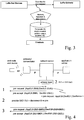
- Fig 2 shows a diagram showing schematic flow of join request and join accept messages, as underlying the invention.
- the join request message would contain, in the AppEUI, the application server OUI.
- the join request message and the join accept message each comprise AppEUI, DevEUI and DeviceNonce.
- the AppEUI and the DevEUI comprise each a OUI.
- LoRa service providers & equipment manufacturers can engage the G&D LoRa EUI Privacy Service.
- G&D Giesecke & Devrient Group
- DevEUI end-device identifier
- AppEUI application identifier
- Fig. 4 shows a diagram showing schematic flow of join request and join accept messages, according to embodiments of the invention.
- the join request message comprises AppEUI, DevEUI and DeviceNonce.
- the AppEUI and the DevEUI comprise each a OUI.
- the application server OUI in the AppEUI and in the DevEUI is replaced with G&D's OUI who is owner of the privacy layer.
- the privacy layer provides the end device with G&D's OUI, such that the end device can send a join in request with the replaced OUI.
- Methods of enforcing a new join-in include but are not limited to: sending a proprietary downlink command (via the network-server) to the end-device; disconnecting the end-device from the network via a simulated replay attack by sending previously recorded join-request message to urge the end device to automatically perform a new join procedure.
Landscapes
- Engineering & Computer Science (AREA)
- Computer Security & Cryptography (AREA)
- Computer Networks & Wireless Communication (AREA)
- Signal Processing (AREA)
- Computer Hardware Design (AREA)
- Computing Systems (AREA)
- General Engineering & Computer Science (AREA)
- Data Exchanges In Wide-Area Networks (AREA)
Abstract
Description
- The present invention relates to a communication system employing a wireless Low-Power Wide Area Network LPWA to connect end devices to gateways, which gateways connect to network servers that also connect to application servers, and more specifically an join-in procedure in such a system. LoRa is such an LPWA, the LoRa infrastructure is such a communication system, and LoRa provides such a join-in procedure.
- Low-Power Wide Area Network LPWA such as the LoRa network allow end devices such as various M2M modules to contact gateways over a large distance. This allows end devices to be contacted also in regions not covered by regular mobile phone networks such as 3G/4G.
-
Fig. 1 shows the basic structure of a LoRa infrastructure as an example of an LPWA communication system. Multiple end devices, here named end nodes are connected to multiple gateways, also named concentrators via a wireless ("RF") LoRaWAN network. Usually the number of end devices / nodes is larger than the number of gateways. Examples of end devices shown inFig. 1 are pet tracking tags, smoke alarms tags, water meter tags, trash container tags, vending machine tags and gas monitoring tags. The gateways connect to a network server via some suited communication path that can physically be either wireless or wirebound, e.g. 3G/4G or Ethernet. Application servers connect to the network server also via some suited communication path that can physically be either wireless or wirebound. Both kinds of communication paths to the network server, i.e. those with the gateways and those with the applications servers, can be run as secure TCP/IP SSL connections. An option is to transfer data between end devices and application servers in an end-to-end encrypted form, as is indicated by an arrow at the base ofFig. 1 . To participate in a LoRaWAN LPWA network, each end-device has to be activated. For Over-The-Air Activation (OTAA) activation, end-devices must follow a join procedure prior to participating in data exchanges with the network-server. Typically each end-device is activated once on deployment, and it proceeds to continuously send data to the network server on a set schedule with the same session context information obtained from the join procedure. An end-device has to go through a new join procedure every time it has lost the session context information. The join procedure requires the end-device to be personalized with the following information before its starts the join procedure: a globally unique end-device identifier (DevEUI), the application identifier (AppEUI), and an AES-128 key (AppKey). - In the LoRa world, OTAA join procedure requires the end-device to be personalized with the following information before its starts the join procedure:
- A globally unique end-device identifier (DevEUI), the application identifier (AppEUI), and an AES-128 key (AppKey) (or in case other key, according to symmetric algorithm used instead of AES-128).
- End-device identifier (DevEUI) is the DevEUI is a global end-device ID in IEEE EUI64 address space that uniquely identifies the end-device.
- Application identifier (AppEUI) is the AppEUI is a global application ID in IEEE EUI64 address space that uniquely identifies the application provider (i.e., owner) of the end-device. The LoRa specification states that join-request message is not to be encrypted. In other words, any wannabe hacker can easily scan the unlicensed frequency and pick up the whereabouts, volume, traffic frequency and details of *all* LoRa devices and application providers. This will enable spammers, direct marketers, identity thieves, or other attackers to use the directory for personal information about those company and services.
- The IEEE EUI-64 is formed as:
- A 24-bit Organizationally Unique Identifier (OUI) value assigned by the IEEE Registration Authority (IEEE RA) + a 40 bit extension identifier assigned by the organization with that OUI assignment. (This is an MA-L assignment)
- A 28-bit value assigned by the IEEE RA + a 36-bit extension identifier assigned by the organization with that base assignment. (This is an MA-M assignment)
- A 36-bit OUI-36 value assigned by the IEEE RA + a 28-bit extension identifier assigned by the organization with that OUI-36 assignment. (This is an MA-S assignment)
- MAC Address Block Large (MAL): This was previously referred to as an OUI (Organizationally Unique Identifier) and is still referred to as such in many standards. OUI is an IEEE Registration Authority (RA) specific term that is referred to in various standards and may be used to identify companies on the IEEE Public Listing. A MAL assignment includes an OUI and the right to generate various extended identifiers based on that OUI. It is most often used to create IEEE 802 defined MAC addresses (EUI48 and EUI64). The OUI included in the MAL assignment may be appended with 24 organization supplied bits to form a EUI48 or 40 organization supplied bits to form an EUI64. The included OUI may also be used to generate EUI60 (deprecated), CDI32, TCDI40, MAC48 (obsolete term), create multicast addresses (per IEEE Std 802), and as a unique root for various context dependent identifiers. It may also be used as a company identifier in those protocols and protocol standards that specify the use of a 3 octet field as a part of the protocol identification mechanism.
- According to the current situation, can the LoRa service providers & equipment manufacturers can do the following. They could register a fake /shell company to apply for cover EUI, but these can be easily traced back to the LoRa service providers & equipment manufacturers. E.g. using Dun & Brad-street business lookup. They could also 'borrow' an EUI from a LoRa cloud service provider etc., but then they become TIED and LOCKED to these Lo-Ra cloud service provider and not able to move their end devices easily. The 'borrowed' EUI may be an unreliable company that goes bankrupt in 1-2 years, and their LoRa devices and services get associated with an ill-repute, or non-existent company.
- After successful join-in, the network server sends to the end device a join-in accept message to inform the end device on its successful joining in into the LPWA network system.
- It is an object of the present invention to provide a LPWA based communication system in which users and service providers in the LPWA, particularly the owners or / and operators of application servers, are protected from hackers, hijackers, and data miners seeking to spy out name, address and other details of the users and service providers or application server owners or operators, respectively.
- The object of the invention is achieved by a communication system with the features, according to
claim 1. Embodiments of the invention are presented in dependent claims. - The invention is an improvement to the join-in procedure of a LPWA. The crucial element of the invention is a privacy layer constructed to collaborate with the join-in means by which the join-in procedure is run. Said privacy layer is constructed to, in the join-in request message, replace the Organizationally Unique Identifier OUI of the owner or operator of the application server with the Organizationally Unique Identifier OUI (e.g. the G&D OUI) of an owner or operator of the privacy layer, wherein the owner or operator of the privacy layer is different from the owner or operator of the application server.
- By the inventive replacement of OUI, an attacker sees join-in request messages for end devices that all seem to belong to the owner or operator of the privacy layer (e.g. to G&D). The real owner or operator remains hidden. This can be of particular interest, when the operator of an application server is an official security organization such as the police, or the like, especially in a use case of surveying public places with use of end devices connected via an LPWA network. Such official security organizations might have particular interest that their presence doesn't become obvious to attackers.
- The end device must somehow be brought into possession of the privacy layer's OUI. Preferably this is done in that the end device first preliminarily connects to the LPWA network with a temporary AppEUI OUI or/and DevEUI OUI, preferably those with which the end device is personalized.
- Once the end device is connected to the network server, the privacy layer initiates that the end device is provided with the privacy layer's own OUI, and enforces a disconnection and re-join-in of the end device. The re-join-in, and preferably all further LPWA network traffic, is done with privacy layer's own OUI.
- Embodiments of the invention will now be described with reference to the accompanying drawings, throughout which like parts are referred to by like references, and in which represents:
- Fig. 1
- a diagram showing the basic structure of a typical LoRa network system, as an example of a LPWA communication system, according to the prior art;
- Fig. 2
- a diagram showing schematic flow of join request and join accept messages, as underlying the invention;
- Fig. 3
- a detailed diagram showing flow of a join in request from an end device to a gateway, and options of attack;
- Fig. 4
- a diagram showing schematic flow of join request and join accept messages, according to embodiments of the invention.
-
Fig 2 shows a diagram showing schematic flow of join request and join accept messages, as underlying the invention. Normally, the join request message would contain, in the AppEUI, the application server OUI. The join request message and the join accept message each comprise AppEUI, DevEUI and DeviceNonce. The AppEUI and the DevEUI comprise each a OUI. - According to an embodiment of the invention, for privacy and safety against attackers, LoRa service providers & equipment manufacturers can engage the G&D LoRa EUI Privacy Service. Giesecke & Devrient Group (G&D) is an globally trusted international technology group of excellent reputation and is here for the long haul and will never sell their data to a third party. By using a G&D EUI for their end-device identifier (DevEUI) and application identifier (AppEUI), spammers, direct marketers, identity thieves, or other attackers will not know who or what the actual application providers and devices are.
- Today, G&D already has a MAC Address Block Large (MAL) Organizationally Unique Identifier (OUI) value assigned by the IEEE Registration Authority (IEEE RA). "0090D3" issued to "GIESECKE & DEVRIENT GmbH, PRINZREGENTENSTRASSE 159 D-81677, MUNCHEN, DE". For example, instead of identifying themselves as AppEUI: 1234568888877716, they can mask themselves as anonymous G&D service AppEUI: 0090D30000000001.
- The supporting technical/operating portion & business process on how we can ensure world-class security/ privacy like a Swiss bank:
- E.g. assignment of the Privacy GUI is not sequential but random with true random number generator (TRNG), hence the attackers can't deduce / narrow down suspected identifies by 3rd party company registration/creation date.
- 'Blind' entry, G&D personal doing registration is only shown the next available random EUI for assignment, he/she will not know what were previously assigned and to whom. Detail tamper-proof logging of admin usage by date/time etc.
- Secure assignment database, require concurrent security login by 2-3 high-security clearance personal before they can do a single-entry search, and all searches are logged in detail in tamper-proof logs.
- EUI database is kept off-line with no network connection, and in a secure room. E.g. biometric-entry VISA/MasterCard grade room with 24-hour CCD cameras.
- All personal dealing with the EUI must be security screened, e.g. no criminal record, not in debt, or connections with hacking groups etc.
- All above steps to be verified and validated by ISO standards.
-
Fig. 4 shows a diagram showing schematic flow of join request and join accept messages, according to embodiments of the invention. The join request message comprises AppEUI, DevEUI and DeviceNonce. The AppEUI and the DevEUI comprise each a OUI. According to the invention, the application server OUI in the AppEUI and in the DevEUI is replaced with G&D's OUI who is owner of the privacy layer. For this purpose, the privacy layer provides the end device with G&D's OUI, such that the end device can send a join in request with the replaced OUI. - (1) First, the end device performs a normal join in with normal AppEUI and DevEUI, usually those personalized into the end device (i.e. the application server OUI), as temporary AppEUI and DevEUI.
- (2) Second, the privacy layer initiates disconnection of the end device from the LPWA network. Further, the privacy layer initiates that the end device is provided with the privacy layer OUI, i.e. the G&D OUI. The end device generates a final AppEUI and a final DevEUI by replacing, in the temporary AppEUI, DevEUI of step (1), the application server OUI with the G&D OUI received from the network server as initiated by the privacy layer.
- (3) Third, the end device re-connects by performing a new join-in, sending therein a join-in request message to the network server, in which AppEUI and DevEUI comprise G&D OUI instead of application server OUI.
- Further on, only the final AppEUI and a final DevEUI with G&D OUI are sent over the LPWA network any more.
- Methods of enforcing a new join-in include but are not limited to: sending a proprietary downlink command (via the network-server) to the end-device; disconnecting the end-device from the network via a simulated replay attack by sending previously recorded join-request message to urge the end device to automatically perform a new join procedure.
Claims (4)
- A communication system, comprising:a) a wireless Low-Power Wide Area Network LPWA;b) at least one network server;c) at least one application server or a plurality of application servers, connectable to the network servers;d) at least one gateway or a plurality of gateways;e) at least one end device or a plurality of end devices, each end device being personalized with at least:f) an, at least within the LPWA network, unique device identifier DevEUI,g) for at least one application server, an application server identifier AppEUI and a symmetric cryptographic key AppKey of respective application server, the AppEUI or/ and the DevEUI comprising an Organizationally Unique Identifier OUI, by which an owner or operator of the application server is uniquely identified;h) wherein each of the one or plurality of end devices is connectable to the network server via a gateway, wherein each end device is connectable to a gateway via the LPWA;i) wherein the system comprises join-in means constructed to perform a join-in procedure of joining in end devices to the LPWA by execution of an over-the-air-activation OTAA procedure network protocol, the join-in procedure comprising:j) at the network server, receiving from an end device a join-in request message, the join-in request message comprising at least the DevEUI and the AppEUI, and preferably further a random device nonce DevNonce,k) verifying, using the DevEUI, if the end device is permitted to join the LPWA and, if it is permitted, activating the end device in the system, andl) connecting, using the AppEUI, the activated end device to the application server specified by the AppEUI;characterized in that the system further comprises:m) a privacy layer constructed to collaborate with the join-in means of step i), therein being constructed to, in the join-in request message, replace the Organizationally Unique Identifier OUI of the owner or operator of the application server with the Organizationally Unique Identifier OUI (G&D OUI) of an owner or operator of the privacy layer, wherein the owner or operator of the privacy layer is different from the owner or operator of the application server.
- The communication system according to claim 1, the join-in procedure of step i) further comprising the step:12) after successful join-in, by the network server, sending to the end device a join-in accept message to inform the end device on its successful joining in into the LPWA;characterized in that:the privacy layer of m) is further constructed to constructed to, in the join-in accept message, replace the Organizationally Unique Identifier OUI of the owner or operator of the application server with the Organizationally Unique Identifier OUI (G&D OUI) of an owner or operator of the privacy layer, wherein the owner or operator of the privacy layer is different from the owner or operator of the application server.
- The communication system according to claim 1 or 2, wherein the privacy layer is constructed to provide the Organizationally Unique Identifier OUI (G&D OUI) of an owner or operator of the privacy layer to the end device before the end device sends the join-in request message, particularly such that the end device can send a join-in message with the Organizationally Unique Identifier OUI of the owner or operator of the application server replaced with the Organizationally Unique Identifier OUI (G&D OUI) of an owner or operator of the privacy layer.
- The communication system according to any of claims 1 to 3, wherein the privacy layer is further constructed to control the join in procedure to comprise the following steps:i1) initiating a join-in procedure of the end device using the AppEUI OUI or/ and DevEUI OUI with which the end device is personalized or some other temporary AppEUI OUI or/and DevEUI OUI;i2) providing the end device with the OUI of the privacy layer and initiating a disconnection of the end device from the LPWA;i3) initiating a join-in procedure of the end device using the AppEUI OUI of the privacy layer or/and DevEUI OUI of the privacy layer.
Priority Applications (1)
| Application Number | Priority Date | Filing Date | Title |
|---|---|---|---|
| EP16002183.8A EP3306886B1 (en) | 2016-10-10 | 2016-10-10 | Lpwa communication system join-in |
Applications Claiming Priority (1)
| Application Number | Priority Date | Filing Date | Title |
|---|---|---|---|
| EP16002183.8A EP3306886B1 (en) | 2016-10-10 | 2016-10-10 | Lpwa communication system join-in |
Publications (2)
| Publication Number | Publication Date |
|---|---|
| EP3306886A1 true EP3306886A1 (en) | 2018-04-11 |
| EP3306886B1 EP3306886B1 (en) | 2020-08-26 |
Family
ID=57137787
Family Applications (1)
| Application Number | Title | Priority Date | Filing Date |
|---|---|---|---|
| EP16002183.8A Active EP3306886B1 (en) | 2016-10-10 | 2016-10-10 | Lpwa communication system join-in |
Country Status (1)
| Country | Link |
|---|---|
| EP (1) | EP3306886B1 (en) |
Cited By (3)
| Publication number | Priority date | Publication date | Assignee | Title |
|---|---|---|---|---|
| CN108566674A (en) * | 2018-08-03 | 2018-09-21 | 苏州银河龙芯科技有限公司 | Automatic networking register method based on the LORA communication technologys |
| CN112887178A (en) * | 2021-01-11 | 2021-06-01 | 厦门四信通信科技有限公司 | Terminal network access method, device, equipment and storage medium of LoRaWAN server |
| EP3836588A4 (en) * | 2018-08-07 | 2021-10-13 | Sony Semiconductor Solutions Corporation | RECEIVING DEVICE, SENDING DEVICE, RECEIVING PROCESS AND SENDING PROCESS |
-
2016
- 2016-10-10 EP EP16002183.8A patent/EP3306886B1/en active Active
Non-Patent Citations (4)
| Title |
|---|
| "LoRa MAC Specification;LTN(14)011004_LoRa_MAC_Specifications", ETSI DRAFT; LTN(14)011004_LORA_MAC_SPECIFICATIONS, EUROPEAN TELECOMMUNICATIONS STANDARDS INSTITUTE (ETSI), 650, ROUTE DES LUCIOLES ; F-06921 SOPHIA-ANTIPOLIS ; FRANCE, vol. ISG, 16 January 2014 (2014-01-16), pages 1 - 23, XP014159445 * |
| GARCIA R MARIN UNIVERSITY OF MURCIA A KANDASAMY A PELOV ACKLIO D: "LoRaWAN Authentication in RADIUS; draft-garcia-radext-radius-lorawan-01.txt", LORAWAN AUTHENTICATION IN RADIUS; DRAFT-GARCIA-RADEXT-RADIUS-LORAWAN-01.TXT, INTERNET ENGINEERING TASK FORCE, IETF; STANDARDWORKINGDRAFT, INTERNET SOCIETY (ISOC) 4, RUE DES FALAISES CH- 1205 GENEVA, SWITZERLAND, 8 July 2016 (2016-07-08), pages 1 - 16, XP015114163 * |
| N SORNIN ET AL: "LoRa Specification V1.0", LORA ALLIANCE INC., 31 January 2015 (2015-01-31), XP055286529, Retrieved from the Internet <URL:https://www.lora-alliance.org/portals/0/specs/LoRaWAN Specification 1R0.pdf> [retrieved on 20160707] * |
| OLIVIER HERSENT ET AL: "LoRa Device Developer Guide", ORANGE CONNECTED OBJECTS & PARTNERSHIPS, 30 April 2016 (2016-04-30), XP055286484, Retrieved from the Internet <URL:https://partner.orange.com/wp-content/uploads/2016/04/LoRa-Device-Developer-Guide-Orange.pdf> [retrieved on 20160706] * |
Cited By (4)
| Publication number | Priority date | Publication date | Assignee | Title |
|---|---|---|---|---|
| CN108566674A (en) * | 2018-08-03 | 2018-09-21 | 苏州银河龙芯科技有限公司 | Automatic networking register method based on the LORA communication technologys |
| EP3836588A4 (en) * | 2018-08-07 | 2021-10-13 | Sony Semiconductor Solutions Corporation | RECEIVING DEVICE, SENDING DEVICE, RECEIVING PROCESS AND SENDING PROCESS |
| US11848770B2 (en) | 2018-08-07 | 2023-12-19 | Sony Semiconductor Solutions Corporation | Receiving apparatus, transmitting apparatus, receiving method, and transmitting method |
| CN112887178A (en) * | 2021-01-11 | 2021-06-01 | 厦门四信通信科技有限公司 | Terminal network access method, device, equipment and storage medium of LoRaWAN server |
Also Published As
| Publication number | Publication date |
|---|---|
| EP3306886B1 (en) | 2020-08-26 |
Similar Documents
| Publication | Publication Date | Title |
|---|---|---|
| Rani et al. | Threats and corrective measures for IoT security with observance of cybercrime: A survey | |
| US10812526B2 (en) | Moving target defense for securing internet of things (IoT) | |
| Seba et al. | A review on security challenges of wireless communications in disaster emergency response and crisis management situations | |
| Hu et al. | Security threats from bitcoin wallet smartphone applications: Vulnerabilities, attacks, and countermeasures | |
| US11582201B1 (en) | Establishing and maintaining trusted relationship between secure network devices in secure peer-to-peer data network based on obtaining secure device identity containers | |
| Faisal et al. | Cyber security and key management issues for internet of things: Techniques, requirements, and challenges | |
| EP3306886B1 (en) | Lpwa communication system join-in | |
| Kumar et al. | IPv6 addressing with hidden duplicate address detection to mitigate denial of service attacks in the internet of drone | |
| Chatterjee et al. | Fog Computing and Its security issues | |
| CN102143492A (en) | VPN connection establishment method, mobile terminal, server | |
| Wibowo et al. | Network security analysis using HTTPS with SSL on general election quick count website | |
| CN103460669B (en) | For method and the communicator of the cryptoguard of field equipment data communication | |
| CN103747005A (en) | DNS (domain name system) cache poisoning protection method and device | |
| CN118118907A (en) | A multi-campus wireless private network security protection method, device and central node | |
| CN114980082A (en) | Data security transmission system and method based on Internet of things | |
| Brassil et al. | Traffic signature-based mobile device location authentication | |
| CN110365773B (en) | Message communication method based on block chain message address | |
| Shue et al. | From an {IP} Address to a Street Address: Using Wireless Signals to Locate a Target | |
| Moskowitz et al. | Trustworthy device identifiers for unmanned aircraft and other mobile things | |
| CN117395659A (en) | Communication security system and method based on block chain data encryption algorithm | |
| CN105099849B (en) | A kind of method for building up and equipment in the tunnels IPsec | |
| Groat et al. | IPv6: nowhere to run, nowhere to hide | |
| Al-hamarneh | Improve security in smart cities based on iot solve cyber electronic attacks with technology by using packet tracer | |
| RU2851218C1 (en) | Method for protecting computer networks | |
| Al-Shebami et al. | Wireless LAN security |
Legal Events
| Date | Code | Title | Description |
|---|---|---|---|
| PUAI | Public reference made under article 153(3) epc to a published international application that has entered the european phase |
Free format text: ORIGINAL CODE: 0009012 |
|
| STAA | Information on the status of an ep patent application or granted ep patent |
Free format text: STATUS: THE APPLICATION HAS BEEN PUBLISHED |
|
| AK | Designated contracting states |
Kind code of ref document: A1 Designated state(s): AL AT BE BG CH CY CZ DE DK EE ES FI FR GB GR HR HU IE IS IT LI LT LU LV MC MK MT NL NO PL PT RO RS SE SI SK SM TR |
|
| AX | Request for extension of the european patent |
Extension state: BA ME |
|
| STAA | Information on the status of an ep patent application or granted ep patent |
Free format text: STATUS: REQUEST FOR EXAMINATION WAS MADE |
|
| 17P | Request for examination filed |
Effective date: 20181011 |
|
| RBV | Designated contracting states (corrected) |
Designated state(s): AL AT BE BG CH CY CZ DE DK EE ES FI FR GB GR HR HU IE IS IT LI LT LU LV MC MK MT NL NO PL PT RO RS SE SI SK SM TR |
|
| GRAP | Despatch of communication of intention to grant a patent |
Free format text: ORIGINAL CODE: EPIDOSNIGR1 |
|
| STAA | Information on the status of an ep patent application or granted ep patent |
Free format text: STATUS: GRANT OF PATENT IS INTENDED |
|
| RIC1 | Information provided on ipc code assigned before grant |
Ipc: H04W 4/00 20180101ALN20200220BHEP Ipc: H04W 12/02 20090101ALI20200220BHEP Ipc: H04W 12/04 20090101ALN20200220BHEP Ipc: H04L 29/06 20060101AFI20200220BHEP Ipc: H04W 12/00 20090101ALI20200220BHEP |
|
| INTG | Intention to grant announced |
Effective date: 20200313 |
|
| GRAS | Grant fee paid |
Free format text: ORIGINAL CODE: EPIDOSNIGR3 |
|
| GRAA | (expected) grant |
Free format text: ORIGINAL CODE: 0009210 |
|
| STAA | Information on the status of an ep patent application or granted ep patent |
Free format text: STATUS: THE PATENT HAS BEEN GRANTED |
|
| AK | Designated contracting states |
Kind code of ref document: B1 Designated state(s): AL AT BE BG CH CY CZ DE DK EE ES FI FR GB GR HR HU IE IS IT LI LT LU LV MC MK MT NL NO PL PT RO RS SE SI SK SM TR |
|
| REG | Reference to a national code |
Ref country code: GB Ref legal event code: FG4D |
|
| REG | Reference to a national code |
Ref country code: CH Ref legal event code: EP |
|
| REG | Reference to a national code |
Ref country code: AT Ref legal event code: REF Ref document number: 1307495 Country of ref document: AT Kind code of ref document: T Effective date: 20200915 |
|
| REG | Reference to a national code |
Ref country code: IE Ref legal event code: FG4D |
|
| REG | Reference to a national code |
Ref country code: DE Ref legal event code: R096 Ref document number: 602016042580 Country of ref document: DE |
|
| REG | Reference to a national code |
Ref country code: LT Ref legal event code: MG4D |
|
| PG25 | Lapsed in a contracting state [announced via postgrant information from national office to epo] |
Ref country code: FI Free format text: LAPSE BECAUSE OF FAILURE TO SUBMIT A TRANSLATION OF THE DESCRIPTION OR TO PAY THE FEE WITHIN THE PRESCRIBED TIME-LIMIT Effective date: 20200826 Ref country code: GR Free format text: LAPSE BECAUSE OF FAILURE TO SUBMIT A TRANSLATION OF THE DESCRIPTION OR TO PAY THE FEE WITHIN THE PRESCRIBED TIME-LIMIT Effective date: 20201127 Ref country code: PT Free format text: LAPSE BECAUSE OF FAILURE TO SUBMIT A TRANSLATION OF THE DESCRIPTION OR TO PAY THE FEE WITHIN THE PRESCRIBED TIME-LIMIT Effective date: 20201228 Ref country code: NO Free format text: LAPSE BECAUSE OF FAILURE TO SUBMIT A TRANSLATION OF THE DESCRIPTION OR TO PAY THE FEE WITHIN THE PRESCRIBED TIME-LIMIT Effective date: 20201126 Ref country code: BG Free format text: LAPSE BECAUSE OF FAILURE TO SUBMIT A TRANSLATION OF THE DESCRIPTION OR TO PAY THE FEE WITHIN THE PRESCRIBED TIME-LIMIT Effective date: 20201126 Ref country code: SE Free format text: LAPSE BECAUSE OF FAILURE TO SUBMIT A TRANSLATION OF THE DESCRIPTION OR TO PAY THE FEE WITHIN THE PRESCRIBED TIME-LIMIT Effective date: 20200826 Ref country code: HR Free format text: LAPSE BECAUSE OF FAILURE TO SUBMIT A TRANSLATION OF THE DESCRIPTION OR TO PAY THE FEE WITHIN THE PRESCRIBED TIME-LIMIT Effective date: 20200826 Ref country code: LT Free format text: LAPSE BECAUSE OF FAILURE TO SUBMIT A TRANSLATION OF THE DESCRIPTION OR TO PAY THE FEE WITHIN THE PRESCRIBED TIME-LIMIT Effective date: 20200826 |
|
| REG | Reference to a national code |
Ref country code: NL Ref legal event code: MP Effective date: 20200826 |
|
| REG | Reference to a national code |
Ref country code: AT Ref legal event code: MK05 Ref document number: 1307495 Country of ref document: AT Kind code of ref document: T Effective date: 20200826 |
|
| PG25 | Lapsed in a contracting state [announced via postgrant information from national office to epo] |
Ref country code: NL Free format text: LAPSE BECAUSE OF FAILURE TO SUBMIT A TRANSLATION OF THE DESCRIPTION OR TO PAY THE FEE WITHIN THE PRESCRIBED TIME-LIMIT Effective date: 20200826 Ref country code: PL Free format text: LAPSE BECAUSE OF FAILURE TO SUBMIT A TRANSLATION OF THE DESCRIPTION OR TO PAY THE FEE WITHIN THE PRESCRIBED TIME-LIMIT Effective date: 20200826 Ref country code: LV Free format text: LAPSE BECAUSE OF FAILURE TO SUBMIT A TRANSLATION OF THE DESCRIPTION OR TO PAY THE FEE WITHIN THE PRESCRIBED TIME-LIMIT Effective date: 20200826 Ref country code: RS Free format text: LAPSE BECAUSE OF FAILURE TO SUBMIT A TRANSLATION OF THE DESCRIPTION OR TO PAY THE FEE WITHIN THE PRESCRIBED TIME-LIMIT Effective date: 20200826 Ref country code: IS Free format text: LAPSE BECAUSE OF FAILURE TO SUBMIT A TRANSLATION OF THE DESCRIPTION OR TO PAY THE FEE WITHIN THE PRESCRIBED TIME-LIMIT Effective date: 20201226 |
|
| PG25 | Lapsed in a contracting state [announced via postgrant information from national office to epo] |
Ref country code: SM Free format text: LAPSE BECAUSE OF FAILURE TO SUBMIT A TRANSLATION OF THE DESCRIPTION OR TO PAY THE FEE WITHIN THE PRESCRIBED TIME-LIMIT Effective date: 20200826 Ref country code: RO Free format text: LAPSE BECAUSE OF FAILURE TO SUBMIT A TRANSLATION OF THE DESCRIPTION OR TO PAY THE FEE WITHIN THE PRESCRIBED TIME-LIMIT Effective date: 20200826 Ref country code: EE Free format text: LAPSE BECAUSE OF FAILURE TO SUBMIT A TRANSLATION OF THE DESCRIPTION OR TO PAY THE FEE WITHIN THE PRESCRIBED TIME-LIMIT Effective date: 20200826 Ref country code: CZ Free format text: LAPSE BECAUSE OF FAILURE TO SUBMIT A TRANSLATION OF THE DESCRIPTION OR TO PAY THE FEE WITHIN THE PRESCRIBED TIME-LIMIT Effective date: 20200826 Ref country code: DK Free format text: LAPSE BECAUSE OF FAILURE TO SUBMIT A TRANSLATION OF THE DESCRIPTION OR TO PAY THE FEE WITHIN THE PRESCRIBED TIME-LIMIT Effective date: 20200826 |
|
| REG | Reference to a national code |
Ref country code: DE Ref legal event code: R097 Ref document number: 602016042580 Country of ref document: DE |
|
| PG25 | Lapsed in a contracting state [announced via postgrant information from national office to epo] |
Ref country code: ES Free format text: LAPSE BECAUSE OF FAILURE TO SUBMIT A TRANSLATION OF THE DESCRIPTION OR TO PAY THE FEE WITHIN THE PRESCRIBED TIME-LIMIT Effective date: 20200826 Ref country code: AT Free format text: LAPSE BECAUSE OF FAILURE TO SUBMIT A TRANSLATION OF THE DESCRIPTION OR TO PAY THE FEE WITHIN THE PRESCRIBED TIME-LIMIT Effective date: 20200826 Ref country code: AL Free format text: LAPSE BECAUSE OF FAILURE TO SUBMIT A TRANSLATION OF THE DESCRIPTION OR TO PAY THE FEE WITHIN THE PRESCRIBED TIME-LIMIT Effective date: 20200826 |
|
| REG | Reference to a national code |
Ref country code: CH Ref legal event code: PL |
|
| PG25 | Lapsed in a contracting state [announced via postgrant information from national office to epo] |
Ref country code: MC Free format text: LAPSE BECAUSE OF FAILURE TO SUBMIT A TRANSLATION OF THE DESCRIPTION OR TO PAY THE FEE WITHIN THE PRESCRIBED TIME-LIMIT Effective date: 20200826 Ref country code: SK Free format text: LAPSE BECAUSE OF FAILURE TO SUBMIT A TRANSLATION OF THE DESCRIPTION OR TO PAY THE FEE WITHIN THE PRESCRIBED TIME-LIMIT Effective date: 20200826 Ref country code: LU Free format text: LAPSE BECAUSE OF NON-PAYMENT OF DUE FEES Effective date: 20201010 |
|
| PLBE | No opposition filed within time limit |
Free format text: ORIGINAL CODE: 0009261 |
|
| STAA | Information on the status of an ep patent application or granted ep patent |
Free format text: STATUS: NO OPPOSITION FILED WITHIN TIME LIMIT |
|
| REG | Reference to a national code |
Ref country code: BE Ref legal event code: MM Effective date: 20201031 |
|
| PG25 | Lapsed in a contracting state [announced via postgrant information from national office to epo] |
Ref country code: IT Free format text: LAPSE BECAUSE OF FAILURE TO SUBMIT A TRANSLATION OF THE DESCRIPTION OR TO PAY THE FEE WITHIN THE PRESCRIBED TIME-LIMIT Effective date: 20200826 |
|
| 26N | No opposition filed |
Effective date: 20210527 |
|
| PG25 | Lapsed in a contracting state [announced via postgrant information from national office to epo] |
Ref country code: BE Free format text: LAPSE BECAUSE OF NON-PAYMENT OF DUE FEES Effective date: 20201031 Ref country code: CH Free format text: LAPSE BECAUSE OF NON-PAYMENT OF DUE FEES Effective date: 20201031 Ref country code: SI Free format text: LAPSE BECAUSE OF FAILURE TO SUBMIT A TRANSLATION OF THE DESCRIPTION OR TO PAY THE FEE WITHIN THE PRESCRIBED TIME-LIMIT Effective date: 20200826 Ref country code: LI Free format text: LAPSE BECAUSE OF NON-PAYMENT OF DUE FEES Effective date: 20201031 |
|
| PG25 | Lapsed in a contracting state [announced via postgrant information from national office to epo] |
Ref country code: IE Free format text: LAPSE BECAUSE OF NON-PAYMENT OF DUE FEES Effective date: 20201010 |
|
| REG | Reference to a national code |
Ref country code: DE Ref legal event code: R079 Ref document number: 602016042580 Country of ref document: DE Free format text: PREVIOUS MAIN CLASS: H04L0029060000 Ipc: H04L0065000000 |
|
| PG25 | Lapsed in a contracting state [announced via postgrant information from national office to epo] |
Ref country code: TR Free format text: LAPSE BECAUSE OF FAILURE TO SUBMIT A TRANSLATION OF THE DESCRIPTION OR TO PAY THE FEE WITHIN THE PRESCRIBED TIME-LIMIT Effective date: 20200826 Ref country code: MT Free format text: LAPSE BECAUSE OF FAILURE TO SUBMIT A TRANSLATION OF THE DESCRIPTION OR TO PAY THE FEE WITHIN THE PRESCRIBED TIME-LIMIT Effective date: 20200826 Ref country code: CY Free format text: LAPSE BECAUSE OF FAILURE TO SUBMIT A TRANSLATION OF THE DESCRIPTION OR TO PAY THE FEE WITHIN THE PRESCRIBED TIME-LIMIT Effective date: 20200826 |
|
| PG25 | Lapsed in a contracting state [announced via postgrant information from national office to epo] |
Ref country code: MK Free format text: LAPSE BECAUSE OF FAILURE TO SUBMIT A TRANSLATION OF THE DESCRIPTION OR TO PAY THE FEE WITHIN THE PRESCRIBED TIME-LIMIT Effective date: 20200826 |
|
| P01 | Opt-out of the competence of the unified patent court (upc) registered |
Effective date: 20230520 |
|
| REG | Reference to a national code |
Ref country code: DE Ref legal event code: R081 Ref document number: 602016042580 Country of ref document: DE Owner name: GIESECKE+DEVRIENT EPAYMENTS GMBH, DE Free format text: FORMER OWNER: GIESECKE+DEVRIENT MOBILE SECURITY GMBH, 81677 MUENCHEN, DE |
|
| PGFP | Annual fee paid to national office [announced via postgrant information from national office to epo] |
Ref country code: DE Payment date: 20251020 Year of fee payment: 10 |
|
| PGFP | Annual fee paid to national office [announced via postgrant information from national office to epo] |
Ref country code: GB Payment date: 20251024 Year of fee payment: 10 |
|
| PGFP | Annual fee paid to national office [announced via postgrant information from national office to epo] |
Ref country code: FR Payment date: 20251029 Year of fee payment: 10 |