EP3306505A1 - Information input method and device - Google Patents
Information input method and device Download PDFInfo
- Publication number
- EP3306505A1 EP3306505A1 EP16799186.8A EP16799186A EP3306505A1 EP 3306505 A1 EP3306505 A1 EP 3306505A1 EP 16799186 A EP16799186 A EP 16799186A EP 3306505 A1 EP3306505 A1 EP 3306505A1
- Authority
- EP
- European Patent Office
- Prior art keywords
- information
- verified
- input
- stored
- item
- Prior art date
- Legal status (The legal status is an assumption and is not a legal conclusion. Google has not performed a legal analysis and makes no representation as to the accuracy of the status listed.)
- Granted
Links
Images



Classifications
-
- G—PHYSICS
- G06—COMPUTING OR CALCULATING; COUNTING
- G06F—ELECTRIC DIGITAL DATA PROCESSING
- G06F40/00—Handling natural language data
- G06F40/20—Natural language analysis
- G06F40/232—Orthographic correction, e.g. spell checking or vowelisation
-
- G—PHYSICS
- G06—COMPUTING OR CALCULATING; COUNTING
- G06F—ELECTRIC DIGITAL DATA PROCESSING
- G06F21/00—Security arrangements for protecting computers, components thereof, programs or data against unauthorised activity
- G06F21/30—Authentication, i.e. establishing the identity or authorisation of security principals
- G06F21/31—User authentication
-
- G—PHYSICS
- G06—COMPUTING OR CALCULATING; COUNTING
- G06F—ELECTRIC DIGITAL DATA PROCESSING
- G06F21/00—Security arrangements for protecting computers, components thereof, programs or data against unauthorised activity
- G06F21/30—Authentication, i.e. establishing the identity or authorisation of security principals
- G06F21/45—Structures or tools for the administration of authentication
-
- G—PHYSICS
- G06—COMPUTING OR CALCULATING; COUNTING
- G06F—ELECTRIC DIGITAL DATA PROCESSING
- G06F21/00—Security arrangements for protecting computers, components thereof, programs or data against unauthorised activity
- G06F21/60—Protecting data
- G06F21/602—Providing cryptographic facilities or services
-
- G—PHYSICS
- G06—COMPUTING OR CALCULATING; COUNTING
- G06F—ELECTRIC DIGITAL DATA PROCESSING
- G06F3/00—Input arrangements for transferring data to be processed into a form capable of being handled by the computer; Output arrangements for transferring data from processing unit to output unit, e.g. interface arrangements
- G06F3/01—Input arrangements or combined input and output arrangements for interaction between user and computer
- G06F3/048—Interaction techniques based on graphical user interfaces [GUI]
- G06F3/0487—Interaction techniques based on graphical user interfaces [GUI] using specific features provided by the input device, e.g. functions controlled by the rotation of a mouse with dual sensing arrangements, or of the nature of the input device, e.g. tap gestures based on pressure sensed by a digitiser
- G06F3/0488—Interaction techniques based on graphical user interfaces [GUI] using specific features provided by the input device, e.g. functions controlled by the rotation of a mouse with dual sensing arrangements, or of the nature of the input device, e.g. tap gestures based on pressure sensed by a digitiser using a touch-screen or digitiser, e.g. input of commands through traced gestures
- G06F3/04886—Interaction techniques based on graphical user interfaces [GUI] using specific features provided by the input device, e.g. functions controlled by the rotation of a mouse with dual sensing arrangements, or of the nature of the input device, e.g. tap gestures based on pressure sensed by a digitiser using a touch-screen or digitiser, e.g. input of commands through traced gestures by partitioning the display area of the touch-screen or the surface of the digitising tablet into independently controllable areas, e.g. virtual keyboards or menus
-
- G—PHYSICS
- G06—COMPUTING OR CALCULATING; COUNTING
- G06F—ELECTRIC DIGITAL DATA PROCESSING
- G06F40/00—Handling natural language data
- G06F40/20—Natural language analysis
- G06F40/279—Recognition of textual entities
-
- H—ELECTRICITY
- H04—ELECTRIC COMMUNICATION TECHNIQUE
- H04L—TRANSMISSION OF DIGITAL INFORMATION, e.g. TELEGRAPHIC COMMUNICATION
- H04L9/00—Cryptographic mechanisms or cryptographic arrangements for secret or secure communications; Network security protocols
- H04L9/06—Cryptographic mechanisms or cryptographic arrangements for secret or secure communications; Network security protocols the encryption apparatus using shift registers or memories for block-wise or stream coding, e.g. DES systems or RC4; Hash functions; Pseudorandom sequence generators
- H04L9/0643—Hash functions, e.g. MD5, SHA, HMAC or f9 MAC
-
- G—PHYSICS
- G06—COMPUTING OR CALCULATING; COUNTING
- G06F—ELECTRIC DIGITAL DATA PROCESSING
- G06F21/00—Security arrangements for protecting computers, components thereof, programs or data against unauthorised activity
- G06F21/30—Authentication, i.e. establishing the identity or authorisation of security principals
- G06F21/31—User authentication
- G06F21/32—User authentication using biometric data, e.g. fingerprints, iris scans or voiceprints
-
- G—PHYSICS
- G06—COMPUTING OR CALCULATING; COUNTING
- G06F—ELECTRIC DIGITAL DATA PROCESSING
- G06F2221/00—Indexing scheme relating to security arrangements for protecting computers, components thereof, programs or data against unauthorised activity
- G06F2221/03—Indexing scheme relating to G06F21/50, monitoring users, programs or devices to maintain the integrity of platforms
- G06F2221/031—Protect user input by software means
-
- G—PHYSICS
- G06—COMPUTING OR CALCULATING; COUNTING
- G06F—ELECTRIC DIGITAL DATA PROCESSING
- G06F2221/00—Indexing scheme relating to security arrangements for protecting computers, components thereof, programs or data against unauthorised activity
- G06F2221/21—Indexing scheme relating to G06F21/00 and subgroups addressing additional information or applications relating to security arrangements for protecting computers, components thereof, programs or data against unauthorised activity
- G06F2221/2135—Metering
Definitions
- the present application relates to the field of data processing technologies, and in particular, to an information input method and apparatus.
- a physical keyboard or a virtual keyboard is relatively small due to a limited size of the mobile phone, such that it is easy for a user to input information incorrectly.
- the user intends to input a letter a, but actually inputs a letter adjacent to the letter a, such as s.
- the present application aims at solving one of the technical problems in the related art at least to some extent.
- one objective of the present application is to propose an information input method, which can reduce input errors caused by a small keyboard and enhance input effects.
- Another objective of the present application is to propose an information input apparatus.
- the information input method proposed by an embodiment according to a first aspect of the present application includes: acquiring pre-stored information, the pre-stored information including plaintext first information or encrypted first information, the first information including set information and associated information generated according to the set information; receiving to-be-verified information; verifying the to-be-verified information according to the pre-stored information; and receiving to-be-verified information that is re-input if the to-be-verified information belongs to the associated information.
- the information input method proposed by the embodiment according to the first aspect of the present application not only can generate the set information, but also can generate the associated information obtained according to the set information, and receive to-be-verified information that is re-input when the to-be-verified information belongs to the associated information. Therefore, a user may have another chance for verification after input errors are caused by a small keyboard or other reasons, thus reducing input errors caused by a small keyboard and enhancing input effects.
- the information input apparatus proposed by an embodiment according to a second aspect of the present application includes: an acquisition module configured to acquire pre-stored information, the pre-stored information including plaintext first information or encrypted first information, the first information including set information and associated information generated according to the set information; a first receiving module configured to receive to-be-verified information; a verification module configured to verify the to-be-verified information according to the pre-stored information; and a second receiving module configured to receive to-be-verified information that is re-input if the to-be-verified information belongs to the associated information.
- the information input apparatus proposed by the embodiment according to the second aspect of the present application not only can generate the set information, but also can generate the associated information obtained according to the set information, and receive to-be-verified information that is re-input when the to-be-verified information belongs to the associated information. Therefore, a user may have another chance for verification after input errors are caused by a small keyboard or other reasons, thus reducing input errors caused by a small keyboard and enhancing input effects.
- FIG. 1 is a schematic flowchart of an information input method according to an embodiment of the present application, the method including:
- the method of this embodiment may be used for information verification in various scenarios, for example, for password verification, ID card number verification, bank card number verification, mobile phone number verification, and so on.
- password verification is taken as an example.
- a user may preset a password.
- the password is set as x.
- the password x set by the user may include one or more information items, and each information item may be a number, a letter, or the like.
- the password may be stored in plaintext at the mobile phone terminal, for example, directly stored as x.
- a plaintext password is encrypted before being stored, for example, an encrypted x stored at the mobile phone terminal.
- a Hash encrypted password stored at the mobile phone terminal is taken as an example. Assume that x is represented as H(x) after the Hash encryption is performed.
- the pre-stored information is H(x) at most, and the verification will fail if what the user inputs is not x.
- H(x) can be stored, but also associated information can be obtained according to x, and information obtained after the Hash encryption is performed on the associated information is further stored at the mobile phone terminal.
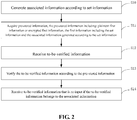
- the method of this embodiment may further include:
- the step of generating associated information according to the set information includes:
- one item of the password x set by the user is a, then a character at a small distance with a on a virtual keyboard or a physical keyboard is selected as a new character corresponding to a.
- a' is used to place a to compose a new password x'.
- the new password x' is associated information of x.
- the encrypted associated information may be represented as: H(x'), H(x"), ..., and this sequence is recorded as H'.
- the associated information of x includes a'bcd.
- the associated information of x further includes a"bcd. Furthermore, assuming that a character at a small distance with b includes b', the associated information of x further includes ab'cd, and the rest can be done in the same manner, such that all the associated information can be obtained.
- characters corresponding to four adjacent keys may be determined as the characters at a small distance, or characters at a distance of no more than two keys are all determined as the characters at a small distance, and so on.
- the user may input the to-be-verified information via a keyboard.
- the user inputs a password or the like by using a virtual keyboard of a mobile phone.
- the to-be-verified information is verified according to the pre-stored information.
- input information may be directly compared with the pre-stored information, and when they are the same, the verification succeeds; otherwise, the verification fails.
- This embodiment takes storing encrypted first information as an example.
- the step of verifying the to-be-verified information according to the pre-stored information includes:
- H(y) may be calculated first, and then H(y) is compared with H(x) and H'.
- To-be-verified information that is re-input is received if the to-be-verified information belongs to the associated information.
- H(y) belongs to H'
- the to-be-verified information that is re-input may be received. Thereafter, the verification may be performed again.
- the following steps may be specifically performed:
- the step of performing guiding or giving an obvious prompt may include:
- the plaintext displaying time of each information item in the to-be-verified information may be prolonged, or, only the plaintext displaying time of an information item that is incorrectly input last time is prolonged.
- the plaintext displaying time of a may be prolonged, or the plaintext displaying times of a, b, c, and d may all be prolonged.
- similar executions may also be performed during the displaying in plaintext. For example, only the information item that is incorrectly input last time is displayed in plaintext, or all the information items are displayed in plaintext.
- the user may check the to-be-verified information that is re-input according to prompt information or information displayed in plaintext. After the to-be-verified information re-input by the user is received at the mobile phone terminal, the information may be compared with the pre-stored information, to obtain a verification result.
- the time for displaying the plaintext input information may be prolonged, such that the user can better see the information input by himself, to verify whether the information is correctly input.
- the specific prolonging time may be set.
- the input information is displayed in plaintext directly, to facilitate checking by the user.
- the method may further include:
- H(y) is different from H(x), and H(y) does not belong to H', it is determined that the verification fails. At this time, information indicating that the password is input incorrectly is displayed to the user.
- not only the set information but also the associated information obtained according to the set information may be generated, and when the to-be-verified information belongs to the associated information, the verification is performed again.
- Another chance for verification may be provided after an input error of the user caused by a small size of a keyboard or other reasons, thereby reducing input errors caused by a small size of a keyboard and enhancing input effects. It is different from a direct verification failure due to a malicious input error, thereby effectively distinguishing an unintentional error from a malicious error, and reducing information verification failures caused by an unintentional input error.
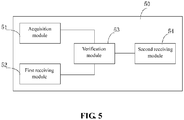
- FIG. 5 is a schematic structural diagram of an information input apparatus according to another embodiment of the present application.
- the apparatus 50 includes: an acquisition module 51, a first receiving module 52, a verification module 53, and a second receiving module 54.
- the acquisition module 51 is configured to acquire pre-stored information, the pre-stored information including plaintext first information or encrypted first information, the first information including set information and associated information generated according to the set information;
- the method of this embodiment may be used for information verification in various scenarios, for example, for password verification, ID card number verification, bank card number verification, mobile phone number verification, and so on.
- password verification is taken as an example.
- a user may preset a password.
- the password is set as x.
- the password x set by the user may include one or more information items, and each information item may be a number, a letter, or the like.
- the password may be stored in plaintext at the mobile phone terminal, for example, directly stored as x.
- a plaintext password is encrypted before being stored, for example, an encrypted x stored at the mobile phone terminal.
- a Hash encrypted password stored at the mobile phone terminal is taken as an example. Assume that x is represented as H(x) after the Hash encryption is performed.
- the pre-stored information is H(x) at most, and the verification will fail if what the user inputs is not x.
- H(x) can be stored, but also associated information can be obtained according to x, and information obtained after the Hash encryption is performed on the associated information is further stored at the mobile phone terminal.
- the apparatus 50 further includes:
- one item of the password x set by the user is a, then a character at a small distance with a on a virtual keyboard or a physical keyboard is selected as a new character corresponding to a.
- a' is used to place a to compose a new password x'.
- the new password x' is associated information of x.
- the encrypted associated information may be represented as: H(x'), H(x"), ..., and this sequence is recorded as H'.
- the associated information of x includes a'bcd.
- the associated information of x further includes a"bcd. Furthermore, assuming that a character at a small distance with b includes b', the associated information of x further includes ab'cd, and the rest can be done in the same manner, such that all the associated information can be obtained.
- characters corresponding to four adjacent keys may be determined as the characters at a small distance, or characters at a distance of no more than two keys are all determined as the characters at a small distance, or the like.
- the first receiving module 52 is configured to receive to-be-verified information; wherein the user may input the to-be-verified information via a keyboard.
- the user inputs a password or the like by using a virtual keyboard of a mobile phone.
- the verification module 53 is configured to verify the to-be-verified information according to the pre-stored information
- input information may be directly compared with the pre-stored information, and when they are the same, the verification succeeds; otherwise, the verification fails.
- This embodiment takes storing encrypted first information as an example.
- the verification module 53 is specifically configured to:
- H(y) may be calculated first, and then H(y) is compared with H(x) and H'.
- the second receiving module 54 is configured to receive to-be-verified information that is re-input if the to-be-verified information belongs to the associated information.
- H(y) belongs to H'
- the to-be-verified information that is re-input may be received. Thereafter, the verification may be performed again.
- the second receiving module is further configured to:
- the plaintext displaying time of each information item in the to-be-verified information may be prolonged, or, only the plaintext displaying time of an information item that is incorrectly input last time is prolonged.
- the plaintext displaying time of a may be prolonged, or the plaintext displaying times of a, b, c, and d may all be prolonged.
- similar executions may also be performed during the displaying in plaintext. For example, only the information item that is incorrectly input last time is displayed in plaintext, or all the information items are displayed in plaintext.
- the time for displaying the plaintext input information may be prolonged, such that the user may better see the information input by himself, to verify whether the input is correct.
- the specific prolonging time may be set.
- the input information is displayed in plaintext directly, to facilitate checking by the user.
- the apparatus 50 further includes:
- H(y) is different from H(x), and H(y) does not belong to H', it is determined that the verification fails. At this time, information indicating that the password is input incorrectly is displayed to the user.
- not only the set information but also the associated information obtained according to the set information may be generated, and when the to-be-verified information belongs to the associated information, the verification is performed again.
- Another chance for verification may be provided after an input error of the user caused by a small size of a keyboard or other reasons, thereby reducing input errors caused by a small size of a keyboard and enhancing input effects. It is different from a direct verification failure due to a malicious input error, thereby effectively distinguishing an unintentional error from a malicious error, and reducing an information verification failure caused by an unintentional input error.
- Any process or method described in the flowcharts or described in any other way herein may be understood to include one or more modules, segments or parts for executable instruction codes that realize particular logic functions or process steps.
- preferred embodiments of the present application include other implementations, in which the function may be performed in an order different from what is depicted or discussed, including a substantially simultaneous manner or an opposite order based on the related functions. This should be understood by those skilled in the art to which embodiments of the present application belong.
- each part of the present application may be realized by the hardware, software, firmware or their combination.
- a plurality of steps or methods may be implemented by the software or firmware stored in the memory and executed by the appropriate instruction execution system.
- the steps or methods may be implemented by one or a combination of the following techniques known in the art: a discrete logic circuit having a logic gate circuit for realizing a logic function of a data signal, an application-specific integrated circuit having an appropriate combination logic gate circuit, a programmable gate array (PGA), a field programmable gate array (FPGA), etc.
- function units in the embodiments of the present application may be integrated in a processing module, or the units may be physically provided in a separate manner, or two or more units may be integrated in one module.
- the integrated module may be realized in a form of hardware or in a form of software function module. When the integrated module is realized in a form of software function module and is sold or used as a standalone product, the integrated module may also be stored in a computer readable storage medium.
- the storage medium mentioned above may be a read-only memory, a magnetic disk, a CD, etc.
Landscapes
- Engineering & Computer Science (AREA)
- Theoretical Computer Science (AREA)
- Computer Security & Cryptography (AREA)
- General Engineering & Computer Science (AREA)
- Physics & Mathematics (AREA)
- General Physics & Mathematics (AREA)
- Computer Hardware Design (AREA)
- Software Systems (AREA)
- General Health & Medical Sciences (AREA)
- Health & Medical Sciences (AREA)
- Bioethics (AREA)
- Audiology, Speech & Language Pathology (AREA)
- Computational Linguistics (AREA)
- Artificial Intelligence (AREA)
- Power Engineering (AREA)
- Computer Networks & Wireless Communication (AREA)
- Signal Processing (AREA)
- Human Computer Interaction (AREA)
- Input From Keyboards Or The Like (AREA)
- User Interface Of Digital Computer (AREA)
- Document Processing Apparatus (AREA)
- Telephone Function (AREA)
Abstract
Description
- The present application relates to the field of data processing technologies, and in particular, to an information input method and apparatus.
- With the development of mobile communication technologies, users often need to input information on mobile devices. Especially when information is input on a mobile phone, the size of a physical keyboard or a virtual keyboard is relatively small due to a limited size of the mobile phone, such that it is easy for a user to input information incorrectly. For example, the user intends to input a letter a, but actually inputs a letter adjacent to the letter a, such as s.
- The present application aims at solving one of the technical problems in the related art at least to some extent.
- Therefore, one objective of the present application is to propose an information input method, which can reduce input errors caused by a small keyboard and enhance input effects.
- Another objective of the present application is to propose an information input apparatus.
- In order to achieve the above objectives, the information input method proposed by an embodiment according to a first aspect of the present application includes: acquiring pre-stored information, the pre-stored information including plaintext first information or encrypted first information, the first information including set information and associated information generated according to the set information; receiving to-be-verified information; verifying the to-be-verified information according to the pre-stored information; and receiving to-be-verified information that is re-input if the to-be-verified information belongs to the associated information.
- The information input method proposed by the embodiment according to the first aspect of the present application not only can generate the set information, but also can generate the associated information obtained according to the set information, and receive to-be-verified information that is re-input when the to-be-verified information belongs to the associated information. Therefore, a user may have another chance for verification after input errors are caused by a small keyboard or other reasons, thus reducing input errors caused by a small keyboard and enhancing input effects.
- In order to achieve the above objectives, the information input apparatus proposed by an embodiment according to a second aspect of the present application includes: an acquisition module configured to acquire pre-stored information, the pre-stored information including plaintext first information or encrypted first information, the first information including set information and associated information generated according to the set information; a first receiving module configured to receive to-be-verified information; a verification module configured to verify the to-be-verified information according to the pre-stored information; and a second receiving module configured to receive to-be-verified information that is re-input if the to-be-verified information belongs to the associated information.
- The information input apparatus proposed by the embodiment according to the second aspect of the present application not only can generate the set information, but also can generate the associated information obtained according to the set information, and receive to-be-verified information that is re-input when the to-be-verified information belongs to the associated information. Therefore, a user may have another chance for verification after input errors are caused by a small keyboard or other reasons, thus reducing input errors caused by a small keyboard and enhancing input effects.
- Additional aspects and advantages of the present application will be partially provided in the following description, and partially become apparent from the following description, or will be known through practices of the present application.
- The above and/or additional aspects and advantages of the present application will become apparent and readily comprehensible from the description of embodiments with reference to the accompanying drawings as follows, wherein:
-
FIG. 1 is a schematic flowchart of an information input method according to an embodiment of the present application; -
FIG. 2 is a schematic flowchart of an information input method according to another embodiment of the present application; -
FIG. 3 is a schematic flowchart of an information input method according to another embodiment of the present application; -
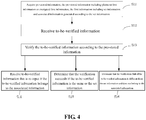
FIG. 4 is a schematic flowchart of an information input method according to another embodiment of the present application; -
FIG. 5 is a schematic structural diagram of an information input apparatus according to another embodiment of the present application; and -
FIG. 6 is a schematic structural diagram of an information input apparatus according to another embodiment of the present application. - Embodiments of the present application will be described in detail in the following, examples of the embodiments are shown in the accompanying drawings, where identical or similar reference numerals represent identical or similar modules or modules having identical or similar functions throughout the text. The embodiments described in the following with reference to the accompanying drawings are exemplary and only intended to explain the present application, and cannot be construed as limiting the present application. In contrast, the embodiments of the present invention include all variations, modifications, and equivalents falling within the scope of spirit and connotation of the appended claims.
-
FIG. 1 is a schematic flowchart of an information input method according to an embodiment of the present application, the method including: - S11. Pre-stored information is acquired, the pre-stored information including plaintext first information or encrypted first information, the first information including set information and associated information generated according to the set information.
- The method of this embodiment may be used for information verification in various scenarios, for example, for password verification, ID card number verification, bank card number verification, mobile phone number verification, and so on. In this embodiment, password verification is taken as an example.
- Before the password verification, a user may preset a password. For example, the password is set as x. It can be understood that, the password x set by the user may include one or more information items, and each information item may be a number, a letter, or the like.
- Further, by taking that the password is stored at a mobile phone terminal as an example, the password may be stored in plaintext at the mobile phone terminal, for example, directly stored as x. Or, in order to enhance security, a plaintext password is encrypted before being stored, for example, an encrypted x stored at the mobile phone terminal. It can be understood that, there are various encryption algorithms, which, for example, is specifically a Hash algorithm. In this embodiment, a Hash encrypted password stored at the mobile phone terminal is taken as an example. Assume that x is represented as H(x) after the Hash encryption is performed.
- In the prior art, the pre-stored information is H(x) at most, and the verification will fail if what the user inputs is not x.
- In this embodiment, not only H(x) can be stored, but also associated information can be obtained according to x, and information obtained after the Hash encryption is performed on the associated information is further stored at the mobile phone terminal.
- Specifically, with reference to
FIG. 2 , the method of this embodiment may further include: - S10. Associated information is generated according to the set information.
- Optionally, the step of generating associated information according to the set information includes:
- randomly selecting an information item from the set information, and acquiring a new information item corresponding to the selected information item, wherein a distance between positions of the new information item and the selected information item on a keyboard is in a preset range; and
- replacing the selected information item in the set information with the new information item to obtain the associated information.
- For example, one item of the password x set by the user is a, then a character at a small distance with a on a virtual keyboard or a physical keyboard is selected as a new character corresponding to a. Assuming that the new character is represented by a', a' is used to place a to compose a new password x'. The new password x' is associated information of x. After the Hash encryption is performed, the encrypted associated information may be represented as: H(x'), H(x"), ..., and this sequence is recorded as H'. Specifically, for example, assuming that x is abcd, and the character at a small distance with a includes a', the associated information of x includes a'bcd. Furthermore, assuming that the character at a small distance with a further includes a", the associated information of x further includes a"bcd. Furthermore, assuming that a character at a small distance with b includes b', the associated information of x further includes ab'cd, and the rest can be done in the same manner, such that all the associated information can be obtained.
- It can be understood that, the specific meaning of a small distance above may be set according to actual demands. For example, characters corresponding to four adjacent keys may be determined as the characters at a small distance, or characters at a distance of no more than two keys are all determined as the characters at a small distance, and so on.
- S12. To-be-verified information is received.
- The user may input the to-be-verified information via a keyboard.
- For example, the user inputs a password or the like by using a virtual keyboard of a mobile phone.
- S13. The to-be-verified information is verified according to the pre-stored information.
- When the mobile phone terminal directly stores a plaintext password, input information may be directly compared with the pre-stored information, and when they are the same, the verification succeeds; otherwise, the verification fails.
- This embodiment takes storing encrypted first information as an example.
- When the pre-stored information is the encrypted first information, the step of verifying the to-be-verified information according to the pre-stored information includes:
- encrypting the to-be-verified information by using the same encryption algorithm as that of the first information to obtain encrypted to-be-verified information; and
- comparing the encrypted to-be-verified information with the pre-stored information.
- Assuming that the to-be-verified information input by the user is y, and a Hash encryption algorithm is adopted, H(y) may be calculated first, and then H(y) is compared with H(x) and H'.
- S14. To-be-verified information that is re-input is received if the to-be-verified information belongs to the associated information.
- For example, if H(y) belongs to H', the to-be-verified information that is re-input may be received. Thereafter, the verification may be performed again.
- Referring to
FIG. 3 , in this embodiment, when the to-be-verified information belongs to the associated information, the following steps may be specifically performed: - S141. The to-be-verified information that is re-input is received, and guiding is performed or an obvious prompt is given.
- Specifically, the step of performing guiding or giving an obvious prompt may include:
- displaying prompt information to the user before receiving the to-be-verified information that is re-input, the prompt information being used for prompting the user to pay attention to keyboard keys; or
- prolonging a plaintext displaying time of the to-be-verified information that is re-input after receiving the to-be-verified information that is re-input; or
- directly displaying the to-be-verified information that is re-input in plaintext after receiving the to-be-verified information that is re-input.
- For example, when the user inputs y which belongs to the associated information, it is quite possibly caused by an unintentional input error of the user due to a small size of keys. At this time, the user may be reminded to pay attention to the keyboard, thereby avoiding an input error due to a small size of the keyboard. Or,
non-plaintext information, such as symbols *, is usually displayed finally during password verification, and plaintext information input by the user may be displayed for a short time before the symbols * are displayed. - In this embodiment, when the plaintext displaying time is prolonged, the plaintext displaying time of each information item in the to-be-verified information may be prolonged, or, only the plaintext displaying time of an information item that is incorrectly input last time is prolonged. For example, if the to-be-verified information is abcd, and an error occurs in a during a first detection, only the plaintext displaying time of a may be prolonged, or the plaintext displaying times of a, b, c, and d may all be prolonged. In addition, similar executions may also be performed during the displaying in plaintext. For example, only the information item that is incorrectly input last time is displayed in plaintext, or all the information items are displayed in plaintext.
- Thereafter, the following steps may be further performed:
- S142. Verification is performed again.
- For example, the user may check the to-be-verified information that is re-input according to prompt information or information displayed in plaintext. After the to-be-verified information re-input by the user is received at the mobile phone terminal, the information may be compared with the pre-stored information, to obtain a verification result.
- In this embodiment, the time for displaying the plaintext input information may be prolonged, such that the user can better see the information input by himself, to verify whether the information is correctly input. The specific prolonging time may be set. Or, the input information is displayed in plaintext directly, to facilitate checking by the user.
- In another aspect, referring to
FIG. 4 , after the user verifies the input to-be-verified information, the method may further include: - S15. It is determined that the verification succeeds if the to-be-verified information is the same as the set information.
- For example, when a value obtained after Hash encryption is stored, and the to-be-verified information input by the user is y, y is hashed to obtain H(y), and if H(y) is the same as H(x), the verification succeeds.
- S16. It is determined that the verification fails if the to-be-verified information is different from the set information and does not belong to the associated information.
- For example, if H(y) is different from H(x), and H(y) does not belong to H', it is determined that the verification fails. At this time, information indicating that the password is input incorrectly is displayed to the user.
- In this embodiment, not only the set information but also the associated information obtained according to the set information may be generated, and when the to-be-verified information belongs to the associated information, the verification is performed again. Another chance for verification may be provided after an input error of the user caused by a small size of a keyboard or other reasons, thereby reducing input errors caused by a small size of a keyboard and enhancing input effects. It is different from a direct verification failure due to a malicious input error, thereby effectively distinguishing an unintentional error from a malicious error, and reducing information verification failures caused by an unintentional input error.
-
FIG. 5 is a schematic structural diagram of an information input apparatus according to another embodiment of the present application. Theapparatus 50 includes: anacquisition module 51, afirst receiving module 52, averification module 53, and asecond receiving module 54. - The
acquisition module 51 is configured to acquire pre-stored information, the pre-stored information including plaintext first information or encrypted first information, the first information including set information and associated information generated according to the set information; - The method of this embodiment may be used for information verification in various scenarios, for example, for password verification, ID card number verification, bank card number verification, mobile phone number verification, and so on. In this embodiment, password verification is taken as an example.
- Before the password verification, a user may preset a password. For example, the password is set as x. It can be understood that, the password x set by the user may include one or more information items, and each information item may be a number, a letter, or the like.
- Further, by taking that the password is stored at a mobile phone terminal as an example, the password may be stored in plaintext at the mobile phone terminal, for example, directly stored as x. Or, in order to enhance security, a plaintext password is encrypted before being stored, for example, an encrypted x stored at the mobile phone terminal. It can be understood that, there are various encryption algorithms, which, for example, is specifically a Hash algorithm. In this embodiment, a Hash encrypted password stored at the mobile phone terminal is taken as an example. Assume that x is represented as H(x) after the Hash encryption is performed.
- In the prior art, the pre-stored information is H(x) at most, and the verification will fail if what the user inputs is not x.
- In this embodiment, not only H(x) can be stored, but also associated information can be obtained according to x, and information obtained after the Hash encryption is performed on the associated information is further stored at the mobile phone terminal.
- Referring to
FIG. 6 , theapparatus 50 further includes: - a
setting module 55 configured to randomly select an information item from the set information, and acquire a new information item corresponding to the selected information item, wherein a distance between positions of the new information item and the selected information item on a keyboard is in a preset range; and replace the selected information item in the set information with the new information item to obtain the associated information. - For example, one item of the password x set by the user is a, then a character at a small distance with a on a virtual keyboard or a physical keyboard is selected as a new character corresponding to a. Assuming that the new character is represented by a', a' is used to place a to compose a new password x'. The new password x' is associated information of x. After the Hash encryption is performed, the encrypted associated information may be represented as: H(x'), H(x"), ..., and this sequence is recorded as H'. Specifically, for example, assuming that x is abcd, and the character at a small distance with a includes a', the associated information of x includes a'bcd. Furthermore, assuming that the character at a small distance with a further includes a", the associated information of x further includes a"bcd. Furthermore, assuming that a character at a small distance with b includes b', the associated information of x further includes ab'cd, and the rest can be done in the same manner, such that all the associated information can be obtained.
- It can be understood that, the specific meaning of a small distance above may be set according to actual demands. For example, characters corresponding to four adjacent keys may be determined as the characters at a small distance, or characters at a distance of no more than two keys are all determined as the characters at a small distance, or the like.
- The
first receiving module 52 is configured to receive to-be-verified information;
wherein the user may input the to-be-verified information via a keyboard. - For example, the user inputs a password or the like by using a virtual keyboard of a mobile phone.
- The
verification module 53 is configured to verify the to-be-verified information according to the pre-stored information; - When the mobile phone terminal directly stores a plaintext password, input information may be directly compared with the pre-stored information, and when they are the same, the verification succeeds; otherwise, the verification fails.
- This embodiment takes storing encrypted first information as an example.
- When the pre-stored information is the encrypted first information, the
verification module 53 is specifically configured to: - encrypt the to-be-verified information by using the same encryption algorithm as that of the first information to obtain encrypted to-be-verified information; and
- compare the encrypted to-be-verified information with the pre-stored information.
- Assuming that the to-be-verified information input by the user is y, and a Hash encryption algorithm is adopted, H(y) may be calculated first, and then H(y) is compared with H(x) and H'.
- The
second receiving module 54 is configured to receive to-be-verified information that is re-input if the to-be-verified information belongs to the associated information. - For example, if H(y) belongs to H', the to-be-verified information that is re-input may be received. Thereafter, the verification may be performed again.
- Optionally, the second receiving module is further configured to:
- display prompt information to the user before the to-be-verified information that is re-input is received, the prompt information being used for prompting the user to pay attention to keyboard keys; or
- prolong a plaintext displaying time of the to-be-verified information that is re-input after the to-be-verified information that is re-input is received; or
- directly display the to-be-verified information that is re-input in plaintext after the to-be-verified information that is re-input is received.
- For example, when the user inputs y which belongs to the associated information, it is quite possibly caused by an unintentional input error of the user due to a small size of keys. At this time, the user may be reminded to pay attention to the keyboard, thereby avoiding an input error due to a small size of the keyboard. Or,
non-plaintext information, such as symbols *, is usually displayed finally during password verification, and plaintext information input by the user may be displayed for a short time before the symbols * are displayed. - In this embodiment, when the plaintext displaying time is prolonged, the plaintext displaying time of each information item in the to-be-verified information may be prolonged, or, only the plaintext displaying time of an information item that is incorrectly input last time is prolonged. For example, if the to-be-verified information is abcd, and an error occurs in a during a first detection, only the plaintext displaying time of a may be prolonged, or the plaintext displaying times of a, b, c, and d may all be prolonged. In addition, similar executions may also be performed during the displaying in plaintext. For example, only the information item that is incorrectly input last time is displayed in plaintext, or all the information items are displayed in plaintext.
- In this embodiment, the time for displaying the plaintext input information may be prolonged, such that the user may better see the information input by himself, to verify whether the input is correct. The specific prolonging time may be set. Or, the input information is displayed in plaintext directly, to facilitate checking by the user.
- With reference to
FIG. 6 , theapparatus 50 further includes: - a
determination module 56 configured to determine that the verification succeeds if the to-be-verified information is the same as the set information; or determine that the verification fails if the to-be-verified information is different from the set information and does not belong to the associated information. - For example, when a value obtained after Hash encryption is stored, and the to-be-verified information input by the user is y, y is hashed to obtain H(y), and if H(y) is the same as H(x), the verification succeeds.
- For example, if H(y) is different from H(x), and H(y) does not belong to H', it is determined that the verification fails. At this time, information indicating that the password is input incorrectly is displayed to the user.
- In this embodiment, not only the set information but also the associated information obtained according to the set information may be generated, and when the to-be-verified information belongs to the associated information, the verification is performed again. Another chance for verification may be provided after an input error of the user caused by a small size of a keyboard or other reasons, thereby reducing input errors caused by a small size of a keyboard and enhancing input effects. It is different from a direct verification failure due to a malicious input error, thereby effectively distinguishing an unintentional error from a malicious error, and reducing an information verification failure caused by an unintentional input error.
- It should be noted that, in the description of the present application, terms "first" and "second" are merely used for the purpose of description, and cannot be interpreted as indicating or implying relative importance. Moreover, in the description of the present application, "multiple" means two or more, unless otherwise specified.
- Any process or method described in the flowcharts or described in any other way herein may be understood to include one or more modules, segments or parts for executable instruction codes that realize particular logic functions or process steps. Moreover, preferred embodiments of the present application include other implementations, in which the function may be performed in an order different from what is depicted or discussed, including a substantially simultaneous manner or an opposite order based on the related functions. This should be understood by those skilled in the art to which embodiments of the present application belong.
- It should be understood that each part of the present application may be realized by the hardware, software, firmware or their combination. In the above embodiments, a plurality of steps or methods may be implemented by the software or firmware stored in the memory and executed by the appropriate instruction execution system. For example, if it is implemented by the hardware, likewise in another embodiment, the steps or methods may be implemented by one or a combination of the following techniques known in the art: a discrete logic circuit having a logic gate circuit for realizing a logic function of a data signal, an application-specific integrated circuit having an appropriate combination logic gate circuit, a programmable gate array (PGA), a field programmable gate array (FPGA), etc.
- Those skilled in the art shall understand that all or part of the steps in the above embodiment method may be achieved by commanding the related hardware with programs. The programs may be stored in a computer readable storage medium, and the programs, when run, include one or a combination of the steps in the method embodiments.
- In addition, function units in the embodiments of the present application may be integrated in a processing module, or the units may be physically provided in a separate manner, or two or more units may be integrated in one module. The integrated module may be realized in a form of hardware or in a form of software function module. When the integrated module is realized in a form of software function module and is sold or used as a standalone product, the integrated module may also be stored in a computer readable storage medium.
- The storage medium mentioned above may be a read-only memory, a magnetic disk, a CD, etc.
- Reference throughout this specification to "an embodiment," "some embodiments," "an example," "a specific example," or "some examples," means that a specific feature, structure, material, or characteristic described in connection with such embodiment or example is included in at least one embodiment or example of the present application. The illustrative expression of these terms throughout this specification is not necessarily referring to a same embodiment or example. Furthermore, the specific features, structures, materials, or characteristics may be combined in any suitable manner in one or more embodiments or examples.
- Although the embodiments of the present application have been shown and described in the above, it would be appreciated that the above embodiments are exemplary and cannot be construed as limiting the present application, and those skilled in the art can make changes, modifications, replacements and alternations in the embodiments within the scope of the present application.
Claims (11)
- An information input method, comprising:acquiring pre-stored information, the pre-stored information comprising plaintext first information or encrypted first information, the first information comprising set information and associated information generated according to the set information;receiving to-be-verified information;verifying the to-be-verified information according to the pre-stored information; andreceiving to-be-verified information that is re-input if the to-be-verified information belongs to the associated information.
- The method of claim 1, further comprising:displaying prompt information to a user before receiving the to-be-verified information that is re-input, the prompt information being used for prompting the user to pay attention to keyboard keys; orprolonging a plaintext displaying time of the to-be-verified information that is re-input after receiving the to-be-verified information that is re-input; ordirectly displaying the to-be-verified information that is re-input in plaintext after receiving the to-be-verified information that is re-input.
- The method of claim 1, further comprising: generating associated information according to the set information, the step of generating associated information according to the set information comprising:randomly selecting an information item from the set information, and acquiring a new information item corresponding to the selected information item, wherein a distance between positions of the new information item and the selected information item on a keyboard is in a preset range; andreplacing the selected information item in the set information with the new information item to obtain the associated information.
- The method of claim 1, wherein when the pre-stored information is the encrypted first information, the step of verifying the to-be-verified information according to the pre-stored information comprises:encrypting the to-be-verified information by using the same encryption algorithm as that of the first information to obtain encrypted to-be-verified information; andcomparing the encrypted to-be-verified information with the pre-stored information.
- The method of claim 4, wherein the encryption algorithm is a Hash algorithm.
- The method of any of claims 1 to 5, wherein after the step of verifying the to-be-verified information according to the pre-stored information, the method further comprises:determining that the verification succeeds if the to-be-verified information is the same as the set information; ordetermining that the verification fails if the to-be-verified information is different from the set information and does not belong to the associated information.
- An information input apparatus, comprising:an acquisition module configured to acquire pre-stored information, the pre-stored information comprising plaintext first information or encrypted first information, the first information comprising set information and associated information generated according to the set information;a first receiving module configured to receive to-be-verified information;a verification module configured to verify the to-be-verified information according to the pre-stored information; anda second receiving module configured to receive to-be-verified information that is re-input if the to-be-verified information belongs to the associated information.
- The apparatus of claim 7, wherein the second receiving module is further configured to:display prompt information to a user before the to-be-verified information that is re-input is received, the prompt information being used for prompting the user to pay attention to keyboard keys; orprolong a plaintext displaying time of the to-be-verified information that is re-input after the to-be-verified information that is re-input is received; ordirectly display the to-be-verified information that is re-input in plaintext after the to-be-verified information that is re-input is received.
- The apparatus of claim 7, further comprising:a setting module configured to randomly select an information item from the set information, and acquire a new information item corresponding to the selected information item, wherein a distance between positions of the new information item and the selected information item on a keyboard is in a preset range; and replace the selected information item in the set information with the new information item to obtain the associated information.
- The apparatus of claim 7, wherein when the pre-stored information is the encrypted first information, the verification module is specifically configured to:encrypt the to-be-verified information by using the same encryption algorithm as that of the first information to obtain encrypted to-be-verified information; andcompare the encrypted to-be-verified information with the pre-stored information.
- The apparatus of any of claims 7 to 10, further comprising:a determination module configured to determine that the verification succeeds if the to-be-verified information is the same as the set information; or determine that the verification fails if the to-be-verified information is different from the set information and does not belong to the associated information.
Priority Applications (1)
| Application Number | Priority Date | Filing Date | Title |
|---|---|---|---|
| PL16799186T PL3306505T3 (en) | 2015-05-28 | 2016-04-28 | Information input method and device |
Applications Claiming Priority (2)
| Application Number | Priority Date | Filing Date | Title |
|---|---|---|---|
| CN201510282846.3A CN106295266A (en) | 2015-05-28 | 2015-05-28 | Data inputting method and device |
| PCT/CN2016/080440 WO2016188297A1 (en) | 2015-05-28 | 2016-04-28 | Information input method and device |
Publications (3)
| Publication Number | Publication Date |
|---|---|
| EP3306505A1 true EP3306505A1 (en) | 2018-04-11 |
| EP3306505A4 EP3306505A4 (en) | 2019-02-27 |
| EP3306505B1 EP3306505B1 (en) | 2020-06-03 |
Family
ID=57393772
Family Applications (1)
| Application Number | Title | Priority Date | Filing Date |
|---|---|---|---|
| EP16799186.8A Active EP3306505B1 (en) | 2015-05-28 | 2016-04-28 | Information input method and device |
Country Status (9)
| Country | Link |
|---|---|
| US (1) | US10970482B2 (en) |
| EP (1) | EP3306505B1 (en) |
| JP (1) | JP2018517211A (en) |
| KR (1) | KR102348769B1 (en) |
| CN (1) | CN106295266A (en) |
| ES (1) | ES2806629T3 (en) |
| PL (1) | PL3306505T3 (en) |
| SG (1) | SG11201709536RA (en) |
| WO (1) | WO2016188297A1 (en) |
Families Citing this family (2)
| Publication number | Priority date | Publication date | Assignee | Title |
|---|---|---|---|---|
| CN106708282B (en) * | 2015-12-02 | 2019-03-19 | 北京搜狗科技发展有限公司 | A kind of recommended method and device, a kind of device for recommendation |
| US12476822B2 (en) | 2023-06-01 | 2025-11-18 | Lawrence Livermore National Security, Llc | Differentiation between human-generated and AI-generated text |
Family Cites Families (26)
| Publication number | Priority date | Publication date | Assignee | Title |
|---|---|---|---|---|
| US5682475A (en) * | 1994-12-30 | 1997-10-28 | International Business Machines Corporation | Method and system for variable password access |
| JP3217032B2 (en) * | 1998-06-25 | 2001-10-09 | インターナショナル・ビジネス・マシーンズ・コーポレーション | Password authentication device and method |
| ATE443946T1 (en) | 1999-05-27 | 2009-10-15 | Tegic Communications Inc | KEYBOARD SYSTEM WITH AUTOMATIC CORRECTION |
| US7030863B2 (en) | 2000-05-26 | 2006-04-18 | America Online, Incorporated | Virtual keyboard system with automatic correction |
| US7114077B2 (en) * | 2000-08-23 | 2006-09-26 | Ryan Miller | Verification system for confidential data input |
| FR2818408B1 (en) | 2000-12-20 | 2003-03-14 | Sagem | METHOD FOR ORTHOGRAPHIC CORRECTION OF AN ALPHANUMERIC INPUT |
| JP4236641B2 (en) * | 2003-01-20 | 2009-03-11 | 富士通株式会社 | Authentication information processing method |
| JP4474213B2 (en) * | 2003-06-25 | 2010-06-02 | 京セラミタ株式会社 | Image processing apparatus and program |
| JP2005149388A (en) * | 2003-11-19 | 2005-06-09 | Sharp Corp | Password authentication apparatus, program thereof, and recording medium |
| DE602005020533D1 (en) | 2005-02-22 | 2010-05-20 | Research In Motion Ltd | Portable electronic device with reduced keyboard and access via multiple passwords and associated procedures |
| JP4332803B2 (en) * | 2005-11-02 | 2009-09-16 | コニカミノルタビジネステクノロジーズ株式会社 | Information processing device |
| US20080066167A1 (en) * | 2006-09-12 | 2008-03-13 | Andri Michael J | Password based access including error allowance |
| US20090210404A1 (en) * | 2008-02-14 | 2009-08-20 | Wilson Kelce S | Database search control |
| JP5365120B2 (en) * | 2008-09-25 | 2013-12-11 | 富士通株式会社 | Information processing apparatus, information processing method, and program |
| JP2010114725A (en) * | 2008-11-07 | 2010-05-20 | Seiko Instruments Inc | Evidence preservation apparatus, method of preserving evidence, and program |
| KR101248156B1 (en) * | 2011-06-02 | 2013-03-27 | 서울대학교산학협력단 | Method and apparatus for user authentication based on keystroke dynamics pattern data |
| US8209183B1 (en) | 2011-07-07 | 2012-06-26 | Google Inc. | Systems and methods for correction of text from different input types, sources, and contexts |
| CN102981627B (en) * | 2011-09-06 | 2015-04-08 | 腾讯科技(深圳)有限公司 | Password inputting method and password inputting device |
| EP2669782B1 (en) * | 2012-05-31 | 2016-11-23 | BlackBerry Limited | Touchscreen keyboard with corrective word prediction |
| US9372602B2 (en) * | 2012-11-04 | 2016-06-21 | International Business Machines Corporation | Password presentation management |
| US9305150B2 (en) * | 2012-12-10 | 2016-04-05 | Lookout, Inc. | Method and system for managing user login behavior on an electronic device for enhanced security |
| JP6040780B2 (en) * | 2013-01-15 | 2016-12-07 | 富士通株式会社 | Cryptographic processing apparatus, method and program |
| CN103679448B (en) | 2013-11-29 | 2017-02-22 | 天地融科技股份有限公司 | Password inputting method and password inputting system |
| CN103699233B (en) * | 2013-12-20 | 2019-04-09 | 百度在线网络技术(北京)有限公司 | Character string input method and input unit |
| CN104331668B (en) * | 2014-09-28 | 2018-05-18 | 小米科技有限责任公司 | Bad password reminding method and device |
| CN104375665B (en) * | 2014-12-09 | 2017-10-27 | 三星电子(中国)研发中心 | input method error correction method and device |
-
2015
- 2015-05-28 CN CN201510282846.3A patent/CN106295266A/en active Pending
-
2016
- 2016-04-28 PL PL16799186T patent/PL3306505T3/en unknown
- 2016-04-28 KR KR1020177037744A patent/KR102348769B1/en active Active
- 2016-04-28 WO PCT/CN2016/080440 patent/WO2016188297A1/en not_active Ceased
- 2016-04-28 JP JP2017561926A patent/JP2018517211A/en active Pending
- 2016-04-28 SG SG11201709536RA patent/SG11201709536RA/en unknown
- 2016-04-28 EP EP16799186.8A patent/EP3306505B1/en active Active
- 2016-04-28 ES ES16799186T patent/ES2806629T3/en active Active
-
2017
- 2017-11-27 US US15/822,438 patent/US10970482B2/en active Active
Also Published As
| Publication number | Publication date |
|---|---|
| US20180075010A1 (en) | 2018-03-15 |
| WO2016188297A1 (en) | 2016-12-01 |
| CN106295266A (en) | 2017-01-04 |
| JP2018517211A (en) | 2018-06-28 |
| EP3306505B1 (en) | 2020-06-03 |
| EP3306505A4 (en) | 2019-02-27 |
| ES2806629T3 (en) | 2021-02-18 |
| SG11201709536RA (en) | 2017-12-28 |
| KR102348769B1 (en) | 2022-01-06 |
| US10970482B2 (en) | 2021-04-06 |
| PL3306505T3 (en) | 2020-10-19 |
| KR20180014774A (en) | 2018-02-09 |
Similar Documents
| Publication | Publication Date | Title |
|---|---|---|
| CN109492378B (en) | Identity verification method based on equipment identification code, server and medium | |
| CN109710315B (en) | BIOS flashing method and processing method of BIOS image file | |
| US9489518B2 (en) | Method and device for unlocking screen | |
| US10395065B2 (en) | Password protection under close input observation based on dynamic multi-value keyboard mapping | |
| US10372914B2 (en) | Validating firmware on a computing device | |
| CN109714303A (en) | BIOS starts method and data processing method | |
| CN109766134A (en) | System start method, device, electronic equipment and storage medium | |
| US9378358B2 (en) | Password management system | |
| US10298565B2 (en) | Method and apparatus for user identity authentication | |
| US12015703B2 (en) | Electronic device for user authentication, server, and control method therefor | |
| US20200186357A1 (en) | Devices and Methods for Key Attestation with Multiple Device Certificates | |
| US11349651B2 (en) | Measurement processing of high-speed cryptographic operation | |
| JP2015022521A (en) | Secure boot method, built-in apparatus, secure boot device and secure boot program | |
| CN106161031A (en) | Server password generates method, verification method and device | |
| US20190007405A1 (en) | Electronic device identification | |
| EP2816497A1 (en) | Matrix obtaining method, character display device and system and electronic signature tool | |
| US20180139611A1 (en) | Verification method and device using a magnetometer | |
| JP2012104132A (en) | Information generation system and method thereof | |
| EP3306505A1 (en) | Information input method and device | |
| CN103236929A (en) | Information processing method and encryption device | |
| CN109858914A (en) | Block chain data verification method, device, computer equipment and readable storage medium storing program for executing | |
| CN112825093B (en) | Security baseline checking method, host, server, electronic device and storage medium | |
| CN104717064A (en) | Password peep-prevention method and user terminal | |
| CN111125726A (en) | Initialization method and device of display equipment | |
| CN105162767B (en) | Authentication method and system based on fingerprint |
Legal Events
| Date | Code | Title | Description |
|---|---|---|---|
| STAA | Information on the status of an ep patent application or granted ep patent |
Free format text: STATUS: THE INTERNATIONAL PUBLICATION HAS BEEN MADE |
|
| PUAI | Public reference made under article 153(3) epc to a published international application that has entered the european phase |
Free format text: ORIGINAL CODE: 0009012 |
|
| STAA | Information on the status of an ep patent application or granted ep patent |
Free format text: STATUS: REQUEST FOR EXAMINATION WAS MADE |
|
| 17P | Request for examination filed |
Effective date: 20171221 |
|
| AK | Designated contracting states |
Kind code of ref document: A1 Designated state(s): AL AT BE BG CH CY CZ DE DK EE ES FI FR GB GR HR HU IE IS IT LI LT LU LV MC MK MT NL NO PL PT RO RS SE SI SK SM TR |
|
| AX | Request for extension of the european patent |
Extension state: BA ME |
|
| DAV | Request for validation of the european patent (deleted) | ||
| DAX | Request for extension of the european patent (deleted) | ||
| A4 | Supplementary search report drawn up and despatched |
Effective date: 20190128 |
|
| RIC1 | Information provided on ipc code assigned before grant |
Ipc: G06F 21/31 20130101AFI20190122BHEP |
|
| STAA | Information on the status of an ep patent application or granted ep patent |
Free format text: STATUS: EXAMINATION IS IN PROGRESS |
|
| 17Q | First examination report despatched |
Effective date: 20191023 |
|
| GRAP | Despatch of communication of intention to grant a patent |
Free format text: ORIGINAL CODE: EPIDOSNIGR1 |
|
| STAA | Information on the status of an ep patent application or granted ep patent |
Free format text: STATUS: GRANT OF PATENT IS INTENDED |
|
| INTG | Intention to grant announced |
Effective date: 20191213 |
|
| GRAS | Grant fee paid |
Free format text: ORIGINAL CODE: EPIDOSNIGR3 |
|
| GRAA | (expected) grant |
Free format text: ORIGINAL CODE: 0009210 |
|
| STAA | Information on the status of an ep patent application or granted ep patent |
Free format text: STATUS: THE PATENT HAS BEEN GRANTED |
|
| AK | Designated contracting states |
Kind code of ref document: B1 Designated state(s): AL AT BE BG CH CY CZ DE DK EE ES FI FR GB GR HR HU IE IS IT LI LT LU LV MC MK MT NL NO PL PT RO RS SE SI SK SM TR |
|
| REG | Reference to a national code |
Ref country code: GB Ref legal event code: FG4D |
|
| REG | Reference to a national code |
Ref country code: CH Ref legal event code: EP Ref country code: AT Ref legal event code: REF Ref document number: 1277755 Country of ref document: AT Kind code of ref document: T Effective date: 20200615 |
|
| REG | Reference to a national code |
Ref country code: DE Ref legal event code: R096 Ref document number: 602016037617 Country of ref document: DE |
|
| REG | Reference to a national code |
Ref country code: FI Ref legal event code: FGE |
|
| REG | Reference to a national code |
Ref country code: CH Ref legal event code: NV Representative=s name: NOVAGRAAF INTERNATIONAL SA, CH |
|
| REG | Reference to a national code |
Ref country code: NL Ref legal event code: FP |
|
| REG | Reference to a national code |
Ref country code: NO Ref legal event code: T2 Effective date: 20200603 |
|
| REG | Reference to a national code |
Ref country code: LT Ref legal event code: MG4D |
|
| PG25 | Lapsed in a contracting state [announced via postgrant information from national office to epo] |
Ref country code: LT Free format text: LAPSE BECAUSE OF FAILURE TO SUBMIT A TRANSLATION OF THE DESCRIPTION OR TO PAY THE FEE WITHIN THE PRESCRIBED TIME-LIMIT Effective date: 20200603 Ref country code: GR Free format text: LAPSE BECAUSE OF FAILURE TO SUBMIT A TRANSLATION OF THE DESCRIPTION OR TO PAY THE FEE WITHIN THE PRESCRIBED TIME-LIMIT Effective date: 20200904 Ref country code: SE Free format text: LAPSE BECAUSE OF FAILURE TO SUBMIT A TRANSLATION OF THE DESCRIPTION OR TO PAY THE FEE WITHIN THE PRESCRIBED TIME-LIMIT Effective date: 20200603 |
|
| PG25 | Lapsed in a contracting state [announced via postgrant information from national office to epo] |
Ref country code: HR Free format text: LAPSE BECAUSE OF FAILURE TO SUBMIT A TRANSLATION OF THE DESCRIPTION OR TO PAY THE FEE WITHIN THE PRESCRIBED TIME-LIMIT Effective date: 20200603 Ref country code: RS Free format text: LAPSE BECAUSE OF FAILURE TO SUBMIT A TRANSLATION OF THE DESCRIPTION OR TO PAY THE FEE WITHIN THE PRESCRIBED TIME-LIMIT Effective date: 20200603 Ref country code: BG Free format text: LAPSE BECAUSE OF FAILURE TO SUBMIT A TRANSLATION OF THE DESCRIPTION OR TO PAY THE FEE WITHIN THE PRESCRIBED TIME-LIMIT Effective date: 20200903 Ref country code: LV Free format text: LAPSE BECAUSE OF FAILURE TO SUBMIT A TRANSLATION OF THE DESCRIPTION OR TO PAY THE FEE WITHIN THE PRESCRIBED TIME-LIMIT Effective date: 20200603 |
|
| REG | Reference to a national code |
Ref country code: AT Ref legal event code: MK05 Ref document number: 1277755 Country of ref document: AT Kind code of ref document: T Effective date: 20200603 |
|
| PG25 | Lapsed in a contracting state [announced via postgrant information from national office to epo] |
Ref country code: AL Free format text: LAPSE BECAUSE OF FAILURE TO SUBMIT A TRANSLATION OF THE DESCRIPTION OR TO PAY THE FEE WITHIN THE PRESCRIBED TIME-LIMIT Effective date: 20200603 |
|
| REG | Reference to a national code |
Ref country code: CH Ref legal event code: PUE Owner name: ADVANCED NEW TECHNOLOGIES CO., LTD., KY Free format text: FORMER OWNER: ALIBABA GROUP HOLDING LIMITED, KY |
|
| RAP2 | Party data changed (patent owner data changed or rights of a patent transferred) |
Owner name: ADVANCED NEW TECHNOLOGIES CO., LTD. |
|
| PG25 | Lapsed in a contracting state [announced via postgrant information from national office to epo] |
Ref country code: RO Free format text: LAPSE BECAUSE OF FAILURE TO SUBMIT A TRANSLATION OF THE DESCRIPTION OR TO PAY THE FEE WITHIN THE PRESCRIBED TIME-LIMIT Effective date: 20200603 Ref country code: CZ Free format text: LAPSE BECAUSE OF FAILURE TO SUBMIT A TRANSLATION OF THE DESCRIPTION OR TO PAY THE FEE WITHIN THE PRESCRIBED TIME-LIMIT Effective date: 20200603 Ref country code: SM Free format text: LAPSE BECAUSE OF FAILURE TO SUBMIT A TRANSLATION OF THE DESCRIPTION OR TO PAY THE FEE WITHIN THE PRESCRIBED TIME-LIMIT Effective date: 20200603 Ref country code: EE Free format text: LAPSE BECAUSE OF FAILURE TO SUBMIT A TRANSLATION OF THE DESCRIPTION OR TO PAY THE FEE WITHIN THE PRESCRIBED TIME-LIMIT Effective date: 20200603 Ref country code: AT Free format text: LAPSE BECAUSE OF FAILURE TO SUBMIT A TRANSLATION OF THE DESCRIPTION OR TO PAY THE FEE WITHIN THE PRESCRIBED TIME-LIMIT Effective date: 20200603 Ref country code: PT Free format text: LAPSE BECAUSE OF FAILURE TO SUBMIT A TRANSLATION OF THE DESCRIPTION OR TO PAY THE FEE WITHIN THE PRESCRIBED TIME-LIMIT Effective date: 20201006 |
|
| REG | Reference to a national code |
Ref country code: DE Ref legal event code: R082 Ref document number: 602016037617 Country of ref document: DE Representative=s name: FISH & RICHARDSON P.C., DE Ref country code: DE Ref legal event code: R081 Ref document number: 602016037617 Country of ref document: DE Owner name: ADVANCED NEW TECHNOLOGIES CO., LTD., GEORGE TO, KY Free format text: FORMER OWNER: ALIBABA GROUP HOLDING LIMITED, GEORGE TOWN, GRAND CAYMAN, KY |
|
| REG | Reference to a national code |
Ref country code: NO Ref legal event code: CHAD Owner name: ADVANCED NEW TECHNOLOGIES CO., KY |
|
| REG | Reference to a national code |
Ref country code: NL Ref legal event code: PD Owner name: ADVANCED NEW TECHNOLOGIES CO., LTD.; KY Free format text: DETAILS ASSIGNMENT: CHANGE OF OWNER(S), ASSIGNMENT; FORMER OWNER NAME: ALIBABA GROUP HOLDING LIMITED Effective date: 20210112 |
|
| REG | Reference to a national code |
Ref country code: ES Ref legal event code: FG2A Ref document number: 2806629 Country of ref document: ES Kind code of ref document: T3 Effective date: 20210218 |
|
| PG25 | Lapsed in a contracting state [announced via postgrant information from national office to epo] |
Ref country code: SK Free format text: LAPSE BECAUSE OF FAILURE TO SUBMIT A TRANSLATION OF THE DESCRIPTION OR TO PAY THE FEE WITHIN THE PRESCRIBED TIME-LIMIT Effective date: 20200603 Ref country code: IS Free format text: LAPSE BECAUSE OF FAILURE TO SUBMIT A TRANSLATION OF THE DESCRIPTION OR TO PAY THE FEE WITHIN THE PRESCRIBED TIME-LIMIT Effective date: 20201003 |
|
| REG | Reference to a national code |
Ref country code: DE Ref legal event code: R097 Ref document number: 602016037617 Country of ref document: DE |
|
| REG | Reference to a national code |
Ref country code: GB Ref legal event code: 732E Free format text: REGISTERED BETWEEN 20210218 AND 20210224 |
|
| PLBE | No opposition filed within time limit |
Free format text: ORIGINAL CODE: 0009261 |
|
| STAA | Information on the status of an ep patent application or granted ep patent |
Free format text: STATUS: NO OPPOSITION FILED WITHIN TIME LIMIT |
|
| PG25 | Lapsed in a contracting state [announced via postgrant information from national office to epo] |
Ref country code: DK Free format text: LAPSE BECAUSE OF FAILURE TO SUBMIT A TRANSLATION OF THE DESCRIPTION OR TO PAY THE FEE WITHIN THE PRESCRIBED TIME-LIMIT Effective date: 20200603 |
|
| 26N | No opposition filed |
Effective date: 20210304 |
|
| PG25 | Lapsed in a contracting state [announced via postgrant information from national office to epo] |
Ref country code: SI Free format text: LAPSE BECAUSE OF FAILURE TO SUBMIT A TRANSLATION OF THE DESCRIPTION OR TO PAY THE FEE WITHIN THE PRESCRIBED TIME-LIMIT Effective date: 20200603 |
|
| PG25 | Lapsed in a contracting state [announced via postgrant information from national office to epo] |
Ref country code: MC Free format text: LAPSE BECAUSE OF FAILURE TO SUBMIT A TRANSLATION OF THE DESCRIPTION OR TO PAY THE FEE WITHIN THE PRESCRIBED TIME-LIMIT Effective date: 20200603 |
|
| PG25 | Lapsed in a contracting state [announced via postgrant information from national office to epo] |
Ref country code: LU Free format text: LAPSE BECAUSE OF NON-PAYMENT OF DUE FEES Effective date: 20210428 |
|
| REG | Reference to a national code |
Ref country code: BE Ref legal event code: MM Effective date: 20210430 |
|
| PG25 | Lapsed in a contracting state [announced via postgrant information from national office to epo] |
Ref country code: IE Free format text: LAPSE BECAUSE OF NON-PAYMENT OF DUE FEES Effective date: 20210428 |
|
| PG25 | Lapsed in a contracting state [announced via postgrant information from national office to epo] |
Ref country code: IS Free format text: LAPSE BECAUSE OF FAILURE TO SUBMIT A TRANSLATION OF THE DESCRIPTION OR TO PAY THE FEE WITHIN THE PRESCRIBED TIME-LIMIT Effective date: 20201003 |
|
| PG25 | Lapsed in a contracting state [announced via postgrant information from national office to epo] |
Ref country code: BE Free format text: LAPSE BECAUSE OF NON-PAYMENT OF DUE FEES Effective date: 20210430 |
|
| PGFP | Annual fee paid to national office [announced via postgrant information from national office to epo] |
Ref country code: TR Payment date: 20220413 Year of fee payment: 7 |
|
| P01 | Opt-out of the competence of the unified patent court (upc) registered |
Effective date: 20230521 |
|
| PG25 | Lapsed in a contracting state [announced via postgrant information from national office to epo] |
Ref country code: CY Free format text: LAPSE BECAUSE OF FAILURE TO SUBMIT A TRANSLATION OF THE DESCRIPTION OR TO PAY THE FEE WITHIN THE PRESCRIBED TIME-LIMIT Effective date: 20200603 |
|
| PG25 | Lapsed in a contracting state [announced via postgrant information from national office to epo] |
Ref country code: HU Free format text: LAPSE BECAUSE OF FAILURE TO SUBMIT A TRANSLATION OF THE DESCRIPTION OR TO PAY THE FEE WITHIN THE PRESCRIBED TIME-LIMIT; INVALID AB INITIO Effective date: 20160428 |
|
| PG25 | Lapsed in a contracting state [announced via postgrant information from national office to epo] |
Ref country code: MK Free format text: LAPSE BECAUSE OF FAILURE TO SUBMIT A TRANSLATION OF THE DESCRIPTION OR TO PAY THE FEE WITHIN THE PRESCRIBED TIME-LIMIT Effective date: 20200603 |
|
| PGFP | Annual fee paid to national office [announced via postgrant information from national office to epo] |
Ref country code: NO Payment date: 20240222 Year of fee payment: 9 Ref country code: IT Payment date: 20240313 Year of fee payment: 9 |
|
| PGFP | Annual fee paid to national office [announced via postgrant information from national office to epo] |
Ref country code: CH Payment date: 20240501 Year of fee payment: 9 |
|
| PGFP | Annual fee paid to national office [announced via postgrant information from national office to epo] |
Ref country code: ES Payment date: 20240507 Year of fee payment: 9 |
|
| PGFP | Annual fee paid to national office [announced via postgrant information from national office to epo] |
Ref country code: FI Payment date: 20240412 Year of fee payment: 9 |
|
| PG25 | Lapsed in a contracting state [announced via postgrant information from national office to epo] |
Ref country code: MT Free format text: LAPSE BECAUSE OF FAILURE TO SUBMIT A TRANSLATION OF THE DESCRIPTION OR TO PAY THE FEE WITHIN THE PRESCRIBED TIME-LIMIT Effective date: 20200603 |
|
| PGFP | Annual fee paid to national office [announced via postgrant information from national office to epo] |
Ref country code: PL Payment date: 20240429 Year of fee payment: 9 |
|
| PGFP | Annual fee paid to national office [announced via postgrant information from national office to epo] |
Ref country code: DE Payment date: 20250305 Year of fee payment: 10 |
|
| REG | Reference to a national code |
Ref country code: CH Ref legal event code: H13 Free format text: ST27 STATUS EVENT CODE: U-0-0-H10-H13 (AS PROVIDED BY THE NATIONAL OFFICE) Effective date: 20251125 |
|
| PG25 | Lapsed in a contracting state [announced via postgrant information from national office to epo] |
Ref country code: NO Free format text: LAPSE BECAUSE OF NON-PAYMENT OF DUE FEES Effective date: 20250430 |
|
| PG25 | Lapsed in a contracting state [announced via postgrant information from national office to epo] |
Ref country code: FI Free format text: LAPSE BECAUSE OF NON-PAYMENT OF DUE FEES Effective date: 20250428 |
|
| PG25 | Lapsed in a contracting state [announced via postgrant information from national office to epo] |
Ref country code: CH Free format text: LAPSE BECAUSE OF NON-PAYMENT OF DUE FEES Effective date: 20250430 |
|
| PGFP | Annual fee paid to national office [announced via postgrant information from national office to epo] |
Ref country code: GB Payment date: 20260310 Year of fee payment: 11 |
|
| PG25 | Lapsed in a contracting state [announced via postgrant information from national office to epo] |
Ref country code: IT Free format text: LAPSE BECAUSE OF NON-PAYMENT OF DUE FEES Effective date: 20250428 |
|
| PGFP | Annual fee paid to national office [announced via postgrant information from national office to epo] |
Ref country code: NL Payment date: 20260317 Year of fee payment: 11 |
|
| PGFP | Annual fee paid to national office [announced via postgrant information from national office to epo] |
Ref country code: FR Payment date: 20260309 Year of fee payment: 11 |