EP3301977A1 - Method and device for deriving cell information - Google Patents
Method and device for deriving cell information Download PDFInfo
- Publication number
- EP3301977A1 EP3301977A1 EP16191709.1A EP16191709A EP3301977A1 EP 3301977 A1 EP3301977 A1 EP 3301977A1 EP 16191709 A EP16191709 A EP 16191709A EP 3301977 A1 EP3301977 A1 EP 3301977A1
- Authority
- EP
- European Patent Office
- Prior art keywords
- radio frames
- sequence
- sib1
- information
- mib
- Prior art date
- Legal status (The legal status is an assumption and is not a legal conclusion. Google has not performed a legal analysis and makes no representation as to the accuracy of the status listed.)
- Granted
Links
Images



Classifications
-
- H—ELECTRICITY
- H04—ELECTRIC COMMUNICATION TECHNIQUE
- H04W—WIRELESS COMMUNICATION NETWORKS
- H04W48/00—Access restriction; Network selection; Access point selection
- H04W48/08—Access restriction or access information delivery, e.g. discovery data delivery
- H04W48/10—Access restriction or access information delivery, e.g. discovery data delivery using broadcasted information
-
- H—ELECTRICITY
- H04—ELECTRIC COMMUNICATION TECHNIQUE
- H04W—WIRELESS COMMUNICATION NETWORKS
- H04W48/00—Access restriction; Network selection; Access point selection
Definitions
- the disclosure relates to a method and a device for deriving cell information of a radio cell by a mobile device by using system information transmitted by a sequence of radio frames.
- the disclosure relates to techniques for probabilistic decoding of system information of a mobile communication standard such as LTE (Long Term Evolution).
- the mobile device 120 or mobile terminal or handheld receives a sequence of radio frames 112 from one or more radio cells 110, e.g. base stations.
- These radio frames 112 include synchronization information and other useful information required for the mobile device 120 to initiate a communication with a radio cell 110.
- Such information is included in a master information block (MIB) and in system information blocks (SIBs) of various types transmitted by the sequence of radio frames 112.
- MIB master information block
- SIBs system information blocks
- LTE Long Term Evolution
- MIB and SIB1 are mandatory information to be acquired not to extend the search time.
- MIB, SIB1 and SIB2 are the mandatory information.
- Radio communication technologies such as GSM, UMTS, LTE, WiFi, 2G, 3G, 4G, 5G and others will further increase traffic density. Hence, there is a need to improve the communication by reducing the search times of mobile devices to find adequate radio cells.
- the methods and devices described herein may be used for deriving cell information in cell search procedures of mobile devices, user equipments (UE) or mobile terminals. It is understood that comments made in connection with a described method may also hold true for a corresponding device configured to perform the method and vice versa. For example, if a specific method step is described, a corresponding device may include a unit to perform the described method step, even if such a unit is not explicitly described or illustrated in the figures. Further, it is understood that the features of the various exemplary aspects described herein may be combined with each other, unless specifically noted otherwise.
- the methods and devices described herein may be implemented in wireless communication networks, in particular communication networks based on mobile communication standards such as LTE, in particular LTE-A and/or OFDM and successor standards such as 5G.
- the methods are also applicable for connectivity standards, in particular high speed standards from the 802.11 family e.g. 802.11ad and successor standards.
- the methods and devices described below may be implemented in electronic devices such as mobile devices (or mobile stations or User Equipments (UE)), in particular in radio receivers of such mobile devices.
- the described devices may include integrated circuits and/or passives and may be manufactured according to various technologies.
- the circuits may be designed as logic integrated circuits, analog integrated circuits, mixed signal integrated circuits, optical circuits, memory circuits and/or integrated passives.
- Radio signals may be or may include radio frequency signals radiated by a radio transmitting device (or radio transmitter or sender) with a radio frequency lying in a range of about 3 kHz to 300 GHz.
- the frequency range may correspond to frequencies of alternating current electrical signals used to produce and detect radio waves.
- LTE Long Term Evolution
- LTE-A Long Term Evolution-A
- 4G LTE and future 5G LTE is a standard for wireless communication of high-speed data for mobile phones and data terminals.
- the methods and devices described herein may be configured to receive radio frames including master information blocks (MIBs) and system information blocks (SIBs), e.g. according to a mobile communication standard such as LTE, for example according to 3GPP technical specification TS 36.331, in particular according to section 5.2.3.
- the system information is very essential and the same is broadcasted by LTE eNB over logical channel BCCH. This logical channel information is further carried over transport channel BCH or carried by DL-SCH.
- SI system information
- static part is called as MIB and is transmitted using BCH and carried by PBCH once every 40ms.
- MIB carries useful information which includes channel bandwidth, PHICH configuration details; transmit power, no.
- SIB Dynamic part is called as SIB and is mapped on RRC SI messages (SI-1,2,3,4,5,6,7,8,9,10,11) over DL-SCH and transmitted using PDSCH at periodic intervals.
- SI-1 is transmitted every 80ms
- SI-2 and SI-3 have no fixed schedule, they are scheduled based on information in SI-1.
- System Information Blocks are grouped in SI containers. Each SI is composed of multiple SIBs. Each SI usually will have different transmission frequency and will be sent in a single sub-frame. SIBs are transmitted using BCCH mapped on DL-SCH which in turn mapped on PDSCH.
- OFDM is a scheme for encoding digital data on multiple carrier frequencies.
- a large number of closely spaced orthogonal sub-carrier signals may be used to carry data. Due to the orthogonality of the sub-carriers crosstalk between sub-carriers may be suppressed.
- MIMO wireless communication systems employ multiple antennas at the transmitter and/or at the receiver to increase system capacity and to achieve better quality of service.
- MIMO systems may reach higher peak data rates without increasing the bandwidth of the system by transmitting multiple data streams in parallel in the same frequency band.
- a diversity receiver uses two or more antennas to improve the quality and reliability of a wireless link.
- Fig. 2 is a block diagram illustrating a method 200 for deriving cell information of a radio cell by a mobile device according to the disclosure.
- the method 200 includes receiving 201 a sequence of radio frames, wherein each radio frame comprises a master information block (MIB).
- the method 200 includes deriving 202 synchronization information of the sequence of radio frames from the MIBs of at least two radio frames.
- the method 200 includes determining 203 a position of a first type system information block (SIB1) comprised in the sequence of radio frames based on the synchronization information.
- the method 200 includes determining 204 a position of a second type system information block (SIB2) comprised in the sequence of radio frames based on information comprised in the SIB1.
- SIB1 first type system information block
- SIB2 second type system information block
- the method 200 includes deriving 205 the cell information based on at least one of the SIB1 and the SIB2.
- the method 200 may acquire MIB and SIB1
- the method 200 may acquire MIB, SIB1 and SIB2.
- deriving 202 the synchronization information may be based on system frame numbers (SFNs) of the sequence of radio frames, e.g. SFNs as described below with respect to Figs. 3 and 4 .
- SFNs system frame numbers
- each MIB comprises an SFN field recording only a most significant bits (MSB) portion of a respective SFN, e.g. SFNs as described below with respect to Figs. 3 and 4 .
- MSB most significant bits
- deriving 202 the synchronization information may be based on change in the SFN field of the MIB, e.g. as described below with respect to Figs. 3 and 4 .
- the method 200 further includes: storing the sequence of radio frames until detecting the change in the SFN field of the MIB; and determining 203 the position of the SIB1 based on the stored radio frames.
- a least significant bits (LSB) portion of a respective SFN indicates a redundancy version of the MIB, e.g. as described below with respect to Figs. 3 and 4 .
- determining the SFNs may be based on receiving at most four successive radio frames, e.g. as described below with respect to Figs. 3 and 4 .
- the method 200 may further include: decoding the SIB1 to obtain the position of the SIB2; and decoding the SIB2 to obtain the cell information.
- the method 200 may further include: using the cell information to exclude a number of search frequencies from a radio cell search procedure or to direct the mobile device to the radio cell, e.g. as described below with respect to Figs. 3 and 4 .
- the method 200 may further include: using determining a position of further type system information blocks (SIB3, SIB4, SIB5, SIB6, SIB7, SIB8) comprised in the sequence of radio frames based on the information comprised in the SIB1; and deriving further cell information based on the further type system information blocks, e.g. as described below with respect to Figs. 3 and 4 .
- SIB3, SIB4, SIB5, SIB6, SIB7, SIB8 comprised in the sequence of radio frames based on the information comprised in the SIB1
- further cell information e.g. as described below with respect to Figs. 3 and 4 .
- the SIB1 may be arranged in the sequence of radio frames according to a fixed schedule; and/or the SIB2 may be arranged in the sequence of radio frames according to a schedule determined by the SIB1, e.g. as described below with respect to Figs. 3 and 4 .
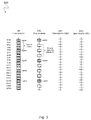
- Fig. 3 is a schematic diagram 300 illustrating an exemplary transmission of master information block (MIB) and system information blocks (SIBs) in radio sub-frames.
- MIB master information block
- SIBs system information blocks
- the MIB or Master Information Block is information that is broadcasted by the eNodeB irrespective of any users presence.
- the MIB is first among the other system information blocks or SIB, which are also broadcasted by the eNodeB.
- the MIB is transmitted using a physical layer channel called PBCH or Physical Broadcast Channel on downlink.
- PBCH Physical Broadcast Channel
- the MIB is a 24 bit information with following information within: 3 bits for system bandwidth, 3 bits for PHICH information, 8 bits for system frame number (SFN) and 10 bits are reserved for future use.
- the system bandwidth is knowledge a UE must have to decode any other physical layer channels.
- the PHICH info is used to decode the control channels.
- the system frame number SFN is transmitted in the MIB for initial synchronization and for periodic sync.
- the generation periodicity is the duration between two consecutive MIBs generated by the higher layers. This periodicity is 40 milliseconds and the physical layer receives a new MIB for encoding every 40 milliseconds.
- the system frame number SFN within each MIB will be a rolling number between 0-255, for example and keeps changing every four MIBs.
- the transmission periodicity is the duration between two consecutive PBCH transmissions by the physical layer. The physical layer transmits the PBCH for every 10 milliseconds.
- the MIB is transmitted within each of the 4 consecutive PBCHs in a different redundancy version (RV): First as original MIB, second as MIB in a first redundancy version (RV1), third as MIB in a second redundancy version (RV2) and third as MIB in a third redundancy version (RV3).
- RV1 redundancy version
- RV2 redundancy version version
- RV3 third redundancy version
- the SIB1 is transmitted within each sequence of eight consecutive PBCHs in a different redundancy version (RV): First as original SIB1, second as SIB1 in a first redundancy version (RV1), third as SIB1 in a second redundancy version (RV2) and third as SIB1 in a third redundancy version (RV3).
- RV1 redundancy version 1
- RV2 third redundancy version 2
- SIB1 third redundancy version
- RV3 third redundancy version
- the MIB uses a fixed schedule with a periodicity of 40 ms and repetitions made within 40 ms.
- the SFN System Frame Number which is present in MIB, helps with synchronization and acts as a timing reference. Note that the SFN field in the MIB records only the most significant 8 bits of the actual SFN; the remaining 2 bits are determined by which of the 4 repetitions the UE is looking at (00 for the first copy, 01 for the second, and so on.)
- the SystemInformationBlockType1 uses a fixed schedule with a periodicity of 80 ms and repetitions made within 80 ms.
- the sub-frame for a specific SIB transmission is determined by an algorithm as defined in 3GPP TS 36.331, section 5.2.3, e.g. of version 10.7.0 (Release 10).
- UE can acquire any dynamic scheduled system information blocks "SIB"s (SIB2, SIB3, SIB4 %) after extracting the scheduling information for all other SIBs which is being transmitted as part of SIB1 in schedulingInfoList. This means UE needs to successfully decode SIB1 first then acquire the other SIBs based on their scheduling profile.
- SIB system information blocks
- UE While UE try to acquire master information block "MIB” and system information block type 1 "SIB1", there will be a probability that some system information blocks are scheduled in sub-frames between MIB and SIB1 sub-frames.
- UE shall cache the sub-frames between SIB1 and MIB and after successful decoding of SIB1 information which has the scheduling parameters of other SIBs (e.g. SIB2, SIB3, SIB4 ...), the UE can fetch those SIBs from the cached sub-frames to check if they have any dynamical scheduled system information blocks.
- the transmission described above provides the following advantages: Reduction of search time by excluding more frequencies (see first scenario described below with respect to Fig. 4 ); Faster camping since the UE will be directed to a cell rather than searching (see second and third scenarios described below with respect to Fig. 4 ); Reduction of power consumption since less frequencies need to be searched.
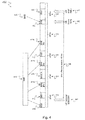
- Fig. 4 is a schematic diagram 400 illustrating acquisition of MIB and SIB information by a mobile device according to the disclosure.
- MIB 410 is a very crucial information that a UE needs to acquire before it can start any transaction with the eNodeB. All the vital information for the UE is in the MIB 410 and the UE may also derive the 40 millisecond boundary from the decoded MIB.
- the System frame number SFN transmitted within the PBCH will remain same for 4 radio frames (in Figure 4 as an example for the radio frames 430, 431, 432 and 433), because 4 consecutive radio frames 430, 431, 432, 433 are transmitted with the same MIB information 410.
- the first radio frame 430 has the original MIB information 410 while the second, third and fourth radio frames 431, 432, 433 have redundant versions (RV) 411a, 411b, 411c of the MIB information 410.
- radio frames (RF) 430, 431, 432 and 433 will have same system frame number within.
- a UE can decode the MIB & 40 millisecond boundary in 40 milliseconds for the first case and 70 milliseconds for the second case, considering the latency start count from the time RF-0 was transmitted.
- the UE requests 441 to acquire the MIB and SIB1 of a cell so it can synchronize on it and check the suitability criteria.
- the request 441 was sent after the first MIB 410 was transmitted so it has to acquire 4 successive MIB 411a, 411b, 411c, 420 to know the SFN.
- UE After successful decoding of the SIB1 412, UE knows the periodicity of the others SIBs 413 from the scheduling information. If UE saved the sub-frames between the first MIB 410 until the successful SIB1 decoding, it can fetch if any SIB 413 was scheduled in between and decode it afterwards.
- SIB2,SIB3, SIB2,SIB3,
- eNB can transmit 3 different type of SIBs in between SIB1 and its repletion (within 20 msec), SIB1 is received by UE with the information depicted in Table 1.
- Table 1 exemplary information in SIB1 schedulingInfoList [0] SchedulingInfo si_Periodic ity SchedulingInfosi_ Periodicity rf8 sib_Mapping Info [0] SIB_TypeSIB_Type_ sibType2 schedulingInfoList [1] SchedulingInfo si_Periodic ity SchedulingInfosi_ Periodicity rf8 sib_Mapping Info [0] SIB_TypeSIB_Type_ sibType3 schedulingInfoList [2] SchedulingInfo si_Periodic ity SchedulingInfosi_ Periodicity rf8 sib_Mapping Info [0] SIB_TypeSIB_Type_ sibType4 schedulingInfoList [3] SchedulingInfo si_Periodic ity SchedulingInfosi_ Periodicity rf8 sib_Mapping Info [0] SIB_TypeSIB_Type_ sibType4 schedulingInfoList [3] SchedulingInfo si_Periodic ity SchedulingInfosi_
- Table 2 shows all the transmitted SIBs by the eNB for time frame of 30 ms using the configuration of Table 1: Table 2: transmitted SIBs for time frame of 30 ms when using the configuration of Table 1 SFN,TTI System Info 0, 0 MIB 0, 1 SIB2 0,2 SIB2 0,3 SIB2 0, 4 SIB2 0, 5 SIB1 0, 6 SIB3 0, 7 SIB3 0, 8 SIB3 0, 9 SIB3 1,0 MIB RV 1,1 SIB4 1,2 SIB4 1,3 SIB4 1, 4 SIB4 1,5 SIB5 1, 6 SIB5 1, 7 SIB5 1, 8 SIB5 1, 9 SIB5 2, 0 MIB RV 2, 1 SIB6 2,2 SIB6 2,3 SIB6 2,4 SIB6 2,5 SIB1 RV 2, 6 SIB7 2,7 SIB7 2, 8 SIB7 2, 9 SIB7 3, 0 MIB RV
- Fig. 5 illustrates a block diagram of mobile device 500 according to the disclosure.
- the mobile device 500 includes a receiver 501 and a processor 503.
- the receiver 501 is configured to receive a sequence of radio frames 112, e.g. as described above with respect to Fig. 1 , wherein each radio frame comprises a master information block (MIB), e.g. as described above with respect to Figures 3 and 4 .
- MIB master information block
- the processor 503 is configured to: derive synchronization information of the sequence of radio frames from the MIBs of at least two radio frames; determine a position of a first type system information block (SIB1) comprised in the sequence of radio frames based on the synchronization information; determine a position of a second type system information block (SIB2) comprised in the sequence of radio frames based on information comprised in the SIB1; and derive cell information based on at least one of the SIB1 and the SIB2, e.g. according to the blocks 201, 202, 203, 204 and 205 as described above with respect to the method 200 of Fig. 2 .
- the processor 503 may acquire MIB and SIB1, while in cell camping procedures, the processor 503 may acquire MIB, SIB1 and SIB2.
- the processor 503 may initiate a cell search procedure for a radio cell based on using the derived cell information, i.e. MIB and SIB1.
- the processor 503 may initiate a cell camping procedure based on using the derived cell information, i.e. MIB, SIB1 and SIB2.
- the processor 503 may be configured to derive the synchronization information based on system frame numbers (SFNs) of the sequence of radio frames.
- SFNs system frame numbers
- the UE may already accumulate frames for frequency scan, cell scan and SIBs acquisition.
- the UE may depend on accumulated frames recursively and avoid new frames accumulations.
- the UE can use the accumulated frames of cell scan to fetch broadcasted SIBs.
- the UE may save system information of cells that was decoded before.
- the UE can use the pre-saved system information to avoid decoding of other SIBs.
- the UE can use SIBs information to optimize the UE's performance (for example by using the frequencies in SIB5, SIB6,...
- SIB1 pre-saved system information in SIB1 that is related to the scheduling parameters to decode the other SIBs. If it can decode the other SIBs, it may use them to optimize the UE's performance. If other SIBs decoding failed, UE can proceed without using the other SIBs information.
- Number of OFDM symbols in a resource block can be 6 or 7 depending on the cyclic prefix configuration. For worst case calculations normal cyclic prefix (7) was selected.
- the memory can have a size of approximately 900 Kbyte.
- the disclosed method can be limited to certain bandwidths. In another implementation a less number of frames can be cached than 4 frames.
- DSP Digital Signal Processors
- ASIC application specific integrated circuit
- Embodiments described in this disclosure can be implemented in digital electronic circuitry, or in computer hardware, firmware, software, or in combinations thereof, e.g. in available hardware of mobile devices or in new hardware dedicated for processing the methods described herein.
- the present disclosure also supports a computer program product including computer executable code or computer executable instructions that, when executed, causes at least one computer to execute the performing and computing blocks described herein, in particular the methods described above with respect to Figs. 2 to 4 .
- a computer program product may include a readable storage medium storing program code thereon for use by a processor, the program code comprising instructions for performing the methods as described above.
- Example 1 is a method for deriving cell information of a radio cell by a mobile device, the method comprising: receiving a sequence of radio frames, wherein each radio frame comprises a master information block (MIB); deriving synchronization information of the sequence of radio frames from the MIBs of at least two radio frames; determining a position of a first type system information block (SIB1) comprised in the sequence of radio frames based on the synchronization information; determining a position of a second type system information block (SIB2) comprised in the sequence of radio frames based on information comprised in the SIB1; and deriving the cell information based on at least one of the SIB1 and the SIB2.
- MIB master information block
- SIB1 first type system information block
- SIB2 second type system information block
- Example 2 the subject matter of Example 1 can optionally include: deriving the synchronization information based on system frame numbers (SFNs) of the sequence of radio frames.
- SFNs system frame numbers
- Example 3 the subject matter of Example 2 can optionally include that each MIB comprises an SFN field recording only a most significant bits (MSB) portion of a respective SFN.
- MSB most significant bits
- Example 4 the subject matter of Example 3 can optionally include: deriving the synchronization information based on a change in the SFN field of the MIB.
- Example 5 the subject matter of Example 4 can optionally include: storing the sequence of radio frames until detecting the change in the SFN field of the MIB; and determining the position of the SIB1 based on the stored radio frames.
- Example 6 the subject matter of any one of Examples 2-5 can optionally include that a least significant bits (LSB) portion of a respective SFN indicates a redundancy version of the MIB.
- LSB least significant bits
- Example 7 the subject matter of any one of Examples 2-6 can optionally include determining the SFNs based on receiving at most four successive radio frames.
- Example 8 the subject matter of any one of Examples 1-7 can optionally include: decoding the SIB1 to obtain the position of the SIB2; and decoding the SIB2 to obtain the cell information.
- Example 9 the subject matter of any one of Examples 1-8 can optionally include: using the cell information to exclude a number of search frequencies from a radio cell search procedure or to direct the mobile device to the radio cell.
- Example 10 the subject matter of any one of Examples 1-9 can optionally include: determining a position of further type system information blocks (SIB3, SIB4, SIB5, SIB6, SIB7, SIB8) comprised in the sequence of radio frames based on the information comprised in the SIB1; and deriving further cell information based on the further type system information blocks.
- SIB3, SIB4, SIB5, SIB6, SIB7, SIB8 comprised in the sequence of radio frames based on the information comprised in the SIB1
- deriving further cell information based on the further type system information blocks.
- Example 11 the subject matter of any one of Examples 1-10 can optionally include that the SIB1 is arranged in the sequence of radio frames according to a fixed schedule; and that the SIB2 is arranged in the sequence of radio frames according to a schedule determined by the SIB1.
- Example 12 is a computer readable non-transitory medium on which computer instructions are stored which when executed by a computer cause the computer to perform the method of any one of Examples 1 to 11.
- Example 13 is a mobile device, comprising: a receiver, configured to receive a sequence of radio frames, wherein each radio frame comprises a master information block (MIB); and a processor, configured to: derive synchronization information of the sequence of radio frames from the MIBs of at least two radio frames; determine a position of a first type system information block (SIB1) comprised in the sequence of radio frames based on the synchronization information; determine a position of a second type system information block (SIB2) comprised in the sequence of radio frames based on information comprised in the SIB1; and derive cell information based on at least one of the SIB1 and the SIB2.
- SIB1 first type system information block
- SIB2 second type system information block
- Example 14 the subject matter of Example 13 can optionally include that the processor is configured to initiate a search procedure for a radio cell based on using the derived cell information.
- Example 15 the subject matter of Example 13 or Example 14 can optionally include that the processor is configured to derive the synchronization information based on system frame numbers (SFNs) of the sequence of radio frames.
- SFNs system frame numbers
- Example 16 the subject matter of Example 15 can optionally include that each MIB comprises an SFN field recording only a most significant bits (MSB) portion of a respective SFN.
- MSB most significant bits
- Example 17 the subject matter of Example 16 can optionally include that the processor is configured to derive the synchronization information based on a change in the SFN field of the MIB.
- Example 18 the subject matter of Example 17 can optionally include a memory and can include that the processor is configured to store the sequence of radio frames in the memory until detecting the change in the SFN field of the MIB and to determine the position of the SIB1 based on the stored radio frames.
- Example 19 the subject matter of any one of Examples 15 to 18 can optionally include that a least significant bits (LSB) portion of a respective SFN indicates a redundancy version of the MIB.
- LSB least significant bits
- Example 20 the subject matter of any one of Examples 15 to 19 can optionally include that the processor is configured to determine the SFNs based on at most four successive radio frames received by the receiver.
- Example 21 the subject matter of any one of Examples 13 to 20 can optionally include that the processor is configured to decode the SIB1 to obtain the position of the SIB2 and to decode the SIB2 to obtain the cell information.
- Example 22 the subject matter of any one of Examples 13 to 21 can optionally include that the processor is configured to use the cell information to exclude a number of search frequencies from a radio cell search procedure or to direct the mobile device to the radio cell.
- Example 23 the subject matter of any one of Examples 13 to 22 can optionally include that the processor is configured to determine a position of further type system information blocks (SIB3, SIB4, SIB5, SIB6, SIB7, SIB8) comprised in the sequence of radio frames based on the information comprised in the SIB1; and to derive further cell information based on the further type system information blocks.
- SIB3, SIB4, SIB5, SIB6, SIB7, SIB8 comprised in the sequence of radio frames based on the information comprised in the SIB1; and to derive further cell information based on the further type system information blocks.
- Example 24 the subject matter of any one of Examples 13 to 23 can optionally include that the SIB1 is arranged in the sequence of radio frames according to a fixed schedule and that the SIB2 is arranged in the sequence of radio frames according to a schedule determined by the SIB1.
- Example 25 is a method for cell search by a mobile device, the method comprising: acquiring a master information block (MIB) and a first type system information block (SIB1) from a received sequence of radio frames; synchronizing on the sequence of radio frames by using information comprised in the MIB; and performing a cell search based on information comprised in the SIB1.
- MIB master information block
- SIB1 first type system information block
- Example 26 the subject matter of Example 25 can optionally include: acquiring a second type system information block (SIB2) from the received sequence of radio frames; decoding the SIB1 to obtain a position of the SIB2 in the sequence of radio frames; and performing a cell camping based on information comprised in the SIB2.
- SIB2 second type system information block
- Example 27 the subject matter of any one of Examples 25 to 26 can optionally include that each radio frame comprises either an original version or a redundancy version of the MIB.
- Example 28 the subject matter of any one of Examples 25 to 27 can optionally include: acquiring at least two and at most four consecutive radio frames to synchronize on the sequence of radio frames.
- Example 29 the subject matter of any one of Examples 25 to 28 can optionally include: synchronizing on the sequence of radio frames based on system frame numbers (SFNs) of the sequence of radio frames.
- SFNs system frame numbers
- Example 30 the subject matter of Example 29 can optionally include that the MIB of each radio frame comprises an SFN field recording only a most significant bits (MSB) portion of a respective SFN.
- MSB most significant bits
- Example 31 is a device for deriving cell information of a radio cell, the device comprising: means for receiving a sequence of radio frames, wherein each radio frame comprises a master information block (MIB); means for deriving synchronization information of the sequence of radio frames from the MIBs of at least two radio frames; means for determining a position of a first type system information block (SIB1) comprised in the sequence of radio frames based on the synchronization information; and means for deriving the cell information based on at least one of the SIB1 and the SIB2.
- MIB master information block
- SIB1 first type system information block
- Example 32 the subject matter of Example 31 can optionally include means for deriving the synchronization information based on system frame numbers (SFNs) of the sequence of radio frames.
- SFNs system frame numbers
- Example 33 is an on-chip system, comprising: a receiver unit, configured to receive a sequence of radio frames, wherein each radio frame comprises a master information block (MIB); and a processor unit, configured to: derive synchronization information of the sequence of radio frames from the MIBs of at least two radio frames; determine a position of a first type system information block (SIB1) comprised in the sequence of radio frames based on the synchronization information; determine a position of a second type system information block (SIB2) comprised in the sequence of radio frames based on information comprised in the SIB1; and derive cell information based on at least one of the SIB1 and the SIB2.
- SIB1 first type system information block
- SIB2 second type system information block
- Example 34 the subject matter of Example 33 can optionally include that the processor unit is configured to initiate a search procedure for a radio cell based on using the derived cell information.
- Example 35 is a communication system, comprising: a radio cell, configured to transmit a sequence of radio frames, wherein each radio frame comprises a master information block (MIB); and a mobile device, configured to: derive synchronization information of the sequence of radio frames from the MIBs of at least two radio frames; determine a position of a first type system information block (SIB1) comprised in the sequence of radio frames based on the synchronization information; determine a position of a second type system information block (SIB2) comprised in the sequence of radio frames based on information comprised in the SIB1; and derive cell information based on at least one of the SIB1 and the SIB2.
- SIB1 first type system information block
- SIB2 second type system information block
- Example 36 the subject matter of Example 35 can optionally include that the mobile device is configured to initiate a search procedure for the radio cell based on using the derived cell information.
Landscapes
- Engineering & Computer Science (AREA)
- Computer Security & Cryptography (AREA)
- Computer Networks & Wireless Communication (AREA)
- Signal Processing (AREA)
- Mobile Radio Communication Systems (AREA)
Description
- The disclosure relates to a method and a device for deriving cell information of a radio cell by a mobile device by using system information transmitted by a sequence of radio frames. In particular, the disclosure relates to techniques for probabilistic decoding of system information of a mobile communication standard such as LTE (Long Term Evolution).
- In a cell search procedure of a
wireless communication system 100 as shown inFig. 1 , themobile device 120 or mobile terminal or handheld receives a sequence ofradio frames 112 from one ormore radio cells 110, e.g. base stations. Theseradio frames 112 include synchronization information and other useful information required for themobile device 120 to initiate a communication with aradio cell 110. Such information is included in a master information block (MIB) and in system information blocks (SIBs) of various types transmitted by the sequence ofradio frames 112. In cell search procedures like PLMN (public land mobile network) search, etc. ofwireless communication standards such as LTE (Long Term Evolution), MIB and SIB1 are mandatory information to be acquired not to extend the search time. In cell camping procedures, MIB, SIB1 and SIB2 are the mandatory information. - Radio communication technologies such as GSM, UMTS, LTE, WiFi, 2G, 3G, 4G, 5G and others will further increase traffic density. Hence, there is a need to improve the communication by reducing the search times of mobile devices to find adequate radio cells.
- The accompanying drawings are included to provide a further understanding of embodiments and are incorporated in and constitute a part of this specification. The drawings illustrate embodiments and together with the description serve to explain principles of embodiments. Other embodiments and many of the intended advantages of embodiments will be readily appreciated as they become better understood by reference to the following detailed description.
-
Fig. 1 is a schematic diagram illustrating awireless communication system 100. -
Fig. 2 is a block diagram illustrating amethod 200 for deriving cell information according to the disclosure. -
Fig. 3 is a schematic diagram 300 illustrating transmission of master information block (MIB) and system information blocks (SIBs) in radio sub-frames. -
Fig. 4 is a schematic diagram 400 illustrating acquisition of MIB and SIB information by a mobile device according to the disclosure. -
Fig. 5 illustrates a block diagram ofmobile device 500 according to the disclosure. - In the following detailed description, reference is made to the accompanying drawings, which form a part thereof, and in which is shown by way of illustration specific aspects in which the invention may be practiced. It is understood that other aspects may be utilized and structural or logical changes may be made without departing from the scope of the present invention. The following detailed description, therefore, is not to be taken in a limiting sense, and the scope of the present invention is defined by the appended claims.
- The following terms, abbreviations and notations will be used herein:
- MIB:
- Master Information Block
- SIB:
- System Information Block
- SFN:
- System Frame Number
- PLMN:
- Public Land Mobile Network
- SI:
- System Information
- TTI:
- Transmission Time Interval
- RV:
- Redundancy Version
- RF:
- Radio Frequency
- LTE:
- Long Term Evolution
- UE:
- User Equipment, mobile device, mobile terminal
- OFDM:
- Orthogonal Frequency Division Multiplex eNB,
- eNodeB:
- Base station, radio cell
- MIMO:
- Multiple Input Multiple Output
- The methods and devices described herein may be used for deriving cell information in cell search procedures of mobile devices, user equipments (UE) or mobile terminals. It is understood that comments made in connection with a described method may also hold true for a corresponding device configured to perform the method and vice versa. For example, if a specific method step is described, a corresponding device may include a unit to perform the described method step, even if such a unit is not explicitly described or illustrated in the figures. Further, it is understood that the features of the various exemplary aspects described herein may be combined with each other, unless specifically noted otherwise.
- The methods and devices described herein may be implemented in wireless communication networks, in particular communication networks based on mobile communication standards such as LTE, in particular LTE-A and/or OFDM and successor standards such as 5G. The methods are also applicable for connectivity standards, in particular high speed standards from the 802.11 family e.g. 802.11ad and successor standards. The methods and devices described below may be implemented in electronic devices such as mobile devices (or mobile stations or User Equipments (UE)), in particular in radio receivers of such mobile devices. The described devices may include integrated circuits and/or passives and may be manufactured according to various technologies. For example, the circuits may be designed as logic integrated circuits, analog integrated circuits, mixed signal integrated circuits, optical circuits, memory circuits and/or integrated passives.
- The methods and devices described herein may be configured to transmit and/or receive radio signals and performing associated signal processing. Radio signals may be or may include radio frequency signals radiated by a radio transmitting device (or radio transmitter or sender) with a radio frequency lying in a range of about 3 kHz to 300 GHz. The frequency range may correspond to frequencies of alternating current electrical signals used to produce and detect radio waves.
- The methods and devices described herein after may be designed in accordance to mobile communication standards such as e.g. the Long Term Evolution (LTE) standard or the advanced version LTE-A thereof. LTE (Long Term Evolution), marketed as 4G LTE and future 5G LTE, is a standard for wireless communication of high-speed data for mobile phones and data terminals.
- The methods and devices described herein may be configured to receive radio frames including master information blocks (MIBs) and system information blocks (SIBs), e.g. according to a mobile communication standard such as LTE, for example according to 3GPP technical specification TS 36.331, in particular according to section 5.2.3. The system information is very essential and the same is broadcasted by LTE eNB over logical channel BCCH. This logical channel information is further carried over transport channel BCH or carried by DL-SCH. There are two parts in SI (system information): static part and dynamic part. Static part is called as MIB and is transmitted using BCH and carried by PBCH once every 40ms. MIB carries useful information which includes channel bandwidth, PHICH configuration details; transmit power, no. of antennas and SIB scheduling information transmitted along with other information on the DL-SCH. Dynamic part is called as SIB and is mapped on RRC SI messages (SI-1,2,3,4,5,6,7,8,9,10,11) over DL-SCH and transmitted using PDSCH at periodic intervals. SI-1 is transmitted every 80ms, SI-2 and SI-3 have no fixed schedule, they are scheduled based on information in SI-1. System Information Blocks are grouped in SI containers. Each SI is composed of multiple SIBs. Each SI usually will have different transmission frequency and will be sent in a single sub-frame. SIBs are transmitted using BCCH mapped on DL-SCH which in turn mapped on PDSCH.
- The methods and devices described hereinafter may be applied in OFDM systems. OFDM is a scheme for encoding digital data on multiple carrier frequencies. A large number of closely spaced orthogonal sub-carrier signals may be used to carry data. Due to the orthogonality of the sub-carriers crosstalk between sub-carriers may be suppressed.
- The methods and devices described hereinafter may be applied in MIMO systems and diversity receivers. Multiple-input multiple-output (MIMO) wireless communication systems employ multiple antennas at the transmitter and/or at the receiver to increase system capacity and to achieve better quality of service. In spatial multiplexing mode, MIMO systems may reach higher peak data rates without increasing the bandwidth of the system by transmitting multiple data streams in parallel in the same frequency band. A diversity receiver uses two or more antennas to improve the quality and reliability of a wireless link.
- In the following, embodiments are described with reference to the drawings, wherein like reference numerals are generally utilized to refer to like elements throughout. In the following description, for purposes of explanation, numerous specific details are set forth in order to provide a thorough understanding of one or more aspects of embodiments. However, it may be evident to a person skilled in the art that one or more aspects of the embodiments may be practiced with a lesser degree of these specific details. The following description is therefore not to be taken in a limiting sense.
- The various aspects summarized may be embodied in various forms. The following description shows by way of illustration various combinations and configurations in which the aspects may be practiced. It is understood that the described aspects and/or embodiments are merely examples, and that other aspects and/or embodiments may be utilized and structural and functional modifications may be made without departing from the scope of the present disclosure.
-
Fig. 2 is a block diagram illustrating amethod 200 for deriving cell information of a radio cell by a mobile device according to the disclosure. Themethod 200 includes receiving 201 a sequence of radio frames, wherein each radio frame comprises a master information block (MIB). Themethod 200 includes deriving 202 synchronization information of the sequence of radio frames from the MIBs of at least two radio frames. Themethod 200 includes determining 203 a position of a first type system information block (SIB1) comprised in the sequence of radio frames based on the synchronization information. Themethod 200 includes determining 204 a position of a second type system information block (SIB2) comprised in the sequence of radio frames based on information comprised in the SIB1. Themethod 200 includes deriving 205 the cell information based on at least one of the SIB1 and the SIB2. In cell search procedures like PLMN (public land mobile network) search, etc., themethod 200 may acquire MIB and SIB1, while in cell camping procedures, themethod 200 may acquire MIB, SIB1 and SIB2. - In one implementation example of the
method 200, deriving 202 the synchronization information may be based on system frame numbers (SFNs) of the sequence of radio frames, e.g. SFNs as described below with respect toFigs. 3 and4 . - In one implementation example of the
method 200, each MIB comprises an SFN field recording only a most significant bits (MSB) portion of a respective SFN, e.g. SFNs as described below with respect toFigs. 3 and4 . - In one implementation example of the
method 200, deriving 202 the synchronization information may be based on change in the SFN field of the MIB, e.g. as described below with respect toFigs. 3 and4 . - In one implementation example the
method 200 further includes: storing the sequence of radio frames until detecting the change in the SFN field of the MIB; and determining 203 the position of the SIB1 based on the stored radio frames. - In one implementation example of the method 200 a least significant bits (LSB) portion of a respective SFN indicates a redundancy version of the MIB, e.g. as described below with respect to
Figs. 3 and4 . - In one implementation example of the
method 200, determining the SFNs may be based on receiving at most four successive radio frames, e.g. as described below with respect toFigs. 3 and4 . - In one implementation example the
method 200 may further include: decoding the SIB1 to obtain the position of the SIB2; and decoding the SIB2 to obtain the cell information. - In one implementation example the
method 200 may further include: using the cell information to exclude a number of search frequencies from a radio cell search procedure or to direct the mobile device to the radio cell, e.g. as described below with respect toFigs. 3 and4 . - In one implementation example the
method 200 may further include: using determining a position of further type system information blocks (SIB3, SIB4, SIB5, SIB6, SIB7, SIB8) comprised in the sequence of radio frames based on the information comprised in the SIB1; and deriving further cell information based on the further type system information blocks, e.g. as described below with respect toFigs. 3 and4 . - In one implementation example of the
method 200, the SIB1 may be arranged in the sequence of radio frames according to a fixed schedule; and/or the SIB2 may be arranged in the sequence of radio frames according to a schedule determined by the SIB1, e.g. as described below with respect toFigs. 3 and4 . -
Fig. 3 is a schematic diagram 300 illustrating an exemplary transmission of master information block (MIB) and system information blocks (SIBs) in radio sub-frames. - In LTE the MIB or Master Information Block is information that is broadcasted by the eNodeB irrespective of any users presence. The MIB is first among the other system information blocks or SIB, which are also broadcasted by the eNodeB. The MIB is transmitted using a physical layer channel called PBCH or Physical Broadcast Channel on downlink. The MIB is a 24 bit information with following information within: 3 bits for system bandwidth, 3 bits for PHICH information, 8 bits for system frame number (SFN) and 10 bits are reserved for future use. The system bandwidth is knowledge a UE must have to decode any other physical layer channels. The PHICH info is used to decode the control channels. The system frame number SFN is transmitted in the MIB for initial synchronization and for periodic sync. The generation periodicity is the duration between two consecutive MIBs generated by the higher layers. This periodicity is 40 milliseconds and the physical layer receives a new MIB for encoding every 40 milliseconds. The system frame number SFN within each MIB will be a rolling number between 0-255, for example and keeps changing every four MIBs. The transmission periodicity is the duration between two consecutive PBCH transmissions by the physical layer. The physical layer transmits the PBCH for every 10 milliseconds.
- The contents within 4 consecutive PBCH will remain the same as the PBCH carries MIB and the MIB can change only after 40 milliseconds since the first PBCH transmission. However, as can be seen from
Fig. 3 , the MIB is transmitted within each of the 4 consecutive PBCHs in a different redundancy version (RV): First as original MIB, second as MIB in a first redundancy version (RV1), third as MIB in a second redundancy version (RV2) and third as MIB in a third redundancy version (RV3). - As can be further seen from
Fig. 3 , the SIB1 is transmitted within each sequence of eight consecutive PBCHs in a different redundancy version (RV): First as original SIB1, second as SIB1 in a first redundancy version (RV1), third as SIB1 in a second redundancy version (RV2) and third as SIB1 in a third redundancy version (RV3). Transmission schedule of the other SIB types (SIB2, 3, 4, 5,...,N) is determined by SIB1. - The MIB uses a fixed schedule with a periodicity of 40 ms and repetitions made within 40 ms. The first transmission of the MIB is scheduled in subframe #0 of radio frames for which the SFN mod 4 = 0, and repetitions are scheduled in subframe #0 of all other radio frames.
- The SFN (System Frame Number) which is present in MIB, helps with synchronization and acts as a timing reference. Note that the SFN field in the MIB records only the most significant 8 bits of the actual SFN; the remaining 2 bits are determined by which of the 4 repetitions the UE is looking at (00 for the first copy, 01 for the second, and so on.)
- The SystemInformationBlockType1 uses a fixed schedule with a periodicity of 80 ms and repetitions made within 80 ms. The first transmission of SystemInformationBlockType1 is scheduled in subframe #5 of radio frames for which the SFN mod 8 = 0, and repetitions are scheduled in subframe #5 of all other radio frames for which SFN mod 2 = 0. All other SI messages are being transmitted at the cycles specified by SIB scheduling information elements in SIB1.
- In LTE the sub-frame for a specific SIB transmission is determined by an algorithm as defined in 3GPP TS 36.331, section 5.2.3, e.g. of version 10.7.0 (Release 10).
- According to the 3GPP, UE can acquire any dynamic scheduled system information blocks "SIB"s (SIB2, SIB3, SIB4 ...) after extracting the scheduling information for all other SIBs which is being transmitted as part of SIB1 in schedulingInfoList. This means UE needs to successfully decode SIB1 first then acquire the other SIBs based on their scheduling profile.
- While UE try to acquire master information block "MIB" and system
information block type 1 "SIB1", there will be a probability that some system information blocks are scheduled in sub-frames between MIB and SIB1 sub-frames. UE shall cache the sub-frames between SIB1 and MIB and after successful decoding of SIB1 information which has the scheduling parameters of other SIBs (e.g. SIB2, SIB3, SIB4 ...), the UE can fetch those SIBs from the cached sub-frames to check if they have any dynamical scheduled system information blocks. - The transmission described above provides the following advantages: Reduction of search time by excluding more frequencies (see first scenario described below with respect to
Fig. 4 ); Faster camping since the UE will be directed to a cell rather than searching (see second and third scenarios described below with respect toFig. 4 ); Reduction of power consumption since less frequencies need to be searched. -
Fig. 4 is a schematic diagram 400 illustrating acquisition of MIB and SIB information by a mobile device according to the disclosure. -
MIB 410 is a very crucial information that a UE needs to acquire before it can start any transaction with the eNodeB. All the vital information for the UE is in theMIB 410 and the UE may also derive the 40 millisecond boundary from the decoded MIB. The System frame number SFN transmitted within the PBCH will remain same for 4 radio frames (inFigure 4 as an example for the radio frames 430, 431, 432 and 433), because 4 consecutive radio frames 430, 431, 432, 433 are transmitted with thesame MIB information 410. Thefirst radio frame 430 has theoriginal MIB information 410 while the second, third and fourth radio frames 431, 432, 433 have redundant versions (RV) 411a, 411b, 411c of theMIB information 410. Now for a UE to know the 40 millisecond boundary, all it has to find is 4 consecutive system frame numbers, e.g. SFN0, SFN1, SFN2 and SFN3 that are same. The corresponding radio frames (RF) 430, 431, 432 and 433 will have same system frame number within. - In a first case, if the UE starts decoding the
MIB 410 from radio frame (RF) with subframe number 0, RF-0, 430 it will see same system frame number for 4 consecutive radio frames and it will understand that RF-0 is the 40 millisecond boundary. In a second case, if UE decodes RF-1 first then it will see same system frame numbers in RF-1, RF-2, RF-3 and a different one in RF-4 so it continues decoding the PBCH till RF-5, RF-6 & RF-7 and it sees a same system frame number from RF-4 to RF-7 and hence decides that RF-4 is the 40 millisecond boundary.
From system point of view, a UE can decode the MIB & 40 millisecond boundary in 40 milliseconds for the first case and 70 milliseconds for the second case, considering the latency start count from the time RF-0 was transmitted. - In the following the acquisition procedure of system information (SI) message is described. When acquiring an SI message, the UE determines the start of the SI-window for the concerned SI message as follows: for the concerned SI message, the number n is determined which corresponds to the order of entry in the list of SI messages configured by schedulingInfoList in SystemInformationBlockType1; the integer value x = (n - 1)*w is determined, where w is the si-WindowLength. The SI-window starts at the subframe #a, where a = x mod 10, in the radio frame for which SFN mod T = FLOOR(x/10), where T is the si-periodicity of the concerned SI message. Note that in E-UTRAN an SI-window of 1 ms is configured only if all SIs are scheduled before subframe #5 in radio frames for which SFN mod 2 = 0.
- In
Fig. 4 , the UE requests 441 to acquire the MIB and SIB1 of a cell so it can synchronize on it and check the suitability criteria. In the example ofFig. 4 , therequest 441 was sent after thefirst MIB 410 was transmitted so it has to acquire 4successive MIB SIB1 412, UE knows the periodicity of the others SIBs 413 from the scheduling information. If UE saved the sub-frames between thefirst MIB 410 until the successful SIB1 decoding, it can fetch if any SIB 413 was scheduled in between and decode it afterwards. - There exist many cases that evaluating a cell ends after SIB1 reading. This means the UE didn't have the opportunity to decode the other SIBs (SIB2,SIB3,...) and gets benefit from them. In the following different exemplary scenarios are described.
- For the scenarios described above, if the cached SIB was:
- SIB2: The UE can know the uplink frequency of the decoded cell and can excluded its UL frequency while doing band scans.
- SIB5: The UE can excluded the neighbor LTE frequencies while doing band scan or directly select one of them if the decoded cell was not suitable.
- SIB6: The UE can excluded the neighbor UMTS frequencies while doing band scan or directly select one of them if the decoded cell was not suitable.
- SIB7: The UE can excluded the neighbor GSM frequencies while doing band scan or directly select one of them if the decoded cell was not suitable.
- SIB8: The UE can excluded the neighbor CDMA2000 frequencies while doing band scan or directly select one of them if the decoded cell was not suitable.
- In the following, an exemplary configuration is described: Using the above information with the following configurations: eNB can transmit 3 different type of SIBs in between SIB1 and its repletion (within 20 msec), SIB1 is received by UE with the information depicted in Table 1.
Table 1: exemplary information in SIB1 schedulingInfoList [0] SchedulingInfo si_Periodic ity SchedulingInfosi_ Periodicity rf8 sib_Mapping Info [0] SIB_TypeSIB_Type_ sibType2 schedulingInfoList [1] SchedulingInfo si_Periodic ity SchedulingInfosi_ Periodicity rf8 sib_Mapping Info [0] SIB_TypeSIB_Type_ sibType3 schedulingInfoList [2] SchedulingInfo si_Periodic ity SchedulingInfosi_ Periodicity rf8 sib_Mapping Info [0] SIB_TypeSIB_Type_ sibType4 schedulingInfoList [3] SchedulingInfo si_Periodic ity SchedulingInfosi_ Periodicity rf8 sib_Mapping Info [0] SIB_TypeSIB_Type_ sibType5 schedulingInfoList [4] SchedulingInfo si_Periodic ity SchedulingInfosi_ Periodicity rf8 sib_Mapping Info [0] SIB_TypeSIB_Type_ sibType6 schedulingInfoList [5] SchedulingInfo si_Periodic ity SchedulingInfosi_ Periodicity rf8 sib_Mapping Info [0] SIB_TypeSIB_Type_ sibType7 si_WindowLength ms5 - Table 2 shows all the transmitted SIBs by the eNB for time frame of 30 ms using the configuration of Table 1:
Table 2: transmitted SIBs for time frame of 30 ms when using the configuration of Table 1 SFN,TTI System Info 0, 0 MIB 0, 1 SIB2 0,2 SIB2 0,3 SIB2 0, 4 SIB2 0, 5 SIB1 0, 6 SIB3 0, 7 SIB3 0, 8 SIB3 0, 9 SIB3 1,0 MIB RV 1,1 SIB4 1,2 SIB4 1,3 SIB4 1, 4 SIB4 1,5 SIB5 1, 6 SIB5 1, 7 SIB5 1, 8 SIB5 1, 9 SIB5 2, 0 MIB RV 2, 1 SIB6 2,2 SIB6 2,3 SIB6 2,4 SIB6 2,5 SIB1 RV 2, 6 SIB7 2,7 SIB7 2, 8 SIB7 2, 9 SIB7 3, 0 MIB RV - This means if UE caches all the subframes received from the eNB in between SFN, TTI 0,0 (first occasion for MIB) till the SFN, TTI 4,0 (last MIB) UE will acquire SIB2,3,4,5,6,7 in between and no need to re acquire them after successfully decoding SIB1.
-
Fig. 5 illustrates a block diagram ofmobile device 500 according to the disclosure. - The
mobile device 500 includes areceiver 501 and aprocessor 503. Thereceiver 501 is configured to receive a sequence of radio frames 112, e.g. as described above with respect toFig. 1 , wherein each radio frame comprises a master information block (MIB), e.g. as described above with respect toFigures 3 and4 . - The
processor 503 is configured to: derive synchronization information of the sequence of radio frames from the MIBs of at least two radio frames; determine a position of a first type system information block (SIB1) comprised in the sequence of radio frames based on the synchronization information; determine a position of a second type system information block (SIB2) comprised in the sequence of radio frames based on information comprised in the SIB1; and derive cell information based on at least one of the SIB1 and the SIB2, e.g. according to theblocks method 200 ofFig. 2 . In cell search procedures like PLMN (public land mobile network) search, etc., theprocessor 503 may acquire MIB and SIB1, while in cell camping procedures, theprocessor 503 may acquire MIB, SIB1 and SIB2. - The
processor 503 may initiate a cell search procedure for a radio cell based on using the derived cell information, i.e. MIB and SIB1. Theprocessor 503 may initiate a cell camping procedure based on using the derived cell information, i.e. MIB, SIB1 and SIB2. Theprocessor 503 may be configured to derive the synchronization information based on system frame numbers (SFNs) of the sequence of radio frames. - The UE may already accumulate frames for frequency scan, cell scan and SIBs acquisition. In one implementation the UE may depend on accumulated frames recursively and avoid new frames accumulations. For example, the UE can use the accumulated frames of cell scan to fetch broadcasted SIBs. In another implementation, the UE may save system information of cells that was decoded before. When the UE is performing cell search on a certain frequency and it can decode SIB1 successfully and the value "systemInfoValueTag" in SIB1 didn't change, the UE can use the pre-saved system information to avoid decoding of other SIBs. The UE can use SIBs information to optimize the UE's performance (for example by using the frequencies in SIB5, SIB6,... and SIB8 to exclude more frequencies or directly camp on them depending of the target of the procedure). When the UE is performing cell search and it didn't/couldn't decode SIB1, it can use the pre-saved system information in SIB1 that is related to the scheduling parameters to decode the other SIBs. If it can decode the other SIBs, it may use them to optimize the UE's performance. If other SIBs decoding failed, UE can proceed without using the other SIBs information.
- There are certain subcarriers that are transmitted in the frame and can be skipped to reduce the memory requirement. These subcarriers are not involved in calculations below: Primary and secondary synchronization sequences; and Control Channels (MIB, ..). Further improvements can be done to reduce the memory needed. The following calculations can apply:
- Number of OFDM symbols in a resource block can be 6 or 7 depending on the cyclic prefix configuration. For worst case calculations normal cyclic prefix (7) was selected.
- Number of subcarriers in resource block = Num of OFDM symbols * Num of resource elements = 12 *7 = 84 (in case of Normal cyclic prefix);


- In an exemplary UE, the memory can have a size of approximately 900 Kbyte.
- In one implementation the disclosed method can be limited to certain bandwidths. In another implementation a less number of frames can be cached than 4 frames.
- The devices and systems described in this disclosure may be implemented as Digital Signal Processors (DSP), microcontrollers or any other side-processor or hardware circuit on a chip or an application specific integrated circuit (ASIC).
- Embodiments described in this disclosure can be implemented in digital electronic circuitry, or in computer hardware, firmware, software, or in combinations thereof, e.g. in available hardware of mobile devices or in new hardware dedicated for processing the methods described herein.
- The present disclosure also supports a computer program product including computer executable code or computer executable instructions that, when executed, causes at least one computer to execute the performing and computing blocks described herein, in particular the methods described above with respect to
Figs. 2 to 4 . Such a computer program product may include a readable storage medium storing program code thereon for use by a processor, the program code comprising instructions for performing the methods as described above. - The following examples pertain to further embodiments. Example 1 is a method for deriving cell information of a radio cell by a mobile device, the method comprising: receiving a sequence of radio frames, wherein each radio frame comprises a master information block (MIB); deriving synchronization information of the sequence of radio frames from the MIBs of at least two radio frames; determining a position of a first type system information block (SIB1) comprised in the sequence of radio frames based on the synchronization information; determining a position of a second type system information block (SIB2) comprised in the sequence of radio frames based on information comprised in the SIB1; and deriving the cell information based on at least one of the SIB1 and the SIB2.
- In Example 2, the subject matter of Example 1 can optionally include: deriving the synchronization information based on system frame numbers (SFNs) of the sequence of radio frames.
- In Example 3, the subject matter of Example 2 can optionally include that each MIB comprises an SFN field recording only a most significant bits (MSB) portion of a respective SFN.
- In Example 4, the subject matter of Example 3 can optionally include: deriving the synchronization information based on a change in the SFN field of the MIB.
- In Example 5, the subject matter of Example 4 can optionally include: storing the sequence of radio frames until detecting the change in the SFN field of the MIB; and determining the position of the SIB1 based on the stored radio frames.
- In Example 6, the subject matter of any one of Examples 2-5 can optionally include that a least significant bits (LSB) portion of a respective SFN indicates a redundancy version of the MIB.
- In Example 7, the subject matter of any one of Examples 2-6 can optionally include determining the SFNs based on receiving at most four successive radio frames.
- In Example 8, the subject matter of any one of Examples 1-7 can optionally include: decoding the SIB1 to obtain the position of the SIB2; and decoding the SIB2 to obtain the cell information.
- In Example 9, the subject matter of any one of Examples 1-8 can optionally include: using the cell information to exclude a number of search frequencies from a radio cell search procedure or to direct the mobile device to the radio cell.
- In Example 10, the subject matter of any one of Examples 1-9 can optionally include: determining a position of further type system information blocks (SIB3, SIB4, SIB5, SIB6, SIB7, SIB8) comprised in the sequence of radio frames based on the information comprised in the SIB1; and deriving further cell information based on the further type system information blocks.
- In Example 11, the subject matter of any one of Examples 1-10 can optionally include that the SIB1 is arranged in the sequence of radio frames according to a fixed schedule; and that the SIB2 is arranged in the sequence of radio frames according to a schedule determined by the SIB1.
- Example 12 is a computer readable non-transitory medium on which computer instructions are stored which when executed by a computer cause the computer to perform the method of any one of Examples 1 to 11.
- Example 13 is a mobile device, comprising: a receiver, configured to receive a sequence of radio frames, wherein each radio frame comprises a master information block (MIB); and a processor, configured to: derive synchronization information of the sequence of radio frames from the MIBs of at least two radio frames; determine a position of a first type system information block (SIB1) comprised in the sequence of radio frames based on the synchronization information; determine a position of a second type system information block (SIB2) comprised in the sequence of radio frames based on information comprised in the SIB1; and derive cell information based on at least one of the SIB1 and the SIB2.
- In Example 14, the subject matter of Example 13 can optionally include that the processor is configured to initiate a search procedure for a radio cell based on using the derived cell information.
- In Example 15, the subject matter of Example 13 or Example 14 can optionally include that the processor is configured to derive the synchronization information based on system frame numbers (SFNs) of the sequence of radio frames.
- In Example 16, the subject matter of Example 15 can optionally include that each MIB comprises an SFN field recording only a most significant bits (MSB) portion of a respective SFN.
- In Example 17, the subject matter of Example 16 can optionally include that the processor is configured to derive the synchronization information based on a change in the SFN field of the MIB.
- In Example 18, the subject matter of Example 17 can optionally include a memory and can include that the processor is configured to store the sequence of radio frames in the memory until detecting the change in the SFN field of the MIB and to determine the position of the SIB1 based on the stored radio frames.
- In Example 19, the subject matter of any one of Examples 15 to 18 can optionally include that a least significant bits (LSB) portion of a respective SFN indicates a redundancy version of the MIB.
- In Example 20, the subject matter of any one of Examples 15 to 19 can optionally include that the processor is configured to determine the SFNs based on at most four successive radio frames received by the receiver.
- In Example 21, the subject matter of any one of Examples 13 to 20 can optionally include that the processor is configured to decode the SIB1 to obtain the position of the SIB2 and to decode the SIB2 to obtain the cell information.
- In Example 22, the subject matter of any one of Examples 13 to 21 can optionally include that the processor is configured to use the cell information to exclude a number of search frequencies from a radio cell search procedure or to direct the mobile device to the radio cell.
- In Example 23, the subject matter of any one of Examples 13 to 22 can optionally include that the processor is configured to determine a position of further type system information blocks (SIB3, SIB4, SIB5, SIB6, SIB7, SIB8) comprised in the sequence of radio frames based on the information comprised in the SIB1; and to derive further cell information based on the further type system information blocks.
- In Example 24, the subject matter of any one of Examples 13 to 23 can optionally include that the SIB1 is arranged in the sequence of radio frames according to a fixed schedule and that the SIB2 is arranged in the sequence of radio frames according to a schedule determined by the SIB1.
- Example 25 is a method for cell search by a mobile device, the method comprising: acquiring a master information block (MIB) and a first type system information block (SIB1) from a received sequence of radio frames; synchronizing on the sequence of radio frames by using information comprised in the MIB; and performing a cell search based on information comprised in the SIB1.
- In Example 26, the subject matter of Example 25 can optionally include: acquiring a second type system information block (SIB2) from the received sequence of radio frames; decoding the SIB1 to obtain a position of the SIB2 in the sequence of radio frames; and performing a cell camping based on information comprised in the SIB2.
- In Example 27, the subject matter of any one of Examples 25 to 26 can optionally include that each radio frame comprises either an original version or a redundancy version of the MIB.
- In Example 28, the subject matter of any one of Examples 25 to 27 can optionally include: acquiring at least two and at most four consecutive radio frames to synchronize on the sequence of radio frames.
- In Example 29, the subject matter of any one of Examples 25 to 28 can optionally include: synchronizing on the sequence of radio frames based on system frame numbers (SFNs) of the sequence of radio frames.
- In Example 30, the subject matter of Example 29 can optionally include that the MIB of each radio frame comprises an SFN field recording only a most significant bits (MSB) portion of a respective SFN.
- Example 31 is a device for deriving cell information of a radio cell, the device comprising: means for receiving a sequence of radio frames, wherein each radio frame comprises a master information block (MIB); means for deriving synchronization information of the sequence of radio frames from the MIBs of at least two radio frames; means for determining a position of a first type system information block (SIB1) comprised in the sequence of radio frames based on the synchronization information; and means for deriving the cell information based on at least one of the SIB1 and the SIB2.
- In Example 32, the subject matter of Example 31 can optionally include means for deriving the synchronization information based on system frame numbers (SFNs) of the sequence of radio frames.
- Example 33 is an on-chip system, comprising: a receiver unit, configured to receive a sequence of radio frames, wherein each radio frame comprises a master information block (MIB); and a processor unit, configured to: derive synchronization information of the sequence of radio frames from the MIBs of at least two radio frames; determine a position of a first type system information block (SIB1) comprised in the sequence of radio frames based on the synchronization information; determine a position of a second type system information block (SIB2) comprised in the sequence of radio frames based on information comprised in the SIB1; and derive cell information based on at least one of the SIB1 and the SIB2.
- In Example 34, the subject matter of Example 33 can optionally include that the processor unit is configured to initiate a search procedure for a radio cell based on using the derived cell information.
- Example 35 is a communication system, comprising: a radio cell, configured to transmit a sequence of radio frames, wherein each radio frame comprises a master information block (MIB); and a mobile device, configured to: derive synchronization information of the sequence of radio frames from the MIBs of at least two radio frames; determine a position of a first type system information block (SIB1) comprised in the sequence of radio frames based on the synchronization information; determine a position of a second type system information block (SIB2) comprised in the sequence of radio frames based on information comprised in the SIB1; and derive cell information based on at least one of the SIB1 and the SIB2.
- In Example 36, the subject matter of Example 35 can optionally include that the mobile device is configured to initiate a search procedure for the radio cell based on using the derived cell information.
- In addition, while a particular feature or aspect of the disclosure may have been disclosed with respect to only one of several implementations, such feature or aspect may be combined with one or more other features or aspects of the other implementations as may be desired and advantageous for any given or particular application. Furthermore, to the extent that the terms "include", "have", "with", or other variants thereof are used in either the detailed description or the claims, such terms are intended to be inclusive in a manner similar to the term "comprise". Furthermore, it is understood that aspects of the disclosure may be implemented in discrete circuits, partially integrated circuits or fully integrated circuits or programming means. Also, the terms "exemplary", "for example" and "e.g." are merely meant as an example, rather than the best or optimal.
- Although specific aspects have been illustrated and described herein, it will be appreciated by those of ordinary skill in the art that a variety of alternate and/or equivalent implementations may be substituted for the specific aspects shown and described without departing from the scope of the present disclosure. This application is intended to cover any adaptations or variations of the specific aspects discussed herein.
- Although the elements in the following claims are recited in a particular sequence with corresponding labeling, unless the claim recitations otherwise imply a particular sequence for implementing some or all of those elements, those elements are not necessarily intended to be limited to being implemented in that particular sequence.
Claims (15)
- A method for deriving cell information of a radio cell by a mobile device, the method comprising:receiving a sequence of radio frames, wherein each radio frame comprises a master information block (MIB);deriving synchronization information of the sequence of radio frames from the MIBs of at least two radio frames;determining a position of a first type system information block (SIB1) comprised in the sequence of radio frames based on the synchronization information;determining a position of a second type system information block (SIB2) comprised in the sequence of radio frames based on information comprised in the SIB1; andderiving the cell information based on at least one of the SIB1 and the SIB2.
- The method of claim 1, comprising:deriving the synchronization information based on sequence frame numbers (SFNs) of the sequence of radio frames.
- The method of claim 2,
wherein each MIB comprises an SFN field recording only a most significant bits (MSB) portion of a respective SFN. - The method of claim 3, comprising:deriving the synchronization information based on a change in the SFN field of the MIB.
- The method of claim 4, comprising:storing the sequence of radio frames until detecting the change in the SFN field of the MIB; anddetermining the position of the SIB1 based on the stored radio frames.
- The method of one of claims 2 to 5,
wherein a least significant bits (LSB) portion of a respective SFN indicates a redundancy version of the MIB. - The method of one of claims 2 to 6,
determining the SFNs based on receiving at most four successive radio frames. - The method of one of the preceding claims, comprising:decoding the SIB1 to obtain the position of the SIB2; anddecoding the SIB2 to obtain the cell information.
- The method of one of the preceding claims, comprising:using the cell information to exclude a number of search frequencies from a radio cell search procedure or to direct the mobile device to the radio cell.
- The method of one of the preceding claims, comprising:determining a position of further type system information blocks (SIB3, SIB4, SIB5, SIB6, SIB7, SIB8) comprised in the sequence of radio frames based on the information comprised in the SIB1; andderiving further cell information based on the further type system information blocks.
- The method of one of the preceding claims,
wherein the SIB1 is arranged in the sequence of radio frames according to a fixed schedule; and
wherein the SIB2 is arranged in the sequence of radio frames according to a schedule determined by the SIB1. - A computer readable non-transitory medium on which computer instructions are stored which when executed by a computer cause the computer to perform the method of any one of claims 1 to 11.
- A mobile device, comprising:a receiver, configured to receive a sequence of radio frames, wherein each radio frame comprises a master information block (MIB); anda processor, configured to:derive synchronization information of the sequence of radio frames from the MIBs of at least two radio frames;determine a position of a first type system information block (SIB1) comprised in the sequence of radio frames based on the synchronization information;determine a position of a second type system information block (SIB2) comprised in the sequence of radio frames based on information comprised in the SIB1; andderive cell information based on at least one of the SIB1 and the SIB2.
- The mobile device of claim 13,
wherein the processor is configured to initiate a search procedure for a radio cell based on using the derived cell information. - The mobile device of claim 13 or 14,
wherein the processor is configured to derive the synchronization information based on sequence frame numbers (SFNs) of the sequence of radio frames.
Priority Applications (2)
| Application Number | Priority Date | Filing Date | Title |
|---|---|---|---|
| EP16191709.1A EP3301977B1 (en) | 2016-09-30 | 2016-09-30 | Method and device for deriving cell information |
| PCT/EP2017/071777 WO2018059867A1 (en) | 2016-09-30 | 2017-08-30 | Method and device for deriving cell information |
Applications Claiming Priority (1)
| Application Number | Priority Date | Filing Date | Title |
|---|---|---|---|
| EP16191709.1A EP3301977B1 (en) | 2016-09-30 | 2016-09-30 | Method and device for deriving cell information |
Publications (2)
| Publication Number | Publication Date |
|---|---|
| EP3301977A1 true EP3301977A1 (en) | 2018-04-04 |
| EP3301977B1 EP3301977B1 (en) | 2019-12-04 |
Family
ID=57042814
Family Applications (1)
| Application Number | Title | Priority Date | Filing Date |
|---|---|---|---|
| EP16191709.1A Active EP3301977B1 (en) | 2016-09-30 | 2016-09-30 | Method and device for deriving cell information |
Country Status (2)
| Country | Link |
|---|---|
| EP (1) | EP3301977B1 (en) |
| WO (1) | WO2018059867A1 (en) |
Cited By (1)
| Publication number | Priority date | Publication date | Assignee | Title |
|---|---|---|---|---|
| CN112335287A (en) * | 2018-06-21 | 2021-02-05 | 鸿颖创新有限公司 | Method and apparatus for performing cell (re) selection in wireless communication system |
Citations (4)
| Publication number | Priority date | Publication date | Assignee | Title |
|---|---|---|---|---|
| WO2008034408A1 (en) * | 2006-09-21 | 2008-03-27 | Infineon Technologies Ag | Grouping of user terminal cell access information in a system information frame |
| US20100124919A1 (en) * | 2008-11-18 | 2010-05-20 | Samsung Electronics Co. Ltd. | Apparatus and method for receiving system information in mobile communication terminal |
| EP2978230A1 (en) * | 2013-03-17 | 2016-01-27 | LG Electronics Inc. | Method for allocating broadcast channel, method for transmitting and receiving broadcast channel signal, and device for supporting same |
| WO2016054855A1 (en) * | 2014-10-10 | 2016-04-14 | Mediatek Singapore Pte. Ltd. | Synchronization for low coverage machine type communication devices |
-
2016
- 2016-09-30 EP EP16191709.1A patent/EP3301977B1/en active Active
-
2017
- 2017-08-30 WO PCT/EP2017/071777 patent/WO2018059867A1/en not_active Ceased
Patent Citations (4)
| Publication number | Priority date | Publication date | Assignee | Title |
|---|---|---|---|---|
| WO2008034408A1 (en) * | 2006-09-21 | 2008-03-27 | Infineon Technologies Ag | Grouping of user terminal cell access information in a system information frame |
| US20100124919A1 (en) * | 2008-11-18 | 2010-05-20 | Samsung Electronics Co. Ltd. | Apparatus and method for receiving system information in mobile communication terminal |
| EP2978230A1 (en) * | 2013-03-17 | 2016-01-27 | LG Electronics Inc. | Method for allocating broadcast channel, method for transmitting and receiving broadcast channel signal, and device for supporting same |
| WO2016054855A1 (en) * | 2014-10-10 | 2016-04-14 | Mediatek Singapore Pte. Ltd. | Synchronization for low coverage machine type communication devices |
Non-Patent Citations (1)
| Title |
|---|
| ZTE CORPORATION: "Updated MIB Acquisition", vol. RAN WG2, no. Bratislava, Slovakia; 20121008 - 20121012, 29 September 2012 (2012-09-29), XP050666635, Retrieved from the Internet <URL:http://www.3gpp.org/ftp/tsg_ran/WG2_RL2/TSGR2_79bis/Docs/> [retrieved on 20120929] * |
Cited By (2)
| Publication number | Priority date | Publication date | Assignee | Title |
|---|---|---|---|---|
| CN112335287A (en) * | 2018-06-21 | 2021-02-05 | 鸿颖创新有限公司 | Method and apparatus for performing cell (re) selection in wireless communication system |
| CN112335287B (en) * | 2018-06-21 | 2024-05-07 | 鸿颖创新有限公司 | Method and apparatus for performing cell selection in a wireless communication system |
Also Published As
| Publication number | Publication date |
|---|---|
| EP3301977B1 (en) | 2019-12-04 |
| WO2018059867A1 (en) | 2018-04-05 |
Similar Documents
| Publication | Publication Date | Title |
|---|---|---|
| US11330503B2 (en) | Wireless communications over unlicensed radio frequency spectrum | |
| KR101976055B1 (en) | The method and apparatus for transmitting and receiving broadcasting channel | |
| KR100943619B1 (en) | Method and apparatus for transmitting / receiving downlink synchronization channel for cellular wireless communication system supporting scalable bandwidth | |
| USRE46756E1 (en) | Method of transmitting/receiving LTE system information in a wireless communication system | |
| US20220086782A1 (en) | Sidelink synchronization signal block (s-ssb) design | |
| CN107969010B (en) | User equipment cell search assistance via synchronization signal bursts | |
| EP3310104A1 (en) | Method for receiving paging signal in nb-iot and method for performing random access procedure in nb-iot | |
| US20230225011A1 (en) | Telecommunications apparatus and methods | |
| US20120094664A1 (en) | Method of scanning neighbor base station in a broadband wireless access system | |
| US8483161B2 (en) | System information transmission method and subframe structure | |
| KR20100034179A (en) | Method and apparatus for transmitting/receiving dl channels in cellular communication systems supporting bandwidth scalability | |
| KR101956978B1 (en) | Methods for tranmitting ant receiving system information and apparatuses thereof | |
| US12615603B2 (en) | Method and apparatus for radio resource mapping and scheduling | |
| CN115244877A (en) | Method and device for determining monitoring timing | |
| JP2020520599A (en) | Improving system information performance | |
| US7843890B2 (en) | Downlink synchronization channels transparent to shared channel users | |
| CN113545132A (en) | Information communication method and its system and equipment | |
| US20200137645A1 (en) | Method and apparatus of master information block (mib) acquisition upon handover | |
| EP3301977B1 (en) | Method and device for deriving cell information | |
| KR101752409B1 (en) | Method of transmitting and receiving control information in a wireless system | |
| KR20180108377A (en) | Method and apparatus for pbch transmission in a multi-beam based system | |
| CN114095142B (en) | Signal processing methods and related devices | |
| US20180110032A1 (en) | Systems and methods for fast control messaging for multiple numerology access zones | |
| KR20100083676A (en) | Method for detection femto base station of mobile station |
Legal Events
| Date | Code | Title | Description |
|---|---|---|---|
| PUAI | Public reference made under article 153(3) epc to a published international application that has entered the european phase |
Free format text: ORIGINAL CODE: 0009012 |
|
| STAA | Information on the status of an ep patent application or granted ep patent |
Free format text: STATUS: REQUEST FOR EXAMINATION WAS MADE |
|
| 17P | Request for examination filed |
Effective date: 20160930 |
|
| AK | Designated contracting states |
Kind code of ref document: A1 Designated state(s): AL AT BE BG CH CY CZ DE DK EE ES FI FR GB GR HR HU IE IS IT LI LT LU LV MC MK MT NL NO PL PT RO RS SE SI SK SM TR |
|
| AX | Request for extension of the european patent |
Extension state: BA ME |
|
| STAA | Information on the status of an ep patent application or granted ep patent |
Free format text: STATUS: EXAMINATION IS IN PROGRESS |
|
| 17Q | First examination report despatched |
Effective date: 20190128 |
|
| RIC1 | Information provided on ipc code assigned before grant |
Ipc: H04W 48/10 20090101AFI20190510BHEP Ipc: H04W 48/00 20090101ALN20190510BHEP |
|
| GRAP | Despatch of communication of intention to grant a patent |
Free format text: ORIGINAL CODE: EPIDOSNIGR1 |
|
| STAA | Information on the status of an ep patent application or granted ep patent |
Free format text: STATUS: GRANT OF PATENT IS INTENDED |
|
| RIC1 | Information provided on ipc code assigned before grant |
Ipc: H04W 48/00 20090101ALN20190527BHEP Ipc: H04W 48/10 20090101AFI20190527BHEP |
|
| INTG | Intention to grant announced |
Effective date: 20190624 |
|
| GRAS | Grant fee paid |
Free format text: ORIGINAL CODE: EPIDOSNIGR3 |
|
| GRAA | (expected) grant |
Free format text: ORIGINAL CODE: 0009210 |
|
| STAA | Information on the status of an ep patent application or granted ep patent |
Free format text: STATUS: THE PATENT HAS BEEN GRANTED |
|
| AK | Designated contracting states |
Kind code of ref document: B1 Designated state(s): AL AT BE BG CH CY CZ DE DK EE ES FI FR GB GR HR HU IE IS IT LI LT LU LV MC MK MT NL NO PL PT RO RS SE SI SK SM TR |
|
| REG | Reference to a national code |
Ref country code: GB Ref legal event code: FG4D |
|
| REG | Reference to a national code |
Ref country code: CH Ref legal event code: EP |
|
| REG | Reference to a national code |
Ref country code: AT Ref legal event code: REF Ref document number: 1211113 Country of ref document: AT Kind code of ref document: T Effective date: 20191215 |
|
| REG | Reference to a national code |
Ref country code: DE Ref legal event code: R096 Ref document number: 602016025418 Country of ref document: DE |
|
| REG | Reference to a national code |
Ref country code: IE Ref legal event code: FG4D |
|
| REG | Reference to a national code |
Ref country code: NL Ref legal event code: FP |
|
| REG | Reference to a national code |
Ref country code: LT Ref legal event code: MG4D |
|
| PG25 | Lapsed in a contracting state [announced via postgrant information from national office to epo] |
Ref country code: NO Free format text: LAPSE BECAUSE OF FAILURE TO SUBMIT A TRANSLATION OF THE DESCRIPTION OR TO PAY THE FEE WITHIN THE PRESCRIBED TIME-LIMIT Effective date: 20200304 Ref country code: BG Free format text: LAPSE BECAUSE OF FAILURE TO SUBMIT A TRANSLATION OF THE DESCRIPTION OR TO PAY THE FEE WITHIN THE PRESCRIBED TIME-LIMIT Effective date: 20200304 Ref country code: FI Free format text: LAPSE BECAUSE OF FAILURE TO SUBMIT A TRANSLATION OF THE DESCRIPTION OR TO PAY THE FEE WITHIN THE PRESCRIBED TIME-LIMIT Effective date: 20191204 Ref country code: SE Free format text: LAPSE BECAUSE OF FAILURE TO SUBMIT A TRANSLATION OF THE DESCRIPTION OR TO PAY THE FEE WITHIN THE PRESCRIBED TIME-LIMIT Effective date: 20191204 Ref country code: LV Free format text: LAPSE BECAUSE OF FAILURE TO SUBMIT A TRANSLATION OF THE DESCRIPTION OR TO PAY THE FEE WITHIN THE PRESCRIBED TIME-LIMIT Effective date: 20191204 Ref country code: GR Free format text: LAPSE BECAUSE OF FAILURE TO SUBMIT A TRANSLATION OF THE DESCRIPTION OR TO PAY THE FEE WITHIN THE PRESCRIBED TIME-LIMIT Effective date: 20200305 Ref country code: LT Free format text: LAPSE BECAUSE OF FAILURE TO SUBMIT A TRANSLATION OF THE DESCRIPTION OR TO PAY THE FEE WITHIN THE PRESCRIBED TIME-LIMIT Effective date: 20191204 |
|
| PG25 | Lapsed in a contracting state [announced via postgrant information from national office to epo] |
Ref country code: HR Free format text: LAPSE BECAUSE OF FAILURE TO SUBMIT A TRANSLATION OF THE DESCRIPTION OR TO PAY THE FEE WITHIN THE PRESCRIBED TIME-LIMIT Effective date: 20191204 Ref country code: RS Free format text: LAPSE BECAUSE OF FAILURE TO SUBMIT A TRANSLATION OF THE DESCRIPTION OR TO PAY THE FEE WITHIN THE PRESCRIBED TIME-LIMIT Effective date: 20191204 |
|
| PG25 | Lapsed in a contracting state [announced via postgrant information from national office to epo] |
Ref country code: AL Free format text: LAPSE BECAUSE OF FAILURE TO SUBMIT A TRANSLATION OF THE DESCRIPTION OR TO PAY THE FEE WITHIN THE PRESCRIBED TIME-LIMIT Effective date: 20191204 |
|
| PG25 | Lapsed in a contracting state [announced via postgrant information from national office to epo] |
Ref country code: EE Free format text: LAPSE BECAUSE OF FAILURE TO SUBMIT A TRANSLATION OF THE DESCRIPTION OR TO PAY THE FEE WITHIN THE PRESCRIBED TIME-LIMIT Effective date: 20191204 Ref country code: ES Free format text: LAPSE BECAUSE OF FAILURE TO SUBMIT A TRANSLATION OF THE DESCRIPTION OR TO PAY THE FEE WITHIN THE PRESCRIBED TIME-LIMIT Effective date: 20191204 Ref country code: RO Free format text: LAPSE BECAUSE OF FAILURE TO SUBMIT A TRANSLATION OF THE DESCRIPTION OR TO PAY THE FEE WITHIN THE PRESCRIBED TIME-LIMIT Effective date: 20191204 Ref country code: CZ Free format text: LAPSE BECAUSE OF FAILURE TO SUBMIT A TRANSLATION OF THE DESCRIPTION OR TO PAY THE FEE WITHIN THE PRESCRIBED TIME-LIMIT Effective date: 20191204 Ref country code: PT Free format text: LAPSE BECAUSE OF FAILURE TO SUBMIT A TRANSLATION OF THE DESCRIPTION OR TO PAY THE FEE WITHIN THE PRESCRIBED TIME-LIMIT Effective date: 20200429 |
|
| PG25 | Lapsed in a contracting state [announced via postgrant information from national office to epo] |
Ref country code: SM Free format text: LAPSE BECAUSE OF FAILURE TO SUBMIT A TRANSLATION OF THE DESCRIPTION OR TO PAY THE FEE WITHIN THE PRESCRIBED TIME-LIMIT Effective date: 20191204 Ref country code: SK Free format text: LAPSE BECAUSE OF FAILURE TO SUBMIT A TRANSLATION OF THE DESCRIPTION OR TO PAY THE FEE WITHIN THE PRESCRIBED TIME-LIMIT Effective date: 20191204 Ref country code: IS Free format text: LAPSE BECAUSE OF FAILURE TO SUBMIT A TRANSLATION OF THE DESCRIPTION OR TO PAY THE FEE WITHIN THE PRESCRIBED TIME-LIMIT Effective date: 20200404 |
|
| REG | Reference to a national code |
Ref country code: DE Ref legal event code: R097 Ref document number: 602016025418 Country of ref document: DE |
|
| REG | Reference to a national code |
Ref country code: AT Ref legal event code: MK05 Ref document number: 1211113 Country of ref document: AT Kind code of ref document: T Effective date: 20191204 |
|
| PLBE | No opposition filed within time limit |
Free format text: ORIGINAL CODE: 0009261 |
|
| STAA | Information on the status of an ep patent application or granted ep patent |
Free format text: STATUS: NO OPPOSITION FILED WITHIN TIME LIMIT |
|
| PG25 | Lapsed in a contracting state [announced via postgrant information from national office to epo] |
Ref country code: DK Free format text: LAPSE BECAUSE OF FAILURE TO SUBMIT A TRANSLATION OF THE DESCRIPTION OR TO PAY THE FEE WITHIN THE PRESCRIBED TIME-LIMIT Effective date: 20191204 |
|
| 26N | No opposition filed |
Effective date: 20200907 |
|
| PG25 | Lapsed in a contracting state [announced via postgrant information from national office to epo] |
Ref country code: AT Free format text: LAPSE BECAUSE OF FAILURE TO SUBMIT A TRANSLATION OF THE DESCRIPTION OR TO PAY THE FEE WITHIN THE PRESCRIBED TIME-LIMIT Effective date: 20191204 Ref country code: SI Free format text: LAPSE BECAUSE OF FAILURE TO SUBMIT A TRANSLATION OF THE DESCRIPTION OR TO PAY THE FEE WITHIN THE PRESCRIBED TIME-LIMIT Effective date: 20191204 Ref country code: PL Free format text: LAPSE BECAUSE OF FAILURE TO SUBMIT A TRANSLATION OF THE DESCRIPTION OR TO PAY THE FEE WITHIN THE PRESCRIBED TIME-LIMIT Effective date: 20191204 |
|
| PG25 | Lapsed in a contracting state [announced via postgrant information from national office to epo] |
Ref country code: IT Free format text: LAPSE BECAUSE OF FAILURE TO SUBMIT A TRANSLATION OF THE DESCRIPTION OR TO PAY THE FEE WITHIN THE PRESCRIBED TIME-LIMIT Effective date: 20191204 |
|
| REG | Reference to a national code |
Ref country code: CH Ref legal event code: PL |
|
| GBPC | Gb: european patent ceased through non-payment of renewal fee |
Effective date: 20200930 |
|
| REG | Reference to a national code |
Ref country code: BE Ref legal event code: MM Effective date: 20200930 |
|
| PG25 | Lapsed in a contracting state [announced via postgrant information from national office to epo] |
Ref country code: LU Free format text: LAPSE BECAUSE OF NON-PAYMENT OF DUE FEES Effective date: 20200930 |
|
| REG | Reference to a national code |
Ref country code: DE Ref legal event code: R081 Ref document number: 602016025418 Country of ref document: DE Owner name: INTEL CORPORATION, SANTA CLARA, US Free format text: FORMER OWNER: INTEL IP CORPORATION, SANTA CLARA, CA, US |
|
| REG | Reference to a national code |
Ref country code: NL Ref legal event code: PD Owner name: INTEL CORPORATION; US Free format text: DETAILS ASSIGNMENT: CHANGE OF OWNER(S), ASSIGNMENT; FORMER OWNER NAME: INTEL IP CORPORATION Effective date: 20210623 |
|
| PG25 | Lapsed in a contracting state [announced via postgrant information from national office to epo] |
Ref country code: FR Free format text: LAPSE BECAUSE OF NON-PAYMENT OF DUE FEES Effective date: 20200930 |
|
| PG25 | Lapsed in a contracting state [announced via postgrant information from national office to epo] |
Ref country code: GB Free format text: LAPSE BECAUSE OF NON-PAYMENT OF DUE FEES Effective date: 20200930 Ref country code: LI Free format text: LAPSE BECAUSE OF NON-PAYMENT OF DUE FEES Effective date: 20200930 Ref country code: IE Free format text: LAPSE BECAUSE OF NON-PAYMENT OF DUE FEES Effective date: 20200930 Ref country code: CH Free format text: LAPSE BECAUSE OF NON-PAYMENT OF DUE FEES Effective date: 20200930 Ref country code: BE Free format text: LAPSE BECAUSE OF NON-PAYMENT OF DUE FEES Effective date: 20200930 |
|
| PG25 | Lapsed in a contracting state [announced via postgrant information from national office to epo] |
Ref country code: TR Free format text: LAPSE BECAUSE OF FAILURE TO SUBMIT A TRANSLATION OF THE DESCRIPTION OR TO PAY THE FEE WITHIN THE PRESCRIBED TIME-LIMIT Effective date: 20191204 Ref country code: MT Free format text: LAPSE BECAUSE OF FAILURE TO SUBMIT A TRANSLATION OF THE DESCRIPTION OR TO PAY THE FEE WITHIN THE PRESCRIBED TIME-LIMIT Effective date: 20191204 Ref country code: CY Free format text: LAPSE BECAUSE OF FAILURE TO SUBMIT A TRANSLATION OF THE DESCRIPTION OR TO PAY THE FEE WITHIN THE PRESCRIBED TIME-LIMIT Effective date: 20191204 |
|
| PG25 | Lapsed in a contracting state [announced via postgrant information from national office to epo] |
Ref country code: MK Free format text: LAPSE BECAUSE OF FAILURE TO SUBMIT A TRANSLATION OF THE DESCRIPTION OR TO PAY THE FEE WITHIN THE PRESCRIBED TIME-LIMIT Effective date: 20191204 Ref country code: MC Free format text: LAPSE BECAUSE OF FAILURE TO SUBMIT A TRANSLATION OF THE DESCRIPTION OR TO PAY THE FEE WITHIN THE PRESCRIBED TIME-LIMIT Effective date: 20191204 |
|
| P01 | Opt-out of the competence of the unified patent court (upc) registered |
Effective date: 20230518 |
|
| PGFP | Annual fee paid to national office [announced via postgrant information from national office to epo] |
Ref country code: NL Payment date: 20250704 Year of fee payment: 10 |
|
| PGFP | Annual fee paid to national office [announced via postgrant information from national office to epo] |
Ref country code: DE Payment date: 20250819 Year of fee payment: 10 |