EP3301944A1 - A method and a system for delivering over-the-top content in a constant bit rate television network - Google Patents
A method and a system for delivering over-the-top content in a constant bit rate television network Download PDFInfo
- Publication number
- EP3301944A1 EP3301944A1 EP16191632.5A EP16191632A EP3301944A1 EP 3301944 A1 EP3301944 A1 EP 3301944A1 EP 16191632 A EP16191632 A EP 16191632A EP 3301944 A1 EP3301944 A1 EP 3301944A1
- Authority
- EP
- European Patent Office
- Prior art keywords
- ott
- content
- data
- bit rate
- constant bit
- Prior art date
- Legal status (The legal status is an assumption and is not a legal conclusion. Google has not performed a legal analysis and makes no representation as to the accuracy of the status listed.)
- Withdrawn
Links
Images




Classifications
-
- H—ELECTRICITY
- H04—ELECTRIC COMMUNICATION TECHNIQUE
- H04N—PICTORIAL COMMUNICATION, e.g. TELEVISION
- H04N21/00—Selective content distribution, e.g. interactive television or video on demand [VOD]
- H04N21/60—Network structure or processes for video distribution between server and client or between remote clients; Control signalling between clients, server and network components; Transmission of management data between server and client, e.g. sending from server to client commands for recording incoming content stream; Communication details between server and client
- H04N21/61—Network physical structure; Signal processing
- H04N21/6106—Network physical structure; Signal processing specially adapted to the downstream path of the transmission network
- H04N21/6118—Network physical structure; Signal processing specially adapted to the downstream path of the transmission network involving cable transmission, e.g. using a cable modem
-
- H—ELECTRICITY
- H04—ELECTRIC COMMUNICATION TECHNIQUE
- H04N—PICTORIAL COMMUNICATION, e.g. TELEVISION
- H04N21/00—Selective content distribution, e.g. interactive television or video on demand [VOD]
- H04N21/20—Servers specifically adapted for the distribution of content, e.g. VOD servers; Operations thereof
- H04N21/23—Processing of content or additional data; Elementary server operations; Server middleware
- H04N21/234—Processing of video elementary streams, e.g. splicing of video streams or manipulating encoded video stream scene graphs
- H04N21/2343—Processing of video elementary streams, e.g. splicing of video streams or manipulating encoded video stream scene graphs involving reformatting operations of video signals for distribution or compliance with end-user requests or end-user device requirements
- H04N21/234309—Processing of video elementary streams, e.g. splicing of video streams or manipulating encoded video stream scene graphs involving reformatting operations of video signals for distribution or compliance with end-user requests or end-user device requirements by transcoding between formats or standards, e.g. from MPEG-2 to MPEG-4 or from Quicktime to Realvideo
-
- H—ELECTRICITY
- H04—ELECTRIC COMMUNICATION TECHNIQUE
- H04N—PICTORIAL COMMUNICATION, e.g. TELEVISION
- H04N21/00—Selective content distribution, e.g. interactive television or video on demand [VOD]
- H04N21/20—Servers specifically adapted for the distribution of content, e.g. VOD servers; Operations thereof
- H04N21/23—Processing of content or additional data; Elementary server operations; Server middleware
- H04N21/235—Processing of additional data, e.g. scrambling of additional data or processing content descriptors
- H04N21/2355—Processing of additional data, e.g. scrambling of additional data or processing content descriptors involving reformatting operations of additional data, e.g. HTML pages
-
- H—ELECTRICITY
- H04—ELECTRIC COMMUNICATION TECHNIQUE
- H04N—PICTORIAL COMMUNICATION, e.g. TELEVISION
- H04N21/00—Selective content distribution, e.g. interactive television or video on demand [VOD]
- H04N21/20—Servers specifically adapted for the distribution of content, e.g. VOD servers; Operations thereof
- H04N21/23—Processing of content or additional data; Elementary server operations; Server middleware
- H04N21/236—Assembling of a multiplex stream, e.g. transport stream, by combining a video stream with other content or additional data, e.g. inserting a URL [Uniform Resource Locator] into a video stream, multiplexing software data into a video stream; Remultiplexing of multiplex streams; Insertion of stuffing bits into the multiplex stream, e.g. to obtain a constant bit-rate; Assembling of a packetised elementary stream
- H04N21/2365—Multiplexing of several video streams
Definitions
- a method and a system for delivering over-the-top television (OTT) content in a constant bit rate television network such as a cable network utilizing QAM or QPSK infrastructure.
- DVB Digital Video Broadcasting
- the DVB standards utilize a QAM (Quadrature Amplitude Modulation) or QPSK (Quadrature Phase Shift Keying) modulation infrastructure for transferring data which have a constant bit rate and a push mode which means the content is constantly available from a source either as ready to broadcast files (e.g. clips) or is received from some other providers in a broadcast mode as well, regardless on the amount subscribers watching the program.
- QAM Quadrature Amplitude Modulation
- QPSK Quadrature Phase Shift Keying
- an audio and video content is coded and sent in a MPEG-2 or MPEG-4 compression system.
- Over-the-top television is gaining in popularity as an alternative in television broadcasting. It provides television programs, which are offered by stationary broadcasters (such as cable television), over the Internet. In some cases part of a programming content is available only in the OTT form - for example due to lack of satellite broadcast of specific channels in a given region. Therefore, this could be an important source of signal for cable operator(s) who would like to enrich their programming offer by adding the OTT channel (for example, community specific channels (e.g. a Chinese community channel for a cable television network located in Europe where there is no Chinese satellite broadcast available).
- community specific channels e.g. a Chinese community channel for a cable television network located in Europe where there is no Chinese satellite broadcast available.
- the OTT type of transmission runs on top of Ethernet traffic and uses VBR (Variable Bit Rate) in order to save transmission bandwidth. It utilizes a pull mechanism, wherein each user requests a dedicated individual transmission. When there are no subscribers, the signal is not transmitted.
- the cable broadcast television uses CBR (Constant Bit Rate) transmission, such as QAM and QPSK that are used by DVB-S/S2/C/T/T2. As a consequence, a one-to-one conversion of these signals is not possible.
- CBR Constant Bit Rate
- a method for delivering an over-the-top content in a constant bit rate television network comprising the steps of: receiving an OTT content data from an OTT content source; transferring the OTT content data to a cache memory until a minimum threshold of data amount is stored in the cache memory; executing a first signal processing stage to decapsulate the OTT content stored in the cache memory to elementary stream data; executing a second signal processing stage to convert the elementary stream data to a transport stream data; providing the transport stream data to a player to generate a constant bit rate stream; and transmitting the constant bit rate stream over the television network.
- the constant bit rate television network can be a cable television network utilizing QAM or QPSK infrastructure.
- the first signal processing stage may further comprise deciphering the OTT content stored in the cache memory.
- the OTT content source can be defined by a universal resource locator address.
- Non-transitory computer readable storage medium comprising instructions that, when executed by a computer, enable delivering an over-the-top content in a constant bit rate television network in accordance with the method as disclosed herein.
- a system for converting an over-the-top content to a constant bit rate content comprising: an OTT receiver configured to receive an OTT content data from an OTT content source; a cache memory configured to store the received OTT content data; a signal analyzer configured to detect an encapsulation method and parameters of the received OTT content data; a first signal processor configured to decapsulate the OTT content stored in the cache memory to elementary stream data; a second signal processor configured to convert the elementary stream data to a transport stream data; and a player configured to generate a constant bit rate stream.
- a head-end system comprising: a signal processing block for receiving and re-encode broadcast content; a system for converting an over-the-top content to a constant bit rate content as described herein; and a multiplexer for multiplexing the broadcast content from the signal processing block and the constant bit rate content from the system.
- these quantities take the form of electrical or magnetic signals capable of being stored, transferred, combined, compared, and otherwise manipulated in a computer system.
- these signals are referred to as bits, packets, messages, values, elements, symbols, characters, terms, numbers, or the like.
- a computer-readable (storage) medium typically may be non-transitory and/or comprise a non-transitory device.
- a non-transitory storage medium may include a device that may be tangible, meaning that the device has a concrete physical form, although the device may change its physical state.
- non-transitory refers to a device remaining tangible despite a change in state.
- example means serving as a non-limiting example, instance, or illustration.
- terms "for example” and “e.g.” introduce a list of one or more non-limiting examples, instances, or illustrations.
- Fig. 1 presents a transmission system structure.
- a typical television broadcast system utilizes a broadcast content source 130 that usually consists of satellite and terrestrial reception blocks responsible for receiving signal, deciphering, if applicable, and de-multiplexing it.
- Such signal is delivered via a transmission channel 103 to an operator's head-end (a master facility for receiving television signals for processing and distribution over a cable television system) 140 where the operator may transcode the received signals and multiplex them according to local needs.
- the signal is modulated in order to be delivered via a transmission channel 104 to a Radio Frequency (RF) infrastructure 150 that connects, via a transmission channel 105, the head-end and Customer Premises Equipment (CPE) 160 located at subscriber's homes.
- RF Radio Frequency
- the signal may be delivered to the operator's head-end 140 via a transmission channels 101, 102 from an Over-The-Top television (OTT) content source 110 using a Content Delivery Network (CDN) 120 that acts as a cache for the OTT signals.
- the content delivery network may be a part of public Internet or a part of a private network.
- Fig. 2 presents an overview of an operator's head-end.
- the operator's head-end 140 generally comprises a broadcast head-end 260 and an OTT to MPEG-2 converter 250.
- the broadcast head-end 260 receives the signals from the broadcast content source 130 via the transmission channel 103 which delivers them to a digital signal processing block 210 which is responsible for re-encoding the signal and delivering it further to a multiplexer (MUX) 220.
- the MUX 220 is responsible for multiplexing all coming input signal, delivered in a Single Program Transport Stream (SPTS) share into an MPEG-2 Transport Stream (TS) compliant signal that further is provided to a modulator 230.
- the Modulator 230 is responsible for radio frequency signal modulation which is further transmitted via the 104 channel.
- the broadcast head-end 260 further comprises a management unit 240 which controls the operation of the MUX 220, the modulator 230 and the OTT to MPEG-2 converter 250.
- the OTT to MPEG-2 converter 250 comprises an audio video signal processing unit 254 (presented in more details in Fig. 3 ) with a HTTP OTT content input connector 251, an UDP (User Datagram Protocol) MPEG-2 output connector 252 and an Ethernet connector 253 connected to the management unit 240 for controlling and monitoring the processor.
- the transmission channel 102 is connected through an input connector 251 and delivers compressed and optionally ciphered OTT data to an OTT receiver 310 in the form defined within a configuration and monitoring module 370 specifying an URL configuration and credentials.
- the signal is cached 330 and subsequently provided to a first signal processor module 340 as well as to a signal analyser 320.
- the signal analyser 320 is responsible for detecting an encapsulation method, such as HLS (HTTP Live Streaming), MPEG-DASH (Dynamic Adaptive Streaming over HTTP), etc.; bitrate of the stream and a ciphering method, if applicable.
- the sampling of the signal results in providing an appropriate dynamic configuration data to the first signal processor 340.
- the first signal processor 340 is responsible for an OTT protocol de-capsulation and optionally deciphering.
- Raw data in a shape of ES (Elementary Stream) or PES (Program Elementary Stream) is provided to a second signal processor module 350 in order to create an MPEG-2 TS compliant SPTS signal.
- this signal is provided to a player 360 that is responsible for streaming the data according to cable broadcast standards, i.e. the constant bit rate (CBR). Further, the signal is delivered to the MUX 220.
- CBR constant bit rate
- Fig. 4 presents a flowchart of data detection.
- the system determines a configuration for the OTT receiver, in particular the URL address and credentials.
- the OTT receiver status is determined and if the status is determined as correct in step 403, data is obtained from the configured URL in step 404. If the data is received in step 405, it is transferred to cache and the cache is filled in step 406. Otherwise, if the data is not received, the procedure loops back to step 404.
- step 407 the system checks if the minimum threshold of data amount is exceeded. If not, the cache is further filled with data, otherwise in step 408 the system analyses the cache data. In step 409 it is checked if the analysis is completed, if so in step 410 the system configures the first signal processing stage and finishes the procedure of data detection, otherwise the procedure loops back to step 408.
- Fig. 5 presents a flowchart of data processing.
- the status of the OTT receiver is determined.
- the status is verified and if the status is not correct, the procedure loops back to the first step 501, otherwise it continues to step 503 where the status of the first signal processing stage is determined.
- the status of the first signal processing stage is verified and if it is not correct, the procedure loops back to step 503. Otherwise the procedure continues to step 505, wherein data (i.e. the OTT content) is obtained from its source, such as the configured URL (Uniform Resource Locator). If the data is received in step 506, it is filled to the cache in step 507. Otherwise, the procedure loops back to step 505.
- data i.e. the OTT content
- URL Uniform Resource Locator
- step 508 the system checks if the minimum threshold of data in the cache is exceeded. If not, the cache is further filled with data, otherwise in step 509 the data is further received until the minimum threshold is received 510. In step 511 the system executes the first signal processing stage and in step 512 it executes the second signal processing stage. In the final step 513 the data is provided to a player.
- the minimum threshold value defining the minimum amount of content to be stored in the cache memory 330 before processing the data in the first signal processing stage depends on OTT delivery method and may vary. For example, it can be set to 3 consequent segment for HLS.
- the aforementioned method for delivering content may be performed and/or controlled by one or more computer programs.
- Such computer programs are typically executed by utilizing the computing resources in a computing device.
- Applications are stored on a non-transitory medium.
- An example of a non-transitory medium is a non-volatile memory, for example a flash memory while an example of a volatile memory is RAM.
- the computer instructions are executed by a processor.
- These memories are exemplary recording media for storing computer programs comprising computer-executable instructions performing all the steps of the computer-implemented method according the technical concept presented herein.
Landscapes
- Engineering & Computer Science (AREA)
- Multimedia (AREA)
- Signal Processing (AREA)
- Two-Way Televisions, Distribution Of Moving Picture Or The Like (AREA)
Abstract
A method for delivering an over-the-top (OTT) content in a constant bit rate television network, comprising the steps of: receiving (505) an OTT content data from an OTT content source (110); transferring (507) the OTT content data to a cache memory (330) until a minimum threshold of data amount is stored in the cache memory (330); executing (511) a first signal processing stage to decapsulate the OTT content stored in the cache memory (330) to elementary stream data; executing (512) a second signal processing stage to convert the elementary stream data to a transport stream data; providing (513) the transport stream data to a player (360) to generate a constant bit rate stream; and transmitting the constant bit rate stream over the television network.
Description
- A method and a system for delivering over-the-top television (OTT) content in a constant bit rate television network, such as a cable network utilizing QAM or QPSK infrastructure.
- Typically, television programming is delivered by means of a cable television system utilizing one of Digital Video Broadcasting (DVB) standards - DVB-S/S2/C/C2/T/T2. The DVB standards utilize a QAM (Quadrature Amplitude Modulation) or QPSK (Quadrature Phase Shift Keying) modulation infrastructure for transferring data which have a constant bit rate and a push mode which means the content is constantly available from a source either as ready to broadcast files (e.g. clips) or is received from some other providers in a broadcast mode as well, regardless on the amount subscribers watching the program. Typically, in the DVB standard, an audio and video content is coded and sent in a MPEG-2 or MPEG-4 compression system.
- Over-the-top television (OTT) is gaining in popularity as an alternative in television broadcasting. It provides television programs, which are offered by stationary broadcasters (such as cable television), over the Internet. In some cases part of a programming content is available only in the OTT form - for example due to lack of satellite broadcast of specific channels in a given region. Therefore, this could be an important source of signal for cable operator(s) who would like to enrich their programming offer by adding the OTT channel (for example, community specific channels (e.g. a Chinese community channel for a cable television network located in Europe where there is no Chinese satellite broadcast available).
- The OTT type of transmission runs on top of Ethernet traffic and uses VBR (Variable Bit Rate) in order to save transmission bandwidth. It utilizes a pull mechanism, wherein each user requests a dedicated individual transmission. When there are no subscribers, the signal is not transmitted. As mentioned above, the cable broadcast television uses CBR (Constant Bit Rate) transmission, such as QAM and QPSK that are used by DVB-S/S2/C/T/T2. As a consequence, a one-to-one conversion of these signals is not possible. In order to make an OTT channel available over a cable television, a system is required that on one hand could act as "client device" e.g. tablet or PC, while on the other hand would be capable of generating a DVB compliant stream that could be sent via the cable the network as a typical broadcast channel.
- Therefore, there is a need to provide a method and a system for conversion of the OTT content in order to make it available in a cable television broadcast.
- There is disclosed a method for delivering an over-the-top content in a constant bit rate television network, comprising the steps of: receiving an OTT content data from an OTT content source; transferring the OTT content data to a cache memory until a minimum threshold of data amount is stored in the cache memory; executing a first signal processing stage to decapsulate the OTT content stored in the cache memory to elementary stream data; executing a second signal processing stage to convert the elementary stream data to a transport stream data; providing the transport stream data to a player to generate a constant bit rate stream; and transmitting the constant bit rate stream over the television network.
- The constant bit rate television network can be a cable television network utilizing QAM or QPSK infrastructure.
- The first signal processing stage may further comprise deciphering the OTT content stored in the cache memory.
- The OTT content source can be defined by a universal resource locator address.
- There is also disclosed a non-transitory computer readable storage medium comprising instructions that, when executed by a computer, enable delivering an over-the-top content in a constant bit rate television network in accordance with the method as disclosed herein.
- There is also disclosed a system for converting an over-the-top content to a constant bit rate content, the system comprising: an OTT receiver configured to receive an OTT content data from an OTT content source; a cache memory configured to store the received OTT content data; a signal analyzer configured to detect an encapsulation method and parameters of the received OTT content data; a first signal processor configured to decapsulate the OTT content stored in the cache memory to elementary stream data; a second signal processor configured to convert the elementary stream data to a transport stream data; and a player configured to generate a constant bit rate stream.
- There is also deisclosed a head-end system comprising: a signal processing block for receiving and re-encode broadcast content; a system for converting an over-the-top content to a constant bit rate content as described herein; and a multiplexer for multiplexing the broadcast content from the signal processing block and the constant bit rate content from the system.
- Further details and features of the present invention, its nature and various advantages will become more apparent from the following detailed description of the preferred embodiments shown in drawings, in which:
-
Fig. 1 presents a transmission system structure; -
Fig. 2 presents an operator's head-end structure; -
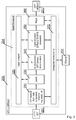
Fig. 3 presents an OTT to MPEG-2 TS signal processing circuit; -
Fig. 4 presents a flowchart of data detection; -
Fig. 5 presents a flowchart of data processing. - Some portions of the detailed description which follows are presented in terms of data processing procedures, steps or other symbolic representations of operations on data bits that can be performed on computer memory. Therefore, a computer executes such logical steps thus requiring physical manipulations of physical quantities.
- Usually these quantities take the form of electrical or magnetic signals capable of being stored, transferred, combined, compared, and otherwise manipulated in a computer system. For reasons of common usage, these signals are referred to as bits, packets, messages, values, elements, symbols, characters, terms, numbers, or the like.
- Additionally, all of these and similar terms are to be associated with the appropriate physical quantities and are merely convenient labels applied to these quantities. Terms such as "processing" or "creating" or "transferring" or "executing" or "determining" or "detecting" or "obtaining" or "selecting" or "calculating" or "generating" or the like, refer to the action and processes of a computer system that manipulates and transforms data represented as physical (electronic) quantities within the computer's registers and memories into other data similarly represented as physical quantities within the memories or registers or other such information storage.
- A computer-readable (storage) medium, such as referred to herein, typically may be non-transitory and/or comprise a non-transitory device. In this context, a non-transitory storage medium may include a device that may be tangible, meaning that the device has a concrete physical form, although the device may change its physical state. Thus, for example, non-transitory refers to a device remaining tangible despite a change in state.
- As utilized herein, the term "example" means serving as a non-limiting example, instance, or illustration. As utilized herein, the terms "for example" and "e.g." introduce a list of one or more non-limiting examples, instances, or illustrations.
-
Fig. 1 presents a transmission system structure. A typical television broadcast system utilizes abroadcast content source 130 that usually consists of satellite and terrestrial reception blocks responsible for receiving signal, deciphering, if applicable, and de-multiplexing it. Such signal is delivered via atransmission channel 103 to an operator's head-end (a master facility for receiving television signals for processing and distribution over a cable television system) 140 where the operator may transcode the received signals and multiplex them according to local needs. Finally, the signal is modulated in order to be delivered via atransmission channel 104 to a Radio Frequency (RF)infrastructure 150 that connects, via atransmission channel 105, the head-end and Customer Premises Equipment (CPE) 160 located at subscriber's homes. - Alternatively, the signal may be delivered to the operator's head-
end 140 via atransmission channels content source 110 using a Content Delivery Network (CDN) 120 that acts as a cache for the OTT signals. The content delivery network may be a part of public Internet or a part of a private network. -
Fig. 2 presents an overview of an operator's head-end. The operator's head-end 140 generally comprises a broadcast head-end 260 and an OTT to MPEG-2converter 250. The broadcast head-end 260 receives the signals from thebroadcast content source 130 via thetransmission channel 103 which delivers them to a digitalsignal processing block 210 which is responsible for re-encoding the signal and delivering it further to a multiplexer (MUX) 220. The MUX 220 is responsible for multiplexing all coming input signal, delivered in a Single Program Transport Stream (SPTS) share into an MPEG-2 Transport Stream (TS) compliant signal that further is provided to amodulator 230. The Modulator 230 is responsible for radio frequency signal modulation which is further transmitted via the 104 channel. The broadcast head-end 260 further comprises amanagement unit 240 which controls the operation of theMUX 220, themodulator 230 and the OTT to MPEG-2converter 250. The OTT to MPEG-2converter 250 comprises an audio video signal processing unit 254 (presented in more details inFig. 3 ) with a HTTP OTTcontent input connector 251, an UDP (User Datagram Protocol) MPEG-2output connector 252 and anEthernet connector 253 connected to themanagement unit 240 for controlling and monitoring the processor. Thetransmission channel 102 is connected through aninput connector 251 and delivers compressed and optionally ciphered OTT data to anOTT receiver 310 in the form defined within a configuration andmonitoring module 370 specifying an URL configuration and credentials. Next, the signal is cached 330 and subsequently provided to a firstsignal processor module 340 as well as to asignal analyser 320. Thesignal analyser 320 is responsible for detecting an encapsulation method, such as HLS (HTTP Live Streaming), MPEG-DASH (Dynamic Adaptive Streaming over HTTP), etc.; bitrate of the stream and a ciphering method, if applicable. The sampling of the signal results in providing an appropriate dynamic configuration data to thefirst signal processor 340. Thefirst signal processor 340 is responsible for an OTT protocol de-capsulation and optionally deciphering. Raw data in a shape of ES (Elementary Stream) or PES (Program Elementary Stream) is provided to a secondsignal processor module 350 in order to create an MPEG-2 TS compliant SPTS signal. Next, this signal is provided to aplayer 360 that is responsible for streaming the data according to cable broadcast standards, i.e. the constant bit rate (CBR). Further, the signal is delivered to theMUX 220. -
Fig. 4 presents a flowchart of data detection. In thefirst step 401 the system determines a configuration for the OTT receiver, in particular the URL address and credentials. Next, instep 402, the OTT receiver status is determined and if the status is determined as correct instep 403, data is obtained from the configured URL instep 404. If the data is received instep 405, it is transferred to cache and the cache is filled instep 406. Otherwise, if the data is not received, the procedure loops back tostep 404. Instep 407 the system checks if the minimum threshold of data amount is exceeded. If not, the cache is further filled with data, otherwise instep 408 the system analyses the cache data. Instep 409 it is checked if the analysis is completed, if so instep 410 the system configures the first signal processing stage and finishes the procedure of data detection, otherwise the procedure loops back tostep 408. -
Fig. 5 presents a flowchart of data processing. In thefirst step 501 the status of the OTT receiver is determined. Instep 502 the status is verified and if the status is not correct, the procedure loops back to thefirst step 501, otherwise it continues to step 503 where the status of the first signal processing stage is determined. Instep 504 the status of the first signal processing stage is verified and if it is not correct, the procedure loops back tostep 503. Otherwise the procedure continues to step 505, wherein data (i.e. the OTT content) is obtained from its source, such as the configured URL (Uniform Resource Locator). If the data is received instep 506, it is filled to the cache instep 507. Otherwise, the procedure loops back tostep 505. Instep 508 the system checks if the minimum threshold of data in the cache is exceeded. If not, the cache is further filled with data, otherwise instep 509 the data is further received until the minimum threshold is received 510. Instep 511 the system executes the first signal processing stage and instep 512 it executes the second signal processing stage. In thefinal step 513 the data is provided to a player. - The minimum threshold value defining the minimum amount of content to be stored in the
cache memory 330 before processing the data in the first signal processing stage depends on OTT delivery method and may vary. For example, it can be set to 3 consequent segment for HLS. - It can be easily recognized, by one skilled in the art, that the aforementioned method for delivering content may be performed and/or controlled by one or more computer programs. Such computer programs are typically executed by utilizing the computing resources in a computing device. Applications are stored on a non-transitory medium. An example of a non-transitory medium is a non-volatile memory, for example a flash memory while an example of a volatile memory is RAM. The computer instructions are executed by a processor. These memories are exemplary recording media for storing computer programs comprising computer-executable instructions performing all the steps of the computer-implemented method according the technical concept presented herein.
- While the invention presented herein has been depicted, described, and has been defined with reference to particular preferred embodiments, such references and examples of implementation in the foregoing specification do not imply any limitation on the invention. It will, however, be evident that various modifications and changes may be made thereto without departing from the broader scope of the technical concept. The presented preferred embodiments are exemplary only, and are not exhaustive of the scope of the technical concept presented herein.
- Accordingly, the scope of protection is not limited to the preferred embodiments described in the specification, but is only limited by the claims that follow.
Claims (7)
- A method for delivering an over-the-top (OTT) content in a constant bit rate television network, comprising the steps of:- receiving (505) an OTT content data from an OTT content source (110);- transferring (507) the OTT content data to a cache memory (330) until a minimum threshold of data amount is stored in the cache memory (330);- executing (511) a first signal processing stage to decapsulate the OTT content stored in the cache memory (330) to elementary stream data;- executing (512) a second signal processing stage to convert the elementary stream data to a transport stream data;- providing (513) the transport stream data to a player (360) to generate a constant bit rate stream; and- transmitting the constant bit rate stream over the television network.
- The method according to claim 1, wherein the constant bit rate television network is a cable television network utilizing QAM or QPSK infrastructure.
- The method according to any of previous claims, wherein the first signal processing stage further comprises deciphering the OTT content stored in the cache memory (330).
- The method according to any of previous claims, wherein the OTT content source (110) is defined by a universal resource locator (URL) address.
- A non-transitory computer readable storage medium comprising instructions that, when executed by a computer, enable delivering an over-the-top (OTT) content in a constant bit rate television network in accordance with the method according to any of claims 1-4.
- A system for converting an over-the-top (OTT) content to a constant bit rate content, the system comprising:- an OTT receiver (310) configured to receive an OTT content data from an OTT content source (310);- a cache memory (330) configured to store the received OTT content data;- a signal analyzer (320) configured to detect an encapsulation method and parameters of the received OTT content data;- a first signal processor (340) configured to decapsulate the OTT content stored in the cache memory (330) to elementary stream data;- a second signal processor (350) configured to convert the elementary stream data to a transport stream data; and- a player (360) configured to generate a constant bit rate stream.
- A head-end system comprising:- a signal processing block (210) for receiving and re-encode broadcast content;- a system (250) for converting an over-the-top (OTT) content to a constant bit rate content according to claim 6; and- a multiplexer (220) for multiplexing the broadcast content from the signal processing block (210) and the constant bit rate content from the system (250).
Priority Applications (1)
| Application Number | Priority Date | Filing Date | Title |
|---|---|---|---|
| EP16191632.5A EP3301944A1 (en) | 2016-09-30 | 2016-09-30 | A method and a system for delivering over-the-top content in a constant bit rate television network |
Applications Claiming Priority (1)
| Application Number | Priority Date | Filing Date | Title |
|---|---|---|---|
| EP16191632.5A EP3301944A1 (en) | 2016-09-30 | 2016-09-30 | A method and a system for delivering over-the-top content in a constant bit rate television network |
Publications (1)
| Publication Number | Publication Date |
|---|---|
| EP3301944A1 true EP3301944A1 (en) | 2018-04-04 |
Family
ID=57047074
Family Applications (1)
| Application Number | Title | Priority Date | Filing Date |
|---|---|---|---|
| EP16191632.5A Withdrawn EP3301944A1 (en) | 2016-09-30 | 2016-09-30 | A method and a system for delivering over-the-top content in a constant bit rate television network |
Country Status (1)
| Country | Link |
|---|---|
| EP (1) | EP3301944A1 (en) |
Citations (1)
| Publication number | Priority date | Publication date | Assignee | Title |
|---|---|---|---|---|
| US20160286248A1 (en) * | 2015-03-27 | 2016-09-29 | Ericsson Ab | System and method for providing non-guaranteed channel content in a switched digital video network using multicast abr streaming |
-
2016
- 2016-09-30 EP EP16191632.5A patent/EP3301944A1/en not_active Withdrawn
Patent Citations (1)
| Publication number | Priority date | Publication date | Assignee | Title |
|---|---|---|---|---|
| US20160286248A1 (en) * | 2015-03-27 | 2016-09-29 | Ericsson Ab | System and method for providing non-guaranteed channel content in a switched digital video network using multicast abr streaming |
Non-Patent Citations (2)
| Title |
|---|
| PARK KYUNGMO ET AL: "Delivery of ATSC 3.0 Services With MPEG Media Transport Standard Considering Redistribution in MPEG-2 TS Format", IEEE TRANSACTIONS ON BROADCASTING, IEEE SERVICE CENTER, PISCATAWAY, NJ, US, vol. 62, no. 1, 1 March 2016 (2016-03-01), pages 338 - 351, XP011608968, ISSN: 0018-9316, [retrieved on 20160304], DOI: 10.1109/TBC.2016.2518625 * |
| WASILEWSKI A J: "THE MPEG-2 SYSTEMS SPECIFICATION: A COMMON TRANSPORT FOR THE DIGITAL HIGHWAY", ANNUAL REVIEW OF COMMUNICATIONS, NATIONAL ENGINEERING CONSORTIUM, CHICAGO, IL, US, vol. 50, 1 January 1997 (1997-01-01), pages 785 - 795, XP000720947, ISSN: 0886-229X * |
Similar Documents
| Publication | Publication Date | Title |
|---|---|---|
| US11418823B2 (en) | Delivering content | |
| US11457257B2 (en) | Systems and methods for generating concatenated transport streams from adaptive media streams | |
| US10715571B2 (en) | Self-adaptive streaming medium processing method and apparatus | |
| KR20160023662A (en) | Distribution system for transitioning to new services | |
| US20190246148A1 (en) | Method and system for scrambling broadcast with low latency | |
| US20190364330A1 (en) | Broadcast Delivered HLS System | |
| KR20220151223A (en) | Method and apparatus for transmitting and receiving multimedia content | |
| US11936959B2 (en) | Emulated television tuner | |
| CN100568971C (en) | A real-time conversion method from MPEG-4 transport code stream to Internet Streaming Media Alliance stream | |
| US8826387B2 (en) | Validation and fast channel change for broadcast system | |
| US20150229986A1 (en) | Rendering time control | |
| KR102281856B1 (en) | Apparatus for converting broadcasting signal method for using the same | |
| Aoki et al. | New media transport technologies in super hi-vision broadcasting systems | |
| US10484116B2 (en) | Apparatus for converting broadcast signal and method for using the same | |
| JP6648372B2 (en) | Transmitter for wirelessly transmitting MPEG2-TS compatible data stream | |
| EP3301942A1 (en) | A method and a system for delivering an ott advertisement content for television content delivered using a constant bit rate network | |
| KR20090122883A (en) | Simple transmission method of signal stream between transmitter and electronic device | |
| EP3759906B1 (en) | Apparatus, method and system for multiple audio-video streams reception | |
| Seo et al. | An Efficient Transmission Scheme of MPEG2‐TS over RTP for a Hybrid DMB System | |
| KR20180109316A (en) | Input/output verification method in retransmission system and apparatus thereof | |
| US11290788B2 (en) | Transmission apparatus for wireless transmission on an MPEG-TS (transport stream) compatible data stream | |
| Park et al. | A Pragmatic Media-Sharing Device for ATSC Mobile DTV Broadcasting | |
| Arsinte et al. | A generic platform to study the basic aspects of DVB-IPTV conversion process | |
| EP3791598A1 (en) | Broadcast delivered hls system | |
| Kim et al. | Channel Transition Analysis of Smart HLS with Dynamic Single Buffering Scheme |
Legal Events
| Date | Code | Title | Description |
|---|---|---|---|
| PUAI | Public reference made under article 153(3) epc to a published international application that has entered the european phase |
Free format text: ORIGINAL CODE: 0009012 |
|
| STAA | Information on the status of an ep patent application or granted ep patent |
Free format text: STATUS: THE APPLICATION HAS BEEN PUBLISHED |
|
| AK | Designated contracting states |
Kind code of ref document: A1 Designated state(s): AL AT BE BG CH CY CZ DE DK EE ES FI FR GB GR HR HU IE IS IT LI LT LU LV MC MK MT NL NO PL PT RO RS SE SI SK SM TR |
|
| AX | Request for extension of the european patent |
Extension state: BA ME |
|
| STAA | Information on the status of an ep patent application or granted ep patent |
Free format text: STATUS: THE APPLICATION IS DEEMED TO BE WITHDRAWN |
|
| 18D | Application deemed to be withdrawn |
Effective date: 20181005 |