EP3301577A1 - Fault tolerance in shared memory - Google Patents
Fault tolerance in shared memory Download PDFInfo
- Publication number
- EP3301577A1 EP3301577A1 EP17186916.7A EP17186916A EP3301577A1 EP 3301577 A1 EP3301577 A1 EP 3301577A1 EP 17186916 A EP17186916 A EP 17186916A EP 3301577 A1 EP3301577 A1 EP 3301577A1
- Authority
- EP
- European Patent Office
- Prior art keywords
- partition
- data
- partitions
- fault
- version
- Prior art date
- Legal status (The legal status is an assumption and is not a legal conclusion. Google has not performed a legal analysis and makes no representation as to the accuracy of the status listed.)
- Granted
Links
Images


Classifications
-
- G—PHYSICS
- G06—COMPUTING OR CALCULATING; COUNTING
- G06F—ELECTRIC DIGITAL DATA PROCESSING
- G06F3/00—Input arrangements for transferring data to be processed into a form capable of being handled by the computer; Output arrangements for transferring data from processing unit to output unit, e.g. interface arrangements
- G06F3/06—Digital input from, or digital output to, record carriers, e.g. RAID, emulated record carriers or networked record carriers
- G06F3/0601—Interfaces specially adapted for storage systems
- G06F3/0668—Interfaces specially adapted for storage systems adopting a particular infrastructure
- G06F3/067—Distributed or networked storage systems, e.g. storage area networks [SAN], network attached storage [NAS]
-
- G—PHYSICS
- G06—COMPUTING OR CALCULATING; COUNTING
- G06F—ELECTRIC DIGITAL DATA PROCESSING
- G06F11/00—Error detection; Error correction; Monitoring
- G06F11/07—Responding to the occurrence of a fault, e.g. fault tolerance
- G06F11/14—Error detection or correction of the data by redundancy in operations
- G06F11/1402—Saving, restoring, recovering or retrying
- G06F11/1415—Saving, restoring, recovering or retrying at system level
- G06F11/142—Reconfiguring to eliminate the error
- G06F11/1425—Reconfiguring to eliminate the error by reconfiguration of node membership
-
- G—PHYSICS
- G06—COMPUTING OR CALCULATING; COUNTING
- G06F—ELECTRIC DIGITAL DATA PROCESSING
- G06F11/00—Error detection; Error correction; Monitoring
- G06F11/07—Responding to the occurrence of a fault, e.g. fault tolerance
- G06F11/14—Error detection or correction of the data by redundancy in operations
- G06F11/1402—Saving, restoring, recovering or retrying
- G06F11/1415—Saving, restoring, recovering or retrying at system level
- G06F11/1438—Restarting or rejuvenating
-
- G—PHYSICS
- G06—COMPUTING OR CALCULATING; COUNTING
- G06F—ELECTRIC DIGITAL DATA PROCESSING
- G06F11/00—Error detection; Error correction; Monitoring
- G06F11/07—Responding to the occurrence of a fault, e.g. fault tolerance
- G06F11/14—Error detection or correction of the data by redundancy in operations
- G06F11/1402—Saving, restoring, recovering or retrying
- G06F11/1415—Saving, restoring, recovering or retrying at system level
- G06F11/1441—Resetting or repowering
-
- G—PHYSICS
- G06—COMPUTING OR CALCULATING; COUNTING
- G06F—ELECTRIC DIGITAL DATA PROCESSING
- G06F11/00—Error detection; Error correction; Monitoring
- G06F11/07—Responding to the occurrence of a fault, e.g. fault tolerance
- G06F11/14—Error detection or correction of the data by redundancy in operations
- G06F11/1446—Point-in-time backing up or restoration of persistent data
- G06F11/1448—Management of the data involved in backup or backup restore
- G06F11/1451—Management of the data involved in backup or backup restore by selection of backup contents
-
- G—PHYSICS
- G06—COMPUTING OR CALCULATING; COUNTING
- G06F—ELECTRIC DIGITAL DATA PROCESSING
- G06F3/00—Input arrangements for transferring data to be processed into a form capable of being handled by the computer; Output arrangements for transferring data from processing unit to output unit, e.g. interface arrangements
- G06F3/06—Digital input from, or digital output to, record carriers, e.g. RAID, emulated record carriers or networked record carriers
- G06F3/0601—Interfaces specially adapted for storage systems
- G06F3/0602—Interfaces specially adapted for storage systems specifically adapted to achieve a particular effect
- G06F3/0614—Improving the reliability of storage systems
- G06F3/0619—Improving the reliability of storage systems in relation to data integrity, e.g. data losses, bit errors
-
- G—PHYSICS
- G06—COMPUTING OR CALCULATING; COUNTING
- G06F—ELECTRIC DIGITAL DATA PROCESSING
- G06F3/00—Input arrangements for transferring data to be processed into a form capable of being handled by the computer; Output arrangements for transferring data from processing unit to output unit, e.g. interface arrangements
- G06F3/06—Digital input from, or digital output to, record carriers, e.g. RAID, emulated record carriers or networked record carriers
- G06F3/0601—Interfaces specially adapted for storage systems
- G06F3/0628—Interfaces specially adapted for storage systems making use of a particular technique
- G06F3/0638—Organizing or formatting or addressing of data
- G06F3/0644—Management of space entities, e.g. partitions, extents, pools
-
- G—PHYSICS
- G06—COMPUTING OR CALCULATING; COUNTING
- G06F—ELECTRIC DIGITAL DATA PROCESSING
- G06F11/00—Error detection; Error correction; Monitoring
- G06F11/07—Responding to the occurrence of a fault, e.g. fault tolerance
- G06F11/14—Error detection or correction of the data by redundancy in operations
- G06F11/1474—Error detection or correction of the data by redundancy in operations in transactions
Definitions
- Distributed data systems store objects across a plurality of data partitions of the distributed data systems. Accordingly, data associated with the objects is distributed among the plurality of partitions. Local processors of the data partitions may locally process the data of the corresponding partitions. The local updated data may then be recombined at a later stage to provide an updated object.
- Examples disclosed herein involve fault tolerance in a shared memory or off-heap memory store of a distributed data processing system.
- the example off-heap memory store uses a shared memory fabric to store partitions of a resilient distributed dataset (RDD).
- RDD resilient distributed dataset
- fault tolerance is achieved using versioned, partitioned, atomic RDDs over the shared memory, valid flags for the partitions, and lineage-based recomputation.
- checkpoints may be implemented to lessen an impact of lineage-based recomputation.
- RDDs may be immutable and used to store data updated in each iteration, thus involving multiple instances of cached RDDs and corresponding increase in memory consumption.
- many systems involve non-deterministic garbage collection such that unreferenced RDDs continue to reside in heap memory until next garbage collection invocation, further increasing memory consumption.
- limited heap memory results in inefficient RDD cache eviction policy that causes eviction of cached RDD partitions that may need to be recomputed to return to a previous state in order to advance to a subsequent iteration.
- an off-heap memory store may be utilized for the RDDs creating an application managed memory representation of the RDDs.
- immutable RDDs result in lineage based data computations being possible but at the cost of unique object allocation of an RDD. Examples herein describe fault tolerance mechanisms that work in conjunction with off-heap memory store (or shared memory) RDD representation to mitigate large, bulk updates to data partitions and long lineage graphs (immutable data accumulation).
- Examples herein provide extended off-heap memory store structures (e.g., in a shared memory) that enable mutable RDDs while supporting lineage-based fault recovery.
- off-heap memory store checkpoints may be used to allow memory copy based lightweight checkpoints and provide re-computation bounds for lineage based recovery.
- selective immutability of RDDs may be used via a persist/unpersist support in an off-heap least recently used (LRU) caching store.
- LRU least recently used
- Examples disclosed herein achieve fault tolerance in a shared memory system by tracking iterations of a process to update data partitions of an RDD, the data distributed among a plurality of partitions of a shared memory as a resilient distributed dataset. Further, for each partition of the RDD, examples involve, for each iteration, indicating an address of the partition and a version of the data in a metadata store of the shared memory and for each iteration, after writing the updated data to the respective partitions, indicating that the respective data partitions of the RDD are valid for recovery using valid flags.
- Examples disclosed herein enable recovery from a fault in a shared memory system, such that, upon recovery from a fault in a system comprising a shared memory, identifying invalid partitions of the shared memory storing data of a resilient distributed dataset, the invalid partitions indicated by a valid flag. Furthermore, for each invalid partition, examples involve identifying a version of the data partition of the resilient distributed dataset of the invalid partition at the time of the fault from a metadata store of the shared memory, and, for each partition, recomputing the data partition to return the data to the version at the time of the fault.
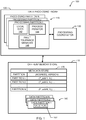
- FIG. 1 is a schematic diagram of an example data processing system 100 (e.g., a distributed data processing system) including an off-heap memory store 110 implemented in accordance with examples herein.
- the example data processing system 100 includes the off-heap memory store 110 (which may be referred to interchangeably herein as shared memory 110) in communication with a data processing engine 120.
- the example off-heap memory store 110 is implemented by a shared memory (e.g., a dynamic random access memory (DRAM), a non-volatile memory (NVM)) that is accessible by a plurality of processing nodes of the data processing engine 120.
- the example data processing engine 120 may be implemented by any heap processing engine (e.g. a data flow engine including a plurality of processing nodes).
- the data processing engine 120 may create (e.g., from a shared memory of the data processing system 100) and use the off-heap memory store 110 as a cache mechanism in accordance with examples herein.
- the data processing engine 120 may communicate with the off-heap memory store 110 via a high-speed interconnect that enables direct memory access to shared memory regions of the off-heap memory store.
- the example data processing engine 120 of FIG. 1 may be a distributed data processing engine that includes a processing coordinator 130 and a plurality of processing partitions 140 (which may be collectively referred to herein as the processing partitions 140).
- the example processing partitions 140 (labelled Partition 1, Partition 2, ... Partition N, where N is a number of processing partitions 140 of the data processing engine 120) of the data processing engine 120 include local data 142, a process iterator 144, and a fault tolerance manager 146.
- the example local data 142 may include a partition of an RDD (e.g., a graph) to for processing.
- the process iterator 144 is a processing node (e.g., a task thread scheduled by an operating system OS) of the data processing engine 120.
- the example process iterator 144 may be executed or perform operations on the partition of RDD in the local data 142 (which may be forward to a corresponding partition 160 in the shared memory 110).
- the example fault tolerance manager 146 manages fault tolerance such that the partitioned RDD may be recovered in the event of a fault in accordance with examples herein.
- the fault tolerance manager 146 uses mechanisms in the off-heap memory store 110 as described below to provide fault tolerance of the partitioned RDD.
- the processing coordinator 130 of the data processing engine 120 may coordinate data processing (e.g., data shuffling, graph processing, etc.) of the RDD partitions and use of the off-heap memory store 110.
- the processing coordinator 130 of FIG. 1 may serve as a master processor of the processing partitions 140.
- the example off-heap memory store 110 of FIG. 1 includes partitions 160 of RDD data (labelled Data Partition 1, Data Partition 2, ... Data Partition N, where N is a number of partitions 160 of the data processing engine 120) in accordance with examples herein.
- each of the partitions 160 of RDD corresponds to (e.g., is owned by, is controlled by, etc.) one of the processing partitions 140 that locally processes the RDD data (e.g., as local data 142.
- Data Partition 1 may be owned or operated on by the process iterator 144 of Processing Partition 1
- Data Partition 2 may be owned by the process iterator 144 of Processing Partition 2, etc..
- Each of the partitions 160 includes a valid flag 162, which may be used to indicate whether the data partition is valid (e.g., that the data partition is fully or completely updated/accurate).
- the partitions 160 are valid before write operation is started or after a write operation is complete and invalid during a write operation.
- the example fault manager 146 uses the valid flag 162 to ensure atomic RDD updates to the partitions 160 in the off-heap memory 110.
- the example off-heap memory store 110 further includes a metadata store 170.
- the example fault manager 146 may use the metadata store 170 to ensure fault tolerance while the processing partitions 140 process the partitions 160 of the RDD.
- the example metadata store 170 may be an index, table, or any other suitable data structure.
- the example metadata store 170 tracks partitions 160 of the RDD and addresses of the partitions 160 (labelled ADDRESS) and corresponding versions (labelled VERSIONS) of the partitions 160 of the RDD at those addresses during processing of the RDD.
- the version may be updated after each iteration of processing the RDD (e.g., after each iteration of loop of a process).
- the address field may include multiple addresses for a particular partition 160 of the RDD.
- multiple versions corresponding to the multiple locations of the partition 160 of the RDD may be indicated in the metadata store 170.
- the example metadata store 170 may be populated when input data including an RDD is loaded into the shared memory 110.
- the fault manager 146 may refer to the metadata store to maintain fault tolerance and to recover an RDD after the system 100 experiences a fault.
- the metadata store 170 may be returned as the RDD, at which point the process iterators 144 may re-execute the RDD input data from an original version to the versions indicated in the respective partitions of the metadata store 170.
- the off-heap memory store may include a checkpoint persist (see FIG. 4 ), such that a checkpoint may be used to lessen the cost of lineage-based recomputation.
- a checkpoint persist may store the state of the RDD at a particular version to prevent lineage-based re-computing from beginning at an original version of the RDD.
- An example checkpoint persist may be implemented by an index, table, or any other suitable data structure.
- the process iterators 144 of the processing partitions 140 considered owners/controllers (i.e., have write access capabilities) of the corresponding partitions 160, process the partitions 160 of the RDD via the local data 142. Accordingly, the process iterators 144 process through execution of its respective partition 160 of the RDD and update the version of the partition 160 in the metadata store 170.
- the process iterators 144 may refer to the metadata store 170 to identify addresses or locations for a particular partition 160 of the RDD to perform updates in-place.
- old versions of the RDD data in a partition 160 may be overwritten by the process iterator 144 with the new version of the RDD data of the partition 160, such that the new version of the partition 160 of the RDD is written in a same address as an old version of the same partition 160 of the RDD.
- address tuple in the memory store 170 that points to an address of a previous version
- the address of the previous version may be reused by removing the old version, address tuple in the memory store 170 with a new version, address tuple pointing to the same address.
- the processing partitions 140 of FIG. 1 may be located on a machine node that is attached to the same memory fabric as the off-heap memory store 110 (and thus the partitions 160). Accordingly, a difference between memory regions storing the processing partitions 140 and the memory regions storing the partitions 160 (i.e., the off-heap memory store 110), may be that the memory storing the processing partitions 140 is a non-shared memory while the memory storing the partitions 160 is a shared memory.
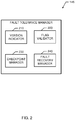
- FIG. 2 is a block diagram of an example fault manager 146.
- the fault manager 146 of FIG. 2 may be used to implement the fault manager 146 of FIG. 1 .
- the example fault manager 146 of FIG. 2 includes a version indicator 210, a flag validator 220, a checkpoint manager 230, and a fault recovery manager 240.
- fault tolerance of a partitioned RDD may be achieved using the version indicator 210 to update versions of the partitions 160 of the RDD data in the metadata store 170 of the shared memory 110 and the flag validator 220 to control the valid flag 162 based on the validity of the partitions 160 of the RDD.
- the version indicator 210 of FIG. 2 tracks the iterations of partitions 160 of an RDD processed by the respective process iterators 144. After each iteration, the version indicator 210 updates the version of the partition 160 of the RDD. For example, the version indicator 210 may implement a counter, which counts the number of iterations performed on a partition of the RDD by the respective process iterator 144. As such, the version may increase from an original version (e.g., version '0') up to version 'N', where N represents the number of iterations of the respective process iterator 144 processing the partition 160 of the RDD.
- version 210 may implement a counter, which counts the number of iterations performed on a partition of the RDD by the respective process iterator 144.
- the version may increase from an original version (e.g., version '0') up to version 'N', where N represents the number of iterations of the respective process iterator 144 processing the partition 160 of the RDD.
- the version indicator 210 updates the versions in the metadata store 170 of the shared memory 110. Accordingly, the version indicator 210 tracks and stores the number of processed iterations during execution of a partition 160 of the RDD data in the respective processing partitions 140. As such, the version indicator 210 enables the fault tolerance manager 146 to accurately co-relate an RDD to an off-heap stored partition 160 of the RDD data, given an identifier of the partition 160 and the version indicated.
- the example flag validator 220 tracks atomic RDD updates of partitions 160 of the RDD to ensure that an update from an old version of the RDD data partition 160 to a new version of the RDD data partition 160 is complete.
- the atomicity of the RDD updates is achieved using the valid flags 162.
- RDD data corruption may be detected during faults (or task failures) in the shared memory 110 using the valid flags 162 and further corrected during recovery.
- the flag validator 220 for each RDD iteration and update to a partition 160 of RDD data, may (1) set the valid flag 162 to invalid (e.g., 0 or false) (atomic operation), (2) track the write (or update) of the partition 160 of the RDD (during or after which the version indicator 210 may update the version of the partition 160 in the metadata store 170), and (3) after completion of the write, set the valid flag 162 for the partition 160 of the RDD to valid (e.g., 1 or true) (atomic operation).
- flush instructions e.g., CLFLUSH/PCOMMIT
- the valid flags 162 of the partitions ensure atomic updates to the partitions 160 of the RDD are achieved.
- the example checkpoint manager 230 of FIG. 2 may be used to bound lineage-based recomputation using checkpoints or a checkpoint persist (see FIG. 4 ).
- the checkpoint manager 230 and checkpoint persist may be used to prevent lineage-based recomputation during fault recovery from beginning at an original version of the partition 160 of the RDD, but rather to begin from a persisted, checkpoint version of the partition 160.
- a checkpoint persist may be used in addition to or alternative to the version field of the metadata store 170.
- the example checkpoint persist may include an RDD version identifier and corresponding addresses of the version of a partition 160 of the RDD.
- the partitions 160 may include multiple checkpoint versions of the RDD data.
- the metadata store 170, using a checkpoint persist in the off-heap memory 110 thus tracks the locations of the versions of partitions 160 of the RDD in the shared memory 110.
- the checkpoint manager 230 may allow for selective immutability of RDDs in the off-heap memory store 110.
- certain RDDs or partitions 160 of RDDs
- the example checkpoint persist may be implemented using a least recently used (LRU) cache in the shared memory 110 (see FIG. 4 ) that can be sized such that the depth of the cache governs the time-to-live for a materialized RDD. Accordingly, upon recovery from a fault, the metadata store 170 with checkpoint persist may be referred to in order to identify the most recently updated version of a particular partition 160 of the RDD in the shared memory 110.
- LRU least recently used
- the example fault recovery manager 240 of FIG. 2 handles recovery of RDD data after a fault in the shared memory system 100 of FIG. 1 .
- the fault recovery manager 240 utilizes the metadata store 170 and valid flags 162 in the partitions 160 to recover the RDD data.
- the fault recovery manager 240 may refer to the valid flags 162 to determine whether a fault occurred during an update to the respective partitions 160 of the RDD.
- the fault recovery manager 240 refers to a partition identifier corresponding to the partition 160 in the metadata store 170.
- the fault recovery manager 240 identifies the version of partition 160 stored in the metadata store 170 (which would be the version of the RDD at or near the time of the fault), and instructs the corresponding process iterator 144 to re-compute the RDD data to reach the version of the partition 160 indicated in the metadata store 170. For example, the fault recovery manager 240 may instruct the process iterators 144 to perform a number of iterations from the original version of the partition 160 of the RDD to a version of the partition 160 that corresponds to the version indicated in the metadata store 170.
- the fault recovery manager 240 may return control to the process iterators 144 (and/or process coordinator 130) to resume execution/processing of the partition 160.
- the fault recovery manager 240 may refer to the memory store 170 to identify a valid location of a most recent version of a particular partition 160 of an RDD. For example, for each partition 160, the recovery manager 240 may identify versions of the partition and corresponding addresses of the versions of the RDD that are storing most recent valid (as indicated by the valid flags 162) versions of the RDD. The fault recovery manager 240 then restores the version of the partition 160 of the RDD in the checkpoint persist.
- the recovery manager 240 may instruct the process iterators 144 and/or the process coordinator 130 to resume execution of the partition 160.
- the fault tolerance manager 146 of FIG. 2 utilizes the valid flags 162 and the metadata store 170 to ensure fault tolerance and recover RDD data from faults.
- the fault tolerance manager 146 may implement selective immutability using a checkpoint persist that preserves versions of partitions of the RDD data after each iteration in additional or separate addresses from previous versions of the respective partitions. Accordingly, the partitions 160 of an RDD in a shared memory (e.g., the off-heap memory store 110) may be recovered in the event of a fault.
- FIG. 2 While an example manner of implementing the fault tolerance manager 146 of FIG. 1 is illustrated in FIG. 2 , at least one of the elements, processes and/or devices illustrated in FIG. 2 may be combined, divided, rearranged, omitted, eliminated and/or implemented in any other way. Further, the version indicator 210, the flag validator 220, the checkpoint manager 230, and the fault recovery manager 240, and/or, more generally, the example fault tolerance manager 240 of FIG. 2 may be implemented by hardware and/or any combination of hardware and executable instructions (e.g., software and/or firmware).
- any of the version indicator 210, the flag validator 220, the checkpoint manager 230, and the fault recovery manager 240, and/or, more generally, the example fault tolerance manager 146 could be implemented by at least one of an analog or digital circuit, a logic circuit, a programmable processor, an application specific integrated circuit (ASIC), a programmable logic device (PLD) and/or a field programmable logic device (FPLD).
- ASIC application specific integrated circuit
- PLD programmable logic device
- FPLD field programmable logic device
- the example fault tolerance manager 146 is/are hereby expressly defined to include a tangible machine readable storage device or storage disk such as a memory, a digital versatile disk (DVD), a compact disk (CD), a Blu-ray disk, etc. storing the executable instructions.
- the example fault tolerance manager 146 of FIG. 2 may include at least one element, process, and/or device in addition to, or instead of, those illustrated in FIG. 2 , and/or may include more than one of any or all of the illustrated elements, processes and devices.
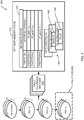
- FIG. 3 is a schematic diagram of an example off-heap memory fault tolerance system 300 that may be implemented in the data processing system 100 to recover from a fault in accordance with an aspect of this disclosure.
- iterations of partitions of RDD data are shown in a progression of versions from input data to RDD_V 0 , to RDD_V 1 , to RDD_V 2 .
- the fault tolerance managers 346 track the versions of the partitions 1-N and update the metadata store 370 of the off-heap memory store 310.
- a fault occurs while executing version RDD_V 2 of the RDD data.
- the fault recovery manager 240 Upon recovery from the fault while executing RDD_V 2 , the fault recovery manager 240 refers to the valid flags 362 of the partitions 360 and metadata store 370. In FIG. 3 , data partition 1 is valid and data partition 2 is invalid. Accordingly, the fault tolerance manager 146 recognizes that the partition 1 of the RDD is updated, however the partition 2 of the RDD is not correct. Accordingly, the fault tolerance manager 146 may instruct a process iterator 144 for partition 2 to perform a lineage-based recomputation of the RDD data in partition 2, from the input data, to RDD_V 0 , to RDD_V 1 (e.g., by instructing the process iterator to execute 2 iterations on the RDD data in partition 2).
- partitions 1 and 2 are then restored to the point of the fault and the process iterators 144 (and/or processing coordinator 130) may resume execution/processing of the partitions 1 and 2 of the RDD from the point at which the fault occurred.
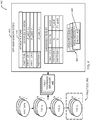
- FIG. 4 is an example schematic diagram of an off-heap memory fault tolerance system 400 that may be implemented in the data processing system 100 to recover from a fault using a checkpoint persist.
- iterations of partitions of RDD data are shown in a progression of versions from input data to RDD_V 0 , to RDD_V 1 , to RDD_V 2 .
- the fault tolerance managers 446 track the versions of the partitions and update the metadata store 470 of the off-heap memory store 410 to indicate an address of checkpoint versions of the partitions (e.g., RDD_V 0 of Partition 1 is located at address 'P_addr1', RDD_V 1 of Partition 1 is located at address 'P_addr2').
- a fault occurs while executing version RDD_V 2 of the RDD data.
- the fault recovery manager 240 Upon recovery from the fault while executing RDD_V 2 , the fault recovery manager 240 refers to metadata store 470 to determine if a version of the data partition of the RDD at the time of the fault is persisted in the off-heap memory 410. For example, the fault recovery manager 240 may check the partitions 460 for the RDD. As shown in FIG. 4 , the recovery manager 240 may determine that version RDD_V 1 of partition 1 has been persisted via the checkpoint persist and find that RDD_V 1 of partition 1 is located at address 'P_addr2'. Accordingly, the fault recovery manager 240 may restore partition 1, such that the process iterator 144 for partition 1 may resume execution of RDD_1. In FIG. 4 , atomic operations (e.g., similar to indicating the version and using the valid flags) are used for each checkpoint persist.
- atomic operations e.g., similar to indicating the version and using the valid flags
- FIGS. 5 , 6 , and 7 Flowcharts representative of example machine readable instructions for implementing the fault tolerance manager 146 of FIG. 2 are shown in FIGS. 5 , 6 , and 7 .
- the machine readable instructions comprise a program/process for execution by a processor such as the processor 812 shown in the example processor platform 800 discussed below in connection with FIGS. 5 , 6 , and 7 .
- the program/process may be embodied in executable instructions (e.g., software) stored on a tangible machine readable storage medium such as a CD-ROM, a floppy disk, a hard drive, a digital versatile disk (DVD), a Blu-ray disk, or a memory associated with the processor 812, but the entire program/process and/or parts thereof could alternatively be executed by a device other than the processor 812 and/or embodied in firmware or dedicated hardware.
- a tangible machine readable storage medium such as a CD-ROM, a floppy disk, a hard drive, a digital versatile disk (DVD), a Blu-ray disk, or a memory associated with the processor 812, but the entire program/process and/or parts thereof could alternatively be executed by a device other than the processor 812 and/or embodied in firmware or dedicated hardware.
- a device such as a CD-ROM, a floppy disk, a hard drive, a digital versatile disk (DVD), a Blu-ray disk, or
- the example process 500 of FIG. 5 begins with an initiation of the fault tolerance manager 146 (e.g., upon startup, upon instructions from a user, upon startup of a device implementing the fault tolerance manager 146 (e.g., a processing partition 140), etc.).
- the example process 500 may be executed to provide fault tolerance in a shared memory.
- the fault tolerance manager 146 tracks iterations of a process to update data distributed in a plurality of data partitions of a resilient distributed dataset.
- the version indicator 210 indicates an address of the data partition and a version of the data partition in a metadata store 170 of the shared memory 110.
- the flag validator 220 indicates that the respective data partitions are valid for recovery using valid flags.
- the example process ends. Following execution of the example process 500 of FIG. 5 (or several iterations of the example process 500 of FIG. 5 ), the fault recovery manager may recover the resilient distributed data in the shared memory 110 from a fault.
- the example process 600 of FIG. 6 begins with an initiation of the fault recovery manager 240.
- the example process 600 may be executed to recover from a fault in a shared memory system in accordance with examples herein.
- the fault recovery manager 240 identifies invalid partitions of the shared memory 110 storing a data partition of a resilient distributed dataset.
- the fault recovery manager 240 identifies a version of the corresponding data partition of the resilient distributed dataset at the time of the fault from the metadata store 170 in the shared memory 110.
- the fault recovery manager 240 recomputes the data of the partition to return the data to the version at the time of the fault. After block 630, the example process 600 ends.
- the example process 700 of FIG. 7 begins with an initiation of the fault recovery manager 240.
- the example process 700 may be executed to recover from a fault in a shared memory system using selective immutability and/or a checkpoint persist in accordance with examples herein.
- the fault recovery manager 240 identifies data partitions of an RDD in the shared memory 110.
- the fault recovery manager 240 identifies the version of the data partition of the RDD at the time of the fault from the metadata store 170 in the shared memory 110.
- the fault recovery manager 240 determines whether a version of the data partition of the RDD at the time of the fault is persisted (e.g., whether a checkpoint version is persisted). If a version of the data partition of the RDD is not persisted, control advances to block 750. If a version of the data partition of the RDD is persisted (block 730), then at block 740, the fault recovery manager 240 reads the data of the persisted partition from the shared memory location indicated by a checkpoint persist in the shared memory 110 to return the data partition to the version at the time of the fault. After block 740, the example process 700 ends. At block 750, the fault recover manager 240 performs a lineage-based recomputation of the partition of the data to return the partition of the RDD to the version indicated in the metadata store.
- FIGS. 5 , 6 , and/or 7 may be implemented using coded instructions (e.g., computer and/or machine readable instructions) stored on a tangible machine readable storage medium such as a hard disk drive, a flash memory, a read-only memory (ROM), a compact disk (CD), a digital versatile disk (DVD), a cache, a random-access memory (RAM) and/or any other storage device or storage disk in which information is stored for any duration (e.g., for extended time periods, permanently, for brief instances, for temporarily buffering, and/or for caching of the information).
- coded instructions e.g., computer and/or machine readable instructions
- a tangible machine readable storage medium such as a hard disk drive, a flash memory, a read-only memory (ROM), a compact disk (CD), a digital versatile disk (DVD), a cache, a random-access memory (RAM) and/or any other storage device or storage disk in which information is stored for any duration (e.g., for extended time periods
- tangible machine readable storage medium is expressly defined to include any type of machine readable storage device and/or storage disk and to exclude propagating signals and to exclude transmission media.
- computer readable storage medium and “machine readable storage medium” are used interchangeably. Additionally or alternatively, the example processes of FIGS.
- 5 , 6 , and/or 7 may be implemented using coded instructions (e.g., computer and/or machine readable instructions) stored on a non-transitory computer and/or machine readable medium such as a hard disk drive, a flash memory, a read-only memory, a compact disk, a digital versatile disk, a cache, a random-access memory and/or any other storage device or storage disk in which information is stored for any duration (e.g., for extended time periods, permanently, for brief instances, for temporarily buffering, and/or for caching of the information).
- a non-transitory machine readable medium is expressly defined to include any type of machine readable storage device and/or storage disk and to exclude propagating signals and to exclude transmission media.
- FIG. 8 is a block diagram of an example processor platform 800 capable of executing the instructions of FIGS. 5 , 6 , and/or 7 to implement the fault tolerance manager 146 of FIG. 2 .
- the example processor platform 800 may be or may be included in any type of apparatus, such as a server, a personal computer, or any other type of computing device.
- the processor platform 800 of the illustrated example of FIG. 8 includes a processor 812.
- the processor 812 of the illustrated example is hardware.
- the processor 812 can be implemented by at least one integrated circuit, logic circuit, microprocessor or controller from any desired family or manufacturer.
- the processor 812 of the illustrated example includes a local memory 813 (e.g., a cache).
- the processor 812 of the illustrated example is in communication with a main memory including a volatile memory 814 and a non-volatile memory 816 via a bus 818.
- the volatile memory 814 may be implemented by Synchronous Dynamic Random Access Memory (SDRAM), Dynamic Random Access Memory (DRAM), RAMBUS Dynamic Random Access Memory (RDRAM) and/or any other type of random access memory device.
- the non-volatile memory 816 may be implemented by flash memory, a persistent, byte-addressable memory accessible via a memory fabric and/or any other desired type of non-volatile memory device. Access to the main memory 814, 816 is controlled by a memory controller.
- the processor platform 800 of the illustrated example also includes an interface circuit 820.
- the interface circuit 820 may be implemented by any type of interface standard, such as an Ethernet interface, a universal serial bus (USB), and/or a peripheral component interconnect (PCI) express interface.
- At least one input device 822 is connected to the interface circuit 820.
- the input device(s) 822 permit(s) a user to enter data and commands into the processor 812.
- the input device(s) can be implemented by, for example, an audio sensor, a microphone, a camera (still or video), a keyboard, a button, a mouse, a touchscreen, a track-pad, a trackball, and/or a voice recognition system.
- At least one output device 824 is also connected to the interface circuit 820 of the illustrated example.
- the output device(s) 824 can be implemented, for example, by display devices (e.g., a light emitting diode (LED), an organic light emitting diode (OLED), a liquid crystal display, a cathode ray tube display (CRT), a touchscreen, a tactile output device, a light emitting diode (LED), a printer and/or speakers).
- the interface circuit 820 of the illustrated example thus, may include a graphics driver card, a graphics driver chip or a graphics driver processor.
- the interface circuit 820 of the illustrated example also includes a communication device such as a transmitter, a receiver, a transceiver, a modem and/or network interface card to facilitate exchange of data with external machines (e.g., computing devices of any kind) via a network 826 (e.g., an Ethernet connection, a digital subscriber line (DSL), a telephone line, coaxial cable, a cellular telephone system, etc.).
- a communication device such as a transmitter, a receiver, a transceiver, a modem and/or network interface card to facilitate exchange of data with external machines (e.g., computing devices of any kind) via a network 826 (e.g., an Ethernet connection, a digital subscriber line (DSL), a telephone line, coaxial cable, a cellular telephone system, etc.).
- DSL digital subscriber line
- the processor platform 800 of the illustrated example also includes at least one mass storage device 828 for storing executable instructions (e.g., software) and/or data.
- executable instructions e.g., software
- Examples of such mass storage device(s) 828 include floppy disk drives, hard drive disks, compact disk drives, Blu-ray disk drives, RAID systems, and digital versatile disk (DVD) drives.
- the coded instructions 832 of FIGS. 5 , 6 , and/or 7 may be stored in the mass storage device 828, in the local memory 813 in the volatile memory 814, in the non-volatile memory 816, and/or on a removable tangible machine readable storage medium such as a CD or DVD.
- a valid flag and metadata store that stores an address for data partitions of an RDD and versions of the data partitions of the RDD at that address may be used to recover from a fault and return the distributed data to a state at or near the time of the fault.
- a checkpoint persist may be used that persists versions of the partitions of the RDD in the shared memory. The checkpoint persist may indicate addresses in which versions of the partitions of the RDD may be located. Accordingly, these mechanisms may be used to achieve fault tolerance in a shared memory system.
- an apparatus comprises: a version indicator to indicate a version of a partition of a resilient distributed dataset in a metadata store of a shared memory, the partition of the resilient distributed dataset stored in a shared memory; a flag validator to set a valid flag to indicate whether the partition is valid or invalid based on write operations being performed on the partition; a checkpoint manager to persist checkpoint versions of partition of the resilient distributed dataset in the shared memory; and a fault recovery manager to use the versions, the valid flag, and the checkpoint versions to recover the resilient distributed dataset from a fault.
- the apparatus described herein may further comprise a process iterator to process the partition of the resilient distributed dataset.
- a non-transitory machine readable medium comprises instructions that, when executed, cause a machine to at least: upon recovery from a fault in a system comprising a shared memory, identify invalid partitions of the shared memory storing a data partition of a resilient distributed dataset, the invalid partitions indicated by a valid flag; for each invalid partition, identify a version of the corresponding data partition of the resilient distributed dataset at the time of the fault from a metadata store of the shared memory; and for each invalid partition, recompute the data partition of the invalid partition to return the data to the version of the data partition at the time of the fault.
- the data partition may be recomputed to return the data to the version at the time of the fault by performing a same number of iterations as indicated by the version.
- the persisted version may be located at a different address from an original version of the data partition of the resilient distributed data.
- a method to achieve fault tolerance in a shared memory comprises: tracking iterations of a process to update data, the data distributed in a plurality of data partitions of a resilient distributed dataset; for each partition of the resilient distributed dataset, in each iteration indicating an address of the data partition and a version of the data partition in a metadata store of the shared memory; and for each iteration, after writing the updated data for the respective data partitions, indicating that the respective data partitions are valid for recovery using valid flags.
- Subsequent versions of the data partition may be stored at checkpoint addresses different from the address.
- the method may further comprise updating the version in the metadata store in each subsequent iteration of processing the data partition.
Landscapes
- Engineering & Computer Science (AREA)
- Theoretical Computer Science (AREA)
- Physics & Mathematics (AREA)
- General Engineering & Computer Science (AREA)
- General Physics & Mathematics (AREA)
- Quality & Reliability (AREA)
- Human Computer Interaction (AREA)
- Computer Security & Cryptography (AREA)
- Retry When Errors Occur (AREA)
Abstract
Description
- Distributed data systems store objects across a plurality of data partitions of the distributed data systems. Accordingly, data associated with the objects is distributed among the plurality of partitions. Local processors of the data partitions may locally process the data of the corresponding partitions. The local updated data may then be recombined at a later stage to provide an updated object.
-
-
FIG. 1 illustrates a schematic diagram of an example data processing system including an off-heap memory store and fault tolerance managers implemented in accordance with examples herein. -
FIG. 2 a block diagram of an example fault tolerance manager that may be used to implement the fault tolerance managers ofFIG. 1 . -
FIG. 3 is a schematic diagram of an example off-heap memory fault tolerance system that may be implemented by the data processing system ofFIG. 1 . -
FIG. 4 is a schematic diagram of an another example off-heap memory fault tolerance system using a checkpoint persist that may be implemented by the data processing system ofFIG. 1 -
FIG. 5 is a flowchart representative of example machine readable instructions that may be executed to implement the fault tolerance manager ofFIG. 2 to ensure fault tolerance for a resilient distributed dataset in a shared memory in accordance with examples herein. -
FIG. 6 is a flowchart representative of example machine readable instructions that may be executed to implement the fault tolerance manager ofFIG. 2 to recover from a fault in accordance with examples herein. -
FIG. 6 is a flowchart representative of example machine readable instructions that may be executed to implement the fault tolerance manager ofFIG. 2 to recover from a fault using a checkpoint persist in accordance with examples herein. -
FIG. 8 is a block diagram of an example processor platform capable of executing the instructions ofFIGS. 5 ,6 , and/or 7 to implement the fault tolerance manager ofFIG. 2 . - Wherever possible, the same reference numbers will be used throughout the drawing(s) and accompanying written description to refer to the same or like parts.
- Examples disclosed herein involve fault tolerance in a shared memory or off-heap memory store of a distributed data processing system. The example off-heap memory store uses a shared memory fabric to store partitions of a resilient distributed dataset (RDD). In examples herein, fault tolerance is achieved using versioned, partitioned, atomic RDDs over the shared memory, valid flags for the partitions, and lineage-based recomputation. In some examples, checkpoints may be implemented to lessen an impact of lineage-based recomputation.
- Running large-scale iterative, memory intensive workloads via data processing engines in many previous technologies involves many inefficiencies. For example, RDDs may be immutable and used to store data updated in each iteration, thus involving multiple instances of cached RDDs and corresponding increase in memory consumption. Additionally, many systems involve non-deterministic garbage collection such that unreferenced RDDs continue to reside in heap memory until next garbage collection invocation, further increasing memory consumption. Furthermore, limited heap memory results in inefficient RDD cache eviction policy that causes eviction of cached RDD partitions that may need to be recomputed to return to a previous state in order to advance to a subsequent iteration. Accordingly, an off-heap memory store may be utilized for the RDDs creating an application managed memory representation of the RDDs. However, immutable RDDs result in lineage based data computations being possible but at the cost of unique object allocation of an RDD. Examples herein describe fault tolerance mechanisms that work in conjunction with off-heap memory store (or shared memory) RDD representation to mitigate large, bulk updates to data partitions and long lineage graphs (immutable data accumulation).
- Examples herein provide extended off-heap memory store structures (e.g., in a shared memory) that enable mutable RDDs while supporting lineage-based fault recovery. In some examples, off-heap memory store checkpoints may be used to allow memory copy based lightweight checkpoints and provide re-computation bounds for lineage based recovery. In some examples, selective immutability of RDDs may be used via a persist/unpersist support in an off-heap least recently used (LRU) caching store.
- Examples disclosed herein achieve fault tolerance in a shared memory system by tracking iterations of a process to update data partitions of an RDD, the data distributed among a plurality of partitions of a shared memory as a resilient distributed dataset. Further, for each partition of the RDD, examples involve, for each iteration, indicating an address of the partition and a version of the data in a metadata store of the shared memory and for each iteration, after writing the updated data to the respective partitions, indicating that the respective data partitions of the RDD are valid for recovery using valid flags. Examples disclosed herein enable recovery from a fault in a shared memory system, such that, upon recovery from a fault in a system comprising a shared memory, identifying invalid partitions of the shared memory storing data of a resilient distributed dataset, the invalid partitions indicated by a valid flag. Furthermore, for each invalid partition, examples involve identifying a version of the data partition of the resilient distributed dataset of the invalid partition at the time of the fault from a metadata store of the shared memory, and, for each partition, recomputing the data partition to return the data to the version at the time of the fault.
-
FIG. 1 is a schematic diagram of an example data processing system 100 (e.g., a distributed data processing system) including an off-heap memory store 110 implemented in accordance with examples herein. The exampledata processing system 100 includes the off-heap memory store 110 (which may be referred to interchangeably herein as shared memory 110) in communication with adata processing engine 120. The example off-heap memory store 110 is implemented by a shared memory (e.g., a dynamic random access memory (DRAM), a non-volatile memory (NVM)) that is accessible by a plurality of processing nodes of thedata processing engine 120. The exampledata processing engine 120 may be implemented by any heap processing engine (e.g. a data flow engine including a plurality of processing nodes). In examples herein, thedata processing engine 120 may create (e.g., from a shared memory of the data processing system 100) and use the off-heap memory store 110 as a cache mechanism in accordance with examples herein. Thedata processing engine 120 may communicate with the off-heap memory store 110 via a high-speed interconnect that enables direct memory access to shared memory regions of the off-heap memory store. - The example
data processing engine 120 ofFIG. 1 may be a distributed data processing engine that includes aprocessing coordinator 130 and a plurality of processing partitions 140 (which may be collectively referred to herein as the processing partitions 140). The example processing partitions 140 (labelledPartition 1,Partition 2, ... Partition N, where N is a number ofprocessing partitions 140 of the data processing engine 120) of thedata processing engine 120 includelocal data 142, aprocess iterator 144, and afault tolerance manager 146. The examplelocal data 142 may include a partition of an RDD (e.g., a graph) to for processing. Theprocess iterator 144 is a processing node (e.g., a task thread scheduled by an operating system OS) of thedata processing engine 120. Theexample process iterator 144 may be executed or perform operations on the partition of RDD in the local data 142 (which may be forward to acorresponding partition 160 in the shared memory 110). The examplefault tolerance manager 146 manages fault tolerance such that the partitioned RDD may be recovered in the event of a fault in accordance with examples herein. Thefault tolerance manager 146 uses mechanisms in the off-heap memory store 110 as described below to provide fault tolerance of the partitioned RDD. - In examples herein, the
processing coordinator 130 of thedata processing engine 120 may coordinate data processing (e.g., data shuffling, graph processing, etc.) of the RDD partitions and use of the off-heap memory store 110. Theprocessing coordinator 130 ofFIG. 1 may serve as a master processor of theprocessing partitions 140. - The example off-
heap memory store 110 ofFIG. 1 includespartitions 160 of RDD data (labelledData Partition 1,Data Partition 2, ... Data Partition N, where N is a number ofpartitions 160 of the data processing engine 120) in accordance with examples herein. InFIG. 1 , each of thepartitions 160 of RDD corresponds to (e.g., is owned by, is controlled by, etc.) one of theprocessing partitions 140 that locally processes the RDD data (e.g., aslocal data 142. For example, Data Partition 1 may be owned or operated on by theprocess iterator 144 ofProcessing Partition 1, Data Partition 2 may be owned by theprocess iterator 144 ofProcessing Partition 2, etc.. Each of thepartitions 160 includes avalid flag 162, which may be used to indicate whether the data partition is valid (e.g., that the data partition is fully or completely updated/accurate). Thepartitions 160 are valid before write operation is started or after a write operation is complete and invalid during a write operation. The examplevalid flag 162 may be a binary indicator that indicates whether thedata partitions 160 are valid or invalid (e.g., 1 = valid, 0 = invalid or true = valid, false = invalid). Theexample fault manager 146 uses thevalid flag 162 to ensure atomic RDD updates to thepartitions 160 in the off-heap memory 110. - The example off-
heap memory store 110 further includes ametadata store 170. Theexample fault manager 146 may use themetadata store 170 to ensure fault tolerance while theprocessing partitions 140 process thepartitions 160 of the RDD. Theexample metadata store 170 may be an index, table, or any other suitable data structure. Theexample metadata store 170tracks partitions 160 of the RDD and addresses of the partitions 160 (labelled ADDRESS) and corresponding versions (labelled VERSIONS) of thepartitions 160 of the RDD at those addresses during processing of the RDD. For example, the version may be updated after each iteration of processing the RDD (e.g., after each iteration of loop of a process). In examples herein, the address field may include multiple addresses for aparticular partition 160 of the RDD. Accordingly, multiple versions corresponding to the multiple locations of thepartition 160 of the RDD may be indicated in themetadata store 170. Theexample metadata store 170 may be populated when input data including an RDD is loaded into the sharedmemory 110. In some examples, there may bemultiple memory stores 170 for each RDD stored in the sharedmemory 110 and processed in theprocessing partitions 140. Accordingly, thefault manager 146 may refer to the metadata store to maintain fault tolerance and to recover an RDD after thesystem 100 experiences a fault. For example, themetadata store 170 may be returned as the RDD, at which point the process iterators 144 may re-execute the RDD input data from an original version to the versions indicated in the respective partitions of themetadata store 170. In some examples, the off-heap memory store may include a checkpoint persist (seeFIG. 4 ), such that a checkpoint may be used to lessen the cost of lineage-based recomputation. In other words, a checkpoint persist may store the state of the RDD at a particular version to prevent lineage-based re-computing from beginning at an original version of the RDD. An example checkpoint persist may be implemented by an index, table, or any other suitable data structure. - In examples herein, the process iterators 144 of the
processing partitions 140, considered owners/controllers (i.e., have write access capabilities) of the correspondingpartitions 160, process thepartitions 160 of the RDD via thelocal data 142. Accordingly, the process iterators 144 process through execution of itsrespective partition 160 of the RDD and update the version of thepartition 160 in themetadata store 170. The process iterators 144 may refer to themetadata store 170 to identify addresses or locations for aparticular partition 160 of the RDD to perform updates in-place. Accordingly, old versions of the RDD data in apartition 160 may be overwritten by theprocess iterator 144 with the new version of the RDD data of thepartition 160, such that the new version of thepartition 160 of the RDD is written in a same address as an old version of thesame partition 160 of the RDD. In some examples, for a version, address tuple in thememory store 170 that points to an address of a previous version, the address of the previous version may be reused by removing the old version, address tuple in thememory store 170 with a new version, address tuple pointing to the same address. - Furthermore, in examples herein, the
processing partitions 140 ofFIG. 1 may be located on a machine node that is attached to the same memory fabric as the off-heap memory store 110 (and thus the partitions 160). Accordingly, a difference between memory regions storing theprocessing partitions 140 and the memory regions storing the partitions 160 (i.e., the off-heap memory store 110), may be that the memory storing theprocessing partitions 140 is a non-shared memory while the memory storing thepartitions 160 is a shared memory. -
FIG. 2 is a block diagram of anexample fault manager 146. Thefault manager 146 ofFIG. 2 may be used to implement thefault manager 146 ofFIG. 1 . Theexample fault manager 146 ofFIG. 2 includes aversion indicator 210, aflag validator 220, acheckpoint manager 230, and afault recovery manager 240. In examples herein, fault tolerance of a partitioned RDD may be achieved using theversion indicator 210 to update versions of thepartitions 160 of the RDD data in themetadata store 170 of the sharedmemory 110 and theflag validator 220 to control thevalid flag 162 based on the validity of thepartitions 160 of the RDD. - The
version indicator 210 ofFIG. 2 tracks the iterations ofpartitions 160 of an RDD processed by therespective process iterators 144. After each iteration, theversion indicator 210 updates the version of thepartition 160 of the RDD. For example, theversion indicator 210 may implement a counter, which counts the number of iterations performed on a partition of the RDD by therespective process iterator 144. As such, the version may increase from an original version (e.g., version '0') up to version 'N', where N represents the number of iterations of therespective process iterator 144 processing thepartition 160 of the RDD. After or during each iteration or update to thepartitions 160 of the RDD data, theversion indicator 210 updates the versions in themetadata store 170 of the sharedmemory 110. Accordingly, theversion indicator 210 tracks and stores the number of processed iterations during execution of apartition 160 of the RDD data in therespective processing partitions 140. As such, theversion indicator 210 enables thefault tolerance manager 146 to accurately co-relate an RDD to an off-heap storedpartition 160 of the RDD data, given an identifier of thepartition 160 and the version indicated. - The example flag validator 220 tracks atomic RDD updates of
partitions 160 of the RDD to ensure that an update from an old version of theRDD data partition 160 to a new version of theRDD data partition 160 is complete. The atomicity of the RDD updates is achieved using thevalid flags 162. As apartition 160 of an RDD may be updated in-place, RDD data corruption may be detected during faults (or task failures) in the sharedmemory 110 using thevalid flags 162 and further corrected during recovery. For example, theflag validator 220, for each RDD iteration and update to apartition 160 of RDD data, may (1) set thevalid flag 162 to invalid (e.g., 0 or false) (atomic operation), (2) track the write (or update) of thepartition 160 of the RDD (during or after which theversion indicator 210 may update the version of thepartition 160 in the metadata store 170), and (3) after completion of the write, set thevalid flag 162 for thepartition 160 of the RDD to valid (e.g., 1 or true) (atomic operation). In some examples, to push the data down to the sharedmemory 110 from the processing partitions (e.g., volatile memory or cache), flush instructions (e.g., CLFLUSH/PCOMMIT) may be used at each of the above steps. Accordingly, thevalid flags 162 of the partitions ensure atomic updates to thepartitions 160 of the RDD are achieved. - The
example checkpoint manager 230 ofFIG. 2 may be used to bound lineage-based recomputation using checkpoints or a checkpoint persist (seeFIG. 4 ). In examples herein, thecheckpoint manager 230 and checkpoint persist may be used to prevent lineage-based recomputation during fault recovery from beginning at an original version of thepartition 160 of the RDD, but rather to begin from a persisted, checkpoint version of thepartition 160. For example, a checkpoint persist may be used in addition to or alternative to the version field of themetadata store 170. The example checkpoint persist may include an RDD version identifier and corresponding addresses of the version of apartition 160 of the RDD. Accordingly, thepartitions 160 may include multiple checkpoint versions of the RDD data. Themetadata store 170, using a checkpoint persist in the off-heap memory 110, thus tracks the locations of the versions ofpartitions 160 of the RDD in the sharedmemory 110. - In examples herein, the
checkpoint manager 230 may allow for selective immutability of RDDs in the off-heap memory store 110. For example, certain RDDs (orpartitions 160 of RDDs) may be tagged to use a checkpoint, and thus may not necessarily have in-place updates as described above. The example checkpoint persist may be implemented using a least recently used (LRU) cache in the shared memory 110 (seeFIG. 4 ) that can be sized such that the depth of the cache governs the time-to-live for a materialized RDD. Accordingly, upon recovery from a fault, themetadata store 170 with checkpoint persist may be referred to in order to identify the most recently updated version of aparticular partition 160 of the RDD in the sharedmemory 110. - The example
fault recovery manager 240 ofFIG. 2 handles recovery of RDD data after a fault in the sharedmemory system 100 ofFIG. 1 . Upon recovery from a fault (e.g., a task failure, power failure, unexpected shutdown, etc.), thefault recovery manager 240 utilizes themetadata store 170 andvalid flags 162 in thepartitions 160 to recover the RDD data. For example, thefault recovery manager 240 may refer to thevalid flags 162 to determine whether a fault occurred during an update to therespective partitions 160 of the RDD. For each of thepartitions 160 that have invalid data as indicated by thevalid flags 162, thefault recovery manager 240 refers to a partition identifier corresponding to thepartition 160 in themetadata store 170. Thefault recovery manager 240 identifies the version ofpartition 160 stored in the metadata store 170 (which would be the version of the RDD at or near the time of the fault), and instructs the correspondingprocess iterator 144 to re-compute the RDD data to reach the version of thepartition 160 indicated in themetadata store 170. For example, thefault recovery manager 240 may instruct the process iterators 144 to perform a number of iterations from the original version of thepartition 160 of the RDD to a version of thepartition 160 that corresponds to the version indicated in themetadata store 170. After theprocess iterators 144 re-compute thepartition 160 of the RDD to the version indicated the in themetadata store 170, thefault recovery manager 240 may return control to the process iterators 144 (and/or process coordinator 130) to resume execution/processing of thepartition 160. - In examples herein in which a checkpoint persist is used, the
fault recovery manager 240 may refer to thememory store 170 to identify a valid location of a most recent version of aparticular partition 160 of an RDD. For example, for eachpartition 160, therecovery manager 240 may identify versions of the partition and corresponding addresses of the versions of the RDD that are storing most recent valid (as indicated by the valid flags 162) versions of the RDD. Thefault recovery manager 240 then restores the version of thepartition 160 of the RDD in the checkpoint persist. After the most recent valid version of apartition 160 is restored (e.g., to theprocessing partitions 140 and/or a designatedpartition 160 for the RDD data), therecovery manager 240 may instruct the process iterators 144 and/or theprocess coordinator 130 to resume execution of thepartition 160. - Accordingly, the
fault tolerance manager 146 ofFIG. 2 utilizes thevalid flags 162 and themetadata store 170 to ensure fault tolerance and recover RDD data from faults. In some examples, thefault tolerance manager 146 may implement selective immutability using a checkpoint persist that preserves versions of partitions of the RDD data after each iteration in additional or separate addresses from previous versions of the respective partitions. Accordingly, thepartitions 160 of an RDD in a shared memory (e.g., the off-heap memory store 110) may be recovered in the event of a fault. - While an example manner of implementing the
fault tolerance manager 146 ofFIG. 1 is illustrated inFIG. 2 , at least one of the elements, processes and/or devices illustrated inFIG. 2 may be combined, divided, rearranged, omitted, eliminated and/or implemented in any other way. Further, theversion indicator 210, theflag validator 220, thecheckpoint manager 230, and thefault recovery manager 240, and/or, more generally, the examplefault tolerance manager 240 ofFIG. 2 may be implemented by hardware and/or any combination of hardware and executable instructions (e.g., software and/or firmware). Thus, for example, any of theversion indicator 210, theflag validator 220, thecheckpoint manager 230, and thefault recovery manager 240, and/or, more generally, the examplefault tolerance manager 146 could be implemented by at least one of an analog or digital circuit, a logic circuit, a programmable processor, an application specific integrated circuit (ASIC), a programmable logic device (PLD) and/or a field programmable logic device (FPLD). When reading any of the apparatus or system claims of this patent to cover a purely software and/or firmware implementation, at least one of theversion indicator 210, theflag validator 220, thecheckpoint manager 230, and thefault recovery manager 240, and/or, more generally, the examplefault tolerance manager 146 is/are hereby expressly defined to include a tangible machine readable storage device or storage disk such as a memory, a digital versatile disk (DVD), a compact disk (CD), a Blu-ray disk, etc. storing the executable instructions. Further still, the examplefault tolerance manager 146 ofFIG. 2 may include at least one element, process, and/or device in addition to, or instead of, those illustrated inFIG. 2 , and/or may include more than one of any or all of the illustrated elements, processes and devices. -
FIG. 3 is a schematic diagram of an example off-heap memoryfault tolerance system 300 that may be implemented in thedata processing system 100 to recover from a fault in accordance with an aspect of this disclosure. In the example ofFIG. 3 , iterations of partitions of RDD data are shown in a progression of versions from input data to RDD_V0, to RDD_V1, to RDD_V2. As shown, thefault tolerance managers 346 track the versions of the partitions 1-N and update themetadata store 370 of the off-heap memory store 310. In the example ofFIG. 3 , a fault occurs while executing version RDD_V2 of the RDD data. - Upon recovery from the fault while executing RDD_V2, the
fault recovery manager 240 refers to thevalid flags 362 of thepartitions 360 andmetadata store 370. InFIG. 3 ,data partition 1 is valid anddata partition 2 is invalid. Accordingly, thefault tolerance manager 146 recognizes that thepartition 1 of the RDD is updated, however thepartition 2 of the RDD is not correct. Accordingly, thefault tolerance manager 146 may instruct aprocess iterator 144 forpartition 2 to perform a lineage-based recomputation of the RDD data inpartition 2, from the input data, to RDD_V0, to RDD_V1 (e.g., by instructing the process iterator to execute 2 iterations on the RDD data in partition 2). After theprocess iterator 144recomputes partition 2 toversion 1,partitions partitions -
FIG. 4 is an example schematic diagram of an off-heap memoryfault tolerance system 400 that may be implemented in thedata processing system 100 to recover from a fault using a checkpoint persist. In the example ofFIG. 4 , iterations of partitions of RDD data are shown in a progression of versions from input data to RDD_V0, to RDD_V1, to RDD_V2. As shown, thefault tolerance managers 446 track the versions of the partitions and update themetadata store 470 of the off-heap memory store 410 to indicate an address of checkpoint versions of the partitions (e.g., RDD_V0 ofPartition 1 is located at address 'P_addr1', RDD_V1 ofPartition 1 is located at address 'P_addr2'). In the example ofFIG. 4 , a fault occurs while executing version RDD_V2 of the RDD data. - Upon recovery from the fault while executing RDD_V2, the
fault recovery manager 240 refers tometadata store 470 to determine if a version of the data partition of the RDD at the time of the fault is persisted in the off-heap memory 410. For example, thefault recovery manager 240 may check thepartitions 460 for the RDD. As shown inFIG. 4 , therecovery manager 240 may determine that version RDD_V1 ofpartition 1 has been persisted via the checkpoint persist and find that RDD_V1 ofpartition 1 is located at address 'P_addr2'. Accordingly, thefault recovery manager 240 may restorepartition 1, such that theprocess iterator 144 forpartition 1 may resume execution of RDD_1. InFIG. 4 , atomic operations (e.g., similar to indicating the version and using the valid flags) are used for each checkpoint persist. - Flowcharts representative of example machine readable instructions for implementing the
fault tolerance manager 146 ofFIG. 2 are shown inFIGS. 5 ,6 , and7 . In this example, the machine readable instructions comprise a program/process for execution by a processor such as theprocessor 812 shown in theexample processor platform 800 discussed below in connection withFIGS. 5 ,6 , and7 . The program/process may be embodied in executable instructions (e.g., software) stored on a tangible machine readable storage medium such as a CD-ROM, a floppy disk, a hard drive, a digital versatile disk (DVD), a Blu-ray disk, or a memory associated with theprocessor 812, but the entire program/process and/or parts thereof could alternatively be executed by a device other than theprocessor 812 and/or embodied in firmware or dedicated hardware. Further, although the example program is described with reference to the flowchart illustrated inFIGS. 5 ,6 , and7 , many other methods of implementing the examplefault tolerance manager 146 may alternatively be used. For example, the order of execution of the blocks may be changed, and/or some of the blocks described may be changed, eliminated, or combined. - The
example process 500 ofFIG. 5 begins with an initiation of the fault tolerance manager 146 (e.g., upon startup, upon instructions from a user, upon startup of a device implementing the fault tolerance manager 146 (e.g., a processing partition 140), etc.). Theexample process 500 may be executed to provide fault tolerance in a shared memory. Atblock 510, thefault tolerance manager 146 tracks iterations of a process to update data distributed in a plurality of data partitions of a resilient distributed dataset. Atblock 520, for each partition of the resilient distributed dataset, in each iteration theversion indicator 210 indicates an address of the data partition and a version of the data partition in ametadata store 170 of the sharedmemory 110. Atblock 530, for each iteration, after writing the updated data for the respective data partitions, theflag validator 220 indicates that the respective data partitions are valid for recovery using valid flags. Afterblock 530, the example process ends. Following execution of theexample process 500 ofFIG. 5 (or several iterations of theexample process 500 ofFIG. 5 ), the fault recovery manager may recover the resilient distributed data in the sharedmemory 110 from a fault. - The
example process 600 ofFIG. 6 begins with an initiation of thefault recovery manager 240. Theexample process 600 may be executed to recover from a fault in a shared memory system in accordance with examples herein. Atblock 610, upon recovery from a fault in asystem 100 including a sharedmemory 110, thefault recovery manager 240 identifies invalid partitions of the sharedmemory 110 storing a data partition of a resilient distributed dataset. Atblock 620, for each invalid partition, thefault recovery manager 240 identifies a version of the corresponding data partition of the resilient distributed dataset at the time of the fault from themetadata store 170 in the sharedmemory 110. Atblock 630, for each partition, thefault recovery manager 240 recomputes the data of the partition to return the data to the version at the time of the fault. Afterblock 630, theexample process 600 ends. - The
example process 700 ofFIG. 7 begins with an initiation of thefault recovery manager 240. Theexample process 700 may be executed to recover from a fault in a shared memory system using selective immutability and/or a checkpoint persist in accordance with examples herein. Atblock 710, upon recovery from a fault in asystem 100 including a sharedmemory 110, thefault recovery manager 240 identifies data partitions of an RDD in the sharedmemory 110. Atblock 720, for each partition, thefault recovery manager 240 identifies the version of the data partition of the RDD at the time of the fault from themetadata store 170 in the sharedmemory 110. - At
block 730, thefault recovery manager 240 determines whether a version of the data partition of the RDD at the time of the fault is persisted (e.g., whether a checkpoint version is persisted). If a version of the data partition of the RDD is not persisted, control advances to block 750. If a version of the data partition of the RDD is persisted (block 730), then atblock 740, thefault recovery manager 240 reads the data of the persisted partition from the shared memory location indicated by a checkpoint persist in the sharedmemory 110 to return the data partition to the version at the time of the fault. Afterblock 740, theexample process 700 ends. Atblock 750, the fault recovermanager 240 performs a lineage-based recomputation of the partition of the data to return the partition of the RDD to the version indicated in the metadata store. - As mentioned above, the example processes of
FIGS. 5 ,6 , and/or 7 may be implemented using coded instructions (e.g., computer and/or machine readable instructions) stored on a tangible machine readable storage medium such as a hard disk drive, a flash memory, a read-only memory (ROM), a compact disk (CD), a digital versatile disk (DVD), a cache, a random-access memory (RAM) and/or any other storage device or storage disk in which information is stored for any duration (e.g., for extended time periods, permanently, for brief instances, for temporarily buffering, and/or for caching of the information). As used herein, the term tangible machine readable storage medium is expressly defined to include any type of machine readable storage device and/or storage disk and to exclude propagating signals and to exclude transmission media. As used herein, "computer readable storage medium" and "machine readable storage medium" are used interchangeably. Additionally or alternatively, the example processes ofFIGS. 5 ,6 , and/or 7 may be implemented using coded instructions (e.g., computer and/or machine readable instructions) stored on a non-transitory computer and/or machine readable medium such as a hard disk drive, a flash memory, a read-only memory, a compact disk, a digital versatile disk, a cache, a random-access memory and/or any other storage device or storage disk in which information is stored for any duration (e.g., for extended time periods, permanently, for brief instances, for temporarily buffering, and/or for caching of the information). As used herein, the term non-transitory machine readable medium is expressly defined to include any type of machine readable storage device and/or storage disk and to exclude propagating signals and to exclude transmission media. - As used herein, when the phrase "at least" is used as the transition term in a preamble of a claim, it is open-ended in the same manner as the term "comprising" is open ended. As used herein the term "a" or "an" may mean "at least one," and therefore, "a" or "an" do not necessarily limit a particular element to a single element when used to describe the element. As used herein, when the term "or" is used in a series, it is not, unless otherwise indicated, considered an "exclusive or."
-
FIG. 8 is a block diagram of anexample processor platform 800 capable of executing the instructions ofFIGS. 5 ,6 , and/or 7 to implement thefault tolerance manager 146 ofFIG. 2 . Theexample processor platform 800 may be or may be included in any type of apparatus, such as a server, a personal computer, or any other type of computing device. - The
processor platform 800 of the illustrated example ofFIG. 8 includes aprocessor 812. Theprocessor 812 of the illustrated example is hardware. For example, theprocessor 812 can be implemented by at least one integrated circuit, logic circuit, microprocessor or controller from any desired family or manufacturer. - The
processor 812 of the illustrated example includes a local memory 813 (e.g., a cache). Theprocessor 812 of the illustrated example is in communication with a main memory including a volatile memory 814 and anon-volatile memory 816 via abus 818. The volatile memory 814 may be implemented by Synchronous Dynamic Random Access Memory (SDRAM), Dynamic Random Access Memory (DRAM), RAMBUS Dynamic Random Access Memory (RDRAM) and/or any other type of random access memory device. Thenon-volatile memory 816 may be implemented by flash memory, a persistent, byte-addressable memory accessible via a memory fabric and/or any other desired type of non-volatile memory device. Access to themain memory 814, 816 is controlled by a memory controller. - The
processor platform 800 of the illustrated example also includes aninterface circuit 820. Theinterface circuit 820 may be implemented by any type of interface standard, such as an Ethernet interface, a universal serial bus (USB), and/or a peripheral component interconnect (PCI) express interface. - In the illustrated example, at least one
input device 822 is connected to theinterface circuit 820. The input device(s) 822 permit(s) a user to enter data and commands into theprocessor 812. The input device(s) can be implemented by, for example, an audio sensor, a microphone, a camera (still or video), a keyboard, a button, a mouse, a touchscreen, a track-pad, a trackball, and/or a voice recognition system. - At least one
output device 824 is also connected to theinterface circuit 820 of the illustrated example. The output device(s) 824 can be implemented, for example, by display devices (e.g., a light emitting diode (LED), an organic light emitting diode (OLED), a liquid crystal display, a cathode ray tube display (CRT), a touchscreen, a tactile output device, a light emitting diode (LED), a printer and/or speakers). Theinterface circuit 820 of the illustrated example, thus, may include a graphics driver card, a graphics driver chip or a graphics driver processor. - The
interface circuit 820 of the illustrated example also includes a communication device such as a transmitter, a receiver, a transceiver, a modem and/or network interface card to facilitate exchange of data with external machines (e.g., computing devices of any kind) via a network 826 (e.g., an Ethernet connection, a digital subscriber line (DSL), a telephone line, coaxial cable, a cellular telephone system, etc.). - The
processor platform 800 of the illustrated example also includes at least onemass storage device 828 for storing executable instructions (e.g., software) and/or data. Examples of such mass storage device(s) 828 include floppy disk drives, hard drive disks, compact disk drives, Blu-ray disk drives, RAID systems, and digital versatile disk (DVD) drives. - The coded
instructions 832 ofFIGS. 5 ,6 , and/or 7 may be stored in themass storage device 828, in the local memory 813 in the volatile memory 814, in thenon-volatile memory 816, and/or on a removable tangible machine readable storage medium such as a CD or DVD. - From the foregoing, it will be appreciated that the above disclosed methods, apparatus and articles of manufacture provide fault tolerance in a shared memory. In examples herein, a valid flag and metadata store that stores an address for data partitions of an RDD and versions of the data partitions of the RDD at that address may be used to recover from a fault and return the distributed data to a state at or near the time of the fault. In some examples, a checkpoint persist may be used that persists versions of the partitions of the RDD in the shared memory. The checkpoint persist may indicate addresses in which versions of the partitions of the RDD may be located. Accordingly, these mechanisms may be used to achieve fault tolerance in a shared memory system.
- In one example, an apparatus comprises: a version indicator to indicate a version of a partition of a resilient distributed dataset in a metadata store of a shared memory, the partition of the resilient distributed dataset stored in a shared memory; a flag validator to set a valid flag to indicate whether the partition is valid or invalid based on write operations being performed on the partition; a checkpoint manager to persist checkpoint versions of partition of the resilient distributed dataset in the shared memory; and a fault recovery manager to use the versions, the valid flag, and the checkpoint versions to recover the resilient distributed dataset from a fault.
- In addition to the version indicator, flag indicator, checkpoint manager and fault recovery manager, the apparatus described herein may further comprise a process iterator to process the partition of the resilient distributed dataset.
- In one example, a non-transitory machine readable medium comprises instructions that, when executed, cause a machine to at least: upon recovery from a fault in a system comprising a shared memory, identify invalid partitions of the shared memory storing a data partition of a resilient distributed dataset, the invalid partitions indicated by a valid flag; for each invalid partition, identify a version of the corresponding data partition of the resilient distributed dataset at the time of the fault from a metadata store of the shared memory; and for each invalid partition, recompute the data partition of the invalid partition to return the data to the version of the data partition at the time of the fault.
- The data partition may be recomputed to return the data to the version at the time of the fault by performing a same number of iterations as indicated by the version.
- The persisted version may be located at a different address from an original version of the data partition of the resilient distributed data.
- In one example, a method to achieve fault tolerance in a shared memory, comprises: tracking iterations of a process to update data, the data distributed in a plurality of data partitions of a resilient distributed dataset; for each partition of the resilient distributed dataset, in each iteration indicating an address of the data partition and a version of the data partition in a metadata store of the shared memory; and for each iteration, after writing the updated data for the respective data partitions, indicating that the respective data partitions are valid for recovery using valid flags.
- Subsequent versions of the data partition may be stored at checkpoint addresses different from the address. The method may further comprise updating the version in the metadata store in each subsequent iteration of processing the data partition.
- Although certain example methods, apparatus and articles of manufacture have been disclosed herein, the scope of coverage of this patent is not limited thereto. On the contrary, this patent covers all methods, apparatus and articles of manufacture fairly falling within the scope of the claims of this patent.
Claims (15)
- An apparatus comprising:a version indicator to indicate a version of a partition of a resilient distributed dataset in a metadata store of a shared memory, the partition of the resilient distributed dataset stored in a shared memory;a flag validator to set a valid flag to indicate whether the partition is valid or invalid based on write operations being performed on the partition;a checkpoint manager to persist checkpoint versions of partition of the resilient distributed dataset in the shared memory; anda fault recovery manager to use the versions, the valid flag, and the checkpoint versions to recover the resilient distributed dataset from a fault.
- The apparatus of claim 1, wherein the version indicator is to update the version for the partition of the resilient distributed dataset after each iteration of processing the partition of the resilient distributed dataset.
- The apparatus of claim 1, wherein the flag validator is to set the valid flag to invalid prior to processing an iteration of the partition of the resilient distributed dataset and set the valid flag to valid after completion of the iteration.
- The apparatus of claim 1, wherein the checkpoint manager is configured to identify a tag on the resilient distributed dataset indicating that the versions of the partition of the resilient distributed dataset are to be persisted.
- The apparatus of claim 1, wherein the checkpoint manager is to update a checkpoint persist to indicate locations of versions of the partition of the resilient distributed dataset in the shared memory.
- The apparatus of claim 1, wherein the fault recovery manager, upon recovery from a fault, is to:identify invalid partitions of the shared memory;identify invalid versions of the partitions of the resilient distributed dataset at the time of the fault from the metadata store; andrecompute the partitions of the resilient redistributed dataset based on the versions indicated in the metadata store.
- The apparatus of claim 1, further comprising a process iterator to update the partition of the resilient distributed dataset in-place by writing an updated version of the partition of the resilient distributed data set in an address location of a previous version of the partition of the resilient distributed dataset.
- A method to achieve fault tolerance in a shared memory, the method comprising:tracking iterations of a process to update data, the data distributed in a plurality of data partitions of a resilient distributed dataset;for each partition of the resilient distributed dataset, in each iteration indicating an address of the data partition and a version of the data partition in a metadata store of the shared memory; andfor each iteration, after writing the updated data for the respective data partitions, indicating that the respective data partitions are valid for recovery using valid flags.
- The method of claim 8, wherein subsequent versions of the data partitions are to be written at the address indicated in the metadata store to perform an in-place update.
- The method of claim 8, further comprising:prior to each iteration of each of the data partitions, setting the valid flag for the respective partitions to invalid until the writing of the updated data to the respective partitions is complete.
- The method of claim 8, further comprising:after a fault occurs, referring to the valid flags of the partitions to identify any invalid data partitions;for the invalid data partitions referring to the metadata store, determining a version of the invalid data partitions at the time of the fault; andperforming a lineage based recompute of the data partition to recover the data partition from the fault to the version indicated in the metadata store at the time of the fault.
- The method of claim 8, further comprising persisting a checkpoint of the data partition at a different address from the address of the data partition, the checkpoint to be used to recover the version of the data partition in the event of a fault.
- A non-transitory machine readable medium comprising instructions that, when executed, cause a machine to at least:upon recovery from a fault in a system comprising a shared memory, identify invalid partitions of the shared memory storing a data partition of a resilient distributed dataset, the invalid partitions indicated by a valid flag;for each invalid partition, identify a version of the corresponding data partition of the resilient distributed dataset at the time of the fault from a metadata store of the shared memory; andfor each invalid partition, recompute the data partition of the invalid partition to return the data to the version of the data partition at the time of the fault.
- The non-transitory machine readable medium of claim 13, wherein the instructions, when executed, further cause the machine to:identify valid partitions of the shared memory storing data partitions of the resilient distributed dataset; andfor each valid partition, retrieve the data partitions of the resilient distributed dataset for subsequent processing.
- The non-transitory machine readable medium of claim 13, wherein the instructions, when executed, further cause the machine to:for each partition storing the resilient distributed dataset, determine whether the version of the data partition of the resilient distributed dataset is persisted; andretrieve the persisted version using a checkpoint persist.
Applications Claiming Priority (1)
| Application Number | Priority Date | Filing Date | Title |
|---|---|---|---|
| US15/283,211 US10416931B2 (en) | 2016-09-30 | 2016-09-30 | Fault tolerance in shared memory |
Publications (2)
| Publication Number | Publication Date |
|---|---|
| EP3301577A1 true EP3301577A1 (en) | 2018-04-04 |
| EP3301577B1 EP3301577B1 (en) | 2019-06-19 |
Family
ID=59772381
Family Applications (1)
| Application Number | Title | Priority Date | Filing Date |
|---|---|---|---|
| EP17186916.7A Active EP3301577B1 (en) | 2016-09-30 | 2017-08-18 | Fault tolerance in shared memory |
Country Status (2)
| Country | Link |
|---|---|
| US (1) | US10416931B2 (en) |
| EP (1) | EP3301577B1 (en) |
Cited By (1)
| Publication number | Priority date | Publication date | Assignee | Title |
|---|---|---|---|---|
| CN110716693A (en) * | 2018-07-12 | 2020-01-21 | 瑞萨电子株式会社 | Information processing device and control method |
Families Citing this family (4)
| Publication number | Priority date | Publication date | Assignee | Title |
|---|---|---|---|---|
| KR102430798B1 (en) * | 2018-01-11 | 2022-08-10 | 에스케이하이닉스 주식회사 | Memory system and operation method thereof |
| US10949346B2 (en) * | 2018-11-08 | 2021-03-16 | International Business Machines Corporation | Data flush of a persistent memory cache or buffer |
| CN110704404B (en) * | 2019-08-29 | 2023-04-28 | 苏宁云计算有限公司 | Data quality verification method, device and system |
| US11669254B2 (en) * | 2021-09-30 | 2023-06-06 | Kioxia Corporation | SSD supporting deallocate summary bit table and associated SSD operations |
Citations (1)
| Publication number | Priority date | Publication date | Assignee | Title |
|---|---|---|---|---|
| US5414840A (en) * | 1992-06-25 | 1995-05-09 | Digital Equipment Corporation | Method and system for decreasing recovery time for failed atomic transactions by keeping copies of altered control structures in main memory |
Family Cites Families (4)
| Publication number | Priority date | Publication date | Assignee | Title |
|---|---|---|---|---|
| US7624283B2 (en) * | 2006-02-13 | 2009-11-24 | International Business Machines Corporation | Protocol for trusted platform module recovery through context checkpointing |
| US8473683B2 (en) * | 2010-01-08 | 2013-06-25 | International Business Machines Corporation | Ordering of guarded and unguarded stores for no-sync I/O |
| US9760549B2 (en) * | 2012-07-18 | 2017-09-12 | Software Ag Usa, Inc. | Systems and/or methods for performing atomic updates on large XML information sets |
| US9990150B2 (en) * | 2016-03-22 | 2018-06-05 | Toshiba Memory Corporation | Method to provide transactional semantics for updates to data structures stored in a non-volatile memory |
-
2016
- 2016-09-30 US US15/283,211 patent/US10416931B2/en active Active
-
2017
- 2017-08-18 EP EP17186916.7A patent/EP3301577B1/en active Active
Patent Citations (1)
| Publication number | Priority date | Publication date | Assignee | Title |
|---|---|---|---|---|
| US5414840A (en) * | 1992-06-25 | 1995-05-09 | Digital Equipment Corporation | Method and system for decreasing recovery time for failed atomic transactions by keeping copies of altered control structures in main memory |
Non-Patent Citations (2)
| Title |
|---|
| GRZEGORZ MALEWICZ ET AL: "Pregel", PROCEEDINGS OF THE 2010 INTERNATIONAL CONFERENCE ON MANAGEMENT OF DATA, SIGMOD '10, ACM PRESS, NEW YORK, NEW YORK, USA, 6 June 2010 (2010-06-06), pages 135 - 146, XP058087460, ISBN: 978-1-4503-0032-2, DOI: 10.1145/1807167.1807184 * |
| MATEI ZAHARIA ET AL: "Resilient Distributed Datasets: A Fault-Tolerant Abstraction for In-Memory Cluster Computing", USENIX,, 11 April 2013 (2013-04-11), pages 1 - 14, XP061014277 * |
Cited By (2)
| Publication number | Priority date | Publication date | Assignee | Title |
|---|---|---|---|---|
| CN110716693A (en) * | 2018-07-12 | 2020-01-21 | 瑞萨电子株式会社 | Information processing device and control method |
| CN110716693B (en) * | 2018-07-12 | 2024-02-13 | 瑞萨电子株式会社 | Information processing device and control method |
Also Published As
| Publication number | Publication date |
|---|---|
| US20180095834A1 (en) | 2018-04-05 |
| US10416931B2 (en) | 2019-09-17 |
| EP3301577B1 (en) | 2019-06-19 |
Similar Documents
| Publication | Publication Date | Title |
|---|---|---|
| US11137911B2 (en) | Fast restart of applications using shared memory | |
| EP3301577B1 (en) | Fault tolerance in shared memory | |
| US8874515B2 (en) | Low level object version tracking using non-volatile memory write generations | |
| US10891264B2 (en) | Distributed, scalable key-value store | |
| CN104537037B (en) | A kind of method and device of processing data storehouse daily record | |
| US10558569B2 (en) | Cache controller for non-volatile memory | |
| CN113505088B (en) | Coherency protocol for hardware transactional memory in shared memory using locked and unlocked nonvolatile memory | |
| US20110060724A1 (en) | Distributed database recovery | |
| US20180322158A1 (en) | Changing concurrency control modes | |
| US9652492B2 (en) | Out-of-order execution of strictly-ordered transactional workloads | |
| JP6365858B2 (en) | System and method for generating a selective snapshot of a database | |
| US9491238B2 (en) | Rapid client-side component processing based on component relationships | |
| EP3394759B1 (en) | Method for flash-friendly caching for cdm workloads | |
| CN106663026B (en) | Call stack maintenance for transactional data processing execution mode | |
| US20170212902A1 (en) | Partially sorted log archive | |
| US11704216B2 (en) | Dynamically adjusting statistics collection time in a database management system | |
| EP3405870A1 (en) | Versioned records management using restart era | |
| US10942864B2 (en) | Shared memory for distributed data | |
| CN119271667A (en) | A sequence value cache processing method and related device | |
| KR101295210B1 (en) | Database management method and device | |
| US12436715B2 (en) | Creating and using multiple flush working sets in a data storage system | |
| Shin et al. | Strata: Wait-free synchronization with efficient memory reclamation by using chronological memory allocation | |
| WO2017058208A1 (en) | Multi-threaded application persistence |
Legal Events
| Date | Code | Title | Description |
|---|---|---|---|
| PUAI | Public reference made under article 153(3) epc to a published international application that has entered the european phase |
Free format text: ORIGINAL CODE: 0009012 |
|
| STAA | Information on the status of an ep patent application or granted ep patent |
Free format text: STATUS: THE APPLICATION HAS BEEN PUBLISHED |
|
| AK | Designated contracting states |
Kind code of ref document: A1 Designated state(s): AL AT BE BG CH CY CZ DE DK EE ES FI FR GB GR HR HU IE IS IT LI LT LU LV MC MK MT NL NO PL PT RO RS SE SI SK SM TR |
|
| AX | Request for extension of the european patent |
Extension state: BA ME |
|
| STAA | Information on the status of an ep patent application or granted ep patent |
Free format text: STATUS: REQUEST FOR EXAMINATION WAS MADE |
|
| 17P | Request for examination filed |
Effective date: 20180913 |
|
| RBV | Designated contracting states (corrected) |
Designated state(s): AL AT BE BG CH CY CZ DE DK EE ES FI FR GB GR HR HU IE IS IT LI LT LU LV MC MK MT NL NO PL PT RO RS SE SI SK SM TR |
|
| RIC1 | Information provided on ipc code assigned before grant |
Ipc: G06F 11/14 20060101AFI20181130BHEP |
|
| GRAP | Despatch of communication of intention to grant a patent |
Free format text: ORIGINAL CODE: EPIDOSNIGR1 |
|
| STAA | Information on the status of an ep patent application or granted ep patent |
Free format text: STATUS: GRANT OF PATENT IS INTENDED |
|
| INTG | Intention to grant announced |
Effective date: 20190125 |
|
| GRAS | Grant fee paid |
Free format text: ORIGINAL CODE: EPIDOSNIGR3 |
|
| GRAA | (expected) grant |
Free format text: ORIGINAL CODE: 0009210 |
|
| STAA | Information on the status of an ep patent application or granted ep patent |
Free format text: STATUS: THE PATENT HAS BEEN GRANTED |
|
| AK | Designated contracting states |
Kind code of ref document: B1 Designated state(s): AL AT BE BG CH CY CZ DE DK EE ES FI FR GB GR HR HU IE IS IT LI LT LU LV MC MK MT NL NO PL PT RO RS SE SI SK SM TR |
|
| REG | Reference to a national code |
Ref country code: GB Ref legal event code: FG4D |
|
| REG | Reference to a national code |
Ref country code: CH Ref legal event code: EP |
|
| REG | Reference to a national code |
Ref country code: IE Ref legal event code: FG4D |
|
| REG | Reference to a national code |
Ref country code: DE Ref legal event code: R096 Ref document number: 602017004608 Country of ref document: DE |
|
| REG | Reference to a national code |
Ref country code: AT Ref legal event code: REF Ref document number: 1146376 Country of ref document: AT Kind code of ref document: T Effective date: 20190715 |
|
| REG | Reference to a national code |
Ref country code: NL Ref legal event code: MP Effective date: 20190619 |
|
| PG25 | Lapsed in a contracting state [announced via postgrant information from national office to epo] |
Ref country code: LT Free format text: LAPSE BECAUSE OF FAILURE TO SUBMIT A TRANSLATION OF THE DESCRIPTION OR TO PAY THE FEE WITHIN THE PRESCRIBED TIME-LIMIT Effective date: 20190619 Ref country code: FI Free format text: LAPSE BECAUSE OF FAILURE TO SUBMIT A TRANSLATION OF THE DESCRIPTION OR TO PAY THE FEE WITHIN THE PRESCRIBED TIME-LIMIT Effective date: 20190619 Ref country code: SE Free format text: LAPSE BECAUSE OF FAILURE TO SUBMIT A TRANSLATION OF THE DESCRIPTION OR TO PAY THE FEE WITHIN THE PRESCRIBED TIME-LIMIT Effective date: 20190619 Ref country code: NO Free format text: LAPSE BECAUSE OF FAILURE TO SUBMIT A TRANSLATION OF THE DESCRIPTION OR TO PAY THE FEE WITHIN THE PRESCRIBED TIME-LIMIT Effective date: 20190919 Ref country code: HR Free format text: LAPSE BECAUSE OF FAILURE TO SUBMIT A TRANSLATION OF THE DESCRIPTION OR TO PAY THE FEE WITHIN THE PRESCRIBED TIME-LIMIT Effective date: 20190619 Ref country code: AL Free format text: LAPSE BECAUSE OF FAILURE TO SUBMIT A TRANSLATION OF THE DESCRIPTION OR TO PAY THE FEE WITHIN THE PRESCRIBED TIME-LIMIT Effective date: 20190619 |
|
| REG | Reference to a national code |
Ref country code: LT Ref legal event code: MG4D |
|
| PG25 | Lapsed in a contracting state [announced via postgrant information from national office to epo] |
Ref country code: BG Free format text: LAPSE BECAUSE OF FAILURE TO SUBMIT A TRANSLATION OF THE DESCRIPTION OR TO PAY THE FEE WITHIN THE PRESCRIBED TIME-LIMIT Effective date: 20190919 Ref country code: GR Free format text: LAPSE BECAUSE OF FAILURE TO SUBMIT A TRANSLATION OF THE DESCRIPTION OR TO PAY THE FEE WITHIN THE PRESCRIBED TIME-LIMIT Effective date: 20190920 Ref country code: RS Free format text: LAPSE BECAUSE OF FAILURE TO SUBMIT A TRANSLATION OF THE DESCRIPTION OR TO PAY THE FEE WITHIN THE PRESCRIBED TIME-LIMIT Effective date: 20190619 Ref country code: LV Free format text: LAPSE BECAUSE OF FAILURE TO SUBMIT A TRANSLATION OF THE DESCRIPTION OR TO PAY THE FEE WITHIN THE PRESCRIBED TIME-LIMIT Effective date: 20190619 |
|
| REG | Reference to a national code |
Ref country code: AT Ref legal event code: MK05 Ref document number: 1146376 Country of ref document: AT Kind code of ref document: T Effective date: 20190619 |
|
| PG25 | Lapsed in a contracting state [announced via postgrant information from national office to epo] |
Ref country code: PT Free format text: LAPSE BECAUSE OF FAILURE TO SUBMIT A TRANSLATION OF THE DESCRIPTION OR TO PAY THE FEE WITHIN THE PRESCRIBED TIME-LIMIT Effective date: 20191021 Ref country code: EE Free format text: LAPSE BECAUSE OF FAILURE TO SUBMIT A TRANSLATION OF THE DESCRIPTION OR TO PAY THE FEE WITHIN THE PRESCRIBED TIME-LIMIT Effective date: 20190619 Ref country code: SK Free format text: LAPSE BECAUSE OF FAILURE TO SUBMIT A TRANSLATION OF THE DESCRIPTION OR TO PAY THE FEE WITHIN THE PRESCRIBED TIME-LIMIT Effective date: 20190619 Ref country code: AT Free format text: LAPSE BECAUSE OF FAILURE TO SUBMIT A TRANSLATION OF THE DESCRIPTION OR TO PAY THE FEE WITHIN THE PRESCRIBED TIME-LIMIT Effective date: 20190619 Ref country code: CZ Free format text: LAPSE BECAUSE OF FAILURE TO SUBMIT A TRANSLATION OF THE DESCRIPTION OR TO PAY THE FEE WITHIN THE PRESCRIBED TIME-LIMIT Effective date: 20190619 Ref country code: RO Free format text: LAPSE BECAUSE OF FAILURE TO SUBMIT A TRANSLATION OF THE DESCRIPTION OR TO PAY THE FEE WITHIN THE PRESCRIBED TIME-LIMIT Effective date: 20190619 Ref country code: NL Free format text: LAPSE BECAUSE OF FAILURE TO SUBMIT A TRANSLATION OF THE DESCRIPTION OR TO PAY THE FEE WITHIN THE PRESCRIBED TIME-LIMIT Effective date: 20190619 |
|
| PG25 | Lapsed in a contracting state [announced via postgrant information from national office to epo] |
Ref country code: SM Free format text: LAPSE BECAUSE OF FAILURE TO SUBMIT A TRANSLATION OF THE DESCRIPTION OR TO PAY THE FEE WITHIN THE PRESCRIBED TIME-LIMIT Effective date: 20190619 Ref country code: ES Free format text: LAPSE BECAUSE OF FAILURE TO SUBMIT A TRANSLATION OF THE DESCRIPTION OR TO PAY THE FEE WITHIN THE PRESCRIBED TIME-LIMIT Effective date: 20190619 Ref country code: IT Free format text: LAPSE BECAUSE OF FAILURE TO SUBMIT A TRANSLATION OF THE DESCRIPTION OR TO PAY THE FEE WITHIN THE PRESCRIBED TIME-LIMIT Effective date: 20190619 Ref country code: IS Free format text: LAPSE BECAUSE OF FAILURE TO SUBMIT A TRANSLATION OF THE DESCRIPTION OR TO PAY THE FEE WITHIN THE PRESCRIBED TIME-LIMIT Effective date: 20191019 |
|
| PG25 | Lapsed in a contracting state [announced via postgrant information from national office to epo] |
Ref country code: TR Free format text: LAPSE BECAUSE OF FAILURE TO SUBMIT A TRANSLATION OF THE DESCRIPTION OR TO PAY THE FEE WITHIN THE PRESCRIBED TIME-LIMIT Effective date: 20190619 |
|
| PG25 | Lapsed in a contracting state [announced via postgrant information from national office to epo] |
Ref country code: PL Free format text: LAPSE BECAUSE OF FAILURE TO SUBMIT A TRANSLATION OF THE DESCRIPTION OR TO PAY THE FEE WITHIN THE PRESCRIBED TIME-LIMIT Effective date: 20190619 Ref country code: DK Free format text: LAPSE BECAUSE OF FAILURE TO SUBMIT A TRANSLATION OF THE DESCRIPTION OR TO PAY THE FEE WITHIN THE PRESCRIBED TIME-LIMIT Effective date: 20190619 |
|
| PG25 | Lapsed in a contracting state [announced via postgrant information from national office to epo] |
Ref country code: IS Free format text: LAPSE BECAUSE OF FAILURE TO SUBMIT A TRANSLATION OF THE DESCRIPTION OR TO PAY THE FEE WITHIN THE PRESCRIBED TIME-LIMIT Effective date: 20200224 Ref country code: LU Free format text: LAPSE BECAUSE OF NON-PAYMENT OF DUE FEES Effective date: 20190818 Ref country code: MC Free format text: LAPSE BECAUSE OF FAILURE TO SUBMIT A TRANSLATION OF THE DESCRIPTION OR TO PAY THE FEE WITHIN THE PRESCRIBED TIME-LIMIT Effective date: 20190619 |
|
| REG | Reference to a national code |
Ref country code: BE Ref legal event code: MM Effective date: 20190831 |
|
| REG | Reference to a national code |
Ref country code: DE Ref legal event code: R097 Ref document number: 602017004608 Country of ref document: DE |
|
| PLBE | No opposition filed within time limit |
Free format text: ORIGINAL CODE: 0009261 |
|
| STAA | Information on the status of an ep patent application or granted ep patent |
Free format text: STATUS: NO OPPOSITION FILED WITHIN TIME LIMIT |
|
| PG2D | Information on lapse in contracting state deleted |
Ref country code: IS |
|
| PG25 | Lapsed in a contracting state [announced via postgrant information from national office to epo] |
Ref country code: FR Free format text: LAPSE BECAUSE OF NON-PAYMENT OF DUE FEES Effective date: 20190819 Ref country code: IE Free format text: LAPSE BECAUSE OF NON-PAYMENT OF DUE FEES Effective date: 20190818 |
|
| 26N | No opposition filed |
Effective date: 20200603 |
|
| PG25 | Lapsed in a contracting state [announced via postgrant information from national office to epo] |
Ref country code: BE Free format text: LAPSE BECAUSE OF NON-PAYMENT OF DUE FEES Effective date: 20190831 Ref country code: SI Free format text: LAPSE BECAUSE OF FAILURE TO SUBMIT A TRANSLATION OF THE DESCRIPTION OR TO PAY THE FEE WITHIN THE PRESCRIBED TIME-LIMIT Effective date: 20190619 |
|
| REG | Reference to a national code |
Ref country code: CH Ref legal event code: PL |
|
| PG25 | Lapsed in a contracting state [announced via postgrant information from national office to epo] |
Ref country code: LI Free format text: LAPSE BECAUSE OF NON-PAYMENT OF DUE FEES Effective date: 20200831 Ref country code: CH Free format text: LAPSE BECAUSE OF NON-PAYMENT OF DUE FEES Effective date: 20200831 |
|
| PG25 | Lapsed in a contracting state [announced via postgrant information from national office to epo] |
Ref country code: CY Free format text: LAPSE BECAUSE OF FAILURE TO SUBMIT A TRANSLATION OF THE DESCRIPTION OR TO PAY THE FEE WITHIN THE PRESCRIBED TIME-LIMIT Effective date: 20190619 |
|
| PG25 | Lapsed in a contracting state [announced via postgrant information from national office to epo] |
Ref country code: MT Free format text: LAPSE BECAUSE OF FAILURE TO SUBMIT A TRANSLATION OF THE DESCRIPTION OR TO PAY THE FEE WITHIN THE PRESCRIBED TIME-LIMIT Effective date: 20190619 Ref country code: HU Free format text: LAPSE BECAUSE OF FAILURE TO SUBMIT A TRANSLATION OF THE DESCRIPTION OR TO PAY THE FEE WITHIN THE PRESCRIBED TIME-LIMIT; INVALID AB INITIO Effective date: 20170818 |
|
| PG25 | Lapsed in a contracting state [announced via postgrant information from national office to epo] |
Ref country code: MK Free format text: LAPSE BECAUSE OF FAILURE TO SUBMIT A TRANSLATION OF THE DESCRIPTION OR TO PAY THE FEE WITHIN THE PRESCRIBED TIME-LIMIT Effective date: 20190619 |
|
| REG | Reference to a national code |
Ref country code: DE Ref legal event code: R081 Ref document number: 602017004608 Country of ref document: DE Owner name: HEWLETT PACKARD ENTERPRISE DEVELOPMENT LP, SPR, US Free format text: FORMER OWNER: HEWLETT PACKARD ENTERPRISE DEVELOPMENT LP, HOUSTON, TEX., US Ref country code: DE Ref legal event code: R082 Ref document number: 602017004608 Country of ref document: DE Representative=s name: MARKS & CLERK (LUXEMBOURG) LLP, LU |
|
| PGFP | Annual fee paid to national office [announced via postgrant information from national office to epo] |
Ref country code: DE Payment date: 20250827 Year of fee payment: 9 |
|
| PGFP | Annual fee paid to national office [announced via postgrant information from national office to epo] |
Ref country code: GB Payment date: 20250826 Year of fee payment: 9 |