EP3301326A1 - Linear actuator with multi-degree of freedom mounting structure - Google Patents
Linear actuator with multi-degree of freedom mounting structure Download PDFInfo
- Publication number
- EP3301326A1 EP3301326A1 EP17176360.0A EP17176360A EP3301326A1 EP 3301326 A1 EP3301326 A1 EP 3301326A1 EP 17176360 A EP17176360 A EP 17176360A EP 3301326 A1 EP3301326 A1 EP 3301326A1
- Authority
- EP
- European Patent Office
- Prior art keywords
- mount
- link
- spherical bearing
- component
- linear actuator
- Prior art date
- Legal status (The legal status is an assumption and is not a legal conclusion. Google has not performed a legal analysis and makes no representation as to the accuracy of the status listed.)
- Granted
Links
Images




Classifications
-
- F—MECHANICAL ENGINEERING; LIGHTING; HEATING; WEAPONS; BLASTING
- F02—COMBUSTION ENGINES; HOT-GAS OR COMBUSTION-PRODUCT ENGINE PLANTS
- F02K—JET-PROPULSION PLANTS
- F02K1/00—Plants characterised by the form or arrangement of the jet pipe or nozzle; Jet pipes or nozzles peculiar thereto
- F02K1/54—Nozzles having means for reversing jet thrust
- F02K1/64—Reversing fan flow
- F02K1/70—Reversing fan flow using thrust reverser flaps or doors mounted on the fan housing
- F02K1/72—Reversing fan flow using thrust reverser flaps or doors mounted on the fan housing the aft end of the fan housing being movable to uncover openings in the fan housing for the reversed flow
-
- F—MECHANICAL ENGINEERING; LIGHTING; HEATING; WEAPONS; BLASTING
- F02—COMBUSTION ENGINES; HOT-GAS OR COMBUSTION-PRODUCT ENGINE PLANTS
- F02K—JET-PROPULSION PLANTS
- F02K1/00—Plants characterised by the form or arrangement of the jet pipe or nozzle; Jet pipes or nozzles peculiar thereto
- F02K1/54—Nozzles having means for reversing jet thrust
- F02K1/76—Control or regulation of thrust reversers
- F02K1/763—Control or regulation of thrust reversers with actuating systems or actuating devices; Arrangement of actuators for thrust reversers
-
- F—MECHANICAL ENGINEERING; LIGHTING; HEATING; WEAPONS; BLASTING
- F16—ENGINEERING ELEMENTS AND UNITS; GENERAL MEASURES FOR PRODUCING AND MAINTAINING EFFECTIVE FUNCTIONING OF MACHINES OR INSTALLATIONS; THERMAL INSULATION IN GENERAL
- F16C—SHAFTS; FLEXIBLE SHAFTS; ELEMENTS OR CRANKSHAFT MECHANISMS; ROTARY BODIES OTHER THAN GEARING ELEMENTS; BEARINGS
- F16C11/00—Pivots; Pivotal connections
- F16C11/04—Pivotal connections
- F16C11/045—Pivotal connections with at least a pair of arms pivoting relatively to at least one other arm, all arms being mounted on one pin
-
- F—MECHANICAL ENGINEERING; LIGHTING; HEATING; WEAPONS; BLASTING
- F16—ENGINEERING ELEMENTS AND UNITS; GENERAL MEASURES FOR PRODUCING AND MAINTAINING EFFECTIVE FUNCTIONING OF MACHINES OR INSTALLATIONS; THERMAL INSULATION IN GENERAL
- F16C—SHAFTS; FLEXIBLE SHAFTS; ELEMENTS OR CRANKSHAFT MECHANISMS; ROTARY BODIES OTHER THAN GEARING ELEMENTS; BEARINGS
- F16C11/00—Pivots; Pivotal connections
- F16C11/04—Pivotal connections
- F16C11/06—Ball-joints; Other joints having more than one degree of angular freedom, i.e. universal joints
-
- F—MECHANICAL ENGINEERING; LIGHTING; HEATING; WEAPONS; BLASTING
- F16—ENGINEERING ELEMENTS AND UNITS; GENERAL MEASURES FOR PRODUCING AND MAINTAINING EFFECTIVE FUNCTIONING OF MACHINES OR INSTALLATIONS; THERMAL INSULATION IN GENERAL
- F16C—SHAFTS; FLEXIBLE SHAFTS; ELEMENTS OR CRANKSHAFT MECHANISMS; ROTARY BODIES OTHER THAN GEARING ELEMENTS; BEARINGS
- F16C5/00—Crossheads; Constructions of connecting-rod heads or piston-rod connections rigid with crossheads
-
- F—MECHANICAL ENGINEERING; LIGHTING; HEATING; WEAPONS; BLASTING
- F16—ENGINEERING ELEMENTS AND UNITS; GENERAL MEASURES FOR PRODUCING AND MAINTAINING EFFECTIVE FUNCTIONING OF MACHINES OR INSTALLATIONS; THERMAL INSULATION IN GENERAL
- F16C—SHAFTS; FLEXIBLE SHAFTS; ELEMENTS OR CRANKSHAFT MECHANISMS; ROTARY BODIES OTHER THAN GEARING ELEMENTS; BEARINGS
- F16C7/00—Connecting-rods or like links pivoted at both ends; Construction of connecting-rod heads
- F16C7/06—Adjustable connecting-rods
-
- F—MECHANICAL ENGINEERING; LIGHTING; HEATING; WEAPONS; BLASTING
- F16—ENGINEERING ELEMENTS AND UNITS; GENERAL MEASURES FOR PRODUCING AND MAINTAINING EFFECTIVE FUNCTIONING OF MACHINES OR INSTALLATIONS; THERMAL INSULATION IN GENERAL
- F16H—GEARING
- F16H25/00—Gearings comprising primarily only cams, cam-followers and screw-and-nut mechanisms
- F16H25/18—Gearings comprising primarily only cams, cam-followers and screw-and-nut mechanisms for conveying or interconverting oscillating or reciprocating motions
- F16H25/20—Screw mechanisms
-
- F—MECHANICAL ENGINEERING; LIGHTING; HEATING; WEAPONS; BLASTING
- F05—INDEXING SCHEMES RELATING TO ENGINES OR PUMPS IN VARIOUS SUBCLASSES OF CLASSES F01-F04
- F05D—INDEXING SCHEME FOR ASPECTS RELATING TO NON-POSITIVE-DISPLACEMENT MACHINES OR ENGINES, GAS-TURBINES OR JET-PROPULSION PLANTS
- F05D2260/00—Function
- F05D2260/50—Kinematic linkage, i.e. transmission of position
- F05D2260/57—Kinematic linkage, i.e. transmission of position using servos, independent actuators, etc.
-
- F—MECHANICAL ENGINEERING; LIGHTING; HEATING; WEAPONS; BLASTING
- F16—ENGINEERING ELEMENTS AND UNITS; GENERAL MEASURES FOR PRODUCING AND MAINTAINING EFFECTIVE FUNCTIONING OF MACHINES OR INSTALLATIONS; THERMAL INSULATION IN GENERAL
- F16H—GEARING
- F16H25/00—Gearings comprising primarily only cams, cam-followers and screw-and-nut mechanisms
- F16H25/18—Gearings comprising primarily only cams, cam-followers and screw-and-nut mechanisms for conveying or interconverting oscillating or reciprocating motions
- F16H25/20—Screw mechanisms
- F16H2025/2037—Actuator supports or means for fixing piston end, e.g. flanges
Definitions
- This disclosure relates generally to a mounting structure and, more particularly, to a multi-degree of freedom mounting structure.
- an actuation system includes a component, a linear actuator, a first link and a second link.
- the linear actuator extends longitudinally along an actuation axis.
- the first link extends along a first centerline parallel to the actuation axis.
- the first link is disposed on a first side of the linear actuator.
- the second link extends along a second centerline parallel to the actuation axis.
- the second link is disposed on a second side of the linear actuator laterally opposite the first side.
- the first and the second links are configured to transfer a load along the first and the second centerlines between the component and the linear actuator.
- another actuation system includes a translatable component, a linear actuator, an actuator mount, a first link and a second link.
- the translatable component includes a first mount and a second mount.
- the linear actuator extends longitudinally along an actuation axis.
- the actuator mount is coupled to the linear actuator.
- the first link is on a first side of the linear actuator.
- the first link is coupled to the actuator mount through a first spherical bearing.
- the first link is coupled to the first mount through a second spherical bearing.
- the second link is on a second side of the linear actuator laterally opposite the first side.
- the second link is coupled to the actuator mount through a third spherical bearing.
- the second link is coupled to the second mount through a fourth spherical bearing.
- another actuation system includes a translatable component, a linear actuator, an actuator mount, a first link and a second link.
- the translatable component includes a first mount and a second mount.
- the linear actuator extends longitudinally along an actuation axis.
- the actuator mount is pivotally coupled to the linear actuator about a first pivot axis perpendicular to the actuation axis.
- the first link is on a first side of the linear actuator.
- the first link is between and interconnects the actuator mount and the first mount.
- the first link is pivotally coupled to the actuator mount about a second pivot axis parallel with the first pivot axis.
- the second link is on a second side of the linear actuator laterally opposite the second side.
- the second link is between and interconnects the actuator mount and the second mount.
- the second link is pivotally coupled to the actuator mount about a third pivot axis parallel with the first pivot axis.
- a first straight-line trajectory may extend through a centroid of the first spherical bearing and a centroid of the second spherical bearing, and is parallel to the actuation axis.
- a second straight-line trajectory may extend through a centroid of the third spherical bearing and a centroid of the fourth spherical bearing, and may be parallel to the actuation axis.
- the first link may be pivotally coupled to the first mount about a fourth pivot axis perpendicular to the first pivot axis and the actuation axis.
- the second link may be pivotally coupled to the second mount about a fifth pivot axis co-axial with the fourth pivot axis.
- the first link may include a first spherical bearing and a second spherical bearing.
- the first link may extend along the first centerline between the first spherical bearing and the second spherical bearing.
- a pair of mounting tabs may project out from the component.
- the first spherical bearing may be laterally between and attached to the mounting tabs.
- An actuator mount may be pivotally attached to the linear actuator.
- the actuator mount may include a pair of mounting tabs.
- the second spherical bearing may be laterally between and attached to the mounting tabs.
- a pair of second mounting tabs may project out from the component.
- the first spherical bearing may be laterally between and attached to the second mounting tabs.
- the first spherical bearing may have a first axis.
- the second spherical bearing may have a second axis.
- the first axis may be perpendicular to the second axis.
- the first axis and the second axis may be perpendicular to the actuation axis.
- An actuator mount may include a mount base, a first mount and a second mount.
- the mount base may extend circumferentially about and may be pivotally coupled to the linear actuator.
- the first mount may be on the first side and project radially out from the mount base.
- the second mount may be on the second side and project radially out from the mount base.
- a first spherical bearing may couple the first mount with the first link.
- a second spherical bearing may couple the second mount with the second link.
- a third mount may be connected to the component.
- a fourth mount may be connected to the component.
- a third spherical bearing may couple the third mount with the first link.
- a fourth spherical bearing may couple the fourth mount with the second link.
- the first centerline may extend through a centroid of the first spherical bearing and a centroid of the third spherical bearing.
- the mount base may be pivotally coupled to the linear actuator about a pivot axis perpendicular to the actuation axis.
- a first mount may be connected to the component.
- a second mount may be connected to the component.
- a first spherical bearing may couple the first mount with the first link.
- a second spherical bearing may couple the second mount with the second link.
- a second component may be included.
- the linear actuator may include an actuator base and a translatable element.
- the linear actuator may be configured to move the translatable element relative to the actuator base.
- the actuator base may be coupled to the second component.
- the translatable element may be coupled to the component through the first and the second links.
- a third component may be included.
- the second component may be disposed axially between the component and the third component along the actuation axis.
- the linear actuator may include a second translatable element.
- the linear actuator may be configured to move the second translatable element relative to the actuator base.
- the second translatable element may be coupled to the third component.
- the component may be configured as a component of a nacelle system.
- FIG. 1 is a schematic illustration an actuation system 20 with an actuation system centerline 22.
- This actuation system 20 includes a plurality of components 24-26 disposed along the actuation system centerline 22.
- the actuation system 20 also includes a linear actuator 28; e.g., a dual lead screw actuator.
- the components may include a stationary (e.g., axially forward) component 24, a first translatable (e.g., axially intermediate) component 25 and a second translatable (e.g., axially aft) component 26.
- These components 24-26 may be configured as components of a turbofan turbine engine aircraft propulsion system.
- the stationary component 24 may be configured as a torque box for a thrust reverser system, or any other stationary component of a forward nacelle structure.
- the translatable components 25 and 26 may be configured as aft translatable components of the thrust reverser system.
- translatable components include, but are not limited to, a translating sleeve, a translating cascade and a translating support structure (e.g., a blocker door carriage).
- One of the translatable components may alternatively be configured as another type of aft translatable component; e.g., a translating nozzle for a variable area fan nozzle (VAFN).
- VAFN variable area fan nozzle
- Other examples of stationary and translatable components are disclosed in U.S. Application No. 14/968,357 and Attorney Docket No. 93671US01. The components of the present disclosure, however, are not limited to the foregoing exemplary configurations.
- the actuation system 20 of the present disclosure is not limited to aircraft propulsion system applications.
- the linear actuator 28 extends longitudinally along an actuation axis 30, which is substantially parallel to the actuation system centerline 22. This linear actuator 28 is configured to translate the first translatable component 25 axially along the actuation system centerline 22. The linear actuator 28 is also configured to translate the second translatable component 26 axially along the actuation system centerline 22.
- the linear actuator 28 includes a stationary actuator base 32, a first translatable element 34 (e.g., a carriage) and a second translatable element 36 (e.g., a carriage, or rod end), which elements are disposed along the actuation axis 30.
- the actuator base 32 is mounted to the stationary component 24.
- the first translatable element 34 is mounted to the first translatable component 25.
- the second translatable element 36 is mounted to the second translatable component 26.
- the linear actuator 28 also includes a drive mechanism 38 (e.g., a dual lead screw, a dual piston, etc.) and an actuation device 40; e.g., a motor.
- the actuation device 40 may be configured as an electric motor, a hydraulic actuation device, a pneumatic actuation device, or any other type of actuation device.
- the actuation device 40 is configured to drive each of the translatable elements 34 and 36 (at the same or different speeds) along the actuation axis 30 through the drive mechanism 38.
- An example of such a linear actuator is disclosed in the U.S. Application No. 14/968,357 referenced above.
- the actuation system 20 of the present disclosure is not limited to such an exemplary drive mechanism or linear actuator.
- the elements 32, 34 and 36 of the linear actuator 28 are mounted to the components 24-26 through respective mounting structures 42-44.
- the first mounting structure 42 may be configured as a gimbal joint. This gimbal joint configuration enables the actuator base 32 to pivot relative to the stationary component 24 about a pivot axis 46 and a pivot axis 46A.
- the pivot axis 46 is substantially perpendicular to the actuation axis 30.
- the pivot axis 46 may also be coincident with (e.g., cross-through) the actuation axis 30 and the actuation system centerline 22 (see FIG. 1 ).
- the present disclosure is not limited to such an exemplary first mounting structure configuration.
- the third mounting structure 44 may be configured as a spherical bearing joint.
- the third mounting structure 44 may include a rod end 48 with a spherical bearing and a pair of mounting tabs 50, which are connect to (e.g., formed integral with or otherwise attached to) and project out from the second translatable component 26.
- the spherical bearing is disposed between and mechanically fastened to the mounting tabs 50.
- the spherical bearing enables the second translatable element 36 to pivot about a centroid of the bearing in two orthogonal directions.
- the present disclosure is not limited to such an exemplary third mounting structure configuration.
- the second mounting structure 43 may be configured as a five degree-of-freedom (5DoF) joint.
- This 5DoF joint configuration may enable at least slight movement of the first translatable element 34 relative to the first translatable component 25 in all but an axial (relative to the actuation axis 30) direction.
- the second mounting structure 43 includes an actuator mount 52, a pair of link mounts 54A and 54B, and a pair of links 56A and 56B (e.g., struts).
- the actuator mount 52 includes a mount base 58 and a pair of link mounts 60A and 60B.
- the mount base 58 may have a generally tubular body, which extends circumferentially completely (or partially) around the first translatable element 34 and the actuation axis 30.
- This mount base 58 is configured as a gimbal joint, and is pivotally connected to the first translatable element 34 about a pivot axis 62.
- the pivot axis 62 is substantially perpendicular to the actuation axis 30.
- the pivot axis 62 may also be coincident with (e.g., cross-through) the actuation axis 30 and the actuation system centerline 22 (see FIG. 6 ).
- each of the link mounts 60A, 60B may include a pair of parallel mounting tabs 64A, 64B.
- the first pair of mounting tabs 64A are disposed on a lateral first side of the linear actuator 28. These mounting tabs 64A project laterally out from the mount base 58.
- the second pair of mounting tabs 64B are disposed on a lateral second side of the linear actuator 28, which second side is laterally opposite the first side.
- the mounting tabs 64B project laterally out from the mount base 58.
- each of the link mounts 54A, 54B may include a pair of parallel mounting tabs 66A, 66B.
- This first pair of mounting tabs 66A are disposed on the first side of the linear actuator 28. These mounting tabs 66A project out from and are connected to the first translatable component 25.
- the second pair of mounting tabs 66B are disposed on the second side of the linear actuator 28. These mounting tabs 66B project laterally out from and are connected to the first translatable component 25.
- the first link 56A is disposed on the first side of the linear actuator 28.
- the second link 56B is disposed on the second side of the linear actuator 28.
- the first link 56A and the second link 56B may have substantially identical configurations.
- Each link 56 of FIGS. 5 and 7 includes a unitary structural member 68 that extends along a centerline 70 between opposing link ends 72 and 74.
- Each link 56 also includes a pair of spherical bearings 76 and 78.
- the centerline 70 of the structural member 68 may have a straight-line trajectory that extends through centroids of the spherical bearings 76 and 78, where the centerline 70 is substantially parallel to the actuation axis 30.
- the first spherical bearing 76 is arranged with the structural member 68 at the first link end 72.
- the first spherical bearing 76 is disposed between and mechanically fastened to a respective pair of the mounting tabs 64A, 64B and its mount 60A, 60B; see also FIG. 6 .
- This first spherical bearing 76 has an axis 80A, 80B (e.g., a central bore / pivot axis), which extends through its centroid.
- This axis 80 is substantially perpendicular to the actuation axis 30 and substantially parallel to the pivot axis 62.
- the axes 80 of the pair of links 56 are also parallel with one another.
- the second spherical bearing 78 is arranged with the structural member 68 at the second link end 74.
- the second spherical bearing 78 is disposed between and mechanically fastened to a respective pair of the mounting tabs 66A, 66B.
- This second spherical bearing 78 has an axis 82A, 82B (e.g., a central bore / pivot axis), which extends through its centroid.
- This axis 82 is substantially perpendicular to the actuation axis 30 and to the axes 80 and 62 and 30.
- the axes 82 of the pair of links 56 are also parallel with one another and, here, also co-axial with one another.
- the components 24-26 may shift relative to one another, where this shifting represents movement different from the axial translation of the components 25 and 26.
- this shifting may be in the form of slight rotation about the actuation system centerline 22.
- This shifting may be also or alternatively be in the form of slight radial movement relative to the actuation system centerline 22. This can lead to the linear actuator 28 and its actuation axis 30 being slightly skewed from the actuation system centerline 22.
- the second mounting structure 43 is operable to allow slight misalignment between the first translatable component 25 and the first translatable element 34 while also significantly reducing or substantially eliminating transmission of non-axial (e.g., lateral, radial, etc.) loads between the elements 25 and 34.
- the second mounting structure 43 may be operable to substantially only transmits axial loads between the first translatable element 34 and the first translatable component 25; e.g., along the centerlines 70 (see FIG. 7 ).
- the afore-described operability of the second mounting structure 43 is enabled by, among other things, the link centerlines 70 being substantially parallel to the actuation axis 30.
- links 800 are non-parallel to an actuation axis 802 as shown in FIG. 8 , these links 800 transmit a radial load between components 804 and 806.
- the actuation system 20 of the present disclosure may have different configurations than that described above.
- one of the components 25 or 26 may be omitted, and the mounting structure 43 may be used to mount the linear actuator 28 to the remaining one of the components 25, 26.
- one or more of the spherical bearings 76 and/or 78 may each be configured with a respective one of the mounts 54, 60, and mechanically fastened to the link 56; e.g., the coupling arrangement between the mounts and the links may be reversed.
- the present disclosure therefore is not limited to the exemplary embodiments described above and illustrated in the drawings.
Landscapes
- Engineering & Computer Science (AREA)
- General Engineering & Computer Science (AREA)
- Mechanical Engineering (AREA)
- Chemical & Material Sciences (AREA)
- Combustion & Propulsion (AREA)
- Manipulator (AREA)
- Transmission Devices (AREA)
- Reciprocating, Oscillating Or Vibrating Motors (AREA)
Abstract
Description
- This disclosure relates generally to a mounting structure and, more particularly, to a multi-degree of freedom mounting structure.
- Various types of linear actuators and mounting schemes for such linear actuators are known in the art. While known mounting schemes have certain benefits, there is still room in the art for improvement.
- According to an aspect of the present disclosure, an actuation system is provided that includes a component, a linear actuator, a first link and a second link. The linear actuator extends longitudinally along an actuation axis. The first link extends along a first centerline parallel to the actuation axis. The first link is disposed on a first side of the linear actuator. The second link extends along a second centerline parallel to the actuation axis. The second link is disposed on a second side of the linear actuator laterally opposite the first side. The first and the second links are configured to transfer a load along the first and the second centerlines between the component and the linear actuator.
- According to another aspect of the present disclosure, another actuation system is provided that includes a translatable component, a linear actuator, an actuator mount, a first link and a second link. The translatable component includes a first mount and a second mount. The linear actuator extends longitudinally along an actuation axis. The actuator mount is coupled to the linear actuator. The first link is on a first side of the linear actuator. The first link is coupled to the actuator mount through a first spherical bearing. The first link is coupled to the first mount through a second spherical bearing. The second link is on a second side of the linear actuator laterally opposite the first side. The second link is coupled to the actuator mount through a third spherical bearing. The second link is coupled to the second mount through a fourth spherical bearing.
- According to still another aspect of the present disclosure, another actuation system is provided that includes a translatable component, a linear actuator, an actuator mount, a first link and a second link. The translatable component includes a first mount and a second mount. The linear actuator extends longitudinally along an actuation axis. The actuator mount is pivotally coupled to the linear actuator about a first pivot axis perpendicular to the actuation axis. The first link is on a first side of the linear actuator. The first link is between and interconnects the actuator mount and the first mount. The first link is pivotally coupled to the actuator mount about a second pivot axis parallel with the first pivot axis. The second link is on a second side of the linear actuator laterally opposite the second side. The second link is between and interconnects the actuator mount and the second mount. The second link is pivotally coupled to the actuator mount about a third pivot axis parallel with the first pivot axis.
- A first straight-line trajectory may extend through a centroid of the first spherical bearing and a centroid of the second spherical bearing, and is parallel to the actuation axis. A second straight-line trajectory may extend through a centroid of the third spherical bearing and a centroid of the fourth spherical bearing, and may be parallel to the actuation axis.
- The first link may be pivotally coupled to the first mount about a fourth pivot axis perpendicular to the first pivot axis and the actuation axis. The second link may be pivotally coupled to the second mount about a fifth pivot axis co-axial with the fourth pivot axis.
- The first link may include a first spherical bearing and a second spherical bearing. The first link may extend along the first centerline between the first spherical bearing and the second spherical bearing.
- A pair of mounting tabs may project out from the component. The first spherical bearing may be laterally between and attached to the mounting tabs.
- An actuator mount may be pivotally attached to the linear actuator. The actuator mount may include a pair of mounting tabs. The second spherical bearing may be laterally between and attached to the mounting tabs.
- A pair of second mounting tabs may project out from the component. The first spherical bearing may be laterally between and attached to the second mounting tabs.
- The first spherical bearing may have a first axis. The second spherical bearing may have a second axis. The first axis may be perpendicular to the second axis.
- The first axis and the second axis may be perpendicular to the actuation axis.
- An actuator mount may include a mount base, a first mount and a second mount. The mount base may extend circumferentially about and may be pivotally coupled to the linear actuator. The first mount may be on the first side and project radially out from the mount base. The second mount may be on the second side and project radially out from the mount base. A first spherical bearing may couple the first mount with the first link. A second spherical bearing may couple the second mount with the second link.
- A third mount may be connected to the component. A fourth mount may be connected to the component. A third spherical bearing may couple the third mount with the first link. A fourth spherical bearing may couple the fourth mount with the second link.
- The first centerline may extend through a centroid of the first spherical bearing and a centroid of the third spherical bearing.
- The mount base may be pivotally coupled to the linear actuator about a pivot axis perpendicular to the actuation axis.
- A first mount may be connected to the component. A second mount may be connected to the component. A first spherical bearing may couple the first mount with the first link. A second spherical bearing may couple the second mount with the second link.
- A second component may be included. The linear actuator may include an actuator base and a translatable element. The linear actuator may be configured to move the translatable element relative to the actuator base. The actuator base may be coupled to the second component. The translatable element may be coupled to the component through the first and the second links.
- A third component may be included. The second component may be disposed axially between the component and the third component along the actuation axis. The linear actuator may include a second translatable element. The linear actuator may be configured to move the second translatable element relative to the actuator base. The second translatable element may be coupled to the third component.
- The component may be configured as a component of a nacelle system.
- The foregoing features and the operation of the invention will become more apparent in light of the following description and the accompanying drawings.
-
-
FIG. 1 is a schematic illustration an actuation system. -
FIG. 2 is a perspective illustration of the actuation system. -
FIG. 3 is a diagrammatic illustration of a mounting structure interconnecting two components. -
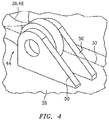
FIG. 4 is a perspective illustration of another mounting structure interconnecting two components. -
FIG. 5 is a perspective illustration of a five degree-of-freedom mounting structure interconnecting two components. -
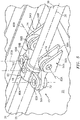
FIG. 6 is a cross-sectional, diagrammatic illustration of the five degree-of-freedom mounting structure. -
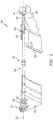
FIG. 7 is a side sectional, diagrammatic illustration of a link for the five degree-of-freedom mounting structure. -
FIG. 8 is a perspective illustration of a prior art mounting structure. -
FIG. 1 is a schematic illustration anactuation system 20 with anactuation system centerline 22. Thisactuation system 20 includes a plurality of components 24-26 disposed along theactuation system centerline 22. Theactuation system 20 also includes alinear actuator 28; e.g., a dual lead screw actuator. - The components may include a stationary (e.g., axially forward)
component 24, a first translatable (e.g., axially intermediate)component 25 and a second translatable (e.g., axially aft)component 26. These components 24-26 may be configured as components of a turbofan turbine engine aircraft propulsion system. For example, thestationary component 24 may be configured as a torque box for a thrust reverser system, or any other stationary component of a forward nacelle structure. Thetranslatable components U.S. Application No. 14/968,357 and Attorney Docket No. 93671US01. The components of the present disclosure, however, are not limited to the foregoing exemplary configurations. Furthermore, theactuation system 20 of the present disclosure is not limited to aircraft propulsion system applications. - The
linear actuator 28 extends longitudinally along anactuation axis 30, which is substantially parallel to theactuation system centerline 22. Thislinear actuator 28 is configured to translate the firsttranslatable component 25 axially along theactuation system centerline 22. Thelinear actuator 28 is also configured to translate the secondtranslatable component 26 axially along theactuation system centerline 22. - The
linear actuator 28 includes astationary actuator base 32, a first translatable element 34 (e.g., a carriage) and a second translatable element 36 (e.g., a carriage, or rod end), which elements are disposed along theactuation axis 30. Theactuator base 32 is mounted to thestationary component 24. The firsttranslatable element 34 is mounted to the firsttranslatable component 25. The secondtranslatable element 36 is mounted to the secondtranslatable component 26. - The
linear actuator 28 also includes a drive mechanism 38 (e.g., a dual lead screw, a dual piston, etc.) and anactuation device 40; e.g., a motor. Theactuation device 40 may be configured as an electric motor, a hydraulic actuation device, a pneumatic actuation device, or any other type of actuation device. Theactuation device 40 is configured to drive each of thetranslatable elements 34 and 36 (at the same or different speeds) along theactuation axis 30 through thedrive mechanism 38. An example of such a linear actuator is disclosed in theU.S. Application No. 14/968,357 referenced above. Theactuation system 20 of the present disclosure, however, is not limited to such an exemplary drive mechanism or linear actuator. - Referring to
FIG. 2 , theelements linear actuator 28 are mounted to the components 24-26 through respective mounting structures 42-44. Referring toFIG. 3 , thefirst mounting structure 42 may be configured as a gimbal joint. This gimbal joint configuration enables theactuator base 32 to pivot relative to thestationary component 24 about apivot axis 46 and apivot axis 46A. Thepivot axis 46 is substantially perpendicular to theactuation axis 30. Thepivot axis 46 may also be coincident with (e.g., cross-through) theactuation axis 30 and the actuation system centerline 22 (seeFIG. 1 ). The present disclosure, however, is not limited to such an exemplary first mounting structure configuration. - Referring to
FIG. 4 , thethird mounting structure 44 may be configured as a spherical bearing joint. Thethird mounting structure 44, for example, may include a rod end 48 with a spherical bearing and a pair of mountingtabs 50, which are connect to (e.g., formed integral with or otherwise attached to) and project out from the secondtranslatable component 26. The spherical bearing is disposed between and mechanically fastened to the mountingtabs 50. The spherical bearing enables the secondtranslatable element 36 to pivot about a centroid of the bearing in two orthogonal directions. The present disclosure, however, is not limited to such an exemplary third mounting structure configuration. - Referring now to
FIG. 5 , thesecond mounting structure 43 may be configured as a five degree-of-freedom (5DoF) joint. This 5DoF joint configuration may enable at least slight movement of the firsttranslatable element 34 relative to the firsttranslatable component 25 in all but an axial (relative to the actuation axis 30) direction. Thesecond mounting structure 43 includes anactuator mount 52, a pair of link mounts 54A and 54B, and a pair oflinks - Referring to
FIGS. 5 and6 , theactuator mount 52 includes amount base 58 and a pair of link mounts 60A and 60B. Themount base 58 may have a generally tubular body, which extends circumferentially completely (or partially) around the firsttranslatable element 34 and theactuation axis 30. Thismount base 58 is configured as a gimbal joint, and is pivotally connected to the firsttranslatable element 34 about apivot axis 62. Thepivot axis 62 is substantially perpendicular to theactuation axis 30. Thepivot axis 62 may also be coincident with (e.g., cross-through) theactuation axis 30 and the actuation system centerline 22 (seeFIG. 6 ). - Referring to
FIG. 6 , each of the link mounts 60A, 60B may include a pair ofparallel mounting tabs tabs 64A are disposed on a lateral first side of thelinear actuator 28. These mountingtabs 64A project laterally out from themount base 58. The second pair of mountingtabs 64B are disposed on a lateral second side of thelinear actuator 28, which second side is laterally opposite the first side. The mountingtabs 64B project laterally out from themount base 58. - Referring to
FIG. 5 , each of the link mounts 54A, 54B may include a pair ofparallel mounting tabs tabs 66A are disposed on the first side of thelinear actuator 28. These mountingtabs 66A project out from and are connected to the firsttranslatable component 25. The second pair of mountingtabs 66B are disposed on the second side of thelinear actuator 28. These mountingtabs 66B project laterally out from and are connected to the firsttranslatable component 25. - The
first link 56A is disposed on the first side of thelinear actuator 28. Thesecond link 56B is disposed on the second side of thelinear actuator 28. Thefirst link 56A and thesecond link 56B may have substantially identical configurations. Eachlink 56 ofFIGS. 5 and7 , for example, includes a unitarystructural member 68 that extends along acenterline 70 between opposing link ends 72 and 74. Eachlink 56 also includes a pair ofspherical bearings centerline 70 of thestructural member 68 may have a straight-line trajectory that extends through centroids of thespherical bearings centerline 70 is substantially parallel to theactuation axis 30. - The first
spherical bearing 76 is arranged with thestructural member 68 at thefirst link end 72. The firstspherical bearing 76 is disposed between and mechanically fastened to a respective pair of the mountingtabs mount FIG. 6 . This firstspherical bearing 76 has anaxis axis 80 is substantially perpendicular to theactuation axis 30 and substantially parallel to thepivot axis 62. Theaxes 80 of the pair oflinks 56 are also parallel with one another. - The second
spherical bearing 78 is arranged with thestructural member 68 at thesecond link end 74. The secondspherical bearing 78 is disposed between and mechanically fastened to a respective pair of the mountingtabs spherical bearing 78 has anaxis axis 82 is substantially perpendicular to theactuation axis 30 and to theaxes axes 82 of the pair oflinks 56 are also parallel with one another and, here, also co-axial with one another. - During operation of the
actuation system 20 ofFIG. 1 , the components 24-26 may shift relative to one another, where this shifting represents movement different from the axial translation of thecomponents actuation system centerline 22. This shifting may be also or alternatively be in the form of slight radial movement relative to theactuation system centerline 22. This can lead to thelinear actuator 28 and itsactuation axis 30 being slightly skewed from theactuation system centerline 22. Thesecond mounting structure 43 ofFIG. 5 is operable to accommodate such a skewed orientation without imparting a lateral load onto thelinear actuator 28; e.g., particularly where thecomponents second mounting structure 43 is operable to allow slight misalignment between the firsttranslatable component 25 and the firsttranslatable element 34 while also significantly reducing or substantially eliminating transmission of non-axial (e.g., lateral, radial, etc.) loads between theelements second mounting structure 43 may be operable to substantially only transmits axial loads between the firsttranslatable element 34 and the firsttranslatable component 25; e.g., along the centerlines 70 (seeFIG. 7 ). - The afore-described operability of the
second mounting structure 43 is enabled by, among other things, thelink centerlines 70 being substantially parallel to theactuation axis 30. In contrast, wherelinks 800 are non-parallel to anactuation axis 802 as shown inFIG. 8 , theselinks 800 transmit a radial load betweencomponents - The
actuation system 20 of the present disclosure may have different configurations than that described above. For example, one of thecomponents structure 43 may be used to mount thelinear actuator 28 to the remaining one of thecomponents spherical bearings 76 and/or 78 may each be configured with a respective one of the mounts 54, 60, and mechanically fastened to thelink 56; e.g., the coupling arrangement between the mounts and the links may be reversed. The present disclosure therefore is not limited to the exemplary embodiments described above and illustrated in the drawings. - While various embodiments of the present invention have been disclosed, it will be apparent to those of ordinary skill in the art that many more embodiments and implementations are possible within the scope of the invention. For example, the present invention as described herein includes several aspects and embodiments that include particular features. Although these features may be described individually, it is within the scope of the present invention that some or all of these features may be combined with any one of the aspects and remain within the scope of the invention. Accordingly, the present invention is not to be restricted except in light of the attached claims and their equivalents.
Claims (15)
- An actuation system (20), comprising:a component (24; 25; 26);a linear actuator (28) extending longitudinally along an actuation axis (30);a first link (56A) extending along a first centerline (70) parallel to the actuation axis (30), the first link (56A) disposed on a first side of the linear actuator (28); anda second link (56B) extending along a second centerline (70) parallel to the actuation axis (30), the second link (56B) disposed on a second side of the linear actuator (28) laterally opposite the first side;the first and the second links (56A, B) configured to transfer a load along the first and the second centerlines (70) between the component (24; 25; 26) and the linear actuator (28).
- The actuation system of claim 1, wherein
the first link (56A) includes a first spherical bearing (78) and a second spherical bearing (76); and
the first link (56A) extends along the first centerline (70) between the first spherical bearing (78) and the second spherical bearing (76). - The actuation system of claim 2, further comprising a pair of mounting tabs (50; 66A, B) projecting out from the component (24), the first spherical bearing (78) laterally between and attached to the mounting tabs (50; 66A, B).
- The actuation system of claim 2, further comprising an actuator mount (52) pivotally attached to the linear actuator (28), the actuator mount (52) including a pair of mounting tabs (64A, B), and the second spherical bearing (76) laterally between and attached to the mounting tabs (64A, B).
- The actuation system of claim 4, further comprising a pair of second mounting tabs (50; 66A, B) projecting out from the component (24), the first spherical bearing (78) laterally between and attached to the second mounting tabs (50; 66A, B).
- The actuation system of any of claims 2 to 5, wherein the first spherical bearing (78) has a first axis (80; 80A, B), the second spherical bearing (76) has a second axis (82; 82A, B), and the first axis (80; 80A, B) is perpendicular to the second axis (82; 82A, B), wherein, optionally, the first axis (80; 80A, B) and the second axis (82; 82A, B) are perpendicular to the actuation axis (30).
- The actuation system of claim 1, further comprising:an actuator mount (52) including a mount base (58), a first mount (60A) and a second mount (60B), the mount base (58) extending circumferentially about and pivotally coupled to the linear actuator (28), the first mount (60A) on the first side and projecting radially out from the mount base (58), and the second mount (60B) on the second side and projecting radially out from the mount base (58);a first spherical bearing (76) coupling the first mount (60A) with the first link (56A); anda second spherical bearing (76) coupling the second mount (60B) with the second link (56B).
- The actuation system of claim 7, further comprising:a third mount (54A) connected to the component (25);a fourth mount (54B) connected to the component (25);a third spherical bearing (78) coupling the third mount (54A) with the first link (56A); anda fourth spherical bearing (78) coupling the fourth mount (54B) with the second link (56B), wherein, optionally, the first centerline (70) extends through a centroid of the first spherical bearing (76) and a centroid of the third spherical bearing (78).
- The actuation system of claim 7 or 8, wherein the mount base (58) is pivotally coupled to the linear actuator (28) about a pivot axis (62) perpendicular to the actuation axis (30).
- The actuation system of claim 1, further comprising:a first mount (60A) connected to the component (25);a second mount (60B) connected to the component (25);a first spherical bearing (76) coupling the first mount (60A) with the first link (56A); anda second spherical bearing (76) coupling the second mount (60B) with the second link (56B).
- The actuation system of any preceding claim, further comprising:a second component (25);the linear actuator (28) including an actuator base (32) and a translatable element (34), the linear actuator (28) configured to move the translatable element (34) relative to the actuator base (32);the actuator base (32) coupled to the second component (25); andthe translatable element (34) coupled to the second component (25) through the first and the second links (56A, B).
- The actuation system of claim 11, further comprising:a third component (26);the second component (25) disposed axially between the component (24) and the third component (26) along the actuation axis (30);the linear actuator (28) including a second translatable element (36), the linear actuator (28) configured to move the second translatable element (36) relative to the actuator base (32); andthe second translatable element (36) coupled to the third component (26).
- The actuation system of any preceding claim, wherein the component (24; 25; 26) is configured as a component of a nacelle system.
- An actuation system (20), comprising:a translatable component (25; 26) including a first mount (54A) and a second mount (54B);a linear actuator (28) extending longitudinally along an actuation axis (30);an actuator mount (52) coupled to the linear actuator (28);a first link (56A) on a first side of the linear actuator (28), wherein the first link (56A) is coupled to the actuator mount (52) through a first spherical bearing (76), and the first link (56A) is coupled to the first mount (54A) through a second spherical bearing (78); anda second link (56B) on a second side of the linear actuator (28) laterally opposite the first side, wherein the second link (56B) is coupled to the actuator mount (52) through a third spherical bearing (76), and the second link (56B) is coupled to the second mount (54B) through a fourth spherical bearing (78), wherein, optionally, a first straight-line trajectory (70) extends through a centroid of the first spherical bearing (76) and a centroid of the second spherical bearing (78), and is parallel to the actuation axis (30); anda second straight-line trajectory (70) extends through a centroid of the third spherical (76) bearing and a centroid of the fourth spherical bearing (78), and is parallel to the actuation axis (30).
- An actuation system (20), comprising:a translatable component (25; 26) including a first mount (54A) and a second mount (54B);a linear actuator (28) extending longitudinally along an actuation axis (30);an actuator mount (52) pivotally coupled to the linear actuator (28) about a first pivot axis (62) perpendicular to the actuation axis (30);a first link (56A) on a first side of the linear actuator (28), the first link (56A) between and interconnecting the actuator mount (52) and the first mount (54A), wherein the first link (56A) is pivotally coupled to the actuator mount (52) about a second pivot axis (80A) parallel with the first pivot axis (62); anda second link (58B) on a second side of the linear actuator (28) laterally opposite the second side, the second link (56B) between and interconnecting the actuator mount (52) and the second mount (54B), wherein the second link (56B) is pivotally coupled to the actuator mount (52) about a third pivot axis (80B) parallel with the first pivot axis (62), wherein, optionally, the first link (56A) is pivotally coupled to the first mount (54A) about a fourth pivot axis (82A) perpendicular to the first pivot axis (62) and the actuation axis (30); andthe second link (56B) is pivotally coupled to the second mount (54B) about a fifth pivot axis (82B) co-axial with the fourth pivot axis (82A).
Applications Claiming Priority (1)
| Application Number | Priority Date | Filing Date | Title |
|---|---|---|---|
| US15/188,565 US9976696B2 (en) | 2016-06-21 | 2016-06-21 | Linear actuator with multi-degree of freedom mounting structure |
Publications (2)
| Publication Number | Publication Date |
|---|---|
| EP3301326A1 true EP3301326A1 (en) | 2018-04-04 |
| EP3301326B1 EP3301326B1 (en) | 2020-11-18 |
Family
ID=59296667
Family Applications (1)
| Application Number | Title | Priority Date | Filing Date |
|---|---|---|---|
| EP17176360.0A Active EP3301326B1 (en) | 2016-06-21 | 2017-06-16 | Linear actuator with multi-degree of freedom mounting structure |
Country Status (2)
| Country | Link |
|---|---|
| US (1) | US9976696B2 (en) |
| EP (1) | EP3301326B1 (en) |
Families Citing this family (5)
| Publication number | Priority date | Publication date | Assignee | Title |
|---|---|---|---|---|
| EP3267034B1 (en) * | 2016-07-07 | 2020-05-13 | Cameron Technologies Limited | Self-aligning mud pump assembly |
| US11208970B2 (en) * | 2018-06-28 | 2021-12-28 | Rohr, Inc. | Aft cascade ring design concept |
| RU2734328C2 (en) * | 2018-08-06 | 2020-10-15 | Акционерное общество "Объединенная двигателестроительная корпорация" (АО "ОДК") | Drive for displacement movement of reversible device of gas turbine engine |
| CA3116295A1 (en) * | 2018-10-17 | 2020-04-23 | Airbus Defence And Space, S.A. | Articulated mechanism and articulated pointing system comprising that mechanism |
| FR3105304B1 (en) * | 2019-12-19 | 2021-12-10 | Safran Nacelles | Thrust reverser with anti-buckling actuation system |
Citations (6)
| Publication number | Priority date | Publication date | Assignee | Title |
|---|---|---|---|---|
| DE10124843A1 (en) * | 2001-05-22 | 2002-11-28 | Ina Schaeffler Kg | Slide bearing has housing with full-length opening and cylindrical slide bush fitted in interspace between inner housing part and wall and axially deformed to fit into cavities in between |
| WO2010142881A1 (en) * | 2009-06-10 | 2010-12-16 | Aircelle | Thrust reversing device |
| WO2012052552A1 (en) * | 2010-10-21 | 2012-04-26 | Sagem Defense Securite | Actuation system for a propulsive unit of an airplane |
| FR2978516A1 (en) * | 2011-07-29 | 2013-02-01 | Aircelle Sa | DOUBLE ACTION LINEAR ACTUATOR |
| WO2014128427A1 (en) * | 2013-02-25 | 2014-08-28 | Aircelle | Actuator for aircraft turbojet engine nacelle |
| EP2921727A1 (en) * | 2014-03-17 | 2015-09-23 | Lockheed Martin Corporation | U-shaped clip for fixing a link rod within an aircraft clevis |
Family Cites Families (79)
| Publication number | Priority date | Publication date | Assignee | Title |
|---|---|---|---|---|
| BE562528A (en) | 1956-11-21 | |||
| GB913699A (en) | 1959-12-18 | |||
| GB1150012A (en) | 1966-09-12 | 1969-04-30 | Rolls Royce | Fluid Flow Duct Including Thrust Reversing Means |
| US3500646A (en) | 1968-04-19 | 1970-03-17 | Rohr Corp | Thrust reverser |
| US3511055A (en) | 1968-05-29 | 1970-05-12 | Rohr Corp | Thrust reverser |
| BE755612A (en) | 1969-06-18 | 1971-02-15 | Gen Electric | PROPULSION TUBES WITH IMPROVED NOISE CANCELLATION SYSTEM |
| US3621763A (en) | 1969-07-17 | 1971-11-23 | Pneumo Dynamics Corp | Fan thrust reverser actuator |
| US3612209A (en) | 1969-11-28 | 1971-10-12 | Gen Electric | Propulsion nozzle with combined thrust reverser and sound suppressor mechanism |
| US3600894A (en) | 1970-04-28 | 1971-08-24 | Rohr Corp | Thrust reversing apparatus |
| US3829020A (en) | 1973-06-13 | 1974-08-13 | Boeing Co | Translating sleeve variable area nozzle and thrust reverser |
| US4278220A (en) | 1979-03-30 | 1981-07-14 | The United States Of America As Represented By The Administrator Of The National Aeronautics And Space Administration | Thrust reverser for a long duct fan engine |
| US4465392A (en) * | 1981-06-12 | 1984-08-14 | The United States Of America As Represented By The Secretary Of The Air Force | Thermally isolated structural support link |
| US4564160A (en) | 1982-09-29 | 1986-01-14 | The Boeing Company | Thrust reverser blocker door assembly |
| WO1984001446A1 (en) | 1982-09-30 | 1984-04-12 | Boeing Co | Modular multi-engine thrust control assembly |
| US4519561A (en) | 1983-05-23 | 1985-05-28 | Rohr Industries, Inc. | Aircraft thrust reverser mechanism |
| US4909442A (en) | 1984-05-14 | 1990-03-20 | The Boeing Company | Actuation system for a blocker door in a jet engine nacelle |
| US4688446A (en) * | 1985-03-04 | 1987-08-25 | Union Special Corporation | Connecting rod manufacture |
| US4807434A (en) | 1987-12-21 | 1989-02-28 | The Boeing Company | Thrust reverser for high bypass jet engines |
| US5117630A (en) | 1990-02-12 | 1992-06-02 | Rohr Industries, Inc. | Pivoting door thrust reverser |
| US5228641A (en) | 1991-08-15 | 1993-07-20 | Rohr, Inc. | Cascade type aircraft engine thrust reverser with hidden link actuator |
| US5309711A (en) | 1991-08-21 | 1994-05-10 | Rohr, Inc. | Cascade type thrust reverser for fan jet engines |
| US5255850A (en) | 1992-06-29 | 1993-10-26 | The United States Of America As Represented By The Secretary Of The Air Force | Pivoting flaps and vane pack in a nozzle reverser assembly |
| US5476237A (en) | 1993-06-18 | 1995-12-19 | Northrop Grumman Corporation | Syntactic film for thrust reverser blocker doors |
| US5778659A (en) | 1994-10-20 | 1998-07-14 | United Technologies Corporation | Variable area fan exhaust nozzle having mechanically separate sleeve and thrust reverser actuation systems |
| US5609020A (en) | 1995-05-15 | 1997-03-11 | The Boeing Company | Thrust reverser synchronization shaft lock |
| EP0801221A3 (en) | 1996-04-09 | 1998-11-04 | Lucas Industries Public Limited Company | Actuating system for an aircraft thrust reverser |
| US6036238A (en) | 1996-10-30 | 2000-03-14 | The Boeing Company | Double stroke over center latch |
| US5987880A (en) | 1997-07-08 | 1999-11-23 | Mcdonnell Douglas Corporation | Supersonic engine, multi-port thrust reversing system |
| US5927647A (en) | 1997-09-24 | 1999-07-27 | Rohr, Inc. | Blocker door frame pressure structure for translating cowl of cascade thrust reverser for aircraft jet engine |
| US6042053A (en) | 1997-10-31 | 2000-03-28 | The Boeing Company | Automatic restow system for aircraft thrust reverser |
| EP0926333A1 (en) | 1997-12-26 | 1999-06-30 | SOCIETE DE CONSTRUCTION DES AVIONS HUREL-DUBOIS (société anonyme) | Thrust reverser configuration |
| GB9825651D0 (en) | 1998-11-23 | 1999-01-13 | Lucas Ind Plc | Actuator |
| US6170254B1 (en) | 1998-12-18 | 2001-01-09 | Rohr, Inc. | Translating sleeve for cascade type thrust reversing system for fan gas turbine engine for an aircraft |
| US6293495B1 (en) | 1999-12-08 | 2001-09-25 | Rohr, Inc. | Pivoting door thrust reverser system for turbofan aircraft jet engine |
| US6340135B1 (en) | 2000-05-30 | 2002-01-22 | Rohr, Inc. | Translating independently mounted air inlet system for aircraft turbofan jet engine |
| US6845945B1 (en) | 2001-07-20 | 2005-01-25 | Aircraft Integration Resources, Inc. | Thrust reverser with sliding pivot joints |
| US6584763B2 (en) | 2001-08-01 | 2003-07-01 | Rohr, Inc. | Lock for the translating sleeve of a turbofan engine thrust reverser |
| US6487846B1 (en) | 2001-09-07 | 2002-12-03 | Honeywell International, Inc. | Thrust reverser actuator including an integrated locking mechanism |
| BR0315201A (en) | 2002-10-11 | 2005-08-16 | Nordam Group Inc | Double Fold Boost Inverter |
| US6845946B2 (en) | 2003-02-21 | 2005-01-25 | The Nordam Group, Inc. | Self stowing thrust reverser |
| US6976352B2 (en) | 2003-03-22 | 2005-12-20 | The Nordam Group, Inc. | Toggle interlocked thrust reverser |
| US7146796B2 (en) | 2003-09-05 | 2006-12-12 | The Nordam Group, Inc. | Nested latch thrust reverser |
| US7264203B2 (en) | 2003-10-02 | 2007-09-04 | The Nordam Group, Inc. | Spider actuated thrust reverser |
| US20060288688A1 (en) | 2005-06-22 | 2006-12-28 | Jean-Pierre Lair | Turbofan core thrust spoiler |
| US7513101B2 (en) | 2005-10-28 | 2009-04-07 | Honeywell International Inc. | Synchronized motor thrust reverser actuation system |
| GB0606982D0 (en) | 2006-04-07 | 2006-05-17 | Rolls Royce Plc | Aeroengine thrust reverser |
| EP2074320B1 (en) | 2006-10-12 | 2013-06-26 | United Technologies Corporation | Variable area fan nozzle thrust reverser |
| FR2907512B1 (en) | 2006-10-23 | 2008-12-12 | Aircelle Sa | THRUST INVERTER WITH GRIDS FOR REACTION ENGINE |
| FR2917788B1 (en) | 2007-06-19 | 2009-07-24 | Aircelle Sa | DOUBLE ACTION ACTUATOR WITH PROGRAM EFFECT |
| FR2922059B1 (en) | 2007-10-04 | 2014-07-04 | Aircelle Sa | DOUBLE-ACTING TELESCOPIC LINEAR ACTUATOR WITH SINGLE-MOTOR DRIVE SYSTEM |
| FR2922058B1 (en) | 2007-10-04 | 2009-12-04 | Aircelle Sa | TELESCOPIC LINEAR ACTUATOR FOR MOVING A FIRST AND A SECOND ELEMENTS RELATIVELY TO A FIXED ELEMENT |
| FR2921976B1 (en) | 2007-10-08 | 2009-12-04 | Aircelle Sa | ACTUATOR FOR MOBILE STRUCTURE OF AN AIRCRAFT NACELLE, AND NACELLE COMPRISING AT LEAST ONE ACTUATOR |
| US7735778B2 (en) | 2007-11-16 | 2010-06-15 | Pratt & Whitney Canada Corp. | Pivoting fairings for a thrust reverser |
| US8002217B2 (en) | 2007-11-16 | 2011-08-23 | Spirit Aerosystems, Inc. | System for adjustment of thrust reverser pivot door |
| US8172175B2 (en) | 2007-11-16 | 2012-05-08 | The Nordam Group, Inc. | Pivoting door thrust reverser for a turbofan gas turbine engine |
| US8109466B2 (en) | 2008-06-23 | 2012-02-07 | Rohr, Inc. | Thrust reverser cascade assembly and AFT cascade ring with flow deflector portion |
| FR2933144B1 (en) | 2008-06-26 | 2012-08-17 | Airbus France | NACELLE FOR AN AIRCRAFT COMPRISING INVERTER PUSHING MEANS AND AIRCRAFT COMPRISING AT LEAST ONE SUCH NACELLE |
| US8109467B2 (en) | 2009-04-24 | 2012-02-07 | United Technologies Corporation | Thrust reverser assembly with shaped drag links |
| FR2946094B1 (en) | 2009-06-02 | 2014-04-18 | Aircelle Sa | THRUST INVERTER FOR DOUBLE FLOW TURBOREACTOR NACELLE. |
| US8322653B2 (en) | 2009-09-11 | 2012-12-04 | Spirit Aerosystems, Inc. | Hybrid beam for a thrust reverser unit |
| FR2952128B1 (en) | 2009-11-05 | 2011-11-04 | Aircelle Sa | THRUST INVERTER DEVICE |
| FR2954409A1 (en) | 2009-12-18 | 2011-06-24 | Aircelle 7298 | THRUST INVERTER DEVICE |
| US8869507B2 (en) | 2010-01-13 | 2014-10-28 | United Technologies Corporation | Translatable cascade thrust reverser |
| DE102011008918A1 (en) | 2011-01-19 | 2012-07-19 | Rolls-Royce Deutschland Ltd & Co Kg | Aircraft gas turbine thrust reverser, has detour elements arranged at peripheral region of cowl, and lever swingably arranged at rear end region of detour elements, where lever enables pivoting doors with displacement of detour elements |
| US20120187214A1 (en) | 2011-01-25 | 2012-07-26 | Spirit Aerosystems, Inc. | Converging blocker door system for use with a thrust reverser |
| US8720183B2 (en) | 2011-03-02 | 2014-05-13 | Spirit Aerosystems, Inc. | Thrust reverser translating sleeve assembly |
| US8479491B2 (en) | 2011-06-06 | 2013-07-09 | General Electric Company | Clamping system and method for thrust reverser attachment |
| US8615982B2 (en) | 2011-07-05 | 2013-12-31 | Hamilton Sundstrand Corporation | Integrated electric variable area fan nozzle thrust reversal actuation system |
| US9181898B2 (en) | 2011-09-20 | 2015-11-10 | United Technologies Corporation | Thrust reverser for a gas turbine engine with moveable doors |
| US8876390B2 (en) * | 2011-12-14 | 2014-11-04 | Roller Bearing Company Of America, Inc. | Slotted bearings with wear-resistant treatments for gearbox mounting in a geared turbofan engine |
| US9316112B2 (en) | 2011-12-21 | 2016-04-19 | Rohr, Inc. | Variable area fan nozzle with drive system health monitoring |
| US9086035B2 (en) | 2012-01-20 | 2015-07-21 | Hamilton Sundstrand Corporation | Integrated thrust reverser actuator and variable area fan nozzle actuator |
| US8904751B2 (en) | 2012-04-30 | 2014-12-09 | Middle River Aircraft Systems | Thrust reverser assembly and method of operation |
| US9303590B2 (en) | 2012-05-22 | 2016-04-05 | Spirit Aerosystems, Inc. | Variable area fan nozzle actuation system |
| US9016040B2 (en) | 2012-11-30 | 2015-04-28 | General Electric Company | Thrust reverser system with translating-rotating cascade and method of operation |
| US9388768B2 (en) | 2013-08-23 | 2016-07-12 | Rohr, Inc. | Blocker door actuation system and apparatus |
| US9260194B2 (en) | 2013-10-24 | 2016-02-16 | Rohr, Inc. | Gimbal pin for jet propulsion system |
| US9938929B2 (en) | 2014-03-21 | 2018-04-10 | Rohr, Inc. | Thrust reverser for a turbofan engine |
| US9534562B2 (en) | 2014-04-25 | 2017-01-03 | Rohr, Inc. | System and apparatus for a thrust reverser |
-
2016
- 2016-06-21 US US15/188,565 patent/US9976696B2/en active Active
-
2017
- 2017-06-16 EP EP17176360.0A patent/EP3301326B1/en active Active
Patent Citations (6)
| Publication number | Priority date | Publication date | Assignee | Title |
|---|---|---|---|---|
| DE10124843A1 (en) * | 2001-05-22 | 2002-11-28 | Ina Schaeffler Kg | Slide bearing has housing with full-length opening and cylindrical slide bush fitted in interspace between inner housing part and wall and axially deformed to fit into cavities in between |
| WO2010142881A1 (en) * | 2009-06-10 | 2010-12-16 | Aircelle | Thrust reversing device |
| WO2012052552A1 (en) * | 2010-10-21 | 2012-04-26 | Sagem Defense Securite | Actuation system for a propulsive unit of an airplane |
| FR2978516A1 (en) * | 2011-07-29 | 2013-02-01 | Aircelle Sa | DOUBLE ACTION LINEAR ACTUATOR |
| WO2014128427A1 (en) * | 2013-02-25 | 2014-08-28 | Aircelle | Actuator for aircraft turbojet engine nacelle |
| EP2921727A1 (en) * | 2014-03-17 | 2015-09-23 | Lockheed Martin Corporation | U-shaped clip for fixing a link rod within an aircraft clevis |
Also Published As
| Publication number | Publication date |
|---|---|
| EP3301326B1 (en) | 2020-11-18 |
| US9976696B2 (en) | 2018-05-22 |
| US20170363250A1 (en) | 2017-12-21 |
Similar Documents
| Publication | Publication Date | Title |
|---|---|---|
| EP3301326B1 (en) | Linear actuator with multi-degree of freedom mounting structure | |
| US8291782B1 (en) | Actuator assembly for stabilizers | |
| US7560888B2 (en) | Electromechanical actuator including redundant, dissimilar position feedback | |
| EP2175123A2 (en) | Actuator and corresponding thrust reverser system | |
| US10527142B2 (en) | Hydraulic rotary ball screw actuator | |
| EP3406888B1 (en) | Actuator | |
| US9932105B2 (en) | Device for folding/unfolding a tail boom of a rotorcraft, an associated rotorcraft, and a corresponding folding/unfolding method | |
| US11815179B2 (en) | Actuator for transmission | |
| EP3514054B1 (en) | Apparatus and methods for rigging a torque tube assembly in an aircraft | |
| EP3514055A1 (en) | Torque tube assemblies for use with aircraft high lift devices | |
| CN109110162B (en) | Separation speed on-orbit adjustable device and manufacturing method thereof | |
| US5102050A (en) | Divergent flap actuation system for two-dimensional convergent - divergent turbojet exhaust nozzle | |
| EP2628935A2 (en) | Actuator assembly | |
| EP4160048B1 (en) | Ball screw rotary actuator with ball cage | |
| KR101810582B1 (en) | A ball-bearing control cable, a mechanical system, and an aircraft | |
| US11280294B2 (en) | Coupling with eccentric bearing arrangement | |
| EP2865878B1 (en) | Gimbal pin for jet propulsion system | |
| RU2733031C2 (en) | Universal hinge | |
| EP3282132B1 (en) | Actuator with a coupling | |
| US20180155010A1 (en) | Control system for an actuator | |
| US20250145276A1 (en) | Linear actuator for a flight control surface | |
| EP3951155A1 (en) | Actuation system for a thrust reverser of an aircraft propulsion system | |
| Schaefer et al. | Precision pointing and actuation systems for UAVS USING HARMONIC DRIVE GEARS | |
| KR101772277B1 (en) | Landing device for air plane | |
| CN120062458A (en) | Combined compensating assembly for aircraft pipeline |
Legal Events
| Date | Code | Title | Description |
|---|---|---|---|
| PUAI | Public reference made under article 153(3) epc to a published international application that has entered the european phase |
Free format text: ORIGINAL CODE: 0009012 |
|
| STAA | Information on the status of an ep patent application or granted ep patent |
Free format text: STATUS: THE APPLICATION HAS BEEN PUBLISHED |
|
| AK | Designated contracting states |
Kind code of ref document: A1 Designated state(s): AL AT BE BG CH CY CZ DE DK EE ES FI FR GB GR HR HU IE IS IT LI LT LU LV MC MK MT NL NO PL PT RO RS SE SI SK SM TR |
|
| AX | Request for extension of the european patent |
Extension state: BA ME |
|
| STAA | Information on the status of an ep patent application or granted ep patent |
Free format text: STATUS: REQUEST FOR EXAMINATION WAS MADE |
|
| 17P | Request for examination filed |
Effective date: 20181004 |
|
| RBV | Designated contracting states (corrected) |
Designated state(s): AL AT BE BG CH CY CZ DE DK EE ES FI FR GB GR HR HU IE IS IT LI LT LU LV MC MK MT NL NO PL PT RO RS SE SI SK SM TR |
|
| GRAP | Despatch of communication of intention to grant a patent |
Free format text: ORIGINAL CODE: EPIDOSNIGR1 |
|
| STAA | Information on the status of an ep patent application or granted ep patent |
Free format text: STATUS: GRANT OF PATENT IS INTENDED |
|
| RIC1 | Information provided on ipc code assigned before grant |
Ipc: F16C 11/06 20060101ALI20200520BHEP Ipc: F15B 15/14 20060101ALI20200520BHEP Ipc: F16H 25/20 20060101AFI20200520BHEP Ipc: F02K 1/76 20060101ALI20200520BHEP |
|
| INTG | Intention to grant announced |
Effective date: 20200617 |
|
| RIN1 | Information on inventor provided before grant (corrected) |
Inventor name: GORMLEY, TIMOTHY |
|
| GRAS | Grant fee paid |
Free format text: ORIGINAL CODE: EPIDOSNIGR3 |
|
| GRAA | (expected) grant |
Free format text: ORIGINAL CODE: 0009210 |
|
| STAA | Information on the status of an ep patent application or granted ep patent |
Free format text: STATUS: THE PATENT HAS BEEN GRANTED |
|
| AK | Designated contracting states |
Kind code of ref document: B1 Designated state(s): AL AT BE BG CH CY CZ DE DK EE ES FI FR GB GR HR HU IE IS IT LI LT LU LV MC MK MT NL NO PL PT RO RS SE SI SK SM TR |
|
| REG | Reference to a national code |
Ref country code: GB Ref legal event code: FG4D |
|
| REG | Reference to a national code |
Ref country code: CH Ref legal event code: EP |
|
| REG | Reference to a national code |
Ref country code: IE Ref legal event code: FG4D |
|
| REG | Reference to a national code |
Ref country code: DE Ref legal event code: R096 Ref document number: 602017027633 Country of ref document: DE |
|
| REG | Reference to a national code |
Ref country code: AT Ref legal event code: REF Ref document number: 1336119 Country of ref document: AT Kind code of ref document: T Effective date: 20201215 |
|
| REG | Reference to a national code |
Ref country code: AT Ref legal event code: MK05 Ref document number: 1336119 Country of ref document: AT Kind code of ref document: T Effective date: 20201118 |
|
| REG | Reference to a national code |
Ref country code: NL Ref legal event code: MP Effective date: 20201118 |
|
| PG25 | Lapsed in a contracting state [announced via postgrant information from national office to epo] |
Ref country code: FI Free format text: LAPSE BECAUSE OF FAILURE TO SUBMIT A TRANSLATION OF THE DESCRIPTION OR TO PAY THE FEE WITHIN THE PRESCRIBED TIME-LIMIT Effective date: 20201118 Ref country code: GR Free format text: LAPSE BECAUSE OF FAILURE TO SUBMIT A TRANSLATION OF THE DESCRIPTION OR TO PAY THE FEE WITHIN THE PRESCRIBED TIME-LIMIT Effective date: 20210219 Ref country code: NO Free format text: LAPSE BECAUSE OF FAILURE TO SUBMIT A TRANSLATION OF THE DESCRIPTION OR TO PAY THE FEE WITHIN THE PRESCRIBED TIME-LIMIT Effective date: 20210218 Ref country code: PT Free format text: LAPSE BECAUSE OF FAILURE TO SUBMIT A TRANSLATION OF THE DESCRIPTION OR TO PAY THE FEE WITHIN THE PRESCRIBED TIME-LIMIT Effective date: 20210318 Ref country code: RS Free format text: LAPSE BECAUSE OF FAILURE TO SUBMIT A TRANSLATION OF THE DESCRIPTION OR TO PAY THE FEE WITHIN THE PRESCRIBED TIME-LIMIT Effective date: 20201118 |
|
| PG25 | Lapsed in a contracting state [announced via postgrant information from national office to epo] |
Ref country code: SE Free format text: LAPSE BECAUSE OF FAILURE TO SUBMIT A TRANSLATION OF THE DESCRIPTION OR TO PAY THE FEE WITHIN THE PRESCRIBED TIME-LIMIT Effective date: 20201118 Ref country code: BG Free format text: LAPSE BECAUSE OF FAILURE TO SUBMIT A TRANSLATION OF THE DESCRIPTION OR TO PAY THE FEE WITHIN THE PRESCRIBED TIME-LIMIT Effective date: 20210218 Ref country code: PL Free format text: LAPSE BECAUSE OF FAILURE TO SUBMIT A TRANSLATION OF THE DESCRIPTION OR TO PAY THE FEE WITHIN THE PRESCRIBED TIME-LIMIT Effective date: 20201118 Ref country code: LV Free format text: LAPSE BECAUSE OF FAILURE TO SUBMIT A TRANSLATION OF THE DESCRIPTION OR TO PAY THE FEE WITHIN THE PRESCRIBED TIME-LIMIT Effective date: 20201118 Ref country code: IS Free format text: LAPSE BECAUSE OF FAILURE TO SUBMIT A TRANSLATION OF THE DESCRIPTION OR TO PAY THE FEE WITHIN THE PRESCRIBED TIME-LIMIT Effective date: 20210318 Ref country code: AT Free format text: LAPSE BECAUSE OF FAILURE TO SUBMIT A TRANSLATION OF THE DESCRIPTION OR TO PAY THE FEE WITHIN THE PRESCRIBED TIME-LIMIT Effective date: 20201118 |
|
| REG | Reference to a national code |
Ref country code: LT Ref legal event code: MG9D |
|
| PG25 | Lapsed in a contracting state [announced via postgrant information from national office to epo] |
Ref country code: HR Free format text: LAPSE BECAUSE OF FAILURE TO SUBMIT A TRANSLATION OF THE DESCRIPTION OR TO PAY THE FEE WITHIN THE PRESCRIBED TIME-LIMIT Effective date: 20201118 |
|
| PG25 | Lapsed in a contracting state [announced via postgrant information from national office to epo] |
Ref country code: SK Free format text: LAPSE BECAUSE OF FAILURE TO SUBMIT A TRANSLATION OF THE DESCRIPTION OR TO PAY THE FEE WITHIN THE PRESCRIBED TIME-LIMIT Effective date: 20201118 Ref country code: RO Free format text: LAPSE BECAUSE OF FAILURE TO SUBMIT A TRANSLATION OF THE DESCRIPTION OR TO PAY THE FEE WITHIN THE PRESCRIBED TIME-LIMIT Effective date: 20201118 Ref country code: SM Free format text: LAPSE BECAUSE OF FAILURE TO SUBMIT A TRANSLATION OF THE DESCRIPTION OR TO PAY THE FEE WITHIN THE PRESCRIBED TIME-LIMIT Effective date: 20201118 Ref country code: LT Free format text: LAPSE BECAUSE OF FAILURE TO SUBMIT A TRANSLATION OF THE DESCRIPTION OR TO PAY THE FEE WITHIN THE PRESCRIBED TIME-LIMIT Effective date: 20201118 Ref country code: CZ Free format text: LAPSE BECAUSE OF FAILURE TO SUBMIT A TRANSLATION OF THE DESCRIPTION OR TO PAY THE FEE WITHIN THE PRESCRIBED TIME-LIMIT Effective date: 20201118 Ref country code: EE Free format text: LAPSE BECAUSE OF FAILURE TO SUBMIT A TRANSLATION OF THE DESCRIPTION OR TO PAY THE FEE WITHIN THE PRESCRIBED TIME-LIMIT Effective date: 20201118 |
|
| REG | Reference to a national code |
Ref country code: DE Ref legal event code: R097 Ref document number: 602017027633 Country of ref document: DE |
|
| PG25 | Lapsed in a contracting state [announced via postgrant information from national office to epo] |
Ref country code: DK Free format text: LAPSE BECAUSE OF FAILURE TO SUBMIT A TRANSLATION OF THE DESCRIPTION OR TO PAY THE FEE WITHIN THE PRESCRIBED TIME-LIMIT Effective date: 20201118 |
|
| PLBE | No opposition filed within time limit |
Free format text: ORIGINAL CODE: 0009261 |
|
| STAA | Information on the status of an ep patent application or granted ep patent |
Free format text: STATUS: NO OPPOSITION FILED WITHIN TIME LIMIT |
|
| 26N | No opposition filed |
Effective date: 20210819 |
|
| PG25 | Lapsed in a contracting state [announced via postgrant information from national office to epo] |
Ref country code: AL Free format text: LAPSE BECAUSE OF FAILURE TO SUBMIT A TRANSLATION OF THE DESCRIPTION OR TO PAY THE FEE WITHIN THE PRESCRIBED TIME-LIMIT Effective date: 20201118 Ref country code: NL Free format text: LAPSE BECAUSE OF FAILURE TO SUBMIT A TRANSLATION OF THE DESCRIPTION OR TO PAY THE FEE WITHIN THE PRESCRIBED TIME-LIMIT Effective date: 20201118 Ref country code: IT Free format text: LAPSE BECAUSE OF FAILURE TO SUBMIT A TRANSLATION OF THE DESCRIPTION OR TO PAY THE FEE WITHIN THE PRESCRIBED TIME-LIMIT Effective date: 20201118 |
|
| PG25 | Lapsed in a contracting state [announced via postgrant information from national office to epo] |
Ref country code: SI Free format text: LAPSE BECAUSE OF FAILURE TO SUBMIT A TRANSLATION OF THE DESCRIPTION OR TO PAY THE FEE WITHIN THE PRESCRIBED TIME-LIMIT Effective date: 20201118 |
|
| PG25 | Lapsed in a contracting state [announced via postgrant information from national office to epo] |
Ref country code: ES Free format text: LAPSE BECAUSE OF FAILURE TO SUBMIT A TRANSLATION OF THE DESCRIPTION OR TO PAY THE FEE WITHIN THE PRESCRIBED TIME-LIMIT Effective date: 20201118 Ref country code: MC Free format text: LAPSE BECAUSE OF FAILURE TO SUBMIT A TRANSLATION OF THE DESCRIPTION OR TO PAY THE FEE WITHIN THE PRESCRIBED TIME-LIMIT Effective date: 20201118 |
|
| REG | Reference to a national code |
Ref country code: CH Ref legal event code: PL |
|
| REG | Reference to a national code |
Ref country code: BE Ref legal event code: MM Effective date: 20210630 |
|
| PG25 | Lapsed in a contracting state [announced via postgrant information from national office to epo] |
Ref country code: LU Free format text: LAPSE BECAUSE OF NON-PAYMENT OF DUE FEES Effective date: 20210616 |
|
| PG25 | Lapsed in a contracting state [announced via postgrant information from national office to epo] |
Ref country code: LI Free format text: LAPSE BECAUSE OF NON-PAYMENT OF DUE FEES Effective date: 20210630 Ref country code: IE Free format text: LAPSE BECAUSE OF NON-PAYMENT OF DUE FEES Effective date: 20210616 Ref country code: CH Free format text: LAPSE BECAUSE OF NON-PAYMENT OF DUE FEES Effective date: 20210630 |
|
| PG25 | Lapsed in a contracting state [announced via postgrant information from national office to epo] |
Ref country code: IS Free format text: LAPSE BECAUSE OF FAILURE TO SUBMIT A TRANSLATION OF THE DESCRIPTION OR TO PAY THE FEE WITHIN THE PRESCRIBED TIME-LIMIT Effective date: 20210318 |
|
| PG25 | Lapsed in a contracting state [announced via postgrant information from national office to epo] |
Ref country code: BE Free format text: LAPSE BECAUSE OF NON-PAYMENT OF DUE FEES Effective date: 20210630 |
|
| PG25 | Lapsed in a contracting state [announced via postgrant information from national office to epo] |
Ref country code: HU Free format text: LAPSE BECAUSE OF FAILURE TO SUBMIT A TRANSLATION OF THE DESCRIPTION OR TO PAY THE FEE WITHIN THE PRESCRIBED TIME-LIMIT; INVALID AB INITIO Effective date: 20170616 |
|
| PG25 | Lapsed in a contracting state [announced via postgrant information from national office to epo] |
Ref country code: CY Free format text: LAPSE BECAUSE OF FAILURE TO SUBMIT A TRANSLATION OF THE DESCRIPTION OR TO PAY THE FEE WITHIN THE PRESCRIBED TIME-LIMIT Effective date: 20201118 |
|
| PG25 | Lapsed in a contracting state [announced via postgrant information from national office to epo] |
Ref country code: MK Free format text: LAPSE BECAUSE OF FAILURE TO SUBMIT A TRANSLATION OF THE DESCRIPTION OR TO PAY THE FEE WITHIN THE PRESCRIBED TIME-LIMIT Effective date: 20201118 |
|
| PG25 | Lapsed in a contracting state [announced via postgrant information from national office to epo] |
Ref country code: TR Free format text: LAPSE BECAUSE OF FAILURE TO SUBMIT A TRANSLATION OF THE DESCRIPTION OR TO PAY THE FEE WITHIN THE PRESCRIBED TIME-LIMIT Effective date: 20201118 |
|
| PG25 | Lapsed in a contracting state [announced via postgrant information from national office to epo] |
Ref country code: MT Free format text: LAPSE BECAUSE OF FAILURE TO SUBMIT A TRANSLATION OF THE DESCRIPTION OR TO PAY THE FEE WITHIN THE PRESCRIBED TIME-LIMIT Effective date: 20201118 |
|
| PGFP | Annual fee paid to national office [announced via postgrant information from national office to epo] |
Ref country code: DE Payment date: 20250520 Year of fee payment: 9 |
|
| PGFP | Annual fee paid to national office [announced via postgrant information from national office to epo] |
Ref country code: GB Payment date: 20250520 Year of fee payment: 9 |
|
| PGFP | Annual fee paid to national office [announced via postgrant information from national office to epo] |
Ref country code: FR Payment date: 20250520 Year of fee payment: 9 |
|
| P01 | Opt-out of the competence of the unified patent court (upc) registered |
Free format text: CASE NUMBER: UPC_APP_0017255_3301326/2025 Effective date: 20251211 |