EP3300730B1 - The medical use of 5,7-dihydroxy-3-(4-hydroxyphenyl)-4h-1-benzopiran-4-one in the therapy of huntington disease and pharmaceutically acceptable form of the drug - Google Patents
The medical use of 5,7-dihydroxy-3-(4-hydroxyphenyl)-4h-1-benzopiran-4-one in the therapy of huntington disease and pharmaceutically acceptable form of the drug Download PDFInfo
- Publication number
- EP3300730B1 EP3300730B1 EP17001178.7A EP17001178A EP3300730B1 EP 3300730 B1 EP3300730 B1 EP 3300730B1 EP 17001178 A EP17001178 A EP 17001178A EP 3300730 B1 EP3300730 B1 EP 3300730B1
- Authority
- EP
- European Patent Office
- Prior art keywords
- genistein
- cells
- huntington
- dihydroxy
- hydroxyphenyl
- Prior art date
- Legal status (The legal status is an assumption and is not a legal conclusion. Google has not performed a legal analysis and makes no representation as to the accuracy of the status listed.)
- Active
Links
Images


Classifications
-
- A—HUMAN NECESSITIES
- A61—MEDICAL OR VETERINARY SCIENCE; HYGIENE
- A61K—PREPARATIONS FOR MEDICAL, DENTAL OR TOILETRY PURPOSES
- A61K31/00—Medicinal preparations containing organic active ingredients
- A61K31/33—Heterocyclic compounds
- A61K31/335—Heterocyclic compounds having oxygen as the only ring hetero atom, e.g. fungichromin
- A61K31/35—Heterocyclic compounds having oxygen as the only ring hetero atom, e.g. fungichromin having six-membered rings with one oxygen as the only ring hetero atom
- A61K31/352—Heterocyclic compounds having oxygen as the only ring hetero atom, e.g. fungichromin having six-membered rings with one oxygen as the only ring hetero atom condensed with carbocyclic rings, e.g. methantheline
-
- A—HUMAN NECESSITIES
- A61—MEDICAL OR VETERINARY SCIENCE; HYGIENE
- A61P—SPECIFIC THERAPEUTIC ACTIVITY OF CHEMICAL COMPOUNDS OR MEDICINAL PREPARATIONS
- A61P25/00—Drugs for disorders of the nervous system
- A61P25/28—Drugs for disorders of the nervous system for treating neurodegenerative disorders of the central nervous system, e.g. nootropic agents, cognition enhancers, drugs for treating Alzheimer's disease or other forms of dementia
Definitions
- the subject of the invention 5,7-dihydroxy-3-(4-hydroxyphenyl)-4H-1-benzopiran-4-one and pharmaceutical composition with 5,7-dihydroxy-3-(4-hydroxyphenyl)-4H-1-benzopiran-4-one for use in the treatment of Huntington's disease causing causing reduction of the level of mutant huntingtin protein aggregates in cells by induction of autophagy process thus, inhibiting Huntington's disease.
- Huntington's disease belongs to genetic neurodegenerative disorders. Its prevalence is 1 per 15,000 persons. This disease is inherited in the autosomal dominant manner. Its primary cause is mutation in the HTT ( IT15 ) gene, coding for the huntingtin protein. This mutation consists of expansion of CAG triplets which leads to formation of a long path (over 40) of glutamine residues (so called the poly-Q sequence). Mutated form of the huntingtin protein tends to form protein aggregates in cells [ Walker, 2007 Huntington's disease. Lancet, 369: 218-228
- WO2007062186 concerns the use of topoisomerase inhibitors in potential treatment of Huntington's disease.
- SBMA spinal and bulbar muscular atrophy
- Marta Moskot et al The Phytoestrogen Genistein Modulates Lysosomal Metabolism and Transcription Factor EB (TFEB) Activation, JBC Papers in Press, April 25, 2014 and Marta Moskot et al: Modulation of expression of genes involved in glycosaminoglycan metabolism and lysosome biogenesis by flavonoids describe 5,7-dihydroxy-3-(4-hydroxyphenyl)-4H-1-benzopyran-4-one) in modulated gene network regulating lycosaminoglycans biosynthesis and degradation. Regulatory network linking genistein-mediated control of transcription factor EB (TFEB) gene expression, TFEB nuclear translocation, and activation of TFEB-dependent lysosome biogenesis to lysosomal metabolism id discussed.
- TFEB transcription factor EB
- genistein (5,7-dihydroxy-3-(4-hydroxyphenyl)-4H-1-benzopiran-4-one), the compound from the group of isoflavones (naturally occurring in plants in a free form (aglycane) or more often in a form of a glycoside (genistin)), called also 4',5,7-trihydroxyisoflavone [Dixon and Ferreira, 2002; Nielsen and Williamson, 2007], causes reduction of the level of mutated huntingtin in cultures of human cells.
- the invention relates to 5,7-dihydroxy-3-(4-hydroxyphenyl)-4H-1-benzopiran-4-one for use in the treatment of Huntington's disease causing reduction of the level of mutant huntingtin protein aggregates in cells by induction of autophagy process.
- the invention relates to pharmaceutical composition contacting the active compound, 5,7-dihydroxy-3-(4-hydroxyphenyl)-4H-1-benzopiran-4-one, coupled with at least one carrier or pharmaceutical solvent for use in treatment of Huntington's disease.
- dose of 5-150 mg/kg/day and oral administration was presented
- HEK293 human embryonic kidney cells
- plasmid pEGFP-Q74 bearing the 1 st exon of the HTT gene with 74 CAG repeats.
- the product of this gene forms aggregates which cannot be degraded by natural processes, as seen under fluorescent microscope ( FIG. 1 ).
- Transfected cells were treated with genistein at final concentrations of 30, 60 and 100 ⁇ M or with DMSO in a volume equal to that of genistein, for 48 or 96 h. Such cells were observed under fluorescent microscope.
- Western-blotting experiments were performed in order to estimate the level of mutated huntingtin ( Fig. 2 ).
Landscapes
- Health & Medical Sciences (AREA)
- Veterinary Medicine (AREA)
- Chemical & Material Sciences (AREA)
- Medicinal Chemistry (AREA)
- Pharmacology & Pharmacy (AREA)
- Life Sciences & Earth Sciences (AREA)
- Animal Behavior & Ethology (AREA)
- General Health & Medical Sciences (AREA)
- Public Health (AREA)
- Engineering & Computer Science (AREA)
- Epidemiology (AREA)
- Bioinformatics & Cheminformatics (AREA)
- Biomedical Technology (AREA)
- Neurology (AREA)
- Neurosurgery (AREA)
- Hospice & Palliative Care (AREA)
- Psychiatry (AREA)
- Chemical Kinetics & Catalysis (AREA)
- General Chemical & Material Sciences (AREA)
- Nuclear Medicine, Radiotherapy & Molecular Imaging (AREA)
- Organic Chemistry (AREA)
- Pharmaceuticals Containing Other Organic And Inorganic Compounds (AREA)
Description
- The subject of the invention 5,7-dihydroxy-3-(4-hydroxyphenyl)-4H-1-benzopiran-4-one and pharmaceutical composition with 5,7-dihydroxy-3-(4-hydroxyphenyl)-4H-1-benzopiran-4-one for use in the treatment of Huntington's disease causing causing reduction of the level of mutant huntingtin protein aggregates in cells by induction of autophagy process thus, inhibiting Huntington's disease.
- Huntington's disease (HD) belongs to genetic neurodegenerative disorders. Its prevalence is 1 per 15,000 persons. This disease is inherited in the autosomal dominant manner. Its primary cause is mutation in the HTT (IT15) gene, coding for the huntingtin protein. This mutation consists of expansion of CAG triplets which leads to formation of a long path (over 40) of glutamine residues (so called the poly-Q sequence). Mutated form of the huntingtin protein tends to form protein aggregates in cells [Walker, 2007 Huntington's disease. Lancet, 369: 218-228
- ]. Accumulation of such aggregates leads to dysfunction of neurons and progressive neurodegeneration of some brain regions, which results in disturbed movement coordination and dementia. The mutated alleles are maintained in the population due to a late onset of the disease symptoms which occur usually at the end of third or in the fourth decade [Gil and Rego, 2008 Mechanisms of neurodegeneration in Huntington's disease. Eur. J. Neurosci., 27: 2803-2820
-
WO2007062186 concerns the use of topoisomerase inhibitors in potential treatment of Huntington's disease. - From publication of Esther T Menze et. al: Genistein improves sensorimotor gating: Mechanisms related to its neuroprotective effects on the striatum, Neuropharmacology. 2016 Jun;105:35-46; and Esther T. Menze et. al: Genistein Improves 3-NPA-Induced Memory Impairment in Ovariectomized Rats: Impact of Its Antioxidant, Anti-Inflammatory and Acetylcholinesterase Modulatory Properties, PLoS ONE 10(2): e0117223. doi:10.1371/journal; it is known studies on a symptomatic model of Huntington's disease. In this model, 3-nitropropionic acid (3-NPA) causes appearance of symptoms mimicking Huntington disease in animals. while 3-NPA does not induce the primary cause of Huntington's disease, i.e. accumulation of aggregates of mutant huntingtin - mail goal according to the new mechanism of action according to the invention. No such aggregates occur in cells of animals treated by 3-NPA. Therefore, action of genistein described there is most probably related to its antioxidative properties and enable alleviation of symptoms in the animal model which were caused by completely different mechanism - 3-NPA toxicity - and that event not at least reflects action in natural Huntington's disease pathophysiology process. In publication of Kathrin Pallauf et. al: Autophagy, polyphenols and healthy ageing, Ageing Res Rev. 2013 Jan;12(1):237-52, the author only suggest that autophagy is impaired in Huntington disease without basis for this.
- From publication of Brinda Ravikumar et al: Inhibition of mTOR induces autophagy and reduces toxicity of polyglutamine expansions in fly and mouse models of Huntington disease, Nat Genet. 2004 Jun;36(6):585-95 describes experiments in which inhibition of mTOR by rapamycin was used in Huntington's disease models.
- Publication of Nitharnie Anastasius etl al: Evidence that low-dose, long-term genistein treatment inhibits oestradiol-stimulated growth in MCF-7 cells by down-regulation of the PI3-kinase/Akt signalling pathway, J Steroid Biochem Mol Biol. 2009 Aug;116(1-2):50-5 and Aamir Ahmad et al: Deregulation of PI3K/Akt/mTOR signaling pathways by isoflavones and its implication in cancer treatment Med Chem. 2013 Sep;13(7):1014-24 are focused on PI3K-Act signaling that is very complicated. Experiments described in D6 and D7 were performed with cancer cells.
- Publication of Qiang Qiang etl al: Genistein, a natural product derived from soybeans, ameliorates polyglutamine-mediated motor neuron disease, J Neurochem. 2013 Jul;126(1):122-30 concerns spinal and bulbar muscular atrophy (SBMA). SBMA is a completely different disease than Huntington's disease.
- Publication of Weiliang Liao et al: The effect of genistein on the content and activity of α- and β-secretase and protein kinase C in Aβ-injured hippocampal neurons Basic Clin Pharmacol Toxicol. 2013 Mar;112(3):182-5 only suggests that genistein may influence levels of insoluble beta-amyloid.
- Publication of Marta Moskot et al: The Phytoestrogen Genistein Modulates Lysosomal Metabolism and Transcription Factor EB (TFEB) Activation, JBC Papers in Press, April 25, 2014 and Marta Moskot et al: Modulation of expression of genes involved in glycosaminoglycan metabolism and lysosome biogenesis by flavonoids describe 5,7-dihydroxy-3-(4-hydroxyphenyl)-4H-1-benzopyran-4-one) in modulated gene network regulating lycosaminoglycans biosynthesis and degradation. Regulatory network linking genistein-mediated control of transcription factor EB (TFEB) gene expression, TFEB nuclear translocation, and activation of TFEB-dependent lysosome biogenesis to lysosomal metabolism id discussed.
- Until now, no effective treatment of Huntington's disease is available, and the therapy is restricted to alleviation of some symptoms, like over-activity, personality changes and depression.
- Unexpectedly it appeared that genistein (5,7-dihydroxy-3-(4-hydroxyphenyl)-4H-1-benzopiran-4-one), the compound from the group of isoflavones (naturally occurring in plants in a free form (aglycane) or more often in a form of a glycoside (genistin)), called also 4',5,7-trihydroxyisoflavone [Dixon and Ferreira, 2002; Nielsen and Williamson, 2007], causes reduction of the level of mutated huntingtin in cultures of human cells.
- The invention relates to 5,7-dihydroxy-3-(4-hydroxyphenyl)-4H-1-benzopiran-4-one for use in the treatment of Huntington's disease causing reduction of the level of mutant huntingtin protein aggregates in cells by induction of autophagy process.
- The invention relates to pharmaceutical composition contacting the active compound, 5,7-dihydroxy-3-(4-hydroxyphenyl)-4H-1-benzopiran-4-one, coupled with at least one carrier or pharmaceutical solvent for use in treatment of Huntington's disease. In embodiment dose of 5-150 mg/kg/day and oral administration was presented
-
-
Fig. 1 . Number and average size of huntingtin aggregates in human embryonic kidney cells transfected with plasmid pEGFP-Q74 (bearing the 1st exon of the HTT gene with 74 CAG repeats), treated with genistein (30, 60 and 100 µM) or DMSO (control cells), in a volume equal to that of genistein, for 48 h. Error bars indicate standard deviation. Statistical analysis was performed with the t-Student test. The differences were considered significant atp<0.05. -
Fig. 2 . Relative level of mutated huntingtin in human embryonic kidney cells transfected with plasmid pEGFP-Q74 (bearing the 1st exon of the HTT gene with 74 CAG repeats), treated with genistein (30, 60 and 100 µM) or DMSO (control cells), in a volume equal to that of genistein, for 96 h. Actin was used as an internal control. -
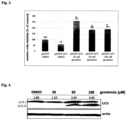
Fig. 3 . Relative survival of human embryonic kidney cells transfected with plasmid pEGFP-Q74 (bearing the 1st exon of the HTT gene with 74 CAG repeats), treated with genistein (30, 60 and 100 µM) or DMSO (control cells), in a volume equal to that of genistein, for 48 h. In control experiments, a plasmid vector coding for EGFP was used. Statistical analysis was performed with the t-Student test. The differences were considered significant atp<0.05. -
Fig. 4 . Relative level of the LC3-II protein in human embryonic kidney cells transfected with plasmid pEGFP-Q74 (bearing the 1st exon of the HTT gene with 74 CAG repeats), treated with genistein (30, 60 and 100 µM) or DMSO (control cells), in a volume equal to that of genistein, for 96 h. Actin was used as an internal control. Intensity of bands was estimated using the Quantity One software. -
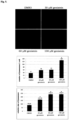
Fig. 5 . Number (calculated per one cell) and volume of acidic organelles in human embryonic kidney cells transfected with plasmid pEGFP-Q74 (bearing the 1st exon of the HTT gene with 74 CAG repeats), treated with genistein (30, 60 and 100 µM) or DMSO (control cells), in a volume equal to that of genistein, for 96 h. Acidic organelles were labelled by a fluorescent dye LysoTracker Red, while nuclei were marked by DAPI dye. Error bars indicate standard deviation. Statistical analysis was performed with the t-Student test. The differences were considered significant atp<0.05. -
Fig. 6 . Co-localization of huntingtin aggregates and lysosomes in human embryonic kidney cells transfected with plasmid pEGFP-Q74 (bearing the 1st exon of the HTT gene with 74 CAG repeats), treated with genistein (30, 60 and 100 µM) or DMSO (control cells), in a volume equal to that of genistein, for 96 h. Acidic organelles were labelled by a fluorescent dye LysoTracker Red. The co-localization Pearson factor was calculated by using the ImageJ software. Error bars indicate standard deviation. Statistical analysis was performed with the t-Student test. The differences were considered significant atp<0.05. -
Fig. 7 . Relative level of mutated huntingtin in human embryonic kidney cells transfected with plasmid pEGFP-Q74 (bearing the 1st exon of the HTT gene with 74 CAG repeats), treated with genistein (30, 60 and 100 µM) or DMSO (control cells), in a volume equal to that of genistein, in the presence of 10 µM chloroquine, for 96 h. Actin was used as an internal control. - The invention has been demonstrated in the examples presented below which do not restrict the invention.
- In experiments, the model of human embryonic kidney cells (HEK293) transfected with plasmid pEGFP-Q74 bearing the 1st exon of the HTT gene with 74 CAG repeats. The product of this gene forms aggregates which cannot be degraded by natural processes, as seen under fluorescent microscope (
Fig. 1 ). Transfected cells were treated with genistein at final concentrations of 30, 60 and 100 µM or with DMSO in a volume equal to that of genistein, for 48 or 96 h. Such cells were observed under fluorescent microscope. Moreover, Western-blotting experiments were performed in order to estimate the level of mutated huntingtin (Fig. 2 ). In order to assess whether a decrease in the level of mutated huntingtin and reduction of the number and size of huntingtin aggregates can lead to increased cell survival, the viability tests were performed. Cells transfected with plasmid pEGFP-Q74 were treated with genistein and viability was assessed by using the MTT test (Fig. 3 ). - In order to understand the mechanism of genistein action, experiments were performed to answer the question if this compound can induce the autophagy process. Autophagy is one of the major pathways of degradation of misfolded proteins in cells. Immunodetection of the LC3-II protein, the best investigated marker of autophagy, was performed. Human embryonic kidney cells were transfected with the plasmid, as described above, and were treated with genistein at
final concentrations Fig. 4 ). - Induction of the autophagy process is linked to an increased number of lysosomes. Therefore, number of lysosomes was monitored in experiments with the use of a fluorescent dye, LysoTracker Red. Nuclei were stained with a fluorescent dye DAPI. The microscopic pictures were analyzed with the use of the ImageJ software. The results indicated that increased concentrations of genistein resulted in higher number and volume of acid organelles. This increase is visible at the lowest genistein concentration (30 µM), though the difference relative to the control is significant at 100 µM genistein. An increase in the volume of acid organelles was evident even at 30 µM genistein (
Fig. 5 ). - In order to test whether mutant huntingtin is transported into lysosomes for degradation, co-localization of aggregates of mutated huntingtin with lysosomes was assessed using a fluorescent microscope (
Fig. 6 ). Partial co-localization could be observed even in control experiments (with DMSO). However, its level increased significantly after treatment with 100 µM genistein. Statistical analysis, including Pearson correlation co-efficient, indicated a significant increase in the co-localization in genistein-treated cells. Therefore, mutated huntingtin is delivered into lysosome where it is subsequently degraded. - To test if genistein-induced lysosomal pathway of protein degradation is responsible for removal of mutated huntingtin, experiments were performed in which lysosomal function was inhibited in cells by addition of chloroquine. This compound increases pH inside these organelles, thus, inactivating lysosomal enzymes. Cells were treated with increased concentrations of genistein or with DMSO equal to that of genistein, for 96 h. Immunodetection of mutated huntingtin was performed using Western-blotting (
Fig. 7 ). The results indicated that after inhibition of lysosomal enzymes by 10 µM chloroquine, the level of mutated huntingtin did not change significantly in the presence of genistein. This confirms that activity of lysosomes is responsible for degradation of the mutated form of this protein. - The obtained results indicate that genistein action:
- 1. leads to decrease in both size and number of mutant huntingtin aggregates in cells (
Fig. 1 ), - 2. significantly reduces the level of mutant huntingtin in cells (
Fig. 2 ), - 3. causes an increase in viability of cells (
Fig. 3 ), - 4. induces the autophagy process (
Fig. 4 ), - 5. activates the lysosomal pathway of removing of mutant huntingtin (
Figs. 5-7 ).
Claims (5)
- 5,7-dihydroxy-3-(4-hydroxyphenyl)-4H-1-benzopiran-4-one for use in the treatment of Huntington's disease causing reduction of the level of mutant huntingtin protein aggregates in cells by induction of autophagy process .
- 5,7-dihydroxy-3-(4-hydroxyphenyl)-4H-1-benzopiran-4-one for use in the treatment of Huntington's disease according to the claim 1, characterized in that, the mechanism of treatment cause an increase in cell viability through considerable reduction of the level of mutant huntingtin in cells.
- Pharmaceutical composition containing an active compound 5,7-dihydroxy-3-(4-hydroxyphenyl)-4H-1-benzopiran-4-one coupled with at least one carrier or pharmaceutical solvent for use in the treatment of Huntington's disease causing reduction of the level of mutant huntingtin protein aggregates in cells by induction of autophagy process.
- The composition according to the claim 3 for use in the dose of 5-150 mg/kg/day.
- The composition according to the claim 4 for use in oral administration.
Applications Claiming Priority (1)
| Application Number | Priority Date | Filing Date | Title |
|---|---|---|---|
| PL417983A PL417983A1 (en) | 2016-07-15 | 2016-07-15 | Medical application of 5,7-dihydroxy-3-(4-hydroxyphenyl)-4H-1-benzopyran-4-one in the therapy of Huntington disease and the pharmaceutically approved form of medicine |
Publications (2)
| Publication Number | Publication Date |
|---|---|
| EP3300730A1 EP3300730A1 (en) | 2018-04-04 |
| EP3300730B1 true EP3300730B1 (en) | 2024-04-03 |
Family
ID=61006882
Family Applications (1)
| Application Number | Title | Priority Date | Filing Date |
|---|---|---|---|
| EP17001178.7A Active EP3300730B1 (en) | 2016-07-15 | 2017-07-11 | The medical use of 5,7-dihydroxy-3-(4-hydroxyphenyl)-4h-1-benzopiran-4-one in the therapy of huntington disease and pharmaceutically acceptable form of the drug |
Country Status (2)
| Country | Link |
|---|---|
| EP (1) | EP3300730B1 (en) |
| PL (2) | PL417983A1 (en) |
Families Citing this family (1)
| Publication number | Priority date | Publication date | Assignee | Title |
|---|---|---|---|---|
| PL440896A1 (en) * | 2022-04-11 | 2023-10-16 | Uniwersytet Gdański | Genistein for use in preventing the loss of memory and cognitive abilities in healthy people as a result of the gradual physiological aging processes of the brain with age, as a factor preventing and reducing the deposition of harmful insoluble protein aggregates and deposits in the brain, in particular beta-amyloid |
Family Cites Families (1)
| Publication number | Priority date | Publication date | Assignee | Title |
|---|---|---|---|---|
| AU2006318447A1 (en) * | 2005-11-21 | 2007-05-31 | The Board Of Trustees Of The University Of Alabama For And On Behalf Of The University Of Alabama | Methods of using small molecule compounds for neuroprotection |
-
2016
- 2016-07-15 PL PL417983A patent/PL417983A1/en unknown
-
2017
- 2017-07-11 EP EP17001178.7A patent/EP3300730B1/en active Active
- 2017-07-11 PL PL17001178.7T patent/PL3300730T3/en unknown
Non-Patent Citations (2)
| Title |
|---|
| MARTA MOSKOT ET AL: "Modulation of expression of genes involved in glycosaminoglycan metabolism and lysosome biogenesis by flavonoids", SCIENTIFIC REPORTS, vol. 5, no. 1, 23 March 2015 (2015-03-23), XP055558277, DOI: 10.1038/srep09378 * |
| MARTA MOSKOT ET AL: "The Phytoestrogen Genistein Modulates Lysosomal Metabolism and Transcription Factor EB (TFEB) Activation", JOURNAL OF BIOLOGICAL CHEMISTRY, vol. 289, no. 24, 13 June 2014 (2014-06-13), US, pages 17054 - 17069, XP055558231, ISSN: 0021-9258, DOI: 10.1074/jbc.M114.555300 * |
Also Published As
| Publication number | Publication date |
|---|---|
| PL417983A1 (en) | 2018-01-29 |
| EP3300730A1 (en) | 2018-04-04 |
| PL3300730T3 (en) | 2024-08-26 |
Similar Documents
| Publication | Publication Date | Title |
|---|---|---|
| Freyssin et al. | Natural polyphenols effects on protein aggregates in Alzheimer's and Parkinson's prion-like diseases | |
| Gonzalez-Burgos et al. | Antioxidant activity, neuroprotective properties and bioactive constituents analysis of varying polarity extracts from Eucalyptus globulus leaves | |
| Singh et al. | Oxidative stress-mediated memory impairment during aging and its therapeutic intervention by natural bioactive compounds | |
| Kumar et al. | Epigallocatechin gallate suppresses premature senescence of preadipocytes by inhibition of PI3K/Akt/mTOR pathway and induces senescent cell death by regulation of Bax/Bcl-2 pathway | |
| Khan et al. | Dietary flavonoids in the management of huntington’s disease: mechanism and clinical perspective | |
| Ferlazzo et al. | Flavonoid fraction of orange and bergamot juices protect human lung epithelial cells from hydrogen peroxide‐induced oxidative stress | |
| Amin et al. | Vanillic acid attenuates Aβ1-42-induced oxidative stress and cognitive impairment in mice | |
| Grosso et al. | The use of flavonoids in central nervous system disorders | |
| Szwajgier | Anticholinesterase activities of selected polyphenols-a short report | |
| Rossi et al. | Benefits from dietary polyphenols for brain aging and Alzheimer’s disease | |
| Yuan et al. | Tribulus terrestris Ameliorates Oxidative Stress‐Induced ARPE‐19 Cell Injury through the PI3K/Akt‐Nrf2 Signaling Pathway | |
| Miceli et al. | Oleuropein aglycone protects against MAO‐A‐induced autophagy impairment and cardiomyocyte death through activation of TFEB | |
| Russo et al. | Red wine micronutrients as protective agents in Alzheimer-like induced insult | |
| Jelenković et al. | Influence of the green tea leaf extract on neurotoxicity of aluminium chloride in rats | |
| Hanske et al. | Recovery and metabolism of xanthohumol in germ‐free and human microbiota‐associated rats | |
| Pyrzanowska et al. | Influence of long-term administration of rutin on spatial memory as well as the concentration of brain neurotransmitters in aged rats | |
| Scotti et al. | Computer aided drug design studies in the discovery of secondary metabolites targeted against age-related neurodegenerative diseases | |
| Yang et al. | N-propargyl caffeate amide (PACA) potentiates nerve growth factor (NGF)-induced neurite outgrowth and attenuates 6-hydroxydopamine (6-OHDA)-induced toxicity by activating the Nrf2/HO-1 pathway | |
| US9044451B2 (en) | Use of delta tocopherol for the treatment of lysosomal storage disorders | |
| Chao et al. | Phenolic acids and flavonoids‐rich Glechoma hederacea L.(Lamiaceae) water extract against H2O2‐induced apoptosis in PC12 cells | |
| El-Awdan et al. | Alleviation of haloperidol induced oxidative stress in rats: Effects of sucrose vs grape seed extract | |
| Basurto‐Islas et al. | Natural products against tau hyperphosphorylation‐induced aggregates: Potential therapies for Alzheimer's disease | |
| Wang et al. | Ginkgo biloba extract protects human neuroblastoma SH-SY5Y cells against oxidative glutamate toxicity by activating redoxosome-p66Shc | |
| Shah et al. | Synthetic and Natural Bioactive Molecules in Balancing the Crosstalk among Common Signaling Pathways in Alzheimer’s Disease: Understanding the Neurotoxic Mechanisms for Therapeutic Intervention | |
| Akşit et al. | LC-MS/MS profiling phytochemical content of Echinophora chrysantha (Apiaceae) and antiproliferative, antioxidant activity |
Legal Events
| Date | Code | Title | Description |
|---|---|---|---|
| PUAI | Public reference made under article 153(3) epc to a published international application that has entered the european phase |
Free format text: ORIGINAL CODE: 0009012 |
|
| STAA | Information on the status of an ep patent application or granted ep patent |
Free format text: STATUS: REQUEST FOR EXAMINATION WAS MADE |
|
| 17P | Request for examination filed |
Effective date: 20180104 |
|
| AK | Designated contracting states |
Kind code of ref document: A1 Designated state(s): AL AT BE BG CH CY CZ DE DK EE ES FI FR GB GR HR HU IE IS IT LI LT LU LV MC MK MT NL NO PL PT RO RS SE SI SK SM TR |
|
| AX | Request for extension of the european patent |
Extension state: BA ME |
|
| STAA | Information on the status of an ep patent application or granted ep patent |
Free format text: STATUS: EXAMINATION IS IN PROGRESS |
|
| 17Q | First examination report despatched |
Effective date: 20191113 |
|
| GRAP | Despatch of communication of intention to grant a patent |
Free format text: ORIGINAL CODE: EPIDOSNIGR1 |
|
| STAA | Information on the status of an ep patent application or granted ep patent |
Free format text: STATUS: GRANT OF PATENT IS INTENDED |
|
| INTG | Intention to grant announced |
Effective date: 20240105 |
|
| GRAS | Grant fee paid |
Free format text: ORIGINAL CODE: EPIDOSNIGR3 |
|
| GRAA | (expected) grant |
Free format text: ORIGINAL CODE: 0009210 |
|
| STAA | Information on the status of an ep patent application or granted ep patent |
Free format text: STATUS: THE PATENT HAS BEEN GRANTED |
|
| AK | Designated contracting states |
Kind code of ref document: B1 Designated state(s): AL AT BE BG CH CY CZ DE DK EE ES FI FR GB GR HR HU IE IS IT LI LT LU LV MC MK MT NL NO PL PT RO RS SE SI SK SM TR |
|
| REG | Reference to a national code |
Ref country code: GB Ref legal event code: FG4D |
|
| REG | Reference to a national code |
Ref country code: CH Ref legal event code: EP |
|
| REG | Reference to a national code |
Ref country code: IE Ref legal event code: FG4D |
|
| REG | Reference to a national code |
Ref country code: DE Ref legal event code: R096 Ref document number: 602017080526 Country of ref document: DE |
|
| REG | Reference to a national code |
Ref country code: LT Ref legal event code: MG9D |
|
| REG | Reference to a national code |
Ref country code: NL Ref legal event code: MP Effective date: 20240403 |
|
| REG | Reference to a national code |
Ref country code: AT Ref legal event code: MK05 Ref document number: 1671481 Country of ref document: AT Kind code of ref document: T Effective date: 20240403 |
|
| PG25 | Lapsed in a contracting state [announced via postgrant information from national office to epo] |
Ref country code: NL Free format text: LAPSE BECAUSE OF FAILURE TO SUBMIT A TRANSLATION OF THE DESCRIPTION OR TO PAY THE FEE WITHIN THE PRESCRIBED TIME-LIMIT Effective date: 20240403 |
|
| PG25 | Lapsed in a contracting state [announced via postgrant information from national office to epo] |
Ref country code: NL Free format text: LAPSE BECAUSE OF FAILURE TO SUBMIT A TRANSLATION OF THE DESCRIPTION OR TO PAY THE FEE WITHIN THE PRESCRIBED TIME-LIMIT Effective date: 20240403 |
|
| PG25 | Lapsed in a contracting state [announced via postgrant information from national office to epo] |
Ref country code: IS Free format text: LAPSE BECAUSE OF FAILURE TO SUBMIT A TRANSLATION OF THE DESCRIPTION OR TO PAY THE FEE WITHIN THE PRESCRIBED TIME-LIMIT Effective date: 20240803 |
|
| PG25 | Lapsed in a contracting state [announced via postgrant information from national office to epo] |
Ref country code: BG Free format text: LAPSE BECAUSE OF FAILURE TO SUBMIT A TRANSLATION OF THE DESCRIPTION OR TO PAY THE FEE WITHIN THE PRESCRIBED TIME-LIMIT Effective date: 20240403 |
|
| PG25 | Lapsed in a contracting state [announced via postgrant information from national office to epo] |
Ref country code: HR Free format text: LAPSE BECAUSE OF FAILURE TO SUBMIT A TRANSLATION OF THE DESCRIPTION OR TO PAY THE FEE WITHIN THE PRESCRIBED TIME-LIMIT Effective date: 20240403 Ref country code: FI Free format text: LAPSE BECAUSE OF FAILURE TO SUBMIT A TRANSLATION OF THE DESCRIPTION OR TO PAY THE FEE WITHIN THE PRESCRIBED TIME-LIMIT Effective date: 20240403 |
|
| PG25 | Lapsed in a contracting state [announced via postgrant information from national office to epo] |
Ref country code: GR Free format text: LAPSE BECAUSE OF FAILURE TO SUBMIT A TRANSLATION OF THE DESCRIPTION OR TO PAY THE FEE WITHIN THE PRESCRIBED TIME-LIMIT Effective date: 20240704 |
|
| PG25 | Lapsed in a contracting state [announced via postgrant information from national office to epo] |
Ref country code: PT Free format text: LAPSE BECAUSE OF FAILURE TO SUBMIT A TRANSLATION OF THE DESCRIPTION OR TO PAY THE FEE WITHIN THE PRESCRIBED TIME-LIMIT Effective date: 20240805 |
|
| PG25 | Lapsed in a contracting state [announced via postgrant information from national office to epo] |
Ref country code: ES Free format text: LAPSE BECAUSE OF FAILURE TO SUBMIT A TRANSLATION OF THE DESCRIPTION OR TO PAY THE FEE WITHIN THE PRESCRIBED TIME-LIMIT Effective date: 20240403 |
|
| PG25 | Lapsed in a contracting state [announced via postgrant information from national office to epo] |
Ref country code: CZ Free format text: LAPSE BECAUSE OF FAILURE TO SUBMIT A TRANSLATION OF THE DESCRIPTION OR TO PAY THE FEE WITHIN THE PRESCRIBED TIME-LIMIT Effective date: 20240403 |
|
| PG25 | Lapsed in a contracting state [announced via postgrant information from national office to epo] |
Ref country code: AT Free format text: LAPSE BECAUSE OF FAILURE TO SUBMIT A TRANSLATION OF THE DESCRIPTION OR TO PAY THE FEE WITHIN THE PRESCRIBED TIME-LIMIT Effective date: 20240403 |
|
| PG25 | Lapsed in a contracting state [announced via postgrant information from national office to epo] |
Ref country code: LV Free format text: LAPSE BECAUSE OF FAILURE TO SUBMIT A TRANSLATION OF THE DESCRIPTION OR TO PAY THE FEE WITHIN THE PRESCRIBED TIME-LIMIT Effective date: 20240403 |
|
| PG25 | Lapsed in a contracting state [announced via postgrant information from national office to epo] |
Ref country code: PT Free format text: LAPSE BECAUSE OF FAILURE TO SUBMIT A TRANSLATION OF THE DESCRIPTION OR TO PAY THE FEE WITHIN THE PRESCRIBED TIME-LIMIT Effective date: 20240805 Ref country code: NO Free format text: LAPSE BECAUSE OF FAILURE TO SUBMIT A TRANSLATION OF THE DESCRIPTION OR TO PAY THE FEE WITHIN THE PRESCRIBED TIME-LIMIT Effective date: 20240703 Ref country code: LV Free format text: LAPSE BECAUSE OF FAILURE TO SUBMIT A TRANSLATION OF THE DESCRIPTION OR TO PAY THE FEE WITHIN THE PRESCRIBED TIME-LIMIT Effective date: 20240403 Ref country code: IS Free format text: LAPSE BECAUSE OF FAILURE TO SUBMIT A TRANSLATION OF THE DESCRIPTION OR TO PAY THE FEE WITHIN THE PRESCRIBED TIME-LIMIT Effective date: 20240803 Ref country code: HR Free format text: LAPSE BECAUSE OF FAILURE TO SUBMIT A TRANSLATION OF THE DESCRIPTION OR TO PAY THE FEE WITHIN THE PRESCRIBED TIME-LIMIT Effective date: 20240403 Ref country code: GR Free format text: LAPSE BECAUSE OF FAILURE TO SUBMIT A TRANSLATION OF THE DESCRIPTION OR TO PAY THE FEE WITHIN THE PRESCRIBED TIME-LIMIT Effective date: 20240704 Ref country code: FI Free format text: LAPSE BECAUSE OF FAILURE TO SUBMIT A TRANSLATION OF THE DESCRIPTION OR TO PAY THE FEE WITHIN THE PRESCRIBED TIME-LIMIT Effective date: 20240403 Ref country code: ES Free format text: LAPSE BECAUSE OF FAILURE TO SUBMIT A TRANSLATION OF THE DESCRIPTION OR TO PAY THE FEE WITHIN THE PRESCRIBED TIME-LIMIT Effective date: 20240403 Ref country code: CZ Free format text: LAPSE BECAUSE OF FAILURE TO SUBMIT A TRANSLATION OF THE DESCRIPTION OR TO PAY THE FEE WITHIN THE PRESCRIBED TIME-LIMIT Effective date: 20240403 Ref country code: BG Free format text: LAPSE BECAUSE OF FAILURE TO SUBMIT A TRANSLATION OF THE DESCRIPTION OR TO PAY THE FEE WITHIN THE PRESCRIBED TIME-LIMIT Effective date: 20240403 Ref country code: AT Free format text: LAPSE BECAUSE OF FAILURE TO SUBMIT A TRANSLATION OF THE DESCRIPTION OR TO PAY THE FEE WITHIN THE PRESCRIBED TIME-LIMIT Effective date: 20240403 Ref country code: RS Free format text: LAPSE BECAUSE OF FAILURE TO SUBMIT A TRANSLATION OF THE DESCRIPTION OR TO PAY THE FEE WITHIN THE PRESCRIBED TIME-LIMIT Effective date: 20240703 |
|
| REG | Reference to a national code |
Ref country code: DE Ref legal event code: R097 Ref document number: 602017080526 Country of ref document: DE |
|
| PG25 | Lapsed in a contracting state [announced via postgrant information from national office to epo] |
Ref country code: DK Free format text: LAPSE BECAUSE OF FAILURE TO SUBMIT A TRANSLATION OF THE DESCRIPTION OR TO PAY THE FEE WITHIN THE PRESCRIBED TIME-LIMIT Effective date: 20240403 |
|
| PG25 | Lapsed in a contracting state [announced via postgrant information from national office to epo] |
Ref country code: EE Free format text: LAPSE BECAUSE OF FAILURE TO SUBMIT A TRANSLATION OF THE DESCRIPTION OR TO PAY THE FEE WITHIN THE PRESCRIBED TIME-LIMIT Effective date: 20240403 |
|
| PG25 | Lapsed in a contracting state [announced via postgrant information from national office to epo] |
Ref country code: SK Free format text: LAPSE BECAUSE OF FAILURE TO SUBMIT A TRANSLATION OF THE DESCRIPTION OR TO PAY THE FEE WITHIN THE PRESCRIBED TIME-LIMIT Effective date: 20240403 Ref country code: RO Free format text: LAPSE BECAUSE OF FAILURE TO SUBMIT A TRANSLATION OF THE DESCRIPTION OR TO PAY THE FEE WITHIN THE PRESCRIBED TIME-LIMIT Effective date: 20240403 |
|
| PG25 | Lapsed in a contracting state [announced via postgrant information from national office to epo] |
Ref country code: SM Free format text: LAPSE BECAUSE OF FAILURE TO SUBMIT A TRANSLATION OF THE DESCRIPTION OR TO PAY THE FEE WITHIN THE PRESCRIBED TIME-LIMIT Effective date: 20240403 |
|
| PG25 | Lapsed in a contracting state [announced via postgrant information from national office to epo] |
Ref country code: SM Free format text: LAPSE BECAUSE OF FAILURE TO SUBMIT A TRANSLATION OF THE DESCRIPTION OR TO PAY THE FEE WITHIN THE PRESCRIBED TIME-LIMIT Effective date: 20240403 Ref country code: SK Free format text: LAPSE BECAUSE OF FAILURE TO SUBMIT A TRANSLATION OF THE DESCRIPTION OR TO PAY THE FEE WITHIN THE PRESCRIBED TIME-LIMIT Effective date: 20240403 Ref country code: RO Free format text: LAPSE BECAUSE OF FAILURE TO SUBMIT A TRANSLATION OF THE DESCRIPTION OR TO PAY THE FEE WITHIN THE PRESCRIBED TIME-LIMIT Effective date: 20240403 Ref country code: EE Free format text: LAPSE BECAUSE OF FAILURE TO SUBMIT A TRANSLATION OF THE DESCRIPTION OR TO PAY THE FEE WITHIN THE PRESCRIBED TIME-LIMIT Effective date: 20240403 Ref country code: DK Free format text: LAPSE BECAUSE OF FAILURE TO SUBMIT A TRANSLATION OF THE DESCRIPTION OR TO PAY THE FEE WITHIN THE PRESCRIBED TIME-LIMIT Effective date: 20240403 |
|
| PG25 | Lapsed in a contracting state [announced via postgrant information from national office to epo] |
Ref country code: MC Free format text: LAPSE BECAUSE OF FAILURE TO SUBMIT A TRANSLATION OF THE DESCRIPTION OR TO PAY THE FEE WITHIN THE PRESCRIBED TIME-LIMIT Effective date: 20240403 |
|
| PLBE | No opposition filed within time limit |
Free format text: ORIGINAL CODE: 0009261 |
|
| STAA | Information on the status of an ep patent application or granted ep patent |
Free format text: STATUS: NO OPPOSITION FILED WITHIN TIME LIMIT |
|
| REG | Reference to a national code |
Ref country code: CH Ref legal event code: PL |
|
| 26N | No opposition filed |
Effective date: 20250106 |
|
| PG25 | Lapsed in a contracting state [announced via postgrant information from national office to epo] |
Ref country code: LU Free format text: LAPSE BECAUSE OF NON-PAYMENT OF DUE FEES Effective date: 20240711 |
|
| PG25 | Lapsed in a contracting state [announced via postgrant information from national office to epo] |
Ref country code: LU Free format text: LAPSE BECAUSE OF NON-PAYMENT OF DUE FEES Effective date: 20240711 |
|
| PG25 | Lapsed in a contracting state [announced via postgrant information from national office to epo] |
Ref country code: SI Free format text: LAPSE BECAUSE OF FAILURE TO SUBMIT A TRANSLATION OF THE DESCRIPTION OR TO PAY THE FEE WITHIN THE PRESCRIBED TIME-LIMIT Effective date: 20240403 Ref country code: CH Free format text: LAPSE BECAUSE OF NON-PAYMENT OF DUE FEES Effective date: 20240731 Ref country code: BE Free format text: LAPSE BECAUSE OF NON-PAYMENT OF DUE FEES Effective date: 20240731 |
|
| REG | Reference to a national code |
Ref country code: BE Ref legal event code: MM Effective date: 20240731 |
|
| PG25 | Lapsed in a contracting state [announced via postgrant information from national office to epo] |
Ref country code: IE Free format text: LAPSE BECAUSE OF NON-PAYMENT OF DUE FEES Effective date: 20240711 |
|
| PG25 | Lapsed in a contracting state [announced via postgrant information from national office to epo] |
Ref country code: SE Free format text: LAPSE BECAUSE OF FAILURE TO SUBMIT A TRANSLATION OF THE DESCRIPTION OR TO PAY THE FEE WITHIN THE PRESCRIBED TIME-LIMIT Effective date: 20240403 |
|
| PGFP | Annual fee paid to national office [announced via postgrant information from national office to epo] |
Ref country code: DE Payment date: 20250729 Year of fee payment: 9 |
|
| PGFP | Annual fee paid to national office [announced via postgrant information from national office to epo] |
Ref country code: GB Payment date: 20250728 Year of fee payment: 9 |
|
| PGFP | Annual fee paid to national office [announced via postgrant information from national office to epo] |
Ref country code: FR Payment date: 20250728 Year of fee payment: 9 |
|
| PG25 | Lapsed in a contracting state [announced via postgrant information from national office to epo] |
Ref country code: CY Free format text: LAPSE BECAUSE OF FAILURE TO SUBMIT A TRANSLATION OF THE DESCRIPTION OR TO PAY THE FEE WITHIN THE PRESCRIBED TIME-LIMIT; INVALID AB INITIO Effective date: 20170711 |
|
| PG25 | Lapsed in a contracting state [announced via postgrant information from national office to epo] |
Ref country code: IT Free format text: LAPSE BECAUSE OF FAILURE TO SUBMIT A TRANSLATION OF THE DESCRIPTION OR TO PAY THE FEE WITHIN THE PRESCRIBED TIME-LIMIT Effective date: 20240403 |
|
| PG25 | Lapsed in a contracting state [announced via postgrant information from national office to epo] |
Ref country code: HU Free format text: LAPSE BECAUSE OF FAILURE TO SUBMIT A TRANSLATION OF THE DESCRIPTION OR TO PAY THE FEE WITHIN THE PRESCRIBED TIME-LIMIT; INVALID AB INITIO Effective date: 20170711 |
|
| PGFP | Annual fee paid to national office [announced via postgrant information from national office to epo] |
Ref country code: PL Payment date: 20260112 Year of fee payment: 9 |