EP3300721B2 - Propylene glycol-containing peptide formulations which are optimal for production and for use in injection devices - Google Patents
Propylene glycol-containing peptide formulations which are optimal for production and for use in injection devices Download PDFInfo
- Publication number
- EP3300721B2 EP3300721B2 EP17196501.5A EP17196501A EP3300721B2 EP 3300721 B2 EP3300721 B2 EP 3300721B2 EP 17196501 A EP17196501 A EP 17196501A EP 3300721 B2 EP3300721 B2 EP 3300721B2
- Authority
- EP
- European Patent Office
- Prior art keywords
- formulations
- formulation
- propylene glycol
- mannitol
- concentration
- Prior art date
- Legal status (The legal status is an assumption and is not a legal conclusion. Google has not performed a legal analysis and makes no representation as to the accuracy of the status listed.)
- Expired - Lifetime
Links
Images


Classifications
-
- A—HUMAN NECESSITIES
- A61—MEDICAL OR VETERINARY SCIENCE; HYGIENE
- A61K—PREPARATIONS FOR MEDICAL, DENTAL OR TOILETRY PURPOSES
- A61K38/00—Medicinal preparations containing peptides
- A61K38/16—Peptides having more than 20 amino acids; Gastrins; Somatostatins; Melanotropins; Derivatives thereof
- A61K38/17—Peptides having more than 20 amino acids; Gastrins; Somatostatins; Melanotropins; Derivatives thereof from animals; from humans
- A61K38/22—Hormones
- A61K38/26—Glucagons
-
- A—HUMAN NECESSITIES
- A61—MEDICAL OR VETERINARY SCIENCE; HYGIENE
- A61K—PREPARATIONS FOR MEDICAL, DENTAL OR TOILETRY PURPOSES
- A61K38/00—Medicinal preparations containing peptides
- A61K38/16—Peptides having more than 20 amino acids; Gastrins; Somatostatins; Melanotropins; Derivatives thereof
- A61K38/17—Peptides having more than 20 amino acids; Gastrins; Somatostatins; Melanotropins; Derivatives thereof from animals; from humans
- A61K38/22—Hormones
- A61K38/28—Insulins
-
- A—HUMAN NECESSITIES
- A61—MEDICAL OR VETERINARY SCIENCE; HYGIENE
- A61K—PREPARATIONS FOR MEDICAL, DENTAL OR TOILETRY PURPOSES
- A61K47/00—Medicinal preparations characterised by the non-active ingredients used, e.g. carriers or inert additives; Targeting or modifying agents chemically bound to the active ingredient
- A61K47/06—Organic compounds, e.g. natural or synthetic hydrocarbons, polyolefins, mineral oil, petrolatum or ozokerite
- A61K47/08—Organic compounds, e.g. natural or synthetic hydrocarbons, polyolefins, mineral oil, petrolatum or ozokerite containing oxygen, e.g. ethers, acetals, ketones, quinones, aldehydes, peroxides
- A61K47/10—Alcohols; Phenols; Salts thereof, e.g. glycerol; Polyethylene glycols [PEG]; Poloxamers; PEG/POE alkyl ethers
-
- A—HUMAN NECESSITIES
- A61—MEDICAL OR VETERINARY SCIENCE; HYGIENE
- A61K—PREPARATIONS FOR MEDICAL, DENTAL OR TOILETRY PURPOSES
- A61K47/00—Medicinal preparations characterised by the non-active ingredients used, e.g. carriers or inert additives; Targeting or modifying agents chemically bound to the active ingredient
- A61K47/06—Organic compounds, e.g. natural or synthetic hydrocarbons, polyolefins, mineral oil, petrolatum or ozokerite
- A61K47/16—Organic compounds, e.g. natural or synthetic hydrocarbons, polyolefins, mineral oil, petrolatum or ozokerite containing nitrogen, e.g. nitro-, nitroso-, azo-compounds, nitriles, cyanates
- A61K47/18—Amines; Amides; Ureas; Quaternary ammonium compounds; Amino acids; Oligopeptides having up to five amino acids
- A61K47/183—Amino acids, e.g. glycine, EDTA or aspartame
-
- A—HUMAN NECESSITIES
- A61—MEDICAL OR VETERINARY SCIENCE; HYGIENE
- A61K—PREPARATIONS FOR MEDICAL, DENTAL OR TOILETRY PURPOSES
- A61K47/00—Medicinal preparations characterised by the non-active ingredients used, e.g. carriers or inert additives; Targeting or modifying agents chemically bound to the active ingredient
- A61K47/06—Organic compounds, e.g. natural or synthetic hydrocarbons, polyolefins, mineral oil, petrolatum or ozokerite
- A61K47/20—Organic compounds, e.g. natural or synthetic hydrocarbons, polyolefins, mineral oil, petrolatum or ozokerite containing sulfur, e.g. dimethyl sulfoxide [DMSO], docusate, sodium lauryl sulfate or aminosulfonic acids
-
- A—HUMAN NECESSITIES
- A61—MEDICAL OR VETERINARY SCIENCE; HYGIENE
- A61K—PREPARATIONS FOR MEDICAL, DENTAL OR TOILETRY PURPOSES
- A61K47/00—Medicinal preparations characterised by the non-active ingredients used, e.g. carriers or inert additives; Targeting or modifying agents chemically bound to the active ingredient
- A61K47/06—Organic compounds, e.g. natural or synthetic hydrocarbons, polyolefins, mineral oil, petrolatum or ozokerite
- A61K47/26—Carbohydrates, e.g. sugar alcohols, amino sugars, nucleic acids, mono-, di- or oligo-saccharides; Derivatives thereof, e.g. polysorbates, sorbitan fatty acid esters or glycyrrhizin
-
- A—HUMAN NECESSITIES
- A61—MEDICAL OR VETERINARY SCIENCE; HYGIENE
- A61K—PREPARATIONS FOR MEDICAL, DENTAL OR TOILETRY PURPOSES
- A61K9/00—Medicinal preparations characterised by special physical form
- A61K9/0012—Galenical forms characterised by the site of application
- A61K9/0019—Injectable compositions; Intramuscular, intravenous, arterial, subcutaneous administration; Compositions to be administered through the skin in an invasive manner
-
- A—HUMAN NECESSITIES
- A61—MEDICAL OR VETERINARY SCIENCE; HYGIENE
- A61P—SPECIFIC THERAPEUTIC ACTIVITY OF CHEMICAL COMPOUNDS OR MEDICINAL PREPARATIONS
- A61P3/00—Drugs for disorders of the metabolism
- A61P3/04—Anorexiants; Antiobesity agents
-
- A—HUMAN NECESSITIES
- A61—MEDICAL OR VETERINARY SCIENCE; HYGIENE
- A61P—SPECIFIC THERAPEUTIC ACTIVITY OF CHEMICAL COMPOUNDS OR MEDICINAL PREPARATIONS
- A61P3/00—Drugs for disorders of the metabolism
- A61P3/08—Drugs for disorders of the metabolism for glucose homeostasis
- A61P3/10—Drugs for disorders of the metabolism for glucose homeostasis for hyperglycaemia, e.g. antidiabetics
-
- A—HUMAN NECESSITIES
- A61—MEDICAL OR VETERINARY SCIENCE; HYGIENE
- A61P—SPECIFIC THERAPEUTIC ACTIVITY OF CHEMICAL COMPOUNDS OR MEDICINAL PREPARATIONS
- A61P5/00—Drugs for disorders of the endocrine system
- A61P5/48—Drugs for disorders of the endocrine system of the pancreatic hormones
-
- A—HUMAN NECESSITIES
- A61—MEDICAL OR VETERINARY SCIENCE; HYGIENE
- A61P—SPECIFIC THERAPEUTIC ACTIVITY OF CHEMICAL COMPOUNDS OR MEDICINAL PREPARATIONS
- A61P5/00—Drugs for disorders of the endocrine system
- A61P5/48—Drugs for disorders of the endocrine system of the pancreatic hormones
- A61P5/50—Drugs for disorders of the endocrine system of the pancreatic hormones for increasing or potentiating the activity of insulin
Definitions
- the present invention relates to pharmaceutical formulations comprising the peptide Arg 34 , Lys 26 (N- ⁇ -( ⁇ -Glu(N- ⁇ -hexadecanoyl)))-GLP-1(7-37) and propylene glycol.
- isotonicity agents in peptide-containing pharmaceutical formulations is widely known and one of the more common isotonic agents used in such formulations is mannitol.
- mannitol causes problems during the production of peptide formulations as it crystallizes resulting in deposits in the production equipment and in the final product. Such deposits increase the need to clean the filling equipment during production of the formulation and this results in reduced production capability. In addition, such deposits may also result in reduced yield of the final product since vials/cartridges containing the peptide formulation may need to be discarded if particles are present.
- the present inventors have observed that in peptide formulations to be administered by injection, the presence of mannitol results in clogging of injection devices.
- the present inventors have discovered that peptide formulations containing propylene glycol at certain concentrations exhibit reduced deposits in production equipment and in the final product and also exhibit reduced clogging of injection devices.
- the present compositions may be formulated with any peptide and are also physically and chemically stable thus rendering them shelf-stable and suitable for invasive (eg. injection, subcutaneous injection, intramuscular, intraveneous or infusion) as well as non-invasive (eg nasal, oral, pulmonary, transdermal or transmucosal e.g. buccal) means of administration.
- the present invention therefore relates to a pharmaceutical formulation comprising the peptide Arg 34 , Lys 26 (N- ⁇ -( ⁇ -Glu(N- ⁇ -hexadecanoyl)))-GLP-1(7-37) and propylene glycol, where the propylene glycol is present in a concentration of 5-50 mg/ml and the pH of the formulation is from 7-10.
- the pharmaceutical formulations of the invention further contain a buffer and a preservative.
- the present invention also relates to a syringe containing the formulation as defined herein.
- the present invention relates to an injection device containing the formulation as defined herein.
- the present invention is defined in the appended claims. Subject matters which are not encompassed by the scope of the claims do not form part of the present invention.
- the present invention relates to a pharmaceutical formulation comprising the peptide Arg 34 , Lys 26 (N- ⁇ -( ⁇ -Glu(N- ⁇ -hexadecanoyl)))-GLP-1(7-37) and propylene glycol where the final concentration of propylene glycol in the formulation is 5-50 mg/ml and the pH of the formulation is in the range of from 7-10.
- the pharmaceutical formulations of the invention are found to be optimal for production because they exhibit reduced deposits in production equipment relative to formulations containing other isotonicity agents as measured by the simulated filling studies described in the Examples.
- the pharmaceutical formulations of the invention are found to be optimal for use in injection devices because they exhibit reduced clogging of the injection devices relative to formulations containing other isotonicity agents as measured by the simulated in use studies described in the Examples.
- the peptide to be included in the formulation of the invention is a GLP-1 agonist where "a GLP-1 agonist” is understood to refer to any peptide, as defined in the present claims, which fully or partially activates the human GLP-1 receptor.
- the "GLP-1 agonist” is any peptide, as defined in the present claims, that binds to a GLP-1 receptor, preferably with an affinity constant (K D ) or a potency (EC 50 ) of below 1 ⁇ M, e.g. below 100 nM as measured by methods known in the art (see e.g.
- WO 98/08871 and exhibits insulinotropic activity, where insulinotropic activity may be measured in vivo or in vitro assays known to those of ordinary skill in the art.
- the GLP-1 agonist may be administered to an animal and the insulin concentration measured over time.
- the GLP-1 agonist is Arg 34 , Lys 26 (N ⁇ -( ⁇ -Glu(N ⁇ -hexadecanoyl)))-GLP-1(7-37).
- the GLP-1 agonist is present in a concentration from 0.1 mg/ml to 100 mg/ml, more preferably in a concentration from 0.1 mg/ml to 50 mg/ml, and most preferably in a concentration of from 0.1 mg/ml to about10 mg/ml.
- the final concentration of propylene glycol in the formulations of the invention is from 1 to 50 mg/ml.
- the final concentration of propylene glycol in the formulations of the invention is from 5 to 25 mg/ml.
- the final concentration of propylene glycol in the formulations of the invention is from 8 to 16 mg/ml.
- the final concentration of propylene glycol in the formulations of the invention is from 13 to 15 mg/ml.
- the final concentration of propylene glycol in the formulations of the invention is from 13.5 to 14.5 mg/ml.
- the formulation has a pH in the range from about 7.0 to about 9.5 where the term "about” as used in connection with pH means + or - 0.1 pH units from the stated number.
- the formulation has a pH in the range from 7.0 to 8.0.
- the formulation has a pH in the range from 7.2 to 8.0.
- the formulation has a pH in the range from 7.0 to 8.3.
- the formulation has a pH in the range from 7.3 to 8.3.
- the formulations contain, in addition to a peptide and propylene glycol, a buffer and/or a preservative.
- the buffer is selected from the group consisting of sodium acetate, sodium carbonate, citrate, glycylglycine, histidine, glycine, lysine, arginin, sodium dihydrogen phosphate, disodium hydrogen phosphate, sodium phosphate, and tris(hydroxymethyl)-aminomethan, or mixtures thereof.
- the buffer is glycylglycine, sodium dihydrogen phosphate, disodium hydrogen phosphate, sodium phosphate or mixtures thereof.
- the preservative is selected from the group consisting of phenol, m-cresol, methyl p-hydroxybenzoate, propyl p-hydroxybenzoate, 2-phenoxyethanol, butyl p-hydroxybenzoate, 2-phenylethanol, benzyl alcohol, chlorobutanol, and thiomerosal, or mixtures thereof.
- the preservative is phenol or m-cresol.
- the preservative is present in a concentration from 0.1 mg/ml to 50 mg/ml, more preferably in a concentration from 0.1 mg/ml to 25 mg/ml, and most preferably in a concentration from 0.1 mg/ml to 10 mg/ml
- the formulation may further comprise a chelating agent where the chelating agent may be selected from salts of ethlenediaminetetraacetic acid (EDTA), citric acid, and aspartic acid, and mixtures thereof.
- EDTA ethlenediaminetetraacetic acid
- citric acid citric acid
- aspartic acid aspartic acid
- the chelating agent is present in a concentration from 0.1mg/ml to 5mg/ml. In a further embodiment of the invention the chelating agent is present in a concentration from 0.1mg/ml to 2mg/ml. In a further embodiment of the invention the chelating agent is present in a concentration from 2mg/ml to 5mg/ml.
Landscapes
- Health & Medical Sciences (AREA)
- Life Sciences & Earth Sciences (AREA)
- Chemical & Material Sciences (AREA)
- Veterinary Medicine (AREA)
- Animal Behavior & Ethology (AREA)
- Medicinal Chemistry (AREA)
- Public Health (AREA)
- General Health & Medical Sciences (AREA)
- Pharmacology & Pharmacy (AREA)
- Engineering & Computer Science (AREA)
- Epidemiology (AREA)
- Chemical Kinetics & Catalysis (AREA)
- General Chemical & Material Sciences (AREA)
- Oil, Petroleum & Natural Gas (AREA)
- Diabetes (AREA)
- Bioinformatics & Cheminformatics (AREA)
- Endocrinology (AREA)
- Proteomics, Peptides & Aminoacids (AREA)
- Immunology (AREA)
- Gastroenterology & Hepatology (AREA)
- Zoology (AREA)
- Nuclear Medicine, Radiotherapy & Molecular Imaging (AREA)
- Organic Chemistry (AREA)
- Dermatology (AREA)
- Molecular Biology (AREA)
- Biochemistry (AREA)
- Hematology (AREA)
- Obesity (AREA)
- Emergency Medicine (AREA)
- Child & Adolescent Psychology (AREA)
- Medicines That Contain Protein Lipid Enzymes And Other Medicines (AREA)
- Medicinal Preparation (AREA)
- Peptides Or Proteins (AREA)
Description
- The present invention relates to pharmaceutical formulations comprising the peptide Arg34, Lys26(N-ε-(γ-Glu(N-α-hexadecanoyl)))-GLP-1(7-37) and propylene glycol.
- The inclusion of isotonicity agents in peptide-containing pharmaceutical formulations is widely known and one of the more common isotonic agents used in such formulations is mannitol. However, the present inventors have observed that mannitol causes problems during the production of peptide formulations as it crystallizes resulting in deposits in the production equipment and in the final product. Such deposits increase the need to clean the filling equipment during production of the formulation and this results in reduced production capability. In addition, such deposits may also result in reduced yield of the final product since vials/cartridges containing the peptide formulation may need to be discarded if particles are present. Finally, the present inventors have observed that in peptide formulations to be administered by injection, the presence of mannitol results in clogging of injection devices.
- Accordingly, it is desirable to identify an alternative isotonic agent to mannitol for inclusion in peptide-containing formulations and in particular, for inclusion in peptide formulations which are administered by injection.
- PRIDAL L ET AL: "ABSORPTION OF GLUCAGON-LIKE PEPTIDE-1 CAN BE PROTRACTED BY ZINC OR PROTAMINE",INTERNATIONAL JOURNAL OF PHARMACEUTICS, ELSEVIER BV, NL, vol. 136, 1 January 1996 (1996-01-01), discloses a composition comprising GLP-1 (7-36) amide in combination with disodium phosphate and an isotonic agent glycerol at pH about 7 (pH= 6.9).
- The present inventors have discovered that peptide formulations containing propylene glycol at certain concentrations exhibit reduced deposits in production equipment and in the final product and also exhibit reduced clogging of injection devices. The present compositions may be formulated with any peptide and are also physically and chemically stable thus rendering them shelf-stable and suitable for invasive (eg. injection, subcutaneous injection, intramuscular, intraveneous or infusion) as well as non-invasive (eg nasal, oral, pulmonary, transdermal or transmucosal e.g. buccal) means of administration.
- The present invention therefore relates to a pharmaceutical formulation comprising the peptide Arg34, Lys26(N-ε-(γ-Glu(N-α-hexadecanoyl)))-GLP-1(7-37) and propylene glycol, where the propylene glycol is present in a concentration of 5-50 mg/ml and the pH of the formulation is from 7-10. In a preferred embodiment, the pharmaceutical formulations of the invention further contain a buffer and a preservative. The present invention also relates to a syringe containing the formulation as defined herein. In addtion, the present invention relates to an injection device containing the formulation as defined herein. The present invention is defined in the appended claims. Subject matters which are not encompassed by the scope of the claims do not form part of the present invention.
-
-
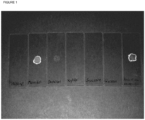
Figure 1 shows a photograph of dried droplets on microscope slides of from left to right, placebo (no peptide) formulations containing no isotonic agent (e only water, preservative and buffer), mannitol, sorbitol, xylitol, sucrose or glycerol as the isotonic agent with the far right slide containing mannitol with peptide Arg34, Lys26(Nε-(γ-Glu(Nα-hexadecanoyl)))-GLP-1(7-37). -
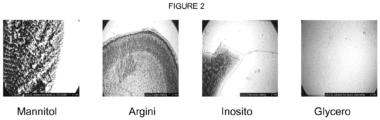
Figure 2 shows light microscopy pictures of from left to right, some of the dried droplets of placebo formulations containing mannitol, arginin, inositol or glycerol as the isotonic agent. -
Figure 3 shows light microscopy pictures of clogged needles dosed with placebo formulations containing myoinositol, maltose or glycerol as the isotonic agent. -
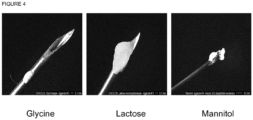
Figure 4 shows light microscopy pictures of deposits on needles dosed with placebo formulations containing glycine, lactose or mannitol as the isotonic agent. -
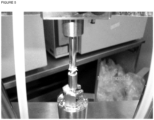
Figure 5 shows filling equipment after 24 hours simulated filling with Arg34, Lys26(Nε-(γ-Glu(Nα-hexadecanoyl)))-GLP-1(7-37) medium containing myo-inositol. -
Figure 6 shows deposits on filling equipment after 24 hours simulated filling with a mannitol-containing placebo formulation. -
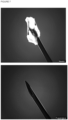
Figure 7 shows deposits on needles dosed with mannitol (top panel) and propylene glycol (bottom panel)-containing Arg34, Lys26(Nε-(γ-Glu(Nα-hexadecanoyl)))-GLP-1 (7-37) formulations. - The present invention relates to a pharmaceutical formulation comprising the peptide Arg34, Lys26(N-ε-(γ-Glu(N-α-hexadecanoyl)))-GLP-1(7-37) and propylene glycol where the final concentration of propylene glycol in the formulation is 5-50 mg/ml and the pH of the formulation is in the range of from 7-10.
- The pharmaceutical formulations of the invention are found to be optimal for production because they exhibit reduced deposits in production equipment relative to formulations containing other isotonicity agents as measured by the simulated filling studies described in the Examples. In addition, the pharmaceutical formulations of the invention are found to be optimal for use in injection devices because they exhibit reduced clogging of the injection devices relative to formulations containing other isotonicity agents as measured by the simulated in use studies described in the Examples.
- The peptide to be included in the formulation of the invention is a GLP-1 agonist where "a GLP-1 agonist" is understood to refer to any peptide, as defined in the present claims, which fully or partially activates the human GLP-1 receptor. In a preferred embodiment, the "GLP-1 agonist" is any peptide, as defined in the present claims, that binds to a GLP-1 receptor, preferably with an affinity constant (KD) or a potency (EC50) of below 1 µM, e.g. below 100 nM as measured by methods known in the art (see e.g.
WO 98/08871 - The GLP-1 agonist is Arg34, Lys26(Nε-(γ-Glu(Nα-hexadecanoyl)))-GLP-1(7-37).
- The GLP-1 agonist is present in a concentration from 0.1 mg/ml to 100 mg/ml, more preferably in a concentration from 0.1 mg/ml to 50 mg/ml, and most preferably in a concentration of from 0.1 mg/ml to about10 mg/ml.
- In one embodiment, the final concentration of propylene glycol in the formulations of the invention is from 1 to 50 mg/ml.
- In another embodiment, the final concentration of propylene glycol in the formulations of the invention is from 5 to 25 mg/ml.
- In yet another embodiment, the final concentration of propylene glycol in the formulations of the invention is from 8 to 16 mg/ml.
- In yet a further embodiment, the final concentration of propylene glycol in the formulations of the invention is from 13 to 15 mg/ml.
- In still another embodiment, the final concentration of propylene glycol in the formulations of the invention is from 13.5 to 14.5 mg/ml.
- In another embodiment of the invention, the formulation has a pH in the range from about 7.0 to about 9.5 where the term "about" as used in connection with pH means + or - 0.1 pH units from the stated number.
- In a further embodiment of the invention, the formulation has a pH in the range from 7.0 to 8.0.
- In yet a further embodiment of the invention, the formulation has a pH in the range from 7.2 to 8.0.
- In a further embodiment of the invention, the formulation has a pH in the range from 7.0 to 8.3.
- In yet a further embodiment of the invention, the formulation has a pH in the range from 7.3 to 8.3.
- In a preferred embodiment of the invention, the formulations contain, in addition to a peptide and propylene glycol, a buffer and/or a preservative.
- Where a buffer is to be included in the formulations of the invention, the buffer is selected from the group consisting of sodium acetate, sodium carbonate, citrate, glycylglycine, histidine, glycine, lysine, arginin, sodium dihydrogen phosphate, disodium hydrogen phosphate, sodium phosphate, and tris(hydroxymethyl)-aminomethan, or mixtures thereof. Each one of these specific buffers constitutes an alternative embodiment of the invention. In a preferred embodiment of the invention the buffer is glycylglycine, sodium dihydrogen phosphate, disodium hydrogen phosphate, sodium phosphate or mixtures thereof.
- Where a pharmaceutically acceptable preservative is to be included in the formulations of the invention, the preservative is selected from the group consisting of phenol, m-cresol, methyl p-hydroxybenzoate, propyl p-hydroxybenzoate, 2-phenoxyethanol, butyl p-hydroxybenzoate, 2-phenylethanol, benzyl alcohol, chlorobutanol, and thiomerosal, or mixtures thereof. Each one of these specific preservatives constitutes an alternative embodiment of the invention. In a preferred embodiment of the invention the preservative is phenol or m-cresol.
- In a further embodiment of the invention the preservative is present in a concentration from 0.1 mg/ml to 50 mg/ml, more preferably in a concentration from 0.1 mg/ml to 25 mg/ml, and most preferably in a concentration from 0.1 mg/ml to 10 mg/ml
- The use of a preservative in pharmaceutical compositions is well-known to the skilled person. For convenience reference is made to Remington: The Science and Practice of Pharmacy, 19th edition, 1995.
- In a further embodiment of the invention the formulation may further comprise a chelating agent where the chelating agent may be selected from salts of ethlenediaminetetraacetic acid (EDTA), citric acid, and aspartic acid, and mixtures thereof. Each one of these specific chelating agents constitutes an alternative embodiment of the invention.
- In a further embodiment of the invention the chelating agent is present in a concentration from 0.1mg/ml to 5mg/ml. In a further embodiment of the invention the chelating agent is present in a concentration from 0.1mg/ml to 2mg/ml. In a further embodiment of the invention the chelating agent is present in a concentration from 2mg/ml to 5mg/ml.
- The use of a chelating agent in pharmaceutical compositions is well-known to the skilled person. For convenience reference is made to Remington: The Science and Practice of Pharmacy, 19th edition, 1995.
- In a further embodiment of the invention the formulation may further comprise a stabiliser selected from the group of high molecular weight polymers or low molecular compounds where such stabilizers include polyethylene glycol (e.g. PEG 3350), polyvinylalcohol (PVA), polyvinylpyrrolidone, carboxymethylcellulose, different salts (e.g. sodium chloride), L-glycine, L-histidine, imidazole, arginine, lysine, isoleucine, aspartic acid, tryptophan, threonine and mixtures thereof. Each one of these specific stabilizers constitutes an alternative embodiment of the invention. In a preferred embodiment of the invention the stabiliser is selected from the group consisting of L-histidine, imidazole and arginine.
- In a further embodiment of the invention the high molecular weight polymer is present in a concentration from 0.1mg/ml to 50mg/ml. In a further embodiment of the invention the high molecular weight polymer is present in a concentration from 0.1mg/ml to 5mg/ml. In a further embodiment of the invention the high molecular weight polymer is present in a concentration from 5mg/ml to 10mg/ml. In a further embodiment of the invention the high molecular weight polymer is present in a concentration from 0mg/ml to 20mg/ml. In a further embodiment of the invention the high molecular weight polymer is present in a concentration from 20mg/ml to 30mg/ml. In a further embodiment of the invention the high molecular weight polymer is present in a concentration from 30mg/ml to 50mg/ml.
- In a further embodiment of the invention the low molecular weight compound is present in a concentration from 0.1mg/ml to 50mg/ml. In a further embodiment of the invention the low molecular weight compound is present in a concentration from 0.1mg/ml to 5mg/ml. In a further embodiment of the invention the low molecular weight compound is present in a concentration from 5mg/ml to 10mg/ml. In a further embodiment of the invention the low molecular weight compound is present in a concentration from 10mg/ml to 20mg/ml. In a further embodiment of the invention the low molecular weight compound is present in a concentration from 20mg/ml to 30mg/ml. In a further embodiment of the invention the low molecular weight compound is present in a concentration from 30mg/ml to 50mg/ml.
- The use of a stabilizer in pharmaceutical compositions is well-known to the skilled person. For convenience reference is made to Remington: The Science and Practice of Pharmacy, 19th edition, 1995.
- In a further embodiment of the invention the formulation of the invention may further comprise a surfactant where a surfactant may be selected from a detergent, ethoxylated castor oil, polyglycolyzed glycerides, acetylated monoglycerides, sorbitan fatty acid esters, poloxamers, such as 188 and 407, polyoxyethylene sorbitan fatty acid esters, polyoxyethylene derivatives such as alkylated and alkoxylated derivatives (tweens, e.g. Tween-20, or Tween-80), monoglycerides or ethoxylated derivatives thereof, diglycerides or polyoxyethylene derivatives thereof, glycerol, cholic acid or derivatives thereof, lecithins, alcohols and phospholipids, glycerophospholipids (lecithins, kephalins, phosphatidyl serine), glyceroglycolipids (galactopyransoide), sphingophospholipids (sphingomyelin), and sphingoglycolipids (ceramides, gangliosides), DSS (docusate sodium, docusate calcium, docusate potassium, SDS (sodium dodecyl sulfate or sodium lauryl sulfate), dipalmitoyl phosphatidic acid, sodium caprylate, bile acids and salts thereof and glycine or taurine conjugates, ursodeoxycholic acid, sodium cholate, sodium deoxycholate, sodium taurocholate, sodium glycocholate, N-Hexadecyl-N,N-dimethyl-3-ammonio-1-propanesulfonate, anionic (alkyl-aryl-sulphonates) monovalent surfactants, palmitoyl lysophosphatidyl-L-serine, lysophospholipids (e.g. 1-acyl-sn-glycero-3-phosphate esters of ethanolamine, choline, serine or threonine), alkyl, alkoxyl (alkyl ester), alkoxy (alkyl ether)-derivatives of lysophosphatidyl and phosphatidylcholines, e.g. lauroyl and myristoyl derivatives of lysophosphatidylcholine, dipalmitoylphosphatidylcholine, and modifications of the polar head group, that is cholines, ethanolamines, phosphatidic acid, serines, threonines, glycerol, inositol, and the postively charged DODAC, DOTMA, DCP, BISHOP, lysophosphatidylserine and lysophosphatidylthreonine, zwitterionic surfactants (e.g. N-alkyl-N,N-dimethylammonio-1-propanesulfonates, 3-cholamido-1-propyldimethylammonio-1-propanesulfonate, dodecylphosphocholine, myristoyl lysophosphatidylcholine, hen egg lysolecithin), cationic surfactants (quarternary ammonium bases) (e.g. cetyltrimethylammonium bromide, cetylpyridinium chloride), non-ionic surfactants, polyethyleneoxide/polypropyleneoxide block copolymers (Pluronics/Tetronics, Triton X-100, Dodecyl β-D-glucopyranoside) or polymeric surfactants (Tween-40, Tween-80, Brij-35), fusidic acid derivatives- (e.g. sodium tauro-dihydrofusidate etc.), long-chain fatty acids and salts thereof C6-C12 (eg. oleic acid and caprylic acid), acylcarnitines and derivatives, Nα-acylated derivatives of lysine, arginine or histidine, or side-chain acylated derivatives of lysine or arginine, Nα-acylated derivatives of dipeptides comprising any combination of lysine, arginine or histidine and a neutral or acidic amino acid, Nα-acylated derivative of a tripeptide comprising any combination of a neutral amino acid and two charged amino acids, or the surfactant may be selected from the group of imidazoline derivatives, or mixtures thereof. Each one of these specific surfactants constitutes an alternative embodiment of the invention.
- The use of a surfactant in pharmaceutical compositions is well-known to the skilled person. For convenience reference is made to Remington: The Science and Practice of Pharmacy, 19th edition, 1995.
- The formulations of the invention may be prepared by conventional techniques, e.g. as described in Remington's Pharmaceutical Sciences, 1985 or in Remington: The Science and Practice of Pharmacy, 19th edition, 1995, where such conventional techniques of the pharmaceutical industry involve dissolving and mixing the ingredients as appropriate to give the desired end product..
- As mentioned above, in a preferred embodiment, the formulations of the invention-contain, in addition to a peptide and propylene glycol, a buffer and/or a preservative.
- As the formulations of the invention are optimal for production and for use in injection devices since they exhibit reduced deposits of production equipment and reduced clogging of injection devices, the above methods of production can be used to produce peptide formulations suitable for use in production and/or for use in injection devices.
- The formulations of the invention are suitable for administration to a mammal, preferably a human. The route of administration of the formulations of the invention may be any route which effectively transports the peptide contained in the formulation to the appropriate or desired site of action, such as oral, nasal, buccal, pulmonal, transdermal or parenteral.
- Due to the ability of propylene glycol to reduce clogging of injection devices when compared to other isotonic agents and to mannitol in particular, in a preferred embodiment, the formulations of the invention are to be administered parenterally to a patient in need thereof. Parenteral administration may be performed by subcutaneous, intramuscular or intravenous injection by means of a syringe, optionally a pen-like syringe. Alternatively, parenteral administration can be performed by means of an infusion pump.
- A further option is a composition which may be a powder or a liquid for the administration of the formulation in the form of a nasal or pulmonal spray. As a still further option, the formulation can also be administered transdermally, e.g. from a patch, optionally a iontophoretic patch, or transmucosally, e.g. bucally. The above-mentioned possible ways to administer the formulations of the invention are not to be considered as limiting the scope of the invention.
- Of course, it is understood that depending on the peptide or peptides included in the formulations of the invention, the formulations may be used in methods of treatment of diseases or conditions for which use of the peptide is indicated. One skilled in the art would understand that when used in such methods of treatment, the formulations would have to be administered in amount effective to treat the condition or disease for which the peptide was being administered where an "effective amount" or an "amount...effective" is understood to mean a dosage which is sufficient in order for the treatment of the patient with the disease or condition to be treated to be effective compared to treatment without the administered dosage. It is to be understood that "an effective amount" is the effective dose to be determined by a qualified practitioner, who may titrate dosages to achieve the desired response. Factors for consideration of dose will include potency, bioavailability, desired pharmacokinetic/pharmacodynamic profiles, the condition or disease to be treated (e.g. diabetes, obesity, weight loss, gastric ulcers), patient-related factors (e.g. weight, health, age, etc.), presence of co-administered medications (e.g. insulin), time of administration, or other factors known to a medical practitioner.
- The following examples illustrate various aspects of the invention.
- As laboratory experiments have shown that with regards to clogging of needles and deposits on needles, formulations without peptide ("placebo") give the same conclusions as formulations with peptide at 0.3-5.0 mg/ml, the screening studies in Example 1 have been done using placebo except where indicated otherwise.
- Preservative (5.5 mg/ml phenol) and buffer 1.24 mg/ml disodium hydrogen phosphate, dihydrate) were dissolved in water and the isotonic agent was added while stirring. pH was adjusted to pH 7.9 using Sodium Hydroxide and/or Hydrochloric acid. Finally, the formulation was filtered through a 0.22 µm filter. The isotonic agents tested in each formulation and their concntrations are shown in Table 1.
Table 1 Composition of the tested formulations Formulation no. Tonicity modifier 1 Glucose monohydrate (38.0 mg/ml) 2 Laktose monohydrate (65.0 mg/ml) 3 Maltose (67.2 mg/ml) 4 Glycine (15.1 mg/ml) 5 Polyethylenglycol 400 (77.5 mg/ml) 6 L-arginin (24.6 mg/ml) 7 Myo-Inositol (35.2 mg/ml) 8 Propylene glycol (13.7 mg/ml) 9 Dimethylsulfon (18 mg/ml) 10 Mannitol (35.9 mg/ml) 11 Sorbitol (39.5 mg/ml) 12 Xylitol (39.5 mg/ml) 13 Sucrose (79.1 mg/ml 14 Glycerol (16 mg/ml) - The osmolarity of the different placebo formulations was determined and the results are shown in Table 2.
- An isotonic solution has an osmolarity of around 0.286 osmol/L. As can be seen from Table 2 three of the formulations (PEG 400, sucrose and xylitol) are more than 20% from being isotonic (0.229-0.343 osmol/l), however for these kind of experiments the osmolarity is not expected to influence the results, though, the tonicity of the formulations should be adjusted in future experiments.
Table 2. The measured osmolarity of the formulations Formulation no. Isotonic agent Osmolarity 1 Glucose monohydrate (38.0 mg/ml) 0.315 2 Laktose monohydrate (65.0 mg/ml) 0.283 3 Maltose (67.2 mg/ml) 0.306 4 Glycine (15.1 mg/ml) 0.286 5 Polyethylenglykol 400 (77.5 mg/ml) 0.370 6 L-arginin(24.6 mg/ml) 0.318 7 Myo-Inositol (35.2 mg/ml) 0.285 8 Propylene glycol (13.7 mg/ml) 0.268 9 Dimethylsulfon (18 mg/ml) 0.274 10 Mannitol (35.9 mg/ml) 0.284 11 Sorbitol (39.5 mg/ml) 0.310 12 Xylitol (39.5 mg/ml) 0.351 13 Sucrose (79.1 mg/ml 0.346 14 Glycerol (16 mg/ml) 0.262 - A droplet of each formulation is placed on a microscope slide and let to dry. The deposit is visually examined by eye and light microscope.
- A photograph of the dried droplets of some of the formulations is shown in
Figure 1 . In this figure it is clearly observed that mannitol cause deposits on the microscope slide when let to dry. No deposits were observed for sorbitol, xylitol, sucrose and glycerol. The droplet on the far right (Form 1) contains mannitol and Arg34, Lys26(Nε-(γ-Glu(Nα-hexadecanoyl)))-GLP-1(7-37). - In
Figure 2 , the candidates causing the most deposits on the microscope slide are shown. For comparison glycerol, which does not cause deposits, is shown (mannitol, arginine, inositol). - In this test 10 NovoPens® 1.5 ml mounted with
NovoFine 30® G (G 30 needle) were tested for each formulation, 5 of them placed in upright and 5 in horizontal position. The Pensystems were stored at room temperature in between testing. Each day the needle was examined for deposits and an air shot was performed prior to injection into a tissue. Degree of resistance and clogging, if any, was noted. Injections were made on a daily basis with the same needle, and this was done for 9 working days for all the formulations. - The results from the clogging test are shown in Table 3.
Table 3 Clogging test in NovoPen 1.5 using 30G NovoFine Isotonic agent (no. of observa tions) Some resist ance Resist ance Much resist ance Clogged Drop at top of needle Dried drop at needle top Gel- like drop on needle Deposits on needle Mannitol (90) 10 0 0 0 0 2 0 43 Glycerol (90) 13 0 0 0 1 0 3 0 Sucrose (90) 23 0 0 0 0 0 21 0 Propylene glycol (90) 20 0 0 0 0 0 0 0 PEG 400 (90) 25 1 0 0 12 (5 at needle) 0 0 0 arginin (90) 26 2 0 0 3 (2 at needle) 1 0 0 Xylitol (90) 14 0 0 0 5 0 0 0 Dimethyls ulfon (90) 21 0 0 0 4 0 0 0 sorbitol (90) 12 0 0 0 9 1 0 1 Myoinositol (90) 20 1 2 6 6 0 0 47 Glucose (90) 32 11 5 0 16 (7 at needle) 1 0 (1 at needle) glycine (90) 41 9 2 0 1 (2 at needle) 0 0 31 (2 at needle) maltose (90) 35 8 7 4 16 (6 at needle) 0 0 1 (5 at needle) laktose (90) 44 10 8 0 5 0 0 31 (2 at needle) - In Table 3 and in
Figure 3 it was observed that inositol and maltose clogged the needle. For comparison glycerol which does not clog the needle is shown inFigure 3 . InFigure 4 , and in Table 3, it was observed that formulations containing glycine, lactose and mannitol gave rise to a lot of deposits on the needle. For glycine, the deposits were a droplet deposited down the needle, whereas for lactose and mannitol the deposits occurred at the top of the needle. - 1 L of each formulation was subjected to a simulated filling experiment which lasted for 24 hours. After 24 hours the filling equipment was inspected for the presence of deposits.
- Based on the results from the simulated filling studies (data not shown), the placebo formulations can be divided into three categories. 1. Those isotonic agents that do not cause deposits on the filling equipment: Xylitol, glycerol, glucose monohydrate, maltose, PEG 400 and propylene glycol. 2. Those isotonic agent that cause few deposits and have superior filling properties compared to mannitol: Sorbitol, sucrose and glycine. 3. Those isotonic agent that are comparable or worse than mannitol: Mannitol, lactose monohydrate, arginin, myo-inositol and dimethylsulfon.
- In the simulated filling experiment xylitol, glycerol, glucose, maltose, PEG 400, propylene glycol, sorbitol, sucrose and glycine were found to be suitable replacements candidates for mannitol.
- However, as glucose is a reducing saccharide, and therefore is able to initiate unwanted degradation in the formulation, this tonicity modifier is ruled out. Furthermore, maltose is ruled out due to clogging of needles. This leads to the following candidates: glycerol, xylitol, sorbitol, sucrose, glycine, propylene glycol and PEG 400, which are found to have suitable properties as replacements candidates for mannitol in peptide formulations with regards to drop test, clogging of needles and simulated filling.
- However, on the basis of the following considerations, propylene glycol was chosen as the isotonic agent over the other candidates to be further investigated in head to head comparison studies with mannitol:
- a. propylene glycol was observed to have no influence on the physical and chemical stability of Arg34, Lys26(Nε-(γ-Glu(Nα-hexadecanoyl)))-GLP-1(7-37)-containing formulations;
- b. propylene glycol was observed to have no influence on antimicrobial preservative testing; and
- c. use of propylene glycol would no require that further toxicity studies be tested
- Preservative and buffer were dissolved in water and the isotonic agent was added while stirring. pH was adjusted to the aimed pH using Sodium Hydroxide and/or Hydrochloric acid. Finally, the formulation was filtered through a 0.22 µm filter. The compositions of the formulations were as follows:
Disodium hydrogen phosphate, dihydrate: 1.42 mg/ml Phenol: 5.5 mg/ml Propylene glycol or mannitol: 13.7 or 35.9 mg/ml Water for Injection: up to 1.0 ml. pH: 7.90 - A simulated filling study lasting 24 hours was performed as described in Example 1 and after 24 hours, the filling equipment was inspected for the presence of deposits. No deposits were observed on the filling equipment for the propylene glycol formulation. By comparison, after 24 hours, a lot of deposits were observed on the filling equipment for the mannitol formulation (see
Figure 6 ). - For the simulated in use study, a clogging test was conducted as described in Example 1. The same needle was used during the study period of ten working days and each day, the needle was inspected for the presence of deposits.
Figure 7 shows photographs of needles dosed with the propylene glycol (top panel) or mannitol (bottom panel) containing formulations. Deposits on the needle were observed in 48% of the cases when mannitol was used as an isotonic agent whereas no deposits were observed when propylene glycol was used as the isotonic agent. - Preservative, isotonic agent (mannitol or propylene glycol) and buffer were dissolved in water and pH was adjusted to the desired pH. Arg34, Lys26(Nε-(γ-Glu(Nα-hexadecanoyl)))-GLP-1(7-37) was dissolved in water while stirring slowly. The two solutions were then mixed and pH adjusted to the desired pH using sodium hydroxide and/or hydrochloric acid. Finally, the formulation was filtered through a 0.22 µm filter. The compositions of the formulations were as follows:
- Arg34, Lys26(Nε-(γ-Glu(Nα-hexadecanoyl)))-GLP-1(7-37) (6.25 mg/ml),
- Disodium hydrogen phosphate, dihydrate (1.42 mg/ml),
- Phenol (5.5 mg/ml),
- mannitol or propylene glycol (35.9 or 14.0 mg/ml),
- Water for Injection (up to 1.0 ml),
- pH: 8.15
- For the simulated in use study, a clogging test was conducted as described in Example 1 except that a G31 needle was used. The same G31 needle was used during the study period of ten working days and each day, the needle was inspected for the presence of deposits.
Figure 7 shows photographs of needles with no deposits when dosed with the propylene glycol (bottom panel) or showing deposits when dosed with the mannitol (top panel) containing formulations. - For the mannitol containing formulation, clogging of the needle was observed in 1 out of 10 cases on
day 4, 2 out of 10 cases onday 5, 3 out of 10 cases onday 8 and 4 out of 10 cases on day 9. By comparison, no clogging of needles was observed for the propylene glycol containing formulation. - It is believed that similar results to those obtained with the above-described propylene glycol-containing formulation would also be obtained if the pH was adjusted to 7.40, 7.70 or 7.90. In addition, additional formulations which could be tested include those having the following compositions:
- Buffering agents: glycylglycine (1.32 mg/ml), L-Histidine (1.55 mg/ml), Hepes (2.38 mg/ml), or bicine (1.63 mg/ml) Preservatives: phenol (5.0 or 5.5 mg/ml), benzylalcohol (18 mg/ml) or a mixture of m-cresol and phenol (2.5/2.0 mg/ml) Propylene glycol: 14.0 or 14.3 mg.ml
- Water for injection: up to 1.0 ml
- pH: 7.40, 7.70, 7.90 or 8.15
- Arg34, Lys26(Nε-(γ-Glu(Nα-hexadecanoyl)))-GLP-1(7-37) formulations were prepared as described in Example 3 using peptide concentrations ranging from 0-5 mg/ml of Arg34, Lys26(Nε-(γ-Glu(Nα-hexadecanoyl)))-GLP-1(7-37). The compositions of the formulations were as follows:
- Liraglutide: 0, 0.3, 3 and 5 mg/ml
- Disodium hydrogen phosphate, dihydrate: 0.71 mg/ml
- Sodium dihydrogenphosphate, dihydrate: 0.62 mg/ml
- Mannitol: 36.9 mg/ml
- Phenol: 5.0 mg/ml
- Water for injection: up to 1.0 ml
- pH 7.40
- A simulated in use study was conducted as in Example 3 except that a G30 needle was used and the results (data not shown) indicated that the clogging effect of the mannitol-containing formulations relative to the absence of clogging with the propylene glycol formulations was observed independent of the peptide concentration.
-
- <110> Novo Nordisk A/S
- <120> PROPYLENE GLYCOL-CONTAINING PEPTIDE FORMULATIONS WHICH ARE OPTIMAL FOR PRODUCTION AND FOR USE IN INJECTION DEVICES
- <130> 6683EP01
- <160> 3
- <170> PatentIn version 3.5
- <210> 1
<211> 44
<212> PRT
<213> Synthetic construct - <220>
<221> MOD_RES
<222> (44)..(44)
<223> Lysine at position 44 is amidated - <400> 1

- <210> 2
<211> 40
<212> PRT
<213> Synthetic construct - <220>
<221> MOD_RES
<222> (2)..(3)
<223> Residues Xaa-Xaa are: SD (exendin-3) or GE (exendin-4)) - <400> 2

- <210> 3
<211> 31
<212> PRT
<213> Synthetic construct - <220>
<221> MOD_RES
<222> (31)..(31)
<223> This residue is P or Y - <400> 3

Claims (11)
- A pharmaceutical formulation comprising the peptide Arg34, Lys26(N-ε-(γ-Glu(N-α-hexadecanoyl)))-GLP-1(7-37) and propylene glycol, wherein said propylene glycol is present in said formulation in a final concentration of from 5 mg/ml to 50 mg/ml, and wherein said formulation has a pH of from 7.0 to 10.0.
- The formulation according to claim 1, wherein said formulation is suitable for parenteral administration performed by subcutaneous, intramuscular or intravenous injection by means of a syringe, optionally a pen-like syringe.
- The formulation according to any one of the preceding claims, wherein the concentration of propylene glycol is from 8 mg/ml to 25 mg/ml.
- The formulation according to any one of the preceding claims, wherein the concentration of propylene glycol is from 5 mg/ml to 16 mg/ml.
- The formulation according to any one of the preceding claims, wherein the pH of said formulation is 7.0 to 9.5.
- The formulation according to any one of the preceding claims, further comprising a preservative.
- The formulation according to any one of the preceding claims, further comprising a buffer.
- The formulation according to any one of the preceding claims, wherein the concentration of said Arg34, Lys26(N-ε-(γ-Glu(N-α-hexadecanoyl)))-GLP-1(7-37) is from 0.1 mg/ml to 50 mg/ml, or from 0.1 mg/ml to 10 mg/ml.
- A syringe containing the formulation as defined in any one of claims 1-8.
- The syringe according to claim 9, wherein said syringe is a pen-like syringe.
- An injection device comprising the formulation as defined in any one of claims 1-8.
Priority Applications (2)
| Application Number | Priority Date | Filing Date | Title |
|---|---|---|---|
| SI200432469T SI3300721T2 (en) | 2003-11-20 | 2004-11-18 | Propylene glycol-containing peptide formulations which are optimal for production and for use in injection devices |
| PL17196501.5T PL3300721T5 (en) | 2003-11-20 | 2004-11-18 | Propylene glycol-containing peptide formulations which are optimal for production and for use in injection devices |
Applications Claiming Priority (3)
| Application Number | Priority Date | Filing Date | Title |
|---|---|---|---|
| DKPA200301719 | 2003-11-20 | ||
| PCT/DK2004/000792 WO2005049061A2 (en) | 2003-11-20 | 2004-11-18 | Propylene glycol-containing peptide formulations which are optimal for production and for use in injection devices |
| EP04797453.0A EP1687019B1 (en) | 2003-11-20 | 2004-11-18 | Propylene glycol-containing peptide formulations which are optimal for production and for use in injection devices |
Related Parent Applications (2)
| Application Number | Title | Priority Date | Filing Date |
|---|---|---|---|
| EP04797453.0A Division EP1687019B1 (en) | 2003-11-20 | 2004-11-18 | Propylene glycol-containing peptide formulations which are optimal for production and for use in injection devices |
| EP04797453.0A Division-Into EP1687019B1 (en) | 2003-11-20 | 2004-11-18 | Propylene glycol-containing peptide formulations which are optimal for production and for use in injection devices |
Publications (3)
| Publication Number | Publication Date |
|---|---|
| EP3300721A1 EP3300721A1 (en) | 2018-04-04 |
| EP3300721B1 EP3300721B1 (en) | 2019-03-06 |
| EP3300721B2 true EP3300721B2 (en) | 2025-01-08 |
Family
ID=34609967
Family Applications (3)
| Application Number | Title | Priority Date | Filing Date |
|---|---|---|---|
| EP11157594.0A Expired - Lifetime EP2394656B1 (en) | 2003-11-20 | 2004-11-18 | Pharmaceutical formulations comprising the peptide liraglutide and propylene glycol |
| EP17196501.5A Expired - Lifetime EP3300721B2 (en) | 2003-11-20 | 2004-11-18 | Propylene glycol-containing peptide formulations which are optimal for production and for use in injection devices |
| EP04797453.0A Expired - Lifetime EP1687019B1 (en) | 2003-11-20 | 2004-11-18 | Propylene glycol-containing peptide formulations which are optimal for production and for use in injection devices |
Family Applications Before (1)
| Application Number | Title | Priority Date | Filing Date |
|---|---|---|---|
| EP11157594.0A Expired - Lifetime EP2394656B1 (en) | 2003-11-20 | 2004-11-18 | Pharmaceutical formulations comprising the peptide liraglutide and propylene glycol |
Family Applications After (1)
| Application Number | Title | Priority Date | Filing Date |
|---|---|---|---|
| EP04797453.0A Expired - Lifetime EP1687019B1 (en) | 2003-11-20 | 2004-11-18 | Propylene glycol-containing peptide formulations which are optimal for production and for use in injection devices |
Country Status (20)
| Country | Link |
|---|---|
| US (5) | US8114833B2 (en) |
| EP (3) | EP2394656B1 (en) |
| JP (2) | JP5558655B2 (en) |
| KR (1) | KR101243648B1 (en) |
| CN (4) | CN113304250A (en) |
| AU (1) | AU2004290862B2 (en) |
| BR (1) | BRPI0416743A (en) |
| CA (1) | CA2545034C (en) |
| CY (1) | CY1119723T1 (en) |
| DK (2) | DK3300721T4 (en) |
| ES (2) | ES2727854T5 (en) |
| FI (1) | FI3300721T4 (en) |
| HK (1) | HK1246683B (en) |
| HU (2) | HUE043210T2 (en) |
| MX (1) | MXPA06005581A (en) |
| PL (2) | PL1687019T3 (en) |
| PT (2) | PT1687019T (en) |
| SI (2) | SI3300721T2 (en) |
| TR (1) | TR201906789T4 (en) |
| WO (1) | WO2005049061A2 (en) |
Families Citing this family (82)
| Publication number | Priority date | Publication date | Assignee | Title |
|---|---|---|---|---|
| US20030119734A1 (en) * | 2001-06-28 | 2003-06-26 | Flink James M. | Stable formulation of modified GLP-1 |
| PT1687019T (en) * | 2003-11-20 | 2018-02-26 | Novo Nordisk As | FORMULATIONS OF PEPTIDES CONTAINING POLYETHYLENE GLYCOL THAT ARE GREAT FOR PRODUCTION AND USE IN INJECTION DEVICES |
| HUE029512T2 (en) | 2006-09-22 | 2017-03-28 | Novo Nordisk As | Protease resistant insulin analogues |
| JP5496082B2 (en) | 2007-04-30 | 2014-05-21 | ノボ・ノルデイスク・エー/エス | Method for drying protein composition, dry protein composition, and pharmaceutical composition containing dry protein |
| US20110144010A1 (en) * | 2007-06-01 | 2011-06-16 | Novo Nordisk A/S | Spontaneously Dispersible Preconcentrates Including a Peptide Drug in a Solid or Semisolid Carrier |
| US20100190706A1 (en) * | 2007-06-01 | 2010-07-29 | Novo Nordisk A/S | Stable Non-Aqueous Pharmaceutical Compositions |
| JP5762001B2 (en) | 2008-03-14 | 2015-08-12 | ノボ・ノルデイスク・エー/エス | Protease stabilized insulin analogue |
| WO2009115469A1 (en) | 2008-03-18 | 2009-09-24 | Novo Nordisk A/S | Protease stabilized, acylated insulin analogues |
| EP2111871A1 (en) * | 2008-04-26 | 2009-10-28 | Sandoz AG | Stabilised fluid formula |
| US8031419B2 (en) | 2009-07-28 | 2011-10-04 | Hong Kong Applied Science and Technology Research Institute, Co., Ltd. | Compact imaging device |
| US20110097386A1 (en) * | 2009-10-22 | 2011-04-28 | Biodel, Inc. | Stabilized glucagon solutions |
| US9610329B2 (en) * | 2009-10-22 | 2017-04-04 | Albireo Pharma, Inc. | Stabilized glucagon solutions |
| EP2547333B1 (en) * | 2010-03-18 | 2017-08-23 | Innopharma, Inc. | Stable bortezomib formulations |
| US8263578B2 (en) | 2010-03-18 | 2012-09-11 | Innopharma, Inc. | Stable bortezomib formulations |
| PL2651398T3 (en) | 2010-12-16 | 2018-05-30 | Novo Nordisk A/S | Solid compositions comprising a glp-1 agonist and a salt of n-(8-(2-hydroxybenzoyl)amino)caprylic acid |
| DK2696687T3 (en) | 2011-04-12 | 2017-02-06 | Novo Nordisk As | Double-acylated GLP-1 derivatives |
| WO2013021143A1 (en) * | 2011-08-10 | 2013-02-14 | Adocia | Injectable solution of at least one type of basal insulin |
| EP4324475A1 (en) | 2012-03-22 | 2024-02-21 | Novo Nordisk A/S | Compositions of glp-1 peptides and preparation thereof |
| CA2870313A1 (en) | 2012-04-11 | 2013-10-17 | Novo Nordisk A/S | Insulin formulations |
| JP6517690B2 (en) | 2012-06-20 | 2019-05-22 | ノヴォ ノルディスク アー/エス | Tablet formulation containing peptide and delivery agent |
| RS67258B1 (en) | 2012-07-01 | 2025-10-31 | Novo Nordisk As | Use of long-acting glp-1 peptides |
| UA116217C2 (en) | 2012-10-09 | 2018-02-26 | Санофі | Exendin-4 derivatives as dual glp1/glucagon agonists |
| JP2016506401A (en) | 2012-12-21 | 2016-03-03 | サノフイ | Exendin-4 derivatives as dual GLP1 / GIP or three-way GLP1 / GIP / glucagon agonists |
| CN103893744B (en) * | 2012-12-24 | 2017-12-19 | 杭州九源基因工程有限公司 | A kind of pharmaceutical preparation for treating diabetes and preparation method thereof |
| TWI641381B (en) * | 2013-02-04 | 2018-11-21 | 法商賽諾菲公司 | Stabilized pharmaceutical formulations of insulin analogs and/or insulin derivatives |
| KR20210086717A (en) | 2013-05-02 | 2021-07-08 | 노보 노르디스크 에이/에스 | Oral dosing of glp-1 compounds |
| US9738697B2 (en) | 2013-06-23 | 2017-08-22 | Wisconsin Alumni Research Foundation | Alpha/beta-polypeptide analogs of glucagon-like peptide-1 |
| CN104415326A (en) * | 2013-08-28 | 2015-03-18 | 深圳翰宇药业股份有限公司 | Liraglutide-containing pharmaceutical preparation composition and preparation method thereof |
| AU2014333979B2 (en) | 2013-10-07 | 2018-02-15 | Novo Nordisk A/S | Novel derivative of an insulin analogue |
| TW201609796A (en) | 2013-12-13 | 2016-03-16 | 賽諾菲公司 | Non-acylated EXENDIN-4 peptide analogues |
| TW201609799A (en) | 2013-12-13 | 2016-03-16 | 賽諾菲公司 | Dual GLP-1/GIP receptor agonists |
| EP3080150B1 (en) | 2013-12-13 | 2018-08-01 | Sanofi | Exendin-4 peptide analogues as dual glp-1/gip receptor agonists |
| WO2015086733A1 (en) | 2013-12-13 | 2015-06-18 | Sanofi | Dual glp-1/glucagon receptor agonists |
| CN112957455A (en) | 2014-01-09 | 2021-06-15 | 赛诺菲 | Stabilized pharmaceutical formulations of insulin analogues and/or insulin derivatives |
| TW201625668A (en) | 2014-04-07 | 2016-07-16 | 賽諾菲公司 | Exendin-4 derivatives as peptidic dual GLP-1/glucagon receptor agonists |
| TW201625670A (en) | 2014-04-07 | 2016-07-16 | 賽諾菲公司 | Dual GLP-1/glucagon receptor agonists derived from EXENDIN-4 |
| TW201625669A (en) | 2014-04-07 | 2016-07-16 | 賽諾菲公司 | Peptidic dual GLP-1/glucagon receptor agonists derived from Exendin-4 |
| US9932381B2 (en) | 2014-06-18 | 2018-04-03 | Sanofi | Exendin-4 derivatives as selective glucagon receptor agonists |
| WO2016038521A1 (en) * | 2014-09-08 | 2016-03-17 | Sun Pharmaceutical Industries Limited | Pharmaceutical compositions of liraglutide |
| WO2016059593A1 (en) * | 2014-10-16 | 2016-04-21 | Piramal Enterprises Limited | Stable injectable composition of protein drugs and process for its preparation |
| CN107249620B (en) * | 2015-05-13 | 2018-06-26 | 杭州九源基因工程有限公司 | A kind of pharmaceutical preparation comprising GLP-1 analogs and preparation method thereof |
| SMT202100668T1 (en) | 2015-05-22 | 2022-01-10 | Univ Leland Stanford Junior | Treatment of post-bariatric hypoglycemia with glp-1 antagonists |
| AR105319A1 (en) | 2015-06-05 | 2017-09-27 | Sanofi Sa | PROPHARMS THAT INCLUDE A DUAL AGONIST GLU-1 / GLUCAGON CONJUGATE HIALURONIC ACID CONNECTOR |
| TW201706291A (en) | 2015-07-10 | 2017-02-16 | 賽諾菲公司 | New EXENDIN-4 derivatives as selective peptidic dual GLP-1/glucagon receptor agonists |
| EP3424521A4 (en) * | 2016-03-01 | 2019-12-18 | Hybio Pharmaceutical Co., Ltd | Pharmaceutical composition and manufacturing method thereof |
| WO2017149105A1 (en) * | 2016-03-04 | 2017-09-08 | Novo Nordisk A/S | Liraglutide in renal conditions |
| US10653753B2 (en) | 2016-03-04 | 2020-05-19 | Eiger Biopharmaceuticals, Inc. | Treatment of hyperinsulinemic hypoglycemia with exendin-4 derivatives |
| US9968659B2 (en) * | 2016-03-04 | 2018-05-15 | Novo Nordisk A/S | Liraglutide in cardiovascular conditions |
| US12569543B2 (en) | 2016-04-28 | 2026-03-10 | Novo Nordisk A/S | Semaglutide in cardiovascular conditions |
| CN117018170A (en) * | 2016-06-20 | 2023-11-10 | Isa制药有限公司 | Peptide vaccine formulations |
| US10350293B2 (en) | 2016-08-23 | 2019-07-16 | Pharmacotherapia d.o.o. | Compositions and methods for treating symptoms associated with multiple sclerosis |
| US20190224122A1 (en) | 2016-09-23 | 2019-07-25 | Delpor, Inc. | Stable compositions for incretin mimetic compounds |
| JP7584894B2 (en) | 2016-11-21 | 2024-11-18 | アイガー・バイオファーマシューティカルズ・インコーポレイテッド | Buffered formulation of exendin(9-39) |
| ES2886837T3 (en) | 2016-12-16 | 2021-12-21 | Novo Nordisk As | Pharmaceutical compositions containing insulin |
| GB201621987D0 (en) * | 2016-12-22 | 2017-02-08 | Archer Virgil L See Archer Sheri A Arecor Ltd | Novel composition |
| ES2894629T3 (en) | 2017-06-16 | 2022-02-15 | Zealand Pharma As | Dosage Guidelines for Administration of Glucagon-Like Peptide-2 (GLP-2) Analogues |
| HUE066356T2 (en) | 2017-08-24 | 2024-07-28 | Novo Nordisk As | GLP-1 preparations and their applications |
| IL322969A (en) | 2017-10-12 | 2025-10-01 | Novo Nordisk As | Semaglutide in medical treatment |
| WO2019149880A1 (en) | 2018-02-02 | 2019-08-08 | Novo Nordisk A/S | Solid compositions comprising a glp-1 agonist, a salt of n-(8-(2-hydroxybenzoyl)amino)caprylic acid and a lubricant |
| WO2019200594A1 (en) | 2018-04-19 | 2019-10-24 | 杭州先为达生物科技有限公司 | Acylated glp-1 derivative |
| TWI705820B (en) * | 2018-06-22 | 2020-10-01 | 美商美國禮來大藥廠 | Gip/glp1 agonist compositions |
| EP3628682A1 (en) | 2018-09-28 | 2020-04-01 | Zealand Pharma A/S | Formulations of glucagon-like-peptide-2 (glp-2) analogues |
| US11058745B1 (en) | 2018-10-04 | 2021-07-13 | Good Health, Llc | Stable liquid pharmaceutical compositions of daptomycin |
| AU2019356916B2 (en) * | 2018-10-09 | 2022-12-01 | The University Of Southern California | Compositions and methods for enhancing systemic deliverability, tolerability, and efficacy of cationic macrocyclic peptides |
| IL281938B2 (en) * | 2018-10-26 | 2024-04-01 | Novo Nordisk As | Stable compositions of semaglutide and uses thereof |
| WO2020127476A1 (en) | 2018-12-19 | 2020-06-25 | Krka, D.D., Novo Mesto | Pharmaceutical composition comprising glp-1 analogue |
| US11471512B2 (en) | 2019-03-01 | 2022-10-18 | Merck Sharp & Dohme Llc | Pharmaceutical compositions of a peptide |
| EP3930757A1 (en) | 2019-03-01 | 2022-01-05 | President And Fellows Of Harvard College | Methods and compositions for protein delivery |
| WO2020208541A1 (en) * | 2019-04-08 | 2020-10-15 | Enzene Biosciences Limited | Composition comprising glp-1 analogue |
| SG11202111312UA (en) | 2019-06-14 | 2021-12-30 | Zealand Pharma As | Pharmaceutical parenteral composition of dual glp1/2 agonist |
| WO2021123228A1 (en) | 2019-12-18 | 2021-06-24 | Krka, D.D., Novo Mesto | Pharmaceutical composition comprising glp-1 analogue |
| PE20221575A1 (en) | 2020-02-18 | 2022-10-06 | Novo Nordisk As | PHARMACEUTICAL FORMULATIONS |
| WO2021198195A1 (en) | 2020-03-30 | 2021-10-07 | Zealand Pharma A/S | Agonist combination |
| US11478533B2 (en) | 2020-04-27 | 2022-10-25 | Novo Nordisk A/S | Semaglutide for use in medicine |
| KR20230121822A (en) * | 2020-12-16 | 2023-08-21 | 질랜드 파마 에이/에스 | Pharmaceutical composition of GLP-1/GLP-2 dual agonist |
| AU2022263996A1 (en) | 2021-04-27 | 2023-11-02 | Aardvark Therapeutics, Inc. | Combination of bitter receptor agonist and gut-signaling compound |
| EP4164608A1 (en) * | 2021-06-25 | 2023-04-19 | Extrovis AG | Pharmaceutical compositions |
| CA3237751A1 (en) | 2021-11-10 | 2023-05-19 | Tyler Brown | Ionic liquid compositions |
| CN116650424A (en) * | 2022-01-06 | 2023-08-29 | 鸿绪生物医药科技(北京)有限公司 | Novel Peptide Preparations and Their Therapeutic Uses |
| US20250171499A1 (en) * | 2022-01-18 | 2025-05-29 | Viking Therapeutics, Inc. | Pharmaceutical formulations and methods for the treatment of metabolic and liver disorders |
| US20250352622A1 (en) | 2024-05-15 | 2025-11-20 | Rose Pharma Inc. | Glp-1 formulations and their uses |
| GR1010977B (en) * | 2024-05-23 | 2025-06-13 | Φαρματεν Α.Β.Ε.Ε., | Parenteral formulation of a glucagon-like peptide-1 analogue and method for preparation thereof |
Citations (13)
| Publication number | Priority date | Publication date | Assignee | Title |
|---|---|---|---|---|
| US4483849A (en) † | 1983-01-07 | 1984-11-20 | Carter William A | Stabilization and purification of interferon with propylene glycol, resulting in a non-toxic product |
| EP0037043B1 (en) † | 1980-03-21 | 1984-11-21 | The Wellcome Foundation Limited | Stabilised ophthalmic formulation |
| US5216011A (en) † | 1989-09-01 | 1993-06-01 | Bristol-Myers Squibb Co. | Stable solutions of mitomycin c |
| WO1995022560A1 (en) † | 1994-02-22 | 1995-08-24 | The Syntex-Synergen Neuroscience Joint Venture | Pharmaceutical formulations of cntf |
| WO1998005351A1 (en) † | 1996-08-08 | 1998-02-12 | Amylin Pharmaceuticals, Inc. | Methods for regulating gastrointestinal motility |
| WO1998030231A1 (en) † | 1997-01-07 | 1998-07-16 | Amylin Pharmaceuticals, Inc. | Use of exendins and agonists thereof for the reduction of food intake |
| WO1999029337A1 (en) † | 1997-12-09 | 1999-06-17 | Eli Lilly And Company | Stabilized teriparatide solutions |
| US5981489A (en) † | 1996-07-18 | 1999-11-09 | Alza Corporation | Non-aqueous protic peptide formulations |
| WO2001021198A1 (en) † | 1999-09-20 | 2001-03-29 | Eli Lilly And Company | Method for reducing the risk of cancer |
| WO2003002136A2 (en) † | 2001-06-28 | 2003-01-09 | Novo Nordisk A/S | Stable formulation of modified glp-1 |
| WO2003033671A2 (en) † | 2001-10-18 | 2003-04-24 | Bristol-Myers Squibb Company | Human glucagon-like-peptide-1 mimics and their use in the treatment of diabetes and related conditions |
| US20030092612A1 (en) † | 2001-07-13 | 2003-05-15 | Allergan Sales, Inc. | Use of antimicrobial peptides as preservatives in ophthalmic preparations, including solutions, emulsions, and suspensions |
| WO2005049061A2 (en) † | 2003-11-20 | 2005-06-02 | Novo Nordisk A/S | Propylene glycol-containing peptide formulations which are optimal for production and for use in injection devices |
Family Cites Families (105)
| Publication number | Priority date | Publication date | Assignee | Title |
|---|---|---|---|---|
| US4468346A (en) * | 1983-10-27 | 1984-08-28 | The United States Of America As Represented By The Secretary Of Agriculture | Monoclonal antibodies to porcine immunoglobulins |
| PH25772A (en) | 1985-08-30 | 1991-10-18 | Novo Industri As | Insulin analogues, process for their preparation |
| JP2583257B2 (en) | 1986-05-05 | 1997-02-19 | ザ・ジェネラル・ホスピタル・コーポレーション | Insulin tropism |
| AU616411B2 (en) * | 1987-05-14 | 1991-10-31 | Commonwealth Scientific And Industrial Research Organisation | Whey protein fractions |
| JPH03505401A (en) | 1988-06-27 | 1991-11-28 | ジェネックス・コーポレーション | Heat release of recombinant protein into culture medium |
| DE3837825A1 (en) | 1988-11-08 | 1990-05-10 | Hoechst Ag | NEW INSULIN DERIVATIVES, THEIR USE AND A PHARMACEUTICAL PREPARATION CONTAINING THEM |
| AU641631B2 (en) | 1988-12-23 | 1993-09-30 | Novo Nordisk A/S | Human insulin analogues |
| PT93057B (en) | 1989-02-09 | 1995-12-29 | Lilly Co Eli | PROCESS FOR THE PREPARATION OF INSULIN ANALOGS |
| ATE193541T1 (en) | 1989-03-20 | 2000-06-15 | Gen Hospital Corp | INSULINOTROPIC HORMONE |
| JP2822447B2 (en) * | 1989-05-19 | 1998-11-11 | 住友電気工業株式会社 | Method and apparatus for producing oxide superconducting wire |
| DE69013471T2 (en) | 1989-12-05 | 1995-03-30 | Merck & Co Inc | Method for stabilizing recombinant hepatitis B virus surface proteins from yeast. |
| ATE164852T1 (en) | 1990-01-24 | 1998-04-15 | Douglas I Buckley | GLP-1 ANALOGUE USABLE IN DIABETES TREATMENT |
| DE4002066A1 (en) | 1990-01-25 | 1991-08-01 | Basf Ag | METHOD FOR SEPARATING RIBOFLAVIN FROM FERMENTATION SUSPENSIONS |
| DE69103120T2 (en) * | 1990-10-26 | 1995-03-30 | Furukawa Electric Co Ltd | Polyphenylene sulfide composition for powder coating. |
| US5272135A (en) | 1991-03-01 | 1993-12-21 | Chiron Ophthalmics, Inc. | Method for the stabilization of methionine-containing polypeptides |
| SE9101381D0 (en) * | 1991-05-07 | 1991-05-07 | Tomas Moks | PEPTIDE HORMONE SOLUTION |
| US5206219A (en) * | 1991-11-25 | 1993-04-27 | Applied Analytical Industries, Inc. | Oral compositions of proteinaceous medicaments |
| DK36492D0 (en) | 1992-03-19 | 1992-03-19 | Novo Nordisk As | PREPARATION |
| DK39892D0 (en) | 1992-03-25 | 1992-03-25 | Bernard Thorens | PEPTIDE |
| SG45449A1 (en) | 1992-05-13 | 1998-01-16 | Sandoz Ltd | Ophthalmic compositions |
| US6284727B1 (en) * | 1993-04-07 | 2001-09-04 | Scios, Inc. | Prolonged delivery of peptides |
| US5424286A (en) | 1993-05-24 | 1995-06-13 | Eng; John | Exendin-3 and exendin-4 polypeptides, and pharmaceutical compositions comprising same |
| DE122006000015I1 (en) | 1993-06-21 | 2006-06-29 | Novo Nordisk As | Asp B28 insulin crystals |
| AU7531094A (en) * | 1993-08-24 | 1995-03-21 | Novo Nordisk A/S | Protracted glp-1 |
| SI0792290T1 (en) | 1993-09-17 | 2001-12-31 | Novo Nordisk As | Acylated insulin |
| US6011007A (en) | 1993-09-17 | 2000-01-04 | Novo Nordisk A/S | Acylated insulin |
| GB9320782D0 (en) | 1993-10-08 | 1993-12-01 | Univ Leeds Innovations Ltd | Stabilising of proteins on solution |
| CA2176462A1 (en) * | 1993-11-19 | 1995-05-26 | Larry P. Feigen | Transdermal composition of n-[n-[5-[4-(aminoiminomethyl)phenyl]-1-oxopentyl]-l-.alpha.-aspartyl]-l-phenylalanine or its esters and their pharmaceutically acceptable salts |
| US5705483A (en) * | 1993-12-09 | 1998-01-06 | Eli Lilly And Company | Glucagon-like insulinotropic peptides, compositions and methods |
| US5652216A (en) * | 1994-05-26 | 1997-07-29 | Novo Nordisk A/S | Pharmaceutical preparation |
| US5504188A (en) | 1994-06-16 | 1996-04-02 | Eli Lilly And Company | Preparation of stable zinc insulin analog crystals |
| US5574008A (en) | 1994-08-30 | 1996-11-12 | Eli Lilly And Company | Biologically active fragments of glucagon-like insulinotropic peptide |
| CA2157219C (en) | 1994-08-31 | 2010-10-05 | Munehiro Noda | Process for purifying recombinant human serum albumin |
| US5512549A (en) | 1994-10-18 | 1996-04-30 | Eli Lilly And Company | Glucagon-like insulinotropic peptide analogs, compositions, and methods of use |
| WO1996020005A1 (en) | 1994-12-23 | 1996-07-04 | Novo Nordisk A/S | Protracted glp-1 compositions |
| JP2000510813A (en) | 1995-02-06 | 2000-08-22 | ジェネテイックス・インスティテュート・インコーポレイテッド | Formulation for IL-12 |
| US6184201B1 (en) * | 1995-04-14 | 2001-02-06 | Nps Allelix Corp. | Intestinotrophic glucagon-like peptide-2 analogs |
| US5834428A (en) * | 1995-04-14 | 1998-11-10 | 1149336 Ontario Inc. | Glucagon-like peptide-2 and its therapeutic use |
| AU5996996A (en) | 1995-06-02 | 1996-12-18 | Novo Nordisk A/S | Al/fe-treatment of a protein solution, followed by membrane concentration |
| US5631347A (en) | 1995-06-07 | 1997-05-20 | Eli Lilly And Company | Reducing gelation of a fatty acid-acylated protein |
| AU723694B2 (en) | 1996-06-05 | 2000-08-31 | Roche Diagnostics Gmbh | Exendin analogues, processes for their preparation and medicaments containing them |
| CZ433898A3 (en) * | 1996-07-03 | 1999-04-14 | Alza Corporation | Nonaqueous protic peptide formulations |
| JPH10101696A (en) | 1996-08-08 | 1998-04-21 | Shinotesuto:Kk | Removal of contaminants included in protein expressed in transformant and purified protein therefrom |
| US6268343B1 (en) * | 1996-08-30 | 2001-07-31 | Novo Nordisk A/S | Derivatives of GLP-1 analogs |
| JP3149958B2 (en) | 1996-08-30 | 2001-03-26 | ノボ ノルディスク アクティーゼルスカブ | GLP-1 derivative |
| KR20000070338A (en) * | 1997-01-20 | 2000-11-25 | 나가시마 카쭈시게, 노미야마 아키히코 | Method for stabilizing peptides and freeze-dried medicinal compositions containing peptides obtained by using the method |
| WO1998043658A1 (en) | 1997-03-31 | 1998-10-08 | Eli Lilly And Company | Glucagon-like peptide-1 analogs |
| CA2236519C (en) * | 1997-05-02 | 2011-09-13 | 1149336 Ontario Inc. | Methods of enhancing functioning of the large intestine |
| ZA984697B (en) | 1997-06-13 | 1999-12-01 | Lilly Co Eli | Stable insulin formulations. |
| CA2306024C (en) * | 1997-10-01 | 2011-04-26 | Flemington Pharmaceutical Corporation | Buccal, polar and non-polar spray or capsule |
| WO1999021889A1 (en) | 1997-10-24 | 1999-05-06 | Genentech, Inc. | Purification of molecules |
| CA2312190A1 (en) | 1997-12-05 | 1999-06-17 | Eli Lilly And Company | Glp-1 formulations |
| US6380357B2 (en) | 1997-12-16 | 2002-04-30 | Eli Lilly And Company | Glucagon-like peptide-1 crystals |
| AU2610899A (en) | 1998-02-27 | 1999-09-15 | Novo Nordisk A/S | N-terminally modified glp-1 derivatives |
| WO1999043708A1 (en) | 1998-02-27 | 1999-09-02 | Novo Nordisk A/S | Glp-1 derivatives of glp-1 and exendin with protracted profile of action |
| WO1999043705A1 (en) | 1998-02-27 | 1999-09-02 | Novo Nordisk A/S | N-terminally truncated glp-1 derivatives |
| WO1999043706A1 (en) | 1998-02-27 | 1999-09-02 | Novo Nordisk A/S | Derivatives of glp-1 analogs |
| JP2002504518A (en) | 1998-02-27 | 2002-02-12 | ノボ ノルディスク アクティーゼルスカブ | GLP-1 derivatives with helix-content of more than 25% forming partially structured micellar-like aggregates |
| ATE269103T1 (en) * | 1998-03-13 | 2004-07-15 | Novo Nordisk As | STABILIZED AQUEOUS GLUCAGON SOLUTIONS CONTAINING DETERGENTS |
| BR9913857A (en) | 1998-09-17 | 2001-06-12 | Lilly Co Eli | Protein formulations |
| CA2358107C (en) | 1998-12-22 | 2011-08-23 | Eli Lilly And Company | Shelf-stable formulation of glucagon-like peptide-1 |
| CN101181236A (en) | 1999-01-14 | 2008-05-21 | 安米林药品公司 | Novel exendin agonist preparation and method of administration thereof |
| US6444788B1 (en) * | 1999-03-15 | 2002-09-03 | Novo Nordisk A/S | Ion exchange chromatography of GLP-1, analogs and derivatives thereof |
| HUP0200297A3 (en) | 1999-03-17 | 2002-09-30 | Novo Nordisk As | Method for acylating peptides and the glutaminic acid derivatives as acylating agents |
| CA2369839A1 (en) | 1999-06-25 | 2001-01-04 | Minimed, Inc. | Compositions of insulin and insulin-related peptide for treating diabetes |
| EP1076066A1 (en) | 1999-07-12 | 2001-02-14 | Zealand Pharmaceuticals A/S | Peptides for lowering blood glucose levels |
| US7022674B2 (en) * | 1999-12-16 | 2006-04-04 | Eli Lilly And Company | Polypeptide compositions with improved stability |
| DE60018105T2 (en) | 1999-12-16 | 2005-12-29 | Eli Lilly And Co., Indianapolis | POLYPEPTIDE COMPOSITIONS WITH IMPROVED STABILITY |
| GB9930882D0 (en) * | 1999-12-30 | 2000-02-23 | Nps Allelix Corp | GLP-2 formulations |
| US20010012829A1 (en) * | 2000-01-11 | 2001-08-09 | Keith Anderson | Transepithelial delivery GLP-1 derivatives |
| AU2353701A (en) | 2000-01-11 | 2001-07-24 | Novo Nordisk A/S | Transepithelial delivery of glp-1 derivatives |
| WO2001052937A1 (en) | 2000-01-24 | 2001-07-26 | Medtronic Minimed, Inc. | Mixed buffer system for stabilizing polypeptide formulations |
| HUP0204281A3 (en) | 2000-01-27 | 2007-03-28 | Lilly Co Eli | Process for sulubilizing glucagon-like peptide 1 (glp-1) compounds |
| EP1396499A3 (en) | 2000-01-27 | 2004-12-29 | Eli Lilly And Company | Process for solubilizing glucagon-like peptide 1 (GLP-1) compounds |
| US6569901B2 (en) * | 2000-01-28 | 2003-05-27 | Novo Nordisk A/S | Alkynyl-substituted propionic acid derivatives, their preparation and use |
| US6844321B2 (en) * | 2000-01-31 | 2005-01-18 | Novo Nordisk A/S | Crystallization of a GLP-1 analogue |
| WO2001077141A1 (en) | 2000-04-06 | 2001-10-18 | Novo Nordisk A/S | Shock heat treatment of polypeptides |
| PT1695983E (en) | 2000-06-16 | 2009-05-05 | Lilly Co Eli | Glucagon-like peptide-1 analogs |
| JP4798833B2 (en) | 2000-10-24 | 2011-10-19 | 一般財団法人化学及血清療法研究所 | Method for producing human serum albumin including heat treatment step |
| ES2311560T3 (en) | 2000-12-07 | 2009-02-16 | Eli Lilly And Company | GLP-1 FUSION PROTEINS. |
| EP2186824A3 (en) | 2000-12-13 | 2010-09-22 | Eli Lilly & Company | Chronic treatment regimen using glucagon-like insulinotropic peptides |
| US7199217B2 (en) | 2000-12-13 | 2007-04-03 | Eli Lilly And Company | Amidated glucagon-like peptide-1 |
| US20020151467A1 (en) | 2000-12-21 | 2002-10-17 | Leung Frank K. | Methods and compositions for oral insulin delivery |
| GB2371227A (en) * | 2001-01-10 | 2002-07-24 | Grandis Biotech Gmbh | Crystallisation - resistant aqueous growth hormone formulations |
| ATE396202T1 (en) * | 2001-02-16 | 2008-06-15 | Conjuchem Biotechnologies Inc | LONG ACTING GLUCAGONE-LIKE PEPTIDE-2 FOR THE TREATMENT OF GASTROINTESTINAL DISEASES AND DISORDERS |
| US6573237B2 (en) * | 2001-03-16 | 2003-06-03 | Eli Lilly And Company | Protein formulations |
| US7678554B2 (en) * | 2001-03-19 | 2010-03-16 | President And Fellows Of Harvard College | Nucleic acid shuffling |
| EP1391209A4 (en) | 2001-05-30 | 2009-12-16 | Chugai Pharmaceutical Co Ltd | PROTEIN FORMULATIONS |
| CN1335182A (en) * | 2001-08-08 | 2002-02-13 | 华中科技大学 | Insulin spray for oral cavity and its prepn process |
| CA2452044A1 (en) | 2001-08-28 | 2003-03-13 | Eli Lilly And Company | Pre-mixes of glp-1 and basal insulin |
| CA2463803A1 (en) | 2001-10-19 | 2003-05-01 | Eli Lilly And Company | Biphasic mixtures of glp-1 and insulin |
| PT1344533E (en) | 2002-03-15 | 2007-01-31 | Natimmune As | Pharmaceutical compositions comprising mannose binding lectin |
| JP2005535569A (en) * | 2002-04-04 | 2005-11-24 | ノボ・ノルデイスク・エー/エス | GLP-1 agonists and cardiovascular complications |
| DE60321473D1 (en) | 2002-09-25 | 2008-07-17 | Novo Nordisk As | PURIFICATION PROCESS CONTAINING MICROFILTRATION AT INCREASED TEMPERATURES |
| US6969702B2 (en) | 2002-11-20 | 2005-11-29 | Neuronova Ab | Compounds and methods for increasing neurogenesis |
| WO2004089985A1 (en) * | 2003-04-11 | 2004-10-21 | Novo Nordisk A/S | Stable pharmaceutical compositions |
| ES2425221T3 (en) | 2003-05-30 | 2013-10-14 | Amylin Pharmaceuticals, Llc | New methods and compositions for enhanced transmucosal delivery of peptides and proteins |
| WO2004105781A2 (en) | 2003-06-03 | 2004-12-09 | Novo Nordisk A/S | Stabilized pharmaceutical peptide compositions |
| ES2373660T3 (en) * | 2003-11-13 | 2012-02-07 | Novo Nordisk A/S | PHARMACEUTICAL COMPOSITION THAT INCLUDES AN INSULINOTROPIC GLP-1 ANALOG (7-37), ASP INSULIN (B28) AND A TENSIOACTIVE. |
| US20060287221A1 (en) | 2003-11-13 | 2006-12-21 | Novo Nordisk A/S | Soluble pharmaceutical compositions for parenteral administration comprising a GLP-1 peptide and an insulin peptide of short time action for treatment of diabetes and bulimia |
| US20060286129A1 (en) * | 2003-12-19 | 2006-12-21 | Emisphere Technologies, Inc. | Oral GLP-1 formulations |
| JP5248113B2 (en) * | 2004-11-12 | 2013-07-31 | ノヴォ ノルディスク アー/エス | Peptide stable formulation |
| GB0704846D0 (en) * | 2007-03-13 | 2007-04-18 | Futura Medical Dev Ltd | Topical pharmaceutical formulation |
| RU2635188C2 (en) * | 2011-02-04 | 2017-11-09 | ИнФёрст Хэлткэр Лимитед | Compositions and methods for treatment of chronic inflammation and inflammatory diseases |
| CN102579350B (en) * | 2012-03-02 | 2013-04-24 | 海南灵康制药有限公司 | Pidotimod liposome solid preparation |
-
2004
- 2004-11-18 PT PT47974530T patent/PT1687019T/en unknown
- 2004-11-18 HU HUE17196501A patent/HUE043210T2/en unknown
- 2004-11-18 PL PL04797453T patent/PL1687019T3/en unknown
- 2004-11-18 FI FIEP17196501.5T patent/FI3300721T4/en active
- 2004-11-18 CN CN202110402074.8A patent/CN113304250A/en not_active Withdrawn
- 2004-11-18 PT PT17196501T patent/PT3300721T/en unknown
- 2004-11-18 PL PL17196501.5T patent/PL3300721T5/en unknown
- 2004-11-18 TR TR2019/06789T patent/TR201906789T4/en unknown
- 2004-11-18 CN CN2012102947168A patent/CN102784386A/en active Pending
- 2004-11-18 KR KR1020067009738A patent/KR101243648B1/en not_active Expired - Lifetime
- 2004-11-18 JP JP2006540168A patent/JP5558655B2/en not_active Expired - Lifetime
- 2004-11-18 HU HUE04797453A patent/HUE038395T2/en unknown
- 2004-11-18 EP EP11157594.0A patent/EP2394656B1/en not_active Expired - Lifetime
- 2004-11-18 CN CN200480034152.8A patent/CN1882356B/en not_active Expired - Fee Related
- 2004-11-18 EP EP17196501.5A patent/EP3300721B2/en not_active Expired - Lifetime
- 2004-11-18 ES ES17196501T patent/ES2727854T5/en not_active Expired - Lifetime
- 2004-11-18 CN CN201510078513.9A patent/CN104826116A/en active Pending
- 2004-11-18 ES ES04797453.0T patent/ES2660320T3/en not_active Expired - Lifetime
- 2004-11-18 DK DK17196501.5T patent/DK3300721T4/en active
- 2004-11-18 BR BRPI0416743-0A patent/BRPI0416743A/en not_active Application Discontinuation
- 2004-11-18 EP EP04797453.0A patent/EP1687019B1/en not_active Expired - Lifetime
- 2004-11-18 SI SI200432469T patent/SI3300721T2/en unknown
- 2004-11-18 CA CA2545034A patent/CA2545034C/en not_active Expired - Fee Related
- 2004-11-18 AU AU2004290862A patent/AU2004290862B2/en not_active Expired
- 2004-11-18 DK DK04797453.0T patent/DK1687019T3/en active
- 2004-11-18 WO PCT/DK2004/000792 patent/WO2005049061A2/en not_active Ceased
- 2004-11-18 MX MXPA06005581A patent/MXPA06005581A/en active IP Right Grant
- 2004-11-18 SI SI200432419T patent/SI1687019T1/en unknown
-
2006
- 2006-05-17 US US11/435,977 patent/US8114833B2/en active Active
-
2012
- 2012-01-31 US US13/362,745 patent/US20120225810A1/en not_active Abandoned
- 2012-03-29 JP JP2012077335A patent/JP5670373B2/en not_active Expired - Lifetime
-
2018
- 2018-01-03 CY CY20181100004T patent/CY1119723T1/en unknown
- 2018-05-16 HK HK18106312.8A patent/HK1246683B/en active IP Right Maintenance
-
2019
- 2019-01-29 US US16/260,204 patent/US20190231876A1/en not_active Abandoned
-
2020
- 2020-06-24 US US16/910,945 patent/US20200316204A1/en not_active Abandoned
-
2022
- 2022-12-09 US US18/078,518 patent/US20230364241A1/en not_active Abandoned
Patent Citations (13)
| Publication number | Priority date | Publication date | Assignee | Title |
|---|---|---|---|---|
| EP0037043B1 (en) † | 1980-03-21 | 1984-11-21 | The Wellcome Foundation Limited | Stabilised ophthalmic formulation |
| US4483849A (en) † | 1983-01-07 | 1984-11-20 | Carter William A | Stabilization and purification of interferon with propylene glycol, resulting in a non-toxic product |
| US5216011A (en) † | 1989-09-01 | 1993-06-01 | Bristol-Myers Squibb Co. | Stable solutions of mitomycin c |
| WO1995022560A1 (en) † | 1994-02-22 | 1995-08-24 | The Syntex-Synergen Neuroscience Joint Venture | Pharmaceutical formulations of cntf |
| US5981489A (en) † | 1996-07-18 | 1999-11-09 | Alza Corporation | Non-aqueous protic peptide formulations |
| WO1998005351A1 (en) † | 1996-08-08 | 1998-02-12 | Amylin Pharmaceuticals, Inc. | Methods for regulating gastrointestinal motility |
| WO1998030231A1 (en) † | 1997-01-07 | 1998-07-16 | Amylin Pharmaceuticals, Inc. | Use of exendins and agonists thereof for the reduction of food intake |
| WO1999029337A1 (en) † | 1997-12-09 | 1999-06-17 | Eli Lilly And Company | Stabilized teriparatide solutions |
| WO2001021198A1 (en) † | 1999-09-20 | 2001-03-29 | Eli Lilly And Company | Method for reducing the risk of cancer |
| WO2003002136A2 (en) † | 2001-06-28 | 2003-01-09 | Novo Nordisk A/S | Stable formulation of modified glp-1 |
| US20030092612A1 (en) † | 2001-07-13 | 2003-05-15 | Allergan Sales, Inc. | Use of antimicrobial peptides as preservatives in ophthalmic preparations, including solutions, emulsions, and suspensions |
| WO2003033671A2 (en) † | 2001-10-18 | 2003-04-24 | Bristol-Myers Squibb Company | Human glucagon-like-peptide-1 mimics and their use in the treatment of diabetes and related conditions |
| WO2005049061A2 (en) † | 2003-11-20 | 2005-06-02 | Novo Nordisk A/S | Propylene glycol-containing peptide formulations which are optimal for production and for use in injection devices |
Non-Patent Citations (40)
| Title |
|---|
| "Excipient toxicity and safety", 2000, article WHEATLEY: "What are excipients?", pages: 15 - 16 † |
| "Handbook of Pharmaceutical Excipients", 2003, article ROWE ET AL.: "Propylene Glycol", pages: 521 - 522 † |
| AGERSØ ET AL.: "The pharmacokinetics, pharmacodynamics, safety and tolerability of NN 2211, a new long-acting GLP-1 derivative, in healthy men", DIABETOLOGIA, vol. 45, 2002, pages 195 - 202 † |
| ARAKAWA, T. ET AL.: "The effects of protein stabilizers on aggregation induced by multiple-stresses", YAKUGAKU ZASSHI, vol. 123, 1 November 2003 (2003-11-01), pages 957 - 961, DOI: 10.1248/yakushi.123.957 † |
| Clearer copies of figures of the patent † |
| Complete English translation of D16 to replace partial translation relied on by 04 (Hoffmann Eitle) † |
| Copy of OD's decision dated 11 February 2020 rejecting six oppositions against the parent, ER 1 687 019 Bl. † |
| Decision T 264/16 † |
| Declaration of Dorthe Kot Engelund, including excerpt from US Pharmacopeia 2003 † |
| Declaration of Malin Persson relating to a study of the stability of liraglutide formulations containing propylene glycol or glycerol † |
| Experimental report † |
| FR case law † |
| GAUNT ET AL.: "Long-term toxicity of propylene glycol in rats", FOOD AND COSMETICS TOXICOLOGY, vol. 10, 1972, pages 151 - 162, DOI: 10.1016/S0015-6264(72)80193-7 † |
| German Case law † |
| handbook of pharmaceutical excipeients (6th edition,2009, pg. 424-428) † |
| Handbook ot Pharmaceutical Excipients, 3rd edition,2000. p.324-328 † |
| Investigation of the relative stability of liraglutide formulations containing propylene glycol or glycerol † |
| Ji et al., Current Medical Research & Opinion; vol. 30,no. 6; 2014; pp 10871093 † |
| KNUDSEN ET AL.: "The Discovery and Development of Liraglutide and Semaglutide", FRONTIERS IN ENDOCRINOLOGY, vol. 10, 12 April 2019 (2019-04-12), pages 1 - 32 † |
| L. PRIDAL ET AL.: "Absorption of glucagon-like peptide-1 can be protracted by zinc or protamine", INTERNATIONAL JOURNAL OF PHARMACEUTICALS, vol. 136, 1996, pages 53 - 59, DOI: 10.1016/0378-5173(95)04480-9 † |
| Leaflet: Getting Started with your Victoza® Pen † |
| Lottspeich/Zotbas, Bioanalytik, 1998, p. 55 † |
| LUDWIG ET AL.: "The 3D structure of rat DPPIV/CD26 as obtained by cryo-TEM and single particle analysis", BIOCHEMICAL AND BIOPHYSICAL RESEARCH COMMUNICATIONS, vol. 304, 2003, pages 73 - 77 † |
| MAGED ET AL: "Re-evaluation of propane-1,2-diol (E 1520) as a food additive", EFSA JOURNAL, vol. 16, no. 4, 2018 † |
| Modern Pharmaceutics, 4th edition, 2002, p.682 † |
| POWELL M. F. ET AL.: "Parenteral peptide formulations: Chemical and physical properties of native luteinizing hormone-releasing Hormone (LHRH) and hydrophobic analogues in aqueous solution", PHARM RES., vol. 8, no. 10, 1991, pages 1258 - 1263 † |
| PRICKETT, P. S. ET AL.: "Potentiation of Preservatives (Parabens) in Pharmaceutical Formulations by Low Concentrations of Propylene Glycol", J. PHARM. SCI., vol. 50, no. 4, April 1961 (1961-04-01), pages 316 - 320 † |
| Remington: The Science and Practice of Pharmacy, 19thedition, 1995, pp. 1402, 1406 and 1462 † |
| RIBEL ET AL.: "560. Glucose lowering effect of the protracted GLP-1 derivative, NN2211, in the betacell reduced minipig", DIABETOLOGIA, vol. 43, no. suppl. 1, 2000, pages A145 † |
| Scott et al. (Am J Hosp. Pharm. 1980,37 (1), 16, 19,22) † |
| SEBEKA ET AL., ANTIVIR. RES., vol. 50, 2001, pages 117 - 127 † |
| Singh et al. (AAPS PharmSeiTech, 2003, 4(3), Article 42) † |
| Speth et al..’’Propylene glycol pharmacokinetics and effects after intravenous infusion in humans", Ther DrugMonit 1987 Sep;9(3):255-8 † |
| translation of D16 † |
| Travaux Preparatoires † |
| Uk case law † |
| Voet: Biochemie, 1994, p. 39 † |
| Voigt: Lehrbuch der pharmazeutischen Technologie, 6.Auflage 1987, pp. 281/282 † |
| WILKEN ET AL.: "574. An immunoassay for the GLP-1 derivative NN2211", DIABETOLOGIA, vol. 43, no. suppl.1, 2000, pages A148 † |
| ZHAO ET AL., INT. J. PHARM., vol. 218, 2001, pages 43 - 56 † |
Also Published As
Similar Documents
| Publication | Publication Date | Title |
|---|---|---|
| EP3300721B1 (en) | Propylene glycol-containing peptide formulations which are optimal for production and for use in injection devices | |
| HK1246683A1 (en) | Propylene glycol-containing peptide formulations which are optimal for production and for use in injection devices | |
| EP1412384B1 (en) | Stable formulation of modified glp-1 | |
| US7235627B2 (en) | Derivatives of GLP-1 analogs | |
| US20100056451A1 (en) | Stabilized Pharmaceutical Peptide Compositions | |
| WO2004105781A2 (en) | Stabilized pharmaceutical peptide compositions | |
| JP2008504249A (en) | Methods for treating diabetes | |
| US20200222508A1 (en) | Glucagon-like peptide 1 (glp-1) receptor agonist compositions | |
| US20100113347A1 (en) | Exenatide and dalargin-based medicinal preparation for treating pancreatic diabetes | |
| US20250228765A1 (en) | Treating knee joint pain by injecting resiniferatoxin at ultra low doses | |
| RU2831321C2 (en) | Peptide composition containing propylene glycol, which is optimal for manufacturing and use in injection devices |
Legal Events
| Date | Code | Title | Description |
|---|---|---|---|
| PUAI | Public reference made under article 153(3) epc to a published international application that has entered the european phase |
Free format text: ORIGINAL CODE: 0009012 |
|
| STAA | Information on the status of an ep patent application or granted ep patent |
Free format text: STATUS: THE APPLICATION HAS BEEN PUBLISHED |
|
| AC | Divisional application: reference to earlier application |
Ref document number: 1687019 Country of ref document: EP Kind code of ref document: P |
|
| AK | Designated contracting states |
Kind code of ref document: A1 Designated state(s): AT BE BG CH CY CZ DE DK EE ES FI FR GB GR HU IE IS IT LI LU MC NL PL PT RO SE SI SK TR |
|
| STAA | Information on the status of an ep patent application or granted ep patent |
Free format text: STATUS: REQUEST FOR EXAMINATION WAS MADE |
|
| 17P | Request for examination filed |
Effective date: 20180713 |
|
| GRAP | Despatch of communication of intention to grant a patent |
Free format text: ORIGINAL CODE: EPIDOSNIGR1 |
|
| RBV | Designated contracting states (corrected) |
Designated state(s): AT BE BG CH CY CZ DE DK EE ES FI FR GB GR HU IE IS IT LI LU MC NL PL PT RO SE SI SK TR |
|
| STAA | Information on the status of an ep patent application or granted ep patent |
Free format text: STATUS: GRANT OF PATENT IS INTENDED |
|
| RIC1 | Information provided on ipc code assigned before grant |
Ipc: A61K 47/18 20170101ALI20180725BHEP Ipc: A61K 47/10 20170101ALI20180725BHEP Ipc: A61K 47/26 20060101ALI20180725BHEP Ipc: A61K 38/26 20060101ALI20180725BHEP Ipc: A61K 38/28 20060101ALI20180725BHEP Ipc: A61K 47/20 20060101ALI20180725BHEP Ipc: A61K 9/00 20060101AFI20180725BHEP |
|
| REG | Reference to a national code |
Ref country code: HK Ref legal event code: DE Ref document number: 1246683 Country of ref document: HK |
|
| INTG | Intention to grant announced |
Effective date: 20180823 |
|
| GRAJ | Information related to disapproval of communication of intention to grant by the applicant or resumption of examination proceedings by the epo deleted |
Free format text: ORIGINAL CODE: EPIDOSDIGR1 |
|
| STAA | Information on the status of an ep patent application or granted ep patent |
Free format text: STATUS: REQUEST FOR EXAMINATION WAS MADE |
|
| GRAR | Information related to intention to grant a patent recorded |
Free format text: ORIGINAL CODE: EPIDOSNIGR71 |
|
| GRAS | Grant fee paid |
Free format text: ORIGINAL CODE: EPIDOSNIGR3 |
|
| STAA | Information on the status of an ep patent application or granted ep patent |
Free format text: STATUS: GRANT OF PATENT IS INTENDED |
|
| GRAA | (expected) grant |
Free format text: ORIGINAL CODE: 0009210 |
|
| STAA | Information on the status of an ep patent application or granted ep patent |
Free format text: STATUS: THE PATENT HAS BEEN GRANTED |
|
| INTC | Intention to grant announced (deleted) | ||
| AC | Divisional application: reference to earlier application |
Ref document number: 1687019 Country of ref document: EP Kind code of ref document: P |
|
| AK | Designated contracting states |
Kind code of ref document: B1 Designated state(s): AT BE BG CH CY CZ DE DK EE ES FI FR GB GR HU IE IS IT LI LU MC NL PL PT RO SE SI SK TR |
|
| INTG | Intention to grant announced |
Effective date: 20190129 |
|
| REG | Reference to a national code |
Ref country code: GB Ref legal event code: FG4D |
|
| REG | Reference to a national code |
Ref country code: CH Ref legal event code: EP Ref country code: AT Ref legal event code: REF Ref document number: 1103586 Country of ref document: AT Kind code of ref document: T Effective date: 20190315 |
|
| REG | Reference to a national code |
Ref country code: DE Ref legal event code: R096 Ref document number: 602004053777 Country of ref document: DE |
|
| REG | Reference to a national code |
Ref country code: IE Ref legal event code: FG4D |
|
| REG | Reference to a national code |
Ref country code: DK Ref legal event code: T3 Effective date: 20190522 |
|
| REG | Reference to a national code |
Ref country code: PT Ref legal event code: SC4A Ref document number: 3300721 Country of ref document: PT Date of ref document: 20190606 Kind code of ref document: T Free format text: AVAILABILITY OF NATIONAL TRANSLATION Effective date: 20190524 |
|
| REG | Reference to a national code |
Ref country code: NL Ref legal event code: FP |
|
| REG | Reference to a national code |
Ref country code: SE Ref legal event code: TRGR |
|
| REG | Reference to a national code |
Ref country code: EE Ref legal event code: FG4A Ref document number: E017391 Country of ref document: EE Effective date: 20190523 |
|
| REG | Reference to a national code |
Ref country code: GR Ref legal event code: EP Ref document number: 20190401617 Country of ref document: GR Effective date: 20190708 |
|
| REG | Reference to a national code |
Ref country code: HU Ref legal event code: AG4A Ref document number: E043210 Country of ref document: HU |
|
| REG | Reference to a national code |
Ref country code: ES Ref legal event code: FG2A Ref document number: 2727854 Country of ref document: ES Kind code of ref document: T3 Effective date: 20191021 |
|
| PG25 | Lapsed in a contracting state [announced via postgrant information from national office to epo] |
Ref country code: RO Free format text: LAPSE BECAUSE OF FAILURE TO SUBMIT A TRANSLATION OF THE DESCRIPTION OR TO PAY THE FEE WITHIN THE PRESCRIBED TIME-LIMIT Effective date: 20190306 Ref country code: SK Free format text: LAPSE BECAUSE OF FAILURE TO SUBMIT A TRANSLATION OF THE DESCRIPTION OR TO PAY THE FEE WITHIN THE PRESCRIBED TIME-LIMIT Effective date: 20190306 |
|
| REG | Reference to a national code |
Ref country code: DE Ref legal event code: R026 Ref document number: 602004053777 Country of ref document: DE |
|
| PLBI | Opposition filed |
Free format text: ORIGINAL CODE: 0009260 |
|
| PLBI | Opposition filed |
Free format text: ORIGINAL CODE: 0009260 |
|
| PG25 | Lapsed in a contracting state [announced via postgrant information from national office to epo] |
Ref country code: IS Free format text: LAPSE BECAUSE OF FAILURE TO SUBMIT A TRANSLATION OF THE DESCRIPTION OR TO PAY THE FEE WITHIN THE PRESCRIBED TIME-LIMIT Effective date: 20190706 |
|
| REG | Reference to a national code |
Ref country code: FI Ref legal event code: MDE Opponent name: GENERICS (U.K.) LIMITED Ref country code: FI Ref legal event code: MDE Opponent name: TEVA PHARMACEUTICAL INDUSTRIES LTD Ref country code: FI Ref legal event code: MDE Opponent name: GALENICUM HEALTH S.L.U. Ref country code: FI Ref legal event code: MDE Opponent name: HOFFMANN EITLE Ref country code: FI Ref legal event code: MDE Opponent name: DR. REDDY'S LABORATORIES LIMITED |
|
| 26 | Opposition filed |
Opponent name: GALENICUM HEALTH S.L.U. Effective date: 20191204 Opponent name: TEVA PHARMACEUTICAL INDUSTRIES LTD Effective date: 20191204 |
|
| REG | Reference to a national code |
Ref country code: FI Ref legal event code: MDE Opponent name: TEVA PHARMACEUTICAL INDUSTRIES LTD Ref country code: FI Ref legal event code: MDE Opponent name: GALENICUM HEALTH S.L.U. Ref country code: FI Ref legal event code: MDE Opponent name: HOFFMANN EITLE Ref country code: FI Ref legal event code: MDE Opponent name: GENERICS (U.K.) LIMITED Ref country code: FI Ref legal event code: MDE Opponent name: DR. REDDY'S LABORATORIES LIMITED |
|
| 26 | Opposition filed |
Opponent name: HOFFMANN EITLE Effective date: 20191206 Opponent name: GENERICS (U.K.) LIMITED Effective date: 20191206 Opponent name: DR. REDDY'S LABORATORIES LIMITED Effective date: 20191205 |
|
| PLBG | Opposition deemed not to have been filed |
Free format text: ORIGINAL CODE: 0009274 |
|
| PLAX | Notice of opposition and request to file observation + time limit sent |
Free format text: ORIGINAL CODE: EPIDOSNOBS2 |
|
| REG | Reference to a national code |
Ref country code: FI Ref legal event code: MDE Opponent name: TEVA PHARMACEUTICAL INDUSTRIES LTD Ref country code: FI Ref legal event code: MDE Opponent name: HOFFMANN EITLE Ref country code: FI Ref legal event code: MDE Opponent name: GENERICS (U.K.) LIMITED Ref country code: FI Ref legal event code: MDE Opponent name: GALENICUM HEALTH S.L.U. Ref country code: FI Ref legal event code: MDE Opponent name: DR. REDDY'S LABORATORIES LIMITED |
|
| 26D | Opposition deemed not to have been filed |
Opponent name: GALENICUM HEALTH S.L.U. Effective date: 20200121 |
|
| PG25 | Lapsed in a contracting state [announced via postgrant information from national office to epo] |
Ref country code: MC Free format text: LAPSE BECAUSE OF FAILURE TO SUBMIT A TRANSLATION OF THE DESCRIPTION OR TO PAY THE FEE WITHIN THE PRESCRIBED TIME-LIMIT Effective date: 20190306 Ref country code: LU Free format text: LAPSE BECAUSE OF NON-PAYMENT OF DUE FEES Effective date: 20191118 |
|
| PLBB | Reply of patent proprietor to notice(s) of opposition received |
Free format text: ORIGINAL CODE: EPIDOSNOBS3 |
|
| PLAB | Opposition data, opponent's data or that of the opponent's representative modified |
Free format text: ORIGINAL CODE: 0009299OPPO |
|
| R26 | Opposition filed (corrected) |
Opponent name: TEVA PHARMACEUTICAL INDUSTRIES LTD Effective date: 20191204 |
|
| PLAB | Opposition data, opponent's data or that of the opponent's representative modified |
Free format text: ORIGINAL CODE: 0009299OPPO |
|
| R26 | Opposition filed (corrected) |
Opponent name: HOFFMANN EITLE Effective date: 20191206 |
|
| PLAB | Opposition data, opponent's data or that of the opponent's representative modified |
Free format text: ORIGINAL CODE: 0009299OPPO |
|
| R26D | Opposition deemed not to have been filed (corrected) |
Opponent name: GALENICUM HEALTH S.L.U. Effective date: 20200131 |
|
| PG25 | Lapsed in a contracting state [announced via postgrant information from national office to epo] |
Ref country code: CY Free format text: LAPSE BECAUSE OF FAILURE TO SUBMIT A TRANSLATION OF THE DESCRIPTION OR TO PAY THE FEE WITHIN THE PRESCRIBED TIME-LIMIT Effective date: 20190306 |
|
| PLAB | Opposition data, opponent's data or that of the opponent's representative modified |
Free format text: ORIGINAL CODE: 0009299OPPO |
|
| R26 | Opposition filed (corrected) |
Opponent name: TEVA PHARMACEUTICAL INDUSTRIES LTD Effective date: 20191204 |
|
| APBM | Appeal reference recorded |
Free format text: ORIGINAL CODE: EPIDOSNREFNO |
|
| APBP | Date of receipt of notice of appeal recorded |
Free format text: ORIGINAL CODE: EPIDOSNNOA2O |
|
| APAH | Appeal reference modified |
Free format text: ORIGINAL CODE: EPIDOSCREFNO |
|
| APBM | Appeal reference recorded |
Free format text: ORIGINAL CODE: EPIDOSNREFNO |
|
| APBP | Date of receipt of notice of appeal recorded |
Free format text: ORIGINAL CODE: EPIDOSNNOA2O |
|
| APBQ | Date of receipt of statement of grounds of appeal recorded |
Free format text: ORIGINAL CODE: EPIDOSNNOA3O |
|
| PGFP | Annual fee paid to national office [announced via postgrant information from national office to epo] |
Ref country code: NL Payment date: 20231020 Year of fee payment: 20 |
|
| PLAB | Opposition data, opponent's data or that of the opponent's representative modified |
Free format text: ORIGINAL CODE: 0009299OPPO |
|
| PGFP | Annual fee paid to national office [announced via postgrant information from national office to epo] |
Ref country code: GB Payment date: 20231019 Year of fee payment: 20 Ref country code: GR Payment date: 20231023 Year of fee payment: 20 |
|
| PGFP | Annual fee paid to national office [announced via postgrant information from national office to epo] |
Ref country code: ES Payment date: 20231201 Year of fee payment: 20 |
|
| R26 | Opposition filed (corrected) |
Opponent name: TEVA PHARMACEUTICAL INDUSTRIES LTD Effective date: 20191204 |
|
| PGFP | Annual fee paid to national office [announced via postgrant information from national office to epo] |
Ref country code: TR Payment date: 20231023 Year of fee payment: 20 Ref country code: SI Payment date: 20231108 Year of fee payment: 20 Ref country code: SE Payment date: 20231020 Year of fee payment: 20 Ref country code: PT Payment date: 20231019 Year of fee payment: 20 Ref country code: IT Payment date: 20231019 Year of fee payment: 20 Ref country code: IE Payment date: 20231023 Year of fee payment: 20 Ref country code: HU Payment date: 20231030 Year of fee payment: 20 Ref country code: FR Payment date: 20231019 Year of fee payment: 20 Ref country code: FI Payment date: 20231019 Year of fee payment: 20 Ref country code: EE Payment date: 20231020 Year of fee payment: 20 Ref country code: DK Payment date: 20231019 Year of fee payment: 20 Ref country code: DE Payment date: 20231019 Year of fee payment: 20 Ref country code: CZ Payment date: 20231025 Year of fee payment: 20 Ref country code: CH Payment date: 20231201 Year of fee payment: 20 Ref country code: BG Payment date: 20231027 Year of fee payment: 20 Ref country code: AT Payment date: 20231023 Year of fee payment: 20 |
|
| PGFP | Annual fee paid to national office [announced via postgrant information from national office to epo] |
Ref country code: PL Payment date: 20231025 Year of fee payment: 20 Ref country code: BE Payment date: 20231019 Year of fee payment: 20 |
|
| APAN | Information on closure of appeal procedure modified |
Free format text: ORIGINAL CODE: EPIDOSCNOA9O |
|
| APBU | Appeal procedure closed |
Free format text: ORIGINAL CODE: EPIDOSNNOA9O |
|
| APBY | Invitation to file observations in appeal sent |
Free format text: ORIGINAL CODE: EPIDOSNOBA2O |
|
| APBC | Information on closure of appeal procedure deleted |
Free format text: ORIGINAL CODE: EPIDOSDNOA9O |
|
| APBU | Appeal procedure closed |
Free format text: ORIGINAL CODE: EPIDOSNNOA9O |
|
| REG | Reference to a national code |
Ref country code: DE Ref legal event code: R071 Ref document number: 602004053777 Country of ref document: DE |
|
| REG | Reference to a national code |
Ref country code: NL Ref legal event code: MK Effective date: 20241117 |
|
| REG | Reference to a national code |
Ref country code: DK Ref legal event code: EUP Expiry date: 20241118 |
|
| REG | Reference to a national code |
Ref country code: CH Ref legal event code: PL |
|
| PUAH | Patent maintained in amended form |
Free format text: ORIGINAL CODE: 0009272 |
|
| STAA | Information on the status of an ep patent application or granted ep patent |
Free format text: STATUS: PATENT MAINTAINED AS AMENDED |
|
| REG | Reference to a national code |
Ref country code: GB Ref legal event code: PE20 Expiry date: 20241117 |
|
| PG25 | Lapsed in a contracting state [announced via postgrant information from national office to epo] |
Ref country code: PT Free format text: LAPSE BECAUSE OF EXPIRATION OF PROTECTION Effective date: 20241127 |
|
| REG | Reference to a national code |
Ref country code: BE Ref legal event code: MK Effective date: 20241118 |
|
| PG25 | Lapsed in a contracting state [announced via postgrant information from national office to epo] |
Ref country code: PT Free format text: LAPSE BECAUSE OF EXPIRATION OF PROTECTION Effective date: 20241127 |
|
| REG | Reference to a national code |
Ref country code: IE Ref legal event code: MK9A |
|
| REG | Reference to a national code |
Ref country code: SE Ref legal event code: EUG |
|
| 27A | Patent maintained in amended form |
Effective date: 20250108 |
|
| AK | Designated contracting states |
Kind code of ref document: B2 Designated state(s): AT BE BG CH CY CZ DE DK EE ES FI FR GB GR HU IE IS IT LI LU MC NL PL PT RO SE SI SK TR |
|
| REG | Reference to a national code |
Ref country code: DE Ref legal event code: R102 Ref document number: 602004053777 Country of ref document: DE |
|
| REG | Reference to a national code |
Ref country code: AT Ref legal event code: MK07 Ref document number: 1103586 Country of ref document: AT Kind code of ref document: T Effective date: 20241118 |
|
| PG25 | Lapsed in a contracting state [announced via postgrant information from national office to epo] |
Ref country code: GB Free format text: LAPSE BECAUSE OF EXPIRATION OF PROTECTION Effective date: 20241117 |
|
| PG25 | Lapsed in a contracting state [announced via postgrant information from national office to epo] |
Ref country code: CZ Free format text: LAPSE BECAUSE OF EXPIRATION OF PROTECTION Effective date: 20241118 Ref country code: IE Free format text: LAPSE BECAUSE OF EXPIRATION OF PROTECTION Effective date: 20241118 |
|
| REG | Reference to a national code |
Ref country code: ES Ref legal event code: FD2A Effective date: 20250127 |
|
| PG25 | Lapsed in a contracting state [announced via postgrant information from national office to epo] |
Ref country code: IE Free format text: LAPSE BECAUSE OF EXPIRATION OF PROTECTION Effective date: 20241118 Ref country code: GB Free format text: LAPSE BECAUSE OF EXPIRATION OF PROTECTION Effective date: 20241117 Ref country code: CZ Free format text: LAPSE BECAUSE OF EXPIRATION OF PROTECTION Effective date: 20241118 |
|
| REG | Reference to a national code |
Ref country code: DK Ref legal event code: T4 Effective date: 20250224 |
|
| REG | Reference to a national code |
Ref country code: SE Ref legal event code: RPEO |
|
| REG | Reference to a national code |
Ref country code: HK Ref legal event code: AM43 Ref document number: 1246683 Country of ref document: HK |
|
| REG | Reference to a national code |
Ref country code: EE Ref legal event code: LD4A Ref document number: E017391 Country of ref document: EE |
|
| REG | Reference to a national code |
Ref country code: ES Ref legal event code: DC2A Ref document number: 2727854 Country of ref document: ES Kind code of ref document: T5 Effective date: 20250324 |
|
| PG25 | Lapsed in a contracting state [announced via postgrant information from national office to epo] |
Ref country code: ES Free format text: LAPSE BECAUSE OF EXPIRATION OF PROTECTION Effective date: 20241119 |
|
| PG25 | Lapsed in a contracting state [announced via postgrant information from national office to epo] |
Ref country code: BG Free format text: LAPSE BECAUSE OF NON-PAYMENT OF DUE FEES Effective date: 20241118 |