EP3297345A2 - Wireless local area network based positioning method and device - Google Patents
Wireless local area network based positioning method and device Download PDFInfo
- Publication number
- EP3297345A2 EP3297345A2 EP17190763.7A EP17190763A EP3297345A2 EP 3297345 A2 EP3297345 A2 EP 3297345A2 EP 17190763 A EP17190763 A EP 17190763A EP 3297345 A2 EP3297345 A2 EP 3297345A2
- Authority
- EP
- European Patent Office
- Prior art keywords
- rssi information
- intelligent device
- mobile terminal
- positioning
- point
- Prior art date
- Legal status (The legal status is an assumption and is not a legal conclusion. Google has not performed a legal analysis and makes no representation as to the accuracy of the status listed.)
- Granted
Links
Images



Classifications
-
- H—ELECTRICITY
- H04—ELECTRIC COMMUNICATION TECHNIQUE
- H04W—WIRELESS COMMUNICATION NETWORKS
- H04W64/00—Locating users or terminals or network equipment for network management purposes, e.g. mobility management
- H04W64/006—Locating users or terminals or network equipment for network management purposes, e.g. mobility management with additional information processing, e.g. for direction or speed determination
-
- H—ELECTRICITY
- H04—ELECTRIC COMMUNICATION TECHNIQUE
- H04W—WIRELESS COMMUNICATION NETWORKS
- H04W64/00—Locating users or terminals or network equipment for network management purposes, e.g. mobility management
- H04W64/003—Locating users or terminals or network equipment for network management purposes, e.g. mobility management locating network equipment
-
- G—PHYSICS
- G01—MEASURING; TESTING
- G01S—RADIO DIRECTION-FINDING; RADIO NAVIGATION; DETERMINING DISTANCE OR VELOCITY BY USE OF RADIO WAVES; LOCATING OR PRESENCE-DETECTING BY USE OF THE REFLECTION OR RERADIATION OF RADIO WAVES; ANALOGOUS ARRANGEMENTS USING OTHER WAVES
- G01S5/00—Position-fixing by co-ordinating two or more direction or position line determinations; Position-fixing by co-ordinating two or more distance determinations
- G01S5/02—Position-fixing by co-ordinating two or more direction or position line determinations; Position-fixing by co-ordinating two or more distance determinations using radio waves
- G01S5/0252—Radio frequency fingerprinting
-
- G—PHYSICS
- G01—MEASURING; TESTING
- G01S—RADIO DIRECTION-FINDING; RADIO NAVIGATION; DETERMINING DISTANCE OR VELOCITY BY USE OF RADIO WAVES; LOCATING OR PRESENCE-DETECTING BY USE OF THE REFLECTION OR RERADIATION OF RADIO WAVES; ANALOGOUS ARRANGEMENTS USING OTHER WAVES
- G01S5/00—Position-fixing by co-ordinating two or more direction or position line determinations; Position-fixing by co-ordinating two or more distance determinations
- G01S5/02—Position-fixing by co-ordinating two or more direction or position line determinations; Position-fixing by co-ordinating two or more distance determinations using radio waves
- G01S5/0284—Relative positioning
-
- H—ELECTRICITY
- H04—ELECTRIC COMMUNICATION TECHNIQUE
- H04B—TRANSMISSION
- H04B17/00—Monitoring; Testing
- H04B17/30—Monitoring; Testing of propagation channels
- H04B17/309—Measuring or estimating channel quality parameters
- H04B17/318—Received signal strength
-
- G—PHYSICS
- G01—MEASURING; TESTING
- G01S—RADIO DIRECTION-FINDING; RADIO NAVIGATION; DETERMINING DISTANCE OR VELOCITY BY USE OF RADIO WAVES; LOCATING OR PRESENCE-DETECTING BY USE OF THE REFLECTION OR RERADIATION OF RADIO WAVES; ANALOGOUS ARRANGEMENTS USING OTHER WAVES
- G01S11/00—Systems for determining distance or velocity not using reflection or reradiation
- G01S11/02—Systems for determining distance or velocity not using reflection or reradiation using radio waves
- G01S11/06—Systems for determining distance or velocity not using reflection or reradiation using radio waves using intensity measurements
-
- H—ELECTRICITY
- H04—ELECTRIC COMMUNICATION TECHNIQUE
- H04W—WIRELESS COMMUNICATION NETWORKS
- H04W64/00—Locating users or terminals or network equipment for network management purposes, e.g. mobility management
Definitions
- the present disclosure relates to the field of positioning technology, and more particularly, to a wireless local area network based positioning method and device.
- WLAN wireless local area network
- positioning of an indoor intelligent device is implemented by measuring strength of wireless signals received by an intelligent device, that is, Received Signal Strength Indicator (RSSI) information, estimating distance between an access point (AP) at wireless signal transmitter side and the intelligent device by using an empirical formula between signal strength and distance, and determine location of the intelligent device according to the estimated distance.
- RSSI Received Signal Strength Indicator
- a wireless local area network based positioning method in a routing device includes: acquiring first Received Signal Strength Indicator (RSSI) information and at least one second RSSI information, wherein the first RSSI information being measured based on a point-to-point message sent by a mobile terminal to the routing device, and the at least one second RSSI information being measured based on a point-to-point message sent by at least one intelligent device to the routing device; receiving at least one third RSSI information reported by the mobile terminal, wherein the at least one third RSSI information being measured based on a point-to-point message sent by the at least one intelligent device to the mobile terminal; receiving at least one fourth RSSI information reported by the at least one intelligent device, wherein the at least one fourth RSSI information being measured based on a point-to-point message sent by any of the at least one intelligent device to other intelligent devices; and performing positioning of the mobile terminal, the routing device, and the at least one intelligent device based on
- RSSI Received Signal Strength Indicator
- the present embodiment it is able to implement positioning based on distance between every two devices to be positioned with high accuracy by collecting RSSI information of a point-to-point message between every two devices to be positioned, which represents distance between the devices to be positioned.
- the performing positioning of the mobile terminal, the routing device, and the at least one intelligent device based on the first RSSI information, the at least one second RSSI information, the at least one third RSSI information, and the at least one fourth RSSI information may include: deriving a relative location map in particular by the routing device based on the first RSSI information, the at least one second RSSI information, the at least one third RSSI information, and the at least one fourth RSSI information, and transmitting the relative location map to the mobile terminal, wherein the relative location map indicates relative position between the mobile terminal, the routing device, and the at least one intelligent device; or transmitting the first RSSI information, the at least one second RSSI information, the at least one third RSSI information, and the at least one fourth RSSI information to a designated server such that the designated server plots the relative location map and then transmits the relative location map to the mobile terminal.
- relative location between the devices to be positioned is determined by deriving a relative location map.
- the relative location map can be plotted by the routing device or by a designated server, which provides optional positioning ways.
- the deriving of a relative location map based on the first RSSI information, the at least one second RSSI information, the at least one third RSSI information, and the at least one fourth RSSI information may include: determining a first distance between the routing device and the mobile terminal based on the first RSSI information, wherein any point on a first circle being a possible location of the mobile terminal, the center of the first circle being the location of the routing device, and the radius of the first circle being the first distance; determining at least one second distance between the routing device and the at least one intelligent device based on the at least one second RSSI information and determining at least one third distance between the mobile terminal and the at least one intelligent device based on the at least one third RSSI information, wherein at least two intersections of at least one second circle and at least one third circle being possible locations of the at least one intelligent device, wherein the center of each second circle being the location of the routing device, the radius of each second circle being the second distance, the center of each third circle being the location of the mobile
- the method may further include: determining relative position of an intelligent device to another intelligent device among the at least one intelligent device according to the relative location map and based on the fourth RSSI information. Thereby, preferably due to the fourth RSSI information, the location of the at least one intelligent device is determined from the two intersections.
- the method provided by the present embodiment it is able to implement positioning accurately by determining distance between every two devices to be positioned using a plurality of RSSI information, deriving a plurality of circles according to the distances, determining relative location among the devices based on intersections between the circles to obtain a relative location map.
- the method may further include: acquiring fifth RSSI information when a new intelligent device appears, wherein the fifth RSSI information being measured based on a point-to-point message sent by the new intelligent device to the routing device; receiving sixth RSSI information reported by the mobile terminal, wherein the sixth RSSI information being measured based on a point-to-point message sent by the new intelligent device to the mobile terminal; receiving at least one seventh RSSI information reported by the new intelligent device, wherein the at least one seventh RSSI information being measured based a point-to-point message sent by any one of the at least one intelligent device to the new intelligent device; and performing positioning based on the fifth RSSI information, the sixth RSSI information, the at least one seventh RSSI information, and a last positioning process.
- the present embodiment it is able to implement, by collecting RSSI information of a point-to-point message between a new intelligent device and a positioned device, which representing distance between the new intelligent device and the positioned device, positioning of the new intelligent device based on the distance between the intelligent device and the positioned device.
- the performing positioning based on the fifth RSSI information, the sixth RSSI information, the at least one seventh RSSI information, and a last positioning process may include: performing positioning of the new intelligent device based on the fifth RSSI information, the sixth RSSI information, the at least one seventh RSSI information, and positioning result of the last positioning process; or performing positioning of the mobile terminal, the routing device, the at least one intelligent device and the new intelligent device based on the fifth RSSI information, the sixth RSSI information, the at least one seventh RSSI information, and positioning data acquired in the last positioning process.
- a wireless local area network based positioning device includes: an acquisition module configured to acquire first Received Signal Strength Indicator (RSSI) information and at least one second RSSI information, wherein the first RSSI information being measured based on a point-to-point message sent by a mobile terminal to the routing device, and the at least one second RSSI information being measured based on a point-to-point message sent by at least one intelligent device to the routing device; a first reception module configured to receive at least one third RSSI information reported by the mobile terminal, wherein the at least one third RSSI information being measured based on a point-to-point message sent by the at least one intelligent device to the mobile terminal; a second reception module configured to receive at least one fourth RSSI information reported by the at least one intelligent device, wherein the at least one fourth RSSI information being measured based on a point-to-point message sent by any of the at least one intelligent device to other intelligent devices; and a positioning module configured to perform positioning
- RSSI Received Signal Strength Indicator
- the positioning module may include: a plotting sub-module configured to plot a relative location map based on the first RSSI information, the at least one second RSSI information, the at least one third RSSI information, and the at least one fourth RSSI information, and transmit the relative location map to the mobile terminal, wherein the relative location map indicates relative position between the mobile terminal, the routing device, and the at least one intelligent device; or a transmission sub-module configured to transmit the first RSSI information, the at least one second RSSI information, the at least one third RSSI information, and the at least one fourth RSSI information to a designated server such that the designated server plots the relative location map and then transmits the relative location map to the mobile terminal.
- the plotting sub-module may be configured to: determine a first distance between the routing device and the mobile terminal based on the first RSSI information, wherein any point on a first circle being a possible location of the mobile terminal, center of first circle being location of the routing device, and radius of the first circle being the first distance; determine at least one second distance between the routing device and the at least one intelligent device based on the at least one second RSSI information and determine at least one third distance between the mobile terminal and the at least one intelligent device based on the at least one third RSSI information; wherein at least two intersections of at least one second circle and at least one third circle being possible locations of the at least one intelligent device, center of each second circle being location of the routing device, radius of each second circle being the second distance, center of each third circle being location of the mobile terminal and radius of the third circle being the third distance.
- the acquisition module may be further configured to acquire fifth RSSI information when a new intelligent device appears, wherein the fifth RSSI information being measured based on a point-to-point message sent by the new intelligent device to the routing device;
- the first reception module is further configured to receive sixth RSSI information reported by the mobile terminal, wherein the sixth RSSI information being measured based on a point-to-point message sent by the new intelligent device to the mobile terminal;
- the second reception module is further configured to receive at least one seventh RSSI information reported by the new intelligent device, wherein the at least one seventh RSSI information being measured based a point-to-point message sent by any one of the at least one intelligent device to the new intelligent device;
- the positioning module is further configured to perform positioning based on the fifth RSSI information, the sixth RSSI information, the at least one seventh RSSI information, and a last positioning process.
- the positioning module may be further configured to: perform positioning of the new intelligent device based on the fifth RSSI information, the sixth RSSI information, the at least one seventh RSSI information, and positioning result of the last positioning process; or perform positioning of the mobile terminal, the routing device, the at least one intelligent device and the new intelligent device based on the fifth RSSI information, the sixth RSSI information, the at least one seventh RSSI information, and positioning data acquired in the last positioning process.
- a wireless local area network based positioning device includes: a processor and a memory for storing instructions executable by the processor, wherein the processor is configured to: acquire first Received Signal Strength Indicator (RSSI) information and at least one second RSSI information, wherein the first RSSI information being measured based on a point-to-point message sent by a mobile terminal, and the at least one second RSSI information being measured based on a point-to-point message sent by at least one intelligent device; receive at least one third RSSI information reported by the mobile terminal, wherein the at least one third RSSI information being measured based on a point-to-point message sent by the at least one intelligent device to the mobile terminal; receive at least one fourth RSSI information reported by the at least one intelligent device, wherein the at least one fourth RSSI information being measured based on a point-to-point message sent by any of the at least one intelligent device to other intelligent devices; and perform positioning of the mobile terminal, the routing device
- FIG 1 is a flow chart of a WLAN based positioning method in accordance with an exemplary embodiment. As shown in Figure 1 , the WLAN based positioning method is used in a routing device. The method including the following steps.
- first Received Signal Strength Indicator (RSSI) information and at least one second RSSI information are acquired.
- the first RSSI information is measured based on a point-to-point message sent by a mobile terminal to the routing device
- the at least one second RSSI information is measured based on a point-to-point message sent by at least one intelligent device to the routing device.
- At step 102 at least one third RSSI information reported by the mobile terminal is received.
- the at least one third RSSI information is measured based on a point-to-point message sent by the at least one intelligent device to the mobile terminal.
- At step 103 at least one fourth RSSI information reported by the at least one intelligent device is received.
- the at least one fourth RSSI information is measured based on a point-to-point message sent by any of the at least one intelligent device to other intelligent devices.
- step 104 positioning of the mobile terminal, the routing device, and the at least one intelligent device is performed based on the first RSSI information, the at least one second RSSI information, the at least one third RSSI information, and the at least one fourth RSSI information.
- the present embodiment it is able to implement positioning based on distance between every two devices to be positioned with high accuracy by collecting RSSI information of a point-to-point messages between every two devices to be positioned, which represents distance between the devices to be positioned.
- the performing positioning of the mobile terminal, the routing device, and the at least one intelligent device based on the first RSSI information, the at least one second RSSI information, the at least one third RSSI information, and the at least one fourth RSSI information may include: deriving a relative location map based on the first RSSI information, the at least one second RSSI information, the at least one third RSSI information, and the at least one fourth RSSI information, and transmitting the relative location map to the mobile terminal, wherein the relative location map indicates relative position between the mobile terminal, the routing device, and the at least one intelligent device; or transmitting the first RSSI information, the at least one second RSSI information, the at least one third RSSI information, and the at least one fourth RSSI information to a designated server such that the designated server plots the relative location map and then transmits the relative location map to the mobile terminal.
- the deriving of a relative location map based on the first RSSI information, the at least one second RSSI information, the at least one third RSSI information, and the at least one fourth RSSI information may include: determining a first distance between the routing device and the mobile terminal based on the first RSSI information, wherein any point on a first circle might be the location of the mobile terminal, center of first circle being location of the routing device, and radius of the first circle being the first distance; determining at least one second distance between the routing device and the at least one intelligent device based on the at least one second RSSI information and determining at least one third distance between the mobile terminal and the at least one intelligent device based on the at least one third RSSI information, wherein at least two intersections of at least one second circle and at least one third circle being possible locations of the at least one intelligent device, center of each second circle being location of the routing device, radius of each second circle being the second distance, center of each third circle being location of the mobile terminal and radius of the third circle being the third distance.
- the method may further include: determining relative position of an intelligent device to another intelligent device among the at least one intelligent device according to the relative location map and based on the fourth RSSI information.
- the method may further include: acquiring fifth RSSI information when a new intelligent device appears, wherein the fifth RSSI information being measured based on a point-to-point message sent by the new intelligent device; receiving sixth RSSI information reported by the mobile terminal, wherein the sixth RSSI information being measured based on a point-to-point message sent by the new intelligent device to the mobile terminal; receiving at least one seventh RSSI information reported by the new intelligent device, wherein the at least one seventh RSSI information being measured based a point-to-point message sent by any one of the at least one intelligent device to the new intelligent device; and performing positioning based on the fifth RSSI information, the sixth RSSI information, the at least one seventh RSSI information, and a last positioning process.
- the performing positioning based on the fifth RSSI information, the sixth RSSI information, the at least one seventh RSSI information, and a last positioning process may include: performing positioning of the new intelligent device based on the fifth RSSI information, the sixth RSSI information, the at least one seventh RSSI information, and positioning result of the last positioning process; or performing positioning of the mobile terminal, the routing device, the at least one intelligent device and the new intelligent device based on the fifth RSSI information, the sixth RSSI information, the at least one seventh RSSI information, and positioning data acquired in the last positioning process.
- FIG. 2 is schematic diagram illustrating an environment in which a WLAN based positioning method in accordance with the present disclosure can be implemented.
- the implementation environment includes: a routing device 201, a mobile terminal 202, and at least one intelligent device 203 (only two intelligent devices, that is, intelligent device 1 and intelligent device 2, are illustrated as an example).
- the routing device 201 may be a wireless router set in a local area network or any other intermediate device for network access.
- the mobile terminal 202 may be a mobile terminal such as a smart phone, a smart hand ring, a tablet computer, a remote controller, or the like.
- the mobile terminal 202 may have a routing device management application (APP) installed for triggering and monitoring drawing of a relative location map by the routing device and for presenting the relative location map.
- the mobile terminal may access the routing device to connect to a network and transmit data to the routing device.
- APP routing device management application
- the intelligent device 203 may be a smart home device such as a wireless socket, an air purifier, a smart TV, an intelligent light, and the like, which may access the routing device to connect to the network and transmit data to the routing device.
- a smart home device such as a wireless socket, an air purifier, a smart TV, an intelligent light, and the like, which may access the routing device to connect to the network and transmit data to the routing device.
- the mobile terminal 202 and the intelligent device 203 are connected to the same routing device, the mobile terminal 202 and the intelligent device 203 belong to the same Basic Service Set (BSS).
- BSS Basic Service Set
- TDLS Tunneled Direct Link Setup
- intelligent devices such as intelligent device 1 and intelligent device 2
- an intelligent device such as such as intelligent device 1 or intelligent device 2
- the data can be transmitted over a point-to-point message.
- FIG 3 is a flow chart of a WLAN based positioning method according to an exemplary embodiment. As shown in Figure 3 , the WLAN based positioning method can be used in a routing device. The method includes the following steps.
- first RSSI information and at least one second RSSI information acquired.
- the first RSSI information is measured based on a point-to-point message sent by a mobile terminal
- the at least one second RSSI information is measured based on a point-to-point message sent by at least one intelligent device.
- distance between the sender and the receiver can be obtained by measuring RSSI information contained in the message received at the receiver.
- RSSI information in order to determine distance between every two devices to be positioned, it is necessary to obtain RSSI information of a point-to-point message between every two devices to be positioned.
- the routing device may receive a point-to-point message sent by a mobile terminal to the routing device, measures RSSI information of the message to obtain first RRSI information.
- the routing device may receive a point-to-point message sent by at least one intelligent device to the routing device, measures RSSI information of the message to obtain at least one second RRSI information.
- the positioning process may be triggered by a user on the mobile terminal such that the mobile terminal sends a positioning request to the routing device.
- the routing device Upon reception of the positioning request, the routing device starts to execute the steps 301 to 305.
- At step 302 at least one third RSSI information reported by the mobile terminal is received.
- the at least one third RSSI information is measured based on a point-to-point message sent by the at least one intelligent device to the mobile terminal.
- the mobile terminal may receive a point-to-point message sent by at least one intelligent device to the mobile terminal, obtain at least one third RSSI information by measuring RSSI information contained in the messages, and report the at least one third RSSI information to the routing device, so that the routing device can receive the at least one third RSSI message.
- At step 303 at least one fourth RSSI information reported by the at least one intelligent device is received.
- the at least one fourth RSSI information is measured based on a point-to-point message sent by any of the at least one intelligent device to other intelligent devices.
- a point-to-point message may be transmitted between intelligent devices.
- any of the at least one intelligent device may send point-to-point messages to other intelligent devices so as to obtain at least one fourth RSSI information by measurement.
- the intelligent device 1 can receive a point-to-point message sent by the intelligent device 2, obtain RSSI information according to the message, and report the RSSI information to the routing device.
- the intelligent device 2 can also report RSSI information of a point-to-point message sent by the intelligent device 1 to the routing device. Then, the routing device can receive two RSSI information reported by the two intelligent devices.
- a relative positioning map is plotted based on the first RSSI information, the at least one second RSSI information, the at least one third RSSI information, and the at least one fourth RSSI information.
- the relative positioning map is used for indicating relative position between the mobile terminal, the routing device, and the at least one intelligent device.
- a relative location map can be plotted among the mobile terminal, the routing device, and the at least one intelligent device.
- the process of plotting the relative location map may include the following two steps A and B.
- location of the intelligent device can be determined on a circle with the routing device being its center. Based on the distance between the mobile terminal and the intelligent device, location of the intelligent device can be determined on a circle with the mobile device being its center. Thus, an intersection of these two circles can be obtained as a possible location of the intelligent device.
- a relative location map among the devices to be positioned can be obtained based on the first circle, the at least one second circle, the at least one third circle and locations of the routing device, the mobile terminal and the at least one intelligent device in these circles.
- the relative location map may shows several points at which the devices to be positioned are located, or may show the circles and have several points marked on the circles to indicate positions of the devices to be positioned.
- Different devices on the relative location map can be expressed by points with different colors, and different circles may be expressed in different colors in order to be distinguished with each other.
- the formula may be derived as follows.
- the communication distance d is related with only the transmission power, the reception sensitivity and the operation frequency f.
- may be used as losses during signal transmission, so
- the distance between the respective devices is obtained based on the RSSI information received between the devices, and the relative location map among the devices is obtained according to the distances.
- a routing device a mobile terminal and two intelligent devices (intelligent device 1 and intelligent device 2) as an example
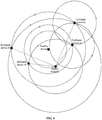
- a relative location map among the routing device, the mobile terminal and the two intelligent devices can be obtained according to the step 301 to step 304, see Figure 4 , which is a schematic diagram of a relative location map according to an exemplary embodiment.
- the circle 1 to circle 3 are circles plotted based on distances between the routing device and the mobile terminal, the intelligent device 1 and the intelligent device 2 (which are determined by using a formula according to RSSI information of point-to-point messages received by the routing device from the mobile terminal, the intelligent device 1 and the intelligent device 2).
- the distances are used for radius of respective circles, and the location of the routing device is used for the center of respective circles.
- the circle 4 and circle 5 are circles plotted based on distances between the mobile terminal and the intelligent device 1 and the intelligent device 2 (which are determined by using a formula according to RSSI information of point-to-point messages received by the mobile terminal from the intelligent device 1 and the intelligent device 2).
- the distances are used for radius of respective circles, and the location of the mobile terminal is used for the center of respective circles.
- intersections of the circle 2 and the circle 4 can be used to simply deduce a possible position of the intelligent device 1, i.e. the intelligent device 1a/the intelligent device 1b.
- the intersections of the circle 3 and the circle 5 can be used to simply deduce possible position of the intelligent device 2, i.e. the intelligent device 2a/the intelligent device 2b.
- the circle 6 and the circle 7 are circles plotted based on distance 1 between the intelligent device 1 and the intelligent device 2 and the distance 2 between the intelligent device 2 and the intelligent device 1 (which are determined by using a formula according to RSSI information of a point-to-point message received by the intelligent device 1 from the intelligent device 2, and RSSI information of a point-to-point message received by the intelligent device 2 from the intelligent device 1).
- the distance 1 and distance 2 are used for radius of respective circles, and location of the intelligent device 1 and location of the intelligent device 2 are used for center of respective circles.
- the role of the fourth RSSI information is not to mix up the two combination, like if 1a and 2a are combined as one positive group, 1b and 2b will be excluded accordingly.
- relative position of an intelligent device to another intelligent device can be determined based on the fourth RSSI information.
- the fourth RSSI information can be used to identify a possible combination of positions of the at least one intelligent device from the determined intersections of the at least one intelligent device.
- the routing device determines relative position of the routing device, the mobile terminal, the intelligent device 1 and the intelligent device 2, that is, a combination of the routing device, the mobile terminal, the intelligent device 1a and the intelligent device 2a, or a combination of the routing device, the mobile terminal, the intelligent device 1b, and the intelligent device 2b.
- the number of intelligent devices is not fixed, so when a new intelligent device is added to the local area network and the new intelligent device accesses to the routing device, it is able to perform positioning to achieve control and management of the new intelligent device.
- the specific process may be as following step C to step E:
- step C to step E are similar as those steps 301 to 304, positioning of a new intelligent device is performed based on RSSI information of point-to-point messages sent from the new intelligent device to respective positioned devices and in connection with a last positioning process.
- the positioning can be achieved in two ways.
- positioning of the new intelligent device is performed based on the fifth RSSI information, the sixth RSSI information, the at least one seventh RSSI information, and positioning result of the last positioning process.
- the positioning result refers to a relative location map among the routing device, the mobile terminal and the at least one intelligent device obtained by the last positioning. This way performs positioning of the new intelligent device by using the same method as that in the last positioning process with relative locations of the positioned devices being kept unchanged.
- positioning of the mobile terminal, the routing device, the at least one intelligent device and the new intelligent device are determined based on the fifth RSSI information, the sixth RSSI information, the at least one seventh RSSI information, and positioning data acquired in the last positioning process.
- the positioning data refer to the distance between the routing device and the mobile terminal, at least one distance between the routing device and the at least one intelligent device, at least one distance between the mobile terminal and the at least one intelligent device, at least one distance between any of the at least one intelligent device and other intelligent devices acquired during the last positioning process.
- This way performs, in addition to positioning of the new intelligent device by using the same method as that in the last positioning process, adjustment of relative locations of the positioned devices.
- the specific positioning process is the same as the above steps 301 to 304, and will not be described again.
- it is able to implement positioning accurately by collecting RSSI information of a point-to-point message between every two devices to be positioned, determining distance between every two devices to be positioned using the RSSI information, deriving a plurality of circles according to the distances, determining relative location among the devices based on intersections between the circles to obtain a relative location map.
- a new intelligent device when a new intelligent device appears, it is able to implement positioning of the new intelligent devices by collecting RSSI information of a point-to-point message between the new intelligent device and respective positioned device and determining distance between the new intelligent device and respective positioned device.
- the positioning may be implemented with any of the two discussed ways and so has higher flexibility.
- the relative location map is transmitted to the mobile terminal.
- the routing device management APP installed on the mobile terminal can display the relative location map among the devices to be positioned.
- identifier or device name and other information of each device may also be displayed on the relative location map.
- the routing device that plots the relative position map and transmit it the mobile device.
- the routing device may transmit the RSSI information of a point-to-point message between every two devices to be positioned to a designated server such that the designated server plots the relative location map and then transmits the relative location map to the mobile device.
- FIG 5 is a block diagram of a WLAN based positioning device according to an exemplary embodiment. As shown in Figure 5 , the device includes an acquisition module 501, a first reception module 502, a second reception module 503, and a positioning module 504.
- the acquisition module 501 is configured to acquire first RSSI information and at least one second RSSI information.
- the first RSSI information is measured based on a point-to-point message sent by a mobile terminal
- the at least one second RSSI information is measured based on a point-to-point message sent by at least one intelligent device.
- the first reception module 502 is configured to receive at least one third RSSI information reported by the mobile terminal.
- the at least one third RSSI information is measured based on a point-to-point message sent by the at least one intelligent device to the mobile terminal.
- the second reception module 503 is configured to receive at least one fourth RSSI information reported by the at least one intelligent device.
- the at least one fourth RSSI information being measured based on a point-to-point message sent by any of the at least one intelligent device to other intelligent devices.
- the positioning module 504 is configured to perform positioning of the mobile terminal, the routing device, and the at least one intelligent device based on the first RSSI information, the at least one second RSSI information, the at least one third RSSI information, and the at least one fourth RSSI information.
- the positioning module 504 may include a plotting sub-module configured to plot a relative location map based on the first RSSI information, the at least one second RSSI information, the at least one third RSSI information, and the at least one fourth RSSI information, and transmit the relative location map to the mobile terminal, wherein the relative location map indicates relative position between the mobile terminal, the routing device, and the at least one intelligent device.
- the positioning module 504 may include a transmission sub-module configured to transmit the first RSSI information, the at least one second RSSI information, the at least one third RSSI information, and the at least one fourth RSSI information to a designated server such that the designated server plots the relative location map and then transmits the relative location map to the mobile terminal.
- the plotting sub-module may be configured to: determine a first distance between the routing device and the mobile terminal based on the first RSSI information, wherein any point on a first circle being location of the mobile terminal, center of first circle being location of the routing device, and radius of the first circle being the first distance; determine at least one second distance between the routing device and the at least one intelligent device based on the at least one second RSSI information and determining at least one third distance between the mobile terminal and the at least one intelligent device based on the at least one third RSSI information; wherein at least two intersections of at least one second circle and at least one third circle being possible locations of the at least one intelligent device, center of each second circle being location of the routing device, radius of each second circle being the second distance, center of each third circle being location of the mobile terminal and radius of the third circle being the third distance.
- the acquisition module 501 may be further configured to acquire fifth RSSI information when a new intelligent device appears, wherein the fifth RSSI information being measured based on a point-to-point message sent by the new intelligent device.
- the acquisition module 502 is further configured to acquire fifth RSSI information when a new intelligent device appears, wherein the fifth RSSI information being measured based on a point-to-point message sent by the new intelligent device.
- the second reception module 503 is further configured to receive at least one seventh RSSI information reported by the new intelligent device, wherein the at least one seventh RSSI information being measured based a point-to-point message sent by any one of the at least one intelligent device to the new intelligent device.
- the positioning module 504 is further configured to perform positioning based on the fifth RSSI information, the sixth RSSI information, the at least one seventh RSSI information, and a last positioning process.
- the positioning module 504 may be further configured to perform positioning of the new intelligent device based on the fifth RSSI information, the sixth RSSI information, the at least one seventh RSSI information, and positioning result of the last positioning process.
- the positioning module 504 is further configured to perform positioning of the mobile terminal, the routing device, the at least one intelligent device and the new intelligent device based on the fifth RSSI information, the sixth RSSI information, the at least one seventh RSSI information, and positioning data acquired in the last positioning process.
- FIG 8 is a block diagram of a routing device 800 according to an exemplary embodiment.
- the routing device 800 may be a wireless router.
- the routing device 800 includes a processing component 822 (which includes one or more processors); a memory 832 representing memory resources, which is used for storing instructions, such as application programs, executable by the processing component 822.
- the application programs stored in the memory 832 may include one or more modules, each module of which corresponds to a set of instructions.
- the processing component 822 may be configured to execute the instructions to perform the WLAN based positioning method.
- the routing device 800 may also include: a power supply 826 configured to perform power management of the routing device 800; a wired or wireless network interface 850 configured to connect the routing device 800 to a network; an input/output (I/O) interfaces 858.
- the routing device 80 is optional based on an operating system stored in the memory 832, such as Windows ServerTM, Mac OS XTM, UnixTM, LinuxTM, FreeBSDTM, or the like.
Landscapes
- Engineering & Computer Science (AREA)
- Physics & Mathematics (AREA)
- General Physics & Mathematics (AREA)
- Radar, Positioning & Navigation (AREA)
- Remote Sensing (AREA)
- Computer Networks & Wireless Communication (AREA)
- Signal Processing (AREA)
- Quality & Reliability (AREA)
- Electromagnetism (AREA)
- Mobile Radio Communication Systems (AREA)
- Position Fixing By Use Of Radio Waves (AREA)
Abstract
Description
- The present disclosure relates to the field of positioning technology, and more particularly, to a wireless local area network based positioning method and device.
- With the development of computer and network communication technologies, intelligent devices such as wireless sockets, air purifiers, water purifiers and so on gradually rise. Often multiple intelligent devices are deployed in a room, so there is a need to positioning these intelligent devices so as to perform separate control and management on them, which provides the indoor positioning technology a broad space for development. With extensive deployment and popularization of wireless local area network (WLAN), WLAN based indoor positioning technology has been a research hot spot in the field of indoor positioning technology in recent years.
- In the related art, positioning of an indoor intelligent device is implemented by measuring strength of wireless signals received by an intelligent device, that is, Received Signal Strength Indicator (RSSI) information, estimating distance between an access point (AP) at wireless signal transmitter side and the intelligent device by using an empirical formula between signal strength and distance, and determine location of the intelligent device according to the estimated distance.
- According to a first aspect of the embodiments of the present disclosure, there is provided a wireless local area network based positioning method in a routing device. The method includes: acquiring first Received Signal Strength Indicator (RSSI) information and at least one second RSSI information, wherein the first RSSI information being measured based on a point-to-point message sent by a mobile terminal to the routing device, and the at least one second RSSI information being measured based on a point-to-point message sent by at least one intelligent device to the routing device; receiving at least one third RSSI information reported by the mobile terminal, wherein the at least one third RSSI information being measured based on a point-to-point message sent by the at least one intelligent device to the mobile terminal; receiving at least one fourth RSSI information reported by the at least one intelligent device, wherein the at least one fourth RSSI information being measured based on a point-to-point message sent by any of the at least one intelligent device to other intelligent devices; and performing positioning of the mobile terminal, the routing device, and the at least one intelligent device based on the first RSSI information, the at least one second RSSI information, the at least one third RSSI information, and the at least one fourth RSSI information. In particular, reporting is performed by transmitting third RSSI and fourth RSSI to the routing device.
- With the method provided by the present embodiment, it is able to implement positioning based on distance between every two devices to be positioned with high accuracy by collecting RSSI information of a point-to-point message between every two devices to be positioned, which represents distance between the devices to be positioned.
- In some embodiments of the first aspect, the performing positioning of the mobile terminal, the routing device, and the at least one intelligent device based on the first RSSI information, the at least one second RSSI information, the at least one third RSSI information, and the at least one fourth RSSI information may include: deriving a relative location map in particular by the routing device based on the first RSSI information, the at least one second RSSI information, the at least one third RSSI information, and the at least one fourth RSSI information, and transmitting the relative location map to the mobile terminal, wherein the relative location map indicates relative position between the mobile terminal, the routing device, and the at least one intelligent device; or transmitting the first RSSI information, the at least one second RSSI information, the at least one third RSSI information, and the at least one fourth RSSI information to a designated server such that the designated server plots the relative location map and then transmits the relative location map to the mobile terminal.
- With the method provided by the present embodiment, relative location between the devices to be positioned is determined by deriving a relative location map. The relative location map can be plotted by the routing device or by a designated server, which provides optional positioning ways.
- In some embodiments of the first aspect, the deriving of a relative location map based on the first RSSI information, the at least one second RSSI information, the at least one third RSSI information, and the at least one fourth RSSI information may include: determining a first distance between the routing device and the mobile terminal based on the first RSSI information, wherein any point on a first circle being a possible location of the mobile terminal, the center of the first circle being the location of the routing device, and the radius of the first circle being the first distance; determining at least one second distance between the routing device and the at least one intelligent device based on the at least one second RSSI information and determining at least one third distance between the mobile terminal and the at least one intelligent device based on the at least one third RSSI information, wherein at least two intersections of at least one second circle and at least one third circle being possible locations of the at least one intelligent device, wherein the center of each second circle being the location of the routing device, the radius of each second circle being the second distance, the center of each third circle being the location of the mobile terminal and the radius of the third circle being the third distance. In some embodiments, the method may further include: determining relative position of an intelligent device to another intelligent device among the at least one intelligent device according to the relative location map and based on the fourth RSSI information. Thereby, preferably due to the fourth RSSI information, the location of the at least one intelligent device is determined from the two intersections.
- With the method provided by the present embodiment, it is able to implement positioning accurately by determining distance between every two devices to be positioned using a plurality of RSSI information, deriving a plurality of circles according to the distances, determining relative location among the devices based on intersections between the circles to obtain a relative location map.
- In some embodiments of the first aspect, the method may further include: acquiring fifth RSSI information when a new intelligent device appears, wherein the fifth RSSI information being measured based on a point-to-point message sent by the new intelligent device to the routing device; receiving sixth RSSI information reported by the mobile terminal, wherein the sixth RSSI information being measured based on a point-to-point message sent by the new intelligent device to the mobile terminal; receiving at least one seventh RSSI information reported by the new intelligent device, wherein the at least one seventh RSSI information being measured based a point-to-point message sent by any one of the at least one intelligent device to the new intelligent device; and performing positioning based on the fifth RSSI information, the sixth RSSI information, the at least one seventh RSSI information, and a last positioning process.
- With the method provided by the present embodiment, it is able to implement, by collecting RSSI information of a point-to-point message between a new intelligent device and a positioned device, which representing distance between the new intelligent device and the positioned device, positioning of the new intelligent device based on the distance between the intelligent device and the positioned device.
- In some embodiments of the first aspect, the performing positioning based on the fifth RSSI information, the sixth RSSI information, the at least one seventh RSSI information, and a last positioning process may include: performing positioning of the new intelligent device based on the fifth RSSI information, the sixth RSSI information, the at least one seventh RSSI information, and positioning result of the last positioning process; or performing positioning of the mobile terminal, the routing device, the at least one intelligent device and the new intelligent device based on the fifth RSSI information, the sixth RSSI information, the at least one seventh RSSI information, and positioning data acquired in the last positioning process.
- With the method provided in the present embodiment, it is able to implement positioning by any of two ways when a new intelligent device appears, which brings high flexibility.
- According to a second aspect of the embodiments of the present disclosure, there is provided a wireless local area network based positioning device. The device includes: an acquisition module configured to acquire first Received Signal Strength Indicator (RSSI) information and at least one second RSSI information, wherein the first RSSI information being measured based on a point-to-point message sent by a mobile terminal to the routing device, and the at least one second RSSI information being measured based on a point-to-point message sent by at least one intelligent device to the routing device; a first reception module configured to receive at least one third RSSI information reported by the mobile terminal, wherein the at least one third RSSI information being measured based on a point-to-point message sent by the at least one intelligent device to the mobile terminal; a second reception module configured to receive at least one fourth RSSI information reported by the at least one intelligent device, wherein the at least one fourth RSSI information being measured based on a point-to-point message sent by any of the at least one intelligent device to other intelligent devices; and a positioning module configured to perform positioning of the mobile terminal, the routing device, and the at least one intelligent device based on the first RSSI information, the at least one second RSSI information, the at least one third RSSI information, and the at least one fourth RSSI information. In particular, reporting is performed by transmitting third RSSI and fourth RSSI to the routing device.
- In some embodiments of the second aspect, the positioning module may include: a plotting sub-module configured to plot a relative location map based on the first RSSI information, the at least one second RSSI information, the at least one third RSSI information, and the at least one fourth RSSI information, and transmit the relative location map to the mobile terminal, wherein the relative location map indicates relative position between the mobile terminal, the routing device, and the at least one intelligent device; or a transmission sub-module configured to transmit the first RSSI information, the at least one second RSSI information, the at least one third RSSI information, and the at least one fourth RSSI information to a designated server such that the designated server plots the relative location map and then transmits the relative location map to the mobile terminal.
- In some embodiments of the second aspect, the plotting sub-module may be configured to: determine a first distance between the routing device and the mobile terminal based on the first RSSI information, wherein any point on a first circle being a possible location of the mobile terminal, center of first circle being location of the routing device, and radius of the first circle being the first distance; determine at least one second distance between the routing device and the at least one intelligent device based on the at least one second RSSI information and determine at least one third distance between the mobile terminal and the at least one intelligent device based on the at least one third RSSI information; wherein at least two intersections of at least one second circle and at least one third circle being possible locations of the at least one intelligent device, center of each second circle being location of the routing device, radius of each second circle being the second distance, center of each third circle being location of the mobile terminal and radius of the third circle being the third distance.
- In some embodiments of the second aspect, the acquisition module may be further configured to acquire fifth RSSI information when a new intelligent device appears, wherein the fifth RSSI information being measured based on a point-to-point message sent by the new intelligent device to the routing device; the first reception module is further configured to receive sixth RSSI information reported by the mobile terminal, wherein the sixth RSSI information being measured based on a point-to-point message sent by the new intelligent device to the mobile terminal; the second reception module is further configured to receive at least one seventh RSSI information reported by the new intelligent device, wherein the at least one seventh RSSI information being measured based a point-to-point message sent by any one of the at least one intelligent device to the new intelligent device; and the positioning module is further configured to perform positioning based on the fifth RSSI information, the sixth RSSI information, the at least one seventh RSSI information, and a last positioning process.
- In some embodiments of the second aspect, the positioning module may be further configured to: perform positioning of the new intelligent device based on the fifth RSSI information, the sixth RSSI information, the at least one seventh RSSI information, and positioning result of the last positioning process; or perform positioning of the mobile terminal, the routing device, the at least one intelligent device and the new intelligent device based on the fifth RSSI information, the sixth RSSI information, the at least one seventh RSSI information, and positioning data acquired in the last positioning process.
- According to a third aspect of the embodiments of the present disclosure, there is provided a wireless local area network based positioning device. The device includes: a processor and a memory for storing instructions executable by the processor, wherein the processor is configured to: acquire first Received Signal Strength Indicator (RSSI) information and at least one second RSSI information, wherein the first RSSI information being measured based on a point-to-point message sent by a mobile terminal, and the at least one second RSSI information being measured based on a point-to-point message sent by at least one intelligent device; receive at least one third RSSI information reported by the mobile terminal, wherein the at least one third RSSI information being measured based on a point-to-point message sent by the at least one intelligent device to the mobile terminal; receive at least one fourth RSSI information reported by the at least one intelligent device, wherein the at least one fourth RSSI information being measured based on a point-to-point message sent by any of the at least one intelligent device to other intelligent devices; and perform positioning of the mobile terminal, the routing device, and the at least one intelligent device based on the first RSSI information, the at least one second RSSI information, the at least one third RSSI information, and the at least one fourth RSSI information.
- It is to be understood that both the foregoing general descriptions and the following detailed descriptions are exemplary and explanatory only and do not limit the scope of the disclosure.
- The drawings herein are incorporated in and constitute a part of this specification, showing embodiments consistent with the present disclosure, and together with the descriptions, serve to explain the principles of the present disclosure.
-
Figure 1 is a flow chart of a WLAN based positioning method in accordance with an exemplary embodiment; -
Figure 2 is schematic diagram illustrating an environment in which a WLAN based positioning method in accordance with the present disclosure can be implemented; -
Figure 3 is a flow chart of a WLAN based positioning method in accordance with an exemplary embodiment; -
Figure 4 is a schematic diagram illustrating a relative location map in accordance with an exemplary embodiment; -
Figure 5 is a block diagram of a WLAN based positioning device in accordance with an exemplary embodiment; -
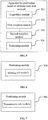
Figure 6 is a block diagram of apositioning module 504 in accordance with an exemplary embodiment; -
Figure 7 is a block diagram of apositioning module 504 in accordance with an exemplary embodiment; and -
Figure 8 is a block diagram of arouting device 800 in accordance with an exemplary embodiment. - Hereinafter, exemplary embodiments will be described in detail, examples of which are shown in the drawings. In the following descriptions when referring to the drawings, the same numerals in the different drawings denote the same or similar elements unless otherwise indicated. The embodiments described in the following exemplary embodiments are not representative of all embodiments consistent with the present disclosure. Rather, they are merely examples of apparatuses and methods consistent with some aspects of the present disclosure as detailed in the appended claims.
-
Figure 1 is a flow chart of a WLAN based positioning method in accordance with an exemplary embodiment. As shown inFigure 1 , the WLAN based positioning method is used in a routing device. The method including the following steps. - At
step 101, first Received Signal Strength Indicator (RSSI) information and at least one second RSSI information are acquired. The first RSSI information is measured based on a point-to-point message sent by a mobile terminal to the routing device, and the at least one second RSSI information is measured based on a point-to-point message sent by at least one intelligent device to the routing device. - At
step 102, at least one third RSSI information reported by the mobile terminal is received. The at least one third RSSI information is measured based on a point-to-point message sent by the at least one intelligent device to the mobile terminal. - At
step 103, at least one fourth RSSI information reported by the at least one intelligent device is received. The at least one fourth RSSI information is measured based on a point-to-point message sent by any of the at least one intelligent device to other intelligent devices. - At
step 104, positioning of the mobile terminal, the routing device, and the at least one intelligent device is performed based on the first RSSI information, the at least one second RSSI information, the at least one third RSSI information, and the at least one fourth RSSI information. - With the method provided by the present embodiment, it is able to implement positioning based on distance between every two devices to be positioned with high accuracy by collecting RSSI information of a point-to-point messages between every two devices to be positioned, which represents distance between the devices to be positioned.
- In some embodiments, the performing positioning of the mobile terminal, the routing device, and the at least one intelligent device based on the first RSSI information, the at least one second RSSI information, the at least one third RSSI information, and the at least one fourth RSSI information may include: deriving a relative location map based on the first RSSI information, the at least one second RSSI information, the at least one third RSSI information, and the at least one fourth RSSI information, and transmitting the relative location map to the mobile terminal, wherein the relative location map indicates relative position between the mobile terminal, the routing device, and the at least one intelligent device; or transmitting the first RSSI information, the at least one second RSSI information, the at least one third RSSI information, and the at least one fourth RSSI information to a designated server such that the designated server plots the relative location map and then transmits the relative location map to the mobile terminal.
- In some embodiments, the deriving of a relative location map based on the first RSSI information, the at least one second RSSI information, the at least one third RSSI information, and the at least one fourth RSSI information may include: determining a first distance between the routing device and the mobile terminal based on the first RSSI information, wherein any point on a first circle might be the location of the mobile terminal, center of first circle being location of the routing device, and radius of the first circle being the first distance; determining at least one second distance between the routing device and the at least one intelligent device based on the at least one second RSSI information and determining at least one third distance between the mobile terminal and the at least one intelligent device based on the at least one third RSSI information, wherein at least two intersections of at least one second circle and at least one third circle being possible locations of the at least one intelligent device, center of each second circle being location of the routing device, radius of each second circle being the second distance, center of each third circle being location of the mobile terminal and radius of the third circle being the third distance.
- In some embodiments, the method may further include: determining relative position of an intelligent device to another intelligent device among the at least one intelligent device according to the relative location map and based on the fourth RSSI information.
- In some embodiments, the method may further include: acquiring fifth RSSI information when a new intelligent device appears, wherein the fifth RSSI information being measured based on a point-to-point message sent by the new intelligent device; receiving sixth RSSI information reported by the mobile terminal, wherein the sixth RSSI information being measured based on a point-to-point message sent by the new intelligent device to the mobile terminal; receiving at least one seventh RSSI information reported by the new intelligent device, wherein the at least one seventh RSSI information being measured based a point-to-point message sent by any one of the at least one intelligent device to the new intelligent device; and performing positioning based on the fifth RSSI information, the sixth RSSI information, the at least one seventh RSSI information, and a last positioning process.
- In some embodiments, the performing positioning based on the fifth RSSI information, the sixth RSSI information, the at least one seventh RSSI information, and a last positioning process may include: performing positioning of the new intelligent device based on the fifth RSSI information, the sixth RSSI information, the at least one seventh RSSI information, and positioning result of the last positioning process; or performing positioning of the mobile terminal, the routing device, the at least one intelligent device and the new intelligent device based on the fifth RSSI information, the sixth RSSI information, the at least one seventh RSSI information, and positioning data acquired in the last positioning process.
- All of the alternative solutions described above may be combined in any way to form alternative embodiments of the present disclosure and will not be described again herein.
-
Figure 2 is schematic diagram illustrating an environment in which a WLAN based positioning method in accordance with the present disclosure can be implemented. As shown inFigure. 2 , the implementation environment includes: arouting device 201, amobile terminal 202, and at least one intelligent device 203 (only two intelligent devices, that is,intelligent device 1 andintelligent device 2, are illustrated as an example). - The
routing device 201 may be a wireless router set in a local area network or any other intermediate device for network access. - The
mobile terminal 202 may be a mobile terminal such as a smart phone, a smart hand ring, a tablet computer, a remote controller, or the like. Themobile terminal 202 may have a routing device management application (APP) installed for triggering and monitoring drawing of a relative location map by the routing device and for presenting the relative location map. The mobile terminal may access the routing device to connect to a network and transmit data to the routing device. - The
intelligent device 203 may be a smart home device such as a wireless socket, an air purifier, a smart TV, an intelligent light, and the like, which may access the routing device to connect to the network and transmit data to the routing device. - In embodiments of the present disclosure, if the
mobile terminal 202 and theintelligent device 203 are connected to the same routing device, themobile terminal 202 and theintelligent device 203 belong to the same Basic Service Set (BSS). Tunneled Direct Link Setup (TDLS) can be established between intelligent devices (such asintelligent device 1 and intelligent device 2) and between an intelligent device (such as such asintelligent device 1 or intelligent device 2) and the mobile terminals in the same BSS, such that the mobile terminal is able to issue a control command to the intelligent device through the tunnel, which communicates data between the intelligent devices and between the intelligent device and the mobile terminal. The data can be transmitted over a point-to-point message. -
Figure 3 is a flow chart of a WLAN based positioning method according to an exemplary embodiment. As shown inFigure 3 , the WLAN based positioning method can be used in a routing device. The method includes the following steps. - At
step 301, first RSSI information and at least one second RSSI information acquired. The first RSSI information is measured based on a point-to-point message sent by a mobile terminal, and the at least one second RSSI information is measured based on a point-to-point message sent by at least one intelligent device. - Because a message will be attenuated during propagation from a sender to a receiver, distance between the sender and the receiver can be obtained by measuring RSSI information contained in the message received at the receiver. In the present embodiment, in order to determine distance between every two devices to be positioned, it is necessary to obtain RSSI information of a point-to-point message between every two devices to be positioned.
- In the
step 301, the routing device may receive a point-to-point message sent by a mobile terminal to the routing device, measures RSSI information of the message to obtain first RRSI information. In a similar way, the routing device may receive a point-to-point message sent by at least one intelligent device to the routing device, measures RSSI information of the message to obtain at least one second RRSI information. - In the present embodiment, the positioning process may be triggered by a user on the mobile terminal such that the mobile terminal sends a positioning request to the routing device. Upon reception of the positioning request, the routing device starts to execute the
steps 301 to 305. - At
step 302, at least one third RSSI information reported by the mobile terminal is received. The at least one third RSSI information is measured based on a point-to-point message sent by the at least one intelligent device to the mobile terminal. - In a similar way as in the
step 301, the mobile terminal may receive a point-to-point message sent by at least one intelligent device to the mobile terminal, obtain at least one third RSSI information by measuring RSSI information contained in the messages, and report the at least one third RSSI information to the routing device, so that the routing device can receive the at least one third RSSI message. - At
step 303, at least one fourth RSSI information reported by the at least one intelligent device is received. The at least one fourth RSSI information is measured based on a point-to-point message sent by any of the at least one intelligent device to other intelligent devices. - A point-to-point message may be transmitted between intelligent devices. For example, any of the at least one intelligent device may send point-to-point messages to other intelligent devices so as to obtain at least one fourth RSSI information by measurement. Taking an intelligent device (intelligent device 1) as an example, the
intelligent device 1 can receive a point-to-point message sent by theintelligent device 2, obtain RSSI information according to the message, and report the RSSI information to the routing device. Similarly, theintelligent device 2 can also report RSSI information of a point-to-point message sent by theintelligent device 1 to the routing device. Then, the routing device can receive two RSSI information reported by the two intelligent devices. - At
step 304, a relative positioning map is plotted based on the first RSSI information, the at least one second RSSI information, the at least one third RSSI information, and the at least one fourth RSSI information. The relative positioning map is used for indicating relative position between the mobile terminal, the routing device, and the at least one intelligent device. - Based on the RSSI information received at the
step 301 to step 303, a relative location map can be plotted among the mobile terminal, the routing device, and the at least one intelligent device. The process of plotting the relative location map may include the following two steps A and B. - A: a first distance between the routing device and the mobile terminal is determined based on the first RSSI information, wherein any point on a first circle being possible locations of the mobile terminal, center of first circle being location of the routing device, and radius of the first circle being the first distance.
The first distance determined in step A does not actually contain indication of any direction, so the mobile terminal may be located in any direction away from the routing device. Thus, it is possible to determine a first circle, any point on which is a possible location of the mobile terminal.
The first circle can be displayed in the relative location map. - B: at least one second distance between the routing device and the at least one intelligent device is determined based on the at least one second RSSI information, and at least one third distance between the mobile terminal and the at least one intelligent device based on the at least one third RSSI information, wherein at least two intersections of at least one second circle and at least one third circle being possible locations of the at least one intelligent device, center of each second circle being location of the routing device, radius of each second circle being the second distance, center of each third circle being location of the mobile terminal and radius of the third circle being the third distance.
- Based on the distance between the routing device and the intelligent device, location of the intelligent device can be determined on a circle with the routing device being its center. Based on the distance between the mobile terminal and the intelligent device, location of the intelligent device can be determined on a circle with the mobile device being its center. Thus, an intersection of these two circles can be obtained as a possible location of the intelligent device.
- According to steps A and B, a relative location map among the devices to be positioned can be obtained based on the first circle, the at least one second circle, the at least one third circle and locations of the routing device, the mobile terminal and the at least one intelligent device in these circles. The relative location map may shows several points at which the devices to be positioned are located, or may show the circles and have several points marked on the circles to indicate positions of the devices to be positioned. Different devices on the relative location map can be expressed by points with different colors, and different circles may be expressed in different colors in order to be distinguished with each other.
- In the present embodiment, it is possible to determine the distance between the devices to be positioned based on the RSSI information by the following formula:

- The formula may be derived as follows.
- In an ideal condition (i.e. propagation in a free space), the wireless communication distance can be obtained by the formula: ideal transmission loss (dB) = 32.44 + 20 · log (d[(km]) + 20 · log (f[(MHz]), where the ideal transmission loss= transmission power - reception sensitivity, d is communication distance, f is operation frequency of an electromagnetic wave. Thus, in the ideal condition, the communication distance d is related with only the transmission power, the reception sensitivity and the operation frequency f.
- In practical applications, wireless communication is affected by various external factors, such as atmosphere, obstructions and multipath and the like, which may cause losses. Assuming that an empirical value of the losses is 25dB, the wireless communication distance thus is: the ideal transmission loss (dB) + 25 = 32.44 + 20 · log (d[(km]) + 20 · log (f[(MHz]).
- In the present embodiment, |RSSI| may be used as losses during signal transmission, so |RSSI| + 25 = 32.44 + 20 · log (d[(km]) + 20 · log (f[(MHz]). That is, 20 · log (d[(km]) = |RSSI| - 7.44 20 · log (f[(MHz]).
- In the
steps 301 to 304, the distance between the respective devices is obtained based on the RSSI information received between the devices, and the relative location map among the devices is obtained according to the distances. Taking a routing device, a mobile terminal and two intelligent devices (intelligent device 1 and intelligent device 2) as an example, a relative location map among the routing device, the mobile terminal and the two intelligent devices can be obtained according to thestep 301 to step 304, seeFigure 4 , which is a schematic diagram of a relative location map according to an exemplary embodiment. - In
Figure 4 , thecircle 1 to circle 3 are circles plotted based on distances between the routing device and the mobile terminal, theintelligent device 1 and the intelligent device 2 (which are determined by using a formula according to RSSI information of point-to-point messages received by the routing device from the mobile terminal, theintelligent device 1 and the intelligent device 2). The distances are used for radius of respective circles, and the location of the routing device is used for the center of respective circles. - The circle 4 and circle 5 are circles plotted based on distances between the mobile terminal and the
intelligent device 1 and the intelligent device 2 (which are determined by using a formula according to RSSI information of point-to-point messages received by the mobile terminal from theintelligent device 1 and the intelligent device 2). The distances are used for radius of respective circles, and the location of the mobile terminal is used for the center of respective circles. - The intersections of the
circle 2 and the circle 4 can be used to simply deduce a possible position of theintelligent device 1, i.e. the intelligent device 1a/theintelligent device 1b. The intersections of the circle 3 and the circle 5 can be used to simply deduce possible position of theintelligent device 2, i.e. theintelligent device 2a/theintelligent device 2b. - The circle 6 and the circle 7 are circles plotted based on
distance 1 between theintelligent device 1 and theintelligent device 2 and thedistance 2 between theintelligent device 2 and the intelligent device 1 (which are determined by using a formula according to RSSI information of a point-to-point message received by theintelligent device 1 from theintelligent device 2, and RSSI information of a point-to-point message received by theintelligent device 2 from the intelligent device 1). Thedistance 1 anddistance 2 are used for radius of respective circles, and location of theintelligent device 1 and location of theintelligent device 2 are used for center of respective circles. - The role of the fourth RSSI information is not to mix up the two combination, like if 1a and 2a are combined as one positive group, 1b and 2b will be excluded accordingly.
- From the relative location map, relative position of an intelligent device to another intelligent device can be determined based on the fourth RSSI information. In an example, assuming the
intelligent device 1 is located at the position 1a in the relative location map, it is determined that theintelligent device 2 is located at theposition 1b rather than theposition 2b in the relative location map. Thus, the fourth RSSI information can be used to identify a possible combination of positions of the at least one intelligent device from the determined intersections of the at least one intelligent device. - In this way, it is possible to determine relative position of the routing device, the mobile terminal, the
intelligent device 1 and theintelligent device 2, that is, a combination of the routing device, the mobile terminal, the intelligent device 1a and theintelligent device 2a, or a combination of the routing device, the mobile terminal, theintelligent device 1b, and theintelligent device 2b. - In actual application scenario, the number of intelligent devices is not fixed, so when a new intelligent device is added to the local area network and the new intelligent device accesses to the routing device, it is able to perform positioning to achieve control and management of the new intelligent device. In another embodiment of the present disclosure, when positioning of a new intelligent device is required, the specific process may be as following step C to step E:
- C: fifth RSSI information is acquired when a new intelligent device appears, wherein the fifth RSSI information is measured based on a point-to-point message sent by the new intelligent device;
- D: sixth RSSI information reported by the mobile terminal is received, wherein the sixth RSSI information is measured based on a point-to-point message sent by the new intelligent device to the mobile terminal.
- E: at least one seventh RSSI information reported by the new intelligent device is received, wherein at least one seventh RSSI information is measured based a point-to-point message sent by any one of the at least one intelligent device to the new intelligent device; and positioning is performed based on the fifth RSSI information, the sixth RSSI information, the at least one seventh RSSI information, and a last positioning process.
- The step C to step E are similar as those
steps 301 to 304, positioning of a new intelligent device is performed based on RSSI information of point-to-point messages sent from the new intelligent device to respective positioned devices and in connection with a last positioning process. - The positioning can be achieved in two ways.
- In first way, positioning of the new intelligent device is performed based on the fifth RSSI information, the sixth RSSI information, the at least one seventh RSSI information, and positioning result of the last positioning process.
- The positioning result refers to a relative location map among the routing device, the mobile terminal and the at least one intelligent device obtained by the last positioning. This way performs positioning of the new intelligent device by using the same method as that in the last positioning process with relative locations of the positioned devices being kept unchanged.
- In the second way, positioning of the mobile terminal, the routing device, the at least one intelligent device and the new intelligent device are determined based on the fifth RSSI information, the sixth RSSI information, the at least one seventh RSSI information, and positioning data acquired in the last positioning process.
- The positioning data refer to the distance between the routing device and the mobile terminal, at least one distance between the routing device and the at least one intelligent device, at least one distance between the mobile terminal and the at least one intelligent device, at least one distance between any of the at least one intelligent device and other intelligent devices acquired during the last positioning process. This way performs, in addition to positioning of the new intelligent device by using the same method as that in the last positioning process, adjustment of relative locations of the positioned devices. The specific positioning process is the same as the
above steps 301 to 304, and will not be described again. - In the present embodiment, it is able to implement positioning accurately by collecting RSSI information of a point-to-point message between every two devices to be positioned, determining distance between every two devices to be positioned using the RSSI information, deriving a plurality of circles according to the distances, determining relative location among the devices based on intersections between the circles to obtain a relative location map.
- In addition, when a new intelligent device appears, it is able to implement positioning of the new intelligent devices by collecting RSSI information of a point-to-point message between the new intelligent device and respective positioned device and determining distance between the new intelligent device and respective positioned device. The positioning may be implemented with any of the two discussed ways and so has higher flexibility.
- At
step 305, the relative location map is transmitted to the mobile terminal. - The routing device management APP installed on the mobile terminal can display the relative location map among the devices to be positioned. When the relative location map is displayed, identifier or device name and other information of each device may also be displayed on the relative location map.
- In the present embodiment, it is the routing device that plots the relative position map and transmit it the mobile device. In another embodiment of the present disclosure, the routing device may transmit the RSSI information of a point-to-point message between every two devices to be positioned to a designated server such that the designated server plots the relative location map and then transmits the relative location map to the mobile device.
-
Figure 5 is a block diagram of a WLAN based positioning device according to an exemplary embodiment. As shown inFigure 5 , the device includes anacquisition module 501, afirst reception module 502, asecond reception module 503, and apositioning module 504. - The
acquisition module 501 is configured to acquire first RSSI information and at least one second RSSI information. The first RSSI information is measured based on a point-to-point message sent by a mobile terminal, and the at least one second RSSI information is measured based on a point-to-point message sent by at least one intelligent device. - The
first reception module 502 is configured to receive at least one third RSSI information reported by the mobile terminal. The at least one third RSSI information is measured based on a point-to-point message sent by the at least one intelligent device to the mobile terminal. - The
second reception module 503 is configured to receive at least one fourth RSSI information reported by the at least one intelligent device. The at least one fourth RSSI information being measured based on a point-to-point message sent by any of the at least one intelligent device to other intelligent devices. - The
positioning module 504 is configured to perform positioning of the mobile terminal, the routing device, and the at least one intelligent device based on the first RSSI information, the at least one second RSSI information, the at least one third RSSI information, and the at least one fourth RSSI information. - In some embodiments, as shown in
Figure 6 , thepositioning module 504 may include a plotting sub-module configured to plot a relative location map based on the first RSSI information, the at least one second RSSI information, the at least one third RSSI information, and the at least one fourth RSSI information, and transmit the relative location map to the mobile terminal, wherein the relative location map indicates relative position between the mobile terminal, the routing device, and the at least one intelligent device. Alternatively, as shown inFigure 7 , thepositioning module 504 may include a transmission sub-module configured to transmit the first RSSI information, the at least one second RSSI information, the at least one third RSSI information, and the at least one fourth RSSI information to a designated server such that the designated server plots the relative location map and then transmits the relative location map to the mobile terminal. - In some embodiments, the plotting sub-module may be configured to: determine a first distance between the routing device and the mobile terminal based on the first RSSI information, wherein any point on a first circle being location of the mobile terminal, center of first circle being location of the routing device, and radius of the first circle being the first distance; determine at least one second distance between the routing device and the at least one intelligent device based on the at least one second RSSI information and determining at least one third distance between the mobile terminal and the at least one intelligent device based on the at least one third RSSI information; wherein at least two intersections of at least one second circle and at least one third circle being possible locations of the at least one intelligent device, center of each second circle being location of the routing device, radius of each second circle being the second distance, center of each third circle being location of the mobile terminal and radius of the third circle being the third distance.
- In some embodiments, the
acquisition module 501 may be further configured to acquire fifth RSSI information when a new intelligent device appears, wherein the fifth RSSI information being measured based on a point-to-point message sent by the new intelligent device. Theacquisition module 502 is further configured to acquire fifth RSSI information when a new intelligent device appears, wherein the fifth RSSI information being measured based on a point-to-point message sent by the new intelligent device. Thesecond reception module 503 is further configured to receive at least one seventh RSSI information reported by the new intelligent device, wherein the at least one seventh RSSI information being measured based a point-to-point message sent by any one of the at least one intelligent device to the new intelligent device. Thepositioning module 504 is further configured to perform positioning based on the fifth RSSI information, the sixth RSSI information, the at least one seventh RSSI information, and a last positioning process. - In some embodiments, the
positioning module 504 may be further configured to perform positioning of the new intelligent device based on the fifth RSSI information, the sixth RSSI information, the at least one seventh RSSI information, and positioning result of the last positioning process. Alternatively, thepositioning module 504 is further configured to perform positioning of the mobile terminal, the routing device, the at least one intelligent device and the new intelligent device based on the fifth RSSI information, the sixth RSSI information, the at least one seventh RSSI information, and positioning data acquired in the last positioning process. - With respect to the device in the above embodiment, the specific mode in which each module performs the operation has been described in detail in the embodiment relating to the method, and the description thereof will not be described in detail.
-
Figure 8 is a block diagram of arouting device 800 according to an exemplary embodiment. For example, therouting device 800 may be a wireless router. A shown infigure8 , therouting device 800 includes a processing component 822 (which includes one or more processors); amemory 832 representing memory resources, which is used for storing instructions, such as application programs, executable by theprocessing component 822. The application programs stored in thememory 832 may include one or more modules, each module of which corresponds to a set of instructions. Further, theprocessing component 822 may be configured to execute the instructions to perform the WLAN based positioning method. - The
routing device 800 may also include: apower supply 826 configured to perform power management of therouting device 800; a wired orwireless network interface 850 configured to connect therouting device 800 to a network; an input/output (I/O) interfaces 858. The routing device 80 is optional based on an operating system stored in thememory 832, such as Windows Server™, Mac OS X™, Unix™, Linux™, FreeBSD™, or the like. - Other embodiments of the present disclosure will be readily apparent to those skilled in the art upon consideration of the specification and practice of the disclosure disclosed herein. The present application is intended to cover any variations, uses, or adaptations of the present disclosure that follow the general principles of the present disclosure and include the common general knowledge or conventional technical means in the art without departing from the present disclosure The specification and examples are to be regarded as illustrative only, and the true scope of the disclosure is indicated by the following claims.
- It is to be understood that this disclosure is not limited to the precise constructions described above and shown in the accompanying drawings, and that various modifications and changes may be made without departing from the scope thereof. The scope of the present disclosure is limited only by the appended claims.
Claims (14)
- A wireless local area network based positioning method implemented in a routing device, comprising:acquiring (101) first Received Signal Strength Indicator (RSSI) information and at least one second RSSI information, wherein the first RSSI information being measured based on a point-to-point message sent by a mobile terminal, and the at least one second RSSI information being measured based on a point-to-point message sent by at least one intelligent device;receiving (102) at least one third RSSI information reported by the mobile terminal, wherein the at least one third RSSI information being measured based on a point-to-point message sent by the at least one intelligent device to the mobile terminal;receiving (103) at least one fourth RSSI information reported by the at least one intelligent device, wherein the at least one fourth RSSI information being measured based on a point-to-point message sent by any of the at least one intelligent device to other intelligent devices; andperforming (104) positioning of the mobile terminal, the routing device, and the at least one intelligent device based on the first RSSI information, the at least one second RSSI information, the at least one third RSSI information, and the at least one fourth RSSI information.
- A method according to claim 1, wherein said performing (104) positioning of the mobile terminal, the routing device, and the at least one intelligent device based on the first RSSI information, the at least one second RSSI information, the at least one third RSSI information, and the at least one fourth RSSI information comprises:deriving (304) a relative location map based on the first RSSI information, the at least one second RSSI information, the at least one third RSSI information, and the at least one fourth RSSI information, and transmitting the relative location map to the mobile terminal, wherein the relative location map indicates relative position between the mobile terminal, the routing device, and the at least one intelligent device; ortransmitting (305) the first RSSI information, the at least one second RSSI information, the at least one third RSSI information, and the at least one fourth RSSI information to a designated server such that the designated server plots the relative location map and then transmits the relative location map to the mobile terminal.
- The method according to claim 2, wherein said deriving (304) a relative location map based on the first RSSI information, the at least one second RSSI information, the at least one third RSSI information, and the at least one fourth RSSI information comprises:determining a first distance between the routing device and the mobile terminal based on the first RSSI information, wherein any point on a first circle being location of the mobile terminal, center of first circle being location of the routing device, and radius of the first circle being the first distance; anddetermining at least one second distance between the routing device and the at least one intelligent device based on the at least one second RSSI information and determining at least one third distance between the mobile terminal and the at least one intelligent device based on the at least one third RSSI information;wherein at least two intersections of at least one second circle and at least one third circle being possible locations of the at least one intelligent device, center of each second circle being location of the routing device, radius of each second circle being the second distance, center of each third circle being location of the mobile terminal and radius of the third circle being the third distance.
- The method according to claim 1, further comprising: determining relative position of an intelligent device to another intelligent device among the at least one intelligent device according to the relative location map and based on the fourth RSSI information.
- The method according to claim 1, wherein the method further comprises:acquiring fifth RSSI information when a new intelligent device appears, wherein the fifth RSSI information being measured based on a point-to-point message sent by the new intelligent device;receiving sixth RSSI information reported by the mobile terminal, wherein the sixth RSSI information being measured based on a point-to-point message sent by the new intelligent device to the mobile terminal;receiving at least one seventh RSSI information reported by the new intelligent device, wherein the at least one seventh RSSI information being measured based a point-to-point message sent by any one of the at least one intelligent device to the new intelligent device; andperforming positioning based on the fifth RSSI information, the sixth RSSI information, the at least one seventh RSSI information, and a last positioning process.
- The method according to claim 5, wherein said performing positioning based on the fifth RSSI information, the sixth RSSI information, the at least one seventh RSSI information, and a last positioning process comprises:performing positioning of the new intelligent device based on the fifth RSSI information, the sixth RSSI information, the at least one seventh RSSI information, and positioning result of the last positioning process; orperforming positioning of the mobile terminal, the routing device, the at least one intelligent device and the new intelligent device based on the fifth RSSI information, the sixth RSSI information, the at least one seventh RSSI information, and positioning data acquired in the last positioning process.
- A wireless local area network based positioning device, comprising:an acquisition module (501) configured to acquire first Received Signal Strength Indicator (RSSI) information and at least one second RSSI information, wherein the first RSSI information being measured based on a point-to-point message sent by a mobile terminal, and the at least one second RSSI information being measured based on a point-to-point message sent by at least one intelligent device;a first reception module (502) configured to receive at least one third RSSI information reported by the mobile terminal, wherein the at least one third RSSI information being measured based on a point-to-point message sent by the at least one intelligent device to the mobile terminal;a second reception module (503) configured to receive at least one fourth RSSI information reported by the at least one intelligent device, wherein the at least one fourth RSSI information being measured based on a point-to-point message sent by any of the at least one intelligent device to other intelligent devices; anda positioning module (504) configured to perform positioning of the mobile terminal, the routing device, and the at least one intelligent device based on the first RSSI information, the at least one second RSSI information, the at least one third RSSI information, and the at least one fourth RSSI information.
- The device according to claim 7, wherein said positioning module comprises:a plotting sub-module configured to plot a relative location map based on the first RSSI information, the at least one second RSSI information, the at least one third RSSI information, and the at least one fourth RSSI information, and transmit the relative location map to the mobile terminal, wherein the relative location map indicates relative position between the mobile terminal, the routing device, and the at least one intelligent device; ora transmission sub-module configured to transmit the first RSSI information, the at least one second RSSI information, the at least one third RSSI information, and the at least one fourth RSSI information to a designated server such that the designated server plots the relative location map and then transmits the relative location map to the mobile terminal.
- The device according to claim 8, wherein said plotting sub-module is configured to:determine a first distance between the routing device and the mobile terminal based on the first RSSI information, wherein any point on a first circle being location of the mobile terminal, center of first circle being location of the routing device, and radius of the first circle being the first distance; anddetermine at least one second distance between the routing device and the at least one intelligent device based on the at least one second RSSI information and determining at least one third distance between the mobile terminal and the at least one intelligent device based on the at least one third RSSI information;wherein at least two intersections of at least one second circle and at least one third circle being possible locations of the at least one intelligent device, center of each second circle being location of the routing device, radius of each second circle being the second distance, center of each third circle being location of the mobile terminal and radius of the third circle being the third distance.
- The device according to claim 7, wherein
the acquisition module (501) is further configured to acquire fifth RSSI information when a new intelligent device appears, wherein the fifth RSSI information being measured based on a point-to-point message sent by the new intelligent device;
the first reception module (502) is further configured to receive sixth RSSI information reported by the mobile terminal, wherein the sixth RSSI information being measured based on a point-to-point message sent by the new intelligent device to the mobile terminal;
the second reception module (503) is further configured to receive at least one seventh RSSI information reported by the new intelligent device, wherein the at least one seventh RSSI information being measured based a point-to-point message sent by any one of the at least one intelligent device to the new intelligent device; and
the positioning module (504) is further configured to perform positioning based on the fifth RSSI information, the sixth RSSI information, the at least one seventh RSSI information, and a last positioning process. - The device according to claim 10, wherein said positioning module (504) is further configured to:perform positioning of the new intelligent device based on the fifth RSSI information, the sixth RSSI information, the at least one seventh RSSI information, and positioning result of the last positioning process; orperform positioning of the mobile terminal, the routing device, the at least one intelligent device and the new intelligent device based on the fifth RSSI information, the sixth RSSI information, the at least one seventh RSSI information, and positioning data acquired in the last positioning process.
- A wireless local area network based positioning device, comprising:a processor (822),a memory (832) for storing instructions executable by the processor,wherein the processor is configured to perform a wireless local area network based positioning method according to any of the claims 1-5.
- A computer program including instructions for executing the steps of a wireless local area network based positioning method according to any one of claims 1 to 5 when said program is executed by a computer.
- A recording medium readable by a computer and having recorded thereon a computer program including instructions for executing the steps of a wireless local area network based positioning method according to any one of claims 1 to 5.
Applications Claiming Priority (1)
| Application Number | Priority Date | Filing Date | Title |
|---|---|---|---|
| CN201610828809.2A CN106455049B (en) | 2016-09-18 | 2016-09-18 | Positioning method and device based on wireless local area network |
Publications (3)
| Publication Number | Publication Date |
|---|---|
| EP3297345A2 true EP3297345A2 (en) | 2018-03-21 |
| EP3297345A3 EP3297345A3 (en) | 2018-08-22 |
| EP3297345B1 EP3297345B1 (en) | 2022-01-26 |
Family
ID=58168171
Family Applications (1)
| Application Number | Title | Priority Date | Filing Date |
|---|---|---|---|
| EP17190763.7A Active EP3297345B1 (en) | 2016-09-18 | 2017-09-13 | Wireless local area network based positioning method and device |
Country Status (3)
| Country | Link |
|---|---|
| US (1) | US10383083B2 (en) |
| EP (1) | EP3297345B1 (en) |
| CN (1) | CN106455049B (en) |
Cited By (2)
| Publication number | Priority date | Publication date | Assignee | Title |
|---|---|---|---|---|
| CN109451580A (en) * | 2018-12-25 | 2019-03-08 | 南开大学 | A kind of localization method for trapped person after being shaken in three-dimensional scenic |
| CN115190586A (en) * | 2022-09-08 | 2022-10-14 | 东南大学 | Mobile terminal assisted intelligent household equipment position sensing method |
Families Citing this family (7)
| Publication number | Priority date | Publication date | Assignee | Title |
|---|---|---|---|---|
| CN107645708A (en) * | 2017-08-07 | 2018-01-30 | 上海斐讯数据通信技术有限公司 | A kind of method and system of smart machine auxiliary wireless location |
| CN109557528A (en) * | 2017-09-25 | 2019-04-02 | 联想(北京)有限公司 | Localization method, electronic equipment and server for multiple electronic equipments |
| CN107861768A (en) * | 2017-10-27 | 2018-03-30 | 上海斐讯数据通信技术有限公司 | A kind of target control APP startup method and system |
| CN110012435B (en) * | 2018-01-04 | 2021-06-25 | 中兴通讯股份有限公司 | Pseudo base station positioning method, terminal and computer-readable storage medium |
| CN111757289B (en) * | 2019-03-26 | 2023-12-15 | 华为云计算技术有限公司 | An information processing method and related equipment |
| JP2021001833A (en) * | 2019-06-24 | 2021-01-07 | アライドテレシスホールディングス株式会社 | Position estimating device and method |
| CN116390019A (en) * | 2021-12-31 | 2023-07-04 | 维沃移动通信有限公司 | Positioning method, device and communication equipment |
Family Cites Families (30)
| Publication number | Priority date | Publication date | Assignee | Title |
|---|---|---|---|---|
| US20040213189A1 (en) * | 2001-01-25 | 2004-10-28 | Matthew David Alspaugh | Environmentally-hardened ATM network |
| US20030087631A1 (en) * | 2001-11-05 | 2003-05-08 | Diachina John W. | Controlling wireless mobile communications device transmitter for EM-sensitive environments |
| US7554932B1 (en) * | 2002-03-21 | 2009-06-30 | Inovonics Corporation | Message control protocol in a communications network having repeaters |
| US7634269B2 (en) * | 2002-10-18 | 2009-12-15 | Kineto Wireless, Inc. | Apparatus and method for extending the coverage area of a licensed wireless communication system using an unlicensed wireless communication system |
| US7206591B2 (en) * | 2003-08-13 | 2007-04-17 | Xytrans, Inc. | Toneless telemetry in a wireless system |
| CN100459497C (en) | 2004-06-18 | 2009-02-04 | 千橡世纪科技发展(北京)有限公司 | Method and method for realizing document accelerated download |
| US7426197B2 (en) | 2004-11-24 | 2008-09-16 | Qualcomm Incorporated | Method and apparatus for location determination of a wireless device within an environment |
| CN101771671B (en) | 2008-12-26 | 2014-05-07 | 华为技术有限公司 | Method for interactive processing between content identity management servers and local content identity management server |
| CN101867777B (en) | 2010-04-20 | 2013-04-10 | 南京邮电大学 | Video ordering transmission method based on peer-to-peer computing set-top box |
| CN101917569A (en) | 2010-07-23 | 2010-12-15 | 中国有线电视网络有限公司 | Method and system for updating programme labeling information and set top box |
| US20120253847A1 (en) * | 2011-03-31 | 2012-10-04 | General Electric Company | Health information telecommunications system and method |
| KR101266626B1 (en) * | 2011-08-26 | 2013-05-22 | 주식회사 팬택 | Terminal, Localization System and Method for finding Direction Between Terminals |
| US9554286B2 (en) | 2011-12-02 | 2017-01-24 | Lear Corporation | Apparatus and method for detecting a location of a wireless device |
| EP2798367B1 (en) * | 2011-12-28 | 2018-02-28 | Aeroscout Ltd | Methods and systems for locating devices |
| US20130197955A1 (en) * | 2012-01-31 | 2013-08-01 | Fisher-Rosemount Systems, Inc. | Apparatus and method for establishing maintenance routes within a process control system |
| CN102693388B (en) | 2012-06-07 | 2014-03-19 | 腾讯科技(深圳)有限公司 | Data safety protection processing system, method and storage medium |
| CN102739791B (en) | 2012-06-28 | 2017-04-05 | 北京奇虎科技有限公司 | Method and device for downloading and uploading files |
| CN103841170B (en) | 2012-11-27 | 2018-12-14 | 联想(北京)有限公司 | A kind of cloud storage method and server |
| CN105379004A (en) * | 2013-07-18 | 2016-03-02 | 日本电气株式会社 | Point-to-point wireless system, communication apparatus and communication control method |
| WO2015028053A1 (en) * | 2013-08-28 | 2015-03-05 | Telefonaktiebolaget L M Ericsson (Publ) | Attachment of a mobile terminal to a radio access network |
| CN104954979A (en) | 2014-03-27 | 2015-09-30 | 张兆龙 | Wireless network authentication and authorization method and apparatus |
| CN105376277B (en) | 2014-08-25 | 2019-02-01 | Tcl集团股份有限公司 | A kind of method of data synchronization and device |
| CN105577712B (en) | 2014-10-10 | 2019-06-11 | 腾讯科技(深圳)有限公司 | A kind of file uploading method, device and system |
| CN104270474A (en) | 2014-11-02 | 2015-01-07 | 佛山美阳瓴电子科技有限公司 | Device and method used for sharing information in network |
| CN104836862B (en) | 2015-06-04 | 2018-07-27 | 杭州怪咖网络科技有限公司 | A kind of Intelligent terminal data storage method |
| US9955303B2 (en) * | 2015-07-21 | 2018-04-24 | IP Funding Group, LLC | Determining relative position with a BLE beacon |
| CN105068046A (en) * | 2015-08-26 | 2015-11-18 | 中国联合网络通信集团有限公司 | Positioning method of intelligent equipment, and gateway |
| CN105611502B (en) * | 2015-12-22 | 2018-12-18 | 广西瀚特信息产业股份有限公司 | A kind of indoor locating system and method based on WiFi Mesh network |
| CN105873023A (en) * | 2016-05-09 | 2016-08-17 | 深圳市天工测控技术有限公司 | Indoor positioning system and method based on BLE mesh networking |
| US10078155B2 (en) * | 2016-06-24 | 2018-09-18 | Climacell Inc. | Real-time precipitation forecasting system |
-
2016
- 2016-09-18 CN CN201610828809.2A patent/CN106455049B/en active Active
-
2017
- 2017-09-11 US US15/701,137 patent/US10383083B2/en active Active
- 2017-09-13 EP EP17190763.7A patent/EP3297345B1/en active Active
Non-Patent Citations (1)
| Title |
|---|
| None |
Cited By (3)
| Publication number | Priority date | Publication date | Assignee | Title |
|---|---|---|---|---|
| CN109451580A (en) * | 2018-12-25 | 2019-03-08 | 南开大学 | A kind of localization method for trapped person after being shaken in three-dimensional scenic |
| CN115190586A (en) * | 2022-09-08 | 2022-10-14 | 东南大学 | Mobile terminal assisted intelligent household equipment position sensing method |
| CN115190586B (en) * | 2022-09-08 | 2022-12-09 | 东南大学 | Mobile terminal assisted intelligent household equipment position sensing method |
Also Published As
| Publication number | Publication date |
|---|---|
| US10383083B2 (en) | 2019-08-13 |
| EP3297345A3 (en) | 2018-08-22 |
| US20180084521A1 (en) | 2018-03-22 |
| CN106455049A (en) | 2017-02-22 |
| CN106455049B (en) | 2020-03-03 |
| EP3297345B1 (en) | 2022-01-26 |
Similar Documents
| Publication | Publication Date | Title |
|---|---|---|
| EP3297345B1 (en) | Wireless local area network based positioning method and device | |
| US11051199B2 (en) | Cell measurement method and apparatus | |
| RU2579356C2 (en) | Enhanced measurement gap configuration support for positioning | |
| CN100566472C (en) | System and method for detecting the position of a terminal in a network | |
| CN102811455B (en) | Realize covering the method and apparatus measured | |
| CN102217358B (en) | Method and system for remotely detecting information of base station antenna | |
| CN103428852B (en) | A kind of wireless terminal location method and device | |
| US20130308618A1 (en) | Driving hybrid location services from wlan stations using access points | |
| EP2717613A1 (en) | Method, system and device for acquiring drive test data | |
| CN103945526B (en) | Based on the wireless device localization method and system that induce Detection Techniques | |
| US20240179738A1 (en) | Communication methods, apparatuses, an access point, stations, and computer readable medium | |
| CN110191483A (en) | A kind of Performance Test System and method for Wifi mould group | |
| US20250141630A1 (en) | Communication method and communications device | |
| CN116095822A (en) | Interference source positioning method and device, electronic equipment and nonvolatile storage medium | |
| WO2022090315A1 (en) | Dual asset tracking based on different radio access technologies | |
| CN103167537B (en) | A kind of uplink interference measuring method, system and device | |
| CN103945409A (en) | Wireless link quality detection method and device | |
| CN110650517A (en) | UWB positioning tag power-saving scheme based on identification shielding | |
| CN109714733A (en) | The detection restoration methods and Internet of things system of Internet of Things communication failure | |
| KR101597272B1 (en) | Method and Apparatus for Automatic Quality Control of Beacon Device for Location-Based Service | |
| CN110771064A (en) | Estimation method, monitoring device, and computer-readable storage medium | |
| JP2013157723A (en) | Base station and movement detection method | |
| JP2016156652A (en) | Wireless access point device, wireless client terminal, server device, wireless communication system, and position estimation method | |
| CN109302716B (en) | Indoor coverage test method and equipment | |
| CN107040876A (en) | A kind of localization method and server based on WIFI |
Legal Events
| Date | Code | Title | Description |
|---|---|---|---|
| PUAI | Public reference made under article 153(3) epc to a published international application that has entered the european phase |
Free format text: ORIGINAL CODE: 0009012 |
|
| STAA | Information on the status of an ep patent application or granted ep patent |
Free format text: STATUS: THE APPLICATION HAS BEEN PUBLISHED |
|
| AK | Designated contracting states |
Kind code of ref document: A2 Designated state(s): AL AT BE BG CH CY CZ DE DK EE ES FI FR GB GR HR HU IE IS IT LI LT LU LV MC MK MT NL NO PL PT RO RS SE SI SK SM TR |
|
| AX | Request for extension of the european patent |
Extension state: BA ME |
|
| PUAL | Search report despatched |
Free format text: ORIGINAL CODE: 0009013 |
|
| AK | Designated contracting states |
Kind code of ref document: A3 Designated state(s): AL AT BE BG CH CY CZ DE DK EE ES FI FR GB GR HR HU IE IS IT LI LT LU LV MC MK MT NL NO PL PT RO RS SE SI SK SM TR |
|
| AX | Request for extension of the european patent |
Extension state: BA ME |
|
| RIC1 | Information provided on ipc code assigned before grant |
Ipc: G01S 5/02 20100101ALI20180713BHEP Ipc: H04W 64/00 20090101AFI20180713BHEP |
|
| STAA | Information on the status of an ep patent application or granted ep patent |
Free format text: STATUS: REQUEST FOR EXAMINATION WAS MADE |
|
| 17P | Request for examination filed |
Effective date: 20190220 |
|
| RBV | Designated contracting states (corrected) |
Designated state(s): AL AT BE BG CH CY CZ DE DK EE ES FI FR GB GR HR HU IE IS IT LI LT LU LV MC MK MT NL NO PL PT RO RS SE SI SK SM TR |
|
| STAA | Information on the status of an ep patent application or granted ep patent |
Free format text: STATUS: EXAMINATION IS IN PROGRESS |
|
| 17Q | First examination report despatched |
Effective date: 20190604 |
|
| GRAP | Despatch of communication of intention to grant a patent |
Free format text: ORIGINAL CODE: EPIDOSNIGR1 |
|
| STAA | Information on the status of an ep patent application or granted ep patent |
Free format text: STATUS: GRANT OF PATENT IS INTENDED |
|
| RIC1 | Information provided on ipc code assigned before grant |
Ipc: G01S 11/06 20060101ALN20210907BHEP Ipc: G01S 5/02 20100101ALI20210907BHEP Ipc: H04W 64/00 20090101AFI20210907BHEP |
|
| INTG | Intention to grant announced |
Effective date: 20211011 |
|
| GRAS | Grant fee paid |
Free format text: ORIGINAL CODE: EPIDOSNIGR3 |
|
| GRAA | (expected) grant |
Free format text: ORIGINAL CODE: 0009210 |
|
| STAA | Information on the status of an ep patent application or granted ep patent |
Free format text: STATUS: THE PATENT HAS BEEN GRANTED |
|
| AK | Designated contracting states |
Kind code of ref document: B1 Designated state(s): AL AT BE BG CH CY CZ DE DK EE ES FI FR GB GR HR HU IE IS IT LI LT LU LV MC MK MT NL NO PL PT RO RS SE SI SK SM TR |
|
| REG | Reference to a national code |
Ref country code: GB Ref legal event code: FG4D |
|
| REG | Reference to a national code |
Ref country code: CH Ref legal event code: EP |
|
| REG | Reference to a national code |
Ref country code: AT Ref legal event code: REF Ref document number: 1466279 Country of ref document: AT Kind code of ref document: T Effective date: 20220215 |
|
| REG | Reference to a national code |
Ref country code: IE Ref legal event code: FG4D |
|
| REG | Reference to a national code |
Ref country code: DE Ref legal event code: R096 Ref document number: 602017052698 Country of ref document: DE |
|
| REG | Reference to a national code |
Ref country code: LT Ref legal event code: MG9D |
|
| REG | Reference to a national code |
Ref country code: NL Ref legal event code: MP Effective date: 20220126 |
|
| REG | Reference to a national code |
Ref country code: AT Ref legal event code: MK05 Ref document number: 1466279 Country of ref document: AT Kind code of ref document: T Effective date: 20220126 |
|
| PG25 | Lapsed in a contracting state [announced via postgrant information from national office to epo] |
Ref country code: NL Free format text: LAPSE BECAUSE OF FAILURE TO SUBMIT A TRANSLATION OF THE DESCRIPTION OR TO PAY THE FEE WITHIN THE PRESCRIBED TIME-LIMIT Effective date: 20220126 |
|
| PG25 | Lapsed in a contracting state [announced via postgrant information from national office to epo] |
Ref country code: SE Free format text: LAPSE BECAUSE OF FAILURE TO SUBMIT A TRANSLATION OF THE DESCRIPTION OR TO PAY THE FEE WITHIN THE PRESCRIBED TIME-LIMIT Effective date: 20220126 Ref country code: RS Free format text: LAPSE BECAUSE OF FAILURE TO SUBMIT A TRANSLATION OF THE DESCRIPTION OR TO PAY THE FEE WITHIN THE PRESCRIBED TIME-LIMIT Effective date: 20220126 Ref country code: PT Free format text: LAPSE BECAUSE OF FAILURE TO SUBMIT A TRANSLATION OF THE DESCRIPTION OR TO PAY THE FEE WITHIN THE PRESCRIBED TIME-LIMIT Effective date: 20220526 Ref country code: NO Free format text: LAPSE BECAUSE OF FAILURE TO SUBMIT A TRANSLATION OF THE DESCRIPTION OR TO PAY THE FEE WITHIN THE PRESCRIBED TIME-LIMIT Effective date: 20220426 Ref country code: LT Free format text: LAPSE BECAUSE OF FAILURE TO SUBMIT A TRANSLATION OF THE DESCRIPTION OR TO PAY THE FEE WITHIN THE PRESCRIBED TIME-LIMIT Effective date: 20220126 Ref country code: HR Free format text: LAPSE BECAUSE OF FAILURE TO SUBMIT A TRANSLATION OF THE DESCRIPTION OR TO PAY THE FEE WITHIN THE PRESCRIBED TIME-LIMIT Effective date: 20220126 Ref country code: ES Free format text: LAPSE BECAUSE OF FAILURE TO SUBMIT A TRANSLATION OF THE DESCRIPTION OR TO PAY THE FEE WITHIN THE PRESCRIBED TIME-LIMIT Effective date: 20220126 Ref country code: BG Free format text: LAPSE BECAUSE OF FAILURE TO SUBMIT A TRANSLATION OF THE DESCRIPTION OR TO PAY THE FEE WITHIN THE PRESCRIBED TIME-LIMIT Effective date: 20220426 |
|
| PG25 | Lapsed in a contracting state [announced via postgrant information from national office to epo] |
Ref country code: PL Free format text: LAPSE BECAUSE OF FAILURE TO SUBMIT A TRANSLATION OF THE DESCRIPTION OR TO PAY THE FEE WITHIN THE PRESCRIBED TIME-LIMIT Effective date: 20220126 Ref country code: LV Free format text: LAPSE BECAUSE OF FAILURE TO SUBMIT A TRANSLATION OF THE DESCRIPTION OR TO PAY THE FEE WITHIN THE PRESCRIBED TIME-LIMIT Effective date: 20220126 Ref country code: GR Free format text: LAPSE BECAUSE OF FAILURE TO SUBMIT A TRANSLATION OF THE DESCRIPTION OR TO PAY THE FEE WITHIN THE PRESCRIBED TIME-LIMIT Effective date: 20220427 Ref country code: FI Free format text: LAPSE BECAUSE OF FAILURE TO SUBMIT A TRANSLATION OF THE DESCRIPTION OR TO PAY THE FEE WITHIN THE PRESCRIBED TIME-LIMIT Effective date: 20220126 Ref country code: AT Free format text: LAPSE BECAUSE OF FAILURE TO SUBMIT A TRANSLATION OF THE DESCRIPTION OR TO PAY THE FEE WITHIN THE PRESCRIBED TIME-LIMIT Effective date: 20220126 |
|
| PG25 | Lapsed in a contracting state [announced via postgrant information from national office to epo] |
Ref country code: IS Free format text: LAPSE BECAUSE OF FAILURE TO SUBMIT A TRANSLATION OF THE DESCRIPTION OR TO PAY THE FEE WITHIN THE PRESCRIBED TIME-LIMIT Effective date: 20220526 |
|
| REG | Reference to a national code |
Ref country code: DE Ref legal event code: R097 Ref document number: 602017052698 Country of ref document: DE |
|
| PG25 | Lapsed in a contracting state [announced via postgrant information from national office to epo] |
Ref country code: SM Free format text: LAPSE BECAUSE OF FAILURE TO SUBMIT A TRANSLATION OF THE DESCRIPTION OR TO PAY THE FEE WITHIN THE PRESCRIBED TIME-LIMIT Effective date: 20220126 Ref country code: SK Free format text: LAPSE BECAUSE OF FAILURE TO SUBMIT A TRANSLATION OF THE DESCRIPTION OR TO PAY THE FEE WITHIN THE PRESCRIBED TIME-LIMIT Effective date: 20220126 Ref country code: RO Free format text: LAPSE BECAUSE OF FAILURE TO SUBMIT A TRANSLATION OF THE DESCRIPTION OR TO PAY THE FEE WITHIN THE PRESCRIBED TIME-LIMIT Effective date: 20220126 Ref country code: EE Free format text: LAPSE BECAUSE OF FAILURE TO SUBMIT A TRANSLATION OF THE DESCRIPTION OR TO PAY THE FEE WITHIN THE PRESCRIBED TIME-LIMIT Effective date: 20220126 Ref country code: DK Free format text: LAPSE BECAUSE OF FAILURE TO SUBMIT A TRANSLATION OF THE DESCRIPTION OR TO PAY THE FEE WITHIN THE PRESCRIBED TIME-LIMIT Effective date: 20220126 Ref country code: CZ Free format text: LAPSE BECAUSE OF FAILURE TO SUBMIT A TRANSLATION OF THE DESCRIPTION OR TO PAY THE FEE WITHIN THE PRESCRIBED TIME-LIMIT Effective date: 20220126 |
|
| PG25 | Lapsed in a contracting state [announced via postgrant information from national office to epo] |
Ref country code: AL Free format text: LAPSE BECAUSE OF FAILURE TO SUBMIT A TRANSLATION OF THE DESCRIPTION OR TO PAY THE FEE WITHIN THE PRESCRIBED TIME-LIMIT Effective date: 20220126 |
|
| PLBE | No opposition filed within time limit |
Free format text: ORIGINAL CODE: 0009261 |
|
| STAA | Information on the status of an ep patent application or granted ep patent |
Free format text: STATUS: NO OPPOSITION FILED WITHIN TIME LIMIT |
|
| 26N | No opposition filed |
Effective date: 20221027 |
|
| PG25 | Lapsed in a contracting state [announced via postgrant information from national office to epo] |
Ref country code: SI Free format text: LAPSE BECAUSE OF FAILURE TO SUBMIT A TRANSLATION OF THE DESCRIPTION OR TO PAY THE FEE WITHIN THE PRESCRIBED TIME-LIMIT Effective date: 20220126 |
|
| PG25 | Lapsed in a contracting state [announced via postgrant information from national office to epo] |
Ref country code: MC Free format text: LAPSE BECAUSE OF FAILURE TO SUBMIT A TRANSLATION OF THE DESCRIPTION OR TO PAY THE FEE WITHIN THE PRESCRIBED TIME-LIMIT Effective date: 20220126 |
|
| REG | Reference to a national code |
Ref country code: CH Ref legal event code: PL |
|
| REG | Reference to a national code |
Ref country code: BE Ref legal event code: MM Effective date: 20220930 |
|
| P01 | Opt-out of the competence of the unified patent court (upc) registered |
Effective date: 20230523 |
|
| PG25 | Lapsed in a contracting state [announced via postgrant information from national office to epo] |
Ref country code: LU Free format text: LAPSE BECAUSE OF NON-PAYMENT OF DUE FEES Effective date: 20220913 |
|
| PG25 | Lapsed in a contracting state [announced via postgrant information from national office to epo] |
Ref country code: LI Free format text: LAPSE BECAUSE OF NON-PAYMENT OF DUE FEES Effective date: 20220930 Ref country code: IT Free format text: LAPSE BECAUSE OF FAILURE TO SUBMIT A TRANSLATION OF THE DESCRIPTION OR TO PAY THE FEE WITHIN THE PRESCRIBED TIME-LIMIT Effective date: 20220126 Ref country code: IE Free format text: LAPSE BECAUSE OF NON-PAYMENT OF DUE FEES Effective date: 20220913 Ref country code: CH Free format text: LAPSE BECAUSE OF NON-PAYMENT OF DUE FEES Effective date: 20220930 |
|
| PG25 | Lapsed in a contracting state [announced via postgrant information from national office to epo] |
Ref country code: BE Free format text: LAPSE BECAUSE OF NON-PAYMENT OF DUE FEES Effective date: 20220930 |
|
| PG25 | Lapsed in a contracting state [announced via postgrant information from national office to epo] |
Ref country code: HU Free format text: LAPSE BECAUSE OF FAILURE TO SUBMIT A TRANSLATION OF THE DESCRIPTION OR TO PAY THE FEE WITHIN THE PRESCRIBED TIME-LIMIT; INVALID AB INITIO Effective date: 20170913 |
|
| PG25 | Lapsed in a contracting state [announced via postgrant information from national office to epo] |
Ref country code: CY Free format text: LAPSE BECAUSE OF FAILURE TO SUBMIT A TRANSLATION OF THE DESCRIPTION OR TO PAY THE FEE WITHIN THE PRESCRIBED TIME-LIMIT Effective date: 20220126 |
|
| PG25 | Lapsed in a contracting state [announced via postgrant information from national office to epo] |
Ref country code: MK Free format text: LAPSE BECAUSE OF FAILURE TO SUBMIT A TRANSLATION OF THE DESCRIPTION OR TO PAY THE FEE WITHIN THE PRESCRIBED TIME-LIMIT Effective date: 20220126 |
|
| PG25 | Lapsed in a contracting state [announced via postgrant information from national office to epo] |
Ref country code: MT Free format text: LAPSE BECAUSE OF FAILURE TO SUBMIT A TRANSLATION OF THE DESCRIPTION OR TO PAY THE FEE WITHIN THE PRESCRIBED TIME-LIMIT Effective date: 20220126 |
|
| PGFP | Annual fee paid to national office [announced via postgrant information from national office to epo] |
Ref country code: DE Payment date: 20250919 Year of fee payment: 9 |
|
| PGFP | Annual fee paid to national office [announced via postgrant information from national office to epo] |
Ref country code: GB Payment date: 20250919 Year of fee payment: 9 |
|
| PGFP | Annual fee paid to national office [announced via postgrant information from national office to epo] |
Ref country code: FR Payment date: 20250922 Year of fee payment: 9 |
|
| PG25 | Lapsed in a contracting state [announced via postgrant information from national office to epo] |
Ref country code: TR Free format text: LAPSE BECAUSE OF FAILURE TO SUBMIT A TRANSLATION OF THE DESCRIPTION OR TO PAY THE FEE WITHIN THE PRESCRIBED TIME-LIMIT Effective date: 20220126 |