EP3297076A2 - Method for manufacturing electrode slurry for lithium secondary battery - Google Patents
Method for manufacturing electrode slurry for lithium secondary battery Download PDFInfo
- Publication number
- EP3297076A2 EP3297076A2 EP17775699.6A EP17775699A EP3297076A2 EP 3297076 A2 EP3297076 A2 EP 3297076A2 EP 17775699 A EP17775699 A EP 17775699A EP 3297076 A2 EP3297076 A2 EP 3297076A2
- Authority
- EP
- European Patent Office
- Prior art keywords
- electrode
- electrode slurry
- slurry
- binder
- viscosity
- Prior art date
- Legal status (The legal status is an assumption and is not a legal conclusion. Google has not performed a legal analysis and makes no representation as to the accuracy of the status listed.)
- Granted
Links
Images
Classifications
-
- H—ELECTRICITY
- H01—ELECTRIC ELEMENTS
- H01M—PROCESSES OR MEANS, e.g. BATTERIES, FOR THE DIRECT CONVERSION OF CHEMICAL ENERGY INTO ELECTRICAL ENERGY
- H01M4/00—Electrodes
- H01M4/02—Electrodes composed of, or comprising, active material
- H01M4/62—Selection of inactive substances as ingredients for active masses, e.g. binders, fillers
- H01M4/621—Binders
- H01M4/622—Binders being polymers
- H01M4/623—Binders being polymers fluorinated polymers
-
- H—ELECTRICITY
- H01—ELECTRIC ELEMENTS
- H01M—PROCESSES OR MEANS, e.g. BATTERIES, FOR THE DIRECT CONVERSION OF CHEMICAL ENERGY INTO ELECTRICAL ENERGY
- H01M10/00—Secondary cells; Manufacture thereof
- H01M10/05—Accumulators with non-aqueous electrolyte
- H01M10/052—Li-accumulators
- H01M10/0525—Rocking-chair batteries, i.e. batteries with lithium insertion or intercalation in both electrodes; Lithium-ion batteries
-
- H—ELECTRICITY
- H01—ELECTRIC ELEMENTS
- H01M—PROCESSES OR MEANS, e.g. BATTERIES, FOR THE DIRECT CONVERSION OF CHEMICAL ENERGY INTO ELECTRICAL ENERGY
- H01M4/00—Electrodes
- H01M4/02—Electrodes composed of, or comprising, active material
- H01M4/04—Processes of manufacture in general
- H01M4/0402—Methods of deposition of the material
- H01M4/0404—Methods of deposition of the material by coating on electrode collectors
-
- H—ELECTRICITY
- H01—ELECTRIC ELEMENTS
- H01M—PROCESSES OR MEANS, e.g. BATTERIES, FOR THE DIRECT CONVERSION OF CHEMICAL ENERGY INTO ELECTRICAL ENERGY
- H01M4/00—Electrodes
- H01M4/02—Electrodes composed of, or comprising, active material
- H01M4/13—Electrodes for accumulators with non-aqueous electrolyte, e.g. for lithium-accumulators; Processes of manufacture thereof
-
- H—ELECTRICITY
- H01—ELECTRIC ELEMENTS
- H01M—PROCESSES OR MEANS, e.g. BATTERIES, FOR THE DIRECT CONVERSION OF CHEMICAL ENERGY INTO ELECTRICAL ENERGY
- H01M4/00—Electrodes
- H01M4/02—Electrodes composed of, or comprising, active material
- H01M4/13—Electrodes for accumulators with non-aqueous electrolyte, e.g. for lithium-accumulators; Processes of manufacture thereof
- H01M4/139—Processes of manufacture
-
- H—ELECTRICITY
- H01—ELECTRIC ELEMENTS
- H01M—PROCESSES OR MEANS, e.g. BATTERIES, FOR THE DIRECT CONVERSION OF CHEMICAL ENERGY INTO ELECTRICAL ENERGY
- H01M4/00—Electrodes
- H01M4/02—Electrodes composed of, or comprising, active material
- H01M4/13—Electrodes for accumulators with non-aqueous electrolyte, e.g. for lithium-accumulators; Processes of manufacture thereof
- H01M4/139—Processes of manufacture
- H01M4/1391—Processes of manufacture of electrodes based on mixed oxides or hydroxides, or on mixtures of oxides or hydroxides, e.g. LiCoOx
-
- H—ELECTRICITY
- H01—ELECTRIC ELEMENTS
- H01M—PROCESSES OR MEANS, e.g. BATTERIES, FOR THE DIRECT CONVERSION OF CHEMICAL ENERGY INTO ELECTRICAL ENERGY
- H01M4/00—Electrodes
- H01M4/02—Electrodes composed of, or comprising, active material
- H01M4/36—Selection of substances as active materials, active masses, active liquids
- H01M4/48—Selection of substances as active materials, active masses, active liquids of inorganic oxides or hydroxides
- H01M4/50—Selection of substances as active materials, active masses, active liquids of inorganic oxides or hydroxides of manganese
- H01M4/505—Selection of substances as active materials, active masses, active liquids of inorganic oxides or hydroxides of manganese of mixed oxides or hydroxides containing manganese for inserting or intercalating light metals, e.g. LiMn2O4 or LiMn2OxFy
-
- H—ELECTRICITY
- H01—ELECTRIC ELEMENTS
- H01M—PROCESSES OR MEANS, e.g. BATTERIES, FOR THE DIRECT CONVERSION OF CHEMICAL ENERGY INTO ELECTRICAL ENERGY
- H01M4/00—Electrodes
- H01M4/02—Electrodes composed of, or comprising, active material
- H01M4/36—Selection of substances as active materials, active masses, active liquids
- H01M4/48—Selection of substances as active materials, active masses, active liquids of inorganic oxides or hydroxides
- H01M4/52—Selection of substances as active materials, active masses, active liquids of inorganic oxides or hydroxides of nickel, cobalt or iron
- H01M4/525—Selection of substances as active materials, active masses, active liquids of inorganic oxides or hydroxides of nickel, cobalt or iron of mixed oxides or hydroxides containing iron, cobalt or nickel for inserting or intercalating light metals, e.g. LiNiO2, LiCoO2 or LiCoOxFy
-
- H—ELECTRICITY
- H01—ELECTRIC ELEMENTS
- H01M—PROCESSES OR MEANS, e.g. BATTERIES, FOR THE DIRECT CONVERSION OF CHEMICAL ENERGY INTO ELECTRICAL ENERGY
- H01M4/00—Electrodes
- H01M4/02—Electrodes composed of, or comprising, active material
- H01M4/62—Selection of inactive substances as ingredients for active masses, e.g. binders, fillers
-
- H—ELECTRICITY
- H01—ELECTRIC ELEMENTS
- H01M—PROCESSES OR MEANS, e.g. BATTERIES, FOR THE DIRECT CONVERSION OF CHEMICAL ENERGY INTO ELECTRICAL ENERGY
- H01M4/00—Electrodes
- H01M4/02—Electrodes composed of, or comprising, active material
- H01M4/62—Selection of inactive substances as ingredients for active masses, e.g. binders, fillers
- H01M4/621—Binders
- H01M4/622—Binders being polymers
-
- H—ELECTRICITY
- H01—ELECTRIC ELEMENTS
- H01M—PROCESSES OR MEANS, e.g. BATTERIES, FOR THE DIRECT CONVERSION OF CHEMICAL ENERGY INTO ELECTRICAL ENERGY
- H01M2220/00—Batteries for particular applications
- H01M2220/30—Batteries in portable systems, e.g. mobile phone, laptop
-
- Y—GENERAL TAGGING OF NEW TECHNOLOGICAL DEVELOPMENTS; GENERAL TAGGING OF CROSS-SECTIONAL TECHNOLOGIES SPANNING OVER SEVERAL SECTIONS OF THE IPC; TECHNICAL SUBJECTS COVERED BY FORMER USPC CROSS-REFERENCE ART COLLECTIONS [XRACs] AND DIGESTS
- Y02—TECHNOLOGIES OR APPLICATIONS FOR MITIGATION OR ADAPTATION AGAINST CLIMATE CHANGE
- Y02E—REDUCTION OF GREENHOUSE GAS [GHG] EMISSIONS, RELATED TO ENERGY GENERATION, TRANSMISSION OR DISTRIBUTION
- Y02E60/00—Enabling technologies; Technologies with a potential or indirect contribution to GHG emissions mitigation
- Y02E60/10—Energy storage using batteries
Definitions
- the present invention relates to a method of preparing an electrode slurry for lithium secondary batteries, a method of manufacturing an electrode including the same, and an electrode manufactured using the same.
- lithium secondary batteries have been used in various fields including portable electronic devices such as mobile phones, personal digital assistants (PDAs), and laptop computers.
- portable electronic devices such as mobile phones, personal digital assistants (PDAs), and laptop computers.
- PDAs personal digital assistants
- lithium secondary batteries having high energy density and discharge voltage as a power source for electric vehicles able to replace fossil fuel-powered vehicles such as gasoline vehicles and diesel vehicles, which are major causes of air pollution, and some of the research is in the commercialization stage.
- lithium secondary batteries As devices in which lithium secondary batteries may be used have diversified as described above, lithium secondary batteries have also been diversified to have outputs and capacities suitable for the devices in which the lithium secondary batteries are used.
- a pattern coating process is used in which a plurality of coating portions coated with an electrode active material and a plurality of uncoated portions not coated with an electrode active material are formed, such that a battery can be flexibly deformed without causing cracks in an active material coating layer or separation of the coating layer from a current collector even when the battery is bent beyond a certain angle due to the design of various devices.
- an active material slurry is dragged from one end of the coating portion, and there may be a problem of a drag line, a line along the path on which the active material slurry is dragged, formed on a surface of the uncoated portion.
- the drag line or drag portion is an abnormal electrode coating portion, which may cause an internal short circuit between a positive electrode and a negative electrode, thereby being a cause of threatening battery stability and increasing a defect rate of the battery.
- the drag line may be adjusted by a coating process or physical properties such as viscoelasticity of an active material slurry to be coated, and the inventors of the present invention have found a method of minimizing the drag line in the pattern coating process by controlling the physical properties of the slurry by improving a mixing process of the slurry, thereby completing the present invention.
- An objective of the present invention is to provide a method of preparing an electrode slurry for lithium secondary batteries in which the physical properties of the electrode slurry are improved to minimize a drag line by performing a primary mixing process at high viscosity by adjusting an amount of a binder added.
- Another objective of the present invention is to provide a method of manufacturing an electrode for lithium secondary batteries, of which a defect rate of the electrode is reduced and with which battery stability is improved by using the method of preparing an electrode slurry for secondary batteries, and an electrode and a secondary battery manufactured using the same.
- One aspect of the present invention provides a method of preparing an electrode slurry for secondary batteries, including: primarily mixing a first electrode slurry including an electrode active material, a conductive material and a first binder; and secondarily mixing a second electrode slurry including the first electrode slurry and a second binder.
- Another aspect of the present invention provides an electrode slurry for secondary batteries, prepared by the above-described method.
- Still another aspect of the present invention provides a method of manufacturing an electrode for secondary batteries which includes applying the above-described electrode slurry onto at least one surface of an electrode current collector to form an electrode active material layer, an electrode manufactured by the above-described method, and a lithium secondary battery including the above-described electrode.
- the present invention can provide a method of preparing an electrode slurry for lithium secondary batteries in which the physical properties of the electrode slurry can be improved to minimize a drag line by performing a primary mixing process at high viscosity, a method of manufacturing an electrode of which a defect rate of the electrode is reduced and with which battery stability is improved by using the method of preparing an electrode slurry for secondary batteries, an electrode manufactured using the method, and a secondary battery including the electrode.
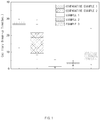
- FIG. 1 is a graph of measuring capillary break-up time of positive electrode slurries prepared according to examples of the present invention and comparative examples.
- the present invention provides a method of preparing an electrode slurry for secondary batteries, including: primarily mixing a first electrode slurry including an electrode active material, a conductive material and a first binder; and secondarily mixing a second electrode slurry including the first electrode slurry and a second binder.
- viscoelasticity of the electrode slurry is adjusted by controlling the amount of the binder.
- the first electrode slurry with high viscosity prepared by adding only a part of the binder to the electrode active material and the conductive material is primarily mixed, and then the second electrode slurry with low viscosity prepared by adding the remaining binder into the first electrode slurry is secondarily mixed to form an electrode slurry for secondary batteries.
- the electrode active material and the conductive material are mainly used in a powder or paste state, it is preferable that a solvent and a binder are added to a reactor to prepare a binder solution first such that the binder is sufficiently dissolved in the solvent and then the electrode active material and the conductive material are added thereto.
- the binder solution may have a weight ratio of solvent to solid content between approximately 94: 6 and approximately 92: 8.
- the first binder refers to a part of the binder added during the preparation of the first electrode slurry
- the second binder refers to the remaining binder added during the preparation of the second electrode slurry.
- the electrode slurry for secondary batteries of the present invention refers to a final electrode slurry prepared by secondarily mixing the second electrode slurry.
- the first electrode slurry having high viscosity can be prepared.
- a drag line is minimized by the primary mixing of the first electrode slurry having high viscosity, and thereby a defect rate of the electrode can be reduced and battery stability can be improved.
- the solid concentration of the first electrode slurry is in the range of 70 to 80%.
- the solid concentration of the first electrode slurry is less than 70%, an electrode slurry having high viscosity cannot be prepared.
- the solid concentration of the first electrode slurry is more than 80%, mixing and measurement of viscosity are impossible due to lack of a solvent.
- the solid content refers to the weight ratio of the solid components in the slurry with respect to the total weight of the slurry, which is calculated as (weight of solid component)/(weight of solid component+weight of liquid component) according to each mixing amount of the components actually used, and measured by a method of drying a final slurry in an oven to remove all water and measuring the remaining weight.
- the viscosity of the first electrode slurry is in the range of 10,000 to 60,000 cps.
- the viscosity of the first electrode slurry is less than 10,000 cps, since viscosity is low, shear stress transmission is reduced and the effect of improving dispersibility cannot be attained during mixing.
- the viscosity of the first electrode slurry is more than 60,000 cps, mixing and measurement of viscosity are impossible due to lack of a solvent.
- the second electrode slurry having low viscosity may be prepared by adding the second binder into the first electrode slurry having high viscosity, and the second electrode slurry is secondarily mixed to finally prepare the electrode slurry for secondary batteries of the present invention.
- the solid concentration of the second electrode slurry is in the range of 60 to 70%.
- the solid concentration is higher than the above-described range, since the viscosity of the slurry is high, the flowability of the slurry in a coater, and thus coating processability, is reduced.
- the solid concentration is lower than the above-described range, drying with hot air at a high temperature is required in order to remove a large amount of solvent during drying, thereby reducing the productivity of the electrode.
- the distribution of the binder in the surface layer of the electrode in the drying process is increased to the extent that distribution of the active material and the binder in the electrode becomes nonuniform and the performance of the secondary battery is deteriorated.
- the viscosity of the second electrode slurry is in the range of 8,000 to 12,000 cps.
- the viscosity of the second electrode slurry is less than 8,000 cps, workability may be reduced.
- the viscosity of the second electrode slurry is more than 12,000 cps, viscosity is so high that a large amount of drag lines may be generated due to difficulty in coating.
- the content ratio of the first binder to the second binder is in the range between 9:1 and 6:4.
- the viscosity of the first electrode slurry is so high that the flowability of the slurry may be reduced to reduce dispersibility during the mixing process.
- the amount of the first binder is too small, the solid content of the second electrode slurry may be reduced since it is required to suitably adjust viscosity by adding a solvent.
- the first binder and the second binder may be one or more selected from the group consisting of non-aqueous binders such as a vinylidene fluoride-hexafluoropropylene copolymer (PVDF-co-HEP), polyvinylidenefluoride, polyacrylonitrile, polymethyl methacrylate, polyvinyl alcohol, carboxymethylcellulose (CMC), starch, hydroxypropylcellulose, regenerated cellulose, polyvinyl pyrrolidone, tetrafluoroethylene, polyethylene, polypropylene, polyacrylic acid, an ethylene-propylene-diene monomer (EPDM), a sulfonated EPDM, polytetrafluoroethylene (PTFE), polyvinylidene fluoride (PVdF), and the like; aqueous binders such as an acrylonitrile-butadiene rubber, a styrene butadiene rubber (PVDF-co-HEP), poly
- the preparation method of the present invention may further include adding a thickener into the first electrode slurry or the second electrode slurry.
- the solid content ratio of the electrode active material can be increased due to the improved dispersibility of the electrode active material slurry, the stabilization of viscosity of electrode active material slurry, and the uniform distribution of the active material and the conductive material, thereby improving the capacity and the rate characteristics of the lithium secondary battery.
- the thickener may be a cellulose-based compound, and the cellulose-based compound used according to an embodiment of the present invention is a watersoluble polymer additive, which is a component included for the effect of increasing solid content and phase stability.
- the thickener include one or a mixture of two or more selected from the group consisting of methylcellulose, ethylcellulose, hydroxyethylcellulose, benzylcellulose, triethylcellulose, cyanoethylcellulose, carboxymethylcellulose (CMC), carboxyethylcellulose, aminoethylcellulose, nitrocellulose, cellulose ether, and carboxymethylcellulose sodium salt (CMCNa).
- the content of the cellulose-based compound may be in the range of 0.03 to 5 wt% based on the total weight of the electrode active material slurry.
- the content of the cellulose-based compound is less than 0.03 wt%, the binding force of the electrode and the phase stability of the electrode active material slurry cannot be improved.
- the content of the cellulose-based compound is more than 5 wt%, since the solid concentration of the electrode slurry is low, the binder and the conductive material may be more distributed on the surface, in which case resistance in the electrode increases since a channel through which current can flow in the electrode is not locally formed or the performance and stability of the battery may deteriorate since the current concentration phenomenon may occur.
- the electrode in the method of preparing an electrode slurry for secondary batteries, may be a positive electrode or a negative electrode.
- the present invention provides an electrode slurry for secondary batteries, prepared using the above-described method of preparing an electrode slurry for secondary batteries.
- the viscosity of the electrode slurry of the present invention is in the range of 8,000 to 12,000 cps, through which physical properties of the slurry such as viscoelasticity are improved, and thus the drag line can be minimized when an electrode current collector is pattern-coated with the electrode slurry, the defect rate of electrode can be reduced, and battery stability can be ensured.
- the present invention provides a method of manufacturing an electrode, which includes applying the above-described electrode slurry onto at least one surface of an electrode current collector to form an electrode active material layer, an electrode manufactured by the above-described method, and a lithium secondary battery including the above-described electrode.
- the electrode according to an embodiment of the present invention may be prepared by conventional methods known in the related field.
- the electrode active material slurry may be applied on a current collector formed of a metal material, compressed and dried to produce an electrode.
- examples of the negative electrode active material include a carbon material which may intercalate or disintercalate lithium ions, a lithium metal, silicon, tin, etc.
- the carbon material may preferably be used, and both low-crystalline carbon and high-crystalline carbon may be used as the carbon material.
- Typical examples of the low crystalline carbon may include soft carbon and hard carbon, and typical examples of the high crystalline carbon may include high-temperature calcined carbon such as natural graphite, Kish graphite, pyrolytic carbon, mesophase pitch based carbon fiber, meso-carbon microbeads, mesophase pitches, and petroleum or coal tar pitch derived cokes.
- an electrode active material slurry requires a solvent to form an electrode
- the solvent which may be used include an organic solvent such as N-methylpyrrolidone (NMP), dimethylformamide (DMF), acetone, dimethylacetamide, and the like, or water, and these solvents may be used alone or in a combination of two or more.
- NMP N-methylpyrrolidone
- DMF dimethylformamide
- acetone dimethylacetamide
- water water
- An amount of the solvent used may be sufficient if the solvent may allow the electrode active material, the binder, and the conductive material to be dissolved and dispersed therein in consideration of a coating thickness of the electrode active material slurry and manufacturing yield.
- any metal having high conductivity and no reactivity in a voltage range of the battery may be used as the metal current collector, which allows the slurry of the electrode active material to be easily adhered thereto.
- the positive electrode current collector may include aluminum, nickel, or a foil prepared by a combination thereof
- non-limiting examples of the negative electrode current collector may include copper, gold, nickel, a copper alloy, or a foil prepared by a combination thereof.
- the conductive material is not particularly limited as long as it may be generally used in the related field, and examples thereof include artificial graphite, natural graphite, carbon black, acetylene black, Ketjen black, Denka black, thermal black, channel black, carbon fibers, metal fibers, aluminum, tin, bismuth, silicon, antimony, nickel, copper, titanium, vanadium, chromium, manganese, iron, cobalt, zinc, molybdenum, tungsten, silver, gold, lanthanum, ruthenium, platinum, iridium, titanium oxide, polyaniline, polythiophene, polyacetylene, polypyrrole, and a combination thereof.
- a carbon black-based conductive material may frequently be used.
- the lithium secondary battery according to an embodiment of the present invention may include general lithium secondary batteries such as a lithium metal secondary battery, a lithium ion secondary battery, a lithium polymer secondary battery, a lithium ion polymer secondary battery, etc.
- the lithium secondary battery of the present invention may be manufactured using conventional methods known in the related field, and for example, may be manufactured by interposing a porous separator between the positive electrode and the negative electrode, and adding an electrolytic solution in which a lithium salt is dissolved thereto.
- the separator may be formed of a porous polymer film, for example, a porous polymer film prepared from a polyolefin-based polymer such as ethylene homopolymer, propylene homopolymer, ethylene-butene copolymer, ethylene-hexene copolymer, or ethylene-methacrylate copolymer, in a single layer or laminate form.
- the separator may be formed of a commonly used porous nonwoven fabric such as a nonwoven fabric formed of high-melting point glass fiber, polyethylene terephthalate fiber, and the like, but is not limited thereto.
- the electrolyte included in the secondary battery according to the present invention may be a mixture of one or more organic solvents selected from the group consisting of propylene carbonate (PC), ethylene carbonate (EC), diethyl carbonate (DEC), dimethyl carbonate (DMC), dipropyl carbonate (DPC), dimethyl sulfoxide, acetonitrile, dimethoxyethane, diethoxyethane, tetrahydrofuran, N-methyl-2-pyrrolidone (NMP), ethylmethyl carbonate (EMC), gamma-butyrolactone (GBL), fluoroethylene carbonate (FEC), methyl formate, ethyl formate, propyl formate, methyl acetate, ethyl acetate, propyl acetate, pentyl acetate, methyl propionate, ethyl propionate, and butyl propionate.
- PC propylene carbonate
- EC ethylene carbonate
- the electrolyte according to the present invention may further include a lithium salt, and an anion of the lithium salt may be one or more selected from the group consisting of F - , Cl - , Br - , I - , NO 3 - , N(CN) 2 - , BF 4 - , ClO 4 - , PF 6 - , (CF 3 ) 2 PF 4 - , (CF 3 ) 3 PF 3 - , (CF 3 ) 4 PF 2 - , (CF 3 ) 5 PF - , (CF 3 ) 6 P - , F 3 SO 3 - , CF 3 CF 2 SO 3 - , (CF 3 SO 2 ) 2 N - , (FSO 2 ) 2 N - , CF 3 CF 2 (CF 3 ) 2 CO - , (CF 3 SO 2 ) 2 CH - , (SF 3 ) 3 C - , (CF 3 SO 2 ) 3 C -
- the secondary battery according to the present invention may be a cylindrical, square, or pouch-type secondary battery, but is not limited thereto as long as the secondary battery is a charging/discharging device.
- the present invention may provide a battery module including the lithium secondary battery as a unit cell and a battery pack including the battery module.
- the battery pack may be used as a power supply in one or more types of medium- to large-sized devices selected from the group consisting of power tools; electric cars including electric vehicles (EV), hybrid electric vehicles, and plug-in hybrid electric vehicles (PHEV); and power storage systems.
- power tools including electric vehicles (EV), hybrid electric vehicles, and plug-in hybrid electric vehicles (PHEV); and power storage systems.
- An electrode slurry for secondary batteries of the present invention was prepared such that the weight ratio of the positive electrode active materialto the conductive material to the binder is 94.5:3.2:2.3.
- the content ratio of the first binder to the second binder was 6.6:3.4.
- a positive electrode slurry was prepared in the same manner as in Example 1 except that the content ratio of the first binder to the second binder was 7.7:2.3.
- a positive electrode slurry was prepared in the same manner as in Example 1 except that the content ratio of the first binder to the second binder was 8.8:1.2.
- a positive electrode slurry was prepared in the same manner as in Example 1 except that the amount of binder was not adjusted and added all at once.
- a positive electrode slurry was prepared in the same manner as in Example 1 except that the content ratio of the first binder to the second binder was 5.6:4.4.
- the result of measuring the solid content and viscosity of the positive electrode slurries prepared according to the examples and comparative examples are shown in the following Table 1.
- the solid content was calculated as (weight of solid component)/(weight of solid component+weight of liquid component) according to each mixing amount of the components actually used, and measured by a method of drying a final slurry in an oven to remove all water and measuring the remaining weight.
- the viscosity was measured at 25 °C at a shear rate of 12 rpm using a B-type viscometer.
- Comparative Example 1 the amount of the binder added was not adjusted and the binder was added all at once in a single mixing, and it can be confirmed that the solid concentration was the same as those of the examples, but the viscosity of the final slurry was slightly increased.
- the improved viscosity of the slurry of the examples is achieved by performing the primary mixing process at the specified high solid concentration and high viscosity by controlling the amount of binder added.
- the capillary break-up time of the slurry is related to the phenomenon of drag lines occurring during pattern coating. Specifically, the longer the capillary break-up time in the slurry extension test is, that is, the slower the break-up rate is, the higher the viscosity of the slurry is, and the higher the probability of the drag lines occurring during pattern-coating of the electrode is.
- the capillary break-up time in the slurry extension test is shorter than those of Comparative Examples 1 and 2.
- the capillary break-up time of Example 1 in which the viscosity during the primary mixing process is the highest, is the shortest, and thus it can be found that the higher the viscosity of slurry during the primary mixing process is, the shorter the capillary break-up time is.
Landscapes
- Chemical & Material Sciences (AREA)
- Chemical Kinetics & Catalysis (AREA)
- Electrochemistry (AREA)
- General Chemical & Material Sciences (AREA)
- Engineering & Computer Science (AREA)
- Materials Engineering (AREA)
- Manufacturing & Machinery (AREA)
- Inorganic Chemistry (AREA)
- Battery Electrode And Active Subsutance (AREA)
Abstract
Description
- This application claims priority to and the benefit of Korean Patent Application No.
10-2016-0037706, filed on March 29, 2016 - The present invention relates to a method of preparing an electrode slurry for lithium secondary batteries, a method of manufacturing an electrode including the same, and an electrode manufactured using the same.
- Recently, lithium secondary batteries have been used in various fields including portable electronic devices such as mobile phones, personal digital assistants (PDAs), and laptop computers. In particular, in line with growing concerns about environmental issues, research has been actively conducted into lithium secondary batteries having high energy density and discharge voltage as a power source for electric vehicles able to replace fossil fuel-powered vehicles such as gasoline vehicles and diesel vehicles, which are major causes of air pollution, and some of the research is in the commercialization stage.
- As devices in which lithium secondary batteries may be used have diversified as described above, lithium secondary batteries have also been diversified to have outputs and capacities suitable for the devices in which the lithium secondary batteries are used.
- A pattern coating process is used in which a plurality of coating portions coated with an electrode active material and a plurality of uncoated portions not coated with an electrode active material are formed, such that a battery can be flexibly deformed without causing cracks in an active material coating layer or separation of the coating layer from a current collector even when the battery is bent beyond a certain angle due to the design of various devices.
- However, during the pattern coating process, an active material slurry is dragged from one end of the coating portion, and there may be a problem of a drag line, a line along the path on which the active material slurry is dragged, formed on a surface of the uncoated portion. The drag line or drag portion is an abnormal electrode coating portion, which may cause an internal short circuit between a positive electrode and a negative electrode, thereby being a cause of threatening battery stability and increasing a defect rate of the battery.
- The drag line may be adjusted by a coating process or physical properties such as viscoelasticity of an active material slurry to be coated, and the inventors of the present invention have found a method of minimizing the drag line in the pattern coating process by controlling the physical properties of the slurry by improving a mixing process of the slurry, thereby completing the present invention.
- An objective of the present invention is to provide a method of preparing an electrode slurry for lithium secondary batteries in which the physical properties of the electrode slurry are improved to minimize a drag line by performing a primary mixing process at high viscosity by adjusting an amount of a binder added.
- Another objective of the present invention is to provide a method of manufacturing an electrode for lithium secondary batteries, of which a defect rate of the electrode is reduced and with which battery stability is improved by using the method of preparing an electrode slurry for secondary batteries, and an electrode and a secondary battery manufactured using the same.
- One aspect of the present invention provides a method of preparing an electrode slurry for secondary batteries, including: primarily mixing a first electrode slurry including an electrode active material, a conductive material and a first binder; and secondarily mixing a second electrode slurry including the first electrode slurry and a second binder.
- Another aspect of the present invention provides an electrode slurry for secondary batteries, prepared by the above-described method.
- Still another aspect of the present invention provides a method of manufacturing an electrode for secondary batteries which includes applying the above-described electrode slurry onto at least one surface of an electrode current collector to form an electrode active material layer, an electrode manufactured by the above-described method, and a lithium secondary battery including the above-described electrode.
- The present invention can provide a method of preparing an electrode slurry for lithium secondary batteries in which the physical properties of the electrode slurry can be improved to minimize a drag line by performing a primary mixing process at high viscosity, a method of manufacturing an electrode of which a defect rate of the electrode is reduced and with which battery stability is improved by using the method of preparing an electrode slurry for secondary batteries, an electrode manufactured using the method, and a secondary battery including the electrode.
-
FIG. 1 is a graph of measuring capillary break-up time of positive electrode slurries prepared according to examples of the present invention and comparative examples. - Hereinafter, the present invention will be described in detail in order to facilitate understanding of the present invention. Here, it should be understood that the terms used in the specification and the appended claims should not be construed as limited to general and dictionary meanings, but interpreted based on the meanings and concepts corresponding to technical aspects of the present disclosure on the basis of the principle that the inventor is allowed to define terms appropriately for the best explanation.
- The present invention provides a method of preparing an electrode slurry for secondary batteries, including: primarily mixing a first electrode slurry including an electrode active material, a conductive material and a first binder; and secondarily mixing a second electrode slurry including the first electrode slurry and a second binder.
- In the present invention, when preparing an electrode slurry for secondary batteries, viscoelasticity of the electrode slurry is adjusted by controlling the amount of the binder.
- In the present invention, the first electrode slurry with high viscosity prepared by adding only a part of the binder to the electrode active material and the conductive material is primarily mixed, and then the second electrode slurry with low viscosity prepared by adding the remaining binder into the first electrode slurry is secondarily mixed to form an electrode slurry for secondary batteries.
- Here, since the electrode active material and the conductive material are mainly used in a powder or paste state, it is preferable that a solvent and a binder are added to a reactor to prepare a binder solution first such that the binder is sufficiently dissolved in the solvent and then the electrode active material and the conductive material are added thereto.
- The binder solution may have a weight ratio of solvent to solid content between approximately 94: 6 and approximately 92: 8.
- In the present specification, the first binder refers to a part of the binder added during the preparation of the first electrode slurry, and the second binder refers to the remaining binder added during the preparation of the second electrode slurry. Further, the electrode slurry for secondary batteries of the present invention refers to a final electrode slurry prepared by secondarily mixing the second electrode slurry.
- First, when the first binder is added to the electrode active material and the conductive material, the first electrode slurry having high viscosity can be prepared.
- When the shear rates of the primary mixing for mixing the electrode active material, the conductive material, and the first binder are the same, the first electrode slurry having high viscosity receives higher shear stress (shear stress=shear rate*viscosity), which acts as a strong dispersing force, thereby improving dispersibility of the electrode active material and conductive material to improve dispersibility and reduce viscosity of the final electrode slurry.
- Accordingly, in the present invention, a drag line is minimized by the primary mixing of the first electrode slurry having high viscosity, and thereby a defect rate of the electrode can be reduced and battery stability can be improved.
- According to an embodiment of the present invention, the solid concentration of the first electrode slurry is in the range of 70 to 80%. When the solid concentration of the first electrode slurry is less than 70%, an electrode slurry having high viscosity cannot be prepared. When the solid concentration of the first electrode slurry is more than 80%, mixing and measurement of viscosity are impossible due to lack of a solvent.
- Here, the solid content refers to the weight ratio of the solid components in the slurry with respect to the total weight of the slurry, which is calculated as (weight of solid component)/(weight of solid component+weight of liquid component) according to each mixing amount of the components actually used, and measured by a method of drying a final slurry in an oven to remove all water and measuring the remaining weight.
- Further, according to an embodiment of the present invention, the viscosity of the first electrode slurry is in the range of 10,000 to 60,000 cps. When the viscosity of the first electrode slurry is less than 10,000 cps, since viscosity is low, shear stress transmission is reduced and the effect of improving dispersibility cannot be attained during mixing. When the viscosity of the first electrode slurry is more than 60,000 cps, mixing and measurement of viscosity are impossible due to lack of a solvent.
- Next, the second electrode slurry having low viscosity may be prepared by adding the second binder into the first electrode slurry having high viscosity, and the second electrode slurry is secondarily mixed to finally prepare the electrode slurry for secondary batteries of the present invention.
- According to an embodiment of the present invention, the solid concentration of the second electrode slurry is in the range of 60 to 70%. When the solid concentration is higher than the above-described range, since the viscosity of the slurry is high, the flowability of the slurry in a coater, and thus coating processability, is reduced. When the solid concentration is lower than the above-described range, drying with hot air at a high temperature is required in order to remove a large amount of solvent during drying, thereby reducing the productivity of the electrode. Further, the distribution of the binder in the surface layer of the electrode in the drying process is increased to the extent that distribution of the active material and the binder in the electrode becomes nonuniform and the performance of the secondary battery is deteriorated.
- Further, according to an embodiment of the present invention, the viscosity of the second electrode slurry is in the range of 8,000 to 12,000 cps. When the viscosity of the second electrode slurry is less than 8,000 cps, workability may be reduced. When the viscosity of the second electrode slurry is more than 12,000 cps, viscosity is so high that a large amount of drag lines may be generated due to difficulty in coating.
- According to an embodiment of the present invention, the content ratio of the first binder to the second binder is in the range between 9:1 and 6:4. When an excess amount of the first binder is used, the viscosity of the first electrode slurry is so high that the flowability of the slurry may be reduced to reduce dispersibility during the mixing process. When the amount of the first binder is too small, the solid content of the second electrode slurry may be reduced since it is required to suitably adjust viscosity by adding a solvent.
- Further, according to an embodiment of the present invention, the first binder and the second binder may be one or more selected from the group consisting of non-aqueous binders such as a vinylidene fluoride-hexafluoropropylene copolymer (PVDF-co-HEP), polyvinylidenefluoride, polyacrylonitrile, polymethyl methacrylate, polyvinyl alcohol, carboxymethylcellulose (CMC), starch, hydroxypropylcellulose, regenerated cellulose, polyvinyl pyrrolidone, tetrafluoroethylene, polyethylene, polypropylene, polyacrylic acid, an ethylene-propylene-diene monomer (EPDM), a sulfonated EPDM, polytetrafluoroethylene (PTFE), polyvinylidene fluoride (PVdF), and the like; aqueous binders such as an acrylonitrile-butadiene rubber, a styrene butadiene rubber (SBR), an acrylic rubber, and the like; and polymer resins such as hydroxyethyl cellulose, carboxymethyl cellulose, polyvinylidene fluoride, and the like. The first binder and the second binder may be the same or different.
- Further, the preparation method of the present invention may further include adding a thickener into the first electrode slurry or the second electrode slurry.
- When a thickener is used, the solid content ratio of the electrode active material can be increased due to the improved dispersibility of the electrode active material slurry, the stabilization of viscosity of electrode active material slurry, and the uniform distribution of the active material and the conductive material, thereby improving the capacity and the rate characteristics of the lithium secondary battery.
- The thickener may be a cellulose-based compound, and the cellulose-based compound used according to an embodiment of the present invention is a watersoluble polymer additive, which is a component included for the effect of increasing solid content and phase stability. Examples of the thickener include one or a mixture of two or more selected from the group consisting of methylcellulose, ethylcellulose, hydroxyethylcellulose, benzylcellulose, triethylcellulose, cyanoethylcellulose, carboxymethylcellulose (CMC), carboxyethylcellulose, aminoethylcellulose, nitrocellulose, cellulose ether, and carboxymethylcellulose sodium salt (CMCNa).
- Further, the content of the cellulose-based compound may be in the range of 0.03 to 5 wt% based on the total weight of the electrode active material slurry. When the content of the cellulose-based compound is less than 0.03 wt%, the binding force of the electrode and the phase stability of the electrode active material slurry cannot be improved. When the content of the cellulose-based compound is more than 5 wt%, since the solid concentration of the electrode slurry is low, the binder and the conductive material may be more distributed on the surface, in which case resistance in the electrode increases since a channel through which current can flow in the electrode is not locally formed or the performance and stability of the battery may deteriorate since the current concentration phenomenon may occur.
- According to an embodiment of the present invention, in the method of preparing an electrode slurry for secondary batteries, the electrode may be a positive electrode or a negative electrode.
- Further, the present invention provides an electrode slurry for secondary batteries, prepared using the above-described method of preparing an electrode slurry for secondary batteries.
- The viscosity of the electrode slurry of the present invention is in the range of 8,000 to 12,000 cps, through which physical properties of the slurry such as viscoelasticity are improved, and thus the drag line can be minimized when an electrode current collector is pattern-coated with the electrode slurry, the defect rate of electrode can be reduced, and battery stability can be ensured.
- Further, the present invention provides a method of manufacturing an electrode, which includes applying the above-described electrode slurry onto at least one surface of an electrode current collector to form an electrode active material layer, an electrode manufactured by the above-described method, and a lithium secondary battery including the above-described electrode.
- The electrode according to an embodiment of the present invention may be prepared by conventional methods known in the related field. For example, the electrode active material slurry may be applied on a current collector formed of a metal material, compressed and dried to produce an electrode.
- A lithium transition metal oxide may preferably be used as the positive electrode active material according to an embodiment of the present invention, and an example thereof may be a mixture of one or more selected from the group consisting of LixCoO2 (0.5<x<1.3), LixNiO2 (0.5<x<1.3), LixMnO2 (0.5<x<1.3), LixMn2O4 (0.5<x<1.3), Lix(NiaCobMnc)O2 (0.5<x<1.3, 0<a<1, 0<b<1, 0<c<1 and a+b+c=1), LixNi1-yCoyO2 (0.5<x<1.3, 0<y<1), LixCo1-yMnyO2 (0.5<x<1.3, 0≤y<1), LixNi1-yMnyO2 (0.5<x<1.3, O≤y<1), Lix(NiaCobMnc)O4 (0.5<x<1.3, 0<a<2, 0<b<2, 0<c<2 and a+b+c=2), LixMn2-zNizO4 (0.5<x<1.3, 0<z<2), LixMn2-zCozO4 (0.5<x<1.3, 0<z<2), LixCoPO4 (0.5<x<1.3), and LixFePO4 (0.5<x<1.3), and more preferably, may be Lix(NiaCobMnc)O2 (0.9<x<1.2, 0.5≤a≤0.7, 0.1≤b≤0.3, 0.1≤c≤0.3 and a+b+c=1).
- Generally, examples of the negative electrode active material include a carbon material which may intercalate or disintercalate lithium ions, a lithium metal, silicon, tin, etc. The carbon material may preferably be used, and both low-crystalline carbon and high-crystalline carbon may be used as the carbon material. Typical examples of the low crystalline carbon may include soft carbon and hard carbon, and typical examples of the high crystalline carbon may include high-temperature calcined carbon such as natural graphite, Kish graphite, pyrolytic carbon, mesophase pitch based carbon fiber, meso-carbon microbeads, mesophase pitches, and petroleum or coal tar pitch derived cokes.
- According to an embodiment of the present invention, an electrode active material slurry requires a solvent to form an electrode, and examples of the solvent which may be used include an organic solvent such as N-methylpyrrolidone (NMP), dimethylformamide (DMF), acetone, dimethylacetamide, and the like, or water, and these solvents may be used alone or in a combination of two or more. However, when a negative electrode is formed, water is used as a solvent. An amount of the solvent used may be sufficient if the solvent may allow the electrode active material, the binder, and the conductive material to be dissolved and dispersed therein in consideration of a coating thickness of the electrode active material slurry and manufacturing yield.
- Any metal having high conductivity and no reactivity in a voltage range of the battery may be used as the metal current collector, which allows the slurry of the electrode active material to be easily adhered thereto. Non-limiting examples of the positive electrode current collector may include aluminum, nickel, or a foil prepared by a combination thereof, and non-limiting examples of the negative electrode current collector may include copper, gold, nickel, a copper alloy, or a foil prepared by a combination thereof.
- The conductive material is not particularly limited as long as it may be generally used in the related field, and examples thereof include artificial graphite, natural graphite, carbon black, acetylene black, Ketjen black, Denka black, thermal black, channel black, carbon fibers, metal fibers, aluminum, tin, bismuth, silicon, antimony, nickel, copper, titanium, vanadium, chromium, manganese, iron, cobalt, zinc, molybdenum, tungsten, silver, gold, lanthanum, ruthenium, platinum, iridium, titanium oxide, polyaniline, polythiophene, polyacetylene, polypyrrole, and a combination thereof. In general, a carbon black-based conductive material may frequently be used.
- The lithium secondary battery according to an embodiment of the present invention may include general lithium secondary batteries such as a lithium metal secondary battery, a lithium ion secondary battery, a lithium polymer secondary battery, a lithium ion polymer secondary battery, etc.
- The lithium secondary battery of the present invention may be manufactured using conventional methods known in the related field, and for example, may be manufactured by interposing a porous separator between the positive electrode and the negative electrode, and adding an electrolytic solution in which a lithium salt is dissolved thereto.
- The separator may be formed of a porous polymer film, for example, a porous polymer film prepared from a polyolefin-based polymer such as ethylene homopolymer, propylene homopolymer, ethylene-butene copolymer, ethylene-hexene copolymer, or ethylene-methacrylate copolymer, in a single layer or laminate form. Alternatively, the separator may be formed of a commonly used porous nonwoven fabric such as a nonwoven fabric formed of high-melting point glass fiber, polyethylene terephthalate fiber, and the like, but is not limited thereto.
- The electrolyte included in the secondary battery according to the present invention may be a mixture of one or more organic solvents selected from the group consisting of propylene carbonate (PC), ethylene carbonate (EC), diethyl carbonate (DEC), dimethyl carbonate (DMC), dipropyl carbonate (DPC), dimethyl sulfoxide, acetonitrile, dimethoxyethane, diethoxyethane, tetrahydrofuran, N-methyl-2-pyrrolidone (NMP), ethylmethyl carbonate (EMC), gamma-butyrolactone (GBL), fluoroethylene carbonate (FEC), methyl formate, ethyl formate, propyl formate, methyl acetate, ethyl acetate, propyl acetate, pentyl acetate, methyl propionate, ethyl propionate, and butyl propionate.
- Further, the electrolyte according to the present invention may further include a lithium salt, and an anion of the lithium salt may be one or more selected from the group consisting of F-, Cl-, Br-, I-, NO3 -, N(CN)2 -, BF4 -, ClO4 -, PF6 -, (CF3)2PF4 -, (CF3)3PF3 -, (CF3)4PF2 -, (CF3)5PF-, (CF3)6P-, F3SO3 -, CF3CF2SO3 -, (CF3SO2)2N-, (FSO2)2N-, CF3CF2(CF3)2CO-, (CF3SO2)2CH-, (SF3)3C-, (CF3SO2)3C-, CF3(CF2)7SO3 -, CF3CO2 -, CH3CO2 -, SCN-, and (CF3CF2SO2)2N-.
- The secondary battery according to the present invention may be a cylindrical, square, or pouch-type secondary battery, but is not limited thereto as long as the secondary battery is a charging/discharging device.
- Further, the present invention may provide a battery module including the lithium secondary battery as a unit cell and a battery pack including the battery module.
- The battery pack may be used as a power supply in one or more types of medium- to large-sized devices selected from the group consisting of power tools; electric cars including electric vehicles (EV), hybrid electric vehicles, and plug-in hybrid electric vehicles (PHEV); and power storage systems.
- Now, the present invention will be described in more detail with reference to the following examples. These examples are provided only for illustration of the present invention and should not be construed as limiting the scope and spirit of the present invention.
- An electrode slurry for secondary batteries of the present invention was prepared such that the weight ratio of the positive electrode active materialto the conductive material to the binder is 94.5:3.2:2.3.
- Specifically, after a binder solution (solvent: solid content=94:6) was prepared by dissolving a binder (PVDF, molecular weight: 800,000 g/mol) in N-methylpyrrolidone (NMP), a first electrode slurry prepared by adding a positive electrode active material (LiNi0.6Mn0.2Co0.2O2, D50=10 µm, SSA=0.3 m2/g) and a conductive material (primary particle size=25 nm, SSA=130 m2/g, OAN=200 cc/100 g) to a part of the binder solution (first binder) was primarily mixed (Homo-Disper, 3000 rpm, 50 min). Thereafter, a second electrode slurry was prepared by adding the remaining binder solution into the first electrode slurry, and was then secondarily mixed (Homo-Disper, 3000 rpm, 50 min) to prepare an electrode slurry for secondary batteries.
- The content ratio of the first binder to the second binder was 6.6:3.4.
- A positive electrode slurry was prepared in the same manner as in Example 1 except that the content ratio of the first binder to the second binder was 7.7:2.3.
- A positive electrode slurry was prepared in the same manner as in Example 1 except that the content ratio of the first binder to the second binder was 8.8:1.2.
- A positive electrode slurry was prepared in the same manner as in Example 1 except that the amount of binder was not adjusted and added all at once.
- A positive electrode slurry was prepared in the same manner as in Example 1 except that the content ratio of the first binder to the second binder was 5.6:4.4.
- The result of measuring the solid content and viscosity of the positive electrode slurries prepared according to the examples and comparative examples are shown in the following Table 1. The solid content was calculated as (weight of solid component)/(weight of solid component+weight of liquid component) according to each mixing amount of the components actually used, and measured by a method of drying a final slurry in an oven to remove all water and measuring the remaining weight. The viscosity was measured at 25 °C at a shear rate of 12 rpm using a B-type viscometer.
[Table 1] After primary mixing After secondary mixing Solid content (%) Viscosity (cps) Solid content (%) Viscosity (cps) Example 1 74 52,000 68 8,600 Example 2 72 35,000 68 9,400 Example 3 70 16,000 68 11,100 Comparative Example 1 - - 68 13,300 Comparative Example 2 76 Impossible to measure viscosity 68 14,000 - As shown in Table 1, it can be seen that the viscosity of the final slurry was significantly improved by further performing primary mixing of the first electrode slurry having high solid concentration or high viscosity by adjusting the amount of the binder to be added in Examples 1 to 3 of the present invention.
- On the other hand, in Comparative Example 1, the amount of the binder added was not adjusted and the binder was added all at once in a single mixing, and it can be confirmed that the solid concentration was the same as those of the examples, but the viscosity of the final slurry was slightly increased.
- Further, it can be seen that, in Comparative Example 2, although the amount of the binder added was adjusted, since the solid content of the first electrode slurry was too high, it was impossible to primarily mix the first electrode slurry and measure the viscosity of the first electrode slurry due to lack of solvent, and the solid concentration became the same as those of the examples by adding the remaining binder, but the viscosity of the final slurry was significantly increased as compared with those of the examples.
- That is, it can be seen that the improved viscosity of the slurry of the examples is achieved by performing the primary mixing process at the specified high solid concentration and high viscosity by controlling the amount of binder added.
- In order to evaluate the viscosity of the positive electrode slurries prepared according to the examples and comparative examples, a tensile force was applied to the positive electrode slurries to measure capillary break-up time in a direction of extension (extension rate: 2.2 mm/sec).
[Table 2] Capillary break-up time (sec) Example 1 1.58 Example 2 3.04 Example 3 8.88 Comparative Example 1 25.33 Comparative Example 2 17.28 - The capillary break-up time of the slurry is related to the phenomenon of drag lines occurring during pattern coating. Specifically, the longer the capillary break-up time in the slurry extension test is, that is, the slower the break-up rate is, the higher the viscosity of the slurry is, and the higher the probability of the drag lines occurring during pattern-coating of the electrode is.
- As shown in Table 2, it can be seen that, in Examples 1 to 3 in which primary mixing at high viscosity was performed, the capillary break-up time in the slurry extension test is shorter than those of Comparative Examples 1 and 2. In particular, the capillary break-up time of Example 1, in which the viscosity during the primary mixing process is the highest, is the shortest, and thus it can be found that the higher the viscosity of slurry during the primary mixing process is, the shorter the capillary break-up time is.
- The above description of the invention is only exemplary, and it will be understood by those skilled in the art that various modifications can be made without departing from the scope of the present invention and without changing essential features. Therefore, the above-described examples should be considered in a descriptive sense only and not for purposes of limitation.
Claims (14)
- A method of preparing an electrode slurry for secondary batteries, comprising:primarily mixing a first electrode slurry including an electrode active material, a conductive material and a first binder; andsecondarily mixing a second electrode slurry including the first electrode slurry and a second binder.
- The method according to claim 1, wherein a solid concentration of the first electrode slurry is in a range of 70 to 80 %.
- The method according to claim 1, wherein a solid concentration of the second electrode slurry is in a range of 60 to 70 %.
- The method according to claim 1, wherein a viscosity of the first electrode slurry is in a range of 10,000 to 60,000 cps.
- The method according to claim 1, wherein a viscosity of the second electrode slurry is in a range of 8,000 to 12,000 cps.
- The method according to claim 1, wherein a content ratio of the first binder and the second binder is in a range between 9:1 and 6:4.
- The method according to claim 1, wherein the first binder and the second binder are one or more selected from the group consisting of non-aqueous binders such as a vinylidene fluoride-hexafluoropropylene copolymer (PVDF-co-HEP), polyvinylidenefluoride, polyacrylonitrile, polymethyl methacrylate, polyvinyl alcohol, carboxymethylcellulose (CMC), starch, hydroxypropylcellulose, regenerated cellulose, polyvinyl pyrrolidone, tetrafluoroethylene, polyethylene, polypropylene, polyacrylic acid, an ethylene-propylene-diene monomer (EPDM), a sulfonated EPDM, polytetrafluoroethylene (PTFE), polyvinylidene fluoride (PVdF), and the like; aqueous binders such as an acrylonitrile-butadiene rubber, a styrene butadiene rubber (SBR), an acrylic rubber, and the like; and polymer resins such as hydroxyethyl cellulose, carboxymethyl cellulose, polyvinylidene fluoride, and the like.
- The method according to claim 1, further comprising adding a thickener into the first electrode slurry or the second electrode slurry.
- The method according to claim 1, wherein the electrode is a positive electrode or a negative electrode.
- An electrode slurry for secondary batteries, prepared by the method according to any one of claims 1 to 9.
- The electrode slurry according to claim 10, wherein a viscosity of the electrode slurry is in a range of 8,000 to 12,000 cps.
- A method of manufacturing an electrode, comprising applying the electrode slurry according to claim 10 onto at least one surface of an electrode current collector to form an electrode active material layer.
- An electrode manufactured by the method according to claim 12.
- A lithium secondary battery comprising the electrode according to claim 13.
Applications Claiming Priority (2)
| Application Number | Priority Date | Filing Date | Title |
|---|---|---|---|
| KR1020160037706A KR102015431B1 (en) | 2016-03-29 | 2016-03-29 | Method of preparing electrode slurry for a lithium secondary battery |
| PCT/KR2017/002774 WO2017171274A2 (en) | 2016-03-29 | 2017-03-15 | Method for manufacturing electrode slurry for lithium secondary battery |
Publications (3)
| Publication Number | Publication Date |
|---|---|
| EP3297076A2 true EP3297076A2 (en) | 2018-03-21 |
| EP3297076A4 EP3297076A4 (en) | 2018-06-20 |
| EP3297076B1 EP3297076B1 (en) | 2022-08-31 |
Family
ID=59966100
Family Applications (1)
| Application Number | Title | Priority Date | Filing Date |
|---|---|---|---|
| EP17775699.6A Active EP3297076B1 (en) | 2016-03-29 | 2017-03-15 | Method for manufacturing electrode slurry for lithium secondary battery |
Country Status (9)
| Country | Link |
|---|---|
| US (1) | US10573895B2 (en) |
| EP (1) | EP3297076B1 (en) |
| JP (2) | JP6645705B2 (en) |
| KR (1) | KR102015431B1 (en) |
| CN (1) | CN110199421B (en) |
| ES (1) | ES2928012T3 (en) |
| HU (1) | HUE059910T2 (en) |
| PL (1) | PL3297076T3 (en) |
| WO (1) | WO2017171274A2 (en) |
Families Citing this family (14)
| Publication number | Priority date | Publication date | Assignee | Title |
|---|---|---|---|---|
| KR102077789B1 (en) * | 2016-11-17 | 2020-02-14 | 주식회사 엘지화학 | Manufacturing method of positive electrode active material slurry |
| KR102527050B1 (en) * | 2019-06-07 | 2023-04-28 | 에스케이온 주식회사 | Method for preparing the electrode for secondary battery secondary battery comprising the same |
| KR20210044503A (en) * | 2019-10-15 | 2021-04-23 | 주식회사 엘지화학 | Electrode plate for secondary battery comprising electrode mixture regions having different content ratio of binder and manufacturing method of electrode for secondary battery using the same |
| CN111463402B (en) * | 2020-03-28 | 2021-06-29 | 珠海冠宇电池股份有限公司 | A kind of lithium ion battery negative electrode and preparation method thereof |
| CN111463401B (en) * | 2020-03-28 | 2021-06-29 | 珠海冠宇电池股份有限公司 | A kind of lithium ion battery negative electrode and preparation method thereof |
| KR102695900B1 (en) * | 2020-05-21 | 2024-08-19 | 주식회사 엘지에너지솔루션 | Method for quantifying dry defects of electrode slurry |
| US12360029B2 (en) | 2021-03-30 | 2025-07-15 | Lg Energy Solution, Ltd. | System and method for evaluating dissolution quality of binder solution for secondary battery electrode, and method of manufacturing electrode slurry for secondary battery |
| KR102953636B1 (en) | 2021-03-30 | 2026-04-15 | 주식회사 엘지에너지솔루션 | Dissolution quality evaluation system of bineder solution for secondary battery electrode, quality evaluation method and method for producing electrde slurry for secondary battery |
| KR102886359B1 (en) | 2021-03-30 | 2025-11-13 | 주식회사 엘지에너지솔루션 | Dissolution quality evaluation system of bineder solution for secondary battery electrode, quality evaluation method and method for producing electrde slurry for secondary battery |
| KR102953633B1 (en) * | 2021-03-30 | 2026-04-15 | 주식회사 엘지에너지솔루션 | Metrhod for evaluating dissoultion quality of binder solution for secondary battery electrode and producing method of electrode slurry for secondary battery by the evaluation method |
| KR102953926B1 (en) | 2021-03-30 | 2026-04-16 | 주식회사 엘지에너지솔루션 | Filter determining system for evalutation of dissoultion quality of binder solution for secondary battery electrode and determining method thereof |
| KR102953924B1 (en) | 2021-03-30 | 2026-04-16 | 주식회사 엘지에너지솔루션 | System for verifying content of insoluble matters in binder solutions for secondary batteries electrode and verifying method thereof, method for preparing binder solutions for secondary batteries electrode, and method for producing electrde slurry for secondary battery |
| KR102614602B1 (en) | 2021-05-20 | 2023-12-19 | 주식회사 아이센스 | Method for calibrating non invasive biometric data |
| KR20250132880A (en) * | 2024-02-29 | 2025-09-05 | 삼성에스디아이 주식회사 | Negative electrode slurry, method for producing the same, and electrode for an all-solid-state battery manufactured using the same |
Family Cites Families (12)
| Publication number | Priority date | Publication date | Assignee | Title |
|---|---|---|---|---|
| JP3579598B2 (en) * | 1998-04-21 | 2004-10-20 | 日本特殊陶業株式会社 | Method for producing slurry for lithium secondary battery electrode |
| JP2003068280A (en) * | 2001-08-29 | 2003-03-07 | Mitsubishi Chemicals Corp | An electrode slurry, a method for producing the same, and a method for producing an electrode. |
| KR100396492B1 (en) | 2001-10-17 | 2003-09-02 | 삼성에스디아이 주식회사 | Positive active material for lithium-sulfur battery and method of preparing positive active material composition comprising same |
| JP2004247180A (en) * | 2003-02-14 | 2004-09-02 | Kureha Chem Ind Co Ltd | Electrode mix, electrode structure using it, and nonaqueous electrochemical element |
| JP2009187819A (en) * | 2008-02-07 | 2009-08-20 | Panasonic Corp | Method for producing paste for lithium ion secondary battery |
| JP5470817B2 (en) * | 2008-03-10 | 2014-04-16 | 日産自動車株式会社 | Battery electrode, battery using the same, and manufacturing method thereof |
| CN102044661A (en) * | 2009-10-23 | 2011-05-04 | 比克国际(天津)有限公司 | Method for preparing lithium ion battery slurry |
| KR101312265B1 (en) | 2011-07-04 | 2013-09-25 | 삼성에스디아이 주식회사 | Cathod slurry composition, cathode prepared from the slurry, and lithium battery comprising the cathode |
| KR101413433B1 (en) * | 2012-12-05 | 2014-07-01 | 울산대학교 산학협력단 | Binder for Secondary Battery Providing Excellent Cycle property and Secondary Battery by Using Same |
| WO2014119790A1 (en) | 2013-02-04 | 2014-08-07 | 日本ゼオン株式会社 | Slurry for lithium ion secondary battery positive electrodes |
| KR101526677B1 (en) * | 2013-08-07 | 2015-06-05 | 현대자동차주식회사 | A sulfur cathod for a lithium sulfur battery |
| JP6413242B2 (en) * | 2014-01-15 | 2018-10-31 | 日本ゼオン株式会社 | Method for producing slurry for secondary battery positive electrode, method for producing positive electrode for secondary battery, and method for producing secondary battery |
-
2016
- 2016-03-29 KR KR1020160037706A patent/KR102015431B1/en active Active
-
2017
- 2017-03-15 CN CN201780002183.2A patent/CN110199421B/en active Active
- 2017-03-15 EP EP17775699.6A patent/EP3297076B1/en active Active
- 2017-03-15 HU HUE17775699A patent/HUE059910T2/en unknown
- 2017-03-15 ES ES17775699T patent/ES2928012T3/en active Active
- 2017-03-15 US US15/580,474 patent/US10573895B2/en active Active
- 2017-03-15 PL PL17775699.6T patent/PL3297076T3/en unknown
- 2017-03-15 WO PCT/KR2017/002774 patent/WO2017171274A2/en not_active Ceased
- 2017-03-15 JP JP2017563303A patent/JP6645705B2/en active Active
-
2019
- 2019-10-31 JP JP2019199446A patent/JP2020035754A/en active Pending
Also Published As
| Publication number | Publication date |
|---|---|
| WO2017171274A2 (en) | 2017-10-05 |
| PL3297076T3 (en) | 2023-01-09 |
| JP2020035754A (en) | 2020-03-05 |
| US10573895B2 (en) | 2020-02-25 |
| US20180166688A1 (en) | 2018-06-14 |
| JP2018518810A (en) | 2018-07-12 |
| CN110199421B (en) | 2022-03-25 |
| CN110199421A (en) | 2019-09-03 |
| JP6645705B2 (en) | 2020-02-14 |
| WO2017171274A3 (en) | 2018-03-22 |
| ES2928012T3 (en) | 2022-11-14 |
| HUE059910T2 (en) | 2023-01-28 |
| EP3297076B1 (en) | 2022-08-31 |
| KR20170111722A (en) | 2017-10-12 |
| KR102015431B1 (en) | 2019-08-28 |
| EP3297076A4 (en) | 2018-06-20 |
Similar Documents
| Publication | Publication Date | Title |
|---|---|---|
| EP3297076B1 (en) | Method for manufacturing electrode slurry for lithium secondary battery | |
| EP3751644B1 (en) | Secondary battery having improved high-temperature properties | |
| KR102666155B1 (en) | Composite active material for negative electrode, method for manufacturing the same, and negative electrode comprising the same | |
| KR101938236B1 (en) | Negative electrode slurry for secondary battery for improving dispensability and reducing resistance and negative electrode comprising the same | |
| CN110651386A (en) | Negative electrode active material for electrochemical device, negative electrode comprising the same, and electrochemical device comprising the same | |
| KR101645773B1 (en) | Electrode active material slurry and secondary battery comprising the same | |
| KR102141964B1 (en) | Negative electrode active material slurry, negative electrode comprising thereof and lithium secondary battery containing the negative electrode | |
| KR102926460B1 (en) | Binder composition for negative electrode, negative electrode and secondary battery | |
| EP3770997B1 (en) | Negative electrode slurry for lithium secondary battery, and preparation method thereof | |
| KR102538285B1 (en) | Binder comprising copolymer composition, anode for secondary battery comprising the same, and secondary battery comprising the anode | |
| KR101765370B1 (en) | Slurry composition for anode and its fabrication method | |
| KR101776989B1 (en) | Slurry composition for anode and its fabrication method | |
| EP3817103A1 (en) | Positive electrode active material for lithium rechargeable battery, manufacturing method therefor and lithium rechargeable battery comprising same | |
| JP2019215961A (en) | Non-aqueous electrolyte for secondary battery including specific additive and secondary battery using the same | |
| KR20170034774A (en) | Preparing methode for lithium secondary battery having improved low temperature property and lithium secondary battery | |
| CN108496265A (en) | Method for preparing positive electrode active material slurry | |
| KR20240130031A (en) | Negative electrode slurry, negative electrode, and rechargeable battery | |
| US12199270B2 (en) | Positive electrode active material for lithium rechargeable battery, manufacturing method therefor and lithium rechargeable battery comprising same | |
| KR20170035569A (en) | Negative electrode for lithium secondary battery having reduced thickness swelling and method for preparing the same |
Legal Events
| Date | Code | Title | Description |
|---|---|---|---|
| STAA | Information on the status of an ep patent application or granted ep patent |
Free format text: STATUS: THE INTERNATIONAL PUBLICATION HAS BEEN MADE |
|
| PUAI | Public reference made under article 153(3) epc to a published international application that has entered the european phase |
Free format text: ORIGINAL CODE: 0009012 |
|
| STAA | Information on the status of an ep patent application or granted ep patent |
Free format text: STATUS: REQUEST FOR EXAMINATION WAS MADE |
|
| 17P | Request for examination filed |
Effective date: 20171213 |
|
| AK | Designated contracting states |
Kind code of ref document: A2 Designated state(s): AL AT BE BG CH CY CZ DE DK EE ES FI FR GB GR HR HU IE IS IT LI LT LU LV MC MK MT NL NO PL PT RO RS SE SI SK SM TR |
|
| AX | Request for extension of the european patent |
Extension state: BA ME |
|
| R17D | Deferred search report published (corrected) |
Effective date: 20180322 |
|
| A4 | Supplementary search report drawn up and despatched |
Effective date: 20180522 |
|
| RIC1 | Information provided on ipc code assigned before grant |
Ipc: H01M 4/62 20060101AFI20180515BHEP Ipc: H01M 4/139 20100101ALI20180515BHEP Ipc: H01M 10/0525 20100101ALI20180515BHEP Ipc: H01M 4/13 20100101ALI20180515BHEP |
|
| RIC1 | Information provided on ipc code assigned before grant |
Ipc: H01M 4/62 20060101AFI20180723BHEP Ipc: H01M 10/0525 20100101ALI20180723BHEP Ipc: H01M 4/139 20100101ALI20180723BHEP Ipc: H01M 4/13 20100101ALI20180723BHEP |
|
| DAV | Request for validation of the european patent (deleted) | ||
| DAX | Request for extension of the european patent (deleted) | ||
| STAA | Information on the status of an ep patent application or granted ep patent |
Free format text: STATUS: EXAMINATION IS IN PROGRESS |
|
| 17Q | First examination report despatched |
Effective date: 20210114 |
|
| RAP1 | Party data changed (applicant data changed or rights of an application transferred) |
Owner name: LG ENERGY SOLUTION LTD. |
|
| RAP3 | Party data changed (applicant data changed or rights of an application transferred) |
Owner name: LG ENERGY SOLUTION, LTD. |
|
| GRAP | Despatch of communication of intention to grant a patent |
Free format text: ORIGINAL CODE: EPIDOSNIGR1 |
|
| STAA | Information on the status of an ep patent application or granted ep patent |
Free format text: STATUS: GRANT OF PATENT IS INTENDED |
|
| INTG | Intention to grant announced |
Effective date: 20220608 |
|
| GRAS | Grant fee paid |
Free format text: ORIGINAL CODE: EPIDOSNIGR3 |
|
| GRAA | (expected) grant |
Free format text: ORIGINAL CODE: 0009210 |
|
| STAA | Information on the status of an ep patent application or granted ep patent |
Free format text: STATUS: THE PATENT HAS BEEN GRANTED |
|
| AK | Designated contracting states |
Kind code of ref document: B1 Designated state(s): AL AT BE BG CH CY CZ DE DK EE ES FI FR GB GR HR HU IE IS IT LI LT LU LV MC MK MT NL NO PL PT RO RS SE SI SK SM TR |
|
| REG | Reference to a national code |
Ref country code: CH Ref legal event code: EP Ref country code: GB Ref legal event code: FG4D |
|
| REG | Reference to a national code |
Ref country code: AT Ref legal event code: REF Ref document number: 1515953 Country of ref document: AT Kind code of ref document: T Effective date: 20220915 Ref country code: DE Ref legal event code: R096 Ref document number: 602017061277 Country of ref document: DE |
|
| REG | Reference to a national code |
Ref country code: IE Ref legal event code: FG4D |
|
| REG | Reference to a national code |
Ref country code: SE Ref legal event code: TRGR |
|
| REG | Reference to a national code |
Ref country code: ES Ref legal event code: FG2A Ref document number: 2928012 Country of ref document: ES Kind code of ref document: T3 Effective date: 20221114 |
|
| REG | Reference to a national code |
Ref country code: LT Ref legal event code: MG9D |
|
| REG | Reference to a national code |
Ref country code: NL Ref legal event code: MP Effective date: 20220831 |
|
| REG | Reference to a national code |
Ref country code: HU Ref legal event code: AG4A Ref document number: E059910 Country of ref document: HU |
|
| PG25 | Lapsed in a contracting state [announced via postgrant information from national office to epo] |
Ref country code: RS Free format text: LAPSE BECAUSE OF FAILURE TO SUBMIT A TRANSLATION OF THE DESCRIPTION OR TO PAY THE FEE WITHIN THE PRESCRIBED TIME-LIMIT Effective date: 20220831 Ref country code: NO Free format text: LAPSE BECAUSE OF FAILURE TO SUBMIT A TRANSLATION OF THE DESCRIPTION OR TO PAY THE FEE WITHIN THE PRESCRIBED TIME-LIMIT Effective date: 20221130 Ref country code: LV Free format text: LAPSE BECAUSE OF FAILURE TO SUBMIT A TRANSLATION OF THE DESCRIPTION OR TO PAY THE FEE WITHIN THE PRESCRIBED TIME-LIMIT Effective date: 20220831 Ref country code: LT Free format text: LAPSE BECAUSE OF FAILURE TO SUBMIT A TRANSLATION OF THE DESCRIPTION OR TO PAY THE FEE WITHIN THE PRESCRIBED TIME-LIMIT Effective date: 20220831 Ref country code: FI Free format text: LAPSE BECAUSE OF FAILURE TO SUBMIT A TRANSLATION OF THE DESCRIPTION OR TO PAY THE FEE WITHIN THE PRESCRIBED TIME-LIMIT Effective date: 20220831 |
|
| REG | Reference to a national code |
Ref country code: AT Ref legal event code: MK05 Ref document number: 1515953 Country of ref document: AT Kind code of ref document: T Effective date: 20220831 |
|
| PG25 | Lapsed in a contracting state [announced via postgrant information from national office to epo] |
Ref country code: IS Free format text: LAPSE BECAUSE OF FAILURE TO SUBMIT A TRANSLATION OF THE DESCRIPTION OR TO PAY THE FEE WITHIN THE PRESCRIBED TIME-LIMIT Effective date: 20221231 Ref country code: HR Free format text: LAPSE BECAUSE OF FAILURE TO SUBMIT A TRANSLATION OF THE DESCRIPTION OR TO PAY THE FEE WITHIN THE PRESCRIBED TIME-LIMIT Effective date: 20220831 Ref country code: GR Free format text: LAPSE BECAUSE OF FAILURE TO SUBMIT A TRANSLATION OF THE DESCRIPTION OR TO PAY THE FEE WITHIN THE PRESCRIBED TIME-LIMIT Effective date: 20221201 |
|
| PG25 | Lapsed in a contracting state [announced via postgrant information from national office to epo] |
Ref country code: SM Free format text: LAPSE BECAUSE OF FAILURE TO SUBMIT A TRANSLATION OF THE DESCRIPTION OR TO PAY THE FEE WITHIN THE PRESCRIBED TIME-LIMIT Effective date: 20220831 Ref country code: RO Free format text: LAPSE BECAUSE OF FAILURE TO SUBMIT A TRANSLATION OF THE DESCRIPTION OR TO PAY THE FEE WITHIN THE PRESCRIBED TIME-LIMIT Effective date: 20220831 Ref country code: PT Free format text: LAPSE BECAUSE OF FAILURE TO SUBMIT A TRANSLATION OF THE DESCRIPTION OR TO PAY THE FEE WITHIN THE PRESCRIBED TIME-LIMIT Effective date: 20230102 Ref country code: DK Free format text: LAPSE BECAUSE OF FAILURE TO SUBMIT A TRANSLATION OF THE DESCRIPTION OR TO PAY THE FEE WITHIN THE PRESCRIBED TIME-LIMIT Effective date: 20220831 Ref country code: CZ Free format text: LAPSE BECAUSE OF FAILURE TO SUBMIT A TRANSLATION OF THE DESCRIPTION OR TO PAY THE FEE WITHIN THE PRESCRIBED TIME-LIMIT Effective date: 20220831 Ref country code: AT Free format text: LAPSE BECAUSE OF FAILURE TO SUBMIT A TRANSLATION OF THE DESCRIPTION OR TO PAY THE FEE WITHIN THE PRESCRIBED TIME-LIMIT Effective date: 20220831 |
|
| PG25 | Lapsed in a contracting state [announced via postgrant information from national office to epo] |
Ref country code: SK Free format text: LAPSE BECAUSE OF FAILURE TO SUBMIT A TRANSLATION OF THE DESCRIPTION OR TO PAY THE FEE WITHIN THE PRESCRIBED TIME-LIMIT Effective date: 20220831 Ref country code: EE Free format text: LAPSE BECAUSE OF FAILURE TO SUBMIT A TRANSLATION OF THE DESCRIPTION OR TO PAY THE FEE WITHIN THE PRESCRIBED TIME-LIMIT Effective date: 20220831 |
|
| REG | Reference to a national code |
Ref country code: DE Ref legal event code: R097 Ref document number: 602017061277 Country of ref document: DE |
|
| P01 | Opt-out of the competence of the unified patent court (upc) registered |
Effective date: 20230512 |
|
| PG25 | Lapsed in a contracting state [announced via postgrant information from national office to epo] |
Ref country code: NL Free format text: LAPSE BECAUSE OF FAILURE TO SUBMIT A TRANSLATION OF THE DESCRIPTION OR TO PAY THE FEE WITHIN THE PRESCRIBED TIME-LIMIT Effective date: 20220831 Ref country code: AL Free format text: LAPSE BECAUSE OF FAILURE TO SUBMIT A TRANSLATION OF THE DESCRIPTION OR TO PAY THE FEE WITHIN THE PRESCRIBED TIME-LIMIT Effective date: 20220831 |
|
| PLBE | No opposition filed within time limit |
Free format text: ORIGINAL CODE: 0009261 |
|
| STAA | Information on the status of an ep patent application or granted ep patent |
Free format text: STATUS: NO OPPOSITION FILED WITHIN TIME LIMIT |
|
| 26N | No opposition filed |
Effective date: 20230601 |
|
| PG25 | Lapsed in a contracting state [announced via postgrant information from national office to epo] |
Ref country code: SI Free format text: LAPSE BECAUSE OF FAILURE TO SUBMIT A TRANSLATION OF THE DESCRIPTION OR TO PAY THE FEE WITHIN THE PRESCRIBED TIME-LIMIT Effective date: 20220831 |
|
| PG25 | Lapsed in a contracting state [announced via postgrant information from national office to epo] |
Ref country code: MC Free format text: LAPSE BECAUSE OF FAILURE TO SUBMIT A TRANSLATION OF THE DESCRIPTION OR TO PAY THE FEE WITHIN THE PRESCRIBED TIME-LIMIT Effective date: 20220831 |
|
| REG | Reference to a national code |
Ref country code: CH Ref legal event code: PL |
|
| REG | Reference to a national code |
Ref country code: BE Ref legal event code: MM Effective date: 20230331 |
|
| PG25 | Lapsed in a contracting state [announced via postgrant information from national office to epo] |
Ref country code: LU Free format text: LAPSE BECAUSE OF NON-PAYMENT OF DUE FEES Effective date: 20230315 |
|
| REG | Reference to a national code |
Ref country code: IE Ref legal event code: MM4A |
|
| PG25 | Lapsed in a contracting state [announced via postgrant information from national office to epo] |
Ref country code: LI Free format text: LAPSE BECAUSE OF NON-PAYMENT OF DUE FEES Effective date: 20230331 Ref country code: IE Free format text: LAPSE BECAUSE OF NON-PAYMENT OF DUE FEES Effective date: 20230315 Ref country code: CH Free format text: LAPSE BECAUSE OF NON-PAYMENT OF DUE FEES Effective date: 20230331 |
|
| PG25 | Lapsed in a contracting state [announced via postgrant information from national office to epo] |
Ref country code: BE Free format text: LAPSE BECAUSE OF NON-PAYMENT OF DUE FEES Effective date: 20230331 |
|
| PG25 | Lapsed in a contracting state [announced via postgrant information from national office to epo] |
Ref country code: IT Free format text: LAPSE BECAUSE OF FAILURE TO SUBMIT A TRANSLATION OF THE DESCRIPTION OR TO PAY THE FEE WITHIN THE PRESCRIBED TIME-LIMIT Effective date: 20220831 |
|
| PG25 | Lapsed in a contracting state [announced via postgrant information from national office to epo] |
Ref country code: BG Free format text: LAPSE BECAUSE OF FAILURE TO SUBMIT A TRANSLATION OF THE DESCRIPTION OR TO PAY THE FEE WITHIN THE PRESCRIBED TIME-LIMIT Effective date: 20220831 |
|
| PG25 | Lapsed in a contracting state [announced via postgrant information from national office to epo] |
Ref country code: BG Free format text: LAPSE BECAUSE OF FAILURE TO SUBMIT A TRANSLATION OF THE DESCRIPTION OR TO PAY THE FEE WITHIN THE PRESCRIBED TIME-LIMIT Effective date: 20220831 |
|
| PGFP | Annual fee paid to national office [announced via postgrant information from national office to epo] |
Ref country code: ES Payment date: 20250408 Year of fee payment: 9 |
|
| PG25 | Lapsed in a contracting state [announced via postgrant information from national office to epo] |
Ref country code: CY Free format text: LAPSE BECAUSE OF FAILURE TO SUBMIT A TRANSLATION OF THE DESCRIPTION OR TO PAY THE FEE WITHIN THE PRESCRIBED TIME-LIMIT; INVALID AB INITIO Effective date: 20170315 |
|
| PG25 | Lapsed in a contracting state [announced via postgrant information from national office to epo] |
Ref country code: TR Free format text: LAPSE BECAUSE OF FAILURE TO SUBMIT A TRANSLATION OF THE DESCRIPTION OR TO PAY THE FEE WITHIN THE PRESCRIBED TIME-LIMIT Effective date: 20220831 |
|
| PGFP | Annual fee paid to national office [announced via postgrant information from national office to epo] |
Ref country code: SE Payment date: 20260223 Year of fee payment: 10 |
|
| PGFP | Annual fee paid to national office [announced via postgrant information from national office to epo] |
Ref country code: GB Payment date: 20260224 Year of fee payment: 10 |
|
| PGFP | Annual fee paid to national office [announced via postgrant information from national office to epo] |
Ref country code: DE Payment date: 20260220 Year of fee payment: 10 |
|
| PGFP | Annual fee paid to national office [announced via postgrant information from national office to epo] |
Ref country code: HU Payment date: 20260310 Year of fee payment: 10 |
|
| PGFP | Annual fee paid to national office [announced via postgrant information from national office to epo] |
Ref country code: FR Payment date: 20260224 Year of fee payment: 10 |
|
| PGFP | Annual fee paid to national office [announced via postgrant information from national office to epo] |
Ref country code: PL Payment date: 20260223 Year of fee payment: 10 |