EP3296887A1 - Matrix triangularization device, matrix triangularization method, and program - Google Patents
Matrix triangularization device, matrix triangularization method, and program Download PDFInfo
- Publication number
- EP3296887A1 EP3296887A1 EP16792706.0A EP16792706A EP3296887A1 EP 3296887 A1 EP3296887 A1 EP 3296887A1 EP 16792706 A EP16792706 A EP 16792706A EP 3296887 A1 EP3296887 A1 EP 3296887A1
- Authority
- EP
- European Patent Office
- Prior art keywords
- reduction
- entry
- obtains
- product
- arithmetic unit
- Prior art date
- Legal status (The legal status is an assumption and is not a legal conclusion. Google has not performed a legal analysis and makes no representation as to the accuracy of the status listed.)
- Ceased
Links
Images





Classifications
-
- G—PHYSICS
- G06—COMPUTING OR CALCULATING; COUNTING
- G06F—ELECTRIC DIGITAL DATA PROCESSING
- G06F17/00—Digital computing or data processing equipment or methods, specially adapted for specific functions
- G06F17/10—Complex mathematical operations
- G06F17/16—Matrix or vector computation, e.g. matrix-matrix or matrix-vector multiplication, matrix factorization
-
- G—PHYSICS
- G06—COMPUTING OR CALCULATING; COUNTING
- G06F—ELECTRIC DIGITAL DATA PROCESSING
- G06F7/00—Methods or arrangements for processing data by operating upon the order or content of the data handled
- G06F7/60—Methods or arrangements for performing computations using a digital non-denominational number representation, i.e. number representation without radix; Computing devices using combinations of denominational and non-denominational quantity representations, e.g. using difunction pulse trains, STEELE computers, phase computers
- G06F7/72—Methods or arrangements for performing computations using a digital non-denominational number representation, i.e. number representation without radix; Computing devices using combinations of denominational and non-denominational quantity representations, e.g. using difunction pulse trains, STEELE computers, phase computers using residue arithmetic
- G06F7/724—Finite field arithmetic
Definitions
- the present invention relates to a technique for performing triangulation of a square matrix whose entries belong to a finite field.
- Triangulation of a square matrix whose entries belong to a finite field requires at least operations between entries and reductions (divisions) (see Non-patent Literatures 1 and 2, for instance).
- An object of the present invention is to decrease the number of reductions in triangulation of a square matrix whose entries belong to a finite field.
- product-sum operation is performed on entries as operands at multiple positions in a matrix which is based on the first square matrix to obtain a product-sum operation result corresponding to an entry at a different position than the operands, and reduction of the product-sum operation result is performed.
- the present invention obtains a product-sum operation result corresponding to an entry at a different position than the operands by product-sum operation. No recursive processing for updating matrix entries is required during the process of such product-sum operation. Hence, reduction also need not be performed until completion of the product-sum operation. Consequently, the number of reductions in triangulation of a square matrix whose entries belong to a finite field can be decreased.
- a "first square matrix” formed from the elements of a finite field is taken as input, and at least some of the entries of a "second square matrix” which includes an "upper triangular portion” resulting from triangulation of the "first square matrix” are obtained.
- the entries of the "second square matrix” are also the elements of the finite field.
- product-sum operation is performed on entries as operands at multiple positions in a matrix which is based on the "first square matrix” to obtain a product-sum operation result corresponding to an entry at a different position than the operands (different in at least either of row and column), and reduction of the product-sum operation result is performed.
- Such a product-sum operation is a linear operation, requiring no recursive processing for updating matrix entries during the process of product-sum operation.
- reduction can be performed after completion of product-sum operation, so that the number of reductions in triangulation of a square matrix whose entries belong to a finite field can be decreased.
- the "finite field” may be a prime field or an extension field.
- “Reduction” in the case where the "finite field” is a prime field is a modulo operation with a positive integer such as a prime number as the modulus.
- L represents the lower triangular matrix including the "lower triangular portion”
- A represents the "first square matrix”
- A' represents the upper triangular matrix including the "upper triangular portion”
- B represents the "second square matrix”
- the entries of the "lower triangular portion” may be assigned to entries that become zero during the process of triangulation of the "first square matrix”. This can save a storage area for storing the "lower triangular portion”. That is to say, entries that become zero during the process of triangulation of the "first square matrix” need not be kept in a storage area.
- Such "storage area for entries that become zero” may be also used for storage of entries of the "lower triangular portion". This eliminates the necessity of an area for exclusively storing the entries of the "lower triangular portion”.
- zero means an additive identity element. A specific example of this will be described in the first and third embodiments.
- the process of triangulation may also include an inverse element operation process for obtaining the inverse element of entry X and the inverse element of entry Y which are based on entries of the "first square matrix".
- the entries X and Y are elements of the "finite field”. It is also possible to obtain a value representing the inverse element (XY) -1 of XY, obtain a value representing the inverse element X -1 of entry X by multiplication of the value representing the inverse element (XY) -1 by entry Y, and obtain a value representing the inverse element Y -1 of entry Y by multiplication of the value representing the inverse element (XY) -1 and entry X.
- an inverse element operation process for obtaining the inverse element X -1 of entry X by multiplication x -c x c- ⁇ using inverse element x -c calculated in advance can be performed.
- X and x are elements of the finite field
- c and ⁇ are positive integer constants
- the inverse element can be obtained via multiplications, enabling reduction of the amount of computation (streamlining 2 of inverse elements).
- an inverse element can be obtained by a single reference to the table.
- a matrix triangulation apparatus 1 includes an input unit 11, an output unit 12, a storage 13, a controller 14, a product-sum arithmetic unit 15, an inverse element arithmetic unit 16, a multiplicator 17, and a reduction unit 18.
- the matrix triangulation apparatus in this embodiment is an apparatus configured via execution of a predetermined program by a general- or special-purpose computer including a processor (a hardware processor) such as a central processing unit (CPU) and memories such as random-access memory (RAM) and read-only memory (ROM), for example.
- the computer may have a single processor and memory or more than one processor and memory.
- the program may be installed in the computer or prestored in the ROM or the like.
- an electronic circuit that implements functionality by reading a program like a CPU
- an electronic circuit that implements processing functions without using programs may be used to configure some or all of the functional units.
- an electronic circuit constituting a single apparatus may include multiple CPUs. Data input to the input unit 11 and data produced by other units are stored in the storage 13 and read out from it as required.
- the matrix triangulation apparatus 1 executes various kinds of processing under control of the controller 14.
- n ⁇ n square matrix A (a first square matrix) whose entries are the elements of a finite field (for example, a prime field with an order of 2 or an extension field over that prime field as the basic field) is input to the input unit 11 of the matrix triangulation apparatus 1 and stored in the storage 13.
- a finite field for example, a prime field with an order of 2 or an extension field over that prime field as the basic field
- a ij an entry in row i and column j of the square matrix A will be denoted as A ij .
- the reduction unit 18 takes A 0j obtained at step S131 as input, performs reduction of A 0j , and updates entry A 0j to the result of the reduction (step S132).
- step S141 is not executed (this applies to the other loops as well).
- the reduction unit 18 performs reduction of A ij obtained at step S1411 and updates entry A ij to the result of the reduction (step S1412).
- the product-sum arithmetic unit 15 performs product-sum operation on entries A ik and A kj at multiple positions in the matrix as operands to obtain the product-sum operation result A ij corresponding to an entry at a different position than the operands A ik and A kj (step S1421).
- the reduction unit 18 performs reduction of A ij obtained at step S1421 and updates entry A ij to the result of the reduction (step S1422).
- the product-sum arithmetic unit 15 performs product-sum operation on entries A ik and A kj at multiple positions in the matrix as operands to obtain the product-sum operation result A ij corresponding to an entry at a different position than the operands A ik and A kj (step S1431).
- the reduction unit 18 performs reduction of A ij obtained at step S1431 and updates entry A ij to the result of the reduction (step S1432).
- the reduction unit 18 performs reduction of A ij obtained at step S1451 and updates entry A ij to the result of the reduction (step S1452).
- the reduction unit 18 performs reduction of A ij obtained at step S1461 and updates entry A ij to the result of the reduction (step S1462).
- step S15 is executed.
- step S151 is executed for the row i ⁇ ⁇ 0, ..., n-1 ⁇ which is required as output.
- the reduction unit 18 performs reduction of A ij obtained at step S1511 and updates entry A ij to the result of the reduction (step S1512).
- calculations are performed by assigning the entries in the lower triangular portion of the lower triangular matrix L to entries that become zero during the process of triangulation of the square matrix A.
- this embodiment does not require a storage area for exclusively storing entries in the lower triangular portion of the lower triangular matrix L, for example, the operation results at steps S1411, S1431, and S1451.
- the inverse element operation in the processing described in the first embodiment may be performed more efficiently via the aforementioned "streamlining 2 of inverse elements" or “streamlining 3 of inverse elements".
- the following description will focus on differences from matters described so far and use the same reference characters to refer to matters already described for the sake of simplicity.
- a matrix triangulation apparatus 2 includes an input unit 11, an output unit 12, a storage 13, a controller 14, a product-sum arithmetic unit 15, an inverse element arithmetic unit 26, a multiplicator 17, and a reduction unit 18.
- the second embodiment differs from the first embodiment only in that step S12 is replaced with step S22 and step S144 is replaced with step S244.
- ⁇ 1 and ⁇ 2 are positive integers satisfying 1 ⁇ 1 ⁇ c and 1 ⁇ 2 ⁇ c, respectively.
- the inverse element arithmetic unit 26 calculates A 00 -1 by multiplication x -c x c- ⁇ 1 using inverse element x -c calculated in advance (step S22), and calculates A ii -1 by multiplication x -c x c- ⁇ 2 (step S244).
- the second embodiment is otherwise the same as the first embodiment.
- the inverse element operation in the processing described in the first embodiment may be performed more efficiently via the aforementioned "streamlining 1 of inverse elements". This embodiment will illustrate this in detail.
- a matrix triangulation apparatus 3 includes an input unit 11, an output unit 12, a storage 13, a controller 14, a product-sum arithmetic unit 35, an inverse element arithmetic unit 36, a multiplicator 37, and a reduction unit 38.
- step S34 is executed.
- the reduction unit 38 performs reduction of A ij obtained at step S3411 and updates entry A ij to the result of the reduction (step S3412).
- the reduction unit 38 performs reduction of A rj' obtained at step S3413a and updates entry A rj' to the result of the reduction (step S3413b).
- the reduction unit 38 performs reduction of A ij obtained at step S3421 and updates entry A ij to the result of the reduction (step S3422).
- the reduction unit 38 performs reduction of A rr obtained at step S3423 and updates entry A rr to the result of the reduction (step S3424).
- the reduction unit 38 performs reduction of A ij obtained at step S3431 and updates entry A ij to the result of the reduction (step S3432).
- the reduction unit 38 performs reduction of the determinant det obtained at step S3441 (step S3442).
- the reduction unit 38 performs reduction of A ii -1 obtained at step S3461 (step S3462).
- the reduction unit 38 performs reduction of invA rr obtained at step S3471 (step S3472).
- the reduction unit 38 performs reduction of A ij obtained at step S3481 and updates entry A ij to the result of the reduction (step S3482).
- the reduction unit 38 performs reduction of A ij obtained at step S3491 and updates entry A ij to the result of the reduction (step S3492).
- the reduction unit 38 performs reduction of A rj obtained at step S34aa and updates entry A rj to the result of the reduction (step S34ab).
- the reduction unit 38 performs reduction of A rj obtained at step S34ba and updates entry A rj to the result of the reduction (step S34bb).
- the reduction unit 38 performs reduction of A rj obtained at step S34ca and updates entry A rj to the result of the reduction (step S34cb).
- the reduction unit 38 performs reduction of A rj obtained at step S34da and updates entry A rj to the result of the reduction (step S34db).
- the controller 14 determines whether n is an odd number or not (step S351). If n is an even number, the flow proceeds to the step S15 described above. On the other hand, if n is an odd number, the following steps S352 to S357 are executed before proceeding to the step S15 described above.
- the reduction unit 18 performs reduction of A ij obtained at step S3531 and updates entry A ij to the result of the reduction (step S3532).
- the reduction unit 18 performs reduction of A ij obtained at step S3541 and updates entry A ij to the result of the reduction (step S3542).
- the reduction unit 18 performs reduction of A ij obtained at step S3551 and updates entry A ij to the result of the reduction (step S3552).
- the reduction unit 18 performs reduction of A ij obtained at step S3561 and updates entry A ij to the result of the reduction (step S3562).
- the reduction unit 18 performs reduction of A ij obtained at step S3571 and updates entry A ij to the result of the reduction (step S3572).
- a matrix triangulation apparatus 4 includes an input unit 11, an output unit 12, a storage 13, a controller 14, a product-sum arithmetic unit 45, an inverse element arithmetic unit 46, a multiplicator 47, and a reduction unit 48.
- step S43 is executed.
- the reduction unit 18 takes A' 0j obtained at step S431 as input, performs reduction of A' 0j , and updates entry A' 0j to the result of the reduction (step S432).
- L ik A ik holds when the operand L ik has not been obtained. That is, product-sum operation is performed on entries L ik and A kj at multiple positions in the matrix as operands to obtain the product-sum operation result L ij corresponding to an entry at a different position than the operands L ik and A kj (step S4411).
- the reduction unit 18 performs reduction of L ij obtained at step S4411 and updates entry L ij to the result of the reduction (step S4412).
- A' ik A ik holds when the operand A' ik has not been obtained
- A' kj A kj holds when A' kj has not been obtained.
- the product-sum arithmetic unit 45 performs product-sum operation on entries A ik and A' kj at multiple positions in the matrix as operands to obtain the product-sum operation result A' ij corresponding to an entry at a different position than the operands A' ik and A' kj (step S4421).
- the reduction unit 18 performs reduction of A' ij obtained at step S4421 and updates entry A' ij to the result of the reduction (step S4422).
- L ik A ik holds when the operand L ik has not been obtained
- L kj A kj holds when L kj has not been obtained.
- the product-sum arithmetic unit 45 performs product-sum operation on entries L ik and L kj at multiple positions in the matrix as operands to obtain the product-sum operation result L ij corresponding to an entry at a different position than the operands L ik and L kj (step S4431).
- the reduction unit 18 performs reduction of L ij obtained at step S4431 and updates entry L ij to the result of the reduction (step S4432).
- the reduction unit 18 performs reduction of L ij obtained at step S4451 and updates entry L ij to the result of the reduction (step S4452).
- the reduction unit 18 performs reduction of A' ij obtained at step S4461 and updates entry A' ij to the result of the reduction (step S4462).
- step S45 is executed.
- step S451 is executed for the row i ⁇ ⁇ 0, ..., n-1 ⁇ which is required as output.
- the row i required as output may be all of the entries in ⁇ 0, ..., n-1 ⁇ or some of them.
- the reduction unit 18 performs reduction of L ij obtained at step S4511 and updates entry L ij to the result of the reduction (step S4512).
- this embodiment requires storage area for storing entries of the lower triangular portion of the lower triangular matrix L.
- the present invention is not limited to the above-described embodiments.
- the above-described various kinds of processing may be executed, in addition to being executed in chronological order in accordance with the descriptions, in parallel or individually depending on the processing power of an apparatus that executes the processing or when needed.
- changes may be made as appropriate without departing from the spirit of the present invention.
- the processing details of the functions supposed to be provided in each apparatus are described by a program.
- the above-described processing functions are implemented on the computer.
- the program describing the processing details can be recorded on a computer-readable recording medium.
- An example of the computer-readable recording medium is a non-transitory recording medium. Examples of such a recording medium include a magnetic recording device, an optical disk, a magneto-optical recording medium, and semiconductor memory.
- the distribution of this program is performed by, for example, selling, transferring, or lending a portable recording medium such as a DVD or a CD-ROM on which the program is recorded. Furthermore, a configuration may be adopted in which this program is distributed by storing the program in a storage device of a server computer and transferring the program to other computers from the server computer via a network.
- the computer that executes such a program first, for example, temporarily stores the program recorded on the portable recording medium or the program transferred from the server computer in a storage device thereof. At the time of execution of processing, the computer reads the program stored in the storage device thereof and executes the processing in accordance with the read program. As another mode of execution of this program, the computer may read the program directly from the portable recording medium and execute the processing in accordance with the program and, furthermore, every time the program is transferred to the computer from the server computer, the computer may sequentially execute the processing in accordance with the received program.
- a configuration may be adopted in which the transfer of a program to the computer from the server computer is not performed and the above-described processing is executed by so-called application service provider (ASP)-type service by which the processing functions are implemented only by an instruction for execution thereof and result acquisition.
- ASP application service provider
- processing functions of the present apparatus are implemented as a result of a predetermined program being executed on the computer, but at least part of these processing functions may be implemented by hardware.
- the present invention is applicable to calculation of an inverse matrix of a regular matrix whose entries belong to an extension field in the field of cryptography, such as error correction code and secret sharing, for example.
- it can be widely employed in technical fields requiring solution of simultaneous equations (for example, the field of robotics such as driving control of robot arms), or those requiring solution of eigenvalue problems (for example, quantum circuitry design for quantum computers).
Landscapes
- Engineering & Computer Science (AREA)
- Physics & Mathematics (AREA)
- General Physics & Mathematics (AREA)
- Mathematical Physics (AREA)
- Mathematical Optimization (AREA)
- Pure & Applied Mathematics (AREA)
- Mathematical Analysis (AREA)
- Computational Mathematics (AREA)
- Theoretical Computer Science (AREA)
- Data Mining & Analysis (AREA)
- Computing Systems (AREA)
- General Engineering & Computer Science (AREA)
- Algebra (AREA)
- Databases & Information Systems (AREA)
- Software Systems (AREA)
- Complex Calculations (AREA)
Abstract
Description
- The present invention relates to a technique for performing triangulation of a square matrix whose entries belong to a finite field.
- Triangulation of a square matrix whose entries belong to a finite field requires at least operations between entries and reductions (divisions) (see Non-patent
Literatures -
- Non-patent Literature 1: Kazusada Ikeda, "Application of Modern Mathematics", Morikita Publishing, March 5, 1975, pp. 107-108.
- Non-patent Literature 2: Masatake Mori, Masaaki Sugihara, and Kazuo Murota, "Linear Computation", Iwanami Shoten, February 10, 1994, pp. 1-10.
- Conventional triangulation methods involve frequent performance of "recursive operation", which performs an operation on an entry as an operand at a certain position in a matrix and updating the operand entry according to the result of the operation. For example, in "sweep-out method", one of conventional triangulation methods, a process of multiplying a certain row by the inverse element of a certain entry and subtracting the resulting row from another row so as to update the other row is recursively repeated on each row. When the entries of a matrix are the elements of a finite field, reduction has to be performed each time an entry of the matrix is updated, leading to an increased number of reductions associated with triangulation.
- An object of the present invention is to decrease the number of reductions in triangulation of a square matrix whose entries belong to a finite field.
- In a process of taking a first square matrix formed from elements of a finite field as input and obtaining at least some of entries of a second square matrix which includes an upper triangular portion resulting from triangulation of the first square matrix, product-sum operation is performed on entries as operands at multiple positions in a matrix which is based on the first square matrix to obtain a product-sum operation result corresponding to an entry at a different position than the operands, and reduction of the product-sum operation result is performed.
- The present invention obtains a product-sum operation result corresponding to an entry at a different position than the operands by product-sum operation. No recursive processing for updating matrix entries is required during the process of such product-sum operation. Hence, reduction also need not be performed until completion of the product-sum operation. Consequently, the number of reductions in triangulation of a square matrix whose entries belong to a finite field can be decreased.
-
-
Fig. 1 is a block diagram illustrating a functional configuration of a matrix triangulation apparatus according to an embodiment. -
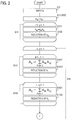
Fig. 2 is a flow diagram illustrating processing by the matrix triangulation apparatus according to the embodiment. -
Fig. 3 is a flow diagram illustrating processing by the matrix triangulation apparatus according to the embodiment. -
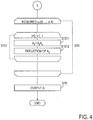
Fig. 4 is a flow diagram illustrating processing by the matrix triangulation apparatus according to the embodiment. -
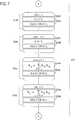
Fig. 5 is a flow diagram illustrating processing by the matrix triangulation apparatus according to an embodiment. -
Fig. 6 is a flow diagram illustrating processing by the matrix triangulation apparatus according to the embodiment. -
Fig. 7 is a flow diagram illustrating processing by the matrix triangulation apparatus according to the embodiment. -
Fig. 8 is a flow diagram illustrating processing by the matrix triangulation apparatus according to the embodiment. -
Fig. 9 is a flow diagram illustrating processing by the matrix triangulation apparatus according to the embodiment. -
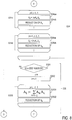
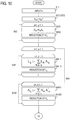
Fig. 10 is a flow diagram illustrating processing by the matrix triangulation apparatus according to an embodiment. -
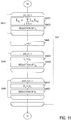
Fig. 11 is a flow diagram illustrating processing by the matrix triangulation apparatus according to the embodiment. -
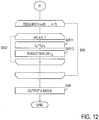
Fig. 12 is a flow diagram illustrating processing by the matrix triangulation apparatus according to the embodiment. - Embodiments of the present invention will be described below.
- First, the present invention will be generally described.
- According to embodiments of the present invention, a "first square matrix" formed from the elements of a finite field is taken as input, and at least some of the entries of a "second square matrix" which includes an "upper triangular portion" resulting from triangulation of the "first square matrix" are obtained. The entries of the "second square matrix" are also the elements of the finite field. In the process of the triangulation, product-sum operation is performed on entries as operands at multiple positions in a matrix which is based on the "first square matrix" to obtain a product-sum operation result corresponding to an entry at a different position than the operands (different in at least either of row and column), and reduction of the product-sum operation result is performed. Such a product-sum operation is a linear operation, requiring no recursive processing for updating matrix entries during the process of product-sum operation. Thus, reduction can be performed after completion of product-sum operation, so that the number of reductions in triangulation of a square matrix whose entries belong to a finite field can be decreased. Note that the "finite field" may be a prime field or an extension field. "Reduction" in the case where the "finite field" is a prime field is a modulo operation with a positive integer such as a prime number as the modulus. "Reduction" in the case where the "finite field" is an extension field is conversion (division with an irreducible polynomial) of a polynomial (a polynomial representing the extension field) by use of an irreducible polynomial. When recursive operation is necessary in addition to the aforementioned product-sum operation during the process of triangulation, such recursive operation may be performed and then reduction may be performed. Even in such a case, due to performance of the aforementioned product-sum operation, the number of recursive operations could still be significantly decreased compared to conventional methods and the number of reductions could be decreased as well.
- The "second square matrix" may be an upper triangular matrix (an upper triangular square matrix) formed from an "upper triangular portion" and zero entries, or a square matrix including an "upper triangular portion" and a "lower triangular portion". Note that the product of the lower triangular matrix including the "lower triangular portion" and the "first square matrix" will be the upper triangular matrix including the "upper triangular portion". In other words, it may be either B=A' (the "second square matrix" being an upper triangular matrix formed from the "upper triangular portion" and zero entries) or B=L+A' (the "second square matrix" being a square matrix including the "upper triangular portion" and the "lower triangular portion"). Here, L represents the lower triangular matrix including the "lower triangular portion", A represents the "first square matrix", A' represents the upper triangular matrix including the "upper triangular portion", B represents the "second square matrix", and the relationship LA=A' is satisfied. Also, in the processing for obtaining the "second square matrix" from the "first square matrix", the entries of the "lower triangular portion" may be assigned to entries that become zero during the process of triangulation of the "first square matrix". This can save a storage area for storing the "lower triangular portion". That is to say, entries that become zero during the process of triangulation of the "first square matrix" need not be kept in a storage area. Thus, such "storage area for entries that become zero" may be also used for storage of entries of the "lower triangular portion". This eliminates the necessity of an area for exclusively storing the entries of the "lower triangular portion". Note that "zero" means an additive identity element. A specific example of this will be described in the first and third embodiments.
- The process of triangulation may also include an inverse element operation process for obtaining the inverse element of entry X and the inverse element of entry Y which are based on entries of the "first square matrix". The entries X and Y are elements of the "finite field". It is also possible to obtain a value representing the inverse element (XY)-1 of XY, obtain a value representing the inverse element X-1 of entry X by multiplication of the value representing the inverse element (XY)-1 by entry Y, and obtain a value representing the inverse element Y-1 of entry Y by multiplication of the value representing the inverse element (XY)-1 and entry X. In this way, two inverse elements X-1 and Y-1 can be obtained via a single operation of inverse element (XY)-1 and two multiplications. While inverse elements involve a very large amount of computation, this method can decrease the amount of computation compared to two inverse element operations (streamlining 1 of inverse elements). A specific example of this will be described in the third embodiment.
- When the process of triangulation includes an inverse element operation process for obtaining the inverse element X-1=x-α of entry X=xα which is based on an entry of the "first square matrix", an inverse element operation process for obtaining the inverse element X-1 of entry X by multiplication x-cxc-α using inverse element x-c calculated in advance can be performed. Here, X and x are elements of the finite field, c and α are positive integer constants, and 1≤α≤c holds. In this case, the inverse element can be obtained via multiplications, enabling reduction of the amount of computation (streamlining 2 of inverse elements). Alternatively, the inverse element X-1=x-α corresponding to α may be obtained by making reference to x-α calculated in advance for α=1, 2, ..., c. That is, for each integer α satisfying 1≤α≤c, X-1=x-cxc-α will be as follows:
α 1 2 ... c X-1=x-cxc-α x-1 x-2 ... x-c - Thus, by storing a lookup table associating α=1, 2, ..., c with X-1=x-1, x-2, ..., x-c (that is, x-α) in a storage, an inverse element can be obtained by a single reference to the table. Such a lookup table may be prepared for the range of α=1, 2, ..., c, and is of a small size (streamlining 3 of inverse elements). A specific example of these will be described in the second embodiment.
- Referring now to the drawings, individual embodiments will be described below.
- A first embodiment will be described.
- As illustrated in
Fig. 1 , amatrix triangulation apparatus 1 according to this embodiment includes aninput unit 11, anoutput unit 12, astorage 13, acontroller 14, a product-sum arithmetic unit 15, an inverse elementarithmetic unit 16, a multiplicator 17, and a reduction unit 18. The matrix triangulation apparatus in this embodiment is an apparatus configured via execution of a predetermined program by a general- or special-purpose computer including a processor (a hardware processor) such as a central processing unit (CPU) and memories such as random-access memory (RAM) and read-only memory (ROM), for example. The computer may have a single processor and memory or more than one processor and memory. The program may be installed in the computer or prestored in the ROM or the like. Also, rather than using an electronic circuit (circuitry) that implements functionality by reading a program like a CPU, an electronic circuit that implements processing functions without using programs may be used to configure some or all of the functional units. Also, an electronic circuit constituting a single apparatus may include multiple CPUs. Data input to theinput unit 11 and data produced by other units are stored in thestorage 13 and read out from it as required. Thematrix triangulation apparatus 1 executes various kinds of processing under control of thecontroller 14. - Using
Figs. 2 to 4 , processing performed in this embodiment will be described. - An n×n square matrix A (a first square matrix) whose entries are the elements of a finite field (for example, a prime field with an order of 2 or an extension field over that prime field as the basic field) is input to the
input unit 11 of thematrix triangulation apparatus 1 and stored in thestorage 13. Hereinbelow, an entry in row i and column j of the square matrix A will be denoted as Aij. Here, n is an integer equal to or greater than 4 and i=0, ..., n-1 and j=0, ..., n-1 hold. - The inverse element
arithmetic unit 16 takes A00 as input and obtains A00:=A00 -1, where β1:=β2 means setting β2 as β1 (that is, assigning β2 to β1). - In the loop at step S13, the following steps S131 and S132 are executed while incrementing j by 1 starting from 1 for j=1, ..., n-1.
- The multiplicator 17 takes A00 and A0j as input and obtains A0j:=A00A0j (step S131). The reduction unit 18 takes A0j obtained at step S131 as input, performs reduction of A0j, and updates entry A0j to the result of the reduction (step S132).
- In the loop at step S14, the following steps S141 to S146 are executed while incrementing i by 1 starting from 1 for each of i=1, ..., n-1.
- In the loop at step S141, the following steps S1411 and S1412 are executed while incrementing j by 1 starting from 1 for j=1, ..., i-1. When j is not present, step S141 is not executed (this applies to the other loops as well).
- The product-
sum arithmetic unit 15 takes Aik and Akj as input, and obtains
sum arithmetic unit 15 performs product-sum operation on entries Aik and Akj at multiple positions in the matrix as operands to obtain the product-sum operation result Aij corresponding to an entry at a different position than the operands Aik and Akj (step S1411). The reduction unit 18 performs reduction of Aij obtained at step S1411 and updates entry Aij to the result of the reduction (step S1412). - In the loop at step S142, the following steps S1421 and S1422 are executed while incrementing j by 1 starting from 1 for j=1, ..., n-1.
- The product-
sum arithmetic unit 15 takes Aik and Akj as input and obtains
sum arithmetic unit 15 performs product-sum operation on entries Aik and Akj at multiple positions in the matrix as operands to obtain the product-sum operation result Aij corresponding to an entry at a different position than the operands Aik and Akj (step S1421). The reduction unit 18 performs reduction of Aij obtained at step S1421 and updates entry Aij to the result of the reduction (step S1422). - In the loop at step S143, the following steps S1431 and S1432 are executed while incrementing j by 1 starting from 0 for j=0, ..., i-2.
- The product-
sum arithmetic unit 15 takes Aik and Akj as input and obtains
sum arithmetic unit 15 performs product-sum operation on entries Aik and Akj at multiple positions in the matrix as operands to obtain the product-sum operation result Aij corresponding to an entry at a different position than the operands Aik and Akj (step S1431). The reduction unit 18 performs reduction of Aij obtained at step S1431 and updates entry Aij to the result of the reduction (step S1432). - At step S144, the inverse element
arithmetic unit 16 takes Aii as input and obtains Aii:=Aii -1 (step S144). - In the loop at step S145, the following steps S1451 and S1452 are executed while incrementing j by 1 starting from 0 for j=0, ..., i-1.
- The multiplicator 17 takes Aii and Aij as input and obtains Aij:=AiiAij (step S1451). The reduction unit 18 performs reduction of Aij obtained at step S1451 and updates entry Aij to the result of the reduction (step S1452).
- In the loop at step S146, the following steps S1461 and S1462 are executed while incrementing j by 1 starting from i+1 for j=i+1, ..., n-1.
- The multiplicator 17 takes Aii and Aij as input and obtains Aij:=AiiAij (step S1461). The reduction unit 18 performs reduction of Aij obtained at step S1461 and updates entry Aij to the result of the reduction (step S1462).
- After the aforementioned loop at step S14, the loop at step S15 is executed. In the loop at step S15, step S151 is executed for the row i ∈ {0, ..., n-1} which is required as output. The row i required as output may be all of the entries in {0, ..., n-1} or some of them (for example, entries with i=n-1).
- In the loop at step S151, the following steps S1511 and S1512 are executed while incrementing j by 1 starting from 0 for j=0, ..., i-1.
- The multiplicator 17 takes Ajj and Aij as input and obtains Aij:=AjjAij (step S1511). The reduction unit 18 performs reduction of Aij obtained at step S1511 and updates entry Aij to the result of the reduction (step S1512).
- The
output unit 12 outputs an n×n square matrix B (a second square matrix) formed from entries Aij (where i=0, ..., n-1 and j=0, ..., n-1) obtained as described above. For example, if the loop at step S15 is executed for all of i=0, ..., n-1, B will be formed from the lower triangular portion of an n×n lower triangular matrix L satisfying LA=A' and the upper triangular portion of an n×n upper triangular matrix A' (that is, B=L+A'). In this embodiment, calculations are performed by assigning the entries in the lower triangular portion of the lower triangular matrix L to entries that become zero during the process of triangulation of the square matrix A. That is to say, calculations are performed by assigning the operation results at steps S1411, S1431, and S1451, which correspond to the entries in the lower triangular portion of the lower triangular matrix L, to entries Aij that become zero during the process of triangulation of the square matrix A. Accordingly, this embodiment does not require a storage area for exclusively storing entries in the lower triangular portion of the lower triangular matrix L, for example, the operation results at steps S1411, S1431, and S1451. - The inverse element operation in the processing described in the first embodiment may be performed more efficiently via the aforementioned "streamlining 2 of inverse elements" or "streamlining 3 of inverse elements". The following description will focus on differences from matters described so far and use the same reference characters to refer to matters already described for the sake of simplicity.
- As illustrated in
Fig. 1 , amatrix triangulation apparatus 2 according to this embodiment includes aninput unit 11, anoutput unit 12, astorage 13, acontroller 14, a product-sum arithmetic unit 15, an inverse element arithmetic unit 26, a multiplicator 17, and a reduction unit 18. - The second embodiment differs from the first embodiment only in that step S12 is replaced with step S22 and step S144 is replaced with step S244. Assume that A00 -1 and Aii -1 at steps S22 and S244 can be represented as A00 -1=x-α1 and Aii -1=x-α2, respectively. Here, α1 and α2 are positive integers satisfying 1≤α1≤c and 1≤α2≤c, respectively. In this case, the inverse element arithmetic unit 26 calculates A00 -1 by multiplication x-cxc-α1 using inverse element x-c calculated in advance (step S22), and calculates Aii -1 by multiplication x-cxc-α2 (step S244). Alternatively, the inverse element arithmetic unit 26 may make reference to x-α calculated in advance for α=1, 2, ..., c to obtain x-α1 as A00 -1 (step S22), and obtain x-α2 as Aii -1 (step S244). The second embodiment is otherwise the same as the first embodiment.
- The inverse element operation in the processing described in the first embodiment may be performed more efficiently via the aforementioned "streamlining 1 of inverse elements". This embodiment will illustrate this in detail.
- As illustrated in
Fig. 1 , amatrix triangulation apparatus 3 according to this embodiment includes aninput unit 11, anoutput unit 12, astorage 13, acontroller 14, a product-sum arithmetic unit 35, an inverse element arithmetic unit 36, a multiplicator 37, and a reduction unit 38. - Using
Figs. 5 to 9 , processing performed in this embodiment will be described. - After the execution of steps S11, S12 (or S22), and S13 described above, the following step S34 is executed.
- In the loop at step S34, the following steps S340 to S349 and S34a to S34d are executed while incrementing i by 2 starting from 1 for i=1, ..., n-1 (that is, for odd-numbered i).
- At step S340, the
controller 14 obtains r:=i+1 (step S340). - In the loop at step S341, the following steps S3411, S3412, and S3413 are executed while incrementing j by 1 starting from 1 for j=1, ..., i-1.
- The product-
sum arithmetic unit 35 takes Aik and Akj as input and obtains
- In the loop at step S3413, the following steps S3413a and S3413b are executed while incrementing j' by 1 starting from 1 for j'=1, ..., r-1.
- The product-
sum arithmetic unit 35 takes Ark and Akj' as input and obtains
- In the loop at step S342, the following steps S3421, S3422, S3423, and S3424 are executed while incrementing j by 1 starting from i for j=i, ..., n-1.
- The product-
sum arithmetic unit 35 takes Aik and Akj as input and obtains
sum arithmetic unit 35 takes Ark and Akr as input and obtains
- In the loop at step S343, the following steps S3431 and S3432 are executed while incrementing j by 1 starting from 0 for j=0, ..., i-2.
- The product-
sum arithmetic unit 35 takes Aik and Akj as input and obtains
- The inverse element arithmetic unit 36 takes Aii, Air, Ari, and Arr as input and obtains a determinant

- The inverse element arithmetic unit 36 takes Aii and det as input and obtains inv:=(Aiidet)-1 (step S345).
- The inverse element arithmetic unit 36 takes inv and det as input and obtains Aii -1:=inv·det (step S3461). The reduction unit 38 performs reduction of Aii -1 obtained at step S3461 (step S3462).
- The inverse element arithmetic unit 36 takes inv and Aii as input and obtains invArr:=inv·Aii 2 (step S3471). The reduction unit 38 performs reduction of invArr obtained at step S3471 (step S3472).
- In the loop at step S348, the following steps S3481 and S3482 are executed while incrementing j by 1 starting from 0 for j=0, ..., i-1.
- The multiplicator 37 takes Aii and Aij as input and obtains Aij:=Aii -1Aij (step S3481). The reduction unit 38 performs reduction of Aij obtained at step S3481 and updates entry Aij to the result of the reduction (step S3482).
- In the loop at step S349, the following steps S3491 and S3492 are executed while incrementing j by 1 starting from i+1 for j=i+1, ..., n-1.
- The multiplicator 37 takes Aii -1 and Aij as input and obtains Aij:=Aii -1Aij (step S3491). The reduction unit 38 performs reduction of Aij obtained at step S3491 and updates entry Aij to the result of the reduction (step S3492).
- In the loop at step S34a, the following steps S34aa and S34ab are executed while incrementing j by 1 starting from r+1 for j=r+1, ..., n-1.
- The product-
sum arithmetic unit 35 takes Ark and Akj as input and obtains
- In the loop at step S34b, the following steps S34ba and S34bb are executed while incrementing j by 1 starting from 0 for j=0, ..., i-1.
- The product-
sum arithmetic unit 35 takes Ark and Akj as input and obtains
- In the loop at step S34c, the following steps S34ca and S34cb are executed while incrementing j by 1 starting from 0 for j=0, ..., r-1.
- The multiplicator 37 takes invArr and Arj as input and obtains Arj:=invArrArj (step S34ca). The reduction unit 38 performs reduction of Arj obtained at step S34ca and updates entry Arj to the result of the reduction (step S34cb).
- In the loop at step S34d, the following steps S34da and S34db are executed while incrementing j by 1 starting from r+1 for j=r+1, ..., n-1.
- The multiplicator 37 takes invArr and Arj as input and obtains Arj:=invArrArj (step S34da). The reduction unit 38 performs reduction of Arj obtained at step S34da and updates entry Arj to the result of the reduction (step S34db).
- The
controller 14 determines whether n is an odd number or not (step S351). If n is an even number, the flow proceeds to the step S15 described above. On the other hand, if n is an odd number, the following steps S352 to S357 are executed before proceeding to the step S15 described above. - The
controller 14 obtains i:=n-1 (step S352). - In the loop at step S353, the following steps S3531 and S3532 are executed while incrementing j by 1 starting from 1 for j=1, ..., i-1.
- The product-
sum arithmetic unit 35 takes Aik and Akj as input and obtains
- In the loop at step S354, the following steps S3541 and S3542 are executed while incrementing j by 1 starting from i for j=i, ..., n-1.
- The product-
sum arithmetic unit 35 takes Aik and Akj as input and obtains
- In the loop at step S355, the following steps S3551 and S3552 are executed while incrementing j by 1 starting from 0 for j=0, ..., i-2.
- The product-
sum arithmetic unit 35 takes Aik and Akj as input and obtains
- In the loop at step S356, the following steps S3561 and S3562 are executed while incrementing j by 1 starting from 0 for j=0, ..., i-1.
- The multiplicator 37 obtains Aij:=Aii -1Aij (step S3561). The reduction unit 18 performs reduction of Aij obtained at step S3561 and updates entry Aij to the result of the reduction (step S3562).
- In the loop at step S357, the following steps S3571 and S3572 are executed while incrementing j by 1 starting from j+1 for j=j+1, ..., n-1.
- The multiplicator 37 obtains Aij:=Aii -1Aij (step S3571). The reduction unit 18 performs reduction of Aij obtained at step S3571 and updates entry Aij to the result of the reduction (step S3572).
- In the first to third embodiments described above, u-row and v-column entries of an n×n square matrix L with Luv=Auv, instead of Auv satisfying u≥v obtained by the arithmetic units, may be obtained, and operation using Luv instead of Auv obtained by the arithmetic units may be performed. In the following, an example of obtaining u-row and v-column entries of an n×n square matrix L satisfying Luv=Auv instead of Auv satisfying u≥v obtained by the arithmetic units in the first embodiment will be described.
- As illustrated in
Fig. 1 , amatrix triangulation apparatus 4 according to this embodiment includes aninput unit 11, anoutput unit 12, astorage 13, acontroller 14, a product-sum arithmetic unit 45, an inverse element arithmetic unit 46, a multiplicator 47, and a reduction unit 48. - Using
Figs. 10 to 12 , processing performed in this embodiment will be described. - After the execution of steps S11 and S12 (or S22) described above, the following step S43 is executed.
- In the loop at step S43, the following steps S431 and S432 are executed while incrementing j by 1 starting from 1 for j=1, ..., n-1.
- The multiplicator 47 takes A00 and A0j as input and obtains A'0j:=A00A0j (step S431). The reduction unit 18 takes A'0j obtained at step S431 as input, performs reduction of A'0j, and updates entry A'0j to the result of the reduction (step S432).
- In the loop at step S44, the following steps S441 to S446 are executed while incrementing i by 1 starting from 1 for each of i=1, ..., n-1.
- In the loop at step S441, the following steps S4411 and S4412 are executed while incrementing j by 1 starting from 1 for j=1, ..., i-1.
- The product-sum arithmetic unit 45 takes Lik and Akj as input and obtains

- In the loop at step S442, the following steps S4411 and S4412 are executed while incrementing j by 1 starting from 1 for j=1, ..., n-1.
- The product-sum arithmetic unit 45 takes A'ik and A'kj as input and obtains

- In the loop at step S443, the following steps S4431 and S4432 are executed while incrementing j by 1 starting from 0 for j=0, ..., i-2.
- The product-sum arithmetic unit 45 takes Lik and Lkj as input and obtains

- At step S444, the inverse element arithmetic unit 46 takes Aii as input and obtains Lii:=Aii -1 (step S444).
- In the loop at step S445, the following steps S4451 and S4452 are executed while incrementing j by 1 starting from 0 for j=0, ..., i-1.
- The multiplicator 47 takes Lii and Lij as input and obtains Lij:=LiiLij (step S4451). The reduction unit 18 performs reduction of Lij obtained at step S4451 and updates entry Lij to the result of the reduction (step S4452).
- In the loop at step S446, the following steps S4461 and S4462 are executed while incrementing j by 1 starting from j+1 for j=j+1, ..., n-1.
- The multiplicator 47 takes Lii and A'ij as input and obtains A'ij:=LiiA'ij (step S4461). The reduction unit 18 performs reduction of A'ij obtained at step S4461 and updates entry A'ij to the result of the reduction (step S4462).
- After the aforementioned loop at step S44, the loop at step S45 is executed. In the loop at step S45, step S451 is executed for the row i ∈ {0, ..., n-1} which is required as output. The row i required as output may be all of the entries in {0, ..., n-1} or some of them.
- In the loop at step S451, the following steps S4511 and S4512 are executed while incrementing j by 1 starting from 0 for j=0, ..., i-1.
- The multiplicator 47 takes Ljj and Lij as input and obtains Lij:=LjjLij (step S4511). The reduction unit 18 performs reduction of Lij obtained at step S4511 and updates entry Lij to the result of the reduction (step S4512).
- The
output unit 12 outputs an n×n square matrix L formed from entries Lij obtained as described above (where i=0, ..., n-1 and j=0, ..., n-1) and an n×n square matrix A' formed from entries A'ij (where i=0, ..., n-1 and j=0, ..., n-1). For example, if the loop at step S45 is executed for all of i=0, ..., n-1, the square matrices L and A' will respectively be an n×n lower triangular matrix L and an n×n upper triangular matrix A', satisfying LA=A'. Unlike the first and third embodiments, this embodiment requires storage area for storing entries of the lower triangular portion of the lower triangular matrix L. - An exemplary output log is shown below. In the example below, a cubic extension field of 2 having a prime field with an order of 2 as the basic field is used as the finite field; x3+x+1 is used as the irreducible polynomial for reduction; n=4 holds; and recursive processing equivalent to the aforementioned step S15 is executed only for i=3. Note that matrix entries are expressed by decimal numbers below. The value of each entry is converted to a binary number, the value ηM∈ {0, 1} at the Mth digit (the place of 2M-1) thereof is used as the coefficient for the M-1th order term of the polynomial, and the polynomial after reduction with x3=x+1 corresponds to an element of the extension field.
-
- 1 1 1 1
- 1 2 4 8
- 1 4 16 64
- 1 8 64 512
-
- ----- 0: input ------------------------
- 1, 1, 1, 1,
- 1,2,4,3,
- 1, 4, 6, 5,
- 1, 3, 5, 4,
- ----- 1: after processing of the 0th row ------------------------
- 1, 1, 1, 1,
- 1, 2, 4, 3,
- 1, 4, 6, 5,
- 1, 3, 5, 4,
- ----- 2: the left side for the ith row ------------------------
- 1, 1, 1, 1,
- 1,2,4,3,
- 1, 4, 6, 5,
- 1, 3, 5, 4,
- ----- 3: the diagonal entry and right side for the ith row ------------------------
- 1, 1, 1, 1,
- 1, 3, 5, 2,
- 1, 4, 6, 5,
- 1, 3, 5, 4,
- ----- 4: calculate the lower triangular portion for the ith row ------------------
- 1, 1, 1, 1,
- 1, 3, 5, 2,
- 1, 4, 6, 5,
- 1, 3, 5, 4,
- ----- 5: multiply by the inverse element of the diagonal component for the ith row ------------------------
- 1, 1, 1, 1,
- 6, 6, 3, 7,
- 1, 4, 6, 5,
- 1, 3, 5, 4,
- ----- 6: the left side for the ith row ------------------------
- 1, 1, 1, 1,
- 6, 6, 3, 7,
- 1, 5, 6, 5,
- 1, 3, 5, 4,
- ----- 7: the diagonal entry and right side for the ith row ------------------------
- 1, 1, 1, 1,
- 6, 6, 3, 7,
- 1, 5, 3, 2,
- 1, 3, 5, 4,
- ----- 8: calculate the lower triangular portion for the ith row ------------------
- 1, 1, 1, 1,
- 6, 6, 3, 7,
- 2, 5, 3, 2,
- 1, 3, 5, 4,
- ----- 9: multiply by the inverse element of the diagonal component for the ith row ------------------------
- 1, 1, 1, 1,
- 6, 6, 3, 7,
- 7, 3, 6, 7,
- 1, 3, 5, 4,
- ----- 10: the left side for the ith row ------------------------
- 1, 1, 1, 1,
- 6, 6, 3, 7,
- 7, 3, 6, 7,
- 1, 2, 2, 4,
- ----- 11: the diagonal entry and right side for the ith row ----------------------
- 1, 1, 1, 1,
- 6, 6, 3, 7,
- 7, 3, 6, 7,
- 1, 2, 2, 5,
- ----- 12: calculate the lower triangular portion for the ith row -----------------
- 1, 1, 1, 1,
- 6, 6, 3, 7,
- 7, 3, 6, 7,
- 3, 4, 2, 5,
- ----- 13: multiply by the inverse element of the diagonal component for the ith row ------------------------
- 1, 1, 1, 1,
- 6, 6, 3, 7,
- 7, 3, 6, 7,
- 6, 3, 4, 2,
- ----- 14: calculate the last row ------------------------
- 1, 1, 1, 1,
- 6, 6, 3, 7,
- 7, 3, 6, 7,
- 6, 3, 4, 2,
- ----- 15: multiply the diagonal component for the last row --------------------
- 1, 1, 1, 1,
- 6, 6, 3, 7,
- 7, 3, 6, 7,
- 6, 1, 5, 2,
- ----- 16: output (basic) ------------------------
- 1, 1, 1, 1,
- 6, 6, 3, 7,
- 7, 3, 6, 7,
- 6, 1, 5, 2,
-
- ----- 17: after processing of the 0th row ------------------------
- 1, 1, 1, 1,
- 1, 2, 4, 3,
- 1, 4, 6, 5,
- 1, 3, 5, 4,
- ----- 18: the left side for the ith row ------------------------
- 1, 1, 1, 1,
- 1, 2, 4, 3,
- 1, 4, 6, 5,
- 1, 3, 5, 4,
- ----- 19: the left side for the i+1th row ------------------------
- 1, 1, 1, 1,
- 1, 2, 4, 3,
- 1, 5, 6, 5,
- 1, 3, 5, 4,
- ----- 20: the diagonal entry and right side for the ith row ----------------------
- 1, 1, 1, 1,
- 1, 3, 5, 2,
- 1, 5, 6, 5,
- 1, 3, 5, 4,
- ----- 21: the diagonal entry for the i+1th row ------------------------
- 1, 1, 1, 1,
- 1, 3, 5, 2,
- 1, 5, 7, 5,
- 1, 3, 5, 4,
- ----- 22: calculate the lower triangular portion for the ith row -----------------
- 1, 1, 1, 1,
- 1, 3, 5, 2,
- 1, 5, 7, 5,
- 1, 3, 5, 4,
- ----- 23: calculate the inverse elements for the ith and i+1th rows ------------
- 1, 1, 1, 1,
- 1, 6, 5, 2,
- 1, 5, 6, 5,
- 1, 3, 5, 4,
- ----- 24: multiply the inverse element for the left side of the ith row --------
- 1, 1, 1, 1,
- 6, 6, 5, 2,
- 1, 5, 6, 5,
- 1, 3, 5, 4,
- ----- 25: multiply the inverse element for the right side of the ith row -------
- 1, 1, 1, 1,
- 6, 6, 3, 7,
- 1, 5, 6, 5,
- 1, 3, 5, 4,
- ----- 26: the right side for the i+1th row -------------------------------------
- 1, 1, 1, 1,
- 6, 6, 3, 7,
- 1, 5, 6, 2,
- 1, 3, 5, 4,
- ----- 27: calculate the lower triangular portion for the i+1th row -------------
- 1, 1, 1, 1,
- 6, 6, 3, 7,
- 2, 5, 6, 2,
- 1, 3, 5, 4,
- ----- 28: multiply the inverse element for the left side of the i+1th row -----
- 1, 1, 1, 1,
- 6, 6, 3, 7,
- 7, 3, 6, 2,
- 1, 3, 5, 4,
- ----- 29: multiply the inverse element for the right side of the i+1th row ----
- 1, 1, 1, 1,
- 6, 6, 3, 7,
- 7, 3, 6, 7,
- 1, 3, 5, 4,
- ----- 30: calculate the last row ------------------------
- 1, 1, 1, 1,
- 6, 6, 3, 7,
- 7, 3, 6, 7,
- 6, 3, 4, 2,
- ----- 31: multiply the diagonal component for the last row --------------------
- 1, 1, 1, 1,
- 6, 6, 3, 7,
- 7, 3, 6, 7,
- 6, 1, 5, 2,
- ----- 32: output (after streamlining of inverse elements) -----------------------
- 1, 1, 1, 1,
- 6, 6, 3, 7,
- 7, 3, 6, 7,
- 6, 1, 5, 2,
- Incidentally, the present invention is not limited to the above-described embodiments. For example, the above-described various kinds of processing may be executed, in addition to being executed in chronological order in accordance with the descriptions, in parallel or individually depending on the processing power of an apparatus that executes the processing or when needed. In addition, it goes without saying that changes may be made as appropriate without departing from the spirit of the present invention.
- When the above-described configurations are implemented by a computer, the processing details of the functions supposed to be provided in each apparatus are described by a program. As a result of this program being executed by the computer, the above-described processing functions are implemented on the computer. The program describing the processing details can be recorded on a computer-readable recording medium. An example of the computer-readable recording medium is a non-transitory recording medium. Examples of such a recording medium include a magnetic recording device, an optical disk, a magneto-optical recording medium, and semiconductor memory.
- The distribution of this program is performed by, for example, selling, transferring, or lending a portable recording medium such as a DVD or a CD-ROM on which the program is recorded. Furthermore, a configuration may be adopted in which this program is distributed by storing the program in a storage device of a server computer and transferring the program to other computers from the server computer via a network.
- The computer that executes such a program first, for example, temporarily stores the program recorded on the portable recording medium or the program transferred from the server computer in a storage device thereof. At the time of execution of processing, the computer reads the program stored in the storage device thereof and executes the processing in accordance with the read program. As another mode of execution of this program, the computer may read the program directly from the portable recording medium and execute the processing in accordance with the program and, furthermore, every time the program is transferred to the computer from the server computer, the computer may sequentially execute the processing in accordance with the received program. A configuration may be adopted in which the transfer of a program to the computer from the server computer is not performed and the above-described processing is executed by so-called application service provider (ASP)-type service by which the processing functions are implemented only by an instruction for execution thereof and result acquisition.
- In the above-described embodiments, processing functions of the present apparatus are implemented as a result of a predetermined program being executed on the computer, but at least part of these processing functions may be implemented by hardware.
- The present invention is applicable to calculation of an inverse matrix of a regular matrix whose entries belong to an extension field in the field of cryptography, such as error correction code and secret sharing, for example. In addition, it can be widely employed in technical fields requiring solution of simultaneous equations (for example, the field of robotics such as driving control of robot arms), or those requiring solution of eigenvalue problems (for example, quantum circuitry design for quantum computers).
- 1 to 4 matrix triangulation apparatus
Claims (9)
- A matrix triangulation apparatus that takes a first square matrix formed from elements of a finite field as input and obtains at least some of entries of a second square matrix which includes an upper triangular portion resulting from triangulation of the first square matrix, the matrix triangulation apparatus comprising:a product-sum arithmetic unit that performs product-sum operation on entries as operands at multiple positions in a matrix which is based on the first square matrix to obtain a product-sum operation result corresponding to an entry at a different position than the operands; anda reduction unit that performs reduction of the product-sum operation result.
- The matrix triangulation apparatus according to Claim 1, wherein
the second square matrix includes a lower triangular portion, a product of a lower triangular matrix including the lower triangular portion and the first square matrix will be an upper triangular matrix including the upper triangular portion, and
entries of the lower triangular portion are assigned to entries that become zero during a process of the triangulation. - The matrix triangulation apparatus according to Claim 1 or 2, wherein
a process of the triangulation includes an inverse element operation process for obtaining an inverse element of entry X and an inverse element of entry Y which are based on entries of the first square matrix,
the entry X and the entry Y are elements of the finite field, and
the matrix triangulation apparatus includesa first inverse element arithmetic unit that obtains a value representing an inverse element (XY)-1 of XY;a second inverse element arithmetic unit that obtains a value representing an inverse element X-1 of the entry X by multiplication of the value representing the inverse element (XY)-1 by the entry Y; anda third inverse element arithmetic unit that obtains a value representing an inverse element Y-1 of the entry Y by multiplication of the value representing the inverse element (XY)-1 by the entry X. - The matrix triangulation apparatus according to Claim 1 or 2, wherein
a process of the triangulation includes an inverse element operation process for obtaining an inverse element X-1=x-α of entry X=xα which is based on an entry of the first square matrix, and
X and x are elements of the finite field, c and α are positive integer constants, 1≤α≤c holds, and the matrix triangulation apparatus includes an inverse element arithmetic unit that performs the inverse element operation process which either obtains the inverse element X-1 of the entry X by multiplication x-cxc-α using inverse element x-c calculated in advance, or obtains the inverse element X-1=x-α corresponding to α by making reference to x-α calculated in advance for α=1, 2, ..., c. - A matrix triangulation apparatus where n is an integer equal to or greater than 4, A is an n×n square matrix, Aij is an entry in row i and column j of the square matrix, i=0, ..., n-1, and j=0, ..., n-1, comprising:a first inverse element arithmetic unit that obtains A00:=A00 -1;a first multiplicator that obtains A0j:=A00A0j for j=1, ..., n-1;a first reduction unit that performs reduction of the entry A0j obtained by the first multiplicator;(1) in each of i=1, ..., n-1,(1-1) for j=1, ..., i-1,a first product-sum arithmetic unit that obtains
 a second reduction unit that performs reduction of the entry Aij obtained by the first product-sum arithmetic unit;(1-2) for j=1, ..., n-1,a second product-sum arithmetic unit that obtains
 a third reduction unit that performs reduction of the entry Aij obtained by the second product-sum arithmetic unit;(1-3) for j=0, ..., i-2,a third product-sum arithmetic unit that obtains
 a fourth reduction unit that performs reduction of the entry Aij obtained by the third product-sum arithmetic unit;(1-4) a second inverse element arithmetic unit that obtains Aii:=Aii -1;(1-5) for j=0, ..., i-1,a second multiplicator that obtains Aij:=AiiAij;a fifth reduction unit that performs reduction of the entry Aij obtained by the second multiplicator;(1-6) for j=i+1, ..., n-1,a third multiplicator that obtains Aij:=AiiAij; anda sixth reduction unit that performs reduction of the entry Aij obtained by the third multiplicator.
 - A matrix triangulation apparatus where n is an integer equal to or greater than 4, A is an n×n square matrix, Aij is an entry in row i and column j of the square matrix, i=0, ..., n-1, j=0, ..., n-1, and r:=i+1, comprising:a first inverse element arithmetic unit that obtains A00:=A00 -1;a first multiplicator that obtains A0j:=A00A0j for j=1, ..., n-1;a first reduction unit that performs reduction of the entry A0j obtained by the first multiplicator;(1) in each of odd-numbered i=1, ..., n-1,(1-1) for j=1, ..., i-1,a first product-sum arithmetic unit that obtains
 a second reduction unit that performs reduction of the entry Aij obtained by the first product-sum arithmetic unit;(1-1-1) for j'=1, ..., r-1,a second product-sum arithmetic unit that obtains
 a third reduction unit that performs reduction of the entry Arj' obtained by the second product-sum arithmetic unit;(1-2) for j=i, ..., n-1,a third product-sum arithmetic unit that obtains
 a fourth reduction unit that performs reduction of the entry Aij obtained by the third product-sum arithmetic unit;a fourth product-sum arithmetic unit that obtains
 a fifth reduction unit that performs reduction of the entry Arr obtained by the fourth product-sum arithmetic unit;(1-3) for j=0, ..., i-2,a fifth product-sum arithmetic unit that obtains
 a sixth reduction unit that performs reduction of the entry Aij obtained by the fifth product-sum arithmetic unit;(1-4) a second inverse element arithmetic unit that obtains a determinant
 a seventh reduction unit that performs reduction of the determinant det;(1-5) a third inverse element arithmetic unit that obtains inv:=(Aiidet)-1;(1-6) a fourth inverse element arithmetic unit that obtains Aii -1:=inv·det;an eighth reduction unit that performs reduction of the entry Aii -1 obtained by the fourth inverse element arithmetic unit;(1-7) a fifth inverse element arithmetic unit that obtains invArr:=inv·Aii 2;a ninth reduction unit that performs reduction of the entry invArr obtained by the fifth inverse element arithmetic unit;(1-8) a second multiplicator that obtains Aij:=Aii -1Aij for j=0, ..., i-1;a tenth reduction unit that performs reduction of the entry Aij obtained by the second multiplicator;(1-9) a third multiplicator that obtains Aij:=Aii -1Aij for j=i+1, ..., n-1;an eleventh reduction unit that performs reduction of the entry Aij obtained by the third multiplicator;(1-10) for j=r+1, ..., n-1,a sixth product-sum arithmetic unit that obtains
 a twelfth reduction unit that performs reduction of the entry Arj obtained by the sixth product-sum arithmetic unit;(1-11) for j=0, ..., i-1,a seventh product-sum arithmetic unit that obtains
 a thirteenth reduction unit that performs reduction of the entry Arj obtained by the seventh product-sum arithmetic unit;(1-12) a fourth multiplicator that obtains Arj:=invArrArj for j=0, ..., r-1;a fourteenth reduction unit that performs reduction of the entry Arj obtained by the fourth multiplicator;(1-13) a fifth multiplicator that obtains Arj:=invArrArj for j=r+1, ..., n-1; anda fifteenth reduction unit that performs reduction of the entry Arj obtained by the fifth multiplicator.
 - The matrix triangulation apparatus according to Claim 5 or 6, wherein
u-row and v-column entries of an n×n square matrix L with Luv=Auv instead of Auv satisfying u≥v are obtained, and operation using Luv instead of Auv is performed. - A matrix triangulation method that takes a first square matrix formed from elements of a finite field as input and obtains at least some of entries of a second square matrix which includes an upper triangular portion resulting from triangulation of the first square matrix, the matrix triangulation method comprising:a product-sum operation step of, at a product-sum arithmetic unit, performing product-sum operation on entries as operands at multiple positions in a matrix which is based on the first square matrix to obtain a product-sum operation result corresponding to an entry at a different position than the operands; anda reduction step of, at a reduction unit, performing reduction of the product-sum operation result.
- A program for causing a computer to function as the matrix triangulation apparatus according to any one of Claims 1 to 7.
Applications Claiming Priority (2)
| Application Number | Priority Date | Filing Date | Title |
|---|---|---|---|
| JP2015097279A JP6059287B2 (en) | 2015-05-12 | 2015-05-12 | Matrix triangulation device and program |
| PCT/JP2016/063959 WO2016181981A1 (en) | 2015-05-12 | 2016-05-11 | Matrix triangularization device, matrix triangularization method, and program |
Publications (2)
| Publication Number | Publication Date |
|---|---|
| EP3296887A1 true EP3296887A1 (en) | 2018-03-21 |
| EP3296887A4 EP3296887A4 (en) | 2019-01-02 |
Family
ID=57248122
Family Applications (1)
| Application Number | Title | Priority Date | Filing Date |
|---|---|---|---|
| EP16792706.0A Ceased EP3296887A4 (en) | 2015-05-12 | 2016-05-11 | Matrix triangularization device, matrix triangularization method, and program |
Country Status (5)
| Country | Link |
|---|---|
| US (1) | US10929502B2 (en) |
| EP (1) | EP3296887A4 (en) |
| JP (1) | JP6059287B2 (en) |
| CN (1) | CN107533539B (en) |
| WO (1) | WO2016181981A1 (en) |
Family Cites Families (6)
| Publication number | Priority date | Publication date | Assignee | Title |
|---|---|---|---|---|
| JP4354609B2 (en) | 1999-07-16 | 2009-10-28 | パナソニック株式会社 | Simultaneous equation solving apparatus and inverse element computing apparatus on finite field |
| JP4752313B2 (en) | 2004-09-30 | 2011-08-17 | ソニー株式会社 | Cryptographic processing operation method, cryptographic processing apparatus, and computer program |
| JP2005124194A (en) * | 2004-10-12 | 2005-05-12 | Hitachi Communication Technologies Ltd | Error correction code configuration method, decoding method, transmission apparatus, network |
| JP2009064424A (en) * | 2007-08-13 | 2009-03-26 | Kyoto Univ | Reverse Laplace transform program, table creation program for reverse Laplace transform, numerical solution calculation program for reverse Laplace transform, and reverse Laplace transform device |
| CN102396010B (en) * | 2009-04-24 | 2014-10-22 | 日本电信电话株式会社 | Finite field calculation apparatus, finite filed calculation method, program, and recording medium |
| US8347192B1 (en) * | 2010-03-08 | 2013-01-01 | Altera Corporation | Parallel finite field vector operators |
-
2015
- 2015-05-12 JP JP2015097279A patent/JP6059287B2/en active Active
-
2016
- 2016-05-11 WO PCT/JP2016/063959 patent/WO2016181981A1/en not_active Ceased
- 2016-05-11 CN CN201680025956.4A patent/CN107533539B/en active Active
- 2016-05-11 US US15/571,156 patent/US10929502B2/en active Active
- 2016-05-11 EP EP16792706.0A patent/EP3296887A4/en not_active Ceased
Also Published As
| Publication number | Publication date |
|---|---|
| JP2016212723A (en) | 2016-12-15 |
| CN107533539B (en) | 2021-05-07 |
| JP6059287B2 (en) | 2017-01-11 |
| CN107533539A (en) | 2018-01-02 |
| US20180260362A1 (en) | 2018-09-13 |
| EP3296887A4 (en) | 2019-01-02 |
| US10929502B2 (en) | 2021-02-23 |
| WO2016181981A1 (en) | 2016-11-17 |
Similar Documents
| Publication | Publication Date | Title |
|---|---|---|
| US20230359695A1 (en) | Memory-Size- and Bandwidth-Efficient Method for Feeding Systolic Array Matrix Multipliers | |
| US7209939B2 (en) | Precision improvement method for the Strassen/Winograd matrix multiplication method | |
| Wu et al. | Parallel solution of large sparse matrix equations and parallel power flow | |
| US8756268B2 (en) | Montgomery multiplier having efficient hardware structure | |
| Khabou et al. | LU factorization with panel rank revealing pivoting and its communication avoiding version | |
| Dollar et al. | Implicit-factorization preconditioning and iterative solvers for regularized saddle-point systems | |
| CN108170639A (en) | Tensor CP based on distributed environment decomposes implementation method | |
| US10853037B1 (en) | Digital circuit with compressed carry | |
| Bos et al. | Montgomery arithmetic from a software perspective | |
| US10331762B1 (en) | Stream processing for LU decomposition | |
| EP4024206A1 (en) | Computing device and method for reusing data | |
| Carson et al. | Accuracy of the s-step Lanczos method for the symmetric eigenproblem in finite precision | |
| JP6357345B2 (en) | Data processing apparatus and method for performing conversion between spatial domain and frequency domain when processing video data | |
| US20150293883A1 (en) | Calculation device and calculation method for deriving solutions of system of linear equations and program that is applied to the same | |
| Seo et al. | Consecutive operand-caching method for multiprecision multiplication, revisited | |
| US7847349B2 (en) | Single-cycle FFT butterfly calculator | |
| US10929502B2 (en) | Matrix triangulation apparatus, matrix triangulation method, and program | |
| CN116561501A (en) | Matrix inversion method and device with extensible scale | |
| CN118520206A (en) | A data processing method, system and related equipment | |
| JP3875183B2 (en) | Arithmetic unit | |
| Bojańczyk et al. | Parallel solution of certain Toeplitz least-squares problems | |
| JP2023115660A (en) | Information processing device, information processing system, addition/subtraction device, multiplication device, information processing method, and information processing program | |
| Hou et al. | Recursive computation of inverses of confluent Vandermonde matrices | |
| JP7020236B2 (en) | Information processing equipment, information processing methods, and programs | |
| Jelfimova | New cellular methods for matrix multiplication |
Legal Events
| Date | Code | Title | Description |
|---|---|---|---|
| STAA | Information on the status of an ep patent application or granted ep patent |
Free format text: STATUS: THE INTERNATIONAL PUBLICATION HAS BEEN MADE |
|
| PUAI | Public reference made under article 153(3) epc to a published international application that has entered the european phase |
Free format text: ORIGINAL CODE: 0009012 |
|
| STAA | Information on the status of an ep patent application or granted ep patent |
Free format text: STATUS: REQUEST FOR EXAMINATION WAS MADE |
|
| 17P | Request for examination filed |
Effective date: 20171212 |
|
| AK | Designated contracting states |
Kind code of ref document: A1 Designated state(s): AL AT BE BG CH CY CZ DE DK EE ES FI FR GB GR HR HU IE IS IT LI LT LU LV MC MK MT NL NO PL PT RO RS SE SI SK SM TR |
|
| AX | Request for extension of the european patent |
Extension state: BA ME |
|
| DAV | Request for validation of the european patent (deleted) | ||
| DAX | Request for extension of the european patent (deleted) | ||
| A4 | Supplementary search report drawn up and despatched |
Effective date: 20181203 |
|
| RIC1 | Information provided on ipc code assigned before grant |
Ipc: G06F 17/16 20060101AFI20181127BHEP |
|
| STAA | Information on the status of an ep patent application or granted ep patent |
Free format text: STATUS: EXAMINATION IS IN PROGRESS |
|
| 17Q | First examination report despatched |
Effective date: 20190909 |
|
| REG | Reference to a national code |
Ref country code: DE Ref legal event code: R003 |
|
| STAA | Information on the status of an ep patent application or granted ep patent |
Free format text: STATUS: THE APPLICATION HAS BEEN REFUSED |
|
| 18R | Application refused |
Effective date: 20200913 |