EP3296401A1 - Method for selective carbon source-independent expression of protein-encoding sequences in a filamentous fungus cell - Google Patents
Method for selective carbon source-independent expression of protein-encoding sequences in a filamentous fungus cell Download PDFInfo
- Publication number
- EP3296401A1 EP3296401A1 EP16189598.2A EP16189598A EP3296401A1 EP 3296401 A1 EP3296401 A1 EP 3296401A1 EP 16189598 A EP16189598 A EP 16189598A EP 3296401 A1 EP3296401 A1 EP 3296401A1
- Authority
- EP
- European Patent Office
- Prior art keywords
- acid
- promotor
- protein
- filamentous fungus
- foregoing
- Prior art date
- Legal status (The legal status is an assumption and is not a legal conclusion. Google has not performed a legal analysis and makes no representation as to the accuracy of the status listed.)
- Granted
Links
Images

Classifications
-
- C—CHEMISTRY; METALLURGY
- C12—BIOCHEMISTRY; BEER; SPIRITS; WINE; VINEGAR; MICROBIOLOGY; ENZYMOLOGY; MUTATION OR GENETIC ENGINEERING
- C12N—MICROORGANISMS OR ENZYMES; COMPOSITIONS THEREOF; PROPAGATING, PRESERVING, OR MAINTAINING MICROORGANISMS; MUTATION OR GENETIC ENGINEERING; CULTURE MEDIA
- C12N15/00—Mutation or genetic engineering; DNA or RNA concerning genetic engineering, vectors, e.g. plasmids, or their isolation, preparation or purification; Use of hosts therefor
- C12N15/09—Recombinant DNA-technology
- C12N15/63—Introduction of foreign genetic material using vectors; Vectors; Use of hosts therefor; Regulation of expression
- C12N15/79—Vectors or expression systems specially adapted for eukaryotic hosts
- C12N15/80—Vectors or expression systems specially adapted for eukaryotic hosts for fungi
-
- Y—GENERAL TAGGING OF NEW TECHNOLOGICAL DEVELOPMENTS; GENERAL TAGGING OF CROSS-SECTIONAL TECHNOLOGIES SPANNING OVER SEVERAL SECTIONS OF THE IPC; TECHNICAL SUBJECTS COVERED BY FORMER USPC CROSS-REFERENCE ART COLLECTIONS [XRACs] AND DIGESTS
- Y02—TECHNOLOGIES OR APPLICATIONS FOR MITIGATION OR ADAPTATION AGAINST CLIMATE CHANGE
- Y02E—REDUCTION OF GREENHOUSE GAS [GHG] EMISSIONS, RELATED TO ENERGY GENERATION, TRANSMISSION OR DISTRIBUTION
- Y02E50/00—Technologies for the production of fuel of non-fossil origin
- Y02E50/10—Biofuels, e.g. bio-diesel
Definitions
- the invention relates to a method for selective carbon source-independent expression of protein-encoding sequences in the filamentous fungus cell as well as to the use of such a promotor for selective carbon source-independent expression of protein-encoding sequences in a filamentous fungus cell.
- Filamentous fungi are widely used in agro-biochemical processes such as the hydrolysis of cellulosic or lignocellulosic material which is, for example, used as the biomass substrate in bioethanol producing processes.
- hydrolysates can also function as the substrate for the production of many organic compounds such as lactic acid and efficient and controllable hydrolysis is therefore a long-formed need within the state of the art.
- hydrolysis is strongly dependent on the production of the hydrolytic enzymes of the filamentous fungus and the respective yields or concentration of the produced enzymes it is further a long-felt need to initiate or to stop the expression of a certain enzyme at a desired time.
- promotors which make it possible to obtain a sufficient level of the protein of interest at a certain time.
- constitutive promotors are used which are e.g. described by Li et al. (Achieving efficient protein expression in Trichoderma reesei by using strong constitutive promoters; Microbial Cell Factories, 2012,11:84 ). It is, however, preferable, to use so-called inducible promotors which make it possible to initiate or stop the transcription of the gene of interest at a certain time, which is usually linked to a certain process step within e.g. the complex hydrolysis process of lignocellulosic material.
- promotors originating from the filamentous fungi are usually not substrate-independent and therefore control of the transcription is difficult, there is currently only a relatively restricted choice of inducible promotors which can be used, in practice, for controlled transcription of genes of interest in filamentous fungi. If the promotors used are not substrate-independent, compounds present in the substrate or produced by other enzymes within the hydrolysis process will influence the transcription of enzymes making control impossible.
- promotors do not only require to be controllable, but also to show a sufficient expression efficiency and also good expression rates.
- the expression should reach a high level under induction conditions and should be able to be completely blocked under non-induction conditions.
- carbon source-independent expression is to be understood as any expression of a protein-encoding sequence which is initiated by a compound or substance not contained within the carbon source used for growth of the filamentous fungus (growth medium) or contained within the carbon source used for growth of the filamentous fungus (growth medium) but in a concentration of at least two orders of the magnitude lower than the carbon-source.
- expression is to be understood as the process by which information from a gene (within the present application "the protein encoding sequence") is used in the synthesis of a functional gene product i.e. the proteins.
- the process of gene expression is used by all known life-eukaryotes (including multicellular organisms), prokaryotes (bacteria and archaea), and utilized by viruses-to generate the macromolecular machinery for life.
- carbon source-independent expression is particularly used for any expression of a protein which is not initiated by or independent from compounds of the respective substrate used for growth of the filamentous fungus cell, but also not initiated by or independent from any compound occurring during the growth process e.g. intermediate products of the hydrolysis process. Therefore, as defined within step b) of the inventive method, at least one organic acid is added to the growth medium in order to initiate transcription of the protein-encoding sequence.
- the organic acid is selected from the group consisting of ascorbic acid, folic acid, fumaric acid, malic acid, malonic acid, pantothenic acid, phthalic acid, quinic acid, succinic acid, terephthalic acid or derivates thereof and their mixtures.
- pantothenic acid is particularly preferred.
- protein-encoding sequence is to be understood as pertaining to any protein-encoding sequence known to a person skilled in the art.
- the protein is a heterologous protein.
- the protein is a heterologous protein from a bacterial or yeast microorganism.
- the protein-encoding sequence is a sequence encoding for an enzyme of transcription factor.
- the sequence is preferably selected from esterases, hydrolases, lyases, oxidases, recombinases and transferases.
- filamentous fungus cell is to be understood as any cell from any filamentous fungus existing in nature and/or known to a person skilled in the art.
- the term also comprises any filamentous fungus cell either of natural origin or wild type or genetically modified.
- the filamentous fungus cell is selected from the group consisting of Acremonium, Aspergillus, Chaetomium, Fusarium, Humicola, Irpex, Magnaporte, Myceliophthora, Neurospora, Penicillium, Rhizopus, Talaromyces, Trichoderma and Trametes, wherein Trichoderma is particularly preferred.
- the promotor used within the method according to the present invention is of 1550 base pairs (bp) length and comprises a sequence pattern of X 1 X 2 X 3 X 4 tX 5 X 6 tcX 7 X 8 wherein X 1 is g, tor c,X 2 is a,g,t or c,X 3 is c or t, X4 is c or t, X 5 is g, a, c or t, X 6 is c or t, X 7 is c or a, X 8 is c or t.
- X 1 is c
- X 2 is c
- X 3 is t
- X 4 is c
- X 5 is a or c
- X 6 is t or c
- X 7 is a or c
- X 8 is c.
- X 5 is c
- X 6 is x
- X 7 is c.
- the promotor comprises one or more of the following bp bp upstream of the A in the start codon base 1 C 4 C 204 A 226 G 285 C 297 G 433 T 478 C 650 C 662 C 738 T 851 A 897 G 899 C 1010 T 1013 C 1110 G 1151 G 1185 C 1261 C 1262 T 1265 T 1287 T 1292 A 1488 G 1489 A
- the promotor comprises one or more of the following bp: bp upstream of the A in the start codon base 1 C 3 A 4 C 6 T 8 T 12 A 14 C 15 C 16 T 33 A 34 C 35 T 36 A 37 C 39 A 40 C 42 A 45 c 53 T 54 C 56 C 58 A 61 T 62 T 64 T 68 C 69 A 71 C 73 T 75 C 77 G 81 A 82 G 85 A 87 A 88 T 90 A 91 G 92 A 94 A 95 A 96 C 170 C 172 C 173 C 175 C 177 A 178 C 179 T 180 A 181 C 184 C 190 G 195 C 197 T 198 T 204 A 205 C 207 G 209 C 210 A 212 G 213 T 214 T 216 G 217 T 218 C 219 A 220 C 221 G 223 C 226 G 285 C 289 A 290 G 293 A 296 G 297 G 298 T 299 C 300 G 301 A 303
- the promotor is selected from the group consisting of SEQ ID NO:1, SEQ ID NO:2, SEQ ID NO: 3, SEQ ID NO: 4 and SEQ ID NO: 5.
- the filamentous fungus cell is contacted with a growth medium according to step b) of the invented method.
- the "contacting" can be carried out to any method known to a person skilled in the art as suitable for the inventive purpose.
- the filamentous fungus cell is added to a growth medium.
- the growth medium is preferably comprising cellulose, lignocellulose and/or glucose as carbon source.
- An example for a preferred growth medium is Mandels-Andreotti medium.
- step c) of the method of the present invention at least one organic acid is added to the growth medium.
- the "adding" according to step c) can be carried out by any method known to a person skilled in the art as suitable for the inventive purpose.
- the at least one organic acid is preferably added in an amount of from 0.1 to 500 mM, preferably of from 1 to 75 mM and particularly preferred of from 5 to 50 mM.
- the at least one organic acid is added in an amount of from 1 to 50 mM, preferably 5 to 15 mM in case pantothenic acid is used and in case quinic acid is used, the quinic acid is added in an amount of from 10 to 500 mM, preferably 50 to 150 mM.
- the promotor is introduced into the filamentous fungus cell within a vector.
- vector is used to define any vehicle functioning to stably deliver the promotor sequence fused to a reporter gene into the filamentous fungus cell.
- Preferred vectors have the ability to replicate by themselves and to be transformed into the filamentous fungal cell and preferably also include a detectable portion.
- Vectors preferred are for example plasmid which may also be delinearized or digested prior to transformation.
- the present invention is also directed to the use of a promotor as defined before for selective, carbon source-independent expression of protein-encoding sequences in a filamentous fungus cell.
- the examples show the performance of 4 different promotors which all contain the claimed sequence pattern in Trichoderma reesei strains cultivated on two different media with beta glucosidase (SEQ ID NO: 6) as protein encoding sequence in comparison to the performance of the respective Trichoderma reesei strain without the promotor.
- SEQ ID NO: 6 beta glucosidase
- Promotor 1 (SEQ ID NO: 1) was amplified by PCR using genomic DNA from Trichoderma reesei as template, primers 1 fw (5'-ACTCCATCACTACTGCTTACTATTCTCAAAGGGCCGTTTAC -3') and 1 rv (5'-CCAACTTCCTATACATGTTCGAGGCGTCTCCGCTAATG -3') and phusion polymerase from Thermo Fisher Scientific according to the manufacturer's instructions (annealing temperature: 72°C, elongation time: 45 sec). The amplicon was purified using the Wizard PCR purification kit from Promega.
- Promotor 2 (SEQ ID NO:2) was amplified by PCR using genomic DNA from Trichoderma reesei as template, primers 2fw (5'- ACTCCATCACTACTGATTGCAGACACTTGGACTTG-3') and 2rv (5'- CCAACTTCCTATACATGCTTGAAGGAGTGAAGTAGATAGG -3') and phusion polymerase from Thermo Fisher Scientific according to the manufacturer's instructions (annealing temperature: 60.9 °C, elongation time: 25 sec). The amplicon was purified using the Wizard PCR purification kit from Promega.
- Promotor 3 (SEQ ID NO: 3) was amplified by PCR using genomic DNA from Trichoderma reesei as template, primers 3fw (5'- ACTCCATCACTACTGCAGAACCGTGCCATTTTC -3') and 3rv (5'- CCAACTTCCTATACATGGTGCATATCATGGGATGAG -3') and phusion polymerase from Thermo Fisher Scientific according to the manufacturer's instructions (annealing temperature: 65.9 °C, elongation time: 50 sec). The amplicon was purified using the Wizard PCR purification kit from Promega.
- Promotor 4 (SEQ ID NO:4) was amplified by PCR using genomic DNA from Trichoderma reesei as template, primers 4fw (5'-ACTCCATCACTACTGCTTGAAGGAGTGAAGTAGATAGG -3') and 4rv (5'-CCAACTTCCTATACATGATTGCAGACACTTGGACTTG -3') and phusion polymerase from Thermo Fisher Scientific according to the manufacturer's instructions (annealing temperature: 60.9 °C, elongation time: 25 sec). The amplicon was purified using the Wizard PCR purification kit from Promega.
- Promotor 5 (SEQ ID NO:5) was amplified by PCR using genomic DNA from Trichoderma reesei as template, primers 5fw (5'- ACTCCATCACTACTGCCAAATCGGGCAGAG -3') and 5rv (5'- CCAACTTCCTATACATGCTTGTGCTGCCAAGGTGAGAG -3') and phusion polymerase from Thermo Fisher Scientific according to the manufacturer's instructions (annealing temperature: 67.4 °C, elongation time: 45 sec). The amplicon was purified using the Wizard PCR purification kit from Promega.
- Plasmid pPromotorTest (SEQ ID NO:7) was digested with Acul (from New England Biolabs) according to the manufacturer's instructions and purified using the Wizard PCR purification kit from Promega.
- Promotors 1 to 5 were fused with linearized pPromotorTest using ligation independent cloning (LIC).
- the linearized vector was treated with T4 DNA polymerase in the presence of dGTP.
- the amplified promotors were treated with T4 DNA polymerase in the presence of dCTP.
- T4 DNA polymerase treated vector and promotors were mixed and annealed as described in Ref.
- the assays were then transformed in chemically competent Escherichia coli XL1-Blue cells, plated on LB-Agar plates containing 100 mg-l 1 ampicillin (LB-Amp) and incubated at 37°C for 24 h.
- LB-Amp 100 mg-l 1 ampicillin
- Colonies were picked from the agar plates using toothpicks, transferred into liquid LB-Amp medium and incubated at 37 °C for 24 h with shaking (250 RPM). Plasmid DNA was isolated and integration of the insert was verified by PCR using the primers Testfw (5'- GAGCAATGTGGGACTTTGATG -3') and Testrv (5'- GCCCAATCTTGGGATGCTAC -3') and the GoTaq Green master mix from Promega according to the manufacturer's instructions (annealing temperature: 60°C, elongation time: 2 min 45 sec).
- Plasmids that gave the expected band were verified by sequencing and named pPTest-1 to -5 accordingly.
- Vectors pPTest-1 to -5 were digested with Sbfl (from New England Biolabs) according to the manufacturer's instructions. Trichoderma reesei Rut C-30 (CBS 820.91) was transformed with the digested vectors essentially as described in Penttilä et al (1987) Gene 61: 155-164 or Gruber et al (1990) Curr Genet 18: 71-76 . The transformants were selected on potato dextrose agar plates containing 250 mg ⁇ l -1 of hygromycin and 1 M sorbitol and purified by singularisation.
- Genomic DNA was isolated from the mycelium of the strains.
- the recombinant promotor regions were amplified by PCR using the genomic DNAs as templates, primer intfw (5'-GCACAACCGCATGATATAGGG-3') and intrv (5'- CCCAATCTTGGGATGCTACC-3') and phusion polymerase from Thermo Fisher Scientific according to the manufacturer's instructions (annealing temperature: 65.7 °C, elongation time: 1 min 35 sec).
- the amplicons were purified using the Wizard PCR purification kit from Promega and sequenced.
- Strains containing the vector pPTest-1 were named PT1-1 to -3.
- Strains containing the vector pPTest-2 were named PT2-1 to -3.
- Strains containing the vector pPTest-3 were named PT3-1 to -3.
- Strains containing the vector pPTest-4 were named PT4-1 to -3.
- Strains containing the vector pPTest-5 were named PT5-1 to -3.
- the strains were grown in shake flasks in two media:
- the cultures were poured into 15 ml tubes, centrifuged (3220xg, 4 °C, 15 min), the supernatants transferred into new tubes and stored at 4 °C.
- BGL activity in the culture supernatants was measured to determine the activity of the promotors integrated in the respective strains.
- the supernatants were first diluted in acetate buffer (50 mM; pH 5.0), if necessary. 50 ⁇ l of the samples were mixed with 50 ⁇ l of 2 mM p-nitrophenol-beta-D-glucopyranoside (dissolved in acetate buffer) and incubated at 60 °C for 30 min. Then 100 ⁇ l of 1 M Na2CO3 (dissolved in water) were added, and the absorption at 405 nm was measured using a spectrophotometer. Activity units (AU) were calculated by multiplying the absorbance values (A405) and the dilution.
Landscapes
- Life Sciences & Earth Sciences (AREA)
- Health & Medical Sciences (AREA)
- Genetics & Genomics (AREA)
- Engineering & Computer Science (AREA)
- Zoology (AREA)
- Bioinformatics & Cheminformatics (AREA)
- Biomedical Technology (AREA)
- Organic Chemistry (AREA)
- Biotechnology (AREA)
- General Engineering & Computer Science (AREA)
- Chemical & Material Sciences (AREA)
- Wood Science & Technology (AREA)
- Microbiology (AREA)
- Physics & Mathematics (AREA)
- Plant Pathology (AREA)
- Mycology (AREA)
- Molecular Biology (AREA)
- Biochemistry (AREA)
- General Health & Medical Sciences (AREA)
- Biophysics (AREA)
- Micro-Organisms Or Cultivation Processes Thereof (AREA)
- Enzymes And Modification Thereof (AREA)
- Preparation Of Compounds By Using Micro-Organisms (AREA)
Abstract
Description
- The invention relates to a method for selective carbon source-independent expression of protein-encoding sequences in the filamentous fungus cell as well as to the use of such a promotor for selective carbon source-independent expression of protein-encoding sequences in a filamentous fungus cell.
- Filamentous fungi are widely used in agro-biochemical processes such as the hydrolysis of cellulosic or lignocellulosic material which is, for example, used as the biomass substrate in bioethanol producing processes. In addition, such hydrolysates can also function as the substrate for the production of many organic compounds such as lactic acid and efficient and controllable hydrolysis is therefore a long-formed need within the state of the art. As hydrolysis is strongly dependent on the production of the hydrolytic enzymes of the filamentous fungus and the respective yields or concentration of the produced enzymes it is further a long-felt need to initiate or to stop the expression of a certain enzyme at a desired time.
- It is further necessary to use strong promotors, which make it possible to obtain a sufficient level of the protein of interest at a certain time. Within the art constitutive promotors are used which are e.g. described by Li et al. (Achieving efficient protein expression in Trichoderma reesei by using strong constitutive promoters; Microbial Cell Factories, 2012,11:84). It is, however, preferable, to use so-called inducible promotors which make it possible to initiate or stop the transcription of the gene of interest at a certain time, which is usually linked to a certain process step within e.g. the complex hydrolysis process of lignocellulosic material. As promotors originating from the filamentous fungi are usually not substrate-independent and therefore control of the transcription is difficult, there is currently only a relatively restricted choice of inducible promotors which can be used, in practice, for controlled transcription of genes of interest in filamentous fungi. If the promotors used are not substrate-independent, compounds present in the substrate or produced by other enzymes within the hydrolysis process will influence the transcription of enzymes making control impossible.
- Further, such promotors do not only require to be controllable, but also to show a sufficient expression efficiency and also good expression rates. Ideally, the expression should reach a high level under induction conditions and should be able to be completely blocked under non-induction conditions.
- The inventors of the present invention have now surprisingly found that these needs can be addressed by a method for selective carbon source-independent expression of protein-encoding sequences in a filamentous fungus cell comprising the steps
- a) Introducing a promotor of 1550 basepairs (bp) length comprising the sequence pattern X1X2X3X4tX5X6tCX7X8 wherein X1 is g, t or c, X2 is a, g, t or c, X3 is c or t, X4 is c or t, X5 is g, a, c or t, X6 is c or t, X7 is c or a, X8 is c or t into the filamentous fungus cell.
- b) Contacting the filamentous fungus cell containing the promotor with a growth medium;
- c) Adding at least one organic acid to the growth medium.
- The term "carbon source-independent expression" is to be understood as any expression of a protein-encoding sequence which is initiated by a compound or substance not contained within the carbon source used for growth of the filamentous fungus (growth medium) or contained within the carbon source used for growth of the filamentous fungus (growth medium) but in a concentration of at least two orders of the magnitude lower than the carbon-source.
- The term "expression" is to be understood as the process by which information from a gene (within the present application "the protein encoding sequence") is used in the synthesis of a functional gene product i.e. the proteins. The process of gene expression is used by all known life-eukaryotes (including multicellular organisms), prokaryotes (bacteria and archaea), and utilized by viruses-to generate the macromolecular machinery for life.
- Within the scope of the present invention, the term "carbon source-independent expression" is particularly used for any expression of a protein which is not initiated by or independent from compounds of the respective substrate used for growth of the filamentous fungus cell, but also not initiated by or independent from any compound occurring during the growth process e.g. intermediate products of the hydrolysis process. Therefore, as defined within step b) of the inventive method, at least one organic acid is added to the growth medium in order to initiate transcription of the protein-encoding sequence.
- Within a particularly preferred embodiment, the organic acid is selected from the group consisting of ascorbic acid, folic acid, fumaric acid, malic acid, malonic acid, pantothenic acid, phthalic acid, quinic acid, succinic acid, terephthalic acid or derivates thereof and their mixtures. Within the present invention pantothenic acid is particularly preferred.
- The term "protein-encoding sequence" is to be understood as pertaining to any protein-encoding sequence known to a person skilled in the art. Within a particularly preferred embodiment the protein is a heterologous protein. Within a further preferred embodiment the protein is a heterologous protein from a bacterial or yeast microorganism. Within a further particularly preferred embodiment the protein-encoding sequence is a sequence encoding for an enzyme of transcription factor. In case the protein-encoding sequence is an enzyme-encoding sequence, the sequence is preferably selected from esterases, hydrolases, lyases, oxidases, recombinases and transferases.
- Within the present invention the term "filamentous fungus cell" is to be understood as any cell from any filamentous fungus existing in nature and/or known to a person skilled in the art. The term also comprises any filamentous fungus cell either of natural origin or wild type or genetically modified. Within a preferred embodiment the filamentous fungus cell is selected from the group consisting of Acremonium, Aspergillus, Chaetomium, Fusarium, Humicola, Irpex, Magnaporte, Myceliophthora, Neurospora, Penicillium, Rhizopus, Talaromyces, Trichoderma and Trametes, wherein Trichoderma is particularly preferred.
- The promotor used within the method according to the present invention is of 1550 base pairs (bp) length and comprises a sequence pattern of X1X2X3X4tX5X6tcX7X8 wherein X1 is g, tor c,X2 is a,g,t or c,X3 is c or t, X4 is c or t, X5 is g, a, c or t, X6 is c or t, X7 is c or a, X8 is c or t. Within a preferred embodiment the following positions are preferably selected as follows: X1 is c, X2 is c, X3 is t, X4 is c, X5 is a or c, X6 is t or c, X7 is a or c, X8 is c. Within a particularly preferred embodiment X5 is c, X6 is x, and X7 is c.
- Within another preferred embodiment the promotor comprises one or more of the following bp
bp upstream of the A in the start codon base 1 C 4 C 204 A 226 G 285 C 297 G 433 T 478 C 650 C 662 C 738 T 851 A 897 G 899 C 1010 T 1013 C 1110 G 1151 G 1185 C 1261 C 1262 T 1265 T 1287 T 1292 A 1488 G 1489 A - Within an even further preferred embodiment the promotor comprises one or more of the following bp:
bp upstream of the A in the start codon base 1 C 3 A 4 C 6 T 8 T 12 A 14 C 15 C 16 T 33 A 34 C 35 T 36 A 37 C 39 A 40 C 42 A 45 c 53 T 54 C 56 C 58 A 61 T 62 T 64 T 68 C 69 A 71 C 73 T 75 C 77 G 81 A 82 G 85 A 87 A 88 T 90 A 91 G 92 A 94 A 95 A 96 C 170 C 172 C 173 C 175 C 177 A 178 C 179 T 180 A 181 C 184 C 190 G 195 C 197 T 198 T 204 A 205 C 207 G 209 C 210 A 212 G 213 T 214 T 216 G 217 T 218 C 219 A 220 C 221 G 223 C 226 G 285 C 289 A 290 G 293 A 296 G 297 G 298 T 299 C 300 G 301 A 303 G 383 A 384 T 386 G 389 C 391 A 392 G 393 T 394 C 395 C 399 G 401 A 402 A 421 G 422 A 423 G 424 G 425 C 428 A 431 C 433 T 435 G 436 G 437 C 454 C 455 G 456 A 460 C 461 T 462 T 463 C 472 A 473 A 476 G 478 C 479 T 481 C 482 G 483 A 484 A 489 G 490 A 491 G 493 G 495 G 497 C 498 T 499 C 502 T 504 C 505 A 506 G 507 C 589 G 590 C 591 A 594 A 595 A 597 G 598 A 600 C 601 A 602 C 603 T 604 A 605 C 606 T 607 G 628 A 629 G 632 T 633 A 634 A 635 A 636 A 637 G 639 A 649 C 650 C 651 T 652 T 655 A 658 G 662 C 663 C 668 G 669 T 670 A 674 G 675 G 676 G 677 A 682 G 684 G 685 A 686 G 687 G 688 A 693 T 694 A 696 A 697 G 736 G 737 C 738 T 739 A 742 A 743 G 744 A 745 T 746 G 747 G 748 T 749 G 750 T 752 G 753 A 754 A 755 T 757 G 759 A 776 T 780 G 782 T 784 A 785 T 786 C 787 G 804 T 805 A 806 G 810 G 811 G 813 G 816 T 817 T 819 G 821 G 822 G 845 G 847 G 848 C 850 G 851 A 853 T 854 A 856 G 857 G 860 A 869 G 870 T 871 T 872 A 874 A 875 A 879 G 880 T 886 C 888 G 889 C 890 G 892 G 897 G 898 T 899 C 900 T 920 A 922 G 923 G 925 G 926 G 928 G 929 T 931 C 932 C 941 G 942 G 943 C 945 A 946 G 948 G 969 G 970 A 971 A 972 C 1002 G 1004 C 1005 T 1006 T 1009 T 1010 T 1013 C 1016 G 1017 G 1064 G 1065 G 1066 C 1067 C 1068 G 1069 T 1071 A 1073 T 1077 C 1082 A 1084 A 1085 T 1087 A 1089 C 1091 G 1092 C 1096 G 1102 A 1104 C 1106 A 1108 C 1110 G 1112 C 1148 T 1149 A 1150 C 1151 G 1152 G 1153 C 1154 G 1156 G 1157 A 1158 C 1159 A 1161 A 1164 T 1168 A 1169 C 1170 C 1172 T 1173 A 1174 C 1177 A 1182 G 1183 A 1185 C 1186 A 1188 C 1189 T 1191 C 1196 G 1198 T 1199 A 1200 A 1245 G 1246 C 1249 C 1250 A 1251 C 1252 A 1253 C 1256 C 1259 C 1261 C 1262 T 1265 T 1266 C 1267 T 1268 C 1269 C 1271 C 1274 C 1277 A 1284 C 1285 A 1286 G 1287 T 1292 A 1297 A 1298 G 1299 T 1302 G 1303 T 1305 T 1320 G 1323 A 1324 A 1325 G 1326 A 1329 G 1330 T 1334 T 1336 C 1337 C 1340 G 1341 A 1346 T 1348 G 1355 C 1356 T 1357 A 1358 C 1359 A 1360 T 1361 C 1362 G 1363 T 1365 G 1368 C 1375 A 1378 T 1381 T 1384 A 1385 G 1386 G 1387 T 1421 T 1422 G 1423 A 1425 T 1428 G 1429 A 1470 A 1471 C 1472 T 1473 A 1476 G 1477 A 1480 G 1482 T 1483 G 1486 G 1488 G 1489 A 1544 G 1545 G 1546 A 1547 A 1549 T 1550 T - Within a most preferred embodiment the promotor is selected from the group consisting of SEQ ID NO:1, SEQ ID NO:2, SEQ ID NO: 3, SEQ ID NO: 4 and SEQ ID NO: 5.
- After the introduction of the respective promotor into the filamentous fungus cell, the filamentous fungus cell is contacted with a growth medium according to step b) of the invented method. The "contacting" can be carried out to any method known to a person skilled in the art as suitable for the inventive purpose. Within a preferred embodiment the filamentous fungus cell is added to a growth medium. The growth medium is preferably comprising cellulose, lignocellulose and/or glucose as carbon source. An example for a preferred growth medium is Mandels-Andreotti medium.
- According to step c) of the method of the present invention at least one organic acid is added to the growth medium. The "adding" according to step c) can be carried out by any method known to a person skilled in the art as suitable for the inventive purpose. The at least one organic acid is preferably added in an amount of from 0.1 to 500 mM, preferably of from 1 to 75 mM and particularly preferred of from 5 to 50 mM. In case Trichoderma reesei is chosen as the filamentous fungus cell the at least one organic acid is added in an amount of from 1 to 50 mM, preferably 5 to 15 mM in case pantothenic acid is used and in case quinic acid is used, the quinic acid is added in an amount of from 10 to 500 mM, preferably 50 to 150 mM.
- Within a further preferred embodiment the promotor is introduced into the filamentous fungus cell within a vector. Within the present invention the term "vector" is used to define any vehicle functioning to stably deliver the promotor sequence fused to a reporter gene into the filamentous fungus cell. Preferred vectors have the ability to replicate by themselves and to be transformed into the filamentous fungal cell and preferably also include a detectable portion. Vectors preferred are for example plasmid which may also be delinearized or digested prior to transformation.
- Introduction of the promotor into the filamentous fungus cell is carried out according to any method known to a person skilled in the art as suitable for the inventive purpose. Such a method is for exampled described in Penttilä et al. (1987) Gene 61: 155-164 or Gruber et al. (1990) Curr Genet 18: 71-76.
- In a further aspect, the present invention is also directed to the use of a promotor as defined before for selective, carbon source-independent expression of protein-encoding sequences in a filamentous fungus cell.
- The present invention is now described by the following figures and examples. It is thereby emphasized that the figures and examples do not limit the scope of the invention and claims but merely constitute further illustration of the invention, inventive purpose and benefits achieved by the inventive method.
- Figure legends:
- Figure 1:
- Shows the results of the beta glucosidase (BGL) assay of the supernatants in
medium 1. The white bars indicate the activity without addition of pantothenic acid as inducer, the shaded bars indicate the activity with pantothenic acid added to the respective cultures. y-Axis: Activity units (AU) calculated as describend in example 1. - Figure 2:
- Shows the results of the beta glucosidase (BGL) assay of the supernatants in
medium 2. The white bars indicate the activity without addition of pantothenic acid as inducer, the shaded bars indicate the activity with pantothenic acid added to the respective cultures. y-Axis: Activity units (AU) calculated as describend in example 1. - The examples show the performance of 4 different promotors which all contain the claimed sequence pattern in Trichoderma reesei strains cultivated on two different media with beta glucosidase (SEQ ID NO: 6) as protein encoding sequence in comparison to the performance of the respective Trichoderma reesei strain without the promotor.
- Standard methods known to those skilled in the art and described e.g. by Sambrook and Russel (Molecular Cloning-A laboratory manual; Cold Spring Harbor Laboratory Press, New York) or by Jansohn et al. (Gentechnische Methoden, Elsevier, München) were used for DNA agarose gel electrophorese, purification of DNA, transformation of Escherichia coli, plasmid propagation and purification, amplification of pieces of DNA by polymerase chain reaction (PCR) and isolation of genomic DNA from Trichoderma reesei. Ligation-independent cloning (LIC) was done essentially as described by Aslanidis and de Jong (1990, Nucleic Acid Res. 18 (20), 6069).
- Promotor 1 (SEQ ID NO: 1) was amplified by PCR using genomic DNA from Trichoderma reesei as template,
primers 1 fw (5'-ACTCCATCACTACTGCTTACTATTCTCAAAGGGCCGTTTAC -3') and 1 rv (5'-CCAACTTCCTATACATGTTCGAGGCGTCTCCGCTAATG -3') and phusion polymerase from Thermo Fisher Scientific according to the manufacturer's instructions (annealing temperature: 72°C, elongation time: 45 sec). The amplicon was purified using the Wizard PCR purification kit from Promega. - Promotor 2 (SEQ ID NO:2) was amplified by PCR using genomic DNA from Trichoderma reesei as template, primers 2fw (5'- ACTCCATCACTACTGATTGCAGACACTTGGACTTG-3') and 2rv (5'- CCAACTTCCTATACATGCTTGAAGGAGTGAAGTAGATAGG -3') and phusion polymerase from Thermo Fisher Scientific according to the manufacturer's instructions (annealing temperature: 60.9 °C, elongation time: 25 sec). The amplicon was purified using the Wizard PCR purification kit from Promega.
- Promotor 3 (SEQ ID NO: 3) was amplified by PCR using genomic DNA from Trichoderma reesei as template, primers 3fw (5'- ACTCCATCACTACTGCAGAACCGTGCCATTTTC -3') and 3rv (5'- CCAACTTCCTATACATGGTGCATATCATGGGATGAG -3') and phusion polymerase from Thermo Fisher Scientific according to the manufacturer's instructions (annealing temperature: 65.9 °C, elongation time: 50 sec). The amplicon was purified using the Wizard PCR purification kit from Promega.
- Promotor 4 (SEQ ID NO:4) was amplified by PCR using genomic DNA from Trichoderma reesei as template, primers 4fw (5'-ACTCCATCACTACTGCTTGAAGGAGTGAAGTAGATAGG -3') and 4rv (5'-CCAACTTCCTATACATGATTGCAGACACTTGGACTTG -3') and phusion polymerase from Thermo Fisher Scientific according to the manufacturer's instructions (annealing temperature: 60.9 °C, elongation time: 25 sec). The amplicon was purified using the Wizard PCR purification kit from Promega.
- Promotor 5 (SEQ ID NO:5) was amplified by PCR using genomic DNA from Trichoderma reesei as template, primers 5fw (5'- ACTCCATCACTACTGCCAAATCGGGCAGAG -3') and 5rv (5'- CCAACTTCCTATACATGCTTGTGCTGCCAAGGTGAGAG -3') and phusion polymerase from Thermo Fisher Scientific according to the manufacturer's instructions (annealing temperature: 67.4 °C, elongation time: 45 sec). The amplicon was purified using the Wizard PCR purification kit from Promega.
- Plasmid pPromotorTest (SEQ ID NO:7) was digested with Acul (from New England Biolabs) according to the manufacturer's instructions and purified using the Wizard PCR purification kit from Promega.
-
Promotors 1 to 5 (amplified by PCR as described above) were fused with linearized pPromotorTest using ligation independent cloning (LIC). The linearized vector was treated with T4 DNA polymerase in the presence of dGTP. The amplified promotors were treated with T4 DNA polymerase in the presence of dCTP. T4 DNA polymerase treated vector and promotors were mixed and annealed as described in Ref. The assays were then transformed in chemically competent Escherichia coli XL1-Blue cells, plated on LB-Agar plates containing 100 mg-l1 ampicillin (LB-Amp) and incubated at 37°C for 24 h. Colonies were picked from the agar plates using toothpicks, transferred into liquid LB-Amp medium and incubated at 37 °C for 24 h with shaking (250 RPM). Plasmid DNA was isolated and integration of the insert was verified by PCR using the primers Testfw (5'- GAGCAATGTGGGACTTTGATG -3') and Testrv (5'- GCCCAATCTTGGGATGCTAC -3') and the GoTaq Green master mix from Promega according to the manufacturer's instructions (annealing temperature: 60°C, elongation time: 2 min 45 sec). Plasmids that gave the expected band (Promotor 1: 2.5 kb, Promotor 2: 1.8 kb, Promotor 3: 2.7 kb, Promotor 4:1.8 kb, Promotor 5: 2.6 kb, empty vector: 1.1 kb) were verified by sequencing and named pPTest-1 to -5 accordingly. - Vectors pPTest-1 to -5 were digested with Sbfl (from New England Biolabs) according to the manufacturer's instructions. Trichoderma reesei Rut C-30 (CBS 820.91) was transformed with the digested vectors essentially as described in Penttilä et al (1987) Gene 61: 155-164 or Gruber et al (1990) Curr Genet 18: 71-76. The transformants were selected on potato dextrose agar plates containing 250 mg·l-1 of hygromycin and 1 M sorbitol and purified by singularisation. Conidia stocks of the purified strains were prepared by growing them on potato dextrose agar plates at 30°C until the plates were covered with spores. The conidia were harvested with sterile sodium chloride (0.9 g·l-1)-Triton X-100 (0.01 g·l-1) solution, adjusted to OD600 = 10, supplemented with 50 g·l-1 of glycerol and stored at -80°C.
- Genomic DNA was isolated from the mycelium of the strains. The recombinant promotor regions were amplified by PCR using the genomic DNAs as templates, primer intfw (5'-GCACAACCGCATGATATAGGG-3') and intrv (5'- CCCAATCTTGGGATGCTACC-3') and phusion polymerase from Thermo Fisher Scientific according to the manufacturer's instructions (annealing temperature: 65.7 °C, elongation time: 1 min 35 sec). The amplicons were purified using the Wizard PCR purification kit from Promega and sequenced.
- Strains containing the vector pPTest-1 were named PT1-1 to -3.
- Strains containing the vector pPTest-2 were named PT2-1 to -3.
- Strains containing the vector pPTest-3 were named PT3-1 to -3.
- Strains containing the vector pPTest-4 were named PT4-1 to -3.
- Strains containing the vector pPTest-5 were named PT5-1 to -3.
- The strains were grown in shake flasks in two media:
-
Medium 1 contains (g·l-1): (NH4)2SO4 1.4, KH2PO4 2.0, MgSO4 * 7 H20 0.3, CaCl2 * 2 H2O 0.3, potassium phthalate 10.2, FeSO4 * 7 H2O 0.005, MnSO4 * H2O 0.0016, ZnSO4 * 7 H2O0.0014, CuSO4 * 5 H2O 0.0001, Avicel (= microcrystalline cellulose) 20 and milled residue from extracted soy beans 5. The medium was adjusted to pH 5 with HCl or NaOH. -
Medium 2 contains (g·l-1): (NH4)2SO4 2.8, KH2PO4 2.0, MgSO4 * 7 H20 0.3, CaCl2 *2 H2O 0.3, potassium phthalate 10.2, FeSO4 * 7 H2O 0.02, MnSO4 * H2O 0.0064, ZnSO4 *7 H2O 0.0056, CuSO4 * 5 H2O 0.0004,glucose 10 and yeast extract 0.5. The medium was adjusted to pH 5.5 with HCl or NaOH. - 15 ml of the media were distributed into 50 ml Erlenmeyer shake flasks under a sterile hood and the flasks were closed with rubber foam caps. Conidia stocks of the transformants and of strain Rut C-30 were thawed and 75 µl of the conidia suspensions were pipetted into the erlenmeyer flasks with the media under a sterile hood. Six flasks were inoculated per strain and medium. The flasks were incubated at 30 °C with shaking (250 RPM) for 6 (Medium 1) or 3 (Medium 2) days. To test the induction of the
promotors 10 mM pantothenic acid were added to three flasks per strain and medium after 48 (Medium 1) or 24 h (Medium 2). - The cultures were poured into 15 ml tubes, centrifuged (3220xg, 4 °C, 15 min), the supernatants transferred into new tubes and stored at 4 °C.
- Since a beta-glucosidase (BGL) is used as a reporter gene to test the promotor activity, the BGL activity in the culture supernatants was measured to determine the activity of the promotors integrated in the respective strains. To measure the activity, the supernatants were first diluted in acetate buffer (50 mM; pH 5.0), if necessary. 50 µl of the samples were mixed with 50 µl of 2 mM p-nitrophenol-beta-D-glucopyranoside (dissolved in acetate buffer) and incubated at 60 °C for 30 min. Then 100 µl of 1 M Na2CO3 (dissolved in water) were added, and the absorption at 405 nm was measured using a spectrophotometer. Activity units (AU) were calculated by multiplying the absorbance values (A405) and the dilution.
- The results are shown in
Figures 1 and 2 . - It can be seen from the figures and examples that all tested promotors which comprise the inventive sequence pattern fulfill the claimed benefits and lead to a significant improved protein-of-interest expression under induction conditions.
-
- SEQ ID NO: 1

- SEQ ID NO:2

- SEQ ID NO:3


- SEQ ID NO:4


- SEQ ID NO:5


- SEQ ID NO:6

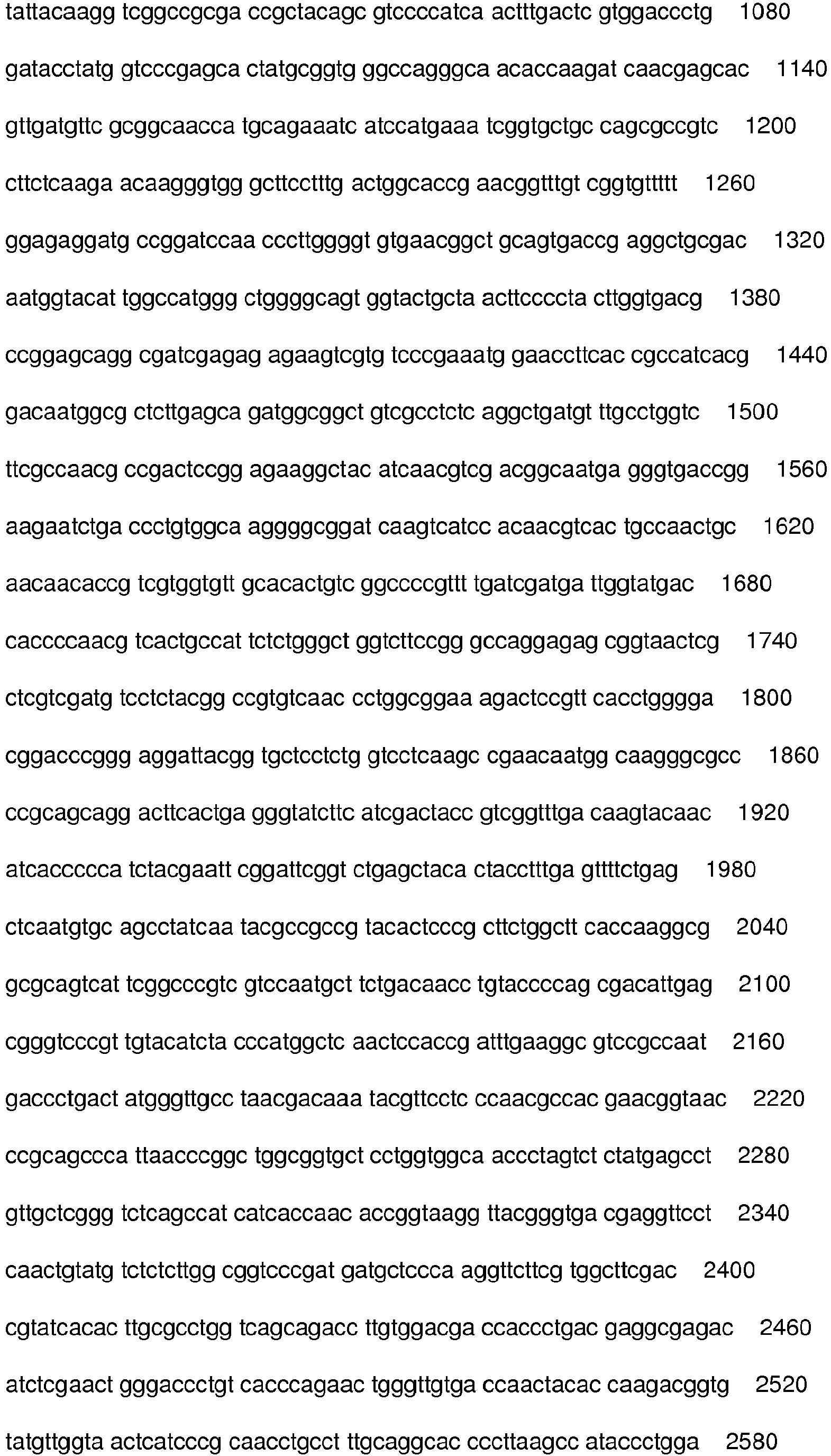

- SEQ ID NO:7


Claims (11)
- Method for selective, carbon source-independent expression of protein-encoding sequences in a filamentous fungus cell comprising the stepsa) Introducing a promotor of 1550 basepairs (bp) length comprising the sequence pattern X1X2X3X4tX5X6tcX7X8 wherein X1 is g, t or c, X2 is a, g, t or c,X3 s c or t, X4 is c or t, X5 is g, a, c or t, X6 is c or t, X7 is c or a, X8 is c or t into the filamentous fungus cell;b) Contacting the filamentous fungus cell containing the promotor with a growth medium;c) Adding at least one organic acid to the growth medium.
- Method according to claim 1, wherein the promotor comprises one or more of the following bp:
bp upstream of the A in the start codon Base 1 C 4 C 204 A 226 G 285 C 297 G 433 T 478 C 650 C 662 C 738 T 851 A 897 G 899 C 1010 T 1013 C 1110 G 1151 G 1185 C 1261 C 1262 T 1265 T 1287 T 1292 A 1488 G 1489 A - Method according to claim 1 or 2, wherein the promotor comprises one or more of the following bp
bp upstream of the A in the start codon Base 1 C 3 A 4 C 6 T 8 T 12 A 14 C 15 C 16 T 33 A 34 C 35 T 36 A 37 C 39 A 40 C 42 A 45 C 53 T 54 C 56 C 58 A 61 T 62 T 64 T 68 C 69 A 71 C 73 T 75 C 77 G 81 A 82 G 85 A 87 A 88 T 90 A 91 G 92 A 94 A 95 A 96 C 170 C 172 C 173 C 175 C 177 A 178 C 179 T 180 A 181 C 184 C 190 G 195 C 197 T 198 T 204 A 205 C 207 G 209 C 210 A 212 G 213 T 214 T 216 G 217 T 218 C 219 A 220 C 221 G 223 C 226 G 285 C 289 A 290 G 293 A 296 G 297 G 298 T 299 C 300 G 301 A 303 G 383 A 384 T 386 G 389 C 391 A 392 G 393 T 394 C 395 C 399 G 401 A 402 A 421 G 422 A 423 G 424 G 425 C 428 A 431 C 433 T 435 G 436 G 437 C 454 C 455 G 456 A 460 C 461 T 462 T 463 C 472 A 473 A 476 G 478 C 479 T 481 C 482 G 483 A 484 A 489 G 490 A 491 G 493 G 495 G 497 C 498 T 499 C 502 T 504 C 505 A 506 G 507 C 589 G 590 C 591 A 594 A 595 A 597 G 598 A 600 C 601 A 602 C 603 T 604 A 605 C 606 T 607 G 628 A 629 G 632 T 633 A 634 A 635 A 636 A 637 G 639 A 649 C 650 C 651 T 652 T 655 A 658 G 662 C 663 C 668 G 669 T 670 A 674 G 675 G 676 G 677 A 682 G 684 G 685 A 686 G 687 G 688 A 693 T 694 A 696 A 697 G 736 G 737 C 738 T 739 A 742 A 743 G 744 A 745 T 746 G 747 G 748 T 749 G 750 T 752 G 753 A 754 A 755 T 757 G 759 A 776 T 780 G 782 T 784 A 785 T 786 C 787 G 804 T 805 A 806 G 810 G 811 G 813 G 816 T 817 T 819 G 821 G 822 G 845 G 847 G 848 C 850 G 851 A 853 T 854 A 856 G 857 G 860 A 869 G 870 T 871 T 872 A 874 A 875 A 879 G 880 T 886 C 888 G 889 C 890 G 892 G 897 G 898 T 899 C 900 T 920 A 922 G 923 G 925 G 926 G 928 G 929 T 931 C 932 C 941 G 942 G 943 C 945 A 946 G 948 G 969 G 970 A 971 A 972 C 1002 G 1004 C 1005 T 1006 T 1009 T 1010 T 1013 C 1016 G 1017 G 1064 G 1065 G 1066 C 1067 C 1068 G 1069 T 1071 A 1073 T 1077 C 1082 A 1084 A 1085 T 1087 A 1089 C 1091 G 1092 C 1096 G 1102 A 1104 C 1106 A 1108 C 1110 G 1112 C 1148 T 1149 A 1150 C 1151 G 1152 G 1153 C 1154 G 1156 G 1157 A 1158 C 1159 A 1161 A 1164 T 1168 A 1169 C 1170 C 1172 T 1173 A 1174 C 1177 A 1182 G 1183 A 1185 C 1186 A 1188 C 1189 T 1191 C 1196 G 1198 T 1199 A 1200 A 1245 G 1246 C 1249 C 1250 A 1251 C 1252 A 1253 C 1256 C 1259 C 1261 C 1262 T 1265 T 1266 C 1267 T 1268 C 1269 C 1271 C 1274 C 1277 A 1284 C 1285 A 1286 G 1287 T 1292 A 1297 A 1298 G 1299 T 1302 G 1303 T 1305 T 1320 G 1323 A 1324 A 1325 G 1326 A 1329 G 1330 T 1334 T 1336 C 1337 C 1340 G 1341 A 1346 T 1348 G 1355 C 1356 T 1357 A 1358 C 1359 A 1360 T 1361 C 1362 G 1363 T 1365 G 1368 C 1375 A 1378 T 1381 T 1384 A 1385 G 1386 G 1387 T 1421 T 1422 G 1423 A 1425 T 1428 G 1429 A 1470 A 1471 C 1472 T 1473 A 1476 G 1477 A 1480 G 1482 T 1483 G 1486 G 1488 G 1489 A 1544 G 1545 G 1546 A 1547 A 1549 T 1550 T - Method according to any of the foregoing claims, wherein the promotor is selected from the group of SEQ ID NO:1, SEQ ID NO:2, SEQ ID NO: 3, SEQ ID NO: 4 and SEQ ID NO: 5.
- Method according to any of the foregoing claims, wherein the protein is a heterologous protein.
- Method according to any of the foregoing claims, wherein the filamentous fungus is selected from the group of Acremonium, Aspergillus, Chaetomium, Fusarium, Humicola, Irpex, Magnaporte, Myceliophthora, Neurospora, Penicillium, Rhizopus, Talaromyces, Trichoderma and Trametes.
- Method according to any of the foregoing claims, wherein the organic acid is selected from ascorbic acid, folic acid, fumaric acid, malic acid, malonic acid, pantothenic acid, phthalic acid, quinic acid, succinic acid, terephthalic acid or derivates thereof.
- Method according to any of the foregoing claims, wherein protein-encoding sequence is a sequence encoding for an enzyme or transcription factor.
- Method according to any of the foregoing claims wherein the enzyme-encoding sequence is selected from the group consisting of esterases, hydrolases, lyases, oxidases, recombinases, transferases.
- Method according to any of the foregoing claims wherein the promotor is introduced within a vector.
- Use of a promotor as defined in any of the foregoing claims for selective, carbon source-independent expression of protein-encoding sequences in a filamentous fungus cell.
Priority Applications (14)
| Application Number | Priority Date | Filing Date | Title |
|---|---|---|---|
| DK16189598.2T DK3296401T3 (en) | 2016-09-20 | 2016-09-20 | Method for selective carbon source-dependent expression of protein-coding sequences in a filamentous fungal cell |
| ES16189598T ES2784318T3 (en) | 2016-09-20 | 2016-09-20 | Method for a selective carbon source-independent expression of sequences encoding a protein in a filamentous fungal cell |
| EP16189598.2A EP3296401B1 (en) | 2016-09-20 | 2016-09-20 | Method for selective carbon source-independent expression of protein-encoding sequences in a filamentous fungus cell |
| HUE16189598A HUE049275T2 (en) | 2016-09-20 | 2016-09-20 | Method for selective expression of protein coding sequences in a filamentous fungal cell independent of carbon source |
| PL16189598T PL3296401T3 (en) | 2016-09-20 | 2016-09-20 | Method for selective carbon source-independent expression of protein-encoding sequences in a filamentous fungus cell |
| SI201630728T SI3296401T1 (en) | 2016-09-20 | 2016-09-20 | Method for selective carbon source-independent expression of protein-coding sequences in filamentous fungal cell |
| RS20200516A RS60238B1 (en) | 2016-09-20 | 2016-09-20 | Method for selective carbon source-independent expression of protein-encoding sequences in a filamentous fungus cell |
| EA201990774A EA201990774A1 (en) | 2016-09-20 | 2017-09-19 | METHOD OF SELECTIVE CARBON SOURCE SELECTIVE EXPRESSION OF PROTEIN-ENCODING SEQUENCES IN A CELL OF MICELLOUS MUSHROOM |
| CA3035981A CA3035981C (en) | 2016-09-20 | 2017-09-19 | Method for selective carbon source-independent expression of protein-encoding sequences in a filamentous fungus cell |
| CN201780057611.1A CN109715809B (en) | 2016-09-20 | 2017-09-19 | Method for selective carbon source-independent expression of protein coding sequences in filamentous fungal cells |
| MYPI2019001167A MY200488A (en) | 2016-09-20 | 2017-09-19 | Method for selective carbon source-independent expression of protein-encoding sequences in a filamentous fungus cell |
| AU2017329752A AU2017329752B2 (en) | 2016-09-20 | 2017-09-19 | Method for selective carbon source-independent expression of protein-encoding sequences in a filamentous fungus cell |
| PCT/EP2017/073681 WO2018054924A1 (en) | 2016-09-20 | 2017-09-19 | Method for selective carbon source-independent expression of protein-encoding sequences in a filamentous fungus cell |
| HRP20200622TT HRP20200622T1 (en) | 2016-09-20 | 2020-04-10 | Method for selective carbon source-independent expression of protein-encoding sequences in a filamentous fungus cell |
Applications Claiming Priority (1)
| Application Number | Priority Date | Filing Date | Title |
|---|---|---|---|
| EP16189598.2A EP3296401B1 (en) | 2016-09-20 | 2016-09-20 | Method for selective carbon source-independent expression of protein-encoding sequences in a filamentous fungus cell |
Publications (2)
| Publication Number | Publication Date |
|---|---|
| EP3296401A1 true EP3296401A1 (en) | 2018-03-21 |
| EP3296401B1 EP3296401B1 (en) | 2020-02-19 |
Family
ID=56990248
Family Applications (1)
| Application Number | Title | Priority Date | Filing Date |
|---|---|---|---|
| EP16189598.2A Active EP3296401B1 (en) | 2016-09-20 | 2016-09-20 | Method for selective carbon source-independent expression of protein-encoding sequences in a filamentous fungus cell |
Country Status (14)
| Country | Link |
|---|---|
| EP (1) | EP3296401B1 (en) |
| CN (1) | CN109715809B (en) |
| AU (1) | AU2017329752B2 (en) |
| CA (1) | CA3035981C (en) |
| DK (1) | DK3296401T3 (en) |
| EA (1) | EA201990774A1 (en) |
| ES (1) | ES2784318T3 (en) |
| HR (1) | HRP20200622T1 (en) |
| HU (1) | HUE049275T2 (en) |
| MY (1) | MY200488A (en) |
| PL (1) | PL3296401T3 (en) |
| RS (1) | RS60238B1 (en) |
| SI (1) | SI3296401T1 (en) |
| WO (1) | WO2018054924A1 (en) |
Cited By (1)
| Publication number | Priority date | Publication date | Assignee | Title |
|---|---|---|---|---|
| CN109715809A (en) * | 2016-09-20 | 2019-05-03 | 科莱恩国际有限公司 | The method of selective carbon source dependent/non-dependent expression protein coding sequence in filamentous fungal cells |
Citations (7)
| Publication number | Priority date | Publication date | Assignee | Title |
|---|---|---|---|---|
| WO2012075151A2 (en) * | 2010-11-30 | 2012-06-07 | Novozymes, Inc. | Promoters for expressing genes in a fungal cell |
| WO2012083081A1 (en) * | 2010-12-16 | 2012-06-21 | Novozymes, Inc. | Promoters for expressing genes in a fungal cell |
| CN102876706A (en) * | 2012-08-01 | 2013-01-16 | 中国科学院微生物研究所 | Method for high-throughput screening recombinant trichoderma reesei for efficiently expressing foreign protein |
| CN102311951B (en) * | 2011-07-13 | 2013-03-20 | 深圳大学 | Trichoderma reesei constitutive expression cassette, expression vector, recombinant strain and application thereof |
| CN103114089B (en) * | 2012-12-05 | 2014-06-25 | 中国科学院天津工业生物技术研究所 | Strong promoter from trichoderma reesei as well as expression vector and application thereof |
| CN104975039A (en) * | 2015-06-24 | 2015-10-14 | 方诩 | Recombinant plasmid and application of recombinant plasmid to degrading cellulose raw material |
| CN105602919A (en) * | 2015-12-08 | 2016-05-25 | 中国农业科学院饲料研究所 | Method for improving capacity of Trichoderma reesei in producing cellulase by using RNA interference technology |
Family Cites Families (3)
| Publication number | Priority date | Publication date | Assignee | Title |
|---|---|---|---|---|
| ES2287989T3 (en) * | 1997-12-22 | 2007-12-16 | Dsm Ip Assets B.V. | EXPRESSION CLONATION IN FILAMENTOUS FUNGI. |
| EP1059354A2 (en) * | 1999-06-10 | 2000-12-13 | Ceres Incorporated | Sequence-determined DNA fragments and corresponding polypeptides encoded thereby |
| RS60238B1 (en) * | 2016-09-20 | 2020-06-30 | Clariant Int Ltd | Method for selective carbon source-independent expression of protein-encoding sequences in a filamentous fungus cell |
-
2016
- 2016-09-20 RS RS20200516A patent/RS60238B1/en unknown
- 2016-09-20 ES ES16189598T patent/ES2784318T3/en active Active
- 2016-09-20 SI SI201630728T patent/SI3296401T1/en unknown
- 2016-09-20 PL PL16189598T patent/PL3296401T3/en unknown
- 2016-09-20 DK DK16189598.2T patent/DK3296401T3/en active
- 2016-09-20 EP EP16189598.2A patent/EP3296401B1/en active Active
- 2016-09-20 HU HUE16189598A patent/HUE049275T2/en unknown
-
2017
- 2017-09-19 MY MYPI2019001167A patent/MY200488A/en unknown
- 2017-09-19 AU AU2017329752A patent/AU2017329752B2/en not_active Ceased
- 2017-09-19 CA CA3035981A patent/CA3035981C/en active Active
- 2017-09-19 EA EA201990774A patent/EA201990774A1/en unknown
- 2017-09-19 WO PCT/EP2017/073681 patent/WO2018054924A1/en not_active Ceased
- 2017-09-19 CN CN201780057611.1A patent/CN109715809B/en active Active
-
2020
- 2020-04-10 HR HRP20200622TT patent/HRP20200622T1/en unknown
Patent Citations (7)
| Publication number | Priority date | Publication date | Assignee | Title |
|---|---|---|---|---|
| WO2012075151A2 (en) * | 2010-11-30 | 2012-06-07 | Novozymes, Inc. | Promoters for expressing genes in a fungal cell |
| WO2012083081A1 (en) * | 2010-12-16 | 2012-06-21 | Novozymes, Inc. | Promoters for expressing genes in a fungal cell |
| CN102311951B (en) * | 2011-07-13 | 2013-03-20 | 深圳大学 | Trichoderma reesei constitutive expression cassette, expression vector, recombinant strain and application thereof |
| CN102876706A (en) * | 2012-08-01 | 2013-01-16 | 中国科学院微生物研究所 | Method for high-throughput screening recombinant trichoderma reesei for efficiently expressing foreign protein |
| CN103114089B (en) * | 2012-12-05 | 2014-06-25 | 中国科学院天津工业生物技术研究所 | Strong promoter from trichoderma reesei as well as expression vector and application thereof |
| CN104975039A (en) * | 2015-06-24 | 2015-10-14 | 方诩 | Recombinant plasmid and application of recombinant plasmid to degrading cellulose raw material |
| CN105602919A (en) * | 2015-12-08 | 2016-05-25 | 中国农业科学院饲料研究所 | Method for improving capacity of Trichoderma reesei in producing cellulase by using RNA interference technology |
Non-Patent Citations (12)
| Title |
|---|
| ASLANIDIS; DE JONG, NUCLEIC ACID RES., vol. 18, no. 20, 1990, pages 6069 |
| DIEGO MARTINEZ ET AL: "Genome sequencing and analysis of the biomass-degrading fungus Trichoderma reesei (syn. Hypocrea jecorina)", NATURE BIOTECHNOLOGY, GALE GROUP INC, US, vol. 26, no. 5, 1 May 2008 (2008-05-01), pages 553 - 560, XP002689190, ISSN: 1087-0156, [retrieved on 20080504], DOI: 10.1038/NBT1403 * |
| GEN ZOU ET AL: "Construction of a cellulase hyper-expression system in Trichoderma reesei by promoter and enzyme engineering", MICROBIAL CELL FACTORIES, BIOMED CENTRAL, GB, vol. 11, no. 1, 8 February 2012 (2012-02-08), pages 21, XP021125147, ISSN: 1475-2859, DOI: 10.1186/1475-2859-11-21 * |
| GRUBER ET AL., CURR GENET, vol. 18, 1990, pages 71 - 76 |
| IRINA S. DRUZHININA ET AL: "A complete annotation of the chromosomes of the cellulase producer Trichoderma reesei provides insights in gene clusters, their expression and reveals genes required for fitness", BIOTECHNOLOGY FOR BIOFUELS, vol. 9, no. 1, 29 March 2016 (2016-03-29), XP055348212, DOI: 10.1186/s13068-016-0488-z * |
| JANSOHN ET AL.: "Gentechnische Methoden", ELSEVIER |
| JUNXIN LI ET AL: "Achieving efficient protein expression in Trichoderma reesei by using strong constitutive promoters", MICROBIAL CELL FACTORIES, BIOMED CENTRAL, GB, vol. 11, no. 1, 18 June 2012 (2012-06-18), pages 84, XP021115901, ISSN: 1475-2859, DOI: 10.1186/1475-2859-11-84 * |
| LI ET AL.: "Achieving efficient protein expression in Trichoderma reesei by using strong constitutive promoters", MICROBIAL CELL FACTORIES, vol. 11, 2012, pages 84, XP021115901, DOI: doi:10.1186/1475-2859-11-84 |
| MACH R L ET AL: "Regulation of gene expression in industrial fungi: Trichoderma", APPLIED MICROBIOLOGY AND BIOTECHNOLOGY, SPRINGER, DE, vol. 60, no. 5, 1 January 2003 (2003-01-01), pages 515 - 522, XP002506248, ISSN: 0175-7598, [retrieved on 20021203], DOI: 10.1007/S00253-002-1162-X * |
| PENTTILA ET AL., GENE, vol. 61, 1987, pages 155 - 164 |
| SAMBROOK; RUSSEL: "Molecular Cloning - A laboratory manual", COLD SPRING HARBOR LABORATORY PRESS |
| SHOJI J Y ET AL: "Development of Aspergillus oryzae thiA promoter as a tool for molecular biological studies", FEMS MICROBIOLOGY LETTERS, WILEY-BLACKWELL PUBLISHING LTD, GB, vol. 244, no. 1, 1 March 2005 (2005-03-01), pages 41 - 46, XP027871657, ISSN: 0378-1097, [retrieved on 20050301] * |
Cited By (2)
| Publication number | Priority date | Publication date | Assignee | Title |
|---|---|---|---|---|
| CN109715809A (en) * | 2016-09-20 | 2019-05-03 | 科莱恩国际有限公司 | The method of selective carbon source dependent/non-dependent expression protein coding sequence in filamentous fungal cells |
| CN109715809B (en) * | 2016-09-20 | 2023-04-14 | 科莱恩产品(德国)公司 | Method for selective carbon source-independent expression of protein coding sequences in filamentous fungal cells |
Also Published As
| Publication number | Publication date |
|---|---|
| EP3296401B1 (en) | 2020-02-19 |
| WO2018054924A1 (en) | 2018-03-29 |
| ES2784318T3 (en) | 2020-09-24 |
| MY200488A (en) | 2023-12-28 |
| HRP20200622T1 (en) | 2020-07-10 |
| CN109715809A (en) | 2019-05-03 |
| EA201990774A1 (en) | 2019-08-30 |
| CN109715809B (en) | 2023-04-14 |
| CA3035981A1 (en) | 2018-03-29 |
| HUE049275T2 (en) | 2020-09-28 |
| RS60238B1 (en) | 2020-06-30 |
| AU2017329752A1 (en) | 2019-03-21 |
| SI3296401T1 (en) | 2020-07-31 |
| AU2017329752B2 (en) | 2020-12-24 |
| PL3296401T3 (en) | 2020-07-27 |
| DK3296401T3 (en) | 2020-05-04 |
| CA3035981C (en) | 2021-08-24 |
Similar Documents
| Publication | Publication Date | Title |
|---|---|---|
| DK2714914T3 (en) | Simultaneous sequence-specific integration of multiple gene copies into filamentous fungi | |
| CN102939382B (en) | Filamentous fungal host strains and DNA constructs, and methods of use thereof | |
| US9512409B2 (en) | Thermostable catalase | |
| EP2630249B1 (en) | Thermostable trichoderma cellulase | |
| WO2017093450A1 (en) | Method of producing proteins in filamentous fungi with decreased clr2 activity | |
| Li et al. | Rational design for fungal laccase production in the model host Aspergillus nidulans | |
| CN106132995A (en) | Protein crystal resolubilization at a low ph | |
| EP2938727B1 (en) | Genes/genetic elements associated with mating impairment in trichoderma reesei qm6a and its derivatives and process for their identification | |
| CN105492604A (en) | Rregulated PEPC expression | |
| EP3384003A1 (en) | Method of producing proteins in filamentous fungi with decreased clri activity | |
| JP6830891B2 (en) | Fungal host strain, DNA construct and usage | |
| KR20220097451A (en) | Fungal strains comprising an improved protein productivity phenotype and methods thereof | |
| Celińska et al. | Evaluation of heterologous α‐amylase production in two expression platforms dedicated for Yarrowia lipolytica: commercial Po1g–pYLSC (php4d) and custom‐made A18–pYLTEF (pTEF) | |
| EP3296401B1 (en) | Method for selective carbon source-independent expression of protein-encoding sequences in a filamentous fungus cell | |
| US20130302878A1 (en) | Expression of plant peroxidases in filamentous fungi | |
| CN115427434A (en) | Compositions and methods for enhancing protein production in filamentous fungal cells | |
| CN112004931A (en) | fungal chaperone | |
| EP4015640A1 (en) | Process for the production of a filamentous fungus whole broth enzyme composition with low viscosity | |
| Nguyen et al. | Characterization of the effects of terminators and introns on recombinant gene expression in the basidiomycete Ceriporiopsis subvermispora | |
| US20220267783A1 (en) | Filamentous fungal expression system | |
| US20250075242A1 (en) | Process for the production of a technical enzyme composition with low viscosity produced by a filamentous fungus | |
| EP4012018A1 (en) | Process for the production of a technical enzyme composition with low viscosity produced by a filamentous fungus | |
| JP2009296958A (en) | High expression promoter | |
| CN116583534A (en) | Leader peptide and polynucleotide encoding same | |
| CA3199352A1 (en) | Process for the production of a filamentous fungus whole broth enzyme composition with low biomass formation and high protein yield |
Legal Events
| Date | Code | Title | Description |
|---|---|---|---|
| PUAI | Public reference made under article 153(3) epc to a published international application that has entered the european phase |
Free format text: ORIGINAL CODE: 0009012 |
|
| STAA | Information on the status of an ep patent application or granted ep patent |
Free format text: STATUS: THE APPLICATION HAS BEEN PUBLISHED |
|
| AK | Designated contracting states |
Kind code of ref document: A1 Designated state(s): AL AT BE BG CH CY CZ DE DK EE ES FI FR GB GR HR HU IE IS IT LI LT LU LV MC MK MT NL NO PL PT RO RS SE SI SK SM TR |
|
| AX | Request for extension of the european patent |
Extension state: BA ME |
|
| STAA | Information on the status of an ep patent application or granted ep patent |
Free format text: STATUS: REQUEST FOR EXAMINATION WAS MADE |
|
| 17P | Request for examination filed |
Effective date: 20180921 |
|
| RBV | Designated contracting states (corrected) |
Designated state(s): AL AT BE BG CH CY CZ DE DK EE ES FI FR GB GR HR HU IE IS IT LI LT LU LV MC MK MT NL NO PL PT RO RS SE SI SK SM TR |
|
| GRAP | Despatch of communication of intention to grant a patent |
Free format text: ORIGINAL CODE: EPIDOSNIGR1 |
|
| STAA | Information on the status of an ep patent application or granted ep patent |
Free format text: STATUS: GRANT OF PATENT IS INTENDED |
|
| INTG | Intention to grant announced |
Effective date: 20191002 |
|
| GRAS | Grant fee paid |
Free format text: ORIGINAL CODE: EPIDOSNIGR3 |
|
| GRAA | (expected) grant |
Free format text: ORIGINAL CODE: 0009210 |
|
| STAA | Information on the status of an ep patent application or granted ep patent |
Free format text: STATUS: THE PATENT HAS BEEN GRANTED |
|
| AK | Designated contracting states |
Kind code of ref document: B1 Designated state(s): AL AT BE BG CH CY CZ DE DK EE ES FI FR GB GR HR HU IE IS IT LI LT LU LV MC MK MT NL NO PL PT RO RS SE SI SK SM TR |
|
| REG | Reference to a national code |
Ref country code: CH Ref legal event code: EP |
|
| REG | Reference to a national code |
Ref country code: DE Ref legal event code: R096 Ref document number: 602016029958 Country of ref document: DE |
|
| REG | Reference to a national code |
Ref country code: AT Ref legal event code: REF Ref document number: 1234997 Country of ref document: AT Kind code of ref document: T Effective date: 20200315 |
|
| REG | Reference to a national code |
Ref country code: IE Ref legal event code: FG4D |
|
| REG | Reference to a national code |
Ref country code: HR Ref legal event code: TUEP Ref document number: P20200622 Country of ref document: HR |
|
| REG | Reference to a national code |
Ref country code: DK Ref legal event code: T3 Effective date: 20200429 |
|
| REG | Reference to a national code |
Ref country code: FI Ref legal event code: FGE |
|
| REG | Reference to a national code |
Ref country code: NL Ref legal event code: FP |
|
| REG | Reference to a national code |
Ref country code: SE Ref legal event code: TRGR |
|
| REG | Reference to a national code |
Ref country code: NO Ref legal event code: T2 Effective date: 20200219 |
|
| REG | Reference to a national code |
Ref country code: HR Ref legal event code: T1PR Ref document number: P20200622 Country of ref document: HR |
|
| REG | Reference to a national code |
Ref country code: SK Ref legal event code: T3 Ref document number: E 34270 Country of ref document: SK |
|
| REG | Reference to a national code |
Ref country code: LT Ref legal event code: MG4D |
|
| PG25 | Lapsed in a contracting state [announced via postgrant information from national office to epo] |
Ref country code: LV Free format text: LAPSE BECAUSE OF FAILURE TO SUBMIT A TRANSLATION OF THE DESCRIPTION OR TO PAY THE FEE WITHIN THE PRESCRIBED TIME-LIMIT Effective date: 20200219 Ref country code: IS Free format text: LAPSE BECAUSE OF FAILURE TO SUBMIT A TRANSLATION OF THE DESCRIPTION OR TO PAY THE FEE WITHIN THE PRESCRIBED TIME-LIMIT Effective date: 20200619 Ref country code: GR Free format text: LAPSE BECAUSE OF FAILURE TO SUBMIT A TRANSLATION OF THE DESCRIPTION OR TO PAY THE FEE WITHIN THE PRESCRIBED TIME-LIMIT Effective date: 20200520 |
|
| REG | Reference to a national code |
Ref country code: ES Ref legal event code: FG2A Ref document number: 2784318 Country of ref document: ES Kind code of ref document: T3 Effective date: 20200924 |
|
| REG | Reference to a national code |
Ref country code: HU Ref legal event code: AG4A Ref document number: E049275 Country of ref document: HU |
|
| REG | Reference to a national code |
Ref country code: HR Ref legal event code: ODRP Ref document number: P20200622 Country of ref document: HR Payment date: 20200908 Year of fee payment: 5 |
|
| PG25 | Lapsed in a contracting state [announced via postgrant information from national office to epo] |
Ref country code: PT Free format text: LAPSE BECAUSE OF FAILURE TO SUBMIT A TRANSLATION OF THE DESCRIPTION OR TO PAY THE FEE WITHIN THE PRESCRIBED TIME-LIMIT Effective date: 20200712 Ref country code: SM Free format text: LAPSE BECAUSE OF FAILURE TO SUBMIT A TRANSLATION OF THE DESCRIPTION OR TO PAY THE FEE WITHIN THE PRESCRIBED TIME-LIMIT Effective date: 20200219 Ref country code: EE Free format text: LAPSE BECAUSE OF FAILURE TO SUBMIT A TRANSLATION OF THE DESCRIPTION OR TO PAY THE FEE WITHIN THE PRESCRIBED TIME-LIMIT Effective date: 20200219 Ref country code: LT Free format text: LAPSE BECAUSE OF FAILURE TO SUBMIT A TRANSLATION OF THE DESCRIPTION OR TO PAY THE FEE WITHIN THE PRESCRIBED TIME-LIMIT Effective date: 20200219 |
|
| REG | Reference to a national code |
Ref country code: AT Ref legal event code: UEP Ref document number: 1234997 Country of ref document: AT Kind code of ref document: T Effective date: 20200219 |
|
| REG | Reference to a national code |
Ref country code: DE Ref legal event code: R097 Ref document number: 602016029958 Country of ref document: DE |
|
| PLBE | No opposition filed within time limit |
Free format text: ORIGINAL CODE: 0009261 |
|
| STAA | Information on the status of an ep patent application or granted ep patent |
Free format text: STATUS: NO OPPOSITION FILED WITHIN TIME LIMIT |
|
| 26N | No opposition filed |
Effective date: 20201120 |
|
| PG25 | Lapsed in a contracting state [announced via postgrant information from national office to epo] |
Ref country code: LU Free format text: LAPSE BECAUSE OF NON-PAYMENT OF DUE FEES Effective date: 20200920 |
|
| PG25 | Lapsed in a contracting state [announced via postgrant information from national office to epo] |
Ref country code: IE Free format text: LAPSE BECAUSE OF NON-PAYMENT OF DUE FEES Effective date: 20200920 |
|
| REG | Reference to a national code |
Ref country code: HR Ref legal event code: ODRP Ref document number: P20200622 Country of ref document: HR Payment date: 20210907 Year of fee payment: 6 |
|
| PG25 | Lapsed in a contracting state [announced via postgrant information from national office to epo] |
Ref country code: MT Free format text: LAPSE BECAUSE OF FAILURE TO SUBMIT A TRANSLATION OF THE DESCRIPTION OR TO PAY THE FEE WITHIN THE PRESCRIBED TIME-LIMIT Effective date: 20200219 Ref country code: CY Free format text: LAPSE BECAUSE OF FAILURE TO SUBMIT A TRANSLATION OF THE DESCRIPTION OR TO PAY THE FEE WITHIN THE PRESCRIBED TIME-LIMIT Effective date: 20200219 |
|
| PG25 | Lapsed in a contracting state [announced via postgrant information from national office to epo] |
Ref country code: MC Free format text: LAPSE BECAUSE OF FAILURE TO SUBMIT A TRANSLATION OF THE DESCRIPTION OR TO PAY THE FEE WITHIN THE PRESCRIBED TIME-LIMIT Effective date: 20200219 Ref country code: AL Free format text: LAPSE BECAUSE OF FAILURE TO SUBMIT A TRANSLATION OF THE DESCRIPTION OR TO PAY THE FEE WITHIN THE PRESCRIBED TIME-LIMIT Effective date: 20200219 |
|
| REG | Reference to a national code |
Ref country code: HR Ref legal event code: ODRP Ref document number: P20200622 Country of ref document: HR Payment date: 20220908 Year of fee payment: 7 |
|
| PGFP | Annual fee paid to national office [announced via postgrant information from national office to epo] |
Ref country code: TR Payment date: 20220907 Year of fee payment: 7 Ref country code: SE Payment date: 20220923 Year of fee payment: 7 Ref country code: NO Payment date: 20220921 Year of fee payment: 7 Ref country code: NL Payment date: 20220926 Year of fee payment: 7 Ref country code: HR Payment date: 20220908 Year of fee payment: 7 Ref country code: GB Payment date: 20220920 Year of fee payment: 7 Ref country code: FI Payment date: 20220920 Year of fee payment: 7 Ref country code: DK Payment date: 20220923 Year of fee payment: 7 Ref country code: CZ Payment date: 20220916 Year of fee payment: 7 Ref country code: AT Payment date: 20220920 Year of fee payment: 7 |
|
| PGFP | Annual fee paid to national office [announced via postgrant information from national office to epo] |
Ref country code: SI Payment date: 20220907 Year of fee payment: 7 Ref country code: RS Payment date: 20220906 Year of fee payment: 7 Ref country code: HU Payment date: 20220907 Year of fee payment: 7 Ref country code: BE Payment date: 20220926 Year of fee payment: 7 |
|
| PGFP | Annual fee paid to national office [announced via postgrant information from national office to epo] |
Ref country code: ES Payment date: 20221013 Year of fee payment: 7 |
|
| PGFP | Annual fee paid to national office [announced via postgrant information from national office to epo] |
Ref country code: CH Payment date: 20220928 Year of fee payment: 7 |
|
| REG | Reference to a national code |
Ref country code: HR Ref legal event code: PPPP Ref document number: P20200622 Country of ref document: HR Owner name: CLARIANT PRODUKTE (DEUTSCHLAND) GMBH, DE Ref country code: NO Ref legal event code: CREP Representative=s name: BRYN AARFLOT AS, STORTINGSGATA 8, 0161 OSLO, NORGE Ref country code: NO Ref legal event code: CHAD Owner name: CLARIANT PRODUKTE (DEUTSCHLAND) GMBH, DE |
|
| REG | Reference to a national code |
Ref country code: HU Ref legal event code: GB9C Owner name: CLARIANT PRODUKTE (DEUTSCHLAND) GMBH, DE Free format text: FORMER OWNER(S): CLARIANT INTERNATIONAL LTD, CH |
|
| REG | Reference to a national code |
Ref country code: SK Ref legal event code: PC4A Ref document number: E 34270 Country of ref document: SK Owner name: CLARIANT PRODUKTE (DEUTSCHLAND) GMBH, FRANKFUR, DE Free format text: FORMER OWNER: CLARIANT INTERNATIONAL LTD, MUTTENZ, CH Effective date: 20230308 |
|
| PGFP | Annual fee paid to national office [announced via postgrant information from national office to epo] |
Ref country code: MK Payment date: 20220909 Year of fee payment: 7 |
|
| REG | Reference to a national code |
Ref country code: NO Ref legal event code: CREP Representative=s name: ZACCO NORWAY AS, POSTBOKS 488, 0213 OSLO, NORGE |
|
| REG | Reference to a national code |
Ref country code: SI Ref legal event code: SP73 Owner name: CLARIANT PRODUKTE (DEUTSCHLAND) GMBH; DE Effective date: 20230327 |
|
| REG | Reference to a national code |
Ref country code: ES Ref legal event code: PC2A Owner name: CLARIANT PRODUKTE (DEUTSCHLAND) GMBH Effective date: 20230428 |
|
| REG | Reference to a national code |
Ref country code: NL Ref legal event code: PD Owner name: CLARIANT PRODUKTE (DEUTSCHLAND) GMBH; DE Free format text: DETAILS ASSIGNMENT: CHANGE OF OWNER(S), ASSIGNMENT; FORMER OWNER NAME: CLARIANT INTERNATIONAL LTD Effective date: 20230428 |
|
| P01 | Opt-out of the competence of the unified patent court (upc) registered |
Effective date: 20230512 |
|
| REG | Reference to a national code |
Ref country code: GB Ref legal event code: 732E Free format text: REGISTERED BETWEEN 20230602 AND 20230607 |
|
| REG | Reference to a national code |
Ref country code: FI Ref legal event code: PCE Owner name: CLARIANT PRODUKTE (DEUTSCHLAND) GMBH |
|
| PGFP | Annual fee paid to national office [announced via postgrant information from national office to epo] |
Ref country code: BG Payment date: 20230925 Year of fee payment: 8 |
|
| REG | Reference to a national code |
Ref country code: DE Ref legal event code: R081 Ref document number: 602016029958 Country of ref document: DE Owner name: CLARIANT PRODUKTE (DEUTSCHLAND) GMBH, DE Free format text: FORMER OWNER: CLARIANT INTERNATIONAL LTD., MUTTENZ, CH |
|
| REG | Reference to a national code |
Ref country code: HR Ref legal event code: PBON Ref document number: P20200622 Country of ref document: HR Effective date: 20230920 |
|
| REG | Reference to a national code |
Ref country code: BE Ref legal event code: PD Owner name: CLARIANT PRODUKTE (DEUTSCHLAND) GMBH; DE Free format text: DETAILS ASSIGNMENT: CHANGE OF OWNER(S), ASSIGNMENT; FORMER OWNER NAME: CLARIANT INTERNATIONAL LTD Effective date: 20240306 |
|
| REG | Reference to a national code |
Ref country code: DK Ref legal event code: EBP Effective date: 20230930 |
|
| PG25 | Lapsed in a contracting state [announced via postgrant information from national office to epo] |
Ref country code: FI Free format text: LAPSE BECAUSE OF NON-PAYMENT OF DUE FEES Effective date: 20230920 Ref country code: CZ Free format text: LAPSE BECAUSE OF NON-PAYMENT OF DUE FEES Effective date: 20230920 |
|
| REG | Reference to a national code |
Ref country code: CH Ref legal event code: PL Ref country code: SE Ref legal event code: EUG |
|
| REG | Reference to a national code |
Ref country code: NL Ref legal event code: MM Effective date: 20231001 |
|
| REG | Reference to a national code |
Ref country code: AT Ref legal event code: MM01 Ref document number: 1234997 Country of ref document: AT Kind code of ref document: T Effective date: 20230920 |
|
| REG | Reference to a national code |
Ref country code: BE Ref legal event code: MM Effective date: 20230930 |
|
| GBPC | Gb: european patent ceased through non-payment of renewal fee |
Effective date: 20230920 |
|
| PG25 | Lapsed in a contracting state [announced via postgrant information from national office to epo] |
Ref country code: NL Free format text: LAPSE BECAUSE OF NON-PAYMENT OF DUE FEES Effective date: 20231001 |
|
| PG25 | Lapsed in a contracting state [announced via postgrant information from national office to epo] |
Ref country code: NL Free format text: LAPSE BECAUSE OF NON-PAYMENT OF DUE FEES Effective date: 20231001 |
|
| PG25 | Lapsed in a contracting state [announced via postgrant information from national office to epo] |
Ref country code: GB Free format text: LAPSE BECAUSE OF NON-PAYMENT OF DUE FEES Effective date: 20230920 |
|
| PG25 | Lapsed in a contracting state [announced via postgrant information from national office to epo] |
Ref country code: CH Free format text: LAPSE BECAUSE OF NON-PAYMENT OF DUE FEES Effective date: 20230930 Ref country code: RS Free format text: LAPSE BECAUSE OF NON-PAYMENT OF DUE FEES Effective date: 20230920 Ref country code: HR Free format text: LAPSE BECAUSE OF NON-PAYMENT OF DUE FEES Effective date: 20230920 |
|
| PG25 | Lapsed in a contracting state [announced via postgrant information from national office to epo] |
Ref country code: AT Free format text: LAPSE BECAUSE OF NON-PAYMENT OF DUE FEES Effective date: 20230920 |
|
| PG25 | Lapsed in a contracting state [announced via postgrant information from national office to epo] |
Ref country code: RS Free format text: LAPSE BECAUSE OF NON-PAYMENT OF DUE FEES Effective date: 20230920 Ref country code: NO Free format text: LAPSE BECAUSE OF NON-PAYMENT OF DUE FEES Effective date: 20230930 Ref country code: HR Free format text: LAPSE BECAUSE OF NON-PAYMENT OF DUE FEES Effective date: 20230920 Ref country code: GB Free format text: LAPSE BECAUSE OF NON-PAYMENT OF DUE FEES Effective date: 20230920 Ref country code: CH Free format text: LAPSE BECAUSE OF NON-PAYMENT OF DUE FEES Effective date: 20230930 Ref country code: AT Free format text: LAPSE BECAUSE OF NON-PAYMENT OF DUE FEES Effective date: 20230920 Ref country code: SI Free format text: LAPSE BECAUSE OF NON-PAYMENT OF DUE FEES Effective date: 20230921 |
|
| PG25 | Lapsed in a contracting state [announced via postgrant information from national office to epo] |
Ref country code: SE Free format text: LAPSE BECAUSE OF NON-PAYMENT OF DUE FEES Effective date: 20230921 Ref country code: HU Free format text: LAPSE BECAUSE OF NON-PAYMENT OF DUE FEES Effective date: 20230921 Ref country code: BE Free format text: LAPSE BECAUSE OF NON-PAYMENT OF DUE FEES Effective date: 20230930 |
|
| REG | Reference to a national code |
Ref country code: SI Ref legal event code: KO00 Effective date: 20240715 |
|
| PGFP | Annual fee paid to national office [announced via postgrant information from national office to epo] |
Ref country code: DE Payment date: 20240926 Year of fee payment: 9 |
|
| PG25 | Lapsed in a contracting state [announced via postgrant information from national office to epo] |
Ref country code: DK Free format text: LAPSE BECAUSE OF NON-PAYMENT OF DUE FEES Effective date: 20230930 |
|
| PGFP | Annual fee paid to national office [announced via postgrant information from national office to epo] |
Ref country code: FR Payment date: 20240925 Year of fee payment: 9 |
|
| PGFP | Annual fee paid to national office [announced via postgrant information from national office to epo] |
Ref country code: PL Payment date: 20240910 Year of fee payment: 9 |
|
| PGFP | Annual fee paid to national office [announced via postgrant information from national office to epo] |
Ref country code: SK Payment date: 20240909 Year of fee payment: 9 |
|
| PG25 | Lapsed in a contracting state [announced via postgrant information from national office to epo] |
Ref country code: DK Free format text: LAPSE BECAUSE OF NON-PAYMENT OF DUE FEES Effective date: 20230930 |
|
| PGFP | Annual fee paid to national office [announced via postgrant information from national office to epo] |
Ref country code: RO Payment date: 20240916 Year of fee payment: 9 Ref country code: IT Payment date: 20240924 Year of fee payment: 9 |
|
| REG | Reference to a national code |
Ref country code: ES Ref legal event code: FD2A Effective date: 20241104 |
|
| PG25 | Lapsed in a contracting state [announced via postgrant information from national office to epo] |
Ref country code: ES Free format text: LAPSE BECAUSE OF NON-PAYMENT OF DUE FEES Effective date: 20230921 |
|
| PG25 | Lapsed in a contracting state [announced via postgrant information from national office to epo] |
Ref country code: ES Free format text: LAPSE BECAUSE OF NON-PAYMENT OF DUE FEES Effective date: 20230921 |
|
| PG25 | Lapsed in a contracting state [announced via postgrant information from national office to epo] |
Ref country code: BG Free format text: LAPSE BECAUSE OF NON-PAYMENT OF DUE FEES Effective date: 20240920 |
|
| REG | Reference to a national code |
Ref country code: DE Ref legal event code: R119 Ref document number: 602016029958 Country of ref document: DE |
|
| PG25 | Lapsed in a contracting state [announced via postgrant information from national office to epo] |
Ref country code: RO Free format text: LAPSE BECAUSE OF NON-PAYMENT OF DUE FEES Effective date: 20250920 |
|
| REG | Reference to a national code |
Ref country code: SK Ref legal event code: MM4A Ref document number: E 34270 Country of ref document: SK Effective date: 20250920 |
|
| PG25 | Lapsed in a contracting state [announced via postgrant information from national office to epo] |
Ref country code: TR Free format text: LAPSE BECAUSE OF NON-PAYMENT OF DUE FEES Effective date: 20230920 |
|
| PG25 | Lapsed in a contracting state [announced via postgrant information from national office to epo] |
Ref country code: IT Free format text: LAPSE BECAUSE OF NON-PAYMENT OF DUE FEES Effective date: 20250920 |
|
| PG25 | Lapsed in a contracting state [announced via postgrant information from national office to epo] |
Ref country code: DE Free format text: LAPSE BECAUSE OF NON-PAYMENT OF DUE FEES Effective date: 20260401 |
|
| PG25 | Lapsed in a contracting state [announced via postgrant information from national office to epo] |
Ref country code: FR Free format text: LAPSE BECAUSE OF NON-PAYMENT OF DUE FEES Effective date: 20250930 |
|
| PG25 | Lapsed in a contracting state [announced via postgrant information from national office to epo] |
Ref country code: SK Free format text: LAPSE BECAUSE OF NON-PAYMENT OF DUE FEES Effective date: 20250920 |