EP3295808B2 - Saccharide mixture containing psicose with improved sweetness quality and crystallization - Google Patents
Saccharide mixture containing psicose with improved sweetness quality and crystallization Download PDFInfo
- Publication number
- EP3295808B2 EP3295808B2 EP16796665.4A EP16796665A EP3295808B2 EP 3295808 B2 EP3295808 B2 EP 3295808B2 EP 16796665 A EP16796665 A EP 16796665A EP 3295808 B2 EP3295808 B2 EP 3295808B2
- Authority
- EP
- European Patent Office
- Prior art keywords
- glucose
- psicose
- weight
- fructose
- parts
- Prior art date
- Legal status (The legal status is an assumption and is not a legal conclusion. Google has not performed a legal analysis and makes no representation as to the accuracy of the status listed.)
- Active
Links
Images



Classifications
-
- A—HUMAN NECESSITIES
- A23—FOODS OR FOODSTUFFS; TREATMENT THEREOF, NOT COVERED BY OTHER CLASSES
- A23L—FOODS, FOODSTUFFS OR NON-ALCOHOLIC BEVERAGES, NOT OTHERWISE PROVIDED FOR; PREPARATION OR TREATMENT THEREOF
- A23L27/00—Spices; Flavouring agents or condiments; Artificial sweetening agents; Table salts; Dietetic salt substitutes; Preparation or treatment thereof
- A23L27/30—Artificial sweetening agents
-
- A—HUMAN NECESSITIES
- A23—FOODS OR FOODSTUFFS; TREATMENT THEREOF, NOT COVERED BY OTHER CLASSES
- A23L—FOODS, FOODSTUFFS OR NON-ALCOHOLIC BEVERAGES, NOT OTHERWISE PROVIDED FOR; PREPARATION OR TREATMENT THEREOF
- A23L27/00—Spices; Flavouring agents or condiments; Artificial sweetening agents; Table salts; Dietetic salt substitutes; Preparation or treatment thereof
- A23L27/30—Artificial sweetening agents
- A23L27/33—Artificial sweetening agents containing sugars or derivatives
-
- A—HUMAN NECESSITIES
- A23—FOODS OR FOODSTUFFS; TREATMENT THEREOF, NOT COVERED BY OTHER CLASSES
- A23L—FOODS, FOODSTUFFS OR NON-ALCOHOLIC BEVERAGES, NOT OTHERWISE PROVIDED FOR; PREPARATION OR TREATMENT THEREOF
- A23L29/00—Foods or foodstuffs containing additives; Preparation or treatment thereof
- A23L29/30—Foods or foodstuffs containing additives; Preparation or treatment thereof containing carbohydrate syrups; containing sugars; containing sugar alcohols, e.g. xylitol; containing starch hydrolysates, e.g. dextrin
-
- A—HUMAN NECESSITIES
- A61—MEDICAL OR VETERINARY SCIENCE; HYGIENE
- A61K—PREPARATIONS FOR MEDICAL, DENTAL OR TOILETRY PURPOSES
- A61K47/00—Medicinal preparations characterised by the non-active ingredients used, e.g. carriers or inert additives; Targeting or modifying agents chemically bound to the active ingredient
- A61K47/06—Organic compounds, e.g. natural or synthetic hydrocarbons, polyolefins, mineral oil, petrolatum or ozokerite
- A61K47/26—Carbohydrates, e.g. sugar alcohols, amino sugars, nucleic acids, mono-, di- or oligo-saccharides; Derivatives thereof, e.g. polysorbates, sorbitan fatty acid esters or glycyrrhizin
-
- A—HUMAN NECESSITIES
- A61—MEDICAL OR VETERINARY SCIENCE; HYGIENE
- A61K—PREPARATIONS FOR MEDICAL, DENTAL OR TOILETRY PURPOSES
- A61K8/00—Cosmetics or similar toiletry preparations
- A61K8/18—Cosmetics or similar toiletry preparations characterised by the composition
- A61K8/30—Cosmetics or similar toiletry preparations characterised by the composition containing organic compounds
- A61K8/60—Sugars; Derivatives thereof
-
- A—HUMAN NECESSITIES
- A61—MEDICAL OR VETERINARY SCIENCE; HYGIENE
- A61Q—SPECIFIC USE OF COSMETICS OR SIMILAR TOILETRY PREPARATIONS
- A61Q19/00—Preparations for care of the skin
-
- A—HUMAN NECESSITIES
- A23—FOODS OR FOODSTUFFS; TREATMENT THEREOF, NOT COVERED BY OTHER CLASSES
- A23V—INDEXING SCHEME RELATING TO FOODS, FOODSTUFFS OR NON-ALCOHOLIC BEVERAGES AND LACTIC OR PROPIONIC ACID BACTERIA USED IN FOODSTUFFS OR FOOD PREPARATION
- A23V2002/00—Food compositions, function of food ingredients or processes for food or foodstuffs
-
- A—HUMAN NECESSITIES
- A23—FOODS OR FOODSTUFFS; TREATMENT THEREOF, NOT COVERED BY OTHER CLASSES
- A23V—INDEXING SCHEME RELATING TO FOODS, FOODSTUFFS OR NON-ALCOHOLIC BEVERAGES AND LACTIC OR PROPIONIC ACID BACTERIA USED IN FOODSTUFFS OR FOOD PREPARATION
- A23V2200/00—Function of food ingredients
- A23V2200/12—Replacer
- A23V2200/132—Sugar replacer
-
- A—HUMAN NECESSITIES
- A23—FOODS OR FOODSTUFFS; TREATMENT THEREOF, NOT COVERED BY OTHER CLASSES
- A23V—INDEXING SCHEME RELATING TO FOODS, FOODSTUFFS OR NON-ALCOHOLIC BEVERAGES AND LACTIC OR PROPIONIC ACID BACTERIA USED IN FOODSTUFFS OR FOOD PREPARATION
- A23V2250/00—Food ingredients
- A23V2250/60—Sugars, e.g. mono-, di-, tri-, tetra-saccharides
- A23V2250/606—Fructose
-
- A—HUMAN NECESSITIES
- A23—FOODS OR FOODSTUFFS; TREATMENT THEREOF, NOT COVERED BY OTHER CLASSES
- A23V—INDEXING SCHEME RELATING TO FOODS, FOODSTUFFS OR NON-ALCOHOLIC BEVERAGES AND LACTIC OR PROPIONIC ACID BACTERIA USED IN FOODSTUFFS OR FOOD PREPARATION
- A23V2250/00—Food ingredients
- A23V2250/60—Sugars, e.g. mono-, di-, tri-, tetra-saccharides
- A23V2250/61—Glucose, Dextrose
-
- A—HUMAN NECESSITIES
- A61—MEDICAL OR VETERINARY SCIENCE; HYGIENE
- A61K—PREPARATIONS FOR MEDICAL, DENTAL OR TOILETRY PURPOSES
- A61K2800/00—Properties of cosmetic compositions or active ingredients thereof or formulation aids used therein and process related aspects
- A61K2800/10—General cosmetic use
Definitions
- the present invention relates to a mixed saccharide composition containing psicose with improved sweetness quality and crystallization, and a method for preventing crystallization of a mixed saccharide composition containing a psicose, as defined in the appended claims.
- Sugar is mainly composed of sucrose and is one of the representative sweeteners that add sweetness to food.
- Sugar has excellent sweetness, and it has been regarded as the most preferable sweetener which improves taste of food and stimulates an appetite by being added to various foods, processed foods, etc. from the past.
- Psicose is an epimer of fructose (D-fructose) and is one kind of functional saccharides known as a rare saccharide, and it has been known to have an effect on prevention and improvement of diabetes, since it has sweetness of 70% of sugar and almost zero calorie.
- psicose is known to have excellent solubility, and it is one of materials where utilization for food is attracting attention.
- WO2014/066711 relates to a sweetener syrup comprising glucose and containing little or no fructose, wherein the syrup contains an amount of stabilizer which can be a monosaccharide like psicose, which is effective in inhibiting crystallization of the syrup.
- An object of the present invention is to provide a mixed saccharide composition containing psicose with improved sweetness degree and sweetness quality.
- Another object of the present invention is to provide a mixed saccharide composition containing psicose, which prevents or delays crystal precipitation or turbidity development of the mixed saccharide composition containing psicose, and a stabilized mixed saccharide composition containing psicose, wherein crystal precipitation or turbidity is not developed even under severe conditions such as low temperature as well as room temperature, presence of materials inducing crystals, or long-term storage, etc.
- Still further object of the present invention is to provide a method for preventing production of a saccharide crystal of the mixed saccharide composition, by adjusting the glucose content in the saccharide composition containing psicose, fructose and glucose at a specific compositional range.
- the present invention relates to a non-crystallization mixed saccaride composition with improved sweetness quality, wherein the glucose content is 1 part by weight or more and 24 parts by weight or lower, based on 100 parts by weight of solid content of the total saccharides contained in the mixed saccharide composition containing psicose, glucose and fructose, as defined in claim 1.
- the mixed saccharide composition according to the present invention includes glucose at an amount of 1 part by weight or more and 24 parts by weight or lower, or 23.5 parts by weight or lower, 23.28 parts by weight or lower, 20 parts by weight or lower, 18 parts by weight or lower, 15 parts by weight or lower, 10 parts by weight or lower, or 5 parts by weight or lower, based on 100 parts by weight of solid content of the total saccharides contained in the mixed saccharide composition.
- the glucose content is 24 parts by weight or lower, or 23.5 parts by weight or lower, 23.28 parts by weight or lower, 20 parts by weight or lower, 18 parts by weight or lower, 15 parts by weight or lower, 10 parts by weight or lower, or 5 parts by weight or lower, and the lower limit is 1 part by weight or more, and thus, it is 1 to 24 parts by weight, or, for example, 1 to 23.28 parts by weight, 1 to 23.5 parts by weight, 1 to 20 parts by weight, 1 to 18 parts by weight, 1 to 15 parts by weight, 1 to 10 parts by weight, 1 to 5 parts by weight. Crystallization or turbidity of the mixed saccharide composition containing glucose, psicose and fructose can be prevented by adjusting the glucose content of the mixed saccharide composition.
- the mixed saccharide composition may contain only glucose, psicose and fructose, or may further contain one or more saccharide selected from the group consisting of monosaccharides other than glucose, psicose and fructose, disaccharides and oligosaccharides.
- the fructose content is lower than 25 parts by weight, or lower than 20 parts by weight, lower than 15 parts by weight, lower than 10 parts by weight, or lower than 5 parts by weight.
- the sweetness quality of the mixed saccharide composition containing psicose can also be improved by adjusting the fructose content.
- the mixed saccharide composition according to the present invention has the fructose content of 25 parts by weight or lower and the total content of fructose and psicose of over 70 parts by weight, based on 100 parts by weight of the total solid content of glucose, psicose and fructose contained in the mixed saccharide composition.
- a mixed saccharide composition wherein the glucose content is 24 parts by weight or lower and the fructose content is 15 parts by weight or lower, and the psicose content is 60 parts by weight or more, based on 100 parts by weight of the total solid content of glucose, psicose and fructose contained in the mixed saccharide composition can be provided.
- the psicose, glucose or fructose is D-psicose, D-glucose or D-fructose, respectively.
- the mixed saccharide composition according to the present invention is low in calorie as containing psicose, and improves sweetness quality as containing glucose and fructose, and the mixed saccharide composition in which crystal formation and turbidity are prevented is provided.
- the mixed saccharide composition according to the present invention is non-crystallization saccharide mixture, and for example, it may be one in which a saccharide crystal is not precipitated under the condition of storage at -20°C to 38°C for 1 year.
- the mixed saccharide composition according to the present disclosure may be saccharide mixture syrup which is prepared by reacting a composition for producing psicose containing at least one selected from the group consisting of a psicose epimerase, a microbial cell of strain producing the epimerase, a culture of the strain, a lysate of the strain, and an extract of the lysate or culture, with a fructose-containing raw material or one prepared by using thereof.
- the mixed saccharide composition may be prepared by mixing psicose, glucose and fructose respectively with the mixed saccharide composition and it may be prepared by mixing a psicose crystallization mother liquor and a glucose crystallization mother liquor.
- the mixed saccharide composition using a crystallization mother liquor for example, it may be prepared by mixing a psicose crystallization mother liquor having a psicose content of 80 % by weight or higher and a glucose crystallization mother liquor having a glucose content of 80 % by weight or higher.
- the psicose crystallization mother liquor has a main component of psicose, and the psicose of the total saccharide solid content may be 50% by weight or higher, for example, 60% by weight or more, 70% by weight or higher, or 80% by weight or higher, and specifically, it may contain psicose of 60 to 99.9% by weight, 70 to 99.9% by weight, or 80 to 99.9% by weight, based on the total saccharide solid content.
- the psicose crystallization mother liquor may further contain one or more kinds selected from the group consisting of various monosaccharides, disaccharides, oligosaccharides and rare saccharides.
- the monosaccharides include glucose and fructose, etc.
- the rare saccharides may be allose, tagatose, altrose, etc.
- the glucose crystallization mother liquor has a main component of glucose, and the glucose of the total saccharide solid content may be 50% by weight or more, for example, 60% by weight or more, 70% by weight or more, or 80% by weight or more, and specifically, it may contain glucose of 60 to 99.9% by weight, 70 to 99.9% by weight, or 80 to 99.9% by weight, based on the total saccharide solid content.
- the glucose crystallization mother liquor may further contain one or more kinds selected from the group consisting of various monosaccharides, disaccharides and oligosaccharides.
- a crystallization mother liquor of saccharides means a mother liquor remained after forming crystals or powders by crystallizing or powdering a targeted saccharide in an original solution for preparation containing the targeted saccharide and separating the crystals or powders, and it is called a psicose crystallization mother liquor when the targeted saccharide is psicose, and it is called a glucose crystallization mother liquor when the targeted saccharide is glucose.
- the glucose crystallization mother liquor is also called hydrol.
- D-psicose can be prepared by a method for continuously producing D-psicose from fructose, comprising converting fructose into D-psicose using a carrier in which Ensifer strain having a D-psicose epimerase is immobilized.
- D-psicose solution prepared by the method is separated into high purity by using Ca + type separation resin and concentrated up to 80% by weight to proceed crystallization.
- the dewatered liquid which has been dewatered without being crystallized in the dewatering process through the crystallization process can be obtained as a psicose crystallization mother liquor.
- glucose crystallization mother liquor is a crystallization mother liquor remained after collecting glucose crystals, and commonly, the saccharides contained in the mother liquor contains 80 to 99 % by weight of glucose and 1 to 20 % by weight of disaccharides and/or oligosaccharides (for example, trisaccharides, tetrasaccharides, etc.) based on the total saccharide solid.
- disaccharides and/or oligosaccharides for example, trisaccharides, tetrasaccharides, etc.
- the psicose of the present disclosure may be prepared by conducting a chemical synthesis method or a biological method using a psicose epimerase, and preferably it may be prepared by conducting the biological method.
- the psicose may be prepared by reacting a composition for producing psicose containing one or more kinds selected from the group consisting of a psicose epimerase, a microbial cell of strain producing the epimerase, a culture of the strain, a lysate of the strain, and an extract of the lysate or culture, with a fructose-containing raw material.
- a method for preparing psicose according to a biological method it may be prepared by culturing a strain producing a psicose epimerase or a recombinant strain in which a gene encoding a psicose epimerase is introduced, and reacting a psicose epimerase obtained thereby with a fructose-containing raw material.
- the psicose epimerase may be provided as a liquid state or a solid state using an immobilized enzyme.
- it may be prepared by obtaining a strain producing a psicose epimerase or a recombinant strain in which a gene encoding a psicose epimerase is introduced, and reacting a composition for producing psicose containing one or more kinds selected from the group consisting of a psicose epimerase, a microbial cell of strain producing the epimerase, a culture of the strain, a lysate of the strain, and an extract of the lysate or culture with a fructose-containing raw material. It may be conducted as a liquid state reaction or a solid state reaction using an immobilized microbial cell when psicose is prepared by using a microbial cell of the strain producing a psicose epimerase.
- a strain producing a psicose epimerase may be a strain which has a high stability and can produce a psicose epimerase with high yield, and the recombinant strain may use various host cells, for example, E. coli, Bacillus sp. strain, Salmonella sp. strain and Corynebacterium sp. strain, etc., but preferably it may be Corynebacterium sp. strain, which is a GRAS strain, and may be Corynebacterium glutaricum.
- a psicose epimerase can use an encoding gene of enzymes derived from various strains, and for example, it may be an enzyme derived from Treponema monia disclosed in Korean Patent Publication No. 2014-0021974 , an enzyme derived from Ruminococcus torques disclosed in Korean Patent Publication No. 2014-0080282 and an enzyme derived from Clostridium scindens disclosed in Korean Patent No. 10-1318422 , and may also be an enzyme derived from Ensifer adhaerens.
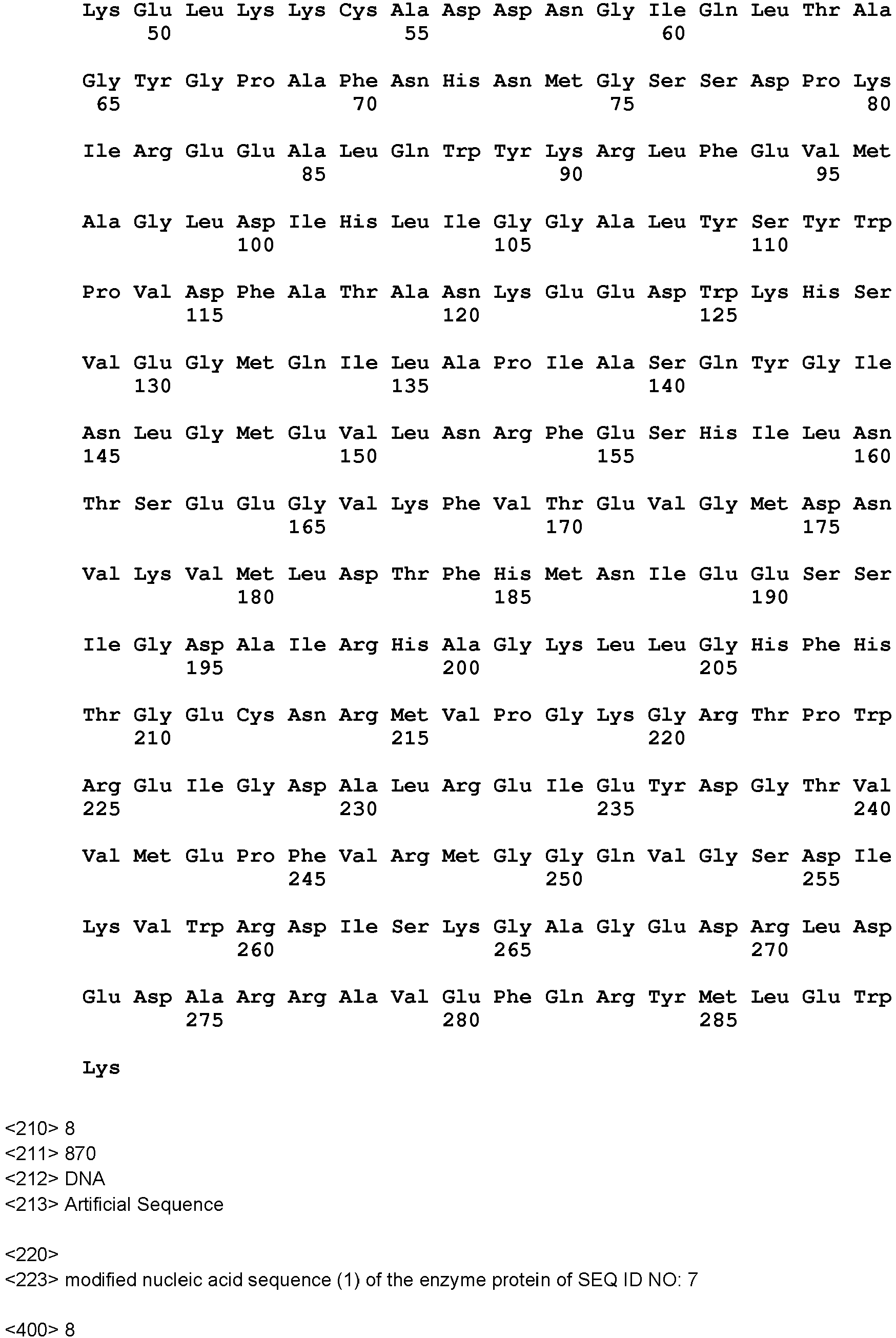
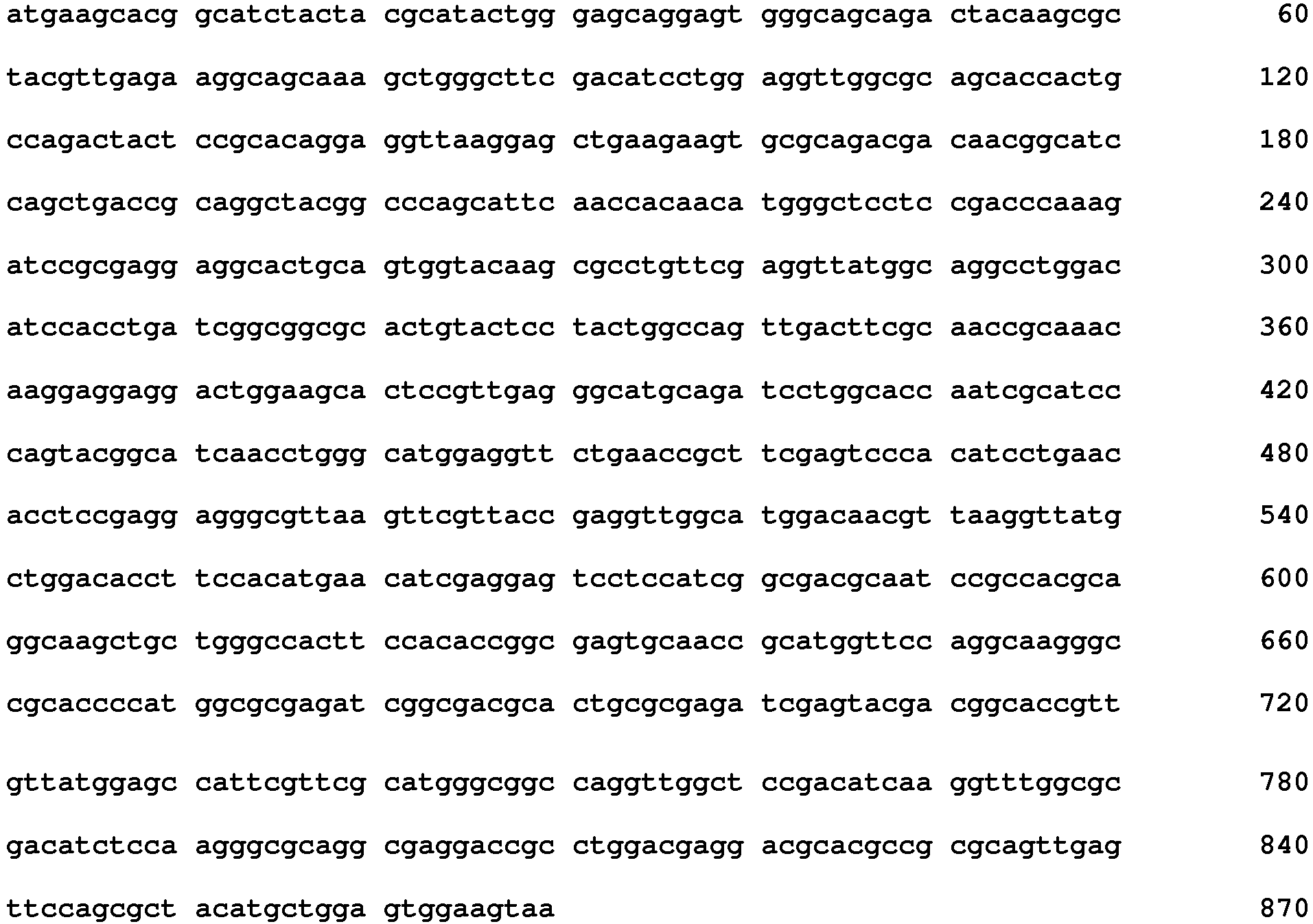
- a psicose epimerase may be an enzyme derived from Clostridium scindens, and for example, may comprise an amino acid sequence of SEQ ID NO: 7, and may be encoded by a base sequence comprising a nucleic acid sequence of SEQ ID NO: 8 or SEQ ID NO: 9.
- the nucleic acid sequence of SEQ ID NO: 8 is E. coli optimized nucleic acid sequence
- SEQ ID NO: 9 is a nucleic acid sequence modified appropriately for Corynebacterium.
- expression of an enzyme can be regulated using a regulatory sequence positioned on the top of the nucleic acid sequence encoding psicose epimerase, and the regulatory sequence essentially comprises a transcriptional promoter, and it may further comprise a ribosome-binding region and/or a spacer sequence.
- the elements constituting the regulatory sequence may be directly linked or linked by including one or more linkers of a nucleic acid sequence having 1 to 100 bases, for example, 5 to 80 bases.
- the transcriptional promoter may be a nucleic acid molecule expressing a nucleic acid sequence encoding a psicose epimerase in a Corynebacterium sp. strain, but may be tac1, tac2, trc, sod promoter.
- the sod promoter is derived from Corynebacterium glutaricum, and preferably comprises the nucleic acid sequence of SEQ ID NO: 1 as a core region.
- the trc promoter is an E. coli-derived promoter and is prepared by the combination of trp promoter and lac UV5 promoter.
- the tac1 promoter is an E. coli-derived promoter and is prepared by the combination of trp promoter and lac UV5 promoter.
- the tac2 promoter is an E. coli-derived promoter and is prepared by the combination of trp promoter and lac UV5 promoter, and is an optimized form by modifying the sequence of Tac 1 promoter.
- the ribosome binding region and spacer may be chemically linked directly or indirectly linked by interposing a linker nucleic acid sequence in between.
- the ribosome binding region and spacer sequence may comprise one oligonucleotide sequentially linked in the 5' to 3' order.
- the nucleic acid sequences of promoter sequence, ribosome binding region and spacer sequence according to the one embodiment of the present invention is shown in the following Table 1. The bold underlined portions in Table 1 indicate ribosome binding region, spacer sequence, linker sequence, etc. in the regulatory sequence.
- the psicose epimerase according to the present disclosure is excellent in enzyme activity and thermal stability, and the combination of a transcriptional promoter or a regulatory sequence with a gene encoding a psicose epimerase, and all of tac1, tac2, trc, trip, sod promoters can provide more than adequate protein expression with the psicose epimerase used in the present disclosure, and when sod promoter is used, it is more preferable, as the result that protein folding is robust and thermal stability is high can be obtained.
- a method for producing psicose using a recombinant strain, etc. may be conducted by methods disclosed in Korean Patent Publication No. 2014-0021974 , Korean Patent Publication No. 2014-0080282 and Korean Patent No. 10-1318422 , but not particularly limited thereto.
- the concentration of fructose used as a substrate may be 40 to 100%(w/v), 40 to 75%(w/v), for example, 50 to 75%(w/v) based on the total reactants. Since when the concentration of fructose is lower than the above range, the economy is lowered, and when it is higher than the above range, the fructose is not dissolved well, the concentration of fructose is preferable within the above range.
- the fructose may be used in the form of a solution dissolved in a buffer solution or water (for example, distilled water).
- the mixed saccharide composition according to the present invention can be used as various foods, drugs or quasi-drugs, etc., since crystallization is prevented and sweetness quality is improved.
- the mixed saccharide composition containing psicose and the method for preventing crystallization thereof according to the present invention improve sweetness quality and physical properties, etc. of the saccharide mixture containing psicose, and specifically provide a stabilized mixed saccharide composition containing psicose, wherein crystal precipitation or turbidity is prevented, even under severe conditions such as low temperature as well as room temperature, presence of materials inducing crystals, or long-term storage, etc., thereby being applied to various products such as food, drugs, quasi-drugs or cosmetics, etc.
- An encoding gene of a psicose epimerase derived from Clostridiuim scindens (Clostridiuim scindens ATCC 35704) (DPE gene; Gene bank: EDS06411.1) was synthesized as a modified form of polynucleotide by optimizing for E. coli and called CDPE.
- sod promoter and T7 terminator obtained from pET21a vector were obtained as each template through PCR, and these were linked as one template by overlap PCR method and cloned into pGEM T-easy vector through T-vector cloning, thereby confirming sod promoter (SEQ ID NO: 1), optimized CDPE sequence of SEQ ID NO: 8 and a sequence of a polynucleotide comprising T7-terminator.
- the entire confirmed polynucleotide was inserted into the same restriction enzyme site of an expression vector pCES208( J. Microbiol. Biotechnol., 18:639-647, 2008 ) using restriction enzymes NotI and XbaI(NEB), and a recombinant vector pCES208/ psicose epimerase (pCES_sodCDPE) was prepared.
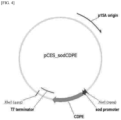
- pCES_sodCDPE The cleavage map of the prepared recombinant vector (pCES_sodCDPE) was shown in FIG. 4 .
- Corynebacterium glutaricum was transformed with the prepared recombinant vector (pCES_sodCDPE) plasmid using electroporation. Colonies were picked and inoculated in 4 ml of LB medium (tryptone 10 g/L, NaCl 10g/L, yeast extract 5g/L) supplemented with Kanamycin at a final concentration of 15ug/ml, and then cultured for approximately 16 hrs at the culture conditions of 30°C and 250rpm. Then, 1ml of the culture was collected and inoculated in 100ml LB medium comprising 15ug.ml of Kanamycin, and the culture was continued for over 16 hrs.
- LB medium tryptone 10 g/L, NaCl 10g/L, yeast extract 5g/L
- the cell suspension was treated with 0.05% (v/v) of en emulsifier (M-1695) in a final volume and treated at 35 °C ( ⁇ 5°C) for 60 minutes.
- en emulsifier M-1695
- the microbial cells in which the reaction was completed were collected after the supernatant comprising the emulsifier was removed again using a centrifuge.
- the collected microbial cells were mixed with D.W. to a final microbial cell concentration of 5% (v/v), and 4% (v/v) of alginic acid dissolved in water and 5% (v/v) of the collected microbial cells were mixed at 1:1, and it was refrigerated at 4 °C to remove bubbles generated during mixing.
- the refrigerated mixture solution was injected through Neddel (inner diameter 0.20 to 0.30mm) and formed into a droplet shape, and dropped by weight, and the dropped mixture solution was dropped into a previously prepared 100mM calcium chloride (CaCl2) solution and cured, and spherical or elliptical beads (diameter 2.0 to 2.2mm) were formed.
- the formed beads were soaked in a 100mM calcium chloride solution and mixed evenly by a stirrer so as to be further cured.
- the beads were further cured while being refrigerated for 4 to 6 hrs, and then cured for approximately 6 hrs in a refrigerated state by replacing a new 100mM calcium chloride solution. After beads completely cured were skimmed and moisture was completely removed, water was added 3 times as much as the volume of the beads and then it was stirred for 10 minutes, and the calcium chloride solution was removed by treating the beads with this process 3 times.
- the reaction substrate was adjusted to pH 6.8 to 7.2 with 3N NaOH, and liquid fructose or crystalline fructose can be the substrate depending on the kind of product.
- the beads replaced with the reaction substrate comprising 10mM manganese were transferred to a reactor, and then reacted at the reaction temperature of 50°C for approximately 30 to 60 minutes, and soaking of beads was completed with manganese and fructose.
- the beads completely soaked have a reduced diameter of approximately 1.6 to 1.8mm and its strength was also increased. After removing the substrate of beads completely soaked, they were filled in an immobilized reaction column and then used for the production of a psicose syrup.
- the psicose syrup obtained from Preparative Example 1-2 was passed through at a rate of 2 times volume of the ion exchange resin per hour in a column at the room temperature which was filled with resin in which anion exchange resin and cation and anion exchange resin were mixed and desalted, and then crystallization was proceeded by separating as a high-purity psicose solution using chromatograph which was filled with an ion exchange resin of the calcium (Ca2+) type and concentrating up to 80 % by weight.
- the dewatered solution which was not crystallized in a dewatering process through a crystallizing process but dewatered was collected as a crystallization mother liquor, and the mother liquor was 65.1 Bx and comprised fructose 8.4% by weight and psicose 91.6% by weight as a solid composition.
- Example 1 crystallization material of fructose-containing syrup (not according to the invention)
- Crystals in commercially available liquid fructose 42 (fructose 39.5% by weight and glucose 53.2% by weight) and liquid fructose 55 (fructose 54.0% by weight and glucose 37.0% by weight) syrup were collected and centrifuged at 5,000 RPM for 30 minutes, and then the supernatant was discarded and the crystalline portion was taken. To completely remove the syrup component, it was vacuum filtered using a 5 ⁇ m membrane filter while washing with ethanol. The aqueous solution passed through the filter was discarded, and then crystals remaining in the filter were dried in a 60°C oven for one day.
- a high-purity psicose syrup was prepared by mixing a crystallization mother liquor produced after crystallizing the syrup comprising 95% by weight or more psicose content and a crystallization mother liquor after crystallizing glucose through high-purity separation in Preparative Example 1 at a certain mixing ratio.
- the syrup composition prepared by mixing various mixing ratios was prepared.
- the syrup composition was prepared to be the glucose content of 10% by weight, 20% by weight, 30% by weight, 40% by weight, or 50% by weight, respectively, and a concentrated syrup solution was prepared by concentrating to be 75Bx.
- the glucose crystallization mother liquor product was obtained by after forming glucose crystals (anhydrous crystals or hydrocrystals) by crystallizing glucose original solution for preparation of glucose, filtering products and collecting glucose crystals.
- the obtained hydrol was 65.3 Bx and comprised disaccharide or more 8.7% by weight and glucose 91.3% by weight as the solid composition.
- a crystallization acceleration test was conducted by preparing a concentrated syrup solution by mixing the psicose crystallization mother liquor and the glucose crystallization mother liquor in substantially the same manner as in Example 1.
- the composition of the high-purity psicose syrup was as same as Table 5.
- the result of observing the presence or absence of crystal precipitation (turbidity) was evaluated according to the same standard with Example 2 and shown in Table 6, Table 7 and FIG. 2 .
- the following Table 5 exhibited the solid composition of the psicose crystallization mother liquor and the glucose crystallization mother liquor composition.
- Example 3 In order to demonstrate that the quality of products was maintained when stored for a long time in case that the glucose content was 24% by weight or lower shown in the result of Example 3, a syrup composition was prepared in which the glucose concentration was subdivided as same as Example 3 and was subjected to long-term storage crystallization test.
Landscapes
- Life Sciences & Earth Sciences (AREA)
- Health & Medical Sciences (AREA)
- Chemical & Material Sciences (AREA)
- Engineering & Computer Science (AREA)
- Nutrition Science (AREA)
- Food Science & Technology (AREA)
- Polymers & Plastics (AREA)
- Proteomics, Peptides & Aminoacids (AREA)
- Molecular Biology (AREA)
- Public Health (AREA)
- General Health & Medical Sciences (AREA)
- Animal Behavior & Ethology (AREA)
- Veterinary Medicine (AREA)
- Epidemiology (AREA)
- General Chemical & Material Sciences (AREA)
- Birds (AREA)
- Biochemistry (AREA)
- Chemical Kinetics & Catalysis (AREA)
- Dermatology (AREA)
- Oil, Petroleum & Natural Gas (AREA)
- Medicinal Chemistry (AREA)
- Pharmacology & Pharmacy (AREA)
- Seasonings (AREA)
- Preparation Of Compounds By Using Micro-Organisms (AREA)
- Enzymes And Modification Thereof (AREA)
- Saccharide Compounds (AREA)
- Jellies, Jams, And Syrups (AREA)
Description
- The present invention relates to a mixed saccharide composition containing psicose with improved sweetness quality and crystallization, and a method for preventing crystallization of a mixed saccharide composition containing a psicose, as defined in the appended claims.
- Sugar is mainly composed of sucrose and is one of the representative sweeteners that add sweetness to food. Sugar has excellent sweetness, and it has been regarded as the most preferable sweetener which improves taste of food and stimulates an appetite by being added to various foods, processed foods, etc. from the past.
- However, recently, problems have been raised as the harmfulness of sugar continues to be revealed. Specifically, excessive intake of sugar is pointed out as a major cause of various kinds of lifestyle diseases such as obesity, diabetes as well as cavities etc., and therefore, there is a need to develop a sweetener that can replace it.
- Accordingly, there is a continuous need to develop a more improved substitute sweetener, which has sweetness enough to replace sugar and is low in calorie, and moreover, is not a sweetener that prevents excessive intake of sugar by merely inhibiting absorption of saccharides.
- Psicose is an epimer of fructose (D-fructose) and is one kind of functional saccharides known as a rare saccharide, and it has been known to have an effect on prevention and improvement of diabetes, since it has sweetness of 70% of sugar and almost zero calorie. In addition, psicose is known to have excellent solubility, and it is one of materials where utilization for food is attracting attention.
- However, if psicose is used alone and utilized as a sweetener for food addition, as not only psicose has relatively lower sweetness degree than sugar but also its sweetness quality is different from that of sugar, there will be problems that adversely affect consumer preference since it is difficult to satisfy taste of consumers who are accustomed to sweetness of the conventional sugar.
- Therefore, there have been attempts to improve sweetness degree and/or sweetness quality by adding various kinds of monosaccharides, disaccharides, or high-sweetness degree sweeteners, etc. However, in case of saccharide mixture, there are problems such as turbidity, crystallization, or degradation of sweetness quality, etc. depending on sugar composition, and it is necessary to solve that, and particularly, the more the amount of other saccharides is increased, the worse the physical properties may be. Thus, there is a need to provide a mixed saccharide composition with improved sweetness quality and physical properties, etc. of a saccharide mixture containing psicose.
-
WO2014/066711 relates to a sweetener syrup comprising glucose and containing little or no fructose, wherein the syrup contains an amount of stabilizer which can be a monosaccharide like psicose, which is effective in inhibiting crystallization of the syrup. - An object of the present invention is to provide a mixed saccharide composition containing psicose with improved sweetness degree and sweetness quality.
- Another object of the present invention is to provide a mixed saccharide composition containing psicose, which prevents or delays crystal precipitation or turbidity development of the mixed saccharide composition containing psicose, and a stabilized mixed saccharide composition containing psicose, wherein crystal precipitation or turbidity is not developed even under severe conditions such as low temperature as well as room temperature, presence of materials inducing crystals, or long-term storage, etc.
- Another object which does not form part of the present invention and is disclosed for illustration purpose only is to provide food, drugs or quasi-drugs containing the mixed saccharide composition containing psicose.
- Still further object of the present invention is to provide a method for preventing production of a saccharide crystal of the mixed saccharide composition, by adjusting the glucose content in the saccharide composition containing psicose, fructose and glucose at a specific compositional range.
- The present invention relates to a mixed saccharide composition with improved sweetness quality and physical properties of a saccharide mixture containing psicose and a method for preventing production of a saccharide crystal of a mixed saccharide composition containing psicose, as defined in the appended claims.
- Specifically, the present invention relates to a non-crystallization mixed saccaride composition with improved sweetness quality, wherein the glucose content is 1 part by weight or more and 24 parts by weight or lower, based on 100 parts by weight of solid content of the total saccharides contained in the mixed saccharide composition containing psicose, glucose and fructose, as defined in claim 1.
- It is possible to improve sweetness quality of psicose in the mixed saccharide composition, and prevent turbidity and crystallization of mixed saccharide solution at the same time.
- The mixed saccharide composition according to the present invention includes glucose at an amount of 1 part by weight or more and 24 parts by weight or lower, or 23.5 parts by weight or lower, 23.28 parts by weight or lower, 20 parts by weight or lower, 18 parts by weight or lower, 15 parts by weight or lower, 10 parts by weight or lower, or 5 parts by weight or lower, based on 100 parts by weight of solid content of the total saccharides contained in the mixed saccharide composition.
- In addition, based on 100 parts by weight of the solid content of the total saccharides contained in the mixed saccharide composition , the glucose content is 24 parts by weight or lower, or 23.5 parts by weight or lower, 23.28 parts by weight or lower, 20 parts by weight or lower, 18 parts by weight or lower, 15 parts by weight or lower, 10 parts by weight or lower, or 5 parts by weight or lower, and the lower limit is 1 part by weight or more, and thus, it is 1 to 24 parts by weight, or, for example, 1 to 23.28 parts by weight, 1 to 23.5 parts by weight, 1 to 20 parts by weight, 1 to 18 parts by weight, 1 to 15 parts by weight, 1 to 10 parts by weight, 1 to 5 parts by weight. Crystallization or turbidity of the mixed saccharide composition containing glucose, psicose and fructose can be prevented by adjusting the glucose content of the mixed saccharide composition.
- The mixed saccharide composition may contain only glucose, psicose and fructose, or may further contain one or more saccharide selected from the group consisting of monosaccharides other than glucose, psicose and fructose, disaccharides and oligosaccharides.
- In addition, based on 100 parts by weight of the total solid content of glucose, psicose and fructose contained in the mixed saccharide composition, the fructose content is lower than 25 parts by weight, or lower than 20 parts by weight, lower than 15 parts by weight, lower than 10 parts by weight, or lower than 5 parts by weight. The sweetness quality of the mixed saccharide composition containing psicose can also be improved by adjusting the fructose content.
- The mixed saccharide composition according to the present invention has the fructose content of 25 parts by weight or lower and the total content of fructose and psicose of over 70 parts by weight, based on 100 parts by weight of the total solid content of glucose, psicose and fructose contained in the mixed saccharide composition. In addition, a mixed saccharide composition wherein the glucose content is 24 parts by weight or lower and the fructose content is 15 parts by weight or lower, and the psicose content is 60 parts by weight or more, based on 100 parts by weight of the total solid content of glucose, psicose and fructose contained in the mixed saccharide composition can be provided.
- In the mixed saccharide composition according to the present invention, it is preferable that the psicose, glucose or fructose is D-psicose, D-glucose or D-fructose, respectively.
- The mixed saccharide composition according to the present invention is low in calorie as containing psicose, and improves sweetness quality as containing glucose and fructose, and the mixed saccharide composition in which crystal formation and turbidity are prevented is provided. The mixed saccharide composition according to the present invention is non-crystallization saccharide mixture, and for example, it may be one in which a saccharide crystal is not precipitated under the condition of storage at -20°C to 38°C for 1 year.
- In addition, the mixed saccharide composition according to the present disclosure may be saccharide mixture syrup which is prepared by reacting a composition for producing psicose containing at least one selected from the group consisting of a psicose epimerase, a microbial cell of strain producing the epimerase, a culture of the strain, a lysate of the strain, and an extract of the lysate or culture, with a fructose-containing raw material or one prepared by using thereof. In addition, the mixed saccharide composition may be prepared by mixing psicose, glucose and fructose respectively with the mixed saccharide composition and it may be prepared by mixing a psicose crystallization mother liquor and a glucose crystallization mother liquor.
- In case of preparing the mixed saccharide composition using a crystallization mother liquor, for example, it may be prepared by mixing a psicose crystallization mother liquor having a psicose content of 80 % by weight or higher and a glucose crystallization mother liquor having a glucose content of 80 % by weight or higher.
- The psicose crystallization mother liquor has a main component of psicose, and the psicose of the total saccharide solid content may be 50% by weight or higher, for example, 60% by weight or more, 70% by weight or higher, or 80% by weight or higher, and specifically, it may contain psicose of 60 to 99.9% by weight, 70 to 99.9% by weight, or 80 to 99.9% by weight, based on the total saccharide solid content.
- In addition, the psicose crystallization mother liquor may further contain one or more kinds selected from the group consisting of various monosaccharides, disaccharides, oligosaccharides and rare saccharides. The monosaccharides include glucose and fructose, etc., and the rare saccharides may be allose, tagatose, altrose, etc.
- The glucose crystallization mother liquor has a main component of glucose, and the glucose of the total saccharide solid content may be 50% by weight or more, for example, 60% by weight or more, 70% by weight or more, or 80% by weight or more, and specifically, it may contain glucose of 60 to 99.9% by weight, 70 to 99.9% by weight, or 80 to 99.9% by weight, based on the total saccharide solid content.
- In addition, the glucose crystallization mother liquor may further contain one or more kinds selected from the group consisting of various monosaccharides, disaccharides and oligosaccharides.
- In the present description, a crystallization mother liquor of saccharides means a mother liquor remained after forming crystals or powders by crystallizing or powdering a targeted saccharide in an original solution for preparation containing the targeted saccharide and separating the crystals or powders, and it is called a psicose crystallization mother liquor when the targeted saccharide is psicose, and it is called a glucose crystallization mother liquor when the targeted saccharide is glucose. Commonly the glucose crystallization mother liquor is also called hydrol.
- As an example of the psicose crystallization mother liquor, D-psicose can be prepared by a method for continuously producing D-psicose from fructose, comprising converting fructose into D-psicose using a carrier in which Ensifer strain having a D-psicose epimerase is immobilized.
- D-psicose solution prepared by the method is separated into high purity by using Ca+ type separation resin and concentrated up to 80% by weight to proceed crystallization. The dewatered liquid which has been dewatered without being crystallized in the dewatering process through the crystallization process can be obtained as a psicose crystallization mother liquor.
- An example of the glucose crystallization mother liquor is a crystallization mother liquor remained after collecting glucose crystals, and commonly, the saccharides contained in the mother liquor contains 80 to 99 % by weight of glucose and 1 to 20 % by weight of disaccharides and/or oligosaccharides (for example, trisaccharides, tetrasaccharides, etc.) based on the total saccharide solid.
- The psicose of the present disclosure may be prepared by conducting a chemical synthesis method or a biological method using a psicose epimerase, and preferably it may be prepared by conducting the biological method.
- Thus, the psicose may be prepared by reacting a composition for producing psicose containing one or more kinds selected from the group consisting of a psicose epimerase, a microbial cell of strain producing the epimerase, a culture of the strain, a lysate of the strain, and an extract of the lysate or culture, with a fructose-containing raw material.
- In the present disclosure, as a method for preparing psicose according to a biological method, it may be prepared by culturing a strain producing a psicose epimerase or a recombinant strain in which a gene encoding a psicose epimerase is introduced, and reacting a psicose epimerase obtained thereby with a fructose-containing raw material. The psicose epimerase may be provided as a liquid state or a solid state using an immobilized enzyme.
- In addition, it may be prepared by obtaining a strain producing a psicose epimerase or a recombinant strain in which a gene encoding a psicose epimerase is introduced, and reacting a composition for producing psicose containing one or more kinds selected from the group consisting of a psicose epimerase, a microbial cell of strain producing the epimerase, a culture of the strain, a lysate of the strain, and an extract of the lysate or culture with a fructose-containing raw material. It may be conducted as a liquid state reaction or a solid state reaction using an immobilized microbial cell when psicose is prepared by using a microbial cell of the strain producing a psicose epimerase.
- In the present disclosure, a strain producing a psicose epimerase may be a strain which has a high stability and can produce a psicose epimerase with high yield, and the recombinant strain may use various host cells, for example, E. coli, Bacillus sp. strain, Salmonella sp. strain and Corynebacterium sp. strain, etc., but preferably it may be Corynebacterium sp. strain, which is a GRAS strain, and may be Corynebacterium glutaricum.
- In case of using a recombinant strain, a psicose epimerase can use an encoding gene of enzymes derived from various strains, and for example, it may be an enzyme derived from Treponema primitia disclosed in
Korean Patent Publication No. 2014-0021974 Korean Patent Publication No. 2014-0080282 Korean Patent No. 10-1318422 - In the present disclosure, a psicose epimerase may be an enzyme derived from Clostridium scindens, and for example, may comprise an amino acid sequence of SEQ ID NO: 7, and may be encoded by a base sequence comprising a nucleic acid sequence of SEQ ID NO: 8 or SEQ ID NO: 9. The nucleic acid sequence of SEQ ID NO: 8 is E. coli optimized nucleic acid sequence, and SEQ ID NO: 9 is a nucleic acid sequence modified appropriately for Corynebacterium.
- In the preparation of a recombinant strain according to the present disclosure, expression of an enzyme can be regulated using a regulatory sequence positioned on the top of the nucleic acid sequence encoding psicose epimerase, and the regulatory sequence essentially comprises a transcriptional promoter, and it may further comprise a ribosome-binding region and/or a spacer sequence. The elements constituting the regulatory sequence may be directly linked or linked by including one or more linkers of a nucleic acid sequence having 1 to 100 bases, for example, 5 to 80 bases.
- In the present disclosure, the transcriptional promoter may be a nucleic acid molecule expressing a nucleic acid sequence encoding a psicose epimerase in a Corynebacterium sp. strain, but may be tac1, tac2, trc, sod promoter. The sod promoter is derived from Corynebacterium glutaricum, and preferably comprises the nucleic acid sequence of SEQ ID NO: 1 as a core region. The trc promoter is an E. coli-derived promoter and is prepared by the combination of trp promoter and lac UV5 promoter. The tac1 promoter is an E. coli-derived promoter and is prepared by the combination of trp promoter and lac UV5 promoter. The tac2 promoter is an E. coli-derived promoter and is prepared by the combination of trp promoter and lac UV5 promoter, and is an optimized form by modifying the sequence of Tac 1 promoter.
- The ribosome binding region and spacer may be chemically linked directly or indirectly linked by interposing a linker nucleic acid sequence in between. In one embodiment of the present invention, the ribosome binding region and spacer sequence may comprise one oligonucleotide sequentially linked in the 5' to 3' order. The nucleic acid sequences of promoter sequence, ribosome binding region and spacer sequence according to the one embodiment of the present invention is shown in the following Table 1. The bold underlined portions in Table 1 indicate ribosome binding region, spacer sequence, linker sequence, etc. in the regulatory sequence.
[Table 1] SEQ ID NO sequence(5'→3') name 1 

Sod promoter 2 
tac1 promoter 3 
Tac2 promoter 4 tgacaattaatcatcggcctcgtataatgt trc promoter 5 gaaagga Ribosome binding region 6 ttacaaa Spacer sequence - It is preferable that the psicose epimerase according to the present disclosure is excellent in enzyme activity and thermal stability, and the combination of a transcriptional promoter or a regulatory sequence with a gene encoding a psicose epimerase, and all of tac1, tac2, trc, trip, sod promoters can provide more than adequate protein expression with the psicose epimerase used in the present disclosure, and when sod promoter is used, it is more preferable, as the result that protein folding is robust and thermal stability is high can be obtained.
- A method for producing psicose using a recombinant strain, etc. may be conducted by methods disclosed in Korean Patent Publication No.
2014-0021974 2014-0080282 10-1318422 - In the method for producing psicose, for effective production of psicose, the concentration of fructose used as a substrate may be 40 to 100%(w/v), 40 to 75%(w/v), for example, 50 to 75%(w/v) based on the total reactants. Since when the concentration of fructose is lower than the above range, the economy is lowered, and when it is higher than the above range, the fructose is not dissolved well, the concentration of fructose is preferable within the above range. The fructose may be used in the form of a solution dissolved in a buffer solution or water (for example, distilled water).
- The mixed saccharide composition according to the present invention can be used as various foods, drugs or quasi-drugs, etc., since crystallization is prevented and sweetness quality is improved.
- The mixed saccharide composition containing psicose and the method for preventing crystallization thereof according to the present invention improve sweetness quality and physical properties, etc. of the saccharide mixture containing psicose, and specifically provide a stabilized mixed saccharide composition containing psicose, wherein crystal precipitation or turbidity is prevented, even under severe conditions such as low temperature as well as room temperature, presence of materials inducing crystals, or long-term storage, etc., thereby being applied to various products such as food, drugs, quasi-drugs or cosmetics, etc.
-
-
FIG. 1 is a photograph showing the result of crystallization acceleration test by glucose concentration of high purity psicose syrup composition according to Example 2 of the present invention (the syrup solutions containing 30 to 50% glucose are not according to the invention). -
FIG. 2 is a photograph showing the result of crystallization acceleration test by glucose concentration of high purity psicose syrup composition according to Example 3 of the present invention (the syrup solutions containing 25 to 30% glucose are not according to the invention). -
FIG. 3 is a photograph showing the result of crystallization acceleration test by glucose concentration of high purity psicose syrup composition when stored for a long period of time according to Example 4 of the present invention (the syrup solutions containing 25 to 30% glucose are not according to the invention). -
FIG. 4 is a diagram showing one example of a recombinant expression vector (pCES_sodCDPE) for producing a psicose syrup according to the present disclosure. -
FIG. 5 is a graph showing the result of separating and drying crystals from liquid fructose syrup according to Example 1 of the present disclosure and analysis by HPLC. - The present invention will be described in more detail by the following examples.
- An encoding gene of a psicose epimerase derived from Clostridiuim scindens (Clostridiuim scindens ATCC 35704) (DPE gene; Gene bank: EDS06411.1) was synthesized as a modified form of polynucleotide by optimizing for E. coli and called CDPE. The polynucleotide optimized for E. coli (SEQ ID NO: 2) and sod promoter and T7 terminator obtained from pET21a vector were obtained as each template through PCR, and these were linked as one template by overlap PCR method and cloned into pGEM T-easy vector through T-vector cloning, thereby confirming sod promoter (SEQ ID NO: 1), optimized CDPE sequence of SEQ ID NO: 8 and a sequence of a polynucleotide comprising T7-terminator.
- The entire confirmed polynucleotide was inserted into the same restriction enzyme site of an expression vector pCES208(J. Microbiol. Biotechnol., 18:639-647, 2008) using restriction enzymes NotI and XbaI(NEB), and a recombinant vector pCES208/ psicose epimerase (pCES_sodCDPE) was prepared. The cleavage map of the prepared recombinant vector (pCES_sodCDPE) was shown in
FIG. 4 . - Corynebacterium glutaricum was transformed with the prepared recombinant vector (pCES_sodCDPE) plasmid using electroporation. Colonies were picked and inoculated in 4 ml of LB medium (tryptone 10 g/L, NaCl 10g/L, yeast extract 5g/L) supplemented with Kanamycin at a final concentration of 15ug/ml, and then cultured for approximately 16 hrs at the culture conditions of 30°C and 250rpm. Then, 1ml of the culture was collected and inoculated in 100ml LB medium comprising 15ug.ml of Kanamycin, and the culture was continued for over 16 hrs. After lysis of cells cultured using beadbeater, only supernatant is obtained and mixed with a sample buffer as 1:1, and then heated at 100°C for 5 minutes. The prepared samples were subjected to electrophoresis on a 12% SDS-PAGE gel (composition: running gel - 3.3 ml H2O, 4.0
ml 30% acrylamide, 2.5 ml 1.5M Tris buffer(pH 8.8), 100µ ℓ 10% SDS, 100 µℓ, 10% APS, 4 µℓ TEMED / stacking gel - 1.4 ml H2O, 0.33ml 30% acrylamide, 0.25 ml 1.0M Tris buffer(pH 6.8), 20µ ℓ 10% SDS, 20µ ℓ 10% APS, 2 µℓ TEMED) at 180V for approximately 50 minutes, and the protein expression was confirmed. After the expression of CDPE was confirmed on the SDS-PAGE gel, His-tag purification was proceeded using Ni-NTA resin for accurate measurement of expression level, and the expression rate was calculated using a calculation formula (expression rate(%) = (Purified protein(mg) / Total soluble protein(mg)) X 100). The prepared transformed Corynebacterium glutaricum produced 16.62 mg of the total water-soluble proteins and 1.74 mg of purified enzyme proteins. - In order to prepare psicose from fructose using the recombinant strain producing psicose epimerase obtained from Preparative Example 1-1, cells were collected by centrifugation in the strain culture.
- Then, the cell suspension was treated with 0.05% (v/v) of en emulsifier (M-1695) in a final volume and treated at 35 °C (±5°C) for 60 minutes. The microbial cells in which the reaction was completed were collected after the supernatant comprising the emulsifier was removed again using a centrifuge.
- For the preparation of immobilized beads, the collected microbial cells were mixed with D.W. to a final microbial cell concentration of 5% (v/v), and 4% (v/v) of alginic acid dissolved in water and 5% (v/v) of the collected microbial cells were mixed at 1:1, and it was refrigerated at 4 °C to remove bubbles generated during mixing. The refrigerated mixture solution was injected through Neddel (inner diameter 0.20 to 0.30mm) and formed into a droplet shape, and dropped by weight, and the dropped mixture solution was dropped into a previously prepared 100mM calcium chloride (CaCl2) solution and cured, and spherical or elliptical beads (diameter 2.0 to 2.2mm) were formed. The formed beads were soaked in a 100mM calcium chloride solution and mixed evenly by a stirrer so as to be further cured.
- After all the mixture solution was injected, the beads were further cured while being refrigerated for 4 to 6 hrs, and then cured for approximately 6 hrs in a refrigerated state by replacing a new 100mM calcium chloride solution. After beads completely cured were skimmed and moisture was completely removed, water was added 3 times as much as the volume of the beads and then it was stirred for 10 minutes, and the calcium chloride solution was removed by treating the beads with this process 3 times. The reaction substrate was adjusted to pH 6.8 to 7.2 with 3N NaOH, and liquid fructose or crystalline fructose can be the substrate depending on the kind of product. The beads replaced with the reaction substrate comprising 10mM manganese were transferred to a reactor, and then reacted at the reaction temperature of 50°C for approximately 30 to 60 minutes, and soaking of beads was completed with manganese and fructose. The beads completely soaked have a reduced diameter of approximately 1.6 to 1.8mm and its strength was also increased. After removing the substrate of beads completely soaked, they were filled in an immobilized reaction column and then used for the production of a psicose syrup.
-
- Reaction temperature: internal temperature of the
column jacket 50°C - Substrate flow rate: 0.5 SV (space velocity L. h-1)
- Reaction substrate: crystalline fructose 40brix, pH 6.8 to 7.2,
- Bead preparation: 2.5%(w/w) microbial cells, 2%(w/w) alginic acid mixture and 10mM Mn2+ soaking
- To the immobilized reaction column, a raw material whose raw material solution comprised 75% of solid and the fructose content was 92 parts by weight when the total solid content was 100 parts by weight was provided, thereby preparing a psicose syrup, which is a saccharide mixture of two compositions. That is, the 25(w/w)% psicose syrup having glucose:fructose:psicose:oligosaccharide=6:67:25:2 in the ratio by weight of glucose:fructose:psicose:oligosaccharide was collected from the reaction solution, and used for the following Examples.
- In order to remove impurities such as color and ion components, the psicose syrup obtained from Preparative Example 1-2 was passed through at a rate of 2 times volume of the ion exchange resin per hour in a column at the room temperature which was filled with resin in which anion exchange resin and cation and anion exchange resin were mixed and desalted, and then crystallization was proceeded by separating as a high-purity psicose solution using chromatograph which was filled with an ion exchange resin of the calcium (Ca2+) type and concentrating up to 80 % by weight. The dewatered solution which was not crystallized in a dewatering process through a crystallizing process but dewatered was collected as a crystallization mother liquor, and the mother liquor was 65.1 Bx and comprised fructose 8.4% by weight and psicose 91.6% by weight as a solid composition.
- Crystals in commercially available liquid fructose 42 (fructose 39.5% by weight and glucose 53.2% by weight) and liquid fructose 55 (fructose 54.0% by weight and glucose 37.0% by weight) syrup were collected and centrifuged at 5,000 RPM for 30 minutes, and then the supernatant was discarded and the crystalline portion was taken. To completely remove the syrup component, it was vacuum filtered using a 5µm membrane filter while washing with ethanol. The aqueous solution passed through the filter was discarded, and then crystals remaining in the filter were dried in a 60°C oven for one day.
- As the result of HPLC analysis of dried crystals, the main component of crystals was shown as glucose 80% by weight in Table 2 and
FIG. 5 . The HPLC saccharide composition analysis was detected by RI by injecting 10 µl of a water solution sample at a flow rate of 0.6 ml/min using Aminex HPX-87C column (80°C) of Biorad Company. Therefore, it was demonstrated that crystals produced in the fructose syrup were due to glucose in the syrup.[Table 2] classification tetrasaccharide or more trisaccharide disaccharide glucose fructose ethanol Sugar composition 0.5% 0.4% 1.4% 80.6% 13.1% 4.0% - A high-purity psicose syrup was prepared by mixing a crystallization mother liquor produced after crystallizing the syrup comprising 95% by weight or more psicose content and a crystallization mother liquor after crystallizing glucose through high-purity separation in Preparative Example 1 at a certain mixing ratio.
- Specifically, using the psicose crystallization mother liquor obtained in Preparative Example 1 (Samyang Genex, 65.1 Bx, solid composition: fructose 8.4% by weight, psicose 91.6 % by weight) and the glucose crystallization mother liquor (hydrol) obtained in Preparative Example 2 (Samyang Genex, 65.3 Bx, solid composition: disaccharide or more 8.7% by weight, glucose 91.3% by weight), the syrup composition prepared by mixing various mixing ratios was prepared. The syrup composition was prepared to be the glucose content of 10% by weight, 20% by weight, 30% by weight, 40% by weight, or 50% by weight, respectively, and a concentrated syrup solution was prepared by concentrating to be 75Bx.
- The glucose crystallization mother liquor product was obtained by after forming glucose crystals (anhydrous crystals or hydrocrystals) by crystallizing glucose original solution for preparation of glucose, filtering products and collecting glucose crystals. The obtained hydrol was 65.3 Bx and comprised disaccharide or more 8.7% by weight and glucose 91.3% by weight as the solid composition.
- Anhydrous crystalline glucoses (Samyang Genex) were added to the concentrated syrup solution at a solid concentration of 0.5% by weight each, and the mixture was stored at 4°C for 4 days, and the crystallization acceleration test was proceeded. The saccharide composition of the syrup solution obtained by mixing anhydrous glucose powder was shown in Table 3. Table 3 exhibited the solid composition of the psicose crystallization mother liquor and the glucose crystallization mother liquor composition of the present invention.
- The presence of absence of crystal precipitation (turbidity) was observed and evaluated according to the following standard, and the result was shown in Table 4 and
FIG. 1 .[Table 3] (the syrup solutions containing 30.0 to 50.0% glucose are not according to the invention) Mixture ratio (wt%) (Hydrol:Psicose mother liquor) disaccharides or more glucose fructose psicose 55% : 45% 4.7% 50.0% 3.7% 41.1% 44% : 56% 3.8% 40.0% 4.7% 51.6% 33% : 67% 2.8% 30.0% 5.6% 61.3% 22% : 78% 1.9% 20.0% 6.5% 71.2% 11% : 89% 1.0% 10.0% 7.4% 81.4% - The following Table 4 exhibited the crystallization acceleration test result of the psicose crystallization mother liquor and the glucose crystallization mother liquor.
-
- -: No crystal
- ±: Crystalline nuclei were produced but practical
- +: Crystals were visible but had fluidity
- ++: Crystals were precipitated and there was turbidity
- +++: Crystals were precipitated and had no fluidity
- As can be seen in Table 4 and
FIG. 1 , from the result of the glucose acceleration test, it was found that turbidity was formed when the glucose content in the syrup was 30% by weight or more, and particularly, it was confirmed that crystallization was proceeded in turbidity at the concentration of 40% by weight or more. In case that the glucose content was 20% by weight or lower, turbidity was not occurred, but in order to more specifically confirm the range of the glucose content, Example 3 was carried out by subdividing the glucose content in the range of 20 to 30% by weight. - In order to elucidate the concentration of glucose inducing crystallization of syrup composition in detail, a crystallization test was conducted by preparing a syrup composition by further subdividing the glucose concentration.
- Specifically, a crystallization acceleration test was conducted by preparing a concentrated syrup solution by mixing the psicose crystallization mother liquor and the glucose crystallization mother liquor in substantially the same manner as in Example 1. However, then, the composition of the high-purity psicose syrup was as same as Table 5. The result of observing the presence or absence of crystal precipitation (turbidity) was evaluated according to the same standard with Example 2 and shown in Table 6, Table 7 and
FIG. 2 . The following Table 5 exhibited the solid composition of the psicose crystallization mother liquor and the glucose crystallization mother liquor composition.[Table 5] (the syrup solutions containing 25.0 to 30.0% glucose are not according to the invention) Mixture ratio (wt%) (Hydrol:Psicose mother liquor) disaccharides or more glucose fructose Psicose 23% : 77% 2.1% 21.0% 6.5% 70.5% 24% : 76% 2.2% 22.0% 6.4% 69.6% 25% : 75% 2.3% 23.0% 6.3% 68.7% 27% : 73% 2.3% 24.0% 6.1% 66.9% 28% : 72% 2.4% 25.0% 6.0% 66.0% 29% : 71% 2.4% 26.0% 6.0% 65.0% 30% : 70% 2.5% 27.0% 5.9% 64.1% 31% : 69% 2.6% 28.0% 5.8% 63.2% 32% : 68% 2.7% 29.0% 5.7% 62.3% 33% : 67% 2.8% 30.0% 5.6% 61.4% - The following Tables 6 and 7 exhibited the crystallization acceleration test result of the psicose crystallization mother liquor and the glucose crystallization mother liquor composition.
[Table 6] (the syrup solution containing 25% glucose is not according to the invention) Storage time(hr) glucose 21% glucose 22 % glucose 23 % glucose 24 % glucose 25% 0h - - - - - 1h - - - - - 2h - - - - - 3h - - - - - 4h - - - - - 5h - - - - - 6h - - - - - 12h - - - - - 24h - - - - - 48h - - - - + 72h - - - - + 96h - - - - + [Table 7] (the syrup solutions containing 26 to 30% glucose are not according to the invention) Storage time(hr) glucose 26% glucose 27 % glucose 28 % glucose 29 % glucose 30% 0h - - - - - 1h - - - - - 2h - - - - + 3h - - - - + 4h - - - - + 5h - - - - + 6h - - - - + 12h - - - + + 24h + + + + + 48h + + + + + 72h + + + + + 96h + + + + ++ - As can be seen in Tables 6 and 7 and
FIG. 2 , from the result of the glucose acceleration test, it was found that turbidity was produced when the glucose content in the syrup was 25% by weight or more. In case that the glucose content was 24% by weight or lower, turbidity was not produced. - Based on the result of Example 3, since turbidity was not occurred even under a severe condition in case that the glucose content was 24% by weight or lower, the quality of products can be maintained when stored for a long time.
- In order to demonstrate that the quality of products was maintained when stored for a long time in case that the glucose content was 24% by weight or lower shown in the result of Example 3, a syrup composition was prepared in which the glucose concentration was subdivided as same as Example 3 and was subjected to long-term storage crystallization test.
- Specifically, a crystallization acceleration test was conducted by preparing a concentrated syrup solution by mixing the psicose crystallization mother liquor and the glucose crystallization mother liquor in substantially the same manner as in Example 3. Then, the composition of the high-purity psicose syrup was as same as Table 5 of Example 3. In order to observe the presence or absence of crystal precipitation (turbidity), after stored in a low temperature chamber for 96 days, it was evaluated according to the same standard with Example 2, and the result was shown in Table 8, Table 9 and
FIG. 3 .[Table 8] (the syrup solution containing 25% glucose is not according to the invention) Storage time glucose 21 % glucose 22 % glucose 23 % glucose 24 % glucose 25% 96days - - - - +++ [Table 9] (the syrup solutions containing 26 to 30% glucose are not according to the invention) Storage time glucose 26 % glucose 27 % glucose 28 % glucose 29 % glucose 30% 96days +++ +++ +++ +++ +++ - As can be seen in Table 8, Table 9 and
FIG. 3 from the result of the glucose acceleration test, it was found that turbidity was occurred, when the glucose content in the syrup was 25% by weight or more. When the glucose content was 24% by weight or lower, turbidity was not occured. - In summary, the results of Examples 2, 3 and 4, since turbidity was not occurred even under a severe condition, when the glucose content was 24% by weight or lower, the quality of products can be maintained when stored for a long time.



| Storage time(hour) | | Glucose | 20 | Glucose | 30 | Glucose | 40 | Glucose | 50% |
| 0h | - | - | - | - | - | ||||
| 1h | - | - | - | + | + | ||||
| 2h | - | - | - | + | ++ | ||||
| 3h | - | - | - | + | ++ | ||||
| 4h | - | - | + | ++ | ++ | ||||
| 5h | - | - | + | ++ | ++ | ||||
| 6h | - | - | + | ++ | ++ | ||||
| 12h | - | - | + | ++ | ++ | ||||
| 24h | - | - | + | ++ | ++ | ||||
| 48h | - | - | + | +++ | +++ | ||||
| 72h | - | - | + | +++ | +++ | ||||
| 96h | - | - | + | +++ | +++ |
Claims (4)
- A non-crystallization mixed saccharide composition with improved sweetness quality, wherein the glucose content is 1 part by weight or more and 24 parts by weight or lower, based on 100 parts by weight of the solid content of the total saccharides contained in the mixed saccharide composition containing psicose, glucose and fructose,wherein the fructose content is 25 parts by weight or lower, and the total content of fructose and psicose is higher than 70 parts by weight, based on 100 parts by weight of the total solid content of glucose, psicose and fructose contained in the mixed saccharide composition, andwherein said mixed saccharide composition is a mixed saccharide solution.
- The non-crystallization mixed saccharide composition of claim 1, wherein the psicose, glucose or fructose is D-psicose, D-glucose or D-fructose, respectively.
- A method for preventing production of a saccharide crystal in a mixed saccharide composition, by adjusting a glucose content to be 24 parts by weight or lower, based on 100 parts by weight of the solid content of all saccharides contained in the mixed saccharide composition containing psicose, glucose and fructose,wherein the fructose content is 25 parts by weight or lower, and the total content of fructose and psicose is higher than 70 parts by weight, based on 100 parts by weight of the total solid content of glucose, psicose and fructose contained in the mixed saccharide composition, andwherein said mixed saccharide composition is a mixed saccharide solution.
- The method of claim 3, wherein the adjusting a glucose content to be 24 parts by weight or lower glucose content is achieved by mixing a psicose crystallization mother liquor having a psicose content of 80 % by weight or more and a glucose crystallization mother liquor having a glucose content of 80 % by weight or more.
Applications Claiming Priority (2)
| Application Number | Priority Date | Filing Date | Title |
|---|---|---|---|
| KR1020150068296A KR101695831B1 (en) | 2015-05-15 | 2015-05-15 | Saccharide mixture containing psicose with improved sweetness quality and crystallization |
| PCT/KR2016/004473 WO2016186338A1 (en) | 2015-05-15 | 2016-04-28 | Psicose mixed sugar composition having improved sweetness quality and crystallization |
Publications (4)
| Publication Number | Publication Date |
|---|---|
| EP3295808A1 EP3295808A1 (en) | 2018-03-21 |
| EP3295808A4 EP3295808A4 (en) | 2018-12-19 |
| EP3295808B1 EP3295808B1 (en) | 2021-06-16 |
| EP3295808B2 true EP3295808B2 (en) | 2025-02-26 |
Family
ID=57320656
Family Applications (1)
| Application Number | Title | Priority Date | Filing Date |
|---|---|---|---|
| EP16796665.4A Active EP3295808B2 (en) | 2015-05-15 | 2016-04-28 | Saccharide mixture containing psicose with improved sweetness quality and crystallization |
Country Status (8)
| Country | Link |
|---|---|
| US (1) | US11202460B2 (en) |
| EP (1) | EP3295808B2 (en) |
| JP (2) | JP6835825B2 (en) |
| KR (1) | KR101695831B1 (en) |
| CN (2) | CN107809914A (en) |
| HU (1) | HUE055315T2 (en) |
| IL (1) | IL255539B (en) |
| WO (1) | WO2016186338A1 (en) |
Families Citing this family (13)
| Publication number | Priority date | Publication date | Assignee | Title |
|---|---|---|---|---|
| KR102065155B1 (en) * | 2016-12-08 | 2020-02-11 | 주식회사 삼양사 | Production of psciose |
| FR3061414B1 (en) * | 2017-01-05 | 2021-07-16 | Roquette Freres | D-ALLULOSE CRYSTALLIZABLE SYRUPS |
| FR3061415B1 (en) * | 2017-01-05 | 2021-07-16 | Roquette Freres | NON-CRYSTALLIZABLE D-ALLULOSE SYRUPS |
| KR101969040B1 (en) * | 2017-01-20 | 2019-04-15 | 대상 주식회사 | Composition comprising isomalto-oligosaccharide and manufacturing method thereof |
| KR102228522B1 (en) * | 2017-10-31 | 2021-03-17 | 씨제이제일제당 주식회사 | A choco-sauce composition comprising allulose and use thereof |
| CN113015810B (en) * | 2018-11-08 | 2024-07-05 | 国立大学法人香川大学 | Method for producing composition containing rare sugar and composition containing rare sugar |
| CN111296616A (en) * | 2020-02-18 | 2020-06-19 | 广东大鹏医药科技有限公司 | Chewing gum containing plant extract and preparation method thereof |
| KR20230019868A (en) | 2020-06-05 | 2023-02-09 | 사바나 인그리디언트 게엠베하 | Allulose Syrup |
| MX2023002740A (en) | 2020-09-07 | 2023-04-03 | Savanna Ingredients Gmbh | Extrusion process for the preparation of a solid allulose composition. |
| EP4000419A1 (en) | 2020-11-23 | 2022-05-25 | Savanna Ingredients GmbH | Drying of allulose crystals |
| KR102860681B1 (en) * | 2020-12-30 | 2025-09-16 | 주식회사 삼양사 | Allulose with improved stability |
| WO2024047121A1 (en) | 2022-09-01 | 2024-03-07 | Savanna Ingredients Gmbh | Process for the preparation of a particulate allulose composition |
| KR20240153278A (en) * | 2023-04-14 | 2024-10-22 | 연세대학교 산학협력단 | Complex rare sugar liquid formulations with significantly improved browning and shelf-life characteristics |
Family Cites Families (32)
| Publication number | Priority date | Publication date | Assignee | Title |
|---|---|---|---|---|
| JPS49124241A (en) * | 1973-04-03 | 1974-11-28 | ||
| US4455333A (en) * | 1979-12-26 | 1984-06-19 | The Procter & Gamble Company | Doughs and cookies providing storage-stable texture variability |
| ES2126627T3 (en) | 1991-08-20 | 1999-04-01 | Staley Mfg Co A E | LIQUID SWEETENER CONTAINING FRUCTOSE AND DEXTROSE. |
| EP0613613A1 (en) * | 1993-02-27 | 1994-09-07 | Amazonen-Werke H. Dreyer GmbH & Co. KG | Broadcaster |
| JP2001011690A (en) | 1999-06-25 | 2001-01-16 | Nippon Light Metal Co Ltd | Surface treated metal material and method of manufacturing the same |
| EP1860195B1 (en) | 2005-03-04 | 2018-01-03 | National University Corporation Kagawa University | Complex crystalline sugar comprising d-psicose and d-allose and process for production of the same |
| JP2008142860A (en) * | 2006-12-12 | 2008-06-26 | Mitsui Seiki Kogyo Co Ltd | Apparatus and method for correcting rotation angle of pallet table |
| WO2008142860A1 (en) | 2007-05-18 | 2008-11-27 | Matsutani Chemical Industry Co., Ltd. | Novel sweetener having sugar-like taste and production method and use of the same |
| JP4271718B1 (en) * | 2007-11-30 | 2009-06-03 | 日本食品化工株式会社 | Method for stabilized production and supply of glucose syrup and glucose mixed syrup |
| US9109266B2 (en) | 2009-03-30 | 2015-08-18 | Matsutani Chemical Industry Co., Ltd. | Process of producing sugar composition comprising D-psicose and D-allose via strong alkaline isomerization of D-glucose/D-fructose or alkaline pre-treatment of D-glucose/D-fructose followed by isomerization in the presence of a basic ion exchange resin |
| KR20110035805A (en) | 2009-09-30 | 2011-04-06 | 씨제이제일제당 (주) | Immobilization of Pseudomonas-Epimerase and Method for Producing Psychos using the Same |
| KR101159934B1 (en) * | 2009-12-30 | 2012-06-25 | 주식회사 삼양제넥스 | Stable composition for preventing of crystalizatoin or turbid of fructooligosaccharide syrup |
| KR101189640B1 (en) | 2010-03-26 | 2012-10-12 | 씨제이제일제당 (주) | How to Make D-Pycosy Crystals |
| JP2011205913A (en) | 2010-03-29 | 2011-10-20 | Kishoto Seisan Gijutsu Kenkyusho:Kk | Complex crystalline sugar of functional isomerized sugar and method for producing the same |
| JP6013712B2 (en) * | 2011-09-06 | 2016-10-25 | 合同会社希少糖食品 | Biometabolic parameter improving agent comprising D-psicose as an active ingredient |
| JP6099870B2 (en) | 2012-01-06 | 2017-03-22 | 松谷化学工業株式会社 | Novel sweetener containing sucrose and D-psicose |
| CN104769125B (en) | 2012-08-10 | 2018-10-23 | 株式会社三养社 | Psicose epimerase and using its for being changed into the composition of psicose |
| GB201303698D0 (en) * | 2012-10-26 | 2013-04-17 | Tate & Lyle Ingredients | Sweetener syrups |
| JP2014113059A (en) * | 2012-11-14 | 2014-06-26 | Matsutani Chem Ind Ltd | Method for imparting rich taste to food and drink |
| KR101475388B1 (en) * | 2012-12-14 | 2014-12-23 | 주식회사 삼양제넥스 | Method for preparation of anhydrosugar alcohols by using hydrol |
| KR20140080282A (en) | 2012-12-20 | 2014-06-30 | 주식회사 삼양제넥스 | Method for preparing psicose from fructose by using D-psicose 3-epimerase |
| JP6250946B2 (en) * | 2012-12-26 | 2017-12-20 | 松谷化学工業株式会社 | Sweetener composition, method for producing the same, and use thereof |
| GB201309079D0 (en) | 2013-03-15 | 2013-07-03 | Tate & Lyle Ingredients | Improved sweetner |
| GB201309076D0 (en) | 2013-03-15 | 2013-07-03 | Tate & Lyle Ingredients | Improved sweetener |
| CN105163603A (en) * | 2013-04-08 | 2015-12-16 | 松谷化学工业株式会社 | Sweetener composition, method for manufacturing same and use thereof |
| KR101318422B1 (en) | 2013-04-09 | 2013-10-15 | 주식회사 삼양제넥스 | D-psicose epimerase and method for producing psicose using the same |
| CN103333935A (en) | 2013-05-24 | 2013-10-02 | 桐乡晟泰生物科技有限公司 | Production technology of D-psicose |
| CA2931320A1 (en) | 2013-11-22 | 2015-05-28 | Tate & Lyle Ingredients Americas Llc | Food and beverage products comprising allulose (psicose) |
| JP6115959B2 (en) | 2013-12-11 | 2017-04-19 | 株式会社フィルテック | Fluid heat exchange device |
| AU2013408190A1 (en) | 2013-12-20 | 2016-07-07 | Roquette Freres | Protein food product comprising D-allulose |
| AU2016225278B2 (en) | 2015-02-24 | 2020-03-12 | Tate & Lyle Solutions Usa Llc | Allulose syrups |
| KR101617379B1 (en) | 2015-05-13 | 2016-05-02 | 주식회사 삼양사 | Mixed sugar granule and method of preparing the same |
-
2015
- 2015-05-15 KR KR1020150068296A patent/KR101695831B1/en active Active
-
2016
- 2016-04-28 CN CN201680028081.3A patent/CN107809914A/en active Pending
- 2016-04-28 HU HUE16796665A patent/HUE055315T2/en unknown
- 2016-04-28 CN CN202511153634.5A patent/CN121003289A/en active Pending
- 2016-04-28 EP EP16796665.4A patent/EP3295808B2/en active Active
- 2016-04-28 WO PCT/KR2016/004473 patent/WO2016186338A1/en not_active Ceased
- 2016-04-28 US US15/567,462 patent/US11202460B2/en active Active
- 2016-04-28 JP JP2018509718A patent/JP6835825B2/en active Active
-
2017
- 2017-11-08 IL IL255539A patent/IL255539B/en active IP Right Grant
-
2019
- 2019-09-19 JP JP2019170663A patent/JP2020010710A/en active Pending
Also Published As
| Publication number | Publication date |
|---|---|
| HUE055315T2 (en) | 2021-11-29 |
| CN107809914A (en) | 2018-03-16 |
| EP3295808A1 (en) | 2018-03-21 |
| KR101695831B1 (en) | 2017-01-12 |
| IL255539A (en) | 2018-01-31 |
| KR20160134362A (en) | 2016-11-23 |
| IL255539B (en) | 2020-09-30 |
| EP3295808A4 (en) | 2018-12-19 |
| JP6835825B2 (en) | 2021-02-24 |
| WO2016186338A8 (en) | 2017-02-09 |
| JP2020010710A (en) | 2020-01-23 |
| EP3295808B1 (en) | 2021-06-16 |
| JP2018514232A (en) | 2018-06-07 |
| WO2016186338A1 (en) | 2016-11-24 |
| US20180255814A1 (en) | 2018-09-13 |
| US11202460B2 (en) | 2021-12-21 |
| CN121003289A (en) | 2025-11-25 |
Similar Documents
| Publication | Publication Date | Title |
|---|---|---|
| EP3295808B2 (en) | Saccharide mixture containing psicose with improved sweetness quality and crystallization | |
| EP3378943B1 (en) | Method for producing psicose from fructose-containing substrate | |
| EP3006568B1 (en) | Production method for tagatose | |
| BR112012007215B1 (en) | Immobilization of psychosis-epimerase and a method for producing d-psychosis using it | |
| EP3395952B1 (en) | Composition for producing d-psicose comprising d-psicose 3-epimerase and salt and method for producing d-psicose using same | |
| US11352653B2 (en) | Enzymatic method for preparing rebaudioside N | |
| KR20160143076A (en) | Hard candy having low calory, good sweetness and formability | |
| US11976312B2 (en) | Enzymatic method for preparing Rebaudioside C | |
| CN115279778A (en) | 2' -FL crystals | |
| KR20190002364A (en) | Synthesis method of rubusoside-fructoside using levansucrase | |
| JP2002017391A (en) | Mass production of difructose dianhydride IV | |
| JP2003512045A (en) | Enzymatic production of difructose dianhydride IV from sucrose and related enzymes and the genes encoding it |
Legal Events
| Date | Code | Title | Description |
|---|---|---|---|
| STAA | Information on the status of an ep patent application or granted ep patent |
Free format text: STATUS: THE INTERNATIONAL PUBLICATION HAS BEEN MADE |
|
| TPAC | Observations filed by third parties |
Free format text: ORIGINAL CODE: EPIDOSNTIPA |
|
| PUAI | Public reference made under article 153(3) epc to a published international application that has entered the european phase |
Free format text: ORIGINAL CODE: 0009012 |
|
| STAA | Information on the status of an ep patent application or granted ep patent |
Free format text: STATUS: REQUEST FOR EXAMINATION WAS MADE |
|
| 17P | Request for examination filed |
Effective date: 20171025 |
|
| AK | Designated contracting states |
Kind code of ref document: A1 Designated state(s): AL AT BE BG CH CY CZ DE DK EE ES FI FR GB GR HR HU IE IS IT LI LT LU LV MC MK MT NL NO PL PT RO RS SE SI SK SM TR |
|
| AX | Request for extension of the european patent |
Extension state: BA ME |
|
| DAV | Request for validation of the european patent (deleted) | ||
| DAX | Request for extension of the european patent (deleted) | ||
| RIC1 | Information provided on ipc code assigned before grant |
Ipc: A23L 27/30 20160101AFI20181107BHEP Ipc: A23L 29/30 20160101ALI20181107BHEP |
|
| A4 | Supplementary search report drawn up and despatched |
Effective date: 20181115 |
|
| STAA | Information on the status of an ep patent application or granted ep patent |
Free format text: STATUS: EXAMINATION IS IN PROGRESS |
|
| 17Q | First examination report despatched |
Effective date: 20200727 |
|
| GRAP | Despatch of communication of intention to grant a patent |
Free format text: ORIGINAL CODE: EPIDOSNIGR1 |
|
| STAA | Information on the status of an ep patent application or granted ep patent |
Free format text: STATUS: GRANT OF PATENT IS INTENDED |
|
| INTG | Intention to grant announced |
Effective date: 20210115 |
|
| GRAS | Grant fee paid |
Free format text: ORIGINAL CODE: EPIDOSNIGR3 |
|
| GRAA | (expected) grant |
Free format text: ORIGINAL CODE: 0009210 |
|
| STAA | Information on the status of an ep patent application or granted ep patent |
Free format text: STATUS: THE PATENT HAS BEEN GRANTED |
|
| AK | Designated contracting states |
Kind code of ref document: B1 Designated state(s): AL AT BE BG CH CY CZ DE DK EE ES FI FR GB GR HR HU IE IS IT LI LT LU LV MC MK MT NL NO PL PT RO RS SE SI SK SM TR |
|
| REG | Reference to a national code |
Ref country code: GB Ref legal event code: FG4D |
|
| REG | Reference to a national code |
Ref country code: CH Ref legal event code: EP |
|
| REG | Reference to a national code |
Ref country code: DE Ref legal event code: R096 Ref document number: 602016059438 Country of ref document: DE |
|
| REG | Reference to a national code |
Ref country code: AT Ref legal event code: REF Ref document number: 1401567 Country of ref document: AT Kind code of ref document: T Effective date: 20210715 |
|
| REG | Reference to a national code |
Ref country code: IE Ref legal event code: FG4D |
|
| REG | Reference to a national code |
Ref country code: NL Ref legal event code: FP |
|
| REG | Reference to a national code |
Ref country code: LT Ref legal event code: MG9D |
|
| PG25 | Lapsed in a contracting state [announced via postgrant information from national office to epo] |
Ref country code: HR Free format text: LAPSE BECAUSE OF FAILURE TO SUBMIT A TRANSLATION OF THE DESCRIPTION OR TO PAY THE FEE WITHIN THE PRESCRIBED TIME-LIMIT Effective date: 20210616 Ref country code: BG Free format text: LAPSE BECAUSE OF FAILURE TO SUBMIT A TRANSLATION OF THE DESCRIPTION OR TO PAY THE FEE WITHIN THE PRESCRIBED TIME-LIMIT Effective date: 20210916 Ref country code: LT Free format text: LAPSE BECAUSE OF FAILURE TO SUBMIT A TRANSLATION OF THE DESCRIPTION OR TO PAY THE FEE WITHIN THE PRESCRIBED TIME-LIMIT Effective date: 20210616 Ref country code: FI Free format text: LAPSE BECAUSE OF FAILURE TO SUBMIT A TRANSLATION OF THE DESCRIPTION OR TO PAY THE FEE WITHIN THE PRESCRIBED TIME-LIMIT Effective date: 20210616 |
|
| REG | Reference to a national code |
Ref country code: AT Ref legal event code: MK05 Ref document number: 1401567 Country of ref document: AT Kind code of ref document: T Effective date: 20210616 |
|
| REG | Reference to a national code |
Ref country code: HU Ref legal event code: AG4A Ref document number: E055315 Country of ref document: HU |
|
| PG25 | Lapsed in a contracting state [announced via postgrant information from national office to epo] |
Ref country code: GR Free format text: LAPSE BECAUSE OF FAILURE TO SUBMIT A TRANSLATION OF THE DESCRIPTION OR TO PAY THE FEE WITHIN THE PRESCRIBED TIME-LIMIT Effective date: 20210917 Ref country code: LV Free format text: LAPSE BECAUSE OF FAILURE TO SUBMIT A TRANSLATION OF THE DESCRIPTION OR TO PAY THE FEE WITHIN THE PRESCRIBED TIME-LIMIT Effective date: 20210616 Ref country code: NO Free format text: LAPSE BECAUSE OF FAILURE TO SUBMIT A TRANSLATION OF THE DESCRIPTION OR TO PAY THE FEE WITHIN THE PRESCRIBED TIME-LIMIT Effective date: 20210916 Ref country code: RS Free format text: LAPSE BECAUSE OF FAILURE TO SUBMIT A TRANSLATION OF THE DESCRIPTION OR TO PAY THE FEE WITHIN THE PRESCRIBED TIME-LIMIT Effective date: 20210616 Ref country code: SE Free format text: LAPSE BECAUSE OF FAILURE TO SUBMIT A TRANSLATION OF THE DESCRIPTION OR TO PAY THE FEE WITHIN THE PRESCRIBED TIME-LIMIT Effective date: 20210616 |
|
| PG25 | Lapsed in a contracting state [announced via postgrant information from national office to epo] |
Ref country code: SK Free format text: LAPSE BECAUSE OF FAILURE TO SUBMIT A TRANSLATION OF THE DESCRIPTION OR TO PAY THE FEE WITHIN THE PRESCRIBED TIME-LIMIT Effective date: 20210616 Ref country code: SM Free format text: LAPSE BECAUSE OF FAILURE TO SUBMIT A TRANSLATION OF THE DESCRIPTION OR TO PAY THE FEE WITHIN THE PRESCRIBED TIME-LIMIT Effective date: 20210616 Ref country code: EE Free format text: LAPSE BECAUSE OF FAILURE TO SUBMIT A TRANSLATION OF THE DESCRIPTION OR TO PAY THE FEE WITHIN THE PRESCRIBED TIME-LIMIT Effective date: 20210616 Ref country code: CZ Free format text: LAPSE BECAUSE OF FAILURE TO SUBMIT A TRANSLATION OF THE DESCRIPTION OR TO PAY THE FEE WITHIN THE PRESCRIBED TIME-LIMIT Effective date: 20210616 Ref country code: AT Free format text: LAPSE BECAUSE OF FAILURE TO SUBMIT A TRANSLATION OF THE DESCRIPTION OR TO PAY THE FEE WITHIN THE PRESCRIBED TIME-LIMIT Effective date: 20210616 Ref country code: RO Free format text: LAPSE BECAUSE OF FAILURE TO SUBMIT A TRANSLATION OF THE DESCRIPTION OR TO PAY THE FEE WITHIN THE PRESCRIBED TIME-LIMIT Effective date: 20210616 Ref country code: PT Free format text: LAPSE BECAUSE OF FAILURE TO SUBMIT A TRANSLATION OF THE DESCRIPTION OR TO PAY THE FEE WITHIN THE PRESCRIBED TIME-LIMIT Effective date: 20211018 Ref country code: ES Free format text: LAPSE BECAUSE OF FAILURE TO SUBMIT A TRANSLATION OF THE DESCRIPTION OR TO PAY THE FEE WITHIN THE PRESCRIBED TIME-LIMIT Effective date: 20210616 |
|
| PG25 | Lapsed in a contracting state [announced via postgrant information from national office to epo] |
Ref country code: PL Free format text: LAPSE BECAUSE OF FAILURE TO SUBMIT A TRANSLATION OF THE DESCRIPTION OR TO PAY THE FEE WITHIN THE PRESCRIBED TIME-LIMIT Effective date: 20210616 |
|
| REG | Reference to a national code |
Ref country code: DE Ref legal event code: R026 Ref document number: 602016059438 Country of ref document: DE |
|
| PLBI | Opposition filed |
Free format text: ORIGINAL CODE: 0009260 |
|
| PLAX | Notice of opposition and request to file observation + time limit sent |
Free format text: ORIGINAL CODE: EPIDOSNOBS2 |
|
| 26 | Opposition filed |
Opponent name: SAVANNA INGREDIENTS GMBH Effective date: 20220316 |
|
| PG25 | Lapsed in a contracting state [announced via postgrant information from national office to epo] |
Ref country code: DK Free format text: LAPSE BECAUSE OF FAILURE TO SUBMIT A TRANSLATION OF THE DESCRIPTION OR TO PAY THE FEE WITHIN THE PRESCRIBED TIME-LIMIT Effective date: 20210616 |
|
| PG25 | Lapsed in a contracting state [announced via postgrant information from national office to epo] |
Ref country code: AL Free format text: LAPSE BECAUSE OF FAILURE TO SUBMIT A TRANSLATION OF THE DESCRIPTION OR TO PAY THE FEE WITHIN THE PRESCRIBED TIME-LIMIT Effective date: 20210616 |
|
| PLBB | Reply of patent proprietor to notice(s) of opposition received |
Free format text: ORIGINAL CODE: EPIDOSNOBS3 |
|
| PG25 | Lapsed in a contracting state [announced via postgrant information from national office to epo] |
Ref country code: MC Free format text: LAPSE BECAUSE OF FAILURE TO SUBMIT A TRANSLATION OF THE DESCRIPTION OR TO PAY THE FEE WITHIN THE PRESCRIBED TIME-LIMIT Effective date: 20210616 Ref country code: LU Free format text: LAPSE BECAUSE OF NON-PAYMENT OF DUE FEES Effective date: 20220428 |
|
| PLBP | Opposition withdrawn |
Free format text: ORIGINAL CODE: 0009264 |
|
| P01 | Opt-out of the competence of the unified patent court (upc) registered |
Effective date: 20230602 |
|
| PG25 | Lapsed in a contracting state [announced via postgrant information from national office to epo] |
Ref country code: MK Free format text: LAPSE BECAUSE OF FAILURE TO SUBMIT A TRANSLATION OF THE DESCRIPTION OR TO PAY THE FEE WITHIN THE PRESCRIBED TIME-LIMIT Effective date: 20210616 Ref country code: CY Free format text: LAPSE BECAUSE OF FAILURE TO SUBMIT A TRANSLATION OF THE DESCRIPTION OR TO PAY THE FEE WITHIN THE PRESCRIBED TIME-LIMIT Effective date: 20210616 |
|
| PG25 | Lapsed in a contracting state [announced via postgrant information from national office to epo] |
Ref country code: MT Free format text: LAPSE BECAUSE OF FAILURE TO SUBMIT A TRANSLATION OF THE DESCRIPTION OR TO PAY THE FEE WITHIN THE PRESCRIBED TIME-LIMIT Effective date: 20210616 |
|
| PUAH | Patent maintained in amended form |
Free format text: ORIGINAL CODE: 0009272 |
|
| STAA | Information on the status of an ep patent application or granted ep patent |
Free format text: STATUS: PATENT MAINTAINED AS AMENDED |
|
| 27A | Patent maintained in amended form |
Effective date: 20250226 |
|
| AK | Designated contracting states |
Kind code of ref document: B2 Designated state(s): AL AT BE BG CH CY CZ DE DK EE ES FI FR GB GR HR HU IE IS IT LI LT LU LV MC MK MT NL NO PL PT RO RS SE SI SK SM TR |
|
| REG | Reference to a national code |
Ref country code: DE Ref legal event code: R102 Ref document number: 602016059438 Country of ref document: DE |
|
| PGFP | Annual fee paid to national office [announced via postgrant information from national office to epo] |
Ref country code: NL Payment date: 20250305 Year of fee payment: 10 |
|
| PGFP | Annual fee paid to national office [announced via postgrant information from national office to epo] |
Ref country code: IE Payment date: 20250320 Year of fee payment: 10 |
|
| REG | Reference to a national code |
Ref country code: NL Ref legal event code: FP |
|
| PGFP | Annual fee paid to national office [announced via postgrant information from national office to epo] |
Ref country code: BE Payment date: 20250305 Year of fee payment: 10 |
|
| PGFP | Annual fee paid to national office [announced via postgrant information from national office to epo] |
Ref country code: FR Payment date: 20250307 Year of fee payment: 10 |
|
| PGFP | Annual fee paid to national office [announced via postgrant information from national office to epo] |
Ref country code: IT Payment date: 20250306 Year of fee payment: 10 Ref country code: GB Payment date: 20250306 Year of fee payment: 10 |
|
| PGFP | Annual fee paid to national office [announced via postgrant information from national office to epo] |
Ref country code: TR Payment date: 20250306 Year of fee payment: 10 |
|
| PGFP | Annual fee paid to national office [announced via postgrant information from national office to epo] |
Ref country code: DE Payment date: 20250305 Year of fee payment: 10 |
|
| PGFP | Annual fee paid to national office [announced via postgrant information from national office to epo] |
Ref country code: HU Payment date: 20250425 Year of fee payment: 10 |
|
| PGFP | Annual fee paid to national office [announced via postgrant information from national office to epo] |
Ref country code: CH Payment date: 20250501 Year of fee payment: 10 |