EP3295742B1 - Narrowband definition for enhanced machine type communication - Google Patents
Narrowband definition for enhanced machine type communication Download PDFInfo
- Publication number
- EP3295742B1 EP3295742B1 EP16711756.3A EP16711756A EP3295742B1 EP 3295742 B1 EP3295742 B1 EP 3295742B1 EP 16711756 A EP16711756 A EP 16711756A EP 3295742 B1 EP3295742 B1 EP 3295742B1
- Authority
- EP
- European Patent Office
- Prior art keywords
- narrowband
- narrowband regions
- region
- regions
- identifying
- Prior art date
- Legal status (The legal status is an assumption and is not a legal conclusion. Google has not performed a legal analysis and makes no representation as to the accuracy of the status listed.)
- Active
Links
Images


Classifications
-
- H—ELECTRICITY
- H04—ELECTRIC COMMUNICATION TECHNIQUE
- H04W—WIRELESS COMMUNICATION NETWORKS
- H04W72/00—Local resource management
- H04W72/04—Wireless resource allocation
- H04W72/044—Wireless resource allocation based on the type of the allocated resource
- H04W72/0453—Resources in frequency domain, e.g. a carrier in FDMA
-
- H—ELECTRICITY
- H04—ELECTRIC COMMUNICATION TECHNIQUE
- H04B—TRANSMISSION
- H04B1/00—Details of transmission systems, not covered by a single one of groups H04B3/00 - H04B13/00; Details of transmission systems not characterised by the medium used for transmission
- H04B1/69—Spread spectrum techniques
- H04B1/713—Spread spectrum techniques using frequency hopping
-
- H—ELECTRICITY
- H04—ELECTRIC COMMUNICATION TECHNIQUE
- H04L—TRANSMISSION OF DIGITAL INFORMATION, e.g. TELEGRAPHIC COMMUNICATION
- H04L5/00—Arrangements affording multiple use of the transmission path
- H04L5/0001—Arrangements for dividing the transmission path
- H04L5/0003—Two-dimensional division
- H04L5/0005—Time-frequency
- H04L5/0007—Time-frequency the frequencies being orthogonal, e.g. OFDM(A) or DMT
- H04L5/0012—Hopping in multicarrier systems
-
- H—ELECTRICITY
- H04—ELECTRIC COMMUNICATION TECHNIQUE
- H04L—TRANSMISSION OF DIGITAL INFORMATION, e.g. TELEGRAPHIC COMMUNICATION
- H04L5/00—Arrangements affording multiple use of the transmission path
- H04L5/0091—Signalling for the administration of the divided path, e.g. signalling of configuration information
- H04L5/0092—Indication of how the channel is divided
-
- H—ELECTRICITY
- H04—ELECTRIC COMMUNICATION TECHNIQUE
- H04W—WIRELESS COMMUNICATION NETWORKS
- H04W4/00—Services specially adapted for wireless communication networks; Facilities therefor
- H04W4/70—Services for machine-to-machine communication [M2M] or machine type communication [MTC]
-
- H—ELECTRICITY
- H04—ELECTRIC COMMUNICATION TECHNIQUE
- H04W—WIRELESS COMMUNICATION NETWORKS
- H04W72/00—Local resource management
- H04W72/04—Wireless resource allocation
- H04W72/044—Wireless resource allocation based on the type of the allocated resource
- H04W72/0457—Variable allocation of band or rate
-
- H—ELECTRICITY
- H04—ELECTRIC COMMUNICATION TECHNIQUE
- H04B—TRANSMISSION
- H04B1/00—Details of transmission systems, not covered by a single one of groups H04B3/00 - H04B13/00; Details of transmission systems not characterised by the medium used for transmission
- H04B1/69—Spread spectrum techniques
- H04B1/713—Spread spectrum techniques using frequency hopping
- H04B1/7156—Arrangements for sequence synchronisation
Definitions
- Certain aspects of the present disclosure generally relate to wireless communications and, more particularly, to narrowband definitions for enhanced machine type communication(s) (eMTC).
- eMTC enhanced machine type communication
- Wireless communication systems are widely deployed to provide various types of communication content such as voice, data, and so on. These systems may be multiple-access systems capable of supporting communication with multiple users by sharing the available system resources (e.g., bandwidth and transmit power). Examples of such multiple-access systems include code division multiple access (CDMA) systems, time division multiple access (TDMA) systems, frequency division multiple access (FDMA) systems, 3rd Generation Partnership Project (3GPP) Long Term Evolution (LTE)/LTE-Advanced systems and orthogonal frequency division multiple access (OFDMA) systems.
- CDMA code division multiple access
- TDMA time division multiple access
- FDMA frequency division multiple access
- 3GPP 3rd Generation Partnership Project
- LTE Long Term Evolution
- LTE-Advanced systems orthogonal frequency division multiple access
- a wireless multiple-access communication system can simultaneously support communication for multiple wireless terminals.
- Each terminal communicates with one or more base stations via transmissions on the forward and reverse links.
- the forward link (or downlink) refers to the communication link from the base stations to the terminals
- the reverse link (or uplink) refers to the communication link from the terminals to the base stations.
- This communication link may be established via a single-input single-output, multiple-input single-output or a multiple-input multiple-output (MIMO) system.
- MIMO multiple-input multiple-output
- a wireless communication network may include a number of base stations that can support communication for a number of wireless devices.
- Wireless devices may include user equipments (UEs).
- UEs user equipments
- Some UEs may be considered enhanced or evolved machine-type communication (eMTC) UEs that may communicate with a base station, another device (e.g., remote device), or some other entity.
- MTC may refer to communication involving at least one remote device on at least one end of the communication and may include forms of data communication which involve one or more entities that do not necessarily need human interaction.
- MTC UEs may include UEs that are capable of MTC communications with MTC servers and/or other MTC devices through Public Land Mobile Networks (PLMN), for example.
- PLMN Public Land Mobile Networks
- 3GPP TSG RAN WG1 Meeting #80bis Rl-151207 by Ericsson describes grouping of physical resource blocks (PRB) with a central subchannel.
- PRB physical resource blocks
- 3GPP TSG RAN WG1 Meeting #80 R1-150286 by NEC describes frequency hopping schemes for LTE where the frequency hopping is performed on a subframe by subframe level or on every M subframes.
- the invention is defined by the appended independent claims and further embodiments are described by the dependent claims. Any reference to inventions or embodiments not falling within the scope of the independent claims are to be interpreted as examples useful for understanding the invention.
- Certain aspects of the present disclosure provide a method, performed by a wireless device.
- the method generally includes identifying one or more narrowband regions within a wider system bandwidth, based on an amount of available resources in the system bandwidth, wherein the identifying comprises determining the one or more narrowband regions according to a hopping pattern, wherein the hopping pattern is based on at least an indication of an initial narrowband region, and communicating using at least one of the identified narrowband regions.
- the apparatus generally includes means for identifying one or more narrowband regions within a wider system bandwidth, based on an amount of available resources in the system bandwidth, and means for communicating using at least one of the identified narrowband regions.
- the one or more aspects comprise the features hereinafter fully described and particularly pointed out in the claims.
- the following description and the annexed drawings set forth in detail certain illustrative features of the one or more aspects. These features are indicative, however, of but a few of the various ways in which the principles of various aspects may be employed, and this description is intended to include all such aspects and their equivalents
- aspects of the present disclosure provide techniques that may be used to define narrowband regions for enhanced machine type communication (eMTC), performed by a wireless device.
- eMTC enhanced machine type communication
- a CDMA network may implement a radio technology such as universal terrestrial radio access (UTRA), cdma2000, etc.
- UTRA includes wideband CDMA (WCDMA), time division synchronous CDMA (TD-SCDMA), and other variants of CDMA.
- cdma2000 covers IS-2000, IS-95 and IS-856 standards.
- a TDMA network may implement a radio technology such as global system for mobile communications (GSM).
- GSM global system for mobile communications
- An OFDMA network may implement a radio technology such as evolved UTRA (E-UTRA), ultra mobile broadband (UMB), IEEE 802.11 (Wi-Fi), IEEE 802.16 (WiMAX), IEEE 802.20, Flash-OFDM®, etc.
- E-UTRA evolved UTRA
- UMB ultra mobile broadband
- IEEE 802.11 Wi-Fi
- WiMAX IEEE 802.16
- Flash-OFDM® Flash-OFDM®
- UTRA and E-UTRA are part of universal mobile telecommunication system (UMTS).
- 3GPP Long Term Evolution (LTE) and LTE-Advanced (LTE-A), in both frequency division duplex (FDD) and time division duplex (TDD), are new releases of UMTS that use E-UTRA, which employs OFDMA on the downlink and SC-FDMA on the uplink.
- LTE Long Term Evolution
- LTE-A LTE-Advanced
- FDD frequency division duplex
- TDD time division duplex
- LTE and LTE-A are referred to generally as LTE.
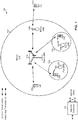
- FIG. 1 illustrates an example wireless communication network 100, in which aspects of the present disclosure may be practiced.
- techniques presented herein may be used to help define narrowband regions for enhanced machine type communication (eMTC), performed by a wireless device.
- eMTC enhanced machine type communication
- the network 100 may be an LTE network or some other wireless network.
- Wireless network 100 may include a number of evolved Node Bs (eNBs) 110 and other network entities.
- An eNB is an entity that communicates with user equipments (UEs) and may also be referred to as a base station, a Node B, an access point, etc.
- UEs user equipments
- Each eNB may provide communication coverage for a particular geographic area.
- the term "cell" can refer to a coverage area of an eNB and/or an eNB subsystem serving this coverage area, depending on the context in which the term is used.
- An eNB for a pico cell may be referred to as a pico eNB.
- An eNB for a femto cell may be referred to as a femto eNB or a home eNB (HeNB).
- HeNB home eNB
- an eNB 110a may be a macro eNB for a macro cell 102a
- an eNB 110b may be a pico eNB for a pico cell 102b
- an eNB 110c may be a femto eNB for a femto cell 102c.
- An eNB may support one or multiple (e.g., three) cells.
- the terms "eNB", “base station” and “cell” may be used interchangeably herein.
- Wireless network 100 may also include relay stations.
- a relay station is an entity that can receive a transmission of data from an upstream station (e.g., an eNB or a UE) and send a transmission of the data to a downstream station (e.g., a UE or an eNB).
- a relay station may also be a UE that can relay transmissions for other UEs.
- a relay station 110d may communicate with macro eNB 110a and a UE 120d in order to facilitate communication between eNB 110a and UE 120d.
- a relay station may also be referred to as a relay eNB, a relay base station, a relay, etc.
- a network controller 130 may couple to a set of eNBs and may provide coordination and control for these eNBs.
- Network controller 130 may communicate with the eNBs via a backhaul.
- the eNBs may also communicate with one another, e.g., directly or indirectly via a wireless or wireline backhaul.
- UEs 120 may be dispersed throughout wireless network 100, and each UE may be stationary or mobile.
- a UE may also be referred to as an access terminal, a terminal, a mobile station, a subscriber unit, a station, etc.
- UEs may include cellular phones, smart phones, personal digital assistants (PDAs), wireless modems, handheld devices, tablets, laptop computers, netbooks, smartbooks, ultrabooks, entertainment devices (e.g., gaming devices, music players), navigation devices, cameras, wearable devices (e.g., smart watches, smart clothing, smart glasses, smart goggles, heads-up display devices, smart wrist bands, smart jewelry (e.g., smart ring, smart bracelet)), medical devices, healthcare devices, vehicular devices, etc.
- PDAs personal digital assistants
- MTC UEs may include sensors, meters, monitors, security devices, location tags, robots/robotic devices, drones, etc.
- Some MTC UEs, and other UEs may be implemented as internet of things (IoT) (e.g., narrowband IoT (NB-IoT)) or internet of everything (IoE) devices.
- IoT internet of things
- NB-IoT narrowband IoT
- IoE internet of everything
- FIG. 1 a solid line with double arrows indicates desired transmissions between a UE and a serving eNB, which is an eNB designated to serve the UE on the downlink and/or uplink.
- a dashed line with double arrows indicates potentially interfering transmissions between a UE and an eNB.
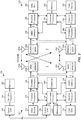
- a transmit processor 220 may receive data from a data source 212 for one or more UEs, select one or more modulation and coding schemes (MCS) for each UE based on CQIs received from the UE, process (e.g., encode and modulate) the data for each UE based on the MCS(s) selected for the UE, and provide data symbols for all UEs. Transmit processor 220 may also process system information (e.g., for SRPI, etc.) and control information (e.g., CQI requests, grants, upper layer signaling, etc.) and provide overhead symbols and control symbols.
- MCS modulation and coding schemes
- Each modulator 232 may further process (e.g., convert to analog, amplify, filter, and upconvert) the output sample stream to obtain a downlink signal.
- T downlink signals from modulators 232a through 232t may be transmitted via T antennas 234a through 234t, respectively.
- a receive processor 258 may process (e.g., demodulate and decode) the detected symbols, provide decoded data for UE 120 to a data sink 260, and provide decoded control information and system information to a controller/processor 280.
- a channel processor may determine RSRP, RSSI, RSRQ, CQI, etc.
- a transmit processor 264 may receive and process data from a data source 262 and control information (e.g., for reports comprising RSRP, RSSI, RSRQ, CQI, etc.) from controller/processor 280. Processor 264 may also generate reference symbols for one or more reference signals. The symbols from transmit processor 264 may be precoded by a TX MIMO processor 266 if applicable, further processed by modulators 254a through 254r (e.g., for SC-FDM, OFDM, etc.), and transmitted to base station 110.
- control information e.g., for reports comprising RSRP, RSSI, RSRQ, CQI, etc.
- Processor 264 may also generate reference symbols for one or more reference signals.
- the symbols from transmit processor 264 may be precoded by a TX MIMO processor 266 if applicable, further processed by modulators 254a through 254r (e.g., for SC-FDM, OFDM, etc.), and transmitted to base station 110.
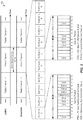
- an eNB may transmit a primary synchronization signal (PSS) and a secondary synchronization signal (SSS) on the downlink in the center of the system bandwidth for each cell supported by the eNB.
- PSS and SSS may be transmitted in symbol periods 6 and 5, respectively, in subframes 0 and 5 of each radio frame with the normal cyclic prefix, as shown in FIG. 3 .
- the PSS and SSS may be used by UEs for cell search and acquisition.
- the eNB may transmit a cell-specific reference signal (CRS) across the system bandwidth for each cell supported by the eNB.
- the CRS may be transmitted in certain symbol periods of each subframe and may be used by the UEs to perform channel estimation, channel quality measurement, and/or other functions.
- the eNB may also transmit a physical broadcast channel (PBCH) in symbol periods 0 to 3 in slot 1 of certain radio frames.
- PBCH physical broadcast channel
- the PBCH may carry some system information.
- the eNB may transmit other system information such as system information blocks (SIBs) on a physical downlink shared channel (PDSCH) in certain subframes.
- SIBs system information blocks
- PDSCH physical downlink shared channel
- the eNB may transmit control information/data on a physical downlink control channel (PDCCH) in the first B symbol periods of a subframe, where B may be configurable for each subframe.
- the eNB may transmit traffic data and/or other data on the PDSCH in the remaining symbol periods of each subframe.
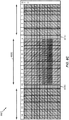
- FIG. 4 shows two exemplary subframe formats 410 and 420 with the normal cyclic prefix.
- the available time frequency resources may be partitioned into resource blocks.
- Each resource block may cover 12 subcarriers in one slot and may include a number of resource elements.
- Each resource element may cover one subcarrier in one symbol period and may be used to send one modulation symbol, which may be a real or complex value.
- Subframe format 410 may be used for two antennas.
- a CRS may be transmitted from antennas 0 and 1 in symbol periods 0, 4, 7 and 11.
- a reference signal is a signal that is known a priori by a transmitter and a receiver and may also be referred to as pilot.
- a CRS is a reference signal that is specific for a cell, e.g., generated based on a cell identity (ID).
- ID cell identity
- FIG. 4 for a given resource element with label Ra, a modulation symbol may be transmitted on that resource element from antenna a, and no modulation symbols may be transmitted on that resource element from other antennas.
- Subframe format 420 may be used with four antennas.
- a CRS may be transmitted from antennas 0 and 1 in symbol periods 0, 4, 7 and 11 and from antennas 2 and 3 in symbol periods 1 and 8.
- a CRS may be transmitted on evenly spaced subcarriers, which may be determined based on cell ID. CRSs may be transmitted on the same or different subcarriers, depending on their cell IDs.
- resource elements not used for the CRS may be used to transmit data (e.g., traffic data, control data, and/or other data).
- E-UTRA Evolved Universal Terrestrial Radio Access
- An interlace structure may be used for each of the downlink and uplink for FDD in LTE.
- Q interlaces with indices of 0 through Q - 1 may be defined, where Q may be equal to 4, 6, 8, 10, or some other value.
- Each interlace may include subframes that are spaced apart by Q frames.
- interlace q may include subframes q, q + Q, q + 2Q, etc., where q ⁇ ⁇ 0,..., Q - 1 ⁇ .
- the wireless network may support hybrid automatic retransmission request (HARQ) for data transmission on the downlink and uplink.
- HARQ hybrid automatic retransmission request
- a transmitter e.g., an eNB
- a receiver e.g., a UE
- all transmissions of the packet may be sent in subframes of a single interlace.
- each transmission of the packet may be sent in any subframe.
- a UE may be located within the coverage of multiple eNBs. One of these eNBs may be selected to serve the UE. The serving eNB may be selected based on various criteria such as received signal strength, received signal quality, pathloss, etc. Received signal quality may be quantified by a signal-to-noise-and-interference ratio (SINR), or a reference signal received quality (RSRQ), or some other metric.
- SINR signal-to-noise-and-interference ratio
- RSRQ reference signal received quality
- the UE may operate in a dominant interference scenario in which the UE may observe high interference from one or more interfering eNBs.
- UEs e.g., eMTC UEs
- narrowbands and hopping pattern for use with eMTC.
- LTE long term evolution
- DL and UL link budgets are designed for coverage of high end devices, such as state-of-the-art smartphones and tablets, which may support a relatively large DL and UL link budget.
- LTE Release 12 LTE Release 12
- a category 0 UE a new type of UE
- MTC machine type communications
- peak rate e.g., a maximum of 100 bits for a transport block size
- transmit power may be reduced
- Rank 1 transmission may be used
- half duplex operation may be performed.
- MTC UEs may have a relaxed switching time to transition from transmitting to receiving (or receiving to transmitting). For example, the switching time may be relaxed from 20 ⁇ s for regular UEs to 1ms for MTC UEs.
- Release 12 MTC UEs may still monitor downlink (DL) control channels in the same way as regular UEs, for example, monitoring for wideband control channels in the first few symbols (e.g., PDCCH) as well as narrowband control channels occupying a relatively narrowband, but spanning a length of a subframe (e.g., ePDCCH).
- DL downlink
- eMTC may provide MTC UEs with coverage enhancements up to 15dB.
- eMTC UEs can support narrowband operation while operating in a wider system bandwidth (e.g., 1.4/3/5/10/15/20MHz).
- a conventional legacy control region 510 may span system bandwidth of a first few symbols, while a narrowband region 530 occupies a portion of a larger region 520 of the system bandwidth.
- an MTC UE monitoring the narrowband region may operate at 1.4MHz or 6 resource blocks (RBs).
- eMTC UEs may be able to operate in a cell with a bandwidth larger than 6 RBs. Within this larger bandwidth, each eMTC UE may still operate (e.g., monitor/receive/transmit) while abiding by a 6-physical resource block (PRB) constraint.
- PRB 6-physical resource block
- different eMTC UEs may be served by different narrowband regions (e.g., with each spanning 6-PRB blocks) within the system bandwidth. As the system bandwidth may span from 1.4 to 20 MHz, or from 6 to 100 RBs, multiple narrowband regions may exist within the larger bandwidth.
- An eMTC UE may also switch or hop between multiple narrowband regions in order to reduce interference.
- narrowband regions should be defined such that all or almost all RBs are grouped into a narrowband region with as few empty RBs as possible.
- the number of PRBs within a given bandwidth is not a multiple of six.
- a narrowband region of 6 RBs operates at 1.4 MHz, while system bandwidths may be 1.4, 3, 5, 10, 15, and 20MHz, corresponding to 6, 15, 25, 50, 75, and 100 RBs, only one of which is a multiple of 6.
- a 5 MHz bandwidth cell has 15 PRBs available, which equals 2.5 narrowband regions.
- the system bandwidth cannot be evenly split into narrowband regions. It may be advantageous to define narrowband regions such as to minimize the number of RBs that are not grouped into narrowband regions.
- FIG. 6 is a flow diagram illustrating example operations 600 for wireless communications by a wireless device, in accordance with certain aspects of the present disclosure.
- the wireless device may be, for example, an eNB to communicate with UEs over narrowband regions, or a UE to communicate with eNBs over narrowband regions.
- the operations may begin, at 602, by identifying one or more narrowband regions within a wider system bandwidth, based on an amount of available resources in the system bandwidth.
- the operations include communicating using at least one of the identified narrowband regions.
- FIG. 7 illustrates an exemplary resource block configuration 700 for eMTC operations, in accordance with certain aspects of the present disclosure.
- the center 6 RBs may be used for PSS/SSS and/or paging.
- the central 6 RBs may not be aligned with physical resource blocks.
- the center 6 RBs 702 for a 3MHz bandwidth are resource blocks 5-9 and half of resource block 4 and half of resource block 10.
- an eMTC tuned to the narrowband region for synchronization purposes would not need to retune to receive paging transmissions, potentially resulting in energy savings.
- FIG. 8A illustrates an example narrowband region definition 800A, in accordance with certain aspects of the present disclosure.
- a narrowband region, 802A may be defined based on the center 6 RB. Where the number of available RBs is not even and center 6 RBs are not aligned with the wideband RB boundaries, narrowband region 802A may also not be aligned with the wideband RB boundaries.
- narrowband (NB) region 802A may be defined as extending from RB 4.5 to RB 10.5. Alternatively, the center 6 RB region may be rounded up one RB to 7 RBs.
- Wideband and eMTC devices may continue to monitor only the center 6 RBs for paging, but also by extending the region .5 RB above and below the center 6 RB, for example, extending from RB 4 to RB 11.
- Groups of 6 RBs from the wideband edges may then be defined as narrowband regions, in this case, NB region 804A and NB region 806A, until the entire wideband bandwidth is divided into narrowband regions. Where the total wideband bandwidth is not divisible evenly into 6 RB regions, overlap between the narrowband regions will occur.
- NB region 804A and NB region 806A would both overlap with NB region 802A. This results in a total number of narrowband regions equal to the ceiling of the number of resource blocks divided by 6, or ceil(nRB/6).
- narrowband regions it may be desirable to have non-overlapping narrowband regions.
- the total number of RBs is not a multiple of six, it is not possible to divide the total number of RBs into fixed sized narrowband regions such that each wideband RB is used.
- using smaller sized narrowband regions in conjunction with the 6 RB narrowband region would allow for each wideband RB to be used. For example, where the center 6 RBs have been rounded up to 7 to align with the wideband RB boundaries, narrowband regions may be selected in groups of 6 RBs inward from each edge.
- FIGs. 8B illustrate example narrowband region definition 800B, in accordance with certain aspects of the present disclosure.
- the narrowband regions directly adjacent to NB region 802B, rather than overlapping the NB region 802B, are reduced in size.
- NB region 804B and NB region 806B are 4 RBs rather than 6 RBs. Such an arrangement would place the smaller narrowband regions next to the NB region 802B.
- NB regions may be selected in groups of 6 RBs outward from the NB region 802B. Such an arrangement would place the smaller narrowband regions next to the edges of the wideband bandwidth. As seen in FIG.
- the narrowband mapping may be different for uplink and downlink.
- some systems use the center 6 RB for PSS/SSS/PBCH and/or paging.
- no such requirements may exist on the uplink.
- downlink narrowband regions may be aligned based on the center 6 RBs.
- uplink narrowband regions may also be defined such that there are smaller narrowband regions along the edges of the wideband bandwidth reserved for PUCCH.
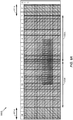
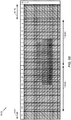
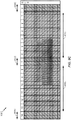
- FIGs. 9A-9C illustrate example narrowband region definitions 900A-900C, respectively, in accordance with certain aspects of the present disclosure.
- the smaller narrowband regions may be defined such that the total number of resource blocks divided by 6 (e.g., mod(nRB, 6)) are allocated at the bandwidth edges for the smaller narrowband regions.
- These RBs may be allocated equally between the edges such that the individual sizes of the smaller RBs equals, e.g., (mod(nRB, 6))/2.
- Narrowband regions of 6 RBs may then be allocated between the edges. For example, for a 3MHz, 15 RB wideband bandwidth in FIG.
- mod(15, 6) yields 3 RBs, which are split into two 1.5 RB narrowband regions NB region 902A and NB region 904A along the edge of the wideband bandwidth.
- the remaining RBs between the edges may then be equally allocated into 6 RB narrowband regions, as shown in NB region 906A and NB region 908A.
- equally dividing RBs along the edges into narrowband regions may result in fractional RB allocations, as in NB region 902A and NB region 904A, as well as narrowband regions that may not be aligned with the wideband RBs, such as NB region 906A and NB region 908A in RB 7..
- the RB distribution into narrowband regions may be asymmetrical.
- the asymmetrical distribution may allow the narrowband regions to be aligned with the wideband RBs where there is an odd number of wideband RBs.
- one of the smaller narrowband regions may be rounded down (NB region 902B), here to one RB, and the other smaller narrowband region rounded up (NB region 904B), here two RBs. This rounding allows the narrowband edges to be aligned with the wideband RB edges.
- Other narrowband regions, such as NB region 906B and NB region 908B may also be adjusted to be aligned with the wideband RB edges.
- both smaller narrowband regions may be rounded down.
- both NB region 902C and NB region 904C are rounded down to 1 RB each. Additional narrowband regions, e.g., NB region 906C and NB region 908C, between the edges may then be defined. A remaining RB in the center RB may then be defined as an additional smaller narrowband region NB region 910C, such that smaller narrowband regions are defined both at the edge and in the center of the wideband bandwidth.
- LTE includes hopping between frequencies in a particular pattern to improve transmission diversity.
- This hopping pattern may be signaled to eMTC devices explicitly in the scheduling grant.
- the flexibility offered by explicit signaling may be outweighed by the additional power usage to monitor for the signaling.
- signaling may be simplified by basing the hopping pattern on the initial narrowband region used for communications. This hopping may be performed within a pair of narrowband regions, or based on a fixed pattern.
- narrowband pairs may be, for example, ⁇ 0,5 ⁇ , ⁇ 1,6 ⁇ , ⁇ 2,7 ⁇ , and ⁇ 3,8 ⁇ .
- Hopping behavior may be defined such that hopping may be performed from one member of the narrowband pair to the other member of the narrowband pair. The specific hopping behavior then is based on the narrowband region initially identified for communications. That is, where a particular wireless device receives an indication that it is to use narrowband region 0 initially for communications, the wireless device would know to next hop to narrowband region 5 for the next communication, without any other additional signaling. This initial indication may be derived from SIB, MIB, or other types of signaling.
- frequency hopping patterns may be further defined such that, for example, the initially identified narrowband region used for downlink is associated with a narrowband region hopping for the uplink, and vice versa. For example, again for a 10 MHz bandwidth, where a particular wireless device receives an indication that it is to use narrowband region 0 initially for downlink, the wireless device would know to next hop to an associated uplink narrowband region 5 for sending a response. Likewise, receiving a DL grant on a particular narrowband region may indicate to the wireless device to hop to an associated downlink narrowband region to receive the downlink transmission. Similarly, an UL grant on a particular narrowband region may indicate to the wireless device to hop to an associated uplink narrowband region to transmit. Similarly, a random access uplink transmission on a particular narrowband region may indicate to the wireless device to hop to an associated downlink narrowband region to receive the random access response.
- a phrase referring to "at least one of' a list of items refers to any combination of those items, including single members.
- "at least one of: a, b, or c” is intended to cover: a, b, c, a-b, a-c, b-c, and a-b-c, as well as any combination with multiples of the same element (e.g., a-a, a-a-a, a-a-b, a-a-c, a-b-b, a- c-c, b-b, b-b-b, b-b-c, c-c, and c-c-c or any other ordering of a, b, and c ).
- identifying encompasses a wide variety of actions. For example, “identifying” may include calculating, computing, processing, deriving, investigating, looking up (e.g., looking up in a table, a database or another data structure), ascertaining and the like. Also, “identifying” may include receiving (e.g., receiving information), accessing (e.g., accessing data in a memory) and the like. Also, “identifying” may include resolving, selecting, choosing, establishing and the like.
- a device may have an interface to communicate a frame for transmission or reception.
- a processor may output a frame, via a bus interface, to an RF front end for transmission.
- a device may have an interface to obtain a frame received from another device.
- a processor may obtain (or receive) a frame, via a bus interface, from an RF front end for transmission.
- the methods disclosed herein comprise one or more steps or actions for achieving the described method.
- the method steps and/or actions may be interchanged with one another without departing from the scope of the claims.
- the order and/or use of specific steps and/or actions may be modified without departing from the scope of the claims.
- the various operations of methods described above may be performed by any suitable means capable of performing the corresponding functions.
- the means may include various hardware and/or software component(s) and/or module(s), including, but not limited to a circuit, an application specific integrated circuit (ASIC), or processor.
- Software shall be construed broadly to mean instructions, data, code, or any combination thereof, whether referred to as software, firmware, middleware, code, microcode, hardware description language, machine language, or otherwise. Generally, where there are operations illustrated in figures, those operations may have corresponding counterpart means-plus-function components.
- the various operations of methods described above may be performed by any suitable means capable of performing the corresponding functions.
- the means may include various hardware and/or software component(s) and/or module(s), including, but not limited to a circuit, an application specific integrated circuit (ASIC), or processor.
- ASIC application specific integrated circuit
- those operations may be performed by any suitable corresponding counterpart means-plus-function components.
- means for identifying and/or means for communicating may include one or more processors or other elements, such as the transmit processor 220, the controller/processor 240, the receive processor 238, and/or antenna(s) 234 of the base station 110 illustrated in FIG. 2 or the transmit processor 264, the controller/processor 280, the receive processor 258, and/or antenna(s) 252 of the user equipment 120 illustrated in FIG. 2 .
- DSP digital signal processor
- ASIC application specific integrated circuit
- FPGA field programmable gate array
- a general-purpose processor may be a microprocessor, but in the alternative, the processor may be any conventional processor, controller, microcontroller, or state machine.
- a processor may also be implemented as a combination of computing devices, e.g., a combination of a DSP and a microprocessor, a plurality of microprocessors, one or more microprocessors in conjunction with a DSP core, or any other such configuration.
- the functions described may be implemented in hardware, software, or combinations thereof. If implemented in software, the functions may be stored on or transmitted over as one or more instructions or code on a computer-readable medium.
- Computer-readable media includes both computer storage media and communication media including any medium that facilitates transfer of a computer program from one place to another.
- a storage media may be any available media that can be accessed by a general purpose or special purpose computer.
Landscapes
- Engineering & Computer Science (AREA)
- Signal Processing (AREA)
- Computer Networks & Wireless Communication (AREA)
- Mobile Radio Communication Systems (AREA)
- Transmitters (AREA)
Priority Applications (1)
| Application Number | Priority Date | Filing Date | Title |
|---|---|---|---|
| EP21169474.0A EP3869894A1 (en) | 2015-05-15 | 2016-03-11 | Narrowband definition for enhanced machine type communication |
Applications Claiming Priority (3)
| Application Number | Priority Date | Filing Date | Title |
|---|---|---|---|
| US201562162623P | 2015-05-15 | 2015-05-15 | |
| US15/067,029 US10506591B2 (en) | 2015-05-15 | 2016-03-10 | Narrowband definition for enhanced machine type communication |
| PCT/US2016/021936 WO2016186713A1 (en) | 2015-05-15 | 2016-03-11 | Narrowband definition for enhanced machine type communication |
Related Child Applications (1)
| Application Number | Title | Priority Date | Filing Date |
|---|---|---|---|
| EP21169474.0A Division EP3869894A1 (en) | 2015-05-15 | 2016-03-11 | Narrowband definition for enhanced machine type communication |
Publications (2)
| Publication Number | Publication Date |
|---|---|
| EP3295742A1 EP3295742A1 (en) | 2018-03-21 |
| EP3295742B1 true EP3295742B1 (en) | 2021-04-21 |
Family
ID=57276327
Family Applications (2)
| Application Number | Title | Priority Date | Filing Date |
|---|---|---|---|
| EP16711756.3A Active EP3295742B1 (en) | 2015-05-15 | 2016-03-11 | Narrowband definition for enhanced machine type communication |
| EP21169474.0A Pending EP3869894A1 (en) | 2015-05-15 | 2016-03-11 | Narrowband definition for enhanced machine type communication |
Family Applications After (1)
| Application Number | Title | Priority Date | Filing Date |
|---|---|---|---|
| EP21169474.0A Pending EP3869894A1 (en) | 2015-05-15 | 2016-03-11 | Narrowband definition for enhanced machine type communication |
Country Status (9)
| Country | Link |
|---|---|
| US (2) | US10506591B2 (enExample) |
| EP (2) | EP3295742B1 (enExample) |
| JP (2) | JP6851988B2 (enExample) |
| KR (2) | KR102711563B1 (enExample) |
| CN (2) | CN107637103B (enExample) |
| BR (1) | BR112017024449B1 (enExample) |
| CA (1) | CA2982320C (enExample) |
| ES (1) | ES2869976T3 (enExample) |
| WO (1) | WO2016186713A1 (enExample) |
Families Citing this family (15)
| Publication number | Priority date | Publication date | Assignee | Title |
|---|---|---|---|---|
| US10506591B2 (en) | 2015-05-15 | 2019-12-10 | Qualcomm Incorporated | Narrowband definition for enhanced machine type communication |
| US10098120B2 (en) * | 2016-01-19 | 2018-10-09 | Qualcomm Incorporated | Uplink grants for narrowband internet-of-things |
| CN107734561B (zh) * | 2016-08-11 | 2021-12-03 | 株式会社Kt | 用于在无线通信系统中配置无线资源的方法和装置 |
| US11589351B2 (en) * | 2016-09-30 | 2023-02-21 | Qualcomm Incorporated | Larger bandwidths and higher data rates for eMTC |
| US10856310B2 (en) * | 2017-02-03 | 2020-12-01 | Qualcomm Incorporated | Retuning in machine type communications |
| US11191095B2 (en) | 2017-02-08 | 2021-11-30 | Nokia Technologies Oy | Uplink non-orthogonal multiple access for narrowband machine type communication |
| US10588119B2 (en) | 2017-03-24 | 2020-03-10 | Qualcomm Incorporated | CRS bandwidth signaling |
| US10257682B2 (en) * | 2017-05-03 | 2019-04-09 | Blackberry Limited | Method and system for dedicated short range communication with traffic offload |
| CN115208732B (zh) | 2017-05-05 | 2025-02-25 | 苹果公司 | Nr(新无线)的rs(参考信号)序列生成和映射以及预编码器分配 |
| WO2019054757A1 (ko) * | 2017-09-12 | 2019-03-21 | 엘지전자 주식회사 | 무선 통신 시스템에서 사이드링크 통신을 수행하는 방법 및 이를 위한 장치 |
| WO2020000432A1 (en) | 2018-06-29 | 2020-01-02 | Qualcomm Incorporated | Flexible resource allocation for narrowband and wideband coexistence |
| WO2020029081A1 (en) * | 2018-08-07 | 2020-02-13 | Qualcomm Incorporated | Methods and apparatus for flexible resource allocation |
| CN113892237A (zh) * | 2019-06-05 | 2022-01-04 | 索尼集团公司 | 通信设备和方法 |
| WO2020246291A1 (ja) * | 2019-06-05 | 2020-12-10 | ソニー株式会社 | 通信装置および方法 |
| CN111901877A (zh) * | 2020-05-08 | 2020-11-06 | 中兴通讯股份有限公司 | 一种资源分配方法、设备和存储介质 |
Family Cites Families (29)
| Publication number | Priority date | Publication date | Assignee | Title |
|---|---|---|---|---|
| JP3570368B2 (ja) * | 2000-09-29 | 2004-09-29 | セイコーエプソン株式会社 | 無線通信装置 |
| RU2429571C2 (ru) * | 2006-02-08 | 2011-09-20 | Нтт Досомо, Инк. | Передающее устройство и способ передачи данных |
| US9673952B2 (en) * | 2009-04-10 | 2017-06-06 | Qualcomm Inc. | Method and apparatus for supporting user equipments on different system bandwidths |
| US9949261B2 (en) * | 2009-10-15 | 2018-04-17 | Qualcomm Incorporated | Method and apparatus for conveying resource assignment for multiple system bandwidths |
| US8885560B2 (en) | 2011-06-27 | 2014-11-11 | Telefonaktiebolaget L M Ericsson (Publ) | Cellular communication system support for limited bandwidth communication devices |
| US9232540B2 (en) | 2011-09-30 | 2016-01-05 | Qualcomm Incorporated | Random access channel design for narrow bandwidth operation in a wide bandwidth system |
| EP2761955B1 (en) | 2011-09-30 | 2017-07-26 | Interdigital Patent Holdings, Inc. | Device communication using a reduced channel bandwidth |
| KR20130037507A (ko) * | 2011-10-06 | 2013-04-16 | 삼성전자주식회사 | 다중 대역 다중 셀의 운영 방법 및 장치 |
| WO2013049962A1 (en) * | 2011-10-08 | 2013-04-11 | Huawei Technologies Co., Ltd. | Sounding reference signal transmission |
| US9596069B2 (en) * | 2011-11-04 | 2017-03-14 | Intel Corporation | Narrow bandwidth device in a broadband network |
| CN103327615B (zh) * | 2012-03-20 | 2016-04-20 | 华为技术有限公司 | 资源分配指示方法、资源分配方法及设备 |
| US9143984B2 (en) * | 2012-04-13 | 2015-09-22 | Intel Corporation | Mapping of enhanced physical downlink control channels in a wireless communication network |
| US9408014B2 (en) | 2012-04-24 | 2016-08-02 | Electronics And Telecommunications Research Institute | Data transmission method for machine type communication (MTC) and MTC apparatus |
| CN102763477B (zh) | 2012-05-11 | 2015-08-05 | 华为终端有限公司 | 资源管理的方法和装置、小带宽用户设备以及用户设备 |
| US9622230B2 (en) | 2012-05-17 | 2017-04-11 | Qualcomm Incorporated | Narrow band partitioning and efficient resource allocation for low cost user equipments |
| US9456358B2 (en) * | 2012-08-13 | 2016-09-27 | Qualcomm Incorporated | Method and apparatus for indicating active channel state information reference signal (CSI-RS) configurations |
| GB2510315B (en) | 2012-09-07 | 2017-12-06 | Sony Corp | Transmitting a sleep indication signal to a communications device in a virtual carrier narrow band control channel |
| US9265050B2 (en) * | 2012-12-27 | 2016-02-16 | Alcatel Lucent | Methods and systems for GSM spectrum refarming for LTE small cells |
| US9735942B2 (en) * | 2013-04-05 | 2017-08-15 | Qualcomm Incorporated | Physical broadcast channel (PBCH) coverage enhancements for machine type communications (MTC) |
| US10813082B2 (en) * | 2013-07-26 | 2020-10-20 | Qualcomm Incorporated | Transmission time interval (TTI) bundling for control channels in long term evolution (LTE) |
| WO2015027400A1 (zh) * | 2013-08-27 | 2015-03-05 | 华为终端有限公司 | 一种机器类型通信下行数据的传输方法及基站、用户设备 |
| CN105594134B (zh) * | 2013-11-11 | 2018-01-23 | 华为技术有限公司 | 跳频处理方法及装置 |
| US9769817B2 (en) * | 2014-08-06 | 2017-09-19 | Qualcomm Incorporated | Linked narrowband operation for MTC |
| US11057921B2 (en) * | 2014-10-01 | 2021-07-06 | Samsung Electronics Co., Ltd. | System and method for improving spectral efficiency and coverage for user equipments |
| US20160127936A1 (en) * | 2014-11-05 | 2016-05-05 | Debdeep CHATTERJEE | User equipment and methods for csi measurements with reduced bandwidth support |
| US10681676B2 (en) * | 2015-02-25 | 2020-06-09 | Qualcomm Incorporated | Narrowband management for machine type communications |
| WO2016154875A1 (en) * | 2015-03-31 | 2016-10-06 | Nec Corporation | Method and apparatus for data transmission in a wireless communication system |
| US10506591B2 (en) | 2015-05-15 | 2019-12-10 | Qualcomm Incorporated | Narrowband definition for enhanced machine type communication |
| US10693618B2 (en) * | 2015-09-28 | 2020-06-23 | Nokia Technologies Oy | Multiplexed messaging in wireless network |
-
2016
- 2016-03-10 US US15/067,029 patent/US10506591B2/en active Active
- 2016-03-11 KR KR1020177032729A patent/KR102711563B1/ko active Active
- 2016-03-11 ES ES16711756T patent/ES2869976T3/es active Active
- 2016-03-11 JP JP2017559348A patent/JP6851988B2/ja active Active
- 2016-03-11 WO PCT/US2016/021936 patent/WO2016186713A1/en not_active Ceased
- 2016-03-11 BR BR112017024449-7A patent/BR112017024449B1/pt active IP Right Grant
- 2016-03-11 EP EP16711756.3A patent/EP3295742B1/en active Active
- 2016-03-11 CN CN201680027698.3A patent/CN107637103B/zh active Active
- 2016-03-11 CA CA2982320A patent/CA2982320C/en active Active
- 2016-03-11 CN CN202110805832.0A patent/CN113453198B/zh active Active
- 2016-03-11 KR KR1020247032067A patent/KR20240148927A/ko active Pending
- 2016-03-11 EP EP21169474.0A patent/EP3869894A1/en active Pending
-
2019
- 2019-11-18 US US16/686,887 patent/US11212801B2/en active Active
-
2020
- 2020-12-04 JP JP2020201596A patent/JP7187524B2/ja active Active
Non-Patent Citations (1)
| Title |
|---|
| NEC: "Coverage enhancement for Rel-13 low complexity UEs", vol. RAN WG1, no. San Francisco, USA; 20141117 - 20141121, 17 November 2014 (2014-11-17), XP050875922, Retrieved from the Internet <URL:http://www.3gpp.org/ftp/Meetings_3GPP_SYNC/RAN1/Docs/> [retrieved on 20141117] * |
Also Published As
| Publication number | Publication date |
|---|---|
| CA2982320C (en) | 2023-09-05 |
| US20160338062A1 (en) | 2016-11-17 |
| KR102711563B1 (ko) | 2024-09-27 |
| CA2982320A1 (en) | 2016-11-24 |
| JP2018520551A (ja) | 2018-07-26 |
| BR112017024449A2 (pt) | 2018-07-24 |
| CN107637103A (zh) | 2018-01-26 |
| ES2869976T3 (es) | 2021-10-26 |
| CN113453198A (zh) | 2021-09-28 |
| CN107637103B (zh) | 2021-07-27 |
| EP3869894A1 (en) | 2021-08-25 |
| KR20240148927A (ko) | 2024-10-11 |
| US20200092884A1 (en) | 2020-03-19 |
| US11212801B2 (en) | 2021-12-28 |
| US10506591B2 (en) | 2019-12-10 |
| EP3295742A1 (en) | 2018-03-21 |
| KR20180005182A (ko) | 2018-01-15 |
| WO2016186713A1 (en) | 2016-11-24 |
| CN113453198B (zh) | 2025-03-11 |
| JP7187524B2 (ja) | 2022-12-12 |
| JP2021061601A (ja) | 2021-04-15 |
| BR112017024449B1 (pt) | 2024-04-30 |
| JP6851988B2 (ja) | 2021-03-31 |
Similar Documents
| Publication | Publication Date | Title |
|---|---|---|
| US11212801B2 (en) | Narrowband definition for enhanced machine type communication | |
| US11323994B2 (en) | Control channel design for machine type communications | |
| US10939301B2 (en) | Evolved machine type communication design for shared radio frequency spectrum operation | |
| EP3375122B1 (en) | Sounding reference signal transmissions in enhanced machine type communication | |
| EP3598795B1 (en) | Transport block size determination | |
| EP2946625B1 (en) | Enhanced control channel element (ecce) based physical downlink shared channel (pdsch) resource allocation for long-term evolution (lte) |
Legal Events
| Date | Code | Title | Description |
|---|---|---|---|
| STAA | Information on the status of an ep patent application or granted ep patent |
Free format text: STATUS: THE INTERNATIONAL PUBLICATION HAS BEEN MADE |
|
| PUAI | Public reference made under article 153(3) epc to a published international application that has entered the european phase |
Free format text: ORIGINAL CODE: 0009012 |
|
| STAA | Information on the status of an ep patent application or granted ep patent |
Free format text: STATUS: REQUEST FOR EXAMINATION WAS MADE |
|
| 17P | Request for examination filed |
Effective date: 20171012 |
|
| AK | Designated contracting states |
Kind code of ref document: A1 Designated state(s): AL AT BE BG CH CY CZ DE DK EE ES FI FR GB GR HR HU IE IS IT LI LT LU LV MC MK MT NL NO PL PT RO RS SE SI SK SM TR |
|
| AX | Request for extension of the european patent |
Extension state: BA ME |
|
| DAV | Request for validation of the european patent (deleted) | ||
| DAX | Request for extension of the european patent (deleted) | ||
| STAA | Information on the status of an ep patent application or granted ep patent |
Free format text: STATUS: EXAMINATION IS IN PROGRESS |
|
| 17Q | First examination report despatched |
Effective date: 20181203 |
|
| RIC1 | Information provided on ipc code assigned before grant |
Ipc: H04B 1/713 20110101ALI20200915BHEP Ipc: H04B 1/7156 20110101ALN20200915BHEP Ipc: H04W 4/70 20180101ALI20200915BHEP Ipc: H04W 72/04 20090101AFI20200915BHEP |
|
| GRAP | Despatch of communication of intention to grant a patent |
Free format text: ORIGINAL CODE: EPIDOSNIGR1 |
|
| STAA | Information on the status of an ep patent application or granted ep patent |
Free format text: STATUS: GRANT OF PATENT IS INTENDED |
|
| INTG | Intention to grant announced |
Effective date: 20201106 |
|
| GRAS | Grant fee paid |
Free format text: ORIGINAL CODE: EPIDOSNIGR3 |
|
| GRAA | (expected) grant |
Free format text: ORIGINAL CODE: 0009210 |
|
| STAA | Information on the status of an ep patent application or granted ep patent |
Free format text: STATUS: THE PATENT HAS BEEN GRANTED |
|
| AK | Designated contracting states |
Kind code of ref document: B1 Designated state(s): AL AT BE BG CH CY CZ DE DK EE ES FI FR GB GR HR HU IE IS IT LI LT LU LV MC MK MT NL NO PL PT RO RS SE SI SK SM TR |
|
| REG | Reference to a national code |
Ref country code: GB Ref legal event code: FG4D |
|
| REG | Reference to a national code |
Ref country code: CH Ref legal event code: EP Ref country code: CH Ref legal event code: NV Representative=s name: VALIPAT S.A. C/O BOVARD SA NEUCHATEL, CH |
|
| REG | Reference to a national code |
Ref country code: DE Ref legal event code: R096 Ref document number: 602016056427 Country of ref document: DE Ref country code: IE Ref legal event code: FG4D |
|
| REG | Reference to a national code |
Ref country code: AT Ref legal event code: REF Ref document number: 1385971 Country of ref document: AT Kind code of ref document: T Effective date: 20210515 |
|
| REG | Reference to a national code |
Ref country code: SE Ref legal event code: TRGR |
|
| REG | Reference to a national code |
Ref country code: NL Ref legal event code: FP |
|
| REG | Reference to a national code |
Ref country code: LT Ref legal event code: MG9D |
|
| REG | Reference to a national code |
Ref country code: AT Ref legal event code: MK05 Ref document number: 1385971 Country of ref document: AT Kind code of ref document: T Effective date: 20210421 |
|
| REG | Reference to a national code |
Ref country code: ES Ref legal event code: FG2A Ref document number: 2869976 Country of ref document: ES Kind code of ref document: T3 Effective date: 20211026 |
|
| PG25 | Lapsed in a contracting state [announced via postgrant information from national office to epo] |
Ref country code: FI Free format text: LAPSE BECAUSE OF FAILURE TO SUBMIT A TRANSLATION OF THE DESCRIPTION OR TO PAY THE FEE WITHIN THE PRESCRIBED TIME-LIMIT Effective date: 20210421 Ref country code: LT Free format text: LAPSE BECAUSE OF FAILURE TO SUBMIT A TRANSLATION OF THE DESCRIPTION OR TO PAY THE FEE WITHIN THE PRESCRIBED TIME-LIMIT Effective date: 20210421 Ref country code: HR Free format text: LAPSE BECAUSE OF FAILURE TO SUBMIT A TRANSLATION OF THE DESCRIPTION OR TO PAY THE FEE WITHIN THE PRESCRIBED TIME-LIMIT Effective date: 20210421 Ref country code: AT Free format text: LAPSE BECAUSE OF FAILURE TO SUBMIT A TRANSLATION OF THE DESCRIPTION OR TO PAY THE FEE WITHIN THE PRESCRIBED TIME-LIMIT Effective date: 20210421 Ref country code: BG Free format text: LAPSE BECAUSE OF FAILURE TO SUBMIT A TRANSLATION OF THE DESCRIPTION OR TO PAY THE FEE WITHIN THE PRESCRIBED TIME-LIMIT Effective date: 20210721 |
|
| PG25 | Lapsed in a contracting state [announced via postgrant information from national office to epo] |
Ref country code: GR Free format text: LAPSE BECAUSE OF FAILURE TO SUBMIT A TRANSLATION OF THE DESCRIPTION OR TO PAY THE FEE WITHIN THE PRESCRIBED TIME-LIMIT Effective date: 20210722 Ref country code: IS Free format text: LAPSE BECAUSE OF FAILURE TO SUBMIT A TRANSLATION OF THE DESCRIPTION OR TO PAY THE FEE WITHIN THE PRESCRIBED TIME-LIMIT Effective date: 20210821 Ref country code: LV Free format text: LAPSE BECAUSE OF FAILURE TO SUBMIT A TRANSLATION OF THE DESCRIPTION OR TO PAY THE FEE WITHIN THE PRESCRIBED TIME-LIMIT Effective date: 20210421 Ref country code: NO Free format text: LAPSE BECAUSE OF FAILURE TO SUBMIT A TRANSLATION OF THE DESCRIPTION OR TO PAY THE FEE WITHIN THE PRESCRIBED TIME-LIMIT Effective date: 20210721 Ref country code: PT Free format text: LAPSE BECAUSE OF FAILURE TO SUBMIT A TRANSLATION OF THE DESCRIPTION OR TO PAY THE FEE WITHIN THE PRESCRIBED TIME-LIMIT Effective date: 20210823 Ref country code: PL Free format text: LAPSE BECAUSE OF FAILURE TO SUBMIT A TRANSLATION OF THE DESCRIPTION OR TO PAY THE FEE WITHIN THE PRESCRIBED TIME-LIMIT Effective date: 20210421 Ref country code: RS Free format text: LAPSE BECAUSE OF FAILURE TO SUBMIT A TRANSLATION OF THE DESCRIPTION OR TO PAY THE FEE WITHIN THE PRESCRIBED TIME-LIMIT Effective date: 20210421 |
|
| REG | Reference to a national code |
Ref country code: DE Ref legal event code: R097 Ref document number: 602016056427 Country of ref document: DE |
|
| PG25 | Lapsed in a contracting state [announced via postgrant information from national office to epo] |
Ref country code: DK Free format text: LAPSE BECAUSE OF FAILURE TO SUBMIT A TRANSLATION OF THE DESCRIPTION OR TO PAY THE FEE WITHIN THE PRESCRIBED TIME-LIMIT Effective date: 20210421 Ref country code: CZ Free format text: LAPSE BECAUSE OF FAILURE TO SUBMIT A TRANSLATION OF THE DESCRIPTION OR TO PAY THE FEE WITHIN THE PRESCRIBED TIME-LIMIT Effective date: 20210421 Ref country code: EE Free format text: LAPSE BECAUSE OF FAILURE TO SUBMIT A TRANSLATION OF THE DESCRIPTION OR TO PAY THE FEE WITHIN THE PRESCRIBED TIME-LIMIT Effective date: 20210421 Ref country code: SK Free format text: LAPSE BECAUSE OF FAILURE TO SUBMIT A TRANSLATION OF THE DESCRIPTION OR TO PAY THE FEE WITHIN THE PRESCRIBED TIME-LIMIT Effective date: 20210421 Ref country code: SM Free format text: LAPSE BECAUSE OF FAILURE TO SUBMIT A TRANSLATION OF THE DESCRIPTION OR TO PAY THE FEE WITHIN THE PRESCRIBED TIME-LIMIT Effective date: 20210421 Ref country code: RO Free format text: LAPSE BECAUSE OF FAILURE TO SUBMIT A TRANSLATION OF THE DESCRIPTION OR TO PAY THE FEE WITHIN THE PRESCRIBED TIME-LIMIT Effective date: 20210421 |
|
| PLBE | No opposition filed within time limit |
Free format text: ORIGINAL CODE: 0009261 |
|
| STAA | Information on the status of an ep patent application or granted ep patent |
Free format text: STATUS: NO OPPOSITION FILED WITHIN TIME LIMIT |
|
| 26N | No opposition filed |
Effective date: 20220124 |
|
| PGFP | Annual fee paid to national office [announced via postgrant information from national office to epo] |
Ref country code: CH Payment date: 20220210 Year of fee payment: 7 |
|
| PG25 | Lapsed in a contracting state [announced via postgrant information from national office to epo] |
Ref country code: IS Free format text: LAPSE BECAUSE OF FAILURE TO SUBMIT A TRANSLATION OF THE DESCRIPTION OR TO PAY THE FEE WITHIN THE PRESCRIBED TIME-LIMIT Effective date: 20210821 Ref country code: AL Free format text: LAPSE BECAUSE OF FAILURE TO SUBMIT A TRANSLATION OF THE DESCRIPTION OR TO PAY THE FEE WITHIN THE PRESCRIBED TIME-LIMIT Effective date: 20210421 |
|
| PGFP | Annual fee paid to national office [announced via postgrant information from national office to epo] |
Ref country code: SE Payment date: 20220308 Year of fee payment: 7 |
|
| PG25 | Lapsed in a contracting state [announced via postgrant information from national office to epo] |
Ref country code: MC Free format text: LAPSE BECAUSE OF FAILURE TO SUBMIT A TRANSLATION OF THE DESCRIPTION OR TO PAY THE FEE WITHIN THE PRESCRIBED TIME-LIMIT Effective date: 20210421 |
|
| REG | Reference to a national code |
Ref country code: BE Ref legal event code: MM Effective date: 20220331 |
|
| PG25 | Lapsed in a contracting state [announced via postgrant information from national office to epo] |
Ref country code: LU Free format text: LAPSE BECAUSE OF NON-PAYMENT OF DUE FEES Effective date: 20220311 Ref country code: IE Free format text: LAPSE BECAUSE OF NON-PAYMENT OF DUE FEES Effective date: 20220311 |
|
| PG25 | Lapsed in a contracting state [announced via postgrant information from national office to epo] |
Ref country code: BE Free format text: LAPSE BECAUSE OF NON-PAYMENT OF DUE FEES Effective date: 20220331 |
|
| REG | Reference to a national code |
Ref country code: CH Ref legal event code: PL Ref country code: SE Ref legal event code: EUG |
|
| PG25 | Lapsed in a contracting state [announced via postgrant information from national office to epo] |
Ref country code: SE Free format text: LAPSE BECAUSE OF NON-PAYMENT OF DUE FEES Effective date: 20230312 Ref country code: LI Free format text: LAPSE BECAUSE OF NON-PAYMENT OF DUE FEES Effective date: 20230331 Ref country code: CH Free format text: LAPSE BECAUSE OF NON-PAYMENT OF DUE FEES Effective date: 20230331 |
|
| PG25 | Lapsed in a contracting state [announced via postgrant information from national office to epo] |
Ref country code: HU Free format text: LAPSE BECAUSE OF FAILURE TO SUBMIT A TRANSLATION OF THE DESCRIPTION OR TO PAY THE FEE WITHIN THE PRESCRIBED TIME-LIMIT; INVALID AB INITIO Effective date: 20160311 |
|
| PG25 | Lapsed in a contracting state [announced via postgrant information from national office to epo] |
Ref country code: MK Free format text: LAPSE BECAUSE OF FAILURE TO SUBMIT A TRANSLATION OF THE DESCRIPTION OR TO PAY THE FEE WITHIN THE PRESCRIBED TIME-LIMIT Effective date: 20210421 Ref country code: CY Free format text: LAPSE BECAUSE OF FAILURE TO SUBMIT A TRANSLATION OF THE DESCRIPTION OR TO PAY THE FEE WITHIN THE PRESCRIBED TIME-LIMIT Effective date: 20210421 |
|
| PG25 | Lapsed in a contracting state [announced via postgrant information from national office to epo] |
Ref country code: TR Free format text: LAPSE BECAUSE OF FAILURE TO SUBMIT A TRANSLATION OF THE DESCRIPTION OR TO PAY THE FEE WITHIN THE PRESCRIBED TIME-LIMIT Effective date: 20210421 |
|
| PG25 | Lapsed in a contracting state [announced via postgrant information from national office to epo] |
Ref country code: MT Free format text: LAPSE BECAUSE OF FAILURE TO SUBMIT A TRANSLATION OF THE DESCRIPTION OR TO PAY THE FEE WITHIN THE PRESCRIBED TIME-LIMIT Effective date: 20210421 |
|
| PGFP | Annual fee paid to national office [announced via postgrant information from national office to epo] |
Ref country code: NL Payment date: 20260211 Year of fee payment: 11 |
|
| PGFP | Annual fee paid to national office [announced via postgrant information from national office to epo] |
Ref country code: GB Payment date: 20260211 Year of fee payment: 11 |
|
| PGFP | Annual fee paid to national office [announced via postgrant information from national office to epo] |
Ref country code: DE Payment date: 20260213 Year of fee payment: 11 |
|
| PGFP | Annual fee paid to national office [announced via postgrant information from national office to epo] |
Ref country code: IT Payment date: 20260311 Year of fee payment: 11 |
|
| PGFP | Annual fee paid to national office [announced via postgrant information from national office to epo] |
Ref country code: FR Payment date: 20260209 Year of fee payment: 11 |
|
| PGFP | Annual fee paid to national office [announced via postgrant information from national office to epo] |
Ref country code: ES Payment date: 20260407 Year of fee payment: 11 |