EP3294918B1 - Four-step thermal aging method for improving environmentally assisted cracking resistance of 7xxx series aluminium alloys - Google Patents
Four-step thermal aging method for improving environmentally assisted cracking resistance of 7xxx series aluminium alloys Download PDFInfo
- Publication number
- EP3294918B1 EP3294918B1 EP16831924.2A EP16831924A EP3294918B1 EP 3294918 B1 EP3294918 B1 EP 3294918B1 EP 16831924 A EP16831924 A EP 16831924A EP 3294918 B1 EP3294918 B1 EP 3294918B1
- Authority
- EP
- European Patent Office
- Prior art keywords
- samples
- alloys
- nacl
- temperature
- aged
- Prior art date
- Legal status (The legal status is an assumption and is not a legal conclusion. Google has not performed a legal analysis and makes no representation as to the accuracy of the status listed.)
- Not-in-force
Links
Images


Classifications
-
- C—CHEMISTRY; METALLURGY
- C22—METALLURGY; FERROUS OR NON-FERROUS ALLOYS; TREATMENT OF ALLOYS OR NON-FERROUS METALS
- C22F—CHANGING THE PHYSICAL STRUCTURE OF NON-FERROUS METALS AND NON-FERROUS ALLOYS
- C22F1/00—Changing the physical structure of non-ferrous metals or alloys by heat treatment or by hot or cold working
- C22F1/04—Changing the physical structure of non-ferrous metals or alloys by heat treatment or by hot or cold working of aluminium or alloys based thereon
- C22F1/053—Changing the physical structure of non-ferrous metals or alloys by heat treatment or by hot or cold working of aluminium or alloys based thereon of alloys with zinc as the next major constituent
-
- C—CHEMISTRY; METALLURGY
- C22—METALLURGY; FERROUS OR NON-FERROUS ALLOYS; TREATMENT OF ALLOYS OR NON-FERROUS METALS
- C22C—ALLOYS
- C22C21/00—Alloys based on aluminium
- C22C21/10—Alloys based on aluminium with zinc as the next major constituent
-
- C—CHEMISTRY; METALLURGY
- C22—METALLURGY; FERROUS OR NON-FERROUS ALLOYS; TREATMENT OF ALLOYS OR NON-FERROUS METALS
- C22F—CHANGING THE PHYSICAL STRUCTURE OF NON-FERROUS METALS AND NON-FERROUS ALLOYS
- C22F1/00—Changing the physical structure of non-ferrous metals or alloys by heat treatment or by hot or cold working
- C22F1/002—Changing the physical structure of non-ferrous metals or alloys by heat treatment or by hot or cold working by rapid cooling or quenching; cooling agents used therefor
Definitions
- This invention relates to a four-step thermal aging method for improving environmentally assisted cracking resistance of 7xxx series aluminium alloys.
- Aluminium alloys find extensive use across a wide range of applications from structures to household appliances. Low cost, light weight, versatility and recyclability are some of the main advantages of aluminium alloys. Various grades of aluminium alloys are available depending mainly on their end use and requirement. AA 7xxx or AA 7000 series aluminium alloys such as AA 7010, AA 7050, and AA 7085 are characterized by their high strength and high environmentally assisted cracking resistance and are extensively used for structural applications in aerospace and armor industries.
- SCC Stress corrosion cracking
- HE hydrogen embrittlement
- EAC environmentally assisted cracking
- the 7xxx series alloys are subjected to various thermal aging treatments in order to enhance their strength and EAC resistance.
- T C Tsai T H Chuang, Atmospheric stress corrosion cracking of a superplastic 7475 aluminum alloy, Metall Mater Trans A 27 (1996) 2617-2627 ;
- Solutionizing of the alloys is a pretreatment for thermal aging.
- the precipitates that evolve will impede the dislocation movement in the material and impart strength to the alloys.
- the precipitates that evolve in the grain boundary of the alloys impart EAC resistance to the alloys.
- the grain boundary precipitates are mainly Mg (Zn,Al,Cu) 2 complexes which are highly anodic in nature. Since Mg is a very active anodic element, the grain boundary precipitates can undergo selective dissolution in the corrosive environments adversely affecting the grain boundary cohesive strength of the alloys. In the presence of stresses, such dissolution can lead to intergranular brittle fracture of the alloys.
- the rate of intergranular stress corrosion cracking is higher if such anodic precipitates are located continuously at grain boundary.
- the various thermal aging treatments known and reported in the prior art as stated above do not impart sufficient strength and EAC resistance to the alloys for high strength applications, especially in the aerospace and armor industries and it is still desirable to have aluminium alloys having improved strength and EAC resistance for such applications.
- a four-step thermal aging method for improving environmentally assisted cracking resistance of 7xxx series aluminium alloys comprising solutionizing and aging 7xxx series aluminium alloys, wherein the aging is carried out by treating the alloys at a temperature of 120 to 130°C for 0.3 to 0.5h, water quenching the alloys to a temperature of 25 to 27°C and further treating the alloys at a temperature of 80 to 95°C for 100 to 120h and at a temperature of 120 to 130°C for 20 to 24h and at a temperature of 155 to 160°C for 1 to 5h and air cooling the alloys to room temperature, sequentially.
- the four-stage thermal aging of the aluminium alloys employing temperature cycles sequentially as described above according to the invention assist in bringing about novel microstructural changes in the alloys so as to improve the EAC resistance of the alloys. It is quite evident from the experimental studies that follow that according to the method of invention more copper is diffused into the grain boundary of the alloys and the distance between the grain boundary precipitates is increased.
- the copper enrichment and the discontinuously located grain boundary precipitates produce microstructures that significantly reduce the anodic dissolution of the grain boundary precipitates and increase the EAC resistance of the alloys in corrosive environments (especially in 3.5wt.% NaCl).
- the aging cycles also aid to nucleate more precipitates at the grain matrix and increase the strength levels of the alloys.
- the thermally aged aluminium alloys of the invention are ideal for high strength applications, especially in the aerospace and armor industries because of their excellent EAC resistance and higher strength. However, they can be used in any other applications also.
- the following experimental examples are illustrative of the invention but not limitative of the scope thereof:
- the experiments were conducted on dog-bone shaped tensile specimens of AA 7010, AA 7050 and AA 7085 prepared according to ASTM E8. Prior to thermal aging, the alloy samples were solutionzied at 460°C and water quenched in known manner. The thermal aging of the samples was carried out in a laboratory scale oil bath furnace fitted with temperature control of accuracy ⁇ 2°C. Slow strain rate tests (SSRT) were carried out at a strain rate of 10 -6 s -1 and 10 -7 s -1 . Gauge length of the specimens was continuously exposed to 3.5 wt% NaCl that was freely exposed to air, till failure. Each experiment was at least triplicated.
- the electrical conductivity of the heat treated samples were measured using an EDDY current type conductivity meter. EAC susceptibility of the samples was evaluated based on elongation and ultimate tensile strength (UTS) of the samples measured in air (considered as inert) and in corrosive environment (3.5 wt% NaCl freely exposed to air).
- Fractured samples from SSRT were ultrasonicated in acetone immediately after the failure and were dried and examined under a scanning electron microscope (SEM) to determine the mode of fracture. Ductility (% elongation) of the samples was calculated by measuring the gauge length of the failed samples manually. Microstructures of the specimens were examined in a field emission transmission electron microscope (FEG TEM) operating at 200 kV.
- FEG TEM field emission transmission electron microscope
- AA 7010 samples in as-received condition were used in the study.
- a few of the as-received samples were subjected to T6 (peak aged) and T7451 (over aged) temper treatments by us according to the temperature cycles as given in the following Table 2:
- Table 2 Thermal treatment Temperature cycle Peak aged (PA) Aged at 100°C for 8 h and further aged at 120°C for 8 h and air cooled
- Over aged (OA) Aged at 100°C for 8 h and further aged at 120°C for 8 h and at 170°C for 8 h and air cooled
- Table 4 shows that the peak aged samples showed an elongation of about 7.5% in 3.5 wt% NaCl against about 13.7% in air.
- the drop of elongation in NaCl was about 6.2%.
- the over aged samples showed an elongation of about 12% in 3.5 wt% NaCl against about 13.6% in air.
- the drop of elongation in NaCl was about 1.6% compared to air.
- the samples treated according to the invention showed an elongation of about 14% in 3.5 wt% NaCl against about 15% in air.
- the drop of elongation in NaCl was only about 1% compared to air.
- the peak aged samples reached a UTS (ultimate tensile strength) value of about 577 MPa in air compared to about 548 MPa in 3.5wt% NaCl.
- the drop in strength in 3.5wt% NaCl was about 69 MPa.
- the over aged samples reached a UTS value of about 539 MPa in air compared to about 530 MPa in 3.5wt% NaCl.
- the drop in strength in 3.5wt% NaCl was about 9 MPa.
- the samples according to the invention showed an increased UTS value upto about 580MPa in air and upto about 569 MPs in NaCl.
- the drop of UTS value in NaCl was about 11 MPa
- the increase in the elongation and UTS values of the samples treated according to the invention are significant and substantial in the overall structural strength and EAC resistance of the 7xxx series aluminium alloys in 3.5 wt% NaCl.
- the increase or improvement in the elongation and UTS values are indicative of the changes in the microstructures of the samples treated according to the invention.
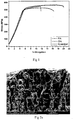
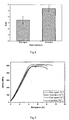
- the graph in Fig 1 of the drawings is a representation of stress against % elongation of the alloys in 3.5 wt% NaCl.
- the graph in Fig 1 supports the findings in Table 4.
- Table 5 shows that the alloy samples treated according to the invention had a lower electrical conductivity as compared to OA samples but had improved EAC resistance as shown by Table 4 above.
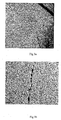
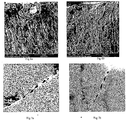
- Fractographs or fracture surface maps taken at the edges of the samples treated as per PA and OA temper conditions and according to the invention and failed in 3.5 wt% NaCl were as shown in Figs 2a , 2b and 2c of the drawings, respectively.
- the peak aged samples of AA7010 in Fig 2a shows extensive intergranular cleavage fracture having brittle facets indicative of stress corrosion cracking (SCC) failure.
- SCC stress corrosion cracking
- Table 4 supports this finding in terms of drop in ductility (% elongation) .
- the over aged samples in Fig 2b and the samples according to the invention in Fig 2c did not show any signs of intergranular SCC failure.
- the samples treated according to the invention showed enhanced elongation and strength values even under 3.5 wt.% NaCl clearly indicating that the samples treated according to the invention had better EAC resistance.
- TEM micrographs of the AA 7010 samples peak aged, over aged and treated according to the invention were taken in a FEG TEM and were as shown in Figs 3a, 3b and 3c of the drawings, respectively.
- the peak aged samples of Fig 3a show finer matrix precipitates and continuous network of fine grain boundary precipitates
- the over aged samples of Fig 3b show coarse matrix precipitates and relatively coarser and discontinuous network of grain boundary precipitates.
- the samples of Fig 3c treated according to the invention show that the grain matrix precipitates remained finer whilst the grain boundary precipitates became coarser thereby improving the strength of the samples.
- AA 7050 samples in as-received condition were used for the study.
- the samples as-received were already treated according to T7451 (OA temper condition).
- a few of the samples were further subjected to thermal aging according to the invention under the same conditions as given in Table 3 of Example 1.
- the as-received and over aged samples showed an elongation of about 13.92 % in 3.5 wt% NaCl against about 15.25 % elongation in air.
- the as-received and over aged samples had a UTS value of about 523 MPa in air compared to about 511 MPa in 3.5 wt% NaCl.
- the samples treated as per the invention showed about 16.36% elongation in air and about 15.18% elongation in 3.5 wt% NaCl.
- the samples treated as per the invention showed a UTS value of about 600 MPa in air and about 597 MPa in NaCl.
- the samples treated according to the invention exhibited significant improvement in the strength and EAC resistance as compared to the over aged samples even at a strain rate of 10 -7 /s.
- Table 7 shows that the alloy samples treated according to the invention had a lower electrical conductivity as compared to OA samples but had improved EAC resistance as shown by Table 6 above.
- TEM micrographs of the as-received and over aged samples and samples treated according to the invention were taken in a FEG TEM and were as shown in Figs 7a and 7b of the drawings respectively.
- the as-received and over aged samples of Fig 7a show a discontinuous network of grain boundary precipitates, whereas the treated samples of Fig 7b show a relatively coarser and more discontinuous grain boundary precipitates.
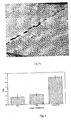
- a graphical representation of % Cu in the grain boundary precipitates of the samples taken through FEG TEM is shown in Fig 8 of the drawings.
- the grain boundary precipitates of the over aged alloys and alloys treated as per the invention showed 3.4 and 5.3 wt% Cu respectively.
- the microstructural changes in the grain boundary precipitates are understood to be the reasons or causative factors for the improved EAC resistance of the treated samples.
- AA 7085 samples in as-received condition were used for the study.
- the samples as-received were already thermally treated according to T7651 (OA temper condition).
- a few of the samples were further treated according to the invention under the same conditions as given in Table 3 of Example 1.
- the SSRT results for the AA 7085 samples in as-received and over aged condition and after the thermal treatment according to the invention in 3.5 wt% NaCl were as shown in Table 8 below.
- Table 8 Samples 3.5 wt% NaCl UTS (in MPa) % Elongation As-received and over aged 10 -6 s -1 500 5.5 ⁇ 0.2 10 -7 s -1 485 3.3 ⁇ 0.4 Treated as per invention 10 -6 s -1 520 8 ⁇ 0.8 10 -7 s -1 498 7 ⁇ 0.6
- the as-received and over aged samples showed an elongation of about 5.5 % at a strain rate of 10 -6 s -1 , whereas the elongation dropped to about 3.3 % at a strain rate of 10 -7 s -1 in 3.5 wt% NaCl.
- the samples treated as per the invention showed high strain to failure at the strain rate of 10 -6 s -1 and even at the strain rate of 10 -7 s -1 in 3.5 wt.% NaCl indicating that the samples treated as per the invention had significantly increased the EAC resistance.
- the samples treated as per the invention also had significantly higher strength (MPa) values.
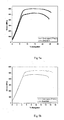
- the graphical representation of stress vs % elongation of the samples in 3.5 wt.% NaCl as shown in Fig 9 of the drawings supports the finding in Table 8.
- TEM micrographs of the as-received and over aged samples and samples treated according to the invention were taken in a FEGTEM and the images were as shown in Figs 11a and 11b of the drawings respectively.
- the as-received and over aged samples in Fig 11a show a discontinuous network of grain boundary precipitates, whereas the samples treated as per the invention in Fig 11b show a relatively coarser and more discontinuous grain boundary precipitates.
- the microstructural changes in the grain boundary precipitates are understood to be the reasons or causative factors for the improved EAC resistance of the treated samples as per invention.
- the method of the invention is unique, innovative and inventive.
- the method of the invention has been found to be effective in 7xxx aluminium alloys having a wide range of quench sensitivity. Therefore, it is believed that the method of the invention is applicable to at least all the 7000 series aluminium alloys, if not aluminium alloys in general.
Landscapes
- Chemical & Material Sciences (AREA)
- Engineering & Computer Science (AREA)
- Materials Engineering (AREA)
- Mechanical Engineering (AREA)
- Metallurgy (AREA)
- Organic Chemistry (AREA)
- Physics & Mathematics (AREA)
- Thermal Sciences (AREA)
- Crystallography & Structural Chemistry (AREA)
- Preventing Corrosion Or Incrustation Of Metals (AREA)
- Investigating And Analyzing Materials By Characteristic Methods (AREA)
Description
- This invention relates to a four-step thermal aging method for improving environmentally assisted cracking resistance of 7xxx series aluminium alloys.
- Aluminium alloys find extensive use across a wide range of applications from structures to household appliances. Low cost, light weight, versatility and recyclability are some of the main advantages of aluminium alloys. Various grades of aluminium alloys are available depending mainly on their end use and requirement. AA 7xxx or AA 7000 series aluminium alloys such as AA 7010, AA 7050, and AA 7085 are characterized by their high strength and high environmentally assisted cracking resistance and are extensively used for structural applications in aerospace and armor industries.
- Stress corrosion cracking (SCC) and hydrogen embrittlement (HE), together termed as environmentally assisted cracking (EAC), are the main causes of various catastrophic failures of structures comprising 7xxx series aluminium alloys [M. Bobby Kannan, R Raman, A Mukhopadhyay, V S Raja, Influence of multistep aging on the stress corrosion cracking behavior of aluminum alloy 7010, Corrosion 59 (2003) 881-889; M Bobby Kannan, V S Raja, Role of coarse intermetallic particles on the environmentally assisted cracking behavior of peak aged and over aged Al-Zn-Mg-Cu-Zr alloy during slow strain rate testing, J Mater Sci 42 (2007) 5458-5464; M Bobby Kannan, V S Raja, Enhancing stress corrosion cracking resistance in Al-Zn-Mg-Cu-Zr alloy through inhibiting recrystallization, Eng Fract Mech 77 (2010) 249-256; M Bobby Kannan, V S Raja, Hydrogen embrittlement susceptibility of over aged 7010 Al-alloy, J Mater Sci 41 (2006) 5495-5499; M B Kannan, V S Raja, Enhancing the Localized Corrosion Resistance of High Strength 7010 Al-Alloy, Adv Mater Res 138 (2010) 1-6].
- Chemical composition and quench sensitivity of some of the 7xxx series aluminium alloys are given in the following Table 1:
Table 1 Chemical Composition, (wt.%) Quench Sensitivity Alloy Zn Mg Cu Fe Si Zr Al AA7010 5.7-6.7 2.1-2.6 1.5-2.0 <0.15 <0.12 0.1-0.16 Bal High AA7050 5.7-6.7 1.9-2.6 2-2.6 <0.15 <0.12 0.08-0.15 Bal Medium AA7085 7.0-8.0 1.2-1.8 1.3-2.0 <0.08 <0.06 0.08-0.15 Bal Low - The 7xxx series alloys are subjected to various thermal aging treatments in order to enhance their strength and EAC resistance. (
US4477292 ,US4431467 ,US2003/0041934A1 ,US4477292 ,US8333853 ,US9249487 US2015/0259774A1 ; M Bobby Kannan, R Raman, A Mukhopadhyay, V S Raja, Influence of multistep aging on the stress corrosion cracking behavior of aluminum alloy 7010, Corrosion 59 (2003) 881-889; T C Tsai, T H Chuang, Atmospheric stress corrosion cracking of a superplastic 7475 aluminum alloy, Metall Mater Trans A 27 (1996) 2617-2627; M F Ibrahim, A M Samuel, F H Samuel, A preliminary study on optimizing the heat treatment of high strength Al-Cu-Mg-Zn alloys, Mater Des. 57 (2014) 342-350; J C Lin, H L Liao, W D Jehng, C H Chang, S L Lee, Effect of heat treatments on the tensile strength and SCC-resistance of AA7050 in an alkaline saline solution, Corros. Sci. 48 (2006) 3139-3156; A K Mukhopadhyay, K S Prasad, V Kumar, G M Reddy, S V Kamat, V K Varma, Key Microstructural Features Responsible for Improved Stress Corrosion Cracking Resistance and Weldability in 7xxx Series Al Alloys Containing Micro / Trace Alloying Additions, Mater Sci Forum 519-521 (2006) 315-320; F Viana, A M P Pinto, H M C Santos, A B Lopes, Retrogression and re-ageing of 7075 aluminium alloy: microstructural characterization, J Mater Process Technol 92-93 (1999) 54-59; A F Oliveira, M C de Barros, K R Cardoso, D N Travessa, The effect of RRA on the strength and SCC resistance on AA7050 and AA7150 aluminium alloys, Mater Sci Eng A 379 (2004) 321-326; Y Reda, R Abdel-Karim, I Elmahallawi, Improvements in mechanical and stress corrosion cracking properties in Al-alloy 7075 via retrogression and reaging, Mater Sci Eng A 485 (2008) 468-475; G Peng, K Chen, S Chen, H Fang, Influence of repetitious-RRA treatment on the strength and SCC resistance of Al-Zn-Mg-Cu alloy, Mater Sci Eng A 528 (2011) 4014-4018; T Marlaud, A Deschamps, F Bley, W Lefebvre, B Baroux, Evolution of precipitate microstructures during the retrogression and re-ageing heat treatment of an Al-Zn-Mg-Cu alloy, Acta Mater 58 (2010) 4814-4826]. - Solutionizing of the alloys is a pretreatment for thermal aging. During thermal aging of the alloys, the precipitates that evolve will impede the dislocation movement in the material and impart strength to the alloys. The precipitates that evolve in the grain boundary of the alloys impart EAC resistance to the alloys. The grain boundary precipitates are mainly Mg (Zn,Al,Cu)2 complexes which are highly anodic in nature. Since Mg is a very active anodic element, the grain boundary precipitates can undergo selective dissolution in the corrosive environments adversely affecting the grain boundary cohesive strength of the alloys. In the presence of stresses, such dissolution can lead to intergranular brittle fracture of the alloys. The rate of intergranular stress corrosion cracking is higher if such anodic precipitates are located continuously at grain boundary. The various thermal aging treatments known and reported in the prior art as stated above do not impart sufficient strength and EAC resistance to the alloys for high strength applications, especially in the aerospace and armor industries and it is still desirable to have aluminium alloys having improved strength and EAC resistance for such applications.
- Therefore, in spite of the several thermal aging treatments that are known and reported for increasing the properties of aluminium alloys, especially the strength and EAC resistance, the need and scope for new and improved thermal aging methods for increasing the properties of 7xxx series aluminium alloys continues. Because of this, over the years, extensive research and development activities are being carried out to devise and develop methods for further improving the strength and EAC resistance of 7xxx series aluminium alloys.
- According to the invention there is provided a four-step thermal aging method for improving environmentally assisted cracking resistance of 7xxx series aluminium alloys, comprising solutionizing and aging 7xxx series aluminium alloys, wherein the aging is carried out by treating the alloys at a temperature of 120 to 130°C for 0.3 to 0.5h, water quenching the alloys to a temperature of 25 to 27°C and further treating the alloys at a temperature of 80 to 95°C for 100 to 120h and at a temperature of 120 to 130°C for 20 to 24h and at a temperature of 155 to 160°C for 1 to 5h and air cooling the alloys to room temperature, sequentially.
- The four-stage thermal aging of the aluminium alloys employing temperature cycles sequentially as described above according to the invention assist in bringing about novel microstructural changes in the alloys so as to improve the EAC resistance of the alloys. It is quite evident from the experimental studies that follow that according to the method of invention more copper is diffused into the grain boundary of the alloys and the distance between the grain boundary precipitates is increased. The copper enrichment and the discontinuously located grain boundary precipitates produce microstructures that significantly reduce the anodic dissolution of the grain boundary precipitates and increase the EAC resistance of the alloys in corrosive environments (especially in 3.5wt.% NaCl). The aging cycles also aid to nucleate more precipitates at the grain matrix and increase the strength levels of the alloys. The thermally aged aluminium alloys of the invention are ideal for high strength applications, especially in the aerospace and armor industries because of their excellent EAC resistance and higher strength. However, they can be used in any other applications also.
- The following experimental examples are illustrative of the invention but not limitative of the scope thereof:
The experiments were conducted on dog-bone shaped tensile specimens of AA 7010, AA 7050 and AA 7085 prepared according to ASTM E8. Prior to thermal aging, the alloy samples were solutionzied at 460°C and water quenched in known manner. The thermal aging of the samples was carried out in a laboratory scale oil bath furnace fitted with temperature control of accuracy ± 2°C. Slow strain rate tests (SSRT) were carried out at a strain rate of 10-6 s-1 and 10-7 s-1. Gauge length of the specimens was continuously exposed to 3.5 wt% NaCl that was freely exposed to air, till failure. Each experiment was at least triplicated. - The electrical conductivity of the heat treated samples were measured using an EDDY current type conductivity meter. EAC susceptibility of the samples was evaluated based on elongation and ultimate tensile strength (UTS) of the samples measured in air (considered as inert) and in corrosive environment (3.5 wt% NaCl freely exposed to air)..
- Fractured samples from SSRT were ultrasonicated in acetone immediately after the failure and were dried and examined under a scanning electron microscope (SEM) to determine the mode of fracture. Ductility (% elongation) of the samples was calculated by measuring the gauge length of the failed samples manually. Microstructures of the specimens were examined in a field emission transmission electron microscope (FEG TEM) operating at 200 kV.
- AA 7010 samples in as-received condition were used in the study. A few of the as-received samples were subjected to T6 (peak aged) and T7451 (over aged) temper treatments by us according to the temperature cycles as given in the following Table 2:
Table 2 Thermal treatment Temperature cycle Peak aged (PA) Aged at 100°C for 8 h and further aged at 120°C for 8 h and air cooled Over aged (OA) Aged at 100°C for 8 h and further aged at 120°C for 8 h and at 170°C for 8 h and air cooled - [M Bobby Kannan, R. Raman, A Mukhopadhyay, V S Raja, Influence of multistep aging on the stress corrosion cracking behavior of aluminum alloy 7010, Corrosion. 59 (2003) 881-889; M Bobby Kannan, V S Raja, Role of coarse intermetallic particles on the environmentally assisted cracking behavior of peak aged and over aged Al-Zn-Mg-Cu-Zr alloy during slow strain rate testing, J. Mater. Sci. 42 (2007) 5458-5464; M Bobby Kannan, V S Raja, Enhancing stress corrosion cracking resistance in Al-Zn-Mg-Cu-Zr alloy through inhibiting recrystallization, Eng. Fract. Mech. 77 (2010) 249-256; M BobbyKannan, V S Raja, Hydrogen embrittlement susceptibility of over aged 7010 Al-alloy, J Mater Sci 41 (2006) 5495-5499; M B Kannan, V S Raja, Enhancing the Localized Corrosion Resistance of High Strength 7010 Al-Alloy, Adv Mater Res 138 (2010) 1-6; Standard Test Methods for Tension Testing of Metallic Materials, ASTM E8].
- A few of the as-received samples were also subjected to thermal treatment according to the method of the invention as per the temperature cycle shown in the following Table 3:
Table 3 Thermal treatment Temperature cycle Method of the invention Aged at 130°C for 0.5h, water quenched to 27°C and further aged at 85°C for 120 h, at 130°C for 24h and at 157°C for 2.5 h - The SSRT results of the treated AA7010 samples in air (considered as inert) and 3.5 wt% NaCl at strain rate of 10-6 s-1 were as shown in the following Table 4:
Table 4 Samples UTS (MPa) Elongation (%) Peak aged samples in air 577 (±4) 13.7 (±1) Peak aged samples in 3.5 %wt NaCl 548 (±3) 7.5 (±0.8) Over aged samples in air 539 (±4) 13.6 (±1.2) Over aged samples in 3.5 %wt NaCl 530 (±3) 12 (±0.9) Samples treated as per the invention in air 580 (±5) 15 (±2) Samples treated as per the invention in 3.5 %wt NaCl 569 (±2) 14 (±1) - Table 4 shows that the peak aged samples showed an elongation of about 7.5% in 3.5 wt% NaCl against about 13.7% in air. The drop of elongation in NaCl was about 6.2%. The over aged samples showed an elongation of about 12% in 3.5 wt% NaCl against about 13.6% in air. The drop of elongation in NaCl was about 1.6% compared to air. The samples treated according to the invention showed an elongation of about 14% in 3.5 wt% NaCl against about 15% in air. The drop of elongation in NaCl was only about 1% compared to air. The peak aged samples reached a UTS (ultimate tensile strength) value of about 577 MPa in air compared to about 548 MPa in 3.5wt% NaCl. The drop in strength in 3.5wt% NaCl was about 69 MPa. The over aged samples reached a UTS value of about 539 MPa in air compared to about 530 MPa in 3.5wt% NaCl. The drop in strength in 3.5wt% NaCl was about 9 MPa. The samples according to the invention showed an increased UTS value upto about 580MPa in air and upto about 569 MPs in NaCl. The drop of UTS value in NaCl was about 11 MPa
- The increase in the elongation and UTS values of the samples treated according to the invention are significant and substantial in the overall structural strength and EAC resistance of the 7xxx series aluminium alloys in 3.5 wt% NaCl. The increase or improvement in the elongation and UTS values are indicative of the changes in the microstructures of the samples treated according to the invention. The graph in
Fig 1 of the drawings is a representation of stress against % elongation of the alloys in 3.5 wt% NaCl. The graph inFig 1 supports the findings in Table 4. - The electrical conductivity values of the heat treated samples were as mentioned in the following Table 5.
Table 5 Samples %IACS Peak aged (PA) samples 30 Over aged (OA) samples 36 Samples treated as per the invention 32 - Table 5 shows that the alloy samples treated according to the invention had a lower electrical conductivity as compared to OA samples but had improved EAC resistance as shown by Table 4 above.
- Fractographs or fracture surface maps taken at the edges of the samples treated as per PA and OA temper conditions and according to the invention and failed in 3.5 wt% NaCl were as shown in
Figs 2a ,2b and 2c of the drawings, respectively. The peak aged samples of AA7010 inFig 2a shows extensive intergranular cleavage fracture having brittle facets indicative of stress corrosion cracking (SCC) failure. Table 4 supports this finding in terms of drop in ductility (% elongation) .The over aged samples inFig 2b and the samples according to the invention inFig 2c did not show any signs of intergranular SCC failure. However, as evident from Table 4, the samples treated according to the invention showed enhanced elongation and strength values even under 3.5 wt.% NaCl clearly indicating that the samples treated according to the invention had better EAC resistance. - TEM micrographs of the AA 7010 samples peak aged, over aged and treated according to the invention were taken in a FEG TEM and were as shown in
Figs 3a, 3b and3c of the drawings, respectively. The peak aged samples ofFig 3a show finer matrix precipitates and continuous network of fine grain boundary precipitates, whereas the over aged samples ofFig 3b show coarse matrix precipitates and relatively coarser and discontinuous network of grain boundary precipitates. The samples ofFig 3c treated according to the invention show that the grain matrix precipitates remained finer whilst the grain boundary precipitates became coarser thereby improving the strength of the samples. These micrographs clearly establish that the thermal treatment according to the invention brought about significant changes in the microstructure of the alloys. - Line scan of all the alloy samples were carried out in a FEG TEM in the STEM (Scanning Transmission Electron Microscopy) mode of the FEGTEM using energy dispersive spectroscopy (EDS). A graphical representation of the results is shown in
Fig 4 of the drawings. The grain boundary precipitates of the peak and the over aged alloys showed 1.7 and 2.14 wt% Cu respectively. The samples treated according to the invention showed grain boundary precipitates with Cu enrichment of 5.9 wt%. Cu enrichment in the grain boundary precipitates of the samples treated according to the invention is understood to be the key factor for the enhanced EAC resistance of the samples as Cu in the precipitates is known to increase the EAC resistance of the alloys. The higher volume fraction of matrix precipitates shown in the TEM micrographs is believed to attribute to the increased strength of the alloys. - AA 7050 samples in as-received condition were used for the study. The samples as-received were already treated according to T7451 (OA temper condition). A few of the samples were further subjected to thermal aging according to the invention under the same conditions as given in Table 3 of Example 1. The SSRT results for the AA 7050 samples as-received and after the thermal treatment according to the invention in air and 3.5 wt% NaCl were as shown in the Table 6 below:
Table 6 Samples Condition UTS (in MPa) % Elongation As-received and over aged Air 523 15.3 ± 0.9 NaCl (10- 511 13.9 ± 0.4 NaCl (10- 478 11.01 ± 0.4 Treated as per the invention Air 600 16.4 ± 1.6 NaCl (10- 597 15.2 ± 1.1 NaCl (10-7/s 543 13.56 ± 0.4 - The as-received and over aged samples showed an elongation of about 13.92 % in 3.5 wt% NaCl against about 15.25 % elongation in air. The as-received and over aged samples had a UTS value of about 523 MPa in air compared to about 511 MPa in 3.5 wt% NaCl. The samples treated as per the invention showed about 16.36% elongation in air and about 15.18% elongation in 3.5 wt% NaCl. The samples treated as per the invention showed a UTS value of about 600 MPa in air and about 597 MPa in NaCl. The samples treated according to the invention exhibited significant improvement in the strength and EAC resistance as compared to the over aged samples even at a strain rate of 10-7/s. The graphical representation of stress vs % elongation in NaCl of the as-received and over aged samples and samples treated according to the invention as shown in
Figs 5a and Fig 5b of the drawings, respectively supports the finding in Table 6. - The electrical conductivity values of the treated samples were as mentioned in the following Table 7.
Table 7 Samples %IACS Over aged samples 39 Samples treated as per the invention 33 - Table 7 shows that the alloy samples treated according to the invention had a lower electrical conductivity as compared to OA samples but had improved EAC resistance as shown by Table 6 above.
- Fractographs on the edges of the as-received and over aged samples and samples treated according to the invention that failed in 3.5 wt% NaCl were taken in a SEM and were as shown in
Figs 6a and 6b of the drawings respectively. The as-received and over aged samples ofFig 6a show indications of extensive shear overload failure whereas the treated samples ofFig 6b indicate a microvoid coalescence failure. The microvoid coalescence of the treated samples inFig 6b is indicative of delayed time-to-failure as evidenced by the numerous dimples in the microstructure. The elongation values in Table 6 support this finding. - TEM micrographs of the as-received and over aged samples and samples treated according to the invention were taken in a FEG TEM and were as shown in
Figs 7a and 7b of the drawings respectively. The as-received and over aged samples ofFig 7a show a discontinuous network of grain boundary precipitates, whereas the treated samples ofFig 7b show a relatively coarser and more discontinuous grain boundary precipitates. A graphical representation of % Cu in the grain boundary precipitates of the samples taken through FEG TEM is shown inFig 8 of the drawings. The grain boundary precipitates of the over aged alloys and alloys treated as per the invention showed 3.4 and 5.3 wt% Cu respectively. The microstructural changes in the grain boundary precipitates are understood to be the reasons or causative factors for the improved EAC resistance of the treated samples. - AA 7085 samples in as-received condition were used for the study. The samples as-received were already thermally treated according to T7651 (OA temper condition). A few of the samples were further treated according to the invention under the same conditions as given in Table 3 of Example 1. The SSRT results for the AA 7085 samples in as-received and over aged condition and after the thermal treatment according to the invention in 3.5 wt% NaCl were as shown in Table 8 below.
Table 8 Samples 3.5 wt% NaCl UTS (in MPa) % Elongation As-received and over aged 10-6 s-1 500 5.5 ± 0.2 10-7 s-1 485 3.3 ± 0.4 Treated as per invention 10-6 s-1 520 8 ± 0.8 10-7 s-1 498 7 ± 0.6 - The as-received and over aged samples showed an elongation of about 5.5 % at a strain rate of 10-6 s-1, whereas the elongation dropped to about 3.3 % at a strain rate of 10-7 s-1 in 3.5 wt% NaCl. The samples treated as per the invention showed high strain to failure at the strain rate of 10-6s-1 and even at the strain rate of 10-7 s-1 in 3.5 wt.% NaCl indicating that the samples treated as per the invention had significantly increased the EAC resistance. The samples treated as per the invention also had significantly higher strength (MPa) values. The graphical representation of stress vs % elongation of the samples in 3.5 wt.% NaCl as shown in
Fig 9 of the drawings supports the finding in Table 8. - Fractographs of the edges of the as-received and over aged samples and samples treated according to the invention that failed in 3.5 wt.% NaCl were taken in a SEM and were as shown in
Figs 10a and 10b of the drawings, respectively. The as-received and over aged samples inFig 10a show indications of extensive shear overload failure whereas samples treated as per the invention inFig 10b indicate a microvoid coalescence failure. The microvoid coalescence of the samples treated as per the invention inFig 10b is indicative of delayed time-to-failure as evidenced by the numerous dimples in the microstructures. The elongation values in Table 6 support this finding. - TEM micrographs of the as-received and over aged samples and samples treated according to the invention were taken in a FEGTEM and the images were as shown in
Figs 11a and 11b of the drawings respectively. The as-received and over aged samples inFig 11a show a discontinuous network of grain boundary precipitates, whereas the samples treated as per the invention inFig 11b show a relatively coarser and more discontinuous grain boundary precipitates. The microstructural changes in the grain boundary precipitates are understood to be the reasons or causative factors for the improved EAC resistance of the treated samples as per invention. - It is quite evident from the experimental studies that the 7xxx aluminium alloy samples treated according to the invention showed significant and substantial changes in the microstructures of the alloys. Enrichment of Cu in the grain boundary precipitates is understood to raise the galvanic potential of the alloys and resist their tendency for preferential dissolution in corrosive environment and as a consequence increase their EAC resistance significantly. It is reported that suppression of preferential dissolution of grain boundary precipitates can lead to better EAC resistance. [R Goswami, S Lynch, N J H Holroyd, S P Knight, R L Holtz, Evolution of grain boundary precipitates in Al 7075 upon aging and correlation with stress corrosion cracking behavior, Metall. Mater Trans A Phys Metall Mater Sci 44 (2013) 1268-1278; S P Knight, N Birbilis, B C Muddle, A R Trueman, S P Lynch, Correlations between intergranular stress corrosion cracking, grain-boundary microchemistry, and grain-boundary electrochemistry for Al-Zn-Mg-Cu alloys, Corros. Sci. 52 (2010) 4073-4080; S P Knight, K Pohl, N J H Holroyd, N Birbilis, P A Rometsch, B C Muddle, et al, Some effects of alloy composition on stress corrosion cracking in Al-Zn-Mg-Cu alloys, Corros. Sci. 98 (2015) 50-62; M Puiggali, A. Zielinski, J M Olive, E Renauld, D Desjardins, M Cid, Effect of microstructure on stress corrosion cracking of an Al-Zn-Mg-Cu alloy, Corros. Sci 40 (1998) 805-819].
- It is evident from
Figs 3b vsFigs 3c that the size of the grain boundary precipitates is larger for the samples treated according to the invention. The larger grain boundary precipitates appear to act as trapping sites for atomic hydrogen and thereby reduce hydrogen concentration at the crack tip of the alloys and result in improved EAC resistance. [G M Scamans, Hydrogen bubbles in embrittled Al-Zn-Mg alloys, J Mater Sci 13 (1978) 27-36; K Rajan, W Wallace, J C Beddoes, Microstructural study of a high-strength stress-corrosion resistant 7075 aluminium alloy, J Mater Sci 17 (1982) 2817-2824]. The SSRT data and the fractrographs showing predominant dimple regions in all the samples treated as per the invention indicate high EAC resistance without sacrificing or comprises the strength levels. - Although it was known and reported that the composition and morphology of the grain boundary precipitates of aluminium alloys largely determine the EAC resistance of the alloys and that Cu enrichment of the alloys in the grain boundary can bring changes in the microstructures and thereby increase the EAC resistance of the alloys, the prior art does not teach or teach towards the four-step aging cycle and the temperatures and aging durations and the sequence of lowering and raising the temperatures of method of the invention that brings about the changes in the microstructure of the alloys. Therefore, the method of the invention is unique, innovative and inventive. The method of the invention has been found to be effective in 7xxx aluminium alloys having a wide range of quench sensitivity. Therefore, it is believed that the method of the invention is applicable to at least all the 7000 series aluminium alloys, if not aluminium alloys in general.
Claims (3)
- A four-step thermal aging method for improving environmentally assisted cracking resistance of 7xxx series aluminium alloys, comprising solutionizing and aging 7xxx series aluminium alloys, wherein the aging is carried out by treating the alloys at a temperature of 120 to 130°C for 0.3 to 0.5h, water quenching the alloys to a temperature of 25 to 27°C and further treating the alloys at a temperature of 80 to 95°C for 100 to 120h and at a temperature of 120 to 130 °C for 20 to 24h and at a temperature of 155 to 160°C for 1 to 5h and air cooling the alloys to room temperature, sequentially.
- The method as claimed in claim 1, wherein the alloys are treated at a temperature of 130°C for 0.5 h, water quenched to 27°C and further treated at a temperature of 85°C for 120h, at a temperature of 130°C for 24h, and at a temperature of 157°C for 2.5h.
- The method as claimed in claim 1 or 2, wherein the alloys are AA 7010, AA 7050, and AA 7085.
Applications Claiming Priority (2)
| Application Number | Priority Date | Filing Date | Title |
|---|---|---|---|
| IN201621026704 | 2016-08-04 | ||
| PCT/IN2016/000280 WO2018025275A1 (en) | 2016-08-04 | 2016-11-30 | Four-step thermal aging method for improving environmentally assisted cracking resistance of 7xxx series aluminium alloys |
Publications (3)
| Publication Number | Publication Date |
|---|---|
| EP3294918A1 EP3294918A1 (en) | 2018-03-21 |
| EP3294918B1 true EP3294918B1 (en) | 2018-11-28 |
| EP3294918B8 EP3294918B8 (en) | 2019-02-27 |
Family
ID=57956342
Family Applications (1)
| Application Number | Title | Priority Date | Filing Date |
|---|---|---|---|
| EP16831924.2A Not-in-force EP3294918B8 (en) | 2016-08-04 | 2016-11-30 | Four-step thermal aging method for improving environmentally assisted cracking resistance of 7xxx series aluminium alloys |
Country Status (3)
| Country | Link |
|---|---|
| US (1) | US20190153578A1 (en) |
| EP (1) | EP3294918B8 (en) |
| WO (1) | WO2018025275A1 (en) |
Families Citing this family (1)
| Publication number | Priority date | Publication date | Assignee | Title |
|---|---|---|---|---|
| RU2765103C1 (en) * | 2018-07-02 | 2022-01-25 | Отто Фукс - Коммандитгезельшафт | Aluminium alloy and overaged article made of such an aluminium alloy |
Family Cites Families (11)
| Publication number | Priority date | Publication date | Assignee | Title |
|---|---|---|---|---|
| US4477292A (en) | 1973-10-26 | 1984-10-16 | Aluminum Company Of America | Three-step aging to obtain high strength and corrosion resistance in Al-Zn-Mg-Cu alloys |
| US4431467A (en) | 1982-08-13 | 1984-02-14 | Aluminum Company Of America | Aging process for 7000 series aluminum base alloys |
| JP3705320B2 (en) * | 1997-04-18 | 2005-10-12 | 株式会社神戸製鋼所 | High strength heat treatment type 7000 series aluminum alloy with excellent corrosion resistance |
| AUPQ485399A0 (en) | 1999-12-23 | 2000-02-03 | Commonwealth Scientific And Industrial Research Organisation | Heat treatment of age-hardenable aluminium alloys |
| IL156386A0 (en) * | 2000-12-21 | 2004-01-04 | Alcoa Inc | Aluminum alloy products and artificial aging method |
| JP2003213387A (en) * | 2002-01-22 | 2003-07-30 | Mitsubishi Heavy Ind Ltd | Method of manufacturing rolled parts of airplane |
| JP5343333B2 (en) * | 2007-07-06 | 2013-11-13 | 日本軽金属株式会社 | Method for producing high-strength aluminum alloy material with excellent resistance to stress corrosion cracking |
| US8333853B2 (en) | 2009-01-16 | 2012-12-18 | Alcoa Inc. | Aging of aluminum alloys for improved combination of fatigue performance and strength |
| US9249487B2 (en) | 2013-03-14 | 2016-02-02 | Alcoa Inc. | Methods for artificially aging aluminum-zinc-magnesium alloys, and products based on the same |
| US9765419B2 (en) | 2014-03-12 | 2017-09-19 | Alcoa Usa Corp. | Methods for artificially aging aluminum-zinc-magnesium alloys, and products based on the same |
| CN104962847B (en) * | 2015-07-16 | 2016-11-16 | 中南大学 | A Heat Treatment Process for Improving the Uniformity and Corrosion Resistance of 7 Series Alloy Thick Plates |
-
2016
- 2016-11-30 WO PCT/IN2016/000280 patent/WO2018025275A1/en not_active Ceased
- 2016-11-30 US US15/563,393 patent/US20190153578A1/en not_active Abandoned
- 2016-11-30 EP EP16831924.2A patent/EP3294918B8/en not_active Not-in-force
Non-Patent Citations (1)
| Title |
|---|
| None * |
Also Published As
| Publication number | Publication date |
|---|---|
| EP3294918A1 (en) | 2018-03-21 |
| EP3294918B8 (en) | 2019-02-27 |
| WO2018025275A1 (en) | 2018-02-08 |
| US20190153578A1 (en) | 2019-05-23 |
Similar Documents
| Publication | Publication Date | Title |
|---|---|---|
| Rout et al. | Microstructural, mechanical and electrochemical behaviour of a 7017 Al–Zn–Mg alloy of different tempers | |
| Kumar et al. | Microstructure, mechanical and corrosion behavior of high strength AA7075 aluminium alloy friction stir welds–Effect of post weld heat treatment | |
| ZHENG | Mechanical properties, corrosion behaviors and microstructures of 7075 aluminium alloy with various aging treatments | |
| Rao et al. | Stress corrosion cracking behaviour of 7xxx aluminum alloys: A literature review | |
| Shi et al. | Influence of alloyed Sc and Zr, and heat treatment on microstructures and stress corrosion cracking of Al–Zn–Mg–Cu alloys | |
| KR102565183B1 (en) | 7xxx-series aluminum alloy products | |
| EP3012338B1 (en) | High strength, high formability, and low cost aluminum lithium alloys | |
| Bittner et al. | Dynamic recrystallisation and precipitation behaviour of high strength and highly conducting Cu–Ag–Zr-alloys | |
| Shahsavari et al. | Significant increase in tensile strength and hardness in 2024 aluminum alloy by cryogenic rolling | |
| KR20180056697A (en) | Optimization of aluminum hot working | |
| Hao et al. | Microstructure and mechanical properties of extruded Mg–8.5 Gd–2.3 Y–1.8 Ag–0.4 Zr alloy | |
| CN103924175B (en) | Stabilized heat treatment process capable of improving corrosion resistance of aluminum-magnesium alloy containing Zn and Er | |
| LIANG et al. | Grain boundary pre-precipitation and its contribution to enhancement of corrosion resistance of Al–Zn–Mg alloy | |
| Yang et al. | Effects of hot extrusion and heat treatment on microstructure and properties of industrial large-scale spray-deposited 7055 aluminum alloy | |
| Khoshnaw et al. | Effect of aging time and temperature on exfoliation corrosion of aluminum alloys 2024‐T3 and 7075‐T6 | |
| Salman et al. | Improvement properties of 7075-T6 aluminum alloy by quenching in 30% polyethylene glycol and addition 0.1% B | |
| Rao et al. | Influence of cold rolling and annealing on the tensile properties of aluminum 7075 alloy | |
| Tsao et al. | Plastic flow behavior, microstructure, and corrosion behavior of AZ61 Mg alloy during hot compression deformation | |
| Roodgari et al. | Ultrahigh-temperature aging response of asymmetrically cold-rolled AA2024 alloy | |
| Yen et al. | Effects of annealing temperature on stress corrosion susceptibility of AA5083–H15 alloys | |
| Wu et al. | Effects of microstructure on the mechanical properties and stress corrosion cracking of an Al-Zn-Mg-Sc-Zr alloy by various temper treatments | |
| US20190153578A1 (en) | Four-step thermal aging method for improving environmentally assisted cracking resistance of 7xxx series aluminium alloys | |
| Fanning et al. | Properties of TIMETAL 555-a new near-beta titanium alloy for airframe components | |
| EP4155426A1 (en) | Dispersoids 7xxx alloy products with enhanced environmentally assisted cracking and fatigue crack growth deviation resistances | |
| Liu et al. | The effect of pre-ageing on the microstructure and properties of 7050 alloy |
Legal Events
| Date | Code | Title | Description |
|---|---|---|---|
| PUAI | Public reference made under article 153(3) epc to a published international application that has entered the european phase |
Free format text: ORIGINAL CODE: 0009012 |
|
| 17P | Request for examination filed |
Effective date: 20171106 |
|
| AK | Designated contracting states |
Kind code of ref document: A1 Designated state(s): AL AT BE BG CH CY CZ DE DK EE ES FI FR GB GR HR HU IE IS IT LI LT LU LV MC MK MT NL NO PL PT RO RS SE SI SK SM TR |
|
| AX | Request for extension of the european patent |
Extension state: BA ME |
|
| GRAP | Despatch of communication of intention to grant a patent |
Free format text: ORIGINAL CODE: EPIDOSNIGR1 |
|
| INTG | Intention to grant announced |
Effective date: 20180607 |
|
| GRAS | Grant fee paid |
Free format text: ORIGINAL CODE: EPIDOSNIGR3 |
|
| GRAA | (expected) grant |
Free format text: ORIGINAL CODE: 0009210 |
|
| AK | Designated contracting states |
Kind code of ref document: B1 Designated state(s): AL AT BE BG CH CY CZ DE DK EE ES FI FR GB GR HR HU IE IS IT LI LT LU LV MC MK MT NL NO PL PT RO RS SE SI SK SM TR |
|
| GRAT | Correction requested after decision to grant or after decision to maintain patent in amended form |
Free format text: ORIGINAL CODE: EPIDOSNCDEC |
|
| REG | Reference to a national code |
Ref country code: CH Ref legal event code: EP |
|
| DAV | Request for validation of the european patent (deleted) | ||
| DAX | Request for extension of the european patent (deleted) | ||
| REG | Reference to a national code |
Ref country code: AT Ref legal event code: REF Ref document number: 1070314 Country of ref document: AT Kind code of ref document: T Effective date: 20181215 |
|
| RAP2 | Party data changed (patent owner data changed or rights of a patent transferred) |
Owner name: GODREJ & BOYCE MFG. CO. LTD. Owner name: INDIAN INSTITUTE OF TECHNOLOGY, BOMBAY |
|
| REG | Reference to a national code |
Ref country code: DE Ref legal event code: R096 Ref document number: 602016007664 Country of ref document: DE |
|
| REG | Reference to a national code |
Ref country code: IE Ref legal event code: FG4D |
|
| REG | Reference to a national code |
Ref country code: DE Ref legal event code: R082 Ref document number: 602016007664 Country of ref document: DE Representative=s name: GRAMM, LINS & PARTNER PATENT- UND RECHTSANWAEL, DE |
|
| REG | Reference to a national code |
Ref country code: CH Ref legal event code: PK Free format text: BERICHTIGUNG B8 |
|
| REG | Reference to a national code |
Ref country code: CH Ref legal event code: PK Free format text: BERICHTIGUNGEN |
|
| REG | Reference to a national code |
Ref country code: NL Ref legal event code: MP Effective date: 20181128 |
|
| REG | Reference to a national code |
Ref country code: LT Ref legal event code: MG4D |
|
| REG | Reference to a national code |
Ref country code: AT Ref legal event code: MK05 Ref document number: 1070314 Country of ref document: AT Kind code of ref document: T Effective date: 20181128 |
|
| RIN2 | Information on inventor provided after grant (corrected) |
Inventor name: KRISHNAN AJAY Inventor name: VNGARANAHALLI SRINIVASAN RAJA Inventor name: VAIDYA SURENDRA MURALIDHAR |
|
| PG25 | Lapsed in a contracting state [announced via postgrant information from national office to epo] |
Ref country code: ES Free format text: LAPSE BECAUSE OF FAILURE TO SUBMIT A TRANSLATION OF THE DESCRIPTION OR TO PAY THE FEE WITHIN THE PRESCRIBED TIME-LIMIT Effective date: 20181128 Ref country code: AT Free format text: LAPSE BECAUSE OF FAILURE TO SUBMIT A TRANSLATION OF THE DESCRIPTION OR TO PAY THE FEE WITHIN THE PRESCRIBED TIME-LIMIT Effective date: 20181128 Ref country code: LV Free format text: LAPSE BECAUSE OF FAILURE TO SUBMIT A TRANSLATION OF THE DESCRIPTION OR TO PAY THE FEE WITHIN THE PRESCRIBED TIME-LIMIT Effective date: 20181128 Ref country code: FI Free format text: LAPSE BECAUSE OF FAILURE TO SUBMIT A TRANSLATION OF THE DESCRIPTION OR TO PAY THE FEE WITHIN THE PRESCRIBED TIME-LIMIT Effective date: 20181128 Ref country code: IS Free format text: LAPSE BECAUSE OF FAILURE TO SUBMIT A TRANSLATION OF THE DESCRIPTION OR TO PAY THE FEE WITHIN THE PRESCRIBED TIME-LIMIT Effective date: 20190328 Ref country code: BG Free format text: LAPSE BECAUSE OF FAILURE TO SUBMIT A TRANSLATION OF THE DESCRIPTION OR TO PAY THE FEE WITHIN THE PRESCRIBED TIME-LIMIT Effective date: 20190228 Ref country code: HR Free format text: LAPSE BECAUSE OF FAILURE TO SUBMIT A TRANSLATION OF THE DESCRIPTION OR TO PAY THE FEE WITHIN THE PRESCRIBED TIME-LIMIT Effective date: 20181128 Ref country code: NO Free format text: LAPSE BECAUSE OF FAILURE TO SUBMIT A TRANSLATION OF THE DESCRIPTION OR TO PAY THE FEE WITHIN THE PRESCRIBED TIME-LIMIT Effective date: 20190228 Ref country code: LT Free format text: LAPSE BECAUSE OF FAILURE TO SUBMIT A TRANSLATION OF THE DESCRIPTION OR TO PAY THE FEE WITHIN THE PRESCRIBED TIME-LIMIT Effective date: 20181128 |
|
| PGFP | Annual fee paid to national office [announced via postgrant information from national office to epo] |
Ref country code: FR Payment date: 20190117 Year of fee payment: 3 Ref country code: DE Payment date: 20181228 Year of fee payment: 3 |
|
| PG25 | Lapsed in a contracting state [announced via postgrant information from national office to epo] |
Ref country code: SE Free format text: LAPSE BECAUSE OF FAILURE TO SUBMIT A TRANSLATION OF THE DESCRIPTION OR TO PAY THE FEE WITHIN THE PRESCRIBED TIME-LIMIT Effective date: 20181128 Ref country code: PT Free format text: LAPSE BECAUSE OF FAILURE TO SUBMIT A TRANSLATION OF THE DESCRIPTION OR TO PAY THE FEE WITHIN THE PRESCRIBED TIME-LIMIT Effective date: 20190328 Ref country code: AL Free format text: LAPSE BECAUSE OF FAILURE TO SUBMIT A TRANSLATION OF THE DESCRIPTION OR TO PAY THE FEE WITHIN THE PRESCRIBED TIME-LIMIT Effective date: 20181128 |
|
| PG25 | Lapsed in a contracting state [announced via postgrant information from national office to epo] |
Ref country code: NL Free format text: LAPSE BECAUSE OF FAILURE TO SUBMIT A TRANSLATION OF THE DESCRIPTION OR TO PAY THE FEE WITHIN THE PRESCRIBED TIME-LIMIT Effective date: 20181128 |
|
| PG25 | Lapsed in a contracting state [announced via postgrant information from national office to epo] |
Ref country code: PL Free format text: LAPSE BECAUSE OF FAILURE TO SUBMIT A TRANSLATION OF THE DESCRIPTION OR TO PAY THE FEE WITHIN THE PRESCRIBED TIME-LIMIT Effective date: 20181128 Ref country code: CZ Free format text: LAPSE BECAUSE OF FAILURE TO SUBMIT A TRANSLATION OF THE DESCRIPTION OR TO PAY THE FEE WITHIN THE PRESCRIBED TIME-LIMIT Effective date: 20181128 Ref country code: LU Free format text: LAPSE BECAUSE OF NON-PAYMENT OF DUE FEES Effective date: 20181130 Ref country code: IT Free format text: LAPSE BECAUSE OF FAILURE TO SUBMIT A TRANSLATION OF THE DESCRIPTION OR TO PAY THE FEE WITHIN THE PRESCRIBED TIME-LIMIT Effective date: 20181128 Ref country code: DK Free format text: LAPSE BECAUSE OF FAILURE TO SUBMIT A TRANSLATION OF THE DESCRIPTION OR TO PAY THE FEE WITHIN THE PRESCRIBED TIME-LIMIT Effective date: 20181128 |
|
| REG | Reference to a national code |
Ref country code: BE Ref legal event code: MM Effective date: 20181130 |
|
| REG | Reference to a national code |
Ref country code: IE Ref legal event code: MM4A |
|
| REG | Reference to a national code |
Ref country code: DE Ref legal event code: R097 Ref document number: 602016007664 Country of ref document: DE |
|
| PG25 | Lapsed in a contracting state [announced via postgrant information from national office to epo] |
Ref country code: SK Free format text: LAPSE BECAUSE OF FAILURE TO SUBMIT A TRANSLATION OF THE DESCRIPTION OR TO PAY THE FEE WITHIN THE PRESCRIBED TIME-LIMIT Effective date: 20181128 Ref country code: RO Free format text: LAPSE BECAUSE OF FAILURE TO SUBMIT A TRANSLATION OF THE DESCRIPTION OR TO PAY THE FEE WITHIN THE PRESCRIBED TIME-LIMIT Effective date: 20181128 Ref country code: SM Free format text: LAPSE BECAUSE OF FAILURE TO SUBMIT A TRANSLATION OF THE DESCRIPTION OR TO PAY THE FEE WITHIN THE PRESCRIBED TIME-LIMIT Effective date: 20181128 Ref country code: EE Free format text: LAPSE BECAUSE OF FAILURE TO SUBMIT A TRANSLATION OF THE DESCRIPTION OR TO PAY THE FEE WITHIN THE PRESCRIBED TIME-LIMIT Effective date: 20181128 Ref country code: MC Free format text: LAPSE BECAUSE OF FAILURE TO SUBMIT A TRANSLATION OF THE DESCRIPTION OR TO PAY THE FEE WITHIN THE PRESCRIBED TIME-LIMIT Effective date: 20181128 |
|
| PLBE | No opposition filed within time limit |
Free format text: ORIGINAL CODE: 0009261 |
|
| STAA | Information on the status of an ep patent application or granted ep patent |
Free format text: STATUS: NO OPPOSITION FILED WITHIN TIME LIMIT |
|
| PG25 | Lapsed in a contracting state [announced via postgrant information from national office to epo] |
Ref country code: IE Free format text: LAPSE BECAUSE OF NON-PAYMENT OF DUE FEES Effective date: 20181130 |
|
| 26N | No opposition filed |
Effective date: 20190829 |
|
| PG25 | Lapsed in a contracting state [announced via postgrant information from national office to epo] |
Ref country code: BE Free format text: LAPSE BECAUSE OF NON-PAYMENT OF DUE FEES Effective date: 20181130 |
|
| PG25 | Lapsed in a contracting state [announced via postgrant information from national office to epo] |
Ref country code: MT Free format text: LAPSE BECAUSE OF NON-PAYMENT OF DUE FEES Effective date: 20181130 |
|
| PG25 | Lapsed in a contracting state [announced via postgrant information from national office to epo] |
Ref country code: TR Free format text: LAPSE BECAUSE OF FAILURE TO SUBMIT A TRANSLATION OF THE DESCRIPTION OR TO PAY THE FEE WITHIN THE PRESCRIBED TIME-LIMIT Effective date: 20181128 |
|
| REG | Reference to a national code |
Ref country code: DE Ref legal event code: R119 Ref document number: 602016007664 Country of ref document: DE |
|
| PG25 | Lapsed in a contracting state [announced via postgrant information from national office to epo] |
Ref country code: MK Free format text: LAPSE BECAUSE OF NON-PAYMENT OF DUE FEES Effective date: 20181128 Ref country code: GR Free format text: LAPSE BECAUSE OF FAILURE TO SUBMIT A TRANSLATION OF THE DESCRIPTION OR TO PAY THE FEE WITHIN THE PRESCRIBED TIME-LIMIT Effective date: 20181128 Ref country code: HU Free format text: LAPSE BECAUSE OF FAILURE TO SUBMIT A TRANSLATION OF THE DESCRIPTION OR TO PAY THE FEE WITHIN THE PRESCRIBED TIME-LIMIT; INVALID AB INITIO Effective date: 20161130 Ref country code: CY Free format text: LAPSE BECAUSE OF FAILURE TO SUBMIT A TRANSLATION OF THE DESCRIPTION OR TO PAY THE FEE WITHIN THE PRESCRIBED TIME-LIMIT Effective date: 20181128 Ref country code: RS Free format text: LAPSE BECAUSE OF FAILURE TO SUBMIT A TRANSLATION OF THE DESCRIPTION OR TO PAY THE FEE WITHIN THE PRESCRIBED TIME-LIMIT Effective date: 20181128 |
|
| REG | Reference to a national code |
Ref country code: CH Ref legal event code: PL |
|
| PG25 | Lapsed in a contracting state [announced via postgrant information from national office to epo] |
Ref country code: LI Free format text: LAPSE BECAUSE OF NON-PAYMENT OF DUE FEES Effective date: 20191130 Ref country code: CH Free format text: LAPSE BECAUSE OF NON-PAYMENT OF DUE FEES Effective date: 20191130 |
|
| PG25 | Lapsed in a contracting state [announced via postgrant information from national office to epo] |
Ref country code: DE Free format text: LAPSE BECAUSE OF NON-PAYMENT OF DUE FEES Effective date: 20200603 |
|
| PG25 | Lapsed in a contracting state [announced via postgrant information from national office to epo] |
Ref country code: SI Free format text: LAPSE BECAUSE OF NON-PAYMENT OF DUE FEES Effective date: 20181130 |
|
| PG25 | Lapsed in a contracting state [announced via postgrant information from national office to epo] |
Ref country code: FR Free format text: LAPSE BECAUSE OF NON-PAYMENT OF DUE FEES Effective date: 20191130 |
|
| GBPC | Gb: european patent ceased through non-payment of renewal fee |
Effective date: 20201130 |
|
| PG25 | Lapsed in a contracting state [announced via postgrant information from national office to epo] |
Ref country code: GB Free format text: LAPSE BECAUSE OF NON-PAYMENT OF DUE FEES Effective date: 20201130 |