EP3294734B1 - A casein kinase 1 delta inhibitor - Google Patents
A casein kinase 1 delta inhibitor Download PDFInfo
- Publication number
- EP3294734B1 EP3294734B1 EP16722678.6A EP16722678A EP3294734B1 EP 3294734 B1 EP3294734 B1 EP 3294734B1 EP 16722678 A EP16722678 A EP 16722678A EP 3294734 B1 EP3294734 B1 EP 3294734B1
- Authority
- EP
- European Patent Office
- Prior art keywords
- compound
- disease
- pharmaceutically acceptable
- dementia
- cmp
- Prior art date
- Legal status (The legal status is an assumption and is not a legal conclusion. Google has not performed a legal analysis and makes no representation as to the accuracy of the status listed.)
- Active
Links
- 0 CNC1=C(C(c(cc2)ccc2F)=O)N2C=*C=CC2[C@]1C(N)=O Chemical compound CNC1=C(C(c(cc2)ccc2F)=O)N2C=*C=CC2[C@]1C(N)=O 0.000 description 1
Images


Classifications
-
- C—CHEMISTRY; METALLURGY
- C07—ORGANIC CHEMISTRY
- C07D—HETEROCYCLIC COMPOUNDS
- C07D471/00—Heterocyclic compounds containing nitrogen atoms as the only ring hetero atoms in the condensed system, at least one ring being a six-membered ring with one nitrogen atom, not provided for by groups C07D451/00 - C07D463/00
- C07D471/02—Heterocyclic compounds containing nitrogen atoms as the only ring hetero atoms in the condensed system, at least one ring being a six-membered ring with one nitrogen atom, not provided for by groups C07D451/00 - C07D463/00 in which the condensed system contains two hetero rings
- C07D471/04—Ortho-condensed systems
-
- A—HUMAN NECESSITIES
- A61—MEDICAL OR VETERINARY SCIENCE; HYGIENE
- A61K—PREPARATIONS FOR MEDICAL, DENTAL OR TOILETRY PURPOSES
- A61K31/00—Medicinal preparations containing organic active ingredients
- A61K31/33—Heterocyclic compounds
- A61K31/395—Heterocyclic compounds having nitrogen as a ring hetero atom, e.g. guanethidine or rifamycins
- A61K31/435—Heterocyclic compounds having nitrogen as a ring hetero atom, e.g. guanethidine or rifamycins having six-membered rings with one nitrogen as the only ring hetero atom
- A61K31/4353—Heterocyclic compounds having nitrogen as a ring hetero atom, e.g. guanethidine or rifamycins having six-membered rings with one nitrogen as the only ring hetero atom ortho- or peri-condensed with heterocyclic ring systems
- A61K31/437—Heterocyclic compounds having nitrogen as a ring hetero atom, e.g. guanethidine or rifamycins having six-membered rings with one nitrogen as the only ring hetero atom ortho- or peri-condensed with heterocyclic ring systems the heterocyclic ring system containing a five-membered ring having nitrogen as a ring hetero atom, e.g. indolizine, beta-carboline
-
- A—HUMAN NECESSITIES
- A61—MEDICAL OR VETERINARY SCIENCE; HYGIENE
- A61P—SPECIFIC THERAPEUTIC ACTIVITY OF CHEMICAL COMPOUNDS OR MEDICINAL PREPARATIONS
- A61P25/00—Drugs for disorders of the nervous system
- A61P25/14—Drugs for disorders of the nervous system for treating abnormal movements, e.g. chorea, dyskinesia
- A61P25/16—Anti-Parkinson drugs
-
- A—HUMAN NECESSITIES
- A61—MEDICAL OR VETERINARY SCIENCE; HYGIENE
- A61P—SPECIFIC THERAPEUTIC ACTIVITY OF CHEMICAL COMPOUNDS OR MEDICINAL PREPARATIONS
- A61P25/00—Drugs for disorders of the nervous system
- A61P25/28—Drugs for disorders of the nervous system for treating neurodegenerative disorders of the central nervous system, e.g. nootropic agents, cognition enhancers, drugs for treating Alzheimer's disease or other forms of dementia
Definitions
- the present invention relates to 2-Methyl-amino-3-[(4-fluorophenyl)carbonyl]indolizine-1-carboxamide, an inhibitor of casein kinase 1 delta, pharmaceutically acceptable salts and pharmaceutical compositions thereof in the treatment of neurodegenerative disorders such as Alzheimer's disease.
- Casein kinase 1 belongs to the serine/threonine kinase family. In mammals, it is known in seven isoforms, namely, alpha, beta, gamma 1 to 3, delta and epsilon. A potential role of mammalian casein kinase 1 delta in neurodegenerative disorders, such as Alzheimer's disease (AD), has been hypothesized. Casein kinase 1 delta is increased more than 30-fold in the hippocampus of patients with AD compared to control subjects ( Ghoshal, N. et al. (1999) Am J Pathol 155, 1163-1172 ), while its mRNA is increased 24-fold ( Yasojima, K et al.
- Amyloid beta-peptide (A ⁇ ), a component of the senile neuritic plaque that together with tangles (of which PHF tau is the main component), characterizes AD, appears to stimulate casein kinase 1 activity ( Chauhan, A et al. (1993) Brain Res 629, 47-52 ).
- Casein kinase 1 delta inhibitors therefore may be of potential benefit in the treatment of AD and other neurodegenerative disorders, such as tauopathies.
- WO2012080727 discloses casein kinase 1 delta inhibitors which show inhibition of greater than 90% in a casein kinase 1 delta assay and also show some degree of selectivity against other kinases.
- casein kinase inhibitor with therapeutic benefit in the treatment of neurodegenerative disorders such as AD and other tauopaties which retains inhibition against casein kinase 1 delta whilst it shows improved casein kinase 1 delta selectivity and brain permeability.
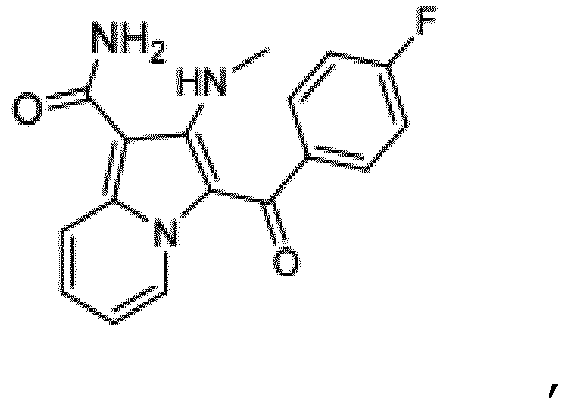
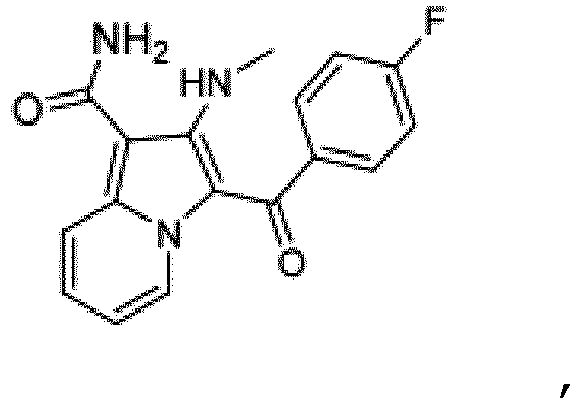
- the present invention therefore, provides in a first aspect 2-Methyl-amino- 3-[(4-fluorophenyl)carbonyl]indolizine-1-carboxamide, of the structure or a pharmaceutically acceptable salt thereof.
- the invention provides a pharmaceutical composition
- a pharmaceutical composition comprising 2-Methyl-amino-3-[(4-fluorophenyl)carbonyl]indolizine-1-carboxamide of the structure or a pharmaceutically acceptable salt thereof, and one or more pharmaceutically acceptable carriers or excipients.
- the present invention provides for a combination comprising 2-Methyl-amino-3-[(4-fluorophenyl)carbonyl]indolizine-1-carboxamide of the structure or a pharmaceutically acceptable salt thereof, and one or more therapeutically active agents.
- the present invention provides for 2-methylamino-3-[(4-fluorophenyl)carbonyl]indoline-1-carboxamide for use in a method of inhibiting casein kinase 1 delta activity in a subject in need thereof, wherein the method comprises administering to the subject a therapeutically effective amount of 2-Methyl-amino-3-[(4-fluorophenyl)carbonyl]indolizine-1-carboxamide of the structure or a pharmaceutically acceptable salt thereof or a pharmaceutical composition thereof.
- the present invention provides for a 2-Methyl-amino-3-[(4-fluorophenyl)carbonyl]indolizine-1-carboxamide, of the structure or a pharmaceutically acceptable salt thereof, or a pharmaceutical composition thereof for use as a medicament or in the treatment of a neurodegenerative disorder.
- the present invention provides 2-methylamino-3-[(4-fluorophenyl)carbonyl]indolizine-1-carboxamide for use in a method of treating a neurodegenerative disorder comprising administering to a subject in need thereof a therapeutically effective amount of 2-Methyl-amino-3-[(4-fluorophenyl)carbonyl]indolizine-1-carboxamide of the structure or a pharmaceutically acceptable salt thereof, or the pharmaceutical composition thereof.
- the neurodegenerative disorder in the fifth and sixth aspect of the invention is a tauopathy such as Alzheimer's disease, frontotemporal dementia with Parkinsonism linked to chromosome 17 (FTDP-17), progressive supranuclear palsy (PSP), Pick's disease, corticobasal degeneration, multisystem atrophy (MSA), neurobasal degeneration with iron accumulation, type 1 (Hallervorden-Spatz), argyrophilic grain dementia, Down's syndrome, diffuse neurofibrillary tangles with calcification, dementia pugilistica, Gerstmann-Straussler- Scheinker disease, myotonic dystrophy, Niemann-Pick disease type C, progressive subcortical gliosis, prion protein cerebral amyloid angiopathy, tangle only dementia, postencephalitic parkinsonism, subacute sclerosing panencephalitis, Creutzfeldt-Jakob disease, amyotrophic lateral sclerosis/parkinsonism-
- the tauopathy is Alzheimer's disease.
- treat includes therapeutic treatments, prophylactic treatments and applications in which one reduces the risk that a subject will develop a disorder or other risk factor. Treatment does not require the complete curing of a disorder and encompasses the reduction of the symptoms or underlying risk factors.
- diagnosis includes the provision of any information concerning the existence or presence, non-existence or absence or probability of the disorder in a patient. It further includes the provision of information concerning the type or classification of the disorder or of symptoms which are or may be experienced in connection with it. This may include, for example, diagnosis of the severity of the disorder. It encompasses prognosis of the medical course of the disorder, for example its duration, severity and the course of progression from mild cognitive impairment (MCI) to AD or other dementias.
- MCI mild cognitive impairment
- the term “subject” includes any human or non-human animal.
- non-human animal includes all vertebrates, e.g., mammals and non-mammals, such as non-human primates, rodents, sheep, dogs, cats, horses, cows, chickens, amphibians, reptiles, etc.
- kinase inhibitors In general, many of them inhibit multiple kinases, in part because they target the highly conserved ATP-binding pocket. Cross-reactivity, hence, remains one of the main issues when developing kinase inhibitors.
- the compound according to the present invention 2-Methyl-amino-3-[(4-fluorophenyl)carbonyl]indolizine-1-carboxamide, of the structure (which will be also called compound A throughout the description and examples), is derived from compound 987 (2-amino-3-[(4-fluorophenyl) carbonyl]indolizine-1-carboxamide; WO2012080727 ), whereby the primary amine has been mono-methylated.
- This development is based on re-modelling the crystal structure of free casein kinase 1 delta, which shows a closed hydrophobic pocket adjacent to the ATP binding site, to an open conformation (model not shown).
- casein kinase 1 delta was subsequently confirmed by the recent crystal structure of casein kinase 1 delta in complex with casein kinase 1 delta/epsilon inhibitor PF4800567 ( Huang, X et al. (2012) J.Med.Chem. 55: 956-960 ).
- the residue defining the ATP binding site (gatekeeper residue) in casein kinase 1 delta is a methionine (Met 85).
- Met 85 methionine
- Thr 106 threonine
- the primary amine of compound 987 was predicted to form part of the binding interaction with the hinge region of casein kinase 1 delta but also to have the potential to form a hydrogen bond to the side chain of the gatekeeper residue in anti-targets such as to Thr 106 in p38a.
- the gatekeeper Met 85 in casein kinase 1 delta is less adept at forming hydrogen bonding via the thioether of its side chain.
- the mono-methylation of the primary amine reduces interaction with the gate keeper of anti-targets such as p38a but also TGFBR1, ALK4, EGFR, RIPK2, YES, EphA2 and LCK, and also increases potency for casein kinase 1 delta.
- compound A not only shows increased selectivity and potency over prior art casein kinase 1 delta inhibitors but also shows good brain permeability and presence in the brain, retains good pharmacological profile and therapeutic benefits, whilst not being cytotoxic.
- the present invention also provides for the pharmaceutical acceptable salt of 2-Methyl-amino-3-[(4-fluorophenyl)carbonyl]indolizine-1-carboxamide, of the structure
- salts are intended to indicate salts which are not harmful to the patient.
- Such salts include pharmaceutically acceptable acid addition salts, pharmaceutically acceptable metal salts and pharmaceutically acceptable alkaline addition salts.
- Acid addition salts include salts of inorganic acids as well as organic acids.
- suitable inorganic acids include hydrochloric, hydrobromic, hydroiodic, phosphoric, sulfuric, nitric acids and the like.
- suitable organic acids include formic, acetic, trichloroacetic, trifluoroacetic, propionic, benzoic, cinnamic, citric, fumaric, glycolic, lactic, maleic, malic, malonic, mandelic, oxalic, picric, pyruvic, salicylic, succinic, methanesulfonic, ethanesulfonic, tartaric, ascorbic, pamoic, bismethylene salicylic, ethanedisulfonic, gluconic, citraconic, aspartic, stearic, palmitic, EDTA, glycolic, p-aminobenzoic, glutamic, benzenesulfonic, p-toluenesulfonic acids and the like.
- metal salts include lithium, sodium, potassium, magnesium salts and the like.
- ammonium and alkylated ammonium salts include ammonium, methylammonium, dimethylammonium, trimethylammonium, ethylammonium, hydroxyethylammonium, diethylammonium, butylammonium, tetramethylammonium salts and the like.
- alkaline salts include, for example, sodium, potassium, lithium, calcium, magnesium or ammonium or organic bases such as, for example, methylamine, ethylamine, propylamine, trimethylamine, diethylamine, triethylamine, N,N-dimethylethanolamine, tris(hydroxymethyl)aminomethane, ethanolamine, pyridine, piperidine, piperazine, picoline, dicyclohexylamine, morpholine, benzylamine, procaine, lysine, arginine, histidine, N-methylglucamine.
- bases such as, for example, methylamine, ethylamine, propylamine, trimethylamine, diethylamine, triethylamine, N,N-dimethylethanolamine, tris(hydroxymethyl)aminomethane, ethanolamine, pyridine, piperidine, piperazine, picoline, dicyclohexylamine, morpholine, benzyl
- 2-Methyl-amino-3-[(4-fluorophenyl)carbonyl]indolizine-1-carboxamide can be in racemic forms, as well as in the form of pure enantiomers or non-racemic (scalemic) mixture of enantiomers.
- the present invention also provide for pharmaceutical compositions comprising 2-Methyl-amino-3-[(4-fluorophenyl)carbonyl]indolizine-1-carboxamide, of the structure or a pharmaceutically acceptable salt thereof as described herein and one or more pharmaceutically acceptable excipient, carrier, buffer, stabiliser or other materials well known to those skilled in the art. Such materials should be non-toxic and should not interfere with the efficacy of the active ingredient.
- the precise nature of the carrier or other material may depend on the route of administration, e. g. oral, intravenous, cutaneous or subcutaneous, nasal, intramuscular, intraperitoneal routes.
- compositions for oral administration may be in tablet, capsule, powder or liquid form.
- a tablet may include a solid carrier such as gelatin or an adjuvant.
- Liquid pharmaceutical compositions generally include a liquid carrier such as water, petroleum, animal or vegetable oils, mineral oil or synthetic oil.
- Physiological saline solution dextrose or other saccharide solution or glycols such as ethylene glycol, propylene glycol or polyethylene glycol may be included.
- the active ingredient will be in the form of a parenterally acceptable aqueous solution which is pyrogen-free and has suitable pH, isotonicity and stability.
- a parenterally acceptable aqueous solution which is pyrogen-free and has suitable pH, isotonicity and stability.
- isotonic vehicles such as Sodium Chloride Injection, Ringer's Injection, Lactated Ringer's Injection.
- Preservatives, stabilisers, buffers, antioxidants and/or other additives may be included, as required.
- the one or more therapeutically active agents are preferably agents suitable for the treatment of neurodegenerative disorders, but may also encompass agents suitable for treating side effects of such neurodegenerative disorders such as psychological and mental side effects related to, for example, dementia.
- the one or more therapeutically active agents may also encompass anti-amyloid agents, anti-tau antibodies, tau kinase inhibitors, anti-tau aggregation inhibitors.
- the one or more therapeutically active agents are selected from the group of of memantine (e.g. Namenda®), galantamine (e.g. Razadyne®), rivastigmine (e.g. Exelon®), donepezil (e.g. Aricept®), solanezumab, 5HT 5 antagonists or combinations thereof.
- memantine e.g. Namenda®
- galantamine e.g. Razadyne®
- rivastigmine e.g. Exelon®
- donepezil e.g. Aricept®
- solanezumab e.g. 5HT 5 antagonists or combinations thereof.
- Compound 2-Methyl-amino-3-[(4-fluorophenyl)carbonyl]indolizine-1-carboxamide inhibits casein kinase 1 delta activity and may be used in a method comprising administering to a subject in need thereof compound A or a pharmaceutically acceptable salt thereof or pharmaceutical compositions comprising 2-Methyl-amino-3-[(4-fluorophenyl)carbonyl]indolizine-1-carboxamide or a pharmaceutically acceptable salt thereof or pharmaceutical compositions comprising 2-Methyl-amino-3-[(4-fluorophenyl)carbonyl]indolizine-1-carboxamide or a pharmaceutically acceptable salt thereof.
- the IC 50 of 2-Methyl-amino-3-[(4-fluorophenyl)carbonyl]indolizine-1-carboxamide is calculated in vitro to be at least 30nM, more preferably between 20nM and 30nM, even more preferably, the in vitro IC 50 of compound 2-Methyl-amino-3-[(4-fluorophenyl)carbonyl]indolizine-1-carboxamide for use in a method for inbiting casein kinase 1 delta in a subject in need thereof is less than 20nM.
- the present invention also encompasses 2-Methyl-amino-3-[(4-fluorophenyl)carbonyl]indolizine-1-carboxamide, of the structure or a pharmaceutically acceptable salt thereof, or a pharmaceutical composition thereof for use as a medicament or in the treatment of a neurodegenerative disorder or a method of treating a neurodegenerative disorder comprising administering to a subject in need thereof a therapeutically effective amount of 2-Methyl-amino-3-[(4-fluorophenyl)carbonyl]indolizine-1-carboxamide of the structure or a pharmaceutically acceptable salt thereof, or the pharmaceutical composition thereof.
- the neurodegenerative disorder is a tauopathy.
- Tauopathies are a recognised class of conditions characterised by neurofibrillary tangles or aggregates of the tau protein.
- the intracellular deposit of tau protein are usually neuronal or glial, are filamentous and generally they present themselves in a hyperphosphorylated state as compared to the level of phosphorylation in tau from control human brain.
- examples of preferred tauopathies are Alzheimer's disease, frontotemporal dementia with Parkinsonism linked to chromosome 17 (FTDP-17), progressive supranuclear palsy (PSP), Pick's disease, corticobasal degeneration, multisystem atrophy (MSA), neurobasal degeneration with iron accumulation, type 1 (Hallervorden-Spatz), argyrophilic grain dementia, Down's syndrome, diffuse neurofibrillary tangles with calcification, dementia pugilistica, Gerstmann-Straussler- Scheinker disease, myotonic dystrophy, Niemann-Pick disease type C, progressive subcortical gliosis, prion protein cerebral amyloid angiopathy, tangle only dementia, postencephalitic parkinsonism, subacute sclerosing panencephalitis, Creutzfeldt-Jakob disease, amyotrophic lateral sclerosis/parkinsonism-dementia complex, non-Gua
- the tauopathy is Alzheimer's disease and the present invention encompasses 2-Methyl-amino-3-[(4-fluorophenyl)carbonyl]indolizine-1-carboxamide, of the structure or a pharmaceutically acceptable salt thereof, or a pharmaceutical composition thereof is for use in the treatment of Alzheimer's disease or a method of treating Alzheimer's disease comprising administering to a subject in need thereof a therapeutically effective amount of 2-Methyl-amino-3-[(4-fluorophenyl)carbonyl]indolizine-1-carboxamide of the structure or a pharmaceutically acceptable salt thereof, or the pharmaceutical composition thereof.
- MS analyses were performed on a Q-TOF-2 hybrid quadrupole time of flight mass spectrometer with electrospray ionisation (ESI), coupled with a UPLC (Waters) by direct injection of the sample.
- ESI electrospray ionisation
- UPLC UPLC
- HPLC analyses were performed with an Alliance 2695 HPLC system (Waters) and a Nucleosil 100-5 C18 column from Macherey-Nagel with a 4.6 mm i.d. and a length of 250 mm. Gradient from 100% water to 100% acetonitrile in 42 min, both with 0.1% trifluoroacetic acid.
- NMR spectra were run on a Bruker AVANCE 500 MHz NMR spectrometer using ICON-NMR, under ToSpin program control. Spectra were measured at 298.2K and were referenced relative to the solvent resonance.
- Step 2 Synthesis of 2-amino-3-(4-fluorobenzoyl)-indolizine-1-carboxylic acid amide ( Pauls H. et al., Chem. Ber. 110 , 1294-1303 ( 1977 ) )
- Step 3 Synthesis of 2-(N-methylamino)-3-(4-fluorobenzoyl)-indolizine-1-carboxylic acid amide ( Gonzalez I. et al., Organic Letters 11 , No. 8 , 1677-1680 ( 2009 ) )
- the assay was carried out according to the established KINOMEscan® technology (DiscoveRx® LeadHunter®, Discovery Services, www.discoverx.com). This utilises an active site-directed competition binding assay to quantitatively measure interactions between a compound and a kinase. As the assay does not require ATP (opposed to the IC 50 value which may depend on ATP concentration), it reports the true thermodynamic interaction affinity. Compounds that bind the kinase active site and directly (sterically) or indirectly (allosterically) prevent kinase binding to an immobilized ligand, will reduce the amount of kinase captured on a solid support.
- the lysates were centrifuged (6,000 x g) and filtered (0.2 ⁇ m) to remove cell debris.
- the remaining kinases were produced in HEK293 cells and subsequently tagged with DNA for qPCR detection.
- Streptavidin-coated magnetic beads were treated with biotinylated small molecule ligands for 30 minutes at room temperature to generate affinity resins for kinase assays.
- the liganded beads were blocked with excess biotin and washed with blocking buffer (SeaBlock (Pierce), 1% BSA, 0.05 % Tween 20, 1 mM DTT) to remove unbound ligand and to reduce non-specific phage binding.
- Binding reactions were assembled by combining kinases, liganded affinity beads, and test compounds in 1x binding buffer (20 % SeaBlock, 0.17x PBS, 0.05 % Tween 20, 6 mM DTT).
- Compound A and Comparative Compound 324 were prepared as 40x stocks in 100% DMSO and directly diluted (final concentration 10 ⁇ M) into the assay. All reactions were performed in polypropylene 384-well plates in a final volume of 0.04 ml. The assay plates were incubated at room temperature with shaking for 1 hour and the affinity beads were washed with wash buffer (1x PBS, 0.05 % Tween 20).
- the beads were then re-suspended in elution buffer (1x PBS, 0.05 % Tween 20, 0.5 ⁇ M non-biotinylated affinity ligand) and incubated at room temperature with shaking for 30 minutes.
- elution buffer (1x PBS, 0.05 % Tween 20, 0.5 ⁇ M non-biotinylated affinity ligand
- %Ctrl C o m p o u n d A signal ⁇ p o s i t i v e c o n t r o l signal n e g a t i v e c o n t r o l signal ⁇ p o s i t i v e c o n t r o l signal ⁇ 100
- compound A showed high binding capacity for casein kinase 1 isoforms alpha 1 (CSNK1A1), alpha 1-like (CSNK1A1L), delta (CSNK1D) and epsilon (CSNK1E); for these kinases, the binding capacities of compound A were between 2.7 and 67 fold stronger than the control compound (Comparative Compound 324).
- the Selectivity Score (or S-score) was calculated ( Karaman, M.W. et al. A quantitative analysis of kinase inhibitor selectivity. Nat. Biotechnol. 26, 127-132 (2008 ).
- the S-score is a quantitative measure of compound selectivity. It is calculated by dividing the number of kinases that a compound binds to by the total number of distinct kinases tested, excluding mutant variants.
- S ⁇ score Number of hits / Number of assays
- This value can be calculated using %Ctrl as a potency threshold -
- S 35 number of non ⁇ mutant kinases with % Ctrl ⁇ 35 / ( number of non ⁇ mutant kinases tested )
- S 10 number of non ⁇ mutant kinases with % Ctrl ⁇ 10 / ( number of non ⁇ mutant kinases tested )
- S 1 number of non ⁇ mutant kinases with % Ctrl ⁇ 1 / ( number of non ⁇ mutant kinases tested ) and provides a quantitative method of describing compound selectivity to facilitate comparison of different compounds.
- the screening concentration was 10 ⁇ M. The lower the S-score, the higher the selectivity of that compound.
- a two-tier strategy to determine the selectivity of compound A was applied: first, the compound was tested at a single concentration (in duplicate) to determine the %-remaining activity of the target kinase. Subsequently, the IC 50 of compound A and comparative compounds for casein kinase 1 delta were determined.
- Compound A was tested against 29 kinases along with four comparative compounds: Comparative Compound 324 (5-(1,3-benzoxazol-2-yl)-4-(pyridine-4-yl)pyrimidin-2-amine), Comparative Compound 987 (2-amino-3-[(4-fluorophenyl)carbonyl]indolizine-1-carboxamide), Comparative Compound 315 (4-((4-methoxyphenyl)methylene)-2-(2-thienyl)-5(4H)-oxalone; WO2010092660 ) and PF4800567 (3-[(3-Chlorophenoxy)methyl]-1-(tetrahydro-2H-pyran-4-yl)-1H-pyrazolo[3,4-d]pyrimidin-4-amine).
- Compound A was found to have the highest selectivity over the comparative compounds for the casein kinases 1 alpha, delta and epsilon (in bold in Table 3), with the highest selectivity for casein kinase 1 delta and higher or comparable selectivity for casein kinases 1 alpha 1 and epsilon.
- compound A was found to have reduced selectivity for p38 ⁇ (Table 3 indicated by *) in comparison to the other comparative compounds and in particular to Comparative Compound 987 (Table 3 indicated by $), the closest, structurally, to Compound A.
- Compound A showed higher potency with respect to the positive control compound GW5074 and Comparative Compounds 324, 987 and 315 (Table 4). In particular, the IC 50 for Compound A was 17-fold more potent that Comparative Compound 987.
- the cytotoxicity screening panel was performed by Cyprotex® according to their established protocols. HepG2 cells were plated on 96-well tissue culture treated black walled clear bottomed polystyrene plates, 100 ⁇ L per well. The cells were dosed with compound A and comparative compound 324 ( WO2012080727 ; 5-(1,3-benzoxazol-2-yl)-4-(pyridine-4-yl)pyrimidin-2-amine) at 0.04 ⁇ M, 0.1 ⁇ M, 0.4 ⁇ M, 1.0 ⁇ M, 4.0 ⁇ M, 10 ⁇ M, 40 ⁇ M and 100 ⁇ M. At the end of the incubation period (72h), the cells were loaded with the relevant dye/antibody for each cell health marker. The plates were then scanned using an automated fluorescent cellular imager, ArrayScan® VTI (Thermo Scientific Cellomics).
- Cytotoxicity was assessed using a multiparametric approach using High Content Screening (HCS) ( O'Brien P and Haskins JR (2007) High Content Screening: A Powerful Approach to Systems Cell Biology and Drug Discovery Ed. Taylor et al.; 415-425 ). Decreased cell count is a direct indication of toxicity, but many compounds cause sub-lethal toxicities that do not cause changes in cell viability over the incubation period. This assay scores compounds across direct and indirect measure of toxicity.
- HCS High Content Screening
- Both compound A and comparative compound 324 decrease the number of cells per well at a concentration well above the IC 50 . Decreased cell count indicates toxicity due to necrosis, apoptosis or a reduction in cellular proliferation.
- compound A and the comparative compound 324 both increased cell membrane permeability (a general indicator of cell death) at concentrations well above their IC 50 .
- Increase in mitochondrial mass and mitochondrial membrane potential implies mitochondrial swelling or an adaptive response to cellular energy demands, whilst a decrease in mitochondrial membrane potential indicates mitochondrial toxicity, as well as a potential role in apoptosis signalling.
- Intravenous doses was administered into a tail vein at a constant dose volume of 5 mL/kg to achieve a dose level of 3 mg/kg.
- Oral doses were administered as a single bolus dose via syringe with attached polypropylene gavage tube at a constant dose volume of 10mL/kg to achieve dose levels of 3mg/kg (groups 2 and 4) and 30 mg/kg (group 3 and 6).
- blood samples were collected into individual K 3 EDTA tubes by cardiac puncture under terminal anaesthesia (isoflurane) from 3 animals per timepoint. Following collection animal were sacrificed by cervical dislocation. Samples were taken at 5, 15 and 30 minutes and then 1, 2, 4, 8 and 24 hours post-IV dose and 15 and 30 minutes and then 1, 2, 4, 8 and 24 hours post-OP dose.
- Pharmacokinetic parameters were derived by non-compartmental analysis (linear/logarithmic trapezoidal) using WinNonlin (Version 4.1 or higher) software. The following parameters were determined from the plasma concentration-time profile:
- TMHT Thi-1 Mutated Human Tau
- FTDP-17 Frontotemporal Dementia and Parkinsonism linked to chromosome 17
- Niemann Pick's disease Various compounds of different classes (among them also antibody treatments) were positively tested for their efficacy in the TMHT model.
- Published examples are the ⁇ -secretase modulator CHF5074 ( Lanzilotta A. et al. The ⁇ -secretase modulator CHF5074 reduces the accumulation of native hyperphosphorylated tau in a transgenic mouse model of Alzheimer's disease. J Mol Neurosci.
- TMHT mice received compound A, comparative compound 324 or comparative compound PF4800567 (3-[(3-Chlorophenoxy)methyl]-1-(tetrahydro-2H-pyran-4-yl)-1H-pyrazolo[3,4-d]pyrimidin-4-amine) or vehicle (0.5% w/v methylcellulose) for 8 weeks (54 applications) at a dosage of 30mg/kg body weight, orally via gavage.
- MMM Morris Water Maze
- Blood (plasma) and brain samples were collected after sacrification. Samples collected at sacrifice were plasma, left cortex, left hippocampus, right cortex, right hippocampus, remainder of left brain hemisphere, remainder of right brain hemisphere.
- transgenic animals Of the 48 transgenic animals, one (indicated by * in Table 8) was euthanized 4 days after treatment start due to humane end point regulations (paralysis and high grade of dehydration). The death rate was within a normal range of untreated transgenic animals in this age and observation period.
- Figure 3 shows the means for each day over 4 days; Table 10 shows the values of the means and the standard error of the means (SEMs) for each compound over the 4 days testing. Non-performers were excluded.
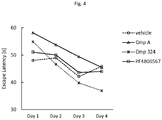
- Figure 4 shows the means for each day over 4 days;
- Table 12 shows the values of the means and the standard error of the means (SEMs) for each compound over the 4 days testing. Non-performers were excluded.
- the swim speed of the animals decreased slightly from day 1 to 4 that is typically seen in the MWM but it was not statistically significant.
- the probe trial performed at the end of the MWM the abidance in the target quadrant with the removed platform was evaluated. No significant difference between the treatment groups were observed. This result is often seen in the behaviour of mice even with potent compounds.
- Plasma and brain samples derived from the experiments in 5.5 were pooled from single time point and were analysed for the presence and concentration of Comparative Compound 324 and Compound A by LC-MS/MS after protein precipitation over the calibration range of 0.5-10,000 ng/mL. Chrysin (Sigma®), control mouse plasma and brain (obtained from a commercial supplier) were used as internal standards.
- Compound A has improved physicochemical parameters compared to Comparative Compound 987, PF670462 and PF4800567 (both Tocris®). In addition, Compound A's physicochemical parameters were within the most desirable ranges typical of 119 marketed drugs for the central nervous system ( Wager T.T. et al., ACS Chem. Neurosci. (2010), 1, 435-449 ). In particular, Compound A showed improved blood-brain barrier (BBB) permeation when compared to its structurally closest compound, comparative compound 987 with a TPSA of 76.6 ⁇ 2 , well within the most desirable range.
- BBB blood-brain barrier
Landscapes
- Health & Medical Sciences (AREA)
- Chemical & Material Sciences (AREA)
- Organic Chemistry (AREA)
- Engineering & Computer Science (AREA)
- Bioinformatics & Cheminformatics (AREA)
- Biomedical Technology (AREA)
- Neurology (AREA)
- Neurosurgery (AREA)
- Veterinary Medicine (AREA)
- Public Health (AREA)
- General Health & Medical Sciences (AREA)
- Medicinal Chemistry (AREA)
- Animal Behavior & Ethology (AREA)
- Pharmacology & Pharmacy (AREA)
- Life Sciences & Earth Sciences (AREA)
- Nuclear Medicine, Radiotherapy & Molecular Imaging (AREA)
- General Chemical & Material Sciences (AREA)
- Chemical Kinetics & Catalysis (AREA)
- Psychology (AREA)
- Hospice & Palliative Care (AREA)
- Psychiatry (AREA)
- Epidemiology (AREA)
- Pharmaceuticals Containing Other Organic And Inorganic Compounds (AREA)
- Nitrogen Condensed Heterocyclic Rings (AREA)
- Medicines That Contain Protein Lipid Enzymes And Other Medicines (AREA)
Description
- The present invention relates to 2-Methyl-amino-3-[(4-fluorophenyl)carbonyl]indolizine-1-carboxamide, an inhibitor of
casein kinase 1 delta, pharmaceutically acceptable salts and pharmaceutical compositions thereof in the treatment of neurodegenerative disorders such as Alzheimer's disease. -
Casein kinase 1 belongs to the serine/threonine kinase family. In mammals, it is known in seven isoforms, namely, alpha, beta,gamma 1 to 3, delta and epsilon. A potential role ofmammalian casein kinase 1 delta in neurodegenerative disorders, such as Alzheimer's disease (AD), has been hypothesized.Casein kinase 1 delta is increased more than 30-fold in the hippocampus of patients with AD compared to control subjects (Ghoshal, N. et al. (1999) Am J Pathol 155, 1163-1172), while its mRNA is increased 24-fold (Yasojima, K et al. (2000) Brain Res 865, 116-120). Amyloid beta-peptide (Aβ), a component of the senile neuritic plaque that together with tangles (of which PHF tau is the main component), characterizes AD, appears to stimulatecasein kinase 1 activity (Chauhan, A et al. (1993) Brain Res 629, 47-52). In addition, it has been confirmed that 5 newly identified Serine/Threonine phosphorylation sites in PHF tau (insoluble tau, also called paired helical filament tau, an extremely phosphorylated aggregate obtained from the lesions in the brains of AD's patients) can be generated bycasein kinase 1 delta, bringing the total number of phosphorylation sites on adult tau to 10, three of which are exclusively phosphorylated bycasein kinase 1 delta (Hanger DP et al. (2007) J Biol Chem 282, 23645-23654). - These findings support that
casein kinase 1 delta may make an important contribution to the pathogenesis of AD and other neurodegenerative diseases. In fact, intraneuronal deposit of tau in the form of typical neurofibrillary tangles is not an exclusive feature of AD. Morphologically distinct tau aggregates, all filamentous and mostly in a hyperphosphorylated state, are found in other neurodegenerative disorders such as frontotemporal dementia with Parkinsonism linked to chromosome 17 (FTDP-17), progressive supranuclar palsy (PSP), Pick's disease, corticobasal degeneration, ad multisystem atrophy (MSA) which are all grouped as tauopathies. This strongly implies that similar abnormalities in regulating phosphorylation of tau are shared by all the tauopathies. -
Casein kinase 1 delta inhibitors therefore may be of potential benefit in the treatment of AD and other neurodegenerative disorders, such as tauopathies.WO2012080727 disclosescasein kinase 1 delta inhibitors which show inhibition of greater than 90% in acasein kinase 1 delta assay and also show some degree of selectivity against other kinases. - Compound 2-amino-3-(4-methylbenzoyl)-indolizine-1-carboxamide has been reported to be an antimalarial agent with kinase inhibitory activity (Lemercier et al., 2009, Biochemistry 48:6379-89).
- Hence, there remains the need for a casein kinase inhibitor with therapeutic benefit in the treatment of neurodegenerative disorders such as AD and other tauopaties which retains inhibition against
casein kinase 1 delta whilst it shows improvedcasein kinase 1 delta selectivity and brain permeability. - The present invention, therefore, provides in a first aspect 2-Methyl-amino- 3-[(4-fluorophenyl)carbonyl]indolizine-1-carboxamide, of the structure

- In a second aspect, the invention provides a pharmaceutical composition comprising 2-Methyl-amino-3-[(4-fluorophenyl)carbonyl]indolizine-1-carboxamide of the structure

- In a third aspect, the present invention provides for a combination comprising 2-Methyl-amino-3-[(4-fluorophenyl)carbonyl]indolizine-1-carboxamide of the structure

- In a fourth aspect the present invention provides for 2-methylamino-3-[(4-fluorophenyl)carbonyl]indoline-1-carboxamide for use in a method of inhibiting
casein kinase 1 delta activity in a subject in need thereof, wherein the method comprises administering to the subject a therapeutically effective amount of 2-Methyl-amino-3-[(4-fluorophenyl)carbonyl]indolizine-1-carboxamide of the structure
- In a fifth aspect, the present invention provides for a 2-Methyl-amino-3-[(4-fluorophenyl)carbonyl]indolizine-1-carboxamide, of the structure

- In a sixth aspect the present invention provides 2-methylamino-3-[(4-fluorophenyl)carbonyl]indolizine-1-carboxamide for use in a method of treating a neurodegenerative disorder comprising administering to a subject in need thereof a therapeutically effective amount of 2-Methyl-amino-3-[(4-fluorophenyl)carbonyl]indolizine-1-carboxamide of the structure

- Preferably, the neurodegenerative disorder in the fifth and sixth aspect of the invention is a tauopathy such as Alzheimer's disease, frontotemporal dementia with Parkinsonism linked to chromosome 17 (FTDP-17), progressive supranuclear palsy (PSP), Pick's disease, corticobasal degeneration, multisystem atrophy (MSA), neurobasal degeneration with iron accumulation, type 1 (Hallervorden-Spatz), argyrophilic grain dementia, Down's syndrome, diffuse neurofibrillary tangles with calcification, dementia pugilistica, Gerstmann-Straussler- Scheinker disease, myotonic dystrophy, Niemann-Pick disease type C, progressive subcortical gliosis, prion protein cerebral amyloid angiopathy, tangle only dementia, postencephalitic parkinsonism, subacute sclerosing panencephalitis, Creutzfeldt-Jakob disease, amyotrophic lateral sclerosis/parkinsonism-dementia complex, non-Guamanian motor neuron disease with neurofibrillary tangles/dementia, chronic traumatic encephalopathy, alpha-synucleinopathies and Parkinson's disease.
- In one preferred embodiment, the tauopathy is Alzheimer's disease.
-
-
Figure 1 . Casein Kinase 1 delta IC50 curve for compound A. -
Figure 2 . Depiction of the Morris Water Maze. The black triangles indicate the start positions of the mice and the black square indicates the target platform. N = North; W = West; S = South and E = East. -
Figure 3 . Path length (length of the trajectory [meter] to reach the target) in the Morris Water Maze of animals of groups A to D. Graphs represent mean for each day (average of the 3 trials per day) over 4 days. -
Figure 4 . Escape latency (time [seconds] to reach the target) in the Morris Water Maze of animals of groups A to D. Graphs represent mean for each day (average of the 3 trials per day) over 4 days. - The term "treat", "treating", "treatment", "prevent", "preventing" or "prevention", or grammatical equivalents thereof, includes therapeutic treatments, prophylactic treatments and applications in which one reduces the risk that a subject will develop a disorder or other risk factor. Treatment does not require the complete curing of a disorder and encompasses the reduction of the symptoms or underlying risk factors.
- The term "diagnosis", or grammatical equivalents thereof, as used herein, includes the provision of any information concerning the existence or presence, non-existence or absence or probability of the disorder in a patient. It further includes the provision of information concerning the type or classification of the disorder or of symptoms which are or may be experienced in connection with it. This may include, for example, diagnosis of the severity of the disorder. It encompasses prognosis of the medical course of the disorder, for example its duration, severity and the course of progression from mild cognitive impairment (MCI) to AD or other dementias.
- As used herein, the term "subject" includes any human or non-human animal. The term "non-human animal" includes all vertebrates, e.g., mammals and non-mammals, such as non-human primates, rodents, sheep, dogs, cats, horses, cows, chickens, amphibians, reptiles, etc.
- The term "comprising" indicates that the subject includes all the elements listed, but may, optionally, also include additional, unnamed elements (i.e. open).
- The term "and/or" where used herein is to be taken as specific disclosure of each of the two specified features or components with or without the other. For example "A and/or B" is to be taken as specific disclosure of each of (i) A, (ii) B and (iii) A and B, just as if each is set out individually herein.
- Unless the context dictates otherwise, the definitions of the features/terms set out above are not limited to any particular aspect or embodiment of the invention and apply equally to all aspects and embodiments which are described herein.
- One common problem with kinase inhibitors in general is that many of them inhibit multiple kinases, in part because they target the highly conserved ATP-binding pocket. Cross-reactivity, hence, remains one of the main issues when developing kinase inhibitors.
- Recent cross-screening data revealed that several widely used compounds for p38α (for instance SB203580) also inhibit
casein kinase 1 delta (Verkaar, F et al. (2011) Biochim Biophys Acta 1697, 243-267). Both p38α andcasein kinase 1 delta are well known to be activators of the Wnt/β-catenin signaling pathway (Peters JM, et al. (1999) Nature 401, 345-350). Cross-reactivity for p38α andcasein kinase 1 delta cannot be explained by sequence similarity as these kinases are quite distant in the phylogenetic tree. Their pharmacological similarity can only be demonstrated by profiling compounds in biochemical assays. - The compound according to the present invention, 2-Methyl-amino-3-[(4-fluorophenyl)carbonyl]indolizine-1-carboxamide, of the structure

WO2012080727 ), whereby the primary amine has been mono-methylated. This development is based on re-modelling the crystal structure offree casein kinase 1 delta, which shows a closed hydrophobic pocket adjacent to the ATP binding site, to an open conformation (model not shown). The model was subsequently confirmed by the recent crystal structure ofcasein kinase 1 delta in complex withcasein kinase 1 delta/epsilon inhibitor PF4800567 (Huang, X et al. (2012) J.Med.Chem. 55: 956-960). The residue defining the ATP binding site (gatekeeper residue) incasein kinase 1 delta is a methionine (Met 85). In contrast the same position in p38α is occupied by a threonine (Thr 106). In our model the primary amine of compound 987 was predicted to form part of the binding interaction with the hinge region ofcasein kinase 1 delta but also to have the potential to form a hydrogen bond to the side chain of the gatekeeper residue in anti-targets such as to Thr 106 in p38a. The gatekeeper Met 85 incasein kinase 1 delta is less adept at forming hydrogen bonding via the thioether of its side chain. The mono-methylation of the primary amine reduces interaction with the gate keeper of anti-targets such as p38a but also TGFBR1, ALK4, EGFR, RIPK2, YES, EphA2 and LCK, and also increases potency forcasein kinase 1 delta. - In addition, as it will be apparent throughout the examples shown below, compound A not only shows increased selectivity and potency over prior
art casein kinase 1 delta inhibitors but also shows good brain permeability and presence in the brain, retains good pharmacological profile and therapeutic benefits, whilst not being cytotoxic. - The present invention also provides for the pharmaceutical acceptable salt of 2-Methyl-amino-3-[(4-fluorophenyl)carbonyl]indolizine-1-carboxamide, of the structure

- In the present context, the term "pharmaceutically acceptable salt" is intended to indicate salts which are not harmful to the patient. Such salts include pharmaceutically acceptable acid addition salts, pharmaceutically acceptable metal salts and pharmaceutically acceptable alkaline addition salts. Acid addition salts include salts of inorganic acids as well as organic acids.
- Representative examples of suitable inorganic acids include hydrochloric, hydrobromic, hydroiodic, phosphoric, sulfuric, nitric acids and the like. Representative examples of suitable organic acids include formic, acetic, trichloroacetic, trifluoroacetic, propionic, benzoic, cinnamic, citric, fumaric, glycolic, lactic, maleic, malic, malonic, mandelic, oxalic, picric, pyruvic, salicylic, succinic, methanesulfonic, ethanesulfonic, tartaric, ascorbic, pamoic, bismethylene salicylic, ethanedisulfonic, gluconic, citraconic, aspartic, stearic, palmitic, EDTA, glycolic, p-aminobenzoic, glutamic, benzenesulfonic, p-toluenesulfonic acids and the like. Examples of metal salts include lithium, sodium, potassium, magnesium salts and the like. Examples of ammonium and alkylated ammonium salts include ammonium, methylammonium, dimethylammonium, trimethylammonium, ethylammonium, hydroxyethylammonium, diethylammonium, butylammonium, tetramethylammonium salts and the like.
- Representative examples of alkaline salts include, for example, sodium, potassium, lithium, calcium, magnesium or ammonium or organic bases such as, for example, methylamine, ethylamine, propylamine, trimethylamine, diethylamine, triethylamine, N,N-dimethylethanolamine, tris(hydroxymethyl)aminomethane, ethanolamine, pyridine, piperidine, piperazine, picoline, dicyclohexylamine, morpholine, benzylamine, procaine, lysine, arginine, histidine, N-methylglucamine.
- According to the invention, 2-Methyl-amino-3-[(4-fluorophenyl)carbonyl]indolizine-1-carboxamide can be in racemic forms, as well as in the form of pure enantiomers or non-racemic (scalemic) mixture of enantiomers.
- The present invention also provide for pharmaceutical compositions comprising 2-Methyl-amino-3-[(4-fluorophenyl)carbonyl]indolizine-1-carboxamide, of the structure

intraperitoneal routes. - Pharmaceutical compositions for oral administration may be in tablet, capsule, powder or liquid form. A tablet may include a solid carrier such as gelatin or an adjuvant.
- Liquid pharmaceutical compositions generally include a liquid carrier such as water, petroleum, animal or vegetable oils, mineral oil or synthetic oil.
- Physiological saline solution, dextrose or other saccharide solution or glycols such as ethylene glycol, propylene glycol or polyethylene glycol may be included.
- For intravenous, cutaneous or subcutaneous injection, or injection at the site of affliction, the active ingredient will be in the form of a parenterally acceptable aqueous solution which is pyrogen-free and has suitable pH, isotonicity and stability. Those of relevant skill in the art are well able to prepare suitable solutions using, for example, isotonic vehicles such as Sodium Chloride Injection, Ringer's Injection, Lactated Ringer's Injection. Preservatives, stabilisers, buffers, antioxidants and/or other additives may be included, as required.
- Combinations of 2-Methyl-amino-3-[(4-fluorophenyl)carbonyl]indolizine-1-carboxamide of the structure
- The one or more therapeutically active agents are preferably agents suitable for the treatment of neurodegenerative disorders, but may also encompass agents suitable for treating side effects of such neurodegenerative disorders such as psychological and mental side effects related to, for example, dementia.
- The one or more therapeutically active agents may also encompass anti-amyloid agents, anti-tau antibodies, tau kinase inhibitors, anti-tau aggregation inhibitors.
- More preferably, the one or more therapeutically active agents are selected from the group of of memantine (e.g. Namenda®), galantamine (e.g. Razadyne®), rivastigmine (e.g. Exelon®), donepezil (e.g. Aricept®), solanezumab, 5HT5 antagonists or combinations thereof.
- Compound 2-Methyl-amino-3-[(4-fluorophenyl)carbonyl]indolizine-1-carboxamide inhibits
casein kinase 1 delta activity and may be used in a method comprising administering to a subject in need thereof compound A or a pharmaceutically acceptable salt thereof or pharmaceutical compositions comprising 2-Methyl-amino-3-[(4-fluorophenyl)carbonyl]indolizine-1-carboxamide or a pharmaceutically acceptable salt thereof or pharmaceutical compositions comprising 2-Methyl-amino-3-[(4-fluorophenyl)carbonyl]indolizine-1-carboxamide or a pharmaceutically acceptable salt thereof. - In one embodiment of the method of inhibiting
casein kinase 1 delta activity, the IC50 of 2-Methyl-amino-3-[(4-fluorophenyl)carbonyl]indolizine-1-carboxamide is calculated in vitro to be at least 30nM, more preferably between 20nM and 30nM, even more preferably, the in vitro IC50 of compound 2-Methyl-amino-3-[(4-fluorophenyl)carbonyl]indolizine-1-carboxamide for use in a method for inbitingcasein kinase 1 delta in a subject in need thereof is less than 20nM. - The present invention also encompasses 2-Methyl-amino-3-[(4-fluorophenyl)carbonyl]indolizine-1-carboxamide, of the structure


- Preferably, the neurodegenerative disorder is a tauopathy. Tauopathies are a recognised class of conditions characterised by neurofibrillary tangles or aggregates of the tau protein. The intracellular deposit of tau protein are usually neuronal or glial, are filamentous and generally they present themselves in a hyperphosphorylated state as compared to the level of phosphorylation in tau from control human brain.
- Within the context of the present invention, examples of preferred tauopathies are Alzheimer's disease, frontotemporal dementia with Parkinsonism linked to chromosome 17 (FTDP-17), progressive supranuclear palsy (PSP), Pick's disease, corticobasal degeneration, multisystem atrophy (MSA), neurobasal degeneration with iron accumulation, type 1 (Hallervorden-Spatz), argyrophilic grain dementia, Down's syndrome, diffuse neurofibrillary tangles with calcification, dementia pugilistica, Gerstmann-Straussler- Scheinker disease, myotonic dystrophy, Niemann-Pick disease type C, progressive subcortical gliosis, prion protein cerebral amyloid angiopathy, tangle only dementia, postencephalitic parkinsonism, subacute sclerosing panencephalitis, Creutzfeldt-Jakob disease, amyotrophic lateral sclerosis/parkinsonism-dementia complex, non-Guamanian motor neuron disease with neurofibrillary tangles/dementia, chronic traumatic encephalopathy, alpha-synucleinopathies and Parkinson's disease.
- In one preferred embodiment, the tauopathy is Alzheimer's disease and the present invention encompasses 2-Methyl-amino-3-[(4-fluorophenyl)carbonyl]indolizine-1-carboxamide, of the structure

- Certain aspects and embodiments of the invention will now be illustrated by way of example and with reference to the figures and tables described herein. All documents mentioned in this specification are incorporated herein by reference in their entirety for all purposes.
- Compound A (2-methyl-amino-3-[(4-fluorophenyl)carbonyl]indolizine-1-carboxamide) was synthesized in-house according to the synthesis shown herein. Comparative Compound 324 (5-(1,3-benzoxazol-2-yl)-4-(pyridine-4-yl)pyrimidin-2-amine) and Comparative Compound 987 (2-amino-3-[(4-fluorophenyl)carbonyl]indolizine-1-carboxamide) were sourced from Peakdale Molecular®, Comparative Compound 315 (4-((4-methoxyphenyl)methylene)-2-(2-thienyl)-5(4H)-oxalone) and PF4800567 (3-[(3-Chlorophenoxy)methyl]-1-(tetrahydro-2H-pyran-4-yl)-1H-pyrazolo[3,4-d]pyrimidin-4-amine) were sourced from Tocris®.
-
- g
- gram (s)
- h
- hour(s)
- HPLC
- high performance liquid chromatography
- Me
- methyl
- min
- minute(s)
- mg
- milligram
- mL
- milliliter(s)
- mmol
- millimole
- MS
- mass spectrometry
- NMR
- nuclear magnetic resonance
- RT
- retention time
- TOF
- time of flight
- UPLC
- ultra high performance liquid chromatography
- MS analyses were performed on a Q-TOF-2 hybrid quadrupole time of flight mass spectrometer with electrospray ionisation (ESI), coupled with a UPLC (Waters) by direct injection of the sample.
- HPLC analyses were performed with an Alliance 2695 HPLC system (Waters) and a Nucleosil 100-5 C18 column from Macherey-Nagel with a 4.6 mm i.d. and a length of 250 mm. Gradient from 100% water to 100% acetonitrile in 42 min, both with 0.1% trifluoroacetic acid.
- NMR spectra were run on a Bruker AVANCE 500 MHz NMR spectrometer using ICON-NMR, under ToSpin program control. Spectra were measured at 298.2K and were referenced relative to the solvent resonance.
-

-

- To a solution of 2-bromo-1-(4-fluorophenyl)-ethanone (25 g, 115 mmol) in ethanol (120 ml) was added 2-chloropyridine (32.7 g, 288 mmol) and the reaction was heated to reflux for 5 hours. The solution was left over-night at 4°C and the precipitate was filtrated, washed with diethyl ether and dried in vacuo, to yield the title product.
HPLC RT: 17.41 min
LCMS: [M+1]+ = 250
1H-NMR (500 MHz, MeOH-d 4), δ in ppm: 9.15 (1H, dd, J = 6.2 Hz, 1.6 Hz , Pyr-6), 8.75 (1H, ddd, J = 8.2 Hz, 8.2 Hz, 1.7 Hz, Pyr-4), 8.44 (1H, dd, J = 8.4 Hz, 1.2 Hz, Pyr-3), 8.25 (2H, m, J = 9.0 Hz, 5.2 Hz, Ar-2,6), 8.20 (1H, ddd, J = 8.4 Hz, 6.3 Hz, 1.4 Hz, Pyr-5), 7.38 (2H, m, J = 8.8 Hz, 8.8 Hz, Ar-3,5), 6.67 (2H, s, CH2) -

- 2-Chloro-1-(4-fluorophenacyl)-pyridinium bromide (12.43 g, 37.6 mmol), cyanoacetamide (4.74 g, 56.4 mmol) and N,N-diisopropylethylamine (39.3 ml, 225.6 mmol) in 1-propanol (150 ml) was heated to reflux for 3 hours. The still hot solution was diluted by adding dropwise 90 ml water and was left over-night at 4°C. The precipitate was filtrated, washed with water/1-propanol (1:1) and dried in vacuo to yield the title product.
HPLC RT: 22.65 min
LCMS: [M+1]+ = 298
1H-NMR (500 MHz, DMSO-d 6), δ in ppm: 9.29 (1H, m, J = 6.8 Hz, Ind-4), 7.81 (1H, m, J = 8.9 Hz, Ind-7), 7.63 (2H, m, J = 8.7 Hz, 5.6 Hz, Ar-2,6), 7.38 (1H, ddd, J = 8.9 Hz, 6.9 Hz, 1.1 Hz, Ind-6), 7.30 (2H, m, J = 8.9 Hz, 8.8 Hz, Ar-3,5), 7.09 (2H, br s, NH2), 6.87 (1H, ddd, J = 6.9 Hz, 6.9 Hz, 1.1 Hz, Ind-5), 6.00 (2H, br s, NH2) -

- To a solution of 2-amino-3-(4-fluorobenzoyl)-indolizine-1-carboxylic acid amide (3.09 g, 10.4 mmol) and pyridine (2.94 ml, 36.4 mmol) in dioxane (150 ml) was added copper(II) acetate (4.72 g, 26.0 mmol). The solution was stirred for 15 minutes at room temperature, methylboronic acid (2.19 g, 26 mmol) was added and the reaction was heated to reflux for 7 hours. The solution was brought to room temperature, filtrated by means of filter aid and evaporated in vacuo. The residue was dissolved in dichloromethane (400 ml), washed with half-saturated sodium bicarbonate solution (two x 250 ml portions), and evaporated to dryness. The residue was purified by column chromatography on neutral aluminum oxide. The reaction may be repeated with recovered educt to enhance the yield.
HPLC rt: 24.14 min
LCMS: [M+1]+ = 312
1H-NMR (500 MHz, DMSO-d 6), δ in ppm: 9.26 (1H, m, J = 7.0 Hz, Ind-4), 7.80 (1H, m, J = 8.9 Hz, Ind-7), 7.67 (2H, m, J = 8.8 Hz, 5.6 Hz, Ar-2,6), 7.34 (1H, ddd, J = 9.0 Hz, 6.9 Hz, 1.1 Hz, Ind-6), 7.30 (2H, m, J = 8.8 Hz, 8.8 Hz, Ar-3,5), 7.23 (2H, br s, NH2), 7.18 (1H, q, J = 5.5 Hz, NH), 6.87 (1H, ddd, J = 6.9 Hz, 6.9 Hz, 1.2 Hz, Ind-5), 2.24 (3H, d, J = 5.5 Hz, CH3) - The assay was carried out according to the established KINOMEscan® technology (DiscoveRx® LeadHunter®, Discovery Services, www.discoverx.com). This utilises an active site-directed competition binding assay to quantitatively measure interactions between a compound and a kinase. As the assay does not require ATP (opposed to the IC50 value which may depend on ATP concentration), it reports the true thermodynamic interaction affinity. Compounds that bind the kinase active site and directly (sterically) or indirectly (allosterically) prevent kinase binding to an immobilized ligand, will reduce the amount of kinase captured on a solid support. Conversely, compounds that do not bind the kinase have no effect on the amount of kinase captured on the solid support. Screening "hits" are identified by measuring the amount of kinase captured in test versus control samples by using a quantitative, qPCR method that detects an associated DNA label. For most assays, kinase-tagged T7 phage strains were grown in parallel in 24-well blocks in an E. coli host derived from the BL21 strain. E.coli were grown to log-phase and infected with T7 phage from a frozen stock (multiplicity of infection = 0.4) and incubated with shaking at 32°C until lysis (90-150 minutes). The lysates were centrifuged (6,000 x g) and filtered (0.2µm) to remove cell debris. The remaining kinases were produced in HEK293 cells and subsequently tagged with DNA for qPCR detection. Streptavidin-coated magnetic beads were treated with biotinylated small molecule ligands for 30 minutes at room temperature to generate affinity resins for kinase assays. The liganded beads were blocked with excess biotin and washed with blocking buffer (SeaBlock (Pierce), 1% BSA, 0.05
% Tween % Tween Comparative Compound 324 were prepared as 40x stocks in 100% DMSO and directly diluted (final concentration 10µM) into the assay. All reactions were performed in polypropylene 384-well plates in a final volume of 0.04 ml. The assay plates were incubated at room temperature with shaking for 1 hour and the affinity beads were washed with wash buffer (1x PBS, 0.05 % Tween 20). The beads were then re-suspended in elution buffer (1x PBS, 0.05% Tween 20, 0.5 µM non-biotinylated affinity ligand) and incubated at room temperature with shaking for 30 minutes. The kinase concentration in the eluates was measured by qPCR. - Results were reported as "%Ctrl", where lower numbers indicate stronger hits. The calculation of the "%Ctrl" was as follow:

- Negative control = DMSO (100%Ctrl)
- Positive control = comparative compound 324(0%Ctrl)
- As shown in Table 1 in bold, compound A showed high binding capacity for
casein kinase 1 isoforms alpha 1 (CSNK1A1), alpha 1-like (CSNK1A1L), delta (CSNK1D) and epsilon (CSNK1E); for these kinases, the binding capacities of compound A were between 2.7 and 67 fold stronger than the control compound (Comparative Compound 324). - In addition to the binding capacity, the Selectivity Score (or S-score) was calculated (Karaman, M.W. et al. A quantitative analysis of kinase inhibitor selectivity. Nat. Biotechnol. 26, 127-132 (2008). The S-score is a quantitative measure of compound selectivity. It is calculated by dividing the number of kinases that a compound binds to by the total number of distinct kinases tested, excluding mutant variants.

- This value can be calculated using %Ctrl as a potency threshold -



TABLE 2 Compound Name Selectivity Score Type Number of Hits Number of Non-Mutant Kinases S-score Cmp 324 S(35) 8 395 0.02 Cmp 324 S(10) 4 395 0.01 Cmp 324 S(1) 0 395 0 Cmp A S(35) 14 395 0.035 Cmp A S(10) 8 395 0.02 Cmp A S(1) 3 395 0.008 - Based on the KINOMEscan's in vitro competition binding assay as of August 2007 (http://www.discoverx.com/services/drug-discovery-development-services/kinase-profiling/kinomescan/scanmax), used to evaluate 38 kinase inhibitors (including 21 tyrosine kinase inhibitors, 15 serine-threonine kinase inhibitors, 1 lipid kinase inhibitor and staurosporine) against a panel of 287 distinct human protein kinases and three lipid kinases, compound A resulted having a selectivity score (Table 2) comparable to compounds approved for human use such as Lapatinimib, Imatinib and Gefitininib (data not shown).
- A two-tier strategy to determine the selectivity of compound A was applied: first, the compound was tested at a single concentration (in duplicate) to determine the %-remaining activity of the target kinase. Subsequently, the IC50 of compound A and comparative compounds for
casein kinase 1 delta were determined. - Compound A was tested against 29 kinases along with four comparative compounds: Comparative Compound 324 (5-(1,3-benzoxazol-2-yl)-4-(pyridine-4-yl)pyrimidin-2-amine), Comparative Compound 987 (2-amino-3-[(4-fluorophenyl)carbonyl]indolizine-1-carboxamide), Comparative Compound 315 (4-((4-methoxyphenyl)methylene)-2-(2-thienyl)-5(4H)-oxalone;
WO2010092660 ) and PF4800567 (3-[(3-Chlorophenoxy)methyl]-1-(tetrahydro-2H-pyran-4-yl)-1H-pyrazolo[3,4-d]pyrimidin-4-amine). - Compounds were tested in single dose duplicate mode at a concentration of 10µM (in DMSO) and reactions were carried out at 10µM ATP. Table 3 reports the % of remaining activity (relative to DMSO).
Table 3 Kinases Cmp A Cmp 324 Cmp 987 Cmp 315 PF4800567 ABL2/ ARG 71.29 70.98 101.22 96.78 88.07 83.33 83.42 89.19 63.54 68.42 ALK5/ TGFBR1 110.37 109.38 104.80 101.71 39.84 37.80 106.97 110.31 108.01 105.02 c-Src 61.05 60.86 ND ND ND ND 104.16 101.24 49.02 44.05 CDK5/ p25 90.23 88.62 87.71 97.13 98.25 91.79 96.13 94.86 100.13 97.73 CK1a1 5.17 5.37 65.72 58.48 20.31 17.57 33.56 44.41 28.41 29.28 CK1e 2.81 3.67 28.24 24.86 20.09 18.19 5.45 6.51 2.46 3.00 CK1d 1.15 0.98 13.29 11.87 5.71 5.40 2.23 1.38 7.70 8.41 CK1g1 106.86 119.87 99.00 92.69 104.37 99.58 71.93 73.02 89.68 85.13 CK1g2 95.54 99.83 57.96 58.69 77.68 78.23 47.32 50.52 89.51 85.95 CK1g3 98.50 97.24 69.91 62.63 100.72 97.42 2.90 2.99 87.76 88.91 CLK2 100.03 105.40 96.21 92.16 72.68 72.17 50.64 48.99 105.34 104.90 DAPK1 134.25 124.50 ND ND ND ND 95.96 90.84 89.99 92.45 EGFR 55.81 52.51 83.83 79.83 32.04 34.51 111.49 117.99 66.49 68.77 EPHA2 58.98 55.67 98.65 105.62 49.40 50.05 99.04 96.60 41.16 39.04 FGFR1 95.74 95.15 104.27 108.45 78.66 86.54 101.66 101.65 83.42 80.79 GSK3b 124.01 122.02 91.34 80.19 69.96 68.98 119.60 115.26 121.05 114.39 JNK2 99.88 97.26 95.07 91.75 60.04 63.80 99.41 98.70 99.62 96.53 KDR/ VEGFR2 110.73 109.28 85.09 100.01 90.26 83.06 104.02 107.86 81.35 83.13 LCK 39.44 39.87 102.04 95.46 63.92 58.89 94.94 97.71 20.90 19.90 MSK1/ RPS6KA5 116.93 111.83 81.11 94.78 91.42 87.76 116.61 118.15 97.45 103.51 P38a/ MAPK14 35.29* 34.47* 53.87 48.46 17.64$ 17.83$ 104.71 107.03 72.97 71.23 PDK1/ PDPK1 106.84 105.50 104.55 104.88 95.04 98.31 104.54 103.28 102.20 102.92 PIM3 124.89 119.96 99.99 95.35 88.82 75.10 60.63 57.54 107.80 115.55 PKA 84.30 82.86 90.80 90.27 36.94 33.43 115.73 112.40 82.77 83.05 PKCb2 113.11 111.60 100.90 103.51 73.04 66.13 112.38 110.56 88.65 88.53 RIPK2 93.50 91.39 92.19 92.78 36.29 40.46 93.36 90.19 48.19 47.57 ROCK1 95.45 96.14 108.52 109.68 96.93 92.49 93.40 90.20 99.18 95.16 TNIK 94.38 94.12 74.63 65.72 68.47 69.49 101.03 101.11 90.43 89.69 YES/ YES1 58.43 60.09 108.04 95.22 42.84 40.00 99.02 99.08 16.42 15.52 Cmp A = Compound A; Cmp 324 = Comparative Compound 324; Cmp 987 =
Comparative Compound 987; Cmp 315 = Comparative Compound 315. - Compound A was found to have the highest selectivity over the comparative compounds for the
casein kinases 1 alpha, delta and epsilon (in bold in Table 3), with the highest selectivity forcasein kinase 1 delta and higher or comparable selectivity forcasein kinases 1alpha 1 and epsilon. In addition, compound A was found to have reduced selectivity for p38α (Table 3 indicated by *) in comparison to the other comparative compounds and in particular to Comparative Compound 987 (Table 3 indicated by $), the closest, structurally, to Compound A. - For the IC50 calculations for
casein kinase 1 delta of compound A and comparative compounds (Comparative Compound 324, Comparative Compound 987, Comparative Compound 315 and PF4800567) the compounds were tested in 10-dose with 3 fold serial dilution starting at 10 µM or 30µM. Control compound GW5074 (Tocris®) was tested starting at 20µM. Reactions were carried out at 10µM ATP. Results are reported in Table 4 (for all compounds) and for Compound A the IC50 curve is shown inFigure 1 .Table 4 Compound Cmp A Cmp 324 Cmp 987 Cmp 315 PF4800567 GW5074 IC50 (M): 1.74E-08 4.83E-07 3.10E-07 4.35E-07 3.55E-07 1.13E-07 Cmp A = Compound A; Cmp 324 =Comparative Compound 324; Cmp 987 =
Comparative Compound 987; Cmp 315 = Comparative Compound 315. - Compound A showed higher potency with respect to the positive control compound GW5074 and
Comparative Compounds 324, 987 and 315 (Table 4). In particular, the IC50 for Compound A was 17-fold more potent that Comparative Compound 987. - The cytotoxicity screening panel was performed by Cyprotex® according to their established protocols. HepG2 cells were plated on 96-well tissue culture treated black walled clear bottomed polystyrene plates, 100µL per well. The cells were dosed with compound A and comparative compound 324 (
WO2012080727 ; 5-(1,3-benzoxazol-2-yl)-4-(pyridine-4-yl)pyrimidin-2-amine) at 0.04µM, 0.1µM, 0.4µM, 1.0µM, 4.0µM, 10µM, 40µM and 100µM. At the end of the incubation period (72h), the cells were loaded with the relevant dye/antibody for each cell health marker. The plates were then scanned using an automated fluorescent cellular imager, ArrayScan® VTI (Thermo Scientific Cellomics). - Cytotoxicity was assessed using a multiparametric approach using High Content Screening (HCS) (O'Brien P and Haskins JR (2007) High Content Screening: A Powerful Approach to Systems Cell Biology and Drug Discovery Ed. Taylor et al.; 415-425). Decreased cell count is a direct indication of toxicity, but many compounds cause sub-lethal toxicities that do not cause changes in cell viability over the incubation period. This assay scores compounds across direct and indirect measure of toxicity.
Table 5 Cell Health Parameter MEC (µM) AC50 (µM) First Signal MEC AC50 Cell Count 2.754↓ 7.88↓ (NR) (NR) x Nuclear size 2.44↑ 12.3↑ (NR) (NR) DNA structure 15.1↑ >100↑# (7.33↑) (>100↑#) Cell membrane permeability 1.26↑ >40↑# X (11.1↑) (>100↑#) (X) Mitochondrial membrane potential 3.31↓ 43.4↓ (17.2↑) (>100↑#) Mitochondrial mass 1.34↑ >40↑# (16.8↓) (>100↓#) Cytochrome c NR NR (22.2↑) (82.0↑) (X) MEC indicates the minimum effective concentration that significantly crosses vehicle control threshold; AC50 indicates the concentration at which 50% maximum effect is observed for each health parameter. NR indicates no response observed.
↓↑ indicates the direction of response. # indicates that the AC50 was greater than the maximum surviving concentration. Values forcomparative compound 324 are indicated in brackets. - Both compound A and
comparative compound 324 decrease the number of cells per well at a concentration well above the IC50. Decreased cell count indicates toxicity due to necrosis, apoptosis or a reduction in cellular proliferation. - An increase in nuclear size can indicate necrosis or G2 cell cycle arrest, whilst an increase in DNA structure can indicate chromosomal instability and DNA fragmentation. Both compound A and
comparative compound 324 increase nuclear size and DNA structure at concentrations well above their IC50 - Similarly, compound A and the
comparative compound 324 both increased cell membrane permeability (a general indicator of cell death) at concentrations well above their IC50. - Increase in mitochondrial mass and mitochondrial membrane potential (Δψm) implies mitochondrial swelling or an adaptive response to cellular energy demands, whilst a decrease in mitochondrial membrane potential indicates mitochondrial toxicity, as well as a potential role in apoptosis signalling.
- Finally, an increase in cytochrome c release is one of the hallmarks of the apoptosis signalling cascade. No response was observed for Compound A vis-a-vis the
comparative compound 324. - Six groups of male CD-1 mice of approximately 25-35g (about 8 weeks of age) were dosed with
Comparative compound 324 and Compound A intravenously (IV) (in 10% DMS0:90% Hydroxypropyl-β-cyclodextrin (20% aq. w/v)) or orally (PO) (in 0.5% w/v methylcelluose (aq.)) according to the regimen shown in Table 6.Table 6 Group Compound Dose Route Dose level (mg/kg) 1 (n = 24) Comparative Compound 324IV 3 2 (n = 21) PO 3 3 (n = 21) PO 30 4 (n = 24) Compound A IV 3 5 (n = 21) PO 3 6 (n = 21) PO 30 n = number of mice per group. - Intravenous doses was administered into a tail vein at a constant dose volume of 5 mL/kg to achieve a dose level of 3 mg/kg. Oral doses were administered as a single bolus dose via syringe with attached polypropylene gavage tube at a constant dose volume of 10mL/kg to achieve dose levels of 3mg/kg (
groups 2 and 4) and 30 mg/kg (group 3 and 6). - Following dosing, blood samples were collected into individual K3EDTA tubes by cardiac puncture under terminal anaesthesia (isoflurane) from 3 animals per timepoint. Following collection animal were sacrificed by cervical dislocation. Samples were taken at 5, 15 and 30 minutes and then 1, 2, 4, 8 and 24 hours post-IV dose and 15 and 30 minutes and then 1, 2, 4, 8 and 24 hours post-OP dose.
- Upon collection, blood samples were centrifuged at 10,000 x g, 2 minutes at 4°C and the resultant plasma was drawn off and stored at -20°C for analysis by LC-MS/MS of the concentration of the compounds. The remaining blood cell pellet was discarded.
- Pharmacokinetic parameters were derived by non-compartmental analysis (linear/logarithmic trapezoidal) using WinNonlin (Version 4.1 or higher) software. The following parameters were determined from the plasma concentration-time profile:
- Cmax (ng/mL): Maximum measured concentration
- Tmax (h): Time at which maximum concentration was apparent
- T1/2 (h): Terminal half-life
- AUCo-t (h*ng/mL): Area under the curve from 0 to last quantifiable data point
- AUC0-24 (h*ng/mL) : Area under the curve from 0 to 24 hours
- AUC0-inf (h*ng/mL) : Area under curve from
time 0 to infinity (predicted) - AUC extrapolated (AUCex) : Percent of AUC0-inf that is extrapolated (predicted)
- CL/F* (mL/min/kg): Volume of plasma cleared of drug per unit time (predicted)
- Vdss/F* (mL/min/kg) (Vz/F): Volume of distribution at steady state (predicted)
- F%: Oral bioavailability
- Pharmacokinetics are shown in Table 7. Compound A was completely cleared after 24 hours of administration.
Table 7 Intravenous administration Name (G) Dose Cmax Tmax T1/2 AUC 0-t AUC 0-24h AUC 0-inf AUCex CI Vz Cmp 324 (1) 3 1150 0.083 0.091 304 315 309 1.9 162 1270 Cmp A (4) 3 1680 0.083 0.23 498 502 499 0.1 100 2000 Oral administration CI/F Vz/F F Cmp 324 (2) 3 14 0.25 NC 8.66 11.1 NC NC NC NC 3 Cmp 324 (3) 30 666 0.5 NR 1210 1590 NR NR NR NR 40 Cmp A (5) 3 47 0.25 0.49 32.4 35.4 34.6 6.3 1450 61400 7 Cmp A (6)* 30 237 0.5 3.5 470 659 576 18.5 868 264000 9 G = Group; Cmp A = Compound A; Cmp 324 =Comparative Compound 324; NC = not determined; NR = not reported as falls exclusion criteria; * one PK outlier excluded. - TMHT (Thy-1 Mutated Human Tau) mouse (developed by QPS® Austria, http://www.qps-austria.com) represent a suitable model not only for Alzheimer's Disease but also for other Tauopathies such as Frontotemporal Dementia and Parkinsonism linked to chromosome 17 (FTDP-17) and Niemann Pick's disease. Various compounds of different classes (among them also antibody treatments) were positively tested for their efficacy in the TMHT model. Published examples are the γ-secretase modulator CHF5074 (Lanzilotta A. et al. The γ-secretase modulator CHF5074 reduces the accumulation of native hyperphosphorylated tau in a transgenic mouse model of Alzheimer's disease. J Mol Neurosci. 45(1):22-31 (2010)), sodium selenate (Corcoran NM et al. Sodium selenate specifically activates PP2A phosphatase, dephosphorylates tau and reverses memory deficits in an Alzheimer's disease model. J Clin Neurosci. 17(8):1025-33 (2010)) and grape-seed polyphenol extract (Wang J et al. Grape derived polyphenols attenuate tau neuropathology in a mouse model of Alzheimer's disease. J Alzheimers Dis. 22(2):653-61 (2010)).
- Starting at 8.5 months (± 2 weeks) of age, TMHT mice received compound A,
comparative compound 324 or comparative compound PF4800567 (3-[(3-Chlorophenoxy)methyl]-1-(tetrahydro-2H-pyran-4-yl)-1H-pyrazolo[3,4-d]pyrimidin-4-amine) or vehicle (0.5% w/v methylcellulose) for 8 weeks (54 applications) at a dosage of 30mg/kg body weight, orally via gavage. The effects of the compounds on learning in the Morris Water Maze (MWM) were evaluated. Blood (plasma) and brain samples were collected after sacrification. Samples collected at sacrifice were plasma, left cortex, left hippocampus, right cortex, right hippocampus, remainder of left brain hemisphere, remainder of right brain hemisphere. - In total 48 animals were used and allocated to 4 treatment groups. Table 8 describes the animals, cohort and treatment group allocation, sex and age of the animals.
Table 8 Cohort Group Treatment Sex Start Age [months] I A Vehicle m 8.75 I A Vehicle f 8.75 I A Vehicle f 8.75 I A Vehicle f 8.75 I A Vehicle m 8.42 I A Vehicle m 8.42 I B Cmp A m 8.75 I B Cmp A m 8.75 I B Cmp A f 8.45 I B Cmp A f 8.45 I B Cmp A f 8.45 I B Cmp A m 8.32 I C Cmp 324 f 8.75 I C Cmp 324 f 8.75 I C Cmp 324 m 8.75 I C Cmp 324 m 8.75 I C Cmp 324 f 8.75 I C Cmp 324 m 8.45 I D PF4800567 m 8.75 I D PF4800567 f 8.75 I D PF4800567 f 8.75 I D PF4800567 f 8.45 *I D PF4800567 m 8.42 I D PF4800567 m 8.32 II A Vehicle f 8.65 II A Vehicle f 8.65 II A Vehicle m 8.55 II A Vehicle f 8.52 II A Vehicle f 8.35 II A Vehicle m 8.19 II B Cmp A f 8.55 II B Cmp A f 8.55 II B Cmp A f 8.52 II B Cmp A m 8.19 II B Cmp A m 8.19 II B Cmp A f 8.35 II C Cmp 324 m 8.02 II C Cmp 324 m 8.02 II C Cmp 324 f 8.65 II C Cmp 324 f 8.65 II C Cmp 324 f 8.35 II C Cmp 324 f 8.52 II D PF4800567 f 8.35 II D PF4800567 f 8.55 II D PF4800567 f 8.55 II D PF4800567 m 8.35 II D PF4800567 m 8.35 II D PF4800567 f 8.19 Cmp 324 = control; Cmp A = Compound A; f = female; m= male - Of the 48 transgenic animals, one (indicated by * in Table 8) was euthanized 4 days after treatment start due to humane end point regulations (paralysis and high grade of dehydration). The death rate was within a normal range of untreated transgenic animals in this age and observation period.
- The start position of the mouse and the position of the platform (
Figure 1 ) in the different trials of the MWM were as indicated in Table 9:Table 9 Day Trial 1 Trial 2Trial 3Probe Trial Platform 1 SE NW SW - NE 2 SE NW SW - NE 3 SE NW SW - NE 4 SE NW SW SW NE SE = South East; NW = North West; SW = South West; NE = North East with reference to Figure 2 . - The effect on cognition in the Morris Water Maze was evaluated by the analysis of:
- path length (length of the trajectory [meter] to reach the target)
- escape latency (time [seconds] to reach the target)
- deltas in path length and escape latencies between
day 1 on all following days - abidance in the target quadrant in probe trial
- A descriptive statistical analysis was performed on all evaluated parameters. All data were represented as mean ± standard error of mean (SEM). MWM learning curve data of three trials per day were averaged.
- Results in the MWM, revealing cognitive functions are shown in
Figures 3 and4 . Over a period of 4 days, the ability to find a hidden platform using visual cues was measured performing 3 trials a day. By comparison of the learning curves, the cognitive abilities of the different treatment groups and possible drug effects were evaluated. -
Figure 3 shows the means for each day over 4 days; Table 10 shows the values of the means and the standard error of the means (SEMs) for each compound over the 4 days testing. Non-performers were excluded.Table 10 Mean ± SEM Day 1 Day 2Day 3Day 4Vehicle 7.81±0.64 7.48±0.65 5.9 9±0.61 6.8 2±0.69 Cmp A 9.20±0.46 8.60±0.52 7.05±0.62 6.94±0.62 Cmp 3248.81±0.55 6.77±0.64 5.25±0.58 5.17±0.62 PF4800567 8.00±0.54 7.51±0.56 5.83±0.61 5.70±0.58 Cmp A = Compound A; Cmp 324 =Comparative Compound 324; SEM = standard of error of the mean. - Learning curves for path length to reach the target showed statistically significant learning (Table 11) when defined as a shortening of the path length compared to
day 1 with respect to the negative control (vehicle) (in bold in Table 11).Table 11 Group Day 1 to Day 2Day 1 toDay 3Day 1 toDay 4A. Vehicle P > 0.05 P < 0.05 P > 0.05 B. Cmp A P > 0.05 P<0.01 P<0.01 C. Cmp 324 P < 0.05 P<0.001 P<0.001 D. PF4800567 P > 0.05 P<0.01 P<0.01 Cmp A = compound A; Cmp 324 =comparative compound 324 - In terms of escape latency, i.e. time to reach the target, a similar result was observed as for the path length.
Figure 4 shows the means for each day over 4 days; Table 12 shows the values of the means and the standard error of the means (SEMs) for each compound over the 4 days testing. Non-performers were excluded.Table 12 Mean ± SEM Day 1 Day 2Day 3Day 4Vehicle 48.0±3.34 49.0±3.59 42.1±3.58 45.9±3.98 Cmp A 58.1±1.44 53.7±2.41 49.4±3.23 45.4±3.22 Cmp 32454.9±2.66 46.6±3.82 39.8±3.95 36.9±3.87 PF4800567 51.1±3.10 50.0±3.49 43.6±3.86 44.0±3.72 Cmp A = Compound A; Cmp 324 =Comparative Compound 324; SEM = standard of error of the mean. - Again,
comparative compound 324 treated animals showed the steepest learning curve of all groups followed by the Compound A treated animals (Figure 4 , Table 13 in bold). For the escape latency, learning did not reach statistical significance for vehicle and PF4800567 treated animals.Table 13 Group Day 1 to Day 2Day 1 toDay 3Day 1 toDay 4A. Vehicle P > 0.05 P > 0.05 P > 0.05 B. Cmp A P > 0.05 P > 0.05 P<0.05 C. Cmp 324 P > 0.05 P<0.01 P<0.001 D. PF4800567 P > 0.05 P > 0.05 P > 0.05 Cmp A = compound A; Cmp 324 =comparative compound 324 - The swim speed of the animals decreased slightly from
day 1 to 4 that is typically seen in the MWM but it was not statistically significant. Similarly, in the probe trial performed at the end of the MWM, the abidance in the target quadrant with the removed platform was evaluated. No significant difference between the treatment groups were observed. This result is often seen in the behaviour of mice even with potent compounds. - Plasma and brain samples derived from the experiments in 5.5 were pooled from single time point and were analysed for the presence and concentration of
Comparative Compound 324 and Compound A by LC-MS/MS after protein precipitation over the calibration range of 0.5-10,000 ng/mL. Chrysin (Sigma®), control mouse plasma and brain (obtained from a commercial supplier) were used as internal standards. - All instrument control, data collection, peak area integration and storage were performed using Thermo Finnigan TSQ Quantum Ultra Mass Spectrometer in conjunction with LCQuan software (v.2.5.6). The mass spectrometer response (peak area ratio of analyte to internal standard) of each calibration standard was calculated by Watson LIMS (v. 7.2) and plotted against the nominal concentration. A weighted least square quadratic regression analysis was used to calculate an equation of the calibration line using one of the standard fits in Watson LIMS. Concentration of
Comparative Compound 324 and Compound A in the plasma and brain samples were back calculated from the calibration lines to 3 significant figures. All results reported are from samples that passed the following criteria:
- At least 7 calibration standards within ±20% RE of their target concentrations.
- At least 66% of QC samples within ±20% RE of their respective target values. Within at least one acceptable at each level when n=3 and two when n=6.
- The analytical method was as summarised below in Table 14:
Table 14 HPLC conditions Autosampler CTC HTS PAL Typical injection volume 10µL Wash 1 Methanol Wash 2 Acetonitrile HPLC system Agilent 1200 system Flow rate 1.0 mL/min Analytical column Phenomenex Kinetix XB-C18 2.6 µm 50 x 2.1 mm Column temperature 40°C Run Time 2.5 minutes Mobile phase A 10 mM Ammonium Bicarbonate pH9 (aq) Mobile phase B Acetonitrile Time (min) %A %B initial 95 5 0.1 95 5 1.0 5 95 2.0 5 95 2.01 95 5 2.5 95 5 MS/MS conditions (Thermo TSQ Quantum Ultra) Ionisation interface HESI Vapouriser Temperature (°C) 350 Sheath Gas Pressure (psi) 50 Aux Gas Pressure (psi) 40 Capillary Temp(°C) 270 Ionspray Voltage (v) 3750 Compound Precursor ion (m/z) Product ion (m/z) Dwell time (msec) Polarity Typical R.T. (mins) Cmp 324290.1 183.9 50 positive 0.92 Cmp A 312.3 295.1 50 positive 0.96 Chrysin 255.1 152.9 50 positive 0.93 Mass for precursor/product ions are nominal. Cmp 324 =Comparative Compound 324;
Cmp A = Compound A. - In total 32 samples were analysed. Quality control (QC) samples at concentration of 10, 100 and 1000 ng/mL were freshly prepared on the day of the analysis. Tables 15 and 16 show the concentration (in ng/mL) of
Comparative Compound 324 and Compound A, respectively, in plasma and in the cortex, hippocampus and rest of the brain of TMHT mice of experiment 5.5.Table 15 Mouse single identifier Sample 183a 185a 190 191 193 194 203 211 Plasma 295 1450 34.2 230 225 10.5 287 138 Cortex 14.3 108 1.98 10.5 10.7 0.536 15.3 6.41 Hippocampus 11.9 87.0 BLQ 12.6 11.5 BLQ 15.1 6.12 Rest of brain 16.2 122 9.97 9.75 10.8 1.12 16.0 7.09 BLQ = below the limit of quantification; Table 16 Mouse single identifier Sample 154a 156a 179 181 183 187a 207 218 Plasma 12.6 207 203 274 188 16.9 319 25.6 Cortex BLQ 12.6 9.67 14.9 8.92 2.51 17.7 BLQ Hippocampus BLQ 10.5 8.23 12.8 9.33 BLQ 10.3 BLQ Rest of brain BLQ 12.7 10.5 14.1 12.9 BLQ 19.0 2.66 BLQ = below the limit of quantification; - These results show that compound A was found at a consistent concentration in the brain at about 11.13 ng/mL ± 1.05 (Mean ±SEM) and was distributed in all the analysed areas of the brain.
- Physicochemical parameters were calculated via the software ChemAxon's JChem for Office suite (v. 15.4.2700.2610). Results are shown in table 17 below.
Table 17 119 CNS drug average Cmp A Comparative Compounds Most desirable Least desirable Cmp 987 PF-670462 PF-4800567 logP ≤3 >5 2.11 2.45 3.93 1.84 pKa ≤8 >10 N/A N/A 4.78 6.29 logD ≤2 >4 2.11 2.45 3.9 1.8 MW ≤360 >500 311.3 297.3 337.4 359.8 TPSA (Å2) >40 ≤90 ≤20 >120 76.6 90.6 69.6 88.1 Lipinski HBD ≤0.5 >3.5 3 4 2 2 TPSA = Topological Polar Surface Area; Lipinski HBD ( Lipinski CA et al.Experimental and computational approaches to estimate solubility and permeability in drug discovery and development settings, Adv. Drug Deliv. Rev. 46 (1-3): 3-26 (2001). - Compound A has improved physicochemical parameters compared to Comparative Compound 987, PF670462 and PF4800567 (both Tocris®). In addition, Compound A's physicochemical parameters were within the most desirable ranges typical of 119 marketed drugs for the central nervous system (Wager T.T. et al., ACS Chem. Neurosci. (2010), 1, 435-449). In particular, Compound A showed improved blood-brain barrier (BBB) permeation when compared to its structurally closest compound, comparative compound 987 with a TPSA of 76.6 Å2, well within the most desirable range.
| Target | Cmp 324 | Cmp A | Target | Cmp 324 | Cmp A |
| Gene Symbol | %Ctrl @ 10000nM | %Ctrl @ 10000nM | Gene Symbol | %Ctrl @ 10000nM | %Ctrl @ 10000nM |
| AAK1 | 83 | 62 | MEK1 | 97 | 39 |
| ABL1 (E255K) phosphorylated | 33 | 15 | MEK2 | 82 | 24 |
| ABL1 (F317I) non-phosphorylated | 90 | 85 | MEK3 | 80 | 60 |
| ABL1 (F317I) phosphorylated | 100 | 88 | MEK4 | 70 | 43 |
| ABL1 (F317L) non-phosphorylated | 100 | 88 | MEK5 | 66 | 51 |
| ABL1 (F317L) phosphorylated | 75 | 46 | MEK6 | 98 | 73 |
| ABL1 (H396P) non-phosphorylated | 66 | 14 | MELK | 80 | 71 |
| ABL1 (H396P) phosphorylated | 98 | 49 | MERTK | 99 | 55 |
| ABL1 (M351T) phosphorylated | 79 | 49 | MET | 91 | 100 |
| ABL1 (Q252H) non-phosphorylated | 31 | 11 | MET(M1250T) | 97 | 83 |
| ABL1 (Q252H) phosphorylated | 100 | 37 | MET(Y1235D) | 83 | 77 |
| ABL1 (T315I) non-phosphorylated | 96 | 89 | MINK | 56 | 57 |
| ABL1 (T315I) phosphorylated | 85 | 100 | MKK7 | 100 | 100 |
| ABL1 (Y253F) phosphorylated | 78 | 50 | MKNK1 | 96 | 100 |
| ABL1 non-phosphorylated | 81 | 42 | MKNK2 | 70 | 58 |
| ABL1 phosphorylated | 98 | 51 | MLCK | 94 | 53 |
| ABL2 | 85 | 68 | MLK1 | 100 | 95 |
| ACVR1 | 100 | 95 | MLK2 | 100 | 91 |
| ACVR1B | 100 | 100 | MLK3 | 83 | 83 |
| ACVR2A | 100 | 98 | MRCKA | 99 | 94 |
| ACVR2B | 100 | 100 | MRCKB | 100 | 100 |
| ACVRL1 | 100 | 100 | MST1 | 92 | 84 |
| ADCK3 | 88 | 91 | MST1R | 85 | 81 |
| ADCK4 | 100 | 84 | MST2 | 94 | 89 |
| AKT1 | 96 | 91 | MST3 | 98 | 71 |
| AKT2 | 100 | 98 | MST4 | 68 | 65 |
| AKT3 | 100 | 100 | MTOR | 71 | 96 |
| ALK | 89 | 90 | MUSK | 100 | 96 |
| ALK (C1156Y) | 100 | 98 | MYLK | 86 | 71 |
| ALK (L1196M) | 100 | 100 | MYLK2 | 100 | 100 |
| AMPK-alpha1 | 98 | 91 | MYLK4 | 98 | 43 |
| AMPK-alpha2 | 100 | 99 | MYO3A | 98 | 98 |
| ANKK1 | 71 | 68 | MYO3B | 100 | 100 |
| ARK5 | 100 | 85 | NDR1 | 73 | 74 |
| ASK1 | 96 | 87 | NDR2 | 96 | 85 |
| ASK2 | 99 | 100 | NEK1 | 100 | 95 |
| AURKA | 99 | 91 | NEK10 | 56 | 100 |
| AURKB | 96 | 86 | NEK11 | 86 | 88 |
| AURKC | 100 | 100 | NEK2 | 98 | 92 |
| AXL | 100 | 95 | NEK3 | 69 | 66 |
| BIKE | 100 | 85 | NEK4 | 89 | 96 |
| BLK | 80 | 49 | NEK5 | 100 | 91 |
| BMPR1A | 100 | 100 | NEK6 | 91 | 76 |
| BMPR1B | 80 | 81 | NEK7 | 100 | 100 |
| BMPR2 | 100 | 88 | NEK9 | 100 | 100 |
| BMX | 100 | 91 | NIK | 100 | 100 |
| BRAF | 77 | 93 | NIM1 | 96 | 87 |
| BRAF (V600E) | 59 | 86 | NLK | 41 | 35 |
| BRK | 99 | 92 | OSR1 | 100 | 99 |
| BRSK1 | 98 | 100 | p38-alpha | 33 | 6 |
| BRSK2 | 100 | 94 | p38-beta | 100 | 100 |
| BTK | 92 | 88 | p38-delta | 90 | 85 |
| BUB1 | 44 | 44 | p38-gamma | 61 | 79 |
| CAMK1 | 100 | 100 | PAK1 | 75 | 71 |
| CAMK1D | 96 | 97 | PAK2 | 92 | 79 |
| CAMK1G | 89 | 65 | PAK3 | 95 | 75 |
| CAMK2A | 99 | 70 | PAK4 | 98 | 89 |
| CAMK2B | 100 | 62 | PAK6 | 100 | 86 |
| CAMK2D | 99 | 78 | PAK7 | 96 | 96 |
| CAMK2G | 100 | 87 | PCTK1 | 95 | 89 |
| CAMK4 | 89 | 96 | PCTK2 | 99 | 83 |
| CAMKK1 | 100 | 89 | PCTK3 | 86 | 84 |
| CAMKK2 | 97 | 82 | PDGFRA | 86 | 89 |
| CASK | 78 | 77 | PDGFRB | 90 | 45 |
| CDC2L1 | 91 | 85 | PDPK1 | 100 | 92 |
| CDC2L2 | 100 | 91 | PFCDPK1 P.falciparum | 78 | 0.9 |
| CDC2L5 | 93 | 89 | PFPK5 P.falciparum | 100 | 100 |
| CDK11 | 100 | 95 | PFTAIRE2 | 100 | 100 |
| CDK2 | 100 | 85 | PFTK1 | 96 | 77 |
| CDK3 | 98 | 92 | PHKG1 | 100 | 97 |
| CDK4-cyclinD1 | 85 | 47 | PHKG2 | 100 | 91 |
| CDK4-cyclinD3 | 100 | 96 | PIK3C2B | 83 | 74 |
| CDK5 | 100 | 81 | PIK3C2G | 99 | 100 |
| CDK7 | 70 | 56 | PIK3CA | 100 | 89 |
| CDK8 | 100 | 99 | PIK3CA(C420R) | 99 | 94 |
| CDK9 | 83 | 74 | PIK3CA(E542K) | 98 | 90 |
| CDKL1 | 68 | 61 | PIK3CA(E545A) | 76 | 73 |
| CDKL2 | 100 | 85 | PIK3CA(E545K) | 82 | 77 |
| CDKL3 | 100 | 93 | PIK3CA(H1047L) | 100 | 100 |
| CDKL5 | 97 | 94 | PIK3CA(H1047Y) | 72 | 80 |
| CHEK1 | 100 | 85 | PIK3CA(I800L) | 52 | 72 |
| CHEK2 | 100 | 100 | PIK3CA(M1043I) | 100 | 100 |
| CIT | 73 | 58 | PIK3CA(Q546K) | 90 | 93 |
| CLK1 | 80 | 67 | PIK3CB | 100 | 100 |
| CLK2 | 78 | 57 | PIK3CD | 100 | 100 |
| CLK3 | 99 | 94 | PIK3CG | 32 | 79 |
| CLK4 | 83 | 76 | PIK4CB | 96 | 90 |
| CSF1R | 74 | 87 | PIM1 | 98 | 92 |
| CSF1R-autoinhibited | 70 | 100 | PIM2 | 98 | 65 |
| CSK | 100 | 91 | PIM3 | 94 | 90 |
| CSNK1A1 | 4.2 | 0.95 | PIP5K1A | 96 | 100 |
| CSNK1A1L | 81 | 1.2 | PIP5K1C | 75 | 67 |
| CSNK1D | 3.8 | 1.4 | PIP5K2B | 100 | 100 |
| CSNK1E | 1.4 | 0.1 | PIP5K2C | 72 | 79 |
| CSNK1G1 | 93 | 88 | PKAC-alpha | 91 | 42 |
| CSNK1G2 | 72 | 99 | PKAC-beta | 95 | 63 |
| CSNK1G3 | 83 | 85 | PKMYT1 | 100 | 52 |
| CSNK2A1 | 56 | 53 | PKN1 | 100 | 88 |
| CSNK2A2 | 79 | 93 | PKN2 | 94 | 100 |
| CTK | 100 | 100 | PKNB M.tuberculosis | 74 | 86 |
| DAPK1 | 87 | 77 | PLK1 | 90 | 82 |
| DAPK2 | 100 | 85 | PLK2 | 92 | 71 |
| DAPK3 | 100 | 86 | PLK3 | 99 | 85 |
| DCAMKL1 | 41 | 44 | PLK4 | 69 | 70 |
| DCAMKL2 | 99 | 82 | PRKCD | 86 | 93 |
| DCAMKL3 | 100 | 100 | PRKCE | 95 | 96 |
| DDR1 | 94 | 2.6 | PRKCH | 99 | 95 |
| DDR2 | 100 | 65 | PRKCI | 65 | 69 |
| DLK | 91 | 84 | PRKCQ | 100 | 88 |
| DMPK | 100 | 100 | PRKD1 | 100 | 100 |
| DMPK2 | 82 | 65 | PRKD2 | 90 | 68 |
| DRAK1 | 100 | 95 | PRKD3 | 91 | 74 |
| DRAK2 | 87 | 87 | PRKG1 | 100 | 100 |
| DYRK1A | 87 | 74 | PRKG2 | 82 | 76 |
| DYRK1B | 97 | 89 | PRKR | 96 | 90 |
| DYRK2 | 82 | 83 | PRKX | 100 | 100 |
| EGFR | 100 | 49 | PRP4 | 70 | 90 |
| EGFR E746-A750del | 80 | 25 | PYK2 | 100 | 100 |
| EGFR (G719C) | 64 | 32 | QSK | 99 | 82 |
| EGFR (G719S) | 63 | 24 | RAF1 | 100 | 95 |
| EGFR (L747-E749del, A750P) | 64 | 13 | RET | 94 | 80 |
| EGFR (L747-S752del, P753S) | 57 | 11 | RET(M918T) | 88 | 56 |
| EGFR (L747-T751del, Sins) | 54 | 12 | RET(V804L) | 86 | 67 |
| EGFR (L858R) | 76 | 25 | RET(V804M) | 100 | 100 |
| EGFR (L858R, T790M) | 51 | 88 | RIOK1 | 100 | 100 |
| EGFR (L861Q) | 64 | 29 | RIOK2 | 87 | 66 |
| EGFR (S752-I759del) | 84 | 18 | RIOK3 | 57 | 72 |
| EGFR (T790M) | 88 | 65 | RIPK1 | 100 | 99 |
| EIF2AK1 | 83 | 86 | RIPK2 | 85 | 67 |
| EPHA1 | 83 | 72 | RIPK4 | 65 | 78 |
| EPHA2 | 98 | 70 | RIPK5 | 96 | 79 |
| EPHA3 | 86 | 68 | ROCK1 | 96 | 100 |
| EPHA4 | 100 | 98 | ROCK2 | 83 | 71 |
| EPHA5 | 100 | 70 | ROS1 | 100 | 100 |
| EPHA6 | 100 | 96 | RPS6KA4 Kin.Dom.1-N-terminal | 100 | 100 |
| EPHA7 | 87 | 82 | RPS6KA4 Kin.Dom.2-C-terminal | 100 | 100 |
| EPHA8 | 94 | 59 | RPS6KA5 Kin.Dom.1-N-terminal | 95 | 96 |
| EPHB1 | 86 | 69 | RPS6KA5 Kin.Dom.2-C-terminal | 96 | 88 |
| EPHB2 | 99 | 82 | RSK1 Kin.Dom.1-N-terminal | 86 | 72 |
| EPHB3 | 95 | 42 | RSK1 Kin.Dom.2-C-terminal | 44 | 23 |
| EPHB4 | 100 | 54 | RSK2 Kin.Dom.1-N-terminal | 80 | 59 |
| EPHB6 | 65 | 64 | RSK2 Kin.Dom.2-C-terminal | 100 | 43 |
| ERBB2 | 99 | 49 | RSK3 Kin.Dom.1-N-terminal | 100 | 83 |
| ERBB3 | 92 | 62 | RSK3 Kin.Dom.2-C-terminal | 100 | 68 |
| ERBB4 | 100 | 64 | RSK4 Kin.Dom.1-N-terminal | 85 | 64 |
| ERK1 | 96 | 100 | RSK4 Kin.Dom.2-C-terminal | 35 | 6.6 |
| ERK2 | 99 | 78 | S6K1 | 90 | 82 |
| ERK3 | 100 | 88 | SBK1 | 83 | 77 |
| ERK4 | 90 | 78 | SGK | 100 | 100 |
| ERK5 | 93 | 78 | SgK110 | 94 | 92 |
| ERK8 | 99 | 98 | SGK2 | 100 | 100 |
| ERN1 | 88 | 84 | SGK3 | 94 | 98 |
| FAK | 99 | 92 | SIK | 100 | 83 |
| FER | 100 | 98 | SIK2 | 100 | 59 |
| FES | 78 | 75 | SLK | 63 | 100 |
| FGFR1 | 98 | 72 | SNARK | 98 | 91 |
| FGFR2 | 63 | 53 | SNRK | 65 | 66 |
| FGFR3 | 95 | 90 | SRC | 84 | 40 |
| FGFR3 (G697C) | 76 | 71 | SRMS | 100 | 93 |
| FGFR4 | 100 | 100 | SRPK1 | 64 | 49 |
| FGR | 94 | 66 | SRPK2 | 100 | 100 |
| FLT1 | 91 | 91 | SRPK3 | 99 | 92 |
| FLT3 | 100 | 96 | STK16 | 89 | 81 |
| FLT3 (D835H) | 68 | 60 | STK33 | 77 | 72 |
| FLT3 (D835Y) | 90 | 94 | STK35 | 100 | 100 |
| FLT3 (ITD) | 85 | 89 | STK36 | 96 | 69 |
| FLT3 (K663Q) | 100 | 99 | STK39 | 100 | 81 |
| FLT3 (N841I) | 83 | 87 | SYK | 100 | 86 |
| FLT3 (R834Q) | 97 | 95 | TAK1 | 81 | 56 |
| FLT3-autoinhibited | 95 | 87 | TAOK1 | 100 | 94 |
| FLT4 | 79 | 62 | TAOK2 | 98 | 80 |
| FRK | 100 | 58 | TAOK3 | 91 | 93 |
| FYN | 60 | 33 | TBK1 | 85 | 74 |
| GAK | 87 | 10 | TEC | 94 | 88 |
| GCN2 (Kin.Dom.2, S808G) | 98 | 66 | TESK1 | 88 | 90 |
| GRK1 | 68 | 53 | TGFBR1 | 94 | 92 |
| GRK4 | 100 | 97 | TGFBR2 | 100 | 100 |
| GRK7 | 91 | 65 | TIE1 | 100 | 95 |
| GSK3A | 86 | 56 | TIE2 | 98 | 100 |
| GSK3B | 95 | 86 | TLK1 | 96 | 87 |
| HASPIN | 70 | 45 | TLK2 | 100 | 94 |
| HCK | 100 | 65 | TNIK | 78 | 53 |
| HIPK1 | 64 | 51 | TNK1 | 97 | 99 |
| HIPK2 | 67 | 74 | TNK2 | 100 | 81 |
| HIPK3 | 91 | 79 | TNNI3K | 100 | 78 |
| HIPK4 | 100 | 83 | TRKA | 77 | 86 |
| HPK1 | 86 | 82 | TRKB | 67 | 76 |
| HUNK | 96 | 79 | TRKC | 81 | 75 |
| ICK | 99 | 93 | TRPM6 | 53 | 69 |
| IGF1R | 100 | 99 | TSSK1B | 100 | 100 |
| IKK-alpha | 92 | 96 | TTK | 100 | 92 |
| IKK-beta | 99 | 90 | TXK | 93 | 45 |
| IKK-epsilon | 82 | 74 | TYK2 JH1domain-catalytic | 86 | 71 |
| INSR | 100 | 100 | TYK2 JH2domain-pseudo kinase | 66 | 86 |
| INSRR | 100 | 100 | TYRO3 | 99 | 100 |
| IRAK1 | 87 | 93 | ULK1 | 93 | 86 |
| IRAK3 | 90 | 60 | ULK2 | 100 | 95 |
| IRAK4 | 100 | 98 | ULK3 | 100 | 100 |
| ITK | 86 | 78 | VEGFR2 | 94 | 79 |
| JAK1 (JH1domain-catalytic) | 88 | 73 | VRK2 | 86 | 35 |
| JAK1 (JH2domain-pseudokinase) | 17 | 71 | WEE1 | 100 | 94 |
| JAK2 (JH1domain-catalytic) | 98 | 90 | WEE2 | 100 | 100 |
| JAK3 (JH1domain-catalytic) | 74 | 100 | WNK1 | 81 | 69 |
| JNK1 | 52 | 45 | WNK3 | 89 | 75 |
| JNK2 | 18 | 45 | YANK1 | 66 | 81 |
| JNK3 | 6 | 48 | YANK2 | 70 | 78 |
| KIT | 91 | 32 | YANK3 | 97 | 100 |
| KIT (A829P) | 79 | 86 | YES | 100 | 78 |
| KIT (D816H) | 86 | 86 | YSK1 | 84 | 64 |
| KIT (D816V) | 91 | 71 | YSK4 | 88 | 73 |
| KIT (L576P) | 57 | 29 | ZAK | 79 | 92 |
| KIT (V559D) | 69 | 19 | ZAP70 | 78 | 93 |
| KIT (V559D, T670I) | 98 | 99 | |||
| KIT (V559D, V654A) | 79 | 16 | |||
| KIT-autoinhibited | 88 | 78 | |||
| LATS1 | 100 | 93 | |||
| LATS2 | 82 | 72 | |||
| LCK | 88 | 23 | |||
| LIMK1 | 100 | 100 | |||
| LIMK2 | 100 | 100 | |||
| LKB1 | 85 | 85 | |||
| LOK | 72 | 61 | |||
| LRRK2 | 83 | 82 | |||
| LRRK2 (G2019S) | 76 | 86 | |||
| LTK | 74 | 85 | |||
| LYN | 99 | 54 | |||
| LZK | 89 | 100 | |||
| MAK | 86 | 59 | |||
| MAP3K1 | 85 | 76 | |||
| MAP3K15 | 100 | 94 | |||
| MAP3K2 | 87 | 73 | |||
| MAP3K3 | 76 | 48 | |||
| MAP3K4 | 51 | 35 | |||
| MAP4K2 | 100 | 100 | |||
| MAP4K3 | 100 | 100 | |||
| MAP4K4 | 97 | 86 | |||
| MAP4K5 | 88 | 62 | |||
| MAPKAPK2 | 100 | 100 | |||
| MAPKAPK5 | 100 | 100 | |||
| MARK1 | 100 | 99 | |||
| MARK2 | 91 | 85 | |||
| MARK3 | 100 | 88 | |||
| MARK4 | 100 | 100 | |||
| MAST1 | 86 | 75 |
| Cmp 324 = Comparative Compound 324; Cmp A = Compound A; |
Claims (12)
- A compound which is 2-Methyl-amino-3-[(4-fluorophenyl)carbonyl]indolizine-1-carboxamide, of the structure

- A pharmaceutical composition comprising the compound as defined in claim 1, or a pharmaceutically acceptable salt thereof, and one or more pharmaceutically acceptable carriers or excipients.
- A combination comprising the compound as defined in claim 1, or a pharmaceutically acceptable salt thereof, and one or more therapeutically active agents.
- The compound as defined in claim 1, or a pharmaceutically acceptable salt thereof, or the pharmaceutical composition as defined in claim 2 for use as a medicament.
- The compound as defined in claim 1, or a pharmaceutically acceptable salt thereof, or the pharmaceutical composition as defined in claim 2 for use in the treatment of a neurodegenerative disorder.
- The compound, or the pharmaceutically acceptable salt thereof, or the pharmaceutical composition for use according to claim 5, wherein the neurodegenerative disorder is a tauopathy.
- The compound or the pharmaceutically acceptable salt thereof, or the pharmaceutical composition for use according to claim 6, wherein the tauopathy is selected from Alzheimer's disease, frontotemporal dementia with Parkinsonism linked to chromosome 17 (FTDP-17), progressive supranuclear palsy (PSP), Pick's disease, corticobasal degeneration, multisystem atrophy (MSA), neurobasal degeneration with iron accumulation, type 1 (Hallervorden-Spatz), argyrophilic grain dementia, Down's syndrome, diffuse neurofibrillary tangles with calcification, dementia pugilistica, Gerstmann-Straussler- Scheinker disease, myotonic dystrophy, Niemann-Pick disease type C, progressive subcortical gliosis, prion protein cerebral amyloid angiopathy, tangle only dementia, postencephalitic parkinsonism, subacute sclerosing panencephalitis, Creutzfeldt-Jakob disease, amyotrophic lateral sclerosis/parkinsonism-dementia complex, non-Guamanian motor neuron disease with neurofibrillary tangles/dementia, chronic traumatic encephalopathy, alpha-synucleinopathies and Parkinson's disease.
- The compound or the pharmaceutically acceptable salt thereof, or the pharmaceutical composition for use according to claim 7, wherein the tauopathy is Alzheimer's disease.
- Use of the compound as defined in claim 1, or a pharmaceutically acceptable salt thereof, or the pharmaceutical composition as defined in claim 2, in the manufacture of a medicament for use in the treatment of a neurodegenerative disorder.
- Use according to claim 9, wherein the neurodegenerative disorder is a tauopathy.
- Use according to claim 10, wherein the tauopathy is selected from Alzheimer's disease, frontotemporal dementia with Parkinsonism linked to chromosome 17 (FTDP-17), progressive supranuclear palsy (PSP), Pick's disease, corticobasal degeneration, multisystem atrophy (MSA), neurobasal degeneration with iron accumulation, type 1 (Hallervorden-Spatz), argyrophilic grain dementia, Down's syndrome, diffuse neurofibrillary tangles with calcification, dementia pugilistica, Gerstmann-Straussler- Scheinker disease, myotonic dystrophy, Niemann-Pick disease type C, progressive subcortical gliosis, prion protein cerebral amyloid angiopathy, tangle only dementia, postencephalitic parkinsonism, subacute sclerosing panencephalitis, Creutzfeldt-Jakob disease, amyotrophic lateral sclerosis/parkinsonism-dementia complex, non-Guamanian motor neuron disease with neurofibrillary tangles/dementia, chronic traumatic encephalopathy, alpha-synucleinopathies and Parkinson's disease.
- Use according to claim 11, wherein the tauopathy is Alzheimer's disease.
Applications Claiming Priority (3)
| Application Number | Priority Date | Filing Date | Title |
|---|---|---|---|
| GBGB1508276.1A GB201508276D0 (en) | 2015-05-14 | 2015-05-14 | A casein kinase 1 delta inhibitor |
| GBGB1517197.8A GB201517197D0 (en) | 2015-05-14 | 2015-09-29 | A casein Kinase 1 delta inhibitor |
| PCT/EP2016/060918 WO2016180981A1 (en) | 2015-05-14 | 2016-05-13 | A casein kinase 1 delta inhibitor |
Publications (2)
| Publication Number | Publication Date |
|---|---|
| EP3294734A1 EP3294734A1 (en) | 2018-03-21 |
| EP3294734B1 true EP3294734B1 (en) | 2018-09-26 |
Family
ID=53489644
Family Applications (1)
| Application Number | Title | Priority Date | Filing Date |
|---|---|---|---|
| EP16722678.6A Active EP3294734B1 (en) | 2015-05-14 | 2016-05-13 | A casein kinase 1 delta inhibitor |
Country Status (6)
| Country | Link |
|---|---|
| US (1) | US10815230B2 (en) |
| EP (1) | EP3294734B1 (en) |
| JP (1) | JP2018515536A (en) |
| CA (1) | CA2985003C (en) |
| GB (2) | GB201508276D0 (en) |
| WO (1) | WO2016180981A1 (en) |
Families Citing this family (5)
| Publication number | Priority date | Publication date | Assignee | Title |
|---|---|---|---|---|
| CN111201030B (en) | 2017-07-25 | 2024-11-01 | 真和制药有限公司 | Treating cancer by blocking the interaction between TIM-3 and its ligands |
| WO2020160156A2 (en) | 2019-01-30 | 2020-08-06 | Immutics, Inc. | Anti-gal3 antibodies and uses thereof |
| EP4157338A4 (en) | 2020-05-26 | 2024-11-13 | TrueBinding, Inc. | METHODS OF TREATING INFLAMMATORY DISEASES BY BLOCKADE OF GALECTIN-3 |
| US20230053307A1 (en) * | 2021-07-19 | 2023-02-16 | Buddhist Tzu Chi Medical Foundation | Method for preventing or treating skin disorders and conditions |
| WO2026062521A2 (en) | 2024-09-18 | 2026-03-26 | Institute Of Molecular And Clinical Ophthalmology Basel (Iob) | Methods and compounds for promoting survival of photoreceptors |
Family Cites Families (1)
| Publication number | Priority date | Publication date | Assignee | Title |
|---|---|---|---|---|
| WO2012080729A2 (en) * | 2010-12-14 | 2012-06-21 | Electrophoretics Limited | CASEIN KINASE 1δ (CK1δ) INHIBITORS |
-
2015
- 2015-05-14 GB GBGB1508276.1A patent/GB201508276D0/en not_active Ceased
- 2015-09-29 GB GBGB1517197.8A patent/GB201517197D0/en not_active Ceased
-
2016
- 2016-05-13 US US15/574,099 patent/US10815230B2/en active Active
- 2016-05-13 EP EP16722678.6A patent/EP3294734B1/en active Active
- 2016-05-13 JP JP2017559367A patent/JP2018515536A/en active Pending
- 2016-05-13 WO PCT/EP2016/060918 patent/WO2016180981A1/en not_active Ceased
- 2016-05-13 CA CA2985003A patent/CA2985003C/en active Active
Non-Patent Citations (1)
| Title |
|---|
| None * |
Also Published As
| Publication number | Publication date |
|---|---|
| WO2016180981A1 (en) | 2016-11-17 |
| GB201517197D0 (en) | 2015-11-11 |
| CA2985003A1 (en) | 2016-11-17 |
| GB201508276D0 (en) | 2015-06-24 |
| JP2018515536A (en) | 2018-06-14 |
| US10815230B2 (en) | 2020-10-27 |
| US20180186786A1 (en) | 2018-07-05 |
| CA2985003C (en) | 2023-07-11 |
| EP3294734A1 (en) | 2018-03-21 |
Similar Documents
| Publication | Publication Date | Title |
|---|---|---|
| EP3294734B1 (en) | A casein kinase 1 delta inhibitor | |
| KR101920456B1 (en) | Novel imidazopyridine derivatives, preparation method thereof, and pharmaceutical composition for use in preventing or treating cancer containing the same as an active ingredient | |
| EP2669289B1 (en) | Phosphorus substituted group-containing quinoline-like compound, its preparation process, medical composition containing the compound and application | |
| US12479847B2 (en) | Pyrrolopyrimidine inhibitors of wild-type and mutant forms of LRRK2 | |
| EP3778604B1 (en) | Lrrk2 inhibitors and methods of making and using the same | |
| KR102901976B1 (en) | 2,4,5-substituted pyrimidine derivatives, preparation method thereof, and pharmaceutical composition for use in preventing or treating cancer or inflammatory disease in containing the same as an active ingredient | |
| RU2730849C1 (en) | Pyrrolo-pyridine compound derivative, method for production thereof and pharmaceutical composition containing same as active ingredient for preventing and treating protein kinase related diseases | |
| US11014906B2 (en) | Quinoline-based compounds and methods of inhibiting CDK8/19 | |
| US20220242882A1 (en) | Small-molecule focal adhesion kinase (fak) inhibitors | |
| KR102328435B1 (en) | Novel pyrido-pyrimidine derivatives, preparation method thereof, and pharmaceutical composition for use in preventing or treating protein kinase related disease containing the same as an active ingredient | |
| US20250312462A1 (en) | Pak1 degraders and methods of use thereof | |
| KR20200006495A (en) | N-(3-(imidazo[1,2-b]pyridazin-3-ylethynyl)-4-methylphenyl)-5-phenyl-4,5-dihydro-1H-pyrazol-1-carboxamide derivatives and pharmaceutical composition for use in preventing or treating kinase-related disease | |
| US11572369B2 (en) | Bicyclic pyridine compositions and methods of using the same for cancer therapy | |
| KR102328423B1 (en) | Novel triazolo-pyrimidine derivatives, preparation method thereof, and pharmaceutical composition for use in preventing or treating protein kinase related disease containg the same as an active ingredient | |
| US12281080B2 (en) | Quinoline-based compounds and methods of inhibiting CDK8/19 | |
| Zhang | The Development of Novel CDK8 and CDK19 Inhibitors and Degraders as Potential Anti-cancer Agents | |
| KR102286701B1 (en) | Pyrido[2,3-d]pyrimidine derivatives, preparation method thereof, and pharmaceutical composition for use in preventing or treating protein kinase related disease as an active ingredient | |
| Tsang | Identification, Development, and Evaluation of Brain-Penetrant Small-Molecule Inhibitors of Epidermal Growth Factor Receptor in Glioblastoma |
Legal Events
| Date | Code | Title | Description |
|---|---|---|---|
| STAA | Information on the status of an ep patent application or granted ep patent |
Free format text: STATUS: THE INTERNATIONAL PUBLICATION HAS BEEN MADE |
|
| PUAI | Public reference made under article 153(3) epc to a published international application that has entered the european phase |
Free format text: ORIGINAL CODE: 0009012 |
|
| STAA | Information on the status of an ep patent application or granted ep patent |
Free format text: STATUS: REQUEST FOR EXAMINATION WAS MADE |
|
| 17P | Request for examination filed |
Effective date: 20171214 |
|
| AK | Designated contracting states |
Kind code of ref document: A1 Designated state(s): AL AT BE BG CH CY CZ DE DK EE ES FI FR GB GR HR HU IE IS IT LI LT LU LV MC MK MT NL NO PL PT RO RS SE SI SK SM TR |
|
| AX | Request for extension of the european patent |
Extension state: BA ME |
|
| GRAP | Despatch of communication of intention to grant a patent |
Free format text: ORIGINAL CODE: EPIDOSNIGR1 |
|
| STAA | Information on the status of an ep patent application or granted ep patent |
Free format text: STATUS: GRANT OF PATENT IS INTENDED |
|
| DAV | Request for validation of the european patent (deleted) | ||
| DAX | Request for extension of the european patent (deleted) | ||
| INTG | Intention to grant announced |
Effective date: 20180425 |
|
| GRAS | Grant fee paid |
Free format text: ORIGINAL CODE: EPIDOSNIGR3 |
|
| GRAA | (expected) grant |
Free format text: ORIGINAL CODE: 0009210 |
|
| STAA | Information on the status of an ep patent application or granted ep patent |
Free format text: STATUS: THE PATENT HAS BEEN GRANTED |
|
| AK | Designated contracting states |
Kind code of ref document: B1 Designated state(s): AL AT BE BG CH CY CZ DE DK EE ES FI FR GB GR HR HU IE IS IT LI LT LU LV MC MK MT NL NO PL PT RO RS SE SI SK SM TR |
|
| REG | Reference to a national code |
Ref country code: GB Ref legal event code: FG4D |
|
| REG | Reference to a national code |
Ref country code: CH Ref legal event code: EP |
|
| REG | Reference to a national code |
Ref country code: AT Ref legal event code: REF Ref document number: 1045896 Country of ref document: AT Kind code of ref document: T Effective date: 20181015 |
|
| REG | Reference to a national code |
Ref country code: IE Ref legal event code: FG4D |
|
| REG | Reference to a national code |
Ref country code: DE Ref legal event code: R096 Ref document number: 602016006087 Country of ref document: DE |
|
| REG | Reference to a national code |
Ref country code: NL Ref legal event code: MP Effective date: 20180926 |
|
| PG25 | Lapsed in a contracting state [announced via postgrant information from national office to epo] |
Ref country code: FI Free format text: LAPSE BECAUSE OF FAILURE TO SUBMIT A TRANSLATION OF THE DESCRIPTION OR TO PAY THE FEE WITHIN THE PRESCRIBED TIME-LIMIT Effective date: 20180926 Ref country code: NO Free format text: LAPSE BECAUSE OF FAILURE TO SUBMIT A TRANSLATION OF THE DESCRIPTION OR TO PAY THE FEE WITHIN THE PRESCRIBED TIME-LIMIT Effective date: 20181226 Ref country code: RS Free format text: LAPSE BECAUSE OF FAILURE TO SUBMIT A TRANSLATION OF THE DESCRIPTION OR TO PAY THE FEE WITHIN THE PRESCRIBED TIME-LIMIT Effective date: 20180926 Ref country code: GR Free format text: LAPSE BECAUSE OF FAILURE TO SUBMIT A TRANSLATION OF THE DESCRIPTION OR TO PAY THE FEE WITHIN THE PRESCRIBED TIME-LIMIT Effective date: 20181227 Ref country code: LT Free format text: LAPSE BECAUSE OF FAILURE TO SUBMIT A TRANSLATION OF THE DESCRIPTION OR TO PAY THE FEE WITHIN THE PRESCRIBED TIME-LIMIT Effective date: 20180926 Ref country code: BG Free format text: LAPSE BECAUSE OF FAILURE TO SUBMIT A TRANSLATION OF THE DESCRIPTION OR TO PAY THE FEE WITHIN THE PRESCRIBED TIME-LIMIT Effective date: 20181226 |
|
| REG | Reference to a national code |
Ref country code: LT Ref legal event code: MG4D |
|
| PG25 | Lapsed in a contracting state [announced via postgrant information from national office to epo] |
Ref country code: AL Free format text: LAPSE BECAUSE OF FAILURE TO SUBMIT A TRANSLATION OF THE DESCRIPTION OR TO PAY THE FEE WITHIN THE PRESCRIBED TIME-LIMIT Effective date: 20180926 Ref country code: LV Free format text: LAPSE BECAUSE OF FAILURE TO SUBMIT A TRANSLATION OF THE DESCRIPTION OR TO PAY THE FEE WITHIN THE PRESCRIBED TIME-LIMIT Effective date: 20180926 Ref country code: HR Free format text: LAPSE BECAUSE OF FAILURE TO SUBMIT A TRANSLATION OF THE DESCRIPTION OR TO PAY THE FEE WITHIN THE PRESCRIBED TIME-LIMIT Effective date: 20180926 |
|
| REG | Reference to a national code |
Ref country code: AT Ref legal event code: MK05 Ref document number: 1045896 Country of ref document: AT Kind code of ref document: T Effective date: 20180926 |
|
| PG25 | Lapsed in a contracting state [announced via postgrant information from national office to epo] |
Ref country code: IS Free format text: LAPSE BECAUSE OF FAILURE TO SUBMIT A TRANSLATION OF THE DESCRIPTION OR TO PAY THE FEE WITHIN THE PRESCRIBED TIME-LIMIT Effective date: 20190126 Ref country code: NL Free format text: LAPSE BECAUSE OF FAILURE TO SUBMIT A TRANSLATION OF THE DESCRIPTION OR TO PAY THE FEE WITHIN THE PRESCRIBED TIME-LIMIT Effective date: 20180926 Ref country code: ES Free format text: LAPSE BECAUSE OF FAILURE TO SUBMIT A TRANSLATION OF THE DESCRIPTION OR TO PAY THE FEE WITHIN THE PRESCRIBED TIME-LIMIT Effective date: 20180926 Ref country code: PL Free format text: LAPSE BECAUSE OF FAILURE TO SUBMIT A TRANSLATION OF THE DESCRIPTION OR TO PAY THE FEE WITHIN THE PRESCRIBED TIME-LIMIT Effective date: 20180926 Ref country code: IT Free format text: LAPSE BECAUSE OF FAILURE TO SUBMIT A TRANSLATION OF THE DESCRIPTION OR TO PAY THE FEE WITHIN THE PRESCRIBED TIME-LIMIT Effective date: 20180926 Ref country code: RO Free format text: LAPSE BECAUSE OF FAILURE TO SUBMIT A TRANSLATION OF THE DESCRIPTION OR TO PAY THE FEE WITHIN THE PRESCRIBED TIME-LIMIT Effective date: 20180926 Ref country code: CZ Free format text: LAPSE BECAUSE OF FAILURE TO SUBMIT A TRANSLATION OF THE DESCRIPTION OR TO PAY THE FEE WITHIN THE PRESCRIBED TIME-LIMIT Effective date: 20180926 Ref country code: EE Free format text: LAPSE BECAUSE OF FAILURE TO SUBMIT A TRANSLATION OF THE DESCRIPTION OR TO PAY THE FEE WITHIN THE PRESCRIBED TIME-LIMIT Effective date: 20180926 Ref country code: AT Free format text: LAPSE BECAUSE OF FAILURE TO SUBMIT A TRANSLATION OF THE DESCRIPTION OR TO PAY THE FEE WITHIN THE PRESCRIBED TIME-LIMIT Effective date: 20180926 |
|
| PG25 | Lapsed in a contracting state [announced via postgrant information from national office to epo] |
Ref country code: SM Free format text: LAPSE BECAUSE OF FAILURE TO SUBMIT A TRANSLATION OF THE DESCRIPTION OR TO PAY THE FEE WITHIN THE PRESCRIBED TIME-LIMIT Effective date: 20180926 Ref country code: SK Free format text: LAPSE BECAUSE OF FAILURE TO SUBMIT A TRANSLATION OF THE DESCRIPTION OR TO PAY THE FEE WITHIN THE PRESCRIBED TIME-LIMIT Effective date: 20180926 Ref country code: PT Free format text: LAPSE BECAUSE OF FAILURE TO SUBMIT A TRANSLATION OF THE DESCRIPTION OR TO PAY THE FEE WITHIN THE PRESCRIBED TIME-LIMIT Effective date: 20190126 |
|
| REG | Reference to a national code |
Ref country code: DE Ref legal event code: R097 Ref document number: 602016006087 Country of ref document: DE |
|
| PG25 | Lapsed in a contracting state [announced via postgrant information from national office to epo] |
Ref country code: DK Free format text: LAPSE BECAUSE OF FAILURE TO SUBMIT A TRANSLATION OF THE DESCRIPTION OR TO PAY THE FEE WITHIN THE PRESCRIBED TIME-LIMIT Effective date: 20180926 |
|
| PLBE | No opposition filed within time limit |
Free format text: ORIGINAL CODE: 0009261 |
|
| STAA | Information on the status of an ep patent application or granted ep patent |
Free format text: STATUS: NO OPPOSITION FILED WITHIN TIME LIMIT |
|
| 26N | No opposition filed |
Effective date: 20190627 |
|
| REG | Reference to a national code |
Ref country code: DE Ref legal event code: R119 Ref document number: 602016006087 Country of ref document: DE |
|
| REG | Reference to a national code |
Ref country code: CH Ref legal event code: PL |
|
| PG25 | Lapsed in a contracting state [announced via postgrant information from national office to epo] |
Ref country code: CH Free format text: LAPSE BECAUSE OF NON-PAYMENT OF DUE FEES Effective date: 20190531 Ref country code: MC Free format text: LAPSE BECAUSE OF FAILURE TO SUBMIT A TRANSLATION OF THE DESCRIPTION OR TO PAY THE FEE WITHIN THE PRESCRIBED TIME-LIMIT Effective date: 20180926 Ref country code: LI Free format text: LAPSE BECAUSE OF NON-PAYMENT OF DUE FEES Effective date: 20190531 |
|
| REG | Reference to a national code |
Ref country code: BE Ref legal event code: MM Effective date: 20190531 |
|
| PG25 | Lapsed in a contracting state [announced via postgrant information from national office to epo] |
Ref country code: LU Free format text: LAPSE BECAUSE OF NON-PAYMENT OF DUE FEES Effective date: 20190513 |
|
| PG25 | Lapsed in a contracting state [announced via postgrant information from national office to epo] |
Ref country code: TR Free format text: LAPSE BECAUSE OF FAILURE TO SUBMIT A TRANSLATION OF THE DESCRIPTION OR TO PAY THE FEE WITHIN THE PRESCRIBED TIME-LIMIT Effective date: 20180926 |
|
| PG25 | Lapsed in a contracting state [announced via postgrant information from national office to epo] |
Ref country code: IE Free format text: LAPSE BECAUSE OF NON-PAYMENT OF DUE FEES Effective date: 20190513 Ref country code: DE Free format text: LAPSE BECAUSE OF NON-PAYMENT OF DUE FEES Effective date: 20191203 |
|
| PG25 | Lapsed in a contracting state [announced via postgrant information from national office to epo] |
Ref country code: BE Free format text: LAPSE BECAUSE OF NON-PAYMENT OF DUE FEES Effective date: 20190531 |
|
| PG25 | Lapsed in a contracting state [announced via postgrant information from national office to epo] |
Ref country code: FR Free format text: LAPSE BECAUSE OF NON-PAYMENT OF DUE FEES Effective date: 20190531 |
|
| PG25 | Lapsed in a contracting state [announced via postgrant information from national office to epo] |
Ref country code: CY Free format text: LAPSE BECAUSE OF FAILURE TO SUBMIT A TRANSLATION OF THE DESCRIPTION OR TO PAY THE FEE WITHIN THE PRESCRIBED TIME-LIMIT Effective date: 20180926 |
|
| PG25 | Lapsed in a contracting state [announced via postgrant information from national office to epo] |
Ref country code: SE Free format text: LAPSE BECAUSE OF NON-PAYMENT OF DUE FEES Effective date: 20180926 |
|
| PG25 | Lapsed in a contracting state [announced via postgrant information from national office to epo] |
Ref country code: HU Free format text: LAPSE BECAUSE OF FAILURE TO SUBMIT A TRANSLATION OF THE DESCRIPTION OR TO PAY THE FEE WITHIN THE PRESCRIBED TIME-LIMIT; INVALID AB INITIO Effective date: 20160513 Ref country code: MT Free format text: LAPSE BECAUSE OF FAILURE TO SUBMIT A TRANSLATION OF THE DESCRIPTION OR TO PAY THE FEE WITHIN THE PRESCRIBED TIME-LIMIT Effective date: 20180926 |
|
| PG25 | Lapsed in a contracting state [announced via postgrant information from national office to epo] |
Ref country code: SI Free format text: LAPSE BECAUSE OF FAILURE TO SUBMIT A TRANSLATION OF THE DESCRIPTION OR TO PAY THE FEE WITHIN THE PRESCRIBED TIME-LIMIT Effective date: 20180926 |
|
| PG25 | Lapsed in a contracting state [announced via postgrant information from national office to epo] |
Ref country code: MK Free format text: LAPSE BECAUSE OF FAILURE TO SUBMIT A TRANSLATION OF THE DESCRIPTION OR TO PAY THE FEE WITHIN THE PRESCRIBED TIME-LIMIT Effective date: 20180926 |
|
| P01 | Opt-out of the competence of the unified patent court (upc) registered |
Effective date: 20230512 |
|
| PGFP | Annual fee paid to national office [announced via postgrant information from national office to epo] |
Ref country code: GB Payment date: 20250527 Year of fee payment: 10 |