EP3294704B1 - (s)-csa salt of s-ketamine, (r)-csa salt of s-ketamine and processes for the preparation of s-ketamine - Google Patents
(s)-csa salt of s-ketamine, (r)-csa salt of s-ketamine and processes for the preparation of s-ketamine Download PDFInfo
- Publication number
- EP3294704B1 EP3294704B1 EP16724354.2A EP16724354A EP3294704B1 EP 3294704 B1 EP3294704 B1 EP 3294704B1 EP 16724354 A EP16724354 A EP 16724354A EP 3294704 B1 EP3294704 B1 EP 3294704B1
- Authority
- EP
- European Patent Office
- Prior art keywords
- ketamine
- range
- camphorsulfonic acid
- salt
- amount
- Prior art date
- Legal status (The legal status is an assumption and is not a legal conclusion. Google has not performed a legal analysis and makes no representation as to the accuracy of the status listed.)
- Active
Links
- YQEZLKZALYSWHR-ZDUSSCGKSA-N CN[C@](CCCC1)(C1=O)c(cccc1)c1Cl Chemical compound CN[C@](CCCC1)(C1=O)c(cccc1)c1Cl YQEZLKZALYSWHR-ZDUSSCGKSA-N 0.000 description 6
- YQEZLKZALYSWHR-UHFFFAOYSA-N CNC(CCCC1)(C1=O)c1ccccc1Cl Chemical compound CNC(CCCC1)(C1=O)c1ccccc1Cl YQEZLKZALYSWHR-UHFFFAOYSA-N 0.000 description 5
- ZYFUNXTYNIYYJI-NSHDSACASA-N CC(C)[C@@H](C(O)=O)NS(c1ccc(C)cc1)(=O)=O Chemical compound CC(C)[C@@H](C(O)=O)NS(c1ccc(C)cc1)(=O)=O ZYFUNXTYNIYYJI-NSHDSACASA-N 0.000 description 1
- YQEZLKZALYSWHR-CYBMUJFWSA-N CN[C@@](CCCC1)(C1=O)c1ccccc1Cl Chemical compound CN[C@@](CCCC1)(C1=O)c1ccccc1Cl YQEZLKZALYSWHR-CYBMUJFWSA-N 0.000 description 1
- BWSLNZGKOMKAER-HQVZTVAUSA-N CN[C@@](CCCC1)(C2C(Cl)=CC=CC2)C1=O Chemical compound CN[C@@](CCCC1)(C2C(Cl)=CC=CC2)C1=O BWSLNZGKOMKAER-HQVZTVAUSA-N 0.000 description 1
Images
Classifications
-
- C—CHEMISTRY; METALLURGY
- C07—ORGANIC CHEMISTRY
- C07C—ACYCLIC OR CARBOCYCLIC COMPOUNDS
- C07C309/00—Sulfonic acids; Halides, esters, or anhydrides thereof
- C07C309/01—Sulfonic acids
- C07C309/02—Sulfonic acids having sulfo groups bound to acyclic carbon atoms
- C07C309/23—Sulfonic acids having sulfo groups bound to acyclic carbon atoms of an unsaturated carbon skeleton containing rings other than six-membered aromatic rings
-
- C—CHEMISTRY; METALLURGY
- C07—ORGANIC CHEMISTRY
- C07C—ACYCLIC OR CARBOCYCLIC COMPOUNDS
- C07C309/00—Sulfonic acids; Halides, esters, or anhydrides thereof
- C07C309/01—Sulfonic acids
- C07C309/02—Sulfonic acids having sulfo groups bound to acyclic carbon atoms
- C07C309/19—Sulfonic acids having sulfo groups bound to acyclic carbon atoms of a saturated carbon skeleton containing rings
-
- A—HUMAN NECESSITIES
- A61—MEDICAL OR VETERINARY SCIENCE; HYGIENE
- A61P—SPECIFIC THERAPEUTIC ACTIVITY OF CHEMICAL COMPOUNDS OR MEDICINAL PREPARATIONS
- A61P11/00—Drugs for disorders of the respiratory system
-
- A—HUMAN NECESSITIES
- A61—MEDICAL OR VETERINARY SCIENCE; HYGIENE
- A61P—SPECIFIC THERAPEUTIC ACTIVITY OF CHEMICAL COMPOUNDS OR MEDICINAL PREPARATIONS
- A61P25/00—Drugs for disorders of the nervous system
-
- A—HUMAN NECESSITIES
- A61—MEDICAL OR VETERINARY SCIENCE; HYGIENE
- A61P—SPECIFIC THERAPEUTIC ACTIVITY OF CHEMICAL COMPOUNDS OR MEDICINAL PREPARATIONS
- A61P25/00—Drugs for disorders of the nervous system
- A61P25/04—Centrally acting analgesics, e.g. opioids
-
- A—HUMAN NECESSITIES
- A61—MEDICAL OR VETERINARY SCIENCE; HYGIENE
- A61P—SPECIFIC THERAPEUTIC ACTIVITY OF CHEMICAL COMPOUNDS OR MEDICINAL PREPARATIONS
- A61P25/00—Drugs for disorders of the nervous system
- A61P25/24—Antidepressants
-
- A—HUMAN NECESSITIES
- A61—MEDICAL OR VETERINARY SCIENCE; HYGIENE
- A61P—SPECIFIC THERAPEUTIC ACTIVITY OF CHEMICAL COMPOUNDS OR MEDICINAL PREPARATIONS
- A61P9/00—Drugs for disorders of the cardiovascular system
- A61P9/12—Antihypertensives
-
- C—CHEMISTRY; METALLURGY
- C07—ORGANIC CHEMISTRY
- C07C—ACYCLIC OR CARBOCYCLIC COMPOUNDS
- C07C225/00—Compounds containing amino groups and doubly—bound oxygen atoms bound to the same carbon skeleton, at least one of the doubly—bound oxygen atoms not being part of a —CHO group, e.g. amino ketones
- C07C225/20—Compounds containing amino groups and doubly—bound oxygen atoms bound to the same carbon skeleton, at least one of the doubly—bound oxygen atoms not being part of a —CHO group, e.g. amino ketones having amino groups bound to carbon atoms of rings other than six-membered aromatic rings of the carbon skeleton
-
- C—CHEMISTRY; METALLURGY
- C07—ORGANIC CHEMISTRY
- C07C—ACYCLIC OR CARBOCYCLIC COMPOUNDS
- C07C303/00—Preparation of esters or amides of sulfuric acids; Preparation of sulfonic acids or of their esters, halides, anhydrides or amides
- C07C303/32—Preparation of esters or amides of sulfuric acids; Preparation of sulfonic acids or of their esters, halides, anhydrides or amides of salts of sulfonic acids
-
- C—CHEMISTRY; METALLURGY
- C07—ORGANIC CHEMISTRY
- C07B—GENERAL METHODS OF ORGANIC CHEMISTRY; APPARATUS THEREFOR
- C07B2200/00—Indexing scheme relating to specific properties of organic compounds
- C07B2200/07—Optical isomers
-
- C—CHEMISTRY; METALLURGY
- C07—ORGANIC CHEMISTRY
- C07B—GENERAL METHODS OF ORGANIC CHEMISTRY; APPARATUS THEREFOR
- C07B2200/00—Indexing scheme relating to specific properties of organic compounds
- C07B2200/13—Crystalline forms, e.g. polymorphs
-
- C—CHEMISTRY; METALLURGY
- C07—ORGANIC CHEMISTRY
- C07C—ACYCLIC OR CARBOCYCLIC COMPOUNDS
- C07C2601/00—Systems containing only non-condensed rings
- C07C2601/12—Systems containing only non-condensed rings with a six-membered ring
- C07C2601/14—The ring being saturated
-
- C—CHEMISTRY; METALLURGY
- C07—ORGANIC CHEMISTRY
- C07C—ACYCLIC OR CARBOCYCLIC COMPOUNDS
- C07C2602/00—Systems containing two condensed rings
- C07C2602/36—Systems containing two condensed rings the rings having more than two atoms in common
- C07C2602/42—Systems containing two condensed rings the rings having more than two atoms in common the bicyclo ring system containing seven carbon atoms
Definitions
- the present invention is directed to processes for the preparation of (S)-ketamine.
- the present invention is further directed to processes for the resolution of S-ketamine from a racemic or enantiomerically enriched mixture of ketamine.
- the present invention is further directed to an (S)-CSA salt of S-ketamine, more particularly a monohydrate form of the (S)-CSA salt of S-ketamine; and to an (R)-CSA salt of R-ketamine.
- Ketamine (a racemic mixture of the corresponding S- and R-enantiomers) is an NMDA receptor antagonist, with a wide range of effects in humans, including analgesia, anesthesia, hallucinations, dissociative effects, elevated blood pressure and bronchodilation. Ketamine is primarily used for the induction and maintenance of general anesthesia. Other uses include sedation in intensive care, analgesia (particularly in emergency medicine and treatment of bronchospasms. Ketamine has also been shown to be efficacious in the treatment of depression (particularly in those who have not responded to current anti-depressant treatment). In patients with major depressive disorders, ketamine has additionally been shown to produce a rapid antidepressant effect, acting within hours.
- the S-ketamine enantiomer (or S -(+)-ketamine or esketamine) has higher potency or affinity for the NMDA receptor and thus potentially allowing for lower effective dosages; and is available for medical use, administered either IV (intravenously) or IM (intramuscularly), under the brand name KETANEST S.
- the present invention is directed to a process for the preparation of a monohydrate form of (S)-camphorsulfonic acid salt of S-ketamine (preferably a crystalline monohydrate form), a compound of formula (I-CSA) (also known by its IUPAC name of (S)-2-(2-chlorophenyl)-2-(methylammonium)cyclohexanone (+)-camphorsulfonate monohydrate), comprising reacting ketamine (preferably racemic ketamine) with (S)-camphorsulfonic acid, a known compound, wherein the (S)-camphorsulfonic acid is present in an amount in the range of from about 0.5 to about 2.0 molar equivalents (relative to the moles of ketamine); in the presence of water; wherein the water is present in an amount in the range of from about 3.5% to about 15%; in an organic solvent; at a temperature in the range of from about 20°C to about solvent reflux temperature; to yield the monohydrate form of (S)-CSA salt of S
- the present invention is further directed to a process for the preparation of S-ketamine hydrochloride (also known as esketamine), a compound of formula (I-HCl) comprising the steps of
- the present invention is directed to a process for the preparation of (R)-camphorsulfonic acid salt of R-ketamine (preferably a crystalline form), a compound of formula (II-CSA) reacting ketamine (preferably racemic ketamine) with (R)-camphorsulfonic acid, a known compound, wherein the (R)-camphorsulfonic acid is present in an amount in the range of from about 0.5 to about 2.0 molar equivalents (relative to the moles of ketamine); in the presence of water; wherein the water is present in an amount in the range of from about 3.5% to about 15%; in an organic solvent; at a temperature in the range of from about 20°C to about solvent reflux temperature; to yield a product mixture comprising an (R)-CSA salt of R-ketamine, preferably as a solid, more preferably as a hydrate (for example as a monohydrate), and S-ketamine; wherein the S-ketamine remains in solution; wherein the (R)-CSA salt of R-ket
- the present invention is further directed to a process for the preparation of S-ketamine hydrochloride (also known as esketamine), a compound of formula (I-HCl) comprising the steps of
- the present invention is further directed to a monohydrate form of (S)-CSA salt of S-ketamine, preferably a crystalline monohydrate form of (S)-CSA salt of S-ketamine, as described in detail hereinafter.
- the present invention is further directed to an (R)-CSA salt of R-ketamine, preferably a crystalline form of (R)-CSA salt of R-ketamine, as described in detail hereinafter.
- the present disclosure is further directed to a product prepared according to any of the processes described herein.
- a pharmaceutical composition comprising a pharmaceutically acceptable carrier and a product prepared according to any of the process(es) described herein.
- An illustration of the disclosure is a pharmaceutical composition made by mixing a product prepared according to any of the process(es) described herein and a pharmaceutically acceptable carrier.
- Illustrating the disclosure is a process for making a pharmaceutical composition comprising mixing a product prepared according to any of the process(es) described herein and a pharmaceutically acceptable carrier.
- Exemplifying the disclosure are methods of treating a disorder mediated treatment resistant depression comprising administering to a subject in need thereof a therapeutically effective amount of a product prepared according to any of the process(es) described herein.
- the present disclosure is directed to a product prepared according to any of the process(es) described herein for use as a medicament. In another embodiment, the present disclosure is directed to a product prepared according to any of the process(es) described herein for use in the treatment of treatment resistant depression. In another embodiment, the present disclosure is directed to a composition comprising a product prepared according to any of the process(es) described herein for the treatment of treatment resistant depression.
- Another example of the disclosure is the use of a product prepared according to any of the process(es) described herein in the preparation of a medicament for treating treatment resistant depression, in a subject in need thereof.
- the present disclosure is directed to a product prepared according to any of the process(es) described herein for use in a methods for treating treatment resistant depression, in a subject in need thereof.
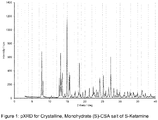
- Figure 1 illustrates a pXRD spectra for a representative sample of the crystalline, monohydrate form of the (S)-CSA salt of S-ketamine.
- the present invention is directed to process(es) for the preparation of S-ketamine, S-ketamine hydrochloride, S-ketamine•(S)-CSA salt (the (S)-CSA salt of S-ketamine) and a monohydrate (preferably crystalline) form of S-ketamine •(S)-CSA salt.
- the present invention is directed to process(es) for the preparation of R-ketamine •(R)-CSA salt (the (R)-CSA salt of R-ketamine), preferably a crystalline form of R-ketamine •(R)-CSA salt.
- the present invention is further directed to process(es) for the resolution of S-ketamine from a racemic (or enantiomerically enriched mixture) of ketamine.
- the present invention is further directed to an (S)-CSA salt of S-ketamine, preferably, a monohydrate (S)-CSA salt of S-ketamine, more preferably, a crystalline monohydrate (S)-CSA salt of S-ketamine.
- the present invention is further directed to an (R)-CSA salt of R-ketamine, preferably, a crystalline (R)-CSA salt of R-ketamine.
- the present invention is further directed to any CSA salt as described herein.
- ketamine shall mean a racemic or enantiomerically enriched mixture of ketamine, a compound of the following structure also known as 2-(2-chlorophenyl)-2-(methylamino)cyclohexanone.
- enantiomerically enriched mixture shall mean a mixture of the corresponding (S)- and (R)- enantiomers, wherein one of said enantiomers is present in an enantiomeric excess of greater than about 50%, preferably present in an enantiomeric excess in the range of from about 50% to about 95%, or any amount or range therein, preferably, in an enantiomeric excess in the range of from about 75% to about 95%.
- the ketamine is racemic. In another embodiment of the present invention, the ketamine is an enantiomerically enriched mixture, wherein the (S)- or (R)- enantiomer is present in an enantiomeric excess of greater than about 50%, preferably, in an enantiomeric excess in the range of from about 50% to about 99%, or any amount or range therein, for example, in an enantiomeric excess of about 51%, 55%, 60%, 60%, 65%, 70%, 75%, 80%, 85%, 90%, 90.5%, 91%, 91.5%, 92%, 92.5%, 93%, 93.5%, 94%, 94.5%, 95%, 95.5%, 96%, 96.5%, 97%, 97.5%, 98%, 98.5% or 99%.
- S-ketamine shall mean the (S)-enantiomer of ketamine, as a free base, a compound of formula (I) also known as (S)-2-(2-chlorophenyl)-2-(methylamino)cyclohexanone.
- S-ketamine is present in an enantiomeric excess of greater than about 50%, or any amount or range therein, more preferably in an enantiomeric excess of greater than about 75%, more preferably in an enantiomeric excess of greater than about 85%, more preferably in an enantiomeric excess in the range of from about 90% to about 100%, or any amount or range therein, more preferably in an enantiomeric excess in the range of from about 95% to about 99%, for example, in an enantiomeric excess of about 90%, 90.5%, 91%, 91.5%, 92%, 92.5%, 93%, 93.5%, 94%, 94.5%, 95%, 95.5%, 96%, 96.5%, 97%, 97.5%, 98%, 98.1%, 98.2%, 98.3%, 98.4%, 98.5%, 98.6%, 98.7%, 98.8%, 98.9%, 99%, 99.1%, 99.2%,
- ketamine shall mean the hydrochloric acid salt of (S)-enantiomer of ketamine, a compound of formula (I-HCl) also known as (S)-2-(2-chlorophenyl)-2-(methylamino)cyclohexanone hydrochloride.
- R-ketamine shall mean the (R)-enantiomer of ketamine, as a free base, a compound of formula (II) also known as (R)-2-(2-chlorophenyl)-2-(methylamino)cyclohexanone.
- R-ketamine is present in an enantiomeric excess of greater than about 50%, or any amount or range therein, more preferably in an enantiomeric excess of greater than about 75%, more preferably in an enantiomeric excess of greater than about 85%, more preferably in an enantiomeric excess in the range of from about 90% to about 100%, or any amount or range therein, more preferably in an enantiomeric excess in the range of from about 95% to about 99%, for example, in an enantiomeric excess of about 90%, 90.5%, 91%, 91.5%, 92%, 92.5%, 93%, 93.5%, 94%, 94.5%, 95%, 95.5%, 96%, 96.5%, 97%, 97.5%, 98%, 98.1%, 98.2%, 98.3%, 98.4%, 98.5%, 98.6%, 98.7%, 98.8%, 98.9%, 99%, 99.1%, 99.2%,
- S-CSA shall mean (+)-camphorsulfonic acid, also known as (1S,4R)-camphorsulfonic acid.
- R-CSA shall mean (-)-camphorsulfonic acid, also known as (1R,4S)-camphorsulfonic acid.
- Camphorsulfonic acid is also known by its IUPAC name (7,7-dimethyl-2-oxobicyclo[2.2.1]heptan-1-yl)methanesulfonic acid.
- the present disclosure is directed to methods for the treatment of treatment-refractory or treatment-resistant depression, wherein a product prepared according to any of the process(es) described herein is administered at a dosage amount in the range of from about 0.01 mg to about 1000 mg, or any amount or range therein, preferably from about 0.01 mg to about 500 mg, or any amount or range therein, preferably from about 0.1 mg to about 250 mg, or any amount or range therein.
- the present disclosure is directed to methods for the treatment of treatment-refractory or treatment-resistant depression, wherein a product prepared according to any of the process(es) described herein is administered at a dosage amount in the range of from about 0.01 mg to about 1000 mg, preferably selected from the group consisting of 0.01 mg, 0.025 mg, 0.05 mg, 0.1 mg, 0.5 mg, 1 mg, 5 mg, 10 mg, 25 mg, 50 mg, 100 mg, 150 mg, 200 mg, 250 mg and 500 mg.
- the compounds according to this invention may accordingly exist as enantiomers. Where the compounds possess two or more chiral centers, they may additionally exist as diastereomers. It is to be understood that all such isomers and mixtures thereof are encompassed within the scope of the present invention.
- the enantiomer is present at an enantiomeric excess of greater than or equal to about 80%, more preferably, at an enantiomeric excess of greater than or equal to about 90%, more preferably still, at an enantiomeric excess of greater than or equal to about 95%, more preferably still, at an enantiomeric excess of greater than or equal to about 98%, most preferably, at an enantiomeric excess of greater than or equal to about 99%.
- the diastereomer is present at an diastereomeric excess of greater than or equal to about 80%, more preferably, at an diastereomeric excess of greater than or equal to about 90%, more preferably still, at an diastereomeric excess of greater than or equal to about 95%, more preferably still, at an diastereomeric excess of greater than or equal to about 98%, most preferably, at an diastereomeric excess of greater than or equal to about 99%.
- any element in particular when mentioned in relation to a compound of formula (I), shall comprise all isotopes and isotopic mixtures of said element, either naturally occurring or synthetically produced, either with natural abundance or in an isotopically enriched form.
- a reference to hydrogen includes within its scope 1 H, 2 H (D), and 3 H (T).
- references to carbon and oxygen include within their scope respectively 12 C, 13 C and 14 C and 16 O and 18 O.
- the isotopes may be radioactive or non-radioactive.
- Radiolabelled compounds of formula (I) may comprise a radioactive isotope selected from the group of 3 H, 11 C, 18 F, 122 I, 123 I, 125 I, 131 I, 75 Br, 76 Br, 77 Br and 82 Br.
- the radioactive isotope is selected from the group of 3 H, 11 C and 18 F.
- isolated form shall mean that the compound is present in a form which is separate from any solid mixture with another compound(s), solvent system or biological environment.
- a product prepared according to any of the process(es) described herein is present in an isolated form.
- the (S)-CSA salt of S-ketamine preferably the monohydrate form of the (S)-CSA salt of S-ketamine, more preferably the crystalline monohydrate form of the (S)-CSA salt of S-ketamine, is present in an isolated form.
- the (R)-CSA salt of R-ketamine preferably the crystalline form of the (R)-CSA salt of R-ketamine, is present in an isolated form.
- the term "substantially pure form” shall mean that the mole percent of impurities in the isolated compound is less than about 5 mole percent, preferably less than about 2 mole percent, more preferably, less than about 0.5 mole percent, most preferably, less than about 0.1 mole percent.
- a product prepared according to any of the process(es) described herein is present as a substantially pure form.
- the (S)-CSA salt of S-ketamine preferably the monohydrate form of the (S)-CSA salt of S-ketamine, more preferably the crystalline monohydrate form of the (S)-CSA salt of S-ketamine, is present as a substantially pure form.
- the (R)-CSA salt of R-ketamine preferably a crystalline form of the (R)-CSA salt of R-ketamine, is present as a substantially pure form.
- the term "substantially free of a corresponding salt form(s)" when used to described the compound of formula (I) shall mean that mole percent of the corresponding salt form(s) in the isolated base of formula (I) is less than about 5 mole percent, preferably less than about 2 mole percent, more preferably, less than about 0.5 mole percent, most preferably less than about 0.1 mole percent.
- a product prepared according to any of the process(es) described herein is present in a form which is substantially free of corresponding salt form(s).
- the (S)-CSA salt of S-ketamine preferably the monohydrate form of the (S)-CSA salt of S-ketamine, more preferably the crystalline monohydrate form of (S)-CSA salt of S-ketamine, is present in a form which is substantially free of corresponding salt form(s).
- the (R)-CSA salt of R-ketamine preferably a crystalline form of the (R)-CSA salt of R-ketamine, is present in a form which is substantially free of corresponding salt form(s).
- treatment-refractory or treatment-resistant depression and the abbreviation "TRD” shall be defined as major depressive disorder that does not respond to adequate courses of at least two antidepressants, preferably two or more antidepressants, more preferably two to three, antidepressants.
- the failure to respond to an adequate course of a given antidepressant may be determined retrospectively or prospectively. In an embodiment, at least one of the failures to respond to an adequate course of antidepressant is determined prospectively. In another embodiment, at least two of the failures to respond to an adequate course of antidepressant are determined prospectively. In another embodiment, at least one of the failures to respond to an adequate course of antidepressant is determined retrospectively. In another embodiment, at least two of the failures to respond to an adequate course of antidepressant are determined retrospectively.
- treating shall include the management and care of a subject or patient (preferably mammal, more preferably human) for the purpose of combating a disease, condition, or disorder and includes the administration of a compound of the present invention to prevent the onset of the symptoms or complications, alleviate the symptoms or complications, or eliminate the disease, condition, or disorder.
- prevention shall include (a) reduction in the frequency of one or more symptoms; (b) reduction in the severity of one or more symptoms; (c) the delay or avoidance of the development of additional symptoms; and / or (d) delay or avoidance of the development of the disorder or condition.
- a subject in need of thereof shall include any subject or patient (preferably a mammal, more preferably a human) who has experienced or exhibited at least one symptom of the disorder, disease or condition to be prevented.
- a subject in need thereof may additionally be a subject (preferably a mammal, more preferably a human) who has not exhibited any symptoms of the disorder, disease or condition to be prevented, but who has been deemed by a physician, clinician or other medical profession to be at risk of developing said disorder, disease or condition.
- the subject may be deemed at risk of developing a disorder, disease or condition (and therefore in need of prevention or preventive treatment) as a consequence of the subject's medical history, including, but not limited to, family history, pre-disposition, co-existing (comorbid) disorders or conditions, genetic testing, and the like.
- subject refers to an animal, preferably a mammal, most preferably a human, who has been the object of treatment, observation or experiment. Preferably, the subject has experienced and / or exhibited at least one symptom of the disease or disorder to be treated and / or prevented.
- terapéuticaally effective amount means that amount of active compound or pharmaceutical agent that elicits the biological or medicinal response in a tissue system, animal or human that is being sought by a researcher, veterinarian, medical doctor or other clinician, which includes alleviation of the symptoms of the disease or disorder being treated.
- Optimal dosages to be administered may be readily determined by those skilled in the art, and will vary with the particular compound or compounds used, the mode of administration, the strength of the preparation and the advancement of the disease condition. In addition, factors associated with the particular patient being treated, including patient's sex, age, weight, diet, time of administration and concomitant diseases, will result in the need to adjust dosages.
- composition is intended to encompass a product comprising the specified ingredients in the specified amounts, as well as any product which results, directly or indirectly, from combinations of the specified ingredients in the specified amounts.
- enantiomeric excess expressions recited herein state that the % ee is greater than about X%, said expression is understood to mean a range from an enantiomeric excess of greater than about X% to about 100%, or any amount or range therein.
- reaction step(s) is performed under suitable conditions, according to known methods, to provide the desired product.
- a reagent or reagent class/type e.g. base, solvent, etc.
- the individual reagents are independently selected for each reaction step and may be the same of different from each other.
- the organic or inorganic base selected for the first step may be the same or different than the organic or inorganic base of the second step.
- reaction step of the present invention may be carried out in a variety of solvents or solvent systems, said reaction step may also be carried out in a mixture of the suitable solvents or solvent systems.
- first and second reaction or process steps may be run in the same solvent or solvent system; or alternatively may be run in different solvents or solvent systems following solvent exchange, which may be completed according to known methods.
- reaction or process step(s) as herein described (or claimed) are allowed to proceed for a sufficient period of time until the reaction is complete, as determined by any method known to one skilled in the art, for example, chromatography (e.g. HPLC).
- chromatography e.g. HPLC
- a "completed reaction or process step” shall mean that the reaction mixture contains a significantly diminished amount of the starting material(s) / reagent(s) and a significantly reduced amount of the desired product(s), as compared to the amounts of each present at the beginning of the reaction.
- Chiral HPLC against a standard may be used to determine percent enantiomeric excess (%ee).
- the salts of the compounds of this invention refer to non-toxic "pharmaceutically acceptable salts.”
- Other salts may, however, be useful in the preparation of compounds according to this invention or of their pharmaceutically acceptable salts.
- Suitable pharmaceutically acceptable salts of the compounds include acid addition salts which may, for example, be formed by mixing a solution of the compound with a solution of a pharmaceutically acceptable acid such as hydrochloric acid, sulfuric acid, fumaric acid, maleic acid, succinic acid, acetic acid, benzoic acid, citric acid, tartaric acid, carbonic acid or phosphoric acid.
- suitable pharmaceutically acceptable salts thereof may include alkali metal salts, e.g., sodium or potassium salts; alkaline earth metal salts, e.g., calcium or magnesium salts; and salts formed with suitable organic ligands, e.g., quaternary ammonium salts.
- alkali metal salts e.g., sodium or potassium salts
- alkaline earth metal salts e.g., calcium or magnesium salts
- suitable organic ligands e.g., quaternary ammonium salts.
- representative pharmaceutically acceptable salts include, but are not limited to, the following: acetate, benzenesulfonate, benzoate, bicarbonate, bisulfate, bitartrate, borate, bromide, calcium edetate, camsylate, carbonate, chloride, clavulanate, citrate, dihydrochloride, edetate, edisylate, estolate, esylate, fumarate, gluceptate, gluconate, glutamate, glycollylarsanilate, hexylresorcinate, hydrabamine, hydrobromide, hydrochloride, hydroxynaphthoate, iodide, isothionate, lactate, lactobionate, laurate, malate, maleate, mandelate, mesylate, methylbromide, methylnitrate, methylsulfate, mucate, napsylate, nitrate, N-methylglucamine ammonium
- acids which may be used in the preparation of pharmaceutically acceptable salts include, but are not limited to, the following: acids including acetic acid, 2,2-dichloroacetic acid, acylated amino acids, adipic acid, alginic acid, ascorbic acid, L-aspartic acid, benzenesulfonic acid, benzoic acid, 4-acetamidobenzoic acid, (+)-camphoric acid, camphorsulfonic acid, (+)-(1S)-camphor-10-sulfonic acid, capric acid, caproic acid, caprylic acid, cinnamic acid, citric acid, cyclamic acid, dodecylsulfuric acid, ethane-1,2-disulfonic acid, ethanesulfonic acid, 2-hydroxy-ethanesulfonic acid, formic acid, fumaric acid, galactaric acid, gentisic acid, glucoheptonic acid, D-gluconic acid, D-glucuronic
- bases which may be used in the preparation of pharmaceutically acceptable salts include, but are not limited to, the following: bases including ammonia, L-arginine, benethamine, benzathine, calcium hydroxide, choline, deanol, diethanolamine, diethylamine, 2-(diethylamino)-ethanol, ethanolamine, ethylenediamine, N-methyl-glucamine, hydrabamine, 1H-imidazole, L-lysine, magnesium hydroxide, 4-(2-hydroxyethyl)-morpholine, piperazine, potassium hydroxide, 1-(2-hydroxyethyl)-pyrrolidine, secondary amine, sodium hydroxide, triethanolamine, tromethamine and zinc hydroxide.
- the present invention is directed to a process for the resolution of ketamine into its enantiomers, and more particularly, to processes for the preparation of an (S)-CSA salt of S-ketamine and an HCl salt of S-ketamine, as described in more detail in Scheme 1, below.
- ketamine preferably racemic ketamine
- (S)-camphorsulfonic acid also known as (+)-CSA or S-CSA)
- the (S)-CSA is present in an amount in the range of from about 0.5 to about 2.0 molar equivalents (relative to the amount of ketamine), or any amount or range therein, preferably in an amount in the range of from about 0.75 to about 1.2 molar equivalents, more preferably, in an amount in the range of from about 0.9 to about 1.1 molar equivalents, more preferably, in an amount of about 1 molar equivalent; in the presence of water; wherein the water is present in an amount in the range of from about 3.5% to about 15% (by weight in the solvent), or any amount or range therein, preferably in an amount in the range of from about 3.8% to about 11%, more preferably in an amount in the range of from about 5% to about 10%, more preferably in an amount in the range of from about 6% and about
- the monohydrate (S)-CSA salt of S-ketamine is prepared in an enantiomeric excess of greater than or equal to about 90%. In another example, the monohydrate (S)-CSA salt of S-ketamine is prepared in an enantiomeric excess of greater than or equal to about 96%.
- the monohydrate (S)-CSA salt of S-ketamine is isolated by known methods, for example by filtration.
- the product mixture resulting from the above reaction of ketamine with (S)-CSA will comprise the monohydrate (S)-CSA salt of S-ketamine (as a precipitate or suspension) and R-ketamine (protonated, in solution). Further, one skilled in the art will recognize, that following filtration of the monohydrate (S)-CSA salt of S-ketamine, the mother liquor or filtrate will comprise enantiomerically enriched R-ketamine.
- the monohydrate (S)-CSA salt of S-ketamine is optionally recrystallized, according to known methods, from a suitably selected solvent or mixture of solvents, (for example from THF, methyl ethyl ketone or a mixture of THF and water), preferably in the presence of (or in a mixture with) water.
- a suitably selected solvent or mixture of solvents for example from THF, methyl ethyl ketone or a mixture of THF and water
- the monohydrate (S)-CSA salt of S-ketamine is further optionally reacted with a suitably selected base, preferably an inorganic base such as K 2 CO 3 , Na 2 CO 3 , NaHCO 3 , NaOH, KOH, and the like, preferably K 2 CO 3 ; wherein the base is preferably present in an amount in the range of from about 1.0 to about 10 molar equivalents (relative to the moles of the monohydrate (S)-CSA salt of S-ketamine), preferably in the range of from about 1.0 to about 5.0 molar equivalents, more preferably in a range of from about 1.0 to about 2.0 molar equivalents (for example, about 1.2 molar equivalents); in a suitably selected solvent such as isopropyl acetate, ethyl acetate, toluene, and the like, preferably isopropyl acetate; preferably a solvent which is not miscible with water; to yield the corresponding S-ketamine, as a free
- the enantiomeric excess of the S-ketamine base will be approximately equal to the enantiomeric excess of the monohydrate (S)-CSA salt of S-ketamine, since the reaction with the inorganic base would not be expected to affect the stereo-center (e.g. result in racemization at the stereo-center).
- the S-ketamine free base is isolated according to known methods, for example by filtration.
- the S-ketamine free base is further optionally reacted, according to known methods, with a suitably selected acid such as HCl (for example as HCl gas), to yield the corresponding acid addition salt, preferably the corresponding hydrochloride salt.
- a suitably selected acid such as HCl (for example as HCl gas)
- the enantiomeric excess of the S-ketamine salt, preferably the S-ketamine hydrochloride salt will be approximately equal to or greater than the enantiomeric excess of the S-ketamine, since the reaction with the suitably selected acid would not be expected to affect the stereo-center (e.g. result in racemization at the stereo-center).
- the S-ketamine free base is reacted with the acid, preferably HCl, wherein the amount of the acid is in the range of from about 0.8 to about 5.0 molar equivalents (relative to the moles of S-ketamine base), more preferably in an amount in the range of rom about 1.0 to about 3.0 molar equivalents, more preferably in an amount in the range of from about 1.0 to about 1.5 molar equivalents (for example about 1.2 molar equivalents).
- the acid preferably HCl
- the amount of the acid is in the range of from about 0.8 to about 5.0 molar equivalents (relative to the moles of S-ketamine base), more preferably in an amount in the range of rom about 1.0 to about 3.0 molar equivalents, more preferably in an amount in the range of from about 1.0 to about 1.5 molar equivalents (for example about 1.2 molar equivalents).
- the present invention is further directed to a process for the resolution of ketamine into its enantiomers, and more particularly, to a process for the preparation of an (R)-CSA salt of R-ketamine and an HCl salt of S-ketamine, as described in more detail in Scheme 2, below.
- ketamine preferably racemic ketamine
- (R)-camphorsulfonic acid also known as (-)-CSA or R-CSA)
- the (R)-CSA is present in an amount in the range of from about 0.5 to about 2.0 molar equivalents (relative to the amount of ketamine), or any amount or range therein, preferably in an amount in the range of from about 0.75 to about 1.5 molar equivalents, for example in an amount of about 1.0 molar equivalents
- in the presence of water wherein the water is present in an amount in the range of from about 3.5% to about 15% (by weight in the solvent), or any amount or range therein, preferably in an amount in the range of from about 7.5% to about 12.5%, for example in an amount of about 9%; in a suitably selected organic solvent such as a suitably selected ether (for example a cyclic ether) such as THF, 2-methyl-THF, and the like, or a suitably selected
- the S-ketamine which remains in solution in the product mixture described above, may present in a protonated base form (protonated by any excess (R)-CSA present).
- the (R)-CSA salt of R-ketamine is isolated according to known methods, for example by filtration.
- filtration of the product mixture will yield the (R)-CSA salt of R-ketamine as a solid and a filtrate or mother liquor comprising S-ketamine .
- the S-ketamine is then further optionally isolated from the filtrate or mother liquor (according to known methods, for example by reacting with a suitably selected inorganic base such as K 2 CO 3 , Na 2 CO 3 , NaHCO 3 , NaOH, KOH, and the like, and further extracting with a suitably selected organic solvent, preferably an organic solvent which is not miscible with water, such as 2-methyl-THF, isopropyl acetate, and the like, preferably isopropyl acetate) and / or reacted (according to known methods), with a suitably selected acid such as HCl (for example as HCl gas), to yield the corresponding acid addition salt, preferably the corresponding hydrochloride salt.
- a suitably selected inorganic base such as K 2 CO 3 , Na 2 CO 3 , NaHCO 3 , NaOH, KOH, and the like
- a suitably selected organic solvent preferably an organic solvent which is not miscible with water, such as 2-methyl-THF
- the enantiomeric excess of the S-ketamine salt preferably the S-ketamine hydrochloride salt will be approximately equal to or greater than the enantiomeric excess of the S-ketamine, since the reaction with the suitably selected acid would not be expected to affect the stereo-center (e.g. result in racemization at the stereo-center).
- the S-ketamine is reacted with the acid, preferably HCl, wherein the amount of the acid is in the range of from about 0.8 to about 5.0 molar equivalents (relative to the moles of S-ketamine base), more preferably in an amount in the range of rom about 1.0 to about 3.0 molar equivalents, more preferably in an amount in the range of from about 1.0 to about 1.5 molar equivalents (for example about 1.2 molar equivalents).
- the acid preferably HCl
- the amount of the acid is in the range of from about 0.8 to about 5.0 molar equivalents (relative to the moles of S-ketamine base), more preferably in an amount in the range of rom about 1.0 to about 3.0 molar equivalents, more preferably in an amount in the range of from about 1.0 to about 1.5 molar equivalents (for example about 1.2 molar equivalents).
- the crystalline forms of the present invention for example the monohydrate form of the (S)-CSA salt of S-ketamine may be characterized by, for example, powder X-Ray Diffraction (pXRD), TG-FTIR, DSC, DVS, Karl-Fischer analysis, optical rotation, and other known methods for determining the physical properties of a solid or crystal.
- pXRD powder X-Ray Diffraction
- TG-FTIR TG-FTIR
- DSC TG-FTIR
- DVS Karl-Fischer analysis
- optical rotation and other known methods for determining the physical properties of a solid or crystal.
- the powder X-ray diffractograms (diffraction spectra, pXRD) provided herein were measured using on an X-ray diffractometer using CuK ⁇ radiation.
- the pestled sample was back-loaded into a conventional x-ray holder.
- the sample was scanned from 3 to 40°2 ⁇ with a step size of 0.01°2 ⁇ and a time per step of 5.0 seconds.
- Instrument voltage and current settings were 40 kV and 30 mA.
- TG-FTIR ThermoGravimetric-Fourier Transform InfraRed
- DSC Dynamic Scanning Calorimetry
- Dynamic Vapor Sorption (DVS) measurements were measured using a Chevron Phillips Chemical Company 11 or Surface Measurement Systems DVS-1 scanning (cycling relative humidity and hodling the sample at a set relative humidity) as follow: (a) holding sample at 50% RH for 2 hours; (b) 50% RH to 0% RH (5%/h); holding at 0% RH for 5 hours; (c) 0% RH to 95% RH (5%/h); holding at 95% RH for 5 hours; and (d) 95% RH to 50% RH (5%/h); holding at 50% RH for 2 hours.
- DVS-1 scanning cycling relative humidity and hodling the sample at a set relative humidity
- a powder XRD (pXRD) diffractogram was measured for multiple samples of the crystalline monohydrate form of (S)-CSA salt of S-ketamine (prepared as described herein), with a representative example as shown in Figure 1 .
- the crystalline monohydrate form of (S)-CSA salt of S-ketamine may be characterized by its X-ray diffraction pattern, comprising peaks having a relative intensity greater than or equal to about 5%, as listed in Table 1, below.
- the crystalline monohydrate form of (S)-CSA salt of S-ketamine is characterized by its pXRD pattern which comprises peaks having a relative intensity greater than or equal to about 10%, as listed in Table 2, below.
- Table 2 pXRD Peaks for Monohydrate (S)-CSA salt of S-Ketamine position [°2 ⁇ ] d-spacing [ ⁇ ] relative intensity [%] 7.76 11.38 58.03 8.11 10.89 21.58 12.75 6.94 24.89 13.13 6.74 55.99 13.31 6.65 23.96 13.64 6.49 31.52 14.92 5.93 100.00 15.51 5.71 32.12 15.71 5.64 28.46 18.45 4.80 43.84 21.29 4.17 12.49 22.38 3.97 14.87 23.26 3.82 10.45 24.22 3.67 25.66 25.26 3.52 28.46 26.76 3.33 13.93 27.33 3.26 51.32 28.21 3.16 12.32 29.13 3.06 11.05
- the crystalline monohydrate form of (S)-CSA salt of S-ketamine is characterized by its pXRD pattern which comprises peaks having a relative intensity greater than or equal to about 20%, as listed in Table 3, below.
- Table 3 pXRD Peaks for Monohydrate (S)-CSA salt of S-Ketamine position [°2 ⁇ ] d-spacing [ ⁇ ] relative intensity [%] 7.76 11.38 58.03 8.11 10.89 21.58 12.75 6.94 24.89 13.13 6.74 55.99 13.31 6.65 23.96 13.64 6.49 31.52 14.92 5.93 100.00 15.51 5.71 32.12 15.71 5.64 28.46 18.45 4.80 43.84 24.22 3.67 25.66 25.26 3.52 28.46 27.33 3.26 51.32 % Water content was measured under adequate exclusion of atmospheric moisture using a modified volumetric Karl-Fischer titration for ketones, as follows.
- the % water content was determined for multiple samples of crystalline monohydrate form of (S)-CSA salt of S-ketamine (prepared as described herein) with measured values ranging between 3.76% and 3.79% (average water content was 3.8%). The calculated theoretical value for a monohydrate of (S)-CSA salt of S-ketamine is 3.7%.
- TG-FTIR measurement of a representative sample of the monohydrate crystalline form of (S)-CSA salt of S-ketamine exhibited a weight loss of 3.7 wt % in one step between 110°C and 190°C due to evaporation of water (corresponding to the theoretical 3.69 wt % stoichiometric water content of a monohydrate) and a chemical decomposition above 230°C.
- DSC measured for a representative sample of the monohydrate (S)-CSA salt of S-ketamine exhibited a melting point of about 144°C, and a melting enthalpy of 121 J/g.
- DVS measurement of a representative sample of the monohydrate (S)-CSA salt of S-ketamine exhibited no hygroscopicity, and physical stability at elevated relative humidity.
- the approximate solubility of the monohydrate crystalline form of the (S)-CSA salt of S-ketamine was measured by stepwise dilution of a suspension of about 10 mg of the sample in 0.05 mL solvent. Table 4 below lists the approximate solubility, denoted "S”. If a sample was not dissolved by addition of a total of 10-12 mL of solvent, the solubility is indicated as ⁇ 1mg/mL in the Table 4, below.
- solubility of the monohydrate crystalline form of the (S)-CSA salt of S-ketamine in select solvents was determined as follows: 21g of (S)-CSA salt of S- ketamine was dissolved in 100 mL of solvent (as listed in Table 5 below). After 24 hours, the solutions were analyzed visually. If the compound was completely dissolved, solubility was above 20g/100 mL. If the compound was not completely dissolved, any remaining precipitate was filtered off, the filtrate was diluted 400-fold with HPLC dilution solvent (or acetonitrile/HPLC dilution solvent) and analyzed by HPLC, with results as listed in Table 5, below.
- the present invention is further directed to an amorphous form of the (S)-CSA salt of S-ketamine.
- the amorphous form of the (S)-CSA salt of S-ketamine is anhydrous.
- the amorphous, anhydrous form of the (S)-CSA salt of S-ketamine may be prepared by dehydrating the monohydrate form at an elevated temperature, for example at a temperature greater than about 120°C.
- a sample of the monohydrate crystalline form of (S)-CSA salt of S-ketamine was maintained at 160°C under dry nitrogen flow for 30 min.
- pXRD analysis carried out several hours later showed a mixture of the crystalline monohydrate and amorphous anhydrous forms of (S)-CSA salt of S-ketamine.
- the amorphous anhydrous form of (S)-CSA salt of S-ketamine was also obtained (in a mixture with the monohdrate form) by slurrying the crystalline monohydrate form of (S)-CSA salt of S-ketamine in 2-methyl THF or isopropyl acetate at about 80°C for about 4 days.
- the amorphous, anhydrous form of (S)-CSA salt of S-ketamine is hygroscopic and rapidly converts to the monohydrate form of (S)-CSA salt of S-ketamine on storage at ambient conditions.
- compositions containing a product prepared according to any of the process(es) described herein with a pharmaceutically acceptable carrier can be prepared by intimately mixing the compound or compounds with a pharmaceutical carrier according to conventional pharmaceutical compounding techniques.
- the carrier may take a wide variety of forms depending upon the desired route of administration (e.g., oral, parenteral).
- suitable carriers and additives include water, glycols, oils, alcohols, flavoring agents, preservatives, stabilizers, coloring agents and the like;
- suitable carriers and additives include starches, sugars, diluents, granulating agents, lubricants, binders, disintegrating agents and the like.
- Solid oral preparations may also be coated with substances such as sugars or be enteric-coated so as to modulate major site of absorption.
- the carrier will usually consist of sterile water and other ingredients may be added to increase solubility or preservation.
- injectable suspensions or solutions may also be prepared utilizing aqueous carriers along with appropriate additives.
- one or more compounds of the present invention as the active ingredient is intimately admixed with a pharmaceutical carrier according to conventional pharmaceutical compounding techniques, which carrier may take a wide variety of forms depending of the form of preparation desired for administration, e.g., oral or parenteral such as intramuscular.
- a pharmaceutical carrier may take a wide variety of forms depending of the form of preparation desired for administration, e.g., oral or parenteral such as intramuscular.
- any of the usual pharmaceutical media may be employed.
- suitable carriers and additives include water, glycols, oils, alcohols, flavoring agents, preservatives, coloring agents and the like;
- suitable carriers and additives include starches, sugars, diluents, granulating agents, lubricants, binders, disintegrating agents and the like. Because of their ease in administration, tablets and capsules represent the most advantageous oral dosage unit form, in which case solid pharmaceutical carriers are obviously employed. If desired, tablets may be sugar coated or enteric coated by standard techniques.
- the carrier will usually comprise sterile water, through other ingredients, for example, for purposes such as aiding solubility or for preservation, may be included.
- injectable suspensions may also be prepared, in which case appropriate liquid carriers, suspending agents and the like may be employed.
- the pharmaceutical compositions herein will contain, per dosage unit, e.g., tablet, capsule, powder, injection, teaspoonful and the like, an amount of the active ingredient necessary to deliver an effective dose as described above.
- compositions herein will contain, per unit dosage unit, e.g., tablet, capsule, powder, injection, suppository, teaspoonful, and the like, of from about 0.01 mg to about 1000 mg or any amount or range therein, and may be given at a dosage of from about 0.01 mg/kg to about 1.5 mg/kg, or any amount or range therein, preferably from about 0.01 mg/kg/day to about 0.75 mg/kg, or any amount or range therein, preferably from about 0.05 mg/kg to about 0.5 mg/kg, or any amount or range therein, preferably from about 0.1 mg/kg to about 0.5 mg/kg, or any amount or range therein, of each active ingredient.
- the dosages may be varied depending upon the requirement of the patients, the severity of the condition being treated and the compound being employed. The use of either daily administration or post-periodic dosing may be employed.
- compositions are in unit dosage forms from such as tablets, pills, capsules, powders, granules, sterile parenteral solutions or suspensions, metered aerosol or liquid sprays, drops, ampoules, autoinjector devices or suppositories; for oral parenteral, intranasal, sublingual or rectal administration, or for administration by inhalation or insufflation.
- the composition may be presented in a form suitable for once-weekly or once-monthly administration; for example, an insoluble salt of the active compound, such as the decanoate salt, may be adapted to provide a depot preparation for intramuscular injection.
- a pharmaceutical carrier e.g.
- a solid preformulation composition containing a homogeneous mixture of a compound of the present invention, or a pharmaceutically acceptable salt thereof.
- preformulation compositions as homogeneous, it is meant that the active ingredient is dispersed evenly throughout the composition so that the composition may be readily subdivided into equally effective dosage forms such as tablets, pills and capsules.
- This solid preformulation composition is then subdivided into unit dosage forms of the type described above containing from about 0.01 mg to about 1,000 mg, or any amount or range therein, of the active ingredient of the present invention.
- the tablets or pills of the composition can be coated or otherwise compounded to provide a dosage form affording the advantage of prolonged action.
- the tablet or pill can comprise an inner dosage and an outer dosage component, the latter being in the form of an envelope over the former.
- the two components can be separated by an enteric layer which serves to resist disintegration in the stomach and permits the inner component to pass intact into the duodenum or to be delayed in release.
- enteric layers or coatings such materials including a number of polymeric acids with such materials as shellac, cetyl alcohol and cellulose acetate.
- Suitable dispersing or suspending agents for aqueous suspensions include synthetic and natural gums such as tragacanth, acacia, alginate, dextran, sodium carboxymethylcellulose, methylcellulose, polyvinyl-pyrrolidone or gelatin.
- the method of treating treatment resistant depression described in the present disclosure may also be carried out using a pharmaceutical composition comprising any of the compounds as defined herein and a pharmaceutically acceptable carrier.
- the pharmaceutical composition may contain between about 0.01 mg and about 1000 mg of the compound, or any amount or range therein; preferably from about 0.05 mg to about 500 mg of the compound, or any amount or range therein, and may be constituted into any form suitable for the mode of administration selected.
- Carriers include necessary and inert pharmaceutical excipients, including, but not limited to, binders, suspending agents, lubricants, flavorants, sweeteners, preservatives, dyes, and coatings.
- compositions suitable for oral administration include solid forms, such as pills, tablets, caplets, capsules (each including immediate release, timed release and sustained release formulations), granules, and powders, and liquid forms, such as solutions, syrups, elixirs, emulsions, and suspensions.
- forms useful for parenteral administration include sterile solutions, emulsions and suspensions.
- compounds of the present disclosure may be administered in a single daily dose, or the total daily dosage may be administered in divided doses of two, three or four times daily.
- compounds of the present disclosure can be administered in intranasal form via topical use of suitable intranasal vehicles, or via transdermal skin patches well known to those of ordinary skill in that art.
- the dosage administration will, of course, be continuous rather than intermittent throughout the dosage regimen.
- the active drug component can be combined with an oral, non-toxic pharmaceutically acceptable inert carrier such as ethanol, glycerol, water and the like.
- suitable binders include, without limitation, starch, gelatin, natural sugars such as glucose or beta-lactose, corn sweeteners, natural and synthetic gums such as acacia, tragacanth or sodium oleate, sodium stearate, magnesium stearate, sodium benzoate, sodium acetate, sodium chloride and the like.
- Disintegrators include, without limitation, starch, methyl cellulose, agar, bentonite, xanthan gum and the like.
- the liquid forms in suitably flavored suspending or dispersing agents such as the synthetic and natural gums, for example, tragacanth, acacia, methyl-cellulose and the like.
- suspending or dispersing agents such as the synthetic and natural gums, for example, tragacanth, acacia, methyl-cellulose and the like.
- sterile suspensions and solutions are desired.
- Isotonic preparations which generally contain suitable preservatives are employed when intravenous administration is desired.
- a product prepared according to any of the process(es) as described herein as the active ingredient is intimately admixed with a pharmaceutical carrier according to conventional pharmaceutical compounding techniques, which carrier may take a wide variety of forms depending of the form of preparation desired for administration (e.g. oral or parenteral).
- a pharmaceutical carrier may take a wide variety of forms depending of the form of preparation desired for administration (e.g. oral or parenteral).
- Suitable pharmaceutically acceptable carriers are well known in the art. Descriptions of some of these pharmaceutically acceptable carriers may be found in The Handbook of Pharmaceutical Excipients, published by the American Pharmaceutical Association and the Pharmaceutical Society of Great Britain .
- synthesis products are listed as having been isolated as a residue. It will be understood by one of ordinary skill in the art that the term “residue” does not limit the physical state in which the product was isolated and may include, for example, a solid, an oil, a foam, a gum, a syrup, and the like.
- Example 7 which contains (S)-ketamine and (-)-camphor-10-sulfonic acid dissolved in a methyl-THF/water mixture (10.9:1)
- HCl gas 0. g
- HCl gas 0. g
- the solids were filtered off, and the wet cake was rinsed twice with methyl-THF (5.0 g each time).
- the resulting solids (5.8 g wet) were dried in vacuum at 50°C.
- the mother liquor (107.45 g) contains 82% (S)-ketamine and 18% (R)-ketamine.
- Racemic ketamine.HCl (15.0 g, 54.7 mmol) was dissolved in 100 mL of water under stirring. To the solution was added 100 mL CHCl 3 and under vigorous stirring basified by drop-wise addition of a solution of 2.40 g NaOH (60 mmol) in 30 mL of water. The white precipitate that was formed was directly extracted into the CHCl 3 layer (clear solution). The mixture was transferred into a separation funnel and separated. The aqueous phase was extracted again with 100 mL chloroform and then with 50 mL of chloroform. The combined chloroform layers were washed with 50 mL of water, dried over Na 2 SO 4 and concentrated on a Rotavap to yield a white crystalline solid (solidified oil). Yield: 12.88 g of white solid (54.2 mmol, 99%); NMR confirmed ketamine free base.
- Table 6 summarized the conditions and results of screening experiments with the 16 resolving agents identified above, using methanol as the solvent. Note: in experiments where no observation is noted in the columns “5-day evaporation" and / or "7 days + CPME, up to 14 days", no solid or oil was obtained. Table 6: Resolution Screening Results.
- MeOH solvent Exp # Resolving Agent mg* (0.5 mmol) 5 day evaporation 7 days + CPME, up to 14 days 1.1 (1S)-(+)-10-camphorsulfonic acid 116 1.2 (S)-(+)-phencyphos (P1(+)) 121 solid 1.3 L(+)-tartaric acid 75 8 days: turbid (oil layer) 14 d: solidified 1.4 L(-)-O,O'-DBTA 188 9 days: turbid oil 1.5 L(-)-O,O'-DTTA 193 9 9 days: turbid oil 1.6 D(+)-O,O'-DATA 209 9 days: turbid oil(clear after heating + MeOH) 1.7 L(-)-2-pyrrolidone-5-carboxylic acid 65 5 d: solid (needles) + MeOH: re-dissolved 8 days: turbid oil (clear after heating + MeOH) 1.8 N-Bz-L -Asp
- Table 7 summarized the results of screening experiments with 16 resolving agents and 2-butanol as the solvent. NOTE: Where no observation is noted in the columns “20 h room temperature”, “5-day slow evapor.” and / or "7-14 days", no solid or oil was obtained. Table 7: Resolution Screening Results, 2-Butanone (MEK) Exp # Resolving agent mg (0.5 eq.) 20 h RT 5 day, slow evapor. 7-14 days 2.1 (1S)-(+)-10-camphorsulfonic acid 116 2.2 (S)-(+)-phencyphos (P1(+)) 121 2.3 L(+)-tartaric acid 75 crystals 8 days: Solid: 183 mg e.e.
- Ketamine (racemic, 238 g, 1 mmol) was dissolved in MEK (3,5 mL) and the resulting solution was added to dry L-(-)-DATA (0.5 mmol). The mixture (in a vial) was warmed to reflux to complete dissolution and then cooled. Slow crystallization started after 24 hours (scratching with spatula), to yield a solid (167 mg, 23%) which exhibited 54% e.e.
- L-tartaric acid is useful as a resolving agent for ketamine, and suggested that D-(+)-DATA, and L-(-)-DATA (derivatives of tartaric acid), may also be effective.
- Table 9 below details three representative experiments reacting racemic ketamine with (+)-CSA in (a) a mixture of THF and water, (b) a mixture of acetone and water, and (c) a mixture of 2-methyl-THF and water. Each experiment resulted in formation of (S)-ketamine•(+)-CSA salt in high enantiomeric excess, as noted in the Table below. All reaction mixtures were heated, with stirring as noted. The resulting precipitate was then isolated by filtration, washed with the corresponding organic solvent (no water) and dried at under vacuum 50°C.
- an oral composition 100 mg of a product prepared as in Example 1, 2 or 3 is formulated with sufficient finely divided lactose to provide a total amount of 580 to 590 mg to fill a size O hard gel capsule.
Landscapes
- Chemical & Material Sciences (AREA)
- Organic Chemistry (AREA)
- Health & Medical Sciences (AREA)
- Life Sciences & Earth Sciences (AREA)
- General Health & Medical Sciences (AREA)
- Veterinary Medicine (AREA)
- Chemical Kinetics & Catalysis (AREA)
- General Chemical & Material Sciences (AREA)
- Medicinal Chemistry (AREA)
- Nuclear Medicine, Radiotherapy & Molecular Imaging (AREA)
- Bioinformatics & Cheminformatics (AREA)
- Pharmacology & Pharmacy (AREA)
- Engineering & Computer Science (AREA)
- Animal Behavior & Ethology (AREA)
- Public Health (AREA)
- Biomedical Technology (AREA)
- Neurology (AREA)
- Neurosurgery (AREA)
- Pain & Pain Management (AREA)
- Heart & Thoracic Surgery (AREA)
- Cardiology (AREA)
- Psychiatry (AREA)
- Pulmonology (AREA)
- Acyclic And Carbocyclic Compounds In Medicinal Compositions (AREA)
- Organic Low-Molecular-Weight Compounds And Preparation Thereof (AREA)
Description
- The present invention is directed to processes for the preparation of (S)-ketamine. The present invention is further directed to processes for the resolution of S-ketamine from a racemic or enantiomerically enriched mixture of ketamine. The present invention is further directed to an (S)-CSA salt of S-ketamine, more particularly a monohydrate form of the (S)-CSA salt of S-ketamine; and to an (R)-CSA salt of R-ketamine.
- Ketamine (a racemic mixture of the corresponding S- and R-enantiomers) is an NMDA receptor antagonist, with a wide range of effects in humans, including analgesia, anesthesia, hallucinations, dissociative effects, elevated blood pressure and bronchodilation. Ketamine is primarily used for the induction and maintenance of general anesthesia. Other uses include sedation in intensive care, analgesia (particularly in emergency medicine and treatment of bronchospasms. Ketamine has also been shown to be efficacious in the treatment of depression (particularly in those who have not responded to current anti-depressant treatment). In patients with major depressive disorders, ketamine has additionally been shown to produce a rapid antidepressant effect, acting within hours.
- The S-ketamine enantiomer (or S-(+)-ketamine or esketamine) has higher potency or affinity for the NMDA receptor and thus potentially allowing for lower effective dosages; and is available for medical use, administered either IV (intravenously) or IM (intramuscularly), under the brand name KETANEST S.
-
HUDYMA, T.W., et al., in DE 2062620 A published July 15, 1971 describe resolution of ketamine with natural L-tartaric acid. Hudyma et al further disclose that attempts at resolution of ketamine with camphorsulfonic acid (CSA) were unsuccessful.STEINER K., et al., in DE 19619665 C2 published March 8, 2001 (US Equiv.US Patent No. 6,040,479 ) describe a process for resolution of ketamine using L-tartaric acid in water or a mixture of water and an alcohol and/or ketone, ether or ester.RUSSO, T., et al., in PCT Publication WO2001/098265 (US Equiv. Patent Publication No.20030212143 A1), published August 15, 2002 describe chiral resolution of ketamine using L-tartaric acid in a mixture of solvent and water. - There remains a need for a method for the resolution of the S-ketamine enantiomer from racemic ketamine, wherein (a) the process does not use chiral tartaric acid; (b) the process comprises one to three, preferably one to two crystallization steps (for example, to avoid loss of yield); (c) the process results in a yield of greater than about 25%; (d) the process uses solvents which are non-toxic and / or do not require special handling; and / or (e) the process is suitable for large scale or commercial manufacture.
- The present invention is directed to a process for the preparation of a monohydrate form of (S)-camphorsulfonic acid salt of S-ketamine (preferably a crystalline monohydrate form), a compound of formula (I-CSA)

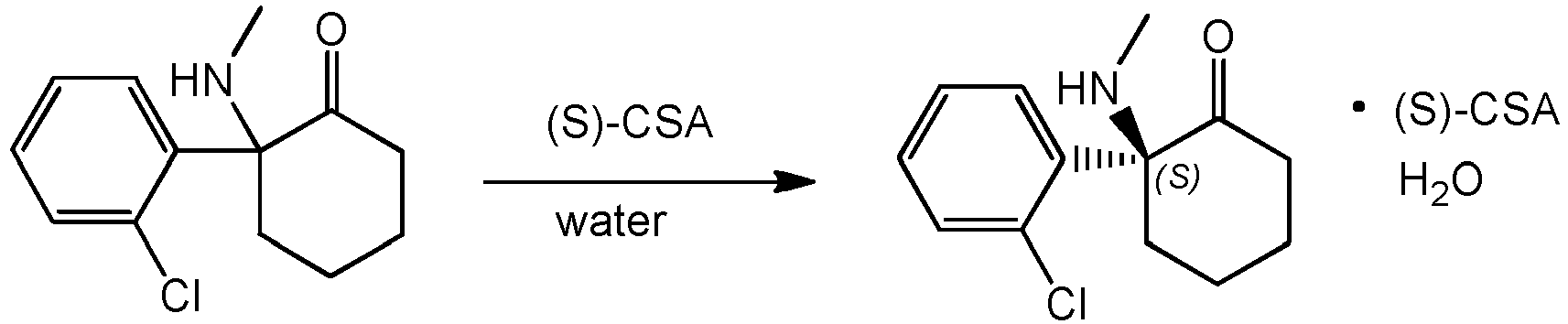
in the presence of water; wherein the water is present in an amount in the range of from about 3.5% to about 15%;
in an organic solvent; at a temperature in the range of from about 20°C to about solvent reflux temperature;
to yield the monohydrate form of (S)-CSA salt of S-ketamine;
wherein the monohydrate form of (S)-CSA salt of S-ketamine is present in an enantiomeric excess in the range of from about 50% to about 100%. - The present invention is further directed to a process for the preparation of S-ketamine hydrochloride (also known as esketamine), a compound of formula (I-HCl)

- (a) reacting the monohydrate form of (S)-camphorsulfonic acid salt of S-ketamine (prepared for example as described above) with an inorganic base; in a solvent or mixture of solvents; preferably in the presence of water; to yield S-ketamine as a free base; and
- (b) reacting the S-ketamine free base with HCl; to yield the corresponding S-ketamine hydrochloride salt.
- The present invention is directed to a process for the preparation of (R)-camphorsulfonic acid salt of R-ketamine (preferably a crystalline form), a compound of formula (II-CSA)

in the presence of water; wherein the water is present in an amount in the range of from about 3.5% to about 15%;
in an organic solvent; at a temperature in the range of from about 20°C to about solvent reflux temperature;
to yield a product mixture comprising an (R)-CSA salt of R-ketamine, preferably as a solid, more preferably as a hydrate (for example as a monohydrate), and S-ketamine; wherein the S-ketamine remains in solution;
wherein the (R)-CSA salt of R-ketamine is present in an enantiomeric excess in the range of from about 50% to about 100%. - The present invention is further directed to a process for the preparation of S-ketamine hydrochloride (also known as esketamine), a compound of formula (I-HCl)

- Step 1:

in the presence of water; wherein the water is present in an amount in the range of from about 3.5% to about 15%; in an organic solvent; at a temperature in the range of from about 20°C to about solvent reflux temperature;
to yield a product mixture comprising an (R)-CSA salt of R-ketamine, preferably as a hydrate (for example, as a monohydrate), preferably as a solid, and S-ketamine; wherein the S-ketamine remains in solution; and wherein the (R)-CSA salt of R-ketamine is present in an enantiomeric excess in the range of from about 50% to about 100% - Step 2: filtering the product mixture (of Step 1) to yield the (R)-camphorsulfonic acid salt of R-ketamine as a solid and a filtrate comprising S-ketamine;
- Step 3: reacting the S-ketamine (in the filtrate or optionally, isolated from the filtrate, by, for example, reacting with a suitably selected inorganic base and extracting with a suitably selected organic solvent) with HCl; to yield the corresponding S-ketamine hydrochloride salt.
- The present invention is further directed to a monohydrate form of (S)-CSA salt of S-ketamine, preferably a crystalline monohydrate form of (S)-CSA salt of S-ketamine, as described in detail hereinafter.
- The present invention is further directed to an (R)-CSA salt of R-ketamine, preferably a crystalline form of (R)-CSA salt of R-ketamine, as described in detail hereinafter.
- The present disclosure is further directed to a product prepared according to any of the processes described herein.
- Also disclosed is a pharmaceutical composition comprising a pharmaceutically acceptable carrier and a product prepared according to any of the process(es) described herein. An illustration of the disclosure is a pharmaceutical composition made by mixing a product prepared according to any of the process(es) described herein and a pharmaceutically acceptable carrier. Illustrating the disclosure is a process for making a pharmaceutical composition comprising mixing a product prepared according to any of the process(es) described herein and a pharmaceutically acceptable carrier.
- Exemplifying the disclosure are methods of treating a disorder mediated treatment resistant depression comprising administering to a subject in need thereof a therapeutically effective amount of a product prepared according to any of the process(es) described herein.
- In an embodiment, the present disclosure is directed to a product prepared according to any of the process(es) described herein for use as a medicament. In another embodiment, the present disclosure is directed to a product prepared according to any of the process(es) described herein for use in the treatment of treatment resistant depression. In another embodiment, the present disclosure is directed to a composition comprising a product prepared according to any of the process(es) described herein for the treatment of treatment resistant depression.
- Another example of the disclosure is the use of a product prepared according to any of the process(es) described herein in the preparation of a medicament for treating treatment resistant depression, in a subject in need thereof. In another example, the present disclosure is directed to a product prepared according to any of the process(es) described herein for use in a methods for treating treatment resistant depression, in a subject in need thereof.
-
Figure 1 illustrates a pXRD spectra for a representative sample of the crystalline, monohydrate form of the (S)-CSA salt of S-ketamine. - The present invention is directed to process(es) for the preparation of S-ketamine, S-ketamine hydrochloride, S-ketamine•(S)-CSA salt (the (S)-CSA salt of S-ketamine) and a monohydrate (preferably crystalline) form of S-ketamine •(S)-CSA salt. The present invention is directed to process(es) for the preparation of R-ketamine •(R)-CSA salt (the (R)-CSA salt of R-ketamine), preferably a crystalline form of R-ketamine •(R)-CSA salt. The present invention is further directed to process(es) for the resolution of S-ketamine from a racemic (or enantiomerically enriched mixture) of ketamine.
- The present invention is further directed to an (S)-CSA salt of S-ketamine, preferably, a monohydrate (S)-CSA salt of S-ketamine, more preferably, a crystalline monohydrate (S)-CSA salt of S-ketamine. The present invention is further directed to an (R)-CSA salt of R-ketamine, preferably, a crystalline (R)-CSA salt of R-ketamine. The present invention is further directed to any CSA salt as described herein.
- As used herein, unless otherwise noted, the term "ketamine" shall mean a racemic or enantiomerically enriched mixture of ketamine, a compound of the following structure

- In an embodiment of the present invention, the ketamine is racemic. In another embodiment of the present invention, the ketamine is an enantiomerically enriched mixture, wherein the (S)- or (R)- enantiomer is present in an enantiomeric excess of greater than about 50%, preferably, in an enantiomeric excess in the range of from about 50% to about 99%, or any amount or range therein, for example, in an enantiomeric excess of about 51%, 55%, 60%, 60%, 65%, 70%, 75%, 80%, 85%, 90%, 90.5%, 91%, 91.5%, 92%, 92.5%, 93%, 93.5%, 94%, 94.5%, 95%, 95.5%, 96%, 96.5%, 97%, 97.5%, 98%, 98.5% or 99%.
- As used herein, unless otherwise noted, the term "S-ketamine" shall mean the (S)-enantiomer of ketamine, as a free base, a compound of formula (I)

- As used herein, unless otherwise noted, the term "esketamine" shall mean the hydrochloric acid salt of (S)-enantiomer of ketamine, a compound of formula (I-HCl)

- As used herein, unless otherwise noted, the term "R-ketamine" shall mean the (R)-enantiomer of ketamine, as a free base, a compound of formula (II)

- As used herein, unless otherwise noted the term "S-CSA" shall mean (+)-camphorsulfonic acid, also known as (1S,4R)-camphorsulfonic acid. As used herein, unless otherwise noted, the term "R-CSA" shall mean (-)-camphorsulfonic acid, also known as (1R,4S)-camphorsulfonic acid. (Camphorsulfonic acid is also known by its IUPAC name (7,7-dimethyl-2-oxobicyclo[2.2.1]heptan-1-yl)methanesulfonic acid.)
- In an embodiment, the present disclosure is directed to methods for the treatment of treatment-refractory or treatment-resistant depression, wherein a product prepared according to any of the process(es) described herein is administered at a dosage amount in the range of from about 0.01 mg to about 1000 mg, or any amount or range therein, preferably from about 0.01 mg to about 500 mg, or any amount or range therein, preferably from about 0.1 mg to about 250 mg, or any amount or range therein. In another embodiment, the present disclosure is directed to methods for the treatment of treatment-refractory or treatment-resistant depression, wherein a product prepared according to any of the process(es) described herein is administered at a dosage amount in the range of from about 0.01 mg to about 1000 mg, preferably selected from the group consisting of 0.01 mg, 0.025 mg, 0.05 mg, 0.1 mg, 0.5 mg, 1 mg, 5 mg, 10 mg, 25 mg, 50 mg, 100 mg, 150 mg, 200 mg, 250 mg and 500 mg.
- As used herein, the notation "*" shall denote the presence of a stereogenic center.
- Where the compounds according to this invention have at least one chiral center, they may accordingly exist as enantiomers. Where the compounds possess two or more chiral centers, they may additionally exist as diastereomers. It is to be understood that all such isomers and mixtures thereof are encompassed within the scope of the present invention. Preferably, wherein the compound is present as an enantiomer, the enantiomer is present at an enantiomeric excess of greater than or equal to about 80%, more preferably, at an enantiomeric excess of greater than or equal to about 90%, more preferably still, at an enantiomeric excess of greater than or equal to about 95%, more preferably still, at an enantiomeric excess of greater than or equal to about 98%, most preferably, at an enantiomeric excess of greater than or equal to about 99%. Similarly, wherein the compound is present as a diastereomer, the diastereomer is present at an diastereomeric excess of greater than or equal to about 80%, more preferably, at an diastereomeric excess of greater than or equal to about 90%, more preferably still, at an diastereomeric excess of greater than or equal to about 95%, more preferably still, at an diastereomeric excess of greater than or equal to about 98%, most preferably, at an diastereomeric excess of greater than or equal to about 99%.
- Furthermore, it is intended that within the scope of the present invention, any element, in particular when mentioned in relation to a compound of formula (I), shall comprise all isotopes and isotopic mixtures of said element, either naturally occurring or synthetically produced, either with natural abundance or in an isotopically enriched form. For example, a reference to hydrogen includes within its scope 1H, 2H (D), and 3H (T). Similarly, references to carbon and oxygen include within their scope respectively 12C, 13C and 14C and 16O and 18O. The isotopes may be radioactive or non-radioactive. Radiolabelled compounds of formula (I) may comprise a radioactive isotope selected from the group of 3H, 11C, 18F, 122I, 123I, 125I, 131I, 75Br, 76Br, 77Br and 82Br. Preferably, the radioactive isotope is selected from the group of 3H, 11C and 18F.
- Abbreviations used in the specification, particularly the Schemes and Examples, are as follows:
- CPME
- = Cyclopentyl methyl ether
- CSA
- = Camphorsulfonic acid (IUPAC name (7,7-dimethyl-2-oxobicyclo[2.2.1]heptan-1-yl)methanesulfonic acid)
- DCM
- = Dichloromethane
- DMF
- = N,N-Dimethylformamide
- DMSO
- = Dimethyl sulfoxide
- DSC
- = Dynamic Scanning Calorimetry
- DVS
- = Dynamic Vapor Sorption
- ee or % e.e.
- = Enantiomeric Excess
- 1H NMR
- = Hydrogen Nuclear Magnetic Resonance
- MeOH
- = Methanol
- MEK
- = Methyl ethyl ketone
- 2-Me-THF
- = 2-Methyl-tetrahydrofuran
- ML
- - Mother Liquor
- 2-PrOH or IPA
- = 2-Propanol (Isopropanol)
- pXRD
- = Powder X-Ray Doffraction
- % RH
- = % Relative Humidity
- RT
- = Room temperature
- TBME or MTBE
- = tert-Butyl methyl ether
- TG-FTIR
- = ThermoGravimetric-Fourier Transform InfraRed (Spectroscopy)
- THF
- = Tetrahydrofuran
- v:v
- = volume:volume ratio
- As used herein, unless otherwise noted, the term "isolated form" shall mean that the compound is present in a form which is separate from any solid mixture with another compound(s), solvent system or biological environment. In an embodiment of the present invention, a product prepared according to any of the process(es) described herein is present in an isolated form. In another embodiment, the (S)-CSA salt of S-ketamine, preferably the monohydrate form of the (S)-CSA salt of S-ketamine, more preferably the crystalline monohydrate form of the (S)-CSA salt of S-ketamine, is present in an isolated form. In another embodiment, the (R)-CSA salt of R-ketamine, preferably the crystalline form of the (R)-CSA salt of R-ketamine, is present in an isolated form.
- As used herein, unless otherwise noted, the term "substantially pure form" shall mean that the mole percent of impurities in the isolated compound is less than about 5 mole percent, preferably less than about 2 mole percent, more preferably, less than about 0.5 mole percent, most preferably, less than about 0.1 mole percent. In an embodiment of the present invention, a product prepared according to any of the process(es) described herein is present as a substantially pure form. In another embodiment, the (S)-CSA salt of S-ketamine, preferably the monohydrate form of the (S)-CSA salt of S-ketamine, more preferably the crystalline monohydrate form of the (S)-CSA salt of S-ketamine, is present as a substantially pure form. In another embodiment, the (R)-CSA salt of R-ketamine, preferably a crystalline form of the (R)-CSA salt of R-ketamine, is present as a substantially pure form.
- As used herein, unless otherwise noted, the term "substantially free of a corresponding salt form(s)" when used to described the compound of formula (I) shall mean that mole percent of the corresponding salt form(s) in the isolated base of formula (I) is less than about 5 mole percent, preferably less than about 2 mole percent, more preferably, less than about 0.5 mole percent, most preferably less than about 0.1 mole percent. In an embodiment of the present invention, a product prepared according to any of the process(es) described herein is present in a form which is substantially free of corresponding salt form(s). In another embodiment, the (S)-CSA salt of S-ketamine, preferably the monohydrate form of the (S)-CSA salt of S-ketamine, more preferably the crystalline monohydrate form of (S)-CSA salt of S-ketamine, is present in a form which is substantially free of corresponding salt form(s). In another embodiment, the (R)-CSA salt of R-ketamine, preferably a crystalline form of the (R)-CSA salt of R-ketamine, is present in a form which is substantially free of corresponding salt form(s).
- As used herein, the term "treatment-refractory or treatment-resistant depression" and the abbreviation "TRD" shall be defined as major depressive disorder that does not respond to adequate courses of at least two antidepressants, preferably two or more antidepressants, more preferably two to three, antidepressants.
- One skilled in the art will recognize that the failure to respond to an adequate course of a given antidepressant may be determined retrospectively or prospectively. In an embodiment, at least one of the failures to respond to an adequate course of antidepressant is determined prospectively. In another embodiment, at least two of the failures to respond to an adequate course of antidepressant are determined prospectively. In another embodiment, at least one of the failures to respond to an adequate course of antidepressant is determined retrospectively. In another embodiment, at least two of the failures to respond to an adequate course of antidepressant are determined retrospectively.
- As used herein, unless otherwise noted, the terms "treating", "treatment" and the like, shall include the management and care of a subject or patient (preferably mammal, more preferably human) for the purpose of combating a disease, condition, or disorder and includes the administration of a compound of the present invention to prevent the onset of the symptoms or complications, alleviate the symptoms or complications, or eliminate the disease, condition, or disorder.
- As used herein, unless otherwise noted, the term "prevention" shall include (a) reduction in the frequency of one or more symptoms; (b) reduction in the severity of one or more symptoms; (c) the delay or avoidance of the development of additional symptoms; and / or (d) delay or avoidance of the development of the disorder or condition.
- One skilled in the art will recognize that wherein the present disclosure is directed to methods of prevention, a subject in need of thereof (i.e. a subject in need of prevention) shall include any subject or patient (preferably a mammal, more preferably a human) who has experienced or exhibited at least one symptom of the disorder, disease or condition to be prevented. Further, a subject in need thereof may additionally be a subject (preferably a mammal, more preferably a human) who has not exhibited any symptoms of the disorder, disease or condition to be prevented, but who has been deemed by a physician, clinician or other medical profession to be at risk of developing said disorder, disease or condition. For example, the subject may be deemed at risk of developing a disorder, disease or condition (and therefore in need of prevention or preventive treatment) as a consequence of the subject's medical history, including, but not limited to, family history, pre-disposition, co-existing (comorbid) disorders or conditions, genetic testing, and the like.
- The term "subject" as used herein, refers to an animal, preferably a mammal, most preferably a human, who has been the object of treatment, observation or experiment. Preferably, the subject has experienced and / or exhibited at least one symptom of the disease or disorder to be treated and / or prevented.
- The term "therapeutically effective amount" as used herein, means that amount of active compound or pharmaceutical agent that elicits the biological or medicinal response in a tissue system, animal or human that is being sought by a researcher, veterinarian, medical doctor or other clinician, which includes alleviation of the symptoms of the disease or disorder being treated.
- Optimal dosages to be administered may be readily determined by those skilled in the art, and will vary with the particular compound or compounds used, the mode of administration, the strength of the preparation and the advancement of the disease condition. In addition, factors associated with the particular patient being treated, including patient's sex, age, weight, diet, time of administration and concomitant diseases, will result in the need to adjust dosages.
- One skilled in the art will recognize that, both in vivo and in vitro trials using suitable, known and generally accepted cell and / or animal models are predictive of the ability of a test compound to treat or prevent a given disorder.
- One skilled in the art will further recognize that human clinical trials including first-in-human, dose ranging and efficacy trials, in healthy patients and / or those suffering from a given disorder, may be completed according to methods well known in the clinical and medical arts.
- As used herein, the term "composition" is intended to encompass a product comprising the specified ingredients in the specified amounts, as well as any product which results, directly or indirectly, from combinations of the specified ingredients in the specified amounts.
- To provide a more concise description, some of the quantitative expressions given herein are not qualified with the term "about". It is understood that whether the term "about" is used explicitly or not, every quantity given herein is meant to refer to the actual given value, and it is also meant to refer to the approximation to such given value that would reasonably be inferred based on the ordinary skill in the art, including approximations due to the experimental and/or measurement conditions for such given value.
- To provide a more concise description, some of the quantitative expressions herein are recited as a range from about amount X to about amount Y. It is understood that wherein a range is recited, the range is not limited to the recited upper and lower bounds, but rather includes the full range from about amount X through about amount Y, or any amount or range therein.
- Wherein the enantiomeric excess expressions recited herein state that the % ee is greater than about X%, said expression is understood to mean a range from an enantiomeric excess of greater than about X% to about 100%, or any amount or range therein.
- Examples of suitable solvents, bases, reaction temperatures, and other reaction parameters and components are provided in the detailed description which follows herein. One skilled in the art will recognize that the listing of said examples is not intended, and should not be construed, as limiting in any way the invention set forth in the claims which follow thereafter.
- As more extensively provided in this written description, terms such as "reacting" and "reacted" are used herein in reference to a chemical entity that is any one of: (a) the actually recited form of such chemical entity, and (b) any of the forms of such chemical entity in the medium in which the compound is being considered when named.
- One skilled in the art will recognize that, where not otherwise specified, the reaction step(s) is performed under suitable conditions, according to known methods, to provide the desired product. One skilled in the art will further recognize that, in the specification and claims as presented herein, wherein a reagent or reagent class/type (e.g. base, solvent, etc.) is recited in more than one step of a process, the individual reagents are independently selected for each reaction step and may be the same of different from each other. For example wherein two steps of a process recite an organic or inorganic base as a reagent, the organic or inorganic base selected for the first step may be the same or different than the organic or inorganic base of the second step. Further, one skilled in the art will recognize that wherein a reaction step of the present invention may be carried out in a variety of solvents or solvent systems, said reaction step may also be carried out in a mixture of the suitable solvents or solvent systems. One skilled in the art will further recognize that wherein two consecutive reaction or process steps are run without isolation of the intermediate product (i.e. the product of the first of the two consecutive reaction or process steps), then the first and second reaction or process steps may be run in the same solvent or solvent system; or alternatively may be run in different solvents or solvent systems following solvent exchange, which may be completed according to known methods.
- One skilled in the art will further recognize that the reaction or process step(s) as herein described (or claimed) are allowed to proceed for a sufficient period of time until the reaction is complete, as determined by any method known to one skilled in the art, for example, chromatography (e.g. HPLC). In this context a "completed reaction or process step" shall mean that the reaction mixture contains a significantly diminished amount of the starting material(s) / reagent(s) and a significantly reduced amount of the desired product(s), as compared to the amounts of each present at the beginning of the reaction.
- Chiral HPLC against a standard may be used to determine percent enantiomeric excess (%ee). The enantiomeric excess may be calculated as follows


- For use in medicine, the salts of the compounds of this invention refer to non-toxic "pharmaceutically acceptable salts." Other salts may, however, be useful in the preparation of compounds according to this invention or of their pharmaceutically acceptable salts. Suitable pharmaceutically acceptable salts of the compounds include acid addition salts which may, for example, be formed by mixing a solution of the compound with a solution of a pharmaceutically acceptable acid such as hydrochloric acid, sulfuric acid, fumaric acid, maleic acid, succinic acid, acetic acid, benzoic acid, citric acid, tartaric acid, carbonic acid or phosphoric acid. Furthermore, where the compounds of the invention carry an acidic moiety, suitable pharmaceutically acceptable salts thereof may include alkali metal salts, e.g., sodium or potassium salts; alkaline earth metal salts, e.g., calcium or magnesium salts; and salts formed with suitable organic ligands, e.g., quaternary ammonium salts. Thus, representative pharmaceutically acceptable salts include, but are not limited to, the following: acetate, benzenesulfonate, benzoate, bicarbonate, bisulfate, bitartrate, borate, bromide, calcium edetate, camsylate, carbonate, chloride, clavulanate, citrate, dihydrochloride, edetate, edisylate, estolate, esylate, fumarate, gluceptate, gluconate, glutamate, glycollylarsanilate, hexylresorcinate, hydrabamine, hydrobromide, hydrochloride, hydroxynaphthoate, iodide, isothionate, lactate, lactobionate, laurate, malate, maleate, mandelate, mesylate, methylbromide, methylnitrate, methylsulfate, mucate, napsylate, nitrate, N-methylglucamine ammonium salt, oleate, pamoate (embonate), palmitate, pantothenate, phosphate/diphosphate, polygalacturonate, salicylate, stearate, sulfate, subacetate, succinate, tannate, tartrate, teoclate, tosylate, triethiodide and valerate.
- Representative acids which may be used in the preparation of pharmaceutically acceptable salts include, but are not limited to, the following: acids including acetic acid, 2,2-dichloroacetic acid, acylated amino acids, adipic acid, alginic acid, ascorbic acid, L-aspartic acid, benzenesulfonic acid, benzoic acid, 4-acetamidobenzoic acid, (+)-camphoric acid, camphorsulfonic acid, (+)-(1S)-camphor-10-sulfonic acid, capric acid, caproic acid, caprylic acid, cinnamic acid, citric acid, cyclamic acid, dodecylsulfuric acid, ethane-1,2-disulfonic acid, ethanesulfonic acid, 2-hydroxy-ethanesulfonic acid, formic acid, fumaric acid, galactaric acid, gentisic acid, glucoheptonic acid, D-gluconic acid, D-glucuronic acid, L-glutamic acid, α-oxo-glutaric acid, glycolic acid, hippuric acid, hydrobromic acid, hydrochloric acid, (+)-L-lactic acid, (±)-DL-lactic acid, lactobionic acid, maleic acid, (-)-L-malic acid, malonic acid, (±)-DL-mandelic acid, methanesulfonic acid, naphthalene-2-sulfonic acid, naphthalene-1,5-disulfonic acid, 1-hydroxy-2-naphthoic acid, nicotinic acid, nitric acid, oleic acid, orotic acid, oxalic acid, palmitic acid, pamoic acid, phosphoric acid, L-pyroglutamic acid, salicylic acid, 4-amino-salicylic acid, sebacic acid, stearic acid, succinic acid, sulfuric acid, tannic acid, (+)-L-tartaric acid, thiocyanic acid, p-toluenesulfonic acid and undecylenic acid.
- Representative bases which may be used in the preparation of pharmaceutically acceptable salts include, but are not limited to, the following: bases including ammonia, L-arginine, benethamine, benzathine, calcium hydroxide, choline, deanol, diethanolamine, diethylamine, 2-(diethylamino)-ethanol, ethanolamine, ethylenediamine, N-methyl-glucamine, hydrabamine, 1H-imidazole, L-lysine, magnesium hydroxide, 4-(2-hydroxyethyl)-morpholine, piperazine, potassium hydroxide, 1-(2-hydroxyethyl)-pyrrolidine, secondary amine, sodium hydroxide, triethanolamine, tromethamine and zinc hydroxide.
- The present invention is directed to a process for the resolution of ketamine into its enantiomers, and more particularly, to processes for the preparation of an (S)-CSA salt of S-ketamine and an HCl salt of S-ketamine, as described in more detail in Scheme 1, below.

- Accordingly, ketamine (preferably racemic ketamine) is reacted with (S)-camphorsulfonic acid (also known as (+)-CSA or S-CSA)), a known compound; wherein the (S)-CSA is present in an amount in the range of from about 0.5 to about 2.0 molar equivalents (relative to the amount of ketamine), or any amount or range therein, preferably in an amount in the range of from about 0.75 to about 1.2 molar equivalents, more preferably, in an amount in the range of from about 0.9 to about 1.1 molar equivalents, more preferably, in an amount of about 1 molar equivalent;
in the presence of water; wherein the water is present in an amount in the range of from about 3.5% to about 15% (by weight in the solvent), or any amount or range therein, preferably in an amount in the range of from about 3.8% to about 11%, more preferably in an amount in the range of from about 5% to about 10%, more preferably in an amount in the range of from about 6% and about 8% (for example about 6.7%);
in a suitably selected organic solvent such as a suitably selected ether (for example a cyclic ether) such as THF, 2-methyl-THF, and the like, or a suitably selected ketone such as methyl ethyl ketone, acetone, methyl isobutyl ketone, and the like, preferably methyl ethyl ketone or 2-methyl-THF, more preferably 2-methyl-THF; at a temperature in the range of from about 20°C to about solvent reflux temperature, or any temperature or range therein, preferably at a temperature in the range of from about 30°C to about 100°C, more preferably at a temperature in the range of from about 50°C to about 80°C (for example at about 70°C, at about 75°C, at about 80°C, at about 100°C);
to yield the corresponding monohydrate (S)-CSA salt of S-ketamine, preferably as a solid, more preferably as a crystalline solid; wherein the monohydrate (S)-CSA salt of S-ketamine is preferably present in an enantiomeric excess of greater than about 50%, preferably in an enantiomeric excess in the range of from about 50% to about 100%, or any amount or range therein, more preferably, in an enantiomeric excess in the range of from about 75% to about 100%, more preferably, more preferably, in an enantiomeric excess in the range of from about 80% to about 100%, more preferably, in an enantiomeric excess in the range of from about 90% to about 100%, more preferably, in an enantiomeric excess in the range of from about 98% to about 100%. In an example, the monohydrate (S)-CSA salt of S-ketamine is prepared in an enantiomeric excess of greater than or equal to about 90%. In another example, the monohydrate (S)-CSA salt of S-ketamine is prepared in an enantiomeric excess of greater than or equal to about 96%. - Preferably, the monohydrate (S)-CSA salt of S-ketamine is isolated by known methods, for example by filtration.
- One skilled in the art will recognize that the product mixture resulting from the above reaction of ketamine with (S)-CSA will comprise the monohydrate (S)-CSA salt of S-ketamine (as a precipitate or suspension) and R-ketamine (protonated, in solution). Further, one skilled in the art will recognize, that following filtration of the monohydrate (S)-CSA salt of S-ketamine, the mother liquor or filtrate will comprise enantiomerically enriched R-ketamine.
- The monohydrate (S)-CSA salt of S-ketamine is optionally recrystallized, according to known methods, from a suitably selected solvent or mixture of solvents, (for example from THF, methyl ethyl ketone or a mixture of THF and water), preferably in the presence of (or in a mixture with) water.
- The monohydrate (S)-CSA salt of S-ketamine is further optionally reacted with a suitably selected base, preferably an inorganic base such as K2CO3, Na2CO3, NaHCO3, NaOH, KOH, and the like, preferably K2CO3;
wherein the base is preferably present in an amount in the range of from about 1.0 to about 10 molar equivalents (relative to the moles of the monohydrate (S)-CSA salt of S-ketamine), preferably in the range of from about 1.0 to about 5.0 molar equivalents, more preferably in a range of from about 1.0 to about 2.0 molar equivalents (for example, about 1.2 molar equivalents);
in a suitably selected solvent such as isopropyl acetate, ethyl acetate, toluene, and the like, preferably isopropyl acetate; preferably a solvent which is not miscible with water; to yield the corresponding S-ketamine, as a free base. One skilled in the art will recognize that the enantiomeric excess of the S-ketamine base will be approximately equal to the enantiomeric excess of the monohydrate (S)-CSA salt of S-ketamine, since the reaction with the inorganic base would not be expected to affect the stereo-center (e.g. result in racemization at the stereo-center). - Preferably, the S-ketamine free base is isolated according to known methods, for example by filtration.
- The S-ketamine free base is further optionally reacted, according to known methods, with a suitably selected acid such as HCl (for example as HCl gas), to yield the corresponding acid addition salt, preferably the corresponding hydrochloride salt. One skilled in the art will recognize that the enantiomeric excess of the S-ketamine salt, preferably the S-ketamine hydrochloride salt will be approximately equal to or greater than the enantiomeric excess of the S-ketamine, since the reaction with the suitably selected acid would not be expected to affect the stereo-center (e.g. result in racemization at the stereo-center).
- In an embodiment of the present invention, the S-ketamine free base is reacted with the acid, preferably HCl, wherein the amount of the acid is in the range of from about 0.8 to about 5.0 molar equivalents (relative to the moles of S-ketamine base), more preferably in an amount in the range of rom about 1.0 to about 3.0 molar equivalents, more preferably in an amount in the range of from about 1.0 to about 1.5 molar equivalents (for example about 1.2 molar equivalents).
- The present invention is further directed to a process for the resolution of ketamine into its enantiomers, and more particularly, to a process for the preparation of an (R)-CSA salt of R-ketamine and an HCl salt of S-ketamine, as described in more detail in
Scheme 2, below.
- Accordingly, ketamine (preferably racemic ketamine) is reacted with (R)-camphorsulfonic acid (also known as (-)-CSA or R-CSA)), a known compound; wherein the (R)-CSA is present in an amount in the range of from about 0.5 to about 2.0 molar equivalents (relative to the amount of ketamine), or any amount or range therein, preferably in an amount in the range of from about 0.75 to about 1.5 molar equivalents, for example in an amount of about 1.0 molar equivalents;
in the presence of water; wherein the water is present in an amount in the range of from about 3.5% to about 15% (by weight in the solvent), or any amount or range therein, preferably in an amount in the range of from about 7.5% to about 12.5%, for example in an amount of about 9%;
in a suitably selected organic solvent such as a suitably selected ether (for example a cyclic ether) such as THF, 2-methyl-THF, and the like, or a suitably selected ketone such as methyl ethyl ketone, acetone, methyl isobutyl ketone, and the like, preferably methyl ethyl ketone or 2-methyl-THF, more preferably 2-methyl-THF; at a temperature in the range of from about 20°C to about solvent reflux temperature, or any temperature or range therein, preferably at a temperature in the range of from about 30°C to about 100°C; to yield a product mixture comprising - (a) the corresponding (R)-CSA salt of R-ketamine, preferably, as a hydrate (for example, as a monohydrate), preferably as a solid, more preferably as a crystalline solid (for example, as a precipitate); wherein the (R)-CSA salt of R-ketamine is preferably present in an enantiomeric excess of greater than about 50%, preferably in an enantiomeric excess in the range of from about 50% to about 100%, or any amount or range therein, more preferably, in an enantiomeric excess in the range of from about 75% to about 100%, more preferably, in an enantiomeric excess of about 96%, more preferably, in an enantiomeric excess in the range of from about 98% to about 100%; and
- (b) S-ketamine; wherein the S-ketamine remains in solution; wherein the S-ketamine is preferably present in an enantiomeric excess of greater than about 50%, preferably in an enantiomeric excess in the range of from about 50% to about 100%, or any amount or range therein, more preferably, in an enantiomeric excess in the range of from about 75% to about 100%, more preferably, in an enantiomeric excess of about 96%, more preferably, in an enantiomeric excess in the range of from about 98% to about 100%.
- Although not intended to be limiting or definitive, it is theorized that the S-ketamine, which remains in solution in the product mixture described above, may present in a protonated base form (protonated by any excess (R)-CSA present).
- Preferably, the (R)-CSA salt of R-ketamine is isolated according to known methods, for example by filtration. One skilled in the art will recognize that filtration of the product mixture will yield the (R)-CSA salt of R-ketamine as a solid and a filtrate or mother liquor comprising S-ketamine .
- The S-ketamine is then further optionally isolated from the filtrate or mother liquor (according to known methods, for example by reacting with a suitably selected inorganic base such as K2CO3, Na2CO3, NaHCO3, NaOH, KOH, and the like, and further extracting with a suitably selected organic solvent, preferably an organic solvent which is not miscible with water, such as 2-methyl-THF, isopropyl acetate, and the like, preferably isopropyl acetate) and / or reacted (according to known methods), with a suitably selected acid such as HCl (for example as HCl gas), to yield the corresponding acid addition salt, preferably the corresponding hydrochloride salt. One skilled in the art will recognize that the enantiomeric excess of the S-ketamine salt, preferably the S-ketamine hydrochloride salt will be approximately equal to or greater than the enantiomeric excess of the S-ketamine, since the reaction with the suitably selected acid would not be expected to affect the stereo-center (e.g. result in racemization at the stereo-center).
- In an embodiment of the present invention, the S-ketamine is reacted with the acid, preferably HCl, wherein the amount of the acid is in the range of from about 0.8 to about 5.0 molar equivalents (relative to the moles of S-ketamine base), more preferably in an amount in the range of rom about 1.0 to about 3.0 molar equivalents, more preferably in an amount in the range of from about 1.0 to about 1.5 molar equivalents (for example about 1.2 molar equivalents).
- The crystalline forms of the present invention, for example the monohydrate form of the (S)-CSA salt of S-ketamine may be characterized by, for example, powder X-Ray Diffraction (pXRD), TG-FTIR, DSC, DVS, Karl-Fischer analysis, optical rotation, and other known methods for determining the physical properties of a solid or crystal.
- The powder X-ray diffractograms (diffraction spectra, pXRD) provided herein were measured using on an X-ray diffractometer using CuKα radiation. The pestled sample was back-loaded into a conventional x-ray holder. The sample was scanned from 3 to 40°2θ with a step size of 0.01°2θ and a time per step of 5.0 seconds. Instrument voltage and current settings were 40 kV and 30 mA.
- ThermoGravimetric-Fourier Transform InfraRed (TG-FTIR) measurements, where carried out were measures using a Netzsche Thermo-Microbalance TG209 with Bruker FT-IR Spectrometer Vector 22, with aluminum crucible with microhoel, nitrogen atmosphere and
scanning form 25°C to 300°C at a heating rate of 10K/min. - Dynamic Scanning Calorimetry (DSC) measurements (where completed) were measured using either (a) Perkins Elmer DSC 7, hermetically closed gold crucible, measuring from 20°C to 270°C at a heating rate of 10K/min, (b) TA Instruments DSC Q2000, hermetically closed gold crucible, measuring from 20°C to 300°C at a heating rate of 10K/min.
- Dynamic Vapor Sorption (DVS) measurements (where completed) were measured using a Projekt Messtechnik Sorptions Prufsystem SPS 11 or Surface Measurement Systems DVS-1 scanning (cycling relative humidity and hodling the sample at a set relative humidity) as follow: (a) holding sample at 50% RH for 2 hours; (b) 50% RH to 0% RH (5%/h); holding at 0% RH for 5 hours; (c) 0% RH to 95% RH (5%/h); holding at 95% RH for 5 hours; and (d) 95% RH to 50% RH (5%/h); holding at 50% RH for 2 hours.
- A powder XRD (pXRD) diffractogram was measured for multiple samples of the crystalline monohydrate form of (S)-CSA salt of S-ketamine (prepared as described herein), with a representative example as shown in
Figure 1 . The crystalline monohydrate form of (S)-CSA salt of S-ketamine, may be characterized by its X-ray diffraction pattern, comprising peaks having a relative intensity greater than or equal to about 5%, as listed in Table 1, below.Table 1: pXRD Peaks for Monohydrate (S)-CSA salt of S-Ketamine position [°2θ] d-spacing [Å] relative intensity [%] 7.76 11.38 58.03 8.11 10.89 21.58 12.75 6.94 24.89 13.13 6.74 55.99 13.31 6.65 23.96 13.64 6.49 31.52 14.92 5.93 100.00 15.51 5.71 32.12 15.71 5.64 28.46 17.09 5.18 6.03 17.26 5.13 8.92 18.20 4.87 7.73 18.45 4.80 43.84 19.43 4.56 7.39 20.10 4.41 10.03 21.29 4.17 12.49 22.38 3.97 14.87 22.58 3.93 6.88 22.71 3.91 7.31 23.26 3.82 10.45 23.66 3.76 7.90 24.22 3.67 25.66 25.26 3.52 28.46 25.68 3.47 5.35 25.93 3.43 8.92 26.76 3.33 13.93 27.33 3.26 51.32 28.21 3.16 12.32 29.13 3.06 11.05 29.85 2.99 7.90 31.31 2.86 7.48 32.12 2.78 8.24 32.79 2.73 7.90 33.10 2.70 6.20 33.72 2.66 7.48 34.95 2.56 7.48 36.20 2.48 9.77 37.17 2.42 6.03 - In an embodiment, the crystalline monohydrate form of (S)-CSA salt of S-ketamine is characterized by its pXRD pattern which comprises peaks having a relative intensity greater than or equal to about 10%, as listed in Table 2, below.
Table 2: pXRD Peaks for Monohydrate (S)-CSA salt of S-Ketamine position [°2θ] d-spacing [Å] relative intensity [%] 7.76 11.38 58.03 8.11 10.89 21.58 12.75 6.94 24.89 13.13 6.74 55.99 13.31 6.65 23.96 13.64 6.49 31.52 14.92 5.93 100.00 15.51 5.71 32.12 15.71 5.64 28.46 18.45 4.80 43.84 21.29 4.17 12.49 22.38 3.97 14.87 23.26 3.82 10.45 24.22 3.67 25.66 25.26 3.52 28.46 26.76 3.33 13.93 27.33 3.26 51.32 28.21 3.16 12.32 29.13 3.06 11.05 - In another embodiment, the crystalline monohydrate form of (S)-CSA salt of S-ketamine is characterized by its pXRD pattern which comprises peaks having a relative intensity greater than or equal to about 20%, as listed in Table 3, below.
Table 3: pXRD Peaks for Monohydrate (S)-CSA salt of S-Ketamine position [°2θ] d-spacing [Å] relative intensity [%] 7.76 11.38 58.03 8.11 10.89 21.58 12.75 6.94 24.89 13.13 6.74 55.99 13.31 6.65 23.96 13.64 6.49 31.52 14.92 5.93 100.00 15.51 5.71 32.12 15.71 5.64 28.46 18.45 4.80 43.84 24.22 3.67 25.66 25.26 3.52 28.46 27.33 3.26 51.32 
- The % water content was determined for multiple samples of crystalline monohydrate form of (S)-CSA salt of S-ketamine (prepared as described herein) with measured values ranging between 3.76% and 3.79% (average water content was 3.8%). The calculated theoretical value for a monohydrate of (S)-CSA salt of S-ketamine is 3.7%.
- TG-FTIR measurement of a representative sample of the monohydrate crystalline form of (S)-CSA salt of S-ketamine exhibited a weight loss of 3.7 wt % in one step between 110°C and 190°C due to evaporation of water (corresponding to the theoretical 3.69 wt % stoichiometric water content of a monohydrate) and a chemical decomposition above 230°C.
- The absolute optical rotation of multiple samples of monohydrate form of (S)-CSA salt of S-ketamine (prepared as described herein) was determined to range between 66.8° and 67.4°. Average absolute optical rotation was [α]20 D = +67.8° (c = 1.0, methanol).
- Optical microscopy on the crystalline form of the monohydrate (S)-CSA salt of S-ketamine showed 1000-50µM large equant crystals, appearing as fractured blocks. 1H NMR of a representative sample of the monohydrate (S)-CSA salt of S-ketamine confirmed the 1:1 salt stoichiometry.
- DSC measured for a representative sample of the monohydrate (S)-CSA salt of S-ketamine exhibited a melting point of about 144°C, and a melting enthalpy of 121 J/g. DVS measurement of a representative sample of the monohydrate (S)-CSA salt of S-ketamine exhibited no hygroscopicity, and physical stability at elevated relative humidity.
- The approximate solubility of the monohydrate crystalline form of the (S)-CSA salt of S-ketamine was measured by stepwise dilution of a suspension of about 10 mg of the sample in 0.05 mL solvent. Table 4 below lists the approximate solubility, denoted "S". If a sample was not dissolved by addition of a total of 10-12 mL of solvent, the solubility is indicated as <1mg/mL in the Table 4, below.
Table 4: Approximate Solubility of Crystalline, Monohydrate Form of (S)-CSA salt of S-Ketamine Solvent or Mixture Solubility (mg/mL) acetone 5 < S < 6 anisole S < 1 DCM 67 < S < 101 1,4- dioxane 5 < S < 6 DMF 91 < S < 185 DMSO 106 < S < 212 ethyl acetate S < 1 ethanol 67 < S < 100 heptane S < 1 acetonitrile 22 < S < 24 methanol 226 < S 2-methyl- THF 5 < S < 7 2-propanol 22 < S < 25 isopropyl acetate S < 1 TBME S < 1 THF 5 < S < 7 toluene S < 1 water 20 < S < 24 1:1 acetone:water 58 < S < 77 10:1 aectobne: water 20 < S < 24 2-methyl THF saturated with water 6 < S < 8 1:1 2-propanol:water 93 < S < 189 10:1 2-propanol:water 24 < S < 28 1:1 2-propanol: isopropyl acetate 10 < S < 11 - Additionally, the solubility of the monohydrate crystalline form of the (S)-CSA salt of S-ketamine in select solvents was determined as follows: 21g of (S)-CSA salt of S- ketamine was dissolved in 100 mL of solvent (as listed in Table 5 below). After 24 hours, the solutions were analyzed visually. If the compound was completely dissolved, solubility was above 20g/100 mL. If the compound was not completely dissolved, any remaining precipitate was filtered off, the filtrate was diluted 400-fold with HPLC dilution solvent (or acetonitrile/HPLC dilution solvent) and analyzed by HPLC, with results as listed in Table 5, below.
Table 5: Solubility Measurements (S)-Ketamine-(+)-10-camphorsulfonate-monohydrate Solvent Solubility [g/100mL] at 23.6°C demineralized water 5.344 methanol 18.457 ethanol 18.297 2-propanol 7.275 acetone (2-propanone) 0.578 N,N-dimethylacetamide 18.200 N,N-dimethylformamide 18.267 acetic acid 18.209 dichloromethane/methanol (50/50 v/v) 18.589 - The present invention is further directed to an amorphous form of the (S)-CSA salt of S-ketamine. In an embodiment of the present invention, the amorphous form of the (S)-CSA salt of S-ketamine is anhydrous.
- The amorphous, anhydrous form of the (S)-CSA salt of S-ketamine may be prepared by dehydrating the monohydrate form at an elevated temperature, for example at a temperature greater than about 120°C. In an example, a sample of the monohydrate crystalline form of (S)-CSA salt of S-ketamine was maintained at 160°C under dry nitrogen flow for 30 min. pXRD analysis carried out several hours later showed a mixture of the crystalline monohydrate and amorphous anhydrous forms of (S)-CSA salt of S-ketamine. The amorphous anhydrous form of (S)-CSA salt of S-ketamine was also obtained (in a mixture with the monohdrate form) by slurrying the crystalline monohydrate form of (S)-CSA salt of S-ketamine in 2-methyl THF or isopropyl acetate at about 80°C for about 4 days.
- The amorphous, anhydrous form of (S)-CSA salt of S-ketamine is hygroscopic and rapidly converts to the monohydrate form of (S)-CSA salt of S-ketamine on storage at ambient conditions.
- The present disclosure further comprises pharmaceutical compositions containing a product prepared according to any of the process(es) described herein with a pharmaceutically acceptable carrier. Pharmaceutical compositions containing one or more of the compounds of the invention described herein as the active ingredient can be prepared by intimately mixing the compound or compounds with a pharmaceutical carrier according to conventional pharmaceutical compounding techniques. The carrier may take a wide variety of forms depending upon the desired route of administration (e.g., oral, parenteral). Thus for liquid oral preparations such as suspensions, elixirs and solutions, suitable carriers and additives include water, glycols, oils, alcohols, flavoring agents, preservatives, stabilizers, coloring agents and the like; for solid oral preparations, such as powders, capsules and tablets, suitable carriers and additives include starches, sugars, diluents, granulating agents, lubricants, binders, disintegrating agents and the like. Solid oral preparations may also be coated with substances such as sugars or be enteric-coated so as to modulate major site of absorption. For parenteral administration, the carrier will usually consist of sterile water and other ingredients may be added to increase solubility or preservation. Injectable suspensions or solutions may also be prepared utilizing aqueous carriers along with appropriate additives.
- To prepare the pharmaceutical compositions of this disclosure, one or more compounds of the present invention as the active ingredient is intimately admixed with a pharmaceutical carrier according to conventional pharmaceutical compounding techniques, which carrier may take a wide variety of forms depending of the form of preparation desired for administration, e.g., oral or parenteral such as intramuscular. In preparing the compositions in oral dosage form, any of the usual pharmaceutical media may be employed. Thus, for liquid oral preparations, such as for example, suspensions, elixirs and solutions, suitable carriers and additives include water, glycols, oils, alcohols, flavoring agents, preservatives, coloring agents and the like; for solid oral preparations such as, for example, powders, capsules, caplets, gelcaps and tablets, suitable carriers and additives include starches, sugars, diluents, granulating agents, lubricants, binders, disintegrating agents and the like. Because of their ease in administration, tablets and capsules represent the most advantageous oral dosage unit form, in which case solid pharmaceutical carriers are obviously employed. If desired, tablets may be sugar coated or enteric coated by standard techniques. For parenterals, the carrier will usually comprise sterile water, through other ingredients, for example, for purposes such as aiding solubility or for preservation, may be included. Injectable suspensions may also be prepared, in which case appropriate liquid carriers, suspending agents and the like may be employed. The pharmaceutical compositions herein will contain, per dosage unit, e.g., tablet, capsule, powder, injection, teaspoonful and the like, an amount of the active ingredient necessary to deliver an effective dose as described above.
- The pharmaceutical compositions herein will contain, per unit dosage unit, e.g., tablet, capsule, powder, injection, suppository, teaspoonful, and the like, of from about 0.01 mg to about 1000 mg or any amount or range therein, and may be given at a dosage of from about 0.01 mg/kg to about 1.5 mg/kg, or any amount or range therein, preferably from about 0.01 mg/kg/day to about 0.75 mg/kg, or any amount or range therein, preferably from about 0.05 mg/kg to about 0.5 mg/kg, or any amount or range therein, preferably from about 0.1 mg/kg to about 0.5 mg/kg, or any amount or range therein, of each active ingredient. The dosages, however, may be varied depending upon the requirement of the patients, the severity of the condition being treated and the compound being employed. The use of either daily administration or post-periodic dosing may be employed.
- Preferably these compositions are in unit dosage forms from such as tablets, pills, capsules, powders, granules, sterile parenteral solutions or suspensions, metered aerosol or liquid sprays, drops, ampoules, autoinjector devices or suppositories; for oral parenteral, intranasal, sublingual or rectal administration, or for administration by inhalation or insufflation. Alternatively, the composition may be presented in a form suitable for once-weekly or once-monthly administration; for example, an insoluble salt of the active compound, such as the decanoate salt, may be adapted to provide a depot preparation for intramuscular injection. For preparing solid compositions such as tablets, the principal active ingredient is mixed with a pharmaceutical carrier, e.g. conventional tableting ingredients such as corn starch, lactose, sucrose, sorbitol, talc, stearic acid, magnesium stearate, dicalcium phosphate or gums, and other pharmaceutical diluents, e.g. water, to form a solid preformulation composition containing a homogeneous mixture of a compound of the present invention, or a pharmaceutically acceptable salt thereof. When referring to these preformulation compositions as homogeneous, it is meant that the active ingredient is dispersed evenly throughout the composition so that the composition may be readily subdivided into equally effective dosage forms such as tablets, pills and capsules. This solid preformulation composition is then subdivided into unit dosage forms of the type described above containing from about 0.01 mg to about 1,000 mg, or any amount or range therein, of the active ingredient of the present invention. The tablets or pills of the composition can be coated or otherwise compounded to provide a dosage form affording the advantage of prolonged action. For example, the tablet or pill can comprise an inner dosage and an outer dosage component, the latter being in the form of an envelope over the former. The two components can be separated by an enteric layer which serves to resist disintegration in the stomach and permits the inner component to pass intact into the duodenum or to be delayed in release. A variety of material can be used for such enteric layers or coatings, such materials including a number of polymeric acids with such materials as shellac, cetyl alcohol and cellulose acetate.
- The liquid forms in which the compositions of the present disclosure may be incorporated for administration orally or by injection include, aqueous solutions, suitably flavoured syrups, aqueous or oil suspensions, and flavoured emulsions with edible oils such as cottonseed oil, sesame oil, coconut oil or peanut oil, as well as elixirs and similar pharmaceutical vehicles. Suitable dispersing or suspending agents for aqueous suspensions, include synthetic and natural gums such as tragacanth, acacia, alginate, dextran, sodium carboxymethylcellulose, methylcellulose, polyvinyl-pyrrolidone or gelatin.
- The method of treating treatment resistant depression described in the present disclosure may also be carried out using a pharmaceutical composition comprising any of the compounds as defined herein and a pharmaceutically acceptable carrier. The pharmaceutical composition may contain between about 0.01 mg and about 1000 mg of the compound, or any amount or range therein; preferably from about 0.05 mg to about 500 mg of the compound, or any amount or range therein, and may be constituted into any form suitable for the mode of administration selected. Carriers include necessary and inert pharmaceutical excipients, including, but not limited to, binders, suspending agents, lubricants, flavorants, sweeteners, preservatives, dyes, and coatings. Compositions suitable for oral administration include solid forms, such as pills, tablets, caplets, capsules (each including immediate release, timed release and sustained release formulations), granules, and powders, and liquid forms, such as solutions, syrups, elixirs, emulsions, and suspensions. Forms useful for parenteral administration include sterile solutions, emulsions and suspensions.
- Advantageously, compounds of the present disclosure may be administered in a single daily dose, or the total daily dosage may be administered in divided doses of two, three or four times daily. Furthermore, compounds of the present disclosure can be administered in intranasal form via topical use of suitable intranasal vehicles, or via transdermal skin patches well known to those of ordinary skill in that art. To be administered in the form of a transdermal delivery system, the dosage administration will, of course, be continuous rather than intermittent throughout the dosage regimen.
- For instance, for oral administration in the form of a tablet or capsule, the active drug component can be combined with an oral, non-toxic pharmaceutically acceptable inert carrier such as ethanol, glycerol, water and the like. Moreover, when desired or necessary, suitable binders; lubricants, disintegrating agents and coloring agents can also be incorporated into the mixture. Suitable binders include, without limitation, starch, gelatin, natural sugars such as glucose or beta-lactose, corn sweeteners, natural and synthetic gums such as acacia, tragacanth or sodium oleate, sodium stearate, magnesium stearate, sodium benzoate, sodium acetate, sodium chloride and the like. Disintegrators include, without limitation, starch, methyl cellulose, agar, bentonite, xanthan gum and the like.
- The liquid forms in suitably flavored suspending or dispersing agents such as the synthetic and natural gums, for example, tragacanth, acacia, methyl-cellulose and the like. For parenteral administration, sterile suspensions and solutions are desired. Isotonic preparations which generally contain suitable preservatives are employed when intravenous administration is desired.
- To prepare a pharmaceutical composition of the present disclosure, a product prepared according to any of the process(es) as described herein as the active ingredient is intimately admixed with a pharmaceutical carrier according to conventional pharmaceutical compounding techniques, which carrier may take a wide variety of forms depending of the form of preparation desired for administration (e.g. oral or parenteral). Suitable pharmaceutically acceptable carriers are well known in the art. Descriptions of some of these pharmaceutically acceptable carriers may be found in The Handbook of Pharmaceutical Excipients, published by the American Pharmaceutical Association and the Pharmaceutical Society of Great Britain.
- Methods of formulating pharmaceutical compositions have been described in numerous publications such as Pharmaceutical Dosage Forms: Tablets. Second Edition. Revised and Expanded, Volumes 1-3, edited by Lieberman et al; Pharmaceutical Dosage Forms: Parenteral Medications, Volumes 1-2, edited by Avis et al; and Pharmaceutical Dosage Forms: Disperse Systems, Volumes 1-2, edited by Lieberman et al; published by Marcel Dekker, Inc.
- The following Examples are set forth to aid in the understanding of the invention, and are not intended and should not be construed to limit in any way the invention set forth in the claims which follow thereafter.
- In the Examples which follow, some synthesis products are listed as having been isolated as a residue. It will be understood by one of ordinary skill in the art that the term "residue" does not limit the physical state in which the product was isolated and may include, for example, a solid, an oil, a foam, a gum, a syrup, and the like.
-

- rac-Ketamine free base (10 g, 42 mmol) and (+)-CSA (10 g, 42 mmol, 98 mass%, 1 eq.) in methyl ethyl ketone (33.3 g) and water (1.85 g) were stirred at room temperature. The reaction mixture was then heated 50°C and stirred for 1 h at this temperature. The resulting slurry was cooled to room temperature over 1h. The resulting suspension stirred overnight and filtered. The wet cake was washed twice with methyl ethyl ketone (5 g) to yield the title compound as a white solid (10.15g of wet product). The material was dried for 6 h at 50°C, 10 mbar to yield (S)-Ketamine CSA salt as a white solid.
Yield: 10.04 g
Purity: HPLC: 100%,
Enantiomeric purity: 96.4%
Assay corrected yield: 49% -

- To (S)-ketamine-(+)-CSA monohydrate salt (10.1 g, 41.3 mmol) were added methyl ethyl ketone (33.3 g) and water (1.85 g). The reaction mixture was then warmed to 80°C. A clear solution was observed to form. The reaction mixture was then cooled to 50°C (a slurry was observed to form). At this temperature, additional methyl ethyl ketone (33.3 g) was added. The resulting suspension was cooled to 20°C over 1 h. The resulting suspension was stirred overnight and filtered. The wet cake was washed twice with methyl ethyl ketone (5 g) to yield the title compound as a white solid (8.84 g of wet product). The material was dried for 1 h at 50°C, 10 mbar to yield (S)-Ketamine CSA salt as a white solid.
Yield: 8.81 g
Purity: HPLC: 100%
Enantiomeric purity: 100%
Assay corrected yield: 86% -

- rac-Ketamine free base (10 g, 42 mmol) and (+)-CSA (9.8 g, 42 mmol, 1 eq.) in 2-methyl-THF (70 g) were stirred at room temperature. Water (6.3 g) was added to yield a slurry. The slurry was heated to reflux (T = 73°C), resulting in the formation of a clear solution. The solution was stirred at reflux temperature for 1 h, then cooled to 63°C and seeded with small amounts (one spatula tip) of (S)-Ketamine-CSA salt. Crystallization was observed to start. The suspension was maintained at this temperature for 1 h, cooled in 1 h to 50°C and then to 20°C, over an additional one hour. The resulting suspension was stirred overnight and filtered. The wet cake was washed twice with 2-methyl-THF (10 g) to yield the title compound as a white solid (9.1 g of wet product). The material is dried overnight at 50°C, 20 mbar to yield (S)-Ketamine CSA salt as a white solid.
Yield: 9.06 g
Purity: HPLC: 100%,
Enantiomeric purity: 99.3%
Assay corrected yield: 45% -

- rac-Ketamine free base (600 g, 2.524 mol) (+)-CSA (588 g, 2.531 mol, 1 eq) in 2-Me-THF (4200 g) were stirred at room temperature. Then water (378 g) was added (formation of a slurry was observed). The slurry was heated to reflux (T = 72-73°C). A clear solution was observed to form. The solution was stirred at this temperature for about 10 minutes. The mixture was cooled to 63°C within 20 min and seeded with (S)-Ketamine-(+)-CSA monohydrate salt (2 g). Crystallization was observed to start. The resulting suspension was maintained at this temperature for 1h. Then the following cooling profile was applied: cooling to 59°C in 1h, cooling to 52°C in 1h, cooling to 38°C in 1h, cooling to 20°C in 40 min, cooling to 0°C in 20 min. The suspension was stirred for 6h-16h and filtered. The wet cake was washed with 2-Me-THF (a total of 2150 g) containing 2% of water (2107 g 2-Me-THF, 43 g water) in 3 portions and wet product were obtained as white solid (654 g). The material was dried overnight at 50°C at 20 mbar and (S)-Ketamine CSA salt monohydrate (573 g) was obtained as white solid.
Enantiomeric purity: 99.21
Assay corrected yield: 47%
Water content: 3.84% -

- (S)-Ketamine-(+)-CSA monohydrate (50.0 g, 102.46 mmol) was suspended in THF (375 g) and water (25 g). The resulting mixture was heated to reflux (clear solution, T = 64°C). The clear solution was cooled to 50°C and seeded with crystals of (S)-Ketamine-(+)-CSA monohydrate (0.25 g). Crystallization was observed to start and a suspension was formed, which was stirred for 1h at this temperature. The suspension was cooled to 0°C within 8 h and stirred for overnight at this temperature. The product was filtered off and washed with THF (3x25 g). The wet product (45.8 g) was dried overnight at 50°C at 20 mbar to yield (S)-Ketamine-(+)-CSA monohydrate are isolated as white solid (45.4 g).
Enantiomeric Purity: 100.00
Assay Corrected Yield: 91%
Water Content: 3.84% -

- rac-Ketamine free base (10 g, 42 mmol) and (-)-CSA (9.8 g, 42 mmol, 1 eq.) in 2-methyl-THF (70 g) were stirred at room temperature. Water (6.3 g) was added to yield a slurry. The slurry was heated to reflux (T = 72°C), resulting in the formation of a clear solution. The solution was stirred at reflux temperature for 1 h, then cooled to 63°C. 0.5ml of a suspension prepared from 100 mg (R)-ketamine, and 98 mg (-)-camphor-10-sulfonic acid dissolved in 1.5 g of THF and 8 µg of water (spontaneous crystallization) was added. The reaction mixture became turbid. The formed suspension was cooled to 59°C within 1 h, then further cooled in 1 h to 52°C, in 1 h to 38°C, in 2 h to 20°C, and in 2 h to 0°C. The formed suspension was further stirred at 0°C overnight. The resulting suspension was filtered, and the wet cake was washed twice with a mixture of 2-methyl-THF (9.6 g) and water (0.4 g) to yield the title compound as a white solid (10.5 g of wet product). The material was dried overnight at 50°C, 20 mbar to yield (R)-Ketamine (-)-CSA salt as a white solid.
Yield: 9.3 g; Assay corrected yield: 43%
Purity: HPLC: 100%;
Enantiomeric purity: 99.38%, purity 100%, assay 95.23% -

- To the mother liquor of Example 7 (which contains (S)-ketamine and (-)-camphor-10-sulfonic acid dissolved in a methyl-THF/water mixture (10.9:1)) was added HCl gas (0.9 g) at ambient temperatures over 2 min. Spontaneous crystallization of a solid was observed (pH of the solution 0-1). After stirring for 30 min the solids were filtered off, and the wet cake was rinsed twice with methyl-THF (5.0 g each time). The resulting solids (5.8 g wet) were dried in vacuum at 50°C. The mother liquor (107.45 g) contains 82% (S)-ketamine and 18% (R)-ketamine.
Yield 3.91 g; Assay Corrected Yield (with respect to the used rac-ketamine in experiment 7: 34% (68% with respect to (S)-ketamine)
Enantiomeric Purity: 99.78%
Water Content: 0.23%, purity 99.98%, assay 97.56% - Unless otherwise noted, all resolution experiments were performed on a 1 mmol scale of (±)-ketamine free base and with addition of 0.5 mol-equivalent of the selected acidic resolving agent in 3.5 mL of solvent. The acidic resolving agents tested were as follows:
ID No. Structure / Name ID No. Structure / Name 1 
9 
2 
10 
3 
11 
4 
12 
5 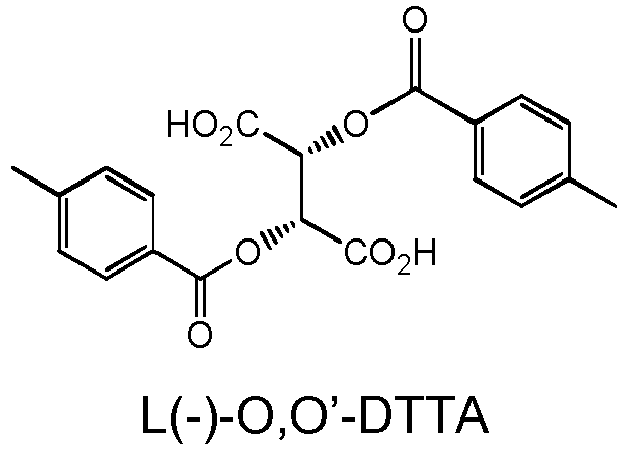
13 

14 
7 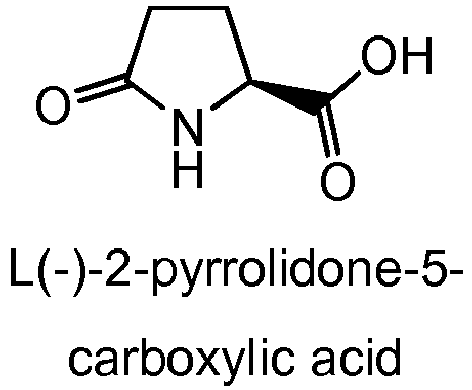
15 
8 
16 
- Racemic ketamine.HCl (15.0 g, 54.7 mmol) was dissolved in 100 mL of water under stirring. To the solution was added 100 mL CHCl3 and under vigorous stirring basified by drop-wise addition of a solution of 2.40 g NaOH (60 mmol) in 30 mL of water. The white precipitate that was formed was directly extracted into the CHCl3 layer (clear solution). The mixture was transferred into a separation funnel and separated. The aqueous phase was extracted again with 100 mL chloroform and then with 50 mL of chloroform. The combined chloroform layers were washed with 50 mL of water, dried over Na2SO4 and concentrated on a Rotavap to yield a white crystalline solid (solidified oil). Yield: 12.88 g of white solid (54.2 mmol, 99%); NMR confirmed ketamine free base.
- The procedure was repeated with 10.15 g (36.9 mmol) of racemic ketamine and yielded 8.73 g (36.7mmol, 99.5%) of free ketamine as a white solid.
- Ketamine free base (3.93 g, 16.5 mmol) was dissolved in 15 mL methanol (slightly warmed for dissolution), transferred to a 25 mL volumetric flask and the flask filled to 25 mL with methanol (1 mmol = 1.52 mL). The weight of this solution was 21.0 g (1 mmol = 1.27 g). The resolving agent was dissolved/suspended in 1.60 g (2.0 mL) of methanol.
- At room temperature 1.27 g (1.0 mmol) of the prepared ketamine free base solution in methanol was added to the prepared resolving agent in methanol mixture. All resulting solutions were observed to become clear, except Exp. #1.2 and #1.9, which were heated to effect dissolution. After standing for 22 h at room temperature, all solutions were still clear. The screw caps were removed after 2 days, to allow slow evaporation. After 5 days, most of the solvent was evaporated and in most vials a thick oil remained, as indicated in Table RS1, below. To the vials with a solid layer was added 1 mL of MeOH to re-dissolve any solids. Addition of the methanol resulting in most of the solid re-dissolving, and then 3 mL of cyclo-pentyl methyl ether (CPME) as anti-solvent was added. After 4 hours standing, all vials were again opened again for slow evaporation. After 2 days slow evaporation of the CPME to ∼2 mL, a thick turbid oil was observed to form in some of the vials (see Table RS1). These vials were closed and heated to reflux for dissolution (if necessary a few drops of MeOH were added for dissolution). In vials of Exp. #1.4, #1.5 and #1.9 oils were formed again. In vial of Exp. #1.16 a solid was formed and the mother liquid (and 0.5 mL CPME washing) was removed with a pipette, although the solid exhibited an e.e. <5%. Vials / experiments which did not yield a solid after 7 days (with addition of CPME as anti-solvent) were held at room temperature for up to an additional 7 days (total of 14 days) in an effort to effect crystallization.
- Table 6 below summarized the conditions and results of screening experiments with the 16 resolving agents identified above, using methanol as the solvent. Note: in experiments where no observation is noted in the columns "5-day evaporation" and / or "7 days + CPME, up to 14 days", no solid or oil was obtained.
Table 6: Resolution Screening Results. MeOH solvent Exp # Resolving Agent mg* (0.5 mmol) 5 day evaporation 7 days + CPME, up to 14 days 1.1 (1S)-(+)-10-camphorsulfonic acid 116 1.2 (S)-(+)-phencyphos (P1(+)) 121 solid 1.3 L(+)-tartaric acid 75 8 days: turbid (oil layer) 14 d: solidified 1.4 L(-)-O,O'-DBTA 188 9 days: turbid oil 1.5 L(-)-O,O'-DTTA 193 9 9 days: turbid oil 1.6 D(+)-O,O'-DATA 209 9 days: turbid oil(clear after heating + MeOH) 1.7 L(-)-2-pyrrolidone-5-carboxylic acid 65 5 d: solid (needles) + MeOH: re-dissolved 8 days: turbid oil (clear after heating + MeOH) 1.8 N-Bz-L -Asp-OH 119 9 days: turbid oil 1.9 N-Bz-L-Glu-OH 126 solid turbid oil after addition CPME 1.10 (S)-(+)-mandelic acid 76 1.11 (S)-(+)-2-(4-chlorophenyl)-3-methylbutanoic acid 106 solid 14 days: solid in oil after evaporation 1.12 (S)-(+)-Naproxen 115 solid + MeOH: re-dissolved 1.13 (S)-N-Tosyl-valine 136 solid 1.14 (R)-N-Tosyl-phenylglycine 153 solid 1.15 (R)-N- Benzoylphenylglycine 128 solid 1.16 (R)-(-)-1,1'-bisnaphthyl-2,2'-diyl hydrogenphosphate 87** 9 days: turbid oil, crystallized after heating Solid: 78 mg e.e. <5% ML: e.e. <5% * +/- 1 mg; ** 0.25 mmol resolving agent in 1 mL methanol, added 0.64 g (0.50 mmol) ketamine MeOH solution - In summary: no crystals were obtained when methanol was used as the solvent. After evaporation of methanol, the obtained oils were re-dissolved in a small amount of methanol and CPME (as anti-solvent). In three experiments, #1.3, #1.11 and #1.16 some solids were obtained. For Exp. #1.1, the %ee of the mother liquor and solid were determined to be very low (<5%).
- Ketamine free base (3.93 g, 16.5 mmol) was dissolved in 15 mL 2-butanone (slightly warmed for dissolution), transferred to a 25 mL volumetric flask and the flask filled to 25 mL with 2-butanone (1 mmol = 1.52 mL). The weight of this solution was 21.29 g (1 mmol = 1.29 g). The resolving agent was dissolved/suspended in 1.60 g (2.0 mL) of 2-butanone.
- At room temperature 1.29-1.32 g (1.0 mmol) of the prepared ketamine solution in 2-butanone was added to the prepared resolving agent solution. All solution became clear, except vials in Exp. #2.3, #2.6, #2.7, #2.8, #2.9, #2.14 and #2.15. These vial were heated for dissolution. In vials of Exp. #2.3 and #2.9 some solid remained, whereas vials for Exp. # 2.14 and #2.15 became opaque. After 20 h at room temperature, the vials of Exp. #2.3 (tartaric acid), #2.7 (pyroGlu) and #2.9 (N-BzGlu) contained some crystals. The solution in vials of Exp. #2.14 and #2.15 became slightly turbid. In all other vials the solution remained clear, therefore after 2 days, the screw caps of these vials were removed for slow evaporation. After 5 days slow evaporation to half volume no additional crystallization was observed to occur. After 7 days the clear solutions in vials of Exp #2.4 and #2.5 were seeded with the L-(-)-DATA salt of S-ketamine (prepared as described in RS5: #4.2 which follows), however, no crystallization occurred and the seed crystals dissolved. Vials / experiments which did not yield a solid after 7 days were held at room temperature for up to an additional 7 days (total of 14 days) in an effort to effect crystallization.
- Table 7 below summarized the results of screening experiments with 16 resolving agents and 2-butanol as the solvent. NOTE: Where no observation is noted in the columns "20 h room temperature", "5-day slow evapor." and / or "7-14 days", no solid or oil was obtained.
Table 7: Resolution Screening Results, 2-Butanone (MEK) Exp # Resolving agent mg (0.5 eq.) 20 h RT 5 day, slow evapor. 7-14 days 2.1 (1S)-(+)-10-camphorsulfonic acid 116 2.2 (S)-(+)-phencyphos (P1(+)) 121 2.3 L(+)-tartaric acid 75 crystals 8 days: Solid: 183 mg e.e. 58% (S) ML: e.e. 31% (R) 2.4 L(-)-O,O'-DBTA 188 2.5 L(-)-O,O'-DTTA 193 2.6 D(+)-O,O'-DATA 209 crystals @ 24 h 8 days: Solid: 245 mg e.e. 61% (S) ML: e.e. 32% (R) 2.7 L(-)-2-pyrrolidone-5-carboxylic acid 65 few crystals thick oil 2.8 N-Bz-L -Asp-OH 119 8 d: few crystals 2.9 N-Bz-L-Glu-OH 126 crystals 8 days: Solid: 149 mg e.e. <5% ML: e.e. <5% 2.10 (S)-(+)-mandelic acid 76 2.11 (S)-(+)-2-(4-chlorophenyl)-3-methylbutanoic acid 106 8 d: few crystals 2.12 (S)-(+)-Naproxen 115 2.13 (S)-N-Tosyl-valine 136 2.14 (R)-N-Tosyl-phenylglycine 153 turbid 8 days: turbid 2.15 (R)-N-Benzoylphenylglycine 128 turbid pink solution 2.16 (R)-(-)-1,1'-bisnaphthyl-2,2'-diyl hydrogen phosphate 87** * +/- 1 mg; ** 0.25 mmol resolving agent in 1 mL 2-butanone, added 0.66 g (0.50 mmol) ketamine solution - As shown in Table RS2 above, when 2-butanol was used as the solvent, L-(+)-tartaric acid and D-(+)-O,O'-DATA yielded a solid, with some resolution of the (S)- and (R)-ketamine stereoisomers. Although D-(+)-O,O'-DATA yielded a solid, the solid was determined (by 1H NMR) to be a 1:1 salt of the undesired enantiomer, containing 1 mol of 2-butanone as a solvate molecule. Additionally, N-Bz-L-Glu-OH yielded a solid, although analysis of this solid indicated that no significant amount of resolution was achieved.
- Ketamine free base (3.93 g, 16.5 mmol) was dissolved in a 10:1 v:v mixture of 2-propanol/water to a total volume of 25 mL (warmed for dissolution and kept hand warm to prevent crystallization). The weight of this solution was 21.1 g (1 mmol = 1.27 g = 1.52 mL). The resolving agent was dissolved/suspended in 1.60 g (2.0 mL) of a 10:1 v:v mixture of 2-propanol/water.
- At room temperature 1.27-1.30 g (1.0 mmol) of the prepared ketamine solution was added to the prepared resolving agent solution, except Exp #3.12 where 1.43 g (1.12 mmol) of the prepared ketamine solution was added to the corresponding prepared resolving agent solution. The resulting solutions became clear, except Exp #3.2, #3.3, #3.5, #3.6, #3.9, #3.14 and #3.15 which were heated for dissolution. In the vial of Exp. #3.9 some solid remained even after heating. After 18h at room temperature only the vial of Exp. #3.9 contained some crystals (possibly the resolving agent) and the vial of Exp. #3.15 became slightly turbid. In all other vials the solution remained clear, therefore the screw caps were removed for slow evaporation to half volume over 5 days. In 4 vials a crystal ring was formed on the glass wall above the surface (possible Marangoni-like effect) that was scratched back into the mother liquid. For Exp #3.8 these crystals were observed to re-dissolve. Vials / experiments which did not yield a solid were held at room temeprature for up to a total of 14 days, in an effort to effect crystallization.
Table 8 below summarized the results of screening experiments with 16 resolving agents and the 10:1 v:v mixture of IPA:water as the solvent. Note: Where no observation is noted in the columns "18 h RT", "5 day, slow evap." and / or "6-14 day", no solid or oil was obtained.Table 8: Resolution Screening Results 10:1 v:v IPA/H 2 O Exp # Resolving agent mg (0.5 eq) 18 h RT 5 day slow evap. 6-14 days 3.1 (1S)-(+)-10-camphorsulfonic acid 116 3.2 (S)-(+)-phencyphos (P1(+)) 121 3.3 L(+)-tartaric acid 75 3.4 L(-)-O,O'-DBTA 188 3.5 L(-)-O,O'-DTTA 193 3.6 D(+)-O,O'-DATA 209 3.7 L(-)-2-pyrrolidone-5-carboxylic acid 65 crystal ring 8 days: Solid: 71 mg e.e. <5% ML: e.e. <5% 3.8 N-Bz-L-Asp-OH 119 crystal ring, re-dissolved in ML 3.9 N-Bz-L-Glu-OH 126 few crystals crystal ring 8 days: Solid: 92 mg e.e. <5% ML: e.e. <5% 3.10 (S)-(+)-mandelic acid 76 3.11 (S)-(+)-2-(4-chlorophenyl)-3-methylbutanoic acid 106 6 d: slow crystallization (needles) 8 days: Solid: 83 mg e.e. <5% ML: e.e. <5% 3.12 (S)-(+)-Naproxen 115 6 d: slow crystallization (needles) 8 days: Solid:103 mg e.e. <5% ML: e.e. <5% 3.13 (S)-N-Tosyl-valine 136 3.14 (R)-N-Tosyl-phenylglycine 153 Turbid 3.15 (R)-N-Benzoylphenylglycine 128 turbid crystal ring 8 days: Solid: 39 mg e.e. <5% ML: e.e. <5% 3.16 (R)-(-)-1,1'-bisnaphthyl-2,2'-diyl hydrogen phosphate 87** * +/- 1 mg; ** 0.25 mmol resolving agent in 1 mL 2-PrOH/H2O 10:1, added 0.65 g (0.50 mmol) ketamine solution - As shown in Table 8 above, when a 10:1 v:v IPA/water mixture was used as the solvent, L(-)-2-pyrrolidone-5-carboxylic acid, N-Bz-L-Glu-OH, (S)-(+)-2-(4-chlorophenyl)-3-methylbutanoic acid, (S)-(+)-Naproxen and (R)-N-Benzoyl-phenylglycine yielded a solid, although analysis of said solids indicated that no significant amount of resolution was achieved for any of these resolving agents.
- Ketamine (racemic, 238 g, 1 mmol) was dissolved in MEK (3,5 mL) and the resulting solution was added to dry L-(-)-DATA (0.5 mmol). The mixture (in a vial) was warmed to reflux to complete dissolution and then cooled. Slow crystallization started after 24 hours (scratching with spatula), to yield a solid (167 mg, 23%) which exhibited 54% e.e.
- The resolution screening experiments described above confirmed that L-tartaric acid is useful as a resolving agent for ketamine, and suggested that D-(+)-DATA, and L-(-)-DATA (derivatives of tartaric acid), may also be effective.
- Although additional optimization experiments with D-(+)-DATA and L-(-)-DATA were completed, for large scale manufacturing, material costs for these resolving agents are not cost-effective and / or prohibitive.
- Although contrary to the results of the screening experiments described above and contrary to the teachings in
HUDYMA, T.W., et al. (DE 2062620 A ), which disclosed that attempts at resolution of ketamine with camphorsulfonic acid (CSA) were unsuccessful, additional experiments were nonetheless undertaken in an effort to develop a method for the resolution of ketamine using camphorsulfonic acid in aqueous solvent mixture. - Table 9 below details three representative experiments reacting racemic ketamine with (+)-CSA in (a) a mixture of THF and water, (b) a mixture of acetone and water, and (c) a mixture of 2-methyl-THF and water. Each experiment resulted in formation of (S)-ketamine•(+)-CSA salt in high enantiomeric excess, as noted in the Table below. All reaction mixtures were heated, with stirring as noted. The resulting precipitate was then isolated by filtration, washed with the corresponding organic solvent (no water) and dried at under vacuum 50°C.
Table 9: Preparation of (+)-CSA salt of S-Ketamine E-1 E-2 E-3 (Rac)-Ketamine 10 g 5g 10 g (+)-CSA 5.3 g 2.65 g 9.8 g Solvent 60g THF + 1.2g H2O 40g Acetone + 2.5g H2O 60g 2-Me-THF + 3.8g H2O Rxn Conditions 63°C for 30 min; 50°C, 1 hr; 20°C, 2 hr; stirred overnight; 55°C; 10°C, 2 hr cooling; 10°C, 30 min, stirring; continued stirring overnight; 73°C; mixture not dissolved; add 10g 2-Me-THF + 1.9g H2O; 63°C, seeded & stirred for 1hr; 50°C 1hr, 20°C 1 hr, 2 hr stirring Notes: first crystallization observed during heating to 63°C crystallization observed at 42°C Seeded at 63°C Yielda 8.12 g (39.4%) 3.53 g (34.3%) 9.24 g (44.6%) % ee 97.3 % ee 98.0 % ee 98.4 % ee a Maximum yield of desired product (S-enantiomer) from racemate is 50%. - As a specific embodiment of an oral composition, 100 mg of a product prepared as in Example 1, 2 or 3 is formulated with sufficient finely divided lactose to provide a total amount of 580 to 590 mg to fill a size O hard gel capsule.
- While the foregoing specification teaches the principles of the present invention, with examples provided for the purpose of illustration, it will be understood that the practice of the invention encompasses all of the usual variations, adaptations and/or modifications as come within the scope of the following claims and their equivalents.
Claims (15)
- An (S)-camphorsulfonic acid salt of S-ketamine.
- An (S)-camphorsulfonic acid salt of S-ketamine as in Claim 1, wherein the salt is a monohydrate.
- A crystalline monohydrate form of (S)-camphorsulfonic acid salt of S-ketamine, optionally wherein said crystalline form comprises the following pXRD peaks:
position [°2θ] d-spacing [Å] relative intensity [%] 7.76 11.38 58.03 8.11 10.89 21.58 12.75 6.94 24.89 13.13 6.74 55.99 13.31 6.65 23.96 13.64 6.49 31.52 14.92 5.93 100.00 15.51 5.71 32.12 15.71 5.64 28.46 18.45 4.80 43.84 24.22 3.67 25.66 25.26 3.52 28.46 27.33 3.26 51.32 position [°2θ] d-spacing [Å] relative intensity [%] 7.76 11.38 58.03 8.11 10.89 21.58 12.75 6.94 24.89 13.13 6.74 55.99 13.31 6.65 23.96 13.64 6.49 31.52 14.92 5.93 100.00 15.51 5.71 32.12 15.71 5.64 28.46 18.45 4.80 43.84 21.29 4.17 12.49 22.38 3.97 14.87 23.26 3.82 10.45 24.22 3.67 25.66 25.26 3.52 28.46 26.76 3.33 13.93 27.33 3.26 51.32 28.21 3.16 12.32 29.13 3.06 11.05 - A process for the preparation of a monohydrate form of (S)-camphorsulfonic acid salt of S-ketamine comprising

in the presence of water, wherein the water is present in an amount in the range of from about 3.5% to about 15%;
in an organic solvent; at a temperature in the range of from about 20°C to about solvent reflux temperature;
to yield the corresponding monohydrate form of (S)-camphorsulfonic acid salt of S-ketamine;
wherein the monohydrate form of (S)-camphorsulfonic acid salt of S-ketamine is present in an enantiomeric excess in the range of from about 50% to about 100%;
optionally wherein(a) the (S)-camphorsulfonic acid is present in an amount in the range of from about 0.75 to about 1.2 molar equivalents; or(b) the (S)-camphorsulfonic acid is present in an amount in the range of from about 0.9 to about 1.1 molar equivalents. - A process as in claim 4, wherein the water is present in an amount in the range of from about 5% to about 10%, optionally from about 6% to about 8%.
- A process as in any one of Claims 4 to 5, wherein the organic solvent is selected from the group consisting of methyl ethyl ketone and 2-methyl-THF, optionally wherein the organic solvent is 2-methyl-THF.
- A process as in any one of Claims 4 to 6, wherein the ketamine is reacted with (S)-camphorsulfonic acid at a temperature in the range of from about 30°C to about 100°C, optionally at a temperature of about 50°C to about 80°C.
- A process as in any one of Claims 4 to 7, wherein the monohydrate form of (S)-camphorsulfonic acid salt of S-ketamine is present in an enantiomeric excess in the range of:(a) from about 75% to about 100%;(b) from about 90% to about 100%; or(c) greater than or equal to about 96%.
- A process according to claim 4 for the preparation of a monohydrate form of (S)-camphorsulfonic acid salt of S-ketamine comprising

in the presence of water, wherein the water is present in an amount of in the range of from about 6% to about 8%;
in 2-methyl-THF; at a temperature of about 70°C;
to yield the corresponding monohydrate form of (S)-camphorsulfonic acid salt of S-ketamine;
wherein the monohydrate form of (S)-camphorsulfonic acid salt of S-ketamine is present in an enantiomeric excess in the range of from about 80% to about 100%. - A process according to any one of Claims 4 to 9, further comprising(a) reacting the monohydrate form of (S)-camphorsulfonic acid salt of S-ketamine with a base; in a solvent or mixture of solvents; to yield S-ketamine as a free base; and(b) reacting the S-ketamine free base with HCl; to yield the corresponding S-ketamine hydrochloride salt.
- An (R)-camphorsulfonic acid salt of R-ketamine.
- An (R)-camphorsulfonic acid salt of R-ketamine as in Claim 11, wherein(a) the salt is crystalline; or(b) the salt is a hydrate, optionally a monohydrate.
- A process for the preparation of (R)-camphorsulfonic acid salt of R-ketamine comprising

in the presence of water, wherein the water is present in an amount in the range of from about 3.5% to about 15%;
in an organic solvent; at a temperature in the range of from about 20°C to about solvent reflux temperature;
to yield a product mixture comprising (R)-camphorsulfonic acid salt of S-ketamine as a solid and S-ketamine;
wherein the (R)-camphorsulfonic acid salt of R-ketamine is present in an enantiomeric excess in the range of from about 50% to about 100%. - A process as in Claim 13, further comprising(a) filtering the product mixture to yield the (R)-camphorsulfonic acid salt of R-ketamine as a solid and a filtrate comprising S-ketamine;(b) reacting the S-ketamine with HCl; to yield the corresponding S-ketamine hydrochloride salt.
- A process for the preparation of S-ketamine hydrochloride comprising the following steps:Step 1:

in the presence of water, wherein the water is present in an amount in the range of from about 3.5% to about 15%;
in an organic solvent; at a temperature in the range of from about 20°C to about solvent reflux temperature;
to yield a product mixture comprising (R)-camphorsulfonic acid salt of S-ketamine as a solid and S-ketamine in solution; wherein the (R)-camphorsulfonic acid salt of R-ketamine is present in an enantiomeric excess in the range of from about 50% to about 100%;Step 2: Step 3:
Applications Claiming Priority (2)
| Application Number | Priority Date | Filing Date | Title |
|---|---|---|---|
| US201562160659P | 2015-05-13 | 2015-05-13 | |
| PCT/EP2016/060922 WO2016180984A1 (en) | 2015-05-13 | 2016-05-13 | (s)-csa salt of s-ketamine, (r)-csa salt of s-ketamine and processes for the preparation of s-ketamine |
Publications (2)
| Publication Number | Publication Date |
|---|---|
| EP3294704A1 EP3294704A1 (en) | 2018-03-21 |
| EP3294704B1 true EP3294704B1 (en) | 2019-10-30 |
Family
ID=56068863
Family Applications (1)
| Application Number | Title | Priority Date | Filing Date |
|---|---|---|---|
| EP16724354.2A Active EP3294704B1 (en) | 2015-05-13 | 2016-05-13 | (s)-csa salt of s-ketamine, (r)-csa salt of s-ketamine and processes for the preparation of s-ketamine |
Country Status (24)
| Country | Link |
|---|---|
| US (3) | US20160332962A1 (en) |
| EP (1) | EP3294704B1 (en) |
| JP (1) | JP6882990B2 (en) |
| KR (1) | KR102610047B1 (en) |
| CN (1) | CN107750245B (en) |
| AU (1) | AU2016260911B2 (en) |
| BR (1) | BR112017024243B1 (en) |
| CA (1) | CA2985696A1 (en) |
| CL (3) | CL2017002854A1 (en) |
| CO (1) | CO2017011553A2 (en) |
| CR (1) | CR20170517A (en) |
| EA (1) | EA201792503A1 (en) |
| EC (1) | ECSP17075386A (en) |
| ES (1) | ES2767708T3 (en) |
| GT (1) | GT201700245A (en) |
| IL (1) | IL255433B2 (en) |
| MX (1) | MX377053B (en) |
| MY (1) | MY181938A (en) |
| PE (1) | PE20180527A1 (en) |
| PH (2) | PH12021552213A1 (en) |
| SA (1) | SA517390322B1 (en) |
| UA (1) | UA121049C2 (en) |
| WO (1) | WO2016180984A1 (en) |
| ZA (1) | ZA201708417B (en) |
Families Citing this family (20)
| Publication number | Priority date | Publication date | Assignee | Title |
|---|---|---|---|---|
| US20140275278A1 (en) | 2013-03-15 | 2014-09-18 | Janssen Pharmaceutica Nv | Pharmaceutical composition of s-ketamine hydrochloride |
| HRP20211629T1 (en) | 2013-09-13 | 2022-02-04 | National University Corporation Chiba University | Application of r-ketamine and salt thereof as pharmaceuticals |
| EP3179993B1 (en) | 2014-08-13 | 2021-01-20 | Janssen Pharmaceutica NV | Esketamine for use in a method for the treatment of depression |
| CA2961208A1 (en) | 2014-09-15 | 2016-03-24 | Janssen Pharmaceutica Nv | Val66met (snp rs6265) genotype specific dosing regimens and methods for the treatment of depression |
| US20160332962A1 (en) | 2015-05-13 | 2016-11-17 | Janssen Pharmaceutica Nv | (s)-csa salt of s-ketamine, (r)-csa salt of s-ketamine and processes for the preparation of s-ketamine |
| US20200009081A1 (en) | 2017-09-13 | 2020-01-09 | Janssen Pharmaceutica N.V. | Delivery Of Esketamine For The Treatment Of Depression |
| MX2020006650A (en) | 2017-12-22 | 2020-11-06 | Janssen Pharmaceuticals Inc | ESKETAMINE FOR THE TREATMENT OF DEPRESSION. |
| PL3505157T3 (en) * | 2017-12-29 | 2022-04-11 | Celon Pharma S.A. | Dry powder ketamine composition for pulmonary administration in treatment-resistant depression |
| CN118453559A (en) | 2018-02-15 | 2024-08-09 | 国立大学法人千叶大学 | Preventive or therapeutic agent for inflammatory disease or bone disease and pharmaceutical composition |
| CN110218157B (en) * | 2018-03-01 | 2022-08-23 | 江苏恒瑞医药股份有限公司 | Preparation method of R-ketamine and its medicinal salt |
| CA3099293A1 (en) | 2018-05-04 | 2019-11-07 | Perception Neuroscience, Inc. | Methods of treating substance abuse |
| BR112020023882A2 (en) * | 2018-06-27 | 2021-02-09 | Clexio Biosciences Ltd. | method to treat major depressive disorder |
| CN108659004B (en) * | 2018-07-12 | 2020-11-10 | 福安药业集团重庆博圣制药有限公司 | Preparation method of oxiracetam isomer |
| US11865088B2 (en) | 2018-10-05 | 2024-01-09 | Clexio Biosciences Ltd. | Method of treating major depressive disorder |
| WO2020178653A1 (en) | 2019-03-05 | 2020-09-10 | Janssen Pharmaceuticals, Inc. | Esketamine for the treatment of depression |
| WO2020212510A1 (en) * | 2019-04-16 | 2020-10-22 | Janssen Pharmaceutica Nv | Synthetic methods of preparing esketamine |
| CN112375005A (en) * | 2019-08-16 | 2021-02-19 | 国药集团工业有限公司 | Racemization method of ketamine, its derivative or its salt |
| US12268658B2 (en) | 2019-12-30 | 2025-04-08 | Clexio Biosciences Ltd. | Dosage regime with esketamine for treating major depressive disorder |
| US12478592B2 (en) | 2019-12-30 | 2025-11-25 | Clexio Biosciences Ltd. | Dosage regime with esketamine for treating neuropsychiatric or neurological conditions |
| WO2022208144A1 (en) * | 2021-03-31 | 2022-10-06 | Supriya Lifescience Ltd | A crystalline form of 2-(2-chlorophenyl)-2-(methylamino) cyclohexanone hydrochloride and method thereof |
Family Cites Families (39)
| Publication number | Priority date | Publication date | Assignee | Title |
|---|---|---|---|---|
| CH535201A (en) * | 1969-12-19 | 1973-03-31 | Bristol Myers Co | Process for the resolution of racemic 2- (o-chlorophenyl) -2-methylaminocyclohexanone into the optically active isomers |
| JPS5857420B2 (en) * | 1975-02-12 | 1983-12-20 | ワコウジユンヤクコウギヨウ カブシキガイシヤ | DL- Phenylglycinno Kogakubunkatsuhouhou |
| JPS632932A (en) | 1986-06-23 | 1988-01-07 | Teijin Ltd | Powdery composition for nasal administration |
| JPS6314771A (en) * | 1986-07-08 | 1988-01-21 | Sankyo Co Ltd | Optically active imidazole derivative and production thereof |
| JPS63192753A (en) * | 1987-02-05 | 1988-08-10 | Otsuka Pharmaceut Co Ltd | Optical resolution of tetrahydroquinoline derivative |
| DE4312016A1 (en) | 1993-04-13 | 1994-10-20 | Goedecke Ag | Stable ketamine solutions |
| US5543434A (en) | 1994-02-25 | 1996-08-06 | Weg; Stuart L. | Nasal administration of ketamine to manage pain |
| AU3842795A (en) | 1994-10-17 | 1996-05-06 | Akzo Nobel N.V. | Process for separating enantiomers from a racemic mixture |
| PE8798A1 (en) | 1995-07-17 | 1998-03-02 | Pfizer | PROCEDURE FOR SEPARATION OF ENANTIOMERS FROM 1-AZABICICLO [2.2.2] OCTAN-3-AMINE, 2- (DIPHENYL METHYL) -N- [[2-METOXY-5- (1-METHYLETHYL) PHENYL] METHYL] |
| DE19619665C2 (en) * | 1996-05-15 | 2001-03-08 | Goedecke Ag | Racemate separation of ketamine |
| TW430660B (en) * | 1996-05-30 | 2001-04-21 | Mochida Pharm Co Ltd | Novel benzindole derivatives for neuron cell protection, processes for production, and the pharmaceutical compounds containing them |
| RU2224523C2 (en) | 1998-07-24 | 2004-02-27 | Сео Хонг Ю | Bile acid-containing aqueous solution and method for its preparing |
| US6176242B1 (en) | 1999-04-30 | 2001-01-23 | Medtronic Inc | Method of treating manic depression by brain infusion |
| EP1103256A1 (en) | 1999-11-26 | 2001-05-30 | Claudius Dr. med. Böck | Use of ketamine for the treatment of neuroendocrine immune dysfunction und algogenic psychosyndrome |
| BRPI0002693B8 (en) * | 2000-06-19 | 2021-05-25 | Cristalia Produtos Quim Farmaceuticos Ltda | process for obtaining the enantiomers of ketamine and its pharmaceutically acceptable salts |
| EP1551393A4 (en) | 2002-07-30 | 2010-06-16 | Peter Migaly | Combination therapy for depression, prevention of suicide, and varous medical and psychiatric conditions |
| US7273889B2 (en) | 2002-09-25 | 2007-09-25 | Innovative Drug Delivery Systems, Inc. | NMDA receptor antagonist formulation with reduced neurotoxicity |
| US7687080B2 (en) | 2002-11-25 | 2010-03-30 | Taraxos Inc. | Treatment of neuropathy |
| US20040214215A1 (en) | 2003-03-07 | 2004-10-28 | Yu Ruey J. | Bioavailability and improved delivery of alkaline pharmaceutical drugs |
| US20060276550A1 (en) | 2005-06-03 | 2006-12-07 | Dileep Bhagwat | Topical compositions of ketamine and butamben and methods of their use |
| CN101466364A (en) | 2006-03-22 | 2009-06-24 | 纽约大学西奈山医学院 | Intranasal administration of ketamine to treat depression |
| DE602007001885D1 (en) * | 2006-04-21 | 2009-09-17 | Zach System Spa | PROCESS FOR PREPARING DORZOLAMIDE |
| US20090306137A1 (en) | 2006-05-22 | 2009-12-10 | Wolfgang Curt D | Treatment for depressive disorders |
| DE102007009888A1 (en) | 2007-02-28 | 2008-09-04 | Hermann, Holger Lars, Dr. | Use of S-(+)-ketamine for treating depression, which is therapy-refractive depression, preferably depressive episode, relapsing disorder and bipolar affective disorder |
| US8710070B2 (en) * | 2008-03-27 | 2014-04-29 | University Of Kentucky Research Foundation | Opioid-ketamine and norketamine codrug combinations for pain management |
| US20110038807A1 (en) | 2009-08-14 | 2011-02-17 | Demitri Papolos | Compositions and methods for treating bipolar disorder |
| US20120225949A1 (en) | 2009-08-14 | 2012-09-06 | Demitri Papalos | Compositions and methods for treating bipolar disorder |
| RU2589692C2 (en) | 2010-06-15 | 2016-07-10 | Грюненталь Гмбх | Pharmaceutical combination for pain treatment |
| US9012486B2 (en) * | 2011-11-14 | 2015-04-21 | Alex Chervinsky | Topical composition for pain relief |
| KR102035877B1 (en) | 2011-11-14 | 2019-10-23 | 알파시그마 에스.피.에이. | Assays for selecting a treatment regimen for a subject with depression and methods for treatment |
| WO2013138322A1 (en) | 2012-03-12 | 2013-09-19 | Janssen Pharmaceutica Nv | Esketamine for the treatment of treatment-refractory or treatment-resistant depression |
| AU2013305580A1 (en) | 2012-08-23 | 2015-04-09 | Stuart L. Weg | Anxiolytic composition, formulation and method of use |
| EA201590697A1 (en) | 2012-10-08 | 2015-09-30 | Окленд Юнисервисиз Лимитед | DERIVATIVES OF KETAMINE |
| US20140275278A1 (en) | 2013-03-15 | 2014-09-18 | Janssen Pharmaceutica Nv | Pharmaceutical composition of s-ketamine hydrochloride |
| SG11201507358VA (en) | 2013-03-15 | 2015-10-29 | Janssen Pharmaceutica Nv | Pharmaceutical composition of s-ketamine hydrochloride |
| AU2014250756B2 (en) | 2013-04-12 | 2019-03-07 | Icahn School Of Medicine At Mount Sinai | Method for treating post-traumatic stress disorder |
| HRP20211629T1 (en) * | 2013-09-13 | 2022-02-04 | National University Corporation Chiba University | Application of r-ketamine and salt thereof as pharmaceuticals |
| US20160332962A1 (en) | 2015-05-13 | 2016-11-17 | Janssen Pharmaceutica Nv | (s)-csa salt of s-ketamine, (r)-csa salt of s-ketamine and processes for the preparation of s-ketamine |
| US20160338977A1 (en) | 2015-05-20 | 2016-11-24 | Janssen Pharmaceutica Nv | Methods and kits for treating depression |
-
2016
- 2016-05-12 US US15/152,705 patent/US20160332962A1/en not_active Abandoned
- 2016-05-13 EA EA201792503A patent/EA201792503A1/en unknown
- 2016-05-13 MY MYPI2017704244A patent/MY181938A/en unknown
- 2016-05-13 MX MX2017014473A patent/MX377053B/en active IP Right Grant
- 2016-05-13 UA UAA201712292A patent/UA121049C2/en unknown
- 2016-05-13 BR BR112017024243-5A patent/BR112017024243B1/en not_active IP Right Cessation
- 2016-05-13 CR CR20170517A patent/CR20170517A/en unknown
- 2016-05-13 PE PE2017002412A patent/PE20180527A1/en unknown
- 2016-05-13 JP JP2017558956A patent/JP6882990B2/en active Active
- 2016-05-13 PH PH1/2021/552213A patent/PH12021552213A1/en unknown
- 2016-05-13 CN CN201680027740.1A patent/CN107750245B/en active Active
- 2016-05-13 ES ES16724354T patent/ES2767708T3/en active Active
- 2016-05-13 EP EP16724354.2A patent/EP3294704B1/en active Active
- 2016-05-13 PH PH1/2017/502024A patent/PH12017502024B1/en unknown
- 2016-05-13 KR KR1020177035694A patent/KR102610047B1/en active Active
- 2016-05-13 CA CA2985696A patent/CA2985696A1/en active Pending
- 2016-05-13 WO PCT/EP2016/060922 patent/WO2016180984A1/en not_active Ceased
- 2016-05-13 AU AU2016260911A patent/AU2016260911B2/en active Active
-
2017
- 2017-11-05 IL IL255433A patent/IL255433B2/en unknown
- 2017-11-10 CL CL2017002854A patent/CL2017002854A1/en unknown
- 2017-11-10 CO CONC2017/0011553A patent/CO2017011553A2/en unknown
- 2017-11-12 SA SA517390322A patent/SA517390322B1/en unknown
- 2017-11-13 GT GT201700245A patent/GT201700245A/en unknown
- 2017-11-13 EC ECIEPI201775386A patent/ECSP17075386A/en unknown
- 2017-12-12 ZA ZA2017/08417A patent/ZA201708417B/en unknown
-
2018
- 2018-06-04 US US15/997,267 patent/US10815196B2/en active Active
-
2019
- 2019-04-18 CL CL2019001066A patent/CL2019001066A1/en unknown
-
2020
- 2020-07-13 CL CL2020001852A patent/CL2020001852A1/en unknown
- 2020-10-08 US US17/066,127 patent/US20210024461A1/en not_active Abandoned
Non-Patent Citations (1)
| Title |
|---|
| None * |
Also Published As
Similar Documents
| Publication | Publication Date | Title |
|---|---|---|
| US10815196B2 (en) | (S)-CSA salt of S-ketamine, (R)-CSA salt of S-ketamine and processes for the preparation of S-ketamine | |
| US8735454B2 (en) | Deuterium-enriched bupropion | |
| RU2213743C2 (en) | Derivative of thienylazolylalkoxyethaneamine, method for its preparing (variants), pharmaceutical composition, intermediate compound and method for its preparing (variants) | |
| JP5666140B2 (en) | Solids containing (-)-O-desmethylvenlafaxine and their use | |
| US6187807B1 (en) | Methods of use and compositions of (S) (-)-amisulpride | |
| US20060199808A1 (en) | Method of synthesis and isolation of solid N-desmethylclozapine and crystalline forms thereof | |
| FI61182B (en) | FOERFARANDE FOER FRAMSTAELLNING AV FARMACEUTISKT AKTIVA BUTYLAMINDERIVAT | |
| EP2649996A1 (en) | Crystalline forms of sartans like telmisartan with beta blockers | |
| EA042464B1 (en) | (S)-KSK S-KETAMINE SALT, (R)-KSK S-KETAMINE SALT AND METHODS FOR OBTAINING S-KETAMINE | |
| US20130274270A1 (en) | Polymorphs of 3-chloro-4[(2r)-2-(4-chlorophenyl)-4-[(1r)-1-(4-cyanophenyl)ethyl]-1-piperazinyl]-benzonitrile, pharmaceutical compositions and method of use comprising said polymorphs, and a process for preparing them | |
| HK1251546B (en) | (s)-csa salt of s-ketamine, (r)-csa salt of s-ketamine and processes for the preparation of s-ketamine | |
| US20090082383A1 (en) | Deuterium-enriched buprenorphine | |
| US20090075991A1 (en) | Deuterium-enriched efavirenz | |
| US20080299217A1 (en) | Deuterium-enriched bifeprunox | |
| US20090069381A1 (en) | Deuterium-enriched raloxifene | |
| US20090069397A1 (en) | Deuterium-enriched olmesartan | |
| US20080319086A1 (en) | Deuterium-enriched salmeterol | |
| US20090076154A1 (en) | Deuterium-enriched vorinostat | |
| US20090076144A1 (en) | Deuterium-enriched bazedoxifene | |
| US20090062257A1 (en) | Deuterium-enriched varenicline | |
| US20090082259A1 (en) | Deuterium-enriched octreotide | |
| AU2010305834A1 (en) | Polymorphs of pardoprunox |
Legal Events
| Date | Code | Title | Description |
|---|---|---|---|
| STAA | Information on the status of an ep patent application or granted ep patent |
Free format text: STATUS: THE INTERNATIONAL PUBLICATION HAS BEEN MADE |
|
| PUAI | Public reference made under article 153(3) epc to a published international application that has entered the european phase |
Free format text: ORIGINAL CODE: 0009012 |
|
| STAA | Information on the status of an ep patent application or granted ep patent |
Free format text: STATUS: REQUEST FOR EXAMINATION WAS MADE |
|
| 17P | Request for examination filed |
Effective date: 20171213 |
|
| AK | Designated contracting states |
Kind code of ref document: A1 Designated state(s): AL AT BE BG CH CY CZ DE DK EE ES FI FR GB GR HR HU IE IS IT LI LT LU LV MC MK MT NL NO PL PT RO RS SE SI SK SM TR |
|
| AX | Request for extension of the european patent |
Extension state: BA ME |
|
| RIN1 | Information on inventor provided before grant (corrected) |
Inventor name: CHEN, CHENG YI Inventor name: WEDEL, TOBIAS Inventor name: FLOEGEL, OLIVER Inventor name: STRITTMATTER, TOBIAS Inventor name: MAURER, ADRIAN Inventor name: JUSTUS, MICHAEL Inventor name: REUTER, KARL |
|
| GRAP | Despatch of communication of intention to grant a patent |
Free format text: ORIGINAL CODE: EPIDOSNIGR1 |
|
| STAA | Information on the status of an ep patent application or granted ep patent |
Free format text: STATUS: GRANT OF PATENT IS INTENDED |
|
| INTG | Intention to grant announced |
Effective date: 20190507 |
|
| GRAS | Grant fee paid |
Free format text: ORIGINAL CODE: EPIDOSNIGR3 |
|
| GRAA | (expected) grant |
Free format text: ORIGINAL CODE: 0009210 |
|
| STAA | Information on the status of an ep patent application or granted ep patent |
Free format text: STATUS: THE PATENT HAS BEEN GRANTED |
|
| AK | Designated contracting states |
Kind code of ref document: B1 Designated state(s): AL AT BE BG CH CY CZ DE DK EE ES FI FR GB GR HR HU IE IS IT LI LT LU LV MC MK MT NL NO PL PT RO RS SE SI SK SM TR |
|
| AX | Request for extension of the european patent |
Extension state: BA ME |
|
| RAP1 | Party data changed (applicant data changed or rights of an application transferred) |
Owner name: JANSSEN PHARMACEUTICA NV |
|
| REG | Reference to a national code |
Ref country code: GB Ref legal event code: FG4D |
|
| REG | Reference to a national code |
Ref country code: CH Ref legal event code: EP |
|
| REG | Reference to a national code |
Ref country code: AT Ref legal event code: REF Ref document number: 1195974 Country of ref document: AT Kind code of ref document: T Effective date: 20191115 Ref country code: CH Ref legal event code: NV Representative=s name: E. BLUM AND CO. AG PATENT- UND MARKENANWAELTE , CH |
|
| REG | Reference to a national code |
Ref country code: DE Ref legal event code: R096 Ref document number: 602016023313 Country of ref document: DE |
|
| REG | Reference to a national code |
Ref country code: IE Ref legal event code: FG4D |
|
| REG | Reference to a national code |
Ref country code: LT Ref legal event code: MG4D |
|
| PG25 | Lapsed in a contracting state [announced via postgrant information from national office to epo] |
Ref country code: GR Free format text: LAPSE BECAUSE OF FAILURE TO SUBMIT A TRANSLATION OF THE DESCRIPTION OR TO PAY THE FEE WITHIN THE PRESCRIBED TIME-LIMIT Effective date: 20200131 Ref country code: SE Free format text: LAPSE BECAUSE OF FAILURE TO SUBMIT A TRANSLATION OF THE DESCRIPTION OR TO PAY THE FEE WITHIN THE PRESCRIBED TIME-LIMIT Effective date: 20191030 Ref country code: LV Free format text: LAPSE BECAUSE OF FAILURE TO SUBMIT A TRANSLATION OF THE DESCRIPTION OR TO PAY THE FEE WITHIN THE PRESCRIBED TIME-LIMIT Effective date: 20191030 Ref country code: NO Free format text: LAPSE BECAUSE OF FAILURE TO SUBMIT A TRANSLATION OF THE DESCRIPTION OR TO PAY THE FEE WITHIN THE PRESCRIBED TIME-LIMIT Effective date: 20200130 Ref country code: NL Free format text: LAPSE BECAUSE OF FAILURE TO SUBMIT A TRANSLATION OF THE DESCRIPTION OR TO PAY THE FEE WITHIN THE PRESCRIBED TIME-LIMIT Effective date: 20191030 Ref country code: PL Free format text: LAPSE BECAUSE OF FAILURE TO SUBMIT A TRANSLATION OF THE DESCRIPTION OR TO PAY THE FEE WITHIN THE PRESCRIBED TIME-LIMIT Effective date: 20191030 Ref country code: LT Free format text: LAPSE BECAUSE OF FAILURE TO SUBMIT A TRANSLATION OF THE DESCRIPTION OR TO PAY THE FEE WITHIN THE PRESCRIBED TIME-LIMIT Effective date: 20191030 Ref country code: BG Free format text: LAPSE BECAUSE OF FAILURE TO SUBMIT A TRANSLATION OF THE DESCRIPTION OR TO PAY THE FEE WITHIN THE PRESCRIBED TIME-LIMIT Effective date: 20200130 Ref country code: FI Free format text: LAPSE BECAUSE OF FAILURE TO SUBMIT A TRANSLATION OF THE DESCRIPTION OR TO PAY THE FEE WITHIN THE PRESCRIBED TIME-LIMIT Effective date: 20191030 Ref country code: PT Free format text: LAPSE BECAUSE OF FAILURE TO SUBMIT A TRANSLATION OF THE DESCRIPTION OR TO PAY THE FEE WITHIN THE PRESCRIBED TIME-LIMIT Effective date: 20200302 |
|
| REG | Reference to a national code |
Ref country code: NL Ref legal event code: MP Effective date: 20191030 |
|
| PG25 | Lapsed in a contracting state [announced via postgrant information from national office to epo] |
Ref country code: RS Free format text: LAPSE BECAUSE OF FAILURE TO SUBMIT A TRANSLATION OF THE DESCRIPTION OR TO PAY THE FEE WITHIN THE PRESCRIBED TIME-LIMIT Effective date: 20191030 Ref country code: IS Free format text: LAPSE BECAUSE OF FAILURE TO SUBMIT A TRANSLATION OF THE DESCRIPTION OR TO PAY THE FEE WITHIN THE PRESCRIBED TIME-LIMIT Effective date: 20200229 Ref country code: HR Free format text: LAPSE BECAUSE OF FAILURE TO SUBMIT A TRANSLATION OF THE DESCRIPTION OR TO PAY THE FEE WITHIN THE PRESCRIBED TIME-LIMIT Effective date: 20191030 |
|
| REG | Reference to a national code |
Ref country code: ES Ref legal event code: FG2A Ref document number: 2767708 Country of ref document: ES Kind code of ref document: T3 Effective date: 20200618 |
|
| PG25 | Lapsed in a contracting state [announced via postgrant information from national office to epo] |
Ref country code: AL Free format text: LAPSE BECAUSE OF FAILURE TO SUBMIT A TRANSLATION OF THE DESCRIPTION OR TO PAY THE FEE WITHIN THE PRESCRIBED TIME-LIMIT Effective date: 20191030 |
|
| PG25 | Lapsed in a contracting state [announced via postgrant information from national office to epo] |
Ref country code: RO Free format text: LAPSE BECAUSE OF FAILURE TO SUBMIT A TRANSLATION OF THE DESCRIPTION OR TO PAY THE FEE WITHIN THE PRESCRIBED TIME-LIMIT Effective date: 20191030 Ref country code: CZ Free format text: LAPSE BECAUSE OF FAILURE TO SUBMIT A TRANSLATION OF THE DESCRIPTION OR TO PAY THE FEE WITHIN THE PRESCRIBED TIME-LIMIT Effective date: 20191030 Ref country code: DK Free format text: LAPSE BECAUSE OF FAILURE TO SUBMIT A TRANSLATION OF THE DESCRIPTION OR TO PAY THE FEE WITHIN THE PRESCRIBED TIME-LIMIT Effective date: 20191030 Ref country code: EE Free format text: LAPSE BECAUSE OF FAILURE TO SUBMIT A TRANSLATION OF THE DESCRIPTION OR TO PAY THE FEE WITHIN THE PRESCRIBED TIME-LIMIT Effective date: 20191030 |
|
| REG | Reference to a national code |
Ref country code: DE Ref legal event code: R097 Ref document number: 602016023313 Country of ref document: DE |
|
| REG | Reference to a national code |
Ref country code: AT Ref legal event code: MK05 Ref document number: 1195974 Country of ref document: AT Kind code of ref document: T Effective date: 20191030 |
|
| PG25 | Lapsed in a contracting state [announced via postgrant information from national office to epo] |
Ref country code: SK Free format text: LAPSE BECAUSE OF FAILURE TO SUBMIT A TRANSLATION OF THE DESCRIPTION OR TO PAY THE FEE WITHIN THE PRESCRIBED TIME-LIMIT Effective date: 20191030 Ref country code: SM Free format text: LAPSE BECAUSE OF FAILURE TO SUBMIT A TRANSLATION OF THE DESCRIPTION OR TO PAY THE FEE WITHIN THE PRESCRIBED TIME-LIMIT Effective date: 20191030 |
|
| VS25 | Lapsed in a validation state [announced via postgrant information from nat. office to epo] |
Ref country code: MD Free format text: LAPSE BECAUSE OF FAILURE TO SUBMIT A TRANSLATION OF THE DESCRIPTION OR TO PAY THE FEE WITHIN THE PRESCRIBED TIME-LIMIT Effective date: 20191030 |
|
| PLBE | No opposition filed within time limit |
Free format text: ORIGINAL CODE: 0009261 |
|
| STAA | Information on the status of an ep patent application or granted ep patent |
Free format text: STATUS: NO OPPOSITION FILED WITHIN TIME LIMIT |
|
| 26N | No opposition filed |
Effective date: 20200731 |
|
| PG25 | Lapsed in a contracting state [announced via postgrant information from national office to epo] |
Ref country code: AT Free format text: LAPSE BECAUSE OF FAILURE TO SUBMIT A TRANSLATION OF THE DESCRIPTION OR TO PAY THE FEE WITHIN THE PRESCRIBED TIME-LIMIT Effective date: 20191030 Ref country code: SI Free format text: LAPSE BECAUSE OF FAILURE TO SUBMIT A TRANSLATION OF THE DESCRIPTION OR TO PAY THE FEE WITHIN THE PRESCRIBED TIME-LIMIT Effective date: 20191030 |
|
| PG25 | Lapsed in a contracting state [announced via postgrant information from national office to epo] |
Ref country code: MC Free format text: LAPSE BECAUSE OF FAILURE TO SUBMIT A TRANSLATION OF THE DESCRIPTION OR TO PAY THE FEE WITHIN THE PRESCRIBED TIME-LIMIT Effective date: 20191030 |
|
| PG25 | Lapsed in a contracting state [announced via postgrant information from national office to epo] |
Ref country code: LU Free format text: LAPSE BECAUSE OF NON-PAYMENT OF DUE FEES Effective date: 20200513 |
|
| PG25 | Lapsed in a contracting state [announced via postgrant information from national office to epo] |
Ref country code: IE Free format text: LAPSE BECAUSE OF NON-PAYMENT OF DUE FEES Effective date: 20200513 |
|
| VS25 | Lapsed in a validation state [announced via postgrant information from nat. office to epo] |
Ref country code: MA Free format text: LAPSE BECAUSE OF FAILURE TO SUBMIT A TRANSLATION OF THE DESCRIPTION OR TO PAY THE FEE WITHIN THE PRESCRIBED TIME-LIMIT Effective date: 20191030 |
|
| PG25 | Lapsed in a contracting state [announced via postgrant information from national office to epo] |
Ref country code: TR Free format text: LAPSE BECAUSE OF FAILURE TO SUBMIT A TRANSLATION OF THE DESCRIPTION OR TO PAY THE FEE WITHIN THE PRESCRIBED TIME-LIMIT Effective date: 20191030 Ref country code: MT Free format text: LAPSE BECAUSE OF FAILURE TO SUBMIT A TRANSLATION OF THE DESCRIPTION OR TO PAY THE FEE WITHIN THE PRESCRIBED TIME-LIMIT Effective date: 20191030 Ref country code: CY Free format text: LAPSE BECAUSE OF FAILURE TO SUBMIT A TRANSLATION OF THE DESCRIPTION OR TO PAY THE FEE WITHIN THE PRESCRIBED TIME-LIMIT Effective date: 20191030 |
|
| PG25 | Lapsed in a contracting state [announced via postgrant information from national office to epo] |
Ref country code: MK Free format text: LAPSE BECAUSE OF FAILURE TO SUBMIT A TRANSLATION OF THE DESCRIPTION OR TO PAY THE FEE WITHIN THE PRESCRIBED TIME-LIMIT Effective date: 20191030 |
|
| PGFP | Annual fee paid to national office [announced via postgrant information from national office to epo] |
Ref country code: DE Payment date: 20250402 Year of fee payment: 10 |
|
| PGFP | Annual fee paid to national office [announced via postgrant information from national office to epo] |
Ref country code: ES Payment date: 20250606 Year of fee payment: 10 |
|
| PGFP | Annual fee paid to national office [announced via postgrant information from national office to epo] |
Ref country code: IT Payment date: 20250422 Year of fee payment: 10 Ref country code: BE Payment date: 20250410 Year of fee payment: 10 |
|
| PGFP | Annual fee paid to national office [announced via postgrant information from national office to epo] |
Ref country code: FR Payment date: 20250401 Year of fee payment: 10 |
|
| PGFP | Annual fee paid to national office [announced via postgrant information from national office to epo] |
Ref country code: CH Payment date: 20250601 Year of fee payment: 10 |
|
| PGFP | Annual fee paid to national office [announced via postgrant information from national office to epo] |
Ref country code: GB Payment date: 20260324 Year of fee payment: 11 |