EP3294288B1 - Human papilloma virus replication inhibitors - Google Patents
Human papilloma virus replication inhibitors Download PDFInfo
- Publication number
- EP3294288B1 EP3294288B1 EP16722201.7A EP16722201A EP3294288B1 EP 3294288 B1 EP3294288 B1 EP 3294288B1 EP 16722201 A EP16722201 A EP 16722201A EP 3294288 B1 EP3294288 B1 EP 3294288B1
- Authority
- EP
- European Patent Office
- Prior art keywords
- hpv
- replication
- compound
- compounds
- hpv18
- Prior art date
- Legal status (The legal status is an assumption and is not a legal conclusion. Google has not performed a legal analysis and makes no representation as to the accuracy of the status listed.)
- Active
Links
Images




Classifications
-
- A—HUMAN NECESSITIES
- A61—MEDICAL OR VETERINARY SCIENCE; HYGIENE
- A61K—PREPARATIONS FOR MEDICAL, DENTAL OR TOILETRY PURPOSES
- A61K31/00—Medicinal preparations containing organic active ingredients
- A61K31/56—Compounds containing cyclopenta[a]hydrophenanthrene ring systems; Derivatives thereof, e.g. steroids
- A61K31/565—Compounds containing cyclopenta[a]hydrophenanthrene ring systems; Derivatives thereof, e.g. steroids not substituted in position 17 beta by a carbon atom, e.g. estrane, estradiol
- A61K31/566—Compounds containing cyclopenta[a]hydrophenanthrene ring systems; Derivatives thereof, e.g. steroids not substituted in position 17 beta by a carbon atom, e.g. estrane, estradiol having an oxo group in position 17, e.g. estrone
-
- A—HUMAN NECESSITIES
- A61—MEDICAL OR VETERINARY SCIENCE; HYGIENE
- A61K—PREPARATIONS FOR MEDICAL, DENTAL OR TOILETRY PURPOSES
- A61K31/00—Medicinal preparations containing organic active ingredients
- A61K31/33—Heterocyclic compounds
- A61K31/335—Heterocyclic compounds having oxygen as the only ring hetero atom, e.g. fungichromin
- A61K31/34—Heterocyclic compounds having oxygen as the only ring hetero atom, e.g. fungichromin having five-membered rings with one oxygen as the only ring hetero atom, e.g. isosorbide
- A61K31/341—Heterocyclic compounds having oxygen as the only ring hetero atom, e.g. fungichromin having five-membered rings with one oxygen as the only ring hetero atom, e.g. isosorbide not condensed with another ring, e.g. ranitidine, furosemide, bufetolol, muscarine
-
- A—HUMAN NECESSITIES
- A61—MEDICAL OR VETERINARY SCIENCE; HYGIENE
- A61K—PREPARATIONS FOR MEDICAL, DENTAL OR TOILETRY PURPOSES
- A61K31/00—Medicinal preparations containing organic active ingredients
- A61K31/33—Heterocyclic compounds
- A61K31/395—Heterocyclic compounds having nitrogen as a ring hetero atom, e.g. guanethidine or rifamycins
- A61K31/41—Heterocyclic compounds having nitrogen as a ring hetero atom, e.g. guanethidine or rifamycins having five-membered rings with two or more ring hetero atoms, at least one of which being nitrogen, e.g. tetrazole
- A61K31/4164—1,3-Diazoles
- A61K31/4184—1,3-Diazoles condensed with carbocyclic rings, e.g. benzimidazoles
-
- A—HUMAN NECESSITIES
- A61—MEDICAL OR VETERINARY SCIENCE; HYGIENE
- A61K—PREPARATIONS FOR MEDICAL, DENTAL OR TOILETRY PURPOSES
- A61K31/00—Medicinal preparations containing organic active ingredients
- A61K31/33—Heterocyclic compounds
- A61K31/395—Heterocyclic compounds having nitrogen as a ring hetero atom, e.g. guanethidine or rifamycins
- A61K31/495—Heterocyclic compounds having nitrogen as a ring hetero atom, e.g. guanethidine or rifamycins having six-membered rings with two or more nitrogen atoms as the only ring heteroatoms, e.g. piperazine or tetrazines
- A61K31/496—Non-condensed piperazines containing further heterocyclic rings, e.g. rifampin, thiothixene or sparfloxacin
-
- A—HUMAN NECESSITIES
- A61—MEDICAL OR VETERINARY SCIENCE; HYGIENE
- A61K—PREPARATIONS FOR MEDICAL, DENTAL OR TOILETRY PURPOSES
- A61K31/00—Medicinal preparations containing organic active ingredients
- A61K31/33—Heterocyclic compounds
- A61K31/395—Heterocyclic compounds having nitrogen as a ring hetero atom, e.g. guanethidine or rifamycins
- A61K31/495—Heterocyclic compounds having nitrogen as a ring hetero atom, e.g. guanethidine or rifamycins having six-membered rings with two or more nitrogen atoms as the only ring heteroatoms, e.g. piperazine or tetrazines
- A61K31/505—Pyrimidines; Hydrogenated pyrimidines, e.g. trimethoprim
- A61K31/517—Pyrimidines; Hydrogenated pyrimidines, e.g. trimethoprim ortho- or peri-condensed with carbocyclic ring systems, e.g. quinazoline, perimidine
-
- A—HUMAN NECESSITIES
- A61—MEDICAL OR VETERINARY SCIENCE; HYGIENE
- A61K—PREPARATIONS FOR MEDICAL, DENTAL OR TOILETRY PURPOSES
- A61K31/00—Medicinal preparations containing organic active ingredients
- A61K31/33—Heterocyclic compounds
- A61K31/395—Heterocyclic compounds having nitrogen as a ring hetero atom, e.g. guanethidine or rifamycins
- A61K31/495—Heterocyclic compounds having nitrogen as a ring hetero atom, e.g. guanethidine or rifamycins having six-membered rings with two or more nitrogen atoms as the only ring heteroatoms, e.g. piperazine or tetrazines
- A61K31/505—Pyrimidines; Hydrogenated pyrimidines, e.g. trimethoprim
- A61K31/519—Pyrimidines; Hydrogenated pyrimidines, e.g. trimethoprim ortho- or peri-condensed with heterocyclic rings
- A61K31/52—Purines, e.g. adenine
-
- A—HUMAN NECESSITIES
- A61—MEDICAL OR VETERINARY SCIENCE; HYGIENE
- A61K—PREPARATIONS FOR MEDICAL, DENTAL OR TOILETRY PURPOSES
- A61K31/00—Medicinal preparations containing organic active ingredients
- A61K31/56—Compounds containing cyclopenta[a]hydrophenanthrene ring systems; Derivatives thereof, e.g. steroids
- A61K31/565—Compounds containing cyclopenta[a]hydrophenanthrene ring systems; Derivatives thereof, e.g. steroids not substituted in position 17 beta by a carbon atom, e.g. estrane, estradiol
- A61K31/568—Compounds containing cyclopenta[a]hydrophenanthrene ring systems; Derivatives thereof, e.g. steroids not substituted in position 17 beta by a carbon atom, e.g. estrane, estradiol substituted in positions 10 and 13 by a chain having at least one carbon atom, e.g. androstanes, e.g. testosterone
-
- A—HUMAN NECESSITIES
- A61—MEDICAL OR VETERINARY SCIENCE; HYGIENE
- A61K—PREPARATIONS FOR MEDICAL, DENTAL OR TOILETRY PURPOSES
- A61K31/00—Medicinal preparations containing organic active ingredients
- A61K31/56—Compounds containing cyclopenta[a]hydrophenanthrene ring systems; Derivatives thereof, e.g. steroids
- A61K31/57—Compounds containing cyclopenta[a]hydrophenanthrene ring systems; Derivatives thereof, e.g. steroids substituted in position 17 beta by a chain of two carbon atoms, e.g. pregnane or progesterone
-
- A—HUMAN NECESSITIES
- A61—MEDICAL OR VETERINARY SCIENCE; HYGIENE
- A61K—PREPARATIONS FOR MEDICAL, DENTAL OR TOILETRY PURPOSES
- A61K31/00—Medicinal preparations containing organic active ingredients
- A61K31/56—Compounds containing cyclopenta[a]hydrophenanthrene ring systems; Derivatives thereof, e.g. steroids
- A61K31/575—Compounds containing cyclopenta[a]hydrophenanthrene ring systems; Derivatives thereof, e.g. steroids substituted in position 17 beta by a chain of three or more carbon atoms, e.g. cholane, cholestane, ergosterol, sitosterol
-
- A—HUMAN NECESSITIES
- A61—MEDICAL OR VETERINARY SCIENCE; HYGIENE
- A61K—PREPARATIONS FOR MEDICAL, DENTAL OR TOILETRY PURPOSES
- A61K31/00—Medicinal preparations containing organic active ingredients
- A61K31/56—Compounds containing cyclopenta[a]hydrophenanthrene ring systems; Derivatives thereof, e.g. steroids
- A61K31/58—Compounds containing cyclopenta[a]hydrophenanthrene ring systems; Derivatives thereof, e.g. steroids containing heterocyclic rings, e.g. danazol, stanozolol, pancuronium or digitogenin
-
- A—HUMAN NECESSITIES
- A61—MEDICAL OR VETERINARY SCIENCE; HYGIENE
- A61P—SPECIFIC THERAPEUTIC ACTIVITY OF CHEMICAL COMPOUNDS OR MEDICINAL PREPARATIONS
- A61P31/00—Antiinfectives, i.e. antibiotics, antiseptics, chemotherapeutics
- A61P31/12—Antivirals
- A61P31/20—Antivirals for DNA viruses
Definitions
- This invention is related generally to the area of inhibiting viral replication. More specifically this invention is related to novel inhibitors of Human Papilloma Virus. Furthermore, the disclosure relates to identifying target molecules for further antiviral compounds.
- HPVs Human Papillomaviruses
- HPVs Human Papillomaviruses
- HR High-risk
- HPV16 and HPV18 have been found to be associated with about 70 invasive carcinomas of the uterine cervix, as well as cancers of the oropharynx, anus, and other mucosal tissues. Low-risk HPVs on the other hand are not usually connected with malignancy.
- Imiquimod is not specific for HPV, but is used to treat various skin diseases, including skin cancer, melanoma, molluscum contagiosum and others.
- Gardasil types 6, 11, 16 and 18
- Gardasil 9 types 16, 18, 31, 33, 45, 52, 58, 6 and 11
- Cevarix types 16 and 18.
- the main active components in of these vaccines are the L1 capsid proteins of HPV viruses. Moreover these vaccines are only prophylactic and in addition to this the availability of the vaccines is limited.
- HPVs encode two main oncoproteins, E6 and E7, which modify cellular environment to be more suitable for HPV replication by inducing DNA synthesis and cell transformation.
- E6 and E7 have crucial roles in HPV-related cancer development.
- HPVs The life cycle of HPVs is strictly dependent on cellular differentiation program. Infection starts by virus entry into undifferentiated basal epithelial cells (possibly stem cells) through micro-wounds. Infection is established by initiating initial amplification during which viral copy number reaches up to few hundred copies per cell. Stable maintenance phase is next, during this stage HPV genome replicates approximately once per cell cycle the viral copy number is constant. Viral gene expression is kept at very low levels. Vegetative amplification and assembly of the virions takes place in highly differentiated cells. To replicate its genome, HPVs largely depend on cellular proteins. They themselves only encode two replication proteins: E1 and E2.
- E1 is an ATP-dependent DNA helicase, which initiates replication from the non-coding region of HPV genome - URR (LCR). It also interacts with various cellular replication proteins to facilitate viral replication, for example Topoisomerase I, Replication Protein A (RPA) and Polymerase Alpha.
- RPA Replication Protein A
- E2 protein forms a complex with E1 and directs it to the replication origin.
- E2 is involved in regulation of viral gene expression, and it tethers HPV genomes to mitotic chromosomes for efficient segregation.
- DDR DNA damage response network
- ATM ATR
- ATR ATR
- DNA-PK DNA damage response network
- HR Homologous recombination
- NHEJ Non-homologous end-joining
- HPVs By activating DDR, HPVs recruit replication proteins to these foci which in turn help to efficiently replicate viral genomes.
- HPV replication machinery uses Homologous recombination dependent replication during amplification of viral genome which results in accumulation of oligomerized molecules containing at least two genomes.
- Topoisomerases as part of Top1/Top2 cleaving complex are proteins that locally relax otherwise tightly packed nucleic acids which is required for replication and transcription.
- Top1/2cc proteins that locally relax otherwise tightly packed nucleic acids which is required for replication and transcription.
- exogenous and endogenous DNA damaging agents cause entrapment of Top1/2cc-s.
- Entrapped cleaving complexes cause DNA breaks due to the collision of replication forks.
- Tdp1 is a key enzyme in repairing DNA damage caused by Toplcc-s.
- PARP1 Poly(ADP-ribose) polymerase-1
- PARP1 is an enzyme that binds to DNA and catalyzes addition of ADP-ribose polymers (PAR) to its target proteins. These modifications regulate cellular localization and biological activities of various proteins involved in DDR.
- PARP1 plays a key role in Tdp1-dependent repair of Top1-induced DNA damage.
- Tdp1 inhibitors together with PARP1 and/or Topoisomerase 1 inhibitors have been considered as targets in cancer therapy.
- This disclosure provides identification of several new HPV replication inhibitors through high-throughput screening of NCI Diversity set IV and customized chemical libraries with IC50 ranging from 2.5 - 60 ⁇ M. These compounds are highly specific to High-risk HPVs. At least four of these compounds inhibit Tdp1-PARP1-Toplcc pathway by characterizing their synergistic effect with Topoisomerase I inhibitor Campthotecin. Tdp1 and PARP1 are identified as essential cellular proteins necessary for HPV replication, and by use of the novel inhibitors it is shown that they are valid drug targets for the development of further antivirals.
- the first object of this invention is an antiviral compound for use in inhibiting of one or more replication phases of high risk Human Papilloma Virus. Characteristic features of said compound are depicted in claim 1.
- the second object of this invention is a method to inhibit one or more replication phases of high risk HPV in vitro. Characteristic steps of said method are depicted in claim 6.
- the third object of this invention is a medicament for use in treating high risk HPV infection. Characteristic features of said medicament are depicted in claim 9. This disclosure describes compounds effective in eliminating different stages of HPV infection.
- This disclosure describes treating human papilloma virus affected cells or a subject (e.g., in vitro or in vivo).
- This disclosure describes compounds for treating cervical cancer.
- This disclosure describes a method to treat HPV infection by administering to the subject, or contacting infected cells with a pharmaceutical composition comprising one or more compounds as identified and described herein.
- This disclosure describes a method of treating HPV affected cells comprising contacting the cells with a compound described herein or a mixture of the compounds.
- This disclosure describes a method of treating HPV affected cells in a subject, comprising administering to a subject one or more compounds or pharmaceutical compositions described herein.
- This disclosure describes provide antiviral compound for inhibiting one or more replication stages of Human Papilloma Virus, wherein the compound is selected from the group consisting of:
- This disclosure describes an antiviral compound against high risk HPV, wherein the compound inhibits initial amplification, stable maintenance and vegetative replication phases of the high risk HPV and the compound is selected from the group consisting of: NSC109128, NSC305831 and NSC82269.
- This disclosure describes an antiviral compound against high risk HPV, wherein the compound inhibits initial amplification and stable maintenance of high risk HPV, and the compound is NSC88915.
- This disclosure describes an antiviral compound against high risk HPV, wherein the compound inhibits initial amplification phase of high risk HPV and the compound is NSC109128, NSC305831, NSC82269, NSC 88915 or NSC 9782.
- Still another object of this disclosure describes an antiviral compound to inhibit one or more replication phases of Human Papilloma Virus, wherein the compound inhibits release of Topoisomerase I cleaving complex Toplcc from a high risk HPV DNA.
- This disclosure describes an antiviral compound to inhibit one or more replication phases of HPV, wherein the compound inhibits the release by inhibiting Tpd1 or PARP1.
- this disclosure describes a method to treat high risk HPV-infection, said method comprising administration of or contacting infected cells with a compound capable of inhibiting one or more replication phases of Human Papilloma Virus, wherein the compound inhibits release of Topoisomerase I cleaving complex Toplcc from HPV DNA.
- this disclosure describes a method to treat high risk HPV-infection, said method comprising administration of or contacting infected cells with a compound capable of inhibiting one or more replication phases of Human Papilloma Virus, wherein the compound inhibits Tpd1 or PARP 1.
- This disclosure describes a method to inhibit one or more replication phases of high risk HPV in vitro or in vivo, said method comprising a step of contacting the infected cell with a compound inhibiting release of Topoisomerase I cleaving complex Top1cc from HPV DNA.
- This disclosure describes a method to inhibit one or more replication phases of high risk HPV in vitro or in vivo, said method comprising a step of contacting the infected cell with a compound inhibiting Tpd1 or PARP 1.
- This disclosure describes a method to inhibit one or more replication phases of high risk HPV in vitro or in vivo, said method comprising a step of contacting the infected cell with a compound selected from the group consisting of
- this disclosure describes a medicament for treating high risk HPV infection, said medicament comprising one or more of compounds inhibiting release of Topoisomerase I cleaving complex Toplcc from HPV DNA.
- the disclosure describes a medicament for treating high risk HPV infection, said medicament comprising one or more of compounds inhibiting Tpd1 or PARP.
- a medicament for treating high risk HPV infection comprising one or more of compounds selected from the group consisting of
- this disclosure describes a method to identify potential antiviral compounds for inhibition of high risk HPV genome replication, said method comprising detection of compounds capable of inhibiting Tdp1 and PARP 1.
- the disclosure describes medicament for treating HPV infections, said medicament comprising one or more of the compounds selected from the group consisting of
- the term "subject” encompasses mammals and non-mammals.
- mammals include, but are not limited to, any member of the Mammalian class: humans; non-human primates such as chimpanzees, and other apes and monkey species; farm animals such as cattle, horses, sheep, goats, swine; domestic animals such as rabbits, dogs, and cats; and laboratory animals including rodents, such as rats, mice and guinea pigs, and the like.
- non-mammals include, but are not limited to, birds, fish and the like.
- the mammal is a human.
- inhibitor refers to a molecule such as a compound, a drug, an enzyme activator, or a hormone that blocks or otherwise interferes with a particular biologic activity.
- HPV replication inhibitor means a compound capable of partially or fully to inhibit or block or interfere with one or more phases of HPV replication cycle.
- an "effective amount” or “therapeutically effective amount” refer to a sufficient amount of the agent to provide the desired biological result. That result can be reduction and/or alleviation of the signs, symptoms, or causes of a disease or medical condition, or any other desired alteration of a biological system.
- an "effective amount” for therapeutic use is the amount of a compound, or of a composition comprising the compound, that is required to provide a clinically relevant change in a disease state, symptom, or medical condition.
- An appropriate “effective” amount in any individual case may be determined by one of ordinary skill in the art using routine experimentation.
- the expression “effective amount” generally refers to the quantity for which the active substance has a therapeutically desired effect.
- treat encompasses both “preventive” and “curative” treatment.
- Preventive treatment is meant to indicate a postponement of development of a disease, a symptom of a disease, or medical condition, suppressing symptoms that may appear, or reducing the risk of developing or recurrence of a disease or symptom.
- “Curative” treatment includes reducing the severity of or suppressing the worsening of an existing disease, symptom, or condition.
- treatment includes ameliorating or preventing the worsening of existing disease symptoms, preventing additional symptoms from occurring, ameliorating or preventing the underlying metabolic causes of symptoms, inhibiting the disorder or disease, e.g., arresting the development of the disorder or disease, relieving the disorder or disease, causing regression of the disorder or disease, relieving a condition caused by the disease or disorder, or stopping the symptoms of the disease or disorder.
- prodrug means a precursor of a designated compound that, following administration to a subject, yields the compound in vivo via a chemical or physiological process such as solvolysis or enzymatic cleavage, or under physiological conditions (e.g., a prodrug on being brought to physiological pH is converted to the compound).
- a "pharmaceutically acceptable prodrug” is a prodrug that is non-toxic, biologically tolerable, and otherwise suitable for formulation and/or administration to the subject. Illustrative procedures for the selection and preparation of suitable prodrug derivatives are described, for example, in " Design of Prodrugs", ed. H. Bundgaard, Elsevier, 1985 .
- Examples of prodrugs include pharmaceutically acceptable esters of the compounds of the disclosure, which are also considered to be part of the disclosure.
- Initial replication or amplification or transient replication or amplification refers to HPV DNA replication at establishment of the infection.
- Stable maintenance or latent maintenance refers to the latent stage of viral replication cycle where viral DNA is stably maintained at an almost constant copy number in dividing host cells.
- Vegetative amplificational replication or late amplificational replication refers to exponential viral DNA amplification in highly differentiated keratinocytes in the upper parts of the epithelium.
- HTS High-throughput screening
- Camptothecin is a Topoisomerase I inhibitor, it stabilizes Top1cc-DNA complex.
- CPT Camptothecin
- the present invention provides compounds for treating HPV infected cells.
- the disclosure further provides a method of treating HPV infected cells comprising contacting the cells with an effective amount of an antiviral compound of this the invention.
- a subject infected with HPV may be treated by a method, which comprises administering to the subject an effective amount of one or more compounds of this disclosure.
- the compound may be administered in the form of a pharmaceutical composition comprising one or more of the compounds and a pharmaceutically acceptable carrier.
- compositions comprising one or more antiviral compounds identified in this disclosure.
- the pharmaceutical compositions may include carriers, adjuvants or vehicle and alternatively one or more additional active agents.
- compositions may be administered by using any amount and any route of administration effective for treating or lessening the severity of an HPV infection or disease.
- the exact amount required will vary from subject to subject, depending on the species, age, sex, weight, diet, medical condition and general condition of the subject, the severity of the infection, the particular agent, its mode of administration, and the like.
- Administration of the compounds may be a single daily dose, multiple, spaced doses throughout the day, a single dose every other day, a single dose every several days or any other appropriate regimens.
- the dosage can be determined routinely by using standard methods known in the art.
- compositions of this invention can be administered to humans and other animals orally, rectally, parenterally, intracistenally, intravaginally, intraperitoneally, topically (as by powders, ointments, or drops), buccally, as an oral or nasal spray, or the like, depending on the severity of the infection being treated.
- Injectable preparations may be formulated according to the known art using suitable dispersing or wetting agents and suspending agents.
- compositions for rectal or vaginal administration can be suppositories which comprise one or more compounds identified in this disclosure with suitable non-irritating excipients or carriers.
- Solid dosage forms for oral administration include capsules, tablets, pills, powders, and granules.
- the active compound is mixed with at least one inert, pharmaceutically acceptable excipient or carrier.
- the dosage form may also comprise buffering agents.
- Oral formulations may also be syrups and elixirs.
- Dosage forms for topical or transdermal administration of a compound of this invention include ointments, pastes, creams, lotions, gels, powders, solutions, sprays, inhalants or patches.
- the active component is mixed under sterile conditions with a pharmaceutically acceptable carrier and any needed preservatives or buffers as may be required.
- the present disclosure contemplates the use of transdermal patches, which have the added advantage of providing controlled delivery of a compound to the body.
- Such dosage forms are prepared by dissolving or dispensing the compound in the proper medium.
- Absorption enhancers can also be used to increase the flux of the compound across the skin. The rate can be controlled by either providing a rate controlling membrane or by dispersing the compound in a polymer matrix or gel.
- More than one compound of the invention may be administered separately, simultaneously, or sequentially to infected cells, to tissue containing the infected cells, or to infected subjects.
- the compounds and pharmaceutically acceptable compositions of the present invention can be employed in combination therapies, that is, the compounds and pharmaceutically acceptable compositions can be administered concurrently with, prior to, or subsequent to, one or more other desired therapeutics or medical procedures.
- U2OS ATCC no: HTB-96
- U2OS-EBNA1 Icosagen Cell Factory OÜ
- U2OS-GFP-Fluc #10.15 DMSZ deposit number ACC3258
- IMDM Iscove's modified Dulbecco's medium
- FCS fetal calf serum
- All U2OS cell-lines were transfected by electroporation (220V; 975 ⁇ F) with a Bio-Rad Gene Pulser X-cell supplied with a capacitance extender (Bio-Rad Laboratories).
- the parental plasmids pMC-HPV18 for HPV18 wt minicircle production was constructed by adding BglII restriction site (used for cloning into pMC.BESBX vector [54]) into HPV18 genome between nt. 7473 and nt. 7474 (herein, the numbering of the HPV18 genome is according to the NCBI Reference Sequence NC_001357.1) which have been shown no alterations in the gene expression and replication.
- the parental plasmid pMC-HPV18-RlucE2 (DMSZ deposit number DSM 29865) was constructed based on pMC-HPV18.
- the parental plasmid pMC-HPV5 was constructed by using XmaJI restriction site in the ORF of L2 protein.
- the parental plasmid pMC-HPV11 was constructed by using BamHI restriction site in the HPV11 genome.
- the parental plasmid pMC-HPV33 was constructed by using Eco81I restriction site in the HPV33 genome.
- the parental plasmid pMC-HPV45 was constructed by using AscI restriction site in the HPV45 genome.
- the HPV31 genome sequence cloned in pBR322 vector was obtained from the International Human Papillomavirus (HPV) Reference Center.
- the parental plasmid pMC-HPV18URR contains 206 nucleotides from the end of L1 ORF, full-length HPV18 URR and 14 nucleotides from the beginning of E6 ORF. This fragment was cloned into the BglI site in pMC.BESBX vector.
- the pMC.BESBX vector contains bacterial origin of replication and kanamycin resistance gene necessary for propagation in bacterial cells and additional elements for minicircle production. Minicircle HPV genomes were produced in E.coli strain ZYCY10P3S2T as described in [54].
- the pMC-HPV containing E.Coli strain ZYCY10P3S2T was grown in Terrific Broth media (Life Technologies) at 37C for 16-18h, after which equal amount of LB media containing 0.02% L-arabinose and 20mM NaOH was added and culture was grown at 32C for 8 hours to induce recombination and production of supercoiled minicircles.
- the HPV genomes were purified from E. coli with the QIAfilter Plasmid kit (Qiagen). The resulting minicircle HPV genomes have less than 100bp of non-HPV sequence.
- HPV31 plasmid was digested with EcoRI, resolved in agarose gel, HPV31 sequence was purified from gel and religated. Expression vectors for HPV18 E1 and E2 are described in [36]. Ebstein Barr Virus oriP plasmid p994 was a kind gift from B. Sugden, described in [55]. ShRNA expression was under the control of RNA polymerase III promoter U6.
- Tdp1 shRNA sequence GCACGATCTCTCTGAAACAAACTCGAGTTTGTTTCAGAGATCGT (SEQ ID NO:1)
- PARP1 shRNA sequence GGACTCGCTCCGGATGGCCTTCAAGAGAGGCCATCCGGAGCGAGTCC(SEQ ID NO:2)
- the cells were grown for three days and both Firefly luciferase (shows cellular viability) and Renilla luciferase (shows HPV copy number) were measured using Dual-Glo luciferase assay system (Promega) according to manufacturer's protocol with the GloMAX-96 luminometer (Promega). The results were blotted on a XY-scatter diagram and HPV-specific hits were chosen.
- the Diversity set IV and additionally compounds NSC9782, NSC 88915, NSC 82269, NSC 109128 and NSC305831 were obtained from Drug Synthesis and Chemistry Branch, Developmental Therapeutics Program, Division of Cancer Treatment and Diagnosis, National Cancer Institute USA. Camptothecin (CPT) (sc-200871) and ABT-888 (sc-202901) were purchased from Santa Cruz Biotechnology.
- Replication assay The U2OS or U2OS-EBNA1 cells were transfected with 2ug of HPV18 mini circle genome and 1ug of oriP plasmid (only in case of U20S-EBNA1 cells). All the compounds were added to the media immediately after the transfection and media was changed on the third day. Replication signals were detected with Southern Blot method. Briefly, genomic DNA was extracted 3 and 4 days after the transfection with sh_RNAs or with the use of ABT-888 and 5 days after for analyses of the effects of HPV inhibitors w/wo CPT. DNA was digested with BglI and Dpnl for analyses of HPV18 replication and with BstXI, ScaI and Dpnl for analyses of HPV18 and oriP replication simultaneously.
- qPCR Quantitative real-time PCR
- U2OS cells were transfected with 2 ⁇ g of the HPV11 or HPV5 minicircle, compounds were added to the media immediately after the transfection and again on the 3 rd day when the media was changed.
- Genomic DNA was extracted 5 days after the transfection, the samples were linearized with HindIII (for HPV11) and SacI (for HPV5) and digested with Dpnl to fragment input DNA. For each qPCR reaction, 3ng of DNA was used.
- the Ct rDNA was detected as a normalization standard from the ribosomal DNA gene sequence in the U2OS genome with the following oligonucleotides (300 nM of each): 5'- GCGGCGTTATTCCCATGACC-3' (SEQ ID NO:7) and 5'-GGTGCCCTTCCGTCAATTCC-3' (SEQ ID NO:8).
- NCI Diversity set IV was screened as described in Example 1 with the previously characterized HPV model system ( US provisional application 62/145,243 Tdp1 shRNA sequence: GCACGATCTCTCTGAAACAAACTCGAGTTTGTTTCAGAGATCGT (SEQ ID NO:1)
- PARP1 shRNA sequence GGACTCGCTCCGGATGGCCTTCAAGAGAGGCCATCCGGAGCGAGTCC (SEQ ID NO:2) for compounds inhibiting initial amplification of HPV18 genome in U2OS cells.
- HT-screening was conducted with all the compounds in this library in 5uM and 1uM concentrations and it gave us 80 hits (approximately 5% of analyzed compounds).
- Figure 1 After validation of the hits on HPV18 wt genome, we found five compounds inhibiting initial amplification of HPV18 in U2OS cells ( Figure 1 ).
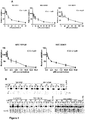
- Relative inhibition to vehicle control DMSO is shown on Figure 2 , panel A. All five compounds: NSC 9782, NSC82269, NSC 88915, NSC 109128 and NSC 305831, show concentration-dependent inhibition of HPV18 initial amplification, IC50 ranging from 2.5 to 60uM.
- Compound 82269 also showed clear concentration-dependent inhibition of vegetative amplification ( Figure 3 , panel C, lanes 4-6 and panel B). However, compounds 9782 and 88915 did not have any effect ( Figure 3 , panel C, lanes 1-3 and 7-9, panel D).
- Tdp1 and PARP1 are involved in HPV18 initial amplification.
- Tdp1 Two of the identified compounds, 88915 and 305831 are known to inhibit Tdp.
- Tdp1 To examine if Tdp1 is necessary for HPV18 initial amplification, we transfected U2OS cells with HPV18 genome together with various concentrations of shRNA Tdp1 plasmid. Empty shRNA plasmid was used as mock control. Firstly, Tdp1 expression was evaluated and Figure 4 , panel C shows clearly that Tdp1 expression is decreased significantly through the use of shRNA_Tdp1. Next genomic DNA was extracted 3 and 4 days after the transfection and replication assay was performed. Figure 4 , panels A (compare lanes 1 and 2 with 3-8) and B show clear decrease in HPV18 replication when Tdp1 expression is downregulated.
- PARP1 involvement in HPV18 replication was also evaluated using known PARP1 inhibitor ABT-888 (veliparib).
- U2OS cells were transfected with HPV18 genome and grown in the presence of various concentrations of ABT-888 for 3 and 4 days, DMSO serves as vehicle control.
- Replication assay was performed and Figure 4 , panels G (compare lanes 1 and 2 with 3-10) and H show that HPV18 replication is decreased through the use of PARP1 inhibitor ABT-888.
- CPT Campthotecin
- HPV18 replication inhibitors CPT is a Topoisomerase I inhibitor that stabilizes entrapped Top1cc complexes to DNA. Since Tdp1 is responsible for cleaving entrapped Top1cc complexes from DNA, synergistic effect between CPT and Tdp1 inhibitors occurs.
- U2OS cells constitutively expressing Epstein Barr virus (EBV) EBNA1 protein - U2OS-EBNA1. These cells allow to monitor HPV and EBNA1 supported oriP plasmid replication simultaneously.
- EBV Epstein Barr virus
- HPVs differ from replication proteins E1 and E2 as well.
- HPV18E1E2 mutant genome deficient in replication due to mutations in the ORFs of E1 and E2 was replicated by E1 and E2 proteins originating from HPV11.
- HPV18E1E2 mutant genome alone was used as control.
- U2OS cells were cotransfected with HPV18E1E2 mutant and HPV11 wt mini circle genome and the cells were grown in the presence of compound 305831 for 5 days, media was changed on the 3 rd day. DMSO was added as vehicle control.
Landscapes
- Health & Medical Sciences (AREA)
- Life Sciences & Earth Sciences (AREA)
- Chemical & Material Sciences (AREA)
- Medicinal Chemistry (AREA)
- Pharmacology & Pharmacy (AREA)
- Animal Behavior & Ethology (AREA)
- General Health & Medical Sciences (AREA)
- Public Health (AREA)
- Veterinary Medicine (AREA)
- Epidemiology (AREA)
- Virology (AREA)
- Engineering & Computer Science (AREA)
- Molecular Biology (AREA)
- Biotechnology (AREA)
- Communicable Diseases (AREA)
- Oncology (AREA)
- Chemical Kinetics & Catalysis (AREA)
- General Chemical & Material Sciences (AREA)
- Nuclear Medicine, Radiotherapy & Molecular Imaging (AREA)
- Organic Chemistry (AREA)
- Pharmaceuticals Containing Other Organic And Inorganic Compounds (AREA)
- Medicines That Contain Protein Lipid Enzymes And Other Medicines (AREA)
Description
- This invention is related generally to the area of inhibiting viral replication. More specifically this invention is related to novel inhibitors of Human Papilloma Virus. Furthermore, the disclosure relates to identifying target molecules for further antiviral compounds.
- Human Papillomaviruses (HPVs) infect epithelial tissues of skin and mucosa. HPVs are small double-stranded DNA viruses which cause benign and malignant lesions in the epithelia. Infections are usually cleared by the immune system, however they can become persistent and eventually may develop into various cancers. To date, at least 205 different HPV types have been described, 12 of them (
types Types - Current therapies to remove lesions caused by HPVs include various cytodestructive procedures and immunomodulatory molecules, for example imiquimod. Imiquimod is not specific for HPV, but is used to treat various skin diseases, including skin cancer, melanoma, molluscum contagiosum and others. In addition, there are three vaccines available against HPVs: Gardasil (
types types types 16 and 18). The main active components in of these vaccines are the L1 capsid proteins of HPV viruses. Moreover these vaccines are only prophylactic and in addition to this the availability of the vaccines is limited. - HPVs encode two main oncoproteins, E6 and E7, which modify cellular environment to be more suitable for HPV replication by inducing DNA synthesis and cell transformation. E6 and E7 have crucial roles in HPV-related cancer development.
- The life cycle of HPVs is strictly dependent on cellular differentiation program. Infection starts by virus entry into undifferentiated basal epithelial cells (possibly stem cells) through micro-wounds. Infection is established by initiating initial amplification during which viral copy number reaches up to few hundred copies per cell. Stable maintenance phase is next, during this stage HPV genome replicates approximately once per cell cycle the viral copy number is constant. Viral gene expression is kept at very low levels. Vegetative amplification and assembly of the virions takes place in highly differentiated cells. To replicate its genome, HPVs largely depend on cellular proteins. They themselves only encode two replication proteins: E1 and E2. E1 is an ATP-dependent DNA helicase, which initiates replication from the non-coding region of HPV genome - URR (LCR). It also interacts with various cellular replication proteins to facilitate viral replication, for example Topoisomerase I, Replication Protein A (RPA) and Polymerase Alpha. For replication, E2 protein forms a complex with E1 and directs it to the replication origin. In addition, E2 is involved in regulation of viral gene expression, and it tethers HPV genomes to mitotic chromosomes for efficient segregation.
- Cellular DNA is constantly attacked by exogenous or endogenous DNA-damaging agents such as UV-wavelengths or errors in replication. To cope with it, cells have very sophisticated ways to ensure integrity of DNA, to avoid potential mutations and tumorigenesis: DNA damage response network (DDR). DDR network is orchestrated by different kinases (ATM, ATR and DNA-PK) and damage in DNA is repaired by two major pathways: Homologous recombination (HR) and Non-homologous end-joining (NHEJ). In recent years it has become clear that many viruses are not only capable of activating DDR but they also benefit from its activation. HPV genomes are replicated in distinct foci in the cell's nucleus which contain cellular proteins necessary in DDR. By activating DDR, HPVs recruit replication proteins to these foci which in turn help to efficiently replicate viral genomes. HPV replication machinery uses Homologous recombination dependent replication during amplification of viral genome which results in accumulation of oligomerized molecules containing at least two genomes.
- Important proteins in DDR network are Tyrosyl-DNA-phosphodiesterases Tdp1 and Tdp2 as well as PARP1(poly-(ADP-ribose)-polymerase 1). Topoisomerases as part of Top1/Top2 cleaving complex (Top1/2cc) are proteins that locally relax otherwise tightly packed nucleic acids which is required for replication and transcription. Several exogenous and endogenous DNA damaging agents, however cause entrapment of Top1/2cc-s. Entrapped cleaving complexes cause DNA breaks due to the collision of replication forks. Tdp1 is a key enzyme in repairing DNA damage caused by Toplcc-s. It hydrolyzes phosphodiester bond between Top1 and DNA, thereby releasing Toplcc. PARP1 (Poly(ADP-ribose) polymerase-1) is an enzyme that binds to DNA and catalyzes addition of ADP-ribose polymers (PAR) to its target proteins. These modifications regulate cellular localization and biological activities of various proteins involved in DDR. Recently it has been suggested that PARP1 plays a key role in Tdp1-dependent repair of Top1-induced DNA damage. Tdp1 inhibitors together with PARP1 and/or
Topoisomerase 1 inhibitors have been considered as targets in cancer therapy. - There are different model systems available for studying various stages of HPV life cycle. Most of the work has been done in human primary epithelial keratinocytes. However, using these cells is relatively time consuming and expensive, especially for high-throughput screening to identify novel HPV inhibitors. In this disclosure a U2OS-based model system with dual-luciferase system was used to measure cell growth/toxicity of the compounds and HPV genome replication suitable for high-throughput screening (
PCT/EP2016/057898 - Human Papillomaviruses are important pathogens responsible for great number of various cancer cases worldwide. Regardless of the two existing vaccines, there is a need for antivirals against HPV infection because vaccines are only preventive and other types of therapies have proven to be unsuccessful. So far there are no specific HPV inhibitors available. High-throughput screening (HTS) of available chemical libraries is widely used technique to identify new inhibitors against various pathogens. However, by now there has not been a suitable model system for HT-screening of HPV-inhibitors.
- This disclosure provides solutions to the above described problems.
- This disclosure provides identification of several new HPV replication inhibitors through high-throughput screening of NCI Diversity set IV and customized chemical libraries with IC50 ranging from 2.5 - 60µM. These compounds are highly specific to High-risk HPVs. At least four of these compounds inhibit Tdp1-PARP1-Toplcc pathway by characterizing their synergistic effect with Topoisomerase I inhibitor Campthotecin. Tdp1 and PARP1 are identified as essential cellular proteins necessary for HPV replication, and by use of the novel inhibitors it is shown that they are valid drug targets for the development of further antivirals.
- Recently we have developed a HTS compatible Dual-luciferase based system for measuring HPV genome replication (
PCT/EP2016/057898 active compounds 5 compounds were identified that inhibited HPV18 initial amplification in low-micro molar range. None of the identified compounds inhibit E1 and E2 dependent URR replication. Besides initial amplification four out of five compounds successfully inhibited stable maintenance phase of the viral replication. In addition three compounds inhibited vegetative amplification which takes place in highly differentiated upper epithelia. These inhibitors or their analogues are therefore capable of eliminating different stages of HPV infection. - Additional compounds are also suggested as potential inhibitors due to certain structural similarities with the identified five compounds.
- The first object of this invention is an antiviral compound for use in inhibiting of one or more replication phases of high risk Human Papilloma Virus. Characteristic features of said compound are depicted in
claim 1. - The second object of this invention is a method to inhibit one or more replication phases of high risk HPV in vitro. Characteristic steps of said method are depicted in
claim 6. - The third object of this invention is a medicament for use in treating high risk HPV infection. Characteristic features of said medicament are depicted in
claim 9.
This disclosure describes compounds effective in eliminating different stages of HPV infection. - This disclosure describes treating human papilloma virus affected cells or a subject (e.g., in vitro or in vivo).
- This disclosure describes compounds for treating cervical cancer.
- This disclosure describes a method to treat HPV infection by administering to the subject, or contacting infected cells with a pharmaceutical composition comprising one or more compounds as identified and described herein.
- This disclosure describes a method of treating HPV affected cells comprising contacting the cells with a compound described herein or a mixture of the compounds.
- This disclosure describes a method of treating HPV affected cells in a subject, comprising administering to a subject one or more compounds or pharmaceutical compositions described herein.
- This disclosure describes provide antiviral compound for inhibiting one or more replication stages of Human Papilloma Virus, wherein the compound is selected from the group consisting of:


- This disclosure describes an antiviral compound against high risk HPV, wherein the compound inhibits initial amplification, stable maintenance and vegetative replication phases of the high risk HPV and the compound is selected from the group consisting of: NSC109128, NSC305831 and NSC82269.
- This disclosure describes an antiviral compound against high risk HPV, wherein the compound inhibits initial amplification and stable maintenance of high risk HPV, and the compound is NSC88915.
- This disclosure describes an antiviral compound against high risk HPV, wherein the compound inhibits initial amplification phase of high risk HPV and the compound is NSC109128, NSC305831, NSC82269,
NSC 88915 orNSC 9782. - It is an object of this disclosure describes an antiviral compound against
HPV 16HPV 18, HPV31, HPV33, HPV45. - Still another object of this disclosure describes an antiviral compound to inhibit one or more replication phases of Human Papilloma Virus, wherein the compound inhibits release of Topoisomerase I cleaving complex Toplcc from a high risk HPV DNA.
- This disclosure describes an antiviral compound to inhibit one or more replication phases of HPV, wherein the compound inhibits the release by inhibiting Tpd1 or PARP1.
- Further this disclosure describes a method to treat high risk HPV-infection, said method comprising administration of or contacting infected cells with a compound capable of inhibiting one or more replication phases of Human Papilloma Virus, wherein the compound inhibits release of Topoisomerase I cleaving complex Toplcc from HPV DNA.
- Still further this disclosure describes a method to treat high risk HPV-infection, said method comprising administration of or contacting infected cells with a compound capable of inhibiting one or more replication phases of Human Papilloma Virus, wherein the compound inhibits Tpd1 or
PARP 1. - Yet the disclosure describes a method to treat high risk HPV infection said method comprising administration of or contacting infected cell with a compound selected from the group consisting of


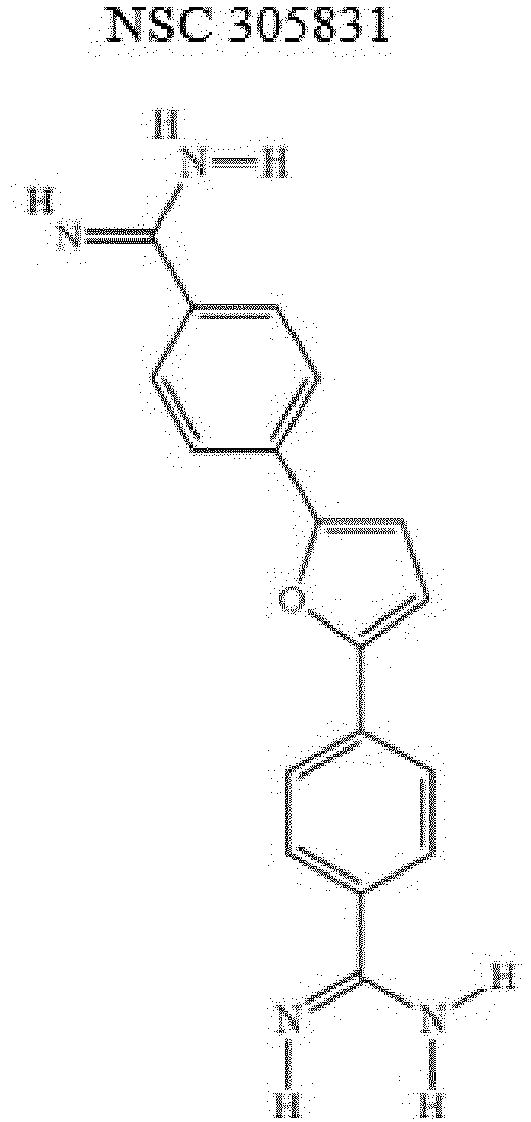
- This disclosure describes a method to inhibit one or more replication phases of high risk HPV in vitro or in vivo, said method comprising a step of contacting the infected cell with a compound inhibiting release of Topoisomerase I cleaving complex Top1cc from HPV DNA.
- This disclosure describes a method to inhibit one or more replication phases of high risk HPV in vitro or in vivo, said method comprising a step of contacting the infected cell with a compound inhibiting Tpd1 or
PARP 1. - This disclosure describes a method to inhibit one or more replication phases of high risk HPV in vitro or in vivo, said method comprising a step of contacting the infected cell with a compound selected from the group consisting of


- Further this disclosure describes a medicament for treating high risk HPV infection, said medicament comprising one or more of compounds inhibiting release of Topoisomerase I cleaving complex Toplcc from HPV DNA.
- The disclosure describes a medicament for treating high risk HPV infection, said medicament comprising one or more of compounds inhibiting Tpd1 or PARP.
- Still this the disclosure describes a medicament for treating high risk HPV infection, said medicament comprising one or more of compounds selected from the group consisting of


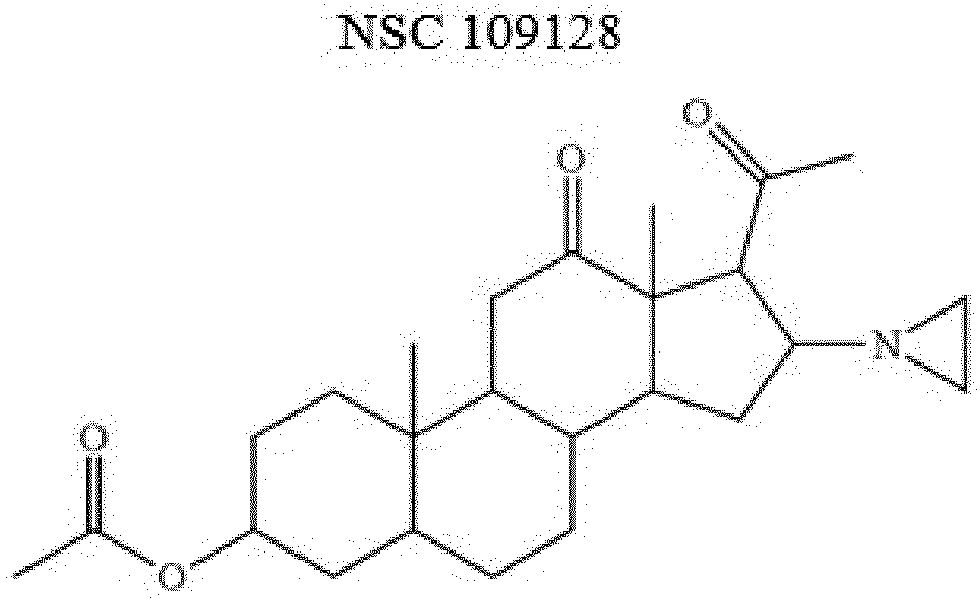

- Further this disclosure describes a method to identify potential antiviral compounds for inhibition of high risk HPV genome replication, said method comprising detection of compounds capable of inhibiting Tdp1 and
PARP 1. - Still this disclosure describes potential inhibitors of HPV infection or potential inhibitors of one or more HPV replication phases, said inhibitors being selected from the group consisting of

- The disclosure describes medicament for treating HPV infections, said medicament comprising one or more of the compounds selected from the group consisting of

-
-
Figure 1 Schematic 2D-structures of the five HR-HPV replication inhibitors identified during the HT-screen of NCI Diversity Set IV. -
Figure 2 Effect of the identified five compounds on HPV18 initial amplification. A: U2OS cells were transfected with HPV18 wt minicircle and grown in the presence of the compounds with indicated concentrations for 5 days. Genomic DNA was extracted, linearized, and digested with DpnI. HPV genome replication signals were detected using Southern Blot analyses and quantified with phosphoimager and expressed relative to vehicle control (DMSO). Approximate IC50 values are shown for each compound. Error-bars represent standard deviation from at least three independent experiment. B: U2OS cells were transfected with the expression vectors of HPV18 E1 and E2 proteins together with HPV18 URR (origin) minicircle plasmid. The cells were grown in the presence of the compounds with indicated concentrations for 24 or 48 hours. Genomic DNA was extracted, linearized and digested with DpnI. HPV URR replication signals were detected by Southern Blot analyses. DMSO serves as vehicle control and M 18URR serves as size marker. -
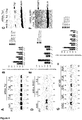
Figure 3 Effect of compounds on stable maintenance and vegetative amplification of HPV18. A: U2OS #1.13 cells were grown in subconfluent conditions in the presence of the identified five compounds for 7 days. Genomic DNA was extracted, linearized and HPV replication signal was detected by Southern Blot and B: quantified by phosphoimager. C: U2OS #1.13 were seeded and grown for 5 days without splitting. On the 5th day indicated concentrations of compounds were added to the media and the cells were grown for additional 7 days without splitting. On the 12th day genomic DNA was extracted, linearized and HPV replication signal was detected by Southern Blot and D: quantified by phosphoimager. Error-bars represent standard deviations from at least two independent experiments. -
Figure 4 Involvement of Tdp1 and PARP1 in HPV18 initial amplification. A: U2OS cells were transfected with HPV18 wt minicircle and sh_Tdp1 plasmid. Genomic DNA was extracted 3 and 4 days after the transfection, linearized and digested with DpnI. HPV replication signal was detected with Southern Blot analyses and B: quantified with phosphoimager. C: Western Blot analyses showing downregulation of Tdp1 protein by shRNA. D: U2OS cells were transfected with HPV18 wt minicircle and sh_PARP1 plasmid. HPV replication signal was detected with Southern Blot analyses and E: quantified with phosphoimager. F: Western Blot analyses showing downregulation of PARP1 protein by shRNA. G: U2OS cells were transfected with HPV18 wt minicircle and grown for 3 and 4 days in the presence of different concentrations of PARP1 inhibitor ABT-888. HPV replication signal was detected with Southern Blot analyses and H: quantified with phosphoimager. Error-bars represent standard deviations from at least three independent experiments. -
Figure 5 Synergistic effect between Camptothecin (CPT) and the identified five compounds. U2OS-EBNA1 cells were transfected with HPV18 wt and oriP plasmids and grown in the presence of indicated concentrations of the compounds alone or together with 2nM CPT for 5 days. Genomic DNA was extracted, linearized and digested with DpnI. Both HPV18 and oriP replication signals were detected with Southern Blot and quantified by phosphoimager.Compounds compound 82269 does not (panels A and B). Error-bars represent standard deviations from at least three independent experiments. -
Figure 6 Effect of the identified five compounds on different types of HPVs. U2OS cells were transfected with 3 µg ofHPV 5, 2µg of HPV11 and 5µg of HPV16 minicircles and grown in the presence of indicated concentrations of compounds for 5 days. Genomic DNA was extracted, linearized and digested with DpnI. HPV replication signal was quantified using qPCR. A: Effect on HPV5. B: Effect on HPV11. C: Effect on HPV16 Error-bars represent standard deviations from two independent experiments. D, E and F: U2OS cells were transfected with 2µg HPV33 minicircle, 5µg of HPV45 minicircle and 2µg of religated HPV31 genome and grown in the presence of indicated concentrations of compounds for 5 days. Episomal DNA was extracted using HIRT DNA extraction method, linearized and digested with DpnI. HPV replication signal detected by Southern Blot analyses. Black arrow indicates the replicated HPV signal. - As used throughout this disclosure, the following terms, unless otherwise indicated, shall be understood to have the following meanings. If a definition is missing, the conventional definition as known to one skilled in the art controls. If a definition provided herein conflicts or is different from a definition provided in any cited publication, the definition provided herein controls.
- As used herein, the terms "including", "containing", and "comprising" are used in their open, non-limiting sense.
- As used herein, the singular forms "a", "an", and "the" include plural referents unless the context clearly dictates otherwise.
- As used herein, the term "subject" encompasses mammals and non-mammals. Examples of mammals include, but are not limited to, any member of the Mammalian class: humans; non-human primates such as chimpanzees, and other apes and monkey species; farm animals such as cattle, horses, sheep, goats, swine; domestic animals such as rabbits, dogs, and cats; and laboratory animals including rodents, such as rats, mice and guinea pigs, and the like. Examples of non-mammals include, but are not limited to, birds, fish and the like. In one embodiment of the present invention, the mammal is a human.
- The term "inhibitor" refers to a molecule such as a compound, a drug, an enzyme activator, or a hormone that blocks or otherwise interferes with a particular biologic activity. The term "HPV replication inhibitor" means a compound capable of partially or fully to inhibit or block or interfere with one or more phases of HPV replication cycle.
- The terms "effective amount" or "therapeutically effective amount" refer to a sufficient amount of the agent to provide the desired biological result. That result can be reduction and/or alleviation of the signs, symptoms, or causes of a disease or medical condition, or any other desired alteration of a biological system. For example, an "effective amount" for therapeutic use is the amount of a compound, or of a composition comprising the compound, that is required to provide a clinically relevant change in a disease state, symptom, or medical condition. An appropriate "effective" amount in any individual case may be determined by one of ordinary skill in the art using routine experimentation. Thus, the expression "effective amount" generally refers to the quantity for which the active substance has a therapeutically desired effect.
- As used herein, the terms "treat" or "treatment" encompasses both "preventive" and "curative" treatment. "Preventive" treatment is meant to indicate a postponement of development of a disease, a symptom of a disease, or medical condition, suppressing symptoms that may appear, or reducing the risk of developing or recurrence of a disease or symptom. "Curative" treatment includes reducing the severity of or suppressing the worsening of an existing disease, symptom, or condition. Thus, treatment includes ameliorating or preventing the worsening of existing disease symptoms, preventing additional symptoms from occurring, ameliorating or preventing the underlying metabolic causes of symptoms, inhibiting the disorder or disease, e.g., arresting the development of the disorder or disease, relieving the disorder or disease, causing regression of the disorder or disease, relieving a condition caused by the disease or disorder, or stopping the symptoms of the disease or disorder.
- This disclosure also relates to pharmaceutically acceptable prodrugs of the identified compounds, and treatment methods employing such pharmaceutically acceptable prodrugs. The term "prodrug" means a precursor of a designated compound that, following administration to a subject, yields the compound in vivo via a chemical or physiological process such as solvolysis or enzymatic cleavage, or under physiological conditions (e.g., a prodrug on being brought to physiological pH is converted to the compound). A "pharmaceutically acceptable prodrug" is a prodrug that is non-toxic, biologically tolerable, and otherwise suitable for formulation and/or administration to the subject. Illustrative procedures for the selection and preparation of suitable prodrug derivatives are described, for example, in "Design of Prodrugs", ed. H. Bundgaard, Elsevier, 1985. Examples of prodrugs include pharmaceutically acceptable esters of the compounds of the disclosure, which are also considered to be part of the disclosure.
- Initial replication or amplification or transient replication or amplification refers to HPV DNA replication at establishment of the infection.
- Stable maintenance or latent maintenance refers to the latent stage of viral replication cycle where viral DNA is stably maintained at an almost constant copy number in dividing host cells.
- Vegetative amplificational replication or late amplificational replication refers to exponential viral DNA amplification in highly differentiated keratinocytes in the upper parts of the epithelium.
- Human Papillomaviruses are important pathogens responsible for great number of various cancer cases worldwide. Regardless of the two vaccines, there is still need for antivirals against HPV infection because vaccines are only preventive and other types of therapies have proven to be unsuccessful. So far there are no specific HPV inhibitors available. High-throughput screening (HTS) of available chemical libraries is widely used technique to identify new inhibitors against various pathogens. However HTS requires suitable model systems which allow rapidly and accurately measure the effect of chemical compounds on target(s). Recently we have developed a HTS compatible Dual-luciferase based system for measuring HPV genome replication (
PCT/EP2016/057898 Figure 1 ) that inhibited HPV18 initial amplification in low-micromolar range (Figure 2 , panel A). Several studies regarding HPV replication have been carried out by measuring E1 and E2 dependent replication of HPV URR (contains the origin or replication) plasmid. Even HTS model system for measuring URR replication has been developed. The compounds identified here do not inhibit E1 and E2 dependent URR replication (Figure 2 , panel B), indicating that different cellular proteins could be used to facilitate HPV genome replication and/or that the replication mechanism of viral genome differs from the URR plasmid replication. Besides initial amplification four out of five compounds successfully inhibited stable maintenance phase of the viral replication (Figure 3 , panel A). In addition three compounds inhibited vegetative amplification which takes place in highly differentiated upper epithelia (Fgure 3, panel B). These inhibitors or their analogues are therefore capable of eliminating different stages of HPV infection. - It has become clear in the recent years that HPVs activate DNA damage response network during their replication to "invite" cellular replication and DNA repair proteins to its replication foci. Moreover, it has been shown that HPV uses Homologous recombination to efficiently replicate its genome. The exact mechanism and all the necessary cellular partners are however, not known yet. Tdp1 releases entrapped Top1cc from DNA and thereby preventing replication/transcription fork collision. Tdp1 is not absolutely necessary protein during normal replication as Top1 cleaving complexes get trapped due to certain types of DNA damage. Here we show that Tdp1 together with its regulator protein PARP1 are important cellular partners in HPV18 replication (
Figure 4 ) thus making those proteins good targets for developing HPV inhibitors. Camptothecin (CPT) is a Topoisomerase I inhibitor, it stabilizes Top1cc-DNA complex. In this disclosure it is shown that four of the five identified compounds show synergistic inhibition of HPV18 initial amplification with CPT suggesting that they inhibit Tdp1 or have some other target related to releasing Top1cc complexes from DNA (Figure 5 ). These results suggest that at some point during HPV replication Toplcc complexes get trapped on the viral genome. Tdp1 seems to be then activated probably by PARP1 and recruited on HPV DNA where it releases those complexes allowing replication to continue. When Tdp1 is inhibited, abnormal replication intermediates emerge and HPV replication cannot be completed. None of the compounds inhibited HPV11 or HPV5 replication (Figure 6 ), which indicates that Top1cc is not be entrapped on those HPV genomes and Tdp1 is therefore not necessary or not a limiting factor for low-risk or cutaneous HPV replication. It is possible that high-risk HPV E1 or some other proteins interacts with Tdp1 and brings it to the replication sites but low-risk or cutaneous HPV proteins do not. - During this work we used HPV HT-screening model system which we developed to screen for compounds capable of inhibiting HPV genome replication. We have identified five compounds: three of them inhibit all HPV replication stages, one of them inhibits initial amplification and stable maintenance and one only the initial amplification. In addition, we show here for the first time that during HPV18 replication, probably due to DNA damage, Topoisomerase I cleaving complexes get trapped on viral genome. To continue normal replication Tdp1 together with PARP1 are necessary for releasing Top1cc from HPV genome. Inhibition of the release of Top1cc from HPV DNA serves as promising target for antiviral development.
- The present invention provides compounds for treating HPV infected cells. The disclosure further provides a method of treating HPV infected cells comprising contacting the cells with an effective amount of an antiviral compound of this the invention. A subject infected with HPV may be treated by a method, which comprises administering to the subject an effective amount of one or more compounds of this disclosure. The compound may be administered in the form of a pharmaceutical composition comprising one or more of the compounds and a pharmaceutically acceptable carrier.
- One aspect of the invention is pharmaceutically acceptable compositions comprising one or more antiviral compounds identified in this disclosure. The pharmaceutical compositions may include carriers, adjuvants or vehicle and alternatively one or more additional active agents.
- The pharmaceutical compositions, according to the method of the present disclosure, may be administered by using any amount and any route of administration effective for treating or lessening the severity of an HPV infection or disease.
- The exact amount required will vary from subject to subject, depending on the species, age, sex, weight, diet, medical condition and general condition of the subject, the severity of the infection, the particular agent, its mode of administration, and the like.
- Administration of the compounds may be a single daily dose, multiple, spaced doses throughout the day, a single dose every other day, a single dose every several days or any other appropriate regimens. The dosage can be determined routinely by using standard methods known in the art.
- The pharmaceutically acceptable compositions of this invention can be administered to humans and other animals orally, rectally, parenterally, intracistenally, intravaginally, intraperitoneally, topically (as by powders, ointments, or drops), buccally, as an oral or nasal spray, or the like, depending on the severity of the infection being treated.
- Injectable preparations may be formulated according to the known art using suitable dispersing or wetting agents and suspending agents.
- Compositions for rectal or vaginal administration can be suppositories which comprise one or more compounds identified in this disclosure with suitable non-irritating excipients or carriers.
- Solid dosage forms for oral administration include capsules, tablets, pills, powders, and granules. In such solid dosage forms, the active compound is mixed with at least one inert, pharmaceutically acceptable excipient or carrier. In the case of capsules, tablets and pills, the dosage form may also comprise buffering agents.
- Oral formulations may also be syrups and elixirs.
- Dosage forms for topical or transdermal administration of a compound of this invention include ointments, pastes, creams, lotions, gels, powders, solutions, sprays, inhalants or patches. The active component is mixed under sterile conditions with a pharmaceutically acceptable carrier and any needed preservatives or buffers as may be required. Additionally, the present disclosure contemplates the use of transdermal patches, which have the added advantage of providing controlled delivery of a compound to the body. Such dosage forms are prepared by dissolving or dispensing the compound in the proper medium. Absorption enhancers can also be used to increase the flux of the compound across the skin. The rate can be controlled by either providing a rate controlling membrane or by dispersing the compound in a polymer matrix or gel.
- More than one compound of the invention may be administered separately, simultaneously, or sequentially to infected cells, to tissue containing the infected cells, or to infected subjects.
- It will also be appreciated that the compounds and pharmaceutically acceptable compositions of the present invention can be employed in combination therapies, that is, the compounds and pharmaceutically acceptable compositions can be administered concurrently with, prior to, or subsequent to, one or more other desired therapeutics or medical procedures.
- The invention is now described by means of non-limiting examples.
- Cell lines and transfection. U2OS (ATCC no: HTB-96), U2OS-EBNA1 (Icosagen Cell Factory OÜ), U2OS-GFP-Fluc #10.15 (DMSZ deposit number ACC3258) were grown in Iscove's modified Dulbecco's medium (IMDM) supplemented with 10% fetal calf serum (FCS). All U2OS cell-lines were transfected by electroporation (220V; 975µF) with a Bio-Rad Gene Pulser X-cell supplied with a capacitance extender (Bio-Rad Laboratories).
- Plasmids. The parental plasmids pMC-HPV18 for HPV18 wt minicircle production was constructed by adding BglII restriction site (used for cloning into pMC.BESBX vector [54]) into HPV18 genome between nt. 7473 and nt. 7474 (herein, the numbering of the HPV18 genome is according to the NCBI Reference Sequence NC_001357.1) which have been shown no alterations in the gene expression and replication. The parental plasmid pMC-HPV18-RlucE2 (DMSZ deposit number DSM 29865) was constructed based on pMC-HPV18. The parental plasmid pMC-HPV5 was constructed by using XmaJI restriction site in the ORF of L2 protein. The parental plasmid pMC-HPV11 was constructed by using BamHI restriction site in the HPV11 genome. The parental plasmid pMC-HPV33 was constructed by using Eco81I restriction site in the HPV33 genome. The parental plasmid pMC-HPV45 was constructed by using AscI restriction site in the HPV45 genome. The HPV31 genome sequence cloned in pBR322 vector was obtained from the International Human Papillomavirus (HPV) Reference Center. The parental plasmid pMC-HPV18URR contains 206 nucleotides from the end of L1 ORF, full-length HPV18 URR and 14 nucleotides from the beginning of E6 ORF. This fragment was cloned into the BglI site in pMC.BESBX vector. The pMC.BESBX vector contains bacterial origin of replication and kanamycin resistance gene necessary for propagation in bacterial cells and additional elements for minicircle production. Minicircle HPV genomes were produced in E.coli strain ZYCY10P3S2T as described in [54]. The pMC-HPV containing E.Coli strain ZYCY10P3S2T was grown in Terrific Broth media (Life Technologies) at 37C for 16-18h, after which equal amount of LB media containing 0.02% L-arabinose and 20mM NaOH was added and culture was grown at 32C for 8 hours to induce recombination and production of supercoiled minicircles. Finally, the HPV genomes were purified from E. coli with the QIAfilter Plasmid kit (Qiagen). The resulting minicircle HPV genomes have less than 100bp of non-HPV sequence. For generation of HPV31 genome for transfection, HPV31 plasmid was digested with EcoRI, resolved in agarose gel, HPV31 sequence was purified from gel and religated. Expression vectors for HPV18 E1 and E2 are described in [36]. Ebstein Barr Virus oriP plasmid p994 was a kind gift from B. Sugden, described in [55]. ShRNA expression was under the control of RNA polymerase III promoter U6.
- Tdp1 shRNA sequence:
GCACGATCTCTCTGAAACAAACTCGAGTTTGTTTCAGAGAGATCGT (SEQ ID NO:1) - PARP1 shRNA sequence:
GGACTCGCTCCGGATGGCCTTCAAGAGAGGCCATCCGGAGCGAGTCC(SEQ ID NO:2) - High-throughput screen for identification of HPV18 inhibitors. The U2OS-GFP-Fluc #10.15 were transfected with 2ug of HPV18-Rluc-E2 minicircle and the cells were seeded onto 100mm plates. On the next day, the cells were detached and seeded onto 96-well plates (5000 cells per well). 48 hours after the transfection screened compounds were added to the media in 5uM and 1uM concentrations. The cells were grown for three days and both Firefly luciferase (shows cellular viability) and Renilla luciferase (shows HPV copy number) were measured using Dual-Glo luciferase assay system (Promega) according to manufacturer's protocol with the GloMAX-96 luminometer (Promega). The results were blotted on a XY-scatter diagram and HPV-specific hits were chosen.
- Chemicals. The Diversity set IV and additionally compounds NSC9782,
NSC 88915,NSC 82269,NSC 109128 and NSC305831 were obtained from Drug Synthesis and Chemistry Branch, Developmental Therapeutics Program, Division of Cancer Treatment and Diagnosis, National Cancer Institute USA. Camptothecin (CPT) (sc-200871) and ABT-888 (sc-202901) were purchased from Santa Cruz Biotechnology. - Replication assay. The U2OS or U2OS-EBNA1 cells were transfected with 2ug of HPV18 mini circle genome and 1ug of oriP plasmid (only in case of U20S-EBNA1 cells). All the compounds were added to the media immediately after the transfection and media was changed on the third day. Replication signals were detected with Southern Blot method. Briefly, genomic DNA was extracted 3 and 4 days after the transfection with sh_RNAs or with the use of ABT-888 and 5 days after for analyses of the effects of HPV inhibitors w/wo CPT. DNA was digested with BglI and Dpnl for analyses of HPV18 replication and with BstXI, ScaI and Dpnl for analyses of HPV18 and oriP replication simultaneously. 3ug of DNA was resolved in agarose gel, transferred to a nylon membrane (Membrane Solutions LLC) and hybridized with specific radioactively labeled probes. Signals were detected and quantified with Typhoon Trio+ phosphoimager (GE Healthcare) and exposed on an X-ray film (AGFA).
- HPV copy number quantitation. Quantitative real-time PCR (qPCR) was used to evaluate the effect the compounds had on HPV11 and HPV5 replication. U2OS cells were transfected with 2 µg of the HPV11 or HPV5 minicircle, compounds were added to the media immediately after the transfection and again on the 3rd day when the media was changed. Genomic DNA was extracted 5 days after the transfection, the samples were linearized with HindIII (for HPV11) and SacI (for HPV5) and digested with Dpnl to fragment input DNA. For each qPCR reaction, 3ng of DNA was used. The reactions were performed with EvaGreen qPCR Mix Rox (Solis BioDyne) according to the manufacturer's protocol using 7900 HT Fast Real-Time PCR System (Applied Biosystems). Oligonucleotides (300nM of each per reaction):
- HPV11: 5'-AGCATGCAGACACATCAGGAATATTAG-3' (SEQ ID NO:3) and 5'-GTGCCGATTGGGTGGTTGCAGGATTTG-3' (SEQ ID NO:4);
- HPV5: 5'-GGTTGCAGGAACTGTGAGGT-3' (SEQ ID NO: 5) and 5'-TCCGCGACAGTCGGGGCACAGG-3' (SEQ ID NO:6).
- The CtrDNA was detected as a normalization standard from the ribosomal DNA gene sequence in the U2OS genome with the following oligonucleotides (300 nM of each):
5'- GCGGCGTTATTCCCATGACC-3' (SEQ ID NO:7) and 5'-GGTGCCCTTCCGTCAATTCC-3' (SEQ ID NO:8). - The relative value CN, which reflects the average viral genome copy number per cell, was calculated from the data with ΔCt = CtHPV - CtrDNA and CN = 2-ΔCt.
- Western Blot. The cells were lysed with Laemmli buffer (4% SDS, 20% glycerol, 120 mM Tris-Cl (pH 6.8), and 200 mM DTT) and boiled for 10 minutes at 100°C. Samples were resolved in SDS-PAGE gel and transferred to PVDF membrane Immobilon-P (Millipore). Tdp1 and PARP1 were detected with their specific antibodies from Santa Cruz Biotechnology: sc-365674 and sc-56197 respectively. Tubulin (used as loading control) was detected using Sigma Aldrich antibody T9026. Anti-mouse peroxidase conjugated secondary antibody (LabAS) and Amersham ECL Western Blotting Detection Kit (GE Healthcare) were used for visualization. Signals were exposed on an X-Ray film (AGFA).
- Five novel HPV inhibitors identified in high-throughput screening of NCI Diversity set IV.
- NCI Diversity set IV was screened as described in Example 1 with the previously characterized HPV model system (
US provisional application 62/145,243 - PARP1 shRNA sequence:
GGACTCGCTCCGGATGGCCTTCAAGAGAGGCCATCCGGAGCGAGTCC (SEQ ID NO:2)
for compounds inhibiting initial amplification of HPV18 genome in U2OS cells. HT-screening was conducted with all the compounds in this library in 5uM and 1uM concentrations and it gave us 80 hits (approximately 5% of analyzed compounds). After validation of the hits on HPV18 wt genome, we found five compounds inhibiting initial amplification of HPV18 in U2OS cells (Figure 1 ). To further characterize the compounds we performed replication assay described in Example 1. Relative inhibition to vehicle control DMSO is shown onFigure 2 , panel A. All five compounds:NSC 9782, NSC82269,NSC 88915,NSC 109128 andNSC 305831, show concentration-dependent inhibition of HPV18 initial amplification, IC50 ranging from 2.5 to 60uM. - We were curious if these identified compounds could inhibit E1 and E2 dependent replication of the plasmid containing HPV origin of replication - URR. We transfected U2OS cells with 25ng of E1 and E2 expression vectors together with 500ng of HPV18 URR minicircle plasmid and added various concentrations of compounds as indicated on
Figure 2 , panel B. We detected HPV18 URR replication by Southern blot analyses and none of the compounds inhibited URR replication compared to the vehicle control DMSO (Figure 2 , panel B) indicating that different cellular proteins are used to facilitate HPV genome replication and/or replication machinery of viral genome differs from the URR plasmid replication. Another possibility is the difference in the levels of E1 and E2 proteins: the expression level during HPV genome replication is considerably lower than the level in URR replication assay. - Effect of compounds on stable maintenance and vegetative amplification.
- Our U2OScell- based system is suitable for studying all three replication stages of various HPV subtypes. Stable maintenance phase could be monitored by maintaining HPV-positive cells in subconfluent conditions. We used HPV18 positive monoclonal U2OS cell-line #1.13 with viral copy number ∼2000. We grew the #1.13 cells in the presence of various concentration of compounds in subconfluent conditions (cells were split every three days) for 7 days. HPV18 replication signal was detected by Southern blot analyses and quantified with phosphoimager. About 50% of the signal was lost in case of
compound 82269 compared to the DMSO control (Figure 3 , panel A, compare lanes 4-6 withlane 15 and panel B).Compounds Figure 3 , panel A, compare lanes 7-14 withlane 15 and panel B). In case ofcompound 9782, no significant reduction in signal could be detected (Figure 3 , panel A, lanes 1-3 and panel B). Thus four of the five identified compounds effectively blocked the stable maintenance of a high risk type HPV. - If #1.13 is grown in confluent conditions for at least 5 days, vegetative amplification of HPV genome is turned on. We seeded equal amounts of cells onto plates and grew them for 5 days without splitting. On the 5th day various concentrations of compound were added and the cells were grown for additional 7 days (media was changed every two days throughout the experiment). HPV replication signal was detected by Southern Blot analyses and quantified with phosphoimager. As can be seen on
Figure 3 , panel C lanes 16-18, about 5-7-fold increase in the viral copy number occurs reminiscent of vegetative amplification.Compounds Figure 3 , panel C, lanes 10-15, panel D).Compound 82269 also showed clear concentration-dependent inhibition of vegetative amplification (Figure 3 , panel C, lanes 4-6 and panel B). However,compounds Figure 3 , panel C, lanes 1-3 and 7-9, panel D). - In conclusion, compounds 109128, 305831 and 82269 clearly inhibit both stable maintenance and vegetative amplification of HPV18, 88915 only inhibits stable maintenance phase and 9782 does not inhibit any of the later replication stages.
- Two of the identified compounds, 88915 and 305831 are known to inhibit Tdp. To examine if Tdp1 is necessary for HPV18 initial amplification, we transfected U2OS cells with HPV18 genome together with various concentrations of shRNA Tdp1 plasmid. Empty shRNA plasmid was used as mock control. Firstly, Tdp1 expression was evaluated and
Figure 4 , panel C shows clearly that Tdp1 expression is decreased significantly through the use of shRNA_Tdp1. Next genomic DNA was extracted 3 and 4 days after the transfection and replication assay was performed.Figure 4 , panels A (comparelanes - It was recently shown that PARP1 is activating Tdp1 and recruiting it to sites of DNA damage. To examine if PARP1 is also involved in HPV18 replication, we transfected U2OS with HPV18 genome together with shRNA_PARP1 plasmid or empty shRNA vector.
Figure 4 , panel F show that PARP1 expression is decreased due to shRNA_PARP1 expression. Genomic DNA was next extracted 3 and 4 days after the transfection and replication assay was performed to evaluate HPV18 initial amplification.Figure 4 , panels D (comparelanes - PARP1 involvement in HPV18 replication was also evaluated using known PARP1 inhibitor ABT-888 (veliparib). U2OS cells were transfected with HPV18 genome and grown in the presence of various concentrations of ABT-888 for 3 and 4 days, DMSO serves as vehicle control. Replication assay was performed and
Figure 4 , panels G (comparelanes - In conclusion the results demonstrate that both Tdp1 and PARP1 are important cellular partners in HPV18 replication.
- Synergistic effect of Campthotecin (CPT) and HPV18 replication inhibitors. CPT is a Topoisomerase I inhibitor that stabilizes entrapped Top1cc complexes to DNA. Since Tdp1 is responsible for cleaving entrapped Top1cc complexes from DNA, synergistic effect between CPT and Tdp1 inhibitors occurs. In the experiments shown in
Figure 5 we used U2OS cells constitutively expressing Epstein Barr virus (EBV) EBNA1 protein - U2OS-EBNA1. These cells allow to monitor HPV and EBNA1 supported oriP plasmid replication simultaneously. During HPV initial amplification, viral genome is replicated several times during cell cycle, however EBNA1-dependent replication occurs once per cell cycle due to cellular control mechanisms, which suggest HPV and EBV use completely different replication mechanisms. U2OS-EBNA1 cells were cotransfected with HPV18 genome and oriP plasmid and the cells were grown in the presence of various concentrations of the identified HPV inhibitors alone or together with 2nM of CPT for 5 days, DMSO was used as vehicle control. Replication assay was performed, signals were quantified with phosphoimager and results inFigure 5 show that all of the HPV inhibitors are highly specific because none of them inhibited EBNA1 dependent replication of oriP plasmid. 2nM CPT alone did not inhibit HPV18 initial amplification. In case of compounds 109128 (Figure 5 , panels C and D), 88915 (panels E and F), 9782 (panels G and H) and 305831 (panels I and J), clear concentration dependent synergistic effect together with CPT occurs as HPV replication is more efficiently inhibited (compare lanes 1-7 with 8-12 in all experiments). Compound 82269 (Figure 5 , panels A, compare lanes 1-7 with 8-12 and B) however, showed no synergistic effect together with CPT. - To examine if the compounds identified here inhibit other HPV subtypes as well, U2OS cells were transfected with LR-
HPV type 11 andcutaneous HPV type 5 genomes and grown in the presence of various concentrations of compounds for 5 days, media was changed on the 3rd day. DMSO was added as vehicle control. Genomic DNA was extracted, HPV DNA was linearized and digested with DpnI. HPV replication signals were quantified with qPCR analyses as described in the materials and methods section. Result onFigure 6 show that none of the compounds inhibit HPV5 (Figure 6 , panel A) or HPV 11 (Figure 6 , panel B) initial amplification. However, compounds are active against HPV16 (Figure 6 , panel C), HPV33 (Figure 6 , panel D) and HPV31Figure 6 , panel E). Accordingly, it seems that the compounds inhibit high risk HPV replication, includingHPV 16,HPV 18, HPV31 and HPV33, but not the low risk and cutaneous HPV types. - Besides oncoproteins E6 and E7, HPVs differ from replication proteins E1 and E2 as well. To determine if the compounds identified here inhibit the replication of HR but not LR or cutaneous HPVs through E1 or E2, HPV18E1E2 mutant genome (deficient in replication due to mutations in the ORFs of E1 and E2) was replicated by E1 and E2 proteins originating from HPV11. HPV18E1E2 mutant genome alone was used as control. U2OS cells were cotransfected with HPV18E1E2 mutant and HPV11 wt mini circle genome and the cells were grown in the presence of
compound 305831 for 5 days, media was changed on the 3rd day. DMSO was added as vehicle control. Genomic DNA was extracted, HPV DNA was digested with AgeI, SdaI and DpnI. HPV replication was detected by Southern Blot analyses. Results on Figure 7 show, that HPV18E1E2 mutant genome is indeed replication-deficient when transfected alone (lane 7). DMSO control on Figure 7,lane 6 shows that HPV11 wt genome successfully complements the E1/E2 deficient HPV18 genome. In case of samples treated with thecompound 305831, there is no inhibition of HPV18 replication which is carried out by the E1 and E2 proteins originating from HPV11 genome (Figure 7, compare lanes 1-6 with 7). This data suggests that the compounds target either HR-HPV E1 or E2 protein or their interaction with cellular proteins. The activity of LR-HPV E1 and E2 proteins or their interactome seem to be different compared to HR-HPV replication proteins. - Based on the structure of the identified five compounds that are effective in the inhibiting one or more phases of the HPV replication, we have identified the following three structures having certain similarities with the identified five compounds for potential compounds for use in inhibiting HPV replication.

- According to preliminary experiments, these compounds seem to be capable of inhibiting the initial amplification phase of
HPV 18. - References:
- 1. Bernard HU, Burk RD, Chen Z, van Doorslaer K, zur Hausen H, et al. (2010). Virology 401: 70-79.
- 2. Humans IWGotEoCRt (2012) Biological agents. .
- 3. Munoz N, Castellsague X, de Gonzalez AB, Gissmann L (2006) .
- 4. Munoz N, Bosch FX, de Sanjose S, Herrero R, Castellsague X, et al. (2003) N Engl J Med 348: 518-527.
- 5. Bouvard V, Baan R, Straif K, Grosse Y, Secretan B, et al. (2009) Lancet Oncol 10: 321-322.
- 6. Ferlay J, Shin HR, Bray F, Forman D, Mathers C, et al. (2010) E Int J Cancer 127: 2893-2917.
- 7. Beutner KR, Ferenczy A (1997) Am J Med 102: 28-37.
- 8. Beutner KR, Tyring SK, Trofatter KF, Jr., Douglas JM, Jr., Spruance S, et al. (1998) Antimicrob Agents Chemother 42: 789-794.
- 9. Malik H, Khan FH, Ahsan H (2014) Arch Virol 159: 199-205.
- 10. Roman A, Munger K (2013) Virology 445: 138-168.
- 11. Vande Pol SB, Klingelhutz AJ (2013) Virology 445: 115-137.
- 12. Doorbar J, Quint W, Banks L, Bravo IG, Stoler M, et al. (2012) .
- 13. Hong S, Laimins LA (2013). Future Microbiol 8: 1547-1557.
- 14. Hebner CM, Laimins LA (2006) Rev Med Virol 16: 83-97.
- 15. Hughes FJ, Romanos MA (1993) Nucleic Acids Res 21: 5817-5823.
- 16. Clower RV, Fisk JC, Melendy T (2006) P. J Virol 80: 1584-1587.
- 17. Loo YM, Melendy T (2004). J Virol 78: 1605-1615.
- 18. Masterson PJ, Stanley MA, Lewis AP, Romanos MA (1998) J Virol 72: 7407-7419.
- 19. Bergvall M, Melendy T, Archambault J (2013) The E1 proteins. Virology 445: 35-56.
- 20. McBride AA, Sakakibara N, Stepp WH, Jang MK (2012) Biochim Biophys Acta 1819: 820-825.
- 21. McBride AA (2013). Virology 445: 57-79.
- 22. Marechal A, Zou L (2013) Cold Spring .
- 23. Wang H, Zhang X, Teng L, Legerski RJ (2015) D Exp Cell Res.
- 24. Weitzman MD, Lilley CE, Chaurushiya MS (2010) G Annu Rev Microbiol 64: 61-81.
- 25. McFadden K, Luftig MA (2013) Curr Top Microbiol Immunol 371: 229-257.
- 26. Xiaofei E, Kowalik TF (2014) Viruses 6: 2155-2185.
- 27. Reinson T, Toots M, Kadaja M, Pipitch R, Allik M, et al. (2013) E J Virol 87: 951-964.
- 28. Moody CA, Laimins LA (2009) PLoS Pathog 5: e1000605.
- 29. Fradet-Turcotte A, Bergeron-Labrecque F, Moody CA, Lehoux M, Laimins LA, et al. (2011) J Virol 85: 8996-9012.
- 30. Gillespie KA, Mehta KP, Laimins LA, Moody CA (2012) J Virol 86: 9520-9526.
- 31. Sakakibara N, Mitra R, McBride AA (2011) J Virol 85: 8981-8995.
- 32. Anacker DC, Gautam D, Gillespie KA, Chappell WH, Moody CA (2014). J Virol 88: 8528-8544.
- 33. Mehta K, Gunasekharan V, Satsuka A, Laimins LA (2015) PLoS Pathog 11: e1004763.
- 34. Kadaja M, Isok-Paas H, Laos T, Ustav E, Ustav M (2009) PLoS Pathog 5: e1000397.
- 35. Kadaja M, Sumerina A, Verst T, Ojarand M, Ustav E, et al. (2007) EMBO J 26: 2180-2191.
- 36. Orav M, Henno L, Isok-Paas H, Geimanen J, Ustav M, et al. (2013) J Virol 87: 12051-12068.
- 37. Pommier Y (2013) ACS Chem Biol 8: 82-95.
- 38. Interthal H, Pouliot JJ, Champoux JJ (2001) Proc Natl Acad Sci U S A 98: 12009-12014.
- 39. Murai J, Huang SY, Das BB, Dexheimer TS, Takeda S, et al. (2012) T J Biol Chem 287: 12848-12857.
- 40. Das BB, Antony S, Gupta S, Dexheimer TS, Redon CE, et al. (2009) EMBO J 28: 3667-3680.
- 41. Interthal H, Chen HJ, Champoux JJ (2005) J Biol Chem 280: 36518-36528.
- 42. Park SY, Cheng YC (2005) Cancer Res 65: 3894-3902.
- 43. Malanga M, Althaus FR (2004) J Biol Chem 279: 5244-5248.
- 44. Schreiber V, Dantzer F, Ame JC, de Murcia G (2006) Nat Rev Mol Cell Biol 7: 517-528.
- 45. Das BB, Huang SY, Murai J, Rehman I, Ame JC, et al. (2014) Nucleic Acids Res 42: 4435-4449.
- 46. Pommier Y, Huang SY, Gao R, Das BB, Murai J, et al. (2014) DNA Repair (Amst) 19: 114-129.
- 47. Huang SN, Pommier Y, Marchand C (2011) Expert Opin Ther Pat 21: 1285-1292.
- 48. Geimanen J, Isok-Paas H, Pipitch R, Salk K, Laos T, et al. (2011) D J Virol 85: 3315-3329.
- 49. Sankovski E, Mannik A, Geimanen J, Ustav E, Ustav M (2014) J Virol 88: 961-973.
- 50. Toots M, Mannik A, Kivi G, Ustav M, Jr., Ustav E, et al. (2014) PLoS One 9: e116151.
- 51. Wang X, Meyers C, Wang HK, Chow LT, Zheng ZM (2011) C J Virol 85: 8080-8092.
- 52. Chow LT, Nasseri M, Wolinsky SM, Broker TR (1987) J Virol 61: 2581-2588.
- 53. Isok-Paas H, Mannik A, Ustav E, Ustav M (2015) Virol J 12: 59.
- 54. Kay MA, He CY, Chen ZY (2010) Nat Biotechnol 28: 1287-1289.
- 55. Kirchmaier AL, Sugden B (1995) J Virol 69: 1280-1283.
- 56. Antony S, Marchand C, Stephen AG, Thibaut L, Agama KK, et al. (2007) N Nucleic Acids Res 35: 4474-4484.
- 57. Dexheimer TS, Gediya LK, Stephen AG, Weidlich I, Antony S, et al. (2009) 4 J Med Chem 52: 7122-7131.
- 58. Penning TD, Zhu GD, Gandhi VB, Gong J, Liu X, et al. (2009) J Med Chem 52: 514-523.
- 59. Wahlberg E, Karlberg T, Kouznetsova E, Markova N, Macchiarulo A, et al. (2012) Nat Biotechnol 30: 283-288.
- 60. Basu B, Sandhu SK, de Bono JS (2012) Drugs 72: 1579-1590.
- 61. Chen A (2011) P Chin J Cancer 30: 463-471.
- 62. Redinbo MR, Stewart L, Kuhn P, Champoux JJ, Hol WG (1998) Science 279: 1504-1513.
- 63. Hsiang YH, Hertzberg R, Hecht S, Liu LF (1985) C I. J Biol Chem 260: 14873-14878.
- 64. Lepik D, lives I, Kristjuhan A, Maimets T, Ustav M (1998) p J Virol 72: 6822-6831.
- 65. Yates JL, Guan N (1991) . J Virol 65: 483-488.
- 66. Archambault J, Melendy T (2013). Antivir Ther 18: 271-283.
- 67. Mayr LM, Bojanic D (2009) Curr Opin Pharmacol 9: 580-588.
- 68. Fradet-Turcotte A, Morin G, Lehoux M, Bullock PA, Archambault J (2010) Virology 399: 65-76.
- 69. Edwards TG, Vidmar TJ, Koeller K, Bashkin JK, Fisher C (2013) PLoS One 8: e75406.
-
- <110> Icosagen Cell Factory OU
- <120> Human Papilloma Virus replication inhibitors
- <130> PI100099PC
- <160> 8
- <170> PatentIn version 3.5
- <210> 1
<211> 46
<212> DNA
<213> artificial sequence - <220>
<223> chemically synthesized - <220>
<221> misc_feature
<222> (1)..(46)
<223> tdp1 shRNA - <400> 1
gcacgatctc tctgaaacaa actcgagttt gtttcagaga gatcgt 46 - <210> 2
<211> 47
<212> DNA
<213> artificial sequence - <220>
<223> chemically synthesized - <220>
<221> misc_feature
<222> (1)..(47)
<223> PARP1 sh-RNA - <400> 2
ggactcgctc cggatggcct tcaagagagg ccatccggag cgagtcc 47 - <210> 3
<211> 27
<212> DNA
<213> artificial sequence - <220>
<223> chemically synthesized - <220>
<221> misc_feature
<223> primer - <400> 3
agcatgcaga cacatcagga atattag 27
<210> 4
<211> 27
<212> DNA
<213> artificial sequence - <220>
<223> chemically synthesized - <220>
<221> misc_feature
<222> (1)..(27)
<223> primer - <400> 4
gtgccgattg ggtggttgca ggatttg 27 - <210> 5
<211> 20
<212> DNA
<213> artificial sequence - <220>
<223> chemcially synthesized - <220>
<221> misc_feature
<222> (1)..(20)
<223> primer - <400> 5
ggttgcagga actgtgaggt 20 - <210> 6
<211> 22
<212> DNA
<213> artificial sequence - <220>
<223> chemically synthesized - <220>
<221> misc_feature
<222> (1)..(22)
<223> primer - <400> 6
tccgcgacag tcggggcaca gg 22 - <210> 7
<211> 20
<212> DNA
<213> artificial sequence - <220>
<223> chemically synthesized - <220>
<221> misc_feature
<222> (1)..(20)
<223> primer - <400> 7
gcggcgttat tcccatgacc 20 - <210> 8
<211> 20
<212> DNA
<213> artificial sequence - <220>
<223> chemically synthesized - <220>
<221> misc_feature
<222> (1)..(20)
<223> primer - <400> 8
ggtgcccttc cgtcaattcc 20
Claims (13)
- An antiviral compound for use in inhibiting of one or more replication phases of high risk Human Papilloma Virus, wherein the compound is selected from the group consisting of


- The antiviral compound for use of claim 1, wherein the high risk HPV is HPV 16, HPV 18, HPV31, HPV33 or HPV45.
- A compound of claim 1 for use in treating high risk HPV-infection, said treatment comprising administration of or contacting infected cells with a said compound.
- The compound for use of claim 3, wherein the compound is NSC88915 or NSC305831


- The compound for use of claim 3 or 4, wherein the high risk HPV is HPV 16, HPV18, HPV31, HPV33 or HPV45.
- A method to inhibit one or more replication phases of high risk HPV in vitro, said method comprising a step of contacting the infected cell with a compound of claim 1.
- The method of claim 6, wherein the compound is NSC88915 or NSC305831:


- The method of claim 6 or 7 wherein the HPV is HPV 16, HPV 18, HPV31, HPV33 or HPV45.
- A medicament for use in treating high risk HPV infection, said medicament comprising one or more of compounds selected from the group consisting of:


- The medicament for use of claim 9, wherein compound is NSC88915 or NSC305831.
- The medicament for use of claim 9 or 10, wherein the medicament additionally comprises carriers, or adjuvants.
- The medicament for use of claim 10 or 11, wherein the medicament is for treating HPV 18 or HPV 16 infection.
- The medicament for use of any one of the claims 9-12, wherein the medicament is in a form of a tablet, injection, cream, ointment, or liquid formulation.
Applications Claiming Priority (2)
| Application Number | Priority Date | Filing Date | Title |
|---|---|---|---|
| US201562159572P | 2015-05-11 | 2015-05-11 | |
| PCT/EP2016/060584 WO2016180892A1 (en) | 2015-05-11 | 2016-05-11 | Human papilloma virus replication inhibitors |
Publications (2)
| Publication Number | Publication Date |
|---|---|
| EP3294288A1 EP3294288A1 (en) | 2018-03-21 |
| EP3294288B1 true EP3294288B1 (en) | 2021-09-29 |
Family
ID=57247862
Family Applications (1)
| Application Number | Title | Priority Date | Filing Date |
|---|---|---|---|
| EP16722201.7A Active EP3294288B1 (en) | 2015-05-11 | 2016-05-11 | Human papilloma virus replication inhibitors |
Country Status (5)
| Country | Link |
|---|---|
| US (2) | US10543218B2 (en) |
| EP (1) | EP3294288B1 (en) |
| DK (1) | DK3294288T3 (en) |
| ES (1) | ES2901978T3 (en) |
| WO (1) | WO2016180892A1 (en) |
Family Cites Families (5)
| Publication number | Priority date | Publication date | Assignee | Title |
|---|---|---|---|---|
| ITMI20041248A1 (en) * | 2004-06-22 | 2004-09-22 | Need Pharma S R L | USE OF NITROGEN HETEROCYCLIC COMPOUNDS AND RELATED COMPOSITIONS AS MICROBICIDES |
| WO2008063662A2 (en) * | 2006-11-21 | 2008-05-29 | Black Lion Pharmaceuticals | Gold (iii) chloride compositions for cancer |
| WO2008062662A1 (en) | 2006-11-21 | 2008-05-29 | Konica Minolta Opto, Inc. | Method for producing glass substrate for information recording medium, glass substrate for information recording medium, and information recording medium |
| US8940740B2 (en) * | 2010-10-28 | 2015-01-27 | Southern Research Institute | Small molecule inhibitors of bacterial motility and a high throughput screening assay for their identification |
| US10954545B2 (en) | 2015-04-09 | 2021-03-23 | Icosagen Cell Factory Oü | Assay system to identify HPV replication inhibitors in HT-screen |
-
2016
- 2016-05-11 WO PCT/EP2016/060584 patent/WO2016180892A1/en not_active Ceased
- 2016-05-11 EP EP16722201.7A patent/EP3294288B1/en active Active
- 2016-05-11 DK DK16722201.7T patent/DK3294288T3/en active
- 2016-05-11 ES ES16722201T patent/ES2901978T3/en active Active
- 2016-05-11 US US15/573,362 patent/US10543218B2/en active Active
-
2019
- 2019-09-12 US US16/568,310 patent/US11000529B2/en active Active
Also Published As
| Publication number | Publication date |
|---|---|
| WO2016180892A1 (en) | 2016-11-17 |
| US20200046730A1 (en) | 2020-02-13 |
| CA2985682A1 (en) | 2016-11-17 |
| US10543218B2 (en) | 2020-01-28 |
| US20180133228A1 (en) | 2018-05-17 |
| DK3294288T3 (en) | 2022-01-03 |
| ES2901978T3 (en) | 2022-03-24 |
| US11000529B2 (en) | 2021-05-11 |
| EP3294288A1 (en) | 2018-03-21 |
Similar Documents
| Publication | Publication Date | Title |
|---|---|---|
| Parker et al. | Efficacy of therapeutic intervention with an oral ether–lipid analogue of cidofovir (CMX001) in a lethal mousepox model | |
| Li et al. | Antiviral activity of arbidol hydrochloride against herpes simplex virus I in vitro and in vivo | |
| US12167994B2 (en) | Vidofludimus for use in the treatment or prevention of viral diseases | |
| JP2017506893A (en) | Viral replication inactivating composition and method for producing and using the same | |
| Toots et al. | Identification of several high-risk HPV inhibitors and drug targets with a novel high-throughput screening assay | |
| US20110038852A1 (en) | Antivirals that target transporters, carriers, and ion channels | |
| CN114796177B (en) | Anti-coronavirus medicine and application | |
| Bernier et al. | Antifungal drug ciclopirox olamine reduces HSV-1 replication and disease in mice | |
| US20170114048A1 (en) | Compounds and combinations for the treatment of hiv | |
| Wild et al. | The trimeric artesunate derivative TF27 exerts strong anti-cytomegaloviral efficacy: Focus on prophylactic efficacy and oral treatment of immunocompetent mice | |
| WO2020259706A1 (en) | Use of amlexanox in preparing anti-hepatitis virus drug | |
| EP4164749B1 (en) | Compound and method for the treatment of coronaviruses | |
| Liu et al. | Discovery of baloxavir sodium as a novel anti-CCHFV inhibitor: Biological evaluation of in vitro and in vivo | |
| US11000529B2 (en) | Human papilloma virus replication inhibitors | |
| CA2985682C (en) | Human papilloma virus replication inhibitors | |
| US20250205242A1 (en) | Cdk7 inhibitors for antiviral treatment | |
| JP6599453B2 (en) | Oxysterols for use in the treatment and prevention of diseases caused by viruses | |
| Mercorelli et al. | The antifungal drug isavuconazole inhibits the replication of human cytomegalovirus (HCMV) and acts synergistically with anti-HCMV drugs | |
| CN113855694A (en) | Application of adenosine kinase inhibitor in preparing anti-coronavirus preparation | |
| US20210369730A1 (en) | Antiviral treatment | |
| WO2021255226A1 (en) | Antiviral use of calixarenes | |
| King et al. | Human papillomavirus 16 E2 stability and transcriptional activation is enhanced by E1 via a direct protein–protein interaction | |
| Cheng et al. | Anti-influenza virus activity of the REV-ERBα agonist SR9009 and related analogues | |
| CN114028571A (en) | Application of nitrogen-containing bisphosphonate and glucocorticoid in preventing or treating viral pneumonia | |
| US11058699B2 (en) | Method and compositions for inhibition of double stranded DNA viruses |
Legal Events
| Date | Code | Title | Description |
|---|---|---|---|
| STAA | Information on the status of an ep patent application or granted ep patent |
Free format text: STATUS: THE INTERNATIONAL PUBLICATION HAS BEEN MADE |
|
| PUAI | Public reference made under article 153(3) epc to a published international application that has entered the european phase |
Free format text: ORIGINAL CODE: 0009012 |
|
| STAA | Information on the status of an ep patent application or granted ep patent |
Free format text: STATUS: REQUEST FOR EXAMINATION WAS MADE |
|
| 17P | Request for examination filed |
Effective date: 20171205 |
|
| AK | Designated contracting states |
Kind code of ref document: A1 Designated state(s): AL AT BE BG CH CY CZ DE DK EE ES FI FR GB GR HR HU IE IS IT LI LT LU LV MC MK MT NL NO PL PT RO RS SE SI SK SM TR |
|
| AX | Request for extension of the european patent |
Extension state: BA ME |
|
| DAV | Request for validation of the european patent (deleted) | ||
| DAX | Request for extension of the european patent (deleted) | ||
| STAA | Information on the status of an ep patent application or granted ep patent |
Free format text: STATUS: EXAMINATION IS IN PROGRESS |
|
| PUAG | Search results despatched under rule 164(2) epc together with communication from examining division |
Free format text: ORIGINAL CODE: 0009017 |
|
| 17Q | First examination report despatched |
Effective date: 20190715 |
|
| RIC1 | Information provided on ipc code assigned before grant |
Ipc: A61K 31/566 20060101ALI20190710BHEP Ipc: A61K 31/341 20060101AFI20190710BHEP Ipc: A61K 31/57 20060101ALI20190710BHEP Ipc: A61K 31/496 20060101ALI20190710BHEP Ipc: A61P 31/20 20060101ALI20190710BHEP Ipc: A61K 31/517 20060101ALI20190710BHEP Ipc: A61K 31/575 20060101ALI20190710BHEP Ipc: A61K 31/4184 20060101ALI20190710BHEP Ipc: A61K 31/52 20060101ALI20190710BHEP |
|
| 17Q | First examination report despatched |
Effective date: 20190722 |
|
| B565 | Issuance of search results under rule 164(2) epc |
Effective date: 20190722 |
|
| GRAP | Despatch of communication of intention to grant a patent |
Free format text: ORIGINAL CODE: EPIDOSNIGR1 |
|
| STAA | Information on the status of an ep patent application or granted ep patent |
Free format text: STATUS: GRANT OF PATENT IS INTENDED |
|
| INTG | Intention to grant announced |
Effective date: 20210518 |
|
| GRAS | Grant fee paid |
Free format text: ORIGINAL CODE: EPIDOSNIGR3 |
|
| GRAA | (expected) grant |
Free format text: ORIGINAL CODE: 0009210 |
|
| STAA | Information on the status of an ep patent application or granted ep patent |
Free format text: STATUS: THE PATENT HAS BEEN GRANTED |
|
| AK | Designated contracting states |
Kind code of ref document: B1 Designated state(s): AL AT BE BG CH CY CZ DE DK EE ES FI FR GB GR HR HU IE IS IT LI LT LU LV MC MK MT NL NO PL PT RO RS SE SI SK SM TR |
|
| REG | Reference to a national code |
Ref country code: GB Ref legal event code: FG4D |
|
| REG | Reference to a national code |
Ref country code: CH Ref legal event code: EP Ref country code: AT Ref legal event code: REF Ref document number: 1433596 Country of ref document: AT Kind code of ref document: T Effective date: 20211015 |
|
| REG | Reference to a national code |
Ref country code: DE Ref legal event code: R096 Ref document number: 602016064284 Country of ref document: DE |
|
| REG | Reference to a national code |
Ref country code: IE Ref legal event code: FG4D |
|
| REG | Reference to a national code |
Ref country code: DK Ref legal event code: T3 Effective date: 20211222 |
|
| REG | Reference to a national code |
Ref country code: LT Ref legal event code: MG9D |
|
| REG | Reference to a national code |
Ref country code: SE Ref legal event code: TRGR |
|
| REG | Reference to a national code |
Ref country code: NL Ref legal event code: FP |
|
| PG25 | Lapsed in a contracting state [announced via postgrant information from national office to epo] |
Ref country code: RS Free format text: LAPSE BECAUSE OF FAILURE TO SUBMIT A TRANSLATION OF THE DESCRIPTION OR TO PAY THE FEE WITHIN THE PRESCRIBED TIME-LIMIT Effective date: 20210929 Ref country code: NO Free format text: LAPSE BECAUSE OF FAILURE TO SUBMIT A TRANSLATION OF THE DESCRIPTION OR TO PAY THE FEE WITHIN THE PRESCRIBED TIME-LIMIT Effective date: 20211229 Ref country code: HR Free format text: LAPSE BECAUSE OF FAILURE TO SUBMIT A TRANSLATION OF THE DESCRIPTION OR TO PAY THE FEE WITHIN THE PRESCRIBED TIME-LIMIT Effective date: 20210929 Ref country code: FI Free format text: LAPSE BECAUSE OF FAILURE TO SUBMIT A TRANSLATION OF THE DESCRIPTION OR TO PAY THE FEE WITHIN THE PRESCRIBED TIME-LIMIT Effective date: 20210929 Ref country code: BG Free format text: LAPSE BECAUSE OF FAILURE TO SUBMIT A TRANSLATION OF THE DESCRIPTION OR TO PAY THE FEE WITHIN THE PRESCRIBED TIME-LIMIT Effective date: 20211229 Ref country code: LT Free format text: LAPSE BECAUSE OF FAILURE TO SUBMIT A TRANSLATION OF THE DESCRIPTION OR TO PAY THE FEE WITHIN THE PRESCRIBED TIME-LIMIT Effective date: 20210929 |
|
| PG25 | Lapsed in a contracting state [announced via postgrant information from national office to epo] |
Ref country code: LV Free format text: LAPSE BECAUSE OF FAILURE TO SUBMIT A TRANSLATION OF THE DESCRIPTION OR TO PAY THE FEE WITHIN THE PRESCRIBED TIME-LIMIT Effective date: 20210929 Ref country code: GR Free format text: LAPSE BECAUSE OF FAILURE TO SUBMIT A TRANSLATION OF THE DESCRIPTION OR TO PAY THE FEE WITHIN THE PRESCRIBED TIME-LIMIT Effective date: 20211230 |
|
| REG | Reference to a national code |
Ref country code: ES Ref legal event code: FG2A Ref document number: 2901978 Country of ref document: ES Kind code of ref document: T3 Effective date: 20220324 |
|
| PG25 | Lapsed in a contracting state [announced via postgrant information from national office to epo] |
Ref country code: IS Free format text: LAPSE BECAUSE OF FAILURE TO SUBMIT A TRANSLATION OF THE DESCRIPTION OR TO PAY THE FEE WITHIN THE PRESCRIBED TIME-LIMIT Effective date: 20220129 Ref country code: SK Free format text: LAPSE BECAUSE OF FAILURE TO SUBMIT A TRANSLATION OF THE DESCRIPTION OR TO PAY THE FEE WITHIN THE PRESCRIBED TIME-LIMIT Effective date: 20210929 Ref country code: RO Free format text: LAPSE BECAUSE OF FAILURE TO SUBMIT A TRANSLATION OF THE DESCRIPTION OR TO PAY THE FEE WITHIN THE PRESCRIBED TIME-LIMIT Effective date: 20210929 Ref country code: PT Free format text: LAPSE BECAUSE OF FAILURE TO SUBMIT A TRANSLATION OF THE DESCRIPTION OR TO PAY THE FEE WITHIN THE PRESCRIBED TIME-LIMIT Effective date: 20220131 Ref country code: PL Free format text: LAPSE BECAUSE OF FAILURE TO SUBMIT A TRANSLATION OF THE DESCRIPTION OR TO PAY THE FEE WITHIN THE PRESCRIBED TIME-LIMIT Effective date: 20210929 Ref country code: EE Free format text: LAPSE BECAUSE OF FAILURE TO SUBMIT A TRANSLATION OF THE DESCRIPTION OR TO PAY THE FEE WITHIN THE PRESCRIBED TIME-LIMIT Effective date: 20210929 Ref country code: CZ Free format text: LAPSE BECAUSE OF FAILURE TO SUBMIT A TRANSLATION OF THE DESCRIPTION OR TO PAY THE FEE WITHIN THE PRESCRIBED TIME-LIMIT Effective date: 20210929 Ref country code: AL Free format text: LAPSE BECAUSE OF FAILURE TO SUBMIT A TRANSLATION OF THE DESCRIPTION OR TO PAY THE FEE WITHIN THE PRESCRIBED TIME-LIMIT Effective date: 20210929 |
|
| REG | Reference to a national code |
Ref country code: DE Ref legal event code: R097 Ref document number: 602016064284 Country of ref document: DE |
|
| PLBE | No opposition filed within time limit |
Free format text: ORIGINAL CODE: 0009261 |
|
| STAA | Information on the status of an ep patent application or granted ep patent |
Free format text: STATUS: NO OPPOSITION FILED WITHIN TIME LIMIT |
|
| 26N | No opposition filed |
Effective date: 20220630 |
|
| PG25 | Lapsed in a contracting state [announced via postgrant information from national office to epo] |
Ref country code: SI Free format text: LAPSE BECAUSE OF FAILURE TO SUBMIT A TRANSLATION OF THE DESCRIPTION OR TO PAY THE FEE WITHIN THE PRESCRIBED TIME-LIMIT Effective date: 20210929 |
|
| REG | Reference to a national code |
Ref country code: CH Ref legal event code: PL |
|
| PG25 | Lapsed in a contracting state [announced via postgrant information from national office to epo] |
Ref country code: MC Free format text: LAPSE BECAUSE OF FAILURE TO SUBMIT A TRANSLATION OF THE DESCRIPTION OR TO PAY THE FEE WITHIN THE PRESCRIBED TIME-LIMIT Effective date: 20210929 Ref country code: LU Free format text: LAPSE BECAUSE OF NON-PAYMENT OF DUE FEES Effective date: 20220511 Ref country code: LI Free format text: LAPSE BECAUSE OF NON-PAYMENT OF DUE FEES Effective date: 20220531 Ref country code: CH Free format text: LAPSE BECAUSE OF NON-PAYMENT OF DUE FEES Effective date: 20220531 |
|
| PG25 | Lapsed in a contracting state [announced via postgrant information from national office to epo] |
Ref country code: IE Free format text: LAPSE BECAUSE OF NON-PAYMENT OF DUE FEES Effective date: 20220511 |
|
| PG25 | Lapsed in a contracting state [announced via postgrant information from national office to epo] |
Ref country code: HU Free format text: LAPSE BECAUSE OF FAILURE TO SUBMIT A TRANSLATION OF THE DESCRIPTION OR TO PAY THE FEE WITHIN THE PRESCRIBED TIME-LIMIT; INVALID AB INITIO Effective date: 20160511 |
|
| PG25 | Lapsed in a contracting state [announced via postgrant information from national office to epo] |
Ref country code: SM Free format text: LAPSE BECAUSE OF FAILURE TO SUBMIT A TRANSLATION OF THE DESCRIPTION OR TO PAY THE FEE WITHIN THE PRESCRIBED TIME-LIMIT Effective date: 20210929 Ref country code: MK Free format text: LAPSE BECAUSE OF FAILURE TO SUBMIT A TRANSLATION OF THE DESCRIPTION OR TO PAY THE FEE WITHIN THE PRESCRIBED TIME-LIMIT Effective date: 20210929 Ref country code: CY Free format text: LAPSE BECAUSE OF FAILURE TO SUBMIT A TRANSLATION OF THE DESCRIPTION OR TO PAY THE FEE WITHIN THE PRESCRIBED TIME-LIMIT Effective date: 20210929 |
|
| PG25 | Lapsed in a contracting state [announced via postgrant information from national office to epo] |
Ref country code: TR Free format text: LAPSE BECAUSE OF FAILURE TO SUBMIT A TRANSLATION OF THE DESCRIPTION OR TO PAY THE FEE WITHIN THE PRESCRIBED TIME-LIMIT Effective date: 20210929 |
|
| PG25 | Lapsed in a contracting state [announced via postgrant information from national office to epo] |
Ref country code: MT Free format text: LAPSE BECAUSE OF FAILURE TO SUBMIT A TRANSLATION OF THE DESCRIPTION OR TO PAY THE FEE WITHIN THE PRESCRIBED TIME-LIMIT Effective date: 20210929 |
|
| PGFP | Annual fee paid to national office [announced via postgrant information from national office to epo] |
Ref country code: NL Payment date: 20250506 Year of fee payment: 10 |
|
| PGFP | Annual fee paid to national office [announced via postgrant information from national office to epo] |
Ref country code: DE Payment date: 20250506 Year of fee payment: 10 |
|
| PGFP | Annual fee paid to national office [announced via postgrant information from national office to epo] |
Ref country code: ES Payment date: 20250604 Year of fee payment: 10 Ref country code: GB Payment date: 20250506 Year of fee payment: 10 Ref country code: DK Payment date: 20250506 Year of fee payment: 10 |
|
| PGFP | Annual fee paid to national office [announced via postgrant information from national office to epo] |
Ref country code: BE Payment date: 20250506 Year of fee payment: 10 Ref country code: IT Payment date: 20250520 Year of fee payment: 10 |
|
| PGFP | Annual fee paid to national office [announced via postgrant information from national office to epo] |
Ref country code: FR Payment date: 20250506 Year of fee payment: 10 |
|
| PGFP | Annual fee paid to national office [announced via postgrant information from national office to epo] |
Ref country code: AT Payment date: 20250506 Year of fee payment: 10 |
|
| PGFP | Annual fee paid to national office [announced via postgrant information from national office to epo] |
Ref country code: SE Payment date: 20250506 Year of fee payment: 10 |