EP3293454A1 - Influence analyzing apparatus for analyzing influence of combustibles - Google Patents
Influence analyzing apparatus for analyzing influence of combustibles Download PDFInfo
- Publication number
- EP3293454A1 EP3293454A1 EP17190316.4A EP17190316A EP3293454A1 EP 3293454 A1 EP3293454 A1 EP 3293454A1 EP 17190316 A EP17190316 A EP 17190316A EP 3293454 A1 EP3293454 A1 EP 3293454A1
- Authority
- EP
- European Patent Office
- Prior art keywords
- combustible
- extraction unit
- characteristic
- cluster
- mixed
- Prior art date
- Legal status (The legal status is an assumption and is not a legal conclusion. Google has not performed a legal analysis and makes no representation as to the accuracy of the status listed.)
- Granted
Links
Images


Classifications
-
- G—PHYSICS
- G05—CONTROLLING; REGULATING
- G05D—SYSTEMS FOR CONTROLLING OR REGULATING NON-ELECTRIC VARIABLES
- G05D23/00—Control of temperature
- G05D23/19—Control of temperature characterised by the use of electric means
- G05D23/20—Control of temperature characterised by the use of electric means with sensing elements having variation of electric or magnetic properties with change of temperature
-
- G—PHYSICS
- G01—MEASURING; TESTING
- G01N—INVESTIGATING OR ANALYSING MATERIALS BY DETERMINING THEIR CHEMICAL OR PHYSICAL PROPERTIES
- G01N25/00—Investigating or analyzing materials by the use of thermal means
- G01N25/20—Investigating or analyzing materials by the use of thermal means by investigating the development of heat, i.e. calorimetry, e.g. by measuring specific heat, by measuring thermal conductivity
- G01N25/22—Investigating or analyzing materials by the use of thermal means by investigating the development of heat, i.e. calorimetry, e.g. by measuring specific heat, by measuring thermal conductivity on combustion or catalytic oxidation, e.g. of components of gas mixtures
- G01N25/24—Investigating or analyzing materials by the use of thermal means by investigating the development of heat, i.e. calorimetry, e.g. by measuring specific heat, by measuring thermal conductivity on combustion or catalytic oxidation, e.g. of components of gas mixtures using combustion tubes, e.g. for microanalysis
-
- F—MECHANICAL ENGINEERING; LIGHTING; HEATING; WEAPONS; BLASTING
- F22—STEAM GENERATION
- F22B—METHODS OF STEAM GENERATION; STEAM BOILERS
- F22B37/00—Component parts or details of steam boilers
- F22B37/02—Component parts or details of steam boilers applicable to more than one kind or type of steam boiler
- F22B37/38—Determining or indicating operating conditions in steam boilers, e.g. monitoring direction or rate of water flow through water tubes
-
- F—MECHANICAL ENGINEERING; LIGHTING; HEATING; WEAPONS; BLASTING
- F01—MACHINES OR ENGINES IN GENERAL; ENGINE PLANTS IN GENERAL; STEAM ENGINES
- F01K—STEAM ENGINE PLANTS; STEAM ACCUMULATORS; ENGINE PLANTS NOT OTHERWISE PROVIDED FOR; ENGINES USING SPECIAL WORKING FLUIDS OR CYCLES
- F01K13/00—General layout or general methods of operation of complete plants
- F01K13/003—Arrangements for measuring or testing
-
- F—MECHANICAL ENGINEERING; LIGHTING; HEATING; WEAPONS; BLASTING
- F22—STEAM GENERATION
- F22B—METHODS OF STEAM GENERATION; STEAM BOILERS
- F22B1/00—Methods of steam generation characterised by form of heating method
- F22B1/28—Methods of steam generation characterised by form of heating method in boilers heated electrically
- F22B1/282—Methods of steam generation characterised by form of heating method in boilers heated electrically with water or steam circulating in tubes or ducts
-
- F—MECHANICAL ENGINEERING; LIGHTING; HEATING; WEAPONS; BLASTING
- F22—STEAM GENERATION
- F22B—METHODS OF STEAM GENERATION; STEAM BOILERS
- F22B35/00—Control systems for steam boilers
-
- F—MECHANICAL ENGINEERING; LIGHTING; HEATING; WEAPONS; BLASTING
- F23—COMBUSTION APPARATUS; COMBUSTION PROCESSES
- F23N—REGULATING OR CONTROLLING COMBUSTION
- F23N1/00—Regulating fuel supply
-
- G—PHYSICS
- G01—MEASURING; TESTING
- G01D—MEASURING NOT SPECIALLY ADAPTED FOR A SPECIFIC VARIABLE; ARRANGEMENTS FOR MEASURING TWO OR MORE VARIABLES NOT COVERED IN A SINGLE OTHER SUBCLASS; TARIFF METERING APPARATUS; MEASURING OR TESTING NOT OTHERWISE PROVIDED FOR
- G01D21/00—Measuring or testing not otherwise provided for
- G01D21/02—Measuring two or more variables by means not covered by a single other subclass
-
- G—PHYSICS
- G01—MEASURING; TESTING
- G01N—INVESTIGATING OR ANALYSING MATERIALS BY DETERMINING THEIR CHEMICAL OR PHYSICAL PROPERTIES
- G01N25/00—Investigating or analyzing materials by the use of thermal means
- G01N25/20—Investigating or analyzing materials by the use of thermal means by investigating the development of heat, i.e. calorimetry, e.g. by measuring specific heat, by measuring thermal conductivity
- G01N25/22—Investigating or analyzing materials by the use of thermal means by investigating the development of heat, i.e. calorimetry, e.g. by measuring specific heat, by measuring thermal conductivity on combustion or catalytic oxidation, e.g. of components of gas mixtures
-
- G—PHYSICS
- G01—MEASURING; TESTING
- G01N—INVESTIGATING OR ANALYSING MATERIALS BY DETERMINING THEIR CHEMICAL OR PHYSICAL PROPERTIES
- G01N25/00—Investigating or analyzing materials by the use of thermal means
- G01N25/20—Investigating or analyzing materials by the use of thermal means by investigating the development of heat, i.e. calorimetry, e.g. by measuring specific heat, by measuring thermal conductivity
- G01N25/22—Investigating or analyzing materials by the use of thermal means by investigating the development of heat, i.e. calorimetry, e.g. by measuring specific heat, by measuring thermal conductivity on combustion or catalytic oxidation, e.g. of components of gas mixtures
- G01N25/28—Investigating or analyzing materials by the use of thermal means by investigating the development of heat, i.e. calorimetry, e.g. by measuring specific heat, by measuring thermal conductivity on combustion or catalytic oxidation, e.g. of components of gas mixtures the rise in temperature of the gases resulting from combustion being measured directly
- G01N25/30—Investigating or analyzing materials by the use of thermal means by investigating the development of heat, i.e. calorimetry, e.g. by measuring specific heat, by measuring thermal conductivity on combustion or catalytic oxidation, e.g. of components of gas mixtures the rise in temperature of the gases resulting from combustion being measured directly using electric temperature-responsive elements
- G01N25/32—Investigating or analyzing materials by the use of thermal means by investigating the development of heat, i.e. calorimetry, e.g. by measuring specific heat, by measuring thermal conductivity on combustion or catalytic oxidation, e.g. of components of gas mixtures the rise in temperature of the gases resulting from combustion being measured directly using electric temperature-responsive elements using thermoelectric elements
-
- G—PHYSICS
- G01—MEASURING; TESTING
- G01N—INVESTIGATING OR ANALYSING MATERIALS BY DETERMINING THEIR CHEMICAL OR PHYSICAL PROPERTIES
- G01N25/00—Investigating or analyzing materials by the use of thermal means
- G01N25/20—Investigating or analyzing materials by the use of thermal means by investigating the development of heat, i.e. calorimetry, e.g. by measuring specific heat, by measuring thermal conductivity
- G01N25/22—Investigating or analyzing materials by the use of thermal means by investigating the development of heat, i.e. calorimetry, e.g. by measuring specific heat, by measuring thermal conductivity on combustion or catalytic oxidation, e.g. of components of gas mixtures
- G01N25/28—Investigating or analyzing materials by the use of thermal means by investigating the development of heat, i.e. calorimetry, e.g. by measuring specific heat, by measuring thermal conductivity on combustion or catalytic oxidation, e.g. of components of gas mixtures the rise in temperature of the gases resulting from combustion being measured directly
- G01N25/38—Investigating or analyzing materials by the use of thermal means by investigating the development of heat, i.e. calorimetry, e.g. by measuring specific heat, by measuring thermal conductivity on combustion or catalytic oxidation, e.g. of components of gas mixtures the rise in temperature of the gases resulting from combustion being measured directly using the melting or combustion of a solid
-
- G—PHYSICS
- G01—MEASURING; TESTING
- G01N—INVESTIGATING OR ANALYSING MATERIALS BY DETERMINING THEIR CHEMICAL OR PHYSICAL PROPERTIES
- G01N27/00—Investigating or analysing materials by the use of electric, electrochemical, or magnetic means
- G01N27/26—Investigating or analysing materials by the use of electric, electrochemical, or magnetic means by investigating electrochemical variables; by using electrolysis or electrophoresis
- G01N27/416—Systems
- G01N27/4163—Systems checking the operation of, or calibrating, the measuring apparatus
-
- C—CHEMISTRY; METALLURGY
- C01—INORGANIC CHEMISTRY
- C01B—NON-METALLIC ELEMENTS; COMPOUNDS THEREOF; METALLOIDS OR COMPOUNDS THEREOF NOT COVERED BY SUBCLASS C01C
- C01B2203/00—Integrated processes for the production of hydrogen or synthesis gas
- C01B2203/16—Controlling the process
-
- F—MECHANICAL ENGINEERING; LIGHTING; HEATING; WEAPONS; BLASTING
- F22—STEAM GENERATION
- F22D—PREHEATING, OR ACCUMULATING PREHEATED, FEED-WATER FOR STEAM GENERATION; FEED-WATER SUPPLY FOR STEAM GENERATION; CONTROLLING WATER LEVEL FOR STEAM GENERATION; AUXILIARY DEVICES FOR PROMOTING WATER CIRCULATION WITHIN STEAM BOILERS
- F22D1/00—Feed-water heaters, i.e. economisers or like preheaters
- F22D1/003—Feed-water heater systems
-
- F—MECHANICAL ENGINEERING; LIGHTING; HEATING; WEAPONS; BLASTING
- F23—COMBUSTION APPARATUS; COMBUSTION PROCESSES
- F23N—REGULATING OR CONTROLLING COMBUSTION
- F23N2221/00—Pretreatment or prehandling
- F23N2221/10—Analysing fuel properties, e.g. density, calorific
Definitions
- the present disclosure relates to an influence analyzing apparatus. More particularly, the present disclosure relates to an influence analyzing apparatus for analyzing the influence of characteristics of mixed coals used in a thermoelectric power plant on a boiler performance index and a furnace heat absorption rate.
- influence of a mixed coal can be predicted and evaluated only by creating a combustability index obtained using a calculation equation based on physical properties of the mixed coal without considering and reflecting structural characteristics of a thermoelectric power plant.
- One object ofthe present disclosure is to provide an influence analyzing apparatus that extracts a boiler performance index and a furnace heat absorption rate for each combustible cluster including one or more mixed coals having similar properties and calculate influence of each characteristic component of a mixed coal on the boiler performance index and the furnace heat absorption rate.
- an influence analyzing apparatus including: a temperature extraction unit extracting temperatures of respective regions in a feed water and steam system of a thermoelectric power plant in which a combustible combination including one or more combustibles is combusted; a vector extraction unit extracting one or more vectors for each region from the temperatures of the respective regions; a cluster generation unit generating one or more combustible clusters, each cluster including one or more combustible combinations having similar properties, on the basis of the extracted vectors; and a characteristic component extraction unit extracting a characteristic component of a combustible combination that increases or decreases a boiler performance index from the one or more combustible combinations included in the one or more combustible clusters.
- each region of the feed water and steam system may include at least one of a feed water heater, an economizer, a furnace, a super heater, and a reheater.
- the temperature extraction unit may extract temperatures for each region at a predetermined time interval
- the vector extraction unit may extract the one or more vectors by performing functional principal component analysis with respect to the temperatures extracted for the respective regions.
- the vector extraction unit may calculate a smoothing function based on a basis function, and calculate an average temperature of the temperatures of the respective regions of the feed water and steam system and a covariance at two different time points based on the calculated smoothing function.
- the vector extraction unit may calculate an eigen function and eigenvalues using the calculated covariance, and extracts the one or more vectors for each region for each combustible combination on the basis of the calculated eigen function, the calculated smoothing function, and the calculated average temperature of the temperatures of the respective regions of the feed water and steam system with respect to each of the one or more combustible combinations.
- the vector extraction unit may extract the eigen function by minimizing a variance ofthe calculated eigenvalues.
- the cluster generation unit may generate the one or more combustible clusters, each combustible cluster including one or more combustible combinations, through cluster analysis.
- the boiler performance index may include at least one of a boiler exit temperature and a furnace heat absorption rate.
- the apparatus may further include a characteristic component selection unit selecting one or more characteristic components from each characteristic component group when a correlation coefficient obtained through correlation analysis of two or more characteristic components included in the characteristic component groups is equal to or higher than a reference value.
- the apparatus may further include a characteristic component determination unit determining, by performing stepwise regression, a characteristic component influencing the boiler performance index, from among the selected one or more characteristic components.
- the apparatus may further include a relational expression calculation unit calculating using a random forest algorithm, a relational expression to determine a relationship between the selected one or more characteristic components and the boiler performance index.
- the term 'unit' used herein includes a block that can change or add a plug-in to a hardware system or a software system. That is, the term 'unit' includes a hardware or software component performing specific functions.
- the term 'unit' used in the present disclosure includes a software component or a hardware component selected from the group consisting of a generator, an extractor, a selector, a determiner, a calculator, a processor, and a controller.
- the 'unit' can be configured as an addressable storage medium or to run one or more processors.
- the 'unit' includes components, such as software components, object-oriented software components, class components, and task components, processors, functions, attributes, procedures, subroutines, segments of a program code, drivers, firmware, a microcode, circuits, data, databases, data structures, tables, arrays, and variables.
- functions provided by components and 'units' may be combined into a smaller number of functions to be implemented by a smaller number of components and units or divided into a larger number of functions to be implemented by a larger number of components and 'units'.
- components and the 'units' may be configured to run one or more CPU's included in a device or system, or may be components such as generators, extractors, selectors, determiners, or calculators.
- the present disclosure relates to an influence analyzing apparatus. More particularly, the present disclosure relates to an influence analyzing apparatus for analyzing the influence of characteristics of mixed coals used in a thermoelectric power plant on a boiler performance index and a furnace heat absorption rate.
- a boiler performance index and a furnace heat absorption rate may be extracted for each combustible cluster including one or more mixed coals having similar properties, thereby calculating the degree of influence of each characteristic component of a mixed coal on the boiler performance index and the furnace heat absorption.
- FIG. 1 is a block diagram illustrating the configuration of an influence analyzing apparatus 100 for analyzing influence of characteristic components of a combustible, according to one embodiment.
- the influence analyzing apparatus performs the following: extracting temperatures of respective regions in a feed water and steam system of a thermo electric power plant in which each combustible combination including one or more combustibles is combusted; extracting one or more vectors for each region from the temperatures of the respective regions; creating one or more combustible clusters, each including one or more combustible combinations having similar properties; and extracting characteristic components that increase or decrease a boiler performance index from the one or more combustible combinations included in the one or more combustible clusters.
- the influence analyzing apparatus includes a temperature extraction unit 110, a vector extraction unit 120, a cluster generation unit 130, and a characteristic component extraction unit 140.
- the temperature extraction unit 110 extracts temperatures of respective regions in a feed water and steam system of a thermoelectric power plant in which each combustible combination including one or more combustibles is combusted.
- the one or more combustibles may be coal.
- the combustible combination including one or more combustibles may be a mixed coal, but may not be limited thereto.
- the feed water supply and steam system of the thermoelectric power plant includes at least one of a feed water heater, an economizer, a furnace, a super heater, and a reheater.
- Each region of the feed water and steam of the thermoelectric power plant may be at least one of a feed water heater, an economizer, a furnace, a super heater, and a reheater.
- the feed water heater is a region to primarily heat feed water to be supplied to a boiler using residual heat of steam, which remains after a turbine in a power plant is rotated.
- the economizer is a region to secondarily preheat the feed water that is preliminarily preheated by the feed water heater before the feed water is supplied to the boiler, and is a region disposed at the next stage ofthe boiler to recover heat from combustion exhaust gas.
- the feed water that is finally preheated by the economizer is supplied to the boiler.
- the furnace heats the feed water using water walls formed along the wall surface thereof, thereby converting the feed water into steam.
- the furnace is a region connected to the super heater.
- the super heater is a region to further heat the steam having high temperature and high pressure, which is produced by the furnace, to generate heated steam, supply the heated steam to a high pressure turbine to rotate the turbine, and send steam discharged from the turbine to the regenerator.
- the temperatures of the respective regions in the feed water and steam system of the thermoelectric power plant are temperatures measured at inlets or outlets of the regions.
- the temperature extraction unit 110 may be a temperature sensor located at the inlet or the outlet of each region.
- the temperature extraction unit 110 may be a computing device or a program executed in a computing device, the computing device receiving temperature information from the temperature sensors through cable communication or wireless communication.
- the vector extraction unit 120 extracts one or more vectors for each region from the temperatures of the respective regions.
- the temperatures extracted for each region may be temperatures obtained for each combustible combination.
- a combustion time for each combustible combination may vary.
- the temperature extraction unit 110 extracts the temperatures of the respective regions in which the combustion time varies depending on the combustible combination.
- the vector extraction unit 120 expresses the temperatures of the respective regions in the form of vectors having the same magnitude, thereby facilitating analysis.
- the cluster generation unit 130 generates one or more combustible clusters, each cluster including one or more combustible combinations having similar properties, from the extracted vectors.
- the cluster generation unit 130 generates one or more combustible clusters, each cluster including one or more combustible combinations (e.g. one or more mixed coals) having similar properties.
- the number of combustible clusters is one or more, and each combustible cluster includes a mixed coal or a plurality of mixed coals. Whether the mixed coals have similar properties or not is determined by examining how the boiler performance index is changed by the same amount of the mixed coals.
- the boiler performance index is an index directly measured or indirectly obtained from data of the boiler.
- the boiler performance index may include a boiler exit temperature and a furnace heat absorption rate. For example, when there are two mixed coals of the same amount, and when a difference between the boiler exit temperatures for the two mixed coals is 0.4° or less, the two mixed coals are considered to have similar properties.
- the characteristic component extraction unit 140 extracts a characteristic component of a combustible combination that raises or lowers the boiler exit temperature from one or more combustible combinations included in a combustible cluster.
- the characteristic component extraction unit 140 may extract a combustible cluster that exhibits a highest boiler exit temperature when combusted and a combustible cluster that exhibits a lowest boiler exit temperature when combusted.
- thermoelectric power plant changes water into steam, and the steam generated by the boiler rotates a turbine generator to generate electric energy.
- the characteristic component extraction unit 140 determines the kind of coal that is mixed in the mixed coals belonging to the combustible cluster that exhibits the highest boiler exit temperature when combusted, and extracts the amounts of characteristic components of the coal that is determined to be mixed. Next, the characteristic component extraction unit 140 determines the kind of coal that is mixed in the mixed coals belonging to the combustible cluster that exhibits the lowest boiler exit temperature when combusted, and extracts the amounts of characteristic components ofthe coal determined to be mixed.
- the characteristic component extraction unit 140 compares the amounts of characteristic components of the coal that is mixed in the mixed coals belonging to the combustible cluster that exhibits the highest boiler exit temperature and the amounts of characteristic components of the coal that is mixed in the mixed coals belonging to the combustible cluster that exhibits the lowest exit temperature, and extracts characteristic components that exhibit a difference value equal to or higher than a predetermined value between the compared amounts.
- the characteristic component extraction unit 140 extracts a characteristic component that raises the boiler exit temperature by selecting, among the characteristic components having the difference value equal to or higher than the predetermined value, a characteristic component whose amount in the coal that is mixed in the mixed coals included in the combustible cluster that exhibits the highest boiler exhibit temperature is larger than that in the coal that is mixed in the mixed coals included in the combustible cluster that exhibits the lowest boiler exhibit temperature.
- the characteristic component extraction unit 140 extracts a characteristic component that lowers the boiler exit temperature by selecting, among the characteristic components having the difference value equal to or higher than the predetermined value, a characteristic component whose amount in the coal mixed in the mixed coals included in the combustible cluster that exhibits the lowest boiler exit temperature is larger than the amount in the coal that is mixed in the mixed coals ofthe combustible cluster that exhibits the highest boiler exhibit temperature.
- the characteristic components may include at least one of a caloric value (Kcal/kg), a total moisture content (%), a sulfur content (%), a hardgrove grindability index (HGI), a particle size (less than 2 mm%), an electrical resistivity, an ash fusion temperature (°C), a melting point (°C), inherent moisture (IM), a volatile matter, an ash component, fixed carbon, carbon (C), oxygen (O), hydrogen (H), nitrogen (N), sulfur (S), ash, SiO2, A12O3, Fe2O3, CaO, MgO, Na2O, K2O, SO4, and TiO2.
- each region of the feed water and steam system may be equipped with at least one of a feed water heater, an economizer, a furnace, a super heater, and a reheater. These are described above.
- the temperature extraction unit 110 extracts temperatures of respective regions in the feed water and steam system at predetermined time intervals.
- the predetermined time interval may be 2 minutes.
- the temperature extraction unit 110 may extract the temperatures for each mixed coal.
- the vector extraction unit 120 extracts one or more vectors for each region by performing functional principal component analysis (PCA) on the extracted temperatures of the respective regions.
- PCA functional principal component analysis
- the vector extraction unit 120 calculates a smoothing function on the basis of a basis function, and calculates the average temperature of the temperatures of the respective regions of the feed water and steam system and a covariance at two different time points for each combustible combination, on the basis of the calculated smoothing function.
- the smoothing function is obtained according to Equation 1.
- "i" is the number of regions and "j" is the number of time intervals when the temperature extraction unit 110 extracts the temperatures at time intervals.
- c ik ⁇ k t ⁇ k ( t ) is a basis function and it may be any one of a polynomial expression, a Fourier function, a spline function, a wavelet function, and a B-spline function.
- c ik k 1 K is determined to satisfy Equation 2.
- the vector extraction unit 120 calculates an eigen function and eigenvalues using the calculated covariance, and can extract vectors for each region for each combustible combination, on the basis of the eigen function, the smoothing function, and the average temperature of the feed water and steam system for each combustible combination.
- the vector extraction unit 120 extracts the eigen function by maximizing the covariance ofthe eigenvalues.
- the eigen function is calculated by maximizing the variance of eigen values Z ip expressed as Equation 5.
- Z ip ⁇ ⁇ x s t ⁇ ip t dt
- Z ip is eigenvalues.
- P is the number of vectors to be extracted.
- Equation 6 The eigen function satisfies Equation 6 and Equation 7.
- ⁇ ⁇ ip t ⁇ iq t dt 0
- p ⁇ q , 1 ⁇ p , q ⁇ P ⁇ ⁇ ip t 2 dt 1
- P vectors are calculated according to Equation 8. For example, when the number of regions is 10 and when 5 vectors are calculated for each region, a total of 50 vectors are calculated for all the regions for each mixed coal
- the cluster generation unit 130 generates one or more combustible clusters through cluster analysis.
- the cluster analysis may be k-means clustering, for example.
- the K-means clustering algorithm is a representative unsupervised learning method and has a feature of performing autonomous learning according to a given criteria because there is no information used to determine a learning performance.
- the number of clusters, k can be set according to various criteria.
- the number "k" is determined using an elbow method.
- the elbow method measures a decrease in a target function in accordance with a gradual increase in k, and determines that no significant improvement of a model occurs although k further increases when the decrease in the target function is equal to or lower than a predetermined value.
- the k obtained when the decrease is equal to or lower than the predetermined value is set as the number of clusters.
- the characteristic component extraction unit 140 may extract a characteristic component of a combustible combination that raises or lowers a furnace heat absorption rate from among one or more combustible combinations included in a combustible cluster.
- the characteristic component extraction unit 140 determines the kind of coal mixed in mixed coals belonging to a combustible cluster that exhibits a highest furnace heat absorption rate, and extracts the amounts of characteristic components of the coal that is determined to be mixed in the mixed coals. Next, the characteristic component extraction unit 140 determines the kind of coal mixed in mixed coals belonging to a combustible cluster that exhibits a lowest furnace heat absorption rate, and extracts the amounts of characteristic components of the coal that is determined to be mixed in the mixed coals.
- the characteristic component extraction unit 140 compares the amounts of the characteristic components of the coal that is mixed in the mixed coals belonging to the combustible cluster that exhibits the highest furnace absorption rate and the amounts of the characteristic components ofthe coal that is mixed in the mixed coals belonging to the combustible cluster that exhibits the lowest furnace heat absorption rate, and extracts characteristic components that exhibit a difference value equal to or higher than a predetermined reference value.
- the characteristic component extraction unit 140 can extract a characteristic component of a combustible combination that raises the furnace heat absorption rate by selecting, among the extracted characteristic components having the difference value equal to or higher than a predetermined reference value, a characteristic component whose amount in the coal that is mixed in the mixed coals included in the combustible cluster that exhibits the highest furnace heat absorption rate is larger than that in the coal mixed in the mixed coals included the combustible cluster that exhibits the lowest furnace heat absorption rate.
- the characteristic component extraction unit 140 extracts a characteristic component of the coal that lowers the furnace heat absorption rate by selecting, among the extracted characteristic components having the difference value equal to or higher than the predetermined reference value, a characteristic component whose amount in the coal that is mixed in the mixed coals included in the combustible cluster that exhibits the lowest furnace heat absorption rate is larger than that in the coal mixed in the mixed coals included in the combustible cluster that exhibits the highest furnace heat absorption rate.
- the influence analyzing apparatus may further include a characteristic component selection unit 150 that extracts characteristic components from respective characteristic component groups when a correlation coefficient obtained through correlation analysis of two or more characteristic components included in a characteristic component groups is equal to or higher than a reference value.
- the reference value may be, for example, 0.7.
- the influence analyzing apparatus may further include a characteristic component determination unit 160 that selects and determines characteristic components that have a similar influence on the boiler exit temperature, i.e. boiler performance index, from among one or more characteristic components selected through step wise regression.
- the characteristic component determination unit 160 divides the amount of each characteristic component into three equal parts, and the three parts are then discretized into -1, 0, and 1 in the order from the lowest value part to the highest value part.
- the boiler exit temperature may be calculated with respect to each of the discretized values -1, 0, and 1.
- the characteristic component determination unit 160 performs stepwise regression (regress analysis) by setting the boiler exit temperature as a dependent variable and the three-level discretized characteristic component as an independent variable.
- stepwise regression regress analysis
- a process of adding or subtracting an independent variable to or from a model is repeatedly performed until the model is not improved any more through the addition or subtraction.
- the characteristic components included in the model when any improvement of the model does not occur may act as factors that have similar influence on the boiler exit temperature.
- the choice of independent variables may be performed according to Akaike Information Criterion (AIC).
- the influence analyzing apparatus for analyzing characteristic components of combustibles may further include a relational expression calculation unit 170 that obtains a relational expression of a boiler performance index and one or more characteristic components selected based on a random forest model.
- the boiler performance index may be a boiler exit temperature, for example.
- the relational expression calculation unit 170 obtains a relational expression calculating a relationship between the boiler exit temperature and characteristic components that similarly influence the boiler exit temperature using the random forest model.
- Parameters that are preferably preliminarily determined to learn a forest model include the number of trees "T” and the number of variables "M” used in split functions.
- the number "T” and the number “M” can be calculated through repeated K-fold cross-validation.
- FIG. 2 is a table showing boiler exit temperatures and furnace heat absorption rates of respective clusters.
- the term "cluster” includes a group of combustibles. Cluster 6 exhibits the highest boiler exit temperature and Cluster 8 exhibits the lowest boiler exit temperature. On the other hand, Cluster 8 exhibits the lowest furnace heat absorption rate and Cluster 9 exhibits the highest furnace heat absorption rate.
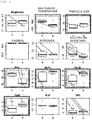
- FIG. 3 illustrates the amounts of characteristic components of coal that is determined to be mixed in mixed coals included in Cluster 6 of FIG. 2 and the amounts of characteristic components of coal that is determined to be mixed in mixed coals included in Cluster 8 of FIG. 2 .
- the characteristic component extraction unit 140 compares the amounts of the characteristic components of coal that is mixed in the mixed coals included in the cluster that exhibits the highest boiler exit temperature and the amounts of the characteristic components of coal that is mixed in the mixed coals included in the cluster that exhibits the lowest boiler exit temperature, and extracts the characteristic components exhibiting a difference value equal to or higher than a predetermined value in the comparison results.
- sulfur content, inherent moisture, ash fusion temperature, particle size, nitrogen content, electrical resistivity, and A1203 content are the extracted characteristic components exhibiting a difference value equal to or higher than the predetermined value.
- the characteristic component extraction unit 140 selects, among the characteristic components exhibiting the difference value equal to or higher than the predetermined value, a characteristic component whose amount in the coal mixed in the mixed coals included in the cluster that exhibits the highest boiler exit temperature is larger than that in the coal mixed in the coals included in the cluster that exhibits the lowest boiler exit temperature, and determines the selected characteristic component as a characteristic component that raises the boiler exit temperature.
- the characteristic component extraction unit 140 can extract the inherent moisture, the particle size, and the nitrogen content as the characteristic components that raise the boiler exit temperature.
- the characteristic component extraction unit 140 selects, among characteristic components exhibiting a difference value equal to or higher than the predetermined value, a characteristic component whose amount contained in the coal mixed in the mixed coals included in the cluster that exhibits the lowest boiler exit temperature is larger than that contained in the coal mixed in the mixed coals included in the cluster that exhibits the highest boiler exit temperature, and determines the selected characteristic component as a characteristic component that lowers the boiler exit temperature.
- sulfur content, ash fusion temperature, electrical resistivity, and A1203 can be selected as the characteristic component that lowers the boiler exit temperature.
- FIG. 4 shows the amounts of characteristic components contained in the coal that is mixed in the mixed coals included in Cluster 8 of FIG. 2 and the amounts of the characteristic components contained in the coal that is mixed in the mixed coals included in Cluster 9 of FIG. 2 .
- the characteristic component extraction unit 140 compares the amounts of the characteristic components contained in the coal that is mixed in the mixed coals included in the combustible cluster that exhibits the highest furnace heat absorption rate and the amounts of the characteristic components contained in the coal that is mixed in the mixed coals included in the combustible cluster that exhibits the lowest furnace heat absorption rate, and extracts the characteristic components exhibiting a difference value equal to or higher than a predetermined value in the comparison results.
- the extracted characteristic components exhibiting a difference value equal to or higher than the predetermined value may include an ash fusion temperature, a particle size, Si02, A1203, Fe203, and CaO.
- the characteristic component extraction unit 140 selects, among the characteristic components exhibiting a difference value equal to or higher than the predetermined value in the comparison results, a characteristic component whose amount in the coal that is mixed in the mixed coals included in the combustible cluster that exhibits the highest furnace absorption rate is larger than that in the coal that is mixed in the mixed coals included in the combustible cluster that exhibits the lowest furnace heat absorption rate, and determines the selected characteristic component as a characteristic component that raises the furnace heat absorption rate.
- the characteristic components that raise the furnace heat absorption rate include a particle size, A1203, Fe203, and CaO, for example.
- the characteristic component extraction unit 140 selects, among the characteristic components exhibiting a difference value equal to or higher than the predetermined value, a characteristic component whose amount in the coal that is mixed in the mixed coals included within the combustible cluster that exhibits the lowest furnace heat absorption rate is larger than that in the coal that is mixed in the mixed coals included within the combustible cluster that exhibits the highest furnace heat absorption rate, and determines the selected characteristic component as a characteristic component that lowers the furnace heat absorption rate.
- the characteristic components that lower the furnace heat absorption rate include an ash fusion point and Si02.
- the computer-readable medium can be a machine-readable storage device, a machine-readable storage substrate, a memory device, a composition of matter affecting a machine-readable propagated signal, or a combination of one or more of them
- the term "device” or "system” in the specification encompasses all apparatuses, devices, and machines for processing data, including, by way of example, a processor, a computer, and a multi-processor.
- the processing system can include, in addition to hardware, code that creates an execution environment for a computer program by request, for example, code that constitutes processor firmware, a protocol stack, a database management system, an operating system, or a combination of one or more of them.
- a computer program (also known as a program, software, software application, script, or code) can be written in any form of programming language, included compiled or interpreted languages or transcendental and procedural languages, and it can be deployed in any form, including as a standalone program or module, component, subroutine, or other unit suitable for use in a computing environment.
- the illustrated configurations and functions can be implemented in the form of a standalone software module, a monolithic software structure, a code, a service, or a combination of them, and it can be stored for execution in a computer-readable storage medium in a computer equipped with a processor being capable of executing stored program codes, instructions, etc. Therefore, all of them should be construed to be within the scope of the present disclosure.
Landscapes
- Engineering & Computer Science (AREA)
- Chemical & Material Sciences (AREA)
- Combustion & Propulsion (AREA)
- Physics & Mathematics (AREA)
- Mechanical Engineering (AREA)
- General Engineering & Computer Science (AREA)
- Life Sciences & Earth Sciences (AREA)
- General Physics & Mathematics (AREA)
- Health & Medical Sciences (AREA)
- Analytical Chemistry (AREA)
- Chemical Kinetics & Catalysis (AREA)
- Biochemistry (AREA)
- General Health & Medical Sciences (AREA)
- Thermal Sciences (AREA)
- Immunology (AREA)
- Pathology (AREA)
- Molecular Biology (AREA)
- Electrochemistry (AREA)
- Sustainable Development (AREA)
- Sustainable Energy (AREA)
- Automation & Control Theory (AREA)
- Regulation And Control Of Combustion (AREA)
- Management, Administration, Business Operations System, And Electronic Commerce (AREA)
Abstract
Description
- The present application claims priority to Korean Patent Application No.
10-2016-0117377, filed September 12, 2016 - The present disclosure relates to an influence analyzing apparatus. More particularly, the present disclosure relates to an influence analyzing apparatus for analyzing the influence of characteristics of mixed coals used in a thermoelectric power plant on a boiler performance index and a furnace heat absorption rate.
- Conventionally, it was impossible to determine a relationship between a boiler performance index or a furnace heat absorption rate and each characteristic component of a mixed coal. Even determined, it was impossible to reflect the design structural characteristics of a boiler provided in a thermoelectric power plant on determination of a relationship between a boiler performance index or a furnace heat absorption rate and each characteristic component of mixed coal.
- Therefore, conventionally, influence of a mixed coal can be predicted and evaluated only by creating a combustability index obtained using a calculation equation based on physical properties of the mixed coal without considering and reflecting structural characteristics of a thermoelectric power plant.
- One object ofthe present disclosure is to provide an influence analyzing apparatus that extracts a boiler performance index and a furnace heat absorption rate for each combustible cluster including one or more mixed coals having similar properties and calculate influence of each characteristic component of a mixed coal on the boiler performance index and the furnace heat absorption rate.
- According to one aspect, there is provided an influence analyzing apparatus including: a temperature extraction unit extracting temperatures of respective regions in a feed water and steam system of a thermoelectric power plant in which a combustible combination including one or more combustibles is combusted; a vector extraction unit extracting one or more vectors for each region from the temperatures of the respective regions; a cluster generation unit generating one or more combustible clusters, each cluster including one or more combustible combinations having similar properties, on the basis of the extracted vectors; and a characteristic component extraction unit extracting a characteristic component of a combustible combination that increases or decreases a boiler performance index from the one or more combustible combinations included in the one or more combustible clusters.
- In another aspect, each region of the feed water and steam system may include at least one of a feed water heater, an economizer, a furnace, a super heater, and a reheater.
- In a further aspect, the temperature extraction unit may extract temperatures for each region at a predetermined time interval
- In a yet further aspect, the vector extraction unit may extract the one or more vectors by performing functional principal component analysis with respect to the temperatures extracted for the respective regions.
- In a yet further aspect, the vector extraction unit may calculate a smoothing function based on a basis function, and calculate an average temperature of the temperatures of the respective regions of the feed water and steam system and a covariance at two different time points based on the calculated smoothing function.
- In a yet further aspect, the vector extraction unit may calculate an eigen function and eigenvalues using the calculated covariance, and extracts the one or more vectors for each region for each combustible combination on the basis of the calculated eigen function, the calculated smoothing function, and the calculated average temperature of the temperatures of the respective regions of the feed water and steam system with respect to each of the one or more combustible combinations.
- In a yet further aspect, the vector extraction unit may extract the eigen function by minimizing a variance ofthe calculated eigenvalues.
- In a yet further aspect, the cluster generation unit may generate the one or more combustible clusters, each combustible cluster including one or more combustible combinations, through cluster analysis.
- In a yet further aspect, the boiler performance index may include at least one of a boiler exit temperature and a furnace heat absorption rate.
- In a yet further aspect, the apparatus may further include a characteristic component selection unit selecting one or more characteristic components from each characteristic component group when a correlation coefficient obtained through correlation analysis of two or more characteristic components included in the characteristic component groups is equal to or higher than a reference value.
- In a yet further aspect, the apparatus may further include a characteristic component determination unit determining, by performing stepwise regression, a characteristic component influencing the boiler performance index, from among the selected one or more characteristic components.
- In a yet further aspect, the apparatus may further include a relational expression calculation unit calculating using a random forest algorithm, a relational expression to determine a relationship between the selected one or more characteristic components and the boiler performance index.
-
-
FIG. 1 is a block diagram illustrating the configuration of an influence analyzing apparatus for analyzing influence of each characteristic component of a combustible, according to one embodiment; -
FIG. 2 is a table illustrating a boiler performance index and a furnace heat absorption rate for combustible clusters; -
FIG. 3 illustrates the amounts of characteristic components of coal that is mixed in various mixed coals belonging toCluster 6 shown inFIG. 2 and the amounts of characteristic components of coal that is mixed in various mixed coals belonging toCluster 8 shown inFIG. 2 ; and -
FIG. 4 illustrates the amount of characteristic components of coal that is mixed in various mixed coals belonging toCluster 8 shown inFIG. 2 and the amount of characteristic components of coal that is mixed in various mixed coals belonging toCluster 9 shown inFIG. 2 . - The above-described aspects and other aspects will be made clear through embodiments described below with reference to the accompanying drawings. It should be noted that constituent elements of each embodiment can be variously combined unless otherwise defined or not being contradictory to each other. The present disclosure can be embodied in various forms and should not be construed to be limited to embodiments described herein.
- Throughout the drawings, parts may be omitted to make the subject matter of the present disclosure clearer, and the same reference numerals will refer to the same or like parts. It will be further understood that the terms "comprise", "include", "have", etc. when used in the specification, specify the presence of stated features, integers, steps, operations, elements, components, and/or combinations of them but do not preclude the presence or addition of one or more other features, integers, steps, operations, elements, components, and/or combinations thereof
- In the present disclosure, the term 'unit' used herein includes a block that can change or add a plug-in to a hardware system or a software system. That is, the term 'unit' includes a hardware or software component performing specific functions. In addition, the term 'unit' used in the present disclosure includes a software component or a hardware component selected from the group consisting of a generator, an extractor, a selector, a determiner, a calculator, a processor, and a controller. The 'unit' can be configured as an addressable storage medium or to run one or more processors. Accordingly, the 'unit', for example, includes components, such as software components, object-oriented software components, class components, and task components, processors, functions, attributes, procedures, subroutines, segments of a program code, drivers, firmware, a microcode, circuits, data, databases, data structures, tables, arrays, and variables. Functions provided by components and 'units' may be combined into a smaller number of functions to be implemented by a smaller number of components and units or divided into a larger number of functions to be implemented by a larger number of components and 'units'.
- Also, the components and the 'units' may be configured to run one or more CPU's included in a device or system, or may be components such as generators, extractors, selectors, determiners, or calculators.
- The present disclosure relates to an influence analyzing apparatus. More particularly, the present disclosure relates to an influence analyzing apparatus for analyzing the influence of characteristics of mixed coals used in a thermoelectric power plant on a boiler performance index and a furnace heat absorption rate.
- A boiler performance index and a furnace heat absorption rate may be extracted for each combustible cluster including one or more mixed coals having similar properties, thereby calculating the degree of influence of each characteristic component of a mixed coal on the boiler performance index and the furnace heat absorption.
-
FIG. 1 is a block diagram illustrating the configuration of aninfluence analyzing apparatus 100 for analyzing influence of characteristic components of a combustible, according to one embodiment. - The influence analyzing apparatus according to one embodiment performs the following: extracting temperatures of respective regions in a feed water and steam system of a thermo electric power plant in which each combustible combination including one or more combustibles is combusted; extracting one or more vectors for each region from the temperatures of the respective regions; creating one or more combustible clusters, each including one or more combustible combinations having similar properties; and extracting characteristic components that increase or decrease a boiler performance index from the one or more combustible combinations included in the one or more combustible clusters.
- Specifically, the influence analyzing apparatus according to one embodiment includes a
temperature extraction unit 110, avector extraction unit 120, acluster generation unit 130, and a characteristiccomponent extraction unit 140. - According to one embodiment, the
temperature extraction unit 110 extracts temperatures of respective regions in a feed water and steam system of a thermoelectric power plant in which each combustible combination including one or more combustibles is combusted. - The one or more combustibles may be coal. The combustible combination including one or more combustibles may be a mixed coal, but may not be limited thereto. The feed water supply and steam system of the thermoelectric power plant includes at least one of a feed water heater, an economizer, a furnace, a super heater, and a reheater. Each region of the feed water and steam of the thermoelectric power plant may be at least one of a feed water heater, an economizer, a furnace, a super heater, and a reheater.
- The feed water heater is a region to primarily heat feed water to be supplied to a boiler using residual heat of steam, which remains after a turbine in a power plant is rotated. The economizer is a region to secondarily preheat the feed water that is preliminarily preheated by the feed water heater before the feed water is supplied to the boiler, and is a region disposed at the next stage ofthe boiler to recover heat from combustion exhaust gas.
- The feed water that is finally preheated by the economizer is supplied to the boiler. The furnace heats the feed water using water walls formed along the wall surface thereof, thereby converting the feed water into steam. The furnace is a region connected to the super heater. The super heater is a region to further heat the steam having high temperature and high pressure, which is produced by the furnace, to generate heated steam, supply the heated steam to a high pressure turbine to rotate the turbine, and send steam discharged from the turbine to the regenerator.
- The temperatures of the respective regions in the feed water and steam system of the thermoelectric power plant are temperatures measured at inlets or outlets of the regions. The
temperature extraction unit 110 may be a temperature sensor located at the inlet or the outlet of each region. Alternatively, thetemperature extraction unit 110 may be a computing device or a program executed in a computing device, the computing device receiving temperature information from the temperature sensors through cable communication or wireless communication. - In one embodiment, the
vector extraction unit 120 extracts one or more vectors for each region from the temperatures of the respective regions. The temperatures extracted for each region may be temperatures obtained for each combustible combination. A combustion time for each combustible combination may vary. Accordingly, thetemperature extraction unit 110 extracts the temperatures of the respective regions in which the combustion time varies depending on the combustible combination. Thevector extraction unit 120 expresses the temperatures of the respective regions in the form of vectors having the same magnitude, thereby facilitating analysis. - In one embodiment, the
cluster generation unit 130 generates one or more combustible clusters, each cluster including one or more combustible combinations having similar properties, from the extracted vectors. Thecluster generation unit 130 generates one or more combustible clusters, each cluster including one or more combustible combinations (e.g. one or more mixed coals) having similar properties. The number of combustible clusters is one or more, and each combustible cluster includes a mixed coal or a plurality of mixed coals. Whether the mixed coals have similar properties or not is determined by examining how the boiler performance index is changed by the same amount of the mixed coals. The boiler performance index is an index directly measured or indirectly obtained from data of the boiler. The boiler performance index may include a boiler exit temperature and a furnace heat absorption rate. For example, when there are two mixed coals of the same amount, and when a difference between the boiler exit temperatures for the two mixed coals is 0.4° or less, the two mixed coals are considered to have similar properties. - In one embodiment, the characteristic
component extraction unit 140 extracts a characteristic component of a combustible combination that raises or lowers the boiler exit temperature from one or more combustible combinations included in a combustible cluster. The characteristiccomponent extraction unit 140 may extract a combustible cluster that exhibits a highest boiler exit temperature when combusted and a combustible cluster that exhibits a lowest boiler exit temperature when combusted. - The boiler included in the thermoelectric power plant changes water into steam, and the steam generated by the boiler rotates a turbine generator to generate electric energy.
- The characteristic
component extraction unit 140 determines the kind of coal that is mixed in the mixed coals belonging to the combustible cluster that exhibits the highest boiler exit temperature when combusted, and extracts the amounts of characteristic components of the coal that is determined to be mixed. Next, the characteristiccomponent extraction unit 140 determines the kind of coal that is mixed in the mixed coals belonging to the combustible cluster that exhibits the lowest boiler exit temperature when combusted, and extracts the amounts of characteristic components ofthe coal determined to be mixed. - The characteristic
component extraction unit 140 compares the amounts of characteristic components of the coal that is mixed in the mixed coals belonging to the combustible cluster that exhibits the highest boiler exit temperature and the amounts of characteristic components of the coal that is mixed in the mixed coals belonging to the combustible cluster that exhibits the lowest exit temperature, and extracts characteristic components that exhibit a difference value equal to or higher than a predetermined value between the compared amounts. - The characteristic
component extraction unit 140 extracts a characteristic component that raises the boiler exit temperature by selecting, among the characteristic components having the difference value equal to or higher than the predetermined value, a characteristic component whose amount in the coal that is mixed in the mixed coals included in the combustible cluster that exhibits the highest boiler exhibit temperature is larger than that in the coal that is mixed in the mixed coals included in the combustible cluster that exhibits the lowest boiler exhibit temperature. - The characteristic
component extraction unit 140 extracts a characteristic component that lowers the boiler exit temperature by selecting, among the characteristic components having the difference value equal to or higher than the predetermined value, a characteristic component whose amount in the coal mixed in the mixed coals included in the combustible cluster that exhibits the lowest boiler exit temperature is larger than the amount in the coal that is mixed in the mixed coals ofthe combustible cluster that exhibits the highest boiler exhibit temperature. - The characteristic components may include at least one of a caloric value (Kcal/kg), a total moisture content (%), a sulfur content (%), a hardgrove grindability index (HGI), a particle size (less than 2 mm%), an electrical resistivity, an ash fusion temperature (°C), a melting point (°C), inherent moisture (IM), a volatile matter, an ash component, fixed carbon, carbon (C), oxygen (O), hydrogen (H), nitrogen (N), sulfur (S), ash, SiO2, A12O3, Fe2O3, CaO, MgO, Na2O, K2O, SO4, and TiO2.
- In one embodiment, each region of the feed water and steam system may be equipped with at least one of a feed water heater, an economizer, a furnace, a super heater, and a reheater. These are described above.
- The
temperature extraction unit 110 extracts temperatures of respective regions in the feed water and steam system at predetermined time intervals. The predetermined time interval may be 2 minutes. Thetemperature extraction unit 110 may extract the temperatures for each mixed coal. - In one embodiment, the
vector extraction unit 120 extracts one or more vectors for each region by performing functional principal component analysis (PCA) on the extracted temperatures of the respective regions. - In one embodiment, the
vector extraction unit 120 calculates a smoothing function on the basis of a basis function, and calculates the average temperature of the temperatures of the respective regions of the feed water and steam system and a covariance at two different time points for each combustible combination, on the basis of the calculated smoothing function. - The
vector extraction unit 120 first calculates a smoothing function x(·) expressed as yij = x(t ij ) + e ij The smoothing function is obtained according toEquation 1. "i" is the number of regions and "j" is the number of time intervals when thetemperature extraction unit 110 extracts the temperatures at time intervals.
is a basis function and it may be any one of a polynomial expression, a Fourier function, a spline function, a wavelet function, and a B-spline function.
Equation 2.
- For each combustible combination, the average temperature of the temperatures of all of the respective regions of the feed water and steam system is calculated according to
Equation 3.
- The covariance at two time points is calculated according to
Equation 4.
- In one embodiment, the
vector extraction unit 120 calculates an eigen function and eigenvalues using the calculated covariance, and can extract vectors for each region for each combustible combination, on the basis of the eigen function, the smoothing function, and the average temperature of the feed water and steam system for each combustible combination. - In one embodiment, the
vector extraction unit 120 extracts the eigen function by maximizing the covariance ofthe eigenvalues. - The eigen function is calculated by maximizing the variance of eigen values Zip expressed as
Equation 5.
- Zip is eigenvalues. ψip (t)|p = 1 ≤ p ≤ P is an eigen function. P is the number of vectors to be extracted.
- The eigen function satisfies
Equation 6 andEquation 7.

- The vectors for each region are calculated according to
Equation 8.
- P vectors are calculated according to
Equation 8. For example, when the number of regions is 10 and when 5 vectors are calculated for each region, a total of 50 vectors are calculated for all the regions for each mixed coal - In one embodiment, the
cluster generation unit 130 generates one or more combustible clusters through cluster analysis. The cluster analysis may be k-means clustering, for example. - When the number of vectors extracted for each mixed coal is p and when the number of mixed coals analyzed is n, a matrix having a size ofn*p is expressed as follows:

- The K-means clustering algorithm partitions n p-dimensional observations of data into k sets S = (S1, S2, ......, Sk) to minimize a clustering error with respect to a given value k and to satisfy
Equation 9.
- The K-means clustering algorithm is a representative unsupervised learning method and has a feature of performing autonomous learning according to a given criteria because there is no information used to determine a learning performance.
- The number of clusters, k, can be set according to various criteria. In the present disclosure, the number "k" is determined using an elbow method. The elbow method measures a decrease in a target function in accordance with a gradual increase in k, and determines that no significant improvement of a model occurs although k further increases when the decrease in the target function is equal to or lower than a predetermined value. The k obtained when the decrease is equal to or lower than the predetermined value is set as the number of clusters.
- In one embodiment, the characteristic
component extraction unit 140 may extract a characteristic component of a combustible combination that raises or lowers a furnace heat absorption rate from among one or more combustible combinations included in a combustible cluster. - The characteristic
component extraction unit 140 determines the kind of coal mixed in mixed coals belonging to a combustible cluster that exhibits a highest furnace heat absorption rate, and extracts the amounts of characteristic components of the coal that is determined to be mixed in the mixed coals. Next, the characteristiccomponent extraction unit 140 determines the kind of coal mixed in mixed coals belonging to a combustible cluster that exhibits a lowest furnace heat absorption rate, and extracts the amounts of characteristic components of the coal that is determined to be mixed in the mixed coals. - The characteristic
component extraction unit 140 compares the amounts of the characteristic components of the coal that is mixed in the mixed coals belonging to the combustible cluster that exhibits the highest furnace absorption rate and the amounts of the characteristic components ofthe coal that is mixed in the mixed coals belonging to the combustible cluster that exhibits the lowest furnace heat absorption rate, and extracts characteristic components that exhibit a difference value equal to or higher than a predetermined reference value. - The characteristic
component extraction unit 140 can extract a characteristic component of a combustible combination that raises the furnace heat absorption rate by selecting, among the extracted characteristic components having the difference value equal to or higher than a predetermined reference value, a characteristic component whose amount in the coal that is mixed in the mixed coals included in the combustible cluster that exhibits the highest furnace heat absorption rate is larger than that in the coal mixed in the mixed coals included the combustible cluster that exhibits the lowest furnace heat absorption rate. - The characteristic
component extraction unit 140 extracts a characteristic component of the coal that lowers the furnace heat absorption rate by selecting, among the extracted characteristic components having the difference value equal to or higher than the predetermined reference value, a characteristic component whose amount in the coal that is mixed in the mixed coals included in the combustible cluster that exhibits the lowest furnace heat absorption rate is larger than that in the coal mixed in the mixed coals included in the combustible cluster that exhibits the highest furnace heat absorption rate. - In one embodiment, the influence analyzing apparatus may further include a characteristic
component selection unit 150 that extracts characteristic components from respective characteristic component groups when a correlation coefficient obtained through correlation analysis of two or more characteristic components included in a characteristic component groups is equal to or higher than a reference value. The reference value may be, for example, 0.7. When the correlation coefficient obtained through correlation analysis of two more characteristic components is equal to or higher than 0.7, it is determined that the characteristic components are highly closely related to each other. - In one embodiment, the influence analyzing apparatus may further include a characteristic
component determination unit 160 that selects and determines characteristic components that have a similar influence on the boiler exit temperature, i.e. boiler performance index, from among one or more characteristic components selected through step wise regression. The characteristiccomponent determination unit 160 divides the amount of each characteristic component into three equal parts, and the three parts are then discretized into -1, 0, and 1 in the order from the lowest value part to the highest value part. The boiler exit temperature may be calculated with respect to each of the discretized values -1, 0, and 1. - The characteristic
component determination unit 160 performs stepwise regression (regress analysis) by setting the boiler exit temperature as a dependent variable and the three-level discretized characteristic component as an independent variable. When performing the regression analysis, a process of adding or subtracting an independent variable to or from a model is repeatedly performed until the model is not improved any more through the addition or subtraction. The characteristic components included in the model when any improvement of the model does not occur may act as factors that have similar influence on the boiler exit temperature. The choice of independent variables may be performed according to Akaike Information Criterion (AIC). - In one embodiment, the influence analyzing apparatus for analyzing characteristic components of combustibles may further include a relational
expression calculation unit 170 that obtains a relational expression of a boiler performance index and one or more characteristic components selected based on a random forest model. The boiler performance index may be a boiler exit temperature, for example. The relationalexpression calculation unit 170 obtains a relational expression calculating a relationship between the boiler exit temperature and characteristic components that similarly influence the boiler exit temperature using the random forest model. - Parameters that are preferably preliminarily determined to learn a forest model include the number of trees "T" and the number of variables "M" used in split functions. The number "T" and the number "M" can be calculated through repeated K-fold cross-validation.
-
FIG. 2 is a table showing boiler exit temperatures and furnace heat absorption rates of respective clusters. The term "cluster" includes a group of combustibles.Cluster 6 exhibits the highest boiler exit temperature andCluster 8 exhibits the lowest boiler exit temperature. On the other hand,Cluster 8 exhibits the lowest furnace heat absorption rate andCluster 9 exhibits the highest furnace heat absorption rate. -
FIG. 3 illustrates the amounts of characteristic components of coal that is determined to be mixed in mixed coals included inCluster 6 ofFIG. 2 and the amounts of characteristic components of coal that is determined to be mixed in mixed coals included inCluster 8 ofFIG. 2 . - The characteristic
component extraction unit 140 compares the amounts of the characteristic components of coal that is mixed in the mixed coals included in the cluster that exhibits the highest boiler exit temperature and the amounts of the characteristic components of coal that is mixed in the mixed coals included in the cluster that exhibits the lowest boiler exit temperature, and extracts the characteristic components exhibiting a difference value equal to or higher than a predetermined value in the comparison results. With reference toFIG. 3 , sulfur content, inherent moisture, ash fusion temperature, particle size, nitrogen content, electrical resistivity, and A1203 content are the extracted characteristic components exhibiting a difference value equal to or higher than the predetermined value. - The characteristic
component extraction unit 140 selects, among the characteristic components exhibiting the difference value equal to or higher than the predetermined value, a characteristic component whose amount in the coal mixed in the mixed coals included in the cluster that exhibits the highest boiler exit temperature is larger than that in the coal mixed in the coals included in the cluster that exhibits the lowest boiler exit temperature, and determines the selected characteristic component as a characteristic component that raises the boiler exit temperature. With reference toFIG. 3 , the characteristiccomponent extraction unit 140 can extract the inherent moisture, the particle size, and the nitrogen content as the characteristic components that raise the boiler exit temperature. - The characteristic
component extraction unit 140 selects, among characteristic components exhibiting a difference value equal to or higher than the predetermined value, a characteristic component whose amount contained in the coal mixed in the mixed coals included in the cluster that exhibits the lowest boiler exit temperature is larger than that contained in the coal mixed in the mixed coals included in the cluster that exhibits the highest boiler exit temperature, and determines the selected characteristic component as a characteristic component that lowers the boiler exit temperature. With reference toFIG. 3 , sulfur content, ash fusion temperature, electrical resistivity, and A1203 can be selected as the characteristic component that lowers the boiler exit temperature. -
FIG. 4 shows the amounts of characteristic components contained in the coal that is mixed in the mixed coals included inCluster 8 ofFIG. 2 and the amounts of the characteristic components contained in the coal that is mixed in the mixed coals included inCluster 9 ofFIG. 2 . - The characteristic
component extraction unit 140 compares the amounts of the characteristic components contained in the coal that is mixed in the mixed coals included in the combustible cluster that exhibits the highest furnace heat absorption rate and the amounts of the characteristic components contained in the coal that is mixed in the mixed coals included in the combustible cluster that exhibits the lowest furnace heat absorption rate, and extracts the characteristic components exhibiting a difference value equal to or higher than a predetermined value in the comparison results. With reference toFIG. 4 , the extracted characteristic components exhibiting a difference value equal to or higher than the predetermined value may include an ash fusion temperature, a particle size, Si02, A1203, Fe203, and CaO. - The characteristic
component extraction unit 140 selects, among the characteristic components exhibiting a difference value equal to or higher than the predetermined value in the comparison results, a characteristic component whose amount in the coal that is mixed in the mixed coals included in the combustible cluster that exhibits the highest furnace absorption rate is larger than that in the coal that is mixed in the mixed coals included in the combustible cluster that exhibits the lowest furnace heat absorption rate, and determines the selected characteristic component as a characteristic component that raises the furnace heat absorption rate. With reference toFIG. 4 , the characteristic components that raise the furnace heat absorption rate include a particle size, A1203, Fe203, and CaO, for example. - The characteristic
component extraction unit 140 selects, among the characteristic components exhibiting a difference value equal to or higher than the predetermined value, a characteristic component whose amount in the coal that is mixed in the mixed coals included within the combustible cluster that exhibits the lowest furnace heat absorption rate is larger than that in the coal that is mixed in the mixed coals included within the combustible cluster that exhibits the highest furnace heat absorption rate, and determines the selected characteristic component as a characteristic component that lowers the furnace heat absorption rate. With reference toFIG. 4 , the characteristic components that lower the furnace heat absorption rate include an ash fusion point and Si02. - As described above, the ordinarily skilled in the art of the present disclosure would appreciate that the present disclosure can be embodied in various different forms without departing from the technical spirit or essential features of the present disclosure. Accordingly, the embodiments described above are provided only for illustrative purpose and thus should not be construed as limiting the present disclosure.
- Technical features and embodiments of the present disclosure can be implemented in digital electronic circuitry. The structure and structural equivalents described in the present disclosure can be implemented in computer software, firmware, or hardware, or in combinations thereof Embodiments to realize the technical features disclosed in the present disclosure can be implemented as one or more computer program products, e.g., one or more modules of computer program instructions encoded on a program storage medium for execution by or to control the operation of a processing system.
- The computer-readable medium can be a machine-readable storage device, a machine-readable storage substrate, a memory device, a composition of matter affecting a machine-readable propagated signal, or a combination of one or more of them
- Meanwhile, the term "device" or "system" in the specification encompasses all apparatuses, devices, and machines for processing data, including, by way of example, a processor, a computer, and a multi-processor. The processing system can include, in addition to hardware, code that creates an execution environment for a computer program by request, for example, code that constitutes processor firmware, a protocol stack, a database management system, an operating system, or a combination of one or more of them.
- A computer program (also known as a program, software, software application, script, or code) can be written in any form of programming language, included compiled or interpreted languages or transcendental and procedural languages, and it can be deployed in any form, including as a standalone program or module, component, subroutine, or other unit suitable for use in a computing environment.
- Constituent elements for implementing technical features of the present disclosure included in block diagrams and flowcharts in the accompanying drawings mean logical boundaries ofthe constituent elements.
- However, according one embodiment of software or hardware, the illustrated configurations and functions can be implemented in the form of a standalone software module, a monolithic software structure, a code, a service, or a combination of them, and it can be stored for execution in a computer-readable storage medium in a computer equipped with a processor being capable of executing stored program codes, instructions, etc. Therefore, all of them should be construed to be within the scope of the present disclosure.
- Accordingly, although the accompanying drawings and the description thereof describe the technical features of the present disclosure, if a specific arrangement of software to implement these technical features is not clearly stated, the arrangement should not be simply assumed. That is, various embodiments may exist and the embodiments can be partially modified while maintaining the same technical features as the present disclosure. Therefore, the modifications are also considered to be within the scope of the present disclosure.
- In some cases, it can be advantageous that the operations are performed in parallel or in a multi-tasking manner. In addition, separation of various system components of the embodiment described above should not be construed to be required in all embodiments. It should be noted that the described program components and systems can be integrated into a single software product or can be provided as multiple software products.
- As described above, the present specification is not intended to limit the present disclosure with specific terms. Although the present disclosure has been described in detail with reference to exemplary embodiments, those ordinarily skilled in the art would appreciate that modifications, changes, and alterations thereof are possible without departing from the scope of the present disclosure.
- The scope of the present disclosure is defined by the appended claims rather than by the detailed description, and all changes and modifications derived from the definition and scope of the claims and equivalents thereof should be construed to be included within the scope of the present disclosure.
Claims (12)
- An influence analyzing apparatus for analyzing influence of combustibles, the apparatus comprising:a temperature extraction unit configured to extract temperatures of respective regions in a feed water and steam system of a thermoelectric power plant in which a combustible combination including one or more combustibles is combusted;a vector extraction unit configured to extract one or more vectors for each region from the temperatures ofthe respective regions;a cluster generation unit configured to generate one or more combustible clusters, each cluster including one or more combustible combinations having similar properties, on the basis of the extracted vectors; anda characteristic component extraction unit configured to extract a characteristic component of a combustible combination that increases or decreases a boiler performance index from the one or more combustible combinations included in the one or more combustible clusters.
- The apparatus according to claim 1, wherein the temperature extraction unit is configured to extract temperatures of at least one of a feed water heater, an economizer, a furnace, a super heater, and a reheater in each region of the feed water and steam system.
- The apparatus according to claim 1 or 2, wherein the temperature extraction unit is configured to extract temperatures for each region at a predetermined time interval.
- The apparatus according to any one of the preceding claims, wherein the vector extraction unit is configured to extract the one or more vectors by performing functional principal component analysis with respect to the extracted temperatures ofthe respective regions.
- The apparatus according to any one of the preceding claims, wherein the vector extraction unit is configured to calculate a smoothing function based on a basis function, and calculate, for each combustible combination, an average of the temperatures of the respective regions of the feed water and steam system and a covariance at two different time points based on the calculated smoothing function.
- The apparatus according to claim 5, wherein the vector extraction unit is configured to calculate an eigenfunction and eigenvalues using the calculated covariance, and extract the one or more vectors for each region with respect to each combustible combination on the basis of the calculated eigenfunction, the calculated smoothing function, and the calculated average temperature of the temperatures of the respective regions of the feed water and steam system with respect to each of the one or more combustible combinations.
- The apparatus according to claim 6, wherein the vector extraction unit is configured to extract the eigenfunction by minimizing a variance of the calculated eigenvalues.
- The apparatus according to any one ofthe preceding claims, wherein the cluster generation unit is configured to generate the one or more combustible clusters based on cluster analysis.
- The apparatus according to any one ofthe preceding claims, wherein the boiler performance index includes at least one of an exit temperature of a boiler and a furnace heat absorption rate.
- The apparatus according to any one of the preceding claims, further comprising a characteristic component selection unit configured to select one or more characteristic components from characteristic component groups when a correlation coefficient obtained through correlation analysis of two or more characteristic components included in the characteristic component group is equal to or higher than a reference value.
- The apparatus according to claim 10, further comprising a characteristic component determination unit configured to determine, by performing stepwise regression, a characteristic component influencing the boiler performance index from among the selected one or more characteristic components.
- The apparatus according to claim 10 or 11, further comprising a relational expression calculation unit configured to calculate, using a random forest algorithm, a relational expression to determine a relationship between the selected one or more characteristic components and the boiler performance index.
Applications Claiming Priority (1)
| Application Number | Priority Date | Filing Date | Title |
|---|---|---|---|
| KR1020160117377A KR101816212B1 (en) | 2016-09-12 | 2016-09-12 | Apparatus for analyzing influence of combustibles |
Publications (2)
| Publication Number | Publication Date |
|---|---|
| EP3293454A1 true EP3293454A1 (en) | 2018-03-14 |
| EP3293454B1 EP3293454B1 (en) | 2019-11-20 |
Family
ID=60009406
Family Applications (1)
| Application Number | Title | Priority Date | Filing Date |
|---|---|---|---|
| EP17190316.4A Active EP3293454B1 (en) | 2016-09-12 | 2017-09-11 | Influence analyzing apparatus for analyzing influence of combustibles |
Country Status (4)
| Country | Link |
|---|---|
| US (1) | US10753602B2 (en) |
| EP (1) | EP3293454B1 (en) |
| KR (1) | KR101816212B1 (en) |
| CN (1) | CN107817840B (en) |
Families Citing this family (9)
| Publication number | Priority date | Publication date | Assignee | Title |
|---|---|---|---|---|
| KR102212902B1 (en) * | 2018-12-07 | 2021-02-05 | 두산중공업 주식회사 | Apparatus and method for predicting the deformation temperature of coal using a predictive model |
| CN109685136A (en) * | 2018-12-21 | 2019-04-26 | 云南电网有限责任公司电力科学研究院 | A kind of high-pressure heater state data analysis method |
| US11100395B2 (en) * | 2019-12-05 | 2021-08-24 | Sas Institute Inc. | Analytic system for interactive direct functional principal component analysis |
| US10963788B1 (en) * | 2019-12-05 | 2021-03-30 | Sas Institute Inc. | Analytic system for interactive graphical model selection |
| AU2020433469B2 (en) * | 2020-03-02 | 2023-09-14 | Ihi Corporation | Correlation deriving method and correlation deriving device |
| CN112668192A (en) * | 2020-12-31 | 2021-04-16 | 国电南瑞科技股份有限公司 | Power supply coal consumption distribution calculation method and system for coal-fired unit |
| CN114254714B (en) * | 2022-02-28 | 2022-04-29 | 东莞市鹏锦机械科技有限公司 | Efficient NMP recovery method, system and computer-readable storage medium |
| KR102439163B1 (en) * | 2022-06-24 | 2022-09-01 | 주식회사 아이브 | Apparatus, method, and program for detecting defective products using unsupervised learning models based on AI |
| CN115144032A (en) * | 2022-07-01 | 2022-10-04 | 东北林业大学 | Complex environment simulation test system and test method suitable for forest combustible |
Citations (6)
| Publication number | Priority date | Publication date | Assignee | Title |
|---|---|---|---|---|
| WO2004107246A1 (en) * | 2003-05-13 | 2004-12-09 | Electric Power Research Institute, Inc. | Application of symbol sequence analysis and temporal irreversibility to monitoring and controlling boiler flames |
| US20060015298A1 (en) * | 2001-11-14 | 2006-01-19 | Daw Charles S | Methods for monitoring and controlling boiler flames |
| US20120107751A1 (en) * | 2009-07-22 | 2012-05-03 | Kabushiki Kaisha Kobe Seiko Sho (Kobe Steel, Ltd.) | Method for suppressing adhesion of ash and device for suppressing adhesion of ash in boiler |
| US20140123624A1 (en) * | 2012-11-02 | 2014-05-08 | Exxonmobil Upstream Research Company | Gas turbine combustor control system |
| US20140172370A1 (en) * | 2012-12-17 | 2014-06-19 | Exxonmobil Research And Engineering Company | Flame instability detection and identification of unstable burners in industrial furnaces |
| US20160085783A1 (en) * | 2014-03-31 | 2016-03-24 | Rakuten, Inc. | Similarity calculation system, method of calculating similarity, and program |
Family Cites Families (40)
| Publication number | Priority date | Publication date | Assignee | Title |
|---|---|---|---|---|
| JPH0720282A (en) | 1993-07-06 | 1995-01-24 | Ishikawajima Harima Heavy Ind Co Ltd | Anticorrosion method for metal container and corrosion resistant container |
| JP3062582B2 (en) * | 1995-11-07 | 2000-07-10 | 株式会社日立製作所 | Method and apparatus for predicting furnace state of pulverized coal combustion equipment |
| US6389330B1 (en) * | 1997-12-18 | 2002-05-14 | Reuter-Stokes, Inc. | Combustion diagnostics method and system |
| KR100370348B1 (en) | 1998-03-31 | 2003-03-28 | 두산중공업 주식회사 | Method and device for extracting flame image characteristics of burning diagnosis |
| FR2792415B1 (en) * | 1999-04-15 | 2001-07-13 | Air Liquide | EVALUATION AND REGULATION OF THE THERMAL POWER OF A FLOW OF COMBUSTIBLE GAS; CHARACTERIZATION OF A THERMAL MASS FLOWMETER |
| US20020179493A1 (en) * | 1999-08-20 | 2002-12-05 | Environmental & Energy Enterprises, Llc | Production and use of a premium fuel grade petroleum coke |
| US6206685B1 (en) * | 1999-08-31 | 2001-03-27 | Ge Energy And Environmental Research Corporation | Method for reducing NOx in combustion flue gas using metal-containing additives |
| EP1291741B1 (en) * | 2000-04-14 | 2012-05-09 | Omron Corporation | Controller, temperature regulator, and heat treatment apparatus |
| US6916565B2 (en) * | 2000-12-21 | 2005-07-12 | Casio Computer Co., Ltd. | Power supply system, fuel pack constituting the system, and device driven by power generator and power supply system |
| CA2403244C (en) * | 2001-01-24 | 2009-08-04 | Casio Computer Co., Ltd. | Power supply system, fuel pack constituting the system, and device driven by power generator and power supply system |
| US7220365B2 (en) * | 2001-08-13 | 2007-05-22 | New Qu Energy Ltd. | Devices using a medium having a high heat transfer rate |
| US6896707B2 (en) * | 2002-07-02 | 2005-05-24 | Chevron U.S.A. Inc. | Methods of adjusting the Wobbe Index of a fuel and compositions thereof |
| US20060156627A1 (en) * | 2003-06-27 | 2006-07-20 | Ultracell Corporation | Fuel processor for use with portable fuel cells |
| US20080015826A1 (en) * | 2004-09-20 | 2008-01-17 | Jean-Christophe Ealet | Method And Device Of Predictive Assessment Of Thermal Load For Solid Waste Incineration Plants |
| US8579999B2 (en) * | 2004-10-12 | 2013-11-12 | Great River Energy | Method of enhancing the quality of high-moisture materials using system heat sources |
| KR100695222B1 (en) | 2005-01-31 | 2007-03-14 | 한국동서발전(주) | Computer-readable recording media that records methods for evaluating coal operation costs and programs for realizing them |
| US7584024B2 (en) * | 2005-02-08 | 2009-09-01 | Pegasus Technologies, Inc. | Method and apparatus for optimizing operation of a power generating plant using artificial intelligence techniques |
| UA92213C2 (en) * | 2006-03-16 | 2010-10-11 | Басф Се | SEMICONDUCTOR MATERIAL FOR THERMOELECTRIC APPLICATION AND THERMOELECTRIC GENERATOR CONTAINING IT |
| US9039407B2 (en) * | 2006-11-17 | 2015-05-26 | James K. McKnight | Powdered fuel conversion systems and methods |
| US7937935B2 (en) * | 2008-01-28 | 2011-05-10 | Delphi Technologies, Inc. | Method for controlling catalyst and filter temperatures in regeneration of a catalytic diesel particulate filter |
| US8931950B2 (en) * | 2008-08-20 | 2015-01-13 | The Board Of Trustees Of The University Of Illinois | Device for calorimetric measurement |
| US9555686B2 (en) * | 2008-10-23 | 2017-01-31 | Gentherm Incorporated | Temperature control systems with thermoelectric devices |
| EP2430370A2 (en) * | 2009-05-15 | 2012-03-21 | Areva Solar, Inc | Systems and methods for producing steam using solar radiation |
| JP5417068B2 (en) * | 2009-07-14 | 2014-02-12 | 株式会社日立製作所 | Oxyfuel boiler and control method for oxygen fired boiler |
| JP5351840B2 (en) * | 2010-06-25 | 2013-11-27 | 三菱重工業株式会社 | Waste heat recovery system for exhaust gas |
| US20120013472A1 (en) * | 2010-07-15 | 2012-01-19 | General Electric Company | Systems and Methods of Monitoring Combustible Gases in a Coal Supply |
| JP5893280B2 (en) * | 2010-09-09 | 2016-03-23 | 東京エレクトロン株式会社 | Vertical heat treatment equipment |
| US8813515B2 (en) * | 2010-11-04 | 2014-08-26 | International Business Machines Corporation | Thermoelectric-enhanced, vapor-compression refrigeration apparatus facilitating cooling of an electronic component |
| CN102494325B (en) * | 2011-12-19 | 2014-07-09 | 上海望特能源科技有限公司 | Method for monitoring intra-furnace dynamic wall temperature in high-temperature tube system of power station boiler |
| KR101447032B1 (en) | 2011-12-30 | 2014-10-07 | 두산중공업 주식회사 | Coal and Flux Supply Apparatus of Integrated gasification combined cycle power plant, and Supply Method thereof |
| US9213998B2 (en) * | 2012-01-26 | 2015-12-15 | General Electric Company | Monitoring hot water usage in a gas water heater |
| KR101493782B1 (en) | 2013-05-20 | 2015-02-16 | 한국남동발전 주식회사 | Fuel resource optimization management system using the internet |
| JP5624646B1 (en) * | 2013-05-23 | 2014-11-12 | 電源開発株式会社 | Thermal power plant and operation method of thermal power plant. |
| KR101665614B1 (en) | 2013-12-09 | 2016-10-12 | 한국남동발전 주식회사 | Coal Operation Management System |
| US10451294B2 (en) * | 2014-07-14 | 2019-10-22 | Santa Clara University | Machine learning based smart water heater controller using wireless sensor networks |
| KR101656673B1 (en) | 2014-09-24 | 2016-09-19 | 한국전력공사 | Apparatus for coal combustion simulation, apparatus and method for coal combustion optimization |
| US10443494B2 (en) * | 2015-07-23 | 2019-10-15 | General Electric Company | System and method for providing highly reactive fuels to a combustor |
| CN105975618A (en) * | 2016-05-23 | 2016-09-28 | 国网江西省电力科学研究院 | Fuel coal combustion characteristic computing method |
| US11248536B2 (en) * | 2016-06-20 | 2022-02-15 | General Electric Company | Systems and methods for flame holding avoidance in gas turbine combustors |
| CN206208721U (en) * | 2016-11-23 | 2017-05-31 | 广东电网有限责任公司电力科学研究院 | A kind of flue gas low-temperature corrosion detection system |
-
2016
- 2016-09-12 KR KR1020160117377A patent/KR101816212B1/en active Active
-
2017
- 2017-09-11 EP EP17190316.4A patent/EP3293454B1/en active Active
- 2017-09-11 CN CN201710811720.XA patent/CN107817840B/en active Active
- 2017-09-11 US US15/700,953 patent/US10753602B2/en active Active
Patent Citations (6)
| Publication number | Priority date | Publication date | Assignee | Title |
|---|---|---|---|---|
| US20060015298A1 (en) * | 2001-11-14 | 2006-01-19 | Daw Charles S | Methods for monitoring and controlling boiler flames |
| WO2004107246A1 (en) * | 2003-05-13 | 2004-12-09 | Electric Power Research Institute, Inc. | Application of symbol sequence analysis and temporal irreversibility to monitoring and controlling boiler flames |
| US20120107751A1 (en) * | 2009-07-22 | 2012-05-03 | Kabushiki Kaisha Kobe Seiko Sho (Kobe Steel, Ltd.) | Method for suppressing adhesion of ash and device for suppressing adhesion of ash in boiler |
| US20140123624A1 (en) * | 2012-11-02 | 2014-05-08 | Exxonmobil Upstream Research Company | Gas turbine combustor control system |
| US20140172370A1 (en) * | 2012-12-17 | 2014-06-19 | Exxonmobil Research And Engineering Company | Flame instability detection and identification of unstable burners in industrial furnaces |
| US20160085783A1 (en) * | 2014-03-31 | 2016-03-24 | Rakuten, Inc. | Similarity calculation system, method of calculating similarity, and program |
Also Published As
| Publication number | Publication date |
|---|---|
| US20180073724A1 (en) | 2018-03-15 |
| EP3293454B1 (en) | 2019-11-20 |
| CN107817840B (en) | 2020-02-07 |
| KR101816212B1 (en) | 2018-01-08 |
| CN107817840A (en) | 2018-03-20 |
| US10753602B2 (en) | 2020-08-25 |
Similar Documents
| Publication | Publication Date | Title |
|---|---|---|
| EP3293454B1 (en) | Influence analyzing apparatus for analyzing influence of combustibles | |
| Xu et al. | Multimode process monitoring with PCA mixture model | |
| Tong et al. | An adaptive multimode process monitoring strategy based on mode clustering and mode unfolding | |
| Zhang et al. | Stationarity test and Bayesian monitoring strategy for fault detection in nonlinear multimode processes | |
| Li et al. | Diffusion maps based k-nearest-neighbor rule technique for semiconductor manufacturing process fault detection | |
| Chen et al. | Linear priors mined and integrated for transparency of blast furnace black-box SVM model | |
| Tong et al. | Statistical process monitoring based on a multi-manifold projection algorithm | |
| Li et al. | Fault diagnosis for PEMFC systems in consideration of dynamic behaviors and spatial inhomogeneity | |
| Merchante et al. | An efficient approach to sparse linear discriminant analysis | |
| Wu et al. | Fault monitoring and diagnosis of high-pressure heater system based on improved particle swarm optimization and probabilistic neural network | |
| CN111624979A (en) | An industrial closed-loop control loop multi-oscillation detection and traceability method based on slow feature analysis | |
| Wang et al. | Historical information-aided monitoring of few-sample modes in industrial processes with orthogonal transferred projection | |
| Yu et al. | Risk‐based process system monitoring using self‐organizing map integrated with loss functions | |
| Bedoya et al. | Unsupervised feature selection based on fuzzy clustering for fault detection of the Tennessee Eastman process | |
| Lee et al. | Random-forest-based real-time contrasts control chart using adaptive breakpoints with symbolic aggregate approximation | |
| Yong et al. | Fault detection for a class of industrial processes based on recursive multiple models | |
| Wang et al. | Derivative dynamic time warping algorithm with introduced correction for varying load fault diagnosis of nuclear power system steam turbine units | |
| Fan et al. | Multivariate temporal process monitoring with graph‐based predictable feature analysis | |
| Chen et al. | Semi-Supervised Prefix Tuning of Large Language Models for Industrial Fault Diagnosis with Big Data | |
| Su et al. | Nonlinear fault separation for redundancy process variables based on FNN in MKFDA subspace | |
| Taylor et al. | Learning using unselected features (LUFe) | |
| Hao et al. | A unified factors analysis framework for discriminative feature extraction and object recognition | |
| Yang et al. | BootAug: Boosting text augmentation via hybrid instance filtering framework | |
| Zhang et al. | A novel PCA-SVM flow pattern identification algorithm for electrical resistance tomography system | |
| Sim et al. | A study of classifying flow regimes of MARS-KS wall heat transfer coefficient data using unsupervised learning |
Legal Events
| Date | Code | Title | Description |
|---|---|---|---|
| PUAI | Public reference made under article 153(3) epc to a published international application that has entered the european phase |
Free format text: ORIGINAL CODE: 0009012 |
|
| STAA | Information on the status of an ep patent application or granted ep patent |
Free format text: STATUS: REQUEST FOR EXAMINATION WAS MADE |
|
| 17P | Request for examination filed |
Effective date: 20170911 |
|
| AK | Designated contracting states |
Kind code of ref document: A1 Designated state(s): AL AT BE BG CH CY CZ DE DK EE ES FI FR GB GR HR HU IE IS IT LI LT LU LV MC MK MT NL NO PL PT RO RS SE SI SK SM TR |
|
| AX | Request for extension of the european patent |
Extension state: BA ME |
|
| RBV | Designated contracting states (corrected) |
Designated state(s): AL AT BE BG CH CY CZ DE DK EE ES FI FR GB GR HR HU IE IS IT LI LT LU LV MC MK MT NL NO PL PT RO RS SE SI SK SM TR |
|
| RAP1 | Party data changed (applicant data changed or rights of an application transferred) |
Owner name: DOOSAN HEAVY INDUSTRIES & CONSTRUCTION CO., LTD. |
|
| GRAP | Despatch of communication of intention to grant a patent |
Free format text: ORIGINAL CODE: EPIDOSNIGR1 |
|
| STAA | Information on the status of an ep patent application or granted ep patent |
Free format text: STATUS: GRANT OF PATENT IS INTENDED |
|
| INTG | Intention to grant announced |
Effective date: 20190613 |
|
| GRAS | Grant fee paid |
Free format text: ORIGINAL CODE: EPIDOSNIGR3 |
|
| GRAA | (expected) grant |
Free format text: ORIGINAL CODE: 0009210 |
|
| STAA | Information on the status of an ep patent application or granted ep patent |
Free format text: STATUS: THE PATENT HAS BEEN GRANTED |
|
| AK | Designated contracting states |
Kind code of ref document: B1 Designated state(s): AL AT BE BG CH CY CZ DE DK EE ES FI FR GB GR HR HU IE IS IT LI LT LU LV MC MK MT NL NO PL PT RO RS SE SI SK SM TR |
|
| REG | Reference to a national code |
Ref country code: GB Ref legal event code: FG4D |
|
| REG | Reference to a national code |
Ref country code: CH Ref legal event code: EP |
|
| REG | Reference to a national code |
Ref country code: IE Ref legal event code: FG4D |
|
| REG | Reference to a national code |
Ref country code: DE Ref legal event code: R096 Ref document number: 602017008858 Country of ref document: DE |
|
| REG | Reference to a national code |
Ref country code: AT Ref legal event code: REF Ref document number: 1204612 Country of ref document: AT Kind code of ref document: T Effective date: 20191215 |
|
| REG | Reference to a national code |
Ref country code: NL Ref legal event code: MP Effective date: 20191120 |
|
| REG | Reference to a national code |
Ref country code: LT Ref legal event code: MG4D |
|
| PG25 | Lapsed in a contracting state [announced via postgrant information from national office to epo] |
Ref country code: FI Free format text: LAPSE BECAUSE OF FAILURE TO SUBMIT A TRANSLATION OF THE DESCRIPTION OR TO PAY THE FEE WITHIN THE PRESCRIBED TIME-LIMIT Effective date: 20191120 Ref country code: BG Free format text: LAPSE BECAUSE OF FAILURE TO SUBMIT A TRANSLATION OF THE DESCRIPTION OR TO PAY THE FEE WITHIN THE PRESCRIBED TIME-LIMIT Effective date: 20200220 Ref country code: NO Free format text: LAPSE BECAUSE OF FAILURE TO SUBMIT A TRANSLATION OF THE DESCRIPTION OR TO PAY THE FEE WITHIN THE PRESCRIBED TIME-LIMIT Effective date: 20200220 Ref country code: LV Free format text: LAPSE BECAUSE OF FAILURE TO SUBMIT A TRANSLATION OF THE DESCRIPTION OR TO PAY THE FEE WITHIN THE PRESCRIBED TIME-LIMIT Effective date: 20191120 Ref country code: NL Free format text: LAPSE BECAUSE OF FAILURE TO SUBMIT A TRANSLATION OF THE DESCRIPTION OR TO PAY THE FEE WITHIN THE PRESCRIBED TIME-LIMIT Effective date: 20191120 Ref country code: SE Free format text: LAPSE BECAUSE OF FAILURE TO SUBMIT A TRANSLATION OF THE DESCRIPTION OR TO PAY THE FEE WITHIN THE PRESCRIBED TIME-LIMIT Effective date: 20191120 Ref country code: LT Free format text: LAPSE BECAUSE OF FAILURE TO SUBMIT A TRANSLATION OF THE DESCRIPTION OR TO PAY THE FEE WITHIN THE PRESCRIBED TIME-LIMIT Effective date: 20191120 Ref country code: GR Free format text: LAPSE BECAUSE OF FAILURE TO SUBMIT A TRANSLATION OF THE DESCRIPTION OR TO PAY THE FEE WITHIN THE PRESCRIBED TIME-LIMIT Effective date: 20200221 |
|
| PG25 | Lapsed in a contracting state [announced via postgrant information from national office to epo] |
Ref country code: HR Free format text: LAPSE BECAUSE OF FAILURE TO SUBMIT A TRANSLATION OF THE DESCRIPTION OR TO PAY THE FEE WITHIN THE PRESCRIBED TIME-LIMIT Effective date: 20191120 Ref country code: IS Free format text: LAPSE BECAUSE OF FAILURE TO SUBMIT A TRANSLATION OF THE DESCRIPTION OR TO PAY THE FEE WITHIN THE PRESCRIBED TIME-LIMIT Effective date: 20200320 Ref country code: RS Free format text: LAPSE BECAUSE OF FAILURE TO SUBMIT A TRANSLATION OF THE DESCRIPTION OR TO PAY THE FEE WITHIN THE PRESCRIBED TIME-LIMIT Effective date: 20191120 |
|
| PG25 | Lapsed in a contracting state [announced via postgrant information from national office to epo] |
Ref country code: AL Free format text: LAPSE BECAUSE OF FAILURE TO SUBMIT A TRANSLATION OF THE DESCRIPTION OR TO PAY THE FEE WITHIN THE PRESCRIBED TIME-LIMIT Effective date: 20191120 |
|
| PG25 | Lapsed in a contracting state [announced via postgrant information from national office to epo] |
Ref country code: ES Free format text: LAPSE BECAUSE OF FAILURE TO SUBMIT A TRANSLATION OF THE DESCRIPTION OR TO PAY THE FEE WITHIN THE PRESCRIBED TIME-LIMIT Effective date: 20191120 Ref country code: RO Free format text: LAPSE BECAUSE OF FAILURE TO SUBMIT A TRANSLATION OF THE DESCRIPTION OR TO PAY THE FEE WITHIN THE PRESCRIBED TIME-LIMIT Effective date: 20191120 Ref country code: PT Free format text: LAPSE BECAUSE OF FAILURE TO SUBMIT A TRANSLATION OF THE DESCRIPTION OR TO PAY THE FEE WITHIN THE PRESCRIBED TIME-LIMIT Effective date: 20200412 Ref country code: EE Free format text: LAPSE BECAUSE OF FAILURE TO SUBMIT A TRANSLATION OF THE DESCRIPTION OR TO PAY THE FEE WITHIN THE PRESCRIBED TIME-LIMIT Effective date: 20191120 Ref country code: DK Free format text: LAPSE BECAUSE OF FAILURE TO SUBMIT A TRANSLATION OF THE DESCRIPTION OR TO PAY THE FEE WITHIN THE PRESCRIBED TIME-LIMIT Effective date: 20191120 |
|
| REG | Reference to a national code |
Ref country code: AT Ref legal event code: MK05 Ref document number: 1204612 Country of ref document: AT Kind code of ref document: T Effective date: 20191120 |
|
| REG | Reference to a national code |
Ref country code: DE Ref legal event code: R097 Ref document number: 602017008858 Country of ref document: DE |
|
| PG25 | Lapsed in a contracting state [announced via postgrant information from national office to epo] |
Ref country code: SK Free format text: LAPSE BECAUSE OF FAILURE TO SUBMIT A TRANSLATION OF THE DESCRIPTION OR TO PAY THE FEE WITHIN THE PRESCRIBED TIME-LIMIT Effective date: 20191120 Ref country code: SM Free format text: LAPSE BECAUSE OF FAILURE TO SUBMIT A TRANSLATION OF THE DESCRIPTION OR TO PAY THE FEE WITHIN THE PRESCRIBED TIME-LIMIT Effective date: 20191120 |
|
| PLBE | No opposition filed within time limit |
Free format text: ORIGINAL CODE: 0009261 |
|
| STAA | Information on the status of an ep patent application or granted ep patent |
Free format text: STATUS: NO OPPOSITION FILED WITHIN TIME LIMIT |
|
| 26N | No opposition filed |
Effective date: 20200821 |
|
| PG25 | Lapsed in a contracting state [announced via postgrant information from national office to epo] |
Ref country code: PL Free format text: LAPSE BECAUSE OF FAILURE TO SUBMIT A TRANSLATION OF THE DESCRIPTION OR TO PAY THE FEE WITHIN THE PRESCRIBED TIME-LIMIT Effective date: 20191120 Ref country code: AT Free format text: LAPSE BECAUSE OF FAILURE TO SUBMIT A TRANSLATION OF THE DESCRIPTION OR TO PAY THE FEE WITHIN THE PRESCRIBED TIME-LIMIT Effective date: 20191120 Ref country code: SI Free format text: LAPSE BECAUSE OF FAILURE TO SUBMIT A TRANSLATION OF THE DESCRIPTION OR TO PAY THE FEE WITHIN THE PRESCRIBED TIME-LIMIT Effective date: 20191120 |
|
| PG25 | Lapsed in a contracting state [announced via postgrant information from national office to epo] |
Ref country code: IT Free format text: LAPSE BECAUSE OF FAILURE TO SUBMIT A TRANSLATION OF THE DESCRIPTION OR TO PAY THE FEE WITHIN THE PRESCRIBED TIME-LIMIT Effective date: 20191120 |
|
| REG | Reference to a national code |
Ref country code: CH Ref legal event code: PL |
|
| REG | Reference to a national code |
Ref country code: BE Ref legal event code: MM Effective date: 20200930 |
|
| PG25 | Lapsed in a contracting state [announced via postgrant information from national office to epo] |
Ref country code: LU Free format text: LAPSE BECAUSE OF NON-PAYMENT OF DUE FEES Effective date: 20200911 |
|
| PG25 | Lapsed in a contracting state [announced via postgrant information from national office to epo] |
Ref country code: LI Free format text: LAPSE BECAUSE OF NON-PAYMENT OF DUE FEES Effective date: 20200930 Ref country code: IE Free format text: LAPSE BECAUSE OF NON-PAYMENT OF DUE FEES Effective date: 20200911 Ref country code: CH Free format text: LAPSE BECAUSE OF NON-PAYMENT OF DUE FEES Effective date: 20200930 Ref country code: BE Free format text: LAPSE BECAUSE OF NON-PAYMENT OF DUE FEES Effective date: 20200930 |
|
| GBPC | Gb: european patent ceased through non-payment of renewal fee |
Effective date: 20210911 |
|
| PG25 | Lapsed in a contracting state [announced via postgrant information from national office to epo] |
Ref country code: TR Free format text: LAPSE BECAUSE OF FAILURE TO SUBMIT A TRANSLATION OF THE DESCRIPTION OR TO PAY THE FEE WITHIN THE PRESCRIBED TIME-LIMIT Effective date: 20191120 Ref country code: MT Free format text: LAPSE BECAUSE OF FAILURE TO SUBMIT A TRANSLATION OF THE DESCRIPTION OR TO PAY THE FEE WITHIN THE PRESCRIBED TIME-LIMIT Effective date: 20191120 Ref country code: CY Free format text: LAPSE BECAUSE OF FAILURE TO SUBMIT A TRANSLATION OF THE DESCRIPTION OR TO PAY THE FEE WITHIN THE PRESCRIBED TIME-LIMIT Effective date: 20191120 |
|
| PG25 | Lapsed in a contracting state [announced via postgrant information from national office to epo] |
Ref country code: MK Free format text: LAPSE BECAUSE OF FAILURE TO SUBMIT A TRANSLATION OF THE DESCRIPTION OR TO PAY THE FEE WITHIN THE PRESCRIBED TIME-LIMIT Effective date: 20191120 Ref country code: MC Free format text: LAPSE BECAUSE OF FAILURE TO SUBMIT A TRANSLATION OF THE DESCRIPTION OR TO PAY THE FEE WITHIN THE PRESCRIBED TIME-LIMIT Effective date: 20191120 |
|
| PG25 | Lapsed in a contracting state [announced via postgrant information from national office to epo] |
Ref country code: GB Free format text: LAPSE BECAUSE OF NON-PAYMENT OF DUE FEES Effective date: 20210911 |
|
| PGFP | Annual fee paid to national office [announced via postgrant information from national office to epo] |
Ref country code: DE Payment date: 20250702 Year of fee payment: 9 |
|
| PGFP | Annual fee paid to national office [announced via postgrant information from national office to epo] |
Ref country code: FR Payment date: 20250703 Year of fee payment: 9 |
|
| PGFP | Annual fee paid to national office [announced via postgrant information from national office to epo] |
Ref country code: CZ Payment date: 20250821 Year of fee payment: 9 |