EP3293181B1 - Quinazolin crotyl compound dimaleate crystals and preparation methods and uses thereof - Google Patents
Quinazolin crotyl compound dimaleate crystals and preparation methods and uses thereof Download PDFInfo
- Publication number
- EP3293181B1 EP3293181B1 EP16789302.3A EP16789302A EP3293181B1 EP 3293181 B1 EP3293181 B1 EP 3293181B1 EP 16789302 A EP16789302 A EP 16789302A EP 3293181 B1 EP3293181 B1 EP 3293181B1
- Authority
- EP
- European Patent Office
- Prior art keywords
- crystal form
- compound
- formula
- dimaleate
- characteristic peaks
- Prior art date
- Legal status (The legal status is an assumption and is not a legal conclusion. Google has not performed a legal analysis and makes no representation as to the accuracy of the status listed.)
- Active
Links
- QPACRWFSFWQNOZ-ONEGZZNKSA-N CN(C)C/C=C/C(Nc1cc2c(Nc(cc3Cl)ccc3F)ncnc2cc1OC(F)F)=O Chemical compound CN(C)C/C=C/C(Nc1cc2c(Nc(cc3Cl)ccc3F)ncnc2cc1OC(F)F)=O QPACRWFSFWQNOZ-ONEGZZNKSA-N 0.000 description 1
Images


Classifications
-
- C—CHEMISTRY; METALLURGY
- C07—ORGANIC CHEMISTRY
- C07D—HETEROCYCLIC COMPOUNDS
- C07D239/00—Heterocyclic compounds containing 1,3-diazine or hydrogenated 1,3-diazine rings
- C07D239/70—Heterocyclic compounds containing 1,3-diazine or hydrogenated 1,3-diazine rings condensed with carbocyclic rings or ring systems
- C07D239/72—Quinazolines; Hydrogenated quinazolines
- C07D239/86—Quinazolines; Hydrogenated quinazolines with hetero atoms directly attached in position 4
- C07D239/94—Nitrogen atoms
-
- A—HUMAN NECESSITIES
- A61—MEDICAL OR VETERINARY SCIENCE; HYGIENE
- A61K—PREPARATIONS FOR MEDICAL, DENTAL OR TOILETRY PURPOSES
- A61K31/00—Medicinal preparations containing organic active ingredients
- A61K31/33—Heterocyclic compounds
- A61K31/395—Heterocyclic compounds having nitrogen as a ring hetero atom, e.g. guanethidine or rifamycins
- A61K31/495—Heterocyclic compounds having nitrogen as a ring hetero atom, e.g. guanethidine or rifamycins having six-membered rings with two or more nitrogen atoms as the only ring heteroatoms, e.g. piperazine or tetrazines
- A61K31/505—Pyrimidines; Hydrogenated pyrimidines, e.g. trimethoprim
- A61K31/517—Pyrimidines; Hydrogenated pyrimidines, e.g. trimethoprim ortho- or peri-condensed with carbocyclic ring systems, e.g. quinazoline, perimidine
-
- A—HUMAN NECESSITIES
- A61—MEDICAL OR VETERINARY SCIENCE; HYGIENE
- A61P—SPECIFIC THERAPEUTIC ACTIVITY OF CHEMICAL COMPOUNDS OR MEDICINAL PREPARATIONS
- A61P35/00—Antineoplastic agents
-
- C—CHEMISTRY; METALLURGY
- C07—ORGANIC CHEMISTRY
- C07B—GENERAL METHODS OF ORGANIC CHEMISTRY; APPARATUS THEREFOR
- C07B2200/00—Indexing scheme relating to specific properties of organic compounds
- C07B2200/13—Crystalline forms, e.g. polymorphs
Definitions
- the present invention relates to the crystals of quinazolin crotyl compound dimaleate and preparation methods and uses thereof.
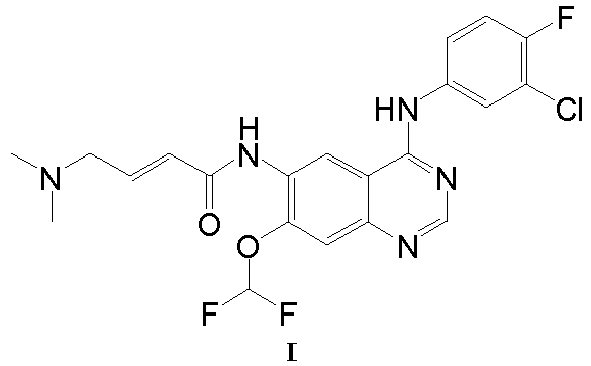
- Patent document CN102838550A discloses a quinazolin crotyl compound-a compound of formula I
- the compound of formula I has been proved to be the ideal and highly effective dual irreversible tyrosine kinase inhibitor, it can competitively bind to ATP by acting on the intracellular part of EGFR, inhibit the activation and phosphorylation of kinase, and block EGFR tyrosine kinase ATP binding sites so as to achieve the purpose of specific inhibition of EGFR.
- the compound can be used for the treatment or prevention of various indications related to EGFR and HER2 kinase function, comprising but are not limited to breast cancer, ovarian cancer, gastrointestinal cancer, esophageal cancer, lung cancer, head and neck squamous cell carcinoma, pancreatic cancer, epidermal squamous carcinoma, prostate cancer, glioma and nasopharyngeal carcinoma and other malignant tumor diseases.
- the example 1 of the above-mentioned patent document also discloses a method for the synthesis of the compound of the above formula I, which provides a free base of the compound of formula I.
- the inventors have found that the long-term storage stability and the water solubility of the free base are poor, thus the free base is not ideal for use as drug substance for drug product preparations.
- the inventors prepared a variety of crystal forms of various salts of the compound of formula I and studied the physicochemical properties and stabilities of these crystal forms.
- the inventors have found that the crystal form K, crystal form G, crystal form E and crystal form F of the dimaleate of the compound of formula I have unexpectedly good effects in terms of storage stability and water solubility, in which the crystal form K and the crystal form F are especially suitable for use as drug substance for drug product preparations.
- the present invention provides a crystal form K of the dimaleate of the compound of formula I,
- the X-ray powder diffraction pattern (CuKa radiation) of the crystal form K has characteristic peaks at the following diffraction angles 2 ⁇ : 5.8 ⁇ 0.2°, 12.5 ⁇ 0.2°, 14.8 ⁇ 0.2°, 18.9 ⁇ 0.2°, 21.7 ⁇ 0.2°, 23.6 ⁇ 0.2°, 24.9 ⁇ 0.2° and 25.8 ⁇ 0.2°.
- the X-ray powder diffraction pattern (CuKa radiation) of the crystal form K has characteristic peaks at the above diffraction angles 2 ⁇ , and the relative intensities are as follows: Diffraction angles 2 ⁇ Relative intensities (%) 5.8 ⁇ 0.2° 53.8 12.5 ⁇ 0.2° 83.9 14.8 ⁇ 0.2° 69.4 18.9 ⁇ 0.2° 86.1 21.7 ⁇ 0.2° 100.0 23.6 ⁇ 0.2° 80.0 24.9 ⁇ 0.2° 90.0 25.8 ⁇ 0.2° 77.2.
- the X-ray powder diffraction pattern (CuK ⁇ radiation) of the crystal form K of the dimaleate of the compound of formula I further has characteristic peaks at the following diffraction angles 2 ⁇ : 17.4 ⁇ 0.2°, 18.0 ⁇ 0.2°, 20.3 ⁇ 0.2°, 24.3 ⁇ 0.2°, 26.4 ⁇ 0.2°, 27.3 ⁇ 0.2°, 28.3 ⁇ 0.2° and 31.7 ⁇ 0.2°.
- the X-ray powder diffraction pattern (CuK ⁇ radiation) of the crystal form K of the dimaleate of the compound of formula I has characteristic peaks at the above diffraction angles 2 ⁇ , and the relative intensities are as follows: Diffraction angles 2 ⁇ Relative intensities (%) 17.4 ⁇ 0.2° 43.0 18.0 ⁇ 0.2° 61.0 20.3 ⁇ 0.2° 44.2 24.3 ⁇ 0.2° 44.3 26.4 ⁇ 0.2° 40.6 27.3 ⁇ 0.2° 59.3 28.3 ⁇ 0.2° 53.7 31.7 ⁇ 0.2° 43.7.
- the X-ray powder diffraction pattern (CuKa radiation) of the crystal form K of the dimaleate of the compound of formula I further has characteristic peaks at the following diffraction angles 2 ⁇ : 21.1 ⁇ 0.2°, 22.7 ⁇ 0.2°, 29.2 ⁇ 0.2°, 30.3 ⁇ 0.2°, 32.7 ⁇ 0.2°, 33.1 ⁇ 0.2°, 36.5 ⁇ 0.2° and 38.3 ⁇ 0.2°.
- the X-ray powder diffraction pattern (CuK ⁇ radiation) of the crystal form K of the dimaleate of the compound of formula I has characteristic peaks at the above diffraction angles 2 ⁇ , and the relative intensities are as follows: Diffraction angles 2 ⁇ Relative intensities (%) 21.1 ⁇ 0.2° 23.3 22.7 ⁇ 0.2° 40.0 29.2 ⁇ 0.2° 28.9 30.3 ⁇ 0.2° 17.7 32.7 ⁇ 0.2° 30.7 33.1 ⁇ 0.2° 38.9 36.5 ⁇ 0.2° 17.1 38.3 ⁇ 0.2° 27.1.
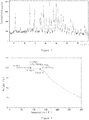
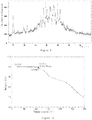
- the crystal form K of the dimaleate of the compound of formula I has an X-ray powder diffraction pattern substantially shown as Figure 3 .
- the melting point of the crystal form K is 109.4 ⁇ 2°C.
- crystal form K of the present invention shows an absorption peak in the thermogram determined by differential scanning calorimetry (DSC), and the position of the absorption peak is at 127 ⁇ 2°C.
- the crystal form K of the dimaleate of the compound of formula I has a thermogravimetric analysis (TGA) thermogram substantially shown as Figure 4 .
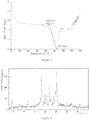
- crystal form K of the dimaleate of the compound of formula I has a differential thermal scanning (DSC) thermogram substantially shown as Figure 5 .
- the present invention also provides a preparation method for the crystal form K of the dimaleate of the compound of formula I, comprising the following steps:
- the molar ratio of the free base of the compound of formula I to the maleic acid is 1 :(1.95-2.05), preferably 1:2.
- the amount of maleic acid is the sum of the amounts of maleic acid used in step (2) and step (3).
- step (1) the mixture is preferably heated to 45-55°C.
- the concentration of the free base of the compound of formula I is from 0.5 to 1.5g/mL in the mixture of the free base of the compound of formula I and ethyl acetate in step (1).
- step (2) the ethyl acetate solution of maleic acid is added dropwise.
- the concentrations of the ethyl acetate solution of maleic acid in steps (2) and (3) may be the same or different and the concentrations are 0.05 to 0.5 mol/L.
- the volume ratio of the deionized water to ethyl acetate is (0.01-0.02): 1.
- the ethyl acetate herein includes the total amount of ethyl acetate used in steps (1) to (3).
- the addition rate of the ethyl acetate solution of maleic acid is preferably 0.5 to 2 mL/min.
- the solution may be added in any suitable manner, for example through a syringe.
- the heating temperature is 40-60°C, and the stirring time is 10 to 20 hours.
- the temperature is preferably cooled to 5-30°C, more preferably to room temperature.
- the separation may employ conventional separation methods in organic chemistry, such as filtration, centrifugation, and the like.
- the present invention also provides a crystal form E of the dimaleate of the compound of formula I.
- the X-ray powder diffraction pattern (CuK ⁇ radiation) of the crystal form E has characteristic peaks at the following diffraction angles 2 ⁇ : 4.5 ⁇ 0.2°, 12.0 ⁇ 0.2°, 18.2 ⁇ 0.2°, 19.8 ⁇ 0.2°, 20.6 ⁇ 0.2°, 21.9 ⁇ 0.2°, 24.7 ⁇ 0.2°, and 25.3 ⁇ 0.2°.
- the relative intensities of the characteristic peaks at the above diffraction angles 2 ⁇ are as follows: Diffraction angles 2 ⁇ Relative intensities (%) 4.5 ⁇ 0.2° 26.3 12.0 ⁇ 0.2° 14.1 18.2 ⁇ 0.2° 82.3 19.8 ⁇ 0.2° 31.2 20.6 ⁇ 0.2° 27.7 21.9 ⁇ 0.2° 50.8 24.7 ⁇ 0.2° 34.5 25.3 ⁇ 0.2° 100.0.
- the crystal form E of the dimaleate of the compound of formula I has an X-ray powder diffraction pattern substantially shown as Figure 6 .
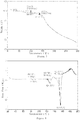
- the crystal form E of the dimaleate of the compound of formula I has a thermogravimetric analysis (TGA) thermogram substantially shown as Figure 7 .
- the crystal form E of the dimaleate of the compound of formula I has a differential thermal scanning (DSC) thermogram substantially shown as Figure 8 .
- the present invention also provides a preparation method for the crystal form E, comprising the following steps:
- the present invention also provides a crystal form F of the dimaleate of the compound of formula I.
- the X-ray powder diffraction pattern (CuK ⁇ radiation) of the crystal form F has characteristic peaks at the following diffraction angles 2 ⁇ : 5.1 ⁇ 0.2°, 11.5 ⁇ 0.2°, 17.5 ⁇ 0.2°, 18.7 ⁇ 0.2°, 19.7 ⁇ 0.2°, 23.3 ⁇ 0.2°, 25.0 ⁇ 0.2°, and 26.2 ⁇ 0.2°.
- the relative intensities of the characteristic peaks at the above diffraction angles 2 ⁇ are as follows: Diffraction angles 2 ⁇ Relative intensities (%) 5.1 ⁇ 0.2° 100.0 11.5 ⁇ 0.2° 20.5 17.5 ⁇ 0.2° 14.2 18.7 ⁇ 0.2° 42.8 19.7 ⁇ 0.2° 22.5 23.3 ⁇ 0.2° 31.0 25.0 ⁇ 0.2° 44.6 26.2 ⁇ 0.2° 42.1.
- the crystal form F of the dimaleate of the compound of formula I has an X-ray powder diffraction pattern substantially shown as Figure 9 .
- the crystal form F of the dimaleate of the compound of formula I has a thermogravimetric analysis (TGA) thermogram substantially shown as Figure 10 .
- TGA thermogravimetric analysis
- DSC differential thermal scanning
- the present invention also provides a preparation method for the crystal form F, comprising adding crystal form E into an alcoholic solvent, stirring the obtained mixture, volatilizing the solvent or adding anti-solvent to obtain crystal form F.
- alcoholic solvent is preferably ethanol.
- the present invention also provides a crystal form G of the dimaleate of the compound of formula I.
- the X-ray powder diffraction pattern (CuK ⁇ radiation) of the crystal form G has characteristic peaks at the following diffraction angles 2 ⁇ : 4.5 ⁇ 0.2°, 10.1 ⁇ 0.2°, 15.1 ⁇ 0.2°, 18.5 ⁇ 0.2°, 25.8 ⁇ 0.2°.
- the relative intensities of the characteristic peaks at the above diffraction angles 2 ⁇ are as follows: Diffraction angles 2 ⁇ Relative intensities (%) 4.5 ⁇ 0.2° 28.8 10.1 ⁇ 0.2° 19.5 15.1 ⁇ 0.2° 13.2 18.5 ⁇ 0.2° 38.1 25.8 ⁇ 0.2° 100.0.
- the X-ray powder diffraction pattern (CuK ⁇ radiation) of the crystal form G further has characteristic peaks at the following diffraction angles 2 ⁇ : 21.4 ⁇ 0.2° and 27.4 ⁇ 0.2°.
- the relative intensities at the above-described characteristic peaks are: 21.4 ⁇ 0.2° 1.21 27.4 ⁇ 0.2° 3.5
- the crystal form G of the dimaleate of the compound of formula I has an X-ray powder diffraction pattern substantially shown as Figure 12 .
- the crystal form G of the dimaleate of the compound of formula I has a thermogravimetric analysis (TGA) thermogram substantially shown as Figure 13 .
- TGA thermogravimetric analysis
- DSC differential thermal scanning
- the present invention also provides a preparation method for the crystal form G, comprising adding crystal form E into a ketone solvent, stirring the obtained mixture, volatilizing the solvent or adding anti-solvent to obtain crystal form G.
- ketone solvent is preferably acetone.
- the relative intensity values of the characteristic peaks of the crystal form K, the crystal form E, the crystal form F, and the crystal form G are only measured in some embodiments of the present invention and are not absolute. A person skilled in the field will understand that due to preferred orientation, the relative intensity of the same crystal form will vary under different test conditions (e.g. measuring instruments, methods, operations, etc.).
- the relative intensities of the characteristic peaks of the above crystal forms may fluctuate within a certain range, for example within the range of ⁇ 10%. In other cases, the relative intensity values of the characteristic peaks of the above crystal form can fluctuate in a wider range.
- the crystal form K, crystal form E, crystal form F and crystal form G of the present invention are substantially pure crystals, i.e. crystals which are substantially free of other crystal forms.
- the present invention also provides a composition comprising at least one of the crystal form K, crystal form G, crystal form E or crystal form F of the dimaleate of the compound of formula I.
- the present invention also provides the use of the crystal form K, crystal form G, crystal form E or crystal form F of the dimaleate of the compound of formula I in preparation of a medicament for the prevention or treatment of indications associated with EGFR and HER2 kinase function, including but are not limited to breast cancer, ovarian cancer, gastrointestinal cancer, esophageal cancer, lung cancer, head and neck squamous cell carcinoma, pancreatic cancer, epidermal squamous carcinoma, prostate cancer, glioma and nasopharyngeal cancer and other malignant tumor diseases.
- the crystal form K, crystal form G, crystal form E or crystal form F of the dimaleate of the compound of formula I of the present invention have excellent storage stability and solubility, and are more suitable for use as drug substance for drug product preparation.
- the XRPD of the crystal form was determined using a PANalytical Empyrean X-ray powder diffraction analyzer, the parameters are summarized in Table 1.
- Table 1 Reflection parameters Cu, k ⁇ , X-ray K ⁇ 1 ( ⁇ ): 1.540598; K ⁇ 2 ( ⁇ ): 1.544426 K ⁇ 2/K ⁇ 1 intensity ratio: 0.50 X-ray tube setting 45 kV, 40 mA Divergence slit Automatic Monochromator Non Scanning model Continuous Scanning range(°2TH) 3° ⁇ 40° Scanning step length(°2TH) 0.017 Scanning time (min) About 4 min
- the DSC thermograms were collected by TA Q200 and TA Q2000 differential scanning calorimeters.
- the TGA thermograms were collected by TA Q500 and TA Q5000 thermogravimetric analyzers.
- the scanning parameters are summarized in Table 2.
- Table 2 TGA DSC Sample plate Platinum pan, open Aluminum pan, with a cover pressed on the pan Temperature range (°C) 30-300°C 25-250°C Scanning speed (°C /min) 10 10 Shield gas Nitrogen Nitrogen
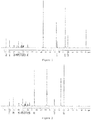
- the free base of the compound of formula I and the obtained crystal form K were subjected to a nuclear magnetic test, and the solvent was MeOD, the NMR spectra as shown in Figures 1 and 2 , respectively. From the results of liquid nuclear magnetic resonance, the chemical shift of the two hydrogen atoms on the vinyl group of maleic acid was about 6.3 ppm, the integral area was defined as 1.0, the chemical shift of one H on the free base was about 8.6 ppm, the integral area was 0.25, and the stoichiometric ratio of the hydrogen of the free base to the hydrogen of the vinyl group on maleic acid was 1:4.
- the crystal form K was subjected to X-ray powder diffraction analysis (XRPD), thermogravimetric analysis (TGA) and differential thermal analysis (DSC). The experimental results are shown in Figures 3-5 .
- TGA showed that the crystal form K had two steps of weight loss, the weight losses were 0.3% and 1.9%, respectively.
- the crystal form E was subjected to a nuclear magnetic test, the NMR spectrum of the crystal form E was similar to the NMR spectrum of the crystal form K of example 1, proving that the crystal form E was the dimaleate of the compound of formula I.
- the crystal form F was subjected to a nuclear magnetic test, the NMR spectrum of the crystal form F was similar to the NMR spectrum of the crystal form K of example 1, proving that the crystal form F was the dimaleate of the compound of formula I.
- the crystal form G was subjected to a nuclear magnetic test, the NMR spectrum of the crystal form G was similar to the NMR spectrum of the crystal form K of example 1, proving that the crystal form G was the dimaleate of the compound of formula I.
- XRPD X-ray powder diffraction analysis
- TGA thermogravimetric analysis
- DSC differential thermal analysis
- Test example 1 Storage stability test of the free base, the crystal form K, and the crystal form F of the compound of formula I
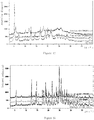
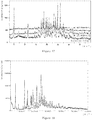
- the XRPD patterns of the crystal form K and crystal form F are basically the same, as shown in Figures 16 and 17 , respectively, showing that the crystal form K and the crystal form F are stable for at least one week under the conditions of 25°C/60% R.H. and 40°C/75% R.H.
- the XRPD pattern was basically the same, as shown in Figure 18 , indicating that the crystal form K has good physical and chemical stability.
- Test Example 2 The first set of comparative tests of the competition of stabilities between the crystal form K and the crystal form F
- Water activity Solvent water Crystal form 1 0.00 IPA Crystal form F 2 0.15 IPA:H 2 O 99:1 Crystal form K 3 0.39 IPA:H 2 O 24:1 Crystal form K 4 0.60 ACN:H 2 O 19:1 Crystal form K 5 0.80 ACN:H 2 O 9:1 Crystal form K
- Test Example 3 The second set of comparative tests of the competition of stabilities between the crystal form K and the crystal form F
- Crystal form F Approximately 10 mg of crystal form F was weighed and about 0.1 mg crystal form K was added thereto, they were mixed under oscillation. Then two samples were placed in different environments for 10 days and were subjected to XRPD test respectively. The results are summarized in Table 5. Table 5 Sample No. Crystal form F (mg) Crystal form K (mg) Temperature (°C) Humidity (%R.H) Time (day) Crystal form 1 7.89 0.08 25 60 10 Crystal form F 2 12.016 0.12 40 75 10 Crystal form K
- the crystal form F when there's crystal form K, the crystal form F was converted to the crystal form K, i.e. at this time, the crystal form K has better thermodynamic stability than the crystal form F.
- Test Example 4 Comparative test of the storage stability between the crystal form K and the crystal form G
- the crystal form G was converted to crystal form K under the condition of room temperature. Therefore, under room temperature, the crystal form K was thermodynamically more stable than the crystal form G in water.
- FaSSIF and FeSSIF were prepared according to the method described in the literature: Study of a Standardized Taurocholate-Lecithin Powder for Preparing the Biorelevant Media FeSSIF and FaSSIF ( Kloefer, B., van Hoogevest, P., Moloney, R., Kuentz, M., Leigh, M.L., & Dressman, J. (2010). Dissolution Technologies, Aug. 17(3), 6-14 .
- SGF was prepared according to the method described in the literature Albendazole Generics-A Comparative In Vitro Study ( Galia E., Horton, J and Dressman J. (1999) Pharmaceutical Research, 16 (12), 1871-1975 ). The test results are summarized in Table 6. Table 6 Medium pH value Solubility (mg/mL) Free base Crystal form K Crystal form F Water 7.4 ⁇ 0.0025 >10.02 >9.81 FaSSIF 6.5 0.03 8.36 2.44 FeSSIF 5.0 0.10 1.24 0.57 SGF 1.8 8.37 >9.95 >10.65
Landscapes
- Chemical & Material Sciences (AREA)
- Organic Chemistry (AREA)
- Health & Medical Sciences (AREA)
- General Health & Medical Sciences (AREA)
- Veterinary Medicine (AREA)
- Pharmacology & Pharmacy (AREA)
- Life Sciences & Earth Sciences (AREA)
- Animal Behavior & Ethology (AREA)
- Medicinal Chemistry (AREA)
- Public Health (AREA)
- Chemical Kinetics & Catalysis (AREA)
- General Chemical & Material Sciences (AREA)
- Nuclear Medicine, Radiotherapy & Molecular Imaging (AREA)
- Epidemiology (AREA)
- Pharmaceuticals Containing Other Organic And Inorganic Compounds (AREA)
- Plural Heterocyclic Compounds (AREA)
- Organic Low-Molecular-Weight Compounds And Preparation Thereof (AREA)
Description
- The present invention relates to the crystals of quinazolin crotyl compound dimaleate and preparation methods and uses thereof.
- Patent document
CN102838550A discloses a quinazolin crotyl compound-a compound of formula I,
- The compound of formula I has been proved to be the ideal and highly effective dual irreversible tyrosine kinase inhibitor, it can competitively bind to ATP by acting on the intracellular part of EGFR, inhibit the activation and phosphorylation of kinase, and block EGFR tyrosine kinase ATP binding sites so as to achieve the purpose of specific inhibition of EGFR. The compound can be used for the treatment or prevention of various indications related to EGFR and HER2 kinase function, comprising but are not limited to breast cancer, ovarian cancer, gastrointestinal cancer, esophageal cancer, lung cancer, head and neck squamous cell carcinoma, pancreatic cancer, epidermal squamous carcinoma, prostate cancer, glioma and nasopharyngeal carcinoma and other malignant tumor diseases.
- The example 1 of the above-mentioned patent document also discloses a method for the synthesis of the compound of the above formula I, which provides a free base of the compound of formula I. The inventors have found that the long-term storage stability and the water solubility of the free base are poor, thus the free base is not ideal for use as drug substance for drug product preparations.
- Accordingly, there is a need for drug substance of the compound of formula I having better physical properties and is suitable for use in pharmaceutical applications.
- The inventors prepared a variety of crystal forms of various salts of the compound of formula I and studied the physicochemical properties and stabilities of these crystal forms. The inventors have found that the crystal form K, crystal form G, crystal form E and crystal form F of the dimaleate of the compound of formula I have unexpectedly good effects in terms of storage stability and water solubility, in which the crystal form K and the crystal form F are especially suitable for use as drug substance for drug product preparations.
- Accordingly, it is an object of the present invention to provide a crystal form K, crystal form G, crystal form E and crystal form F of the dimaleate of the compound of formula I and preparation methods and uses thereof.
- The present invention provides a crystal form K of the dimaleate of the compound of formula I,
- The X-ray powder diffraction pattern (CuKa radiation) of the crystal form K has characteristic peaks at the following diffraction angles 2θ: 5.8±0.2°, 12.5±0.2°, 14.8±0.2°, 18.9±0.2°, 21.7±0.2°, 23.6±0.2°, 24.9±0.2° and 25.8±0.2°.
- Preferably, the X-ray powder diffraction pattern (CuKa radiation) of the crystal form K has characteristic peaks at the above diffraction angles 2θ, and the relative intensities are as follows:
Diffraction angles 2θ Relative intensities (%) 5.8±0.2° 53.8 12.5±0.2° 83.9 14.8±0.2° 69.4 18.9±0.2° 86.1 21.7±0.2° 100.0 23.6±0.2° 80.0 24.9±0.2° 90.0 25.8±0.2° 77.2. - Preferably, the X-ray powder diffraction pattern (CuKα radiation) of the crystal form K of the dimaleate of the compound of formula I further has characteristic peaks at the following diffraction angles 2θ: 17.4±0.2°, 18.0±0.2°, 20.3±0.2°, 24.3±0.2°, 26.4±0.2°, 27.3±0.2°, 28.3±0.2° and 31.7±0.2°.
- Preferably, the X-ray powder diffraction pattern (CuKα radiation) of the crystal form K of the dimaleate of the compound of formula I has characteristic peaks at the above diffraction angles 2θ, and the relative intensities are as follows:
Diffraction angles 2θ Relative intensities (%) 17.4±0.2° 43.0 18.0±0.2° 61.0 20.3±0.2° 44.2 24.3±0.2° 44.3 26.4±0.2° 40.6 27.3±0.2° 59.3 28.3±0.2° 53.7 31.7±0.2° 43.7. - Preferably, the X-ray powder diffraction pattern (CuKa radiation) of the crystal form K of the dimaleate of the compound of formula I further has characteristic peaks at the following diffraction angles 2θ: 21.1±0.2°, 22.7±0.2°, 29.2±0.2°, 30.3±0.2°, 32.7±0.2°, 33.1±0.2°, 36.5±0.2° and 38.3±0.2°.
- Preferably, the X-ray powder diffraction pattern (CuKα radiation) of the crystal form K of the dimaleate of the compound of formula I has characteristic peaks at the above diffraction angles 2θ, and the relative intensities are as follows:
Diffraction angles 2θ Relative intensities (%) 21.1±0.2° 23.3 22.7±0.2° 40.0 29.2±0.2° 28.9 30.3±0.2° 17.7 32.7±0.2° 30.7 33.1±0.2° 38.9 36.5±0.2° 17.1 38.3±0.2° 27.1. - Unrestrictively, the crystal form K of the dimaleate of the compound of formula I has an X-ray powder diffraction pattern substantially shown as
Figure 3 . - Further, the melting point of the crystal form K is 109.4±2°C.
- Further, the crystal form K of the present invention shows an absorption peak in the thermogram determined by differential scanning calorimetry (DSC), and the position of the absorption peak is at 127±2°C.
- Unrestrictively, the crystal form K of the dimaleate of the compound of formula I has a thermogravimetric analysis (TGA) thermogram substantially shown as
Figure 4 . - Unrestrictively, the crystal form K of the dimaleate of the compound of formula I has a differential thermal scanning (DSC) thermogram substantially shown as
Figure 5 . - The present invention also provides a preparation method for the crystal form K of the dimaleate of the compound of formula I, comprising the following steps:
- (1) mixing the free base of the compound of formula I with ethyl acetate, and heating the mixture to 40-60°C;
- (2) slowly adding the ethyl acetate solution of maleic acid to the mixture obtained in the step (1) until precipitation appears, adding deionized water;
- (3) adding the ethyl acetate solution of maleic acid to the reaction system obtained in the step (2), heating and stirring the newly obtained system, cooling and crystallizing, separating the crystals to obtain said crystal form K.
- Wherein the free base of the compound of formula I can be synthesized according to an existing method, for example, the method disclosed in example 1 of patent document
CN 102838550A . - In the method of the present invention, the molar ratio of the free base of the compound of formula I to the maleic acid is 1 :(1.95-2.05), preferably 1:2. Wherein the amount of maleic acid is the sum of the amounts of maleic acid used in step (2) and step (3).
- In step (1), the mixture is preferably heated to 45-55°C.
- Preferably, the concentration of the free base of the compound of formula I is from 0.5 to 1.5g/mL in the mixture of the free base of the compound of formula I and ethyl acetate in step (1).
- Preferably, in step (2), the ethyl acetate solution of maleic acid is added dropwise.
- Preferably, the concentrations of the ethyl acetate solution of maleic acid in steps (2) and (3) may be the same or different and the concentrations are 0.05 to 0.5 mol/L.
- In the method of the present invention, the volume ratio of the deionized water to ethyl acetate is (0.01-0.02): 1. The ethyl acetate herein includes the total amount of ethyl acetate used in steps (1) to (3).
- In step (3), the addition rate of the ethyl acetate solution of maleic acid is preferably 0.5 to 2 mL/min. The solution may be added in any suitable manner, for example through a syringe. Preferably, in step (3), the heating temperature is 40-60°C, and the stirring time is 10 to 20 hours. Preferably, in step (3), the temperature is preferably cooled to 5-30°C, more preferably to room temperature.
- In step (3), the separation may employ conventional separation methods in organic chemistry, such as filtration, centrifugation, and the like.
- The present invention also provides a crystal form E of the dimaleate of the compound of formula I.
- The X-ray powder diffraction pattern (CuKα radiation) of the crystal form E has characteristic peaks at the following diffraction angles 2θ: 4.5±0.2°, 12.0±0.2°, 18.2±0.2°, 19.8±0.2°, 20.6±0.2°, 21.9±0.2°, 24.7±0.2°, and 25.3±0.2°.
- Preferably, for the X-ray powder diffraction pattern (CuKα radiation) of the crystal form E, the relative intensities of the characteristic peaks at the above diffraction angles 2θ are as follows:
Diffraction angles 2θ Relative intensities (%) 4.5±0.2° 26.3 12.0±0.2° 14.1 18.2±0.2° 82.3 19.8±0.2° 31.2 20.6±0.2° 27.7 21.9±0.2° 50.8 24.7±0.2° 34.5 25.3±0.2° 100.0. - Unrestrictively, the crystal form E of the dimaleate of the compound of formula I has an X-ray powder diffraction pattern substantially shown as
Figure 6 . - Unrestrictively, the crystal form E of the dimaleate of the compound of formula I has a thermogravimetric analysis (TGA) thermogram substantially shown as
Figure 7 . - Unrestrictively, the crystal form E of the dimaleate of the compound of formula I has a differential thermal scanning (DSC) thermogram substantially shown as
Figure 8 . - The present invention also provides a preparation method for the crystal form E, comprising the following steps:
- (1) mixing the compound of formula I with ethyl acetate, and stirring the mixture;
- (2) adding the ethyl acetate solution of maleic acid to the mixture obtained in the step (1), stirring the new mixture to obtain the crystal form E of the dimaleate of the compound of formula I.
- The present invention also provides a crystal form F of the dimaleate of the compound of formula I.
- The X-ray powder diffraction pattern (CuKα radiation) of the crystal form F has characteristic peaks at the following diffraction angles 2θ: 5.1±0.2°, 11.5±0.2°, 17.5±0.2°, 18.7±0.2°, 19.7±0.2°, 23.3±0.2°, 25.0±0.2°, and 26.2±0.2°.
- Preferably, for the X-ray powder diffraction pattern (CuKα radiation) of the crystal form F, the relative intensities of the characteristic peaks at the above diffraction angles 2θ are as follows:
Diffraction angles 2θ Relative intensities (%) 5.1±0.2° 100.0 11.5±0.2° 20.5 17.5±0.2° 14.2 18.7±0.2° 42.8 19.7±0.2° 22.5 23.3±0.2° 31.0 25.0±0.2° 44.6 26.2±0.2° 42.1. - Unrestrictively, the crystal form F of the dimaleate of the compound of formula I has an X-ray powder diffraction pattern substantially shown as
Figure 9 . - Unrestrictively, the crystal form F of the dimaleate of the compound of formula I has a thermogravimetric analysis (TGA) thermogram substantially shown as
Figure 10 . Unrestrictively, the crystal form F of the dimaleate of the compound of formula I has a differential thermal scanning (DSC) thermogram substantially shown asFigure 11 . - The present invention also provides a preparation method for the crystal form F, comprising adding crystal form E into an alcoholic solvent, stirring the obtained mixture, volatilizing the solvent or adding anti-solvent to obtain crystal form F. Above mentioned alcoholic solvent is preferably ethanol.
- The present invention also provides a crystal form G of the dimaleate of the compound of formula I.
- The X-ray powder diffraction pattern (CuKα radiation) of the crystal form G has characteristic peaks at the following diffraction angles 2θ: 4.5±0.2°, 10.1± 0.2°, 15.1±0.2°, 18.5±0.2°, 25.8±0.2°.
- Preferably, for the X-ray powder diffraction pattern (CuKα radiation) of the crystal form G, the relative intensities of the characteristic peaks at the above diffraction angles 2θ are as follows:
Diffraction angles 2θ Relative intensities (%) 4.5±0.2° 28.8 10.1±0.2° 19.5 15.1±0.2° 13.2 18.5±0.2° 38.1 25.8±0.2° 100.0. - The X-ray powder diffraction pattern (CuKα radiation) of the crystal form G further has characteristic peaks at the following diffraction angles 2θ: 21.4±0.2° and 27.4±0.2°.
- Preferably, for the X-ray powder diffraction pattern (CuKα radiation) of the crystal form G of the dimaleate of the compound of formula I, the relative intensities at the above-described characteristic peaks are:
21.4±0.2° 1.21 27.4±0.2° 3.5 - Unrestrictively, the crystal form G of the dimaleate of the compound of formula I has an X-ray powder diffraction pattern substantially shown as
Figure 12 . - Unrestrictively, the crystal form G of the dimaleate of the compound of formula I has a thermogravimetric analysis (TGA) thermogram substantially shown as
Figure 13 . Unrestrictively, the crystal form G of the dimaleate of the compound of formula I has a differential thermal scanning (DSC) thermogram substantially shown asFigure 14 . - The present invention also provides a preparation method for the crystal form G, comprising adding crystal form E into a ketone solvent, stirring the obtained mixture, volatilizing the solvent or adding anti-solvent to obtain crystal form G.
- Above mentioned ketone solvent is preferably acetone.
- It should be noted that the relative intensity values of the characteristic peaks of the crystal form K, the crystal form E, the crystal form F, and the crystal form G are only measured in some embodiments of the present invention and are not absolute. A person skilled in the field will understand that due to preferred orientation, the relative intensity of the same crystal form will vary under different test conditions (e.g. measuring instruments, methods, operations, etc.).
- The relative intensities of the characteristic peaks of the above crystal forms may fluctuate within a certain range, for example within the range of ± 10%. In other cases, the relative intensity values of the characteristic peaks of the above crystal form can fluctuate in a wider range.
- The crystal form K, crystal form E, crystal form F and crystal form G of the present invention are substantially pure crystals, i.e. crystals which are substantially free of other crystal forms.
- The present invention also provides a composition comprising at least one of the crystal form K, crystal form G, crystal form E or crystal form F of the dimaleate of the compound of formula I.
- The present invention also provides the use of the crystal form K, crystal form G, crystal form E or crystal form F of the dimaleate of the compound of formula I in preparation of a medicament for the prevention or treatment of indications associated with EGFR and HER2 kinase function, including but are not limited to breast cancer, ovarian cancer, gastrointestinal cancer, esophageal cancer, lung cancer, head and neck squamous cell carcinoma, pancreatic cancer, epidermal squamous carcinoma, prostate cancer, glioma and nasopharyngeal cancer and other malignant tumor diseases.
- Compared with the free base of the compound of formula I prepared with the current method and the other crystal forms of the compound of formula I obtained by the test of the applicant of the present invention, the crystal form K, crystal form G, crystal form E or crystal form F of the dimaleate of the compound of formula I of the present invention have excellent storage stability and solubility, and are more suitable for use as drug substance for drug product preparation.
-
-
Figure 1 is the NMR spectrum of the free base of the compound of formula I; -
Figure 2 is the NMR spectrum of the crystal form K; -
Figure 3 is the XRPD pattern of the crystal form K; -
Figure 4 is the TGA thermogram of the crystal form K; -
Figure 5 is the DSC thermogram of the crystal form K; -
Figure 6 is the XRPD pattern of the crystal form E; -
Figure 7 is the TGA thermogram of the crystal form E; -
Figure 8 is the DSC thermogram of the crystal form E; -
Figure 9 is the XRPD pattern of the crystal form F; -
Figure 10 is the TGA thermogram of the crystal form F; -
Figure 11 is the DSC thermogram of the crystal form F; -
Figure 12 is the XRPD pattern of the crystal form G; -
Figure 13 is the TGA thermogram of the crystal form G; -
Figure 14 is the DSC thermogram of the crystal form G; -
Figure 15 is the comparison chart of the XRPD patterns of the free base of the compound of formula I after preparation, after one week of storage under the condition of 25°C/60%R.H., after one week of storage under the condition of 40°C/75%R.H.; -
Figure 16 is the comparison chart of the XRPD patterns of the crystal form K of the compound of formula I after preparation, after one week of storage under the condition of 25°C/60%R.H., after one week of storage under the condition of 40°C/75%R.H.; -
Figure 17 is the comparison chart of the XRPD patterns of the crystal form F of the compound of formula I after preparation, after one week of storage under the condition of 25°C/60%R.H., after one week of storage under the condition of 40°C/75%R.H. ; -
Figure 18 is the XRPD pattern of the crystal form K of the compound of formula I after six months of storage under the condition of 40°C/75%R.H.; -
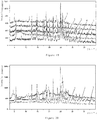
Figure 19 is the experiment result of the competition of stability between crystal form K and crystal form F of the compound of formula I in test example 2, wherein patterns 1-5 show the XRPD patterns of the samples numbered 1-5 in test example 2 respectively; -
Figure 20 is the experiment result of the competition of stability between crystal form K and crystal form G of the compound of formula I in test example 4, whereinpattern 1 is the XRPD pattern of the crystal form G,pattern 2 is the XRPD pattern of the crystal form K, andpattern 3 is the XRPD pattern of the crystal after the test of the competition of the crystal stability. - The technical solution of the present invention will be further illustrated with the combination of the examples. It should be understood that these examples are provided for illustrating the basic principle, the essential features and advantages of the present invention, the specific implementing conditions employed in the examples may be adjusted within the scope of the present field, and that the protection scope of the invention is not limited by the examples.
- In the following examples, the XRPD of the crystal form was determined using a PANalytical Empyrean X-ray powder diffraction analyzer, the parameters are summarized in Table 1.
Table 1 Reflection parameters Cu, kα, X-ray Kα1 (Å): 1.540598; Kα2 (Å): 1.544426 Kα2/Kα1 intensity ratio: 0.50 X-ray tube setting 45 kV, 40 mA Divergence slit Automatic Monochromator Non Scanning model Continuous Scanning range(°2TH) 3°∼40° Scanning step length(°2TH) 0.017 Scanning time (min) About 4 min - The DSC thermograms were collected by TA Q200 and TA Q2000 differential scanning calorimeters. The TGA thermograms were collected by TA Q500 and TA Q5000 thermogravimetric analyzers. The scanning parameters are summarized in Table 2.
Table 2 TGA DSC Sample plate Platinum pan, open Aluminum pan, with a cover pressed on the pan Temperature range (°C) 30-300°C 25-250°C Scanning speed (°C /min) 10 10 Shield gas Nitrogen Nitrogen - In the following examples, the free base of the compound of formula I was prepared according to the method described in example 1 of the patent document
CN 102838550A . - In the following examples, the conditions that are not specified are the conditions in conventional experiment.
- 13.5 g of the free base of the compound of formula I was weighed and was placed in a 500-mL three-necked flask, 15 mL of ethyl acetate was added, the mixture was mechanically stirred and was heated to 50°C. It can be observed that the solution was turbid, 0.2 mol/L of ethyl acetate solution of maleic acid was added dropwise until precipitation appeared (about 80 mL was added), then 3 mL of deionized water was added, then 0.2 mol/L of ethyl acetate solution of maleic acid was added with a syringe at a rate of 1 mL/min, about 112 mL was added, the mixture was stirred for 15 hours with the temperature kept at about 50°C, then the temperature was decreased naturally to room temperature, suction filtration was carried out and the obtained product was dried under vacuum at 35°C for 5 hours to obtain the crystal form K of the dimaleate of the compound of formula I with a HPLC purity of 99.3%.
- The free base of the compound of formula I and the obtained crystal form K were subjected to a nuclear magnetic test, and the solvent was MeOD, the NMR spectra as shown in
Figures 1 and 2 , respectively. From the results of liquid nuclear magnetic resonance, the chemical shift of the two hydrogen atoms on the vinyl group of maleic acid was about 6.3 ppm, the integral area was defined as 1.0, the chemical shift of one H on the free base was about 8.6 ppm, the integral area was 0.25, and the stoichiometric ratio of the hydrogen of the free base to the hydrogen of the vinyl group on maleic acid was 1:4. Since there were two hydrogen atoms on the vinyl group, the free base of the compound of formula I and the maleic acid formed a salt according to a stoichiometric ratio of 1:2, thus proving that the crystal form K was the dimaleate of the compound of formula I. - The crystal form K was subjected to X-ray powder diffraction analysis (XRPD), thermogravimetric analysis (TGA) and differential thermal analysis (DSC). The experimental results are shown in
Figures 3-5 . - DSC showed that the melting point of crystal form K was 109.48°C and an absorption peak appeared at 127 ± 2°C.
- TGA showed that the crystal form K had two steps of weight loss, the weight losses were 0.3% and 1.9%, respectively.
- 300.6 mg of the free base of the compound of formula I was added to a 20-mL glass vial, 4mL ethyl acetate was added thereto. The mixture was stirred at 50°C for 5 minutes. 6.6 mL of 0.2 mol/L of ethyl acetate solution of maleic acid was added thereto, the reaction was carried out under stirring at 50°C for 24 hours to obtain the crystal form E of the dimaleate of the compound of formula I.
- The crystal form E was subjected to a nuclear magnetic test, the NMR spectrum of the crystal form E was similar to the NMR spectrum of the crystal form K of example 1, proving that the crystal form E was the dimaleate of the compound of formula I.
- The experiment results of X-ray powder diffraction analysis (XRPD), thermogravimetric analysis (TGA) and differential thermal analysis (DSC) of crystal form E are shown in
Figures 6-8 . - 8.3 mg of the crystal form E of the dimaleate of the compound of formula I was added to a 3-mL glass vial, 0.5 mL ethanol was added, the mixture was heated to 60°C for the crystal to be completely dissolved to obtain a clear solution. The temperature of the obtained clear solution was quickly decreased to 5°C, the solid was separated out, centrifuged to obtain crystal form F.
- The crystal form F was subjected to a nuclear magnetic test, the NMR spectrum of the crystal form F was similar to the NMR spectrum of the crystal form K of example 1, proving that the crystal form F was the dimaleate of the compound of formula I.
- The experiment results of X-ray powder diffraction analysis (XRPD), thermogravimetric analysis (TGA) and differential thermal analysis (DSC) of the crystal form F are shown in
Figures 9-11 . - It can be known from the DSC thermogram and the TGA thermogram that the melting point of crystal form F was 155.6°C, the enthalpy value was 108.1 J/g, and the weight loss was 0.4%.
- 11.3 mg of the crystal form E of the dimaleate of the compound of formula I was added to a 20-mL glass vial, 1.9 mL acetone was added, the crystal was completely dissolved after oscillation, the anti-solvent n-heptane was added dropwise under stirring until there's solid separated out, the solid was centrifuged to obtain crystal form G.
- The crystal form G was subjected to a nuclear magnetic test, the NMR spectrum of the crystal form G was similar to the NMR spectrum of the crystal form K of example 1, proving that the crystal form G was the dimaleate of the compound of formula I.
- The X-ray powder diffraction analysis (XRPD), thermogravimetric analysis (TGA) and differential thermal analysis (DSC) of the crystal form G are shown in
Figures 12-14 . - After one week of storage of the free base of the compound of formula I under the conditions of 25°C/60% R.H. and 40°C/75% R.H., the XRPD patterns of the free base changed significantly (
Figure 15 ), showing that the crystal form of the free base of the compound of formula I was less stable and was not suitable as drug substance for drug product preparation. - After one week of storage of the crystal form K and the crystal form F under the conditions of 25°C/60% R.H. and 40°C/75% R.H., the XRPD patterns of the crystal form K and crystal form F are basically the same, as shown in
Figures 16 and17 , respectively, showing that the crystal form K and the crystal form F are stable for at least one week under the conditions of 25°C/60% R.H. and 40°C/75% R.H. - The above experiments showed that the crystal form K and the crystal form F of the compound of formula I have better physical stability than the free base of the compound of formula I.
- After one week of storage of the free base of the compound of formula I under the condition of 40°C/75% R.H., according to HPLC measurement, the chemical content decreased to 94.8% of the initial content, indicating that the chemical stability was poor.
- After one week of storage of the crystal form K, the crystal form E, the crystal form F and the crystal form G under the condition of 40°C/75% R.H., according to HPLC measurement, the chemical contents were stable, indicating that the four crystal forms have good chemical stability. The results are summarized in Table 3.
Table 3 Initial content 25°C/60%R.H. One week Chemical stability 40°C/75%R.H. One week Chemical stability Free base 100.0% 99.8% 94.8% Crystal form K 100.0% 99.9% 99.8% Crystal form E 100.0% 99.8% 99.5% Crystal form F 100.0% 99.8% 99.7% Crystal form G 100.0% 99.8% 99.6% - After 6 months of storage of the crystal form K under the condition of 40°C/75% R.H., the XRPD pattern was basically the same, as shown in
Figure 18 , indicating that the crystal form K has good physical and chemical stability. - Approximately 10 mg of crystal form K was weighed and was added to the saturated solutions (with different water activities) of crystal form K to form suspensions, then the crystal form F was added (about 10 mg). After 12 hours of stirring under room temperature, the solid was isolated by centrifugation and the XRPD thereof was tested. The results are summarized in Table 4 and
Figure 19 . It can be seen from the results that under room temperature, when the water activity was greater than or equal to 0.15, the crystal form K was thermodynamically more stable than the crystal form F.Table 4 Sample No. Water activity Solvent: water Crystal form 1 0.00 IPA Crystal form F 2 0.15 IPA:H2O 99:1 Crystal form K 3 0.39 IPA:H2O 24:1 Crystal form K 4 0.60 ACN:H2O 19:1 Crystal form K 5 0.80 ACN:H2O 9:1 Crystal form K - Approximately 10 mg of crystal form F was weighed and about 0.1 mg crystal form K was added thereto, they were mixed under oscillation. Then two samples were placed in different environments for 10 days and were subjected to XRPD test respectively. The results are summarized in Table 5.
Table 5 Sample No. Crystal form F (mg) Crystal form K (mg) Temperature (°C) Humidity (%R.H) Time (day) Crystal form 1 7.89 0.08 25 60 10 Crystal form F 2 12.016 0.12 40 75 10 Crystal form K - As can be seen from the results, under the condition of 40°C/75% R.H., when there's crystal form K, the crystal form F was converted to the crystal form K, i.e. at this time, the crystal form K has better thermodynamic stability than the crystal form F.
- Under the condition of 25°C/60% R.H., when there's crystal form K, the crystal form F did not change, indicating that the crystal form F has good dynamic stability under the condition of 25°C/60% R.H.
- Approximately 10 mg of crystal form K was weighed and was added to the saturated water solution of crystal form K to form a suspension, then the crystal form G was added (about 10 mg). After 12 hours of stirring under room temperature, the solid was separated by centrifugation and was subjected to XRPD test, the results are shown in
Figure 20 . - As can be seen from the results, the crystal form G was converted to crystal form K under the condition of room temperature. Therefore, under room temperature, the crystal form K was thermodynamically more stable than the crystal form G in water.
- The solubility of the free base, the crystal form K and the crystal form F of the compound of formula I under different pH conditions, in water, fasted state simulated intestinal fluid (FaSSIF), fed state simulated intestinal fluid (FeSSIF) and simulated gastric fluid (SGF) were tested. Wherein FaSSIF and FeSSIF were prepared according to the method described in the literature: Study of a Standardized Taurocholate-Lecithin Powder for Preparing the Biorelevant Media FeSSIF and FaSSIF (Kloefer, B., van Hoogevest, P., Moloney, R., Kuentz, M., Leigh, M.L., & Dressman, J. (2010). Dissolution Technologies, Aug. 17(3), 6-14. SGF was prepared according to the method described in the literature Albendazole Generics-A Comparative In Vitro Study (Galia E., Horton, J and Dressman J. (1999) Pharmaceutical Research, 16 (12), 1871-1975). The test results are summarized in Table 6.
Table 6 Medium pH value Solubility (mg/mL) Free base Crystal form K Crystal form F Water 7.4 <0.0025 >10.02 >9.81 FaSSIF 6.5 0.03 8.36 2.44 FeSSIF 5.0 0.10 1.24 0.57 SGF 1.8 8.37 >9.95 >10.65
Claims (18)
- A crystal form K of the dimaleate of the compound of formula I,

- The crystal form K according to claim 1, characterized in that the relative intensities of said characteristic peaks are:
diffraction angles 2θ relative intensities (%) 5.8±0.2° 53.8 12.5±0.2° 83.9 14.8±0.2° 69.4 18.9±0.2° 86.1 21.7±0.2° 100.0 23.6±0.2° 80.0 24.9±0.2° 90.0 25.8±0.2° 77.2. - The crystal form K according to claim 1 or 2, characterized in that the X-ray powder diffraction pattern (CuKα radiation) of said crystal form K further has characteristic peaks at the following diffraction angles 2θ: 17.4±0.2°, 18.0±0.2°, 20.3±0.2°, 24.3±0.2°, 26.4±0.2°, 27.3±0.2°, 28.3±0.2° and 31.7±0.2°.
- The crystal form K according to claim 3, characterized in that the relative intensities of the following characteristic peaks are:
diffraction angles 2θ relative intensities (%) 17.4±0.2° 43.0 18.0±0.2° 61.0 20.3±0.2° 44.2 24.3±0.2° 44.3 26.4±0.2° 40.6 27.3±0.2° 59.3 28.3±0.2° 53.7 31.7±0.2° 43.7 - The crystal form K according to claim 4, characterized in that the X-ray powder diffraction pattern (CuKα radiation) of said crystal form K further has characteristic peaks at the following diffraction angles 2θ: 21.1±0.2°, 22.7±0.2°, 29.2±0.2°, 30.3±0.2°, 32.7±0.2°, 33.1±0.2°, 36.5±0.2° and 38.3±0.2°.
- The crystal form K according to claim 5, characterized in that the relative intensities of the following characteristic peaks are:
diffraction angles 2θ relative intensities (%) 21.1±0.2° 23.3 22.7±0.2° 40.0 29.2±0.2° 28.9 30.3±0.2° 17.7 32.7±0.2° 30.7 33.1±0.2° 38.9 36.5±0.2° 17.1 38.3±0.2° 27.1. - A preparation method for the crystal form K according to any one of claims 1 to 6, comprising the following steps:(1) mixing the free base of the compound of formula I with ethyl acetate, and heating the mixture to 40-60°C;(2) slowly adding the ethyl acetate solution of maleic acid to the mixture obtained in the step (1) until precipitation appears, adding deionized water;(3) adding the ethyl acetate solution of maleic acid to the reaction system obtained in the step (2), heating and stirring the newly obtained system, cooling and crystallizing, separating the crystals to obtain said crystal form K.
- The preparation method according to claim 7, characterized in that the molar ratio of the compound of formula I to the maleic acid is 1:(1.95-2.05).
- The preparation method according to claim 8, characterized in that the volume ratio of the deionized water to ethyl acetate is (0.01-0.02): 1.
- The preparation method according to claim 9, characterized in that the concentration of the compound of formula I is from 0.5 to 1.5g/mL in the mixture of the compound of formula I and ethyl acetate in step (1), the concentrations of the ethyl acetate solution of maleic acid in steps (2) and (3) are 0.05 to 0.5 mol/L.
- A crystal form E of the dimaleate of the compound of formula I,

- The crystal form E according to claim 11, wherein the relative intensities of the characteristic peaks are:
diffraction angles 2θ relative intensities (%) 4.5±0.2° 26.3 12.0±0.2° 14.1 18.2±0.2° 82.3 19.8±0.2° 31.2 20.6±0.2° 27.7 21.9±0.2° 50.8 24.7±0.2° 34.5 25.3±0.2° 100.0. - A crystal form F of the dimaleate of the compound of formula I,

- The crystal form F according to claim 13, wherein the relative intensities of the characteristic peaks are:
diffraction angles 2θ relative intensities (%) 5.1±0.2° 100.0 11.5±0.2° 20.5 17.5±0.2° 14.2 18.7±0.2° 42.8 19.7±0.2° 22.5 23.3±0.2° 31.0 25.0±0.2° 44.6 26.2±0.2° 42.1. - A crystal form G of the dimaleate of the compound of formula I,

- The crystal form G according to claim 15, wherein the relative intensities of the characteristic peaks are:
diffraction angles 2θ relative intensities (%) 4.5±0.2° 28.8 10.1±0.2° 19.5 15.1±0.2° 13.2 18.5±0.2° 38.1 25.8±0.2° 100.0. - A composition comprising one or more of the crystal form K of the dimaleate of the compound of formula I according to any one of claims 1 to 6, the crystal form K of the dimaleate of the compound of formula I prepared according to the preparation method of any one of claims 7 to 10, the crystal form E of the dimaleate of the compound of formula I according to claim 11 or claim 12, the crystal form F of the dimaleate of the compound of formula I according to claim 13 or claim 14, or the crystal form G of the dimaleate of the compound of formula I according to claim 15 or claim 16.
- The crystal form K of the dimaleate of the compound of formula I according to any one of claims 1 to 6, the crystal form K of the dimaleate of the compound of formula I prepared according to the preparation method of any one of claims 7 to 10, the crystal form E of the dimaleate of the compound of formula I according to claim 11 or claim 12, the crystal form F of the dimaleate of the compound of formula I according to claim 13 or claim 14, or the crystal form G of the dimaleate of the compound of formula I according to claim 15 or claim 16 for use in the prevention or treatment of indications associated with EGFR and HER2 kinase function, wherein the indication associated with EGFR and HER2 kinase function is selected from one or more of breast cancer, ovarian cancer, gastrointestinal cancer, esophageal cancer, lung cancer, head and neck squamous cell carcinoma, pancreatic cancer, epidermal squamous carcinoma, prostate cancer, glioma and nasopharyngeal cancer.
Applications Claiming Priority (2)
| Application Number | Priority Date | Filing Date | Title |
|---|---|---|---|
| CN201510226922 | 2015-05-05 | ||
| PCT/CN2016/080878 WO2016177308A1 (en) | 2015-05-05 | 2016-05-03 | Quinazolin crotyl compound dimaleate crystals and preparation methods and uses thereof |
Publications (3)
| Publication Number | Publication Date |
|---|---|
| EP3293181A1 EP3293181A1 (en) | 2018-03-14 |
| EP3293181A4 EP3293181A4 (en) | 2018-12-19 |
| EP3293181B1 true EP3293181B1 (en) | 2019-08-14 |
Family
ID=56628990
Family Applications (1)
| Application Number | Title | Priority Date | Filing Date |
|---|---|---|---|
| EP16789302.3A Active EP3293181B1 (en) | 2015-05-05 | 2016-05-03 | Quinazolin crotyl compound dimaleate crystals and preparation methods and uses thereof |
Country Status (6)
| Country | Link |
|---|---|
| US (2) | US10065931B2 (en) |
| EP (1) | EP3293181B1 (en) |
| JP (1) | JP6752822B2 (en) |
| CN (1) | CN105859641B (en) |
| ES (1) | ES2745075T3 (en) |
| WO (1) | WO2016177308A1 (en) |
Families Citing this family (4)
| Publication number | Priority date | Publication date | Assignee | Title |
|---|---|---|---|---|
| CN105859641B (en) * | 2015-05-05 | 2018-11-16 | 杭州华东医药集团新药研究院有限公司 | The crystal and its preparation method and application of quinazoline crotonyl compounds 2-maleate |
| US12371415B2 (en) | 2018-04-08 | 2025-07-29 | Weishang (Shanghai) Bio-Pharmaceutical Co., Ltd. | Quinazoline derivative salt crystal form, preparation method and application |
| CN110693846B (en) * | 2018-07-10 | 2021-07-27 | 杭州华东医药集团新药研究院有限公司 | Mewatinib pharmaceutical composition and preparation method thereof |
| CN108853109B (en) * | 2018-07-10 | 2021-10-08 | 杭州华东医药集团新药研究院有限公司 | Myvatinib composition, related compounds and preparation method and use thereof |
Family Cites Families (8)
| Publication number | Priority date | Publication date | Assignee | Title |
|---|---|---|---|---|
| DE10349113A1 (en) * | 2003-10-17 | 2005-05-12 | Boehringer Ingelheim Pharma | Process for the preparation of aminocrotonyl compounds |
| AP2204A (en) * | 2004-05-06 | 2011-02-07 | Warner Lambert Co | 4-phenylamino-quinazolin-6-yl-amides. |
| CN102838590B (en) * | 2011-06-21 | 2014-07-09 | 苏州迈泰生物技术有限公司 | Amino quinazoline derivative and application thereof in preparation of antineoplastic drugs |
| US20150232457A1 (en) * | 2011-10-06 | 2015-08-20 | Ratiopharm Gmbh | Crystalline forms of afatinib di-maleate |
| MX362247B (en) * | 2013-03-06 | 2019-01-09 | Astrazeneca Ab | Quinazoline inhibitors of activating mutant forms of epidermal growth factor receptor. |
| CN107141261B (en) * | 2014-07-15 | 2020-05-05 | 杭州华东医药集团新药研究院有限公司 | Quinazoline compound, preparation method thereof and application thereof in preparation of tyrosine kinase inhibitor |
| CN105859641B (en) * | 2015-05-05 | 2018-11-16 | 杭州华东医药集团新药研究院有限公司 | The crystal and its preparation method and application of quinazoline crotonyl compounds 2-maleate |
| CN108853109B (en) * | 2018-07-10 | 2021-10-08 | 杭州华东医药集团新药研究院有限公司 | Myvatinib composition, related compounds and preparation method and use thereof |
-
2016
- 2016-04-29 CN CN201610286510.9A patent/CN105859641B/en active Active
- 2016-05-03 ES ES16789302T patent/ES2745075T3/en active Active
- 2016-05-03 EP EP16789302.3A patent/EP3293181B1/en active Active
- 2016-05-03 WO PCT/CN2016/080878 patent/WO2016177308A1/en not_active Ceased
- 2016-05-03 JP JP2017558379A patent/JP6752822B2/en not_active Expired - Fee Related
- 2016-05-03 US US15/571,582 patent/US10065931B2/en active Active
-
2018
- 2018-06-25 US US16/017,084 patent/US10640470B2/en not_active Expired - Fee Related
Non-Patent Citations (1)
| Title |
|---|
| None * |
Also Published As
| Publication number | Publication date |
|---|---|
| JP6752822B2 (en) | 2020-09-09 |
| US10065931B2 (en) | 2018-09-04 |
| JP2018515508A (en) | 2018-06-14 |
| US20180312472A1 (en) | 2018-11-01 |
| CN105859641A (en) | 2016-08-17 |
| US20180134668A1 (en) | 2018-05-17 |
| CN105859641B (en) | 2018-11-16 |
| US10640470B2 (en) | 2020-05-05 |
| WO2016177308A1 (en) | 2016-11-10 |
| EP3293181A4 (en) | 2018-12-19 |
| EP3293181A1 (en) | 2018-03-14 |
| ES2745075T3 (en) | 2020-02-27 |
Similar Documents
| Publication | Publication Date | Title |
|---|---|---|
| US10246418B2 (en) | Crystal form of lenvatinib methanesulfonate salt and preparation method thereof | |
| JP7710356B2 (en) | 5,10-Methylene-(6R)-tetrahydrofolic acid hemisulfate | |
| US10640470B2 (en) | Quinazolin crotyl compound dimaleate crystals and preparation methods and uses thereof | |
| CN110494423B (en) | Novel crystal form of lenvatinib mesylate and preparation method thereof | |
| NO335103B1 (en) | Compound, pharmaceutical composition containing the compound, use of the compound and method of preparation thereof | |
| JP2023544775A (en) | Racemic atropisomer of 7-chloro-6-fluoro-1-(2-isopropyl-4-methylpyridin-3-yl)pyrido[2,3-d]pyrimidine-2,4(1H,3H)-dione Process for oxidation and isolation | |
| EP4484430A1 (en) | Polymorph of jak tyrosine kinase inhibitor and preparation method therefor | |
| KR20120046069A (en) | Hydrate of 1-((2s)-2-amino-4-(2,4-bis(trifluoromethyl)-5,8-dihydropyrido(3,4-d)pyrimidin-7(6h)-yl)-4-oxobutyl)-5,5-difluoropiperidin-2-one tartrate | |
| EP1614686A1 (en) | Bromide and its crystal | |
| WO2015067224A1 (en) | Salts of 6-[2-(methylcarbamoyl)phenylsulfanyl]-3-e-[2-(pyridin-2-yl)ethanyl] indazole | |
| EP3322709B1 (en) | Crystalline forms of (3r)-3-cyclopentyl-3-[4-(7h-pyrrolo[2,3-d]pyrimidin-4-yl)pyrazol-1-yl]propanenitrile salts and preparation thereof | |
| EP3299360A1 (en) | Crystal forms of lenvatinib | |
| EP4293021A1 (en) | Salt of nitrogen-containing fused heterocyclic compound or crystal form thereof, and preparation method therefor, pharmaceutical composition thereof, and use thereof | |
| EP4678635A1 (en) | Crystal form of nirogacestat dihydrobromate, and preparation method therefor and use thereof | |
| CN104961681B (en) | The rich mucate and its crystal formation for Buddhist nun of card | |
| EP3604285B1 (en) | Highly stable crystalline form d1 of the eltrombopag monoethanolamine salt | |
| CN109020951B (en) | Naphthalimide derivatives containing trisubstituted cyanuric chloride and their synthesis methods and applications | |
| EP3461823B1 (en) | Pexidartinib hydrochloride crystal forms, preparation method therefor and use thereof | |
| US11261182B2 (en) | Crystal of pyrido[3,4-d]pyrimidine derivative or solvate thereof | |
| KR101763106B1 (en) | Novel Crystalline Form of Bortezomib and Preparation Method Thereof | |
| Gutiérrez et al. | Mebendazolium mesylate anhydride salt: rational design based on supramolecular assembly, synthesis, and solid-state characterization | |
| US10562855B2 (en) | Crystalline form of lenvantinib mesylate and process of preparation thereof | |
| KR20230026384A (en) | crystalline form of the compound | |
| EP3604284A1 (en) | Crystalline eltrombopag monoethanolamine salt form d | |
| EP4137494A1 (en) | Crystal form of thiofuran pyridazine compound, preparation method therefor and application thereof |
Legal Events
| Date | Code | Title | Description |
|---|---|---|---|
| STAA | Information on the status of an ep patent application or granted ep patent |
Free format text: STATUS: THE INTERNATIONAL PUBLICATION HAS BEEN MADE |
|
| PUAI | Public reference made under article 153(3) epc to a published international application that has entered the european phase |
Free format text: ORIGINAL CODE: 0009012 |
|
| STAA | Information on the status of an ep patent application or granted ep patent |
Free format text: STATUS: REQUEST FOR EXAMINATION WAS MADE |
|
| 17P | Request for examination filed |
Effective date: 20171201 |
|
| AK | Designated contracting states |
Kind code of ref document: A1 Designated state(s): AL AT BE BG CH CY CZ DE DK EE ES FI FR GB GR HR HU IE IS IT LI LT LU LV MC MK MT NL NO PL PT RO RS SE SI SK SM TR |
|
| AX | Request for extension of the european patent |
Extension state: BA ME |
|
| RIN1 | Information on inventor provided before grant (corrected) |
Inventor name: HUANG, XUEHUI Inventor name: LI, BANGLIANG Inventor name: LV, YUBIN Inventor name: YIN, JIANMING |
|
| DAV | Request for validation of the european patent (deleted) | ||
| DAX | Request for extension of the european patent (deleted) | ||
| RAP1 | Party data changed (applicant data changed or rights of an application transferred) |
Owner name: HANGZHOU HUADONG MEDICINE GROUP BIOPHARMACEUTICAL |
|
| A4 | Supplementary search report drawn up and despatched |
Effective date: 20181116 |
|
| RIC1 | Information provided on ipc code assigned before grant |
Ipc: A61P 35/00 20060101ALI20181112BHEP Ipc: A61K 31/517 20060101ALI20181112BHEP Ipc: C07D 239/94 20060101AFI20181112BHEP |
|
| GRAP | Despatch of communication of intention to grant a patent |
Free format text: ORIGINAL CODE: EPIDOSNIGR1 |
|
| STAA | Information on the status of an ep patent application or granted ep patent |
Free format text: STATUS: GRANT OF PATENT IS INTENDED |
|
| INTG | Intention to grant announced |
Effective date: 20190415 |
|
| GRAS | Grant fee paid |
Free format text: ORIGINAL CODE: EPIDOSNIGR3 |
|
| GRAA | (expected) grant |
Free format text: ORIGINAL CODE: 0009210 |
|
| STAA | Information on the status of an ep patent application or granted ep patent |
Free format text: STATUS: THE PATENT HAS BEEN GRANTED |
|
| AK | Designated contracting states |
Kind code of ref document: B1 Designated state(s): AL AT BE BG CH CY CZ DE DK EE ES FI FR GB GR HR HU IE IS IT LI LT LU LV MC MK MT NL NO PL PT RO RS SE SI SK SM TR |
|
| REG | Reference to a national code |
Ref country code: GB Ref legal event code: FG4D |
|
| REG | Reference to a national code |
Ref country code: CH Ref legal event code: EP Ref country code: AT Ref legal event code: REF Ref document number: 1166855 Country of ref document: AT Kind code of ref document: T Effective date: 20190815 |
|
| REG | Reference to a national code |
Ref country code: DE Ref legal event code: R096 Ref document number: 602016018729 Country of ref document: DE |
|
| REG | Reference to a national code |
Ref country code: IE Ref legal event code: FG4D |
|
| REG | Reference to a national code |
Ref country code: NL Ref legal event code: MP Effective date: 20190814 |
|
| REG | Reference to a national code |
Ref country code: LT Ref legal event code: MG4D |
|
| PG25 | Lapsed in a contracting state [announced via postgrant information from national office to epo] |
Ref country code: HR Free format text: LAPSE BECAUSE OF FAILURE TO SUBMIT A TRANSLATION OF THE DESCRIPTION OR TO PAY THE FEE WITHIN THE PRESCRIBED TIME-LIMIT Effective date: 20190814 Ref country code: BG Free format text: LAPSE BECAUSE OF FAILURE TO SUBMIT A TRANSLATION OF THE DESCRIPTION OR TO PAY THE FEE WITHIN THE PRESCRIBED TIME-LIMIT Effective date: 20191114 Ref country code: LT Free format text: LAPSE BECAUSE OF FAILURE TO SUBMIT A TRANSLATION OF THE DESCRIPTION OR TO PAY THE FEE WITHIN THE PRESCRIBED TIME-LIMIT Effective date: 20190814 Ref country code: NL Free format text: LAPSE BECAUSE OF FAILURE TO SUBMIT A TRANSLATION OF THE DESCRIPTION OR TO PAY THE FEE WITHIN THE PRESCRIBED TIME-LIMIT Effective date: 20190814 Ref country code: PT Free format text: LAPSE BECAUSE OF FAILURE TO SUBMIT A TRANSLATION OF THE DESCRIPTION OR TO PAY THE FEE WITHIN THE PRESCRIBED TIME-LIMIT Effective date: 20191216 Ref country code: FI Free format text: LAPSE BECAUSE OF FAILURE TO SUBMIT A TRANSLATION OF THE DESCRIPTION OR TO PAY THE FEE WITHIN THE PRESCRIBED TIME-LIMIT Effective date: 20190814 Ref country code: NO Free format text: LAPSE BECAUSE OF FAILURE TO SUBMIT A TRANSLATION OF THE DESCRIPTION OR TO PAY THE FEE WITHIN THE PRESCRIBED TIME-LIMIT Effective date: 20191114 Ref country code: SE Free format text: LAPSE BECAUSE OF FAILURE TO SUBMIT A TRANSLATION OF THE DESCRIPTION OR TO PAY THE FEE WITHIN THE PRESCRIBED TIME-LIMIT Effective date: 20190814 |
|
| REG | Reference to a national code |
Ref country code: AT Ref legal event code: MK05 Ref document number: 1166855 Country of ref document: AT Kind code of ref document: T Effective date: 20190814 |
|
| REG | Reference to a national code |
Ref country code: ES Ref legal event code: FG2A Ref document number: 2745075 Country of ref document: ES Kind code of ref document: T3 Effective date: 20200227 |
|
| PG25 | Lapsed in a contracting state [announced via postgrant information from national office to epo] |
Ref country code: IS Free format text: LAPSE BECAUSE OF FAILURE TO SUBMIT A TRANSLATION OF THE DESCRIPTION OR TO PAY THE FEE WITHIN THE PRESCRIBED TIME-LIMIT Effective date: 20191214 Ref country code: GR Free format text: LAPSE BECAUSE OF FAILURE TO SUBMIT A TRANSLATION OF THE DESCRIPTION OR TO PAY THE FEE WITHIN THE PRESCRIBED TIME-LIMIT Effective date: 20191115 Ref country code: RS Free format text: LAPSE BECAUSE OF FAILURE TO SUBMIT A TRANSLATION OF THE DESCRIPTION OR TO PAY THE FEE WITHIN THE PRESCRIBED TIME-LIMIT Effective date: 20190814 Ref country code: AL Free format text: LAPSE BECAUSE OF FAILURE TO SUBMIT A TRANSLATION OF THE DESCRIPTION OR TO PAY THE FEE WITHIN THE PRESCRIBED TIME-LIMIT Effective date: 20190814 Ref country code: LV Free format text: LAPSE BECAUSE OF FAILURE TO SUBMIT A TRANSLATION OF THE DESCRIPTION OR TO PAY THE FEE WITHIN THE PRESCRIBED TIME-LIMIT Effective date: 20190814 |
|
| PG25 | Lapsed in a contracting state [announced via postgrant information from national office to epo] |
Ref country code: TR Free format text: LAPSE BECAUSE OF FAILURE TO SUBMIT A TRANSLATION OF THE DESCRIPTION OR TO PAY THE FEE WITHIN THE PRESCRIBED TIME-LIMIT Effective date: 20190814 |
|
| PG25 | Lapsed in a contracting state [announced via postgrant information from national office to epo] |
Ref country code: EE Free format text: LAPSE BECAUSE OF FAILURE TO SUBMIT A TRANSLATION OF THE DESCRIPTION OR TO PAY THE FEE WITHIN THE PRESCRIBED TIME-LIMIT Effective date: 20190814 Ref country code: DK Free format text: LAPSE BECAUSE OF FAILURE TO SUBMIT A TRANSLATION OF THE DESCRIPTION OR TO PAY THE FEE WITHIN THE PRESCRIBED TIME-LIMIT Effective date: 20190814 Ref country code: AT Free format text: LAPSE BECAUSE OF FAILURE TO SUBMIT A TRANSLATION OF THE DESCRIPTION OR TO PAY THE FEE WITHIN THE PRESCRIBED TIME-LIMIT Effective date: 20190814 Ref country code: RO Free format text: LAPSE BECAUSE OF FAILURE TO SUBMIT A TRANSLATION OF THE DESCRIPTION OR TO PAY THE FEE WITHIN THE PRESCRIBED TIME-LIMIT Effective date: 20190814 Ref country code: PL Free format text: LAPSE BECAUSE OF FAILURE TO SUBMIT A TRANSLATION OF THE DESCRIPTION OR TO PAY THE FEE WITHIN THE PRESCRIBED TIME-LIMIT Effective date: 20190814 |
|
| PG25 | Lapsed in a contracting state [announced via postgrant information from national office to epo] |
Ref country code: IS Free format text: LAPSE BECAUSE OF FAILURE TO SUBMIT A TRANSLATION OF THE DESCRIPTION OR TO PAY THE FEE WITHIN THE PRESCRIBED TIME-LIMIT Effective date: 20200224 Ref country code: SK Free format text: LAPSE BECAUSE OF FAILURE TO SUBMIT A TRANSLATION OF THE DESCRIPTION OR TO PAY THE FEE WITHIN THE PRESCRIBED TIME-LIMIT Effective date: 20190814 Ref country code: CZ Free format text: LAPSE BECAUSE OF FAILURE TO SUBMIT A TRANSLATION OF THE DESCRIPTION OR TO PAY THE FEE WITHIN THE PRESCRIBED TIME-LIMIT Effective date: 20190814 Ref country code: SM Free format text: LAPSE BECAUSE OF FAILURE TO SUBMIT A TRANSLATION OF THE DESCRIPTION OR TO PAY THE FEE WITHIN THE PRESCRIBED TIME-LIMIT Effective date: 20190814 |
|
| REG | Reference to a national code |
Ref country code: DE Ref legal event code: R097 Ref document number: 602016018729 Country of ref document: DE |
|
| PLBE | No opposition filed within time limit |
Free format text: ORIGINAL CODE: 0009261 |
|
| STAA | Information on the status of an ep patent application or granted ep patent |
Free format text: STATUS: NO OPPOSITION FILED WITHIN TIME LIMIT |
|
| PG2D | Information on lapse in contracting state deleted |
Ref country code: IS |
|
| 26N | No opposition filed |
Effective date: 20200603 |
|
| PG25 | Lapsed in a contracting state [announced via postgrant information from national office to epo] |
Ref country code: SI Free format text: LAPSE BECAUSE OF FAILURE TO SUBMIT A TRANSLATION OF THE DESCRIPTION OR TO PAY THE FEE WITHIN THE PRESCRIBED TIME-LIMIT Effective date: 20190814 |
|
| PG25 | Lapsed in a contracting state [announced via postgrant information from national office to epo] |
Ref country code: CH Free format text: LAPSE BECAUSE OF NON-PAYMENT OF DUE FEES Effective date: 20200531 Ref country code: LI Free format text: LAPSE BECAUSE OF NON-PAYMENT OF DUE FEES Effective date: 20200531 Ref country code: MC Free format text: LAPSE BECAUSE OF FAILURE TO SUBMIT A TRANSLATION OF THE DESCRIPTION OR TO PAY THE FEE WITHIN THE PRESCRIBED TIME-LIMIT Effective date: 20190814 |
|
| REG | Reference to a national code |
Ref country code: DE Ref legal event code: R081 Ref document number: 602016018729 Country of ref document: DE Owner name: HANGZHOU BANGSHUN PHARMACEUTICAL CO., LTD., CN Free format text: FORMER OWNER: HANGZHOU HUADONG MEDICINE GROUP BIOPHARMACEUTICAL CO., LTD., HANGZHOU CITY, ZHEJIANG, CN |
|
| REG | Reference to a national code |
Ref country code: GB Ref legal event code: 732E Free format text: REGISTERED BETWEEN 20210218 AND 20210224 |
|
| REG | Reference to a national code |
Ref country code: BE Ref legal event code: MM Effective date: 20200531 |
|
| PG25 | Lapsed in a contracting state [announced via postgrant information from national office to epo] |
Ref country code: LU Free format text: LAPSE BECAUSE OF NON-PAYMENT OF DUE FEES Effective date: 20200503 |
|
| PG25 | Lapsed in a contracting state [announced via postgrant information from national office to epo] |
Ref country code: IE Free format text: LAPSE BECAUSE OF NON-PAYMENT OF DUE FEES Effective date: 20200503 |
|
| PG25 | Lapsed in a contracting state [announced via postgrant information from national office to epo] |
Ref country code: BE Free format text: LAPSE BECAUSE OF NON-PAYMENT OF DUE FEES Effective date: 20200531 |
|
| PG25 | Lapsed in a contracting state [announced via postgrant information from national office to epo] |
Ref country code: MT Free format text: LAPSE BECAUSE OF FAILURE TO SUBMIT A TRANSLATION OF THE DESCRIPTION OR TO PAY THE FEE WITHIN THE PRESCRIBED TIME-LIMIT Effective date: 20190814 Ref country code: CY Free format text: LAPSE BECAUSE OF FAILURE TO SUBMIT A TRANSLATION OF THE DESCRIPTION OR TO PAY THE FEE WITHIN THE PRESCRIBED TIME-LIMIT Effective date: 20190814 |
|
| PG25 | Lapsed in a contracting state [announced via postgrant information from national office to epo] |
Ref country code: MK Free format text: LAPSE BECAUSE OF FAILURE TO SUBMIT A TRANSLATION OF THE DESCRIPTION OR TO PAY THE FEE WITHIN THE PRESCRIBED TIME-LIMIT Effective date: 20190814 |
|
| PGFP | Annual fee paid to national office [announced via postgrant information from national office to epo] |
Ref country code: IT Payment date: 20230523 Year of fee payment: 8 Ref country code: FR Payment date: 20230523 Year of fee payment: 8 Ref country code: ES Payment date: 20230607 Year of fee payment: 8 Ref country code: DE Payment date: 20230510 Year of fee payment: 8 |
|
| PGFP | Annual fee paid to national office [announced via postgrant information from national office to epo] |
Ref country code: GB Payment date: 20230519 Year of fee payment: 8 |
|
| REG | Reference to a national code |
Ref country code: DE Ref legal event code: R119 Ref document number: 602016018729 Country of ref document: DE |
|
| GBPC | Gb: european patent ceased through non-payment of renewal fee |
Effective date: 20240503 |
|
| PG25 | Lapsed in a contracting state [announced via postgrant information from national office to epo] |
Ref country code: DE Free format text: LAPSE BECAUSE OF NON-PAYMENT OF DUE FEES Effective date: 20241203 |
|
| PG25 | Lapsed in a contracting state [announced via postgrant information from national office to epo] |
Ref country code: FR Free format text: LAPSE BECAUSE OF NON-PAYMENT OF DUE FEES Effective date: 20240531 |
|
| PG25 | Lapsed in a contracting state [announced via postgrant information from national office to epo] |
Ref country code: IT Free format text: LAPSE BECAUSE OF NON-PAYMENT OF DUE FEES Effective date: 20240503 Ref country code: GB Free format text: LAPSE BECAUSE OF NON-PAYMENT OF DUE FEES Effective date: 20240503 |
|
| REG | Reference to a national code |
Ref country code: ES Ref legal event code: FD2A Effective date: 20250627 |
|
| PG25 | Lapsed in a contracting state [announced via postgrant information from national office to epo] |
Ref country code: ES Free format text: LAPSE BECAUSE OF NON-PAYMENT OF DUE FEES Effective date: 20240504 |