EP3291619A1 - A mobile device and method for location prediction of a mobile device - Google Patents
A mobile device and method for location prediction of a mobile device Download PDFInfo
- Publication number
- EP3291619A1 EP3291619A1 EP17189854.7A EP17189854A EP3291619A1 EP 3291619 A1 EP3291619 A1 EP 3291619A1 EP 17189854 A EP17189854 A EP 17189854A EP 3291619 A1 EP3291619 A1 EP 3291619A1
- Authority
- EP
- European Patent Office
- Prior art keywords
- mobile device
- network cell
- location
- network
- frequent
- Prior art date
- Legal status (The legal status is an assumption and is not a legal conclusion. Google has not performed a legal analysis and makes no representation as to the accuracy of the status listed.)
- Granted
Links
Images


Classifications
-
- H—ELECTRICITY
- H04—ELECTRIC COMMUNICATION TECHNIQUE
- H04W—WIRELESS COMMUNICATION NETWORKS
- H04W64/00—Locating users or terminals or network equipment for network management purposes, e.g. mobility management
- H04W64/006—Locating users or terminals or network equipment for network management purposes, e.g. mobility management with additional information processing, e.g. for direction or speed determination
-
- H—ELECTRICITY
- H04—ELECTRIC COMMUNICATION TECHNIQUE
- H04W—WIRELESS COMMUNICATION NETWORKS
- H04W4/00—Services specially adapted for wireless communication networks; Facilities therefor
- H04W4/02—Services making use of location information
- H04W4/029—Location-based management or tracking services
-
- H—ELECTRICITY
- H04—ELECTRIC COMMUNICATION TECHNIQUE
- H04W—WIRELESS COMMUNICATION NETWORKS
- H04W4/00—Services specially adapted for wireless communication networks; Facilities therefor
- H04W4/02—Services making use of location information
Definitions
- a location prediction device for use in a mobile device, and corresponding method of location prediction, where a next location may be predicted based on a visitation history of a user or the mobile device.
- GNSS Global Navigation Satellite System
- INS Inertial Navigation Systems
- GNNS GNNS and similar methods of tracking and recording of all locations visited by the mobile device requires a large amount of system resources and drains the battery life of the mobile device. Therefore, a solution is needed which provides accurate location prediction while relying on low amounts of system resources and utilizing low battery power.
- Example embodiments presented herein comprise a location prediction device and a corresponding method of use.
- the location prediction device may comprise a scanning unit that may be configured to scan a current network cell.
- the device may also comprise a storage unit that may be configured to store current information relating to the current network cell.
- the device may further comprise a compiler that may be configured to adaptively create a visitation history based on the current information and past information relating to past network cells.
- the device may also comprise a processor that may be configured to provide a prediction of a next location based on the visitation history.
- the compiler may further be configured to identify frequent network cells and frequent locations within the frequent network cells.
- the frequent network cells and frequent locations may be identified based on, for example, a length of time of a visit and or a number of times of a visit.
- the compiler may also be configured to identify the frequent network cells and the frequent locations utilizing GPS information and or stored network information.
- the compiler may be further configured to input user defined location information.
- the processor may be further configured to provide a user alert based on the prediction.
- the current and past information may include a cell identification and or may include operational characteristics.
- Location prediction is a useful tool which may be utilized by mobile device users.
- Location prediction may provide a mobile user with information regarding a location before the user arrives at the location. For example, based on a visitation history or pattern of a user, location prediction may be used to alert the user of any traffic delays that may have occurred in the path of the user's work commute. The location prediction may use the knowledge of the user's daily commute to provide any necessary updates. Furthermore, the location prediction may provide weather forecast reports based on the predicted locations of the user. The location prediction may also be used in association with any programs which provide reminders. For example, if the user has entered a reminder note to return a book from a library, the location prediction may alert the user to remember to bring the book if it is predicted the user may pass by the library. It should be appreciated that the examples highlighted above are merely examples and embodiments of location prediction may be used in conjunction with any type of mobile application known in the art.
- Location prediction may be provided by tracking and detecting the various locations visited by a user.
- mobile location detection involves the use of GPS analysis which requires large amounts of system and battery resources.
- example embodiments are focused on the detection of network cells, rather than discrete locations.
- a network cell may define an area of mobile service coverage provided by a base station.
- a mobile device typically scans for the identity of its current network cell since this information is required when participating in wireless communications. Therefore, monitoring network cells for the use of location prediction does not utilize additional system resources and does not put further strain on the battery life of the mobile device, unlike detection methods which utilize GPS analysis for every discrete location visited by a user.
- Figure 1 provides an example of detected network cells.
- the highlighted areas 101 through 107 represent detected network cells that the user or mobile device has visited.
- the mobile device may be able to provide a rough estimation of the visited locations within a range of approximately 3km.
- a mobile device may regularly scan for a current network cell (or the network cell which the mobile is currently situated in) as such information is utilized in mobile communications.
- the scanning unit of the mobile device may be notified by the network when changes in the serving network occur. Therefore, the mobile device may act as a listener rather than poll the network for the status of a current network.
- the scanning of network cells for the purpose of location prediction does not require additional resources.
- the network cells labelled 102, 103, 104, and 106 may represent cells which are not frequently visited by the mobile device or cells in which the user does not spend a large amount of time in.
- network cell 102 may represent an area the user 35 travelled to once to run an errand.
- Infrequent network cells such as 102, 103, 104, and 106 may not be highly relevant in the location visitation history of the user, or mobile device. Therefore, in order to reduce the amount of system resources utilized, example embodiments may remove the infrequent network cells from any additional scanning procedures.
- the enlarged network cells 101, 105, and 107 represent frequently visited network cells or network cells in which the mobile device spends longer periods of time in. For example, a user may spend a majority of the time at his or her place of residence (illustrated by network cell 105), his or her place of employment (illustrated by network cell 101), or his or her place of recreation (illustrated by network cell 107).
- Network cells 101, 105, and 107 are defined by base stations 108, 109, and 110, respectively.
- the location prediction device may monitor the presence of frequently visited network cells as well as the visitation pattern of the frequently visited network cells.
- the frequent network cells may also be chosen for further location evaluation in order to find a more precise location. Further evaluation may include the use of precise location techniques such as Global Navigation Satellite System (GNSS), network based positioning methods, or Inertial Navigation Systems (INS) to determine frequent locations within the frequent network cells. While the use of these methods require a greater amount of system resources and battery usage, since only the frequent network cells the amount of usage may be decreased. It should be appreciated that any method of location evaluation known in the art may be utilized in the further location evaluation step.
- GNSS Global Navigation Satellite System
- INS Inertial Navigation Systems
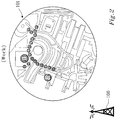
- the 'work' network cell 101 is provided as an example.
- the various darkened circles within the 'work' network cell 101 represents the various locations the user or mobile device has visited.
- the larger darkened circuits represent frequent locations which the user may have frequently visited or where the user spends a majority of his or her time.
- the circle labelled as '1' may be the user's place of business and the circle labelled as '2' may be a restaurant the user frequently visits for lunch.
- the frequently visited locations and network cells may be input into a location prediction device to provide various types of updates or alerts which may be of benefit to the user.
- the location detection device 300 may include a scanning unit 301 that may be configured to continuously scan for an identification of a current network cell, or the network cell which the mobile device is currently situated in (401). It should be appreciated that the scanning unit may be configured to receive a notification from the network that a change in the serving network has occurred. Therefore, the scanning unit 301 may be configured to operate in a polling mode and a listening mode. It should further be appreciated that the scanning unit 301 may be a part of any other component within the mobile device used for communications.
- the scanning unit 301 may send scanned location information 303 to a storage unit 305 (402).
- the scanned location information 303 may include an identification of the scanned network cell, a time of the scanning, a duration of time for which the mobile device was situated in the scanned network cell, and any other operational characteristic known in the art.
- the storage unit 305 may be configured to send an alert 307 to the scanning unit once a scanned network cell has been identified as a frequent network cell.
- the identification of a network cell as a frequent network cell may occur, for example, when a network cell has been visited over a predetermined number of times or for over a predetermined period of time.
- the predetermined number of visits or time duration may be a programmable value that may be altered by a user.
- different predetermined number of visits or time durations may be implemented for different times of the day (e.g., day time vs. night time mobility).
- additional searching using GPS or network database searching, may be performed.
- the additional search location information resulting from the GPS or database search, may also be sent to the storage unit 305.
- the storage unit may be configured to send frequent location and frequent network cell information 309 to a compiler 311.
- the compiler 311 may be configured to adaptively create a visitation history of the mobile device based on the frequent location and frequent network cell information 309 (403).
- the creation of the visitation history may be based on current location or cell information and/or the creation may be based on past location or cell information which is stored in the storage unit 305.
- the compiler 311 may send an information request 313 to the storage unit 305 in order to request any other information necessary to compile the visitation history. It should be appreciated that the scanning (401), storing (402) and the visitation history creating (403) may occur continuously and adaptively (404).
- a user may input defined location information if, for example, the user deviates from his or her regular travel path and would like location prediction updates taking into account the deviation (405).
- the user input information may be provided through a number of applications such as for example a running navigation application or a geotagged calendar item. It should be appreciated that the user input information may be provided with the use of any input methods known in the art.
- the compiler 311 may be configured to retrieve network data when compiling the visitation history. Therefore, in some example embodiments, the storage unit 305 may be configured to store the current location information in the network. The compiler 311 may retrieve both the current location information and past location information from stored network data when compiling the visitation history.
- the compiler may send the history to a processor 317.
- the processor may be configured to provide a location prediction of where the user or mobile device is likely to be situated in the future based on the visitation history 315 (406). In providing the location prediction, various methods for prediction and/or estimation may be utilized, for example, a Markov chain analysis. It should be appreciated that any prediction or estimation analysis known in the art may be employed.
- the processor 317 may be configured to send an information request to the compiler 311 should more information be required in providing the location prediction. It should be appreciated that the location prediction may be dependent on the various operational characteristics saved in the storage unit 305. For example, the location prediction may differ depending on what time and day of the week it is.
- the processor has provided a location prediction 321, the information may be sent or utilized by any other apparatus or application which may utilize the location prediction. Various alerts may be sent to the user based on the location prediction.
- a “device” as the term is used herein, is to be broadly interpreted to include a radiotelephone having ability for Internet/intranet access, web browser, organizer, calendar, a camera (e.g., video and/or still image camera), a sound recorder (e.g., a microphone), and/or a GNSS receiver; a personal communications system (PCS) terminal that may combine a cellular radiotelephone with data processing; a personal digital assistant (PDA) that can include a radiotelephone or wireless communication system; a laptop; a camera (e.g., video and/or still image camera) having communication ability; and any other computation or communication device capable of transceiving, such as a personal computer, a home entertainment system, a television, etc.
- a radiotelephone having ability for Internet/intranet access, web browser, organizer, calendar, a camera (e.g., video and/or still image camera), a sound recorder (e.g., a microphone), and/or a GNSS receiver
- a method for location prediction comprising:
- the step of adaptively creating the visitation history 403 may further comprise:
- the step of identifying frequent locations further may further comprise utilizing Global Positioning System (GPS) information and/or stored network information.
- GPS Global Positioning System
- the step of adaptively creating the visitation history may 403 further comprise inputting user defined location information 405.
- the current and past information may include a network cell identification.
- the current and past information may include operational characteristics.
- the method may further comprise providing a user alert based on the step of predicting.
- the location prediction device comprising:
- the compiler 311 may further be configured to identify frequent network cells and frequent locations within the frequent network cells, wherein the compiler may further be configured to identify the frequent network cells and frequent locations based on a length of time of a visit and/or a number of times of a visit.
- the compiler 311 may further be configured to identify the frequent network cells and the frequent locations utilizing Global Positioning System (GPS) information and/or stored network information.
- GPS Global Positioning System
- the compiler 311 may further be configured to use user defined location information.
- the current and past information 309 may include a network cell identification.
- the current and past information 309 may include operational characteristics.
- the processor 317 may further be configured to provide a user alert based on the prediction.
- a mobile communications apparatus comprising the location prediction device according to the second aspect is provided.
- a computer-readable medium may include removable and non-removable storage devices including, but not limited to, Read Only Memory (ROM), Random Access Memory (RAM), compact discs (CDs), digital versatile discs (DVD), etc.
- program modules may include routines, programs, objects, components, data structures, etc. that perform particular tasks or implement particular abstract data types.
- Computer-executable instructions, associated data structures, and program modules represent examples of program code for executing steps of the methods disclosed herein. The particular sequence of such executable instructions or associated data structures represents examples of corresponding acts for implementing the functions described in such steps or processes.
Landscapes
- Engineering & Computer Science (AREA)
- Computer Networks & Wireless Communication (AREA)
- Signal Processing (AREA)
- Mobile Radio Communication Systems (AREA)
- Position Fixing By Use Of Radio Waves (AREA)
- Navigation (AREA)
Abstract
Description
- A location prediction device for use in a mobile device, and corresponding method of location prediction, where a next location may be predicted based on a visitation history of a user or the mobile device.
- Location analysis in mobile phones is typically performed by collecting location data once the mobile phone moves from one location to another. The collection of location data is performed with the use of Global Navigation Satellite System (GNSS), network based positioning methods, or Inertial Navigation Systems (INS). These methods may be used for the tracking and recording of all locations visited by the mobile device.
- Using GNNS and similar methods of tracking and recording of all locations visited by the mobile device requires a large amount of system resources and drains the battery life of the mobile device. Therefore, a solution is needed which provides accurate location prediction while relying on low amounts of system resources and utilizing low battery power.
- Example embodiments presented herein comprise a location prediction device and a corresponding method of use. The location prediction device may comprise a scanning unit that may be configured to scan a current network cell. The device may also comprise a storage unit that may be configured to store current information relating to the current network cell. The device may further comprise a compiler that may be configured to adaptively create a visitation history based on the current information and past information relating to past network cells. The device may also comprise a processor that may be configured to provide a prediction of a next location based on the visitation history.
- The compiler may further be configured to identify frequent network cells and frequent locations within the frequent network cells. The frequent network cells and frequent locations may be identified based on, for example, a length of time of a visit and or a number of times of a visit. The compiler may also be configured to identify the frequent network cells and the frequent locations utilizing GPS information and or stored network information. The compiler may be further configured to input user defined location information.
- The processor may be further configured to provide a user alert based on the prediction. The current and past information may include a cell identification and or may include operational characteristics.
- The foregoing will be apparent from the following more particular description of the example embodiments, as illustrated in the accompanying drawings in which like reference characters refer to the same parts throughout the different views. The drawings are not necessarily to scale, emphasis instead being placed upon illustrating the example embodiments.
-
FIG. 1 is schematic of network cell detection according to example embodiments; -
FIG. 2 is a schematic of location detection according to example embodiments; -
FIG. 3 is a block diagram of a location prediction device according to example embodiments; and -
FIG. 4 is a flow diagram of operational actions taken by the device ofFIG. 3 according to example embodiments. - In the following description, for purposes of explanation and not limitation, specific details are set forth, such as particular components, elements, techniques, etc. in order to provide a thorough understanding of the example embodiments. However, it will be apparent to one skilled in the art that the example embodiments may be practiced in other manners that depart from these specific details. In other instances, detailed descriptions of well-known methods and elements are omitted so as not to obscure the description of the example embodiments.
- Location prediction is a useful tool which may be utilized by mobile device users. Location prediction may provide a mobile user with information regarding a location before the user arrives at the location. For example, based on a visitation history or pattern of a user, location prediction may be used to alert the user of any traffic delays that may have occurred in the path of the user's work commute. The location prediction may use the knowledge of the user's daily commute to provide any necessary updates. Furthermore, the location prediction may provide weather forecast reports based on the predicted locations of the user. The location prediction may also be used in association with any programs which provide reminders. For example, if the user has entered a reminder note to return a book from a library, the location prediction may alert the user to remember to bring the book if it is predicted the user may pass by the library. It should be appreciated that the examples highlighted above are merely examples and embodiments of location prediction may be used in conjunction with any type of mobile application known in the art.
- Location prediction may be provided by tracking and detecting the various locations visited by a user. Typically, mobile location detection involves the use of GPS analysis which requires large amounts of system and battery resources. In contrast, example embodiments are focused on the detection of network cells, rather than discrete locations. A network cell may define an area of mobile service coverage provided by a base station. A mobile device typically scans for the identity of its current network cell since this information is required when participating in wireless communications. Therefore, monitoring network cells for the use of location prediction does not utilize additional system resources and does not put further strain on the battery life of the mobile device, unlike detection methods which utilize GPS analysis for every discrete location visited by a user.
-
Figure 1 provides an example of detected network cells. The highlightedareas 101 through 107 represent detected network cells that the user or mobile device has visited. The mobile device may be able to provide a rough estimation of the visited locations within a range of approximately 3km. A mobile device may regularly scan for a current network cell (or the network cell which the mobile is currently situated in) as such information is utilized in mobile communications. Furthermore, the scanning unit of the mobile device may be notified by the network when changes in the serving network occur. Therefore, the mobile device may act as a listener rather than poll the network for the status of a current network. Thus, the scanning of network cells for the purpose of location prediction (through the use of listening or polling) does not require additional resources. - The network cells labelled 102, 103, 104, and 106 may represent cells which are not frequently visited by the mobile device or cells in which the user does not spend a large amount of time in. For example,
network cell 102 may represent an area the user 35 travelled to once to run an errand. Infrequent network cells such as 102, 103, 104, and 106 may not be highly relevant in the location visitation history of the user, or mobile device. Therefore, in order to reduce the amount of system resources utilized, example embodiments may remove the infrequent network cells from any additional scanning procedures. - The enlarged
network cells Network cells base stations - Once the frequent network cells have been identified, the frequent network cells may also be chosen for further location evaluation in order to find a more precise location. Further evaluation may include the use of precise location techniques such as Global Navigation Satellite System (GNSS), network based positioning methods, or Inertial Navigation Systems (INS) to determine frequent locations within the frequent network cells. While the use of these methods require a greater amount of system resources and battery usage, since only the frequent network cells the amount of usage may be decreased. It should be appreciated that any method of location evaluation known in the art may be utilized in the further location evaluation step.
- In
Figure 2 an example of frequent location detection is provided. Using precise location techniques, the exact coordinates of the frequent locations visited by the user or mobile device may be indicated. InFigure 2 , the 'work'network cell 101 is provided as an example. The various darkened circles within the 'work'network cell 101 represents the various locations the user or mobile device has visited. The larger darkened circuits represent frequent locations which the user may have frequently visited or where the user spends a majority of his or her time. For example, the circle labelled as '1' may be the user's place of business and the circle labelled as '2' may be a restaurant the user frequently visits for lunch. The frequently visited locations and network cells may be input into a location prediction device to provide various types of updates or alerts which may be of benefit to the user. -
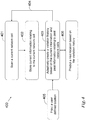
Figure 3 provides an example of alocation detection device 300 andFigure 4 provides a flow diagram 400 of example actions which may be taken by the location detection device ofFigure 3 . Thelocation detection device 300 may include ascanning unit 301 that may be configured to continuously scan for an identification of a current network cell, or the network cell which the mobile device is currently situated in (401). It should be appreciated that the scanning unit may be configured to receive a notification from the network that a change in the serving network has occurred. Therefore, thescanning unit 301 may be configured to operate in a polling mode and a listening mode. It should further be appreciated that thescanning unit 301 may be a part of any other component within the mobile device used for communications. - The
scanning unit 301 may send scannedlocation information 303 to a storage unit 305 (402). The scannedlocation information 303 may include an identification of the scanned network cell, a time of the scanning, a duration of time for which the mobile device was situated in the scanned network cell, and any other operational characteristic known in the art. - The
storage unit 305 may be configured to send an alert 307 to the scanning unit once a scanned network cell has been identified as a frequent network cell. The identification of a network cell as a frequent network cell may occur, for example, when a network cell has been visited over a predetermined number of times or for over a predetermined period of time. The predetermined number of visits or time duration may be a programmable value that may be altered by a user. Furthermore, it should be appreciated that different predetermined number of visits or time durations may be implemented for different times of the day (e.g., day time vs. night time mobility). - Once the
scanning unit 301 has received the alert 307, additional searching, using GPS or network database searching, may be performed. The additional search location information, resulting from the GPS or database search, may also be sent to thestorage unit 305. The storage unit may be configured to send frequent location and frequentnetwork cell information 309 to acompiler 311. - The
compiler 311 may be configured to adaptively create a visitation history of the mobile device based on the frequent location and frequent network cell information 309 (403). The creation of the visitation history may be based on current location or cell information and/or the creation may be based on past location or cell information which is stored in thestorage unit 305. Thecompiler 311 may send aninformation request 313 to thestorage unit 305 in order to request any other information necessary to compile the visitation history. It should be appreciated that the scanning (401), storing (402) and the visitation history creating (403) may occur continuously and adaptively (404). Furthermore, it should be appreciated that at any time, a user may input defined location information if, for example, the user deviates from his or her regular travel path and would like location prediction updates taking into account the deviation (405). The user input information may be provided through a number of applications such as for example a running navigation application or a geotagged calendar item. It should be appreciated that the user input information may be provided with the use of any input methods known in the art. - It should also be appreciated that the
compiler 311 may be configured to retrieve network data when compiling the visitation history. Therefore, in some example embodiments, thestorage unit 305 may be configured to store the current location information in the network. Thecompiler 311 may retrieve both the current location information and past location information from stored network data when compiling the visitation history. - Once the
visitation history 315 has been compiled, the compiler may send the history to aprocessor 317. The processor may be configured to provide a location prediction of where the user or mobile device is likely to be situated in the future based on the visitation history 315 (406). In providing the location prediction, various methods for prediction and/or estimation may be utilized, for example, a Markov chain analysis. It should be appreciated that any prediction or estimation analysis known in the art may be employed. Furthermore, theprocessor 317 may be configured to send an information request to thecompiler 311 should more information be required in providing the location prediction. It should be appreciated that the location prediction may be dependent on the various operational characteristics saved in thestorage unit 305. For example, the location prediction may differ depending on what time and day of the week it is. Once the processor has provided alocation prediction 321, the information may be sent or utilized by any other apparatus or application which may utilize the location prediction. Various alerts may be sent to the user based on the location prediction. - A "device" as the term is used herein, is to be broadly interpreted to include a radiotelephone having ability for Internet/intranet access, web browser, organizer, calendar, a camera (e.g., video and/or still image camera), a sound recorder (e.g., a microphone), and/or a GNSS receiver; a personal communications system (PCS) terminal that may combine a cellular radiotelephone with data processing; a personal digital assistant (PDA) that can include a radiotelephone or wireless communication system; a laptop; a camera (e.g., video and/or still image camera) having communication ability; and any other computation or communication device capable of transceiving, such as a personal computer, a home entertainment system, a television, etc.
- Further, according to a first aspect a method for location prediction is provided. The method comprising:
- scanning a
current network cell 401; - storing current information relating to the
current network cell 402; - adaptively creating a visitation history based on the current information and
past information 309 relating topast network cells 403; and - predicting a next location based on the
visitation history 406. - The step of adaptively creating the
visitation history 403 may further comprise: - identifying frequent network cells; and
- identifying frequent locations within the frequent network cells, wherein the identifying of the frequent network cells and frequent locations is a function of a length of time of a visit and/or a number of times of a visit.
- The step of identifying frequent locations further may further comprise utilizing Global Positioning System (GPS) information and/or stored network information.
- The step of adaptively creating the visitation history may 403 further comprise inputting user defined
location information 405. - The current and past information may include a network cell identification.
- The current and past information may include operational characteristics.
- The method may further comprise providing a user alert based on the step of predicting.
- Moreover, according to a second aspect a location prediction device is provided. The location prediction device comprising:
- a
scanning unit 301 configured to scan a current network cell; - a
storage unit 305 configured to storecurrent information 303 relating to the current network cell; - a
compiler 311 configured to adaptively create avisitation history 315 based on the current information andpast information 309 relating to past network cells; and - a
processor 317 configured to provide aprediction 321 of a next location based on thevisitation history 315. - The
compiler 311 may further be configured to identify frequent network cells and frequent locations within the frequent network cells, wherein the compiler may further be configured to identify the frequent network cells and frequent locations based on a length of time of a visit and/or a number of times of a visit. - The
compiler 311 may further be configured to identify the frequent network cells and the frequent locations utilizing Global Positioning System (GPS) information and/or stored network information. - The
compiler 311 may further be configured to use user defined location information. - The current and
past information 309 may include a network cell identification. - The current and
past information 309 may include operational characteristics. - The
processor 317 may further be configured to provide a user alert based on the prediction. - Furthermore, according to a third aspect a mobile communications apparatus comprising the location prediction device according to the second aspect is provided.
- The various example embodiments described herein is described in the general context of method steps or processes, which may be implemented in one embodiment by a computer program product, embodied in a computer-readable medium, including computer-executable instructions, such as program code, executed by computers in networked environments. A computer-readable medium may include removable and non-removable storage devices including, but not limited to, Read Only Memory (ROM), Random Access Memory (RAM), compact discs (CDs), digital versatile discs (DVD), etc. Generally, program modules may include routines, programs, objects, components, data structures, etc. that perform particular tasks or implement particular abstract data types. Computer-executable instructions, associated data structures, and program modules represent examples of program code for executing steps of the methods disclosed herein. The particular sequence of such executable instructions or associated data structures represents examples of corresponding acts for implementing the functions described in such steps or processes.
- The foregoing descriptions of example embodiments have been presented for purposes of illustration and description. The foregoing description is not intended to be exhaustive or to limit the example embodiments to the precise form disclosed, and modifications and variations are possible in light of the above teachings or may be acquired from practice of various example embodiments. The embodiments discussed herein were chosen and described in order to explain the principles and the nature of various embodiments of the present invention and its practical application to enable one skilled in the art to utilize the present invention in various embodiments and with various modifications as are suited to the particular use contemplated. The features of the embodiments described herein may be combined in all possible combinations of methods, apparatus, modules, systems, and computer program products.
Claims (15)
- A method for location prediction of a mobile device, the method comprising:creating a visitation history of the mobile device based on one or more past locations of the mobile device; andproviding a location prediction of the mobile device based on the created visitation history, and on at least one of a current time and a current day of the week.
- The method according to claim 1, wherein the step of providing the location prediction of the mobile device is further based on a current location of the mobile device.
- The method according to any one of claims 1-2, wherein the step of creating the visitation history of the mobile device is adaptively performed.
- The method according to any one of claims 1-3, wherein the location prediction is based on a Markov chain analysis.
- The method according to any one of claims 2-4, further comprising:obtaining information pursuant to a network cell which the mobile device is currently situated in;obtaining and storing information pursuant to network cells which the mobile device has been situated in and information pursuant to the network cell which the mobile device is currently situated in;wherein the current location of the mobile device is based on the information pursuant to which network cell the mobile device is currently situated in; andwherein the past locations of the mobile device are based on the information pursuant to which network cells the mobile device has been situated in.
- The method according to claim 5, wherein the information pursuant to a network cell comprises an identification of the scanned network cell.
- The method according to any one of claims 5-6, wherein the information pursuant to a network cell comprises a time of the scanning.
- The method according to any one of claims 5-7, wherein the information pursuant to a network cell comprises a duration of time for which the mobile device was situated in the scanned network cell.
- The method according to any one of claims 5-8, further comprising identifying a scanned network cell as a frequent network cell, wherein the identification of a frequent network cell is based on a predetermined number of visits and/or on a predetermined time duration.
- The method according to claim 9, wherein different predetermined number of visits or time durations are implemented for different times of the day.
- The method according to any one of claims 9-10, further comprising, once a frequent network cell is identified, determining frequent locations within the frequent network cell.
- The method according to claim 11, wherein the current location of the mobile device and the past locations of the mobile device are based on information pursuant to the frequent network cells and/or the frequent locations within each frequent network cell.
- A mobile device, configured to:create a visitation history of the mobile device based on one or more past locations of the mobile device; andprovide a location prediction for the mobile device based on the visitation history, and on at least one of a current time and a current day of the week.
- A device according to claim 13, further configured to further base the location prediction on a current location of the mobile device.
- The device according to claim 14, further configured to:obtain information pursuant to a network cell which the mobile device is currently situated in; andobtain and store information pursuant to network cells which the mobile device has been situated in and information pursuant to the network cell which the mobile device is currently situated in,wherein the current location of the mobile device is based on the information pursuant to which network cell the mobile device is currently situated in, andwherein the past locations of the mobile device are based on the information pursuant to which network cells the mobile device has been situated in.
Priority Applications (1)
| Application Number | Priority Date | Filing Date | Title |
|---|---|---|---|
| EP17189854.7A EP3291619B1 (en) | 2010-06-03 | 2010-06-03 | A mobile device and method for location prediction of a mobile device |
Applications Claiming Priority (3)
| Application Number | Priority Date | Filing Date | Title |
|---|---|---|---|
| PCT/EP2010/057761 WO2011150971A1 (en) | 2010-06-03 | 2010-06-03 | Method and apparatus for location prediction |
| EP10727374.0A EP2578030B1 (en) | 2010-06-03 | 2010-06-03 | Method and apparatus for location prediction |
| EP17189854.7A EP3291619B1 (en) | 2010-06-03 | 2010-06-03 | A mobile device and method for location prediction of a mobile device |
Related Parent Applications (2)
| Application Number | Title | Priority Date | Filing Date |
|---|---|---|---|
| EP10727374.0A Division EP2578030B1 (en) | 2010-06-03 | 2010-06-03 | Method and apparatus for location prediction |
| EP10727374.0A Division-Into EP2578030B1 (en) | 2010-06-03 | 2010-06-03 | Method and apparatus for location prediction |
Publications (2)
| Publication Number | Publication Date |
|---|---|
| EP3291619A1 true EP3291619A1 (en) | 2018-03-07 |
| EP3291619B1 EP3291619B1 (en) | 2022-03-30 |
Family
ID=43759735
Family Applications (2)
| Application Number | Title | Priority Date | Filing Date |
|---|---|---|---|
| EP10727374.0A Not-in-force EP2578030B1 (en) | 2010-06-03 | 2010-06-03 | Method and apparatus for location prediction |
| EP17189854.7A Not-in-force EP3291619B1 (en) | 2010-06-03 | 2010-06-03 | A mobile device and method for location prediction of a mobile device |
Family Applications Before (1)
| Application Number | Title | Priority Date | Filing Date |
|---|---|---|---|
| EP10727374.0A Not-in-force EP2578030B1 (en) | 2010-06-03 | 2010-06-03 | Method and apparatus for location prediction |
Country Status (4)
| Country | Link |
|---|---|
| US (1) | US8798641B2 (en) |
| EP (2) | EP2578030B1 (en) |
| CN (1) | CN102918898B (en) |
| WO (1) | WO2011150971A1 (en) |
Families Citing this family (22)
| Publication number | Priority date | Publication date | Assignee | Title |
|---|---|---|---|---|
| US7765131B2 (en) | 2006-06-20 | 2010-07-27 | United Parcel Service Of America, Inc. | Systems and methods for providing personalized delivery services |
| CA2609841A1 (en) | 2005-06-21 | 2007-01-04 | United Parcel Service Of America, Inc. | Systems and methods for providing personalized delivery services |
| US9026814B2 (en) * | 2011-06-17 | 2015-05-05 | Microsoft Technology Licensing, Llc | Power and load management based on contextual information |
| US9299027B2 (en) * | 2012-05-07 | 2016-03-29 | Runaway 20, Inc. | System and method for providing intelligent location information |
| US9295022B2 (en) | 2012-05-18 | 2016-03-22 | Comcast Cable Communications, LLC. | Wireless network supporting extended coverage of service |
| US8655307B1 (en) * | 2012-10-26 | 2014-02-18 | Lookout, Inc. | System and method for developing, updating, and using user device behavioral context models to modify user, device, and application state, settings and behavior for enhanced user security |
| US9916557B1 (en) | 2012-12-07 | 2018-03-13 | United Parcel Service Of America, Inc. | Systems and methods for item delivery and pick-up using social networks |
| US11144872B2 (en) | 2012-12-21 | 2021-10-12 | United Parcel Service Of America, Inc. | Delivery to an unattended location |
| US10387824B2 (en) | 2012-12-21 | 2019-08-20 | United Parcel Service Of America, Inc. | Systems and methods for delivery of an item |
| US9226125B2 (en) * | 2013-03-14 | 2015-12-29 | Google Technology Holdings LLC | Method and apparatus for alert message reception |
| GB2511860A (en) * | 2013-03-15 | 2014-09-17 | Vodafone Ip Licensing Ltd | A Method and System of Providing Data Service According to a User's Future Location |
| US10664787B2 (en) | 2013-10-09 | 2020-05-26 | United Parcel Service Of America, Inc. | Customer controlled management of shipments |
| US10002340B2 (en) | 2013-11-20 | 2018-06-19 | United Parcel Service Of America, Inc. | Concepts for electronic door hangers |
| WO2015084154A1 (en) | 2013-12-04 | 2015-06-11 | Mimos Berhad | A system and method for locating a mobile device |
| CN104754730B (en) * | 2013-12-27 | 2018-07-31 | 华为技术有限公司 | The method and device of position prediction |
| CA2935200C (en) | 2014-02-16 | 2019-11-26 | United Parcel Service Of America, Inc. | Determining a delivery location and time based on the schedule or location of a consignee |
| US10733563B2 (en) | 2014-03-13 | 2020-08-04 | United Parcel Service Of America, Inc. | Determining alternative delivery destinations |
| KR20150131780A (en) * | 2014-05-16 | 2015-11-25 | 삼성전자주식회사 | Apparatus and Method for predicting destination |
| CN105409306B (en) * | 2014-06-11 | 2019-01-18 | 华为技术有限公司 | Mobile terminal locations prediction technique and device |
| US9544726B2 (en) | 2015-01-23 | 2017-01-10 | Apple Inc. | Adding location names using private frequent location data |
| CN104581888B (en) * | 2015-02-05 | 2018-08-28 | 张会波 | Upper net guided system and method based on wireless access point |
| CN105357637B (en) * | 2015-10-28 | 2019-06-11 | 同济大学 | A position and behavior information prediction system and method |
Citations (5)
| Publication number | Priority date | Publication date | Assignee | Title |
|---|---|---|---|---|
| US20010034232A1 (en) * | 2000-04-21 | 2001-10-25 | Fujitsu Limited | Method of registering location in mobile communication system and mobile device used in said method |
| US20060025157A1 (en) * | 2003-05-08 | 2006-02-02 | Fujitsu Limited | Location judgment method using cell broadcast, mobile terminal thereof, and program |
| US20060293064A1 (en) * | 2005-06-28 | 2006-12-28 | Research In Motion Limited | Probabilistic location prediction for a mobile station |
| US20090093259A1 (en) * | 2007-10-05 | 2009-04-09 | Qualcomm Incorporated | Location and time based filtering of broadcast information |
| WO2009065206A1 (en) * | 2007-11-19 | 2009-05-28 | Rx Networks Inc. | Distributed orbit modeling and propagation method for a predicted and real-time assisted gps system |
Family Cites Families (15)
| Publication number | Priority date | Publication date | Assignee | Title |
|---|---|---|---|---|
| US5548816A (en) * | 1993-11-16 | 1996-08-20 | Astronet | Method and system for locating mobile units in a cellular telephone system by use of virtual location areas |
| US6539393B1 (en) * | 1999-09-30 | 2003-03-25 | Hill-Rom Services, Inc. | Portable locator system |
| GB0218188D0 (en) * | 2002-08-06 | 2002-09-11 | Hewlett Packard Co | Methods and arrangements applicable to exhibition spaces |
| US7574661B2 (en) * | 2003-02-25 | 2009-08-11 | Panasonic Corporation | Application program prediction method and mobile terminal |
| US7697479B2 (en) * | 2005-04-07 | 2010-04-13 | Motorola, Inc. | Self-learning geographically aware handoff method and system |
| WO2006117587A1 (en) * | 2005-05-04 | 2006-11-09 | Telecom Italia S.P.A. | Method for the optimization of the channel scanning function in a telecommunication network for mobile terminals |
| TWI415489B (en) * | 2005-09-22 | 2013-11-11 | Qualcomm Inc | Geography-based filtering of broadcasts |
| US7561890B2 (en) * | 2006-06-22 | 2009-07-14 | Sony Ericsson Mobile Communications Ab | Hotspot location database system, mobile terminal for use in such a system and method for creating maintaining and updating such a system |
| US20080070575A1 (en) * | 2006-09-15 | 2008-03-20 | Holger Claussen | Method of administering call handover between cells in a communications system |
| KR100842542B1 (en) * | 2006-11-21 | 2008-07-01 | 삼성전자주식회사 | Frequency scanning method and terminal in the DVH-terminal |
| US7996019B2 (en) * | 2006-12-26 | 2011-08-09 | Motorola Mobilty, Inc. | Intelligent location-based services |
| US8798639B2 (en) * | 2007-01-17 | 2014-08-05 | Qualcomm Incorporated | Method and apparatus for using historic network information for determining approximate position |
| US20080293405A1 (en) * | 2007-05-24 | 2008-11-27 | David Meyer | System and method for adaptive roaming |
| JP4910014B2 (en) * | 2008-05-22 | 2012-04-04 | 株式会社東芝 | Radio base station controller, radio communication system, and program for radio base station controller |
| US7840226B1 (en) * | 2009-12-29 | 2010-11-23 | Oto Technologies, Llc | Apparatus and method of location based telecommunication authorization |
-
2010
- 2010-06-03 CN CN201080067151.9A patent/CN102918898B/en not_active Expired - Fee Related
- 2010-06-03 EP EP10727374.0A patent/EP2578030B1/en not_active Not-in-force
- 2010-06-03 WO PCT/EP2010/057761 patent/WO2011150971A1/en not_active Ceased
- 2010-06-03 US US13/132,516 patent/US8798641B2/en not_active Expired - Fee Related
- 2010-06-03 EP EP17189854.7A patent/EP3291619B1/en not_active Not-in-force
Patent Citations (5)
| Publication number | Priority date | Publication date | Assignee | Title |
|---|---|---|---|---|
| US20010034232A1 (en) * | 2000-04-21 | 2001-10-25 | Fujitsu Limited | Method of registering location in mobile communication system and mobile device used in said method |
| US20060025157A1 (en) * | 2003-05-08 | 2006-02-02 | Fujitsu Limited | Location judgment method using cell broadcast, mobile terminal thereof, and program |
| US20060293064A1 (en) * | 2005-06-28 | 2006-12-28 | Research In Motion Limited | Probabilistic location prediction for a mobile station |
| US20090093259A1 (en) * | 2007-10-05 | 2009-04-09 | Qualcomm Incorporated | Location and time based filtering of broadcast information |
| WO2009065206A1 (en) * | 2007-11-19 | 2009-05-28 | Rx Networks Inc. | Distributed orbit modeling and propagation method for a predicted and real-time assisted gps system |
Also Published As
| Publication number | Publication date |
|---|---|
| US20130072215A1 (en) | 2013-03-21 |
| WO2011150971A1 (en) | 2011-12-08 |
| US8798641B2 (en) | 2014-08-05 |
| CN102918898A (en) | 2013-02-06 |
| EP3291619B1 (en) | 2022-03-30 |
| EP2578030A1 (en) | 2013-04-10 |
| EP2578030B1 (en) | 2017-11-22 |
| CN102918898B (en) | 2016-07-13 |
Similar Documents
| Publication | Publication Date | Title |
|---|---|---|
| US8798641B2 (en) | Method and apparatus for location prediction | |
| US9277362B2 (en) | Method and apparatus for generating and using location information | |
| US8509860B2 (en) | Method and apparatus for power efficient user location profile determination in mobile devices | |
| US7528713B2 (en) | Apparatus and method for providing a task reminder based on travel history | |
| US20160358065A1 (en) | Personally Impactful Changes To Events of Users | |
| US8165605B2 (en) | Automatic detection of personal networks | |
| EP3435692A1 (en) | Determining a significant user location for providing location-based services | |
| EP2426460B1 (en) | Method and Apparatus for Generating and Using Location Information | |
| EP2247126A2 (en) | Predicting presence of a mobile user equipment | |
| US9420424B2 (en) | System and method for measuring the crowdedness of people at a place | |
| US20110230201A1 (en) | System and method for determining mobile device location | |
| KR20110017890A (en) | Method and apparatus for generating a user profile based on periodic location fixes | |
| US9131338B2 (en) | Method and apparatus for providing an alert on a user equipment entering an alerting area | |
| KR20120045415A (en) | Method and apparatus for providing intelligent service | |
| JP2009085798A (en) | POSITION INFORMATION ACQUISITION SYSTEM, POSITION INFORMATION ACQUISITION DETERMINATION METHOD IN THE SYSTEM, MOBILE TERMINAL, SERVER DEVICE, PORTABLE TERMINAL, AND SERVER DEVICE PROGRAM IN THE SYSTEM | |
| CN104602273A (en) | Method and communication device for enhanced positioning measurement | |
| JP2012107977A (en) | Position estimation device, system, position estimation method and position estimation program | |
| JP2006251938A (en) | Information distribution device | |
| Mahmud | Intelligent GIS-Based road accident analysis and real-time monitoring automated system using WiMAX/GPRS | |
| JP2013031080A (en) | Location information history comparison system | |
| JP2013031080A5 (en) | ||
| Huang et al. | Wi-fi based indoor next location prediction using mixed state-weighted markov-chain model | |
| Tanaka et al. | Advancement of a To-Do reminder system focusing on context of the user | |
| Song | Discovering user context with mobile devices: location and time | |
| Hysenaj | From" Here" to Nearby: A Python-Spring Boot Pipeline for Smartphone Geolocation, Reverse Geocoding, and Real-Time Place Discovery in Web GIS |
Legal Events
| Date | Code | Title | Description |
|---|---|---|---|
| PUAI | Public reference made under article 153(3) epc to a published international application that has entered the european phase |
Free format text: ORIGINAL CODE: 0009012 |
|
| STAA | Information on the status of an ep patent application or granted ep patent |
Free format text: STATUS: REQUEST FOR EXAMINATION WAS MADE |
|
| 17P | Request for examination filed |
Effective date: 20170907 |
|
| AC | Divisional application: reference to earlier application |
Ref document number: 2578030 Country of ref document: EP Kind code of ref document: P |
|
| AK | Designated contracting states |
Kind code of ref document: A1 Designated state(s): AL AT BE BG CH CY CZ DE DK EE ES FI FR GB GR HR HU IE IS IT LI LT LU LV MC MK MT NL NO PL PT RO SE SI SK SM TR |
|
| STAA | Information on the status of an ep patent application or granted ep patent |
Free format text: STATUS: EXAMINATION IS IN PROGRESS |
|
| RIC1 | Information provided on ipc code assigned before grant |
Ipc: H04W 64/00 20090101AFI20190822BHEP Ipc: H04W 4/02 20180101ALN20190822BHEP |
|
| 17Q | First examination report despatched |
Effective date: 20190903 |
|
| RIC1 | Information provided on ipc code assigned before grant |
Ipc: H04W 64/00 20090101AFI20190823BHEP Ipc: H04W 4/029 20180101ALN20190823BHEP |
|
| RIC1 | Information provided on ipc code assigned before grant |
Ipc: H04W 4/029 20180101ALN20200530BHEP Ipc: H04W 64/00 20090101AFI20200530BHEP |
|
| GRAP | Despatch of communication of intention to grant a patent |
Free format text: ORIGINAL CODE: EPIDOSNIGR1 |
|
| STAA | Information on the status of an ep patent application or granted ep patent |
Free format text: STATUS: GRANT OF PATENT IS INTENDED |
|
| GRAJ | Information related to disapproval of communication of intention to grant by the applicant or resumption of examination proceedings by the epo deleted |
Free format text: ORIGINAL CODE: EPIDOSDIGR1 |
|
| GRAP | Despatch of communication of intention to grant a patent |
Free format text: ORIGINAL CODE: EPIDOSNIGR1 |
|
| RIC1 | Information provided on ipc code assigned before grant |
Ipc: H04W 4/02 20180101ALN20210921BHEP Ipc: H04W 64/00 20090101AFI20210921BHEP |
|
| RIC1 | Information provided on ipc code assigned before grant |
Ipc: H04W 4/02 20180101ALN20210929BHEP Ipc: H04W 64/00 20090101AFI20210929BHEP |
|
| INTG | Intention to grant announced |
Effective date: 20211014 |
|
| INTG | Intention to grant announced |
Effective date: 20211027 |
|
| GRAS | Grant fee paid |
Free format text: ORIGINAL CODE: EPIDOSNIGR3 |
|
| GRAA | (expected) grant |
Free format text: ORIGINAL CODE: 0009210 |
|
| STAA | Information on the status of an ep patent application or granted ep patent |
Free format text: STATUS: THE PATENT HAS BEEN GRANTED |
|
| RAP1 | Party data changed (applicant data changed or rights of an application transferred) |
Owner name: SONY GROUP CORPORATION |
|
| AC | Divisional application: reference to earlier application |
Ref document number: 2578030 Country of ref document: EP Kind code of ref document: P |
|
| AK | Designated contracting states |
Kind code of ref document: B1 Designated state(s): AL AT BE BG CH CY CZ DE DK EE ES FI FR GB GR HR HU IE IS IT LI LT LU LV MC MK MT NL NO PL PT RO SE SI SK SM TR |
|
| REG | Reference to a national code |
Ref country code: GB Ref legal event code: FG4D |
|
| REG | Reference to a national code |
Ref country code: CH Ref legal event code: EP |
|
| REG | Reference to a national code |
Ref country code: AT Ref legal event code: REF Ref document number: 1480352 Country of ref document: AT Kind code of ref document: T Effective date: 20220415 |
|
| REG | Reference to a national code |
Ref country code: DE Ref legal event code: R096 Ref document number: 602010068160 Country of ref document: DE |
|
| REG | Reference to a national code |
Ref country code: IE Ref legal event code: FG4D |
|
| REG | Reference to a national code |
Ref country code: LT Ref legal event code: MG9D |
|
| PG25 | Lapsed in a contracting state [announced via postgrant information from national office to epo] |
Ref country code: SE Free format text: LAPSE BECAUSE OF FAILURE TO SUBMIT A TRANSLATION OF THE DESCRIPTION OR TO PAY THE FEE WITHIN THE PRESCRIBED TIME-LIMIT Effective date: 20220330 Ref country code: NO Free format text: LAPSE BECAUSE OF FAILURE TO SUBMIT A TRANSLATION OF THE DESCRIPTION OR TO PAY THE FEE WITHIN THE PRESCRIBED TIME-LIMIT Effective date: 20220630 Ref country code: LT Free format text: LAPSE BECAUSE OF FAILURE TO SUBMIT A TRANSLATION OF THE DESCRIPTION OR TO PAY THE FEE WITHIN THE PRESCRIBED TIME-LIMIT Effective date: 20220330 Ref country code: HR Free format text: LAPSE BECAUSE OF FAILURE TO SUBMIT A TRANSLATION OF THE DESCRIPTION OR TO PAY THE FEE WITHIN THE PRESCRIBED TIME-LIMIT Effective date: 20220330 Ref country code: BG Free format text: LAPSE BECAUSE OF FAILURE TO SUBMIT A TRANSLATION OF THE DESCRIPTION OR TO PAY THE FEE WITHIN THE PRESCRIBED TIME-LIMIT Effective date: 20220630 |
|
| PGFP | Annual fee paid to national office [announced via postgrant information from national office to epo] |
Ref country code: DE Payment date: 20220518 Year of fee payment: 13 |
|
| REG | Reference to a national code |
Ref country code: NL Ref legal event code: MP Effective date: 20220330 |
|
| REG | Reference to a national code |
Ref country code: AT Ref legal event code: MK05 Ref document number: 1480352 Country of ref document: AT Kind code of ref document: T Effective date: 20220330 |
|
| PG25 | Lapsed in a contracting state [announced via postgrant information from national office to epo] |
Ref country code: LV Free format text: LAPSE BECAUSE OF FAILURE TO SUBMIT A TRANSLATION OF THE DESCRIPTION OR TO PAY THE FEE WITHIN THE PRESCRIBED TIME-LIMIT Effective date: 20220330 Ref country code: GR Free format text: LAPSE BECAUSE OF FAILURE TO SUBMIT A TRANSLATION OF THE DESCRIPTION OR TO PAY THE FEE WITHIN THE PRESCRIBED TIME-LIMIT Effective date: 20220701 Ref country code: FI Free format text: LAPSE BECAUSE OF FAILURE TO SUBMIT A TRANSLATION OF THE DESCRIPTION OR TO PAY THE FEE WITHIN THE PRESCRIBED TIME-LIMIT Effective date: 20220330 |
|
| PG25 | Lapsed in a contracting state [announced via postgrant information from national office to epo] |
Ref country code: NL Free format text: LAPSE BECAUSE OF FAILURE TO SUBMIT A TRANSLATION OF THE DESCRIPTION OR TO PAY THE FEE WITHIN THE PRESCRIBED TIME-LIMIT Effective date: 20220330 |
|
| PG25 | Lapsed in a contracting state [announced via postgrant information from national office to epo] |
Ref country code: SM Free format text: LAPSE BECAUSE OF FAILURE TO SUBMIT A TRANSLATION OF THE DESCRIPTION OR TO PAY THE FEE WITHIN THE PRESCRIBED TIME-LIMIT Effective date: 20220330 Ref country code: SK Free format text: LAPSE BECAUSE OF FAILURE TO SUBMIT A TRANSLATION OF THE DESCRIPTION OR TO PAY THE FEE WITHIN THE PRESCRIBED TIME-LIMIT Effective date: 20220330 Ref country code: RO Free format text: LAPSE BECAUSE OF FAILURE TO SUBMIT A TRANSLATION OF THE DESCRIPTION OR TO PAY THE FEE WITHIN THE PRESCRIBED TIME-LIMIT Effective date: 20220330 Ref country code: PT Free format text: LAPSE BECAUSE OF FAILURE TO SUBMIT A TRANSLATION OF THE DESCRIPTION OR TO PAY THE FEE WITHIN THE PRESCRIBED TIME-LIMIT Effective date: 20220801 Ref country code: ES Free format text: LAPSE BECAUSE OF FAILURE TO SUBMIT A TRANSLATION OF THE DESCRIPTION OR TO PAY THE FEE WITHIN THE PRESCRIBED TIME-LIMIT Effective date: 20220330 Ref country code: EE Free format text: LAPSE BECAUSE OF FAILURE TO SUBMIT A TRANSLATION OF THE DESCRIPTION OR TO PAY THE FEE WITHIN THE PRESCRIBED TIME-LIMIT Effective date: 20220330 Ref country code: CZ Free format text: LAPSE BECAUSE OF FAILURE TO SUBMIT A TRANSLATION OF THE DESCRIPTION OR TO PAY THE FEE WITHIN THE PRESCRIBED TIME-LIMIT Effective date: 20220330 Ref country code: AT Free format text: LAPSE BECAUSE OF FAILURE TO SUBMIT A TRANSLATION OF THE DESCRIPTION OR TO PAY THE FEE WITHIN THE PRESCRIBED TIME-LIMIT Effective date: 20220330 |
|
| PG25 | Lapsed in a contracting state [announced via postgrant information from national office to epo] |
Ref country code: PL Free format text: LAPSE BECAUSE OF FAILURE TO SUBMIT A TRANSLATION OF THE DESCRIPTION OR TO PAY THE FEE WITHIN THE PRESCRIBED TIME-LIMIT Effective date: 20220330 Ref country code: IS Free format text: LAPSE BECAUSE OF FAILURE TO SUBMIT A TRANSLATION OF THE DESCRIPTION OR TO PAY THE FEE WITHIN THE PRESCRIBED TIME-LIMIT Effective date: 20220730 Ref country code: AL Free format text: LAPSE BECAUSE OF FAILURE TO SUBMIT A TRANSLATION OF THE DESCRIPTION OR TO PAY THE FEE WITHIN THE PRESCRIBED TIME-LIMIT Effective date: 20220330 |
|
| REG | Reference to a national code |
Ref country code: DE Ref legal event code: R097 Ref document number: 602010068160 Country of ref document: DE |
|
| PG25 | Lapsed in a contracting state [announced via postgrant information from national office to epo] |
Ref country code: MC Free format text: LAPSE BECAUSE OF FAILURE TO SUBMIT A TRANSLATION OF THE DESCRIPTION OR TO PAY THE FEE WITHIN THE PRESCRIBED TIME-LIMIT Effective date: 20220330 Ref country code: DK Free format text: LAPSE BECAUSE OF FAILURE TO SUBMIT A TRANSLATION OF THE DESCRIPTION OR TO PAY THE FEE WITHIN THE PRESCRIBED TIME-LIMIT Effective date: 20220330 |
|
| REG | Reference to a national code |
Ref country code: CH Ref legal event code: PL |
|
| PLBE | No opposition filed within time limit |
Free format text: ORIGINAL CODE: 0009261 |
|
| STAA | Information on the status of an ep patent application or granted ep patent |
Free format text: STATUS: NO OPPOSITION FILED WITHIN TIME LIMIT |
|
| REG | Reference to a national code |
Ref country code: BE Ref legal event code: MM Effective date: 20220630 |
|
| GBPC | Gb: european patent ceased through non-payment of renewal fee |
Effective date: 20220630 |
|
| 26N | No opposition filed |
Effective date: 20230103 |
|
| PG25 | Lapsed in a contracting state [announced via postgrant information from national office to epo] |
Ref country code: LU Free format text: LAPSE BECAUSE OF NON-PAYMENT OF DUE FEES Effective date: 20220603 Ref country code: LI Free format text: LAPSE BECAUSE OF NON-PAYMENT OF DUE FEES Effective date: 20220630 Ref country code: IE Free format text: LAPSE BECAUSE OF NON-PAYMENT OF DUE FEES Effective date: 20220603 Ref country code: FR Free format text: LAPSE BECAUSE OF NON-PAYMENT OF DUE FEES Effective date: 20220630 Ref country code: CH Free format text: LAPSE BECAUSE OF NON-PAYMENT OF DUE FEES Effective date: 20220630 |
|
| PG25 | Lapsed in a contracting state [announced via postgrant information from national office to epo] |
Ref country code: SI Free format text: LAPSE BECAUSE OF FAILURE TO SUBMIT A TRANSLATION OF THE DESCRIPTION OR TO PAY THE FEE WITHIN THE PRESCRIBED TIME-LIMIT Effective date: 20220330 Ref country code: GB Free format text: LAPSE BECAUSE OF NON-PAYMENT OF DUE FEES Effective date: 20220630 Ref country code: BE Free format text: LAPSE BECAUSE OF NON-PAYMENT OF DUE FEES Effective date: 20220630 |
|
| P01 | Opt-out of the competence of the unified patent court (upc) registered |
Effective date: 20230527 |
|
| PG25 | Lapsed in a contracting state [announced via postgrant information from national office to epo] |
Ref country code: IT Free format text: LAPSE BECAUSE OF FAILURE TO SUBMIT A TRANSLATION OF THE DESCRIPTION OR TO PAY THE FEE WITHIN THE PRESCRIBED TIME-LIMIT Effective date: 20220330 |
|
| REG | Reference to a national code |
Ref country code: DE Ref legal event code: R119 Ref document number: 602010068160 Country of ref document: DE |
|
| PG25 | Lapsed in a contracting state [announced via postgrant information from national office to epo] |
Ref country code: HU Free format text: LAPSE BECAUSE OF FAILURE TO SUBMIT A TRANSLATION OF THE DESCRIPTION OR TO PAY THE FEE WITHIN THE PRESCRIBED TIME-LIMIT; INVALID AB INITIO Effective date: 20100603 |
|
| PG25 | Lapsed in a contracting state [announced via postgrant information from national office to epo] |
Ref country code: MK Free format text: LAPSE BECAUSE OF FAILURE TO SUBMIT A TRANSLATION OF THE DESCRIPTION OR TO PAY THE FEE WITHIN THE PRESCRIBED TIME-LIMIT Effective date: 20220330 Ref country code: DE Free format text: LAPSE BECAUSE OF NON-PAYMENT OF DUE FEES Effective date: 20240103 Ref country code: CY Free format text: LAPSE BECAUSE OF FAILURE TO SUBMIT A TRANSLATION OF THE DESCRIPTION OR TO PAY THE FEE WITHIN THE PRESCRIBED TIME-LIMIT Effective date: 20220330 |
|
| PG25 | Lapsed in a contracting state [announced via postgrant information from national office to epo] |
Ref country code: TR Free format text: LAPSE BECAUSE OF FAILURE TO SUBMIT A TRANSLATION OF THE DESCRIPTION OR TO PAY THE FEE WITHIN THE PRESCRIBED TIME-LIMIT Effective date: 20220330 |
|
| PG25 | Lapsed in a contracting state [announced via postgrant information from national office to epo] |
Ref country code: MT Free format text: LAPSE BECAUSE OF FAILURE TO SUBMIT A TRANSLATION OF THE DESCRIPTION OR TO PAY THE FEE WITHIN THE PRESCRIBED TIME-LIMIT Effective date: 20220330 |