EP3289085B1 - Compound impurities and methods of detecting same - Google Patents
Compound impurities and methods of detecting same Download PDFInfo
- Publication number
- EP3289085B1 EP3289085B1 EP16787302.5A EP16787302A EP3289085B1 EP 3289085 B1 EP3289085 B1 EP 3289085B1 EP 16787302 A EP16787302 A EP 16787302A EP 3289085 B1 EP3289085 B1 EP 3289085B1
- Authority
- EP
- European Patent Office
- Prior art keywords
- lomitapide
- composition sample
- compound
- composition
- impurity
- Prior art date
- Legal status (The legal status is an assumption and is not a legal conclusion. Google has not performed a legal analysis and makes no representation as to the accuracy of the status listed.)
- Active
Links
Classifications
-
- A—HUMAN NECESSITIES
- A61—MEDICAL OR VETERINARY SCIENCE; HYGIENE
- A61K—PREPARATIONS FOR MEDICAL, DENTAL OR TOILETRY PURPOSES
- A61K31/00—Medicinal preparations containing organic active ingredients
- A61K31/33—Heterocyclic compounds
- A61K31/395—Heterocyclic compounds having nitrogen as a ring hetero atom, e.g. guanethidine or rifamycins
- A61K31/435—Heterocyclic compounds having nitrogen as a ring hetero atom, e.g. guanethidine or rifamycins having six-membered rings with one nitrogen as the only ring hetero atom
- A61K31/44—Non condensed pyridines; Hydrogenated derivatives thereof
- A61K31/445—Non condensed piperidines, e.g. piperocaine
- A61K31/4468—Non condensed piperidines, e.g. piperocaine having a nitrogen directly attached in position 4, e.g. clebopride, fentanyl
-
- A—HUMAN NECESSITIES
- A61—MEDICAL OR VETERINARY SCIENCE; HYGIENE
- A61K—PREPARATIONS FOR MEDICAL, DENTAL OR TOILETRY PURPOSES
- A61K9/00—Medicinal preparations characterised by special physical form
- A61K9/20—Pills, tablets, discs, rods
- A61K9/2004—Excipients; Inactive ingredients
-
- A—HUMAN NECESSITIES
- A61—MEDICAL OR VETERINARY SCIENCE; HYGIENE
- A61P—SPECIFIC THERAPEUTIC ACTIVITY OF CHEMICAL COMPOUNDS OR MEDICINAL PREPARATIONS
- A61P3/00—Drugs for disorders of the metabolism
- A61P3/06—Antihyperlipidemics
-
- G—PHYSICS
- G01—MEASURING; TESTING
- G01N—INVESTIGATING OR ANALYSING MATERIALS BY DETERMINING THEIR CHEMICAL OR PHYSICAL PROPERTIES
- G01N30/00—Investigating or analysing materials by separation into components using adsorption, absorption or similar phenomena or using ion-exchange, e.g. chromatography or field flow fractionation
- G01N30/02—Column chromatography
- G01N30/86—Signal analysis
- G01N30/8675—Evaluation, i.e. decoding of the signal into analytical information
-
- H—ELECTRICITY
- H01—ELECTRIC ELEMENTS
- H01J—ELECTRIC DISCHARGE TUBES OR DISCHARGE LAMPS
- H01J49/00—Particle spectrometers or separator tubes
- H01J49/02—Details
- H01J49/10—Ion sources; Ion guns
- H01J49/16—Ion sources; Ion guns using surface ionisation, e.g. field-, thermionic- or photo-emission
- H01J49/161—Ion sources; Ion guns using surface ionisation, e.g. field-, thermionic- or photo-emission using photoionisation, e.g. by laser
- H01J49/164—Laser desorption/ionisation, e.g. matrix-assisted laser desorption/ionisation [MALDI]
-
- G—PHYSICS
- G01—MEASURING; TESTING
- G01N—INVESTIGATING OR ANALYSING MATERIALS BY DETERMINING THEIR CHEMICAL OR PHYSICAL PROPERTIES
- G01N30/00—Investigating or analysing materials by separation into components using adsorption, absorption or similar phenomena or using ion-exchange, e.g. chromatography or field flow fractionation
- G01N30/02—Column chromatography
- G01N2030/022—Column chromatography characterised by the kind of separation mechanism
- G01N2030/027—Liquid chromatography
-
- G—PHYSICS
- G01—MEASURING; TESTING
- G01N—INVESTIGATING OR ANALYSING MATERIALS BY DETERMINING THEIR CHEMICAL OR PHYSICAL PROPERTIES
- G01N24/00—Investigating or analyzing materials by the use of nuclear magnetic resonance, electron paramagnetic resonance or other spin effects
- G01N24/08—Investigating or analyzing materials by the use of nuclear magnetic resonance, electron paramagnetic resonance or other spin effects by using nuclear magnetic resonance
- G01N24/087—Structure determination of a chemical compound, e.g. of a biomolecule such as a protein
Definitions
- Lomitapide is a microsomal triglyceride transfer protein (MTP) inhibitor shown clinically to lower plasma cholesterol levels.
- Lomitapide also known as N-(2,2,2-Trifluorethyl)-9-[4-[4-[[[4'-(trifluoromethyl)[1,1'biphenyl]-2-Yl]carbonyl]amino]-1-piperidinyl]butyl]9H-fluorene-9-carboxamide, is approved to treat homozygous familial hypercholesterolemia (HoFH), a serious genetic disorder which, if left untreated, leads to the development of atherosclerosis.
- HoFH homozygous familial hypercholesterolemia
- CN 102 451 161 A discloses dispersible tablets containing lomitapide.
- lomitapide e.g., a lomitapide mesylate salt
- process impurities including unreacted starting materials, chemical derivatives of impurities contained in starting materials, synthetic by-products, and degradation products.
- impurities present in a lomitapide composition can arise, e . g ., from degradation, including during storage or during the manufacturing process, including the chemical synthesis.
- the purity of lomitapide produced in the commercial manufacturing process is an important condition for commercialization. Impurities introduced during commercial manufacturing processes must be limited to small amounts, and are preferably substantially absent.
- lomitapide At certain stages during processing of lomitapide, it can be analyzed for purity, e.g., by high performance liquid chromatography (HPLC) or thin layer chromatography (TLC), to determine if it is suitable for continued processing and, ultimately, for use in a pharmaceutical product.
- HPLC high performance liquid chromatography
- TLC thin layer chromatography
- the Food and Drug Administration guidelines recommend that the amounts of some impurities be limited to less than, for example, 0.1 percent.
- the invention is defined by the claims. Any subject-matter falling outside the scope of the claims is provided for information purposes only.
- the present disclosure provides the lomitapide composition of claim 1, the tablet of claim 3 and the methods for analyzing a lomitapide composition according to claims 4-8.
- the disclosure provides a lomitapide composition
- a lomitapide composition comprising lomitapide or a pharmaceutically acceptable salt thereof, and less than 0.1% by weight of a carbamate product represented by and a pharmaceutically acceptable excipient.
- the disclosed lomitapide composition after storage at 25°C for 12 months, comprises less than 0.1% by weight of the above carbamate impurity.
- the disclosure relates to tablets comprising a lomitapide composition as described herein.
- the disclosure provides methods for analyzing a lomitapide composition sample for the presence or amount of an impurity as claimed. These methods include providing a lomitapide composition sample; using an analysis to determine the presence of a carbamate compound with the above-mentioned structure; making a determination about the lomitapide composition sample based on a comparison of a structural signal associated with the compound to a reference standard for lomitapide or a pharmaceutically acceptable salt thereof; and determining the presence of the structural signature associated with the compound thereby to analyze the lomitapide composition sample.
- the level of the structural signature is calculated as the area under the curve or as the percent relative amount of each fraction present in the lomitapide composition sample.
- Such structural signatures are determined using HPLC optionally coupled with mass spectrometry (MS), nuclear magnetic resonance (NMR) spectroscopy, matrix-assisted laser desorption/ionization mass spectroscopy (MALDI-MS), or one or more of a fluorometric assay, an enzyme-linked immunosorbent assay (ELISA), a chromatogenic assay, and a colorimetric assay.
- the disclosure provides a method for analyzing a lomitapide composition sample for the presence or amount of an impurity as claimed.
- This method includes providing a lomitapide composition sample, using a spectral analysis to determine the presence of a carbamate compound with the above-mentioned structure; making a determination about the lomitapide composition sample based on a comparison of the molecular weight associated with the compound to a reference standard for lomitapide or a pharmaceutically acceptable salt thereof; and determining the molecular weight associated with the compound thereby to analyze the lomitapide composition sample.
- Lomitapide can be unstable and prone to produce impurities upon manufacture, including, e.g., a carbamate impurity, and/or storage, including, e.g., a hydrolysis impurity.
- the disclosure relates to compositions and methods for analyzing a lomitapide sample for the presence or amount of a carbamate impurity as disclosed above.
- a lomitapide composition comprising lomitapide or a pharmaceutically acceptable salt thereof, and less than 0.1% by weight of a carbamate product represented by and a pharmaceutically acceptable excipient.
- a carbamate product may be an impurity in certain lomitapide compositions such as compositions prepared by certain synthetic routes.
- Disclosed lomitapide compositions have less than 0.1 weight percent of the impurity, or less than about 0.01 weight percent of the impurity.
- a disclosed lomitapide composition can have between about 0.0001 and about 0.01 weight percent of the impurity; between about 0.0001 and 0.001 weight percent of the impurity; and between about 0.001 and about 0.01 weight percent of the
- the carbamate product/impurity is represented by
- a lomitapide composition comprises less than 0.1%, less than about 0.05%, less than about 0.01%, less than about 0.005%, or less than about 0.001% by weight of the carbamate impurity.
- storage conditions are about 40°C/75% relative humidity (RH) for about 4 months or about 6 months or about 25°C/60% RH for about 12 months, about 24 months, or about 36 months.
- the disclosure provides tablets containing a lomitapide composition as described herein.
- a tablet may be made by compression or molding, optionally with one or more accessory ingredients.
- Compressed tablets may be prepared using binder (for example, gelatin, microcrystalline cellulose, or hydroxypropylmethyl cellulose), lubricant, inert diluent, preservative, disintegrant (for example, sodium starch glycolate or cross-linked sodium carboxymethyl cellulose), surface-active or dispersing agent.
- Molded tablets may be made by molding in a suitable machine a mixture of the subject composition moistened with an inert liquid diluent.
- Tablets, and other solid dosage forms may optionally be scored or prepared with coatings and shells, such as enteric coatings and other coatings well known in the pharmaceutical-formulating art.
- the disclosed excipients may serve more than one function.
- fillers or binders may also be disintegrants, glidants, anti-adherents, lubricants, sweeteners and the like.
- the disclosure also relates to methods for analyzing a lomitapide composition sample for the presence or amount of an impurity as claimed. These methods include providing a lomitapide composition sample; using an analysis to determine the presence of a carbamate compound with the above-mentioned structure; making a determination about the lomitapide composition sample based on a comparison of a structural signal associated with the compound to a reference standard for lomitapide or a pharmaceutically acceptable salt thereof; and determining the presence of the structural signature associated with the compound thereby to analyze the lomitapide composition sample.
- the level of the structural signature is calculated as the area under the curve or as the percent relative amount of each fraction present in the lomitapide composition sample.
- the structural signature is determined using HPLC optionally coupled with mass spectrometry (MS), nuclear magnetic resonance (NMR) spectroscopy, matrix-assisted laser desorption/ionization mass spectroscopy (MALDI-MS), or one or more of a fluorometric assay, an enzyme-linked immunosorbent assay (ELISA), a chromatogenic assay, and a colorimetric assay.
- MS mass spectrometry
- NMR nuclear magnetic resonance
- MALDI-MS matrix-assisted laser desorption/ionization mass spectroscopy
- ELISA enzyme-linked immunosorbent assay
- chromatogenic assay chromatogenic assay
- colorimetric assay e.g., the structural signature can be identified using HPLC-MS/NMR.
- the structural signature is identified using a combined HPLC and MS analysis, such as API-300 Sciex, HPLC
- the disclosure provides a method for analyzing a lomitapide composition sample for the presence or amount of an impurity as claimed.
- This method includes providing a lomitapide composition sample, using a spectral analysis to determine the presence of a carbamate compound with the above-mentioned structure; making a determination about the lomitapide composition sample based on a comparison of the molecular weight associated with the compound to a reference standard for lomitapide or a pharmaceutically acceptable salt thereof; and determining the molecular weight associated with the compound thereby to analyze the lomitapide composition sample.
- the DMF/MTBE mixture was transferred back to the 1 L reactor and DI water was charged (192 mL). The mixture was stirred for 10 minutes and the layers were allowed to separate. The aqueous layer was extracted with MTBE (154 mL) for 10 minutes and the layers were allowed to separate. The aqueous layer was discarded. The organic layers were combined, washed with DI water (80 mL) for 10 minutes, and the layers were allowed to separate. The remaining organic layer was washed with DI water (50 mL) for 10 minutes and the layers were allowed to separate. The organic layer was concentrated to a residue on a rotary evaporator (bath temp: 50 °C).
- Ethanol (SDA-3C, 50 mL) was added and the reaction mixture was concentrated to a residue on a rotary evaporator (bath temp: 50 °C).
- Ethanol (SDA-3C, 50 mL) was added and the reaction mixture was concentrated to a residue on a rotary evaporator (bath temp 50 °C).
- Ethanol (SDA-3C, 50 mL) was added and the total volume was approximately 65 mL.
- the reaction mixture was heated to 75 °C, resulting in a clear solution.
- n -Heptane (295 mL, heated to 75 °C) was added to the reaction mixture while maintaining an internal temperature of 70-75 °C.
- the resulting FIDs were transferred to a PC and processed using NUTS NMR processing software from Acorn NMR Inc. (Livermore, CA). 1 H chemical shifts were referenced to TMS, 0 ppm. Per IUPAC recommendations for referencing of NMR spectra ( Harris et al. (2001) PURE AND APPLIED CHEMISTRY, 73:1795-1818 ), the 13 C chemical shifts were referenced using the "unified scale" to the absolute 1 H frequency of 0 ppm.
- HMBC correlations are listed in Table 2.
- Table 2 1 H ----------------------------------------> 13 C 2 1,4 3 2,4 7 5, 9, 10, 11 8 6, 7, 10, 11 9 6, 7, 10, 11 10 6, 7, 8, 11 12 4, 5, 6, 13, 14 13 5, 12, 14, 15 14 12, 13, 15 15 13, 14, 32 19 17, 18, 20 22 20, 24, 26 23 21, 25, 26 24 22, 26 25 21, 23, 27 28 26, 29, 30 29 27, 28, 29 (symmetry), 31
- protonated carbons having odd multiplicity may be distinguished from carbons having even multiplicity (methylenes) using the DEPT-135 spectrum.
- Quaternary carbons are identified by comparison of the 13 C with the DEPT and/or HSQC spectra, as only protonated carbons are observed in either the DEPT or HSQC.
- Geminal methylene protons are identified from the HSQC spectrum as 2 protons with correlations to the same carbon. Protons on N are identified by absence of HSQC correlations.
- the following synthetic scheme can be used to prepare the following compound which would allow identification or presence in, e.g., a sample of lomitapide.
- an impurity with an RRT of 0.85 was observed to be increasing in stability samples stored at 40 °C/75% RH at 4 and 6 months and stored at 25 °C/60% RH at 12, 24, and 36 months. A study was performed to identify this impurity using LC/MS/MS. Based on the fragmentation patterns of both lomitapide and the impurity at RRT 0.85, the structure of the impurity at RRT 0.85 has been identified to be a degradation product of lomitapide due to hydrolysis having the structure:
Landscapes
- Health & Medical Sciences (AREA)
- Chemical & Material Sciences (AREA)
- Life Sciences & Earth Sciences (AREA)
- General Health & Medical Sciences (AREA)
- Veterinary Medicine (AREA)
- Medicinal Chemistry (AREA)
- Animal Behavior & Ethology (AREA)
- Public Health (AREA)
- Pharmacology & Pharmacy (AREA)
- Physics & Mathematics (AREA)
- Engineering & Computer Science (AREA)
- Epidemiology (AREA)
- Analytical Chemistry (AREA)
- Optics & Photonics (AREA)
- Diabetes (AREA)
- Obesity (AREA)
- Chemical Kinetics & Catalysis (AREA)
- General Chemical & Material Sciences (AREA)
- Hematology (AREA)
- Nuclear Medicine, Radiotherapy & Molecular Imaging (AREA)
- Organic Chemistry (AREA)
- Bioinformatics & Cheminformatics (AREA)
- General Physics & Mathematics (AREA)
- Immunology (AREA)
- Biochemistry (AREA)
- Pathology (AREA)
- Library & Information Science (AREA)
- Plasma & Fusion (AREA)
- Pharmaceuticals Containing Other Organic And Inorganic Compounds (AREA)
- Other Investigation Or Analysis Of Materials By Electrical Means (AREA)
- High Energy & Nuclear Physics (AREA)
- Spectroscopy & Molecular Physics (AREA)
- Molecular Biology (AREA)
- Crystallography & Structural Chemistry (AREA)
- Hydrogenated Pyridines (AREA)
- Medicinal Preparation (AREA)
- Investigating Or Analyzing Materials By The Use Of Electric Means (AREA)
Description
- This application claims priority to
U.S. Provisional Application No. 62/154,906 filed April 30, 2015 BR1020150255020 filed October 6, 2015 - Lomitapide is a microsomal triglyceride transfer protein (MTP) inhibitor shown clinically to lower plasma cholesterol levels. Lomitapide, also known as N-(2,2,2-Trifluorethyl)-9-[4-[4-[[[4'-(trifluoromethyl)[1,1'biphenyl]-2-Yl]carbonyl]amino]-1-piperidinyl]butyl]9H-fluorene-9-carboxamide, is approved to treat homozygous familial hypercholesterolemia (HoFH), a serious genetic disorder which, if left untreated, leads to the development of atherosclerosis.
CN 102 451 161 A discloses dispersible tablets containing lomitapide. - However, lomitapide (e.g., a lomitapide mesylate salt) can contain process impurities, including unreacted starting materials, chemical derivatives of impurities contained in starting materials, synthetic by-products, and degradation products. Such impurities present in a lomitapide composition can arise, e.g., from degradation, including during storage or during the manufacturing process, including the chemical synthesis.
- In addition to stability, which may be a factor in the shelf life of lomitapide, the purity of lomitapide produced in the commercial manufacturing process is an important condition for commercialization. Impurities introduced during commercial manufacturing processes must be limited to small amounts, and are preferably substantially absent.
- At certain stages during processing of lomitapide, it can be analyzed for purity, e.g., by high performance liquid chromatography (HPLC) or thin layer chromatography (TLC), to determine if it is suitable for continued processing and, ultimately, for use in a pharmaceutical product. In the United States, the Food and Drug Administration guidelines recommend that the amounts of some impurities be limited to less than, for example, 0.1 percent.
- Therefore, a continuing need exists to identify potential lomitapide impurities and to develop readily usable identification methods to determine the presence and/or quantity of a lomitapide impurity in a lomitapide composition.
- The invention is defined by the claims. Any subject-matter falling outside the scope of the claims is provided for information purposes only. The present disclosure provides the lomitapide composition of claim 1, the tablet of claim 3 and the methods for analyzing a lomitapide composition according to claims 4-8.
- In one aspect, the disclosure provides a lomitapide composition comprising lomitapide or a pharmaceutically acceptable salt thereof, and less than 0.1% by weight of a carbamate product represented by

- In certain embodiments, after storage at 25°C for 12 months, the disclosed lomitapide composition comprises less than 0.1% by weight of the above carbamate impurity.
- In another aspect, the disclosure relates to tablets comprising a lomitapide composition as described herein.
- In another aspect, the disclosure provides methods for analyzing a lomitapide composition sample for the presence or amount of an impurity as claimed. These methods include providing a lomitapide composition sample; using an analysis to determine the presence of a carbamate compound with the above-mentioned structure; making a determination about the lomitapide composition sample based on a comparison of a structural signal associated with the compound to a reference standard for lomitapide or a pharmaceutically acceptable salt thereof; and determining the presence of the structural signature associated with the compound thereby to analyze the lomitapide composition sample.
- In certain embodiments, the level of the structural signature is calculated as the area under the curve or as the percent relative amount of each fraction present in the lomitapide composition sample. Such structural signatures are determined using HPLC optionally coupled with mass spectrometry (MS), nuclear magnetic resonance (NMR) spectroscopy, matrix-assisted laser desorption/ionization mass spectroscopy (MALDI-MS), or one or more of a fluorometric assay, an enzyme-linked immunosorbent assay (ELISA), a chromatogenic assay, and a colorimetric assay.
- In another aspect, the disclosure provides a method for analyzing a lomitapide composition sample for the presence or amount of an impurity as claimed. This method includes providing a lomitapide composition sample, using a spectral analysis to determine the presence of a carbamate compound with the above-mentioned structure; making a determination about the lomitapide composition sample based on a comparison of the molecular weight associated with the compound to a reference standard for lomitapide or a pharmaceutically acceptable salt thereof; and determining the molecular weight associated with the compound thereby to analyze the lomitapide composition sample.
- Lomitapide can be unstable and prone to produce impurities upon manufacture, including, e.g., a carbamate impurity, and/or storage, including, e.g., a hydrolysis impurity. The disclosure relates to compositions and methods for analyzing a lomitapide sample for the presence or amount of a carbamate impurity as disclosed above.
- As described herein, the disclosure relates to a lomitapide composition comprising lomitapide or a pharmaceutically acceptable salt thereof, and less than 0.1% by weight of a carbamate product represented by
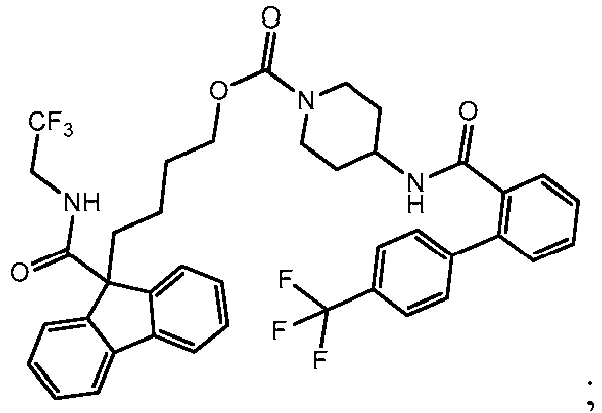
- Disclosed lomitapide compositions have less than 0.1 weight percent of the impurity, or less than about 0.01 weight percent of the impurity. For example, a disclosed lomitapide composition can have between about 0.0001 and about 0.01 weight percent of the impurity; between about 0.0001 and 0.001 weight percent of the impurity; and between about 0.001 and about 0.01 weight percent of the
- The carbamate product/impurity is represented by

- In certain embodiments, after storage at about 5°C, at about 25°C, or at about 40°C for less than or about 36 months, 24 months, 12 months, 6 months, 5 months, 4 months, 3 months, 2 months, or 1 month, a lomitapide composition comprises less than 0.1%, less than about 0.05%, less than about 0.01%, less than about 0.005%, or less than about 0.001% by weight of the carbamate impurity. In certain embodiments, storage conditions are about 40°C/75% relative humidity (RH) for about 4 months or about 6 months or about 25°C/60% RH for about 12 months, about 24 months, or about 36 months.
- In another aspect, the disclosure provides tablets containing a lomitapide composition as described herein. A tablet may be made by compression or molding, optionally with one or more accessory ingredients. Compressed tablets may be prepared using binder (for example, gelatin, microcrystalline cellulose, or hydroxypropylmethyl cellulose), lubricant, inert diluent, preservative, disintegrant (for example, sodium starch glycolate or cross-linked sodium carboxymethyl cellulose), surface-active or dispersing agent. Molded tablets may be made by molding in a suitable machine a mixture of the subject composition moistened with an inert liquid diluent. Tablets, and other solid dosage forms, such as dragees, capsules, pills and granules, may optionally be scored or prepared with coatings and shells, such as enteric coatings and other coatings well known in the pharmaceutical-formulating art. The disclosed excipients may serve more than one function. For example, fillers or binders may also be disintegrants, glidants, anti-adherents, lubricants, sweeteners and the like.
- As disclosed herein, the disclosure also relates to methods for analyzing a lomitapide composition sample for the presence or amount of an impurity as claimed. These methods include providing a lomitapide composition sample; using an analysis to determine the presence of a carbamate compound with the above-mentioned structure; making a determination about the lomitapide composition sample based on a comparison of a structural signal associated with the compound to a reference standard for lomitapide or a pharmaceutically acceptable salt thereof; and determining the presence of the structural signature associated with the compound thereby to analyze the lomitapide composition sample.
- In certain embodiments, the level of the structural signature is calculated as the area under the curve or as the percent relative amount of each fraction present in the lomitapide composition sample. The structural signature is determined using HPLC optionally coupled with mass spectrometry (MS), nuclear magnetic resonance (NMR) spectroscopy, matrix-assisted laser desorption/ionization mass spectroscopy (MALDI-MS), or one or more of a fluorometric assay, an enzyme-linked immunosorbent assay (ELISA), a chromatogenic assay, and a colorimetric assay. For example, the structural signature can be identified using HPLC-MS/NMR. In certain embodiments, the structural signature is identified using a combined HPLC and MS analysis, such as API-300 Sciex, HPLC PerkinElmer 200, Autosampler PerkinElmer 200. The MS can be performed by using triple-Q HPLC/MS analysis.
- In another aspect, the disclosure provides a method for analyzing a lomitapide composition sample for the presence or amount of an impurity as claimed. This method includes providing a lomitapide composition sample, using a spectral analysis to determine the presence of a carbamate compound with the above-mentioned structure; making a determination about the lomitapide composition sample based on a comparison of the molecular weight associated with the compound to a reference standard for lomitapide or a pharmaceutically acceptable salt thereof; and determining the molecular weight associated with the compound thereby to analyze the lomitapide composition sample.
- In a 1 L jacketed reactor was combined 1 (20.01 g), 2 (24.40 g), K2CO3 (20.05 g), and DMF (244 mL), as depicted in the above scheme. Vacuum was applied with stirring in the vessel and was held for 2 minutes. The vessel was released to nitrogen and the vacuum/nitrogen purging was completed twice more in a similar fashion. The mixture was held with stirring at 65 °C for 7.5 h, then cooled to 45 °C overnight. The carbamate impurity was 2.5% by HPLC. The reaction mixture was cooled to 21 °C. The solids were removed by filtration and washed with MTBE (165 mL). The DMF/MTBE mixture was transferred back to the 1 L reactor and DI water was charged (192 mL). The mixture was stirred for 10 minutes and the layers were allowed to separate. The aqueous layer was extracted with MTBE (154 mL) for 10 minutes and the layers were allowed to separate. The aqueous layer was discarded. The organic layers were combined, washed with DI water (80 mL) for 10 minutes, and the layers were allowed to separate. The remaining organic layer was washed with DI water (50 mL) for 10 minutes and the layers were allowed to separate. The organic layer was concentrated to a residue on a rotary evaporator (bath temp: 50 °C). Ethanol (SDA-3C, 50 mL) was added and the reaction mixture was concentrated to a residue on a rotary evaporator (bath temp: 50 °C). Ethanol (SDA-3C, 50 mL) was added and the reaction mixture was concentrated to a residue on a rotary evaporator (bath temp 50 °C). Ethanol (SDA-3C, 50 mL) was added and the total volume was approximately 65 mL. The reaction mixture was heated to 75 °C, resulting in a clear solution. n-Heptane (295 mL, heated to 75 °C) was added to the reaction mixture while maintaining an internal temperature of 70-75 °C. The reaction mixture was cooled to 25 °C over 2.5 hours and was then stirred overnight at ambient temperature. The solids were removed by filtration. The filtrate (approximately 12% carbamate) was concentrated to a residue (approximately 3.5 g). The carbamate was isolated by column chromatography (SiO2/DCM, eluting with 1:1 ethyl acetate/heptane) to afford approximately 100 carbamate. Full NMR structural confirmation was performed by (see Example 2) and the results are consistent with a carbamate of lomitapide. LC/MS: Calc'd for M+H = 738.3, found m/z 738.3 (AJS-ES pos). Calc'd for M-H = 736.3, found m/z 736.2 (AJS-ES neg).

- Identification of a carbamate impurity of lomitapide was confirmed using NMR spectroscopy. 32.5 mg of a suspected impurity was weighed out and dissolved in about 0.75 mL CDCl3 containing TMS. 1H, 13C, DEPT-135, COSY, HSQC, and HMBC spectra, followed by a second 1H spectrum, were acquired at ambient temperature on a Varian Inova NMR spectrometer operating at 500 MHz for 1H and 126 MHz for 13C.
- The resulting FIDs were transferred to a PC and processed using NUTS NMR processing software from Acorn NMR Inc. (Livermore, CA). 1H chemical shifts were referenced to TMS, 0 ppm. Per IUPAC recommendations for referencing of NMR spectra (Harris et al. (2001) PURE AND APPLIED CHEMISTRY, 73:1795-1818), the 13C chemical shifts were referenced using the "unified scale" to the absolute 1H frequency of 0 ppm.
- Based on the NMR spectra, the structure of the carbamate impurity was confirmed as:

- 1H and 13C chemical shifts are listed in Table 1.
Table 1 Label δ 13C (ppm), δ 1H (ppm) Multiplicity, splitting (Hz) (a) 4 173.3 - - 20 168.4 - - 32 155.2 - - 6 145.0 - - 27 144.0 - - 11 141.0 - - 26 138.1 - - 21 136.1 - - 24 130.3 7.50 dd, 7.6, 7.6, 1.5 30 130.0, 33 Hz - - 25 130.1 7.36 (b) overlapping 28 129.1 7.53 m 9 128.6 7.43 ddd, 7.6, 7.6, 1.0 22 128.4 or 128.3 7.64 dd, 7.7, 1.5 23 128.3 or 128.4 7.45 ddd, 7.6, 7.6, 1.2 8 128.1 7.35 (b) overlapping 29 125.4, 4 Hz 7.67 m 31 124.1, 272 Hz - - 7 124.2 7.52 d, 7.3 1 123.8, 279 Hz - - 10 120.5 7.75 d, 7.6 15 64.9 3.83 t, 6.4 5 62.4 - - 18 46.7 3.89 m 16 42.4 2.73 m 3.58-3.89 (b) m 2 40.6, 34 Hz 3.62 dq, 6.8, 9.0 12 35.8 2.42 m 17 31.3 1.59, 0.94 m 14 28.8 1.43 m 13 20.2 0.72 m 3 - 5.36 t, 6.3 19 - 5.31 d, 8.4 a) s=singlet, d=doublet, t=triplet, q=quartet, m=multiplet
b) Chemical shift obtained from HSQC spectrum - HMBC correlations are listed in Table 2.
Table 2 1H -------------------------------> 13C 2 1,4 3 2,4 7 5, 9, 10, 11 8 6, 7, 10, 11 9 6, 7, 10, 11 10 6, 7, 8, 11 12 4, 5, 6, 13, 14 13 5, 12, 14, 15 14 12, 13, 15 15 13, 14, 32 19 17, 18, 20 22 20, 24, 26 23 21, 25, 26 24 22, 26 25 21, 23, 27 28 26, 29, 30 29 27, 28, 29 (symmetry), 31 - For any protonated carbon, assignment of either the proton or the carbon can be used to assign the other using the HSQC spectrum. In addition, protonated carbons having odd multiplicity (methyls and methines) may be distinguished from carbons having even multiplicity (methylenes) using the DEPT-135 spectrum. Quaternary carbons are identified by comparison of the 13C with the DEPT and/or HSQC spectra, as only protonated carbons are observed in either the DEPT or HSQC. Geminal methylene protons are identified from the HSQC spectrum as 2 protons with correlations to the same carbon. Protons on N are identified by absence of HSQC correlations.
- 13C assignments were made based on chemical shift, multiplicity, and C-F coupling. 1H assignments were made based on chemical shift, integration, and coupling pattern.
- The NMR data are consistent with the proposed structure above. A few unidentified impurity peaks were also observed.
- The following synthetic scheme can be used to prepare the following compound which would allow identification or presence in, e.g., a sample of lomitapide.

- During stability testing of lomitapide, an impurity with an RRT of 0.85 was observed to be increasing in stability samples stored at 40 °C/75% RH at 4 and 6 months and stored at 25 °C/60% RH at 12, 24, and 36 months. A study was performed to identify this impurity using LC/MS/MS. Based on the fragmentation patterns of both lomitapide and the impurity at RRT 0.85, the structure of the impurity at RRT 0.85 has been identified to be a degradation product of lomitapide due to hydrolysis having the structure:

Claims (8)
- A lomitapide composition comprising: lomitapide or a pharmaceutically acceptable salt thereof, and less than 0.1% by weight of a carbamate product represented by

- The lomitapide composition according to claim 1, comprising less than 0.1% by weight of the carbamate product after storage at 25°C for 12 months.
- A tablet comprising the lomitapide composition of claim 1 or 2.
- A method for analyzing a lomitapide composition sample for the presence or amount of an impurity comprising:providing a lomitapide composition sample;using an analysis to determine the presence of a compound having the structure:
 making a determination about the lomitapide composition sample based on a comparison of a structural signal associated with the compound to a reference standard for lomitapide or a pharmaceutically acceptable salt thereof; anddetermining the presence of the structural signature associated with the compound thereby to analyze the lomitapide composition sample;wherein the structural signature is determined using high performance liquid chromatography (HPLC).
 - A method for analyzing a lomitapide composition sample for the presence or amount of an impurity comprising:providing a lomitapide composition sample;using an analysis to determine the presence of a compound having the structure:
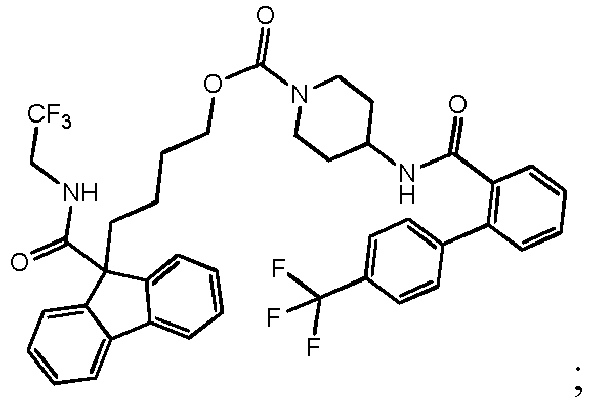 making a determination about the lomitapide composition sample based on a comparison of a structural signal associated with the compound to a reference standard for lomitapide or a pharmaceutically acceptable salt thereof; anddetermining the presence of the structural signature associated with the compound thereby to analyze the lomitapide composition sample;wherein the structural signature is determined using nuclear magnetic resonance (NMR) spectroscopy.
 - A method for analyzing a lomitapide composition sample for the presence or amount of an impurity comprising:providing a lomitapide composition sample;using an analysis to determine the presence of a compound having the structure:
 making a determination about the lomitapide composition sample based on a comparison of a structural signal associated with the compound to a reference standard for lomitapide or a pharmaceutically acceptable salt thereof; anddetermining the presence of the structural signature associated with the compound thereby to analyze the lomitapide composition sample;wherein the structural signature is determined using matrix-assisted laser desorption/ionization mass spectroscopy (MALDI-MS).
 - A method for analyzing a lomitapide composition sample for the presence or amount of an impurity comprising:providing a lomitapide composition sample;using an analysis to determine the presence of a compound having the structure:
 making a determination about the lomitapide composition sample based on a comparison of a structural signal associated with the compound to a reference standard for lomitapide or a pharmaceutically acceptable salt thereof; anddetermining the presence of the structural signature associated with the compound thereby to analyze the lomitapide composition sample;wherein the structural signature is determined using one or more of a fluorometric assay, an enzyme-linked immunosorbent assay (ELISA), a chromatogenic assay, and a colorimetric assay.
 - A method for analyzing a lomitapide composition sample for the presence or amount of an impurity comprising:providing a lomitapide composition sample;using a spectral analysis to determine the presence of a compound having the structure:
 making a determination about the lomitapide composition sample based on a comparison of the molecular weight associated with the compound to a reference standard for lomitapide or a pharmaceutically acceptable salt thereof; anddetermining the molecular weight associated with the compound thereby to analyze the lomitapide composition sample.
Applications Claiming Priority (3)
| Application Number | Priority Date | Filing Date | Title |
|---|---|---|---|
| US201562154906P | 2015-04-30 | 2015-04-30 | |
| BR102015025502-0A BR102015025502B1 (en) | 2015-04-30 | 2015-10-06 | Composition of lomitapide, tablet, lomitapide product, methods for analyzing a sample composition of lomitapide and for determining an amount of an impurity in a sample of the composition |
| PCT/US2016/030397 WO2016176678A1 (en) | 2015-04-30 | 2016-05-02 | Compound impurities and methods of detecting same |
Publications (3)
| Publication Number | Publication Date |
|---|---|
| EP3289085A1 EP3289085A1 (en) | 2018-03-07 |
| EP3289085A4 EP3289085A4 (en) | 2018-12-26 |
| EP3289085B1 true EP3289085B1 (en) | 2022-11-02 |
Family
ID=57197797
Family Applications (1)
| Application Number | Title | Priority Date | Filing Date |
|---|---|---|---|
| EP16787302.5A Active EP3289085B1 (en) | 2015-04-30 | 2016-05-02 | Compound impurities and methods of detecting same |
Country Status (6)
| Country | Link |
|---|---|
| US (1) | US10213419B2 (en) |
| EP (1) | EP3289085B1 (en) |
| JP (1) | JP2018517680A (en) |
| BR (1) | BR102015025502B1 (en) |
| CA (1) | CA2983995A1 (en) |
| WO (1) | WO2016176678A1 (en) |
Families Citing this family (6)
| Publication number | Priority date | Publication date | Assignee | Title |
|---|---|---|---|---|
| WO2016146143A1 (en) | 2015-03-16 | 2016-09-22 | Amal Therapeutics Sa | Cell penetrating peptides and complexes comprising the same |
| PT3429618T (en) | 2016-03-16 | 2024-04-02 | Amal Therapeutics Sa | Combination of an immune checkpoint modulator and a complex comprising a cell penetrating peptide, a cargo and a tlr peptide agonist for use in medicine |
| IL265479B (en) | 2016-09-21 | 2022-09-01 | Amal Therapeutics Sa | Fusion comprising a cell penetrating peptide, a multi epitope and a tlr peptide agonist for treatment of cancer |
| EP4188372A1 (en) | 2020-07-29 | 2023-06-07 | Amryt Pharmaceuticals Inc. | Lomitapide for use in methods of treating hyperlipidemia and hypercholesterolemia in pediatric patients |
| JP2024508334A (en) | 2021-03-03 | 2024-02-26 | アムリット・ファーマシューティカルズ・インコーポレイテッド | Methods to treat familial hyperchylomicronemia syndrome |
| CN117310034B (en) * | 2023-09-27 | 2024-12-06 | 石家庄四药有限公司 | A method for detecting genotoxic impurities in betahistine mesylate |
Family Cites Families (9)
| Publication number | Priority date | Publication date | Assignee | Title |
|---|---|---|---|---|
| US5739135A (en) * | 1993-09-03 | 1998-04-14 | Bristol-Myers Squibb Company | Inhibitors of microsomal triglyceride transfer protein and method |
| AU4543899A (en) * | 1998-06-08 | 1999-12-30 | Advanced Medicine, Inc. | Multibinding inhibitors of microsomal triglyceride transferase protein |
| NZ549721A (en) * | 2004-03-05 | 2010-08-27 | Univ Pennsylvania | Methods for treating disorders or diseases associated with hyperlipidemia and hypercholesterolemia while minimizing side-effects |
| WO2006127932A2 (en) * | 2005-05-23 | 2006-11-30 | Teva Pharmaceutical Industries Ltd. | Purification of cinacalcet |
| JP2009511635A (en) * | 2005-10-18 | 2009-03-19 | エージェリオン ファーマシューティカルズ | Methods for treating disorders associated with hyperlipidemia in mammals |
| CN102451161A (en) * | 2010-10-18 | 2012-05-16 | 王丽燕 | Dispersible tablets containing cholesterol absorption inhibitor and lipid regulating drug, and application thereof |
| WO2015077154A1 (en) * | 2013-11-20 | 2015-05-28 | Cymabay Therapeutics, Inc. | Treatment of homozygous familial hypercholesterolemia |
| WO2015121877A2 (en) * | 2014-02-17 | 2015-08-20 | Hetero Research Foundation | Polymorphs of lomitapide and its salts |
| EP3215490A1 (en) * | 2014-11-05 | 2017-09-13 | Hetero Research Foundation | Process for the preparation of lomitapide |
-
2015
- 2015-10-06 BR BR102015025502-0A patent/BR102015025502B1/en active IP Right Grant
-
2016
- 2016-05-02 US US15/570,246 patent/US10213419B2/en active Active
- 2016-05-02 WO PCT/US2016/030397 patent/WO2016176678A1/en not_active Ceased
- 2016-05-02 CA CA2983995A patent/CA2983995A1/en not_active Abandoned
- 2016-05-02 EP EP16787302.5A patent/EP3289085B1/en active Active
- 2016-05-02 JP JP2017556976A patent/JP2018517680A/en active Pending
Also Published As
| Publication number | Publication date |
|---|---|
| EP3289085A4 (en) | 2018-12-26 |
| EP3289085A1 (en) | 2018-03-07 |
| US20180133205A1 (en) | 2018-05-17 |
| BR102015025502A2 (en) | 2016-11-01 |
| JP2018517680A (en) | 2018-07-05 |
| BR102015025502B1 (en) | 2022-06-21 |
| US10213419B2 (en) | 2019-02-26 |
| WO2016176678A1 (en) | 2016-11-03 |
| CA2983995A1 (en) | 2016-11-03 |
Similar Documents
| Publication | Publication Date | Title |
|---|---|---|
| US10213419B2 (en) | Compound impurities and methods of detecting same | |
| JP4713574B2 (en) | Rosuvastatin free from rosuvastatin alkyl ether and salts thereof and method for producing them | |
| EP3170827A1 (en) | Tofacitinib mono-oxalate salt | |
| KR20070088485A (en) | Purification of cinacalcet | |
| US9221815B2 (en) | Solid state form of vemurafenib choline salt | |
| WO2017079670A1 (en) | Compositions comprising an inhibitor of lysine specific demethylase-1 | |
| EP3022209B1 (en) | Dolutegravir potassium salt | |
| US10898465B2 (en) | Utility of (+) epicatechin and their analogs | |
| US20190367509A1 (en) | Dimer impurities of apixaban and method to remove them | |
| CN104011029B (en) | A kind ofly prepare improving one's methods of bendamustine hydrochloride | |
| US10647729B1 (en) | Polymorphs of dolutegravir and salts thereof | |
| EP2495237A1 (en) | An improved process for the preparation of highly pure ivabradine hydrochloride | |
| EP3736273A1 (en) | Novel crystal form of acalabrutinib and preparation method and use thereof | |
| US20220213037A1 (en) | A pharmaceutical intermediate | |
| US6703408B2 (en) | N-formyl derivatives of paroxetine | |
| CN115707703B (en) | Nitrosamine compounds, their preparation methods, their use in detecting varenicline tartrate raw materials or preparations, and their detection methods | |
| KR20120070353A (en) | Method of producing related substance of olmesartan medoxomil | |
| RU2163804C1 (en) | Method of synthesis of fluconazole | |
| EP1268441B1 (en) | An intermediate and process for its synthesis | |
| He et al. | Study on Mechanism of Action of 1-(4-Bromophenyl) 5-Phenyl-1h-1, 2, 3-Triazole Against Mango Anthracnose by Chemical Proteomics | |
| CN119241536A (en) | A 2-fluoropyridoisoquinoline derivative and its preparation method and application | |
| CN1073447A (en) | Kedarcidin antitumor chromophore | |
| CS273347B2 (en) | Method of polycyclic aromatic alkanol derivatives preparation |
Legal Events
| Date | Code | Title | Description |
|---|---|---|---|
| STAA | Information on the status of an ep patent application or granted ep patent |
Free format text: STATUS: THE INTERNATIONAL PUBLICATION HAS BEEN MADE |
|
| PUAI | Public reference made under article 153(3) epc to a published international application that has entered the european phase |
Free format text: ORIGINAL CODE: 0009012 |
|
| STAA | Information on the status of an ep patent application or granted ep patent |
Free format text: STATUS: REQUEST FOR EXAMINATION WAS MADE |
|
| 17P | Request for examination filed |
Effective date: 20171110 |
|
| AK | Designated contracting states |
Kind code of ref document: A1 Designated state(s): AL AT BE BG CH CY CZ DE DK EE ES FI FR GB GR HR HU IE IS IT LI LT LU LV MC MK MT NL NO PL PT RO RS SE SI SK SM TR |
|
| AX | Request for extension of the european patent |
Extension state: BA ME |
|
| DAV | Request for validation of the european patent (deleted) | ||
| DAX | Request for extension of the european patent (deleted) | ||
| RIC1 | Information provided on ipc code assigned before grant |
Ipc: A61K 31/4468 20060101ALI20181114BHEP Ipc: G01N 30/02 20060101ALI20181114BHEP Ipc: A61K 9/20 20060101AFI20181114BHEP Ipc: A61P 3/06 20060101ALI20181114BHEP Ipc: G01N 24/08 20060101ALI20181114BHEP Ipc: H01J 49/16 20060101ALI20181114BHEP Ipc: G01N 30/86 20060101ALI20181114BHEP |
|
| A4 | Supplementary search report drawn up and despatched |
Effective date: 20181122 |
|
| STAA | Information on the status of an ep patent application or granted ep patent |
Free format text: STATUS: EXAMINATION IS IN PROGRESS |
|
| 17Q | First examination report despatched |
Effective date: 20201019 |
|
| RAP3 | Party data changed (applicant data changed or rights of an application transferred) |
Owner name: AMRYT PHARMACEUTICALS INC. |
|
| REG | Reference to a national code |
Ref country code: DE Ref legal event code: R079 Ref document number: 602016076073 Country of ref document: DE Free format text: PREVIOUS MAIN CLASS: C12N0015113000 Ipc: A61K0009200000 |
|
| GRAP | Despatch of communication of intention to grant a patent |
Free format text: ORIGINAL CODE: EPIDOSNIGR1 |
|
| STAA | Information on the status of an ep patent application or granted ep patent |
Free format text: STATUS: GRANT OF PATENT IS INTENDED |
|
| RIC1 | Information provided on ipc code assigned before grant |
Ipc: H01J 49/16 20060101ALI20220509BHEP Ipc: G01N 30/86 20060101ALI20220509BHEP Ipc: G01N 30/02 20060101ALI20220509BHEP Ipc: G01N 24/08 20060101ALI20220509BHEP Ipc: A61K 31/4468 20060101ALI20220509BHEP Ipc: A61K 9/20 20060101AFI20220509BHEP |
|
| INTG | Intention to grant announced |
Effective date: 20220523 |
|
| GRAS | Grant fee paid |
Free format text: ORIGINAL CODE: EPIDOSNIGR3 |
|
| GRAA | (expected) grant |
Free format text: ORIGINAL CODE: 0009210 |
|
| STAA | Information on the status of an ep patent application or granted ep patent |
Free format text: STATUS: THE PATENT HAS BEEN GRANTED |
|
| AK | Designated contracting states |
Kind code of ref document: B1 Designated state(s): AL AT BE BG CH CY CZ DE DK EE ES FI FR GB GR HR HU IE IS IT LI LT LU LV MC MK MT NL NO PL PT RO RS SE SI SK SM TR |
|
| REG | Reference to a national code |
Ref country code: GB Ref legal event code: FG4D |
|
| REG | Reference to a national code |
Ref country code: CH Ref legal event code: EP Ref country code: AT Ref legal event code: REF Ref document number: 1528243 Country of ref document: AT Kind code of ref document: T Effective date: 20221115 |
|
| REG | Reference to a national code |
Ref country code: DE Ref legal event code: R096 Ref document number: 602016076073 Country of ref document: DE |
|
| REG | Reference to a national code |
Ref country code: IE Ref legal event code: FG4D |
|
| REG | Reference to a national code |
Ref country code: LT Ref legal event code: MG9D |
|
| REG | Reference to a national code |
Ref country code: NL Ref legal event code: MP Effective date: 20221102 |
|
| REG | Reference to a national code |
Ref country code: AT Ref legal event code: MK05 Ref document number: 1528243 Country of ref document: AT Kind code of ref document: T Effective date: 20221102 |
|
| PG25 | Lapsed in a contracting state [announced via postgrant information from national office to epo] |
Ref country code: SE Free format text: LAPSE BECAUSE OF FAILURE TO SUBMIT A TRANSLATION OF THE DESCRIPTION OR TO PAY THE FEE WITHIN THE PRESCRIBED TIME-LIMIT Effective date: 20221102 Ref country code: PT Free format text: LAPSE BECAUSE OF FAILURE TO SUBMIT A TRANSLATION OF THE DESCRIPTION OR TO PAY THE FEE WITHIN THE PRESCRIBED TIME-LIMIT Effective date: 20230302 Ref country code: NO Free format text: LAPSE BECAUSE OF FAILURE TO SUBMIT A TRANSLATION OF THE DESCRIPTION OR TO PAY THE FEE WITHIN THE PRESCRIBED TIME-LIMIT Effective date: 20230202 Ref country code: LT Free format text: LAPSE BECAUSE OF FAILURE TO SUBMIT A TRANSLATION OF THE DESCRIPTION OR TO PAY THE FEE WITHIN THE PRESCRIBED TIME-LIMIT Effective date: 20221102 Ref country code: FI Free format text: LAPSE BECAUSE OF FAILURE TO SUBMIT A TRANSLATION OF THE DESCRIPTION OR TO PAY THE FEE WITHIN THE PRESCRIBED TIME-LIMIT Effective date: 20221102 Ref country code: ES Free format text: LAPSE BECAUSE OF FAILURE TO SUBMIT A TRANSLATION OF THE DESCRIPTION OR TO PAY THE FEE WITHIN THE PRESCRIBED TIME-LIMIT Effective date: 20221102 Ref country code: AT Free format text: LAPSE BECAUSE OF FAILURE TO SUBMIT A TRANSLATION OF THE DESCRIPTION OR TO PAY THE FEE WITHIN THE PRESCRIBED TIME-LIMIT Effective date: 20221102 |
|
| PG25 | Lapsed in a contracting state [announced via postgrant information from national office to epo] |
Ref country code: RS Free format text: LAPSE BECAUSE OF FAILURE TO SUBMIT A TRANSLATION OF THE DESCRIPTION OR TO PAY THE FEE WITHIN THE PRESCRIBED TIME-LIMIT Effective date: 20221102 Ref country code: PL Free format text: LAPSE BECAUSE OF FAILURE TO SUBMIT A TRANSLATION OF THE DESCRIPTION OR TO PAY THE FEE WITHIN THE PRESCRIBED TIME-LIMIT Effective date: 20221102 Ref country code: LV Free format text: LAPSE BECAUSE OF FAILURE TO SUBMIT A TRANSLATION OF THE DESCRIPTION OR TO PAY THE FEE WITHIN THE PRESCRIBED TIME-LIMIT Effective date: 20221102 Ref country code: IS Free format text: LAPSE BECAUSE OF FAILURE TO SUBMIT A TRANSLATION OF THE DESCRIPTION OR TO PAY THE FEE WITHIN THE PRESCRIBED TIME-LIMIT Effective date: 20230302 Ref country code: HR Free format text: LAPSE BECAUSE OF FAILURE TO SUBMIT A TRANSLATION OF THE DESCRIPTION OR TO PAY THE FEE WITHIN THE PRESCRIBED TIME-LIMIT Effective date: 20221102 Ref country code: GR Free format text: LAPSE BECAUSE OF FAILURE TO SUBMIT A TRANSLATION OF THE DESCRIPTION OR TO PAY THE FEE WITHIN THE PRESCRIBED TIME-LIMIT Effective date: 20230203 |
|
| P01 | Opt-out of the competence of the unified patent court (upc) registered |
Effective date: 20230515 |
|
| PG25 | Lapsed in a contracting state [announced via postgrant information from national office to epo] |
Ref country code: NL Free format text: LAPSE BECAUSE OF FAILURE TO SUBMIT A TRANSLATION OF THE DESCRIPTION OR TO PAY THE FEE WITHIN THE PRESCRIBED TIME-LIMIT Effective date: 20221102 |
|
| PG25 | Lapsed in a contracting state [announced via postgrant information from national office to epo] |
Ref country code: SM Free format text: LAPSE BECAUSE OF FAILURE TO SUBMIT A TRANSLATION OF THE DESCRIPTION OR TO PAY THE FEE WITHIN THE PRESCRIBED TIME-LIMIT Effective date: 20221102 Ref country code: RO Free format text: LAPSE BECAUSE OF FAILURE TO SUBMIT A TRANSLATION OF THE DESCRIPTION OR TO PAY THE FEE WITHIN THE PRESCRIBED TIME-LIMIT Effective date: 20221102 Ref country code: EE Free format text: LAPSE BECAUSE OF FAILURE TO SUBMIT A TRANSLATION OF THE DESCRIPTION OR TO PAY THE FEE WITHIN THE PRESCRIBED TIME-LIMIT Effective date: 20221102 Ref country code: DK Free format text: LAPSE BECAUSE OF FAILURE TO SUBMIT A TRANSLATION OF THE DESCRIPTION OR TO PAY THE FEE WITHIN THE PRESCRIBED TIME-LIMIT Effective date: 20221102 Ref country code: CZ Free format text: LAPSE BECAUSE OF FAILURE TO SUBMIT A TRANSLATION OF THE DESCRIPTION OR TO PAY THE FEE WITHIN THE PRESCRIBED TIME-LIMIT Effective date: 20221102 |
|
| REG | Reference to a national code |
Ref country code: DE Ref legal event code: R097 Ref document number: 602016076073 Country of ref document: DE |
|
| PG25 | Lapsed in a contracting state [announced via postgrant information from national office to epo] |
Ref country code: SK Free format text: LAPSE BECAUSE OF FAILURE TO SUBMIT A TRANSLATION OF THE DESCRIPTION OR TO PAY THE FEE WITHIN THE PRESCRIBED TIME-LIMIT Effective date: 20221102 Ref country code: AL Free format text: LAPSE BECAUSE OF FAILURE TO SUBMIT A TRANSLATION OF THE DESCRIPTION OR TO PAY THE FEE WITHIN THE PRESCRIBED TIME-LIMIT Effective date: 20221102 |
|
| PLBE | No opposition filed within time limit |
Free format text: ORIGINAL CODE: 0009261 |
|
| STAA | Information on the status of an ep patent application or granted ep patent |
Free format text: STATUS: NO OPPOSITION FILED WITHIN TIME LIMIT |
|
| 26N | No opposition filed |
Effective date: 20230803 |
|
| PG25 | Lapsed in a contracting state [announced via postgrant information from national office to epo] |
Ref country code: SI Free format text: LAPSE BECAUSE OF FAILURE TO SUBMIT A TRANSLATION OF THE DESCRIPTION OR TO PAY THE FEE WITHIN THE PRESCRIBED TIME-LIMIT Effective date: 20221102 |
|
| REG | Reference to a national code |
Ref country code: CH Ref legal event code: PL |
|
| PG25 | Lapsed in a contracting state [announced via postgrant information from national office to epo] |
Ref country code: MC Free format text: LAPSE BECAUSE OF FAILURE TO SUBMIT A TRANSLATION OF THE DESCRIPTION OR TO PAY THE FEE WITHIN THE PRESCRIBED TIME-LIMIT Effective date: 20221102 |
|
| REG | Reference to a national code |
Ref country code: BE Ref legal event code: MM Effective date: 20230531 |
|
| PG25 | Lapsed in a contracting state [announced via postgrant information from national office to epo] |
Ref country code: MC Free format text: LAPSE BECAUSE OF FAILURE TO SUBMIT A TRANSLATION OF THE DESCRIPTION OR TO PAY THE FEE WITHIN THE PRESCRIBED TIME-LIMIT Effective date: 20221102 Ref country code: LU Free format text: LAPSE BECAUSE OF NON-PAYMENT OF DUE FEES Effective date: 20230502 Ref country code: LI Free format text: LAPSE BECAUSE OF NON-PAYMENT OF DUE FEES Effective date: 20230531 Ref country code: CH Free format text: LAPSE BECAUSE OF NON-PAYMENT OF DUE FEES Effective date: 20230531 |
|
| REG | Reference to a national code |
Ref country code: IE Ref legal event code: MM4A |
|
| PG25 | Lapsed in a contracting state [announced via postgrant information from national office to epo] |
Ref country code: IE Free format text: LAPSE BECAUSE OF NON-PAYMENT OF DUE FEES Effective date: 20230502 |
|
| PG25 | Lapsed in a contracting state [announced via postgrant information from national office to epo] |
Ref country code: IE Free format text: LAPSE BECAUSE OF NON-PAYMENT OF DUE FEES Effective date: 20230502 |
|
| PG25 | Lapsed in a contracting state [announced via postgrant information from national office to epo] |
Ref country code: IT Free format text: LAPSE BECAUSE OF FAILURE TO SUBMIT A TRANSLATION OF THE DESCRIPTION OR TO PAY THE FEE WITHIN THE PRESCRIBED TIME-LIMIT Effective date: 20221102 Ref country code: BE Free format text: LAPSE BECAUSE OF NON-PAYMENT OF DUE FEES Effective date: 20230531 |
|
| PG25 | Lapsed in a contracting state [announced via postgrant information from national office to epo] |
Ref country code: BG Free format text: LAPSE BECAUSE OF FAILURE TO SUBMIT A TRANSLATION OF THE DESCRIPTION OR TO PAY THE FEE WITHIN THE PRESCRIBED TIME-LIMIT Effective date: 20221102 |
|
| PG25 | Lapsed in a contracting state [announced via postgrant information from national office to epo] |
Ref country code: BG Free format text: LAPSE BECAUSE OF FAILURE TO SUBMIT A TRANSLATION OF THE DESCRIPTION OR TO PAY THE FEE WITHIN THE PRESCRIBED TIME-LIMIT Effective date: 20221102 |
|
| PGFP | Annual fee paid to national office [announced via postgrant information from national office to epo] |
Ref country code: DE Payment date: 20250521 Year of fee payment: 10 |
|
| PGFP | Annual fee paid to national office [announced via postgrant information from national office to epo] |
Ref country code: GB Payment date: 20250527 Year of fee payment: 10 |
|
| PGFP | Annual fee paid to national office [announced via postgrant information from national office to epo] |
Ref country code: FR Payment date: 20250528 Year of fee payment: 10 |
|
| PG25 | Lapsed in a contracting state [announced via postgrant information from national office to epo] |
Ref country code: CY Free format text: LAPSE BECAUSE OF FAILURE TO SUBMIT A TRANSLATION OF THE DESCRIPTION OR TO PAY THE FEE WITHIN THE PRESCRIBED TIME-LIMIT; INVALID AB INITIO Effective date: 20160502 |
|
| PG25 | Lapsed in a contracting state [announced via postgrant information from national office to epo] |
Ref country code: HU Free format text: LAPSE BECAUSE OF FAILURE TO SUBMIT A TRANSLATION OF THE DESCRIPTION OR TO PAY THE FEE WITHIN THE PRESCRIBED TIME-LIMIT; INVALID AB INITIO Effective date: 20160502 |
|
| PG25 | Lapsed in a contracting state [announced via postgrant information from national office to epo] |
Ref country code: TR Free format text: LAPSE BECAUSE OF FAILURE TO SUBMIT A TRANSLATION OF THE DESCRIPTION OR TO PAY THE FEE WITHIN THE PRESCRIBED TIME-LIMIT Effective date: 20221102 |