EP3288221A1 - Station-side device and communication method - Google Patents
Station-side device and communication method Download PDFInfo
- Publication number
- EP3288221A1 EP3288221A1 EP16800007.3A EP16800007A EP3288221A1 EP 3288221 A1 EP3288221 A1 EP 3288221A1 EP 16800007 A EP16800007 A EP 16800007A EP 3288221 A1 EP3288221 A1 EP 3288221A1
- Authority
- EP
- European Patent Office
- Prior art keywords
- wavelength
- onu
- side device
- wavelengths
- subscriber
- Prior art date
- Legal status (The legal status is an assumption and is not a legal conclusion. Google has not performed a legal analysis and makes no representation as to the accuracy of the status listed.)
- Granted
Links
Images



Classifications
-
- H—ELECTRICITY
- H04—ELECTRIC COMMUNICATION TECHNIQUE
- H04L—TRANSMISSION OF DIGITAL INFORMATION, e.g. TELEGRAPHIC COMMUNICATION
- H04L12/00—Data switching networks
- H04L12/28—Data switching networks characterised by path configuration, e.g. LAN [Local Area Networks] or WAN [Wide Area Networks]
- H04L12/2854—Wide area networks, e.g. public data networks
- H04L12/2856—Access arrangements, e.g. Internet access
- H04L12/2869—Operational details of access network equipments
- H04L12/2878—Access multiplexer, e.g. DSLAM
- H04L12/2879—Access multiplexer, e.g. DSLAM characterised by the network type on the uplink side, i.e. towards the service provider network
- H04L12/2885—Arrangements interfacing with optical systems
-
- H—ELECTRICITY
- H04—ELECTRIC COMMUNICATION TECHNIQUE
- H04J—MULTIPLEX COMMUNICATION
- H04J14/00—Optical multiplex systems
- H04J14/02—Wavelength-division multiplex systems
- H04J14/0227—Operation, administration, maintenance or provisioning [OAMP] of WDM networks, e.g. media access, routing or wavelength allocation
- H04J14/0241—Wavelength allocation for communications one-to-one, e.g. unicasting wavelengths
- H04J14/0242—Wavelength allocation for communications one-to-one, e.g. unicasting wavelengths in WDM-PON
- H04J14/0245—Wavelength allocation for communications one-to-one, e.g. unicasting wavelengths in WDM-PON for downstream transmission, e.g. optical line terminal [OLT] to ONU
- H04J14/0246—Wavelength allocation for communications one-to-one, e.g. unicasting wavelengths in WDM-PON for downstream transmission, e.g. optical line terminal [OLT] to ONU using one wavelength per ONU
-
- H—ELECTRICITY
- H04—ELECTRIC COMMUNICATION TECHNIQUE
- H04J—MULTIPLEX COMMUNICATION
- H04J14/00—Optical multiplex systems
- H04J14/02—Wavelength-division multiplex systems
- H04J14/0278—WDM optical network architectures
- H04J14/0282—WDM tree architectures
-
- H—ELECTRICITY
- H04—ELECTRIC COMMUNICATION TECHNIQUE
- H04J—MULTIPLEX COMMUNICATION
- H04J14/00—Optical multiplex systems
- H04J14/08—Time-division multiplex systems
- H04J14/086—Medium access
-
- H—ELECTRICITY
- H04—ELECTRIC COMMUNICATION TECHNIQUE
- H04L—TRANSMISSION OF DIGITAL INFORMATION, e.g. TELEGRAPHIC COMMUNICATION
- H04L12/00—Data switching networks
- H04L12/28—Data switching networks characterised by path configuration, e.g. LAN [Local Area Networks] or WAN [Wide Area Networks]
- H04L12/44—Star or tree networks
-
- H—ELECTRICITY
- H04—ELECTRIC COMMUNICATION TECHNIQUE
- H04Q—SELECTING
- H04Q11/00—Selecting arrangements for multiplex systems
- H04Q11/0001—Selecting arrangements for multiplex systems using optical switching
- H04Q11/0062—Network aspects
- H04Q11/0067—Provisions for optical access or distribution networks, e.g. Gigabit Ethernet Passive Optical Network (GE-PON), ATM-based Passive Optical Network (A-PON), PON-Ring
Definitions
- the present invention relates to a station-side device and a communication method in a passive optical network (PON) system.
- PON passive optical network
- an optical line terminal (OLT) as a station-side device sets Quiet Window (an acceptance period) as a time during which it waits for the arrival of an uplink Serial_Number_ONU PLOAM frame which is a registration request signal from an unregistered optical network unit (ONU) as a subscriber-side device at the time of initial connection (referred to as "activation").
- Quiet Window an acceptance period
- Fig. 7 is a diagram schematically showing a conventional communication method.
- an optical signal is transmitted and received in a time division manner using each frame (PHY frame).
- Quiet Window is set in the OLT.
- the OLT waits for a Serial_Number_ONU PLOAM from a new ONU with an unknown round-trip propagation delay and therefore the OLT controls uplink signal transmission of ONUs so as not to receive uplink signals from registered ONUs.
- the new ONU transmits the Serial_Number_ONU PLOAM as a registration request signal within Quiet Window.
- the OLT starts a process of registering the ONU that has transmitted this Serial_Number_ONU PLOAM.
- a similar initial connection procedure is specified in an EPON defined in IEEE 802.3.
- an equivalent to Quiet Window is referred to as Discovery Window.
- the OLT controls uplink signal transmission of ONUs so as not to receive uplink signals from registered ONUs.
- the OLT measures the reception time of the Serial_Number_ONU, calculates an equalization delay (EqD) which is a virtual delay time for synchronizing the round trip propagation delay between the OLT and the ONU with the start position of the uplink frame of the ONU, and notifies the ONU of the calculated EqD using a Ranging Time PLOAM.
- EqD equalization delay
- PON for example, ITU-T G.989.3 which combines wavelength multiplexing and time division multiplexing, of which standardization is being promoted as the next access technology.
- the OLT sets Quiet Window or Discovery Window at the time of initial connection and waits for a registration request signal (Serial_Number_ONU PLOAM in Non-Patent Document 1) of the ONU for initial connection.
- This Quiet Window is defined as a period determined from minimum and maximum distances (a period from Earliest expected Serial_Number PLOAM to Latest expected Serial_Number PLOAM) as shown in Fig. 7 since it is unknown at which timing a registration request signal from an unregistered ONU will arrive.
- Fig. 8 is a diagram schematically showing a conventional communication method.
- the OLT performs control so as not to receive normal uplink signals from other registered ONUs. For this reason, as shown in Fig. 8 , during the period in which the Window is set, a registered ONU is in a state in which it cannot output uplink signals. An uplink signal arriving at the ONU during this period is queued in a buffer in the ONU.
- the OLT sets Quiet Window at regular intervals.
- the OLT also transmits an uplink grant for initial connection (a frame for specifying the timing to transmit Serial_number_ONU PLOAM) (process S1).
- the unregistered ONU transmits a registration request signal (Serial_Number_ONU PLOAM) such that it arrives within Quiet Window (process S2) and issues an initial connection start request.
- a registration request signal (Serial_Number_ONU PLOAM) from the unregistered ONU
- the OLT starts a process of registering the ONU.
- the OLT also measures the reception time of the Serial_Number_ONU and calculates an Equalization Delay (EqD) which is a virtual delay time for synchronizing the round trip propagation delay between the OLT and the ONU with the start position of the uplink frame of the ONU.
- EqD Equalization Delay
- the OLT then notifies the ONU of the EqD using a Ranging_Time PLOAM (process S3).
- the registered ONU cannot transmit a signal of an uplink frame during the period corresponding to Quiet Window. Therefore, as shown in Fig. 8 , an uplink signal arriving at the ONU in the period corresponding to Quiet Window is queued in the buffer in the ONU (process S4). The uplink signal queued in this buffer is transmitted after Quiet Window ends, thus causing a delay corresponding to this period.
- an uplink signal is delayed in a period corresponding to Quiet Window.
- the OLT can set the intervals at which Quiet Window is set, it is recommended according to Non-Patent Document 1 that the period of Quiet Window itself be 250 ⁇ sec if the distance difference from the OLT to the ONU is 20 km and 450 ⁇ sec if the distance difference is 40 km. That is, in the PON of the conventional TDMA system, opening the Quiet Window causes delay fluctuations of 250 ⁇ sec to 450 ⁇ sec in uplink signals. Therefore, as shown in Non-Patent Document 2, the conventional TDMA PON has a problem that it is difficult to apply the TDMA PON to mobile fronthaul (MFH) or the like which has strict requirements for delay or delay fluctuation.
- MMH mobile fronthaul
- a first aspect of the present invention is a station-side device performing transmission and reception of an optical signal to and from a subscriber-side device, and including a communication control unit configured to perform optical signal communication using a plurality of wavelengths by wavelength division multiplexing and time division multiplexing, and a registration unit configured to set an acceptance period in at least one wavelength among the plurality of wavelengths, to perform a new registration of a subscriber-side device in response to a registration request of the subscriber-side device received within the acceptance period, and not to set the acceptance period in at least one other wavelength among the plurality of wavelengths.
- the registration unit is configured to set the acceptance period in a wavelength having a margin in terms of a delay requirement among the plurality of wavelengths.
- the registration unit is configured not to set the acceptance period in a wavelength having no margin in terms of a delay requirement among the plurality of wavelengths.
- the communication control unit is configured to transmit a wavelength switching instruction for switching a wavelength to the at least one other wavelength to the subscriber-side device after the new registration of the subscriber-side device.
- the communication control unit when the subscriber-side device uses a wavelength at which the acceptance period is not set, the communication control unit is configured to transmit a wavelength switching instruction for switching a wavelength to the wavelength at which the acceptance period is not set.
- the station-side device in the station-side device according to any one of the first to fifth aspects, is configured to switch a wavelength at which the acceptance period is set.
- a seventh aspect of the present invention is a communication method performed by a station-side device configured to perform transmission and reception of an optical signal to and from a subscriber-side device, and including a communication step including performing optical signal communication using a plurality of wavelengths by wavelength division multiplexing and time division multiplexing, and a registration step including setting an acceptance period in at least one wavelength among the plurality of wavelengths, performing a new registration of a subscriber-side device in response to a registration request of the subscriber-side device received within the acceptance period, and not setting the acceptance period in at least one other wavelength among the plurality of wavelengths.
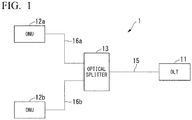
- Fig. 1 is a diagram showing a configuration of an optical communication system 1 according to a first embodiment of the present invention.
- the optical communication system 1 according to the first embodiment of the present invention includes an optical line terminal (OLT) 11 as a station-side device, a plurality of optical network units (ONUs) 12 (12a and 12b) as subscriber-side devices, and an optical splitter 13.
- the OLT 11 is installed, for example, at a center station.
- the OLT 11 and the optical splitter 13 are connected by an optical fiber 15.
- the ONUs are installed, for example, in subscribers' houses.
- the ONUs 12 (12a and 12b) and the optical splitter 13 are connected by an optical fiber 16a and an optical fiber 16b.
- a plurality of ONUs may be further installed in the optical communication system 1.
- communication from the ONU 12a and the ONU 12b to the OLT 11 is referred to as uplink and communication from the OLT 11 to the ONU 12a and the ONU 12b is referred to as downlink.
- Fig. 2 is a block diagram showing a schematic configuration of the OLT 11.
- the OLT 11 includes a demultiplex-multiplex unit 20, transmission-reception units 21a and 21b, an ONU registration unit 22, and a communication control unit 23.
- the demultiplex-multiplex unit 20 performs demultiplexing and multiplexing of optical signals of a plurality of wavelengths (for example, wavelengths ⁇ 1 and ⁇ 2).
- the transmission-reception unit 21a and the transmission-reception unit 21b perform transmission and reception of optical signals of wavelength ⁇ 1 and wavelength ⁇ 2, respectively.
- the ONU registration unit 22 performs processes for new registration of ONUs.
- a process of newly registering an ONU is performed by setting Quiet Window at the time of initial connection and receiving a registration request signal (Serial_Number_ONU PLOAM) sent from the new ONU in a period during which Quiet Window is opened.
- the wavelength in which Quiet Window is set can be determined to be at least one wavelength(s) selected from a plurality of wavelengths used for transmitting and receiving optical signals. That is, in the first embodiment, it is possible to use two wavelengths, i.e., the wavelength ⁇ 1 and the wavelength ⁇ 2. In this case, the wavelength in which Quiet Window is set may be determined to be both ⁇ 1 and ⁇ 2 or may be determined to be one of ⁇ 1 and ⁇ 2. The wavelength in which Quiet Window is set may be switched between ⁇ 1 and ⁇ 2.
- the communication control unit 23 performs optical signal transmission-reception processes by a wavelength division multiplex (WDM)/time division multiplex (TDM)-passive optical network (PON).
- WDM wavelength division multiplex
- TDM time division multiplex
- PON passive optical network
- each ONU performs communication using a specific wavelength which has been previously allocated.
- Time slots are dynamically allocated to each ONU using a specific wavelength.
- the two wavelengths ⁇ 1 and ⁇ 2 are used but a plurality of wavelengths may also be used.
- Fig. 3 is a block diagram showing a configuration of each of the ONU 12a and the ONU 12b. As shown in Fig. 3 , each of the ONU 12a and the ONU 12b includes a transmission-reception unit 31, a communication control unit 32, and a wavelength switching unit 33.
- the transmission-reception unit 31 performs transmission and reception of optical signals.
- the communication control unit 32 performs transmission-reception processes of optical signals by the WDM/TDM-PON.
- the wavelength switching unit 33 performs switching of wavelengths used for transmission and reception by the transmission-reception unit 31.
- the transmission-reception unit 31 may switch between the wavelength ⁇ 1 and the wavelength ⁇ 2 by the wavelength switching unit 33 and transmit and receive optical signals.
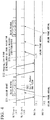
- Fig. 4 is a sequence diagram of an ONU registration process in the optical communication system 1 according to the first embodiment of the present invention.
- the ONU 12a is unregistered and the ONU 12b is registered.
- the wavelengths ⁇ 1 and ⁇ 2 can be used as wavelengths for transmitting and receiving optical signals.
- the wavelength ⁇ 2 is used for providing a service which has strict delay requirements.
- the wavelength ⁇ 1 may be used for a service which does not have strict delay requirements or may not be used to provide a communication service.
- the unregistered ONU 12a is accommodated at the wavelength ⁇ 2 for providing a service which has strict delay requirements.
- the OLT 11 sets Quiet Window at regular intervals.
- the OLT 11 does not set Quiet Window at a port of the wavelength ⁇ 2 which has strict delay requirements (for example, at the ⁇ 2 transmission-reception unit 21b in Fig. 2 ) but sets Quiet Window only at a port of the wavelength ⁇ 1 (for example, at the ⁇ 1 transmission-reception unit 21a in Fig. 2 ).
- the OLT 11 transmits an uplink grant for initial connection through the port of wavelength ⁇ 1 (process S11).
- the uplink grant is a frame for specifying the timing to transmit a Serial_number_ONU PLOAM.
- the unregistered ONU 12a is set to perform transmission and reception of the wavelength ⁇ 1. Therefore, in response to the uplink grant, the unregistered ONU 12a transmits a registration request signal (Serial_Number_ONU PLOAM) such that it arrives within Quiet Window (process S12) and issues an initial connection start request.
- Serial_Number_ONU PLOAM Registration request signal
- any method may be used to set the transmission-reception wavelength of the unregistered ONU 12a to ⁇ 1.
- the OLT 11 Upon receiving the registration request signal (Serial_Number_ONU PLOAM) from the ONU 12a through the wavelength ⁇ 1, the OLT 11 performs registration of the ONU 12a. Then, the OLT 11 transmits a Ranging_Time PLOAM describing an equalization delay (EqD) which is a virtual delay time (process S13) and accommodates the ONU 12a at the wavelength ⁇ 1.
- EqD Ranging_Time PLOAM describing an equalization delay
- the communication control unit 23 of the OLT 11 transmits a wavelength switching instruction for switching a wavelength to the wavelength ⁇ 2 to the ONU 12a through the port of the wavelength ⁇ 1 (process S14).
- the ONU 12a switches the wavelength to be used from ⁇ 1 to ⁇ 2, transmits a wavelength switching completion report to the OLT 11 (process S15), and starts communication.
- the ONU 12a is accommodated at the wavelength ⁇ 2 and performs optical communication with the OLT 11.
- the wavelength switching instruction and the wavelength switching completion report are delivered in a frame having a short length such as a PLAOM. Thus, this does not become a factor causing a great delay or delay fluctuations like Quiet Window.
- Quiet Window is set only at the wavelength ⁇ 1 and no Quiet Window is set at the wavelength ⁇ 2 which has strict delay requirements. This allows the ONU 12b which is already accommodated at the wavelength ⁇ 2 to output an uplink signal even while the Quiet Window is open, thereby eliminating delay or delay fluctuations of uplink signals caused by the Quiet Window.
- a wavelength switching instruction for switching a wavelength to a desired wavelength ⁇ 2 is transmitted from the OLT 11 to the ONU 12a and the wavelength of the ONU 12a is switched from ⁇ 1 to ⁇ 2. This allows the new ONU 12a to be accommodated at the wavelength ⁇ 2, similar to the ONU 12b.
- two different wavelengths ⁇ 1 and ⁇ 2 are used for communication, but a plurality of different wavelengths may also be used.
- Quiet Window is set only at one wavelength ⁇ 1, but Quiet Window may be set at a plurality of wavelengths.
- no Quiet Window is set at one wavelength ⁇ 2, but no Quiet Window may be set at a plurality of wavelengths.
- Quiet Window rather than setting Quiet Window for all wavelengths used for communication, it is important to set Quiet Window only for partial wavelengths excluding wavelengths which have strict delay requirements. Any method may be used to set the period and intervals at which Quiet Window is opened.
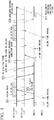
- FIG. 5 is a sequence diagram of an ONU registration process in the optical communication system 1 according to the second embodiment of the present invention.
- the ONU 12a is unregistered and the ONU 12b is registered. It is also assumed that wavelengths ⁇ 1 and ⁇ 2 are used as wavelengths for transmitting and receiving optical signals and the wavelength ⁇ 2 is used for providing a service which has strict delay requirements. It is also assumed that the wavelength ⁇ 1 is used for providing a service which does not have strict delay requirements.
- the unregistered ONU 12a is accommodated at the wavelength ⁇ 2 for providing a service which has strict delay requirements, similar to the registered ONU 12b.
- the unregistered ONU 12a is accommodated at the wavelength ⁇ 1 to be used for a service which does not have strict delay requirements.
- the OLT 11 sets Quiet Window at regular intervals.
- the OLT 11 does not set Quiet Window at the wavelength ⁇ 2 which has strict delay requirements but sets Quiet Window only at the wavelength ⁇ 1 having a margin in terms of delay requirements.
- the OLT 11 transmits an uplink grant for initial connection (a frame for specifying the timing to transmit Serial_number_ONU PLOAM) through a port of the wavelength ⁇ 1 (process S21).
- the unregistered ONU 12a is set to perform transmission and reception of the wavelength ⁇ 1 and transmits, in response to an uplink grant, a registration request signal (Serial_Number_ONU PLOAM) such that it arrives within the Quiet Window (process S22) and issues an initial connection start request.
- a registration request signal Serial_Number_ONU PLOAM
- any method may be used to set the transmission-reception wavelength of the unregistered ONU 12a to ⁇ 1.
- the OLT 11 Upon receiving the registration request signal (Serial_Number_ONU PLOAM) from the ONU 12a through the wavelength ⁇ 1, the OLT 11 performs registration of the ONU 12a. Then, the OLT 11 transmits a Ranging_Time PLOAM describing an equalization delay (EqD) which is a virtual delay time (process S23) and accommodates the ONU 12a at the wavelength ⁇ 1.
- EqD Ranging_Time PLOAM describing an equalization delay
- the OLT 11 transmits a wavelength switching instruction for switching a wavelength to the wavelength ⁇ 2 to the ONU 12a through the port of the wavelength ⁇ 1 (process S24).
- the ONU 12a switches the wavelength to be used from ⁇ 1 to ⁇ 2, transmits a wavelength switching completion report to the OLT 11 (process S25), and starts communication.
- the wavelength switching instruction and the wavelength switching completion report are delivered in a frame having a short length such as PLAOM. Thus, this does not become a factor causing a great delay or delay fluctuations like Quiet Window.
- the OLT 11 transmits a wavelength switching instruction for switching a wavelength to the wavelength ⁇ 1 to the ONU 12a through the port of the wavelength ⁇ 2 (process S26).
- the ONU 12a switches the wavelength to be used to ⁇ 1 and resumes communication (process S27).
- Quiet Window is set only at the wavelength ⁇ 1 having a margin in terms of delay requirements and no Quiet Window is set at the wavelength ⁇ 2 which has strict delay requirements. This allows the ONU 12b which is already accommodated at the wavelength ⁇ 2 to output an uplink signal even while the Quiet Window is open, thereby eliminating delay or delay fluctuations of uplink signals caused by the Quiet Window.
- a wavelength switching instruction for switching a wavelength to a desired wavelength ⁇ 1 is transmitted from the OLT 11 to the ONU 12a and the wavelength of the ONU 12a is switched from ⁇ 2 to ⁇ 1.
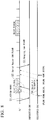
- FIG. 6 is a sequence diagram of an ONU registration process in the optical communication system 1 according to the third embodiment of the present invention.
- the ONU 12a is unregistered and the ONU 12b is registered. It is also assumed that wavelengths ⁇ 1 and ⁇ 2 are used as wavelengths for transmitting and receiving optical signals and the wavelength ⁇ 2 is used for providing a service which has strict delay requirements. The wavelength ⁇ 1 may be used for a service which does not have strict delay requirements or may not be used to provide a communication service. Further, it is assumed that the unregistered ONU 12a is not wavelength-tunable and deals with only the wavelength ⁇ 2. It is also assumed that the ONU 12b deals with the wavelengths ⁇ 1 and ⁇ 2. Since the unregistered ONU 12a is not wavelength-tunable, the unregistered ONU 12a is accommodated at the wavelength ⁇ 2.
- the OLT 11 transmits a wavelength switching instruction for switching a wavelength to the wavelength ⁇ 1 to the ONU 12b through the port of wavelength ⁇ 2 (process S31).
- the ONU 12b switches the wavelength from ⁇ 2 to ⁇ 1 and transmits a wavelength switching completion report to the OLT 11 (process S32) and accommodates the ONU 12b at the wavelength ⁇ 1.
- the ONU 12b performs optical communication with the OLT 11 through the wavelength ⁇ 1.
- the wavelength switching instruction and the wavelength switching completion report are delivered in a frame having a short length such as PLAOM. Thus, this does not become a factor causing a great delay or delay fluctuations like Quiet Window.
- the OLT 11 sets Quiet Window at regular intervals.
- the OLT 11 sets Quiet Window at the wavelength ⁇ 1 before wavelength switching is performed at the ONU 12b and sets Quiet Window at the wavelength ⁇ 2 after wavelength switching is performed at the ONU 12b.
- the OLT 11 transmits an uplink grant for initial connection (a frame specifying the timing to transmit the Serial_number_ONU PLOAM) through the port of the wavelength ⁇ 2 (process S33).
- the unregistered ONU 12a transmits a registration request signal (Serial_Number_ONU PLOAM) such that it arrives within the Quiet Window (process S34) and issues an initial connection start request.
- the OLT 11 Upon receiving the registration request signal (Serial_Number_ONU PLOAM) from the ONU 12a through the wavelength ⁇ 2, the OLT 11 performs registration of the ONU 12a. Then, the OLT 11 transmits a Ranging_Time PLOAM describing an equalization delay (EqD) which is a virtual delay time (process S35) and accommodates the ONU 12a at the wavelength ⁇ 2.
- EqD Ranging_Time PLOAM describing an equalization delay (EqD) which is a virtual delay time (process S35) and accommodates the ONU 12a at the wavelength ⁇ 2.
- the wavelength of the registered ONU 12b when the wavelength of the registered ONU 12b is ⁇ 2, Quiet Window is set at the wavelength ⁇ 1. Accordingly, this does not affect uplink signals of the ONU 12b and the ONU 12b can output an uplink signal while the Quiet Window is open.
- Quiet Window is set at the wavelength ⁇ 2.
- setting the Quiet Window at the wavelength ⁇ 2 does not affect uplink signals of the ONU 12b. This allows the registered ONU 12b to output an uplink signal even while the Quiet Window is open, thereby eliminating delay or delay fluctuations of uplink signals caused by the Quiet Window.
- the Quiet Window is opened at the wavelength ⁇ 2 and therefore the unregistered ONU 12a which is not wavelength-tunable can be accommodated at ⁇ 2 which is the only wavelength used by the ONU 12a.
- the wavelength of the ONU 12a can be changed to a desired wavelength by a wavelength switching instruction from the OLT 11.
- the wavelength of the registered ONU 12b can also be changed to a desired wavelength by a wavelength switching instruction from OLT 11. For example, if the OLT 11 transmits a wavelength switching instruction for switching a wavelength to the wavelength ⁇ 2 to the ONU 12b after the new ONU 12a is registered, it is possible to accommodate the ONU 12b again at the wavelength ⁇ 2.
- this procedure is described based on procedures described in ITU-T G.987.3, but it is also possible to apply the procedure to IEEE 802.3 which opens Discovery Window instead of Quiet Window. That is, the same operation is performed by replacing the uplink grant provided for initial connection with a Discovery Gate frame, the Serial_Number_ONU PLOAM with a Register Request frame, and the Ranging_Time PLOAM with a Resister frame.
- a program for performing all or some of the functions of the optical communication system 1 may be recorded on a computer readable recording medium and a process of each unit of the optical communication system 1 may be performed by allowing a computer system to read and execute the program recorded on the recording medium.
- the "computer system” referred to here may include an OS or hardware such as peripheral devices.
- the "computer system” also includes a webpage providing environment (or display environment).
- the "computer readable recording medium” refers to a flexible disk, a magneto-optical disk, a ROM, a portable medium such as a CD-ROM, or a storage device such as a hard disk installed in the computer system.
- the "computer readable recording medium” also includes something which dynamically holds a program for a short time, like a communication line in the case in which the program is transmitted via the communication line such as a telephone line or via a network such as the Internet and something which holds a program for a certain period of time, like a volatile memory in a computer system which serves as a server or a client in the same case.
- the above program may be one for realizing some of the above-described functions and may also be one which can realize the above-described functions in combination with a program already recorded in the computer system.
- the present invention can also be applied to applications where it is necessary to reduce communication delay or delay fluctuations.
Landscapes
- Engineering & Computer Science (AREA)
- Computer Networks & Wireless Communication (AREA)
- Signal Processing (AREA)
- Small-Scale Networks (AREA)
- Optical Communication System (AREA)
Abstract
Description
- The present invention relates to a station-side device and a communication method in a passive optical network (PON) system.
- Priority is claimed on Japanese Patent Application No.
2015-106276, filed May 26, 2015 - In the related art, in a passive optical network (PON) (see Non-Patent
Document 1 and Non-Patent Document 2) which adopts a time division multiple access (TDMA) scheme, an optical line terminal (OLT) as a station-side device sets Quiet Window (an acceptance period) as a time during which it waits for the arrival of an uplink Serial_Number_ONU PLOAM frame which is a registration request signal from an unregistered optical network unit (ONU) as a subscriber-side device at the time of initial connection (referred to as "activation"). -
Fig. 7 is a diagram schematically showing a conventional communication method. In the PON of the conventional TDMA system, as shown inFig. 7 , an optical signal is transmitted and received in a time division manner using each frame (PHY frame). For registration of a new ONU, Quiet Window is set in the OLT. During the period of Quiet Window, the OLT waits for a Serial_Number_ONU PLOAM from a new ONU with an unknown round-trip propagation delay and therefore the OLT controls uplink signal transmission of ONUs so as not to receive uplink signals from registered ONUs. The new ONU transmits the Serial_Number_ONU PLOAM as a registration request signal within Quiet Window. Upon receiving the Serial_Number_ONU PLOAM, the OLT starts a process of registering the ONU that has transmitted this Serial_Number_ONU PLOAM. - A similar initial connection procedure is specified in an EPON defined in IEEE 802.3. In this specification, an equivalent to Quiet Window is referred to as Discovery Window. Also in this specification, during the Discovery Window period, the OLT controls uplink signal transmission of ONUs so as not to receive uplink signals from registered ONUs.
- In
Non-Patent Document 1, the OLT measures the reception time of the Serial_Number_ONU, calculates an equalization delay (EqD) which is a virtual delay time for synchronizing the round trip propagation delay between the OLT and the ONU with the start position of the uplink frame of the ONU, and notifies the ONU of the calculated EqD using a Ranging Time PLOAM. It is assumed that the same scheme is inherited by a PON (for example, ITU-T G.989.3) which combines wavelength multiplexing and time division multiplexing, of which standardization is being promoted as the next access technology. -
- [Non-Patent Document 1]
ITU-T G.987.3, "TRANSMISSION SYSTEMS AND MEDIA, DIGITAL SYSTEMS AND NETWORKS Digital sections and digital line system - Optical line systems for local and access networks/10-Gigabit-capable passive optical networks (XG-PON): Transmission convergence (TC) layer specification" -
[Non-Patent Document 2]
Kuwano, "Requirements and Technical Issues on Mobile Optical Network," Communications Society Conference of the Institute of Electronics, Information and Communication Engineers, BT-1-2, September 2014 - As described above, in the conventional TDM-PON, the OLT sets Quiet Window or Discovery Window at the time of initial connection and waits for a registration request signal (Serial_Number_ONU PLOAM in Non-Patent Document 1) of the ONU for initial connection. This Quiet Window is defined as a period determined from minimum and maximum distances (a period from Earliest expected Serial_Number PLOAM to Latest expected Serial_Number PLOAM) as shown in
Fig. 7 since it is unknown at which timing a registration request signal from an unregistered ONU will arrive. -
Fig. 8 is a diagram schematically showing a conventional communication method. As described above, during a period in which the Window is set, the OLT performs control so as not to receive normal uplink signals from other registered ONUs. For this reason, as shown inFig. 8 , during the period in which the Window is set, a registered ONU is in a state in which it cannot output uplink signals. An uplink signal arriving at the ONU during this period is queued in a buffer in the ONU. - In
Fig. 8 , the OLT sets Quiet Window at regular intervals. The OLT also transmits an uplink grant for initial connection (a frame for specifying the timing to transmit Serial_number_ONU PLOAM) (process S1). - In response to the uplink grant, the unregistered ONU transmits a registration request signal (Serial_Number_ONU PLOAM) such that it arrives within Quiet Window (process S2) and issues an initial connection start request. Upon receiving the registration request signal (Serial_Number_ONU PLOAM) from the unregistered ONU, the OLT starts a process of registering the ONU. The OLT also measures the reception time of the Serial_Number_ONU and calculates an Equalization Delay (EqD) which is a virtual delay time for synchronizing the round trip propagation delay between the OLT and the ONU with the start position of the uplink frame of the ONU. The OLT then notifies the ONU of the EqD using a Ranging_Time PLOAM (process S3).
- On the other hand, the registered ONU cannot transmit a signal of an uplink frame during the period corresponding to Quiet Window. Therefore, as shown in
Fig. 8 , an uplink signal arriving at the ONU in the period corresponding to Quiet Window is queued in the buffer in the ONU (process S4). The uplink signal queued in this buffer is transmitted after Quiet Window ends, thus causing a delay corresponding to this period. - As described above, in the PON of the conventional TDMA system, an uplink signal is delayed in a period corresponding to Quiet Window. Although the OLT can set the intervals at which Quiet Window is set, it is recommended according to Non-Patent
Document 1 that the period of Quiet Window itself be 250 µsec if the distance difference from the OLT to the ONU is 20 km and 450 µsec if the distance difference is 40 km. That is, in the PON of the conventional TDMA system, opening the Quiet Window causes delay fluctuations of 250 µsec to 450 µsec in uplink signals. Therefore, as shown in Non-Patent Document 2, the conventional TDMA PON has a problem that it is difficult to apply the TDMA PON to mobile fronthaul (MFH) or the like which has strict requirements for delay or delay fluctuation. - In view of the above circumstances, it is an object of the present invention to provide a technology for reducing communication delay or delay fluctuations.
- A first aspect of the present invention is a station-side device performing transmission and reception of an optical signal to and from a subscriber-side device, and including a communication control unit configured to perform optical signal communication using a plurality of wavelengths by wavelength division multiplexing and time division multiplexing, and a registration unit configured to set an acceptance period in at least one wavelength among the plurality of wavelengths, to perform a new registration of a subscriber-side device in response to a registration request of the subscriber-side device received within the acceptance period, and not to set the acceptance period in at least one other wavelength among the plurality of wavelengths.
- According to a second aspect of the present invention, in the station-side device according to the first aspect, the registration unit is configured to set the acceptance period in a wavelength having a margin in terms of a delay requirement among the plurality of wavelengths.
- According to third aspect of the present invention, in the station-side device according to the first or second aspect, the registration unit is configured not to set the acceptance period in a wavelength having no margin in terms of a delay requirement among the plurality of wavelengths.
- According to a fourth aspect of the present invention, in the station-side device according to any one of the first to third aspects, the communication control unit is configured to transmit a wavelength switching instruction for switching a wavelength to the at least one other wavelength to the subscriber-side device after the new registration of the subscriber-side device.
- According to a fifth aspect of the present invention, in the station-side device according to any one of the first to fourth aspects, when the subscriber-side device uses a wavelength at which the acceptance period is not set, the communication control unit is configured to transmit a wavelength switching instruction for switching a wavelength to the wavelength at which the acceptance period is not set.
- According to sixth aspect of the present invention, in the station-side device according to any one of the first to fifth aspects, the station-side device is configured to switch a wavelength at which the acceptance period is set.
- A seventh aspect of the present invention is a communication method performed by a station-side device configured to perform transmission and reception of an optical signal to and from a subscriber-side device, and including a communication step including performing optical signal communication using a plurality of wavelengths by wavelength division multiplexing and time division multiplexing, and a registration step including setting an acceptance period in at least one wavelength among the plurality of wavelengths, performing a new registration of a subscriber-side device in response to a registration request of the subscriber-side device received within the acceptance period, and not setting the acceptance period in at least one other wavelength among the plurality of wavelengths.
- According to the present invention, it is possible to reduce communication delay or delay fluctuations.
-
-
Fig. 1 is a diagram showing a configuration of an optical communication system according to a first embodiment of the present invention. -
Fig. 2 is a block diagram showing a schematic configuration of an OLT according to the first embodiment. -
Fig. 3 is a block diagram showing a configuration of an ONU according to the first embodiment. -
Fig. 4 is a sequence diagram of an ONU registration process in the optical communication system according to the first embodiment. -
Fig. 5 is a sequence diagram of an ONU registration process in an optical communication system according to a second embodiment of the present invention. -
Fig. 6 is a sequence diagram of an ONU registration process in an optical communication system according to a third embodiment of the present invention. -
Fig. 7 is a diagram schematically showing a conventional communication method. -
Fig. 8 is a diagram schematically showing a conventional communication method. - Hereinafter, embodiments of the present invention will be described with reference to the drawings.
Fig. 1 is a diagram showing a configuration of anoptical communication system 1 according to a first embodiment of the present invention. As shown inFig. 1 , theoptical communication system 1 according to the first embodiment of the present invention includes an optical line terminal (OLT) 11 as a station-side device, a plurality of optical network units (ONUs) 12 (12a and 12b) as subscriber-side devices, and anoptical splitter 13. TheOLT 11 is installed, for example, at a center station. TheOLT 11 and theoptical splitter 13 are connected by anoptical fiber 15. The ONUs are installed, for example, in subscribers' houses. The ONUs 12 (12a and 12b) and theoptical splitter 13 are connected by anoptical fiber 16a and anoptical fiber 16b. - Although only two ONUs 12 (12a and 12b) among a plurality of ONUs are illustrated in
Fig. 1 , a plurality of ONUs may be further installed in theoptical communication system 1. In the following description, communication from theONU 12a and theONU 12b to theOLT 11 is referred to as uplink and communication from theOLT 11 to theONU 12a and theONU 12b is referred to as downlink. -
Fig. 2 is a block diagram showing a schematic configuration of theOLT 11. As shown inFig. 2 , theOLT 11 includes a demultiplex-multiplex unit 20, transmission-reception units ONU registration unit 22, and acommunication control unit 23. - The demultiplex-
multiplex unit 20 performs demultiplexing and multiplexing of optical signals of a plurality of wavelengths (for example, wavelengths λ1 and λ2). The transmission-reception unit 21a and the transmission-reception unit 21b perform transmission and reception of optical signals of wavelength λ1 and wavelength λ2, respectively. - The
ONU registration unit 22 performs processes for new registration of ONUs. A process of newly registering an ONU is performed by setting Quiet Window at the time of initial connection and receiving a registration request signal (Serial_Number_ONU PLOAM) sent from the new ONU in a period during which Quiet Window is opened. In addition, in the first embodiment, the wavelength in which Quiet Window is set can be determined to be at least one wavelength(s) selected from a plurality of wavelengths used for transmitting and receiving optical signals. That is, in the first embodiment, it is possible to use two wavelengths, i.e., the wavelength λ1 and the wavelength λ2. In this case, the wavelength in which Quiet Window is set may be determined to be both λ1 and λ2 or may be determined to be one of λ1 and λ2. The wavelength in which Quiet Window is set may be switched between λ1 and λ2. - The
communication control unit 23 performs optical signal transmission-reception processes by a wavelength division multiplex (WDM)/time division multiplex (TDM)-passive optical network (PON). In the WDM/TDM-PON, each ONU performs communication using a specific wavelength which has been previously allocated. Time slots are dynamically allocated to each ONU using a specific wavelength. In this example, the two wavelengths λ1 and λ2 are used but a plurality of wavelengths may also be used. -
Fig. 3 is a block diagram showing a configuration of each of theONU 12a and theONU 12b. As shown inFig. 3 , each of theONU 12a and theONU 12b includes a transmission-reception unit 31, acommunication control unit 32, and awavelength switching unit 33. - The transmission-
reception unit 31 performs transmission and reception of optical signals. Thecommunication control unit 32 performs transmission-reception processes of optical signals by the WDM/TDM-PON. Thewavelength switching unit 33 performs switching of wavelengths used for transmission and reception by the transmission-reception unit 31. In this example, the transmission-reception unit 31 may switch between the wavelength λ1 and the wavelength λ2 by thewavelength switching unit 33 and transmit and receive optical signals. - Next, an ONU registration process in the
optical communication system 1 according to the first embodiment of the present invention will be described with reference toFig. 4 . -
Fig. 4 is a sequence diagram of an ONU registration process in theoptical communication system 1 according to the first embodiment of the present invention. Here, theONU 12a is unregistered and theONU 12b is registered. The wavelengths λ1 and λ2 can be used as wavelengths for transmitting and receiving optical signals. The wavelength λ2 is used for providing a service which has strict delay requirements. The wavelength λ1 may be used for a service which does not have strict delay requirements or may not be used to provide a communication service. In the first embodiment, it is assumed that, similar to the registeredONU 12b, theunregistered ONU 12a is accommodated at the wavelength λ2 for providing a service which has strict delay requirements. - In
Fig. 4 , theOLT 11 sets Quiet Window at regular intervals. Here, as shown inFig. 4 , theOLT 11 does not set Quiet Window at a port of the wavelength λ2 which has strict delay requirements (for example, at the λ2 transmission-reception unit 21b inFig. 2 ) but sets Quiet Window only at a port of the wavelength λ1 (for example, at the λ1 transmission-reception unit 21a inFig. 2 ). - The
OLT 11 transmits an uplink grant for initial connection through the port of wavelength λ1 (process S11). The uplink grant is a frame for specifying the timing to transmit a Serial_number_ONU PLOAM. Theunregistered ONU 12a is set to perform transmission and reception of the wavelength λ1. Therefore, in response to the uplink grant, theunregistered ONU 12a transmits a registration request signal (Serial_Number_ONU PLOAM) such that it arrives within Quiet Window (process S12) and issues an initial connection start request. - Any method may be used to set the transmission-reception wavelength of the
unregistered ONU 12a to λ1. For example, it is possible to preset the initial connection wavelength as λ1 in theunregistered ONU 12a or it is also possible to use a method in which theunregistered ONU 12a sweeps wavelengths used in the WDM/TDM-PON in predetermined cycles and searches for a grant given for initial connection. In this case, theOLT 11 need not transmit an uplink grant for initial connection. - Upon receiving the registration request signal (Serial_Number_ONU PLOAM) from the
ONU 12a through the wavelength λ1, theOLT 11 performs registration of theONU 12a. Then, theOLT 11 transmits a Ranging_Time PLOAM describing an equalization delay (EqD) which is a virtual delay time (process S13) and accommodates theONU 12a at the wavelength λ1. - Next, the
communication control unit 23 of theOLT 11 transmits a wavelength switching instruction for switching a wavelength to the wavelength λ2 to theONU 12a through the port of the wavelength λ1 (process S14). Upon receiving the wavelength switching instruction, theONU 12a switches the wavelength to be used from λ1 to λ2, transmits a wavelength switching completion report to the OLT 11 (process S15), and starts communication. Thereafter, like theONU 12b, theONU 12a is accommodated at the wavelength λ2 and performs optical communication with theOLT 11. Here, the wavelength switching instruction and the wavelength switching completion report are delivered in a frame having a short length such as a PLAOM. Thus, this does not become a factor causing a great delay or delay fluctuations like Quiet Window. - As described above, in the first embodiment, Quiet Window is set only at the wavelength λ1 and no Quiet Window is set at the wavelength λ2 which has strict delay requirements. This allows the
ONU 12b which is already accommodated at the wavelength λ2 to output an uplink signal even while the Quiet Window is open, thereby eliminating delay or delay fluctuations of uplink signals caused by the Quiet Window. - In the first embodiment, after the
new ONU 12a is registered, a wavelength switching instruction for switching a wavelength to a desired wavelength λ2 is transmitted from theOLT 11 to theONU 12a and the wavelength of theONU 12a is switched from λ1 to λ2. This allows thenew ONU 12a to be accommodated at the wavelength λ2, similar to theONU 12b. - In the above example, two different wavelengths λ1 and λ2 are used for communication, but a plurality of different wavelengths may also be used. Further, in the above example, Quiet Window is set only at one wavelength λ1, but Quiet Window may be set at a plurality of wavelengths. Furthermore, in the above example, no Quiet Window is set at one wavelength λ2, but no Quiet Window may be set at a plurality of wavelengths. In short, rather than setting Quiet Window for all wavelengths used for communication, it is important to set Quiet Window only for partial wavelengths excluding wavelengths which have strict delay requirements. Any method may be used to set the period and intervals at which Quiet Window is opened.
- Although this procedure is described based on procedures described in ITU-T G.987.3, it is also possible to apply the procedure to those described in IEEE 802.3 which opens Discovery Window instead of Quiet Window. That is, the same operation is performed by replacing the uplink grant provided for initial connection with a Discovery Gate frame, the Serial_Number_ONU PLOAM with a Register Request frame, and the Ranging_Time PLOAM with a Resister frame.
- Next, a second embodiment of the present invention will be described.
Fig. 5 is a sequence diagram of an ONU registration process in theoptical communication system 1 according to the second embodiment of the present invention. - Similar to the above-described first embodiment, it is assumed that the
ONU 12a is unregistered and theONU 12b is registered. It is also assumed that wavelengths λ1 and λ2 are used as wavelengths for transmitting and receiving optical signals and the wavelength λ2 is used for providing a service which has strict delay requirements. It is also assumed that the wavelength λ1 is used for providing a service which does not have strict delay requirements. - In the first embodiment described above, it is assumed that the
unregistered ONU 12a is accommodated at the wavelength λ2 for providing a service which has strict delay requirements, similar to the registeredONU 12b. On the other hand, in the second embodiment, it is assumed that theunregistered ONU 12a is accommodated at the wavelength λ1 to be used for a service which does not have strict delay requirements. - In
Fig. 5 , theOLT 11 sets Quiet Window at regular intervals. Here, as shown inFig. 5 , theOLT 11 does not set Quiet Window at the wavelength λ2 which has strict delay requirements but sets Quiet Window only at the wavelength λ1 having a margin in terms of delay requirements. - The
OLT 11 transmits an uplink grant for initial connection (a frame for specifying the timing to transmit Serial_number_ONU PLOAM) through a port of the wavelength λ1 (process S21). Theunregistered ONU 12a is set to perform transmission and reception of the wavelength λ1 and transmits, in response to an uplink grant, a registration request signal (Serial_Number_ONU PLOAM) such that it arrives within the Quiet Window (process S22) and issues an initial connection start request. - Any method may be used to set the transmission-reception wavelength of the
unregistered ONU 12a to λ1. For example, it is possible to preset the initial connection wavelength as λ1 in theunregistered ONU 12a or it is also possible to use a method in which theunregistered ONU 12a sweeps wavelengths used in the WDM/TDM-PON in predetermined cycles and searches for a grant given for initial connection. In this case, theOLT 11 need not transmit an uplink grant for initial connection. - Upon receiving the registration request signal (Serial_Number_ONU PLOAM) from the
ONU 12a through the wavelength λ1, theOLT 11 performs registration of theONU 12a. Then, theOLT 11 transmits a Ranging_Time PLOAM describing an equalization delay (EqD) which is a virtual delay time (process S23) and accommodates theONU 12a at the wavelength λ1. - Next, the
OLT 11 transmits a wavelength switching instruction for switching a wavelength to the wavelength λ2 to theONU 12a through the port of the wavelength λ1 (process S24). Upon receiving the wavelength switching instruction, theONU 12a switches the wavelength to be used from λ1 to λ2, transmits a wavelength switching completion report to the OLT 11 (process S25), and starts communication. Here, the wavelength switching instruction and the wavelength switching completion report are delivered in a frame having a short length such as PLAOM. Thus, this does not become a factor causing a great delay or delay fluctuations like Quiet Window. - In the case in which a service which does not have strict delay requirements is used, the
OLT 11 transmits a wavelength switching instruction for switching a wavelength to the wavelength λ1 to theONU 12a through the port of the wavelength λ2 (process S26). Upon receiving the wavelength switching instruction, theONU 12a switches the wavelength to be used to λ1 and resumes communication (process S27). - As described above, in the second embodiment, Quiet Window is set only at the wavelength λ1 having a margin in terms of delay requirements and no Quiet Window is set at the wavelength λ2 which has strict delay requirements. This allows the
ONU 12b which is already accommodated at the wavelength λ2 to output an uplink signal even while the Quiet Window is open, thereby eliminating delay or delay fluctuations of uplink signals caused by the Quiet Window. - After the
new ONU 12a is registered, a wavelength switching instruction for switching a wavelength to a desired wavelength λ1 is transmitted from theOLT 11 to theONU 12a and the wavelength of theONU 12a is switched from λ2 to λ1. Thus, it is possible to provide a service which does not have strict delay requirements to the newly registeredONU 12a. - Next, a third embodiment of the present invention will be described.
Fig. 6 is a sequence diagram of an ONU registration process in theoptical communication system 1 according to the third embodiment of the present invention. - Similar to the first and second embodiments, it is assumed that the
ONU 12a is unregistered and theONU 12b is registered. It is also assumed that wavelengths λ1 and λ2 are used as wavelengths for transmitting and receiving optical signals and the wavelength λ2 is used for providing a service which has strict delay requirements. The wavelength λ1 may be used for a service which does not have strict delay requirements or may not be used to provide a communication service. Further, it is assumed that theunregistered ONU 12a is not wavelength-tunable and deals with only the wavelength λ2. It is also assumed that theONU 12b deals with the wavelengths λ1 and λ2. Since theunregistered ONU 12a is not wavelength-tunable, theunregistered ONU 12a is accommodated at the wavelength λ2. - As shown in
Fig. 6 , theOLT 11 transmits a wavelength switching instruction for switching a wavelength to the wavelength λ1 to theONU 12b through the port of wavelength λ2 (process S31). Upon receiving the wavelength switching instruction, theONU 12b switches the wavelength from λ2 to λ1 and transmits a wavelength switching completion report to the OLT 11 (process S32) and accommodates theONU 12b at the wavelength λ1. Thereafter, theONU 12b performs optical communication with theOLT 11 through the wavelength λ1. Here, the wavelength switching instruction and the wavelength switching completion report are delivered in a frame having a short length such as PLAOM. Thus, this does not become a factor causing a great delay or delay fluctuations like Quiet Window. - The
OLT 11 sets Quiet Window at regular intervals. Here, as shown inFig. 6 , theOLT 11 sets Quiet Window at the wavelength λ1 before wavelength switching is performed at theONU 12b and sets Quiet Window at the wavelength λ2 after wavelength switching is performed at theONU 12b. - The
OLT 11 transmits an uplink grant for initial connection (a frame specifying the timing to transmit the Serial_number_ONU PLOAM) through the port of the wavelength λ2 (process S33). In response to the uplink grant, theunregistered ONU 12a transmits a registration request signal (Serial_Number_ONU PLOAM) such that it arrives within the Quiet Window (process S34) and issues an initial connection start request. - Upon receiving the registration request signal (Serial_Number_ONU PLOAM) from the
ONU 12a through the wavelength λ2, theOLT 11 performs registration of theONU 12a. Then, theOLT 11 transmits a Ranging_Time PLOAM describing an equalization delay (EqD) which is a virtual delay time (process S35) and accommodates theONU 12a at the wavelength λ2. - As described above, in the third embodiment, when the wavelength of the registered
ONU 12b is λ2, Quiet Window is set at the wavelength λ1. Accordingly, this does not affect uplink signals of theONU 12b and theONU 12b can output an uplink signal while the Quiet Window is open. After the wavelength of the registeredONU 12b is changed from λ2 to λ1, Quiet Window is set at the wavelength λ2. After the wavelength of theONU 12b is changed from λ2 to λ1, setting the Quiet Window at the wavelength λ2 does not affect uplink signals of theONU 12b. This allows the registeredONU 12b to output an uplink signal even while the Quiet Window is open, thereby eliminating delay or delay fluctuations of uplink signals caused by the Quiet Window. - In addition, after the wavelength of the registered
ONU 12b is changed from λ2 to λ1, the Quiet Window is opened at the wavelength λ2 and therefore theunregistered ONU 12a which is not wavelength-tunable can be accommodated at λ2 which is the only wavelength used by theONU 12a. - Similar to the first and second embodiments described above, after the
new ONU 12a is registered, the wavelength of theONU 12a can be changed to a desired wavelength by a wavelength switching instruction from theOLT 11. The wavelength of the registeredONU 12b can also be changed to a desired wavelength by a wavelength switching instruction fromOLT 11. For example, if theOLT 11 transmits a wavelength switching instruction for switching a wavelength to the wavelength λ2 to theONU 12b after thenew ONU 12a is registered, it is possible to accommodate theONU 12b again at the wavelength λ2. - Similar to the first and second embodiments, this procedure is described based on procedures described in ITU-T G.987.3, but it is also possible to apply the procedure to IEEE 802.3 which opens Discovery Window instead of Quiet Window. That is, the same operation is performed by replacing the uplink grant provided for initial connection with a Discovery Gate frame, the Serial_Number_ONU PLOAM with a Register Request frame, and the Ranging_Time PLOAM with a Resister frame.
- A program for performing all or some of the functions of the
optical communication system 1 may be recorded on a computer readable recording medium and a process of each unit of theoptical communication system 1 may be performed by allowing a computer system to read and execute the program recorded on the recording medium. The "computer system" referred to here may include an OS or hardware such as peripheral devices. - In the case in which a WWW system is used, the "computer system" also includes a webpage providing environment (or display environment).
- The "computer readable recording medium" refers to a flexible disk, a magneto-optical disk, a ROM, a portable medium such as a CD-ROM, or a storage device such as a hard disk installed in the computer system. The "computer readable recording medium" also includes something which dynamically holds a program for a short time, like a communication line in the case in which the program is transmitted via the communication line such as a telephone line or via a network such as the Internet and something which holds a program for a certain period of time, like a volatile memory in a computer system which serves as a server or a client in the same case. The above program may be one for realizing some of the above-described functions and may also be one which can realize the above-described functions in combination with a program already recorded in the computer system.
- Although the embodiments of the present invention have been described above in detail with reference to the drawings, specific configurations thereof are not limited to those of these embodiments and include designs or the like within a range not deviating from the gist of the present invention.
- The present invention can also be applied to applications where it is necessary to reduce communication delay or delay fluctuations.
-
- 11 OLT
- 12b, 12b ONU
- 13 Optical splitter
- 20 Demultiplex-multiplex unit
- 21a, 21b Transmission-reception unit
- 22 ONU registration unit
- 23 Communication control unit
- 31 Transmission-reception unit
- 32 Communication control unit
Claims (7)
- A station-side device configured to perform transmission and reception of an optical signal to and from a subscriber-side device, the station-side device comprising:a communication control unit configured to perform optical signal communication using a plurality of wavelengths by wavelength division multiplexing and time division multiplexing; anda registration unit configured to set an acceptance period in at least one wavelength among the plurality of wavelengths, to perform a new registration of a subscriber-side device in response to a registration request of the subscriber-side device received within the acceptance period, and not to set the acceptance period in at least one other wavelength among the plurality of wavelengths.
- The station-side device according to claim 1, wherein the registration unit is configured to set the acceptance period in a wavelength having a margin in terms of a delay requirement among the plurality of wavelengths.
- The station-side device according to claim 1 or 2, wherein the registration unit is configured not to set the acceptance period in a wavelength having no margin in terms of a delay requirement among the plurality of wavelengths.
- The station-side device according to any one of claims 1 to 3, wherein the communication control unit is configured to transmit a wavelength switching instruction for switching a wavelength to the at least one other wavelength to the subscriber-side device after the new registration of the subscriber-side device.
- The station-side device according to any one of claims 1 to 4, wherein, when the subscriber-side device uses a wavelength at which the acceptance period is not set, the communication control unit is configured to transmit a wavelength switching instruction for switching a wavelength to the wavelength at which the acceptance period is not set.
- The station-side device according to any one of claims 1 to 5, wherein the station-side device is configured to switch a wavelength at which the acceptance period is set.
- A communication method performed by a station-side device configured to perform transmission and reception of an optical signal to and from a subscriber-side device, the communication method comprising:a communication step including performing optical signal communication using a plurality of wavelengths by wavelength division multiplexing and time division multiplexing; anda registration step including setting an acceptance period in at least one wavelength among the plurality of wavelengths, performing a new registration of a subscriber-side device in response to a registration request of the subscriber-side device received within the acceptance period, and not setting the acceptance period in at least one other wavelength among the plurality of wavelengths.
Applications Claiming Priority (2)
| Application Number | Priority Date | Filing Date | Title |
|---|---|---|---|
| JP2015106276 | 2015-05-26 | ||
| PCT/JP2016/065305 WO2016190302A1 (en) | 2015-05-26 | 2016-05-24 | Station-side device and communication method |
Publications (3)
| Publication Number | Publication Date |
|---|---|
| EP3288221A1 true EP3288221A1 (en) | 2018-02-28 |
| EP3288221A4 EP3288221A4 (en) | 2018-12-12 |
| EP3288221B1 EP3288221B1 (en) | 2020-05-06 |
Family
ID=57394117
Family Applications (1)
| Application Number | Title | Priority Date | Filing Date |
|---|---|---|---|
| EP16800007.3A Active EP3288221B1 (en) | 2015-05-26 | 2016-05-24 | Method and apparatus for reducing network delay in a passive optical network |
Country Status (5)
| Country | Link |
|---|---|
| US (1) | US10211944B2 (en) |
| EP (1) | EP3288221B1 (en) |
| JP (1) | JP6408704B2 (en) |
| CN (1) | CN107615715B (en) |
| WO (1) | WO2016190302A1 (en) |
Cited By (3)
| Publication number | Priority date | Publication date | Assignee | Title |
|---|---|---|---|---|
| WO2019079225A1 (en) * | 2017-10-19 | 2019-04-25 | Adtran, Inc. | Enhanced passive optical network |
| EP3985893A4 (en) * | 2019-07-15 | 2022-08-31 | ZTE Corporation | Method for reducing uplink time delay of passive optical network, and related device |
| EP4170931A4 (en) * | 2020-06-23 | 2024-07-24 | ZTE Corporation | AUTHENTICATION METHOD, APPARATUS AND DEVICE, AND STORAGE MEDIUM |
Families Citing this family (6)
| Publication number | Priority date | Publication date | Assignee | Title |
|---|---|---|---|---|
| WO2017192894A1 (en) * | 2016-05-04 | 2017-11-09 | Adtran, Inc. | Systems and methods for performing optical line terminal (olt) failover switches in optical networks |
| AU2016430261B2 (en) * | 2016-11-23 | 2020-09-10 | Huawei Technologies Co., Ltd. | Passive optical network system, optical line terminal and optical network unit |
| EP3554181B1 (en) | 2016-12-23 | 2020-09-09 | China Mobile Communication Co., Ltd Research Institute | Front-haul transport network, data transmission method, apparatus and computer storage medium |
| CN114938478B (en) * | 2018-09-25 | 2026-04-07 | 中兴通讯股份有限公司 | Data processing method, apparatus and passive optical network system |
| CN118283463A (en) * | 2022-12-30 | 2024-07-02 | 华为技术有限公司 | Method, device, equipment and storage medium for determining transmission delay |
| US20250080884A1 (en) * | 2023-09-05 | 2025-03-06 | Ciena Corporation | PON out-of-band signaling |
Family Cites Families (11)
| Publication number | Priority date | Publication date | Assignee | Title |
|---|---|---|---|---|
| US20030048501A1 (en) * | 2001-09-12 | 2003-03-13 | Michael Guess | Metropolitan area local access service system |
| JP4392373B2 (en) * | 2005-03-23 | 2009-12-24 | 日本電信電話株式会社 | Communication method, transmission timing notification device, edge device, program, and storage medium |
| JP5114268B2 (en) * | 2008-03-31 | 2013-01-09 | 株式会社日立製作所 | Passive optical network system and operation method thereof |
| JP5285766B2 (en) * | 2009-04-07 | 2013-09-11 | 株式会社日立製作所 | Optical multiple terminator, passive optical network system, wavelength allocation method |
| US9219566B2 (en) * | 2011-04-08 | 2015-12-22 | Futurewei Technologies, Inc. | Wavelength management in multiple-wavelength passive optical networks |
| KR101571987B1 (en) * | 2011-12-21 | 2015-12-04 | 니폰 덴신 덴와 가부시끼가이샤 | Bandwidth allocation device and bandwidth allocation method |
| US9780908B2 (en) * | 2013-02-15 | 2017-10-03 | Alcatel Lucent | Optical network terminal (ONT) wavelength tuning and correpsonding calibration procedure |
| US10063411B2 (en) * | 2013-02-26 | 2018-08-28 | Zte Corporation | Channel map for optical network unit activation and rogue behavior prevention |
| JP5556921B1 (en) | 2013-03-01 | 2014-07-23 | 沖電気工業株式会社 | Subscriber side apparatus registration method and optical network system |
| US10003428B2 (en) * | 2013-05-15 | 2018-06-19 | Zte Corporation | Using noisy window for uncalibrated optical network unit activation |
| US20150055955A1 (en) * | 2013-08-26 | 2015-02-26 | Electronics And Telecommunications Research Institute | Channel management method in time and wavelength division multiplexing-passive optical network (twdm-pon) |
-
2016
- 2016-05-24 JP JP2017520712A patent/JP6408704B2/en active Active
- 2016-05-24 CN CN201680029414.4A patent/CN107615715B/en active Active
- 2016-05-24 US US15/576,656 patent/US10211944B2/en active Active
- 2016-05-24 WO PCT/JP2016/065305 patent/WO2016190302A1/en not_active Ceased
- 2016-05-24 EP EP16800007.3A patent/EP3288221B1/en active Active
Cited By (4)
| Publication number | Priority date | Publication date | Assignee | Title |
|---|---|---|---|---|
| WO2019079225A1 (en) * | 2017-10-19 | 2019-04-25 | Adtran, Inc. | Enhanced passive optical network |
| EP3985893A4 (en) * | 2019-07-15 | 2022-08-31 | ZTE Corporation | Method for reducing uplink time delay of passive optical network, and related device |
| EP4170931A4 (en) * | 2020-06-23 | 2024-07-24 | ZTE Corporation | AUTHENTICATION METHOD, APPARATUS AND DEVICE, AND STORAGE MEDIUM |
| US12294579B2 (en) | 2020-06-23 | 2025-05-06 | Zte Corporation | Authentication method and apparatus, device, and storage medium |
Also Published As
| Publication number | Publication date |
|---|---|
| EP3288221B1 (en) | 2020-05-06 |
| JP6408704B2 (en) | 2018-10-17 |
| WO2016190302A1 (en) | 2016-12-01 |
| US10211944B2 (en) | 2019-02-19 |
| CN107615715B (en) | 2021-05-11 |
| JPWO2016190302A1 (en) | 2017-11-09 |
| US20180145788A1 (en) | 2018-05-24 |
| CN107615715A (en) | 2018-01-19 |
| EP3288221A4 (en) | 2018-12-12 |
Similar Documents
| Publication | Publication Date | Title |
|---|---|---|
| EP3288221B1 (en) | Method and apparatus for reducing network delay in a passive optical network | |
| US9473836B2 (en) | Maintaining channel-invariant optical network unit (ONU) equalization delay in a passive optical network | |
| US20140219661A1 (en) | Method of selecting wavelength of optical network unit in passive optical network | |
| US9806845B1 (en) | Mitigating spectral excursions in passive optical networks | |
| Anthapadmanabhan et al. | Mobile fronthaul over latency-optimized time division multiplexed passive optical networks | |
| US10574430B2 (en) | Relay transmission system, relay transmission method, and relay transmission device | |
| US20170170923A1 (en) | Wdm/tdm-pon system and transmission start time correction method thereof | |
| JP2016143901A (en) | OLT, PON system and program | |
| JP6459588B2 (en) | Access control system, access control method, master station device, and slave station device | |
| US10454660B2 (en) | Transmission system, transmission method and transmission device | |
| US10084592B2 (en) | Skew calculation in channel-bonded passive optical networks (PONs) | |
| JP2018098556A (en) | Optical ring network system and path control method therefor | |
| JP6748042B2 (en) | Band unused period detection device, subscriber line terminal device, and band unused period detection method | |
| JP4874357B2 (en) | Optical access system, optical communication path switching device, and optical line device | |
| CN103686465B (en) | Optical network node, optical network unit and communicating between the optical network unit of low delay | |
| JP5661665B2 (en) | Branched optical access system and method | |
| JP5661664B2 (en) | Branched optical access system and method | |
| JP5150758B2 (en) | Optical termination device and optical network unit | |
| JP2015154211A (en) | Parent station apparatus, communication system, communication control method and control apparatus | |
| JP6633489B2 (en) | Terminal device and optical repeater transmission method | |
| JP2017011333A (en) | Transmission system and transmission method | |
| JP2017076885A (en) | Transmission system, transmission method, transmission device, and transmission program | |
| JP2014204368A (en) | Master station device, control device, communication system and band control method |
Legal Events
| Date | Code | Title | Description |
|---|---|---|---|
| STAA | Information on the status of an ep patent application or granted ep patent |
Free format text: STATUS: THE INTERNATIONAL PUBLICATION HAS BEEN MADE |
|
| PUAI | Public reference made under article 153(3) epc to a published international application that has entered the european phase |
Free format text: ORIGINAL CODE: 0009012 |
|
| STAA | Information on the status of an ep patent application or granted ep patent |
Free format text: STATUS: REQUEST FOR EXAMINATION WAS MADE |
|
| 17P | Request for examination filed |
Effective date: 20171121 |
|
| AK | Designated contracting states |
Kind code of ref document: A1 Designated state(s): AL AT BE BG CH CY CZ DE DK EE ES FI FR GB GR HR HU IE IS IT LI LT LU LV MC MK MT NL NO PL PT RO RS SE SI SK SM TR |
|
| AX | Request for extension of the european patent |
Extension state: BA ME |
|
| DAV | Request for validation of the european patent (deleted) | ||
| DAX | Request for extension of the european patent (deleted) | ||
| REG | Reference to a national code |
Ref country code: DE Ref legal event code: R079 Ref document number: 602016036000 Country of ref document: DE Free format text: PREVIOUS MAIN CLASS: H04L0012440000 Ipc: H04L0012280000 |
|
| A4 | Supplementary search report drawn up and despatched |
Effective date: 20181114 |
|
| RIC1 | Information provided on ipc code assigned before grant |
Ipc: H04L 12/28 20060101AFI20181108BHEP |
|
| STAA | Information on the status of an ep patent application or granted ep patent |
Free format text: STATUS: EXAMINATION IS IN PROGRESS |
|
| 17Q | First examination report despatched |
Effective date: 20190619 |
|
| GRAP | Despatch of communication of intention to grant a patent |
Free format text: ORIGINAL CODE: EPIDOSNIGR1 |
|
| STAA | Information on the status of an ep patent application or granted ep patent |
Free format text: STATUS: GRANT OF PATENT IS INTENDED |
|
| INTG | Intention to grant announced |
Effective date: 20191129 |
|
| GRAS | Grant fee paid |
Free format text: ORIGINAL CODE: EPIDOSNIGR3 |
|
| GRAA | (expected) grant |
Free format text: ORIGINAL CODE: 0009210 |
|
| STAA | Information on the status of an ep patent application or granted ep patent |
Free format text: STATUS: THE PATENT HAS BEEN GRANTED |
|
| AK | Designated contracting states |
Kind code of ref document: B1 Designated state(s): AL AT BE BG CH CY CZ DE DK EE ES FI FR GB GR HR HU IE IS IT LI LT LU LV MC MK MT NL NO PL PT RO RS SE SI SK SM TR |
|
| REG | Reference to a national code |
Ref country code: GB Ref legal event code: FG4D |
|
| REG | Reference to a national code |
Ref country code: CH Ref legal event code: EP Ref country code: AT Ref legal event code: REF Ref document number: 1268585 Country of ref document: AT Kind code of ref document: T Effective date: 20200515 |
|
| REG | Reference to a national code |
Ref country code: IE Ref legal event code: FG4D |
|
| REG | Reference to a national code |
Ref country code: DE Ref legal event code: R096 Ref document number: 602016036000 Country of ref document: DE |
|
| REG | Reference to a national code |
Ref country code: LT Ref legal event code: MG4D |
|
| REG | Reference to a national code |
Ref country code: NL Ref legal event code: MP Effective date: 20200506 |
|
| PG25 | Lapsed in a contracting state [announced via postgrant information from national office to epo] |
Ref country code: LT Free format text: LAPSE BECAUSE OF FAILURE TO SUBMIT A TRANSLATION OF THE DESCRIPTION OR TO PAY THE FEE WITHIN THE PRESCRIBED TIME-LIMIT Effective date: 20200506 Ref country code: PT Free format text: LAPSE BECAUSE OF FAILURE TO SUBMIT A TRANSLATION OF THE DESCRIPTION OR TO PAY THE FEE WITHIN THE PRESCRIBED TIME-LIMIT Effective date: 20200907 Ref country code: FI Free format text: LAPSE BECAUSE OF FAILURE TO SUBMIT A TRANSLATION OF THE DESCRIPTION OR TO PAY THE FEE WITHIN THE PRESCRIBED TIME-LIMIT Effective date: 20200506 Ref country code: NO Free format text: LAPSE BECAUSE OF FAILURE TO SUBMIT A TRANSLATION OF THE DESCRIPTION OR TO PAY THE FEE WITHIN THE PRESCRIBED TIME-LIMIT Effective date: 20200806 Ref country code: GR Free format text: LAPSE BECAUSE OF FAILURE TO SUBMIT A TRANSLATION OF THE DESCRIPTION OR TO PAY THE FEE WITHIN THE PRESCRIBED TIME-LIMIT Effective date: 20200807 Ref country code: IS Free format text: LAPSE BECAUSE OF FAILURE TO SUBMIT A TRANSLATION OF THE DESCRIPTION OR TO PAY THE FEE WITHIN THE PRESCRIBED TIME-LIMIT Effective date: 20200906 Ref country code: SE Free format text: LAPSE BECAUSE OF FAILURE TO SUBMIT A TRANSLATION OF THE DESCRIPTION OR TO PAY THE FEE WITHIN THE PRESCRIBED TIME-LIMIT Effective date: 20200506 |
|
| PG25 | Lapsed in a contracting state [announced via postgrant information from national office to epo] |
Ref country code: LV Free format text: LAPSE BECAUSE OF FAILURE TO SUBMIT A TRANSLATION OF THE DESCRIPTION OR TO PAY THE FEE WITHIN THE PRESCRIBED TIME-LIMIT Effective date: 20200506 Ref country code: RS Free format text: LAPSE BECAUSE OF FAILURE TO SUBMIT A TRANSLATION OF THE DESCRIPTION OR TO PAY THE FEE WITHIN THE PRESCRIBED TIME-LIMIT Effective date: 20200506 Ref country code: HR Free format text: LAPSE BECAUSE OF FAILURE TO SUBMIT A TRANSLATION OF THE DESCRIPTION OR TO PAY THE FEE WITHIN THE PRESCRIBED TIME-LIMIT Effective date: 20200506 Ref country code: BG Free format text: LAPSE BECAUSE OF FAILURE TO SUBMIT A TRANSLATION OF THE DESCRIPTION OR TO PAY THE FEE WITHIN THE PRESCRIBED TIME-LIMIT Effective date: 20200806 |
|
| REG | Reference to a national code |
Ref country code: AT Ref legal event code: MK05 Ref document number: 1268585 Country of ref document: AT Kind code of ref document: T Effective date: 20200506 |
|
| PG25 | Lapsed in a contracting state [announced via postgrant information from national office to epo] |
Ref country code: AL Free format text: LAPSE BECAUSE OF FAILURE TO SUBMIT A TRANSLATION OF THE DESCRIPTION OR TO PAY THE FEE WITHIN THE PRESCRIBED TIME-LIMIT Effective date: 20200506 Ref country code: NL Free format text: LAPSE BECAUSE OF FAILURE TO SUBMIT A TRANSLATION OF THE DESCRIPTION OR TO PAY THE FEE WITHIN THE PRESCRIBED TIME-LIMIT Effective date: 20200506 |
|
| PG25 | Lapsed in a contracting state [announced via postgrant information from national office to epo] |
Ref country code: CH Free format text: LAPSE BECAUSE OF NON-PAYMENT OF DUE FEES Effective date: 20200531 Ref country code: CZ Free format text: LAPSE BECAUSE OF FAILURE TO SUBMIT A TRANSLATION OF THE DESCRIPTION OR TO PAY THE FEE WITHIN THE PRESCRIBED TIME-LIMIT Effective date: 20200506 Ref country code: IT Free format text: LAPSE BECAUSE OF FAILURE TO SUBMIT A TRANSLATION OF THE DESCRIPTION OR TO PAY THE FEE WITHIN THE PRESCRIBED TIME-LIMIT Effective date: 20200506 Ref country code: LI Free format text: LAPSE BECAUSE OF NON-PAYMENT OF DUE FEES Effective date: 20200531 Ref country code: ES Free format text: LAPSE BECAUSE OF FAILURE TO SUBMIT A TRANSLATION OF THE DESCRIPTION OR TO PAY THE FEE WITHIN THE PRESCRIBED TIME-LIMIT Effective date: 20200506 Ref country code: RO Free format text: LAPSE BECAUSE OF FAILURE TO SUBMIT A TRANSLATION OF THE DESCRIPTION OR TO PAY THE FEE WITHIN THE PRESCRIBED TIME-LIMIT Effective date: 20200506 Ref country code: DK Free format text: LAPSE BECAUSE OF FAILURE TO SUBMIT A TRANSLATION OF THE DESCRIPTION OR TO PAY THE FEE WITHIN THE PRESCRIBED TIME-LIMIT Effective date: 20200506 Ref country code: SM Free format text: LAPSE BECAUSE OF FAILURE TO SUBMIT A TRANSLATION OF THE DESCRIPTION OR TO PAY THE FEE WITHIN THE PRESCRIBED TIME-LIMIT Effective date: 20200506 Ref country code: AT Free format text: LAPSE BECAUSE OF FAILURE TO SUBMIT A TRANSLATION OF THE DESCRIPTION OR TO PAY THE FEE WITHIN THE PRESCRIBED TIME-LIMIT Effective date: 20200506 Ref country code: EE Free format text: LAPSE BECAUSE OF FAILURE TO SUBMIT A TRANSLATION OF THE DESCRIPTION OR TO PAY THE FEE WITHIN THE PRESCRIBED TIME-LIMIT Effective date: 20200506 |
|
| REG | Reference to a national code |
Ref country code: DE Ref legal event code: R097 Ref document number: 602016036000 Country of ref document: DE |
|
| PG25 | Lapsed in a contracting state [announced via postgrant information from national office to epo] |
Ref country code: SK Free format text: LAPSE BECAUSE OF FAILURE TO SUBMIT A TRANSLATION OF THE DESCRIPTION OR TO PAY THE FEE WITHIN THE PRESCRIBED TIME-LIMIT Effective date: 20200506 Ref country code: MC Free format text: LAPSE BECAUSE OF FAILURE TO SUBMIT A TRANSLATION OF THE DESCRIPTION OR TO PAY THE FEE WITHIN THE PRESCRIBED TIME-LIMIT Effective date: 20200506 Ref country code: PL Free format text: LAPSE BECAUSE OF FAILURE TO SUBMIT A TRANSLATION OF THE DESCRIPTION OR TO PAY THE FEE WITHIN THE PRESCRIBED TIME-LIMIT Effective date: 20200506 |
|
| PLBE | No opposition filed within time limit |
Free format text: ORIGINAL CODE: 0009261 |
|
| STAA | Information on the status of an ep patent application or granted ep patent |
Free format text: STATUS: NO OPPOSITION FILED WITHIN TIME LIMIT |
|
| REG | Reference to a national code |
Ref country code: BE Ref legal event code: MM Effective date: 20200531 |
|
| PG25 | Lapsed in a contracting state [announced via postgrant information from national office to epo] |
Ref country code: LU Free format text: LAPSE BECAUSE OF NON-PAYMENT OF DUE FEES Effective date: 20200524 |
|
| 26N | No opposition filed |
Effective date: 20210209 |
|
| PG25 | Lapsed in a contracting state [announced via postgrant information from national office to epo] |
Ref country code: IE Free format text: LAPSE BECAUSE OF NON-PAYMENT OF DUE FEES Effective date: 20200524 |
|
| PG25 | Lapsed in a contracting state [announced via postgrant information from national office to epo] |
Ref country code: BE Free format text: LAPSE BECAUSE OF NON-PAYMENT OF DUE FEES Effective date: 20200531 Ref country code: SI Free format text: LAPSE BECAUSE OF FAILURE TO SUBMIT A TRANSLATION OF THE DESCRIPTION OR TO PAY THE FEE WITHIN THE PRESCRIBED TIME-LIMIT Effective date: 20200506 |
|
| PG25 | Lapsed in a contracting state [announced via postgrant information from national office to epo] |
Ref country code: TR Free format text: LAPSE BECAUSE OF FAILURE TO SUBMIT A TRANSLATION OF THE DESCRIPTION OR TO PAY THE FEE WITHIN THE PRESCRIBED TIME-LIMIT Effective date: 20200506 Ref country code: MT Free format text: LAPSE BECAUSE OF FAILURE TO SUBMIT A TRANSLATION OF THE DESCRIPTION OR TO PAY THE FEE WITHIN THE PRESCRIBED TIME-LIMIT Effective date: 20200506 Ref country code: CY Free format text: LAPSE BECAUSE OF FAILURE TO SUBMIT A TRANSLATION OF THE DESCRIPTION OR TO PAY THE FEE WITHIN THE PRESCRIBED TIME-LIMIT Effective date: 20200506 |
|
| PG25 | Lapsed in a contracting state [announced via postgrant information from national office to epo] |
Ref country code: MK Free format text: LAPSE BECAUSE OF FAILURE TO SUBMIT A TRANSLATION OF THE DESCRIPTION OR TO PAY THE FEE WITHIN THE PRESCRIBED TIME-LIMIT Effective date: 20200506 |
|
| PGFP | Annual fee paid to national office [announced via postgrant information from national office to epo] |
Ref country code: DE Payment date: 20250521 Year of fee payment: 10 |
|
| PGFP | Annual fee paid to national office [announced via postgrant information from national office to epo] |
Ref country code: GB Payment date: 20250527 Year of fee payment: 10 |
|
| PGFP | Annual fee paid to national office [announced via postgrant information from national office to epo] |
Ref country code: FR Payment date: 20250528 Year of fee payment: 10 |
|
| REG | Reference to a national code |
Ref country code: DE Ref legal event code: R081 Ref document number: 602016036000 Country of ref document: DE Owner name: NTT, INC., JP Free format text: FORMER OWNER: NIPPON TELEGRAPH AND TELEPHONE CORPORATION, TOKYO, JP Ref country code: DE Ref legal event code: R082 Ref document number: 602016036000 Country of ref document: DE Representative=s name: DENNEMEYER & ASSOCIATES RECHTSANWALTSGESELLSCH, DE |