EP3285418A1 - Systems and methods for ofdm channelization - Google Patents
Systems and methods for ofdm channelization Download PDFInfo
- Publication number
- EP3285418A1 EP3285418A1 EP17194152.9A EP17194152A EP3285418A1 EP 3285418 A1 EP3285418 A1 EP 3285418A1 EP 17194152 A EP17194152 A EP 17194152A EP 3285418 A1 EP3285418 A1 EP 3285418A1
- Authority
- EP
- European Patent Office
- Prior art keywords
- sub
- diversity
- band
- channel
- channels
- Prior art date
- Legal status (The legal status is an assumption and is not a legal conclusion. Google has not performed a legal analysis and makes no representation as to the accuracy of the status listed.)
- Granted
Links
Images


















Classifications
-
- H—ELECTRICITY
- H04—ELECTRIC COMMUNICATION TECHNIQUE
- H04W—WIRELESS COMMUNICATION NETWORKS
- H04W72/00—Local resource management
- H04W72/04—Wireless resource allocation
- H04W72/044—Wireless resource allocation based on the type of the allocated resource
- H04W72/0446—Resources in time domain, e.g. slots or frames
-
- H—ELECTRICITY
- H04—ELECTRIC COMMUNICATION TECHNIQUE
- H04B—TRANSMISSION
- H04B7/00—Radio transmission systems, i.e. using radiation field
- H04B7/02—Diversity systems; Multi-antenna system, i.e. transmission or reception using multiple antennas
-
- H—ELECTRICITY
- H04—ELECTRIC COMMUNICATION TECHNIQUE
- H04B—TRANSMISSION
- H04B7/00—Radio transmission systems, i.e. using radiation field
- H04B7/02—Diversity systems; Multi-antenna system, i.e. transmission or reception using multiple antennas
- H04B7/12—Frequency diversity
-
- H—ELECTRICITY
- H04—ELECTRIC COMMUNICATION TECHNIQUE
- H04L—TRANSMISSION OF DIGITAL INFORMATION, e.g. TELEGRAPHIC COMMUNICATION
- H04L1/00—Arrangements for detecting or preventing errors in the information received
- H04L1/0001—Systems modifying transmission characteristics according to link quality, e.g. power backoff
- H04L1/0023—Systems modifying transmission characteristics according to link quality, e.g. power backoff characterised by the signalling
- H04L1/0026—Transmission of channel quality indication
-
- H—ELECTRICITY
- H04—ELECTRIC COMMUNICATION TECHNIQUE
- H04L—TRANSMISSION OF DIGITAL INFORMATION, e.g. TELEGRAPHIC COMMUNICATION
- H04L25/00—Baseband systems
- H04L25/02—Details ; arrangements for supplying electrical power along data transmission lines
- H04L25/0202—Channel estimation
- H04L25/0224—Channel estimation using sounding signals
- H04L25/0226—Channel estimation using sounding signals sounding signals per se
-
- H—ELECTRICITY
- H04—ELECTRIC COMMUNICATION TECHNIQUE
- H04L—TRANSMISSION OF DIGITAL INFORMATION, e.g. TELEGRAPHIC COMMUNICATION
- H04L27/00—Modulated-carrier systems
- H04L27/26—Systems using multi-frequency codes
- H04L27/2601—Multicarrier modulation systems
- H04L27/2626—Arrangements specific to the transmitter only
- H04L27/2627—Modulators
-
- H—ELECTRICITY
- H04—ELECTRIC COMMUNICATION TECHNIQUE
- H04L—TRANSMISSION OF DIGITAL INFORMATION, e.g. TELEGRAPHIC COMMUNICATION
- H04L5/00—Arrangements affording multiple use of the transmission path
- H04L5/0001—Arrangements for dividing the transmission path
- H04L5/0003—Two-dimensional division
- H04L5/0005—Time-frequency
- H04L5/0007—Time-frequency the frequencies being orthogonal, e.g. OFDM(A) or DMT
-
- H—ELECTRICITY
- H04—ELECTRIC COMMUNICATION TECHNIQUE
- H04L—TRANSMISSION OF DIGITAL INFORMATION, e.g. TELEGRAPHIC COMMUNICATION
- H04L5/00—Arrangements affording multiple use of the transmission path
- H04L5/0001—Arrangements for dividing the transmission path
- H04L5/0014—Three-dimensional division
- H04L5/0023—Time-frequency-space
-
- H—ELECTRICITY
- H04—ELECTRIC COMMUNICATION TECHNIQUE
- H04L—TRANSMISSION OF DIGITAL INFORMATION, e.g. TELEGRAPHIC COMMUNICATION
- H04L5/00—Arrangements affording multiple use of the transmission path
- H04L5/003—Arrangements for allocating sub-channels of the transmission path
- H04L5/0037—Inter-user or inter-terminal allocation
- H04L5/0039—Frequency-contiguous, i.e. with no allocation of frequencies for one user or terminal between the frequencies allocated to another
-
- H—ELECTRICITY
- H04—ELECTRIC COMMUNICATION TECHNIQUE
- H04L—TRANSMISSION OF DIGITAL INFORMATION, e.g. TELEGRAPHIC COMMUNICATION
- H04L5/00—Arrangements affording multiple use of the transmission path
- H04L5/003—Arrangements for allocating sub-channels of the transmission path
- H04L5/0037—Inter-user or inter-terminal allocation
- H04L5/0041—Frequency-non-contiguous
-
- H—ELECTRICITY
- H04—ELECTRIC COMMUNICATION TECHNIQUE
- H04L—TRANSMISSION OF DIGITAL INFORMATION, e.g. TELEGRAPHIC COMMUNICATION
- H04L5/00—Arrangements affording multiple use of the transmission path
- H04L5/003—Arrangements for allocating sub-channels of the transmission path
- H04L5/0044—Allocation of payload; Allocation of data channels, e.g. PDSCH or PUSCH
- H04L5/0046—Determination of the number of bits transmitted on different sub-channels
-
- H—ELECTRICITY
- H04—ELECTRIC COMMUNICATION TECHNIQUE
- H04L—TRANSMISSION OF DIGITAL INFORMATION, e.g. TELEGRAPHIC COMMUNICATION
- H04L5/00—Arrangements affording multiple use of the transmission path
- H04L5/003—Arrangements for allocating sub-channels of the transmission path
- H04L5/0048—Allocation of pilot signals, i.e. of signals known to the receiver
-
- H—ELECTRICITY
- H04—ELECTRIC COMMUNICATION TECHNIQUE
- H04L—TRANSMISSION OF DIGITAL INFORMATION, e.g. TELEGRAPHIC COMMUNICATION
- H04L5/00—Arrangements affording multiple use of the transmission path
- H04L5/003—Arrangements for allocating sub-channels of the transmission path
- H04L5/0048—Allocation of pilot signals, i.e. of signals known to the receiver
- H04L5/0051—Allocation of pilot signals, i.e. of signals known to the receiver of dedicated pilots, i.e. pilots destined for a single user or terminal
-
- H—ELECTRICITY
- H04—ELECTRIC COMMUNICATION TECHNIQUE
- H04L—TRANSMISSION OF DIGITAL INFORMATION, e.g. TELEGRAPHIC COMMUNICATION
- H04L5/00—Arrangements affording multiple use of the transmission path
- H04L5/003—Arrangements for allocating sub-channels of the transmission path
- H04L5/0058—Allocation criteria
- H04L5/006—Quality of the received signal, e.g. BER, SNR, water filling
-
- H—ELECTRICITY
- H04—ELECTRIC COMMUNICATION TECHNIQUE
- H04L—TRANSMISSION OF DIGITAL INFORMATION, e.g. TELEGRAPHIC COMMUNICATION
- H04L5/00—Arrangements affording multiple use of the transmission path
- H04L5/003—Arrangements for allocating sub-channels of the transmission path
- H04L5/0078—Timing of allocation
- H04L5/0085—Timing of allocation when channel conditions change
-
- H—ELECTRICITY
- H04—ELECTRIC COMMUNICATION TECHNIQUE
- H04L—TRANSMISSION OF DIGITAL INFORMATION, e.g. TELEGRAPHIC COMMUNICATION
- H04L5/00—Arrangements affording multiple use of the transmission path
- H04L5/0091—Signalling for the administration of the divided path, e.g. signalling of configuration information
- H04L5/0096—Indication of changes in allocation
-
- H—ELECTRICITY
- H04—ELECTRIC COMMUNICATION TECHNIQUE
- H04L—TRANSMISSION OF DIGITAL INFORMATION, e.g. TELEGRAPHIC COMMUNICATION
- H04L65/00—Network arrangements, protocols or services for supporting real-time applications in data packet communication
- H04L65/1066—Session management
-
- H—ELECTRICITY
- H04—ELECTRIC COMMUNICATION TECHNIQUE
- H04W—WIRELESS COMMUNICATION NETWORKS
- H04W72/00—Local resource management
- H04W72/04—Wireless resource allocation
- H04W72/044—Wireless resource allocation based on the type of the allocated resource
- H04W72/0453—Resources in frequency domain, e.g. a carrier in FDMA
-
- H—ELECTRICITY
- H04—ELECTRIC COMMUNICATION TECHNIQUE
- H04B—TRANSMISSION
- H04B7/00—Radio transmission systems, i.e. using radiation field
- H04B7/02—Diversity systems; Multi-antenna system, i.e. transmission or reception using multiple antennas
- H04B7/04—Diversity systems; Multi-antenna system, i.e. transmission or reception using multiple antennas using two or more spaced independent antennas
- H04B7/06—Diversity systems; Multi-antenna system, i.e. transmission or reception using multiple antennas using two or more spaced independent antennas at the transmitting station
- H04B7/0613—Diversity systems; Multi-antenna system, i.e. transmission or reception using multiple antennas using two or more spaced independent antennas at the transmitting station using simultaneous transmission
- H04B7/0667—Diversity systems; Multi-antenna system, i.e. transmission or reception using multiple antennas using two or more spaced independent antennas at the transmitting station using simultaneous transmission of delayed versions of same signal
- H04B7/0669—Diversity systems; Multi-antenna system, i.e. transmission or reception using multiple antennas using two or more spaced independent antennas at the transmitting station using simultaneous transmission of delayed versions of same signal using different channel coding between antennas
-
- H—ELECTRICITY
- H04—ELECTRIC COMMUNICATION TECHNIQUE
- H04L—TRANSMISSION OF DIGITAL INFORMATION, e.g. TELEGRAPHIC COMMUNICATION
- H04L1/00—Arrangements for detecting or preventing errors in the information received
- H04L1/0001—Systems modifying transmission characteristics according to link quality, e.g. power backoff
- H04L1/0002—Systems modifying transmission characteristics according to link quality, e.g. power backoff by adapting the transmission rate
- H04L1/0003—Systems modifying transmission characteristics according to link quality, e.g. power backoff by adapting the transmission rate by switching between different modulation schemes
-
- H—ELECTRICITY
- H04—ELECTRIC COMMUNICATION TECHNIQUE
- H04L—TRANSMISSION OF DIGITAL INFORMATION, e.g. TELEGRAPHIC COMMUNICATION
- H04L1/00—Arrangements for detecting or preventing errors in the information received
- H04L1/0001—Systems modifying transmission characteristics according to link quality, e.g. power backoff
- H04L1/0009—Systems modifying transmission characteristics according to link quality, e.g. power backoff by adapting the channel coding
-
- H—ELECTRICITY
- H04—ELECTRIC COMMUNICATION TECHNIQUE
- H04L—TRANSMISSION OF DIGITAL INFORMATION, e.g. TELEGRAPHIC COMMUNICATION
- H04L1/00—Arrangements for detecting or preventing errors in the information received
- H04L1/004—Arrangements for detecting or preventing errors in the information received by using forward error control
- H04L1/0056—Systems characterized by the type of code used
- H04L1/0071—Use of interleaving
-
- H—ELECTRICITY
- H04—ELECTRIC COMMUNICATION TECHNIQUE
- H04L—TRANSMISSION OF DIGITAL INFORMATION, e.g. TELEGRAPHIC COMMUNICATION
- H04L1/00—Arrangements for detecting or preventing errors in the information received
- H04L1/02—Arrangements for detecting or preventing errors in the information received by diversity reception
- H04L1/06—Arrangements for detecting or preventing errors in the information received by diversity reception using space diversity
- H04L1/0618—Space-time coding
- H04L1/0637—Properties of the code
- H04L1/0656—Cyclotomic systems, e.g. Bell Labs Layered Space-Time [BLAST]
-
- H—ELECTRICITY
- H04—ELECTRIC COMMUNICATION TECHNIQUE
- H04L—TRANSMISSION OF DIGITAL INFORMATION, e.g. TELEGRAPHIC COMMUNICATION
- H04L1/00—Arrangements for detecting or preventing errors in the information received
- H04L1/12—Arrangements for detecting or preventing errors in the information received by using return channel
- H04L1/16—Arrangements for detecting or preventing errors in the information received by using return channel in which the return channel carries supervisory signals, e.g. repetition request signals
- H04L1/18—Automatic repetition systems, e.g. Van Duuren systems
- H04L1/1812—Hybrid protocols; Hybrid automatic repeat request [HARQ]
-
- H—ELECTRICITY
- H04—ELECTRIC COMMUNICATION TECHNIQUE
- H04L—TRANSMISSION OF DIGITAL INFORMATION, e.g. TELEGRAPHIC COMMUNICATION
- H04L1/00—Arrangements for detecting or preventing errors in the information received
- H04L1/12—Arrangements for detecting or preventing errors in the information received by using return channel
- H04L1/16—Arrangements for detecting or preventing errors in the information received by using return channel in which the return channel carries supervisory signals, e.g. repetition request signals
- H04L1/18—Automatic repetition systems, e.g. Van Duuren systems
- H04L1/1867—Arrangements specially adapted for the transmitter end
- H04L1/1887—Scheduling and prioritising arrangements
-
- H—ELECTRICITY
- H04—ELECTRIC COMMUNICATION TECHNIQUE
- H04L—TRANSMISSION OF DIGITAL INFORMATION, e.g. TELEGRAPHIC COMMUNICATION
- H04L25/00—Baseband systems
- H04L25/02—Details ; arrangements for supplying electrical power along data transmission lines
- H04L25/0202—Channel estimation
- H04L25/0224—Channel estimation using sounding signals
- H04L25/0228—Channel estimation using sounding signals with direct estimation from sounding signals
-
- H—ELECTRICITY
- H04—ELECTRIC COMMUNICATION TECHNIQUE
- H04L—TRANSMISSION OF DIGITAL INFORMATION, e.g. TELEGRAPHIC COMMUNICATION
- H04L25/00—Baseband systems
- H04L25/02—Details ; arrangements for supplying electrical power along data transmission lines
- H04L25/03—Shaping networks in transmitter or receiver, e.g. adaptive shaping networks
- H04L25/03006—Arrangements for removing intersymbol interference
- H04L25/03012—Arrangements for removing intersymbol interference operating in the time domain
- H04L25/03019—Arrangements for removing intersymbol interference operating in the time domain adaptive, i.e. capable of adjustment during data reception
- H04L25/03057—Arrangements for removing intersymbol interference operating in the time domain adaptive, i.e. capable of adjustment during data reception with a recursive structure
-
- H—ELECTRICITY
- H04—ELECTRIC COMMUNICATION TECHNIQUE
- H04L—TRANSMISSION OF DIGITAL INFORMATION, e.g. TELEGRAPHIC COMMUNICATION
- H04L27/00—Modulated-carrier systems
- H04L27/26—Systems using multi-frequency codes
- H04L27/2601—Multicarrier modulation systems
- H04L27/2647—Arrangements specific to the receiver only
- H04L27/2655—Synchronisation arrangements
-
- H—ELECTRICITY
- H04—ELECTRIC COMMUNICATION TECHNIQUE
- H04L—TRANSMISSION OF DIGITAL INFORMATION, e.g. TELEGRAPHIC COMMUNICATION
- H04L5/00—Arrangements affording multiple use of the transmission path
- H04L5/003—Arrangements for allocating sub-channels of the transmission path
- H04L5/0042—Intra-user or intra-terminal allocation
-
- H—ELECTRICITY
- H04—ELECTRIC COMMUNICATION TECHNIQUE
- H04L—TRANSMISSION OF DIGITAL INFORMATION, e.g. TELEGRAPHIC COMMUNICATION
- H04L5/00—Arrangements affording multiple use of the transmission path
- H04L5/003—Arrangements for allocating sub-channels of the transmission path
- H04L5/0053—Allocation of signalling, i.e. of overhead other than pilot signals
Definitions
- the invention provides a method comprising: transmitting OFDM symbols using a plurality of sub-carriers within an OFDM band; the OFDM symbols collectively containing diversity channels and sub-band channels, each diversity channel utilizing a plurality of sub-carriers distributed across the OFDM band, and each sub-band channel utilizing a contiguous set of sub-carriers within the OFDM band; at least some of the OFDM symbols simultaneously including sub-carriers utilized by a sub-band channel and sub-carriers utilized by a diversity channel.
- the method comprises: for each slot, defining a set of diversity sub-channels using sub-carriers of resource blocks left over after sub-band channel assignment, and assigning each diversity channel to be transmitted during the slot at least one diversity sub-channel.
- the diversity sub-channels are systematically defined such that given a set of resource blocks left over after sub-band channel assignment, an identical set of diversity sub-channels will always result.
- diversity sub-channels are assigned to diversity channels using a sub-channelization tree having multiple levels, with a first level in the tree comprising a plurality of nodes each representing a single diversity sub-channel, and each subsequent level in the tree comprising one or more nodes, each node in a subsequent level combining at least two nodes of a previous level and representing all sub-channels represented by the at least two nodes of the previous level.
- the method further comprises: identifying sub-band channels by: sending information that identifies which resource blocks are available for sub-band channels; using a systematic naming convention to name each permutation of one or more contiguous sub-bands over one or more consecutive sub-slots; for each sub-band channel, transmitting a user identifier and a name from the systematic naming convention that identifies the particular permutation of one or more contiguous sub-bands over one or more consecutive sub-slots assigned to that user.
- the method further comprises: allocating some resources persistently at the beginning of each slot, and signaling information indicating how much resource has been allocated persistently, with non-persistent allocations following the persistent allocations.
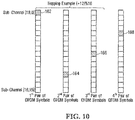
- the expression (+12)%16 defines the sub-carrier hopping that occurs for this particular example. It means that after defining a first sub-carrier location (using the sub-channelization tree for example), the sub-carrier position for the next OFDM symbol pair is determined by adding 12 to the current position (where the numbers 1 through 16 index into an arbitrarily defined base set of sub-carriers that may or may not be contiguous) and performing a modulo 16 operation. With the example given, it can be seen that 16 different sub-channels could be defined over four pairs of OFDM symbols within a sub-band. More generally, any appropriate mechanism of sub-carrier hopping can be employed; of course the mechanism needs to be deterministic in the sense that it can be reproduced at a receiver. In the above example, sub-carrier hopping occurs across OFDM symbol pairs; more generally, the hopping can occur at any defined time interval of one or more OFDM symbols.
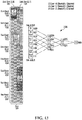
- a specific example of diversity channel addressing will now be given with reference to Figure 11 .
- a given sub-band user is allocated a set of resources that is contiguous both in frequency and time within a given slot.
- resources can be assigned to a sub-band user by allocating them K x N sub-carriers (in other words K resource blocks where K ⁇ 1), over J sets of M OFDM symbol intervals, where J ⁇ 1.
- K x N sub-carriers in other words K resource blocks where K ⁇ 1
- a sub-band basic access unit slot structure is shown at 410 for an example slot that provides for a 4 x 4 resource block space, each resource block consisting of eight sub-carriers by two OFDM symbols.
- each node in the tree 410 represents eight sub-carriers over two OFDM symbols.
- the tree structure shown allows for any pair of consecutive basic access units to be combined in a sub-band channel.
- multiple groups of eight sub-carriers that are located contiguously can also be combined in generating this sub-band channel as was the case in previous examples.
- an arbitrary block of nodes from the tree 410 can be used to define a sub-band channel so long as they are rectangular in shape.
- the entire set of 32 sub-carriers for the last OFDM symbol pair in the tree 410 are shown generally indicated at 412. These 32 sub-carriers are used to define basic access units for diversity channel definition, i.e. diversity sub-channels.
- the 32 sub-carriers are arranged in groups of four, and every fourth sub-carrier is assigned to the same diversity sub-channel.
- a diversity sub-channelization tree is indicated generally at 414.
- the lowest level diversity sub-channels are indicated at 417.
- One of these sub-channels 415 is shown to include the first sub-carrier for each of the groups of four shown at 412. Four such diversity sub-channels are defined on the basis of the last OFDM symbol pair.
- the approach is to signal which portion of the tree is active, and then to perform node naming for the active nodes, and to perform channel assignment using the nodes thus named.
- the partial tree activation approach can be used with either the sub-band channelization tree, and/or the diversity sub-channelization tree or for the combination of the two.
- a 7-bit bitmap can be used to indicate which of the active nodes are being assigned, and then a user ID is transmitted for each bit in the bitmap.
- the following signaling could be employed:
- a reduced-size diversity channel can be used to transmit a reduced amount of data; alternatively, the same amount of data can be transmitted with the expectation that redundancy in the data can be leveraged at the receiver to compensate for the missing sub-carriers.
- a given mobile station can indicate its preference for sub-band channel or diversity channel assignment by indicating whether it would like to report a sub-band CIR or a full band CIR.
- the system will give each mobile station what it wants.
- the scheduler decides which of the users that indicate a preference for sub-band reporting actually report a sub-band CIR.
- the scheduler can indicate to a mobile that would prefer to report one or more sub-band CIRs to instead report a full band CIR, or vise versa, based on factors such as traffic type, buffer size, geometry or the ratio of diversity users to sub-band users. More generally, scheduling each user to be either a sub-band channel or a diversity channel can be performed as a function of information received from users.
- the assigned sub-band channel is removed from available channel list, and the size of diversity channels (available and scheduled) is updated at step 40-13.
- a scheduling method involves scheduling each receiver to either a sub-band channel or a diversity channel as a function of information received from receivers.
- a selection of sub-bands, or sub-band CQI information, or a preference for sub-band vs. diversity channel are three examples of such information.
- a multi-slot/persistent resource assignment scheme is provided by the following.
- the scheduler may pre-assign multiple slots spaced at an interval equal to the packet arrival rate.
- the benefit of assigning multiple slots is that it reduces the signaling overhead. Since the VoIP users are pre-scheduled, only the non-VoIP users are scheduled using the above method.
- the mobile station reports CQI to the base station for this purpose; the CQI reporting can come in any form. Specific examples include multi-level, differential, single bit up/down, two bit up/down/no change.
- Scheduled data 644 which is a stream of bits, may be scrambled in a manner reducing the peak-to-average power ratio associated with the data using data scrambling logic 646.
- a cyclic redundancy check (CRC) for the scrambled data is determined and appended to the scrambled data using CRC adding logic 648.
- channel coding is performed using channel encoder logic 650 to effectively add redundancy to the data to facilitates recovery and error correction at the mobile station 616. Again, the channel coding for a particular mobile station 616 may be based on the CQI.
- the channel encoder logic 650 uses known Turbo encoding techniques.
- the encoded data is then processed by rate matching logic 652 to compensate for the data expansion associated with encoding.
- CRC logic 712 removes the CRC checksum, checks the scrambled data in traditional fashion, and provides it to the de-scrambling logic 714 for de-scrambling using the known base station de-scrambling code to recover the originally transmitted data 716.
Landscapes
- Engineering & Computer Science (AREA)
- Signal Processing (AREA)
- Computer Networks & Wireless Communication (AREA)
- Quality & Reliability (AREA)
- Power Engineering (AREA)
- Business, Economics & Management (AREA)
- General Business, Economics & Management (AREA)
- Multimedia (AREA)
- Mobile Radio Communication Systems (AREA)
Abstract
Description
- This application claims the benefit of prior
U.S. Provisional application nos. 60/666,548 filed March 30, 2005 60/710,527 filed August 23, 2005 60/728,845 filed October 21, 2005 60/741,923 filed December 2, 2005 60/751,101 filed December 16, 2005 - The present invention relates to channelization systems and methods for use in OFDM (orthogonal frequency division multiplexing) systems, such as OFDM wireless networks.
- Conventional OFDM systems accommodate slow moving mobile stations in a manner that takes advantage of the fact that it is possible to track the fading in the frequency domain as well as the time domain. In order to take advantage of the slowly changing channel, sub-band scheduling is performed to assign a contiguous set of sub-carriers to each mobile station. In this case, each sub-band mobile station typically reports the carrier to interference ratio (CIR) for each sub-band or only the best sub-bands, where the number of bands to report is specified by the base station.
- Conventional OFDM systems accommodate fast moving mobile stations as well. When a mobile station is moving too fast to perform channel sensitive scheduling, sub-carriers are assigned that are distributed over the entire bandwidth. In this case, the mobile station reports a full band CIR rather than a sub-band CIR.
- The conventional approach to handling both slow moving mobile stations and fast moving mobile stations has been to have some transmission periods dedicated to slow moving mobile stations, and to have other transmission periods dedicated to fast moving mobile stations. An example of this is shown in
Figure 34 where the breakdown between resource allocation for slow moving mobile stations and fast moving stations is shown with frequency on thevertical access 10, and time on thehorizontal axis 12. During sometime intervals 14, the entire frequency band is used to support channels with distributed sub-carriers, whileother time intervals 15 are used to support channels that are implemented using sub-bands. - According to one broad aspect, the invention provides a method comprising: transmitting OFDM symbols using a plurality of sub-carriers within an OFDM band; the OFDM symbols collectively containing diversity channels and sub-band channels, each diversity channel utilizing a plurality of sub-carriers distributed across the OFDM band, and each sub-band channel utilizing a contiguous set of sub-carriers within the OFDM band; at least some of the OFDM symbols simultaneously including sub-carriers utilized by a sub-band channel and sub-carriers utilized by a diversity channel.
- In some embodiments, the method further comprises: sub-dividing the plurality of sub-carriers into resource blocks, each resource block comprising a fixed number of contiguous sub-carriers over at least one OFDM symbol duration; using each resource block in its entirety for one of sub-band channel use or distributed channel use.
- In some embodiments, the method further comprises: assigning each resource block to either sub-band channel use or distributed channel use in a manner that is statically defined.
- In some embodiments, the method further comprises: assigning each resource block to either sub-band channel use or distributed channel in a manner that changes over time.
- In some embodiments, the method further comprises: transmitting at least one reference OFDM symbol for each fixed size set of traffic OFDM symbols.
- In some embodiments, each diversity channel comprises a plurality of resource blocks spaced in frequency.
- In some embodiments, the plurality of resource blocks spaced in frequency for a given diversity channel are simultaneously transmitted.
- In some embodiments, the plurality of resource blocks spaced in frequency for a given diversity channel are transmitted during different OFDM symbols.
- In some embodiments, transmitting OFDM symbols using a plurality of sub-carriers within an OFDM band is performed for each of a plurality of antennas, the method further comprising: for each antenna, transmitting a respective set of scattered pilots, the sets of scattered pilots being transmitted so as not to interfere with each other.
- In some embodiments, the method further comprises: for each antenna, transmitting at least one reference OFDM symbol; and for each fixed size set of traffic OFDM symbols, the scattered pilots being transmitted during the reference symbol.
- In some embodiments, the method further comprises transmitting at least one reference OFDM symbol for each fixed size set of traffic; and for each antenna transmitting some of the respective set of scattered pilots during the reference symbol and some of the scattered pilots during traffic symbols.
- In some embodiments, the scattered pilots are inserted in a diamond shaped lattice pattern for each antenna.
- In some embodiments, the method further comprises: defining a slot to contain an NxM resource block space by dividing the plurality of OFDM sub-carriers into N≥2 sub-bands in frequency transmitted over M≥1 sub-slots in time, each sub-slot containing L≥1 OFDM symbol; allocating each resource block in its entirety for one of diversity channel use or sub-band channel use.
- In some embodiments, the method further comprises: for each slot, allocating resource blocks for sub-band channel use first, and allocating remaining resource blocks for diversity channel use.
- In some embodiments, the method comprises: for each slot, defining a set of diversity sub-channels using sub-carriers of resource blocks left over after sub-band channel assignment, and assigning each diversity channel to be transmitted during the slot at least one diversity sub-channel.
- In some embodiments, the diversity sub-channels are systematically defined such that given a set of resource blocks left over after sub-band channel assignment, an identical set of diversity sub-channels will always result.
- In some embodiments, diversity sub-channels are assigned to diversity channels using a sub-channelization tree having multiple levels, with a first level in the tree comprising a plurality of nodes each representing a single diversity sub-channel, and each subsequent level in the tree comprising one or more nodes, each node in a subsequent level combining at least two nodes of a previous level and representing all sub-channels represented by the at least two nodes of the previous level.
- In some embodiments, each diversity channel comprises a set of one or more diversity sub-channels represented by a respective single node in the sub-channelization tree.
- In some embodiments, the method further comprises: signaling diversity channel definitions by sending information associating each diversity channel with the respective single node in the sub-channelization tree, and sending a user identifier for each diversity channel.
- In some embodiments, each diversity sub-channel comprises: at least one sub-carrier in corresponding sub-carrier positions within each resource block available for diversity channel use.
- In some embodiments, diversity sub-channels are defined using a sub-channelization tree based on sub-carriers within a single sub-band leftover-space-wise sub-channelization.
- In some embodiments, defining a set of diversity sub-channels using sub-carriers of resource blocks left over after sub-band channel assignment comprises performing leftover-space-wise sub-channelization.
- In some embodiments, diversity sub-channels are defined using a sub-channelization tree based on all sub-carriers available in the resource blocks left over after sub-band channel assignment in a given slot, and diversity channels are assigned to be transmitted on diversity sub-channels on a slot-wise basis.
- In some embodiments, diversity sub-channels are defined using a sub-channelization tree based on all sub-carriers available in the resource blocks left over after sub-band channel assignment in a given sub-slot, and diversity channels are assigned to sub-channels on a sub-slot-wise basis.
- In some embodiments, each diversity sub-channel includes a respective set of OFDM sub-carriers over multiple consecutive OFDM symbols.
- In some embodiments, each diversity sub-channel is transmitted over multiple OFDM symbols, and comprises a respective set of OFDM sub-carriers that changes in a systematic manner within the multiple OFDM symbols.
- In some embodiments, the method further comprises: sending signaling information that indicates which resource blocks are assigned to sub-band channels and which blocks are available to diversity channels.
- In some embodiments, sending signaling information comprises: sending a two dimensional bitmap that indicates for the NxM resource block space which resource blocks are assigned to sub-band channels and which blocks are available to diversity channels.
- In some embodiments, sending signaling information comprises: sending a one-dimensional bit map containing a single bit indicating for each sub-band whether or not sub-band channels are to be included in that sub-band; for each one bit in the one-dimensional bit map, sending information that identifies a number of users, and for each user, start sub-slot index, and number of sub-slots.
- In some embodiments, the method further comprises: assigning a unique region identifier to each resource block, and sending the region identifier to indicate that the region is being used for a sub-band channel.
- In some embodiments, the method further comprises: for each sub-band channel and each diversity channel, sending a respective user identifier.
- In some embodiments, defining a set of diversity sub-channels using sub-carriers of resource blocks left over after sub-band channel assignment comprises: for each slot, defining a respective set of diversity sub-channels that use the available sub-carriers for the slot; combining all of the sub-channels into a sub-channelization tree that defines allowable combinations of the sub-channels.
- In some embodiments, the method further comprises: using a time domain tree to identify consecutive OFDM symbols within a slot; using a frequency domain tree to identify contiguous sub-bands; defining each sub-band channel using a combination of the time domain tree and the frequency domain tree.
- In some embodiments, the time domain tree identifies consecutive symbols within a slot always including a first symbol within the slot.
- In some embodiments, the method further comprises defining names for each possible sub-band channel by performing one of: assigning a region ID to each node in the time domain tree and assigning a region ID to each node in the frequency domain tree; assigning a region ID to each node in the time domain tree and using a bit map to identify nodes in the frequency domain tree; using a bit map to identify nodes in the time domain tree, and assigning a region ID to each node in the frequency domain tree; using a first bit map to identify nodes in the time domain tree, and using a second bit map to identify nodes in the frequency domain tree; using a bit map to identify each possible time domain tree node plus frequency domain tree node combination; assigning a region ID to each time domain tree node plus frequency domain tree node combination.
- In some embodiments, the method further comprises: identifying sub-band channels by: sending information that identifies which resource blocks are available for sub-band channels; using a systematic naming convention to name each permutation of one or more contiguous sub-bands over one or more consecutive sub-slots; for each sub-band channel, transmitting a user identifier and a name from the systematic naming convention that identifies the particular permutation of one or more contiguous sub-bands over one or more consecutive sub-slots assigned to that user.
- In some embodiments, sending information that identifies which resource blocks are available for sub-band channels comprises sending a bit map.
- In some embodiments, the method comprises: defining sub-band sub-channels using all of the plurality of OFDM sub-carriers; defining diversity sub-channels using all of the plurality of OFDM sub-carriers; assigning each sub-band channel one or more sub-band sub-channels; assigning each diversity sub-channel one or more diversity sub-channels.
- In some embodiments, the method further comprises: where there is a conflict between a sub-band channel and a diversity channel on a given sub-carrier, sending the sub-band channel on the sub-carrier.
- In some embodiments, the method further comprises: using a sub-band sub-channelization tree in time and/or frequency to organize sub-band sub-channels into allowable combinations for sub-band channels; using a diversity sub-channelization tree in time and/or frequency to organize diversity sub-channels into allowable combinations for diversity channels.
- In some embodiments, the method further comprises: using a bitmap or region identifiers to indicate which of the allowable combinations of sub-band basic access units are being used as sub-band channels, and which of the allowable combinations of diversity sub-channels are being used as diversity channels.
- In some embodiments, the method further comprises: for each sub-band channel or diversity sub-channel, sending a respective user identifier.
- In some embodiments, the method further comprises performing partial tree activation by: using a respective sub-channelization tree to organize sub-channels into allowable channels for at least one of diversity channel definition and sub-band channel definition; for at least one sub-channelization tree activating a portion of the sub-channelization tree and sending information identifying the portion; assigning channels from the portion of the sub-channelization tree.
- In some embodiments, activating a portion of the sub-channelization tree comprises activating a certain set of consecutive levels within the tree.
- In some embodiments, activating a portion of the sub-channelization tree comprises activating a respective set of consecutive levels within the tree for each of a respective set of at least one defined top node.
- In some embodiments, the set of consecutive levels are defined by a respective top level and a respective bottom level for each top node.
- In some embodiments, the set of consecutive levels are defined by the top node and a respective bottom level for the top node.
- In some embodiments, activating a portion of the sub-channelization tree comprises: employing a first bitmap to identify a subset of nodes of the sub-channelization tree that are active.
- In some embodiments, the method further comprises: using a second bitmap to identify which nodes of the subset of nodes are being assigned, and for each node being assigned, assigning a user identifier.
- In some embodiments, the method further comprises: updating the partial tree activation from time to time.
- In some embodiments, updating the partial tree activation from time to time comprises: sending update information only for segments of the tree that have changed.
- In some embodiments, the method comprises, for each segment to be changed: sending an indication of the segment that is to be changed; sending updated activation information for the segment.
- In some embodiments, the method further comprises: dynamically powering off a partial resource of bandwidth.
- In some embodiments, the method further comprises: dynamically powering off a partial resource of bandwidth.
- In some embodiments, the method further comprises sending information identifying which resources have been powered off.
- In some embodiments, sending information identifying which resources have been powered off comprises one of: sending a two dimensional bit map indicating which resource blocks are powered off; sending a one dimensional bit map indicating which sub-bands are powered off; sending a one dimensional bit map indicating which sub-bands are powered off at some point in the slot, and sending additional information indicating when they are powered off within the slot.
- In some embodiments, the method further comprises: scheduling each receiver to either a sub-band channel or a diversity channel as a function of information received from receivers.
- In some embodiments, the method further comprises: defining a priority for each receiver; attempting to schedule each receiver in order of priority.
- In some embodiments, attempting to schedule each receiver in order of priority comprises: if the receiver is a sub-band channel receiver, attempting to assign a sub-band channel to the receiver; if the receiver is a diversity channel receiver, attempting to assign a diversity channel to the receiver.
- In some embodiments, attempting to assign a sub-band channel to the receiver comprises: receiving a selection of one or selected sub-bands the receiver has chosen; if the selected sub-band are available, determining if scheduling the receiver using the selected sub-bands will impact already scheduled diversity users and if not scheduling the receiver using the available selected sub-bands; if the selected sub-band are available and scheduling the receiver using the selected sub-bands will impact already scheduled diversity users, attempting to re-schedule at least one impacted diversity user and if successful in re-scheduling the receiver using the available selected sub-bands.
- In some embodiments, the method further comprises: allocating some resources persistently over multiple slots and allocating other resources non-persistently.
- In some embodiments, the method further comprises: allocating some resources persistently at the beginning of each slot, and signaling information indicating how much resource has been allocated persistently, with non-persistent allocations following the persistent allocations.
- In some embodiments, the method further comprises using asynchronous HARQ for retransmission, and assigning all retransmitted packets a higher priority than non-retransmitted packets.
- In some embodiments, a method further comprises: for a given scheduling period, allocating sub-band channels up to an allocation threshold.
- In some embodiments, for a given scheduling period, allocating sub-band channels up to an allocation threshold comprises: allocating sub-band channels first up to the allocation threshold; defining diversity channels using sub-carriers left over after sub-band channel assignment.
- In some embodiments, for a given scheduling period, allocating sub-band channels up to an allocation threshold comprises: allocating sub-band channels up to the allocation threshold; defining diversity sub-channels using all OFDM sub-carriers, and allocating diversity sub-channels to diversity channels; transmitting each diversity channel punctured in sub-carrier locations that are common between the diversity channel and an assigned sub-band channel.
- In some embodiments, the method further comprises: persistently allocating a sub-band or diversity channel transmission resource for VoIP traffic.
- In some embodiments, the method further comprises: using one of two MCS (modulation and coding scheme) levels VoIP traffic by assigning one of the two MCS levels at a beginning of a call and only changing the MCS level if a significant change in a receiver's average reported CQI is detected.
- In some embodiments, the method further comprises: if a mobile station reports a CQI that maps to a higher MCS than an operating MCS, decreasing a transmit power by an amount specified for the difference between the two MCS levels; and if the mobile station reports a CQI that maps to a lower MCS than the operating MCS then performing no power adjustment.
- According to another broad aspect, the invention provides a method comprising: receiving OFDM symbols using a plurality of sub-carriers within an OFDM band; the OFDM symbols collectively containing diversity channels and sub-band channels, each diversity channel utilizing a plurality of sub-carriers distributed across the OFDM band, and each sub-band channel utilizing a contiguous set of sub-carriers within the OFDM band; at least some of the OFDM symbols simultaneously including sub-carriers utilized by a sub-band channel and sub-carriers utilized by a diversity channel; receiving signalling information indicating which diversity channel or sub-band channel to extract.
- In some embodiments, the method further comprises: receiving signalling information allowing a determination of how diversity channels and sub-band channels are defined.
- In some embodiments, the signaling information comprises an identification of which sub-carriers are occupied by sub-band channels, the diversity channels being systematically defined using left over sub-carriers.
- In some embodiments, a receiver is adapted to implement the method as summarized above.
- In some embodiments, a transmitter is adapted to implement the method as summarized above.
- According to another broad aspect, the invention provides a transmitter comprising: an OFDM modulator that produces OFDM symbols for transmission from a plurality of inputs; a channelizer that maps symbols to inputs of the OFDM modulator such that the OFDM symbols collectively contain diversity channels and sub-band channels, each diversity channel utilizing a plurality of sub-carriers distributed across an OFDM band, and each sub-band channel utilizing a contiguous set of sub-carriers within the OFDM band, such that at least some of the OFDM symbols simultaneously including sub-carriers utilized by a sub-band channel and sub-carriers utilized by a diversity channel.
- According to another broad aspect, the invention provides a system comprising: at least one transmitter and at least one receiver; the at least one transmitter and the at least one receiver communicating using OFDM symbols that collectively contain diversity channels and sub-band channels, each diversity channel utilizing a plurality of sub-carriers distributed across an OFDM band, and each sub-band channel utilizing a contiguous set of sub-carriers within the OFDM band, such that at least some of the OFDM symbols simultaneously including sub-carriers utilized by a sub-band channel and sub-carriers utilized by a diversity channel.
- Preferred embodiments of the invention will now be described with reference to the attached drawings in which:
-
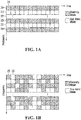
Figures 1A and 1B are diagrams of OFDM symbol structures that allow for the co-existence of both sub-band channels and diversity channels; -
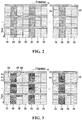
Figure 2 is a diagram of an OFDM frame structure in which OFDM sub-carriers are divided into sub-bands, with each sub-band being assigned to one of sub-band channel use of diversity channel use; -
Figure 3 is a diagram of a frame structure in which the sub-carriers allocated for diversity channel use ofFigure 2 are further broken down into three different diversity channels; -
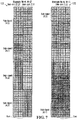
Figure 4 is another diagram of an OFDM frame structure showing the assignment of both diversity channels and sub-band channels with pilots inserted in the first OFDM symbol in each group of seven OFDM symbols; -
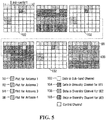
Figure 5 is a diagram of a frame structure again showing the co-existence of sub-band channels and diversity channels, in this case also including a scattered pilot and a control channel; -
Figure 6 is a table showing example parameters for sub-band definition; -
Figures 7 and8 shown are diagrams of example frame structures in which the OFDM sub-carriers are divided into sub-bands, and the OFDM symbols of a given slot are divided into sub-slots; -
Figures 9A and9B are diagrams of two different approaches to sub-channelization using sub-channelization trees; -
Figure 10 is a diagram showing how sub-carrier definitions assigned to a given sub-channel can hop over time; -
Figure 11 is a diagram of an example of sub-channelization tree node naming; -
Figure 12 is a diagram of an example of diversity sub-channel definition that takes place using sub-carriers leftover sub-band channel assignment; -
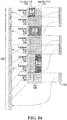
Figure 13 is a diagram of another example of diversity sub-channel definition that uses sub-carriers leftover after sub-band assignment; -
Figure 14 is a diagram of another example of diversity sub-channel definition using sub-carriers leftover after sub-band channel assignment; -
Figure 15 is diagram of another example of diversity sub-channel definition using sub-carriers leftover after sub-band channel assignment; -
Figure 16 is diagram of another example of diversity sub-channel definition using sub-carriers leftover after sub-band channel assignment; -
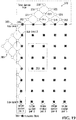
Figure 17 is another example of diversity sub-channel definition; -
Figure 18 is an example of a diversity sub-channelization tree using the definition ofFigure 17 ; -
Figure 19 is a diagram of an example of the assignment of resource blocks to sub-band channels; -
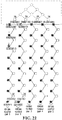
Figure 21 is a diagram of an example of resource block assignment for sub-band channels with two examples of naming approaches that can be used; -
Figure 22 is a diagram showing another naming approach for naming sub-band channels; -
Figures 23A and23B are further examples of sub-band channel definition and naming; -
Figures 24 through 26 are diagrams of three different examples of diversity sub-channelization in which all of the sub-carriers are employed for diversity sub-channelization notwithstanding whether or not sub-band channels have been assigned; -
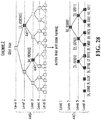
Figures 27 to 32 are diagrams showing how a reduced portion of an overall tree can be employed to reduce the amount of signaling required, and how updates to such a tree can be achieved; -
Figure 33 is a diagram of an example of temporarily switching off sub-bands within the overall OFDM resource; -
Figure 34 is a diagram of a set of OFDM transmissions that do not allow for the co-existence of sub-band channels and diversity channels on single OFDM symbols; -
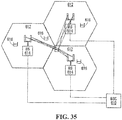
Figure 35 is a block diagram of a cellular communication system; -
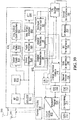
Figure 36 is a block diagram of an example base station that might be used to implement some embodiments of the present invention; -
Figure 37 is a block diagram of an example wireless terminal that might be used to implement some embodiments of the present invention; -
Figure 38 is a block diagram of a logical breakdown of an example OFDM transmitter architecture that might be used to implement some embodiments of the present invention; -
Figure 39 is a block diagram of a logical breakdown of an example OFDM receiver architecture that might be used to implement some embodiments of the present invention; -
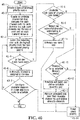
Figure 40 is a flowchart of an example method of scheduling diversity users and sub-band users. - A broad aspect of the invention provides an OFDM channelization system and method in which sub-band channels and diversity channels are transmitted simultaneously within the same OFDM symbol. Each sub-band channel employs a contiguous set of sub-carriers. Each diversity channel includes a set of sub-carriers that are not entirely contiguous, and that are diversity throughout across a frequency band. The conventional meaning of non-contiguous applies here, namely that there are at least some gaps between some of the sub-carriers.
-
Figure 1A shows the co-existence of two types of channels in accordance with an embodiment of the invention. In this example, some of the sub-carriers, collectively indicated at 20, are dedicated for diversity channels, while some of the sub-carriers, collectively indicated at 22, are dedicated for sub-band channels. It can be seen that during any given OFDM symbol interval, forexample OFDM symbol 24, diversity channels and sub-band channels are simultaneously supported. In the particular example illustrated, the OFDM sub-carrier set is divided into sub-bands each containing a fixed number of sub-carriers, and the overall OFDM resource in time and frequency is divided into resource blocks, each resource block consisting of one sub-band in frequency over a fixed number (one or more) of OFDM symbol intervals. When a resource block is allocated for sub-band channel use, all of the sub-carriers of the resource block are allocated to the same sub-band channel. In some implementations, a given sub-band channel is only allowed to occupy a single sub-band; in other implementations a sub-band channel can occupy a maximum of two adjacent sub-bands; in other implementations, a given sub-band channel is allowed to occupy an arbitrary number of multiple adjacent sub-bands. Many examples of sub-band channel definitions are provided below. When a resource block is allocated for distributed channel use, multiple distributed channels may use the resource block and other resource blocks, or a single distributed channel might use the entire resource block together with other non-adjacent resource blocks. Many examples of distributed channel definitions are provided below. In some embodiments, the size of the resource block is selected as a function of the coherence bandwidth such that for sub-band channels the entire set of sub-carriers experiences a similar channel. Once the overall band of sub-carriers has been assigned to resource blocks, each resource block is then used in its entirety either in the construction of diversity or sub-band channels. In the example ofFigure 1A , this assignment does not change from one OFDM symbol duration (in the time direction) to another. In another embodiment, illustrated by way of example inFigure 1B , the assignment of resource blocks to diversity channels or sub-band channels can change over time. InFigure 1B , it can be seen that duringOFDM symbol interval 26, there are four resource blocks that are used for diversity channels, and three resource blocks that are used for sub-band channels whereas duringOFDM symbol interval 28, there are four resource blocks being used for sub-band channels and three resource blocks being used for diversity channels. Furthermore it can be seen that the assignment of the resource blocks changes on a per OFDM symbol basis.Figure 1A has been used to show a specific example of resource block assignment that is statistically defined in time. The number and allocation of fixed in time resource blocks is an implementation specific parameter. Similarly, for the example ofFigure 1B , a very specific layout of resource blocks for diversity channels in sub-band channels that changes over time has been shown, for example through dynamic assignment. More generally, any appropriate layout of resource blocks for these two channel types can be employed. - Another example of the co-existence of the two types of channels will now be described with reference to
Figure 2 . In this example, OFDM symbols are divided into TTIs (transmit time interval). In the illustrated example, each TTI consists of seven consecutive OFDM symbols, but of course an arbitrary number of symbols could be employed. One such TTI is indicated at 30. The first symbol in each TTI, namelysymbol 32 for thefirst TTI 30, is used as a reference symbol. This might for example include pilot and control information. More generally, each TTI has at least one reference symbol. The remaining sixOFDM symbols 34 are used for traffic channels. In the frequency direction, the available bandwidth of sub-carriers is divided into resource blocks. In a particular example, each resource block might contain 25 sub-carriers. Then, each resource block is assigned to be used for either sub-band channels or diversity channels. In the illustrated example, resource blocks 36 are being used for sub-band channels while resource blocks 38 are being used for diversity channels. With this particular example, the assignment of resource blocks to sub-band channels and diversity channels is fixed, but in another implementation this can be allowed to change as was the case for the example ofFigure 1B . With the example ofFigure 2 , the reference symbols are inserted in a TDM (time division multiplexed) fashion, with every seventh symbol being a reference symbol but different frequencies can be employed. - Having allocated the sub-carriers and OFDM symbol durations to either sub-band or diversity mode, there are many ways to define diversity sub-channels using the allocated sub-carriers. A first example will now be described with reference to
Figure 3 where the reference symbol insertion, TTI size, and resource block assignment is assumed to be the same as was described with reference toFigure 2 . In this case, three different diversity channels are defined using the assigned resources. The resources assigned for the first channel are indicated at 46. This consists of a single resource block during the first twoOFDM symbols 40 reach TTI, a single resource block during the next two OFDM symbols 42 reach TTI, and asingle resource block 50 during the next two OFDM symbols 44 reach TTI. The location in frequency of the three resource blocks that make up the diversity channel is different and that is why the channel is to be considered a diversity channel. A similar assignment of resource blocks is shown forchannels Figure 33 , an arbitrary number of diversity channels could be created assuming sufficient resources are assigned for diversity channel use. Furthermore, as was the case with the example ofFigure 2 , the number of OFDM symbols in each TTI and the number of sub-carriers in each resource block is to be considered an implementation specific detail. - Referring now to
Figure 4 , shown is another example of the co-existence of sub-band and diversity channels. With this example, the available sub-carriers are again divided into resource blocks. In the illustrated example each resource block is eight sub-carriers, but other numbers can be employed. Thefirst OFDM symbol 60 of each TTI is used as a reference symbol and in the particular example illustrated the reference symbol is used for pilot symbol insertion. In the illustrated example, MIMO transmission is assumed with four transmit antennas. The pilots are inserted with a respective distributed set of sub-carriers assigned to function as the pilot for each antenna. In the particular example illustrated, the first sub-carrier and every fourth sub-carrier thereafter is used for a first antenna; the second sub-carrier and every fourth sub-carrier thereafter is used for a second antenna and so on. In frequencies that one antenna is transmitting a pilot, the other antennas transmit nulls. Until the next symbol containing pilot information, theOFDM symbols 62 are used for data transmission. As was in the case in previous examples, several of the resource blocks 64 are allocated for sub-band channels while several of the resource blocks 66 are allocated for diversity channels. In this example, the sub-carriers are allocated for diversity channels are used to implement three different diversity channels indicated at 68,70,72. In this example, the first twoOFDM symbols 74 are used for the first diversity sub-channel; the next twoOFDM symbols 76 are used for thesecond diversity sub-channel 70, and the third pair ofOFDM symbols 78 is used for thethird diversity channel 72. The channels are still diversity channels in the sense that they employ sub-carriers from resource blocks 66 that are spread throughout the spectrum. In contrast, for the sub-band channels one or more resource blocks would be allocated to a given user. The frequency breakdown between sub-band and diversity channels may be the same in the multiple antenna case. However, more generally, the breakdown between sub-band channels and diversity channels need not be the same for the multiple transmit antenna case and can be defined on a per antenna basis. A specific example has been shown inFigure 4 that is suitable for a four transmit antenna system. Of course appropriate modifications could be made to support systems with fewer or greater numbers of antennas. Furthermore, the particular layout of sub-band resource blocks and diversity resource blocks is only an example. Similarly, the size of theTTI 62, and the number of sub-carriers in each resource block are also implementation specific details. - For the OFDM symbol used for pilot insertion in
Figure 4 , for a given OFDM sub-carrier, only a single antenna transmits a pilot. In this manner, there is no interference between the pilots from the various antennas. Thus, the pilots are scattered with theFigure 4 embodiment with a spacing of four sub-carriers between the pilots for a given antenna, and a spacing of every seven OFDM symbols. More generally, a scattered pilot design is one that includes pilots for each antenna that are spaced in frequency and time.Figure 5 shows another example of a scattered pilot design in which pilots for each antenna are inserted in a diamond shaped lattice with pilots forantennas Figure 5 consists of areference OFDM symbol 98 that is used to as a control channel, followed by sixOFDM symbols 100 used for traffic. The control channel is used to transmit the same content from all of the antennas for this example. The particular breakdown of theOFDM symbols 100 for traffic is the same as was the case for theFigure 4 example, with sub-band channels indicated at 102 and three diversity channels indicated at 104,106,108. However, in this case the diamond shaped lattice pilot pattern has been punctured across both thecontrol channel 98 and thedata channels 100. A first option for puncturing is that it is a pure puncture with actual content from the respective data channels simply being omitted. In this case, it would be necessary that the forward error correction coding or other error correction techniques be employed to enable the recovery of the missing contents. Another option is that the payload size is changed for channels that have punctured locations. For example, for thefirst sub-band channel 102, it can be seen that in the absence of the pilot insertion there would be 8 sub-carriers by 6 OFDM symbols = 48 data locations. When the puncturing has been performed, six of these are removed and as such there is now room for 42 data locations. If the payload is proportionately reduced in size, then forward error correction does not need to be relied upon to recover any missing information, at least not any missing information due to punctured pilot channels. InFigure 5 , a very specific example has been shown. It is to be understood that the number of OFDM symbols used for data in each slot is an implementation specific detail; the number of OFDM sub-carriers in each resource block is implementation specific; the particular layout of the scattered pilots is implementation specific; the number of antennas employed is implementation specific; the arrangement and layout of the sub-band channels versus the diversity channels is implementation specific. -
Figure 6 is a table showing various examples of how specified system bandwidths can be used to implement OFDM channelization structures. - In another generalized approach to channelization, a scheduling period is referred to as a "slot", this consisting of a set of L (L ≥ 1) OFDM symbols.
- All the sub-carriers within a slot (time domain) and whole band (frequency domain) are viewed as a sub-carrier pool. A slot in the time domain is divided into M sub-slots with each sub-slot including one or multiple consecutive OFDM symbols or symbol pairs. The whole band (frequency domain) is divided into N sub-bands with each sub-band including multiple contiguous sub-carriers. Thus the sub-carrier pool is effectively divided into an MxN resource block space with each resource block including one or multiple sub-slots and multiple contiguous sub-carriers. The sub-slot duration in time is equivalent to the resource block duration in time. M and N can be updated dynamically on slot basis or statically on a few slots basis based on traffic statistics. M is ≥ 1, and N ≥ 2.
- It is readily apparent how the examples presented thus far can fit in with this generalization, allowing for the insertion of additional OFDM symbols for reference, pilot or control. Two specific examples of resource block definition are given in
Figure 7 . A first example, generally indicated at 120 involves a sub-carrier space with 48 sub-carriers, and a slot length consisting of eight OFDM symbols. The time domain slot is divided into M = 2 sub-slots each contains four OFDM symbols, and the frequency domain is divided into N = 4 sub-bands each containing 12 contiguous sub-carriers. The result is a 4 x 2 resource block space. A second example, generally indicated at 122, involves the same set of 48 OFDM sub-carriers and the same eight OFDM symbols per slot. In this case, the entire eight OFDM symbols are used to define a single sub-slot, and the 48 OFDM sub-carriers are divided in the frequency domain into eight sub-bands each containing six OFDM sub-carriers. Thus in this example, there is an N = 8 by M = 1 resource block space. - Referring to
Figure 8 , another example of resource block definition is shown in which 48 sub-carriers over eight OFDM symbols are divided into N = 8 sub-bands each with six OFDM sub-carriers, and two sub-slots each containing four OFDM symbol for an 8 x 2 resource block space. - Having defined the N x M resource block space, each of the resource blocks is then used for sub-band or distributed channels.
- A slot can be configured to include the two types of channels, namely sub-band channel and diversity channel. A sub-band channel includes a contiguous set of one or more resource blocks. A diversity channel includes multiple sub-carriers with those sub-carriers distributed across multiple resource blocks. Many examples of how the division between sub-band channels and diversity channels can be implemented within a slot will be described below. In some of these, sub-band channel resources are allocated first, and then all leftover resource space within a slot is available for diversity channels.
- Referring again to
Figure 8 , in the illustrated example, a single resource block has been assigned to create afirst sub-band channel 130; two resource blocks that are consecutive in time have been assigned to asecond sub-band channel 132, and two resource blocks that are adjacent in frequency have been assigned for a thirdsub-band channel 133. The remaining capacity is then available for diversity channels. - In some embodiments, the resource blocks left over after sub-band channel assignment are used to define a set of diversity sub-channels, and then each diversity channel is defined to include one or multiple diversity sub-channels. Various options for diversity sub-channelization exists, and several examples will be described below. In some embodiments, the diversity sub-channels are systematically defined such that given a set of available sub-carriers, the same set of diversity sub-channels will always result. With this approach, assuming a transmitter and a receiver both know the systematic definitions that are being applied, given a set of sub-carriers available for diversity sub-channelization, both the transmitter and receiver will know the sub-channel structure. The sub-channelization tree approaches described below are examples of this systematic sub-channel definition approach.
- In a first example, sub-band-wise sub-channelization is performed. A diversity sub-channel is defined by taking at least one selected sub-carrier within a sub-band into consideration. The definition is then applied to all available resource blocks for diversity channels. In other words, the diversity sub-channel includes a corresponding sub-carrier in the same position within each sub-band available for diversity channelization. For example, a diversity sub-channel might consist of the first sub-carrier of each sub-band available for diversity channelization.
- In another option, leftover space wise sub-channelization is performed. Diversity sub-channels are defined by taking all leftover sub-carriers (after sub-band allocation) in one or more OFDM symbols into the consideration.
- In some embodiments, a diversity sub-channel includes the same definition is applied across however many OFDM symbols are to be included in a resource block. In other embodiments, a diversity sub-channel definition changes from one OFDM symbol to the next within a resource block, for example through frequency hopping. An example of this is given below.
- With diversity sub-channels thus defined, a diversity channel is constructed from one or more such sub-channels.
- In some embodiments, where channel definitions are not fixed, signaling is employed to let each mobile station know where within the overall available resource their particular content is located. In one example of such signaling a two-dimensional bitmap is employed to indicate where the sub-band channels are versus where the diversity channels are. The following is an example of such a two-dimensional bitmap for the resource allocation shown in
Figure 8 , where: - N = 8, M = 2:
- [1 0 1 0 0 0 0 0
- 0 0 1 0 0 1 1 0]
- Each "1" in the two-dimensional bitmap represents a resource block that is being allocated for sub-band channel use. It can be seen how the "1"s in the bitmap above correspond with the sub-band channels 130,132,133 shown in
Figure 8 . Then, for each one bit in the two-dimensional bitmap, a user ID is signaled. For example,user IDs - { User ID = 1
- User ID = 2
- User ID = 2
- User ID = 3
- User ID = 3}.
- In another option for resource allocation signaling, a one-dimensional bitmap can be employed, with a single bit indicating for each sub-band whether or not sub-band channels are to be included in that sub-band. The following is an example of such a one-dimensional bitmap for the allocation of
Figure 8 : - N = 8 [1 0 1 0 0 1 1 ]
- In yet another option for resource allocation signaling, each resource block is given a respective region ID. For the particular case of N = 8 sub-bands and M = 2 sub-slots, there are a total of 16 resource blocks and four bits can be used to identify region IDs. Then, for each region, the signaling that is performed consists of the region ID and the user ID that is to be transmitted in that region.
- More generally, where channel definitions can change, any appropriate signaling information can be sent that enables a determination of which resource blocks are assigned to sub-band channels and which blocks are available to diversity channels. A user ID can also be sent for each sub-band channel allocated.
- In some embodiments, the diversity sub-channels are assigned using a sub-channelization tree having multiple levels, with a first level in the tree comprising a plurality of nodes each representing a single sub-channel, and each subsequent level in the tree comprising one or more nodes, each node in a subsequent level combining at least two nodes of a previous level and representing all sub-channels represented by the at least two nodes of the previous level. Specific examples are given below. Each diversity channel can then be defined to include a set of one or more sub-channels represented by a respective single node in the sub-channelization tree.
- In order to signal diversity channel definitions, information can be sent that associates each diversity channel with the respective single node in the sub-channelization tree. Specific examples below include bitmaps and region IDs.
- Two examples of diversity channelization through sub-channelization definition will be described with reference to
Figure 9A and9B respectively. Both of these examples assume an input of a base set of sub-carriers upon which sub-channelization is performed. Example methods of defining the base set of sub-carriers are given below, suffice it to say that the base set of sub-carriers may or may not be contiguous. In these examples, the diversity sub-channels are systematically defined by the number K of sub-carriers to be used, and the number L of sub-channels to be defined using those K sub-carriers. A first option is to employ a full diversity tree method to define the sub-channels. With a full diversity tree method, a sub-channel includes non-contiguous sub-carriers if multiple sub-carriers are to be included in a sub-channel. The diversity tree method allows sets of sub-channels to be defined that contain increasingly large numbers of sub-carriers. With the example illustrated inFigure 9A , generally indicated at 141, the assumption is that there are K = 16 sub-carriers. At a first level in the diversity tree, generally indicated at 140, the K = 16 sub-carriers are used to define L = 16 sub-channels referred to as sub-ch [16, 0]..., sub-ch[16,15]. The next level in the diversity tree is generally indicated at 142. Here, eight sub-channels are defined and labeled sub-ch [8, 0],..., sub-ch [8, 7]. Each of these sub-channels is shown to include two of the sub-channels from thefirst level 140 of the tree. Thus, in thesecond level 142, sub-ch[8,0] includes the 0th and 8th sub-carriers. This process is repeated for subsequent levels in the hierarchy. In the illustrated example, there are three more levels 144,146,148. Each sub-channel in thethird level 144 contains four sub-carriers, each sub-channel in thefourth level 146 includes eight sub-carriers, while the single node in thefifth level 148 includes all of the sub-carriers. It should be readily apparent how the example presented could be extended to cover an arbitrary number of sub-carriers K. With this sub-channelization definition, a given diversity channel can be defined to include one or more of these sub-channels. - In a second example shown in
Figure 9B , generally indicated at 150, a hybrid diversity tree approach is employed. The first level in thediversity tree 152 is the same as thefirst level 140 of the first example 141. However, in generating the second level, pairs of adjacent sub-carriers from the first level are selected. Thus, in thesecond level 154, sub-ch[8,0] includes the first two consecutive sub-carriers. After this, the sub-channels of thesecond level 154 are combined in a similar manner to the first example, and third 156, fourth 158, and fifth 160 levels in the diversity tree can be defined. It is again readily apparent how the approach given in the example 150 can be extended to cover an arbitrary number of sub-carriers. Furthermore, while in the illustrated example two consecutive sub-carriers have been combined, in another embodiment it might be possible to include four consecutive sub-carriers, for example in the third level of thediversity tree 156. Contiguous groups of two, four or eight might be used to support STTD transmission formats for example. For applications where the base set of sub-carriers are contiguous, the approach ofFigure 9B allows for a better estimate of interference and channel conditions since there are contiguous groups of sub-carriers. - In another example, diversity sub-channels include sub-carrier hopping in the time domain based on a specific pattern that might for example be base station specific. An example of this is shown in
Figure 10 where the sub-carrier selected for a given diversity sub-channel is indicated at 162 for a first pair of OFDM symbols, 164 for a next pair of OFDM symbols, 166 for a third pair of OFDM symbols and 168 for a fourth pair of OFDM symbols. The sub-carriers 162,164,166,168 are all within a sub-band. In this example, the sub-band has 16 sub-carriers but it is readily apparent how this concept can be extended to an arbitrary number of sub-carriers within a sub-band. InFigure 10 , the expression (+12)%16 defines the sub-carrier hopping that occurs for this particular example. It means that after defining a first sub-carrier location (using the sub-channelization tree for example), the sub-carrier position for the next OFDM symbol pair is determined by adding 12 to the current position (where thenumbers 1 through 16 index into an arbitrarily defined base set of sub-carriers that may or may not be contiguous) and performing a modulo 16 operation. With the example given, it can be seen that 16 different sub-channels could be defined over four pairs of OFDM symbols within a sub-band. More generally, any appropriate mechanism of sub-carrier hopping can be employed; of course the mechanism needs to be deterministic in the sense that it can be reproduced at a receiver. In the above example, sub-carrier hopping occurs across OFDM symbol pairs; more generally, the hopping can occur at any defined time interval of one or more OFDM symbols. - Having defined diversity sub-channels using one of the above-discussed approaches, a diversity channel is defined to include one or multiple diversity sub-channel. Addressing schemes can be employed to identify diversity channels. In one example, the addressing can be based on the position in the sub-channelization tree. Referring back to the
Figure 9 example, if a single diversity channel was to simply be one of the sub-channels referred to in thesecond level 142, then such a diversity channel could be identified using any mechanism that allows the identification of that position in the tree. - A specific example of diversity channel addressing will now be given with reference to
Figure 11 . With this example, there are eight sub-carriers that have been used to create a four level diversity tree with eight nodes in thefirst level 172, four nodes in thesecond level 174, two nodes in thethird level 176, and one node in thefourth level 178. A first option is to perform the addressing based on a bitmap. For L = 8 sub-channels in the first level, the size of such a bitmap would be 15 because there are 15 nodes in the tree as a whole. As was the case where bitmaps were presented as an option for signaling the occupancy of available sub-band channels, a bitmap can be transmitted to indicate which diversity sub-channels are occupied, together with user IDs for the occupied sub-channels. This combination will completely specify the content of the diversity channels. In another example, each node in the tree is assigned a "region ID". Since there are 15 nodes, four bits can used to uniquely identify each of the nodes in the tree. For example, in the illustrated example region ID "0010" identifies one of the nodes in the third level in the tree. It can be seen that a diversity channel having this region ID would includesub-carriers - In some embodiments, the sub-channel definition such as described above is applied across all of the sub-bands available to diversity transmission, and during a given slot or sub-slot the same user is assigned such a combined capacity. An example of this will now be given with reference to
Figure 12 where in a givenslot 180, containing two sub-slots 182,184 and containing eightsub-bands 186 through 200, three sub-band users have been assigned as indicated at 202,204,206. The remaining sub-bands are used for diversity sub-channelization. In the illustrated example, each band contains eight sub-carriers and as such a sub-channelization similar to that described with reference toFigure 11 can be employed as indicated generally at 208. Applying the same sub-channelization to all of the sub-slots and sub-bands that are not assigned for sub-band users, several diversity channels can be defined. Two particular diversity channels are illustrated by way of example with sub-carriers 210 being used to define a first diversity channel and sub-carriers 212 used to define a second diversity channel. In this case, the assignment is on a slot basis, with the sub-channelization being applied for the entire slot and then assigned to a given diversity channel. For consecutive OFDM symbol pairs, the sub-carriers assigned to each sub-channel in this example alternate between two sets that are offset from each other by one sub-carrier, this being an example of the hopping described by way of example above with reference toFigure 10 . It can be seen that there is still room for several additional diversity channels. Then, the diversity channel can be identified simply by its position in the bitmap or region ID. For example, the diversity channel 210 would simply be identified byposition 4 in the bitmap, or region ID "0100". Similarly, the diversity channel 212 would be identified byposition 6 in the bitmap, or region ID "0110". The following is an example of diversity channel assignment signaling that might be employed to that effect:
 For bitmap case
          Bitmap
          For each 1 bit
          { user ID }
 For region ID case
          Number of users
          For number of users
          { user ID
            region ID}
- User ID = 4, region ID = 0100
- User ID = 5, region ID = 0110
 For bitmap case
          For each sub-slot
          { Bitmap
            For each 1 bit
            { user ID }
 For region ID case
          For each sub-slot
          { Number of users
             For number of users
             { user ID
              region ID }
- For
sub-slot 0- User ID = 4, region ID = 0100
- User ID = 5, region ID = 0110
- For
sub-slot 1- User ID = 4, region ID = 0100
- User ID = 6, region ID = 1001
- [1 0 0 0 0 0 1 1
- 1 0 0 0 1 0 1 1
- 1 0 1 0 0 0 0 0
- 0 0 1 0 0 1 1 0]
- Number of assignments = 00010
- U1 (user identifier for a first user), node ID = 01110, PHY parameters
- U2 (user identifier for a second user), node ID = 10110, PHY parameters
- Number of segments
- For each segment
- Top node
- Top level of tree
- Bottom level of tree
- For Example 1 of
Figure 27 :- Number of segments = 1
- top level = 3, bottom level = 4
- For Example 2 of
Figure 27 :- Number of segments = 2
- Fcr segment 1 (top node ID = 00001, top level = 3, bottom level = 4)
- Fcr segment 2 (top node ID = 00010, top level = 2, bottom level = 3)
- Bitmap:
- 100011111000
- User IDs: U1, U2, U3, U4, U5, U6.
- Number of assignments = 0010 (2)
- User ID U1 assigned to node ID = 0000
- User ID U2 assigned to node ID = 0100
- Bitmap 1110110
- User IDs U1, U2, U3, U4, U5
- Number of assignments = 010 (2)
- User ID U1 assigned to node ID 000;
- User ID U2 assigned to node ID 001.
- For sub-band 1: [1 1 0 1] ->
OFDM symbol pair 2 is turned off - For sub-band 7: [1 1 1 0] - >
OFDM symbol pair 3 is turned off
40-1) Create a two-dimensional priority matrix, where the first Nb columns represent each user's priority for the individual band and the last column represents the priority for the entire band. If a mobile is not reporting a CIR on each individual band then set the individual sub-band priorities for the user to zero. For mobiles that report a CIR for some or all of the sub-bands, the diversity priority is set to zero if the full band CIR is not reported. If both full band CIR and sub-band CIR are reported and if the sub-band CIR maps to the same data rate as the full band CIR then the sub-band priority may be set to zero as, in this case, there may be no benefit to assigning a sub-band. The following is an example of such a matrix, where Pi,j is the priority for the ith user in the jth band, and Pi is the ith user's priority for the entire band. Any appropriate prioritization scheme can be employed.

40-2) Create an available channel list that contains the basic sub-channels for both diversity and sub-band channels and the size of each unit on each transmit antenna. An example of such a channel list is as follows where Di is a diversity channel unit and Si is a sub-band channel unit (the same as a resource block as defined previously). The same approach can be used for an arbitrary number (one or more) of antennas by providing a column for each antenna.
| Channel Unit | Available sub-carriers on | Available sub-carriers on antenna 2 |
| D1 |  |  |
| D2 |  |  |
| ... | ... | ... |
| Dd |  |  |
| S1 |  |  |
| ... | ... | ... |
| SS | 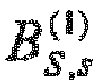 |  |
40-4) Is the user a sub-band user?
- 1. A method comprising:
- transmitting OFDM symbols using a plurality of sub-carriers within an OFDM band;
- the OFDM symbols collectively containing diversity channels and sub-band channels, each diversity channel utilizing a plurality of sub-carriers distributed across the OFDM band, and each sub-band channel utilizing a contiguous set of sub-carriers within the OFDM band;
- at least some of the OFDM symbols simultaneously including sub-carriers utilized by a sub-band channel and sub-carriers utilized by a diversity channel.
- 2. The method of
embodiment 1 further comprising:- sub-dividing the plurality of sub-carriers into resource blocks, each resource block comprising a fixed number of contiguous sub-carriers over at least one OFDM symbol deration;
- using each resource block in its entirety for one of sub-band channel use or distributed channel use.
- 3. The method of
embodiment 2 further comprising:- assigning each resource block to either sub-band channel use or distributed channel use in a manner that is statically defined.
- 4. The method of
embodiment 2 further comprising:- assigning each resource block to either sub-band channel use or distributed channel in a manner that changes over time.
- 5. The method of
embodiment 1 further comprising:- transmitting at least one reference OFDM symbol for ea.ch fixed size set of OFDM symbols.
- 6. The method of
embodiment 2 wherein:- each diversity channel comprises a plurality of resource blocks spaced in frequency.
- 7. The method of
embodiment 2 wherein the plurality of resource blocks spaced in frequency for a given diversity channel are simultaneously transmitted. - 8. The method of
embodiment 2 wherein the plurality of resource blocks spaced in frequency for a given diversity channel are transmitted during different OFDM symbols. - 9. The method of
embodiment 1 wherein transmitting OFDM symbols using a plurality of sub-carriers within an OFDM band is performed for each of a plurality of antennas, the method farther comprising:- for each antenna, transmitting a respective set of scattered pilots, the sets of scattered pilots being transmitted so as not to interfere with each other.
- 10. The method of
embodiment 9 wherein the OFDM symbols collectively containing diversity channels and sub-band
channels are traffic OFDM symbols, the method further
comprising:- for each antenna, transmitting at least one reference OFDM symbol in addition to the traffic OFDM symbols; and
- for each fixed size set of traffic OFDM symbols, the scattered pilots being transmitted during the reference symbol.
- 11. The method of
embodiment 9 wherein the OFDM symbols collectively containing diversity channels and sub-band channels are traffic OFDM symbols, the method further comprising:- transmitting at least one reference OFDM symbol for each fixed size set of traffic OFDM symbols; and
- for each antenna transmitting some of the respective set of scattered pilots during the reference symbol and some of the scattered pilots during traffic OFDM symbols.
- 12. The method of
embodiment 11 wherein the scattered pilots are inserted in a diamond shaped lattice pattern for each antenna. - 13. The method of
embodiment 1 further comprising:- defining a slot to contain an NxM resource block space by dividing the plurality of OFDM sub-carriers into N≥2 sub-bands in frequency transmitted over M≥1 sub-slots in time, each sub-slot containing L≥1 OFDM symbol;
- allocating each resource block in its entirety for one of diversity channel use or sub-band channel use.
- 14. The method of
embodiment 13 further comprising:- for each slot, allocating resource blocks for sub-band channel use first, and allocating remaining resource blocks for diversity channel use.
- 15. The method of
embodiment 14 comprising:- for each slot, defining a set of diversity subchannels using sub-carriers of resource blocks left over after sub-band channel assignment, and assigning each diversity channel to be transmitted during the slot at least one diversity sub-channel.
- 16. The method of
embodiment 15 wherein the diversity subchannels are systematically defined such that given a set of resource blocks left over after sub-band channel assignment, an identical set of diversity sub-channels will always result. - 17. The method of
embodiment 15 wherein diversity sub-channels are assigned to diversity channels using a sub-channelization tree having multiple levels, with a first level in the tree comprising a plurality of nodes each representing a single diversity sub-channel, and each subsequent level in the tree comprising one or more nodes, each node in a subsequent level combining at least two nodes of a previous level and representing all sub-channels represented by the at least two nodes of the previous level. - 18. The method of embodiment 17 wherein each diversity channel comprises a set of one or more diversity sub-channels represented by a respective single node in the sub-channelization tree.
- 19. The method of
embodiment 18 further comprising:- signaling diversity channel definitions by sending information associating each diversity channel with the respective single node in the sub-channelization tree, and
- sending a user identifier for each diversity channel.
- 20. The method of
embodiment 15 wherein each diversity subchannel comprises:- at least one sub-carrier in corresponding sub-carrier positions within each resource block available for diversity channel use.
- 21. The method of
embodiment 20 wherein diversity sub-channels are defined using a sub-channelization tree based on sub-carriers within a single sub-band leftover-space-wise sub-channelization. - 22. The method of
embodiment 15 wherein defining a set of diversity sub-channels using sub-carriers of resource blocks left over after sub-band channel assignment comprises performing leftover-space-wise sub-channelization. - 23. The method of
embodiment 22 wherein diversity sub-channels are defined using a sub-channelization tree based on all sub-carriers available in the resource blocks left over after sub-band channel assignment in a given slot, and diversity channels are assigned to be transmitted on diversity sub-channels on a slot-wise basis. - 24. The method of embodiment 23 wherein diversity sub-channels are defined using a sub-channelization tree based on all sub-carriers available in the resource blocks left over after sub-band channel assignment in a given sub-slot, and diversity channels are assigned to sub-channels on a sub-slot-wise basis.
- 25. The method of
embodiment 15 wherein each diversity subchannel includes a respective set of OFDM sub-carriers over multiple consecutive OFDM symbols. - 26. The method of
embodiment 15 wherein each diversity subchannel is transmitted over multiple OFDM symbols, and comprises a respective set of OFDM sub-carriers that changes in a systematic manner within the multiple OFDM symbols. - 27. The method of
embodiment 13 further comprising:- sending signaling information that indicates which resource blocks are assigned to sub-band channels and which blocks are available to diversity channels.
- 28. The method of embodiment 27 wherein sending signaling information comprises:
- sending a two dimensional bitmap that indicates for the NxM resource block space which resource blocks are assigned to sub-band channels and which blocks are available to diversity channels.
- 29. The method of embodiment 27 wherein sending signaling information comprises:
- sending a one-dimensional bit map containing a single bit indicating for each sub-band whether or not sub-band channels are to be included in that sub-band;
- for each one bit in the one-dimensional bit map, sending information that identifies a number of users, and for each user, start sub-slot index, and number of sub-slots.
- 30. The method of embodiment 27 further comprising:
- assigning a unique region identifier to each resource block, and sending the region identifier to indicate that the region is being used for a sub-band channel.
- 31. The method of embodiment 27 further comprising:
- for each sub-band channel and each diversity channel, sending a respective user identifier.
- 32. The method of
embodiment 15 wherein defining a set of diversity sub-channels using sub-carriers of resource blocks left over after sub-band channel assignment comprises:- for each slot, defining a respective set of diversity sub-channels that use the available sub-carriers for the slot;
- combining all of the sub-channels into a sub-channelization tree that defines allowable combinations of the sub-channels.
- 33. The method of
embodiment 13 further comprising:- using a time domain tree to identify consecutive OFDM symbols within a slot;
- using a frequency domain tree to identify contiguous sub-bands;
- defining each sub-band channel using a combination of the time domain tree and the frequency domain tree.
- 34. The method of embodiment 33 wherein the time domain tree identifies consecutive symbols within a slot always including a first symbol within the slot.
- 35. The method of embodiment 33 further comprising defining names for each possible sub-band channel by performing one of:
- assigning a region ID to each node in the time domain tree and assigning a region ID to each node in the frequency domain tree;
- assigning a region ID to each node in the time domain tree and using a bit map to identify nodes in the frequency domain tree;
- using a bit map to identify nodes in the time domain tree, and assigning a region ID to each node in the frequency domain tree;
- using a first bit map to identify nodes in the time domain tree, and using a second bit map to identify nodes in the frequency domain tree;
- using a bit map to identify each possible time domain tree node plus frequency domain tree node combination;
- assigning a region ID to each time domain tree node plus frequency domain tree node combination.
- 36. The method of
embodiment 1 further comprising:- identifying sub-band channels by:
- sending information that identifies which resource blocks are available for sub-band channels;
- using a systematic naming convention to name each permutation of one or more contiguous sub-bands over one or mere consecutive sub-slots;
- for each sub-band channel, transmitting a user identifier and a name from the systematic naming convention that identifies the particular permutation of one or more contiguous sub-bands over one or more consecutive sub-slots assigned to that user.
- identifying sub-band channels by:
- 37. The method of
embodiment 36 wherein sending information that identifies which resource blocks are available for sub-band channels comprises sending a bit map. - 38. The method of
embodiment 1 comprising:- defining sub-band sub-channels using all of the plurality of OFDM sub-carriers;
- defining diversity sub-channels using all of the plurality of OFDM sub-carriers;
- assigning each sub-band channel one or more sub-band sub-channels;
- assigning each diversity sub-channel one or more diversity sub-channels.
- 39. The method of
embodiment 38 further comprising:- where there is a conflict between a sub-band channel ard a diversity channel on a given sub-carrier, sending the sub-band channel on the sub-carrier.
- 40. The method of
embodiment 38 further comprising:- using a sub-band sub-channelization tree in time and/or frequency to organize sub-band sub-channels into allowable combinations for sub-band channels;
- using a diversity sub-channelization tree in time and/or frequency to organize diversity sub-channels into allowable combinations for diversity channels.
- 41. The method of
embodiment 40 further comprising:- using a bitmap or region identifiers to indicate which of the allowable combinations of sub-band basic access units are being used as sub-band channels, and which of the allowable combinations of diversity sub-channels are being used as diversity channels.
- 42. The method of embodiment 41 further comprising:
- for each sub-band channel or diversity sub-channel, sending a respective user identifier.
- 43. The method of
embodiment 1 further comprising performing partial tree activation by:- using a respective sub-channelization tree to organize sub-channels into allowable channels for at least one of diversity channel definition and sub-band channel definition;
- for at least one sub-channelization tree activating a portion of the sub-channelization tree and sending information identifying the portion;
- assigning channels from the portion of the sub-channelization tree.
- 44. The method of embodiment 43 wherein activating a portion of the sub-channelization tree comprises activating a certain set of consecutive levels within the tree.
- 45. The method of embodiment 43 wherein activating a portion of the sub-channelization tree comprises activating a
respective set of consecutive levels within the tree for each of a respective set of at least one defined top node. - 46. The method of embodiment 45 wherein the set of consecutive levels are defined by a respective top level and a respective bottom level for each top node.
- 47. The method of embodiment 45 wherein the set of consecutive levels are defined by the top node and a respective bottom level for the top node.
- 48. The method of embodiment 43 wherein activating a portion of the sub-channelization tree comprises:
- employing a first bitmap to identify a subset of nodes of the sub-channelization tree that are active.
- 49. The method of
embodiment 48 further comprising:- using a second bitmap to identify which nodes of the subset of nodes are being assigned, and for each node being assigned, assigning a user identifier.
- 50. The method of embodiment 43 further comprising: updating the partial tree activation from time to time.
- 51. The method of
embodiment 50 wherein updating the partial tree activation from time to time comprises:- sending update information only for segments of the tree that have changed.
- 52. The method of embodiment 51 comprising, for each segment to be changed:
- sending an indication of the segment that is to be changed;
- sending updated activation information for the segment.
- 53. The method of
embodiment 1 further comprising:- dynamically powering off a partial resource of bandwidth.
- 54. The method of
embodiment 13 further comprising:- dynamically powering off a partial resource of bandwidth.
- 55. The method of embodiment 54 further comprising sending information identifying which resources have been powered off.
- 56. The method of embodiment 55 wherein sending information identifying which resources have been powered off comprises one of:
- sending a two dimensional bit map indicating which resource blocks are powered off;
- sending a one dimensional bit map indicating which sub-bands are powered off;
- sending a one dimensional bit map indicating which sub-bands are powered off at some point in the slot, and sending additional information indicating when they are powered off within the slot.
- 57. The method of
embodiment 1 further comprising:- scheduling each receiver to either a sub-band channel or a diversity channel as a function of information received from receivers.
- 58. The method of embodiment 57 further comprising:
- defining a priority for each receiver;
- attempting to schedule each receiver in order of priority.
- 59. The method of embodiment 58 wherein attempting to schedule ee.ch receiver in order of priority comprises:
- if the receiver is a sub-band channel receiver, attempting to assign a sub-band channel to the receiver;
- if the receiver is a diversity channel receiver, attempting to assign a diversity channel to the receiver.
- 60. The method of Figure 59 wherein attempting to assign a sub-band channel to the receiver comprises:
- receiving a selection of one or selected sub-bands the receiver has chosen;
- if the selected sub-band are available, determining if scheduling the receiver using the selected sub-bands will impact already scheduled diversity users and if not scheduling the receiver using the available selected sub-bands;
- if the selected sub-band are available and scheduling the receiver using the selected sub-bands will impact already scheduled diversity users, attempting to reschedule at least one impacted diversity user and if successful in re-scheduling the receiver using the available selected sub-bands.
- 61. The method of
embodiment 1 further comprising:- allocating some resources persistently over multiple slots and allocating other resources non-persistently.
- 62. The method of embodiment 61 further comprising:
- allocating some resources persistently at the beginning of each slot, and signalling information indicating how much resource has been allocated persistently, with non-persistent allocations following the persistent allocations.
- 63. The method of embodiment 61 further comprising using asynchronous HARQ for retransmission, and assigning all re-transmitted packets a higher priority than non-retransmitted packets.
- 64. A method according to
embodiment 1 further comprising:- for a given scheduling period, allocating sub-band channels up to an allocation threshold.
- 65. The method of
embodiment 64 wherein for a given scheduling period, allocating sub-band channels up to an allocation threshold comprises:- allocating sub-band channels first up to the allocation threshold;
- defining diversity channels using sub-carriers left over after sub-band channel assignment.
- 66. The method of
embodiment 64 wherein for a given scheduling period, allocating sub-band channels up to an allocation threshold comprises:- allocating sub-band channels up to the allocation threshold;
- defining diversity sub-channels using all OFDM sub-carriers, and allocating diversity sub-channels to diversity channels;
- transmitting each diversity channel punctured in sub-carrier locations that are common between the diversity channel and an assigned sub-band channel.
- 67. The method of
embodiment 1 further comprising:- persistently allocating a sub-band or diversity channel transmission resource for VoIP traffic.
- 68. The method of embodiment 67 further comprising:
- using one of two MCS (modulation and coding scheme) levels VoIP traffic by assigning one of the two MCS levels at a beginning of a call and only changing the MCS level if a significant change in a receiver's average reported CQI is detected.
- 69. The method of
embodiment 68 further comprising:- if a mobile station reports a CQI that maps to a higher MCS than an operating MCS,
- decreasing a transmit power by an amount specified for the difference between the two MCS levels; and
- if the mobile station reports a CQI that maps to a lower MCS than the operating MCS then performing no power adjustment.
- 70. A method comprising:
- receiving OFDM symbols using a plurality of sub-carriers within an OFDM band;
- the OFDM symbols collectively containing diversity channels and sub-band channels, each diversity channel utilizing a plurality of sub-carriers distributed across the OFDM band, and each sub-band channel utilizing a contiguous set of sub-carriers within the OFDM band;
- at least some of the OFDM symbols simultaneously including sub-carriers utilized by a sub-band channel and sub-carriers utilized by a diversity channel;
- receiving signalling information indicating which diversity channel or sub-band channel to extract.
- 71. The method of
embodiment 70 further comprising:- receiving signalling information allowing a determination of how diversity channels and sub-band channels are defined.
- 72. The method of embodiment 71 wherein the signalling information comprises an identification of which sub-carriers are occupied by sub-band channels, the diversity channels being svstematically defined using left over sub-carriers.
- 73. A receiver adapted to implement the method of embodiment y.
- 74. A transmitter adapted to implement the method of
embodiment 1. - 75. A transmitter comprising:
- an OFDM modulator that produces OFDM symbols for transmission from a plurality of inputs;
- a channelizer that maps symbols to inputs of the OFDM modulator such that the OFDM symbols collectively contain diversity channels and sub-band channels, each diversity channel utilizing a plurality of sub-carriers distributed across an OFDM band, and each sub-band channel utilizing a contiguous set of sub-carriers within the OFDM band, such that at least some of the OFDM symbols simultaneously including sub-carriers utilized by a sub-band channel and sub-carriers utilized by a diversity channel.
- 76. A system comprising:
- at least one transmitter and at least one receiver;
- the at least one transmitter and the at least one receiver communicating using OFDM symbols that collectively contain diversity channels and sub-band channels, each diversity channel utilizing a plurality of sub-carriers distributed across an OFDM band, and each sub-band channel utilizing a contiguous set of sub-carriers within the OFDM band, such that at least some of the OFDM symbols simultaneously including sub-carriers utilized by a sub-band channel and sub-carriers utilized by a diversity channel.
Claims (15)
- A method for operating an OFDM receiver, the method comprising:performing operations,wherein a transmitter transmits OFDM symbols according to an allocation of non-overlapping channels in a two-dimensional resource space,wherein the resource space has (a) a frequency dimension including a plurality of sub-carriers within an OFDM band and (b) a time dimension including OFDM symbol durations that correspond respectively to the OFDM symbols,wherein the channels include diversity channels and sub-band channels,wherein each diversity channel is associated with a plurality of sub-carriers that are not entirely contiguous in the OFDM band,wherein each diversity channel is constructed from one or more of diversity sub-channels,wherein each diversity sub-channel comprises one or more distributed sets of contiguous sub-carriers,wherein each sub-band channel is associated with a contiguous set of sub-carriers within the OFDM band,wherein each sub-band channel is constructed from one or more of sub-band sub-channels,wherein diversity sub-channels are organized into allowable combinations for the diversity channels using at least one sub-channelization tree,wherein the transmission of at least some of the OFDM symbols simultaneously uses sub-carriers associated with a sub-band channel and sub-carriers associated with a diversity channel,wherein the operations include:receiving information identifying an activated portion of a first sub-channelization tree of the at least one sub-channelization tree, and an assignment of a first of the diversity channels from the activated portion of a first sub-channelization tree of the at least one sub-channelization tree; andreceiving the diversity channel over one or more of the OFDM symbols that are transmitted by the transmitter.
- The method of claim 1 further comprising:receiving at least one reference OFDM symbol for each fixed size set of OFDM symbols (32, 34).
- The method of claim 1, wherein the plurality of sub-carriers within the OFDM band are sub-divided into resource blocks, each resource block comprising a fixed number of contiguous sub-carriers over at least one OFDM symbol duration.
- The method of claim 3, wherein each diversity channel comprises a plurality of the resource blocks that are spaced in frequency.
- The method of claim 4, wherein, for a given diversity channel, the corresponding plurality of resource blocks spaced in frequency are received during different OFDM symbols (32, 34).
- The method of claim 1, wherein the activated portion of the first sub-channelization tree comprises a set of consecutive levels within the tree.
- The method of claim 1, wherein the activated portion of the first sub-channelization tree comprises a subset of nodes within the first sub-channelization tree that are activated, wherein the assignment includes a bitmap that identifies which nodes of the subset of nodes are being assigned.
- The method of claim 1, wherein the activated portion of the first sub-channelization tree comprises, for each of at least one defined top node, a respective set of consecutive levels within the tree.
- The method of claim 8, wherein, for each of said at least one defined top node, the respective set of consecutive levels is defined by a respective top level and a respective bottom level.
- The method of claim 1, wherein the information identifying an activated portion of the first sub-channelization tree includes a first bitmap that identifies a subset of nodes of a first sub-channelization tree that are active.
- The method of claim 47, wherein the assignment includes:a second bitmap that identifies which nodes of the subset of nodes are being assigned.
- The method of claim 1 further comprising:receiving the information identifying an activated portion of the first sub-channelization tree dynamically.
- The method of claim 1,
wherein some resources are persistently allocated over multiple slots,
wherein other resources are non-persistently allocated. - The method of claim 1, wherein a sub-band or diversity channel transmission resource is persistently allocated for VoIP traffic.
- A receiver comprising means adapted to implement the method of any of the preceding claims.
Applications Claiming Priority (7)
| Application Number | Priority Date | Filing Date | Title |
|---|---|---|---|
| US66654805P | 2005-03-30 | 2005-03-30 | |
| US71052705P | 2005-08-23 | 2005-08-23 | |
| US72884505P | 2005-10-21 | 2005-10-21 | |
| US74192305P | 2005-12-02 | 2005-12-02 | |
| US75110105P | 2005-12-16 | 2005-12-16 | |
| PCT/CA2006/000463 WO2006102744A1 (en) | 2005-03-30 | 2006-03-30 | Systems and methods for ofdm channelization |
| EP06721726.5A EP1867084B1 (en) | 2005-03-30 | 2006-03-30 | Systems and methods for ofdm channelization |
Related Parent Applications (1)
| Application Number | Title | Priority Date | Filing Date |
|---|---|---|---|
| EP06721726.5A Division EP1867084B1 (en) | 2005-03-30 | 2006-03-30 | Systems and methods for ofdm channelization |
Publications (2)
| Publication Number | Publication Date |
|---|---|
| EP3285418A1 true EP3285418A1 (en) | 2018-02-21 |
| EP3285418B1 EP3285418B1 (en) | 2021-05-05 |
Family
ID=37052902
Family Applications (2)
| Application Number | Title | Priority Date | Filing Date |
|---|---|---|---|
| EP06721726.5A Expired - Lifetime EP1867084B1 (en) | 2005-03-30 | 2006-03-30 | Systems and methods for ofdm channelization |
| EP17194152.9A Expired - Lifetime EP3285418B1 (en) | 2005-03-30 | 2006-03-30 | Systems and methods for ofdm channelization |
Family Applications Before (1)
| Application Number | Title | Priority Date | Filing Date |
|---|---|---|---|
| EP06721726.5A Expired - Lifetime EP1867084B1 (en) | 2005-03-30 | 2006-03-30 | Systems and methods for ofdm channelization |
Country Status (4)
| Country | Link |
|---|---|
| US (9) | US8274880B2 (en) |
| EP (2) | EP1867084B1 (en) |
| CN (1) | CN103179072B (en) |
| WO (1) | WO2006102744A1 (en) |
Families Citing this family (97)
| Publication number | Priority date | Publication date | Assignee | Title |
|---|---|---|---|---|
| CN101218770B (en) * | 2005-07-08 | 2015-07-15 | 富士通株式会社 | Radio resource allocation method, communication device |
| WO2007020710A1 (en) * | 2005-08-19 | 2007-02-22 | Matsushita Electric Industrial Co., Ltd. | Base station device and mobile station device |
| US8634353B2 (en) * | 2006-02-02 | 2014-01-21 | Qualcomm Incorporated | Apparatus and method for hybrid automatic repeat request |
| JP4799202B2 (en) * | 2006-02-08 | 2011-10-26 | 株式会社エヌ・ティ・ティ・ドコモ | base station |
| GB2436416A (en) | 2006-03-20 | 2007-09-26 | Nec Corp | Signal resource allocation in a communication system using a plurality of subcarriers |
| US8599799B2 (en) * | 2006-05-18 | 2013-12-03 | Qualcomm Incorporated | Method of improving throughput in a system including persistent assignments |
| US8687542B2 (en) * | 2006-05-18 | 2014-04-01 | Qualcomm Incorporated | Method of improving throughput in a system including sticky assignments |
| US8483295B2 (en) * | 2006-05-31 | 2013-07-09 | Hitachi, Ltd. | Encoded signal arrangement method in multi-carrier communication and communication device |
| KR100785853B1 (en) * | 2006-06-05 | 2007-12-14 | 한국전자통신연구원 | Resource Allocation Method in Orthogonal Frequency Division Multiple Access System |
| JP4836672B2 (en) * | 2006-06-06 | 2011-12-14 | 株式会社東芝 | Base station, terminal, radio communication apparatus, and radio communication method |
| JP4476968B2 (en) * | 2006-06-19 | 2010-06-09 | 株式会社エヌ・ティ・ティ・ドコモ | Base station, user apparatus, transmission method and reception method in mobile communication system |
| JP4786467B2 (en) * | 2006-08-22 | 2011-10-05 | 株式会社エヌ・ティ・ティ・ドコモ | Transmitter |
| WO2008039034A2 (en) * | 2006-09-29 | 2008-04-03 | Lg Electronics Inc. | Methods for allocating resources to uplink control channel |
| CN106899398B (en) | 2006-10-02 | 2020-10-23 | Lg电子株式会社 | Method for transmitting downlink control signal |
| JP4976498B2 (en) * | 2006-10-02 | 2012-07-18 | エルジー エレクトロニクス インコーポレイティド | Control signal transmission method using efficient multiplexing |
| CA2667232A1 (en) | 2006-11-01 | 2008-05-08 | Fujitsu Limited | Wireless communication system |
| US7924809B2 (en) * | 2006-11-22 | 2011-04-12 | Intel Corporation | Techniques to provide a channel quality indicator |
| KR100853699B1 (en) * | 2006-12-01 | 2008-08-25 | 한국전자통신연구원 | Call setup control method of mobile communication system |
| US8711783B2 (en) * | 2006-12-01 | 2014-04-29 | Samsung Electronics Co., Ltd. | Method and apparatus for coordinating hopping of resources in wireless communication systems |
| US8462758B2 (en) * | 2006-12-20 | 2013-06-11 | Intel Corporation | Channel quality information feedback techniques for a wireless system |
| US7610036B2 (en) * | 2007-01-08 | 2009-10-27 | Mitsubishi Electric Research Laboratories, Inc. | Space-time-frequency sensing of RF spectrum in cognitive radios |
| US8625498B2 (en) * | 2007-01-22 | 2014-01-07 | Wi-Lan, Inc. | Tiling allocations for wireless communication |
| US8023577B2 (en) | 2007-02-02 | 2011-09-20 | Texas Instruments Incorporated | Systems and methods for efficient channel classification |
| GB2446197A (en) * | 2007-02-05 | 2008-08-06 | Nec Corp | Frequency-hopping method and mobile communication system |
| US8345620B2 (en) * | 2007-02-08 | 2013-01-01 | Qualcomm Incorporated | Method and apparatus for frequency hopping with frequency fraction reuse |
| EP2115917A4 (en) * | 2007-02-23 | 2015-03-25 | Ericsson Telefon Ab L M | Frequency hopping scheme for ofdma system |
| US8130699B2 (en) | 2007-03-07 | 2012-03-06 | Wi-Lan, Inc. | Multi-band channel aggregation |
| KR20080082891A (en) * | 2007-03-09 | 2008-09-12 | 한국전자통신연구원 | Subchannel allocation method and apparatus thereof in OPDMA system |
| CN104639306B (en) * | 2007-03-19 | 2019-04-16 | Lg电子株式会社 | The method that resources in mobile communication system distributes and transmits/receives resource allocation information |
| KR101049138B1 (en) | 2007-03-19 | 2011-07-15 | 엘지전자 주식회사 | In a mobile communication system, an acknowledgment signal receiving method |
| US9338771B2 (en) | 2007-03-19 | 2016-05-10 | Nokia Technologies Oy | Method and apparatus for allocating resources using nested bit mapping |
| EP2129021A1 (en) * | 2007-03-20 | 2009-12-02 | Mitsubishi Electric Corporation | Wireless communication system, base station, terminal device, and wireless communication method |
| CN103647578B (en) * | 2007-03-26 | 2016-06-01 | 富士通株式会社 | Mobile communication system and base station wherein |
| US8718030B2 (en) | 2007-03-26 | 2014-05-06 | Qualcomm Incorporated | Methods and apparatus for performing channel tree operations |
| BRPI0804493A2 (en) * | 2007-05-17 | 2011-08-30 | Sony Corp | apparatus and method of information processing |
| US9131465B2 (en) * | 2007-06-08 | 2015-09-08 | Samsung Electronics Co., Ltd. | Methods and apparatus for mapping control channels to resources in OFDM systems |
| KR100908063B1 (en) | 2007-06-13 | 2009-07-15 | 엘지전자 주식회사 | Method of transmitting a spread signal in a mobile communication system |
| KR100913090B1 (en) | 2007-06-13 | 2009-08-21 | 엘지전자 주식회사 | A method for transmitting spread-signal in a communication system |
| US8203955B2 (en) * | 2007-06-21 | 2012-06-19 | Alcatel Lucent | Method and apparatus for scheduling packets in an orthogonal frequency division multiple access (OFDMA) system |
| KR100900289B1 (en) * | 2007-06-21 | 2009-05-29 | 엘지전자 주식회사 | A method for transmitting and receiving a control channel in the Orthogonal Frequency Division Multiplexing system |
| WO2009001281A2 (en) * | 2007-06-27 | 2008-12-31 | Koninklijke Philips Electronics N.V. | A method for signalling allocation resource and a device therefor |
| US8537789B2 (en) * | 2007-08-01 | 2013-09-17 | Harris Corporation | Mobile ad-hoc network providing communication latency reduction features and related methods |
| GB2451510A (en) * | 2007-08-02 | 2009-02-04 | Nec Corp | Signalling of dynamic allocation of subcarriers in OFDM systems |
| US9496918B2 (en) | 2007-08-08 | 2016-11-15 | Telefonaktiebolaget Lm Ericsson (Publ) | Multicarrier communication system employing explicit frequency hopping |
| EP2183894B1 (en) * | 2007-08-08 | 2016-03-30 | Telefonaktiebolaget LM Ericsson (publ) | Multicarrier communication system employing explicit frequency hopping |
| US9974060B2 (en) * | 2007-09-12 | 2018-05-15 | Apple Inc. | Systems and methods for uplink signalling |
| WO2009053910A2 (en) | 2007-10-22 | 2009-04-30 | Mobileaccess Networks Ltd. | Communication system using low bandwidth wires |
| CN101983485B (en) | 2007-11-07 | 2016-03-02 | 苹果公司 | Method and system for channelization |
| WO2009072842A2 (en) * | 2007-12-05 | 2009-06-11 | Lg Electronics Inc. | Method of allocating resources in wireless communication system |
| US8259828B2 (en) * | 2008-02-12 | 2012-09-04 | Mediatek Inc. | Sub-carrier alignment mechanism for OFDM multi-carrier systems |
| US20090232087A1 (en) * | 2008-03-07 | 2009-09-17 | Texas Instruments Incomrporated | User Equipment Multiplexing In Downlink Multiuser, Multiple Input Multiple Output Orthogonal Frequency Division Multiple Access |
| KR101375531B1 (en) * | 2008-03-14 | 2014-03-17 | 삼성전자주식회사 | Apparutus and method for resource allocation in broadband wireless communication system |
| US8238304B2 (en) * | 2008-03-31 | 2012-08-07 | Qualcomm Incorporated | Apparatus and method for channel resource description |
| US8305974B2 (en) * | 2008-04-09 | 2012-11-06 | Nokia Siemens Networks Oy | Method, apparatus and computer program for permutation and subchannelization |
| US8547861B2 (en) * | 2008-07-07 | 2013-10-01 | Apple Inc. | Optimizing downlink communications between a base station and a remote terminal by power sharing |
| US8891350B2 (en) * | 2008-07-07 | 2014-11-18 | Mediatek Inc. | Method and apparatus of data transmission over guard sub-carriers in multi-carrier OFDM systems |
| EP3651390B1 (en) * | 2008-11-14 | 2024-07-24 | Sun Patent Trust | Wireless communication terminal apparatus, and cluster constellation setting method |
| US20100202340A1 (en) * | 2009-02-09 | 2010-08-12 | Samsung Electronics Co., Ltd. | System and method of constructing a resource matrix for transmitting multicast broadcast service (mbs) data |
| BRPI1012521A2 (en) * | 2009-04-17 | 2016-03-29 | Nortel Networks Ltd | method and system for providing an uplink structure and improved channeling scheme in a wireless communication network |
| US8560696B2 (en) * | 2009-04-28 | 2013-10-15 | Intel Corporation | Transmission of advanced-MAP information elements in mobile networks |
| KR101670513B1 (en) * | 2009-06-01 | 2016-10-31 | 엘지전자 주식회사 | Apparatus and method of reproting measurement result in wireless communication system |
| US9036572B2 (en) * | 2009-06-11 | 2015-05-19 | Lg Electronics Inc. | Measurement reporting method and device in a wireless communication system |
| US20110310877A1 (en) * | 2010-06-21 | 2011-12-22 | Wu Kam H | Coverage Extension Using Carrier Diversity In Multi-Carrier Communication Systems |
| US8660057B2 (en) * | 2010-08-26 | 2014-02-25 | Golba, Llc | Method and system for distributed communication |
| CN101938750B (en) * | 2010-09-09 | 2014-04-02 | 华为技术有限公司 | Conversion method of radio frequency sequence number set of mobile station and upper layer control node of base station |
| US8705399B2 (en) | 2010-10-29 | 2014-04-22 | Neocific, Inc. | Transmission of synchronization and control signals in a broadband wireless system |
| KR101443061B1 (en) * | 2010-11-12 | 2014-09-26 | 한국전자통신연구원 | Adhoc multimedia group communication terminal robust packet loss and operating method thereof |
| US9031591B2 (en) | 2010-11-17 | 2015-05-12 | Futurewei Technologies, Inc. | System and method for self-optimized inter-cell interference coordination |
| US9571239B2 (en) * | 2010-12-16 | 2017-02-14 | Lg Electronics Inc. | Method and apparatus for transmitting channel information in cognitive radio network and method and apparatus for performing channel switching |
| JP5871143B2 (en) * | 2011-07-14 | 2016-03-01 | 日本電気株式会社 | Resource allocation method, radio communication system, base station, and program |
| GB2494172B (en) * | 2011-09-01 | 2014-10-22 | Canon Kk | Communication of video information |
| US10116402B2 (en) | 2011-10-27 | 2018-10-30 | Huawei Technologies Co., Ltd. | System and method for operating mode self-adaptation |
| WO2013142662A2 (en) | 2012-03-23 | 2013-09-26 | Corning Mobile Access Ltd. | Radio-frequency integrated circuit (rfic) chip(s) for providing distributed antenna system functionalities, and related components, systems, and methods |
| US20140293894A1 (en) * | 2013-03-28 | 2014-10-02 | Coming Optical Communications Wireless, Ltd. | Distributing dynamically frequency-shifted intermediate frequency (if) radio frequency (rf) communications signals in distributed antenna systems (dass), and related components, systems, and methods |
| US10687218B2 (en) * | 2013-12-03 | 2020-06-16 | Qualcomm Incorporated | Power metric optimization and uplink DM-RS design for LTE/LTE-A uplink transmissions in unlicensed spectrum |
| CN104883332B (en) | 2014-02-28 | 2018-03-09 | 国际商业机器公司 | method and device for signal modulation |
| US20150358117A1 (en) * | 2014-06-09 | 2015-12-10 | Intel IP Corporation | Interleaver for multiuser transmission |
| CN104168650A (en) * | 2014-09-03 | 2014-11-26 | 广州市香港科大霍英东研究院 | Indoor positioning method based on dynamic wireless access points |
| US9184960B1 (en) | 2014-09-25 | 2015-11-10 | Corning Optical Communications Wireless Ltd | Frequency shifting a communications signal(s) in a multi-frequency distributed antenna system (DAS) to avoid or reduce frequency interference |
| US9936498B2 (en) * | 2014-11-04 | 2018-04-03 | Qualcomm Incorporated | High reliability low latency mission critical communication |
| US10958391B2 (en) * | 2014-11-18 | 2021-03-23 | Qualcomm Incorporated | Tone plans for wireless communication networks |
| US10541791B2 (en) * | 2014-11-25 | 2020-01-21 | Qualcomm Incorporated | Techniques for reducing latency in a wireless communication system |
| US10547415B2 (en) * | 2015-03-15 | 2020-01-28 | Qualcomm Incorporated | Scalable TTI with advanced pilot and control |
| US11290219B2 (en) * | 2015-12-18 | 2022-03-29 | Bayerische Motoren Werke Ag | Method for transmitting a stream in a wireless network from a wireless communication device to a plurality of wireless communication |
| US10433283B2 (en) * | 2016-01-26 | 2019-10-01 | Huawei Technologies Co., Ltd. | System and method for bandwidth division and resource block allocation |
| US10536314B2 (en) * | 2016-06-03 | 2020-01-14 | Centre Of Excellence In Wireless Technology | OFDMA apparatus and method thereof for performing OFDM based communication in wireless communication system |
| JP2019145867A (en) * | 2016-07-05 | 2019-08-29 | シャープ株式会社 | Base station device, terminal device, and communication method |
| CN109196832B (en) * | 2016-07-07 | 2021-04-30 | 松下电器(美国)知识产权公司 | Transmission device, reception device, transmission method, and reception method |
| US10749644B2 (en) * | 2016-08-12 | 2020-08-18 | Huawei Technologies Co., Ltd. | System and method for efficient bandwidth utilization |
| ES2745018T3 (en) * | 2016-12-12 | 2020-02-27 | Kyynel Oy | Versatile wireless channel selection procedure |
| CN108365936B (en) * | 2017-01-26 | 2020-10-27 | 华为技术有限公司 | Communication method, device and system |
| WO2019000279A1 (en) * | 2017-06-28 | 2019-01-03 | 华为技术有限公司 | Carrier power control method and apparatus, storage medium and computer program product |
| US10009832B1 (en) | 2017-08-11 | 2018-06-26 | At&T Intellectual Property I, L.P. | Facilitating compact signaling design for reserved resource configuration in wireless communication systems |
| US11963216B2 (en) | 2018-04-04 | 2024-04-16 | Hitachi Energy Ltd | Channel access and transmission scheduling for industrial wireless communications |
| CN117880991B (en) * | 2019-05-20 | 2025-02-18 | 华为技术有限公司 | Resource allocation indication method and device |
| CN112291051B (en) * | 2020-12-31 | 2021-03-30 | 江苏正赫通信息科技有限公司 | Low-delay efficient interleaving method in OFDM system |
| CN116359836B (en) * | 2023-05-31 | 2023-08-15 | 成都金支点科技有限公司 | Unmanned aerial vehicle target tracking method and system based on super-resolution direction finding |
Citations (3)
| Publication number | Priority date | Publication date | Assignee | Title |
|---|---|---|---|---|
| US20020159422A1 (en) * | 2001-03-09 | 2002-10-31 | Xiaodong Li | Communication system using OFDM for one direction and DSSS for another direction |
| US20040246998A1 (en) * | 2003-01-21 | 2004-12-09 | Ar Card | Physical layer structures and initial access schemes in a unsynchronized communication network |
| CA2537534A1 (en) * | 2003-09-02 | 2005-03-10 | Qualcomm Incorporated | Multiplexing and transmission of multiple data streams in a wireless multi-carrier communication system |
Family Cites Families (35)
| Publication number | Priority date | Publication date | Assignee | Title |
|---|---|---|---|---|
| US6952454B1 (en) * | 2000-03-22 | 2005-10-04 | Qualcomm, Incorporated | Multiplexing of real time services and non-real time services for OFDM systems |
| US20020154705A1 (en) | 2000-03-22 | 2002-10-24 | Walton Jay R. | High efficiency high performance communications system employing multi-carrier modulation |
| US6990061B2 (en) | 2000-05-31 | 2006-01-24 | Interuniversitair Micro-Elektronica Centrum | Method and apparatus for channel estimation |
| KR100909203B1 (en) | 2000-07-12 | 2009-07-23 | 퀄컴 인코포레이티드 | Multiplexing of Real-time and Non-Real-Time Services of OPDM System |
| US7295509B2 (en) | 2000-09-13 | 2007-11-13 | Qualcomm, Incorporated | Signaling method in an OFDM multiple access system |
| US6684367B1 (en) | 2000-10-13 | 2004-01-27 | Agere Systems Inc. | Channel coding based on hidden puncturing for partial-band interference channels |
| KR100401801B1 (en) | 2001-03-27 | 2003-10-17 | (주)텔레시스테크놀로지 | Orthogonal frequency division multiplexing/modulation communication system for improving ability of data transmission and method thereof |
| US7551546B2 (en) | 2002-06-27 | 2009-06-23 | Nortel Networks Limited | Dual-mode shared OFDM methods/transmitters, receivers and systems |
| US7002900B2 (en) * | 2002-10-25 | 2006-02-21 | Qualcomm Incorporated | Transmit diversity processing for a multi-antenna communication system |
| WO2004077777A1 (en) | 2003-02-28 | 2004-09-10 | Nortel Networks Limited | Sub-carrier allocation for ofdm |
| US7313190B2 (en) * | 2003-03-11 | 2007-12-25 | Texas Instruments Incorporated | Efficient bit interleaver for a multi-band OFDM ultra-wideband system |
| US7327795B2 (en) | 2003-03-31 | 2008-02-05 | Vecima Networks Inc. | System and method for wireless communication systems |
| WO2005018126A1 (en) * | 2003-08-19 | 2005-02-24 | Matsushita Electric Industrial Co., Ltd. | Radio transmitting apparatus and radio transmitting method |
| US7668125B2 (en) | 2003-09-09 | 2010-02-23 | Qualcomm Incorporated | Incremental redundancy transmission for multiple parallel channels in a MIMO communication system |
| US20060003335A1 (en) * | 2004-06-30 | 2006-01-05 | Crispino John D | Methods for diagnosing acute megakaryoblastic leukemia |
| TW200620924A (en) | 2004-08-03 | 2006-06-16 | Agency Science Tech & Res | Method for transmitting a digital data stream, transmitter, method for receiving a digital data stream and receiver |
| US7593472B2 (en) * | 2004-10-22 | 2009-09-22 | Integrated System Solution Corp. | Methods and apparatus for circulation transmissions for OFDM-based MIMO systems |
| EP1817857B1 (en) | 2004-12-02 | 2012-10-31 | New Jersey Institute of Technology | Method and system for reduction of PAPR |
| EP1843499B1 (en) * | 2005-01-17 | 2018-04-18 | Sharp Kabushiki Kaisha | Stable transmission and reliable reception of plurality of signal streams in a MIMO communication system |
| US7813261B2 (en) * | 2005-03-30 | 2010-10-12 | Nortel Networks Limited | Methods and systems for transmission of orthogonal frequency division multiplexed symbols |
| WO2007043843A1 (en) * | 2005-10-13 | 2007-04-19 | Lg Electronics Inc. | Method and apparatus for processing a signal |
| US8135337B2 (en) * | 2005-11-29 | 2012-03-13 | Telefonaktiebolaget Lm Ericsson | Scheduling in a wireless multi-hop relay network |
| WO2007065272A1 (en) * | 2005-12-08 | 2007-06-14 | Nortel Networks Limited | Resource assignment systems and methods |
| CN1983914B (en) * | 2005-12-16 | 2011-04-13 | 株式会社Ntt都科摩 | HARQ method and system |
| US7623487B2 (en) * | 2006-05-24 | 2009-11-24 | Nortel Networks Limited | OFDM system and method for supporting a wide range of mobility speeds |
| US8116388B2 (en) * | 2006-06-16 | 2012-02-14 | Broadcom Corporation | Time domain interference averaging with multiuser diversity in OFDMA systems |
| CN100586193C (en) * | 2006-12-12 | 2010-01-27 | 华为技术有限公司 | Error concealment method and system |
| KR20080073196A (en) * | 2007-02-05 | 2008-08-08 | 엘지전자 주식회사 | Efficient Channel Quality Information Transmission Method in MIO System |
| US8570955B2 (en) * | 2007-03-08 | 2013-10-29 | Fujitsu Limited | Method of grouping and mapping transmission stations in a wireless network |
| KR101048437B1 (en) * | 2007-11-30 | 2011-07-11 | 삼성전자주식회사 | Method and apparatus for time varying cyclic delay diversity in wireless communication system |
| TWI458301B (en) * | 2008-03-11 | 2014-10-21 | Koninkl Philips Electronics Nv | A flexible structure for multiple-subcarrier joint modulation ofdm transmitters |
| KR101411688B1 (en) * | 2008-05-22 | 2014-07-01 | 엘지전자 주식회사 | Method of transmitting data in wireless communication system |
| US8488691B2 (en) * | 2008-10-08 | 2013-07-16 | Qualcomm Incorporated | Adaptive loading for orthogonal frequency division multiplex (OFDM) communication systems |
| KR101562519B1 (en) * | 2009-02-06 | 2015-10-22 | 삼성전자주식회사 | Method and apparatus for power allocation in ofdm communication systems |
| US9935737B2 (en) * | 2015-06-24 | 2018-04-03 | Intel IP Corporation | Access point (AP), user station (STA) and method for spatial modulation orthogonal frequency division multiplexing (SM-OFDM) communication |
-
2006
- 2006-03-30 US US11/887,114 patent/US8274880B2/en active Active
- 2006-03-30 EP EP06721726.5A patent/EP1867084B1/en not_active Expired - Lifetime
- 2006-03-30 CN CN201310048966.8A patent/CN103179072B/en not_active Expired - Lifetime
- 2006-03-30 EP EP17194152.9A patent/EP3285418B1/en not_active Expired - Lifetime
- 2006-03-30 WO PCT/CA2006/000463 patent/WO2006102744A1/en not_active Ceased
-
2012
- 2012-08-17 US US13/588,674 patent/US8842514B2/en active Active
-
2014
- 2014-09-22 US US14/493,225 patent/US9307536B2/en not_active Expired - Lifetime
-
2016
- 2016-03-28 US US15/082,590 patent/US9769824B2/en not_active Expired - Lifetime
- 2016-03-28 US US15/082,523 patent/US9629155B2/en not_active Expired - Lifetime
-
2017
- 2017-04-13 US US15/486,594 patent/US10039100B2/en not_active Expired - Lifetime
- 2017-08-21 US US15/681,557 patent/US10244529B2/en not_active Expired - Lifetime
-
2018
- 2018-06-28 US US16/021,546 patent/US10568094B2/en not_active Expired - Lifetime
-
2020
- 2020-01-20 US US16/747,156 patent/US11197295B2/en active Active
Patent Citations (3)
| Publication number | Priority date | Publication date | Assignee | Title |
|---|---|---|---|---|
| US20020159422A1 (en) * | 2001-03-09 | 2002-10-31 | Xiaodong Li | Communication system using OFDM for one direction and DSSS for another direction |
| US20040246998A1 (en) * | 2003-01-21 | 2004-12-09 | Ar Card | Physical layer structures and initial access schemes in a unsynchronized communication network |
| CA2537534A1 (en) * | 2003-09-02 | 2005-03-10 | Qualcomm Incorporated | Multiplexing and transmission of multiple data streams in a wireless multi-carrier communication system |
Also Published As
| Publication number | Publication date |
|---|---|
| HK1121880A1 (en) | 2009-04-30 |
| EP1867084A1 (en) | 2007-12-19 |
| US11197295B2 (en) | 2021-12-07 |
| US20160278085A1 (en) | 2016-09-22 |
| US10039100B2 (en) | 2018-07-31 |
| US10244529B2 (en) | 2019-03-26 |
| US20200154433A1 (en) | 2020-05-14 |
| CN103179072B (en) | 2016-04-13 |
| US10568094B2 (en) | 2020-02-18 |
| EP1867084B1 (en) | 2017-11-01 |
| EP1867084A4 (en) | 2013-06-19 |
| US8842514B2 (en) | 2014-09-23 |
| US9629155B2 (en) | 2017-04-18 |
| WO2006102744A1 (en) | 2006-10-05 |
| US20170223705A1 (en) | 2017-08-03 |
| US20160278084A1 (en) | 2016-09-22 |
| US20150085945A1 (en) | 2015-03-26 |
| US8274880B2 (en) | 2012-09-25 |
| US20170353954A1 (en) | 2017-12-07 |
| US9769824B2 (en) | 2017-09-19 |
| US20090060081A1 (en) | 2009-03-05 |
| CN103179072A (en) | 2013-06-26 |
| US20180310304A1 (en) | 2018-10-25 |
| US20130034007A1 (en) | 2013-02-07 |
| US9307536B2 (en) | 2016-04-05 |
| HK1186022A1 (en) | 2014-02-28 |
| EP3285418B1 (en) | 2021-05-05 |
Similar Documents
| Publication | Publication Date | Title |
|---|---|---|
| US11197295B2 (en) | Systems and methods for OFDM channelization | |
| US10110354B2 (en) | Methods and systems for channelization | |
| US9832775B2 (en) | Communication resource allocation systems and methods | |
| CN101808411B (en) | Resource mapping method and device for control channel in communication system | |
| CN101204031B (en) | Systems and methods for OFDM channelization | |
| KR20070074431A (en) | Method and apparatus for temporal multiplexing of backward control information and data in a single carrier frequency division multiple access system | |
| HK1121880B (en) | Systems and methods for ofdm channelization | |
| HK1186022B (en) | Systems and methods for ofdm channelization |
Legal Events
| Date | Code | Title | Description |
|---|---|---|---|
| PUAI | Public reference made under article 153(3) epc to a published international application that has entered the european phase |
Free format text: ORIGINAL CODE: 0009012 |
|
| STAA | Information on the status of an ep patent application or granted ep patent |
Free format text: STATUS: REQUEST FOR EXAMINATION WAS MADE |
|
| 17P | Request for examination filed |
Effective date: 20170929 |
|
| AC | Divisional application: reference to earlier application |
Ref document number: 1867084 Country of ref document: EP Kind code of ref document: P |
|
| AK | Designated contracting states |
Kind code of ref document: A1 Designated state(s): AT BE BG CH CY CZ DE DK EE ES FI FR GB GR HU IE IS IT LI LT LU LV MC NL PL PT RO SE SI SK TR |
|
| RAP1 | Party data changed (applicant data changed or rights of an application transferred) |
Owner name: APPLE INC. |
|
| GRAP | Despatch of communication of intention to grant a patent |
Free format text: ORIGINAL CODE: EPIDOSNIGR1 |
|
| STAA | Information on the status of an ep patent application or granted ep patent |
Free format text: STATUS: GRANT OF PATENT IS INTENDED |
|
| INTG | Intention to grant announced |
Effective date: 20200520 |
|
| GRAJ | Information related to disapproval of communication of intention to grant by the applicant or resumption of examination proceedings by the epo deleted |
Free format text: ORIGINAL CODE: EPIDOSDIGR1 |
|
| STAA | Information on the status of an ep patent application or granted ep patent |
Free format text: STATUS: REQUEST FOR EXAMINATION WAS MADE |
|
| INTC | Intention to grant announced (deleted) | ||
| GRAP | Despatch of communication of intention to grant a patent |
Free format text: ORIGINAL CODE: EPIDOSNIGR1 |
|
| STAA | Information on the status of an ep patent application or granted ep patent |
Free format text: STATUS: GRANT OF PATENT IS INTENDED |
|
| INTG | Intention to grant announced |
Effective date: 20201118 |
|
| GRAS | Grant fee paid |
Free format text: ORIGINAL CODE: EPIDOSNIGR3 |
|
| GRAA | (expected) grant |
Free format text: ORIGINAL CODE: 0009210 |
|
| STAA | Information on the status of an ep patent application or granted ep patent |
Free format text: STATUS: THE PATENT HAS BEEN GRANTED |
|
| AC | Divisional application: reference to earlier application |
Ref document number: 1867084 Country of ref document: EP Kind code of ref document: P |
|
| AK | Designated contracting states |
Kind code of ref document: B1 Designated state(s): AT BE BG CH CY CZ DE DK EE ES FI FR GB GR HU IE IS IT LI LT LU LV MC NL PL PT RO SE SI SK TR |
|
| REG | Reference to a national code |
Ref country code: GB Ref legal event code: FG4D |
|
| REG | Reference to a national code |
Ref country code: CH Ref legal event code: EP |
|
| REG | Reference to a national code |
Ref country code: AT Ref legal event code: REF Ref document number: 1391155 Country of ref document: AT Kind code of ref document: T Effective date: 20210515 |
|
| REG | Reference to a national code |
Ref country code: IE Ref legal event code: FG4D |
|
| REG | Reference to a national code |
Ref country code: DE Ref legal event code: R096 Ref document number: 602006060059 Country of ref document: DE |
|
| REG | Reference to a national code |
Ref country code: LT Ref legal event code: MG9D |
|
| REG | Reference to a national code |
Ref country code: AT Ref legal event code: MK05 Ref document number: 1391155 Country of ref document: AT Kind code of ref document: T Effective date: 20210505 |
|
| PG25 | Lapsed in a contracting state [announced via postgrant information from national office to epo] |
Ref country code: AT Free format text: LAPSE BECAUSE OF FAILURE TO SUBMIT A TRANSLATION OF THE DESCRIPTION OR TO PAY THE FEE WITHIN THE PRESCRIBED TIME-LIMIT Effective date: 20210505 Ref country code: BG Free format text: LAPSE BECAUSE OF FAILURE TO SUBMIT A TRANSLATION OF THE DESCRIPTION OR TO PAY THE FEE WITHIN THE PRESCRIBED TIME-LIMIT Effective date: 20210805 Ref country code: FI Free format text: LAPSE BECAUSE OF FAILURE TO SUBMIT A TRANSLATION OF THE DESCRIPTION OR TO PAY THE FEE WITHIN THE PRESCRIBED TIME-LIMIT Effective date: 20210505 Ref country code: LT Free format text: LAPSE BECAUSE OF FAILURE TO SUBMIT A TRANSLATION OF THE DESCRIPTION OR TO PAY THE FEE WITHIN THE PRESCRIBED TIME-LIMIT Effective date: 20210505 |
|
| PG25 | Lapsed in a contracting state [announced via postgrant information from national office to epo] |
Ref country code: LV Free format text: LAPSE BECAUSE OF FAILURE TO SUBMIT A TRANSLATION OF THE DESCRIPTION OR TO PAY THE FEE WITHIN THE PRESCRIBED TIME-LIMIT Effective date: 20210505 Ref country code: IS Free format text: LAPSE BECAUSE OF FAILURE TO SUBMIT A TRANSLATION OF THE DESCRIPTION OR TO PAY THE FEE WITHIN THE PRESCRIBED TIME-LIMIT Effective date: 20210905 Ref country code: GR Free format text: LAPSE BECAUSE OF FAILURE TO SUBMIT A TRANSLATION OF THE DESCRIPTION OR TO PAY THE FEE WITHIN THE PRESCRIBED TIME-LIMIT Effective date: 20210806 Ref country code: PL Free format text: LAPSE BECAUSE OF FAILURE TO SUBMIT A TRANSLATION OF THE DESCRIPTION OR TO PAY THE FEE WITHIN THE PRESCRIBED TIME-LIMIT Effective date: 20210505 Ref country code: PT Free format text: LAPSE BECAUSE OF FAILURE TO SUBMIT A TRANSLATION OF THE DESCRIPTION OR TO PAY THE FEE WITHIN THE PRESCRIBED TIME-LIMIT Effective date: 20210906 Ref country code: SE Free format text: LAPSE BECAUSE OF FAILURE TO SUBMIT A TRANSLATION OF THE DESCRIPTION OR TO PAY THE FEE WITHIN THE PRESCRIBED TIME-LIMIT Effective date: 20210505 |
|
| REG | Reference to a national code |
Ref country code: NL Ref legal event code: MP Effective date: 20210505 |
|
| PG25 | Lapsed in a contracting state [announced via postgrant information from national office to epo] |
Ref country code: NL Free format text: LAPSE BECAUSE OF FAILURE TO SUBMIT A TRANSLATION OF THE DESCRIPTION OR TO PAY THE FEE WITHIN THE PRESCRIBED TIME-LIMIT Effective date: 20210505 |
|
| PG25 | Lapsed in a contracting state [announced via postgrant information from national office to epo] |
Ref country code: SK Free format text: LAPSE BECAUSE OF FAILURE TO SUBMIT A TRANSLATION OF THE DESCRIPTION OR TO PAY THE FEE WITHIN THE PRESCRIBED TIME-LIMIT Effective date: 20210505 Ref country code: EE Free format text: LAPSE BECAUSE OF FAILURE TO SUBMIT A TRANSLATION OF THE DESCRIPTION OR TO PAY THE FEE WITHIN THE PRESCRIBED TIME-LIMIT Effective date: 20210505 Ref country code: DK Free format text: LAPSE BECAUSE OF FAILURE TO SUBMIT A TRANSLATION OF THE DESCRIPTION OR TO PAY THE FEE WITHIN THE PRESCRIBED TIME-LIMIT Effective date: 20210505 Ref country code: CZ Free format text: LAPSE BECAUSE OF FAILURE TO SUBMIT A TRANSLATION OF THE DESCRIPTION OR TO PAY THE FEE WITHIN THE PRESCRIBED TIME-LIMIT Effective date: 20210505 Ref country code: RO Free format text: LAPSE BECAUSE OF FAILURE TO SUBMIT A TRANSLATION OF THE DESCRIPTION OR TO PAY THE FEE WITHIN THE PRESCRIBED TIME-LIMIT Effective date: 20210505 Ref country code: ES Free format text: LAPSE BECAUSE OF FAILURE TO SUBMIT A TRANSLATION OF THE DESCRIPTION OR TO PAY THE FEE WITHIN THE PRESCRIBED TIME-LIMIT Effective date: 20210505 |
|
| REG | Reference to a national code |
Ref country code: DE Ref legal event code: R097 Ref document number: 602006060059 Country of ref document: DE |
|
| PLBE | No opposition filed within time limit |
Free format text: ORIGINAL CODE: 0009261 |
|
| STAA | Information on the status of an ep patent application or granted ep patent |
Free format text: STATUS: NO OPPOSITION FILED WITHIN TIME LIMIT |
|
| 26N | No opposition filed |
Effective date: 20220208 |
|
| PG25 | Lapsed in a contracting state [announced via postgrant information from national office to epo] |
Ref country code: IS Free format text: LAPSE BECAUSE OF FAILURE TO SUBMIT A TRANSLATION OF THE DESCRIPTION OR TO PAY THE FEE WITHIN THE PRESCRIBED TIME-LIMIT Effective date: 20210905 |
|
| PG25 | Lapsed in a contracting state [announced via postgrant information from national office to epo] |
Ref country code: IT Free format text: LAPSE BECAUSE OF FAILURE TO SUBMIT A TRANSLATION OF THE DESCRIPTION OR TO PAY THE FEE WITHIN THE PRESCRIBED TIME-LIMIT Effective date: 20210505 |
|
| PG25 | Lapsed in a contracting state [announced via postgrant information from national office to epo] |
Ref country code: MC Free format text: LAPSE BECAUSE OF FAILURE TO SUBMIT A TRANSLATION OF THE DESCRIPTION OR TO PAY THE FEE WITHIN THE PRESCRIBED TIME-LIMIT Effective date: 20210505 |
|
| REG | Reference to a national code |
Ref country code: CH Ref legal event code: PL |
|
| REG | Reference to a national code |
Ref country code: BE Ref legal event code: MM Effective date: 20220331 |
|
| PG25 | Lapsed in a contracting state [announced via postgrant information from national office to epo] |
Ref country code: LU Free format text: LAPSE BECAUSE OF NON-PAYMENT OF DUE FEES Effective date: 20220330 Ref country code: LI Free format text: LAPSE BECAUSE OF NON-PAYMENT OF DUE FEES Effective date: 20220331 Ref country code: IE Free format text: LAPSE BECAUSE OF NON-PAYMENT OF DUE FEES Effective date: 20220330 Ref country code: FR Free format text: LAPSE BECAUSE OF NON-PAYMENT OF DUE FEES Effective date: 20220331 Ref country code: CH Free format text: LAPSE BECAUSE OF NON-PAYMENT OF DUE FEES Effective date: 20220331 |
|
| PG25 | Lapsed in a contracting state [announced via postgrant information from national office to epo] |
Ref country code: BE Free format text: LAPSE BECAUSE OF NON-PAYMENT OF DUE FEES Effective date: 20220331 |
|
| P01 | Opt-out of the competence of the unified patent court (upc) registered |
Effective date: 20230523 |
|
| PG25 | Lapsed in a contracting state [announced via postgrant information from national office to epo] |
Ref country code: HU Free format text: LAPSE BECAUSE OF FAILURE TO SUBMIT A TRANSLATION OF THE DESCRIPTION OR TO PAY THE FEE WITHIN THE PRESCRIBED TIME-LIMIT; INVALID AB INITIO Effective date: 20060330 |
|
| PG25 | Lapsed in a contracting state [announced via postgrant information from national office to epo] |
Ref country code: CY Free format text: LAPSE BECAUSE OF FAILURE TO SUBMIT A TRANSLATION OF THE DESCRIPTION OR TO PAY THE FEE WITHIN THE PRESCRIBED TIME-LIMIT Effective date: 20210505 |
|
| PG25 | Lapsed in a contracting state [announced via postgrant information from national office to epo] |
Ref country code: TR Free format text: LAPSE BECAUSE OF FAILURE TO SUBMIT A TRANSLATION OF THE DESCRIPTION OR TO PAY THE FEE WITHIN THE PRESCRIBED TIME-LIMIT Effective date: 20210505 |
|
| PGFP | Annual fee paid to national office [announced via postgrant information from national office to epo] |
Ref country code: DE Payment date: 20241231 Year of fee payment: 20 |
|
| PGFP | Annual fee paid to national office [announced via postgrant information from national office to epo] |
Ref country code: GB Payment date: 20250102 Year of fee payment: 20 |
|
| REG | Reference to a national code |
Ref country code: DE Ref legal event code: R071 Ref document number: 602006060059 Country of ref document: DE |
|
| REG | Reference to a national code |
Ref country code: GB Ref legal event code: PE20 Expiry date: 20260329 |