EP3285220A1 - Transaction control management - Google Patents
Transaction control management Download PDFInfo
- Publication number
- EP3285220A1 EP3285220A1 EP16184816.3A EP16184816A EP3285220A1 EP 3285220 A1 EP3285220 A1 EP 3285220A1 EP 16184816 A EP16184816 A EP 16184816A EP 3285220 A1 EP3285220 A1 EP 3285220A1
- Authority
- EP
- European Patent Office
- Prior art keywords
- transaction
- computing apparatus
- transaction processing
- node
- nodes
- Prior art date
- Legal status (The legal status is an assumption and is not a legal conclusion. Google has not performed a legal analysis and makes no representation as to the accuracy of the status listed.)
- Ceased
Links
Images



Classifications
-
- G—PHYSICS
- G06—COMPUTING OR CALCULATING; COUNTING
- G06Q—INFORMATION AND COMMUNICATION TECHNOLOGY [ICT] SPECIALLY ADAPTED FOR ADMINISTRATIVE, COMMERCIAL, FINANCIAL, MANAGERIAL OR SUPERVISORY PURPOSES; SYSTEMS OR METHODS SPECIALLY ADAPTED FOR ADMINISTRATIVE, COMMERCIAL, FINANCIAL, MANAGERIAL OR SUPERVISORY PURPOSES, NOT OTHERWISE PROVIDED FOR
- G06Q20/00—Payment architectures, schemes or protocols
- G06Q20/08—Payment architectures
- G06Q20/10—Payment architectures specially adapted for electronic funds transfer [EFT] systems; specially adapted for home banking systems
-
- G—PHYSICS
- G06—COMPUTING OR CALCULATING; COUNTING
- G06F—ELECTRIC DIGITAL DATA PROCESSING
- G06F16/00—Information retrieval; Database structures therefor; File system structures therefor
- G06F16/20—Information retrieval; Database structures therefor; File system structures therefor of structured data, e.g. relational data
- G06F16/23—Updating
- G06F16/2365—Ensuring data consistency and integrity
-
- G—PHYSICS
- G06—COMPUTING OR CALCULATING; COUNTING
- G06Q—INFORMATION AND COMMUNICATION TECHNOLOGY [ICT] SPECIALLY ADAPTED FOR ADMINISTRATIVE, COMMERCIAL, FINANCIAL, MANAGERIAL OR SUPERVISORY PURPOSES; SYSTEMS OR METHODS SPECIALLY ADAPTED FOR ADMINISTRATIVE, COMMERCIAL, FINANCIAL, MANAGERIAL OR SUPERVISORY PURPOSES, NOT OTHERWISE PROVIDED FOR
- G06Q20/00—Payment architectures, schemes or protocols
- G06Q20/08—Payment architectures
- G06Q20/20—Point-of-sale [POS] network systems
- G06Q20/202—Interconnection or interaction of plural electronic cash registers [ECR] or to host computer, e.g. network details, transfer of information from host to ECR or from ECR to ECR
-
- G—PHYSICS
- G06—COMPUTING OR CALCULATING; COUNTING
- G06Q—INFORMATION AND COMMUNICATION TECHNOLOGY [ICT] SPECIALLY ADAPTED FOR ADMINISTRATIVE, COMMERCIAL, FINANCIAL, MANAGERIAL OR SUPERVISORY PURPOSES; SYSTEMS OR METHODS SPECIALLY ADAPTED FOR ADMINISTRATIVE, COMMERCIAL, FINANCIAL, MANAGERIAL OR SUPERVISORY PURPOSES, NOT OTHERWISE PROVIDED FOR
- G06Q20/00—Payment architectures, schemes or protocols
- G06Q20/38—Payment protocols; Details thereof
- G06Q20/40—Authorisation, e.g. identification of payer or payee, verification of customer or shop credentials; Review and approval of payers, e.g. check credit lines or negative lists
- G06Q20/405—Establishing or using transaction specific rules
Definitions
- This disclosure relates generally to transaction control management. In embodiments, this disclosure relates to an arrangement that provides locally scalable control management for a transaction system.
- Payment cards such as credit cards and debit cards are very widely used for all forms of financial transaction.
- the use of payment cards has evolved significantly with technological developments over recent years.
- Many payments are made at a retail location, typically with a physical transaction card interacting with a point of sale (POS) terminal to perform a transaction.
- POS point of sale
- These transaction cards may interact with a POS by swiping through a magnetic stripe reader, or for a "chip card” or “smart card” by direct contact with a smart card reader (under standard ISO/IEC 7816) or by contactless interaction through local short range wireless communication (under standard ISO/IEC 14443).
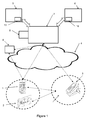
- FIG. 1 The elements of a typical transaction system are shown in Figure 1 .
- a customer interacts with a merchant.
- a payment card 2 or other payment device such as a mobile phone 1 of the customer interacts with a point of sale terminal 3 of the retailer to perform a transaction.
- a point of sale terminal 3 of the retailer to perform a transaction.
- other transaction types are possible, such as an online transaction between a customer using a computing device and an internet-based merchant.
- Value is transferred between the customer's bank (the issuing bank or issuer 5) and the merchant's bank (the acquiring bank or acquirer 6).
- the transaction is passed to the acquirer 6 and the issuer 5 through a transaction infrastructure 7 - this achieves the necessary switching to direct transaction information appropriately, and is also associated with one or more data centres 8 controlling and monitoring the transaction process on behalf of the transaction infrastructure provider.
- the transaction is authorised by the issuer 5, typically according to rules established by the transaction infrastructure provider.
- Demand on a transaction infrastructure may be highly variable, but users of the system expect a high and consistent level of performance. This is challenging without provision of a level of computing resources appropriate to peak demand but excessive for normal or low demand. This can cause particular difficulty for processes associated with authorisation by the issuer. It would therefore be desirable for computing resources to be matched to a current level of demand in transaction systems, particularly in relation to authorisation processes. It would also be desirable for the transaction infrastructure provider to be able to support processes carried out local to the issuer effectively.
- the disclosure provides computing apparatus adapted to manage a transaction processing operation, the computing apparatus comprising a programmed processor adapted to provide the following: a transaction processing management node, wherein the transaction processing management node is adapted to install and uninstall transaction processing nodes; a transaction operation rules database comprising transaction operation rules; and an interface to a transaction processing infrastructure for receiving transaction data for the transaction processing operations; wherein the transaction processing nodes are adapted to perform the transaction processing operation on the transaction data using the transaction operation rules under control of the transaction processing management node.
- the computing apparatus may further comprise an in-memory database containing transaction operation data from and for the transaction processing nodes. This may itself comprise the transaction operation rules database.
- the transaction processing management node may be adapted for interaction with a master node of the transaction infrastructure, wherein the master node is physically separate apparatus, not local to the computing apparatus - one master node may interact with a number of management nodes.
- the transaction processing management node may be adapted to receive control information from the master node. In cases where there is an in-memory database employed, this may be adapted to back up to a master in-memory database local to the master node.
- the computing apparatus may also be adapted to update the transaction operation rules in the transaction operation rules database from a master transaction operation rules database local to the master node.
- the computing apparatus may act for a payment device issuing bank, in which case the transaction operation may be a transaction authorisation.
- the processing nodes may then also provide a payment device API for the issuing bank.
- the disclosure provides transaction infrastructure computing apparatus adapted to provide control of a system for performing transaction operations at one or more remote computing apparatus locations, the transaction infrastructure computing apparatus comprising a programmed processor adapted to provide the following: a master node adapted to interact with one or more transaction processing management nodes at remote computing apparatus locations each for controlling processing of a transaction operation at those remote computing apparatus locations; and a network connection allowing communication with said remote computing apparatus locations; wherein the master node provides control information to the transaction processing management nodes.
- This transaction infrastructure computing apparatus may further comprise a master in-memory database, wherein the master in-memory database is adapted to back up in-memory databases local to the transaction processing management nodes.
- the transaction infrastructure computing apparatus may also comprise a master transaction operation rules database adapted to provide transaction operation rules updates to transaction operation rules databases local to the transaction processing management nodes.
- the disclosure provides a method of performing transaction operations at computing apparatus, the method comprising: a transaction processing management node installing one or more transaction processing nodes; the transaction processing management node receiving transaction data from a transaction processing infrastructure for performance of a transaction operation and allocating the transaction operation to one of the transaction processing nodes; said transaction processing node performing the transaction operation on the transaction data using transaction operation rules in a local transaction operation rules database.
- This method may further comprise receiving control information from a master node remote from the computing apparatus and providing transaction operation performance data to the master node.
- the computing apparatus acts for a payment device issuing bank, and the transaction operation is a transaction authorisation.
- Figure 1 shows schematically relevant parts of a representative transaction system, described briefly above, suitable for implementing an embodiment of the disclosure.
- a customer interacts with a merchant.
- a payment card 2 or other payment device such as a mobile phone 1 of the customer interacts with a point of sale terminal 3 of the retailer to perform a transaction.
- a mobile phone 1 or other computing device including but not limited to any NFC enabled payment device, may be used as a proxy for a physical payment card, or may act as a virtual card associated with a customer account with a card issuer 5. While a transaction between a payment device and a terminal 3 is shown here, other possibilities exist, such as a transaction between a computing device with a real or virtual card number and an internet-based merchant 9.
- the network 4 here represents any appropriate communication network or combination of networks for the communication path indicated, and may be the public internet, a cellular communications network or a private network, depending on the parties involved in the communication and the need for the communication path to be secure.
- the transaction is transferred between the customer's bank (the issuing bank or issuer 5) and the merchant's bank (the acquiring bank or acquirer 6).
- the transaction is passed to the acquirer 6 and the issuer 5 through a transaction infrastructure 7 - this achieves the necessary switching to direct transaction information appropriately, and is also associated with one or more data centres 8 controlling and monitoring the transaction process on behalf of the transaction infrastructure provider.
- the transaction is authorised by the issuer 5, typically according to a process established by the transaction infrastructure provider to allow authorisation rules to be established and implemented by the issuer 5.
- the payment device may operate under a contact or contactless protocol for communication with a point of interaction (POI) terminal such as a point of sale (POS) terminal or an automated teller machine (ATM).
- POI point of interaction
- POS point of sale
- ATM automated teller machine
- the payment device includes a chip and a wireless transmitter and receiver adapted for short range communication by protocols such as those defined under ISO/IEC 14443.
- the transaction infrastructure 7 connects the terminal 3, the card issuer 5 and the acquiring bank 6.
- This transaction infrastructure will typically be provided by a transaction infrastructure provider who provides services to the card issuing bank 5 to allow use of transaction cards associated with that transaction infrastructure.
- the transaction infrastructure 7 enables the issuer to provide authorization at the time of purchase, and provides clearing of the transaction and reconciliation typically within the same working day, and settlement of payments shortly after that.
- the transaction infrastructure 7 comprises a plurality of switches, servers and databases, and most features of this infrastructure are not described further here where these are not necessary for understanding how embodiments of the disclosure function and may be implemented.
- a transaction infrastructure server 8 is however shown as associated with the transaction infrastructure and responsible for management and monitoring of the transaction infrastructure.
- the card issuer 5 has an issuer server 15 for interactions with the transaction system and the acquiring bank has an acquirer server 16 for such interactions as well.
- Each of these servers comprises one or more processors 20 and memories 21 defining a computing environment 22 in which software runs to achieved required functionality.
- the issuer server 15 operates at least to provide transaction authorisation 23, clearing and settlement 24, and an issuer system interface 25, and may also provide a customer interface 26.
- the acquirer server 16 operates for transaction mediation 27 for merchants, for clearing and settlement 24, and an acquirer system interface 28, and may also provide a merchant interface 29.
- the transaction infrastructure server 8 comprises a master node 51 that interacts with agent manager nodes 41 disposed at each issuer server 15.
- the master node 51 provides some control of the operation of the agent nodes and the receives reports from the agent nodes on the performance of the issuer server, whereas the agent manager nodes 41 determine local provisioning of processing nodes 42 and provide local control according to rules set from the master node 31.
- the processing nodes 42 implement transaction authorisation for the issuer.
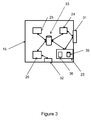
- FIG. 3 illustrates functional elements of the issuer server, or issuer server system.
- the issuer server 15 provides transaction authorisation 23, clearing and settlement 24, and an issuer system interface 25, and in this case also provides a customer interface 26.
- the transaction authorisation 23 and clearing and settlement 24 systems interact with the transaction infrastructure through a transaction infrastructure communication port 31 (this may be termed communication "on the wire” below) and communicates with customers through a public internet gateway 32.
- Customer details (such as identity, credentials and transaction history) are shown as stored in a customer account database 33 that will be accessed by the different systems as needed.
- the transaction authorisation system 23 holds authorisation rules 35 and comprises authorisation processing 36 for transactions arriving on the wire using the authorisation rules 35 and the customer account database 33.
- the agent manager 41 controls operation of authorisation processes and interacts with the master node in the transaction infrastructure server.
- the agent manager 41 also installs and uninstalls processing nodes 42 to carry out authorisation processes for transactions incoming on the wire.
- a used but now uninstalled processing node 43 and a processing node for future use 44 are shown, but are not currently active.
- the processing nodes 42 and the agent manager 41 interact with an in-memory database 45, and use a Java Messaging Service (JMS) topic element 46 for communication between the multiple elements involved - other forms of middleware messaging may be used, but the general use of Java Messaging Service makes JMS topic a practical choice.
- JMS Java Messaging Service
- FIG. 5 shows elements of the transaction infrastructure server that support and interact with the authorisation processes in the issuer servers according to embodiments of the disclosure.
- the master node 51 interacts with issuer servers through an appropriate port (indicated as issuer communication port 52) and is in communication with a rules database 53 and a master node in-memory database 54.
- the master node 51 can be considered to comprise a monitoring process 55 and a control process 56.
- the master node 51 interacts with a master node user interface 57 allowing control operations and reporting.
- the master node 51 maintains control over each agent manager node 41.
- the master node 51 has the ability to override certain agent controls. These can include direction of traffic to installed processing nodes 42, installing/uninstalling new processing nodes, and spawning new threads to increase processing capacity. This spawning of new threads may add new subscribers to the JMS topic which contains the queue of incoming requests dynamically up to the limit of available memory or to predefined limits set by the master node and maintained by the agent manager. These interventions by the master nodes would typically be "emergency" actions for malfunctioning (conceivably even subverted) agent nodes.
- Agent manager nodes 41 communicate periodically with the master node 51 to provide updates on traffic statistics and on the number of running processing nodes using an appropriate communication protocol. Agent manager nodes 41 maintain status on various processes: JMS topic; load balancing; install of new nodes; and uninstall of old nodes as new nodes are installed and traffic is redirected. Critical data for the agent manager nodes 41 may be backed up to the master node 51 as a part of this communication process.
- the agent manager node 41 has control over the existence of processing nodes - the agent manager node may spawn new nodes as required by transaction volume loads or transaction velocity, and then will uninstall them as the load and/or transaction velocity drops and processing nodes process below a threshold level of transactions or fall idle.
- an in-memory database 45 At the agent manager node 41, data required for system management and reporting is persisted to a local instance of an in-memory database 45. This allows rapid input and output for the agent manager node 41 and the associated processing nodes 42.
- This in-memory database 45 is backed up to the master node in-memory database 54 using an appropriate communications protocol. This approach - local in-memory instances backed up to a master node - can be realised using existing proprietary products such as Oracle Coherence.
- the master node in-memory database 54 can then be used for backing up local in-memory databases 45, but also for monitoring and reporting actions at the master node 51.
- the master node can use data from the master node in-memory database 54 to determine whether management actions need to be taken - such as overriding a local agent manager node 41 to take an action such as spawning a new processing node 42.
- the master node 51 can use data from the master node in-memory database 54 to provide management reports on the performance of system elements (for example, on the performance of the authorisation system of that issuer over time, or the relative performance of the that issuer in authorisation functions when compared to other issuers).
- an appropriate protocol may be used to push data from the agent manager node in-memory database 45 to the master node in-memory database 54.
- This may use an appropriate encryption protocol to protect the data - for example, mutual SSL could be used with the master node 51 taking responsibility for certificate management.
- the status of agent node certificates can then be displayed at the master node 51 as part of the monitoring process.
- rules for authorisation processes can be managed centrally through the master node 51.
- the currently valid rules are those held in the rules database 53, and any updates to these rules are made through the user interface 57 to the master node 51.
- a local copy of the currently active rules is held for use by the processing nodes 42 at the local in-memory database 45.
- a part of the monitoring process is to check whether the version of the rules held at the local in-memory database 45 matches that in the rules database 53 - if not, an update to the correct version is installed from the master node 51.
- processing nodes 42 and managed by agent manager nodes 41 There are two main functions associated with the authorisation process: rule implementation and authorisation processing. Rules are mandated centrally and need to be implemented by each issuer. APIs are provided to allow the issuer to take certain actions that are not mandated by rules.
- Processing node APIs may be provided as standard, or may be customised for the issuer. Such APIs are typically used for issuer interaction and for setup, rather than to establish the parameters of the authorisation process, which will generally be determined by rules. Exemplary APIs are the following:
- Rule management will now be described in more detail. It should be noted that the rules themselves are essentially as implemented in conventional authorisation processes carried out by card issuing banks. Rule validation is managed by the processing node 42 which validates any authorisation request against the local copy of the rules installed in the in-memory database 45. As noted, the rules for the transaction infrastructure 7 are imposed centrally and implemented by the issuer, either at the issuer's site or on an "on-behalf of" basis by the provider of the transaction infrastructure 7. These may be supplemented by rules local to the issuer - these could be used by processing nodes 42 in an authorisation process in addition to payment device and customer data - such additional information could be provided by the issuer through issuer APIs as described previously.
- Rules may, without restriction, relate to the following criteria, all of which can be applied by a processing node 42 in an authorisation process generally by checking details of the transaction against data held at the issuer for the transaction device (or a specific card number associated with it) in customer account database 33:
- an authorisation request is received 610 on the wire from the transaction infrastructure 7.
- the request is received by the agent manager node 41 and allocated 620 to a processing node 42.
- Alternative arrangements are possible that allocate incoming authorisation requests directly without the agent manager node 41 acting as an intermediary.
- the processing node 42 then performs 630 the authorisation process according to the local copy of the rules in the in-line memory 45 and the customer data (and any issuer specific processes) in customer account database 33.
- this authorisation result is then returned 640 on the wire to the transaction infrastructure so that the transaction can be completed or declined accordingly.
- Results of the authorisation process are then stored in the in-line database 45 for use in reporting to the master node 51 in due course.
- the processing nodes 42 perform on the wire authorisation of transactions together with issuer API actions (typically VCN/RCN requests).
- Authorisation traffic for live transactions is time critical, whereas API actions typically are not - authorisation traffic will typically have priority as a result, with the agent manager node 41 maintaining control over flow and distribution of the requests and responses received over the wire, managing priorities and meeting service level requirements accordingly.
- the approach to management of authorisation processes described above can be used for other processes carried out by issuing banks and acquiring banks in connection with the transaction infrastructure.
- this approach can be used in managing and administering clearing and settlement batch processing by issuers and acquirers.
- These processes are not generally time critical - or if time critical, on a timescale of days rather than seconds - so scheduling by the agent manager node is a less significant issue.
Landscapes
- Business, Economics & Management (AREA)
- Accounting & Taxation (AREA)
- Engineering & Computer Science (AREA)
- Theoretical Computer Science (AREA)
- Finance (AREA)
- Physics & Mathematics (AREA)
- General Physics & Mathematics (AREA)
- Strategic Management (AREA)
- General Business, Economics & Management (AREA)
- Economics (AREA)
- Development Economics (AREA)
- Computer Security & Cryptography (AREA)
- Data Mining & Analysis (AREA)
- Databases & Information Systems (AREA)
- General Engineering & Computer Science (AREA)
- Information Retrieval, Db Structures And Fs Structures Therefor (AREA)
- Financial Or Insurance-Related Operations Such As Payment And Settlement (AREA)
Abstract
Description
- This disclosure relates generally to transaction control management. In embodiments, this disclosure relates to an arrangement that provides locally scalable control management for a transaction system.
- Payment cards such as credit cards and debit cards are very widely used for all forms of financial transaction. The use of payment cards has evolved significantly with technological developments over recent years. Many payments are made at a retail location, typically with a physical transaction card interacting with a point of sale (POS) terminal to perform a transaction. These transaction cards may interact with a POS by swiping through a magnetic stripe reader, or for a "chip card" or "smart card" by direct contact with a smart card reader (under standard ISO/IEC 7816) or by contactless interaction through local short range wireless communication (under standard ISO/IEC 14443).
- The elements of a typical transaction system are shown in
Figure 1 . To perform a transaction, a customer interacts with a merchant. Apayment card 2 or other payment device such as amobile phone 1 of the customer interacts with a point ofsale terminal 3 of the retailer to perform a transaction. As will be discussed below, other transaction types are possible, such as an online transaction between a customer using a computing device and an internet-based merchant. Value is transferred between the customer's bank (the issuing bank or issuer 5) and the merchant's bank (the acquiring bank or acquirer 6). The transaction is passed to theacquirer 6 and theissuer 5 through a transaction infrastructure 7 - this achieves the necessary switching to direct transaction information appropriately, and is also associated with one ormore data centres 8 controlling and monitoring the transaction process on behalf of the transaction infrastructure provider. The transaction is authorised by theissuer 5, typically according to rules established by the transaction infrastructure provider. - Demand on a transaction infrastructure may be highly variable, but users of the system expect a high and consistent level of performance. This is challenging without provision of a level of computing resources appropriate to peak demand but excessive for normal or low demand. This can cause particular difficulty for processes associated with authorisation by the issuer. It would therefore be desirable for computing resources to be matched to a current level of demand in transaction systems, particularly in relation to authorisation processes. It would also be desirable for the transaction infrastructure provider to be able to support processes carried out local to the issuer effectively.
- In a first aspect, the disclosure provides computing apparatus adapted to manage a transaction processing operation, the computing apparatus comprising a programmed processor adapted to provide the following: a transaction processing management node, wherein the transaction processing management node is adapted to install and uninstall transaction processing nodes; a transaction operation rules database comprising transaction operation rules; and an interface to a transaction processing infrastructure for receiving transaction data for the transaction processing operations; wherein the transaction processing nodes are adapted to perform the transaction processing operation on the transaction data using the transaction operation rules under control of the transaction processing management node.
- In embodiments, the computing apparatus may further comprise an in-memory database containing transaction operation data from and for the transaction processing nodes. This may itself comprise the transaction operation rules database.
- The transaction processing management node may be adapted for interaction with a master node of the transaction infrastructure, wherein the master node is physically separate apparatus, not local to the computing apparatus - one master node may interact with a number of management nodes. In this case, the transaction processing management node may be adapted to receive control information from the master node. In cases where there is an in-memory database employed, this may be adapted to back up to a master in-memory database local to the master node. The computing apparatus may also be adapted to update the transaction operation rules in the transaction operation rules database from a master transaction operation rules database local to the master node.
- The computing apparatus may act for a payment device issuing bank, in which case the transaction operation may be a transaction authorisation. The processing nodes may then also provide a payment device API for the issuing bank.
- In a second aspect, the disclosure provides transaction infrastructure computing apparatus adapted to provide control of a system for performing transaction operations at one or more remote computing apparatus locations, the transaction infrastructure computing apparatus comprising a programmed processor adapted to provide the following: a master node adapted to interact with one or more transaction processing management nodes at remote computing apparatus locations each for controlling processing of a transaction operation at those remote computing apparatus locations; and a network connection allowing communication with said remote computing apparatus locations; wherein the master node provides control information to the transaction processing management nodes.
- This transaction infrastructure computing apparatus may further comprise a master in-memory database, wherein the master in-memory database is adapted to back up in-memory databases local to the transaction processing management nodes. The transaction infrastructure computing apparatus may also comprise a master transaction operation rules database adapted to provide transaction operation rules updates to transaction operation rules databases local to the transaction processing management nodes.
- In a third aspect, the disclosure provides a method of performing transaction operations at computing apparatus, the method comprising: a transaction processing management node installing one or more transaction processing nodes; the transaction processing management node receiving transaction data from a transaction processing infrastructure for performance of a transaction operation and allocating the transaction operation to one of the transaction processing nodes; said transaction processing node performing the transaction operation on the transaction data using transaction operation rules in a local transaction operation rules database.
- This method may further comprise receiving control information from a master node remote from the computing apparatus and providing transaction operation performance data to the master node.
- In embodiments of this method, the computing apparatus acts for a payment device issuing bank, and the transaction operation is a transaction authorisation.
- Embodiments of the disclosure will now be described, by way of example, with reference to the accompanying Figures, of which:
-
Figure 1 shows elements of a conventional transaction system suitable for carrying out embodiments of the disclosure; -
Figure 2 shows a transaction system in which a transaction infrastructure interacts with multiple payment device issuers and acquiring banks; -
Figure 3 shows an issuer server according to an embodiment of the disclosure; -
Figure 4 shows interaction between functional elements in an issuer authorisation system according to an embodiment of the disclosure; -
Figure 5 shows a transaction infrastructure system server according to an embodiment of the disclosure; and -
Figure 6 shows an authorisation control process according to an embodiment of the disclosure. - Specific embodiments of the disclosure will be described below with reference to the Figures.
-
Figure 1 shows schematically relevant parts of a representative transaction system, described briefly above, suitable for implementing an embodiment of the disclosure. - To perform a transaction, a customer interacts with a merchant. A
payment card 2 or other payment device such as amobile phone 1 of the customer interacts with a point ofsale terminal 3 of the retailer to perform a transaction. Amobile phone 1 or other computing device, including but not limited to any NFC enabled payment device, may be used as a proxy for a physical payment card, or may act as a virtual card associated with a customer account with acard issuer 5. While a transaction between a payment device and aterminal 3 is shown here, other possibilities exist, such as a transaction between a computing device with a real or virtual card number and an internet-basedmerchant 9. - The
terminal 3 and in some cases (such as a transaction with an internet-based retailer) the payment device interacts with thetransaction infrastructure 7 and directly or (as shown here) indirectly with acard issuer 5 for the customer and an acquiringbank 6 for the merchant over a suitable network 4 - thenetwork 4 here represents any appropriate communication network or combination of networks for the communication path indicated, and may be the public internet, a cellular communications network or a private network, depending on the parties involved in the communication and the need for the communication path to be secure. - Value is transferred between the customer's bank (the issuing bank or issuer 5) and the merchant's bank (the acquiring bank or acquirer 6). The transaction is passed to the
acquirer 6 and theissuer 5 through a transaction infrastructure 7 - this achieves the necessary switching to direct transaction information appropriately, and is also associated with one ormore data centres 8 controlling and monitoring the transaction process on behalf of the transaction infrastructure provider. The transaction is authorised by theissuer 5, typically according to a process established by the transaction infrastructure provider to allow authorisation rules to be established and implemented by theissuer 5. - The payment device may operate under a contact or contactless protocol for communication with a point of interaction (POI) terminal such as a point of sale (POS) terminal or an automated teller machine (ATM). If used as a contactless device, the payment device includes a chip and a wireless transmitter and receiver adapted for short range communication by protocols such as those defined under ISO/IEC 14443.
- The
transaction infrastructure 7 connects theterminal 3, thecard issuer 5 and the acquiringbank 6. This transaction infrastructure will typically be provided by a transaction infrastructure provider who provides services to thecard issuing bank 5 to allow use of transaction cards associated with that transaction infrastructure. Thetransaction infrastructure 7 enables the issuer to provide authorization at the time of purchase, and provides clearing of the transaction and reconciliation typically within the same working day, and settlement of payments shortly after that. Thetransaction infrastructure 7 comprises a plurality of switches, servers and databases, and most features of this infrastructure are not described further here where these are not necessary for understanding how embodiments of the disclosure function and may be implemented. Atransaction infrastructure server 8 is however shown as associated with the transaction infrastructure and responsible for management and monitoring of the transaction infrastructure. Thecard issuer 5 has anissuer server 15 for interactions with the transaction system and the acquiring bank has anacquirer server 16 for such interactions as well. - The relationship between the
transaction infrastructure 7 and issuing and acquiringbanks Figure 2 . There are a large number of issuing banks and acquiring banks (many banks will perform both functions, but for convenience of illustration these functions are shown as split inFigure 2 ), here represented byissuer servers 15 and acquirer servers 16 - these are shown as interacting with thetransaction infrastructure server 8. While these elements are each shown as individual servers, an issuer, an acquirer or thetransaction infrastructure 7 may be represented by a more complex computing system, for example with a plurality of servers, a plurality of memories or storage systems, and in some cases with particular functionality delegated to third parties. Typically, each will involve a computing estate situated in a data centre. For a bank that functions as both a card issuer and a transaction acquirer, the functionality ofissuer server 15 andacquirer server 16 may be provided by the same computing system. - Each of these servers comprises one or more processors 20 and memories 21 defining a computing environment 22 in which software runs to achieved required functionality. In the case of the card issuer, the
issuer server 15 operates at least to providetransaction authorisation 23, clearing andsettlement 24, and anissuer system interface 25, and may also provide acustomer interface 26. In the case of the acquirer, theacquirer server 16 operates fortransaction mediation 27 for merchants, for clearing andsettlement 24, and anacquirer system interface 28, and may also provide amerchant interface 29. - An embodiment of the disclosure will now be described with reference to
Figures 3 to 6 that relates to thetransaction authorisation 23 andissuer system interface 25 systems of the issuer and their interaction with thetransaction infrastructure server 8. In this embodiment, thetransaction infrastructure server 8 comprises amaster node 51 that interacts withagent manager nodes 41 disposed at eachissuer server 15. As will be described below, themaster node 51 provides some control of the operation of the agent nodes and the receives reports from the agent nodes on the performance of the issuer server, whereas theagent manager nodes 41 determine local provisioning ofprocessing nodes 42 and provide local control according to rules set from themaster node 31. Theprocessing nodes 42 implement transaction authorisation for the issuer. -
Figure 3 illustrates functional elements of the issuer server, or issuer server system. As noted above, theissuer server 15 providestransaction authorisation 23, clearing andsettlement 24, and anissuer system interface 25, and in this case also provides acustomer interface 26. Thetransaction authorisation 23 and clearing andsettlement 24 systems interact with the transaction infrastructure through a transaction infrastructure communication port 31 (this may be termed communication "on the wire" below) and communicates with customers through apublic internet gateway 32. Customer details (such as identity, credentials and transaction history) are shown as stored in acustomer account database 33 that will be accessed by the different systems as needed. Thetransaction authorisation system 23 holds authorisation rules 35 and comprisesauthorisation processing 36 for transactions arriving on the wire using the authorisation rules 35 and thecustomer account database 33. - Implementation of the processes in the transaction authorisation system 23 (also termed issuer authorisation system) according to an embodiment of the disclosure will now be described with reference to
Figure 4 . - The
agent manager 41 controls operation of authorisation processes and interacts with the master node in the transaction infrastructure server. Theagent manager 41 also installs and uninstallsprocessing nodes 42 to carry out authorisation processes for transactions incoming on the wire. A used but now uninstalledprocessing node 43 and a processing node forfuture use 44 are shown, but are not currently active. Theprocessing nodes 42 and theagent manager 41 interact with an in-memory database 45, and use a Java Messaging Service (JMS)topic element 46 for communication between the multiple elements involved - other forms of middleware messaging may be used, but the general use of Java Messaging Service makes JMS topic a practical choice. -
Figure 5 shows elements of the transaction infrastructure server that support and interact with the authorisation processes in the issuer servers according to embodiments of the disclosure. Themaster node 51 interacts with issuer servers through an appropriate port (indicated as issuer communication port 52) and is in communication with arules database 53 and a master node in-memory database 54. Themaster node 51 can be considered to comprise amonitoring process 55 and acontrol process 56. Themaster node 51 interacts with a masternode user interface 57 allowing control operations and reporting. - The functionality of different processes identified above will now be discussed in more detail in the context of implementation of embodiments of the disclosure.
- As previously noted, the
master node 51 maintains control over eachagent manager node 41. Themaster node 51 has the ability to override certain agent controls. These can include direction of traffic to installedprocessing nodes 42, installing/uninstalling new processing nodes, and spawning new threads to increase processing capacity. This spawning of new threads may add new subscribers to the JMS topic which contains the queue of incoming requests dynamically up to the limit of available memory or to predefined limits set by the master node and maintained by the agent manager. These interventions by the master nodes would typically be "emergency" actions for malfunctioning (conceivably even subverted) agent nodes. -
Agent manager nodes 41 communicate periodically with themaster node 51 to provide updates on traffic statistics and on the number of running processing nodes using an appropriate communication protocol.Agent manager nodes 41 maintain status on various processes: JMS topic; load balancing; install of new nodes; and uninstall of old nodes as new nodes are installed and traffic is redirected. Critical data for theagent manager nodes 41 may be backed up to themaster node 51 as a part of this communication process. - The
agent manager node 41 has control over the existence of processing nodes - the agent manager node may spawn new nodes as required by transaction volume loads or transaction velocity, and then will uninstall them as the load and/or transaction velocity drops and processing nodes process below a threshold level of transactions or fall idle. - At the
agent manager node 41, data required for system management and reporting is persisted to a local instance of an in-memory database 45. This allows rapid input and output for theagent manager node 41 and the associatedprocessing nodes 42. This in-memory database 45 is backed up to the master node in-memory database 54 using an appropriate communications protocol. This approach - local in-memory instances backed up to a master node - can be realised using existing proprietary products such as Oracle Coherence. The master node in-memory database 54 can then be used for backing up local in-memory databases 45, but also for monitoring and reporting actions at themaster node 51. In monitoring, the master node can use data from the master node in-memory database 54 to determine whether management actions need to be taken - such as overriding a localagent manager node 41 to take an action such as spawning anew processing node 42. In reporting, themaster node 51 can use data from the master node in-memory database 54 to provide management reports on the performance of system elements (for example, on the performance of the authorisation system of that issuer over time, or the relative performance of the that issuer in authorisation functions when compared to other issuers). - As noted, an appropriate protocol may be used to push data from the agent manager node in-
memory database 45 to the master node in-memory database 54. This may use an appropriate encryption protocol to protect the data - for example, mutual SSL could be used with themaster node 51 taking responsibility for certificate management. The status of agent node certificates can then be displayed at themaster node 51 as part of the monitoring process. - Using this approach, rules for authorisation processes can be managed centrally through the
master node 51. The currently valid rules are those held in therules database 53, and any updates to these rules are made through theuser interface 57 to themaster node 51. A local copy of the currently active rules is held for use by theprocessing nodes 42 at the local in-memory database 45. A part of the monitoring process is to check whether the version of the rules held at the local in-memory database 45 matches that in the rules database 53 - if not, an update to the correct version is installed from themaster node 51. - The functions performed by processing
nodes 42 and managed byagent manager nodes 41 will now be described in more detail. There are two main functions associated with the authorisation process: rule implementation and authorisation processing. Rules are mandated centrally and need to be implemented by each issuer. APIs are provided to allow the issuer to take certain actions that are not mandated by rules. - Processing node APIs may be provided as standard, or may be customised for the issuer. Such APIs are typically used for issuer interaction and for setup, rather than to establish the parameters of the authorisation process, which will generally be determined by rules. Exemplary APIs are the following:
- generateVCN - this enables a virtual card number (VCN) to be generated for a real, or physical, card number (RCN).
- expireVCN- this involves updating the in-
memory database 45 with indication of expiry of the VCN. - cancelVCN - this involves cancelling the VCN, typically in the event of fraud or theft
- modifyVCN - this may involve changing a specific VCN parameter, typically changing the length of validity or monetary limit for a VCN.
- modifyRCN - this is similar to the equivalent VCN action, but typically involves changing expiry date or CVC information.
- expireRCN - as for the equivalent VCN action.
- cancelRCN - as for the equivalent VCN action.
- Rule management will now be described in more detail. It should be noted that the rules themselves are essentially as implemented in conventional authorisation processes carried out by card issuing banks. Rule validation is managed by the
processing node 42 which validates any authorisation request against the local copy of the rules installed in the in-memory database 45. As noted, the rules for thetransaction infrastructure 7 are imposed centrally and implemented by the issuer, either at the issuer's site or on an "on-behalf of" basis by the provider of thetransaction infrastructure 7. These may be supplemented by rules local to the issuer - these could be used by processingnodes 42 in an authorisation process in addition to payment device and customer data - such additional information could be provided by the issuer through issuer APIs as described previously. - Rules may, without restriction, relate to the following criteria, all of which can be applied by a
processing node 42 in an authorisation process generally by checking details of the transaction against data held at the issuer for the transaction device (or a specific card number associated with it) in customer account database 33: - Single use - a card number may be restricted to a single use, and further requests will therefore not be authorised.
- Multi use - a multiple use card number should be tracked to ensure it is not used outside its use restrictions.
- Single merchant - a card number may be limited to use with a single merchant, so this will need to be checked in the authorisation process.
- MCC checking - merchant category code (MCC) may be used as a restriction on cards, so MCC needs to be checked as a part of the authorisation process.
- Geographic region - certain card numbers may be approved for use only in a specific geographic region.
- The steps of an authorisation process performed at the issuer using an embodiment as described above are set out in
Figure 6 . Firstly, an authorisation request is received 610 on the wire from thetransaction infrastructure 7. The request is received by theagent manager node 41 and allocated 620 to aprocessing node 42. Alternative arrangements are possible that allocate incoming authorisation requests directly without theagent manager node 41 acting as an intermediary. Theprocessing node 42 then performs 630 the authorisation process according to the local copy of the rules in the in-line memory 45 and the customer data (and any issuer specific processes) incustomer account database 33. - When the
processing node 42 has performed the authorisation process and reached an authorisation result, this authorisation result is then returned 640 on the wire to the transaction infrastructure so that the transaction can be completed or declined accordingly. Results of the authorisation process are then stored in the in-line database 45 for use in reporting to themaster node 51 in due course. - As noted above, the
processing nodes 42 perform on the wire authorisation of transactions together with issuer API actions (typically VCN/RCN requests). Authorisation traffic for live transactions is time critical, whereas API actions typically are not - authorisation traffic will typically have priority as a result, with theagent manager node 41 maintaining control over flow and distribution of the requests and responses received over the wire, managing priorities and meeting service level requirements accordingly. - The approach to management of authorisation processes described above can be used for other processes carried out by issuing banks and acquiring banks in connection with the transaction infrastructure. For example, this approach can be used in managing and administering clearing and settlement batch processing by issuers and acquirers. These processes are not generally time critical - or if time critical, on a timescale of days rather than seconds - so scheduling by the agent manager node is a less significant issue.
- While specific embodiments of the disclosure are described in detail above, the skilled person will appreciate that alternative embodiments may readily be devised that still fall within the scope of the claims. The scope of the disclosure is defined by the spirit and scope of the claims and is not limited by the embodiments described here.
Claims (15)
- Computing apparatus adapted to manage a transaction processing operation, the computing apparatus comprising a programmed processor adapted to provide the following:a transaction processing management node (41), wherein the transaction processing management node (41) is adapted to install and uninstall transaction processing nodes (42);a transaction operation rules database comprising transaction operation rules; andan interface to a transaction processing infrastructure for receiving transaction data for the transaction processing operations;wherein the transaction processing nodes (42) are adapted to perform the transaction processing operation on the transaction data using the transaction operation rules under control of the transaction processing management node (41).
- Computing apparatus as claimed in claim 1, further comprising an in-memory database (45) containing transaction operation data from and for the transaction processing nodes (42).
- Computing apparatus as claimed in claim 2, wherein the in-memory database (45) comprises the transaction operation rules database.
- Computing apparatus as claimed in any of claims 1 to 3, wherein the transaction processing management node (41) is adapted for interaction with a master node (51) of the transaction infrastructure, wherein the master node (51) is physically separate from the computing apparatus.
- Computing apparatus as claimed in claim 4, wherein the transaction processing management node (41) is adapted to receive control information from the master node (51).
- Computing apparatus as claimed in claim 4 or claim 5 where dependent on claim 2, wherein the in-memory database (45) is adapted to back up to a master in-memory database (54) local to the master node (51).
- Computing apparatus as claimed in any of claims 4 to 6, wherein the computing apparatus is adapted to update the transaction operation rules in the transaction operation rules database from a master transaction operation rules database local to the master node (51).
- Computing apparatus as claimed in any preceding claim, wherein the computing apparatus acts for a payment device issuing bank and wherein the transaction operation is a transaction authorisation.
- Computing apparatus as claimed in claim 8, wherein the processing nodes also provide a payment device API for the issuing bank.
- Transaction infrastructure computing apparatus adapted to provide control of a system for performing transaction operations at one or more remote computing apparatus locations, the transaction infrastructure computing apparatus comprising a programmed processor adapted to provide the following:a master node (51) adapted to interact with one or more transaction processing management nodes (41) at remote computing apparatus locations each for controlling processing of a transaction operation at those remote computing apparatus locations; anda network connection allowing communication with said remote computing apparatus locations;wherein the master node (51) provides control information to the transaction processing management nodes (41).
- The transaction infrastructure computing apparatus of claim 10 further comprising a master in-memory database (54), wherein the master in-memory database (54) is adapted to back up in-memory databases (45) local to the transaction processing management nodes (41).
- The transaction infrastructure computing apparatus of claim 10 or claim 11, further comprising a master transaction operation rules database adapted to provide transaction operation rules updates to transaction operation rules databases local to the transaction processing management nodes (41).
- A method of performing transaction operations at computing apparatus, the method comprising:a transaction processing management node (41) installing one or more transaction processing nodes (42);the transaction processing management node (41) receiving transaction data from a transaction processing infrastructure for performance of a transaction operation and allocating the transaction operation to one of the transaction processing nodes (42);said transaction processing node (42) performing the transaction operation on the transaction data using transaction operation rules in a local transaction operation rules database.
- The method of claim 13, further comprising receiving control information from a master node (51) remote from the computing apparatus and providing transaction operation performance data to the master node (51).
- The method of claim 13 or claim 14, wherein the computing apparatus acts for a payment device issuing bank, and the transaction operation is a transaction authorisation.
Priority Applications (4)
| Application Number | Priority Date | Filing Date | Title |
|---|---|---|---|
| EP16184816.3A EP3285220A1 (en) | 2016-08-18 | 2016-08-18 | Transaction control management |
| US15/680,476 US11610186B2 (en) | 2016-08-18 | 2017-08-18 | Transaction control management |
| US18/186,766 US12443932B2 (en) | 2016-08-18 | 2023-03-20 | Transaction control management system, apparatus, and method |
| US19/358,142 US20260037941A1 (en) | 2016-08-18 | 2025-10-14 | Transaction control management |
Applications Claiming Priority (1)
| Application Number | Priority Date | Filing Date | Title |
|---|---|---|---|
| EP16184816.3A EP3285220A1 (en) | 2016-08-18 | 2016-08-18 | Transaction control management |
Publications (1)
| Publication Number | Publication Date |
|---|---|
| EP3285220A1 true EP3285220A1 (en) | 2018-02-21 |
Family
ID=56740136
Family Applications (1)
| Application Number | Title | Priority Date | Filing Date |
|---|---|---|---|
| EP16184816.3A Ceased EP3285220A1 (en) | 2016-08-18 | 2016-08-18 | Transaction control management |
Country Status (2)
| Country | Link |
|---|---|
| US (3) | US11610186B2 (en) |
| EP (1) | EP3285220A1 (en) |
Families Citing this family (2)
| Publication number | Priority date | Publication date | Assignee | Title |
|---|---|---|---|---|
| KR102440733B1 (en) * | 2020-10-26 | 2022-09-05 | 피네보 주식회사 | System and method for processing card payment |
| US20250131447A1 (en) * | 2023-10-21 | 2025-04-24 | Simnang IP, LLC | Systems and methods for configurable authorization expiration |
Citations (1)
| Publication number | Priority date | Publication date | Assignee | Title |
|---|---|---|---|---|
| US20060112379A1 (en) * | 2004-11-12 | 2006-05-25 | International Business Machines Corp. | Method and system for on demand java resources |
Family Cites Families (22)
| Publication number | Priority date | Publication date | Assignee | Title |
|---|---|---|---|---|
| US6295585B1 (en) * | 1995-06-07 | 2001-09-25 | Compaq Computer Corporation | High-performance communication method and apparatus for write-only networks |
| WO2001035242A1 (en) * | 1999-11-12 | 2001-05-17 | Zebrazone, Inc. | Highly distributed computer server architecture and operating system |
| WO2003001866A1 (en) | 2001-06-27 | 2003-01-09 | Snapcount Limited | Transcation processing |
| CA2488730A1 (en) | 2002-06-11 | 2003-12-18 | First Data Corporation | Value processing network and methods |
| US7069244B2 (en) | 2002-09-17 | 2006-06-27 | First Data Corporation | Method and system for merchant processing of purchase card transactions with expanded card type acceptance |
| EP1866767B1 (en) * | 2005-03-16 | 2018-04-18 | III Holdings 12, LLC | Automatic workload transfer to an on-demand center |
| US7747577B2 (en) * | 2005-08-17 | 2010-06-29 | International Business Machines Corporation | Management of redundant objects in storage systems |
| US8078664B2 (en) * | 2008-01-07 | 2011-12-13 | Computer Associates Think, Inc. | Evaluation of current capacity levels of resources in a distributed computing system |
| US8577804B1 (en) | 2008-02-20 | 2013-11-05 | Collective Dynamics LLC | Method and system for securing payment transactions |
| US20100063903A1 (en) * | 2008-03-10 | 2010-03-11 | Thayne Whipple | Hierarchically applied rules engine ("hare") |
| US8099368B2 (en) | 2008-11-08 | 2012-01-17 | Fonwallet Transaction Solutions, Inc. | Intermediary service and method for processing financial transaction data with mobile device confirmation |
| GB2466676A (en) * | 2009-01-06 | 2010-07-07 | Visa Europe Ltd | A method of processing payment authorisation requests |
| US20110027653A1 (en) | 2009-08-03 | 2011-02-03 | Ho Marvin C | Negative plate for lead acid battery |
| US20110238596A1 (en) | 2010-03-26 | 2011-09-29 | Bank Of America | Transaction information routing |
| US9495427B2 (en) * | 2010-06-04 | 2016-11-15 | Yale University | Processing of data using a database system in communication with a data processing framework |
| US8494997B2 (en) * | 2010-07-20 | 2013-07-23 | Samuel W. Bellamy, III | System and method for validation of transaction data |
| EP2555129B1 (en) * | 2011-08-03 | 2019-02-06 | Amadeus S.A.S. | Method and system to maintain strong consistency of distributed replicated contents in a client/server system |
| US20130080219A1 (en) * | 2011-09-26 | 2013-03-28 | First Data Corporation | Systems and Methods for Providing Value Added Services in Association with Payment Transactions |
| US10176478B2 (en) | 2012-10-23 | 2019-01-08 | Visa International Service Association | Transaction initiation determination system utilizing transaction data elements |
| US20140358789A1 (en) | 2013-05-30 | 2014-12-04 | B. Scott Boding | Acquirer facing fraud management system and method |
| GB2520984A (en) | 2013-12-06 | 2015-06-10 | Mastercard International Inc | Management of complex transactions |
| US9575849B2 (en) * | 2014-11-25 | 2017-02-21 | Sap Se | Synchronized backup and recovery of database systems |
-
2016
- 2016-08-18 EP EP16184816.3A patent/EP3285220A1/en not_active Ceased
-
2017
- 2017-08-18 US US15/680,476 patent/US11610186B2/en active Active
-
2023
- 2023-03-20 US US18/186,766 patent/US12443932B2/en active Active
-
2025
- 2025-10-14 US US19/358,142 patent/US20260037941A1/en active Pending
Patent Citations (1)
| Publication number | Priority date | Publication date | Assignee | Title |
|---|---|---|---|---|
| US20060112379A1 (en) * | 2004-11-12 | 2006-05-25 | International Business Machines Corp. | Method and system for on demand java resources |
Non-Patent Citations (9)
| Title |
|---|
| BERNSTEIN DAVID: "The Emerging Hadoop, Analytics, Stream Stack for Big Data", IEEE CLOUD COMPUTING, IEEE, USA, vol. 1, no. 4, 1 November 2014 (2014-11-01), pages 84 - 86, XP011575271, DOI: 10.1109/MCC.2014.90 * |
| BYRON BRASWELL ET AL: "Enabling the On Demand Store with IBM Store Integration Framework, Chapters 2, 3, 5 (parts) , 11 (parts)", 1 February 2007 (2007-02-01), pages 1 - 78, XP055634668, Retrieved from the Internet <URL:http://www.redbooks.ibm.com/redbooks/pdfs/sg246698.pdf> [retrieved on 20191022] * |
| HORMOZI ELHAM ET AL: "Accuracy evaluation of a credit card fraud detection system on Hadoop MapReduce", THE 5TH CONFERENCE ON INFORMATION AND KNOWLEDGE TECHNOLOGY, IEEE, 28 May 2013 (2013-05-28), pages 35 - 39, XP032496602, DOI: 10.1109/IKT.2013.6620034 * |
| JENS KRUEGER ET AL: "Main memory databases for enterprise applications", INDUSTRIAL ENGINEERING AND ENGINEERING MANAGEMENT (IE&EM), 2011 IEEE 18TH INTERNATIONAL CONFERENCE ON, IEEE, 3 September 2011 (2011-09-03), pages 547 - 557, XP032056073, ISBN: 978-1-61284-446-6, DOI: 10.1109/ICIEEM.2011.6035219 * |
| MATEI ZAHARIA ET AL: "Resilient Distributed Datasets: A Fault-Tolerant Abstraction for In-Memory Cluster Computing", USENIX,, 11 April 2013 (2013-04-11), pages 1 - 14, XP061014277 * |
| RAJ R SANDEEP ET AL: "An approach for optimization of resource management in Hadoop", INTERNATIONAL CONFERENCE ON COMPUTING AND COMMUNICATION TECHNOLOGIES, IEEE, 11 December 2014 (2014-12-11), pages 1 - 5, XP032751508, DOI: 10.1109/ICCCT2.2014.7066747 * |
| RICARDO FERREIRA: "The Perfect Marriage: Oracle Business Rules & Coherence In-Memory Data Grid. High Scalable Business Rules with Extreme Low Latency", RICARDO FERREIRA'SBLOG, 16 August 2013 (2013-08-16), pages 1 - 18, XP055636707, Retrieved from the Internet <URL:https://blogs.oracle.com/middlewareplace/the-perfect-marriage:-oracle-business-rules-coherence-in-memory-data-grid-high-scalable-business-rules-with-extreme-low-latency> [retrieved on 20191029] * |
| VERMA ANKUSH ET AL: "Big data management processing with Hadoop MapReduce and spark technology: A comparison", 2016 SYMPOSIUM ON COLOSSAL DATA ANALYSIS AND NETWORKING (CDAN), IEEE, 18 March 2016 (2016-03-18), pages 1 - 4, XP032962375, DOI: 10.1109/CDAN.2016.7570891 * |
| VINOD KUMAR VAVILAPALLI ET AL: "Apache Hadoop YARN: yet another Resource Negotiator", PROCEEDINGS OF THE 4TH ANNUAL SYMPOSIUM ON CLOUD COMPUTING, SOCC '13, 1 January 2013 (2013-01-01), New York, New York, USA, pages 1 - 16, XP055345725, ISBN: 978-1-4503-2428-1, DOI: 10.1145/2523616.2523633 * |
Also Published As
| Publication number | Publication date |
|---|---|
| US11610186B2 (en) | 2023-03-21 |
| US12443932B2 (en) | 2025-10-14 |
| US20180053159A1 (en) | 2018-02-22 |
| US20260037941A1 (en) | 2026-02-05 |
| US20230230056A1 (en) | 2023-07-20 |
Similar Documents
| Publication | Publication Date | Title |
|---|---|---|
| US10776101B2 (en) | Systems and methods for updatable applets | |
| US11023874B2 (en) | N to N money transfers | |
| US20260037941A1 (en) | Transaction control management | |
| US9519902B2 (en) | Fraud monitoring system with distributed cache | |
| US20170221053A1 (en) | Digital asset conversion | |
| US20180276656A1 (en) | Instant issuance of virtual payment account card to digital wallet | |
| JP2023509573A (en) | Cryptocurrency acceptance system | |
| US11715154B2 (en) | Systems and methods for managing accounts in a financial services system | |
| US20090012899A1 (en) | Systems and methods for generating and managing a linked deposit-only account identifier | |
| KR20100059932A (en) | Mobile remittances/payments | |
| EP3200167A1 (en) | Information transaction infrastructure | |
| US20170091773A1 (en) | Fraud monitoring system | |
| US20260111900A1 (en) | Computer implemented method and system for requesting consent from a consumer to complete an action | |
| US20210042780A1 (en) | Substantially real time cash back settlement | |
| US20240086932A1 (en) | Computing architecture for transaction authorization and mediums and methods for the same | |
| JP7354467B1 (en) | Information processing device, information processing method, information processing program, and information processing system | |
| US20260057362A1 (en) | Payment indicator on mobile device | |
| US20240428227A1 (en) | Variant Card | |
| US20170364876A1 (en) | Systems and methods for managing sharing economy payouts | |
| KR20240103107A (en) | Payment system based on decentralized identifier | |
| KR20130006575A (en) | Method for providing selective financial transaction | |
| AU2021218208A1 (en) | Systems and methods for reducing unwarranted transaction refusals | |
| KR20050061153A (en) | System and method processing the information for mobile financial service |
Legal Events
| Date | Code | Title | Description |
|---|---|---|---|
| PUAI | Public reference made under article 153(3) epc to a published international application that has entered the european phase |
Free format text: ORIGINAL CODE: 0009012 |
|
| STAA | Information on the status of an ep patent application or granted ep patent |
Free format text: STATUS: THE APPLICATION HAS BEEN PUBLISHED |
|
| AK | Designated contracting states |
Kind code of ref document: A1 Designated state(s): AL AT BE BG CH CY CZ DE DK EE ES FI FR GB GR HR HU IE IS IT LI LT LU LV MC MK MT NL NO PL PT RO RS SE SI SK SM TR |
|
| AX | Request for extension of the european patent |
Extension state: BA ME |
|
| STAA | Information on the status of an ep patent application or granted ep patent |
Free format text: STATUS: REQUEST FOR EXAMINATION WAS MADE |
|
| 17P | Request for examination filed |
Effective date: 20180821 |
|
| RBV | Designated contracting states (corrected) |
Designated state(s): AL AT BE BG CH CY CZ DE DK EE ES FI FR GB GR HR HU IE IS IT LI LT LU LV MC MK MT NL NO PL PT RO RS SE SI SK SM TR |
|
| STAA | Information on the status of an ep patent application or granted ep patent |
Free format text: STATUS: EXAMINATION IS IN PROGRESS |
|
| 17Q | First examination report despatched |
Effective date: 20191106 |
|
| STAA | Information on the status of an ep patent application or granted ep patent |
Free format text: STATUS: THE APPLICATION HAS BEEN REFUSED |
|
| 18R | Application refused |
Effective date: 20210405 |