EP3285210A1 - Value bill identifying method - Google Patents
Value bill identifying method Download PDFInfo
- Publication number
- EP3285210A1 EP3285210A1 EP16779549.1A EP16779549A EP3285210A1 EP 3285210 A1 EP3285210 A1 EP 3285210A1 EP 16779549 A EP16779549 A EP 16779549A EP 3285210 A1 EP3285210 A1 EP 3285210A1
- Authority
- EP
- European Patent Office
- Prior art keywords
- color
- feature
- color data
- template
- data
- Prior art date
- Legal status (The legal status is an assumption and is not a legal conclusion. Google has not performed a legal analysis and makes no representation as to the accuracy of the status listed.)
- Ceased
Links
Images


Classifications
-
- G—PHYSICS
- G07—CHECKING-DEVICES
- G07D—HANDLING OF COINS OR VALUABLE PAPERS, e.g. TESTING, SORTING BY DENOMINATIONS, COUNTING, DISPENSING, CHANGING OR DEPOSITING
- G07D7/00—Testing specially adapted to determine the identity or genuineness of valuable papers or for segregating those which are unacceptable, e.g. banknotes that are alien to a currency
- G07D7/20—Testing patterns thereon
- G07D7/202—Testing patterns thereon using pattern matching
- G07D7/2033—Matching unique patterns, i.e. patterns that are unique to each individual paper
-
- G—PHYSICS
- G06—COMPUTING OR CALCULATING; COUNTING
- G06V—IMAGE OR VIDEO RECOGNITION OR UNDERSTANDING
- G06V10/00—Arrangements for image or video recognition or understanding
- G06V10/10—Image acquisition
- G06V10/12—Details of acquisition arrangements; Constructional details thereof
- G06V10/14—Optical characteristics of the device performing the acquisition or on the illumination arrangements
- G06V10/143—Sensing or illuminating at different wavelengths
-
- G—PHYSICS
- G06—COMPUTING OR CALCULATING; COUNTING
- G06V—IMAGE OR VIDEO RECOGNITION OR UNDERSTANDING
- G06V10/00—Arrangements for image or video recognition or understanding
- G06V10/40—Extraction of image or video features
-
- G—PHYSICS
- G06—COMPUTING OR CALCULATING; COUNTING
- G06V—IMAGE OR VIDEO RECOGNITION OR UNDERSTANDING
- G06V10/00—Arrangements for image or video recognition or understanding
- G06V10/40—Extraction of image or video features
- G06V10/50—Extraction of image or video features by performing operations within image blocks; by using histograms, e.g. histogram of oriented gradients [HoG]; by summing image-intensity values; Projection analysis
-
- G—PHYSICS
- G06—COMPUTING OR CALCULATING; COUNTING
- G06V—IMAGE OR VIDEO RECOGNITION OR UNDERSTANDING
- G06V10/00—Arrangements for image or video recognition or understanding
- G06V10/40—Extraction of image or video features
- G06V10/56—Extraction of image or video features relating to colour
-
- G—PHYSICS
- G06—COMPUTING OR CALCULATING; COUNTING
- G06V—IMAGE OR VIDEO RECOGNITION OR UNDERSTANDING
- G06V10/00—Arrangements for image or video recognition or understanding
- G06V10/70—Arrangements for image or video recognition or understanding using pattern recognition or machine learning
- G06V10/74—Image or video pattern matching; Proximity measures in feature spaces
- G06V10/75—Organisation of the matching processes, e.g. simultaneous or sequential comparisons of image or video features; Coarse-fine approaches, e.g. multi-scale approaches; using context analysis; Selection of dictionaries
- G06V10/76—Organisation of the matching processes, e.g. simultaneous or sequential comparisons of image or video features; Coarse-fine approaches, e.g. multi-scale approaches; using context analysis; Selection of dictionaries based on eigen-space representations, e.g. from pose or different illumination conditions; Shape manifolds
-
- H—ELECTRICITY
- H04—ELECTRIC COMMUNICATION TECHNIQUE
- H04N—PICTORIAL COMMUNICATION, e.g. TELEVISION
- H04N1/00—Scanning, transmission or reproduction of documents or the like, e.g. facsimile transmission; Details thereof
- H04N1/46—Colour picture communication systems
- H04N1/56—Processing of colour picture signals
- H04N1/60—Colour correction or control
- H04N1/6016—Conversion to subtractive colour signals
- H04N1/6022—Generating a fourth subtractive colour signal, e.g. under colour removal, black masking
- H04N1/6025—Generating a fourth subtractive colour signal, e.g. under colour removal, black masking using look-up tables
Definitions
- the present disclosure relates to the technology of value bill identification, and in particular to a value bill identifying method.
- an identifying method for a value bill is usually carried out by collecting image features through a contact image sensor.
- image-based pattern identification it is necessary to collect to-be-identified images by using a sensor. If image resolution is insufficient, the correctness of the identifying result will be greatly reduced, especially between to-be-identified objects which are easy to be confused, such as "O" and "D" in character identification.
- O to-be-identified objects which are easy to be confused
- the computer technology changes rapidly, a very high-end hardware platform will not be chosen in considerations of cost, the hardware platform is chosen only to satisfy actual demand. In this case, in practice, due to differences between hardware and the diversity of identification space, more objects which are easy to be confused will be identified wrongly.
- an identifying method based on color data is developed to identify a type of a value bill.
- the color data refers to a set of values of three colors of R, G and B which is collected by a color sensor. It is an intuitive and fast method to identify a value bill based on color data of the value bill.
- a process for identifying color data includes two parts, which are feature extraction and identification, and the robustness of the extracted feature directly affects the accuracy of identification.
- the extraction of color features mainly has the following problems. On one hand, since the color data is a result of a common effect of color in a certain region of a value bill, when the surface of a signal acquisition area is non-solid-colored, the color data will have a greater deviation from the true color. On the other hand, for a same color acquisition area, different textures have different reflected intensities, which cause the color sensor to receive signals of different intensities, resulting in instability of the color data.
- a value bill identifying method based on color data is provided according to the present disclosure.
- a value bill is identified by using a trend change in a stable sub-segment mean set of color data, to solve the problem of color shift of the color data, and the value bill is accurately identified.
- a value bill identifying method includes:
- the value bill identifying method further includes a step of pre-setting multiple the feature template sets corresponding to each type of value bills, and in the step, extracting the feature template set corresponding to the value bill from a true color bill image includes:
- simulated color data is converted into a HSL color space
- hue data SH of color data SS is obtained and expressed as follows:
- SH s h 0 , s h 1 , ... , s h j , ... s h L 1 ⁇ j ⁇ L
- the positioning the stable sub-segment in the hue data includes:
- the preprocessing the color data includes:
- the extracting the feature from the preprocessed color data includes:
- the step 3 further includes:
- DistS i,j is a distance between a color sensor corresponding to color data i and a color sensor corresponding to color data j
- DistM i,j is a distance between a matched template of the color data i and a matched template of the color data j
- T dist is a preset distance threshold, and it is determined that the matching is successful in a case that the similarity degree is greater than a preset threshold T sim , and it is determined that the matching is not successful in a case that the similarity degree is not greater than the preset threshold T sim .
- a feature template set is generated based on a bill image; then color data is preprocessed; then the color data is converted into hue data, and a set of a mean of each stable sub-segment in the hue data forms a feature of the color data; and a feature extracted from the color data is matched with the feature template set, and finally a bill type of the value bill is obtained.
- the value bill is identified by using a trend change of a stable sub-segment mean set of color data, so that the problem of color shift of the color data can be overcome, and the value bill is accurately identified.
- an operation principle of a color sensor is simulated, and a method of extracting simulated color data from a color bill image and forming a feature template set has advantages of a high performing speed and practicability.
- a template matching method is adopted to identify, a matching result is confirmed by comparing distances among color sensors and distances among matched templates, and finally accurate identification is achieved. Therefore the method has advantages of a high performing speed and effectiveness.
- Embodiments of the present disclosure provide a banknote identifying method based on color data, for identifying a banknote by matching collected color data and a feature template set extracted from a known true color banknote image.
- a value bill identifying method based on color data can be used to not only identify banknotes, but also identify slice files, such as checks, which is not limited herein.
- the method according to the embodiments of the present disclosure will be described below by taking banknote identification as an example, the description of the banknote identification is only taken as an example, which should not be taken as limitation to the method of the present disclosure.
- the banknote identifying method based on color data includes steps 101 to 104.
- step 101 a feature template set corresponding to a banknote is extracted.
- a color image in an orientation of the banknote is dividing into multiple sub-regions based on complexity of image information.
- Each of the divided sub-regions is converted into color data by simulating an operation mode of a color sensor.
- Color space conversion is performed on the converted color data, to obtain hue data of the region.
- a stable sub-segment in the hue data is positioned.
- a hue mean of the stable sub-segment is calculated.
- Hue means of all stable sub-segments constitute a feature template corresponding to the region.
- Feature templates corresponding to all the sub-regions in the orientation constitute a feature template set corresponding to the orientation of the banknote, and feature template sets corresponding to all orientations of the banknote constitute the feature template set corresponding to the banknote.
- step 102 color data is pre-processed.
- a starting point and an end point of an effective region of the color data are positioned, and data collected in a banknote by a color sensor is positioned.
- the positioned color data is filtered, to filter noise.
- step 103 a feature is extracted from the color data.
- Color space conversion is performed on the preprocessed color data to obtain hue data.
- a stable sub-segment set in the hue data is positioned, a stable sub-segment is a segment with smaller hue variation.
- a hue mean of the stable sub-segment is calculated, hue means of all sub-segments in the stable sub-segment set constitute a feature vector of the color data.
- step 104 matching and identifying is performed.
- the feature of the color data is matched with each feature template of the feature template set, to obtain a matching score.
- a feature template with the highest score is regarded as a matched template of the color data.
- Distances among the multiple color sensors are obtained based on position information of the color sensors, the position information of the color sensors refers to relative positions among the color sensors obtained based on structure information of the color collection device.
- Distances among matched feature templates are obtained based on position information of the matched feature templates, the position information of the feature templates refers to relative positions among centers of divided sub-regions obtained in obtaining the feature template set.
- step 101 of extracting a feature template set corresponding to a banknote may be performed independently of other steps, that is, after a feature template set corresponding to each type of banknotes is extracted in advance, it is not necessary to extract the feature template set corresponding to each type of banknotes each time in a process of identification on a to-be-detected banknote, and the feature template set corresponding to each type of banknote, which is extracted in advance and stored in an identification system, may be used repeatedly.
- step 101 the feature template set corresponding to a banknote is extracted.
- the banknote image is divided into regions.
- FIG. 3 is a schematic diagram of a front orientation division view of a banknote, and SL is a width of each region.
- a matched template can not found in a case that the color sensor collects color data in a crossing way, there is an overlapping region between two adjacent parts when the front orientation is divided, and a length of the overlapping region is a width of a collection surface of the color sensor, that is, SenserW.
- a simulated color sensor signal is generated.
- an effective collection surface of the color sensor is determined by a distance h between a sensor and a banknote surface, and an effective collection angle ⁇ .
- a sliding window with a width of SL and a height of W is moved gradually.
- a Color mean of all pixels in the window is a simulated signal value of a current position. After the window is slid, simulated color data of a current region is obtained.
- a feature template set corresponding to a banknote is extracted.
- Feature extraction is performed on the simulated color data generated in step 2, to obtain features of simulated color data of each sub-region, and finally a feature set corresponding to the front orientation of the banknote and a feature set corresponding to back orientation of the banknote are formed, which is described as follows.
- the simulated color data generated in step 2 is RGB data. Signal intensity of each sampling point is described by three parameters, which is difficult to process and is susceptible to brightness. Therefore, the simulated color data is converted to HSL space, and feature extraction is performed on hue data corresponding to the simulated color data. For color data SS obtained from a divided region, feature extraction may be described as follows.
- a search for stable sub-segments in the hue data may be executed as follows.
- step 102 preprocessing is performed.
- the preprocessing includes positioning a starting point and an end point of the color data by a preset threshold, and performing median filtering with a window of 5 on the color data, to filter out influence of noise, such as electromagnetic interference, on the color data.
- M is the number of color sensors, and M should be greater than 1 for robustness of the method according to an embodiment of the present disclosure
- Ri, G i and B i are respectively red, green and blue components of a signal
- N i is a signal length of color data i.
- step 102 feature extraction is performed.
- N is the number of color sensors.
- step 104 matching and identifying are performed.
- each of the color data is matched with a front orientation feature template set and a back orientation feature template set of a feature template set corresponding to a banknote, a template with a highest matching score is a matched template, and position information of the matched template is recorded. Since an inputting direction of a banknote is unknown, it is necessary to respectively match in a front direction and a back direction when one orientation of the banknote is matched.
- DistS i,j is a distance between a color sensor corresponding to color data i and a color sensor corresponding to color data j
- DistM i,j is a distance between a matched template of the color data i and a matched template of the color data j
- T dist is a preset distance threshold, and it is determined that the matching is successful in a case that the similarity degree is greater than a preset threshold T sim , and it is determined that the matching is not successful in a case that the similarity degree is not greater than the preset threshold T sim . In this way, identifying is completed.
- a feature template set is generated based on a bill image; then color data is preprocessed; then the color data is converted into hue data, a set of stable sub-segments in the color data are found by an integral image sliding window method, a mean hue of each sub-segment is calculated and a feature vector of the color data is formed. The feature extracted from the color data is matched with the feature template set, and finally an identifying result is obtained.
- the banknote is identified by using a trend feature of the color data, so that the problem of color shift of the color data can be overcome effectively, and the banknote is accurately identified.
- the trend feature refers to a magnitude relationship between means of two adjacent stable sub-segments in the feature vector of the color data.
- an operation principle of a color sensor is simulated, and a method of extracting simulated color data from a color bill image and forming a feature template set has advantages of a high performing speed and practicability.
- a template matching method is adopted to identify, a matching result is confirmed by comparing distances among color sensors and distances among matched templates, and finally accurate identification is achieved. Therefore the method has advantages of a high performing speed and effectiveness.
Landscapes
- Engineering & Computer Science (AREA)
- Physics & Mathematics (AREA)
- General Physics & Mathematics (AREA)
- Theoretical Computer Science (AREA)
- Multimedia (AREA)
- Computer Vision & Pattern Recognition (AREA)
- Computing Systems (AREA)
- Artificial Intelligence (AREA)
- Health & Medical Sciences (AREA)
- Databases & Information Systems (AREA)
- Evolutionary Computation (AREA)
- General Health & Medical Sciences (AREA)
- Medical Informatics (AREA)
- Software Systems (AREA)
- Signal Processing (AREA)
- Image Analysis (AREA)
- Image Processing (AREA)
- Character Input (AREA)
- Inspection Of Paper Currency And Valuable Securities (AREA)
Abstract
Description
- The application claims the priority to Chinese Patent Application No.
201510176330.0 - The present disclosure relates to the technology of value bill identification, and in particular to a value bill identifying method.
- In the conventional art, an identifying method for a value bill is usually carried out by collecting image features through a contact image sensor. In the field of image-based pattern identification, it is necessary to collect to-be-identified images by using a sensor. If image resolution is insufficient, the correctness of the identifying result will be greatly reduced, especially between to-be-identified objects which are easy to be confused, such as "O" and "D" in character identification. Although the computer technology changes rapidly, a very high-end hardware platform will not be chosen in considerations of cost, the hardware platform is chosen only to satisfy actual demand. In this case, in practice, due to differences between hardware and the diversity of identification space, more objects which are easy to be confused will be identified wrongly. Thus, an identifying method based on color data is developed to identify a type of a value bill.
- The color data refers to a set of values of three colors of R, G and B which is collected by a color sensor. It is an intuitive and fast method to identify a value bill based on color data of the value bill. A process for identifying color data includes two parts, which are feature extraction and identification, and the robustness of the extracted feature directly affects the accuracy of identification. The extraction of color features mainly has the following problems. On one hand, since the color data is a result of a common effect of color in a certain region of a value bill, when the surface of a signal acquisition area is non-solid-colored, the color data will have a greater deviation from the true color. On the other hand, for a same color acquisition area, different textures have different reflected intensities, which cause the color sensor to receive signals of different intensities, resulting in instability of the color data.
- For the above reasons, features obtained from the feature extraction are difficult to be robust, resulting in the inability to accurately identify the type of the value bill.
- In order to solve the problem in the conventional art that, in a value bill identifying method based on color data, color feature is difficult to be robust, resulting in a low identifying accuracy, a value bill identifying method based on color data is provided according to the present disclosure. In the method according to the present disclosure, a value bill is identified by using a trend change in a stable sub-segment mean set of color data, to solve the problem of color shift of the color data, and the value bill is accurately identified.
- A value bill identifying method includes:
-
step 1, collecting, by a color collection device including multiple color sensors, color data of a to-be-detected value bill and preprocessing the collected color data; -
step 2, extracting a feature from the preprocessed color data, where the feature extracted from the color data is a one-dimensional vector including means of all sub-segments with smaller hue variation in hue data corresponding to the color data; - step 3, matching the extracted feature with feature template sets corresponding to each type of value bills, to obtain matching scores, and regarding a feature template with the highest score as a matched template of the color data, where a front orientation image and a back orientation image of a color bill are divided into multiple sub-regions, simulated color data of each of the sub-regions is obtained by simulating an operation mode of a color sensor, a feature of the simulated color data of each of the sub-regions is a feature template, and a set of feature templates corresponding to the sub-regions in the front orientation image and the back orientation image of a color value bill is the feature template set corresponding to the value bill; and
- step 4, determining a type of the value bill based on a matching result.
- Preferably, before
step 1, the value bill identifying method further includes a step of pre-setting multiple the feature template sets corresponding to each type of value bills, and in the step, extracting the feature template set corresponding to the value bill from a true color bill image includes: - step 01, dividing, based on complexity of image information, a color image in an orientation of the bill into multiple sub-regions;
- step 02, converting each of the divided sub-regions into color data by simulating an operation mode of a color sensor;
- step 03, performing color space conversion on the converted color data, to obtain hue data of the region;
- step 04, positioning a stable sub-segment in the hue data;
- step 05, calculating a hue mean of the stable sub-segment;
- step 06, constituting, by hue means of all stable sub-segments, a feature template corresponding to the region; and
- step 07, constituting, by feature templates corresponding to all the sub-regions in the orientation, a feature template set corresponding to the orientation of the bill, and constituting, by feature template sets corresponding to all orientations of the bill, the feature template set corresponding to the bill.
- Specifically, in the step 03, simulated color data is converted into a HSL color space, hue data SH of color data SS is obtained and expressed as follows:


- Specifically, in the step 04, the positioning the stable sub-segment in the hue data includes:
- calculating an integral image, expressed as follows, of the hue data SH:


- searching for the stable sub-segment in the hue data by a sliding window method, where a stable sub-segment set in a signal SH is set to:


- Specifically, in the step 05, a mean fs of each stable sub-segment is expressed as:


- orientation feature set and a back orientation feature set of a banknote, expressed as:


- Preferably, in the
step 1, the preprocessing the color data includes: - positioning a starting point and an end point of an effective region of the color data, to position data collected in a banknote by a color sensor; and
- filtering the positioned color data to filter noise, where the preprocessed color data is expressed as:


- Preferably, in the
step 2, the extracting the feature from the preprocessed color data includes: - step 21, performing color space conversion on the preprocessed color data, to obtain hue data;
- step 22, positioning a stable sub-segment set in the hue data, where a stable sub-segment is a segment with smaller hue variation; and
- step 23, calculating a hue mean of the stable sub-segment, where hue means of all sub-segments in the stable sub-segment set constitute a feature vector of the color data, the feature vector Fi is expressed as:

- Preferably, in the step 3, when matching is performed on the feature template sets corresponding to each type of bills, the matching is performed on a front orientation template set and a back orientation template set of the template set corresponding to the bill, and the matching is performed in a front direction and a back direction, a front direction matching degree between a color data feature Fi and a feature Sfk of a template is described as:


- Preferably, the step 3 further includes:
- step 31, obtaining distances among the multiple color sensors based on position information of the color sensors in the color collection device, where the position information of the color sensors refers to relative positions among the color sensors obtained based on structure information of the color collection device;
- step 32, obtaining distances among matched feature templates based on position information of the matched feature templates, where the position information of the feature templates refers to relative positions among centers of divided sub-regions obtained in obtaining the feature template set; and
- step 33, determining whether the distances among the matched feature templates are consistent with the distances among corresponding color sensors, and determining that the matching is successful in a case that the distances among the matched feature templates are consistent with the distances among corresponding color sensors, and determining that the matching is not successful in a case that the distances among the matched feature templates are not consistent with the distances among corresponding color sensors.
- Specifically, in the step 33, a similarity degree between the distances among the color sensors and the distances among corresponding matched templates is calculated according to following formulas:
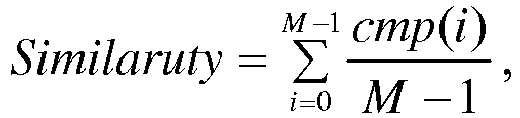

- DistSi,j is a distance between a color sensor corresponding to color data i and a color sensor corresponding to color data j, DistMi,j is a distance between a matched template of the color data i and a matched template of the color data j, Tdist is a preset distance threshold, and
it is determined that the matching is successful in a case that the similarity degree is greater than a preset threshold Tsim , and
it is determined that the matching is not successful in a case that the similarity degree is not greater than the preset threshold Tsim . - In the value bill identifying method according to the present disclosure, firstly, a feature template set is generated based on a bill image; then color data is preprocessed; then the color data is converted into hue data, and a set of a mean of each stable sub-segment in the hue data forms a feature of the color data; and a feature extracted from the color data is matched with the feature template set, and finally a bill type of the value bill is obtained. According to the present disclosure, the value bill is identified by using a trend change of a stable sub-segment mean set of color data, so that the problem of color shift of the color data can be overcome, and the value bill is accurately identified. According to the present disclosure, an operation principle of a color sensor is simulated, and a method of extracting simulated color data from a color bill image and forming a feature template set has advantages of a high performing speed and practicability. In the present disclosure, a template matching method is adopted to identify, a matching result is confirmed by comparing distances among color sensors and distances among matched templates, and finally accurate identification is achieved. Therefore the method has advantages of a high performing speed and effectiveness.
-
-
Figure 1 is a flow chart of a value bill identifying method based on color data according to an embodiment of the present disclosure; -
Figure 2 is a schematic diagram for segmenting hue data according to an embodiment of the present disclosure; -
Figure 3 is a schematic diagram for dividing regions on a front orientation image of a banknote in a portion of extracting a feature template set of a value bill according to an embodiment of the present disclosure; -
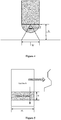
Figure 4 is a schematic diagram for calculating a receiving width of a color sensor; and -
Figure 5 is a schematic diagram for simulating a process, of a color sensor colleting a signal, by a sliding window method in a portion of extracting a feature template set of a value bill. - Embodiments of the present disclosure provide a banknote identifying method based on color data, for identifying a banknote by matching collected color data and a feature template set extracted from a known true color banknote image.
- It should be noted that, a value bill identifying method based on color data according to the embodiments of the present disclosure can be used to not only identify banknotes, but also identify slice files, such as checks, which is not limited herein. The method according to the embodiments of the present disclosure will be described below by taking banknote identification as an example, the description of the banknote identification is only taken as an example, which should not be taken as limitation to the method of the present disclosure.
- Referring to
Figure 1 , the banknote identifying method based on color data according to an embodiment of the present disclosure includessteps 101 to 104. - In
step 101, a feature template set corresponding to a banknote is extracted. - A color image in an orientation of the banknote is dividing into multiple sub-regions based on complexity of image information. Each of the divided sub-regions is converted into color data by simulating an operation mode of a color sensor. Color space conversion is performed on the converted color data, to obtain hue data of the region. A stable sub-segment in the hue data is positioned. A hue mean of the stable sub-segment is calculated. Hue means of all stable sub-segments constitute a feature template corresponding to the region. Feature templates corresponding to all the sub-regions in the orientation constitute a feature template set corresponding to the orientation of the banknote, and feature template sets corresponding to all orientations of the banknote constitute the feature template set corresponding to the banknote.
- In
step 102, color data is pre-processed. - A starting point and an end point of an effective region of the color data are positioned, and data collected in a banknote by a color sensor is positioned. The positioned color data is filtered, to filter noise.
- In
step 103, a feature is extracted from the color data. - Color space conversion is performed on the preprocessed color data to obtain hue data. A stable sub-segment set in the hue data is positioned, a stable sub-segment is a segment with smaller hue variation. A hue mean of the stable sub-segment is calculated, hue means of all sub-segments in the stable sub-segment set constitute a feature vector of the color data.
- In
step 104, matching and identifying is performed. - The feature of the color data is matched with each feature template of the feature template set, to obtain a matching score. A feature template with the highest score is regarded as a matched template of the color data. Distances among the multiple color sensors are obtained based on position information of the color sensors, the position information of the color sensors refers to relative positions among the color sensors obtained based on structure information of the color collection device. Distances among matched feature templates are obtained based on position information of the matched feature templates, the position information of the feature templates refers to relative positions among centers of divided sub-regions obtained in obtaining the feature template set. It is determined whether the distances among the matched feature templates are consistent with the distances among corresponding color sensors, and it is determined that the matching is successful in a case that the distances among the matched feature templates are consistent with the distances among corresponding color sensors, and it is determined that the matching is not successful in a case that the distances among the matched feature templates are not consistent with the distances among corresponding color sensors.
- Since an inputting orientation of a banknote is unknown, it is necessary to respectively match with a front orientation template set and a back orientation template set of a banknote template set when the banknote template set is matched. In addition, since an inputting direction of the banknote is unknown, it is necessary to respectively match in a front direction and a back direction when the template set in each orientation is matched.
- It should be noted that, step 101 of extracting a feature template set corresponding to a banknote may be performed independently of other steps, that is, after a feature template set corresponding to each type of banknotes is extracted in advance, it is not necessary to extract the feature template set corresponding to each type of banknotes each time in a process of identification on a to-be-detected banknote, and the feature template set corresponding to each type of banknote, which is extracted in advance and stored in an identification system, may be used repeatedly.
- The embodiment will be described in detail hereinafter.
- In
step 101, the feature template set corresponding to a banknote is extracted. - 1. The banknote image is divided into regions.
- Based on complexity of the banknote image, a front orientation and a back orientation of the banknote are evenly divided into K + and K - regions, respectively.
Figure 3 is a schematic diagram of a front orientation division view of a banknote, and SL is a width of each region. In order to prevent a matched template can not found in a case that the color sensor collects color data in a crossing way, there is an overlapping region between two adjacent parts when the front orientation is divided, and a length of the overlapping region is a width of a collection surface of the color sensor, that is, SenserW. - 2. A simulated color sensor signal is generated.
- As shown in
Figure 4 , an effective collection surface of the color sensor is determined by a distance h between a sensor and a banknote surface, and an effective collection angle θ. A height of the effective collection surface is expressed as:
- As shown in
Figure 5 , for section k, a sliding window with a width of SL and a height of W is moved gradually. A Color mean of all pixels in the window is a simulated signal value of a current position. After the window is slid, simulated color data of a current region is obtained. - 3. A feature template set corresponding to a banknote is extracted.
- Feature extraction is performed on the simulated color data generated in
step 2, to obtain features of simulated color data of each sub-region, and finally a feature set corresponding to the front orientation of the banknote and a feature set corresponding to back orientation of the banknote are formed, which is described as follows. - The simulated color data generated in
step 2 is RGB data. Signal intensity of each sampling point is described by three parameters, which is difficult to process and is susceptible to brightness. Therefore, the simulated color data is converted to HSL space, and feature extraction is performed on hue data corresponding to the simulated color data. For color data SS obtained from a divided region, feature extraction may be described as follows. - The simulated color data is converted into a HSL color space, to obtain hue data SH of the color data SS, and the hue data SH is expressed as follows:

- A converting method is described as follows:

- After conversion, a search for stable sub-segments in the hue data may be executed as follows.
- An integral image of the hue data SH is calculated and the integral image is expressed as follows:


- A stable sub-segment set in a signal SH is set to:


Figure 2 is a schematic diagram showing a case after the simulated data is segmented. - Features of the simulated data may be expressed as:


- Using the same feature extraction method as the method used in the step (1), features of simulated color data of each region are extracted, to form a front orientation feature set and a back orientation feature set of a banknote, expressed as:


- In
step 102, preprocessing is performed. - The preprocessing includes positioning a starting point and an end point of the color data by a preset threshold, and performing median filtering with a window of 5 on the color data, to filter out influence of noise, such as electromagnetic interference, on the color data.
- The pre-processed color data is expressed as:


- In
step 102, feature extraction is performed. - Referring to the feature extraction method of the simulated color data in
step 101, features are extracted from real collected color data, expressed as:
- In
step 104, matching and identifying are performed. - The feature of each of the color data is matched with a front orientation feature template set and a back orientation feature template set of a feature template set corresponding to a banknote, a template with a highest matching score is a matched template, and position information of the matched template is recorded. Since an inputting direction of a banknote is unknown, it is necessary to respectively match in a front direction and a back direction when one orientation of the banknote is matched.
- A front direction matching degree between a color data feature Fi and a feature Sfk of a template is described as:


- After the template feature matching, a similarity degree between the distances among the color sensors and the distances among corresponding matched templates is calculated according to following formulas:


- DistSi,j is a distance between a color sensor corresponding to color data i and a color sensor corresponding to color data j, DistMi,j is a distance between a matched template of the color data i and a matched template of the color data j, Tdist is a preset distance threshold, and
it is determined that the matching is successful in a case that the similarity degree is greater than a preset threshold Tsim , and it is determined that the matching is not successful in a case that the similarity degree is not greater than the preset threshold Tsim . In this way, identifying is completed. - According to the present disclosure, firstly, a feature template set is generated based on a bill image; then color data is preprocessed; then the color data is converted into hue data, a set of stable sub-segments in the color data are found by an integral image sliding window method, a mean hue of each sub-segment is calculated and a feature vector of the color data is formed. The feature extracted from the color data is matched with the feature template set, and finally an identifying result is obtained. According to the present disclosure, the banknote is identified by using a trend feature of the color data, so that the problem of color shift of the color data can be overcome effectively, and the banknote is accurately identified. The trend feature refers to a magnitude relationship between means of two adjacent stable sub-segments in the feature vector of the color data. According to the present disclosure, an operation principle of a color sensor is simulated, and a method of extracting simulated color data from a color bill image and forming a feature template set has advantages of a high performing speed and practicability. In the present disclosure, a template matching method is adopted to identify, a matching result is confirmed by comparing distances among color sensors and distances among matched templates, and finally accurate identification is achieved. Therefore the method has advantages of a high performing speed and effectiveness.
- The above description shows only preferred embodiments of the present disclosure. It should be noted that, the above preferred embodiments should not be deemed as a limitation to the present disclosure, and the scope of the present disclosure is defined by the claims of the present disclosure. For the person skilled in the art, several improvements and modifications may be made to the present disclosure without departing from the spirit and scope of the present disclosure, and these improvements and modifications are also deemed to fall into the scope of the present disclosure.
Claims (10)
- A value bill identifying method, comprising:step 1, collecting, by a color collection device comprising a plurality of color sensors, color data of a to-be-detected value bill and preprocessing the collected color data;step 2, extracting a feature from the preprocessed color data, wherein the feature extracted from the color data is a one-dimensional vector comprising means of all sub-segments with smaller hue variation in hue data corresponding to the color data;step 3, matching the extracted feature with feature template sets corresponding to each type of value bills, to obtain matching scores, and regarding a feature template with the highest score as a matched template of the color data, wherein a front orientation image and a back orientation image of a color bill are divided into a plurality of sub-regions, simulated color data of each of the sub-regions is obtained by simulating an operation mode of a color sensor, a feature of the simulated color data of each of the sub-regions is a feature template, and a set of feature templates corresponding to the sub-regions in the front orientation image and the back orientation image of a color value bill is the feature template set corresponding to the value bill; andstep 4, determining a type of the value bill based on a matching result.
- The value bill identifying method according to claim 1, wherein before step 1, the value bill identifying method further comprises a step of pre-setting a plurality of the feature template sets corresponding to each type of value bills, and in the step, extracting the feature template set corresponding to the value bill from a true color bill image comprises:step 01, dividing, based on complexity of image information, a color image in an orientation of the bill into a plurality of sub-regions;step 02, converting each of the divided sub-regions into color data by simulating an operation mode of a color sensor;step 03, performing color space conversion on the converted color data, to obtain hue data of the region;step 04, positioning a stable sub-segment in the hue data;step 05, calculating a hue mean of the stable sub-segment;step 06, constituting, by hue means of all stable sub-segments, a feature template corresponding to the region; andstep 07, constituting, by feature templates corresponding to all the sub-regions in the orientation, a feature template set corresponding to the orientation of the bill, and constituting, by feature template sets corresponding to all orientations of the bill, the feature template set corresponding to the bill.
- The value bill identifying method according to claim 2, wherein in the step 03, simulated color data is converted into a HSL color space, hue data SH of color data SS is obtained and expressed as follows:

a converting method is described as follows:
- The value bill identifying method according to claim 3, wherein in the step 04, the positioning the stable sub-segment in the hue data comprises:calculating an integral image, expressed as follows, of the hue data SH:

 searching for the stable sub-segment in the hue data in a sliding window method, wherein a stable sub-segment set in a signal SH is set to:


- The value bill identifying method according to claim 4, wherein, in the step 05, a mean fs of each stable sub-segment is expressed as:

the hue means of all the stable sub-segments constitute the feature template corresponding to the region, expressed as:
and
features of the simulated color data of each of the regions are extracted to form a front orientation feature set and a back orientation feature set of a banknote, expressed as:

wherein

- The value bill identifying method according to any one of claims 1 to 5, wherein in the step 1, the preprocessing the color data comprises:positioning a starting point and an end point of an effective region of the color data, to position data collected in a banknote by a color sensor; andfiltering the positioned color data to filter noise, wherein the preprocessed color data is expressed as:




wherein, M is the number of color sensors, and M should be greater than 1 for robustness of the method according to an embodiment of the present disclosure, Ri, Gi and Bi are respectively red, green and blue components of a signal, and Ni is a signal length of color data i. - The value bill identifying method according to claim 6, wherein in the step 2, the extracting the feature from the preprocessed color data comprises:step 21, performing color space conversion on the preprocessed color data, to obtain hue data;step 22, positioning a stable sub-segment set in the hue data, wherein a stable sub-segment is a segment with smaller hue variation; andstep 23, calculating a hue mean of the stable sub-segment, wherein hue means of all sub-segments in the stable sub-segment set constitute a feature vector of the color data, the feature vector Fi is expressed as:

and N is the number of the color sensors. - The value bill identifying method according to claim 7, wherein in the step 3, when matching is performed on the feature template sets corresponding to each type of bills, the matching is performed on a front orientation template set and a back orientation template set of the template set corresponding to the bill, and the matching is performed in a front direction and a back direction, a front direction matching degree between a color data feature Fi and a feature Sfk of a template is described as:

flag is a sign of a front orientation template and a back orientation template, S(z) is expressed as follows, and T is a preset threshold:
a back direction matching degree between a color data feature Fi and a feature Sfk of a template is described as:
flag is a sign of a front orientation template and a back orientation template, S'(z) is expressed as follows, and T is a preset threshold:
- The value bill identifying method according to claim 8, wherein the step 3 further comprises:step 31, obtaining distances among the plurality of color sensors based on position information of the color sensors in the color collection device, wherein the position information of the color sensors refers to relative positions among the color sensors obtained based on structure information of the color collection device;step 32, obtaining distances among matched feature templates based on position information of the matched feature templates, wherein the position information of the feature templates refers to relative positions among centers of divided sub-regions obtained in obtaining the feature template set; andstep 33, determining whether the distances among the matched feature templates are consistent with the distances among corresponding color sensors, and determining that the matching is successful in a case that the distances among the matched feature templates are consistent with the distances among corresponding color sensors, and determining that the matching is not successful in a case that the distances among the matched feature templates are not consistent with the distances among corresponding color sensors.
- The value bill identifying method according to claim 9, wherein in the step 33, a similarity degree between the distances among the color sensors and the distances among corresponding matched templates is calculated according to following formulas:


DistSi,j is a distance between a color sensor corresponding to color data i and a color sensor corresponding to color data j, DistMi,j is a distance between a matched template of the color data i and a matched template of the color data j, Tdist is a preset distance threshold, and
it is determined that the matching is successful in a case that the similarity degree is greater than a preset threshold Tsim , and
it is determined that the matching is not successful in a case that the similarity degree is not greater than the preset threshold Tsim .
Applications Claiming Priority (2)
| Application Number | Priority Date | Filing Date | Title |
|---|---|---|---|
| CN201510176330.0A CN104732231B (en) | 2015-04-13 | 2015-04-13 | A kind of identification method of negotiable instrument |
| PCT/CN2016/078566 WO2016165574A1 (en) | 2015-04-13 | 2016-04-06 | Value bill identifying method |
Publications (2)
| Publication Number | Publication Date |
|---|---|
| EP3285210A1 true EP3285210A1 (en) | 2018-02-21 |
| EP3285210A4 EP3285210A4 (en) | 2018-06-20 |
Family
ID=53456106
Family Applications (1)
| Application Number | Title | Priority Date | Filing Date |
|---|---|---|---|
| EP16779549.1A Ceased EP3285210A4 (en) | 2015-04-13 | 2016-04-06 | Value bill identifying method |
Country Status (6)
| Country | Link |
|---|---|
| US (1) | US10235595B2 (en) |
| EP (1) | EP3285210A4 (en) |
| CN (1) | CN104732231B (en) |
| HK (1) | HK1249626A1 (en) |
| RU (1) | RU2668731C1 (en) |
| WO (1) | WO2016165574A1 (en) |
Families Citing this family (10)
| Publication number | Priority date | Publication date | Assignee | Title |
|---|---|---|---|---|
| CN104732231B (en) * | 2015-04-13 | 2019-02-26 | 广州广电运通金融电子股份有限公司 | A kind of identification method of negotiable instrument |
| CN105894655B (en) * | 2016-04-25 | 2018-05-22 | 浙江大学 | Paper currency detection and recognition methods under complex environment based on RGB-D cameras |
| CN106803307B (en) * | 2016-12-16 | 2023-05-02 | 恒银金融科技股份有限公司 | Banknote face value orientation identification method based on template matching |
| CN107689006B (en) * | 2017-03-13 | 2020-02-14 | 平安科技(深圳)有限公司 | Claims settlement bill identification method and device |
| US11308395B2 (en) | 2018-04-27 | 2022-04-19 | Alibaba Group Holding Limited | Method and system for performing machine learning |
| CN110674863B (en) * | 2019-09-19 | 2022-06-21 | 北京迈格威科技有限公司 | Hamming code identification method, device and electronic device |
| CN111444793A (en) * | 2020-03-13 | 2020-07-24 | 安诚迈科(北京)信息技术有限公司 | Bill recognition method, equipment, storage medium and device based on OCR |
| CN111899411B (en) * | 2020-08-14 | 2022-02-25 | 中国工商银行股份有限公司 | Bill data identification method and device |
| CN114049640A (en) * | 2021-11-12 | 2022-02-15 | 上海浦东发展银行股份有限公司 | Bill text detection method and device, electronic equipment and storage medium |
| CN116311663B (en) * | 2023-03-27 | 2025-11-18 | 中国工商银行股份有限公司 | Magnetic security thread identification method, paper resource identification method, device |
Family Cites Families (22)
| Publication number | Priority date | Publication date | Assignee | Title |
|---|---|---|---|---|
| AUPN310195A0 (en) * | 1995-05-22 | 1995-06-15 | Canon Kabushiki Kaisha | Template formation method |
| US20050276458A1 (en) * | 2004-05-25 | 2005-12-15 | Cummins-Allison Corp. | Automated document processing system and method using image scanning |
| JP2001126107A (en) * | 1999-10-29 | 2001-05-11 | Nippon Conlux Co Ltd | Method and device for identifying paper sheets |
| GB0313002D0 (en) * | 2003-06-06 | 2003-07-09 | Ncr Int Inc | Currency validation |
| ITMI20031449A1 (en) * | 2003-07-15 | 2005-01-16 | St Microelectronics Srl | METHOD FOR CLASSIFYING A DIGITAL IMAGE |
| EP1730705A1 (en) * | 2004-03-09 | 2006-12-13 | Council Of Scientific And Industrial Research | Improved fake currency detector using visual and reflective spectral response |
| JP5354842B2 (en) * | 2006-05-26 | 2013-11-27 | キヤノン株式会社 | Image processing method and image processing apparatus |
| US7916924B2 (en) * | 2006-09-19 | 2011-03-29 | Primax Electronics Ltd. | Color processing method for identification of areas within an image corresponding to monetary banknotes |
| EP1944737A1 (en) * | 2006-12-29 | 2008-07-16 | NCR Corporation | Validation template for valuable media of multiple classes |
| WO2010015382A2 (en) * | 2008-08-05 | 2010-02-11 | Giesecke & Devrient Gmbh | Security arrangement |
| US8265346B2 (en) * | 2008-11-25 | 2012-09-11 | De La Rue North America Inc. | Determining document fitness using sequenced illumination |
| US8780206B2 (en) * | 2008-11-25 | 2014-07-15 | De La Rue North America Inc. | Sequenced illumination |
| CN102005078A (en) * | 2010-12-23 | 2011-04-06 | 北京新岸线软件科技有限公司 | Method and device for recognizing paper currencies and tickets |
| DE102010055974A1 (en) * | 2010-12-23 | 2012-06-28 | Giesecke & Devrient Gmbh | Method and device for determining a class reference data set for the classification of value documents |
| CN102054168B (en) * | 2010-12-23 | 2012-11-14 | 武汉大学苏州研究院 | Method for recognizing circular seal on valuable bill |
| EP2505356A1 (en) * | 2011-03-30 | 2012-10-03 | KBA-NotaSys SA | Device for offline inspection and color measurement of printed sheets |
| US8531652B2 (en) * | 2011-04-08 | 2013-09-10 | Dri-Mark Products | Three way desktop UV counterfeit detector |
| CN102890840B (en) | 2012-08-22 | 2016-03-23 | 山东新北洋信息技术股份有限公司 | Banknote discriminating method and device |
| CN103136845B (en) * | 2013-01-23 | 2015-09-16 | 浙江大学 | A kind of Renminbi false distinguishing method based on crown word number characteristics of image |
| CN103208004A (en) * | 2013-03-15 | 2013-07-17 | 北京英迈杰科技有限公司 | Automatic recognition and extraction method and device for bill information area |
| CN104156732A (en) * | 2014-08-01 | 2014-11-19 | 北京利云技术开发公司 | Paper authenticity identification system and method |
| CN104732231B (en) * | 2015-04-13 | 2019-02-26 | 广州广电运通金融电子股份有限公司 | A kind of identification method of negotiable instrument |
-
2015
- 2015-04-13 CN CN201510176330.0A patent/CN104732231B/en active Active
-
2016
- 2016-04-06 HK HK18109044.7A patent/HK1249626A1/en unknown
- 2016-04-06 RU RU2017135352A patent/RU2668731C1/en not_active IP Right Cessation
- 2016-04-06 EP EP16779549.1A patent/EP3285210A4/en not_active Ceased
- 2016-04-06 US US15/564,936 patent/US10235595B2/en active Active
- 2016-04-06 WO PCT/CN2016/078566 patent/WO2016165574A1/en not_active Ceased
Also Published As
| Publication number | Publication date |
|---|---|
| CN104732231A (en) | 2015-06-24 |
| US20180101749A1 (en) | 2018-04-12 |
| EP3285210A4 (en) | 2018-06-20 |
| WO2016165574A1 (en) | 2016-10-20 |
| CN104732231B (en) | 2019-02-26 |
| HK1249626A1 (en) | 2018-11-02 |
| US10235595B2 (en) | 2019-03-19 |
| RU2668731C1 (en) | 2018-10-02 |
Similar Documents
| Publication | Publication Date | Title |
|---|---|---|
| EP3285210A1 (en) | Value bill identifying method | |
| Zhu et al. | Orientation robust object detection in aerial images using deep convolutional neural network | |
| CN101515325B (en) | Character extracting method in digital video based on character segmentation and color cluster | |
| US10052027B2 (en) | System and method for automatic polyp detection using global geometric constraints and local intensity variation patterns | |
| Konstantinidis et al. | Building detection using enhanced HOG–LBP features and region refinement processes | |
| US6259812B1 (en) | Key character extraction and lexicon reduction cursive text recognition | |
| US9396404B2 (en) | Robust industrial optical character recognition | |
| CN101957919B (en) | Character recognition method based on image local feature retrieval | |
| US8744189B2 (en) | Character region extracting apparatus and method using character stroke width calculation | |
| CN107195069A (en) | A kind of RMB crown word number automatic identifying method | |
| Wu et al. | Strong shadow removal via patch-based shadow edge detection | |
| CN116778503A (en) | A seal authenticity identification method and system based on OCR recognition | |
| CN106503626A (en) | Being mated with finger contours based on depth image and refer to gesture identification method | |
| CN106548139A (en) | A kind of pedestrian recognition methodss again | |
| CN111144237A (en) | AI-based water pollution identification method and system | |
| Siméoni et al. | Unsupervised object discovery for instance recognition | |
| CN113688829A (en) | Automatic transformer substation monitoring picture identification method and system | |
| CN108520252A (en) | Landmark identification method based on generalised Hough transform and wavelet transformation | |
| Butt et al. | Automatic signature segmentation using hyper-spectral imaging | |
| Höhn | Detecting arbitrarily oriented text labels in early maps | |
| Mukhiddinov | Scene text detection and localization using fully convolutional network | |
| CN116797559A (en) | Road crack detection method, device, electronic equipment and storage medium | |
| Pan et al. | Improving scene text detection by scale-adaptive segmentation and weighted CRF verification | |
| Roth et al. | Exploiting low-level image segmentation for object recognition | |
| Fan | Efficient multiclass object detection by a hierarchy of classifiers |
Legal Events
| Date | Code | Title | Description |
|---|---|---|---|
| STAA | Information on the status of an ep patent application or granted ep patent |
Free format text: STATUS: THE INTERNATIONAL PUBLICATION HAS BEEN MADE |
|
| PUAI | Public reference made under article 153(3) epc to a published international application that has entered the european phase |
Free format text: ORIGINAL CODE: 0009012 |
|
| STAA | Information on the status of an ep patent application or granted ep patent |
Free format text: STATUS: REQUEST FOR EXAMINATION WAS MADE |
|
| 17P | Request for examination filed |
Effective date: 20171016 |
|
| AK | Designated contracting states |
Kind code of ref document: A1 Designated state(s): AL AT BE BG CH CY CZ DE DK EE ES FI FR GB GR HR HU IE IS IT LI LT LU LV MC MK MT NL NO PL PT RO RS SE SI SK SM TR |
|
| AX | Request for extension of the european patent |
Extension state: BA ME |
|
| A4 | Supplementary search report drawn up and despatched |
Effective date: 20180522 |
|
| RIC1 | Information provided on ipc code assigned before grant |
Ipc: G06K 9/46 20060101AFI20180515BHEP Ipc: G06K 9/20 20060101ALI20180515BHEP Ipc: G06K 9/62 20060101ALI20180515BHEP |
|
| DAV | Request for validation of the european patent (deleted) | ||
| DAX | Request for extension of the european patent (deleted) | ||
| REG | Reference to a national code |
Ref country code: HK Ref legal event code: DE Ref document number: 1249626 Country of ref document: HK |
|
| STAA | Information on the status of an ep patent application or granted ep patent |
Free format text: STATUS: EXAMINATION IS IN PROGRESS |
|
| 17Q | First examination report despatched |
Effective date: 20190528 |
|
| REG | Reference to a national code |
Ref country code: DE Ref legal event code: R003 |
|
| STAA | Information on the status of an ep patent application or granted ep patent |
Free format text: STATUS: THE APPLICATION HAS BEEN REFUSED |
|
| 18R | Application refused |
Effective date: 20201031 |
|
| REG | Reference to a national code |
Ref country code: HK Ref legal event code: WD Ref document number: 1249626 Country of ref document: HK |