EP3282681A1 - Method and device for alarming with terminal, and storage medium - Google Patents
Method and device for alarming with terminal, and storage medium Download PDFInfo
- Publication number
- EP3282681A1 EP3282681A1 EP17185891.3A EP17185891A EP3282681A1 EP 3282681 A1 EP3282681 A1 EP 3282681A1 EP 17185891 A EP17185891 A EP 17185891A EP 3282681 A1 EP3282681 A1 EP 3282681A1
- Authority
- EP
- European Patent Office
- Prior art keywords
- terminal
- acceleration
- value
- time period
- humidity
- Prior art date
- Legal status (The legal status is an assumption and is not a legal conclusion. Google has not performed a legal analysis and makes no representation as to the accuracy of the status listed.)
- Withdrawn
Links
Images



Classifications
-
- G—PHYSICS
- G08—SIGNALLING
- G08B—SIGNALLING SYSTEMS, e.g. PERSONAL CALLING SYSTEMS; ORDER TELEGRAPHS; ALARM SYSTEMS
- G08B21/00—Alarms responsive to a single specified undesired or abnormal condition and not otherwise provided for
- G08B21/02—Alarms for ensuring the safety of persons
-
- G—PHYSICS
- G08—SIGNALLING
- G08B—SIGNALLING SYSTEMS, e.g. PERSONAL CALLING SYSTEMS; ORDER TELEGRAPHS; ALARM SYSTEMS
- G08B25/00—Alarm systems in which the location of the alarm condition is signalled to a central station, e.g. fire or police telegraphic systems
- G08B25/01—Alarm systems in which the location of the alarm condition is signalled to a central station, e.g. fire or police telegraphic systems characterised by the transmission medium
- G08B25/016—Personal emergency signalling and security systems
-
- G—PHYSICS
- G08—SIGNALLING
- G08B—SIGNALLING SYSTEMS, e.g. PERSONAL CALLING SYSTEMS; ORDER TELEGRAPHS; ALARM SYSTEMS
- G08B21/00—Alarms responsive to a single specified undesired or abnormal condition and not otherwise provided for
- G08B21/18—Status alarms
- G08B21/20—Status alarms responsive to moisture
-
- G—PHYSICS
- G08—SIGNALLING
- G08B—SIGNALLING SYSTEMS, e.g. PERSONAL CALLING SYSTEMS; ORDER TELEGRAPHS; ALARM SYSTEMS
- G08B21/00—Alarms responsive to a single specified undesired or abnormal condition and not otherwise provided for
- G08B21/02—Alarms for ensuring the safety of persons
- G08B21/04—Alarms for ensuring the safety of persons responsive to non-activity, e.g. of elderly persons
- G08B21/0407—Alarms for ensuring the safety of persons responsive to non-activity, e.g. of elderly persons based on behaviour analysis
- G08B21/043—Alarms for ensuring the safety of persons responsive to non-activity, e.g. of elderly persons based on behaviour analysis detecting an emergency event, e.g. a fall
-
- G—PHYSICS
- G08—SIGNALLING
- G08B—SIGNALLING SYSTEMS, e.g. PERSONAL CALLING SYSTEMS; ORDER TELEGRAPHS; ALARM SYSTEMS
- G08B21/00—Alarms responsive to a single specified undesired or abnormal condition and not otherwise provided for
- G08B21/02—Alarms for ensuring the safety of persons
- G08B21/04—Alarms for ensuring the safety of persons responsive to non-activity, e.g. of elderly persons
- G08B21/0438—Sensor means for detecting
- G08B21/0446—Sensor means for detecting worn on the body to detect changes of posture, e.g. a fall, inclination, acceleration, gait
-
- G—PHYSICS
- G08—SIGNALLING
- G08B—SIGNALLING SYSTEMS, e.g. PERSONAL CALLING SYSTEMS; ORDER TELEGRAPHS; ALARM SYSTEMS
- G08B21/00—Alarms responsive to a single specified undesired or abnormal condition and not otherwise provided for
- G08B21/02—Alarms for ensuring the safety of persons
- G08B21/08—Alarms for ensuring the safety of persons responsive to the presence of persons in a body of water, e.g. a swimming pool; responsive to an abnormal condition of a body of water
- G08B21/082—Alarms for ensuring the safety of persons responsive to the presence of persons in a body of water, e.g. a swimming pool; responsive to an abnormal condition of a body of water by monitoring electrical characteristics of the water
-
- G—PHYSICS
- G08—SIGNALLING
- G08B—SIGNALLING SYSTEMS, e.g. PERSONAL CALLING SYSTEMS; ORDER TELEGRAPHS; ALARM SYSTEMS
- G08B21/00—Alarms responsive to a single specified undesired or abnormal condition and not otherwise provided for
- G08B21/02—Alarms for ensuring the safety of persons
- G08B21/08—Alarms for ensuring the safety of persons responsive to the presence of persons in a body of water, e.g. a swimming pool; responsive to an abnormal condition of a body of water
- G08B21/088—Alarms for ensuring the safety of persons responsive to the presence of persons in a body of water, e.g. a swimming pool; responsive to an abnormal condition of a body of water by monitoring a device worn by the person, e.g. a bracelet attached to the swimmer
-
- G—PHYSICS
- G08—SIGNALLING
- G08B—SIGNALLING SYSTEMS, e.g. PERSONAL CALLING SYSTEMS; ORDER TELEGRAPHS; ALARM SYSTEMS
- G08B21/00—Alarms responsive to a single specified undesired or abnormal condition and not otherwise provided for
- G08B21/18—Status alarms
- G08B21/182—Level alarms, e.g. alarms responsive to variables exceeding a threshold
-
- G—PHYSICS
- G08—SIGNALLING
- G08B—SIGNALLING SYSTEMS, e.g. PERSONAL CALLING SYSTEMS; ORDER TELEGRAPHS; ALARM SYSTEMS
- G08B3/00—Audible signalling systems, e.g. audible personal calling systems
- G08B3/10—Audible signalling systems, e.g. audible personal calling systems using electric transmission; using electromagnetic transmission
- G08B3/1008—Personal calling arrangements or devices, i.e. paging systems
- G08B3/1016—Personal calling arrangements or devices, i.e. paging systems using wireless transmission
- G08B3/1025—Paging receivers with audible signalling details
- G08B3/1033—Paging receivers with audible signalling details with voice message alert
-
- G—PHYSICS
- G08—SIGNALLING
- G08B—SIGNALLING SYSTEMS, e.g. PERSONAL CALLING SYSTEMS; ORDER TELEGRAPHS; ALARM SYSTEMS
- G08B3/00—Audible signalling systems, e.g. audible personal calling systems
- G08B3/10—Audible signalling systems, e.g. audible personal calling systems using electric transmission; using electromagnetic transmission
- G08B3/1008—Personal calling arrangements or devices, i.e. paging systems
- G08B3/1016—Personal calling arrangements or devices, i.e. paging systems using wireless transmission
- G08B3/1083—Pager locating systems
-
- H—ELECTRICITY
- H04—ELECTRIC COMMUNICATION TECHNIQUE
- H04B—TRANSMISSION
- H04B1/00—Details of transmission systems, not covered by a single one of groups H04B3/00 - H04B13/00; Details of transmission systems not characterised by the medium used for transmission
- H04B1/38—Transceivers, i.e. devices in which transmitter and receiver form a structural unit and in which at least one part is used for functions of transmitting and receiving
- H04B1/3827—Portable transceivers
-
- H—ELECTRICITY
- H04—ELECTRIC COMMUNICATION TECHNIQUE
- H04M—TELEPHONIC COMMUNICATION
- H04M1/00—Substation equipment, e.g. for use by subscribers
- H04M1/72—Mobile telephones; Cordless telephones, i.e. devices for establishing wireless links to base stations without route selection
- H04M1/724—User interfaces specially adapted for cordless or mobile telephones
- H04M1/72403—User interfaces specially adapted for cordless or mobile telephones with means for local support of applications that increase the functionality
- H04M1/72418—User interfaces specially adapted for cordless or mobile telephones with means for local support of applications that increase the functionality for supporting emergency services
- H04M1/72421—User interfaces specially adapted for cordless or mobile telephones with means for local support of applications that increase the functionality for supporting emergency services with automatic activation of emergency service functions, e.g. upon sensing an alarm
-
- G—PHYSICS
- G08—SIGNALLING
- G08B—SIGNALLING SYSTEMS, e.g. PERSONAL CALLING SYSTEMS; ORDER TELEGRAPHS; ALARM SYSTEMS
- G08B3/00—Audible signalling systems, e.g. audible personal calling systems
- G08B3/10—Audible signalling systems, e.g. audible personal calling systems using electric transmission; using electromagnetic transmission
-
- H—ELECTRICITY
- H04—ELECTRIC COMMUNICATION TECHNIQUE
- H04B—TRANSMISSION
- H04B1/00—Details of transmission systems, not covered by a single one of groups H04B3/00 - H04B13/00; Details of transmission systems not characterised by the medium used for transmission
- H04B1/38—Transceivers, i.e. devices in which transmitter and receiver form a structural unit and in which at least one part is used for functions of transmitting and receiving
- H04B1/3827—Portable transceivers
- H04B1/3833—Hand-held transceivers
-
- H—ELECTRICITY
- H04—ELECTRIC COMMUNICATION TECHNIQUE
- H04M—TELEPHONIC COMMUNICATION
- H04M2250/00—Details of telephonic subscriber devices
- H04M2250/12—Details of telephonic subscriber devices including a sensor for measuring a physical value, e.g. temperature or motion
-
- H—ELECTRICITY
- H04—ELECTRIC COMMUNICATION TECHNIQUE
- H04W—WIRELESS COMMUNICATION NETWORKS
- H04W4/00—Services specially adapted for wireless communication networks; Facilities therefor
- H04W4/90—Services for handling of emergency or hazardous situations, e.g. earthquake and tsunami warning systems [ETWS]
Definitions
- the present disclosure relates to a method and device for alarming with a terminal, and a storage medium.
- Terminals such as mobile phones, walkie-talkies and the like not only have a communication function, but also have other functions, for example, surfing an internet, which may bring convenience for users.
- the device may not be able to find that the user has an accident in time, so that it cannot effectively provide personal safety service for the user.
- the present disclosure provides a method and a device for alarming with a terminal as well as a non-transitory machine-readable storage medium thereof.
- a method for alarming with a terminal includes: acquiring current parameter information of the terminal; determining whether the parameter information satisfies a preset condition or not; and outputting alarm information if the preset condition is satisfied.
- a device for alarming with a terminal including a processor and a machine-readable storage medium, wherein by reading machine-executable instructions corresponding to an alarming logic stored on the machine-readable storage medium, the processor is caused to: acquire current parameter information of the terminal; determine whether the parameter information satisfies a preset condition or not; and output alarm information if the preset condition is satisfied.
- a non-transitory machine-readable storage medium storing machine-executable instructions executable by one or more processors, the machine-executable instructions cause the one or more processors to perform operations comprising: acquiring current parameter information of the terminal; determining whether the parameter information satisfies a preset condition or not; and outputting alarm information if the preset condition is satisfied.
- first, second, third, etc. in the present disclosure, these information should not be limited to these terms. These terms are used only to distinguish the same type of information from each other.
- first information may also be referred to as the second information without departing from the scope of the present disclosure, and similarly, the second information may also be referred to as the first information.
- second information may also be referred to as the first information.
- used word "if” may be interpreted as "when” or "as” or "in response to”.
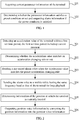
- FIG. 1 it is a flow chart of a method of alarming with a terminal according to an example of the present disclosure.
- the method may be applied in a terminal.
- the terminal in the present disclosure may be any terminals capable of being used outdoors.
- the terminal may include a mobile phone, a tablet, a Personal Digital Assistant (PDA) or a walkie-talkie.
- PDA Personal Digital Assistant
- the terminal may have a function of surfing an internet, access a router through a wireless local area network and access a server on public network through the router.
- the method of alarming with a terminal may include the following blocks 101-102.
- current parameter information of the terminal may be acquired.
- the parameter information in examples of the present disclosure may include acceleration information and humidity information. Accordingly, an acceleration sensor and a humidity sensor may be configured on the terminal for detecting the acceleration information and the humidity information, respectively.
- Examples of the present disclosure is mainly directed to a case that a user who carries a terminal has an accident.
- a preset condition may be an acceleration changing rule when a user falls or drops and/or a humidity changing rule when a user is drowning.
- a terminal may detect acceleration information and/or humidity information and then determine whether the information satisfies the preset condition or not. If the preset condition is satisfied, it may be determined that a user has an accident and alarm information may be output. In this way, a situation in which the user using the terminal has an accident such as drowning, falling or the like may be detected timely and alarm information may be played timely, so that the user who has an accident may be noticed by others timely and rescued.
- FIG. 2 it is a flow chart of a method of alarming with a terminal according to another example of the present disclosure.
- the method may be applied in a terminal and include the following blocks 201-206.
- an acceleration value of a terminal within a set time period may be detected, and the set time period includes the current moment.
- the terminal may detect the acceleration value within the set time period by using its acceleration sensor.
- the time period includes the current moment and 5 minutes before the current moment.
- Examples of the present disclosure are mainly directed to an accidental situation in which the user using the terminal suddenly falls or drops.
- the acceleration value may be relatively large.
- a velocity value may suddenly change and may become zero at the end of a set time period, e.g., the terminal is finally in a stationary state. Therefore, the acceleration changing rule may be set according to a velocity changing rule in this process.
- the acceleration changing rule may be that an acceleration value in the set time period exceeds a set acceleration threshold value and the velocity value at the end of the set time period is zero.
- a pre-stored alarm voice may be read when the acceleration value matches the preset acceleration changing rule.
- the alarm voice may be pre-stored, such as, "I have a risk of dropping", “I need rescue” and so on.
- the alarm voice may be sent to a walkie-talkie having the same frequency band as that of the terminal for loop playback.
- the alarm voice may be sent to a walkie-talkie which currently uses the same frequency band as that of the terminal for loop playback. Meanwhile, when the terminal is a walkie-talkie, the terminal may play the alarm voice locally and set the volume to the maximum so that nearby users may hear the alarm information more easily.
- information of the position at which the terminal is currently located may be determined.
- the current position of the terminal may be determined by positioning function.
- the positioning result may be latitude and longitude information or may be, such as, No. ** Road**, ** Park or the like.
- position voice information may be output by converting the position information into the position voice information.
- the alarm voice is sent to a walkie-talkie of the same frequency band as that of the terminal or a designated terminal, for example, a terminal of a relative of the terminal user
- the user of the walkie-talkie having the same frequency band or the user of the designated terminal may not be in the vicinity of the user who has an accident. Therefore, the accurate position of the user who has an accident should be known.
- the position information and the alarm voice may be sent together to the rescuer so that the rescuer may obtain more accurate information, quickly find the user who has an accident and provide rescue.
- FIG. 3 it is a flow chart of a method of alarming with a terminal according to still another example of the present disclosure.
- the method may be applied in a terminal and include the following blocks 301-307.
- a humidity value of the terminal within a set time period may be detected, and the set time period includes current moment.
- the humidity value within the set time period may be detected by a humidity sensor of the terminal. For example, the humidity value at the current moment and within 5 minutes before the current moment may be detected.
- a humidity changing value of the terminal within the set time period may be determined based on the detected humidity value.
- the humidity changing value may be determined by subtracting the humidity values within the set time period.
- the humidity changing value exceeds the set humidity threshold value, it may be determined that water has entered the terminal and the user of the terminal has a risk of drowning. In another example, if a humidity value exceeds the set humidity threshold value, it may be determined that water has entered the terminal.
- an alarm voice may be pre-stored on the terminal, such as, "I have a risk of drowning", “I need rescue” and so on.
- a pre-stored alarm voice may be sent to a walkie-talkie of the same frequency band as that of the terminal or a designated terminal for loop playback.
- the terminal may also play the alarm voice locally and set the volume to the maximum so that the nearby users may hear the alarm information more easily.
- information of the position at which the terminal is currently located may be determined.
- the current position of the terminal may be determined by positioning function.
- the positioning result may be latitude and longitude information or may be, such as, No. ** Road**, ** Park or the like.
- position voice information may be output by converting the position information into the position voice information.
- the block 307 of the present disclosure may refer to the description of block 207, and further description is omitted for brevity.
- FIG. 4 it is a flow chart of a method of alarming with a terminal according to still another example of the present disclosure.
- the method may be used in a terminal and include the following blocks 401-407.
- an acceleration value and a humidity value of the terminal within a set time period may be detected, and the set time period includes current moment.
- the terminal may detect the acceleration value within the set time period by using its acceleration sensor.
- the time period includes current moment and 5 minutes before the current moment.
- the terminal may further detect the humidity value within the set time period by using its humidity sensor.
- the time period includes current moment and 5 minutes before the current moment
- a humidity changing value of the terminal within the set time period may be determined based on the detected humidity value.
- Examples of the present disclosure are mainly directed to an accidental situation in which the user using the terminal suddenly falls and drops into water.
- the acceleration value may be relatively large.
- the velocity value may suddenly change and may become zero at the end of the set time period, e.g., the terminal is finally in a stationary state. Therefore, the acceleration changing rule may be set according to a velocity changing rule in this process.
- the acceleration changing rule may be that an acceleration value in the set time period exceeds a set acceleration threshold value and the velocity value at the end of the set time period is zero.
- the humidity value of the terminal may have a relatively great change, e.g., exceed a set humidity threshold value. In such a way, combined with the above two aspects, it may be determined whether the user falls into water or not.
- a pre-stored alarm voice is read when the acceleration value matches a preset acceleration changing rule and the humidity changing value matches a preset humidity changing rule.
- the pre-stored alarm voice may be read when an acceleration value matches acceleration changing rule and a humidity changing value matches a humidity changing rule, such as, "I have a risk of dropping”, “I have a risk of drowning”, “I need rescue” and so on.
- the alarm voice may be sent to a walkie-talkie of the same frequency band as that of the terminal for loop playback.
- the alarm voice may be sent to a walkie-talkie which currently uses the same frequency band as that of the terminal for loop playback. Meanwhile, when the terminal is a walkie-talkie, the terminal may play the alarm voice locally and set the volume to the maximum so that the nearby users may hear the alarm information more easily.
- information of the position at which the terminal is currently located may be determined.
- the current position of the terminal may be determined by positioning function.
- the positioning result may be latitude and longitude information or may be, such as, No. ** Road**, ** Park or the like.
- position voice information may be output by converting the position information into the position voice information.
- the alarm voice is sent to a walkie-talkie of the same frequency band as that of the terminal or a designated terminal, for example, a terminal of a relative of the terminal user
- the user of the walkie-talkie having the same frequency band or the user of the designated terminal may not be in the vicinity of the user who has an accident. Therefore, the accurate position of the user who has an accident should be known.
- the position information and the alarm voice may be sent together to the rescuer so that the rescuer may obtain more accurate information, quickly find the user who has an accident and provide rescue.
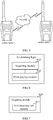
- FIG. 5 it is a schematic diagram of an application scenario of a method of alarming with a terminal according to an example of the present disclosure.
- the scenario shown in FIG. 5 includes a walkie-talkie 1 as a terminal and a walkie-talkie 2 having the same frequency band as that of the walkie-talkie 1, where the walkie-talkie 1 may include an acceleration sensor.
- the walkie-talkie 1 may detect an acceleration value within a set time period by the acceleration sensor and then determine whether the acceleration value matches a preset acceleration changing rule or not, where the acceleration changing rule may be that the acceleration value exceeds a set acceleration threshold value and the velocity value at the end of the set time period is zero. It may be determined that the user using the walkie-talkie 1 falls when the acceleration value matches the preset acceleration changing rule.
- a position at which the walkie-talkie 1 is located may be determined by GPS (Global Positioning System) function of the walkie-talkie to obtain position information. The position information may be converted into voice position information. An alarm voice pre-stored in the walkie-talkie 1 may be read. The voice position information and the alarm voice may be sent to the walkie-talkie 2.
- the walkie-talkie 2 may loop play the received voice position information and the alarm voice.
- the specific process for realizing alarming with a terminal may refer to the above description for FIGs. 1-4 , and further description is omitted for brevity.
- the present disclosure further provides a terminal.
- the terminal may be a mobile phone having a routing function, a computer, a digital broadcasting terminal, a message receiving and sending device, game console, tablet equipment, medical equipment, fitness equipment, a personal digital assistant, and so on.
- An example of the terminal may be implemented by software, or may be implemented by hardware or by a combination of hardware and software. From a hardware level, the terminal may include at least a processor and a machine-readable storage medium.
- the machine-readable storage medium may be a Radom Access Memory (RAM), a volatile memory, a non-volatile memory, a flash memory, a storage drive (e.g., a hard disk drive), a solid state drive, any type of storage disks (such as a compact disc, a DVD, etc.), or a similar storage medium, or a combination thereof.
- RAM Radom Access Memory
- volatile memory e.g., a volatile memory
- non-volatile memory e.g., a flash memory
- a storage drive e.g., a hard disk drive
- solid state drive e.g., any type of storage disks (such as a compact disc, a DVD, etc.), or a similar storage medium, or a combination thereof.
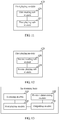
- FIG. 6 it is a functional block diagram of an alarming logic according to an exemplary example of the present disclosure. Divided by functions, the alarming logic may include an acquiring module 610 and a first playing module 620.
- the acquiring module 610 may be configured to acquire current parameter information of a terminal.
- the first playing module 620 may be configured to determine whether the parameter information satisfies a preset condition or not and output alarm information when the preset condition is satisfied.
- the terminal may detect the acceleration information and/or the humidity information and then determine whether the information satisfies the preset condition or not. If the preset condition is satisfied, it may be determined that the user of the terminal has an accident and the alarm information is output. In this way, an accidental situation in which the user using the terminal has a risk of drowning, falling or the like may be detected timely and the alarm informing is output, so that the user who has an accident may be noticed by others timely and rescued.
- FIG. 7 it is a block diagram of an alarming logic according to another exemplary example of the present disclosure.
- the example shown in FIG. 7 is based on the example shown in FIG. 6 described above.
- the acquiring module 610 may include a first detecting sub-module 611.
- the first detecting sub-module 611 may be configured to detect an acceleration value of the terminal within a set time period, and the set time period includes current moment.
- the terminal may detect the acceleration value within the set time period by its acceleration sensor.
- the first playing module 620 may include a first judging sub-module 621 and a first determining sub-module 622.
- the first judging sub-module 621 may be configured to determine whether the detected acceleration value matches an acceleration changing rule or not.
- the first determining sub-module 622 may be configured to determine that the preset condition is satisfied when the acceleration changing value matches the acceleration changing rule.
- the terminal may determine that the user of the terminal has an accident such as falling, dropping or the like when the acceleration value matches the acceleration changing rule.
- the acceleration changing rule may be that the acceleration value exceeds a set acceleration threshold value and the velocity value at the end of the set time period is zero.
- FIG. 9 it is a block diagram of an alarming logic according to still another exemplary example of the present disclosure.
- the example shown in FIG. 9 is based on the example shown in FIG. 6 described above.
- the acquiring module 610 may include a second detecting sub-module 612.
- the second detecting sub-module 612 may be configured to detect a humidity value of the terminal within a set time period, and the set time period includes current moment.
- the terminal may detect the humidity value within the set time period by its humidity sensor.
- the first playing module 620 may include a second determining sub-module 623, a second judging sub-module 624 and a third determining sub-module 625.
- the second determining sub-module 623 may be configured to determine a humidity changing value of the terminal within the set time period based on the humidity value.
- the second judging sub-module 624 may be configured to determine whether the humidity changing value determined by the second determining sub-module 623 exceeds a set humidity threshold value or not.
- the third determining sub-module 625 may be configured to determine that the preset humidity changing rule is satisfied when the second judging sub-module 624 determines that the humidity changing value exceeds the set humidity threshold value.
- the terminal may acquire the humidity changing value based on the humidity value and determine whether water has entered the terminal with the humidity changing value. In this way, when the humidity changing value exceeds the set humidity threshold value, the terminal may determine that the user of the terminal has a risk of drowning.
- the first playing module 620 may include a first reading sub-module 626 and a first playing sub-module 627.
- the first reading sub-module 626 may be configured to read a pre-stored alarm voice.
- the first playing sub-module 627 may be configured to send the alarm voice read by the first reading sub-module 626 to a designated terminal for loop playback.
- the terminal may send the pre-stored alarm voice to the designated terminal for loop playback to remind other users that the user of the terminal has an accident. In this way, the user having an accident may be timely rescued to avoid a threat to life due to being in an accident state for a long time.
- FIG. 12 it is a block diagram of an alarming logic according to still another exemplary example of the present disclosure.
- the example shown in FIG. 12 is based on the example shown in any of FIGs. 6 to 10 described above.
- the first playing module 620 may include a second reading sub-module 628 and a second playing sub-module 629.
- the second reading sub-module 628 may be configured to read a pre-stored alarm voice.
- the second playing sub-module 629 may be configured to send the alarm voice read by the second reading sub-module 628 to a walkie-talkie having the same frequency band as that of the terminal for loop playback.
- the terminal when the terminal is a walkie-talkie, the terminal may send the pre-stored alarm voice to a walkie-talkie having the same frequency band as that of the terminal for loop playback to remind other users that the user of the terminal has an accident. In this way, the user having an accident may be timely rescued to avoid a threat to life due to being in an accident state in a long time.
- FIG. 13 it is a block diagram of an alarming logic according to still another exemplary example of the present disclosure.
- the example shown in FIG. 13 is based on the example shown in any of FIGs. 6 to 10 described above.
- the alarming logic may further include a position determining module 630 and an outputting module 640.
- the position determining module 630 may be configured to determine information of the position at which the terminal is currently located.
- the outputting module 640 may be configured to output position voice information by converting the position information into the position voice information.
- the terminal may further determine the current position and convert the position information into voice position information, and send it together with the alarm voice to other terminals for playback. In this way, a rescuer may timely know an accurate position of the user having an accident and effectively rescue the user having an accident.
- the alarming logic may include a detecting module 710, a changing value determining module 720, a judging module 730 and a second playing module 740.
- the detecting module 710 may be configured to detect an acceleration value and a humidity value of the terminal within a set time period, where the set time period includes a current moment.
- the changing value determining module 720 may be configured to determine a humidity changing value of the terminal within the set time period based on the detected humidity value.
- the judging module 730 may be configured to determine whether the acceleration value matches the preset acceleration changing rule and the humidity changing value matches the preset humidity changing rule.
- the second playing module 740 may be configured to output alarm information when the acceleration value matches the acceleration changing rule and the humidity changing value matches the humidity changing rule.
- the example below may be implemented with software, which may further describe how the device for alarming with a terminal runs the alarming logic.
- the alarming logic in the present disclosure should be understood as machine-executable instructions stored in a machine-readable storage medium.
- the processor on the device for alarming with a terminal in the present disclosure may perform the above method of alarming with a terminal by invoking the machine-executable instructions.
- the relevant parts may refer to the part of the method example.
- the device example described above is merely illustrative, where the modules described as the separate component may or may not be physically separate, and the component shown as a module may or may not be a physical unit, i.e., may be located in one place or may be distributed to a plurality of network elements. A part or all of the modules may be selected according to the actual needs to achieve the purpose of the solution of the present disclosure. Those skilled in the art will understand and practice it without making creative work.
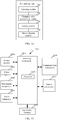
- the device 1500 may be a mobile phone having a routing function, a computer, a digital broadcasting terminal, a message receiving and sending equipment, a game console, tablet equipment, medical equipment, fitness equipment, a personal digital assistant, and so on.
- the device 1500 may include one or more of the following components: a processing component 1502, storage medium 1504, a power component 1506, a multimedia component 1508, an audio component 1510, an input/output (I/O) interface 1512, a sensor component 1514 and a communication component 1516.
- a processing component 1502 storage medium 1504
- a power component 1506 a multimedia component 1508, an audio component 1510, an input/output (I/O) interface 1512, a sensor component 1514 and a communication component 1516.
- I/O input/output
- the processing component 1502 generally controls overall operations of the device 1500, such as operations associated with display, phone calls, data communications, camera operations, and recording operations.
- the processing component 1502 may include one or more processors 1520 to execute instructions to perform all or part of the blocks of the above method.
- the processing component 1502 may include one or more modules which facilitate the interaction between the processing component 1502 and other components.
- the processing component 1502 may include a multimedia module to facilitate the interaction between the multimedia component 1508 and the processing component 1502.
- the storage medium 1504 may be configured to store various types of data to support the operation of the device 1500. Examples of such data include instructions for any application or method operated on the device 1500, contact data, phonebook data, messages, pictures, videos, and so on.
- the storage medium 1504 may be implemented by any type of volatile or non-volatile memory devices or a combination thereof, such as a Static Random Access Memory (SRAM), an Electrically Erasable Programmable Read-Only Memory (EEPROM), an Erasable Programmable Read-Only Memory (EPROM), a Programmable Read-Only Memory (PROM), a Read-Only Memory (ROM), a magnetic memory, a flash memory, a magnetic or optical disk.
- SRAM Static Random Access Memory
- EEPROM Electrically Erasable Programmable Read-Only Memory
- EPROM Erasable Programmable Read-Only Memory
- PROM Programmable Read-Only Memory
- ROM Read-Only Memory
- magnetic memory a magnetic memory
- flash memory a flash memory
- the power component 1506 may provide power to various components of the device 1500.
- the power supply component 1506 may include a power management system, one or more power supplies, and other components associated with generating, managing, and distributing power for the device 1500.
- the multimedia component 1508 may include a screen providing an output interface between the device 1500 and the user.
- the screen may include a Liquid Crystal Display (LCD) and a Touch Panel (TP). If the screen includes the TP, the screen may be implemented as a touch screen to receive input signals from the user.
- the TP may include one or more touch sensors to sense touches, slips, and gestures on the TP. The touch sensors may not only sense a boundary of a touch or slip action, but also sense duration and a pressure associated with the touch or slip action.
- the multimedia component 1508 may include a front camera and/or a rear camera. The front camera and/or rear camera may receive external multimedia data when the device 1500 is in an operating mode, such as a photographing mode or a video mode. Each of the front camera and rear camera may be a fixed optical lens system or have focus and optical zoom capability.
- the audio component 1510 may be configured to output and/or input an audio signal.
- the audio component 1510 may include a microphone (MIC) configured to receive an external audio signal when the device 1500 is in an operating mode, such as a call mode, a recording mode, and a voice recognition mode.
- the received audio signal may be further stored in the storage medium 1504 or transmitted via the communication component 1516.
- the audio component 1510 further includes a speaker to output an audio signal.
- the I/O interface 1512 may provide an interface between the processing component 1502 and peripheral interface modules.
- peripheral interface modules may include a keyboard, a click wheel, buttons, and so on. These buttons may include, but are not limited to, a home button, a volume button, a starting button, and a locking button.
- the sensor component 1514 may include one or more sensors to provide status assessments of various aspects of the device 1500. For example, the sensor component 1514 may detect the on/off status of the device 1500, relative positioning of component, e.g., the component is a display and a keypad of the device 1500. The sensor component 1514 may also detect a change in position of the device 1500 or one component of the device 1500, a presence or absence of the contact between the user and the device 1500, an orientation or an acceleration/deceleration of the device 1500, and a change in temperature of the device 1500. The sensor component 1514 may include a proximity sensor configured to detect the presence of a nearby object without any physical contact.
- the sensor component 1514 may further include an optical sensor, such as a CMOS or CCD image sensor, for use in imaging applications.
- the sensor component 1514 may further include an accelerometer sensor, a gyroscope sensor, a magnetic sensor, a pressure sensor, a microwave sensor, or a temperature sensor.
- the communication component 1516 may be configured to facilitate communication, wired or wirelessly, between the device 1500 and other devices.
- the device 1500 may access a wireless network based on a communication standard, such as Wi-Fi, 2G or 3G, or a combination thereof.
- the communication component 1516 receives a broadcast signal or information associated broadcast externally from a broadcast management system via a broadcast channel.
- the communication component 1516 further includes a Near Field Communication (NFC) module to facilitate short-range communications.
- the NFC module may be implemented based on a Radio Frequency Identification (RFID) technology, an Infrared Data Association (IrDA) technology, an Ultra Wideband (UWB) technology, a Bluetooth (BT) technology and other technologies.
- RFID Radio Frequency Identification
- IrDA Infrared Data Association
- UWB Ultra Wideband
- BT Bluetooth
- the device 1500 may be implemented with one or more Application Specific Integrated Circuits (ASICs), Digital Signal Processors (DSPs), Digital Signal Processing Devices (DSPDs), programmable Logic Devices (PLDs), Field Programmable Gate Arrays (FPGA), controllers, microcontrollers, microprocessors, or other electronic components for performing the above method.
- ASICs Application Specific Integrated Circuits
- DSPs Digital Signal Processors
- DSPDs Digital Signal Processing Devices
- PLDs programmable Logic Devices
- FPGA Field Programmable Gate Arrays
- controllers microcontrollers, microprocessors, or other electronic components for performing the above method.
- a non-transitory machine-readable storage medium including instructions such as a storage medium 1504 including instructions.
- the above instructions may be executed by the processor 1520 of the device 1500 to perform the above method.
- the non-transitory machine-readable storage medium may be a ROM, a Random Access Memory (RAM), a CD-ROM, a magnetic tape, a floppy disk, and an optical data storage device and the like.
Landscapes
- Physics & Mathematics (AREA)
- Business, Economics & Management (AREA)
- Emergency Management (AREA)
- General Physics & Mathematics (AREA)
- Engineering & Computer Science (AREA)
- Computer Networks & Wireless Communication (AREA)
- Health & Medical Sciences (AREA)
- Signal Processing (AREA)
- General Health & Medical Sciences (AREA)
- Gerontology & Geriatric Medicine (AREA)
- Electromagnetism (AREA)
- Computer Security & Cryptography (AREA)
- Human Computer Interaction (AREA)
- Psychiatry (AREA)
- Psychology (AREA)
- Social Psychology (AREA)
- Telephone Function (AREA)
- Emergency Alarm Devices (AREA)
- Alarm Systems (AREA)
Abstract
Description
- The present disclosure relates to a method and device for alarming with a terminal, and a storage medium.
- Terminals such as mobile phones, walkie-talkies and the like not only have a communication function, but also have other functions, for example, surfing an internet, which may bring convenience for users. However, as a commonly used device that a user carries around, the device may not be able to find that the user has an accident in time, so that it cannot effectively provide personal safety service for the user.
- The present disclosure provides a method and a device for alarming with a terminal as well as a non-transitory machine-readable storage medium thereof.
- According to a first aspect of examples of the present disclosure, there is provided a method for alarming with a terminal, and the method includes: acquiring current parameter information of the terminal; determining whether the parameter information satisfies a preset condition or not; and outputting alarm information if the preset condition is satisfied.
- According to a second aspect of examples of the present disclosure, there is provided a device for alarming with a terminal, including a processor and a machine-readable storage medium, wherein by reading machine-executable instructions corresponding to an alarming logic stored on the machine-readable storage medium, the processor is caused to: acquire current parameter information of the terminal; determine whether the parameter information satisfies a preset condition or not; and output alarm information if the preset condition is satisfied.
- According to a third aspect of examples of the present disclosure, there is provided a non-transitory machine-readable storage medium storing machine-executable instructions executable by one or more processors, the machine-executable instructions cause the one or more processors to perform operations comprising: acquiring current parameter information of the terminal; determining whether the parameter information satisfies a preset condition or not; and outputting alarm information if the preset condition is satisfied.
- It shall be understood that both the foregoing general description and the following detailed description are merely exemplary and illustrative, rather than limit the present disclosure.
- The details of one or more embodiments of the subject matter described in the present disclosure are set forth in the accompanying drawings and description below. Other features, aspects, and advantages of the subject matter will become apparent from the description, the drawings, and the claims. Features of the present disclosure are illustrated by way of example and not limited in the following figures, in which like numerals indicate like elements.
- The accompanying drawings, which are incorporated in and constitute a part of the specification, illustrate examples coincident with the present disclosure and serve to explain the principles of the present disclosure together with the specification.
-
FIG. 1 is a flow chart of a method of alarming with a terminal according to an exemplary example of the present disclosure. -
FIG. 2 is a flow chart of a method of alarming with a terminal according to another exemplary example of the present disclosure. -
FIG. 3 is a flow chart of a method of alarming with a terminal according to yet another exemplary example of the present disclosure. -
FIG. 4 is a flow chart of a method of alarming with a terminal according to still another exemplary example of the present disclosure. -
FIG. 5 schematically illustrates an application scenario of a method of alarming with a terminal according to an exemplary example of the present disclosure. -
FIG. 6 is a functional block diagram of according to an exemplary example of the present disclosure. -
FIG. 7 is a functional block diagram of an alarming logic according to another exemplary example of the present disclosure. -
FIG. 8 is a functional block diagram of an alarming logic according to yet another exemplary example of the present disclosure. -
FIG. 9 is a functional block diagram of an alarming logic according to still another exemplary example of the present disclosure. -
FIG. 10 is a functional block diagram of an alarming logic according to still another exemplary example of the present disclosure. -
FIG. 11 is a functional block diagram of an alarming logic according to still another exemplary example of the present disclosure. -
FIG. 12 is a functional block diagram of an alarming logic according to still another exemplary example of the present disclosure. -
FIG. 13 is a functional block diagram of an alarming logic according to still another exemplary example of the present disclosure. -
FIG. 14 is a functional block diagram of an alarming logic according to still another exemplary example of the present disclosure. -
FIG. 15 schematically illustrates a hardware structure of a device for alarming with a terminal according to an exemplary example of the present disclosure. - Exemplary examples will be described in detail herein, examples of which are shown in the accompanying drawings. When the following description refers to the accompanying drawings, the same numerals in different drawings denote the same or similar elements unless otherwise indicated. The embodiments described in the following exemplary examples are not representative of all embodiments coincident with the present disclosure. In contrast, they are merely examples of devices and methods coincident with some aspects of the present disclosure as detailed in the appended claims.
- The term used in the present disclosure is for the purpose of describing particular examples only, and is not intended to be limiting of the present disclosure. The singular forms such as "a", 'said", and "the" used in the present disclosure and the appended claims are also intended to include multiple, unless the context clearly indicates otherwise. It is also to be understood that the term "and/or" as used herein refers to any or all possible combinations that include one or more associated listed items.
- It is to be understood that although different information may be described using the terms such as first, second, third, etc. in the present disclosure, these information should not be limited to these terms. These terms are used only to distinguish the same type of information from each other. For example, the first information may also be referred to as the second information without departing from the scope of the present disclosure, and similarly, the second information may also be referred to as the first information. Depending on the context, in addition, the used word "if" may be interpreted as "when" or "as" or "in response to".
- As shown in
FIG. 1 , it is a flow chart of a method of alarming with a terminal according to an example of the present disclosure. The method may be applied in a terminal. The terminal in the present disclosure may be any terminals capable of being used outdoors. For example, the terminal may include a mobile phone, a tablet, a Personal Digital Assistant (PDA) or a walkie-talkie. Here the terminal may have a function of surfing an internet, access a router through a wireless local area network and access a server on public network through the router. The method of alarming with a terminal may include the following blocks 101-102. - At
block 101, current parameter information of the terminal may be acquired. - The parameter information in examples of the present disclosure may include acceleration information and humidity information. Accordingly, an acceleration sensor and a humidity sensor may be configured on the terminal for detecting the acceleration information and the humidity information, respectively.
- At
block 102, it may be determined whether the parameter information satisfies a preset condition; and alarm information may be output when the preset condition is satisfied. - Examples of the present disclosure is mainly directed to a case that a user who carries a terminal has an accident. A preset condition may be an acceleration changing rule when a user falls or drops and/or a humidity changing rule when a user is drowning.
- In an example of the present disclosure, a terminal may detect acceleration information and/or humidity information and then determine whether the information satisfies the preset condition or not. If the preset condition is satisfied, it may be determined that a user has an accident and alarm information may be output. In this way, a situation in which the user using the terminal has an accident such as drowning, falling or the like may be detected timely and alarm information may be played timely, so that the user who has an accident may be noticed by others timely and rescued.
- As shown in
FIG. 2 , it is a flow chart of a method of alarming with a terminal according to another example of the present disclosure. The method may be applied in a terminal and include the following blocks 201-206. - At
block 201, an acceleration value of a terminal within a set time period may be detected, and the set time period includes the current moment. - In this block of the present disclosure, the terminal may detect the acceleration value within the set time period by using its acceleration sensor. For example, the time period includes the current moment and 5 minutes before the current moment.
- At
block 202, it may be determined whether the acceleration value matches a preset acceleration changing rule or not. - Examples of the present disclosure are mainly directed to an accidental situation in which the user using the terminal suddenly falls or drops. In this case, the acceleration value may be relatively large. For example, a velocity value may suddenly change and may become zero at the end of a set time period, e.g., the terminal is finally in a stationary state. Therefore, the acceleration changing rule may be set according to a velocity changing rule in this process. For example, the acceleration changing rule may be that an acceleration value in the set time period exceeds a set acceleration threshold value and the velocity value at the end of the set time period is zero.
- At
block 203, a pre-stored alarm voice may be read when the acceleration value matches the preset acceleration changing rule. - In an example of the present disclosure, the alarm voice may be pre-stored, such as, "I have a risk of dropping", "I need rescue" and so on.
- At
block 204, the alarm voice may be sent to a walkie-talkie having the same frequency band as that of the terminal for loop playback. - In an example of the present disclosure, the alarm voice may be sent to a walkie-talkie which currently uses the same frequency band as that of the terminal for loop playback. Meanwhile, when the terminal is a walkie-talkie, the terminal may play the alarm voice locally and set the volume to the maximum so that nearby users may hear the alarm information more easily.
- At
block 205, information of the position at which the terminal is currently located may be determined. - At the
block 205 of the present disclosure, the current position of the terminal may be determined by positioning function. The positioning result may be latitude and longitude information or may be, such as, No. ** Road**, ** Park or the like. - At
block 206, position voice information may be output by converting the position information into the position voice information. - In an example of the present disclosure, no matter whether the alarm voice is sent to a walkie-talkie of the same frequency band as that of the terminal or a designated terminal, for example, a terminal of a relative of the terminal user, the user of the walkie-talkie having the same frequency band or the user of the designated terminal may not be in the vicinity of the user who has an accident. Therefore, the accurate position of the user who has an accident should be known. The position information and the alarm voice may be sent together to the rescuer so that the rescuer may obtain more accurate information, quickly find the user who has an accident and provide rescue.
- As shown in
FIG. 3 , it is a flow chart of a method of alarming with a terminal according to still another example of the present disclosure. The method may be applied in a terminal and include the following blocks 301-307. - At
block 301, a humidity value of the terminal within a set time period may be detected, and the set time period includes current moment. - At the
block 301 of the present disclosure, the humidity value within the set time period may be detected by a humidity sensor of the terminal. For example, the humidity value at the current moment and within 5 minutes before the current moment may be detected. - At
block 302, a humidity changing value of the terminal within the set time period may be determined based on the detected humidity value. - Here the humidity changing value may be determined by subtracting the humidity values within the set time period.
- At
block 303, it may be determined whether the humidity changing value exceeds a set humidity threshold value or not. - In an example of the present disclosure, if the humidity changing value exceeds the set humidity threshold value, it may be determined that water has entered the terminal and the user of the terminal has a risk of drowning. In another example, if a humidity value exceeds the set humidity threshold value, it may be determined that water has entered the terminal.
- At
block 304, it may be determined that a preset humidity changing rule is satisfied when the humidity changing value exceeds the set humidity threshold value. - In an example of the present disclosure, an alarm voice may be pre-stored on the terminal, such as, "I have a risk of drowning", "I need rescue" and so on.
- At
block 305, a pre-stored alarm voice may be sent to a walkie-talkie of the same frequency band as that of the terminal or a designated terminal for loop playback. - In an example of the present disclosure, the terminal may also play the alarm voice locally and set the volume to the maximum so that the nearby users may hear the alarm information more easily.
- At
block 306, information of the position at which the terminal is currently located may be determined. - At
block 306 of the present disclosure, the current position of the terminal may be determined by positioning function. The positioning result may be latitude and longitude information or may be, such as, No. ** Road**, ** Park or the like. - At
block 307, position voice information may be output by converting the position information into the position voice information. - The
block 307 of the present disclosure may refer to the description of block 207, and further description is omitted for brevity. - As shown in
FIG. 4 , it is a flow chart of a method of alarming with a terminal according to still another example of the present disclosure. The method may be used in a terminal and include the following blocks 401-407. - At
block 401, an acceleration value and a humidity value of the terminal within a set time period may be detected, and the set time period includes current moment. - Combined with the examples shown in
FIG. 2 andFIG. 3 , it may be known that the terminal may detect the acceleration value within the set time period by using its acceleration sensor. For example, the time period includes current moment and 5 minutes before the current moment. The terminal may further detect the humidity value within the set time period by using its humidity sensor. For example, the time period includes current moment and 5 minutes before the current moment - At
block 402, a humidity changing value of the terminal within the set time period may be determined based on the detected humidity value. - At
block 403, it may be determined whether the acceleration value matches a preset acceleration changing rule and the humidity changing value matches a preset humidity changing rule. - Examples of the present disclosure are mainly directed to an accidental situation in which the user using the terminal suddenly falls and drops into water. In this case, the acceleration value may be relatively large. For example, the velocity value may suddenly change and may become zero at the end of the set time period, e.g., the terminal is finally in a stationary state. Therefore, the acceleration changing rule may be set according to a velocity changing rule in this process. For example, the acceleration changing rule may be that an acceleration value in the set time period exceeds a set acceleration threshold value and the velocity value at the end of the set time period is zero. In addition, since the user drops into water, the humidity value of the terminal may have a relatively great change, e.g., exceed a set humidity threshold value. In such a way, combined with the above two aspects, it may be determined whether the user falls into water or not.
- At
block 404, a pre-stored alarm voice is read when the acceleration value matches a preset acceleration changing rule and the humidity changing value matches a preset humidity changing rule. - In an example of the present disclosure, the pre-stored alarm voice may be read when an acceleration value matches acceleration changing rule and a humidity changing value matches a humidity changing rule, such as, "I have a risk of dropping", "I have a risk of drowning", "I need rescue" and so on.
- At
block 405, the alarm voice may be sent to a walkie-talkie of the same frequency band as that of the terminal for loop playback. - In an example of the present disclosure, the alarm voice may be sent to a walkie-talkie which currently uses the same frequency band as that of the terminal for loop playback. Meanwhile, when the terminal is a walkie-talkie, the terminal may play the alarm voice locally and set the volume to the maximum so that the nearby users may hear the alarm information more easily.
- At
block 406, information of the position at which the terminal is currently located may be determined. - At
block 406 of the present disclosure, the current position of the terminal may be determined by positioning function. The positioning result may be latitude and longitude information or may be, such as, No. ** Road**, ** Park or the like. - At
block 407, position voice information may be output by converting the position information into the position voice information. - In an example of the present disclosure, no matter whether the alarm voice is sent to a walkie-talkie of the same frequency band as that of the terminal or a designated terminal, for example, a terminal of a relative of the terminal user, the user of the walkie-talkie having the same frequency band or the user of the designated terminal may not be in the vicinity of the user who has an accident. Therefore, the accurate position of the user who has an accident should be known. The position information and the alarm voice may be sent together to the rescuer so that the rescuer may obtain more accurate information, quickly find the user who has an accident and provide rescue.
- As shown in
FIG. 5 , it is a schematic diagram of an application scenario of a method of alarming with a terminal according to an example of the present disclosure. The scenario shown inFIG. 5 includes a walkie-talkie 1 as a terminal and a walkie-talkie 2 having the same frequency band as that of the walkie-talkie 1, where the walkie-talkie 1 may include an acceleration sensor. - The walkie-
talkie 1 may detect an acceleration value within a set time period by the acceleration sensor and then determine whether the acceleration value matches a preset acceleration changing rule or not, where the acceleration changing rule may be that the acceleration value exceeds a set acceleration threshold value and the velocity value at the end of the set time period is zero. It may be determined that the user using the walkie-talkie 1 falls when the acceleration value matches the preset acceleration changing rule. A position at which the walkie-talkie 1 is located may be determined by GPS (Global Positioning System) function of the walkie-talkie to obtain position information. The position information may be converted into voice position information. An alarm voice pre-stored in the walkie-talkie 1 may be read. The voice position information and the alarm voice may be sent to the walkie-talkie 2. The walkie-talkie 2 may loop play the received voice position information and the alarm voice. - In the application scenario shown in
FIG. 5 , the specific process for realizing alarming with a terminal may refer to the above description forFIGs. 1-4 , and further description is omitted for brevity. - Corresponding to examples of the above method of alarming with a terminal, the present disclosure further provides a terminal.
- In an example of the present disclosure, the terminal may be a mobile phone having a routing function, a computer, a digital broadcasting terminal, a message receiving and sending device, game console, tablet equipment, medical equipment, fitness equipment, a personal digital assistant, and so on. An example of the terminal may be implemented by software, or may be implemented by hardware or by a combination of hardware and software. From a hardware level, the terminal may include at least a processor and a machine-readable storage medium.
- In different examples, the machine-readable storage medium may be a Radom Access Memory (RAM), a volatile memory, a non-volatile memory, a flash memory, a storage drive (e.g., a hard disk drive), a solid state drive, any type of storage disks (such as a compact disc, a DVD, etc.), or a similar storage medium, or a combination thereof.
- Further, machine executable instructions corresponding to an alarming logic may be stored on the machine-readable storage medium. As shown in
FIG. 6 , it is a functional block diagram of an alarming logic according to an exemplary example of the present disclosure. Divided by functions, the alarming logic may include an acquiringmodule 610 and afirst playing module 620. - The acquiring
module 610 may be configured to acquire current parameter information of a terminal. - The
first playing module 620 may be configured to determine whether the parameter information satisfies a preset condition or not and output alarm information when the preset condition is satisfied. - In the above example, the terminal may detect the acceleration information and/or the humidity information and then determine whether the information satisfies the preset condition or not. If the preset condition is satisfied, it may be determined that the user of the terminal has an accident and the alarm information is output. In this way, an accidental situation in which the user using the terminal has a risk of drowning, falling or the like may be detected timely and the alarm informing is output, so that the user who has an accident may be noticed by others timely and rescued.
- As shown in
FIG. 7 , it is a block diagram of an alarming logic according to another exemplary example of the present disclosure. The example shown inFIG. 7 is based on the example shown inFIG. 6 described above. The acquiringmodule 610 may include a first detectingsub-module 611. - The first detecting sub-module 611 may be configured to detect an acceleration value of the terminal within a set time period, and the set time period includes current moment.
- In the above examples, the terminal may detect the acceleration value within the set time period by its acceleration sensor.
- As shown in
FIG. 8 , it is a block diagram of an alarming logic according to still another exemplary example of the present disclosure. The example shown inFIG. 8 is based on the example shown inFIG. 7 described above. Thefirst playing module 620 may include a first judging sub-module 621 and a first determiningsub-module 622. - The first judging sub-module 621 may be configured to determine whether the detected acceleration value matches an acceleration changing rule or not.
- The first determining sub-module 622 may be configured to determine that the preset condition is satisfied when the acceleration changing value matches the acceleration changing rule.
- In the above examples, the terminal may determine that the user of the terminal has an accident such as falling, dropping or the like when the acceleration value matches the acceleration changing rule. The acceleration changing rule may be that the acceleration value exceeds a set acceleration threshold value and the velocity value at the end of the set time period is zero.
- As shown in
FIG. 9 , it is a block diagram of an alarming logic according to still another exemplary example of the present disclosure. The example shown inFIG. 9 is based on the example shown inFIG. 6 described above. The acquiringmodule 610 may include a second detectingsub-module 612. - The second detecting sub-module 612 may be configured to detect a humidity value of the terminal within a set time period, and the set time period includes current moment.
- In the above examples, the terminal may detect the humidity value within the set time period by its humidity sensor.
- As shown in
FIG. 10 , it is a block diagram of an alarming logic according to still another exemplary example of the present disclosure. The example shown inFIG. 10 is based on the example shown inFIG. 9 described above. Thefirst playing module 620 may include a second determining sub-module 623, a second judging sub-module 624 and a third determiningsub-module 625. - The second determining sub-module 623 may be configured to determine a humidity changing value of the terminal within the set time period based on the humidity value.
- The second judging sub-module 624 may be configured to determine whether the humidity changing value determined by the second determining
sub-module 623 exceeds a set humidity threshold value or not. - The third determining sub-module 625 may be configured to determine that the preset humidity changing rule is satisfied when the second judging sub-module 624 determines that the humidity changing value exceeds the set humidity threshold value.
- In the above examples, the terminal may acquire the humidity changing value based on the humidity value and determine whether water has entered the terminal with the humidity changing value. In this way, when the humidity changing value exceeds the set humidity threshold value, the terminal may determine that the user of the terminal has a risk of drowning.
- As shown in
FIG. 11 , it is a block diagram of an alarming logic according to still another exemplary example of the present disclosure. The example shown inFIG. 11 is based on the example shown in any ofFIGs. 6 to 10 described above. Thefirst playing module 620 may include afirst reading sub-module 626 and afirst playing sub-module 627. - The
first reading sub-module 626 may be configured to read a pre-stored alarm voice. - The
first playing sub-module 627 may be configured to send the alarm voice read by thefirst reading sub-module 626 to a designated terminal for loop playback. - In the above examples, the terminal may send the pre-stored alarm voice to the designated terminal for loop playback to remind other users that the user of the terminal has an accident. In this way, the user having an accident may be timely rescued to avoid a threat to life due to being in an accident state for a long time.
- As shown in
FIG. 12 , it is a block diagram of an alarming logic according to still another exemplary example of the present disclosure. The example shown inFIG. 12 is based on the example shown in any ofFIGs. 6 to 10 described above. When the terminal is a walkie-talkie, thefirst playing module 620 may include asecond reading sub-module 628 and asecond playing sub-module 629. - The
second reading sub-module 628 may be configured to read a pre-stored alarm voice. - The
second playing sub-module 629 may be configured to send the alarm voice read by thesecond reading sub-module 628 to a walkie-talkie having the same frequency band as that of the terminal for loop playback. - In the above examples, when the terminal is a walkie-talkie, the terminal may send the pre-stored alarm voice to a walkie-talkie having the same frequency band as that of the terminal for loop playback to remind other users that the user of the terminal has an accident. In this way, the user having an accident may be timely rescued to avoid a threat to life due to being in an accident state in a long time.
- As shown in
FIG. 13 , it is a block diagram of an alarming logic according to still another exemplary example of the present disclosure. The example shown inFIG. 13 is based on the example shown in any ofFIGs. 6 to 10 described above. The alarming logic may further include aposition determining module 630 and anoutputting module 640. - The
position determining module 630 may be configured to determine information of the position at which the terminal is currently located. - The
outputting module 640 may be configured to output position voice information by converting the position information into the position voice information. - In the above examples, the terminal may further determine the current position and convert the position information into voice position information, and send it together with the alarm voice to other terminals for playback. In this way, a rescuer may timely know an accurate position of the user having an accident and effectively rescue the user having an accident.
- As shown in
FIG. 14 , it is a block diagram of an alarming logic according to still another exemplary example of the present disclosure. The alarming logic may include a detectingmodule 710, a changingvalue determining module 720, a judgingmodule 730 and asecond playing module 740. - The detecting
module 710 may be configured to detect an acceleration value and a humidity value of the terminal within a set time period, where the set time period includes a current moment. - The changing
value determining module 720 may be configured to determine a humidity changing value of the terminal within the set time period based on the detected humidity value. - The judging
module 730 may be configured to determine whether the acceleration value matches the preset acceleration changing rule and the humidity changing value matches the preset humidity changing rule. - The
second playing module 740 may be configured to output alarm information when the acceleration value matches the acceleration changing rule and the humidity changing value matches the humidity changing rule. - The implementation process of the functions and effects of each module in the above logic is described in detail in the implementation process of the corresponding blocks in the above method, and further description is omitted herein.
- The example below may be implemented with software, which may further describe how the device for alarming with a terminal runs the alarming logic. For example, the alarming logic in the present disclosure should be understood as machine-executable instructions stored in a machine-readable storage medium. The processor on the device for alarming with a terminal in the present disclosure may perform the above method of alarming with a terminal by invoking the machine-executable instructions.
- For the device example, since it corresponds substantially to the method example, the relevant parts may refer to the part of the method example. The device example described above is merely illustrative, where the modules described as the separate component may or may not be physically separate, and the component shown as a module may or may not be a physical unit, i.e., may be located in one place or may be distributed to a plurality of network elements. A part or all of the modules may be selected according to the actual needs to achieve the purpose of the solution of the present disclosure. Those skilled in the art will understand and practice it without making creative work.
- As shown in
FIG. 15 , it illustrates a hardware structure diagram of adevice 1500 for alarming with a terminal according to an exemplary example of the present disclosure. For example, thedevice 1500 may be a mobile phone having a routing function, a computer, a digital broadcasting terminal, a message receiving and sending equipment, a game console, tablet equipment, medical equipment, fitness equipment, a personal digital assistant, and so on. - Referring to
FIG. 15 , thedevice 1500 may include one or more of the following components: aprocessing component 1502,storage medium 1504, apower component 1506, amultimedia component 1508, anaudio component 1510, an input/output (I/O)interface 1512, asensor component 1514 and acommunication component 1516. - The
processing component 1502 generally controls overall operations of thedevice 1500, such as operations associated with display, phone calls, data communications, camera operations, and recording operations. Theprocessing component 1502 may include one ormore processors 1520 to execute instructions to perform all or part of the blocks of the above method. In addition, theprocessing component 1502 may include one or more modules which facilitate the interaction between theprocessing component 1502 and other components. For example, theprocessing component 1502 may include a multimedia module to facilitate the interaction between themultimedia component 1508 and theprocessing component 1502. - The
storage medium 1504 may be configured to store various types of data to support the operation of thedevice 1500. Examples of such data include instructions for any application or method operated on thedevice 1500, contact data, phonebook data, messages, pictures, videos, and so on. Thestorage medium 1504 may be implemented by any type of volatile or non-volatile memory devices or a combination thereof, such as a Static Random Access Memory (SRAM), an Electrically Erasable Programmable Read-Only Memory (EEPROM), an Erasable Programmable Read-Only Memory (EPROM), a Programmable Read-Only Memory (PROM), a Read-Only Memory (ROM), a magnetic memory, a flash memory, a magnetic or optical disk. - The
power component 1506 may provide power to various components of thedevice 1500. Thepower supply component 1506 may include a power management system, one or more power supplies, and other components associated with generating, managing, and distributing power for thedevice 1500. - The
multimedia component 1508 may include a screen providing an output interface between thedevice 1500 and the user. In some examples, the screen may include a Liquid Crystal Display (LCD) and a Touch Panel (TP). If the screen includes the TP, the screen may be implemented as a touch screen to receive input signals from the user. The TP may include one or more touch sensors to sense touches, slips, and gestures on the TP. The touch sensors may not only sense a boundary of a touch or slip action, but also sense duration and a pressure associated with the touch or slip action. In some examples, themultimedia component 1508 may include a front camera and/or a rear camera. The front camera and/or rear camera may receive external multimedia data when thedevice 1500 is in an operating mode, such as a photographing mode or a video mode. Each of the front camera and rear camera may be a fixed optical lens system or have focus and optical zoom capability. - The
audio component 1510 may be configured to output and/or input an audio signal. For example, theaudio component 1510 may include a microphone (MIC) configured to receive an external audio signal when thedevice 1500 is in an operating mode, such as a call mode, a recording mode, and a voice recognition mode. The received audio signal may be further stored in thestorage medium 1504 or transmitted via thecommunication component 1516. In some examples, theaudio component 1510 further includes a speaker to output an audio signal. - The I/
O interface 1512 may provide an interface between theprocessing component 1502 and peripheral interface modules. The above peripheral interface modules may include a keyboard, a click wheel, buttons, and so on. These buttons may include, but are not limited to, a home button, a volume button, a starting button, and a locking button. - The
sensor component 1514 may include one or more sensors to provide status assessments of various aspects of thedevice 1500. For example, thesensor component 1514 may detect the on/off status of thedevice 1500, relative positioning of component, e.g., the component is a display and a keypad of thedevice 1500. Thesensor component 1514 may also detect a change in position of thedevice 1500 or one component of thedevice 1500, a presence or absence of the contact between the user and thedevice 1500, an orientation or an acceleration/deceleration of thedevice 1500, and a change in temperature of thedevice 1500. Thesensor component 1514 may include a proximity sensor configured to detect the presence of a nearby object without any physical contact. Thesensor component 1514 may further include an optical sensor, such as a CMOS or CCD image sensor, for use in imaging applications. In some examples, thesensor component 1514 may further include an accelerometer sensor, a gyroscope sensor, a magnetic sensor, a pressure sensor, a microwave sensor, or a temperature sensor. - The
communication component 1516 may be configured to facilitate communication, wired or wirelessly, between thedevice 1500 and other devices. Thedevice 1500 may access a wireless network based on a communication standard, such as Wi-Fi, 2G or 3G, or a combination thereof. In an exemplary example, thecommunication component 1516 receives a broadcast signal or information associated broadcast externally from a broadcast management system via a broadcast channel. In one exemplary example, thecommunication component 1516 further includes a Near Field Communication (NFC) module to facilitate short-range communications. For example, the NFC module may be implemented based on a Radio Frequency Identification (RFID) technology, an Infrared Data Association (IrDA) technology, an Ultra Wideband (UWB) technology, a Bluetooth (BT) technology and other technologies. - In an exemplary examples, the
device 1500 may be implemented with one or more Application Specific Integrated Circuits (ASICs), Digital Signal Processors (DSPs), Digital Signal Processing Devices (DSPDs), programmable Logic Devices (PLDs), Field Programmable Gate Arrays (FPGA), controllers, microcontrollers, microprocessors, or other electronic components for performing the above method. - In exemplary examples, there is also provided a non-transitory machine-readable storage medium including instructions, such as a
storage medium 1504 including instructions. The above instructions may be executed by theprocessor 1520 of thedevice 1500 to perform the above method. For example, the non-transitory machine-readable storage medium may be a ROM, a Random Access Memory (RAM), a CD-ROM, a magnetic tape, a floppy disk, and an optical data storage device and the like. - Other implementations of the present disclosure will be apparent to those skilled in the art from consideration of the specification and practice of the present disclosure herein. The present disclosure is intended to cover any variations, uses, modification or adaptations of the present disclosure following the general principles thereof and including such departures from the present disclosure as come within known or customary practice in the art. It is intended that the specification and examples be considered as exemplary only, with a true scope of the present disclosure being indicated by the following claims.
- The foregoing descriptions are merely preferred examples of the present disclosure, and are not intended to limit the present disclosure.
Claims (15)
- A method for alarming with a terminal, comprising:acquiring current parameter information of the terminal;determining whether the parameter information satisfies a preset condition or not; andoutputting alarm information if the preset condition is satisfied.
- The method according to claim 1, wherein acquiring the current parameter information of the terminal comprises:detecting an acceleration value of the terminal within a first set time period, the first set time period including current moment.
- The method according to claim 2, wherein determining whether the parameter information satisfies the preset condition comprises:determining whether the acceleration value matches an acceleration changing rule or not, wherein the acceleration changing rule indicates that the acceleration value exceeds a set acceleration threshold value and a velocity value at the end of the first set time period is zero; anddetermining that the preset condition is satisfied when the acceleration value matches the acceleration changing rule.
- The method according to claim 1, wherein acquiring the current parameter information of the terminal comprises:detecting a humidity value of the terminal within a second set time period, the second set time period including current moment.
- The method according to claim 4, wherein determining whether the parameter information satisfies the preset condition comprises:determining a humidity changing value of the terminal within the second set time period based on the humidity value; anddetermining that the preset condition is satisfied when the humidity changing value exceeds a set humidity threshold value.
- The method according to claim 1, wherein outputting alarm information comprises:reading a pre-stored alarm voice; andsending the alarm voice to a designated terminal for loop playback.
- The method according to claim 6, wherein when the terminal is a walkie-talkie, the designated terminal is another walkie-talkie having the same frequency band as that of the terminal.
- A device for alarming with a terminal, comprising:a processor; anda machine-readable storage medium to store machine-executable instructions corresponding to an alarming logic; wherein by reading and executing the machine-executable instructions, the processor is caused to:acquire current parameter information of the terminal;determine whether the parameter information satisfies a preset condition or not; andoutput alarm information if the preset condition is satisfied.
- The device according to claim 8, wherein when acquiring the current parameter information of the terminal, the machine-executable instructions cause the processor to:detect an acceleration value of the terminal within a first set time period, the first set time period including current moment.
- The device according to claim 9, wherein when determining whether the parameter information satisfies the preset condition or not, the machine-executable instructions cause the processor to:determine whether the acceleration value matches an acceleration changing rule, wherein the acceleration changing rule indicates that the acceleration value exceeds a set acceleration threshold value and a velocity value at the end of the first set time period is zero; anddetermine that the preset condition is satisfied when the acceleration changing value matches the acceleration changing rule.
- The device according to claim 8, wherein when acquiring the current parameter information of the terminal, the machine-executable instructions cause the processor to:detect a humidity value of the terminal within a second set time period, the second set time period including current moment.
- The device according to claim 11, wherein when determining whether the parameter information satisfies the preset condition, the machine-executable instructions cause the processor to:determine a humidity changing value of the terminal within the second set time period based on the humidity value; anddetermine that the preset condition is satisfied when the humidity changing value exceeds a set humidity threshold value.
- The device according to claim 8, wherein when outputting alarm information, the machine-executable instructions cause the processor to:read a pre-stored alarm voice; andsend the alarm voice to a designated terminal for loop playback.
- The device according to claim 13, wherein when the terminal is a walkie-talkie, the designated terminal is another walkie-talkie having the same frequency band as that of the terminal.
- A non-transitory machine-readable storage medium storing machine-executable instructions executable by one or more processors, the machine-executable instructions cause the one or more processors to perform the method for alarming with a terminal described by claim 1.
Applications Claiming Priority (1)
| Application Number | Priority Date | Filing Date | Title |
|---|---|---|---|
| CN201610659081.5A CN106097650A (en) | 2016-08-11 | 2016-08-11 | The alarm method of terminal, device and terminal |
Publications (1)
| Publication Number | Publication Date |
|---|---|
| EP3282681A1 true EP3282681A1 (en) | 2018-02-14 |
Family
ID=57456903
Family Applications (1)
| Application Number | Title | Priority Date | Filing Date |
|---|---|---|---|
| EP17185891.3A Withdrawn EP3282681A1 (en) | 2016-08-11 | 2017-08-11 | Method and device for alarming with terminal, and storage medium |
Country Status (3)
| Country | Link |
|---|---|
| US (1) | US20180047276A1 (en) |
| EP (1) | EP3282681A1 (en) |
| CN (1) | CN106097650A (en) |
Cited By (2)
| Publication number | Priority date | Publication date | Assignee | Title |
|---|---|---|---|---|
| CN111694642A (en) * | 2019-03-14 | 2020-09-22 | 奇酷互联网络科技(深圳)有限公司 | Control method of mobile terminal, mobile terminal and storage medium |
| CN115966064A (en) * | 2022-10-27 | 2023-04-14 | 国家能源集团煤焦化有限责任公司 | Chain breakage detection method, device and system for scraper conveyor and storage medium |
Families Citing this family (6)
| Publication number | Priority date | Publication date | Assignee | Title |
|---|---|---|---|---|
| CN107103728A (en) * | 2017-06-30 | 2017-08-29 | 北京小米移动软件有限公司 | Alarm method, device and Intelligent flashlight based on Intelligent flashlight |
| CN108322852B (en) * | 2018-01-30 | 2020-06-05 | 重庆与展微电子有限公司 | Voice playing method and device of intelligent sound box and storage medium |
| CN108594705B (en) * | 2018-04-10 | 2020-09-15 | Oppo广东移动通信有限公司 | State detection method and device of mobile terminal, storage medium and mobile terminal |
| CN109637079A (en) * | 2018-12-03 | 2019-04-16 | 郑州云海信息技术有限公司 | A kind of child custody method and system based on cloud computing |
| PL3977763T3 (en) * | 2019-05-29 | 2024-01-22 | Safenow Gmbh | METHOD, COMPUTER PROGRAM, DEVICE AND SYSTEM FOR OPERATING A MOBILE RADIO DEVICE |
| CN112622789A (en) * | 2020-12-21 | 2021-04-09 | 珠海市魅族科技有限公司 | Vehicle alarm method, device, equipment and medium |
Citations (4)
| Publication number | Priority date | Publication date | Assignee | Title |
|---|---|---|---|---|
| US20050208925A1 (en) * | 2004-03-16 | 2005-09-22 | Texas Instruments Incorporated | Handheld portable automatic emergency alert system and method |
| US20060205384A1 (en) * | 2005-03-10 | 2006-09-14 | Chang Chih Y | Method of security monitoring and alarming using mobile voice device |
| US20070037605A1 (en) * | 2000-08-29 | 2007-02-15 | Logan James D | Methods and apparatus for controlling cellular and portable phones |
| US20140091927A1 (en) * | 2012-10-03 | 2014-04-03 | Commissariat A L'energie Atomique Et Aux Energies Alternatives | System for transmitting an alert |
Family Cites Families (12)
| Publication number | Priority date | Publication date | Assignee | Title |
|---|---|---|---|---|
| US6064309A (en) * | 1998-09-28 | 2000-05-16 | Sellers; Scott D. | Swimming pool drowning prevention system |
| KR100594035B1 (en) * | 2003-05-23 | 2006-07-03 | 삼성전자주식회사 | Service Implementation Method According to UV Index in Mobile Terminal |
| US7248172B2 (en) * | 2005-03-22 | 2007-07-24 | Freescale Semiconductor, Inc. | System and method for human body fall detection |
| US9704369B2 (en) * | 2008-06-27 | 2017-07-11 | Barron Associates, Inc. | Autonomous fall monitor using an altimeter with opposed sensing ports |
| CN101938556A (en) * | 2010-08-26 | 2011-01-05 | 惠州Tcl移动通信有限公司 | Tumble monitoring method based on mobile phone and mobile phone |
| US9042075B2 (en) * | 2013-03-04 | 2015-05-26 | Nokia Technologies Oy | Apparatus and method for water protection of an electronic device |
| CN104574801A (en) * | 2013-10-09 | 2015-04-29 | 北京糯米网科技发展有限公司 | Alarm method, alarm device and mobile terminal |
| CN203801764U (en) * | 2014-03-06 | 2014-09-03 | 宁波市镇海欧瑞服饰科技有限公司 | Drowning prevention automatic alarm massage clothes |
| CN104933825B (en) * | 2014-03-18 | 2018-03-13 | 华为技术有限公司 | The alarm method and device of a kind of mobile terminal |
| US20160148482A1 (en) * | 2014-11-21 | 2016-05-26 | Norma L. Branch | Immersion alert bracelet |
| CN205197980U (en) * | 2015-11-05 | 2016-05-04 | 张鹏 | Intelligence on water bracelet of saving oneself |
| CN105681595A (en) * | 2016-03-30 | 2016-06-15 | 努比亚技术有限公司 | Alarm method and terminal |
-
2016
- 2016-08-11 CN CN201610659081.5A patent/CN106097650A/en active Pending
-
2017
- 2017-08-09 US US15/672,319 patent/US20180047276A1/en not_active Abandoned
- 2017-08-11 EP EP17185891.3A patent/EP3282681A1/en not_active Withdrawn
Patent Citations (4)
| Publication number | Priority date | Publication date | Assignee | Title |
|---|---|---|---|---|
| US20070037605A1 (en) * | 2000-08-29 | 2007-02-15 | Logan James D | Methods and apparatus for controlling cellular and portable phones |
| US20050208925A1 (en) * | 2004-03-16 | 2005-09-22 | Texas Instruments Incorporated | Handheld portable automatic emergency alert system and method |
| US20060205384A1 (en) * | 2005-03-10 | 2006-09-14 | Chang Chih Y | Method of security monitoring and alarming using mobile voice device |
| US20140091927A1 (en) * | 2012-10-03 | 2014-04-03 | Commissariat A L'energie Atomique Et Aux Energies Alternatives | System for transmitting an alert |
Cited By (2)
| Publication number | Priority date | Publication date | Assignee | Title |
|---|---|---|---|---|
| CN111694642A (en) * | 2019-03-14 | 2020-09-22 | 奇酷互联网络科技(深圳)有限公司 | Control method of mobile terminal, mobile terminal and storage medium |
| CN115966064A (en) * | 2022-10-27 | 2023-04-14 | 国家能源集团煤焦化有限责任公司 | Chain breakage detection method, device and system for scraper conveyor and storage medium |
Also Published As
| Publication number | Publication date |
|---|---|
| US20180047276A1 (en) | 2018-02-15 |
| CN106097650A (en) | 2016-11-09 |
Similar Documents
| Publication | Publication Date | Title |
|---|---|---|
| EP3282681A1 (en) | Method and device for alarming with terminal, and storage medium | |
| US9912490B2 (en) | Method and device for deleting smart scene | |
| EP3188066B1 (en) | A method and an apparatus for managing an application | |
| US10264085B2 (en) | Method and device for presenting push notifications | |
| US8929853B2 (en) | Mobile emergency attack and failsafe detection | |
| RU2617679C2 (en) | Method and device for a terminal equipment protection and the terminal equipment | |
| CN105701967B (en) | Position reminding method and apparatus | |
| US11586246B2 (en) | Method and apparatus for providing notification regarding wearable device | |
| EP3136699A1 (en) | Method and device for connecting external equipment | |
| US10523494B2 (en) | Method and apparatus for processing network failure | |
| US10026293B2 (en) | Screen protection method and apparatus, and storage medium | |
| CN110618783B (en) | Text broadcasting method, device and medium | |
| EP3156984A1 (en) | Vehicle alarming method and device, computer program and recording medium | |
| EP3099023A1 (en) | Method and device for sending message | |
| CN106303043A (en) | Method for sending information and device | |
| EP3163855B1 (en) | Method and device for making call | |
| CN105630141A (en) | Information browsing reminding method and device | |
| US9721454B2 (en) | Method for protecting terminal devices and the terminal device thereof | |
| US20170034347A1 (en) | Method and device for state notification and computer-readable storage medium | |
| CN112286599B (en) | Control method of terminal equipment and terminal equipment | |
| US11924744B2 (en) | Access control barring method and device | |
| CN110858859A (en) | Multimedia content processing method and device | |
| CN107103728A (en) | Alarm method, device and Intelligent flashlight based on Intelligent flashlight | |
| CN117044325A (en) | A method, device, equipment and storage medium for determining the wake-up signal period | |
| CN119212072A (en) | Terminal positioning method, device, system, storage medium and electronic equipment |
Legal Events
| Date | Code | Title | Description |
|---|---|---|---|
| PUAI | Public reference made under article 153(3) epc to a published international application that has entered the european phase |
Free format text: ORIGINAL CODE: 0009012 |
|
| STAA | Information on the status of an ep patent application or granted ep patent |
Free format text: STATUS: REQUEST FOR EXAMINATION WAS MADE |
|
| 17P | Request for examination filed |
Effective date: 20170811 |
|
| AK | Designated contracting states |
Kind code of ref document: A1 Designated state(s): AL AT BE BG CH CY CZ DE DK EE ES FI FR GB GR HR HU IE IS IT LI LT LU LV MC MK MT NL NO PL PT RO RS SE SI SK SM TR |
|
| AX | Request for extension of the european patent |
Extension state: BA ME |
|
| RBV | Designated contracting states (corrected) |
Designated state(s): AL AT BE BG CH CY CZ DE DK EE ES FI FR GB GR HR HU IE IS IT LI LT LU LV MC MK MT NL NO PL PT RO RS SE SI SK SM TR |
|
| STAA | Information on the status of an ep patent application or granted ep patent |
Free format text: STATUS: EXAMINATION IS IN PROGRESS |
|
| 17Q | First examination report despatched |
Effective date: 20201207 |
|
| GRAP | Despatch of communication of intention to grant a patent |
Free format text: ORIGINAL CODE: EPIDOSNIGR1 |
|
| STAA | Information on the status of an ep patent application or granted ep patent |
Free format text: STATUS: GRANT OF PATENT IS INTENDED |
|
| INTG | Intention to grant announced |
Effective date: 20240704 |
|
| STAA | Information on the status of an ep patent application or granted ep patent |
Free format text: STATUS: THE APPLICATION IS DEEMED TO BE WITHDRAWN |
|
| 18D | Application deemed to be withdrawn |
Effective date: 20241105 |