EP3281641B1 - Adjuvant for cancer vaccines - Google Patents
Adjuvant for cancer vaccines Download PDFInfo
- Publication number
- EP3281641B1 EP3281641B1 EP16776655.9A EP16776655A EP3281641B1 EP 3281641 B1 EP3281641 B1 EP 3281641B1 EP 16776655 A EP16776655 A EP 16776655A EP 3281641 B1 EP3281641 B1 EP 3281641B1
- Authority
- EP
- European Patent Office
- Prior art keywords
- cancer
- lag
- protein
- cells
- adjuvant
- Prior art date
- Legal status (The legal status is an assumption and is not a legal conclusion. Google has not performed a legal analysis and makes no representation as to the accuracy of the status listed.)
- Active
Links
Images












Classifications
-
- A—HUMAN NECESSITIES
- A61—MEDICAL OR VETERINARY SCIENCE; HYGIENE
- A61K—PREPARATIONS FOR MEDICAL, DENTAL OR TOILETRY PURPOSES
- A61K38/00—Medicinal preparations containing peptides
- A61K38/16—Peptides having more than 20 amino acids; Gastrins; Somatostatins; Melanotropins; Derivatives thereof
- A61K38/17—Peptides having more than 20 amino acids; Gastrins; Somatostatins; Melanotropins; Derivatives thereof from animals; from humans
- A61K38/177—Receptors; Cell surface antigens; Cell surface determinants
-
- A—HUMAN NECESSITIES
- A61—MEDICAL OR VETERINARY SCIENCE; HYGIENE
- A61K—PREPARATIONS FOR MEDICAL, DENTAL OR TOILETRY PURPOSES
- A61K31/00—Medicinal preparations containing organic active ingredients
- A61K31/70—Carbohydrates; Sugars; Derivatives thereof
- A61K31/7088—Compounds having three or more nucleosides or nucleotides
-
- A—HUMAN NECESSITIES
- A61—MEDICAL OR VETERINARY SCIENCE; HYGIENE
- A61K—PREPARATIONS FOR MEDICAL, DENTAL OR TOILETRY PURPOSES
- A61K38/00—Medicinal preparations containing peptides
-
- A—HUMAN NECESSITIES
- A61—MEDICAL OR VETERINARY SCIENCE; HYGIENE
- A61K—PREPARATIONS FOR MEDICAL, DENTAL OR TOILETRY PURPOSES
- A61K38/00—Medicinal preparations containing peptides
- A61K38/16—Peptides having more than 20 amino acids; Gastrins; Somatostatins; Melanotropins; Derivatives thereof
- A61K38/17—Peptides having more than 20 amino acids; Gastrins; Somatostatins; Melanotropins; Derivatives thereof from animals; from humans
- A61K38/1703—Peptides having more than 20 amino acids; Gastrins; Somatostatins; Melanotropins; Derivatives thereof from animals; from humans from vertebrates
- A61K38/1709—Peptides having more than 20 amino acids; Gastrins; Somatostatins; Melanotropins; Derivatives thereof from animals; from humans from vertebrates from mammals
-
- A—HUMAN NECESSITIES
- A61—MEDICAL OR VETERINARY SCIENCE; HYGIENE
- A61K—PREPARATIONS FOR MEDICAL, DENTAL OR TOILETRY PURPOSES
- A61K38/00—Medicinal preparations containing peptides
- A61K38/16—Peptides having more than 20 amino acids; Gastrins; Somatostatins; Melanotropins; Derivatives thereof
- A61K38/17—Peptides having more than 20 amino acids; Gastrins; Somatostatins; Melanotropins; Derivatives thereof from animals; from humans
- A61K38/18—Growth factors; Growth regulators
-
- A—HUMAN NECESSITIES
- A61—MEDICAL OR VETERINARY SCIENCE; HYGIENE
- A61K—PREPARATIONS FOR MEDICAL, DENTAL OR TOILETRY PURPOSES
- A61K39/00—Medicinal preparations containing antigens or antibodies
-
- A—HUMAN NECESSITIES
- A61—MEDICAL OR VETERINARY SCIENCE; HYGIENE
- A61K—PREPARATIONS FOR MEDICAL, DENTAL OR TOILETRY PURPOSES
- A61K39/00—Medicinal preparations containing antigens or antibodies
- A61K39/0005—Vertebrate antigens
- A61K39/0011—Cancer antigens
-
- A—HUMAN NECESSITIES
- A61—MEDICAL OR VETERINARY SCIENCE; HYGIENE
- A61K—PREPARATIONS FOR MEDICAL, DENTAL OR TOILETRY PURPOSES
- A61K39/00—Medicinal preparations containing antigens or antibodies
- A61K39/39—Medicinal preparations containing antigens or antibodies characterised by the immunostimulating additives, e.g. chemical adjuvants
-
- A—HUMAN NECESSITIES
- A61—MEDICAL OR VETERINARY SCIENCE; HYGIENE
- A61K—PREPARATIONS FOR MEDICAL, DENTAL OR TOILETRY PURPOSES
- A61K39/00—Medicinal preparations containing antigens or antibodies
- A61K39/395—Antibodies; Immunoglobulins; Immune serum, e.g. antilymphocytic serum
-
- A—HUMAN NECESSITIES
- A61—MEDICAL OR VETERINARY SCIENCE; HYGIENE
- A61K—PREPARATIONS FOR MEDICAL, DENTAL OR TOILETRY PURPOSES
- A61K40/00—Cellular immunotherapy
- A61K40/10—Cellular immunotherapy characterised by the cell type used
- A61K40/11—T-cells, e.g. tumour infiltrating lymphocytes [TIL] or regulatory T [Treg] cells; Lymphokine-activated killer [LAK] cells
-
- A—HUMAN NECESSITIES
- A61—MEDICAL OR VETERINARY SCIENCE; HYGIENE
- A61K—PREPARATIONS FOR MEDICAL, DENTAL OR TOILETRY PURPOSES
- A61K40/00—Cellular immunotherapy
- A61K40/40—Cellular immunotherapy characterised by antigens that are targeted or presented by cells of the immune system
- A61K40/41—Vertebrate antigens
- A61K40/42—Cancer antigens
- A61K40/4271—Melanoma antigens
- A61K40/4273—Glycoprotein 100 [Gp100]
-
- A—HUMAN NECESSITIES
- A61—MEDICAL OR VETERINARY SCIENCE; HYGIENE
- A61K—PREPARATIONS FOR MEDICAL, DENTAL OR TOILETRY PURPOSES
- A61K45/00—Medicinal preparations containing active ingredients not provided for in groups A61K31/00 - A61K41/00
-
- A—HUMAN NECESSITIES
- A61—MEDICAL OR VETERINARY SCIENCE; HYGIENE
- A61K—PREPARATIONS FOR MEDICAL, DENTAL OR TOILETRY PURPOSES
- A61K45/00—Medicinal preparations containing active ingredients not provided for in groups A61K31/00 - A61K41/00
- A61K45/05—Immunological preparations stimulating the reticulo-endothelial system, e.g. against cancer
-
- A—HUMAN NECESSITIES
- A61—MEDICAL OR VETERINARY SCIENCE; HYGIENE
- A61K—PREPARATIONS FOR MEDICAL, DENTAL OR TOILETRY PURPOSES
- A61K45/00—Medicinal preparations containing active ingredients not provided for in groups A61K31/00 - A61K41/00
- A61K45/06—Mixtures of active ingredients without chemical characterisation, e.g. antiphlogistics and cardiaca
-
- A—HUMAN NECESSITIES
- A61—MEDICAL OR VETERINARY SCIENCE; HYGIENE
- A61P—SPECIFIC THERAPEUTIC ACTIVITY OF CHEMICAL COMPOUNDS OR MEDICINAL PREPARATIONS
- A61P35/00—Antineoplastic agents
-
- A—HUMAN NECESSITIES
- A61—MEDICAL OR VETERINARY SCIENCE; HYGIENE
- A61P—SPECIFIC THERAPEUTIC ACTIVITY OF CHEMICAL COMPOUNDS OR MEDICINAL PREPARATIONS
- A61P37/00—Drugs for immunological or allergic disorders
- A61P37/02—Immunomodulators
-
- C—CHEMISTRY; METALLURGY
- C07—ORGANIC CHEMISTRY
- C07K—PEPTIDES
- C07K14/00—Peptides having more than 20 amino acids; Gastrins; Somatostatins; Melanotropins; Derivatives thereof
- C07K14/435—Peptides having more than 20 amino acids; Gastrins; Somatostatins; Melanotropins; Derivatives thereof from animals; from humans
- C07K14/475—Growth factors; Growth regulators
-
- C—CHEMISTRY; METALLURGY
- C07—ORGANIC CHEMISTRY
- C07K—PEPTIDES
- C07K19/00—Hybrid peptides, i.e. peptides covalently bound to nucleic acids, or non-covalently bound protein-protein complexes
-
- C—CHEMISTRY; METALLURGY
- C12—BIOCHEMISTRY; BEER; SPIRITS; WINE; VINEGAR; MICROBIOLOGY; ENZYMOLOGY; MUTATION OR GENETIC ENGINEERING
- C12N—MICROORGANISMS OR ENZYMES; COMPOSITIONS THEREOF; PROPAGATING, PRESERVING, OR MAINTAINING MICROORGANISMS; MUTATION OR GENETIC ENGINEERING; CULTURE MEDIA
- C12N15/00—Mutation or genetic engineering; DNA or RNA concerning genetic engineering, vectors, e.g. plasmids, or their isolation, preparation or purification; Use of hosts therefor
- C12N15/09—Recombinant DNA-technology
- C12N15/11—DNA or RNA fragments; Modified forms thereof; Non-coding nucleic acids having a biological activity
- C12N15/117—Nucleic acids having immunomodulatory properties, e.g. containing CpG-motifs
-
- A—HUMAN NECESSITIES
- A61—MEDICAL OR VETERINARY SCIENCE; HYGIENE
- A61K—PREPARATIONS FOR MEDICAL, DENTAL OR TOILETRY PURPOSES
- A61K39/00—Medicinal preparations containing antigens or antibodies
- A61K2039/555—Medicinal preparations containing antigens or antibodies characterised by a specific combination antigen/adjuvant
-
- A—HUMAN NECESSITIES
- A61—MEDICAL OR VETERINARY SCIENCE; HYGIENE
- A61K—PREPARATIONS FOR MEDICAL, DENTAL OR TOILETRY PURPOSES
- A61K39/00—Medicinal preparations containing antigens or antibodies
- A61K2039/555—Medicinal preparations containing antigens or antibodies characterised by a specific combination antigen/adjuvant
- A61K2039/55511—Organic adjuvants
-
- A—HUMAN NECESSITIES
- A61—MEDICAL OR VETERINARY SCIENCE; HYGIENE
- A61K—PREPARATIONS FOR MEDICAL, DENTAL OR TOILETRY PURPOSES
- A61K39/00—Medicinal preparations containing antigens or antibodies
- A61K2039/57—Medicinal preparations containing antigens or antibodies characterised by the type of response, e.g. Th1, Th2
-
- A—HUMAN NECESSITIES
- A61—MEDICAL OR VETERINARY SCIENCE; HYGIENE
- A61K—PREPARATIONS FOR MEDICAL, DENTAL OR TOILETRY PURPOSES
- A61K39/00—Medicinal preparations containing antigens or antibodies
- A61K2039/58—Medicinal preparations containing antigens or antibodies raising an immune response against a target which is not the antigen used for immunisation
- A61K2039/585—Medicinal preparations containing antigens or antibodies raising an immune response against a target which is not the antigen used for immunisation wherein the target is cancer
-
- A—HUMAN NECESSITIES
- A61—MEDICAL OR VETERINARY SCIENCE; HYGIENE
- A61K—PREPARATIONS FOR MEDICAL, DENTAL OR TOILETRY PURPOSES
- A61K2239/00—Indexing codes associated with cellular immunotherapy of group A61K40/00
- A61K2239/31—Indexing codes associated with cellular immunotherapy of group A61K40/00 characterized by the route of administration
-
- A—HUMAN NECESSITIES
- A61—MEDICAL OR VETERINARY SCIENCE; HYGIENE
- A61K—PREPARATIONS FOR MEDICAL, DENTAL OR TOILETRY PURPOSES
- A61K2239/00—Indexing codes associated with cellular immunotherapy of group A61K40/00
- A61K2239/38—Indexing codes associated with cellular immunotherapy of group A61K40/00 characterised by the dose, timing or administration schedule
-
- A—HUMAN NECESSITIES
- A61—MEDICAL OR VETERINARY SCIENCE; HYGIENE
- A61K—PREPARATIONS FOR MEDICAL, DENTAL OR TOILETRY PURPOSES
- A61K2239/00—Indexing codes associated with cellular immunotherapy of group A61K40/00
- A61K2239/46—Indexing codes associated with cellular immunotherapy of group A61K40/00 characterised by the cancer treated
- A61K2239/57—Skin; melanoma
-
- C—CHEMISTRY; METALLURGY
- C07—ORGANIC CHEMISTRY
- C07K—PEPTIDES
- C07K2319/00—Fusion polypeptide
- C07K2319/30—Non-immunoglobulin-derived peptide or protein having an immunoglobulin constant or Fc region, or a fragment thereof, attached thereto
Definitions
- the present invention relates to a medicine or the like containing a Toll-like receptor agonist and LAG-3 protein, a variant or derivative thereof.
- cancer vaccine therapy is a method of inducing regression of cancer by administering a cancer antigen directly to patients to induce an immune response specific to a cancer antigen in the patient's body.
- a cancer antigen to be administered to a patient e.g., a cancer-antigen protein itself, a cancer-antigen derived peptide, a nucleic acid encoding them, a dendritic cell presenting a cancer antigen and a cancer cell itself, are used.
- an adjuvant is administered together with the cancer antigen.
- the adjuvant e.g., cytokines stimulating various immunocompetent cells and Toll-like receptor (TLR) agonists are used.
- TLR agonist serving as an adjuvant
- any one of TLR1 to TLR10 agonists can be used (for example, Non Patent Literatures 1 and 2).
- TLR3 which recognizes virus-derived double-stranded RNA and accelerates production of type I interferon exerting a strong antiviral action, is a molecule of the innate immune system.
- TLR9 which recognizes a bacterium- or virus-derived unmethylated CpG DNA and exerts an action, is a molecule of the innate immune system.
- CpG ODN synthetic nucleic acid CpG oligodeoxynucleotide serving as a TLR9-ligand is known to have an adjuvant effect for vaccine.
- LAG-3 is also used as an adjuvant for vaccine (for example, Patent Literature 2).
- LAG-3 is a posttranslational product of lymphocyte activation gene 3 and also called as CD223.
- LAG-3 binds to a MHC Class II molecule to negatively control proliferation of activated T cells and homeostasis maintenance of T cells, plays an important role in regulatory T cell (Treg) function and is also known to be involved in homeostatic regulation of plasmacytoid dendritic cells.
- Reg regulatory T cell
- EP 1 002 108 discloses adjuvants for cancer vaccines based on a LAG-3 protein.
- An object of the present invention is to provide a medicine containing a novel combination of adjuvants, as defined in the claims.
- the present inventors conducted various studies using various adjuvants singly or in combination. As a result, they found a novel combination of adjuvants serving as a medicine useful for, for example, inducing cancer immunity.
- a medicine according to the present disclosure includes a Toll-like receptor agonist (TLR agonist) and LAG-3 protein, a variant or derivative thereof.
- TLR agonist Toll-like receptor agonist
- LAG-3 protein a variant or derivative thereof.
- the "Toll-like receptor agonist (TLR agonist)” refers to a molecule, which binds to any one of Toll-like receptors and provides the same stimulus as the stimulus provided by a natural ligand bound to TLR.
- TLR agonist TLP agonists described in Trends in Immunology Vol.30 No.1, 23-32 , Immunity 33, October 29, 2010, 492-503 , and World Journal of Vaccines, 2011, 1, 33-78 , are known.
- These TLRs known in the art each can be used in the TLR agonist of the present disclosure; for example, a TLR3 agonist, TLR4 agonist, TLR7 agonist, TLR8 agonist, TLR9 agonist or TLR10 agonist can be used. Of them, a TLR3 agonist or TLR9 agonist may be used as the TLR agonist.
- the "TLR3 agonist” refers to a molecule which binds to TLR3 and provides the same stimulus as the stimulus provided by a natural ligand bound to TLR3.
- TLR3 recognizes a virus-derived double stranded RNA to activate the innate immune system.
- a synthetic double stranded polynucleotide, Poly I:C having an analogous structure to double stranded RNA is known; however, the TLR3 agonist is not limited to this.
- a salt of Poly I:C may be used in the present invention; for example, a sodium salt thereof can be used.
- RIBOXXOL can be used as the TLR3 agonist.
- TLR4 agonist refers to a molecule which binds to TLR4 and provides the same stimulus as the stimulus provided by a natural ligand bound to TLR4.
- TLR4 recognizes a bacterium-derived lipopolysaccharide (LPS) to activate the innate immune system.
- LPS bacterium-derived lipopolysaccharide
- MPL is known; however, the TLR4 agonist is not limited to this.
- a salt of MPL may be used in the present disclosure; for example, a sodium salt thereof can be used.
- TLR5 agonist refers to a molecule which binds to TLR5 and provides the same stimulus as the stimulus provided by a natural ligand bound to TLR5.
- TLR5 recognizes a bacterium-derived Flagellin to activate the innate immune system.
- Flagellin proteins derived from various bacteria or recombinant Flagellin proteins are known; however, the TLR5 agonist is not limited to these.
- TLR7 agonist refers to a molecule which binds to TLR7 and provides the same stimulus as the stimulus provided by a natural ligand bound to TLR7.
- TLR8 agonist refers to a molecule which binds to TLR8 and provides the same stimulus as the stimulus provided by a natural ligand bound to TLR8.
- TLR7 and TLR8 recognize virus-derived single stranded RNA to activate the innate immune system.
- TLR7/8 agonist As the TLR7/8 agonist, Imiquimod is known; however, the TLR7/8 agonist is not limited to this.
- a salt of Imiquimod may be used in the present disclosure; for example, a sodium salt thereof can be used.
- TLR9 agonist refers to a molecule which binds to TLR9 and provides the same stimulus as the stimulus provided by a natural ligand bound to TLR9.
- TLR9 recognizes bacterium- and virus-derived CpG DNA to activate the innate immune system.
- CpG ODN is known; however, the TLR9 agonist is not limited to this.
- a salt of CpG ODN may be used in the present disclosure; for example, a sodium salt thereof can be used.
- LAG-3 protein, a variant or derivative thereof refers to LAG-3 protein, a functional variant or derivative thereof.
- the LAG-3 protein to be used in the present invention may be derived from any animal, for example, the protein can be derived from the same animal as the subject to which a medicine according to the present disclosure is to be administered. More specifically, if a medicine according to the present disclosure is administered to a human, human LAG-3 can be used.
- Human LAG-3 protein is a protein having an amino acid sequence represented by NCBI Accession No. P18627.5.
- Examples of the functional variant of LAG-3 protein include, (i) an LAG-3 variant consisting of an amino acid sequence, which is the amino acid sequence of LAG-3 having addition, substitution, or deletion of one or several amino acids and having a function of LAG-3 protein required for exerting the effects of the present invention, (ii) an LAG-3 variant having a sequence identity with the amino acid sequence of LAG-3 of at least 80% or more, or 85% or more, 90% or more, 95% or more, 98% or more or 99% or more and having a function of LAG-3 protein required for exerting the effects of the present invention, and (iii) a partial polypeptide of LAG-3 protein, a variant defined in the above (i) or a variant defined in the above (ii) having a function of LAG-3 protein required for exerting the effects of the present invention.
- one or several amino acids refers to 1, 2, 3, 4, 5, 6, 7, 8, 9, or 10 amino acids.
- amino acid is used in the broadest sense thereof and includes natural amino acids and artificial amino acid variants and derivatives.
- examples of the amino acid include natural protein L-amino acids; D-amino acids; chemically modified amino acids such as amino acid variants and derivatives; natural non-protein amino acids such as norleucine, ⁇ -alanine and ornithine; and chemically synthesized compounds having amino acid characteristics known in the art.
- non-natural amino acids include ⁇ -methyl amino acid (e.g., ⁇ -methylalanine), D-amino acid, histidine-like amino acid (e.g., ⁇ -hydroxy-histidine, homohistidine, ⁇ -fluoromethyl-histidine and ⁇ -methyl-histidine), amino acids with extra methylene in a side chain (“homo" amino acids) and amino acids (e.g., cysteine acid) in which the carboxylic acid functional group amino acid in a side chain is substituted with a sulfonic acid group.
- ⁇ -methyl amino acid e.g., ⁇ -methylalanine
- D-amino acid e.g., D-amino acid
- histidine-like amino acid e.g., ⁇ -hydroxy-histidine, homohistidine, ⁇ -fluoromethyl-histidine and ⁇ -methyl-histidine
- amino acids with extra methylene in a side chain e.g.,
- Examples of the functional derivative of LAG-3 protein include a fusion protein of all or part of LAG-3 protein and another protein or a polypeptide, and LAG-3 protein attached with a sugar chain and/or a lipid.
- a fusion protein of LAG-3 and IgG examples of the functional derivative of LAG-3 protein include the derivatives described in Journal of Translational Medicine 2014, 12: 97 .
- a medicine according to the present disclosure may contain a TLR agonist, LAG-3 protein, a variant or derivative thereof and a substance for inducing a specific immune response to a cancer cell.
- the "substance for inducing a specific immune response to a cancer cell” is not particularly limited as long as it is a substance capable of inducing an immune response necessary for breaking cancer cells in-vivo and inducing apoptosis of cancer cells; for example, a cancer-antigen protein, a cancer-antigen derived peptide, nucleic acids encoding them, a cancer antigen-presenting cell and a tumor cell itself are mentioned.
- the "cancer-antigen protein” is a protein specially expressed on a cancer cell and recognized/attacked by the immune system as a foreign body.
- the “cancer-antigen protein” may be expressed on cancer cells of all types and a specific type of cancer.
- the cancer-antigen protein a protein having strong immunogenicity and never be expressed in normal cells, is preferable. Examples of the cancer-antigen protein include, but are not particularly limited to, those described in Clin Cancer Res 2009; 15 (17) 5323 .
- Specific examples thereof include, but are not particularly limited to, WT1, MUC1, LMP2, HPVE6, HPVE7, EGFRv III, HER-2/neu, MAGE-A3, p53nonmutant, HSP70, GPC3, MUC1, Casp8, CDAM1, cMyb, EVC1, EVC2, Helios, Fas, NY-ESO-1, PSMA, GD2, CEA, MelanA/MART1, Ras mutant, gp100, p53 mutant, Proteinase3 (PR1), bcr-abl, Tyrosinase, Survivin, PSA, hTERT, Sarcoma translocation breakpoints, EphA2, PAP, ML-IAP, AFP, EpCAM, ERG, NA17, PAX3, ALK, Androgen receptor, Cyclin B1, Polysialic acid, MYCN, PhoC, TRP-2, GD3, Fucosyl GM1, Mesothelin, PSCA, MAGE A1, sLe, CY
- cancer-antigen derived peptide refers to a peptide having a part of the amino acid sequence of a cancer-antigen protein, or a peptide having a sequence, which is the same amino acid sequence as above and having addition, substitution or deletion of 1 or 2 amino acids, or a peptide having a sequence identity with the above amino acid sequence of 90% or more, 95% or more, 98% or more, or 99% or more and inducing immune which attacks cancer cells.
- the cancer-antigen derived peptide may consist of amino acid residues of 8 or more and 11 or less.
- Such a peptide if it is subcutaneously administered to a patient, is incorporated into antigen-presenting cells, such as dendritic cells and macrophages, and presented on the surface of the cells together with HLA molecules.
- Precursor cells of cytotoxic T cell (CTL) having a reactivity to the peptide presented are clonally proliferated and mature CTLs that proliferated and differentiated migrate through the lymph flow into a cancer tissue.
- the mature CTLs attack a cancer cell on which a peptide having the same sequence as the peptide administered is expressed to induce apoptosis.
- CTL cytotoxic T cell
- nucleic acid is not particularly limited as long as it is a nucleic acid encoding a cancer-antigen protein or a cancer-antigen derived peptide, and includes RNA, DNA, PNA, LNA or a chimeras of two or more of these. These nucleic acids can be inserted into, e.g., a vector, in accordance with a known method, and then administered to patients and express a cancer-antigen protein or a cancer-antigen derived peptide, in vivo.
- the "cancer antigen-presenting cell” refers to an antigen-presenting cell presenting a cancer-antigen derived peptide on the surface thereof via binding to an HLA molecule.
- the antigen-presenting cell dendritic cells and macrophages can be used.
- the dendritic cells have particularly high CTL inducibility.
- the antigen-presenting dendritic cells can be obtained, for example, by separating mononuclear cells from the patient's own peripheral blood, differentiating the mononuclear cells into immature dendritic cells and thereafter further differentiating mature dendritic cells by adding a cancer-antigen protein or a cancer-antigen derived peptide to a medium.
- a medicine according to the present invention may contain at least two types of "substances inducing a specific immune response to a cancer cell".
- a medicine according to the present disclosure can contain two or more different cancer-antigen derived peptides.
- a medicine according to the present disclosure can be used as a cancer vaccine therapy.
- a TLR agonist and LAG-3 protein, a variant or derivative thereof serve as adjuvants and enhance induction of an immune response by a "substance for inducing a specific immune response to a cancer cell".
- a TLR agonist and LAG-3 protein serve as adjuvants and enhance induction of an immune response by a "substance for inducing a specific immune response to a cancer cell".
- an extremely high antitumor effect can be obtained even at a low dose at which no effect is obtained when they are used alone.
- the "adjuvant” refers to a molecule(s), which is administered together with a substance for inducing an immune response to enhance induction of the immune response.
- a cancer vaccine therapy can be used for prevention or treatment of cancer.
- prevention or treatment of cancer refers to causing at least one of phenomenon: a decrease in tumor size, delay or termination of increase in tumor size, inhibition (delay or termination) of cancer metastasis, inhibition (delay or termination) of proliferation of cancer cells, inhibition (delay or termination) of cancer recurrence, and mitigation of one or more of symptoms associated with cancer.
- cancer is used in the broadest sense thereof.
- examples of the cancer include, but are not limited to, astrocytoma, oligodendroglioma, meningioma, neurofibroma, glioblastoma, ependymoma, neurilemmoma, neurofibrosarcoma, neuroblastoma, pituitary tumor (for example, for pituitary adenoma), medulloblastoma, melanoma, brain tumor, prostate cancer, head and neck cancer, esophageal cancer, renal cancer, renal cell carcinoma, pancreatic cancer, breast cancer, lung cancer, colon cancer, colorectal cancer, stomach cancer, skin cancer, ovarian cancer, bladder cancer, fibrosarcoma, squamous cell carcinoma, neuroectodermal tumor, thyroid tumor, lymphoma, leukemia, multiple myeloma, hepatocellular carcinoma, mesothelioma and epi
- the present disclosure includes an adjuvant including a TLR agonist and LAG-3 protein, a variant or derivative thereof, for use in a cancer vaccine therapy.
- the TLR agonist is an adjuvant to be administered in combination with LAG-3 protein, a variant or derivative thereof; whereas LAG-3 protein, a variant or derivative thereof can be an adjuvant to be administered in combination with the TLR agonist.
- Such adjuvants may be administered to a patient together with various "substances inducing a specific immune response to a cancer cell".
- TLR agonist and LAG-3 protein, a variant or derivative thereof are administered to a patient such that the TLR agonist and LAG-3 protein, a variant or derivative thereof can function as adjuvants in accordance with a cancer vaccine therapy, in vivo (of a patient's body) and ex vivo.
- a medicine containing a TLR agonist for combined administration with LAG-3 protein, a variant or derivative thereof may be provided; or a medicine containing LAG-3 protein, a variant or derivative thereof for combined administration with a TLR agonist may be provided.
- a medicine containing a TLR agonist for combined administration with a substance for inducing a specific immune response to a cancer cell and LAG-3 protein, a variant or derivative thereof may be provided.
- the medicine containing a TLR agonist can act, with LAG-3 protein, a variant or derivative thereof as adjuvants, to enhance induction of immune response by a substance for inducing a specific immune response to a cancer cell, preferably, a cancer-antigen derived peptide.
- a medicine containing LAG-3 protein, a variant or derivative thereof for combined administration with a substance for inducing a specific immune response to a cancer cell and a TLR agonist may be provided.
- the medicine containing LAG-3 protein, a variant or derivative thereof can act, with a TLR agonist as adjuvants, to enhance induction of immune response by a substance for inducing a specific immune response to a cancer cell, preferably a cancer-antigen derived peptide.
- the TLR agonist and LAG-3 protein, a variant or derivative thereof can be used as active ingredients of the medicine.
- the medicine containing a TLR agonist and LAG-3 protein, a variant or derivative thereof as active ingredients according to the present disclosure, as shown in Examples (described later), can be used as an anti-cancer agent having a high antitumor effect.
- the "anti-cancer agent” refers to an agent that can be used for preventing or treating cancer.
- the medicine serving as an anti-cancer agent may contain a TLR agonist and LAG-3 protein, a variant or derivative thereof as active ingredients, and may further contain a substance for inducing a specific immune response to a cancer cell.
- a medicine serving as an anti-cancer agent contains a substance for inducing a specific immune response to a cancer cell, preferably, a cancer-antigen derived peptide, as an active ingredient, and may contain a TLR agonist and LAG-3 protein, a variant or derivative thereof as adjuvants.
- compositions of a medicine according to the present disclosure are dissolved in a water-soluble solvent to prepare pharmaceutically acceptable salts and a preparation containing the components in the salt form can be administered to patients.
- pharmaceutically acceptable salts include physiologically acceptable water-soluble salts such as a sodium salt, a potassium salt, a magnesium salt and a calcium salt, which are adjusted to have physiological pH by a buffer.
- a nonaqueous solvent can be used.
- the nonaqueous solvent include alcohols such as ethanol and propylene glycol.
- a medicine according to the present disclosure can be used as a pharmaceutical composition, which has any dosage form orally or parenterally administrated.
- the dosage form is not particularly limited.
- Examples of the dosage form of a pharmaceutical composition can include a liquid (for example, an injection), a dispersant, a suspension, a tablet, a pill, a powdered drug, a suppository, a powder, a fine grain, a granule, a capsule, syrup, a nasal drop and an ear drop.
- a medicine according to the present disclosure if it is used as a cancer vaccine, can be orally or parenterally administered.
- parenteral administration for example, intraperitoneal administration, subcutaneous administration, intradermal administration, intramuscular administration, intravenous administration or intranasal administration can be employed.
- a preparation of a medicine according to the present disclosure can be produced in accordance with a method known in the art.
- pharmaceutically acceptable carriers and additives such as an excipient, a binder, a dispersant, a disintegrant, a lubricant, a solvent, a solubilizer, a coloring agent, a flavoring agent, a stabilizer, an emulsifier, a suspending agent, an absorption promoter, a surfactant, a pH adjustor, a preservative and an antioxidant
- pharmaceutically acceptable carriers and additives such as an excipient, a binder, a dispersant, a disintegrant, a lubricant, a solvent, a solubilizer, a coloring agent, a flavoring agent, a stabilizer, an emulsifier, a suspending agent, an absorption promoter, a surfactant, a pH adjustor, a preservative and an antioxidant
- the carriers and additives include pharmaceutically acceptable organic solvents such as water, saline, a phosphate buffer, dextrose, glycerol and ethanol, collagen, polyvinyl alcohol, polyvinylpyrrolidone, a carboxyvinyl polymer, sodium carboxymethylcellulose, sodium polyacrylate, sodium alginate, water-soluble dextran, sodium carboxymethyl starch, pectin, glutamic acid, aspartic acid, methylcellulose, ethylcellulose, hydroxypropylcellulose, hydroxypropylmethylcellulose, xanthan gum, gum arabic, casein, agar, polyethylene glycol, diglycerin, glycerin, propylene glycol, vaseline, paraffin, stearyl alcohol, stearic acid, human serum albumin, mannitol, sorbitol, lactose, glucose, corn starch, microcrystalline cellulose, a surfactant, sodium bisulfite, sodium bisulfate, sodium thio
- an absorption enhancer for improving absorption of a poorly absorbable drug such as a peptide
- a poorly absorbable drug such as a peptide
- examples thereof include surfactants such as a polyoxyethylene lauryl ether, sodium lauryl sulfate and saponin; bile salts such as glycocholic acid, deoxycholic acid and taurocholic acid; chelating agents such as EDTA and salicyl bile salt; fatty acids such as caproic acid, capric acid, lauric acid, oleic acid, linoleic acid and mixed micelle; an enamine derivative, a N-acyl collagen peptide, a N-acyl amino acid, a cyclodextrin, a chitosan and a nitric oxide donor.
- a medicine according to the present disclosure contains a peptide
- the medicine is encapsulated in e.g., polylactic acid/glycolic acid (PLGA) microcapsules or allowed to adsorb to porous hydroxyapatite fine particles to prepare a sustained release medicine, or the medicine is applied to a pulsed release iontophoresis patch system to prepare a transdermal absorbent.
- PLGA polylactic acid/glycolic acid
- a medicine according to the present disclosure may be a single preparation containing a TLR agonist and LAG-3 protein, a variant or derivative thereof or may be a combination of different preparations, i.e., a preparation containing a TLR agonist and a preparation containing LAG-3 protein, a variant or derivative thereof.
- a medicine according to the present disclosure may be a single preparation containing a substance for inducing a specific immune response to a cancer cell, a TLR agonist and LAG-3 protein, a variant or derivative thereof or may be a combination of different preparations, i.e., a preparation containing a substance for inducing a specific immune response to a cancer cell, a preparation containing a TLR agonist, and a preparation containing LAG-3 protein, a variant or derivative thereto. More specifically, a preparation containing two types of components selected from a substance for inducing a specific immune response to a cancer cell, a TLR agonist and LAG-3 protein, a variant or derivative thereof may be used in combination with a preparation containing the other remaining component. As long as a combination of three types of components is provided, a preparation containing any two types of components and a preparation containing any two types of components, may be used in combination.
- kits may contain a TLR agonist and LAG-3 protein, a variant or derivative thereof, or may contain a substance for inducing a specific immune response to a cancer cell, a TLR agonist and LAG-3 protein, a variant or derivative thereof.
- a medicine according to the present disclosure may contain additional adjuvants.
- additional adjuvants include sedimentary adjuvants such as aluminum hydroxide, sodium hydroxide, aluminum phosphate, calcium phosphate, alum and carboxyvinyl polymer, and oily adjuvants such as Freund's complete adjuvant, Freund's incomplete adjuvant, liquid paraffin, lanolin, montanide ISA763AV and montanide ISA51.
- a medicine according to the present disclosure may be used in combination with other anti-cancer agents in any embodiment and may be used in combination with a radiation therapy and a surgical treatment.
- other anti-cancer agent include low molecular compounds such as adriamycin, daunomycin, mitomycin, cisplatin, vincristine, epirubicin, methotrexate, 5-fluorouracil, aclacinomycin, nitrogen mustard, cyclophosphamide, bleomycin, daunorubicin, doxorubicin, vincristine, vinblastine, vindesine, tamoxifen, and dexamethasone; and proteins such as cytokines activating immunocompetent cells (for example, human interleukin 2, human granulocyte macrophage colony stimulating factor, human macrophage colony stimulating factor, and human interleukin 12).
- cytokines activating immunocompetent cells for example, human interleukin 2, human granulocyte macrophage colony stimulating
- the present disclosure includes a method for treating cancer by administering a medicine according to the present disclosure in a therapeutically effective dose.
- the therapeutically effective dose can be appropriately determined by those skilled in the art depending upon e.g., the symptoms, age, sex, body weight and sensitivity difference of the patient, the administration method, the administration interval and type of preparation.
- a method for inducing a specific immune response to a cancer cell by administering a TLR agonist and LAG-3 protein, a variant or derivative thereof, to a patient in need thereof is provided.
- a substance for inducing a specific immune response to a cancer cell preferably, a cancer-antigen derived peptide, may be further administered.
- a medicinal effect of a substance for inducing a specific immune response to a cancer cell preferably a cancer-antigen derived peptide, can be more strongly exerted by inducing a specific immune response to a cancer cell.
- a medicine according to the present disclosure is preferably used for combined administration.
- a medicine according to the present disclosure in combined administration means that a TLR agonist and LAG-3 protein, a variant or derivative thereof may be administered to a patient in any combination at the same time or different times. If a medicine according to the present disclosure contains a substance for inducing a specific immune response to a cancer cell, the substance for inducing a specific immune response to a cancer cell, a TLR agonist and LAG-3 protein, a variant or derivative thereof may be administered in any combination at the same time or different times.
- the components may be administered in single dosage form at the same time; more specifically, a TLR agonist and LAG-3 protein, a variant or derivative thereof may be mixed at the time of administration to prepare a dosing preparation and administered at the same time.
- a TLR agonist is administered, and thereafter, LAG-3 protein, a variant or derivative thereof may be administered; or LAG-3 protein, a variant or derivative thereof is administered and thereafter a TLR agonist may be administered.
- a medicine according to the present disclosure contains a substance for inducing a specific immune response to a cancer cell
- the components may be administered in single dosage form at the same time; more specifically, the substance for inducing a specific immune response to a cancer cell, a TLR agonist and LAG-3 protein, a variant or derivative thereof may be mixed at the time of administration to prepare a dosing preparation and administered at the same time.
- the substance for inducing a specific immune response to a cancer cell is administered, and thereafter, a TLR agonist and LAG-3 protein, a variant or derivative thereof are administered at the same time or different times; or the TLR agonist and LAG-3 protein, a variant or derivative thereof may be administered at the same time or different times, and thereafter, the substance for inducing a specific immune response to a cancer cell may be administered.
- one of the TLR agonist and LAG-3 protein, a variant or derivative thereof is administered, and thereafter, the substance for inducing a specific immune response to a cancer cell is administered, and then, the other one of the TLR agonist and the LAG-3 protein, a variant or derivative thereof, may be administered.
- the components may be administered based on the properties and the dose interval of individual components, in other words, based on the dosing regimens of the individual components.
- DBA/2 mice to which P815 cells (DBA/2mous-derived mouse mastocytoma) were grafted, were put in use.
- P1A peptide As a cancer-antigen derived peptide, a peptide (hereinafter referred to as "P1A peptide") consisting of a partial sequence of P1A protein was used, which is a tumor antigen of P815 tumor and known to be restrictively presented by an MHC H-2Ld.
- the amino acid sequence of P1A peptide are represented by LPYLGWLVF (SEQ. ID No: 1).
- P1A CTL a T cell expressing a T cell receptor and recognizing P1A peptide was used.
- the spleen was taken out from a P1A-CTL transgenic mouse that the present inventors possessed and a positive ratio was checked by TCR V ⁇ 8.3 (TCR marker obtained by gene introduction). Based on the positive ratio, the number of P1A-CTL cells was determined and administered.
- the adjuvants the following substances were used.
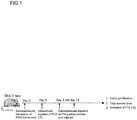
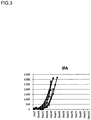
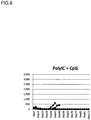
- P815 tumor cells were subcutaneously inoculated to DBA/2 mice in an amount of 5 ⁇ 10 5 cells per mouse. The day of inoculation was specified as Day 0. On Day 8, P1A CTL (2.5 ⁇ 10 5 cells per mouse) were intravenously injected. On Day 9 and Day 16, an admixture of P1A peptide (50 ⁇ g per mouse) and an adjuvant in PBS was subcutaneously injected. Mice were divided into 9 groups each consisting of 5 mice and the following adjuvants were used, respectively.
- Cancer model mice were prepared by subcutaneously inoculating P815 tumor cells (5 ⁇ 10 5 cells per mouse) to DBA/2 mice. The day of inoculation was specified as Day 0. On Day 8, P1A CTL (2.5 ⁇ 10 5 cells per mouse) were intravenously injected. Day 9 and Day 14, an admixture of P1A peptide (50 ⁇ g per mouse) and an adjuvant in PBS was subcutaneously injected. The following adjuvants were used in respective mouse groups.
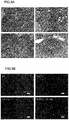
- a tumor tissue was taken and slides of tumor tissue sections were prepared. Thereafter, a tissue image was observed by staining with hematoxylin-eosin; at the same time, cell nuclei and immune cells (CD4 cells and CD8 cells) were stained with a fluorescent dye.
- the following reagents were used in the fluorescent tissue staining.
- Tissue images stained with hematoxylin-eosin are shown in Figure 9A and images of cell nucleus and immune cells stained with a fluorescent dye are shown in Figure 9B .
- LAG-3 and poly IC were used in combination as an adjuvant, significant infiltration of CD4 cells and CD8 cells into a tumor tissue was observed.
- P815 tumor cells were subcutaneously inoculated to DBA/2 mice in an amount of 5 ⁇ 10 5 cells per mouse and used as cancer model mice. The day of inoculation was specified as Day 0. On Day 8, P1A CTL (2.5 ⁇ 10 5 cells per mouse) were intravenously injected. On Day 9 and Day 14, an admixture of P1A peptide (50 ⁇ g per mouse) and an adjuvant in PBS was subcutaneously injected. As an adjuvant, LAG-3 (1 ⁇ g/mouse) + Poly IC (50 ⁇ g/mouse) was used.
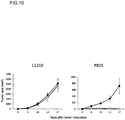
- Figure 10 shows changes in average tumor size (mm 3 ) of mice after inoculation of L1210 cells; whereas, Figure 10 (right) shows changes in average tumor size (mm 3 ) of mice after inoculation of P815 cells.
- open circle represents DBA/2 mice determined as a tumor rejection mice
- closed circle represents naive DBA/2 mice.
- mice In naive DBA/2 mice, an increase in tumor size was observed even if either one of P815 cells and L1210 cells were inoculated. In contrast, in mice determined as rejecting a tumor growth of P815 cells, an increase in tumor size by inoculation of another type of tumor cells, i.e., L1210 cells, was observed; however, an increase in tumor size by P815 cell inoculation was not observed. It was confirmed that an ability to reject the same tumor is maintained.
- P815 tumor cells were subcutaneously inoculated to DBA/2 mice in an amount of 5 ⁇ 10 5 cells per mouse to prepare cancer model mice. The day of inoculation was specified as Day 0. On Day 8, P1A CTL (2.5 ⁇ 10 5 cells per mouse) were intravenously injected. On Day 9 and Day 14, an admixture of P1A peptide (50 ⁇ g per mouse) and an adjuvant in PBS was subcutaneously injected. The following adjuvants were used in respective mice groups.
- lymph nodes in the axilla and inguinal region were taken on Day 21 and immune cells were separated.
- the immune cells (1.5 ⁇ 10 5 cells) and P815 cells (4 ⁇ 10 4 cells) irradiated with 100Gy were co-cultured for 3 days.
- Immune cell proliferative ability was determined by adding 3 H-thymidine (37 KBq/well) to the culture supernatant and measuring the radioactivity of 3 H-thymidine taken in the cells, 4 hours later.
- the amounts of cytokines in the cell supernatant were measured by using Bio-Plex Pro mouse cytokine 23-Plex Immunoassay kit (BIO-RAD).
- P815 tumor cells were subcutaneously inoculated to DBA/2 mice in an amount of 5 ⁇ 10 5 cells per mouse to prepare cancer model mice. The day of inoculation was specified as Day 0. On Day 8, P1A CTL (2.5 ⁇ 10 5 cells per mouse) were intravenously injected. On Day 9 and Day 14, an admixture of P1A peptide (50 ⁇ g per mouse) and an adjuvant in PBS was subcutaneously injected. The following adjuvants were used in respective mice groups.
- lymph nodes in the axilla or inguinal region the lymph node close to a tumor site was taken on Day 21, CD8 and V ⁇ 8.3 expression positive cell group (killer T cells) or CD4 and V ⁇ 8.3 expression positive cell group (helper-T cells) were collected.
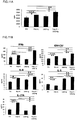
- cell-surface marker molecules on CD4 cells and CD8 cells, i.e., PD-1, BTLA, TIGIT and LAG-3, were measured.
- antibodies against the cell surface marker molecules the following molecules were used.
- B16-F10 melanoma cells (1 ⁇ 10 5 cells per mouse) were subcutaneously inoculated to prepare cancer model mice. The day of inoculation was specified as Day 0. On Day 8, an admixture of gp100 peptide (50 ⁇ g per mouse) and an adjuvant in PBS was subcutaneously injected. The following adjuvants were used in respective mice groups.
- the amino acid sequence of gp100 peptide is represented by KVPRNQDWL (SEQ. ID No: 2) .
- lymph nodes in the axilla or inguinal region were taken on Day 14 and immune cells were separated.
- the immune cells (3 ⁇ 10 5 cells per well) were cultured in the presence of gp100 peptide (10, 5, 2.5, or 0 ⁇ g/mL).
- Immune cell proliferative ability was determined by adding 3 H-thymidine (37 KBq/well) to the culture supernatant and measuring the radioactivity of 3 H-thymidine incorporated in the cells in the final 10 hours of the culture period of 3 days.
- the IFN-gamma production amount in the cell supernatant obtained by culturing 3 days in the presence of gp100 peptide (10 ⁇ g/m) was measured by Bio-Plex Pro mice cytokine 23-Plex Immunoassay kit (BIO-RAD).
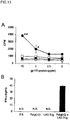
- FIG. 13A Measurement results of immune cell proliferative ability are shown in Figure 13A and measurement results of IFN-gamma production amount are shown in Figure 13B .
- closed circle represents the results of Group 1, open rectangle Group 2, closed rectangle Group 3 and open circle Group 4.
- P815 tumor cells were subcutaneously inoculated to DBA/2 mice in an amount of 5 ⁇ 10 5 cells per mouse to prepare cancer model mice. The day of inoculation was specified as Day 0. On Day 7, P1A CTL (2.5 ⁇ 10 5 cells per mouse) were intravenously injected. Day 8 and Day 15, an admixture of P1A peptide (50 ⁇ g per mouse) and an adjuvant in PBS was subcutaneously injected. Mice were divided into 9 groups each consisting of 4 or 5 mice and the following adjuvants were used respectively.
- B16-F10 melanoma cells (1 ⁇ 10 5 cells per mouse) were subcutaneously inoculated to prepare cancer model mice.
- the day of inoculation was specified as Day 0. On Day5 and Day12, twice in total, an admixture of gp100 peptide (50 ⁇ g per mouse) and an adjuvant in PBS was subcutaneously injected. The following adjuvants were used in respective mice groups.
Landscapes
- Health & Medical Sciences (AREA)
- Life Sciences & Earth Sciences (AREA)
- Chemical & Material Sciences (AREA)
- General Health & Medical Sciences (AREA)
- Public Health (AREA)
- Veterinary Medicine (AREA)
- Animal Behavior & Ethology (AREA)
- Medicinal Chemistry (AREA)
- Epidemiology (AREA)
- Pharmacology & Pharmacy (AREA)
- Immunology (AREA)
- Engineering & Computer Science (AREA)
- Organic Chemistry (AREA)
- Bioinformatics & Cheminformatics (AREA)
- Microbiology (AREA)
- Mycology (AREA)
- Zoology (AREA)
- Proteomics, Peptides & Aminoacids (AREA)
- General Chemical & Material Sciences (AREA)
- Chemical Kinetics & Catalysis (AREA)
- Genetics & Genomics (AREA)
- Gastroenterology & Hepatology (AREA)
- Molecular Biology (AREA)
- Nuclear Medicine, Radiotherapy & Molecular Imaging (AREA)
- Biochemistry (AREA)
- Oncology (AREA)
- Biomedical Technology (AREA)
- Biophysics (AREA)
- Cell Biology (AREA)
- General Engineering & Computer Science (AREA)
- Wood Science & Technology (AREA)
- Biotechnology (AREA)
- Plant Pathology (AREA)
- Physics & Mathematics (AREA)
- Toxicology (AREA)
- Marine Sciences & Fisheries (AREA)
- Medicines Containing Antibodies Or Antigens For Use As Internal Diagnostic Agents (AREA)
- Medicines That Contain Protein Lipid Enzymes And Other Medicines (AREA)
- Pharmaceuticals Containing Other Organic And Inorganic Compounds (AREA)
- Peptides Or Proteins (AREA)
Description
- The present invention relates to a medicine or the like containing a Toll-like receptor agonist and LAG-3 protein, a variant or derivative thereof.
- Recently, cancer immunotherapies targeting cancer antigens expressed specifically in cancer cells have been developed. Of them, a "cancer vaccine therapy" is a method of inducing regression of cancer by administering a cancer antigen directly to patients to induce an immune response specific to a cancer antigen in the patient's body. As the cancer antigen to be administered to a patient, e.g., a cancer-antigen protein itself, a cancer-antigen derived peptide, a nucleic acid encoding them, a dendritic cell presenting a cancer antigen and a cancer cell itself, are used.
- To enhance induction of an immune response by a cancer antigen, an adjuvant is administered together with the cancer antigen. As the adjuvant, e.g., cytokines stimulating various immunocompetent cells and Toll-like receptor (TLR) agonists are used.
- As the TLR agonist serving as an adjuvant, any one of TLR1 to TLR10 agonists can be used (for example,
Non Patent Literatures 1 and 2). For example, TLR3, which recognizes virus-derived double-stranded RNA and accelerates production of type I interferon exerting a strong antiviral action, is a molecule of the innate immune system. A double-stranded RNA analogue, Poly I:C (also called as Polyinosinic:polycytidylic acid), which is known as a TLR3 agonist, is known to be used as a vaccine adjuvant (for example, Patent Literature 1). Also, TLR9, which recognizes a bacterium- or virus-derived unmethylated CpG DNA and exerts an action, is a molecule of the innate immune system. CpG ODN (synthetic nucleic acid CpG oligodeoxynucleotide) serving as a TLR9-ligand is known to have an adjuvant effect for vaccine. - It is known that LAG-3 is also used as an adjuvant for vaccine (for example, Patent Literature 2). LAG-3 is a posttranslational product of
lymphocyte activation gene 3 and also called as CD223. LAG-3 binds to a MHC Class II molecule to negatively control proliferation of activated T cells and homeostasis maintenance of T cells, plays an important role in regulatory T cell (Treg) function and is also known to be involved in homeostatic regulation of plasmacytoid dendritic cells.EP 1 002 108 -
- Patent Literature 1: National Publication of International Patent Application No.
2011-506309 - Patent Literature 2: National Publication of International Patent Application No.
2001-510806 -
- Non Patent Literature 1: OncoImmunology 1: 5, 699-716; August 2012
- Non Patent Literature 2: OncoImmunology 2: 8, e25238; August 2013
- An object of the present invention is to provide a medicine containing a novel combination of adjuvants, as defined in the claims.
- The present inventors conducted various studies using various adjuvants singly or in combination. As a result, they found a novel combination of adjuvants serving as a medicine useful for, for example, inducing cancer immunity.
- More specifically, the present disclosure is as follows.
- [1] A medicine comprising
a Toll-like receptor agonist and
LAG-3 protein, a variant or derivative thereof. - [2] The medicine according to [1] for combined administration of
the Toll-like receptor agonist and
LAG-3 protein, a variant or derivative thereof. - [3] The medicine according to [1] or [2], wherein the Toll-like receptor agonist is Toll-
like receptor 3 agonist or a Toll-like receptor 9 agonist. - [4] The medicine according to any one of [1] to [3], in which the Toll-like receptor agonist is Poly I:C or a salt thereof.
- [5] The medicine according to any one of [1] to [4], wherein the LAG-3 protein, a variant or derivative thereof is a fusion protein of LAG-3 protein and IgG.
- [6] The medicine according to any one of [1] to [5], further comprising a substance for inducing a specific immune response to at least one cancer cell.
- [7] The medicine according to [6], for combined administration of
the Toll-like receptor agonist,
LAG-3 protein, a variant or derivative thereof, and
the substance for inducing a specific immune response to at least one cancer cell. - [8] The medicine according to [6] or [7], wherein the substance for inducing a specific immune response to a cancer cell is a cancer-antigen derived peptide.
- [9] The medicine according to [8], comprising two or more cancer-antigen derived peptides.
- [10] The medicine according to any one of [1] to [9], for use in a cancer vaccine therapy.
- [11] The medicine according to any one of [1] to [10], wherein the medicine is an anti-cancer agent.
- [12] An adjuvant comprising
a Toll-like receptor agonist and
LAG-3 protein, a variant or derivative thereof, for use in inducing a specific immune response to a cancer cell or for use in a cancer vaccine therapy. - [13] A combination comprising
a Toll-like receptor agonist and
LAG-3 protein, a variant or derivative thereof, for use in inducing a specific immune response to a cancer cell or in a cancer vaccine therapy. - [14] A method for treating or preventing a disease in a patient, comprising administering
a Toll-like receptor agonist and
LAG-3 protein, a variant or derivative thereof to a patient in need thereof. - [15] A method for inducing a specific immune response, comprising administering
a Toll-like receptor agonist and
LAG-3 protein, a variant or derivative thereof to a patient in need thereof. - According to the present disclosure, it is possible to provide a medicine containing a new combination of adjuvants.
-
- [
Figure 1] Figure 1 shows a schematic protocol of an experiment for comparing effects of adjuvants in a cancer vaccine using a cancer-antigen derived peptide. - [
Figure 2] Figure 2 is a graph showing changes in tumor size ofGroup 1, in which PBS was used as a control in the experiment ofFigure 1 . - [
Figure 3] Figure 3 is a graph showing changes in tumor size inGroup 2, in which IFA was used as an adjuvant in the experiment ofFigure 1 . - [
Figure 4] Figure 4 is a graph showing changes in tumor size inGroup 3, in which PT was used as an adjuvant in the experiment ofFigure 1 . - [
Figure 5] Figure 5 is a graph showing changes in tumor size inGroup 4, in which Poly I:C was used as an adjuvant in the experiment ofFigure 1 . - [
Figure 6] Figure 6 is a graph showing changes in tumor size inGroup 5, in which a combination of Poly I:C and CpG was used as an adjuvant in the experiment ofFigure 1 . - [
Figure 7] Figure 7 is a graph showing change in tumor size inGroup 6, in which LAG-3 was used as an adjuvant in the experiment ofFigure 1 . - [
Figure 8] Figure 8 is a graph showing change in tumor size inGroup 7, in which LAG-3 and Poly I:C were used as adjuvants in the experiment ofFigure 1 . - [
Figure 9A] Figure 9A shows images of a tumor tissue stained with hematoxylin-eosin in the same experiment as inFigure 1 . - [
Figure 9B] Figure 9B shows images of cell nuclei and immune cells of a tumor tissue stained with a fluorescent dye in the same experiment as inFigure 1 . - [
Figure 10] Figure 10 is a graph showing the measurement results (increase) of tumor size after tumor cells were again inoculated to a mouse in which an increase in tumor size was once successfully suppressed by a cancer vaccine (LAG-3 and Poly I:C were used as adjuvants) in the same experiment as inFigure 1 . - [
Figure 11A] Figure 11A is a graph showing the measurement results of proliferative ability of immune cells, which were prepared by taking a lymph node from a mouse inoculated with a cancer vaccine in the same experiment as inFigure 1 , separating the immune cells from the lymph node, and which were co-culturing with tumor cells previously inactivated by radiation exposure. - [
Figure 11B] Figure 11B shows graphs showing the measurement results of cytokines in the cell supernatant of the same co-culture as in the experiment inFigure 11A . - [
Figure 12A] Figure 12A shows the measurement results of expression of cell surface marker molecules, PD-1, BTLA, TIGIT and LAG-3, present on the surface of CD8 positive immune cells, which were prepared by taking a lymph node from a mouse inoculated with a cancer vaccine in the same experiment as inFigure 1 and separating the immune cells from the lymph node. - [
Figure 12B] Figure 12B shows the measurement results of expression of cell surface marker molecules, PD-1, BTLA, TIGIT and LAG-3, present on the surface of CD4 positive immune cells, which were prepared by taking a lymph node from a mouse inoculated with a cancer vaccine in the same experiment as inFigure 1 and separating the immune cells from the lymph node. - [
Figure 13] Figure 13A is a graph showing measurement results of proliferative ability of immune cells, and -
Figure 13B is a graph showing measurement results of FN-gamma production. - [
Figure 14] Figure 14 is a graph showing changes in tumor size ofGroup 1, in which PBS was used as a control. - [
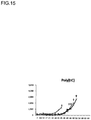
Figure 15] Figure 15 is a graph showing changes in tumor size ofGroup 2, in which Poly I:C was used as an adjuvant. - [
Figure 16] Figure 16 is a graph showing changes in tumor size ofGroup 3, in which LAG-3 and Poly I:C were used as adjuvants. - [
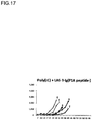
Figure 17] Figure 17 is a graph showing changes in tumor size ofGroup 4, in which LAG-3 and Poly I:C alone were used without using P1A peptide. - [
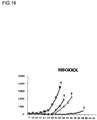
Figure 18] Figure 18 is a graph showing changes in tumor size ofGroup 5, in which RIBOXXOL was used as an adjuvant. - [
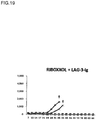
Figure 19] Figure 19 is a graph showing changes in tumor size ofGroup 6, in which a combination of LAG-3 and RIBOXXOL was used as an adjuvant. - [
Figure 20] Figure 20 is a graph showing changes in tumor size ofGroup 7, in which a combination of LAG-3 and MPL was used as an adjuvant. - [
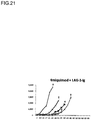
Figure 21] Figure 21 is a graph showing changes in tumor size ofGroup 8, in which a combination of LAG-3 and Imiquimod was used as an adjuvant. - [
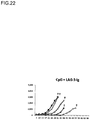
Figure 22] Figure 22 is a graph showing changes in tumor size ofGroup 9, in which a combination of LAG-3 and CpG was used as an adjuvant. - [
Figure 23] Figure 23 is a graph showing changes in tumor size ofGroup 1, in which IFA was used as an adjuvant. - [
Figure 24] Figure 24 is a graph showing changes in tumor size ofGroup 2, in which Poly I:C was used as an adjuvant. - [
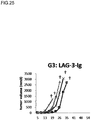
Figure 25] Figure 25 is a graph showing changes in tumor size ofGroup 3, in which LAG-3 was used as an adjuvant. - [
Figure 26] Figure 26 is a graph showing changes in tumor size ofGroup 4, in which LAG-3 and Poly I:C were used as adjuvants. - and disclosure The present invention and disclosure will be more specifically described below by way of embodiments; however, the present invention and disclosure is not limited to the embodiments and can be modified in various ways and carried out.
- A medicine according to the present disclosure includes a Toll-like receptor agonist (TLR agonist) and LAG-3 protein, a variant or derivative thereof.
- In the specification, the "Toll-like receptor agonist (TLR agonist)" refers to a molecule, which binds to any one of Toll-like receptors and provides the same stimulus as the stimulus provided by a natural ligand bound to TLR. As the TLR agonist, TLP agonists described in Trends in Immunology Vol.30 No.1, 23-32, Immunity 33, October 29, 2010, 492-503, and World Journal of Vaccines, 2011, 1, 33-78, are known. These TLRs known in the art each can be used in the TLR agonist of the present disclosure; for example, a TLR3 agonist, TLR4 agonist, TLR7 agonist, TLR8 agonist, TLR9 agonist or TLR10 agonist can be used. Of them, a TLR3 agonist or TLR9 agonist may be used as the TLR agonist.
- In the specification, the "TLR3 agonist" refers to a molecule which binds to TLR3 and provides the same stimulus as the stimulus provided by a natural ligand bound to TLR3. TLR3 recognizes a virus-derived double stranded RNA to activate the innate immune system. As the TLR3 agonist, a synthetic double stranded polynucleotide, Poly I:C, having an analogous structure to double stranded RNA is known; however, the TLR3 agonist is not limited to this. A salt of Poly I:C may be used in the present invention; for example, a sodium salt thereof can be used. As the TLR3 agonist, RIBOXXOL can be used.
- In the specification, the "TLR4 agonist" refers to a molecule which binds to TLR4 and provides the same stimulus as the stimulus provided by a natural ligand bound to TLR4. TLR4 recognizes a bacterium-derived lipopolysaccharide (LPS) to activate the innate immune system. As the TLR4 agonist, MPL is known; however, the TLR4 agonist is not limited to this. A salt of MPL may be used in the present disclosure; for example, a sodium salt thereof can be used.
- In the specification, the "TLR5 agonist" refers to a molecule which binds to TLR5 and provides the same stimulus as the stimulus provided by a natural ligand bound to TLR5. TLR5 recognizes a bacterium-derived Flagellin to activate the innate immune system. As the TLR5 agonist, Flagellin (proteins) derived from various bacteria or recombinant Flagellin proteins are known; however, the TLR5 agonist is not limited to these.
- In the specification, the "TLR7 agonist" refers to a molecule which binds to TLR7 and provides the same stimulus as the stimulus provided by a natural ligand bound to TLR7.
- Also, in the specification, the "TLR8 agonist" refers to a molecule which binds to TLR8 and provides the same stimulus as the stimulus provided by a natural ligand bound to TLR8.
- TLR7 and TLR8 recognize virus-derived single stranded RNA to activate the innate immune system. As the TLR7/8 agonist, Imiquimod is known; however, the TLR7/8 agonist is not limited to this. A salt of Imiquimod may be used in the present disclosure; for example, a sodium salt thereof can be used.
- In the specification, the "TLR9 agonist" refers to a molecule which binds to TLR9 and provides the same stimulus as the stimulus provided by a natural ligand bound to TLR9. TLR9 recognizes bacterium- and virus-derived CpG DNA to activate the innate immune system. As the TLR9 agonist, CpG ODN is known; however, the TLR9 agonist is not limited to this. A salt of CpG ODN may be used in the present disclosure; for example, a sodium salt thereof can be used.
- In the specification "LAG-3 protein, a variant or derivative thereof" refers to LAG-3 protein, a functional variant or derivative thereof. The LAG-3 protein to be used in the present invention may be derived from any animal, for example, the protein can be derived from the same animal as the subject to which a medicine according to the present disclosure is to be administered. More specifically, if a medicine according to the present disclosure is administered to a human, human LAG-3 can be used. Human LAG-3 protein is a protein having an amino acid sequence represented by NCBI Accession No. P18627.5.
- Examples of the functional variant of LAG-3 protein include, (i) an LAG-3 variant consisting of an amino acid sequence, which is the amino acid sequence of LAG-3 having addition, substitution, or deletion of one or several amino acids and having a function of LAG-3 protein required for exerting the effects of the present invention, (ii) an LAG-3 variant having a sequence identity with the amino acid sequence of LAG-3 of at least 80% or more, or 85% or more, 90% or more, 95% or more, 98% or more or 99% or more and having a function of LAG-3 protein required for exerting the effects of the present invention, and (iii) a partial polypeptide of LAG-3 protein, a variant defined in the above (i) or a variant defined in the above (ii) having a function of LAG-3 protein required for exerting the effects of the present invention.
- In the specification, the "one or several amino acids" refers to 1, 2, 3, 4, 5, 6, 7, 8, 9, or 10 amino acids.
- In the specification, the "amino acid" is used in the broadest sense thereof and includes natural amino acids and artificial amino acid variants and derivatives. In the specification, examples of the amino acid include natural protein L-amino acids; D-amino acids; chemically modified amino acids such as amino acid variants and derivatives; natural non-protein amino acids such as norleucine, β-alanine and ornithine; and chemically synthesized compounds having amino acid characteristics known in the art. Examples of non-natural amino acids include α-methyl amino acid (e.g., α-methylalanine), D-amino acid, histidine-like amino acid (e.g., β-hydroxy-histidine, homohistidine, α-fluoromethyl-histidine and α-methyl-histidine), amino acids with extra methylene in a side chain ("homo" amino acids) and amino acids (e.g., cysteine acid) in which the carboxylic acid functional group amino acid in a side chain is substituted with a sulfonic acid group.
- Examples of the functional derivative of LAG-3 protein include a fusion protein of all or part of LAG-3 protein and another protein or a polypeptide, and LAG-3 protein attached with a sugar chain and/or a lipid. As an example of the functional derivative of LAG-3 protein, a fusion protein of LAG-3 and IgG. Examples of the functional derivative of LAG-3 protein include the derivatives described in Journal of Translational Medicine 2014, 12: 97.
- A medicine according to the present disclosure may contain a TLR agonist, LAG-3 protein, a variant or derivative thereof and a substance for inducing a specific immune response to a cancer cell.
- In the specification, the "substance for inducing a specific immune response to a cancer cell" is not particularly limited as long as it is a substance capable of inducing an immune response necessary for breaking cancer cells in-vivo and inducing apoptosis of cancer cells; for example, a cancer-antigen protein, a cancer-antigen derived peptide, nucleic acids encoding them, a cancer antigen-presenting cell and a tumor cell itself are mentioned.
- In the specification, the "cancer-antigen protein" is a protein specially expressed on a cancer cell and recognized/attacked by the immune system as a foreign body. The "cancer-antigen protein" may be expressed on cancer cells of all types and a specific type of cancer. As the cancer-antigen protein, a protein having strong immunogenicity and never be expressed in normal cells, is preferable. Examples of the cancer-antigen protein include, but are not particularly limited to, those described in Clin Cancer Res 2009; 15 (17) 5323. Specific examples thereof include, but are not particularly limited to, WT1, MUC1, LMP2, HPVE6, HPVE7, EGFRv III, HER-2/neu, MAGE-A3, p53nonmutant, HSP70, GPC3, MUC1, Casp8, CDAM1, cMyb, EVC1, EVC2, Helios, Fas, NY-ESO-1, PSMA, GD2, CEA, MelanA/MART1, Ras mutant, gp100, p53 mutant, Proteinase3 (PR1), bcr-abl, Tyrosinase, Survivin, PSA, hTERT, Sarcoma translocation breakpoints, EphA2, PAP, ML-IAP, AFP, EpCAM, ERG, NA17, PAX3, ALK, Androgen receptor, Cyclin B1, Polysialic acid, MYCN, PhoC, TRP-2, GD3, Fucosyl GM1, Mesothelin, PSCA, MAGE A1, sLe, CYP1B1, PLAC1, GM3, BORIS, Tn, GloboH, ETV6-AML, NY-BR-1, RGS5, SART3, STn, Carbonic anhydrase IX, PAX5, OY-TES1,
Sperm protein 17, LCK, HMWMAA, AKAP-4, SSX2, XAGE1, B7H3, Legumain, Tie2, Page4, VEGFR2, MAD-CT-1, FAP, PDGFR, MAD-CT-2 and Fos-relatedantigen 1. - In the specification, the "cancer-antigen derived peptide" refers to a peptide having a part of the amino acid sequence of a cancer-antigen protein, or a peptide having a sequence, which is the same amino acid sequence as above and having addition, substitution or deletion of 1 or 2 amino acids, or a peptide having a sequence identity with the above amino acid sequence of 90% or more, 95% or more, 98% or more, or 99% or more and inducing immune which attacks cancer cells. The cancer-antigen derived peptide may consist of amino acid residues of 8 or more and 11 or less. Such a peptide, if it is subcutaneously administered to a patient, is incorporated into antigen-presenting cells, such as dendritic cells and macrophages, and presented on the surface of the cells together with HLA molecules. Precursor cells of cytotoxic T cell (CTL) having a reactivity to the peptide presented are clonally proliferated and mature CTLs that proliferated and differentiated migrate through the lymph flow into a cancer tissue. The mature CTLs attack a cancer cell on which a peptide having the same sequence as the peptide administered is expressed to induce apoptosis.
- In the specification, the "nucleic acid" is not particularly limited as long as it is a nucleic acid encoding a cancer-antigen protein or a cancer-antigen derived peptide, and includes RNA, DNA, PNA, LNA or a chimeras of two or more of these. These nucleic acids can be inserted into, e.g., a vector, in accordance with a known method, and then administered to patients and express a cancer-antigen protein or a cancer-antigen derived peptide, in vivo.
- In the specification, the "cancer antigen-presenting cell" refers to an antigen-presenting cell presenting a cancer-antigen derived peptide on the surface thereof via binding to an HLA molecule. As the antigen-presenting cell, dendritic cells and macrophages can be used. The dendritic cells have particularly high CTL inducibility. The antigen-presenting dendritic cells can be obtained, for example, by separating mononuclear cells from the patient's own peripheral blood, differentiating the mononuclear cells into immature dendritic cells and thereafter further differentiating mature dendritic cells by adding a cancer-antigen protein or a cancer-antigen derived peptide to a medium.
- As a cancer vaccine presently under development, vaccines using dendritic cells sensitized with a tumor cell extract, dendritic cells sensitized with a cancer antigen/GM-CSF fusion protein and a combination of noninfectious virus-like particles of a HPV-derived L1 protein and an adjuvant, are known. These are included in the "substance for inducing a specific immune response to a cancer cell".
- A medicine according to the present invention may contain at least two types of "substances inducing a specific immune response to a cancer cell". For example, a medicine according to the present disclosure can contain two or more different cancer-antigen derived peptides.
- A medicine according to the present disclosure can be used as a cancer vaccine therapy. In this case, a TLR agonist and LAG-3 protein, a variant or derivative thereof serve as adjuvants and enhance induction of an immune response by a "substance for inducing a specific immune response to a cancer cell". As shown in Examples (later described), when the TLR agonist and LAG-3 protein are used in combination, an extremely high antitumor effect can be obtained even at a low dose at which no effect is obtained when they are used alone.
- In the specification, the "adjuvant" refers to a molecule(s), which is administered together with a substance for inducing an immune response to enhance induction of the immune response.
- A cancer vaccine therapy can be used for prevention or treatment of cancer. In the specification, prevention or treatment of cancer refers to causing at least one of phenomenon: a decrease in tumor size, delay or termination of increase in tumor size, inhibition (delay or termination) of cancer metastasis, inhibition (delay or termination) of proliferation of cancer cells, inhibition (delay or termination) of cancer recurrence, and mitigation of one or more of symptoms associated with cancer.
- In the specification, the term "cancer" is used in the broadest sense thereof. Examples of the cancer include, but are not limited to, astrocytoma, oligodendroglioma, meningioma, neurofibroma, glioblastoma, ependymoma, neurilemmoma, neurofibrosarcoma, neuroblastoma, pituitary tumor (for example, for pituitary adenoma), medulloblastoma, melanoma, brain tumor, prostate cancer, head and neck cancer, esophageal cancer, renal cancer, renal cell carcinoma, pancreatic cancer, breast cancer, lung cancer, colon cancer, colorectal cancer, stomach cancer, skin cancer, ovarian cancer, bladder cancer, fibrosarcoma, squamous cell carcinoma, neuroectodermal tumor, thyroid tumor, lymphoma, leukemia, multiple myeloma, hepatocellular carcinoma, mesothelioma and epidermoid carcinoma.
- The present disclosure includes an adjuvant including a TLR agonist and LAG-3 protein, a variant or derivative thereof, for use in a cancer vaccine therapy. The TLR agonist is an adjuvant to be administered in combination with LAG-3 protein, a variant or derivative thereof; whereas LAG-3 protein, a variant or derivative thereof can be an adjuvant to be administered in combination with the TLR agonist. Such adjuvants may be administered to a patient together with various "substances inducing a specific immune response to a cancer cell". The term "together" used herein does not mean concurrent administration but means that a TLR agonist and LAG-3 protein, a variant or derivative thereof are administered to a patient such that the TLR agonist and LAG-3 protein, a variant or derivative thereof can function as adjuvants in accordance with a cancer vaccine therapy, in vivo (of a patient's body) and ex vivo.
- In the present disclosure, a medicine containing a TLR agonist for combined administration with LAG-3 protein, a variant or derivative thereof may be provided; or a medicine containing LAG-3 protein, a variant or derivative thereof for combined administration with a TLR agonist may be provided.
- Also, in the present disclosure, a medicine containing a TLR agonist for combined administration with a substance for inducing a specific immune response to a cancer cell and LAG-3 protein, a variant or derivative thereof may be provided. The medicine containing a TLR agonist can act, with LAG-3 protein, a variant or derivative thereof as adjuvants, to enhance induction of immune response by a substance for inducing a specific immune response to a cancer cell, preferably, a cancer-antigen derived peptide. In the present disclosure, a medicine containing LAG-3 protein, a variant or derivative thereof for combined administration with a substance for inducing a specific immune response to a cancer cell and a TLR agonist may be provided. The medicine containing LAG-3 protein, a variant or derivative thereof can act, with a TLR agonist as adjuvants, to enhance induction of immune response by a substance for inducing a specific immune response to a cancer cell, preferably a cancer-antigen derived peptide.
- In a medicine containing a TLR agonist and LAG-3 protein, a variant or derivative thereof according to the present disclosure, the TLR agonist and LAG-3 protein, a variant or derivative thereof can be used as active ingredients of the medicine. The medicine containing a TLR agonist and LAG-3 protein, a variant or derivative thereof as active ingredients according to the present disclosure, as shown in Examples (described later), can be used as an anti-cancer agent having a high antitumor effect. In the specification, the "anti-cancer agent" refers to an agent that can be used for preventing or treating cancer. The medicine serving as an anti-cancer agent may contain a TLR agonist and LAG-3 protein, a variant or derivative thereof as active ingredients, and may further contain a substance for inducing a specific immune response to a cancer cell.
- In the present disclosure, a medicine serving as an anti-cancer agent contains a substance for inducing a specific immune response to a cancer cell, preferably, a cancer-antigen derived peptide, as an active ingredient, and may contain a TLR agonist and LAG-3 protein, a variant or derivative thereof as adjuvants.
- Components of a medicine according to the present disclosure are dissolved in a water-soluble solvent to prepare pharmaceutically acceptable salts and a preparation containing the components in the salt form can be administered to patients. Examples of such pharmaceutically acceptable salts include physiologically acceptable water-soluble salts such as a sodium salt, a potassium salt, a magnesium salt and a calcium salt, which are adjusted to have physiological pH by a buffer. Other than water-soluble solvents, a nonaqueous solvent can be used. Examples of the nonaqueous solvent include alcohols such as ethanol and propylene glycol.
- A medicine according to the present disclosure can be used as a pharmaceutical composition, which has any dosage form orally or parenterally administrated. The dosage form is not particularly limited. Examples of the dosage form of a pharmaceutical composition can include a liquid (for example, an injection), a dispersant, a suspension, a tablet, a pill, a powdered drug, a suppository, a powder, a fine grain, a granule, a capsule, syrup, a nasal drop and an ear drop.
- A medicine according to the present disclosure, if it is used as a cancer vaccine, can be orally or parenterally administered. As parenteral administration, for example, intraperitoneal administration, subcutaneous administration, intradermal administration, intramuscular administration, intravenous administration or intranasal administration can be employed.
- A preparation of a medicine according to the present disclosure can be produced in accordance with a method known in the art. In the preparation of a medicine according to the present disclosure, pharmaceutically acceptable carriers and additives (such as an excipient, a binder, a dispersant, a disintegrant, a lubricant, a solvent, a solubilizer, a coloring agent, a flavoring agent, a stabilizer, an emulsifier, a suspending agent, an absorption promoter, a surfactant, a pH adjustor, a preservative and an antioxidant) may be used. Examples of the carriers and additives include pharmaceutically acceptable organic solvents such as water, saline, a phosphate buffer, dextrose, glycerol and ethanol, collagen, polyvinyl alcohol, polyvinylpyrrolidone, a carboxyvinyl polymer, sodium carboxymethylcellulose, sodium polyacrylate, sodium alginate, water-soluble dextran, sodium carboxymethyl starch, pectin, glutamic acid, aspartic acid, methylcellulose, ethylcellulose, hydroxypropylcellulose, hydroxypropylmethylcellulose, xanthan gum, gum arabic, casein, agar, polyethylene glycol, diglycerin, glycerin, propylene glycol, vaseline, paraffin, stearyl alcohol, stearic acid, human serum albumin, mannitol, sorbitol, lactose, glucose, corn starch, microcrystalline cellulose, a surfactant, sodium bisulfite, sodium bisulfate, sodium thiosulfate, benzalkonium chloride, chlorobutanol, thimerosal, phenylmercuric acetate, phenylmercuric nitrate, methyl paraben, phenylethyl alcohol, ammonia, dithiothreitol, beta mercaptoethanol, sodium carbonate, sodium borate, sodium phosphate, sodium acetate, sodium bicarbonate, sucrose, powdered sugar, sucrose, fructose, glucose, lactose, reduced malt sugar syrup, powdered reduced malt sugar syrup, glucose fructose syrup, fructose glucose sugar, honey, erythritol, aspartame, saccharin, saccharin sodium and gelatin.
- When a medicine according to the present disclosure contains a peptide, an absorption enhancer for improving absorption of a poorly absorbable drug (hard-to-transmucosally absorbed drug), such as a peptide, may be used. Examples thereof include surfactants such as a polyoxyethylene lauryl ether, sodium lauryl sulfate and saponin; bile salts such as glycocholic acid, deoxycholic acid and taurocholic acid; chelating agents such as EDTA and salicyl bile salt; fatty acids such as caproic acid, capric acid, lauric acid, oleic acid, linoleic acid and mixed micelle; an enamine derivative, a N-acyl collagen peptide, a N-acyl amino acid, a cyclodextrin, a chitosan and a nitric oxide donor.
- When a medicine according to the present disclosure contains a peptide, the medicine is encapsulated in e.g., polylactic acid/glycolic acid (PLGA) microcapsules or allowed to adsorb to porous hydroxyapatite fine particles to prepare a sustained release medicine, or the medicine is applied to a pulsed release iontophoresis patch system to prepare a transdermal absorbent.
- A medicine according to the present disclosure may be a single preparation containing a TLR agonist and LAG-3 protein, a variant or derivative thereof or may be a combination of different preparations, i.e., a preparation containing a TLR agonist and a preparation containing LAG-3 protein, a variant or derivative thereof.
- Also a medicine according to the present disclosure may be a single preparation containing a substance for inducing a specific immune response to a cancer cell, a TLR agonist and LAG-3 protein, a variant or derivative thereof or may be a combination of different preparations, i.e., a preparation containing a substance for inducing a specific immune response to a cancer cell, a preparation containing a TLR agonist, and a preparation containing LAG-3 protein, a variant or derivative thereto. More specifically, a preparation containing two types of components selected from a substance for inducing a specific immune response to a cancer cell, a TLR agonist and LAG-3 protein, a variant or derivative thereof may be used in combination with a preparation containing the other remaining component. As long as a combination of three types of components is provided, a preparation containing any two types of components and a preparation containing any two types of components, may be used in combination.
- A medicine according to the present disclosure may be provided in kit form. In the case of a kit, the kit may contain a TLR agonist and LAG-3 protein, a variant or derivative thereof, or may contain a substance for inducing a specific immune response to a cancer cell, a TLR agonist and LAG-3 protein, a variant or derivative thereof.
- A medicine according to the present disclosure, if it is used as a cancer vaccine, may contain additional adjuvants. Non-limiting examples of the additional adjuvants include sedimentary adjuvants such as aluminum hydroxide, sodium hydroxide, aluminum phosphate, calcium phosphate, alum and carboxyvinyl polymer, and oily adjuvants such as Freund's complete adjuvant, Freund's incomplete adjuvant, liquid paraffin, lanolin, montanide ISA763AV and montanide ISA51.
- A medicine according to the present disclosure may be used in combination with other anti-cancer agents in any embodiment and may be used in combination with a radiation therapy and a surgical treatment. Examples of other anti-cancer agent include low molecular compounds such as adriamycin, daunomycin, mitomycin, cisplatin, vincristine, epirubicin, methotrexate, 5-fluorouracil, aclacinomycin, nitrogen mustard, cyclophosphamide, bleomycin, daunorubicin, doxorubicin, vincristine, vinblastine, vindesine, tamoxifen, and dexamethasone; and proteins such as cytokines activating immunocompetent cells (for example,
human interleukin 2, human granulocyte macrophage colony stimulating factor, human macrophage colony stimulating factor, and human interleukin 12). - The present disclosure includes a method for treating cancer by administering a medicine according to the present disclosure in a therapeutically effective dose. The therapeutically effective dose can be appropriately determined by those skilled in the art depending upon e.g., the symptoms, age, sex, body weight and sensitivity difference of the patient, the administration method, the administration interval and type of preparation.
- In the present invention, it is possible to treat or prevent a patient's disease by administering a TLR agonist and LAG-3 protein, a variant or derivative thereof to a patient in need thereof. In the present disclosure, a method for inducing a specific immune response to a cancer cell by administering a TLR agonist and LAG-3 protein, a variant or derivative thereof, to a patient in need thereof, is provided.
- In treating or preventing a patient's disease or in a method for inducing a specific immune response to a cancer cell, a substance for inducing a specific immune response to a cancer cell, preferably, a cancer-antigen derived peptide, may be further administered.
- A medicinal effect of a substance for inducing a specific immune response to a cancer cell, preferably a cancer-antigen derived peptide, can be more strongly exerted by inducing a specific immune response to a cancer cell.
- A medicine according to the present disclosure is preferably used for combined administration.
- The use of a medicine according to the present disclosure in combined administration means that a TLR agonist and LAG-3 protein, a variant or derivative thereof may be administered to a patient in any combination at the same time or different times. If a medicine according to the present disclosure contains a substance for inducing a specific immune response to a cancer cell, the substance for inducing a specific immune response to a cancer cell, a TLR agonist and LAG-3 protein, a variant or derivative thereof may be administered in any combination at the same time or different times.
- In administering components at the same time, the components may be administered in single dosage form at the same time; more specifically, a TLR agonist and LAG-3 protein, a variant or derivative thereof may be mixed at the time of administration to prepare a dosing preparation and administered at the same time.
- In administering components at different times, a TLR agonist is administered, and thereafter, LAG-3 protein, a variant or derivative thereof may be administered; or LAG-3 protein, a variant or derivative thereof is administered and thereafter a TLR agonist may be administered.
- In administering components at the same time if a medicine according to the present disclosure contains a substance for inducing a specific immune response to a cancer cell, the components may be administered in single dosage form at the same time; more specifically, the substance for inducing a specific immune response to a cancer cell, a TLR agonist and LAG-3 protein, a variant or derivative thereof may be mixed at the time of administration to prepare a dosing preparation and administered at the same time.
- In administering components at different times, the substance for inducing a specific immune response to a cancer cell is administered, and thereafter, a TLR agonist and LAG-3 protein, a variant or derivative thereof are administered at the same time or different times; or the TLR agonist and LAG-3 protein, a variant or derivative thereof may be administered at the same time or different times, and thereafter, the substance for inducing a specific immune response to a cancer cell may be administered. Alternatively, one of the TLR agonist and LAG-3 protein, a variant or derivative thereof is administered, and thereafter, the substance for inducing a specific immune response to a cancer cell is administered, and then, the other one of the TLR agonist and the LAG-3 protein, a variant or derivative thereof, may be administered. In administering the components at different times, the components may be administered based on the properties and the dose interval of individual components, in other words, based on the dosing regimens of the individual components.
- Now, the present invention will be described based on Example; however, the present invention is not limited to this.
- In accordance with the protocol shown in
Figure 1 , the effects of adjuvants in cancer vaccines using a cancer-antigen derived peptide were compared. - As cancer model mice, DBA/2 mice, to which P815 cells (DBA/2mous-derived mouse mastocytoma) were grafted, were put in use.
- As a cancer-antigen derived peptide, a peptide (hereinafter referred to as "P1A peptide") consisting of a partial sequence of P1A protein was used, which is a tumor antigen of P815 tumor and known to be restrictively presented by an MHC H-2Ld. The amino acid sequence of P1A peptide are represented by LPYLGWLVF (SEQ. ID No: 1).
- As P1A CTL, a T cell expressing a T cell receptor and recognizing P1A peptide was used. In the experiment, the spleen was taken out from a P1A-CTL transgenic mouse that the present inventors possessed and a positive ratio was checked by TCR Vα 8.3 (TCR marker obtained by gene introduction). Based on the positive ratio, the number of P1A-CTL cells was determined and administered.
- As the adjuvants, the following substances were used.
- Whole pertussis bacterial cell (PT) (BioFarma, Bandung, Indonesia)
- Poly I:C (TLR3 agonist) (Invivogen, SanDiego, USA) CpG (TLR9 agonist) (Invivogen, SanDiego, USA)
- IFA (incomplete Freund's adjuvant) (Seppic, Paris, France)
- LAG-3 (Adipogen, SanDiego, USA)
- P815 tumor cells were subcutaneously inoculated to DBA/2 mice in an amount of 5 × 10⁵ cells per mouse. The day of inoculation was specified as
Day 0. OnDay 8, P1A CTL (2.5 × 10⁵ cells per mouse) were intravenously injected. OnDay 9 and Day 16, an admixture of P1A peptide (50 µg per mouse) and an adjuvant in PBS was subcutaneously injected. Mice were divided into 9 groups each consisting of 5 mice and the following adjuvants were used, respectively. - Group 1: PBS (Control)
- Group 2: IFA (50 µL/mouse)
- Group 3: PT (1 × 10⁸/mouse)
- Group 4: Poly IC (50 µg/mouse)
- Group 5: Poly IC (50 µg/mouse) + CPG (10 µg/mouse)
- Group 6: LAG-3 (1 µg/mouse)
- Group 7: LAG-3 (1 µg/mouse) + Poly IC (50 µg/mouse)
- Changes in tumor size (mm3) of all mice on and after
Day 7 are shown inFigures 2 to 8 . - In all of
Groups 1 to 6, tumor sizes gradually increased and mice mostly died in the middle. The number of mice survived until Day 70 without increasing tumor size was 0 inGroups Groups Group 5; however, inGroup 7, an increase in tumor size was not observed in all 5 mice and the mice survived until Day 115. - Cancer model mice were prepared by subcutaneously inoculating P815 tumor cells (5 × 10⁵ cells per mouse) to DBA/2 mice. The day of inoculation was specified as
Day 0. OnDay 8, P1A CTL (2.5 × 10⁵ cells per mouse) were intravenously injected.Day 9 andDay 14, an admixture of P1A peptide (50 µg per mouse) and an adjuvant in PBS was subcutaneously injected. The following adjuvants were used in respective mouse groups. - Group 1: IFA (50 µL/mouse)
- Group 2: Poly IC (50 µg/mouse)
- Group 3: LAG-3 (1 µg/mouse)
- Group 4: LAG-3 (1 µg/mouse) + Poly IC (50 µg/mouse)
- On
Day 21, a tumor tissue was taken and slides of tumor tissue sections were prepared. Thereafter, a tissue image was observed by staining with hematoxylin-eosin; at the same time, cell nuclei and immune cells (CD4 cells and CD8 cells) were stained with a fluorescent dye. - The following reagents were used in the fluorescent tissue staining.
- Cell nucleus: ProLongR Gold Antifade Reagent with DAPI (Invitrogen)
- CD4 cell primary antibody: Rat Anti-Mouse CD4 Purified IgG2b. Clone: GK1.5 (eBioscience)
- CD4 cell secondary antibody: Mouse monoclonal (2B 10A8) Anti-Rat IgG2b heavy chain (Alexa FluorR 647), (abcam)
- CD8 cell primary antibody: Rat Anti-Mouse CD8α Purified IgG2a. Clone: 53-6.7 (eBioscience)
- CD8 cell secondary antibody: Mouse monoclonal (2A 8F4) Anti-Rat IgG2a heavy chain (Alexa FluorR 488) (abcam)
- Tissue images stained with hematoxylin-eosin are shown in
Figure 9A and images of cell nucleus and immune cells stained with a fluorescent dye are shown inFigure 9B . When LAG-3 and poly IC were used in combination as an adjuvant, significant infiltration of CD4 cells and CD8 cells into a tumor tissue was observed. - P815 tumor cells were subcutaneously inoculated to DBA/2 mice in an amount of 5 × 10⁵ cells per mouse and used as cancer model mice. The day of inoculation was specified as
Day 0. OnDay 8, P1A CTL (2.5 × 10⁵ cells per mouse) were intravenously injected. OnDay 9 andDay 14, an admixture of P1A peptide (50 µg per mouse) and an adjuvant in PBS was subcutaneously injected. As an adjuvant, LAG-3 (1 µg/mouse) + Poly IC (50 µg/mouse) was used. - Subsequently, to DBA/2 mice caused no increase in tumor size even if P815 tumor cells were inoculated, and determined as rejecting a tumor, and naive DBA/2 mice to which no treatment was applied, again P815 tumor cells (1 × 10⁶ cells per mouse) or L1210 tumor cells (1 × 10⁶ cells per mouse) were subcutaneously inoculated. To DBA/2 mice determined as rejecting a tumor, the tumor cells were again inoculated on Day 115 after the first inoculation of P815 tumor cells.
-
Figure 10 (left) shows changes in average tumor size (mm3) of mice after inoculation of L1210 cells; whereas,Figure 10 (right) shows changes in average tumor size (mm3) of mice after inoculation of P815 cells. In both figures, open circle represents DBA/2 mice determined as a tumor rejection mice, and closed circle represents naive DBA/2 mice. - In naive DBA/2 mice, an increase in tumor size was observed even if either one of P815 cells and L1210 cells were inoculated. In contrast, in mice determined as rejecting a tumor growth of P815 cells, an increase in tumor size by inoculation of another type of tumor cells, i.e., L1210 cells, was observed; however, an increase in tumor size by P815 cell inoculation was not observed. It was confirmed that an ability to reject the same tumor is maintained.
- P815 tumor cells were subcutaneously inoculated to DBA/2 mice in an amount of 5 × 10⁵ cells per mouse to prepare cancer model mice. The day of inoculation was specified as
Day 0. OnDay 8, P1A CTL (2.5 × 10⁵ cells per mouse) were intravenously injected. OnDay 9 andDay 14, an admixture of P1A peptide (50 µg per mouse) and an adjuvant in PBS was subcutaneously injected. The following adjuvants were used in respective mice groups. - Group 1: IFA (50 µL/mouse)
- Group 2: Poly IC (50 µg/mouse)
- Group 3: LAG-3 (1 µg/mouse)
- Group 4: LAG-3 (1 µg/mouse) + Poly IC (50 µg/mouse)
- Of the lymph nodes in the axilla and inguinal region, the lymph node close to a tumor site was taken on
Day 21 and immune cells were separated. The immune cells (1.5 × 10⁵ cells) and P815 cells (4 × 10⁴ cells) irradiated with 100Gy were co-cultured for 3 days. - Immune cell proliferative ability was determined by adding 3H-thymidine (37 KBq/well) to the culture supernatant and measuring the radioactivity of 3H-thymidine taken in the cells, 4 hours later.
- The amounts of cytokines in the cell supernatant were measured by using Bio-Plex Pro mouse cytokine 23-Plex Immunoassay kit (BIO-RAD).
- Measurement results of immune cell proliferative ability are shown in
Figure 11A and measurement results of cytokines are shown inFigure 11B . - In a case of using a combination of LAG-3 and poly IC as an adjuvant, immune cell proliferative ability increased. Among the cytokines, IFN-gamma, GM-CSF, IL-4, IL-5 and IL-17A were found to increase in production when LAG-3 and poly IC were used in combination as an adjuvant.
- P815 tumor cells were subcutaneously inoculated to DBA/2 mice in an amount of 5 × 10⁵ cells per mouse to prepare cancer model mice. The day of inoculation was specified as
Day 0. OnDay 8, P1A CTL (2.5 × 10⁵ cells per mouse) were intravenously injected. OnDay 9 andDay 14, an admixture of P1A peptide (50 µg per mouse) and an adjuvant in PBS was subcutaneously injected. The following adjuvants were used in respective mice groups. - Group 1: IFA (50 µL/mouse)
- Group 2: Poly IC (50 µg/mouse)
- Group 3: LAG-3 (1 µg/mouse)
- Group 4: LAG-3 (1 µg/mouse) + Poly IC (50 µg/mouse)
- Of the lymph nodes in the axilla or inguinal region, the lymph node close to a tumor site was taken on
Day 21, CD8 and Vα 8.3 expression positive cell group (killer T cells) or CD4 and Vα 8.3 expression positive cell group (helper-T cells) were collected. - Expression levels of cell-surface marker molecules (on CD4 cells and CD8 cells), i.e., PD-1, BTLA, TIGIT and LAG-3, were measured. As antibodies against the cell surface marker molecules, the following molecules were used.
- PD-1: Anti-mouse CD279 (PD-1) PE. Clone: J43 (eBioscience)
- BTLA: Anti-mouse CD272 (BTLA) PE. Clone: 8F4 (eBioscience)
- TIGIT: PE anti-mouse TIGIT (Vstm3) Antibody. Clone: 1G9 (BioLegend)
- LAG-3: Anti-mouse CD223 (Lag-3) PE. Clone: eBioC9B7W (C9B7W) (eBioscience)
- The results of CD8 cells are shown in
Figure 12A and the results of CD4 cells are shown inFigure 12B . - When a combination of LAG-3 and poly IC was used as an adjuvant, significant decreases in expression level of PD-1, TIGIT and LAG-3 were observed both in CD4 positive cells and CD8 positive cells; however, the decrease in expression level of BTLA was low.
- To C57BL/6 mice, B16-F10 melanoma cells (1 × 10⁵ cells per mouse) were subcutaneously inoculated to prepare cancer model mice. The day of inoculation was specified as
Day 0. OnDay 8, an admixture of gp100 peptide (50 µg per mouse) and an adjuvant in PBS was subcutaneously injected. The following adjuvants were used in respective mice groups. The amino acid sequence of gp100 peptide is represented by KVPRNQDWL (SEQ. ID No: 2) . - Group 1: IFA (50 µL/mouse)
- Group 2: Poly IC (50 µg/mouse)
- Group 3: LAG-3 (1 µg/mouse)
- Group 4: LAG-3 (1 µg/mouse) + Poly IC (50 µg/mouse)
- Of the lymph nodes in the axilla or inguinal region, the lymph node close to a tumor site (or both lymph nodes) was taken on
Day 14 and immune cells were separated. The immune cells (3 × 10⁵ cells per well) were cultured in the presence of gp100 peptide (10, 5, 2.5, or 0 µg/mL). - Immune cell proliferative ability was determined by adding 3H-thymidine (37 KBq/well) to the culture supernatant and measuring the radioactivity of 3H-thymidine incorporated in the cells in the final 10 hours of the culture period of 3 days.
- The IFN-gamma production amount in the cell supernatant obtained by culturing 3 days in the presence of gp100 peptide (10 µg/m) was measured by Bio-Plex Pro mice cytokine 23-Plex Immunoassay kit (BIO-RAD).
- Measurement results of immune cell proliferative ability are shown in
Figure 13A and measurement results of IFN-gamma production amount are shown inFigure 13B . InFigure 13A , closed circle represents the results ofGroup 1,open rectangle Group 2,closed rectangle Group 3 andopen circle Group 4. - Even if B16-F10 melanoma inoculation model mice were used, if a combination of LAG-3 and poly IC was used as an adjuvant, an increase of immune cell proliferative ability specific to gp100 tumor antigen and an increase of IFN-gamma production were observed.
- It was confirmed that when a combination of LAG-3 and poly IC was used as an adjuvant, a significant activation effect on the immune system can be exerted regardless of the tumor model system and the type of peptide serving as an immune antigen.
- The following substances were used as adjuvants.
- Poly I:C (TLR3 agonist) (Invivogen, SanDiego, USA) RIBOXXOL (TLR3 agonist) (Riboxx, Radebeul, Germany) MPL (TLR4 agonist) (Invivogen, SanDiego, USA)
- Imiquimod (TLR7/8 agonist) (Invivogen, SanDiego, USA)
- CpG (TLR9 agonist) (Invivogen, SanDiego, USA)
- LAG-3 (Adipogen, SanDiego, USA)
- P815 tumor cells were subcutaneously inoculated to DBA/2 mice in an amount of 5 × 10⁵ cells per mouse to prepare cancer model mice. The day of inoculation was specified as
Day 0. OnDay 7, P1A CTL (2.5 × 10⁵ cells per mouse) were intravenously injected.Day 8 andDay 15, an admixture of P1A peptide (50 µg per mouse) and an adjuvant in PBS was subcutaneously injected. Mice were divided into 9 groups each consisting of 4 or 5 mice and the following adjuvants were used respectively. - Group 1: P1A peptide alone (control)
- Group 2: Poly IC (50 µg/mouse)
- Group 3: Poly IC (50 µg/mouse) + LAG-3 (1 µg/mouse)
- Group 4: No P1A peptide, Poly IC (50 µg/mouse) + LAG-3 (1 µg/mouse) alone
- Group 5: RIBOXXOL (100 µg/mouse)
- Group 6: RIBOXXOL (100 µg/mouse) + LAG-3 (1 µg/mouse)
- Group 7: MPL (10 µg/mouse) + LAG-3 (1 µg/mouse)
- Group 8: Imiquimod (50 µg/mouse) + LAG-3 (1 µg/mouse)
- Group 9: CpG (10 µg/mouse) + LAG-3 (1 µg/mouse)
- Change in tumor size (mm3) with respect to all mice on and after
Day 7 are shown inFigures 14 to 20 . - In
Group Group Group Group Groups 5 to 7 survived. In addition, inGroup Day 66. A combination effect of adjuvants was demonstrated by comparing betweenGroups 2 to 4 andGroups Group 4 where P1A peptide was not administered, all mice died up toDay 43. It was demonstrated that administration of both an adjuvant and P1A peptide is preferable. - To C57BL/6 mice, B16-F10 melanoma cells (1 × 10⁵ cells per mouse) were subcutaneously inoculated to prepare cancer model mice.
- The day of inoculation was specified as
Day 0. On Day5 and Day12, twice in total, an admixture of gp100 peptide (50 µg per mouse) and an adjuvant in PBS was subcutaneously injected. The following adjuvants were used in respective mice groups. - Group 1: IFA (50 µL/mouse)
- Group 2: Poly IC (50 µg/mouse)
- Group 3: LAG-3 (1 µg/mouse)
- Group 4: LAG-3 (1 µg/mouse) + Poly IC (50 µg/mouse)
- Changes in tumor size (mm3) of all mice on and after
Day 5 are shown inFigures 21 to 24 . Five mice all died onDay 31 inGroup 1, onDay 35 inGroup 2 and on Day 37 inGroup 3. In contrast, five mice died inGroup 4 on Day57. Compared toGroup 1, a significant effect of extending survival time was not observed inGroups Group 4 was significantly extended compared to any one ofGroups -
- SEQ. ID No: 1 represents the amino acid sequence of P1A peptide.
- SEQ. ID No: 2represnts the amino acid sequence of gp100 peptide.
-
- <110> NEC Corporation
- <120> Pharmaceutical Composition for Treatment of Cancer
- <130> 6470A98017
- <160> 2
- <170> PatentIn version 3.5
- <210> 1
<211> 9
<212> PRT
<213> Mus musculus - <400> 1

- <210> 2
<211> 9
<212> PRT
<213> Homo sapiens - <400> 2

Claims (9)
- An adjuvant comprising
a Toll-like receptor 3 agonist and
LAG-3 protein, a functional variant or derivative thereof. - The adjuvant according to claim 1, wherein the Toll-like receptor 3 agonist is Poly I:C or a salt thereof.
- The adjuvant according to claims 1 or 2, wherein the LAG-3 protein, a functional variant or derivative thereof is a fusion protein of LAG-3 protein and IgG.
- An adjuvant according to any one of claims 1 to 3 for use in a method of inducing a specific immune response to a cancer cell, wherein said method further comprises the administration of a substance for inducing a specific immune response to at least one type of cancer cell.
- The adjuvant for use according to claim 4, for combined administration of
the Toll-like receptor 3 agonist and
LAG-3 protein, a functional variant or derivative thereof. - The adjuvant for use according to any claims 4 or 5, for combined administration of
the Toll-like receptor 3 agonist,
LAG-3 protein, a functional variant or derivative thereof, and
the substance for inducing a specific immune response to at least one type of cancer cell. - The adjuvant for use according to any one of claims 4 to 6, wherein
the substance for inducing a specific immune response to a cancer cell is a cancer-antigen derived peptide. - The adjuvant for use according to claim 7, comprising two or more cancer-antigen derived peptides.
- A medicine, comprising the adjuvant or the adjuvant for use according to any one of claims 1 to 7, wherein the medicine further comprises a substance for inducing a specific immune response to at least one type of cancer cell.
Priority Applications (1)
| Application Number | Priority Date | Filing Date | Title |
|---|---|---|---|
| EP20204940.9A EP3797794A1 (en) | 2015-04-07 | 2016-04-07 | Medicine comprising a toll like receptor 3 agonist and a lag-3 protein |
Applications Claiming Priority (4)
| Application Number | Priority Date | Filing Date | Title |
|---|---|---|---|
| JP2015078684 | 2015-04-07 | ||
| JP2015198066 | 2015-10-05 | ||
| JP2016032046 | 2016-02-23 | ||
| PCT/JP2016/061463 WO2016163489A1 (en) | 2015-04-07 | 2016-04-07 | Medicine |
Related Child Applications (2)
| Application Number | Title | Priority Date | Filing Date |
|---|---|---|---|
| EP20204940.9A Division-Into EP3797794A1 (en) | 2015-04-07 | 2016-04-07 | Medicine comprising a toll like receptor 3 agonist and a lag-3 protein |
| EP20204940.9A Division EP3797794A1 (en) | 2015-04-07 | 2016-04-07 | Medicine comprising a toll like receptor 3 agonist and a lag-3 protein |
Publications (3)
| Publication Number | Publication Date |
|---|---|
| EP3281641A1 EP3281641A1 (en) | 2018-02-14 |
| EP3281641A4 EP3281641A4 (en) | 2018-12-19 |
| EP3281641B1 true EP3281641B1 (en) | 2020-12-16 |
Family
ID=57072456
Family Applications (2)
| Application Number | Title | Priority Date | Filing Date |
|---|---|---|---|
| EP20204940.9A Withdrawn EP3797794A1 (en) | 2015-04-07 | 2016-04-07 | Medicine comprising a toll like receptor 3 agonist and a lag-3 protein |
| EP16776655.9A Active EP3281641B1 (en) | 2015-04-07 | 2016-04-07 | Adjuvant for cancer vaccines |
Family Applications Before (1)
| Application Number | Title | Priority Date | Filing Date |
|---|---|---|---|
| EP20204940.9A Withdrawn EP3797794A1 (en) | 2015-04-07 | 2016-04-07 | Medicine comprising a toll like receptor 3 agonist and a lag-3 protein |
Country Status (12)
| Country | Link |
|---|---|
| US (2) | US10842848B2 (en) |
| EP (2) | EP3797794A1 (en) |
| JP (1) | JP6311094B2 (en) |
| CN (1) | CN107530432B (en) |
| AU (1) | AU2016244570B2 (en) |
| BR (1) | BR112017020404A2 (en) |
| CA (1) | CA2981468A1 (en) |
| DK (1) | DK3281641T3 (en) |
| ES (1) | ES2844049T3 (en) |
| RU (1) | RU2709015C2 (en) |
| TW (1) | TWI738646B (en) |
| WO (1) | WO2016163489A1 (en) |
Families Citing this family (5)
| Publication number | Priority date | Publication date | Assignee | Title |
|---|---|---|---|---|
| US10537626B2 (en) | 2014-10-07 | 2020-01-21 | Cytlimic Inc. | HSP70-derived peptide, pharmaceutical composition for treating or preventing cancer using same, immunity inducer, and method for producing antigen presenting cell |
| JP6898225B2 (en) | 2015-03-09 | 2021-07-07 | サイトリミック株式会社 | GPC3-derived peptide, pharmaceutical composition for treating or preventing cancer using the peptide, immunoinducing agent, and method for producing antigen-presenting cells. |
| EP3797794A1 (en) | 2015-04-07 | 2021-03-31 | Cytlimic Inc. | Medicine comprising a toll like receptor 3 agonist and a lag-3 protein |
| AU2017342189B2 (en) * | 2016-10-11 | 2023-09-21 | Nec Corporation | Medicine |
| US20220401540A1 (en) * | 2019-11-27 | 2022-12-22 | Cytlimic Inc. | Pharmaceutical composition |
Family Cites Families (38)
| Publication number | Priority date | Publication date | Assignee | Title |
|---|---|---|---|---|
| US5196523A (en) | 1985-01-01 | 1993-03-23 | The University Of Southern California | Control of gene expression by glucose, calcium and temperature |
| JPH08151396A (en) | 1994-11-28 | 1996-06-11 | Teijin Ltd | HLA-binding oligopeptide and immunomodulator containing the same |
| EP0893507A1 (en) * | 1997-07-25 | 1999-01-27 | Institut Gustave Roussy | Use of MHC class II ligands (CD4 and LAG-3) as adjuvant for vaccination and of LAG-3 in cancer treatment |
| HRP20130077A2 (en) | 1998-12-23 | 2013-07-31 | Pfizer Inc. | HUMAN MONOCLONAL ANTIBODIES FOR CTLA-4 |
| CN102766210B (en) | 1999-08-24 | 2015-07-08 | E.R.施贵宝&圣斯有限责任公司 | Human CTLA-4 antibodies and uses thereof |
| US7517948B2 (en) | 2000-09-13 | 2009-04-14 | Multimmune Gmbh | Hsp70 peptide stimulating natural killer (NK) cell activity and uses thereof |
| EP1423140A2 (en) | 2001-07-31 | 2004-06-02 | Karl Petter Söderström | Compositions and methods for modulation of immune responses |
| AU2003254950A1 (en) | 2002-08-26 | 2004-03-11 | Kirin Beer Kabushiki Kaisha | Peptides and drugs containing the same |
| EP2572714A1 (en) | 2002-12-30 | 2013-03-27 | 3M Innovative Properties Company | Immunostimulatory Combinations |
| FR2863890B1 (en) | 2003-12-19 | 2006-03-24 | Aventis Pasteur | IMMUNOSTIMULATING COMPOSITION |
| PL2161336T5 (en) | 2005-05-09 | 2017-10-31 | Ono Pharmaceutical Co | Human monoclonal antibodies to programmed death 1(PD-1) and methods for treating cancer using anti-PD-1 antibodies alone or in combination with other immunotherapeutics |
| MX2007014390A (en) | 2005-05-19 | 2008-02-12 | Glaxosmithkline Biolog Sa | Vaccine composition comprising b-subunit of e. coli heat toxin and an atigen and an adjuvant. |
| ES2373055T3 (en) | 2005-08-09 | 2012-01-31 | Oncotherapy Science, Inc. | ANTIQUE PENCIL OF CANCER REJECTION DERIVED FROM GLIPICAN-3 (GPC3) FOR USE IN PATIENTS POSITIVE TO HLA-A2 AND PHARMACEUTICAL PRODUCT THAT INCLUDES THE ANTIGEN. |
| JPWO2007119515A1 (en) | 2006-03-28 | 2009-08-27 | 昇志 佐藤 | Novel tumor antigen peptide |
| RU2333767C2 (en) | 2006-03-31 | 2008-09-20 | Автономная некоммерческая организация "Институт молекулярной диагностики" (АНО "ИнМоДи") | Vaccine compositions, methods for application thereof in melanoma prevention and treatment, and genetic constructions for obtaining active substances of composition |
| EP2687540A1 (en) | 2006-10-17 | 2014-01-22 | Oncotherapy Science, Inc. | Peptide vaccines for cancers expressing MPHOSPH1 or DEPDC1 polypeptides |
| US20100137221A1 (en) | 2007-02-27 | 2010-06-03 | University Utah Research Foundation | Peptides that interact with topoisomerase i and methods thereof |
| KR101586617B1 (en) | 2007-06-18 | 2016-01-20 | 머크 샤프 앤 도메 비.브이. | Antibodies to human programmed death receptor PD-1 |
| JP2010532785A (en) | 2007-07-06 | 2010-10-14 | ウニベルジテイト・ウトレヒト・ホールディング・ビー.ブイ. | Treatment and prevention of inflammatory and autoimmune diseases |
| JP2010538655A (en) | 2007-09-12 | 2010-12-16 | アナフォア インコーポレイテッド | HSP70-based therapy for autoimmune diseases |
| KR100900837B1 (en) | 2007-12-07 | 2009-06-04 | (주)두비엘 | Potent vaccine composition comprising lipopeptides and poly (I: C) as adjuvant |
| US9370558B2 (en) * | 2008-02-13 | 2016-06-21 | President And Fellows Of Harvard College | Controlled delivery of TLR agonists in structural polymeric devices |
| EP4209510B1 (en) | 2008-12-09 | 2024-01-31 | F. Hoffmann-La Roche AG | Anti-pd-l1 antibodies and their use to enhance t-cell function |
| CA2777198C (en) | 2009-10-06 | 2018-07-24 | Panacela Labs, Inc. | Use of toll-like receptor and agonist for treating cancer |
| NO2504364T3 (en) | 2009-11-24 | 2018-01-06 | ||
| US9624298B2 (en) | 2011-11-28 | 2017-04-18 | Merck Patent Gmbh | Anti-PD-L1 antibodies and uses thereof |
| CN104203277A (en) | 2012-02-07 | 2014-12-10 | 拉霍拉敏感及免疫学研究所 | Timothy grass allergens and methods and uses for modulating an immune response |
| US20130217122A1 (en) | 2012-02-21 | 2013-08-22 | The Trustees Of The University Of Pennsylvania | Expansion of Interferon-Gamma-Producing T-Cells Using Glypican-3 Peptide Library |
| WO2013143026A1 (en) | 2012-03-31 | 2013-10-03 | Abmart (Shanghai) Co., Ltd | Peptide and antibody libraries and uses thereof |
| TWI693073B (en) | 2012-12-21 | 2020-05-11 | 日商中外製藥股份有限公司 | Therapeutic agent for GPC3 target is the effective therapeutic agent for GPC3 target administered to patients |
| CA2840954A1 (en) | 2013-02-05 | 2014-08-05 | Nitto Denko Corporation | Vaccine composition for transdermal or mucosal administration |
| MX366967B (en) | 2013-03-01 | 2019-07-31 | Astex Pharmaceuticals Inc | Drug combinations. |
| EP3137105A4 (en) | 2014-04-30 | 2017-12-27 | President and Fellows of Harvard College | Combination vaccine devices and methods of killing cancer cells |
| US10537626B2 (en) | 2014-10-07 | 2020-01-21 | Cytlimic Inc. | HSP70-derived peptide, pharmaceutical composition for treating or preventing cancer using same, immunity inducer, and method for producing antigen presenting cell |
| JP6898225B2 (en) | 2015-03-09 | 2021-07-07 | サイトリミック株式会社 | GPC3-derived peptide, pharmaceutical composition for treating or preventing cancer using the peptide, immunoinducing agent, and method for producing antigen-presenting cells. |
| EP3797794A1 (en) | 2015-04-07 | 2021-03-31 | Cytlimic Inc. | Medicine comprising a toll like receptor 3 agonist and a lag-3 protein |
| CN109475632A (en) | 2016-07-27 | 2019-03-15 | 株式会社未来医疗革新开发 | Cancer immune adjuvant |
| AU2017342189B2 (en) | 2016-10-11 | 2023-09-21 | Nec Corporation | Medicine |
-
2016
- 2016-04-07 EP EP20204940.9A patent/EP3797794A1/en not_active Withdrawn
- 2016-04-07 DK DK16776655.9T patent/DK3281641T3/en active
- 2016-04-07 RU RU2017134693A patent/RU2709015C2/en active
- 2016-04-07 AU AU2016244570A patent/AU2016244570B2/en active Active
- 2016-04-07 CN CN201680020132.8A patent/CN107530432B/en not_active Expired - Fee Related
- 2016-04-07 BR BR112017020404-5A patent/BR112017020404A2/en not_active IP Right Cessation
- 2016-04-07 TW TW105110968A patent/TWI738646B/en not_active IP Right Cessation
- 2016-04-07 CA CA2981468A patent/CA2981468A1/en not_active Abandoned
- 2016-04-07 ES ES16776655T patent/ES2844049T3/en active Active
- 2016-04-07 US US15/564,604 patent/US10842848B2/en active Active
- 2016-04-07 WO PCT/JP2016/061463 patent/WO2016163489A1/en not_active Ceased
- 2016-04-07 JP JP2017511073A patent/JP6311094B2/en active Active
- 2016-04-07 EP EP16776655.9A patent/EP3281641B1/en active Active
-
2020
- 2020-07-22 US US16/935,534 patent/US11491204B2/en active Active
Non-Patent Citations (1)
| Title |
|---|
| None * |
Also Published As
| Publication number | Publication date |
|---|---|
| US10842848B2 (en) | 2020-11-24 |
| BR112017020404A2 (en) | 2018-07-10 |
| CN107530432A (en) | 2018-01-02 |
| TWI738646B (en) | 2021-09-11 |
| JP6311094B2 (en) | 2018-04-18 |
| RU2017134693A3 (en) | 2019-09-20 |
| RU2709015C2 (en) | 2019-12-13 |
| EP3281641A4 (en) | 2018-12-19 |
| AU2016244570A1 (en) | 2017-10-05 |
| US20210000916A1 (en) | 2021-01-07 |
| AU2016244570B2 (en) | 2020-08-27 |
| EP3281641A1 (en) | 2018-02-14 |
| DK3281641T3 (en) | 2021-01-18 |
| CN107530432B (en) | 2021-04-27 |
| US20180071362A1 (en) | 2018-03-15 |
| WO2016163489A1 (en) | 2016-10-13 |
| RU2017134693A (en) | 2019-04-04 |
| CA2981468A1 (en) | 2016-10-13 |
| TW201642907A (en) | 2016-12-16 |
| EP3797794A1 (en) | 2021-03-31 |
| US11491204B2 (en) | 2022-11-08 |
| JPWO2016163489A1 (en) | 2017-12-07 |
| ES2844049T3 (en) | 2021-07-21 |
Similar Documents
| Publication | Publication Date | Title |
|---|---|---|
| US11491204B2 (en) | Composition comprising poly I:C and LAG-3-IGG fusion protein | |
| US11759518B2 (en) | Medicine for treating cancer by administering a toll-like receptor agonist and LAG-3 IgG fusion protein | |
| ES2935702T3 (en) | Antigenic peptides for the prevention and treatment of cancer | |
| ES2780176T3 (en) | Immunotherapy using cells capable of co-expressing a target antigen and CD1d and pulsed with a CD1d ligand | |
| WO2017181128A1 (en) | Intratumoral administration of particles containing a toll-like receptor 9 agonist and a tumor antigen for treating cancer | |
| Liu et al. | Synthetic MUC1 breast cancer vaccine containing a Toll-like receptor 7 agonist exerts antitumor effects | |
| WO2022192524A1 (en) | Uses of amphiphiles in immune cell therapy and compositions therefor | |
| CN106456730A (en) | A medicament for use in a method of inducing or extending a cellular cytotoxic immune response | |
| Kota et al. | Prophylactic and therapeutic cancer vaccine with continuous localized immunomodulation | |
| CN116723853A (en) | Combinations of STING agonists and complexes containing cell-penetrating peptides, cargo and TLR peptide agonists | |
| EP4066852A1 (en) | Pharmaceutical composition | |
| Jæhger | Preclinical Evaluation of Novel Drug Delivery Platforms for the Improvement of Adoptive T cell Therapy |
Legal Events
| Date | Code | Title | Description |
|---|---|---|---|
| STAA | Information on the status of an ep patent application or granted ep patent |
Free format text: STATUS: THE INTERNATIONAL PUBLICATION HAS BEEN MADE |
|
| PUAI | Public reference made under article 153(3) epc to a published international application that has entered the european phase |
Free format text: ORIGINAL CODE: 0009012 |
|
| STAA | Information on the status of an ep patent application or granted ep patent |
Free format text: STATUS: REQUEST FOR EXAMINATION WAS MADE |
|
| 17P | Request for examination filed |
Effective date: 20171024 |
|
| AK | Designated contracting states |
Kind code of ref document: A1 Designated state(s): AL AT BE BG CH CY CZ DE DK EE ES FI FR GB GR HR HU IE IS IT LI LT LU LV MC MK MT NL NO PL PT RO RS SE SI SK SM TR |
|
| AX | Request for extension of the european patent |
Extension state: BA ME |
|
| DAV | Request for validation of the european patent (deleted) | ||
| DAX | Request for extension of the european patent (deleted) | ||
| A4 | Supplementary search report drawn up and despatched |
Effective date: 20181116 |
|
| RIC1 | Information provided on ipc code assigned before grant |
Ipc: A61P 43/00 20060101ALI20181112BHEP Ipc: A61K 38/00 20060101ALI20181112BHEP Ipc: A61K 45/00 20060101AFI20181112BHEP Ipc: A61P 37/02 20060101ALI20181112BHEP Ipc: A61K 39/00 20060101ALI20181112BHEP Ipc: A61P 35/00 20060101ALI20181112BHEP Ipc: A61K 39/39 20060101ALI20181112BHEP |
|
| STAA | Information on the status of an ep patent application or granted ep patent |
Free format text: STATUS: EXAMINATION IS IN PROGRESS |
|
| 17Q | First examination report despatched |
Effective date: 20190612 |
|
| GRAP | Despatch of communication of intention to grant a patent |
Free format text: ORIGINAL CODE: EPIDOSNIGR1 |
|
| STAA | Information on the status of an ep patent application or granted ep patent |
Free format text: STATUS: GRANT OF PATENT IS INTENDED |
|
| INTG | Intention to grant announced |
Effective date: 20200630 |
|
| GRAS | Grant fee paid |
Free format text: ORIGINAL CODE: EPIDOSNIGR3 |
|
| GRAA | (expected) grant |
Free format text: ORIGINAL CODE: 0009210 |
|
| STAA | Information on the status of an ep patent application or granted ep patent |
Free format text: STATUS: THE PATENT HAS BEEN GRANTED |
|
| AK | Designated contracting states |
Kind code of ref document: B1 Designated state(s): AL AT BE BG CH CY CZ DE DK EE ES FI FR GB GR HR HU IE IS IT LI LT LU LV MC MK MT NL NO PL PT RO RS SE SI SK SM TR |
|
| REG | Reference to a national code |
Ref country code: GB Ref legal event code: FG4D |
|
| REG | Reference to a national code |
Ref country code: IE Ref legal event code: FG4D |
|
| REG | Reference to a national code |
Ref country code: DE Ref legal event code: R096 Ref document number: 602016049925 Country of ref document: DE |
|
| REG | Reference to a national code |
Ref country code: AT Ref legal event code: REF Ref document number: 1344989 Country of ref document: AT Kind code of ref document: T Effective date: 20210115 |
|
| REG | Reference to a national code |
Ref country code: DK Ref legal event code: T3 Effective date: 20210112 |
|
| PG25 | Lapsed in a contracting state [announced via postgrant information from national office to epo] |
Ref country code: RS Free format text: LAPSE BECAUSE OF FAILURE TO SUBMIT A TRANSLATION OF THE DESCRIPTION OR TO PAY THE FEE WITHIN THE PRESCRIBED TIME-LIMIT Effective date: 20201216 Ref country code: NO Free format text: LAPSE BECAUSE OF FAILURE TO SUBMIT A TRANSLATION OF THE DESCRIPTION OR TO PAY THE FEE WITHIN THE PRESCRIBED TIME-LIMIT Effective date: 20210316 Ref country code: GR Free format text: LAPSE BECAUSE OF FAILURE TO SUBMIT A TRANSLATION OF THE DESCRIPTION OR TO PAY THE FEE WITHIN THE PRESCRIBED TIME-LIMIT Effective date: 20210317 Ref country code: FI Free format text: LAPSE BECAUSE OF FAILURE TO SUBMIT A TRANSLATION OF THE DESCRIPTION OR TO PAY THE FEE WITHIN THE PRESCRIBED TIME-LIMIT Effective date: 20201216 |
|
| REG | Reference to a national code |
Ref country code: AT Ref legal event code: MK05 Ref document number: 1344989 Country of ref document: AT Kind code of ref document: T Effective date: 20201216 |
|
| REG | Reference to a national code |
Ref country code: NL Ref legal event code: MP Effective date: 20201216 |
|
| PG25 | Lapsed in a contracting state [announced via postgrant information from national office to epo] |
Ref country code: SE Free format text: LAPSE BECAUSE OF FAILURE TO SUBMIT A TRANSLATION OF THE DESCRIPTION OR TO PAY THE FEE WITHIN THE PRESCRIBED TIME-LIMIT Effective date: 20201216 Ref country code: BG Free format text: LAPSE BECAUSE OF FAILURE TO SUBMIT A TRANSLATION OF THE DESCRIPTION OR TO PAY THE FEE WITHIN THE PRESCRIBED TIME-LIMIT Effective date: 20210316 Ref country code: LV Free format text: LAPSE BECAUSE OF FAILURE TO SUBMIT A TRANSLATION OF THE DESCRIPTION OR TO PAY THE FEE WITHIN THE PRESCRIBED TIME-LIMIT Effective date: 20201216 |
|
| PG25 | Lapsed in a contracting state [announced via postgrant information from national office to epo] |
Ref country code: NL Free format text: LAPSE BECAUSE OF FAILURE TO SUBMIT A TRANSLATION OF THE DESCRIPTION OR TO PAY THE FEE WITHIN THE PRESCRIBED TIME-LIMIT Effective date: 20201216 Ref country code: HR Free format text: LAPSE BECAUSE OF FAILURE TO SUBMIT A TRANSLATION OF THE DESCRIPTION OR TO PAY THE FEE WITHIN THE PRESCRIBED TIME-LIMIT Effective date: 20201216 |
|
| REG | Reference to a national code |
Ref country code: LT Ref legal event code: MG9D |
|
| REG | Reference to a national code |
Ref country code: ES Ref legal event code: FG2A Ref document number: 2844049 Country of ref document: ES Kind code of ref document: T3 Effective date: 20210721 |
|
| PG25 | Lapsed in a contracting state [announced via postgrant information from national office to epo] |
Ref country code: RO Free format text: LAPSE BECAUSE OF FAILURE TO SUBMIT A TRANSLATION OF THE DESCRIPTION OR TO PAY THE FEE WITHIN THE PRESCRIBED TIME-LIMIT Effective date: 20201216 Ref country code: SK Free format text: LAPSE BECAUSE OF FAILURE TO SUBMIT A TRANSLATION OF THE DESCRIPTION OR TO PAY THE FEE WITHIN THE PRESCRIBED TIME-LIMIT Effective date: 20201216 Ref country code: PT Free format text: LAPSE BECAUSE OF FAILURE TO SUBMIT A TRANSLATION OF THE DESCRIPTION OR TO PAY THE FEE WITHIN THE PRESCRIBED TIME-LIMIT Effective date: 20210416 Ref country code: LT Free format text: LAPSE BECAUSE OF FAILURE TO SUBMIT A TRANSLATION OF THE DESCRIPTION OR TO PAY THE FEE WITHIN THE PRESCRIBED TIME-LIMIT Effective date: 20201216 Ref country code: SM Free format text: LAPSE BECAUSE OF FAILURE TO SUBMIT A TRANSLATION OF THE DESCRIPTION OR TO PAY THE FEE WITHIN THE PRESCRIBED TIME-LIMIT Effective date: 20201216 Ref country code: CZ Free format text: LAPSE BECAUSE OF FAILURE TO SUBMIT A TRANSLATION OF THE DESCRIPTION OR TO PAY THE FEE WITHIN THE PRESCRIBED TIME-LIMIT Effective date: 20201216 Ref country code: EE Free format text: LAPSE BECAUSE OF FAILURE TO SUBMIT A TRANSLATION OF THE DESCRIPTION OR TO PAY THE FEE WITHIN THE PRESCRIBED TIME-LIMIT Effective date: 20201216 |
|
| PG25 | Lapsed in a contracting state [announced via postgrant information from national office to epo] |
Ref country code: PL Free format text: LAPSE BECAUSE OF FAILURE TO SUBMIT A TRANSLATION OF THE DESCRIPTION OR TO PAY THE FEE WITHIN THE PRESCRIBED TIME-LIMIT Effective date: 20201216 Ref country code: AT Free format text: LAPSE BECAUSE OF FAILURE TO SUBMIT A TRANSLATION OF THE DESCRIPTION OR TO PAY THE FEE WITHIN THE PRESCRIBED TIME-LIMIT Effective date: 20201216 |
|
| REG | Reference to a national code |
Ref country code: DE Ref legal event code: R097 Ref document number: 602016049925 Country of ref document: DE |
|
| PG25 | Lapsed in a contracting state [announced via postgrant information from national office to epo] |
Ref country code: IS Free format text: LAPSE BECAUSE OF FAILURE TO SUBMIT A TRANSLATION OF THE DESCRIPTION OR TO PAY THE FEE WITHIN THE PRESCRIBED TIME-LIMIT Effective date: 20210416 |
|
| PLBE | No opposition filed within time limit |
Free format text: ORIGINAL CODE: 0009261 |
|
| STAA | Information on the status of an ep patent application or granted ep patent |
Free format text: STATUS: NO OPPOSITION FILED WITHIN TIME LIMIT |
|
| PG25 | Lapsed in a contracting state [announced via postgrant information from national office to epo] |
Ref country code: AL Free format text: LAPSE BECAUSE OF FAILURE TO SUBMIT A TRANSLATION OF THE DESCRIPTION OR TO PAY THE FEE WITHIN THE PRESCRIBED TIME-LIMIT Effective date: 20201216 |
|
| 26N | No opposition filed |
Effective date: 20210917 |
|
| PG25 | Lapsed in a contracting state [announced via postgrant information from national office to epo] |
Ref country code: MC Free format text: LAPSE BECAUSE OF FAILURE TO SUBMIT A TRANSLATION OF THE DESCRIPTION OR TO PAY THE FEE WITHIN THE PRESCRIBED TIME-LIMIT Effective date: 20201216 |
|
| PG25 | Lapsed in a contracting state [announced via postgrant information from national office to epo] |
Ref country code: LU Free format text: LAPSE BECAUSE OF NON-PAYMENT OF DUE FEES Effective date: 20210407 |
|
| PG25 | Lapsed in a contracting state [announced via postgrant information from national office to epo] |
Ref country code: SI Free format text: LAPSE BECAUSE OF FAILURE TO SUBMIT A TRANSLATION OF THE DESCRIPTION OR TO PAY THE FEE WITHIN THE PRESCRIBED TIME-LIMIT Effective date: 20201216 |
|
| PG25 | Lapsed in a contracting state [announced via postgrant information from national office to epo] |
Ref country code: IE Free format text: LAPSE BECAUSE OF NON-PAYMENT OF DUE FEES Effective date: 20210407 |
|
| PG25 | Lapsed in a contracting state [announced via postgrant information from national office to epo] |
Ref country code: IS Free format text: LAPSE BECAUSE OF FAILURE TO SUBMIT A TRANSLATION OF THE DESCRIPTION OR TO PAY THE FEE WITHIN THE PRESCRIBED TIME-LIMIT Effective date: 20210416 |
|
| REG | Reference to a national code |
Ref country code: DE Ref legal event code: R081 Ref document number: 602016049925 Country of ref document: DE Owner name: NEC CORPORATION, JP Free format text: FORMER OWNER: CYTLIMIC INC., TOKYO, JP |
|
| REG | Reference to a national code |
Ref country code: GB Ref legal event code: 732E Free format text: REGISTERED BETWEEN 20230119 AND 20230125 |
|
| REG | Reference to a national code |
Ref country code: BE Ref legal event code: PD Owner name: NEC CORPORATION; JP Free format text: DETAILS ASSIGNMENT: CHANGE OF OWNER(S), ASSIGNMENT; FORMER OWNER NAME: CYTLIMIC INC. Effective date: 20230123 |
|
| REG | Reference to a national code |
Ref country code: ES Ref legal event code: PC2A Owner name: NEC CORPORATION Effective date: 20230310 |
|
| REG | Reference to a national code |
Ref country code: FR Ref legal event code: PLFP Year of fee payment: 8 |
|
| PG25 | Lapsed in a contracting state [announced via postgrant information from national office to epo] |
Ref country code: HU Free format text: LAPSE BECAUSE OF FAILURE TO SUBMIT A TRANSLATION OF THE DESCRIPTION OR TO PAY THE FEE WITHIN THE PRESCRIBED TIME-LIMIT; INVALID AB INITIO Effective date: 20160407 |
|
| PG25 | Lapsed in a contracting state [announced via postgrant information from national office to epo] |
Ref country code: CY Free format text: LAPSE BECAUSE OF FAILURE TO SUBMIT A TRANSLATION OF THE DESCRIPTION OR TO PAY THE FEE WITHIN THE PRESCRIBED TIME-LIMIT Effective date: 20201216 |
|
| PG25 | Lapsed in a contracting state [announced via postgrant information from national office to epo] |
Ref country code: MK Free format text: LAPSE BECAUSE OF FAILURE TO SUBMIT A TRANSLATION OF THE DESCRIPTION OR TO PAY THE FEE WITHIN THE PRESCRIBED TIME-LIMIT Effective date: 20201216 |
|
| PG25 | Lapsed in a contracting state [announced via postgrant information from national office to epo] |
Ref country code: MT Free format text: LAPSE BECAUSE OF FAILURE TO SUBMIT A TRANSLATION OF THE DESCRIPTION OR TO PAY THE FEE WITHIN THE PRESCRIBED TIME-LIMIT Effective date: 20201216 |
|
| PGFP | Annual fee paid to national office [announced via postgrant information from national office to epo] |
Ref country code: DE Payment date: 20250422 Year of fee payment: 10 |
|
| PGFP | Annual fee paid to national office [announced via postgrant information from national office to epo] |
Ref country code: ES Payment date: 20250529 Year of fee payment: 10 Ref country code: DK Payment date: 20250429 Year of fee payment: 10 Ref country code: GB Payment date: 20250423 Year of fee payment: 10 |
|
| PGFP | Annual fee paid to national office [announced via postgrant information from national office to epo] |
Ref country code: BE Payment date: 20250418 Year of fee payment: 10 Ref country code: IT Payment date: 20250424 Year of fee payment: 10 |
|
| PGFP | Annual fee paid to national office [announced via postgrant information from national office to epo] |
Ref country code: FR Payment date: 20250425 Year of fee payment: 10 |
|
| PGFP | Annual fee paid to national office [announced via postgrant information from national office to epo] |
Ref country code: CH Payment date: 20250501 Year of fee payment: 10 |
|
| PG25 | Lapsed in a contracting state [announced via postgrant information from national office to epo] |
Ref country code: TR Free format text: LAPSE BECAUSE OF FAILURE TO SUBMIT A TRANSLATION OF THE DESCRIPTION OR TO PAY THE FEE WITHIN THE PRESCRIBED TIME-LIMIT Effective date: 20201216 |
|
| REG | Reference to a national code |
Ref country code: CH Ref legal event code: R18 Free format text: ST27 STATUS EVENT CODE: U-0-0-R10-R18 (AS PROVIDED BY THE NATIONAL OFFICE) Effective date: 20260320 |
|
| REG | Reference to a national code |
Ref country code: CH Ref legal event code: U11 Free format text: ST27 STATUS EVENT CODE: U-0-0-U10-U11 (AS PROVIDED BY THE NATIONAL OFFICE) Effective date: 20260501 |