EP3280956B1 - Hygienic oven cooking systems and methods - Google Patents
Hygienic oven cooking systems and methods Download PDFInfo
- Publication number
- EP3280956B1 EP3280956B1 EP15717255.2A EP15717255A EP3280956B1 EP 3280956 B1 EP3280956 B1 EP 3280956B1 EP 15717255 A EP15717255 A EP 15717255A EP 3280956 B1 EP3280956 B1 EP 3280956B1
- Authority
- EP
- European Patent Office
- Prior art keywords
- cooking
- food
- cooked
- cooking device
- food product
- Prior art date
- Legal status (The legal status is an assumption and is not a legal conclusion. Google has not performed a legal analysis and makes no representation as to the accuracy of the status listed.)
- Active
Links
Images



Classifications
-
- F—MECHANICAL ENGINEERING; LIGHTING; HEATING; WEAPONS; BLASTING
- F24—HEATING; RANGES; VENTILATING
- F24C—DOMESTIC STOVES OR RANGES ; DETAILS OF DOMESTIC STOVES OR RANGES, OF GENERAL APPLICATION
- F24C7/00—Stoves or ranges heated by electric energy
- F24C7/08—Arrangement or mounting of control or safety devices
- F24C7/082—Arrangement or mounting of control or safety devices on ranges, e.g. control panels, illumination
- F24C7/085—Arrangement or mounting of control or safety devices on ranges, e.g. control panels, illumination on baking ovens
-
- F—MECHANICAL ENGINEERING; LIGHTING; HEATING; WEAPONS; BLASTING
- F24—HEATING; RANGES; VENTILATING
- F24C—DOMESTIC STOVES OR RANGES ; DETAILS OF DOMESTIC STOVES OR RANGES, OF GENERAL APPLICATION
- F24C15/00—Details
- F24C15/16—Shelves, racks or trays inside ovens; Supports therefor
Definitions
- the present disclosure relates to a cooking device comprising a system and a method for reducing or eliminating cross-contamination between food to be cooked in a cooking device.
- combisteamer or cooking device
- Combisteamers are generally designed to cook food products using heat, steam or a combination of heat and steam, the specific combinations of which depend upon the food product to be cooked.
- Combisteamers are also generally designed with a plurality of levels for holding food carriers/trays, and are generally operated with all levels fully occupied. Combisteamers are often used to cook several different food products simultaneously.
- the food product(s) can be loaded into and unloaded from the combisteamer in either a "batch" or "rolling" cooking process.
- a "batch" cooking process in general, food products that can be cooked at the same temperature for approximately the same amount of time are placed in the cooking device, cooked, and removed from the cooking device when the cooking cycle (time duration/temperature of a cooking program) is complete, usually at about the same time.
- the possibility of cross-contamination of food products being cooked is not of great concern because, generally, the same or closely associated food products are placed into and removed from the cooking device substantially concurrently.
- a "rolling" cooking process food product(s) to be cooked and food product(s) that are finished cooking are placed in and removed from the cooking device, respectively, at different times and at different levels in the cooking device, depending upon the availability of an open or “free” carrier/tray level(s) in the cooking device in which to place a carrier/tray holding food product to be cooked.
- different food products may be placed above or below food products in various stages of a cooking cycle. For example, even if several different food products have cooking cycles begun at the same time (for example, bread, chicken and roast beef), each will have a different removal time. This leaves one or more carrier/tray levels in the cooking device likely to be "free” for accepting a new food product to be cooked before others are done.
- the "rolling" cooking process introduces a food risk by what is known as cross-contamination.
- cross-contamination in a "rolling" cooking process, loading a cold food product to be cooked at a carrier/tray level in the cooking device above that of a food product already in its cooking cycle can lead to food product condensates (i.e., fluids) dripping from the food product on the upper carrier/tray to food product on the lower carrier(s)/tray(s) that is/are still in the process of cooking.
- cross-contamination will or may occur where fluid from a food product on upper carrier/tray drips onto food product on a lower carrier(s)/tray(s).
- WO 89 11066 A1 discloses a cooking oven which includes an approximately spherical cooking chamber, an aperture through a side of the approximately spherical cooking chamber, an air outlet in an upper part of the cooking chamber, an air inlet in the lower part of the chamber, a ring of gas jets with a diversion deflected to divert heated air to raise around an inner side of a substantially spherical container so as to provide a cooking effect on foods supported in an approximately central position on the wire tray within the approximately spherical chamber.
- US2013/302483 A1 also discloses a cooking device.
- cooked food products are removed at staggered time intervals from different levels, making room for new food products to be cooked.
- new food product(s) As new food product(s) is/are to be placed into the cooking device, (1) the new food product that will be placed into the cooking device is identified and (2) the cooking cycle for the new food product are provided/selected.
- the level at which the food product is to be placed needs to be selected. This is where the possibility of cross-contamination arises.
- the present disclosure provides for the reduction or elimination of the possibility of cross-contamination.
- the dependent claims contain advantageous embodiments of the cooking device comprising a system according to claim 1.
- HSCT hygienic safe control time
- the HSCT is a time assigned to a food product to be cooked that indicates the minimum remaining cooking time for a food product cooking on levels below, preferably the level immediately below, the selected level of the food product to be cooked.
- chicken may have an HSCT of 6 minutes, hamburgers 4 minutes and roast beef 2 minutes, meaning that the food cooking at a level(s) below the level where chicken is to be placed must have 6 minutes of cooking time remaining, below hamburgers 4 minutes and below roast beef 2 minutes.
- the HSCT is not necessarily different for each food product to be cooked.
- the HSCT could be: (1) a fixed value (e.g., the time for the food product having the longest HSCT (i.e., chicken in the above example) and used for every food product and/or cooking cycle/program and/or recipe; (2) a specific, individual HSCT for each recipe (e.g., food product to be cooked, prevailing oven temperature, etc., as a script language in the recipe name); (3) automatically calculated by the unit itself due to the cooking cycle duration, and/or remaining time and/or cooking temperature, and /or cooking algorithm and/or specific used unit features (e.g., reduced fan speed, reduced power or dehumidification); or (4) a specific and individual HSCT set for each product group (e.g., as a script language in the recipe name, for example "poultry").
- a fixed value e.g., the time for the food product having the longest HSCT (i.e., chicken in the above example)
- Fig. 1 shows a front view of the general configuration of a cooking device 1 that can be employed in the present disclosure. More especially, cooking device 1 can be a cooking device for commercial use, such as e.g., a combisteamer, a baking oven or a microwave oven.
- the cooking device 1 comprises a housing 2 including a cooking chamber 3 that can be accessed and closed by a door 4.
- the cooking device 1 further comprises a system 8 that is depicted in a highly simplified manner as two blocks; one comprising a distance sensor 9 and the other comprising a camera 10.
- system 8 can be configured to be at or near the top of cooking device 1 with distance sensor 9 and camera 10 in close proximity to each other.
- system 8 can be configured to be at or near the bottom of cooking device 1 with distance sensor 9 and camera 10 in close proximity to each other.
- system 8 of cooking device 1 includes a single distance sensor 9 and a single camera 10, and distance sensor 9 is used only to detect the level of placement of a carrier/tray that is carrying a food product to be cooked within cooking chamber 3 of cooking device 1.
- This aspect of the present disclosure is particularly relevant for larger cooking devices that can be loaded with a plurality of food product carriers/trays so that different food products can be cooked in a "rolling" process at, inter alia, different levels for different times in cooking chamber 3.
- camera 10 only captures a series of product images during the loading step for food product to be cooked.
- This captured image information is correlated with carrier/tray level(s) data that is only obtained from distance sensor 9.
- the correlated data is stored in the memory of the controller, which will be explained in detail with respect to the descriptions of other Figures.
- the information from distance sensor 9 can also be used for adjusting the focus of camera 10, if necessary or desired, as explained in more detail below.
- Cooking device also has a display panel 15 that serves various functions, including displaying remaining time(s) in cooking cycle(s)/program(s), image(s) of food products for identification purposes, and may include warning lights or speakers.
- Display panel 15 may serve other functions as is known to those of skill in the art.
- cooking device 1 includes, as the at least one mechanism for receiving and holding at least one food product carrier within cooking chamber 3, a plurality of racks 5 each associated with a plurality of guide rail pairs, in the present case five guide rail pairs 6, 6', 6", 6′′′ and 6"", disposed at different levels within cooking chamber 3 (i.e., in Figs. 2- 4 guide rail pair 6 being disposed at the lowest level (L1) of cooking chamber 3, and guide rail pair 6"" being disposed at the highest level (L5) of cooking chamber 3).
- Elements 6, 6', 6", 6′′′ and 6"" are referred to as guide rail pairs because individual rails comprising the rail guide pair are disposed at opposite sides of the cooking chamber 3 (i.e., from the perspective in Fig. 2 , on the left and right internal walls (not shown or numbered) of cooking chamber 3, such that a device engaging the guide rail pair will be disposed substantially perpendicular to the left and right internal wall, and substantially parallel to the bottom and top (also not shown or numbered) of cooking chamber 3.
- These guide rail pairs receive food product carriers/trays, such as a food product carrier 7, shown in Figs. 2 to 4 , having a food product P thereon.
- Figs. 2 to 4 show a detection beam or detection ray R in the form of a dotted line that is emitted by distance sensor 9.
- Fig. 2 shows a state of operation of the disclosed system in which food product carrier 7 carrying a food product P is approaching cooking chamber 3 (i.e., in Fig. 2 , food product carrier 7 is not yet disposed upon any guide rail pair 6-6"").
- food product carrier 7 has reached the front edge of guide rail pair 6' such that the detection beam R hits food product carrier 7 resulting in a corresponding signal indicating the level of carrying tray 7 holding food product P upon guide rail pair 6' that is, according to Fig. 2 , level L2.
- This carrier tray 7 level measurement is determined by distance sensor 9 and is stored in the memory of the system, preferably the memory is part of the controller (not shown in Figs. 2 to 4 ) of cooking device 3. As mentioned above, distance sensor 9 can be automatically activated by the approaching carrier tray 7, or manually by the operator.
- camera 10 Upon detection of the presence of food product carrier 7 by distance sensor 9, camera 10 is activated (e.g., by a signal received from distance sensor 9), and camera 10 begins to capture image(s) of food product P on food product carrier 7 prior to loading food product carrier 7 into cooking chamber 3.
- camera 10 may be activated in other ways, which will be discussed with reference to Figs. 5 and 6 , below.
- the resulting captured image information is stored in the memory of the system in order to be able to: (1) determine the safe and unsafe levels for placement of food carrier 7; and (2) determine whether or not the food carrier tray 7 holding food product P is loaded into a safe or unsafe level of cooking chamber 3. As shown in Figs.
- distance sensor 9 and the camera 10 can be disposed spaced apart and, for example, distance sensor 9 can be disposed proximal the bottom, and in front, of cooking chamber 3, with the camera disposed proximal the top, and in front, of the cooking chamber 3.
- the function of distance sensor 9 is not influenced by these various positions.
- distance sensor 9 can be disposed on, e.g., a guide rail or other structure (not shown or numbered) and move up and down a long side of door 4.
- distance sensor 9 is configured and constructed with means for activating its movement along, e.g., the guide rail, and for positioning adjacent the placement level 6-6"" of food product tray(s) 7 being placed into cooking chamber 3 of cooking device 1. In this embodiment, the location along the guide rail will determine the level at which carrier/tray 7 holding food product P is located.
- Distance sensor 9 can be an infrared sensor or an ultrasonic distance sensor.
- cooking device 1 can be equipped with an illumination device (not shown) that can be triggered by distance sensor 9 or by a door switch contact (not shown or numbered) to illuminate food product P during the image capture to provide a better field of view for camera 10.
- Fig. 5 One embodiment of a process according to the present disclosure will now be described with reference to Fig. 5 .
- the method includes the following steps.
- step 50 cooking device 3 ("unit" in Fig. 5 ) is switched on by the operator.
- the controls of the unit are also switched on 51 and distance sensor 9 is activated 52.
- Steps 51 and 52 can either be automatically performed as a result of step 50, as above, or can be separate actions by the operator.
- steps 51 and 52 are automatically performed as a result of step 50.
- Distance sensor 9 controls and monitors cooking chamber 3, such as opening door 4 and the approach of food product carrier 7 holding food product P for loading into cooking chamber 3.
- distance sensor 9 measures the level of food product carrier 7 as it is placed onto, e.g., a guide rail pair 6, 6', 6", etc.
- the level of food product carrier 7 is delivered to the controller (not shown or numbered) associated with cooking device 1.
- This food product carrier 7 level information is stored in the controller data base in step 54. In conjunction with (e.g.
- camera 10 is activated in step 55 (preferably automatically) and, also preferably, the focus of camera 10 is adjusted in step 56 (also preferably automatically) according to the measured height/level of food product carrier 7 and camera 10 captures at least one, and preferably a series, of images of food product P in step 57 on food product carrier 7.
- Camera 10 is preferably automatically activated either by being triggered by distance sensor 8 (as soon as same detects the presence of food product carrier 7) or by a door contact switch (not shown or numbered).
- the captured images of food product P are stored in an associated memory, as mentioned above and described in more detail below.
- the captured image, or series of captured images, of food product P is delivered to the controller in step 58, and the controller selects the captured image(s) with the best quality in terms of food product P recognition in step 59 (i.e., in terms of clarity, color, etc.).
- the selected captured image(s) is then compared in step 60 by the controller to previously taken images which are stored in a database.
- the database of previously taken images can be stored as part of the controller or memory (not shown or numbered) of cooking device 1, or can be stored as part of a remotely located memory/storage device.
- the previously taken image(s) can be of food product previously cooked in the same cooking device 1 or from a compilation of food product previously cooked in other cooking devices 1 at the same or similar faculties, or of "stock" photographs of food product P.
- step 61 food product P is identified in step 61 by the comparison of the captured image(s) to the stored image(s).
- Cooking device 1 displays a photograph, pictogram, text information or other food product P description information on a display in step 62 (not shown or numbered in Fig. 5 ) as a result of the comparison and identification.
- the comparison of the captured image(s) with the stored image(s) does not permit a clear recognition of food product P
- the two food product stored product image(s) "best fitting" food product P captured image(s) are shown on the display in step 63. In this latter case, the operator manually selects the correct identification food product P to be cooked, or a correct cooking program needs to be started manually.
- the memory (not shown) of the controller of cooking device 1 also has stored cooking cycles/programs (cooking temperatures, heat/steam portions of cooking cycles/programs, if any, cooking times) for food products P (both food product type and number) and food product level placement in cooking device 1. Associated with each cooking cycle/program is an HSCT for the identified food product P. If food product P is the first food product P to be placed in cooking device 1 or if more than one level will be occupied initially at the beginning of use of cooking device 1, the HSCT for that/those food product(s) P is of no concern.
- the HSCT associated with a new food product P to be placed in cooking chamber 1 is compared to remaining cooking times for each food product(s) P that is/are in cooking device 1 at a level 6-6"" below an open/unoccupied level.
- the controller compares the HSCT associated with the food product P that is to be cooked with the remaining time(s) for the set number of cooking level(s).
- Each cooking time for a food product P on a level 6-6′′′ (in the embodiment shown in Figs.
- step 64 the cooking cycle/program is selected. As mentioned above, each cooking cycle/program has associated with it and HSCT. After the selection of the cooking cycle/program in step 64, the process proceeds to a decision point at step 65.
- step 65 the method and system determines the answer to the question: "Is the cooking device 1 in cooking mode (i.e. is another recipe running)? If the method and system determines that the answer to this question is "No", the process proceeds to step 66.
- available cooking levels L are determined and displayed. The display of available cooking levels I can be shown on user interface 15, or on the cooking levels 6'-6"" themselves, or on an indicator associated with each cooking level 6'-6"". In the situation where cooking device 1 is not in the cooking mode, all tray levels L will be available.
- step 67 any available tray level L can be selected since cooking device 1 had no cooking cycles/programs running in this instance. The selected tray level is then stored in the memory of the controller.
- step 68 where the cooking cycle/program for food product P is started and in step 69 the process ends.
- decision point step 65 where the method and system determines the answer to the question: "Is the cooking device 1 in cooking mode (i.e. is another recipe running)?, if the method and system determines that the answer to this question is "Yes”, the process proceeds to decision point step 70.
- decision point step 70 the method and system determines the answer to the question: "Is hygienic safe control activated?” If the method and system determines that the answer to this question is "No", the process continues again to steps 66-69.
- HSCT In some types of cooking, such as baking, HSCT would not be a cooking parameter, because there are usually no food juices that would drip from one cooking level to another. Also, in some cooking processes, the food is not cooked all the way to 100 % completion in the cooking device (oven), but is completed in another device to its end. In these situations, having the HSCT inactivated is merely a faster way to deselect HSCT than setting all HSCTs to 0.
- step 70 where the method and system determines the answer to the question: "Is hygienic safe control activated?", if the answer to this question is "Yes" the process proceeds to step 71.
- the controller can check the remaining cooking times in cooking cycle/programs for products P in cooking device 1 at all levels L below the cooking level L determined in steps 50-63 for product P to be cooked against the HSCT.
- step 72 the method and system determines the answer to the question: "Is the remaining cooking time of the cooking cycle/program for product P at the level L in cooking device 1 below the level L determined in steps 50-63 less than the HSCT?"
- the method and process then checks the time remaining in the checked cooking cycle/program against the HSCT, and determines if the time in the checked cooking program is less than the HSCT. If the method and system determines that the answer to this question is "Yes", the process proceeds to step 73. In step 73, all free tray levels L above the tray level checked are blocked until the cooking cycle/program is complete.
- step 73 if the product P to be cooked is deselected, or a new product P to be cooked is selected, the process set forth in Fig. 6 returns to step 64, and the HSCT calculations are repeated.
- the process is flexible in that the controller can be programmed to check all tray levels below the tray level determined in steps 50-63, or a subset of all the levels, e.g., only the tray level immediately below the tray level L determined in steps 50-63. Also as mentioned above, it is preferable to check only the level L immediately below the selected level L.
- the level L above the selected tray should also be checked as loading a "short" recipe, i.e., one having a short cooking time, below a level L where a product having a "long” HSCT is running could lead to cross-contamination of the product having the "short” cooking time.
- the user can select one or more blocked levels L and the selected level(s) will be stored in the memory of controller. Once safe loading of food product P in the selected and stored level(s) L is possible, an indication (e.g., audible or visual) will be provided so that the operator will be made aware of safe loading availability for the selected level(s). This latter option is shown in step 74 where the time remaining for the selected tray level(s) is/are displayed and updated. This option will be discussed in more detail in conjunction with Fig. 11 .
- step 72 where the method and system determines the answer to the question: "Is the remaining cooking time of the cooking cycle/program for product P at level L in cooking device 1 below the level L determined in steps 50-63 less than the HSCT?" If the answer to this question is "No", the process proceeds to decision point step 75. At decision point 75, the method and system determines the answer to the question: "Is there another running cooking cycle/program to check?” This would be the case where the controller is programmed to check more than one level L below the level determined in steps 50-63. If the method and system determines that the answer to the question is "Yes", the process loops back to decision point 72 for the next to check the next cooking cycle/program at the next level L.
- step 75 where the method and system determines the answer to the question: "Is there another running cooking cycle/program to check?", if the method and system determines that the answer to the question is "No", the process then continues again to steps 67-69.
- step 76 there is a notation of an "Event” as step 76. What this means is that if, for example, during step 71 where cooking time(s) for the tray level(s) L a cooking program/cycle finishes or is cancelled, all remaining cooking times must be checked again. Other “events” may occur at any point in the process that calls for the need to have remaining cooking times to be checked again.
- Fig. 7 shows schematically the components of a method and system according to the present disclosure.
- the size and spatial relationships of the components described with respect to Fig. 7 are merely exemplary for ease of discussion.
- distance sensor 9 and DORD 10 comprising system 8 will be discussed in combination with cooking device 1 that is a combisteamer.
- a main switch 11 is activated that, in turn, activates controller 12.
- Controller 12 controls all cooking functions, such as time and temperature of the cooking cycle/program. Controller 12 also activates distance sensor 9 (however, as mentioned above, distance sensor 9 may be manually activated).
- distance sensor 9 recognizes that food product P is being placed into cooking device 1, sends distance information to controller 12 and that information can be stored in memory of controller 12 or in a separate memory or data base, for several functions. These functions include controller 12 providing the cooking cycle/program for food product P loaded into cooking device 1.
- controller 12 also activates a control 13 that controls DORD (DORD) 10 and, if present, a light 14. Alternatively, controller 12 may activate DORD 10 and light 14 directly. Controller 12 also has access to stored images of various food product types, both cooked and uncooked, and quantities of the same, and it is control 13 that performs the comparison of food product images captured by DORD 10 with the stored food product images. Control 13 may be included as part of controller 12 but, in any event, control 13 is specifically for food product recognition.
- DORD DORD
- Controller 12 also has access to stored images of various food product types, both cooked and uncooked, and quantities of the same, and it is control 13 that performs the comparison of food product images captured by DORD 10 with the stored food product images. Control 13 may be included as part of controller 12 but, in any event, control 13 is specifically for food product recognition.
- Controller 12 selects the cooking cycle/program for the identified food product P, and sends that information to a user interface 15.
- User interface 15 includes, e.g., a touch screen and/or a display for providing information, such as product recognition information and cooking cycle/program, to the operator. Also as indicated by the bi-directional arrow between user interface 15 and controller 12, those components are interactive with each other.
- This interaction is useful in the case where, for example, the operator needs to override the cooking cycle/program because the product recognition is incorrect.
- the operator selects the food product and cooking cycle/program and this information is sent to controller 12 so that the proper cooking cycle/program is selected.
- Fig. 8 shows a generalized instance of how cross-contamination can occur.
- food product carrier/trays 81 containing food product P are in cooking levels 2-4.
- a new (cold) food product carrier/tray 82 is inserted into cooking device 1 above cooking food product P in carriers/trays 81 in levels 2-4.
- Condensate 83 can drip from the new (cold) food product carrier/tray 82 downward onto food product tray carriers 81 in levels 2-4. If the cooking time remaining for cooking food products P in trays carriers/trays 81 is insufficient to kill or render harmless any pathogens in condensate 83, cross-contamination can occur.
- Fig. 9 is similar to Fig. 8 , but shows a practical situation in which cross-contamination can occur and create food risk.
- a food product P 91 is cooking in level 2.
- food product P 91 cooking in level 2 has 10 minutes remaining cooking time.
- the food product P 91 has 3 minutes and 2 minutes cooking time remaining, respectively.
- the point in time when a food product P 92 is placed in level 1 food product P 91 cooking in level 2 has only 2 minutes cooking time remaining.
- food product P 92 being placed into level 1 has a HSCT of 10 minutes.
- the food product P 91 has insufficient cooking time remaining, creating a cross-contamination risk from condensate 83 dripping from fruit product P 92 onto food product P 91.
- a cross-contamination risk from condensate 83 dripping from fruit product P 92 onto food product P 91.
- FIG. 9 As can be seen at the right hand side of Fig. 9 , when food product P 91 is ready to be removed from cooking device 1, 8 minutes of HSCT remains for food product P 92.
- placement of food product P 92 having an HSCT of 10 minutes into cooking device 1 in level 1 at the beginning of timeline 93 in Fig. 9 no food no cross-contamination risk would have been created because food product P 91 had 10 minutes cooking time remaining, which is equal to the HSCT of food product P 92.
- cooking levels 3-4 were available and placement of food product P 92 in either of levels 3-4 would have avoided the risk of cross-contamination.
- Fig. 10 shows a practical application of the methods and systems of the present disclosure.
- a food product P 91 similar to that in Fig. 9 is cooking in level 2.
- food product P 91 has 10 minutes cooking time remaining as seen in column 101.
- level 1 is "safe", and therefore free, when food product P 91 has remaining cooking times of 10 minutes and 3 minutes as indicated in columns 101 and 102, respectively.
- food product P 91 has only 2 minutes of remaining cooking time. At this time, cooking level 1 is locked in accordance with the methods and systems of the present disclosure.
- cooking level I is "safe”, and free to receive a food product P (not shown), having an HSCT of 2 minutes.
- FIG 11 shows an alternative embodiment, where the operator can select a "locks” cooking level L and receive a reminder (visual and/or audible) according to the methods and systems of the present disclosure. This alternative is discussed. Also in paragraph [0048].
- food product P 91 is cooking in level 2.
- Cooking level I is "locked” and has 23 seconds of locked time remaining, corresponding to the remaining cooking time of food product P 91.
- User 111 selects cooking level 1 and the indicator for cooking level 1 changes color as shown in column 103. When cooking level 1 becomes available as shown in column 1, 04, operator 111 receives indication that cooking level 1 is now safe and free for placement of food product P (not shown).
- Certain parameters for the system and method according to the present disclosure may be adjusted by a particular user in a particular situation.
- the system and method may be adjusted so that a specific number of carrier/tray level(s) L below food cooking in cooking device 1 are used to determine whether a level L above may be potentially characterized as "unsafe".
- the system and method according to the present disclosure may provide for only one (1) carriers/tray level L below the level L of any food product P being placed in cooking device 1 be used to determine whether the level L of a food product being placed in cooking device q is "unsafe".
- the system and method according to the present disclosure may provide for the situation that a plurality or all carrier/tray levels below the level of food product being placed in cooking device may be evaluated. Also, it will be necessary to define how long a hygienic risk will be selected.
- the present disclosure provides flexibility in selecting/setting an HSCT. For example, rather than the remaining cooking time for food product P in lower cooking levels in cooking device one, other cooking parameters (or the trends of same), such as cooking chamber 3 temperature, food product P core temperature, cooking chamber 3 humidity, etc. may be selected.
- any particular HSCT as discussed above, can be merely a matter of user choice. Any number of different values/conditions may be considered when a particular user adjusts an HSCT for that user's system and method.
- the DORD captures of images of the food product to be cooked for the purposes of food product recognition and of the selection of a cooking cycle/program and HSCT
- the distance sensor detects the position of the food product placed in the cooking device. Once the food product is recognized, the operator of the cooking device is provided the correct cooking cycle/program and HSCT for the food product to be placed in the cooking device.
- either the distance sensor or the DORD, or both can be located inside or outside of the cooking chamber.
- the distance sensor and the DORD are described, for convenience sake, as located outside to the cooking device, it will be apparent based on the detailed description above that either of these devices, or both, may be located inside the cooking chamber. While the location inside the cooking chamber will likely entail some modifications to the distance sensor and/or DORD (due to higher temperatures and/or higher humidity, for instance), such modifications are well within the ability of those of skill in the art.
- DORD as used in the present disclosure includes optics and means for electronic evaluation of the objects observed by the optics.
- DORD encompasses means "for recognizing food to be cooked". In other words, the 'recognizing' is generally by the outer appearance of the food product itself.
- Optical means that do not recognize the food product itself (for example, identification means in which an image of a symbol plate or of a bar code is captured, or in which identification of an RFID tag is made, etc.) are not meant to be within the scope of the wording DORD, and are specifically excluded therefrom.
- the DORD generally comprises a digital imaging device (although an analog DORD may be used), for capturing one or more images of the food product before cooking, especially an electronic image sensor, such as a CCD sensor or a CMOS sensor.
- An "image" in the context of the present disclosure may be a single image, or a series of images, such as a video.
- the DORD may comprise a controller having access to image data, i.e., pictorial or video "captures" of food to be cooked.
- a controller is provided and may be considered as part of the DORD.
- the controller has access to the image data, i.e. the digital data that embodies the image of the food product to be cooked that is calculated from the image (even of an analog image) taken of the food product to be cooked.
- the DORD is provided wherein the image data will be in digital format from the beginning. This, however, is the easiest way for the image data to be further evaluated, analyzed and/or processed.
- the image data can be stored in data storage, or can be accessed directly by the controller.
- the image data can be in non-digital (e.g., analog) form, and it is then necessary to convert the image data to digital form. For example, colors can be calculated into shades of grey (that have been previously assigned digital values) and then analyzed digitally.
- the distance sensor may be provided with a means to activate a light source for lighting a field of vision of the DORD.
- a controller and a DORD are provided, wherein controller comprises means to activate a light source lighting a field of vision of the DORD, either by activating the distance sensor to do so, or by directly doing so.
- the DORD may be (but as mentioned above, not exclusively) located outside of the cooking chamber, preferably directly above or displaced laterally above a door that provides access to the cooking chamber. From there, the DORD has a reliable view of any food product that is going to be placed into the cooking chamber. Also, in normal operation, any food product on a carrier/tray will normally be oriented horizontally directly in front of the carriers/trays rack onto which it will be placed, or in terms of relation to the DORD, generally more or less perpendicular to the field of view. This position is preferable for reliably gaining an image angle towards the food product. If the DORD is located at the cooking device door, it will also have a good view of carrier/tray level indicators, as mentioned above.
- the DORD can be mounted on an extendable and retractable holder that extends when the cooking device door is opened and that retracts when the cooking device door is closed. It will be appreciated by those of skill in the art that this is another way to gain a good angle of view of the food product to be cooked.
- the DORD is mounted on moving means in a manner that permits food product to be imaged from two different angles. An embodiment such as this makes it easy to gain more optical information about the, thereby increasing the probability that the correct identification of the food product can be determined.
- a second, or more than a second, DORD can be provided. It will be appreciated by those of skill in the art that everything described above for the first DORD would also be applicable for a second or more than a second DORD.
Landscapes
- Engineering & Computer Science (AREA)
- Chemical & Material Sciences (AREA)
- Combustion & Propulsion (AREA)
- Mechanical Engineering (AREA)
- General Engineering & Computer Science (AREA)
- Electric Ovens (AREA)
Description
- The present disclosure relates to a cooking device comprising a system and a method for reducing or eliminating cross-contamination between food to be cooked in a cooking device.
- The use of a combisteamer (or cooking device) for the cooking of food products in quick-service restaurants and other commercial cooking establishments for processing food products has become very well- established. Combisteamers are generally designed to cook food products using heat, steam or a combination of heat and steam, the specific combinations of which depend upon the food product to be cooked. Combisteamers are also generally designed with a plurality of levels for holding food carriers/trays, and are generally operated with all levels fully occupied. Combisteamers are often used to cook several different food products simultaneously. The food product(s) can be loaded into and unloaded from the combisteamer in either a "batch" or "rolling" cooking process.
- In a "batch" cooking process, in general, food products that can be cooked at the same temperature for approximately the same amount of time are placed in the cooking device, cooked, and removed from the cooking device when the cooking cycle (time duration/temperature of a cooking program) is complete, usually at about the same time. In the case of "batch" cooking processes, the possibility of cross-contamination of food products being cooked is not of great concern because, generally, the same or closely associated food products are placed into and removed from the cooking device substantially concurrently.
- In a "rolling" cooking process, food product(s) to be cooked and food product(s) that are finished cooking are placed in and removed from the cooking device, respectively, at different times and at different levels in the cooking device, depending upon the availability of an open or "free" carrier/tray level(s) in the cooking device in which to place a carrier/tray holding food product to be cooked. In a "rolling" cooking process, different food products may be placed above or below food products in various stages of a cooking cycle. For example, even if several different food products have cooking cycles begun at the same time (for example, bread, chicken and roast beef), each will have a different removal time. This leaves one or more carrier/tray levels in the cooking device likely to be "free" for accepting a new food product to be cooked before others are done.
- The "rolling" cooking process introduces a food risk by what is known as cross-contamination. As can be appreciated, in a "rolling" cooking process, loading a cold food product to be cooked at a carrier/tray level in the cooking device above that of a food product already in its cooking cycle can lead to food product condensates (i.e., fluids) dripping from the food product on the upper carrier/tray to food product on the lower carrier(s)/tray(s) that is/are still in the process of cooking. In short, cross-contamination will or may occur where fluid from a food product on upper carrier/tray drips onto food product on a lower carrier(s)/tray(s). Subsequent to fluids dripping from an upper carrier/tray to a lower carrier(s)/tray(s), if the "dripped-on" food product has a remaining cooking time that is insufficient to kill or render harmless pathogens present in the dripped fluids, cross-contamination may occur. An example of such a pathogen would be salmonella in the fluid from a poultry product (such as chicken) dripping onto a beef roast that will be removed from the cooking device in a time period too short for the cooking environment to kill the salmonella.
- The above problem of cross-contamination was recognized in patent application number
WO 2011107085 . This application purports to have solved the issue of cross-contamination using sheet metal barriers between cooking levels in the cooking device. Disadvantages of this solution are that additional hardware for the cooking device, and/or additional handling of the food products, may be necessary. Also, due to the use of trays between the cooking levels may reduce space for cooking trays, thus reducing the utilization of the cooking device.WO 89 11066 A1 US2013/302483 A1 also discloses a cooking device. - As can be seen from the above, although cross-contamination has been recognized in food cooking, very little attention has been paid to systems and methods for the operation of a cooking device that can reduce or prevent the possibility of cross-contamination. Indeed, systems and methods that simplify the recognition and reduction/prevention of cross-contamination for operators of cooking devices are needed.
- It is an object of the present disclosure to provide a cooking device comprising a system and a method of operating a cooking device that reduce/prevent the possibility of cross-contamination between food products to be cooked and those that are in the process of cooking in the cooking device.
- It is also an object of the present disclosure to provide a cooking device comprising a system and a method of operating a cooking device that reduce/prevent the possibility of cross-contamination between food products to be cooked and those that are cooking in the cooking device by simplifying the recognition of the possibility of cross-contamination for operators of the cooking device.
- Is a further object of the present disclosure to provide a cooking device comprising a system and a method of operating a cooking device that reduce/prevent the possibly of cross-contamination between food product to be cooked and those that are cooking in the cooking device by providing a warning to an operator of the cooking device of the possibility of cross-contamination and/ or prevent an operator of the cooking device from performing an activity that could lead to cross-contamination.
- It is a still further object of the present disclosure to providea cooking device comprising a system and a method of operating a cooking device that reduce/prevent the possibility of cross-contamination between food products to be cooked and those that are cooking in the cooking device that avoid the use of additional hardware for the cooking device and/or additional handling of the food products.
- As mentioned above, in a "rolling" cooking process, cooked food products are removed at staggered time intervals from different levels, making room for new food products to be cooked. In general, as new food product(s) is/are to be placed into the cooking device, (1) the new food product that will be placed into the cooking device is identified and (2) the cooking cycle for the new food product are provided/selected. Once the identity and cooking cycle of the new food product are known, the level at which the food product is to be placed needs to be selected. This is where the possibility of cross-contamination arises. The present disclosure provides for the reduction or elimination of the possibility of cross-contamination.
- The solution of the above objects is achieved by the features of the independent claims. The dependent claims contain advantageous embodiments of the cooking device comprising a system according to
claim 1. According to the present disclosure, associated with each food product is a parameter referred to herein as "hygienic safe control time" ("HSCT"). The HSCT is a time assigned to a food product to be cooked that indicates the minimum remaining cooking time for a food product cooking on levels below, preferably the level immediately below, the selected level of the food product to be cooked. For example, chicken may have an HSCT of 6 minutes,hamburgers 4 minutes androast beef 2 minutes, meaning that the food cooking at a level(s) below the level where chicken is to be placed must have 6 minutes of cooking time remaining, belowhamburgers 4 minutes and belowroast beef 2 minutes. The HSCT is not necessarily different for each food product to be cooked. For example, the HSCT could be: (1) a fixed value (e.g., the time for the food product having the longest HSCT (i.e., chicken in the above example) and used for every food product and/or cooking cycle/program and/or recipe; (2) a specific, individual HSCT for each recipe (e.g., food product to be cooked, prevailing oven temperature, etc., as a script language in the recipe name); (3) automatically calculated by the unit itself due to the cooking cycle duration, and/or remaining time and/or cooking temperature, and /or cooking algorithm and/or specific used unit features (e.g., reduced fan speed, reduced power or dehumidification); or (4) a specific and individual HSCT set for each product group (e.g., as a script language in the recipe name, for example "poultry"). - Further features, advantages and details of the present disclosure will become apparent from the following description of the drawings in which:
-
Fig. 1 shows a schematically simplified front view of a cooking device that can be used in the systems and methods of the present disclosure; -
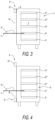
Figs. 2 ,3 and 4 show schematically simplified side sectional views of different embodiments of a cooking device that can be used in the systems and methods of the present disclosure in different loading states, and/or with different positioning of the distance sensor; -
Figs. 5 and6 shows schematically a process of the present disclosure, with one embodiment of the process steps set forth; -
Fig. 7 shows schematically a control system for the systems and methods of the present disclosure, with one embodiment of the control system set forth; -
Fig. 8 shows a schematic of the general problem of cross- contamination; -
Fig. 9 shows a practical situation of where cross-contamination can occur in cooking systems currently in use; and -
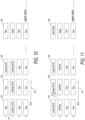
Figs. 10 and 11 show two embodiments that reduce or eliminate the possibility of cross-contamination according to the systems and methods of the present disclosure. -
Fig. 1 shows a front view of the general configuration of acooking device 1 that can be employed in the present disclosure. More especially,cooking device 1 can be a cooking device for commercial use, such as e.g., a combisteamer, a baking oven or a microwave oven. Thecooking device 1 comprises ahousing 2 including acooking chamber 3 that can be accessed and closed by adoor 4. Thecooking device 1 further comprises asystem 8 that is depicted in a highly simplified manner as two blocks; one comprising adistance sensor 9 and the other comprising acamera 10. As depicted inFig. 1 ,system 8 can be configured to be at or near the top ofcooking device 1 withdistance sensor 9 andcamera 10 in close proximity to each other. Alternatively, at indicated inFig. 1 by the element "8" having a dashed arrow associated with it,system 8 can be configured to be at or near the bottom ofcooking device 1 withdistance sensor 9 andcamera 10 in close proximity to each other. - Preferably,
system 8 ofcooking device 1 includes asingle distance sensor 9 and asingle camera 10, anddistance sensor 9 is used only to detect the level of placement of a carrier/tray that is carrying a food product to be cooked withincooking chamber 3 ofcooking device 1. This aspect of the present disclosure is particularly relevant for larger cooking devices that can be loaded with a plurality of food product carriers/trays so that different food products can be cooked in a "rolling" process at, inter alia, different levels for different times incooking chamber 3. For this purpose, it is important to detect the level ofcooking device 1 where each food has been placed in order to be able to monitor safe and unsafe carrier/tray levels at a required time. This is accomplished by the system conducting a comparison of the data of the different placement level(s) and associated remaining cooking times during the food product loading process. - Also preferably, in the system which comprises both
distance sensor 9 andcamera 10 ofsystem 8 ofcooking device 1 according to the present disclosure, in turn,camera 10 only captures a series of product images during the loading step for food product to be cooked. This captured image information is correlated with carrier/tray level(s) data that is only obtained fromdistance sensor 9. The correlated data is stored in the memory of the controller, which will be explained in detail with respect to the descriptions of other Figures. In another embodiment, the information fromdistance sensor 9 can also be used for adjusting the focus ofcamera 10, if necessary or desired, as explained in more detail below. Cooking device also has adisplay panel 15 that serves various functions, including displaying remaining time(s) in cooking cycle(s)/program(s), image(s) of food products for identification purposes, and may include warning lights or speakers.Display panel 15 may serve other functions as is known to those of skill in the art. -
Figs. 2-4 show thatcooking device 1 includes, as the at least one mechanism for receiving and holding at least one food product carrier withincooking chamber 3, a plurality ofracks 5 each associated with a plurality of guide rail pairs, in the present case five guide rail pairs 6, 6', 6", 6‴ and 6"", disposed at different levels within cooking chamber 3 (i.e., inFigs. 2- 4 guide rail pair 6 being disposed at the lowest level (L1) ofcooking chamber 3, andguide rail pair 6"" being disposed at the highest level (L5) of cooking chamber 3).Elements Fig. 2 , on the left and right internal walls (not shown or numbered) ofcooking chamber 3, such that a device engaging the guide rail pair will be disposed substantially perpendicular to the left and right internal wall, and substantially parallel to the bottom and top (also not shown or numbered) ofcooking chamber 3. These guide rail pairs receive food product carriers/trays, such as afood product carrier 7, shown inFigs. 2 to 4 , having a food product P thereon. - Also,
Figs. 2 to 4 show a detection beam or detection ray R in the form of a dotted line that is emitted bydistance sensor 9.Fig. 2 shows a state of operation of the disclosed system in whichfood product carrier 7 carrying a food product P is approaching cooking chamber 3 (i.e., inFig. 2 ,food product carrier 7 is not yet disposed upon any guide rail pair 6-6""). InFig. 3 ,food product carrier 7 has reached the front edge of guide rail pair 6' such that the detection beam R hitsfood product carrier 7 resulting in a corresponding signal indicating the level of carryingtray 7 holding food product P upon guide rail pair 6' that is, according toFig. 2 , level L2. Thiscarrier tray 7 level measurement is determined bydistance sensor 9 and is stored in the memory of the system, preferably the memory is part of the controller (not shown inFigs. 2 to 4 ) ofcooking device 3. As mentioned above,distance sensor 9 can be automatically activated by the approachingcarrier tray 7, or manually by the operator. - Upon detection of the presence of
food product carrier 7 bydistance sensor 9,camera 10 is activated (e.g., by a signal received from distance sensor 9), andcamera 10 begins to capture image(s) of food product P onfood product carrier 7 prior to loadingfood product carrier 7 intocooking chamber 3. Alternatively,camera 10 may be activated in other ways, which will be discussed with reference toFigs. 5 and6 , below. The resulting captured image information is stored in the memory of the system in order to be able to: (1) determine the safe and unsafe levels for placement offood carrier 7; and (2) determine whether or not thefood carrier tray 7 holding food product P is loaded into a safe or unsafe level ofcooking chamber 3. As shown inFigs. 2 and3 ,system 8, with bothdistance sensor 9 andcamera 10 in proximity, can be disposed above and in front ofcooking chamber 3. Alternatively, as shown inFig. 4 ,distance sensor 9 and thecamera 10 can be disposed spaced apart and, for example,distance sensor 9 can be disposed proximal the bottom, and in front, ofcooking chamber 3, with the camera disposed proximal the top, and in front, of thecooking chamber 3. The function ofdistance sensor 9 is not influenced by these various positions. In an alternative embodiment,distance sensor 9 can be disposed on, e.g., a guide rail or other structure (not shown or numbered) and move up and down a long side ofdoor 4. In this embodiment,distance sensor 9 is configured and constructed with means for activating its movement along, e.g., the guide rail, and for positioning adjacent the placement level 6-6"" of food product tray(s) 7 being placed intocooking chamber 3 ofcooking device 1. In this embodiment, the location along the guide rail will determine the level at which carrier/tray 7 holding food product P is located.Distance sensor 9 can be an infrared sensor or an ultrasonic distance sensor. In addition,cooking device 1 can be equipped with an illumination device (not shown) that can be triggered bydistance sensor 9 or by a door switch contact (not shown or numbered) to illuminate food product P during the image capture to provide a better field of view forcamera 10. - One embodiment of a process according to the present disclosure will now be described with reference to
Fig. 5 . As is shown schematically inFig. 5 , there are interactions between the operator and the components of the device of the present disclosure. In general, the method includes the following steps. - In
step 50, cooking device 3 ("unit" inFig. 5 ) is switched on by the operator. Upon switching on the unit, the controls of the unit are also switched on 51 anddistance sensor 9 is activated 52.Steps step 50, as above, or can be separate actions by the operator. Preferably, to avoid mistake and to reduce the number of steps performed by the operator, steps 51 and 52 are automatically performed as a result ofstep 50.Distance sensor 9 controls and monitorscooking chamber 3, such as openingdoor 4 and the approach offood product carrier 7 holding food product P for loading intocooking chamber 3. - When
food product carrier 7 is going to be inserted instep 53 intocooking chamber 3,distance sensor 9 measures the level offood product carrier 7 as it is placed onto, e.g., aguide rail pair food product carrier 7 is delivered to the controller (not shown or numbered) associated withcooking device 1. Thisfood product carrier 7 level information is stored in the controller data base instep 54. In conjunction with (e.g. before, concurrently or after) the storage of the level offood product carrier 7 intended placement incooking chamber 3,camera 10 is activated in step 55 (preferably automatically) and, also preferably, the focus ofcamera 10 is adjusted in step 56 (also preferably automatically) according to the measured height/level offood product carrier 7 andcamera 10 captures at least one, and preferably a series, of images of food product P instep 57 onfood product carrier 7.Camera 10 is preferably automatically activated either by being triggered by distance sensor 8 (as soon as same detects the presence of food product carrier 7) or by a door contact switch (not shown or numbered). The captured images of food product P are stored in an associated memory, as mentioned above and described in more detail below. - Next, the captured image, or series of captured images, of food product P is delivered to the controller in
step 58, and the controller selects the captured image(s) with the best quality in terms of food product P recognition in step 59 (i.e., in terms of clarity, color, etc.). The selected captured image(s) is then compared instep 60 by the controller to previously taken images which are stored in a database. The database of previously taken images can be stored as part of the controller or memory (not shown or numbered) ofcooking device 1, or can be stored as part of a remotely located memory/storage device. Also, the previously taken image(s) can be of food product previously cooked in thesame cooking device 1 or from a compilation of food product previously cooked inother cooking devices 1 at the same or similar faculties, or of "stock" photographs of food product P. - Next, food product P is identified in
step 61 by the comparison of the captured image(s) to the stored image(s).Cooking device 1 displays a photograph, pictogram, text information or other food product P description information on a display in step 62 (not shown or numbered inFig. 5 ) as a result of the comparison and identification. Optionally, if the comparison of the captured image(s) with the stored image(s) does not permit a clear recognition of food product P, the two food product stored product image(s) "best fitting" food product P captured image(s) are shown on the display instep 63. In this latter case, the operator manually selects the correct identification food product P to be cooked, or a correct cooking program needs to be started manually. - The memory (not shown) of the controller of
cooking device 1 also has stored cooking cycles/programs (cooking temperatures, heat/steam portions of cooking cycles/programs, if any, cooking times) for food products P (both food product type and number) and food product level placement incooking device 1. Associated with each cooking cycle/program is an HSCT for the identified food product P. If food product P is the first food product P to be placed incooking device 1 or if more than one level will be occupied initially at the beginning of use ofcooking device 1, the HSCT for that/those food product(s) P is of no concern. However, if other food product(s) P is/are in active cooking cycles/programs, the HSCT associated with a new food product P to be placed incooking chamber 1 is compared to remaining cooking times for each food product(s) P that is/are in cookingdevice 1 at a level 6-6"" below an open/unoccupied level. Depending on the parameters set by a particular user for the number of cooking levels below an empty cooking level that are to be evaluated for a determination of safe and unsafe cooking level(s), the controller compares the HSCT associated with the food product P that is to be cooked with the remaining time(s) for the set number of cooking level(s). Each cooking time for a food product P on a level 6-6‴ (in the embodiment shown inFigs. 2-4 ) below the level where food product P is intended to be placed, is compared to the HSCT associated with the food product P that is to be cooked. Those cooking time(s) for food product(s) P that are greater than the HSCT will allow for the empty level(s) above such food product P to be designated safe, while those cooking time(s) for food product(s) P that are less than the HSCT will require the empty level(s) above such food product P to be designated unsafe. The method and system of the present disclosure enables the output of a warning if the comparison indicates unsafe. Two embodiments of possible "warning" types will be discussed in conjunction withFigs. 8-9 . - Referring now to
Fig. 6 , the "Start" indicates that steps 50-63 described in the discussion ofFig. 5 are already completed. Thus, as the method and system proceeds to perform the steps ofFig. 6 , thecooking device 1 has been started, the desired tray level (6' - 6"") has been determined, and the food product P has been identified. The method and system for determining safe and unsafe tray level(s) L begins atstep 64. Instep 64, the cooking cycle/program is selected. As mentioned above, each cooking cycle/program has associated with it and HSCT. After the selection of the cooking cycle/program instep 64, the process proceeds to a decision point atstep 65. Atdecision point step 65, the method and system determines the answer to the question: "Is thecooking device 1 in cooking mode (i.e. is another recipe running)? If the method and system determines that the answer to this question is "No", the process proceeds to step 66. Instep 66, available cooking levels L are determined and displayed. The display of available cooking levels I can be shown onuser interface 15, or on the cooking levels 6'-6"" themselves, or on an indicator associated with each cooking level 6'-6"". In the situation wherecooking device 1 is not in the cooking mode, all tray levels L will be available. The process then proceeds to step 67 where any available tray level L can be selected since cookingdevice 1 had no cooking cycles/programs running in this instance. The selected tray level is then stored in the memory of the controller. Thereafter, the process continues to step 68 where the cooking cycle/program for food product P is started and instep 69 the process ends. Atdecision point step 65, where the method and system determines the answer to the question: "Is thecooking device 1 in cooking mode (i.e. is another recipe running)?, if the method and system determines that the answer to this question is "Yes", the process proceeds todecision point step 70. Atdecision point step 70, the method and system determines the answer to the question: "Is hygienic safe control activated?" If the method and system determines that the answer to this question is "No", the process continues again to steps 66-69. In some types of cooking, such as baking, HSCT would not be a cooking parameter, because there are usually no food juices that would drip from one cooking level to another. Also, in some cooking processes, the food is not cooked all the way to 100 % completion in the cooking device (oven), but is completed in another device to its end. In these situations, having the HSCT inactivated is merely a faster way to deselect HSCT than setting all HSCTs to 0. Atdecision point step 70, where the method and system determines the answer to the question: "Is hygienic safe control activated?", if the answer to this question is "Yes" the process proceeds to step 71. - At
step 71, the controller can check the remaining cooking times in cooking cycle/programs for products P incooking device 1 at all levels L below the cooking level L determined in steps 50-63 for product P to be cooked against the HSCT. However, in practice, it is preferable to check the remaining cooking time only on the level immediately below the cooking level L determined in steps 50-63 for product P to be cooked against the HSCT, because if this level L has a cooking time that is longer than the HSCT, then any dripping from for product P to be cooked will fall onto it. The process then proceeds todecision point step 72. Atdecision point step 72, the method and system determines the answer to the question: "Is the remaining cooking time of the cooking cycle/program for product P at the level L incooking device 1 below the level L determined in steps 50-63 less than the HSCT?" The method and process then checks the time remaining in the checked cooking cycle/program against the HSCT, and determines if the time in the checked cooking program is less than the HSCT. If the method and system determines that the answer to this question is "Yes", the process proceeds to step 73. Instep 73, all free tray levels L above the tray level checked are blocked until the cooking cycle/program is complete. It should be noted that instep 73, if the product P to be cooked is deselected, or a new product P to be cooked is selected, the process set forth inFig. 6 returns to step 64, and the HSCT calculations are repeated. As mentioned above, the process is flexible in that the controller can be programmed to check all tray levels below the tray level determined in steps 50-63, or a subset of all the levels, e.g., only the tray level immediately below the tray level L determined in steps 50-63. Also as mentioned above, it is preferable to check only the level L immediately below the selected level L. In an additional preferred aspect, the level L above the selected tray should also be checked as loading a "short" recipe, i.e., one having a short cooking time, below a level L where a product having a "long" HSCT is running could lead to cross-contamination of the product having the "short" cooking time. Also, optionally, the user can select one or more blocked levels L and the selected level(s) will be stored in the memory of controller. Once safe loading of food product P in the selected and stored level(s) L is possible, an indication (e.g., audible or visual) will be provided so that the operator will be made aware of safe loading availability for the selected level(s). This latter option is shown instep 74 where the time remaining for the selected tray level(s) is/are displayed and updated. This option will be discussed in more detail in conjunction withFig. 11 . - At
decision point step 72, where the method and system determines the answer to the question: "Is the remaining cooking time of the cooking cycle/program for product P at level L incooking device 1 below the level L determined in steps 50-63 less than the HSCT?" If the answer to this question is "No", the process proceeds todecision point step 75. Atdecision point 75, the method and system determines the answer to the question: "Is there another running cooking cycle/program to check?" This would be the case where the controller is programmed to check more than one level L below the level determined in steps 50-63. If the method and system determines that the answer to the question is "Yes", the process loops back todecision point 72 for the next to check the next cooking cycle/program at the next level L. Atdecision point 75, where the method and system determines the answer to the question: "Is there another running cooking cycle/program to check?", if the method and system determines that the answer to the question is "No", the process then continues again to steps 67-69. InFig. 6 , there is a notation of an "Event" asstep 76. What this means is that if, for example, duringstep 71 where cooking time(s) for the tray level(s) L a cooking program/cycle finishes or is cancelled, all remaining cooking times must be checked again. Other "events" may occur at any point in the process that calls for the need to have remaining cooking times to be checked again. - One embodiment of the components of
cooking device 1 will now be discussed with reference toFig. 7. Fig. 7 shows schematically the components of a method and system according to the present disclosure. The size and spatial relationships of the components described with respect toFig. 7 are merely exemplary for ease of discussion. In accordance withFig 7 ,distance sensor 9 andDORD 10 comprisingsystem 8 will be discussed in combination withcooking device 1 that is a combisteamer. Amain switch 11 is activated that, in turn, activatescontroller 12.Controller 12 controls all cooking functions, such as time and temperature of the cooking cycle/program.Controller 12 also activates distance sensor 9 (however, as mentioned above,distance sensor 9 may be manually activated). As can be seen from the bi-directional arrow betweencontroller 12 anddistance sensor 9, once activated,distance sensor 9 recognizes that food product P is being placed intocooking device 1, sends distance information tocontroller 12 and that information can be stored in memory ofcontroller 12 or in a separate memory or data base, for several functions. These functions includecontroller 12 providing the cooking cycle/program for food product P loaded intocooking device 1. - As can also be seen in
Fig. 7 ,controller 12 also activates acontrol 13 that controls DORD (DORD) 10 and, if present, a light 14. Alternatively,controller 12 may activate DORD 10 and light 14 directly.Controller 12 also has access to stored images of various food product types, both cooked and uncooked, and quantities of the same, and it iscontrol 13 that performs the comparison of food product images captured byDORD 10 with the stored food product images.Control 13 may be included as part ofcontroller 12 but, in any event,control 13 is specifically for food product recognition. As food product images are captured byDORD 10, that information is relayed to control 13 (as indicated by the bi-directional arrow betweencontrol 13 and DORD 10), and the product identification made bycontrol 13 is relayed to controller 12 (indicated by bi-directional arrow betweencontrol 13 and controller 12).Controller 12 selects the cooking cycle/program for the identified food product P, and sends that information to auser interface 15.User interface 15 includes, e.g., a touch screen and/or a display for providing information, such as product recognition information and cooking cycle/program, to the operator. Also as indicated by the bi-directional arrow betweenuser interface 15 andcontroller 12, those components are interactive with each other. This interaction is useful in the case where, for example, the operator needs to override the cooking cycle/program because the product recognition is incorrect. In this case, the operator selects the food product and cooking cycle/program and this information is sent tocontroller 12 so that the proper cooking cycle/program is selected. -
Fig. 8 shows a generalized instance of how cross-contamination can occur. InFig. 8 , food product carrier/trays 81 containing food product P are in cooking levels 2-4. A new (cold) food product carrier/tray 82 is inserted intocooking device 1 above cooking food product P in carriers/trays 81 in levels 2-4.Condensate 83 can drip from the new (cold) food product carrier/tray 82 downward onto foodproduct tray carriers 81 in levels 2-4. If the cooking time remaining for cooking food products P in trays carriers/trays 81 is insufficient to kill or render harmless any pathogens incondensate 83, cross-contamination can occur. -
Fig. 9 is similar toFig. 8 , but shows a practical situation in which cross-contamination can occur and create food risk. InFig. 9 , afood product P 91 is cooking inlevel 2. At the initial time being considered inFig. 9 ,food product P 91 cooking inlevel 2 has 10 minutes remaining cooking time. As time progresses inFig. 9 , thefood product P 91 has 3 minutes and 2 minutes cooking time remaining, respectively. The point in time when afood product P 92 is placed inlevel 1,food product P 91 cooking inlevel 2 has only 2 minutes cooking time remaining. On the other hand,food product P 92 being placed intolevel 1 has a HSCT of 10 minutes. Thefood product P 91 has insufficient cooking time remaining, creating a cross-contamination risk fromcondensate 83 dripping fromfruit product P 92 ontofood product P 91. As can be seen at the right hand side ofFig. 9 , whenfood product P 91 is ready to be removed fromcooking device food product P 92. On the other hand, placement offood product P 92 having an HSCT of 10 minutes intocooking device 1 inlevel 1 at the beginning oftimeline 93 inFig. 9 , no food no cross-contamination risk would have been created becausefood product P 91 had 10 minutes cooking time remaining, which is equal to the HSCT offood product P 92. Moreover, cooking levels 3-4 were available and placement offood product P 92 in either of levels 3-4 would have avoided the risk of cross-contamination. -
Fig. 10 shows a practical application of the methods and systems of the present disclosure. InFig. 10 , afood product P 91 similar to that inFig. 9 is cooking inlevel 2. At the initial time considered inFigure 10 ,food product P 91 has 10 minutes cooking time remaining as seen incolumn 101. With respect toFig. 10 , if a food product P to be cooked (not shown) has an HSCT of 2 minutes,level 1 is "safe", and therefore free, whenfood product P 91 has remaining cooking times of 10 minutes and 3 minutes as indicated incolumns column 103,food product P 91 has only 2 minutes of remaining cooking time. At this time,cooking level 1 is locked in accordance with the methods and systems of the present disclosure. Whenfood product P 91 is "ready" to be removed fromcooking device 1, i.e., the cooking cycle/program is complete, as shown incolumn 104, then cooking level I is "safe", and free to receive a food product P (not shown), having an HSCT of 2 minutes. -
Figure 11 shows an alternative embodiment, where the operator can select a "locks" cooking level L and receive a reminder (visual and/or audible) according to the methods and systems of the present disclosure. This alternative is discussed. Also in paragraph [0048]. In accordance withfigure 11 ,food product P 91 is cooking inlevel 2. Cooking level I is "locked" and has 23 seconds of locked time remaining, corresponding to the remaining cooking time offood product P 91. User 111, selectscooking level 1 and the indicator forcooking level 1 changes color as shown incolumn 103. When cookinglevel 1 becomes available as shown incolumn 1, 04, operator 111 receives indication thatcooking level 1 is now safe and free for placement of food product P (not shown). - Certain parameters for the system and method according to the present disclosure may be adjusted by a particular user in a particular situation. For example, as mentioned above, the system and method may be adjusted so that a specific number of carrier/tray level(s) L below food cooking in
cooking device 1 are used to determine whether a level L above may be potentially characterized as "unsafe". In this regard, the system and method according to the present disclosure may provide for only one (1) carriers/tray level L below the level L of any food product P being placed incooking device 1 be used to determine whether the level L of a food product being placed in cooking device q is "unsafe". Of course, on the other hand, the system and method according to the present disclosure may provide for the situation that a plurality or all carrier/tray levels below the level of food product being placed in cooking device may be evaluated. Also, it will be necessary to define how long a hygienic risk will be selected. The present disclosure provides flexibility in selecting/setting an HSCT. For example, rather than the remaining cooking time for food product P in lower cooking levels in cooking device one, other cooking parameters (or the trends of same), such ascooking chamber 3 temperature, food product P core temperature,cooking chamber 3 humidity, etc. may be selected. In addition, any particular HSCT, as discussed above, can be merely a matter of user choice. Any number of different values/conditions may be considered when a particular user adjusts an HSCT for that user's system and method. - In the preferred systems and methods comprising both a distance sensor and a DORD, the DORD captures of images of the food product to be cooked for the purposes of food product recognition and of the selection of a cooking cycle/program and HSCT, and the distance sensor detects the position of the food product placed in the cooking device. Once the food product is recognized, the operator of the cooking device is provided the correct cooking cycle/program and HSCT for the food product to be placed in the cooking device.
- Depending on the configuration of the systems described herein, either the distance sensor or the DORD, or both, can be located inside or outside of the cooking chamber. Although generally, and specifically in the embodiments discussed above, the distance sensor and the DORD are described, for convenience sake, as located outside to the cooking device, it will be apparent based on the detailed description above that either of these devices, or both, may be located inside the cooking chamber. While the location inside the cooking chamber will likely entail some modifications to the distance sensor and/or DORD (due to higher temperatures and/or higher humidity, for instance), such modifications are well within the ability of those of skill in the art.
- The term DORD as used in the present disclosure includes optics and means for electronic evaluation of the objects observed by the optics. The term DORD encompasses means "for recognizing food to be cooked". In other words, the 'recognizing' is generally by the outer appearance of the food product itself. Optical means that do not recognize the food product itself (for example, identification means in which an image of a symbol plate or of a bar code is captured, or in which identification of an RFID tag is made, etc.) are not meant to be within the scope of the wording DORD, and are specifically excluded therefrom.
- In accordance with the present disclosure, the DORD generally comprises a digital imaging device (although an analog DORD may be used), for capturing one or more images of the food product before cooking, especially an electronic image sensor, such as a CCD sensor or a CMOS sensor. An "image" in the context of the present disclosure may be a single image, or a series of images, such as a video. The DORD may comprise a controller having access to image data, i.e., pictorial or video "captures" of food to be cooked. Thus, a controller is provided and may be considered as part of the DORD. The controller has access to the image data, i.e. the digital data that embodies the image of the food product to be cooked that is calculated from the image (even of an analog image) taken of the food product to be cooked.
- It is preferred but not necessary that the DORD is provided wherein the image data will be in digital format from the beginning. This, however, is the easiest way for the image data to be further evaluated, analyzed and/or processed. The image data can be stored in data storage, or can be accessed directly by the controller. In an alternative embodiment, the image data can be in non-digital (e.g., analog) form, and it is then necessary to convert the image data to digital form. For example, colors can be calculated into shades of grey (that have been previously assigned digital values) and then analyzed digitally.
- The distance sensor may be provided with a means to activate a light source for lighting a field of vision of the DORD. By activating a light source, reproducible and more accurate results can be attained by the DORD. Therefore, in a preferred embodiment, a controller and a DORD are provided, wherein controller comprises means to activate a light source lighting a field of vision of the DORD, either by activating the distance sensor to do so, or by directly doing so.
- The DORD may be (but as mentioned above, not exclusively) located outside of the cooking chamber, preferably directly above or displaced laterally above a door that provides access to the cooking chamber. From there, the DORD has a reliable view of any food product that is going to be placed into the cooking chamber. Also, in normal operation, any food product on a carrier/tray will normally be oriented horizontally directly in front of the carriers/trays rack onto which it will be placed, or in terms of relation to the DORD, generally more or less perpendicular to the field of view. This position is preferable for reliably gaining an image angle towards the food product. If the DORD is located at the cooking device door, it will also have a good view of carrier/tray level indicators, as mentioned above.
- In an alternative embodiment, the DORD can be mounted on an extendable and retractable holder that extends when the cooking device door is opened and that retracts when the cooking device door is closed. It will be appreciated by those of skill in the art that this is another way to gain a good angle of view of the food product to be cooked. In a more specific, and in some cases preferred, embodiment the DORD is mounted on moving means in a manner that permits food product to be imaged from two different angles. An embodiment such as this makes it easy to gain more optical information about the, thereby increasing the probability that the correct identification of the food product can be determined.
- In addition to the DORD already described above, in another embodiment a second, or more than a second, DORD can be provided. It will be appreciated by those of skill in the art that everything described above for the first DORD would also be applicable for a second or more than a second DORD.
Claims (12)
- A cooking device (1) comprising a system (8) for reducing or eliminating cross-contamination between food to be cooked in the cooking device (1) and food cooking in the cooking device (1), the cooking device (1) including a cooking chamber (3), a door (4) for accessing and closing the cooking chamber (3), a plurality of mechanisms (5, 6, 6', 6", 6‴) for receiving and holding a plurality of food product carriers/trays (7) at a plurality of predetermined carrier/tray levels for cooking food, the system comprising:a controller (12) having a memory;and a user interface (15) including a display and user input device, characterized in that the systemreceives an identification of the food to be cooked,obtains an hygienic safe control time parameter, referred to as HSCT, for the food to be cooked, wherein the HSCT is a time assigned to a food product to be cooked that indicates the minimum remaining cooking time for a food product cooking on levels below the selected level of the food product to be cooked,obtains a remaining cooking time and a carrier/tray level for each food cooking in the cooking device (1);compares the hygienic safe control time parameter (HSCT) to each remaining cooking time; andidentifies safe carrier/tray level(s) for accepting placement of the food to be cooked,wherein the system (8) obtains an HSCT for the food to be cooked and obtains the remaining cooking time and the carrier/tray level for each food cooking in the cooking device (1) from the memory where HSCTs for foods to be cooked and (2) cooking times and carrier/tray levels for food cooking in the cooking device (1) are stored,wherein the controller (12) or an associated control compares the HSCT to each remaining cooking time; and identifies safe carrier/tray level(s) for accepting placement of the food to be cooked,wherein the system (8) provides the indication of safe carrier/tray level(s) for accepting placement of the food to be cooked on the display.
- The cooking device according to claim 1, wherein the system (8) receives the identification of the food to be cooked via the user interface.
- The cooking device according to claim 1, wherein the system (8) further provides an alert to a user if food to be cooked into the cooking device (1) is attempted to be loaded at an unsafe carrier/tray level.
- The cooking device according to claim 1, wherein the system (8) further locks one or more unsafe carrier/tray levels.
- The cooking device according to claim 1, wherein the system (8) displays identified safe carrier/tray level(s) on the user interface (15).
- The cooking device according to claim 1, wherein the system (8) provides a warning that an unsafe carrier/tray level is attempted to be used.
- The cooking device according to claim 1, wherein the system (8) identifies the carrier/tray level in the cooking device (1) at which food to be cooked is going to be placed.
- The cooking device according to claim 7; wherein the system (8) identifies the carrier/tray level by capturing an image of a carrier/tray level indicator or by an auto-focus mechanism.
- The cooking device according to claim 1, wherein the HSCT is fixed for all food to be cooked in the cooking device (1).
- The cooking device according to claim 1, wherein the HSCT is different for each food to be cooked in the cooking device (1).
- The cooking device according to claim 1, wherein the system comprises a distance sensor (9).
- A method for reducing or eliminating cross-contamination between food to be cooked in a cooking device (1) and food cooking in the cooking device (1), the cooking device (1) including a cooking chamber (3), a door (4) for accessing and closing the cooking chamber (3), a plurality of mechanisms (5, 6, 6', 6", 6‴) for receiving and holding a plurality of food product carriers/trays (7) at a plurality of predetermined carrier/tray levels for cooking food, the method being characterized by the following method steps:receiving an identification of the food to be cooked,obtaining a hygienic safe control time parameter, referred to as HSCT, for the food to be cooked, wherein the HSCT is a time assigned to a food product to be cooked that indicates the minimum remaining cooking time for a food product cooking on levels below the selected level of the food product to be cooked,obtaining a remaining cooking time and a carrier/tray level for each food cooking in the cooking device (1);comparing the hygienic safe control time parameter (HSCT) to each remaining cooking time; andidentifying safe carrier/tray level(s) for accepting placement of the food to be cooked,wherein the system (8) provides the indication of safe carrier/tray level(s) for accepting placement of the food to be cooked on the display.
Applications Claiming Priority (1)
| Application Number | Priority Date | Filing Date | Title |
|---|---|---|---|
| PCT/IB2015/052499 WO2016162727A1 (en) | 2015-04-07 | 2015-04-07 | Hygienic oven cooking systems and methods |
Publications (3)
| Publication Number | Publication Date |
|---|---|
| EP3280956A1 EP3280956A1 (en) | 2018-02-14 |
| EP3280956C0 EP3280956C0 (en) | 2024-08-21 |
| EP3280956B1 true EP3280956B1 (en) | 2024-08-21 |
Family
ID=52988363
Family Applications (1)
| Application Number | Title | Priority Date | Filing Date |
|---|---|---|---|
| EP15717255.2A Active EP3280956B1 (en) | 2015-04-07 | 2015-04-07 | Hygienic oven cooking systems and methods |
Country Status (2)
| Country | Link |
|---|---|
| EP (1) | EP3280956B1 (en) |
| WO (1) | WO2016162727A1 (en) |
Families Citing this family (1)
| Publication number | Priority date | Publication date | Assignee | Title |
|---|---|---|---|---|
| CN115444289B (en) * | 2022-10-17 | 2025-10-21 | 广东美的厨房电器制造有限公司 | Heating control method, electronic device, and computer readable storage device |
Citations (1)
| Publication number | Priority date | Publication date | Assignee | Title |
|---|---|---|---|---|
| US20130302483A1 (en) * | 2012-05-09 | 2013-11-14 | Convotherm Elektrogeraete Gmbh | Optical quality control system |
Family Cites Families (2)
| Publication number | Priority date | Publication date | Assignee | Title |
|---|---|---|---|---|
| EP0414794A4 (en) * | 1988-05-10 | 1991-08-07 | Hertford Pty. Ltd. | Improvements relating to cooking appliances |
| DE102010010231A1 (en) | 2010-03-03 | 2011-09-08 | Convotherm Elektrogeräte GmbH | Combi oven and process for commercial cooking or regeneration of food |
-
2015
- 2015-04-07 EP EP15717255.2A patent/EP3280956B1/en active Active
- 2015-04-07 WO PCT/IB2015/052499 patent/WO2016162727A1/en not_active Ceased
Patent Citations (1)
| Publication number | Priority date | Publication date | Assignee | Title |
|---|---|---|---|---|
| US20130302483A1 (en) * | 2012-05-09 | 2013-11-14 | Convotherm Elektrogeraete Gmbh | Optical quality control system |
Also Published As
| Publication number | Publication date |
|---|---|
| EP3280956C0 (en) | 2024-08-21 |
| WO2016162727A1 (en) | 2016-10-13 |
| EP3280956A1 (en) | 2018-02-14 |
Similar Documents
| Publication | Publication Date | Title |
|---|---|---|
| US9943090B2 (en) | Hygienic oven cooking systems and methods | |
| US11622648B2 (en) | Optical quality control methods | |
| US20220295609A1 (en) | Pattern recognizing appliance | |
| US10154749B2 (en) | Cooking device and procedure for cooking food | |
| US12490856B2 (en) | Monitoring system and food preparation system | |
| US12088954B2 (en) | Infrared toaster | |
| US20250098896A1 (en) | Food product position and recognition cooking and/or holding device system | |
| US20150302569A1 (en) | Sensing system for a cooktop appliance with airflow protected sensor | |
| US12406388B2 (en) | Home appliance having interior space for accommodating tray at various heights and method of obtaining image by home appliance | |
| WO2021057769A1 (en) | Method for viewing and tracking stored items | |
| EP3280956A1 (en) | Hygienic oven cooking systems and methods | |
| DE102021203792A1 (en) | Carrier for a dish | |
| US20210289587A1 (en) | Determination device and heating cooking apparatus | |
| US20240224386A1 (en) | Cooking appliance and methods of notification | |
| KR20230073006A (en) | Home appliance having an interior space for accommodating a tray at various heights and method for obtaining an image by the home appliance | |
| CN115187827A (en) | Cooking appliance cleaning reminding method and system and cooking appliance | |
| US12560334B2 (en) | Oven appliances and methods of monitoring cooking utensils therein | |
| US12628981B2 (en) | Real-time automated cooking cycles system using computer vision and deep learning | |
| US20230018647A1 (en) | Real-time automated cooking cycles system using computer vision and deep learning |
Legal Events
| Date | Code | Title | Description |
|---|---|---|---|
| STAA | Information on the status of an ep patent application or granted ep patent |
Free format text: STATUS: THE INTERNATIONAL PUBLICATION HAS BEEN MADE |
|
| PUAI | Public reference made under article 153(3) epc to a published international application that has entered the european phase |
Free format text: ORIGINAL CODE: 0009012 |
|
| STAA | Information on the status of an ep patent application or granted ep patent |
Free format text: STATUS: REQUEST FOR EXAMINATION WAS MADE |
|
| 17P | Request for examination filed |
Effective date: 20171102 |
|
| AK | Designated contracting states |
Kind code of ref document: A1 Designated state(s): AL AT BE BG CH CY CZ DE DK EE ES FI FR GB GR HR HU IE IS IT LI LT LU LV MC MK MT NL NO PL PT RO RS SE SI SK SM TR |
|
| AX | Request for extension of the european patent |
Extension state: BA ME |
|
| DAV | Request for validation of the european patent (deleted) | ||
| DAX | Request for extension of the european patent (deleted) | ||
| STAA | Information on the status of an ep patent application or granted ep patent |
Free format text: STATUS: EXAMINATION IS IN PROGRESS |
|
| 17Q | First examination report despatched |
Effective date: 20200929 |
|
| RAP1 | Party data changed (applicant data changed or rights of an application transferred) |
Owner name: WELBILT DEUTSCHLAND GMBH |
|
| GRAP | Despatch of communication of intention to grant a patent |
Free format text: ORIGINAL CODE: EPIDOSNIGR1 |
|
| STAA | Information on the status of an ep patent application or granted ep patent |
Free format text: STATUS: GRANT OF PATENT IS INTENDED |
|
| INTG | Intention to grant announced |
Effective date: 20240612 |
|
| GRAS | Grant fee paid |
Free format text: ORIGINAL CODE: EPIDOSNIGR3 |
|
| GRAA | (expected) grant |
Free format text: ORIGINAL CODE: 0009210 |
|
| STAA | Information on the status of an ep patent application or granted ep patent |
Free format text: STATUS: THE PATENT HAS BEEN GRANTED |
|
| AK | Designated contracting states |
Kind code of ref document: B1 Designated state(s): AL AT BE BG CH CY CZ DE DK EE ES FI FR GB GR HR HU IE IS IT LI LT LU LV MC MK MT NL NO PL PT RO RS SE SI SK SM TR |
|
| REG | Reference to a national code |
Ref country code: GB Ref legal event code: FG4D |
|
| REG | Reference to a national code |
Ref country code: CH Ref legal event code: EP |
|
| REG | Reference to a national code |
Ref country code: DE Ref legal event code: R096 Ref document number: 602015089594 Country of ref document: DE |
|
| REG | Reference to a national code |
Ref country code: IE Ref legal event code: FG4D |
|
| U01 | Request for unitary effect filed |
Effective date: 20240821 |
|
| U07 | Unitary effect registered |
Designated state(s): AT BE BG DE DK EE FI FR IT LT LU LV MT NL PT RO SE SI Effective date: 20240902 |
|
| PG25 | Lapsed in a contracting state [announced via postgrant information from national office to epo] |
Ref country code: NO Free format text: LAPSE BECAUSE OF FAILURE TO SUBMIT A TRANSLATION OF THE DESCRIPTION OR TO PAY THE FEE WITHIN THE PRESCRIBED TIME-LIMIT Effective date: 20241121 |
|
| PG25 | Lapsed in a contracting state [announced via postgrant information from national office to epo] |
Ref country code: GR Free format text: LAPSE BECAUSE OF FAILURE TO SUBMIT A TRANSLATION OF THE DESCRIPTION OR TO PAY THE FEE WITHIN THE PRESCRIBED TIME-LIMIT Effective date: 20241122 Ref country code: PL Free format text: LAPSE BECAUSE OF FAILURE TO SUBMIT A TRANSLATION OF THE DESCRIPTION OR TO PAY THE FEE WITHIN THE PRESCRIBED TIME-LIMIT Effective date: 20240821 |
|
| PG25 | Lapsed in a contracting state [announced via postgrant information from national office to epo] |
Ref country code: IS Free format text: LAPSE BECAUSE OF FAILURE TO SUBMIT A TRANSLATION OF THE DESCRIPTION OR TO PAY THE FEE WITHIN THE PRESCRIBED TIME-LIMIT Effective date: 20241221 |
|
| PG25 | Lapsed in a contracting state [announced via postgrant information from national office to epo] |
Ref country code: HR Free format text: LAPSE BECAUSE OF FAILURE TO SUBMIT A TRANSLATION OF THE DESCRIPTION OR TO PAY THE FEE WITHIN THE PRESCRIBED TIME-LIMIT Effective date: 20240821 |
|
| PG25 | Lapsed in a contracting state [announced via postgrant information from national office to epo] |
Ref country code: RS Free format text: LAPSE BECAUSE OF FAILURE TO SUBMIT A TRANSLATION OF THE DESCRIPTION OR TO PAY THE FEE WITHIN THE PRESCRIBED TIME-LIMIT Effective date: 20241121 Ref country code: ES Free format text: LAPSE BECAUSE OF FAILURE TO SUBMIT A TRANSLATION OF THE DESCRIPTION OR TO PAY THE FEE WITHIN THE PRESCRIBED TIME-LIMIT Effective date: 20240821 |
|
| PG25 | Lapsed in a contracting state [announced via postgrant information from national office to epo] |
Ref country code: RS Free format text: LAPSE BECAUSE OF FAILURE TO SUBMIT A TRANSLATION OF THE DESCRIPTION OR TO PAY THE FEE WITHIN THE PRESCRIBED TIME-LIMIT Effective date: 20241121 Ref country code: PL Free format text: LAPSE BECAUSE OF FAILURE TO SUBMIT A TRANSLATION OF THE DESCRIPTION OR TO PAY THE FEE WITHIN THE PRESCRIBED TIME-LIMIT Effective date: 20240821 Ref country code: NO Free format text: LAPSE BECAUSE OF FAILURE TO SUBMIT A TRANSLATION OF THE DESCRIPTION OR TO PAY THE FEE WITHIN THE PRESCRIBED TIME-LIMIT Effective date: 20241121 Ref country code: IS Free format text: LAPSE BECAUSE OF FAILURE TO SUBMIT A TRANSLATION OF THE DESCRIPTION OR TO PAY THE FEE WITHIN THE PRESCRIBED TIME-LIMIT Effective date: 20241221 Ref country code: HR Free format text: LAPSE BECAUSE OF FAILURE TO SUBMIT A TRANSLATION OF THE DESCRIPTION OR TO PAY THE FEE WITHIN THE PRESCRIBED TIME-LIMIT Effective date: 20240821 Ref country code: GR Free format text: LAPSE BECAUSE OF FAILURE TO SUBMIT A TRANSLATION OF THE DESCRIPTION OR TO PAY THE FEE WITHIN THE PRESCRIBED TIME-LIMIT Effective date: 20241122 Ref country code: ES Free format text: LAPSE BECAUSE OF FAILURE TO SUBMIT A TRANSLATION OF THE DESCRIPTION OR TO PAY THE FEE WITHIN THE PRESCRIBED TIME-LIMIT Effective date: 20240821 |
|
| PG25 | Lapsed in a contracting state [announced via postgrant information from national office to epo] |
Ref country code: SM Free format text: LAPSE BECAUSE OF FAILURE TO SUBMIT A TRANSLATION OF THE DESCRIPTION OR TO PAY THE FEE WITHIN THE PRESCRIBED TIME-LIMIT Effective date: 20240821 |
|
| PG25 | Lapsed in a contracting state [announced via postgrant information from national office to epo] |
Ref country code: CZ Free format text: LAPSE BECAUSE OF FAILURE TO SUBMIT A TRANSLATION OF THE DESCRIPTION OR TO PAY THE FEE WITHIN THE PRESCRIBED TIME-LIMIT Effective date: 20240821 |
|
| PG25 | Lapsed in a contracting state [announced via postgrant information from national office to epo] |
Ref country code: SK Free format text: LAPSE BECAUSE OF FAILURE TO SUBMIT A TRANSLATION OF THE DESCRIPTION OR TO PAY THE FEE WITHIN THE PRESCRIBED TIME-LIMIT Effective date: 20240821 |
|
| U20 | Renewal fee for the european patent with unitary effect paid |
Year of fee payment: 11 Effective date: 20250425 |
|
| PLBE | No opposition filed within time limit |
Free format text: ORIGINAL CODE: 0009261 |
|
| STAA | Information on the status of an ep patent application or granted ep patent |
Free format text: STATUS: NO OPPOSITION FILED WITHIN TIME LIMIT |
|
| 26N | No opposition filed |
Effective date: 20250522 |
|
| REG | Reference to a national code |
Ref country code: CH Ref legal event code: H13 Free format text: ST27 STATUS EVENT CODE: U-0-0-H10-H13 (AS PROVIDED BY THE NATIONAL OFFICE) Effective date: 20251125 |
|
| PG25 | Lapsed in a contracting state [announced via postgrant information from national office to epo] |
Ref country code: MC Free format text: LAPSE BECAUSE OF FAILURE TO SUBMIT A TRANSLATION OF THE DESCRIPTION OR TO PAY THE FEE WITHIN THE PRESCRIBED TIME-LIMIT Effective date: 20240821 |
|
| GBPC | Gb: european patent ceased through non-payment of renewal fee |
Effective date: 20250407 |
|
| PG25 | Lapsed in a contracting state [announced via postgrant information from national office to epo] |
Ref country code: GB Free format text: LAPSE BECAUSE OF NON-PAYMENT OF DUE FEES Effective date: 20250407 |
|
| PG25 | Lapsed in a contracting state [announced via postgrant information from national office to epo] |
Ref country code: CH Free format text: LAPSE BECAUSE OF NON-PAYMENT OF DUE FEES Effective date: 20250430 |
|
| PG25 | Lapsed in a contracting state [announced via postgrant information from national office to epo] |
Ref country code: IE Free format text: LAPSE BECAUSE OF NON-PAYMENT OF DUE FEES Effective date: 20250407 |