EP3280201A1 - Core network node, base station, mobile station, server, communication system, paging method, and program - Google Patents
Core network node, base station, mobile station, server, communication system, paging method, and program Download PDFInfo
- Publication number
- EP3280201A1 EP3280201A1 EP16773236.1A EP16773236A EP3280201A1 EP 3280201 A1 EP3280201 A1 EP 3280201A1 EP 16773236 A EP16773236 A EP 16773236A EP 3280201 A1 EP3280201 A1 EP 3280201A1
- Authority
- EP
- European Patent Office
- Prior art keywords
- base station
- paging
- information
- candidate
- network node
- Prior art date
- Legal status (The legal status is an assumption and is not a legal conclusion. Google has not performed a legal analysis and makes no representation as to the accuracy of the status listed.)
- Granted
Links
Images




















Classifications
-
- H—ELECTRICITY
- H04—ELECTRIC COMMUNICATION TECHNIQUE
- H04W—WIRELESS COMMUNICATION NETWORKS
- H04W68/00—User notification, e.g. alerting and paging, for incoming communication, change of service or the like
- H04W68/02—Arrangements for increasing efficiency of notification or paging channel
-
- H—ELECTRICITY
- H04—ELECTRIC COMMUNICATION TECHNIQUE
- H04W—WIRELESS COMMUNICATION NETWORKS
- H04W68/00—User notification, e.g. alerting and paging, for incoming communication, change of service or the like
-
- H—ELECTRICITY
- H04—ELECTRIC COMMUNICATION TECHNIQUE
- H04W—WIRELESS COMMUNICATION NETWORKS
- H04W92/00—Interfaces specially adapted for wireless communication networks
- H04W92/04—Interfaces between hierarchically different network devices
- H04W92/12—Interfaces between hierarchically different network devices between access points and access point controllers
-
- H—ELECTRICITY
- H04—ELECTRIC COMMUNICATION TECHNIQUE
- H04W—WIRELESS COMMUNICATION NETWORKS
- H04W8/00—Network data management
- H04W8/02—Processing of mobility data, e.g. registration information at HLR [Home Location Register] or VLR [Visitor Location Register]; Transfer of mobility data, e.g. between HLR, VLR or external networks
- H04W8/08—Mobility data transfer
-
- H—ELECTRICITY
- H04—ELECTRIC COMMUNICATION TECHNIQUE
- H04W—WIRELESS COMMUNICATION NETWORKS
- H04W88/00—Devices specially adapted for wireless communication networks, e.g. terminals, base stations or access point devices
- H04W88/08—Access point devices
-
- H—ELECTRICITY
- H04—ELECTRIC COMMUNICATION TECHNIQUE
- H04W—WIRELESS COMMUNICATION NETWORKS
- H04W88/00—Devices specially adapted for wireless communication networks, e.g. terminals, base stations or access point devices
- H04W88/14—Backbone network devices
-
- H—ELECTRICITY
- H04—ELECTRIC COMMUNICATION TECHNIQUE
- H04W—WIRELESS COMMUNICATION NETWORKS
- H04W92/00—Interfaces specially adapted for wireless communication networks
- H04W92/04—Interfaces between hierarchically different network devices
- H04W92/045—Interfaces between hierarchically different network devices between access point and backbone network device
Definitions
- Fig. 29 illustrates details of the information element UE Supporting E-UTRA Operating Band Indicator List.
- Fig. 29 illustrates details of the information element UE Supporting E-UTRA Operating Band Indicator List.
- Fig. 29 illustrates details of the information element UE Supporting E-UTRA Operating Band Indicator List.
- the values of the E-UTRA Operating Band in Table 5.5-1 in 3GPP TS36.101 v12.6.0 one or more values usable by the corresponding UE are stored in a list format in the UE Supporting E-UTRA Operating Band Indicator List.
- base stations 200 and 210 has an operation mode in which the base stations 200 and 210 communicate with only MTC terminals, and an eNB 220 has an operation mode in which the eNB 220 communicates with normal terminals other than MTC terminals.
- the present example embodiment can achieve an advantageous effect equivalent to that achieved according to the first example embodiment while using, instead of the frequencies, the information elements indicating the operation modes, which are variations of the base station communication function.
- the above second and fifth example embodiments may be combined with each other. In this way, paging can be instructed per cell by using the operation modes.
- the core network node including a base station information acquisition unit which acquires the information that can determine the frequency(ies) used by the candidate(s) of the base station(s) from an information element(s) included in a message(s) exchanged with the base station(s) and stores the acquired information in the base station information storage unit.
- the core network node acquires information for selecting the paging range via an external server that receives the information about the communication function(s) of the candidate(s) of the base station(s) from the mobile station, instead of from the information element(s) included in the message(s) exchanged with the base station(s).
Landscapes
- Engineering & Computer Science (AREA)
- Computer Networks & Wireless Communication (AREA)
- Signal Processing (AREA)
- Mobile Radio Communication Systems (AREA)
Abstract
Description
- The present invention is based upon and claims the benefit of the priority of Japanese patent application No.
2015-077066, filed on April 3, 2015 - The present invention relates to a core network node, a base station, a mobile station, a server, a communication system, a paging method, and a program.
- Ever since the advent of smartphones, vast amounts of data have been flowing through networks of mobile telecommunications carriers, and the amounts of data are increasing steadily. This increase is based on several reasons. For example, more and more people connect to the Internet to download or upload videos. In addition, more and more people communicate messages by using pictures and characters through applications installed on their smartphones, instead of by using voice call functions of their smartphones. In addition, for health maintenance and management, more and more people acquire information about their heart rates, blood pressures, step numbers, calorie amounts consumed, sleeping hours, or the like from their wearable terminals, upload the data, and download data to receive services matching their purposes. There are also applications that constantly receive and transmit data, regardless of the intentions of the owners.
- In addition, there is an effort called "Internet of Things" (IoT) is underway, which will be a new cause that further increases the amounts of data flowing through the networks. The purpose of IoT is to create values that have never existed before by embedding a communication function(s) into every apparatus and controlling these apparatuses. The introduction of IPv6 significantly has increased the number of IP addresses that can be allocated to apparatuses. In addition, apparatuses called Machine Type Communication (hereinafter, "MTC") terminals that exchange information with each other, not humans exchanging information with each other, have been made installable everywhere. Thus, the realization of IoT will certainly be accelerated.
- IoT assumes that MTC terminals transmit acquired data to other apparatuses such as servers through wireless connection, not wired connection. In this way, the MTC terminals can be installed more easily. In addition, as the radio communication network, not only a wireless LAN but also a cell-phone network can of course be used. There are cases in which an MTC terminal receives control information from a network. In such cases, first, a Mobility Management Entity (hereinafter, "MME") transmits a paging message to the MTC terminal. In Long Term Evolution (hereinafter, "LTE"), the location of a terminal is managed per TAI List (a Tracking Area Identity List), and the MME transmits a paging message to all the Evolved NodeBs (base stations; hereinafter, "eNBs") having cells to which TAIs included in a TAI List are allocated. Thus, when the MME transmits a paging message to an MTC terminal, the MME transmits the paging message to all the eNBs having cells to which the same TAI as that of the cell in which the MTC terminal exists is allocated. If individual MTC terminals regularly transmit data and the MME transmits paging messages to transmit message such as for acknowledgement of the reception of the data to the individual MTC terminals, there is a concern that the network could be congested by the processing of the paging messages.
-
NPLs -
- NPL 1: 3GPP SA WG2 TD, "Paging Optimization for the low mobility devices", S2-141884 3GPP TSG-SA-WG2
- NPL 2: 3GPP SA WG2 TD, "Paging Load Reduction", S2-144273 3GPP TSG-SA-WG2 Meeting #106, November 17-21, 2014, [online], [searched on March 23, 2015], Internet<URL:http://www.3gpp.org/ftp/tsg_sa/WG2_Arch/TSGS2_106_ San_Francisco/Docs/S2-144273. zip>
- NPL 3: Evolved Universal Terrestrial Radio Access Network (E-UTRAN); S1 Application Protocol (S1AP) [3GPP TS36.413 v12.4.0], [online], [searched on March 23, 2015], Internet<URL:http://www.3gpp.org/ftp/Specs/archive/36_series/36.413 /36413-c40.zip>
- NPL 4: General Packet Radio Service (GPRS) enhancements for Evolved Universal Terrestrial Radio Access Network (E-UTRAN) access [3GPP TS23.401 v13.1.0], [online], [searched on March 23, 2015], Internet<URL:http://www.3gpp.org/ftp/Specs/archive/23_series/23.401 /23401-d10.zip>
- NPL 5: Evolved Universal Terrestrial Radio Access (E-UTRA) and Evolved Universal Terrestrial Radio Access Network (E-UTRAN); Overall description; Stage 2 [3GPP TS36.300 v12.4.0], [online], [searched on March 23, 2015], Internet<URL:http://www.3gpp.org/ftp/Specs/archive/36_series/36.300 /36300-c40.zip>
- NPL 6: Telecommunication management; Subscriber and equipment trace; Trace control and configuration management [3GPP TS32.422 v12.4.0], [online], [searched on March 23, 2015], Internet<URL:http://www.3gpp.org/ftp/Specs/archive/32_series/32.422 /32422-c40.zip>
- NPL 7: Evolved Universal Terrestrial Radio Access (E-UTRA); Radio Resource Control (RRC); Protocol specification [3GPP TS36.331 v12.5.0], [online], [searched on April 1, 2015], Internet <URL:http://www.3gpp.org/ftp/Specs/archive/36_series/36.331/36331-c50.zip>
- As the number of terminals increases, both the number of control signals in networks and the load on processing the control signals increase. Therefore, reduction in these increases is demanded.
- It is an object of the present invention to provide a core network node, a base station, a mobile station, a server, a communication system, a paging method, and a program that can contribute to the reduction in the increase of the number of control signals in networks and the load on processing the control signals.
- According to a first aspect, there is provided a core network node including a paging candidate storage unit that holds a candidate(s) of a base station(s) as a paging message transmission destination(s). This core network node further includes a base station information storage unit that holds information about a communication function(s) of the candidate(s) of the base station(s). In addition, the core network node includes a paging destination selection unit that selects, when a certain mobile station is paged, a paging range from the candidate(s) of the base station(s), based on the communication function(s) of the candidate(s) of the base station(s). The core network node also includes a paging instruction unit that instructs a base station(s) corresponding to the selected range to perform paging.
- According to a second aspect, there is provided a base station, a mobile station, or a server that transmits the information about the communication function(s) of the candidate(s) of the base station(s) to the above core network node.
- According to a third aspect, there is provided a communication system including the above core network node.
- According to a fourth aspect, there is provided a paging method, including: a step of causing a core network node, which includes a paging candidate storage unit that holds a candidate(s) of a base station(s) as a paging message transmission destination(s) and a base station information storage unit that holds information about a communication function(s) of the candidate(s) of the base station(s), to select, when a certain mobile station is paged, a paging range from the candidate(s) of the base station(s), based on the communication function(s) of the candidate(s) of the base station(s); and a step of causing the core network node to instruct a base station(s) corresponding to the selected range to perform paging. This method is tied to a particular machine called a core network node that instructs a base station(s) to perform paging.
- According to a fifth aspect, there is provided a computer program for realizing the functions of the above core network node. This program can be recorded in a computer-readable (non-transient) storage medium. Namely, the present invention can be embodied as a computer program product.
- Each element of the above core network node, base station, mobile station, server, communication system, paging method, and program contributes to solving the above problems.
- The present invention can contribute to the reduction in the increase of the number of control signals in networks and the load on processing the control signals. In addition, the present invention can convert a core network node described in Background into a core network node having superiority in the reduction in the increase of the number of control signals in networks and the load on processing the control signals.
-
-
Fig. 1 illustrates a configuration according to an example embodiment of the present invention. -
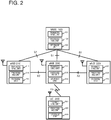
Fig. 2 illustrates a configuration of a mobile communication system according to a first example embodiment of the present invention. -
Fig. 3 illustrates cells created by base stations according to the first example embodiment of the present invention. -
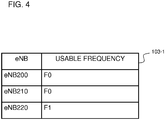
Fig. 4 illustrates an example of base station information held by an MME according to the first example embodiment of the present invention. -
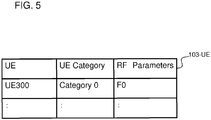
Fig. 5 illustrates an example of terminal information held by the MME according to the first example embodiment of the present invention. -
Fig. 6 is a sequence diagram illustrating an operation (eNB information acquisition processing) according to the first example embodiment of the present invention. -
Fig. 7 is a sequence diagram illustrating an operation (paging processing) according to the first example embodiment of the present invention. -
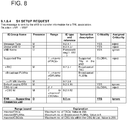
Fig. 8 illustrates an example of a message transmitted from an eNB to the MME according to the first example embodiment of the present invention. -
Fig. 9 illustrates an example of a message transmitted from an eNB to the MME according to the first example embodiment of the present invention. -
Fig. 10 illustrates an information element included in the messages inFigs. 8 and9 . -
Fig. 11 illustrates cells created by base stations according to a second example embodiment of the present invention. -
Fig. 12 illustrates an example of base station information held by an MME according to the second example embodiment of the present invention. -
Fig. 13 is a sequence diagram illustrating an operation (eNB information acquisition processing) according to the second example embodiment of the present invention. -
Fig. 14 is a sequence diagram illustrating an operation (paging processing) according to the second example embodiment of the present invention. -
Fig. 15 illustrates an information element included in a message transmitted from an eNB to the MME according to the second example embodiment of the present invention. -
Fig. 16 illustrates an example of a paging message transmitted from the MME to an eNB according to the second example embodiment of the present invention. -
Fig. 17 illustrates an information element included in the paging message inFig. 16 . -
Fig. 18 illustrates a difference between the second example embodiment of the present invention andNPL 3. -
Fig. 19 illustrates an example of base station information held by an MME according to a third example embodiment of the present invention. -
Fig. 20 is a sequence diagram illustrating an operation (eNB information acquisition processing) according to the third example embodiment of the present invention. -
Fig. 21 is a sequence diagram illustrating an operation (paging processing) according to the third example embodiment of the present invention. -
Fig. 22 illustrates an example of a message transmitted from an eNB to the MME according to the first example embodiment of the present invention. -
Fig. 23 illustrates an example of a message transmitted from an eNB to the MME according to the first example embodiment of the present invention. -
Fig. 24 illustrates an information element included in the messages inFigs. 22 and23 . -
Fig. 25 illustrates a difference between the third example embodiment of the present invention andNPL 4. -
Fig. 26 illustrates a difference between the third example embodiment of the present invention andNPL 4. -
Fig. 27 illustrates a difference between the third example embodiment of the present invention andNPL 5. -
Fig. 28 illustrates an example of a paging message transmitted from the MME to an eNB according to the third example embodiment of the present invention. -
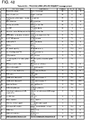
Fig. 29 illustrates an information element included in the paging message inFig. 28 . -
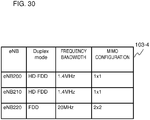
Fig. 30 illustrates an example of base station information held by an MME according to a fourth example embodiment of the present invention. -
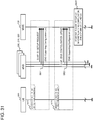
Fig. 31 is a sequence diagram illustrating an operation (eNB information acquisition processing) according to the fourth example embodiment of the present invention. -
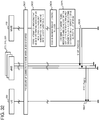
Fig. 32 is a sequence diagram illustrating an operation (paging processing) according to the fourth example embodiment of the present invention. -
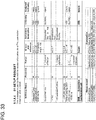
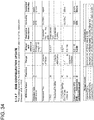
Fig. 33 illustrates an example of a message transmitted from an eNB to the MME according to the fourth example embodiment of the present invention. -
Fig. 34 illustrates an example of a message transmitted from an eNB to the MME according to the fourth example embodiment of the present invention. -
Fig. 35 illustrates an information element included in the messages inFigs. 33 and34 . -
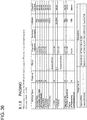
Fig. 36 illustrates an example of a paging message transmitted from the MME to an eNB according to the fourth example embodiment of the present invention. -
Fig. 37 illustrates an information element included in the paging message inFig. 36 . -
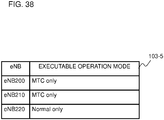
Fig. 38 illustrates an example of base station information held by an MME according to a fifth example embodiment of the present invention. -
Fig. 39 is a sequence diagram illustrating an operation (eNB information acquisition processing) according to the fifth example embodiment of the present invention. -
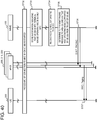
Fig. 40 is a sequence diagram illustrating an operation (paging processing) according to the fifth example embodiment of the present invention. -
Fig. 41 illustrates an example of a message transmitted from an eNB to the MME according to the fifth example embodiment of the present invention. -
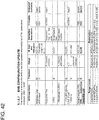
Fig. 42 illustrates an example of a message transmitted from an eNB to the MME according to the fifth example embodiment of the present invention. -
Fig. 43 illustrates information element included in the messages inFigs. 41 and42 . -
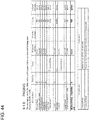
Fig. 44 illustrates an example of a paging message transmitted from the MME to an eNB according to the fifth example embodiment of the present invention. -
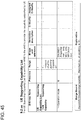
Fig. 45 illustrates an information element included in the paging message inFig. 44 . -
Fig. 46 is a sequence diagram illustrating an operation (eNB information acquisition processing) according to a sixth example embodiment of the present invention. -
Fig. 47 is a sequence diagram illustrating an operation (paging processing) according to the sixth example embodiment of the present invention. -
Fig. 48 illustrates an information element included in a message transmitted from a UE to an MME inFig. 45 . -
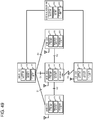
Fig. 49 illustrates a configuration of a mobile communication system according to a seventh example embodiment of the present invention. -
Fig. 50 is a sequence diagram illustrating an operation (eNB information acquisition processing) according to a seventh example embodiment of the present invention. -
Fig. 51 is a sequence diagram illustrating an operation (paging processing) according to the seventh example embodiment of the present invention. -
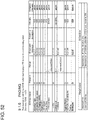
Fig. 52 illustrates a variation of the paging message according to the second example embodiment of the present invention. - First, an outline of an example embodiment of the present invention will be described with reference to a drawing. In the following outline, various components are denoted by reference characters for the sake of convenience. Namely, the following reference characters are merely used as examples to facilitate understanding of the present invention, not to limit the present invention to the illustrated modes.
- As illustrated in
Fig. 1 , an example embodiment of the present invention can be realized by acore network node 100A including a pagingcandidate storage unit 101A, a base stationinformation storage unit 102A, a pagingdestination selection unit 103A, and apaging instruction unit 104A. - The paging
candidate storage unit 101A holds a candidate(s) of a base station(s) 200A as a paging message transmission destination(s). As the candidate(s) of the base station(s), a list of base stations having cells to which TAIs included in a TAI List of a terminal are allocated can be used. - The base station
information storage unit 102A holds information a communication function(s) of the candidate(s) of the base station(s). Any communication function(s) may be used, as long as use of the communication function(s) can narrow down the base stations or exclude the base stations other than the paging base stations when a certain mobile station is paged. For example, the base stationinformation storage unit 102A holds information that can determine a frequency(ies) supported by an individual base station. Of course, the base stationinformation storage unit 102A may hold other information. For example, the base stationinformation storage unit 102A may hold information indicating whether an individual base station has a function(s) corresponding to a communication function(s) of the target mobile station. - The paging
destination selection unit 103A selects, when a certain mobile station is paged, a paging range from the candidate(s) of the base station(s) 200A, based on the communication function(s) of the candidate(s) of the base station(s). For example, when it is clear that the mobile station that needs to be paged supports only a certain frequency, the pagingdestination selection unit 103A selects a base station(s) or a cell(s) that supports the certain frequency as the paging destination. - The
paging instruction unit 104A instructs a base station(s) that corresponds to the selected range to perform paging. For example, when it is clear that the paging-target mobile station supports only a certain frequency, the pagingdestination selection unit 103A selects, from a base station(s) as a paging message transmission destination(s), a base station(s) that supports the certain frequency as the paging destination(s). In this operation, the base stations or cells that do not support the certain frequency are excluded from the paging request destinations. In this way, the communication load on thecore network node 100A and the base stations 200A can be reduced. In this case, if the rate of the paging performed on mobile terminals not supporting the certain frequency with respect to the number of occurrences of paging performed on all terminals is increased, the advantageous effect is improved further. - Next, a first example embodiment of the present invention will be described in detail with reference to drawings.
Fig. 2 illustrates a configuration example of a mobile communication system according to the first example embodiment of the present invention. As illustrated inFig. 2 , the mobile communication system includes anMME 100,eNBs 200 to 220, and aUE 300. - The
MME 100 includes atransceiving unit 101, aprocessing unit 102, and astorage unit 103. TheMME 100 is a node that performs various kinds of management such as management of the location of theUE 300, calling, and handover between base stations (an example of the above core network node). TheMME 100 can communicate with theeNBs 210 to 230 by using S1AP (S1 Application Protocol). Regarding theMME 100, thetransceiving unit 101 transmits and receives information, theprocessing unit 102 generates and analyzes information received and transmitted, and thestorage unit 103 holds information received and transmitted. Thestorage unit 103 corresponds to the above pagingcandidate storage unit 101A and base stationinformation storage unit 102A. Thetransceiving unit 101 and theprocessing unit 102 function as the pagingdestination selection unit 103A and thepaging instruction unit 104A. - Each of the
eNBs 200 to 220 (corresponding to the above base station) includes atransceiving unit 201, aprocessing unit 202, and astorage unit 203. TheeNBs 200 to 220 exchange messages with theMME 100 by using S1AP. TheeNBs 200 to 220 exchange messages with each other by using X2AP (X2 Application Protocol). - In addition, each of the
eNBs 200 to 220 can communicate with theUE 300 via a Uu interface. Regarding theeNBs 200 to 220, thetransceiving unit 201 transmits and receives information, theprocessing unit 202 generates and analyzes information transmitted and received, and thestorage unit 203 holds information transmitted and received. - The
UE 300 includes atransceiving unit 301, aprocessing unit 302, and astorage unit 303. TheUE 300 wirelessly communicates with an eNB (for example, the eNB 200) as described above. Regarding theUE 300, thetransceiving unit 301 transmits and receives information, theprocessing unit 302 generates and analyzes information transmitted and received, and thestorage unit 303 holds information transmitted and received. -
Fig. 3 illustrates cells created by the base stations according to the first example embodiment of the present invention. In the example inFig. 3 , all cells 200-1 to 200-3 created by theeNB 200 are operated at a frequency F0. In addition, all cells 210-1 to 210-3 created by theeNB 210 are also operated at the frequency F0. In contrast, all cells 220-1 to 220-3 created by theeNB 220 are operated at a frequency F1. The following description assumes that the frequency F1 is a frequency supported by theUE 300, which is an MTC terminal, and that the frequency F1 is a frequency not supported by theUE 300, which is an MTC terminal, but supported by MTC terminals other than theUE 300. Herein, the frequencies F0 and F1 may be supported by terminals other than the MTC terminals. In addition, the following description assumes that theUE 300 exists in the cell 200-1 of theeNB 200. -
Fig. 4 illustrates an example of base station information held by thestorage unit 103 of theMME 100 in the above case. In the example inFig. 4 , the frequencies that can be used by therespective eNBs 200 to 220 are stored. A method of collecting such base station information will be described along with an operation according to the present example embodiment. -
Fig. 5 illustrates an example of terminal information held by thestorage unit 103 of theMME 100. In the example inFig. 5 , information about a terminal category and the frequency of theUE 300 are stored. In addition, in the example inFig. 5 , only theUE 300 is registered. This means that theUE 300 is a terminal that can be selected as a paging destination. A method of collecting such terminal information will be described along with an operation according to the present example embodiment. - Next, an operation according to the present example embodiment will be described in detail with reference to drawings.
Figs. 6 and7 are sequence diagrams illustrating an operation according to the first example embodiment of the present invention. Hereinafter, an operation of theUE 300, theeNB 200, and theMME 100 will be described with reference toFigs. 6 and7 . - First, an operation flow in which the
MME 100 acquires base station information in a state in which S1 connection has not been established between theeNB 200 and theMME 100 will be described with reference toFig. 6 (see S110 in a dashed line inFig. 6 ). In this case, theeNB 200 transmits an S1AP: S1 SETUP REQUEST message to the MME 100 (S111). TheeNBs eNB 200. The message is the first message that the individual eNB transmits to the MME after Transport Network Layer (TNL) connection is made available to establish S1 connection. Details of the message are described inNPL 3. TheeNB 200 uses this message to notify theMME 100 of an information element called an ENB Supporting Frequency List, which includes information about all frequencies that can be used by theeNB 200. These items of information will be described in detail below. - In contrast, an operation flow performed when S1 connection has already been established between the
eNB 200 and theMME 100 will be described (see S120 in a dashed line inFig. 6 ). In this case, theeNB 200 transmits to an S1AP: ENB CONFIGURATION UPDATE message to the MME 100 (S121). TheeNBs eNB 200. Details of this S1AP: ENB CONFIGURATION UPDATE message are described inNPL 3. TheeNB 200 uses this message to notify theMME 100 of an information element called an ENB Supporting Frequency List, which includes information about all frequencies that can be used by theeNB 200. These items of information will be described in detail below. - Next, the
MME 100 refers to the ENB Supporting Frequency Lists in the above received S1AP messages and stores information indicating that theeNBs eNB 220 can use the frequency F1 in a table 103-1 of the storage unit 103 (S131). As described above, in this example, the information indicating that theeNBs eNB 220 corresponds to the frequency F1 is stored in thestorage unit 103 of the MME 100 (seeFig. 4 ). This operation corresponds to the base station information acquisition unit. - Next, the above information element eNB Identity and ENB Supporting Frequency List will be described with reference to
Figs. 8 to 10 . -
Fig. 8 illustrates an example of the information element ("IE") called the S1AP: S1 SETUP REQUEST message.Fig. 9 is an example of the IE called the S1AP: ENB CONFIGURATION UPDATE message. The ENB Supporting Frequency List included in either message will also be described in detail below. -
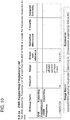
Fig. 10 illustrates details of the ENB Supporting Frequency List inFigs. 8 and9 . In the example inFig. 10 , the ENB Supporting Frequency List includes an E-UTRAN Absolute Radio-Frequency Channel Number ("EARFCN") of each frequency that can be used by the corresponding eNB (see the lowest row in the upper table inFig. 10 ). - An operation flow performed when paging occurs according to the present example embodiment will be described with reference to
Fig. 7 . When started, theUE 300, which is an MTC terminal, performs a procedure of connection to the MME 100 (S132 inFig. 7 ). For example, this connection procedure is described in "18 UE capabilities" on pages 150 and 151 ofNPL 5. TheMME 100 refers to an information element "UE Radio Capability," which has been acquired from theUE 300 in S132 and which describes capabilities of theUE 300, and holds information indicating that theUE 300 is classified into Category 0 (this signifies that theUE 300 is an MTC terminal) and that theUE 300 supports the frequency F0 (S133). Herein, the information indicating that theUE 300 is a terminal classified intoCategory 0 and supporting the frequency F0 is stored in thestorage unit 103 of the MME 100 (seeFig. 5 ). The UE Radio Capability is described in 3GPP TS 36.306 version 12.3.0 (see "4.1 ue-Category" and "4.3.5 RF parameters" in particular). - Next, the
MME 100 receives an incoming request directed to theUE 300 from an MTC-InterWorking Function (MTC-IWF) not illustrated inFig. 7 , the MTC-IWF being defined in 3GPP TS23.682 v13.0.0 (S134). TheMME 100 can determine whether the UE to which the incoming request is directed is theUE 300 by referring to the table 103-UE holding the terminal information inFig. 5 . - When receiving the incoming request, the
MME 100 refers to UE location registration information and determines eNBs having cells to which TAIs included in a TAI List of theUE 300 are allocated. In addition, theMME 100 refers to the table 103-1 and determines whether any of the determined eNBs can use the frequency F0 supported by theUE 300. In this example, theMME 100 determines that theeNBs eNBs 200 and 210 (S135). - Next, the
MME 100 transmits a paging message to theeNBs 200 and 210 (S136). Details of the S1AP: PAGING message are described inNPL 3. - Next, the
eNBs eNB 200 transmits a paging message to the cells 200-1, 200-2, and 200-3, and theeNB 210 transmits a paging message to the cells 210-1, 210-2, and 210-3 (S137). - As described above, the
MME 100 according to the first example embodiment determines eNBs having cells to which TAIs included in a TAI List of the paging message transmission destination UE are allocated. Next, theMME 100 selects eNBs as the paging message transmission destinations based on the frequencies usable by the eNBs (namely, the eNBs that do not match the frequency supported by the UE are excluded from the paging destinations). Thus, compared with the case in which the MME transmits a paging message to all eNBs having cells to which TAIs included in a TAI List of the paging message transmission destination UE are allocated, the number of paging messages can significantly be reduced. Consequently, paging messages transmitted to MTC terminals that are integrated with sensors and that can be installed anywhere do not increase the processing load on the MME, the communication load on the individual S1 interface, the processing load on the individual eNB, and the communication load on the individual Uu interface. Namely, convenience of normal users is not deteriorated. - Next, a second example embodiment will be described in detail with reference to drawings. The second example embodiment is achieved by adding a paging destination selection function per cell to the first example embodiment of the present invention. Since an overall configuration is the same as that according to the first example embodiment, the following description will be made with a focus on the difference between the first and second example embodiments.
Fig. 11 illustrates cells created by base stations according to the second example embodiment of the present invention. The present example embodiment assumes that, among the cells created by aneNB 200, a cell 200-1 is operated at a frequency F0 and cells 200-2 and 200-3 are operated at a frequency F1. Likewise, the present example embodiment assumes that, among the cells created by aneNB 210, a cell 210-1 is operated at the frequency F0 and cells 210-2 and 210-3 are operated at the frequency F1. Likewise, the present example embodiment assumes that, among the cells created by aneNB 220, a cell 220-1 is operated at the frequency F0 and cells 220-2 and 220-3 are operated at the frequency F1. -
Fig. 12 illustrates an example of base station information held by anMME 100 according to the second example embodiment of the present invention. As illustrated inFig. 12 , information about the frequencies of the cells created by theeNBs 200 to 220 can be stored. - Next, an operation according to the present example embodiment will be described in detail with reference to drawings.
Figs. 13 and14 are sequence diagrams illustrating an operation according to the second example embodiment of the present invention. Hereinafter, an operation of aUE 300, theeNB 200, and theMME 100 will be described with reference toFigs. 13 and14 . - S410 and S420 in
Fig. 13 correspond to S110 and S120 inFig. 6 , respectively.Fig. 15 illustrates an information element called an ENB Supporting Frequency List included in an S1AP: S1 SETUP REQUEST message or an S1AP: ENB CONFIGURATION UPDATE message transmitted from an eNB to the MME according to the present example embodiment. As illustrated inFig. 15 , in addition to the information element ENB Supporting Frequency List according to the first example embodiment inFig. 10 , an E-UTRAN CGI (Cell Global ID) is included as a cell identifier (see the lowest row in the upper table inFig. 15 ). - Next, the
MME 100 refers to the ENB Supporting Frequency List in the above received S1AP messages and stores information indicating that, among the cells created by theeNB 200, the cell 200-1 uses the frequency F0 and the cells 200-2 and 200-3 use the frequency F1 in a table 103-2 of astorage unit 103. Likewise, theMME 100 stores information indicating that, among the cells created by theeNB 210, the cell 210-1 uses the frequency F0 and the cells 210-2 and 210-3 use the frequency F1 in the table 103-2 of thestorage unit 103. Likewise, theMME 100 stores information indicating that, among the cells created by theeNB 220, the cell 220-1 uses the frequency F0 and the cells 220-2 and 220-3 use the frequency F1 in the table 103-2 of the storage unit 103 (S431). - Next, the subsequent processing will be described with reference to
Fig. 14 . S432 two S434 inFig. 14 are the same as S132 to S134 inFig. 7 . When receiving an incoming request in S434, theMME 100 refers to UE location registration information and determines eNBs having cells to which TAIs included in a TAI List of theUE 300 are allocated. Next, theMME 100 refers to the table 103-2 inFig. 12 and determines whether any of the determined eNBs has cells that can use the frequency F0 supported by theUE 300. In this example, theMME 100 determines that the cells 200-1, 210-1, and 220-1 of theeNBs 200 to 220 are the matching cells and determines to transmit a paging message specifying the paging cells to theeNBs - Next, the
MME 100 transmits a paging message to theeNBs NPL 3.Fig. 16 illustrates an example of the S1AP: PAGING message transmitted in S436. As illustrated inFig. 16 , an information element UE Supporting Frequency List is added so that an eNB that has received the S1AP: PAGING message can determine cells to which a paging message needs to be transmitted. -
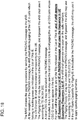
Fig. 17 illustrates details of the information element UE Supporting Frequency List. In the example inFig. 17 , in addition to the EARFCN of each frequency that can be used by the corresponding UE, the UE Supporting Frequency List includes an E-UTRAN CGI (see the lowest row in the upper table inFig. 17 ). TheeNBs 200 to 220 refer to this E-UTRAN CGI and determines a cell(s) to which a paging message is transmitted.Fig. 18 illustrates a difference between the second example embodiment of the present invention andNPL 3. To sum it up, the processing in S436 inFig. 14 can be realized by adding a bold and italic passage underlined inFig. 18 to "8.5.2 Successful Operation" in NPL 3 (if an eNB detects an information element UE Supporting Frequency List in a paging message, the eNB determines a cell(s) using the corresponding frequency (to be a paging target)). - Next, the
eNBs 200 to 220 receive the UE Supporting Frequency Lists in the S1AP: PAGING messages and determine the cells 200-1, 210-1, 220-1 to be the cells to which a paging message needs to be transmitted, respectively (S437). Next, theeNBs 200 to 220 transmit an RRC: Paging message to the cells 200-1, 210-1, and 220-1, respectively (S438). - As described above, according to the present example embodiment, the paging range can be determined per cell, not per eNB. In this way, the present example embodiment can reduce the processing load on the individual eNB and the communication load on the individual Uu interface even more than the first example embodiment. The following specific example will be described based on a case in which the technique according to the first example embodiment is applied to the configuration according to the second example embodiment. In this case, the
eNBs 200 to 220 can use the frequencies F0 and F1 and are using the frequencies F0 and F1. Thus, a paging message is also transmitted to the cells 200-2, 200-3, 210-2, 210-3, 220-2, and 220-3, which are operated at the frequency supported by MTC terminals other than theUE 300. The second example embodiment is advantageous in that such unnecessary transmission of the paging message can be reduced even more. - Next, a third example embodiment will be described in detail with reference to drawings. In the third example embodiment, instead of the frequencies, information that can determine the frequencies is stored as the base station information, and a paging destination(s) is selected based on the corresponding value(s). Since an overall configuration is the same as that according to the first example embodiment, the following description will be made with a focus on the difference between the first and third example embodiments. The present example embodiment assumes that a frequency F0 belongs to
E-UTRA Operating Band 1 in Table 5.5-1 in 3GPP TS36.101 v12.6.0 and that a frequency F1 belongs toE-UTRA Operating Band 5. -
Fig. 19 illustrates an example of base station information held by anMME 100 according to the third example embodiment of the present invention. As illustrated inFig. 19 , E-UTRA Operating Bands ofeNBs 200 to 220 can be stored. - Next, an operation according to the present example embodiment will be described in detail with reference to drawings.
Figs. 20 and21 are sequence diagrams illustrating an operation according to the third example embodiment of the present invention. Hereinafter, an operation of aUE 300, theeNB 200, and theMME 100 will be described with reference toFigs. 20 and21 . - S510 and S520 in
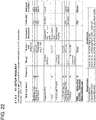
Fig. 20 basically match S110 and S120 inFig. 6 , respectively. However, as illustrated inFigs. 22 and23 , an information element called an ENB Supporting E-UTRA Operating Band Indicator List illustrated inFig. 24 is included in an S1AP: S1 SETUP REQUEST message and an S1AP: ENB CONFIGURATION UPDATE message. Among the values of the E-UTRA Operating Band in Table 5.5-1 in 3GPP TS36.101 v12.6.0, one or more values usable by the corresponding eNB are stored in a list format in the ENB Supporting E-UTRA Operating Band Indicator List (see the upper table inFig. 24 ). - Next, the
MME 100 refers to the ENB Supporting E-UTRA Operating Band Indicator Lists in the above received S1AP messages and stores information indicating that theeNBs E-UTRA Operating Band 1 and theeNB 220 can useE-UTRA Operating Band 5 in a table 103-3 of a storage unit 103 (S531). - Next, the subsequent processing will be described with reference to
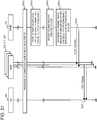
Fig. 21 . S532 to S534 inFig. 21 are the same as S132 to S134 inFig. 7 , except that, in response to the result of the UE connection procedure in S532, theMME 100 stores information indicating that theUE 300 is usingE-UTRA Operating Band 1 in S533. In S534, theMME 100 receives an incoming request, refers to UE location registration information, and determines eNBs having cells to which TAIs included in a TAI List of theUE 300 are allocated. In addition, theMME 100 refers to the table 103-3 inFig. 19 and determines whether any of the determined eNBs can use the E-UTRA Operating Band supported by theUE 300. In this example, theMME 100 refers to the table 103-3 inFig. 19 and determines to transmit a paging message to theeNBs E-UTRA Operating Band 1 among theeNBs 200 to 220 (S535). - The processing in S535 in
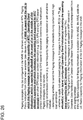
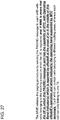
Fig. 21 can be realized by adding bold and italic passages underlined inFig. 25 to 27 to "5.3.4.3 Network Triggered Service Request" inNPL 4 and "19.2.2 S1 Interface Signalling Procedures" inNPL 5. InFigs. 25 and26 , a paging policy (Strategy) of the MME is added to section 3a (two portions) in "5.3.4.3 Network Triggered Service Request" inNPL 4. The paging policy indicates that a paging destination eNodeB(s) can be selected based on the Operating Band which is indicated by the Operating Band Indicator reported by an eNodeB and which is supported by the target MTC terminal. InFig. 27 , a like content is added to section "19.2.2.1 Paging procedure" in "19.2.2 S1 Interface Signalling Procedures" inNPL 5. - Next, the
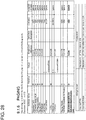
MME 100 transmits a paging message to theeNBs 200 and 210 (S536). Details of the S1AP: PAGING message are described inNPL 3.Fig. 28 illustrates an example of the S1AP: PAGING message transmitted in S536. As illustrated inFig. 28 , the S1AP: PAGING message includes an information element UE Supporting E-UTRA Operating Band Indicator List indicating that theUE 300 supportsE-UTRA Operating Band 1. -
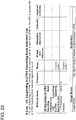
Fig. 29 illustrates details of the information element UE Supporting E-UTRA Operating Band Indicator List. In the example inFig. 29 , as withFig. 24 , among the values of the E-UTRA Operating Band in Table 5.5-1 in 3GPP TS36.101 v12.6.0, one or more values usable by the corresponding UE are stored in a list format in the UE Supporting E-UTRA Operating Band Indicator List. - Next, each of the
eNBs E-UTRA Operating Band 1 among the currently used frequencies. According to the present example embodiment, theeNB 200 transmits a paging message to the cells 200-1, 200-2, and 200-3, and theeNB 210 transmits a paging message to the cells 210-1, 210-2, and 210-3 (S537). - As described above, the present example embodiment can achieve an advantageous effect equivalent to that achieved according the first example embodiment while using, instead of the frequencies, the information elements called the E-UTRA Operating Band Indicators. The above second and third example embodiments may be combined with each other. In this way, paging can be instructed per cell by using the E-UTRA Operating Band Indicators.
- Next, a fourth example embodiment will be described in detail with reference to drawings. In the fourth example embodiment, instead of the frequencies, information indicating a communication methods or the like of individual base stations are stored as the base station information, and a paging destination(s) is selected based on this information. Since an overall configuration is the same as that according to the first example embodiment, the following description will be made with a focus on the difference between the first and fourth example embodiments. The present example embodiment assumes that, regarding
base stations eNB 220, the Duplex mode is FDD, the frequency bandwidth is 20 MHz, and the MIMO antenna configuration is 2 × 2. Also, the present example embodiment assumes that aUE 300 cannot connect to theeNB 220. In addition, as in the first and third example embodiments, theUE 300 can connect to thebase stations UE 300, which is an MTC terminal, may use another Duplex mode, frequency bandwidth, and MIMO configuration. -
Fig. 30 illustrates an example of base station information held by anMME 100 according to the fourth example embodiment of the present invention. As illustrated inFig. 30 , theMME 100 can hold the above Duplex modes, frequency bandwidths, MIMO configurations of theeNBs 200 to 220. - Next, an operation according to the present example embodiment will be described in detail with reference to drawings.
Figs. 31 and32 are sequence diagrams illustrating an operation according to the fourth example embodiment of the present invention. Hereinafter, an operation of theUE 300, theeNB 200, and theMME 100 will be described with reference toFigs. 31 and32 . - S610 and S620 in
Fig. 31 basically match S110 and S120 inFig. 6 , respectively. However, as illustrated inFigs. 33 and34 , an information element called an ENB Supporting Configuration List illustrated inFig. 35 is included in an S1AP: S1 SETUP REQUEST message and an S1AP: ENB CONFIGURATION UPDATE message. The ENB Supporting Configuration List includes a Duplex mode, a frequency bandwidth, and a MIMO antenna configuration supported by the corresponding eNB (see the upper table inFig. 35 ). - Next, the
MME 100 refers to the ENB Supporting Configuration Lists of the received S1AP messages and stores information indicating that theeNBs MIMO antenna configuration 1 × 1 and that theeNB 220 supports the Duplex mode FDD, thefrequency bandwidth 20 MHz, and theMIMO antenna configuration 2 × 2 in a table 103-4 of a storage unit 103 (S631). - Next, the subsequent processing will be described with reference to
Fig. 32 . S632 to S634 inFig. 32 are the same as S132 to S134 inFig. 7 , except that, in response to the result of the UE connection procedure in S632, theMME 100 stores information indicating that theUE 300 supports the Duplex mode HD-FDD, the frequency bandwidth 1.4 MHz, and theMIMO antenna configuration 1 × 1 in S633. In S634, theMME 100 receives an incoming request, refers to UE location registration information, and determines eNBs having cells to which TAIs included in a TAI List of theUE 300 are allocated. In addition, theMME 100 refers to the table 103-4 inFig. 30 and determines whether any of the determined eNBs uses the communication method supported by theUE 300, namely, any eNB capable of using the above Duplex mode, frequency bandwidth, and MIMO antenna configuration. Herein, theMME 100 refers to the table 103-4 inFig. 30 and determines to transmit a paging message to theeNBs UE 300, among theeNBs 200 to 220 (S635). - Next, the
MME 100 transmits a paging message to theeNBs 200 and 210 (S636). Details of the S1AP: PAGING message are described inNPL 3.Fig. 36 illustrates an example of the S1AP: PAGING message transmitted in S636. As illustrated inFig. 36 , the S1AP: PAGING message includes an information element UE Supporting Configuration List for setting the Duplex mode, the frequency bandwidth, and the MIMO configuration supported by the corresponding UE. -
Fig. 37 illustrates details of the information element UE Supporting Configuration List. As illustrated in the example inFig. 37 , as withFig. 35 , the Duplex mode, the frequency bandwidth, and the MIMO antenna configuration supported by theUE 300 are set in the UE Supporting Configuration List. - Next, each of the
eNBs MIMO antenna configuration 1 × 1. According to the present example embodiment, theeNB 200 transmits a paging message to cells 200-1, 200-2, and 200-3, and theeNB 210 transmits a paging message to cells 210-1, 210-2, and 210-3 (S637). - As described above, the present example embodiment can achieve an advantageous effect equivalent to that achieved according the first example embodiment while using, instead of the frequencies, the information elements indicating the communication methods, etc. of the base stations such as the Duplex modes, the frequency bandwidths, and the MIMO configurations. The above second and fourth example embodiments may be combined with each other. In this way, paging can be instructed per cell by using the Duplex modes, the frequency bandwidths, and the MIMO configurations.
- Next, a fifth example embodiment will be described in detail with reference to drawings. According to the fifth example embodiment, instead of the frequencies, the operation modes, which are variations of the base station communication function, are stored as the base station information, and a paging destination(s) is selected based on these values. Since an overall configuration is the same as that according to the first example embodiment, the following description will be made with a focus on the difference between the first and fifth example embodiments. According to the present example embodiment,
base stations base stations eNB 220 has an operation mode in which theeNB 220 communicates with normal terminals other than MTC terminals. While not illustrated, there may be a base station having an operation mode in which the base station communicates with MTC terminals and normal terminals. For example, a base station having an operation mode in which the base station communicates with only MTC terminals and a base station having an operation mode in which the base station communicates with MTC terminals and normal terminals may be reported by including an information element called category0Allowed defined inNPL 7 in SystemInformationBlockType1. In addition, as in the first and third example embodiments, the present example embodiment assumes that aUE 300 can connect to thebase stations -
Fig. 38 is an example of base station information held by anMME 100 according to the fifth example embodiment of the present invention. As illustrated inFig. 38 , theMME 100 can hold information indicating whether an individual one of theeNBs 200 to 220 has an operation mode that enables communication with only MTC terminals. In the example inFig. 38 , while "MTC Only" and "Normal Only" are illustrated, these items of information may be replaced by codes (for example, MTC Only = 0 and Normal Only = 1). Alternatively, other kinds of representation may of course be used such asUE category 0 allowed andUE category 0 not allowed. - Next, an operation according to the present example embodiment will be described in detail with reference to drawings.
Figs. 39 and40 are sequence diagrams illustrating an operation according to the fifth example embodiment of the present invention. Hereinafter, an operation of theUE 300, theeNB 200, and theMME 100 will be described with reference toFigs. 39 and40 . - S710 and S720 in
Fig. 39 basically match S110 and S120 inFig. 6 , respectively. However, as illustrated inFigs. 41 and42 , an information element called an ENB Supporting Capability List illustrated inFig. 43 is included in an S1AP: S1 SETUP REQUEST message and an S1AP: ENB CONFIGURATION UPDATE message. The ENB Supporting Capability List includes an executable Operation Mode in a list format (see the upper table inFig. 43 ). - Next, the
MME 100 refers to the ENB Supporting Capability Lists of the received S1AP messages and stores information indicating that theeNBs eNBs eNB 220 has an operation mode in which theeNB 220 operates as a normal base station for not only MTC terminals but also normal terminals in a table 103-5 of a storage unit 103 (S731). - Next, the subsequent processing will be described with reference to
Fig. 40 . S732 to S734 inFig. 40 are the same as S132 to S134 inFig. 7 , except that, in response to the result of the UE connection procedure in S732, theMME 100 stores information indicating that theUE 300 is an MTC terminal in S733. In S734, theMME 100 receives an incoming request, refers to UE location registration information, and determines eNBs having cells to which TAIs included in a TAI List of theUE 300 are allocated. Next, theMME 100 refers to the table 103-5 inFig. 38 and determines whether any of the determined eNB has an operation mode supported by theUE 300. Herein, theMME 100 refers to the table 103-5 inFig. 38 and determines to transmit a paging message to theeNBs UE 300, among theeNBs 200 to 220 (S735). In this way, theMME 100 selects theeNBs UE 300 among theeNBs 200 to 220. This is to exclude theeNB 220 from the paging targets and reduce the related load. - Next, the
MME 100 transmits a paging message to theeNBs 200 and 210 (S736). Details of the S1AP: PAGING message are described inNPL 3.Fig. 44 illustrates an example of the S1AP: PAGING message transmitted in S736. As illustrated inFig. 44 , the S1AP: PAGING message includes an information element UE Supporting Capability List for setting an operation mode of the corresponding UE. -
Fig. 45 illustrates details of the information element UE Supporting Capability List. As withFig. 43 , the UE Supporting Capability List in the example inFig. 45 includes an operation mode supported by theUE 300. - As described above, the present example embodiment can achieve an advantageous effect equivalent to that achieved according to the first example embodiment while using, instead of the frequencies, the information elements indicating the operation modes, which are variations of the base station communication function. The above second and fifth example embodiments may be combined with each other. In this way, paging can be instructed per cell by using the operation modes.
- Next, a sixth example embodiment will be described in detail with reference to drawings. In the sixth example embodiment, frequency information per cell is collected from a Non Access Stratum (NAS) message from a UE, instead of eNBs. Since an overall configuration is the same as that according to the second example embodiment, the following description will be made with a focus on the difference between the second and sixth example embodiments. The present example embodiment also assumes that, among the cells created by an
eNB 200, a cell 200-1 is operated at a frequency F0, and cells 200-2 and 200-3 are operated at a frequency F1. Likewise, among the cells created by aneNB 210, a cell 210-1 is operated at the frequency F0, and cells 210-2 and 210-3 are operated at the frequency F1. Likewise, among the cells created by aneNB 220, a cell 220-1 is operated at the frequency F0, and cells 220-2 and 220-3 are operated at the frequency F1. - Next, an operation according to the present example embodiment will be described in detail with reference to drawings.
Figs. 46 and47 are sequence diagrams illustrating an operation according to the sixth example embodiment of the present invention. Hereinafter, an operation of aUE 300, theeNB 200, and anMME 100 will be described with reference toFigs. 46 and47 . - As illustrated in
Fig. 46 , first, theUE 300 receives signals from the cells 200-1 to 200-3 created by theeNB 200, the cells 210-1 to 210-3 created by theeNB 210, and the cells 220-1 to 220-3 created by theeNB 220, so as to determine the frequencies used by the respective cells (S811). - Next, the
UE 300 sets an information element corresponding to the ENB Supporting Frequency List illustrated inFig. 15 in a TRACKING AREA UPDATE REQUEST message, which is called a NAS message and one of the messages exchanged transparently between theUE 300 and theMME 100 via theeNB 200, and transmits the TRACKING AREA UPDATE REQUEST message (S812). -
Fig. 48 illustrates an example of the TRACKING AREA UPDATE REQUEST message that can be used according to the present example embodiment. In the example inFig. 48 , the information element ENB Supporting Frequency List underlined in the lowest row inFig. 48 has been added. According to the present example embodiment, while theUE 300 uses the TRACKING AREA UPDATE REQUEST message to transmit the information element ENB Supporting Frequency List, the same information element may be added to another NAS message. The ENB Supporting Frequency List inFig. 48 includes the frequencies that have been measured by theUE 300 and used by the cells 200-1 to 200-3 created by theeNB 200, the cells 210-1 to 210-3 created by theeNB 210, and the cells 220-1 to 220-3 created by theeNB 220 in a list format. - The
MME 100 refers to the ENB Supporting Frequency Lists in the above received NAS messages and stores information indicating that, among the cells created by theeNB 200, the cell 200-1 uses the frequency F0 and the cells 200-2 and 200-3 use the frequency F1 in a table 103-2 of astorage unit 103. Likewise, theMME 100 stores information indicating that, among the cells created by theeNB 210, the cell 210-1 uses the frequency F0 and the cells 210-2 and 210-3 use the frequency F1 in the table 103-2 of thestorage unit 103. Likewise, theMME 100 stores information indicating that, among the cells created by theeNB 220, the cell 220-1 uses the frequency F0 and the cells 220-2 and 220-3 use the frequency F1 in the table 103-2 of the storage unit 103 (S813). - Next, the subsequent processing will be described with reference to
Fig. 47 . S814 to S820 inFig. 47 are the same as S432 to S438 inFig. 14 . In S816, theMME 100 receives an incoming request, refers to UE location registration information, and determines eNBs having cells to which TAIs included in a TAI List in theUE 300 are allocated. In addition, theMME 100 refers to the table 103-2 inFig. 12 and determines whether any of the determined eNBs has cells that can use the frequency F0 supported by theUE 300. Herein, theMME 100 determines that the cells 200-1, 210-1, and 220-1 of theeNBs 200 to 220 are the matching cells and determines to transmit a paging message specifying the paging cells to theeNBs - Next, the
MME 100 transmits a paging message to theeNB NPL 3. TheMME 100 transmits the same paging message as that illustrated inFig. 16 . - Next, the
eNBs 200 to 220 refer to the UE Supporting Frequency Lists in the received S1AP: PAGING messages and determine that the cells 200-1, 210-1, and 220-1 are the cells to which the paging message needs to be transmitted (S819). In addition, theeNBs - As described above, in the present example embodiment, no S1AP message is used to collect base station information. However, the present example embodiment can achieve an equivalent advantageous effect to that achieved according to the second example embodiment.
- Next, a seventh example embodiment will be described in detail with reference to drawings. In the seventh example embodiment, UE information including frequencies of eNBs is collected by using an external server.
Fig. 49 illustrates a configuration of a mobile communication system according to the seventh example embodiment of the present invention. What is different from the first example embodiment illustrated inFig. 2 is that anexternal server 900 that can be accessed by both anMME 100 and aUE 300 is arranged and that theUE 300 can transmit information including frequencies of base stations to the MME. - The
external server 900 includes atransceiving unit 901, aprocessing unit 902, and astorage unit 903. For example, theexternal server 900 receives measurement results of frequencies of base stations from theUE 300 and manages the measurement results. In addition, when receiving a request from theMME 100, theexternal server 900 answers base stations that need to perform the paging, based on the measurement results of the frequencies of the base stations, for example. - Next, an operation according to the present example embodiment will be described in detail with reference to drawings.
Figs. 50 and51 are sequence diagrams illustrating an operation according to the seventh example embodiment of the present invention. Hereinafter, an operation of theUE 300, aneNB 200, theMME 100, and theexternal server 900 will be described with reference toFigs. 50 and51 . - As illustrated in
Fig. 50 , first, theUE 300 receives, as a part of the measurement of radio information, signals from cells 200-1 to 200-3 created by theeNB 200, cells 210-1 to 210-3 created by aneNB 210, and cells 220-1 to 220-3 created by aneNB 220 and determines the frequencies of the respective cells (S1001). Next, theUE 300 transmits the measurement results of the radio information to the external server 900 (S1002). More specifically, this case corresponds to a case in which theUE 300 behaves as a Minimization of Drive Test (MDT) terminal inNPL 6. In this case, theUE 300 transmits the measurement results to theexternal server 900 via theeNB 200 or theMME 100. The transmission of the measurement results from theUE 300 to theexternal server 900 is not limited to the above mode. The transmission may be performed in any other mode. The information transmitted from theUE 300 to theexternal server 900 may include, for example, location information such as the latitude, longitude, and altitude of theUE 300 and the travel speed and the operation history of theUE 300, in addition to the frequencies used by the eNBs. The location information and the travel speed can be used as information for determining the cell in which theUE 300 exists. In addition, the travel speed and the operation history can be used as information for estimating whether theUE 300 is an MTC terminal. - Next, the
external server 900 stores the received measurement results in the storage unit 903 (S1003). For example, theexternal server 900 stores information indicating that theeNBs eNB 220 can use a frequency F1 in a table equivalent to the table 103-1 inFig. 4 . In addition, if theexternal server 900 has already received other information such as the location information, the travel speed, and the operation history, theexternal server 900 stores these items of information in a table per UE. - Next, the subsequent processing will be described with reference to
Fig. 51 . S1004 to S1006 inFig. 51 are the same as S132 to S134 inFig. 7 . In S1006, theMME 100 receives an incoming request, specifies the UE indicated by the incoming request, and requests theexternal server 900 to estimate base stations that can use the frequency supported by theUE 300. Theexternal server 900 performs the estimation from the correlation between (among) items of information stored in thestorage unit 903 and transmits a result of the estimation to the MME 100 (S1007). For example, based on the frequency supported by theUE 300, theexternal server 900 determines eNBs that can use the frequency and notifies theMME 100 of the determined eNBs. In this operation, if paging target base stations can be narrowed down further, theexternal server 900 may obtain an estimation result by using other information and notify theMME 100 of the estimation result. For example, theexternal server 900 may use location information such as the latitude, longitude, and altitude of theUE 300 and the travel speed and the operation history collected from theUE 300, so as to select certain eNBs from the eNBs that can use the certain frequency F0 and transmit the selected eNBs to theMME 100. - When receiving a response from the
external server 900, theMME 100 refers to UE location registration information and determines eNBs having cells to which TAIs included in a TAI List of theUE 300 are allocated. In addition, based on the information received from theexternal server 900, theMME 100 determines whether any of the determined eNBs is an eNB estimated by theexternal server 900. Herein, theMME 100 determines that theeNBs eNBs 200 and 210 (S1008). - Next, the
MME 100 transmits a paging message to theeNBs 200 and 210 (S1009). Next, theeNBs eNB 200 transmits a paging message to the cells 200-1, 200-2, and 200-3, and theeNB 210 transmits a paging message to the cells 210-1, 210-2, and 210-3 (S1010). - As described above, the present invention is applicable to the mode in which the
external server 900 is used. In particular, the present example embodiment provides an advantageous effect that base stations or cells that need to perform paging can further be narrowed down by using information in the external server 900 (for example, UE location information). In the example inFig. 51 , while theexternal server 900 narrows down the base stations, a part of this operation may be performed by theMME 100. For example, since theMME 100 has a function of managing the location of the UE, theexternal server 900 may transmit base station candidates based on the frequencies, and theMME 100 may narrow down the paging destination base stations, based on the UE location or travel history. In addition, as described in the third to sixth example embodiments, in the seventh example embodiment, theexternal server 900 may collect the communication functions or the operation modes of the base stations and notify theMME 100 of these items of information or base stations based on these items of information, for example. - While example embodiments of the present invention have thus been described, the present invention is not limited thereto. Further variations, substitutions, or adjustments can be made without departing from the basic technical concept of the present invention. For example, the configurations of the systems, the configurations of the elements, and the representation modes of the messages illustrated in the drawings have been used only as examples to facilitate understanding of the present invention. Namely, the present invention is not limited to the configurations illustrated in the drawings.
- An individual unit (processing means) of the individual core network node (MME), base station (eNB), and terminal (UE) illustrated in
Fig. 1 ,2 ,49 , or the like may be realized by a computer program which causes a computer that constitute the corresponding apparatus to use its hardware (processor, memory, storage, etc.) and perform the corresponding processing. - In addition, while the above first example embodiment has been described assuming that the
MME 100 acquires frequencies usable by eNBs from the eNBs, these items of information may be set previously as station data in theMME 100. - In addition, in the above second example embodiment, the
MME 100 notifies an individual eNB of a frequency that constitutes the cells to which a paging message needs to be transmitted. However, the frequency may be set as station data in the eNB. For example, theeNB 200 may hold the frequency F0 as the frequency supported by an MTC terminal and determine that a paging message is directed to the MTC terminal based on information such S-TMSI in UE Paging Identity, Paging DRX, or UE Radio Capability for Paging included in an S1AP: paging message received from theMME 100. Next, theeNB 200 may transmit a paging message only to a cell(s) at the frequency supported by the MTC terminal. - In addition, while the present example embodiment has mainly been described assuming that the present invention is applied to LTE, the present invention is applicable to radio communication systems other than LTE. For example, the present invention is applicable to other radio communication systems such as WCDMA (Wideband Code Division Multiple Access) (registered trademark), GSM (global system for mobile communications) (registered trademark), CDMA2000, and WiMAX (Worldwide Interoperability for Microwave Access).
- In addition, while an individual one of the above example embodiments has been described by using a configuration including an MME, eNBs, and a UE, the present invention is applicable to other networks having different configurations. For example, the present invention is applicable to a network including small cell gateways, a network including relay nodes and donor eNBs, and a network in which connection means called dual connectivity is realized.
- In addition, in the above second example embodiment, the MME collectively sets ECGIs, which are identifiers of cells that an eNB needs to page, and a frequency in a list format in a UE Supporting Frequency List in a paging message. However, the MME may set only the ECGIs of the paging targets in a list format, as illustrated in
Fig. 52 . - In addition, the above fourth example embodiment has been described by using an example in which a single eNB performs an LTE service, the present invention is applicable to a case in which a single eNB simultaneously provides service areas constituted by a plurality of radio communication techniques such as 3G and WLAN. In this case, the
MME 100 is notified of information about the radio communication systems simultaneously provided by the eNB, and theMME 100 can use the information when determining paging message transmission destination(s). - Analysis on the existing proposals (
NPLs 1 and 2) described in Background and advantageous effects of the present invention will hereinafter be described.NPL 1 proposes optimization of paging for low-mobility terminals. More specifically,NPL 1 proposes narrowing down the eNBs to which a paging message needs to be transmitted by determining that an MTC terminal rarely moves from its travel history. However, an MTC terminal could be a part of a moving machine such as an automobile. An individual terminal that operates in an LTE radio communication system including MTC terminals has two states, i.e., a connected mode and an idle mode. When a terminal is in the idle mode, the core network can determine the location of the terminal only per TAI List. Thus, even if the eNBs to which a paging message needs to be transmit have been narrowed down from the travel history of the terminal in the connected mode and even if a paging message is transmitted to the eNBs, the transmission fails. It is eventually necessary to transmit a paging message to all the eNBs having cells to which TAIs included in a TAI List are allocated. According to the present invention, irrespective of the state of the above terminal, the number of paging messages flowing through networks and the load of the MME and the eNBs on processing the paging messages can be reduced. -
NPL 2 proposes a load reduction technique relating to paging. More specifically,NPL 2 proposes a technique for reducing MME communication load and S1 interface communication load and a technique for reducing eNB processing load and radio section (Uu interface) communication load between an individual eNB and MTC terminal. With the former technique, a paging message is transmitted to an eNB used by an MTC terminal most recently, and the eNB forwards the paging message to an appropriate eNB via an interface connecting the eNBs called an X2 interface. The eNB that has received the paging message transmits the paging message to the MTC terminal (the eNB processing load and the Uu interface connection load are reduced consequently, since the number of eNBs that transmit the paging message to the MTC terminal is reduced). With the latter technique, when an eNB receives a parameter called an UE Radio Capability from an MTC terminal, the eNB extracts information about the frequency that can be used by the UE from the parameter, generates a new information element, and transmits the new information element to the MME. The MME sets this information element in a paging message and transmits the paging message to all the eNBs having cells to which TAIs included in a TAI List are allocated, and the eNBs transmit a paging message to cells operated at the corresponding frequency. As withNPL 1, it is clear that there are cases in which the former technique does not operate well. While the latter technique can reduce the eNB processing load and the Uu interface communication load, since a paging message is transmitted to all the eNBs having cells to which TAIs included in a TAI List are allocated, the MME processing load and the S1 interface communication load are not reduced. Considering that a macro base station has a service area with a several-kilometer radius, many MTC terminals can exist in the service area. Thus, since paging processing for an MTC terminal can increase the MME processing load and the S1 interface communication load, there is a high possibility that incoming signals of Voice over LTE (VoLTE) transmitted to normal terminals could be affected, for example. The present invention can more effectively reduce the number of paging messages flowing through networks and the load of the MME and eNB on processing the paging messages than the techniques in theabove NPL 2. - Finally, suitable modes of the present invention will be summarized.
- (See the core network node according to the above first aspect)
- The core network node according to
mode 1, wherein the information about the communication function(s) is information that can determine a frequency(ies) used by the candidate(s) of the base station(s), and the paging destination selection unit selects a base station(s) or a cell(s) that can perform paging at a frequency supported by the certain mobile station. - The core network node according to
mode 2, including a base station information acquisition unit which acquires the information that can determine the frequency(ies) used by the candidate(s) of the base station(s) from an information element(s) included in a message(s) exchanged with the base station(s) and stores the acquired information in the base station information storage unit. - The core network node according to
mode 1, including a base station information acquisition unit which acquires, from an information element(s) included in a message(s) exchanged with the base station(s), information that can determine a frequency(ies) used by a cell(s) of the candidate(s) of the base station(s) and stores the acquired information in the base station information storage unit. - The core network node according to
mode 1; - wherein the information about the communication function(s) includes information about a duplex mode(s), a frequency bandwidth(s), and a MIMO configuration(s) of the candidate(s) of the base station(s); and
- wherein the paging destination selection unit selects a base station(s) or a cell(s) that can perform paging with a communication method supported by the certain mobile station.
- The core network node according to
mode 1; - wherein the information about the communication function(s) is information indicating an operation mode(s) of the candidate(s) of the base station(s); and
- wherein the paging destination selection unit selects a base station(s) or a cell(s) operating in an operation mode supported by the certain mobile station.
- The core network node according to any one of
modes 1 to 6, the core network node acquires the information about the communication function(s) of the candidate(s) of the base station(s) from an information element(s) included in a message(s) exchanged with the mobile station, instead of from the information element(s) included in the message(s) exchanged with the base station(s). - The core network node according to any one of
modes 1 to 6, the core network node acquires information for selecting the paging range via an external server that receives the information about the communication function(s) of the candidate(s) of the base station(s) from the mobile station, instead of from the information element(s) included in the message(s) exchanged with the base station(s). - (See the according to the base station, the mobile station, or the server according to the above second aspect)
- (See the communication system according to the above third aspect)
- (See the paging method according to the above fourth aspect)
- (See the computer program according to the above fifth aspect)
-
Modes 9 to 12 can be expanded in the same way asmode 1 is expanded tomodes 2 to 8. - The disclosure of the above NPLs is incorporated herein by reference thereto. Variations and adjustments of the example embodiments and examples are possible within the scope of the overall disclosure (including the claims) of the present invention and based on the basic technical concept of the present invention. Various combinations and selections of various disclosed elements (including the elements in the claims, example embodiments, examples, drawings, etc.) are possible within the scope of the disclosure of the present invention. Namely, the present invention of course includes various variations and modifications that could be made by those skilled in the art according to the overall disclosure including the claims and the technical concept. The description discloses numerical value ranges. However, even if the description does not particularly disclose arbitrary numerical values or small ranges included in the ranges, these values and ranges should be deemed to have been specifically disclosed.
-
- 100 MME
- 100A network core node
- 101, 201, 211, 221, 301, 901 transceiving unit
- 101A paging candidate storage unit
- 102, 202, 212, 222, 302, 902 processing unit
- 102A base station information storage unit
- 103, 203, 213, 223, 303, 903 storage unit
- 103-1, 103-2, 103-3, 103-4, 103-5, 103-UE table
- 103A paging destination selection unit
- 104A paging instruction unit
- 200 to 220, 200A eNB (base station)
- 200-1 to 200-3, 210-1 to 210-3, 220-1 to 220-3 cell
- 300 UE
- 900 external server
Claims (19)
- A core network node, comprising:a paging candidate storage unit that holds a candidate(s) of a base station(s) as a paging message transmission destination(s);a base station information storage unit that holds information about a communication function(s) of the candidate(s) of the base station(s);a paging destination selection unit that selects, when a certain mobile station is paged, a paging range from the candidate(s) of the base station(s), based on the communication function(s) of the candidate(s) of the base station(s); anda paging instruction unit that instructs a base station(s) corresponding to the selected range to perform paging.
- The core network node according to claim 1; wherein the information about the communication function(s) is information that can determine a frequency(ies) used by the candidate(s) of the base station(s), and the paging destination selection unit selects a base station(s) or a cell(s) that can perform paging at a frequency supported by the certain mobile station.
- The core network node according to claim 2, comprising a base station information acquisition unit which acquires the information that can determine the frequency(ies) used by the candidate(s) of the base station(s) from an information element(s) included in a message(s) exchanged with the base station(s) and stores the acquired information in the base station information storage unit.
- The core network node according to claim 1, comprising a base station information acquisition unit which acquires, from an information element(s) included in a message(s) exchanged with the base station(s), information that can determine a frequency(ies) used by a cell(s) of the candidate(s) of the base station(s) and stores the acquired information in the base station information storage unit.
- The core network node according to claim 1;
wherein the information about the communication function(s) includes information about a duplex mode(s), a frequency bandwidth(s), and a MIMO configuration(s) of the candidate(s) of the base station(s); and
wherein the paging destination selection unit selects a base station(s) or a cell(s) that can perform paging with a communication method supported by the certain mobile station. - The core network node according to claim 1;
wherein the information about the communication function(s) is information indicating an operation mode(s) of the candidate(s) of the base station(s); and
wherein the paging destination selection unit selects a base station(s) or a cell(s) operating in an operation mode supported by the certain mobile station. - The core network node according to any one of claims 1 to 6, the core network node acquires the information about the communication function(s) of the candidate(s) of the base station(s) from an information element(s) included in a message(s) exchanged with the mobile station, instead of from the information element(s) included in the message(s) exchanged with the base station(s).
- The core network node according to any one of claims 1 to 6, the core network node acquires information for selecting the paging range via an external server that receives the information about the communication function(s) of the candidate(s) of the base station(s) from the mobile station, instead of from the information element(s) included in the message(s) exchanged with the base station(s).
- A base station, which can communicate with a core network node including: a paging candidate storage unit that holds a candidate(s) of a base station(s) as a paging message transmission destination(s); a base station information storage unit that holds information about a communication function(s) of the candidate(s) of the base station(s); a paging destination selection unit that selects, when a certain mobile station is paged, a paging range from the candidate(s) of the base station(s), based on the communication function(s) of the candidate(s) of the base station(s); and a paging instruction unit that instructs a base station(s) corresponding to the selected range to perform paging;
wherein the base station transmits the information about the communication function(s) of the candidate(s) of the base station(s) to the core network node. - The base station according to claim 9; wherein the information about the communication function(s) is information that can determine a frequency(ies) used by the candidate(s) of the base station(s).
- The base station according to claim 10, comprising a base station information transmission unit which stores information that can determine the frequency(ies) used by the candidate(s) of the base station(s) in an information element(s) included in a message(s) exchanged with the core network node and transmits the information to the core network node.
- The base station according to claim 9, storing information that can determine a frequency(ies) used by a cell(s) of the candidate(s) of the base station(s) in an information element(s) included in a message(s) exchanged with the core network node and transmitting the information to the core network node.
- The base station according to claim 9, storing information about a duplex mode(s), a frequency bandwidth(s), and a MIMO configuration(s) of the candidate(s) of the base station(s) in an information element(s) included in a message(s) exchanged with the core network node and transmitting the information to the core network node.
- The base station according to claim 9, storing information indicating an operation mode(s) of the candidate(s) of the base station(s) in an information element(s) included in a message(s) exchanged with the core network node and transmitting the information to the core network node.
- A mobile station, which can communicate with a core network node including: a paging candidate storage unit that holds a candidate(s) of a base station(s) as a paging message transmission destination(s); a base station information storage unit that holds information about a communication function(s) of the candidate(s) of the base station(s); a paging destination selection unit that selects, when a certain mobile station is paged, a paging range from the candidate(s) of the base station(s), based on the communication function(s) of the candidate(s) of the base station(s); and a paging instruction unit that instructs a base station(s) corresponding to the selected range to perform paging;
wherein the mobile station transmits the information about the communication function(s) of the candidate(s) of the base station(s) to the core network node. - A server, which can communicate with a core network node including: a paging candidate storage unit that holds a candidate(s) of a base station(s) as a paging message transmission destination(s); a base station information storage unit that holds information about a communication function(s) of the candidate(s) of the base station(s); a paging destination selection unit that selects, when a certain mobile station is paged, a paging range from the candidate(s) of the base station(s), based on the communication function(s) of the candidate(s) of the base station(s); and a paging instruction unit that instructs a base station(s) corresponding to the selected range to perform paging;
wherein the server transmits information for selecting the paging range based on the communication function(s) of the candidate(s) of the base station(s) received from a mobile station to the core network node. - A communication system, comprising a core network node including: a paging candidate storage unit that holds a candidate(s) of a base station(s) as a paging message transmission destination(s); a base station information storage unit that holds information about a communication function(s) of the candidate(s) of the base station(s); a paging destination selection unit that selects, when a certain mobile station is paged, a paging range from the candidate(s) of the base station(s), based on the communication function(s) of the candidate(s) of the base station(s); and a paging instruction unit that instructs a base station(s) corresponding to the selected range to perform paging.
- A paging method, comprising:a step of causing a core network node, which includes a paging candidate storage unit that holds a candidate(s) of a base station(s) as a paging message transmission destination(s) and a base station information storage unit that holds information about a communication function(s) of the candidate(s) of the base station(s), to select, when a certain mobile station is paged, a paging range from the candidate(s) of the base station(s), based on the communication function(s) of the candidate(s) of the base station(s); anda step of causing the core network node to instruct a base station(s) corresponding to the selected range to perform paging.
- A program, causing a computer, which constitutes a core network node including a paging candidate storage unit that holds a candidate(s) of a base station(s) as a paging message transmission destination(s) and a base station information storage unit that holds information about a communication function(s) of the candidate(s) of the base station(s), to perform:processing for selecting, when a certain mobile station is paged, a paging range from the candidate(s) of the base station(s), based on the communication function(s) of the candidate(s) of the base station(s); andprocessing for instructing a base station(s) corresponding to the selected range to perform paging.
Applications Claiming Priority (2)
| Application Number | Priority Date | Filing Date | Title |
|---|---|---|---|
| JP2015077066 | 2015-04-03 | ||
| PCT/JP2016/060940 WO2016159356A1 (en) | 2015-04-03 | 2016-04-01 | Core network node, base station, mobile station, server, communication system, paging method, and program |
Publications (3)
| Publication Number | Publication Date |
|---|---|
| EP3280201A1 true EP3280201A1 (en) | 2018-02-07 |
| EP3280201A4 EP3280201A4 (en) | 2018-12-05 |
| EP3280201B1 EP3280201B1 (en) | 2021-11-24 |
Family
ID=57006174
Family Applications (1)
| Application Number | Title | Priority Date | Filing Date |
|---|---|---|---|
| EP16773236.1A Not-in-force EP3280201B1 (en) | 2015-04-03 | 2016-04-01 | Communication system, mme and enb |
Country Status (5)
| Country | Link |
|---|---|
| US (1) | US20180084525A1 (en) |
| EP (1) | EP3280201B1 (en) |
| JP (2) | JP6525052B2 (en) |
| CN (1) | CN107431997B (en) |
| WO (1) | WO2016159356A1 (en) |
Cited By (1)
| Publication number | Priority date | Publication date | Assignee | Title |
|---|---|---|---|---|
| CN113994744A (en) * | 2019-03-28 | 2022-01-28 | 欧芬诺有限责任公司 | Core paging processing |
Families Citing this family (28)
| Publication number | Priority date | Publication date | Assignee | Title |
|---|---|---|---|---|
| US12520127B2 (en) * | 2018-04-05 | 2026-01-06 | Ntt Docomo, Inc. | User equipment, network device, and radio communication method |
| CN111292524B (en) * | 2018-12-07 | 2022-03-29 | 中国移动通信集团陕西有限公司 | Congestion information determination method and device, electronic equipment and storage medium |
| JP7128768B2 (en) * | 2019-03-27 | 2022-08-31 | 本田技研工業株式会社 | Communication device, program, communication system, and communication method |
| JP7275914B2 (en) * | 2019-06-27 | 2023-05-18 | 株式会社三洋物産 | game machine |
| JP7275911B2 (en) * | 2019-06-27 | 2023-05-18 | 株式会社三洋物産 | game machine |
| JP7275915B2 (en) * | 2019-06-27 | 2023-05-18 | 株式会社三洋物産 | game machine |
| JP7275909B2 (en) * | 2019-06-27 | 2023-05-18 | 株式会社三洋物産 | game machine |
| JP7275910B2 (en) * | 2019-06-27 | 2023-05-18 | 株式会社三洋物産 | game machine |
| JP7275912B2 (en) * | 2019-06-27 | 2023-05-18 | 株式会社三洋物産 | game machine |
| JP7275913B2 (en) * | 2019-06-27 | 2023-05-18 | 株式会社三洋物産 | game machine |
| JP7275908B2 (en) * | 2019-06-27 | 2023-05-18 | 株式会社三洋物産 | game machine |
| JP7275916B2 (en) * | 2019-06-27 | 2023-05-18 | 株式会社三洋物産 | game machine |
| JP7302376B2 (en) * | 2019-08-22 | 2023-07-04 | 株式会社三洋物産 | game machine |
| JP7307330B2 (en) * | 2019-08-22 | 2023-07-12 | 株式会社三洋物産 | game machine |
| JP7302378B2 (en) * | 2019-08-22 | 2023-07-04 | 株式会社三洋物産 | game machine |
| JP7302375B2 (en) * | 2019-08-22 | 2023-07-04 | 株式会社三洋物産 | game machine |
| JP7302374B2 (en) * | 2019-08-22 | 2023-07-04 | 株式会社三洋物産 | game machine |
| JP7302372B2 (en) * | 2019-08-22 | 2023-07-04 | 株式会社三洋物産 | game machine |
| JP7302373B2 (en) * | 2019-08-22 | 2023-07-04 | 株式会社三洋物産 | game machine |
| JP7302377B2 (en) * | 2019-08-22 | 2023-07-04 | 株式会社三洋物産 | game machine |
| JP7302379B2 (en) * | 2019-08-23 | 2023-07-04 | 株式会社三洋物産 | game machine |
| JP7307331B2 (en) * | 2019-08-23 | 2023-07-12 | 株式会社三洋物産 | game machine |
| JP7342586B2 (en) * | 2019-10-03 | 2023-09-12 | 株式会社三洋物産 | gaming machine |
| JP7342589B2 (en) * | 2019-10-03 | 2023-09-12 | 株式会社三洋物産 | gaming machine |
| JP7342585B2 (en) * | 2019-10-03 | 2023-09-12 | 株式会社三洋物産 | gaming machine |
| JP7342588B2 (en) * | 2019-10-03 | 2023-09-12 | 株式会社三洋物産 | gaming machine |
| JP7342584B2 (en) * | 2019-10-03 | 2023-09-12 | 株式会社三洋物産 | gaming machine |
| JP7342587B2 (en) * | 2019-10-03 | 2023-09-12 | 株式会社三洋物産 | gaming machine |
Family Cites Families (10)
| Publication number | Priority date | Publication date | Assignee | Title |
|---|---|---|---|---|
| US7366525B2 (en) * | 2004-09-30 | 2008-04-29 | Motorola, Inc. | Communication resource selection within a multi-band wireless communication system |
| US9264954B2 (en) * | 2010-04-28 | 2016-02-16 | Qualcomm Incorporated | Neighbor relation information management |
| CN102123498B (en) * | 2011-02-24 | 2014-06-04 | 华为技术有限公司 | Method, device and base station subsystem for paging terminal in multi-band network |
| GB201201915D0 (en) * | 2012-02-03 | 2012-03-21 | Nec Corp | Mobile communications device and system |
| US20150215742A1 (en) * | 2012-09-28 | 2015-07-30 | Nec Corporation | Mobile communication system, movement prediction device and paging area determination method |
| CN103906179A (en) * | 2012-12-28 | 2014-07-02 | 中国电信股份有限公司 | User terminal frequency support information reporting method and system |
| WO2015026285A2 (en) * | 2013-08-21 | 2015-02-26 | Telefonaktiebolaget L M Ericsson (Publ) | Paging in coverage extension mode |
| EP3723401B1 (en) * | 2014-07-02 | 2023-01-25 | Apple Inc. | Apparatus and method for paging enhancements for low complexity user equipment |
| GB2529406A (en) * | 2014-08-18 | 2016-02-24 | Vodafone Ip Licensing Ltd | Paging in cellular networks |
| CN105850201B (en) * | 2014-11-07 | 2018-07-03 | 华为技术有限公司 | Transmission method of paging message and base station, mobility management entity and user equipment |
-
2016
- 2016-04-01 US US15/563,770 patent/US20180084525A1/en not_active Abandoned
- 2016-04-01 CN CN201680020415.2A patent/CN107431997B/en not_active Expired - Fee Related
- 2016-04-01 JP JP2017510253A patent/JP6525052B2/en active Active
- 2016-04-01 WO PCT/JP2016/060940 patent/WO2016159356A1/en not_active Ceased
- 2016-04-01 EP EP16773236.1A patent/EP3280201B1/en not_active Not-in-force
-
2019
- 2019-05-07 JP JP2019087624A patent/JP2019118157A/en active Pending
Cited By (4)
| Publication number | Priority date | Publication date | Assignee | Title |
|---|---|---|---|---|
| CN113994744A (en) * | 2019-03-28 | 2022-01-28 | 欧芬诺有限责任公司 | Core paging processing |
| EP4054254A1 (en) * | 2019-03-28 | 2022-09-07 | Ofinno, LLC | Core paging handling |
| CN113994744B (en) * | 2019-03-28 | 2023-05-12 | 北京小米移动软件有限公司 | Paging processing method, equipment, storage medium and system |
| US11963133B2 (en) | 2019-03-28 | 2024-04-16 | Beijing Xiaomi Mobile Software Co., Ltd. | Core paging handling |
Also Published As
| Publication number | Publication date |
|---|---|
| US20180084525A1 (en) | 2018-03-22 |
| CN107431997A (en) | 2017-12-01 |
| JP6525052B2 (en) | 2019-06-05 |
| EP3280201B1 (en) | 2021-11-24 |
| WO2016159356A1 (en) | 2016-10-06 |
| EP3280201A4 (en) | 2018-12-05 |
| JP2019118157A (en) | 2019-07-18 |
| CN107431997B (en) | 2020-12-29 |
| JPWO2016159356A1 (en) | 2018-01-25 |
Similar Documents
| Publication | Publication Date | Title |
|---|---|---|
| EP3280201B1 (en) | Communication system, mme and enb | |
| US11729704B2 (en) | Radio terminal, base station, and method therefor | |
| EP2552160B1 (en) | Method and device for selecting donor cell | |
| KR101844540B1 (en) | Systems, methods and devices for small cell activation and detection | |
| EP2984883B1 (en) | Radio access network defined paging area | |
| EP2398264B1 (en) | Fallback between radio access technologies | |
| EP2343918A2 (en) | Circuit switched fallback | |
| US9560687B2 (en) | Network nodes, a user equipment and methods therein for enabling D2D communication | |
| US20240188021A1 (en) | Simultaneous registration to multiple networks | |
| GB2496153A (en) | D2D discovery using information indicating tracking area-specific resources | |
| US20160021569A1 (en) | Apparatus and Method to Reduce Denial of Service During MME Overload and Shutdown Conditions | |
| US11290871B2 (en) | Tracking area update methods and devices | |
| US12225625B2 (en) | Method and apparatus for radio access network based notification area update | |
| US11516767B2 (en) | Network node, user equipment, and methods in a wireless communications network | |
| EP4346121A1 (en) | Method and apparatus for measurement reporting of uncrewed aerial vehicle terminal in non-terrestrial network | |
| US12101733B2 (en) | User equipment, a radio network node, a location server, and methods therein for obtaining and providing positioning assistance data | |
| EP4179755A1 (en) | Managing multiple subscriber identities in cellular network | |
| EP3912405B1 (en) | Network node, user equipment and methods in a wireless communications network |
Legal Events
| Date | Code | Title | Description |
|---|---|---|---|
| STAA | Information on the status of an ep patent application or granted ep patent |
Free format text: STATUS: THE INTERNATIONAL PUBLICATION HAS BEEN MADE |
|
| PUAI | Public reference made under article 153(3) epc to a published international application that has entered the european phase |
Free format text: ORIGINAL CODE: 0009012 |
|
| STAA | Information on the status of an ep patent application or granted ep patent |
Free format text: STATUS: REQUEST FOR EXAMINATION WAS MADE |
|
| 17P | Request for examination filed |
Effective date: 20171027 |
|
| AK | Designated contracting states |
Kind code of ref document: A1 Designated state(s): AL AT BE BG CH CY CZ DE DK EE ES FI FR GB GR HR HU IE IS IT LI LT LU LV MC MK MT NL NO PL PT RO RS SE SI SK SM TR |
|
| AX | Request for extension of the european patent |
Extension state: BA ME |
|
| DAV | Request for validation of the european patent (deleted) | ||
| DAX | Request for extension of the european patent (deleted) | ||
| A4 | Supplementary search report drawn up and despatched |
Effective date: 20181107 |
|
| RIC1 | Information provided on ipc code assigned before grant |
Ipc: H04W 92/12 20090101ALI20181031BHEP Ipc: H04W 68/00 20090101AFI20181031BHEP |
|
| STAA | Information on the status of an ep patent application or granted ep patent |
Free format text: STATUS: EXAMINATION IS IN PROGRESS |
|
| 17Q | First examination report despatched |
Effective date: 20190619 |
|
| REG | Reference to a national code |
Ref country code: DE Ref legal event code: R079 Ref document number: 602016066588 Country of ref document: DE Free format text: PREVIOUS MAIN CLASS: H04W0068000000 Ipc: H04W0068020000 |
|
| GRAP | Despatch of communication of intention to grant a patent |
Free format text: ORIGINAL CODE: EPIDOSNIGR1 |
|
| STAA | Information on the status of an ep patent application or granted ep patent |
Free format text: STATUS: GRANT OF PATENT IS INTENDED |
|
| RIC1 | Information provided on ipc code assigned before grant |
Ipc: H04W 68/02 20090101AFI20210602BHEP Ipc: H04W 88/08 20090101ALN20210602BHEP Ipc: H04W 88/14 20090101ALN20210602BHEP Ipc: H04W 92/04 20090101ALN20210602BHEP |
|
| INTG | Intention to grant announced |
Effective date: 20210622 |
|
| RIN1 | Information on inventor provided before grant (corrected) |
Inventor name: TAMURA, TOMU Inventor name: TAMURA, TOSHIYUKI Inventor name: HAYASHI, SADAFUKU Inventor name: UEDA, YOSHIO |
|
| GRAA | (expected) grant |
Free format text: ORIGINAL CODE: 0009210 |
|
| STAA | Information on the status of an ep patent application or granted ep patent |
Free format text: STATUS: THE PATENT HAS BEEN GRANTED |
|
| GRAS | Grant fee paid |
Free format text: ORIGINAL CODE: EPIDOSNIGR3 |
|
| AK | Designated contracting states |
Kind code of ref document: B1 Designated state(s): AL AT BE BG CH CY CZ DE DK EE ES FI FR GB GR HR HU IE IS IT LI LT LU LV MC MK MT NL NO PL PT RO RS SE SI SK SM TR |
|
| REG | Reference to a national code |
Ref country code: GB Ref legal event code: FG4D |
|
| REG | Reference to a national code |
Ref country code: DE Ref legal event code: R096 Ref document number: 602016066588 Country of ref document: DE |
|
| REG | Reference to a national code |
Ref country code: AT Ref legal event code: REF Ref document number: 1450839 Country of ref document: AT Kind code of ref document: T Effective date: 20211215 |
|
| REG | Reference to a national code |
Ref country code: IE Ref legal event code: FG4D |
|
| REG | Reference to a national code |
Ref country code: LT Ref legal event code: MG9D |
|
| REG | Reference to a national code |
Ref country code: NL Ref legal event code: MP Effective date: 20211124 |
|
| REG | Reference to a national code |
Ref country code: AT Ref legal event code: MK05 Ref document number: 1450839 Country of ref document: AT Kind code of ref document: T Effective date: 20211124 |
|
| PG25 | Lapsed in a contracting state [announced via postgrant information from national office to epo] |
Ref country code: RS Free format text: LAPSE BECAUSE OF FAILURE TO SUBMIT A TRANSLATION OF THE DESCRIPTION OR TO PAY THE FEE WITHIN THE PRESCRIBED TIME-LIMIT Effective date: 20211124 Ref country code: LT Free format text: LAPSE BECAUSE OF FAILURE TO SUBMIT A TRANSLATION OF THE DESCRIPTION OR TO PAY THE FEE WITHIN THE PRESCRIBED TIME-LIMIT Effective date: 20211124 Ref country code: FI Free format text: LAPSE BECAUSE OF FAILURE TO SUBMIT A TRANSLATION OF THE DESCRIPTION OR TO PAY THE FEE WITHIN THE PRESCRIBED TIME-LIMIT Effective date: 20211124 Ref country code: BG Free format text: LAPSE BECAUSE OF FAILURE TO SUBMIT A TRANSLATION OF THE DESCRIPTION OR TO PAY THE FEE WITHIN THE PRESCRIBED TIME-LIMIT Effective date: 20220224 Ref country code: AT Free format text: LAPSE BECAUSE OF FAILURE TO SUBMIT A TRANSLATION OF THE DESCRIPTION OR TO PAY THE FEE WITHIN THE PRESCRIBED TIME-LIMIT Effective date: 20211124 |
|
| PG25 | Lapsed in a contracting state [announced via postgrant information from national office to epo] |
Ref country code: IS Free format text: LAPSE BECAUSE OF FAILURE TO SUBMIT A TRANSLATION OF THE DESCRIPTION OR TO PAY THE FEE WITHIN THE PRESCRIBED TIME-LIMIT Effective date: 20220324 Ref country code: SE Free format text: LAPSE BECAUSE OF FAILURE TO SUBMIT A TRANSLATION OF THE DESCRIPTION OR TO PAY THE FEE WITHIN THE PRESCRIBED TIME-LIMIT Effective date: 20211124 Ref country code: PT Free format text: LAPSE BECAUSE OF FAILURE TO SUBMIT A TRANSLATION OF THE DESCRIPTION OR TO PAY THE FEE WITHIN THE PRESCRIBED TIME-LIMIT Effective date: 20220324 Ref country code: PL Free format text: LAPSE BECAUSE OF FAILURE TO SUBMIT A TRANSLATION OF THE DESCRIPTION OR TO PAY THE FEE WITHIN THE PRESCRIBED TIME-LIMIT Effective date: 20211124 Ref country code: NO Free format text: LAPSE BECAUSE OF FAILURE TO SUBMIT A TRANSLATION OF THE DESCRIPTION OR TO PAY THE FEE WITHIN THE PRESCRIBED TIME-LIMIT Effective date: 20220224 Ref country code: NL Free format text: LAPSE BECAUSE OF FAILURE TO SUBMIT A TRANSLATION OF THE DESCRIPTION OR TO PAY THE FEE WITHIN THE PRESCRIBED TIME-LIMIT Effective date: 20211124 Ref country code: LV Free format text: LAPSE BECAUSE OF FAILURE TO SUBMIT A TRANSLATION OF THE DESCRIPTION OR TO PAY THE FEE WITHIN THE PRESCRIBED TIME-LIMIT Effective date: 20211124 Ref country code: HR Free format text: LAPSE BECAUSE OF FAILURE TO SUBMIT A TRANSLATION OF THE DESCRIPTION OR TO PAY THE FEE WITHIN THE PRESCRIBED TIME-LIMIT Effective date: 20211124 Ref country code: GR Free format text: LAPSE BECAUSE OF FAILURE TO SUBMIT A TRANSLATION OF THE DESCRIPTION OR TO PAY THE FEE WITHIN THE PRESCRIBED TIME-LIMIT Effective date: 20220225 Ref country code: ES Free format text: LAPSE BECAUSE OF FAILURE TO SUBMIT A TRANSLATION OF THE DESCRIPTION OR TO PAY THE FEE WITHIN THE PRESCRIBED TIME-LIMIT Effective date: 20211124 |
|
| PG25 | Lapsed in a contracting state [announced via postgrant information from national office to epo] |
Ref country code: SM Free format text: LAPSE BECAUSE OF FAILURE TO SUBMIT A TRANSLATION OF THE DESCRIPTION OR TO PAY THE FEE WITHIN THE PRESCRIBED TIME-LIMIT Effective date: 20211124 Ref country code: SK Free format text: LAPSE BECAUSE OF FAILURE TO SUBMIT A TRANSLATION OF THE DESCRIPTION OR TO PAY THE FEE WITHIN THE PRESCRIBED TIME-LIMIT Effective date: 20211124 Ref country code: RO Free format text: LAPSE BECAUSE OF FAILURE TO SUBMIT A TRANSLATION OF THE DESCRIPTION OR TO PAY THE FEE WITHIN THE PRESCRIBED TIME-LIMIT Effective date: 20211124 Ref country code: EE Free format text: LAPSE BECAUSE OF FAILURE TO SUBMIT A TRANSLATION OF THE DESCRIPTION OR TO PAY THE FEE WITHIN THE PRESCRIBED TIME-LIMIT Effective date: 20211124 Ref country code: DK Free format text: LAPSE BECAUSE OF FAILURE TO SUBMIT A TRANSLATION OF THE DESCRIPTION OR TO PAY THE FEE WITHIN THE PRESCRIBED TIME-LIMIT Effective date: 20211124 Ref country code: CZ Free format text: LAPSE BECAUSE OF FAILURE TO SUBMIT A TRANSLATION OF THE DESCRIPTION OR TO PAY THE FEE WITHIN THE PRESCRIBED TIME-LIMIT Effective date: 20211124 |
|
| REG | Reference to a national code |
Ref country code: DE Ref legal event code: R097 Ref document number: 602016066588 Country of ref document: DE |
|
| PLBE | No opposition filed within time limit |
Free format text: ORIGINAL CODE: 0009261 |
|
| STAA | Information on the status of an ep patent application or granted ep patent |
Free format text: STATUS: NO OPPOSITION FILED WITHIN TIME LIMIT |
|
| PG25 | Lapsed in a contracting state [announced via postgrant information from national office to epo] |
Ref country code: AL Free format text: LAPSE BECAUSE OF FAILURE TO SUBMIT A TRANSLATION OF THE DESCRIPTION OR TO PAY THE FEE WITHIN THE PRESCRIBED TIME-LIMIT Effective date: 20211124 |
|
| 26N | No opposition filed |
Effective date: 20220825 |
|
| REG | Reference to a national code |
Ref country code: DE Ref legal event code: R119 Ref document number: 602016066588 Country of ref document: DE |
|
| PG25 | Lapsed in a contracting state [announced via postgrant information from national office to epo] |
Ref country code: SI Free format text: LAPSE BECAUSE OF FAILURE TO SUBMIT A TRANSLATION OF THE DESCRIPTION OR TO PAY THE FEE WITHIN THE PRESCRIBED TIME-LIMIT Effective date: 20211124 |
|
| REG | Reference to a national code |
Ref country code: CH Ref legal event code: PL |
|
| REG | Reference to a national code |
Ref country code: BE Ref legal event code: MM Effective date: 20220430 |
|
| PG25 | Lapsed in a contracting state [announced via postgrant information from national office to epo] |
Ref country code: MC Free format text: LAPSE BECAUSE OF FAILURE TO SUBMIT A TRANSLATION OF THE DESCRIPTION OR TO PAY THE FEE WITHIN THE PRESCRIBED TIME-LIMIT Effective date: 20211124 Ref country code: LU Free format text: LAPSE BECAUSE OF NON-PAYMENT OF DUE FEES Effective date: 20220401 Ref country code: LI Free format text: LAPSE BECAUSE OF NON-PAYMENT OF DUE FEES Effective date: 20220430 Ref country code: FR Free format text: LAPSE BECAUSE OF NON-PAYMENT OF DUE FEES Effective date: 20220430 Ref country code: DE Free format text: LAPSE BECAUSE OF NON-PAYMENT OF DUE FEES Effective date: 20221103 Ref country code: CH Free format text: LAPSE BECAUSE OF NON-PAYMENT OF DUE FEES Effective date: 20220430 |
|
| PG25 | Lapsed in a contracting state [announced via postgrant information from national office to epo] |
Ref country code: BE Free format text: LAPSE BECAUSE OF NON-PAYMENT OF DUE FEES Effective date: 20220430 |
|
| PG25 | Lapsed in a contracting state [announced via postgrant information from national office to epo] |
Ref country code: IE Free format text: LAPSE BECAUSE OF NON-PAYMENT OF DUE FEES Effective date: 20220401 |
|
| PG25 | Lapsed in a contracting state [announced via postgrant information from national office to epo] |
Ref country code: IT Free format text: LAPSE BECAUSE OF FAILURE TO SUBMIT A TRANSLATION OF THE DESCRIPTION OR TO PAY THE FEE WITHIN THE PRESCRIBED TIME-LIMIT Effective date: 20211124 |
|
| PGFP | Annual fee paid to national office [announced via postgrant information from national office to epo] |
Ref country code: GB Payment date: 20230419 Year of fee payment: 8 |
|
| PG25 | Lapsed in a contracting state [announced via postgrant information from national office to epo] |
Ref country code: HU Free format text: LAPSE BECAUSE OF FAILURE TO SUBMIT A TRANSLATION OF THE DESCRIPTION OR TO PAY THE FEE WITHIN THE PRESCRIBED TIME-LIMIT; INVALID AB INITIO Effective date: 20160401 |
|
| PG25 | Lapsed in a contracting state [announced via postgrant information from national office to epo] |
Ref country code: MK Free format text: LAPSE BECAUSE OF FAILURE TO SUBMIT A TRANSLATION OF THE DESCRIPTION OR TO PAY THE FEE WITHIN THE PRESCRIBED TIME-LIMIT Effective date: 20211124 Ref country code: CY Free format text: LAPSE BECAUSE OF FAILURE TO SUBMIT A TRANSLATION OF THE DESCRIPTION OR TO PAY THE FEE WITHIN THE PRESCRIBED TIME-LIMIT Effective date: 20211124 |
|
| PG25 | Lapsed in a contracting state [announced via postgrant information from national office to epo] |
Ref country code: TR Free format text: LAPSE BECAUSE OF FAILURE TO SUBMIT A TRANSLATION OF THE DESCRIPTION OR TO PAY THE FEE WITHIN THE PRESCRIBED TIME-LIMIT Effective date: 20211124 |
|
| PG25 | Lapsed in a contracting state [announced via postgrant information from national office to epo] |
Ref country code: MT Free format text: LAPSE BECAUSE OF FAILURE TO SUBMIT A TRANSLATION OF THE DESCRIPTION OR TO PAY THE FEE WITHIN THE PRESCRIBED TIME-LIMIT Effective date: 20211124 |
|
| GBPC | Gb: european patent ceased through non-payment of renewal fee |
Effective date: 20240401 |
|
| PG25 | Lapsed in a contracting state [announced via postgrant information from national office to epo] |
Ref country code: GB Free format text: LAPSE BECAUSE OF NON-PAYMENT OF DUE FEES Effective date: 20240401 |
|
| PG25 | Lapsed in a contracting state [announced via postgrant information from national office to epo] |
Ref country code: GB Free format text: LAPSE BECAUSE OF NON-PAYMENT OF DUE FEES Effective date: 20240401 |