EP3280177A1 - Control method and control system for controlling access points in a wireless network - Google Patents
Control method and control system for controlling access points in a wireless network Download PDFInfo
- Publication number
- EP3280177A1 EP3280177A1 EP16305995.9A EP16305995A EP3280177A1 EP 3280177 A1 EP3280177 A1 EP 3280177A1 EP 16305995 A EP16305995 A EP 16305995A EP 3280177 A1 EP3280177 A1 EP 3280177A1
- Authority
- EP
- European Patent Office
- Prior art keywords
- access point
- target
- transmit power
- communication channel
- access points
- Prior art date
- Legal status (The legal status is an assumption and is not a legal conclusion. Google has not performed a legal analysis and makes no representation as to the accuracy of the status listed.)
- Granted
Links
- 238000000034 method Methods 0.000 title claims abstract description 46
- 238000004891 communication Methods 0.000 claims abstract description 92
- 238000004590 computer program Methods 0.000 claims description 2
- 238000012360 testing method Methods 0.000 description 5
- 238000013500 data storage Methods 0.000 description 3
- 238000010586 diagram Methods 0.000 description 3
- 230000006870 function Effects 0.000 description 3
- 230000035945 sensitivity Effects 0.000 description 3
- 230000009286 beneficial effect Effects 0.000 description 2
- 230000005540 biological transmission Effects 0.000 description 2
- 230000003993 interaction Effects 0.000 description 2
- 230000002452 interceptive effect Effects 0.000 description 2
- 238000007726 management method Methods 0.000 description 2
- 230000007246 mechanism Effects 0.000 description 2
- 230000015654 memory Effects 0.000 description 2
- 238000013459 approach Methods 0.000 description 1
- 230000001149 cognitive effect Effects 0.000 description 1
- 230000001419 dependent effect Effects 0.000 description 1
- 238000012544 monitoring process Methods 0.000 description 1
- 230000000737 periodic effect Effects 0.000 description 1
- 230000008569 process Effects 0.000 description 1
- 230000003068 static effect Effects 0.000 description 1
- 230000007704 transition Effects 0.000 description 1
Images

Classifications
-
- H—ELECTRICITY
- H04—ELECTRIC COMMUNICATION TECHNIQUE
- H04W—WIRELESS COMMUNICATION NETWORKS
- H04W28/00—Network traffic management; Network resource management
- H04W28/16—Central resource management; Negotiation of resources or communication parameters, e.g. negotiating bandwidth or QoS [Quality of Service]
- H04W28/26—Resource reservation
-
- H—ELECTRICITY
- H04—ELECTRIC COMMUNICATION TECHNIQUE
- H04W—WIRELESS COMMUNICATION NETWORKS
- H04W28/00—Network traffic management; Network resource management
- H04W28/16—Central resource management; Negotiation of resources or communication parameters, e.g. negotiating bandwidth or QoS [Quality of Service]
- H04W28/18—Negotiating wireless communication parameters
-
- H—ELECTRICITY
- H04—ELECTRIC COMMUNICATION TECHNIQUE
- H04W—WIRELESS COMMUNICATION NETWORKS
- H04W52/00—Power management, e.g. Transmission Power Control [TPC] or power classes
- H04W52/04—Transmission power control [TPC]
- H04W52/18—TPC being performed according to specific parameters
- H04W52/24—TPC being performed according to specific parameters using SIR [Signal to Interference Ratio] or other wireless path parameters
- H04W52/243—TPC being performed according to specific parameters using SIR [Signal to Interference Ratio] or other wireless path parameters taking into account interferences
-
- H—ELECTRICITY
- H04—ELECTRIC COMMUNICATION TECHNIQUE
- H04W—WIRELESS COMMUNICATION NETWORKS
- H04W52/00—Power management, e.g. Transmission Power Control [TPC] or power classes
- H04W52/04—Transmission power control [TPC]
- H04W52/30—Transmission power control [TPC] using constraints in the total amount of available transmission power
- H04W52/34—TPC management, i.e. sharing limited amount of power among users or channels or data types, e.g. cell loading
- H04W52/343—TPC management, i.e. sharing limited amount of power among users or channels or data types, e.g. cell loading taking into account loading or congestion level
-
- H—ELECTRICITY
- H04—ELECTRIC COMMUNICATION TECHNIQUE
- H04W—WIRELESS COMMUNICATION NETWORKS
- H04W84/00—Network topologies
- H04W84/02—Hierarchically pre-organised networks, e.g. paging networks, cellular networks, WLAN [Wireless Local Area Network] or WLL [Wireless Local Loop]
- H04W84/10—Small scale networks; Flat hierarchical networks
- H04W84/12—WLAN [Wireless Local Area Networks]
Definitions
- the field of the invention relates to wireless networks. Particular embodiments relate to a control method and control system for controlling access points in a wireless network.
- Radio Resource Management is concerned with controlling co-channel interference (CCI), radio resources, and other radio transmission related characteristics in wireless networks, such as Wireless Local Area Networks (WLANs).
- CCI co-channel interference
- WLANs Wireless Local Area Networks
- RMM Radio Resource Management
- CCI co-channel interference
- WLANs Wireless Local Area Networks
- APs interfering neighboring Access Points
- the object of embodiments of the invention is to provide a control method and a control system for controlling access points in a wireless network such that CCI within the wireless network is lowered and coverage within the wireless network is improved.
- Embodiments of the invention aim to provide a control method and control system which lower CCI in the wireless network and improve capacity while maintaining fairness with regard to the quality of experience for all users in the wireless network, across different access points.
- control method for controlling a plurality of access points in a wireless network wherein the plurality of access points are operable on a plurality of communication channels.
- the control method comprises the steps of:
- Embodiments of the invention are based inter alia on the insight that by identifying the target access point having the highest traffic load from the plurality of access points, this target access point can be prioritized within the wireless network as compared to access points having lower traffic loads.
- this target access point can be prioritized within the wireless network as compared to access points having lower traffic loads.
- By setting the transmit power of the target access point to a target transmit power and by assigning to the target access point a target communication channel overall CCI in the wireless network can be reduced and coverage of the wireless network can be improved.
- the wireless network can be controlled in a fair manner in that a quality of experience of users is improved in an efficient manner.
- the target access point can be controlled, without causing an interference violation at other access points of the wireless network.
- the control method can be carried out without any interaction with user devices which might be connected to any one of the plurality of access points in the wireless network.
- setting the transmit power of the target access point to a target transmit power comprises determining a maximum transmit power for each communication channel of the plurality of communication channels, such that the interference at any one access point of the plurality of access points is lower than the corresponding interference threshold of said any one access point.
- a coverage of the target access point may be enlarged along with a capacity of the target access point, and a quality of experience of users connected to the target access point may be improved. Because the target access point has the highest traffic load as compared to other access points in the wireless network, maximizing the transmit power of the target access point, while keeping the interference at any one access point of the plurality of access points lower than the corresponding interference threshold of said any one access point will have a beneficial effect on the overall quality of experience of users within the wireless network.
- assigning the target communication channel comprises assigning a communication channel for which the determined maximum transmit power is highest.
- Maximum transmit powers of access points may vary from one channel to another. By assigning to the target access point the communication channel for which the determined maximum transmit power is highest, the capacity and coverage of the target access point can be optimized.
- assigning the target communication channel comprises assigning a communication channel on which a sensed interference by the target access point is lowest.
- the determined maximum transmit power on a first communication channel is equal to the determined maximum transmit power on a second communication channel
- assigning from the first and second communication channel as a target communication channel the communication channel on which a sensed interference by the target access point is lowest leads to a preferred target transmit power and target communication channel for the target access point, while keeping the interference at any other access point of the plurality of access points at an acceptable level.
- defining for each access point of the plurality of access points a corresponding interference threshold comprises defining the corresponding interference threshold based on the traffic load of the respective access point.
- determining for each access point the corresponding interference threshold based on the traffic load of the respective access point a fair management of interference levels may be reached. For example, determining for an access point with a high traffic load a low interference threshold may be more beneficial for overall quality of experience of users in the wireless network as compared to determining for an access point with a low traffic load a low interference threshold.
- An amount of traffic load that is managed by an access point is a fair variable to determine an acceptable level of interference for said access point.
- control method comprises estimating the interference at said any one access point based on at least one of a path loss and a received signal strength indicator at said any one access point.
- the steps of identifying an access point having a highest traffic load, defining for each access point of the plurality of access points a corresponding interference threshold, setting a transmit power of the target access point to a target transmit power and assigning to the target access point a target communication channel are executed iteratively at least until a target transmit power has been set for, and a target communication channel has been assigned to each access point of the plurality of access points.
- the steps of identifying the access point having a highest traffic load, defining for each access point of the plurality of access points a corresponding interference threshold, setting a transmit power of the target access point to a target transmit power and assigning to the target access point a target communication channel have all been carried out, these steps can be repeated for the remaining access points of the plurality of access point in the wireless network.
- the access point with the highest traffic load was selected to be the target access point, during a second iteration of the above described steps the access point with the second highest traffic load can be selected to be the target access point, etc.
- a control system for controlling a wireless network comprising a plurality of access points being operable on a plurality of communication channels.
- the control system comprises:
- the transmit power setting unit is configured for determining a maximum transmit power for each communication channel of the plurality of communication channels such that the interference at any one access point of the plurality of access points is lower than the corresponding interference threshold of said any one access point.
- the communication channel assigning unit is configured for determining the target communication channel to be a communication channel for which the determined maximum transmit power is highest.
- the communication channel assigning unit is configured for determining the target communication channel to be a communication channel on which a sensed interference by the target access point is lowest.
- the threshold defining unit is configured for defining the corresponding interference threshold based on the traffic load of the respective access point.
- control system comprises an interference estimating unit for estimating the interference at said any one access point based on at least one of a path loss and a received signal strength indicator at said any one access point.
- the at least one traffic parameter comprises an amount of received and sent packets of the respective access point.
- a computer program comprising computer-executable instructions to perform the method, when the program is run on a computer, according to any one of the steps of any one of the method embodiments disclosed above.
- a computer device or other hardware device programmed to perform one or more steps of any one of the embodiments of the method disclosed above.
- a data storage device encoding a program in machine-readable and machine-executable form to perform one or more steps of any one of the embodiments of the method disclosed above.
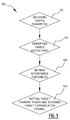
- Figure 1 illustrates a control method 100 for controlling a plurality of access points in a wireless network wherein the plurality of access points are operable on a plurality of communication channels.
- the wireless network is a WLAN comprising J access points (APs), represented by AP j , j ⁇ ⁇ 1,.., J ⁇ which are competing for H non-overlapping communication channels wherein h ⁇ ⁇ 1,..., H ⁇ .
- the WLAN is centrally controllable or manageable by a control system 300, as illustrated in Figure 3 , or management center, respectively, wherein the control system 300 or management center can control all APs 361, for example via TR181.
- the control method comprises a first step 110 obtaining from each access point 361 of the plurality of access points at least one traffic parameter, the at least one traffic parameter being representative for a traffic load of the respective access point.
- the at least one traffic parameter may comprise an amount of received and sent packets of the respective access point.
- the second step 120 of identifying from said plurality of access points a target access point having a highest traffic load can be performed.
- step 140 a target transmit power will be set for the target access point and a target communication channel will be assigned to the target access point, without causing an interference violation to other APs on any of the available communication channels.
- step 130 first one has to perform step 130 of defining for each access point of the plurality of access points a corresponding interference threshold, such that step 140 can be performed such that an interference at any one access point of the plurality of access points is lower than the corresponding interference threshold of said any one access point.
- Interference at any one AP can be determined or calculated in different ways. For example, from a respective AP the corresponding RSSI can be collected at any moment, which is representative for an interference experienced at the respective AP. Another way to calculate an interference experienced by a particular AP k will be described below.
- pathlosses between APs on each of the available communication channels are fixed for that same period of time. Therefore, pathlosses between any arbitrary pair of APs on each of the available communication channels can be calculated during network initialization or network deployment, as follows.
- a pathloss from AP j to AP k over a channel CH h can be represented as Pl j , k h .
- N k h is the total neighbors interference on CH h at AP k , which is a part of interference that originates from other sources than the APs in the wireless network.
- the total neighbors interference can for example be captured by a device carrier sensing mechanism and reported to the control system which overlooks the wireless network.
- the total neighbors interference is energy which can be detected at radio level on a particular communication channel from IEEE or non-IEEE sources.
- N k h can be taken into account or can be neglected when calculating CCI.
- Interference at an AP can be calculated or estimated as described above.
- an interference threshold can be defined.
- defining for each access point of the plurality of access points a corresponding interference threshold in step 130 comprises defining the corresponding interference threshold based on the traffic load of the respective access point.
- I can be determined in a similar way as can be done in cognitive radio networks. As will be elaborated on below, assuming a worst case scenario where interfering APs are located extremely close to a receiving AP.
- the receiving AP can only detect an RF signal if its received power is greater than a received sensitivity. Furthermore the receiving AP can only extract error-less stream if its received SNR is greater than a minimum acceptable SNR according to the standard , being - 91dbm - 81dbm corresponding to lowest data rate).
- step 140 setting the transmit power of the target access point, to a target transmit power comprises determining a maximum transmit power for each communication channel of the plurality of communication channels, such that the interference at any one access point of the plurality of access points is lower than the corresponding interference threshold of said any one access point.
- assigning the target communication channel may comprise assigning a communication channel for which the determined maximum transmit power is highest.
- transmit power P i h is set to a maximum possible over all available communication channels CH h , h ⁇ ⁇ 1,..., H ⁇ , provided that Tr j ⁇ ⁇ k ⁇ j I k h , j ⁇ ⁇ 1,.., J ⁇ , h ⁇ ⁇ 1,..., H ⁇ .
- Each AP may have different power levels that can be achieved, based on the specify type or model of the AP.
- a maximum transmit power P i h is determined and a corresponding interference I i h is calculated. From this set, the target transmit power and target communication channel for the target access point can be determined.
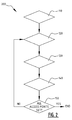
- FIG. 2 illustrates an embodiment of the control method 200 according to the invention, which is similar to the method of Figure 1 with the difference that in the method of Figure 2 , steps 120, 130 and 140 are repeated until no access points in the wireless network remain without an allocation of a transmit power and communication channel.
- the control method 200 of Figure 2 further comprises a step 150 in which is checked whether all access points in the wireless network have been assigned a transmit power and communication channel.
- Figure 3 illustrates a control system 300 for controlling a wireless network 360 comprising a plurality of access points 361 being operable on a plurality of communication channels.
- the control system 300 may be configured to perform the steps of the control methods of Figure 1 and Figure 2 in accordance with the above given description in view of Figure 1 and Figure 2 .
- the control system 300 comprises:
- control method and control system can be applied to any wireless network
- control method and control system according to the invention are particularly suited for controlling access points in high-density WLANs.
- the control method assigns maximum power and any one of non-overlapping channels to each AP in WLAN, jointly with the objective of minimizing CCI to other AP in the WLAN based on their traffic load.
- the described method not only minimizes overall CCI in the WLAN but also improves the capacity thereof by selecting higher transmission power for APs in the WLAN.
- Traffic load of each AP is taken into consideration to maintain fairness in the quality of experience across all user devices connected to different APs in the WLAN. This is done by assigning higher transmit power to the target access point and reducing the CCI that user devices of the target access point may experience. Due to absence of sophisticated mechanisms to mitigate the interference on the family of IEEE 802.11, RRM is highly dampened; and that is main reason for introducing a semi-persistent method that can be conducted for example every 15-20 minutes in a periodic manner.
- embodiments of the invention exploit two degrees of freedom; maximum transmit power allocation and assigning any one of non-overlapping channels to each AP. Ignoring one of them may degrade quality of experience of users significantly, especially in the case of high-density WLAN due to the limited number of available non-overlapping channels.
- Prior art control methods not only seem to ignore joint channel and maximum power allocation to APs, but also do not consider a traffic load of APs in the wireless network, which leads to an unfair channel assignment.
- embodiments of the invention prioritize APs based on for example their average load by assigning a higher transmit power level to highly-loaded APs as well as protecting them against interference of other less-loaded APs by reducing its interference threshold.
- the proposed control method and control system limit the overall interference in wireless networks, more particularly in ultra-dense WLANs. This is achieved by assigning a higher transmit power to APs with a higher traffic load and allowing APs with higher traffic load to cause a higher amount of interference to APs with a lower traffic load within the WLAN, wherein the APs with higher traffic load will receive less interference from other APs within the WLAN.
- program storage devices e.g., digital data storage media, which are machine or computer readable and encode machine-executable or computer-executable programs of instructions, wherein said instructions perform some or all of the steps of said above-described methods.
- the program storage devices may be, e.g., digital memories, magnetic storage media such as a magnetic disks and magnetic tapes, hard drives, or optically readable digital data storage media.
- the embodiments are also intended to cover computers programmed to perform said steps of the above-described methods.
- processors may be provided through the use of dedicated hardware as well as hardware capable of executing software in association with appropriate software.
- the functions may be provided by a single dedicated processor, by a single shared processor, or by a plurality of individual processors, some of which may be shared.
- processor any switch shown in the FIGS. are conceptual only. Their function may be carried out through the operation of program logic, through dedicated logic, through the interaction of program control and dedicated logic, or even manually, the particular technique being selectable by the implementer as more specifically understood from the context.
- any block diagrams herein represent conceptual views of illustrative circuitry embodying the principles of the invention.
- any flow charts, flow diagrams, state transition diagrams, pseudo code, and the like represent various processes which may be substantially represented in computer readable medium and so executed by a computer or processor, whether or not such computer or processor is explicitly shown.
Landscapes
- Engineering & Computer Science (AREA)
- Computer Networks & Wireless Communication (AREA)
- Signal Processing (AREA)
- Quality & Reliability (AREA)
- Mobile Radio Communication Systems (AREA)
Abstract
Description
- The field of the invention relates to wireless networks. Particular embodiments relate to a control method and control system for controlling access points in a wireless network.
- Radio Resource Management (RMM) is concerned with controlling co-channel interference (CCI), radio resources, and other radio transmission related characteristics in wireless networks, such as Wireless Local Area Networks (WLANs).
In high-density infrastructure based wireless networks, for example a 802.11 WLAN, RMM has been identified as a pivotal element to improve overall user experience within the WLAN. However, RMM is a challenging task, especially in the context of unplanned deployments with multiple interfering neighboring Access Points (APs).
Employing an efficient RRM is of importance for minimizing CCI, which is one of the most significant causes of poor performance, coverage and capacity in WLANs. - The object of embodiments of the invention is to provide a control method and a control system for controlling access points in a wireless network such that CCI within the wireless network is lowered and coverage within the wireless network is improved. Embodiments of the invention aim to provide a control method and control system which lower CCI in the wireless network and improve capacity while maintaining fairness with regard to the quality of experience for all users in the wireless network, across different access points.
- According to a first aspect of the invention there is provided a control method for controlling a plurality of access points in a wireless network wherein the plurality of access points are operable on a plurality of communication channels. The control method comprises the steps of:
- obtaining from each access point of the plurality of access points at least one traffic parameter, the at least one traffic parameter being representative for a traffic load of the respective access point;
- identifying from said plurality of access points a target access point having a highest traffic load, based on said obtained at least one traffic parameter;
- defining for each access point of the plurality of access points a corresponding interference threshold; and
- setting a transmit power of the target access point to a target transmit power and assigning to the target access point a target communication channel from among the plurality of communication channels, such that an interference at any one access point of the plurality of access points is lower than the corresponding interference threshold of said any one access point.
- Embodiments of the invention are based inter alia on the insight that by identifying the target access point having the highest traffic load from the plurality of access points, this target access point can be prioritized within the wireless network as compared to access points having lower traffic loads. By setting the transmit power of the target access point to a target transmit power and by assigning to the target access point a target communication channel overall CCI in the wireless network can be reduced and coverage of the wireless network can be improved. Moreover, by prioritizing setting a target transmit power and assigning a target communication channel of the target access point having the highest traffic load and thus potentially the highest number of users connected to the access point, the wireless network can be controlled in a fair manner in that a quality of experience of users is improved in an efficient manner. In addition, by setting a transmit power of the target access point to a target transmit power and assigning to the target access point a target communication channel from among the plurality of communication channels, such that an interference at any one access point of the plurality of access points is lower than the corresponding interference threshold of said any one access point, the target access point can be controlled, without causing an interference violation at other access points of the wireless network. Furthermore, by obtaining from each access point of the plurality of access points at least one traffic parameter, the at least one traffic parameter being representative for a traffic load of the respective access point, the control method can be carried out without any interaction with user devices which might be connected to any one of the plurality of access points in the wireless network.
- According to a preferred embodiment, setting the transmit power of the target access point to a target transmit power comprises determining a maximum transmit power for each communication channel of the plurality of communication channels, such that the interference at any one access point of the plurality of access points is lower than the corresponding interference threshold of said any one access point.
- By determining a maximum transmit power to be set as the transmit power of the target access point, a coverage of the target access point may be enlarged along with a capacity of the target access point, and a quality of experience of users connected to the target access point may be improved. Because the target access point has the highest traffic load as compared to other access points in the wireless network, maximizing the transmit power of the target access point, while keeping the interference at any one access point of the plurality of access points lower than the corresponding interference threshold of said any one access point will have a beneficial effect on the overall quality of experience of users within the wireless network.
- According to a preferred embodiment, assigning the target communication channel comprises assigning a communication channel for which the determined maximum transmit power is highest.
- Maximum transmit powers of access points may vary from one channel to another. By assigning to the target access point the communication channel for which the determined maximum transmit power is highest, the capacity and coverage of the target access point can be optimized.
- According to a preferred embodiment, assigning the target communication channel comprises assigning a communication channel on which a sensed interference by the target access point is lowest.
- When for example the determined maximum transmit power on a first communication channel is equal to the determined maximum transmit power on a second communication channel, assigning from the first and second communication channel as a target communication channel the communication channel on which a sensed interference by the target access point is lowest, leads to a preferred target transmit power and target communication channel for the target access point, while keeping the interference at any other access point of the plurality of access points at an acceptable level.
- According to a preferred embodiment, defining for each access point of the plurality of access points a corresponding interference threshold comprises defining the corresponding interference threshold based on the traffic load of the respective access point.
- By determining for each access point the corresponding interference threshold based on the traffic load of the respective access point, a fair management of interference levels may be reached. For example, determining for an access point with a high traffic load a low interference threshold may be more beneficial for overall quality of experience of users in the wireless network as compared to determining for an access point with a low traffic load a low interference threshold. An amount of traffic load that is managed by an access point is a fair variable to determine an acceptable level of interference for said access point.
- According to a preferred embodiment, the control method comprises estimating the interference at said any one access point based on at least one of a path loss and a received signal strength indicator at said any one access point.
- According to a preferred embodiment, the steps of identifying an access point having a highest traffic load, defining for each access point of the plurality of access points a corresponding interference threshold, setting a transmit power of the target access point to a target transmit power and assigning to the target access point a target communication channel are executed iteratively at least until a target transmit power has been set for, and a target communication channel has been assigned to each access point of the plurality of access points.
- When the steps of identifying the access point having a highest traffic load, defining for each access point of the plurality of access points a corresponding interference threshold, setting a transmit power of the target access point to a target transmit power and assigning to the target access point a target communication channel have all been carried out, these steps can be repeated for the remaining access points of the plurality of access point in the wireless network. During a first iteration of the above described steps the access point with the highest traffic load was selected to be the target access point, during a second iteration of the above described steps the access point with the second highest traffic load can be selected to be the target access point, etc.
- The skilled person will understand that the hereinabove described technical considerations and advantages for device embodiments also apply to the below described corresponding method embodiments, mutatis mutandis.
- According to a second aspect of the invention there is provided a control system for controlling a wireless network comprising a plurality of access points being operable on a plurality of communication channels. The control system comprises:
- an obtaining unit for obtaining from each access point of the plurality of access points at least one traffic parameter, the at least one traffic parameter being representative for a traffic load of the respective access point;
- an identifying unit for identifying from said plurality of access points a target access point having a highest traffic load, based on said obtained at least one traffic parameter;
- a threshold defining unit for defining for each access point of the plurality of access points a corresponding interference threshold;
- a transmit power setting unit for determining a target transmit power and setting a transmit power of the target access point to the target transmit power; and
- a communication channel assigning unit for determining a target communication channel and assigning to the target access point the target communication channel from among the plurality of communication channels. The target transmit power and target communication channel are determined such that an interference sensed by any one access point of the plurality of access points is lower than the corresponding interference threshold of said any one access point.
- According to a preferred embodiment, the transmit power setting unit is configured for determining a maximum transmit power for each communication channel of the plurality of communication channels such that the interference at any one access point of the plurality of access points is lower than the corresponding interference threshold of said any one access point.
- According to a preferred embodiment, the communication channel assigning unit is configured for determining the target communication channel to be a communication channel for which the determined maximum transmit power is highest.
- According to a preferred embodiment, the communication channel assigning unit is configured for determining the target communication channel to be a communication channel on which a sensed interference by the target access point is lowest.
- According to a preferred embodiment, the threshold defining unit is configured for defining the corresponding interference threshold based on the traffic load of the respective access point.
- According to a preferred embodiment, the control system comprises an interference estimating unit for estimating the interference at said any one access point based on at least one of a path loss and a received signal strength indicator at said any one access point.
- According to a preferred embodiment, the at least one traffic parameter comprises an amount of received and sent packets of the respective access point.
- According to a further aspect of the invention, there is provided a computer program comprising computer-executable instructions to perform the method, when the program is run on a computer, according to any one of the steps of any one of the method embodiments disclosed above.
- According to a further aspect of the invention, there is provided a computer device or other hardware device programmed to perform one or more steps of any one of the embodiments of the method disclosed above.
- According to another aspect there is provided a data storage device encoding a program in machine-readable and machine-executable form to perform one or more steps of any one of the embodiments of the method disclosed above.
- The accompanying drawings are used to illustrate presently preferred non-limiting exemplary embodiments of devices of the present invention. The above and other advantages of the features and objects of the invention will become more apparent and the invention will be better understood from the following detailed description when read in conjunction with the accompanying drawings, in which:
-
Figure 1 illustrates schematically an embodiment of a control method for controlling a plurality of access points in a wireless network according to the invention; -
Figure 2 illustrates schematically a further embodiment of a control method for controlling a plurality of access points in a wireless network according to the invention; and -
Figure 3 illustrates an embodiment of a control system for controlling a plurality of access points in a wireless network according to the invention. -
Figure 1 illustrates acontrol method 100 for controlling a plurality of access points in a wireless network wherein the plurality of access points are operable on a plurality of communication channels. It is assumed that the wireless network is a WLAN comprising J access points (APs), represented by AP j, j ∈ {1,.., J} which are competing for H non-overlapping communication channels wherein h ∈ {1,..., H}. In addition it is assumed that the WLAN is centrally controllable or manageable by acontrol system 300, as illustrated inFigure 3 , or management center, respectively, wherein thecontrol system 300 or management center can control allAPs 361, for example via TR181. - The control method comprises a
first step 110 obtaining from eachaccess point 361 of the plurality of access points at least one traffic parameter, the at least one traffic parameter being representative for a traffic load of the respective access point. The at least one traffic parameter may comprise an amount of received and sent packets of the respective access point. Based on the obtained traffic parameter, thesecond step 120 of identifying from said plurality of access points a target access point having a highest traffic load can be performed. Each AP j can be prioritized based on their traffic ratio T j, j ∈ {1,.., J}, which is representative for a traffic load of AP j , wherein the traffic ratio can be calculated as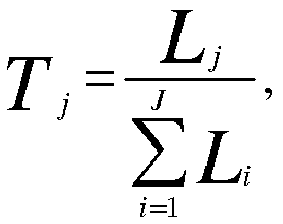
In step 140 a target transmit power will be set for the target access point and a target communication channel will be assigned to the target access point, without causing an interference violation to other APs on any of the available communication channels.
In order to do this, first one has to performstep 130 of defining for each access point of the plurality of access points a corresponding interference threshold, such thatstep 140 can be performed such that an interference at any one access point of the plurality of access points is lower than the corresponding interference threshold of said any one access point.
Interference at any one AP can be determined or calculated in different ways. For example, from a respective AP the corresponding RSSI can be collected at any moment, which is representative for an interference experienced at the respective AP. Another way to calculate an interference experienced by a particular AP k will be described below.
In the assumption that the locations of the APs in a WLAN are static for a period of time, pathlosses between APs on each of the available communication channels are fixed for that same period of time. Therefore, pathlosses between any arbitrary pair of APs on each of the available communication channels can be calculated during network initialization or network deployment, as follows.
A pathloss from AP j to AP k over a channel CH h can be represented as


Interference at an AP can be calculated or estimated as described above. Depending on the specific type, set-up and requirements of the wireless network, an interference threshold can be defined. Preferably, defining for each access point of the plurality of access points a corresponding interference threshold instep 130 comprises defining the corresponding interference threshold based on the traffic load of the respective access point. For example, an interference threshold Tr j can be defined as being dependent on a traffic load or traffic ratio T j of AP j : Tr j = T j I , j ∈ {1,.., J}, wherein I is the interference threshold level if T j = 1. Herein, I can be determined in a similar way as can be done in cognitive radio networks. As will be elaborated on below, assuming a worst case scenario where interfering APs are located extremely close to a receiving AP. The receiving AP can only detect an RF signal if its received power is greater than a received sensitivity. Furthermore the receiving AP can only extract error-less stream if its received SNR is greater than a minimum acceptable SNR according to the standard , being - 91dbm - 81dbm corresponding to lowest data rate). The specific approach to determine I depends on chip set's sensitivity which may have different values. For example with a sensitivity of -110 dBm, the acceptable interference in the entire WLAN, regardless of the amount of APs, can be estimated as: I ≤ -110 dBm + 91 dBm = -19dBm. - Preferably in
step 140, setting the transmit power of the target access point, to a target transmit power comprises determining a maximum transmit power for each communication channel of the plurality of communication channels, such that the interference at any one access point of the plurality of access points is lower than the corresponding interference threshold of said any one access point. Moreover instep 140, assigning the target communication channel may comprise assigning a communication channel for which the determined maximum transmit power is highest. In other words transmit power

As a result of the above described method steps, a set of ( CH h ,


From this set, the target transmit power and target communication channel for the target access point can be determined. Preferably, the target transmit power and target communication channel for the target access point AP i are determined by assigning as target communication channel the channel CH h with highest transmit power


-
Figure 2 illustrates an embodiment of thecontrol method 200 according to the invention, which is similar to the method ofFigure 1 with the difference that in the method ofFigure 2 ,steps control method 200 ofFigure 2 further comprises astep 150 in which is checked whether all access points in the wireless network have been assigned a transmit power and communication channel. -
Figure 3 illustrates acontrol system 300 for controlling awireless network 360 comprising a plurality ofaccess points 361 being operable on a plurality of communication channels. Thecontrol system 300, may be configured to perform the steps of the control methods ofFigure 1 andFigure 2 in accordance with the above given description in view ofFigure 1 andFigure 2 . Thecontrol system 300 comprises: - an obtaining
unit 310 for obtaining from eachaccess point 361 of the plurality of access points at least one traffic parameter, the at least one traffic parameter being representative for a traffic load of therespective access point 361; - an identifying
unit 320 for identifying from said plurality of access points a target access point having a highest traffic load, based on said obtained at least one traffic parameter; - a
threshold defining unit 330 for defining for each access point of the plurality of access points a corresponding interference threshold; - a transmit
power setting unit 340 for determining a target transmit power and setting a transmit power of the target access point to the target transmit power; and - a communication
channel assigning unit 350 for determining a target communication channel and assigning to the target access point the target communication channel from among the plurality of communication channels. The target transmit power and target communication channel are determined such that an interference sensed by any oneaccess point 361 of the plurality of access points is lower than the corresponding interference threshold of said any one access point. - Although the above described control method and control system can be applied to any wireless network, the control method and control system according to the invention are particularly suited for controlling access points in high-density WLANs.
- According to preferred embodiment, the control method assigns maximum power and any one of non-overlapping channels to each AP in WLAN, jointly with the objective of minimizing CCI to other AP in the WLAN based on their traffic load. The described method not only minimizes overall CCI in the WLAN but also improves the capacity thereof by selecting higher transmission power for APs in the WLAN. Traffic load of each AP is taken into consideration to maintain fairness in the quality of experience across all user devices connected to different APs in the WLAN. This is done by assigning higher transmit power to the target access point and reducing the CCI that user devices of the target access point may experience. Due to absence of sophisticated mechanisms to mitigate the interference on the family of IEEE 802.11, RRM is highly dampened; and that is main reason for introducing a semi-persistent method that can be conducted for example every 15-20 minutes in a periodic manner.
- To cope with extensive CCI in already deployed WLAN, embodiments of the invention exploit two degrees of freedom; maximum transmit power allocation and assigning any one of non-overlapping channels to each AP. Ignoring one of them may degrade quality of experience of users significantly, especially in the case of high-density WLAN due to the limited number of available non-overlapping channels.
- Prior art control methods not only seem to ignore joint channel and maximum power allocation to APs, but also do not consider a traffic load of APs in the wireless network, which leads to an unfair channel assignment. On the contrary, embodiments of the invention prioritize APs based on for example their average load by assigning a higher transmit power level to highly-loaded APs as well as protecting them against interference of other less-loaded APs by reducing its interference threshold.
- The proposed control method and control system limit the overall interference in wireless networks, more particularly in ultra-dense WLANs. This is achieved by assigning a higher transmit power to APs with a higher traffic load and allowing APs with higher traffic load to cause a higher amount of interference to APs with a lower traffic load within the WLAN, wherein the APs with higher traffic load will receive less interference from other APs within the WLAN.
- A person of skill in the art would readily recognize that steps of various above-described methods can be performed by programmed computers. Herein, some embodiments are also intended to cover program storage devices, e.g., digital data storage media, which are machine or computer readable and encode machine-executable or computer-executable programs of instructions, wherein said instructions perform some or all of the steps of said above-described methods. The program storage devices may be, e.g., digital memories, magnetic storage media such as a magnetic disks and magnetic tapes, hard drives, or optically readable digital data storage media. The embodiments are also intended to cover computers programmed to perform said steps of the above-described methods.
- The functions of the various elements shown in the figures, including any functional blocks labelled as "processors", "units" or "modules", may be provided through the use of dedicated hardware as well as hardware capable of executing software in association with appropriate software. When provided by a processor, the functions may be provided by a single dedicated processor, by a single shared processor, or by a plurality of individual processors, some of which may be shared. Moreover, explicit use of the term "processor", "unit" or "controller" should not be construed to refer exclusively to hardware capable of executing software, and may implicitly include, without limitation, digital signal processor (DSP) hardware, network processor, application specific integrated circuit (ASIC), field programmable gate array (FPGA), read only memory (ROM) for storing software, random access memory (RAM), and non volatile storage. Other hardware, conventional and/or custom, may also be included. Similarly, any switches shown in the FIGS. are conceptual only. Their function may be carried out through the operation of program logic, through dedicated logic, through the interaction of program control and dedicated logic, or even manually, the particular technique being selectable by the implementer as more specifically understood from the context.
- It should be appreciated by those skilled in the art that any block diagrams herein represent conceptual views of illustrative circuitry embodying the principles of the invention. Similarly, it will be appreciated that any flow charts, flow diagrams, state transition diagrams, pseudo code, and the like represent various processes which may be substantially represented in computer readable medium and so executed by a computer or processor, whether or not such computer or processor is explicitly shown.
- Whilst the principles of the invention have been set out above in connection with specific embodiments, it is to be understood that this description is merely made by way of example and not as a limitation of the scope of protection which is determined by the appended claims.
Claims (15)
- Control method for controlling a plurality of access points in a wireless network wherein the plurality of access points are operable on a plurality of communication channels, the control method comprising the steps of:- obtaining from each access point of the plurality of access points at least one traffic parameter, the at least one traffic parameter being representative for a traffic load of the respective access point;- identifying from said plurality of access points a target access point having a highest traffic load, based on said obtained at least one traffic parameter;- defining for each access point of the plurality of access points a corresponding interference threshold;- setting a transmit power of the target access point to a target transmit power and assigning to the target access point a target communication channel from among the plurality of communication channels, such that an interference at any one access point of the plurality of access points is lower than the corresponding interference threshold of said any one access point.
- Control method according to claim 1, wherein setting the transmit power of the target access point to a target transmit power comprises determining a maximum transmit power for each communication channel of the plurality of communication channels, such that the interference at any one access point of the plurality of access points is lower than the corresponding interference threshold of said any one access point.
- Control method according to claim 2, wherein assigning the target communication channel comprises assigning a communication channel for which the determined maximum transmit power is highest.
- Control method according to claim 2 or 3, wherein assigning the target communication channel comprises assigning a communication channel on which a sensed interference by the target access point is lowest.
- Control method according to any one of the previous claims, wherein defining for each access point of the plurality of access points a corresponding interference threshold comprises defining the corresponding interference threshold based on the traffic load of the respective access point.
- Control method according to any one of the previous claims, comprising estimating the interference at said any one access point based on at least one of a path loss and a received signal strength indicator at said any one access point.
- Control method according to any one of the previous claims, wherein the steps of identifying an access point having a highest traffic load, defining for each access point of the plurality of access points a corresponding interference threshold, setting a transmit power of the target access point to a target transmit power and assigning to the target access point a target communication channel are executed iteratively at least until a target transmit power has been set for, and a target communication channel has been assigned to each access point of the plurality of access points.
- Control system for controlling a wireless network comprising a plurality of access points being operable on a plurality of communication channels, the control system comprising:- an obtaining unit for obtaining from each access point of the plurality of access points at least one traffic parameter, the at least one traffic parameter being representative for a traffic load of the respective access point;- an identifying unit for identifying from said plurality of access points a target access point having a highest traffic load, based on said obtained at least one traffic parameter;- a threshold defining unit for defining for each access point of the plurality of access points a corresponding interference threshold;- a transmit power setting unit for determining a target transmit power and setting a transmit power of the target access point to the target transmit power; and- a communication channel assigning unit for determining a target communication channel and assigning to the target access point the target communication channel from among the plurality of communication channels;
wherein the target transmit power and target communication channel are determined such that an interference sensed by any one access point of the plurality of access points is lower than the corresponding interference threshold of said any one access point. - Control system according to claim 8, wherein the transmit power setting unit is configured for determining a maximum transmit power for each communication channel of the plurality of communication channels such that the interference at any one access point of the plurality of access points is lower than the corresponding interference threshold of said any one access point.
- Control system according to claim 8 or 9, wherein the communication channel assigning unit is configured for determining the target communication channel to be a communication channel for which the determined maximum transmit power is highest.
- Control system according to claim 9 or 10, wherein the communication channel assigning unit is configured for determining the target communication channel to be a communication channel on which a sensed interference by the target access point is lowest.
- Control system according to any one of the claims 8 to 11, wherein the threshold defining unit is configured for defining the corresponding interference threshold based on the traffic load of the respective access point.
- Control system according to any one of the claims 8 to 12, further comprising an interference estimating unit for estimating the interference at said any one access point based on at least one of a path loss and a received signal strength indicator at said any one access point.
- Control system according to any one of the claims 8 to 13, wherein the at least one traffic parameter comprises an amount of received and sent packets of the respective access point.
- A computer program product comprising computer-executable instructions for performing the method of any one of the claims 1-7, when the program is run on a computer.
Priority Applications (5)
| Application Number | Priority Date | Filing Date | Title |
|---|---|---|---|
| EP16305995.9A EP3280177B1 (en) | 2016-08-01 | 2016-08-01 | Control method and control system for controlling access points in a wireless network |
| CN201780048055.1A CN109565716A (en) | 2016-08-01 | 2017-07-25 | For controlling the control method and control system of the access point in wireless network |
| PCT/EP2017/068703 WO2018024535A1 (en) | 2016-08-01 | 2017-07-25 | Control method and control system for controlling access points in a wireless network |
| US16/320,251 US10455458B2 (en) | 2016-08-01 | 2017-07-25 | Control method and control system for controlling access points in a wireless network |
| KR1020197003095A KR20190025957A (en) | 2016-08-01 | 2017-07-25 | Control method and control system for controlling access points in a wireless network |
Applications Claiming Priority (1)
| Application Number | Priority Date | Filing Date | Title |
|---|---|---|---|
| EP16305995.9A EP3280177B1 (en) | 2016-08-01 | 2016-08-01 | Control method and control system for controlling access points in a wireless network |
Publications (2)
| Publication Number | Publication Date |
|---|---|
| EP3280177A1 true EP3280177A1 (en) | 2018-02-07 |
| EP3280177B1 EP3280177B1 (en) | 2019-05-22 |
Family
ID=56683864
Family Applications (1)
| Application Number | Title | Priority Date | Filing Date |
|---|---|---|---|
| EP16305995.9A Not-in-force EP3280177B1 (en) | 2016-08-01 | 2016-08-01 | Control method and control system for controlling access points in a wireless network |
Country Status (5)
| Country | Link |
|---|---|
| US (1) | US10455458B2 (en) |
| EP (1) | EP3280177B1 (en) |
| KR (1) | KR20190025957A (en) |
| CN (1) | CN109565716A (en) |
| WO (1) | WO2018024535A1 (en) |
Cited By (1)
| Publication number | Priority date | Publication date | Assignee | Title |
|---|---|---|---|---|
| CN112399596A (en) * | 2019-08-14 | 2021-02-23 | 华为技术有限公司 | Method, apparatus, device, system and storage medium for allocating radio frequency resources |
Families Citing this family (7)
| Publication number | Priority date | Publication date | Assignee | Title |
|---|---|---|---|---|
| KR102483329B1 (en) * | 2018-06-27 | 2023-01-02 | 삼성전자주식회사 | Method and terminal for performing association to access point in wireless communication system |
| WO2021027783A1 (en) | 2019-08-14 | 2021-02-18 | 华为技术有限公司 | Method, apparatus, device, and system for allocating radio frequency resources, and storage medium |
| CN111867110B (en) * | 2020-06-17 | 2023-10-03 | 三明学院 | An energy-saving method for wireless network channel separation based on switch switching strategy |
| CN111901861B (en) | 2020-07-15 | 2025-12-23 | 中兴通讯股份有限公司 | Power control methods, devices, communication nodes, and storage media |
| US12301376B2 (en) * | 2020-12-03 | 2025-05-13 | Intel Corporation | Dynamic energy detection threshold and transmission power adjustment |
| CN114531723B (en) * | 2022-03-30 | 2024-04-05 | 阿里云计算有限公司 | Access point selection method, communication network, electronic device, and storage medium |
| CN121220070A (en) * | 2023-08-07 | 2025-12-26 | Oppo广东移动通信有限公司 | A wireless communication method and device, and a storage medium |
Citations (5)
| Publication number | Priority date | Publication date | Assignee | Title |
|---|---|---|---|---|
| US20060025150A1 (en) * | 2001-11-08 | 2006-02-02 | Kim Byoung-Jo J | Frequency assignment for multi-cell IEEE 802.11 wireless networks |
| US20110170437A1 (en) * | 2008-06-17 | 2011-07-14 | Nec Europe Ltd. | Method of subcarrier allocation in an ofdma-based communication network and network |
| US20150045076A1 (en) * | 2012-04-26 | 2015-02-12 | China Academy Of Telecommunications Technology | Method and device for performing interference control |
| US20150208426A1 (en) * | 2008-01-24 | 2015-07-23 | Firetide, Inc. | Channel assignment for wireless access networks |
| EP3048846A1 (en) * | 2015-01-23 | 2016-07-27 | Alcatel Lucent | Method, system and a computer program product for managing the operation of a wireless access point |
Family Cites Families (10)
| Publication number | Priority date | Publication date | Assignee | Title |
|---|---|---|---|---|
| JPS5817165A (en) * | 1981-07-24 | 1983-02-01 | Mitsubishi Chem Ind Ltd | Anthraquinone dye for cellulose-containing fiber |
| US6473623B1 (en) * | 1996-04-18 | 2002-10-29 | At&T Wireless Services, Inc. | Method for self-calibration of a wireless communication system |
| US7346357B1 (en) * | 2001-11-08 | 2008-03-18 | At&T Corp. | Frequency assignment for multi-cell IEEE 802.11 wireless networks |
| US7502617B2 (en) * | 2004-09-02 | 2009-03-10 | Cisco Technology, Inc. | Rapid search for optimal wireless network configuration |
| US8660008B2 (en) * | 2011-03-02 | 2014-02-25 | 3Inova Networks Inc. | Traffic management in distributed wireless networks |
| US9077655B2 (en) * | 2011-03-02 | 2015-07-07 | 3Inova Networks Inc. | Traffic management in distributed wireless networks |
| US9736703B2 (en) * | 2012-04-06 | 2017-08-15 | Plume Design, Inc. | Interference management and network performance optimization in dense WiFi networks |
| US10506454B2 (en) * | 2012-07-31 | 2019-12-10 | Dali Systems Co., Ltd. | Optimization of traffic load in a distributed antenna system |
| JP6450260B2 (en) * | 2015-06-02 | 2019-01-09 | 日本電信電話株式会社 | Access point control device, access point control method, and access point control program |
| EP3240236A1 (en) * | 2016-04-25 | 2017-11-01 | Alcatel Lucent | An apparatus for managing performance of a wi-fi network and the relate method |
-
2016
- 2016-08-01 EP EP16305995.9A patent/EP3280177B1/en not_active Not-in-force
-
2017
- 2017-07-25 WO PCT/EP2017/068703 patent/WO2018024535A1/en not_active Ceased
- 2017-07-25 CN CN201780048055.1A patent/CN109565716A/en active Pending
- 2017-07-25 KR KR1020197003095A patent/KR20190025957A/en not_active Abandoned
- 2017-07-25 US US16/320,251 patent/US10455458B2/en not_active Expired - Fee Related
Patent Citations (5)
| Publication number | Priority date | Publication date | Assignee | Title |
|---|---|---|---|---|
| US20060025150A1 (en) * | 2001-11-08 | 2006-02-02 | Kim Byoung-Jo J | Frequency assignment for multi-cell IEEE 802.11 wireless networks |
| US20150208426A1 (en) * | 2008-01-24 | 2015-07-23 | Firetide, Inc. | Channel assignment for wireless access networks |
| US20110170437A1 (en) * | 2008-06-17 | 2011-07-14 | Nec Europe Ltd. | Method of subcarrier allocation in an ofdma-based communication network and network |
| US20150045076A1 (en) * | 2012-04-26 | 2015-02-12 | China Academy Of Telecommunications Technology | Method and device for performing interference control |
| EP3048846A1 (en) * | 2015-01-23 | 2016-07-27 | Alcatel Lucent | Method, system and a computer program product for managing the operation of a wireless access point |
Non-Patent Citations (2)
| Title |
|---|
| DEMIRCI ILHAN ET AL: "Gap-free load balancing algorithms in wireless LANs using cell breathing technique", 2014 IEEE INTERNATIONAL CONFERENCE ON ADVANCED NETWORKS AND TELECOMMUNCATIONS SYSTEMS (ANTS), IEEE, 14 December 2014 (2014-12-14), pages 1 - 6, XP032745417, DOI: 10.1109/ANTS.2014.7057249 * |
| MOHAMED ESAM ET AL: "Cooperative Game Strategy for IEEE 802.11s Mesh WLAN Power Management", ICC 2011 - 2011 IEEE INTERNATIONAL CONFERENCE ON COMMUNICATIONS - 5-9 JUNE 2011 - KYOTO, JAPAN, IEEE, PISCATAWAY, NJ, USA, 5 June 2011 (2011-06-05), pages 1 - 5, XP031908403, ISBN: 978-1-61284-232-5, DOI: 10.1109/ICC.2011.5962639 * |
Cited By (2)
| Publication number | Priority date | Publication date | Assignee | Title |
|---|---|---|---|---|
| CN112399596A (en) * | 2019-08-14 | 2021-02-23 | 华为技术有限公司 | Method, apparatus, device, system and storage medium for allocating radio frequency resources |
| CN112399596B (en) * | 2019-08-14 | 2024-04-12 | 华为技术有限公司 | Method, apparatus, device, system and storage medium for allocating radio frequency resources |
Also Published As
| Publication number | Publication date |
|---|---|
| CN109565716A (en) | 2019-04-02 |
| KR20190025957A (en) | 2019-03-12 |
| US20190239124A1 (en) | 2019-08-01 |
| WO2018024535A1 (en) | 2018-02-08 |
| US10455458B2 (en) | 2019-10-22 |
| EP3280177B1 (en) | 2019-05-22 |
Similar Documents
| Publication | Publication Date | Title |
|---|---|---|
| EP3280177B1 (en) | Control method and control system for controlling access points in a wireless network | |
| EP2494808B1 (en) | Radio resource scheduling for intra-system interference coordination in wireless communication systems | |
| US8280396B2 (en) | Overload control method for a wireless cellular network | |
| EP2223451B1 (en) | Scrambling code allocation in a cellular communication network | |
| KR102077831B1 (en) | Radio resource management method and apparatus in a wireless communication system | |
| US11265802B2 (en) | Wireless communication system and wireless communication method | |
| EP2193680A1 (en) | Ofdma uplink interference impact recovery in lte system | |
| EP3035758B1 (en) | Coexistence of cellular and non-cellular systems | |
| Abeysekera et al. | Network controlled frequency channel and bandwidth allocation scheme for IEEE 802.11 a/n/ac wireless LANs: RATOP | |
| EP3053389B1 (en) | Controlling uplink transmissions from interfering stations | |
| KR101859579B1 (en) | Method and apparatus for resource allocation of hetrogeneous cell wireless communication system | |
| EP3133891B1 (en) | Method and apparatus for determining carrier sense threshold in wireless communication system | |
| Pramudito et al. | Confederation based RRM with proportional fairness for soft frequency reuse LTE networks | |
| US10278202B2 (en) | Coordinated scheduling in a cellular network | |
| Kumar et al. | Optimization of Cognitive Femtocell Network via Oppositional Beetle Swarm Optimization Algorithm. | |
| EP2538741B1 (en) | Interference coordination between base stations | |
| US11432235B2 (en) | Wireless communication control method, wireless communication system, and management server | |
| Suleiman et al. | Handover-related self-optimization in femtocells: A survey and an interaction study | |
| WO2018167566A1 (en) | Clear channel assessment mode selection for multiple-input-multiple-output (mimo) in unlicensed frequency bands | |
| Abeysekera et al. | Network-controlled channel allocation scheme for IEEE 802.11 wireless LANs: Experimental and simulation study | |
| Kim et al. | Spectrum breathing and cell load balancing for self organizing wireless networks | |
| Yang et al. | Group-wise listen-before-talk protocol for dynamic spectrum sharing: A new framework for full frequency reuse | |
| Hassan et al. | Predicted eigenvalue threshold based spectrum sensing with correlated multiple-antennas | |
| Prasad et al. | Outage performance of SU under spectrum sharing with imperfect CSI and primary user interference | |
| EP2116092B1 (en) | Characterization of co-channel interference in a wireless communication system |
Legal Events
| Date | Code | Title | Description |
|---|---|---|---|
| PUAI | Public reference made under article 153(3) epc to a published international application that has entered the european phase |
Free format text: ORIGINAL CODE: 0009012 |
|
| STAA | Information on the status of an ep patent application or granted ep patent |
Free format text: STATUS: THE APPLICATION HAS BEEN PUBLISHED |
|
| AK | Designated contracting states |
Kind code of ref document: A1 Designated state(s): AL AT BE BG CH CY CZ DE DK EE ES FI FR GB GR HR HU IE IS IT LI LT LU LV MC MK MT NL NO PL PT RO RS SE SI SK SM TR |
|
| AX | Request for extension of the european patent |
Extension state: BA ME |
|
| RAP1 | Party data changed (applicant data changed or rights of an application transferred) |
Owner name: ALCATEL LUCENT |
|
| STAA | Information on the status of an ep patent application or granted ep patent |
Free format text: STATUS: REQUEST FOR EXAMINATION WAS MADE |
|
| 17P | Request for examination filed |
Effective date: 20180807 |
|
| RBV | Designated contracting states (corrected) |
Designated state(s): AL AT BE BG CH CY CZ DE DK EE ES FI FR GB GR HR HU IE IS IT LI LT LU LV MC MK MT NL NO PL PT RO RS SE SI SK SM TR |
|
| GRAP | Despatch of communication of intention to grant a patent |
Free format text: ORIGINAL CODE: EPIDOSNIGR1 |
|
| STAA | Information on the status of an ep patent application or granted ep patent |
Free format text: STATUS: GRANT OF PATENT IS INTENDED |
|
| RIC1 | Information provided on ipc code assigned before grant |
Ipc: H04W 52/04 20090101ALN20181128BHEP Ipc: H04W 52/24 20090101ALN20181128BHEP Ipc: H04W 28/26 20090101ALI20181128BHEP Ipc: H04W 28/18 20090101AFI20181128BHEP Ipc: H04W 84/12 20090101ALN20181128BHEP |
|
| INTG | Intention to grant announced |
Effective date: 20181213 |
|
| RIC1 | Information provided on ipc code assigned before grant |
Ipc: H04W 28/18 20090101AFI20181204BHEP Ipc: H04W 84/12 20090101ALN20181204BHEP Ipc: H04W 52/04 20090101ALN20181204BHEP Ipc: H04W 52/24 20090101ALN20181204BHEP Ipc: H04W 28/26 20090101ALI20181204BHEP |
|
| GRAS | Grant fee paid |
Free format text: ORIGINAL CODE: EPIDOSNIGR3 |
|
| GRAA | (expected) grant |
Free format text: ORIGINAL CODE: 0009210 |
|
| STAA | Information on the status of an ep patent application or granted ep patent |
Free format text: STATUS: THE PATENT HAS BEEN GRANTED |
|
| AK | Designated contracting states |
Kind code of ref document: B1 Designated state(s): AL AT BE BG CH CY CZ DE DK EE ES FI FR GB GR HR HU IE IS IT LI LT LU LV MC MK MT NL NO PL PT RO RS SE SI SK SM TR |
|
| REG | Reference to a national code |
Ref country code: GB Ref legal event code: FG4D |
|
| REG | Reference to a national code |
Ref country code: CH Ref legal event code: EP |
|
| REG | Reference to a national code |
Ref country code: IE Ref legal event code: FG4D |
|
| REG | Reference to a national code |
Ref country code: AT Ref legal event code: REF Ref document number: 1137604 Country of ref document: AT Kind code of ref document: T Effective date: 20190615 |
|
| REG | Reference to a national code |
Ref country code: DE Ref legal event code: R096 Ref document number: 602016014260 Country of ref document: DE |
|
| REG | Reference to a national code |
Ref country code: NL Ref legal event code: MP Effective date: 20190522 |
|
| REG | Reference to a national code |
Ref country code: LT Ref legal event code: MG4D |
|
| PG25 | Lapsed in a contracting state [announced via postgrant information from national office to epo] |
Ref country code: NO Free format text: LAPSE BECAUSE OF FAILURE TO SUBMIT A TRANSLATION OF THE DESCRIPTION OR TO PAY THE FEE WITHIN THE PRESCRIBED TIME-LIMIT Effective date: 20190822 Ref country code: FI Free format text: LAPSE BECAUSE OF FAILURE TO SUBMIT A TRANSLATION OF THE DESCRIPTION OR TO PAY THE FEE WITHIN THE PRESCRIBED TIME-LIMIT Effective date: 20190522 Ref country code: LT Free format text: LAPSE BECAUSE OF FAILURE TO SUBMIT A TRANSLATION OF THE DESCRIPTION OR TO PAY THE FEE WITHIN THE PRESCRIBED TIME-LIMIT Effective date: 20190522 Ref country code: HR Free format text: LAPSE BECAUSE OF FAILURE TO SUBMIT A TRANSLATION OF THE DESCRIPTION OR TO PAY THE FEE WITHIN THE PRESCRIBED TIME-LIMIT Effective date: 20190522 Ref country code: SE Free format text: LAPSE BECAUSE OF FAILURE TO SUBMIT A TRANSLATION OF THE DESCRIPTION OR TO PAY THE FEE WITHIN THE PRESCRIBED TIME-LIMIT Effective date: 20190522 Ref country code: ES Free format text: LAPSE BECAUSE OF FAILURE TO SUBMIT A TRANSLATION OF THE DESCRIPTION OR TO PAY THE FEE WITHIN THE PRESCRIBED TIME-LIMIT Effective date: 20190522 Ref country code: AL Free format text: LAPSE BECAUSE OF FAILURE TO SUBMIT A TRANSLATION OF THE DESCRIPTION OR TO PAY THE FEE WITHIN THE PRESCRIBED TIME-LIMIT Effective date: 20190522 Ref country code: PT Free format text: LAPSE BECAUSE OF FAILURE TO SUBMIT A TRANSLATION OF THE DESCRIPTION OR TO PAY THE FEE WITHIN THE PRESCRIBED TIME-LIMIT Effective date: 20190922 Ref country code: NL Free format text: LAPSE BECAUSE OF FAILURE TO SUBMIT A TRANSLATION OF THE DESCRIPTION OR TO PAY THE FEE WITHIN THE PRESCRIBED TIME-LIMIT Effective date: 20190522 |
|
| PGFP | Annual fee paid to national office [announced via postgrant information from national office to epo] |
Ref country code: FR Payment date: 20190711 Year of fee payment: 4 Ref country code: DE Payment date: 20190716 Year of fee payment: 4 |
|
| PG25 | Lapsed in a contracting state [announced via postgrant information from national office to epo] |
Ref country code: BG Free format text: LAPSE BECAUSE OF FAILURE TO SUBMIT A TRANSLATION OF THE DESCRIPTION OR TO PAY THE FEE WITHIN THE PRESCRIBED TIME-LIMIT Effective date: 20190822 Ref country code: RS Free format text: LAPSE BECAUSE OF FAILURE TO SUBMIT A TRANSLATION OF THE DESCRIPTION OR TO PAY THE FEE WITHIN THE PRESCRIBED TIME-LIMIT Effective date: 20190522 Ref country code: LV Free format text: LAPSE BECAUSE OF FAILURE TO SUBMIT A TRANSLATION OF THE DESCRIPTION OR TO PAY THE FEE WITHIN THE PRESCRIBED TIME-LIMIT Effective date: 20190522 Ref country code: GR Free format text: LAPSE BECAUSE OF FAILURE TO SUBMIT A TRANSLATION OF THE DESCRIPTION OR TO PAY THE FEE WITHIN THE PRESCRIBED TIME-LIMIT Effective date: 20190823 |
|
| REG | Reference to a national code |
Ref country code: AT Ref legal event code: MK05 Ref document number: 1137604 Country of ref document: AT Kind code of ref document: T Effective date: 20190522 |
|
| PG25 | Lapsed in a contracting state [announced via postgrant information from national office to epo] |
Ref country code: RO Free format text: LAPSE BECAUSE OF FAILURE TO SUBMIT A TRANSLATION OF THE DESCRIPTION OR TO PAY THE FEE WITHIN THE PRESCRIBED TIME-LIMIT Effective date: 20190522 Ref country code: SK Free format text: LAPSE BECAUSE OF FAILURE TO SUBMIT A TRANSLATION OF THE DESCRIPTION OR TO PAY THE FEE WITHIN THE PRESCRIBED TIME-LIMIT Effective date: 20190522 Ref country code: EE Free format text: LAPSE BECAUSE OF FAILURE TO SUBMIT A TRANSLATION OF THE DESCRIPTION OR TO PAY THE FEE WITHIN THE PRESCRIBED TIME-LIMIT Effective date: 20190522 Ref country code: DK Free format text: LAPSE BECAUSE OF FAILURE TO SUBMIT A TRANSLATION OF THE DESCRIPTION OR TO PAY THE FEE WITHIN THE PRESCRIBED TIME-LIMIT Effective date: 20190522 Ref country code: AT Free format text: LAPSE BECAUSE OF FAILURE TO SUBMIT A TRANSLATION OF THE DESCRIPTION OR TO PAY THE FEE WITHIN THE PRESCRIBED TIME-LIMIT Effective date: 20190522 Ref country code: CZ Free format text: LAPSE BECAUSE OF FAILURE TO SUBMIT A TRANSLATION OF THE DESCRIPTION OR TO PAY THE FEE WITHIN THE PRESCRIBED TIME-LIMIT Effective date: 20190522 |
|
| REG | Reference to a national code |
Ref country code: DE Ref legal event code: R097 Ref document number: 602016014260 Country of ref document: DE |
|
| PG25 | Lapsed in a contracting state [announced via postgrant information from national office to epo] |
Ref country code: IT Free format text: LAPSE BECAUSE OF FAILURE TO SUBMIT A TRANSLATION OF THE DESCRIPTION OR TO PAY THE FEE WITHIN THE PRESCRIBED TIME-LIMIT Effective date: 20190522 Ref country code: SM Free format text: LAPSE BECAUSE OF FAILURE TO SUBMIT A TRANSLATION OF THE DESCRIPTION OR TO PAY THE FEE WITHIN THE PRESCRIBED TIME-LIMIT Effective date: 20190522 |
|
| PLBE | No opposition filed within time limit |
Free format text: ORIGINAL CODE: 0009261 |
|
| STAA | Information on the status of an ep patent application or granted ep patent |
Free format text: STATUS: NO OPPOSITION FILED WITHIN TIME LIMIT |
|
| PG25 | Lapsed in a contracting state [announced via postgrant information from national office to epo] |
Ref country code: TR Free format text: LAPSE BECAUSE OF FAILURE TO SUBMIT A TRANSLATION OF THE DESCRIPTION OR TO PAY THE FEE WITHIN THE PRESCRIBED TIME-LIMIT Effective date: 20190522 |
|
| 26N | No opposition filed |
Effective date: 20200225 |
|
| PG25 | Lapsed in a contracting state [announced via postgrant information from national office to epo] |
Ref country code: PL Free format text: LAPSE BECAUSE OF FAILURE TO SUBMIT A TRANSLATION OF THE DESCRIPTION OR TO PAY THE FEE WITHIN THE PRESCRIBED TIME-LIMIT Effective date: 20190522 |
|
| PG25 | Lapsed in a contracting state [announced via postgrant information from national office to epo] |
Ref country code: LI Free format text: LAPSE BECAUSE OF NON-PAYMENT OF DUE FEES Effective date: 20190831 Ref country code: SI Free format text: LAPSE BECAUSE OF FAILURE TO SUBMIT A TRANSLATION OF THE DESCRIPTION OR TO PAY THE FEE WITHIN THE PRESCRIBED TIME-LIMIT Effective date: 20190522 Ref country code: LU Free format text: LAPSE BECAUSE OF NON-PAYMENT OF DUE FEES Effective date: 20190801 Ref country code: CH Free format text: LAPSE BECAUSE OF NON-PAYMENT OF DUE FEES Effective date: 20190831 Ref country code: MC Free format text: LAPSE BECAUSE OF FAILURE TO SUBMIT A TRANSLATION OF THE DESCRIPTION OR TO PAY THE FEE WITHIN THE PRESCRIBED TIME-LIMIT Effective date: 20190522 |
|
| REG | Reference to a national code |
Ref country code: BE Ref legal event code: MM Effective date: 20190831 |
|
| PG25 | Lapsed in a contracting state [announced via postgrant information from national office to epo] |
Ref country code: IE Free format text: LAPSE BECAUSE OF NON-PAYMENT OF DUE FEES Effective date: 20190801 |
|
| PG25 | Lapsed in a contracting state [announced via postgrant information from national office to epo] |
Ref country code: BE Free format text: LAPSE BECAUSE OF NON-PAYMENT OF DUE FEES Effective date: 20190831 |
|
| REG | Reference to a national code |
Ref country code: DE Ref legal event code: R119 Ref document number: 602016014260 Country of ref document: DE |
|
| GBPC | Gb: european patent ceased through non-payment of renewal fee |
Effective date: 20200801 |
|
| PG25 | Lapsed in a contracting state [announced via postgrant information from national office to epo] |
Ref country code: CY Free format text: LAPSE BECAUSE OF FAILURE TO SUBMIT A TRANSLATION OF THE DESCRIPTION OR TO PAY THE FEE WITHIN THE PRESCRIBED TIME-LIMIT Effective date: 20190522 |
|
| PG25 | Lapsed in a contracting state [announced via postgrant information from national office to epo] |
Ref country code: IS Free format text: LAPSE BECAUSE OF FAILURE TO SUBMIT A TRANSLATION OF THE DESCRIPTION OR TO PAY THE FEE WITHIN THE PRESCRIBED TIME-LIMIT Effective date: 20190922 |
|
| PG25 | Lapsed in a contracting state [announced via postgrant information from national office to epo] |
Ref country code: FR Free format text: LAPSE BECAUSE OF NON-PAYMENT OF DUE FEES Effective date: 20200831 Ref country code: MT Free format text: LAPSE BECAUSE OF FAILURE TO SUBMIT A TRANSLATION OF THE DESCRIPTION OR TO PAY THE FEE WITHIN THE PRESCRIBED TIME-LIMIT Effective date: 20190522 Ref country code: DE Free format text: LAPSE BECAUSE OF NON-PAYMENT OF DUE FEES Effective date: 20210302 Ref country code: HU Free format text: LAPSE BECAUSE OF FAILURE TO SUBMIT A TRANSLATION OF THE DESCRIPTION OR TO PAY THE FEE WITHIN THE PRESCRIBED TIME-LIMIT; INVALID AB INITIO Effective date: 20160801 |
|
| PG25 | Lapsed in a contracting state [announced via postgrant information from national office to epo] |
Ref country code: GB Free format text: LAPSE BECAUSE OF NON-PAYMENT OF DUE FEES Effective date: 20200801 |
|
| PG25 | Lapsed in a contracting state [announced via postgrant information from national office to epo] |
Ref country code: MK Free format text: LAPSE BECAUSE OF FAILURE TO SUBMIT A TRANSLATION OF THE DESCRIPTION OR TO PAY THE FEE WITHIN THE PRESCRIBED TIME-LIMIT Effective date: 20190522 |