EP3280083A1 - Method and device for sending and controlling feedback information - Google Patents
Method and device for sending and controlling feedback information Download PDFInfo
- Publication number
- EP3280083A1 EP3280083A1 EP16771383.3A EP16771383A EP3280083A1 EP 3280083 A1 EP3280083 A1 EP 3280083A1 EP 16771383 A EP16771383 A EP 16771383A EP 3280083 A1 EP3280083 A1 EP 3280083A1
- Authority
- EP
- European Patent Office
- Prior art keywords
- feedback information
- sequence
- dci
- transmitted
- feedback
- Prior art date
- Legal status (The legal status is an assumption and is not a legal conclusion. Google has not performed a legal analysis and makes no representation as to the accuracy of the status listed.)
- Granted
Links
Images


Classifications
-
- H—ELECTRICITY
- H04—ELECTRIC COMMUNICATION TECHNIQUE
- H04L—TRANSMISSION OF DIGITAL INFORMATION, e.g. TELEGRAPHIC COMMUNICATION
- H04L1/00—Arrangements for detecting or preventing errors in the information received
- H04L1/12—Arrangements for detecting or preventing errors in the information received by using return channel
- H04L1/16—Arrangements for detecting or preventing errors in the information received by using return channel in which the return channel carries supervisory signals, e.g. repetition request signals
- H04L1/18—Automatic repetition systems, e.g. Van Duuren systems
- H04L1/1829—Arrangements specially adapted for the receiver end
- H04L1/1861—Physical mapping arrangements
-
- H—ELECTRICITY
- H04—ELECTRIC COMMUNICATION TECHNIQUE
- H04W—WIRELESS COMMUNICATION NETWORKS
- H04W28/00—Network traffic management; Network resource management
- H04W28/02—Traffic management, e.g. flow control or congestion control
- H04W28/06—Optimizing the usage of the radio link, e.g. header compression, information sizing, discarding information
-
- H—ELECTRICITY
- H04—ELECTRIC COMMUNICATION TECHNIQUE
- H04L—TRANSMISSION OF DIGITAL INFORMATION, e.g. TELEGRAPHIC COMMUNICATION
- H04L1/00—Arrangements for detecting or preventing errors in the information received
- H04L1/12—Arrangements for detecting or preventing errors in the information received by using return channel
- H04L1/16—Arrangements for detecting or preventing errors in the information received by using return channel in which the return channel carries supervisory signals, e.g. repetition request signals
-
- H—ELECTRICITY
- H04—ELECTRIC COMMUNICATION TECHNIQUE
- H04L—TRANSMISSION OF DIGITAL INFORMATION, e.g. TELEGRAPHIC COMMUNICATION
- H04L1/00—Arrangements for detecting or preventing errors in the information received
- H04L1/12—Arrangements for detecting or preventing errors in the information received by using return channel
- H04L1/16—Arrangements for detecting or preventing errors in the information received by using return channel in which the return channel carries supervisory signals, e.g. repetition request signals
- H04L1/1607—Details of the supervisory signal
- H04L1/1692—Physical properties of the supervisory signal, e.g. acknowledgement by energy bursts
-
- H—ELECTRICITY
- H04—ELECTRIC COMMUNICATION TECHNIQUE
- H04L—TRANSMISSION OF DIGITAL INFORMATION, e.g. TELEGRAPHIC COMMUNICATION
- H04L1/00—Arrangements for detecting or preventing errors in the information received
- H04L1/12—Arrangements for detecting or preventing errors in the information received by using return channel
- H04L1/16—Arrangements for detecting or preventing errors in the information received by using return channel in which the return channel carries supervisory signals, e.g. repetition request signals
- H04L1/18—Automatic repetition systems, e.g. Van Duuren systems
- H04L1/1829—Arrangements specially adapted for the receiver end
- H04L1/1854—Scheduling and prioritising arrangements
-
- H—ELECTRICITY
- H04—ELECTRIC COMMUNICATION TECHNIQUE
- H04L—TRANSMISSION OF DIGITAL INFORMATION, e.g. TELEGRAPHIC COMMUNICATION
- H04L1/00—Arrangements for detecting or preventing errors in the information received
- H04L1/12—Arrangements for detecting or preventing errors in the information received by using return channel
- H04L1/16—Arrangements for detecting or preventing errors in the information received by using return channel in which the return channel carries supervisory signals, e.g. repetition request signals
- H04L1/18—Automatic repetition systems, e.g. Van Duuren systems
- H04L1/1829—Arrangements specially adapted for the receiver end
- H04L1/1864—ARQ related signaling
-
- H—ELECTRICITY
- H04—ELECTRIC COMMUNICATION TECHNIQUE
- H04L—TRANSMISSION OF DIGITAL INFORMATION, e.g. TELEGRAPHIC COMMUNICATION
- H04L5/00—Arrangements affording multiple use of the transmission path
- H04L5/0001—Arrangements for dividing the transmission path
- H04L5/0003—Two-dimensional division
- H04L5/0005—Time-frequency
- H04L5/0007—Time-frequency the frequencies being orthogonal, e.g. OFDM(A) or DMT
- H04L5/001—Time-frequency the frequencies being orthogonal, e.g. OFDM(A) or DMT the frequencies being arranged in component carriers
-
- H—ELECTRICITY
- H04—ELECTRIC COMMUNICATION TECHNIQUE
- H04L—TRANSMISSION OF DIGITAL INFORMATION, e.g. TELEGRAPHIC COMMUNICATION
- H04L5/00—Arrangements affording multiple use of the transmission path
- H04L5/003—Arrangements for allocating sub-channels of the transmission path
- H04L5/0053—Allocation of signalling, i.e. of overhead other than pilot signals
-
- H—ELECTRICITY
- H04—ELECTRIC COMMUNICATION TECHNIQUE
- H04L—TRANSMISSION OF DIGITAL INFORMATION, e.g. TELEGRAPHIC COMMUNICATION
- H04L5/00—Arrangements affording multiple use of the transmission path
- H04L5/003—Arrangements for allocating sub-channels of the transmission path
- H04L5/0053—Allocation of signalling, i.e. of overhead other than pilot signals
- H04L5/0055—Physical resource allocation for ACK/NACK
-
- H—ELECTRICITY
- H04—ELECTRIC COMMUNICATION TECHNIQUE
- H04W—WIRELESS COMMUNICATION NETWORKS
- H04W72/00—Local resource management
- H04W72/04—Wireless resource allocation
- H04W72/044—Wireless resource allocation based on the type of the allocated resource
- H04W72/0446—Resources in time domain, e.g. slots or frames
Definitions
- the present application relates to the field of communications, and particularly to a method and device for transmitting feedback information, and a method and device for controlling transmission of feedback information.
- An eNB semi-statically configures component carriers to be aggregated for respective User Equipments (UEs).
- UEs User Equipments
- the configured component carriers are further categorized into active carriers and inactive carriers, and the eNB schedules data transmission only over the active carriers.
- the eNB activates and deactivates the configured carriers in a Media Access Control (MAC) Control Element (CE).
- MAC Media Access Control
- CE Control Element
- a UE determines the total amount of Acknowledgement (ACK)/Non-Acknowledgement (NACK) feedback information according to the number of active carriers, then the eNB may have different understanding of the total amount of ACK/NACK feedback information from the UE while the carriers are being activated and deactivated, and thus may fail to receive the ACK/NACK feedback information correctly. Accordingly the UE always determines the length of a sequence of feedback information according to the number of configured component carriers as specified in the LTE Rel-10.
- the eNB configures the UE with three component carriers including DL CC1, DL CC2, and DL CC3, activates two of them, including the carrier DL CC1 and the carrier DL CC2, and schedules data transmission in the carrier DL CC1 in some sub-frame; and if a Multiple Input Multiple Output (MIMO) transmission mode is configured, and at most two Transport Blocks (TBs) are transmitted over each Physical Downlink Shared Channel (PDSCH), then the length of a sequence of ACK/NACK feedback information to be transmitted by the UE to the eNB may be 6, where feedback information corresponding to the active carrier DL CC2 which is not scheduled, and the inactive carrier DL CC3 is set to NACK.
- MIMO Multiple Input Multiple Output
- TBs Transport Blocks
- the UE will also transmit a significantly growing amount of ACK/NACK feedback information. If the length of a sequence of feedback information is still determined according to the number of configured carriers, then if the eNB configures the UE with a large number of component carriers, but there are a small number of component carriers which are really activated or scheduled, then there will be a large amount of redundant information in the sequence of ACK/NACK feedback information. The UE has to transmit a large amount of ACK/NACK feedback information over more physical resources and at higher transmit power, thus degrading both the performance of transmitting the ACK/NACK feedback information, and the utilization ratio of the resources throughout the system.
- Rel-13 LTE Release 13
- the length of a sequence of ACK/NACK feedback information is determined according to the number of configured component carriers, and if aggregation of at most 32 carriers is supported by the system, then there may be such a large amount of redundant information in the sequence of feedback information in the prior art that may consume higher transmit power and more physical resources, thus degrading the transmission performance and degrading the utilization ratio of the resources.
- Embodiments of the application provide a method and device for transmitting feedback information, and a method and device for controlling transmission of feedback information so as to reduce the amount of redundant information in a sequence of feedback information to lower transmit power to be occupied by the feedback information, to save physical resources to be occupied, and to improve the performance of transmitting the feedback information, and the utilization ratio of the resources throughout the system.
- An embodiment of the application provides a method for transmitting feedback information, the method includes:
- the UE determines the sequence of feedback information according to the length of a sequence of feedback information, indicated in the indicator transmitted by the network side to indicate the length of a sequence of feedback information, and transmits the determined sequence of feedback information to the network side, to thereby avoid the problem in the prior art the length of a sequence of feedback information is determined according to the number of configured component carriers, thus resulting in a large amount of redundant information in the sequence of feedback information, so the method according to the embodiment of the application can reduce the amount of redundant information in the sequence of feedback information to lower transmit power to be occupied by the feedback information, save physical resources to be occupied, and improve the performance of transmitting the feedback information, and the utilization ratio of the resources throughout the system.
- the UE transmits the determined sequence of feedback information to the network side in a Physical Uplink Control Channel, PUCCH, format, in which the sequence of feedback information can be carried, and which has the least capacity, to thereby improve the performance of demodulation so as to enable a larger number of UEs to access concurrently.
- PUCCH Physical Uplink Control Channel
- the method further includes:
- the indicator is Downlink Control Information, DCI.
- each piece of DCI will indicate a same length of a sequence of feedback information, wherein the joint feedback set is a set of downlink sub-frames for which feedback information is transmitted in a same uplink sub-frame.
- the method further includes: obtaining, by the UE a joint counter from DCI scheduling transmission of a Physical Downlink Shared Channel, PDSCH, or DCI for which feedback information needs to be replied with, in the joint feedback set, wherein the joint counter indicates an order in which the DCI is received; and determining, by the UE, the sequence of feedback information according to the length of a sequence of feedback information, indicated in the indicator includes:
- An embodiment of the application provides a method for controlling transmission of feedback information, the method includes:
- the indicator is Downlink Control Information, DCI.
- an indicator indicating the length of a sequence of feedback information to the UE includes:
- the method further includes:
- the method further includes:
- An embodiment of the application provides a device for transmitting feedback information, the device includes:
- the transmitting unit transmits the determined sequence of feedback information to the network side in a Physical Uplink Control Channel, PUCCH, format, in which the sequence of feedback information can be carried, and which has the least capacity.
- PUCCH Physical Uplink Control Channel
- the receiving unit is further configured, before the UE receives the indicator transmitted by the network side to indicate the length of a sequence of feedback information:
- the indicator is Downlink Control Information, DCI.
- each piece of DCI will indicate a same length of a sequence of feedback information, wherein the joint feedback set is a set of downlink sub-frames for which feedback information is transmitted in a same uplink sub-frame.
- the receiving unit is further configured:
- An embodiment of the application provides a device for controlling transmission of feedback information, the device includes:
- the indicator is Downlink Control Information, DCI.
- the transmitting unit is configured:
- the transmitting unit is further configured to set a joint counter in DCI scheduling transmission of a Physical Downlink Shared Channel, PDSCH, or DCI for which feedback information needs to be replied with, in the joint feedback set, wherein the joint counter indicates an order in which the DCI is transmitted, so that the UE determines the bit position, of feedback information corresponding to the PDSCH or the DCI, in the sequence of feedback information according to the joint counter.
- PDSCH Physical Downlink Shared Channel
- DCI for which feedback information needs to be replied with
- the transmitting unit is further configured, after the indicator indicating the length of a sequence of feedback information is transmitted to the UE:
- Embodiments of the application provide a method and device for transmitting feedback information, and a method and device for controlling transmission of feedback information so as to reduce the amount of redundant information in a sequence of feedback information to lower transmit power to be occupied by the feedback information, to save physical resources to be occupied, and to improve the performance of transmitting the feedback information, and the utilization ratio of the resources throughout the system.
- an embodiment of the application provides a method for transmitting feedback information at the UE side, where the method includes the following operations.
- a User Equipment receives an indicator transmitted by a network side to indicate a length of a sequence of feedback information.
- the UE determines a sequence of feedback information according to the length of a sequence of feedback information, indicated in the indicator.
- the UE transmits a determined sequence of feedback information to the network side.
- the feedback information may be ACK/NACK feedback information, or another type of feedback information.
- the UE determines the sequence of feedback information according to the length of a sequence of feedback information, indicated in the indicator transmitted by the network side to indicate the length of a sequence of feedback information, and transmits the determined sequence of feedback information to the network side, to thereby avoid the problem in the prior art the length of a sequence of feedback information is determined according to the number of configured component carriers, thus resulting in a large amount of redundant information in the sequence of feedback information, so the method according to the embodiment of the application can reduce the amount of redundant information in the sequence of feedback information to lower transmit power to be occupied by the feedback information, save physical resources to be occupied, and improve the performance of transmitting the feedback information, and the utilization ratio of the resources throughout the system.
- the method further includes:
- an executor of the operations at the network side can be an eNB or another network side device.
- the indicator is Downlink Control Information (DCI).
- DCI Downlink Control Information
- the eNB can pre-configure the UE with several optional lengths of a sequence of feedback information semi-statically, and subsequently the eNB indicates one of the pre-configured optional lengths of a sequence of feedback information as L dynamically in the DCI, so that the UE determines the total length of ACK/NACK feedback information to be transmitted in the corresponding uplink sub-frame as L.
- the value of L is less than or equal to the length of a sequence of feedback information if all the component carriers among the carriers configured by the network side to be aggregated for the UE are activated and scheduled.
- TBs Transport Blocks
- the largest value of L can be three carriers multiplied by four downlink sub-frames and further by two transport blocks, i.e., 24 bits.
- the UE receives Downlink Control Information (DCI) transmitted by the eNB, and the UE determines the length L of feedback information according to the DCI, where L ⁇ ⁇ L 1 ,L 2 ,..., L P ⁇ .
- the indicator of the length L of feedback information, carried in the DCI can be a particular value of L ; or preferably can be an index of L in the set L ⁇ ⁇ L 1 , L 2 ,..., L P ⁇ to thereby save a number of bits to be occupied for the indicator of the length L of feedback information as compared with the indicator indicating directly the particular value of L.
- the UE can determine the particular value of L according to the index of L in the set L ⁇ ⁇ L 1 ,L 2 ,..., L P ⁇ , and the pre-obtained ⁇ L 1 , L 2 ,..., L P ⁇ .
- the user equipment transmits the sequence of feedback information with the total length L in the uplink sub-frame n.
- the UE transmits the determined sequence of feedback information to the network side in a Physical Uplink Control Channel (PUCCH) format, in which the sequence of feedback information can be carried, and which has the least capacity, that is, if there are a number of PUCCH formats supported in the system, and there are different capacities of the different PUCCH formats, then the UE may determine one of the PUCCH formats for transmitting feedback information according to the determined length L of feedback information by selecting such one of the PUCCH formats, in which L bits of information can be carried, that has the least capacity, to thereby improve the performance of demodulation so as to enable a larger number of UEs to access concurrently.
- PUCCH Physical Uplink Control Channel
- the UE Preferably if the UE receives a plurality of pieces of DCI in a joint feedback set, each of which indicates the same length of a sequence of feedback information, where the joint feedback set is a set of downlink sub-frames for which feedback information is transmitted in the same uplink sub-frame, then the UE will transmit the determined sequence of feedback information to the network side particularly by transmitting the determined sequence of feedback information to the network side in the same uplink sub-frame over the component carriers.
- the method further includes: the UE obtains a joint counter from DCI scheduling transmission of a Physical Downlink Shared Channel (PDSCH), or DCI for which feedback information needs to be replied with, in the joint feedback set, where the joint counter indicates an order in which the DCI is received.
- PDSCH Physical Downlink Shared Channel
- the UE determines the sequence of feedback information according to the length of a sequence of feedback information, indicated in the indicator particularly as follows:
- the position, of ACK/NACK feedback information corresponding to the PDSCH, in the sequence of feedback information may correspond to the sequence number thereof.
- the position, of ACK/NACK feedback information corresponding to the first PDSCH, in the sequence of feedback information is also the first position.
- an embodiment of the application provides a method for controlling transmission of feedback information at the network side, where the method includes the following operations.
- the network side determines a length of a sequence of feedback information to be indicated to a User Equipment (UE).
- UE User Equipment
- the network side transmits an indicator indicating the length of a sequence of feedback information to the UE.
- the indicator is Downlink Control Information (DCI).
- DCI Downlink Control Information
- the network side transmits the indicator indicating the length of a sequence of feedback information to the UE particularly as follows:
- the method further includes:
- the method further includes:
- a UE in a Time Division Duplex (TDD) system, if a UE is configured with three component carriers to be aggregated, i.e., a carrier 1, a carrier 2, and a carrier 3 respectively, to all of which the same TDD uplink/downlink configuration is applied, and there are two active component carriers including the carrier 1 and the carrier 2 respectively, where a uni-code word transmission mode is configured, and ACK/NACK feedback information corresponding to downlink sub-frames a, b, c, and d are transmitted in the same uplink sub-frame n.
- TDD Time Division Duplex
- the eNB configures a set of lengths of a sequence of feedback information semi-statically as ⁇ 2, 5, 8, 12 ⁇ , and the eNB indicates one of them in DCI, for example, the eNB indicates one of the lengths of a sequence of feedback information as 5, that is, the eNB can schedule transmission of at most five PDSCHs in the current joint feedback set, but the eNB actually schedules transmission of four PDSCHs in the current joint feedback set, so the UE transmits five bits of ACK/NACK feedback information to the eNB in the uplink sub-frame n.
- the joint counter counts in a firstly-frequency domain and then-time domain order.
- the PDSCH scheduled over the active carriers, or the DCI for which an ACK/NACK feedback is required, in the sub-frame a is counted as 1, that is, feedback information b1 corresponding to the PDSCH or the DCI is arranged at the first bit position in the sequence of feedback information to be transmitted; then the PDSCH scheduled over the active carriers, or the DCI for which an ACK/NACK feedback is required, in the sub-frame b is further counted as 2, that is, feedback information b2 corresponding to the PDSCH or the DCI is arranged at the second bit position in the sequence of feedback information to be transmitted; then the PDSCH scheduled over the active carriers, or the DCI for which an ACK/NACK feedback is required, in the sub-frame c is further counted as 3, that is, feedback information b3 corresponding to the PDSCH or the DCI is arranged at the third bit position
- NACK is a placeholder
- ACK may take the value of 1 to represent Acknowledgement.
- the UE may set (L-A) bits of placeholder information in the sequence of feedback information.
- the UE will feed 12 bits (i.e., 3 carriers multiplied by 4 downlink sub-frames) of ACK/NACK feedback information back to the eNB, but only 4 bits of them is useful information, and the other feedback information is redundant placeholder information. If the number of carriers to be aggregated is further increased, then the amount of redundant information thereof will be very large. With the technical solution according to the embodiment of the application, there is only 1 bit of redundant placeholder information in the resulting sequence of feedback information, thus significantly reducing the amount of redundant information in the sequence of feedback information.
- embodiments of the application further provide the following devices.
- an embodiment of the application provides a device for transmitting feedback information, where the device includes:
- the transmitting unit transmits the determined sequence of feedback information to the network side in a Physical Uplink Control Channel (PUCCH) format, in which the sequence of feedback information can be carried, and which has the least capacity.
- PUCCH Physical Uplink Control Channel
- the receiving unit is further configured, before the UE receives the indicator transmitted by the network side to indicate the length of a sequence of feedback information:
- the indicator is Downlink Control Information (DCI).
- DCI Downlink Control Information
- each piece of DCI will indicate the same length of a sequence of feedback information, where the joint feedback set is a set of downlink sub-frames for which feedback information is transmitted in the same uplink sub-frame.
- the receiving unit is further configured:
- the determining unit is configured:
- an embodiment of the application provides a device for controlling transmission of feedback information at the network side, where the device includes:
- the indicator is Downlink Control Information (DCI).
- DCI Downlink Control Information
- the transmitting unit is configured:
- the transmitting unit is further configured to set a joint counter in DCI scheduling transmission of a Physical Downlink Shared Channel (PDSCH), or DCI for which feedback information needs to be replied with, in the joint feedback set, where the joint counter indicates an order in which the DCI is transmitted, so that the UE determines the bit position, of feedback information corresponding to the PDSCH or the DCI, in the sequence of feedback information according to the joint counter.
- PDSCH Physical Downlink Shared Channel
- the transmitting unit is further configured:
- the respective units above can be embodied as a processor or another physical device.
- an embodiment of the application provides another device for transmitting feedback information at the UE side, where the device includes:
- the processor 600 controls the transceiver 610 to transmit the determined sequence of feedback information to the network side in a Physical Uplink Control Channel (PUCCH) format, in which the sequence of feedback information can be carried, and which has the least capacity.
- PUCCH Physical Uplink Control Channel
- the processor 600 further controls the transceiver 610 to:
- the indicator is Downlink Control Information (DCI).
- DCI Downlink Control Information
- each piece of DCI will indicate the same length of a sequence of feedback information, where the joint feedback set is a set of downlink sub-frames for which feedback information is transmitted in the same uplink sub-frame.
- processor 600 is further configured:
- the transceiver 610 is configured to be controlled by the processor 600 to receive and transmit data.
- the bus architecture can include any number of interconnecting buses and bridges to particularly link together various circuits including one or more processors represented by the processor 600, and one or more memories represented by the memory 620.
- the bus architecture can further link together various other circuits, e.g., peripheral devices, manostats, power management circuits, etc., all of which are well known in the art, so a further description thereof will be omitted in this context.
- the bus interface serves as an interface.
- the transceiver 610 can be a number of elements including a transmitter and a receiver which are units for communication with various other devices over a transmission medium.
- a user interface 630 can also be an interface via which external or internal devices can be connected as appropriate, where the connected devices include but will not be limited to a keypad, a display, a speaker, a microphone, a joystick, etc.
- the processor 600 is responsible for managing the bus architecture and performing normal processes, and the memory 520 can store data for use by the processor 500 in performing the operations.
- an embodiment of the application provides another device for controlling transmission of feedback information at the network side, where the device includes:
- the indicator is Downlink Control Information (DCI).
- DCI Downlink Control Information
- the processor 500 controls the transceiver 510 to transmit a plurality of pieces of DCI, each of which indicates the same length of a sequence of feedback information, to the UE in a joint feedback set, where the joint feedback set is a set of downlink sub-frames for which feedback information is transmitted in the same uplink sub-frame.
- the processor 500 sets a joint counter in DCI scheduling transmission of a Physical Downlink Shared Channel (PDSCH), or DCI for which feedback information needs to be replied with, in the joint feedback set, where the joint counter indicates an order in which the DCI is transmitted, so that the UE determines the bit position, of the feedback information corresponding to the PDSCH or the DCI, in the sequence of feedback information according to the joint counter.
- PDSCH Physical Downlink Shared Channel
- the processor 500 further controls the transceiver 510:
- the transceiver 510 is configured to be controlled by the processor 500 to receive and transmit data.
- the bus architecture can include any number of interconnecting buses and bridges to particularly link together various circuits including one or more processors represented by the processor 500, and one or more memories represented by the memory 520.
- the bus architecture can further link together various other circuits, e.g., peripheral devices, manostats, power management circuits, etc., all of which are well known in the art, so a further description thereof will be omitted in this context.
- a bus interface serves as an interface.
- the transceiver 510 can be a number of elements including a transmitter and a receiver which are units for communication with various other devices over a transmission medium.
- the processor 500 is responsible for managing the bus architecture and performing normal processes, and the memory 520 can store data for use by the processor 500 in performing the operations.
- the set of lengths of a sequence of feedback information is configured semi-statically, and one of the lengths of a sequence of feedback information in the set is indicated dynamically in the DCI, so that the UE determines the length of a sequence of feedback information, at which ACK/NACK feedback information is transmitted in an uplink sub-frame, according to the indicated length of a sequence of feedback information, thus significantly reducing the amount of redundant information in the sequence of feedback information.
- the embodiments of the application can be embodied as a method, a system or a computer program product. Therefore the application can be embodied in the form of an all-hardware embodiment, an all-software embodiment or an embodiment of software and hardware in combination. Furthermore the application can be embodied in the form of a computer program product embodied in one or more computer useable storage mediums (including but not limited to a disk memory, a CD-ROM, an optical memory, etc.) in which computer useable program codes are contained.
- These computer program instructions can also be stored into a computer readable memory capable of directing the computer or the other programmable data processing device to operate in a specific manner so that the instructions stored in the computer readable memory create an article of manufacture including instruction means which perform the functions specified in the flow(s) of the flow chart and/or the block(s) of the block diagram.
- These computer program instructions can also be loaded onto the computer or the other programmable data processing device so that a series of operational operations are performed on the computer or the other programmable data processing device to create a computer implemented process so that the instructions executed on the computer or the other programmable device provide operations for performing the functions specified in the flow(s) of the flow chart and/or the block(s) of the block diagram.
Landscapes
- Engineering & Computer Science (AREA)
- Signal Processing (AREA)
- Computer Networks & Wireless Communication (AREA)
- Mobile Radio Communication Systems (AREA)
- Detection And Prevention Of Errors In Transmission (AREA)
Abstract
Description
- This application claims the benefit of Chinese Patent Application No.
201510153047.6 - The present application relates to the field of communications, and particularly to a method and device for transmitting feedback information, and a method and device for controlling transmission of feedback information.
- Aggregation of at most five carriers is supported in the Long Term Evolution (LTE) Release 10 (Rel-10) carrier aggregation technologies. An eNB semi-statically configures component carriers to be aggregated for respective User Equipments (UEs). The configured component carriers are further categorized into active carriers and inactive carriers, and the eNB schedules data transmission only over the active carriers. The eNB activates and deactivates the configured carriers in a Media Access Control (MAC) Control Element (CE). If a UE determines the total amount of Acknowledgement (ACK)/Non-Acknowledgement (NACK) feedback information according to the number of active carriers, then the eNB may have different understanding of the total amount of ACK/NACK feedback information from the UE while the carriers are being activated and deactivated, and thus may fail to receive the ACK/NACK feedback information correctly. Accordingly the UE always determines the length of a sequence of feedback information according to the number of configured component carriers as specified in the LTE Rel-10. As illustrated in
Fig.1 , the eNB configures the UE with three component carriers including DL CC1, DL CC2, and DL CC3, activates two of them, including the carrier DL CC1 and the carrier DL CC2, and schedules data transmission in the carrier DL CC1 in some sub-frame; and if a Multiple Input Multiple Output (MIMO) transmission mode is configured, and at most two Transport Blocks (TBs) are transmitted over each Physical Downlink Shared Channel (PDSCH), then the length of a sequence of ACK/NACK feedback information to be transmitted by the UE to the eNB may be 6, where feedback information corresponding to the active carrier DL CC2 which is not scheduled, and the inactive carrier DL CC3 is set to NACK. - Aggregation of at most 32 carriers is supported in the LTE Release 13 (Rel-13) carrier aggregation technologies. As there are a growing number of carriers to be aggregated, the UE will also transmit a significantly growing amount of ACK/NACK feedback information. If the length of a sequence of feedback information is still determined according to the number of configured carriers, then if the eNB configures the UE with a large number of component carriers, but there are a small number of component carriers which are really activated or scheduled, then there will be a large amount of redundant information in the sequence of ACK/NACK feedback information. The UE has to transmit a large amount of ACK/NACK feedback information over more physical resources and at higher transmit power, thus degrading both the performance of transmitting the ACK/NACK feedback information, and the utilization ratio of the resources throughout the system.
- In summary, in the existing carrier aggregation system, the length of a sequence of ACK/NACK feedback information is determined according to the number of configured component carriers, and if aggregation of at most 32 carriers is supported by the system, then there may be such a large amount of redundant information in the sequence of feedback information in the prior art that may consume higher transmit power and more physical resources, thus degrading the transmission performance and degrading the utilization ratio of the resources.
- Embodiments of the application provide a method and device for transmitting feedback information, and a method and device for controlling transmission of feedback information so as to reduce the amount of redundant information in a sequence of feedback information to lower transmit power to be occupied by the feedback information, to save physical resources to be occupied, and to improve the performance of transmitting the feedback information, and the utilization ratio of the resources throughout the system.
- An embodiment of the application provides a method for transmitting feedback information, the method includes:
- receiving, by a User Equipment, UE, an indicator transmitted by a network side to indicate a length of a sequence of feedback information;
- determining, by the UE, a sequence of feedback information according to the length of a sequence of feedback information, indicated in the indicator; and
- transmitting, by the UE, a determined sequence of feedback information to the network side.
- In the embodiment of the application, the UE determines the sequence of feedback information according to the length of a sequence of feedback information, indicated in the indicator transmitted by the network side to indicate the length of a sequence of feedback information, and transmits the determined sequence of feedback information to the network side, to thereby avoid the problem in the prior art the length of a sequence of feedback information is determined according to the number of configured component carriers, thus resulting in a large amount of redundant information in the sequence of feedback information, so the method according to the embodiment of the application can reduce the amount of redundant information in the sequence of feedback information to lower transmit power to be occupied by the feedback information, save physical resources to be occupied, and improve the performance of transmitting the feedback information, and the utilization ratio of the resources throughout the system.
- Preferably the UE transmits the determined sequence of feedback information to the network side in a Physical Uplink Control Channel, PUCCH, format, in which the sequence of feedback information can be carried, and which has the least capacity, to thereby improve the performance of demodulation so as to enable a larger number of UEs to access concurrently.
- Preferably before the UE receives the indicator transmitted by the network side to indicate the length of a sequence of feedback information, the method further includes:
- receiving, by the UE, a set of lengths of a sequence of feedback information, transmitted by the network side, including P different lengths of a sequence of feedback information, {L 1,L 2,...,LP }, wherein

- wherein the length of a sequence of feedback information indicated in the indicator belongs to the set of lengths of a sequence of feedback information.
- Preferably the indicator is Downlink Control Information, DCI.
- Preferably if the UE receives a plurality of pieces of DCI in a joint feedback set, then each piece of DCI will indicate a same length of a sequence of feedback information, wherein the joint feedback set is a set of downlink sub-frames for which feedback information is transmitted in a same uplink sub-frame.
- Preferably the method further includes: obtaining, by the UE a joint counter from DCI scheduling transmission of a Physical Downlink Shared Channel, PDSCH, or DCI for which feedback information needs to be replied with, in the joint feedback set, wherein the joint counter indicates an order in which the DCI is received; and
determining, by the UE, the sequence of feedback information according to the length of a sequence of feedback information, indicated in the indicator includes: - determining, by the UE, a bit position, of feedback information corresponding to the PDSCH or the DCI, in the sequence of feedback information according to the joint counter; and
- determining, by the UE, the sequence of feedback information according to the length of a sequence of feedback information, indicated in the indicator, and the bit position.
- An embodiment of the application provides a method for controlling transmission of feedback information, the method includes:
- determining, by a network side, a length of a sequence of feedback information to be indicated to a User Equipment, UE;
- transmitting, by the network side, an indicator indicating the length of a sequence of feedback information to the UE.
- Preferably before the network side determines the indicator indicating the length of a sequence of feedback information, the method further includes: transmitting, by the network side, a set of lengths of a sequence of feedback information, including P different lengths of a sequence of feedback information, {L 1,L 2,...,LP }, to the UE, wherein

determining, by the network side, the length of a sequence of feedback information to be indicated to the UE includes: selecting, by the network side, one of the lengths of a sequence of feedback information in the set of lengths of a sequence of feedback information as the length of a sequence of feedback information to be indicated to the UE. - Preferably the indicator is Downlink Control Information, DCI.
- Preferably transmitting, by the network side, an indicator indicating the length of a sequence of feedback information to the UE includes:
- transmitting, by the network side, a plurality of pieces of DCI, each of which indicates a same length of a sequence of feedback information, to the UE in a joint feedback set, wherein the joint feedback set is a set of downlink sub-frames for which feedback information is transmitted in a same uplink sub-frame.
- Preferably the method further includes:
- setting, by the network side, a joint counter in DCI scheduling transmission of a Physical Downlink Shared Channel, PDSCH, or DCI for which feedback information needs to be replied with, in the joint feedback set, wherein the joint counter indicates an order in which the DCI is transmitted, so that the UE determines a bit position, of feedback information corresponding to the PDSCH or the DCI, in the sequence of feedback information according to the joint counter.
- Preferably after the network side transmits the indicator indicating the length of a sequence of feedback information to the UE, the method further includes:
- receiving, by the network side, a sequence of feedback information with which the UE replies, wherein the sequence of feedback information is transmitted by the UE to the network side in a Physical Uplink Control Channel, PUCCH, format, in which the sequence of feedback information can be carried, and which has the least capacity.
- An embodiment of the application provides a device for transmitting feedback information, the device includes:
- a receiving unit configured to receive an indicator transmitted by a network side to indicate a length of a sequence of feedback information;
- a determining unit configured to determine a sequence of feedback information according to the length of a sequence of feedback information, indicated in the indicator; and
- a transmitting unit configured to transmit a determined sequence of feedback information to the network side.
- Preferably the transmitting unit transmits the determined sequence of feedback information to the network side in a Physical Uplink Control Channel, PUCCH, format, in which the sequence of feedback information can be carried, and which has the least capacity.
- Preferably the receiving unit is further configured, before the UE receives the indicator transmitted by the network side to indicate the length of a sequence of feedback information:
- to receive a set of lengths of a sequence of feedback information, transmitted by the network side, including P different lengths of a sequence of feedback information, {L 1 ,L 2 ,...,LP }, wherein

- wherein the length of a sequence of feedback information indicated in the indicator belongs to the set of lengths of a sequence of feedback information.
- Preferably the indicator is Downlink Control Information, DCI.
- Preferably if the receiving unit receives a plurality of pieces of DCI in a joint feedback set, then each piece of DCI will indicate a same length of a sequence of feedback information, wherein the joint feedback set is a set of downlink sub-frames for which feedback information is transmitted in a same uplink sub-frame.
- Preferably the receiving unit is further configured:
- to obtain a joint counter from DCI scheduling transmission of a Physical Downlink Shared Channel, PDSCH, or DCI for which feedback information needs to be replied with, in the joint feedback set, wherein the joint counter indicates an order in which the DCI is received; and
- the determining unit is configured:
- to determine a bit position, of feedback information corresponding to the PDSCH or the DCI, in the sequence of feedback information according to the joint counter; and
- to determine the sequence of feedback information according to the length of a sequence of feedback information, indicated in the indicator, and the bit position.
- An embodiment of the application provides a device for controlling transmission of feedback information, the device includes:
- a determining unit configured to determine a length of a sequence of feedback information to be indicated to a User Equipment, UE;
- a transmitting unit configured to transmit an indicator indicating the length of a sequence of feedback information to the UE.
- Preferably before the indicator indicating the length of a sequence of feedback information is determined, the transmitting unit is further configured to transmit a set of lengths of a sequence of feedback information, including P different lengths of a sequence of feedback information, {L 1 ,L 2 ,...,LP }, to the UE, wherein

the determining unit is configured to select one of the lengths of a sequence of feedback information in the set of lengths of a sequence of feedback information as the length of a sequence of feedback information to be indicated to the UE. - Preferably the indicator is Downlink Control Information, DCI.
- Preferably the transmitting unit is configured:
- to transmit a plurality of pieces of DCI, each of which indicates a same length of a sequence of feedback information, to the UE in a joint feedback set, wherein the joint feedback set is a set of downlink sub-frames for which feedback information is transmitted in a same uplink sub-frame.
- Preferably the transmitting unit is further configured to set a joint counter in DCI scheduling transmission of a Physical Downlink Shared Channel, PDSCH, or DCI for which feedback information needs to be replied with, in the joint feedback set, wherein the joint counter indicates an order in which the DCI is transmitted, so that the UE determines the bit position, of feedback information corresponding to the PDSCH or the DCI, in the sequence of feedback information according to the joint counter.
- Preferably the transmitting unit is further configured, after the indicator indicating the length of a sequence of feedback information is transmitted to the UE:
- to receive a sequence of feedback information with which the UE replies, wherein the sequence of feedback information is transmitted by the UE to the network side in a Physical Uplink Control Channel, PUCCH, format, in which the sequence of feedback information can be carried, and which has the least capacity.
-
-
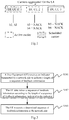
Fig.1 is a schematic principle diagram of a method for generating ACK/NACK feedback information in the LTE Rel-10 in the prior art; -
Fig.2 is a schematic flow chart of a method for transmitting feedback information according to an embodiment of the application; -
Fig.3 is a schematic flow chart of a method for controlling transmission of feedback information according to an embodiment of the application; -
Fig.4 is a schematic principle diagram of a method for generating a sequence of feedback information according to an embodiment of the application; -
Fig.5 is a schematic structural diagram of a device for transmitting feedback information according to an embodiment of the application; -
Fig.6 is a schematic structural diagram of a device for controlling transmission of feedback information according to an embodiment of the application; -
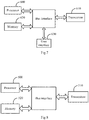
Fig.7 is a schematic structural diagram of a second device for transmitting feedback information according to an embodiment of the application; and -
Fig.8 is a schematic structural diagram of a second device for controlling transmission of feedback information according to an embodiment of the application. - Embodiments of the application provide a method and device for transmitting feedback information, and a method and device for controlling transmission of feedback information so as to reduce the amount of redundant information in a sequence of feedback information to lower transmit power to be occupied by the feedback information, to save physical resources to be occupied, and to improve the performance of transmitting the feedback information, and the utilization ratio of the resources throughout the system.
- Referring to
Fig.2 , an embodiment of the application provides a method for transmitting feedback information at the UE side, where the method includes the following operations. - In the operation S101, a User Equipment (UE) receives an indicator transmitted by a network side to indicate a length of a sequence of feedback information.
- In the operation S102, the UE determines a sequence of feedback information according to the length of a sequence of feedback information, indicated in the indicator.
- In the operation S103, the UE transmits a determined sequence of feedback information to the network side.
- In the embodiment of the application, the feedback information may be ACK/NACK feedback information, or another type of feedback information.
- In the embodiment of the application, the UE determines the sequence of feedback information according to the length of a sequence of feedback information, indicated in the indicator transmitted by the network side to indicate the length of a sequence of feedback information, and transmits the determined sequence of feedback information to the network side, to thereby avoid the problem in the prior art the length of a sequence of feedback information is determined according to the number of configured component carriers, thus resulting in a large amount of redundant information in the sequence of feedback information, so the method according to the embodiment of the application can reduce the amount of redundant information in the sequence of feedback information to lower transmit power to be occupied by the feedback information, save physical resources to be occupied, and improve the performance of transmitting the feedback information, and the utilization ratio of the resources throughout the system.
- Preferably before the UE receives the indicator transmitted by the network side to indicate the length of a sequence of feedback information, the method further includes:
- the UE receives a set of lengths of a sequence of feedback information, transmitted by the network side, including P different lengths of a sequence of feedback information, {L 1,L 2,...,LP }, where

- where the length of a sequence of feedback information indicated in the indicator belongs to the set of lengths of a sequence of feedback information.
- In the embodiment of the application, an executor of the operations at the network side can be an eNB or another network side device.
- Preferably the indicator is Downlink Control Information (DCI).
- In the embodiment of the application, the eNB can pre-configure the UE with several optional lengths of a sequence of feedback information semi-statically, and subsequently the eNB indicates one of the pre-configured optional lengths of a sequence of feedback information as L dynamically in the DCI, so that the UE determines the total length of ACK/NACK feedback information to be transmitted in the corresponding uplink sub-frame as L. The value of L is less than or equal to the length of a sequence of feedback information if all the component carriers among the carriers configured by the network side to be aggregated for the UE are activated and scheduled.
- The UE receives configuration information of the eNB, where the configuration information is used for configuring P different lengths of a sequence of feedback information, {L 1,L 2,...LP }, where

- The UE receives Downlink Control Information (DCI) transmitted by the eNB, and the UE determines the length L of feedback information according to the DCI, where L ∈ {L 1 ,L 2,...,LP }. The indicator of the length L of feedback information, carried in the DCI can be a particular value of L; or preferably can be an index of L in the set L ∈ {L 1,L 2,...,LP } to thereby save a number of bits to be occupied for the indicator of the length L of feedback information as compared with the indicator indicating directly the particular value of L. The UE can determine the particular value of L according to the index of L in the set L ∈ {L 1 ,L 2,...,LP }, and the pre-obtained {L1 ,L 2,...,LP }.
- The user equipment transmits the sequence of feedback information with the total length L in the uplink sub-frame n.
- Preferably the UE transmits the determined sequence of feedback information to the network side in a Physical Uplink Control Channel (PUCCH) format, in which the sequence of feedback information can be carried, and which has the least capacity, that is, if there are a number of PUCCH formats supported in the system, and there are different capacities of the different PUCCH formats, then the UE may determine one of the PUCCH formats for transmitting feedback information according to the determined length L of feedback information by selecting such one of the PUCCH formats, in which L bits of information can be carried, that has the least capacity, to thereby improve the performance of demodulation so as to enable a larger number of UEs to access concurrently.
- Preferably if the UE receives a plurality of pieces of DCI in a joint feedback set, each of which indicates the same length of a sequence of feedback information, where the joint feedback set is a set of downlink sub-frames for which feedback information is transmitted in the same uplink sub-frame, then the UE will transmit the determined sequence of feedback information to the network side particularly by transmitting the determined sequence of feedback information to the network side in the same uplink sub-frame over the component carriers.
- Preferably the method further includes: the UE obtains a joint counter from DCI scheduling transmission of a Physical Downlink Shared Channel (PDSCH), or DCI for which feedback information needs to be replied with, in the joint feedback set, where the joint counter indicates an order in which the DCI is received.
- The UE determines the sequence of feedback information according to the length of a sequence of feedback information, indicated in the indicator particularly as follows:
- the UE determines the bit position, of feedback information corresponding to the PDSCH or the DCI, in the sequence of feedback information according to the joint counter; and
- the UE determines the sequence of feedback information according to the length of a sequence of feedback information, indicated in the indicator, and the bit position.
- For example, if the sequence number of the PDSCH is defined, then the position, of ACK/NACK feedback information corresponding to the PDSCH, in the sequence of feedback information may correspond to the sequence number thereof. For example, the position, of ACK/NACK feedback information corresponding to the first PDSCH, in the sequence of feedback information is also the first position.
- Correspondingly referring to
Fig.3 , an embodiment of the application provides a method for controlling transmission of feedback information at the network side, where the method includes the following operations. - In the operation S201, the network side determines a length of a sequence of feedback information to be indicated to a User Equipment (UE).
- In the operation S202, the network side transmits an indicator indicating the length of a sequence of feedback information to the UE.
- Preferably before the network side determines the indicator indicating the length of a sequence of feedback information, the method further includes: transmitting, by the network side, a set of lengths of a sequence of feedback information, including P different lengths of a sequence of feedback information, {L 1,L 2,...,LP }, to the UE, where

the network side determines the length of a sequence of feedback information to be indicated to the UE by selecting one of the lengths of a sequence of feedback information in the set of lengths of a sequence of feedback information as the length of a sequence of feedback information to be indicated to the UE. - Preferably the indicator is Downlink Control Information (DCI).
- Preferably the network side transmits the indicator indicating the length of a sequence of feedback information to the UE particularly as follows:
- the network side transmits a plurality of pieces of DCI, each of which indicates the same length of a sequence of feedback information, to the UE in a joint feedback set, where the joint feedback set is a set of downlink sub-frames for which feedback information is transmitted in the same uplink sub-frame.
- Preferably the method further includes:
- the network side sets a joint counter in DCI scheduling transmission of a Physical Downlink Shared Channel (PDSCH), or DCI for which feedback information needs to be replied with, in the joint feedback set, where the joint counter indicates an order in which the DCI is transmitted, so that the UE determines the bit position, of feedback information corresponding to the PDSCH or the DCI, in the sequence of feedback information according to the joint counter.
- Preferably after the network side transmits the indicator indicating the length of a sequence of feedback information to the UE, the method further includes:
- the network side receives a sequence of feedback information with which the UE replies, where the sequence of feedback information is transmitted by the UE to the network side in a Physical Uplink Control Channel (PUCCH) format, in which the sequence of feedback information can be carried, and which has the least capacity.
- A particular embodiment of the application will be exemplified below.
- Referring to
Fig.4 , in a Time Division Duplex (TDD) system, if a UE is configured with three component carriers to be aggregated, i.e., acarrier 1, acarrier 2, and acarrier 3 respectively, to all of which the same TDD uplink/downlink configuration is applied, and there are two active component carriers including thecarrier 1 and thecarrier 2 respectively, where a uni-code word transmission mode is configured, and ACK/NACK feedback information corresponding to downlink sub-frames a, b, c, and d are transmitted in the same uplink sub-frame n. - The eNB configures a set of lengths of a sequence of feedback information semi-statically as {2, 5, 8, 12}, and the eNB indicates one of them in DCI, for example, the eNB indicates one of the lengths of a sequence of feedback information as 5, that is, the eNB can schedule transmission of at most five PDSCHs in the current joint feedback set, but the eNB actually schedules transmission of four PDSCHs in the current joint feedback set, so the UE transmits five bits of ACK/NACK feedback information to the eNB in the uplink sub-frame n.
- Preferably the joint counter counts in a firstly-frequency domain and then-time domain order. Referring to
Fig.4 , firstly the PDSCH scheduled over the active carriers, or the DCI for which an ACK/NACK feedback is required, in the sub-frame a is counted as 1, that is, feedback information b1 corresponding to the PDSCH or the DCI is arranged at the first bit position in the sequence of feedback information to be transmitted; then the PDSCH scheduled over the active carriers, or the DCI for which an ACK/NACK feedback is required, in the sub-frame b is further counted as 2, that is, feedback information b2 corresponding to the PDSCH or the DCI is arranged at the second bit position in the sequence of feedback information to be transmitted; then the PDSCH scheduled over the active carriers, or the DCI for which an ACK/NACK feedback is required, in the sub-frame c is further counted as 3, that is, feedback information b3 corresponding to the PDSCH or the DCI is arranged at the third bit position in the sequence of feedback information to be transmitted; and lastly the PDSCH scheduled over the active carriers, or the DCI for which an ACK/NACK feedback is required, in the sub-frame d is further counted as 4, that is, feedback information b4 corresponding to the PDSCH or the DCI is arranged at the fourth bit position in the sequence of feedback information to be transmitted, where response feedback information for the downlink sub-frame (a-d) is transmitted in the uplink sub-frame n. Accordingly the sequence of feedback information is obtained as {b1, b2, b3, b4, b5=NACK} according to the joint counter, where NACK is a placeholder, for example, if NACK=0 represents Null or Non-Acknowledgement, then correspondingly ACK may take the value of 1 to represent Acknowledgement. Stated otherwise, if the total number of bits of the feedback information, received by the UE in the joint feedback set, corresponding to the PDSCH, and/or the DCI for which response feedback information is required to be transmitted is A, where A is less than the length L of a sequence of feedback information indicated in the indicator, then the UE may set (L-A) bits of placeholder information in the sequence of feedback information. - As can be apparent, if the scheduling condition corresponding to this embodiment is handled as in the prior art, then the UE will feed 12 bits (i.e., 3 carriers multiplied by 4 downlink sub-frames) of ACK/NACK feedback information back to the eNB, but only 4 bits of them is useful information, and the other feedback information is redundant placeholder information. If the number of carriers to be aggregated is further increased, then the amount of redundant information thereof will be very large. With the technical solution according to the embodiment of the application, there is only 1 bit of redundant placeholder information in the resulting sequence of feedback information, thus significantly reducing the amount of redundant information in the sequence of feedback information.
- In correspondence to the methods above, embodiments of the application further provide the following devices.
- Referring to
Fig.5 , an embodiment of the application provides a device for transmitting feedback information, where the device includes: - a receiving
unit 11 is configured to receive an indicator transmitted by a network side to indicate a length of a sequence of feedback information; - a determining
unit 12 is configured to determine a sequence of feedback information according to the length of a sequence of feedback information, indicated in the indicator; and - a transmitting
unit 13 is configured to transmit a determined sequence of feedback information to the network side. - Preferably the transmitting unit transmits the determined sequence of feedback information to the network side in a Physical Uplink Control Channel (PUCCH) format, in which the sequence of feedback information can be carried, and which has the least capacity.
- Preferably the receiving unit is further configured, before the UE receives the indicator transmitted by the network side to indicate the length of a sequence of feedback information:
- to receive a set of lengths of a sequence of feedback information, transmitted by the network side, including P different lengths of a sequence of feedback information, {L 1,L 2,...,LP }, where

- where the length of a sequence of feedback information indicated in the indicator belongs to the set of lengths of a sequence of feedback information.
- Preferably the indicator is Downlink Control Information (DCI).
- Preferably if the receiving unit receives a plurality of pieces of DCI in a joint feedback set, then each piece of DCI will indicate the same length of a sequence of feedback information, where the joint feedback set is a set of downlink sub-frames for which feedback information is transmitted in the same uplink sub-frame.
- Preferably the receiving unit is further configured:
- to obtain a joint counter from DCI scheduling transmission of a Physical Downlink Shared Channel (PDSCH), or DCI for which feedback information needs to be replied with, in the joint feedback set, where the joint counter indicates an order in which the DCI is received.
- The determining unit is configured:
- to determine the bit position, of feedback information corresponding to the PDSCH or the DCI, in the sequence of feedback information according to the joint counter; and
- to determine the sequence of feedback information according to the length of a sequence of feedback information indicated in the indicator, and the bit position.
- Referring to
Fig.6 , an embodiment of the application provides a device for controlling transmission of feedback information at the network side, where the device includes: - a determining
unit 21 is configured to determine a length of a sequence of feedback information to be indicated to a User Equipment (UE); - a transmitting
unit 22 is configured to transmit an indicator indicating the length of a sequence of feedback information to the UE. - Preferably before the indicator indicating the length of a sequence of feedback information is determined, the transmitting unit is further configured to transmit a set of lengths of a sequence of feedback information, including P different lengths of a sequence of feedback information, {L 1,L 2,...,LP }, to the UE, where

the determining unit is configured to select one of the lengths of a sequence of feedback information in the set of lengths of a sequence of feedback information as the length of a sequence of feedback information to be indicated to the UE. - Preferably the indicator is Downlink Control Information (DCI).
- Preferably the transmitting unit is configured:
- to transmit a plurality of pieces of DCI, each of which indicates the same length of a sequence of feedback information, to the UE in a joint feedback set, where the joint feedback set is a set of downlink sub-frames for which feedback information is transmitted in the same uplink sub-frame.
- Preferably the transmitting unit is further configured to set a joint counter in DCI scheduling transmission of a Physical Downlink Shared Channel (PDSCH), or DCI for which feedback information needs to be replied with, in the joint feedback set, where the joint counter indicates an order in which the DCI is transmitted, so that the UE determines the bit position, of feedback information corresponding to the PDSCH or the DCI, in the sequence of feedback information according to the joint counter.
- Preferably after the indicator indicating the length of a sequence of feedback information is transmitted to the UE, the transmitting unit is further configured:
- to receive a sequence of feedback information with which the UE replies, where the sequence of feedback information is transmitted by the UE to the transmitting unit in a Physical Uplink Control Channel (PUCCH) format, in which the sequence of feedback information can be carried, and which has the least capacity.
- The respective units above can be embodied as a processor or another physical device.
- Referring to
Fig.7 , an embodiment of the application provides another device for transmitting feedback information at the UE side, where the device includes: - a
processor 600 is configured to read programs in amemory 620 to perform the processes of:- controlling a
transceiver 610 to receive an indicator transmitted by a network side to indicate a length of a sequence of feedback information; - determining a sequence of feedback information according to the length of a sequence of feedback information, indicated in the indicator; and
- controlling the
transceiver 610 to transmit a determined sequence of feedback information to the network side.
- controlling a
- Preferably the
processor 600 controls thetransceiver 610 to transmit the determined sequence of feedback information to the network side in a Physical Uplink Control Channel (PUCCH) format, in which the sequence of feedback information can be carried, and which has the least capacity. - Preferably before the UE receives the indicator transmitted by the network side to indicate the length of a sequence of feedback information, the
processor 600 further controls thetransceiver 610 to: - receive a set of lengths of a sequence of feedback information, transmitted by the network side, including P different lengths of a sequence of feedback information, {L 1,L 2,...,LP }, where

- where the length of a sequence of feedback information indicated in the indicator belongs to the set of lengths of a sequence of feedback information.
- Preferably the indicator is Downlink Control Information (DCI).
- Preferably if the
processor 600 controls thetransceiver 610 to receive a plurality of pieces of DCI in a joint feedback set, then each piece of DCI will indicate the same length of a sequence of feedback information, where the joint feedback set is a set of downlink sub-frames for which feedback information is transmitted in the same uplink sub-frame. - Preferably the
processor 600 is further configured: - to obtain a joint counter from DCI scheduling transmission of a Physical Downlink Shared Channel (PDSCH), or DCI for which feedback information needs to be replied with, in the joint feedback set, where the joint counter indicates an order in which the DCI is received; and
- to determine the bit position, of feedback information corresponding to the PDSCH or the DCI, in the sequence of feedback information according to the joint counter; and to determine the sequence of feedback information according to the length of a sequence of feedback information, indicated in the indicator, and the bit position.
- The
transceiver 610 is configured to be controlled by theprocessor 600 to receive and transmit data. - Here in
Fig.7 , the bus architecture can include any number of interconnecting buses and bridges to particularly link together various circuits including one or more processors represented by theprocessor 600, and one or more memories represented by thememory 620. The bus architecture can further link together various other circuits, e.g., peripheral devices, manostats, power management circuits, etc., all of which are well known in the art, so a further description thereof will be omitted in this context. The bus interface serves as an interface. Thetransceiver 610 can be a number of elements including a transmitter and a receiver which are units for communication with various other devices over a transmission medium. For different user equipments, a user interface 630 can also be an interface via which external or internal devices can be connected as appropriate, where the connected devices include but will not be limited to a keypad, a display, a speaker, a microphone, a joystick, etc. - The
processor 600 is responsible for managing the bus architecture and performing normal processes, and thememory 520 can store data for use by theprocessor 500 in performing the operations. - Referring to
Fig.8 , an embodiment of the application provides another device for controlling transmission of feedback information at the network side, where the device includes: - a
processor 500 is configured to read programs in amemory 520 to perform the processes of:- determining a length of a sequence of feedback information to be indicated to a User Equipment (UE);
- controlling a
transceiver 510 to transmit an indicator indicating the length of a sequence of feedback information to the UE.
- Preferably before the indicator indicating the length of a sequence of feedback information is determined, the
processor 500 is further configured to control thetransceiver 510 to transmit a set of lengths of a sequence of feedback information, including P different lengths of a sequence of feedback information, {L 1,L 2,...,LP }, to the UE, where
theprocessor 500 selects one of the lengths of a sequence of feedback information in the set of lengths of a sequence of feedback information as the length of a sequence of feedback information to be indicated to the UE. - Preferably the indicator is Downlink Control Information (DCI).
- Preferably the
processor 500 controls thetransceiver 510 to transmit a plurality of pieces of DCI, each of which indicates the same length of a sequence of feedback information, to the UE in a joint feedback set, where the joint feedback set is a set of downlink sub-frames for which feedback information is transmitted in the same uplink sub-frame. - Preferably the
processor 500 sets a joint counter in DCI scheduling transmission of a Physical Downlink Shared Channel (PDSCH), or DCI for which feedback information needs to be replied with, in the joint feedback set, where the joint counter indicates an order in which the DCI is transmitted, so that the UE determines the bit position, of the feedback information corresponding to the PDSCH or the DCI, in the sequence of feedback information according to the joint counter. - Preferably after the indicator indicating the length of a sequence of feedback information is transmitted to the UE, the
processor 500 further controls the transceiver 510: - to receive a sequence of feedback information with which the UE replies, where the sequence of feedback information is transmitted by the UE to the
transceiver 510 in a Physical Uplink Control Channel (PUCCH) format, in which the sequence of feedback information can be carried, and which has the least capacity. - The
transceiver 510 is configured to be controlled by theprocessor 500 to receive and transmit data. - Here in
Fig.8 , the bus architecture can include any number of interconnecting buses and bridges to particularly link together various circuits including one or more processors represented by theprocessor 500, and one or more memories represented by thememory 520. The bus architecture can further link together various other circuits, e.g., peripheral devices, manostats, power management circuits, etc., all of which are well known in the art, so a further description thereof will be omitted in this context. A bus interface serves as an interface. Thetransceiver 510 can be a number of elements including a transmitter and a receiver which are units for communication with various other devices over a transmission medium. Theprocessor 500 is responsible for managing the bus architecture and performing normal processes, and thememory 520 can store data for use by theprocessor 500 in performing the operations. - In summary, in the embodiments of the application, the set of lengths of a sequence of feedback information is configured semi-statically, and one of the lengths of a sequence of feedback information in the set is indicated dynamically in the DCI, so that the UE determines the length of a sequence of feedback information, at which ACK/NACK feedback information is transmitted in an uplink sub-frame, according to the indicated length of a sequence of feedback information, thus significantly reducing the amount of redundant information in the sequence of feedback information.
- Those skilled in the art shall appreciate that the embodiments of the application can be embodied as a method, a system or a computer program product. Therefore the application can be embodied in the form of an all-hardware embodiment, an all-software embodiment or an embodiment of software and hardware in combination. Furthermore the application can be embodied in the form of a computer program product embodied in one or more computer useable storage mediums (including but not limited to a disk memory, a CD-ROM, an optical memory, etc.) in which computer useable program codes are contained.
- The application has been described in a flow chart and/or a block diagram of the method, the device (system) and the computer program product according to the embodiments of the application. It shall be appreciated that respective flows and/or blocks in the flow chart and/or the block diagram and combinations of the flows and/or the blocks in the flow chart and/or the block diagram can be embodied in computer program instructions. These computer program instructions can be loaded onto a general-purpose computer, a specific-purpose computer, an embedded processor or a processor of another programmable data processing device to produce a machine so that the instructions executed on the computer or the processor of the other programmable data processing device create means for performing the functions specified in the flow(s) of the flow chart and/or the block(s) of the block diagram.
- These computer program instructions can also be stored into a computer readable memory capable of directing the computer or the other programmable data processing device to operate in a specific manner so that the instructions stored in the computer readable memory create an article of manufacture including instruction means which perform the functions specified in the flow(s) of the flow chart and/or the block(s) of the block diagram.
- These computer program instructions can also be loaded onto the computer or the other programmable data processing device so that a series of operational operations are performed on the computer or the other programmable data processing device to create a computer implemented process so that the instructions executed on the computer or the other programmable device provide operations for performing the functions specified in the flow(s) of the flow chart and/or the block(s) of the block diagram.
- Evidently those skilled in the art can make various modifications and variations to the application without departing from the spirit and scope of the application. Thus the application is also intended to encompass these modifications and variations thereto so long as the modifications and variations come into the scope of the claims appended to the application and their equivalents.
Claims (32)
- A method for transmitting feedback information, the method comprises:receiving, by a User Equipment, UE, an indicator transmitted by a network side to indicate a length of a sequence of feedback information;determining, by the UE, a sequence of feedback information according to the length of a sequence of feedback information, indicated in the indicator; andtransmitting, by the UE, a determined sequence of feedback information to the network side.
- The method according to claim 1, wherein the UE transmits the determined sequence of feedback information to the network side in a Physical Uplink Control Channel, PUCCH, format, in which the sequence of feedback information can be carried, and which has the least capacity.
- The method according to claim 1, wherein before the UE receives the indicator transmitted by the network side to indicate the length of a sequence of feedback information, the method further comprises:receiving, by the UE, a set of lengths of a sequence of feedback information, transmitted by the network side, comprising P different lengths of a sequence of feedback information, {L 1,L 2,...,LP }, wherein
 wherein the length of a sequence of feedback information indicated in the indicator belongs to the set of lengths of a sequence of feedback information.
 - The method according to claim 1, wherein the indicator is Downlink Control Information, DCI.
- The method according to claim 4, wherein if the UE receives a plurality of pieces of DCI in a joint feedback set, then each piece of DCI will indicate a same length of a sequence of feedback information, wherein the joint feedback set is a set of downlink sub-frames for which feedback information is transmitted in a same uplink sub-frame.
- The method according to claim 1, wherein the method further comprises: obtaining, by the UE, a joint counter from DCI scheduling transmission of a Physical Downlink Shared Channel, PDSCH, or DCI for which feedback information needs to be replied with, in a joint feedback set, wherein the joint counter indicates an order in which the DCI is received, the joint feedback set is a set of downlink sub-frames for which feedback information is transmitted in a same uplink sub-frame; and
determining, by the UE, the sequence of feedback information according to the length of a sequence of feedback information, indicated in the indicator comprises:determining, by the UE, a bit position, of feedback information corresponding to the PDSCH or the DCI, in the sequence of feedback information according to the joint counter; anddetermining, by the UE, the sequence of feedback information according to the length of a sequence of feedback information, indicated in the indicator, and the bit position. - The method according to claim 6, wherein the joint counter counts in a firstly-frequency domain and then-time domain order.
- The method according to claim 6, wherein if a total number of bits of the feedback information, received by the UE in the joint feedback set, corresponding to the PDSCH, and/or the DCI for which response feedback information is required to be transmitted is A, wherein A is less than a length L of a sequence of feedback information indicated in the indicator, then the UE may set (L-A) bits of placeholder information in the sequence of feedback information.
- A method for controlling transmission of feedback information, the method comprises:determining, by a network side, a length of a sequence of feedback information to be indicated to a User Equipment, UE;transmitting, by the network side, an indicator indicating the length of a sequence of feedback information to the UE.
- The method according to claim 9, wherein before the network side determines the indicator indicating the length of a sequence of feedback information, the method further comprises:transmitting, by the network side, a set of lengths of a sequence of feedback information, including P different lengths of a sequence of feedback information, {L 1 ,L 2,...,LP }, to the UE, wherein
 determining, by the network side, the length of a sequence of feedback information to be indicated to the UE comprises: selecting, by the network side, one of the lengths of a sequence of feedback information in the set of lengths of a sequence of feedback information as the length of a sequence of feedback information to be indicated to the UE.
 - The method according to claim 9, wherein the indicator is Downlink Control Information, DCI.
- The method according to claim 11, wherein transmitting, by the network side, the indicator indicating the length of a sequence of feedback information to the UE comprises:transmitting, by the network side, a plurality of pieces of DCI, each of which indicates a same length of a sequence of feedback information, to the UE in a joint feedback set, wherein the joint feedback set is a set of downlink sub-frames for which feedback information is transmitted in a same uplink sub-frame.
- The method according to claim 9, wherein the method further comprises:setting, by the network side, a joint counter in DCI scheduling transmission of a Physical Downlink Shared Channel, PDSCH, or DCI for which feedback information needs to be replied with, in a joint feedback set, wherein the joint counter indicates an order in which the DCI is transmitted, so that the UE determines a bit position, of feedback information corresponding to the PDSCH or the DCI, in the sequence of feedback information according to the joint counter, and the joint feedback set is a set of downlink sub-frames for which feedback information is transmitted in a same uplink sub-frame.
- The method according to claim 13, wherein the joint counter counts in a firstly-frequency domain and then-time domain order.
- The method according to claim 9, wherein after the network side transmits the indicator indicating the length of a sequence of feedback information to the UE, the method further comprises:receiving, by the network side, a sequence of feedback information with which the UE replies, wherein the sequence of feedback information is transmitted by the UE to the network side in a Physical Uplink Control Channel, PUCCH, format, in which the sequence of feedback information can be carried, and which has the least capacity.
- The method according to claim 15, wherein if a total number of bits of the feedback information, received by the UE in a joint feedback set, corresponding to the PDSCH, and/or the DCI for which response feedback information is required to be transmitted is A, wherein A is less than a length L of a sequence of feedback information indicated in the indicator, then the UE may set (L-A) bits of placeholder information in the sequence of feedback information.
- A device for transmitting feedback information, the device comprises:a receiving unit configured to receive an indicator transmitted by a network side to indicate a length of a sequence of feedback information;a determining unit configured to determine a sequence of feedback information according to the length of a sequence of feedback information, indicated in the indicator; anda transmitting unit configured to transmit a determined sequence of feedback information to the network side.
- The device according to claim 17, wherein the transmitting unit transmits the determined sequence of feedback information to the network side in a Physical Uplink Control Channel, PUCCH, format, in which the sequence of feedback information can be carried, and which has the least capacity.
- The device according to claim 17, wherein the receiving unit is further configured, before the UE receives the indicator transmitted by the network side to indicate the length of a sequence of feedback information:to receive a set of lengths of a sequence of feedback information, transmitted by the network side, including P different lengths of a sequence of feedback information, {L 1,L 2,...,LP }, wherein
 wherein the length of a sequence of feedback information indicated in the indicator belongs to the set of lengths of a sequence of feedback information.
 - The device according to claim 17, wherein the indicator is Downlink Control Information, DCI.
- The device according to claim 20, wherein if the receiving unit receives a plurality of pieces of DCI in a joint feedback set, then each piece of DCI will indicate a same length of a sequence of feedback information, wherein the joint feedback set is a set of downlink sub-frames for which feedback information is transmitted in a same uplink sub-frame.
- The device according to claim 17, wherein the receiving unit is further configured:to obtain a joint counter from DCI scheduling transmission of a Physical Downlink Shared Channel, PDSCH, or DCI for which feedback information needs to be replied with, in a joint feedback set, wherein the joint counter indicates an order in which the DCI is received, the joint feedback set is a set of downlink sub-frames for which feedback information is transmitted in a same uplink sub-frame; andthe determining unit is configured:to determine a bit position, of feedback information corresponding to the PDSCH or the DCI, in the sequence of feedback information according to the joint counter; andto determine the sequence of feedback information according to the length of a sequence of feedback information, indicated in the indicator, and the bit position.
- The device according to claim 22, wherein the joint counter counts in a firstly-frequency domain and then-time domain order.
- The device according to claim 22, wherein the determining unit is further configured:if a total number of bits of the feedback information, received by the UE in the joint feedback set, corresponding to the PDSCH, and/or the DCI for which response feedback information is required to be transmitted is A, wherein A is less than a length L of a sequence of feedback information indicated in the indicator, to set (L-A) bits of placeholder information in the sequence of feedback information.
- A device for controlling transmission of feedback information, the device comprises:a determining unit configured to determine a length of a sequence of feedback information to be indicated to a User Equipment, UE;a transmitting unit configured to transmit an indicator indicating the length of a sequence of feedback information to the UE.
- The device according to claim 25, wherein before the indicator indicating the length of a sequence of feedback information is determined, the transmitting unit is further configured to transmit a set of lengths of a sequence of feedback information, including P different lengths of a sequence of feedback information, {L 1,L 2,...,LP }, to the UE, wherein

the determining unit is configured to select one of the lengths of a sequence of feedback information in the set of lengths of a sequence of feedback information as the length of a sequence of feedback information to be indicated to the UE. - The device according to claim 25, wherein the indicator is Downlink Control Information, DCI.
- The device according to claim 27, wherein the transmitting unit is configured:to transmit a plurality of pieces of DCI, each of which indicates a same length of a sequence of feedback information, to the UE in a joint feedback set, wherein the joint feedback set is a set of downlink sub-frames for which feedback information is transmitted in a same uplink sub-frame.
- The device according to claim 25, wherein the transmitting unit is further configured to set a joint counter in DCI scheduling transmission of a Physical Downlink Shared Channel, PDSCH, or DCI for which feedback information needs to be replied with, in a joint feedback set, wherein the joint counter indicates an order in which the DCI is transmitted, so that the UE determines a bit position, of feedback information corresponding to the PDSCH or the DCI, in the sequence of feedback information according to the joint counter, and the joint feedback set is a set of downlink sub-frames for which feedback information is transmitted in a same uplink sub-frame.
- The device according to claim 29, wherein the joint counter counts in a firstly-frequency domain and then-time domain order.
- The device according to claim 25, wherein the transmitting unit is further configured, after the indicator indicating the length of a sequence of feedback information is transmitted to the UE:to receive a sequence of feedback information with which the UE replies, wherein the sequence of feedback information is transmitted by the UE to the transmitting unit in a Physical Uplink Control Channel, PUCCH, format, in which the sequence of feedback information can be carried, and which has the least capacity.
- The device according to claim 31, wherein if a total number of bits of the feedback information, received by the UE in a joint feedback set, corresponding to the PDSCH, and/or the DCI for which response feedback information is required to be transmitted is A, wherein A is less than a length L of a sequence of feedback information indicated in the indicator, then (L-A) bits of placeholder information may be set in the sequence of feedback information.
Applications Claiming Priority (2)
| Application Number | Priority Date | Filing Date | Title |
|---|---|---|---|
| CN201510153047.6A CN106160949B (en) | 2015-04-01 | 2015-04-01 | Method and equipment for sending and controlling feedback information |
| PCT/CN2016/077882 WO2016155628A1 (en) | 2015-04-01 | 2016-03-30 | Method and device for sending and controlling feedback information |
Publications (3)
| Publication Number | Publication Date |
|---|---|
| EP3280083A1 true EP3280083A1 (en) | 2018-02-07 |
| EP3280083A4 EP3280083A4 (en) | 2018-04-04 |
| EP3280083B1 EP3280083B1 (en) | 2024-03-06 |
Family
ID=57003915
Family Applications (1)
| Application Number | Title | Priority Date | Filing Date |
|---|---|---|---|
| EP16771383.3A Active EP3280083B1 (en) | 2015-04-01 | 2016-03-30 | Method and device for sending and controlling feedback information |
Country Status (6)
| Country | Link |
|---|---|
| US (1) | US10555212B2 (en) |
| EP (1) | EP3280083B1 (en) |
| JP (1) | JP6630740B2 (en) |
| KR (1) | KR102057137B1 (en) |
| CN (1) | CN106160949B (en) |
| WO (1) | WO2016155628A1 (en) |
Cited By (1)
| Publication number | Priority date | Publication date | Assignee | Title |
|---|---|---|---|---|
| JP2021517385A (en) * | 2018-02-14 | 2021-07-15 | オッポ広東移動通信有限公司Guangdong Oppo Mobile Telecommunications Corp., Ltd. | Wireless communication methods, terminal devices and network devices |
Families Citing this family (5)
| Publication number | Priority date | Publication date | Assignee | Title |
|---|---|---|---|---|
| CN108282881B (en) * | 2017-01-06 | 2020-12-15 | 华为技术有限公司 | A resource allocation method and device |
| US11510230B2 (en) * | 2017-11-28 | 2022-11-22 | Beijing Xiaomi Mobile Software Co., Ltd. | Method of indicating uplink feedback information and method of transmitting uplink feedback information |
| EP3905767B1 (en) * | 2018-12-27 | 2025-06-18 | Ntt Docomo, Inc. | User device and communication device |
| US12028173B2 (en) | 2020-10-08 | 2024-07-02 | Samsung Electronics Co., Ltd. | Acknowledgment information with reduced redundancies |
| CN114978444B (en) * | 2021-02-24 | 2025-11-07 | 维沃移动通信有限公司 | Feedback information sending method, device and terminal |
Family Cites Families (12)
| Publication number | Priority date | Publication date | Assignee | Title |
|---|---|---|---|---|
| CN101499882B (en) * | 2008-11-05 | 2011-05-04 | 华为技术有限公司 | Feedback and receiving method and device for response information of semi-persistent scheduling data packet |
| CN101998539B (en) * | 2009-08-18 | 2013-07-31 | 电信科学技术研究院 | ACK/NACK resource reservation method, system and device |
| CN102088341B (en) * | 2009-12-04 | 2013-04-17 | 电信科学技术研究院 | Transmitting method and transmitting device of feedback information |
| US9118470B2 (en) * | 2010-04-01 | 2015-08-25 | Lg Electronics Inc. | Control information transmission method and a device therefor |
| CN102647261B (en) * | 2010-04-06 | 2014-10-22 | 电信科学技术研究院 | Scheduling signaling sending and response feedback method, system and equipment |
| CN102377536B (en) * | 2010-08-06 | 2014-12-17 | 电信科学技术研究院 | Method and equipment for transmitting feedback information |
| CN102404802B (en) * | 2010-09-16 | 2015-03-11 | 电信科学技术研究院 | Transmission method for response information, base station and user equipment |
| WO2012091532A2 (en) | 2011-01-02 | 2012-07-05 | 엘지전자 주식회사 | Method and apparatus for transmitting ack/nack in tdd-based wireless communication system |
| CN102075313B (en) * | 2011-03-04 | 2013-03-27 | 电信科学技术研究院 | Method and device for processing acknowledgement (ACK)/negative acknowledgment (NACK) feedback bit |
| CN102752085B (en) * | 2011-04-21 | 2014-09-17 | 华为技术有限公司 | Method and equipment for sending acknowledgement or non-acknowledgement indication information in time division duplexing (TDD) system |
| WO2013112004A1 (en) * | 2012-01-27 | 2013-08-01 | 엘지전자 주식회사 | Method and apparatus for transmitting uplink control information in wireless communication system |
| CN106160983A (en) * | 2015-01-29 | 2016-11-23 | 北京三星通信技术研究有限公司 | A kind of HARQ-ACK transmission method strengthening carrier aggregation system and equipment |
-
2015
- 2015-04-01 CN CN201510153047.6A patent/CN106160949B/en active Active
-
2016
- 2016-03-30 US US15/562,896 patent/US10555212B2/en active Active
- 2016-03-30 KR KR1020177030818A patent/KR102057137B1/en active Active
- 2016-03-30 EP EP16771383.3A patent/EP3280083B1/en active Active
- 2016-03-30 WO PCT/CN2016/077882 patent/WO2016155628A1/en not_active Ceased
- 2016-03-30 JP JP2017551152A patent/JP6630740B2/en active Active
Cited By (2)
| Publication number | Priority date | Publication date | Assignee | Title |
|---|---|---|---|---|
| JP2021517385A (en) * | 2018-02-14 | 2021-07-15 | オッポ広東移動通信有限公司Guangdong Oppo Mobile Telecommunications Corp., Ltd. | Wireless communication methods, terminal devices and network devices |
| US12003327B2 (en) | 2018-02-14 | 2024-06-04 | Guangdong Oppo Mobile Telecommunications Corp., Ltd. | Wireless communication method and apparatus in wireless communication device |
Also Published As
| Publication number | Publication date |
|---|---|
| CN106160949B (en) | 2020-02-04 |
| EP3280083A4 (en) | 2018-04-04 |
| WO2016155628A1 (en) | 2016-10-06 |
| KR102057137B1 (en) | 2019-12-18 |
| US10555212B2 (en) | 2020-02-04 |
| EP3280083B1 (en) | 2024-03-06 |
| US20180084457A1 (en) | 2018-03-22 |
| CN106160949A (en) | 2016-11-23 |
| JP2018512006A (en) | 2018-04-26 |
| KR20170131613A (en) | 2017-11-29 |
| JP6630740B2 (en) | 2020-01-15 |
Similar Documents
| Publication | Publication Date | Title |
|---|---|---|
| EP3379752B1 (en) | Downlink control information (dci) transmission method and device | |
| CN115001638B (en) | Method and apparatus for reporting channel status information | |
| US10555212B2 (en) | Method and device for sending and controlling feedback information | |
| US11082958B2 (en) | PUCCH-based uplink control information transmission method and apparatus | |
| EP3522635B1 (en) | Data transmission method and device | |
| EP3007502B1 (en) | Method and device for activating and deactivating secondary component carrier in carrier aggregation | |
| CN104601303B (en) | The sending method and device and method of reseptance and device of ascending control information | |
| US20150043394A1 (en) | Downlink control signalling transmission method and device | |
| WO2017162008A1 (en) | Ack/nack feedback method and associated apparatus | |
| EP3754881B1 (en) | Method and device for determining information domain value in dci | |
| US9825750B2 (en) | Method and apparatus for indicating an attribute of a dynamic subframe | |
| EP3761545A1 (en) | Method and device for transmitting acknowledgement or negative acknowledgement indication information | |
| EP2941073B1 (en) | Method and device for sending and receiving acknowledgement feedback information | |
| US20200404629A1 (en) | Method of transmitting downlink control channel, method and device of detecting and receiving downlink control channel | |
| WO2017193827A1 (en) | Srs sending processing method and device, and sending method, device and system | |
| US11284390B2 (en) | Data communication method, terminal device, and network device | |
| WO2022199443A1 (en) | Csi feedback method and apparatus, device, and readable storage medium | |
| CN104601304B (en) | The transmission method and device and method of reseptance and device of ACK/NACK feedback informations | |
| WO2017075787A1 (en) | User equipment, access network device, method and device for transmitting and receiving uplink control information | |
| CN118301768A (en) | A parameter configuration method, device and storage medium | |
| JP2018537050A (en) | Method and apparatus for transmitting uplink control information UCI | |
| CN104104470B (en) | A kind of ascending transmission method and equipment | |
| EP4478818A1 (en) | Uplink tci state determination method and apparatus, terminal and network-side device | |
| WO2022206218A1 (en) | Communication method, apparatus and system | |
| WO2018059040A1 (en) | Power distribution method and apparatus |
Legal Events
| Date | Code | Title | Description |
|---|---|---|---|
| STAA | Information on the status of an ep patent application or granted ep patent |
Free format text: STATUS: THE INTERNATIONAL PUBLICATION HAS BEEN MADE |
|
| PUAI | Public reference made under article 153(3) epc to a published international application that has entered the european phase |
Free format text: ORIGINAL CODE: 0009012 |
|
| STAA | Information on the status of an ep patent application or granted ep patent |
Free format text: STATUS: REQUEST FOR EXAMINATION WAS MADE |
|
| 17P | Request for examination filed |
Effective date: 20171017 |
|
| AK | Designated contracting states |
Kind code of ref document: A1 Designated state(s): AL AT BE BG CH CY CZ DE DK EE ES FI FR GB GR HR HU IE IS IT LI LT LU LV MC MK MT NL NO PL PT RO RS SE SI SK SM TR |
|
| AX | Request for extension of the european patent |
Extension state: BA ME |
|
| A4 | Supplementary search report drawn up and despatched |
Effective date: 20180301 |
|
| RIC1 | Information provided on ipc code assigned before grant |
Ipc: H04L 1/16 20060101AFI20180223BHEP Ipc: H04L 5/00 20060101ALI20180223BHEP Ipc: H04L 1/18 20060101ALI20180223BHEP |
|
| DAV | Request for validation of the european patent (deleted) | ||
| DAX | Request for extension of the european patent (deleted) | ||
| STAA | Information on the status of an ep patent application or granted ep patent |
Free format text: STATUS: EXAMINATION IS IN PROGRESS |
|
| 17Q | First examination report despatched |
Effective date: 20181210 |
|
| RAP1 | Party data changed (applicant data changed or rights of an application transferred) |
Owner name: DATANG MOBILE COMMUNICATIONS EQUIPMENT CO., LTD. |
|
| REG | Reference to a national code |
Ref country code: DE Ref legal event code: R079 Free format text: PREVIOUS MAIN CLASS: H04L0001160000 Ref country code: DE Ref legal event code: R079 Ref document number: 602016086162 Country of ref document: DE Free format text: PREVIOUS MAIN CLASS: H04L0001160000 Ipc: H04L0001182900 |
|
| GRAP | Despatch of communication of intention to grant a patent |
Free format text: ORIGINAL CODE: EPIDOSNIGR1 |
|
| STAA | Information on the status of an ep patent application or granted ep patent |
Free format text: STATUS: GRANT OF PATENT IS INTENDED |
|
| RIC1 | Information provided on ipc code assigned before grant |
Ipc: H04L 5/00 20060101ALI20230822BHEP Ipc: H04L 1/1829 20230101AFI20230822BHEP |
|
| INTG | Intention to grant announced |
Effective date: 20230919 |
|
| GRAS | Grant fee paid |
Free format text: ORIGINAL CODE: EPIDOSNIGR3 |
|
| GRAA | (expected) grant |
Free format text: ORIGINAL CODE: 0009210 |
|
| STAA | Information on the status of an ep patent application or granted ep patent |
Free format text: STATUS: THE PATENT HAS BEEN GRANTED |
|
| AK | Designated contracting states |
Kind code of ref document: B1 Designated state(s): AL AT BE BG CH CY CZ DE DK EE ES FI FR GB GR HR HU IE IS IT LI LT LU LV MC MK MT NL NO PL PT RO RS SE SI SK SM TR |
|
| REG | Reference to a national code |
Ref country code: GB Ref legal event code: FG4D |
|
| REG | Reference to a national code |
Ref country code: CH Ref legal event code: EP |
|
| REG | Reference to a national code |
Ref country code: DE Ref legal event code: R096 Ref document number: 602016086162 Country of ref document: DE |
|
| REG | Reference to a national code |
Ref country code: IE Ref legal event code: FG4D |
|
| P01 | Opt-out of the competence of the unified patent court (upc) registered |
Effective date: 20240422 |
|
| REG | Reference to a national code |
Ref country code: LT Ref legal event code: MG9D |
|
| PG25 | Lapsed in a contracting state [announced via postgrant information from national office to epo] |
Ref country code: LT Free format text: LAPSE BECAUSE OF FAILURE TO SUBMIT A TRANSLATION OF THE DESCRIPTION OR TO PAY THE FEE WITHIN THE PRESCRIBED TIME-LIMIT Effective date: 20240306 |
|
| REG | Reference to a national code |
Ref country code: NL Ref legal event code: MP Effective date: 20240306 |
|
| PG25 | Lapsed in a contracting state [announced via postgrant information from national office to epo] |
Ref country code: GR Free format text: LAPSE BECAUSE OF FAILURE TO SUBMIT A TRANSLATION OF THE DESCRIPTION OR TO PAY THE FEE WITHIN THE PRESCRIBED TIME-LIMIT Effective date: 20240607 |
|
| PG25 | Lapsed in a contracting state [announced via postgrant information from national office to epo] |
Ref country code: RS Free format text: LAPSE BECAUSE OF FAILURE TO SUBMIT A TRANSLATION OF THE DESCRIPTION OR TO PAY THE FEE WITHIN THE PRESCRIBED TIME-LIMIT Effective date: 20240606 Ref country code: HR Free format text: LAPSE BECAUSE OF FAILURE TO SUBMIT A TRANSLATION OF THE DESCRIPTION OR TO PAY THE FEE WITHIN THE PRESCRIBED TIME-LIMIT Effective date: 20240306 |
|
| PG25 | Lapsed in a contracting state [announced via postgrant information from national office to epo] |
Ref country code: ES Free format text: LAPSE BECAUSE OF FAILURE TO SUBMIT A TRANSLATION OF THE DESCRIPTION OR TO PAY THE FEE WITHIN THE PRESCRIBED TIME-LIMIT Effective date: 20240306 |
|
| PG25 | Lapsed in a contracting state [announced via postgrant information from national office to epo] |
Ref country code: RS Free format text: LAPSE BECAUSE OF FAILURE TO SUBMIT A TRANSLATION OF THE DESCRIPTION OR TO PAY THE FEE WITHIN THE PRESCRIBED TIME-LIMIT Effective date: 20240606 Ref country code: NO Free format text: LAPSE BECAUSE OF FAILURE TO SUBMIT A TRANSLATION OF THE DESCRIPTION OR TO PAY THE FEE WITHIN THE PRESCRIBED TIME-LIMIT Effective date: 20240606 Ref country code: LT Free format text: LAPSE BECAUSE OF FAILURE TO SUBMIT A TRANSLATION OF THE DESCRIPTION OR TO PAY THE FEE WITHIN THE PRESCRIBED TIME-LIMIT Effective date: 20240306 Ref country code: HR Free format text: LAPSE BECAUSE OF FAILURE TO SUBMIT A TRANSLATION OF THE DESCRIPTION OR TO PAY THE FEE WITHIN THE PRESCRIBED TIME-LIMIT Effective date: 20240306 Ref country code: GR Free format text: LAPSE BECAUSE OF FAILURE TO SUBMIT A TRANSLATION OF THE DESCRIPTION OR TO PAY THE FEE WITHIN THE PRESCRIBED TIME-LIMIT Effective date: 20240607 Ref country code: FI Free format text: LAPSE BECAUSE OF FAILURE TO SUBMIT A TRANSLATION OF THE DESCRIPTION OR TO PAY THE FEE WITHIN THE PRESCRIBED TIME-LIMIT Effective date: 20240306 Ref country code: ES Free format text: LAPSE BECAUSE OF FAILURE TO SUBMIT A TRANSLATION OF THE DESCRIPTION OR TO PAY THE FEE WITHIN THE PRESCRIBED TIME-LIMIT Effective date: 20240306 Ref country code: BG Free format text: LAPSE BECAUSE OF FAILURE TO SUBMIT A TRANSLATION OF THE DESCRIPTION OR TO PAY THE FEE WITHIN THE PRESCRIBED TIME-LIMIT Effective date: 20240306 |
|
| REG | Reference to a national code |
Ref country code: AT Ref legal event code: MK05 Ref document number: 1664571 Country of ref document: AT Kind code of ref document: T Effective date: 20240306 |
|
| PG25 | Lapsed in a contracting state [announced via postgrant information from national office to epo] |
Ref country code: SE Free format text: LAPSE BECAUSE OF FAILURE TO SUBMIT A TRANSLATION OF THE DESCRIPTION OR TO PAY THE FEE WITHIN THE PRESCRIBED TIME-LIMIT Effective date: 20240306 Ref country code: LV Free format text: LAPSE BECAUSE OF FAILURE TO SUBMIT A TRANSLATION OF THE DESCRIPTION OR TO PAY THE FEE WITHIN THE PRESCRIBED TIME-LIMIT Effective date: 20240306 |
|
| PG25 | Lapsed in a contracting state [announced via postgrant information from national office to epo] |
Ref country code: NL Free format text: LAPSE BECAUSE OF FAILURE TO SUBMIT A TRANSLATION OF THE DESCRIPTION OR TO PAY THE FEE WITHIN THE PRESCRIBED TIME-LIMIT Effective date: 20240306 |
|
| PG25 | Lapsed in a contracting state [announced via postgrant information from national office to epo] |
Ref country code: NL Free format text: LAPSE BECAUSE OF FAILURE TO SUBMIT A TRANSLATION OF THE DESCRIPTION OR TO PAY THE FEE WITHIN THE PRESCRIBED TIME-LIMIT Effective date: 20240306 |
|
| PG25 | Lapsed in a contracting state [announced via postgrant information from national office to epo] |
Ref country code: IS Free format text: LAPSE BECAUSE OF FAILURE TO SUBMIT A TRANSLATION OF THE DESCRIPTION OR TO PAY THE FEE WITHIN THE PRESCRIBED TIME-LIMIT Effective date: 20240706 |
|
| PG25 | Lapsed in a contracting state [announced via postgrant information from national office to epo] |
Ref country code: PT Free format text: LAPSE BECAUSE OF FAILURE TO SUBMIT A TRANSLATION OF THE DESCRIPTION OR TO PAY THE FEE WITHIN THE PRESCRIBED TIME-LIMIT Effective date: 20240708 Ref country code: SM Free format text: LAPSE BECAUSE OF FAILURE TO SUBMIT A TRANSLATION OF THE DESCRIPTION OR TO PAY THE FEE WITHIN THE PRESCRIBED TIME-LIMIT Effective date: 20240306 |
|
| PG25 | Lapsed in a contracting state [announced via postgrant information from national office to epo] |
Ref country code: EE Free format text: LAPSE BECAUSE OF FAILURE TO SUBMIT A TRANSLATION OF THE DESCRIPTION OR TO PAY THE FEE WITHIN THE PRESCRIBED TIME-LIMIT Effective date: 20240306 Ref country code: CZ Free format text: LAPSE BECAUSE OF FAILURE TO SUBMIT A TRANSLATION OF THE DESCRIPTION OR TO PAY THE FEE WITHIN THE PRESCRIBED TIME-LIMIT Effective date: 20240306 |
|
| PG25 | Lapsed in a contracting state [announced via postgrant information from national office to epo] |
Ref country code: AT Free format text: LAPSE BECAUSE OF FAILURE TO SUBMIT A TRANSLATION OF THE DESCRIPTION OR TO PAY THE FEE WITHIN THE PRESCRIBED TIME-LIMIT Effective date: 20240306 |
|
| PG25 | Lapsed in a contracting state [announced via postgrant information from national office to epo] |
Ref country code: PL Free format text: LAPSE BECAUSE OF FAILURE TO SUBMIT A TRANSLATION OF THE DESCRIPTION OR TO PAY THE FEE WITHIN THE PRESCRIBED TIME-LIMIT Effective date: 20240306 |
|
| PG25 | Lapsed in a contracting state [announced via postgrant information from national office to epo] |
Ref country code: SK Free format text: LAPSE BECAUSE OF FAILURE TO SUBMIT A TRANSLATION OF THE DESCRIPTION OR TO PAY THE FEE WITHIN THE PRESCRIBED TIME-LIMIT Effective date: 20240306 |
|
| PG25 | Lapsed in a contracting state [announced via postgrant information from national office to epo] |
Ref country code: SM Free format text: LAPSE BECAUSE OF FAILURE TO SUBMIT A TRANSLATION OF THE DESCRIPTION OR TO PAY THE FEE WITHIN THE PRESCRIBED TIME-LIMIT Effective date: 20240306 Ref country code: SK Free format text: LAPSE BECAUSE OF FAILURE TO SUBMIT A TRANSLATION OF THE DESCRIPTION OR TO PAY THE FEE WITHIN THE PRESCRIBED TIME-LIMIT Effective date: 20240306 Ref country code: RO Free format text: LAPSE BECAUSE OF FAILURE TO SUBMIT A TRANSLATION OF THE DESCRIPTION OR TO PAY THE FEE WITHIN THE PRESCRIBED TIME-LIMIT Effective date: 20240306 Ref country code: PT Free format text: LAPSE BECAUSE OF FAILURE TO SUBMIT A TRANSLATION OF THE DESCRIPTION OR TO PAY THE FEE WITHIN THE PRESCRIBED TIME-LIMIT Effective date: 20240708 Ref country code: PL Free format text: LAPSE BECAUSE OF FAILURE TO SUBMIT A TRANSLATION OF THE DESCRIPTION OR TO PAY THE FEE WITHIN THE PRESCRIBED TIME-LIMIT Effective date: 20240306 Ref country code: IS Free format text: LAPSE BECAUSE OF FAILURE TO SUBMIT A TRANSLATION OF THE DESCRIPTION OR TO PAY THE FEE WITHIN THE PRESCRIBED TIME-LIMIT Effective date: 20240706 Ref country code: EE Free format text: LAPSE BECAUSE OF FAILURE TO SUBMIT A TRANSLATION OF THE DESCRIPTION OR TO PAY THE FEE WITHIN THE PRESCRIBED TIME-LIMIT Effective date: 20240306 Ref country code: CZ Free format text: LAPSE BECAUSE OF FAILURE TO SUBMIT A TRANSLATION OF THE DESCRIPTION OR TO PAY THE FEE WITHIN THE PRESCRIBED TIME-LIMIT Effective date: 20240306 Ref country code: AT Free format text: LAPSE BECAUSE OF FAILURE TO SUBMIT A TRANSLATION OF THE DESCRIPTION OR TO PAY THE FEE WITHIN THE PRESCRIBED TIME-LIMIT Effective date: 20240306 |
|
| REG | Reference to a national code |
Ref country code: CH Ref legal event code: PL |
|
| PG25 | Lapsed in a contracting state [announced via postgrant information from national office to epo] |
Ref country code: LU Free format text: LAPSE BECAUSE OF NON-PAYMENT OF DUE FEES Effective date: 20240330 |
|
| PG25 | Lapsed in a contracting state [announced via postgrant information from national office to epo] |
Ref country code: LU Free format text: LAPSE BECAUSE OF NON-PAYMENT OF DUE FEES Effective date: 20240330 |
|
| PG25 | Lapsed in a contracting state [announced via postgrant information from national office to epo] |
Ref country code: IT Free format text: LAPSE BECAUSE OF FAILURE TO SUBMIT A TRANSLATION OF THE DESCRIPTION OR TO PAY THE FEE WITHIN THE PRESCRIBED TIME-LIMIT Effective date: 20240306 |
|
| REG | Reference to a national code |
Ref country code: DE Ref legal event code: R097 Ref document number: 602016086162 Country of ref document: DE |
|
| REG | Reference to a national code |
Ref country code: BE Ref legal event code: MM Effective date: 20240331 |
|
| PG25 | Lapsed in a contracting state [announced via postgrant information from national office to epo] |
Ref country code: IT Free format text: LAPSE BECAUSE OF FAILURE TO SUBMIT A TRANSLATION OF THE DESCRIPTION OR TO PAY THE FEE WITHIN THE PRESCRIBED TIME-LIMIT Effective date: 20240306 |
|
| PG25 | Lapsed in a contracting state [announced via postgrant information from national office to epo] |
Ref country code: MC Free format text: LAPSE BECAUSE OF FAILURE TO SUBMIT A TRANSLATION OF THE DESCRIPTION OR TO PAY THE FEE WITHIN THE PRESCRIBED TIME-LIMIT Effective date: 20240306 |
|
| PLBE | No opposition filed within time limit |
Free format text: ORIGINAL CODE: 0009261 |
|
| STAA | Information on the status of an ep patent application or granted ep patent |
Free format text: STATUS: NO OPPOSITION FILED WITHIN TIME LIMIT |
|
| PG25 | Lapsed in a contracting state [announced via postgrant information from national office to epo] |
Ref country code: DK Free format text: LAPSE BECAUSE OF FAILURE TO SUBMIT A TRANSLATION OF THE DESCRIPTION OR TO PAY THE FEE WITHIN THE PRESCRIBED TIME-LIMIT Effective date: 20240306 |
|
| PG25 | Lapsed in a contracting state [announced via postgrant information from national office to epo] |
Ref country code: BE Free format text: LAPSE BECAUSE OF NON-PAYMENT OF DUE FEES Effective date: 20240331 |
|
| PG25 | Lapsed in a contracting state [announced via postgrant information from national office to epo] |
Ref country code: IE Free format text: LAPSE BECAUSE OF NON-PAYMENT OF DUE FEES Effective date: 20240330 |
|
| PG25 | Lapsed in a contracting state [announced via postgrant information from national office to epo] |
Ref country code: MC Free format text: LAPSE BECAUSE OF FAILURE TO SUBMIT A TRANSLATION OF THE DESCRIPTION OR TO PAY THE FEE WITHIN THE PRESCRIBED TIME-LIMIT Effective date: 20240306 Ref country code: IE Free format text: LAPSE BECAUSE OF NON-PAYMENT OF DUE FEES Effective date: 20240330 Ref country code: DK Free format text: LAPSE BECAUSE OF FAILURE TO SUBMIT A TRANSLATION OF THE DESCRIPTION OR TO PAY THE FEE WITHIN THE PRESCRIBED TIME-LIMIT Effective date: 20240306 Ref country code: BE Free format text: LAPSE BECAUSE OF NON-PAYMENT OF DUE FEES Effective date: 20240331 Ref country code: CH Free format text: LAPSE BECAUSE OF NON-PAYMENT OF DUE FEES Effective date: 20240331 |
|
| 26N | No opposition filed |
Effective date: 20241209 |
|
| PG25 | Lapsed in a contracting state [announced via postgrant information from national office to epo] |
Ref country code: SI Free format text: LAPSE BECAUSE OF FAILURE TO SUBMIT A TRANSLATION OF THE DESCRIPTION OR TO PAY THE FEE WITHIN THE PRESCRIBED TIME-LIMIT Effective date: 20240306 |
|
| PG25 | Lapsed in a contracting state [announced via postgrant information from national office to epo] |
Ref country code: CY Free format text: LAPSE BECAUSE OF FAILURE TO SUBMIT A TRANSLATION OF THE DESCRIPTION OR TO PAY THE FEE WITHIN THE PRESCRIBED TIME-LIMIT; INVALID AB INITIO Effective date: 20160330 |
|
| PG25 | Lapsed in a contracting state [announced via postgrant information from national office to epo] |
Ref country code: HU Free format text: LAPSE BECAUSE OF FAILURE TO SUBMIT A TRANSLATION OF THE DESCRIPTION OR TO PAY THE FEE WITHIN THE PRESCRIBED TIME-LIMIT; INVALID AB INITIO Effective date: 20160330 |
|
| PG25 | Lapsed in a contracting state [announced via postgrant information from national office to epo] |
Ref country code: TR Free format text: LAPSE BECAUSE OF FAILURE TO SUBMIT A TRANSLATION OF THE DESCRIPTION OR TO PAY THE FEE WITHIN THE PRESCRIBED TIME-LIMIT Effective date: 20240306 |
|
| PGFP | Annual fee paid to national office [announced via postgrant information from national office to epo] |
Ref country code: GB Payment date: 20260324 Year of fee payment: 11 |
|
| PGFP | Annual fee paid to national office [announced via postgrant information from national office to epo] |
Ref country code: DE Payment date: 20260319 Year of fee payment: 11 |
|
| PGFP | Annual fee paid to national office [announced via postgrant information from national office to epo] |
Ref country code: FR Payment date: 20260320 Year of fee payment: 11 |