EP3280059A1 - Touch screen terminal and near field communication method, apparatus and system thereof - Google Patents
Touch screen terminal and near field communication method, apparatus and system thereof Download PDFInfo
- Publication number
- EP3280059A1 EP3280059A1 EP15887014.7A EP15887014A EP3280059A1 EP 3280059 A1 EP3280059 A1 EP 3280059A1 EP 15887014 A EP15887014 A EP 15887014A EP 3280059 A1 EP3280059 A1 EP 3280059A1
- Authority
- EP
- European Patent Office
- Prior art keywords
- touch screen
- screen terminal
- area contact
- signal strength
- self
- Prior art date
- Legal status (The legal status is an assumption and is not a legal conclusion. Google has not performed a legal analysis and makes no representation as to the accuracy of the status listed.)
- Granted
Links
Images

Classifications
-
- G—PHYSICS
- G06—COMPUTING OR CALCULATING; COUNTING
- G06F—ELECTRIC DIGITAL DATA PROCESSING
- G06F3/00—Input arrangements for transferring data to be processed into a form capable of being handled by the computer; Output arrangements for transferring data from processing unit to output unit, e.g. interface arrangements
- G06F3/01—Input arrangements or combined input and output arrangements for interaction between user and computer
- G06F3/03—Arrangements for converting the position or the displacement of a member into a coded form
- G06F3/041—Digitisers, e.g. for touch screens or touch pads, characterised by the transducing means
- G06F3/0416—Control or interface arrangements specially adapted for digitisers
- G06F3/04162—Control or interface arrangements specially adapted for digitisers for exchanging data with external devices, e.g. smart pens, via the digitiser sensing hardware
-
- G—PHYSICS
- G06—COMPUTING OR CALCULATING; COUNTING
- G06F—ELECTRIC DIGITAL DATA PROCESSING
- G06F3/00—Input arrangements for transferring data to be processed into a form capable of being handled by the computer; Output arrangements for transferring data from processing unit to output unit, e.g. interface arrangements
- G06F3/01—Input arrangements or combined input and output arrangements for interaction between user and computer
- G06F3/03—Arrangements for converting the position or the displacement of a member into a coded form
- G06F3/041—Digitisers, e.g. for touch screens or touch pads, characterised by the transducing means
- G06F3/044—Digitisers, e.g. for touch screens or touch pads, characterised by the transducing means by capacitive means
-
- G—PHYSICS
- G06—COMPUTING OR CALCULATING; COUNTING
- G06F—ELECTRIC DIGITAL DATA PROCESSING
- G06F3/00—Input arrangements for transferring data to be processed into a form capable of being handled by the computer; Output arrangements for transferring data from processing unit to output unit, e.g. interface arrangements
- G06F3/01—Input arrangements or combined input and output arrangements for interaction between user and computer
- G06F3/03—Arrangements for converting the position or the displacement of a member into a coded form
- G06F3/041—Digitisers, e.g. for touch screens or touch pads, characterised by the transducing means
-
- G—PHYSICS
- G06—COMPUTING OR CALCULATING; COUNTING
- G06F—ELECTRIC DIGITAL DATA PROCESSING
- G06F3/00—Input arrangements for transferring data to be processed into a form capable of being handled by the computer; Output arrangements for transferring data from processing unit to output unit, e.g. interface arrangements
- G06F3/01—Input arrangements or combined input and output arrangements for interaction between user and computer
- G06F3/048—Interaction techniques based on graphical user interfaces [GUI]
- G06F3/0487—Interaction techniques based on graphical user interfaces [GUI] using specific features provided by the input device, e.g. functions controlled by the rotation of a mouse with dual sensing arrangements, or of the nature of the input device, e.g. tap gestures based on pressure sensed by a digitiser
- G06F3/0488—Interaction techniques based on graphical user interfaces [GUI] using specific features provided by the input device, e.g. functions controlled by the rotation of a mouse with dual sensing arrangements, or of the nature of the input device, e.g. tap gestures based on pressure sensed by a digitiser using a touch-screen or digitiser, e.g. input of commands through traced gestures
-
- G—PHYSICS
- G06—COMPUTING OR CALCULATING; COUNTING
- G06F—ELECTRIC DIGITAL DATA PROCESSING
- G06F3/00—Input arrangements for transferring data to be processed into a form capable of being handled by the computer; Output arrangements for transferring data from processing unit to output unit, e.g. interface arrangements
- G06F3/14—Digital output to display device ; Cooperation and interconnection of the display device with other functional units
- G06F3/1423—Digital output to display device ; Cooperation and interconnection of the display device with other functional units controlling a plurality of local displays, e.g. CRT and flat panel display
-
- H—ELECTRICITY
- H04—ELECTRIC COMMUNICATION TECHNIQUE
- H04B—TRANSMISSION
- H04B5/00—Near-field transmission systems, e.g. inductive or capacitive transmission systems
- H04B5/20—Near-field transmission systems, e.g. inductive or capacitive transmission systems characterised by the transmission technique; characterised by the transmission medium
- H04B5/22—Capacitive coupling
-
- H—ELECTRICITY
- H04—ELECTRIC COMMUNICATION TECHNIQUE
- H04W—WIRELESS COMMUNICATION NETWORKS
- H04W88/00—Devices specially adapted for wireless communication networks, e.g. terminals, base stations or access point devices
- H04W88/02—Terminal devices
-
- G—PHYSICS
- G06—COMPUTING OR CALCULATING; COUNTING
- G06F—ELECTRIC DIGITAL DATA PROCESSING
- G06F2203/00—Indexing scheme relating to G06F3/00 - G06F3/048
- G06F2203/041—Indexing scheme relating to G06F3/041 - G06F3/045
- G06F2203/04101—2.5D-digitiser, i.e. digitiser detecting the X/Y position of the input means, finger or stylus, also when it does not touch, but is proximate to the digitiser's interaction surface and also measures the distance of the input means within a short range in the Z direction, possibly with a separate measurement setup
-
- H—ELECTRICITY
- H04—ELECTRIC COMMUNICATION TECHNIQUE
- H04W—WIRELESS COMMUNICATION NETWORKS
- H04W4/00—Services specially adapted for wireless communication networks; Facilities therefor
- H04W4/80—Services using short range communication, e.g. near-field communication [NFC], radio-frequency identification [RFID] or low energy communication
Definitions
- the present invention relates to the technical field of communications, and in particular, relates to a touch screen terminal and a near field communication method, apparatus and system thereof.
- a near field communication apparatus is provided.
- the apparatus is applied to a touch screen terminal and includes:
- the approach detecting module includes:
- a touch screen terminal including the above described near field communication apparatus is provided.
- a near field communication system including the first touch screen terminal and the second touch screen terminal is provided, wherein, the first touch screen terminal and/or the second touch screen terminal is the touch screen terminal including the near field communication apparatus.
- FIG. 1 is a flowchart of a near field communication method according to an embodiment of the present application. The method is applied to a first touch screen terminal, and specifically includes the following steps:
- an embodiment of the present invention further provides a near field communication method applied to a second touch screen terminal.
- the method is the same as that in the related art, which is thus not described herein any further. Nevertheless, the roles of the first touch screen terminal and the second touch screen terminal may be interchanged.
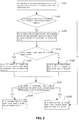
- FIG. 2 is a flowchart of a large-area contact detecting method according to an embodiment of the present application. The method includes the following steps:
- the large-area contact detecting module 10 is configured to detect whether a second touch screen terminal having a large-area contact is present.
- the approach detecting module 20 is configured to, if the second touch screen terminal having a large-area contact is detected, perform an approach detection for the second touch screen terminal by using a first signal strength threshold, and otherwise, perform an approach detection for the second touch screen terminal by using a second signal strength threshold, wherein the second signal strength threshold is greater than the first signal strength threshold.
- the receiving unit 202 is configured to receive a response sequence returned by the second touch screen terminal.
- the large-area contact detecting module 10 is additionally configured for detection, and it is determined, according to the large-area contact result, which approach detection threshold is used. Prior to detection that a touch screen that needs communication approaches, successful communication may be carried out with strong valid signals. In this way, misjudgments of the approach detection caused due to interference are effectively reduced, the interference is effectively suppressed, and the probability of entering the communication process by mistake is lowered.
- the first touch screen terminal and the second touch screen terminal includes, but not limited to, a capacitive touch screen terminal (for example, an iPhone and an iPad), and a terminal equipped with a touch panel, a touch key or a touch slide bar (for example, a Notebook, an iPad and the like).
- the touch screen terminal in the embodiments of the present invention may be connected to another touch screen terminal via such interfaces as a USB interface, an HDMI interface, an audio input/output (for example, a headphone jack) and the like, to implement the near field communication function.
- the programs may be stored in a computer readable storage medium.
- the storage medium may be a read only memory (ROM), random access memory (RAM), a magnetic disk or a compact disc read-only memory (CD-ROM).
- self-capacitance data is acquired in real time and a consistency value of the self-capacitance data is calculated, and large-area contact detection is performed according to the self-capacitance data, such that a large-area contact caused by press using multiple fingers is well differentiated from a large-area contact caused by contact on the touch screen. In this way, it may be accurately judged whether a touch screen terminal that needs communication approaches, and thus accuracy of large-area detection is improved.
Landscapes
- Engineering & Computer Science (AREA)
- Theoretical Computer Science (AREA)
- General Engineering & Computer Science (AREA)
- Human Computer Interaction (AREA)
- Physics & Mathematics (AREA)
- General Physics & Mathematics (AREA)
- Computer Networks & Wireless Communication (AREA)
- Signal Processing (AREA)
- Telephone Function (AREA)
- Position Input By Displaying (AREA)
Abstract
Description
- The present invention relates to the technical field of communications, and in particular, relates to a touch screen terminal and a near field communication method, apparatus and system thereof.
- At present, near field communication involves two processes, approach detection and data transmission. A touch screen terminal sends an approach detection sequence (for example, an approach detection sequence formed by 6 frequency points); multiple frequency points supported are sequentially scanned; after a response sequence is received from another touch screen terminal, if the signal strength at each frequency point is greater than a predetermined signal strength threshold, it is considered that a signal source is presented at the frequency point; and upon completion of the scanning, if a signal source is present at each of all the frequency points, it is determined that the sequence is valid. After multiple sequence identifications are successful according to an interaction rule, it is determined that a touch screen terminal approaches, and data starts to be sent or received.
- However, during communication between a touch screen terminal and an external device, because such interference sources as LCD (for example, the driving signals) and special pictures (for example, gamma maps) would cause interference to the approach detection, therefore the approach detection of the touch screen terminal encounters an error. For example, when the interference is greater or the interference is small but is in coincidence with the valid detection sequence of the approach detection, misjudgments of the approach detection may be caused, such that when no device that needs approach detection approaches, the touch screen terminal considers by mistake that the approach detection is successful in communication and data transmission or data reception starts. In this case, the communication would apparently fail. Therefore, the anti-interference capabilities of the approach detection are poor, and the stability is poor; and thus the LCD interference and different application scenarios may cause an error to the approach detection. As a result, the communication stability of the touch screen terminal varies greatly in different LCD interference strengths and different application scenarios.
- In view of the above, the present invention is intended to provide a touch screen terminal and a near communication method, apparatus and system thereof, to lower the probability of misjudgments of approach detection and solve the technical problem that communication stabilities of the touch screen terminal vary greatly in different application scenarios.
- The technical solutions disclosed in the present invention to address the technical problem are implemented as follows:
- According to one aspect of the present invention, a near field communication method is provided. The method is applied to a touch screen terminal and includes the following steps:
- detecting, by the first touch screen terminal, whether a second touch screen terminal having a large-area contact with the first touch screen terminal is present;
- if the second touch screen terminal having a large-area contact is detected, performing, by the first touch screen terminal, an approach detection for the second touch screen terminal by using a first signal strength threshold, and otherwise, performing an approach detection for the second touch screen terminal by using a second signal strength threshold, wherein the second signal strength threshold is greater than the first signal strength threshold; and
- when the approach detection is successful, carrying out data transmission with the second touch screen terminal.
- Preferably, the detecting, by the first touch screen terminal, whether a second touch screen terminal with the first touch screen terminal having a large-area contact is present includes:
- periodically acquiring, by the first touch screen terminal, self-capacitance data, and calculating a consistency value of the self-capacitance data;
- judging whether the consistency value of the self-capacitance data is less than a predetermined consistency threshold, further judging whether the self-capacitance data of the first touch screen terminal satisfies a large-area contact condition if the consistency value of the self-capacitance data is less than the predetermined consistency threshold, increasing the number of identification times by 1 if the large-area contact condition is satisfied and the number of identification times does not reach an upper limit, and decreasing the number of identification times by 1 if the large-area contact condition is not satisfied and the number of identification times is not 0; and
- judging whether the number of identification times within a predetermined time period reaches a predetermined number of identification times, judging that the second touch screen terminal having a large-area contact is present if the number of identification times within a predetermined time period reaches a predetermined number of identification times, and otherwise, judging that the second touch screen terminal having a large-area contact is not present.
- Preferably, the periodically acquiring, by the first touch screen terminal, self-capacitance data, and calculating a consistency value of the self-capacitance data includes: periodically acquiring, by the first touch screen terminal, full-screen driving data and sensing data; calculating a difference between driving data of neighboring driving electrodes, and a difference between sensing data of neighboring sensing electrodes; and making a sum of absolute values of the difference of the driving data and the difference of the sensing data to obtain the consistency value of the self-capacitance data.
- Preferably, the judging whether the self-capacitance data satisfies a large-area contact condition includes: respectively counting the quantities of the self-capacitance data that is greater than the first large-area contact threshold and greater than the second large-area contact threshold, wherein the second large-area contact threshold is twice of the first large-area contact threshold; and determining, according to two counting results, whether the large-area contact condition is satisfied.
- Preferably, the performing an approach detection for the second touch screen terminal by using a first signal strength threshold includes: sending an approach detection sequence, receiving a response sequence returned by the second touch screen terminal, and determining, according to an judgment on whether a signal strength amplitude received at each frequency point in the response sequence is greater than the first signal strength threshold, whether the second touch screen terminal approaches; and
the performing an approach detection for the second touch screen terminal by using a second signal strength threshold includes: sending an approach detection sequence, receiving a response sequence returned by the second touch screen terminal, and determining, according to an judgment on whether a signal strength amplitude received at each frequency point in the response sequence is greater than the second signal strength threshold, whether the second touch screen terminal approaches. - According to another aspect of the present invention, a near field communication apparatus is provided. The apparatus is applied to a touch screen terminal and includes:
- a large-area contact detecting module, configured to detect whether a second touch screen terminal having a large-area contact with a touch screen of the first touch screen terminal is present;
- an approach detecting module, configured to, if the second touch screen terminal having a large-area contact is detected, perform an approach detection for the second touch screen terminal by using a first signal strength threshold, and otherwise, perform an approach detection for the second touch screen terminal by using a second signal strength threshold, wherein the second signal strength threshold is greater than the first signal strength threshold; and
- a data transmitting module, configured to, when the approach detection is successful, carry out data transmission with the second touch screen terminal.
- Preferably, the large-area contact detecting module includes:
- a calculating unit, configured to periodically acquire self-capacitance data of the first touch screen terminal, and calculate a consistency value of the self-capacitance data;
- a first judging unit, configured to judge whether the consistency value of the self-capacitance data is less than a predetermined consistency threshold if the consistency value of the self-capacitance data is greater than the predetermined consistency threshold;
- a second judging unit, configured to judge whether the self-capacitance data satisfies a large-area contact condition, increase the number of identification times by 1 if the large-area contact condition is satisfied and the number of identification times does not reach an upper limit, and decrease the number of identification times by 1 if the large-area contact condition is not satisfied and the number of identification times is not 0; and
- a third judging unit, configured to judge whether the number of identification times within a predetermined time period reaches a predetermined number of identification times, judge that the second touch screen terminal having a large-area contact is present if the number of identification times within a predetermined time period reaches a predetermined number of identification times, and otherwise, judge that the second touch screen terminal having a large-area contact is not present.
- Preferably, the calculating unit is further configured to: periodically acquire full-screen driving data and sensing data, and calculate a difference between driving data of neighboring driving electrodes, and a difference between sensing data of neighboring sensing electrodes; and make a sum of absolute values of the difference of the driving data and the difference of the sensing data to obtain the consistency value of the self-capacitance data.
- Preferably, the second judging unit is further configured to: respectively count the quantities of the self-capacitance data that is greater than the first large-area contact threshold and greater than the second large-area contact threshold; and determine, according to two counting results, whether the large-area contact condition is satisfied.
- Preferably, the approach detecting module includes:
- a sending unit, configured to send an approach detection sequence;
- a receiving unit, configured to receive a response sequence returned by the second touch screen terminal; and
- a determining unit, configured to determine, according to an judgment on whether a signal strength amplitude received at each frequency point in the response sequence is greater than the first signal strength threshold or the second signal strength threshold, whether the second touch screen terminal approaches.
- According to another aspect of the present invention, a touch screen terminal including the above described near field communication apparatus is provided.
- According to another aspect of the present invention, a near field communication system including the first touch screen terminal and the second touch screen terminal is provided, wherein, the first touch screen terminal and/or the second touch screen terminal is the touch screen terminal including the near field communication apparatus.
- With the touch screen terminal and the near field communication method, apparatus and system thereof according to the present invention, double judgment criteria are applied to signals received by a touch screen terminal, large-area contact detection is performed prior to an approach detection process, and a signal strength threshold of the approach detection is determined in real time according to a large-area contact detection result and communication misjudgments are effectively prevented, such that the touch screen terminal is applicable to different LCD interferences and different application scenarios, thereby improving communication stability.
-
-
FIG. 1 is a flowchart of a near field communication method according to an embodiment of the present application; -
FIG. 2 is a flowchart of an approach detecting method according to an embodiment of the present application; -
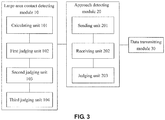
FIG. 3 is a structural diagram of modules of a near field communication apparatus according to an embodiment of the present application; and -
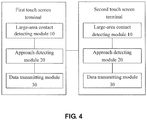
FIG. 4 is a structural diagram of a near field communication system according to an embodiment of the present application. - To make the technical problem to be solved, technical solutions, and advantages of the present invention clearer and more understandable, the present invention is further described in detail with reference to the accompanying drawings and specific embodiments. It should be understood that the embodiments described here are only exemplary ones for illustrating the present invention, and are not intended to limit the present invention.
-
FIG. 1 is a flowchart of a near field communication method according to an embodiment of the present application. The method is applied to a first touch screen terminal, and specifically includes the following steps: - S10: The first touch screen terminal detects whether a second touch screen terminal having a large-area contact with the first touch screen is present.
Specifically, according to the present invention, considering the characteristics of near field communication of the touch screen, in most cases, a direct contact is needed between the communication parties; and according to the characteristics of large-area contact and coverage of the touch screen during communication, it may be judged whether another touch screen that needs communication approaches, and the large-area contact detection may employ the mutual-capacitance and self-capacitance data of the touch screen. Prior to the approach detection, the large-area contact detection is additionally performed to determine, according to the large-area contact result, which approach detection threshold is used. Prior to detection that a touch screen that needs communication approaches, successful communication may be carried out with strong valid signals. In this way, misjudgments of the approach detection caused due to interference are effectively reduced, the interference is effectively suppressed, and the probability of entering the communication process by mistake is lowered. - S20: It is judged whether a second touch screen terminal having a large-area contact is detected, if the second touch screen terminal having a large-area contact is detected, step S30 is performed, and otherwise, step S40 is performed.
Specifically, the first signal strength threshold is the signal strength threshold in the related art, and the second signal strength threshold is greater than the first signal strength threshold. If large-area coverage is detected on the touch screen, the entire communication process is the same as that in the related art. If no large-area coverage is detected on the touch screen, the approach detection and the subsequent communication process are performed by raising the signal strength threshold of the approach detection. In this way, the anti-interference capabilities are enhanced. - S30: An approach detection is performed for the second touch screen terminal by using a first signal strength threshold.
Specifically, step S30 further includes: sending an approach detection sequence, receiving a response sequence returned by the second touch screen terminal, and determining, according to an judgment on whether a signal strength amplitude received at each frequency point in the response sequence is greater than the first signal strength threshold, whether the second touch screen terminal approaches. - S40: An approach detection is performed for the second touch screen terminal by using a second signal strength threshold.
Specifically, step S40 further includes: sending an approach detection sequence, receiving a response sequence returned by the second touch screen terminal, and determining, according to an judgment on whether a signal strength amplitude received at each frequency point in the response sequence is greater than the second signal strength threshold, whether the second touch screen terminal approaches. - S50: It is judged whether the approach detection is successful, if the approach detection is successful, step S60 is performed, and otherwise, step S10 is performed.
- S60: Data transmission is carried out with the second touch screen terminal.
- Specifically, after multiple sequence identifications are successful according to an interaction rule, it is determined that the second touch screen terminal approaches, and data starts to be sent or received.
- In addition, corresponding to the near field communication method applied to the first touch screen terminal, an embodiment of the present invention further provides a near field communication method applied to a second touch screen terminal. The method is the same as that in the related art, which is thus not described herein any further. Nevertheless, the roles of the first touch screen terminal and the second touch screen terminal may be interchanged. When a touch screen terminal acts as an initiating terminal of the communication, this touch screen terminal functions as the first touch screen terminal; and when a touch screen terminal acts as a receiving terminal of the communication, this touch screen terminal functions as the second touch screen terminal.
- In this embodiment of the present invention, double judgment criteria are applied to signals received by a touch screen terminal, large-area contact detection is performed prior to an approach detection process, and a signal strength threshold of the approach detection is determined in real time according to a large-area contact detection result and communication misjudgments are effectively prevented, such that the touch screen terminal is applicable to different LCD interferences and different application scenarios, thereby improving communication stability.
-
FIG. 2 is a flowchart of a large-area contact detecting method according to an embodiment of the present application. The method includes the following steps: - S101: The first touch screen terminal periodically acquires self-capacitance data, and calculates a consistency value of the self-capacitance data.
Two touch screen terminals send data by means of lamination of the touch screens (the touch screens need to be adhered to each other for detection of large-area contact). One touch screen terminal serves as a sending end, and generates a signal via a driving electrode; and the other touch screen terminal serves as a receiving end, and receives, via a sensing electrode, the signal sent by the driving electrode of the sending end. In this way, communication is carried out between the two touch screen terminals. The large-area contact detection may employ mutual-capacitance and self-capacitance data of the touch screen. The self-capacitance data refers to a capacitance between an independent conductor (or an sensing pad, a sensing electrode and the like) and the reference ground. The mutual-capacitance data refers to a coupling capacitance generated by coupling of two or more conductors (or sensing pads, sensing electrodes and the like). Through multiple experiments, the consistency value of self-capacitance data caused by multi-finger contact is obviously much greater than the consistency value of the self-capacitance data when the touch screens are subjected to a large-area contact with another touch screen, which is a notable characteristic. The self-capacitance data may better differentiate a large-area contact caused by press of multiple fingers from a large-area contact caused by a large-area contact with another touch screen. Therefore, in this embodiment, the self-capacitance data is preferably used, and the multi-finger contact is prevented from being mistaken as the large-area contact according to the consistency of the self-capacitance data.
Preferably, in step S101, a differential operation and then an add operation may be performed for the full-screen data to reflect the data characteristic of the full screen. Step S101 further includes: periodically calculating, by the first touch screen terminal, a difference between driving data of neighboring driving electrodes and a difference between sensing data of neighboring sensing electrodes; and making a sum of absolute values of the difference of the driving data and the difference of the sensing data to obtain the consistency value of the self-capacitance data. Specifically, the self-capacitance data is categorized into driving data and sensing data. Firstly, a difference between driving data of two neighboring electrodes, for example, the driving data of the Nth driving electrode is subtracted from the driving data of the N+1th driving electrode, thus a difference between the sensing data is calculated, then the absolute values of the differences between all the driving data is summed; similarly, the sensing data of the Mth sensing electrode is subtracted from the sensing data of the M+1th sensing electrode, and the absolute values of the differences between all the sensing data is summed; and finally, an add operation is performed for the sums of the absolute values of the differences therebetween to obtain the consistency value. - S102: It is judged whether the consistency value of the self-capacitance data is less than a predetermined consistency threshold, and if the consistency value of the self-capacitance data is less than the predetermined consistency threshold, step S103 is performed, and otherwise, step S109 is performed.
- S103: The quantities of the self-capacitance data that is greater than the first large-area contact threshold and greater than the second large-area contact threshold are respectively counted, wherein the second large-area contact threshold is twice of the first large-area contact threshold.
Specifically, the first large-area contact threshold and the second large-area contact threshold are defined according to experimental data. All the self-capacitance data may be compared with the first large-area contact threshold to count the quantities of the self-capacitance data that is greater than the first large-area contact threshold; and then all the self-capacitance data may be compared with the second large-area contact threshold (for example, the second large-area contact threshold is twice the first large-area contact threshold) to count the quantities of the self-capacitance data that is greater than the second large-area contact threshold. Finally, it is determined, according to the two counting results, whether the large-area contact condition is satisfied. - S104: It is judged whether the counting results satisfy the large-area contact condition, if the counting results satisfy the large-area contact condition, step S105 is performed, and otherwise, step S106 is performed.
- S105: When the number of identification times does not reach an upper limit, the number of identification times is increased by 1, and step S107 is performed.
When the large-area contact condition is satisfied, if the number of identification times reaches a predetermined upper limit of the number of identification times, the number of identification times is not increased by 1. This prevents data overflow due to constant accumulation of the number of identification times in case of a long-time communication process, and thus further improves the stability. - S106: When the number of identification times is not 0, the number of identification times is decreased by 1.
When the large-area contact condition is satisfied, if the number of identification times reaches 0 (that is, a lower limit of the number of identification times), the number of identification times is not decreased by 1. This prevents data overflow due to constant decrease of the number of identification times in case that the contact is released from the second touch screen terminal, and thus further improves the stability. - S107: It is judged whether the number of identification times within a predetermined time period reaches a predetermined threshold of the number of identification times, if the number of identification times within a predetermined time period reaches the predetermined threshold of the number of identification times, step S108 is performed, and otherwise, step S109 is performed.
- S108: It is determined that the second touch screen terminal having a large-area contact is present, and the process ends.
- S109: It is determined that the second touch screen terminal having a large-area contact is not present.
- In conclusion, under the circumstance where near field communication is enabled, large-area detection is performed within each cycle; within a configurable time period, large-area detection is performed for multiple times; when large-area contact is detected, the number of identification times is increased by 1; and when the number of large-area contacts detected is greater than or equal to a threshold of the number of identification times (for example, 5 times), it is considered that a near field communication touch screen terminal approaches. In this case, a lower signal strength threshold (the first signal strength threshold) is used. Under circumstances where no large-area contact is detected or large-area contact is detected occasionally, a higher signal strength threshold (the second signal strength threshold) is used, such as the following two cases: there is no large-area contact is detected, that is, the number of times when the large-area contact is detected is 0; or, the number of times when the large-area contact is detected previously is not 0, and no large-area contact is detected subsequently, the number of identification times is decreased by 1, and when the number of identification times is decreased to 0, it is considered that the touch screen leaves or no touch screen approaches; and in this case, use of the high signal strength threshold (the second signal strength threshold) effectively controls misjudgments of communication.
- In this embodiment of the present invention, self-capacitance data is acquired in real time and a consistency value of the self-capacitance data is calculated, and large-area contact detection is performed according to the self-capacitance data, such that a large-area contact caused by press using multiple fingers is well differentiated from a large-area contact caused by contact on the touch screen. In this way, it may be accurately judged whether a touch screen terminal that needs communication approaches, and thus accuracy of large-area detection is improved.
-
FIG. 3 is a schematic diagram of modules of a near field communication apparatus according to an embodiment of the present invention. The apparatus is applied to a first touch screen terminal, and includes a large-areacontact detecting module 10, a nearfield detecting module 20 and adata transmitting module 30. - The large-area
contact detecting module 10 is configured to detect whether a second touch screen terminal having a large-area contact is present. - Specifically, according to the present invention, considering the characteristics of near field communication of the touch screen, in most cases, a direct contact is needed between the communication parties; and according to the large-area detecting function of the touch screen, it may be judged whether another touch screen that needs communication approaches, and the large-area contact detection may employ the mutual-capacitance and self-capacitance data of the touch screen. Prior to the approach detection, the large-area contact detection is additionally performed, and it is determined, according to the large-area contact result, which approach detection threshold is used. Prior to detection that a touch screen that needs communication approaches, successful communication may be carried out with strong valid signals. In this way, misjudgments of the approach detection caused due to interference may be effectively reduced, the interference may be effectively suppressed, and the probability of entering the communication process by mistake may be lowered.
- The
approach detecting module 20 is configured to, if the second touch screen terminal having a large-area contact is detected, perform an approach detection for the second touch screen terminal by using a first signal strength threshold, and otherwise, perform an approach detection for the second touch screen terminal by using a second signal strength threshold, wherein the second signal strength threshold is greater than the first signal strength threshold. - The
approach detecting module 20 further includes a sendingunit 201, a receivingunit 202 and ajudging unit 203. - The sending
unit 201 is configured to send an approach detection sequence. - The receiving
unit 202 is configured to receive a response sequence returned by the second touch screen terminal. - The determining
unit 203 is configured to determine, according to an judgment on whether a signal strength amplitude received at each frequency point in the response sequence is greater than the first signal strength threshold or the second signal strength threshold, whether the second touch screen terminal approaches. - The
data transmitting module 30 is configured to, when the approach detection is successful, carry out data transmission with the second touch screen terminal. - In this embodiment, the large-area
contact detecting module 10 is additionally configured for detection, and it is determined, according to the large-area contact result, which approach detection threshold is used. Prior to detection that a touch screen that needs communication approaches, successful communication may be carried out with strong valid signals. In this way, misjudgments of the approach detection caused due to interference are effectively reduced, the interference is effectively suppressed, and the probability of entering the communication process by mistake is lowered. - As a preferred embodiment, to better differentiate a large-area contact caused by press using multiple fingers from a large-area contact caused by contact on the touch screen, the multi-finger contact is prevented from being mistaken as the large-area contact by means of consistency of the self-capacitance data according to the characteristic that the consistency value of the self-capacitance data caused by multi-finger contact is obviously much greater than the constancy value of the self-capacitance data when the touch screen approaches. The large-area
contact detecting module 10 further includes: a calculatingunit 101, afirst judging unit 102, asecond judging unit 103 and athird judging unit 104. - The calculating
unit 101 is configured to periodically acquire self-capacitance data, and calculate a consistency value of the self-capacitance data. - Preferably, the calculating
unit 101 is further configured to: periodically acquire full-screen driving data and sensing data, and calculate a difference between driving data of neighboring driving electrodes, and a difference between sensing data of neighboring sensing electrodes; and make a sum of absolute values of the difference of the driving data and the difference of the sensing data to obtain the consistency value of the self-capacitance data. - The
first judging unit 102 is configured to judge whether the consistency value of the self-capacitance data is less than a predetermined consistency threshold, and determine that the second touch screen terminal having a large-area contact is not present if the consistency value of the self-capacitance data is greater than a predetermined consistency threshold. - The
second judging unit 103 is configured to judge whether the self-capacitance data satisfies a large-area contact condition, increase the number of identification times by 1 if the large-area contact condition is satisfied and the number of identification times does not reach an upper limit, and decrease the number of identification times by 1 if the large-area contact condition is not satisfied and the number of identification times is not 0. - The
third judging unit 104 is configured to judge whether the number of identification times within a predetermined time period reaches a predetermined number of identification times, judge that the second touch screen terminal having a large-area contact is present if the number of identification times within a predetermined time period reaches a predetermined number of identification times, and otherwise, judge that the second touch screen terminal having a large-area contact is not present. - The technical features in
Embodiments 1 and 2 illustrating the method are also applicable in Embodiment 3 illustrating the apparatus, which are thus not described herein any further. - As illustrated in
FIG. 4 , an embodiment of the present invention provides a near field communication system including a first touch screen terminal and a second touch screen terminal, wherein the first touch screen terminal or the second touch screen terminal includes the near field communication apparatus as described in Embodiment 3. It should be noted that the technical features inEmbodiments 1, 2 and 3 illustrating the method are also applicable in this embodiment, which are thus not described herein any further. - As a preferred solution, the first touch screen terminal and the second touch screen terminal includes, but not limited to, a capacitive touch screen terminal (for example, an iPhone and an iPad), and a terminal equipped with a touch panel, a touch key or a touch slide bar (for example, a Notebook, an iPad and the like). The touch screen terminal in the embodiments of the present invention may be connected to another touch screen terminal via such interfaces as a USB interface, an HDMI interface, an audio input/output (for example, a headphone jack) and the like, to implement the near field communication function.
- It is understandable to those skilled in the art that all or partial steps of the method described in the above embodiments can be implemented by controlling relevant hardware by programs. The programs may be stored in a computer readable storage medium. The storage medium may be a read only memory (ROM), random access memory (RAM), a magnetic disk or a compact disc read-only memory (CD-ROM).
- The preferred embodiments of the present invention are described with reference to the accompanying drawings, but the scope of the present invention is not limited to such embodiments. A person skilled in the art would derive various modifications or variations to practice the present invention without departing from the scope and essence of the present invention. For example, the features disclosed in one embodiment may be used to another embodiment to derive still another embodiment. Any modifications, equivalent replacements and improvements made within the technical concept of the present invention shall fall within the scope defined by the claims of the present invention.
- With the touch screen terminal and the near field communication method, apparatus and system thereof according to the present invention, double judgment criteria are applied to signals received by a touch screen terminal, large-area contact detection is performed prior to an approach detection process, and a signal strength threshold of the approach detection is determined in real time according to a large-area contact detection result and communication misjudgments are effectively prevented, such that the touch screen terminal is applicable to different LCD interferences and different application scenarios, thereby improving communication stability.
- In addition, self-capacitance data is acquired in real time and a consistency value of the self-capacitance data is calculated, and large-area contact detection is performed according to the self-capacitance data, such that a large-area contact caused by press using multiple fingers is well differentiated from a large-area contact caused by contact on the touch screen. In this way, it may be accurately judged whether a touch screen terminal that needs communication approaches, and thus accuracy of large-area detection is improved.
Claims (10)
- A near field communication method, applied to a first touch screen terminal, the method comprising:detecting, by a first touch screen terminal, whether a second touch screen terminal having a large-area contact with the first touch screen terminal is present;if the second touch screen terminal having a large-area contact is detected, performing, by the first touch screen terminal, an approach detection for the second touch screen terminal by using a first signal strength threshold, otherwise, performing an approach detection for the second touch screen terminal by using a second signal strength threshold, wherein the second signal strength threshold is greater than the first signal strength threshold; andwhen the approach detection is successful, carrying out data transmission with the second touch screen terminal.
- The near field communication method according to claim 1, wherein the detecting, by the first touch screen terminal, whether a second touch screen terminal having a large-area contact with the first touch screen terminal is present comprises:periodically acquiring, by the first touch screen terminal, self-capacitance data of the first touch screen terminal, and calculating a consistency value of the self-capacitance data;judging whether the consistency value of the self-capacitance data is less than a predetermined consistency threshold, further judging whether the self-capacitance data satisfies a large-area contact condition if the consistency value of the self-capacitance data is less than the predetermined consistency threshold, increasing the number of identification times by 1 if the large-area contact condition is satisfied and the number of identification times does not reach an upper limit, and decreasing the number of identification times by 1 if the large-area contact condition is not satisfied and the number of identification times is not 0; andjudging whether the number of identification times within a predetermined time period reaches a predetermined number of identification times, judging that the second touch screen terminal having a large-area contact is present if the number of identification times within a predetermined time period reaches a predetermined number of identification times, and otherwise, judging that the second touch screen terminal having a large-area contact is not present.
- The near field communication method according to claim 2, wherein the periodically acquiring, by the first touch screen terminal, self-capacitance data of the first touch screen terminal, and calculating a consistency value of the self-capacitance data comprises:periodically acquiring, by the first touch screen terminal, full-screen driving data and sensing data;calculating a difference between driving data of neighboring driving electrodes, and a difference between sensing data of neighboring sensing electrodes; andmaking a sum of absolute values of the difference of the driving data and the difference of the sensing data to obtain the consistency value of the self-capacitance data; andthe judging whether the self-capacitance data satisfies a large-area contact condition comprises:respectively counting the quantities of the self-capacitance data that is greater than the first large-area contact threshold and greater than the second large-area contact threshold, wherein the second large-area contact threshold is twice of the first large-area contact threshold; anddetermining, according to two counting results, whether the large-area contact condition is satisfied.
- The near field communication method according to claim 1, wherein the performing an approach detection for the second touch screen terminal by using a first signal strength threshold comprises:sending an approach detection sequence, receiving a response sequence returned by the second touch screen terminal, and determining, according to an judgment on whether a signal strength amplitude received at each frequency point in the response sequence is greater than the first signal strength threshold, whether the second touch screen terminal approaches; andthe performing an approach detection for the second touch screen terminal by using a second signal strength threshold comprises:sending an approach detection sequence, receiving a response sequence returned by the second touch screen terminal, and determining, according to an judgment on whether a signal strength amplitude received at each frequency point in the response sequence is greater than the second signal strength threshold, whether the second touch screen terminal approaches.
- A near field communication apparatus, applied to a first touch screen terminal, the apparatus comprises:a large-area contact detecting module, configured to detect whether a second touch screen terminal having a large-area contact with a touch screen of the first touch screen terminal is present;an approach detecting module, configured to, if the second touch screen terminal having a large-area contact is detected, perform an approach detection for the second touch screen terminal by using a first signal strength threshold, and otherwise, perform an approach detection for the second touch screen terminal by using a second signal strength threshold, wherein the second signal strength threshold is greater than the first signal strength threshold; anda data transmitting module, configured to, when the approach detection is successful, carry out data transmission with the second touch screen terminal.
- The near field communication apparatus according to claim 5, wherein the large-area contact detecting module comprises:a calculating unit, configured to periodically acquire self-capacitance data of the first touch screen terminal, and calculate a consistency value of the self-capacitance data;a first judging unit, configured to judge whether the consistency value of the self-capacitance data is less than a predetermined consistency threshold, and determine that the second touch screen terminal having a large-area contact is not present if the consistency value of the self-capacitance data is greater than the predetermined consistency threshold;a second judging unit, configured to judge whether the self-capacitance data satisfies a large-area contact condition, increase the number of identification times by 1 if the large-area contact condition is satisfied and the number of identification times does not reach an upper limit, and decrease the number of identification times by 1 if the large-area contact condition is not satisfied and the number of identification times is not 0; anda third judging unit, configured to judge whether the number of identification times within a predetermined time period reaches a predetermined number of identification times, judge that the second touch screen terminal having a large-area contact is present if the number of identification times within a predetermined time period reaches a predetermined number of identification times, and otherwise, judge that the second touch screen terminal having a large-area contact is not present.
- The near field communication apparatus according to claim 6, wherein the calculating unit is further configured to:periodically acquire full-screen driving data and sensing data, and calculate a difference between driving data of neighboring driving electrodes, and a difference between sensing data of neighboring sensing electrodes; and make a sum of absolute values of the difference of the driving data and the difference of the sensing data to obtain the consistency value of the self-capacitance data; andthe second judging unit is further configured to: respectively count the quantities of the self-capacitance data that is greater than the first large-area contact threshold and greater than the second large-area contact threshold, wherein the second large-area contact threshold is twice of the first large-area contact threshold; and determine, according to two counting results, whether the large-area contact condition is satisfied.
- The near field communication apparatus according to claim 5, wherein the approach detecting module comprises:a sending unit, configured to send an approach detection sequence;a receiving unit, configured to receive a response sequence returned by the second touch screen terminal; anda determining unit, configured to determine, according to an judgment on whether a signal strength amplitude received at each frequency point in the response sequence is greater than the first signal strength threshold or the second signal strength threshold, whether the second touch screen terminal approaches.
- A touch screen terminal, comprising the near field communication apparatus according to any one of claims 5 to 8.
- A near field communication system, at least comprising the touch screen terminal as defined in claim 9.
Applications Claiming Priority (2)
| Application Number | Priority Date | Filing Date | Title |
|---|---|---|---|
| CN201510145892.9A CN106155378B (en) | 2015-03-30 | 2015-03-30 | A kind of touch screen terminal and its near field communication method, device and system |
| PCT/CN2015/077053 WO2016155046A1 (en) | 2015-03-30 | 2015-04-21 | Touch screen terminal and near field communication method, apparatus and system thereof |
Publications (3)
| Publication Number | Publication Date |
|---|---|
| EP3280059A1 true EP3280059A1 (en) | 2018-02-07 |
| EP3280059A4 EP3280059A4 (en) | 2018-12-05 |
| EP3280059B1 EP3280059B1 (en) | 2020-02-26 |
Family
ID=57003942
Family Applications (1)
| Application Number | Title | Priority Date | Filing Date |
|---|---|---|---|
| EP15887014.7A Active EP3280059B1 (en) | 2015-03-30 | 2015-04-21 | Touch screen terminal and near field communication method, apparatus and system thereof |
Country Status (5)
| Country | Link |
|---|---|
| US (1) | US10101864B2 (en) |
| EP (1) | EP3280059B1 (en) |
| KR (1) | KR101847517B1 (en) |
| CN (1) | CN106155378B (en) |
| WO (1) | WO2016155046A1 (en) |
Families Citing this family (3)
| Publication number | Priority date | Publication date | Assignee | Title |
|---|---|---|---|---|
| CN111164553B (en) * | 2018-09-05 | 2024-02-13 | 深圳市汇顶科技股份有限公司 | Touch sensing method, touch chip, electronic device and touch system |
| CN109388362A (en) * | 2018-10-09 | 2019-02-26 | 中天智领(北京)科技有限公司 | Large screen control method and system |
| CN110138956B (en) * | 2019-03-27 | 2022-01-14 | 努比亚技术有限公司 | Terminal device detection method, terminal device and computer readable storage medium |
Family Cites Families (20)
| Publication number | Priority date | Publication date | Assignee | Title |
|---|---|---|---|---|
| US7403784B2 (en) * | 2005-03-10 | 2008-07-22 | Avaya Technology Corp. | Method and apparatus for positioning a set of terminals in an indoor wireless environment |
| KR100848139B1 (en) | 2006-12-08 | 2008-07-23 | 한국전자통신연구원 | Apparatus and method for automatically setting network between adjacent wireless terminals |
| US8952928B2 (en) * | 2008-01-09 | 2015-02-10 | Egalax—Empia Technology Inc. | Device and method for detecting touch screen |
| JP5725672B2 (en) * | 2010-06-10 | 2015-05-27 | エンパイア テクノロジー ディベロップメント エルエルシー | Communication between touch panel devices |
| KR101281384B1 (en) * | 2011-02-15 | 2013-07-02 | 엘지전자 주식회사 | Method for transmitting and receiving data, display apparatus and mobile terminal thereof |
| CN102780513A (en) * | 2011-05-13 | 2012-11-14 | 希姆通信息技术(上海)有限公司 | Mobile terminal and method for realizing Bluetooth communication between mobile terminals |
| CN102810144B (en) * | 2011-05-30 | 2015-04-22 | 罗魏熙 | Method and device for distance-controllable mobile payment |
| US9793962B2 (en) * | 2011-06-10 | 2017-10-17 | Amx Llc | Processing near field communications between active/passive devices and a control system |
| CN102254136B (en) * | 2011-06-21 | 2013-12-18 | 国民技术股份有限公司 | Method and module for correcting index discretization of low-frequency sensing device, and low-frequency sensing device |
| US9503838B2 (en) * | 2011-08-29 | 2016-11-22 | Electronics And Telecommunications Research Institute | Method and system for communicating between devices |
| CN102662538A (en) * | 2012-03-14 | 2012-09-12 | 中兴通讯股份有限公司 | A method and terminal for data transmission between terminals |
| KR101426942B1 (en) * | 2012-05-03 | 2014-08-05 | 연세대학교 산학협력단 | System and method for providing usability among touch-screen devices |
| CN102916729B (en) * | 2012-09-04 | 2014-12-10 | 深圳市汇顶科技股份有限公司 | Near-field communication method and system of touch panel terminal as well as touch panel terminal |
| US8903313B2 (en) * | 2012-09-19 | 2014-12-02 | Qualcomm Incorporated | Adaptive slicer for a discrete level amplitude modulation receiver |
| US9921626B2 (en) * | 2012-09-28 | 2018-03-20 | Atmel Corporation | Stylus communication with near-field coupling |
| CN103037493B (en) * | 2012-12-14 | 2016-08-03 | 中兴通讯股份有限公司 | Dynamically adjust and launch the method and device of power, intelligent terminal |
| CN104217181B (en) * | 2013-06-05 | 2017-02-08 | 维沃移动通信有限公司 | Intelligent waterproof method and system for mobile handheld device |
| CN103440075B (en) * | 2013-08-13 | 2017-03-29 | 深圳市汇顶科技股份有限公司 | A kind of capacitive touch screen terminal and its near field communication method, system |
| CN103684550B (en) * | 2013-12-20 | 2018-01-02 | 上海斐讯数据通信技术有限公司 | A kind of Bluetooth signal transmission power adjustment system and mobile terminal |
| CN103701545B (en) * | 2013-12-31 | 2016-03-09 | 深圳市汇顶科技股份有限公司 | A kind of proximity test method and apparatus of near-field communication |
-
2015
- 2015-03-30 CN CN201510145892.9A patent/CN106155378B/en not_active Expired - Fee Related
- 2015-04-21 WO PCT/CN2015/077053 patent/WO2016155046A1/en not_active Ceased
- 2015-04-21 KR KR1020167036188A patent/KR101847517B1/en not_active Expired - Fee Related
- 2015-04-21 EP EP15887014.7A patent/EP3280059B1/en active Active
-
2016
- 2016-12-21 US US15/386,611 patent/US10101864B2/en active Active
Also Published As
| Publication number | Publication date |
|---|---|
| EP3280059A4 (en) | 2018-12-05 |
| KR20170010409A (en) | 2017-01-31 |
| KR101847517B1 (en) | 2018-04-10 |
| EP3280059B1 (en) | 2020-02-26 |
| CN106155378B (en) | 2017-12-05 |
| US20170102803A1 (en) | 2017-04-13 |
| WO2016155046A1 (en) | 2016-10-06 |
| CN106155378A (en) | 2016-11-23 |
| US10101864B2 (en) | 2018-10-16 |
Similar Documents
| Publication | Publication Date | Title |
|---|---|---|
| KR101455145B1 (en) | User touch operation mode adaptive method and device | |
| CN105528117A (en) | Method and device for acquiring scanning frequency of touch panel | |
| CN105659197B (en) | A kind of interference suppression method, device and terminal equipment for touch screen | |
| CN105739868A (en) | Method and device for identifying mistaken touch of terminal | |
| CN103440075B (en) | A kind of capacitive touch screen terminal and its near field communication method, system | |
| US20150355708A1 (en) | Touch communications device for detecting relative movement status of object close to, or in contact with, touch panel and related movement detection method | |
| RU2661794C2 (en) | Method of processing touch signal and terminal device | |
| CN113922465A (en) | Interface identification circuit, interface identification method and intelligent terminal | |
| US10101864B2 (en) | Touch screen terminal and near field communication method, apparatus and system thereof | |
| KR20200119620A (en) | Touch apparatus and touch detection method thereof | |
| CN104811524B (en) | A kind of terminal radio frequency performance test methods and its device | |
| CN104714703A (en) | Sensitivity adjustment method and device | |
| CN103309529A (en) | Capacitive touch screen and touch signal recognition method thereof | |
| CN119148885A (en) | Touch device | |
| US9996189B2 (en) | Detecting a tool used on a touch screen | |
| CN103091586A (en) | Standard charger identification method for capacitive touch screen | |
| CN109104658B (en) | Touch identification method and device of wireless earphone and wireless earphone | |
| CN108924908B (en) | WiFi scanning method and device and electronic device | |
| US10156936B2 (en) | Electronic system, host and method thereof for determining correspondences between multiple display processing apparatuses and multiple touch sensitive processing apparatuses | |
| CN106254465B (en) | A kind of data transmission method, system and electronic equipment | |
| CN107547712B (en) | Display screen display data processing method, terminal and computer readable storage medium | |
| US11088817B2 (en) | Data transmission method, data transmission device, and computer readable storage medium | |
| CN105573946A (en) | Method and device for multiplexing universal serial bus interface | |
| CN105956553B (en) | Unlocking method and mobile terminal | |
| EP3373120A1 (en) | Method and device for determining touch position on capacitive screen |
Legal Events
| Date | Code | Title | Description |
|---|---|---|---|
| STAA | Information on the status of an ep patent application or granted ep patent |
Free format text: STATUS: THE INTERNATIONAL PUBLICATION HAS BEEN MADE |
|
| PUAI | Public reference made under article 153(3) epc to a published international application that has entered the european phase |
Free format text: ORIGINAL CODE: 0009012 |
|
| STAA | Information on the status of an ep patent application or granted ep patent |
Free format text: STATUS: REQUEST FOR EXAMINATION WAS MADE |
|
| 17P | Request for examination filed |
Effective date: 20161221 |
|
| AK | Designated contracting states |
Kind code of ref document: A1 Designated state(s): AL AT BE BG CH CY CZ DE DK EE ES FI FR GB GR HR HU IE IS IT LI LT LU LV MC MK MT NL NO PL PT RO RS SE SI SK SM TR |
|
| AX | Request for extension of the european patent |
Extension state: BA ME |
|
| DAV | Request for validation of the european patent (deleted) | ||
| DAX | Request for extension of the european patent (deleted) | ||
| A4 | Supplementary search report drawn up and despatched |
Effective date: 20181106 |
|
| RIC1 | Information provided on ipc code assigned before grant |
Ipc: H04W 88/02 20090101ALI20181029BHEP Ipc: G06F 3/041 20060101ALI20181029BHEP Ipc: H04B 5/00 20060101AFI20181029BHEP Ipc: G06F 3/044 20060101ALI20181029BHEP Ipc: H04W 4/80 20180101ALI20181029BHEP |
|
| GRAP | Despatch of communication of intention to grant a patent |
Free format text: ORIGINAL CODE: EPIDOSNIGR1 |
|
| STAA | Information on the status of an ep patent application or granted ep patent |
Free format text: STATUS: GRANT OF PATENT IS INTENDED |
|
| INTG | Intention to grant announced |
Effective date: 20191114 |
|
| GRAS | Grant fee paid |
Free format text: ORIGINAL CODE: EPIDOSNIGR3 |
|
| GRAA | (expected) grant |
Free format text: ORIGINAL CODE: 0009210 |
|
| STAA | Information on the status of an ep patent application or granted ep patent |
Free format text: STATUS: THE PATENT HAS BEEN GRANTED |
|
| AK | Designated contracting states |
Kind code of ref document: B1 Designated state(s): AL AT BE BG CH CY CZ DE DK EE ES FI FR GB GR HR HU IE IS IT LI LT LU LV MC MK MT NL NO PL PT RO RS SE SI SK SM TR |
|
| REG | Reference to a national code |
Ref country code: GB Ref legal event code: FG4D |
|
| REG | Reference to a national code |
Ref country code: CH Ref legal event code: EP |
|
| REG | Reference to a national code |
Ref country code: AT Ref legal event code: REF Ref document number: 1238911 Country of ref document: AT Kind code of ref document: T Effective date: 20200315 |
|
| REG | Reference to a national code |
Ref country code: IE Ref legal event code: FG4D |
|
| REG | Reference to a national code |
Ref country code: DE Ref legal event code: R096 Ref document number: 602015047962 Country of ref document: DE |
|
| PG25 | Lapsed in a contracting state [announced via postgrant information from national office to epo] |
Ref country code: RS Free format text: LAPSE BECAUSE OF FAILURE TO SUBMIT A TRANSLATION OF THE DESCRIPTION OR TO PAY THE FEE WITHIN THE PRESCRIBED TIME-LIMIT Effective date: 20200226 Ref country code: NO Free format text: LAPSE BECAUSE OF FAILURE TO SUBMIT A TRANSLATION OF THE DESCRIPTION OR TO PAY THE FEE WITHIN THE PRESCRIBED TIME-LIMIT Effective date: 20200526 Ref country code: FI Free format text: LAPSE BECAUSE OF FAILURE TO SUBMIT A TRANSLATION OF THE DESCRIPTION OR TO PAY THE FEE WITHIN THE PRESCRIBED TIME-LIMIT Effective date: 20200226 |
|
| REG | Reference to a national code |
Ref country code: NL Ref legal event code: MP Effective date: 20200226 |
|
| REG | Reference to a national code |
Ref country code: LT Ref legal event code: MG4D |
|
| PG25 | Lapsed in a contracting state [announced via postgrant information from national office to epo] |
Ref country code: SE Free format text: LAPSE BECAUSE OF FAILURE TO SUBMIT A TRANSLATION OF THE DESCRIPTION OR TO PAY THE FEE WITHIN THE PRESCRIBED TIME-LIMIT Effective date: 20200226 Ref country code: LV Free format text: LAPSE BECAUSE OF FAILURE TO SUBMIT A TRANSLATION OF THE DESCRIPTION OR TO PAY THE FEE WITHIN THE PRESCRIBED TIME-LIMIT Effective date: 20200226 Ref country code: GR Free format text: LAPSE BECAUSE OF FAILURE TO SUBMIT A TRANSLATION OF THE DESCRIPTION OR TO PAY THE FEE WITHIN THE PRESCRIBED TIME-LIMIT Effective date: 20200527 Ref country code: HR Free format text: LAPSE BECAUSE OF FAILURE TO SUBMIT A TRANSLATION OF THE DESCRIPTION OR TO PAY THE FEE WITHIN THE PRESCRIBED TIME-LIMIT Effective date: 20200226 Ref country code: IS Free format text: LAPSE BECAUSE OF FAILURE TO SUBMIT A TRANSLATION OF THE DESCRIPTION OR TO PAY THE FEE WITHIN THE PRESCRIBED TIME-LIMIT Effective date: 20200626 Ref country code: BG Free format text: LAPSE BECAUSE OF FAILURE TO SUBMIT A TRANSLATION OF THE DESCRIPTION OR TO PAY THE FEE WITHIN THE PRESCRIBED TIME-LIMIT Effective date: 20200526 |
|
| PG25 | Lapsed in a contracting state [announced via postgrant information from national office to epo] |
Ref country code: NL Free format text: LAPSE BECAUSE OF FAILURE TO SUBMIT A TRANSLATION OF THE DESCRIPTION OR TO PAY THE FEE WITHIN THE PRESCRIBED TIME-LIMIT Effective date: 20200226 |
|
| PG25 | Lapsed in a contracting state [announced via postgrant information from national office to epo] |
Ref country code: SK Free format text: LAPSE BECAUSE OF FAILURE TO SUBMIT A TRANSLATION OF THE DESCRIPTION OR TO PAY THE FEE WITHIN THE PRESCRIBED TIME-LIMIT Effective date: 20200226 Ref country code: RO Free format text: LAPSE BECAUSE OF FAILURE TO SUBMIT A TRANSLATION OF THE DESCRIPTION OR TO PAY THE FEE WITHIN THE PRESCRIBED TIME-LIMIT Effective date: 20200226 Ref country code: SM Free format text: LAPSE BECAUSE OF FAILURE TO SUBMIT A TRANSLATION OF THE DESCRIPTION OR TO PAY THE FEE WITHIN THE PRESCRIBED TIME-LIMIT Effective date: 20200226 Ref country code: LT Free format text: LAPSE BECAUSE OF FAILURE TO SUBMIT A TRANSLATION OF THE DESCRIPTION OR TO PAY THE FEE WITHIN THE PRESCRIBED TIME-LIMIT Effective date: 20200226 Ref country code: CZ Free format text: LAPSE BECAUSE OF FAILURE TO SUBMIT A TRANSLATION OF THE DESCRIPTION OR TO PAY THE FEE WITHIN THE PRESCRIBED TIME-LIMIT Effective date: 20200226 Ref country code: ES Free format text: LAPSE BECAUSE OF FAILURE TO SUBMIT A TRANSLATION OF THE DESCRIPTION OR TO PAY THE FEE WITHIN THE PRESCRIBED TIME-LIMIT Effective date: 20200226 Ref country code: PT Free format text: LAPSE BECAUSE OF FAILURE TO SUBMIT A TRANSLATION OF THE DESCRIPTION OR TO PAY THE FEE WITHIN THE PRESCRIBED TIME-LIMIT Effective date: 20200719 Ref country code: DK Free format text: LAPSE BECAUSE OF FAILURE TO SUBMIT A TRANSLATION OF THE DESCRIPTION OR TO PAY THE FEE WITHIN THE PRESCRIBED TIME-LIMIT Effective date: 20200226 Ref country code: EE Free format text: LAPSE BECAUSE OF FAILURE TO SUBMIT A TRANSLATION OF THE DESCRIPTION OR TO PAY THE FEE WITHIN THE PRESCRIBED TIME-LIMIT Effective date: 20200226 |
|
| REG | Reference to a national code |
Ref country code: AT Ref legal event code: MK05 Ref document number: 1238911 Country of ref document: AT Kind code of ref document: T Effective date: 20200226 |
|
| REG | Reference to a national code |
Ref country code: DE Ref legal event code: R097 Ref document number: 602015047962 Country of ref document: DE |
|
| PG25 | Lapsed in a contracting state [announced via postgrant information from national office to epo] |
Ref country code: MC Free format text: LAPSE BECAUSE OF FAILURE TO SUBMIT A TRANSLATION OF THE DESCRIPTION OR TO PAY THE FEE WITHIN THE PRESCRIBED TIME-LIMIT Effective date: 20200226 |
|
| REG | Reference to a national code |
Ref country code: CH Ref legal event code: PL |
|
| PLBE | No opposition filed within time limit |
Free format text: ORIGINAL CODE: 0009261 |
|
| STAA | Information on the status of an ep patent application or granted ep patent |
Free format text: STATUS: NO OPPOSITION FILED WITHIN TIME LIMIT |
|
| PG25 | Lapsed in a contracting state [announced via postgrant information from national office to epo] |
Ref country code: LI Free format text: LAPSE BECAUSE OF NON-PAYMENT OF DUE FEES Effective date: 20200430 Ref country code: AT Free format text: LAPSE BECAUSE OF FAILURE TO SUBMIT A TRANSLATION OF THE DESCRIPTION OR TO PAY THE FEE WITHIN THE PRESCRIBED TIME-LIMIT Effective date: 20200226 Ref country code: LU Free format text: LAPSE BECAUSE OF NON-PAYMENT OF DUE FEES Effective date: 20200421 Ref country code: IT Free format text: LAPSE BECAUSE OF FAILURE TO SUBMIT A TRANSLATION OF THE DESCRIPTION OR TO PAY THE FEE WITHIN THE PRESCRIBED TIME-LIMIT Effective date: 20200226 Ref country code: FR Free format text: LAPSE BECAUSE OF NON-PAYMENT OF DUE FEES Effective date: 20200426 Ref country code: CH Free format text: LAPSE BECAUSE OF NON-PAYMENT OF DUE FEES Effective date: 20200430 |
|
| 26N | No opposition filed |
Effective date: 20201127 |
|
| REG | Reference to a national code |
Ref country code: BE Ref legal event code: MM Effective date: 20200430 |
|
| PG25 | Lapsed in a contracting state [announced via postgrant information from national office to epo] |
Ref country code: BE Free format text: LAPSE BECAUSE OF NON-PAYMENT OF DUE FEES Effective date: 20200430 Ref country code: SI Free format text: LAPSE BECAUSE OF FAILURE TO SUBMIT A TRANSLATION OF THE DESCRIPTION OR TO PAY THE FEE WITHIN THE PRESCRIBED TIME-LIMIT Effective date: 20200226 Ref country code: PL Free format text: LAPSE BECAUSE OF FAILURE TO SUBMIT A TRANSLATION OF THE DESCRIPTION OR TO PAY THE FEE WITHIN THE PRESCRIBED TIME-LIMIT Effective date: 20200226 |
|
| PG25 | Lapsed in a contracting state [announced via postgrant information from national office to epo] |
Ref country code: IE Free format text: LAPSE BECAUSE OF NON-PAYMENT OF DUE FEES Effective date: 20200421 |
|
| PG25 | Lapsed in a contracting state [announced via postgrant information from national office to epo] |
Ref country code: TR Free format text: LAPSE BECAUSE OF FAILURE TO SUBMIT A TRANSLATION OF THE DESCRIPTION OR TO PAY THE FEE WITHIN THE PRESCRIBED TIME-LIMIT Effective date: 20200226 Ref country code: MT Free format text: LAPSE BECAUSE OF FAILURE TO SUBMIT A TRANSLATION OF THE DESCRIPTION OR TO PAY THE FEE WITHIN THE PRESCRIBED TIME-LIMIT Effective date: 20200226 Ref country code: CY Free format text: LAPSE BECAUSE OF FAILURE TO SUBMIT A TRANSLATION OF THE DESCRIPTION OR TO PAY THE FEE WITHIN THE PRESCRIBED TIME-LIMIT Effective date: 20200226 |
|
| PG25 | Lapsed in a contracting state [announced via postgrant information from national office to epo] |
Ref country code: MK Free format text: LAPSE BECAUSE OF FAILURE TO SUBMIT A TRANSLATION OF THE DESCRIPTION OR TO PAY THE FEE WITHIN THE PRESCRIBED TIME-LIMIT Effective date: 20200226 Ref country code: AL Free format text: LAPSE BECAUSE OF FAILURE TO SUBMIT A TRANSLATION OF THE DESCRIPTION OR TO PAY THE FEE WITHIN THE PRESCRIBED TIME-LIMIT Effective date: 20200226 |
|
| PGFP | Annual fee paid to national office [announced via postgrant information from national office to epo] |
Ref country code: DE Payment date: 20230420 Year of fee payment: 9 |
|
| PGFP | Annual fee paid to national office [announced via postgrant information from national office to epo] |
Ref country code: GB Payment date: 20230419 Year of fee payment: 9 |
|
| REG | Reference to a national code |
Ref country code: DE Ref legal event code: R119 Ref document number: 602015047962 Country of ref document: DE |
|
| GBPC | Gb: european patent ceased through non-payment of renewal fee |
Effective date: 20240421 |
|
| PG25 | Lapsed in a contracting state [announced via postgrant information from national office to epo] |
Ref country code: DE Free format text: LAPSE BECAUSE OF NON-PAYMENT OF DUE FEES Effective date: 20241105 |
|
| PG25 | Lapsed in a contracting state [announced via postgrant information from national office to epo] |
Ref country code: GB Free format text: LAPSE BECAUSE OF NON-PAYMENT OF DUE FEES Effective date: 20240421 |
|
| PG25 | Lapsed in a contracting state [announced via postgrant information from national office to epo] |
Ref country code: GB Free format text: LAPSE BECAUSE OF NON-PAYMENT OF DUE FEES Effective date: 20240421 Ref country code: DE Free format text: LAPSE BECAUSE OF NON-PAYMENT OF DUE FEES Effective date: 20241105 |