EP3279652A1 - Matrix-assisted laser desorption/ionization mass spectrometry for high-molecular-weight polyoxyethylene derivative - Google Patents
Matrix-assisted laser desorption/ionization mass spectrometry for high-molecular-weight polyoxyethylene derivative Download PDFInfo
- Publication number
- EP3279652A1 EP3279652A1 EP16772955.7A EP16772955A EP3279652A1 EP 3279652 A1 EP3279652 A1 EP 3279652A1 EP 16772955 A EP16772955 A EP 16772955A EP 3279652 A1 EP3279652 A1 EP 3279652A1
- Authority
- EP
- European Patent Office
- Prior art keywords
- matrix
- mass spectrometry
- polyethylene glycol
- comparative example
- molecular weight
- Prior art date
- Legal status (The legal status is an assumption and is not a legal conclusion. Google has not performed a legal analysis and makes no representation as to the accuracy of the status listed.)
- Granted
Links
Images




Classifications
-
- H—ELECTRICITY
- H01—ELECTRIC ELEMENTS
- H01J—ELECTRIC DISCHARGE TUBES OR DISCHARGE LAMPS
- H01J49/00—Particle spectrometers or separator tubes
- H01J49/02—Details
- H01J49/10—Ion sources; Ion guns
- H01J49/16—Ion sources; Ion guns using surface ionisation, e.g. field-, thermionic- or photo-emission
- H01J49/161—Ion sources; Ion guns using surface ionisation, e.g. field-, thermionic- or photo-emission using photoionisation, e.g. by laser
- H01J49/164—Laser desorption/ionisation, e.g. matrix-assisted laser desorption/ionisation [MALDI]
-
- G—PHYSICS
- G01—MEASURING; TESTING
- G01N—INVESTIGATING OR ANALYSING MATERIALS BY DETERMINING THEIR CHEMICAL OR PHYSICAL PROPERTIES
- G01N27/00—Investigating or analysing materials by the use of electric, electrochemical, or magnetic means
- G01N27/62—Investigating or analysing materials by the use of electric, electrochemical, or magnetic means by investigating the ionisation of gases, e.g. aerosols; by investigating electric discharges, e.g. emission of cathode
- G01N27/64—Investigating or analysing materials by the use of electric, electrochemical, or magnetic means by investigating the ionisation of gases, e.g. aerosols; by investigating electric discharges, e.g. emission of cathode using wave or particle radiation to ionise a gas, e.g. in an ionisation chamber
-
- G—PHYSICS
- G01—MEASURING; TESTING
- G01N—INVESTIGATING OR ANALYSING MATERIALS BY DETERMINING THEIR CHEMICAL OR PHYSICAL PROPERTIES
- G01N33/00—Investigating or analysing materials by specific methods not covered by groups G01N1/00 - G01N31/00
- G01N33/48—Biological material, e.g. blood, urine; Haemocytometers
- G01N33/50—Chemical analysis of biological material, e.g. blood, urine; Testing involving biospecific ligand binding methods; Immunological testing
- G01N33/68—Chemical analysis of biological material, e.g. blood, urine; Testing involving biospecific ligand binding methods; Immunological testing involving proteins, peptides or amino acids
- G01N33/6803—General methods of protein analysis not limited to specific proteins or families of proteins
- G01N33/6848—Methods of protein analysis involving mass spectrometry
- G01N33/6851—Methods of protein analysis involving laser desorption ionisation mass spectrometry
-
- H—ELECTRICITY
- H01—ELECTRIC ELEMENTS
- H01J—ELECTRIC DISCHARGE TUBES OR DISCHARGE LAMPS
- H01J49/00—Particle spectrometers or separator tubes
- H01J49/02—Details
- H01J49/04—Arrangements for introducing or extracting samples to be analysed, e.g. vacuum locks; Arrangements for external adjustment of electron- or ion-optical components
- H01J49/0409—Sample holders or containers
- H01J49/0418—Sample holders or containers for laser desorption, e.g. matrix-assisted laser desorption/ionisation [MALDI] plates or surface enhanced laser desorption/ionisation [SELDI] plates
Definitions
- the present invention relates to matrix-assisted laser desorption (hereinafter referred to as MALDI) mass spectrometry of a high molecular weight polyethylene glycol derivative.
- MALDI matrix-assisted laser desorption
- the MALDI mass spectrometry is an analytical method in which a mixture of a matrix and a polymer is irradiated with laser beam to vaporize and ionize the polymer together with the matrix, thereby measuring a molecular weight of the polymer.
- a role of the matrix in the MALDI mass spectrometry includes to transmit energy of the laser beam to the polymer, thereby ionizing the polymer. Therefore, affinity between the matrix and the polymer is important.
- Non-Patent Documents 1 and 2 it has been reported that in the MALDI mass spectrometry of polyethylene glycol having a molecular weight of 10, 000, CHCA which is the highly polar matrix is the best (Non-Patent Document 3).
- a molecular weight of the high molecular weight polyethylene glycol derivative is difficult to measure by the MALDI mass spectrometry. Further, in particular, in the case of a polymer having a branched structure, decomposition by the laser irradiation is remarkably observed and signal intensity is not sufficient in many cases. Therefore, it is desired to be able to measure the molecular weight of the high molecular weight polyethylene glycol derivative by MALDI mass spectrometry.
- An object of the present invention is to be able to obtain a signal having higher intensity than heretofore in the MALDI mass spectrometry of the high molecular weight polyethylene glycol derivative.
- the present invention includes the following items.
- the inventors have found that in the case of measurement of a molecular weight of a polyethylene glycol derivative which is a highly polar polymer by the MALDI mass spectrometry, when the polyethylene glycol derivative has a high molecular weight of 40,000 or more, degradation of the polymer is suppressed and a sufficient signal intensity can be obtained by using the low polar matrix as described above to complete the invention.
- the MALDI mass spectrometry according to the invention By using the MALDI mass spectrometry according to the invention, degradation of a polyethylene glycol derivative having a high molecular weight is suppressed and a high signal intensity can be obtained so that the MALDI mass spectrometry according to the invention is extremely useful for industry because it can be suitably used for development and quality control.
- a highly polar matrix for example, ⁇ -cyano-4-hydroxycinnamic acid (CHCA) or 2,5-dihydroxybenzoic acid (DHB)
- CHCA ⁇ -cyano-4-hydroxycinnamic acid
- DVB 2,5-dihydroxybenzoic acid
- a highly polar polymer for example, polyethylene glycol (PEG)
- PEG polyethylene glycol
- the polyethylene glycol derivative as the analysis object in the invention may be straight-chain or branched. According to the analysis method of the invention, unlike conventional MALDI mass spectrometry, since, in particular, even in the case of a polyethylene glycol derivative having a branched structure, the degradation thereof is suppressed and the molecular weight thereof can be measured, it is preferred for a polyethylene glycol derivative to have a branched structure and two or more polyethylene glycol chains. There is no upper limit of the number of polyethylene glycol chains and, for example, it is possible to perform the analysis even when the polyethylene glycol derivative has at most 8 polyethylene glycol chains. More typically, a number of the polyethylene glycol chains in the polyethylene glycol derivative is 2, 3, 4, 6 or 8.
- the molecular weight of the polyethylene glycol derivative is 40, 000 or more. Also, the molecular weight of the polyethylene glycol derivative may be 60,000 or more. Further, the molecular weight of the polyethylene glycol derivative is preferably 1,000,000 or less, and more preferably 200,000 or less. According to the analysis method of the invention, unlike the conventional measuring method using a highly polar matrix, it is possible to analyze with high accuracy even in the case of the polyethylene glycol derivative having a high molecular weight.
- the polyethylene glycol derivative as the analysis object in the invention is preferably represented by formulae (1) and (2).
- Z is a residue obtained by eliminating all hydroxyl groups from a compound having from 2 to 8 hydroxyl groups.
- OA 1 , OA 2 and OA 3 are each an oxyethylene group, and a, b and c are each from 0 to 5,000 (preferably from 0 to 3,000, and more preferably from 0 to 1,000).
- L 1 , L 2 and L 3 are each independently an alkylene group which may have an ester bond, a urethane bond, an amide bond, a urea bond, an ether bond or a thioether bond in the alkylene chain or at a terminal.
- L 1 , L 2 and L 3 may be the same or different from each other in one molecule.
- p, q and r are each independently 0 or 1.
- s and t are each independently from 0 to 8 (particularly preferably 2, 3, 4, 6 or 8).
- X 1 , X 2 and X 3 each independently represent a hydroxyl group, an alkoxy group, for example, a methoxy group, a tert-butyl group or a benzyloxy group, or an active group capable of specifically reacting with a biologically active substance, for example, a protein, a polypeptide or a drug.
- X 1 , X 2 and X 3 may be the same or different from each other in one molecule.
- the active group specifically includes, for example, an aldehyde group, an acetal group, a nitrophenyl carbonate group, a succinimidyl carbonate group, a succinimidyl ester group, a mercapto group, a maleimide group, an alkenyl group, an alkynyl group, an azido group, an amino group and a carboxyl group, and preferably includes, for example, an aldehyde group, a nitrophenyl carbonate group, a succinimidyl carbonate group, a succinimidyl ester group, a mercapto group, a maleimide group, an alkynyl group, an azido group, an amino group and a carboxyl group.
- the low polar matrix for MALDI mass spectrometry which can be used in the invention is a low polar matrix having a 1-octanol/water partition coefficient from 4.1 to 4.8 (more preferably from 4.3 to 4.8).
- the 1-octanol/water partition coefficient of the matrix is a numerical value measured by the high-performance liquid chromatography method described in OECD Test Guideline 117.
- an aromatic compound constituting from 3 elements of carbon, hydrogen and nitrogen may be used.
- trans-2-[3-(4-tert-butylphenyl)-2-methyl-2-propenylidene]malonon itrile is exemplified.
- the ratio of the polyethylene glycol derivative to the matrix for MALDI mass spectrometry is not particularly limited.
- the ratio of polyethylene glycol derivative : matrix for MALDI mass spectrometry is preferably from 1 : 100 (molar ratio) to 1 : 1,000,000 (molar ratio), and more preferably from 1 : 500 (molar ratio) to 1 : 100,000 (molar ratio).
- the solvent which can be used to produce a liquid containing the matrix for MALDI mass spectrometry and the polyethylene glycol derivative a solvent which can dissolve the matrix for MALDI mass spectrometry and the polyethylene glycol derivative is desirable.
- the solvent includes, for example, tetrahydrofuran, methanol, ethanol, n-propyl alcohol, isopropyl alcohol, hexafluoroisopropyl alcohol, acetone, methyl ethyl ketone, acetonitrile, ethyl acetate, methylene chloride, chloroform and carbon tetrachloride.
- the solvents may be used individually or as a mixture of two or more kinds.
- the concentration when the matrix for MALDI mass spectrometry or the polyethylene glycol derivative is dissolved in the solvent is preferably from 1 to 100mg/mL.
- the matrix for MALDI mass spectrometry may contain an ionizing agent.
- the ionizing agent specifically includes, for example, a metal salt, an ammonium salt and an organic salt, for example, sodium trifluoroacetate, silver trifluoroacetate, copper nitrate, sodium chloride and potassium chloride.
- the ratio of the ionizing agent contained to the matrix for MALDI mass spectrometry is preferably from 1 : 1 (molar ratio) to 1 : 10,000 (molar ratio), and more preferably from 1 : 10 (molar ratio) 1 : 5,000 (molar ratio).
- the matrix for MALDI mass spectrometry may be mixed, and in this case, the concentration of the ionizing agent dissolved in the solvent is preferably approximately from 0.1 to 100mg/mL.
- the sample for MALDI mass spectrometry thus prepared by the preparation method of sample for analysis of the invention provides a high signal intensity even when the laser intensity is decreased. Therefore, since the MALDI mass spectrometry which is performed by using the sample for MALDI mass spectrometry prepared by the preparation method of sample for analysis of the invention suppresses the degradation of polymer and can measure the accurate molecular weight, it can be suitably used for quality control of the polyethylene glycol derivative.
- Trans-2-[3-(4-tert-butylphenyl)-2-methyl-2-propenylidene]m alononitrile (Santa Cruz Co., purity of 99% or more, 1-octanol/water partition coefficient of 4.6) was used as a matrix for MALDI mass spectrometry, a branched polyethylene glycol derivative SUNBRIGHT GL2-600HO (produced by NOF, molecular weight of 60,000, Compound 1 shown below) was used as a sample, and sodium trifluoroacetate was used as an ionizing agent.
- a tetrahydrofuran solution of the matrix for MALDI mass spectrometry (concentration of 20 mg/mL), a tetrahydrofuran solution of the branched polyethylene glycol derivative (concentration of 60 mg/mL) and a tetrahydrofuran solution of sodium trifluoroacetate (ionizing agent) (concentration of 2 mg/mL) were mixed in 100 : 1 : 2 (volume ratio).
- Example 1 The signal intensity in the case of using the preparation method of the sample for MALDI mass spectrometry of Example 1 was 10,389 counts.
- the mass spectrum chart obtained in Example 1 is shown in Fig. 1 .
- Example 2 The measurement and evaluation were performed under the same conditions as in Example 1 except for using ⁇ -cyano-4-hydroxycinnamic acid (CHCA, 1-octanol/water partition coefficient of 0.9) as the matrix.
- CHCA ⁇ -cyano-4-hydroxycinnamic acid
- the mass spectrum chart obtained in Comparative Example 1-1 is shown in Fig. 2 .
- Example 2 The measurement and evaluation were performed under the same conditions as in Example 1 except for using a tetrahydrofuran solution of SUNBRIGHT GL4-800HO (produced by NOF, molecular weight of 80,000, Compound 2 shown below) at concentration of 80 mg/mL.
- the signal intensity in the case of using the preparation method of the sample for MALDI mass spectrometry of Example 2 was 23,734 counts.
- the mass spectrum chart obtained in Example 2 is shown in Fig. 4 .
- Example 2 The measurement and evaluation were performed under the same conditions as in Example 2 except for using CHCA as the matrix.
- the signal intensity in the case of using the preparation method of the sample for MALDI mass spectrometry of Comparative Example 2-1 was 2,005 counts.
- the mass spectrum chart obtained in Comparative Example 2-1 is shown in Fig. 5 .
- Example 3 The measurement and evaluation were performed under the same conditions as in Example 1 except for using a tetrahydrofuran solution of SUNBRIGHT MEH-40T (produced by NOF, molecular weight of 40,000, Compound 4 shown below) at concentration of 40 mg/mL.
- the signal intensity in the case of using the preparation method of the sample for MALDI mass spectrometry of Example 3 was 1,390 counts.
- the mass spectrum chart obtained in Example 3 is shown in Fig. 7 .
- Example 3 The measurement and evaluation were performed under the same conditions as in Example 3 except for using CHCA as the matrix.
- the signal intensity in the case of using the preparation method of the sample for MALDI mass spectrometry of Comparative Example 3-1 was 39 counts.
- the mass spectrum chart obtained in Comparative Example 3-1 is shown in Fig. 8 .
- Example 4 The measurement and evaluation were performed under the same conditions as in Example 1 except for using a tetrahydrofuran solution of SUNBRIGHT ME-400GS (produced by NOF, molecular weight of 40,000, Compound 5 shown below) at concentration of 40 mg/mL.
- the signal intensity in the case of using the preparation method of the sample for MALDI mass spectrometry of Example 4 was 1,971 counts.
- the mass spectrum chart obtained in Example 4 is shown in Fig. 10 .
- Example 4 The measurement and evaluation were performed under the same conditions as in Example 4 except for using CHCA as the matrix.
- the signal intensity in the case of using the preparation method of the sample for MALDI mass spectrometry of Comparative Example 4-1 was 39 counts.
- the mass spectrum chart obtained in Comparative Example 4-1 is shown in Fig. 11 .
- Example 5 The measurement and evaluation were performed under the same conditions as in Example 1 except for using a tetrahydrofuran solution of SUNBRIGHT GL2-400HO (produced by NOF, molecular weight of 40,000, Compound 6 shown below) at concentration of 40 mg/mL.
- the signal intensity in the case of using the preparation method of the sample for MALDI mass spectrometry of Example 5 was 4,469 counts.
- the mass spectrum chart obtained in Example 5 is shown in Fig. 13 .
- Example 5 The measurement and evaluation were performed under the same conditions as in Example 5 except for using CHCA as the matrix.
- the signal intensity in the case of using the preparation method of the sample for MALDI mass spectrometry of Comparative Example 5-1 was 85 counts.
- the mass spectrum chart obtained in Comparative Example 5-1 is shown in Fig. 14 .
- Example 6 The measurement and evaluation were performed under the same conditions as in Example 1 except for using a tetrahydrofuran solution of SUNBRIGHT PTE-40000 (produced by NOF, molecular weight of 40,000, Compound 7 shown below) at concentration of 40 mg/mL.
- the signal intensity in the case of using the preparation method of the sample for MALDI mass spectrometry of Example 6 was 10,138 counts.
- the mass spectrum chart obtained in Example 6 is shown in Fig. 16 .
- Example 6 The measurement and evaluation were performed under the same conditions as in Example 6 except for using CHCA as the matrix.
- the signal intensity in the case of using the preparation method of the sample for MALDI mass spectrometry of Comparative Example 6-1 was 564 counts.
- the mass spectrum chart obtained in Comparative Example 6-1 is shown in Fig. 17 .
Landscapes
- Life Sciences & Earth Sciences (AREA)
- Health & Medical Sciences (AREA)
- Physics & Mathematics (AREA)
- Engineering & Computer Science (AREA)
- Molecular Biology (AREA)
- Chemical & Material Sciences (AREA)
- Optics & Photonics (AREA)
- Analytical Chemistry (AREA)
- Bioinformatics & Cheminformatics (AREA)
- Bioinformatics & Computational Biology (AREA)
- Immunology (AREA)
- Biomedical Technology (AREA)
- Hematology (AREA)
- Urology & Nephrology (AREA)
- Spectroscopy & Molecular Physics (AREA)
- General Health & Medical Sciences (AREA)
- Biochemistry (AREA)
- Pathology (AREA)
- General Physics & Mathematics (AREA)
- Microbiology (AREA)
- Proteomics, Peptides & Aminoacids (AREA)
- Food Science & Technology (AREA)
- Medicinal Chemistry (AREA)
- Cell Biology (AREA)
- Biophysics (AREA)
- Biotechnology (AREA)
- Plasma & Fusion (AREA)
- Toxicology (AREA)
- Chemical Kinetics & Catalysis (AREA)
- Electrochemistry (AREA)
- Other Investigation Or Analysis Of Materials By Electrical Means (AREA)
Abstract
Description
- The present invention relates to matrix-assisted laser desorption (hereinafter referred to as MALDI) mass spectrometry of a high molecular weight polyethylene glycol derivative.
- The MALDI mass spectrometry is an analytical method in which a mixture of a matrix and a polymer is irradiated with laser beam to vaporize and ionize the polymer together with the matrix, thereby measuring a molecular weight of the polymer. A role of the matrix in the MALDI mass spectrometry includes to transmit energy of the laser beam to the polymer, thereby ionizing the polymer. Therefore, affinity between the matrix and the polymer is important. As a guide of the affinity, it has been recommended to use a highly polar matrix, for example, α-cyano-4-hydroxycinnamic acid (CHCA) or 2, 5-dihydroxybenzoic acid (DHB) for the measurement of a highly polar polymer, for example, polyethylene glycol (PEG). Further, it has been recommended to use a low polar matrix, for example, dithranol or retinoic acid (RA) for the measurement of a low polar polymer, for example, polystyrene (PS) (Non-Patent
Documents 1 and 2). Moreover, it has been reported that in the MALDI mass spectrometry of polyethylene glycol having a molecular weight of 10, 000, CHCA which is the highly polar matrix is the best (Non-Patent Document 3). - On the other hand, it is generally known that the measurement of a high molecular weight polymer by the MALDI mass spectrometry is difficult. This is because that since the ionization becomes difficult with increase in a molecular weight, it is necessary to increase the laser intensity irradiated, but decomposition of the polymer molecule by the laser irradiation tends to occur. Therefore, by way of example, in the case of polyethylene glycol, only the measurement results for the polyethylene glycols having a molecular weight of 25,000 or less are reported (Non-Patent Document 2).
-
- Non-Patent Document 1: Chemical Reviews, 2001, vol. 101, pp 527-569
- Non-Patent Document 2: Mass Spectrometry Reviews, 1999, vol. 18, pp 309-344
- Non-Patent Document 3: Analytical Chemistry, 2004, vol. 76, pp 5157-5164
- As described above, a molecular weight of the high molecular weight polyethylene glycol derivative is difficult to measure by the MALDI mass spectrometry. Further, in particular, in the case of a polymer having a branched structure, decomposition by the laser irradiation is remarkably observed and signal intensity is not sufficient in many cases. Therefore, it is desired to be able to measure the molecular weight of the high molecular weight polyethylene glycol derivative by MALDI mass spectrometry.
- An object of the present invention is to be able to obtain a signal having higher intensity than heretofore in the MALDI mass spectrometry of the high molecular weight polyethylene glycol derivative.
- The present invention includes the following items.
- (1) A matrix-assisted laser desorption mass spectrometry in which a mixture comprising a polyethylene glycol derivative having a molecular weight of 40,000 or more and a matrix is irradiated with laser beam to vaporize the polyethylene glycol derivative together with the matrix, thereby measuring a molecular weight of the polyethylene glycol derivative, wherein as the matrix, a low polar matrix having a 1-octanol/water partition coefficient (logPow) of 4.1 to 4.8 is used.
- (2) The matrix-assisted laser desorption mass spectrometry as described in (1), wherein a molecular weight of the polyethylene glycol derivative is 60,000 or more.
- (3) The matrix-assisted laser desorption mass spectrometry as described in (1) or (2), wherein the matrix is trans-2-[3-(4-tert-butylphenyl)-2-methyl-2-propenylidene]malonon itrile.
- (4) A matrix for use in a matrix-assisted laser desorption mass spectrometry of a polyethylene glycol derivative having a molecular weight of 40,000 or more, which is a low polar matrix having a 1-octanol/water partition coefficient (logPow) of 4.1 to 4.8.
- (5) The matrix as described in (4), wherein a molecular weight of the polyethylene glycol derivative is 60,000 or more.
- The inventors have found that in the case of measurement of a molecular weight of a polyethylene glycol derivative which is a highly polar polymer by the MALDI mass spectrometry, when the polyethylene glycol derivative has a high molecular weight of 40,000 or more, degradation of the polymer is suppressed and a sufficient signal intensity can be obtained by using the low polar matrix as described above to complete the invention.
- By using the MALDI mass spectrometry according to the invention, degradation of a polyethylene glycol derivative having a high molecular weight is suppressed and a high signal intensity can be obtained so that the MALDI mass spectrometry according to the invention is extremely useful for industry because it can be suitably used for development and quality control.
- In addition, prior to the invention, it has been recommended to use a highly polar matrix, for example, α-cyano-4-hydroxycinnamic acid (CHCA) or 2,5-dihydroxybenzoic acid (DHB) for the measurement of a highly polar polymer, for example, polyethylene glycol (PEG) and it has been reported that better analysis results are obtained by using the highly polar polymer.
-
-
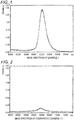
Fig. 1 is a chart showing the mass spectrum obtained in Example 1. -
Fig. 2 is a chart showing the mass spectrum obtained in Comparative Example 1-1. -
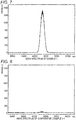
Fig. 3 is a chart showing the mass spectrum obtained in Comparative Example 1-2. -
Fig. 4 is a chart showing the mass spectrum obtained in Example 2. -
Fig. 5 is a chart showing the mass spectrum obtained in Comparative Example 2-1. -
Fig. 6 is a chart showing the mass spectrum obtained in Comparative Example 2-2. -
Fig. 7 is a chart showing the mass spectrum obtained in Example 3. -
Fig. 8 is a chart showing the mass spectrum obtained in Comparative Example 3-1. -
Fig. 9 is a chart showing the mass spectrum obtained in Comparative Example 3-2. -
Fig. 10 is a chart showing the mass spectrum obtained in Example 4. -
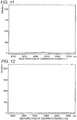
Fig. 11 is a chart showing the mass spectrum obtained in Comparative Example 4-1. -
Fig. 12 is a chart showing the mass spectrum obtained in Comparative Example 4-2. -
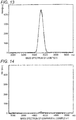
Fig. 13 is a chart showing the mass spectrum obtained in Example 5. -
Fig. 14 is a chart showing the mass spectrum obtained in Comparative Example 5-1. -
Fig. 15 is a chart showing the mass spectrum obtained in Comparative Example 5-2. -
Fig. 16 is a chart showing the mass spectrum obtained in Example 6. -
Fig. 17 is a chart showing the mass spectrum obtained in Comparative Example 6-1. -
Fig. 18 is a chart showing the mass spectrum obtained in Comparative Example 6-2. - The invention will be described in detail hereinafter.
- The polyethylene glycol derivative as the analysis object in the invention may be straight-chain or branched. According to the analysis method of the invention, unlike conventional MALDI mass spectrometry, since, in particular, even in the case of a polyethylene glycol derivative having a branched structure, the degradation thereof is suppressed and the molecular weight thereof can be measured, it is preferred for a polyethylene glycol derivative to have a branched structure and two or more polyethylene glycol chains. There is no upper limit of the number of polyethylene glycol chains and, for example, it is possible to perform the analysis even when the polyethylene glycol derivative has at most 8 polyethylene glycol chains. More typically, a number of the polyethylene glycol chains in the polyethylene glycol derivative is 2, 3, 4, 6 or 8.
- The molecular weight of the polyethylene glycol derivative is 40, 000 or more. Also, the molecular weight of the polyethylene glycol derivative may be 60,000 or more. Further, the molecular weight of the polyethylene glycol derivative is preferably 1,000,000 or less, and more preferably 200,000 or less. According to the analysis method of the invention, unlike the conventional measuring method using a highly polar matrix, it is possible to analyze with high accuracy even in the case of the polyethylene glycol derivative having a high molecular weight.
- In the case of the polyethylene glycol derivative having a molecular weight of 40,000 or more, as opposed to the description of the prior art, the signal intensity was reduced when a highly polar matrix was used.
- The polyethylene glycol derivative as the analysis object in the invention is preferably represented by formulae (1) and (2).

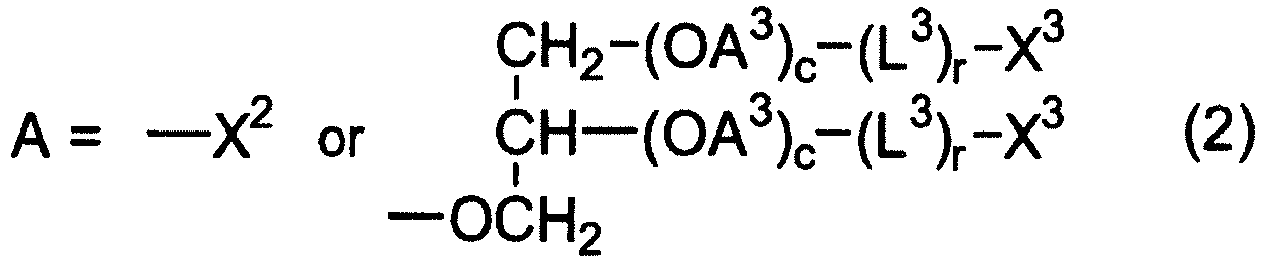
- In the formulae, Z is a residue obtained by eliminating all hydroxyl groups from a compound having from 2 to 8 hydroxyl groups.
- OA1, OA2 and OA3 are each an oxyethylene group, and a, b and c are each from 0 to 5,000 (preferably from 0 to 3,000, and more preferably from 0 to 1,000).
- L1, L2 and L3 are each independently an alkylene group which may have an ester bond, a urethane bond, an amide bond, a urea bond, an ether bond or a thioether bond in the alkylene chain or at a terminal. L1, L2 and L3 may be the same or different from each other in one molecule.
- p, q and r are each independently 0 or 1.
- s and t are each independently from 0 to 8 (particularly preferably 2, 3, 4, 6 or 8).
- X1, X2 and X3 each independently represent a hydroxyl group, an alkoxy group, for example, a methoxy group, a tert-butyl group or a benzyloxy group, or an active group capable of specifically reacting with a biologically active substance, for example, a protein, a polypeptide or a drug. X1, X2 and X3 may be the same or different from each other in one molecule.
- The active group specifically includes, for example, an aldehyde group, an acetal group, a nitrophenyl carbonate group, a succinimidyl carbonate group, a succinimidyl ester group, a mercapto group, a maleimide group, an alkenyl group, an alkynyl group, an azido group, an amino group and a carboxyl group, and preferably includes, for example, an aldehyde group, a nitrophenyl carbonate group, a succinimidyl carbonate group, a succinimidyl ester group, a mercapto group, a maleimide group, an alkynyl group, an azido group, an amino group and a carboxyl group.
- The low polar matrix for MALDI mass spectrometry which can be used in the invention is a low polar matrix having a 1-octanol/water partition coefficient from 4.1 to 4.8 (more preferably from 4.3 to 4.8). The 1-octanol/water partition coefficient of the matrix is a numerical value measured by the high-performance liquid chromatography method described in OECD Test Guideline 117.
- As the low polar matrix used in the invention, an aromatic compound constituting from 3 elements of carbon, hydrogen and nitrogen may be used. Particularly preferably, trans-2-[3-(4-tert-butylphenyl)-2-methyl-2-propenylidene]malonon itrile is exemplified.
- The ratio of the polyethylene glycol derivative to the matrix for MALDI mass spectrometry is not particularly limited. The ratio of polyethylene glycol derivative : matrix for MALDI mass spectrometry is preferably from 1 : 100 (molar ratio) to 1 : 1,000,000 (molar ratio), and more preferably from 1 : 500 (molar ratio) to 1 : 100,000 (molar ratio).
- In the preparation method of sample for analysis of the invention, as the solvent which can be used to produce a liquid containing the matrix for MALDI mass spectrometry and the polyethylene glycol derivative, a solvent which can dissolve the matrix for MALDI mass spectrometry and the polyethylene glycol derivative is desirable. Specifically, the solvent includes, for example, tetrahydrofuran, methanol, ethanol, n-propyl alcohol, isopropyl alcohol, hexafluoroisopropyl alcohol, acetone, methyl ethyl ketone, acetonitrile, ethyl acetate, methylene chloride, chloroform and carbon tetrachloride. In addition, the solvents may be used individually or as a mixture of two or more kinds. The concentration when the matrix for MALDI mass spectrometry or the polyethylene glycol derivative is dissolved in the solvent is preferably from 1 to 100mg/mL.
- The matrix for MALDI mass spectrometry may contain an ionizing agent. The ionizing agent specifically includes, for example, a metal salt, an ammonium salt and an organic salt, for example, sodium trifluoroacetate, silver trifluoroacetate, copper nitrate, sodium chloride and potassium chloride.
- As to the ratio of the ionizing agent contained to the matrix for MALDI mass spectrometry, the ratio of the ionizing agent : matrix for MALDI mass spectroscopy is preferably from 1 : 1 (molar ratio) to 1 : 10,000 (molar ratio), and more preferably from 1 : 10 (molar ratio) 1 : 5,000 (molar ratio).
- After dissolving the ionizing agent in a solvent, the matrix for MALDI mass spectrometry may be mixed, and in this case, the concentration of the ionizing agent dissolved in the solvent is preferably approximately from 0.1 to 100mg/mL.
- The sample for MALDI mass spectrometry thus prepared by the preparation method of sample for analysis of the invention provides a high signal intensity even when the laser intensity is decreased. Therefore, since the MALDI mass spectrometry which is performed by using the sample for MALDI mass spectrometry prepared by the preparation method of sample for analysis of the invention suppresses the degradation of polymer and can measure the accurate molecular weight, it can be suitably used for quality control of the polyethylene glycol derivative.
- The invention will be described in more detail with reference to the examples.
- Trans-2-[3-(4-tert-butylphenyl)-2-methyl-2-propenylidene]m alononitrile (Santa Cruz Co., purity of 99% or more, 1-octanol/water partition coefficient of 4.6) was used as a matrix for MALDI mass spectrometry, a branched polyethylene glycol derivative SUNBRIGHT GL2-600HO (produced by NOF, molecular weight of 60,000,
Compound 1 shown below) was used as a sample, and sodium trifluoroacetate was used as an ionizing agent. A tetrahydrofuran solution of the matrix for MALDI mass spectrometry (concentration of 20 mg/mL), a tetrahydrofuran solution of the branched polyethylene glycol derivative (concentration of 60 mg/mL) and a tetrahydrofuran solution of sodium trifluoroacetate (ionizing agent) (concentration of 2 mg/mL) were mixed in 100 : 1 : 2 (volume ratio). - 1 µL of the mixed solution of the matrix for MALDI mass spectrometry, the branched polyethylene glycol derivative and the ionizing agent was dropped with a micropipette on a target for MALDI mass spectrometry and dried. The target was inserted into a MALDI mass spectrometer of AutoFlex III Model, produced by Bruker Daltonics Inc. Then, the measurement was performed at an acceleration voltage of 20.0 kV in a positive ionization mode of 2,500 laser shots integration with appropriate adjustment of laser intensity. Evaluation of signal intensity was decided to use a signal intensity of a peak top in the mass spectrum obtained.
- The signal intensity in the case of using the preparation method of the sample for MALDI mass spectrometry of Example 1 was 10,389 counts. The mass spectrum chart obtained in Example 1 is shown in
Fig. 1 .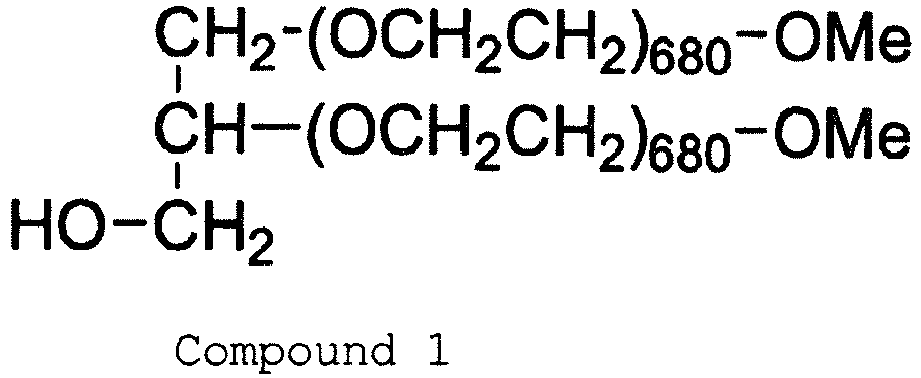
- The measurement and evaluation were performed under the same conditions as in Example 1 except for using α-cyano-4-hydroxycinnamic acid (CHCA, 1-octanol/water partition coefficient of 0.9) as the matrix. The signal intensity in the case of using the preparation method of the sample for MALDI mass spectrometry of Comparative Example 1-1 was 978 counts. The mass spectrum chart obtained in Comparative Example 1-1 is shown in
Fig. 2 . - The measurement and evaluation were performed under the same conditions as in Example 1 except for using 2, 5-dihydroxybenzoic acid (DHB, 1-octanol/water partition coefficient of 0.6) as the matrix. In the case of using the preparation method of the sample for MALDI mass spectrometry of Comparative Example 1-2, the signal was not detected. The mass spectrum chart obtained in Comparative Example 1-2 is shown in
Fig. 3 .[Table 1] Signal Intensity Example 1 10,389 Comparative Example 1-1 978 Comparative Example 1-2 0 - The measurement and evaluation were performed under the same conditions as in Example 1 except for using a tetrahydrofuran solution of SUNBRIGHT GL4-800HO (produced by NOF, molecular weight of 80,000,
Compound 2 shown below) at concentration of 80 mg/mL. The signal intensity in the case of using the preparation method of the sample for MALDI mass spectrometry of Example 2 was 23,734 counts. The mass spectrum chart obtained in Example 2 is shown inFig. 4 .
- The measurement and evaluation were performed under the same conditions as in Example 2 except for using CHCA as the matrix. The signal intensity in the case of using the preparation method of the sample for MALDI mass spectrometry of Comparative Example 2-1 was 2,005 counts. The mass spectrum chart obtained in Comparative Example 2-1 is shown in
Fig. 5 . - The measurement and evaluation were performed under the same conditions as in Example 2 except for using DHB as the matrix. In the case of using the preparation method of the sample for MALDI mass spectrometry of Comparative Example 2-2, the signal was not detected. The mass spectrum chart obtained in Comparative Example 2-2 is shown in
Fig. 6 .[Table 2] Signal Intensity Example 2 23,734 Comparative Example 2-1 2,005 Comparative Example 2-2 0 - The measurement and evaluation were performed under the same conditions as in Example 1 except for using a tetrahydrofuran solution of SUNBRIGHT MEH-40T (produced by NOF, molecular weight of 40,000,
Compound 4 shown below) at concentration of 40 mg/mL. The signal intensity in the case of using the preparation method of the sample for MALDI mass spectrometry of Example 3 was 1,390 counts. The mass spectrum chart obtained in Example 3 is shown inFig. 7 .
H-(OCH2CH2)908-OMe Compound 4
- The measurement and evaluation were performed under the same conditions as in Example 3 except for using CHCA as the matrix. The signal intensity in the case of using the preparation method of the sample for MALDI mass spectrometry of Comparative Example 3-1 was 39 counts. The mass spectrum chart obtained in Comparative Example 3-1 is shown in
Fig. 8 . - The measurement and evaluation were performed under the same conditions as in Example 3 except for using DHB as the matrix. In the case of using the preparation method of the sample for MALDI mass spectrometry of Comparative Example 3-2, the signal was not detected. The mass spectrum chart obtained in Comparative Example 3-2 is shown in
Fig. 9 .[Table 3] Signal Intensity Example 3 1,390 Comparative Example 3-1 39 Comparative Example 3-2 0 - The measurement and evaluation were performed under the same conditions as in Example 1 except for using a tetrahydrofuran solution of SUNBRIGHT ME-400GS (produced by NOF, molecular weight of 40,000,
Compound 5 shown below) at concentration of 40 mg/mL. The signal intensity in the case of using the preparation method of the sample for MALDI mass spectrometry of Example 4 was 1,971 counts. The mass spectrum chart obtained in Example 4 is shown inFig. 10 .
- The measurement and evaluation were performed under the same conditions as in Example 4 except for using CHCA as the matrix. The signal intensity in the case of using the preparation method of the sample for MALDI mass spectrometry of Comparative Example 4-1 was 39 counts. The mass spectrum chart obtained in Comparative Example 4-1 is shown in
Fig. 11 . - The measurement and evaluation were performed under the same conditions as in Example 4 except for using DHB as the matrix. In the case of using the preparation method of the sample for MALDI mass spectrometry of Comparative Example 4-2, the signal was not detected. The mass spectrum chart obtained in Comparative Example 4-2 is shown in
Fig. 12 .[Table 4] Signal Intensity Example 4 1,971 Comparative Example 4-1 39 Comparative Example 4-2 0 - The measurement and evaluation were performed under the same conditions as in Example 1 except for using a tetrahydrofuran solution of SUNBRIGHT GL2-400HO (produced by NOF, molecular weight of 40,000,
Compound 6 shown below) at concentration of 40 mg/mL. The signal intensity in the case of using the preparation method of the sample for MALDI mass spectrometry of Example 5 was 4,469 counts. The mass spectrum chart obtained in Example 5 is shown inFig. 13 .
- The measurement and evaluation were performed under the same conditions as in Example 5 except for using CHCA as the matrix. The signal intensity in the case of using the preparation method of the sample for MALDI mass spectrometry of Comparative Example 5-1 was 85 counts. The mass spectrum chart obtained in Comparative Example 5-1 is shown in
Fig. 14 . - The measurement and evaluation were performed under the same conditions as in Example 5 except for using DHB as the matrix. In the case of using the preparation method of the sample for MALDI mass spectrometry of Comparative Example 5-2, the signal was not detected. The mass spectrum chart obtained in Comparative Example 5-2 is shown in
Fig. 15 .[Table 5] Signal Intensity Example 5 4,469 Comparative Example 5-1 85 Comparative Example 5-2 0 - The measurement and evaluation were performed under the same conditions as in Example 1 except for using a tetrahydrofuran solution of SUNBRIGHT PTE-40000 (produced by NOF, molecular weight of 40,000, Compound 7 shown below) at concentration of 40 mg/mL. The signal intensity in the case of using the preparation method of the sample for MALDI mass spectrometry of Example 6 was 10,138 counts. The mass spectrum chart obtained in Example 6 is shown in
Fig. 16 .
- The measurement and evaluation were performed under the same conditions as in Example 6 except for using CHCA as the matrix. The signal intensity in the case of using the preparation method of the sample for MALDI mass spectrometry of Comparative Example 6-1 was 564 counts. The mass spectrum chart obtained in Comparative Example 6-1 is shown in
Fig. 17 . - The measurement and evaluation were performed under the same conditions as in Example 6 except for using DHB as the matrix. In the case of using the preparation method of the sample for MALDI mass spectrometry of Comparative Example 6-2, the signal was not detected. The mass spectrum chart obtained in Comparative Example 6-2 is shown in
Fig. 18 .[Table 6] Signal Intensity Example 6 10,138 Comparative Example 6-1 564 Comparative Example 6-2 0 - While the invention has been described in detail and with reference to specific embodiments thereof, it will be apparent to those skilled in the art that various changes and modifications can be made therein without departing from the spirit and scope of the invention.
- This application is based on a Japanese patent application filed on March 31, 2015 (Japanese Patent Application No.
2015-071739
Claims (5)
- A matrix-assisted laser desorption mass spectrometry in which a mixture comprising a polyethylene glycol derivative having a molecular weight of 40,000 or more and a matrix is irradiated with laser beam to vaporize the polyethylene glycol derivative together with the matrix, thereby measuring a molecular weight of the polyethylene glycol derivative, wherein as the matrix, a low polar matrix having a 1-octanol/water partition coefficient (logPow) of 4.1 to 4.8 is used.
- The matrix-assisted laser desorption mass spectrometry as claimed in Claim 1, wherein a molecular weight of the polyethylene glycol derivative is 60,000 or more.
- The matrix-assisted laser desorption mass spectrometry as claimed in Claim 1 or 2, wherein the matrix is trans-2-[3-(4-tert-butylphenyl)-2-methyl-2-propenylidene]malonon itrile.
- A matrix for use in a matrix-assisted laser desorption mass spectrometry of a polyethylene glycol derivative having a molecular weight of 40,000 or more, which is a low polar matrix having a 1-octanol/water partition coefficient (logPow) of 4.1 to 4.8.
- The matrix as claimed in Claim 4, wherein a molecular weight of the polyethylene glycol derivative is 60,000 or more.
Applications Claiming Priority (2)
| Application Number | Priority Date | Filing Date | Title |
|---|---|---|---|
| JP2015071739 | 2015-03-31 | ||
| PCT/JP2016/060387 WO2016159074A1 (en) | 2015-03-31 | 2016-03-30 | Matrix-assisted laser desorption/ionization mass spectrometry for high-molecular-weight polyoxyethylene derivative |
Publications (3)
| Publication Number | Publication Date |
|---|---|
| EP3279652A1 true EP3279652A1 (en) | 2018-02-07 |
| EP3279652A4 EP3279652A4 (en) | 2018-10-10 |
| EP3279652B1 EP3279652B1 (en) | 2022-09-14 |
Family
ID=57005138
Family Applications (1)
| Application Number | Title | Priority Date | Filing Date |
|---|---|---|---|
| EP16772955.7A Active EP3279652B1 (en) | 2015-03-31 | 2016-03-30 | Matrix-assisted laser desorption/ionization mass spectrometry for high-molecular-weight polyoxyethylene derivative |
Country Status (5)
| Country | Link |
|---|---|
| US (1) | US10410851B2 (en) |
| EP (1) | EP3279652B1 (en) |
| JP (1) | JP6774619B2 (en) |
| CN (1) | CN107430089B (en) |
| WO (1) | WO2016159074A1 (en) |
Families Citing this family (1)
| Publication number | Priority date | Publication date | Assignee | Title |
|---|---|---|---|---|
| KR102180624B1 (en) | 2017-10-11 | 2020-11-18 | 주식회사 엘지화학 | Method for quantitative analysis of polymer using maldi mass spectrometry and method of manufacturing a sample for quantitative analysis of polymer using maldi mass spectrometry |
Family Cites Families (11)
| Publication number | Priority date | Publication date | Assignee | Title |
|---|---|---|---|---|
| CN1333250C (en) * | 2005-10-20 | 2007-08-22 | 复旦大学 | Proteolytic method for desorpting ionization source mass-spectrum target plate based on matrix auxiliary laser |
| JP5078456B2 (en) * | 2007-06-19 | 2012-11-21 | キヤノン株式会社 | Mass spectrometry substrate, mass spectrometry method, and mass spectrometer |
| WO2011019882A1 (en) * | 2009-08-12 | 2011-02-17 | William Marsh Rice University | Nanostructure-beta-blocker conjugates |
| CN101710097B (en) * | 2009-12-02 | 2012-11-07 | 中国科学院长春应用化学研究所 | Method for detecting aconitine in-vitro metabolic product by matrix assisted laser desorption mass spectrum |
| JP2012122761A (en) * | 2010-12-06 | 2012-06-28 | Mitsubishi Rayon Co Ltd | Method for measuring polymer |
| CN102603707B (en) * | 2012-02-10 | 2013-06-19 | 中国科学院化学研究所 | 2,3,4,5,-tetra(3',4'-dihydroxyl phenyl)thiophene and application thereof as MALDI (matrix assisted laser desorption ionization) matrix in analyzing small molecules |
| WO2014022501A2 (en) * | 2012-07-31 | 2014-02-06 | The University Of Akron | Strain-promoted crosslinking of peg-based hydrogels via copper-free cycloaddition |
| JP6086343B2 (en) * | 2012-10-01 | 2017-03-01 | 三菱レイヨン株式会社 | Method for measuring molecular weight of polymer, method for producing polymer, method for producing resist composition, and method for producing substrate on which pattern is formed |
| US20160002397A1 (en) * | 2013-03-15 | 2016-01-07 | Sulzer Chemtech Ag | A Process to Prepare a Polyester Polymer Composition Comprising a Polyester Polymer Having Furanic Units and a Polyester Polymer Composition Obtainable Thereby and the use Thereof |
| WO2014188344A1 (en) * | 2013-05-23 | 2014-11-27 | Saudi Basic Industries Corporation | Block copolymer and process for preparing the same |
| US9171710B2 (en) * | 2013-09-16 | 2015-10-27 | The Board Of Trustees Of The University Of Alabama | Mass spectrometric analysis using nanoparticle matrices |
-
2016
- 2016-03-29 JP JP2016065358A patent/JP6774619B2/en active Active
- 2016-03-30 EP EP16772955.7A patent/EP3279652B1/en active Active
- 2016-03-30 US US15/559,540 patent/US10410851B2/en active Active
- 2016-03-30 WO PCT/JP2016/060387 patent/WO2016159074A1/en not_active Ceased
- 2016-03-30 CN CN201680019749.8A patent/CN107430089B/en active Active
Also Published As
| Publication number | Publication date |
|---|---|
| US10410851B2 (en) | 2019-09-10 |
| JP2016194513A (en) | 2016-11-17 |
| WO2016159074A1 (en) | 2016-10-06 |
| CN107430089A (en) | 2017-12-01 |
| EP3279652A4 (en) | 2018-10-10 |
| CN107430089B (en) | 2020-03-31 |
| JP6774619B2 (en) | 2020-10-28 |
| EP3279652B1 (en) | 2022-09-14 |
| US20180096831A1 (en) | 2018-04-05 |
Similar Documents
| Publication | Publication Date | Title |
|---|---|---|
| Kauppila et al. | Desorption electrospray ionization mass spectrometry for the analysis of pharmaceuticals and metabolites | |
| Iavarone et al. | Supercharging in electrospray ionization: effects on signal and charge | |
| May et al. | Conformational landscapes of ubiquitin, cytochrome c, and myoglobin: Uniform field ion mobility measurements in helium and nitrogen drift gas | |
| US7196323B2 (en) | Mass spectrometry method for analyzing mixtures of substances | |
| Henry et al. | Fourier-transform mass spectrometry of large molecules by electrospray ionization. | |
| Bereman et al. | Direct high‐resolution peptide and protein analysis by desorption electrospray ionization Fourier transform ion cyclotron resonance mass spectrometry | |
| CN112858459B (en) | Matrix sample preparation method and matrix-assisted laser desorption ionization time-of-flight mass spectrometry analysis method | |
| Lou et al. | Generation of CsI cluster ions for mass calibration in matrix-assisted laser desorption/ionization mass spectrometry | |
| GB2420007A (en) | Mass spectrometer protein profiles with atmospheric pressure ionisation | |
| Schneider et al. | Ion sampling effects under conditions of total solvent consumption | |
| CN109776391A (en) | N-carbazole acrylate and its application as a matrix in the analysis of polymers by matrix-assisted laser desorption ionization time-of-flight mass spectrometry | |
| Liu | An introduction to hybrid ion trap/time‐of‐flight mass spectrometry coupled with liquid chromatography applied to drug metabolism studies | |
| Zhao et al. | Mass spectrometry imaging: applications in drug distribution studies | |
| Okuno et al. | Quantitative analysis of polypropyleneglycol mixtures by desorption/ionization on porous silicon mass spectrometry | |
| CN112946112B (en) | Method for simultaneously determining migration amounts of 9 antioxidants in food contact material by using ultra-high performance liquid chromatography-tandem mass spectrometry | |
| Horak et al. | Optimisation of the quantitative determination of chlormequat by matrix‐assisted laser desorption/ionisation mass spectrometry | |
| EP3279652B1 (en) | Matrix-assisted laser desorption/ionization mass spectrometry for high-molecular-weight polyoxyethylene derivative | |
| US10373816B2 (en) | Method for enhancing electrospray | |
| US10481163B1 (en) | Mass spectrometry method using mixed matrix | |
| Chai et al. | Identification of new interferences leached from plastic microcentrifuge tubes in electrospray ionization mass spectrometry | |
| US20240110922A1 (en) | Derivatization Method, Mass Spectrometry Method, Derivatization Reagent, and Derivatization Reagent Kit for Estrogen | |
| Henion et al. | Recent developments in electrospray mass spectrometry including implementation on an ion trap | |
| CN103115980B (en) | Analysis and Identification Method of Riboflavin in Tobacco | |
| KR20190050432A (en) | The mass spectrometry of hydrogen/deuterium exchange | |
| Asakawa et al. | Direct profiling of saccharides, organic acids and anthocyanins in fruits using electrospray droplet impact/secondary ion mass spectrometry |
Legal Events
| Date | Code | Title | Description |
|---|---|---|---|
| STAA | Information on the status of an ep patent application or granted ep patent |
Free format text: STATUS: THE INTERNATIONAL PUBLICATION HAS BEEN MADE |
|
| PUAI | Public reference made under article 153(3) epc to a published international application that has entered the european phase |
Free format text: ORIGINAL CODE: 0009012 |
|
| STAA | Information on the status of an ep patent application or granted ep patent |
Free format text: STATUS: REQUEST FOR EXAMINATION WAS MADE |
|
| 17P | Request for examination filed |
Effective date: 20170919 |
|
| AK | Designated contracting states |
Kind code of ref document: A1 Designated state(s): AL AT BE BG CH CY CZ DE DK EE ES FI FR GB GR HR HU IE IS IT LI LT LU LV MC MK MT NL NO PL PT RO RS SE SI SK SM TR |
|
| AX | Request for extension of the european patent |
Extension state: BA ME |
|
| DAV | Request for validation of the european patent (deleted) | ||
| DAX | Request for extension of the european patent (deleted) | ||
| A4 | Supplementary search report drawn up and despatched |
Effective date: 20180910 |
|
| RIC1 | Information provided on ipc code assigned before grant |
Ipc: H01J 49/04 20060101ALI20180904BHEP Ipc: G01N 27/62 20060101ALI20180904BHEP Ipc: G01N 33/68 20060101ALI20180904BHEP Ipc: G01N 27/64 20060101AFI20180904BHEP |
|
| STAA | Information on the status of an ep patent application or granted ep patent |
Free format text: STATUS: EXAMINATION IS IN PROGRESS |
|
| 17Q | First examination report despatched |
Effective date: 20200123 |
|
| GRAP | Despatch of communication of intention to grant a patent |
Free format text: ORIGINAL CODE: EPIDOSNIGR1 |
|
| STAA | Information on the status of an ep patent application or granted ep patent |
Free format text: STATUS: GRANT OF PATENT IS INTENDED |
|
| INTG | Intention to grant announced |
Effective date: 20220613 |
|
| GRAS | Grant fee paid |
Free format text: ORIGINAL CODE: EPIDOSNIGR3 |
|
| GRAA | (expected) grant |
Free format text: ORIGINAL CODE: 0009210 |
|
| STAA | Information on the status of an ep patent application or granted ep patent |
Free format text: STATUS: THE PATENT HAS BEEN GRANTED |
|
| AK | Designated contracting states |
Kind code of ref document: B1 Designated state(s): AL AT BE BG CH CY CZ DE DK EE ES FI FR GB GR HR HU IE IS IT LI LT LU LV MC MK MT NL NO PL PT RO RS SE SI SK SM TR |
|
| REG | Reference to a national code |
Ref country code: GB Ref legal event code: FG4D |
|
| REG | Reference to a national code |
Ref country code: CH Ref legal event code: EP |
|
| REG | Reference to a national code |
Ref country code: DE Ref legal event code: R096 Ref document number: 602016075020 Country of ref document: DE |
|
| REG | Reference to a national code |
Ref country code: IE Ref legal event code: FG4D |
|
| REG | Reference to a national code |
Ref country code: AT Ref legal event code: REF Ref document number: 1518999 Country of ref document: AT Kind code of ref document: T Effective date: 20221015 |
|
| REG | Reference to a national code |
Ref country code: LT Ref legal event code: MG9D |
|
| REG | Reference to a national code |
Ref country code: NL Ref legal event code: MP Effective date: 20220914 |
|
| PG25 | Lapsed in a contracting state [announced via postgrant information from national office to epo] |
Ref country code: SE Free format text: LAPSE BECAUSE OF FAILURE TO SUBMIT A TRANSLATION OF THE DESCRIPTION OR TO PAY THE FEE WITHIN THE PRESCRIBED TIME-LIMIT Effective date: 20220914 Ref country code: RS Free format text: LAPSE BECAUSE OF FAILURE TO SUBMIT A TRANSLATION OF THE DESCRIPTION OR TO PAY THE FEE WITHIN THE PRESCRIBED TIME-LIMIT Effective date: 20220914 Ref country code: NO Free format text: LAPSE BECAUSE OF FAILURE TO SUBMIT A TRANSLATION OF THE DESCRIPTION OR TO PAY THE FEE WITHIN THE PRESCRIBED TIME-LIMIT Effective date: 20221214 Ref country code: LV Free format text: LAPSE BECAUSE OF FAILURE TO SUBMIT A TRANSLATION OF THE DESCRIPTION OR TO PAY THE FEE WITHIN THE PRESCRIBED TIME-LIMIT Effective date: 20220914 Ref country code: LT Free format text: LAPSE BECAUSE OF FAILURE TO SUBMIT A TRANSLATION OF THE DESCRIPTION OR TO PAY THE FEE WITHIN THE PRESCRIBED TIME-LIMIT Effective date: 20220914 Ref country code: FI Free format text: LAPSE BECAUSE OF FAILURE TO SUBMIT A TRANSLATION OF THE DESCRIPTION OR TO PAY THE FEE WITHIN THE PRESCRIBED TIME-LIMIT Effective date: 20220914 |
|
| REG | Reference to a national code |
Ref country code: AT Ref legal event code: MK05 Ref document number: 1518999 Country of ref document: AT Kind code of ref document: T Effective date: 20220914 |
|
| PG25 | Lapsed in a contracting state [announced via postgrant information from national office to epo] |
Ref country code: HR Free format text: LAPSE BECAUSE OF FAILURE TO SUBMIT A TRANSLATION OF THE DESCRIPTION OR TO PAY THE FEE WITHIN THE PRESCRIBED TIME-LIMIT Effective date: 20220914 Ref country code: GR Free format text: LAPSE BECAUSE OF FAILURE TO SUBMIT A TRANSLATION OF THE DESCRIPTION OR TO PAY THE FEE WITHIN THE PRESCRIBED TIME-LIMIT Effective date: 20221215 |
|
| PG25 | Lapsed in a contracting state [announced via postgrant information from national office to epo] |
Ref country code: SM Free format text: LAPSE BECAUSE OF FAILURE TO SUBMIT A TRANSLATION OF THE DESCRIPTION OR TO PAY THE FEE WITHIN THE PRESCRIBED TIME-LIMIT Effective date: 20220914 Ref country code: RO Free format text: LAPSE BECAUSE OF FAILURE TO SUBMIT A TRANSLATION OF THE DESCRIPTION OR TO PAY THE FEE WITHIN THE PRESCRIBED TIME-LIMIT Effective date: 20220914 Ref country code: PT Free format text: LAPSE BECAUSE OF FAILURE TO SUBMIT A TRANSLATION OF THE DESCRIPTION OR TO PAY THE FEE WITHIN THE PRESCRIBED TIME-LIMIT Effective date: 20230116 Ref country code: ES Free format text: LAPSE BECAUSE OF FAILURE TO SUBMIT A TRANSLATION OF THE DESCRIPTION OR TO PAY THE FEE WITHIN THE PRESCRIBED TIME-LIMIT Effective date: 20220914 Ref country code: CZ Free format text: LAPSE BECAUSE OF FAILURE TO SUBMIT A TRANSLATION OF THE DESCRIPTION OR TO PAY THE FEE WITHIN THE PRESCRIBED TIME-LIMIT Effective date: 20220914 Ref country code: AT Free format text: LAPSE BECAUSE OF FAILURE TO SUBMIT A TRANSLATION OF THE DESCRIPTION OR TO PAY THE FEE WITHIN THE PRESCRIBED TIME-LIMIT Effective date: 20220914 |
|
| PG25 | Lapsed in a contracting state [announced via postgrant information from national office to epo] |
Ref country code: SK Free format text: LAPSE BECAUSE OF FAILURE TO SUBMIT A TRANSLATION OF THE DESCRIPTION OR TO PAY THE FEE WITHIN THE PRESCRIBED TIME-LIMIT Effective date: 20220914 Ref country code: PL Free format text: LAPSE BECAUSE OF FAILURE TO SUBMIT A TRANSLATION OF THE DESCRIPTION OR TO PAY THE FEE WITHIN THE PRESCRIBED TIME-LIMIT Effective date: 20220914 Ref country code: IS Free format text: LAPSE BECAUSE OF FAILURE TO SUBMIT A TRANSLATION OF THE DESCRIPTION OR TO PAY THE FEE WITHIN THE PRESCRIBED TIME-LIMIT Effective date: 20230114 Ref country code: EE Free format text: LAPSE BECAUSE OF FAILURE TO SUBMIT A TRANSLATION OF THE DESCRIPTION OR TO PAY THE FEE WITHIN THE PRESCRIBED TIME-LIMIT Effective date: 20220914 |
|
| P01 | Opt-out of the competence of the unified patent court (upc) registered |
Effective date: 20230410 |
|
| REG | Reference to a national code |
Ref country code: DE Ref legal event code: R097 Ref document number: 602016075020 Country of ref document: DE |
|
| PG25 | Lapsed in a contracting state [announced via postgrant information from national office to epo] |
Ref country code: NL Free format text: LAPSE BECAUSE OF FAILURE TO SUBMIT A TRANSLATION OF THE DESCRIPTION OR TO PAY THE FEE WITHIN THE PRESCRIBED TIME-LIMIT Effective date: 20220914 Ref country code: AL Free format text: LAPSE BECAUSE OF FAILURE TO SUBMIT A TRANSLATION OF THE DESCRIPTION OR TO PAY THE FEE WITHIN THE PRESCRIBED TIME-LIMIT Effective date: 20220914 |
|
| PLBE | No opposition filed within time limit |
Free format text: ORIGINAL CODE: 0009261 |
|
| STAA | Information on the status of an ep patent application or granted ep patent |
Free format text: STATUS: NO OPPOSITION FILED WITHIN TIME LIMIT |
|
| PG25 | Lapsed in a contracting state [announced via postgrant information from national office to epo] |
Ref country code: DK Free format text: LAPSE BECAUSE OF FAILURE TO SUBMIT A TRANSLATION OF THE DESCRIPTION OR TO PAY THE FEE WITHIN THE PRESCRIBED TIME-LIMIT Effective date: 20220914 |
|
| 26N | No opposition filed |
Effective date: 20230615 |
|
| PG25 | Lapsed in a contracting state [announced via postgrant information from national office to epo] |
Ref country code: SI Free format text: LAPSE BECAUSE OF FAILURE TO SUBMIT A TRANSLATION OF THE DESCRIPTION OR TO PAY THE FEE WITHIN THE PRESCRIBED TIME-LIMIT Effective date: 20220914 |
|
| PG25 | Lapsed in a contracting state [announced via postgrant information from national office to epo] |
Ref country code: MC Free format text: LAPSE BECAUSE OF FAILURE TO SUBMIT A TRANSLATION OF THE DESCRIPTION OR TO PAY THE FEE WITHIN THE PRESCRIBED TIME-LIMIT Effective date: 20220914 |
|
| REG | Reference to a national code |
Ref country code: BE Ref legal event code: MM Effective date: 20230331 |
|
| PG25 | Lapsed in a contracting state [announced via postgrant information from national office to epo] |
Ref country code: LU Free format text: LAPSE BECAUSE OF NON-PAYMENT OF DUE FEES Effective date: 20230330 |
|
| REG | Reference to a national code |
Ref country code: IE Ref legal event code: MM4A |
|
| PG25 | Lapsed in a contracting state [announced via postgrant information from national office to epo] |
Ref country code: IE Free format text: LAPSE BECAUSE OF NON-PAYMENT OF DUE FEES Effective date: 20230330 |
|
| PG25 | Lapsed in a contracting state [announced via postgrant information from national office to epo] |
Ref country code: BE Free format text: LAPSE BECAUSE OF NON-PAYMENT OF DUE FEES Effective date: 20230331 |
|
| PG25 | Lapsed in a contracting state [announced via postgrant information from national office to epo] |
Ref country code: IT Free format text: LAPSE BECAUSE OF FAILURE TO SUBMIT A TRANSLATION OF THE DESCRIPTION OR TO PAY THE FEE WITHIN THE PRESCRIBED TIME-LIMIT Effective date: 20220914 |
|
| PG25 | Lapsed in a contracting state [announced via postgrant information from national office to epo] |
Ref country code: BG Free format text: LAPSE BECAUSE OF FAILURE TO SUBMIT A TRANSLATION OF THE DESCRIPTION OR TO PAY THE FEE WITHIN THE PRESCRIBED TIME-LIMIT Effective date: 20220914 |
|
| PG25 | Lapsed in a contracting state [announced via postgrant information from national office to epo] |
Ref country code: BG Free format text: LAPSE BECAUSE OF FAILURE TO SUBMIT A TRANSLATION OF THE DESCRIPTION OR TO PAY THE FEE WITHIN THE PRESCRIBED TIME-LIMIT Effective date: 20220914 |
|
| PGFP | Annual fee paid to national office [announced via postgrant information from national office to epo] |
Ref country code: CH Payment date: 20250401 Year of fee payment: 10 |
|
| PG25 | Lapsed in a contracting state [announced via postgrant information from national office to epo] |
Ref country code: CY Free format text: LAPSE BECAUSE OF FAILURE TO SUBMIT A TRANSLATION OF THE DESCRIPTION OR TO PAY THE FEE WITHIN THE PRESCRIBED TIME-LIMIT; INVALID AB INITIO Effective date: 20160330 |
|
| PG25 | Lapsed in a contracting state [announced via postgrant information from national office to epo] |
Ref country code: HU Free format text: LAPSE BECAUSE OF FAILURE TO SUBMIT A TRANSLATION OF THE DESCRIPTION OR TO PAY THE FEE WITHIN THE PRESCRIBED TIME-LIMIT; INVALID AB INITIO Effective date: 20160330 |
|
| PG25 | Lapsed in a contracting state [announced via postgrant information from national office to epo] |
Ref country code: TR Free format text: LAPSE BECAUSE OF FAILURE TO SUBMIT A TRANSLATION OF THE DESCRIPTION OR TO PAY THE FEE WITHIN THE PRESCRIBED TIME-LIMIT Effective date: 20220914 |
|
| REG | Reference to a national code |
Ref country code: CH Ref legal event code: U11 Free format text: ST27 STATUS EVENT CODE: U-0-0-U10-U11 (AS PROVIDED BY THE NATIONAL OFFICE) Effective date: 20260401 |
|
| PGFP | Annual fee paid to national office [announced via postgrant information from national office to epo] |
Ref country code: GB Payment date: 20260324 Year of fee payment: 11 |
|
| PGFP | Annual fee paid to national office [announced via postgrant information from national office to epo] |
Ref country code: DE Payment date: 20260319 Year of fee payment: 11 |
|
| PGFP | Annual fee paid to national office [announced via postgrant information from national office to epo] |
Ref country code: FR Payment date: 20260320 Year of fee payment: 11 |