EP3279577A1 - Air-conditioning device - Google Patents
Air-conditioning device Download PDFInfo
- Publication number
- EP3279577A1 EP3279577A1 EP15871310.7A EP15871310A EP3279577A1 EP 3279577 A1 EP3279577 A1 EP 3279577A1 EP 15871310 A EP15871310 A EP 15871310A EP 3279577 A1 EP3279577 A1 EP 3279577A1
- Authority
- EP
- European Patent Office
- Prior art keywords
- air conditioning
- schedule
- time slot
- target time
- event
- Prior art date
- Legal status (The legal status is an assumption and is not a legal conclusion. Google has not performed a legal analysis and makes no representation as to the accuracy of the status listed.)
- Granted
Links
Images



Classifications
-
- F—MECHANICAL ENGINEERING; LIGHTING; HEATING; WEAPONS; BLASTING
- F24—HEATING; RANGES; VENTILATING
- F24F—AIR-CONDITIONING; AIR-HUMIDIFICATION; VENTILATION; USE OF AIR CURRENTS FOR SCREENING
- F24F11/00—Control or safety arrangements
- F24F11/30—Control or safety arrangements for purposes related to the operation of the system, e.g. for safety or monitoring
-
- F—MECHANICAL ENGINEERING; LIGHTING; HEATING; WEAPONS; BLASTING
- F24—HEATING; RANGES; VENTILATING
- F24F—AIR-CONDITIONING; AIR-HUMIDIFICATION; VENTILATION; USE OF AIR CURRENTS FOR SCREENING
- F24F11/00—Control or safety arrangements
- F24F11/30—Control or safety arrangements for purposes related to the operation of the system, e.g. for safety or monitoring
- F24F11/46—Improving electric energy efficiency or saving
-
- F—MECHANICAL ENGINEERING; LIGHTING; HEATING; WEAPONS; BLASTING
- F24—HEATING; RANGES; VENTILATING
- F24F—AIR-CONDITIONING; AIR-HUMIDIFICATION; VENTILATION; USE OF AIR CURRENTS FOR SCREENING
- F24F11/00—Control or safety arrangements
- F24F11/50—Control or safety arrangements characterised by user interfaces or communication
- F24F11/52—Indication arrangements, e.g. displays
-
- F—MECHANICAL ENGINEERING; LIGHTING; HEATING; WEAPONS; BLASTING
- F24—HEATING; RANGES; VENTILATING
- F24F—AIR-CONDITIONING; AIR-HUMIDIFICATION; VENTILATION; USE OF AIR CURRENTS FOR SCREENING
- F24F11/00—Control or safety arrangements
- F24F11/50—Control or safety arrangements characterised by user interfaces or communication
- F24F11/56—Remote control
- F24F11/59—Remote control for presetting
-
- F—MECHANICAL ENGINEERING; LIGHTING; HEATING; WEAPONS; BLASTING
- F24—HEATING; RANGES; VENTILATING
- F24F—AIR-CONDITIONING; AIR-HUMIDIFICATION; VENTILATION; USE OF AIR CURRENTS FOR SCREENING
- F24F11/00—Control or safety arrangements
- F24F11/62—Control or safety arrangements characterised by the type of control or by internal processing, e.g. using fuzzy logic, adaptive control or estimation of values
-
- F—MECHANICAL ENGINEERING; LIGHTING; HEATING; WEAPONS; BLASTING
- F24—HEATING; RANGES; VENTILATING
- F24F—AIR-CONDITIONING; AIR-HUMIDIFICATION; VENTILATION; USE OF AIR CURRENTS FOR SCREENING
- F24F11/00—Control or safety arrangements
- F24F11/62—Control or safety arrangements characterised by the type of control or by internal processing, e.g. using fuzzy logic, adaptive control or estimation of values
- F24F11/63—Electronic processing
- F24F11/64—Electronic processing using pre-stored data
-
- F—MECHANICAL ENGINEERING; LIGHTING; HEATING; WEAPONS; BLASTING
- F24—HEATING; RANGES; VENTILATING
- F24F—AIR-CONDITIONING; AIR-HUMIDIFICATION; VENTILATION; USE OF AIR CURRENTS FOR SCREENING
- F24F11/00—Control or safety arrangements
- F24F11/89—Arrangement or mounting of control or safety devices
-
- G—PHYSICS
- G05—CONTROLLING; REGULATING
- G05B—CONTROL OR REGULATING SYSTEMS IN GENERAL; FUNCTIONAL ELEMENTS OF SUCH SYSTEMS; MONITORING OR TESTING ARRANGEMENTS FOR SUCH SYSTEMS OR ELEMENTS
- G05B15/00—Systems controlled by a computer
- G05B15/02—Systems controlled by a computer electric
-
- G—PHYSICS
- G05—CONTROLLING; REGULATING
- G05D—SYSTEMS FOR CONTROLLING OR REGULATING NON-ELECTRIC VARIABLES
- G05D23/00—Control of temperature
- G05D23/19—Control of temperature characterised by the use of electric means
- G05D23/1902—Control of temperature characterised by the use of electric means characterised by the use of a variable reference value
- G05D23/1904—Control of temperature characterised by the use of electric means characterised by the use of a variable reference value variable in time
-
- F—MECHANICAL ENGINEERING; LIGHTING; HEATING; WEAPONS; BLASTING
- F24—HEATING; RANGES; VENTILATING
- F24F—AIR-CONDITIONING; AIR-HUMIDIFICATION; VENTILATION; USE OF AIR CURRENTS FOR SCREENING
- F24F11/00—Control or safety arrangements
- F24F11/50—Control or safety arrangements characterised by user interfaces or communication
- F24F11/56—Remote control
-
- F—MECHANICAL ENGINEERING; LIGHTING; HEATING; WEAPONS; BLASTING
- F24—HEATING; RANGES; VENTILATING
- F24F—AIR-CONDITIONING; AIR-HUMIDIFICATION; VENTILATION; USE OF AIR CURRENTS FOR SCREENING
- F24F11/00—Control or safety arrangements
- F24F11/50—Control or safety arrangements characterised by user interfaces or communication
- F24F11/61—Control or safety arrangements characterised by user interfaces or communication using timers
-
- F—MECHANICAL ENGINEERING; LIGHTING; HEATING; WEAPONS; BLASTING
- F24—HEATING; RANGES; VENTILATING
- F24F—AIR-CONDITIONING; AIR-HUMIDIFICATION; VENTILATION; USE OF AIR CURRENTS FOR SCREENING
- F24F11/00—Control or safety arrangements
- F24F11/62—Control or safety arrangements characterised by the type of control or by internal processing, e.g. using fuzzy logic, adaptive control or estimation of values
- F24F11/63—Electronic processing
-
- G—PHYSICS
- G05—CONTROLLING; REGULATING
- G05B—CONTROL OR REGULATING SYSTEMS IN GENERAL; FUNCTIONAL ELEMENTS OF SUCH SYSTEMS; MONITORING OR TESTING ARRANGEMENTS FOR SUCH SYSTEMS OR ELEMENTS
- G05B2219/00—Program-control systems
- G05B2219/20—Pc systems
- G05B2219/26—Pc applications
- G05B2219/2614—HVAC, heating, ventillation, climate control
Definitions
- the present invention relates to an air conditioning apparatus that performs an air conditioning operation according to a schedule set in advance.
- An air conditioning apparatus that performs an air conditioning operation for a certain period (one week, for example) according to a schedule set in advance is conventionally known.
- the schedule of the air conditioning operation is controlled based on a setting table in which a schedule including a start time, an end time, and the like is set. Accordingly, when a part of the schedule is changed suddenly, the schedule control needs to be reset or the air conditioning operation needs to be manually started and ended by a user at changed start and end times.
- Patent Literature 1 Japanese Patent Application Laid-open No. 2010-243074
- a partial change of a schedule of an air conditioning operation is temporarily performed associated with a change in a plan of a target day or time slot. Therefore, if the setting table is changed each time the schedule of the air conditioning operation is partially changed, the setting table needs to be returned to that of the original schedule after passage of the changed time, which causes changing work to be burdensome.
- the present invention has been achieved to solve the above problem, and an object of the present invention is to provide an air conditioning apparatus that can easily achieve a comfortable air conditioning operation without changing a setting table in which a schedule is set.
- an air conditioning apparatus that includes a storage unit that stores therein a setting table in which a schedule of an air conditioning operation for a given period is set, and a control unit that executes operation control according to the schedule in the setting table, the air conditioning apparatus including: a remote controller that sets operation information of a target time slot as a part of the given period; and a temporary storage unit that temporarily stores therein the set operation information of the target time slot, wherein the control unit executes operation control based on the operation information of the target time slot stored in the temporary storage unit in priority to the schedule in the setting table.
- the air conditioning apparatus of the present invention it is possible to easily achieve a comfortable air conditioning operation because desired target time slots can be changed without changing a setting table in which a schedule is set.
- FIG. 1 is a block diagram of an indoor device of an air conditioning apparatus according to a first embodiment of the present invention.
- An air conditioning apparatus 1 includes an indoor device 10 installed indoors and an outdoor device (not illustrated) installed outdoors, and causes a refrigerant compressed by the outdoor device to circulate between the indoor device 10 and the outdoor device to perform an air conditioning operation including cooling and heating of an indoor space in which the indoor device 10 is installed.
- the indoor device 10 includes a storage unit 12 that stores therein a setting table 11 in which a schedule of an air conditioning operation for one week as a given period is set, and a control unit 13 that executes operation control on the air conditioning operation according to the schedule in the setting table 11.
- the indoor device 10 also includes a remote controller 14 that is connected to be communicable with the control unit 13 to set operation information 15 of a target time slot that corresponds a part of one week, and a temporary storage unit 16 that temporarily stores therein the operation information 15 of the target time slot set by the remote controller 14.
- the remote controller 14 includes a setting operation unit 18 for performing various settings.
- the control unit 13 is constituted of a computer such as a microcomputer to perform an air conditioning operation.
- the control unit 13 includes a turning-on/off timer 17 having a clock function.
- the turning-on/off timer 17 is configured to include a turning-on timer function to set a start time of the air conditioning operation, and a turning-off timer function to set an end time of the air conditioning operation.
- the schedule in the setting table 11, and the operation information 15 including a start time and an end time of a target time slot, which will be described later, are set by manipulating the setting operation unit 18 of the turning-on/off timer 17.
- a normal timer operation can also be manually set via the setting operation unit 18 of the remote controller 14, separately from the operation information 15 of the target time slot.
- the storage unit 12 stores therein the setting table 11 in which a schedule of the air conditioning operation, for example, for one week is set in advance.
- the schedule in the setting table 11 can be set via the setting operation unit 18 of the remote controller 14. Specifically, after a scheduling function is selected from the setting operation unit 18, the schedule for one week is set and the setting table 11 in which the schedule is set is stored in the storage unit 12 via the control unit 13.
- a start time and an end time of the air conditioning operation, a setting temperature and an air volume during the air conditioning operation, and the like are set as the schedule of the air conditioning operation.
- the given period of which the schedule can be set is not limited to one week and can be changed to one day or one month, for example, as appropriate.
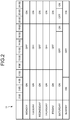
- FIG. 2 is a diagram illustrating an example of the setting table in which a schedule of an air conditioning operation is set.
- time slots in which the air conditioning operation is performed are denoted by ON and time slots in which the air conditioning operation is stopped are denoted by OFF.
- a schedule of the air conditioning operation for one week is set and the set schedule is repeatedly performed.
- a schedule in which the air conditioning operation is performed from 12 a.m. (0:00) to 8 a.m. is stopped from 8 a.m. to 8 p.m., and is performed again from 8 p.m. to 12 a.m. is set for Monday.
- control is executed to set a turning-off timer that stops the air conditioning operation at 8 a.m. and set a turning-on timer that starts the air conditioning operation at 8 p.m..
- a schedule is set for Saturday so that the air conditioning operation is performed from 12 a.m. to 8 a.m., is stopped from 8 a.m. to 6 p.m., is performed from 6 p.m. to 8 p.m., is stopped from 8 p.m. to 12 a.m., and is performed again from 12 a.m..
- control is executed to set the turning-off timer at 8 a.m., then set the turning-on timer at 6 p.m., set the turning-off timer at 8 p.m., and to set the turning-on timer at 12 a.m..
- the air conditioning apparatus 1 includes the setting table 11 in which the schedule for one week is set in advance, and executes the operation control on the air conditioning operation according to the set schedule. Meanwhile, it is considered that a sudden plan change and the like often occur and, for example, a visitor may stay from 4 p.m. to 10 p.m. on Saturday on short notice.
- the schedule in the setting table 11 may be changed according to the plan of the coming visitor.
- such a schedule change occurs temporarily associated with a plan change on a target day or in a target time slot.
- the setting table 11 needs to be returned to that of the original schedule after the visitor leaves, which makes the changing work become burdensome.
- the indoor device 10 includes the temporary storage unit 16 that stores therein the operation information 15 of a target time slot in which the schedule is desired to be changed.
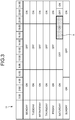
- a target time slot A is a partial time slot in one week as the given time and, in the example descried above, is from 4 p.m. to 10 p.m. during which the visitor is expected to come as illustrated in FIG. 3 .
- the operation information 15 of the target time slot A can be set by the setting operation unit 18 of the remote controller 14. Specifically, as illustrated in FIG. 4 , a day of a week of the target time slot is first selected and then a starting time of the target time slot is set (Sa1). Next, an ending time of the target time slot A is set (Sa2).
- the processing returns to a starting-time setting when there is a change, and the settings are completed when there is no change.
- the turning-on/off timer 17 is a simple on/off timer having a simple configuration and the starting and ending times indicate timer setting times of the turning-on/off timer 17, respectively. For example, when the turning-on timer function is used to set a starting time, the set starting time becomes a start time of the air conditioning operation and the set ending time becomes an end time of the air conditioning operation.
- the set starting time becomes an end time of the air conditioning operation and the set ending time becomes a start time of the air conditioning operation.
- 4 p.m. on Saturday is set as the starting time and 10 p.m. is set as the ending time using the turning-on timer function of the turning-on/off timer 17.
- the set starting time, which is the start time of the air conditioning operation, and the set ending time, which is the end time of the air conditioning operation, are stored in the temporary storage unit 16 as the operation information 15 for the target time slot.
- the control unit 13 reads the operation information 15 from the temporary storage unit 16 when the stored target time slot comes, and controls the air conditioning operation based on the read operation information 15 in priority to the schedule in the setting table 11. That is, the control unit 13 executes control to perform the air conditioning operation from 4 p.m. to 10 p.m. and to stop the air conditioning operation at 10 p.m. based on the operation information 15.
- the start time and the end time of a target time slot can be set just using the turning-on/off timer 17 in the first embodiment, and thus settings can be easily manipulated.
- the control unit 13 erases the operation information 15 of the target time slot stored in the temporary storage unit 16 from the temporary storage unit 16 after the target time has passed. Accordingly, the schedule of the setting table 11 does not need to be returned to the original schedule after a sudden schedule change. Therefore, the schedule can be changed easily and lightly at any time and thus management of a comfortable air conditioning operation can be performed smoothly.
- a second embodiment of the present invention is described next. While a configuration in which the turning-on/off timer 17 that sets the operation information 15 of a target time slot is a simple turning-on/off timer is described in the first embodiment, a configuration in which the turning-on/off timer 17 is a turning-on/off timer of an event-registration type that designates a start time is described in the second embodiment.
- An air conditioning apparatus according to the second embodiment has the same configuration as that of the air conditioning apparatus illustrated in FIG. 1 and thus descriptions thereof will be omitted.
- the setting table 11 in which a schedule for one week is set is identical to that illustrated in FIG. 2 .
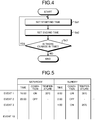
- FIG. 5 is a diagram illustrating settings in a case where a schedule of the air conditioning operation is changed in the second embodiment.
- the turning-on/off timer 17 is an turning-on/off timer of an event-registration type and time settings in a turning-on timer and a turning-off timer are displayed on the remote controller 14 with respect to each event. While Saturday and Sunday are illustrated in FIG. 5 as an example, a displayed mode can be changed appropriately.
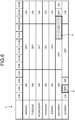
- Target time slots in which the schedule is desired to be changed are a target time slot A from 4 p.m. to 10 p.m. on Saturday and a target time slot B from 2 a.m. to 4 a.m. on Sunday as illustrated in FIG. 6 .
- a time when an event starts, an operation state (operating or stopped) at the start of the event, and a setting temperature are registered with respect to each event as illustrated in FIG. 5 .
- an event is first registered (Sb1)
- a day of a week of the registered event is set (Sb2)
- a start time of the event is set (Sb3) as illustrated in FIG. 7 .
- an event 1 is registered as an event, and the start time of the event 1 is set to 4 p.m. (16:00).
- the start time of the event 1 becomes the start time of the target time slot A.
- Step Sb4 the state of the air conditioning operation at the start of the event 1 is set to operating (ON) (Sb4) and also the setting temperature is set to 25oC (Sb5). Whether there is a change in the event 1 to which these items have been set is determined (Sb6).
- the processing returns to Step Sb2 when there is a change and the processing proceeds to Step Sb7 when there is no change.
- Step Sb7 whether there is an event to be additionally registered is determined (Sb7).
- the processing proceeds to Step Sb8 when there is an event to be additionally registered and the settings are completed when there is no event to be additionally registered.
- there is an event 2 and thus the processing proceeds to Step Sb8 to perform identical processes to those at Steps Sb1 to Sb7 described above.
- the event 1 is registered as an event and the start time of the event 2 is set to 10 p.m. (22:00).
- the start time of the event 2 becomes the end time of the target time slot A.
- the state of the air conditioning operation at the start of the event 2 is set to stopped (OFF). Because the air conditioning operation is stopped in this case, a temperature setting is skipped.
- the event 1 is set such that the air conditioning operation is started at 4 p.m. on Saturday at 25oC as illustrated in FIG. 5 .
- the event 2 is set such that the air conditioning operation is stopped at 10 p.m. on Saturday. This enables control of the turning-on/off timer to perform the operation at 25oC from 4 p.m. to 10 a.m. on Saturday.
- the operation information 15 for the target time slot B is set.
- events are registered for each day of a week, and each day of a week is managed with respect to 24 hours starting from 12 a.m.. Therefore, the target time slot B is registered as an event on Sunday.
- contents that the air conditioning operation is started at 12 a.m. on Sunday at 26oC are set as an event 1 as illustrated in FIG. 5 .
- contents that the air conditioning operation is stopped at 2 a.m. on Sunday are set as an event 2.
- Contents that the air conditioning operation is started at 4 a.m. on Sunday at 25oC are set as an event 3.
- Respective pieces of setting information for the set events are stored in the temporary storage unit 16 as the respective operation information 15 of the target time slot A and the target time slot B.
- the control unit 13 reads the relevant pieces of operation information 15 from the temporary storage unit 16 when the stored target time slots A and B come, and controls the air conditioning operation based on the read operation information 15 in priority to the schedule in the setting table 11. That is, the control unit 13 executes control to perform the air conditioning operation at 25oC from 4 p.m. to 10 p.m. on Saturday and to stop the air conditioning operation at 10 p.m. based on the operation information 15.
- the control unit 13 further executes control to perform the air conditioning operation at 26oC from 12 a.m. to 2 a.m. on Sunday, stop the air conditioning operation from 2 a.m. to 4 a.m., and to perform again the air conditioning operation at 25oC from 4 a.m..
- This enables a comfortable air conditioning operation according to a desired schedule change easily without changing the schedule in the setting table 11. Because the schedule can be easily changed to a desired one, an unnecessary air conditioning operation can be suppressed and energy consumption can be reduced. Furthermore, because the turning-on/off timer of the event-registration type is used in the second embodiment, the schedule can be easily changed even when there are a plurality of target time slots for which a change is desired.
- the control unit 13 erases the operation information 15 of the target time slots stored in the temporary storage unit 16 from the temporary storage unit 16 after the target times have passed. Accordingly, there is no need to return the setting table 11 to the original schedule after a sudden schedule change. Therefore, the schedule can be changed easily and lightly at any time and thus management of a comfortable air conditioning operation can be performed smoothly.
- a third embodiment of the present invention is described next. While the turning-on/off timer 17 is a turning-on/off timer of an event-registration type that designates a start time in the second embodiment, a configuration in which the turning-on/off timer 17 is a turning-on/off timer of an event-registration type that does not designate a start time is described in the third embodiment.
- An air conditioning apparatus according to the third embodiment has the same configuration as that of the air conditioning apparatus illustrated in FIG. 1 and thus descriptions thereof will be omitted.
- the setting table 11 in which a schedule for one week is set is the same as that illustrated in FIG. 2 .
- FIGS. 8 and 9 are diagrams illustrating parts of schedules of an air conditioning operation in the third embodiment, respectively.
- the turning-on/off timer 17 is a turning-on/off timer of an event-registration type that does not designate a start time and easily changes a latest schedule. Therefore, durations of events are displayed on the remote controller 14 with respect to each event. While FIG. 8 illustrates Saturday and FIG. 9 illustrates Sunday as examples, displayed modes can be changed appropriately. Target time slots in which the schedule is desired to be changed are the target time slot A from 4 p.m. to 10 p.m. on Saturday as illustrated in FIG. 3 and a target time slot B from 2 a.m. to 4 a.m. on Sunday as illustrated in FIG. 10 .
- a duration in which an event continues, an operation state (operating or stopped) while the event continues, and a setting temperature are registered with respect to each event as illustrated in FIGS. 8 and 9 .
- an event is first registered (Sc1), and a duration in which the registered event continues is set (Sc2) as illustrated in FIG. 11 .
- an event 1 is registered as an event and a duration of the event 1 is set to 6 hours.
- a state of the air conditioning operation at the start of the event 1 is set to operating (ON) (Sc3) and a setting temperature is set to 25oC (Sb4). Whether there is a change in the event 1 to which the above items have been set is determined (Sc5).
- the processing returns to Step Sb2 when there is a change, and the processing proceeds to Step Sc6 when there is no change.
- the turning-on/off timer of the event-registration type that does not designate a start time is used. Therefore, when the settings above mentioned are performed, for example, before 4 p.m. on Saturday, the air conditioning operation at the setting temperature of 25oC can be performed for 6 hours almost from 4 p.m. to 10 p.m..
- Step Sc6 whether there is an event to be additionally registered is determined.
- the processing proceeds to Step Sc7 when there is an additional registration of an event and the settings are completed when there is no additional registration. Because there is not an event 2 in this example, the settings are completed.
- Step Sc78 the processing proceeds to Step Sc78 to perform identical processes as those at Steps Sc1 to Sc6 described above.
- the setting information with respect to each of the set events is stored in the temporary storage unit 16 as the operation information 15 for the target time slot A.
- the control unit 13 reads the operation information 15 from the temporary storage unit 16 and controls the air conditioning operation based on the read operation information 15 in priority to the schedule in the setting table 11. That is, when the operation information 15 is stored in the temporary storage unit 16, the control unit 13 controls the air conditioning operation based on the operation information 15 in priority to the schedule in the setting table 11.
- the control on the air conditioning operation is executed for the set duration from a time point where a setting is changed and thus the schedule can be easily changed even just before a setting change.
- a time from when the operation information 15 of a target time slot is set to when the air conditioning operation based on the operation information 15 is actually performed can be changed appropriately, and the air conditioning operation can be performed after a predetermined time has passed from storage of the operation information 15 in the temporary storage unit 16. Furthermore, the control unit 13 erases the operation information 15 of the target time slot stored in the temporary storage unit 16 from the temporary storage unit 16 when the target time has passed. Therefore, there is no need to change the setting table 11 to the original schedule after a sudden schedule change. Accordingly, a schedule change can be performed easily and lightly at any time and thus management of a comfortable air conditioning operation can be performed smoothly.
- the operation information 15 of the target time slot A is set before 12 a.m. on Sunday.
- the setting procedure is the same as that illustrated in FIG. 11 and thus descriptions thereof will be omitted.
- contents of an event 1 that the air conditioning operation is continued at 26oC for 2 hours from about 12 a.m. on Sunday are set as illustrated in FIG. 9 .
- Contents of an event 2 that the air conditioning operation is stopped for 2 hours after the end of the event 1 are set.
- Contents of an event 3 that the air conditioning operation is continued at 25oC for 4 hours after the end of the event 2 are set.
- control of the turning-on/off timer to operate the air conditioning operation at 26oC on Sunday from 12 a.m. to 2 a.m., stop from 2 a.m. to 4 a.m., and to operate at 25oC from 4 a.m. is executed.
- the turning-on/off timer 17 is a turning-on/off timer of an event-registration type that does not designate a start time. Therefore, a schedule can be changed easily even just before a setting change. Furthermore, a schedule can be easily changed to a desired one and thus an unnecessary air conditioning operation can be suppressed to reduce energy consumption.
- 1 air conditioning apparatus 10 indoor device, 11 setting table, 12 storage unit, 13 control unit, 14 remote controller, 15 operation information, 16 temporary storage unit, 17 turning-on/off timer, 18 setting operation unit, A, B target time slot.
Landscapes
- Engineering & Computer Science (AREA)
- General Engineering & Computer Science (AREA)
- Chemical & Material Sciences (AREA)
- Combustion & Propulsion (AREA)
- Mechanical Engineering (AREA)
- Physics & Mathematics (AREA)
- Signal Processing (AREA)
- Human Computer Interaction (AREA)
- Fuzzy Systems (AREA)
- Mathematical Physics (AREA)
- General Physics & Mathematics (AREA)
- Automation & Control Theory (AREA)
- Air Conditioning Control Device (AREA)
Abstract
Description
- The present invention relates to an air conditioning apparatus that performs an air conditioning operation according to a schedule set in advance.
- An air conditioning apparatus that performs an air conditioning operation for a certain period (one week, for example) according to a schedule set in advance is conventionally known. In this type of air conditioning apparatus, the schedule of the air conditioning operation is controlled based on a setting table in which a schedule including a start time, an end time, and the like is set. Accordingly, when a part of the schedule is changed suddenly, the schedule control needs to be reset or the air conditioning operation needs to be manually started and ended by a user at changed start and end times. Meanwhile, there has been conventionally proposed a technique that enables stored setting information to be output at an automatic transmission timing for operation/stop times set by a user in the setting information to ensure coincidence of data between a remote controller and a reception side and to change a setting table in which a schedule is set (see, for example, Patent Literature 1).
- Patent Literature 1: Japanese Patent Application Laid-open No.
2010-243074 - In general, a partial change of a schedule of an air conditioning operation is temporarily performed associated with a change in a plan of a target day or time slot. Therefore, if the setting table is changed each time the schedule of the air conditioning operation is partially changed, the setting table needs to be returned to that of the original schedule after passage of the changed time, which causes changing work to be burdensome.
- The present invention has been achieved to solve the above problem, and an object of the present invention is to provide an air conditioning apparatus that can easily achieve a comfortable air conditioning operation without changing a setting table in which a schedule is set.
- There is provided an air conditioning apparatus according to the present invention that includes a storage unit that stores therein a setting table in which a schedule of an air conditioning operation for a given period is set, and a control unit that executes operation control according to the schedule in the setting table, the air conditioning apparatus including: a remote controller that sets operation information of a target time slot as a part of the given period; and a temporary storage unit that temporarily stores therein the set operation information of the target time slot, wherein the control unit executes operation control based on the operation information of the target time slot stored in the temporary storage unit in priority to the schedule in the setting table.
- According to the air conditioning apparatus of the present invention, it is possible to easily achieve a comfortable air conditioning operation because desired target time slots can be changed without changing a setting table in which a schedule is set.
-
-
FIG. 1 is a block diagram of an air conditioning apparatus according to a first embodiment of the present invention. -
FIG. 2 is a diagram illustrating an example of a setting table in which a schedule of an air conditioning operation is set. -
FIG. 3 is a diagram illustrating an example of the setting table in which a target time slot of which a schedule is desired to be changed. -
FIG. 4 is a flowchart illustrating an example of a procedure of setting operation information of the target time slot in the first embodiment. -
FIG. 5 is a diagram illustrating contents of settings in a case where a schedule of an air conditioning operation is changed in a second embodiment. -
FIG. 6 is a diagram illustrating an example of a setting table in which a target time slot of which a schedule is desired to be changed. -
FIG. 7 is a flowchart illustrating an example of a procedure of setting operation information of the target time slot in the second embodiment. -
FIG. 8 is a diagram illustrating contents of settings in a case where the schedule of the air conditioning operation is changed in the second embodiment. -
FIG. 9 is a diagram illustrating contents of settings in a case where the schedule of the air conditioning operation is changed in the second embodiment. -
FIG. 10 is a diagram illustrating an example of the setting table in which the target time slot of which a schedule is desired to be changed. -
FIG. 11 is a flowchart illustrating an example of a procedure of setting operation information of a target time slot in a third embodiment. - Exemplary embodiments of a positioning control device according to the present invention will be explained below in detail with reference to the accompanying drawings. The present invention is not limited to the embodiments.
-
FIG. 1 is a block diagram of an indoor device of an air conditioning apparatus according to a first embodiment of the present invention. Anair conditioning apparatus 1 includes anindoor device 10 installed indoors and an outdoor device (not illustrated) installed outdoors, and causes a refrigerant compressed by the outdoor device to circulate between theindoor device 10 and the outdoor device to perform an air conditioning operation including cooling and heating of an indoor space in which theindoor device 10 is installed. Theindoor device 10 includes astorage unit 12 that stores therein a setting table 11 in which a schedule of an air conditioning operation for one week as a given period is set, and acontrol unit 13 that executes operation control on the air conditioning operation according to the schedule in the setting table 11. Theindoor device 10 also includes a remote controller 14 that is connected to be communicable with thecontrol unit 13 to setoperation information 15 of a target time slot that corresponds a part of one week, and a temporary storage unit 16 that temporarily stores therein theoperation information 15 of the target time slot set by the remote controller 14. The remote controller 14 includes asetting operation unit 18 for performing various settings. - The
control unit 13 is constituted of a computer such as a microcomputer to perform an air conditioning operation. Thecontrol unit 13 includes a turning-on/offtimer 17 having a clock function. In the first embodiment, the turning-on/offtimer 17 is configured to include a turning-on timer function to set a start time of the air conditioning operation, and a turning-off timer function to set an end time of the air conditioning operation. The schedule in the setting table 11, and theoperation information 15 including a start time and an end time of a target time slot, which will be described later, are set by manipulating thesetting operation unit 18 of the turning-on/offtimer 17. In the turning-on/offtimer 17, a normal timer operation can also be manually set via thesetting operation unit 18 of the remote controller 14, separately from theoperation information 15 of the target time slot. - The
storage unit 12 stores therein the setting table 11 in which a schedule of the air conditioning operation, for example, for one week is set in advance. The schedule in the setting table 11 can be set via thesetting operation unit 18 of the remote controller 14. Specifically, after a scheduling function is selected from thesetting operation unit 18, the schedule for one week is set and the setting table 11 in which the schedule is set is stored in thestorage unit 12 via thecontrol unit 13. In the setting table 11, a start time and an end time of the air conditioning operation, a setting temperature and an air volume during the air conditioning operation, and the like are set as the schedule of the air conditioning operation. The given period of which the schedule can be set is not limited to one week and can be changed to one day or one month, for example, as appropriate. -
FIG. 2 is a diagram illustrating an example of the setting table in which a schedule of an air conditioning operation is set. InFIG. 2 , time slots in which the air conditioning operation is performed are denoted by ON and time slots in which the air conditioning operation is stopped are denoted by OFF. InFIG. 2 , a schedule of the air conditioning operation for one week is set and the set schedule is repeatedly performed. In the example ofFIG. 2 , a schedule in which the air conditioning operation is performed from 12 a.m. (0:00) to 8 a.m., is stopped from 8 a.m. to 8 p.m., and is performed again from 8 p.m. to 12 a.m. is set for Monday. Accordingly, in this schedule, control is executed to set a turning-off timer that stops the air conditioning operation at 8 a.m. and set a turning-on timer that starts the air conditioning operation at 8 p.m.. - The same schedule as that for Monday is set also for Tuesday to Friday. Meanwhile, for Saturday and Sunday as holidays, respective schedules are set because life styles are different from that on Monday to Friday as weekdays.
- In the example of
FIG. 2 , a schedule is set for Saturday so that the air conditioning operation is performed from 12 a.m. to 8 a.m., is stopped from 8 a.m. to 6 p.m., is performed from 6 p.m. to 8 p.m., is stopped from 8 p.m. to 12 a.m., and is performed again from 12 a.m.. Accordingly, in this schedule, control is executed to set the turning-off timer at 8 a.m., then set the turning-on timer at 6 p.m., set the turning-off timer at 8 p.m., and to set the turning-on timer at 12 a.m.. - In this way, the
air conditioning apparatus 1 includes the setting table 11 in which the schedule for one week is set in advance, and executes the operation control on the air conditioning operation according to the set schedule. Meanwhile, it is considered that a sudden plan change and the like often occur and, for example, a visitor may stay from 4 p.m. to 10 p.m. on Saturday on short notice. In this case, the schedule in the setting table 11 may be changed according to the plan of the coming visitor. However, in many cases, such a schedule change occurs temporarily associated with a plan change on a target day or in a target time slot. Furthermore, when the setting table 11 is changed, the setting table 11 needs to be returned to that of the original schedule after the visitor leaves, which makes the changing work become burdensome. - Therefore, as illustrated in
FIG. 1 , theindoor device 10 includes the temporary storage unit 16 that stores therein theoperation information 15 of a target time slot in which the schedule is desired to be changed. A target time slot A is a partial time slot in one week as the given time and, in the example descried above, is from 4 p.m. to 10 p.m. during which the visitor is expected to come as illustrated inFIG. 3 . Theoperation information 15 of the target time slot A can be set by thesetting operation unit 18 of the remote controller 14. Specifically, as illustrated inFIG. 4 , a day of a week of the target time slot is first selected and then a starting time of the target time slot is set (Sa1). Next, an ending time of the target time slot A is set (Sa2). Subsequently, whether there is a change in the set starting and ending times is determined (Sa3). The processing returns to a starting-time setting when there is a change, and the settings are completed when there is no change. The turning-on/offtimer 17 is a simple on/off timer having a simple configuration and the starting and ending times indicate timer setting times of the turning-on/offtimer 17, respectively. For example, when the turning-on timer function is used to set a starting time, the set starting time becomes a start time of the air conditioning operation and the set ending time becomes an end time of the air conditioning operation. When the turning-off timer function is used to set a starting time, the set starting time becomes an end time of the air conditioning operation and the set ending time becomes a start time of the air conditioning operation. In the example ofFIG. 3 ,4 p.m. on Saturday is set as the starting time and 10 p.m. is set as the ending time using the turning-on timer function of the turning-on/offtimer 17. - The set starting time, which is the start time of the air conditioning operation, and the set ending time, which is the end time of the air conditioning operation, are stored in the temporary storage unit 16 as the
operation information 15 for the target time slot. When theoperation information 15 for the target time slot is stored in the temporary storage unit 16, thecontrol unit 13 reads theoperation information 15 from the temporary storage unit 16 when the stored target time slot comes, and controls the air conditioning operation based on the readoperation information 15 in priority to the schedule in the setting table 11. That is, thecontrol unit 13 executes control to perform the air conditioning operation from 4 p.m. to 10 p.m. and to stop the air conditioning operation at 10 p.m. based on theoperation information 15. This enables a comfortable air conditioning operation according to a desired schedule change easily without changing the schedule in the setting table 11. Because a change to the desired schedule can be easily achieved, an unnecessary air conditioning operation can be suppressed and energy consumption can be reduced. Furthermore, the start time and the end time of a target time slot can be set just using the turning-on/offtimer 17 in the first embodiment, and thus settings can be easily manipulated. - The
control unit 13 erases theoperation information 15 of the target time slot stored in the temporary storage unit 16 from the temporary storage unit 16 after the target time has passed. Accordingly, the schedule of the setting table 11 does not need to be returned to the original schedule after a sudden schedule change. Therefore, the schedule can be changed easily and lightly at any time and thus management of a comfortable air conditioning operation can be performed smoothly. - A second embodiment of the present invention is described next. While a configuration in which the turning-on/off
timer 17 that sets theoperation information 15 of a target time slot is a simple turning-on/off timer is described in the first embodiment, a configuration in which the turning-on/offtimer 17 is a turning-on/off timer of an event-registration type that designates a start time is described in the second embodiment. An air conditioning apparatus according to the second embodiment has the same configuration as that of the air conditioning apparatus illustrated inFIG. 1 and thus descriptions thereof will be omitted. The setting table 11 in which a schedule for one week is set is identical to that illustrated inFIG. 2 . -
FIG. 5 is a diagram illustrating settings in a case where a schedule of the air conditioning operation is changed in the second embodiment. In the second embodiment, the turning-on/offtimer 17 is an turning-on/off timer of an event-registration type and time settings in a turning-on timer and a turning-off timer are displayed on the remote controller 14 with respect to each event. While Saturday and Sunday are illustrated inFIG. 5 as an example, a displayed mode can be changed appropriately. Target time slots in which the schedule is desired to be changed are a target time slot A from 4 p.m. to 10 p.m. on Saturday and a target time slot B from 2 a.m. to 4 a.m. on Sunday as illustrated inFIG. 6 . - In this turning-on/off timer of the event-registration type, a time when an event starts, an operation state (operating or stopped) at the start of the event, and a setting temperature are registered with respect to each event as illustrated in
FIG. 5 . Specifically, when theoperation information 15 for the target time slot A is to be set, an event is first registered (Sb1), a day of a week of the registered event is set (Sb2), and also a start time of the event is set (Sb3) as illustrated inFIG. 7 . Specifically, anevent 1 is registered as an event, and the start time of theevent 1 is set to 4 p.m. (16:00). The start time of theevent 1 becomes the start time of the target time slot A. - Subsequently, the state of the air conditioning operation at the start of the
event 1 is set to operating (ON) (Sb4) and also the setting temperature is set to 25ºC (Sb5). Whether there is a change in theevent 1 to which these items have been set is determined (Sb6). The processing returns to Step Sb2 when there is a change and the processing proceeds to Step Sb7 when there is no change. - Next, whether there is an event to be additionally registered is determined (Sb7). The processing proceeds to Step Sb8 when there is an event to be additionally registered and the settings are completed when there is no event to be additionally registered. In this example, there is an
event 2 and thus the processing proceeds to Step Sb8 to perform identical processes to those at Steps Sb1 to Sb7 described above. Specifically, theevent 1 is registered as an event and the start time of theevent 2 is set to 10 p.m. (22:00). The start time of theevent 2 becomes the end time of the target time slot A. Further, the state of the air conditioning operation at the start of theevent 2 is set to stopped (OFF). Because the air conditioning operation is stopped in this case, a temperature setting is skipped. In this way, as for Saturday, theevent 1 is set such that the air conditioning operation is started at 4 p.m. on Saturday at 25ºC as illustrated inFIG. 5 . Theevent 2 is set such that the air conditioning operation is stopped at 10 p.m. on Saturday. This enables control of the turning-on/off timer to perform the operation at 25ºC from 4 p.m. to 10 a.m. on Saturday. - Next, the
operation information 15 for the target time slot B is set. In this turning-on/off timer of the event-registration type, events are registered for each day of a week, and each day of a week is managed with respect to 24 hours starting from 12 a.m.. Therefore, the target time slot B is registered as an event on Sunday. Accordingly, as for Sunday, contents that the air conditioning operation is started at 12 a.m. on Sunday at 26ºC are set as anevent 1 as illustrated inFIG. 5 . Further, contents that the air conditioning operation is stopped at 2 a.m. on Sunday are set as anevent 2. Contents that the air conditioning operation is started at 4 a.m. on Sunday at 25ºC are set as anevent 3. This enables control of the turning-on/off timer to perform the operation from 12 a.m. to 2 a.m. on Sunday at 26ºC, stop the operation from 2 a.m. to 4 a.m., and to perform the operation from 4 a.m. at 25ºC. - Respective pieces of setting information for the set events are stored in the temporary storage unit 16 as the
respective operation information 15 of the target time slot A and the target time slot B. In a case where the respective pieces ofoperation information 15 of the target time slots A and zB are stored in the temporary storage unit 16, thecontrol unit 13 reads the relevant pieces ofoperation information 15 from the temporary storage unit 16 when the stored target time slots A and B come, and controls the air conditioning operation based on the readoperation information 15 in priority to the schedule in the setting table 11. That is, thecontrol unit 13 executes control to perform the air conditioning operation at 25ºC from 4 p.m. to 10 p.m. on Saturday and to stop the air conditioning operation at 10 p.m. based on theoperation information 15. Thecontrol unit 13 further executes control to perform the air conditioning operation at 26ºC from 12 a.m. to 2 a.m. on Sunday, stop the air conditioning operation from 2 a.m. to 4 a.m., and to perform again the air conditioning operation at 25ºC from 4 a.m.. This enables a comfortable air conditioning operation according to a desired schedule change easily without changing the schedule in the setting table 11. Because the schedule can be easily changed to a desired one, an unnecessary air conditioning operation can be suppressed and energy consumption can be reduced. Furthermore, because the turning-on/off timer of the event-registration type is used in the second embodiment, the schedule can be easily changed even when there are a plurality of target time slots for which a change is desired. - The
control unit 13 erases theoperation information 15 of the target time slots stored in the temporary storage unit 16 from the temporary storage unit 16 after the target times have passed. Accordingly, there is no need to return the setting table 11 to the original schedule after a sudden schedule change. Therefore, the schedule can be changed easily and lightly at any time and thus management of a comfortable air conditioning operation can be performed smoothly. - A third embodiment of the present invention is described next. While the turning-on/off
timer 17 is a turning-on/off timer of an event-registration type that designates a start time in the second embodiment, a configuration in which the turning-on/offtimer 17 is a turning-on/off timer of an event-registration type that does not designate a start time is described in the third embodiment. An air conditioning apparatus according to the third embodiment has the same configuration as that of the air conditioning apparatus illustrated inFIG. 1 and thus descriptions thereof will be omitted. The setting table 11 in which a schedule for one week is set is the same as that illustrated inFIG. 2 . -
FIGS. 8 and 9 are diagrams illustrating parts of schedules of an air conditioning operation in the third embodiment, respectively. In the third embodiment, the turning-on/offtimer 17 is a turning-on/off timer of an event-registration type that does not designate a start time and easily changes a latest schedule. Therefore, durations of events are displayed on the remote controller 14 with respect to each event. WhileFIG. 8 illustrates Saturday andFIG. 9 illustrates Sunday as examples, displayed modes can be changed appropriately. Target time slots in which the schedule is desired to be changed are the target time slot A from 4 p.m. to 10 p.m. on Saturday as illustrated inFIG. 3 and a target time slot B from 2 a.m. to 4 a.m. on Sunday as illustrated inFIG. 10 . - In the turning-on/off timer of the event-registration type that does not designate a start time, a duration in which an event continues, an operation state (operating or stopped) while the event continues, and a setting temperature are registered with respect to each event as illustrated in
FIGS. 8 and 9 . Specifically, when theoperation information 15 for the target time slot A is to be set, an event is first registered (Sc1), and a duration in which the registered event continues is set (Sc2) as illustrated inFIG. 11 . Specifically, anevent 1 is registered as an event and a duration of theevent 1 is set to 6 hours. - Subsequently, a state of the air conditioning operation at the start of the
event 1 is set to operating (ON) (Sc3) and a setting temperature is set to 25ºC (Sb4). Whether there is a change in theevent 1 to which the above items have been set is determined (Sc5). The processing returns to Step Sb2 when there is a change, and the processing proceeds to Step Sc6 when there is no change. - In the third embodiment, the turning-on/off timer of the event-registration type that does not designate a start time is used. Therefore, when the settings above mentioned are performed, for example, before 4 p.m. on Saturday, the air conditioning operation at the setting temperature of 25ºC can be performed for 6 hours almost from 4 p.m. to 10 p.m..
- Next, whether there is an event to be additionally registered is determined (Sc6). The processing proceeds to Step Sc7 when there is an additional registration of an event and the settings are completed when there is no additional registration. Because there is not an
event 2 in this example, the settings are completed. When there is an additional registration of an event, the processing proceeds to Step Sc78 to perform identical processes as those at Steps Sc1 to Sc6 described above. - The setting information with respect to each of the set events is stored in the temporary storage unit 16 as the
operation information 15 for the target time slot A. When theoperation information 15 of the target time slot A is stored in the temporary storage unit 16, thecontrol unit 13 reads theoperation information 15 from the temporary storage unit 16 and controls the air conditioning operation based on the readoperation information 15 in priority to the schedule in the setting table 11. That is, when theoperation information 15 is stored in the temporary storage unit 16, thecontrol unit 13 controls the air conditioning operation based on theoperation information 15 in priority to the schedule in the setting table 11. In the third embodiment, the control on the air conditioning operation is executed for the set duration from a time point where a setting is changed and thus the schedule can be easily changed even just before a setting change. A time from when theoperation information 15 of a target time slot is set to when the air conditioning operation based on theoperation information 15 is actually performed can be changed appropriately, and the air conditioning operation can be performed after a predetermined time has passed from storage of theoperation information 15 in the temporary storage unit 16. Furthermore, thecontrol unit 13 erases theoperation information 15 of the target time slot stored in the temporary storage unit 16 from the temporary storage unit 16 when the target time has passed. Therefore, there is no need to change the setting table 11 to the original schedule after a sudden schedule change. Accordingly, a schedule change can be performed easily and lightly at any time and thus management of a comfortable air conditioning operation can be performed smoothly. - Subsequently, the
operation information 15 of the target time slot A is set before 12 a.m. on Sunday. The setting procedure is the same as that illustrated inFIG. 11 and thus descriptions thereof will be omitted. As for Sunday, contents of anevent 1 that the air conditioning operation is continued at 26ºC for 2 hours from about 12 a.m. on Sunday are set as illustrated inFIG. 9 . Contents of anevent 2 that the air conditioning operation is stopped for 2 hours after the end of theevent 1 are set. Contents of anevent 3 that the air conditioning operation is continued at 25ºC for 4 hours after the end of theevent 2 are set. In this way, although being rough, control of the turning-on/off timer to operate the air conditioning operation at 26ºC on Sunday from 12 a.m. to 2 a.m., stop from 2 a.m. to 4 a.m., and to operate at 25ºC from 4 a.m. is executed. - In the third embodiment, the turning-on/off
timer 17 is a turning-on/off timer of an event-registration type that does not designate a start time. Therefore, a schedule can be changed easily even just before a setting change. Furthermore, a schedule can be easily changed to a desired one and thus an unnecessary air conditioning operation can be suppressed to reduce energy consumption. - 1 air conditioning apparatus, 10 indoor device, 11 setting table, 12 storage unit, 13 control unit, 14 remote controller, 15 operation information, 16 temporary storage unit, 17 turning-on/off timer, 18 setting operation unit, A, B target time slot.
Claims (5)
- An air conditioning apparatus including a storage unit that stores therein a setting table in which a schedule of an air conditioning operation for a given period is set, and a control unit that executes operation control according to the schedule in the setting table, the air conditioning apparatus comprising:a remote controller that sets operation information of a target time slot as a part of the given period; anda temporary storage unit that temporarily stores therein the set operation information of the target time slot, whereinthe control unit executes operation control based on the operation information of the target time slot stored in the temporary storage unit in priority to the schedule in the setting table.
- The air conditioning apparatus according to claim 1, wherein the operation information of the target time slot is erased from the temporary storage unit when operation control based on the operation information ends.
- The air conditioning apparatus according to claim 1 or 2, including a turning-on/off timer that is capable of setting a start time and an end time of an air conditioning operation, wherein
a start time and an end time of the target time slot, and an operation behavior at the start time are set by the turning-on/off timer. - The air conditioning apparatus according to claim 1 or 2, including a turning-on/off timer of an event-registration type that is capable of registering starts and ends of an air conditioning operation as events and setting start times of the events, respectively, wherein
a start time of each of the events and an operation behavior at the start time are registered to set a start time and an end time of the target time slot and an operation behavior at the start time. - The air conditioning apparatus according to claim 1 or 2, including a turning-on/off timer of an event-registration type that is capable of registering starts and ends of an air conditioning operation as events and setting durations of the events, respectively, wherein
a duration of each of the events and an operation behavior within the duration are registered to set the target time slot and an operation behavior in the target time slot.
Applications Claiming Priority (1)
| Application Number | Priority Date | Filing Date | Title |
|---|---|---|---|
| PCT/JP2015/060479 WO2016157498A1 (en) | 2015-04-02 | 2015-04-02 | Air-conditioning device |
Publications (3)
| Publication Number | Publication Date |
|---|---|
| EP3279577A4 EP3279577A4 (en) | 2018-02-07 |
| EP3279577A1 true EP3279577A1 (en) | 2018-02-07 |
| EP3279577B1 EP3279577B1 (en) | 2021-07-28 |
Family
ID=57006626
Family Applications (1)
| Application Number | Title | Priority Date | Filing Date |
|---|---|---|---|
| EP15871310.7A Active EP3279577B1 (en) | 2015-04-02 | 2015-04-02 | Air-conditioning device |
Country Status (5)
| Country | Link |
|---|---|
| US (1) | US20180003403A1 (en) |
| EP (1) | EP3279577B1 (en) |
| JP (1) | JP6389562B2 (en) |
| CN (1) | CN107208919B (en) |
| WO (1) | WO2016157498A1 (en) |
Families Citing this family (4)
| Publication number | Priority date | Publication date | Assignee | Title |
|---|---|---|---|---|
| US10612806B2 (en) | 2017-01-20 | 2020-04-07 | Lennox Industries Inc. | HVAC, refrigeration, and automation equipment scheduling |
| JP2019002577A (en) * | 2017-06-09 | 2019-01-10 | シャープ株式会社 | Air conditioner, program and recording medium |
| CN108413574B (en) * | 2018-03-16 | 2020-07-31 | 奥克斯空调股份有限公司 | Air conditioner running state control method and air conditioner system |
| JPWO2021240744A1 (en) * | 2020-05-28 | 2021-12-02 |
Family Cites Families (18)
| Publication number | Priority date | Publication date | Assignee | Title |
|---|---|---|---|---|
| US5230482A (en) * | 1991-12-20 | 1993-07-27 | Honeywell Inc. | Electronic time thermostat with a temporary next period adjustment means |
| JP2004279000A (en) * | 2003-03-18 | 2004-10-07 | Fujitsu General Ltd | Control method of air conditioner |
| US10705549B2 (en) * | 2003-12-02 | 2020-07-07 | Ademco Inc. | Controller interface with menu schedule override |
| WO2008094864A2 (en) * | 2007-01-29 | 2008-08-07 | Johnson Controls Technology Company | System and method for filter creation and use for building automation systems |
| KR101446283B1 (en) * | 2007-11-07 | 2014-10-02 | 엘지전자 주식회사 | Air conditioner and its operation method |
| JP5136403B2 (en) * | 2008-12-29 | 2013-02-06 | ダイキン工業株式会社 | Equipment control system |
| JP5301336B2 (en) | 2009-04-07 | 2013-09-25 | 三菱電機株式会社 | Remote control device and air conditioner |
| US8596550B2 (en) * | 2009-05-12 | 2013-12-03 | Ecofactor, Inc. | System, method and apparatus for identifying manual inputs to and adaptive programming of a thermostat |
| US8975778B2 (en) * | 2009-07-30 | 2015-03-10 | Lutron Electronics Co., Inc. | Load control system providing manual override of an energy savings mode |
| US8429566B2 (en) * | 2010-11-09 | 2013-04-23 | Honeywell International Inc. | Programmable HVAC controller with cross column selection on a touch screen interface |
| US8538588B2 (en) * | 2011-02-28 | 2013-09-17 | Honeywell International Inc. | Method and apparatus for configuring scheduling on a wall module |
| CA2791973A1 (en) * | 2011-10-07 | 2013-04-07 | Friedrich Air Conditioning Co., Ltd. | Remote control system for a room air conditioner and/or heat pump |
| US20130178985A1 (en) * | 2012-01-10 | 2013-07-11 | Ecobee Inc. | Hvac controller with time of use scheduler |
| US20130190932A1 (en) * | 2012-01-20 | 2013-07-25 | Daniel C. Schuman | System and method for operation of an hvac system to adjust ambient air temperature |
| US9519647B2 (en) * | 2012-04-17 | 2016-12-13 | Sandisk Technologies Llc | Data expiry in a non-volatile device |
| JP2013250038A (en) * | 2012-06-04 | 2013-12-12 | Daikin Industries Ltd | Refrigeration equipment management system |
| US9657957B2 (en) * | 2012-07-26 | 2017-05-23 | Honeywell International Inc. | HVAC controller having a network-based scheduling feature |
| US20140142763A1 (en) * | 2012-11-21 | 2014-05-22 | Energate Inc. | Hold management in an environmental controller |
-
2015
- 2015-04-02 CN CN201580075256.1A patent/CN107208919B/en not_active Expired - Fee Related
- 2015-04-02 WO PCT/JP2015/060479 patent/WO2016157498A1/en not_active Ceased
- 2015-04-02 EP EP15871310.7A patent/EP3279577B1/en active Active
- 2015-04-02 US US15/540,719 patent/US20180003403A1/en not_active Abandoned
- 2015-04-02 JP JP2017509107A patent/JP6389562B2/en not_active Expired - Fee Related
Also Published As
| Publication number | Publication date |
|---|---|
| US20180003403A1 (en) | 2018-01-04 |
| JP6389562B2 (en) | 2018-09-12 |
| JPWO2016157498A1 (en) | 2017-07-13 |
| WO2016157498A1 (en) | 2016-10-06 |
| EP3279577A4 (en) | 2018-02-07 |
| CN107208919A (en) | 2017-09-26 |
| CN107208919B (en) | 2020-01-17 |
| EP3279577B1 (en) | 2021-07-28 |
Similar Documents
| Publication | Publication Date | Title |
|---|---|---|
| EP3279577B1 (en) | Air-conditioning device | |
| US20110264279A1 (en) | HVAC control | |
| US20150316286A1 (en) | System and method of operating an hvac controller based on a third party calendar event | |
| EP2884760B1 (en) | Household electric appliance and household electric system | |
| US6473661B1 (en) | Home automation system | |
| US7861941B2 (en) | Automatic thermostat schedule/program selector system | |
| US4730941A (en) | Temperature range display device for electronic thermostat | |
| US20120286051A1 (en) | Tamper proof thermostat that limits temperature controls | |
| JPS61206010A (en) | Programmable thermostat | |
| US10430056B2 (en) | Quick edit system for programming a thermostat | |
| US20070045441A1 (en) | Thermostat configuration wizard | |
| US10295210B2 (en) | User interface for an environmental control system | |
| US20140250399A1 (en) | Scheduling Systems | |
| US20050040249A1 (en) | Pda diagnosis of thermostats | |
| CN105899887B (en) | Air Conditioning Management System | |
| US20160025370A1 (en) | Air-conditioning system | |
| BR0016885A (en) | Flow programming method | |
| WO2018229908A1 (en) | Air conditioning system and portable terminal | |
| KR100529924B1 (en) | Multi Air Conditioner System Enable of Unified Control and its method for the same | |
| CN109764475B (en) | Air treatment equipment, control method and device thereof, and computer readable storage medium | |
| CN105241028B (en) | A kind of air-conditioner control device, system and method | |
| US10495338B2 (en) | Remote controller setting device | |
| US9219365B2 (en) | Controller for reducing electricity demand spikes | |
| CN108415270B (en) | Cooking device and method for controlling cooking device | |
| KR20150095103A (en) | Air-conditioner and method |
Legal Events
| Date | Code | Title | Description |
|---|---|---|---|
| STAA | Information on the status of an ep patent application or granted ep patent |
Free format text: STATUS: THE INTERNATIONAL PUBLICATION HAS BEEN MADE |
|
| PUAI | Public reference made under article 153(3) epc to a published international application that has entered the european phase |
Free format text: ORIGINAL CODE: 0009012 |
|
| STAA | Information on the status of an ep patent application or granted ep patent |
Free format text: STATUS: REQUEST FOR EXAMINATION WAS MADE |
|
| 17P | Request for examination filed |
Effective date: 20160630 |
|
| A4 | Supplementary search report drawn up and despatched |
Effective date: 20170222 |
|
| AK | Designated contracting states |
Kind code of ref document: A1 Designated state(s): AL AT BE BG CH CY CZ DE DK EE ES FI FR GB GR HR HU IE IS IT LI LT LU LV MC MK MT NL NO PL PT RO RS SE SI SK SM TR |
|
| AX | Request for extension of the european patent |
Extension state: BA ME |
|
| DAV | Request for validation of the european patent (deleted) | ||
| DAX | Request for extension of the european patent (deleted) | ||
| RIC1 | Information provided on ipc code assigned before grant |
Ipc: F24F 11/02 20181130AFI20170216BHEP |
|
| RIC1 | Information provided on ipc code assigned before grant |
Ipc: F24F 11/02 20060101AFI20170216BHEP |
|
| STAA | Information on the status of an ep patent application or granted ep patent |
Free format text: STATUS: EXAMINATION IS IN PROGRESS |
|
| 17Q | First examination report despatched |
Effective date: 20190416 |
|
| REG | Reference to a national code |
Ref country code: DE Ref legal event code: R079 Ref document number: 602015071799 Country of ref document: DE Free format text: PREVIOUS MAIN CLASS: F24F0011020000 Ipc: F24F0011300000 |
|
| GRAP | Despatch of communication of intention to grant a patent |
Free format text: ORIGINAL CODE: EPIDOSNIGR1 |
|
| STAA | Information on the status of an ep patent application or granted ep patent |
Free format text: STATUS: GRANT OF PATENT IS INTENDED |
|
| RIC1 | Information provided on ipc code assigned before grant |
Ipc: F24F 11/62 20180101ALI20210119BHEP Ipc: F24F 11/30 20180101AFI20210119BHEP |
|
| INTG | Intention to grant announced |
Effective date: 20210210 |
|
| GRAS | Grant fee paid |
Free format text: ORIGINAL CODE: EPIDOSNIGR3 |
|
| GRAA | (expected) grant |
Free format text: ORIGINAL CODE: 0009210 |
|
| STAA | Information on the status of an ep patent application or granted ep patent |
Free format text: STATUS: THE PATENT HAS BEEN GRANTED |
|
| AK | Designated contracting states |
Kind code of ref document: B1 Designated state(s): AL AT BE BG CH CY CZ DE DK EE ES FI FR GB GR HR HU IE IS IT LI LT LU LV MC MK MT NL NO PL PT RO RS SE SI SK SM TR |
|
| REG | Reference to a national code |
Ref country code: GB Ref legal event code: FG4D |
|
| REG | Reference to a national code |
Ref country code: CH Ref legal event code: EP |
|
| REG | Reference to a national code |
Ref country code: AT Ref legal event code: REF Ref document number: 1415047 Country of ref document: AT Kind code of ref document: T Effective date: 20210815 |
|
| REG | Reference to a national code |
Ref country code: IE Ref legal event code: FG4D |
|
| REG | Reference to a national code |
Ref country code: DE Ref legal event code: R096 Ref document number: 602015071799 Country of ref document: DE |
|
| REG | Reference to a national code |
Ref country code: LT Ref legal event code: MG9D |
|
| REG | Reference to a national code |
Ref country code: NL Ref legal event code: MP Effective date: 20210728 |
|
| REG | Reference to a national code |
Ref country code: AT Ref legal event code: MK05 Ref document number: 1415047 Country of ref document: AT Kind code of ref document: T Effective date: 20210728 |
|
| PG25 | Lapsed in a contracting state [announced via postgrant information from national office to epo] |
Ref country code: RS Free format text: LAPSE BECAUSE OF FAILURE TO SUBMIT A TRANSLATION OF THE DESCRIPTION OR TO PAY THE FEE WITHIN THE PRESCRIBED TIME-LIMIT Effective date: 20210728 Ref country code: SE Free format text: LAPSE BECAUSE OF FAILURE TO SUBMIT A TRANSLATION OF THE DESCRIPTION OR TO PAY THE FEE WITHIN THE PRESCRIBED TIME-LIMIT Effective date: 20210728 Ref country code: HR Free format text: LAPSE BECAUSE OF FAILURE TO SUBMIT A TRANSLATION OF THE DESCRIPTION OR TO PAY THE FEE WITHIN THE PRESCRIBED TIME-LIMIT Effective date: 20210728 Ref country code: LT Free format text: LAPSE BECAUSE OF FAILURE TO SUBMIT A TRANSLATION OF THE DESCRIPTION OR TO PAY THE FEE WITHIN THE PRESCRIBED TIME-LIMIT Effective date: 20210728 Ref country code: BG Free format text: LAPSE BECAUSE OF FAILURE TO SUBMIT A TRANSLATION OF THE DESCRIPTION OR TO PAY THE FEE WITHIN THE PRESCRIBED TIME-LIMIT Effective date: 20211028 Ref country code: AT Free format text: LAPSE BECAUSE OF FAILURE TO SUBMIT A TRANSLATION OF THE DESCRIPTION OR TO PAY THE FEE WITHIN THE PRESCRIBED TIME-LIMIT Effective date: 20210728 Ref country code: PT Free format text: LAPSE BECAUSE OF FAILURE TO SUBMIT A TRANSLATION OF THE DESCRIPTION OR TO PAY THE FEE WITHIN THE PRESCRIBED TIME-LIMIT Effective date: 20211129 Ref country code: NL Free format text: LAPSE BECAUSE OF FAILURE TO SUBMIT A TRANSLATION OF THE DESCRIPTION OR TO PAY THE FEE WITHIN THE PRESCRIBED TIME-LIMIT Effective date: 20210728 Ref country code: NO Free format text: LAPSE BECAUSE OF FAILURE TO SUBMIT A TRANSLATION OF THE DESCRIPTION OR TO PAY THE FEE WITHIN THE PRESCRIBED TIME-LIMIT Effective date: 20211028 Ref country code: ES Free format text: LAPSE BECAUSE OF FAILURE TO SUBMIT A TRANSLATION OF THE DESCRIPTION OR TO PAY THE FEE WITHIN THE PRESCRIBED TIME-LIMIT Effective date: 20210728 Ref country code: FI Free format text: LAPSE BECAUSE OF FAILURE TO SUBMIT A TRANSLATION OF THE DESCRIPTION OR TO PAY THE FEE WITHIN THE PRESCRIBED TIME-LIMIT Effective date: 20210728 |
|
| PG25 | Lapsed in a contracting state [announced via postgrant information from national office to epo] |
Ref country code: PL Free format text: LAPSE BECAUSE OF FAILURE TO SUBMIT A TRANSLATION OF THE DESCRIPTION OR TO PAY THE FEE WITHIN THE PRESCRIBED TIME-LIMIT Effective date: 20210728 Ref country code: LV Free format text: LAPSE BECAUSE OF FAILURE TO SUBMIT A TRANSLATION OF THE DESCRIPTION OR TO PAY THE FEE WITHIN THE PRESCRIBED TIME-LIMIT Effective date: 20210728 Ref country code: GR Free format text: LAPSE BECAUSE OF FAILURE TO SUBMIT A TRANSLATION OF THE DESCRIPTION OR TO PAY THE FEE WITHIN THE PRESCRIBED TIME-LIMIT Effective date: 20211029 |
|
| PG25 | Lapsed in a contracting state [announced via postgrant information from national office to epo] |
Ref country code: DK Free format text: LAPSE BECAUSE OF FAILURE TO SUBMIT A TRANSLATION OF THE DESCRIPTION OR TO PAY THE FEE WITHIN THE PRESCRIBED TIME-LIMIT Effective date: 20210728 |
|
| REG | Reference to a national code |
Ref country code: DE Ref legal event code: R097 Ref document number: 602015071799 Country of ref document: DE |
|
| PG25 | Lapsed in a contracting state [announced via postgrant information from national office to epo] |
Ref country code: SM Free format text: LAPSE BECAUSE OF FAILURE TO SUBMIT A TRANSLATION OF THE DESCRIPTION OR TO PAY THE FEE WITHIN THE PRESCRIBED TIME-LIMIT Effective date: 20210728 Ref country code: SK Free format text: LAPSE BECAUSE OF FAILURE TO SUBMIT A TRANSLATION OF THE DESCRIPTION OR TO PAY THE FEE WITHIN THE PRESCRIBED TIME-LIMIT Effective date: 20210728 Ref country code: RO Free format text: LAPSE BECAUSE OF FAILURE TO SUBMIT A TRANSLATION OF THE DESCRIPTION OR TO PAY THE FEE WITHIN THE PRESCRIBED TIME-LIMIT Effective date: 20210728 Ref country code: EE Free format text: LAPSE BECAUSE OF FAILURE TO SUBMIT A TRANSLATION OF THE DESCRIPTION OR TO PAY THE FEE WITHIN THE PRESCRIBED TIME-LIMIT Effective date: 20210728 Ref country code: CZ Free format text: LAPSE BECAUSE OF FAILURE TO SUBMIT A TRANSLATION OF THE DESCRIPTION OR TO PAY THE FEE WITHIN THE PRESCRIBED TIME-LIMIT Effective date: 20210728 Ref country code: AL Free format text: LAPSE BECAUSE OF FAILURE TO SUBMIT A TRANSLATION OF THE DESCRIPTION OR TO PAY THE FEE WITHIN THE PRESCRIBED TIME-LIMIT Effective date: 20210728 |
|
| PLBE | No opposition filed within time limit |
Free format text: ORIGINAL CODE: 0009261 |
|
| STAA | Information on the status of an ep patent application or granted ep patent |
Free format text: STATUS: NO OPPOSITION FILED WITHIN TIME LIMIT |
|
| 26N | No opposition filed |
Effective date: 20220429 |
|
| PG25 | Lapsed in a contracting state [announced via postgrant information from national office to epo] |
Ref country code: IT Free format text: LAPSE BECAUSE OF FAILURE TO SUBMIT A TRANSLATION OF THE DESCRIPTION OR TO PAY THE FEE WITHIN THE PRESCRIBED TIME-LIMIT Effective date: 20210728 |
|
| REG | Reference to a national code |
Ref country code: CH Ref legal event code: PL |
|
| REG | Reference to a national code |
Ref country code: BE Ref legal event code: MM Effective date: 20220430 |
|
| PG25 | Lapsed in a contracting state [announced via postgrant information from national office to epo] |
Ref country code: MC Free format text: LAPSE BECAUSE OF FAILURE TO SUBMIT A TRANSLATION OF THE DESCRIPTION OR TO PAY THE FEE WITHIN THE PRESCRIBED TIME-LIMIT Effective date: 20210728 Ref country code: LU Free format text: LAPSE BECAUSE OF NON-PAYMENT OF DUE FEES Effective date: 20220402 Ref country code: LI Free format text: LAPSE BECAUSE OF NON-PAYMENT OF DUE FEES Effective date: 20220430 Ref country code: FR Free format text: LAPSE BECAUSE OF NON-PAYMENT OF DUE FEES Effective date: 20220430 Ref country code: CH Free format text: LAPSE BECAUSE OF NON-PAYMENT OF DUE FEES Effective date: 20220430 |
|
| PG25 | Lapsed in a contracting state [announced via postgrant information from national office to epo] |
Ref country code: BE Free format text: LAPSE BECAUSE OF NON-PAYMENT OF DUE FEES Effective date: 20220430 |
|
| PG25 | Lapsed in a contracting state [announced via postgrant information from national office to epo] |
Ref country code: IE Free format text: LAPSE BECAUSE OF NON-PAYMENT OF DUE FEES Effective date: 20220402 |
|
| PGFP | Annual fee paid to national office [announced via postgrant information from national office to epo] |
Ref country code: GB Payment date: 20230302 Year of fee payment: 9 |
|
| P01 | Opt-out of the competence of the unified patent court (upc) registered |
Effective date: 20230512 |
|
| PGFP | Annual fee paid to national office [announced via postgrant information from national office to epo] |
Ref country code: DE Payment date: 20230228 Year of fee payment: 9 |
|
| PG25 | Lapsed in a contracting state [announced via postgrant information from national office to epo] |
Ref country code: HU Free format text: LAPSE BECAUSE OF FAILURE TO SUBMIT A TRANSLATION OF THE DESCRIPTION OR TO PAY THE FEE WITHIN THE PRESCRIBED TIME-LIMIT; INVALID AB INITIO Effective date: 20150402 |
|
| PG25 | Lapsed in a contracting state [announced via postgrant information from national office to epo] |
Ref country code: MK Free format text: LAPSE BECAUSE OF FAILURE TO SUBMIT A TRANSLATION OF THE DESCRIPTION OR TO PAY THE FEE WITHIN THE PRESCRIBED TIME-LIMIT Effective date: 20210728 Ref country code: CY Free format text: LAPSE BECAUSE OF FAILURE TO SUBMIT A TRANSLATION OF THE DESCRIPTION OR TO PAY THE FEE WITHIN THE PRESCRIBED TIME-LIMIT Effective date: 20210728 |
|
| PG25 | Lapsed in a contracting state [announced via postgrant information from national office to epo] |
Ref country code: TR Free format text: LAPSE BECAUSE OF FAILURE TO SUBMIT A TRANSLATION OF THE DESCRIPTION OR TO PAY THE FEE WITHIN THE PRESCRIBED TIME-LIMIT Effective date: 20210728 |
|
| PG25 | Lapsed in a contracting state [announced via postgrant information from national office to epo] |
Ref country code: MT Free format text: LAPSE BECAUSE OF FAILURE TO SUBMIT A TRANSLATION OF THE DESCRIPTION OR TO PAY THE FEE WITHIN THE PRESCRIBED TIME-LIMIT Effective date: 20210728 |
|
| REG | Reference to a national code |
Ref country code: DE Ref legal event code: R119 Ref document number: 602015071799 Country of ref document: DE |
|
| GBPC | Gb: european patent ceased through non-payment of renewal fee |
Effective date: 20240402 |
|
| PG25 | Lapsed in a contracting state [announced via postgrant information from national office to epo] |
Ref country code: DE Free format text: LAPSE BECAUSE OF NON-PAYMENT OF DUE FEES Effective date: 20241105 |
|
| PG25 | Lapsed in a contracting state [announced via postgrant information from national office to epo] |
Ref country code: GB Free format text: LAPSE BECAUSE OF NON-PAYMENT OF DUE FEES Effective date: 20240402 |
|
| PG25 | Lapsed in a contracting state [announced via postgrant information from national office to epo] |
Ref country code: GB Free format text: LAPSE BECAUSE OF NON-PAYMENT OF DUE FEES Effective date: 20240402 Ref country code: DE Free format text: LAPSE BECAUSE OF NON-PAYMENT OF DUE FEES Effective date: 20241105 |