EP3279217B1 - Streptococcus pneumoniae protein antigen, and preparation method and use thereof - Google Patents
Streptococcus pneumoniae protein antigen, and preparation method and use thereof Download PDFInfo
- Publication number
- EP3279217B1 EP3279217B1 EP16771360.1A EP16771360A EP3279217B1 EP 3279217 B1 EP3279217 B1 EP 3279217B1 EP 16771360 A EP16771360 A EP 16771360A EP 3279217 B1 EP3279217 B1 EP 3279217B1
- Authority
- EP
- European Patent Office
- Prior art keywords
- pspa
- psaa
- protein
- fusion protein
- sequence
- Prior art date
- Legal status (The legal status is an assumption and is not a legal conclusion. Google has not performed a legal analysis and makes no representation as to the accuracy of the status listed.)
- Active
Links
Images



Classifications
-
- A—HUMAN NECESSITIES
- A61—MEDICAL OR VETERINARY SCIENCE; HYGIENE
- A61K—PREPARATIONS FOR MEDICAL, DENTAL OR TOILETRY PURPOSES
- A61K39/00—Medicinal preparations containing antigens or antibodies
- A61K39/02—Bacterial antigens
- A61K39/09—Lactobacillales, e.g. aerococcus, enterococcus, lactobacillus, lactococcus, streptococcus
- A61K39/092—Streptococcus
-
- C—CHEMISTRY; METALLURGY
- C12—BIOCHEMISTRY; BEER; SPIRITS; WINE; VINEGAR; MICROBIOLOGY; ENZYMOLOGY; MUTATION OR GENETIC ENGINEERING
- C12N—MICROORGANISMS OR ENZYMES; COMPOSITIONS THEREOF; PROPAGATING, PRESERVING, OR MAINTAINING MICROORGANISMS; MUTATION OR GENETIC ENGINEERING; CULTURE MEDIA
- C12N15/00—Mutation or genetic engineering; DNA or RNA concerning genetic engineering, vectors, e.g. plasmids, or their isolation, preparation or purification; Use of hosts therefor
- C12N15/09—Recombinant DNA-technology
- C12N15/63—Introduction of foreign genetic material using vectors; Vectors; Use of hosts therefor; Regulation of expression
- C12N15/70—Vectors or expression systems specially adapted for E. coli
-
- A—HUMAN NECESSITIES
- A61—MEDICAL OR VETERINARY SCIENCE; HYGIENE
- A61K—PREPARATIONS FOR MEDICAL, DENTAL OR TOILETRY PURPOSES
- A61K39/00—Medicinal preparations containing antigens or antibodies
- A61K39/02—Bacterial antigens
- A61K39/09—Lactobacillales, e.g. aerococcus, enterococcus, lactobacillus, lactococcus, streptococcus
-
- A—HUMAN NECESSITIES
- A61—MEDICAL OR VETERINARY SCIENCE; HYGIENE
- A61K—PREPARATIONS FOR MEDICAL, DENTAL OR TOILETRY PURPOSES
- A61K39/00—Medicinal preparations containing antigens or antibodies
- A61K39/39—Medicinal preparations containing antigens or antibodies characterised by the immunostimulating additives, e.g. chemical adjuvants
-
- A—HUMAN NECESSITIES
- A61—MEDICAL OR VETERINARY SCIENCE; HYGIENE
- A61P—SPECIFIC THERAPEUTIC ACTIVITY OF CHEMICAL COMPOUNDS OR MEDICINAL PREPARATIONS
- A61P31/00—Antiinfectives, i.e. antibiotics, antiseptics, chemotherapeutics
- A61P31/04—Antibacterial agents
-
- C—CHEMISTRY; METALLURGY
- C07—ORGANIC CHEMISTRY
- C07K—PEPTIDES
- C07K14/00—Peptides having more than 20 amino acids; Gastrins; Somatostatins; Melanotropins; Derivatives thereof
- C07K14/195—Peptides having more than 20 amino acids; Gastrins; Somatostatins; Melanotropins; Derivatives thereof from bacteria
- C07K14/315—Peptides having more than 20 amino acids; Gastrins; Somatostatins; Melanotropins; Derivatives thereof from bacteria from Streptococcus (G), e.g. Enterococci
-
- C—CHEMISTRY; METALLURGY
- C07—ORGANIC CHEMISTRY
- C07K—PEPTIDES
- C07K14/00—Peptides having more than 20 amino acids; Gastrins; Somatostatins; Melanotropins; Derivatives thereof
- C07K14/195—Peptides having more than 20 amino acids; Gastrins; Somatostatins; Melanotropins; Derivatives thereof from bacteria
- C07K14/315—Peptides having more than 20 amino acids; Gastrins; Somatostatins; Melanotropins; Derivatives thereof from bacteria from Streptococcus (G), e.g. Enterococci
- C07K14/3156—Peptides having more than 20 amino acids; Gastrins; Somatostatins; Melanotropins; Derivatives thereof from bacteria from Streptococcus (G), e.g. Enterococci from Streptococcus pneumoniae (Pneumococcus)
-
- C—CHEMISTRY; METALLURGY
- C07—ORGANIC CHEMISTRY
- C07K—PEPTIDES
- C07K19/00—Hybrid peptides, i.e. peptides covalently bound to nucleic acids, or non-covalently bound protein-protein complexes
-
- C—CHEMISTRY; METALLURGY
- C12—BIOCHEMISTRY; BEER; SPIRITS; WINE; VINEGAR; MICROBIOLOGY; ENZYMOLOGY; MUTATION OR GENETIC ENGINEERING
- C12N—MICROORGANISMS OR ENZYMES; COMPOSITIONS THEREOF; PROPAGATING, PRESERVING, OR MAINTAINING MICROORGANISMS; MUTATION OR GENETIC ENGINEERING; CULTURE MEDIA
- C12N15/00—Mutation or genetic engineering; DNA or RNA concerning genetic engineering, vectors, e.g. plasmids, or their isolation, preparation or purification; Use of hosts therefor
- C12N15/09—Recombinant DNA-technology
- C12N15/11—DNA or RNA fragments; Modified forms thereof; Non-coding nucleic acids having a biological activity
- C12N15/62—DNA sequences coding for fusion proteins
-
- A—HUMAN NECESSITIES
- A61—MEDICAL OR VETERINARY SCIENCE; HYGIENE
- A61K—PREPARATIONS FOR MEDICAL, DENTAL OR TOILETRY PURPOSES
- A61K39/00—Medicinal preparations containing antigens or antibodies
- A61K2039/54—Medicinal preparations containing antigens or antibodies characterised by the route of administration
-
- A—HUMAN NECESSITIES
- A61—MEDICAL OR VETERINARY SCIENCE; HYGIENE
- A61K—PREPARATIONS FOR MEDICAL, DENTAL OR TOILETRY PURPOSES
- A61K39/00—Medicinal preparations containing antigens or antibodies
- A61K2039/54—Medicinal preparations containing antigens or antibodies characterised by the route of administration
- A61K2039/541—Mucosal route
- A61K2039/543—Mucosal route intranasal
-
- A—HUMAN NECESSITIES
- A61—MEDICAL OR VETERINARY SCIENCE; HYGIENE
- A61K—PREPARATIONS FOR MEDICAL, DENTAL OR TOILETRY PURPOSES
- A61K39/00—Medicinal preparations containing antigens or antibodies
- A61K2039/555—Medicinal preparations containing antigens or antibodies characterised by a specific combination antigen/adjuvant
- A61K2039/55505—Inorganic adjuvants
-
- A—HUMAN NECESSITIES
- A61—MEDICAL OR VETERINARY SCIENCE; HYGIENE
- A61K—PREPARATIONS FOR MEDICAL, DENTAL OR TOILETRY PURPOSES
- A61K39/00—Medicinal preparations containing antigens or antibodies
- A61K2039/57—Medicinal preparations containing antigens or antibodies characterised by the type of response, e.g. Th1, Th2
- A61K2039/575—Medicinal preparations containing antigens or antibodies characterised by the type of response, e.g. Th1, Th2 humoral response
-
- A—HUMAN NECESSITIES
- A61—MEDICAL OR VETERINARY SCIENCE; HYGIENE
- A61K—PREPARATIONS FOR MEDICAL, DENTAL OR TOILETRY PURPOSES
- A61K39/00—Medicinal preparations containing antigens or antibodies
- A61K2039/70—Multivalent vaccine
-
- C—CHEMISTRY; METALLURGY
- C07—ORGANIC CHEMISTRY
- C07K—PEPTIDES
- C07K2319/00—Fusion polypeptide
Definitions
- the present invention relates to the fields of molecular biology and immunology.
- the present invention relates to Streptococcus pneumoniae protein antigen, preparation method, composition and use thereof.
- Streptococcus pneumoniae is a Gram-positive bacterium with capsular polysaccharide. As an ordinary pathogenic bacterium, it is the leading pathogenic agent of community-acquired pneumonia, and can also result in other diseases such as sinusitis, otitis media and meningitis.
- pneumonia caused by Streptococcus pneumoniae is one of the major causes of death in elderly people and young children; and in developed countries, otitis media caused by Streptococcus pneumoniae is also one of the most common diseases in the pediatric population. It was estimated that approximately one million children under age 5 worldwide died from diseases caused by Streptococcus pneumoniae in the year 2000. Christa L Fischer Walker et al.
- Streptococcus pneumoniae is a leading pathogen of severe pneumonia; and throughout the world, at least 18% of severe cases and 33% of death cases caused by pneumonia are resulted from Streptococcus pneumonia.
- pneumococcal vaccines mainly include polysaccharide vaccines and polysaccharide-conjugate vaccines, both of which are pneumococcal capsular polysaccharide type-specific vaccines. Based on the difference of pneumococcal capsular polysaccharides, more than 90 different serotypes have been identified. Thus, pneumococcal vaccines based on polysaccharide cannot cover all the pneumococcal serotypes.
- the 23-valent pneumococcal capsular polysaccharide vaccine is ineffective to children under age 2 whose immune system has not been fully developed, and the 7-valent pneumococcal conjugate vaccine that has been widely used can only encompass 7 serotypes which account for 55% of pathogenic serotypes in Asia.
- the applications of polysaccharide vaccines and polysaccharide-conjugate vaccines a phenomenon of serotype replacement has emerged, resulting in decreasing efficacy of vaccines year by year.
- polysaccharide-conjugate vaccines are hardly available in developing countries owing to their high costs.
- WHO World Health Organization
- Pneumococcal protein vaccines have become the hot topic of current researches on pneumococcal vaccines because of their characteristics such as serotype independency, relatively lower costs, and good immunogenicity.
- Pneumococcal surface adhesion A (hereinafter referred to as "PsaA”) is a highly-conserved, species-specific, surface-bound lipoprotein expressed by all strains of Streptococcus pneumoniae, and having a molecular weight of 37 KD and good immunogenicity.
- PsaA which plays a vital role during manganese delivery and adherence of Streptococcus pneumoniae to mucosal membrane of respiratory tract, is an important virulence factor of Streptococcus pneumoniae invasion. It was reported that PsaA mutant affects many essential functions of Streptococcus pneumoniae including adhesion and virulence. PsaA exhibits excellent immunogenicity.
- Literatures reported that high-titre PsaA antibody can be induced either after PsaA immunization or after colonization of Streptococcus pneumoniae in nasopharynx, and also evaluated immune protective efficacy of PsaA. Therefore, PsaA protein, characterized by its species-specificity, sequence-conservatism, higher immunogenicity and immune protection, has become one of the hot topics in researches on Streptococcus pneumoniae protein vaccines.
- PspA Pneumococcal surface protein A
- PspA is a bacterial surface protein belonging to the choline-binding protein family, and an important virulence factor of Streptococcus pneumoniae.
- PspA serves main functions of binding to lactoferrin to result in loss of its bacteriostatic activity and inhibiting complement deposition on the surface of Streptococcus pneumoniae so as to interfere in complement-mediated opsonization and phagocytosis.
- PspA was found to be present in all clinically isolated strains of Streptococcus pneumoniae. Nevertheless, such PspAs are not conservative in their molecular structures and have molecular weights varied from 67 to 100 KD.
- PspA molecule includes five regions: a signal peptide region, an ⁇ -helical region, a proline-rich region, a choline-binding region in which PspA binds to a cell surface, and a C-terminal tail of 17 amino acids.
- CDR Clade Defining Region
- PspA is classified into three families (Fam1, Fam2 and Fam3), which are subdivided into 6 clades (Clade1, Clade2, Clade3, Clade4, Clade5 and Clade6), wherein Clade1 and Clade2 belong to Fam1; Clade3, Clade4 and Clade5 belong to Fam2, and Clade6 belongs to Fam3.
- Clade1, Clade2, Clade3, Clade4, Clade5 and Clade6 Clade1 and Clade2 belong to Fam1; Clade3, Clade4 and Clade5 belong to Fam2, and Clade6 belongs to Fam3.
- Gene sequences of CDR regions in the clades of the same family share more than 80% identity; and gene sequences of CDR regions in different families share more than 50% identity.
- Fam1 and Fam2 have prevalence of greater than 98%.
- the present invention increases broad spectrum and protection of vaccines by using a fusion protein of PsaA and PspA, and using said fusion protein in combination with further protein antigens or as a protein carrier.
- the present invention provides a fusion protein comprising pneumococcal surface adhesion A (PsaA) and pneumococcal surface protein A (PspA), wherein the PsaA has the amino acid sequence as shown in SEQ ID NO: 1; wherein the PspA is a sequence obtained by ligating the sequence as shown in SEQ ID NO:2 and the sequence as shown in SEQ ID NO;3; wherein the PsaA and the PspA are ligated via a linker and the different parts of PspA are ligated via a linker, wherein the fusion protein has the sequence as shown in SEQ ID NO: 5.
- PsaA pneumococcal surface adhesion A
- PspA pneumococcal surface protein A
- the present invention provides a nucleic acid encoding said fusion protein as described in the first aspect.
- said nucleic acid is designed according to codon optimization, and most preferably has the sequence as shown in SEQ ID NO: 6.
- the present invention provides a recombinant expression vector comprising said nucleic acid as described in the second aspect that is operably linked to an expression regulatory element.
- said expression vector is a plasmid.
- the present invention provides a recombinant cell comprising said recombinant expression vector as described in the third aspect.
- said cell is a prokaryotic cell, more preferably E. coli, and most preferably E. coli BL21.
- the present invention provides a method for preparing said PsaA-PspA fusion protein as described in the first aspect, comprising: inserting a nucleic acid encoding said PsaA-PspA into an expression vector; and introducing the resulting recombinant expression vector into an organism such that the nucleic acid is expressed to generate said fusion protein, wherein the organism is a prokaryotic cell and preferably, the prokaryotic cell is E. coli.
- said method further comprises isolation and purification steps. More preferably, said fusion protein is purified by affinity chromatography, ion exchange chromatography and/or gel filtration chromatography.
- the present invention provides a composition comprising said fusion protein as described in the first aspect, said nucleic acid as described in the second aspect, the vector as described in the third aspect, or the cell as described in the fourth aspect, and a pharmaceutically acceptable carrier.
- the present invention provides a vaccine composition
- a vaccine composition comprising said fusion protein as described in the first aspect, and preferably further comprising an adjuvant, and most preferably said adjuvant is an Al(OH) 3 adjuvant.
- the present invention provides a vaccine composition
- a vaccine composition comprising said fusion protein as described in the first aspect and at least one further Streptococcus pneumoniae protein antigen.
- said other protein antigen is a full-length or truncated sequence of a surface exposed protein, more preferably a full-length or truncated sequence of PspA, even more preferably a full-length or truncated sequence of PspA Clade4, and most preferably the sequence as shown in SEQ ID NO: 8.
- said vaccine composition further comprises an adjuvant and more preferably an Al(OH) 3 adjuvant.
- the present invention provides said fusion protein alone or in combination with additional protein antigens for use in the prevention of infection by Streptococcus pneumoniae.
- Example 1 Codon optimization and synthesis of the nucleic acid sequence encoding the protein of interest
- sequences selected were as follows: an amino acid sequence of amino acids 20-309 of PsaA from Streptococcus pneumoniae strain D39 (GenBank: P0A4G2.1), as shown in SEQ ID NO: 1; an amino acid sequence of amino acids 32-319 of PspA (Clade2 of Fam1) from Streptococcus pneumoniae strain RX1 (GenBank: M74122.1), as shown in SEQ ID NO: 2; and an amino acid sequence of amino acids 346-420 of PspA (Clade3 of Fam2) from Streptococcus pneumoniae EF3296 (GenBank: AF071816.1), as shown in SEQ ID NO: 3.
- the PsaA-PspA fusion protein comprises a PspA protein portion obtained by ligating said amino acid sequence of amino acids 32-319 of PspA (Clade2 of Fam1) from Streptococcus pneumoniae strain RX1 and said amino acid sequence of amino acids 346-420 of PspA (Clade3 of Fam2) from Streptococcus pneumoniae EF3296 via a linker and having an amino acid sequence as shown in SEQ ID NO: 4.
- Said PsaA-PspA fusion protein has an amino acid sequence as shown in SEQ ID NO: 5 obtained by fusing SEQ ID NO: 1 and SEQ ID NO: 4 via a linker.
- a nucleotide sequence encoding an amino acid sequence of the PsaA-PspA fusion protein was optimized by using the codon favored by E. coli, obtaining a nucleotide sequence as shown in SEQ ID NO: 6 encoding the PsaA-PspA fusion protein as shown in SEQ ID NO: 5.
- SEQ ID NO: 6 a nucleotide sequence as shown in SEQ ID NO: 6 encoding the PsaA-PspA fusion protein as shown in SEQ ID NO: 5.
- an Nde I digestion site and a six-histidine tag were introduced successively at 5' end; an Xho I digestion site was introduced at 3' end; and the resultant nucleotide sequence was shown in SEQ ID NO: 7.
- a nucleotide sequence as shown in SEQ ID NO: 7 was artificially synthesized, and the synthesized sequence was stored in a pGH plasmid.
- a nucleotide sequence encoding an amino acid sequence of PspA4 protein was optimized with by using the codon favored by E.coli, obtaining a nucleotide sequence encoding PspA4 protein as shown in SEQ ID NO: 9.
- an Nde I digestion site was introduced at 5' end; an Xho I digestion site was introduced at 3' end; and the resultant nucleotide sequence was shown in SEQ ID NO: 10.
- a nucleotide sequence as shown in SEQ ID NO: 10 was artificially synthesized, and the synthesized sequence was stored in a pGH plasmid.
- amino acid sequence of amino acids 20-309 of PsaA from Streptococcus pneumoniae strain D39 was selected, as shown in SEQ ID NO: 1.
- an Nde I digestion site was introduced at 5' end by means of PCR technique; and an Xho I digestion site was introduced at 3' end.
- a nucleotide sequence as shown in SEQ ID NO: 11 was obtained by means of PCR technique using the artificially-synthesized nucleotide sequence of PsaA-PspA fusion protein as shown in SEQ ID NO: 7 as template, the sequence as shown in SEQ ID NO: 13 as 5'-primer, and the sequence as shown in SEQ ID NO: 14 as 3'-primer.
- the system for PCR reaction comprises: 5'-primer 1 ⁇ L 3'-primer 1 ⁇ L Template 1 ⁇ L Taq enzyme 0.5 ⁇ L 10 ⁇ PCR reaction buffer 5 ⁇ L dNTP (10 mmol) 1 ⁇ L MgSO 4 (50 mmol) 1.5 ⁇ L water 39 ⁇ L
- the conditions for PCR reaction are as follows: 94°C 5 min 94°C 30s, 58°C 30s, 72°C 60s, totaling 30 cycles 72°C 10 min
- the PsaA nucleotide sequence amplified by PCR that had been confirmed to have the correct sequence was ligated into T-easy carrier (available from PROMEGA).
- Lioation system T-easy 1 ⁇ L PCR product 0.5 ⁇ L T4 ligase 0.5 ⁇ L 10 ⁇ T4 buffer 5 ⁇ L water 3 ⁇ L
- Ligation products were transformed into E. coli Top 10 (available from Tiangen BioTech Co. Ltd.) on the next day, then plated and incubated at 37°C overnight. A single colony was picked and incubated in 5 ml LB medium overnight. Subsequently, plasmids were extracted using Plasmid Extraction Kit and sequenced. The plasmid confirmed to have the correct sequence was used for enzymatic digestion.
- sequences selected were as follows: an amino acid sequence of amino acids 32-319 of PspA (Clade2 of Fam1) from Streptococcus pneumoniae strain RX1 (GenBank: M74122.1), as shown in SEQ ID NO: 2; and an amino acid sequence of amino acids 346-420 of PspA (Clade3 of Fam2) from Streptococcus pneumoniae EF3296 (GenBank: AF071816.1), as shown in SEQ ID NO: 3.
- PspA protein was obtained by ligating the above two amino acid sequences via a linker and has an amino acid sequence as shown in SEQ ID NO: 4.
- an Nde I digestion site was introduced at 5' end; and an Xho I digestion site was introduced at 3' end.
- a nucleotide sequence as shown in SEQ ID NO: 12 was obtained by means of PCR technique using the artificially-synthesized nucleotide sequence of PsaA-PspA fusion protein as shown in SEQ ID NO: 7 as template, the sequence as shown in SEQ ID NO: 15 as 5'-primer, and the sequence as shown in SEQ ID NO: 16 as 3'-primer.
- the system for PCR reaction comprises: 5'-primer 1 ⁇ L 3'-primer 1 ⁇ L Template 1 ⁇ L Taq enzyme 0.5 ⁇ L 10 ⁇ PCR buffer 5 ⁇ L dNTP (10 mmol) 1 ⁇ L MgSO 4 (50 mmol) 1.5 ⁇ L water 39 ⁇ L
- the conditions for PCR reaction are as follows: 94°C 5 min 94°C 30s, 57°C 30s, 72°C 90s, totaling 30 cycles 72°C 10 min
- the PspA nucleotide sequence amplified by PCR that had been confirmed to have the correct sequence was ligated into T-easy carrier (available from PROMEGA).
- Lioation sstem T-easy 1 ⁇ L PCR product 0.5 ⁇ L T4 ligase 0.5 ⁇ L 10 ⁇ T4 buffer 5 ⁇ L water 3 ⁇ L
- Ligation products were transformed into E.coli Top 10 (available from Tiangen BioTech Co. Ltd.) on the next day, then plated and incubated at 37°C overnight. A single colony was picked and incubated in 5 ml LB medium overnight. Subsequently, plasmids were extracted using Plasmid Extraction Kit and sequenced. The plasmid confirmed to have the correct sequence was used for enzymatic digestion.
- Plasmid bearing a nucleic acid encoding PsaA-PspA with correct sequence was double-digested with Nde I and Xho I and ligated via T4 ligase (available from PROMEGA) into an expression vector PET20b (available from Novagen Ltd.) treated by the same double-digestion. Litigation products were then transformed into E.coli Top 10 (available from Tiangen BioTech Co. Ltd.) and plated onto a plate of LB medium (containing 50 ⁇ g/ml ampicillin) for incubation overnight. Colonies were picked on the next day and added into LB medium (containing 50 ⁇ g/ml ampicillin) for incubation overnight. Plasmids were extracted on the following day.
- PET20b-PsaA-PspA After double-digestion with Nde I and Xho I, colonies confirmed to be correct by enzymatic digestion were sequenced to pick the colonies having the sequences of interest, thereby obtaining the expression plasmid PET20b-PsaA-PspA.
- PET20b-PspA4 plasmid was obtained from the plasmids comprising a nucleic acid encoding PspA4 protein with correct sequence (SEQ ID NO: 10).
- T-easy vector bearing a nucleic acid encoding PsaA protein with correct sequence (SEQ ID NO: 11) was double-digested with Nde I and Xho I and ligated via T4 ligase (available from PROMEGA) into an expression vector PET20b (available from Novagen Ltd.) treated by the same double-digestion. Litigation products were then transformed into E.coli Top 10 (available from Tiangen BioTech Co. Ltd.) and plated onto a plate of LB medium (containing 50 ⁇ g/ml ampicillin) for incubation overnight. Colonies were picked on the next day and added into LB medium (containing 50 ⁇ g/ml ampicillin) for incubation overnight. Plasmids were extracted on the following day.
- Expression plasmid PET20b-PspA was obtained from the T-easy vectors comprising a nucleic acid encoding PspA protein with correct sequence (SEQ ID NO: 12).
- PET20b-PspA4, PET20b-PsaA-PspA, PET20b-PspA and PET20b-PsaA were confirmed by enzymatic digestion with Nde I and Xho I to have fragments in correct size. Enzymatic digestion results are shown in Figures 1.1 to 1.4 , respectively. Plasmids confirmed to be correct by enzymatic digestion were sequenced to select the expression plasmids with correct sequence.
- Recombinant expression plasmids with correct sequences PET20b-PspA4, PET20b-PsaA-PspA, PET20b-PspA and PET20b-PsaA, were transformed into E.coli BL21 (DE3) competent cells (available from TransGen Biotech). LB agar plate (containing 50 ⁇ g/ml ampicillin) was used for screening the cells. Fresh single colonies were picked and inoculated into 5 ml LB medium (containing 50 ⁇ g/ml ampicillin) for incubation overnight with shaking at 37°C.
- IPTG isopropyl-thiogalactoside
- Colonies with high levels of protein expression were amplified and incubated.
- the overnight cultures were inoculated into 500 ml fresh LB medium (containing 50 ⁇ g/ml ampicillin) in a ratio of 1:50 for incubation with shaking at 37°C for about 3 hours.
- OD 600 reaches about 0.4 to 0.6
- isopropyl-thiogalactoside (IPTG) at a final concentration of 1 mM was added to induce expression at 37°C for 5 to 6 hours (IPTG was not added in the control group).
- IPTG isopropyl-thiogalactoside
- Bacterial culture medium with significant expression was selected and centrifuged at 6000 rpm/minute at 4°C for 30 min, cell precipitates were harvested, and supernatants were discarded.
- Cell precipitates were re-suspended in bacterial lysis buffer (50 mM Tris(hydroxymethyl)aminomethane hydrochlorate (Tris-HCl) and 1 mM Ethylene Diamine Tetraacetic Acid (EDTA), pH 8.0), broken by sonication in ice bath for 15 min, and centrifuged at 10000 rpm/minute at 4°C for 30 min. Supernatants were collected, filtered with microporous filtration membrane having a pore size of 0.45 ⁇ m, and purified by affinity chromatography in an Ni-NTA column (GE Healthcare). Initially, 50 mM Tris-HCl buffer (pH 8.0) was used to balance the Ni-NTA column.
- Tris-HCl Tris(hydroxymethyl)aminomethane hydrochlorate
- EDTA Ethylene Diamine Tetraacetic Acid
- Said proteins of interest were also isolated and purified by ion exchange chromatography and gel filtration chromatography to obtain the proteins of interest with higher purity (results not shown).
- Example 3 Immunogenicity assessment of PsaA-PspA fusion protein, PspA4 protein, PspA protein, and PsaA protein
- the PsaA-PspA fusion protein alone, PspA4 protein alone, PspA protein alone, PsaA protein alone, PsaA-PspA fusion protein in combination with PspA4 protein, and PspA protein in combination with PsaA protein in PBS were respectively mixed with adjuvant Al(OH) 3 homogeneously.
- an equal volume of PBS was homogeneously mixed with adjuvant Al(OH) 3 .
- Said PsaA-PspA fusion protein and PspA4 protein, either alone or in combination for immunization, are used in a dose of 20 ⁇ g/mouse; said PspA protein and PsaA protein, either alone or in combination for immunization, are used in a dose of 10 ⁇ g/mouse; adjuvant Al(OH) 3 is used in a dose of 100 ⁇ g/mouse; and the total volume is 100 ⁇ L/mouse.
- Seventy 6- to 8-week-old female BALB/c mice were randomized into seven groups (10 mice in each group). Said seven groups of mice were immunized subcutaneously at three sites in the back with the above seven groups of mixtures, totaling three immunizations with two-week intervals.
- ELISA enzyme-linked immunosorbent assay
- Antibody titre is the negative logarithm of serum antibody titre.
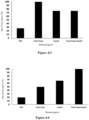
- the serum antibody titres for each group of the immunized mice were shown in Figures 3.1 to 3.4 .
- Table 1 Immunogens used in immunogenicity assay and antigens for ELISA assay ELISA group Immunogen Antigen for ELISA assay 1 PsaA-PspA PsaA-PspA 2 PsaA-PspA + PspA4 PsaA-PspA 3 PspA4 PspA4 4 PsaA-PspA + PspA4 PspA4 5 PspA PspA 6 PsaA-PspA PspA 7 PspA PsaA 8 PsaA-PspA PsaA
- high-titre serum antibodies can be induced by immunization with a PsaA-PspA fusion protein, a PspA4 protein alone, a combination of a PsaA-PspA fusion protein and a PspA4 protein, a PsaA protein, a PspA protein alone, or a combination of a PspA4 protein and a PsaA protein, as compared with the control group.
- the PsaA-PspA fusion protein, PspA4 protein alone, PspA protein alone, PsaA protein alone, PsaA-PspA fusion protein in combination with PspA4 protein, and PspA protein in combination with PsaA protein were respectively mixed with adjuvant Al(OH) 3 homogeneously.
- an equal volume of PBS was homogeneously mixed with adjuvant Al(OH) 3 .
- Said PsaA-PspA fusion protein and PspA4 protein, either alone or in combination for immunization, are used in a dose of 20 ⁇ g/mouse; said PspA protein and PsaA protein, either alone or in combination for immunization, are used in a dose of 10 ⁇ g/mouse; adjuvant Al(OH) 3 is used in a dose of 100 ⁇ g/mouse; and the total volume is 100 ⁇ L /mouse. Seventy 6- to 8-week-old female BALB/c mice were randomized into seven groups (10 mice in each group).
- mice were immunized subcutaneously at three sites in the back with the above seven groups of mixtures, totaling three immunizations with two-week interval between two immunizations.
- the commercially available 23-valent pneumococcal polysaccharide vaccine was used.
- the mice were subcutaneously immunized in the back only once in a dose of one-fifth human dose, i.e., 100 ⁇ L per mouse (in accordance with instructions for administering vaccine) when performing the first immunization (hereinafter referred to as "1 st immu.") of the protein groups.
- mice were challenged intraperitoneally or intra-nasally with Streptococcus pneumoniae ATCC6404 strain (from Clade1 of PspA Fam1) or Streptococcus pneumoniae ATCC10813 strain (from Clade2 of PspA Fam1) (both strains are available from American Type Culture Collection) in a lethal dose. Mice were observed for survival over a period of 14 days following the challenge.
- Mice challenged intraperitoneally with Streptococcus pneumoniae ATCC10813 strain (from Clade2 of PspA Fam1) in a dose of 20 CFU/mouse were observed for their survival rates after 14 days.
- Figures 4.1 to 4.3 the results are as follows:
- PsaA-PspA fusion protein either used alone or in combination with PspA4, can confer significant protection against the challenge with Clade1 and Clade2 of PspA Fam1.
- the PsaA-PspA fusion protein, PspA4 protein alone, PspA protein alone, PsaA protein alone, PsaA-PspA fusion protein in combination with PspA4 protein, and PspA protein in combination with PsaA protein were respectively mixed with adjuvant Al(OH) 3 homogeneously.
- an equal volume of PBS was homogeneously mixed with adjuvant Al(OH) 3 .
- Said PsaA-PspA fusion protein and PspA4 protein, either alone or in combination for immunization, are used in a dose of 20 ⁇ g/mouse; said PspA protein and PsaA protein, either alone or in combination for immunization, are used in a dose of 10 ⁇ g/mouse; adjuvant Al(OH) 3 is used in a dose of 100 ⁇ g/mouse; and the total volume is 100 ⁇ L /mouse.
- 6- to 8-week-old female BALB/c mice (10 mice in each group) were subcutaneously immunized at three sites in the back, totaling three immunizations with two-week interval between two immunizations.
- mice were challenged intraperitoneally or intra-nasally with Streptococcus pneumoniae ATCC6314 strain (from Clade4 of PspA Fam2) or Streptococcus pneumoniae ATCC6303 strain (from Clade5 of PspA Fam2) (both strains are available from American Type Culture Collection) in a lethal dose. Mice were observed for survival over a period of 14 days following the challenge.
- PsaA-PspA fusion protein confers significantly higher protection against the challenge with virus strains from Fam1 and Fam2; and PspA4 protein alone gives lower protection against Fam1.
- the PsaA-PspA fusion protein of the present invention can be used either as an immunogen or as a vaccine in combination with an adjuvant.
- PsaA-PspA fusion protein in combination with PspA4 has good protection against bacteria strains from Fam1 and Fam2.
- the PsaA-PspA fusion protein of the present invention can also be used in combination with other surface proteins.
- PsaA-PspA fusion protein is a good candidate immunogen for Streptococcus pneumoniae vaccine and is capable of achieving better protective efficacy when combined with other proteins.
- the PsaA-PspA fusion protein of the present invention can also be used as a carrier protein in polysaccharide vaccines to increase broad spectrum and protection of such vaccines.
Landscapes
- Health & Medical Sciences (AREA)
- Chemical & Material Sciences (AREA)
- Life Sciences & Earth Sciences (AREA)
- Genetics & Genomics (AREA)
- Organic Chemistry (AREA)
- General Health & Medical Sciences (AREA)
- Engineering & Computer Science (AREA)
- Medicinal Chemistry (AREA)
- Molecular Biology (AREA)
- Biochemistry (AREA)
- Microbiology (AREA)
- Biomedical Technology (AREA)
- Biophysics (AREA)
- Zoology (AREA)
- Wood Science & Technology (AREA)
- Bioinformatics & Cheminformatics (AREA)
- General Engineering & Computer Science (AREA)
- Biotechnology (AREA)
- Pharmacology & Pharmacy (AREA)
- Veterinary Medicine (AREA)
- Animal Behavior & Ethology (AREA)
- Public Health (AREA)
- Mycology (AREA)
- Epidemiology (AREA)
- Immunology (AREA)
- Proteomics, Peptides & Aminoacids (AREA)
- Plant Pathology (AREA)
- Gastroenterology & Hepatology (AREA)
- Physics & Mathematics (AREA)
- Chemical Kinetics & Catalysis (AREA)
- General Chemical & Material Sciences (AREA)
- Pulmonology (AREA)
- Communicable Diseases (AREA)
- Oncology (AREA)
- Nuclear Medicine, Radiotherapy & Molecular Imaging (AREA)
- Peptides Or Proteins (AREA)
- Medicines Containing Antibodies Or Antigens For Use As Internal Diagnostic Agents (AREA)
Description
- The present invention relates to the fields of molecular biology and immunology. In particular, the present invention relates to Streptococcus pneumoniae protein antigen, preparation method, composition and use thereof.
- Streptococcus pneumoniae is a Gram-positive bacterium with capsular polysaccharide. As an ordinary pathogenic bacterium, it is the leading pathogenic agent of community-acquired pneumonia, and can also result in other diseases such as sinusitis, otitis media and meningitis. In developing countries, pneumonia caused by Streptococcus pneumoniae is one of the major causes of death in elderly people and young children; and in developed countries, otitis media caused by Streptococcus pneumoniae is also one of the most common diseases in the pediatric population. It was estimated that approximately one million children under
age 5 worldwide died from diseases caused by Streptococcus pneumoniae in the year 2000. Christa L Fischer Walker et al. estimated that about fourteen million children underage 5 worldwide developed into severe pneumonia in the year 2010. Streptococcus pneumoniae is a leading pathogen of severe pneumonia; and throughout the world, at least 18% of severe cases and 33% of death cases caused by pneumonia are resulted from Streptococcus pneumonia. - At present, commercially available pneumococcal vaccines mainly include polysaccharide vaccines and polysaccharide-conjugate vaccines, both of which are pneumococcal capsular polysaccharide type-specific vaccines. Based on the difference of pneumococcal capsular polysaccharides, more than 90 different serotypes have been identified. Thus, pneumococcal vaccines based on polysaccharide cannot cover all the pneumococcal serotypes. The 23-valent pneumococcal capsular polysaccharide vaccine is ineffective to children under
age 2 whose immune system has not been fully developed, and the 7-valent pneumococcal conjugate vaccine that has been widely used can only encompass 7 serotypes which account for 55% of pathogenic serotypes in Asia. Moreover, with the applications of polysaccharide vaccines and polysaccharide-conjugate vaccines, a phenomenon of serotype replacement has emerged, resulting in decreasing efficacy of vaccines year by year. Also, polysaccharide-conjugate vaccines are hardly available in developing countries owing to their high costs. Although the World Health Organization (WHO) recommended in 2007 that pneumococcal conjugate vaccines should be included in National immunization Program in developing countries, this has not been materialized to date. - Pneumococcal protein vaccines have become the hot topic of current researches on pneumococcal vaccines because of their characteristics such as serotype independency, relatively lower costs, and good immunogenicity.
- Pneumococcal surface adhesion A (hereinafter referred to as "PsaA") is a highly-conserved, species-specific, surface-bound lipoprotein expressed by all strains of Streptococcus pneumoniae, and having a molecular weight of 37 KD and good immunogenicity. PsaA, which plays a vital role during manganese delivery and adherence of Streptococcus pneumoniae to mucosal membrane of respiratory tract, is an important virulence factor of Streptococcus pneumoniae invasion. It was reported that PsaA mutant affects many essential functions of Streptococcus pneumoniae including adhesion and virulence. PsaA exhibits excellent immunogenicity. Literatures reported that high-titre PsaA antibody can be induced either after PsaA immunization or after colonization of Streptococcus pneumoniae in nasopharynx, and also evaluated immune protective efficacy of PsaA. Therefore, PsaA protein, characterized by its species-specificity, sequence-conservatism, higher immunogenicity and immune protection, has become one of the hot topics in researches on Streptococcus pneumoniae protein vaccines.
- Pneumococcal surface protein A (hereinafter referred to as "PspA") is a bacterial surface protein belonging to the choline-binding protein family, and an important virulence factor of Streptococcus pneumoniae. PspA serves main functions of binding to lactoferrin to result in loss of its bacteriostatic activity and inhibiting complement deposition on the surface of Streptococcus pneumoniae so as to interfere in complement-mediated opsonization and phagocytosis. Studies have revealed that PspA- strain has lower virulence and is immediately cleared by body after infection. Actively-immunizing recombinant PspA protein can induce protection against various Streptococcus pneumoniae challenge models.
- Currently, PspA was found to be present in all clinically isolated strains of Streptococcus pneumoniae. Nevertheless, such PspAs are not conservative in their molecular structures and have molecular weights varied from 67 to 100 KD. PspA molecule includes five regions: a signal peptide region, an α-helical region, a proline-rich region, a choline-binding region in which PspA binds to a cell surface, and a C-terminal tail of 17 amino acids.
- Despite of the variability of PspA in its structure and antigenicity, antibodies generated against PspA are highly cross-reactive and cross-protective. As shown by researches on gene and protein mapping, the majority of cross protection-conferring antigen epitopes are located in a sequence of approximately 100 amino acids adjacent to the proline-rich region in the α-helix region, which is called as a Clade Defining Region (hereinafter referred to as "CDR"). Based on the variations within the CDR regions, PspA is classified into three families (Fam1, Fam2 and Fam3), which are subdivided into 6 clades (Clade1, Clade2, Clade3, Clade4, Clade5 and Clade6), wherein Clade1 and Clade2 belong to Fam1; Clade3, Clade4 and Clade5 belong to Fam2, and Clade6 belongs to Fam3. Gene sequences of CDR regions in the clades of the same family share more than 80% identity; and gene sequences of CDR regions in different families share more than 50% identity. In the three families, Fam1 and Fam2 have prevalence of greater than 98%.
- Most of protein vaccines in the prior art utilize a single protein and can only act against certain category of Streptococcus pneumoniae, and thus do not have a broad spectrum. The present invention increases broad spectrum and protection of vaccines by using a fusion protein of PsaA and PspA, and using said fusion protein in combination with further protein antigens or as a protein carrier.
- The inventors found that immunizing animals with a PsaA-PspA fusion protein can induce a high-titre antibody and confer good protection against challenge of strains from Fam1 and Fam2, as compared with control group (PBS); and the combined use of PsaA-PspA and Clade4 of PspA Fam2 (PspA4) can also afford good protection against challenge of strains from Fam1 and Fam2, as compared with control group (PBS).
- In the first aspect, the present invention provides a fusion protein comprising pneumococcal surface adhesion A (PsaA) and pneumococcal surface protein A (PspA), wherein the PsaA has the amino acid sequence as shown in SEQ ID NO: 1; wherein the PspA is a sequence obtained by ligating the sequence as shown in SEQ ID NO:2 and the sequence as shown in SEQ ID NO;3; wherein the PsaA and the PspA are ligated via a linker and the different parts of PspA are ligated via a linker, wherein the fusion protein has the sequence as shown in SEQ ID NO: 5.
- In a second aspect, the present invention provides a nucleic acid encoding said fusion protein as described in the first aspect. Preferably, said nucleic acid is designed according to codon optimization, and most preferably has the sequence as shown in SEQ ID NO: 6.
- In a third aspect, the present invention provides a recombinant expression vector comprising said nucleic acid as described in the second aspect that is operably linked to an expression regulatory element. Preferably, said expression vector is a plasmid.
- In a fourth aspect, the present invention provides a recombinant cell comprising said recombinant expression vector as described in the third aspect. Preferably, said cell is a prokaryotic cell, more preferably E. coli, and most preferably E. coli BL21.
- In a fifth aspect, the present invention provides a method for preparing said PsaA-PspA fusion protein as described in the first aspect, comprising: inserting a nucleic acid encoding said PsaA-PspA into an expression vector; and introducing the resulting recombinant expression vector into an organism such that the nucleic acid is expressed to generate said fusion protein, wherein the organism is a prokaryotic cell and preferably, the prokaryotic cell is E. coli. Preferably, said method further comprises isolation and purification steps. More preferably, said fusion protein is purified by affinity chromatography, ion exchange chromatography and/or gel filtration chromatography.
- In a sixth aspect, the present invention provides a composition comprising said fusion protein as described in the first aspect, said nucleic acid as described in the second aspect, the vector as described in the third aspect, or the cell as described in the fourth aspect, and a pharmaceutically acceptable carrier.
- In the seventh aspect, the present invention provides a vaccine composition comprising said fusion protein as described in the first aspect, and preferably further comprising an adjuvant, and most preferably said adjuvant is an Al(OH)3 adjuvant.
- In an eighth aspect, the present invention provides a vaccine composition comprising said fusion protein as described in the first aspect and at least one further Streptococcus pneumoniae protein antigen. Preferably, said other protein antigen is a full-length or truncated sequence of a surface exposed protein, more preferably a full-length or truncated sequence of PspA, even more preferably a full-length or truncated sequence of PspA Clade4, and most preferably the sequence as shown in SEQ ID NO: 8. Preferably, said vaccine composition further comprises an adjuvant and more preferably an Al(OH)3 adjuvant.
- In a ninth aspect, the present invention provides said fusion protein alone or in combination with additional protein antigens for use in the prevention of infection by Streptococcus pneumoniae.
-
-
Figure 1.1 shows an electropherogram of the expression vector PET20b-PspA4 plasmid double-digested by Nde I and Xho I. 1: 1 kb DNA Ladder. 2: bands of PET20b-PspA4 plasmid after double enzymatic digestion with Nde I and Xho I. As shown in the figure, PET20b-PspA4 is confirmed by double enzymatic digestion to be in correct size, wherein the band at about 3700 bp is a linear fragment of an empty PET20b vector and the band at about 1300 bp is a PspA4 fragment of interest. -
Figure 1.2 shows an electropherogram of an expression vector PET20b-PsaA-PspA plasmid double-digested by Nde I and Xho I. 1: 1 kb DNA Ladder. 2: bands of plasmid PET20b-PsaA-PspA after double enzymatic digestion with Nde I and Xho I. As shown in the figure, PET20b-PsaA-PspA is confirmed by double enzymatic digestion to be in correct size, wherein the band at about 3700 bp has a linear fragment of an empty PET20b vector and the band at about 2100 bp is a PsaA-PspA fragment of interest at about 2100 bp. -
Figure 1.3 shows an electropherogram of an expression vector PET20b-PspA plasmid double-digested by Nde I and Xho I. 1: 1 kb DNA Ladder. 2: bands of plasmid PET20b-PspA after double enzymatic digestion with Nde I and Xho I. As shown in the figure, PET20b-PspA is confirmed by double enzymatic digestion to be in correct size, wherein the band at about 3700 bp has a linear fragment of an empty PET20b vector and the band at about 1150 bp is a PspA fragment of interest. -
Figure 1.4 shows an electropherogram of an expression vector PET20b-PsaA plasmid double-digested by Nde I and Xho I. 1: 1 kb DNA Ladder. 2: bands of plasmid PET20b-PsaA after double enzymatic digestion with Nde I and Xho I. As shown in the figure, PET20b-PsaA is confirmed by double enzymatic digestion to be in correct size; the band at about 3700 bp has a linear fragment of an empty PET20b vector and the band at about 900 bp is a PsaA fragment of interest. -
Figure 2.1 shows a Sodium Dodecyl Sulfate-Polyacrylamide Gel Electrophoresis (SDS-PAGE) graph of purified PsaA-PspA fusion protein. 1: marker bands of eukaryotic protein. 2: band of PsaA-PspA fusion protein. As shown in the figure, the PsaA-PspA fusion protein has a size of 88.0 kD and a purity of about 82.0%. -
Figure 2.2 shows a SDS-PAGE graph of purified PspA4 protein. 1_: marker bands of eukaryotic protein. 2: band of PspA4 protein. As shown in the figure, the PspA4 protein has a size of 63.8 kD and a purity of about 94.2%. -
Figure 2.3 shows a SDS-PAGE graph of purified PspA protein. 1_: marker bands of eukaryotic protein; 2: band of PspA protein. As shown in the figure, the PspA protein has a size of 42.5 kD and a purity of about 88.0%. -
Figure 2.4 shows a SDS-PAGE graph of purified PsaA protein. 1: marker bands of eukaryotic protein. 2: band of PsaA protein. As shown in the figure, the PsaA protein has a size of 35.4 kD and a purity of about 86.0%. -
Figure 3.1 is a schematic graph showing the titres of the PsaA-PspA antibodies induced by immunizing mice with different antigens. Rhombus represents the titre of the PsaA-PspA antibody induced by subcutaneously immunizing mice with a mixture of a single PsaA-PspA fusion protein and an adjuvant Al(OH)3. Square represents the titre of the PsaA-PspA antibody induced by subcutaneously immunizing mice with a mixture of a PsaA-PspA fusion protein, PspA4 and an adjuvant Al(OH)3. Triangle represents the titre of the PsaA-PspA antibody induced by subcutaneously immunizing mice with a mixture of PBS as a control and an adjuvant Al(OH)3. High-titre PsaA-PspA antibodies can be induced either by a single PsaA-PspA fusion protein or by a PsaA-PspA fusion protein in combination with PspA4, as compared with the control group. -
Figure 3.2 is a schematic graph showing the titres of the PspA4 antibodies induced by immunizing mice with different antigens. Rhombus represents the titre of the PspA4 antibody induced by subcutaneously immunizing mice with a mixture of a single PspA4 with an adjuvant Al(OH)3. Square represents the titre of the PspA4 antibody induced by subcutaneously immunizing mice with a mixture of a PsaA-PspA fusion protein, PspA4 and an adjuvant Al(OH)3. Triangle represents the titre of the PspA4 antibody induced by subcutaneously immunizing mice with a mixture of PBS as a control and an adjuvant Al(OH)3. High-titre PspA4 antibodies can be induced either by a single PspA4 or PsaA-PspA in combination with PspA4, as compared with the control group. -
Figure 3.3 is a schematic graph showing the titres of the PspA antibodies induced by immunizing mice with different antigens. Rhombus represents the titre of the PspA antibody induced by subcutaneously immunizing mice with a mixture of a single PspA with an adjuvant Al(OH)3. Square represents the titre of the PspA antibody induced by subcutaneously immunizing mice with a mixture of PsaA, PspA and an adjuvant Al(OH)3. Triangle represents the titre of the PspA antibody induced by subcutaneously immunizing mice with a mixture of PBS as a control and an adjuvant Al(OH)3. High-titre PspA antibodies can be induced either by a single PspA or by PsaA in combination with PspA, as compared with the control group. -
Figure 3.4 is a schematic graph showing the titres of the PsaA antibodies induced by immunizing mice with different antigens. Rhombus represents the titre of the PsaA antibody induced by subcutaneously immunizing mice with a mixture of a single PsaA and an adjuvant Al(OH)3. Square represents the titre of the PsaA antibody induced by subcutaneously immunizing mice with a mixture of PsaA, PspA and an adjuvant Al(OH)3. Triangle represents the titre of the PsaA antibody induced by subcutaneously immunizing mice with a mixture of PBS as a control and an adjuvant Al(OH)3. High-titre PsaA antibodies can be induced either by a single PsaA or by PsaA in combination with PspA, as compared with the control group. -
Figure 4.1 is a bar graph showing survival rates of mice immunized with different antigens 14 days after challenged intraperitoneally with Streptococcus pneumoniae ATCC6404 strain (from Clade1 of PspA FAM1). Rectangular bars in the figure from left to right denote survival rates of mice immunized with PBS (control group), PsaA, PspA, a PsaA-PspA fusion protein, PspA4, PsaA in combination with PspA, a PsaA-PspA fusion protein in combination with PspA4, and a 23-valent pneumococcal polysaccharide vaccine, respectively. -
Figure 4.2 is a bar graph showing survival rates of mice immunized with different antigens 14 days after challenged intra-nasally with Streptococcus pneumoniae ATCC6404 strain (from Clade1 of PspA FAM1). Rectangular bars in the figure from left to right denote survival rates of mice immunized with PBS (control group), PsaA, PspA, a PsaA-PspA fusion protein, PspA4, PsaA in combination with PspA, a PsaA-PspA fusion protein in combination with PspA4, and a 23-valent pneumococcal polysaccharide vaccine, respectively. -
Figure 4.3 is a bar graph showing survival rates of mice immunized with different antigens 14 days after challenged intraperitoneally with Streptococcus pneumoniae ATCC10813 strain (from Clade2 of PspA Fam1). Rectangular bars in the figure from left to right denote survival rates of mice immunized with PBS (control group), PsaA, PspA, a PsaA-PspA fusion protein, PspA4, PsaA in combination with PspA, a PsaA-PspA fusion protein in combination with PspA4, and a 23-valent pneumococcal polysaccharide vaccine, respectively. -
Figure 4.4 is a bar graph showing survival rates of mice immunized with different antigens 14 days after challenged intraperitoneally with Streptococcus pneumoniae ATCC6314 strain (from Clade4 of PspA Fam2). Rectangular bars in the figure from left to right denote survival rates of mice immunized with PBS (control group), PsaA, PspA, a PsaA-PspA fusion protein, PspA4, PsaA in combination with PspA, and a PsaA-PspA fusion protein in combination with PspA4, respectively. -
Figure 4.5 is a bar graph showing survival rates of mice immunized with different antigens 14 days after challenged intraperitoneally with Streptococcus pneumoniae ATCC6303 strain (from Clade5 of PspA Fam2). Rectangular bars in the figure from left to right denote survival rates of mice immunized with PBS (control group), a PsaA-PspA fusion protein, PspA4, PsaA in combination with PspA, and a PsaA-PspA fusion protein in combination with PspA4, respectively. -
Figure 4.6 is a bar graph showing survival rates of mice immunized with different antigens 14 days after challenged intra-nasally with Streptococcus pneumoniae ATCC6303 strain (from Clade5 of PspA Fam2). Rectangular bars in the figure from left to right denote survival rates of mice immunized with PBS (control group), a PsaA-PspA fusion protein, PspA4, and a PsaA-PspA fusion protein in combination with PspA4, respectively. - Advantages and technical effects of the present invention are illustrated in view of specific Examples in the text below. The protection scope of the present invention is defined by the claims. The Examples are only intended to illustratively show the concept and principle of the present invention. It is to be understood that such specific embodiments will not be construed as limiting the scope of the present invention.
- The present invention is illustrated in detail by means of the following Examples so that it can be more readily understood by those skilled in the art. Unless otherwise specified, it is to be understood that all the instruments or equipments used in the following Examples are those conventionally known in the art; the culture media used are commercially available conventional media of which the components and contents are well-known to those skilled in the art.
- The sequences selected were as follows: an amino acid sequence of amino acids 20-309 of PsaA from Streptococcus pneumoniae strain D39 (GenBank: P0A4G2.1), as shown in SEQ ID NO: 1; an amino acid sequence of amino acids 32-319 of PspA (Clade2 of Fam1) from Streptococcus pneumoniae strain RX1 (GenBank: M74122.1), as shown in SEQ ID NO: 2; and an amino acid sequence of amino acids 346-420 of PspA (Clade3 of Fam2) from Streptococcus pneumoniae EF3296 (GenBank: AF071816.1), as shown in SEQ ID NO: 3. The PsaA-PspA fusion protein comprises a PspA protein portion obtained by ligating said amino acid sequence of amino acids 32-319 of PspA (Clade2 of Fam1) from Streptococcus pneumoniae strain RX1 and said amino acid sequence of amino acids 346-420 of PspA (Clade3 of Fam2) from Streptococcus pneumoniae EF3296 via a linker and having an amino acid sequence as shown in SEQ ID NO: 4. Said PsaA-PspA fusion protein has an amino acid sequence as shown in SEQ ID NO: 5 obtained by fusing SEQ ID NO: 1 and SEQ ID NO: 4 via a linker.
- A nucleotide sequence encoding an amino acid sequence of the PsaA-PspA fusion protein was optimized by using the codon favored by E. coli, obtaining a nucleotide sequence as shown in SEQ ID NO: 6 encoding the PsaA-PspA fusion protein as shown in SEQ ID NO: 5. In order to facilitate enzymatic digestion, during synthesis of the nucleic acid, an Nde I digestion site and a six-histidine tag were introduced successively at 5' end; an Xho I digestion site was introduced at 3' end; and the resultant nucleotide sequence was shown in SEQ ID NO: 7.
- A nucleotide sequence as shown in SEQ ID NO: 7 was artificially synthesized, and the synthesized sequence was stored in a pGH plasmid.
- An amino acid sequence of amino acids 32-450 of PspA (Clade4 of Fam2) from Streptococcus pneumoniae EF5668 (GenBank: U89711.1) was selected, as shown in SEQ ID NO: 8.
- A nucleotide sequence encoding an amino acid sequence of PspA4 protein was optimized with by using the codon favored by E.coli, obtaining a nucleotide sequence encoding PspA4 protein as shown in SEQ ID NO: 9. In order to facilitate enzymatic digestion, during synthesis of the nucleic acid, an Nde I digestion site was introduced at 5' end; an Xho I digestion site was introduced at 3' end; and the resultant nucleotide sequence was shown in SEQ ID NO: 10.
- A nucleotide sequence as shown in SEQ ID NO: 10 was artificially synthesized, and the synthesized sequence was stored in a pGH plasmid.
- An amino acid sequence of amino acids 20-309 of PsaA from Streptococcus pneumoniae strain D39 (GenBank: P0A4G2.1) was selected, as shown in SEQ ID NO: 1. In order to facilitate enzymatic digestion, in the nucleotide sequence encoding the amino acid sequence as shown in SEQ ID NO: 1, an Nde I digestion site was introduced at 5' end by means of PCR technique; and an Xho I digestion site was introduced at 3' end.
- A nucleotide sequence as shown in SEQ ID NO: 11 was obtained by means of PCR technique using the artificially-synthesized nucleotide sequence of PsaA-PspA fusion protein as shown in SEQ ID NO: 7 as template, the sequence as shown in SEQ ID NO: 13 as 5'-primer, and the sequence as shown in SEQ ID NO: 14 as 3'-primer.
- The system for PCR reaction comprises:
5'- primer 1 µL 3'- primer 1 µL Template 1 µL Taq enzyme 0.5 µL 10× PCR reaction buffer 5 µL dNTP (10 mmol) 1 µL MgSO4 (50 mmol) 1.5 µL water 39 µL - The conditions for PCR reaction are as follows:
94° C 5 min 94°C 30s, 58°C 30s, 72°C 60s, totaling 30 cycles 72° C 10 min - The PsaA nucleotide sequence amplified by PCR that had been confirmed to have the correct sequence was ligated into T-easy carrier (available from PROMEGA).
- Lioation system:
T-easy 1 µL PCR product 0.5 µL T4 ligase 0.5 µL 10× T4 buffer 5 µL water 3 µL - Condition: 16°C overnight.
- Ligation products were transformed into E. coli Top 10 (available from Tiangen BioTech Co. Ltd.) on the next day, then plated and incubated at 37°C overnight. A single colony was picked and incubated in 5 ml LB medium overnight. Subsequently, plasmids were extracted using Plasmid Extraction Kit and sequenced. The plasmid confirmed to have the correct sequence was used for enzymatic digestion.
- The sequences selected were as follows: an amino acid sequence of amino acids 32-319 of PspA (Clade2 of Fam1) from Streptococcus pneumoniae strain RX1 (GenBank: M74122.1), as shown in SEQ ID NO: 2; and an amino acid sequence of amino acids 346-420 of PspA (Clade3 of Fam2) from Streptococcus pneumoniae EF3296 (GenBank: AF071816.1), as shown in SEQ ID NO: 3. PspA protein was obtained by ligating the above two amino acid sequences via a linker and has an amino acid sequence as shown in SEQ ID NO: 4. In order to facilitate enzymatic digestion, in the nucleotide sequence encoding the amino acid sequence as shown in SEQ ID NO: 4, an Nde I digestion site was introduced at 5' end; and an Xho I digestion site was introduced at 3' end.
- A nucleotide sequence as shown in SEQ ID NO: 12 was obtained by means of PCR technique using the artificially-synthesized nucleotide sequence of PsaA-PspA fusion protein as shown in SEQ ID NO: 7 as template, the sequence as shown in SEQ ID NO: 15 as 5'-primer, and the sequence as shown in SEQ ID NO: 16 as 3'-primer.
- The system for PCR reaction comprises:
5'- primer 1 µL 3'- primer 1 µL Template 1 µL Taq enzyme 0.5 µL 10× PCR buffer 5 µL dNTP (10 mmol) 1 µL MgSO4 (50 mmol) 1.5 µL water 39 µL - The conditions for PCR reaction are as follows:
94° C 5 min 94°C 30s, 57°C 30s, 72°C 90s, totaling 30 cycles 72° C 10 min - The PspA nucleotide sequence amplified by PCR that had been confirmed to have the correct sequence was ligated into T-easy carrier (available from PROMEGA).
- Lioation sstem:
T-easy 1 µL PCR product 0.5 µL T4 ligase 0.5 µL 10× T4 buffer 5 µL water 3 µL - Condition: 16°C overnight.
- Ligation products were transformed into E.coli Top 10 (available from Tiangen BioTech Co. Ltd.) on the next day, then plated and incubated at 37°C overnight. A single colony was picked and incubated in 5 ml LB medium overnight. Subsequently, plasmids were extracted using Plasmid Extraction Kit and sequenced. The plasmid confirmed to have the correct sequence was used for enzymatic digestion.
- Plasmid bearing a nucleic acid encoding PsaA-PspA with correct sequence (SEQ ID NO: 7) was double-digested with Nde I and Xho I and ligated via T4 ligase (available from PROMEGA) into an expression vector PET20b (available from Novagen Ltd.) treated by the same double-digestion. Litigation products were then transformed into E.coli Top 10 (available from Tiangen BioTech Co. Ltd.) and plated onto a plate of LB medium (containing 50 µg/ml ampicillin) for incubation overnight. Colonies were picked on the next day and added into LB medium (containing 50 µg/ml ampicillin) for incubation overnight. Plasmids were extracted on the following day. After double-digestion with Nde I and Xho I, colonies confirmed to be correct by enzymatic digestion were sequenced to pick the colonies having the sequences of interest, thereby obtaining the expression plasmid PET20b-PsaA-PspA. Similarly, PET20b-PspA4 plasmid was obtained from the plasmids comprising a nucleic acid encoding PspA4 protein with correct sequence (SEQ ID NO: 10).
- T-easy vector bearing a nucleic acid encoding PsaA protein with correct sequence (SEQ ID NO: 11) was double-digested with Nde I and Xho I and ligated via T4 ligase (available from PROMEGA) into an expression vector PET20b (available from Novagen Ltd.) treated by the same double-digestion. Litigation products were then transformed into E.coli Top 10 (available from Tiangen BioTech Co. Ltd.) and plated onto a plate of LB medium (containing 50 µg/ml ampicillin) for incubation overnight. Colonies were picked on the next day and added into LB medium (containing 50 µg/ml ampicillin) for incubation overnight. Plasmids were extracted on the following day. After double-digestion with Nde I and Xho I, colonies confirmed to be correct by enzymatic digestion were sequenced to pick the colonies having the sequences of interest, thereby obtaining the expression plasmid PET20b-PsaA. Similarly, Expression plasmid PET20b-PspA was obtained from the T-easy vectors comprising a nucleic acid encoding PspA protein with correct sequence (SEQ ID NO: 12).
- Expression plasmids PET20b-PspA4, PET20b-PsaA-PspA, PET20b-PspA and PET20b-PsaA were confirmed by enzymatic digestion with Nde I and Xho I to have fragments in correct size. Enzymatic digestion results are shown in
Figures 1.1 to 1.4 , respectively. Plasmids confirmed to be correct by enzymatic digestion were sequenced to select the expression plasmids with correct sequence. - Recombinant expression plasmids with correct sequences, PET20b-PspA4, PET20b-PsaA-PspA, PET20b-PspA and PET20b-PsaA, were transformed into E.coli BL21 (DE3) competent cells (available from TransGen Biotech). LB agar plate (containing 50 µg/ml ampicillin) was used for screening the cells. Fresh single colonies were picked and inoculated into 5 ml LB medium (containing 50 µg/ml ampicillin) for incubation overnight with shaking at 37°C. 50 µl of overnight cultures were taken out on the next day and then were incubated in 5 ml of fresh LB medium (containing 50 µg/ml ampicillin) for incubation with shaking at 37°C for about 3 hours. When OD600 reaches about 0.4 to 0.6, isopropyl-thiogalactoside (IPTG) at a final concentration of 1 mM was added to induce expression at 37°C for 5 to 6 hours (IPTG was not added in the control group). Bacteria were harvested by centrifugation at 12000 rpm/minute at 4°C for 5 min. Expression of protein of interest was determined by SDS-PAGE and Western blotting.
- Colonies with high levels of protein expression were amplified and incubated. The overnight cultures were inoculated into 500 ml fresh LB medium (containing 50 µg/ml ampicillin) in a ratio of 1:50 for incubation with shaking at 37°C for about 3 hours. When OD600 reaches about 0.4 to 0.6, isopropyl-thiogalactoside (IPTG) at a final concentration of 1 mM was added to induce expression at 37°C for 5 to 6 hours (IPTG was not added in the control group). Bacterial culture medium with significant expression was selected and centrifuged at 6000 rpm/minute at 4°C for 30 min, cell precipitates were harvested, and supernatants were discarded.
- Cell precipitates were re-suspended in bacterial lysis buffer (50 mM Tris(hydroxymethyl)aminomethane hydrochlorate (Tris-HCl) and 1 mM Ethylene Diamine Tetraacetic Acid (EDTA), pH 8.0), broken by sonication in ice bath for 15 min, and centrifuged at 10000 rpm/minute at 4°C for 30 min. Supernatants were collected, filtered with microporous filtration membrane having a pore size of 0.45 µm, and purified by affinity chromatography in an Ni-NTA column (GE Healthcare). Initially, 50 mM Tris-HCl buffer (pH 8.0) was used to balance the Ni-NTA column. Next, the supernatants were dripped onto the column at a speed of 1.5 ml/min. Gradient elution was carried out using elution buffers (50 mM Tris-HCl buffers (pH 8.0) comprising 50, 100, 200, and 500 mM imidazole, successively). Eluents were collected for each gradient and analyzed by SDS-PAGE to obtain their purity. SDS-PAGE result of purified PsaA-PspA fusion protein was shown in
Figure 2.1 with the purity of 82.0%. SDS-PAGE result of purified PspA4 was shown inFigure 2.2 with the purity of 94.2%. SDS-PAGE result of purified PspA protein was shown inFigure 2.3 with the purity of 88.0%. SDS-PAGE result of purified PsaA protein was shown inFigure 2.4 with the purity of 86.0%. - Said proteins of interest were also isolated and purified by ion exchange chromatography and gel filtration chromatography to obtain the proteins of interest with higher purity (results not shown).
- Conclusion: through the experiments described in this Example, it can be seen that various proteins of interest with the purity of 80% or more could be obtained.
- After purification, the PsaA-PspA fusion protein alone, PspA4 protein alone, PspA protein alone, PsaA protein alone, PsaA-PspA fusion protein in combination with PspA4 protein, and PspA protein in combination with PsaA protein in PBS were respectively mixed with adjuvant Al(OH)3 homogeneously. As a control, an equal volume of PBS was homogeneously mixed with adjuvant Al(OH)3. Said PsaA-PspA fusion protein and PspA4 protein, either alone or in combination for immunization, are used in a dose of 20 µg/mouse; said PspA protein and PsaA protein, either alone or in combination for immunization, are used in a dose of 10 µg/mouse; adjuvant Al(OH)3 is used in a dose of 100 µg/mouse; and the total volume is 100 µL/mouse. Seventy 6- to 8-week-old female BALB/c mice were randomized into seven groups (10 mice in each group). Said seven groups of mice were immunized subcutaneously at three sites in the back with the above seven groups of mixtures, totaling three immunizations with two-week intervals.
- Sera were collected before immunization and 12 days after every immunization. Antibody levels in the serum were measured by enzyme-linked immunosorbent assay (ELISA). At first, ELISA plates were coated with purified antigens for ELISA assay as shown in Table 1 and incubated at 4°C overnight. On the next day, the ELISA plates were blocked with 3% bovine serum albumin (BSA) and incubated for 2 hours. Subsequently, immune serum diluted in a 10-fold series was added and incubated at 37°C for 45 min. After washing the ELISA plates with PBS-T (pH 7.4, 0.5% Tween20), 100 µL horseradish peroxidase (HRP)-labeled goat anti-mouse antibody in 1:10000 dilution (Beijing Ding Guo Chang Sheng Biotech Co. Ltd), as second antibody, was added and incubated at 37°C for 45 min. After the plate washing, the plates were developed for 15 min by adding tetramethyl benzidine (TMB, available from Beijing Ding Guo Chang Sheng Biotech Co. Ltd). When the development was finished, 2 mol/L H2SO4 was added to stop the reaction. Absorbtance was monitored at a wavelength of 450 nm using a microplate reader (Bio-Rad Laboratories, Inc.). Antibody titre is the negative logarithm of serum antibody titre. The serum antibody titres for each group of the immunized mice were shown in
Figures 3.1 to 3.4 .Table 1: Immunogens used in immunogenicity assay and antigens for ELISA assay ELISA group Immunogen Antigen for ELISA assay 1 PsaA-PspA PsaA- PspA 2 PsaA-PspA + PspA4 PsaA-PspA 3 PspA4 PspA4 4 PsaA-PspA + PspA4 PspA4 5 PspA PspA 6 PsaA- PspA PspA 7 PspA PsaA 8 PsaA-PspA PsaA - Conclusion: as shown in
Figures 3.1 to 3.4 , high-titre serum antibodies can be induced by immunization with a PsaA-PspA fusion protein, a PspA4 protein alone, a combination of a PsaA-PspA fusion protein and a PspA4 protein, a PsaA protein, a PspA protein alone, or a combination of a PspA4 protein and a PsaA protein, as compared with the control group. - After purification, the PsaA-PspA fusion protein, PspA4 protein alone, PspA protein alone, PsaA protein alone, PsaA-PspA fusion protein in combination with PspA4 protein, and PspA protein in combination with PsaA protein were respectively mixed with adjuvant Al(OH)3 homogeneously. As a negative control, an equal volume of PBS was homogeneously mixed with adjuvant Al(OH)3. Said PsaA-PspA fusion protein and PspA4 protein, either alone or in combination for immunization, are used in a dose of 20 µg/mouse; said PspA protein and PsaA protein, either alone or in combination for immunization, are used in a dose of 10 µg/mouse; adjuvant Al(OH)3 is used in a dose of 100 µg/mouse; and the total volume is 100 µL /mouse. Seventy 6- to 8-week-old female BALB/c mice were randomized into seven groups (10 mice in each group). Said seven groups of mice were immunized subcutaneously at three sites in the back with the above seven groups of mixtures, totaling three immunizations with two-week interval between two immunizations. As a positive control, the commercially available 23-valent pneumococcal polysaccharide vaccine was used. The mice were subcutaneously immunized in the back only once in a dose of one-fifth human dose, i.e., 100 µL per mouse (in accordance with instructions for administering vaccine) when performing the first immunization (hereinafter referred to as "1st immu.") of the protein groups. On day 14 after the last immunization, the mice were challenged intraperitoneally or intra-nasally with Streptococcus pneumoniae ATCC6404 strain (from Clade1 of PspA Fam1) or Streptococcus pneumoniae ATCC10813 strain (from Clade2 of PspA Fam1) (both strains are available from American Type Culture Collection) in a lethal dose. Mice were observed for survival over a period of 14 days following the challenge. Mice challenged intraperitoneally (in a dose of 100 CFU/mouse) and inter-nasally (in a dose of 1.6×10⁹ CFU/mouse) with Streptococcus pneumoniae ATCC6404 strain (from Clade1 of PspA Fam1) were observed for their survival rates after 14 days. Mice challenged intraperitoneally with Streptococcus pneumoniae ATCC10813 strain (from Clade2 of PspA Fam1) in a dose of 20 CFU/mouse were observed for their survival rates after 14 days. As shown in
Figures 4.1 to 4.3 , the results are as follows: - (1) Mice immunized with PsaA, PspA, PsaA-PspA fusion protein, PspA4, PsaA in combination with PspA, PsaA-PspA fusion protein in combination with PspA4, or 23-valent pneumococcal polysaccharide vaccine have higher survival rates than those in the control group (PBS).
- (2) PsaA-PspA fusion protein confers higher protection against the challenge with Streptococcus pneumoniae ATCC6404 strain (from Clade1 of PspA Fam1) or Streptococcus pneumoniae ATCC10813 strain (from Clade2 of PspA Fam1) than PsaA or PspA alone.
- (3) As compared with PsaA in combination with PspA, PsaA-PspA fusion protein confers similar protection against the challenge with Streptococcus pneumoniae ATCC10813 strain (from Clade2 of PspA Fam1) and higher protection against the challenge with Streptococcus pneumoniae ATCC6404 strain (from Clade1 of PspA Fam1).
- (4) As compared with 23-valent pneumococcal polysaccharide vaccine, mice immunized with PsaA-PspA fusion protein or PsaA-PspA fusion protein in combination with PspA4 display higher survival rates and higher protection against the challenge with Streptococcus pneumoniae ATCC6404 strain (from Clade1 of PspA Fam1).
- (5) PsaA-PspA fusion protein alone, either administered intra-nasally or intraperitoneally, confers good protection against the challenge with Clade1 of Fam1 and also good protection against the intraperitoneal challenge with Clade2 of Fam1. In particular, said fusion protein can achieve up to 100% protection against the intraperitoneal challenge with Clade1 and Clade2.
- (6) As compared with PspA4, PsaA-PspA fusion protein confers higher protection against the challenge with Clade1 and Clade2 of PspA Fam1 and better cross-protection against the bacteria strain from Fam1.
- Thus, PsaA-PspA fusion protein, either used alone or in combination with PspA4, can confer significant protection against the challenge with Clade1 and Clade2 of PspA Fam1.
- After purification, the PsaA-PspA fusion protein, PspA4 protein alone, PspA protein alone, PsaA protein alone, PsaA-PspA fusion protein in combination with PspA4 protein, and PspA protein in combination with PsaA protein were respectively mixed with adjuvant Al(OH)3 homogeneously. As a negative control, an equal volume of PBS was homogeneously mixed with adjuvant Al(OH)3. Said PsaA-PspA fusion protein and PspA4 protein, either alone or in combination for immunization, are used in a dose of 20 µg/mouse; said PspA protein and PsaA protein, either alone or in combination for immunization, are used in a dose of 10 µg/mouse; adjuvant Al(OH)3 is used in a dose of 100 µg/mouse; and the total volume is 100 µL /mouse. 6- to 8-week-old female BALB/c mice (10 mice in each group) were subcutaneously immunized at three sites in the back, totaling three immunizations with two-week interval between two immunizations. On day 14 after the last immunization, the mice were challenged intraperitoneally or intra-nasally with Streptococcus pneumoniae ATCC6314 strain (from Clade4 of PspA Fam2) or Streptococcus pneumoniae ATCC6303 strain (from Clade5 of PspA Fam2) (both strains are available from American Type Culture Collection) in a lethal dose. Mice were observed for survival over a period of 14 days following the challenge.
- Mice survival rates 14 days after the intraperitoneal challenge with Streptococcus pneumoniae ATCC6314 strain (from Clade4 of PspA Fam2) (in a dose of 6×10⁷ CFU/mouse), and mice survival rates 14 days after intraperitoneal challenge (in a dose of 20 CFU/mouse) and inter-nasal challenge (in a dose of 2.2×10⁶ CFU/mouse) with Streptococcus pneumoniae ATCC6303 strain (from Clade5 of PspA Fam2) were shown in
Figures 4.4 ,4.5 and 4.6 , respectively. The results are as follows: - (1) Mice immunized with PsaA, PspA, PsaA-PspA fusion protein, PspA4, PsaA in combination with PspA, and PsaA-PspA fusion protein in combination with PspA4 have higher survival rates than those in the control group (PBS).
- (2) PsaA-PspA fusion protein confers higher protection against the challenge with Streptococcus pneumoniae ATCC6314 strain (from Clade4 of PspA FAMam2) than PsaA or PspA alone.
- (3) As compared with PsaA in combination with PspA, PsaA-PspA fusion protein confers higher protection against the challenge with Streptococcus pneumoniae ATCC6314 strain (from Clade4 of PspA Fam2).
- (4) PsaA-PspA fusion protein alone confers good protection against the challenge with Clade4 and Clade5 of Fam2, no matter challenged intra-nasally or intraperitoneally.
- (5) As compared with PspA4, PsaA-PspA fusion protein confers lower protection against the intraperitoneal challenge with Clade4 of PspA Fam2 or intra-nasal challenge with Clade5 of PspA Fam2. The reason why PspA4 protein affords better protection against virus strain of Fam2 is that the PspA in the fusion protein is the N-terminal sequence of the RX1 strain from Clade2 of PspA Fam1, while the PspA4 protein has the sequence of Clade4 of Fam2. Nevertheless, PsaA-PspA fusion protein confers better protection against the intraperitoneal challenge with Clade5 of PspA Fam2 than PspA4.
- (6) As compared with PsaA-PspA fusion protein alone, PsaA-PspA fusion protein in combination with PspA4 confers significantly higher protection against the intra-nasal challenge with Clade5 of PspA Fam2.
- The experiments in this Example indicated that PsaA-PspA fusion protein confers significantly higher protection against the challenge with virus strains from Fam1 and Fam2; and PspA4 protein alone gives lower protection against Fam1. Thus, the PsaA-PspA fusion protein of the present invention can be used either as an immunogen or as a vaccine in combination with an adjuvant.
- PsaA-PspA fusion protein in combination with PspA4 has good protection against bacteria strains from Fam1 and Fam2. The PsaA-PspA fusion protein of the present invention can also be used in combination with other surface proteins. Thus, PsaA-PspA fusion protein is a good candidate immunogen for Streptococcus pneumoniae vaccine and is capable of achieving better protective efficacy when combined with other proteins.
- The PsaA-PspA fusion protein of the present invention can also be used as a carrier protein in polysaccharide vaccines to increase broad spectrum and protection of such vaccines.
Claims (19)
- A fusion protein, characterized in that it consists of PsaA, PspA and at least one linker, wherein the PsaA has the amino acid sequence as shown in SEQ ID NO: 1; wherein the PspA is a sequence obtained by ligating the sequence as shown in SEQ ID NO: 2 and the sequence as shown in SEQ ID NO: 3; wherein the PsaA and the PspA are ligated via a linker and the different parts of PspA are ligated via a linker;
wherein the fusion protein has the sequence as shown in SEQ ID NO: 5. - A nucleic acid encoding the fusion protein of claim 1.
- The nucleic acid of claim 2, wherein the nucleic acid is designed via codon optimization.
- The nucleic acid of claim 2, wherein the nucleic acid has the sequence as shown in SEQ ID NO: 6.
- A recombinant expression vector comprising the nucleic acid of any one of claims 2-4, wherein the recombinant expression vector is a plasmid comprising the nucleic acid of any of claims 2-4.
- A cell comprising the recombinant expression vector of claim 5.
- The cell of claim 6, wherein the cell is E. coli.
- A method for preparing the fusion protein of claim 1, comprising: inserting the nucleic acid of any of claims 2-4 into an expression vector, and introducing the resultant recombinant expression vector into an organism such that the nucleic acid is expressed to generate the fusion protein;
wherein the organism is a prokaryotic cell; preferably, the prokaryotic cell is E. coli. - The method of claim 8, wherein the method further comprising isolating and purifying the fusion protein; and the purification method(s) is affinity chromatography, hydroxyapatite absorption, ion exchange chromatography and/or gel filtration chromatography.
- A composition comprising the fusion protein of claim 1, the nucleic acid of any of claims 2-4, the vector of claim 5, or the cell of claim 6 or 7, and a pharmaceutically acceptable carrier.
- A vaccine composition comprising the fusion protein of claim 1.
- A vaccine composition comprising the fusion protein of claim 1 and at least one other Streptococcus pneumoniae protein antigen.
- The vaccine composition of claim 12, wherein the other protein antigen is a full-length or truncated sequence of a surface exposed protein.
- The vaccine composition of claim 13, wherein the other protein antigen is a full-length or truncated sequence of PspA.
- The vaccine composition of claim 14, wherein the other protein antigen is a full-length or truncated sequence of PspA Clade 4.
- The vaccine composition of claim 15, wherein the other protein antigen has the sequence as shown in SEQ ID NO: 8.
- The vaccine composition of any of claims 11-16, further comprising an adjuvant.
- The vaccine composition of claim 17, wherein the adjuvant is an Al(OH)3 adjuvant.
- The fusion protein of claim 1 alone or in combination with other Streptococcus pneumoniae protein antigens for use in the prevention of Streptococcus pneumoniae infection.
Applications Claiming Priority (2)
| Application Number | Priority Date | Filing Date | Title |
|---|---|---|---|
| CN201510157541.XA CN104844712B (en) | 2015-04-03 | 2015-04-03 | Streptococcus pneumoniae protein antigen and preparation method and application thereof |
| PCT/CN2016/077667 WO2016155605A1 (en) | 2015-04-03 | 2016-03-29 | Streptococcus pneumoniae protein antigen, and preparation method and use thereof |
Publications (3)
| Publication Number | Publication Date |
|---|---|
| EP3279217A1 EP3279217A1 (en) | 2018-02-07 |
| EP3279217A4 EP3279217A4 (en) | 2018-09-19 |
| EP3279217B1 true EP3279217B1 (en) | 2023-11-08 |
Family
ID=53844736
Family Applications (1)
| Application Number | Title | Priority Date | Filing Date |
|---|---|---|---|
| EP16771360.1A Active EP3279217B1 (en) | 2015-04-03 | 2016-03-29 | Streptococcus pneumoniae protein antigen, and preparation method and use thereof |
Country Status (4)
| Country | Link |
|---|---|
| US (1) | US10588955B2 (en) |
| EP (1) | EP3279217B1 (en) |
| CN (1) | CN104844712B (en) |
| WO (1) | WO2016155605A1 (en) |
Families Citing this family (9)
| Publication number | Priority date | Publication date | Assignee | Title |
|---|---|---|---|---|
| CN104844712B (en) * | 2015-04-03 | 2019-06-28 | 长春百克生物科技股份公司 | Streptococcus pneumoniae protein antigen and preparation method and application thereof |
| CN106554421B (en) * | 2015-09-30 | 2019-12-31 | 中国科学院微生物研究所 | A fusion protein vaccine that inhibits streptococcal and/or prevents streptococcal infection |
| CN105753982B (en) * | 2016-03-08 | 2019-10-08 | 湖北工业大学 | The immune chromatography reagent kit of anti-human streptococcus pneumonia fam1 family PspA protein antibodies and the application antibody |
| CN105585634B (en) * | 2016-03-08 | 2019-07-19 | 湖北工业大学 | The immune chromatography reagent kit of anti-human streptococcus pneumonia fam2 family PspA protein antibodies and the application antibody |
| CN105968213A (en) * | 2016-06-14 | 2016-09-28 | 长春百克生物科技股份公司 | Streptococcus pneumonia fusion protein and vaccine thereof |
| CN105963691B (en) * | 2016-07-03 | 2020-05-01 | 查文娟 | Streptococcus pneumoniae vaccine |
| US11806392B2 (en) | 2016-12-03 | 2023-11-07 | The Uab Research Foundation | Pneumococcal vaccine combining selected alpha helical domains and proline rich domains of pneumococcal surface protein A |
| CN113631186B (en) * | 2019-03-29 | 2024-10-29 | 国立大学法人东京大学 | Pneumococcal surface protein |
| CN113717262A (en) * | 2021-07-30 | 2021-11-30 | 江苏坤力生物制药有限责任公司 | Fermentation process and purification method of truncated pneumococcal surface protein A |
Citations (4)
| Publication number | Priority date | Publication date | Assignee | Title |
|---|---|---|---|---|
| WO2009016515A2 (en) * | 2007-08-01 | 2009-02-05 | Novartis Ag | Compositions comprising pneumococcal antigens |
| WO2010109324A1 (en) * | 2009-03-24 | 2010-09-30 | Novartis Ag | Combinations of meningococcal factor h binding protein and pneumococcal saccharide conjugates |
| WO2010141312A2 (en) * | 2009-06-01 | 2010-12-09 | Wake Forest University Health Sciences | Flagellin fusion proteins and conjugates comprising pneumococcus antigens and methods of using the same |
| WO2013191591A1 (en) * | 2012-06-22 | 2013-12-27 | Epitope Limited (Epitope Ltd) | Chimeric protein vaccine against pneumonia caused by streptococcus pneumoniae |
Family Cites Families (1)
| Publication number | Priority date | Publication date | Assignee | Title |
|---|---|---|---|---|
| CN104844712B (en) * | 2015-04-03 | 2019-06-28 | 长春百克生物科技股份公司 | Streptococcus pneumoniae protein antigen and preparation method and application thereof |
-
2015
- 2015-04-03 CN CN201510157541.XA patent/CN104844712B/en active Active
-
2016
- 2016-03-29 WO PCT/CN2016/077667 patent/WO2016155605A1/en not_active Ceased
- 2016-03-29 EP EP16771360.1A patent/EP3279217B1/en active Active
- 2016-03-29 US US15/563,459 patent/US10588955B2/en active Active
Patent Citations (4)
| Publication number | Priority date | Publication date | Assignee | Title |
|---|---|---|---|---|
| WO2009016515A2 (en) * | 2007-08-01 | 2009-02-05 | Novartis Ag | Compositions comprising pneumococcal antigens |
| WO2010109324A1 (en) * | 2009-03-24 | 2010-09-30 | Novartis Ag | Combinations of meningococcal factor h binding protein and pneumococcal saccharide conjugates |
| WO2010141312A2 (en) * | 2009-06-01 | 2010-12-09 | Wake Forest University Health Sciences | Flagellin fusion proteins and conjugates comprising pneumococcus antigens and methods of using the same |
| WO2013191591A1 (en) * | 2012-06-22 | 2013-12-27 | Epitope Limited (Epitope Ltd) | Chimeric protein vaccine against pneumonia caused by streptococcus pneumoniae |
Also Published As
| Publication number | Publication date |
|---|---|
| EP3279217A1 (en) | 2018-02-07 |
| US20180214530A1 (en) | 2018-08-02 |
| WO2016155605A1 (en) | 2016-10-06 |
| CN104844712B (en) | 2019-06-28 |
| EP3279217A4 (en) | 2018-09-19 |
| CN104844712A (en) | 2015-08-19 |
| US10588955B2 (en) | 2020-03-17 |
Similar Documents
| Publication | Publication Date | Title |
|---|---|---|
| US10588955B2 (en) | Streptococcus pneumoniae protein antigen, and preparation method and use thereof | |
| US11198707B2 (en) | Fusion proteins and combination vaccines comprising Haemophilus influenzae Protein E and Pilin A | |
| Hanson et al. | Active and passive immunity against Borrelia burgdorferi decorin binding protein A (DbpA) protects against infection | |
| EP0649435B1 (en) | Membrane-associated immunogens of mycobacteria | |
| Timoney et al. | Cloning and sequence analysis of a protective M-like protein gene from Streptococcus equi subsp. zooepidemicus | |
| JPH09224680A (en) | Streptococcus pneumoniae protein structural gene | |
| JP4091112B2 (en) | Lipoprotein expression | |
| EP2287189A1 (en) | Small Streptococcus pyogenes antigens and their use | |
| Bauer et al. | Evaluation of novel Streptococcus pyogenes vaccine candidates incorporating multiple conserved sequences from the C-repeat region of the M-protein | |
| US10603373B2 (en) | Targets of Acinetobacter baumannii | |
| Lu et al. | Protective immune responses elicited by fusion protein containing PsaA and PspA fragments | |
| CN116063548B (en) | Fusion protein KP-Ag1 and application thereof as klebsiella pneumoniae vaccine antigen | |
| CN105968213A (en) | Streptococcus pneumonia fusion protein and vaccine thereof | |
| CN109456393A (en) | Application of the Streptococcus pneumoniae protein in anti-streptococcus pneumoniae infection | |
| JP3236610B2 (en) | Swine pleural pneumonia vaccine | |
| CN106117365B (en) | Anti-streptococcus suis is sick and with the active fusion protein of autoimmunity and its preparation and application | |
| Ohkuni et al. | Characterization of recombinant Streptococcus mitis‐derived human platelet aggregation factor | |
| EP1342784A1 (en) | ExPEC-specific proteins, genes encoding them and uses thereof | |
| Cecchini et al. | Next generation vaccines: development of a novel Streptococcus pneumoniae multivalent protein vaccine | |
| CN108671228A (en) | antigen and antigen combination | |
| Zhang et al. | Identification of a conserved B-cell epitope on the GapC protein of Streptococcus dysgalactiae | |
| CN112449603A (en) | Streptococcal toxic shock syndrome | |
| Andersson et al. | In vivo and in vitro lipidation of recombinant immunogens for direct iscom incorporation | |
| Yu et al. | Immunogenicity of the Non-toxic Form of Staphylococcus aureus α-hemolysin using a chimeric fusion in mice | |
| CN110898217B (en) | Streptococcus pneumoniae vaccine and preparation method thereof |
Legal Events
| Date | Code | Title | Description |
|---|---|---|---|
| STAA | Information on the status of an ep patent application or granted ep patent |
Free format text: STATUS: THE INTERNATIONAL PUBLICATION HAS BEEN MADE |
|
| PUAI | Public reference made under article 153(3) epc to a published international application that has entered the european phase |
Free format text: ORIGINAL CODE: 0009012 |
|
| STAA | Information on the status of an ep patent application or granted ep patent |
Free format text: STATUS: REQUEST FOR EXAMINATION WAS MADE |
|
| 17P | Request for examination filed |
Effective date: 20171013 |
|
| AK | Designated contracting states |
Kind code of ref document: A1 Designated state(s): AL AT BE BG CH CY CZ DE DK EE ES FI FR GB GR HR HU IE IS IT LI LT LU LV MC MK MT NL NO PL PT RO RS SE SI SK SM TR |
|
| AX | Request for extension of the european patent |
Extension state: BA ME |
|
| DAV | Request for validation of the european patent (deleted) | ||
| DAX | Request for extension of the european patent (deleted) | ||
| RIC1 | Information provided on ipc code assigned before grant |
Ipc: C12N 15/70 20060101ALI20180809BHEP Ipc: C07K 19/00 20060101AFI20180809BHEP Ipc: A61K 39/09 20060101ALI20180809BHEP Ipc: A61P 31/04 20060101ALI20180809BHEP Ipc: C07K 14/315 20060101ALI20180809BHEP Ipc: C12N 15/62 20060101ALI20180809BHEP |
|
| A4 | Supplementary search report drawn up and despatched |
Effective date: 20180820 |
|
| RIC1 | Information provided on ipc code assigned before grant |
Ipc: A61K 39/09 20060101ALI20180810BHEP Ipc: C12N 15/70 20060101ALI20180810BHEP Ipc: C07K 14/315 20060101ALI20180810BHEP Ipc: C12N 15/62 20060101ALI20180810BHEP Ipc: A61P 31/04 20060101ALI20180810BHEP Ipc: C07K 19/00 20060101AFI20180810BHEP |
|
| STAA | Information on the status of an ep patent application or granted ep patent |
Free format text: STATUS: EXAMINATION IS IN PROGRESS |
|
| 17Q | First examination report despatched |
Effective date: 20210420 |
|
| REG | Reference to a national code |
Ref country code: DE Ref legal event code: R079 Free format text: PREVIOUS MAIN CLASS: C07K0019000000 Ipc: C12N0015700000 Ref country code: DE Ref legal event code: R079 Ref document number: 602016084013 Country of ref document: DE Free format text: PREVIOUS MAIN CLASS: C07K0019000000 Ipc: C12N0015700000 |
|
| GRAP | Despatch of communication of intention to grant a patent |
Free format text: ORIGINAL CODE: EPIDOSNIGR1 |
|
| STAA | Information on the status of an ep patent application or granted ep patent |
Free format text: STATUS: GRANT OF PATENT IS INTENDED |
|
| RIC1 | Information provided on ipc code assigned before grant |
Ipc: C07K 14/315 20060101ALI20230505BHEP Ipc: A61P 31/04 20060101ALI20230505BHEP Ipc: A61K 39/09 20060101ALI20230505BHEP Ipc: C12N 15/70 20060101AFI20230505BHEP |
|
| INTG | Intention to grant announced |
Effective date: 20230531 |
|
| GRAS | Grant fee paid |
Free format text: ORIGINAL CODE: EPIDOSNIGR3 |
|
| GRAA | (expected) grant |
Free format text: ORIGINAL CODE: 0009210 |
|
| STAA | Information on the status of an ep patent application or granted ep patent |
Free format text: STATUS: THE PATENT HAS BEEN GRANTED |
|
| AK | Designated contracting states |
Kind code of ref document: B1 Designated state(s): AL AT BE BG CH CY CZ DE DK EE ES FI FR GB GR HR HU IE IS IT LI LT LU LV MC MK MT NL NO PL PT RO RS SE SI SK SM TR |
|
| REG | Reference to a national code |
Ref country code: GB Ref legal event code: FG4D |
|
| REG | Reference to a national code |
Ref country code: CH Ref legal event code: EP |
|
| REG | Reference to a national code |
Ref country code: DE Ref legal event code: R096 Ref document number: 602016084013 Country of ref document: DE |
|
| REG | Reference to a national code |
Ref country code: IE Ref legal event code: FG4D |
|
| REG | Reference to a national code |
Ref country code: LT Ref legal event code: MG9D |
|
| REG | Reference to a national code |
Ref country code: NL Ref legal event code: MP Effective date: 20231108 |
|
| PG25 | Lapsed in a contracting state [announced via postgrant information from national office to epo] |
Ref country code: GR Free format text: LAPSE BECAUSE OF FAILURE TO SUBMIT A TRANSLATION OF THE DESCRIPTION OR TO PAY THE FEE WITHIN THE PRESCRIBED TIME-LIMIT Effective date: 20240209 |
|
| PG25 | Lapsed in a contracting state [announced via postgrant information from national office to epo] |
Ref country code: IS Free format text: LAPSE BECAUSE OF FAILURE TO SUBMIT A TRANSLATION OF THE DESCRIPTION OR TO PAY THE FEE WITHIN THE PRESCRIBED TIME-LIMIT Effective date: 20240308 |
|
| PG25 | Lapsed in a contracting state [announced via postgrant information from national office to epo] |
Ref country code: LT Free format text: LAPSE BECAUSE OF FAILURE TO SUBMIT A TRANSLATION OF THE DESCRIPTION OR TO PAY THE FEE WITHIN THE PRESCRIBED TIME-LIMIT Effective date: 20231108 |
|
| REG | Reference to a national code |
Ref country code: AT Ref legal event code: MK05 Ref document number: 1629635 Country of ref document: AT Kind code of ref document: T Effective date: 20231108 |
|
| PG25 | Lapsed in a contracting state [announced via postgrant information from national office to epo] |
Ref country code: NL Free format text: LAPSE BECAUSE OF FAILURE TO SUBMIT A TRANSLATION OF THE DESCRIPTION OR TO PAY THE FEE WITHIN THE PRESCRIBED TIME-LIMIT Effective date: 20231108 |
|
| PG25 | Lapsed in a contracting state [announced via postgrant information from national office to epo] |
Ref country code: AT Free format text: LAPSE BECAUSE OF FAILURE TO SUBMIT A TRANSLATION OF THE DESCRIPTION OR TO PAY THE FEE WITHIN THE PRESCRIBED TIME-LIMIT Effective date: 20231108 |
|
| PG25 | Lapsed in a contracting state [announced via postgrant information from national office to epo] |
Ref country code: ES Free format text: LAPSE BECAUSE OF FAILURE TO SUBMIT A TRANSLATION OF THE DESCRIPTION OR TO PAY THE FEE WITHIN THE PRESCRIBED TIME-LIMIT Effective date: 20231108 |
|
| PG25 | Lapsed in a contracting state [announced via postgrant information from national office to epo] |
Ref country code: NL Free format text: LAPSE BECAUSE OF FAILURE TO SUBMIT A TRANSLATION OF THE DESCRIPTION OR TO PAY THE FEE WITHIN THE PRESCRIBED TIME-LIMIT Effective date: 20231108 Ref country code: LT Free format text: LAPSE BECAUSE OF FAILURE TO SUBMIT A TRANSLATION OF THE DESCRIPTION OR TO PAY THE FEE WITHIN THE PRESCRIBED TIME-LIMIT Effective date: 20231108 Ref country code: IS Free format text: LAPSE BECAUSE OF FAILURE TO SUBMIT A TRANSLATION OF THE DESCRIPTION OR TO PAY THE FEE WITHIN THE PRESCRIBED TIME-LIMIT Effective date: 20240308 Ref country code: GR Free format text: LAPSE BECAUSE OF FAILURE TO SUBMIT A TRANSLATION OF THE DESCRIPTION OR TO PAY THE FEE WITHIN THE PRESCRIBED TIME-LIMIT Effective date: 20240209 Ref country code: ES Free format text: LAPSE BECAUSE OF FAILURE TO SUBMIT A TRANSLATION OF THE DESCRIPTION OR TO PAY THE FEE WITHIN THE PRESCRIBED TIME-LIMIT Effective date: 20231108 Ref country code: BG Free format text: LAPSE BECAUSE OF FAILURE TO SUBMIT A TRANSLATION OF THE DESCRIPTION OR TO PAY THE FEE WITHIN THE PRESCRIBED TIME-LIMIT Effective date: 20240208 Ref country code: AT Free format text: LAPSE BECAUSE OF FAILURE TO SUBMIT A TRANSLATION OF THE DESCRIPTION OR TO PAY THE FEE WITHIN THE PRESCRIBED TIME-LIMIT Effective date: 20231108 Ref country code: PT Free format text: LAPSE BECAUSE OF FAILURE TO SUBMIT A TRANSLATION OF THE DESCRIPTION OR TO PAY THE FEE WITHIN THE PRESCRIBED TIME-LIMIT Effective date: 20240308 |
|
| PG25 | Lapsed in a contracting state [announced via postgrant information from national office to epo] |
Ref country code: SE Free format text: LAPSE BECAUSE OF FAILURE TO SUBMIT A TRANSLATION OF THE DESCRIPTION OR TO PAY THE FEE WITHIN THE PRESCRIBED TIME-LIMIT Effective date: 20231108 Ref country code: RS Free format text: LAPSE BECAUSE OF FAILURE TO SUBMIT A TRANSLATION OF THE DESCRIPTION OR TO PAY THE FEE WITHIN THE PRESCRIBED TIME-LIMIT Effective date: 20231108 Ref country code: PL Free format text: LAPSE BECAUSE OF FAILURE TO SUBMIT A TRANSLATION OF THE DESCRIPTION OR TO PAY THE FEE WITHIN THE PRESCRIBED TIME-LIMIT Effective date: 20231108 Ref country code: NO Free format text: LAPSE BECAUSE OF FAILURE TO SUBMIT A TRANSLATION OF THE DESCRIPTION OR TO PAY THE FEE WITHIN THE PRESCRIBED TIME-LIMIT Effective date: 20240208 Ref country code: LV Free format text: LAPSE BECAUSE OF FAILURE TO SUBMIT A TRANSLATION OF THE DESCRIPTION OR TO PAY THE FEE WITHIN THE PRESCRIBED TIME-LIMIT Effective date: 20231108 Ref country code: HR Free format text: LAPSE BECAUSE OF FAILURE TO SUBMIT A TRANSLATION OF THE DESCRIPTION OR TO PAY THE FEE WITHIN THE PRESCRIBED TIME-LIMIT Effective date: 20231108 |
|
| PG25 | Lapsed in a contracting state [announced via postgrant information from national office to epo] |
Ref country code: DK Free format text: LAPSE BECAUSE OF FAILURE TO SUBMIT A TRANSLATION OF THE DESCRIPTION OR TO PAY THE FEE WITHIN THE PRESCRIBED TIME-LIMIT Effective date: 20231108 |
|
| PG25 | Lapsed in a contracting state [announced via postgrant information from national office to epo] |
Ref country code: CZ Free format text: LAPSE BECAUSE OF FAILURE TO SUBMIT A TRANSLATION OF THE DESCRIPTION OR TO PAY THE FEE WITHIN THE PRESCRIBED TIME-LIMIT Effective date: 20231108 |
|
| PG25 | Lapsed in a contracting state [announced via postgrant information from national office to epo] |
Ref country code: SK Free format text: LAPSE BECAUSE OF FAILURE TO SUBMIT A TRANSLATION OF THE DESCRIPTION OR TO PAY THE FEE WITHIN THE PRESCRIBED TIME-LIMIT Effective date: 20231108 |
|
| PG25 | Lapsed in a contracting state [announced via postgrant information from national office to epo] |
Ref country code: SM Free format text: LAPSE BECAUSE OF FAILURE TO SUBMIT A TRANSLATION OF THE DESCRIPTION OR TO PAY THE FEE WITHIN THE PRESCRIBED TIME-LIMIT Effective date: 20231108 Ref country code: SK Free format text: LAPSE BECAUSE OF FAILURE TO SUBMIT A TRANSLATION OF THE DESCRIPTION OR TO PAY THE FEE WITHIN THE PRESCRIBED TIME-LIMIT Effective date: 20231108 Ref country code: RO Free format text: LAPSE BECAUSE OF FAILURE TO SUBMIT A TRANSLATION OF THE DESCRIPTION OR TO PAY THE FEE WITHIN THE PRESCRIBED TIME-LIMIT Effective date: 20231108 Ref country code: IT Free format text: LAPSE BECAUSE OF FAILURE TO SUBMIT A TRANSLATION OF THE DESCRIPTION OR TO PAY THE FEE WITHIN THE PRESCRIBED TIME-LIMIT Effective date: 20231108 Ref country code: EE Free format text: LAPSE BECAUSE OF FAILURE TO SUBMIT A TRANSLATION OF THE DESCRIPTION OR TO PAY THE FEE WITHIN THE PRESCRIBED TIME-LIMIT Effective date: 20231108 Ref country code: DK Free format text: LAPSE BECAUSE OF FAILURE TO SUBMIT A TRANSLATION OF THE DESCRIPTION OR TO PAY THE FEE WITHIN THE PRESCRIBED TIME-LIMIT Effective date: 20231108 Ref country code: CZ Free format text: LAPSE BECAUSE OF FAILURE TO SUBMIT A TRANSLATION OF THE DESCRIPTION OR TO PAY THE FEE WITHIN THE PRESCRIBED TIME-LIMIT Effective date: 20231108 |
|
| REG | Reference to a national code |
Ref country code: DE Ref legal event code: R097 Ref document number: 602016084013 Country of ref document: DE |
|
| PLBE | No opposition filed within time limit |
Free format text: ORIGINAL CODE: 0009261 |
|
| STAA | Information on the status of an ep patent application or granted ep patent |
Free format text: STATUS: NO OPPOSITION FILED WITHIN TIME LIMIT |
|
| REG | Reference to a national code |
Ref country code: DE Ref legal event code: R119 Ref document number: 602016084013 Country of ref document: DE |
|
| 26N | No opposition filed |
Effective date: 20240809 |
|
| PG25 | Lapsed in a contracting state [announced via postgrant information from national office to epo] |
Ref country code: SI Free format text: LAPSE BECAUSE OF FAILURE TO SUBMIT A TRANSLATION OF THE DESCRIPTION OR TO PAY THE FEE WITHIN THE PRESCRIBED TIME-LIMIT Effective date: 20231108 |
|
| PG25 | Lapsed in a contracting state [announced via postgrant information from national office to epo] |
Ref country code: SI Free format text: LAPSE BECAUSE OF FAILURE TO SUBMIT A TRANSLATION OF THE DESCRIPTION OR TO PAY THE FEE WITHIN THE PRESCRIBED TIME-LIMIT Effective date: 20231108 |
|
| REG | Reference to a national code |
Ref country code: CH Ref legal event code: PL |
|
| PG25 | Lapsed in a contracting state [announced via postgrant information from national office to epo] |
Ref country code: LU Free format text: LAPSE BECAUSE OF NON-PAYMENT OF DUE FEES Effective date: 20240329 |
|
| PG25 | Lapsed in a contracting state [announced via postgrant information from national office to epo] |
Ref country code: MC Free format text: LAPSE BECAUSE OF FAILURE TO SUBMIT A TRANSLATION OF THE DESCRIPTION OR TO PAY THE FEE WITHIN THE PRESCRIBED TIME-LIMIT Effective date: 20231108 |
|
| PG25 | Lapsed in a contracting state [announced via postgrant information from national office to epo] |
Ref country code: MC Free format text: LAPSE BECAUSE OF FAILURE TO SUBMIT A TRANSLATION OF THE DESCRIPTION OR TO PAY THE FEE WITHIN THE PRESCRIBED TIME-LIMIT Effective date: 20231108 Ref country code: LU Free format text: LAPSE BECAUSE OF NON-PAYMENT OF DUE FEES Effective date: 20240329 |
|
| PG25 | Lapsed in a contracting state [announced via postgrant information from national office to epo] |
Ref country code: DE Free format text: LAPSE BECAUSE OF NON-PAYMENT OF DUE FEES Effective date: 20241001 |
|
| PG25 | Lapsed in a contracting state [announced via postgrant information from national office to epo] |
Ref country code: IE Free format text: LAPSE BECAUSE OF NON-PAYMENT OF DUE FEES Effective date: 20240329 |
|
| PG25 | Lapsed in a contracting state [announced via postgrant information from national office to epo] |
Ref country code: IE Free format text: LAPSE BECAUSE OF NON-PAYMENT OF DUE FEES Effective date: 20240329 Ref country code: DE Free format text: LAPSE BECAUSE OF NON-PAYMENT OF DUE FEES Effective date: 20241001 Ref country code: CH Free format text: LAPSE BECAUSE OF NON-PAYMENT OF DUE FEES Effective date: 20240331 |
|
| PG25 | Lapsed in a contracting state [announced via postgrant information from national office to epo] |
Ref country code: CY Free format text: LAPSE BECAUSE OF FAILURE TO SUBMIT A TRANSLATION OF THE DESCRIPTION OR TO PAY THE FEE WITHIN THE PRESCRIBED TIME-LIMIT; INVALID AB INITIO Effective date: 20160329 |
|
| PG25 | Lapsed in a contracting state [announced via postgrant information from national office to epo] |
Ref country code: HU Free format text: LAPSE BECAUSE OF FAILURE TO SUBMIT A TRANSLATION OF THE DESCRIPTION OR TO PAY THE FEE WITHIN THE PRESCRIBED TIME-LIMIT; INVALID AB INITIO Effective date: 20160329 |
|
| PG25 | Lapsed in a contracting state [announced via postgrant information from national office to epo] |
Ref country code: FI Free format text: LAPSE BECAUSE OF FAILURE TO SUBMIT A TRANSLATION OF THE DESCRIPTION OR TO PAY THE FEE WITHIN THE PRESCRIBED TIME-LIMIT Effective date: 20231108 |
|
| PG25 | Lapsed in a contracting state [announced via postgrant information from national office to epo] |
Ref country code: TR Free format text: LAPSE BECAUSE OF FAILURE TO SUBMIT A TRANSLATION OF THE DESCRIPTION OR TO PAY THE FEE WITHIN THE PRESCRIBED TIME-LIMIT Effective date: 20231108 |
|
| PGFP | Annual fee paid to national office [announced via postgrant information from national office to epo] |
Ref country code: GB Payment date: 20260122 Year of fee payment: 11 |
|
| PGFP | Annual fee paid to national office [announced via postgrant information from national office to epo] |
Ref country code: BE Payment date: 20260323 Year of fee payment: 11 |
|
| PGFP | Annual fee paid to national office [announced via postgrant information from national office to epo] |
Ref country code: FR Payment date: 20260323 Year of fee payment: 11 |